Month: February 2015

Labour plan to extend their excellent animal welfare policies

1390721_542502649152601_378674621_nI have often said that a person’s attitude towards animals is a pretty good indication of their attitude towards people, too. Valuing and respecting the right to life, and ensuring freedom from cruelty and abuse for all living beings is a fundamental starting point for a civilised society.

We know that the Labour Party’s track record on Human Rights is excellent: they brought us the Human Rights Act in 1998, and the Equality Act in 2010.

The Labour Party also have an excellent record of promoting animal rights and creating animal welfare law.

Six things you need to know about Labour’s future plans to protect animals

2) Labour will ban wild animals in circuses
Travelling circuses are no place for wild animals. Being moved from place to place in cramped and substandard enclosures, forced training and performance, loud noises and crowds of people are the unavoidable distressing realities for animals in circuses. Despite promising to ban the use of wild animals in travelling circuses, the Tory-led Government has failed to do so. The next Labour government will ban this cruel practice.

3) Labour will end the ineffective and inhumane badger culls
Badger culls are supposed to reduce Bovine TB but experts say the Tories’ culls will make the problem worse. Following repeated failures to meet deadlines and targets, the Tories are effectively pursing an unscientific mass cull with no rigorous monitoring or evaluation. Labour will end this and develop a better plan to eradicate Bovine TB.

4) Labour will improve the protection of dogs and cats
At present we have ineffective regulation, a lack of information for pet owners and a failure to deal with irresponsible and cruel breeding practices. Labour will review the inadequate regulations on the sale and breeding of dogs and cats and develop a new strategy to improve their welfare.

5) Labour will tackle wildlife crime and reduce animal cruelty on shooting estates
More needs to be done to protect animal welfare on shooting estates. The next Labour government will undertake an independent review into the most effective way to end the illegal persecution of birds of prey, such as the hen harrier; prevent non-target animals getting trapped in snares; and ensure the humane treatment of game birds.

6) Labour will lead the fight against global animal cruelty
The humane treatment of animals should be a benchmark for any civilised society. National governments have a duty to work together to prevent cruelty around the world. Labour will push to end all commercial whaling and prevent the poaching and near extinction of endangered species such as elephants, rhinos and tigers.

Here’s more on Labour’s plans to protect animals.

What Labour achieved lest we forget: animal welfare.

Many thanks to Robert Livingstone for the memes.


Legislative amendments from the Labour Party effectively constrain Tory plans to fast-track the fracking industry.

71407_222385347912521_137557564_n
In Government, the Labour Party led the way on an international level as the first nation to put climate change at the heart of the G8 and to call a United Nations Security Council meeting on climate change.

On 16 October 2008, Ed Miliband, then the Secretary of State for Energy and Climate Change, announced that the world’s first Climate Change Act would mandate an 80% cut overall in six greenhouse gases by 2050. The Act makes it the duty of the Secretary of State to ensure that the net UK carbon account for all six Kyoto greenhouse gases for the year 2050 is at least 80% lower than the 1990 baseline, toward avoiding dangerous climate change.

The Act aimed at ensuring the United Kingdom became a low-carbon economy and gave ministers powers to introduce the measures necessary to achieve a range of greenhouse gas reduction targets. An independent Committee on Climate Change was created under the Act to provide advice to the UK Government on these targets and related policies.

The next Labour Government will prioritise efforts to tackle climate change, both at home and abroad – just as the last Labour Government did.

It is worth remembering this historical legislative context: it has considerable bearing on why Labour opposes the current government’s almost fanatical faith in shale gas. Labour’s position on fracking is that the development of shale gas cannot and must not come at the expense of meeting our legally binding obligation to avoid dangerous climate change, nor can fracking be given any nod of approval at all without scrupulous environmental safeguards in place. Any future Labour policy on fracking, either way, would be formulated with care after drawing on research and the meticulous gathering of evidence of all potential environmental risks.

Over the last three years, Labour has worked with organisations including the RSPB, Friends of the Earth and the Local Government Association, drawing on work by Royal Academy of Engineering and other bodies to produce a list of vital conditions to reform the regulatory regime for shale gas. The conditions include independent inspection of well integrity, mandatory monitoring for fugitive emissions and a presumption against development in protected areas such as National Parks. They represent a comprehensive approach, based on scientific evidence, to bring a rigour and coherence to the UK’s regulatory framework.

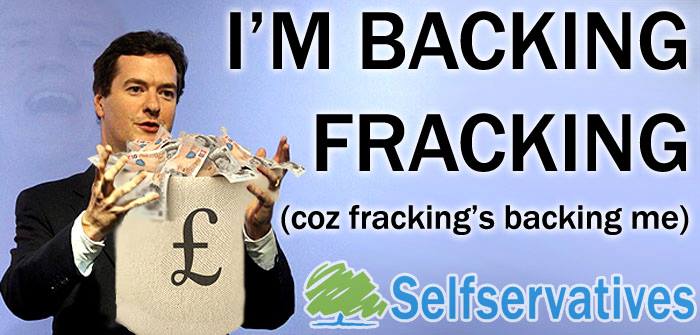
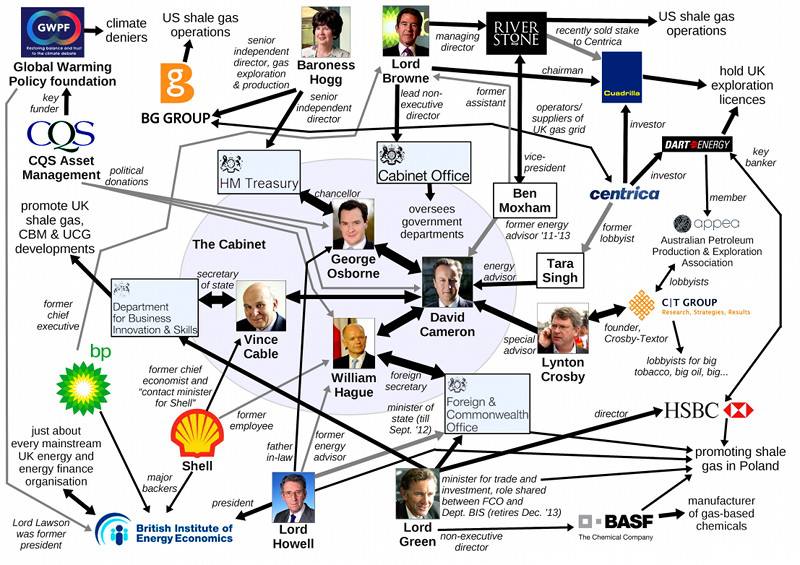
Labour recently successfully forced through these conditions as series of legislative amendments to constrain government plans to “fast-track” fracking. George Osborne, the chancellor, was demanding “rapid progress” from cabinet ministers, including delivering the “asks” of fracking company Cuadrilla.

As the Guardian reports: “Ministers were forced to accept Labour’s new environmental rules last week to avoid a rebellion by Conservative and LibDem backbench MPs, many of whom are facing opposition to fracking from constituents.”

Additionally: “Fracking is set to be banned on two-fifths of the land in England being offered for shale gas exploration by the government, according to a Guardian analysis.”

A moratorium, as proposed by the Green Party, would never have been successful at this stage, and Labour knew that. Had the moratorium actually scraped a successful yes vote, the Tories would most certainly not have abided by that, leaving them free without constraint to go ahead with their plans to fast-track the industry. Labour succeeded in binding them to agree on considerable restrictions, which will tie the Tories’ hands until well after the election, as well as excluding almost half of the Country’s potential shale gas sites from being potential drilling sites.

Such a wide-ranging ban is a significant blow to the UK’s fracking industry, which David Cameron and George Osborne have enthusiastically backed. The future of fracking now looks to be in the balance. Many analysts say the outlook for fracking is bleak.

The Guardian goes on to say: “An independent analysis by Greenpeace also found that 45 per cent of the 931 blocks being licensed for fracking in England were at least 50 per cent covered by protected areas, which it said was likely to make them unattractive to fracking companies.

“Just three per cent of the blocks have no protected areas at all, Greenpeace found.”

Louise Hutchins at Greenpeace UK added: “The shale industry’s seemingly irresistible advance is now looking more and more resistible every day, unless ministers can explain why fracking is too risky for the South Downs but perfectly safe in the Lancashire countryside, the next obvious step is to ban this controversial technique from the whole of the UK.”

There is always a populist option when it comes to doing politics. It’s rarely an effective approach, since it is based on superficial appeal only. Labour once again chose the rational, coherent and ultimately effective option, and with consistent foresight, they secured the best possible outcome.

945744_222576267893429_574558961_n


1016893_10151586093372831_133919409_nBig thanks to Robert Livingstone for the memes.


WORKING FOR PATIENTS OR NOT? – a guest post by Suzanne Kelsey

imgres


A guest post by Suzanne Kelsey, who is a key campaigner for the NHS, amongst other things.

In 1988, when Margaret Thatcher had been in office for some 9 years, and the very foundations of our NHS had been shaken with more of the public encouraged to use private medical care,  there were serious concerns about capacity in the hospital services as waiting lists increased and wards closed.  The Conservative government appointed a group of people, without consulting the health professions, to look at this growing problem.

As a result of this the NHS experienced the most significant cultural shift since its inception with a White Paper entitled, ‘Working for Patients, ’ which proposed what we now  know as the ‘Internal Market’ and the development of the purchase provider split. GPs become the purchaser and the hospitals are the providers. This passed into law as the NHS and Community Care Act 1990. Understandably there was a great deal of opposition from trade unions, Labour and the general public but it went ahead as did the Private Finance Initiative in 1992 implemented for the first time in the UK by the Conservative government of John Major.

There is no doubt that further major problems were created for our NHS, although I would question if on the same scale as we are currently witnessing with the threat of complete privatisation and the sell-off of our publically funded service to huge private international companies, who have been waiting in the wings for quite some time and would have been rubbing their hands in glee some years ago if Thatcher and the Conservatives had continued in office.

The definition of ‘privatisation’ also needs to be acknowledged because with the downgrading of facilities and existing provision struggling to meet demands, more and more people will become anxious and tempted to pay for their treatment even if it is to ensure they have a hospital bed!

We must never let this practice become the ‘norm.’ Campaigners must ensure that the ‘free at point of use’ core principle is upheld or we will be taken back to pre-war years, removing freedom from fear that was fought long and hard for by our champions of social justice. At the same time we must remember the mantra, ‘public health not private wealth’ with numerous examples available to us of how private companies will always put profits before patients, but more of that later.

When Tony Blair became Prime Minister in 1997 he inherited a very impoverished NHS and although we expected him to abolish the internal market this did not happen, perhaps for a variety of justifiable reasons. How do you replace crumbling hospitals and inadequate resources without massively raising taxes, whilst also limiting the upheaval that had already been caused?

Alan Milburn was Minister of State at the Department of Health during this time and he stated that after years of the Tory’s gross underfunding, there was absolutely no money to fund the infrastructure, hence the use of John Major’s PFI initiative. Labour therefore it would seem had little choice but to implement this because of the historic neglect of the NHS under the Conservatives that led to understaffing and an NHS unable to manage with the rising expectations of the population, coupled with the costly advances in modern medicine and technology.

A global recession, which was not Labour’s fault, further compounded the challenges of meeting the complex needs of the nation’s health care. Dennis Skinner MP for Bolsover Derbyshire, passionately summarised this in parliament in 2014 when he stated; ‘Between 1997 and 2010 Labour dragged the NHS from the depths of degradation that the Tories had left it in and hoisted it back to the pinnacles of achievement.’

I would like to pose some questions to those experts of marketisation and competition. My knowledge is very limited on the economic implications but I am learning, slowly but surely, through my long involvement with local and national campaigning, speaking to key people in politics and campaign groups, who are also passionate about our NHS. I become increasingly frustrated when people continually blame Labour for the introduction of privatisation  Yes Blair did carry on certain aspects of it which was a disappointment for many, including me, but perhaps my arguments surely go some way to addressing why this was.

  •  My first question is in the title of this article; ‘IS THIS WORKNG FOR PATIENTS OR NOT?’
  •  If Labour had made such massive inroads into privatisation surely there would have been no need for the Coalition’s unwieldy and costly three billion pound reforms, so huge they were just about visible from outer space and the truth is many of those who voted for it would not have time to read it fully. The bill was a long time in the writing and despite the pause because of massive opposition it was nevertheless hastily introduced by the Coalition, despite all the election promises, notably, ‘there will be no top down reorganisation of the NHS.’ They have as predicted caused unprecedented chaos and in fact a major crisis in our NHS, with exhausted frontline workers propping up a system, becoming totally stressed, angry and demoralised.

Many of the population are afraid of becoming ill, because of worrying inadequacies not only at primary and secondary health care levels but also in social care. The frail and elderly feel a burden as they are constantly labelled as ‘bed blockers,’ Thus long queues have been created to see your GP and at A+E, the gateway to the hospital, all of which can result in a lack of timely care. In contrast however Labour ensured patient satisfaction was at its highest with waiting times were at their lowest and the NHS during their time was lauded as one of the best, if not the best health service in the world.

  • Were the massive and unprecedented reforms therefore unnecessary and unjustified?
  • What are the implications for binding private contracts that have taken place across large swathes of the country if hopefully there is a change of government?
  • What lesson have been learnt from the withdrawal of Circle, the private company that took over Hitchingbrooke hospital, with claims of managers installed by these private operators creating a ‘blame culture?’ Allegedly Circle were willing to ensure local GPs incurred financial losses as long as it meant corporations continued to make a profit and the damning report about the quality of care in this hospital is shocking. CQC inspecting the hospital felt obliged to intervene when they became fearful of a sickening child and Professor Mike Richards the chief inspector of hospitals said that the findings were the worst it had ever published.
  • Clive Efford Labour MP for Eltham, South East London,   presented a private members bill to parliament in November 2014,which in order to avoid further top down reorganisation, focussed on the most damaging aspects of the Health and Social Care Act 2012, that gave powers to competition regulators to interfere in decisions of local health care commissioners. The most significant change is that the Secretary of State is once again accountable to you and me through parliament. If the bill is passed he can no longer avoid answering parliamentary questions by saying that it is down to local decision making and not his responsibility. Efford’s Bill also provides that neither EU competition rules nor EU procurement rules will apply. That is an important change from the present because, at the moment, a disappointed private provider can sue an NHS commissioner for damages for failing to put a service out to tender or running a tender process wrongly. My thanks to Clive Efford for that explanation and for securing a vote of 241 for the bill to 18 against.
  • How is this Bill progressing and how it is being supported by NHS campaign groups and health professionals.
  • If the Conservatives are allowed to waltz back in by a public who have been influenced by the hype and propaganda through a biased media and/or have become disengaged, disenchanted or disillusioned , or indeed confused by the outrageous claims of some minor parties who seem to be making it up as they go along, what do we do next!?

I hear talk of a revolution being the only answer from those extremists who are likely to be the least affected by one. Perhaps we would do well to remember that our NHS has just seen the biggest revolution since its inception in 1948. Unfortunately we have seen a glimpse into our future and the outcomes are dire, if we do not use our votes wisely.

Suzanne Kelsey 1stFebruary 2015

http://www.nhshistory.net/shorthistory.htm#_ednref15

http://www.nhs.uk/NHSEngland/thenhs/nhshistory/Pages/NHShistory1948.aspx

https://abetternhs.wordpress.com/2011/01/18/commissioning-and-the-purchaser-provider-split/

http://www.healthp.org/node/71

http://labourlist.org/2014/11/commons-pass-vote-on-clive-effords-nhs-bill/

http://www.telegraph.co.uk/news/politics/11333986/Damning-report-as-first-private-firm-to-run-NHS-hospital-pulls-out.html

Battle with GPs led to Circle’s retreat from Hinchingbrooke hospital,   The Guardian, January 9, 2015

Hinchingbrooke staff in CQC abuse concerns fear bosses BBC, September 29, 2014

http://www.independent.co.uk/news/uk/uks-healthcare-ranked-the-best-out-of-11-western-countries-with-us-coming-last-9542833.html

It’s about time the Green Party stopped their compliance with the Conservatives

10940505_767712909964906_6225427822143651262_n

“Of all tyrannies, a tyranny sincerely exercised for the good of its victims may be the most oppressive.”  C.S Lewis.

Following her election as party leader, Natalie Bennett told a press conference that the policies of the Green Party were “the only viable way forward for British people, for the world.”  It is extremely presumptuous of people to claim to act for “the people” when they seem to despise the ideology of a large part of “the people.”

Much Green Party policy and philosophy seems to be essentially grounded in a sort of eco-supremicist bad faith. We consume too much. (Who does, exactly? ) And no matter how much the Greens try to distance themselves from the stigma attached to Malthusianism there is no escaping the fact that arguments about consumption and population are inextricably linked.

Tristam Hunt recently described the Green Party as “stop-the-world-I-want-to-get-off politics.” Apt for what is ultimately a politics of perpetual bad faith and lip-curling disapproval of others. The language used to describe other parties by grassroot supporters betrays this and lends to the Green Party worrying characteristics of cult thinking.

The ecology movement will never gain any real influence or have any significant impact on society if it advances a message of despair rather than hope, of a regressive and impossible return to primordial human cultures and sensibilities, rather than a commitment to human progress and to a uniquely human empathy for life as a whole. I agree with the following:

“I can easily understand why despair exists among mystical ecologists – indeed, in the environmental movement generally – over the impact of a grow-or-die capitalistic economy on the biosphere and on the human psyche. While a patronising, quasi-religious often misanthropic ecology that denigrates the uniqueness of human beings and the wondrous role they can play in natural evolution may be an understandable response to that economy, it is a flat denial of humanities’ most human potentiality: the ability to change the world for the better and enrich it for all life forms.

We must recover the utopian impulses, the hopefulness, the appreciation of what is good, what is worth rescuing in human civilization, as well as what must be rejected, if the ecology movement is to play a transformative and creative role in human affairs. For without changing society, we will not change the disastrous ecological direction in which capitalism is moving.” – Murray Bookchin, 1991

In an article titled: In response to the Socialist Party of GB’s slur on the Green Party & Ecosocialism, Martin O’Beirne writes:“We also need a mass movement against climate change and to promote new ways of existing, prefigurative, perhaps moneyless, primitivist, eco-technic or some combination. Something that points the way to that which can exist beyond capitalism.”  He went on to say: “Capitalism and consumerism, manufacturing consent, keep the multitude docile chasing trinkets and so on.”

In other words, most of us are stupid, and need “fixing”. Not moral, progressive, socialist proposals, but rather, moralising, regressive ones.

The Green Party have gathered up many dislillusioned ex-Liberal Democrat voters, the ones who haven’t learned from last time that like the Liberal  Democrats, any party that tries to appear to be all things to all people is not being honest with you.

Badly disappointed idealists most readily succumb to the depths of disillusioned, resentful cynicism. The Greens are very busy trying to hoover up the votes of all of those disillusioned souls on the Left, and regardless of the potentially devastating consequences that may have on the election outcome.

The pressing issue for me is that people are suffering, some have died because of Tory policies, our society is being fundamentally damaged, and to the point where it will soon be impossible to repair it in our lifetimes. The damage will be lasting, probably for more than one generation. I care about that. I care about the suffering, growing inequality, the re-appearance of absolute poverty, not seen in the UK since the 1930s, and the damage to our society and country.

I’m a socialist because of those long-standing concerns, which transcend the parochial and actually, they transcend party politics. What matters to me is ensuring that we vote intelligently for the best possible outcome we can, especially for those who are suffering greatly because of the current government. I am fundamentally cooperative and community-minded. I care about what happens to others.

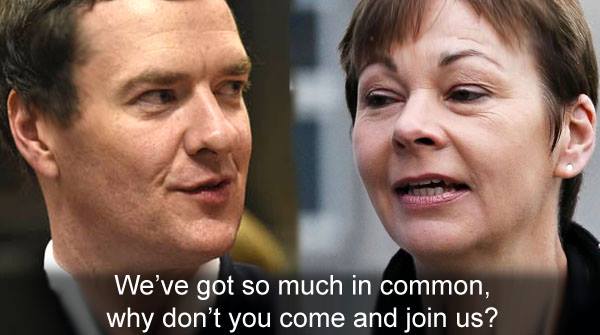
Cameron has made no secret of the fact he is playing up the Greens’ potential for influencing and eating into Labour voters. It was very apparent when he refused to appear in TV debates unless Bennett is also invited to take part. The Conservatives’ sudden pro-Green tactics, focusing on the party’s exclusion from the debates, and some Tory MPs suggesting left-wing voters in their constituencies vote Green instead of Labour, are pretty transparent.

All this from the prime minister who dismissed environment policy as “green crap” not long ago. It isn’t just the Tories displaying utter cynicism, here. The Greens are too. They have attempted to account for their unlikely alliance with the Tories by claiming that the Green Party sees itself as having a role to put pressure on Labour to become more “progressive”  However, the Greens themselves are not progressive at all. As their roots indicate, as much as their policies:
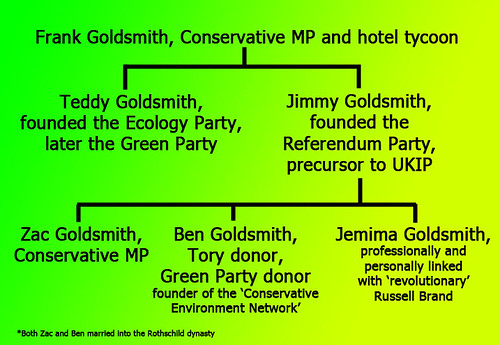
goldsmith greenHow about putting pressure on left-wing voters to divide them, with the likeliest outcome of allowing another Tory government? It’s rather pointless trying to claim the Greens are “pushing Labour left” when the outcome of that is likely to bleed votes from Labour, ultimately.

And that attempt at explanation of the fact that the Greens attack and undermine Labour, rather than the Tories conveniently circumvents the fact that the Green Party tell intentional lies about Labour’s policies. A genuine attempt to influence Labour policy would entail negotiation and co-operation, not constant, hostile undermining tactics, coupled with an alliance with the Tories.

The Greens are not cooperative or community-minded. They are dividing our opposition to the Tories and risking returning Cameron to Office in May. They prefer to undermine the Labour Party, because they are purely electioneering, rather that directing challenges at the Tory-led Coalition. That is not “socialist”.

How “socialist” is it to join ranks with the party inflicting all of that damage and harm on people of this country to attack and undermine the only viable alternative to the tories? That’s not genuine politics, that’s grandstanding. It’s not “socialist” at all.

Jon Ashworth, Labour’s shadow Cabinet Office minister, said: “David Cameron’s new-found affection for the Green Party is nothing short of political opportunism. If you ever needed proof that a vote for the Greens is a vote for David Cameron, this is it.

The Tories and the Greens seem to be working hand-in-hand. The Tories need the Greens because they are scared to run on their own record. The Greens need the Tories because Labour is the only party with a progressive policy agenda.”

You can’t claim to be a “progressive ” political party and at the same time advocate zero growth and parochialisation – to cut us off from global trade. The Green Party says: “In our Green vision for Europe we seek to replace the unsustainable economics of free trade and unrestricted growth with the ecological alternative of local self reliance and resource conservation, within a context of wider diversity.” That’s a clear step back from internationalism and forwards towards parochialisation. It’s not progressive at all to shut out the rest of the world. And socialists have always been internationalists. The Green Party, on the other hand, find natural allies with nationalist parties such as the Scottish National Party (SNP).

The economy matters to every country in the world and no growth or low growth economies invariably mean high unemployment, increased inequality and increased absolute poverty. There are a variety of ways by which governments may mitigate social inequality. It’s known that Countries with a left-leaning legislature have lower levels of inequality. Many factors constrain economic inequality – they are often divided into two classes: government sponsored, and market driven. The relative merits and effectiveness of each approach is of course debated.

Government initiatives to reduce economic inequality include: public education: increasing the supply of skilled labor and reducing income inequality due to education differentials.

Progressive taxation: the rich are taxed proportionally more than the poor, reducing the amount of income inequality in society if the change in taxation does not cause changes in income. These form the basis of  Miliband’s approach, with his proposals for redistribution via a very progressive tax system. This is why tax-dodging billionaires  such as Stephano Pessina are complaining about Labour’s genuinely coherent, costed, evidenced, progressive equality-focussed redistributive tax policies, and not Green Party policies.

Market forces outside of government intervention may also reduce economic inequality, including the propensity to spend. The Green Party, however, does not support any of these options. Their anti-growth, anti-consumption starting point excludes all of these measures. Their key policy  proposal – Universal Basic Income – was shown to be so flawed that the Greens announced it is to be withdrawn from their manifesto.

Bennett has tried to brush aside criticisms that her party’s policies would lead to economic catastrophe, emphasising the Green’s stance against materialism. “People don’t just want to work to earn more and more money,” she said. “They want to do other things that often now aren’t recognised and valued.”

However, an isolationist zero growth economy would be a disastrous experiment, just like the austerity measures have been – with the same outcomes. The Green Party does not present a single coherent policy that may be deemed a viable alternative to austerity, yet it claims: A real change: from austerity and welfare cuts to investment in decent jobs.”

Not only would the Green Party’s anti-progressive zero growth economy create high unemployment, it most certainly create deep recession and the policies are cumulatively pro-austerity, in that they advocate inhibiting public spending on consumer goods.

The Green Party fail to show us any understanding of imbalances of power, they provide no class analysis, they aren’t connected with marginalised groups, they don’t reflect their needs and they clearly have no understanding of the mechanics and virtues of redistribution. There isn’t a single policy currently in their manifesto that demonstrates a coherent offer of support to very poorest. That isn’t “socialist” at all.

The Greens grew out of the environmental movement, with David Icke at the helm as a spokesperson, well, until they got embarrassed by him and sacked him. As Suzanne Moore commented, the incoherence is even apparent at how they fail to define the State. They offer the biggest of big-state polices with huge intervention in some areas, without specifying the role of the state except as a series of committees. It’s a curious mix of immense levels of authoritarian state control over our private lives, a strongly moralising approach, alongside a moral relativism towards things like sex industry, terrorism and crime. Page 3 is frowned upon, but how can prostitution be regarded as any less economical exploitative of women? That’s certainly not coherent policy-making.

The Green’s “anti-austerity measures” seem to translate as “taking on corporations and vested interests.” But Miliband has already explicitly stated (and shown) that he will do that. (He already has – Leveson, the banks, the big power companies, water companies, to name a few)

The Green Party’s key policy idea – that of a Citizen’s Income for everyone whether they work or not – sounds so great on the surface. Just like a lot of their rhetoric and policies, it lacks depth and doesn’t connect up – it lacks integrity and falls to pieces when properly examined. Many of the poorest households would lose out. Most wealthy households will gain. How does that address inequality – something the Greens claim to be concerned about?

The “citizen’s income” of just £71 a week, at an annual cost of £280billion would replace existing welfare payments such as personal tax allowances and means tested benefits such as income allowance and jobseekers benefit.

It was a popular policy during the 1990s, with notable libertarian economists on the Right, such as Milton Friedman (the founding father of monetarism) favoring the model as a type of negative income tax. Friedman attacked the very notion of Social Security, stating that it had created welfare dependency. Friedman’s political philosophy extolled the virtues of a free-market economic system with minimal state intervention. Friedman proposed the replacement of the existing U.S. welfare system with a negative income tax, a progressive tax system in which the poor receive a basic living income from the government.

The Liberal Democrats have included similar policies in their manifesto in 1996.

The Citizen’s Income Trust (CIT), which has given advice to the Green party (and has also been repeatedly cited by the Greens a credible source), has modelled the Green Party scheme and discovered it would mean 35.15% of households would be losers, with many of the biggest losers among the poorest households.

The Trust’s research shows that for the two lowest disposable income deciles, more than one-fifth would suffer income losses of more than 10%.

If anything, this policy will EXTEND inequality.  That’s not very “socialist”.

Many critics of the Green party point to their many failures in Brighton and Hove, where they couldn’t even get the rubbish collection right. However, the most damning criticism – their fundamental inability to run services for the most vulnerable – is the one that ought to concern us the most. That’s not very “socialist.”

Using minorities as nothing more than political props and tools. That’s not very “socialist”.

During a recent interview, with the Times, Bennett defended commitments to decriminalise membership of terrorist organisations, possession of drugs, and prostitution, as well as promising to abolish the monarchy and remove the Queen from Buckingham Palace.

Bennett said: “I can’t see that the Queen is ever going to be really poor, but I’m sure we can find a council house for her.”

The remark appeared to be a glib, clumsy attempt to grab some media attention, given the Queen’s private wealth. As far as an appeal to juvenile anti-establishmentarians go, it was probably a successful glib, clumsy remark. The Green Party’s stated policy on the monarchy is that it should cease to be an office of government and that the property held by the royal family should be divided between that required for the private life of current members of the family, with the remainder to become public property. Not sure I could use any staff, spare tiaras or corgis, personally, but thanks for the thought.

The Tories have trashed the economy, damaged the very structure of our society and destroyed people’s lives. We’ve seen the return of absolute poverty, malnutrition and illness, such absolute poverty-related illness has not been seen since Victorian times. People have died as a consequence of Tory policy.

What do the Greens do? Bitch about LabourMany thanks to Robert Livingstone for his excellent memes