Month: May 2015

Watchdog that scrutinises constitutional reform is quietly abolished and Tory proposals are likely to lead to constitutional crisis.

 936319_485819054820961_1954794757_n

The Political and Constitutional Reform Committee, which was originally established for the duration of the 2010 parliament, has been very quietly scrapped following a meeting of party whips.

Originally, the cross-party committee was established to scrutinise the plans of the Coalition government, such as the House of Lords Reform and the Alternative Vote – many of which never made it onto the statute books.

The parliamentary committee’s main role was to scrutinise proposed major constitutional changes. This undemocratic development is especially worrying given the likelihood of significant constitutional changes in the forthcoming parliament, with the referendum on  membership of the European Union set to be held within the next two years.

There are further plans for devolution of powers to Scotland and Wales, as well as to cities, and it is expected that these will be delivered at the same time as the government repeals the Human  Rights Act, and draws up a bill of rights to replace it.

Considerable doubt exists among experts that the Council of Europe, a human rights watchdog responsible for ensuring the Convention is upheld, will accept the Tories’ proposals. In fact the plans are highly unlikely to be accepted. As a result, it is quite widely believed Britain will disengage from the European Convention on Human Rights (ECHR) and undermine Europe’s’ civil liberties framework in the process.

Cameron has previously pledged to withdraw from the ECHR, indicating plainly that he is indifferent to the fact that such a withdrawal would very likely spark a complex constitutional crisis in the UK.

If the Human Rights Act is repealed in its entirety, the repeal will apply to the whole of the UK. The Scotland Act gives powers to the Scottish Parliament, provided that they comply with the ECHR (among other things). This would not change with repeal of the Human Rights Act alone.

However, human rights are also partially devolved (the Scottish Parliament, for example, has set up a Scottish Human Rights Commission), and so any unilateral repeal of the Human Rights Act by Westminster would violate the Sewell Convention, which outlines that the Westminster government will: “not normally legislate with regard to devolved matters in Scotland without the consent of the Scottish Parliament.” Nicola Sturgeon has stated clearly that the Scottish National Party oppose the repeal of the Human Rights Act.

And similar principles apply through the memoranda of understandings with each of the devolved legislatures in the UK.

In Northern Ireland, human rights are even further devolved than in Scotland, and the Human Rights Act (HRA) is explicitly mentioned in the Good Friday Act in 1998. To repeal the HRA would violate an international treaty as the Agreement was also an accord between two sovereign states – the UK and the Irish Republic.

Repealing the HRA unilaterally would put the UK in violation of the Good Friday Agreement, and its international treaty obligations to Ireland.  This would certainly damage our international reputation, as well as having consequences for the reciprocity on which the Treaty depends.

It’s quite possible that it would also be understood within Northern Ireland as a violation of both letter and the spirit of the Good Friday Agreement,  signalling that the UK government were no longer committed to the Agreement.

The Good Friday Agreement was also subject to a referendum in both Northern Ireland and the Republic of Ireland, both having to consent for the Agreement to be implemented.  The referendum enabled the Agreement to have widespread legitimacy, but importantly, because it took place in both parts of Ireland, it answered historic Republican claims to be using violence to secure the “right to self-determination” of the Irish people.

It was also necessary to changing the Irish Constitution. So a unilateral move away from UK commitments carries serious bad faith and democratic legitimacy implications, potentially with deeply problematic historical consequences.

The Conservatives also have plans to reintroduce the redefining of parliamentary constituency boundaries in a way that will be advantageous to the Conservative party. It is estimated that the planned changes will help the Tories to win up to 20 extra seats at a future election.

It was during the last term that the proposals were originally put forward. Labour and Liberal Democrat MPs were joined by those of smaller parties – including the SNP, Plaid Cymru, the DUP,  the Greens and Respect – to defeat the proposals, giving them majority in voting down the Tory plans for boundary changes.

The Tories are also committed to implementing a form of “English vote for English” laws – a move which will further undermine ties within the UK. But this pre-election pledge placed an emphasis upon English voting rights to undermine the nationalist appeal of UKIP south of the Border, whilst spotlighting the constitution to bolster the Scottish National Party in Scotland, again using nationalism tactically  to disadvantage the Labour Party.

At a time when the government is planning potentially turbulent constitutional changes in the forthcoming parliament, the move to abolish the watchdog – The Political and Constitutional Reform Committee – will serve to insulate the Tories from democratic accountability and scrutiny.

The Political and Constitutional Reform Committee had instigated an inquiry in 2013 regarding increasingly inconsistent standards in the quality of legislation, which resulted in several key recommedations, one of which was the development of a Code of Legislative Standards, and another was the creation of a Legislative Standards Committee.

The government response was little more than an extravagant linguistic exercise in avoiding accountability, transparency and scrutiny. Having waded through the wordy Etonian etiquette of paragraph after paragraph in the formal responses to each recommendation, the meaning of each may be translated easily enough into just one word: no.

For example: “A bill when it is published is the collectively agreed view of the whole Government on how it wishes to proceed. The process by which it has arrived at that view is a matter for the Government, not for Parliament.”

“The Government does not believe that a Code of Legislative Standards is necessary or would be effective in ensuring quality legislation. It is the responsibility of government to bring forward legislation of a high standard and it has comprehensive and regularly updated guidance to meet this objective. … Ultimately, it is for Ministers to defend both the quality of the legislation they introduce and the supporting material provided to Parliament to aid scrutiny.”

It’s troubling that the House of Lords Constitution Committee raised concerns during the inquiry that there is currently no acceptable watertight definition of what constitutional legislation actually is. The current ad hoc process of identifying which bills to take on the Floor of the House of Commons in a Committee of the whole House lacks transparency: it is clear that differentiation is taking place in order to decide which bills are to be considered by a Committee of the whole House, but the decision-making process is “unclear.” The very worrying response:

“The Government does not accept that it would be helpful to seek to define “constitutional” legislation, nor that it should automatically be subject to a different standard of scrutiny. The tests suggested by Lord Norton and the list of characteristics suggested by Professor Sir John Baker are themselves subjective: whether something raises an important issue of principle, or represents a “substantial” alteration to the liberties of the subject [citizen], for example, are matters more for political rather than technical judgement.

Well no, such matters may be more for legal judgement, given the current framework of Human Rights and Equality legislation. The idea that the law is superior to the megrims of rulers is the cornerstone of English constitutional thought as it developed over the centuries. The Universal Declaration of Human Rights and the European Convention on Human Rights both refer to the Rule of Law.

The Universal Declaration of Human Rights of 1948, is the historic international recognition that all human beings have fundamental rights and freedoms, and it recognises that “… it is essential, if man is not to be compelled to have recourse, as a last resort, to rebellion against tyranny and oppression, that human rights should be protected by the rule of law…”

And of course there are implications for our current understanding of the word “democracy.”

Oh. There you have it: the government does seem to regard the liberty of citizens to be enclosed within their own doctrinal boundaries. Those Tory boundaries are entirely defined by partisan dogma and value-judgements, ad hoc justifications, all of which distinctly lack any coherence and rational expertise. Or independence and protection from state intrusion and abuse.

This is a government that has taken legal aid from the poorest and most vulnerable, in a move that is contrary to the very principle of equality under the law.

The Tories have turned legal aid into an instrument of discrimination. They have tried to dismantle a vital legal protection available to the citizen – judicial review – which has been used to stop the Conservatives abusing their powers again more than once. The Tories have restricted legal aid for domestic abuse victims, welfare claimants seeking redress for wrongful state decisions, victims of medical negligence, for example.

Reflected in many Conservative proposals and actions is the clear intent on continuing to tear up British legal protections for citizens and massively bolstering the powers of the state.

The hypocrisy is evident in that this is a government which claims to pride itself on its dislike for the state. But in every meaningful way, the Tories are vastly increasing state powers and intrusive authoritarian reach.

564882_438358886199493_1982719183_n

The UK is now the most unequal country in EU, and Cameron has been very conservative with the truth

tory lies

Last year I wrote an article – Cameron’s Gini and the hidden hierarchy of worthand I said: On 04 June, 2014, at 3.52pm BST, Cameron said that inequality is at its lowest level since 1986. I really thought I’d misheard him. But of course Cameron lies, that’s an established fact.

This isn’t the first time Cameron has used this lie. We have a government that provides disproportionate and growing returns to the already wealthy, whilst imposing austerity cuts on the very poorest. How can such a government possibly claim that inequality is falling, when inequality is so fundamental to their ideology and when social inequalities are extended and perpetuated by all of their policies? It seems the standard measure of inequality is being used to mislead us into thinking that the economy is far more “inclusive’ than it is.

A newly published report by the Dublin-based Foundation for the Improvement of Living and Working Conditions (Eurofound) states that the UK has become the most unequal country in Europe, on the basis of income distribution and wages.

The report also says that the UK has the highest Gini coefficient of all European Union (EU) member states – and higher than that of the US. The coefficient is a widely used measure of the distribution of income within a nation, and is commonly used to calculate inequality.

According to analysts at Eurofound, Britain has a Gini coefficient of 0.404, whilst that of the US is 0.4. Portugal and Latvia followed the UK with Gini coefficients of 0.358 and 0.357, respectively. The average Gini index for the EU as a whole in 2011 was 0.346.

Eurofound was established in 1975 to contribute to the planning and design of improved living and working conditions. This role is undertaken in partnership with governments, employers, trade unions and the European Union institutions.

The report says that there was a decrease in inequality before the global crisis that was entirely due to a significant reduction in between-country wage differentials (in other words, a process of convergence in pay levels – see: Labour’s excellent record on poverty and inequality – which came to a halt, reflecting the effects of the global crash, in 2008, and then started to reverse towards the end of the period of this analysis, in 2011.

My friend, the British economist Michael Burke, observed that  Eurofound’s study demonstrates the previous claims by David Cameron that Britain’s economy is recovering from the recession were false.

Speaking to RT on Tuesday, Mr Burke said: “The Tory government is fond of making spurious claims about Britain being the strongest economy in Europe. But the reality is that Britain under the Tories is the European capital of inequality.”

All of the deterioration in the Gini coefficient in the EU is caused by the worsening of inequality,” he added.

The jobs machine that David Cameron [is referring to] is in reality low-paid jobs, many of them providing unproductive services to the ultra-rich.”

The UK now has the worst Gini coefficient in the EU. Gini is the most widely accepted measure of how fairly income is distributed amongst a nation’s residents and is the standard measure of inequality. Cameron, parroting Thatcher, has claimed that there is no such thing as “public money,” indicating clearly that the economic enclosure that was initiated by the Tories under the guise of austerity, affecting the poorest citizens most of all, but leaving the wealthy unaffected by cuts, is going to be permanent.

A YouGov survey conducted this month and published on Monday found that most voters in the UK believe the government should prioritize tackling inequality – reducing the gap between rich and poor – over faster economic growth.

The findings, which suggest strong public support for redistribution, will complicate the debate about precisely how the Labour Party lost the general election, particularly given the Labour manifesto, outlining strongly redistributive and progressive tax policies, which had disgruntled a number of super petulant super-rich celebrities, who threatened to flounce from the UK if Labour gained office.

YouGov found that of the main parties, only Conservative supporters were significantly more likely to care about economic growth than inequality. Bearing in mind that Cameron won with 36.9% of the vote, the considerable gap between the priorities of Conservatives and those of the other parties will most likely mean a difficult five years for the prime minister.

With homelessness increasing by 55% between 2010 and 2014, whilst food bank use has surged, malnutrition and absolute poverty, not seen in this country since before the inception of the welfare state, are becoming more commonplace, and with more draconian cuts planned by the Tories for the already diminished and essential support for the poorest – many of whom are in low waged work – it’s going to be an extremely punishing five years for those already at the poorest end of the UK’s steeply hierarchical society.

Last year, I wrote about the study from the Organisation for Economic Co-operation and Development (OECD), who found what most of us already knew: that income inequality actually stifles economic growth in some of the world’s wealthiest countries, whilst the redistribution of wealth via taxes and benefits encourages growth.

The report from the OECD, a leading global think tank, shows basically that what creates and reverses growth is the exact opposite of what the current right-wing government are telling us, highlighting the truth of Ed Miliband’s comments in his speech – that the Tory austerity cuts are purely ideologically driven, and not about managing the economy at all.

But many of us already knew this was so.

1459720_569627496440116_902730897_nPictures courtesy of Robert Livingstone

The Suicide of Britain

incon

Article from The New York Times, by Ross Douthat

FOR much of European history, empire was the normal political arrangement: Large, polyglot, multiethnic and eventually multireligious, with a monarch on top and a jostling confederation underneath.

Then came modernity, democracy and nationalism, and the “nations” of Europe – half-real, half-invented – demanded self-determination and self-rule.

Between 1914 and 1945 (with a final act in the Balkans in the 1990s), this led to world-historical disaster, mass exterminations, ruthless wars for mastery. But out of those conflicts came a new kind of hybrid order. The nations would have self-rule, within borders redrawn by war and ethnic cleansing. But they would be supervised by a kind of postmodern empire, an imperial bureaucracy without the emperor – the European Union.

The outlier, as always, was Great Britain. Like its rivals, the United Kingdom lost its overseas colonies, but it kept much of its domestic empire, the several nations – English, Scottish, Welsh and Ulster Irish – that still share a flag and crown. And as befits its anachronistic status, Britain has held itself somewhat aloof from the European Union’s postmodern imperium, joining the union but not its common currency.

These distinctive arrangements have been good for the U.K. overall. Remaining a united kingdom has magnified its global clout, and being in the E.U., but not fully of it, has spared it the worst of the continent’s Euro-driven woes.

But neither arrangement may last much longer. In the headlines, last week’s British elections were a victory for David Cameron’s Conservatives. But the deep winners were the forces of nationalism, Scottish and English, which suddenly have the United Kingdom as we know it on the ropes.

The Scottish story is the more remarkable one, since a decade ago Scottish independence still seemed a crank’s hobby, and after losing last year’s referendum on independence it was assumed that the nationalists had shot their bolt.

Instead, the referendum campaign seems to have affected Scottish politics more than its technical outcome. As Alex Massie, a pro-union Scottish writer, put it last week, in Scotland, “Nationalism is our new secular religion,” and the politics of identity suddenly “defeats all comers.” All but three, as it turned out: In Thursday’s vote, the nationalists took 56 out of 59 parliamentary seats in Scotland, effectively turning the heathered north into a single-party state.

What the Scottish nationalists ultimately want is to trade the Union Jack for the E.U.’s postmodern bargain: ethnically-rooted self-government under a distant supranational umbrella, rather than a political union that can back wars or budget cuts that most Scots oppose. Not every Scot who voted nationalist last week is ready to support this vision. But the pull of union is clearly weakening in the north. Meanwhile to the south, a more English sort of nationalism wants out of the European Union completely, and suspects the Scots are getting too sweet a deal within the U.K. as it is. This is the spirit at work in UKIP, the populist, antiglobalist party that’s taking votes from both left and right, and in the Tory base as well.

[I believe that Cameron has been instrumental in fueling both kinds of nationalism, and of course, to his own political advantage. It was certainly the case that much of the latter part of the Tory election campaign revolved around a poisonous fear-mongering concerning a possible Labour/SNP coalition, despite the fact that Ed Miliband had ruled out that possibility quite publicly during the televised leadership debates. Miliband, a principled internationalist and also pro-EU, would have worked with the SNP, however, rather than in diametric opposition.  The Conservatives have a long history of designing and manipulating the social divisions and parochialism that they tend to thrive on – KSJ.]

The two nationalisms, north and south, can [and will] feed on one another. However reluctantly, Cameron’s government will have to give “little Englander” sentiment its due. (He’s promised a referendum on Britain’s E.U. membership for 2017). This will confirm the Scottish nationalists in their alienation, their desire to rule themselves alone.

On paper, the arguments against both disunion and a “Brexit” from the E.U. remain potent. The Scots really do reap significant benefits from union, and the nationalist vision of Scotland as a kilted Norway, oil-rich and social-democratic, is unlikely to survive contact with the realities of independence. Abandoning Britain’s “this far, no further” approach to Europe and leaving the E.U. outright, meanwhile, would cede economic and political influence (to France, most likely) for uncertain gains.

But these are practical arguments, and sometimes politics needs something more. The nationalists of Scotland and England, in different ways, offer a vision of political community as an object of belief, an end unto itself. Against that kind of message, it’s not enough to defend the present order bloodlessly, to say, “Yes, it’s anachronistic to have a miniature empire in this day and age, but really the net benefits make it worth keeping.”

Instead, you have to argue explicitly for a Great Britain. You have to invoke the United Kingdom’s world-bestriding past, which the Scots no less than the English sustained and died defending, with something more than awkward embarrassment. You have to make a case to the Little Englanders that Britain’s multicultural, Europe-facing present can keep faith with that past and not just bury it. You have to demonstrate that a liberal empire, no less than an ethnic homeland, can be something real and rooted – something felt in “the blood and guts,” as Massie put it during the Scottish referendum, “the bone and marrow of our lives.”

I’m a Yankee; this not my argument to make. But if our cousins can’t find leaders who can make it, there won’t be a Great Britain anymore.

Related

UKIP: Parochialism, Prejudice and Patriotic Ultranationalism.

Many thanks to my friend, Robert Livingstone, for his excellent memes.

Human rights, the reintroduction of hanging and what we have lost

540695_532291630173703_1425159679_n (1)

Michael Gove, former Education Secretary, has been appointed Justice Secretary: he is now in charge of the Department for Justice. With this appointment, it is clear that Cameron has plans for potentially radical reform, and regards justice as an area that needs a hardened, radical and senior Tory politician to drive through changes that are likely to be controversial. Gove does have form.

Gove’s first task is to scrap the Human Rights Act, (HRA) which was the previous Labour government’s legislation designed to supplement the European Convention on Human Rights, it came into effect in 2000. The Act makes available a remedy for breach of Convention right without the need to go to the European Court of Human Rights in Strasbourg.

As I have previously reported, the rights protected by the Act are quite basic. They include the right to life, liberty and the right to a fair trial; protection from torture and ill-treatment; freedom of speech, thought, religion, conscience and assembly; the right to free elections; the right to fair access to the country’s education system; the right NOT to be given the death penalty; the right to marry and an overarching right not to be discriminated against.

Cameron has argued that it should be repealed just 15 years after its implementation … so that he can pass another unspecified Act – a British Bill of Rights.  Dismantling UK equality and human rights legislations is a long held ambition of Conservatives, and they also plan to withdraw from the European Convention on Human Rights.

But why would any government object to citizens being afforded such established, basic protections, which are, after all, very simple internationally shared expectations of any first world liberal democracy?

One sentence from the misleadingly titled document that outlines how the Tories plan to scrap the Human Rights Act – Protecting Human Rights in the UK, (found on page 6 ) – is particularly chilling: “There will be a threshold below which Convention rights will not be engaged.”

Basically this means that human rights will no longer be absolute or universal – they will be subject to stipulations and caveats. The government will establish a threshold below which Convention rights will not be engaged, allowing UK courts to strike out what are deemed trivial cases.

However, the whole point of human rights is that they apply universally; that every social group is protected from political abuse, eugenics, discrimination, prejudice and oppression.

The Tories’ motivation for changing our human rights is to allow reinterpretations to work around the new legislation when they deem it necessary. The internationally agreed rights that the Tories have always seen as being open to interpretation will become much more parochial and open to subjective challenge.

The government may claim, for example, that any legal challenge is simply ‘politically motivated’. Or that cases of open discrimination or abuse as a result of government policy are merely ‘anecdotal’. 

Any precedent that allows a government room for manoeuvre around basic and fundamental human rights is incredibly dangerous. Universal human rights exist to protect citizens against governments precisely for this reason – to hold those in power to account for abuse of that power.

No other country has proposed de-incorporating a human rights treaty from its law so that it can introduce a Bill of Rights. The truly disturbing aspect of Cameron’s Bill of Rights pledge is that rather than manifestly building on the HRA, it’s predicated on its denigration and repeal. One has to wonder what his discomfort with the HRA is. The Act, after all, goes towards protecting the vulnerable from neglect of duty and abuse of power of the State. The Universal Declaration of Human Rights was an International response to the atrocities of World War Two and the rise of fascism and totalitarianism.

During their last term, the Tories contravened the Human Rights of disabled people, women and children. It’s clear that we have a government that regards the rights of most of the population as an inconvenience to be brushed aside. ‘Red tape’. 

I also previously reported that Cameron has pledged to leave the European Convention on Human Rights. Cameron has expressed a wish to break the formal link between British courts and the European Court of Human Rights. In future Britain’s courts will no longer be required to take into account rulings from the Court in Strasbourg.

Observation of Human Rights distinguishes democratic leaders from dictators and despots. Human Rights are the bedrock of our democracy, they are universal, and are a reflection of a society’s and a governments’ recognition of the equal worth of every citizens’ life. But the government have an ideology that is founded on distinctly social Darwinist principles, and have systematically devalued the lives of historically marginalised social groups.  Conservatives think that the lives of ordinary ‘others’ are cheap and disposable, because they see UK citizens as a means to their own ends, based on their own priorities and eugenic ideology. What matters to the Tories is how, as citizens, we contribute to enriching the already wealthy class by providing cheap labour. We are simply reduced to statistics and units of ‘economic stock’. 

These principles support economic neoliberalism and political conservatism. Class/social division is justified on the basis of “natural” inequalities among individuals, for the control of property is ludicrously claimed to be a correlate of superior and inherent moral attributes such as industriousness, temperance, and frugality. Attempts to reform society through state intervention, therefore, interfere with natural processes; unrestricted competition and defense of the status quo are in accord with biological selection, from this perspective. The poor are “unfit” and should not be supported and aided; in the struggle for existence, wealth is a sign of success. The Tories believe that some lives, therefore, “naturally” have much more value than others.

Gove, now the Justice Secretary, has previously called for hanging to be reintroduced. Writing in 1998 as a Times columnist, he said Britain was “wrong to abolish hanging” in the 1960s, when the death penalty was outlawed. Gove made the irrational claims that banning hanging had “led to a corruption of our criminal justice system and the erosion of all our freedoms rather than “a great liberal victory,” as it was seen at the time.

Gove made the incoherent claim that banning hanging has made punishing innocent people “more likely,” he went on to conclude that public opinion had moved in favour of reintroducing hanging and that doing so could repair the broken trust between voters and politicians. Gove said he supported the “return of the noose out of respect for democracy”, and because it would force the courts to act with “scrupulous fairness.”

This deranged, barbaric relic actually said: “Hanging may seem barbarous, but the greater barbarity lies in the slow abandonment of our common law traditions. Were I ever alone in the dock I would not want to be arraigned before our flawed tribunals, knowing my freedom could be forfeit as a result of political pressures. I would prefer a fair trial, under the shadow of the noose.”

At the beginning of the 19th century, children in Britain were punished in the same way as adults. They were even sentenced to death for petty theft. It has historically been the case that the poorest tend to be executed, and it remains true: there are no millionaires on death row.  (See also: Amnesty International UK – Death penalty.)

In 1965, in the UK, Parliament passed Murder (Abolition of Death Penalty) Act, temporarily abolishing capital punishment for murder for 5 years. The Act was then renewed in 1969, by the Labour government under Harold Wilson, making the abolition permanent.

And with the passage of Labour’s Crime and Disorder Act 1998 and their Human Rights Act 1998, the death penalty was finally officially abolished for all crimes in both civilian and military cases, also.

The Human Rights Act is to be abolished, and Cameron has pledged to withdraw from the European Convention. In case you missed the connection, repealing the Human Rights Act will make the reintroduction of capital punishment much easier. The full range of potential consequences of losing our human rights laws are truly terrifying to consider.

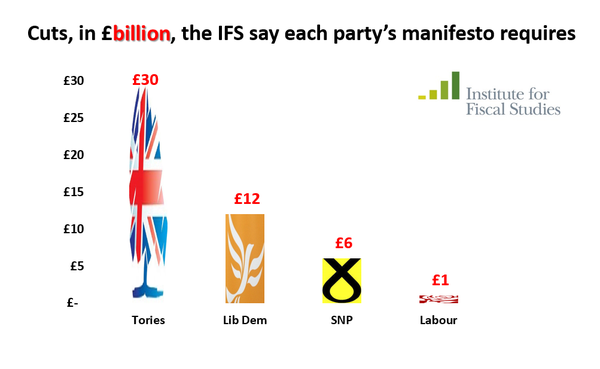
For those of you that have campaigned against the Labour Party, claiming that they aren’t quite “left” enough, despite the fact that Miliband was actually offering the most progressive, redistributive policies of ALL the parties, and smaller cuts and for less time. (I guess some of you never bothered reading the Institute of Fiscal Studies Report, or Labour’s manifesto).

Under a Labour government, our Human Rights, NHS and welfare would now be safe. The bedroom tax would now be repealed. We would be rebuilding and making progress as a society instead of regressing and fearfully discussing the threats of tyranny and the possibility of the reintroduction of capital punishment.

We are about to lose everything that made us a civilised first-world country, from our human rights to our post-war democratic settlement: welfare, our National Health Service and what remains of our access to legal aid. I predict that by 2020, this undermining of the fabric of our society: the mechanisms that make us civilised, will be almost undone. The loss of democratic safeguards will affect many more citizens, and it will become much more evident that the Conservatives are the most corrupt, authoritarian and nationalist government that the UK has known for many generations.

Until the people of this country take some responsibility and demand that politics is based on truth and the needs of the majority, we will continue to have a corrupt authoritarian elite serving only the wants of the 1%.

Love and solidarity to all my comrades, who are mutually grieving a future we have lost, and who acknowledge and face the losses yet to come. Stay brave and true.

It’s never been more important to help each other through, and we really are going to need to.

Many thanks to Robert Livingstone for his excellent memes.

It is easier than ever before for those with vested interests to spread disinformation on vital matters of public interest. It’s happening every day.

If you want to know what’s really going on, you need to hear from those willing to dig down to the truth. I don’t get paid for my work, and I don’t make any money from advertising. I can’t do this vital work unless readers donate to help me cover costs.

Additionally, I have two degenerative illnesses, which are very painful and have had a steady impact on my mobility, and level of dexterity in my hands, wrists and all of my other joints. Typing is difficult, but I am currently exploring aids and appliances to make the task easier.

I suffer from lupus – which is currently managed with medications – and I was recently given an additional diagnosis of ehlers danlos syndrome (EDS), after years of very painful, unstable joints that pop out of place easily. The diagnosis was in February. All of my appointments were cancelled subsequently, because of the coronavirus. My next rheumatology appointment – usually every 3 months – is now in February 2021. It’s a phone call. I also had weekly physiotherapy appointments, also cancelled. So I’m left with managing my new condition, like many others, without valuable support at the moment.

Please consider making a donation. That ensures I can continue to research, write independent articles and support others facing the injustices of Conservative anti-welfare policies. I support people going through ESA and PIP assessments and appeals, which is an essential lifeline for many people. I can only continue doing that if I can manage my own medical conditions and the disabilities they have, and continue, to cause. 

DonatenowButton

Sturgeon’s threats demonstrate the anti-democratic, uncooperative inflexibility of nationalism

Embedded image permalink

Thanks to Dr Éoin Clarke for the infographic

Nicola Sturgeon threatened that she would be prepared to have her MPs vote down a Labour Budget if Ed Miliband was not prepared to cut a deal with the Nationalists at Westminster. Taking part in a live televised debate in Edinburgh with the leaders of the other three main Scottish parties, Ms Sturgeon said she intended to block Labour’s first Budget before negotiating a series of amendments. The Scottish National Party (SNP) leader’s position, revealed just days ahead of Thursday’s general election, was immediately seized upon by the Conservatives as the tedious stuck record styled electioneering “evidence” yet again that a Labour government supported by Ms Sturgeon’s party would result in “absolute chaos” for the country.

Bravo, Nicola Sturgeon. She seems determined to allow a Conservatve victory because of her constant and unqualified attacks on the Labour Party, the issuing of threats like this one, and the perpetuation of nationalist myths aimed at undermining the chance of a Labour victory. It’s bad enough with the Tories’ scaremongering in the press about the prospect of a Labour/Scottish National Party coalition, without Sturgeon fueling it.

I have to add that Cameron’s claim, repeated ad nauseum, that a minority Labour government would be held hostage by the SNP is purely propagandarised tosh. The truth is that the SNP will not in reality be able to hold a minority Labour government hostage unless the Tories allow them to do so, because of course, the Tories also get to vote on things like budgets, defence and so forth, in Parliament.

Scottish Labour leader Jim Murphy said that Sturgeon had already threatened to block his party’s Queen’s Speech.

It’s worth a reminder at this point that crucially, the Scottish National Party’s spending plans imply deeper cuts than Labour’s plans entail over the next five years, as the Institute for Fiscal Studies (IFS) said in a report last month, highlighting a “considerable disconnect” between the nationalists’ rhetoric on austerity and their policies.

“The “anti-austerity rhetoric” of the Scottish National Party is not matched by its detailed spending plans and it would impose deeper cuts than Labour,” said the respected independent fiscal watchdog. The IFS also said that austerity would last longer under the SNP than under the other parties.

Furthermore, the IFS stated: “There is a considerable disconnect between this [SNP] rhetoric and their stated plans for total spending, which imply a lower level of spending by 2019–20 than Labour’s plans.”

This exposes Nicola Sturgeon’s attempt to portray Labour as “Tory-lite” on spending cuts for the outright lie that it is. Sturgeon is no longer credible on every claim she has made, parading the SNP as the only alternative to austerity. In plain language, Carl Emmerson, deputy Director of the IFS said: “There would be more spending cuts under the SNP than under Labour or the Liberal Democrats according to the numbers in the SNP manifesto.”

Shadow Scottish Secretary and Scottish Labour Glasgow East candidate Margaret Curran said: “For all the bombast and the bluster of the SNP it has now been conclusively shown that their anti-austerity posturing is nothing more than a front. Their plans would extend austerity and harm Scotland. And as is always the case the cuts would be felt by the poorest and most vulnerable in our communities. We cannot let that happen.”

She added: “The choice is now simple – continued austerity with the SNP, or an end to Tory austerity with Scottish Labour.”

Nicola Sturgeon claimed to have committed her party to kicking the Tories out of Downing Street. It might be a tad tricky for her to explain to her supporters a Commons vote which could, in theory, allow the Tories back in again. That’s why, it’s was a positive move on Miliband’s part to call her bluff.

And let’s look carefully at the details: Milband has not ruled out the possibility of discussions, consultations, or taking into consideration SNP views when framing future legislation. But he has made it clear he will not be manipulated or threatened.

The Conservative plans to eliminate the deficit implied at least £10bn a year of unspecified cuts to child benefit, tax credits, housing benefit, disability benefits and other working age benefits out of a total budget of about £100bn,” the IFS said in their report

Even if these cuts were achieved, the Tories would have to cut unprotected departments’ budgets by another 18 per cent in real terms, about the same amount again as over the past five years. These cuts are also unspecified by the Conservatives, who have chosen, undemocratically, to hide the details from the electorate. We simply cannot risk another term of devastating Tory cuts to our welfare, public services and the NHS. Especially considering that risk would be founded on misinformation and lies.

Sturgeon’s most recent revelation that the party could bring the Budget of a Labour government down came under fire from Kezia Dugdale, Labour’s deputy leader in Scotland.

Ms Dugdale said: “Many people who have trusted Nicola Sturgeon will be shocked to hear her say she will vote down a ­Labour Budget. A Budget which will bring in measures such as the mansion tax and the bankers’ bonus tax.

“This shows that the people of Scotland should not gamble with the SNP.”

Ed Miliband, a principled internationalist, said: “Nationalism never built a school. It never lifted people out of poverty. It never created a welfare state that healed the sick and protected our most vulnerable. Nationalism cannot create the jobs we need.”

“Labour believes in “the principles of sharing and solidarity”, he added, “that underpin the partnerships of four nations in the modern UK.”

He said: “If we set England against Scotland, if we set any part of our country against another, it does not help working people, it harms working people. It undermines the ability to share resources. It drives down wages and conditions in the race to the bottom.”

Mr Miliband hit back at Ms Sturgeon’s claims that if Labour “fails to work with the SNP,” this would see David Cameron win a second term as Prime Minister. He added that if the Scottish Nationalists win dozens of seats from Labour in Scotland, this would increase Tory chances of being the largest party.

Mr Miliband vowed: “I will never put the Tories into government. I have spent my entire political career fighting them.”

However Nicola Sturgeon has spent most of her career fighting the Labour Party and propagating lies about them. (See A crib sheet of responses to the crib sheet of lies about the Labour Party: Part one and Part Two.)

Sturgeon has suggested that though the SNP could be relied upon to help “lock out” the Tories from power, she would “be inclined,” if voting in England, to endorse the Greens.

Doing the latter, it should be observed, makes achieving the former rather less likely. The more Green MPs there are the fewer Labour MPs there are and the fewer Labour MPs there are the more probable it is that David Cameron somehow stumbles his way into a second term. Sturgeon has some strange logic.

Given that the IFS have said that the true scale of the gap between Labour and the Tories has been further revealed – director Paul Johnson said at the post-Budget briefing: “Our latest estimates suggest that Labour would be able to meet its fiscal targets with no cuts at all after 2015-16,” Sturgeon’s ridiculously unevidenced, pure electioneering claim that Labour are “Tory-lite” – so easily refuted – is just one of the many lies she has told, and gives us good reason not to trust her.

If the SNP remain so aggressively uncompromising, divisive, chancing manipulation instead of cooperation, they will usher in another Tory government at Westminster, and in that event, they will certainly face paying a heavy political price among their supporters – as happened in 1979. Unfortunately, the rest of the UK will also pay a heavy price.

Despite Sturgeon’s undoubted rhetoric skill, Scottish nationalism continues to be what all nationalism always has been: parochial, vicious, ugly, divisive and insular. It’s evident that this has fostered a narrow tribalism, an inability to negotiate, or to build cooperation, and an inability to understand and comprehend the rational, logic and legitimacy of differing opinions, which is very evident in the non-democratic threats that Sturgeon has issued. It’s a pity she doesn’t oppose the Conservatives, rather than attacking the only viable progressive party for the UK. Sturgeon presents a superficial progressive rhetoric with no integrity, and no grounding in reality. The SNP’s self-claimed progressive credentials don’t stand up to scrutiny. When Sturgeon was asked at her manifesto launch to name a redistributive policy enacted by the SNP in Holyrood, she was unable to cite a single example.

Sturgeon simply chats about progressive ideas to advance the regressive goal of separatism. It’s all style, with no real substance at all. Other than a clan SNP nationalist agenda.

For people living in England, NOTHING is more important than getting the Tories out. I suspect that is true for many in Scotland, too.  So please make sure that your vote is a considered, informed and responsible one. If the Tories get another term, we will lose all of the gains of our post-war settlement. We will see our Human Rights Act repealed, (Labour’s legislation, and Cameron has also pledged to leave the European Convention.) That is why we MUST ensure that the Tories don’t get the opportunity, preferably ever again.

The only sure way of defeating the Tories is with a Labour majority.

Related

The real progressive in the leader’s debate is Ed Miliband

SNP appeal to Tory voters: We are just like you

If you think the SNP are a left-wing force, think again – David Clark


 Many thanks to Robert Livingstone for his excellent memes

The Guardian view: Britain needs a new direction, Britain needs Labour

10424302_677497562319775_766713150422913861_nFrom the Guardian editorial today: On Labour party leader Ed Miliband – ‘He has resilience and, above all, a strong sense of what is just.’ Election 2015 poses some profound questions for this country. Ed Miliband has better answers than his rivals, and so deserves a chance to govern.

The campaign is nearly over and it is time to choose. We believe Britain needs a new direction. At home, the economic recovery is only fragile, while social cohesion is threatened by the unequal impact of the financial crisis and the continuing attempt to shrink the postwar state. Abroad, Britain remains traumatised by its wars, and, like our neighbours, is spooked by Vladimir Putin, the rise of jihadist terrorism and by mounting migratory pressures. In parts of Britain, nationalist and religious identities are threatening older solidarities, while privacy and freedom sometimes feel under siege, even as we mark 800 years since Magna Carta. More people in Britain are leading longer, healthier and more satisfying lives than ever before – yet too many of those lives feel stressed in ways to which politics struggles to respond, much less to shape.

This is the context in which we must judge the record of the outgoing coalition and the choices on offer to voters on 7 May. Five years ago, Labour was exhausted and conflicted, amid disenchantment over war, recession and Gordon Brown’s leadership. The country was ready for a change, one we hoped would see a greatly strengthened Liberal Democrat presence in parliament combine with the core Labour tradition to reform politics after the expenses scandal. That did not happen. Instead the Conservatives and the Liberal Democrats have governed together for five difficult years.

That experiment has clearly run its course. The outgoing government proved that coalitions can function, which is important, and it can be proud of its achievements on equal marriage and foreign aid. But its record, as our recent series of editorials on detailed themes has shown, is dominated by an initial decision to pursue a needless and disastrous fiscal rigidity. That turned into a moral failure, by insisting on making the neediest and the least secure pay the highest price for an economic and financial crash that they did not cause. The evidence is there in the one million annual visits to foodbanks, a shocking figure in what is, still, a wealthy country.

David Cameron has been an increasingly weak prime minister. On issues such as Europe, the integrity of the United Kingdom, climate change, human rights and the spread of the low-wage economy, he has been content to lead the Tories back towards their nastiest and most Thatcherite comfort zones. All this is particularly disappointing after the promise of change that Mr Cameron once embodied.

The Union At Risk

The Conservative campaign has redoubled all this. Economically, the party offers more of the same, prioritising public-sector austerity which will worsen life for the most needy – imposing £12bn of largely unspecified welfare cuts – while doing little to ensure the rich and comfortable pay a fair share. Internationally, the party is set on a referendum over Europe which many of its activists hope will end in UK withdrawal. It’s also set on an isolationist abandonment of British commitment to international human rights conventions and norms, outcomes which this newspaper – unlike most others – will always do all in its power to oppose. At the same time, the Tories go out of their way to alienate Scotland and put the UK at risk. The two are related: if a 2017 referendum did result in a British exit from the EU, it could trigger a fresh and powerful demand for a Scottish exit from the UK. The Conservative campaign has been one of the tawdriest in decades.

The overriding priority on 7 May is therefore, first, to stop the Conservatives from returning to government and, second, to put a viable alternative in their place. For many decades, this newspaper’s guiding star has been the formulation offered by John Maynard Keynes in a speech in Manchester in 1926: “The political problem of mankind is to combine three things: economic efficiency, social justice and individual liberty.” The task on 7 May is to elect the parliament and government that will come closest to passing Keynes’s triple test.

Some despair of the whole system, believing a model created for two-party politics is now exhausted, failing to give adequate expression to the diverse society we have become. We are hardly newcomers to that view: we have demanded electoral reform for a century and believe that demand will find new vigour on 8 May. But for now, this is the voting system we’ve got. How should we use it?

To the charge that they enabled a government whose record we reject, the Liberal Democrats would plead that they made a difference, mitigating and blocking on issues such as Europe, the environment, child benefit and human rights, without which things would have been worse. That adds weight to the view that the next Commons would be enhanced by the presence of Lib Dem MPs to insist on the political reform and civil liberties agendas – as they did, almost alone, over Edward Snowden’s revelations. Similarly, it would be good to hear Green voices in Westminster to press further on climate change and sustainability. Where the real constituency choice is between these parties and the Conservatives, as it is between the Lib Dems and the Tories in the south-west, we support a vote for them. But they are not the answer.

In Scotland, politics is going through a cultural revolution. The energy and engagement on show are formidable – and welcome. The level of registration is an example to the rest of Britain. If the polls are right, and the SNP is returned as Scotland’s majority party, we must respect that choice – and would expect all parties that believe in the union, and the equal legitimacy of all its citizens, to do the same. We do that even as we maintain our view that, whatever myriad problems the peoples of these islands face, the solution is not nationalism. Breaking apart is not the answer: not in Europe and not in the UK. We still believe that the union rests on something precious – the social and economic solidarity of four distinct nations – and that is to be nurtured and strengthened, not turned against itself.

A sense of what is just

Which brings us to Labour. There have been times when a Labour vote has been, at best, a pragmatic choice – something to be undertaken without enthusiasm. This is not such a time. Of course there are misgivings. The party has had some bad instincts – on civil liberties, penal policy and on Trident, about which it is too inflexible. Questions linger over Ed Miliband’s leadership, and whether he has that elusive quality that inspires others to follow.

But Mr Miliband has grown in this campaign. He may not have stardust or TV-ready charisma, but those are qualities that can be overvalued. He has resilience and, above all, a strong sense of what is just. Mr Miliband understood early one of the central questions of the age: inequality. While most Tories shrug at that yawning gap between rich and poor, Labour will at least strive to slow and even reverse the three-decade march towards an obscenely unequal society. It is Labour that speaks with more urgency than its rivals on social justice, standing up to predatory capitalism, on investment for growth, on reforming and strengthening the public realm, Britain’s place in Europe and international development – and which has a record in government that it can be more proud of than it sometimes lets on.

In each area, Labour could go further and be bolder. But the contrast between them and the Conservatives is sharp. While Labour would repeal the bedroom tax, the Tories are set on those £12bn of cuts to social security, cuts that will have a concrete and painful impact on real lives. Even if they don’t affect you, they will affect your disabled neighbour, reliant on a vital service that suddenly gets slashed, or the woman down the street, already working an exhausting double shift and still not able to feed her children without the help of benefits that are about to be squeezed yet further. For those people, and for many others, a Labour government can make a very big difference.

This newspaper has never been a cheerleader for the Labour party. We are not now. But our view is clear. Labour provides the best hope for starting to tackle the turbulent issues facing us. On 7 May, as this country makes a profound decision about its future, we hope Britain turns to Labour.

Related

It’s time to end the lie that Labour and Tories are ‘the same’ on austerity – Sunny Hundal & Sue Jones

The ultimate aim of the “allthesame” lie is division and disempowerment of the Left.

The real progressive in the leader’s debate is Ed Miliband

Ed Miliband’s New Year Message: “2015 is a year of possibility, the chance to change direction”

Miliband is an excellent leader, and here’s why.

10635953_696483917087806_7307164383030383606_nMany thanks to Robert Livingstone for the pictures.