Month: July 2016

From the Zinoviev letter to the Labour party coup – the real enemy within

crispin-blunt-conservative_4493847


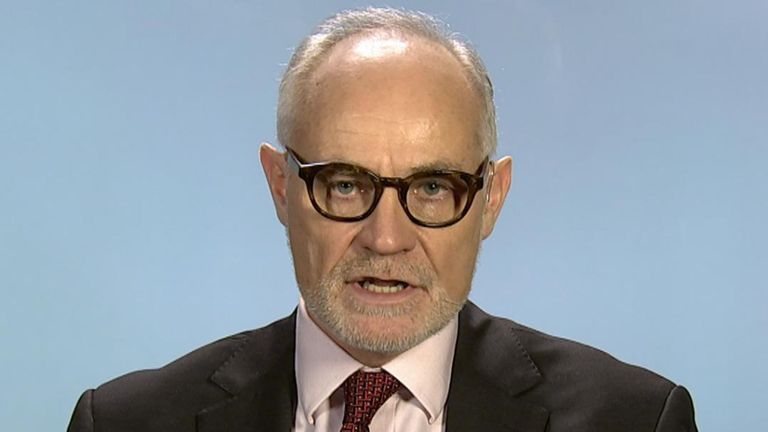
Last September I wrote about an unusually unbiased BBC World News interview with Crispin Blunt (pictured above), the (then) Chairman of the Foreign Affairs Select Committee. The interview highlighted an ongoing crisis of democracy and reflects a broader, longstanding and insidious establishment conflict with the Labour party. Blunt told Stephen Sackur during the interview that the government is not under any obligation to share intelligence information with the (then) new Labour leader Jeremy Corbyn. 

His comments came just days after a senior serving general, scaremongering anonymously in the Sunday Timessaid Corbyn’s victory had been greeted with “wholesale dismay” in the army. The general said that any plans to scrap Trident, pull out of Nato or announce “any plans to emasculate and shrink the size of the armed forces” will meet fierce opposition. His hint that some in the military planned an illegal seizure of the state if Corbyn wins the next General Election is particularly extraordinary. He said the army would “use whatever means possible, fair or foul to maintain security.”

A coup d’état is an anachronistic and violent method of political engineering that ordinarily happens only in one-party fascist, totalitarian and despotic states, it’s not an event you would expect to see used as a threat in a so-called first world liberal democracy.

Regardless of how far-fetched the threats may seem, that a general feels it’s okay to threaten a coup or “mutiny” against a future left wing government using the mainstream right-wing press as a mouthpiece is a cause for some concern. It’s a symptom of how oppressive the establishment have become, and how apparently acceptable it is to attack, discredit and threaten anyone who presents a challenge and an alternative perspective to the status quo.  

The nameless, gutless and anti-democratic general’s comments reminded me of the Zinoviev letter, and the other subversive plots in the 1960s and 1970s that were engineered by the establishment using the military and intelligence services to destabilise Harold Wilson’s government.

The Labour leader has said that as far as the party is concerned, the UK’s role in Nato is a matter for discussion for the shadow cabinet, the party at large and most importantly, the public. Emily Thornberry announced that there will be a public consultation regarding the value of the UK nuclear deterrent. That is, after all, the democratic thing to do.

The anonymous general claimed that there would be “mass resignations at all levels and you would face the very real prospect of an event which would effectively be a mutiny” if Corbyn became [democratically elected as] prime minister.

The threat, regardless of its authenticity, is undoubtedly part of a broader strategy of tension, designed purposefully to create public alarm – to portray the left as a threat to the well-being of society – and it has continued to reverberate around the media; used as part of an arsenal of pro-establishment, anti-progressive propaganda to discredit Corbyn and the left.  

Mr Blunt told BBC Hardtalk Stephen Sackur that the serving general’s opinion was “inappropriate”, did not reflect the view of the government and that if Jeremy Corbyn were elected prime minister the army like everyone else would have to carry out the instructions of the elected government. 

In the meantime, Blunt said that it was a matter for the government to decide how much access to “privileged information” the leader of the opposition had. There would be no point in passing on such information if it would not “achieve consensus.”

In other words, the government don’t want a critical and democratic dialogue about potential military decisions. They are refusing to include anyone else in crucial political decision-making processes.

Sackur said that as soon as Corbyn was elected, the Conservatives “issued propaganda” suggesting that Corbyn is a threat to national security. He also pointed directly to the government’s fundamental lack of accountability, transparency and democracy in the unprecedented move to refuse to share military and intelligence information, which is conventionally shared with the leader of the opposition.

Blunt simply confirmed Stephen Sackur’s point about the government’s lack of democracy, accountability and transparency. Sackur exposed the rank hypocrisy of a government that claims to be democratic, yet does not tolerate parties with differing views, nor does it invite or engage in dialogue and critical debate, choosing instead to exercise totalitarian control over what ought to be democratic decision-making, the will and thoughts of others, including the public that a government is meant to serve.


Perhaps a coup in the event of a left wing win in 2020 isn’t so far-fetched in the current oppressive political climate.

You can see the Hardtalk interview here, which is still up on the BBC iPlayer: http://bbc.in/1WgxmXF

From the Zinoviev letter to GBH and Spycatcher: the real enemy within

A scene from Alan Bleasdale’s perceptive GBH, a much misunderstood, darkly comedic series from 1991. Some commentators in the mainstream media at the time portrayed GBH as an indication that Bleasdale had shifted to the right, claiming that he was attempting to discredit the militant left. Many drew purposeful and convenient parallels with Derek Hatton and one of the central characters, Michael Murray.

However, for me there was a deeper, important and far more sinister message, which was not part of the mainstream conversation. Bleasdale’s central theme is an infiltation of the Labour party by MI5, ordered by the Conservative government at the time. Their aim was to recruit, manipulate and indoctrinate local “young bulls” with quasi left wing ideology to have them assist, unknowingly, in destablising and discrediting the Labour party in its entirety.

It’s certainly true that the far right, racism and social conflict always bloom and flourish under Conservative governments.

Fueling social tensions, MI5 agents provocateurs were prepared to use the ethnic communities to foster social division, in the hope of causing riots and ultimately, the hardened right wing thugs (MI5 were eventually revealed as the real thugs here) dismissed the minority groups as collateral damage, a callous, calculated move that was deemed necessary to destroy the Labour party.

MI5 staged a series of violent racist assaults on the city’s ethnic minorities, using hired local hardcases posing as police officers. They “made things happen.” Ultimately to preserve the status quo. In the drama, it’s eventually revealed that the plot to destablise the left involves Britain’s entire intelligence community.

Many felt that Bleasdale was portraying the end of socialism, but if he was, it was ultimately at the hand of the Tories – the real enemy within – not the militant left.

It’s not such a far-fetched “conspiracy theory”, especially in light of other developments, such as Peter Wright’s Spycatcher and Seamas Milne’s work The enemy Within.

The Zinoviev letter – one of the greatest but almost forgotten British political scandals of last century – was forged by a MI6 agent’s source and almost certainly leaked by MI6 or MI5 officers to the Conservative Party, according to an official report published in 1999.

Britain’s most senior security and intelligence officials discussed the smearing of the Labour party just as it was emerging as a major political force according to previously secret documents.

The potential repercussions of attempts by the intelligence agencies to damage the Labour party were debated at length by the little-known Secret Service Committee, later research – now released at the National Archives – shows.

Of course it was not the only time Britain’s intelligence agencies were implicated in attempts to destabilise a Labour government. A group of right wing intelligence officers attempted to destabilise Harold Wilson’s administrations in the 1960s and 70s.

One newly released document at the National Archives is a minute of the Secret Service Committee, dated 11 March 1927. It quotes Sir William Tyrrell, top official at the Foreign Office, referring to a conversation he had with the prime minister, Stanley Baldwin, about politically inspired leaks by the police special branch as well as the security and intelligence agencies.

Baldwin’s main concern, said Tyrrell, was the fear that the political work done at Scotland Yard might at any moment give rise to a scandal, owing to the Labour party obtaining some “plausible pretext to complain that a government department was being employed for party politics.”

On 8 October, 1924, Britain’s first Labour government lost a vote of confidence in the House of Commons. The next day the Foreign Office was evidently sent a copy of a letter, purportedly originally sent from Grigori Zinoviev, the president of Comintern, addressed to the central committee of the Communist Party of Great Britain. The letter urged the party to stir up the British proletariat and the military in preparation for class war.

On 25 October the letter appeared in the heavily Conservative-biased Daily Mail just four days before the election. The political and diplomatic repercussions were immense.

The Daily Mail published a series of sensationalist headlines:

  • Civil War Plot by Socialists’ Masters
  • Moscow Order to Our Reds
  • Great Plot Disclosed Yesterday
  • Paralyse the Army and Navy
  • Mr. MacDonald Would Lend Russia Our Money

Here is the entire Zinoviev letter:

Very secret

Executive Committee, Third Communist International.

To the Central Committee, British Communist Party.

Presidium, September 15, 1924. Moscow.

Dear Comrades,

The time is approaching for the Parliament of England to consider the Treaty concluded between the Governments of Great Britain and the S.S.S.R. for the purpose of ratification. The fierce campaign raised by the British bourgeoisie around the question shows that the majority of the same, together with reactionary circles, are against the Treaty for the purpose of breaking off an agreement consolidating the ties between the proletariats of the two countries leading to the restoration of normal relations between England and the S.S.S.R.

The proletariat of Great Britain, which pronounced its weighty word when danger threatened of a break-off of the past negotiations, and compelled the Government of MacDonald to conclude the treaty, must show the greatest possible energy in the further struggle for ratification and against the endeavours of British capitalists to compel Parliament to annul it.

It is indispensable to stir up the masses of the British proletariat to bring into movement the army of unemployed proletarians whose position can be improved only after a loan has been granted to the S.S.S.R. for the restoration of her economics and when business collaboration between the British and Russian proletariats has been put in order. It is imperative that the group in the Labour Party sympathising with the Treaty should bring increased pressure to bear upon the Government and Parliamentary circles in favour of the ratification of the Treaty.

Keep close observation over the leaders of the Labour Party, because these may easily be found in the leading strings of the bourgeoisie. The foreign policy of the Labour Party as it is, already represents an inferior copy of the policy of the Curzon Government. Organize a campaign of disclosure of the foreign policy of MacDonald.

The I.K.K.I. (Executive Committee, Third [Communist] International) will willingly place at your disposal the wide material in its possession regarding the activities of British Imperialism in the Middle and Far East. In the meanwhile, however, strain every nerve in the struggle for the ratification of the Treaty, in favour of a continuation of negotiations regarding the regulation of relations between the S.S.S.R. and England.

A settlement of relations between the two countries will assist in the revolutionising of the international and British proletariat not less than a successful rising in any of the working districts of England, as the establishment of close contact between the British and Russian proletariat, the exchange of delegations and workers, etc., will make it possible for us to extend and develop the propaganda of ideas of Leninism in England and the Colonies.

Armed warfare must be preceded by a struggle against the inclinations to compromise which are embedded among the majority of British workmen, against the ideas of evolution and peaceful extermination of capitalism. Only then will it be possible to count upon complete success of an armed insurrection. In Ireland and the Colonies the case is different; there is a national question, and this represents too great a factor for success for us to waste time on a prolonged preparation of the working class.

But even in England, as other countries, where the workers are politically developed, events themselves may more rapidly revolutionise the working masses than propaganda. For instance, a strike movement, repressions by the Government etc.

From your last report it is evident that agitation-propaganda work in the army is weak, in the navy a very little better. Your explanation that the quality of the members attracted justifies the quantity is right in principle, nevertheless it would be desirable to have cells in all the units of the troops, particularly among those quartered in the large centres of the country, and also among factories working on munitions and at military store depots. We request that the most particular attention be paid to these latter.

In the event of danger of war, with the aid of the latter and in contact with the transport workers, it is possible to paralyse all the military preparations of the bourgeoisie, and make a start in turning an imperialist war into a class war. Now more than ever we should be on our guard.

Attempts at intervention in China show that world imperialism is still full of vigour and is once more making endeavours to restore its shaken position and cause a new war, which as its final objective is to bring about the break-up of the Russian Proletariat and the suppression of the budding world revolution, and further would lead to the enslavement of the colonial peoples. ‘Danger of War’, ‘The Bourgeoisie seek War’, ‘Capital fresh Markets’ – these are the slogans which you must familiarise the masses with, with which you must go to work into the mass of the proletariat. These slogans will open to you the doors of comprehension of the masses, will help you to capture them and march under the banner of Communism.

The Military Section of the British Communist Party, so far as we are aware, further suffers from a lack of specialists, the future directors of the British Red Army.

It is time you thought of forming such a group, which together with the leaders, might be in the event of an outbreak of active strife, the brain of the military organisation of the party.

Go attentively through the lists of the military ‘cells’ detailing from them the more energetic and capable men, turn attention to the more talented military specialists who have for one reason or another, left the Service and hold Socialist views. Attract them into the ranks of the Communist Party if they desire honestly to serve the proletariat and desire in the future to direct not the blind mechanical forces in the service of the bourgeoisie, but a national army.

Form a directing operative head of the Military Section.

Do not put this off to a future moment, which may be pregnant with events and catch you unprepared.

Desiring you all success, both in organisation and in your struggle.

With Communist Greetings,

President of the Presidium of the I.K.K.I.

ZINOVIEV

Member of the Presidium: McMANUS

Secretary: KUUSINEN

Some historians say that the letter aided the Conservative party in hastening the collapse of the Liberal party which led to a decisive Conservative victory. Curiously, a now familiar tactic.

Others say the letter was an example of Conservative deceit, which in 1924, enabled Britain’s Conservative party to cheat their way to a general election victory. Personally, I’m inclined to believe the latter. It’s not as if the Conservatives have a history of democratic engagement, transparency, accountability and honesty, after all.

The letter came at a sensitive time in relations between Britain and the Soviet Union, due to the Conservative opposition to the parliamentary ratification of the Anglo-Soviet trade agreement of 8 August 1924.

The publication of the letter was severely embarrassing to Prime Minister James Ramsay MacDonald and his Labour party. The chance of a victory was dashed as the spectre of internal revolution and a government oblivious to the “red peril” dominated the public consciousness, via the media.

MacDonald’s attempts to establish doubt regarding the authenticity of the letter were catastrophically in vain, hampered by the document’s widespread acceptance amongst Tory government officials. MacDonald told his Cabinet he “felt like a man sewn in a sack and thrown into the sea.”

New light on the scandal which triggered the fall of the first Labour government in 1924 is shed in a study by Gill Bennett, chief historian at the Foreign Office, commissioned by Robin Cook in 1998.

Bennett’s investigation implicates Desmond Morton, an MI6 officer and close friend of Churchill who appointed him personal assistant during the second world war, and also points to Major Joseph Ball, an MI5 officer who joined Conservative Central Office in 1926. Ball later went on to be one of the earliest spin doctors – for the Tories.

The exact route of the forged letter to the Daily Mail will probably never be known. There were other possible conduits, including Stewart Menzies, a future head of MI6 who, according to MI6 files, admitted sending a copy to the Mail.

In summary, the letter was purported to be from Grigori Zinoviev, president of the Comintern, the internal communist organisation, called on British communists to mobilise “sympathetic forces” in the Labour party to support an Anglo-Soviet treaty (including a loan to the Bolshevik government) and to encourage “agitation-propaganda” in the armed forces.

As stated, on 25 October, 1924, just four days before the election, the Mail splashed headlines across its front page claiming: Civil War Plot by Socialists’ Masters: Moscow Orders To Our Reds; Great Plot Disclosed. Labour lost the election by a landslide.

Bennett said the letter “probably was leaked from SIS [the Secret Intelligence Service, commonly known as MI6] by somebody to the Conservative Party Central Office.” She named Major Ball and Mr Morton, who was responsible for assessing agents’ reports.

“I have my doubts as to whether he thought it was genuine but [Morton] treated it as if it was,” she said.

She described MI6 as being at the centre of the scandal, although it was impossible to say whether the head of MI6, Admiral Hugh Sinclair, was involved.

Bennett also said there was “no evidence of a conspiracy” in what she called “the institutional sense.”

But there was no evidence that refuted such a conspiracy either. The security and intelligence community at the time consisted of a “very, very incestuous circle, an elite network” who went to school together. Their allegiances, she says in her report, “lay firmly in the Conservative camp.”

Bennett had full access to secret files held by MI6 (though some have been destroyed) and MI5. She also saw Soviet archives in Moscow before writing her 128-page study. The files show the forged Zinoviev letter was widely circulated, including to senior army officers, to inflict maximum damage on the Labour government.

She found no evidence to identify the name of the forger. The report says there is no hard evidence that MI6 agents in Riga were directly responsible – though it is known they had close contacts with White Russians – or that the letter was commissioned in response to British intelligence services’ “uneasiness about its prospects under a re-elected Labour government.”

The report does not tie up loose ends. But by putting a huge amount of material into the public domain, it at least allows people to make up their own minds. Important questions remain, and may always go unanswered – such as who actually forged the letter.

However, if Bennett is right in her suggestion that MI6 chiefs did not set up the forgery, her report claims that MI6 deceived the Foreign Office by asserting it did know who the source was – a deception it used to insist, wrongly, that the Zinoviev letter was genuine.

Bennett claims that we cannot conclude the scandal brought down Ramsay Macdonald’s government, which had already lost a confidence vote and Liberal support on which it depended was disappearing.

“In electoral terms,” she says, “the impact of the Zinoviev letter on Labour was more psychological than measurable.”

I don’t agree.

Firstly, I think that it’s a fairly safe and balanced conclusion that the Intelligence Services lack diversity, with a strong tendency to recruit staunch establishmentarians. The impact was calculated to be measurable. Secondly, the media has always exercised enormously heavy influence on voters, I find it a little odd that such a connection was deemed insignificant. Especially given the wide use of black propaganda, very evident at the time.

Besides, this isn’t an isolated event, and there does appear to be an established relationship between Conservative governments and the secret services staging persistent attempts at “destabilising,” discrediting and smearing the left. And the media.

Fast-forward to more recent events, and low and behold, the mainstream media are still feeding us the fear-mongering and pseudo-warnings of an “evil Communist threat.” Last year we heard how the late Ralph Miliband “influenced” his son, “Red Ed,”  with the media claiming that the then Labour leader’s policies are founded on a “legacy of evil” and a “poisonous creed.” That’s once again according to the very pro-establishment, corrupt Daily Mail, of course. (See also: Tory Fascist Lie Machine The Daily Mail Has Met Its Match.) Same old tactics.

Miliband had established the International Anti-Austerity Alliance to challenge the neoliberal consensus, his progressive tax proposals and promise to implement the Leveson recommendations chafed the establishment’s ass.

The Comintern and Soviet government vehemently and consistently denied the authenticity of the document. Grigori Zinoviev issued a denial on 27 October 1924 (two days before the election), which was finally published in the December 1924 issue of The Communist Review, considerably well after the MacDonald government had fallen.

Zinoviev declared:

“The letter of 15th September, 1924, which has been attributed to me, is from the first to the last word, a forgery. Let us take the heading. The organisation of which I am the president never describes itself officially as the “Executive Committee of the Third Communist International”; the official name is “Executive Committee of the Communist International.” Equally incorrect is the signature, “The Chairman of the Presidium.” The forger has shown himself to be very stupid in his choice of the date. On the 15th of September, 1924, I was taking a holiday in Kislovodsk, and, therefore, could not have signed any official letter. […]

It is not difficult to understand why some of the leaders of the Liberal-Conservative bloc had recourse to such methods as the forging of documents. Apparently they seriously thought they would be able, at the last minute before the elections, to create confusion in the ranks of those electors who sincerely sympathise with the Treaty between England and the Soviet Union. It is much more difficult to understand why the English Foreign Office, which is still under the control of the Prime Minister, MacDonald, did not refrain from making use of such a white-guardist forgery.”

Peter Wright, a former MI5 officer, showed in Spycatcher – a candid autobiography – how elements in his agency worked against the Wilson government in the 1970s.

Despite the Thatcher government’s attempts to prevent publication, the book gained worldwide attention. MI5’s own archives have shown there was a “permanent file” on the Labour leader throughout his time in office. He is the only serving prime minister to have a permanent Secret Service file.

MI5 opened the dossier in 1945 when Mr Wilson became an MP after communist civil servants suggested he had similar “political sympathies.”

His file was so secret that he was given the pseudonym Norman John Worthington.

Sir Michael Hanley, MI5 director general from 1972, went to even greater lengths to conceal its existence by removing it from the central index, meaning any search would result in a “no trace.”

Personal permission from Sir Michael was required to access it.

This is backed up by corroborating interviews with senior figures at the time.

These events unfolded at a time when the establishment, from the intelligence services down to parts of Fleet Street, were paranoid about the “threat of communism.” So paranoid it seems they were prepared to believe a prime minister of Britain was an active Soviet spy.

At a time of continuing Cold War tensions, industrial unrest was rife, the country had suffered power cuts and a three-day working week and in 1975 the government was being warned privately that the consequences would be severe if it could not curb inflation.

Whilst some on the hard left believed revolution was imminent, former military figures, angry at the extent of union control, were building private armies, in preparation for the coming conflict, according to the then BBC investigative journalist Barrie Penrose. (Penrose co-authored The Pencourt File with another journalist, Roger Courtiour.)

Meetings with Wilson were secretly recorded in 1976 by both the journalists (Penrose and Courtiour) weeks after his shock departure from Number 10.

“Wilson spoke darkly of two military coups which he said had been planned to overthrow his government in the late 1960s and in the mid 1970s,” Penrose writes.

Wilson told the journalists they “should investigate the forces that are threatening democratic countries like Britain.”

In his book, Peter Wright also tells of a plot to force Wilson’s resignation by MI5 agents who were convinced he was a Communist spy. Wright’s account is often dismissed as an exaggeration, but fresh evidence of plots surfaced in 2006.

Penrose says that witnesses confirm such plotting “wasn’t in the fevered imagination of an embittered ex-PM.”

Writing about the drama documentary The Plot Against Harold Wilson, shown on BBC Two at 21:00 on Thursday 16 March, 2006, Penrose concludes:

“You may ask, at the end of the programme, how much of it can be believed. My view now, as it was then, is that Wilson was right in his fears…. in answer to the question ‘how close did we come to a military government’ I can only say – closer than we’d ever be content to think.”


Harold Wilson, Aneurin Bevan, Ian Mikardo, Tom Driberg and Barbara Castle of the Keep Left Group (1951)

Chris Mullins, a former Foreign Office minister and author, writes:

“By the time A Very British Coup was published, in 1982, the political climate was even more propitious. Prompted by the imminent arrival of cruise missiles, CND demonstrations were attracting crowds in excess of 200,000. The establishment was getting so twitchy that, as we later learned, Michael Heseltine had set up a special unit in the Ministry of Defence to counter the impact of CND.

The US was getting twitchy too. When A Very British Coup was published I was editor of the political weekly Tribune, and we were selling the book by mail order through the paper. A few days after the first advert appeared we were intrigued to receive an order from the US embassy. We duly dispatched a copy and waited to see what would happen next. We did not have to wait long.

An invitation arrived to lunch with the minister, the most important man at the embassy after the ambassador. He even sent his bullet-proof Cadillac to Tribune’s modest headquarters in Gray’s Inn Road to convey me to his mansion in Kensington.

At first I assumed that I was one of a number of guests, but no: there was just the minister, two of his colleagues, an Asian butler and myself.

“Why are you interested in a minnow like me?” I inquired.

“I reckon,” he drawled, “that you are among the top 1,000 opinion formers in the country.”

“Well, I must be about number 999.”

“The other 999 have been here too.”

A year or two later I received from an anonymous source an envelope posted in Brussels. It contained an internal US state department memorandum addressed to US diplomats in London listing a number of questions they were to put to “authorised contacts” in London regarding the balance of power within the Labour party and opinion regarding the US bases in general and the impending arrival of cruise missiles in particular. Although, in retrospect, we can see they had no cause for concern, there is no doubt that alarm bells were ringing in Washington.

A Very British Coup attracted attention elsewhere too. It was helpfully denounced in the correspondence columns of the Times, and as a result sales in Hatchards of Piccadilly almost matched those at the leftwing bookshop Collets. (When it comes to selling books, a high-profile denunciation is worth half a dozen friendly reviews and I have always done my best to organise one).

Thereafter interest might have faded, but for events conspiring to make it topical. In August 1985 the Observer revealed that an MI5 officer, Brigadier Ronnie Stoneham, was to be found in room 105 at Broadcasting House. His job? Stamping upturned Christmas trees on the personnel files of BBC employees he deemed to be unsuitable for promotion. Students of A Very British Coup will know that my head of MI5, Sir Peregrine Craddock, was also vetting BBC employees. What’s more, he also had a spy on the general council of CND – and in due course the MI5 defector Cathy Massiter revealed that there had indeed been such a spy. His name was Harry Newton.

Finally, in 1987 Peter Wright, a retired MI5 officer, caused a sensation with his claim that he and a group of MI5 colleagues had plotted to undermine the Wilson government. Suddenly the possibility that the British establishment might conspire with its friends across the Atlantic to destabilise the elected government could no longer be dismissed as leftwing paranoia.”

The Enemy Within

Margaret Thatcher branded Arthur Scargill and the other leaders of the 1984-5 miners’ strike the enemy within. With the publication of Seumas Milne’s bestselling book a decade later, the full irony of that accusation became clear. There was an enemy within. But it was not the National Union of Mineworkers (NUM) that was out to subvert liberty. It was the secret services of the British state – operating inside the NUM itself.

Seumas Milne reveals the astonishing lengths to which the government and its intelligence machine were prepared to go to destroy the power of Britain’s miners’ union. Using phoney bank deposits, staged cash drops, forged documents, agents provocateurs and unrelenting surveillance, MI5 and police Special Branch set out to discredit Scargill and other miners’ leaders.

Now we know that the Tory prime minister intended to extend the charge of seditious insurrection, not only to left wing Labour councils in Liverpool and London resisting cuts in services, but against the Labour party as a whole.

Planted tales of corruption were seized on by the media and both Tory and Labour politicians in what became an unprecedentedly savage smear campaign. This is one of the UK’s most important post-war class confrontations. We are currently facing another in the form of a battle for the heart and soul of the Labour party – Corbyn has come to represent for many among the working classes that very heart and soul, still beating strongly under a gangrened body of neoliberal apologists and class traitors.. 

Milne has highlighted the continuing threat posed by the security services to democracy today.

Milne describes the Conservative government’s systematic resort to anti-democratic measures to break the resistance of Britain’s most powerful union: from the use of the police and security services to infiltrate and undermine the miners’ union to the manipulation of the courts and media to discredit and tie the hands of its leaders.

He says:

“A decade after the strike, I called the book I wrote about that secret war against the miners “The Enemy Within”, because the phrase turned out to have multiple layers of meaning. As the evidence has piled up with each new edition, the charge that Thatcher laid at the door of the National Union of Mineworkers can in fact be seen to fit her own government’s use of the secret state far better.

It wasn’t just the militarised police occupation of the coalfields; the 11,000 arrests, deaths, police assaults, mass jailings and sackings; the roadblocks, fitups and false prosecutions – most infamously at the Orgreave coking plant where an orgy of police violence in June 1984 was followed by a failed attempt to prosecute 95 miners for riot on the basis of false evidence.

It’s that under the prime minister’s guidance, MI5, police Special Branch, GCHQ and the NSA were mobilised not only to spy on the NUM on an industrial scale, but to employ agents provocateurs at the highest level of the union, dirty tricks, slush funds, false allegations, forgeries, phoney cash deposits and multiple secretly sponsored legal actions to break the defence of the mining communities.

In the years since, Thatcher and her former ministers and intelligence mandarins have defended such covert action by insisting the NUM leaders were “subversive” because they wanted to bring down the government. Which of course they did – but “legitimately,” as Scargill remarked recently, by bringing about a general election – as took place in the wake of the successful coal strike of 1974.

In reality, as 50 MPs declared when some of these revelations first surfaced, Thatcher’s government and its security apparatus were themselves guilty of the mass “subversion of democratic liberties”. And, as the large-scale malpractices of police undercover units have driven home in the past couple of years, their successors are still at it today.”


The insidious threat to democracy is still very real, hidden in plain view. And plain clothes.

File:MI5 crest and logo.png

See also:

Wilson, MI5 and the rise of Thatcher – Lobster

Bugger – Adam Curtis

How Covert Agents Infiltrate the Internet to Manipulate, Deceive, and Destroy Reputations – Glenn Greenwald

Controversial GCHQ Unit Engaged in Domestic Law Enforcement, Online Propaganda, Psychology Research – Glenn Greenwald and Andrew Fishman

Think the idea of UK leftie movements being infiltrated is all a conspiracy theory? Here are some of the times it’s actually happened – Raphael Schlembach


I don’t currently make any money at all from my work and I’m not funded. But you can support Politics and Insights and contribute by making a donation which will help me continue to research and write informative, insightful and independent articles and to provide support to others. I co-run groups to support disabled people going through the claims, review and appeal process. The smallest amount is much appreciated, and helps to keep my articles free and accessible to all – thank you.

DonatenowButton

I wrote this article for Scisco Media, a new and revolutionary independent platform for news, analysis and alternative media. 

UK government is trialing the use of virtual food voucher-styled currency as social security payments

th

Smart Cards entered our collective consciousness during autumn 2012, as Iain Duncan Smith declared his intention to discipline Britain’s “troubled” families. In unveiling his proposals at the Conservative Conference back in October 2012, Duncan Smith attempted to frame the cards as better value for taxpayers’ money, implying that poor people don’t pay taxes, (when the poorest actually pay proportionally more) and his rhetoric was extremely stigmatising.

He said: I am looking […] at ways in which we could ensure that money we give [benefit claimants] to support their lives is not used to support a certain lifestyle.”  [Boldings mine.]

Then MP Alex Shelbrooke presented his private member’s bill in December 2012, providing us with yet another shuddering glimpse into the underlying Tory moral outrage, prejudice and punitive attitudes towards people claiming benefits. He argued for a “welfare cash card” to limit spending to absolute basics. Isn’t welfare provision as it is just enough to cover the absolute basics for survival? It’s calculated to meet the cost of food, fuel and shelter only.

Despite his scapegoating narrative about addressing “idleness”, Shelbrooke’s proposal  was intended to apply to those in work, who claim benefits such as tax credits and housing benefit, penalising and outgrouping those on a minimum or low wage, also. The plan was to restrict the goods that people claiming benefits could buy with their cards. Not so much offering a “nudge” or “incentive”, but rather, a bludgeoning enforcement. 

Government proposals: virtual food vouchers and automated nudge

Earlier this year, the government set out proposals in a report regarding how Blockchain Technologies’ distributed ledger technology which provides “efficient and transparent” digital records of cryptocurrency transactions, could be used for public services. In their report called Distributed Ledger Technology: Beyond block chain, the government’s scientific advisor says:

“Distributed ledger technology (DLTs) offer significant challenges to established orthodoxy and assumptions of best practice, far beyond the recording of transactions and ledgers. These potentially revolutionary organisational structures and practices should be experimentally trialed — perhaps in the form of technical and non-technical demonstrator projects — so that practical, legal and policy implications can be explored.”

“Areas where we believe work could be taken forward include the protection of national infrastructure, reducing market friction for SMEs [Small and medium-sized enterprises] and the distribution of funds from Department for Work and Pensions and other government departments.” [Boldings mine.]

A distributed ledger is a database that can record financial, physical or electronic assets for sharing across a network through what is claimed to be entirely transparent updates of information.

Its first incarnation was Blockchain in 2008, which underpinned digital cash systems such as Bitcoin. The technology has now evolved into a variety of models that may be applied to different business problems.

Speaking at Payments Innovation Conference earlier this month, Lord Freud, one of the main architects of the welfare “reforms” said:

“Claimants are using an app on their phones through which they are receiving and spending their benefit payments. With their consent, their transactions are being recorded on a distributed ledger to support their financial management.”

The Department for Work and Pensions (DWP) has been working withBarclays, Npower, University College London and a UK-based distributed ledger platform startup called GovCoin to create an app which tracks people’s benefit spending

The ongoing trial which, is designed to demonstrate “the practical applications of the technology,” began in June. It’s another Conservative experiment on people claiming social security.

Jeremy Wilson, the vice chairman of corporate banking at Barclays, said: “This initiative focuses on adding an additional layer of richer data and identity onto payments, so that a deeper and more effective relationship can be established between the government and claimants.”

I wonder exactly what that “effective relationship” will entail? I bet it’s not one based on mutual respect and democratic dialogue. I also wonder if the Department for Work and Pensions will be issuing people who have no income with Smart phones. 

How will the collected information on spending be used? Are we going to see people claiming social security being named and shamed for buying Mars bars, a bottle of wine or a book? Or birthday and Christmas presents for their children? Will the state be sanctioning people that make purchases which the government deems “unnecessary”? 

He added: “We are keen to see how the positive potential of this service develops and adds to our wider efforts to explore the uses of distributed ledger technology.”

Distributed ledger technology was identified as a way of potentially “saving billions of pounds a year from welfare fraud and overpayment errors.“

Oh, that whoppingly over-inflated  0.7% of claimants again. Just imagine how many trillions we would save if we used technology to get a grip of tax avoidance. 

The technology is hoped to provide a cheap and easy way of getting welfare claimants without bank accounts into the system as well as verifying their identities, and would also provide a “transparent account of how public money was spent, transform the delivery of public services and boost productivity,” the government’s chief science adviser, Sir Mark Walport, said in a report last January. Those same words are used every time vulture capitalists are circling a public service.

Walport said: “Distributed ledger technology has the potential to transform the delivery of public and private services.” More words from the vulture capitalist crib sheet of glittering generalities.

“It has the potential to redefine the relationship between government and the citizen in terms of data sharing, transparency and trust and make a leading contribution to the government’s digital transformation plan.”

The government distributes £3.8bn in payments every day. However, there are some concerns over how protection of data and privacy with the technology will be “managed.”

The Open Data Institute welcomed the findings on the whole. However, it warned that the government must be wary of the challenges involved in blockchain technology and apply it in an effective way. They say: “We agree that blockchains could be used to build confidence in government services, through public auditability, and could also be used for widely distributed data collection and publishing, such as supply chain information. Smart contracts also hold great potential; what if your train tickets were smart contracts that meant you paid less for delayed trains?” 

Smart cards and smart contracts, the more things change, the more the Tories stay the same.

Further: “However, in our research we have seen cases where people are trying to bolt old, failed or impossible policy and business ideas onto the new technology or to unnecessarily reinvent things that work perfectly well.”

The institute also warned of the privacy issues raised by incorporating private data and suggested the government better develop and solve these challenges by focusing on industry specific groups such as the finance or healthcare sectors.

Having failed in introducing the punitive smart card more than once, the Conservatives are now resorting to a stealthy introduction of a variation to curtail the freedom of poor people claiming social security, using cryptocurrency, state regulation and an unprecedented, Orwellian level of state monitoring and control of what people who are struggling to make ends meet are buying. 

Some further thoughts

Conservatives claim to endorse personal responsibility, limited government, free markets, individual liberty, and deregulation, amongst other things. They believe the role of government should be to provide people the freedom necessary to pursue their own goals. Conservatives claim their policies generally emphasise “empowerment of the individual to solve problems”. So how does any of this tally with harsh welfare cuts, public service cuts, restrictions on the right to by certain goods, the removal of access to legal aid, limiting housing options for the poorest, bedroom tax, numerous human rights contraventions, psychocompulsion through increasingly stringent welfare “conditionality” and  the draconian sanction regime, for example?

Limiting “consumer choice” and spending flies in the face of the Tories’ own free market dogma. Furthermore, as it stands legally, the government cannot currently stipulate how people claiming benefits spend their money.

The Tory definition of “troubled family” conflates poverty, ill health, unemployment and criminality. Iain Duncan Smith claims to be targeting substance abusers (“drug addicts” and “alcoholics”) but it’s clear that the government’s definition means he’s referring largely to the poor and disabled people. His proposal to deal with people who don’t buy their children food because they’re “drug addicted” would actually target people who don’t buy food because they can’t afford it.


blockchain_2-large_trans++LNxyO0DwVu6AfV8OD9VhqByRWR8tXKJRXAf-JOaUjFA
This was taken from a longer article: State-regulated cryptocurrency and micro-managing people claiming welfare


This post was written for Welfare Weekly, which is a socially responsible and ethical news provider, specialising in social welfare related news and opinion.


Social service funding crisis deepens

gret deceit

Research, carried out before the referendum on the UK’s membership of the European Union, has highlighted fundamental problems concerning how different social services will be affected in the future, including adult social care. The survey included all 151 adult social services directors in England, and it has found that despite charging residents extra council tax to pay for social care, and disabled clients now have to pay for social services from their disability benefits (care component), the additional revenue isn’t sufficient to cover the cost of the new National Living Wage (NLW), nor will it address the huge shortfall in funding to meet increasing public demand.

The research published yesterday by the Association of Directors of Adult Social Services (ADASS) indicates that the precept, introduced in the Autumn Statement 2015 to give councils the option to raise council tax by 2 per cent for adult social care, will generate less than two thirds of the more than £600 million needed to cover the NLW this year, leaving directors  with a gap to fill of around £940 million just to keep essential services operating at last year’s levels – and at a time when demand from people who need support is steadily increasing.

ADASS President Harold Bodmer said:

“Councils are working hard to protect adult social services budgets, with adult social care accounting for 35 per cent of council spending for the third year running. However, with more people needing support and having increasingly complex needs, the impact of the welcome national living wage, and other cost pressures, fewer people are getting help, and councils are having to make reductions which will impact on people who receive care.

“More money needs to be invested in prevention to reduce future demand, but with funding under such pressure and diverted to those with greatest and immediate need – those that we have a statutory duty towards – the opportunity to do that is being taken away.

“We have been arguing for some time now that adult social care needs to be given the same protection and investment as the NHS. Services are already being cut, and the outlook for future care is bleak. We’re at a tipping point where social care is in jeopardy, and unless the Government addresses the chronic underfunding of the sector, there will be worrying consequences for the NHS and, most importantly, older and disabled people, their families and carers.”

The survey also found that more people in need were being affected by the crisis in social care funding:

  • Despite a 3 per cent increase in the older population, there has not been a corresponding rise in people receiving care;
  • At least 24 per cent of the £941 million (7 per cent) savings that adult social services directors will be expected to make this year will come from cutting services or reducing personal budgets;
  • 80 per cent of directors reported that care providers – both care home owners and home care providers – were facing financial difficulties and closing care homes or handing back contracts to councils, affecting thousands of people, despite 82 per cent of councils increasing fees to providers.

Mr Bodmer added:

“ADASS will be closely monitoring the potential impact of the referendum result on the economy and funding of adult social services, and we’ve extended our support to the 80,000 EU staff who are providing care to people right across the country, every day.

“While these may be uncertain times, the most important thing to remember is that people’s needs for care won’t stop. We still have a responsibility to make sure people are getting the support they need to live independent, valuable lives, and to plan ahead as best we possibly can.”

Although the overall budget for adult social services has risen slightly from last year because of the revenue raised due to the precept, from £13.65 billion to £13.82 billion, there is wide variation between individual councils, with 70 of 151 reporting a fall in budgets. 62 councils needed to draw on the reserves from last year to fund significant budget shortfalls, whilst 52 had been forced to cut services to balance budgets. 

And of course the precept also raises the least amount of money in the areas of greatest need, intensifying existing budget pressures.

Related

Children’s social workers ‘under immense pressure’, say MPs


This post was written for Welfare Weekly, which is a socially responsible and ethical news provider, specialising in social welfare related news and opinion.

State-regulated cryptocurrency and micro-managing people claiming welfare

blockchain_2-large_trans++LNxyO0DwVu6AfV8OD9VhqByRWR8tXKJRXAf-JOaUjFA


Context

I’ve written more than one critical piece about the Government’s part-privatised Behavioural Insights Team (Nudge Unit), particularly with regard to its insidious and malevolent influence, manifested in a range of psychoregulation policies aimed at “behavioural changes” which are being imposed on the poorest citizens. Technocracy is the “science of social engineering.” Nudge is a technocratic approach to fulfilling the requirements of neoliberalism. It’s about maintaining an established socioeconomic order, rather than advancing progressive social change.

In 1932, Howard Scott and Marion King Hubbert founded Technocracy Incorporated, and proposed that money be replaced by energy certificates. The group argued that “apolitical, rational engineers should be vested with authority to guide an economy into a thermodynamically balanced load of production and consumption, thereby doing away with unemployment and debt.” Sounds just like old school sociological Functionalism to me: it’s a systems theory  – utterly tautological and deterministic tosh. Bear with me, because there’s a couple of contemporary parallels I want to discuss.

The Conservatives prefer to do away with unemployment and debt by “incentivising behaviour change” to ensure that poor people who don’t have any money to live on are punished out of their poverty. 

Smart Cards, another antiwelfarist, technocratic imposition, entered our collective consciousness during autumn 2012, as Iain Duncan Smith declared his intention to discipline Britain’s “troubled” families. In unveiling his proposals at the Conservative Conference back in October 2012, Duncan Smith attempted to frame the cards as better value for taxpayers’ money, implying that poor people don’t pay taxes, (when the poorest actually pay proportionally more) and his rhetoric was extremely stigmatising.

He said: I am looking […] at ways in which we could ensure that money we give [benefit claimants] to support their lives is not used to support a certain lifestyle.”  [Boldings mine.]

Then MP Alex Shelbrooke presented his private member’s bill in December 2012, providing us with yet another shuddering glimpse into the underlying Tory moral outrage, prejudice and punitive attitudes towards people claiming benefits. He argued for a “welfare cash card” to limit spending to absolute basics. Isn’t welfare provision as it is just enough to cover the absolute basics for survival? It’s calculated to meet the basic cost of food, fuel and shelter only.

Despite his scapegoating narrative about addressing “idleness”, Shelbrooke’s proposed psychocompulsion was intended to apply to those in work, who claim benefits such as tax credits and housing benefit, penalising and outgrouping those on a minimum or low wage, also. The plan was to restrict the goods that people claiming benefits could buy with their cards. Not so much offering a “nudge” or “incentive”, but rather, delivering a bludgeoning enforcement, without a shred of respect for diverse needs and individuals’ autonomy and choice. 

A principled objection is that we should not be stigmatising or inflicting punishments on people, or reducing their freedom to spend money as they need and wish, just because they are forced to spend some time out of work, or because they aren’t paid a wage that is sufficient to live on. Such an approach is extremely draconian.

Having been previously rejected, this is certainly not a democratically endorsed policy.

This is an authoritarian restriction on what people claiming benefits may buy, and a limiting of lifestyle choices that they are permitted. It is a particularly spitefully directed ideological move that does not make any sense in terms of the wider economy, or in terms of any notion of “supporting” people, and “fairness.” The latter two categories of reason would entail extending opportunities and freedoms, not repressing them. 

Financial hardship already limits choice. When people are struggling financially, budgeting isn’t the problem: low wages, benefit cuts and rising costs of essential items are. Those factors are ultimately shaped by government policies, not poor people.

No matter how this is dressed up by the Tories, poor people don’t respond to “corrective” narratives and coercive policy like Pavlov’s dogs. Yet the Tories nevertheless insist on placing a psychopolitical variant of operant conditioning – behaviour modification – at the core of their increasingly repressive class-contingent policies. This isn’t about state “assistance” for the entitled poor, most of who have worked and contributed to the treasury, contrary to the politically expedient “economic free rider” label.  It’s about traditional Tory prejudices, state interference and coercion. It’s more blaming and punishing the casualities of neoliberalism and social conservatism. 

Having failed in introducing the punitive smart card more than once, the Conservatives are now resorting to a stealthy introduction of a variation to curtail the freedom of poor people claiming social security, using cryptocurrency, state regulation and an unprecedented, Orwellian level of state monitoring and control of what people who are struggling to make ends meet are buying. 

th

Some basic (but wordy) definitions

Cryptocurrency is a medium of exchange, alternative to Fiat currencies, which uses a type of virtual currency, such as bitcoin. It uses cryptography for security and anti-counterfeiting measures. Public and private keys are often used to transfer cryptocurrency between individuals. Ownership of bitcoins, for example, implies that a user can spend bitcoins associated with a specific address. To do so, a payer must digitally sign the transaction using the corresponding private key. Without knowledge of the private key, the transaction cannot be signed and bitcoins cannot be spent. The network verifies the signature using the public key.

Bitcoin is a pseudonymous currency, meaning that funds are not tied to real-world entities, but rather, to bitcoin addresses. For cryptocurrency enthusiasts, the pseudoanonymity element is attractive, as it tends to empower individuals rather than institutions. Cryptocurrencies typically feature decentralised and unregulated control, and transactions are recorded in a public distributed ledger called the blockchain. 

Owners of bitcoin addresses are not explicitly identified, but all transactions on the blockchain are public

The value of a cryptocurrency is determined by the market (whatever people are willing to pay for it). The welfare or state of your nation’s economy will not affect the value of your cryptocurrency. The value of a cryptocurrency is based solely on global supply and demand and functions much like a commodity on the stock market.

Cryptocurrencies are ordinarily used outside of existing banking and governmental institutions and exchanged over the Internet. They have often been seen by the establishment as a “rogue currency”, and as a potential threat to the monetary order. Because of the pseudoanonymity afforded by “virtual assets”, cryptocurrency is also sometimes used in controversial settings such as online darknet markets, like Silk Road, accessible by Tor, (free software for enabling anonymous communication, it conceals a user’s location and usage) which further minimises the risk of detection by law enforcement agencies. (See: Silk Road and Bitcoin.)

People in Russia and China have been bypassing very strict surveillance laws by using bitcoin-like cryptocurrencies in order to communicate securely. Cryptocurrencies, starting with bitcoin, have emerged and been increasingly utilised almost in parallel with revelations from National Security Agency (NSA) whistle-blower Edward Snowden about mass government surveillance. 

As the sheer extent of government spying still continues to emerge, encrypted communication services become important and have surged in popularity. Tech companies, including Facebook, Google and Apple, have capitalised on this by adding encryption to their services. However revelations that these same companies seem complicit in the NSA’s surveillance operations have led to some reservations from users. Now it seems the UK government wants to utilise cryptocurrency, inverting the political freedom it allowed by turning it into a tool of state control. 

Government proposals: virtual food vouchers and automated nudge

Earlier this year, the government set out proposals in a report regarding how Blockchain Technologies’ distributed ledger technology which provides “efficient and transparent” digital records of cryptocurrency transactions, could be used for public services. In their report called Distributed Ledger Technology: Beyond block chain, the government’s scientific advisor says:

“Distributed ledger technology (DLTs) offer significant challenges to established orthodoxy and assumptions of best practice, far beyond the recording of transactions and ledgers. These potentially revolutionary organisational structures and practices should be experimentally trialed — perhaps in the form of technical and non-technical demonstrator projects — so that practical, legal and policy implications can be explored.”

“Areas where we believe work could be taken forward include the protection of national infrastructure, reducing market friction for SMEs [Small and medium-sized enterprises] and the distribution of funds from Department for Work and Pensions and other government departments.” [Boldings mine.]

To recap, a distributed ledger is a database that can record financial, physical or electronic assets for sharing across a network through what is claimed to be entirely transparent updates of information.

Its first incarnation was Blockchain in 2008, which underpinned digital cash systems such as Bitcoin. The technology has now evolved into a variety of models that may be applied to different business problems.

Speaking at Payments Innovation Conference earlier this month, Lord Freud, one of the main architects of the welfare “reforms” said:

“Claimants are using an app on their phones through which they are receiving and spending their benefit payments. With their consent, their transactions are being recorded on a distributed ledger to support their financial management.”

The Department for Work and Pensions (DWP) has been working with Barclays, Npower, University College London and a UK-based distributed ledger platform startup called GovCoin to create an app which tracks people’s benefit spending

The ongoing trial which, is designed to demonstrate “the practical applications of the technology,” began in June. It’s yet another Conservative experiment on people claiming social security.

Jeremy Wilson, the vice chairman of corporate banking at Barclays, said: “This initiative focuses on adding an additional layer of richer data and identity onto payments, so that a deeper and more effective relationship can be established between the government and claimants.”

I wonder exactly what that “effective relationship” will entail? I bet it’s not one based on mutual respect and democratic dialogue. I also wonder if the Department for Work and Pensions will be issuing people who have no income with Smart phones. 

How will the collected information on spending be used? Are we going to see people claiming social security being named and shamed for buying Mars bars, a bottle of wine or a book? Or birthday and Christmas presents for their children? Will the state be sanctioning people that make purchases which the government deems “unnecessary”? 

He added: “We are keen to see how the positive potential of this service develops and adds to our wider efforts to explore the uses of distributed ledger technology.”

Distributed ledger technology was identified as a way of potentially “saving billions of pounds a year from welfare fraud and overpayment errors.”

Oh, that whoppingly over-inflated 0.7% of claimants again. Many of whom were simply overpaid as the result of an administrative error, after all. Just imagine how many trillions we would save if we used technology to get a grip of tax avoidance and tackle offshore tax havens, and addressing the “spending habits” of the hoarding wealthy. 

The technology is hoped to provide a cheap and easy way of getting welfare claimants without bank accounts into the system as well as verifying their identities, and would also provide a “transparent account of how public money was spent, transform the delivery of public services and boost productivity,” the government’s chief science adviser, Sir Mark Walport, said in a report last January. Those same words are used every time vulture capitalists are circling a public service, on the hunt for easy profits.

Walport said: “Distributed ledger technology has the potential to transform the delivery of public and private services.”  

More words from the vulture capitalist crib sheet of glittering generalities.

“It has the potential to redefine the relationship between government and the citizen in terms of data sharing, transparency and trust and make a leading contribution to the government’s digital transformation plan.”

The government distributes £3.8bn in payments every day. However, there are some serious concerns over how protection of data and privacy with the technology will be “managed.”

The Open Data Institute (ODI) welcomed the findings on the whole. However, it warned that the government must be wary of the challenges involved in blockchain technology and apply it in an effective way. They say: “We agree that blockchains could be used to build confidence in government services, through public auditability, and could also be used for widely distributed data collection and publishing, such as supply chain information. Smart contracts also hold great potential; what if your train tickets were smart contracts that meant you paid less for delayed trains?” 

Smart cards and smart contracts, the more things change, the more the Tories stay the same.

Further comment from the ODI: “However, in our research we have seen cases where people are trying to bolt old, failed or impossible policy and business ideas onto the new technology or to unnecessarily reinvent things that work perfectly well.”

The institute also warned of the privacy issues raised by incorporating private data and suggested the government better develop and solve these challenges by focusing on industry specific groups such as the finance or healthcare sectors.

Some thoughts

Conservatives claim to endorse personal responsibility, limited government, free markets, individual liberty, and deregulation, amongst other things. They believe the role of government should be to provide people the freedom necessary to pursue their own goals. Conservatives claim their policies generally emphasise “empowerment of the individual to solve problems”.

So how does any of this tally with harsh welfare cuts, public service cuts, restrictions on the right to by certain goods, the removal of access to legal aid, limiting housing options for the poorest, bedroom tax, numerous human rights contraventions, increasing conditionality for ill and disabled people, psychocompulsion through increasingly stringent welfare behavioural conditionality and the draconian sanction regime, for example?

Limiting consumer choice and spending flies in the face of the Tories’ own free market dogma. Furthermore, as it stands legally, the government cannot currently stipulate how people claiming benefits spend their money. So they would have to re-write the law to suit their “policy outcomes.” Again.

The Tory definition of “troubled family” conflates poverty, ill health, unemployment and criminality. Iain Duncan Smith claims to be targeting substance abusers (“drug addicts” and “alcoholics”) but it’s clear that the government’s definition means he’s referring largely to the poor and disabled people. His proposal to deal with people who don’t buy their children food because they’re “drug addicted” would actually target people who don’t buy food because they can’t afford it.

Once again we see the disciplinarian and psychocratic Tories stigmatising the poorest people for the conditions that Tory policies have caused. If such “troubled families” existed (and the Joseph Rowntree foundation research has put paid to the myth of  “families with three generations unemployed”), it would not be reasonable to treat their situations as an issue of personal spending choices rather than a consequence of how our economy is run.

The Tories have, over the past five years, parodied a political process that is supposed to be about engaging the publics’ rational, conscious minds, as well as facilitating their needs within society. The UK is not an inclusive democracy. Instead we see the employment of a behaviourist brand of psychocomplulsion, and the media are complicit in propping up an increasingly incoherent, irrational and profoundly prejudiced ideology which informs class-contingent, anti-social and deeply damaging neoliberal policies.

I’ve pointed out previously that government policies are expressed political intentions regarding how our society is organised and governed. They have calculated social and economic aims and consequences.

In democratic societies, citizen’s accounts of the impacts of policies ought to matter. “Accountability to the taxpayer” is being used more and more by the state as a justification to exclude those needing financial support from democratic society. Yet those people claiming benefits are not the same people year by year. The “economic free-rider” myth assumes that people claiming welfare do so continuously, yet we know that most move in and out of work, being forced to undertake insecure, poorly paid work regularly. It’s hardly fair to punish people for the detrimental conditions of the wider labor market.

In the UK, the way that policies are justified is being increasingly detached from their aims and consequences, partly because democratic processes and basic human rights are being disassembled or side-stepped, and partly because the government employs the widespread use of linguistic strategies and techniques of persuasion to intentionally divert us from their aims and the consequences of their ideologically (rather than rationally) driven policies. Furthermore, policies have become increasingly detached from public interests and needs. Instead, policy is about directing us in how to be. We are being coerced into behaving only in ways that accommodate and prop up neoliberalism.

Neoliberalism is a system of economic arrangements that greatly benefits a few powerful and wealthy people and impoverishes the majority of the public incrementally. As each social group reaches a crisis – struggling to survive – scapegoating narratives are constructed and disseminated via the media that blame them for their insolvency, creating socially divisive and politically managed categories of “others,” which serve to de-empathise the rest of the population and divert them from the fundamental fact that it isn’t the poor that create poverty: it is the neoliberal decision-makers and those who are steadily removing and privatising our public funds and ebulliently shrinking state responsibility towards citizens, leaving many at the mercy of “market forces” without a state safety net – it’s economic Darwinism.

“Workers of the World unite. You have nothing to lose but their blockchains.” Hubert Huzzah

 —

All despots and bullies are behaviourists. They inflict punishment on others to get the “outcomes” that they want. 

Governments are elected to reflect and accommodate public need. In the UK, the government expects the public to change their perceptions, expectations and behaviours to meet the government’s need. They say:

“Behaviour change is one of the primary functions of government communications – helping change and save lives, helping the government run more effectively as well as save taxpayer’s money.

Our approach is to use a mix of awareness raising, persuasion, practical help and behavioural theory, to demonstrate why changes in behaviour are important and to make these changes easy for the public to adopt”.

The Government Communication Service guide to communications and behaviour change

gcs-guide-to-communications-and-behaviour-change1

I don’t make any money from my work. But you can support Politics and Insights and contribute by making a donation which will help me continue to research and write informative, insightful and independent articles, and to provide support to others. The smallest amount is much appreciated, and helps to keep my articles free and accessible to all – thank you.

DonatenowButton
cards

Prologue to the Chilcot Report


“The children of Iraq have names.
Their names are not collateral damage.”

David Krieger, peace wager, founder and president of The Nuclear Age Peace Foundation.

“I saw things that I won’t forget for as long as I live… When you hear people shouting the words ‘gas’ or ‘chemicals’ — and you hear those shouts spreading among the people — that is when terror begins to take hold, especially among the children and the women. Your loved ones, your friends, you see them walking and then falling like leaves to the ground. It is a situation that cannot be described — birds began falling from their nests; then other animals, then humans. It was total annihilation. Whoever was able to walk out of the town, left on foot. Whoever had a car, left by car. But whoever had too many children to carry on their shoulders, they stayed in the town and succumbed to the gas.”

Kherwan. From: Halabja: Survivors talk about horror of attack, continuing ordeal.

“It was life frozen. Life had stopped, like watching a film and suddenly it hangs on one frame. It was a new kind of death to me. (…) The aftermath was worse. Victims were still being brought in. Some villagers came to our chopper. They had 15 or 16 beautiful children, begging us to take them to hospital. So all the press sat there and we were each handed a child to carry. As we took off, fluid came out of my little girl’s mouth and she died in my arms.”

Photo journalist Kaveh Golestan, describing the Halabja Massacre, a chemical weapon attack on Kurdish people that took place on March 16, 1988, which was part of the Iraqi Al-Anfal Genocide Campaign.

All lives are equally precious. 

Many good writers have added their own footnotes to the Chilcot report. However, there is a broader context to the war in Iraq, which has been edited from the mainstream narrative. There doesn’t seem to be anyone writing about that context. In fact that’s been purged from the conversation. I don’t like to see issues reduced to political opportunism and party politics, but that has happened, too. 

“Lamp post or bonfire for Mr Blair.” Gosh, we get to choose.

But the mainstream column of truth has more than one hole in it. 

Don’t get me wrong, there’s a temporary solace, a curious savage satisfaction and a kind of sublimation value to be had in simply hating Blair. I’ve done it. But it’s rather like trying to put an ocean onto a teaspoon in the long run. Besides, whilst I know emotions are a fundamental part of being human, and as such are important, I also value rational discourse, too. There’s so much more to be said on this, regarding the historic political expedience of successive western governments, which has had catastrophic humanitarian consequences beyond the Iraq invasion. That must not be excluded from mainstream conversation. The UK government also played a part in arming a brutal dictator with chemical weapons, which resulted in atrocities and genocide.

For the record, I protested against the Iraq war. I didn’t like Tony Blair because he betrayed the working-class, he was an advocate of neoliberalism. I didn’t like his anti-terrorism laws or his anti-social behaviour legislation, which were repressive and symptomatic of a horrible “lowest common denominator” type of populism creeping into public policy. But I nonetheless valued some of his social policy programme, most of which the current government are so busy trying to repeal. That’s a clear indication that at least most of his social policies were not ideologically Conservative, even if his economic approach was, albeit a diluted version.

The Equality Act, the Human Rights Act, the Worker’s Rights and Union laws, the Every Child Matters Policy (repealed the day after the Tories took office in 2010 by Michael Gove), animal welfare legislation and the Gender Recognition Act, repeal of Section 28, were all examples of very good public policies. Saying that does not make me  a “Blairite.” It simply makes me someone who looks critically at policy with a balanced and evidence-based approach. Everyone knows what Blair did wrong, few are prepared to recognise nowadays what he actually got right.

All of this said, as an ideological experiment, New Labour’s dabble with neoliberalism has had profoundly damaging consequences for the Labour Movement, and the Left more generally. It resulted in widespread disillusionment, a sense of working-class disenfranchisement and alienation, factionism, infighting and disunity. But much of this, curiously, only became clearly evident from 2010 onwards, when a much harsher neoliberal government gained Office, imposing a strict and devastating austerity programme and an unprecedented authoritarianism on the UK. 

So, the man who worked with Mo Mowlem, sitting down with Gerry Adams and Martin McGuinness to broker peace with the Good Friday Agreement, is now regarded only as a “warmonger.”

Meanwhile I’m utterly bewildered, watching on as Jeremy Corbyn, a staunchly anti-neoliberal leader and the thoroughly decent bloke that I voted for, is being hung by the Bolsheviks, on orders from the Mensheviks. No-one is ever good enough to lead the Labour Party, apparently. It beggars belief and shows a fairly widespread lack of joined-up thinking. At the very least, it shows how rubbish the Left are at organisation, strategic thinking and tactical voting, from grassroots level upwards. We really need to learn. Because a class-war waging authoritarian government imposing such an unforgiving ideological brand of Conservative neoliberalism and desolating austerity can never be better than a Labour government, be it under the leadership of Ed Miliband or Jeremy Corbyn.

I digress. 

Some history

In 2003, most of the Ulster Unionists and Conservatives voted to send British troops into military action in Iraq, the Conservative votes carried the motion that authorised the Iraq conflict, since 140 Labour MPs rebelled against their party’s whip. Robin Cook resigned and there was a memorable backbench rebellion. Jeremy Corbyn paid tribute to Cook yesterday in parliament, and said that he had: “said in a few hundred words what has been confirmed by this [Chilcot] report in more than two million.” All of the Liberal Democrats voted against military action, too. Let’s not forget the then Liberal Democrat leader, Charles Kennedy, who was also an implacable opponent of the Iraq war, despicably demonised by the mainstream media. He’s officially vindicated by the Chilcot Report, like Cook and others. The Tory whip, John Randall, also resigned over his party’s stance on Iraq. Throughout the conflict, Blair remained the strongest supporter of the United States plan to invade Iraq, though originally seeking a UN Mandate. 

Parliament gave Blair the go-ahead for the Iraq war. It highlights a big problem with democracy: we didn’t vote for that. In the end, despite a total of seven resignations from the government, and three from the Tory shadow cabinet, the Iraq war happened. Let’s not lose sight of the fact that Iain Duncan Smith had led Conservative MPs in demanding a rush to war from 2002, too. 

Before the invasion, the (then) UK Attorney General Lord Goldsmith, advised Blair that the war would be in breach of international law for six reasons, ranging from the lack of a second United Nations resolution to UN inspector Hans Blix’s continuing search for weapons of mass destruction (WMDs). Ten days later on 7 March 2003, as UK troops were massing in Kuwait, Lord Goldsmith changed his mind, saying:

“I remain of the opinion that the safest legal course would be to secure the adoption of a further resolution to authorise the use of force … Nevertheless, having regard to the information on the negotiating history which I have been given and to the arguments of the US Administration which I heard in Washington, I accept that a reasonable case can be made that resolution 1441 is capable in principle of reviving the authorisation in 678 without a further resolution.”

He concluded his revised analysis, saying that “regime change cannot be the objective of military action.”

From John Major’s Commons Statement on the first Gulf War – 17th January 1991: Mr. Bob Cryer (Bradford, South) In view of the precipitate abandonment of sanctions and the onslaught of this bloody conflict, will the Government learn some lessons? For example, the arms and ammunition used against our service men will have been sold to Iraq by western nations. Indeed, components for the manufacture of arms have been sold from this nation. Will the Government make serious efforts to develop an arms embargo to curtail the wretched trade in arms throughout the rest of the world and make sure that the opportunity for conflicts such as this is limited? Or do the Government intend to put profit before peace?

It emerged that during the first Gulf War, “friendly fire” killed more British troops than the Iraqis did – of 16 British soldiers who died, nine were killed by Americans. Of 148 Americans who died, 35 were killed by friendly fire. Iraqi deaths were estimated at 50,000, with 100,000 wounded.

Some more history: when our friend Saddam was gassing Kurdish people.

Iraq invaded Iran in 1980 with the support of the Arab states, the UK, United States, and Europe. Many viewed Iraq as “an agent of the civilized world.” So they said. The blatant disregard of international law and violations of international borders were completely ignored,  Iraq received economic and military support from its allies, who turned a blind eye to Saddam Hussein’s use of chemical warfare against the Kurds and the Iranians, and to Iraq’s efforts to develop a nuclear programme. The United States provided diplomatic and military aid, financial aid and also supplied Iraq with “satellite photos showing Iranian deployments.

The US had opened full diplomatic relations with Iraq, the country was removed from the US list of State Sponsors of Terrorism. Former United States Assistant Secretary of Defense Noel Koch later stated: “No one had any doubts about [the Iraqis’] continued involvement in terrorism… The real reason was to help them succeed in the war against Iran, because the West, Russia and China feared the potential expansion of revolutionary Iran’s influence in the region.” 

The biological weapons programme

During the early 1980s, five German firms supplied equipment to manufacture botulin toxin and mycotoxin to Iraq. Strains of “dual-use ” biological agents and material from France also helped advance Iraq’s biological warfare programme. From the United States, in addition to exporting the advanced computers, some of which were used to develop Iraq’s nuclear programme, American Type Culture Collection – a non-profit organisation, and the Centers for Disease Control sold or sent biological samples to Iraq up until 1989, which Iraq claimed to need for medical research.

These materials included botulism, anthrax and West Nile virus, camel pox, rotavirus, Brucella melitensis, and Clostridium perfringens (gas gangrene). Some of these were used for vaccine development, whilst others were used in Iraq’s bioweapons research programme. Details of the bioweapon programme surfaced only in the wake of the Gulf War (1990–91)

During UN inspections in 1998, it was evident that Hussein had overseen prisoners tied to stakes and bombarded with anthrax and chemical weapons for experimental purposes. These experiments began in the 1980s during the Iran–Iraq War, after initial experiments had been carried out on sheep and camels. Dozens of prisoners are believed to have died in terrible agony during the programme. According to an article in the London Sunday Times:

“In one incident, Iranian prisoners of war are said to have been tied up and killed by bacteria from a shell detonated nearby. Others were exposed to an aerosol of anthrax sprayed into a chamber while doctors watched behind a glass screen. Two British-trained scientists have been identified as leading figures in the programme …”

The deployment of chemical weapons

On 16 March 1988, the Kurdish town of Halabja was attacked with chemical weapons, using a mix of mustard gas and nerve agents, 5,000 civilians were massacred, 10,000 more were maimed, disfigured or seriously debilitated. Thousands more died from the after effects of the attack. The massacre was part of the Al-Anfal Campaign – a genocide programme designed to reassert central control of the mostly Kurdish population of rural northern Iraq and defeat the Kurdish peshmerga rebel forces. Hussein’s goals were to systematically terrorize and exterminate the Kurdish population in northern Iraq, to silence Hussein’s critics, and to test the effectiveness of his chemical and biological weapons.

Hussein launched chemical attacks against 40 Kurdish villages and on thousands of innocent civilians in 1987-88. The United States now maintains that Saddam ordered the attack to terrorize the Kurdish population in northern Iraq, but Hussein’s regime claimed at the time that Iran was responsible for the attacks. Apparently, the US supported this account of events, changing the story several years later. The Al-Anfal genocide campaign also targeted Assyrians, Turkoman people, Shabaks and Yazidis people and Mandeans, many villages belonging to these ethnic groups were also completely destroyed. Human Rights Watch estimates that between 50,000 and 100,000 people were killed. Some Kurdish sources put the number higher, estimating that some 182,000 Kurds were killed in total.

Iraqi Kurds have been especially critical of the UK, given its support and arms shipments to Saddam Hussein during the 1980s. The extent to which Margaret Thatcher’s government was responsible for arming Iraq was revealed in 2011, when secret government files from 1981 were made public. The documents show Thatcher’s approval of large military contracts with Iraq and indicate her turning a blind eye to ongoing private sales of allegedly “non-lethal” military equipment. According to the documents, she sought to “exploit Iraq’s potentialities as a promising market for the sale of defence equipment.”  So the “free-markets” of the West aren’t morally discerning at all. Nor are those promoting them. Whilst the world turned a blind eye, many thousands died as a direct consequence. 

John Major’s government faced an ongoing inquiry into how ministers such as Alan Clark had encouraged businesses to supply arms to Iraq during the Iran-Iraq War of the 1980s, in breach of the official UN arms embargo, and how senior ministers had, on legal advice, attempted to withhold evidence of this official connivance when directors of Matrix Churchill were put on trial for breaking the embargo. It’s funny, the things we forget when someone else is drawing all the fire. Despite the interview with John Pilger, and the Scott Inquiry.

The Iraq Arms scandal period coincided roughly with the 8 years of war between Iraq and Iran, when Margaret Thatcher was the UK Prime Minister. The revelations prompted the Scott Inquiry, set up in 1992 after the collapse of the Matrix Churchill trial, which reported in 1996. Four directors of Matrix Churchill, a British machine tools manufacturer in Coventry, were put on trial for supplying “equipment and knowledge” to Iraq, but in 1992 the trial collapsed when it became clear that the company had been advised by senior government ministers and officials on how best to circumvent its own arms embargo. Much of both the report itself and the Inquiry’s evidence remain classified.

Sir Richard Scott’s three-year inquiry led him to conclude that the government had secretly “eased” UN and its own guidelines on arms sales to Saddam Hussein’s regime.

The British Cabinet had set up a secret sub-committee to oversee the project, with both the Home Office (MI5) and MI6 ordered to support the illegal exports. Michael Heseltine, Willie Whitelaw, Francis Pym, Geoffrey Howe and the then PM Thatcher gave the project government approval. During the 1992 Matrix Churchill trial, ex-Minister Alan Clark said “The interests of the West were best served by Iran and Iraq fighting each other, and the longer the better.”

It is inconceivable that Major, as Foreign Secretary in 1989, could have been unaware of the Matrix Churchill export to Iraq. The affair caused a major scandal which contributed to growing dissatisfaction with the then Conservative government of John Major and somewhat ironically contributed to the victory of Tony Blair’s New Labour at the 1997 general election.

By the end of the 1980s, Baghdad had acquired a massive arsenal – enabling it to fight against Iran and launch offensive operations such as Al-Anfal. 

In 1990, a case of nuclear triggers bound for Iraq were seized at Heathrow Airport. The British government also financed a chlorine factory that was intended to be used for manufacturing mustard gas. A chemical plant which the United States said was a key component in Iraq’s chemical warfare arsenal was secretly built by Britain in 1985. Documents show British ministers knew at the time that the £14m plant, called Falluja 2, was likely to be used for mustard and nerve gas production. 

Paul Channon, then trade minister, concealed the existence of the chlorine plant contract from the US administration, which was quite properly pressing for controls on such types of exports. He also instructed the export credit guarantee department (ECGD) to keep details of the deal secret from the public.

The papers show that Mr Channon rejected a “strong plea” from a Foreign Office minister, Richard Luce, that the deal would ruin Britain’s image in the world if news got out: “I consider it essential everything possible be done to oppose the proposed sale and to deny the company concerned ECGD cover”.

The Ministry of Defence also warned that it could be used to make chemical weapons. But Mr Channon, in support of Mrs Thatcher’s policy of supporting the dictator, said: “A ban would do our other trade prospects in Iraq no good.”

Saddam Hussein was internationally condemned for his use of chemical weapons during the 1980s against Iranian and Kurdish civilians during and after the Iran–Iraq War. In the 1980s, he pursued an extensive biological weapons programme and a nuclear weapons programme, though as far as we know, no nuclear bombs were built.

However, the United States and the UK blocked condemnation of Iraq’s known chemical weapons attacks at the UN Security Council. No resolution was passed during the war that specifically criticised Iraq’s use of chemical weapons, despite the wishes of the majority to condemn this use. On March 21, 1986 the United Nations Security Council recognized that “chemical weapons on many occasions have been used by Iraqi forces against Iranian forces.” This statement was opposed by the United States, the sole country to vote against it in the Security Council (the UK abstained). The UN confirmed that Iraq was using chemical weapons against Iranian troops after dispatching a team of specialists to the area in 1984, and again in 1986 and 1987, to verify the claims of the use.

By 2002, according to reports from the previous UN inspection agency, UNSCOM, Iraq produced 600 metric tons of chemical agents, including mustard gas, VX and sarin, and nearly 25,000 rockets and 15,000 artillery shells, with chemical agents, that remained unaccounted for. UN weapons inspectors, the United States, France, United Kingdom, Germany and other countries thought that this declaration failed to account for all of Iraq’s chemical and biological agents. Many of these countries had supplied the Iraqi regime with the technology to make the weapons in the 1980s during the Iran–Iraq War. However, there was no evidence of Iraq having built any nuclear weapons.

Oil on troubled slaughter

Declassified UK government documents indicate that the Iraq war was also about oil. At the time that the UK invaded, Iraq had nearly a tenth of the world’s oil reserves – and government documents clearly state that oil was a consideration before the war. In May 2003, a Foreign Office strategy paper highlighted  government motives which related to Iraq’s oil resources:

“The future shape of the Iraqi industry will affect oil markets, and the functioning of Opec, in both of which we have a vital interest.”

and:

“… an oil sector open and attractive to foreign investment, with appropriate arrangements for the exploitation of new fields.”

Bush administration officials quite openly considered proposals that the United States tap Iraq’s oil to help pay for a military occupation. Such a move, however, fueled existing suspicion of US motives in Iraq. Officially, the White House agreed that oil revenue would play an important role during an occupation period, but only for the benefit of Iraqis, according to a National Security Council spokesman. 

But there were strong advocates inside the administration, including in the White House, for appropriating the oil funds as “spoils of war,” according to a source who has been briefed by participants in the talks. “There are people in the White House who take the position that it’s all the spoils of war,” said the source, who asked not to be named. “We (the United States) take all the oil money until there is a new democratic government.” The source said the Justice Department had doubts about the legality of such a move.

Days after the US invasion, the (then) Deputy Defense Secretary Paul Wolfowitz told a congressional panel that Iraqi oil revenues would help pay for reconstructing the country, ie a cost of the war. “The oil revenue of that country could bring between 50 and 100 billion dollars over the course of the next two or three years. We’re dealing with a country that could really finance its own reconstruction, and relatively soon,” he said.

One month before the war, the White House press secretary at the time, Ari Fleischer, said Iraq “is a rather wealthy country … And so there are a variety of means that Iraq has to be able to shoulder much of the burden for their own reconstruction.”

Britain co-sponsored a resolution in the Security Council which gave the US and UK control over Iraq’s oil revenues. Far from “all oil revenues” being used for the Iraqi people, Resolution 1483 continued to make deductions from Iraq’s oil earnings to pay compensation for the invasion of Kuwait in 1990.

David Whyte and Greg Muttitt have pointed out that:Buried in deep in volume 9 of the 2.6 million-word report, Chilcot refers to government documents that explicitly state the oil objective, and outlining how Britain pursued that objective throughout the occupation. But he does not consider this evidence in his analysis or conclusions. Oil considerations do not even appear in the report’s 150-page summary.

To many people around the world, it was obvious that oil was a central issue, as Iraq itself had nearly a tenth of the world’s oil reserves, and together with its neighbouring countries nearly two thirds. There was a clear public interest in understanding how that affected UK decisions. Chilcot failed to explore it.

Section 10.3 of the report, in volume 9, records that senior government officials met secretly with BP and Shell on at several occasions (denied at the time) to discuss their commercial interests in obtaining contracts. Chilcot did not release the minutes, but we had obtained them under the Freedom of Information Act: they are posted here. In unusually expressive terms for a civil service write-up, one of the meeting’s minutes began, “Iraq is the big oil prospect. BP are desperate to get in there” (emphasis in original).

That same section 10.3 refers to numerous documents revealing the UK’s evolving actions to shape the structure of the Iraqi oil industry, throughout the occupation until 2009. The government did so in close coordination with BP and Shell. This full story was told in Fuel on the Fire: Oil and Politics in Occupied Iraq.

Despite US and UK denial that oil was a war aim, American troops were detailed to secure oil facilities as they fought their way to Baghdad in 2003. And while former defence secretary Donald Rumsfeld shrugged off the orgy of looting after the fall of Saddam’s statue in Baghdad, the Oil Ministry – alone of all the seats of power in the Iraqi capital – was under American guard.

Chilcot does include references to several pre-war documents that identify a British objective to use Iraqi oil to boost Britain’s own energy supplies. For example, a February 2002 Cabinet Office paper stated that the UK’s Iraq policy falls “within our objectives of preserving peace and stability in the Gulf and ensuring energy security”. But the Foreign Office strategy paper in May 2003, which Chilcot omitted, was even more explicit.

Chilcot also acknowledges that the British government was angling to ensure British oil firms could exploit the UK’s involvement in the war. Chilcot’s documentation confirms, for example, that the US and UK worked together to privatise Iraqi oil production and guarantee a takeover from foreign companies.

“By 2010 we will need [a further] 50 million barrels a day. The Middle East, with two-thirds of the oil and the lowest cost, is still where the prize lies”

Dick Cheney; US Vice-President, 1999

Operation Avarice

In 2005, the CIA collaborated with the Army Intelligence Corps, contacting an unnamed Iraqi individual who had possession and knowledge of all the legacy chemical WMD stockpiles and munitions in Iraq. The Operation was classified, most of the armed forces knew nothing about it. Chemical specialists and ordnance disposal units were assigned to the task of destroying and disposing of the recovered WMDs. It’s unknown who the individual is, or how the weapons had come into his/herpossession. Nonetheless, the person cooperated with US intelligence and sold all of the chemical WMDs to the units heading Operation Avarice. As a result, the CIA and army intelligence acquired over 400 rockets, missiles, and other chemical weapons in varying states of operational viability.

At one point, 150 separate rockets containing chemical agents were traded. Chemical experts then destroyed the weapons. Some of the weapons analysed had a concentration of nerve agents much higher than military intelligence had expected Iraq held the capabilities to develop, with the highest “agent purity of up to 25 percent for recovered unitary sarin weapons”, which was considered highly lethal.

The mission resulted in the largest recovery of chemical weapons during the Iraq war. It was confirmed that these weapons were remnants of the Iraqi weapons programme first developed during the Iran-Iraq war and also confirmed that the Hussein government had failed to dismantle and dispose WMDs in its possession. The collaboration between US military intelligence and the unnamed Iraqi proprietor resulted in minimal attacks on US military and coalition personnel or Iraqi citizenry from WMDs on a scale seen during the Iran-Iraq war, although small-scale attacks still occurred. Operation Avarice did succeed, however, in keeping the weapons off the black market.

Conclusions

The West, including the UK, had supplied Iraq with the components for manufacturing weapons of mass destruction. Prior to Blair taking office, there was the Scott Inquiry and a wake of revelations and scandals from the Thatcher administration regarding the supply of components for the assembly of WMDs (biological and chemical weapons are also classified as WMDs). Had that not been the case, there may well have been a little more clarity about Iraq’s arsenal and capabilities in 2003. Either way, I would never endorse the war. However, it is still worth considering that the UK-funded Falluja 2 featured in Colin Powell’s dossier of reasons why the world should go to war against Iraq, which was presented to the UN security council. 

Spy satellite pictures of Falluja 2, identifying it as a chemical weapons site, were previously published by the CIA, and a report by Britain’s joint intelligence committee, published with Tony Blair’s imprimatur, also focused on Falluja 2 as a rebuilt plant “formerly associated with the chemical warfare programme.” Blair also knew that we (the UK, along with the US and other countries) had sold Iraq the components for building WMDs previously, under the Thatcher/Reagan administrations. 

UN weapons inspectors toured the Falluja 2 plant in 2002 and Hans Blix, the chief inspector, reported to the security council that the chemical equipment there might have to be destroyed.

Thatcher’s government covertly supplied Iraq with armsfrom spare tank parts, terrain-following radar and Hawk fighter jets to military air and naval bases, all sold from the UK to Saddam Hussein’s despotic regime. 

“Contracts worth over £150m have been concluded [with Iraq] in the last six months including one for £34m (for armoured recovery vehicles through Jordan)” wrote Thomas Trenchard, a junior minister, in a secret letter to Mrs Thatcher in March 1981.

The letter also says that a meeting with Saddam Hussein “represent a significant step forward in establishing a working relationship with Iraq which … should produce both political and major commercial benefits”.

Mrs Thatcher wrote by hand at the top of the letter that she was “very pleased” by the progress being made.

Throughout her premiership Mrs Thatcher took a key role in securing deals for British defence companies, calling her efforts “battling for Britain”. Partly thanks to “free marketeering” efforts, the UK climbed from being the fifth to the second-largest supplier of military equipment over the decade. The terrible escalating logic of neoliberalism just sweeps humane, ethical and rational considerations triumphantly out of its way as it advances.

On record is the mercenary and duplicitous Thatcher’s greatest defence coup over the decade, which was the Al-Yamamah contract with Saudi Arabia in 1985 and 1988, one of the largest arms deals in history worth about £40bn to British Aerospace and other British companies. The push to sell arms in Iraq, encouraged by the privatisation of British Aerospace in 1981, in the end caused serious embarrassment when, in 1990, Iraq invaded Kuwait. Britain then found itself at war with the country they had been selling weapons to just a few months earlier. Such are the risks of unregulated “market forces”, and unfettered free-trade.

As mentioned, another consequence was the Scott Report, published in 1996, which gave a very damming assessment of the Conservative government’s role in selling arms to the Middle East through the 1980s. The released report also shows that some in the government were concerned about Mrs Thatcher’s “aggressive arms sales policy.”

Monstrous free-marketeering. 

One prime ministerial brief in January 1981 warned that “if we expose ourselves to serious accusations of breach of neutrality obligation [in Iraq] or deviousness our efforts could backfire”.

Iraq’s invasion of Kuwait almost certainly never would have happened without the US and the UK’s support for Iraq during the eighties. And even once it had happened, it could have been reversed without war.

Blair’s actions in initiating an unwarranted, unwanted and unforgivable war are the very tip of a very big shitberg, most of which is submerged in the murky waters of public amnesia, selective focus and party political opportunism. The war prior to that was even more unforgivable. If Blair lied or misled parliament, it can’t ever, nonetheless, touch the utterly monstrous Machiavellianism and psychopathy of his political predecessors. That doesn’t excuse what Blair did, but it would be disingenuous to disregard the broader context and history of successive government’s iniquity that led to the Iraq wars. The UK’s previous involvement in selling arms to a despot has had horrific consequences, most of which are being obscured simply because of a media and public unwillingness to recognise them. 

Most of the many thousands of Kurds that were massacred by Saddam Hussein were women and children. The UK is partly responsible for the Al-Anfal genocide. Not because of Blair’s actions, but because of Thatcher’s.

The first Gulf War probably would never have happened had Saddam Hussein not been armed by the West. It would have been very difficult to justify had Hussein not invaded Kuwait. On the balance of probabilities, nor would the second war, though oil was a significant motivating factor for the Iraq invasion, it would have been much more difficult to justify without reference to Hussein’s previous use of WMDs , which the West had provided illegally in the 80s. That permitted speculation and suspicion that some of those weapons still existed after the Gulf War to be used as a justification. 

We can’t make complete sense of events and learn anything of value if we only take a partial and ahistoric view, because the meaningful context in which events are situated matters a lot, too. Our collective short-sightedness has had terrible and ongoing consequences. 

Kurdish civilians and children matter just as much as Iraqi civilians and children. It would be without heart, hypocritical, compassionless, incoherent and unconscientious of us not to acknowledge that. 

Related

The Secret Casualties of Iraq’s Abandoned Chemical Weapons

Margaret Thatcher and Iraq

How £1bn was lost when Thatcher propped up Saddam

CIA Report: Prewar Movement of WMD Material Out of Iraq

CIA: Biological Warfare. Annex B (2004)

Excerpts from “The Death Lobby. How the West Armed Iraq”

Britain’s dirty secret

Iraqi bio-scientist breaks silence

The real motive for the Iraq war is buried under the 2.6 million words of the Chilcot report


644560_471416252927908_1178436986_n

I don’t make any money from my work. But you can support Politics and Insights and contribute by making a donation which will help me continue to research and write informative, insightful and independent articles, and to provide support to others. The smallest amount is much appreciated, and helps to keep my articles free and accessible to all – thank you.

DonatenowButton
cards