Month: August 2016

A Naiad Cortege I

Hubert

Penelope and her suitors

A guest post written by HUBERT HUZZAH·

Sometimes Science reveals something we would prefer not to know. For Medieval Popes, who could control the World by deciding the date of Easter, Natural Science revealing that Aristotlean Wisdom was flawed was one of those things. Giordano Bruno was dressed in yellow and burned at the stake. Galileo Galilei was forced to write a retraction of experimental findings. Natural Science showed that Venus had phases which may seem obscure. However, when the only consistent explanation of those phases is that Venus is orbiting the Sun the Papacy is challenged. The knowledge, that the Earth orbited the Sun, was not something Galileo originated. The big offence of Galileo was that he proved the thesis: that the Earth is not the Centre of Creation.

The date of Easter is an important illustration of Papal Power. The Computus was the process by which Easter was calculated and, once determined, the Computus fixed all of the significant dates of the calendar for the entire year. Fixing the date of Easter was not simply about deciding a single date. The Computus was as the centre of determining the way the World would work. Not only fixing Easter but also significant moveable feasts which were non-working days and even Quarter Days, when rents, tithes and obligations were due. Controlling Easter was a proof of mysterious power and a very worldly power.

Science proved something far more significant than Heliocentricity: it proved no mysterious power was needed to know things. It proved that the Papacy, the Computus and all of the moveable feasts were constructed by society, not ordained, and this could be proven without any need to ask for permission. Natural Science demonstrated that the Aristotlean Method has distinct limitations and that those limitations can be overcome by a Socratic Method.

According to Aristotlean Method, Scientific Knowledge is the Knowledge of Causes. For Aristotle, a demonstration is a deduction in which the premises are true, primary, immediate , better known than the conclusion, prior to the conclusion and causes of the conclusion. In other words, Scientific Knowledge is a sequence of causes back to the mists of existence. Science is not merely a body of knowledge but a body of Authoritative Knowledge. Socrates may have written nothing: an appropriate mystery for someone whose Method consists of asking questions that banish belief but clarify what is known.

The Socratic Method has parallels in Crowdsourcing while the Aristotlean Method tends to be about Expertise. Both have a relevant role to play in Science.

There are infant simulator programmes seeking to prevent teenage pregnancy. These are used in high, middle and low countries. Despite policy popularity published evidence of their long-term effects are rare. The Lancet has recently published a randomised control trial investigating the Virtual Infant Parenting (VIP) programme’s effects on sexual health. This study is registered as an international, randomised controlled trial, (ISRCTN24952438). The aims of registration suggest the Socratic approach of discovering knowledge, yet the outcome of the study suggests the Aristotlean approach of dispensing knowledge.

After statistical analysis, the Lancet Authors concludes:

“The infant simulator-based VIP programme did not achieve its aim of reducing teenage pregnancy. Girls in the intervention group were more likely to experience a birth or an induced abortion than those in the control group before they reached 20 years of age.”

which suggests that, just possibly, infant simulator programmes do not prevent pregnancy and, indeed, might even demystify childcare to such an extent that young women can make a more informed choice about getting pregnant. This would be a reasonable hypothesis to investigate. Young women might well, in Socratic fashion engage in critical thinking and determine that having a child younger is a better prospect as Virtual Infant Programme has demonstrated the challenges of childcare. Programme and Policy creators, in Aristotlean fashion, persist in the idea that the Policy is correct but requires adjustment.

Which leaves Science in the same situation as Giordano Bruno: too badly connected to the political, economic and social infrastructure of society to be merely told off. Science, and Scientists, are dressed in metaphoric yellow and burned at the allegorical stake. The Socratic Revolution of 1615 embraced empirical observation along with socratic questioning and began the slow overturn of Aristotlean Science. Four hundred years later, Science policy has, largely, reestablished Aristotlean Science. Science by fiat.

One of the huge gaps in the narrative around the infant simulator approach is that it fails to acknowledge that the programme seeks behavioural change. The infant simulator is a nudge towards “better” life choices. Yet, the life choices being made are exactly the opposite of those intended. In the intervention group – the group being nudged – 8% got pregnant; in the control – un-nudged group – 4% got pregnant. Instead of engaging with the empirical evidence – that the intervention is associated with higher pregnancy rates – Programme Designers lock themselves into an Aristotlean Behavioral Change Stairway Model whereby the intervention will be redesigned.

What Programme Designers rarely do is question if the underlying assumption – reducing pregnancy rates – is actually realistic. Evolution has reinforced the human behaviour of having children. When parents – particularly women – see a child they are rewarded with the hormone Oxytocin. The same hormone is involved in social recognition, orgasm, childbirth and stress. Designing a programme with the potential to promote oxytocin secretion is designing a programme with the potential to promote childbirth. Evolution trumps Policy. Regardless of Policy Objectives.

Which is a fundamental problem with Nudge. Ultimately, as observed by Sue Jones in her excellent Politics and Insights Blog, Nudge is about the exercise of power. As with a lot of Aristotlean Science of the past, the exercise of power requires control of social construction. The Computus must be a mystery controlled by a Papacy. Anything else leaves open the possibility of transformative change through Socratic Method. Critical Thinking as it is known.

Persuading young women to delay childbirth has an awful lot to recommend it in a society where childbirth is a personal Easter that determines a range of future events. Controlling female fertility need not be about improving opportunities in life by nudging young women to delay conception. There is evidence that particular nudge fails in some situations. In those situations, Policy remains resolutely Aristotlean: it does not change.

The huge truth of the Galilean Revolution is not that Galileo did something new and revolutionary but that between the trial of Bruno in 1593 and the trial of Galileo in 1633 the same thing resulted in two different results. The Papacy ceased to be able to define the social construction of reality as Aristotlean Science failed. Yet, here we are, four centuries later, with Aristolean Policy in a Socratic World.

References:

Lancet Article:Efficacy of infant simulator programmes to prevent teenage pregnancy: a school-based cluster randomised controlled trial in Western Australia”, Brinkman, et al.

Oxytocin Review: “The orgasmic history of oxytocin: Love, lust, and labor”, Magon & Kalra Trial Registration: ISTRN Registry Entry ISRCTN24952438

Politics and Insights: The benefit cap, phrenology and the new Conservative Character Divination.

© 2016 Hubert Huzzah

The benefit cap, phrenology and the new Conservative character divination

“This is a round up.”

The song is about a world where citizens are deeply suspicious of one another, where fear of the Other is politically instigated and nurtured, social conformity, discrimination, exclusion and prejudice reign supreme. It’s about a society blindly climbing Allport’s ladder.


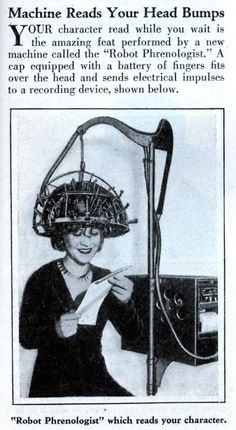
“Of the forehead, when the forehead is perfectly perpendicular, from the hair to the eyebrows, it denotes an utter deficiency of understanding.” Johann Kaspar Lavater, phrenologist (1741–1801).


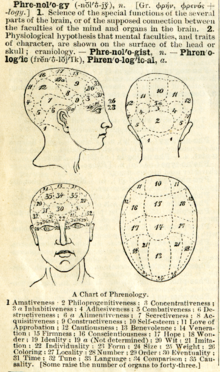
Back in the nineteenth century, phrenology was the preferred “science” of personality and character divination. The growth in popularity of “scientific” lectures as entertainment also helped spread phrenology to the masses. It was very popular among the middle and working classes, not least because of its simplified principles and wide range of social applications that were supportive of the liberal laissez faire individualism inherent in the dominant Victorian world view. It justified the status quo. Even Queen Victoria and Prince Albert invited the charlatan George Combe to feel the bumps and “read” the heads of their children.

During the early 20th century, there was a revival of interest in phrenology, partly because of studies of evolution, criminology and anthropology (pursued by Cesare Lombroso). Some people with political causes used phrenology as a justification narrative for European superiority over other “lesser” races. By comparing skulls of different ethnic groups it supposedly allowed for ranking of races from least to most evolved.

It’s now largely regarded as an obsolete and curious amalgamation of primitive neuroanatomy, colonialist supremicism with a dash of moral philosophy. However, during the 1930s Belgian colonial authorities in Rwanda used phrenology to explain the so-called superiority of Tutsis over Hutus. More recently in 2007, the US State of Michigan included phrenology (and palm reading) in a list of personal services subject to sales tax. 

Any system of belief that rests on the classification of physical characteristics is almost always used to justify prejudices, social stratifying and the ranking of human worth. It highlights what we are at the expense of the more important who we are. It profoundly dehumanises and alienates us.

Though the saying “you need your bumps feeling” has lived on, may the pseudoscience of phrenology rest in pieces. 

CrIY-YQWEAQyIeg

Phrenology is dead: long live the new moralising pseudoscience

The Conservatives have simplified the art of personality and character divination. They have set up a new economic department of the mind called the Behavioural Insights Unit. This fits with the age old Conservative motif of a “broken Britain”and their obsessive fear of social “decay and disorder.” Apparently, we are always on the point of moral collapse, as a society. And apparently, it isn’t the government’s decision-making that is problematic: poor people are entirely responsible for the poor state of our country. Those who have the very least are to blame. That’s why they need such targeted austerity policies, to ensure they have even less. We can’t have the poor being rewarded with not being poor, that’s just bad for big business.

Under every Conservative government, we suddenly see the proliferation of bad sorts; cognitively biased and morally incompetent people making the wrong choices everywhere and generally being inept, non-resilient and deficient characters. The way to diagnose these problems of character, according to the government, is to establish whether or not someone is “hard working”. This is usually determined by the casting of chicken bones, and a quick look at someone’s bank balance. If it lies offshore, you are generally considered a jolly good sort.

If you need to claim social security, be it in-work or out-of-work support, then you are most definitely a “wrong sort”; a faulty person and therefore in need of some state treatment to put you right, just to ensure that your behaviours are optimal and aligned with politically defined neoliberal outcomes. Apparently, poor people are the new “criminal types.” The only cure, according to the government, is to make poor people even poorer, by a variety of methods, including a thorough, coercive nudging: a “remedial” income sanctioning and increased conditionality to eligibility for support; benefit cuts; increasing welfare caps and a systematic dismantling of the welfare state more generally,

Oh, and regular shaming, outgrouping, stigmatising and scapegoating in the meanstream media and political rhetoric, designed to create folk devils and moral panic.

The new benefit cap: a policy designed by the neoliberal rune casters

The regressive benefit cap will save a paltry amount of money in the short term. In the long term it will cost our health and social services many millions. It’s misleading of the government to claim that it will save the “tax payers” money, since most people needing to claim social security have worked and paid taxes too. VAT is also a tax, and last time I checked, people needing support because they lost their job or became sick or injured are not exempt from paying taxes. In fact the poorest families pay the highest proportion of their income in tax

We forget that people in poverty pay taxes because we forget how many different ways we are taxed:

  • VAT
  • Duties
  • Income tax
  • National Insurance
  • Council tax
  • Licences
  • Social care charges, and many others taxes
  • Bedroom tax

Of course there’s a stark contrast in the way the state coerces the poorest citizens into behaving “responsibly”, carrying the full burden of austerity, while there is an abject failure to rein in executive pay, or to tax the Conservative party paymasters, and recover the billions lost in revenue to the Treasury through tax havens.

Poor people get the bargain basement package of behavioural incentives – which is all stick and no carrots – whereas the wealthy get the deluxe kit, with no stick and plenty of financial rewards. 

Nearly a quarter of a million children from poor families will be hit by the extended household benefit cap due to be introduced this autumn, according to the government’s latest analysis of the impact of the policy. It will see an average of £60 a week taken out of the incomes of affected households that are already poor, pushing them even deeper into poverty. About 61% of those affected will be female lone parents.

The cap will damage the life chances of hundreds of thousands of children, and force already poor families to drastically cut back on the amount they spend on essential items to meet basic needs, such as food, fuel and clothing. Originally benefit rates were calculated to meet basic survival needs – covering the costs of food, fuel and shelter only. 

The new cap unjustifiably restricts the total amount an individual household can receive in benefits to £23,000 a year in London (£442 a week) and £20,000 in the rest of the UK (£385 a week). It replaces the existing cap level of £26,000. All of this support is dependent on whether or not you comply with the very complex conditionality criteria. The support can be withdrawn suddenly, in the form of a sanction, for any number of reasons, and quite often, because your benefit advisor simply has targets to reach in order to let you know that nothing at all may be taken for granted: eating, feeding your children, sleeping indoors and keeping warm in particular.  

The government claims the cap incentivises people to search for work, and says that 23,000 affected households have taken a job since the introduction of the first cap in 2013. However, the government uses “off flow” as a measurement of employment, which is unreliable, as studies have indicated many claimants simply vanish from record.

Worryingly, an audit in January this year found that the whereabouts of 1.5 million people leaving the welfare records each year is “a mystery.” The authors also raise concern that the wellbeing of at least a third of those who have been sanctioned “is anybody’s guess.” It’s not the first time these concerns have been raised.

It emerged in 2014, during an inquiry which was instigated by the parliamentary Work and Pensions Select Committee, that research conducted by Professor David Stuckler shows more than 500,000 Job Seekers Allowance (JSA) claimants have disappeared from unemployment statistics, without finding work, since the sanctions regime was toughened in October, 2012.

This means that in August 2014, the claimant count – which is used to gauge unemployment – is likely to be very much higher than the 970,000 figure that the government is claiming, if those who have been sanctioned are included.

A Department for Work and Pensions (DWP) spokesman said: “The benefit cap restored fairness to the system by ending the days of limitless benefit claims and provides a clear incentive to move into work.”

However, firstly, social security is based on a national insurance contribution principle, and was already fair. Most people have worked and contributed to their own provision. Secondly, people in work are also poor. Those on low pay who need to claim additional support are also being sanctioned for “non-compliance”. In fact  much of our welfare spending goes towards supporting those people in work on low wages. We spend most on pensions, a large amount on in-work benefits and relatively little provision is for those out of work. The DWP don’t half chat some rubbish. A fair system would entail the government ensuring that employers pay adequate wages that cover rising living costs, instead of permitting employers to profit from our welfare state.

In a deregulated labour market, poorly paid workers are now held individually and entirely responsible for how much they earn, how many hours they work, and generally “progressing in work”. If they don’t “progress”, then what used to be an issue for trade unions and collective bargaining is now an issue addressed by punitive social security law, authoritarian welfare “advisors” and financial penalties.  

You can see where the incremental increases in the benefit cap are leading the public. The justifications and line of reasoning presented by the Conservatives are leading us down a cul-de-sac of rationale, where the welfare state is completely dismantled, and the reason given will be that this ensures “everyone works”, regardless of labour market conditions and the availability of reasonable quality and secure jobs that pay enough to support people, meeting their basic needs sufficiently to lift them out of poverty.

If these measures are intended to force people into work, this government’s self-defeating, never-ending austerity policy is hardly the ideal economic climate for job creation and growth, and where are the affordable social homes for the growing ranks of low paid workers in precarious financial situations because of increasing job insecurity and zero hour contracts? The gig economy is a political fig leaf.

An official evaluation of the cap by the Institute for Fiscal Studies in 2014 found the “large majority” of capped claimants did not respond by moving into work, and a DWP-backed study in Oxford published in June found that cutting benefit entitlements made it less likely that unemployed people would get a job. Not that we didn’t already know this. If people cannot meet their basic needs, then they simply struggle to survive and cannot be “incentivised” to meet higher level psychosocial needs. The government need to read about Maslow’s hierarchy of needs, and the Minnesota starvation experiment. (See Welfare sanctions can’t possibly “incentivise” people to work .)

Joanna Kennedy, chief executive of the charity Z2K, said: “Our experience helping those affected by the original cap shows that many of those families will have to reduce even further the amount they spend on feeding and clothing their children, and heating their home to avoid falling into rent arrears and facing eviction and homelessness.”

As Patrick Butler points out in the Guardian, the government have already been ordered to exempt carers from the cap after a judge ruled last year that it unlawfully discriminated against disabled people by capping benefits for relatives who cared for them full time. Ministers had argued that carers who looked after family members for upwards of 35 hours a week should be treated as unemployed.

A previous court ruling found that the benefit cap breached the UK’s obligations on international children’s rights because the draconian cuts to household income it produced left families unable to meet their basic needs. This is the fifth wealthiest nation in the world, and supposedly a first world liberal democracy.

The deputy president of the supreme court, Lady Hale, said in her judgment: “Claimants affected by the cap will, by definition, not receive the sums of money which the state deems necessary for them adequately to house, feed, clothe and warm themselves and their children.

As Stephen Preece from Welfare Weekly pointed out yesterday, the word vulnerable suggests that people are weak, when in fact they are only made vulnerable through the actions or inaction of those around them, including (and especially) the government. I agree. To label people as vulnerable displaces responsibility from government and diverts us from the reality and nature of the punitive policies aimed at poor citizens – this is political oppression. 

Ideological justification narratives and pseudoscience

I waded through the government document Welfare Reform and Work Act: Impact Assessment for the benefit cap. Basically the government use inane nudge language and their central aim is to “incentivise behavioural change” throughout the assessment. But they then claim that they can’t predict or accurately measure that. It is very difficult to measure psychobabble accurately though, it has to be said.

There are a lot of techniques of neutralisation and euphemisms peppered throughout the document. For example, taking money away from the poorest citizens is variously described as: “achieving fairness for taxpayers” (as previously stated, people claiming benefits have usually worked: they have and continue to pay taxes); “ensures there is a reasonable safety net of support for the most vulnerable” (by cutting it away further).and “strengthening work incentives”. 

For those alleged free riders claiming support because they fell on hard times, “doing the right thing” and “moving into work” is deemed to be the ultimate aim of the cap, regardless of whether or not the work is secure, appropriate, with adequate levels of pay to lift people out of poverty. Work, in other words, will set us free.

I also took the time and trouble to read the studies that the government cited as “evidence” to support their pseudoscientific claims. The government misquoted and misapplied the research they used, too. They made claims that were NOT substantiated by the scant research referenced. And there are many more studies that completely refute the outrageous and ideologically premised government claims made in this document. 

For example, Freud makes the claims that: “Children in households where neither parent is in work are much more likely to have challenging behaviour at age 5 than children in households where both parents are in paid employment. Growing up in a workless household is associated with poorer academic attainment and a higher risk of being not in education, employment and training (NEET) in late adolescence.”

The study cited was Barnes, M. et al. (2012) Intergenerational Transmission of Worklessness: Evidence from the Millennium Cohort Study and Longitudinal Study of Young People in England. Department for Education research report 234. It says:

“Though it must be stated that much of the association between parental worklessness and these outcomes was attributable to these other risk factors facing workless families. Parental worklessness had no independent effect on a number of other outcomes, such as children’s wellbeing (not being happy at school, being bullied and bullying other children), feelings of lack of control, becoming a teen parent, and risky behaviour. This evidence provides limited support for a policy agenda targeted only at getting parents back into work. ”

It is poverty, not “worklessness” that creates poor social outcomes. That is why around half of the people queuing at food banks are those in work. The biggest proportion of welfare support paid out is in-work benefits.

Freud also states that: “A lower cap recognises that many hard working families earn less than median earnings – a lower cap provides a strong work incentive.”

Actually, raising wages in line with the cost of living would be a far better incentive, instead of punishing unemployed people for the failings of a Conservative government that always oversees an increasingly desperate reserve army of labour, and ever-falling wages. 

Perhaps one of the most outrageous claims made in the document is that the cap is consistent with “UN Convention on the Rights of Persons with Disabilities.” Those sick and disabled people in the ESA work-related activity group are not protected from the cap. The government is currently being investigated by the UN for “gross and systematic” abuses of the human rights of disabled people, because of the previous welfare “reforms” (a euphemism for cuts).

This is an authoritarian government that is coercing people into any low paid and insecure work, regardless of how suitable it is. It’s about dismantling the welfare state, bit by bit. It is about ensuring people are desperate so that people’s right to turn down jobs that are unsuitable, thus reducing any kind of scope for collective bargaining to improve working conditions and pay, is removed. It’s also about bullying people into doing what the government wants then to do, removing autonomy and choices. That isn’t “incentivising”, it’s plain and brutal state coercion. All bullies and tyrants are behaviourists. 

It’s impossible not to feel at least a degree of concern and outrage reading such incoherent, flimsy and glib rubbish from an ideologically-driven government waging a full on class war on the poorest citizens, and then claiming that is somehow “fair” to the “taxpayer”. And it’s noteworthy that there is a harking back to the discredited and prejudiced theories of Keith Joseph – “intergenerational worklessness” – which were debunked by the theorists’ OWN research back in the Thatcher era. It is being paraded as irrefutable fact once again. 

I’m expecting a government phrenology unit to be established soon.

And an announcement that the Department for Work and Pensions is to be renamed the Malleus Maleficarum.

220px-1895-Dictionary-Phrenolog


CONTRIBUTE TO POLITICS AND INSIGHTS

I don’t make any money from my work. But you can contribute by making a donation and help me continue to research and write informative, insightful and independent articles, and to provide support to others. The smallest amount is much appreciated – thank you.

DonatenowButton cards

Two-way mirrors, hidden observers: welcome to the Department for Work and Pensions laboratory

018

I regularly write to raise concerns about the current government’s misuse of psychology in public policies and research. There has been a shift towards the formulation of targeted, prejudiced, class contingent policies which have the central aim of “changing behaviours”  and enforcing “compliance” and conformity. This behaviourist approach has some profound implications for democracy. It constrains autonomy and curtails the basic liberties of targeted citizens, it does not include safeguards or a space for citizens’ qualitative accounts and feedback, while also excluding them from any political consideration of their human rights. 

On the government website, a contract finder notice for the “Provision of Research Laboratory Facilities” for the Department for Work and Pensions says:

“The Department for Work and Pensions (DWP) requires research to be undertaken, in a research laboratory environment, with recipients of the Carers Allowance and recipients of the Employment and Support Allowance (ESA).

In a typical lab situation DWP shall have one DWP researcher in a room with the participant and other DWP researchers (if appropriate) and invited observers behind a two way mirror evaluating what is happening. As well as viewing the interview they can also see the activity on the web screen via monitors in their room.

The proceedings are currently recorded on MP4 for subsequent use when research findings are being reported. The participants cannot see the people in the viewing facility though they know they are there. There needs to be flexibility to be able to undertake the research in the North West and Leeds and be able to recruit for participants to attend a Government Lab set up at Aviation House in London WC2B 6NH.” 

Northern Voices T/A The Talking Shop is a Manchester based market research and public opinion polling company that has been awarded the contract in June this year. This company will be paid up to £60,000 for experimenting on sick and disabled claimants, using covert observation from behind a two-way mirror, studying eye movements, facial expressions and body language. 

Eye movement measurements are frequently used, though controversially, in criminal psychology, too, as a somewhat unreliable method of “lie detection.” Questions arise regarding precisely how eye movements, perception and cognition are related, and to date, this question hasn’t been answered by academics. 

It struck me that the experimental set up is very reminiscent of the social psychology experiments conducted in the 60s and early 70s to study social conformity and obedience to authority. However, the welfare “reforms” were specifically designed to coerce people claiming welfare into conformity – “to do the ‘right thing'”-  and compliance with a harsh “conditionality” regime and ever-shrinking eligibility criteria. It’s hardly a secret that the New Right Conservatives and neoliberals have always loathed the welfare state, and along with the other social gains of our post-war settlement, it is being systematically dismantled.

The wider context is significant, both in terms of its impact on individual citizen’s experiences and behaviours, and on the way that theory is formulated to conflate and align citizen’s needs with neoliberal outcomes, and this is also reflected in how research is being designed and used.

Some context

In the UK, the Behavioural Insight Team has been testing libertarian paternalist ideas for conducting public policy by running experiments in which many thousands of participants receive various policy “treatments.” A lot of the actual research work is contracted out to private providers. Whilst medical researchers generally observe strict ethical codes of practice, in place to protect subjects, the new behavioural economists and profit-driven private companies are less transparent in conducting behavioural research “interventions.” There are no ethical and safeguarding guidelines in place to protect participants.

Earlier this year I wrote about a Department for Work and Pensions Trial that was about “testing whether conditionality and the use of financial sanctions are effective for people that need to claim benefits in low paid work.” A secretly released document (which said: This document is for internal use only and should not be shared with external partners or claimants.) was particularly focused on methods of enforcing the “cultural and behavioural change” of people claiming both in-work and out-of-work social security.

Evaluation of the Trial will be the responsibility of the Labour Market Trials Unit (LMTU). Evaluation will “measure the impact of the Trial’s 3 group approaches, but understand more about claimant attitudes to progression over time and how the Trial has influenced behaviour changes.”

Worryingly, claimant participation in the Trial was mandatory. There was no appropriate procedure to obtain and record clearly informed consent from research participants. Furthermore, the Trial is founded on a coercive psychomanagement and political approach to labour market constraints, and is clearly expressed as a psychological intervention, explicitly aimed at “behavioural change” and this raises some serious concerns about the lack of research ethics and codes of conduct in government research. It’s also very worrying that this “intervention” is to be delivered by non-qualified work coaches.

The British Psychological Society (BPS) have issued a code of ethics in psychology that provides guidelines for the conduct of research. Some of the more important and pertinent ethical considerations are as follows:

  • Informed Consent.

Participants must be given the following information:

  •  A statement that participation is voluntary and that refusal to participate will not result in any consequences or any loss of benefits that the person is otherwise entitled to receive.
  • Purpose of the research.
  •  Procedures involved in the research.
  •  All foreseeable risks and discomforts to the participant (if there are any). These include not only physical injury but also possible psychological.
  •  Subjects’ right to confidentiality and the right to withdraw from the study at any time without any consequences.

Protection of Participants

  • Researchers must ensure that those taking part in research will not be caused distress. They must be protected from physical and mental harm. This means you must not embarrass, frighten, offend or harm participants.
  • Normally, the risk of harm must be no greater than in ordinary life, i.e. participants should not be exposed to risks greater than or additional to those encountered in their normal lifestyles. Withdrawing lifeline support that is calculated to meet the costs of only minimum requirements for basic survival – food, fuel and shelter – as a punishment for non-compliance WILL INVARIABLY cause distress, harm and loss of dignity for the subjects that are coerced into participating in this Trial. Participants should be able to leave a study at any time if they feel uncomfortable.

Behavioural “rights” and the politics of moralising

Consent to a therapy or research protocol must possess a minimum of three features in order to be valid. These are: it should be voluntarily expressed, it should be the expression of a competent subject, and the subject must be be adequately informed of the details.This raises some serious concerns about experimental social research, especially when it may involve people with mental health disabilities who may be highly vulnerable.

It’s highly unlikely that people subjected to the extended use and broadened application of welfare sanctions gave their informed consent to participate in experiments designed to test the nudge theory of “cognitive bias,” for example. The extended use of sanctions in the Welfare Reform Act 2012 was originally advised by the Behavioural Insights Team (the Nudge Unit) back in 2010. It was based on the manipulation of an alleged cognitive bias that we have – loss aversion – and designed as a method of coercing conformity to increasingly unreasonable state-imposed conditionality rules, and as punishment for the perceived “non-compliance” of unemployed people.

There is nothing to prevent a government deliberately exploiting a research framework as a way to test out highly unethical and ideologically-driven policies. How appropriate is it to apply a biomedical model of prescribed policy “treatments” to people experiencing politically and structurally generated social problems, such as unemployment, inequality and poverty, for example? 

The fact that this government regards work as a “health outcome” should raise alarm bells. (Please see: Let’s keep the job centre out of GP surgeries and the DWP out of our confidential medical records). The government have already stigmatised unemployment, and redefined it as a psychological disorder.

Furthermore, the research models being used are framed by a profoundly undemocratic conservative neopositivism, which emphasises directed quantitative data collection and excludes the accounts, experiences, narratives and language of research participants. Much of the research is prejudiced, and starts from an authoritarian premise that people experiencing socioeconomic problems do so because they make the “wrong choices” and that they need to be “incentivised to change their behaviours”.

An element of the “laboratory  research environment” research went ahead in March last year. It’s stated aim was to “to improve the Carer’s Allowance Digital Service.”  The recruitment brief specifies that:

“These self employed people shouldn’t have accounts prepared by an accountant however it’s mandatory that they bring with them details of their self-employment eg a log book or papers of incoming and outgoings. We also need these people to be looking after someone who has a disability.”

It’s become normalised that many millionaires avoid paying taxes and contributing to the society that they have gained so much from. I don’t see anyone intimidating them, demanding details of their “incoming and outgoings,” yet that would profit society far, far more.

Wouldn’t you think that if this were genuinely about supporting carers using software or accessing services online, it would be designed to be USER LED – a direct face-to-face approach would be the usual way, with an input from those service users, which is qualitative and much more reliable, authentic and useful than the account of a group of strangers hiding behind mirrored glass, observing people and applying controversial psychology techniques.

Measuring eye movements is usually coupled with other more inclusive qualitative methodologies, such as introspective verbal protocols, since used on its own, it is unreliable in that it fails to indicate specific kinds of cognitive processing or content. This dialogic approach, however, isn’t included in the government’s research brief. (Please see The importance of citizen’s qualitative accounts in democratic inclusion and political participation.)

The central premise of justifications for “behavioural interventions” is that the general public has numerous cognitive biases that lead to “faulty” decision-making. Current research and interventions are largely aimed at the poorest citizens, however, exposing a government bias that wealthy people are somehow cognitively competent. Yet many of this powerful, offshore hoarding minority class want to see worker’s rights, welfare support and our public services dismantled.

Not a rational or civilised class, on the whole, then.

As I have previously stated, the behavioural approach removes people from the socioeconomic and political context that they inhabit and isolates them from meaningful and impacting socio-structural events and political decision-making, placing the burden of responsibility and obligation entirely within those who are suffering the inevitable systemic consequences of neoliberal policies. In such an economic system of “market forces” based on competition, there are invariably winners and losers. It’s hardly rational or fair to punish those who are simply adversely affected by an intrinsically flawed and unfair system of socioeconomic organisation for which there was never a consensus. It was simply imposed on the UK public, without any legitimate, informed consent.

Can you imagine the government carrying out this kind of research and stigmatising, intimidating methodology on billionaires interacting with their accountants, completing their tax returns or interacting with their offshore banks? No, I thought not. 

It’s noteworthy that current Nudge Unit policy is to keep those being targeted for nudges “naive” as people tend to temporarily alter their behaviour when they know they are being observed and that skews research results. In sociology and social psychology, this is called the Hawthorne effect.

However, that approach is profoundly incompatible with established ethical research frameworks, and fundamental human rights, which, as I’ve outlined, always specify a central requirement of participants’ informed consent.

Similarly, the starting premise of laboratory usability testing is that “what people say they do with products is not always what they actually do.” In other words, we cannot trust the public to tell us what they need.

Userbility testing, an American import, is designed to “target” users’ needs and preferences by observing their behaviour. However, a big part of the motivation for this kind of research is Building credibility for usability activities within an organization.” The government often use research like this to formulate justification narratives for controversial, coercive and punitive policies.

Democracy is meant to involve the election of a government that reflects on social problems objectively, recognises and serves public needs, and designs policy in response to what citizens actually need; it’s not about governments that coerce people to “change their behaviour” in accordance to a partisan, ideological agenda. We call the kind of government that does that “totalitarian.”

I am not the only person who is very concerned about this development.  

A spokesperson for Fightback 4 Justice said:

“This is the company that has won the tender experimenting with Carers claimants using body language techniques and 2 way mirrors. If anyone gets called into one of these meetings please get in touch as I’d be happy to attend. I am very very concerned about a potential breach of a person’s human rights here particularly where mental health is one of the claimants conditions. Nothing about this “study” seems ethical in my legal opinion. A room with a 2 way mirror and capacity for 12 people studying body language and facial expressions is wrong in so many ways, DWP are giving the wrong impression that claimants are potential criminals with this latest research in my view.” Michelle (legal advocate).

The Talking Shop’s research studios

images

Related

The politics of blame and in-work conditionality

Nudging conformity and benefit sanctions

G4S are employing Cognitive Behavioural Therapists to deliver “get to work therapy”

The new Work and Health Programme: government plan social experiments to “nudge” sick and disabled people into work

The importance of citizen’s qualitative accounts in democratic inclusion and political participation

Let’s keep the job centre out of GP surgeries and the DWP out of our confidential medical records

The Conservative approach to social research – that way madness lies

A critique of Conservative notions of social research


CONTRIBUTE TO POLITICS AND INSIGHTS

I don’t make any money from my work. But you can contribute by making a donation and help me continue to research and write informative, insightful and independent articles, and to provide support to others. The smallest amount is much appreciated – thank you.

DonatenowButton

Second Independent Review of Personal Independence Payment assessment


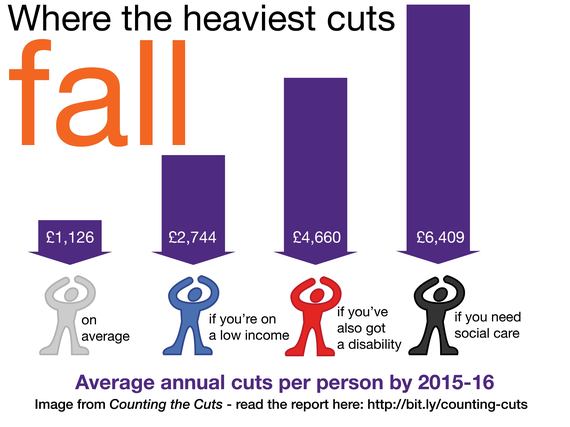
2014-02-17-BurdenoftheCuts-thumb
Any social security policy that is implemented with the expressed aim of “targeting those most in need” is invariably about cost cutting and reducing eligibility criteria for entitlement. The government were explicit in their statement about the original policy intent of Personal Independence Payment. The government has already considered ways of reducing eligibility criteria for the daily living component of Personal Independence Payment by narrowing definitions of aids and appliances, earlier this year.

In July, the Department for Work and Pensions appointed Paul Gray CB to undertake the second “independent review” of the Personal Independence Payment (PIP) assessment. This is the second independent review as required by Section 89 of the Welfare Reform Act 2012.

This review includes a call for evidence of the PIP assessment. It seeks information about how the PIP assessment is “working.” The consultation includes all stages of the PIP process, with a particular focus on the use of further evidence in the claim process, data sharing and the claimant experience. 

However, I’m just wondering where the ever-reductive targeting quest for the ever-shrinking category of “those with the greatest need” will end. The evidence that a policy “working” is usually related to the stated original aim. In this case, PIP isn’t a policy aimed at meeting the needs of disabled people. It’s a policy that is ultimately aimed at cutting support for ill and disabled people.

We have already witnessed a shrinking of eligibility criteria for people formerly claiming Disability Living Allowance, a marked increase in the number of reassessments required, and a limiting of the number of successful claims. Prior to the introduction of PIP, Esther McVey stated that of the initial 560,000 claimants to be reassessed by October 2015, 330,000 of these are targeted to either lose their benefit altogether or see their payments reduced.

Any “review” will therefore be framed by the original intent of the policy. However, that does not mean we should not respond to reviews and submit evidence, as a review provides us with an opportunity to flag up concerns regarding inadequacies experienced by those the policy is meant to support, too. The policy is not meant to serve the government, who are on an ideological crusade to dismantle all social security support, ultimately.

Disability benefits were originally designed to help sick and disabled people meet their needs, additional living costs and support people sufficiently to allow  a degree of dignity and independent living. You would be mistaken in thinking, however, that Personal Independent Payment was designed for that. It seems to have been designed to be the  Treasury’s ever-increasing pocket money. Or as profits for private providers who constantly assess, monitor, coerce and attempt to “incentivise” those people being systematically impoverished by the state to make “behaviour changes” by taking any low paid, insecure and poor quality work, regardless of how suitable or appropriate that is.

Apparently, that is the Conservative psychobabble “cure” for “worklessness,” which, regardless of market conditions, health, socioeconomic circumstances and poor political decision-making, is always down to an individual’s “bad behavioural choices.” The government regard work as a “health outcome.” I expect that soon, work coaches will replace doctors, and the Department for Work, health and Pensions will subsume the NHS.

For what it’s worth, Paul Gray will use evidence from the second review to inform his report to the Secretary of State for Work and Pensions. The second review will be laid before Parliament by April 2017.

Individuals and organisations are invited to submit evidence to help inform the review by answering the following questions. Where the Department for Work and Pensions use the word “condition” in these questions they mean disabilities, health conditions and impairments. They use “condition” for short.

Your responses can only be taken into account if you press submit at the end of the survey form, if you send a submission using that method.

The deadline for submissions is 5pm on 16 September 2016.

Your privacy
The note on privacy: “By providing personal information for the purposes of this call for evidence, it is understood that you consent to its disclosure and publication. If you want the information in your response to be confidential, please explain why and we will endeavour to do so. However we cannot guarantee to do this.”


Ways to respond

Respond online

or

Email: pip.independentreview@dwp.gsi.gov.uk

Write to:
PIP Independent Review Team
                 Department for Work and Pensions                  
                 Floor 4  
                 Caxton House 
                 Tothill Street 
                 London    
                 SW1H 9NA

Related

“Consideration of the ability of a claimant to carry out an activity safely, to an acceptable standard, repeatedly and in a reasonable time period is key to the PIP assessment. We recognise that these ‘reliability criteria’ and the rules setting out how fluctuating conditions should be considered are an important protection for claimants, and these are enshrined in legislation” – Government’s second response to the first Independent Review of the Personal Independence Payment Assessment

Consultation as government seek to limit disabled people’s eligibility for Personal Independence Payment

Request For Evidence – PIP: mobility Criterion

PIP and the Tory monolgue

The Tory British Bill of Rights: ‘be the short change you want to see’

Cngs9EjXEAAmYy7

The politics of regression

The UK has passed a lot of posts over the last five years. We are now a post-European, post-welfare, post-consensus, post-progressive, post-rational, post-democratic, post-first world, post-liberal, post-inclusive, post-diverse, post-equality, post-freedom, post-rights, post-protest, post-truth society. We managed all of this by travelling backwards as a society, not forwards.

The clocks stopped when the Conservatives took office in 2010. Now we are losing a decade a day.

This week, the government have confirmed they still plan to repeal the Human Rights Act and replace it with a so-called British Bill of Rights. This will break the formal link between the European Court of Human Rights and British law. Any judgement from Europe would be treated as “advisory” only, rather than legally binding, and would need to be “approved” by parliament. Such a Bill would definitely short change UK citizens in terms of balancing responsibilities, obligations and rights. It would profoundly disempower citizens because it will shift the balance of democracy, placing power almost entirely in the hands of the state.

The citizen rights protected by Labour’s flagship Human Rights Act are quite basic. They include the right to life, liberty and the right to a fair trial; protection from torture and ill-treatment; freedom of speech, thought, religion, conscience and assembly; the right to free elections; the right to fair access to the country’s education system; the right NOT to be given the death penalty; the right to marry and an overarching right not to be discriminated against.

Over their time in office, the Tories have systematically contravened the Human Rights of disabled people, women and children. It’s clear that we have a government that regards the rights of most of the population as a mere bureaucratic inconvenience, to be simply brushed aside. In October 2014, I was one of the very first independent writers to report the United Nations’ inquiry into the government’s gross breaches of the rights of disabled people. Writers and researchers like me and organised groups such as Disabled People Against the Cuts (DPAC) have been submitting evidence regarding the dehumanising impacts of the Conservative welfare “reforms” to the UN since 2012.

Theresa May has previously expressed strong support for controversial constitutional change. She stated in 2014, that she would like to see the UK withdraw from the European Convention on Human Rights, echoing David Cameron.

In a speech earlier this year, she said: “This is Great Britain, the country of Magna Carta, parliamentary democracy and the fairest courts in the world.

And we can protect human rights ourselves in a way that doesn’t jeopardise national security or bind the hands of parliament.

A true British bill of rights, decided by parliament and amended by parliament, would protect not only the rights set out in the convention, but could include traditional British rights not protected by the European Convention on Human Rights (ECHR) such as the right to trial by jury.”

However, May’s comment about the need for a Bill of rights that doesn’t “bind the hands of parliament” is worrying, since human rights were designed originally to protect citizens from despotic states and authoritarian governments like this one.

Her comment that the ECHR does not provide for the right to trial by jury is also misleading. Article 6 of the European Convention on Human Rights is a provision  which protects the right to a fair trial and access to justice. In criminal law cases and cases to determine civil rights, it protects the right to a public hearing before an independent and impartial tribunal within reasonable time, the presumption of innocence, and other basic rights for those charged in a criminal case (such as adequate time and facilities to prepare their defence, access to legal representation, the right to examine witnesses against them or have them examined, the right to the free assistance of an interpreter).

The Effective Criminal Defence in Europe report identified that the UK already needs to address issues regarding inadequate disclosure to suspects during investigation stage and that a more effective judicial oversight of bail and arrest are needed. Cuts to legal aid are also problematic in terms of ensuring the right of equal access to justice. Chris Grayling has already tried to take legal aid from the poorest citizens, in a move that is so clearly contrary to the very principle of equality under the law. He turned legal aid into an instrument of discrimination. He has also tried to dismantle another vital legal protection  – judicial review – which has been used to stop him abusing political power on several occasions. I don’t think this is a government that has indicated so far that it has the needs and wellbeing of citizens as a main priority.

Liz Truss, the justice secretary, dismissed reports that that the Government was abandoning the policy, which was included in the Conservative manifesto in 2015, to avoid a conflict with the Scottish Government 

She told BBC Radio 4’s Today programme on Monday morning: “We are committed to that. That is a manifesto commitment. 

I’m looking very closely at the details but we have a manifesto commitment to deliver that.”

However, last year, Amnesty UK commissioned a poll that indicated the British public are not particularly willing to see any change to existing Human Rights legislation, with only one in 10 people in the UK (11%) believing that scrapping the Human Rights Act should be a government priority.

Kate Allen, Amnesty International (UK) director, said:

“The British people clearly want the Government to get on with their proper business of the day-to-day running of the country, and abandon these destructive plans.

“It’s quite right that it shouldn’t be up to governments to pick and choose which rights we are entitled to and select who they deem worthy of them. It took ordinary people a very long time to claim these rights and we mustn’t let politicians take them away with the stroke of a pen.

“It’s great to have it confirmed that British people think that rights and protections must apply to everyone equally in order to work at all.”

David Cameron pledged to explore ways to leave the ECHR in the wake of the departure of his most senior legal advisor, Dominic Grieve. 

Ken Clarke said: “It is unthinkable for Britain to leave the European Convention on Human Rights,” he was also a departing cabinet minister. Cameron is believed to have wanted rid of the Attorney General Grieve because he was supportive of Britain’s continued ECHR membership.

Labour dubbed the cabinet reshuffle “the massacre of the moderates”, pointing to the departure of pro-Europe and “one nation” Tories such as David Willetts, Nick Hurd and Oliver Heald.

It’s long been the case that the Tories and the right wing press have deliberately blurred the boundaries between the European Union and the European Council of Human Rights, which are of course completely different organisations. This was a misdirection ploy.

However it is the case that the member states of the EU agreed that no state would be admitted to membership of the EU unless it accepted the fundamental principles of the European Convention on Human Rights and agreed to declare itself bound by it. I also think that conservatives, who regard both institutions as “interfering”, do see the Union and the Council as the same in terms of both being international frameworks requiring the British government to have a degree of democratic accountability at an international level.

In his parting interview, Clarke, who has held office in every Conservative government since 1972 and is also the party’s most prominent Europhile, said the debate was “absurd”.

“I personally think it’s unthinkable we should leave the European Convention on Human Rights; it was drafted by British lawyers after the Second World War in order to protect the values for which we fought the War for.” He’s right, of course.

The years immediately after the second world war marked a turning point in the history of human rights, as the world reeled in horror at the rise of fascism and the Nazi concentration camps, there came an important realisation that although fundamental rights should be respected as a matter of course, without formal protection, human rights concepts are of little use and consolation to those facing persecution.

So in response to the atrocities committed during the war, the international community sought to define the rights and freedoms necessary to secure the dignity and worth of each individual. In 1948 the newly formed United Nations adopted the Universal Declaration of Human Rights (UDHR), one of the most important agreements in world history.

Shortly afterwards another newly formed international body, the Council of Europe, set about giving effect to the UDHR in a European context. The resulting European Convention on Human Rights was signed in 1950 and ratified by the United Kingdom, one of the first countries to do so, in 1951. At the time there were only ten members of the Council of Europe. Now 47 member countries subscribe to the European Convention, and in 1998 the Human Rights Act was passed by the Labour Party in order to “give further effect” to the European Convention in British law.

Previously, along with the Liberal Democrats, Grieve was able to thwart attempts to reform the ECHR, and opposed pulling out altogether. The plan to reform it is being led by the Justice Secretary Chris Grayling but Grieve has pledged to continue to fight for Britain’s membership from the backbenchers. Though Clegg had agreed to a British Bill of Rights, he was strongly opposed to withdrawing from the ECHR.

Grieve understood that ECHR is about the fundamental rights of the citizen and ought to be cherished in the same way as the Magna Carta and Habeas Corpus are. But as we know, this is not a typical view amongst Conservatives, who frequently cite the same examples of “foreign criminals” being allowed to stay in the country as evidence it is “not working”.

The prime minister’s spokesman said that the sacking of Grieve had not led to a change in government’s policy. However he pledged action if the Conservatives are elected next year without the Liberal Democrats: “If you are asking me about party manifestos, the prime minister has previously said that he wants to look at all the ways that we can ensure we are able to deport those who have committed criminal offences.”

Grieve said he would defend human rights legislation from the back benches to “contribute to rationality and discourse”.

“If we send out a sign that human rights don’t matter, that is likely to be picked up in other countries which are also signatory states such as Russia.”

humanrights

The marked loss of transparency and democratic accountability

In the original Conservative proposals to scrap our existing human rights framework, and replace it with their own, one sentence from the misleadingly titled document  –Protecting Human Rights in the UK, (found on page 6 ) – is particularly chilling: “There will be a threshold below which Convention rights will not be engaged.”

Basically this means that human rights will no longer be absolute or universally applied – they will be subject to stipulations and caveats. And discrimination. The government will establish a threshold below which Convention rights will not be engaged, allowing UK courts to strike out what are deemed trivial cases.

The Tories’ motivation for changing our human rights is to allow reinterpretations to work around the new legislation when they deem it necessary. The internationally agreed rights that the Tories have always seen as being open to interpretation will become much more parochial and open to subjective challenge.

Many people have said that the Conservatives won’t escape accountability if they repeal the Human Rights Act and replace it with something less comprehensive, because we are still signatories to a number of broader international treaties on human rights. 

However, last year I wrote about how the government has quietly edited the ministerial code, which was updated on October 15  without any announcement at all. The code sets out the standard of conduct expected of ministers. The latest version of the code is missing a key element regarding complicity with international law. 

The previous code, issued in 2010, said there was an “overarching duty on ministers to comply with the law including international law and treaty obligations and to uphold the administration of justice and to protect the integrity of public life”.

The new version of the code has been edited to say only that there is an“overarching duty on ministers to comply with the law and to protect the integrity of public life”.

Conservative party policy document had revealed that the ministerial code will be rewritten in the context of the UK withdrawing from the European convention on human rights. In order to help achieve these aims the document says:

“We will amend the ministerial code to remove any ambiguity in the current rules about the duty of ministers to follow the will of Parliament in the UK.”

Yasmine Ahmed, director of Rights Watch, an organisation which works to hold the government to account, said:

“This amendment to the ministerial code is deeply concerning. It shows a marked shift in the attitude and commitment of the UK government towards its international legal obligations.”

Any precedent that allows a government room for manoeuvre around basic and fundamental human rights is incredibly dangerous. Especially such an authoritarian government.

Implications for democracy

Democracy is one of the universal core values and principles of the United Nations. Respect for human rights and fundamental freedoms and the principle of holding periodic and genuine elections by universal suffrage are essential elements of democracy. These values are embodied in the Universal Declaration of Human Rights and further developed in the International Covenant on Civil and Political Rights which enshrines a host of political rights and civil liberties underpinning meaningful democracies.

The Rule of Law and Democracy Unit stands as the Office of the High Commissioner for Human Rights (OHCHR) focal point for democracy activities. The Unit works to develop concepts and operational strategies to enhance democracy and provide guidance and support to democratic institutions through technical cooperation activities and partnership with the relevant parts of the UN, notably the UN Democracy Fund, the Department of Political Affairs and the newly established UN Working Group on Democracy. Legal and expert advice are provided as required to OHCHR field operations on relevant issues such as respect for participatory rights in the context of free and fair elections, draft legislation on national referenda and training activities.

The strong link between democracy and human rights is captured in article 21(3) of the Universal Declaration of Human Rights, which states:

“The will of the people shall be the basis of the authority of government; this will shall be expressed in periodic and genuine elections which shall be by universal and equal suffrage and shall be held by secret vote or by equivalent free voting procedures.” 

The link is further developed in the Covenant on Civil and Political Rights which enshrines a host of political rights and civil liberties underpinning meaningful democracies. The rights enshrined in the International Covenant on Economic, Social and Cultural Rights and subsequent human rights instruments covering group rights (e.g. indigenous peoples, minorities, people with disabilities) are equally essential for democracy as they ensure inclusivity for all groups, including equality and equity in respect of access to civil and political rights.

More recently, in March 2012, the Human Rights Council adopted a resolution titled “Human rights, democracy and the rule of law,” which reaffirmed that democracy, development and respect for all human rights and fundamental freedoms were interdependent and mutually reinforcing.

The Council called upon States to make continuous efforts to strengthen the rule of law and promote democracy through a wide range of measures. It also requested the OHCHR, in consultation with states, national human rights institutions, civil society, relevant inter-governmental bodies and international organizations, to draft a study on challenges, lessons learned and best practices in securing democracy and the rule of law from a human rights perspective.

Human rights, democracy and the rule of law are core values of the European Union, too. Embedded in its founding treaty, they were reinforced when the EU adopted the Charter of Fundamental Rights in 2000, and strengthened still further when the Charter became legally binding with the entry into force of the Lisbon Treaty in 2009.

A legally binding human rights framework must be applied universally, and implemented without the “interpretation” and interference from individual governments. Furthermore, the State must fund the means of contract enforcement and free and fair trial legal costs, for those who cannot afford it. If the State fails to fulfil this contingent function, then citizens simply cease to be free.

936319_485819054820961_1954794757_n


I wrote another in-depth analysis of the implications of a British Bill of Rights earlier this year, which includes some of the constitutional implications – The British Bill Of Frights: We Need To Ask What Could Possibly Go Right?


I don’t make any money from my work. But you can contribute by making a donation and help me continue to research and write informative, insightful and independent articles, and to provide support to others. The smallest amount is much appreciated – thank you.

DonatenowButton cards


Dead cat conditioning, attention deficit and the social order

blog56_johnnicola_sadface


Last week I wrote about hundreds of people dying of malnutrition in the UK over this past twelve months alone, as a consequence of government policies. I wrote about how our universities are no longer permitting free speech and critical thinking, and how dissenting academics have taken to blogging, using pseudonyms and writing anonymous letters because of the repressive political developments in the UK.  I am now about to write another piece on how our Human Rights Act is to be scrapped and replaced by a Conservative Bill of Frights.

The Labour party needs to be collectively opposing the government and addressing these pressing, socially calamitous issues, raising public awareness regarding the profound damage that this authoritarian government are inflicting on our society and drafting remedial policy outlines which extend social justice and equality. 

In the Labour Party Forum – a Facebook group for party members – I was told that my post about the implications of the Government Higher Education white paper, along with an analysis of the illogic of neoliberalism and its consequences is “irrelevant” to the Labour party.

There is a problem with that. 

If the Labour party is to reach out and persuade the electorate that they have an alternative which is better than the current government, they will need to recognise and to fully understand issues that are affecting the wider public. In the Labour Party forum, every single post (except mine) is about about the leadership debate. But being engaged with what is culturally popular isn’t always in our best interests.

The comments from members are dripping with bad feeling, oozing impotent anger and bleeding bitterness. The party infighting is clearly visible on every thread, the hostility is palpable, and all of this in a group that was once united in fighting the real enemy of ordinary people: the Tories. The old, easy camaraderie among members has seeped away.  Cooperation has plummeted sickeningly down the chasms of division. Fallen socialist values, lying broken. Many who claim they are fighting for a “socialist party” seem to have forgotten to practice what they preach. 

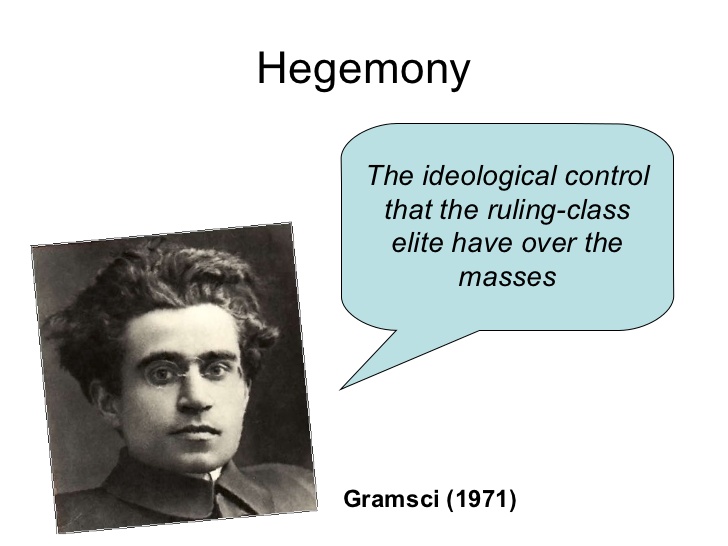
I do understand the anger that many feel in the face of a neoliberal, right wing establishment openly demonstrating a hegemonic stranglehold via the media, with endless streams of poisonous propaganda. We witness overt claims, subtexts and a level of perpetual subliminal messaging about who is fit to lead our country and who isn’t. The attacks on Corbyn in particular highlight just how the powers that be in the UK  have ensured that alternatives to the status quo never become established as a part of our mainstream conceptual and linguistic universe. The media write them out. There is a war going on, for sure. But this is nothing new.

The roots of our current crisis of democracy and class warfare go back a long way, and many of these have been embedded deeply in the changes to Britain’s sociopolitical economy since the Thatcher era. Neoliberalism is a doxa, it didn’t come into being as a means of social and economic organisation because it works: it became mainstreamed “common sense” because the establishment won. 

I gave an interview last year to Phil, who is a very public sociologist on the All That Is Solid site, outlining my own position on developments within the Labour party. Since then, I have written just two articles about party ideology, values and the leadership issues. I do write regularly about ideology, propaganda and the techniques of persuasion that are used by the establishment and media to maintain the status quo. This is an issue that extends well beyond the arising claustrophobic parochialism of Labour party disunity, leadership battles and current disarray. 

The media is the message

Social control is maintained in part by the use of a strategy of distraction, which is designed to divert public attention from important issues and changes determined by the political and economic elites, using a technique of flooding continuous diversions and insignificant information. Distraction strategy is also used to prevent public interest in essential knowledge that is then used to exercise control, whilst ensuring those being controlled are also completely disarmed.  The media maintain public attention, and divert it away from real social and economic problems. The public become an audience captivated by matters of no real importance. I’m probably loosely paraphrasing Noam Chomsky, here. 

From within the Westminster playpen, originating from the likes of Conservative babysitter, Lynton Crosby, the dead cat strategy is basically deployed as a major distraction tactic, usually entailing insulting diversion from a government’s political controversies and failings. So when, for example, the government are investigated by the United Nations for contravening basic human rights, they will scream that the opposition leader is somehow a threat to our national security. 

Everyone will gasp, clutch their brand of indignation and moral panic, and bang on about that for the rest of the week. The fact that democracy is gone for a burton, or human rights are being sidestepped and people are dying because of austerity policies is buried under a pile of furry corpses piling up on the allegoric political table, whilst commentators across the land discuss Jeremy Corbyn’s tweed jacket and beard. 

Then there is the age-old strategy of dīvide et īmpera. Every person on the left of the political spectrum knows what “divide and rule” means. It refers to a strategy that breaks up existing power structures, undermines democracy, and especially prevents smaller power groups from organising, collaborating, cooperating and forming alliances, by creating rivalries, fostering discord, distrust and enmity among the groups. Hello.

Thing is, despite these strategies being common knowledge, this hasn’t stopped many Labour party supporters using the disgracefully unreliable and establishment-collaborative media to present their own personal preferences. The Labour Pary Forum is filled with trivial articles about Owen Smith, this, Jeremy Corbyn, that and Tom Watson, the other, the comment threads full of screaming  indignation and neatly blinkered participants.

Socialist politics is supposed to be conscientious, and rather more about the social, not the personal.

This week, we see  the Independent, the Spectator, the Mirror, the Huffington Post, Politics Home, the London Economic, Channel four, amongst many others, report an audience booing the mention of a perceived political rival at a rally comprised of his opponent’s supporters. I’m all for freedom of speech, but for crying out loud, why and how is this by now mind-numbing tittle tattle considered to be NEWS? And even more importantly, why do social media campaigners think it is?

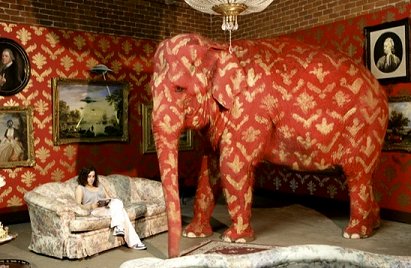
Don’t look away now

banksy-elephant-in-room1


Only a matter of weeks ago, a Labour MP was murdered by a far right fanatic, because of her political work, and because we are a distracted society that permits a right wing authoritarian othering and outgrouping demagoguery.

But now there are no ripples on the pond.

How can so many people seemingly forget such a horror? It’s almost as if this outrageous, politically motivated murder was a normal event, expected and accepted. Why are we allowing an ideology-driven and opportunistic establishment to divide our society into hierarchies of human worth and value? There’s an underpinning message in policies and political rhetoric that some lives are worth more than others; it’s has crept in unchecked, almost unnoticed, and we have allowed that to happen because we look the other way. In fact many of us seem quite determined to look the other way.

It’s not only migrants that are being politically and socially outgrouped. Disabled people are experiencing an unprecedented increase in hate crime and people are dying of malnutrition in the 5th wealthiest nation of the world. People are dying because of a government’s policies here in the UK. Prejudices are flourishing, violence growing. This is the kind of society we have become. Yet many people are still not paying attention. We are being conditioned not to look and not to see.

Whilst so many people are so happily distracted and so easily diverted by the most trivial details, our democracy is being quietly dismantled, the social gains of our post-war settlement have been almost erased from history, our human rights are being sidelined and re-written to shift the balance of obligation and responsibility from the state to the individual. Such profoundly damaging developments with such dire and toxic implications for our country ought to be recognised and challenged. Citizens are dying prematurely because of class contingent Conservative policies in a post-welfare, low waged Britain.

Those of us who reject austerity and neoliberalism are not “Trot entryists” , “revolutionaries” , “militants” or “extremists”. We are simply people who see beyond prejudiced ideologies and doxas. We recognise neoliberalism only works for 1% of the population. Furthermore, I am certain that in a world where people paid attention, instead of being distracted by mainstreamed, dominant narratives and  the mind-numbingly mediocre, homogenenised X factor culture, almost everyone else would recognise this, too.

I support Corbyn. Not because I invest in a superficial cult of personality type of politics. Not because I see a Corbyn-led Labour party as an end in itself. I have always maintained that a Labour government would simply mark a viable starting point  – the means – for a concerted campaign for social justice and equality.

I support Corbyn because I object to the destruction of people’s lives and the dismantling of protective civilised and civilising social structures because of a neoliberal and social Darwinist politics that invariably creates, through class contingent policies, inequality and social injustice – a few winners and many losers, the latter are then blamed by the state for the faults that are actually intrinsic to the system and extended by the state. I believe that in democracies, governments are elected to meet public needs, we don’t elect them to manipulate public perceptions and nudge us into meeting political and narrow, economic needs. I also believe that progress won’t happen unless we actively participate in democratic processes and work to extend them. Democracy (rather like intelligence) isn’t something we have: it’s something we must DO.

 The current infighting will kill the Labour movement. Vote for Corbyn, (or don’t), but there’s no need for the endless and insular justifications of your voting choice. Let’s keep some perspective and deal with what we NEED to – the  much bigger picture –  instead of impotently bickering among ourselves about a single issue. Socialism is surely all about a vision of the kind of society that is just and fair for the majority; it’s not about personal preferences and narrowly individualist perspectives.

Right now, the establishment have got us exactly where they want us. Their corporate media mouthpieces have made sure of that. The infighting, meanwhile, is destroying the Labour movement from within. 

But we can resist dead cats, Conservative bouncing bomb propaganda and such blatant techniques of persuasion… really, we can do so much better than this.

We won’t do so if we ignore the wider social realities and policy impacts being shaped by an authoritarian government.

sociologyexchangecouk-shared-resource-5-728It’s time to fight back


CONTRIBUTE TO POLITICS AND INSIGHTS

I don’t make any money from my work. But you can contribute by making a donation and help me continue to research and write informative, insightful and independent articles, and to provide support to others. The smallest amount is much appreciated – thank you.


The new neoliberal witch prickers and Academics Anonymous

education_2990311b

In February 2015, the characteristically intemperate David Cameron said that the Conservatives are waging an all-out war on mediocrity” in schools. In higher education, there is a drive to quantify the humanities and make them achievement-oriented instead of collaborative and intellectual.

This is a government that has already proposed a retrogressive, enforced segregation of pupils based on ability, setting inclusion policy back at least 30 years. This is also an attack on the very principle of inclusion. Conservative policies have always tended to establish and perpetuate social hierarchies, ranking and outgrouping. 

Neoliberalism has turned our society into one that seems to value only reductionist, deterministic, technocratic and instrumental modes of thought and methods that simply entail quantification and reduction of the diversity of human experiences. The humanities, social sciences and arts have been politically sidelined. Funding is being cut in universities. 

This jeopardises public awareness, stifles debate about issues of social justice and other important sociocultural concerns in education. It devalues subjective experiences, meaning, insight, understanding, interpretation, intention and a wide range of other qualities that make up what it is to be human. It’s a profoundly dehumanising economic framework.

In May, the government’s Higher Education White Paper, Success as a Knowledge Economy, set out a rigidly economistic perspective, stating that “progress is found via choice and competition”, indicating the political aim to complete the process of neoliberalising our universities.

Will Davies describes the awful jargon in the document as “empty sloganeering” and “euphemisms for destruction” in his excellent article for The Sociological Review, in July. He also quotes Andrew McGettigan, who says: 

“This is a document that bristles with resentment towards the established university sector. One wants to ask: why do you hate universities so much? What exactly is the problem? It is sad to imagine the task faced by its anonymous Whitehall authors, almost certainly university-educated, perhaps in their late 20s or 30s with memories of university life still relatively clear.

Perhaps they chose a civil service career over more lucrative alternatives because they’d long been interested in politics or were attracted to the quirks and traditions of public office. The authors of this document would know that what they’ve written is bullshit.”

There’s more than a whiff of technocratic idealism peppered throughout the paper, with phrases like: “perfectly calibrated ‘satisfaction’ and fees, where every ‘incentive’ is ‘aligned’.”

As Stefan Collini has observed:

“It is the application of this [neoliberal market] model to universities that produces the curious spectacle of a right-wing government championing students. Traditionally, of course, students have been understood by such governments, at least from the 1960s onwards, as part of the problem. They “sponged off” society when they weren’t “disrupting” it.

But now, students have come to be regarded as a disruptive force in a different sense, the shock-troops of market forces, storming those bastions of pre-commercial values, the universities. If students will set aside vague, old-fashioned notions of getting an education, and focus instead on finding the least expensive course that will get them the highest-paying job, then the government wants them to know that it will go to bat for them.”

You can see clearly that the government regards universities as some sort of neoliberal sorting mechanism. It’s all part of the regressive positivist service: relentless measurement, rating and monitoring.

As Davies points out, “teaching” has been reduced: it’s just one more euphemism, like “provider” or “stakeholder.” He’s right. “Knowledge” is reduced to the status of commodity. Intelligence becomes private equity. Students are reduced to consumers. They are buying a neoliberal outcome: a possibility of more a comfortable place in a social Darwinist food chain. Pedagogy has been replaced by econometrics. In the government white paper, the word “competition” makes 47 appearances, “critical thinking” just the  one (and only as a “soft skill attractive to employers.”) It seems the humanities, arts and social sciences are missing in action.

The White Paper outlines that “we need to confront the possibility of some institutions choosing (or needing) to exit the market. This is a crucial part of a healthy, competitive and well-functioning market.” Every institution will need “a student protection plan in place to prepare for the event of closure. In other words, it’s a Conservative neoliberal utopia of “creative destruction” through competition, nudging the exit of the “underperforming.” In other words, the Conservatives are telling us here that some universities will have to go. 

Anti-intellectualism

Michael Gove’s assertion that “people in this country have had enough of experts” indicates a virulent authoritarian strain of anti-intellectualism, marking the triumph of the irrational over the rational, prejudice over theoretical framework and hypothesis, and techniques of persuasion over empirical evidence. It’s prevalent in political discourse. Reactionary anti-expert sentiments arise most often whenever political dogma is exposed and challenged by experts and research evidence. What we are left with is the tyranny of ideology and the political anecdote. In this context the only objective truths that matters are the (almost supernatural) “market forces,” power and money. 

It’s crucial that there is an organised challenge to the corporate managerialists who have seized universities and subverted their purpose, transforming them into homogenous, subdued, and above all, controversy-free, managed enclosures.

Intellectuals should play a role in informing opinion and shaping debate, but those who have the most to contribute, especially to political debates and to shaping policy, come from those departments that are now on the danger list in many universities. This is partly because they don’t bring in huge amounts of money in research grants.

The government prefers a technocratic approach to public policy, founded on a pseudo-intellectualism that is concerned only with the escalating illogic of neoliberalism and narrow, dehumanising economic outcomes. Social psychology and public policy are replaced with private, cost-effective, experience-shrinking nudge, the diversity of the social sciences and any democratic dialogue with the public are increasingly submerged because of a prejudice for Conservative neo-positivism in social research and a narrow instrumentalist approach to economic outcomes, for example. These simply serve to fuel the circulatory, self-confirming neoliberal idiom of belief from within.

“Fascism combats […] not intelligence, but intellectualism  which is  a sickness of the intellect […] not a consequence of its abuse, because the intellect cannot be used too much. It derives from the false belief that one can segregate oneself from life.” – Giovanni Gentile, addressing a Congress of Fascist Culture, Bologna, 30 March 1925

Authoritarians (including fascists) often use anti-intellectual propaganda and public sentiment to oppress political dissent. It’s used to maintain political stability and a rigid social order. During the 1970s in Cambodia under the rule of Pol Pot and the Khmer Rouge, people were killed simply for being academics or even for merely wearing glasses (as it suggested literacy) in the Killing Fields.

In the Spanish Civil War and the following dictatorship, General Francisco Franco’s civilian repression, the White Terror campaign, killed an estimated 200,000 civilians, heavily targeting writers, artists, teachers and professors. In Brazil, the liberational and radical educator, Paulo Freire, was first imprisoned, then exiled for “being ignorant”,  he was an “international subversive” and a “traitor to Christ and the people of Brazil” according to the organisers of the coup d’ Etat.

O
n 16 November, 1989, the Jesuit rector of the Universidad Centroamericana in El Salvador, the Rev. Ignacio Ellacuría, was dragged from his bed in the middle of the night and shot point-blank in his garden by an elite military squad. Five other Jesuit priests and educators, along with their housekeeper and her daughter, were ordered to lie face down on the lawn and were brutally executed.

The Rev. Ignacio Martín-Baró was a liberational social psychologist whose research focused on the psychic conditions of living in a context of structural violence. The Rev. Segundo Montes taught anthropology with a view to the effects of social stratification and the displaced victims of the civil war. The Rev. Amando López Quintana was the chairman of the philosophy department but worked weekends as a parish priest and championed a mass-literacy campaign, like Paulo Freire. This is because literacy was a prerequisite for voting. These were rare heroes, champions of liberation, equality and social justice, who died because their beliefs and practices challenged the established order and power structure.

Those who value education really should read Freire’s Pedagogy Of The Oppressed.

Here in the UK, we are witnessing a different, much less directly brutal kind of political silencing. It’s more of a psychic war. There is a diminishment of critical thought and counter-narrative, involving the undermining of intellectual standards within learning and public discourse which tends to trivialise meaningful information, culture and academic standards. Such a “dumbing down” disguises the intellectual complexity of issues, controversies, perspectives in a debate and arguments presented, reducing controversy to oversimplistic soundbites, at the expense of factual accuracy, meaningful depth and rationality.

It’s difficult to see how the government can make any claim to “extending choices” for students in such a repressive and ever-shrinking context.

There is diminishing political support for the arts, cultural studies, literature, social sciences, politics, philosophy and history in a neoliberal context. Yet many of these subjects incubate fertile and radical critique and conceptually frame crucial public debates. Radical voices are being silenced, alternative narratives are being erased, intellectuals are being ostracised. In a functioning democracy, scrutiny, critique and debate regarding the state is essential. Without these, we become at best a managed democracy; its mechanisms and processes a mere facade.

Being Conservative with the truth

“Anti-intellectualism has been a constant thread winding its way through our political and cultural life, nurtured by the false notion that democracy means that ‘my ignorance is just as good as your knowledge'”.  Issac Asimov 

 Anti-intellectualism has always performed a strategic Conservative ideological function – which is to shield the status quo from systematic criticism. 

Edmund Burke, the philosophical founder of modern Conservatism, favoured an anti-intellectualism which succeeded as a strategy of deterrence against radicalism; it became  the basis of a hegemonic strategy for the British elite establishment to strengthen and maintain their position. It’s been on the Conservative ideological cheat sheet ever since.

Burke’s ideology of anti-theory and “common sense” has been enormously successful. It’s become somewhat ingrained in our national character, yet his plea and his deep suspicion of theory and the abstract was nothing more than part of his philosophical defence of the ruling order. If anything, the last five years ought to have taught those of us with a commitment to progressive politics that we should steer well clear of sloganised rhetoric and the discourse of “common sense,” with its empty but glittering generalities. 

Of course Burke was a leading skeptic with respect to democracy. Although he admitted that theoretically, in “some cases” it might be desirable, he insisted a democratic government in Britain in his day would not only be inept, but also (strangely) oppressive. He opposed democracy for a couple of basic reasons. Firstly, he believed that government required a degree of intelligence, skill and knowledge of the sort that occurred rarely among the public. So, he was certainly an elitist on more than one level.

Secondly, he thought that if they had the vote, common people had “dangerous and angry passions” that could be aroused easily by demagoguery; he feared that the authoritarian impulses that could be harnessed by these passions would undermine the cherished traditions of Conservatism and established religion, leading to revolution and confiscation of property. Historically, the Conservatives have managed to make political dissent seem alien to the national psyche. The steep power and privilege structure in the UK is almost invisible to us, and difficult to question, precisely because it has become so normalised. Similarly, more recently, neoliberalism has become a doxa; it’s presented as a fait accompli – as common sense; the only possible way of political, social and economic organisation.

Justine Greening meet Paulo Friere. You know you really should.

Freire recognised that emphasis on individual characteristics are a result of social relations, and to view such individualistically de-emphasises the role of social structure and is responsible for the incorrect attribution of sociopolitical problems to the individual. Liberation education and psychology address this by re-orienting the focus from an individualistic to a social one. Using this framework, the behaviour of oppressed people is conceptualised not through intra-psychic processes, but as a result of an alienating environment.

Freire advocated authentic dialogue-based learning, where the role of the student shifts from object to active, critical subject. Freire heavily endorsed students’ ability to think critically about their education situation, this way of thinking allows them to recognise connections between their individual problems and experiences and the social contexts in which they are embedded.

Realising one’s consciousness is the first step of praxis, which is defined as the power and know-how to take action against oppression, whilst stressing the importance of liberating education. Praxis involves engaging in a cycle of theory, application, evaluation, reflection, and then referring back to theory. Social transformation is possible through praxis at the collective level.

The key concept of liberation education and psychology is concientización: critical consciousness – a recognition of the intrinsic connectedness of the person’s experience and the sociopolitical structure. Freire believed education to be a political act that could not be divorced from pedagogy. Freire defined this as a main tenet of his critical “Pedagogy of the Oppressed.” Teachers and students must become aware of the politics that surround education. The way students are taught and what they are taught serves a political agenda. Teachers themselves have political notions that they bring into the classroom.

Freire attacked what he called the “banking” concept of education, in which the student was viewed as a passive participant – empty accounts to be “filled” by the teacher. He notes that “it transforms students into receiving objects. It attempts to control thinking and action, leads men and women to adjust to the world, and inhibits their creative power.” 

In 1999, PAULO, a National Training Organisation named in honour of Freire, was established in the United Kingdom. This agency was approved by the New Labour Government to represent some 300,000 community-based education practitioners working across the UK (myself included). It was a platform also, perhaps surprisingly, for Blair’s re-democratising democracy programme, based on a dialogic democracy, and a recognition of the centrality of life politics.

PAULO was given formal responsibility for setting the occupational training standards for people working in this field, and was based on a revolutionary anarchist/Marxist model of critical education. Even outside of that political context, Freire’s collective works, and especially Pedagogy of the Oppressedhas huge value and merit as a direction for an approach to teaching which is based on self awareness, community awareness, political awareness, responsibility, critical thinking, creativity, dialogue and social solidarity, and not on manipulation and oppression.

The Tories, however, are unrelentingly authoritarian, and this is reflected in their notions of “education”, which are: “Raising standards (through “setting” and taking those segregated off record: the “disappeared”)… and restoring discipline – so our children can compete with the world’s best and enjoy a better future.”

So nothing at all there about developing human potential, personal development, social development or even building the fundamental capacity for critical thinking.

A person who has not had opportunities to think critically about social and political reality, but simply accepts it is thereby participating in the world in a way that has been organised and designed for him/her by others.

If being human means exercising choice and freedom, then such uncritical, passive acceptance means being less than human.

But Tories prefer us that way. They don’t like to extend equal opportunities.

Meet the new professional witch prickers

The following letter was originally published in the Guardian on 8 August, 2014. It describes the high and dry wind that blew in metricised competition, a mythology of pure instrumentalism, to be administered by a billowing, neologistic managerial bureaucracy

Dear leaders,

I address you as “leaders” because, for some reason (perhaps manager comes too close to rhyming with janitor for your liking), you’ve increasingly taken to styling yourselves in this way. How grand. How imposing. How spurious.

Leaders are followed. The capacity and willingness to drive people along with the use of the pitchfork of threatened redundancy or the flaming torch of disciplinary action does not make a leader and the mere fact that you so brazenly call yourselves leaders is evidence of the malaise that prompts me to write.

For the record, if you’re not Alexander, Napoleon, Monty or the modern equivalent you’re not really a leader. Be neither managers nor leaders. Be provosts, masters, principals, vice-chancellors, rectors, deans, registrars, bursars. How quaint. How medieval. How refreshing.

Some problems

I know you think I ought to feel insignificant, as a mere teaching and research drone. My saying any of this is, of course, in forlorn hope. You listen to us all, and ignore us all: very egalitarian; very democratic.

Dictators (elected or not) always ignore everyone who’s not a member of the ruling clique. You’re not collegial just because you go around addressing people as colleagues all the time. Actually, there’s an inverse relationship. The more you say it, the more you show that you don’t really believe it. You simply want secure fiefdoms for the members of your cliques at the expense of making others into vassals with even fewer rights than hitherto.

Everything is directed towards that end. You break your own rules and make it up as you go along to suit yourselves. There is no genuine collegiality, no trust, no sense of equality in a republic of ideas.

So, whether you’re elected leaders (as in older universities such as mine) or appointed, your currency is the same: ill-conceived change to entrench the interests of your cliques and for the sake of being seen to do something. It’s a simple truth, but lost on people who “lead”, that all progress requires change but not all change constitutes progress. There is such a thing as change for the worse and that’s what you’re presiding over. Take three examples:

  • Instead of standing up for the idea of the university against the league tablers you prefer riding the tail of that tiger – taking the credit when an institution’s on the up and making sure we catch the blame when it’s falling.
  • Seemingly, there’s never enough money… except when there’s more for new administrative staff: courtiers for the ruling clique.
  • And, of course, there’s money to pay for rebranding. (But don’t you realise that the only thing any branding consultant ever sells is him- or herself? They persuade the shallow-minded to think in their terms and sell the idea that they can unerringly influence others as well.)

Some solutions

1) Defend what we do against governments and other external interests with vigour and courage.

2) Don’t change for the sake of being seen to do something and don’t confuse change with progress.

3) Accept that the university is a community made up of all those who serve it, not your plaything; nobody can be sacrificed in your name.

4) Stay involved, but don’t interfere. (Although there’s more science in scientology than management science.)

5) Trust academics to do good work. (Almost all of them do.)

6) Favour principles, not rules, but follow the rules you have and stop letting power win over truth and reason.

7) Remember that culture trumps system.

8) Stop thinking and speaking in the terms given by the deadly triumvirate: pseudo-intellectuals, neo-liberals and technofuturists.

9) Never again use the word strategy: with whom are you at war?

10) Stop calling people colleagues until you’ve learned to mean it.

Yours,

Homo Academicus

PS. I’m sorry if I’ve written this in something too much like English for your liking, not enough “going forwards”, “high level vision statements” and so forth, but I still use words to reveal, not to obscure.

PPS. Are you remotely troubled that so many academics are resorting to anonymous writing/blogging to say these things?

Ren? Magritte, Golconde, 1953, Restored by Shimon D. Yanowitz, 2009  øðä îàâøéè, âåì÷åðã, 1953, øñèåøöéä ò"é ùîòåï éðåáéõ, 2009

Golconda – René Magritte

This anonymous academic is a professor in the arts and has taught in universities and colleges in Scotland, England and Ireland.

If you’d like to contribute an anonymous piece about the trials and tribulations of university life, contact claire.shaw@theguardian.com.

 —

I don’t make any money from my work. But you can contribute by making a donation and help me continue to research and write informative, insightful and independent articles, and to provide support to others. The smallest amount is much appreciated – thank you.

DonatenowButton cards

Numbers of cases of malnutrition continue to soar in the UK

Minnes

The Office of National Statistics (ONS) have released figures that show 391 people died from malnutrition in 2015. There were 746 hospital admissions for malnutrition in just 12 months. The statistics also show two people in the UK are admitted to hospital with the condition every day in what campaigners have called a “national scandal.” 

Health minister Nicola Blackwood confirmed the numbers in a written answer in Parliament.

More than six people a month perish from starvation in England, which is one of the richest nations in the world.  The UK’s biggest food bank network, the Trussell Trust, provided more than a million three-day food packages over the past year, including 415,866 to children.What is worrying is that people may only have this support for a maximum of three days and have to be referred by a professional, such as a doctor or social worker.

Chairman Chris Mould said: It’s a scandal that people living in the sixth largest economy in the world are going hungry, which is why we’re working to engage the public, other charities and politicians from all parties to find solutions to the underlying causes of food poverty.

Our food banks support many thousands of people in various states of hunger.

Some people have been missing meals for days at a time; others have been unable to afford certain food groups or have sacrificed quality for long periods of time to keep costs down.

This, no doubt, has a negative effect on their health – and for people at the extreme end of the scale it will lead to malnutrition.

Every day we meet families across the UK who are struggling to put enough nutritious food on the table and hear from parents who go without food so their children have enough to eat.”

A Department for Work and Pensions spokeswoman said: “We now have record numbers of people in work and wages rising faster than inflation. 

But we need to go further, which is why we’ve committed to increase the National Living Wage, we’re taking the lowest paid out of income tax and our welfare reforms are ensuring it always pays to work.”

However it seems that “making work pay” is a euphemism for punishing those out of work or those in part-time or low-paid work with absolute poverty. In December 2015, I wrote about research from the Child Poverty Action Group, Oxfam, Church of England and the Trussell Trust which found that failures in the social safety net itself are most often the trigger for food bank referrals.

The report said that while money is tight for many reasons, including bereavement, relationship breakdown, illness or job loss, issues such as sanctions, delays in benefits decisions or payments or being declared “fit for work” led people to turn to food banks for support.

  • Around a third of foodbank users in the sample were waiting for a decision on their benefits – and struggling in the meantime
  • Between 20 and 30% more had their household benefits reduced or stopped because of a sanction

Other factors included loss of income due to the “bedroom tax” or the benefit cap. For between half and two-thirds of the people included in this research, the immediate income crisis was linked to the operation of the benefits system (with problems including waiting for benefit payments, sanctions, or reduction in disability benefits) or tax credit payments.

Amongst this group of people are many that are actually in low-paid work, claiming top-up benefits. The remaining number of people needing support from food banks to meet their most basic need are certainly in work, making a complete mockery of the Department for Work and Pension’s statement.

The research used 40 in-depth interviews with food bank users, data from over 900 users at three food banks around the country, and detailed analysis of nearly 200 clients accessing one food bank in Tower Hamlets. Another academic study said the government’s welfare reformsincluding benefit sanctions and the bedroom tax, are a central factor in the explosion in the numbers of impoverished people turning to charity food banks

The study, part of a three-year investigation into emergency food provision, was carried out by Hannah Lambie-Mumford, a Sheffield University researcher who co-authored a recently published government report into the extent of food aid in the UK.

That report concluded there was insufficient evidence to demonstrate a clear causal link between welfare reform and food bank demand in the UK. This is because the government has refused to make that information available by ensuring the reason for food bank referrals are no longer recorded. But Lambie-Mumford’s study says the rise in demand for charity food is a clear signal “of the inadequacy of both social security provision and the processes by which it is delivered”.

In 2015, more than 2,000 cases of patients with malnutrition were recorded by 43 hospital trusts in a single year.

There were 193 “episodes” of malnutrition in 12 months at Salford Royal NHS Foundation Trust alone, according to new figures.

Freedom of Information (FOI) figures show a rise of 259 between the 43 trusts compared with three years previously.

With the more recent introduction of more stringent in-work conditionality, including the extension of sanctions to those in part-time and low-paid work, the Conservative’s coercive psychopolitical approach to poverty will invariably make it even more difficult for many more to meet their basic survival needs.

At the same time, in 2014,  Community Links published a study called Just about Surviving which revealed that far from encouraging people on benefits to move into work, the draconian welfare cuts have pushed many further from employment. The report said that the state has reduced welfare support to the point where it barely enables people to survive.

Overwhelmingly, the reforms have made people “feel insecure and vulnerable to even small fluctuations in their small income or circumstance; continuing to erode their resilience.”

Furthermore, by forcing people into stressful situations where day-to-day survival becomes a pressing priority, the “reforms” (that are, in reality, simply cuts to people’s benefits), which were hailed by the Conservatives as a system of help and incentives – to “nudge” people into changing their behaviour so that they try harder to find work – are in fact eroding people’s motivation. In other words, the reforms have deincentivised and hindered people looking for employment, achieving the very opposite to the intent claimed by the Tories, to justify their draconian policies.

The report states that people are caught between trying to escape welfare reform through poor employment alternatives and feeling trapped in poverty. They move in and out of low paid work and are extremely susceptible to financial shocks and unprepared for the future.

In 2014, Oxfam’s director of campaigns and policy, Ben Phillips, said: “Britain is becoming a deeply divided nation, with a wealthy elite who are seeing their incomes spiral up, while millions of families are struggling to make ends meet.”

“It’s deeply worrying that these extreme levels of wealth inequality exist in Britain today, where just a handful of people have more money than millions struggling to survive on the breadline.”

Diseases associated with malnutrition, which were very common in the Victorian era in the UK, became rare with the advent of our welfare state and universal healthcare, but they are now making a reappearance because of the rise of numbers of people living in absolute poverty.

NHS statistics indicate that the number of cases of gout and scarlet fever have almost doubled within five years, with a rise in other illnesses such as scurvy, cholera, whooping cough and general malnutrition. People are more susceptible to infectious illness if they are under-nourished.

In 2013/14, more than 86,000 hospital admissions involved patients who were diagnosed with gout – an increase of 78 per cent in five years, and of 16 per cent on the year before. Causes of gout include a lack of vitamin C in the diet of people who are susceptible.

The figures from the Health and Social Care Information Centre (HSCIC) show a 71 per cent increase in hospital admissions among patients suffering from malnutrition – from 3,900 admissions in 2009-10 to 6,690 admissions in 2013-14.

Cases of scarlet fever admitted to hospital doubled, from 403 to 845, while the number of hospital patients found to be suffering from scurvy also rose, with 72 cases in 2009/10 rising to 94 cases last year.

The figures also show a steep rise in cases diagnosed with cholera, a water-borne disease which was extremely prevalent in the 19th century, causing nearly 40,000 deaths.

The new in-work conditionality regime may eventually apply to around one million more people.

The quantity of food being bought in food stores is also decreasing. It doesn’t take a genius to work out that repressed, stagnant wages and RISING living costs will result in reduced sale volumes. Survation’s research in March 2014 indicates that only four out of every ten of UK workers believe that the country’s economy is recovering.

But we know that the bulk of the Tory austerity cuts were aimed at those least able to afford any cut to their income.

We really must challenge the Conservative’s use of words such as “encourage” and “support” and generally deceptive language use in the context of what are, after all, extremely punitive, coercive  policies. The government intends to continue formulating policies which will punish sick and disabled people, unemployed people, the poorest paid, and part-time workers.

Meanwhile, the collective bargaining traditionally afforded us by trade unions has been systematically undermined by successive Conservative governments, showing clearly how the social risks of the labour market are being personalised and redefined as being solely the economic responsibility of individuals rather than the government and profit-driven big business employers.


1390648_548165358586330_1740107407_n

Related

Welfare sanctions cannot possibly incentivise people to work

The Coalition are creating poverty via their policies

Welfare sanctions make vulnerable reliant on food banks, says YMCA

Study finds Need For Food Banks IS Caused By Welfare Cuts

It’s absolute poverty, not “market competition” that has led to a drop in food sales.

Welfare reforms, food banks, malnutrition and the return of Victorian diseases are not coincidental, Mr Cameron

The politics of punishment and blame: in-work conditionality


I don’t make any money from my work. But you can contribute by making a donation and help me continue to research and write informative, insightful and independent articles, and to provide support to others. The smallest amount is much appreciated – thank you.

DonatenowButton cards