Author: Kitty S Jones

I’m a political activist with a strong interest in human rights. I’m also a strongly principled socialist. Much of my campaign work is in support of people with disability. I am also disabled: I have an autoimmune illness called lupus, with a sometimes life-threatening complication – a bleeding disorder called thrombocytopenia. Sometimes I long to go back to being the person I was before 2010. The Coalition claimed that the last government left a “mess”, but I remember being very well-sheltered from the consequences of the global banking crisis by the last government – enough to flourish and be myself. Now many of us are finding that our potential as human beings is being damaged and stifled because we are essentially focused on a struggle to survive, at a time of austerity cuts and welfare “reforms”. Maslow was right about basic needs and motivation: it’s impossible to achieve and fulfil our potential if we cannot meet our most fundamental survival needs adequately. What kind of government inflicts a framework of punishment via its policies on disadvantaged citizens? This is a government that tells us with a straight face that taking income from poor people will "incentivise" and "help" them into work. I have yet to hear of a case when a poor person was relieved of their poverty by being made even more poor. The Tories like hierarchical ranking in terms status and human worth. They like to decide who is “deserving” and “undeserving” of political consideration and inclusion. They like to impose an artificial framework of previously debunked Social Darwinism: a Tory rhetoric of division, where some people matter more than others. How do we, as conscientious campaigners, help the wider public see that there are no divisions based on some moral measurement, or character-type: there are simply people struggling and suffering in poverty, who are being dehumanised by a callous, vindictive Tory government that believes, and always has, that the only token of our human worth is wealth? Governments and all parties on the right have a terrible tradition of scapegoating those least able to fight back, blaming the powerless for all of the shortcomings of right-wing policies. The media have been complicit in this process, making “others” responsible for the consequences of Tory-led policies, yet these cruelly dehumanised social groups are the targeted casualties of those policies. I set up, and administrate support groups for ill and disabled people, those going through the disability benefits process, and provide support for many people being adversely affected by the terrible, cruel and distressing consequences of the Governments’ draconian “reforms”. In such bleak times, we tend to find that the only thing we really have of value is each other. It’s always worth remembering that none of us are alone. I don’t write because I enjoy it: most of the topics I post are depressing to research, and there’s an element of constantly having to face and reflect the relentless worst of current socio-political events. Nor do I get paid for articles and I’m not remotely famous. I’m an ordinary, struggling disabled person. But I am accurate, insightful and reflective, I can research and I can analyse. I write because I feel I must. To reflect what is happening, and to try and raise public awareness of the impact of Tory policies, especially on the most vulnerable and poorest citizens. Because we need this to change. All of us, regardless of whether or not you are currently affected by cuts, because the persecution and harm currently being inflicted on others taints us all as a society. I feel that the mainstream media has become increasingly unreliable over the past five years, reflecting a triumph for the dominant narrative of ultra social conservatism and neoliberalism. We certainly need to challenge this and re-frame the presented debates, too. The media tend to set the agenda and establish priorities, which often divert us from much more pressing social issues. Independent bloggers have a role as witnesses; recording events and experiences, gathering evidence, insights and truths that are accessible to as many people and organisations as possible. We have an undemocratic media and a government that reflect the interests of a minority – the wealthy and powerful 1%. We must constantly challenge that. Authoritarian Governments arise and flourish when a population disengages from political processes, and becomes passive, conformist and alienated from fundamental decision-making. I’m not a writer that aims for being popular or one that seeks agreement from an audience. But I do hope that my work finds resonance with people reading it. I’ve been labelled “controversial” on more than one occasion, and a “scaremonger.” But regardless of agreement, if any of my work inspires critical thinking, and invites reasoned debate, well, that’s good enough for me. “To remain silent and indifferent is the greatest sin of all” – Elie Wiesel I write to raise awareness, share information and to inspire and promote positive change where I can. I’ve never been able to be indifferent. We need to unite in the face of a government that is purposefully sowing seeds of division. Every human life has equal worth. We all deserve dignity and democratic inclusion. If we want to see positive social change, we also have to be the change we want to see. That means treating each other with equal respect and moving out of the Tory framework of ranks, counts and social taxonomy. We have to rebuild solidarity in the face of deliberate political attempts to undermine it. Divide and rule was always a Tory strategy. We need to fight back. This is an authoritarian government that is hell-bent on destroying all of the gains of our post-war settlement: dismantling the institutions, public services, civil rights and eroding the democratic norms that made the UK a developed, civilised and civilising country. Like many others, I do what I can, when I can, and in my own way. This blog is one way of reaching people. Please help me to reach more by sharing posts. Thanks. Kitty, 2012

The Blame Game

539627_450600381676162_486601053_n (2)

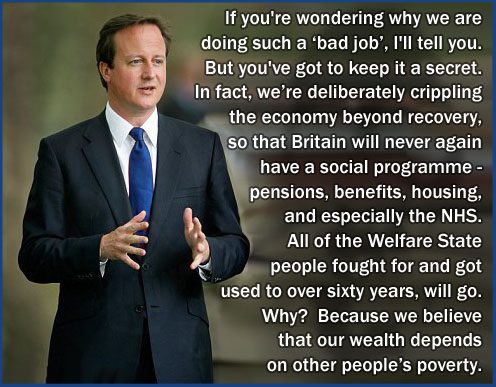
The Government are playing a game. They don’t serve the needs of the public. They serve a wealthy elite. The Conservatives don’t care about the consequences of taking money from the poorest and giving it to the wealthiest. But they won’t tell us that. They are playing the game that the game is not a game.

It’s called the “blame game.” As welfare “reforms” and housing cuts bite increasingly harder, do we ever reach the point where the government concedes that the horror and hardship caused to many is an inevitable consequence of their own policies? Not at all.  Instead we see their adeptness at digging ever deeper holes of denial.

At least Thatcher admitted there was increased unemployment, that it was as a tool of economic policy, and it was, in her opinion, a price worth paying to bring down inflation. Shucks, shame that didn’t work, Maggie. We had high unemployment AND high inflation. But at least she was honest about her original intent.

The government denies that there is job insecurity, unemployment and underemployment. Or indeed any hardship at all; public sacrifices made through an elites’ economic policy-making. They blame anyone other than the ministers who have instituted the cuts. Whenever some new example of the horrendous effects of their policies is presented to them, they have a range of stock responses. You have to wonder if there is a standard Whitehall crib sheet for ministers. Cases that clearly indicate a correlation between their policies and harm are dismissed as “anecdotal evidence”, and that “no causal link can be established”. 

Correlation often implies a causal link, but to find it, you have to investigate further, rather than issuing flat denials, loudly.

Here is what the crib sheet looks like, in the interests of democracy and open Government:-

Deny that alternatives to austerity are viable

The repetition of a lie ad nauseum is based on the idea Goebbels had – that repeated lies will somehow convince people that they are true. Cameron was busted when he repeatedly told the lie We are paying down the debt. Despite being rumbled, the Coalition have stuck with this lie doggedly. The bonus of the lie is that it may undermine the opposition’s economic credibility, and the Tories particularly delight in the lie that it’s all Labour’s fault because they “overspent” as it further justifies austerity measures and starving public services of Government funding, with our paid taxes, as well as stripping our welfare provision away.

The Conservatives have REALLY messed up the economy. We know it’s a big fat Tory lie that cutting spending at a time of economic recession will re-balance public finances. As many academics and economists have stated, cutting spending when the economy is flat is likely to cause further contraction to the economy, and that will negatively affect public finances, rather than help at all.

The government will never confess to this because they are so tightly ideologically bound to an übertreiben Neo-Liberalism, no matter what the cost is in human terms, or even in economic terms. What we need is Labour’s expansionary fiscal policies, not contractionary ones. Real, sensible economists know that the only way to address a recession is to grow the economy, and that means more public spending in the short term, to stimulate economic activity, and cutting if needed when the economy is back on the up (which needn’t mean absolute cuts, but relative cuts because the economy is growing).

Repeat that implementing the cuts is avoidable

The trick is to give the impression that all the cuts can be made painlessly by eliminating luxuries and sacking “backroom staff”. Cameron used this one at PMQs last week when he accused Councils of making high-profile cuts “to try to make a point,” and not because they need to. Delivered with a straight face and psychopathic calm, this sounds like a feasible lie that some will believe.  So, central government is severely reducing budgets to Local Authorities, leaving them with a kind of impossible table cloth pulling trick to accomplish. Rip away the funding and hope the contents of the table – local services and provisions – stay put, and don’t crash to the floor. Of course, Labour Councils will be affected by the cuts more than other Councils, too. That also works out well for the Conservatives.

Blame the previous Labour Government. A lot

“It’s all their fault we have too few homes.” The Conservatives focus on the fact that housebuilding in Labour’s very last year was the worst they achieved, even though we know that was because of the credit crunch. The government won’t admit either that housebuilding under the Coalition is on average 45,000 homes less per year than the output under Labour, or that 2010/11 and 2011/12 were the two worst years since the war for English housebuilding. They don’t mention that Thatcher sold off all of the social housing stock, either. Again, they blame local government. Westminster is putting homeless families up in expensive hotels and Camden is sending them to Coventry (or Leicester, Liverpool, or somewhere else absurdly far from London). The Government say, hiding their smug smiles, how stupid this is, and tell them to stop it, even though both they and we know they cannot.

(See also The UK deficit scam: George Osborne is nailedwe are paying down the debt and rumbled).

Don’t admit that cutting welfare affects anything else.

Cuts in all benefits for private tenants and the bedroom tax will mean that more people will become homeless, and more people will need accommodation with lower rents ad fewer rooms in the social sector. The government deny that this will happen. Most of the political debate at the moment is focused on the consequences of the bedroom tax, which they claim is “fair”and the implications of private sector high rents, local rent allowance caps, (and in some areas, councils are quietly imposing a bedroom tax on those in privately rented properties, too, despite the rhetoric that this will affect only those tenants in social housing) the poll tax style council benefit reductions and DWP related benefits cap have been somewhat obscured.

Current debate does not, and probably cannot cover the depth of utter disruption and destruction to people’s lives that these changes are going to bring about. That is partly because the full details of the changes are not being released by this government in a transparent and timely manner.

If any evidence emerges that shows them to be wrong, under no circumstances will the government agree with it. All valid criticism and evidence will be passed off as “scaremongering”. Better still, the government don’t read the evidence then no-one can accuse them of knowing the facts but ignoring them. Alternatively, officials may be able to find an obscure or outdated source that on the surface appears to contradict the evidence.

Blame the victims

Extravagant housing benefit claims may only happen in a few isolated cases, but even so the press will amplify and stigmatise those few, especially if they are large families, unemployed, migrants or – even better – all three. The government gives the impression that such claims make up most of the welfare budget. They won’t ever admit that over half of welfare spending goes to older people, as they are seen as deserving of it, by the general public. Athough older people may not be as secure as they think – there’s a little rhetoric creeping in that portrays elderly people needing social care as being a “burden” on “the tax payer”. That never bodes well for a social group, it usually signals some significant cut to their income and support.

If the government is talking about housing benefit, they will try to give the impression that it’s spent by the tenants themselves to fund their indolent lifestyles – they won’t ever confess that the money goes directly to landlords who are pushing up rents because there are insufficient houses available. There is the old Poor Law binary conceptual schema, especially resurrected to inform Tory narratives  – the notion of  “deserving” and “undeserving” poor, which is implicit in all of their anti-welfare and anti-public service rhetoric.

The government use keywords and sound bites in debate, speeches and in the media. They repeatedly refer to “scroungers”, “hard working families” , “the workshy,” “strivers” and “skivers” and talk about “subsidised housing,” and not council homes. (£23,000,000,000 every year is given to private landlords in subsidies by tax payers). This helps “confirm” the impression that most welfare spending is a waste of (“striving” tax payers’) money.

Suggestions for new and even more derogative terms are always welcome. IDS made a good attempt to link welfare recipients in the public collective consciousness with drug addicts and alcoholics. Other MPs are following his lead. Again, evidence that is presented to the contrary is dismissed, usually with angry derision and a renewed psychological and linguistic assault on the victims, and/or the label of  “scaremongering” directed at the critic that presented the evidence.

Another important strategy employed by the Tories is to manipulate the victims of their savage cuts via propaganda, so they blame each other. Those in low paid work can blame the poor unemployed for the economic recession and the misery of the cuts, those unemployed people can blame poor immigrants, and everyone can blame the poor “feckless” and “fraudulent” sick and disabled people. The Conservatives are very adept at creating  social divisions by constructing folk devils and generating moral outrage. It’s an old and established bullying tactic to blame the victim, as this serves to cover up the abuse of the victim or to “justify” that abuse.

The Tories managed to use others to persecute victims further in order to oppress and silence them. Scapegoating victims and persecution of selective social groups is also one of the hallmarks of an authoritarian government, one that does not serve the needs of the public, but rather, sees the public as a means of serving government ends.

Deny that the cuts are taking place

The government will point out if there is any part of any budget that they decided to protect, however small, and they will grossly exaggerate its importance. Take a historical lesson from Grant Shapps: every time someone has said funding for homelessness is being cut and services are being decimated, he would point to his department’s very small fund for homelessness prevention, and claim that because it hadn’t been reduced, other services had been unaffected, or – oh yes of course – any cuts are the fault of the Local Authorities. The ones that have had their funding drastically cut by central government, and that face even more cuts once the Localism Bill has been implemented.

It’s obvious to all that the scale of the welfare cuts in reality must mean massive suffering and hardship. Furthermore, Labour find and present deserving examples of cases, such as people dying of cancer, homeless ex-servicemen, that sort of thing. (There are many, many deserving examples of cases, too.) One Tory tactic is to almost always offer to investigate the particular case, implying they may do something (even though they won’t.) Another is that they point to the money that’s been set aside for special cases (e.g. Discretionary Housing Payments). They never fail to give the impression that this is sufficient to deal with any genuine hardship.

Usually there is mention of an amount e.g. Discretionary Housing Payments total £60 million in 2012/13. This will seem a large sum to the public even though it’s only a tiny fraction of the cuts taking place. There isn’t a chance in hell that such a small amount of funding “on one side” will alleviate the chaos, suffering and mass homelessness as a result of the bedroom tax, council “poll” tax and benefit cap and all of their terrible effects hit hard, which they undoubtedly will despite the pseudo-reassuring Tory rhetoric that glides with glib indifference over the surface of these socially regressive horrors. 

Stick a public plaster on it

Unfortunately some problems are so big and so obvious that the government have to pretend they are doing something about them. For example, everyone knows builders have almost stopped building. Given that the housing budget had one of the biggest cuts of all in the latest Spending Review, there’s precious little they can can do, but they will nonetheless pretend otherwise. Firstly, they argue that output is going up even when it’s going down (Tory tip – don’t appear on Sunday Politics, choose programmes where they don’t do their research.) Secondly, the government always have to hand some useful initiative available that sounds like it might solve the problem, even if it’s far too small to make any difference.

Grant Schapps gave us NewBuy and FirstBuy, which both sound sufficiently impressive, but then they may need to invent one or two more when people realise how inconsequential they are. The government have said they are selling more homes under the right to buy scheme, as if this helps solve the problems, even though they aren’t and it doesn’t.

Richard Vize made an excellent point in the Guardian last week that Cameron and Co. are undermining Local Government and failing to prepare people for the depth of the cuts that are now hitting them – with much worse still in the pipeline. He says that ministers are “giving the impression that public services can indeed manage cuts without pain or profound change. They can’t.”

How on earth can the government expect to be taken seriously, if they make cuts on an unprecedented scale over a dangerously tight time-scale, but refuse even to admit there might be consequences for public services?

Perhaps  the frightening answer is that they refuse to admit it because their intention is to push ahead relentlessly, and regardless of public opinion, and that they don’t care about the consequences.

734072_148205235330533_659227219_n


Picture courtesy of Robert Livingstone

The Poverty of Responsibility and the Politics of Blame

574552_411798808889653_918253014_n

Government consultation on measuring child poverty. So, what’s that about?

The Government are currently developing “better measures of child poverty” to provide a “more accurate reflection of the reality of child poverty.” According to the Tory-led Coalition, poverty isn’t caused by a lack of income. The Coalition have conducted a perfunctory consultation that did little more than provide a Conservative ideological framework to catch carefully calculated, subliminally-shaped public responses.

This supremacist framework was pre-fabricated by the strange déjà vu musings of Charles Murray, the American sociologist that exhumed social Darwinism and gave the bones of it originally to Bush and Thatcher to re-cast. Murray’s culture of poverty theory popularised notions that poverty is caused by an individual’s personal deficits; that the poor have earned their position in society; the poor deserve to be poor because this is a reflection of their lack of qualities, poor character, low intelligence and level of abilities generally. 

Of course, this perspective also assumes that the opposite is true: wealthy and “successful” people are so because they are more talented, motivated and less lazy, and are thus more deserving. Just like the widely discredited social Darwinism of the Victorian era, proposed by the likes of Conservative sociologist Herbert Spencer, (who originally coined the phrase “survival of the fittest,” and not Darwin, as is widely held) these resurrected ideas have a considerable degree of popularity in upper-class and elite Conservative circles, where such perspectives provide a justification for extensive privilege and greed. In addition, poor communities are seen as ‘socialising environments’ where values such as fatalism are transmitted from generation to “workshy” generation.

Perhaps that’s why Thatcher destroyed so many communities: in a bid to drive her own demon out. It was invoked by a traditional Tory ritual of blame. Political responsibility was sacrificed, and that’s also become a traditional Tory ritual.

According to traditionalist right wing sociologists Kingsley Davis and Wilbert Moore, not only is poverty a reflection of one’s lack of talents, but inequality is necessary and functional for society. Some positions are socially more important (or functional) than others. Such important positions usually require deferred gratification – sacrifices – to be attained: surgeons need long years of education and dedication to finally practice their crafts. Therefore, it is legitimate that those who make such sacrifices be rewarded with money, power and prestige. Such rewards are offered to motivate the best and brightest to aim for such positions. The poor are poor because they are less intelligent, talented, driven, innovative, motivated, self-restrained and hard working, according to the right-wing pseudomeritocratic narrative. 

Of course we know from psychological studies that the “brightest and best” are often driven by greed, ruthlessness, hunger for power and status: narcissism and psychopathic ambitions, and that the genuinely brightest and best are very often less well financially rewarded for more virtuous and intelligent behaviours.

The salary/pay differences between nurses and footballers is a good example that highlights the myth of meritocracy. We reward good eye and foot coordination skills in footballers and prize them far more highly as a society than we do caring, medical knowledge and health and healing skills in nurses.

How we organise socially (which is shaped considerably within a dominant paradigm of competitive individualism, and a Conservative neoliberal economic framework) and how we endorse and reward behaviours as a society is also a big factor in the distribution of competitive, (as opposed to cooperative) greedy, narcissistic, (as opposed to empathic, collectivist) psychopathic traits in those holding the most financially rewarding positions of power.

Blame-the-victim theories of poverty assume that all individuals think alike independently of their social context and circumstances. They ignore the actual resilience and ingenuity that people in absolute poverty mobilise in order to simply survive. And these theories also ignore the tremendous social obstacles that block people’s path to prosperity, such as war or political and ethnic repression. They ignore, in particular, the crucially significant role that Government decision-making and policy plays in shaping inequalities, and the distribution of wealth.

An overview of the underhanded, not the underclass.

In the consultation, material deprivation was mentioned almost in passing. Iain Duncan Smith memorably said recently that poverty isn’t caused by a lack of money. Oh really? Hmmm…  I suppose if you are stranded on a desert island, then it isn’t, but that’s not applicable here as a line of reasoning, Iain. Although I have seen many impoverished souls amongst the rich, I have yet to see a materially deprived wealthy person. Gosh, I’m surprised you didn’t know that the elite do tend to accomplish avoiding vagabondage and pauperism with aplomb, Iain.

Other “causes” of poverty outlined in the document include “worklessness,” unmanageable debt, poor housing, parental skill level, family stability,  and quality education, substance abuse and addiction … and it’s sounding like a Charles Murray Bell Curve mantra to me. Tory ritualistic chanting again.

Eugenics in a ball gown.

This Tory and almost quaint positivist notion of “cause and effect” – personal and socio-cultural inadequacies cause social inequality and poverty – is teleological (functionalist): poor housing, unmanageable debt, family instability and lack of access to quality education are all outcomes of poverty, not causes. I know this to be true, having worked with families that were experiencing difficulties caused by periods of deprivation and poverty, and I have to report that those sorts of misfortunes happened to people regardless of their social background. (Although I must add that none of the upper class or elite, to my knowledge, have ever required intensive support from social services.)

Yet these ideas have become tacitly accepted socially, politicised vigorously and relentlessly, and given pseudo-credibility in the largely right-wing agendarised media. Inequality in Britain today is now so stark, yet there is remarkably little public concern or anger about poverty. (But plenty of anger about the “feckless” poor.) Indeed, compassion and concern for the poorest in society has declined substantially due to the sustained and increasing prevalence of the view that poverty is largely caused by laziness and is the fault of the individual, and that is also simply a shruggable, unavoidable fact of life. Poverty is caused by the poor. It’s not a generous or an expansive view of human nature, from the Tory ontological camp.

Moreover, much of the British public believes that there are sufficient opportunities to succeed for those who try hard enough, and also that it is the middle class which actually struggles the most, economically. These assumptions are highly Conservative, ideologically, with political implications that limit public support for egalitarianism and extensive wealth redistribution from rich to poor, and stifle empathy and understanding for the victims of poverty. There is also, of course, the fact that many don’t want to think about the issue at all, because it causes discomfort and unease: making poverty visible reminds people on some subliminal level, no matter how much they blame the victim, that poverty could nonetheless happen to anyone. The saying goes that most of us are just a couple of pay cheques away from destitution. To many, this is tacit knowledge, but such misfortune will never happen to them.

Competition is threaded throughout the Conservative neoliberal ideological framework, and the Tories have always been inclined to see society as having a hierarchical organisation and structure. Competitive individualism is an all-pervasive social contagion, and has led to those who have the least feeling that they are competing the most for rapidly disappearing resources. This is why the media propaganda campaigns of the Government have seen success, because the Government, via the media, has tapped into this contagion and constructed convenient scapegoats.

Sick and disabled people have been negatively labelled and stigmatised by the media, and it’s no coincidence that hate crimes directed at this social group have significantly increased. We see the poor who work hating the poor unemployed, we see the poor unemployed hating poor immigrants, and we see people who are poor and ill saying that they deserve more support than others that are also poor and ill.

Yet instead of maintaining divisions, the casualities of this Government’s policies would do better to organise, cooperate and mutually support each other. There’s a few socialist principles to counter the isolating poverty trance that many of us are in danger of succumbing to. We can’t afford to be dazed. “Divide and conquer” as a propaganda strategy has certainly been effective, and whilst the authoritarian diversionary (middle) finger is being pointed in blame at the poor and the vulnerable, the real villains are stealing all of our money, and stripping away our publicly funded services and support programs, and enjoying huge tax cuts and handouts as they go. Poverty and wealth do tend to grow together. It’s no coincidence.

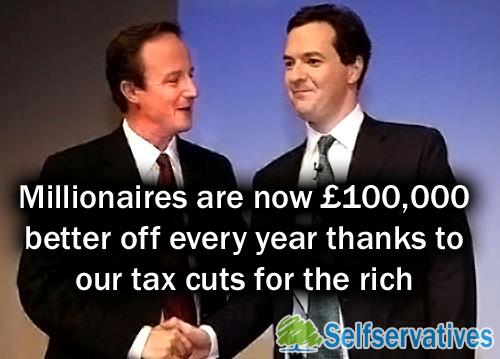
I do not agree with the idea that “worklessness” is the cause of child poverty, or many of the other “causes” proposed in the consultation document. We are in an economic recession, and I do believe the Government has a duty to protect the most vulnerable of its citizens, rather than blaming them for the consequences of Government policies. What has happened instead is Coalition policies have contributed enormously to creating more poverty and are set to continue to do so, at a rapid pace, especially once the rest of the cuts via the Localism Bill, Bedroom Tax and Benefit Cap are implemented from April. Coalition policies have of course generated more money for the wealthy, with the very wealthiest gaining around £107, 000 each per year, for example, whilst austerity targets the poorest disproportionately. That is the cause of poverty: utilising social and economic policies to bring about a hugely unequal, grossly unfair and unmerited redistribution of wealth.

In a time of economic recession, jobs are lost, unemployment rates are rising, (despite what we are being told by Cameron – how can we possibly have the best employment rates since the 1960’s, when we are in the middle of the worst global recession we have seen for many decades?) and businesses are increasingly facing bankruptcy, it is therefore hardly fair to penalise the unemployed. Yet taking money from those who have the least via the “reforms,” sanctions and work fare is the Government’s response to the rising unemployment, and to sickness and disability, too. We know that work fare results in even more job losses, because we know that businesses are inclined to get rid of paid workers and replace them with free labour, which comes funded from the tax payer, and so further increases company profits.

We know that private companies are driven by the profit motive, and that they ride roughshod over human needs. They employ the cheapest (and therefore least qualified and professional) workforce that they can. They provide the cheapest materials, economise and make “efficiency savings” in services they provide.

Add to that the matter of Government targets to “incentivise” businesses through further financial reward – with the political aim of reducing State support for the poorest and most vulnerable – and we have the most corrupt and inhumane profiting from human misery, with private companies such as Atos being encouraged explicitly (contractually and via policies) to inflict misery, and being financially rewarded for inflicting that misery, suffering, sometimes death, and of course, increasing financial hardship and poverty. Companies like Atos and A4E reflect the very worst aspects of “vulture capitalism”. It is the asset-stripping of our public services, selling them off and exploiting people for profit, no matter what the cost is to those people.

Sanctions of up to 3 years – stopping a person’s basic means of survival (benefit covers the cost of food and fuel, with housing benefit covering the other basic survival need – shelter) means that those who cannot find work will quite likely die. That’s a fact. Evidence of this biological fact is well articulated by Abraham Maslow  (see Maslow’s Hierarchy.)  Maslow’s proposition also illuminates clearly why poor people cannot be “incentivised” or “helped” through sanctions and  punishment, or motivated by these methods to find none existent jobs when they are struggling to survive.

When people are struggling to meet their most basic needs, they cannot summon the effort to do anything else. The Government expect us to believe that punishing poor people will somehow cure them of their poverty, although many people who are not claiming a benefit won’t know about the punishment regime in place for the unemployed poor, since the use of words by the Government like “helping” people into work (that isn’t real) is such a big detour from truth, and it makes a completely menacing, sneering mockery of the real meaning of that word.  Ah, those “caring” Conservatives are at it again …

We really need to ask ourselves what kind of Government would steal money from the poorest citizens through “reforming” the system of welfare provision, when we are in recession. Then ask again why there is a desire to redefine poverty in a way that excludes the obvious reason for it: a lack of money. One cannot help but wonder why the Coalition think that poor people need money taken from them to “incentivise” them, but very wealthy people need money giving to them, to “incentivise” them. Where did the money come from that rewarded so well those who do not need it ? Oh yes, I can see now….

A simple truth is that poverty happens because some people are very, very rich. That happens ultimately because of Government policies that create, sustain and extend inequalities. The very wealthy are becoming wealthier, the poor are becoming poorer. This is a consequence of  “vulture capitalism” – at the core of Tory ideology – designed by the opportunism and greed of a few, it is instituted, facilitated and directed by the Tory-led Coalition.  

Welfare provision was paid for by the public, via tax and NI contributions. It is not a “handout.” It is not the Government’s money to cut. That is our provision, paid for by us to support us if and when we need it. It’s the same with the National Health Service. These public services and provisions do not and never did belong to the Government to sell off, make profit from, and strip bare as they have done.

Low wages and low benefit levels, rising unemployment and a high cost of living are major causes of poverty. “Worklessness” is a made up word to imply that the consequences of Government policies are somehow the fault of the victims of traditional Tory prejudices.

It’s a psychological and linguistic attack on the vulnerable – blaming the unemployed for unemployment, and the poor for poverty. Those are a consequence of Coalition policies. The Coalition take money from those who need it most to give away to those who need it least. That causes poverty. The Coalition are creating poverty via the consequences of policies. Occasionally they do admit it, or more likely, slip up with a truth. (It was Steve Webb in this case, in addition to the opposition.)

Bearing in mind we are in a recession, I believe that the way the most vulnerable have been treated is unforgivable, and inhumane, and it also breaches several basic human rights. Poverty is caused by economic policies driven by political prejudice and ideology. Poverty is generated through structural – socio-economic – conditions that some Governments impose on a population. I would therefore like to see acknowledgement of this in the Tory-led  measurement of poverty. It’s time the Coalition took some responsibility for the appalling and miserable conditions and human suffering that they are deliberately imposing on the Citizens that they are meant to serve

Given the Coalition’s significant contribution to the continuing rise in childhood poverty, it’s worth noting their abject failure to meet their obligations to make provision for children at risk from the effects of poverty, because they prefer instead to make provision for those who need it the very least: the already very wealthy.

Signatories (such as the UK, since 1991) of the United Nations Convention on the Rights of the Child (the most rapidly and widely ratified international human rights treaty in history), are legally obliged to protect children from the adverse effects of economic policies.

The Coalition’s austerity measures, which target the poorest citizens for the greatest proportion of cuts, must surely breach this Convention.

Article 3: (Best interests of the child.) The best interests of children must be the primary concern in making decisions that may affect them. All adults should do what is best for children. When adults make decisions, they should think about how their decisions will affect children. This particularly applies to BUDGET, POLICY AND LAW MAKERS.

That would be the Government.

 The Convention Rights of Children


382035_141704259313964_676863845_n

Pictures courtesy of Robert Livingstone.


I don’t make any money from my work. But you can support Politics and Insights and contribute by making a donation which will help me continue to research and write informative, insightful and independent articles, and to provide support to others. The smallest amount is much appreciated, and helps to keep my articles free and accessible to all – thank you.

DonatenowButton

Clause 99, Catch 22 – The ESA Mandatory Second Revision and Appeals

552733_435687149834152_88095195_nSection 102 and Schedule 11 of the Welfare Reform Act, (Clause 99) – Power to require revision before appeal.

If anyone left in doubt that this Government’s policies are grossly unfair, and are intentionally punishing sick and disabled people – some of whom are amongst the most vulnerable of our citizens – you need look no further than Clause 99 for verification. Currently, claimants who are found fit for work can continue to receive Employment Support Allowance (ESA) at the basic rate by immediately lodging an appeal if they think the decision is wrong. ESA will then remain in payment until the appeal is decided.

That is all set to change, however, under Clause 99 of the Welfare Reform Bill, intended to be effective from April 2013 – and according to the Department for Work and Pensions, from October 2013 that includes ESA and DLA decisions. Under the new rules, claimants who wish to challenge a benefit decision will no longer be allowed to lodge an appeal immediately. Instead, there will be a mandatory revision or review stage, during which a different Department for Work and Pensions (DWP) decision maker will reconsider the evidence and, if necessary, send for more information, before deciding whether to change the original decision.

There will be no time limit on how long this process may take. The requirement for a mandatory review/revision before proceeding with appeal applies to all DWP linked benefits. During the review, no ESA will be payable, not even the basic rate. However, once the review is completed, those wishing to appeal may claim basic rate ESA again, up until the tribunal. It’s important that people know to request this continued payment from the DWP, once they have lodged their appeal. 

The ludicrous claim from Government is that this “simplifies” the appeal process, and  “the changes will improve customer service by encouraging people to submit additional evidence earlier in the process to help improve decision making. Resolving any disputes without the need for an appeal will also help ensure that people receive the right decision earlier in the process.”

Call me a cynic, but I don’t believe this is the genuine reasoning behind clause 99 at all. The successful appeals to date provide a growing and substantial body of evidence that the Work Capability Assessment isn’t fit for purpose. People are being wrongfully denied their claims for ESA. Mandatory review will make it very difficult for people to continue with an appeal, since their lifeline income will end for an indefinite period until the review is completed and they can proceed with appeal.

You will also have to appeal directly to HM Courts and Tribunal Services – this is known as “direct lodgement” – as DWP will no longer lodge the appeal on your behalf. DWP has agreed with the Tribunal Procedure Committee to introduce time limits to stipulate how long DWP has to respond to an individual appeal. The DWP is currently discussing what these time limits might be with the Tribunal Procedure Committee. That is assuming, of course, that people manage to circumnavigate the other consequences of this legislation.

From 1 April 2013 you will not be able to get Legal Aid for First-tier Tribunal hearings. Legal Aid will still be available for appeals to the Upper Tribunal and Higher Courts. See appealing to the Upper Tribunal against a first tier tribunal decision here: legal aid act 2012 for more information. So much for the right to a fair hearing.

There are some serious implications and concerns about these changes. Firstly, there is no set time limit for DWP to undertake and complete the second revision. Secondly, claimants are left with no income at all whilst they await the review, and until appeal is lodged. The DWP have stated that there is “no legal reason” to pay a benefit that has been disallowed during the review period. The only choice available seems to be an application for Job Seekers Allowance. (JSA) or Universal Credit. However, we know that people in situations where they have been refused ESA have also been refused JSA, incredibly, on the grounds that they are unavailable for work, (and so do not meet the conditions that signing on entails) or they are unfit for work, because they are simply too ill to meet the conditions.

We know of people who have had their application for JSA refused because they attend hospital for treatment once a week and so they are “not available for work” at this time. Furthermore, the minimum waiting period for a new claim to be processed is 6 weeks. That’s 6 weeks with no income at all.

Moreover, there is some anecdotal evidence of people being told by the DWP that in order to claim JSA, they must first close their original claim for ESA, since it isn’t possible to have two claims for two different benefits open at the same time. DWP are also telling people that this means withdrawing their ESA appeal. However, you have the right to appeal.

Another grave concern is that although most people on income related ESA are automatically passported  to maximum Housing and Council Tax Benefit, from the time that the claim ends, (and for whatever reason), eligibility to housing benefit and council tax also ends. 

However, I would urge people in this situation to contact the Housing Benefit office promptly to explain the situation – the DWP automatically contact the Council to tell them when someone’s eligibility for ESA has ended. It is always assumed that the person claiming has found work when their DWP related benefit eligibility ends.

You can still claim for Housing Benefit and Council Tax Benefit because you have a low income, or nil income, but you will need contact the Benefits Section, and will need bank statements to demonstrate that this is true, and also, any other evidence you may have, such as your notification letter from DWP, evidence of your tenancy and ID. If you have no income as a result of your ESA being stopped, ask for a nil income declaration form. (Like this one, for example)

You may also apply for discretionary housing payments if you are likely to become homeless, and if there is a shortfall between your Housing Benefit, and rent costs. It’s also payable sometimes when you have legal costs. It’s certainly worth asking your Local Authority if you qualify for payment. There are limited funds available.

I am informed that when an appeal is pending, providing the Housing Benefit Office is informed of this, there should be some support towards rent and Council Tax. However, this is going to place further strain and difficulty on people who are ill and disabled. Housing Benefit is calculated by taking the work activity or support component of ESA into account, and currently, when basic rate ESA is payable up to appeal, some claimants are not necessarily eligible for the maximum Housing Benefit awards.

It’s therefore possible that Housing Benefit entitlement will be lower, with no basic rate ESA being payable after April 1st. I would urge people to contact their Local Authority as soon as you know your ESA award has ended, because otherwise they will simply close your Housing Benefit and Council Tax claim.

The FOI.

I can confirm that there was no risk analysis or risk register in respect of clause 99 of the Welfare Reform Bill. I sent an FOI to DWP that asked about these issues, together with questioning that Clause 99 contains no reference to a time limit on ESA reconsiderations, although it makes them mandatory. I asked :-

1) When is the intended implementation date?

2) As yet no decisions have been made regarding ESA payment levels
during the reconsideration period which could be indefinite. Can you
give an assurance that this will be announced BEFORE
implementation?

3) What data will you collect so that the effects of this
legislation can be accurately analysed subsequently?

4) Where are the risk assessment, impact analysis and risk register
that show the effect this will have on claimants whose benefit
payments could be affected indefinitely?

The response informed that the planned implementation date is April 2013, and “the DWP will conduct a  formal public consultation in line with the Government’s code of practice on consultation. This does not include publishing a risk register or conducting a risk analysis. This is because all aspects of the proposed changes are considered during the consultation process and in the impact assessment and equality impact assessments related to the changes”. There are no plans to introduce a time limit, or to retain payments of basic rate ESA throughout the second revision and leading up to appeal.

The DWP published consultation document “Mandatory consideration of revision before appeal” that could be accessed via the DWP web site under the heading “Consultations”. The consultation concerned issues relevant to the implementation and operation of the appeals reform provisions in the Welfare Reform Bill and invited comments on the draft regulations. I worked on raising awareness regarding the issues that the Government’s draft raised, as well as prompting and garnering responses to the consultation.

I can also confirm that the Government response to the consultation did NOT take into account any of the concerns we raised collectively, in particular, regarding the lack of a time limit on the DWP to produce the mandatory review, and the withdrawal of basic rate ESA to those awaiting the review outcome .

So, the consultation was evidently a sham, nothing more than paying lip service to an increasingly perfunctory democratic process. Given that basic rate ESA is exactly the same amount per week as JSA, we need to ask ourselves why the  Government have withdrawn the ESA safety net for those wanting to appeal DWP decisions that they are fit to work. Why introduce another layer of DWP bureaucracy to the appeal process, and why is it the case that there is need for a second revision, if the first response is based on robust procedure and decision making, and yields accurate and fair outcomes?

Of course we know that the outcomes are neither fair, accurate, or based on robust decision making. We know that some 40% of appeals for ESA were successful in 2011 and that this percentage rose to around 80% when claimants had representation at appeal. That is pretty damning evidence against this Governments’ claims that the system is working, and that many disabled people “can work”.

It’s likely that Clause 99 has been introduced to make appealing wrongful decisions that we are fit for work almost impossible. Sick and disabled people are effectively being silenced by this Government, and the evidence of a brutal, dehumanising, undignified and grossly unfair system of “assessment” is being hidden.

More than 10,600 people have died following being told they were “fit for work”, and this presents a significant statistical increase (from 310 deaths over the same period amongst incapacity benefit claimants) that correlates with the current system, and it is astounding that our Government have failed to address this. Instead, they have made the system even more brutally punitive, dehumanising and grossly unfair.

Clause 99 is simply an introduction of an additional obstructive layer of Kafkaesque bureaucracy to obscure the evidence of this. This Government is oppressive and certainly bears all of the hallmark characteristics of authoritarianism.

We need to be pressuring the government for the introduction of a time limit (on both legal and humanitarian grounds) as currently there is none. I did enquire to see if DWP had any internal rules or guidelines yet regarding a time limit but so far they have not. We also need to be pressuring for basic rate ESA to continue. That was a major part of the consultation response, too.  

Meanwhile, legal challenges to this unfair and totally unacceptable addition to the Welfare Reform Bill will be going ahead.

Government’s response to the public consultation.

The DWP published a short mandatory consideration of revision before appeal – Government interim response to public consultation which stated that the Department did not propose to make any significant changes to the draft regulations included in the consultation document as a result of the comments received.

The Government’s final response to the consultation included the following:

  • There is to be no time limit for the completion of mandatory reconsideration of decisions.
  • No decision has yet been made with regard to paying ESA pending reconsideration but other benefits may be available to claimants where ESA has been disallowed.
  • It was confirmed that housing benefit and council tax benefit will not be included in the mandatory reconsideration process.
  • Where a person makes a late application for revision, the Department will be removing the requirement that an application for revision cannot be granted unless it has merit, and removing the regulation which requires that, in deciding whether an extension of time is reasonable, the decision maker cannot take into account the fact that the individual misunderstood the law or was ignorant that they could request reconsideration.

In considering a late application for revision, the decision maker will look at whether it is reasonable to grant the application for an extension of time, and what the circumstances were that meant that the application could not be made within the one month time limit.

The decision maker will still consider whether an any time revision can be made, or whether the decision should be superseded when considering a late application for revision as they do now.

Where a request for reconsideration is made out of time, and the decision maker refuses the application to revise the original decision, the effect of the draft regulations is that there can be no appeal as the Secretary of State must consider whether to revise the decision before an appeal can be made.

Update: No basic rate ESA will be payable whilst people await the mandatory review, to challenge wrongful decisions. No appeal can proceed until that has been done by DWP, there is no time limit on DWP to undertake the review.

Lord Freud speaking in the Lords about  basic rate ESA and the mandatory review :-

I turn now to ESA. At the moment, if someone appeals a refusal of ESA, it can continue to be paid pending the appeal being heard; this is not changing. What is changing is that there can be no appeal until there has been a mandatory reconsideration. So there will be a gap in payment. In that period—and I repeat that applications will be dealt with quickly so that this is kept to a minimum—the claimant could claim jobseeker’s allowance or universal credit. Alternative sources of funds are available. Of course, he or she may choose to wait for the outcome of the application and then, if necessary, appeal and be paid ESA at that point.”

Later he said:

Under the current position, there is a voluntary process whereby people can go for reconsideration and the ESA is not payable until the decision is taken to go formally to an appeal.”  Lord Freud (Source: Hansard)

GL24  and Appeal information.

From April, you will need to send your GL24  appeal form (DWP leaflet “if you think our decision is wrong”) or a letter directly to HM Courts and Tribunal Services.

How to appeal by letter.

 The appeal must contain:

  • the appellant’s name, address and National Insurance number
  • enough information to identify the decision under appeal (benefit claimed and date of decision);
  • the grounds for the appeal;
  • if late, the special reasons for lateness and/or why the appeal has a good chance of success;
  • the appellant’s signature (or the signature of a person with written authority to act on their behalf).

Update: Guidance on revision and handling appeals for benefits
Note 3: The guidance comes into effect
from 8.4.13 for PIP and from 29.4.13 for
UC, JSA and ESA.

Decision Makers should note that mandatory reconsideration is being
introduced from:
8.4.13 for PIP
29.4.13 for Universal Credit
28.10.13 for JSA and ESA.

However, we are still hearing about cases where the mandatory review is being used already, and this ought to be challenged on the grounds that DWP have provided dates when clause 99 is to be implemented, and so ought to be working to that legal timetable.

The revision process applies to:
1. UC, PIP, JSA and ESA
2. decisions on credits
http://www.dwp.gov.uk/docs/adma3.pdf

Further reading:

Further information from Rethink

ESA – Appeal statistics – before the MOJ spin!

Who is accountable and legally liable for the well-being of those deemed “fit for work”?

Step by step guide to appealing a ESA decision: Good Advice Matters

Sign the WOW petition – a call for a Cumulative Impact Assessment of all cuts and changes affecting sick & disabled people, their families and carers, and a free vote on repeal of the Welfare Reform Act.

It’s a call for an  immediate end to the Work Capability Assessment, as voted for by the British Medical Association.

Consultation between the Depts of Health & Education to improve support into work for sick & disabled people, and an end to forced work under threat of sanctions for people on disability benefits.

An Independent, Committee-Based Inquiry into Welfare Reform, covering but not limited to: (1) Care home admission rises, daycare centres, access to education for people with learning difficulties, universal mental health treatments, Remploy closures; (2) DWP media links, the ATOS contract, IT implementation of Universal Credit; (3) Human rights abuses against disabled people, excess claimant deaths & the disregard of medical evidence in decision making by ATOS, DWP & the Tribunal Service.

Help –  potential sources of funding from Charities and Trusts that help people out of poverty and debt:
United Utilities
3000 benevolent funds
Directory of National food banks
Representing yourself in Court

The LawWorks Clinics Network is a nationwide network of free legal advice sessions which LawWorks supports. Clinics provide free initial advice to individuals on various areas of law including social welfare issues, employment law, housing matters and consumer disputes – List of LawWorks clinics

“Everyone is entitled in full equality to a fair and public hearing by an independent and impartial tribunal, in the determination of his rights and obligations and of any criminal charge against him.” –  Article 6 of the European Convention of Human Rights, and Article 10 of the Universal Declaration of Human Rights.

417174_409187269150807_530516221_n

Pictures courtesy of Robert Livingstone


I don’t make any money from my work. I am disabled because of illness and have a very limited income. But you can help by making a donation to help me continue to research and write informative, insightful and independent articles, and to provide support to others. The smallest amount is much appreciated – thank you. 

DonatenowButton cards

The ESA ‘Revolving Door’ Process, and its Correlation with a Significant Increase in Deaths amongst Sick and Disabled People

598830_399390316797169_2004284912_n

A Department for Work and Pensions Freedom Of Information request (FOI) yielded a response showing that people having their claim for Employment Support Allowance (ESA) stopped, between October 2010 and November 2011, with a recorded date of death within six weeks of that claim ceasing, who were until recently claiming Incapacity Benefit (IB), totalled 310. Between January and November 2011, those having their ESA claim ended, with a recorded date of death within six weeks of that claim ending totalled 10,600. 

Bearing in mind that those who were successfully migrated to ESA from IB were assessed and deemed unfit for work, (under a different assessment process, originally) one would expect that the death rates would be similar to those who have only ever claimed ESA. This is very clearly not the case.

Furthermore, there are NO alarming increases in mortality rates amongst those who are still in receipt of Incapacity Benefit – there were approximately a million and a half claimants, compared to less than a million ESA claimants for this period. Many of those migrated so far have not yet had a Work Capability Assessment, as the Government decided to re-assess those people when their review from the Incapacity Benefit  Personal Capability Assessment is due, for practical reasons. The migration process won’t be completed, it is anticipated, until 2014.

David Green from the DWP has urged that “care should therefore be taken when interpreting these figures”. Well I have taken care interpreting this data, Mr Green. My careful interpretation is that there is a probable correlation demonstrated here, linking the reformed Work Capability Assessment process and the withdrawal of lifeline benefits with an increase in mortality amongst sick and disabled people.

Incapacity Benefit was fair, it was a genuine social security provision. The “reforms”, including the new Tory-shaped ESA benefit, by stark contrast, are all about taking support and provision away from the sick and disabled, leaving them potentially very vulnerable. It’s very evident that there are measures in place to reduce successful claims for ESA, and many lose their lifeline support for the most arbitrary or manufactured reasons.

Indeed, the Tories have been very keen to articulate the welfare “savings” that they anticipated with regard to the disability benefits, including PIP, which is replacing DLA. But of course, these anticipated “savings” reflect a dark truth: the Government are setting targets to remove benefits from people, regardless of the impact of that imposed deprivation (and frank State theft of our tax funded welfare) on their wellbeing, health and safety. How else is it possible to predict probable “savings?”

Those claiming IB were not required to have continuous assessments, whereas those on ESA are constantly required to have the Work Capability Assessment. Many claimants have described a “revolving door” process of endless assessment, ceased ESA claim, (based on an outcome of almost invariably being wrongly “assessed” as fit for work), appeal, successful appeal outcome, benefit reinstated, only to find just 3 months later another assessment is required. The uncertainty and loss of even the most basic security that this process creates, leading to constant fear and anxiety, is having a damaging, negative impact on the health and wellbeing of so many.

A significant proportion of those required to have endless assessments have very obviously serious illnesses such as cancer, kidney failure, lung disease, heart disease, severe and life threatening chronic conditions such as multiple sclerosis, lupus, myalgic encephalomyelitis, rheumatoid arthritis, brain tumours, severe heart conditions, and severe mental health illnesses, for example. To qualify for ESA, the claimant must provide a note from a doctor stating that the person is unfit for work. There can be no justification for subjecting people who are so ill to further endless assessments, and to treating us as if we have done something wrong.

Marginalising and stigmatising vulnerable social groups via political propaganda in the media, using despiteful and malicious terms such as “workshy” and “feckless” is a major part of the Government’s malevolent “justification” to the public for removing the lifeline support from sick and disabled people, amongst whom are some of our most vulnerable citizens.

We are climbing Allport’s Ladder.

I have often suspected that Iain Duncan Smith is channelling the spirit of Goebbels.

In addition to very justified anxieties regarding the marked increase in disability hate crime that the Tory-led propaganda campaign has resulted in, many sick and disabled people have also stated that they feel harassed and bullied by the Department of Work and Pensions and Atos. Many talk of the dread they feel when they see the brown Atos envelope containing the ESA50 form arrive through the letter box.

The strain of constantly fighting for ESA eligibility/entitlement and perpetually having to prove that we are a “deserving” and “genuine” sick and disabled person is clearly taking a toll on so many people’s health and wellbeing. Many families of those who have died have said that the constant strain, anxiety and stress of this revolving door process has contributed significantly to their loved ones’ decline in health and subsequent death. The figures from the DWP, and the marked contrast between the ESA and IB death statistics certainly substantiates these claims.

The horrific, unforgivable and massive increase in deaths over this period coincides with the Government’s totalitarian styled rapid fire legislation – the “Reforms” – in the face of protest, horror, disbelief, fear and mass opposition. The Tories cited “financial privilege” to trample over opposition and stifle dissent, to drown out the voices of protest. Those protesting this Bill notably included many from the House of Lords. I lobbied the Peers, and emailed every single one of them, stating very clearly that the welfare reforms must not happen. I got a high number of encouraging responses. But  David Cameron got his own way.

Cameron made a Freudian-style slip when he announced to Ed Miliband recently, during Parliamentary debate, that We are raising more money for the rich.” Not that we didn’t already know this was so. Many of us – around 73 sick and disabled people every week –  are paying for that wealth increase for the already wealthy with our very lives.

There are many who have so tragically lost their lives because of this malicious Government’s brutal and grossly unjust economic war on the poorest, on sick and disabled people and on the most vulnerable citizens, because of the Tory-led ransacking and plundering of our welfare provision and social support programs.

But just one life would be one too many.

Further reading:

The Black Triangle Campaign

536738_306169162785952_999031084_n
Many thanks to Robert Livingstone for his outstanding artwork.

This is an excerpt taken from a much longer piece of work – Remembering the Victims of the Welfare “Reforms.”

“We are raising more money for the rich” – Hansard uncorrected, and some thoughts. 12th December 2012

Today’s Commons debates – Wednesday 12 December 2012 Version: Uncorrected | Updated 21:28

Christopher Pincher:Can my right hon. Friend confirm that the fall in youth unemployment figures is the largest since records began and will he meet me to discuss how employment opportunities in Tamworth, including in youth employment, can be promoted still further?
The Prime Minister:I would be delighted to meet my hon. Friend to discuss the economic and business situations in Tamworth. He is absolutely right that this morning’s figures show the largest quarterly fall in youth employment on record, with 72,000 fewer people unemployed this quarter. Obviously, there is no room for complacency—far too many people are still long-term unemployed—but we can see from the figures that 40,000 more people are in work, vacancies are up, unemployment is down by 82,000, the claimant count is down and there are more than 1 million extra private sector jobs under this Government.
Christopher Pincher:Can my right hon. Friend confirm that the fall in youth unemployment figures is the largest since records began and will he meet me to discuss how employment opportunities in Tamworth, including in youth employment, can be promoted still further?
The Prime Minister:I would be delighted to meet my hon. Friend to discuss the economic and business situations in Tamworth. He is absolutely right that this morning’s figures show the largest quarterly fall in youth employment on record, with 72,000 fewer people unemployed this quarter. Obviously, there is no room for complacency—far too many people are still long-term unemployed—but we can see from the figures that 40,000 more people are in work, vacancies are up, unemployment is down by 82,000, the claimant count is down and there are more than 1 million extra private sector jobs under this Government.
Edward Miliband (Doncaster North) (Lab):Today’s fall in unemployment and rise in employment are welcome. Part of the challenge remains the stubbornly high level of long-term unemployment. Does the Prime Minister agree that that remains of fundamental importance not just to the people who are out of work but to the country as a whole?
The Prime Minister:I absolutely agree—I mentioned it in my first answer—that long-term unemployment remains stubbornly high. The good news about today’s figures is that long-term youth unemployment is down by 10,000 this quarter, which is encouraging. Obviously, long-term unemployment among others is still a problem. That is why the Work programme and getting it right are so important. It has got 200,000 people into work, but clearly there is more to do. I welcome the right hon. Gentleman’s tone, not least because he said on 18 January that“over the next year, unemployment will get worse, not better, under his policies.”—[Official Report, 18 January 2012; Vol. 538, c. 739.]Perhaps he would like to withdraw that.
Edward Miliband:I am glad that the Prime Minister recognises that long-term unemployment is still a challenge. I want to ask him about the people who are doing the right thing and finding work. Last week in his autumn statement, the Chancellor decided to cut tax credits and benefits. He said it was the shirkers—the people with the curtains drawn—who would be affected. Can the Prime Minister tell us how many of those hit are in work?
The Prime Minister:The fact is this—[Hon. Members: “Answer the question!”] I will answer it. Welfare needs to be controlled and everyone who is on tax credits will be affected by these changes. We have to get on top of the welfare bill. That is why we are restricting the increase on out-of-work benefits and it is also why we are restricting in-work benefits. What we have also done is increase the personal allowance, because on this side of the House we believe in cutting people’s taxes when they are in work
Edward Miliband:The Prime Minister is raising the taxes of people in work. Of course, he did not answer the question. Despite the impression given by the Chancellor of the Exchequer, the answer is that more than 60% of those affected are in work. That means the factory worker on the night shift, the carer who looks after elderly people around the clock and the cleaner who cleans the Chancellor’s office while his curtains are still drawn and he is still in bed. The Chancellor calls them scroungers. What does the Prime Minister call them?
The Prime Minister:The right hon. Gentleman just said that we are not cutting taxes for people in work. Someone on the minimum wage who works full time will see their income tax bill cut by one half under this Government. The fact is, under this Government, we are saying to working people, “You can earn another £3,000 before you even start paying income tax.” That is why we have taken 2 million people out of tax altogether. He should welcome that, because this is the party for people who work; his is the party for unlimited welfare.
Edward Miliband:Of course, as we might expect, the Prime Minister is just wrong on the detail. The Institute for Fiscal Studies table says quite clearly that, on average, working families are £534 a year worse off as a result of his measures. I notice that he wants to get away from what the Chancellor of the Exchequer said last week. We know what the Chancellor was trying to do: he was trying to play divide and rule. He said that his changes were all about people“living a life on benefits”—[Official Report, 5 December 2012; Vol. 544, c. 877.]“still asleep” while their neighbours go out to work. It turned out that it was just not true. It is a tax on strivers. Will the Prime Minister now admit that the Chancellor got it wrong and that the majority of people hit are working people?
The Prime Minister:The right hon. Gentleman says that we have not got the detail right. We know his approach to detail. It is to take a 2,000-page report and accept it without reading it. That is his approach to detail. Specifically on the Institute for Fiscal—[Interruption.] I am surprised that the shadow Chancellor is shouting again this week, because we learned last week that like bullies all over the world, he can dish it out but he cannot take it. He never learns. The figures—[Interruption.]
Mr Speaker:Order. I want to hear the Prime Minister’s answer. [Interruption.] Order. Let us hear it.
The Prime Minister:To specifically answer the question from the Leader of the Opposition, he mentioned the figures from the Institute for Fiscal Studies, but they do not include the personal allowance increase put through in the Budget, and they do not include the universal credit changes that come in next year and which will help the working poor more than anything. The fact he cannot get away with is that under this Government, we are lifting the personal allowance, we are taking millions out of tax, and we are standing up for those who work. He only stands up for those who claim.
Edward Miliband:I must say, I have heard everything when the boy from the Bullingdon club lectures people on bullying. Absolutely extraordinary. Have you wrecked a restaurant recently?The Prime Minister does not want to talk about the facts, but let us give him another one. He is hitting working families, and the richest people in our society will get a massive tax cut next April—an average of £107,000 each for people earning over £1 million. Is he the only person left in the country who cannot see the fundamental injustice of giving huge tax cuts to the richest while punishing those in work on the lowest pay?
The Prime Minister:The tax take for the richest under this Government will be higher in every year than it was for any year when the right hon. Gentleman was in government. He has obviously got a short memory, because I explained to him last week that under his plans for the 50p tax rate, millionaires paid £7 billion less in tax than they did previously. The point of raising taxes is to pay for public services. We are raising more money for the rich, but where he is really so profoundly wrong is in the choice that he has decided to make. The facts are these: over the last five years, people in work have seen their incomes go up by 10%, and people out of work have seen their incomes go up by 20%. At a time when people accept a pay freeze we should not be massively increasing benefits massively, yet that is what he wants to do. A party that is not serious about controlling welfare is not serious about controlling the deficit either.
Edward Miliband:From the first part of his answer, it seems the Prime Minister is claiming to be Robin Hood; I really do not think that is going to work. He is not taking from the richest and giving to everybody else. Didn’t the Business Secretary give it away in what he said about the autumn statement? He said:“what happened was some of their donors,”—we know who he is talking about—“very wealthy people, stamped their feet”,so the Conservatives scrapped the mansion tax and went ahead with the 50p tax cut. They look after their friends—the people on their Christmas card list. Meanwhile, they hit people they never meet, and whose lives they will never understand.

 Some thoughts.

Ed Miliband’s comments – “I must say, I have heard everything when the boy from the Bullingdon club lectures people on bullying. Absolutely extraordinary. Have you wrecked a restaurant recently?” –   are also well worth preserving here. The exposure of Cameron’s lie that the welfare reforms were about “making work pay” also makes this a memorable Commons debate.

Well, it’s not as if most of us hasn’t spotted the the growing gap between the wealthiest and the poorest, and made a fundamental connection there.

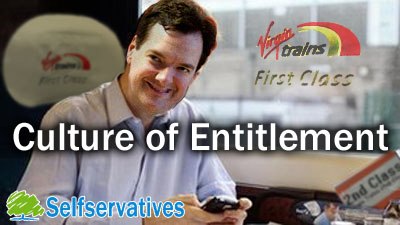
Tax avoidance and evasion costs this Country £69 billion a year, at a conservative estimate. Also, note that the highest earners each stand to gain a further £100, 000 EXTRA per year, courtesy of the Tory-led Coalition. That’s most certainly reflects traditional Tory ideological commitments, and it drags Osborne’s sham “economic strategy”  shrieking into daylight, revealing it starkly for what it is. The real reason for the austerity measures this Government have inflicted on the poorest citizens is that Tory sponsors and very greedy rich people are being handsomely rewarded with tax payers money. The money for our welfare provision, our healthcare, our public services, schools, and so on, is being stolen from the British public and backhanded to the undeserving rich – there is the REAL “culture of entitlement”. Tory sponsoring private companies are making a fortune from the poverty that has been inflicted on many citizens. We have seen that the private sector do not deliver public “services” or meet public needs at all. (Atos, A4E , G4S, for example.) Private companies simply make profit. Indeed, that profit is all too often made at the expense of the well being of Citizens. That is most certainly and clearly true of Atos.

‘David Cameron and George Osborne believe the only way to persuade millionaires to work harder is to give them more money.’

‘But they also seem to believe that the only way to make you (ordinary people) work harder is to take money away.’ Ed Miliband.

Bravo Ed, very well spotted contradiction regarding Cameron’s claims about how “incentives” work. Apparently, the rich are a different kind of human from the majority of human beings.

It’s plain to see that Cameron rewards his wealthy friends, and has a clear elitist agenda, whilst he funds his friends and sponsors by stealing money from the tax payer, by stripping welfare provision and public services down to the bare bones. The truly terrible and catastrophic thing is that some are paying for Cameron’s shameful and unwarranted generosity to the already wealthy with their very lives.  73 sick and disabled people die on average every week, many after having their benefit claim ended unfairly by the DWP. This Government have written targets  into Atos’s  contract when they renewed it : 7 out of 8 claimants to lose their benefit. That indicates quite clearly that people are losing their benefit regardless of whether or not they they are fit to work, since the target exists before the claimant is even assessed.

Taking money from the most vulnerable and poorest members of Society means they are unlikely  to be able to meet their basic biological needs. Welfare provision – our various benefits system – was based on the carefully calculated amounts we need to survive, so the amount of benefit is just enough to cover the costs of housing, food and fuel. That’s all.

There is no provision made in any benefit for cars, holidays abroad, children’s birthdays and Christmas, large , flat screened TV’s. books or clothing. Just food, fuel and shelter. Anything more generous is simply added via propaganda. The Mail, Telegraph  and the Sun perpetuate myths that mean spirited Tories drip feed the media, to cultivate petty and divisive social “concerns” to “justify” the fact that we are being systematically and massively robbed of the money we paid in for our own provisions and services. Meanwhile, those provisions and services are being sold off to Tory-sponsoring businesses. Bravo! What a truly cunning heist.

So let’s get this right…Cameron claims that the wealthy need more money as an incentive to work, whereas the poor need money taking from them via “Reforms” to “incentivise” them to work harder. Sixty percent of the welfare cuts will affect the working poor most of all. So much for the flat lie that Cameron and Co are “making work pay.” The jobless, of course, are to be starved into finding none existent jobs, in a depression.

Everyone knows that when people are prevented from meeting basic needs – food, fuel and shelter –  they die. It’s an irrefutable fact. Consider the new sanction regime that the Tory – led Government has just introduced from December 3rd 2012. Up to three years with no benefit at all for those benefit claimants that don’t “meet certain conditions for eligibility”. That certainly contravenes fundamental and established human rights. And it is certainly calculated and deliberate removal of the means that the poor have of basic survival. That is certainly a calculated and deliberate Social Darwinist agenda.

Bearing in mind that the Government has set sanction targets for the DWP, and also, we know that claimants are set up to be sanctioned by DWP staff, we know that the sanction regime is just another way that the Government are stripping welfare, punishing and harming claimants, and in a recession (some are calling it a depression). What kind of Government would do that? This is Cameron’s Cruel Britannia. Killing the vulnerable via policy IS deliberate. People are dying so that Cameron can hand out their paid for welfare provision budget to the already rich.

We are raising more money for the rich

382035_141704259313964_676863845_n


Thank you to Robert Livingstone for his brilliant art

Worth reading:

Ed Miliband magnificently challenges Cameron on the massive growth of food banks over the past two years-  “I never thought the big society was about feeding hungry children in Britain,” Miliband tells Cameron.

On the subject of foodbanks – private companies with Conservative connections are benefiting from ‘reform’ of the British welfare state

Remembering the Victims of the Government’s Welfare “Reforms”

430847_149933881824335_1645102229_n (1)

“Throughout history, it has been the inaction of those who could have acted; the indifference of those who should have known better; the silence of the voice of justice when it mattered most; that has made it possible for evil to triumph.” – Haile Selassie.

Welfare that is not welfare

I believe that welfare provision is NOT a State “handout” or “something for nothing”. It is paid for by us via taxes, and is for us, to provide support at times of need and vulnerability, such as if we are sick or have an accident and become disabled or unemployed (Firstly these are circumstances that may happen to anyone, people may lose their job, perhaps due to recession – some are now calling it a depression – that has been created and perpetuated by a totally ideologically-bound and morally unresponsive Government, for example).

The fact that I felt I had to state that at all indicates plainly just how terribly effective the Government’s anti-welfare propaganda and calumny has been. Huddled in defiant bewilderment, in the face of the finger-pointing, bullying, the mean-spirited, the spiteful, the hideous, dehumanising Tory-led ideological rantings, we – the persecuted, marginalised and disabled – continue to organise and fight. We have to.

Our lives have become political and public property, and we are being subjected to imposing and increasing physical and existential limits constantly. We are no longer a part of a civilised and kindly Society that celebrates the achievements of disabled people. We are marginalised, stigmatised and disavowed, we are scapegoated, dehumanised and reduced to socio-economic refugees. We are transformed by the media into undeserving folk devils and the Government are generating moral outrage regarding how much we are “costing” the State.

It’s a well known bullying tactic to blame the victim. It’s rather like the mugger shouting loudly that he is being mugged, before, after, and whilst he is busy robbing you.

We know the current benefit system is no longer about welfare, and current policies do not have a core principle –  implicitly or explicitly, despite the rhetoric –  of ensuring or promoting the well-being of sick and disabled people, or any other vulnerable person. The welfare “reforms” – and the word “reform” implies some positive change that certainly isn’t evident here  –  are entirely about stripping away our paid for welfare provision – our social security.

Not one single Tory “reform” is about enhancing lives: they are all about taking money and support away, and so stifling our potential for positive experiences. Through a combination of changes to existing benefits and the new Universal Credit, the UK Government aims to cut £18 billion off welfare “spending”. A further £10 billion is to be cut from benefit provision in the near future.

“When we struggle to meet basic physical needs, we cannot transcend our biology and fulfil other human needs. We become bound and captured by the physical.” –  Abraham Maslow

Benefit rates were originally carefully calculated by a body of professionals and officials to meet basic living requirements only, such as food, shelter and fuel costs. Benefit rates have never reflected anything more than a financial amount to meet these fundamental human needs. Our welfare provision has eradicated absolute poverty in Britain, and has been an essential lifeline for many citizens, in times of their need of support. Until now. Benefit rates were set at the amount “the law says you need to live on”. If people cannot meet their basic living requirements, they struggle, suffer and die. It’s a fact.

Furthermore, Maslow tells us that if we are struggling to survive, we cannot possibly fulfil other human needs and motivations.

I know I am not alone in having grave concerns about the fact that the Government have recently introduced harsh sanctions of up to three years without benefits for all benefit claimants, the only ones being exempt from sanctions currently are those placed in the ESA Support Group. This is only a proportionally small number of claimants that will remain unaffected. The Conservatives claim that the sanctions will “help people into work” and are to be applied to those who “fail” to meet certain “conditions” to look for work. We know, however, that sanctions are applied often without any justifiable reasons because the DWP  deliberately set people up to fail, and we also know that the Government sets sanction targets for the DWP.  There cannot be any justification for depriving people of lifeline benefits.

Firstly, only a very cruel and injudicious Government would punish people for being out of work during an economic recession in this way. Secondly, removing people’s means of meeting fundamental survival needs by sanctioning them is most certainly not going to motivate them and “help them into work” as the Government are claiming. Those people will be so entirely pre-occupied with fighting for survival that they won’t be capable of looking for imaginary jobs, and the existing low paid zero hour contracts are not going to provide a route out of poverty. These are the “jobs” that the Government conjure from the aether and transform into dishonest statistics.

“Evidence also suggests that work can have a positive impact on the long term health of people with disabilities and health conditions,” according to the Government, but we have yet to see convincing evidence of this. Those in the ESA Work Related Activity Group (WRAG) are expected, from December 3rd 2012, to undertake unlimited periods of mandatory workfare in order to meet conditions for continued eligibility.

This means that sick and disabled people are at an increased risk of being sanctioned, because the condition of qualifying for this benefit in the first place is that a doctor has provided a statement to say that the person claiming is unfit for work. That would be unfit for ANY work, including unpaid and grossly exploitative workfare programs. There clearly is a monumental problem regarding Government expectations of those in this group. Once again, the sanctions raise some serious concerns regarding the Government’s casual transgression of human rights.

The Minister for Employment at the time that this Government decided to apply sanctions to sick and disabled people, as well to job seekers, for up to three years, was the Rt Hon Chris Grayling MP. He made the following official statement regarding the new sanctions regime and Human Rights:

“In my view the provisions of the Jobseeker’s Allowance Sanctions Amendment Regulations 2012  are compatible with the Convention rights.”

Phew! For a moment, we thought that denying people the basic requirements needed for life for up to 3 years, and as a punishment, was a gross breach of Articles 2, 5, 9 and 14 at the VERY least. Glad you cleared that up Mr Grayling…

However, someone really ought to send Chris Grayling, Mark Hoban, Lord Freud and Iain Duncan Smith and the rest of the Tories a copy of Maslow’s Hierarchy. But the chances are that the Tories would simply dismiss it as “anecdotal“.

Not that I believe for one moment that this Government don’t know about Maslow’s Hierarchy, or that they don’t possess the common sense understanding that if you remove the means that sick and disabled people have of fulfilling their basic physical needs, they will most likely die.

Iain Duncan Smith refused to undertake a cumulative impact assessment of the Welfare Reforms. I am certain that is because he KNEW in advance what the impact and consequences of stripping the most basic income from the most vulnerable members of society would be. And after being confronted with evidence of the terrible consequences of the reforms, Duncan Smith has denied there is a “causal link” between the deaths and Tory policies.

A Department for Work and Pensions FOI reveals that people having their claim for Employment Support Allowance (ESA) stopped, between October 2010 and November 2011, with a recorded date of death within six weeks of that claim ceasing, who were until recently claiming Incapacity Benefit, totaled 310. Between January and November 2011, those having their ESA claim ended, with a recorded date of death within six weeks of that claim ending totaled 10,600. Bearing in mind that those who were successfully migrated to ESA from Incapacity Benefit (IB) were assessed and deemed unfit for work, (under a different assessment process, originally) one would expect that the death rates would be similar to those who have only ever claimed ESA. This is very clearly not the case.

Furthermore, there are NO alarming increases in death rates amongst those who are still in receipt of Incapacity Benefit – there were approximately a million and a half claimants, compared to less than a million ESA claimants for this period. Many of those migrated so far have not yet had a Work Capability Assessment, as the Government decided to re-assess those people when their review from the Incapacity Benefit Personal Capability Assessment is due, for practical reasons. The migration process won’t be completed, it is anticipated, until 2014.

David Green from the DWP has urged that “care should therefore be taken when interpreting these figures”. Well I HAVE taken care interpreting this data, Mr Green. My careful interpretation is that the Government are directly responsible for the deaths of a significant proportion of those 10,600 people claiming ESA via its “Reforms”. Incapacity Benefit was fair, and reflected genuine welfare provision. The Reforms, including the new Tory-shaped ESA benefit, by stark contrast, are all about taking support and provision away from the vulnerable.

Indeed, the Tories have been very keen to articulate the welfare “savings” that they anticipated with regard to the disability benefits, including PIP, which is replacing DLA. But of course, these anticipated “savings” reflect a dark truth: the Government are setting targets to remove benefits from people, regardless of the impact of that imposed deprivation (and frank State theft of our tax funded welfare) on their well-being, health and safety.

Those on IB were not required to have continuous assessments, whereas those on ESA are constantly required to have the Work Capability Assessment. Many claimants have described a “revolving door” process of endless assessment, ceased ESA claim, (based on an outcome of almost invariably being wrongly “assessed” as fit for work), appeal, successful appeal outcome, benefit reinstated, only to find just 3 months later another assessment is required. The uncertainty, and loss of even a basic material security that this process creates, leading to a constant fear and anxiety, is having a negative impact on the health and well-being of so many.

A significant proportion of those required to have endless assessments have very obviously serious illnesses such as cancer, kidney failure, lung disease, heart disease, severe and life threatening chronic conditions such as multiple sclerosis, lupus, myalgic encephalomyelitis, rheumatoid arthritis, brain tumours, severe heart conditions, and severe mental health illness, for example. To qualify for ESA, the claimant must provide a note from a doctor stating that the person is unfit for work. There can be no justification for subjecting people who are so ill to further endless assessments, and for treating us as if we have done something wrong.

Negative labelling, marginalising and stigmatising the vulnerable via propaganda in the media, using despiteful and malicious terms such as “workshy” and “feckless” is a major part of the Government’s malevolent “justification” to the public for removing the lifeline of support from the sick and disabled. We are climbing Allport’s Ladder. That gives us a clear view of a far-right ideological realm. I have often suspected that Iain Duncan Smith is channeling the spirit of Goebbels.

In addition to justified anxieties regarding the marked increase in disability hate crime that the Tory-led propaganda campaign has resulted in, many sick and disabled people have also stated that they feel harassed and bullied by the Department of Work and Pensions (DWP) and Atos. Many talk of the dread they feel when they see the brown Atos envelope containing the ESA50 form arrive through the letter box.

The strain of constantly fighting for ESA entitlement and perpetually having to prove that we are a “deserving” and “genuine” sick and disabled person is clearly taking a toll on so many people’s health and well-being. Many families of those who have died have said that the constant strain, anxiety and stress of this revolving door process has contributed significantly to their loved ones’ decline in health and subsequent death. The figures from the DWP, and the marked contrast between the ESA and IB death statistics certainly substantiate these claims.

The unforgivable, senseless and massive increase in deaths over this period coincides with the Government’s totalitarian styled rapid- fire legislation of the Reforms, in the face of protest, horror, disbelief, fear and mass opposition. The Tories cited “financial privilege” to trample over opposition, and drown out the voices of protest. Those protesting and challenging this Bill notably included many from the House of Lords.

David Cameron made a Freudian-style slip when he announced to Ed Miliband recently, during Parliamentary debate, that We are raising more money for the rich. Not that we didn’t already know this was so. Many of us – around 73 sick and disabled people every week –  are paying for that wealth increase for the already wealthy with our very lives.

Where is the public outcry?

There are many who have so tragically and needlessly lost their lives because of this malicious Government’s brutal, evil and grossly unjust ideological war on the vulnerable, because of the Tory-led economic ransacking and plundering of our welfare provision, public services and support programs. We have pointed out to the Government that people are dying as a consequence of their “reforms”. The Government have not investigated those deaths and they have persistently refused to acknowledge them. We must therefore assume that they have no intention of changing their policies that are increasingly explicitly informed by a Social Darwinist and eugenicist doctrine.

We must never forget this Government’s culpability. We must fight and we must succeed in ending this systematic abuse of our human rights, and we must also ensure that this evil and abhorrent affront to decent and civilised human beings never happens again.

People are dying because of government policies. I never thought that this could happen here in the UK. But it has. We must face it, and we must fight it together. That is what a civilised society must do.

We must not forget the loss of each of these equally precious lives.

Remembering:

Paul Reekie, 48, left no suicide note but a letter informing him that his welfare benefits were to be stopped were found next to his body.

Richard Sanderson, 44, drew up meticulous suicide plans after learning he could no longer afford the flat he shared with his wife and nine-year-old son after being told their housing benefit would be cut by £30 a month. Richard stabbed himself twice through the heart.

Paul Willcoxson, 33, had mental health problems and was found hanging in Pignals Enclosure, near Hollands Wood campsite. A suicide letter and next of kin note were found in which he expressed concerns about the cuts to his benefits.

Leanne Chambers, 30, her body was found in the river Weir five months after she walked out of her home, she had battled depression for a number of years and had taken a turn for the worse after receiving a letter telling her she had to be assessed by a doctor she did not know, to see if she was fit to return to work.

Elaine Christian, 57, was found in a drain after walking out of her home. A post mortem revealed she had died from drowning, despite having more than ten self-inflicted cuts on her wrists. The inquest in Hull was told Mrs Christian had been deeply worried about a meeting she was due to have to discuss her entitlement to disability benefits.

Terry McGarvey, 48. Dangerously ill from polycytheamia, Terry asked for an ambulance to be called during his Work Capability Assessment. He knew that he wasn’t well enough to attend his WCA but feared that his benefits would be stopped if he did not.
He died the following day.

David Groves, 56, died of a massive heart ­attack the night before his medical assessment, as he sat at his computer and scoured the Internet for ways to raise cash in case he lost his entitlement.

Mark and Helen Mullins were found lying side by side in their home after committing suicide together. They had been left destitute after Helen had her claim for benefit turned down, they had no food, no heating and no electric.

Linda Knott, 46, had worked as a supervisor at the Brierley Community Centre in Little Hulton for 16 years before it fell victim to spending cuts. The news tipped her into depression and she had already taken an overdose of pills eight days before she was found hanging at her home in Walkden.

Jack Shemtob, 53 jumped to his death from his office building after human resources told him he was losing his job as part of the governments cost cutting programme.

Stephen Hill, 53, died of a heart attack a month after having his benefits were stopped, after being told his heart problem were not serious enough to stop him working.

Craig Monk, 43, was found hanging in his home, he had a partial amputation of his leg and was described by his family as “vulnerable” he became depressed that his benefits had been cut.

Mark Wood, 44. Found fit for work by Atos, against his Doctors advice and assertions that he had complex mental health problems. Starved to death after benefits stopped, weighing only 5st 8lb when he died.

Carl Payne, 42. Fears of losing his lifeline benefits due to welfare reform led this Father of two to take his own life.

Tim Salter, 53. Blind and suffering from Agoraphobia. Tim hanged himself after Atos found him fit for work and stopped his benefits.

Edward Jacques, 47 years old and suffering from HIV and Hepatitis C. Edward had a history of severe depression and self-harm. He took a fatal overdose after Atos found him fit for work and stopped his benefits.

Linda Wootton, 49 years old. A double heart and lung transplant patient. Died just nine days after the government found her fit for work, their refusal letter arriving as she lay desperately ill in her hospital bed.

Steven Cawthra, 55. His benefits stopped by the DWP and with rising debts, he saw suicide as the only way out of a desperate situation.

Elenore Tatton, 39 years old. Died just weeks after the government found her fit for work.

John Walker, 57, saddled with debt because of the bedroom tax, John took his own life.

Jacqueline Harris, 53. A former Nurse who could hardly walk was found fit for work by Atos and her benefits withdrawn. in desperation, she took her own life.

David Barr, 28. Suffering from severe mental difficulties. Threw himself from a bridge after being found fit for work by Atos and failing his appeal.

David Groves, 56. Died of a heart attack the night before taking his work capability assessment. His widow claimed that it was the stress that killed him.

Nicholas Peter Barker, 51. Shot himself after being told his benefits were being stopped. He was unable to work after a brain haemorrhage left him paralysed down one side.

Martin Rust, 36, a schizophrenic had his benefits cut and was ordered back to work. He left a note saying: “To those I love, I’m sorry. Goodbye.” Coroner William Armstrong said the DWP’s decision “caused distress and may well have had an adverse effect”, recording that Mr Rust had committed suicide while suffering from a treatment-resistant mental illness.

Paul Turner, 52 died from ischaemic heart disease, which was caused, his family claim, by the stress of losing his benefits. He was told his heart problems were not serious enough for him not to work, he died 4 weeks later.

Mark Scott, 46, who suffered from anxiety, epilepsy was left penniless when he was declared fit for work and his benefits were stopped. He died six weeks later in the Southport flat where he lived alone.

Elaine Lowe, 53. Suffering from COPD and fearful of losing her benefits. In desperation, Elaine chose to commit suicide.

Larry Newman suffered from a degenerative lung condition, his weight dropping from 10 to 7 stone. Atos awarded him zero points, he died just three months after submitting his appeal.

Paul Turner, 52 years old. After suffering a heart attack, he was ordered to find a job in February. In April Paul died from ischaemic heart disease.

Robert Barlow, 47. Suffering from a brain tumour, a heart defect and awaiting a transplant, Robert was deemed fit for work by Atos and his benefits were withdrawn. He died penniless less than two years later.

Carl Joseph Foster-Brown, 58. As a direct consequence of the wholly unjustifiable actions of the Job centre and DWP, this man took his own life.

Martin Hadfield, 20 years old. Disillusioned with the lack of jobs available in this country but too proud to claim benefits. Utterly demoralised, Martin took his own life by hanging himself.

Annette Francis, 30. A mum-of-one suffering from severe mental illness, found dead after her disability benefits were ceased.

Ian Jordan, 60. His benefits slashed after Atos and the DWP declared Ian, a sufferer of Barratt’s Oesophagus, fit for work, caused him to run up massive debts in order to survive. Ian was found dead in his flat after taking an overdose.

Janet McCall, 53. Terminally ill with pulmonary fibrosis and declared ‘Fit for Work’ by Atos and the DWP, this lady died 5 months after her benefits were stopped.

Stuart Holley, 23. A man driven to suicide by the DWP’s incessant pressure and threat of sanctions for not being able to find a job.

Graham Shawcross, 63. A sufferer of the debilitating disease, Addison’s. Died of a heart attack due to the stress of an Atos ‘Fit for Work’ decision.

Christopher Charles Harkness, 39. After finding out that the funding for his care home was being withdrawn, this man who suffered with mental health issues, took his own life.

Chris Smith, 59. Declared ‘Fit for Work’ by Atos as he lay dying of Cancer in his hospital bed.

Nathan Hartwell, 36, died of heart failure after an 18-month battle with the ­Department for Works and Pensions.

Michael Connolly, 60. A Father of One, increasingly worried about finances after his benefits were cut. Committed suicide by taking 13 times the fatal dose of prescription medicine on the 30th October – His Birthday.

Jan Mandeville, 52, A lady suffering from Fibromyalgia, driven to the point of mental and physical breakdown by this governments welfare reforms. Jan was found dead in her home after battling the DWP for ESA and DLA.

Trevor Drakard, 50 years old. A shy and reserved, severe epileptic who suffered regular and terrifying fits almost his entire life, hounded to suicide by the DWP who threatened to stop his life-line benefits.
Death of a severely disabled Dorset resident, unnamed, who took her own life while battling the bedroom tax.

Sandra Louise Moon, 57. Suffering from a degenerative back condition, depression and increasingly worried about losing her incapacity benefit. Sandra committed suicide by taking an overdose.

Lee Robinson, 39 years old. Took his own life after his housing benefit and council tax were taken away from him.

David Coupe, 57. A Cancer sufferer found fit for work by Atos in 2012. David lost his sight, then his hearing, then his mobility, and then his life.

Michael McNicholas, 34. Severely depressed and a recovering alcoholic. Michael committed suicide after being called in for a Work Capability Assessment by Atos.

Victor Cuff, 59 and suffering from severe depression. Victor hanged himself after the DWP stopped his benefits.

Charles Barden, 74. Charles committed suicide by hanging due to fears that the Bedroom Tax would leave him destitute and unable to cope.

Ian Caress, 43. Suffered multiple health issues and deteriorating eyesight. Ian was found fit for work by Atos, he died ten months later having lost so much weight that his family said that he resembled a concentration camp victim.

Iain Hodge, 30. Suffered from the life threatening illness, Hughes Syndrome. Found fit for work by Atos and benefits stopped, Iain took his own life.

Wayne Grew, 37. Severely depressed due to government cuts and the fear of losing his job, Wayne committed suicide by hanging.

Kevin Bennett, 40. Kevin a sufferer of schizophrenia and mental illness became so depressed after his JSA was stopped that he became a virtual recluse. Kevin was found dead in his flat several months later.

David Elwyn Hughs Harries, 48. A disabled man who could no longer cope after his parents died, could find no help from the government via benefits. David took an overdose as a way out of his solitude.

Denis Jones, 58. A disabled man crushed by the pressures of government cuts, in particular the Bedroom Tax, and unable to survive by himself. Denis was found dead in his flat.

Shaun Pilkington, 58. Unable to cope any more, Shaun shot himself dead after receiving a letter from the DWP informing him that his ESA was being stopped.

Peter Duut, a Dutch national with terminal cancer living in the UK for many years found that he was not entitled to benefits unless he was active in the labour market. Peter died leaving his wife destitute, and unable to pay for his funeral.

George Scollen, age unknown. Took his own life after the government closed the Remploy factory he had worked in for 40 years.

Julian Little, 47. Wheelchair bound and suffering from kidney failure, Julian faced the harsh restrictions of the Bedroom Tax and the loss of his essential dialysis room. He died shortly after being ordered to downgrade.

Karen Sherlock  08.06.2012, died after a long and difficult fight, losing her benefits after being told she was fit for work, and after finally winning her appeal. Karen had diabetes with kidney complications. http://www.newstatesman.com/blogs/voices/2012/06/disability-karen-sherlock-sue-marsh

http://www.dailymail.co.uk/news/article-2180899/Flawed-disability-tests-send-genuinely-sick-unable-work.html

Cecilia Burns 31. 8. 2012,  A cancer sufferer, who had her benefits cut by government officials who said she was fit to work, has died. Cecilia was 51, from Strabane, County Tyrone, had started a campaign in February to have the decision overturned. Ms Burns had her benefits cut after she was assessed by government contractor Atos Healthcare. She had her benefits reinstated just a few weeks ago but died on Monday.  http://www.bbc.co.uk/news/uk-northern-ireland-19433535

Colin Traynor, 29, was passed as being able to work as part of the government’s overhaul of the welfare system. He appealed against the decision but died before finding out the result, which was ultimately successful. His family learned the appeal verdict five weeks after his death in April. Mr Traynor’s father Ray said: “I firmly believe – 100% believe – that the system this government introduced has killed my son.” http://www.huffingtonpost.co.uk/2012/09/26/atos-disability-benefits-colin-traynor-epilepsy-_n_1917042.html

http://forums.moneysavingexpert.com/showthread.php?t=4199739

Brian McArdle . A three year old’s father collapses & dies the day after his benefits were stopped having been ‘declared fit for work.’

“My father was claiming ESA for his chest pain (which was on the forms as indigestion/acid reflux, but I am sure he was on tablets for Angina) his difficulty walking and his poor eyesight. 4 weeks after he was called by ESA to tell him that he was fit for work (and a couple of days before his rent was due, which because of ESA stopping his benefit, he was short for) he suffered a huge heart attack, and died a few days later in hospital. A week and a half or so ago, I received a letter from ESA telling me that my father was going through the appeal process and asking if I wanted the process to continue.

I wrote back to the explaining what was wrong with him, and telling them how ridiculous that it was that he was declared fit for work, as there is no way on Gods earth that he was. I asked for the appeal process to continue. This morning, I got a letter through from ESA stating that they are standing by the original decision, even after taking the ‘points I raised’, and his paperwork has now been sent off to an independent tribunal who will look at the decision again.

I really feel that ESA have failed my father. (I do believe that they are partly responsible for his death with the stress they caused him) I don’t know who I am supposed to complain to, to make my voice heard. I need to do something to make my complaint heard. To try and get this system changed to help others. Watching Channel 4 news, there is a family who have just gone through the exact same thing and it needs to stop.”  http://blacktrianglecampaign.org/2012/11/01/atos-benefits-bullies-killed-my-sick-dad-says-devastated-kieran-mcardle-13/ and the reply to his letter from Ian Duncan Smith 24 11 2012 http://www.dailyrecord.co.uk/news/politics/tory-hatchet-man-iain-duncan-1453863 13 13 2012*

Chris Cann  22.10.12, A triple amputee who was wrongly declared fit for work died after being deemed ‘fit for work’ despite being an amputee.  http://www.thisisstaffordshire.co.uk/Shelton-benefits-blunder-victim-Chris-Cann-dies/story-17574922-detail/story.html

George Scollen – died 31.1. 2013.  On the final day for the Remploy workers one of them, Mr George Scollen, who’d worked there for 40 years, since he was 18, couldn’t face going in and tragically took his own life.  http://indygalonindependence.blogspot.co.uk/2013/02/mr-george-scollen-rip.html

Stephanie Bottrill – died 4.5.2013. Stephanie was 53, from Solihull in the West Midlands, she died in the early hours of 4 May after walking onto the M6 and being hit by a lorry, near her home. She left a suicide note which blamed the government for its heartless bedroom tax.

Her family said she had been worried about how she would afford an extra £20 a week as a result of changes to her housing benefit. For people on benefits, £20 can be the difference between starving or being warm in winter.

Iain Duncan Smith has “blood on his hands” says the son of Bedroom Tax suicide victim Stephanie Bottrill – after it emerged she was exempt.

And there were calls last night on the Work and Pensions Secretary to ­apologise personally to her family.

Steven Bottrill, 28, spoke out after it emerged his mum was never liable for the cruel tax in the first place.

A loophole in DWP rules meant Stephanie should not have lost any of her housing benefit because she was exempt under 1996 regulations.

Van driver Steven told the Sunday People exclusively: “The stress was too much for her.

“My mum lived in that house for 18 years and now we find out she didn’t have to pay Bedroom Tax.

“It’s unforgivable”.
http://www.mirror.co.uk/news/uk-news/bedroom-tax-suicide-victim-stephanie-3013324

David Clapson   David was a poorly diabetic ex-soldier, died starving and destitute because he was penalised by the Job Centre for missing a meeting.

David had his £71.70 weekly allowance stopped, meaning he couldn’t afford food or electricity. He was penniless, starving and alone.

His electricity card was out of credit, meaning the fridge where he should have kept his diabetes insulin chilled was not working.

Three weeks after his benefits were stopped he died from diabetic ketoacidosis – caused by not taking his insulin.

David’s story is awful beyond measure. He had worked for 29 years, including five in the Army and 16 with British Telecom, and been a carer for several years for his sick mother.

When he died he had just £3.44 to his name, six tea bags, a tin of soup and an out-of-date can of sardines. A coroner also found he had no food in his stomach.
http://www.mirror.co.uk/news/uk-news/killed-benefits-cuts-starving-soldier-3923771

Added March 2016

Chae Bennett  aged 21, committed suicide on April 15 this year in woodland near his family home takes his own life, because he was let down by a system already underfunded http://morningstaronline.co.uk/a-0b49-Mum-ordered-to-pay-back-dead-sons-benefits#.Vtnm9-aBQ4o

Added February 2016

Paul Donnachie who suffered from “severe” mental health issues, had been declared fit to work after he failed to attend a work capability assessment in June was found dead at his home after an error saw his payments stop and he owed more than £3,000 in unpaid rent. Upon realising their mistake, the council sent Mr Donnachie a letter telling him his benefits would be reinstated. But by the time it arrived it was too late – it was found unopened in his flat along with his body. http://www.mirror.co.uk/news/uk-news/murdered-tories-mentally-ill-man-7348866

Added January 2016

Peter Anthony Limacher, who suffered from anxiety and depression as well as substance misuse, had low mood and anxiety, and worries about debt, after he had also lost his disability living allowance. He was described as a “kind hearted and loyal person”, died on May 14 when he was found hanging in his home. North Wales Pioneer News Nov 11 /15

Frances McCormack, aged 53, had been badgered for Bedroom Tax after the death of her 16 year old son Jack Allen in 2013, the coroner heard. A mother threatened with eviction from the house where her son took his own life was found hanged in the same spot, an inquest heard. A handwritten note written 10 days previously was found in her bedroom, part of which was addressed to David Cameron on the hardship the Bedroom Tax was causing. http://www.mirror.co.uk/news/uk-news/grieving-mum-found-hanged-near-7223683#ICID=sharebar_twitter

Added December 2015

Stephen Smith Aged 50 He had a history of anxiety and took his own life after changes to his benefits left him unable to cope. http://www.eadt.co.uk/news/leiston_man_50_died_after_being_unable_to_cope_with_changes_to_benefits_1_4345054

November 2015

Angela Smith, Her father has stated that her suicide was triggered by fit-for-work tests. In early September Angela took her own life – just as she had told doctors she was going to do

Added in October 2015

Luke Alexander Loy, Aged 42. He had schizophrenia and was found fit for work, then sanctioned by the (DWP) for failing to attend meetings at Jobcentre Plus and not actively looking for work, and fell further and further into debt. He died 29th May 2015

Added September 2015

Ruby Urbacz age 59 She was found dead at her home on the 6th September 2015 as a result of a heart attack. Her benefits were stopped without any investigation as she missed her jsa appointment whilst in hospital, after her discharge she had received no money for five consecutive weeks of the £50 per week she would have normally received she was also paying £20 per week in bedroom tax. On only £30 per week She could not afford to feed herself properly as bills were her main priority,http://linkis.com/LQ7gp

Sheila Holt aged 48 “She had been in a coma following a heart attack she suffered at a psychiatric unit. She hadn’t worked for 27 years. She was admitted to the unit after being pushed into the Government’s Work Programme – terrified that her benefits would be cut. While Sheila lay unconscious in hospital, she was sent letters from Seetec, the private company providing the Work Programme” http://www.mirror.co.uk/news/uk-news/ros-wynne-jones-sheila-hounded-death-5353202

Michael Brendan O’SULLIVAN aged 60: “He was on anti-depressants and having therapy sessions, he met a benefits advisor for an hour and a half to beg for his payments to continue. He was forced to search for work for six months before hanging himself.” http://www.mirror.co.uk/news/uk-news/landmark-verdict-declares-lovely-quiet-6487928

How many more disabled people will die frightened that their benefits will be taken away?

Iain Duncan Smiths’ deplorable bully’s response to Owen Jones raising concerns regarding the Work Capability Assessment related deaths on  Question Time. 

It’s a call for an  immediate end to the Work Capability Assessment, as voted for by the British Medical Association.

Consultation between the Departments of Health & Education to improve support into work for sick & disabled people, and an end to forced work under threat of sanctions for people on disability benefits.

An Independent, Committee-Based Inquiry into Welfare Reform, covering but not limited to: (1) Care home admission rises, daycare centres, access to education for people with learning difficulties, universal mental health treatments, Remploy closures; (2) DWP media links, the ATOS contract, IT implementation of Universal Credit; (3) Human rights abuses against disabled people, excess claimant deaths & the disregard of medical evidence in decision making by ATOS, DWP & the Tribunal Service.

37079_433060243430176_1848475368_n

Thanks to Robert Livingstone
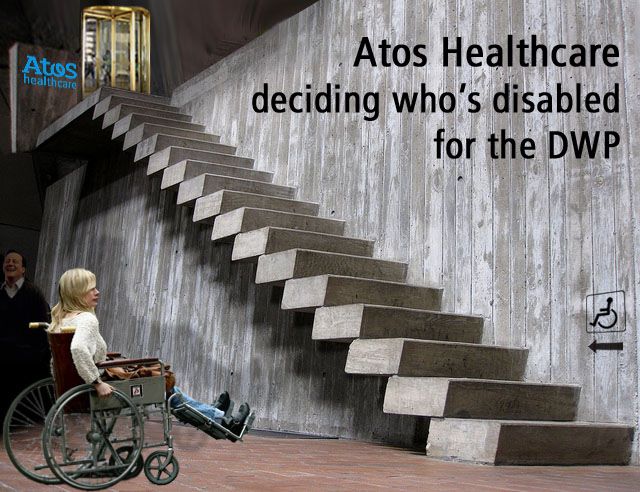
PIP and the Tory monologue

644117_408620012540866_785481358_n

Here is a very important leaked correspondence between Dame Anne Begg and Esther McVey regarding PIP. (Personal Independence Payment, which is to replace Disability Living Allowance.) The correspondence flags up some serious concerns regarding a lack of transparency and accountability, responsiveness and a basic lack of following established democratic norms and protocol on the part of  the current Government. Mounting successful challenges to reform requires having detailed information regarding that reform. Here is clear evidence that the Conservatives are intentionally stifling democratic dialogue.

There are some serious issues raised in Esther McVey’s response that signal some very worrying changes to advisory groups and their role in how they influence policies. Esther McVey is indicating that the Secretary of State has already moved away from dialogue with, and paying heed to independent groups, as well as secretly deciding that any input and advice at all does not need to be published and open to public scrutiny. It signals that the Government will no longer be obliged to do anything more than pay lip service to consulting independent groups. Of course such consultations are crucial mechanisms of democratic process, scrutiny, the safeguarding of human rights, as well as Government transparency and accountability. Here we see evidence that these mechanisms are being very quietly dismantled. This clearly signals an authoritarian turn on the part of the government.

McVey has managed to avoid going before the Work and Pensions Select Committee, and she is telling the Committee that she intends to publish the Government’s response the SAME DAY as the secondary regulations are presented to Parliament. This gives us no time whatsoever for scrutiny, analysis, preparation or effective challenge.

Letter from Anne Begg to Esther McVey:

Dear Minister

Disability Living Allowance and Personal Independence Payment (PIP)

You will be aware from the debate in Westminster Hall on 25 October that the Committee has a number of outstanding concerns about the eligibility criteria and plans for implementation for PIP. As you know, we had hoped to explore these issues in an evidence session with you in November. Committee staff had been in the process of trying to identify a suitable date through your officials.

We first invited you to appear during the week of 5 November but you did not have a diary slot available that week. You then offered 9.00 am on 12 or 13 November, but neither of these was possible for Committee members (particularly as one was a Monday morning when we are travelling from our constituencies). Our next suggestion was 21 November.

The issue now seems to have moved on from being simply a diary problem. Your officials have indicated that you would prefer not to give evidence before the PIP Regulations are published because you feel you would be unable to answer the Committee’s questions. I would like to make clear that our intention was that our evidence session should inform the drafting of the Regulations, and the eligibility criteria, before they are finalised and laid before Parliament. The change in your position suggests to us that final decisions have already been made.

We would be grateful for your response to the following questions to help clarify the situation:

1. When do you plan to respond to the consultations on the draft assessment criteria and thresholds and on finalising the detailed rules for PIP?

2. Will the relevant Regulations, including the draft assessment criteria, be published in draft and subject to some form of further consultation, before they are laid before Parliament? If so, what is the timescale for this and what scope will there be to amend them further?

3. When do you expect the final Regulations to be laid (officials have been able to tell us only that they will be laid “before the end of the year”). If it is your position that it is already too late for the Committee to influence the finalising of the relevant Regulations, I would ask you to give a commitment to appear before us as soon as possible after they are laid, to explain the rationale for the final decisions you have made.

Draft Public Bodies (Abolition of the Disability Living Allowance Advisory Board) Order 2013

Departmental select committees (DSCs) have a formal role in scrutinising draft Orders laid under the Public Bodies Act. Departments are required to bring these draft Orders to the attention of the relevant DSC. The Committee has the power, as set out in Cabinet Office guidance, to recommend an extension of the laying period to 60 days if it decides this is necessary to ensure proper scrutiny.

DWP staff failed to bring the Draft Order on the DLA Advisory Board, which was laid on 15 October, to the Committee’s attention. The Committee staff only became aware of it because the House of Lords Secondary Legislation Scrutiny Committee contacted them to discuss the respective action each committee planned to take.

We are concerned about this lack of recognition by the Department of my Committee’s formal scrutiny role in relation to draft Orders under the Public Bodies Act. Officials have tried to allay the Committee’s concerns about the draft Order by saying that it does not do anything significant. I would make two points about this. Firstly, it is for the Committee to decide whether any matter within its remit is significant or not, including draft Orders. Secondly, the agreed formal procedures should be adhered to whether or not officials regard an issue as significant.

I would be grateful for your assurance that the Department will adhere to the agreed procedure on future occasions.

We understand that the Lords Scrutiny Committee has expressed concerns about the Department’s failure to carry out any consultation on the proposed abolition and has recommended an extension of the scrutiny period to 60 days [12th Report, HL 55, 1 November 2012]. We agree with this recommendation.

Turning to the substantive issues raised by the draft Order, the Committee staff made clear to your officials that we were willing to deal with these as part of the broader oral evidence session with you on PIP—if you had been able to attend a meeting before the 40-day laying period expires on 28 November.

As you no longer intend to appear before us in November, we would be grateful for your response to the following questions on the implications of the abolition of the DLA Advisory Board:

1. What measures will be put in place to protect the interests of non working-age claimants who will continue to claim DLA?

2. What measures will be put in place to protect the interests of working-age DLA claimants prior to their migration to PIP?

3. What will be the composition of the PIP advisory group referred to in paragraph 7.5 (b) of the PBO explanatory memorandum?

4. Will the advice of the PIP advisory group be published?
I would be grateful for your response by Friday 9 November.

Yours sincerely
Dame Anne Begg MP

Chair
Dame Anne Begg.

I suppose the terms of authoritarianism extend to have an impact on opposition parties and affect their capacity to gather information and organise actions much the same as they do campaigners and the general population. Again, without being provided with information and crucial detail, it becomes very difficult to mount a successful challenge against controversial legislation. This is a Government that does exactly what it chooses, and barely bothers justifying itself. Consider, for example, that no impact assessment was carried out regarding the welfare reforms. Or that the risk register concerning the Health and Social Care Bill has yet to be published and made accessible to the public.

It’s also noteworthy that Cameron is currently proposing that consultations, equality impact assessments, audits, judiciary review are all simply “inconveniences” that are (and I quote) “… not how you get things done…” 

Ask yourself what kind of things Cameron “wants to get done” bearing in mind that every single policy that this Government has designed and implemented has been about taking money away from the poorest people, and reducing the lives and experiences of the most vulnerable citizens, rather than enhancing those lives in any way.

Consider that these legislative mechanisms are important to democratic process, accountability, procedure and law, as well as being basic human rights safeguards. This is a Government that clearly is not about reflecting and meeting the needs of the public.

The Government have been made aware that sick and disabled people are dying after Atos have assessed them as fit for work. Ask yourself what kind of Government flatly and loudly denies that this is the case, without investigating the truth of the many serious concerns raised, and looking at the many cases that have been presented to them during debates in Parliament. What kind of Government tells lies about marginalised social groups, and propagates hateful stereotypes of marginalised citizens in the media to justify removing their welfare – calculated to cover basic living costs. Welfare provision is paid for via taxes, which many sick and disabled people have also paid. Our welfare support is NOT a “handout”: it is our money, our national insurance, paid by us for when we have a need of support. Social security.

Below are a couple of key paragraphs from McVey’s response to Dame Begg. These reflect the quiet dismantling of the Disability Living Advisory Committee, and the fact there is no advisory report or a formal advisory group regarding the development of PIP. Note again that the Government is not big on following procedure, or being transparent, accountable and consultative.

E. McVey: “Public Bodies (Abolition of the Disability Living Advisory Board) Order 2013

Please accept my apologies that the draft Order was not formally brought to the attention of the Committee as it should have been done. I understand that Cabinet Office made the Secretariat of the Committee aware that a draft Order was in the offing earlier in the year but unfortunately procedures were not followed through on a formal basis as they should have been. I will ensure that the Department will adhere to the agreed procedure on future occasions.

I hope my answers to your questions explain why we have taken the view that this Body which has not been asked to give any advice since 2008 had an extremely limited remit and why officials thought it proportionate to deal with the questions you raise on a correspondence basis. We certainly had no intention of disparaging the important role the Committee undertakes. I have set out my replies to your questions below.”….

“There will not be a PIP Advisory Group in the way that the Disability Living Allowance advisory group operates. In the Explanatory Document to the Public Body Order we explain that we have decided to use time-limited advisory groups and that the people asked to help us develop the assessment criteria for Personal Independence Payment (the Assessment Development Group) encompassed a wide range of expertise across health, social care and disability, including from occupational therapy, psychiatry, physiotherapy, social work, general practice, as well as representatives from Equality 2025 and Disability Rights UK. We included the Assessment Development Group in the Explanatory Memorandum as an example of how the Secretary of State is using a time-limited advisory group in policy development.”….

[Note the fact that the time limited invisible Advisory group approach doesn’t apply to just the PIP legislative development, it is to apply to ALL policy development. Also note she later goes on to say that “There was no FORMAL Advisory group, there is therefore no formal report from the Group, nor is there a requirement to publish their advice.”]

Section 89 of the Welfare Reform Act 2012 requires the Secretary of State to lay before Parliament an independent report on the operation of assessment within two years of regulations under section 80 coming into force and a second report within four years of that date.

Will the advice of the advisory Group be published?

As mentioned above there is no formal Advisory Group. The assessment criteria for Personal Independence Payment were developed in close collaboration with the Assessment Development Group. Although members sometimes submitted written comments on proposals, advice was generally given verbally and captured in meeting minutes.

There is therefore no formal report from the Group, nor is there a requirement to publish their advice, although we have published details of the development process in the explanatory notes which have accompanied the first and second drafts of the assessment criteria. The explanatory notes can be found at http://www.dwp.gov.uk/policy/disability/personal-independence-payment/the-assessment-criteria/

I hope this reply is helpful to the Committee.

Esther McVey MP
Parliamentary Under Secretary of State and Minister for Disabled People

Anne Begg : “Disability groups have not been consulted about the framing of the PIP assessment contracts or the guidance to assessors, so, although there has been limited consultation, the wider implications of how the measure will work in practice have not been subject to any kind of co-production. In one meeting, the Disability Benefits Consortium told us that the documents had been counted in and counted up, and that it had been given 15 minutes to look at them. That, again, is hardly co-production.

On the PIP assessment, the Government have said that there will be a requirement for face-to-face assessments for most claimants. That also raises a number of questions. On what basis did the Government come to that conclusion? Will the Government not be able to take account of existing evidence in most cases? That leads me to a question on a slightly different point: will there be any transfer of information already held by the Department for Work and Pensions, so that people do not have continually to remind it of such things as, “This is a glass eye, and of course I am not going to see out of it.” That is not as daft as it sounds. Sometimes, when people have gone for a WCA they have been asked what vision they have in their left eye when they have not had a left eye for decades.” – Dame Anne Begg, Daily Hansard – Westminster Hall 25 Oct 2012 : Column 319WH Westminster Hall.

Here is the full response from Esther McVey :

Dame Anne Begg MP
Chair
Work and Pensions Select Committee
7 Millbank
LONDON
SW1A 0AA
8 November 2012

Dear Anne

Thank you for your letter of 1 November. I am sorry we have been unable to identify an opportunity in November for me to appear before the Select Committee to discuss the PIP assessment criteria and regulations.

The Department has taken considerable time to develop the assessment criteria, throughout which we have sought to be transparent and to engage with and seek the views of disabled people, their organisations and parliamentarians. Our initial proposals for Disability Living Allowance reform, including the high-level principles of the assessment, were published in December 2010.

We published a first draft of the detailed proposals for the assessment criteria and regulations in May 2011, a second draft in November 2011 and ran significant consultations on both. The consultation on the second draft ran from January to the end of April this year, during which we received around 1,100 written responses and met with around 60 disability organisations.

Since the consultation closed on April 30 the Department has been carefully considering the responses received to identify any areas that we need to change to ensure that the assessment is both fair and operates effectively. As part of this we have also considered the comments made in the Select Committee’s report of 19 February and during the evidence session attended by my predecessor in December 2011.

We have also been working to test proposals for change, so we can understand the likely impact of the revised assessment. This work has now concluded and we have reached conclusions on the content of the finalised assessment criteria and regulations. We are now in the process of finalising the drafting of the government response and regulations and discussing the detail with colleagues across government.

We intend to publish a joint response to the consultations on the assessment criteria and benefit rules as soon as it is ready. While we do not yet have a firm date for publication, I am confident that it will be before the December recess. I do appreciate that many people would have liked an earlier response but it has been essential to take our time on this important issue and make sure we get the decisions right.

We have also not yet reached any final decisions on the publication of the PIP regulations but I think it likely that the key regulations will be published and laid on the same day as the government response.

Given the significant engagement that has already been undertaken, we are not intending to carry out any further consultation on draft regulations. However, we agreed during the passage of the Welfare Reform Act that the key regulations on PIP relating to benefit entitlement would be affirmative, which will allow Parliament further opportunity to scrutinise them.

I realise that this response is likely to be disappointing. However, I do consider that the development of our proposals for PIP has been carried out in a transparent and consultative fashion and that there has been full opportunity for the Committee to comment and offer suggestions for changes over the two year development process. We will be offering briefing sessions to MPs and Peers to explain the government response and regulations before the regulations are debated and I would be very happy to appear before the Select Committee to do the same to explain the rationale, as you suggest.

Draft Public Bodies (Abolition of the Disability Living Advisory Board) Order 2013

Please accept my apologies that the draft Order was not formally brought to the attention of the Committee as it should have been done. I understand that Cabinet Office made the Secretariat of the Committee aware that a draft Order was in the offing earlier in the year but unfortunately procedures were not followed through on a formal basis as they should have been. I will ensure that the Department will adhere to the agreed procedure on future occasions.

I hope my answers to your questions explain why we have taken the view that this Body which has not been asked to give any advice since 2008 had an extremely limited remit and why officials thought it proportionate to deal with the questions you raise on a correspondence basis. We certainly had no intention of disparaging the important role the Committee undertakes. I have set out my replies to your questions below.

1. What measures will be put in place to protect the interests of non working-age claimants who will continue to claim DLA?

DLAAB ‘s function is to issue the Secretary of State with independent advice. It does not exist to protect DLA claimants’ interests although of course the Board members had an interest in the integrity of the benefit system. It is not part of the decision making process for benefits and has no power to intervene in individual claims for Disability Living Allowance and Attendance Allowance. DLAAB has not provided any advice since 2008.

Work undertaken by the Board over the years concentrated mainly on medical reports on specific conditions or illnesses. This was usually because the department had detected a potential issue. For instance the department noted that DLA spending on “behavioural disorder” cases (which included ADHD cases) had increased much more rapidly than spending on other child recipients. In light of this the Board was asked to advise:

  •  whether there has been an increase in the number of children diagnosed with ADHD generally and, if so, suggest reasons for the increase; and 
  •  could the increased numbers of children in receipt of DLA be directly related to the increase in diagnosis or were there other reasons?

The Secretary of State will still commission work if he thinks this is necessary using task and finish groups as and when required and ensuring that the appropriate specialisms are covered. Even with the wide breath of professions covered by DLAAB it was still necessary on occasion to co-opt professionals with particular expertise as in the Attention Deficit Hyperactivity Disorder study where a Consultant Child and Adolescent Psychiatrist was asked to provide advice.

Claimants have always had the right to ask for a reconsideration if they are unhappy with a decision and then appeal to an independent tribunal if still dissatisfied. The Welfare Reform Act 2012 includes powers to require all claimants to seek a reconsideration before they can appeal to an independent tribunal. There is a complaints system which claimants can utilise which is advertised on the DWP website. Claimants may also apply to the Independent Case Examiner, if they consider the department has not treated them fairly or have not dealt with complaints in a satisfactory manner.

2. What measures will be put in place to protect the interests of working-age DLA claimants prior to their migration to PIP.

As explained above this was never the role of DLAAB. The same rights apply to working- age and non working-age people.

3. What will be the composition of the PIP advisory group referred to in paragraph 7.5 (b) of the PBO explanatory memorandum?

There will not be a PIP Advisory Group in the way that the Disability Living Allowance advisory group operates. In the Explanatory Document to the Public Body Order we explain that we have decided to use time-limited advisory groups and that the people asked to help us develop the assessment criteria for Personal Independence Payment (the Assessment Development Group) encompassed a wide range of expertise across health, social care and disability, including from occupational therapy, psychiatry, physiotherapy, social work, general practice, as well as representatives from Equality 2025 and Disability Rights UK. We included the Assessment Development Group in the Explanatory Memorandum as an example of how the Secretary of State is using a time-limited advisory group in policy development.

We will also continue to liaise and listen to other stakeholders of and from disability organisations including Equality 2025 which is a non-departmental public body of publicly-appointed disabled people. The group offers strategic, confidential advice to government on issues that affect disabled people. This advice can include participation in the very early stages of policy development or in-depth examination
of existing policy. The group works with ministers and senior officials across government.

Section 89 of the Welfare Reform Act 2012 requires the Secretary of State to lay before Parliament an independent report on the operation of assessment within two years of regulations under section 80 coming into force and a second report within four years of that date.

4. Will the advice of the advisory Group be published?

As mentioned above there is no formal Advisory Group. The assessment criteria for Personal Independence Payment were developed in close collaboration with the Assessment Development Group. Although members sometimes submitted written comments on proposals, advice was generally given verbally and captured in meeting minutes. There is therefore no formal report from the Group, nor is there a requirement to publish their advice, although we have published details of the development process in the explanatory notes which have accompanied the first and second drafts of the assessment criteria. The explanatory notes can be found at http://www.dwp.gov.uk/policy/disability/personal-independence-payment/the-assessment-criteria/

I hope this reply is helpful to the Committee.

Esther McVey MP
Parliamentary Under Secretary of State and Minister for Disabled People


Picture by Robert Livingstone

Pictures courtesy of Rob Livingstone 

I ought to update this in light of recent events. Campaigners won an important victory regarding an essential regulation being excluded from the PIP legislation, namely, the “reliably, repeatedly and safely” adjustment, that is an essential mechanism in ensuring that “fluctuating” conditions are fairly considered and assessed.

However, many disabled activists were shocked and angry when Esther McVey, the Conservative minister for disabled people, suddenly announced the unexpected changes in December. The alterations to the regulations that will decide who is eligible for the new personal independence payment (PIP) – which will gradually replace working-age disability living allowance from this April – saw the key walking distance criteria reduced from 50 to 20 metres.

There has been absolutely NO Consultation on this whatsoever. That in itself warrants a legal challenge. The alteration of the distance criteria has been challenged by the Labour  Party, too. Anne McGuire, Labour’s shadow minister for disabled people, said disabled people had “been alarmed at the hurdle they will now face before being awarded the enhanced mobility rate”.

She said: “Most of those who have looked at these descriptors would say that a 20-metre qualifying distance simply does not provide a practical level of mobility.”

She said about 200 disabled people in every parliamentary constituency were likely to lose their Motability vehicle with a 20-metre qualifying distance.

And she pointed out that one of the Department for Transport’s own publications, Inclusive Mobility, recommends that “seating should be provided on pedestrian routes at intervals of no more than 50 metres, and that parking spaces for blue badge holders should preferably be provided within 50 metres of the facilities they serve”.

Another issue that concerns me is that McVey as good as admitted there are built in targets to reduce/remove eligibility for PIP. How could she know in advance of assessments, otherwise, that “330,000 of claimants are expected to either lose their benefit altogether or see their payments reduced”, as she informed the House of Commons?

http://www.guardian.co.uk/society/2013/apr/08/disabled-claimants-legal-action-mobility-tests

Socialism: Old Debates and New Demands.

538861_380839531985581_164896303_n

1. The Current Context

I can’t help but wonder what kind of future the Coalition is planning for us, without our most fundamental and basic human rights. Owen Jones refers to this systematic stripping away of our rights, that have been hard earned over many decades, and the loss of a sense of well-being, as “the great reverse”.

In just two years, the Coalition have destroyed many of those social programmes and support provisions that made this country decent and civilised – the institutions and established practices of our post-war settlement are under serious threat. Our welfare provision has been stripped down to bare bones, our national health service has been packaged, branded and sold off to government donors, sponsors and companies in which many in the current Government have financial interests.

Our child protection and welfare services have been ravaged and many more crucial services and provisions, that many of us have had only a tacit knowledge of, have also disappeared. In short, our capacity as a civilised society for caring for our most vulnerable citizens has been deliberately undermined as part the tories’ ideological quest for a night watchman state.

There is a clearly punitive approach being leveled at marginalised social groups, and a systematic theft of tax payers money which has been “justified” by the most hateful propaganda campaign, headed by Iain Duncan Smith, Mark Hoban, Chris Grayling and David Cameron, amongst others, with the support of the press. Lies and stigmatising language are used to demonise the poor and vulnerable. Words like “feckless” “idle” “workshy”, “scroungers”, and not ever the truthful descriptions –  “protected group” , “marginalised” , “vulnerable” – are written over and over again in the mainstream press, echoing conservative rhetoric, with the sole intention of creating folk devils and generating public moral outrage, social divisions and hatred.

Hate crime directed at those with disabilities or illness has risen steeply as a direct consequence of this hate-inciting, tory-driven media portrayal of the “fraudulent” sick and disabled person, who is somehow miraculously better off that anyone else, at the expense of the hard-working tax payer. Sick and disabled people are no longer allowed a social life, a decent standard of living, a car, a holiday or anything else that “normal” people enjoy because they have been described over and over as a “burden on the State.” That many of us have also paid tax and national insurance is forgotten the moment we become ill, disabled, or unemployed.

Being sick or disabled, of course, entails the humiliating ritual of proving we are “genuine” and “deserving.” But being “genuine” is conditional upon our very lives becoming public property and being open to a barrage of endless, hateful restrictions and sanctions from members of the public, from the government and media. We were once a society that celebrated the freedoms earned by disabled people, now we are a society that spitefully celebrates taking away those freedoms. Disabled people are dehumanised, and reduced to public and political objects of endless, hateful scrutiny and prejudice. We need to ask ourselves what kind of Government would employ such deplorable and inhumane tactics to justify their deplorable and inhumane actions.

The Government have refused to carry out a cumulative impact assessment regarding the effects of the welfare “reforms,” particularly on policies affecting sick and disabled people. Labour had demanded that they do so. Today we learn that impact assessments are simply considered to be an inconvenience to David Cameron, along with consultations. They are to be scrapped. This is a formal goodbye to human rights safeguards and we witness more of our now fragile democratic process being dismantled further. And the fundamental human right to a fair trial is seen as another “obstacle” by David Cameron. The reduction or end of judiciary review has some terrifying implications. We must ask what kind of Government would want to remove such fundamental, and very hard-earned rights.

So we face further policy-directed blows, very evident in the proposal to severely limit judiciary review. And yesterday, John McDonnell was urging us to fight for our welfare provision, because he fears that there won’t be any provision remaining by 2015. He is right: the welfare “reforms” marked the beginning of the end of welfare. That’s welfare, not a “hand out”, or “something for nothing” but provision paid for by us and for us, when we are vulnerable, when we experience hard times, such as when we are old and frail, ill, or are unfortunate enough to become disabled, young and at risk, or if lose our jobs because of a Government-induced economic depression by a group of purely ideologically-driven, unresponsive, unremorseful, none-empathic, inhumane, greedy and despicable men and women.

There is also a clear exclusion of dissent and criticism, evident in the media, as well as in political debate. This gives a very frightening impression of consensus, with many wondering why nobody seems to be challenging the Government’s harsh and inhumane policies. But they are. This Government showed their true colours when they used “financial privilege” to hammer home what they KNEW to be a grossly unfair and cruel, and much opposed “reform”. Let’s not forget that the House of Lords did not sanction or endorse the welfare “reforms.” The time has come to recognise an increasingly authoritarian Government.

The Tory-led Coalition have basically failed to observe the most fundamental human rights, and do not reflect the needs of the population, nor do they respond to those needs. The refusal to undertake equality impact assessments is an example of this. The Coalition have dismantled basic democratic process – the persistent, blatant ignoring of existing consultations, and proposing to scrap them altogether in the future are prime examples of this. These are strange and very scary times. It is understandable that people are now looking more closely at political philosophies, past and present, and wondering where meaningful answers to our current situation lie, and no other orthodoxy is currently being scrutinised and debated as much as socialism.

2. History

As a political movement, socialism includes a diverse array of political philosophies, ranging from a reformism approach to revolutionary socialism. Those advocating state socialism basically propose the nationalisation of the means of production, distribution and exchange as a strategy for implementing socialism. In contrast, libertarian socialism is a proposition that the traditional view of direct worker’s control of the means of production and opposes the use of state power to achieve such an arrangement, opposing both parliamentary politics and state ownership over the means of production. There is also a democratic form of socialism, which is about establishing socialism through democratic processes and propagating its’ ideals within the context of a democratic system. Modern socialism, of course, has its’ roots in an 18th-century intellectual and working class political movement, that criticised the effects of industrialisation and private property on society.

In the early 19th-century, “socialism” simply referred to any concern for the social problems of capitalism regardless of the solutions to those problems. However, by the late 19th-century, “socialism” had come to signify any opposition to capitalism and advocacy, and stand for an alternative system based on some form of social ownership. Orthodox Marxists later considered “scientific” methodology, and assessment and democratic planning to be critical elements of socialism.

3. Analysis

More recently, the term “socialist” has also been used by Blair’s Third Way social democrats to refer to an ethical political doctrine focusing on a common set of values which emphasise social cooperation, universal welfare, and equality. Anthony Giddens, (a sociologist) was the leading advocate of the Third Way, and he rejects conventional (material) definitions and implementations of socialism, and this was formulated into doctrine by Blair. Anthony Gidden’s brand of sociology is about linking micro-level experience with the macro-level narrative, but without the traditional material elements of socialism. In short, it is an ethical socialism that also embraces neoliberalism.

It was seen as a responsive compromise at the time. Giddens advocated a methodological pluralism to reconcile “State” with “individual” and as an approach, this does have some merit, as well as drawbacks, but it does also bridge a traditional and theoretically problematic gap in sociopolitical philosophies.

One of the biggest criticisms of Marxism is the emphasis on structural determinism. There is little scope for incorporating an element of (even limited degrees of) human free-will. There is little scope for qualitative analysis of small scale meaningful  human interaction and experience, and human diversity is subsequently unrecognised from a traditional perspective. These are issues that both Giddens and Blair tried to address. Despite the fact that many see the accomodation of neoliberalism as a betrayal, some of Blair’s social policies were excellent – the Equality Act, Human Rights Act, Every Child Matters, Good Friday Agreement, various animal welfare policies and so on. It wouldn’t do to lose sight of his successes because of his failures.

The world has moved on since Marx was writing. We have an entirely different historical, global, social and economic context. Socialism needs to be adaptive and responsive to that. We are living in extraordinary times, with an increasingly authoritarian Government in power. We need to be united in fighting that, but I am seeing a fragmentation of efforts and little solidarity because of in-fighting about orthodoxies.

I’m further left than the Labour Party currently are. I don’t think, however, that this will always be the case. I feel that over the next couple of years, the Labour Party will respond to the further right drift of the Tories by moving further left. I hope so. I can’t support any form of neoliberalism. I have never forgiven Thatcher for introducing an economic form of organisation that requires authoritarianism to implement, ultimately. Pinochet’s neoliberal experiment resulted in the very worst forms of social oppression and crass inequality. Thatcher and Reagan were monsters for implementing that failed experiment in the UK and US,

Socialism has never been about division and exclusion, yet there are some that have rigid ideas about who and what can properly be labelled “socialist.” I call this elitist, purist perspective “Narxism,” as protagonists from this camp tend to grumble and nark a lot, they don’t like to be inclusive, they tend to see socialism as some kind of exclusive, highly idealised, olden days “working class” club with a membership of people that use a distinctive and adapted language, incorporating heavily utilised, and negative terms such “blue labour,” “red tories,” “new labour,” “tory lites,”  and they have a penchant for endless unforgiving discussion of both “Clause 4” and “Tony Blair” (Blair blah blah.) It’s something of an irony to hear that Labour are “no longer the party of the working class”, when you consider that Marx, who is quoted often by such ideological purists, wasn’t remotely working class, nor was Engels, for that matter.

Narxists claim to be “real socialists.” Yet in their quest for orthodoxy, the claim to being “principled” does not generally include those foundational socialist values of collectivism, cooperation, organisation and unity. Instead we see a perfectionist brand of  individualism that simply divides the Left into competitive factions that serve only to disempower us, ultimately.

Narxists seem to have no awareness that the world is populated by others, and really has moved on. Nor do they seem to pay heed to the more pressing circumstances we currently face. Sick and disabled people are being persecuted by our current Tory-led Government, and many have died, many are suffering as a consequence of this Government’s welfare “reforms.” Remarkably, narxists prefer to endlessly criticise Tony Blair, who left the building some years back. We have an authoritarian Government that are unravelling the very fabric of our once civilised society, dismantling democratic process, abusing human rights and destroying lives. The typified, dogmatic response from Narxists everywhere? “Yeah, yeah, BUT that Tony Blair is a tory lite….”

We need to be responsive to our current situation – in the here and now, and clinging to tired and past-their-usefulness doctrines isn’t going to achieve that. Let’s try for some genuine solidarity, let’s unite in our common aims, let’s recognise our basic similarities as fellow humans with the same fundamental basic needs, and fight the real enemy, instead of bickering about what socialism is or ought to be about, and what our only current hope – the Labour party – ought to adopt as its brand and mantle. Besides, socialism isn’t about what you think and say: it’s about what you DO.

We are in a crisis. Catastrophically, sick and disabled people are dying as a direct consequence of the welfare “reforms.” Many more will die once the full extent of the cuts are realised early next year. We cannot countenance another five years of the Tories. Because people are suffering and dying whilst others prioritise their striving for ideological purism. We need to invest our energy in the Party, lobby, push for progressive change – push left.

The Blair era is over. We need to acknowledge the positives from that as well as the failings in order to learn, grow and progress as a party. So those fostering division from the centre of the party also need to take stock and look at the enormous failings of neoliberalism. Blair’s project was always dommed to fail, it isn’t possible to compromise our civilised and civilising social provision with such a damaging mode of economic organisation, which results in privatisation – placing profit over human needs – and antiwelfarism, deregualtion – which also places profit over human needs, since regulations serve as a social protection, fiscal austerity and the dismantling of rights and public services, ultimately. That is the neoliberal blueprint, which is incompatible with the post-war rights-based society we knew.

Labour have to RESPOND to, and reflect the needs of a population in the current context. That is what a democracy is, after all. We need a party that has pioneered and championed our human rights, recognised and celebrated diversity and equality and one that will continue to do so, with even more urgency in the context of our current crisis. Labour have shown historically that they do reflect the needs of the majority, and respond appropriately.

Welfare Wrongs and Human Rights: a dialogue with Anne McGuire

71915_457283111007889_61730291_n


“It is undeniable that every human being is entitled to living space, daily bread, and the protection of the law as a common birthright; these are fundamentals and should not be handed out as an act of charity” ― Alfred Delp, S.J.

Nor should the meeting of such fundamental human needs ever be regarded as such.

“A decent provision for the poor and vulnerable is the true test of civilization” – Samuel Johnson.

I know that some of you have been waiting for an account of the discussion that took place between Anne McGuire and the small group of us that met with her in November, and quite understandably so. Labour currently present our only viable way of undoing the devastating damage, bleakness and despair that the Tory-led Coalition have created for so many of us, and of halting the shameful suffering and premature deaths being inflicted on some of our most vulnerable citizens. I am sorry this has taken such a while to write up, but I haven’t been very well, and have had to make some difficult choices about priorities over the last few months. I was hospitalised and seriously ill at the start of the year, and that has set me back some. However, Gail produced a report shortly following the meeting, this is the substantial version. It’s a long read, it was a long meeting that covered a lot of ground.

The meeting between Gail Ward, Susan Archibald, Sue Jones (me) and Anne McGuire took place on Friday 16th of November at the Stirling Labour headquarters. The meeting arose as follow on work from Sonia Poulton’s letter to Ed Miliband regarding the serious concerns many of us have about the work capability assessment (WCA). The idea of the letter arose, in part, because of a productive debate between Sonia and myself, following the Dispatches and Panorama documentaries about Atos and the WCA, and the appalling and shameful treatment of sick and disabled people by the Coalition.

The meeting with Anne was not time-limited, and she had to cancel an appointment to extend our time with her. We are enormously grateful for her time and consideration. The meeting also reflects something of Labour’s ongoing dialogue with the disabled community, which is a very positive development, as is the ongoing work of MPs such as John McDonnell, Michael Meacher, Dennis Skinner, Anne Begg, Debbie Abrahams, Tom Greatex, Anne McGuire, Liam Byrne and others in championing the human rights of the sick and disabled, and challenging an increasingly authoritarian Government.

Gail Ward and I each compiled an independent list of issues that we felt reflected those concerns we have encountered most commonly amongst our peers. The lists were remarkably similar, and so I consolidated the issues we both observed to inform and formalise an agenda.

Our starting point in the discussion was to state categorically that we believe that welfare provision is NOT a “hand out” or “something for nothing”. It is paid for by us via taxes, and is for us, to support us at times of vulnerability, such as when we are sick, or unemployed due to recession (some are now calling it a depression) that has been created by a totally ideologically-bound and unresponsive Government.

The fact we felt we had to state this at all indicates plainly just how terribly effective the Government’s anti-welfare propaganda has been. The Tories and some of the Sun, Mail and Telegraph-reading public are finger pointing, bullying, mean spirited: the moralsing outraged, and we are victims of the hideous, dehumanising Tory-led ideological rantings, we are the minoritized, marginalised and disabled, and we are shocked, fearful, and cannot believe that this has been allowed to happen. We are justifiably afraid and angry. We know the current benefit system is no longer about welfare, and current policies do not have a core principle – implicitly or explicitly, despite the rhetoric – of ensuring or promoting the well-being of sick and disabled people.

The welfare “reforms” – and the word “reform” implies some positive change that certainly isn’t evident here  –  are entirely about stripping away our publicly paid for welfare provision –  our “social security”. Not a single Tory “reform” is about enhancing lives: they are all about taking money away, leaving us to struggle for survival, and so stifling our potential for positive experiences, personal growth and development.

Through a combination of changes to existing benefits and the new Universal Credit, the UK Government aims to cut £18 billion off the benefits bill. A further £10 billion is to be cut from welfare provision in the near future. The hate-filled propaganda campaign of this Government is all about an attempt at justifying the theft of our support and provision. It is our money that we have PAID into the system via taxes. It was never the Government’s money to take from us. They have stolen it.

When we struggle to meet basic physical needs, we cannot transcend biology to fulfil other higher level, psychosocial  We become bound by the physical, and can’t be motivated beyond struggling to survive. Abraham Maslow told us that.

Benefit rates were originally carefully calculated by a body of professionals and officials to meet basic living requirements, such as food, shelter and fuel costs. Benefit rates have never reflected anything more than a financial amount to meet these fundamental human needs. Our welfare provision has eradicated absolute poverty in Britain, and has been an essential lifeline for many citizens, in times of their need of support. Benefit rates were set at the amount “the law says you need to live on”. If people cannot meet their basic living requirements, they die. It’s a fact. Furthermore, Maslow tells us that if we are struggling to survive, we cannot fulfil other human needs and motivations. The welfare “reforms”, and the subsequent reduction of our benefits indicates that the Government do not care about the wellbeing and survival of those people that depend on this crucial support to meet their basic living requirements.

This is not a Government that recognises the intrinsic value and worth of life. It is not a Government that recognises human potential, or values personal growth and development. It is not a Government that values social evolution and progress. Trying to explain these fundamental concepts to a Tory is like pondering how best to describe a rainbow and shooting stars to a blind man with no imagination. Or soul.

This is not just about an ideologically motivated economic theft from the people with the least, and a redistribution of wealth to those that need it least (the already very wealthy), it’s an existential attack too: a psychic war that is being waged on us every bit as much as a fiscal one, with the media on the enemy frontline, attacking us on a linguistic and psychological level every day. We have been redefined, semantically reduced, dehumanised, and demarcated from the rest of the population and turned into the others, and this divisive strategy has paid off for the Government, because we are now regularly attacked by our own side: by those people who are also with us on this increasingly sparsely resourced, economically excavated side of the growing inequality divide. Tory divide and rule tactics: fostering a politics of hatred.  

Imagine what that does to faith and hope. For those of you that are not sick and/or disabled, I can tell you that it is often a very isolating and lonely experience. That is made so much more unbearable by prejudice and hate from other people. To be excluded further from everyday life and experience, both materially and existentially, brings about a terrible, bleak, desolating sense of social abandonment and a very real imprisonment. We are living in a Government-directed culture of hatred.  It’s no coincidence that hate crime against disabled people has risen quite steeply over this past two years. Most of us have experienced some verbal abuse from members of the wider public, at the very least. It’s become such a common experience that it may be regarded as almost normalised behaviour.

Anne McGuire told us that she and Anne Begg, amongst others, have challenged  the Tory-led stigmatising and dehumanising language, and the shameful invention of statistics in the media. Publicly and privately. Anne expressed her anger and disgust at the “serial offenders” – especially Iain Duncan Smith.

The defamatory Tory-led commentary must surely constitute hate crime and we know that the rising statistics of disability hate crime is certainly linked to this hateful propaganda campaign on the part of the Coalition to justify removing support and benefit from the sick and disabled, and from those in low paid work.

Tory logic – punishing people into non-existent or unsuitable jobs

We raised our grave concerns about the fact that the Government have recently introduced harsh sanctions of up to three years without benefits for all benefit claimants, the only group being exempt from sanctions currently are those in the ESA Support Group. This is only  a proportionally small number of claimants that will remain unaffected. The Conservatives claim that the sanctions will “help people into work”, and are to be applied to those who “fail” to meet certain “conditions” to look for work. We know, however, that sanctions are applied often without any justifiable reasons because the DWP  deliberately set people up to fail, and we also know that the Government sets sanction targets for the DWP. 

Firstly, only a very cruel and injudicious Government would punish people for being out of work during an economic depression in this way. There are no jobs. We know this is true from our everyday experience, despite the Governments continued lies about employment figures. Secondly, removing people’s means of meeting fundamental survival needs by sanctioning them is most certainly not going to motivate them and “help them into work” as the Government are claiming.

“Evidence also suggests that work can have a positive impact on the long term health of people with disabilities and health conditions,” according to the Government, but we have yet to see convincing evidence of this. Those in the ESA Work Related Activity Group (WRAG) are expected, from December 3rd 2012, to undertake unlimited periods of mandatory workfare in order to meet conditions for continued eligibility. This means that they are at an increased risk of being sanctioned, because the condition of qualifying for this benefit in the first place is that a doctor has provided a statement to say that the claimant is unfit for work. There is clearly a monumental problem regarding Government expectations of those in this group. Once again, the sanctions raise some serious concerns regarding the Government’s casual transgression of human rights.

The previous Minister for Employment, the Rt Hon Chris Grayling MP, has made the following  official statement regarding the new sanctions regime and Human Rights: “In my view the provisions of the Jobseeker’s Allowance Sanctions Amendment Regulations 2012  are compatible with the Convention rights”. We don’t agree.

Anne concurred with our concerns regarding human rights transgressions, and she stated that the benefit system as it currently stands is unfit for purpose more generally, and agreed that the Government need to carry out an impact assessment to consider the cumulative consequences of the welfare reforms on disabled people, including the reform of DLA. We also have the 12 month time limit on contributory ESA, the incapacity benefit reassessment to move people on to ESA, cuts to local authority care budgets and the lowering of disability premiums under universal credit. Some people may be hit by only one or two of the changes, but some might have to deal with them all, as they are implemented over the next two years.

That would be an enormous and very challenging change for them. Despite being urged many times by Anne McGuire and Anne Begg, amongst others, Iain Duncan Smith refused to acknowledge the pressing need for a cumulative impact assessment – part of the crucial equality and human rights safeguarding, as well as the considerable need for Government accountability. Iain Duncan Smith claims there is no need to carry out an assessment regarding the consequences of his “reforms”. I believe that Iain Duncan Smith already knows the devastating impact that his “reforms” have already had on many, and that he is also aware that the real catastrophe is yet to come, when the very worst of the cuts are implemented in April.

The welfare reforms, and the lack of equality impact assessment have massive implications regarding our various human rights. We know that the Legal Aid Bill contravenes Article 6, and with regard to the welfare reforms, we cited further probable contraventions of Article 3, particularly with regard to the sanctions, with further possible breaches to Articles 2, 4, 6, 8, 11 and 14. Anne also agreed that there is a real concern with respect to our human rights,  and she told us she has undertaken some work with Liam Byrne regarding a public consultation to address the issue of human rights for disabled people, and to raise public awareness.

Anne also explained that the Equality and Human Rights Commission have suffered significant cuts to funding from 70 million when Labour were in Government to just 25 million since the Coalition took Office, with fears that this will be further reduced to just 18 million. This has meant severe staffing reductions, and a massive backlog of work, and at a time when many are seeking to bring forward cases regarding the impact of current Government legislation. We all agreed that it is no coincidence that the Legal Aid reform is also due to be implemented at the same time, as well as the Bedroom Tax and the Localism Bill in April 2013.

Anne and others have also expressed concern that Harrington’s recommendations are not being implemented – “The review notes that although all recommendations from two previous annual reviews of the system have been accepted by the government, “not all have been fully acted upon yet”.… progress has been slower that hoped for and the scope and depth of these changes is less than desirable.” –  Michael Harrington

Bearing in mind that there are people dying within days or weeks of being told that they are “fit for work” by Atos and DWP, we all agreed that very clearly, urgent attention  is required from the Government. We note, however, that the Government prefers to ignore the rising number of deaths associated with people being wrongly assessed, and of course, having their benefit payments stopped. It’s a well known medical fact that stressful circumstances exacerbate illness, yet the Government persistently refuse to listen to these very real fears and concerns. One would have expected, at the very least, that an independent enquiry into the deaths would have happened by now. Ask yourselves what kind of Government responds to such grave concerns with shrugging indifference and a loud determination to carry on with a process that is causing, or at the very least correlated with fatalities at a rate currently estimated by some at more than  73 per week, according to the DWP (via an FOI).

Anne confirmed that discussion with the Government regarding the circumstances of ESA related deaths has been problematic, and both Anne and her colleagues have called for the release of pertinent information regarding those circumstances, such as details of which claimants were in the process of Appeal, and which ones had been reassessed.

I also know from discussion I had with Tom Greatex recently that the Government are now claiming that those 10,600 deaths that happened within six weeks of their claim for ESA ending may have happened “either side” of their claim being stopped. In other words, the claim may have ended because of the death, rather than the other way around.

Furthermore, of those deaths amongst those placed in the Support Group, the Government have (conveniently) claimed that “these were very ill individuals, and so we expect that there will be a higher death rate amongst that group”. Claiming that “the deaths MAY have prompted the claim to be closed, in some cases, rather than the converse being true” is NOT an adequate response at all. Anne and other Labour Ministers have demanded accurate, clear and precise data regarding the circumstances of the large number of tragic deaths. None have been presented to date.

However, I analysed the data from DWP, and noted that between October 2010 and November 2011, people with a recorded date of death within six weeks of that claim ceasing, who were until recently claiming Incapacity Benefit, (those that had been migrated to ESA ) totalled 310. Between January and November 2011, those having their ESA claim ended, with a recorded date of death within six weeks of that claim ending totalled 10,600.  One would expect that the death rates would be similar to those who have only ever claimed ESA. This is very clearly not the case.

So the Government don’t appear to be keeping very clearly defined data regarding the impact of their “reforms” and the precise circumstances of those deaths, or at least that information isn’t being released. Once again, we have to ask ourselves what kind of Government would be so casual about the large number of deaths of a group of citizens, especially when Government policy has been implicated as the cause of those deaths. Whilst the Coalition continue to play unacceptable, disgusting data interpretation games to support their loud and flat denial of culpability, people continue to die. The Government’s indifference to the deaths of vulnerable citizens is completely unacceptable and inhumane, the lack of willingness to investigate the correlated deaths, the loud and faux indignant framed denials, and the refusal to carry out an impact assessment regarding the broader impact of the welfare reforms  lead me to conclude that the consequences were known in advance of the legislation. We have an authoritarian Government that has a social Darwinist agenda: those deaths are calculated, hence the refusal to engage in open public discussion about the subject, and to investigate the circumstances of those deaths.

For the Record.

We raised the issue of  the right to record Atos assessments, and we informed Anne that whilst some people’s requests were accommodated, many were simply told that the equipment was not available. Some people also reported that they had their appointment cancelled on the last minute due to a lack of available recording machines. The provision is patchy, to say the least, and some people are being denied the right to have their assessment recorded.

 large number of reports by charities and disability groups have highlighted gross inaccuracies in the WCA testing process, which determines eligibility for Employment and Support Allowance. Many claimants are anxious to record their assessments to make sure an account of their health problems is correctly reflected in the Atos report. A wide array of accounts tell us that Atos reports are often full of “inexplicable” errors and not so full of truthful detail. Large numbers of cases are currently going to Tribunal because applicants know that  have been wrongly refused benefits; around 40% of cases are overturned in the claimant’s favour at tribunal. That percentage rises steeply, proportionally, when claimants are represented at Tribunal. This is evidence in itself that the Atos assessment process is deeply flawed, at the very least.

Despite a Government promise that everyone is entitled to record their assessment, many people have been told there are no machines available, because they are being repaired, and that they must go ahead with the test anyway. Individuals have been told they are not able to record assessments with their own devices “in view of security and confidentiality considerations”.

Chris Grayling has said: “Large scale purchase of machines in the absence of an evaluation of the process is not effective use of public money.” Bearing in mind that the right for all to have their assessment recorded was one of Harrington’s key recommendations in his first report, Grayling’s response is deplorable. We need to ask why the Government don’t favour assessments being recorded, for transparency and accountability.

I explained to Anne that those of us having been through assessments, particularly more than once, know that the whole process is heavily weighted towards ensuring that a person is passed as “fit to work”. I informed Anne that we know that even the fact that someone has managed to gather medical evidence is regarded as an indication by Atos that the person is capable of organisation and coherent thought. That’s a tick in the “work capability” box. The fact that the task may have taken a month of intermittent effort, and caused extreme pain and fatigue for the claimant is not recorded by Atos, of course. Nor is whether or not a person can perform any task reliably, consistently, safely and comfortably. (These and related issues was addressed in more detail later in the discussion.)

We pointed out to Anne that the consensus amongst our peers and ourselves is that Atos often lie in their reports to minimise (and trivialise) the impact of our illnesses and disability on our lives, and ability to function. Therefore, many now wish that the assessment is recorded, in order to at least make it more difficult for Atos assessors to write grossly misleading reports. And of course an accurate record is also important for appeal.

The shadow employment minister, Stephen Timms, who has written to Grayling to highlight his concerns about the lack of recording equipment, said: “I find it hard to believe that a company with a multimillion pound government contract is incapable of obtaining and operating sufficient recording devices.”

Anne informed us that despite the fact that Chris Grayling has said that more equipment has been purchased, there is no actual evidence of this being the case. MP’s are not allowed to call each other “liars”. I handed Anne an apt phrase when occasion calls for observation of parliamentary rules and etiquette – being “conservative with the truth”. Anne liked that very much.

Anne also told us that we do have a right to have our assessment recorded. That was recommended and established by Harrington.

We also raised the problem of access to Atos buildings, and explained that we have encountered many accounts of difficulties from disabled people, including appointments taking place that are not on the ground floor, with no lifts in the building. We know of people who have had their benefit stopped because they “failed to turn up for the assessment”. Anne recognises this problem, and how outrageously and unacceptably unfair it is, she told us that this pressing issue is to be raised by the Commons Work and Pensions Committee. (The Chair is Anne Begg)

The Blame Game.

We informed Anne that it is common opinion that the WCA – no matter how much it may be re-designed – is not fit for purpose, and that no-one has any faith in it because of the appalling damage already inflicted on so many members of the disabled community. The overwhelming consensus is that it needs to be scrapped. Atos have no credibilty whatsoever, with most of us regarding them with loathing and fear. Unfortunately, many sick and disabled people also recognise that successive Governments have contracted Atos, trust and faith in Government and Ministers has receded. I explained that some blame the previous Labour Government for current problems, as they originally contracted Atos to undertake the WCA. I don’t agree with this, personally, but I raised the point because it’s one that I’ve encountered frequently, and I recognise that it’s an important issue for some. However, I would like to point out that I don’t hold a previous Government responsible for what a current one does.

Anne explained that the original Labour Party contract with Atos did not happen within a context of welfare cuts, and was very different to the one that the current Government have with Atos.  Labour support some kind of assessment, and the old system typically involved a decision that was made entirely by the DWP, and the decision was regarded as final. Labour had felt at the time that this needed addressing with some form of independent decision-making mechanism.

We stated that the WCA has had such devastating consequences for so many sick and disabled people that it would never be trusted again, no matter how much it was redesigned and “improved” by ANY Government. However, the context of the Labour version of WCA, when it was piloted, was a completely different one to present day. There were many more jobs available, we were not in a recession, and there was support available (and well funded) for disabled people who wanted to work. Anne pointed out again that it is in the context of the welfare reforms, which are about taking away essential support, rather than providing it, that the aims of assessment have become grossly distorted. The original aims were intended to support sick and disabled people. That is clearly not the Coalitions’ aim at all.

Disability living allowance supports many in work, and despite Labours’ pleas for common sense safeguards, according to the Hardest Hit survey, three in ten disabled people stated that without DLA their carer would not be able to work. Carers UK estimates that 10,000 people could lose carer’s allowance as a result of cuts to DLA. Without this vital care, disabled people could be forced to turn to overstretched social care services. Liam Byrne  stated that here must now be an assessment, in the round, of all the changes hitting disabled people: a cumulative impact assessment. Esther McVey weakly said to the Commons that she wouldn’t order one because “Labour never did one.” Labour did complete a review, and informed this Government of the findings, and raised their concerns regarding the piloted WCA. They were completely ignored. Furthermore, Labour never inflicted the concerted attack we’re now seeing on disabled citizens. It was the Coalition that harshly “reformed” and reduced our welfare provision, and not Labour.

The Access to Work fund was re-established by the last Labour Government to ease the transition to work for disabled people, by paying grants to businesses for vital equipment. It was put in place to support people with disabilities, it aimed to reduce inequalities between disabled people and non-disabled people in the workplace by removing practical barriers to work. This fund has seen severe cuts since 2010, which flies in the face of this Government’s claim to “make work pay” for all. By reducing this essential funding, the Coalition have effectively excluded many from work.

Additionally, disabled people with the highest support needs have been left in fear and distress following a Government announcement that it is to callously abolish a key source of independent living support. The Government decision to close the Independent Living Fund and devolve responsibility to local authorities follows a consultation that disabled people claim is unlawful and on which an urgent hearing has been scheduled by the High Court to go ahead on 13/14 March 2013. Labour have also challenged the decision to close this crucial source of support. Opportunity for new applications for this funding was closed in June 2010 by the Coalition. Once again this plainly indicates that the Coalition do not consider the needs of disabled people as important, and clearly demonstrates the extent of their eager ideological drive to strip away essential provision and support for the vulnerable.

It’s important to acknowledge that there are those of us who simply cannot not work. Anne told us that the Labour Party agree that regardless of the national employment situation and support for those who could and wish to work, we must, as a civilised Society, make provision and support those who cannot work, too. I’m pleased that this important issue was recognised, because as we know, doctors are providing written evidence to the DWP and Atos that verifies people are not fit for work, and that professional and expert opinion and evidence is being ignored by people who are NOT qualified to decide otherwise. DWP “decision-makers” and Atos assessors have no expertise on medical conditions and how those impact on a persons’ capabilities for work. We know that the majority of Atos assessors are nurses or occupational therapists, and that Atos don’t take into account any medical facts at all: the assessment is entirely about “work capability”.

We informed Anne that we are acutely aware that every single part of the assessment process is designed to interpret any capability a person has to complete a task at all, no matter how small, as an indication that they can work. For example, if a person says that they watch TV, that translates as “can sit unaided for at least half an hour”, even if that half an hours viewing is done laid up in bed, propped up by pillows. Huge inferences are drawn from anything that a person can do, and translated into “work capability,” regardless of whether or not person can fulfil tasks without pain, fatigue and discomfort, and it always assumed that people can complete a task reliably, consistently and safely, unless it is explicitly stated that this isn’t the case. Even when it is expressed clearly, it is often ignored and omitted from the Atos reports. Anne acknowledged that there is a significant problem with the WCA descriptors, not least because of the many cases that have been brought to her attention regarding this issue.

Anne recognised that the WCA makes it very difficult for health professionals to exercise their professional judgement. It’s computer-based and has little or no regard to the complexity of the needs of severely disabled or sick persons. This is why the British Medical Association has condemned the WCA as unfit for purpose. Those who have been assessed often feel the opinion of their own health professionals have been overridden or ignored. As Iain McKenzie, Labour MP for Inverclyde, put it: “It is ridiculous to have people making an assessment based on a tick-list that looks like it should be used for an MOT on a car.” Anne has observed and acknowledged that people are having their lives ruined by a system that was designed to support them. It is outrageous; it is inhumane, it is shameful.

Labour conducted a review of the ESA pilot, and by the time they lost Office, they were aware of the fact that there were problems with the Work Capability Assessment: the main ones being that it did not acceptably accommodate fluctuating conditions, or mental health problems. Labour raised their concerns about this with Iain Duncan Smith, but he refused, as previously stated, to undertake an impact assessment, and he pushed the reforms through and made them law, regardless. Furthermore, the WCA was amended by the Coalition to be even less sensitive to how conditions impact on work capability. We know that when Atos were re-contracted by the Coalition, it was in the context of the “reforms”, and Atos are therefore contracted to remove support from the vulnerable. Dr Steven Bick revealed that there are targets imposed on staff at Atos, and  that only one in eight ESA claimants are passed as eligible for ESA (as “unfit for work”) regardless of their actual state of health and their capabilities.

This exposes what a sham the entire assessment process is, because it has been decided in advance that 7 out of 8 will lose their eligibility for ESA, no matter how much a person needs that support, or  how much of a negative impact this will have on the lives of those stripped of their ESA award. It’s therefore not terribly surprising that Atos reports contain so many widely reported “errors”, “inaccuracies” and “mistakes”. These are actually calculated and deliberate lies, which are also attempts at justifying taking away a persons’ benefit, regardless of the impact this will have on their well being and health. This is what Atos are contracted to do by the Coalition. This has nothing whatsoever to do with genuine assessment. It has everything to do with denying people what they are entitled to, and what they have already paid for. It has everything to do with an ideological drive to strip our welfare provision to the bone.

We know that PIP has targets because Esther McVey has indicated this by stating in advance that “More than 300,000 disabled people to have benefits cut”. It is concerning that in making her statement to Parliament, Disabilities Minister Esther McVey set out very clearly the numbers of people who she believed will qualify for the new benefit. But not surprising in light of how the whole legislative process has been conducted by Esther McVey. Conservatives are not known for following established procedure and protocol, nor do they value transparency and accountability.

Labour recognise it is people that are the most vulnerable who will bear a disproportionate share of the  cuts, simply because of the inequality they face in employment means they are more likely to rely on benefits. In other words they are facing a double penalty simply because of their characteristics – disadvantaged in the (somewhat limited) labor market and now targeted by benefit reform. This also raises concern about human rights, since this constitutes discrimination on the basis of “characteristics”, in accord with Labour’s Equality Act.

Anne has voiced major concerns about the mandatory workfare introduced to the ESA Work Related Activity Group, and the sanctions attached to this. She commented: “How can people be punished into work, especially during a recession?” We all agreed that there is a likely contravention of human rights, and we cited Article 3 of the ECHR, which we believe has clearly been breached.

Again, I pointed out that the issue isn’t so much one concerning the availability of jobs, but rather, it is one concerning the fact that people who have been deemed unfit for work by a doctor are being bullied into unlimited workfare and finding jobs, when they cannot, and ought not be expected to undertake these tasks. Anne agreed again that those who cannot work ought to be fully supported, and should not be not coerced into any kind of work if professional opinion is that they are unfit for work.

Again, the issue of human rights contraventions was raised, and Anne told us that there is a substantial backlog of work, concerning human rights cases, and this is because the  Equality and Human Rights Commission (EHRC) – established by Labour – has had its funding severely reduced  this past two years, as stated previously.

One cannot help but wonder just how calculated the cuts are in light of the extremely punitive nature of the reforms, and the continued blatant disregard of basic human rights, which is very evident in Tory-led policies. Such a well-coordinated attack on our rights seems unlikely to have happened by coincidence.

Since the meeting with Anne took place, I have remained in regular contact with her, and Anne Begg, John McDonnell, Tom Greatex, Dennis Skinner and my own MP, Kevan Jones. I send out information and articles on a regular basis, to ensure that the continued impact and the consequences of current policies are known to the Labour Party, as well as the United Nations and parliamentary select Committees when appropriate. By raising awareness, we can prompt the Opposition to challenge effectively. That is needed, because we have a Government that doesn’t follow procedure and protocol, and does not like to share information regarding its own policies, even to the relevant Parliamentary Committees, let alone with the Opposition.

We know from history that under Conservative Governments, poverty, unemployment, inequality and civil unrest increase, whilst the wealthy accumulate even more wealth, whilst the recognition and accommodation of human rights, our social secuirty, and all of our public support provisions and programs decrease.

“Those who do not remember the past are doomed to repeat it” –  Boris Pasternak

We need to learn how to be responsible citizens and participate in how our Country is governed. And we must. We do have a choice: we can each contribute something, when we are able, and in our own way, to raise public awareness and demand positive change. Governments must reflect and serve the needs and interests of the whole population, and not just an elite. It’s our duty and responsibility to make sure that they do.

It’s our responsibility to keep the Labour Party informed, and to push for effective challenges to be made against the Coalition, and to promote, prioritise and value social progress, the recognition of human potential, fairness and equality. We set the policy agenda, as voters, if only we will take that responsibility. The Coalition are dismantling democratic process. David Cameron has already stated that he wants to “reduce” consultations, judicial review, and equality impact assessments, amongst other processes that are essential to human rights safeguarding, accountability and transparency. “It’s not how you get things done” he said of these essential processes of inclusion and democracy. Ask yourself what it is that he wants to “get done”, which requires bypassing democratic process and human rights safeguarding. Clearly, this is a Government that certainly intends to continue to inflict harm.

We must collectively fight the Coalition’s steady attack on our support programs, welfare provision, human rights, and their determined intentions of undoing all that is civilised and decent about our society. We must maintain those (Labour) principles that make society welcoming, supportive and inclusive to all.  It is our own responsibility to recognise the equal worth and potential of every person, and the intrinsic value of each life. It’s an established, historically verified fact that Conservatives never have, and they never will.

Labour are currently consulting with the public on a National level, regarding the policy content of their Manifesto. That’s democracy in action. Make sure you have your say. It matters.

You can also get involved in Labour policy ideas here and here , or you can contact your nearest Labour MP here .

Further reading:-

This is what happens when we do collectively push for positive change and participate: we arm the Opposition with crucial information, detail and cases studies so that they can challenge effectively (from column 1050 onwards.)


The Shadow State: The “dehumanising, degrading” treatment of disabled people

New Statesman

ESA SOS 

Sue Marsh

The ESA Revolving Door Process 

Kitty Jones

Clause 99, Catch 22

Kitty Jones

Back to the Dark Ages as the Tories plan to scrap your Human Rights

Mike Sivier, Vox Political

 
574630_305838552819013_1653237359_n

Thanks to Robert Livingstone for his brilliant art work 

Every child used to matter: a summary of “Remembering when Every Child Mattered”


The Coalition: from all that mattered to the secretive dismantling of State support

Michael Gove certainly put the “Tory” in “peremptory”. When he took office in Sanctuary Buildings, it was as the secretary of state for education, not children. He gave Every Child Matters (ECM) a swift name change, and a radical shift in focus, the very day after the Coalition came into office. Authoritarians plan well in advance, it seems, and set their designs in motion very swiftly. The new Government placed a ban on the phrase “Every Child Matters” as part of a widespread change in terminology within Whitehall departments. Effectively, the ECM policy was scrapped.

Details of the changes are revealed in an internal Department for Education (DfE) memo, split into two columns for words used before 11th May and those which should be replaced. The phrase “Every Child Matters” was immediately replaced with the phrase “helping children achieve more”. Achievement was only one of the original five ECM outcomes, and the other four have now been dropped. Family intervention projects – another ECM policy development, have been disbanded, and that phrase is also banned from use within Gove’s despotic and linguistically pauperised Department.

One of the first things Gove did was to rename the original and expansive Department for Children, Schools and Families (DCSF) as a considerably reduced Department for Education (DfE). The Every Child Matters webpages are still linked to this site, but with the warning (a Tory- led Government health warning…) that:

“A new UK Government took office on 11 May. As a result, the content on this site may not reflect current Government policy.

All statutory guidance and legislation published on this site continues to reflect the current legal position unless otherwise indicated.”

Gove also recommended that Contactpoint is scrapped, with a focus on a “signposting system” (usually a direct referral) focusing on “genuinely vulnerable children”. This ridiculous statement implies that some children have been somehow fraudulently obtaining child protection and welfare services and support. And that professionals are not capable of recognising “genuinely vulnerable” from not vulnerable. What this attempted “targeting services” rhetoric translates as is “we are going to cut funding”.

The original Department’s rainbow motif, complete with brightly coloured cartoon children – derisively referred to as “munchkins” by Conservative advisers – was ditched in favour of stark, austere, dark Conservative blue lettering. The Coalition have quietly pushed a shift from the Labour recognition of children’s potential, promoting their well-being and safety to a flat uni-dimensional standards linked achievement.

Schools no longer have a statutory duty to promote children’s spiritual, social and emotional well-being, and the Labour idea of a self- aware and responsible Citizenship based element to education was also removed from the curriculum. (Though the Conservatives have changed the definition and terms of “responsible citizenship” since, it’s now used as a form of state coercion to justify withdrawal of tax funded support provision). Ofsted no longer grade schools on this: Tory ministers seem to regard the ECM initiative’s goals as distractions from schools’ core purpose. No longer do children need to “enjoy and achieve” – just achieve. Local cutbacks are making it harder for schools to bring in specialised support. Once again. Same old Tories. Same old essential support provision being stripped away.

What was a “Children’s Plan” under the Labour Government is now a “free market education plan” marking Goves shift from free schools to “for profit” schools. This, of course, is certain to cause institutional confusion, with each school having individual freedom, self publicity and marketing responsibility and with no universal statutory protection policy in place. The whole-child approach has been abandoned in favour of a narrow focus on educational standards.

Michael Gove described the “Every Child Matters agenda” as “meddlesome”, but what he really meant is that this Government are not prepared to fund the health, safety, protection and well-being of every child that needs support. Labour ministers wanted to do more than just protect children, they wanted to “ensure that every child has the chance to fulfil their potential”. This Government are not interested in the welfare or the potential of our children.

It’s common sense that if you are really focused on improving attainment and helping children to achieve educationally, as Gove is claiming, that attainment is inextricably linked to their overall well-being. The dismantling of ECM has some very far reaching and negative consequences, for child protection and welfare, equal opportunities, acknowledging diversity, family support, respite care, education provision (especially for those pupils that don’t have mainstream needs) are but a few that come to mind.

Every Child Matters was a Labour policy, which was joined up thinking at its very best. The policy is the best in terms of child protection and welfare that we have ever seen. In addition to a robust and crucially effective and preventative approach to child protection (overdue since the beginning of social care, as previously the emphasis had simply been on “crisis intervention”), Labour’s ambition is to improve these outcomes for all children and to narrow the gap in outcomes between those who do well and those who do not.

In January 2001, the health secretary, Alan Milburn, ordered a statutory public inquiry into Victoria Climbie’s horrific death, which was headed by former chief inspector of social services, Lord Herbert Laming. The Labour Government drove a moral impetus, in addition to implementing Lord Laming’s recommendations within a coherent and comprehensive policy framework, legislating to address the significant gaps in child welfare provision, more broadly.

Child protection became EVERYONE’S responsibility and concern. Compassion, equality, holism, and the cooperative principle lay behind   the far-reaching Labour reforms that followed. Every Child Matters is the overarching title for the significant, positive, comprehensive flagship policy, which required all public sector organisations working with children to come together to prevent any more tragedies.

Enshrined at the heart of Every Child Matters was the Paramountcy Principle: this states that the welfare of children is at all times paramount and overrides all other considerations. This reflects a “whole child” approach to welfare and protection, as well as a holistic inter-agency approach to achieving that.

Using the Common Assessment Framework (CAF),  professionals could identify the additional, complex and unique individual needs of the child. CAFs  facilitated the identifying of needs, and the allocation of a lead professional to co-ordinate the provision that was developed quite often by co-opting appropriate agencies and professionals, and by drawing together those professionals already involved in provision for the child/young person, who then worked together co-operatively, as a specialist “team around the child”.

The CAF also facilitated goal-orientated practice and positive outcome-based, tailored provision. The work was planned monitored and evaluated throughout the process. Indeed monitoring and evaluation were built into the process, and CAF paperwork and the database prompted continual scrutiny and accountability throughout.

This was an outstanding comprehensive, coherent, robust child protection and welfare policy, formulated to prevent any more tragedies like the horrific abuse, torture and death of Victoria Climbie. Clearly, Gove doesn’t have the same priorities as the rest of us. The progress that ECM reflects in social work theory and practice, and other professions that involve work with children, was phenomenal. Now that progress has been undone by a Tory-led Government, whose primary concerns include how to make money from selling off our childrens’ school playing fields, and “for profit” schools, with the dismantling of Childrens’ Services, it is very clear that the current Government have no intention whatsoever of protecting our children and ensuring their well-being.

With the very challenging cuts that local authorities face, many have had to severely reduce their children’s social care budget by up to a fifth – forcing them to focus purely on their statutory responsibilities, and barely, at times. Labour’s development of the effective, comprehensive and crucial preventative support services has been totally demolished by the Coalition. Apparently, Gove thinks that children and young people’s safety and well-being is optional.

68 per cent of our front line children’s services have had cuts to their budgets in 2011 alone. Bearing in mind these are also providing statutory services and also considering that many local authorities are pessimistic about the future of these services, and with most charities previously funded to undertake ECM outcome based work –  work with families in which children are struggling at school because of problems at home including poverty, adult mental health problems, domestic violence, substance abuse truancy  and poor housing – being also fearful for the future of the most vulnerable members of society. In some areas, support for vulnerable children of school age has just been cut from the budget completely. And as we know, the worst of the cuts is yet to come.

When the full extent of the welfare reforms is realised next year – the benefit cap, the bedroom tax, and the poll tax style council tax via the Localism Bill, which are still yet to come, the numbers of children and young people facing substantially increased deprivation and poverty will rise steeply, with problems such as increased risk of neglect, risk of emotional and physical abuse – the resilience of parents is more likely to be affected by poverty, (the NSPPC (2008) Inform study recognises this link) mental health problems, lack of educational attainment and fewer life chances (further compounded by other punitive Coalition policies, that have significantly reduced equal opportunities) amongst other significant complex, interconnected problems becoming much more commonplace.

Poor and vulnerable children will need extensive support from both statutory frontline services and range of other support services that are no longer in place. The impact of Coalition cuts on the lives of so many vulnerable children and adults, together with the dismantling of essential welfare, support and protection services, will be catastrophic, and very likely, an irreversible horror that we – as a so called civilised society – will have to face.

“Each child’s story is worthy of telling. There should not be a sliding scale of death. The weight of it is crushing.” – Anderson Cooper

The original full length article is here