Author: Kitty S Jones

I’m a political activist with a strong interest in human rights. I’m also a strongly principled socialist. Much of my campaign work is in support of people with disability. I am also disabled: I have an autoimmune illness called lupus, with a sometimes life-threatening complication – a bleeding disorder called thrombocytopenia. Sometimes I long to go back to being the person I was before 2010. The Coalition claimed that the last government left a “mess”, but I remember being very well-sheltered from the consequences of the global banking crisis by the last government – enough to flourish and be myself. Now many of us are finding that our potential as human beings is being damaged and stifled because we are essentially focused on a struggle to survive, at a time of austerity cuts and welfare “reforms”. Maslow was right about basic needs and motivation: it’s impossible to achieve and fulfil our potential if we cannot meet our most fundamental survival needs adequately. What kind of government inflicts a framework of punishment via its policies on disadvantaged citizens? This is a government that tells us with a straight face that taking income from poor people will "incentivise" and "help" them into work. I have yet to hear of a case when a poor person was relieved of their poverty by being made even more poor. The Tories like hierarchical ranking in terms status and human worth. They like to decide who is “deserving” and “undeserving” of political consideration and inclusion. They like to impose an artificial framework of previously debunked Social Darwinism: a Tory rhetoric of division, where some people matter more than others. How do we, as conscientious campaigners, help the wider public see that there are no divisions based on some moral measurement, or character-type: there are simply people struggling and suffering in poverty, who are being dehumanised by a callous, vindictive Tory government that believes, and always has, that the only token of our human worth is wealth? Governments and all parties on the right have a terrible tradition of scapegoating those least able to fight back, blaming the powerless for all of the shortcomings of right-wing policies. The media have been complicit in this process, making “others” responsible for the consequences of Tory-led policies, yet these cruelly dehumanised social groups are the targeted casualties of those policies. I set up, and administrate support groups for ill and disabled people, those going through the disability benefits process, and provide support for many people being adversely affected by the terrible, cruel and distressing consequences of the Governments’ draconian “reforms”. In such bleak times, we tend to find that the only thing we really have of value is each other. It’s always worth remembering that none of us are alone. I don’t write because I enjoy it: most of the topics I post are depressing to research, and there’s an element of constantly having to face and reflect the relentless worst of current socio-political events. Nor do I get paid for articles and I’m not remotely famous. I’m an ordinary, struggling disabled person. But I am accurate, insightful and reflective, I can research and I can analyse. I write because I feel I must. To reflect what is happening, and to try and raise public awareness of the impact of Tory policies, especially on the most vulnerable and poorest citizens. Because we need this to change. All of us, regardless of whether or not you are currently affected by cuts, because the persecution and harm currently being inflicted on others taints us all as a society. I feel that the mainstream media has become increasingly unreliable over the past five years, reflecting a triumph for the dominant narrative of ultra social conservatism and neoliberalism. We certainly need to challenge this and re-frame the presented debates, too. The media tend to set the agenda and establish priorities, which often divert us from much more pressing social issues. Independent bloggers have a role as witnesses; recording events and experiences, gathering evidence, insights and truths that are accessible to as many people and organisations as possible. We have an undemocratic media and a government that reflect the interests of a minority – the wealthy and powerful 1%. We must constantly challenge that. Authoritarian Governments arise and flourish when a population disengages from political processes, and becomes passive, conformist and alienated from fundamental decision-making. I’m not a writer that aims for being popular or one that seeks agreement from an audience. But I do hope that my work finds resonance with people reading it. I’ve been labelled “controversial” on more than one occasion, and a “scaremonger.” But regardless of agreement, if any of my work inspires critical thinking, and invites reasoned debate, well, that’s good enough for me. “To remain silent and indifferent is the greatest sin of all” – Elie Wiesel I write to raise awareness, share information and to inspire and promote positive change where I can. I’ve never been able to be indifferent. We need to unite in the face of a government that is purposefully sowing seeds of division. Every human life has equal worth. We all deserve dignity and democratic inclusion. If we want to see positive social change, we also have to be the change we want to see. That means treating each other with equal respect and moving out of the Tory framework of ranks, counts and social taxonomy. We have to rebuild solidarity in the face of deliberate political attempts to undermine it. Divide and rule was always a Tory strategy. We need to fight back. This is an authoritarian government that is hell-bent on destroying all of the gains of our post-war settlement: dismantling the institutions, public services, civil rights and eroding the democratic norms that made the UK a developed, civilised and civilising country. Like many others, I do what I can, when I can, and in my own way. This blog is one way of reaching people. Please help me to reach more by sharing posts. Thanks. Kitty, 2012

Labour pledge to scrap punitive Tory sanctions and the Work Capability Assessment

Debbie Abrahams MP, Shadow Secretary of State for Work and Pensions, said that she will scrap punitive benefit sanctions and the discredited Work Capability Assessment, at the Labour Party Conference in Liverpool. The pledge was echoed by newly re-elected party leader Jeremy Corbyn in his main speech to the conference. He said a Labour government would be “scrapping the punitive sanctions regime and the degrading work capability assessment.”

Here is a transcript of Debbie’s excellent speech:

“It is a real honour to stand here before you as the Party’s spokesperson for Work and Pensions, my first time on the Conference platform.

Conference, we live in troubling times. Our nation seems more adrift than ever. Our troubles often seem insurmountable.

But when I’m faced with complexity and difficulties, I recall some wise words: “The more complicated something is, the more important it is to define what your simple truths are.”

So, what are my ‘simple truths’? First, I am a socialist. I believe that society is stronger – can achieve more – when we stand together, and that every citizen has an equal stake in our future.

It is to me a simple truth that a nation aspiring to decency and fairness does not punish the disabled and disadvantaged.

It is to me a simple truth that the way a government prioritises finite finances reveals its authentic self.

So when this Tory Government imposes the bedroom tax on disabled people but gives tax breaks to millionaires, then their own simple truths are laid bare.

It is to me a simple truth that where the dignity of rewarding work is deprived to millions through a lack of quality jobs, the rise of zero-hours contracts, and indignities heaped on loyal work forces by the likes of Sports Direct and BHS, then social and economic progress is stunted.

And it is also a simple truth that targeting the most vulnerable in our society damages the least vulnerable, too. If you haven’t already, please read the Richard Wilkinson’s and Kate Pickett’s book, The Spirit Level.

This shows that societies with a wider gap between rich and poor experience higher levels of infant mortality, lower life expectancy, poorer mental health, and less social mobility.

To me, as a former academic, it is a simple truth that evidence-based policy must replace policy-based evidence. That’s why I’m a socialist. Because all the evidence points to another simple truth.

By building a society where the hope of progress is genuine and realistic and not forlorn, where every citizen feels themselves an equal participant in our nation, and where government is seen to be working for everyone, we create a virtuous circle of growth, stability and contentment.

For all the Prime Minister’s warm words, it is by her actions we will judge her. She has been a senior member of a government that has chosen to visit austerity on the most vulnerable in society. She has been a senior member of a government that continues to rain down on our education system ideological reforms with little or no evidentiary justification. And she has been a senior member of a government where the number of foodbanks increased ten-fold in 4 years.

Conference, inequality is not inevitable. We are all here precisely because we know that change is both possible and necessary.

Today there are 3.9 million children living in poverty, and children’s charities are estimating that will be 5 million. Conference, children being in poverty affects not just their childhood but their whole future life chances.

And the five million disabled people living in poverty because of the extra costs that they face associated with their disability, is set to increase as a result of even more cuts in social security support.

While I am proud of the last Labour Government’s success at reducing pensioner poverty, women and the lowest paid remain at high risk of falling into poverty in their retirement.

This injustice is being extended to 2.6 million women born in the 1950s, who have been short-changed by this Government bringing forward their state pension age.

The pensions system that I want to see ensures dignity in retirement, and a proper reflection of the contribution that older people have made, and continue to make, to our society.

This Government has fostered an insidious culture of fear and blame to justify their programme of cuts, deliberately attempting to vilify social security claimants as the new undeserving poor.

I wanted to show you the trailer from Ken Loach’s new film ‘I, Daniel Blake’ as I think it sets out so clearly much of that is wrong with the current social security system.

I believe there is a better way, a fairer way. One where Britain is the centre of a new industrial revolution with industries and technologies as diverse as our people.

To achieve this, we need to invest in our greatest asset – our citizens – nurturing a highly skilled workforce and rebuilding our country.

For too long the labour market has been dominated by poor quality, low paid, insecure jobs resulting in two thirds of children living in poverty coming from working families. Four in every five people working in low paid jobs are still stuck in them ten years later.

For those unable to work through illness or disability, we need to transform our social security system to one that is efficient, responsive, and provides basic support. Time and time again, I hear of how worthless the system makes people feel. For the vast majority of people who have paid into it all their working lives, this is like a slap in the face. People often feel desperate, have been left destitute and have even died.

I want to change the culture of our social security system and how the public see it. I believe that, like the NHS, it is based on principles of inclusion, support and security for all, assuring us of our dignity and the basics of life were we to fall on hard times or become incapacitated, giving us a hand up, not a hand out.

Work should always pay more than being on social security, but being in work shouldn’t mean living in poverty and neither should being on social security.

The Labour Party has already pledged to get rid of the discriminatory and unfair Bedroom Tax. But I want to go further.

I want to scrap the discredited Work Capability Assessment and replace it with a system based on personalised, holistic support, one that provides each individual with a tailored plan, building on their strengths and addressing barriers, whether skills, health, care, transport, or housing-related.

This Government’s punitive sanctions system must go too, so Job Centre Plus and employment support providers’ performance will not just be assessed on how many people they get off their books.

I want to see disabled people better supported into and at work. We will halve the Disability Employment Gap – and when we say it we mean it. And we will tackle other labour market inequalities too.

I believe in a fair and just Britain, where everyone can get on and no-one is left behind.

Labour’s policies will deliver prosperity for all and tackle the inequalities and poverty in Britain today.

I challenge the Government to deliver theirs.”


I just wanted to add a note of clarification, as some people are claiming that it isn’t the intention of the Labour party to scrap sanctions entirely. There has always been a degree of benefit conditionality, since the inception of the welfare state. This has not previously been particularly problematic, and a reasonable degree of government accountability and protecting the “public purse” has always been expected from the public.

However, the Conservatives introduced a very harsh and punitive regime in 2012, extending the use of sanctions to include previously protected social groups, such as lone parents and sick and disabled people. The severity and length of the sanctions was also radically increased, and as we know from evidence gathered since 2012, it is these changes that have caused so much hardship and distress for many people.

We also know that sanctions are very often applied unfairly, and that one of the main aims of them is to cut costs and reduce the welfare state. Instead of supporting citizens, our social security is now about coercing citizens into “job seeking” rule-following and conformity, regardless of the employment market conditions and other social and economic constraints.

The Conservatives introduced these changes because they think that coercive “behavioural change” techniques may align citizens’ behaviours with neoliberal outcomes. Their sanction regime is founded on a nudge theory – that we have a “cognitive bias” called loss aversion. The Conservatives expect that by manipulating this alleged bias – using the fear of financial loss – people will comply and get a job. That assumes, of course, that the cause of unemployment is something that happens within an individual, and not because of political decision-making and socioeconomic conditions. 

In this context, sanctions are a punishment for non-compliance with politically defined outcomes, directed entirely by economic dogma. It’s a form of operant conditioning. It does not take into consideration the real structural socioeconomic barriers that people face in finding appropriate work. Instead the individual is held responsible for the failings of a competitive, market-based system.

The stigmatisation of people needing social security – the political and cultural use of dehumanising metaphors and rhetoric – has been used to justify the ideologically-driven dismantling of the welfare state and the other gains of our post-war settlement. The punitive sanction regime is part of this process of political demolition. This is clearly a political misuse of “psychology”. Perhaps it’s more accurate to say it’s a technocratic application of techniques of persuasion: the marketing strategy and packaging for controversial “small state” and authoritarian neoliberal policies.

Debbie acknowledges much of this. She has promised to repeal the Conservative’s punitive sanction regime and the WCA. Her speech indicates clearly the direction of travel for the Labour party.

I welcome that. I’m certain that many others will. It’s long overdue.

Kitty

Related

Nudging conformity and benefit sanctions: a state experiment in behaviour modification


I don’t make any money from my work. But you can help me by making a donation to ensure I can continue to research and write informative, insightful and independent articles, and to provide support to others. The smallest amount is much appreciated – thank you.

DonatenowButton cards

Report on the UK Government’s failing human rights record submitted to UN

humanrights-01.jpg

coalition of 175 civil society organisations has raised grave concern about the impact of the government’s welfare “reforms” and living standards in the UK, hate crimes, mental health, deteriorating prison conditions, stop and search powers and the Conservative’s plans to repeal the Human Rights Act, among other issues. The organisations include Age UK, Just Fair, Inclusion (London and Scotland), the TUC, Unicef UK, Rights Watch, The Law Centres Network, Mind, the Mental Health Foundation and Stonewall. 

The coalition contributed to a report which calls on the United Nations (UN) to recognise the evidence from the wide range of civil society groups and to ensure the UK Government, and the devolved administrations, are accountable for taking appropriate action and measures to redress many raised human rights concerns. The report authors caution that a high proportion of the 132 recommendations from the last United Nations hearings in 2012 have not been implemented.

The British Institute of Human Rights (BIHR) announced the launch of the Joint Civil Society Report, on the 22 September. It was submitted to the United Nations in Geneva last Thursday as part of the Universal Periodic Review of the UK. 

The report was produced as part of Human Rights Check UK project, which has been assessing human rights changes since the UK was last reviewed by the UN in 2012. BIHR have engaged with over 175 organisations across England, Scotland and Wales through both a call for evidence and by hosting a series of events across Great Britain. These groups range from local community advocacy groups to large national organisations, working on issues such as health, age related issues, children’s issues, justice, education, welfare and many others.

Many of the issues and concerns raised in this report of 84 pages have been under-reported in the mainstream media.

The human rights framework in the UK is being eroded

A key theme throughout the evidence received are serious concerns regarding the proposed repeal of the Human Rights Act. Civil society organisations were worried that a new Bill of Rights would offer weaker human rights protections, particularly impacting the most vulnerable members of society.

The report says repeal of the act would be a “denigration of international human rights law.” It also says in the submission: “The UK’s retrogressive debates are already negatively influencing other countries. There is increasing concern that the UK’s political rhetoric will, if not checked, threaten the coherence and credibility of the post-second world war human rights settlement.”

The report also says: The rhetoric in national media and among senior officials often repeatedly misrepresents and misreports judicial cases, “blaming” human rights laws for situations/decisions which are about other laws or are only partially about human rights (often centring on groups considered “unpopular” or “undeserving”). When the Human Rights Act has positively supported people, this is rarely discussed.

It is vital that the UK Government guarantees it will build upon the Human Rights Act, rather than amending or repealing it via a new bill of rights. Refusal to give such a guarantee should be recognised as an indication that there is a significant risk of the human rights framework in the UK being eroded.”

These are all concerns that I have raised myself over the last two years, along with many other campaigners.

Other key issues raised were related to growing poverty and inequality across the UK as a result of welfare “reforms” and austerity measures. The report reflects the damaging impact that Conservative policies are having on a number of human rights issues, including access to justice, children and women’s rights and the right to an adequate standard of living. These are problems and themes which many of us have been campaigning and writing about for the last four or five years.

Social security no longer alleviates poverty and homelessness

Many concerns were raised about the impact of the welfare cuts, growing poverty and an inadequate standard of living in the UK. The report said that recent policy and legislative changes have seen a regression in standards of living and the welfare system’s ability to tackle poverty, homelessness and unemployment. Many organisations reported that this is having a negative impact on marginalised social groups, among which are some of our most vulnerable citizens. 

For example, the abolition of disability premiums may result in 100,000 disabled children losing up to £28 a week. Changes to personal allowances will leave single parents with severe disability needs with £73 less a week. There was recognition of the discriminatory impact of the bedroom tax on disabled adults and children, carers, domestic violence victims, separated parents and others.

The benefit cap disproportionately impacts on single parents, children and BME groups. The Supreme Court ruled that the cap violates the United Nations Convention on the Rights of the Child  (UNCRC) but did not overturn the policy. The UK Government has further reduced the cap to £20,000 per annum for households outside of London and £23,000 for those within Greater London through the Welfare Reform Work Act 2016, affecting 92,000 more households.

The report also said that benefit sanctions have significantly increased and that evidence strongly suggests links to rising destitution and food bank use. Many people have received sanctions in “error”. The authors pointed out that there is no empirical evidence that sanctioning is in any way effective in “getting people back to work”. 

It was also noted that the government claim to have introduced a National Living Wage in 2016, to increase minimum wage to over £9 per hour by 2020. This does not apply to those under 25. Rates are not set in accordance with recommendations from the Living Wage Foundation.

Further concerns raised are freezes to working-age benefits for four years from April 2017, the removal of the Child Tax Credit entitlement for third or subsequent children born after 6 April,  repeal of the Child Poverty Act 2010. Although the Government will publish child poverty data, there are no longer statutory targets or a duty to report.

The report authors also acknowledged that there been an unprecedented rise in the use of food banks, and several submissions directly related this to welfare cuts and austerity measures. One million people were provided with 3 days of emergency food in 2015/16. 

It was noted that the Parliamentary committee recently (2015) assessed the impact of the Equality Act 2010 on disability discrimination, concluding it was unsatisfactory. Particular issues raised in evidence submissions include: the significant and disproportionate impact of welfare cuts on disabled people, e.g. Work Capability Assessments have seen many disabled people incorrectly assessed as fit for work; concerns about the portrayal of disabled people as “benefit scroungers”, perpetuated by some sections of the media and political leaders, and new tribunal fees being a disincentive to bringing discrimination cases forward. 

There was also widespread concern expressed that cuts to legal aid have impacted on the most disadvantaged groups in society, deterring potentially successful legal cases and challenges, and removing sources of advice and support. There is a disproportionate impact on women, children, BME communities, disabled people and people living in poverty.

Among the recommendations made:-

The UK government should:

  •  Monitor and review the impact of welfare reforms on living standards, increased poverty and food insecurity, and work to break the link between welfare support and poverty
  •  Pause and review its sanctioning policy, ensuring no person is pushed in to destitution
  •  Abolish the spare room subsidy since it causes destitution and has not served its purpose
  •  Reconsider changes to child poverty policy and ensure no child is living  in poverty
  •  Create a living wage that accurately reflects the cost of living within the UK

Among other human rights failings, the report highlights the fact that race is the most commonly recorded motivation (82%) for hate crimes in England and Wales and that the Brexit vote coincided with a surge in such offences. It links reports on the government’s policy of creating a “hostile environment” for migrants with discrimination against those from minority communities. It’s true that political and media rhetoric about migration is loaded with dehumanising metaphors.

Mental health service funding cuts and government policies are having negative impacts on vulnerable people

Evidence submitted highlighted a number of serious issues, including:

  • The underfunding of mental health services, resulting in just 25% of people receiving help.
  • In England, funding for mental health trusts has dropped in real terms by 8.25% since 2010.
  • Shortfalls in services have resulted in the police responding to people in crisis. In 2014-15, in England and Wales, the police picked up 23,128 people in mental health crisis and 4,537 were taken to a police cell because there was no other safe place available (although this is down from the previous year).
  •  Patients being placed in units far away from their home and support networks as a result of closing in-patient units. In 2015-16, 5,411 patients were sent ‘out of area’.
  •  The disparity across the UK in accessing talking therapies. In 2014-15, 33% of people in England waited longer than 28 days to start treatment following referral and 7% longer than 90 days. In Wales, data shows 57% of people waited over three months for an assessment and their first session.
  •  Concern that legal protections for people with mental capacity issues are not sufficient, including that the Mental Capacity Act and the Deprivation of Liberty Safeguards in England and Wales are no longer fit for purpose (the Law Commission is reviewing both) and that the Adults with Incapacity Act in Scotland is not compatible with human rights standards.

Trade Unions and charities have been systematically disempowered

Serious concern was expressed that recent legislation has introduced unjustified, disproportionate and discriminatory restrictions on trade unions activities. The Trade Union Act 2016 sets statutory thresholds and substantial new legal hurdles which unions must overcome to take lawful industrial action in defence of their jobs, livelihoods, wages and working conditions.

The “Lobbying Act” has created additional layers of regulation for charities and Trade Unions, already subject to rules on political activities. The Lobbying Act’s chilling effect has been reported across jurisdictions. Research found 63% of charity respondents said the Act will make it harder to achieve their charitable objectives.

The recent Hodgson Review concluded that the Act did not strike the right balance. The UK Government has yet to respond to the report’s recommendations.  CSOs are also critical of UK Government proposals to introduce an “anti-advocacy clause”, restricting organisations that receive public money from lobbying Government.

There are concerns about flawed research underpinning the proposal and its impact on civil society organisations (CSOs) being able to amplify community voices with the State. This has implications for democracy.

The Trade Union Act 2016 sets statutory thresholds and substantial new legal hurdles which unions must overcome to take lawful industrial action in defence of their jobs, livelihoods and working conditions.

There is widespread concern about the impact of the UK referendum to leave the European Union on human rights. Whilst the Human Rights Act is separate from the EU, a number of other rights-based standards emanate from the EU, including equality and employment law standards. 

Stephen Bowen, the chief executive of BIHR, said: “The UK government needs to listen, not just to the United Nations but to the voices of the huge range of organisations closer to home that have shared their serious concern. They are troubled the government is taking the UK towards further isolationism and disregarding the United Nations, worsening the situation with welfare and legal aid cuts, and wanting to scrap the Human Rights Act, weakening its accountability for our rights at home as well as internationally.”

The report was launched on 22 September at Westminster, with contributions from Sir Nicolas Bratza (Chair of BIHR, and former president of the European Court of Human Rights), David Isaac CBE (Chair of the Equality and Human Rights Commission), the Rt Hon. Harriet Harman QC MP (Chair of the Joint Committee of Human Rights) and BIHR deputy director, Sanchita Hosali.

Harriet Harman, welcomed the report for its breadth and depth, and said she would be raising the issues explained with the Justice Secretary, Liz Truss, when she appears at the JCHR next month. Harriet spoke about how the UK level government debates on human rights were leading to a corrosion of rights domestically, and undermining the core principle of universalism. 

She spoke of how the UK needs to recognise and celebrate, not disparage, international accountability, whether that be at the UN or the European Court of Human Rights. Yet the contrast between what the UK Government says domestically versus what is said at the UN can be like “hearing two different administrations.”

Director, Stephen Bowen, conveyed whole-hearted thanks to the 175+ organisations that have helped shape BIHR’s report, to root it in the very real and pressing issues many people in the UK face in ensuring their universal human rights are respected, protected and fulfilled. The breadth and depth of organisations involved is a testament to how significant human rights are in the UK.


images


I don’t make any money from my work. But you can contribute by making a donation and help me continue to research and write informative, insightful and independent articles, and to provide support to others. The smallest amount is much appreciated – thank you.

DonatenowButton cards

Man leaves coroner letter as he fears Work Capability Assessment will kill him

598830_399390316797169_2004284912_n

The government have persistently denied any “causal relationship” between their welfare reforms and an increase in premature deaths and suicides, despite an existing correlation. Ministers have also denied a link between disability assessments and an increase in mental distress and ill health.

Figures released last year show that between December 2011 to February 2014, 4,010 people died after being told they were fit for work, following a Work Capability Assessment (WCA). 40,680 died within a year of undergoing the WCA, making a bleak mockery of any claim that the WCA is a real and valid “health assessment” of any kind. Or that our welfare system is “supportive” to those in most need, in any real or meaningful sense. Those people were clearly not at all “fit for work.” The figures were only released after the Information Commission overruled a Government decision to block the statistics from the public.

Research last year from Leonard Cheshire, a charity that works with disabled people, also showed that the assessments are making people who are ill more sick. Almost three quarters (72 per cent) said they found the assessment had a negative impact on their mental or physical health, or both. The same number described the face to face appointment as very stressful.

David Sugg would agree with those research findings. David suffered a life threatening subarachnoid haemorrhage (bleeding in the brain) because of an aneurysm (a swollen and very weakened point in a blood vessel) in 2013, and faces more life saving surgery because he has developed two more aneurysms that threatens to rupture, putting him at risk of another catastrophic brain haemorrhage. Whilst he waits for his operation, he has been told that if his blood pressure goes up, he is likely to die.

He had a Work Capability Assessment with Maximus this week. He was so afraid of the adverse health impacts that the strain of the WCA may have on him that he left a letter for the local coroner, to be opened in the event of his sudden death.

The letter said: “You may be looking into the reason for my death. I am hoping I can save you some time. This uncaring and spiteful Tory government killed me.”  

He told me: “My neuro-surgeon says I mustn’t get stressed, but I have been called by the Department for Work and Pensions for an assessment even though I’ve told them about my situation. 

If I don’t go for an assessment my benefits will be stopped. But I fear it may cost me my life.”

Although David survived his appointment, he has been suffering with a violent headache since, and hasn’t been able to eat for a week.

 “That appointment might still kill me. If my blood pressure goes up I could be dead before I hit the floor. I asked the assessor why she was putting my life at risk, but she said it wasn’t her decision,” he said.

Aneurisms are quite often caused by an increase in blood pressure. The majority of people don’t survive a subarachnoid haemorrhage, and those who do are remarkably lucky if they escape without serious disability. Most people don’t survive if they have a second one.

David added that he felt the situation he is in has “Orwellian” parallels. It’s a terrible choice to have to make: he either risks his life and complies with the assessment or loses his lifeline support – his benefit is the only income he has.

David explained to me that like many people needing to claim Employment Support Allowance – which is a very misleading name for a sickness benefit –  he had worked all of his life before becoming ill. He worked in IT and security until a couple of years ago. He became unemployed at that time, and was struggling to find work.

 “I’d paid tax and national insurance all my life – since I was 15,” he said.

“The battle to get Job Seekers Allowance was so stressful I actually think that led me to having the aneurysm in the first place. Then I had to battle to get support. The first work capability assessment I had was just six months after I’d had seven-hour brain surgery.”

He told me that his assessor recognised how inappropriate the appointment was, telling him “you shouldn’t actually be here.”

Despite the fact that David was awaiting life saving surgery, the Department for Work and Pensions (DWP) demanded that he was assessed again. He returned the form, explaining that he was awaiting life saving surgery and must avoid stress, but to his horror, was forced to attend nonetheless.

He said “It’s brutal bullying by the DWP. No wonder people are committing suicide, pushed over the edge. You either die because of your condition or from suicide. All I would have to do is stop taking my pills for a couple of days and I would die.”

Debbie Abrahams, the shadow Work and Pensions Secretary, said that David’s case is far from unique.

She said: “This WCA process, revised by this Government, is not only not fit for purpose, there is growing evidence of the harm it is doing. These assessments need to be completely overhauled. Labour want to see a holistic, person-centred approach, not the dehumanising, harmful, inefficient process we have now.”

David wrote to his own MP, Stephen Metcalfe, outlining his extremely distressing circumstances, and was told that Stephen would contact the Department for Work and Pensions, but did not yet receive a response.

The system is designed to deter successful claims

I co-run a support group on Facebook for sick and disabled people claiming disability benefits. I know from the accounts and everyday experience of many others just how stressful the assessment process is. It’s a terrible state of affairs when people who are already struggling with severe health problems are made even more vulnerable because of callous cost-cutting government policies.

The assessment is not always an end to the stress, either. Quite often, people are forced to challenge wrong decisions, because the WCA is designed to find ways of passing people off as “fit for work” regardless of whether they actually are, cutting their benefit. It’s worth remembering that people needing sickness benefits have already been assessed as unfit for work by their own doctors.

If people need to appeal a wrong decision, they first have to go through a mandatory review  – where the DWP “reconsider” the decision. Sickness benefit is stopped at this stage, leaving people who are often very ill without any lifeline income. Most can’t claim jobseekers allowance because they are too ill to work and so cannot meet the harsh and rigid conditionality requirements of that benefit. There is no set time limit for how long the DWP have to undertake the mandatory review. No-one may appeal until after their review is completed. The appeal process is also very stressful and intimidating, it usually entails another wait of months. 

The revolving door of assessments and psychological distress

David is not the only person to contact me this week.

George Vranjkovic has been extremely anxious and distressed about his Work Capability Assessment, too. He is very afraid at the thought that he may lose his lifeline support.

He told me: “I took 5 days filling out the assessment form by hand and I sent it in 12 days before my deadline. But 5 days before the deadline I got a letter saying it had still not been received, so I rang them, and I got some bloke who chuckled. He said it probably got lost and was there anything else he could do.

I blew my top I’m afraid and said he could effing apologise for losing my form!!! He said he deserved to be treated with respect. I was so upset I shouted not if you sit there laughing at desperate people you don’t . Anyway, I ended up filling in the form on line, printing it off and sending one version by fax, and one version by special delivery, which is what I was instructed to do by them… £22.00 that cost me.”

The form showed up, according to another advisor that George spoke to the next day, but by then he had already paid out for the fax and special delivery and was told the likelihood of getting the £22.00 back was pretty remote. This is someone relying on just a lifeline benefit, calculated to meet only basic living costs – essentials: food, fuel and shelter.

Previously, George has been left without any money to live on by the DWP, without them providing any reason. That’s absolutely unacceptable.

“For 6 months when they cut my money off completely,  I was made to feel like a criminal. I was spoken to so badly on the phone. I wasn’t being sanctioned. They just weren’t paying me.

 This is all just another example of the abject cruelty we, as honest people, are put through,” he said.

Like many other disabled people, George has also worked previously, co-running a photographic service.

George talked to me over a period of 24 hours before his assessment yesterday. He hasn’t slept for weeks. He really needed someone to support him emotionally. He was extremely anxious, agitated and afraid. He knows that the WCA is designed to try and cut costs and take lifeline support from sick and disabled people.

He told me that he is someone who usually copes, and doesn’t like to make a fuss. He said “I try not to fall to pieces in public.” He was in a state of sheer panic, however, when he contacted me.

When he arrived for his appointment, George said that the assessor tried to reschedule the assessment. His distress was so great by this time that he absolutely refused to leave until the assessment was carried out. He simply couldn’t face going through the strain of waiting again.

“He asked me how the rescheduling of the test made me feel.  He told me that it wasn’t the first time today he’d heard that forms had got lost or went missing, he asked me if I’d ever thought about committing suicide. Which I have, the last time being a year and a half ago when the DWP cut off my money for 6 months,” he said.

Like many others, George has had several assessments. It’s fairly common experience to have to go through an appeal, only to get another appointment within three months of a successful outcome.

A study published by the Journal of Epidemiology and Community Health last year, showed a correlation between worsening mental health and assessments under the WCA. The study linked the WCA tests with an additional 590 suicides, increased mental health problems and hundreds of thousands of antidepressant prescriptions

In a letter to the Guardian, the study’s main author, Benjamin Barr, said it was crucial the DWP takes seriously concerns that WCAs are “severely damaging” mental health. He called on the department to release data it holds to researchers to allow further analysis of the health impact of the controversial test.

Calls to scrap the WCA

Earlier this year, a report for the Social Market Foundation thinktank recommended that the government entirely scrap the work capability assessment. The report also said the government should introduce a properly funded system – making use of trial projects and extensive consultation with benefit claimants – which would identify those disabled people closest to being able to get a job, while those too ill or disabled to work should have a “level of benefit provided … sufficient to allow them to live comfortably and engage fully in society.”

It also recommended that the government abandon the failing benefit sanction system for people with chronic illness or a disability – instead putting an emphasis on support meetings and financial incentives through a “steps to work wage” on top of their unemployment benefit.

Remarkably, the report was written by Matthew Oakley – a former Treasury adviser who until 2013 was head of economics at the right-of-centre Policy Exchange thinktank. He was also on Iain Duncan Smith’s own social security advisory committee.

The WCA is not only unfit for purpose, arbitrary and cruel, but it is also one of the most shocking political betrayals of those most in need that has ever been allowed to go unchecked.


What you need to know about Atos assessments


I don’t make any money from my work. But you can support me by making a donation and help me continue to research and write informative, insightful and independent articles, and to provide support to others. The smallest amount is much appreciated – thank you.

DonatenowButton cards

Reframing frames – ideology, George Lakoff and a call for your views

Wall Street Protestors Rally Against Police Brutality

An excellent example of using a slogan to reframe debate about neoliberalism and inequality from the Occupy movement


Left wing progressives hope that we can win elections by citing facts, rational debate and by offering policy programmes that serve the majority of voters’ interests. When we lose, we either conclude that we need to move farther to the right, where the voters are; where the Overton window opens, or that we need to move further to the left, to present a genuine alternative to the status quo. That dilemma has rigidly polarised the Labour party, undermining our unity and turning what was once a “broad church” appeal into an either/or basic dichotomy of alliances and reflected interests. The problem is how do we know which of these responses to the dilemmas of being a party in opposition will engage the public? And what if it is neither?

Yet, how can the left possibly lose a debate about the economy and social policy, when our current steeply hierarchical socioeconomic organisation serves the interests of so very few citizens? In fact those policies are seriously harming some social groups, especially those traditionally afforded social protections by previous Labour policies. 

Margaret Thatcher once made the absurd claim that the “problem” with socialism is that it “runs out of other people’s money to spend.” However, the New Right became experts on spending our public funds on extending the wealth of a few privileged millionaires, taking money from those who have the very least and handing it out to those who have the very most.

That really is “spending other peoples’ money.” As a consequence, the UK is now the most unequal country in the world, and that includes the US, where the Chicago boys – the founding fathers of neoliberalism – operationalised their experiment in hierarchical and authoritarian modes of neoliberal socioeconomic organisation.

Things ain’t what they ought to be

I’ve pointed out before that it’s easy to mistake the patterns and social circumstances of our era for “natural laws”. We really do need to revisit the is/ought distinction  (the naturalistic fallacy: we cannot use descriptive statements – what “is” – to make or justify prescriptive ones – what “ought” to be). So many people assume the Conservative world view of competition, mysterious “market forces” and the “invisible hand”, survival of the wealthiest, and Randian self interest is simply how things are: that these qualities are all fundamental to our “human nature”. They are not.

They are the qualities required of us – what “ought” to be the case – in order to prop up a hierarchical society, preserving a privileged elite and the material inequality and power relations of neoliberalism. Social Darwinism, which is like a comic strip version of Darwinism, was debunked last century, but here we are with policies that are directed by an ideology founded on social Darwinist principles once again. It’s become  a “common sense” assumption that we are naturally inclined to be competitive, and as a society, hierarchically ranked, on the basis of power and worth. Yet the matter of what “human nature” actually is has never been resolved over the centuries, let alone accounts of how that “nature” translates into the kind of society we have. Or ought to have, for that matter.

How can the Tories be right in their cynical miserablism, regarding our competitive social Darwinist tendencies?  If we are so fundamentally selfish and self-interested, with a generally Hobbesian temperament, moulded a little more by Burke’s profound anti-intellectualism, how, then, did we end up with a trade union and labour movement, working class enfranchisement, the welfare state, the NHS, legal aid, social housing, human rights and to generally progress to develop an altruistic, collectivist, cooperative approach for our post war settlement?  

“Human nature” is far more complex and much less static and defined than the Conservatives would have us believe. The kind of society that we live in, with its prevailing beliefs, attitudes and organisation, also contributes significantly to the kind of people we are, and importantly, to how we see ourselves and others.

Façade democracy

George Lakoff, a linguist and cognitive scientist, says that Conservatives exalt “obedience to authority,” insulate leaders from accountability, oppose checks and balances against leaders and rely on fear. All of this is true.

Lakoff says the right wins and keeps power by framing issues and “controlling minds”. This explains why Conservatives win elections. They manipulate us more effectively than the Progressives. They’ve been “preparing the seedbed of our brains with their high-level general principles” so that when the “low tax/low welfare society” idea, for example,  was planted in its various guises, repeatedly, “their framing could take root and sprout.” And “as a result, progressive messages don’t take root.”

Tories successfully reframe social issues, re-set defaults and normalise their prejudices and values. They become “common sense.” As dominant narratives do. In doing so, the Conservatives shape how the public see themselves and others.

Lakoff proposes that the left present frames instead of raw facts, in order to “train” the public to think less about neoliberal competition and self-interest and more about serving others. It’s not the platform that needs to be changed. It’s the voters. 

Lakoff says that we need to beat Conservatives at their own game. “Democracy is too important to leave the shaping of the brains of the public to authoritarians.” 

I like a lot of Lakoff’s work, but cannot get behind the idea of using techniques of persuasion to win support and (re)grow a movement. But then, the use of such techniques has been effective for the Conservatives, and that level of manipulation creates a problem for democracy. Lakoff is proposing we address the problem of a managed democracy by attempting to manage it too.

Is it possible to propose we manipulate voters and then still claim to be a democrat? 

He is right in that the rational approach doesn’t always work, but perhaps it’s more a question of how we present our alternative. I can get behind a shorthand and punchier general messages, just as long as it isn’t a strung together lexicon of glittering generalities with nothing meaningful referenced below the surface level. Integrity matters. The new world order is maintained partly by a precarious new word order. But it rests only on the very surface of our mind. It exists, not because it is rational or serves our best interests, but because it appears to be “normal.”

It’s probably true that many voters don’t pay much attention to the details and implications of policies. We have a tendency towards cognitive miserliness – the Principle of Least Effort; we frequently rely on simple and time efficient strategies when evaluating information and making decisions. But this can lead to prejudices. We formulate stereotypes, for example, which are simplistic ways of categorising others. Heuristics are mental shortcuts we often use in order to lessen the cognitive load that decision making requires. We often rely on habitual, superficial explorations and generalisations because we are caught up in our lives, and so to some degree, its a strategy of necessity and efficiency. 

However, this tendency towards cognitive miserliness is also manipulated. We often assign new information to categories that are easy to process mentally. These categories arise from prior information, including schemas, scripts and other knowledge structures, that has been stored in memory and so storage of new information does not require much cognitive energy. Cognitive miserliness means we tend not to stray far from our established beliefs when considering new information. That’s partly why repetition and slogans work so well as propaganda techniques. 

My own view is that we should try multiple approaches to messaging the public, but none of it should be simply about changing a vote for the sake of it. We also need to engage citizens in active participation in democracy. That is something the authoritarian Conservatives will never do: they have a policy agenda informed by private companies and millionaires, not ordinary citizens, and that won’t change.

Public needs have been privatised and pushed into the “market place” of competition and invisible capitalist hands. Increasingly, private companies are operating our essential public services, as the Conservatives claim that this is “efficient.” It isn’t, because it’s costing us billions to support unaccountable private businesses whose only motivation is to make profit.(See for example: Doctors bribed with 70-90k salaries to join Maximus and “endorse a political agenda regardless of how it affects patients.” )

Meanwhile, the privatisation of public need means that individuals shoulder the responsibility for them, rather than the state, who are still taking money from the public to fund those public “services.” Making individuals responsible for the consequences of political decision-making and arising socioeconomic problems like unemployment and poverty then justifies an authoritarian state intrusion in the form of “therapy.” For example, the rise of nudging, which is about the political directives to “change behaviours” because people make “the wrong choices” and so it turns democracy on its head.

This is because nudge is used without public consent, and it is solely aimed at “changing behaviours” of citizens to meet the states’ idealised and narrow neoliberal outcomes, rather than it being about actually recognising and meeting social needs and democratic inclusion.

The left tend to have a rather more optimistic, expansive and generous view of human nature. We believe in the human potential for learning, development and progress. However, that optimism is also tempered with an acknowledgement of our darker side, too. Policies which protect social groups that are prone to being exploited, scapegoated and other socially constructed vulnerabilities have largely been Labour party ones.

However, the problem is that the Conservatives hold up a darkly distorting looking-glass to the public, showing only what they want people to see of themselves. In that mirror, we are rendered ugly – always prone to being stupid, selfish, greedy, impulsive savages that need to to be ruled and controlled. Our self perceptions are shaped by significant others. There arises a subsequent social self-fulfilling prophecy. We project and scapegoat: it is always others that are savage and selfish, not us. This is facilitated by the Conservative tendency to marginalise poor people, creating folk devil stereotypes and social outgroups. 

We’re capable of changing minds. But we have good SOCIAL reasons to do so. That, for me is the key – there’s a difference between propaganda and reasoning; public interest and simply maintaining the public’s interest. The answer probably lies somewhere in a compromise – using both a rational and evidenced approach and the reductive pop politics soundbites to capture public interests AND public interest.

Tory cuts cost lives was a soundbite of mine from 2015. I wanted to reference war, and highlight the enemy in a longstanding and ongoing class conflict. It’s got integrity as a slogan because I’ve spent a few years writing about and presenting evidence of how  Conservative austerity is harming and sometimes killing people. 

But I don’t have all the answers. To come up with effective solutions requires our willingness for collaboration and cooperation.   

I’m particularly interested in what others think about this issue. If you have any thoughts on this, please leave me a comment, and I will revisit them in due course. We can do what the left always do very well: hold a democratic discussion and problem-solve collectively.


th


I don’t make any money from my work. At this moment in time, I am struggling to live. But you can help by making a donation so I can continue to research and write free, informative, insightful and independent articles, and to provide support to others. The smallest amount is much appreciated – thank you.

DonatenowButton cards

Disabled woman and survivor of abuse to be subjected to grossly intrusive council surveillance to justify care costs

14264869_10155156840200130_1352094000808474819_n

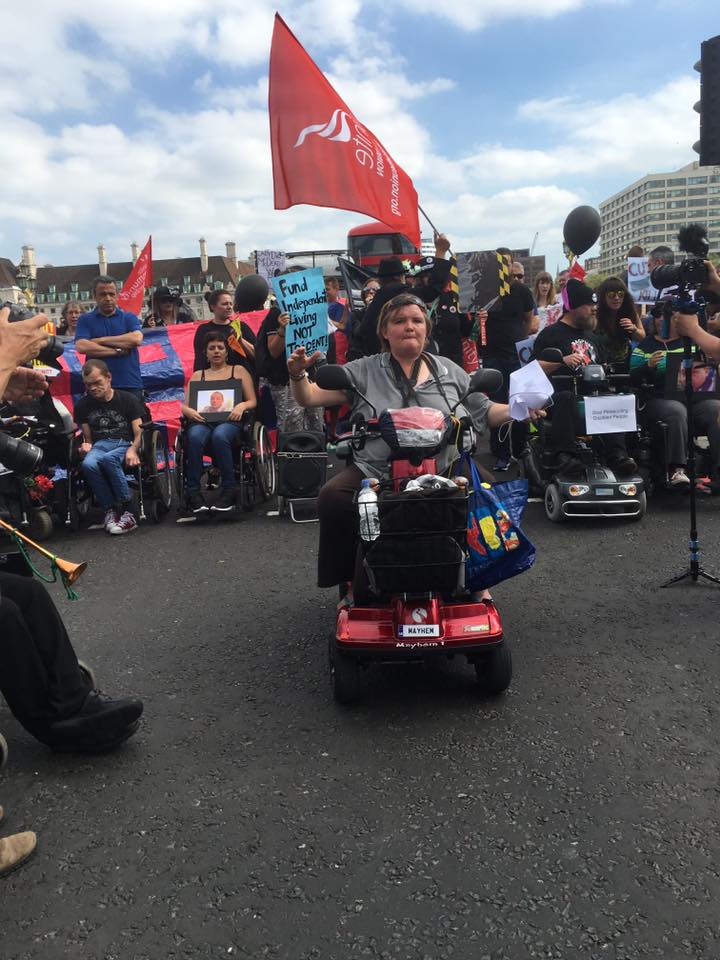
 Cuts Kill, No More Benefit Deaths protest, Westminster Road block, 7 September 2016: part of Disabled People Against the Cuts’ Rights Not Games week of action.

Photo courtesy of Paula Peters, DPAC.


John Pring from Disability News Service
reports:

“A disabled woman has told how her local council is threatening to spend several days watching her every move as she eats, showers and uses the toilet, in order to check if planned cuts to her care package will meet her needs.

The woman, Jane*, a survivor of serious sexual, physical and emotional abuse, and a former Independent Living Fund (ILF) recipient, spoke about the council’s “violation” at a parliamentary campaign meeting this week.

The meeting was held to launch Inclusion London’s report on the impact of last year’s ILF closure, as part of the Rights Not Games week of action organised by Disabled People Against Cuts (DPAC)**.

The report, One Year On: Evaluating The Impact Of The Closure Of The Independent Living Fund, includes information from all 33 London local authorities, and concludes that there has been a “dramatic postcode lottery” in the support provided to former ILF recipients since the fund closed.”

*Not her real name

**DPAC has set up a legal fund to help former ILF recipients like Jane challenge cuts to their support packages.

I recommend that you read the full article: Council wants to watch abuse survivor shower and toilet to check post-ILF needs.

The council have suggested that Jane may survive on microwave meals – which she has said would damage her health and be unaffordable – and that she can use incontinence pads for up to 12 hours a day, instead of being helped to use the toilet.

Over the summer, council officials told Jane that once the cuts to her care package were in place (from 12 hours of support a day to 38 hours a week), they wanted to send a “team of people” to observe (for up to two weeks) the impact of the reduction in care on how she manages to use the toilet, take a shower, gets in and out of her wheelchair and her bed, and feeds herself.

This will require an intrusion on a very intimate level, into aspects of her life where privacy is something that most people would take for granted. For disabled people, the public/private divide no longer exists. The details of our most intimate circumstances have become public property. Jane is not only horrified at this dehumanising move to cut costs, and about the fact that her physical needs, citizen rights and dignity are being so casually disregarded; she also has concerns regarding the potentially very damaging psychological effects of such an intrusion from the state, who have the sole aim of callously cutting her essential support.

The Independent Living Fund (ILF) was set up in 1988 to fund support for disabled people with high support needs in the United Kingdom, enabling them to live in the community independently, rather than move into residential care.

The ILF was designed to combat social exclusion on the grounds of disability. The money is generally used to enable disabled people to live in their own homes and to pay for care, and in particular, to employ personal care assistants. Many of the beneficiaries would have otherwise had to move to residential care homes.

In December 2010 the Government announced the closure of the Fund to new applicants, and in December 2012, following a consultation on the future of the Fund, it was announced that the Fund would be closed permanently from April 2015. The Government claimed that Local Authorities could meet the same outcomes as the ILF and proposed transfer for existing ILF recipients to their Local Authorities.

The Government initially decided to close the fund by March 2015 but this was delayed until June 2015 after five disabled people challenged the Government’s decision in the High Court.

In a very significant decision on 6 November 2013 following the Judicial Review, which highlighted the effects of the Equality Act 2010 on public authorities and their decision-making, the Court of Appeal found that the Department of Work and Pensions’ (DWP) decision to close the ILF was not lawful, overturning the High Courts’ decision of April 2013. The Government had indicated that it would not be appealing this judgement and the ILF would remain intact for the time being. 

The Court of Appeal unanimously quashed the decision to close the fund and devolve the money, on the basis that the minister had not specifically considered duties under the Equality Act, such as the need to promote equality of opportunity for disabled people and, in particular, the need to encourage their participation in public life. The court emphasised that these considerations were not optional in times of austerity.

On March 6, 2014, the Government made the authoritarian announcement that it would go ahead with the closure of the ILF fund on 30th June 2015, saying that a new equalities analysis had been carried out by the DWP. The government has shown a complete disregard for disabled people and the Court of Appeal decision. 

Highlighting that government had failed to comply with the equality duty had been a rare victory, entirely due to disabled people fighting back. The government responded to this by simply ignoring the court ruling.

The ILF provided additional income to nearly 19,000 disabled people who have high level support needs. The government devolved the responsibility to already cash-strapped local authorities in England, which meant that it would cease to be ring-fenced and would be subject to constraints and cuts within a local authority budget in June 2015. The funding was not ring-fenced. Because of budget cuts, local authorities have had limited capacity to support individuals unless their needs are very severe and so the ILF had previously served to supplement this provision. Local Authorities are already struggling to fund statutory provision and services, as it is. 

Local Authorities had already said that they will not be able to offer the current level of financial support provided by ILF, potentially forcing many disabled people to move out of their homes and into residential care homes.

The Inclusion report aims at gathering evidence of the impact of the closure of the ILF with a focus on the situation in London. It brings together statistical analysis from Freedom Of Information (FOI) requests sent to all 33 London boroughs with findings from a survey sent out to London Deaf and Disabled People’s Organisations (DDPOs) as well as qualitative evidence provided by former ILF recipients concerning their experiences of transfer to Local Authority (LA) support.

Comparison of evidence gathered through comparison of the Freedom Of Information (FOI) responses, Deaf and Disabled People’s Organisations (DDPO) survey, and examples of lived experience submitted by former ILF recipients has led to a number of themes emerging:

  • Post-code lottery for former ILF recipients across Local Authorities.
  • The detrimental impacts of the ILF closure on former ILF recipients, ranging from distress and anxiety to removal of essential daily support. 9 One Year On: evaluating the impact of the closure of the Independent Living Fund
  • The lack of consistent practice across different Local Authorities regarding referrals for CHC funding.
  • Limitations of the mainstream care and support system and failings in the implementation of the Care Act.
  • The value of the model of support provided by the Independent Living Fund.
  • The importance of Deaf and Disabled People’s Organisations for making Deaf and Disabled people aware of and supported to exercise their rights.

There is an urgent need for a radical rethink of how Disabled people are supported to live independently. Disabled people who use independent living support must be at the forefront of developing ideas and with adequate resources for meaningful engagement.

This also needs to happen quickly, before the memories of what effective independent living support looks like and how much Disabled people can contribute when our support needs are met fade into the distance.

You can read the full report here: One year on: Evaluating the impact of the closure of the Independent Living Fund

Related  

ILF closure cuts report produces instant results from Labour and Greens

Two-way mirrors, hidden observers: welcome to the Department for Work and Pensions laboratory


Nothing about us without us? Are you bonkers?

images

This is an excellent article from The Alliance for Counselling & Psychotherapy. It de-individualises and de-stigmatises mental illness by placing it firmly in the context of neoliberalism, which is a doxa  –  an over-arching political and economic dominant narrative and mode of social organisation. Neoliberalism has a dire impact on increasing numbers of citizens, and on those who are a part of already marginalised social groups in particular.

A doxa is something that comes to be regarded as common sense;  it is taken for granted “knowledge” in society. It is the experience by which “the natural and social world appears as self-evident.” As an over-arching and self referential, self perpetuating idiom of belief, it is difficult to challenge from “within” the idiom. Yet neoliberalism is just one choice of social organisation amongst several alternatives. It isn’t a rational or democratic choice, since it is increasingly detrimental to the majority of ordinary people.

R.D Laing once said that: “Insanity is a perfectly rational adjustment to an insane world.” That has probably never been more true than it is now. How can therapists address these real and pressing issues? One thing is certain, it isn’t by claiming value neutrality and by simply “treating” individuals. Kitty.

allianceforcp's avatarThe Alliance for Counselling & Psychotherapy

In May this year, I joined members of the Mental Health Resistance Network at an event at the Old Vic. It was a panel debate on the state of mental health provision in the UK, one of their Voices Off events linked to the production of Harold Pinter’s The Caretaker. The original panel was Luciana Berger MP, Shadow Minister for Mental Health; Paul Farmer, CEO of Mind; and Simon Wessely President of the Royal College of Psychiatrists. MHRN members protested that there were no service user speakers, and eventually Peter Beresford and Alice Evans were invited onto the panel.

Inspired by the desperate lack of service user voices, mental health activists rapidly got together a zine to distribute at the meeting – a passionate collection of first-hand experiences of living on the sharp end of mental health disability in the UK. Jay Watts of the Alliance contributed a cartoon…

View original post 1,097 more words

Andrew Samuels on Jobcentre Therapy and the Psy-Organisations

allianceforcp's avatarThe Alliance for Counselling & Psychotherapy

Letter submitted to Therapy Today (the BACP journal) but not published.


I’d like to respond to Catherine Jackson’s interesting article Colocation or collusion? How ethical are the Government’s proposals for closer working between IAPT services and Jobcentre Plus?’ (Therapy Today, April 2016, pp.8-9).

Catherine’s title suggests that the issue is generating heat and, at the end of this letter, I make a suggestion for a dialogical, relational next step.

What Catherine wrote illustrates the usual dilemma that the large professional organisations find themselves in with regard to Government policies – in this case, the many linkages between employment on the one hand and psychological therapies on the other. If bodies such as BACP, UKCP, BPC, BPS and BABCP are too robust in their criticism of Government policies, they will be labelled as ‘the awkward squad’ and ‘the usual suspects’. Doors in Whitehall close, requests for meetings go…

View original post 755 more words

Man with diabetes had to have his leg amputated because of benefit sanctions

David Boyce had to have his leg amputated when his diabetes spiralled out of control because he couldn’t afford to eat after having his benefits sanctioned
                                                      David Boyce 

Photo courtesy of the Manchester Evening News.

David Boyce has diabetes. He was sanctioned for five months by the Department for Work and Pensions, which meant he had no money whatsoever to meet his basic needs. As a result, he had to sell his belongings, but couldn’t afford to eat properly and subsequently had to have his leg amputated, as his medical condition spiralled out of control. A healthy diet is essential as part of the management and treatment for diabetes.

David was a photographer who used to own a business, but was forced to give up his work because of ill-health. There was a dispute with the Department for Work and Pensions (DWP) about his jobseeker’s agreement and he was sanctioned numerous times.

David said that his benefits were frozen fourteen times because of “issues with paperwork.”

However, it’s clear that the sanctions happened because of a flawed decision-making process on the part of the DWP and he won an appeal which successfully overturned every sanction, with support from Salford’s Unemployed and Community Resource Centre. He was eventually awarded the money that had been wrongfully withheld from him

The government have claimed that benefit sanctions are an “incentive” to “help” people like David into work. However, David has been pushed even further away from the job market, because he’s now been left with a greater degree of disability: horrifically, the sanctions have cost him his leg.

David said that by July, complications from diabetes had already caused irreversible damage. His health deteriorated because he had no money to live on: he couldn’t control his insulin intake and was unable to follow his strict diabetic diet. 

Subsequently he suffered diabetic ulcers and was diagnosed with the flesh-eating infection, necrotizing fasciitis, and doctors were forced to amputate one of his legs.

He told the Manchester Evening News: “I suffered from depression and mental anxiety. I’m not a rich man. I had to sell everything to eat.

You don’t tell anyone, it’s embarrassing, that’s what they prey on.

You go into a depression. You lock yourself away.”

David Boyce’s tragic case was revealed as protesters gathered to demonstrate against the extremely punitive and irrational Jobcentre conditionality rules and welfare sanctions. 

Campaigners gathered at Eccles Job Centre this week to protest against the immoral benefits sanctions. They said that scores of people were being left depressed and on the verge of suicide. 

David’s horrific experience is not an isolated case, sadly. Many campaigners have reasonably demanded an inquiry since the death of former soldier David Clapson, who also had diabetes. David died of ketoacidosis because he couldn’t take his insulin. He was also starving, after being sanctioned for missing a single Job Centre meeting. The coroner said that he hadn’t eaten for at least three days prior to his death. David was unable to afford to maintain an electricity supply to keep his fridge running, where he ordinarily safely stored his life-saving insulin.

The government have been presented with many other cases of extreme hardship and suffering because of sanctions, but they simply deny there is any “causal link” between the negative impacts, distress and deaths and their policies, despite the ever-growing and distressing evidence to the contrary. There is no evidence that there isn’t a “causal link” either. To establish such a link requires an inquiry and further investigation of the already established correlation between the government’s policies and adverse impacts. If the government are so confident that their claim is right, then surely an inquiry would provide a welcomed verification of this.

As it is, the government’s refusal to research and investigate the link is simply oppressive, and their claims fly in the face of established research and longstanding empirical evidence which shows that punishing people who are already experiencing hardship cannot possibly “incentivise” them to look for work, since we know that if someone cannot meet their basic survival needs (such as the physiological necessities of food, fuel and shelter), then they cannot meet higher level psychosocial needs, including looking for work.

Salford Unemployed and Community Resource Centre manager, Alec McFadden, said the DWP had imposed “unachievable” requirements for those in receipt of benefits.

McFadden added: “Illegal benefit sanctions need to be stopped and we will continue to use the law against these dangerous and illegal actions that bringing stress and the threat of suicide to so many people.”

A DWP spokesman said: “Sanctions are an important part of our benefits system and it is right that there is a system in place for tackling those few who do not fulfil their commitment to find work.

They are only used in a very small percentage of cases, and the number of sanctions has fallen substantially in the last year.”

0_0_0_0_370_308_csupload_52703375
Abraham Maslow’s hierarchy of human needs.

Related

Two key studies show that punitive benefit sanctions don’t ‘incentivise’ people to work, as claimed by the government

Nudging conformity and benefit sanctions

Welfare sanctions can’t possibly “incentivise” people to work. Here’s why

The Conservative approach to social research – that way madness lies


I don’t make any money from my work. But you make a donation and help me continue to research and write free, informative, insightful and independent articles, and to provide support to others. The smallest amount is much appreciated – thank you.

DonatenowButton cards

The Resolution Foundation’s review of the Conservative’s “Living Wage”

longer_term_living_wage


The Conservatives’ summer budget saw a new national minimum wage set. However, it has been  re-branded as a “national living wage” as the Conservatives claim that it should be what people need to live on. Employers will no longer be allowed to pay the £6.70-an-hour rate, but will have to pay the new “national living wage” of £7.20 an hour to people over the age of 25. Call me a cynic, but the psychosemantic re-branding of a minimum wage increase of less than a pound an hour is a diversion because the government intend to stop subsidising low wages through tax credits. 

Increasing the minimum wage is simply not adequate to reduce poverty. Forty per cent of individuals earning between the minimum wage and the actual amount that would be the Living Wage campaigners want, are in households in the top half of the income distribution. They aren’t poor. Tax credits on the other hand are much more highly targeted at those in need of support. Whilst the public understand what the minimum wage was about, renaming this new policy the “National Living Wage” will inevitably create confusion, as many will incorrectly assume that the government are targeting the same rate as that advocated by the Living Wage campaign – a figure based on estimates in line with the cost of living. They aren’t.

The Living Wage Foundation say:

  • The current UK Living Wage ought to be £8.25 an hour
  • The current London Living Wage ought to be £9.40 an hour

However, the Resolution Foundation have issued a press release that says the Prime Minister should allow the in-built flexibility of the “national living wage” to “take its course.”

Conor D’Arcy, Policy Analyst at the Resolution Foundation, said: “Some businesses are unhappy about a higher minimum wage, particularly amid the post-referendum uncertainty. But backsliding on the government commitment is unnecessary given the in-built flexibility of the policy to adjust to changing economic circumstances. It would also be costly for millions of low paid workers, so the Prime Minister should stick to her guns.”

Backsliding on the so-called “National Living Wage” (NLW) could leave some full-time workers up to £1,000 a year worse off by 2020 – with women, the young and older workers most likely to lose out – according to the new analysis published yesterday (Wednesday) by the Resolution Foundation.

Earlier this year, the introduction of the NLW delivered an average 7.5 per cent pay rise to around 4.5 million workers aged 25 and over. Low-paid workers are set for another four years of above average pay rises as it approaches its target ‘bite’ of being worth 60 per cent of typical hourly pay by 2020.

More recently, May has put tackling squeezed living standards at the centre of her new government. However, some business organisations have called on the government to water down its plans following the EU referendum. In a letter to the Business Secretary Greg Clark, 16 trade associations called on government to “exercise caution” in light of “the economic uncertainties the country faces”.

Such calls are understandable given the challenge of a higher wage floor for some businesses. However the Foundation says that the in-built flexibility of the NLW – which automatically adjusts to economic shifts by being pegged to typical hourly pay, rather than the £9 cash figure that many people associate the policy with – means that there is no need to water down the policy.

The Foundation’s analysis, based on the latest summary of independent economic forecasts published by the Treasury, shows that the NLW is currently on track to rise to around £8.70 in 2020. That’s lower than the £9 forecast in the March 2016 Budget, due to expectations of weaker wage growth. The Foundation notes that the projected figure for 2020 is likely to rise and fall in coming years as wage forecasts are updated and the actual impact of implementing Brexit becomes clear.

The Foundation says the Prime Minister should therefore stick to her guns and press on with implementing a policy that will deliver a pay rise for six million workers – and support her vision for an economy that works for everyone, not just the privileged few.‎

Torsten Bell, Director of the Resolution Foundation, said:

“Theresa May is right to stick to her guns on the National Living Wage. Britain has a serious low pay problem and now of all times is not the moment to put off dealing with it.”

The Foundation adds that sticking to the current policy is very different to pursuing a cash target of £9 or higher in the face of weaker overall wage growth. That approach, which some advocate‎, could jeopardise the success of the NLW.

Ahead of a crucial meeting of the Low Pay Commission in October to decide their recommendation for next April’s NLW rate, the analysis shows that should the government scale back its ambition over the next four years – for example by raising the NLW at a similar pace to the recent minimum wage increases applied after the 2008 financial crisis – its value would fall by around 55p per hour in 2020. This would lower the annual pay of a full-time worker on the NLW by around £1,000, relative to current plans. Should the current ‘bite’ of the NLW be maintained, rather than increased to 60 per cent by 2020, the annual pay would be reduced by £1,500.

Around one in five women and one in five workers aged 26-30 would lose out from any backsliding on the National Living Wage, as would over a quarter of workers aged 66 and over.

The Foundation says that the main focus for the government should now be on implementation. To do this, it is calling for the government’s upcoming industrial strategy and productivity plan to include a focus on the often unheralded low-paying sectors of the economy, and not just on areas like digital and high-value manufacturing. This will help employers handle the higher labour costs brought about by the NLW.

The analysis is part of the Foundation’s upcoming report Low Pay Britain 2016, which will be published later this month.

Conor D’Arcy, Policy Analyst at the Resolution Foundation, said:

“The National Living Wage is a hugely popular policy that is set to deliver a pay rise to six million of Britain’s lowest paid workers and play a pivotal role in the Prime Minister’s vision for an economy that works for everyone, not just the privileged few.

“Understandably some businesses are unhappy about a higher minimum wage, particularly amid the post-referendum uncertainty. But backsliding on the government commitment is unnecessary given the in-built flexibility of the policy to adjust to changing economic circumstances. It would also be costly for millions of low paid workers, so the Prime Minister should stick to her guns.

“The government’s attention should instead turn to the huge task of implementation. This should ensuring that its upcoming industrial strategy includes the less glamorous but hugely important sectors like retail and hospitality, which are at the coalface of Britain’s huge low pay challenge.”

Review recommendations

  • While the National Living Wage is a welcome boost to low earners, the Living Wage with its genuine link to an acceptable cost of living, remains as vital as ever.
  • But as we have made clear, improvements are possible in both methods and seeking alignment will inevitably lead to change. We believe the recommendations we have outlined in this review represent a genuine improvement over the current methods. The aligned method should be more representative, more robust and, most importantly, driven to a greater extent by changes in the cost of living.
  • Inevitably, calculating a Living Wage requires judgement calls. Policy changes like the introduction of Universal Credit would always have required judgements on how the new system is phased into the rate. Having a body like the Living Wage Commission to make such decisions when required in future can only be an asset to the Living Wage campaign as it moves forward.
  • The natural question which follows these recommendations is what impact is likely on the rates themselves. However, the next steps are for the Living Wage Commission to consider our recommendations. The options they choose will determine the extent to which the rates vary from their current levels.
  • Broadly speaking however, the aligned method we have recommended is likely to have an upward effect on the London Living Wage. We consider this to be an unavoidable consequence of a Living Wage rooted in an up-to-date basket of goods with a more diverse mix of family types. There is a clear discrepancy in the target income between London and the rest of the UK, and as highlighted by recent analysis on the size of London salary weightings[1] the differential between rates should be larger than at present. The exact size of the increase will depend on the Living Wage Commission and Mayor’s response to our review. They also have a role in setting out a how to implement and transition to the new rates in London and the rest of the UK.
  • The Living Wage Commission is expected to respond to our review in September 2016. With a strong, aligned methodology and an enhanced governance structure, we see no reason why the Living Wage cannot continue to raise the wages of workers across the UK, delivering more families an acceptable standard of living.

Notes 

  • The ‘bite’ of the National Living Wage – its value relative to typical hourly pay – is set to increase by 4.3 percentage points over the next four years. The ‘bite’ of the National Minimum Wage (NMW) increased 1.7 percentage points in the four years following the financial crisis. Should the NLW instead follow this path, rather than the one currently set out, its value in 2020 would fall to £8.17 an hour. That’s 55p an hour less than the latest economic forecasts imply, equivalent to £1,075 to a full-time worker on the NLW.
  • The Resolution Foundation forecasts that by 2020 around 12 per cent of workers will be earning the National Living Wage, including 19 per cent of women, 19 per cent of 26-30 year olds and 26 per cent of workers aged 66+. 

I don’t make any money from my work. But you can help me keep going by making a donation so I can continue to research, to write free, informative, insightful and independent articles, and to provide support to others. The smallest amount is much appreciated – thank you.

DonatenowButton cards

Conservative social security policy is not founded on rational analysis and evidence

650
Recently I wrote an article about the new benefit cap which parodied Conservative ideology, traditional class prejudices and subsequent justification narratives for their welfare “reforms”, likening the latter to nineteenth century character divination – phrenology in particular. Sometimes, it’s easier to highlight the ridiculous by simply ridiculing it.

A lot of my work is themed around serious and rational critique of Conservative shortcomings when it comes to the whole process of policy-making and research, from the theories” that inform the process, to the ideologically-driven impacts and narrow neoliberal aims and outcomes, which have led to some catastrophic social consequences. This is because austerity has been aimed exclusively at those citizens who had the very least to start off with. Sick and disabled people have been systematically and disproportionately targeted for cuts to their support.

2014-02-17-BurdenoftheCuts-thumb

I’ve written previously about the government’s increasing use of secondary legislation to push through controversial and highly partisan policies without an adequate degree of parliamentary scrutiny and debate. The public are entirely excluded from this process. This is one way that the Conservatives have been getting away with highly prejudiced, ideologically-driven policies that have not been analysed in terms of safeguarding citizens, impact, compatibility with our international human rights obligations and are neither adequately justified nor evidenced. 

The Strathclyde review and Conservative authoritarianism

Secondary legislation is unamendable and is allocated 90 minutes debate in the Commons at best, by the Conservatives. Secondary legislation in the form of Statutory Instruments was only ever intended for non-controversial and small tidying up legislative measures. A Tory aide admitted that the government are trying to get as much unpopular legislation in through the secondary route as possible. But this has been very evident anyway. The government is intent on dismantling any inconvenient piece of the constitution.

In a democracy there is always a responsibility and need to ensure additional checks and balances against incumbent governments and for extending opportunities to review and improve the quality of legislation. There is always a need to broaden the political participation and democratic inclusion of particular groups in society; to explore ways by which under-represented groups may be identified and included in political decision-making processes.

Statutory Instruments are the principal form in which delegated legislation is made, and are intended to be used for simple, non-controversial measures, in contrast to more complex items of primary legislation (known as Bills.) The opposition has frequently complained that the government uses Statutory Instruments to pass complex and controversial legislation which should have been subject to full Parliamentary scrutiny. Universal credit, the legal aid and tax credit cuts are clear examples of the misuse of secondary legislation, each with far-reaching and detrimental socioeconomic consequences for many people.

The steep rise in the use of Statutory Instruments since 2010 is an indication of how the Conservatives are politically managing pre-legislative scrutiny, stifling healthy debate, curtailing opposition, and side-stepping essential democratic transparency and accountability. It’s also an indication that much Conservative legislation is ideologically-driven rather than needs-driven: the use of secondary legislation as a means of avoiding scrutiny demonstrates that the government are aware that much of their planned programme won’t stand up to close Parliamentary examination and rational debate.

Lord Strathclyde was asked in October last year by David Cameron to undertake a “rapid review” that considered how to secure the decisive role of the House of Commons in relation to its primacy on financial matters and secondary legislation. Of course, Strathclyde’s report was published by the Government on the 17 December, 2015, which marked the final sitting of Parliament before Christmas. Nonetheless the media did actually cover the contents of the report and some of the implications of the recommendations made.

Strathclyde concluded in his report that the House of Lords should be permitted to ask the Commons to “think again” when a disagreement on proposed legislation exists, but should not be allowed to veto. MPs would ultimately make a decision on whether a measure is passed into law. The review focuses in particular on the relationship between the Commons and the Lords, in relation to the former’s primacy on financial matters and secondary legislation.

The key problem is that Statutory Instruments (SI) are being over-used and are under-scrutinised in the Commons. SIs have become a major form of law-making activity in the UK. In 2015, the UK Parliament passed 34 Acts, whilst 1,999 Statutory Instruments were made. (In fact, 2015 has been a relatively light year for SIs: in 2013 and 2014, 3,292 and 3,486 SIs were made.)

The government ensure they have a majority on any SI committee and MPs are chosen by Whips. The Hansard Society estimate that SIs currently account for as much as 80 per cent of the Government legislation that impacts citizens. However, they are given substantially less Parliamentary time than Bills, enabling government to push through their ideologically designed legislative programme with very little scrutiny, exacerbating a lack of democratic transparency and accountability of the Executive (the government). 

Further presented justification for grotesquely unfair policies from the Conservatives is based on a claim that “we have a clear mandate to do this.” The concept of a government having a legitimate mandate to govern via the fair winning of a democratic election is a central component of representative democracy. However, new governments who attempt to introduce policies that they did not make explicit and public during an election campaign are said to not have a legitimate mandate to implement such policies. 

In order to keep his promises on further future tax cuts for higher earners, George Osborne made even more cuts to public services, public sector pay and the social security safety net that are so deep they will severely damage both the economy and potentially, the fabric of our society. The Institute for Fiscal Studies (IFS) have criticised Osborne’s proposed tax credit cuts, because it is “at odds” with wider Conservative stated aims to “support hardworking families”.

Research conducted by the IFS calculated that only around quarter of money take from families through tax credit cuts would be returned by the new National “Living Wage”.Tax credits are payments made by the government to people on lower incomes, most of whom are in work. 

Cameron effectively ruled out cutting the benefit before the election, telling a voter’s Question Time that he “rejected” proposals to cut tax credits and did not want to do so. The cuts are part of £12bn cuts to the social security budget that the government is to make – the details of which the Conservatives refused to announce before the election.

However, in an unprecedented move, the Conservatives have threatened a constitutional “showdown”, and have refused to engage in dialogue with peers that want kill off the proposed Tory cuts. The government warned the House of Lords it would trigger a full-scale constitutional crisis by pressing ahead with their plans. 

The review by Lord Strathclyde, commissioned by a rancorous and retaliatory Cameron followed the delay and subsequently effective defeat of government tax credit legislation in the House of Lords, and it has, of course, recommended curtailing the powers of Upper House. 

Strathclyde proposed that the House of Commons is given the final say over secondary legislation (in particular, Statutory Instruments), which are, as previously stated, frequently being used for political manoeuvring to edit the details of Acts, and ensure rules, regulations and even changes to legal definitions are made by ministerial order, rather than by the rather more open and democratic process of primary legislation: it’s being used as a way of bypassing Parliamentary scrutiny. 

sis

The view from the Social Security Advisory Committee

More recently, the Chair of the Social Security Advisory Committee (SSAC) has also concluded that “pressure from the Treasury” resulted in welfare changes being pushed through parliament “without meaningful analysis of impact or interactions with other parts of the benefit system.” He also raises the same issues that I previously have regarding the government’s increased use of secondary legislation.

In a very damning report on how the government develops welfare policies, SSAC Chair Paul Gray says top-down pressure from the former chancellor, Osborne, to meet Budget deadlines meant legislation was being rushed without proper analysis or scrutiny.

In a foreword to the report, Gray writes: “On the basis that primary legislation was to be debated in some detail in Parliament, the Government was not required to bring the majority of these provisions to SSAC.

Consequently, the amount of secondary legislation presented to us in the first few months of the reporting year was lighter than usual.

By contrast from September onwards a number of sets of regulations were presented to us for scrutiny – most with their origins in the Chancellor of the Exchequer’s Budget proposals for reducing benefit expenditure.”

He goes on to say: “The Committee has observed that legislation required to deliver policies announced by the Chancellor during his Budget or autumn statements is often developed at pace to meet challenging deadlines set by HM Treasury.

This has regularly resulted in secondary legislation being presented to us without meaningful analysis of impact or interactions with other parts of the benefit system.

The absence of evidence underpinning some of the Government’s policy choices has been a significant concern to us over the past year, and we hope that the Government will adjust this aspect of its approach to policy-making in the coming year.”

He added: “The committee has noted in the past the absence of analytical material on the cumulative impact of welfare reforms.”

Gray also draws attention in particular to tax credit changes proposed in the summer budget highlighting “the lack of available evidence to support the policy changes being presented to us”.

Gray concludes: “There can be no question that this committee is hampered in its role of scrutinising proposed changes in cases where the supporting explanatory material and evidence is scant.”

It’s a point I have made myself many many times. However, unlike the government, I do tend to include evidence and analysis in my ongoing critique of Conservative policies.

The ideological drive to dismantle the welfare state

Despite the relentless Conservative attacks on social security since 2010, (which is funded by the citizens that it supports when they experience hardships), Theresa May will not rule out delivering yet more brutal welfare cuts if the economy suffers a downturn because of Britain exiting the EU. The prime minister refused to offer any guarantees that she will spare struggling families if Whitehall savings are needed in the coming months. 

May has made it clear there will be no end to Tory austerity, she said: “What I’m clear about is we’re going to continue as we have done in Government over the last six years – ensuring that we’re a country that can live within our means.”

I’m just wondering how awarding millionaires £107,000 each per year in the form of a “tax break” in 2012 at the same time as introducing the radical cuts to social security can possibly be construed as an act that ensures “a country that can live within our means.” It seems to me that the Conservatives want to completely dismantle our welfare state, along with all the other gains of our social settlement (social housing, the NHS, legal aid and public services) but fear public opposition.

So rather than be honest about their intention, the Conservatives have chosen to stigmatise people needing welfare support to disperse public sympathy, to create scapegoats and generate moral panic. The public gradually come to accept the anti-welfare narrative as “fact”, despite the lack of evidence and analysis. Moral and rational boundaries will be pushed, prejudice will advance stage by stage. The incremental cuts will continue until there is nothing left to cut.

Earlier this year, the chancellor was forced to try and defend his decision to use the cuts in disability benefits to fund tax breaks for the wealthy. Controversially, the cuts benefitted the top 7% of earners. The Chancellor raised the threshold at which people start paying 40p tax, in a move that saw many wealthier people pulled out of the higher rate of income tax. 

Osborne callously claimed that the Conservative government was “increasing spending on disabled people”, he said: “Controlling welfare bills is part of what you need to do if you’re a secure country confronting the problems in the world.” It was an utterly ludicrous comment.

The cuts to ESA and PIP show an intended substantial reduction on government spending to essential support for disabled people.

In a wealth transfer from the poorest to the very rich, we have witnessed the profits of public services being privatised, but the losses have been socialised – entailing a process of economic enclosure for the wealthiest. The burden of losses have been placed on the poorest social groups and some of our most vulnerable citizens – largely those people who are ill, disabled and elderly. The Conservative’s justification narratives regarding their draconian policies, targeting the poorest social groups, have led to media scapegoating, social outgrouping, persistent political denial of the aims and consequences of policies and reflect a wider process of political disenfranchisement of the poorest citizens, especially sick and disabled people.

That the cuts are ideologically driven, and have nothing whatsoever to do with economic necessity, was demonstrated only too well by the National Audit Office (NAO) report earlier this year. The NAO scrutinises public spending for Parliament and is independent of government. The report indicates how public services are being appropriated for purely private benefit.

The audit report in January concluded that the Department for Work and Pension’s spending on contracts for disability benefit assessments is expected to double in 2016/17 compared with 2014/15. The government’s flagship welfare-cut scheme will be actually spending more money on the assessments conducted by private companies than it is saving in reductions to the benefits bill.

From the report:

£1.6 billion
Estimated cost of contracted-out health and disability assessments over three years, 2015 to 2018

£0.4 billion
Latest expected reduction in annual disability benefit spending.

This summary reflects staggering economic incompetence, a flagrant, politically motivated waste of tax payer’s money and even worse, the higher spending has not created a competent or ethical assessment framework, nor is it improving the lives of sick and disabled people. Some people are dying after being wrongly assessed as “fit for work”and having their lifeline benefits brutally withdrawn. Private companies like Maximus are paid millions from our welfare budget, yet they are certainly not “helping the government” to serve even the most basic needs of sick and disabled people.

However, private companies serve the private needs of a “small state” doctrinaire neoliberal government, and making lots of private profit whilst it does so. The Conservatives are systematically dismantling the UK’s social security system, not because there is an empirically justifiable reason or economic need to do so, but because the government has purely ideological, anticollectivist, antidemocratic, profoundly uncivilising prescriptions and longstanding class-based prejudices.

When the Conservatives say they are going to “tackle poverty”, what they mean is that they intend to rigidly police the poor, rather than alleviate poverty. Meanwhile, the new right’s economic enclosure act – austerity – will continue to impoverish many more. The state will respond to each crisis with more authoritarianism and psychopolitical techniques of persuasion, amplified via the media. And the wealthy and powerful will become wealthier and more powerful.

Unless we collectively fight back.

— 

Related

The Conservative approach to social research – that way madness lies

Cases of malnutrition continue to soar in the UK

Two key studies show that punitive benefit sanctions don’t ‘incentivise’ people to work, as claimed by the government

Benefit Sanctions Can’t Possibly ‘Incentivise’ People To Work – And Here’s Why


I don’t make any money from my work. But you can contribute by making a donation and help me continue to research and write informative, insightful and independent articles, and to provide support to others. The smallest amount is much appreciated – thank you.

DonatenowButton