Author: Kitty S Jones

I’m a political activist with a strong interest in human rights. I’m also a strongly principled socialist. Much of my campaign work is in support of people with disability. I am also disabled: I have an autoimmune illness called lupus, with a sometimes life-threatening complication – a bleeding disorder called thrombocytopenia. Sometimes I long to go back to being the person I was before 2010. The Coalition claimed that the last government left a “mess”, but I remember being very well-sheltered from the consequences of the global banking crisis by the last government – enough to flourish and be myself. Now many of us are finding that our potential as human beings is being damaged and stifled because we are essentially focused on a struggle to survive, at a time of austerity cuts and welfare “reforms”. Maslow was right about basic needs and motivation: it’s impossible to achieve and fulfil our potential if we cannot meet our most fundamental survival needs adequately. What kind of government inflicts a framework of punishment via its policies on disadvantaged citizens? This is a government that tells us with a straight face that taking income from poor people will "incentivise" and "help" them into work. I have yet to hear of a case when a poor person was relieved of their poverty by being made even more poor. The Tories like hierarchical ranking in terms status and human worth. They like to decide who is “deserving” and “undeserving” of political consideration and inclusion. They like to impose an artificial framework of previously debunked Social Darwinism: a Tory rhetoric of division, where some people matter more than others. How do we, as conscientious campaigners, help the wider public see that there are no divisions based on some moral measurement, or character-type: there are simply people struggling and suffering in poverty, who are being dehumanised by a callous, vindictive Tory government that believes, and always has, that the only token of our human worth is wealth? Governments and all parties on the right have a terrible tradition of scapegoating those least able to fight back, blaming the powerless for all of the shortcomings of right-wing policies. The media have been complicit in this process, making “others” responsible for the consequences of Tory-led policies, yet these cruelly dehumanised social groups are the targeted casualties of those policies. I set up, and administrate support groups for ill and disabled people, those going through the disability benefits process, and provide support for many people being adversely affected by the terrible, cruel and distressing consequences of the Governments’ draconian “reforms”. In such bleak times, we tend to find that the only thing we really have of value is each other. It’s always worth remembering that none of us are alone. I don’t write because I enjoy it: most of the topics I post are depressing to research, and there’s an element of constantly having to face and reflect the relentless worst of current socio-political events. Nor do I get paid for articles and I’m not remotely famous. I’m an ordinary, struggling disabled person. But I am accurate, insightful and reflective, I can research and I can analyse. I write because I feel I must. To reflect what is happening, and to try and raise public awareness of the impact of Tory policies, especially on the most vulnerable and poorest citizens. Because we need this to change. All of us, regardless of whether or not you are currently affected by cuts, because the persecution and harm currently being inflicted on others taints us all as a society. I feel that the mainstream media has become increasingly unreliable over the past five years, reflecting a triumph for the dominant narrative of ultra social conservatism and neoliberalism. We certainly need to challenge this and re-frame the presented debates, too. The media tend to set the agenda and establish priorities, which often divert us from much more pressing social issues. Independent bloggers have a role as witnesses; recording events and experiences, gathering evidence, insights and truths that are accessible to as many people and organisations as possible. We have an undemocratic media and a government that reflect the interests of a minority – the wealthy and powerful 1%. We must constantly challenge that. Authoritarian Governments arise and flourish when a population disengages from political processes, and becomes passive, conformist and alienated from fundamental decision-making. I’m not a writer that aims for being popular or one that seeks agreement from an audience. But I do hope that my work finds resonance with people reading it. I’ve been labelled “controversial” on more than one occasion, and a “scaremonger.” But regardless of agreement, if any of my work inspires critical thinking, and invites reasoned debate, well, that’s good enough for me. “To remain silent and indifferent is the greatest sin of all” – Elie Wiesel I write to raise awareness, share information and to inspire and promote positive change where I can. I’ve never been able to be indifferent. We need to unite in the face of a government that is purposefully sowing seeds of division. Every human life has equal worth. We all deserve dignity and democratic inclusion. If we want to see positive social change, we also have to be the change we want to see. That means treating each other with equal respect and moving out of the Tory framework of ranks, counts and social taxonomy. We have to rebuild solidarity in the face of deliberate political attempts to undermine it. Divide and rule was always a Tory strategy. We need to fight back. This is an authoritarian government that is hell-bent on destroying all of the gains of our post-war settlement: dismantling the institutions, public services, civil rights and eroding the democratic norms that made the UK a developed, civilised and civilising country. Like many others, I do what I can, when I can, and in my own way. This blog is one way of reaching people. Please help me to reach more by sharing posts. Thanks. Kitty, 2012

State-regulated cryptocurrency and micro-managing people claiming welfare

blockchain_2-large_trans++LNxyO0DwVu6AfV8OD9VhqByRWR8tXKJRXAf-JOaUjFA


Context

I’ve written more than one critical piece about the Government’s part-privatised Behavioural Insights Team (Nudge Unit), particularly with regard to its insidious and malevolent influence, manifested in a range of psychoregulation policies aimed at “behavioural changes” which are being imposed on the poorest citizens. Technocracy is the “science of social engineering.” Nudge is a technocratic approach to fulfilling the requirements of neoliberalism. It’s about maintaining an established socioeconomic order, rather than advancing progressive social change.

In 1932, Howard Scott and Marion King Hubbert founded Technocracy Incorporated, and proposed that money be replaced by energy certificates. The group argued that “apolitical, rational engineers should be vested with authority to guide an economy into a thermodynamically balanced load of production and consumption, thereby doing away with unemployment and debt.” Sounds just like old school sociological Functionalism to me: it’s a systems theory  – utterly tautological and deterministic tosh. Bear with me, because there’s a couple of contemporary parallels I want to discuss.

The Conservatives prefer to do away with unemployment and debt by “incentivising behaviour change” to ensure that poor people who don’t have any money to live on are punished out of their poverty. 

Smart Cards, another antiwelfarist, technocratic imposition, entered our collective consciousness during autumn 2012, as Iain Duncan Smith declared his intention to discipline Britain’s “troubled” families. In unveiling his proposals at the Conservative Conference back in October 2012, Duncan Smith attempted to frame the cards as better value for taxpayers’ money, implying that poor people don’t pay taxes, (when the poorest actually pay proportionally more) and his rhetoric was extremely stigmatising.

He said: I am looking […] at ways in which we could ensure that money we give [benefit claimants] to support their lives is not used to support a certain lifestyle.”  [Boldings mine.]

Then MP Alex Shelbrooke presented his private member’s bill in December 2012, providing us with yet another shuddering glimpse into the underlying Tory moral outrage, prejudice and punitive attitudes towards people claiming benefits. He argued for a “welfare cash card” to limit spending to absolute basics. Isn’t welfare provision as it is just enough to cover the absolute basics for survival? It’s calculated to meet the basic cost of food, fuel and shelter only.

Despite his scapegoating narrative about addressing “idleness”, Shelbrooke’s proposed psychocompulsion was intended to apply to those in work, who claim benefits such as tax credits and housing benefit, penalising and outgrouping those on a minimum or low wage, also. The plan was to restrict the goods that people claiming benefits could buy with their cards. Not so much offering a “nudge” or “incentive”, but rather, delivering a bludgeoning enforcement, without a shred of respect for diverse needs and individuals’ autonomy and choice. 

A principled objection is that we should not be stigmatising or inflicting punishments on people, or reducing their freedom to spend money as they need and wish, just because they are forced to spend some time out of work, or because they aren’t paid a wage that is sufficient to live on. Such an approach is extremely draconian.

Having been previously rejected, this is certainly not a democratically endorsed policy.

This is an authoritarian restriction on what people claiming benefits may buy, and a limiting of lifestyle choices that they are permitted. It is a particularly spitefully directed ideological move that does not make any sense in terms of the wider economy, or in terms of any notion of “supporting” people, and “fairness.” The latter two categories of reason would entail extending opportunities and freedoms, not repressing them. 

Financial hardship already limits choice. When people are struggling financially, budgeting isn’t the problem: low wages, benefit cuts and rising costs of essential items are. Those factors are ultimately shaped by government policies, not poor people.

No matter how this is dressed up by the Tories, poor people don’t respond to “corrective” narratives and coercive policy like Pavlov’s dogs. Yet the Tories nevertheless insist on placing a psychopolitical variant of operant conditioning – behaviour modification – at the core of their increasingly repressive class-contingent policies. This isn’t about state “assistance” for the entitled poor, most of who have worked and contributed to the treasury, contrary to the politically expedient “economic free rider” label.  It’s about traditional Tory prejudices, state interference and coercion. It’s more blaming and punishing the casualities of neoliberalism and social conservatism. 

Having failed in introducing the punitive smart card more than once, the Conservatives are now resorting to a stealthy introduction of a variation to curtail the freedom of poor people claiming social security, using cryptocurrency, state regulation and an unprecedented, Orwellian level of state monitoring and control of what people who are struggling to make ends meet are buying. 

th

Some basic (but wordy) definitions

Cryptocurrency is a medium of exchange, alternative to Fiat currencies, which uses a type of virtual currency, such as bitcoin. It uses cryptography for security and anti-counterfeiting measures. Public and private keys are often used to transfer cryptocurrency between individuals. Ownership of bitcoins, for example, implies that a user can spend bitcoins associated with a specific address. To do so, a payer must digitally sign the transaction using the corresponding private key. Without knowledge of the private key, the transaction cannot be signed and bitcoins cannot be spent. The network verifies the signature using the public key.

Bitcoin is a pseudonymous currency, meaning that funds are not tied to real-world entities, but rather, to bitcoin addresses. For cryptocurrency enthusiasts, the pseudoanonymity element is attractive, as it tends to empower individuals rather than institutions. Cryptocurrencies typically feature decentralised and unregulated control, and transactions are recorded in a public distributed ledger called the blockchain. 

Owners of bitcoin addresses are not explicitly identified, but all transactions on the blockchain are public

The value of a cryptocurrency is determined by the market (whatever people are willing to pay for it). The welfare or state of your nation’s economy will not affect the value of your cryptocurrency. The value of a cryptocurrency is based solely on global supply and demand and functions much like a commodity on the stock market.

Cryptocurrencies are ordinarily used outside of existing banking and governmental institutions and exchanged over the Internet. They have often been seen by the establishment as a “rogue currency”, and as a potential threat to the monetary order. Because of the pseudoanonymity afforded by “virtual assets”, cryptocurrency is also sometimes used in controversial settings such as online darknet markets, like Silk Road, accessible by Tor, (free software for enabling anonymous communication, it conceals a user’s location and usage) which further minimises the risk of detection by law enforcement agencies. (See: Silk Road and Bitcoin.)

People in Russia and China have been bypassing very strict surveillance laws by using bitcoin-like cryptocurrencies in order to communicate securely. Cryptocurrencies, starting with bitcoin, have emerged and been increasingly utilised almost in parallel with revelations from National Security Agency (NSA) whistle-blower Edward Snowden about mass government surveillance. 

As the sheer extent of government spying still continues to emerge, encrypted communication services become important and have surged in popularity. Tech companies, including Facebook, Google and Apple, have capitalised on this by adding encryption to their services. However revelations that these same companies seem complicit in the NSA’s surveillance operations have led to some reservations from users. Now it seems the UK government wants to utilise cryptocurrency, inverting the political freedom it allowed by turning it into a tool of state control. 

Government proposals: virtual food vouchers and automated nudge

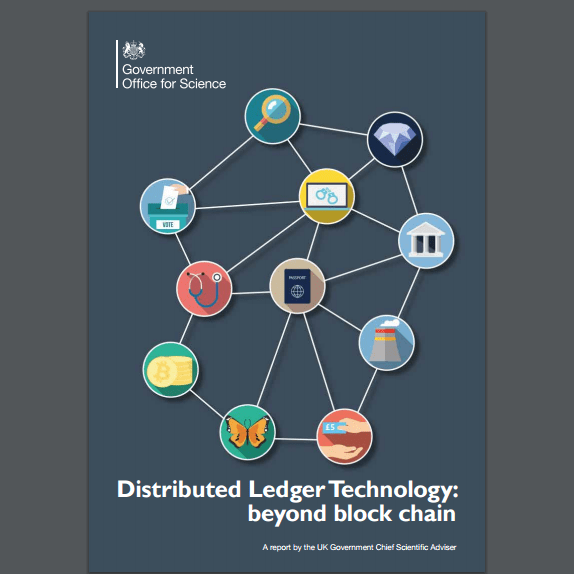
Earlier this year, the government set out proposals in a report regarding how Blockchain Technologies’ distributed ledger technology which provides “efficient and transparent” digital records of cryptocurrency transactions, could be used for public services. In their report called Distributed Ledger Technology: Beyond block chain, the government’s scientific advisor says:

“Distributed ledger technology (DLTs) offer significant challenges to established orthodoxy and assumptions of best practice, far beyond the recording of transactions and ledgers. These potentially revolutionary organisational structures and practices should be experimentally trialed — perhaps in the form of technical and non-technical demonstrator projects — so that practical, legal and policy implications can be explored.”

“Areas where we believe work could be taken forward include the protection of national infrastructure, reducing market friction for SMEs [Small and medium-sized enterprises] and the distribution of funds from Department for Work and Pensions and other government departments.” [Boldings mine.]

To recap, a distributed ledger is a database that can record financial, physical or electronic assets for sharing across a network through what is claimed to be entirely transparent updates of information.

Its first incarnation was Blockchain in 2008, which underpinned digital cash systems such as Bitcoin. The technology has now evolved into a variety of models that may be applied to different business problems.

Speaking at Payments Innovation Conference earlier this month, Lord Freud, one of the main architects of the welfare “reforms” said:

“Claimants are using an app on their phones through which they are receiving and spending their benefit payments. With their consent, their transactions are being recorded on a distributed ledger to support their financial management.”

The Department for Work and Pensions (DWP) has been working with Barclays, Npower, University College London and a UK-based distributed ledger platform startup called GovCoin to create an app which tracks people’s benefit spending

The ongoing trial which, is designed to demonstrate “the practical applications of the technology,” began in June. It’s yet another Conservative experiment on people claiming social security.

Jeremy Wilson, the vice chairman of corporate banking at Barclays, said: “This initiative focuses on adding an additional layer of richer data and identity onto payments, so that a deeper and more effective relationship can be established between the government and claimants.”

I wonder exactly what that “effective relationship” will entail? I bet it’s not one based on mutual respect and democratic dialogue. I also wonder if the Department for Work and Pensions will be issuing people who have no income with Smart phones. 

How will the collected information on spending be used? Are we going to see people claiming social security being named and shamed for buying Mars bars, a bottle of wine or a book? Or birthday and Christmas presents for their children? Will the state be sanctioning people that make purchases which the government deems “unnecessary”? 

He added: “We are keen to see how the positive potential of this service develops and adds to our wider efforts to explore the uses of distributed ledger technology.”

Distributed ledger technology was identified as a way of potentially “saving billions of pounds a year from welfare fraud and overpayment errors.”

Oh, that whoppingly over-inflated 0.7% of claimants again. Many of whom were simply overpaid as the result of an administrative error, after all. Just imagine how many trillions we would save if we used technology to get a grip of tax avoidance and tackle offshore tax havens, and addressing the “spending habits” of the hoarding wealthy. 

The technology is hoped to provide a cheap and easy way of getting welfare claimants without bank accounts into the system as well as verifying their identities, and would also provide a “transparent account of how public money was spent, transform the delivery of public services and boost productivity,” the government’s chief science adviser, Sir Mark Walport, said in a report last January. Those same words are used every time vulture capitalists are circling a public service, on the hunt for easy profits.

Walport said: “Distributed ledger technology has the potential to transform the delivery of public and private services.”  

More words from the vulture capitalist crib sheet of glittering generalities.

“It has the potential to redefine the relationship between government and the citizen in terms of data sharing, transparency and trust and make a leading contribution to the government’s digital transformation plan.”

The government distributes £3.8bn in payments every day. However, there are some serious concerns over how protection of data and privacy with the technology will be “managed.”

The Open Data Institute (ODI) welcomed the findings on the whole. However, it warned that the government must be wary of the challenges involved in blockchain technology and apply it in an effective way. They say: “We agree that blockchains could be used to build confidence in government services, through public auditability, and could also be used for widely distributed data collection and publishing, such as supply chain information. Smart contracts also hold great potential; what if your train tickets were smart contracts that meant you paid less for delayed trains?” 

Smart cards and smart contracts, the more things change, the more the Tories stay the same.

Further comment from the ODI: “However, in our research we have seen cases where people are trying to bolt old, failed or impossible policy and business ideas onto the new technology or to unnecessarily reinvent things that work perfectly well.”

The institute also warned of the privacy issues raised by incorporating private data and suggested the government better develop and solve these challenges by focusing on industry specific groups such as the finance or healthcare sectors.

Some thoughts

Conservatives claim to endorse personal responsibility, limited government, free markets, individual liberty, and deregulation, amongst other things. They believe the role of government should be to provide people the freedom necessary to pursue their own goals. Conservatives claim their policies generally emphasise “empowerment of the individual to solve problems”.

So how does any of this tally with harsh welfare cuts, public service cuts, restrictions on the right to by certain goods, the removal of access to legal aid, limiting housing options for the poorest, bedroom tax, numerous human rights contraventions, increasing conditionality for ill and disabled people, psychocompulsion through increasingly stringent welfare behavioural conditionality and the draconian sanction regime, for example?

Limiting consumer choice and spending flies in the face of the Tories’ own free market dogma. Furthermore, as it stands legally, the government cannot currently stipulate how people claiming benefits spend their money. So they would have to re-write the law to suit their “policy outcomes.” Again.

The Tory definition of “troubled family” conflates poverty, ill health, unemployment and criminality. Iain Duncan Smith claims to be targeting substance abusers (“drug addicts” and “alcoholics”) but it’s clear that the government’s definition means he’s referring largely to the poor and disabled people. His proposal to deal with people who don’t buy their children food because they’re “drug addicted” would actually target people who don’t buy food because they can’t afford it.

Once again we see the disciplinarian and psychocratic Tories stigmatising the poorest people for the conditions that Tory policies have caused. If such “troubled families” existed (and the Joseph Rowntree foundation research has put paid to the myth of  “families with three generations unemployed”), it would not be reasonable to treat their situations as an issue of personal spending choices rather than a consequence of how our economy is run.

The Tories have, over the past five years, parodied a political process that is supposed to be about engaging the publics’ rational, conscious minds, as well as facilitating their needs within society. The UK is not an inclusive democracy. Instead we see the employment of a behaviourist brand of psychocomplulsion, and the media are complicit in propping up an increasingly incoherent, irrational and profoundly prejudiced ideology which informs class-contingent, anti-social and deeply damaging neoliberal policies.

I’ve pointed out previously that government policies are expressed political intentions regarding how our society is organised and governed. They have calculated social and economic aims and consequences.

In democratic societies, citizen’s accounts of the impacts of policies ought to matter. “Accountability to the taxpayer” is being used more and more by the state as a justification to exclude those needing financial support from democratic society. Yet those people claiming benefits are not the same people year by year. The “economic free-rider” myth assumes that people claiming welfare do so continuously, yet we know that most move in and out of work, being forced to undertake insecure, poorly paid work regularly. It’s hardly fair to punish people for the detrimental conditions of the wider labor market.

In the UK, the way that policies are justified is being increasingly detached from their aims and consequences, partly because democratic processes and basic human rights are being disassembled or side-stepped, and partly because the government employs the widespread use of linguistic strategies and techniques of persuasion to intentionally divert us from their aims and the consequences of their ideologically (rather than rationally) driven policies. Furthermore, policies have become increasingly detached from public interests and needs. Instead, policy is about directing us in how to be. We are being coerced into behaving only in ways that accommodate and prop up neoliberalism.

Neoliberalism is a system of economic arrangements that greatly benefits a few powerful and wealthy people and impoverishes the majority of the public incrementally. As each social group reaches a crisis – struggling to survive – scapegoating narratives are constructed and disseminated via the media that blame them for their insolvency, creating socially divisive and politically managed categories of “others,” which serve to de-empathise the rest of the population and divert them from the fundamental fact that it isn’t the poor that create poverty: it is the neoliberal decision-makers and those who are steadily removing and privatising our public funds and ebulliently shrinking state responsibility towards citizens, leaving many at the mercy of “market forces” without a state safety net – it’s economic Darwinism.

“Workers of the World unite. You have nothing to lose but their blockchains.” Hubert Huzzah

 —

All despots and bullies are behaviourists. They inflict punishment on others to get the “outcomes” that they want. 

Governments are elected to reflect and accommodate public need. In the UK, the government expects the public to change their perceptions, expectations and behaviours to meet the government’s need. They say:

“Behaviour change is one of the primary functions of government communications – helping change and save lives, helping the government run more effectively as well as save taxpayer’s money.

Our approach is to use a mix of awareness raising, persuasion, practical help and behavioural theory, to demonstrate why changes in behaviour are important and to make these changes easy for the public to adopt”.

The Government Communication Service guide to communications and behaviour change

gcs-guide-to-communications-and-behaviour-change1

I don’t make any money from my work. But you can support Politics and Insights and contribute by making a donation which will help me continue to research and write informative, insightful and independent articles, and to provide support to others. The smallest amount is much appreciated, and helps to keep my articles free and accessible to all – thank you.

DonatenowButton
cards

Prologue to the Chilcot Report


“The children of Iraq have names.
Their names are not collateral damage.”

David Krieger, peace wager, founder and president of The Nuclear Age Peace Foundation.

“I saw things that I won’t forget for as long as I live… When you hear people shouting the words ‘gas’ or ‘chemicals’ — and you hear those shouts spreading among the people — that is when terror begins to take hold, especially among the children and the women. Your loved ones, your friends, you see them walking and then falling like leaves to the ground. It is a situation that cannot be described — birds began falling from their nests; then other animals, then humans. It was total annihilation. Whoever was able to walk out of the town, left on foot. Whoever had a car, left by car. But whoever had too many children to carry on their shoulders, they stayed in the town and succumbed to the gas.”

Kherwan. From: Halabja: Survivors talk about horror of attack, continuing ordeal.

“It was life frozen. Life had stopped, like watching a film and suddenly it hangs on one frame. It was a new kind of death to me. (…) The aftermath was worse. Victims were still being brought in. Some villagers came to our chopper. They had 15 or 16 beautiful children, begging us to take them to hospital. So all the press sat there and we were each handed a child to carry. As we took off, fluid came out of my little girl’s mouth and she died in my arms.”

Photo journalist Kaveh Golestan, describing the Halabja Massacre, a chemical weapon attack on Kurdish people that took place on March 16, 1988, which was part of the Iraqi Al-Anfal Genocide Campaign.

All lives are equally precious. 

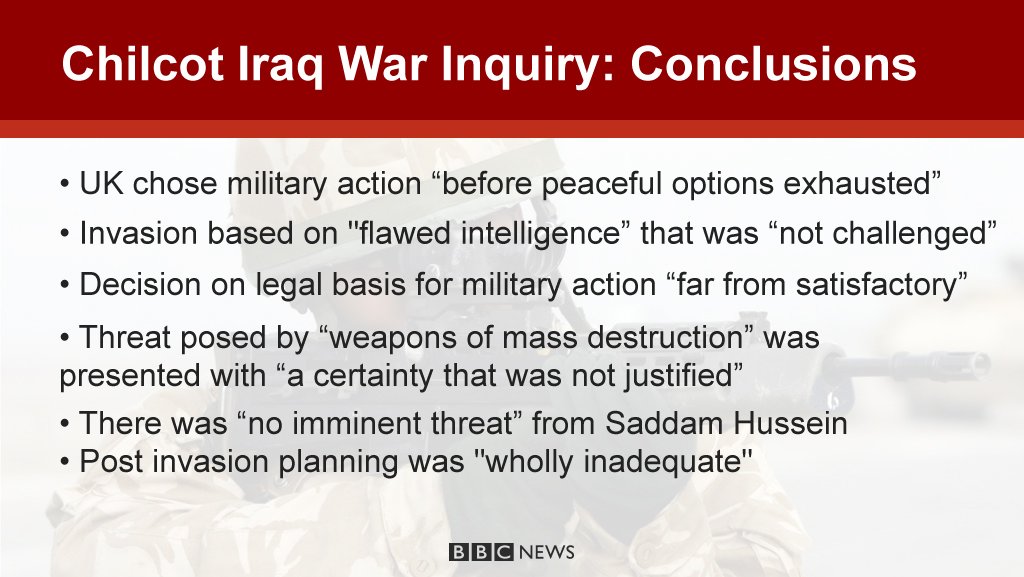
Many good writers have added their own footnotes to the Chilcot report. However, there is a broader context to the war in Iraq, which has been edited from the mainstream narrative. There doesn’t seem to be anyone writing about that context. In fact that’s been purged from the conversation. I don’t like to see issues reduced to political opportunism and party politics, but that has happened, too. 

“Lamp post or bonfire for Mr Blair.” Gosh, we get to choose.

But the mainstream column of truth has more than one hole in it. 

Don’t get me wrong, there’s a temporary solace, a curious savage satisfaction and a kind of sublimation value to be had in simply hating Blair. I’ve done it. But it’s rather like trying to put an ocean onto a teaspoon in the long run. Besides, whilst I know emotions are a fundamental part of being human, and as such are important, I also value rational discourse, too. There’s so much more to be said on this, regarding the historic political expedience of successive western governments, which has had catastrophic humanitarian consequences beyond the Iraq invasion. That must not be excluded from mainstream conversation. The UK government also played a part in arming a brutal dictator with chemical weapons, which resulted in atrocities and genocide.

For the record, I protested against the Iraq war. I didn’t like Tony Blair because he betrayed the working-class, he was an advocate of neoliberalism. I didn’t like his anti-terrorism laws or his anti-social behaviour legislation, which were repressive and symptomatic of a horrible “lowest common denominator” type of populism creeping into public policy. But I nonetheless valued some of his social policy programme, most of which the current government are so busy trying to repeal. That’s a clear indication that at least most of his social policies were not ideologically Conservative, even if his economic approach was, albeit a diluted version.

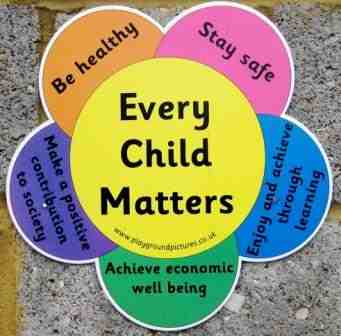
The Equality Act, the Human Rights Act, the Worker’s Rights and Union laws, the Every Child Matters Policy (repealed the day after the Tories took office in 2010 by Michael Gove), animal welfare legislation and the Gender Recognition Act, repeal of Section 28, were all examples of very good public policies. Saying that does not make me  a “Blairite.” It simply makes me someone who looks critically at policy with a balanced and evidence-based approach. Everyone knows what Blair did wrong, few are prepared to recognise nowadays what he actually got right.

All of this said, as an ideological experiment, New Labour’s dabble with neoliberalism has had profoundly damaging consequences for the Labour Movement, and the Left more generally. It resulted in widespread disillusionment, a sense of working-class disenfranchisement and alienation, factionism, infighting and disunity. But much of this, curiously, only became clearly evident from 2010 onwards, when a much harsher neoliberal government gained Office, imposing a strict and devastating austerity programme and an unprecedented authoritarianism on the UK. 

So, the man who worked with Mo Mowlem, sitting down with Gerry Adams and Martin McGuinness to broker peace with the Good Friday Agreement, is now regarded only as a “warmonger.”

Meanwhile I’m utterly bewildered, watching on as Jeremy Corbyn, a staunchly anti-neoliberal leader and the thoroughly decent bloke that I voted for, is being hung by the Bolsheviks, on orders from the Mensheviks. No-one is ever good enough to lead the Labour Party, apparently. It beggars belief and shows a fairly widespread lack of joined-up thinking. At the very least, it shows how rubbish the Left are at organisation, strategic thinking and tactical voting, from grassroots level upwards. We really need to learn. Because a class-war waging authoritarian government imposing such an unforgiving ideological brand of Conservative neoliberalism and desolating austerity can never be better than a Labour government, be it under the leadership of Ed Miliband or Jeremy Corbyn.

I digress. 

Some history

In 2003, most of the Ulster Unionists and Conservatives voted to send British troops into military action in Iraq, the Conservative votes carried the motion that authorised the Iraq conflict, since 140 Labour MPs rebelled against their party’s whip. Robin Cook resigned and there was a memorable backbench rebellion. Jeremy Corbyn paid tribute to Cook yesterday in parliament, and said that he had: “said in a few hundred words what has been confirmed by this [Chilcot] report in more than two million.” All of the Liberal Democrats voted against military action, too. Let’s not forget the then Liberal Democrat leader, Charles Kennedy, who was also an implacable opponent of the Iraq war, despicably demonised by the mainstream media. He’s officially vindicated by the Chilcot Report, like Cook and others. The Tory whip, John Randall, also resigned over his party’s stance on Iraq. Throughout the conflict, Blair remained the strongest supporter of the United States plan to invade Iraq, though originally seeking a UN Mandate. 

Parliament gave Blair the go-ahead for the Iraq war. It highlights a big problem with democracy: we didn’t vote for that. In the end, despite a total of seven resignations from the government, and three from the Tory shadow cabinet, the Iraq war happened. Let’s not lose sight of the fact that Iain Duncan Smith had led Conservative MPs in demanding a rush to war from 2002, too. 

Before the invasion, the (then) UK Attorney General Lord Goldsmith, advised Blair that the war would be in breach of international law for six reasons, ranging from the lack of a second United Nations resolution to UN inspector Hans Blix’s continuing search for weapons of mass destruction (WMDs). Ten days later on 7 March 2003, as UK troops were massing in Kuwait, Lord Goldsmith changed his mind, saying:

“I remain of the opinion that the safest legal course would be to secure the adoption of a further resolution to authorise the use of force … Nevertheless, having regard to the information on the negotiating history which I have been given and to the arguments of the US Administration which I heard in Washington, I accept that a reasonable case can be made that resolution 1441 is capable in principle of reviving the authorisation in 678 without a further resolution.”

He concluded his revised analysis, saying that “regime change cannot be the objective of military action.”

From John Major’s Commons Statement on the first Gulf War – 17th January 1991: Mr. Bob Cryer (Bradford, South) In view of the precipitate abandonment of sanctions and the onslaught of this bloody conflict, will the Government learn some lessons? For example, the arms and ammunition used against our service men will have been sold to Iraq by western nations. Indeed, components for the manufacture of arms have been sold from this nation. Will the Government make serious efforts to develop an arms embargo to curtail the wretched trade in arms throughout the rest of the world and make sure that the opportunity for conflicts such as this is limited? Or do the Government intend to put profit before peace?

It emerged that during the first Gulf War, “friendly fire” killed more British troops than the Iraqis did – of 16 British soldiers who died, nine were killed by Americans. Of 148 Americans who died, 35 were killed by friendly fire. Iraqi deaths were estimated at 50,000, with 100,000 wounded.

Some more history: when our friend Saddam was gassing Kurdish people.

Iraq invaded Iran in 1980 with the support of the Arab states, the UK, United States, and Europe. Many viewed Iraq as “an agent of the civilized world.” So they said. The blatant disregard of international law and violations of international borders were completely ignored,  Iraq received economic and military support from its allies, who turned a blind eye to Saddam Hussein’s use of chemical warfare against the Kurds and the Iranians, and to Iraq’s efforts to develop a nuclear programme. The United States provided diplomatic and military aid, financial aid and also supplied Iraq with “satellite photos showing Iranian deployments.

The US had opened full diplomatic relations with Iraq, the country was removed from the US list of State Sponsors of Terrorism. Former United States Assistant Secretary of Defense Noel Koch later stated: “No one had any doubts about [the Iraqis’] continued involvement in terrorism… The real reason was to help them succeed in the war against Iran, because the West, Russia and China feared the potential expansion of revolutionary Iran’s influence in the region.” 

The biological weapons programme

During the early 1980s, five German firms supplied equipment to manufacture botulin toxin and mycotoxin to Iraq. Strains of “dual-use ” biological agents and material from France also helped advance Iraq’s biological warfare programme. From the United States, in addition to exporting the advanced computers, some of which were used to develop Iraq’s nuclear programme, American Type Culture Collection – a non-profit organisation, and the Centers for Disease Control sold or sent biological samples to Iraq up until 1989, which Iraq claimed to need for medical research.

These materials included botulism, anthrax and West Nile virus, camel pox, rotavirus, Brucella melitensis, and Clostridium perfringens (gas gangrene). Some of these were used for vaccine development, whilst others were used in Iraq’s bioweapons research programme. Details of the bioweapon programme surfaced only in the wake of the Gulf War (1990–91)

During UN inspections in 1998, it was evident that Hussein had overseen prisoners tied to stakes and bombarded with anthrax and chemical weapons for experimental purposes. These experiments began in the 1980s during the Iran–Iraq War, after initial experiments had been carried out on sheep and camels. Dozens of prisoners are believed to have died in terrible agony during the programme. According to an article in the London Sunday Times:

“In one incident, Iranian prisoners of war are said to have been tied up and killed by bacteria from a shell detonated nearby. Others were exposed to an aerosol of anthrax sprayed into a chamber while doctors watched behind a glass screen. Two British-trained scientists have been identified as leading figures in the programme …”

The deployment of chemical weapons

On 16 March 1988, the Kurdish town of Halabja was attacked with chemical weapons, using a mix of mustard gas and nerve agents, 5,000 civilians were massacred, 10,000 more were maimed, disfigured or seriously debilitated. Thousands more died from the after effects of the attack. The massacre was part of the Al-Anfal Campaign – a genocide programme designed to reassert central control of the mostly Kurdish population of rural northern Iraq and defeat the Kurdish peshmerga rebel forces. Hussein’s goals were to systematically terrorize and exterminate the Kurdish population in northern Iraq, to silence Hussein’s critics, and to test the effectiveness of his chemical and biological weapons.

Hussein launched chemical attacks against 40 Kurdish villages and on thousands of innocent civilians in 1987-88. The United States now maintains that Saddam ordered the attack to terrorize the Kurdish population in northern Iraq, but Hussein’s regime claimed at the time that Iran was responsible for the attacks. Apparently, the US supported this account of events, changing the story several years later. The Al-Anfal genocide campaign also targeted Assyrians, Turkoman people, Shabaks and Yazidis people and Mandeans, many villages belonging to these ethnic groups were also completely destroyed. Human Rights Watch estimates that between 50,000 and 100,000 people were killed. Some Kurdish sources put the number higher, estimating that some 182,000 Kurds were killed in total.

Iraqi Kurds have been especially critical of the UK, given its support and arms shipments to Saddam Hussein during the 1980s. The extent to which Margaret Thatcher’s government was responsible for arming Iraq was revealed in 2011, when secret government files from 1981 were made public. The documents show Thatcher’s approval of large military contracts with Iraq and indicate her turning a blind eye to ongoing private sales of allegedly “non-lethal” military equipment. According to the documents, she sought to “exploit Iraq’s potentialities as a promising market for the sale of defence equipment.”  So the “free-markets” of the West aren’t morally discerning at all. Nor are those promoting them. Whilst the world turned a blind eye, many thousands died as a direct consequence. 

John Major’s government faced an ongoing inquiry into how ministers such as Alan Clark had encouraged businesses to supply arms to Iraq during the Iran-Iraq War of the 1980s, in breach of the official UN arms embargo, and how senior ministers had, on legal advice, attempted to withhold evidence of this official connivance when directors of Matrix Churchill were put on trial for breaking the embargo. It’s funny, the things we forget when someone else is drawing all the fire. Despite the interview with John Pilger, and the Scott Inquiry.

The Iraq Arms scandal period coincided roughly with the 8 years of war between Iraq and Iran, when Margaret Thatcher was the UK Prime Minister. The revelations prompted the Scott Inquiry, set up in 1992 after the collapse of the Matrix Churchill trial, which reported in 1996. Four directors of Matrix Churchill, a British machine tools manufacturer in Coventry, were put on trial for supplying “equipment and knowledge” to Iraq, but in 1992 the trial collapsed when it became clear that the company had been advised by senior government ministers and officials on how best to circumvent its own arms embargo. Much of both the report itself and the Inquiry’s evidence remain classified.

Sir Richard Scott’s three-year inquiry led him to conclude that the government had secretly “eased” UN and its own guidelines on arms sales to Saddam Hussein’s regime.

The British Cabinet had set up a secret sub-committee to oversee the project, with both the Home Office (MI5) and MI6 ordered to support the illegal exports. Michael Heseltine, Willie Whitelaw, Francis Pym, Geoffrey Howe and the then PM Thatcher gave the project government approval. During the 1992 Matrix Churchill trial, ex-Minister Alan Clark said “The interests of the West were best served by Iran and Iraq fighting each other, and the longer the better.”

It is inconceivable that Major, as Foreign Secretary in 1989, could have been unaware of the Matrix Churchill export to Iraq. The affair caused a major scandal which contributed to growing dissatisfaction with the then Conservative government of John Major and somewhat ironically contributed to the victory of Tony Blair’s New Labour at the 1997 general election.

By the end of the 1980s, Baghdad had acquired a massive arsenal – enabling it to fight against Iran and launch offensive operations such as Al-Anfal. 

In 1990, a case of nuclear triggers bound for Iraq were seized at Heathrow Airport. The British government also financed a chlorine factory that was intended to be used for manufacturing mustard gas. A chemical plant which the United States said was a key component in Iraq’s chemical warfare arsenal was secretly built by Britain in 1985. Documents show British ministers knew at the time that the £14m plant, called Falluja 2, was likely to be used for mustard and nerve gas production. 

Paul Channon, then trade minister, concealed the existence of the chlorine plant contract from the US administration, which was quite properly pressing for controls on such types of exports. He also instructed the export credit guarantee department (ECGD) to keep details of the deal secret from the public.

The papers show that Mr Channon rejected a “strong plea” from a Foreign Office minister, Richard Luce, that the deal would ruin Britain’s image in the world if news got out: “I consider it essential everything possible be done to oppose the proposed sale and to deny the company concerned ECGD cover”.

The Ministry of Defence also warned that it could be used to make chemical weapons. But Mr Channon, in support of Mrs Thatcher’s policy of supporting the dictator, said: “A ban would do our other trade prospects in Iraq no good.”

Saddam Hussein was internationally condemned for his use of chemical weapons during the 1980s against Iranian and Kurdish civilians during and after the Iran–Iraq War. In the 1980s, he pursued an extensive biological weapons programme and a nuclear weapons programme, though as far as we know, no nuclear bombs were built.

However, the United States and the UK blocked condemnation of Iraq’s known chemical weapons attacks at the UN Security Council. No resolution was passed during the war that specifically criticised Iraq’s use of chemical weapons, despite the wishes of the majority to condemn this use. On March 21, 1986 the United Nations Security Council recognized that “chemical weapons on many occasions have been used by Iraqi forces against Iranian forces.” This statement was opposed by the United States, the sole country to vote against it in the Security Council (the UK abstained). The UN confirmed that Iraq was using chemical weapons against Iranian troops after dispatching a team of specialists to the area in 1984, and again in 1986 and 1987, to verify the claims of the use.

By 2002, according to reports from the previous UN inspection agency, UNSCOM, Iraq produced 600 metric tons of chemical agents, including mustard gas, VX and sarin, and nearly 25,000 rockets and 15,000 artillery shells, with chemical agents, that remained unaccounted for. UN weapons inspectors, the United States, France, United Kingdom, Germany and other countries thought that this declaration failed to account for all of Iraq’s chemical and biological agents. Many of these countries had supplied the Iraqi regime with the technology to make the weapons in the 1980s during the Iran–Iraq War. However, there was no evidence of Iraq having built any nuclear weapons.

Oil on troubled slaughter

Declassified UK government documents indicate that the Iraq war was also about oil. At the time that the UK invaded, Iraq had nearly a tenth of the world’s oil reserves – and government documents clearly state that oil was a consideration before the war. In May 2003, a Foreign Office strategy paper highlighted  government motives which related to Iraq’s oil resources:

“The future shape of the Iraqi industry will affect oil markets, and the functioning of Opec, in both of which we have a vital interest.”

and:

“… an oil sector open and attractive to foreign investment, with appropriate arrangements for the exploitation of new fields.”

Bush administration officials quite openly considered proposals that the United States tap Iraq’s oil to help pay for a military occupation. Such a move, however, fueled existing suspicion of US motives in Iraq. Officially, the White House agreed that oil revenue would play an important role during an occupation period, but only for the benefit of Iraqis, according to a National Security Council spokesman. 

But there were strong advocates inside the administration, including in the White House, for appropriating the oil funds as “spoils of war,” according to a source who has been briefed by participants in the talks. “There are people in the White House who take the position that it’s all the spoils of war,” said the source, who asked not to be named. “We (the United States) take all the oil money until there is a new democratic government.” The source said the Justice Department had doubts about the legality of such a move.

Days after the US invasion, the (then) Deputy Defense Secretary Paul Wolfowitz told a congressional panel that Iraqi oil revenues would help pay for reconstructing the country, ie a cost of the war. “The oil revenue of that country could bring between 50 and 100 billion dollars over the course of the next two or three years. We’re dealing with a country that could really finance its own reconstruction, and relatively soon,” he said.

One month before the war, the White House press secretary at the time, Ari Fleischer, said Iraq “is a rather wealthy country … And so there are a variety of means that Iraq has to be able to shoulder much of the burden for their own reconstruction.”

Britain co-sponsored a resolution in the Security Council which gave the US and UK control over Iraq’s oil revenues. Far from “all oil revenues” being used for the Iraqi people, Resolution 1483 continued to make deductions from Iraq’s oil earnings to pay compensation for the invasion of Kuwait in 1990.

David Whyte and Greg Muttitt have pointed out that:Buried in deep in volume 9 of the 2.6 million-word report, Chilcot refers to government documents that explicitly state the oil objective, and outlining how Britain pursued that objective throughout the occupation. But he does not consider this evidence in his analysis or conclusions. Oil considerations do not even appear in the report’s 150-page summary.

To many people around the world, it was obvious that oil was a central issue, as Iraq itself had nearly a tenth of the world’s oil reserves, and together with its neighbouring countries nearly two thirds. There was a clear public interest in understanding how that affected UK decisions. Chilcot failed to explore it.

Section 10.3 of the report, in volume 9, records that senior government officials met secretly with BP and Shell on at several occasions (denied at the time) to discuss their commercial interests in obtaining contracts. Chilcot did not release the minutes, but we had obtained them under the Freedom of Information Act: they are posted here. In unusually expressive terms for a civil service write-up, one of the meeting’s minutes began, “Iraq is the big oil prospect. BP are desperate to get in there” (emphasis in original).

That same section 10.3 refers to numerous documents revealing the UK’s evolving actions to shape the structure of the Iraqi oil industry, throughout the occupation until 2009. The government did so in close coordination with BP and Shell. This full story was told in Fuel on the Fire: Oil and Politics in Occupied Iraq.

Despite US and UK denial that oil was a war aim, American troops were detailed to secure oil facilities as they fought their way to Baghdad in 2003. And while former defence secretary Donald Rumsfeld shrugged off the orgy of looting after the fall of Saddam’s statue in Baghdad, the Oil Ministry – alone of all the seats of power in the Iraqi capital – was under American guard.

Chilcot does include references to several pre-war documents that identify a British objective to use Iraqi oil to boost Britain’s own energy supplies. For example, a February 2002 Cabinet Office paper stated that the UK’s Iraq policy falls “within our objectives of preserving peace and stability in the Gulf and ensuring energy security”. But the Foreign Office strategy paper in May 2003, which Chilcot omitted, was even more explicit.

Chilcot also acknowledges that the British government was angling to ensure British oil firms could exploit the UK’s involvement in the war. Chilcot’s documentation confirms, for example, that the US and UK worked together to privatise Iraqi oil production and guarantee a takeover from foreign companies.

“By 2010 we will need [a further] 50 million barrels a day. The Middle East, with two-thirds of the oil and the lowest cost, is still where the prize lies”

Dick Cheney; US Vice-President, 1999

Operation Avarice

In 2005, the CIA collaborated with the Army Intelligence Corps, contacting an unnamed Iraqi individual who had possession and knowledge of all the legacy chemical WMD stockpiles and munitions in Iraq. The Operation was classified, most of the armed forces knew nothing about it. Chemical specialists and ordnance disposal units were assigned to the task of destroying and disposing of the recovered WMDs. It’s unknown who the individual is, or how the weapons had come into his/herpossession. Nonetheless, the person cooperated with US intelligence and sold all of the chemical WMDs to the units heading Operation Avarice. As a result, the CIA and army intelligence acquired over 400 rockets, missiles, and other chemical weapons in varying states of operational viability.

At one point, 150 separate rockets containing chemical agents were traded. Chemical experts then destroyed the weapons. Some of the weapons analysed had a concentration of nerve agents much higher than military intelligence had expected Iraq held the capabilities to develop, with the highest “agent purity of up to 25 percent for recovered unitary sarin weapons”, which was considered highly lethal.

The mission resulted in the largest recovery of chemical weapons during the Iraq war. It was confirmed that these weapons were remnants of the Iraqi weapons programme first developed during the Iran-Iraq war and also confirmed that the Hussein government had failed to dismantle and dispose WMDs in its possession. The collaboration between US military intelligence and the unnamed Iraqi proprietor resulted in minimal attacks on US military and coalition personnel or Iraqi citizenry from WMDs on a scale seen during the Iran-Iraq war, although small-scale attacks still occurred. Operation Avarice did succeed, however, in keeping the weapons off the black market.

Conclusions

The West, including the UK, had supplied Iraq with the components for manufacturing weapons of mass destruction. Prior to Blair taking office, there was the Scott Inquiry and a wake of revelations and scandals from the Thatcher administration regarding the supply of components for the assembly of WMDs (biological and chemical weapons are also classified as WMDs). Had that not been the case, there may well have been a little more clarity about Iraq’s arsenal and capabilities in 2003. Either way, I would never endorse the war. However, it is still worth considering that the UK-funded Falluja 2 featured in Colin Powell’s dossier of reasons why the world should go to war against Iraq, which was presented to the UN security council. 

Spy satellite pictures of Falluja 2, identifying it as a chemical weapons site, were previously published by the CIA, and a report by Britain’s joint intelligence committee, published with Tony Blair’s imprimatur, also focused on Falluja 2 as a rebuilt plant “formerly associated with the chemical warfare programme.” Blair also knew that we (the UK, along with the US and other countries) had sold Iraq the components for building WMDs previously, under the Thatcher/Reagan administrations. 

UN weapons inspectors toured the Falluja 2 plant in 2002 and Hans Blix, the chief inspector, reported to the security council that the chemical equipment there might have to be destroyed.

Thatcher’s government covertly supplied Iraq with armsfrom spare tank parts, terrain-following radar and Hawk fighter jets to military air and naval bases, all sold from the UK to Saddam Hussein’s despotic regime. 

“Contracts worth over £150m have been concluded [with Iraq] in the last six months including one for £34m (for armoured recovery vehicles through Jordan)” wrote Thomas Trenchard, a junior minister, in a secret letter to Mrs Thatcher in March 1981.

The letter also says that a meeting with Saddam Hussein “represent a significant step forward in establishing a working relationship with Iraq which … should produce both political and major commercial benefits”.

Mrs Thatcher wrote by hand at the top of the letter that she was “very pleased” by the progress being made.

Throughout her premiership Mrs Thatcher took a key role in securing deals for British defence companies, calling her efforts “battling for Britain”. Partly thanks to “free marketeering” efforts, the UK climbed from being the fifth to the second-largest supplier of military equipment over the decade. The terrible escalating logic of neoliberalism just sweeps humane, ethical and rational considerations triumphantly out of its way as it advances.

On record is the mercenary and duplicitous Thatcher’s greatest defence coup over the decade, which was the Al-Yamamah contract with Saudi Arabia in 1985 and 1988, one of the largest arms deals in history worth about £40bn to British Aerospace and other British companies. The push to sell arms in Iraq, encouraged by the privatisation of British Aerospace in 1981, in the end caused serious embarrassment when, in 1990, Iraq invaded Kuwait. Britain then found itself at war with the country they had been selling weapons to just a few months earlier. Such are the risks of unregulated “market forces”, and unfettered free-trade.

As mentioned, another consequence was the Scott Report, published in 1996, which gave a very damming assessment of the Conservative government’s role in selling arms to the Middle East through the 1980s. The released report also shows that some in the government were concerned about Mrs Thatcher’s “aggressive arms sales policy.”

Monstrous free-marketeering. 

One prime ministerial brief in January 1981 warned that “if we expose ourselves to serious accusations of breach of neutrality obligation [in Iraq] or deviousness our efforts could backfire”.

Iraq’s invasion of Kuwait almost certainly never would have happened without the US and the UK’s support for Iraq during the eighties. And even once it had happened, it could have been reversed without war.

Blair’s actions in initiating an unwarranted, unwanted and unforgivable war are the very tip of a very big shitberg, most of which is submerged in the murky waters of public amnesia, selective focus and party political opportunism. The war prior to that was even more unforgivable. If Blair lied or misled parliament, it can’t ever, nonetheless, touch the utterly monstrous Machiavellianism and psychopathy of his political predecessors. That doesn’t excuse what Blair did, but it would be disingenuous to disregard the broader context and history of successive government’s iniquity that led to the Iraq wars. The UK’s previous involvement in selling arms to a despot has had horrific consequences, most of which are being obscured simply because of a media and public unwillingness to recognise them. 

Most of the many thousands of Kurds that were massacred by Saddam Hussein were women and children. The UK is partly responsible for the Al-Anfal genocide. Not because of Blair’s actions, but because of Thatcher’s.

The first Gulf War probably would never have happened had Saddam Hussein not been armed by the West. It would have been very difficult to justify had Hussein not invaded Kuwait. On the balance of probabilities, nor would the second war, though oil was a significant motivating factor for the Iraq invasion, it would have been much more difficult to justify without reference to Hussein’s previous use of WMDs , which the West had provided illegally in the 80s. That permitted speculation and suspicion that some of those weapons still existed after the Gulf War to be used as a justification. 

We can’t make complete sense of events and learn anything of value if we only take a partial and ahistoric view, because the meaningful context in which events are situated matters a lot, too. Our collective short-sightedness has had terrible and ongoing consequences. 

Kurdish civilians and children matter just as much as Iraqi civilians and children. It would be without heart, hypocritical, compassionless, incoherent and unconscientious of us not to acknowledge that. 

Related

The Secret Casualties of Iraq’s Abandoned Chemical Weapons

Margaret Thatcher and Iraq

How £1bn was lost when Thatcher propped up Saddam

CIA Report: Prewar Movement of WMD Material Out of Iraq

CIA: Biological Warfare. Annex B (2004)

Excerpts from “The Death Lobby. How the West Armed Iraq”

Britain’s dirty secret

Iraqi bio-scientist breaks silence

The real motive for the Iraq war is buried under the 2.6 million words of the Chilcot report


644560_471416252927908_1178436986_n

I don’t make any money from my work. But you can support Politics and Insights and contribute by making a donation which will help me continue to research and write informative, insightful and independent articles, and to provide support to others. The smallest amount is much appreciated, and helps to keep my articles free and accessible to all – thank you.

DonatenowButton
cards

Disabled people’s human rights in further jeopardy because of Brexit

equality+act+image

The UK government has tended to regard human rights as optional; as being rather more like ‘guidelines’ than laws, and often, as a mere inconvenience and barrier to the fulfillment of their ideological commitments.

Opportunities for disabled people in the workplace are likely to come under further threat unless government prioritises the recreation of EU safeguards into British statute. That is according to diversity consultancy, The Clear Company, which contributes to the government’s Disability Confident Campaign.

Former Paralympian Baroness Grey-Thompson has also warned that leaving the European Union would prevent British people with disabilities benefiting from plans to boost accessibility.

She added that Brexit would also risk a recession that would leave less money to be spent on support services. She said:

“Our membership of the European Union has had real, positive benefits for the millions of UK residents with limiting long-term illnesses, impairments or disabilities.

“It has helped to counter workplace discrimination, obliged transport providers to make their services more accessible and secured access to some UK disability benefits for Britons living in other EU countries.

“Not only would leaving Europe jeopardise these, it would close us off from enjoying the rewards of upcoming legislation that will further increase accessibility and risk a recession that would leave less money to be spent on much-needed support services.”

Fiona McGhie, Public Law expert at Irwin Mitchell, said:

“What Brexit would affect is the ability to potentially rely on the European Charter of Fundamental Rights (CFR) which in particular includes many wider social and economic rights, such as the rights to fair and just working conditions, to healthcare and to have personal data protected. If disabled people wished to try and strike down UK legislation as incompatible with rights under CFR under EU law – that avenue may not be available after the vote to leave.”

In the wake of the referendum, the following is an official press release from ResponseSource, which is a journalist enquiry service that provides a press release wire:

The EU promotes the active inclusion and full participation of disabled people in society, in line with the EU human rights approach to disability issues, through priorities including accessibility, participation, social protection and external action. It works around a firm ethos that disability is a rights issue rather than a matter for discretion.

From an employment perspective, the objective of the European Commission’s European Disability Strategy 2010-2020 is to significantly raise the number of people with disabilities working in the open labour market. They represent one-sixth of the EU’s overall working-age population, but their employment rate is comparatively low at around 50%.

The EU promotes the active inclusion and full participation of disabled people in society, in line with the EU human rights approach to disability issues, through priorities including accessibility, participation, social protection and external action. It works around a firm ethos that disability is a rights issue rather than a matter for discretion.

Commenting on this morning’s revelation, Kate Headley, Development Director at The Clear Company, said:

“As long as the UK was part of the EU, disabled people had the benefit of EU frameworks and directives to act as a safety-net against British government and any power it may exert. Now, the future of policy which most affects disabled people is in the hands of Whitehall alone.

“There is no doubt that EU-derived laws, and EU-led initiatives, have had a largely positive impact on the disabled community. This may explain why Miro Griffiths, a former government adviser and project officer for the European Network on Independent Living, recently went on record to say he believed that Britain’s exit from the EU “would have dire consequences for disabled people”. Our priority now is to help ensure that the rights disabled people currently hold are protected post-Brexit.

“Aside from the issues of how the UK’s decision to exit will impact the NHS and wider care services, the European Health Insurance Card, and EU Air Passengers Regulation – all of which disproportionately affect those with disabilities – we must also look at the effect on disabled people in the workplace.”

“The EU’s record on assisting disabled workers is strong. Its Employment Equality Directive 2000, for example, led to the removal of the original exemption in the Disability Discrimination Act (DDA) for employers with fewer than 20 staff in the UK, so that in 2004 it became unlawful for any UK employer to discriminate against disabled people. The employment directive also led to the DDA being changed to make direct discrimination by employers against disabled people unlawful.”

“The TUC has identified employment rights that could well be under threat from a government no longer required to comply with EU legislation. Many of these promote health and well-being at work and home, such as the Working Time Directive, which protects from stress and ill-health that arise from working excessive hours including health service workers.”

“I would urge the government, post Article 50, to recreate the safeguards that disabled people have benefited from under EU membership into British statute. We will gladly continue to support the government in the development of strategy and stand by our commitment to support employers and employees alike. Amid the avalanche of new legislation which will almost certainly flood Whitehall in the coming months, laws that safeguard and support disabled workers must be prioritised as EU law recedes.”

Related

Unfortunately, the UK government has systematically violated the human rights of disabled people. It’s highly unlikely, given the current context, that the Conservatives will recreate the EU safeguards and incorporate them in protective legislation.

The new Work and Health Programme: government plan social experiments to “nudge” sick and disabled people into work

Prime minister dismisses UN inquiry into government’s discriminatory treatment of disabled people

The biggest barrier that disabled people face is a prejudiced government

The Government’s brutal cuts to disability support isn’t ‘increasing spending’, Chancellor, but handing out tax cuts to the rich is

If even the DWP isn’t Disability Confident, how will a million disabled people get jobs? – Bernadette Meaden

Universal discontent with Tory government triggers intergalactic referendum

Cly9HNEWIAEstB7

England to go from infinity to beyond.

As the pound reaches its lowest value since 1985, and Moody’s lower our credit ratings yet again, many Remain campaigners are saying stuff like “There goes the neighbourhood and the economy.” However, those in the Out camp announce they are pushing for a new referendum next year. The slogan “We’re takin’ our earth back” trended across all social media platforms yesterday and today. The Leave campaigners are gathering momentum again. They claim that it’s only by exiting the universe that we will make things better, redistribute wealth and power, have social justice and stop Tories from being Tories. They say that maybe we will even get some of them to resign and prevent other people from doing stupid things in England. However, the campaign has already gained support from some Tory MPs.

Meanwhile England First launched a petition in the wake of the EU referendum to ask the government to immediately deport all of the “Macks” in England. The far-right organisation have called for anyone with “Mc” , “Mac” or “Mack” in their surname and those who like haggis and tossing their cabers in public to be sent home.

Dickie Richardhead the foreign affairs spokesperson for England First said: “Quite properly so. They come over here wearing kilts and swinging their big sporruns at our weddings and it ain’t on. It’s unhygienic because they don’t wear any underpants. English culture and Calvin Kleins in english churches, that’s what I say. It’s about time we put them out of our misery.” 

Due to a slightly catastrophic typo on the petition, however, the government have subsequently agreed to deport everyone from Sunderland. A spokesperson for England First said that predictive text was to blame, and added: “Bugger, Mackems make up half of our membership.”  

A statement released yesterday from the E exit campaign said: “The universe’s powers that be are also do-gooders, screaming virtue signallers, bloody Guardian readers and wishy washy liberals. And multicultural. They’re all the same, which is probably self-serving, out of touch, anti-democratic and like, really disempowering for England. 

It’s not even the case that they were democratically elected and we don’t get a say in how things are run. It’s a diabolical bloody mystery, in fact. No-one seems to know what happened before the big bang for example, but we demand accountability and transparency. We deserve justifications for our existence, we deserve answers about all of that dark matter stuff and about gravity and we will demand that democratic right for english citizens from our english government. 

Being in the universe costs us billions of pounds every year. The universe imposes laws on us that we don’t want, like the second law of thermodynamics. English laws for english people is what I say. It’s about time the imposed restrictions on the speed of light were lifted, too. And vacuum cleaners. And banannas.

Then there’s the millions of illegal invisible aliens who sneak through space wormholes to swamp our country’s public services, take our houses and women. And they steal our jobs. They persuade employers to pay them much less than us because they just don’t care, they really like being poor and exploited by the capital class, even though they know that means we will end up getting less wages too. And they don’t speak any english. 

We also disagree with the moon, it wasn’t in any manifesto, we didn’t vote for it, it ain’t democratic and we will definitely organise a protest and vote against it. A scientist once tried to con us all, saying the moon disappears when you look away, but we know he’s a bloody liar, because it would take everyone’s willpower not to look at it to make it go away. That’s just a fob-off because no-one has that much willpower or attention span these days. Quantum physics proves it. Sod’s law, isn’t it? 

We have to have our sovereignty, the queen and the final say in our own laws, our own cultural identity and whatnot. English things for english people, that’s what we say. Though we don’t like them much, some of the left-wing E exiters say that a universe exit could topple the government, well, it might, anyway, and it will definitely let ’em know what we think, as we are very angry with just about everything except England, which is great. The government should all resign and go off with their power, money, raunchy birds, big houses, chums and additional leisure time to really think about what they’ve done, I say make them suffer, that’s the best punishment for ’em. 

So we want the new referendum to be held next year.” 

The Remain campaigners have already started a fresh crusade of scaremongering, claiming that if we left the universe, we would all die a horrible death.

But the opposition say “We know they are just telling fibs, representing bankers, private tycoons and that this is an elitist agenda. No-one really knows for certain what would happen if we left, many Conservative MPs have reassured us that we will still negotiate and strike up robust trading deals in the nothingness.”

We should all have faith that England will be great again. There’s nothing like a good protest vote to give the Establishment two fingers.

black-hole-1
A feeding black hole (quasar). The ultimate Brexit and E exit plan involves passing through the accretion disc, sneaking past the event horizon and then going through an economic process of spaghettification through the eye of a subatomic sized needle. 

You know, it could work...

I got this response on Facebook:-

Joan Dematas:  No. Your wrong. The referendum is over. Period. Who announced a referendum?


I don’t make any money from my work. But you can support Politics and Insights and contribute by making a donation which will help me continue to research and write informative, insightful and independent articles, and to provide support to others. The smallest amount is much appreciated, and helps to keep my articles free and accessible to all – thank you.
DonatenowButton
cards

A view from the Overton window: through the looking glass darkly


CCHU9011


“The UK is a divided country” is a phrase being bandied around a lot, especially in the aftermath of the referendum, and it is of course true. We are divided. We have politically constructed categories of scapegoats, outgroups, uncertainty, disempowerment, low wages, our public services are being dismantled, and we are witnessing massive inequality and growing poverty. The recipe for anomie. Many people feel despair and are fearful of the future.

We have a nation of oppressed people wanting to see others oppressed. The real oppressors, however, are getting a free ride on the back of their own purposefully divisive and diversionary tactics. Dominant narratives and neoliberal ideology – smoke and mirrors; reductive soundbites, dodgy statistics and carefully constructed, cunning fact-proof screens. And yes, the media, directed by the government, have played a significant part in trying to shape what we see and think about, manipulating public opinion. Most of the Tories wanted to leave the EU, Cameron wasn’t typical of his party.

I don’t blame the Scottish people for wanting their independence one bit, particularly from this side of the EU referendum. But that means we will shrivel a little more. England, the husk.

But a divided country hasn’t happened just because of these things. Some of the irrational statements I have heard over the last few years include commentary about how some traditional Labour voters feel the party “let them down” and no longer reflect their interests. Well, I do hope the Tories do better for you, then. Because they’re clearly SO much better at reflecting working-class interests – the new “party of the workers” they mocked. Yet Conservatism in a nutshell is all about reducing worker’s rights and reducing pay so that private companies can make big profits from a cheap and desperate reserve army of labor. And if you reduce welfare provision and make receipt of benefits highly conditional – provision that’s already paid for by working people –  the subsequent rising level of desperation drives many to increasingly insecure jobs for much less pay in order to simply survive.

The “all the same” lie was always a Right-wing expediency, it’s about disempowering and fragmenting the Left. It worked. The Narxists got very narked, with their sense of alienation, and their peculiar brand of exclusive socialism (they are “real” socialists apparently). Yet Miliband had denounced Blairism, and would have given us a fair and progressive tax system. Not good enough, some of you said, but then some people are never happy, so with impeccable knee-jerked fallibility, you helped the Tories back in Office. Again.

Chomsky once said that sometimes, the best we can do is vote for the least damaging option. That at least would have marked the beginning, not the end, of campaigning for social justice and pushing for a socialist agenda.

Meanwhile, all of those genuine traditional socialist values of solidarity and cooperation, community and mutual aid, internationalism, equality and diversity, social justice, worker’s rights, trade unionism, well the Right-wing in Office are smashing those from our common vocabulary. And deporting them. The Tories in power, not the Labour party in opposition. But the government can only do that with OUR consent. So we must take some responsibility for that.

Now we had a further Left Labour leader, but of course for some, he ain’t good enough. The media push an elite agenda, and divert attention from the real problems that are being created by a Conservative government’s policies, and irrationally, the opposition party is hated whilst the Government get on with fucking over ordinary people, the economy and the country. Democracy is steadily being dismantled. Public funds are being stolen and redistributed to the very wealthy and powerful. Public services are being destroyed. Some people are dying because of Tory policies. Meanwhile people bicker amongst themselves and irrationally blame each other, the opposition party and vulnerable social groups. Prejudice grows. People are being permitted to hate. Their prejudice is fed and endorsed by the Establishment. Discrimination happens. Violence begins. People get killed. More people will get killed. Many remain indifferent. But sooner or later, they must take responsibility for that.

If you have ever wondered how fascist or totalitarian regimes manage to gain power, and to commit atrocities, apparently with public consent, well take a close look at the psychosocial processes involved, read Gordon Allport’s work on the growth of prejudice, where that can lead, then look more closely at what is unfolding here in the UK, stage by stage. It’s hidden in plain view, advancing by almost inscrutable degrees. But once you see it, you can’t unsee it.

Most Right-wing political systems, from Conservatism to Fascism, succeed to some extent by fostering a strong anti-intellectual prejudice amongst populations. It serves two key purposes. It discourages people from thinking critically and expressing themselves independently, and it discredits those who do (even before they do) by establishing a cultural normative default that serves to alienate people who challenge established narratives, and invites derision and accusations of being “out of touch with real lives and everyday experiences.”  But those “telling it like it is” often aren’t, quite. Seems to me that people’s hearts and minds are becoming directed, focused increasingly by an external, political and economic, narrow and rigid agenda. 

Why are we divided? Some people blame the government and media for their corrosive rhetoric, some say Tory social Darwinist, supremicist ideology and policies that have influenced the nation and pushed people further to the Right are to blame. Some people blame the general public’s stupidity and gullibility. Some people blame “patronising” and “arrogant” academics and all things intellectual. Some people blame the EU. Some people blame the Labour party. A few people have even blamed me. Some people blame the wealthy. Some people blame our faulty decision-making through rubbish cognitive processes that apparently need “nudging.” Some people blame the poor, or single parents, unemployed people, immigrants, sick and disabled people.

“I take full responsibility for this” said hardly anyone, ever.

I blame those people who choose to opt out of collective responsibility-taking and participatory democracy. Oh yes, democracy is not something you HAVE, it’s something you DO. To be divided as a nation requires social groups to want to oppress other groups, and for bystanders to permit that to happen – you have to participate in the process, even if that participation is just as a bystander who says and does nothing or as a person who is prejudiced at a gut and knee-jerk level. 

We really do have to take some responsibility for that.

13508843_1457642880928107_5042276407041750262_n
Picture courtesy of Dave Sid Poole


Some poignant reflection on what it is to be a socialist

Socialists have always tended to be internationalists. Whereas nationalists believe that the world is divided primarily into different nationalities, geopolitical zones, socialists consider social class to be the primary divide. For socialists, class struggle, not national identity, is the driving force of history. And capitalism creates an international working class that must fight back, united and cooperatively against an international capitalist class.

People who have a nationalist inclination, who view the social world parochially and hierarchically, are more likely than others to hold prejudices toward low-status groups. This is especially true of people who want their own group to dominate and be superior to other groups – a characteristic known in social psychology as “social dominance orientation.” It isn’t only the elite that hold this perspective, either.

But economic and social challenges such as inequality and social injustice will never be addressed by simply drawing a new set of geographical borders.

Any group claiming dominance over another – including the “working class” – is displaying social dominance orientation. The oppressed can be oppressive, too.

It is time to recognise those artificially constructed divisions and unite, for we have nothing left to lose but our chains.

“So comrades come rally
And the last fight let us face”.

The verses of the Internationale were written on 30 June, 1871, in the immediate aftermath of the brutal crushing of the Paris Commune during La Semaine sanglante (“The Bloody Week”). The policies and outcome of the Commune had a significant influence on the ideas of Karl Marx, of course.

The author, Eugène Pottier, was hiding in fear of his life. The lyrics were intended to convey the historical experience of an important workers’ struggle to a worldwide audience. For Pottier, liberty, equality and fraternity meant the promise of a society in which poor people, like himself, had justice.

The Internationale has long been the anthem of the labor’ movement throughout the world. Its power to move people has survived the repression of fascism, the cruel parody that was Stalinism and free market capitalism. Those who sing it need know nothing about it’s history to feel a strong sense of international unity. The Internationale is simultaneously about history, political argument and is a powerful rallying statement. Pottier established a reputation as the workers’ poet. It earned him a seat on the Communal Council representing the 2nd arrondissement.

The sheer power of Pottier’s Internationale lies in the fact that he was able to encapsulate his personal experience of specific events and express them in universal terms. And that identification and recognition is socialism in action.

The Second International (now known as the “Socialist International”) adopted it as its official anthem. The title arises from the First International, which was an alliance of socialist parties formed by Marx and Engels that held a congress in 1864. The author of the anthem’s lyrics, Pottier, attended this congress.

 The Internationale has been translated into many languages, it is a left-wing anthem, and is celebrated by socialists, communists, anarchists, democratic socialists, and some social democrats.

The original French refrain of the song is C’est la lutte finale / Groupons-nous et demain / L’Internationale / Sera le genre humain.

That translates as:

This is the final struggle

 Let us group together and tomorrow

 The Internationale

 Will be the human race.

Right now, that makes me feel like weeping in sorrow.

Related

UKIP: Parochialism, Prejudice and Patriotic Ultranationalism.

Don’t believe everything you think: cognitive dissonance

Inverted totalitarianism. Oh dear

The ultimate aim of the “allthesame” lie is division and disempowerment of the Left

Once you hear the jackboots, it’s too late


I don’t make any money from my work. But you can support Politics and Insights and contribute by making a donation which will help me continue to research and write informative, insightful and independent articles, and to provide support to others. The smallest amount is much appreciated, and helps to keep my articles free and accessible to all – thank you.

DonatenowButton
cards

Lots of little Englanders wont make Britain great

stream_img

 Brendan Cox gave a moving speech yesterday in honour of his wife as worldwide tributes were held on what would have been the MP’s 42nd birthday.

Some people have been angered by my previous article about the murder of MP Jo Cox, and insist that Thomas Mair committed the murder because he was “mentally ill” and unstable. That’s a cop out, it’s taking the comfortable and easy option as far as offering explanations go. Many people are mentally ill, but they do not plan cold-blooded murders. My article explored the political, social, economic and cultural context of prejudice more generally, and the appalling normalisation of a corrosive, far Right rhetoric. It was hardly controversial.

England as a nation has often experienced confusion, seemingly lost and adrift, uncertain of its role since the end of empire, and of course, the rise of devolution. Our sense of collective identity has been portrayed as fragile, especially by the Right wing media. But “national identity” is always a facade. More recently, we witnessed the unprecedented rise of nationalism in Wales and Scotland, where patriotic sentiment runs high, whilst in England, the insular, self-regarding enclave of Government has a strong whiff of a deeply disdainful supremicist Regency aristocracy. There are no local loyalties to be seen there, well, none that extend further than just 1% of the Country. Neither post-imperial cringing nor nationalism will alter that. 

Brexit is an English rather than a British symptom of a collective sense of disempowerment. But those responsible for the erosion of democracy in the UK are in London, not Brussels. It was the Conservatives that provided opportunity for UKIP and the far Right to become established as a populist part of the mainstream political conversation, the Tory rhetoric, founded on social divisions and established hierarchy, has created a space for far Right’s subversive “insurgency”.

And Brexit may well hasten the further breakup of Britain. The constitutional fallout will also extend to Northern Ireland. A Leave vote would turn the open border between Northern Ireland and the Republic into a guarded frontier with Europe, since Ireland would remain a member in the union. This would undermine a major provision of the 1998 Good Friday Agreement, the peace deal that ended three decades of the Troubles.

Prejudice in the UK is manifested not only in racism, but in dominant narratives and policies directed against sick and disabled people, unemployed people, people on low pay and poor people more generally. There is also a growing culture of sexism, increasingly evident in the impact of Conservative policies. We have never been more fragmented as a society, nor has any other UK government in our lifetime been responsible for such extensive, divisive social outgrouping, systematic exclusion and massive inequality. And it’s intentional. The thing about prejudice is that it multitasks, grows and culminates, invariably, in violence.

Thomas Mair, it emerges, is a neo-Nazi who managed to remain stable and calculating enough to plot, gain weapons and to savagely kill Jo. Furthermore, she was targeted because of her strong beliefs, clear principles and her outstanding work. That’s not a random or impulsive act, it was intentional and deliberate. He knew what he was doing. I’ve yet to come across a mental illness that directs a person to murder someone they consider a political opponent in cold blood. Furthermore, to use the term “mental illness” so casually and to present it as the single reason for what he did risks adding another layer of stigma and social prejudice, potentially, for those with mental illness. Yet another prejudice.

For those of you who don’t think that the far Right, including groups like Britain First, encourage hatred and violence, well I have had some direct experience of it. Last year shortly before the General Election, a malicious meme about me was designed and circulated by Tommy Robinson, formerly leader of the English Defence League. It was eagerly shared on every Right wing page on every social media platform, by every single Right wing group, from UKIP to Britain First. There were even a few Conservatives that posted it. Robinson claimed that I had dismissed the Rotherham child abuse as a “far Right myth”, which of course is absolutely untrue. I’d basically told him to stop mithering me on Twitter, to go peddle his Right wing myths elsewhere.  He had been aggressive and rude.  I never mentioned Rotherham or child abuse to him during any of the exchange.

He used my account details and photo to direct people to “tell her what you think of her.” I had death threats, rape threats and threats of murder from combat 18. I had to involve the police. In my teens, under the Thatcher government, I was part of the Anti-Nazi League and Rock Against Racism movements. On peaceful demonstrations, the National Front  turned up and I had my head kicked in and stitched up more than once by size 20 male boots, just because I was there. Are all of these people “mentally ill”, or is it truer to say that the far Right are motivated by fear, anger and hatred, intolerant of anyone who doesn’t agree with their misanthropy, or their petty, mean and grubby prejudices?

I think it’s the latter. My article cites psychosocial studies of the growth of prejudice and outlines the terrible consequences of that. I cited, as I often do,  Gordon Allport’s “The Growth of Prejudice,” for example. I asked for people in our society to pause, and take a good look at what is going down, because of the perpetuation of prejudice, and the politics of division, of social outgrouping, of a culture of us and politically constructed others.

In an interview following the brutal murder of MP Jo Cox, her bereaved husband, Brendan, has said that Jo was “very worried” about the political culture in the UK.

He said: “I think she was very worried the language was coarsening, that people were being driven to take more extreme positions, that people didn’t work with each other as individuals.

On issues it was all much too tribal and unthinking.”

He said that Jo was “particularly worried about the direction of politics, around creating division and playing on people’s worst fears rather than their best instincts.”

The Times reports that Jo was preparing a report on the dangers of far-right nationalism when she was murdered, which she had planned to publish on June 29.

Nationalist Jack Buckby, press officer of “Liberty” GB, ex-member of the BNP, launched a despicable political point scoring and smearing campaign against the Labour Party. He offered an endorsement of violence by suggesting it’s somehow justified, and issued something of a threat as a consequence of Labour’s continued commitment to diversity and equality. Buckby wants to see a candidate put forward from this far Right group (himself) in Jo Cox’s community, when all other parties have stated they will not contest the by-election out of respect for Jo. He said:

“The Labour Party has blood on its hands. And by shutting down debate and labeling working class people concerned about their communities as racists, they risk driving desperate, disenfranchised people to further horrendous acts like this.”

“Concerned about their communities” is a euphemism for hate, racism, violence and murder, then. Deeply divisive, despicably Machiavellian politics.

Even more despicable and utterly inappropriate is this post, which my friend and fellow writer, Steve Topple, screengrabbed:

libertyGBJoCox-


Brendan Cox said of his wife: 

“She was a politician and she had very strong political views and I believe she was killed because of those views. I think she died because of them, and she would want to stand up for those in death as much as she did in life. 

I don’t want people ascribing views to her that she didn’t have, but I certainly want to continue to fight for the legacy and for the politics and views that she espousedThey were what she was. She died for them, and we definitely want to make sure we continue to fight for them.” 

British and American imperialists employed the language of social Darwinism to promote and justify Anglo-Saxon expansion and domination of other peoples. Such different personalities as Machiavelli, Sir Francis Bacon, Ludwig Gumplowicz, Adolf Hitler, and Benito Mussolini, each reasoning on different grounds, nevertheless arrived at similar conclusions. Imperialism to them is part of the natural struggle for survival. Those endowed with “superior” qualities are “destined” to rule all others. Imperialism has been morally excused as the means of liberating peoples from tyrannical rule or of bringing them the benefits of a “superior” way of life. Imperialism is all about human aggressiveness and greed, the search for security, drive for power and prestige and particularly nationalist emotions, amongst other things.

Nationalism is anti-progressive. It’s a paradigm of competitive individualism that further undermines principles of cooperation, equality and social cohesion. It’s also a recognisable symptom of the rise of fascism. The UKIP brand of Parish pump politics nurtures fear, spite and vilifies people on the basis of one of our most wonderful assets: our human diversity.

Related

Support Hope Not Hate.

Donate to the Jo Cox memorial fund.


I don’t make any money from my work. But you can support Politics and Insights and contribute by making a donation which will help me continue to research and write informative, insightful and independent articles, and to provide support to others. The smallest amount is much appreciated, and helps to keep my articles free and accessible to all – thank you.

DonatenowButton
cards

Who killed Jo Cox?


Jo-Cox-composite-image-2016.6.17-7.57-large_trans++qVzuuqpFlyLIwiB6NTmJwfSVWeZ_vEN7c6bHu2jJnT8

I’ve said before, probably more than once, that the Conservatives are, on the whole, supremicist creatures of habit rather than reason. They carry with them a poisonous, heavy burden of longstanding, traditional grudges and prejudices. That is why their policies are so stifling and anti-progressive for the majority of us. It’s why Tory policies don’t meet public needs and are so blatantly class-contingent.

There’s always an air of doom and gloom when we have a Tory government, and a largely subdued, depressed, repressed nation, carrying vague and fearful intuitions that something truly catastrophic is just around the corner.

It usually is.

I can remember the anxiety and creeping preternatural fear infecting and agitating young people back in the eighties, and our subsequent teenage, transcendent defiance, which we carried like the banners at the Rock Against Racism marches, in the Thatcher era. It struck me more than once that we always witness the social proliferation of ultranationalist sentiments and fascist ideals whenever we have a Tory government, too. It stems from the finger-pointing divide and rule mantra: it’s them not us, them not us. But of course history refutes as much as it verifies, and we learned that it’s been the Tories all along. Well, some of us did, anyway

With a Conservative government, the general public are always fighting something. Poverty, inequality, social injustice: we fight for political recognition of our fundamental rights, which the Tories always circumvent. We fight despair and material hardship, caused by the rising cost of living, low wages, high unemployment and the intentionally manufactured recessions that are a key characteristic of every single neoliberal Tory government. 

I think people mistranslate what that something is; they quickly lose sight of what they are fighting, of why they feel fearful.  A loss of identity and sense of belonging is inevitable, because Tory rhetoric is all about outgrouping and othering: dividing, fragmenting society into alienated bite-sized manageable pieces by amplifying an ultimately anomic, pathologically paranoid narrative of sneaking suspicions and hate thy neighbours

The Tories are and always have been psychocrats. They insidiously intrude into people’s everyday thoughts and try to nudge, micro-manage and police them. They use Orwellian-styled rhetoric crowded with words like “market forces”, “meritocracy” “autonomy”, “incentivisation”, “democracy”, “efficient, small state”, and even “freedom”, whilst all the time they are actually extending a brutal, bullying, extremely manipulative, all-pervasive and socially damaging authoritarianism.

The man who murdered Jo Cox in cold blood, who shot her, stabbed her, then continued to brutally kick her when she was on the ground, was apparently described as a “loner”. Neighbours expressed their shock at the atrocity he has committed, because he was “quiet” and because he also has a strong work ethic. He tidies people’s gardens and he had said that he believed “hard work” could cure mental illness. That’s a Conservative notion, by the way. Work is now considered to be a “health” outcome. We have a government that wants to put therapists in jobcentres and job coaches in GP surgeries. Not that all hardworking and reserved people are right-wing or murderers, of course. Nor are most people with mental health problems.

He said: “All these [mental health-related] problems are alleviated by doing voluntary work. Getting out of the house and meeting new people is a good thing, but more important in my view is doing physically demanding and useful labour.”

999622_566748676727998_1599547969_n

I wonder how many of those people who readily misjudged Mair because of his superficial politeness and reserved nature would be equally quick to condemn those who cannot work because they are sick and disabled?  Or those so poor that it takes every ounce of energy they have to simply survive, with none spare for cutting people’s hedges or passing on horticultural tips?

The hardworking taxpayer and economic free-rider myth is founded on a false dichotomy, since it is estimated that around 70% of households claim benefits of one kind or another at some point in their lives. In the current climate of poor pay, poor working conditions, job insecurity, and high living costs, the myth of an all pervasive welfare-dependent something for nothing culture is being used to foster prejudice and resentment towards those unfortunate enough to be out of work. It also serves to bolster Right-wing justification narratives that are entirely ideologically driven, which are aimed at dismantling the welfare state, whilst concurrently undermining public support for it.

Thomas Mair was clearly wrong about “hard work” being anything like a positive “mental health outcome” and so are the Tories. It’s frustrating that people don’t pay enough attention to details and look beyond surface appearances. Since when was being “quiet” or submissively “hard working” anything to do with being a decent, humane, moral, empathic and good citizen? And since when did having those qualities exclude the possibility that someone may be a murderer?

As someone with an academic background in psychology (and sociology), and as someone who also worked within mental health services, I have yet to encounter a mental illness that directs people to plan and carry out the brutal murder of their political opponents.

Thomas Mair, it emerges, is a neo-Nazi. He was living quietly, he presented himself to his community as a plausible, calm, respectable character, generating positive public perceptions of himself, whilst arming himself and planning to carry out a murder in a calculated, cold-blooded manner. All of those very dutiful people out there conforming to the frightfully exploitative and alienating Tory redefinition of our social norms, and a narrative that imposes directives of how a small group of authoritarians think we ought to be, seem to fail to recognise how empty such superficial gestures are, and how they lack meaning when they are premised on repression, festering hatred, fear of others and such rage-driven motives. It’s time to take a closer look at what is happening here. Here is where people are getting poorer, more excluded, isolated, more fearful, suspicious, lonelier and angrier by the day. 

And who really bothered to get to know Thomas Mair?

How quickly his local community disassociated themselves from him, preferring instead to see him as some kind of pathological mystery; someone with “mental health problems” hiding in their midst, rather than as a member of the community, as someone living and sharing a realm of intersubjective cultural meanings. Us and them again. He was apparently a pillar of the community, until it was very plain that actually, he wasn’t.

599849_369461329790068_1640090166_n

More than one person killed Jo Cox. Surely our whole, indifferent, ever so competitively individualistic, neoliberal, right-wing, increasingly intolerant, prejudiced society is also culpable. Sure, it was only one person that pulled the trigger of a gun and wielded the knife, but Jo was murdered by a process of unfolding prejudice and hate every bit as much as by the person and weapons chosen and purposefully gathered to carry out the terrible and intentional act. It’s all too easy to dismiss this terrible murder as a random and meaningless act carried out in isolation by a “mentally ill loner” (yet another prejudice), but we must not take the easy option: there is an awful, but far bigger and more important truth to be found in exploring the broader context of these horrific events, difficult though that is. 

The Conservatives (and those further Right) have parochialised both explanations of and responses to the global economic crisis, reducing us to a gossiping around the parish-pump type of politics. Parochialism entails neglect of the interests of identified “outsiders”, and this kind of isolationist tendency has also provided a political platform for nationalism. Parochialism tends to support inter-group hostilities, and it tends to lead to violations of human rights, as we are currently witnessingParochialism directly opposes a fundamental set of [internationally agreed] principles that constitute these rights: namely that all humans beings are of equal worth, and that human rights are universally applicable – they apply to everyone.

Even to the social groups that you don’t like.

It’s also worth bearing in mind that fascists never stop at discriminating against and persecuting the one social group of your choice. Fascists are fascists and tend to discriminate almost indiscriminately. However, fascists generally spare the establishment, curiously enough. Pastor Martin Niemöller famously observed public complicity and the consequences of bystander apathy and silence when he wrote: First they came for the socialistsand I did not speak out – Because I was not a Socialist…”

Of course Britain is not divided by race and culture: it’s divided by wealth inequalities fueled by the government’s ideology, policies and austerity programme.  Blaming people who are unemployed, sick and disabled, refugees and immigrants for the failings of the government has fueled misperceptions that drive support for the far-Right. People complain they can’t get council houses, surely the only really honest question an honest politician ought to ask is: “Why aren’t there more council houses?”

And when there are large numbers of people receiving unemployment benefit or tax credits, then the only honest question to ask is: “Why is the economy failing to provide enough jobs, or pay adequate wages?”

As a society that once promised equality and democracy, we now preside over massive inequalities of wealth: that’s a breeding ground for racism, classism and other vicious resentments.

Hate crime directed at disabled people has risen over the past five years, and is now at the highest level it’s ever been since records began. That’s the kind of society we have become.

Austerity cuts and the steady and deliberate erosion of democratic inclusion have served to awaken the disgruntled beast within people, the one that feeds on anger, disempowerment, demoralisation, fear, resentment and uncertainty. And loss of a sense of meaning and identity.

And wherever antipathy and a degree of enmity exist, the far-Right have always tried to perpetuate, exploit and increase rancour. The fascism of the 20s and 30s gained prominence because it played on wider public fears, manipulating them, and deflecting attention, as ever, from those who are truly to blame for dire social conditions: the ever-greedy elite. There’s a well-established link between political extremism, economic hardship and recession and social cleavages, with the far-Right “anti-system” parties now deceitfully winning the support of those who would never previously have thought of themselves as extremists. 

Such extremism and rancour feeds the disgruntled beast. The political Right have always sought to divide sections of the poor and middle class and set them to fight one against the other; to have us see enemies in our midst which do not exist, so that we see economic policies – the Tory-rigged “free market” competition – as the solution rather than the cause of our problems.

And here we are again.

When you just feed disgruntled beasts, you only end up with beasts.

I’ve often written about the Right’s tendency to infrahumanise, dehumanise and create categories of “others”; scapegoating, using a media manufactured stigma to extend the politics of division and prejudice, and hate-mongering rhetoric.  I’ve also written about how Conservative governments always work to encourage the rise of far-right groups and a toxic climate of nationalism. Thatcher’s government was no different. Now they need to take some responsibility for what that kind of context does to people’s sense of identity and mental health, to social solidarity and community cohesion. They need to take some responsibility for transforming what was a diverse and reasonably tolerant culture into one of labeling and bullying, and ultimately into, dear God, one of murder: Perhaps the Conservatives need to read Gordon Allport’s work about how prejudice escalates and as a reminder from history about the terrible social consequences of that, again.

Gordon Allport studied the psychological and social processes that create a society’s progression from prejudice and discrimination to genocide. In his research of how the Holocaust happened, he describes socio-political processes that foster increasing social prejudice and discrimination and he demonstrates how the unthinkable becomes tenable: it happens incrementally, because of a steady erosion of our moral and rational boundaries, and propaganda-driven changes in our attitudes towards politically defined others, that advances culturally, by almost inscrutable degrees.

Decades of research findings in sociology and psychology inform us that as soon as a group can be defined as an outgroup, people will start to view them differently. The very act of demarcating groups begins a process of ostracisation.

The process always begins with the political scapegoating of a social group and with ideologies that identify that group as  the Other: an “enemy” or a social “burden” in some way. A history of devaluation of the group that becomes the target, authoritarian culture, and the passivity of internal and external witnesses (bystanders) all contribute to the probability that violence against that group will develop, and ultimately, if the process is allowed to continue evolving, extermination of the group being targeted.

Economic recession, uncertainty and political systems on the authoritarian -> totalitarian spectrum contribute to shaping the social conditions that seem to trigger Allport’s escalating scale of prejudice.

Prejudice requires the linguistic downgrading of human life, it requires dehumanising metaphors: a dehumanising socio-political system using a dehumanising language, and it has now become familiar and all-pervasive: it has seeped almost unnoticed into our lives. Because we permitted it to do so. 

‘Though some of us do challenge it, we need the wider public to recognise their moral and rational boundaries are being politically manipulated and systematically pushed. That has consequences. Increasing inequality, poverty, prejudice, discrimination and social injustice and social isolation, decreasing democracy, social inclusion and civic rights are just some such consequences. There are many more, some happening at a profoundly existential level. All at a time when supportive provision is being steadily withdrawn, public and mental health services are in crisis because of the Conservative cuts to funding. And many people are dying as a consequence.

Let’s freeze this, let’s stop and observe the context and full horror of this awful event for a moment, so we can see something of the enormity of the tragic murder of Jo Cox. She was a dedicated Labour MP, who fought tirelessly for social justice. She was just 41 and was taken from a husband and two young children, as well as her friends and constituents. Her final words were “my pain is too much.” Jo’s grieving husband, Brendan, has urged us to “fight the hatred that killed her.”  We must.

It must be time to recognise that each and every one of us bears some responsibility and has some positive contribution to make to the kind of society we live in.

And want to live in.

And surely that society is not the one we witness today.


Allport's scale

Adapted from Gordon Allport’s The Nature of Prejudice”

Related 

The Psychological Impact of Austerity – Psychologists Against Austerity

Mainstream politicians ‘clueless on migration debate’, says Jo Cox’s husband – Brendan Cox /  Patrick Wintour

Jo Cox: The Labour MP who campaigned tirelessly for refugees

Jo Cox’s Husband Brendan Pays Moving Tribute To Labour MP After Shooting In Birstall, West Yorkshire

UKIP: Parochialism, Prejudice and Patriotic Ultranationalism

The disgruntled beast

Aktion Arbeitsscheu Reich, Human Rights and infrahumanisation


I don’t make any money from my work. But you can support Politics and Insights and contribute by making a donation which will help me continue to research and write informative, insightful and independent articles, and to provide support to others. The smallest amount is much appreciated, and helps to keep my articles free and accessible to all – thank you.

DonatenowButton
cards

Brexit, dirty campaigning, the TTIP and a case for Remain

images


“We cannot be content with the state of the EU as it stands. But that does not mean walking away, but staying to fight together for a better Europe.”  Jeremy Corbyn, Statement to The Guardian, 28 July 2015.

Despite his reservations, and a desire to see progressive reform within the European Union, Mr Corbyn strongly supports the Remain campaign. He has been very clear about his views, and he has presented powerful arguments to support his position. He says:

“I have seen first-hand jobs, investment, workers’ rights and environmental protection that being part of the EU helps secure for working people. That’s why, despite its faults, I believe it’s best we vote to stay and work with our friends to make the changes Europe needs.”

It was therefore something of a surprise to see the Leave campaign use a quote with such malicious intent from Mr Corbyn, that was so outdated and out of context, to deliberately mislead people into thinking that the Labour leader supports Brexit.

This post was sponsored on Facebook, and came up more than once in my feed: Stand with Jeremy Corbyn.  

The site is promoted by Matthew Elliot, the founder and former Chief Executive of the TaxPayers’ Alliance and Big Brother Watch. He also acted as Campaign Director for the successful NOtoAV campaign in the 2011 Alternative Vote referendum. He is the Founder and was the Chief Executive of Business for Britain, and is now the Chief Executive of the Vote Leave Campaign Committee, having founded and been the chief executive of the main Vote Leave.

Elliott also founded the Politics and Economics Research Trust (PERT) in 2004. Labour MP and former Shadow Minister for Europe, Emma Reynolds, raised significant questions about the affairs of the TPA and PERT, she wrote to the Charity Commission and said that “PERT may be in breach of charities legally binding commitments to preserve their independence, specifically regarding political activity and the delivery of charitable objectives.”

Of £532,000 PERT paid out in grants in 2014, £300,000 went to the TPA and £205,000 to Business for Britain, both of which are Eurosceptic. £10,000 went to Global Britain, which has campaigned for Brexit. Charitable trusts are not allowed to be used for political purposes under British charity law.

There were some pretty grubby tricks employed during November 2015, when the group established a fake company in order to gain entry to a speech being given by the Prime Minister at the Confederation of British Industry where they heckled him and held banners stating “CBI = voice of Brussels.” Dominic Cummings, campaign director of Leave, subsequently stated:

“You think it is nasty? You ain’t seen nothing yet. These guys have failed the country, they are going to be under the magnifying glass. Tough shit … It is going to be tough”.

The campaign group also stated their intention to target and disrupt meetings of pro-EU organisations and companies. In a letter to the Electoral Commission, Eric Pickles, the former Conservative cabinet minister, said he believed Vote Leave had disqualified itself from lead status in the referendum (which entitles the campaign to public funding) after it pledged to run a “nasty” campaign against opponents.

The European referendum, some have argued, is more important than any general election, because it will potentially change Britain’s relationship with Europe and the rest of the world. There’s a lot of grand and quaint imperialist talk from the Leave camp about power, sovereignty and Britain’s “place in the world.” But it’s a clever sales pitch, nonetheless, as it harnesses the public restiveness, which reflects a broader disquiet with social democracy in the UK. 

I have to agree with Michael Sandel’s comment, in his excellent interview in today’s New Stateman with Jason Crowley: “A big part of the debate has been about economics – jobs and trade and prosperity – but my hunch is that voters will decide less on economics than on culture and ­questions of identity and belonging.”

The Right have always been strongly inclined towards socioeconomic outgrouping, creating categories of others, using stigma and scapegoating techniques to formulate justification narratives for policy that is purposefully designed to impose gross social inequalities. This alienates already marginalised groups, fragments social identities, and of course, breaks social solidarity. It’s therefore no surprise that immigration and othering have been the focus of a substantial part of the Brexit campaign.

He goes on to say: “Social democracy is in desperate need of reinvigoration, because it has over the past several decades lost its moral and civic energy and purpose. It’s become a largely managerial and technocratic orientation to politics. It’s lost its ability to inspire working people, and its vision, its moral and civic vision, has faltered. So for two generations after the Second World War, social democracy did have an animating vision, which was to create and to deepen and to articulate welfare states, and to moderate and provide a counterbalance to the power of unfettered market capitalism.

“This was the raison d’être of social democracy, and it was connected to a larger purpose, which was to empower those who were not at the top of the class system, to empower working people and ordinary men and women, and also to nurture a sense of solidarity and an understanding of citizenship that enabled the entire society to say we are all in this together. But over the past, well, three or four decades, this sense of purpose has been lost, and I think it begins with the Ronald Reagan/Margaret Thatcher era.”   

Yes, the transatlantic neoliberal turn. The commentary throughout the article is coherent and compelling, and well worth the read.

Leaving the EU would mean the UK giving up its place and influence in Europe, turning back the clock and retreating from the established global power networks of the 21st century. It would also legitimize the Conservatives’ crusade against what remains of a political settlement based on an inclusive, multicultural democracy. Without a level of international scrutiny and legal safeguards, I believe that this Conservative governments’ already evident authoritarian inclinations would be held under rather less constraint. 

The Labour Party, except for a small handful of eurosceptics, is now firmly pro-Europe  – we are, after all, internationalists – despite the fact that leader Jeremy Corbyn has in the past questioned whether the EU structure delivers more for business than it does workers. The Scottish National Party, most of the Liberal Democrats, Green Party and Welsh nationalists Plaid Cmyru are firmly placed with the ‘In’ camp. 

Jeremy Corbyn has said that David Cameron must not have a carte blanche to negotiate away workers’ rights as part of his desired EU reform package, ahead of the in-out referendum. However, Corbyn knows for sure that workers’ rights will not be stronger if the UK ends up outside the EU. 

It was the New Labour Government who ended the Tories’ opt-out on EU social policy (the “social chapter” as it was then called) back in 1998. The Trades Union Congress (TUC) have also staunchly defended workers’ rights in the EU over the last two decades. Now Cameron is aiming to undermine such positive EU employment laws in the UK, as the Tories successfully did back in the 1990s with an across-the-board opt-out. This said, Cameron’s “re-negotiation” has been pretty quickly sidelined. 

A Labour government could easily opt back into any areas that the Tories did succeed in opting-out of, as long as the UK is still an EU member state. The real attack on workers’ rights would inevitably happen if the UK left the EU. Then it would be straightforward for the Tory government to repeal other directives protecting workers’ rights. And they would – obligations to implement EU laws would cease, and so leaving the EU would reduce rather than help workers’ rights. And joining the EU again in the future would be very difficult – it would require a new referendum and fresh negotiations with Brussels, at the very least.

One final point. Some on the Left have said that the Transatlantic Trade and Investment Partnership (TTIP) is a reason for them to vote to leave the EU.  I can understand this, because the TTIP will lead to a large-scale transfer of democratic power to multinationals. It is a blueprint for deregulation and privatisation. 

The Left Leave group argue that the deal promotes the privatisation of the NHS, and that leaving the EU would mean avoiding TTIP and hence save Britain’s free healthcare system. However, TTIP would still have a strong influence on the UK economy. Once outside the EU, the UK would be unable to stop the TTIP, or shape it. TTIP would create a transatlantic marketspace that would influence British firms and the UK economy by aligning regulation in the US and EU.  

Britain would need to stop trading with both the EU and the US to escape the TTIP’s regulations. The EU, like the US, would most likely remain an important trading partner for the UK in the event of a success for the Brexit campaign. Brexit is premised on extreme free trade agreements coupled with looser regulation to make us more “competitive.” 

The TTIP deal was supposed to be signed by now – but together, the Progressive Alliance of Socialists and Democrats (S&D) group and Europe’s people have seriously stalled things. Would it really be possible to stop such a move if we couldn’t link up with campaigners across Europe? If being in the EU has brought us TTIP, it has also brought us the means to stop it. Labour MEPs fought hard to secure support within the EU to get the toxic Investor State Dispute Settlement (ISDS) clause removed from the TTIP at the negotiating table last year. 

This was an excellent achievement by our own Labour MEPs within the broader S&D group. The ISDS contradicts principles of democratic accountability and would potentially allow one government to bind another for decades to come. Unlike the great majority of other treaties, investment treaties have very long minimum lifespans ranging up to 30 years. 

Much debate has arisen concerning the impact of controversial ISDS on the capacity of governments to implement reforms and legislative and policy programs related to public health, environmental protection, labour and human rights. 

In the UK, we already have a highly corporatised Government. We have witnessed scandalous price-rigging, and massive job losses, decreased standards in service delivery and a disempowerment of our Unions. This is because the Tories will always swing policy towards profiting private companies and not towards meeting public needs, as we know. 

In Britain, privatisation was primarily driven by Tory neoliberal ideological motives, to “roll back the frontiers of the State.” 

This Conservative government has done everything possible to push the most extreme version of TTIP, just as they’ve fought against pretty much every financial regulation, from bankers bonuses to a financial transaction tax. Cameron has his own programme of stripping away laws that direct big business towards reasonable behaviours and standards, no matter how important those laws are for safeguarding people and our environment.

 —

Related

Three excellent articles: –

EU debate: what are the real choices? – Red Pepper

The energy of the Brexiteers and Trump is born of the failure of elites Michael Sandel / Jason Cowley

#BREXIT ANTI-IMMIGRATION ARGUMENT CONTINUES WAR AGAINST POOR – Rupert Dreyfus/Consented


I don’t make any money from my work. But you can support Politics and Insights and contribute by making a donation which will help me continue to research and write informative, insightful and independent articles, and to provide support to others. The smallest amount is much appreciated, and helps to keep my articles free and accessible to all – thank you.
DonatenowButton

Two key studies show that punitive benefit sanctions don’t ‘incentivise’ people to work, as claimed by the government

2B7E5E0E00000578-3203497-News_Frames_even_mocked_up_their_own_version_of_the_company_s_le-a-19_1439993426113

Satirical Twitter response after Welfare Weekly used a Freedom of Information request to reveal that the Department for Work and Pensions had been using fake claimants and made-up comments to justify the use of punitive welfare sanctions

The government’s controversial benefit sanctions regime can cause “damage to the wellbeing of vulnerable claimants and can lead to hunger, debt and destitution”, according to a damning new report, which debunks Tory myths that benefit sanctions – denying people who are already struggling the only means by which to support themselves and their families – “incentivise people into work.”

In a report titled Benefit Conditionality and Sanctions in Salford – One Year on, commissioned by Salford City Council in 2014, comprised of a task force of Salford’s Financial Inclusion Practitioner’s Group (FIPG), it was concluded that, far from than “incentivising” people to move into work, the sanctions regime actually serves as a demotivator and barrier, preventing people from engaging in appropriate training, volunteering and employment-related activities.

Furthermore, the sudden loss of income caused by removing benefits – through the imposition of a punitive sanctions regime – often damages people’s mental health, creates tensions within family relationships and may cause individuals to turn to crime in order to meet their basic survival needs.

The report says: “Despite the drop in numbers in Salford receiving a benefit sanction, for those who are sanctioned the impact is devastating. 

“A ‘financial shock’ such as a sanction causes both immediate and longer term impact as most people do not have the means to save, so have no safety net. This presents an emergency need for money to buy food, pay for heating and essential travel costs.”

The report also says that the rate of people being sanctioned in the area has not reduced over the previous 12 month period. But, critically, it adds: “Register sizes are decreasing and we believe this is in part due to a growing number of “disappeared“. These are claimants who drop their benefit claim or who move off benefit but do not take up employment. The Government has refused to publish destination data.”  (See also: Government under fire for massaging unemployment figures via benefit sanctions from Commons Select Committee.)

The report goes on to say: “From the wide range of responses we have received from Salford agencies working with claimants, despite the fall in sanctions, the impact of sanctions both on claimants and services within the City cannot be overstated and the harsh regime will be expected to include additional groups as Universal Credit rolls out nationally this year.”

The report follows on from an interim study, published in October 2014, which predicted that sanctioning would most likely lead to extreme material hardship, mental health problems such as depression, and an increasing reliance on loan sharks. The interim report was submitted as evidence to the parliamentary inquiry into the impact of benefit sanctions.

Salford City Mayor, Paul Dennett said: “People on benefits are already struggling to afford food, heating and essential costs. They can’t save so they have no financial safety net. They live in dread of being sanctioned  which isn’t the right frame of mind for job hunting, volunteering or going back into education.” 

Rebecca Long Bailey, the Labour MP for Salford and Eccles, has said that the research “shows charities are increasingly having to step in to support claimants who are thrown into crisis due to delays and sanctions”. 

She added: “As an MP, I have seen some truly horrific cases, where the effects have been severe damage to my constituents’ mental and physical health, as well as the tragic case of David Clapson, who was found dead in his flat from diabetic ketoacidosis, two weeks after his benefits were suspended. His sister discovered her brother’s body and found his electricity had been cut off, meaning the fridge where he stored his insulin was no longer working. They must know that sanctioning people with diabetes is very dangerous but the system treats people as statistics and numbers. 

This report shows where we are in Salford today, one year on from the original report. Sadly, it illustrates the devastating impact sanctions have on the lives of people who are already struggling to make ends meet.”

Earlier this month, another collaborative research project, which is based at York university, also launched the publication of first wave findings from an ongoing study on the effects and ethics of welfare conditionality. This project started in 2013 and will finish in 2018. The researchers, from a variety of universities across the UK, draw on data from interviews with 52 policy stakeholders, 27 focus groups conducted with practitioners, and 480 “wave a” qualitative longitudinal interviews with nine groups of welfare service users in England and Scotland.  The study includes 480 people living in Bath, Bristol, Edinburgh, Glasgow, Greater Manchester, Inverness, London, Peterborough, Sheffield and Warrington, and is aimed at determining what longer-term effects the sanctions and employment “support” are having.

Most respondents report negative experiences of conditional welfare interventions. Linking continued receipt of benefit and services to mandatory behavioural requirements under threat of sanction has created widespread anxiety and feelings of disempowerment among claimants.

The impacts of benefit sanctions are universally reported by welfare service users as profoundly negative. Routinely, sanctions had severely detrimental financial, material, emotional and health impacts on those subject to them. There was evidence of certain individuals disengaging from services or being pushed toward “survival crime”. Harsh, disproportionate or inappropriate sanctioning created deep resentment and feelings of injustice. 

A recurring theme in peoples’ experiences was that sanctions or other enforcement measures were out of proportion to the “offence”, such as being a few minutes late for an appointment. Many reported being sanctioned following administrative mistakes by Jobcentre or Work Programme staff.

The Claimant Commitment was criticised for not taking sufficient account of individuals’ capabilities, wider responsibilities and/or vulnerabilities. Many saw Jobcentre Plus in particular as being primarily concerned with monitoring compliancy with behavioural requirements, imposing discipline and enforcement, rather than providing any meaningful support.

At the heart of welfare conditionality is an unfounded belief that it will change service users’ behaviour. Research to date in this first wave of findings has found very little evidence of welfare conditionality bringing about positive behaviour change in terms of preparing for or finding paid work and/or ending what is assumed to be “irresponsible behaviour” (rather than a consequence of the realities of labour market and socioeconomic constraints.)

Many welfare service users challenged the notion that they did not want to work. Virtually all interviewees in this study expressed a desire to work in the future when, and if, their personal situations made this possible. 

If you want to take part in this study, please get in touch if you live in one of these areas: Bath, Bristol, Edinburgh, Glasgow, Greater Manchester, Inverness, London, Peterborough, Sheffield and Warrington. Your personal details will be kept confidential.


Related 

Exclusive: DWP Admit Using Fake Claimant’s Comments In Benefit Sanctions Leaflet

Benefit Sanctions Can’t Possibly ‘Incentivise’ People To Work – And Here’s Why

Nudging conformity and benefit sanctions

0_0_0_0_370_308_csupload_52703375

My work is unfunded and I don’t make any money from it. But you can support Politics and Insights and contribute by making a donation which will help me continue to research and write informative, insightful and independent articles, and to provide support to others.

DonatenowButton
cards

UN to question the Conservatives about the two-child restriction on tax credits

get

The government’s decision to limit child tax credits to two children only per family, unless a further child is the result of rape, has been referred to a United Nations human rights panel. 

The government has made an exception to the tax credit limit for children conceived through rape – though what policies will be put in place to process this exemption have yet to be specified.

A formal complaint by the Scottish National Party MP Alison Thewliss to the UN will be examined by its official committee on the rights of the child, before hearings on the impact of the Conservative’s welfare “reforms” next week. A UK government delegation will have to explain how the “reforms” conform to the UN obligations on child poverty. 

The UN has asked the UK government to provide evidence on whether ministers had carried out an impact assessment into how the welfare cuts including the implementation of the benefits cap “and other benefits cuts” would affect children.

In a letter to Alison Thewliss, the UN said it had also asked for information on “the measures being taken to mitigate negative impact of this reform on the enjoyment of the rights of children, particularly those in vulnerable situations”.

The UN committee is expected to deliver its final recommendations to the UK government in early June.

Alison Thewliss.
                                                                   Alison Thewliss.

Thewliss, who held a meeting with the welfare reform minister Lord Freud earlier this week, described the rape clause as “medieval”. She said it “stigmatises mother and child, and risks discriminating against those who may for religious or traditional reasons have larger families.”

Eugenics by stealth

Last year I wrote about the government plans to restrict child tax credit payments to two children in families, with the stated intention of directing behavioural change, so that poor families wouldn’t have more children that they “can afford.” This assumes, of course that family situations remain static, and that people don’t experience downward mobility because of job market insecurity, accident or ill health. The Conservatives had announced plans to cut welfare payments for larger families at that time. Whilst this might not go quite as far as imposing limits on the birth of children for poor people, it does effectively amount to a two-child policy.

A two-child policy is defined as a government-imposed limit of two children allowed per family or the payment of government subsidies only to the first two children. 

The restriction in support for children of larger families significantly impacts on the autonomy of families, and their freedom to make decisions about their family life. Benefit rules purposefully aimed at reducing family size rarely come without repercussions.

It’s worth remembering that David Cameron ruled out cuts to tax credits before the election when asked during interviews. Tax credit rates weren’t actually cut in the recent Budget – although they were frozen and so will likely lose some of their value over the next four years because of inflation.

Some elements were scrapped, and of course some entitlements were restricted. But either way a pre-election promise not to cut child tax credits sits very uneasily with what was announced in the budget.

Iain Duncan Smith said last year that limiting child benefit to the first two children in a family is “well worth considering” and “could save a significant amount of money.” The idea was being examined by the Conservatives, despite previously being vetoed by Downing Street because of fears that it could alienate parents. Asked about the idea on the BBC’s Sunday Politics programme, Duncan Smith said:

“I think it’s well worth looking at,” he said. “It’s something if we decide to do it we’ll announce out. But it does save significant money and also it helps behavioural change.”

Firstly, this is a clear indication of the Tories’ underpinning eugenicist designs – exercising control over the reproduction of the poor, albeit by stealth. It also reflects the underpinning belief that poverty somehow arises because of faulty individual choices, rather than faulty political decision-making and ideologically driven socioeconomic policies.

Such policies are not only very regressive, they are offensive, undermining human dignity by treating children as a commodity – something that people can be incentivised to do without.

Moreover, a policy aimed at restricting support available for families where parents are either unemployed or in low paid work is effectively a class-contingent policy.

The tax child credit policy of restricting support to two children seems to be premised on the assumption that it’s the same “faulty” families claiming benefits year in and year out. However, extensive research indicates that people move in and out of poverty – indicating that the causes of poverty are structural rather than arising because of individual psychological or cognitive deficits.

The Joseph Rowntree Foundation published a study that debunked  the notion of a “culture of worklessness” in 2012.  I’ve argued with others more recently that there are methodological weaknesses underlying the Conservative’s regressive positivist/behaviourist theories, especially a failure to scientifically test the permanence or otherwise of an underclass status, and a failure to distinguish between the impact of “personal inadequacy” and socioeconomic misfortune.

Limiting financial support to two children may also have consequences regarding the number of abortions. Abortion should never be an outcome of reductive state policy. By limiting choices available to people already in situations of limited choice – either an increase of poverty for existing children or an abortion, then women may feel they have no choice but to opt for the latter. That is not a free choice, because the state is inflicting a punishment by withdrawing support for those choosing to have more than two children, which will have negative repercussions for all family members.

Many households now consist of step-parents, forming reconstituted or blended families. The welfare system recognises this as assessment of household income rather than people’s marital status is used to inform benefit decisions. The imposition of a two-child policy has implications for the future of such types of reconstituted family arrangements.

If one or both adults have two children already, how can it be decided which two children would be eligible for child tax credits?  It’s unfair and cruel to punish families and children by withholding support just because those children have been born or because of when they were born. Or because of the circumstances of their birth.

And how will residency be decided in the event of parental separation or divorce – by financial considerations rather than the best interests of the child? That flies in the face of our legal framework which is founded on the principle of paramountcy of the needs of the child. I have a background in social work, and I know from experience that it’s often the case that children are not better off residing with the wealthier parent, nor do they always wish to.

Restriction on welfare support for children will directly or indirectly restrict women’s autonomy over their reproduction. It allows the wealthiest minority to continue having babies as they wish, whilst aiming to curtail the poor by disincentivisingbreeding” of the “underclass.” It also imposes a particular model of family life on the rest of the population. Ultimately, this will distort the structure and composition of the population, and it openly discriminates against the children of large families.

Article 25 of the Universal Declaration of Human Rights, of which the UK is a signatory, reads:

  1. Everyone has the right to a standard of living adequate for the health and well-being of himself and of his family, including food, clothing, housing and medical care and necessary social services, and the right to security in the event of unemployment, sickness, disability, widowhood, old age or other lack of livelihood in circumstances beyond his control.
  2.  Motherhood and childhood are entitled to special care and assistance. All children, whether born in or out of wedlock, shall enjoy the same social protection.

The United Nation’s Convention on the Rights of the Child (UNCRC) applies to all children and young people aged 17 and under. The convention is separated into 54 articles: most give children social, economic, cultural or civil and political rights, while others set out how governments must publicise or implement the convention.

The UK ratified the Convention on the Rights of the Child (UNCRC) on 16 December 1991. That means the State Party (England, Scotland, Wales and Northern Ireland) now has to make sure that every child benefits from all of the rights in the treaty. The treaty means that every child in the UK has been entitled to over 40 specific rights. These include:

Article 6

1. States Parties recognize that every child has the inherent right to life.

2. States Parties shall ensure to the maximum extent possible the survival and development of the child.

Article 26

1. States Parties shall recognize for every child the right to benefit from social security, including social insurance, and shall take the necessary measures to achieve the full realization of this right in accordance with their national law.

There are other relevant Convention Articles here, which the Conservative’s two-child policy also potentially compromises or violates.

_47839782_logo_226


My work is unfunded and I don’t make any money from it. But you can support Politics and Insights and contribute by making a donation which will help me continue to research and write informative, insightful and independent articles, and to provide support to others.


DonatenowButton

cards