Author: Kitty S Jones

I’m a political activist with a strong interest in human rights. I’m also a strongly principled socialist. Much of my campaign work is in support of people with disability. I am also disabled: I have an autoimmune illness called lupus, with a sometimes life-threatening complication – a bleeding disorder called thrombocytopenia. Sometimes I long to go back to being the person I was before 2010. The Coalition claimed that the last government left a “mess”, but I remember being very well-sheltered from the consequences of the global banking crisis by the last government – enough to flourish and be myself. Now many of us are finding that our potential as human beings is being damaged and stifled because we are essentially focused on a struggle to survive, at a time of austerity cuts and welfare “reforms”. Maslow was right about basic needs and motivation: it’s impossible to achieve and fulfil our potential if we cannot meet our most fundamental survival needs adequately. What kind of government inflicts a framework of punishment via its policies on disadvantaged citizens? This is a government that tells us with a straight face that taking income from poor people will "incentivise" and "help" them into work. I have yet to hear of a case when a poor person was relieved of their poverty by being made even more poor. The Tories like hierarchical ranking in terms status and human worth. They like to decide who is “deserving” and “undeserving” of political consideration and inclusion. They like to impose an artificial framework of previously debunked Social Darwinism: a Tory rhetoric of division, where some people matter more than others. How do we, as conscientious campaigners, help the wider public see that there are no divisions based on some moral measurement, or character-type: there are simply people struggling and suffering in poverty, who are being dehumanised by a callous, vindictive Tory government that believes, and always has, that the only token of our human worth is wealth? Governments and all parties on the right have a terrible tradition of scapegoating those least able to fight back, blaming the powerless for all of the shortcomings of right-wing policies. The media have been complicit in this process, making “others” responsible for the consequences of Tory-led policies, yet these cruelly dehumanised social groups are the targeted casualties of those policies. I set up, and administrate support groups for ill and disabled people, those going through the disability benefits process, and provide support for many people being adversely affected by the terrible, cruel and distressing consequences of the Governments’ draconian “reforms”. In such bleak times, we tend to find that the only thing we really have of value is each other. It’s always worth remembering that none of us are alone. I don’t write because I enjoy it: most of the topics I post are depressing to research, and there’s an element of constantly having to face and reflect the relentless worst of current socio-political events. Nor do I get paid for articles and I’m not remotely famous. I’m an ordinary, struggling disabled person. But I am accurate, insightful and reflective, I can research and I can analyse. I write because I feel I must. To reflect what is happening, and to try and raise public awareness of the impact of Tory policies, especially on the most vulnerable and poorest citizens. Because we need this to change. All of us, regardless of whether or not you are currently affected by cuts, because the persecution and harm currently being inflicted on others taints us all as a society. I feel that the mainstream media has become increasingly unreliable over the past five years, reflecting a triumph for the dominant narrative of ultra social conservatism and neoliberalism. We certainly need to challenge this and re-frame the presented debates, too. The media tend to set the agenda and establish priorities, which often divert us from much more pressing social issues. Independent bloggers have a role as witnesses; recording events and experiences, gathering evidence, insights and truths that are accessible to as many people and organisations as possible. We have an undemocratic media and a government that reflect the interests of a minority – the wealthy and powerful 1%. We must constantly challenge that. Authoritarian Governments arise and flourish when a population disengages from political processes, and becomes passive, conformist and alienated from fundamental decision-making. I’m not a writer that aims for being popular or one that seeks agreement from an audience. But I do hope that my work finds resonance with people reading it. I’ve been labelled “controversial” on more than one occasion, and a “scaremonger.” But regardless of agreement, if any of my work inspires critical thinking, and invites reasoned debate, well, that’s good enough for me. “To remain silent and indifferent is the greatest sin of all” – Elie Wiesel I write to raise awareness, share information and to inspire and promote positive change where I can. I’ve never been able to be indifferent. We need to unite in the face of a government that is purposefully sowing seeds of division. Every human life has equal worth. We all deserve dignity and democratic inclusion. If we want to see positive social change, we also have to be the change we want to see. That means treating each other with equal respect and moving out of the Tory framework of ranks, counts and social taxonomy. We have to rebuild solidarity in the face of deliberate political attempts to undermine it. Divide and rule was always a Tory strategy. We need to fight back. This is an authoritarian government that is hell-bent on destroying all of the gains of our post-war settlement: dismantling the institutions, public services, civil rights and eroding the democratic norms that made the UK a developed, civilised and civilising country. Like many others, I do what I can, when I can, and in my own way. This blog is one way of reaching people. Please help me to reach more by sharing posts. Thanks. Kitty, 2012

The UK is defending tax abuse, not promoting ‘tax competition’ – Richard Murphy

Image result for quotes about tax havens

Many thanks to Richard Murphy at Tax Research UK for this excellent article:

The Guardian has reported that:

Britain will reject plans announced in Brussels this week to combat industrial-scale tax avoidance by the world’s biggest multinationals, the Treasury minister responsible for tax policy has said.

David Gauke, financial secretary to the Treasury, told representatives from the European parliament that Britain would not adopt the measures to introduce certain common tax rules. “He was very clear that the UK is insisting on tax competition,” said German MEP Michael Theurer, who met with the UK treasury minister on Thursday. “It was really a shock from the minister.”

I met that EU delegation yesterday afternoon, representing the Fair Tax Mark with Meesha Nehru. I can say as a result that the comments made by HMRC and David Gauke in the morning were still reverberating in the afternoon and I think Michael Theurer is spot on with his comments.

It is shocking that the UK is so dedicated to tax competition. The suggestion that tax competition between states is something to be promoted is dangerous idea when all competition is necessarily predicated on the idea that it is acceptable for participants to fail. We cannot afford failed states and anything that even hints at that possibility has no place in the international tax system.

That does not mean that international uniformity is necessary, but cooperation and, where appropriate, harmonisation, are essential if tax is not to be an instrument to exercise control from one state over another. In this context there should be no mistaking the fact that those who propose tax competition are the ones who are seeking to exercise control. Time and again right wing think tanks have said things like this by Dan Mitchell of the US based Center for Freedom and Prosperity[i], writing on this occasion for the UK based Adam Smith Institute:

Tax competition exists when people can reduce tax burdens by shifting capital and/or labour from high-tax jurisdictions to low-tax jurisdictions. This migration disciplines profligate governments and rewards nations that lower tax rates and engage in pro-growth tax reform.

The emphasis is mine, and appropriate. Think tanks like those Mitchell works for go out of their way to defend tax havens[ii]. And what they are really saying is that tax havens should be able to use their laws to undermine the tax laws of other states by inducing the relocation of economic activity to low tax jurisdictions. This is what tax competition means, and this is what the UK is subscribing to.

There can be no doubt that some low tax states – like Ireland – have induced some real companies to relocate real economic activities through the offer of low taxes. But it’s also entirely true that places like Ireland are also part tax haven activity which induces no real change in economic activity at all, barring the relocation of where accountants record the profits of the companies for whom they work for tax purposes. This process is called profit shifting[iii].

Profit shifting is, I stress, a pen pushing exercise, usually backed by a lot of paperwork. Perhaps the biggest single expose of the activity to date cam from the Luxleaks disclosures in late 2014[iv]. The key issue there was secrecy, as it always is in these cases. That’s why the EU was on its mission in the UK yesterday.  Large companies secured tax advantages from the use of obscure Luxembourg subsidiaries that had little or no economic substance to them where the details of what they were doing was hidden from the states who lost tax as a result.

This is the reality of tax competition from tax havens that right wing think tanks promote on behalf of their corporate funders. It is why in 2009 I suggested that in most cases tax havens were better described as secrecy jurisdictions[v]. These I defined as places that intentionally create regulation for the primary benefit and use of those not resident in their geographical domain with that regulation being designed to undermine the legislation or regulation of another jurisdiction and with the secrecy jurisdictions also creating a deliberate, legally backed veil of secrecy that ensures that those from outside the jurisdiction making use of its regulation cannot be identified to be doing so. This, of course, is exactly what Luxembourg did in the Luxleaks cases. Most of the tax scandals of recent years have revolved around this tax haven secrecy being used to hide the artificial relocation of profits. Google did that to move profit to Bermuda; Starbucks did it to Switzerland via the Netherlands and Amazon did it to Luxembourg: the theme is always the same.

It’s important to say in that case that this so called tax competition is not about real competition or anything like it. Any economist knows that competition to be fair requires that all the participants have available to them all the information they need to make an informed decision. Tax competition works in exactly the opposite way, and hides everything from view that it can, which reveals what this activity really is: it is economic warfare waged from tax havens that are places that have sold their right to legislate to facilitate attacks on the law of other countries, and then provide secrecy to ensure that those involved cannot, as far as possible, be identified.

The EU is seeking to eliminate this abuse, albeit without the vigour I would wish for. But what’s really shocking is not just that so many tax havens are British, but that we will go so blatantly out of our way to defend tax abuse, which is what David Gauke is doing.

__________

[i] http://www.adamsmith.org/sites/default/files/images/stories/tax-competition.pdf

[ii] See, for example, http://www.adamsmith.org/research/think-pieces/save-the-tax-havens-we-need-them/ by the director of the Adam Smith Institute

[iii] The OECD is dedicated to ending it. See http://www.oecd.org/ctp/beps.htm

[iv] http://www.icij.org/project/luxembourg-leaks

[v] http://www.financialsecrecyindex.com/PDF/SecrecyWorld.PDF

– See more at: http://www.taxresearch.org.uk/Blog/2015/06/19/the-uk-is-defending-tax-abuse-not-promoting-tax-competition/#sthash.idDFKWMm.dpuf

Labour faces a dilemma: which way do we turn?

1234134_539964652739734_1075596050_n

I’ve remained quite detached from the Labour leadership debates. I’ve seen an awful lot of infighting that saddens me, much of it has been fueled by what is now standardised, mainstreamed mediacratic misinformation, misquotes and generally fiendish right-wing mischief-making. I’ve purposefully avoided getting caught in the crossfire.

Most of you already know my position on the matter – that whilst I think Jeremy Corbyn reflects my own values and principles most closely and has my support, I will continue to campaign from within the Labour Party for progressive change, regardless of who is leading. I will also continue to campaign to raise public awareness as best I can at a broader level, regarding key social issues.

I’ve said elsewhere that I have never regarded a Labour government as the end of our fight for progressive and positive change, but rather, as the only viable starting point.

The Labour Party is a broad church. I can respect other people’s various preferences for a party leader. Not least because I recognise that the Labour Party is on the horns of a dilemma. However, much of that dilemma has been created by the shifting Overton Window, nudged ever rightwards by the radical Conservative neoliberal paternalists in office.

It’s worth considering that even the least esteemed party leader has given us social policies that have meant most of society are much better off than they are under ANY Tory government. Yet here we are with a second term of Conservative austerity: welfare is being dismantled, the NHS is being steadily privatised, public services are stripped of funding, there is growing inequality, grinding poverty and increasingly, human rights abuses.

It’s a point that many people seem to miss. The so-called High Priest of neoliberalism – Tony Blair – presented us with some outstanding social policies nonetheless, such as the Human Rights Act, the Equality Act, the Climate Change Act, the Anti-Bribery Act, Every Child Matters, the Fox Hunting Ban and animal welfare policies, Good Friday Agreement, and many more, which the Tories are currently very busy trying to repeal. These policies certainly defy the widespread, retrospectively applied “Thatcherist” label and do not fully warrant the sheer extent of knee-jerk hatred that people pour out at any mention of Blair nowadays. This said, Blair was certainly a neoliberal, and his social safety nets were designed entirely in that context: to protect people from the very worst ravages of the economic neoliberalism that he endorsed.

Without the Human Rights Act and the Equality Act, we would not have won any of the legal cases brought against the Tories, regarding the welfare reforms.

Just for the record, I am not a Blairite. I didn’t like the Third Way – left-wing social policies with a neoliberal economics compromise. I protested against Iraq. However, if the Party is to learn, develop and move on, we must have an open mind, a balanced view and not dismiss the lessons from merits and success because there were also failures. And Blair’s synthesis of a reduced, ethical socialism was at least founded on an idea that we can remove some of the unjust elements of capitalism by providing state safeguards, including social welfare, public services and via protective policies. Now we are desperately fighting to preserve that basic layer of traditional and institutionalised social justice. The persistent Conservative narrative, comprising of tales of “welfare dependency” and “scroungers” have  de-normalised collectivism and shifted the balance between citizen rights and responsibilities, unfavourably.

As a result, the Labour Party is caught between a rock and a hard place. Many supporters don’t seem to know which way to turn.

Some people think we should take a sharp left turn, re-embracing our post-war principles, others feel we would be better moving right towards a Blairist central destination, more in line with the perception of where the ever-narrowing Overton Window has placed shifting public opinion. Do people want a principled-responsive or populist-responsive party?  The latter option, it is held, will make the party seem more electable. The difficulty is that the apparent public shift to the right make achieving both options difficullt. And neither direction is without risk.

Perhaps one way to define the dilemma clearly is by seeing it as that of “the real” and “the ideal” – the “real” is that we have to appeal to the broadest base of the population that we can, yet without compromising our inclusive, internationalist principles, we will continue to lose supporters to UKIP and the right. The “ideal” is that we very much need to build bridges with other progressive, anti-austerity parties, appealing to and uniting the left. But that is also risky because there has been a public shift to the right, here in England, at least.

Nationalism in England seems to have pulled many to the right, nationalism in Scotland (allegedly) pulled people left.

I don’t hide the fact that I am skeptical about the claims made by the Scottish National Party, and have pointed out more than once that Sturgeon’s skillful rhetoric, which is peppered with Glittering Generalities, does not connect up with concomitant policies.

The latter direction – the ideal – is the most appealing to me, and probably the easiest one to take, since it means compromising few if any of our traditional core values and principles. And of course, it presents a very clear, much needed alternative to social conservatism and neoliberalism. If we aim at uniting the left it would obviously make an election win much more likely in the future.

It is down to us to continue to raise public awareness about the devasting socio-economic consequences of Conservatism and unfettered neoliberalsm, and to present a clear, bold, coherent and cogent alternative.

We need to be shouting loudly that austerity has nothing to do with economic competence, it’s an ideologically-driven, crude experiment in human despair, for a start. We need to smash the illusion of cosy consensus, reflected in the Conservative and mediacratic smoke and mirror rhetoric.

The fact that the right-wing Sun feels at liberty to publicly endorse Kendall, who is widely perceived as the tame Blairite candidate for the leadership, indicates the extent to which the establishment want to thwart even a gesture of democratic socialism. Within OUR party.

And then there are the vile Conservative party supporters who never fail to descend to the blatantly despicable, launching a campaign to elect Jeremy Corbyn as the next Labour leader, strictly as a manipulative and opportunist event to discredit what they fear and loathe the most.

See, for example: For just a £3 membership fee you can help consign the party to electoral oblivion in 2020 – and silence its loony Left foreverThey really wish. The arrogant authoritarians think they can decide the 2020 general election in advance and on behalf of the voting public.

It’s not as if the ridiculous Right’s dominant social Conservative/neoliberal narrative has any coherence, it’s a just a flimsy justifcation of crass inequality, cruelty and primitive tyranny.

There’s a lot of bad faith and reduced trust amongst many of us on the somewhat factionalised left, which makes working together a far from easy task. Nonetheless, it seems to be the only viable option, to me.

Perhaps we simply need a timely reminder that the real enemy is and always was the Tories – they are relentlessly and systematically uncivilising and desolating the country, dismantling our post-war settlement – our finest achievement – and they are coldly and  remorsely destroying many people’s lives. And then blaming their victims, punishing those that they have impoverished for being poor.

We must make sure that the unremitingly savage social Darwinist dystopia that the Tories have designed is not normalised by the malicious political and media establishment, the swivel-eyed, ever-scornful twittering Conservative commentariat. Tyranny and cruelty must not become so casualised and entrenched in the public’s psyche that we forget what it is to be civilised, forget how to be humane, forget basic human kindness. If we lose hope, lose faith in each other, we really are lost.

We must present our alternative narrative, remembering that once our society evolved and progressed, now it is diminishing and regressing. It’s time to push back at the enclosing, stifling boundaries, crushing human potential as it drags us inwards, reducing us from human subjects to objects of increasingly depopulated, dehumanising socio-economic policies founded on ideology, not human need.

There is a great need for the ever-fragmented left to work together to achieve common aims, and placed less emphasis on the minutiae of party politics and divisive electioneering tactics, prioritising crucial social issues and needs instead.

Many people are suffering terribly because of brutal Tory policies, and we would be shabby, barren socialists indeed if we didn’t give our full attention and effort to doing our best in working cooperatively to organise and fight collectively to oppose the authoritarians and push back hard for positive change.

What’s the point in sterile debating and fighting amongst ourselves about what “real” socialism is when we don’t do the necessary joined-up thinking that brings about its practice?

I say let’s do it. Let’s be the change we want to see.

The alternative is to continue to witness the terrible consequences of a pathological world-view, now creeping forward to catastrophically affect more and more ordinary people, as Tory authoritarian ideology is translated from Darwinist rhetoric into public  policies that manifest harsh, bleak social realities.

Many Green Party supporters have rejoined the Labour Party to support Jeremy Corbyn. There is still a clear unifying momentum going on at grassroots level, and it’s overwhelmingly behind a clear, socialist alternative. Let’s go with the flow.

Upwards and onwards.

changeworld2013


I don’t make any money from my work. I am disabled because of illness and have a very limited income.

But you can help by making a donation to help me continue to research and write informative, insightful and independent articles, and to provide support to others. The smallest amount is much appreciated – thank you.

DonatenowButton

UN report: Britains ‘boy’s club culture’ – women in the UK are left vulnerable to violence, poverty & hardship


I wrote last year that Conservative small-state ideology has led to “depopulated” social policies, resuting in the dehumanisation of people in some social groups, and it indicates that Tory policy-makers see the public as objects of their policies, and not as human subjects. Policies are inceasingly being detached from public needs. We therefore need to ask whose needs Conservative policies are fulfilling.

In 2010 the Equality and Human Rights Commission warned the government about its potential failure to meet its legal duties. This followed concerns raised by the Fawcett Society amongst others, regarding the estimated grossly disproportionate impact of the austerity cuts on women.

The Commission recognised the serious concerns about the impact of the deficit reduction measures on vulnerable groups and, in particular, following the House of Commons library report, the impact of the budget on women. The Commission stated:

We have written to the Treasury to ask for reassurance that they will comply with their equality duties when making decisions about the overall deficit reduction, and in particular in relation to any changes to tax and benefits for which they are directly responsible.”

A more inclusive understanding of the range of impacts on both men and women is essential in the formulation of gender-aware, as opposed to gender-blind, policy responses to recession and recovery. It’s clear that the UK government is not interested in collating information regarding impacts and subsequent implications regarding inequality, yet they do have a legal duty to do so.

A previous United Nations Committee report on the Elimination of Discrimination against Women highlights areas where women’s rights in the UK had come to a standstill and appallingly, shamefully, some rights have been reversed.

On August 13, 2013, the Committee on the Elimination of Discrimination against Women released its concluding observations on the UK’s seventh periodic report on 26 July 2013.

Concerns raised by the Committee include protection from discrimination under the Public Sector Equality Duty, the impact of austerity measures on women and women’s services, and restrictions on women’s access to legal aid.

The Equality and Human Rights Commission (EHRC) published its submission to the United Nations Committee on the Elimination of All Forms of Discrimination Against Women on 1 July 2013. In its submission the Commission, as a national human rights institution, identifies key issues it believes should be highlighted as actions following the examination and sets out a number of questions the Committee may wish to put to the Government. You can see a full list here – UK Government still in breach of the human rights convention on gender discrimination.

Despite Labour’s protective Human Rights Act and Equality Act, Britain has become increasingly sexist, has an all-pervasive, patriarchal “boy’s club culture” and Conservative austerity measures are leaving women increasingly vulnerable to violence, poverty and hardship, the UN special rapporteur for women, Rashida Manjoo, has recently said.

The special rapporteur said there was “a more visible presence of sexist portrayals of women and girls” and a “marketisation of women’s and girls’ bodies” in the UK, which was “more pervasive than elsewhere.”

She warned that sexual bullying and harassment were now “routine” in UK schools, according to NGOs she had interviewed, and recommended that schools have mandatory education modules on sexism. “The state has a responsibility to protect, to prevent, to punish, to provide effective remedies,” she said. “These are part of the state’s responsibility.”

Rashida added: “Have I seen this level of sexist cultures in other countries? It hasn’t been so in-your-face.”

Amongst the figures quoted in her report are: 30% of women in England and Wales have reported experience of domestic abuse since the age of 16; 77 women were killed by partners or former partners in 2012-13; 18,915 sexual crimes against children were recorded in England and Wales in 2012-13; and almost one in three 16- to 18-year-old girls have experienced “groping” or other unwanted sexual touching at school.

The special rapporteur also drew attention to the disproportionate impact of funding cuts on the provision of services to women and girls at risk of violence, and the adverse consequenes of the Tory welfare “reforms.”

Access to trauma services, financial support and housing are crucial, yet current reforms to the funding and benefits system continue to adversely impact women’s ability to address safety and other relevant issues,” Rashida said.

She added that the austerity cuts “not only [affected] the specific provision of ‘violence against women’ services’, but also had a more general impact as poverty and unemployment were known contributory factors.”

“Service providers argue that they are being forced to make cuts to their frontline services as a result of reduced funding, whether by closing refuges, reducing support hours, or increasing waiting lists … current reforms to the funding and benefits system continue to adversely impact women’s ability to address safety and other relevant issues.”

Manjoo also heavily criticised the bedroom tax, she recognised that it makes it very difficult for women to escape domestic violence. She also attacked the Conservative government’s austerity programme.

She said: “Austerity measures are having an effect on the provision of services to address violence against women, as well as other cross-cutting issues affecting women such as poverty and unemployment.” 

Rashida Manjoo quite properly condemned the lack of human rights-driven government measures to combat violence against women and girls.

The special rapporteur, who travelled across the UK during a 16-day fact-finding mission into violence against women, said she was barred at the gates of Yarl’s Wood immigration detention centre on Monday, on instructions “from the highest levels of the Home Office”.

Manjoo received reports of violations at the privately run Yarl’s Wood centre, near Bedford, before her visit to the UK, and said she wanted to verify the allegations of abuse. Last month a Jamaican woman, Christine Case, 40, died at the centre, which holds about 400 women.

After repeated unsuccessful requests to the Home Office, the investigator attempted an independent visit to Yarl’s Wood. Under the terms of her mandate, Manjoo should have been offered unrestricted access.  A Home Office spokesperson said a tour of Yarl’s Wood “was never agreed as part of this fact-finding mission.” 

So much for democratic, open, transparent and accountable government.

In her preliminary report, (and unsurprisingly,) Manjoo said the number of women detained in prisons and immigration centres in the UK was rising, with a significant over-representation of black and minority ethnic women.

“A large number of women in detention have a history of being subjected to violence prior to being imprisoned … the strong link between violence against women and women’s incarceration, whether prior to, during or after incarceration, needs to be fully acknowledged,” she said.

Manjoo also said the UK court system is “widely perceived to be biased in favor of men.

Rashida Manjoo’s full 24 page report is expected to be published later this year and will be presented at a meeting of the UN Human Rights Council in Geneva on Tuesday.

The report’s findings echo the views of  many campaigners, including hundreds of psychotherapists, counsellors and mental health practitioners, who in April used a rallying, open letter to the Guardian to warn against “malign” welfare reforms and severe austerity measures.

The group of signatories, made up of therapists, psychotherapists and mental health experts, said Britain has seen a “radical shift” in the mental state of ordinary people since the coalition came to power.

British society has been “thrown completely off balance by the emotional toxicity of neoliberal thinking” and the distress this is causing and the wide adverse effects of this ideology are particularly visible in therapists’ consulting rooms.

This letter sounds the starting-bell for a broadly based campaign of organisations and professionals against the damage that neoliberalism is doing to the nation’s mental health,” they added.

A democratic government, especially in a very wealthy, so-called liberal first-world country, is expected to reflect and accommodate the needs of a population in its policy-making, and to formulate policies within a human rights framework.

That clearly is not happening in the UK.


Related

Welfare reforms and the language of flowers: the Tory gender agenda

994596_517805604955639_608589568_n
Pictures courtesy of Robert Livingstone


I don’t make any money from my work. But you can support Politics and Insights and contribute by making a donation which will help me continue to research and write informative, insightful and independent articles, and to provide support to others. The smallest amount is much appreciated, and helps to keep my articles free and accessible to all – thank you. 

DonatenowButton

Psychologists Against Austerity: Mobilising Psychology for Social Change – The Campaign

tumblr_m81dzafFA21qcekj1o1_500From Brazil, a dystopic and darkly satirical film about life under a bureaucratic, totalitarian government, written by Terry Gilliam.

There is an irony there, somewhere….

Fri. 26th. MARCH ON STREATHAM JOBCENTRE to protest against forced state “therapy” on people claiming benefits.

Meet 1.30pm at Streatham Memorial Gardens.

Click here for The Campaign.

Click here for Briefing Paper.

  Click here for some background,

and here

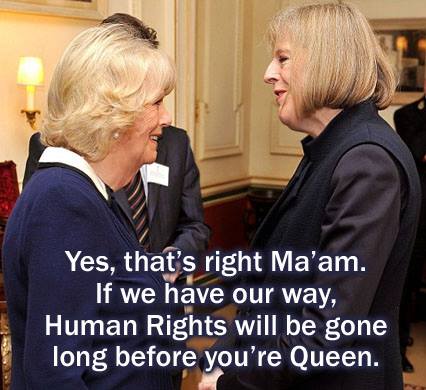
The Labour Party tells David Cameron to abandon plans to dismantle the Human Rights Act

936319_485819054820961_1954794757_nA group of senior Labour Party figures have said that David Cameron should drop his plans to dismantle the Human Rights Act.

In a joint letter, headed by acting leader Harriet Harman and Lord Falconer, the Shadow Secretary of State for Justice, the Prime Minister is asked to abandon his plans to scrap the Act entirely.

Harriet Harman said: “What an irony that yesterday the Prime Minister was presiding over the celebration of Magna Carta at the same time he’s planning to undermine the Human Rights Act.

“No wonder that though he mentioned human rights in South Africa – and preyed in aid Nelson Mandela – and mentioned human rights in India – and preyed in aid Ghandi – he could not bring himself to mention Europe and our Convention.”

The Human Rights Act is a UK law passed by the Labour government in 1998. It means that you can defend your rights in the UK courts, instead of having to travel to Strasbourg – and that public organisations, including the Government, the Police and local councils, must treat everyone equally, with fairness, dignity and respect.

The Human Rights Act protects all of us – young, old, rich and poor. It originates from an international response to the atrocities of World War Two, including the Holocaust and fascist regimes. The Human Rights Act consolidates much of the United Nations Declaration of Human Rights, 1948.

The whole point of Human Rights is that they are universal. Yet despite this, the Government wants to replace our Human Rights Act with their “British Bill of Rights and Responsibilities”. This would weaken everyone’s rights, they would become open to subjective interpretation – leaving politicians to decide when our fundamental freedoms should and should not apply.

This is the same Conservative Party who despise open justice, who have destroyed legal aid and tried to destroy Judicial Review. This is the same Party that thinks they are above the Rule of Law. It is the same Party that has systematically dismissed the Human Rights of disabled people, women and children.

The letter to David Cameron says:

Dear Prime Minister

As you are aware, this year is the 800th anniversary of the signing of Magna Carta, a year to celebrate Britain’s role as a guarantor of individual rights. Yet, as we celebrate this great landmark, the commitment to individual human rights now appears to be under threat.

The Universal Declaration of Human Rights – adopted in 1948 – which Conservative politicians contributed to – enshrines:

  • The right to life, liberty and security
  • The right to a fair trial
  • Protection from torture
  • Freedom of thought, conscience, religion, speech and assembly
  • The right to free elections
  • The right not to be discriminated against

Which of these rights do you not agree with?

Defending the Human Rights Act and our membership of the European Convention on Human Rights is not straightforward because it often involves defending the rights of an unworthy individual from a legitimate authority, or the rights of an unpopular minority from a popular majority.

The Human Rights Act is always going to be a nuisance to those in power because it stops them getting on and doing things unconstrained. But there is an inherent susceptibility for those who have power to extend it, to over-reach and ultimately abuse it. And that is irrespective of how legitimate that power is, how they acquired that power and whether or not they think they are doing the right thing.

So it is right that government ministers should have to look over their shoulder and that their power is tempered by other people’s rights. And we do need to have our executive and our legislature set within a framework of human rights.

This is important to people’s human rights here in Britain and for the human rights of those in other countries. If we were to walk away from our international human rights treaty obligations, we would not be able to press other countries to respect human rights. We cannot say to others in Europe – particularly Eastern Europe – that they should stay within a European framework but that we have somehow outgrown it, or don’t need it anymore.

Human rights are part of, not at variance with, our British values and they matter for our place in the world.

We understand you have put your plans on hold for a year, while you work out exactly how you will go about the dismantling of our human rights laws.

We ask you today to abandon your plans entirely, and as a result of the public interest in this issue, will be releasing this letter to the media.”

It is signed by the Rt Hon Harriet Harman MP, Interim Leader of the Labour Party, and the Rt Hon Lord Charles Falconer QC, Shadow Lord Chancellor and Shadow Secretary of State for Justice.

The letter is also signed by Andy Slaughter, shadow minister for justice, Lord Bach, shadow attorney general, Karl Turner, shadow solicitor general, Keir Starmer MP, Baroness Corston, former chair of the Joint Committee on Human Rights, Baroness Kennedy QC and Kate O’Rourke, chairman of the Society of Labour Lawyers.

Related:

A strong case for the Human Rights Act

Human rights are the bedrock of democracy, which the Tories have imperiled.

15553155399_94869b2dcd_oMany thanks to Rob Livingstone for his excellent memes


Government turns a blind eye to work capability assessment related deaths and expect the public to do the same

11046274_80388630968089cam c

Tory ministers are facing further pressure to reveal information about how many people have died after being assessed as “fit for work.” Labour MP for central Newcastle-upon-Tyne, Chi Onwurah, has joined over 120,000 people that have signed a petition to demand that the Government release the figures.

Many campaigners have been calling on the Department for Work and Pensions (DWP) to publish the figures since November 2012.

Mrs Onwurah, who led a Commons debate on welfare earlier this year, said: “One of the most powerful and distressing examples in my debate was of a man who had committed suicide.

“If someone dies after being found fit to work it doesn’t necessarily mean that being found fit to work had an impact in their death, so I can understand that the Government might fear the figures would be misinterpreted.

“But if the Government has figures then they should share those, and allow people to interpret them fairly.

“This isn’t just a matter of dry statistics. It is about about the health-affecting impact that having been found fit to work can have on claimants.

“And I know that because I see them in my surgery on a regular basis.

“When bad decisions are made I know they can have a life-destroying impact on vulnerable people. So it makes sense for the Government to share that data.”

It was in January of this year that Mrs Onwurah told MPs about a vulnerable constituent who had tragically committed suicide after being found fit for work. He was claiming Employment Support Allowance and incapacity allowance. He was being supported by Newcastle Welfare Rights, who told the DWP that after suddenly being found fit to work:

“.. he was acutely distressed; he struggled to talk, he was having thoughts of suicide, he had also started drinking alcohol to cope and had struggled to leave the house”

Despite supporting psychological assessments, other evidence, and an attempted suicide, the decision was not reversed and in January 2014 he was found hanged by his neighbour.

Mrs Onwurah said: “My constituent was found hanged in his home by a neighbour. He was well known to Newcastle Welfare Rights, from which he had received considerable support in his dealings with the Department for Work and Pensions.

“He had been in receipt of employment and support allowance, and previously incapacity benefit, and he was engaging well with Newcastle Welfare Rights until November 2013, when he underwent a work capability assessment.”

The Department for Work and Pensions (DWP) insists it is irresponsible to suggest deaths which follow an assessment that claimants are fit to work were caused by the assessment.

The DWP originally published statistics in July 2012  after several of us submitted Freedom of Information requests (FOIs). The released statistics indicated that 10,600 people had died between January and November 2011 who had been claiming Employment Support Allowance (ESA), and where the date of death was within six weeks of the claim ending.

The DWP publication caused huge controversy, although many people disagreed over what the figures actually showed. Ministers subsequently blocked publication of any updated figures.

At the time, I made a statistical cross comparison of deaths, and the information released showed that people having their claim for Employment Support Allowance (ESA) stopped, between October 2010 and November 2011, with a recorded date of death within six weeks of that claim ceasing, who were until recently claiming Incapacity Benefit (IB) – and who were migrated onto ESA – totalled 310. Between January and November 2011, those having their ESA claim ended, with a recorded date of death within six weeks of that claim ending totalled 10,600. The DWP did not provide information regarding whether or not people had died before or after their benefit claim was ended, which complicated matters.

However, there is a very substantial and significant statistical variation over a comparatively similar time scale (although the 10,600 deaths actually happened over a shorter time scale – by 3 months) that appears to be correlated with the type of benefit and, therefore, the differing eligibility criteria – the assessment process – as both population samples of claimants on ESA and IB contain little variation regarding the distribution in the cohorts in terms of severity of illness or disability. 

Bearing in mind that those who were successfully migrated to ESA from IB were assessed and deemed unfit for work, (under a different assessment process, originally) one would expect that the death rates would be similar to those who have only ever claimed ESA.

This is very clearly not the case. And we know that the ESA assessment process has actually excluded many seriously ill people from entitlement because of the media coverage of individual tragic cases, when a person deemed fit for work by Atos has died soon after the withdrawal of their lifeline benefit, and of course, such accounts of constituents’ experiences and case studies, as evidence, informs Parliamentary debate, as well as the ongoing Work and Pension Committee inquiry into ESA, details of which may be found on the Hansard parliamentary record.

An official watchdog has also ordered the Government to release further information about how many people have died after going through the work capability assessment (WCA) which had resulted in a decision that they were fit for work, since the last publication in 2012.

The ruling was made after an appeal by Mike Sivier, a fellow campaigner, freelance journalist and a carer that runs the Vox Political blog who has himself been pushing for the figures to be published since the summer of 2013.

Being assessed as fit for work would mean that someone is expected to start looking for a job, take part in training designed to “prepare them for employment”, including workfare programmes – and would face the prospect of sanctions as part of the strict welfare conditionality regime – losing their lifeline benefits – unless they comply.

Mike also used the Freedom of Information Act to ask how many people who died between November 2011 and May 2014 had been found “fit for work”, or told they should move towards finding work.

But the Department for Work and Pensions refused his request, saying it was already preparing to publish the information.

Mr Sivier appealed to Information Commissioner, Christopher Graham, who ordered the DWP to publish the data within 35 days of his ruling on April 30, 2015.

But the Department of Work and Pensions has instead decided to appeal this ruling.

Campaigners now want to know what the government is trying to hide and the online petition demanding that Work and Pensions Secretary Iain Duncan Smith stop attempting to block publication of the statistics has been signed by more than 120,000 people on the website: www.change.org.

A spokeswoman for the DWP said: “We have been clear that we intended to publish these statistics – but we need to make sure they meet the high standards expected by the UK Statistics Authority before we do so.”

Many sick and disabled people have said that the constant strain, anxiety and stress of what they have described as a “revolving door process” of assessment, review, appeal and re-assessment, has contributed significantly to a decline in their health.

The previous figures from the DWP, and the marked contrast between the ESA and IB death statistics certainly substantiate these claims that the assessment process places a great deal of stress on people who are often seriously ill. Anyone with a chronic illness will tell you that stress invariably exacerbates their condition.

At a meeting in June 2012, British Medical Association doctors voted that the Work Capability Assessment (WCA) should be ended “with immediate effect and be replaced with a rigorous and safe system that does not cause unavoidable harm to some of the weakest and vulnerable in society”.

The vote has not been acknowledged by Atos or by the Government, although it was reported widely in the media at the time. On 22 May 2013, a landmark decision by the courts in a judicial review brought by two individuals with mental health problems ruled that the WCA is not fit for purpose, and that Atos assessments substantially disadvantage people with mental health conditions. Despite the ruling’s authoritative importance, the decision had a similar lack of real-world effect as it did not halt or slow down the WCA process: Atos and the DWP have ignored the judgement and its implications.

In mid-January 2012, there was a significant scandal as media were alerted to the fact that the WCA had found a man in a coma to be “fit for work”. Work Capability Assessments have found patients with brain damage, terminal cancer, severe multiple sclerosis, and Parkinson’s Disease to be fit for work. On 24 April 2013, a woman who was a double heart and lung transplant patient died in her hospital bed only days after she was told after a WCA that her allowance was being stopped and that she was fit for work.

In August 2011, twelve doctors working for Atos as disability assessors were placed under investigation by the General Medical Council because of allegations of misconduct in relation to their duty of care to patients. One doctor was forced to resign from Atos after being told to change a report about an individual, pointing out “the General Medical Council makes it clear that doctors must not change a report and risk being disciplined for unprofessional conduct if they do”.

There are many more well-documented problems with the Work Capability Assessment. It’s mired in controversy. Yet since 2010 the current government has continued to expand its role to reassess millions of  people that the DWP had already judged to be entitled to Incapacity Benefit. The government also made changes to the framework of the test to make ESA more difficult to claim.

Despite the controversy, the government continues to show a somewhat baffling and extremely troubling disinterest in the serious problems related to the increased means-testing and conditionality of sickness and disability benefits that they have introduced.

Another major area of concern is that there is a clear absence of impact monitoring, regarding the changes they have made to policy. I find it curious that whilst the DWP couldn’t state either way which side of a claim ending that the deaths happened, journalists and the government shrug the figures off, rather than actually INVESTIGATING the matter.

I have lost 3 friends during the past three years, who each died tragically just after being told they were fit for work, their lifeline benefit support was ended. Families who have suffered bereavement related to ESA claims consistently report that it is the stress of the assessment, the strain of being told they are fit to work when they are not, and the fact that chronically sick people then have to fight for their lifeline benefits that causes a further decline in their health, and the exceptional stress, caused by government welfare policy that is very punitive in nature, that is leading to some people dying.

It’s inconceivable that the government have failed to understand that placing very ill people in a position where their lifeline benefit is stopped so they have to fight for the means to meet their most basic needs – those of food, fuel and shelter – will potentially be very harmful, having a detrimental impact on their health, which may be fatal.

Further related reading:  Cross-party concerns raised in Parliament about Atos assessments, with evidence – presented cases studies of people who died AFTER their lifeline benefit was withdrawn – Atos comes under attack in emotional Commons debate

How many persons has Atos killed today? – Michael Meacher MP

Black Propaganda

What you need to know about Atos assessments

Clause 99, Catch 22 – State sadism and silencing the vulnerable

Labour would end this Government’s demonisation of benefits claimants – Chi Onwurah MP

Essential information for ESA claims, assessments and appeals

Remembering the victims of the Government’s welfare “reforms”

385294_195107567306966_1850351962_n

Thanks to Robert Livingstone for his excellent pictures.

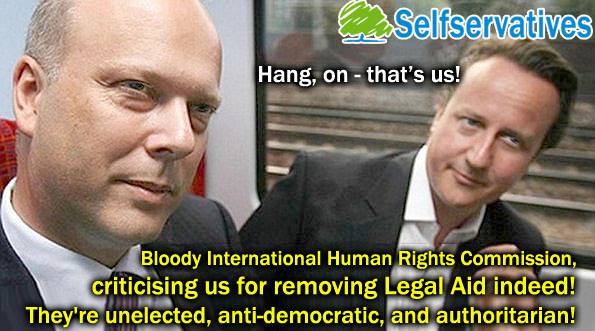
Lord Bach: Civil Legal Aid – a disaster area?

994596_517805604955639_608589568_n

Legal aid is a welfare provision for people who could otherwise not afford counsel from the legal system. Legal aid was originally established by the Legal Aid and Advice Act, 1949.

Legal aid is regarded as central in providing access to justice by ensuring equality before the law, the right to counsel and the right to a fair trial. Article 7 of the Universal Declaration of Human Rights says that: “All are equal before the law and are entitled without any discrimination to equal protection of the law.”

The United Nations state that this principle is particularly important to minorities and to the poor.

Everyone must be treated equally under the law regardless of their race, gender, national origin, color, ethnicity, religion, disability, or other characteristics, without privilege, discrimination, or bias.

Labour peer Lord Bach has accused the previous of Government of jeopardising social welfare through changes made to legal aid entitlement and has urged ministers to review the legislation.

This article was originally published on PoliticsHome on June 10, reproduced here with thanks:

Part 1 of LASPO has been in force for two years. In that time, many of our most vulnerable citizens have been unable to receive legal advice and assistance to help them with problems in areas of housing, debt, employment, immigration, and welfare benefits. Not only have they been deprived access to justice, but these problems are now being allowed the opportunity to escalate leading to possible greater costs when the state has to intervene. On top of this, eleven law centres have had to close, making it even more difficult for the poorest to get justice, and providers of social welfare law have declined in numbers, as without legal aid, both law centres and solicitors firms have been deprived of a large amount of income.

Two recent reports – one from the House of Commons Justice Select Committee, the other from the Public Accounts Committee – have carefully described the failings of the LASPO Act in convincing terms. The government is yet to indicate when it will respond to these reports. This was legislation which even the Permanent Secretary at Ministry of Justice conceded began without the usual preliminary research being done. It was just a way to save money and damn the consequences. Unfortunately the consequences are deadly serious for citizens, for providers and not least for the reputation of the English legal system.

It is time for a thorough review. My question in the Lords today will urge Ministers to instigate this at once. The ‘exceptional cases’ provision which was supposed to pick up cases that should receive legal aid but couldn’t because of the Act has failed miserably. The Minister of Justice estimate regarding how many exceptional cases there would be has proved laughably high.

Perhaps most disturbing of all is that in those few areas where legal aid is still available under the Act, the take-up has been decreasing.

This is nothing to do with lack of demand for advice. But with people just not knowing that support is still available. The Minister of Justices’ overall savings in this field have also exceeded expectation. Surely it is time to put some of that money back into helping people at a difficult time in their lives?

Social Welfare Law has moved a long way towards being destroyed. It is now time for the government to take stock and begin to restore what was only a few years ago one of the jewels in the crown of English Justice.


Related

Children are being denied justice and their human rights by legal aid cuts

Devastating blow to Grayling as judges halt his legal aid reform

The coming tyranny and the Legal Aid bill

The government’s Legal Aid cuts are leaving vulnerable people with nowhere to turn

7005_494073677328832_658777491_n (1)Pictures courtesy of Robert Livingstone.

Poor people are poor because they don’t know how to get something from nothing

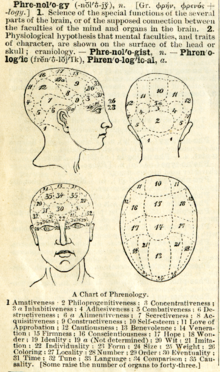
220px-1895-Dictionary-Phrenolog

The government have introduced a new character divination and assessment framework to determine eligibility for social security

It’s truly remarkable that whenever we have a Conservative government, we suddenly witness media coverage of an unprecedented rise in the numbers of poor people who suddenly seem to develop a considerable range of baffling personal ineptitudes and immediately dysfunctional lives.

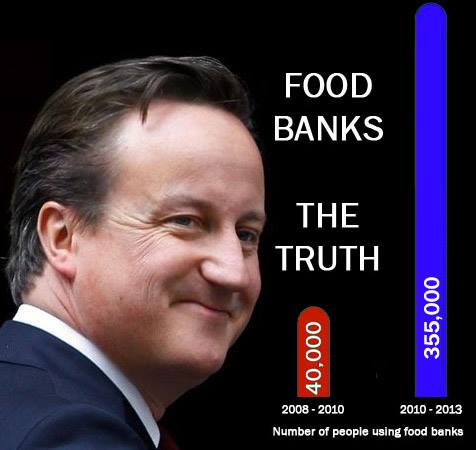
We see a proliferation of “skivers” and “scroungers”, an uprising of “fecklessness”, a whole sneaky “culture of entitlement”, “drug addicts”, a riot of general all-round bad sorts, and apparently, the numbers of poor people who suddenly can’t cook a nutritious meal has climbed dramatically, too. We are told that starvation is not because of a lack of money and access to food, but rather, it’s because Britain is “broken”, and people like freebie handouts at food banks, they don’t know how to budget and cook, that’s according to the Conservative Baroness Jenkin of Kennington. 

She recommends that poor people eat porridge, since it only costs 4 pence a bowl. You can always imagine the milk, sugar and the fuel to warm it, if push comes to shove. Or better still, just cook it on the aga, or the barbi outside. Sorted.

1390648_548165358586330_1740107407_n

The alarming rise in numbers of adults who have suddenly forgotten how to cook and eat porridge since David Cameron took Office, up to last year.

Still, at least we are graced with the thrift and self-help moralising about poor people from the fabulously rich in the media. After all, there must be something wrong with someone who does nothing to help themselves to spend nothing creatively and still somehow manages to have nothing to show for it. The truth is that too many of these poor people are rubbish at being poor.

Jamie Oliver, amongst others, says that poor people always have a very large plasma TV. Thanks for that great tip, Jamie. If you bought one whilst in work, you should get rid of it immediately and buy an even larger one from your benefit.

You must also subscribe to Sky and get a big dish put on your house. Trade in your furniture and household items the very moment you stop working, and buy them all again so you don’t have to live with the guilt and shame of having anything you may have (inadvertently, I’m sure) bought from what you once disgracefully earned.

Another top tip is have lots of children that you can’t afford. Poor people need to try very hard to get pregnant only ever once they are absolutely broke. Never plan your children when you are in work, or down and out in prosperity, that’s a big no-no. Make sure you lose the job, house and everything else first. To be genuinely poor, you must have every child while facing utter destitution. 

This said, the government are going to kindly compensate those of you who had your children when you thought your job was secure and you were generally on your uppers. You are to be incentivised to breed less by having no support for any child born after the first two. Phew! Thank you, Iain Duncan Smith. It’s incentivisation and nudge. And I thought it was Victorian era eugenics.

Basically, some permanently outraged and loudly indignant, terminally curtain twitching, tutting people who work in what they think are secure jobs and have no children think that they are personally funding your children when you get made redundant. They prefer that their money is spent on handouts and tax breaks to the millionaires, crony capitalists and vulture big businesses instead. 

Some wealthy people like to feel included in designing your lifestyle choices and you can provide opportunity for a suffering wealthy person to share their guilt-fuelled outrage, malice and spite. It’s therapeutic for them, helping to alleviate their sense of resentment, shame and inadequacy. Projection is, after all, a very valuable self-defence mechanism for anally retentive hoarders. So is threatening to leave the country when confronted with the possibility of having to actually pay some tax. They cost such a lot to keep, these grumbling misers, I think we should just let them go. In fact I propose we provide a free flight booking and packing service for them, because it would be a shame to shock them out of a lifetime of handouts and entitlement.

Another top poverty tip from the top is make sure you take expensive holidays abroad, walk your dog if you have one and go to the pub. You must make sure you get someone to take photos of you looking busy, ordinary and happy and post on Facebook, or better still, send them to the Department for Work and Pensions. 

Many Sun and Daily Mail readers think that disabled poor people aren’t allowed to do or even try anything at all that looks ordinary and normal, they get very distressed and outraged that you aren’t suffering enough, and hidden away being busily housebound, so they will kindly report you. Strictly in your best interests of course, because to these kind, unprejudiced, well-meaning souls, there’s nothing more important than ensuring your complete social and economic exclusion, sacrifice and distress, and it’s the surest way of getting your benefit stopped, then you can get on with wallowing in your hard-won destitution, suffering and absolute poverty. Because as this thrifty government of self-helping, help themselves specialists has demonstrated, you’re absolutely worth it.

And as the government tells us, poor people will only stop being poor if we “incentivise” them by making them even more poor.

Rich people, on the other hand, really need “incentivising” by being given even more money. That’s just social justice and fairness, say the Tories. 

It’s common sense, and endorsed by top aspiring entrepreneur scientists in the cabinet office, called “behavioural economists.” I love technocrats, me. How incredibly lucky we have such great career-orientated folk designing “choice architecture” just for homeless and poor people. It’s a good job the nudgers don’t need any nudging with their authoritarian neoliberal cognitive biases and pro-status quo policy decisions, as the rest of us are just so fallible, gullible and inept that we simply have to be nudged in line. It’s well worth sacrificing democracy so that the government can have citizens who meet the government’s demands and economic needs.

Who needs a government that recognises and addresses citizens needs? 

Apparently, not us.

Job-Opportunities-850x390
One of the greatest joys of being poor is that many people who aren’t poor have got generous and seemingly endless advice for you. There are lots of sound tips around on how to get on with being poor quietly. And the media are interested in sharing all the details of your private life with the public, so they can tut, moralise, have some outrage, grumble, seethe and foam a lot, and then give you their “advice.” Because they care so much.

All designed to make you feel so much better about your state-designed and allocated personal failings. Lucky us.

And besides, who needs a welfare state when all it does is create poverty and turn people into cognitively malfunctioning idiots who are also very hungry? Those Tories must be creative geniuses, they made work pay by cutting welfare, driving down wages and raising the cost of living. See what I mean? 

They really should redefine the Orwell prize, the Tories would win it every year. Champions of ordinary people, they are, exposing social evils and injustices as they go, distributing work fare, poverty, authoritarianism, insecurity and behavioural change on all those faulty people that are being failed by neoliberalism and those mysterious boardroom decision makers that give us the entertaining myth of “market forces”.   

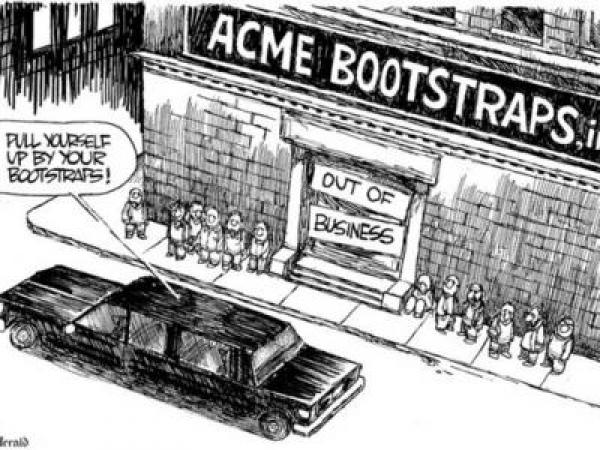
Bootstraps

Nowadays, the better off are so envious of your lucky life experiences and lack of choices that many are thinking of becoming disabled, just so they can share that exclusive pauper status for themselves. They want to own your poverty and I suspect they’d like to privatise and commercialise it. But we know that the poor invented poverty, and so it must be exclusively ours.

Poor people fake their poverty and mismanage their generous share of nothing

A recent report from Samuel Smiles and Verity Malthus, on behalf of ThanAtos, the private company hired by the government to assess people to see if they are genuinely on the point of death from starvation in order to be eligible for poverty, says that many are just feigning starvation and despair and some are even faking thinness.

This is why we have to target support only at “those in greatest need”.

ThanAtos’s research shows that many expect to be provided with food bank vouchers so they can continue to be parked on deluxe standards of suffering indefinitely.

The report said: “These poor people have taken the easy, stress-free option of not sending their children up chimneys and into t’mills any more and won’t even try their hand at pick-pocketing and prostitution. Those were once respected pauper activities, but now these poor people are jumping on the band-waggon and tarnishing the good name of thrift, self-help and state-inflicted misery.

“Far too many of those who claim they are poor don’t even have a plasma screen and a sky dish, and we know for a fact that they don’t eat takeaways, take drugs, smoke or drink cheap cider, they lack personal ineptitudes, and many don’t even have loads of unkempt children, so they are just frauds and they must have very poor budgeting skills. The problem is that once people see the privilege and benefits of gnawing hunger and destitution, they all want some. It’s all supply-led, people just want poverty as a freebie.”

How very true, it’s a real social problem. Once people begin to appreciate the Dickensian chic of malnutrition, rickets and scurvy, and many other low budget, value Victorian age diseases, they want to dash out and buy some immediately. It is becoming something of a trend. In fact the poverty porn industry has really taken off. 

The growing popularity of being very hungry has enticed many these past four years. The ease by which malnutrition can be acquired under this generous government, has been welcomed and hailed as the new poor law come-back, the return of a Golden Feudal Age for the Conservatives.

It’s a very welcomed return of nostalgic, ever so quaint and cute Social Darwinist Tory principles. But some have said that this Government has clearly created a tide of social problems, as very few people were incompetently hungry and desperately silly enough to need food banks under the last Labour government.

In fact I didn’t even know they existed back then. But that’s the “Big Society” for you. What a bright idea to replace welfare with charity and state “therapy.” Silly poor people, they just need to learn to be more creative in how they spend their state funded and allocated nothing, that’s why they end up with nothing. It’s the new generous Tory something from nothing culture, just for the poor.

Those poor people need to get one of those work fare jobs. Put them in their place. That’ll sort ’em out. What those poor people need is discipline. And a good hiding never did any harm. I say bring back the birch and the stocks. That’ll teach ’em.

It’s just like the good old Victorian days. Hurrah!

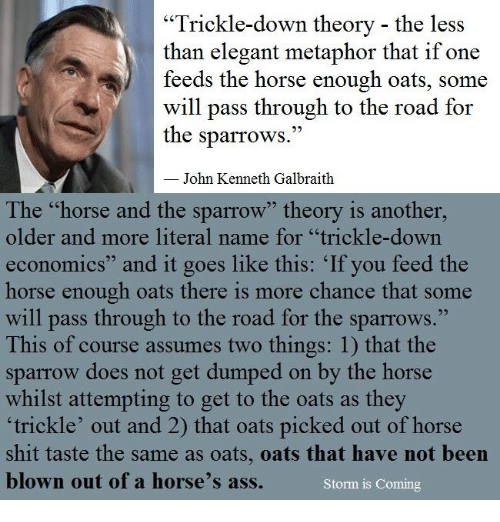
trickle-down-theory-the-less-than-elegant-metaphor-that-if-one-11938559Supply-side economics and the pecking order


I don’t make any money from my work. I am disabled because of illness and have a very limited income. I don’t have a plasma TV or Sky. I do eat a lot of porridge, though. Successive Conservative chancellors have left me in increasing poverty. But you can help by making a donation to help me continue to research and write informative, insightful and independent articles, and to provide support to others. The smallest amount is much appreciated – thank you. 

DonatenowButton

Psychologists Call For Reform Of The Work Capability Assessment

 See also: What you need to know about Atos assessments.
292533_330073053728896_1536469241_nMany thanks to Robert Livingstone for the excellent memes

Stigmatising unemployment: the government has redefined it as a psychological disorder

proper Blond

The current government has made the welfare system increasingly conditional on the grounds that “permissive” welfare policies have led to welfare “dependency.” Strict behavioural requirements and punishments in the form of sanctions are an integral part of the Conservative ideological pseudo-moralisation of welfare, and their  “reforms” aimed at making claiming benefits much less attractive than taking a low paid, insecure, exploitative job.

Welfare has been redefined: it is preoccupied with assumptions about and modification of the behaviour and character of recipients rather than with the alleviation of poverty and ensuring economic and social wellbeing.

The stigmatisation of people needing benefits is designed purposefully to displace public sympathy for the poor, and to generate moral outrage, which is then used to further justify the steady dismantling of the welfare state.

But the problems of austerity and the economy were not caused by people claiming welfare, or by any other powerless, scapegoated, marginalised group for that matter, such as migrants. The problems have arisen because of social conservatism and neoliberalism. The victims of this government’s policies and decision-making are being portrayed as miscreants – as perpetrators of the social problems caused by the government’s decisions, rather than as the casualities.

And actually, that a recognisable bullying tactic known as projection, (the vehicle for projection is blame, criticism and allegation), as is scapegoating.

The 2015 budget included plans to provide online Cognitive Behaviour Therapy to 40,000 claimants and people on the Fit for Work programme, as well as putting therapists in more than 350 job centres.

I wrote an article in March about the government plans to make the receipt of social security benefits conditional on undergoing “state therapy.” I raised concern about ethical issues – such as consent, the inappropriateness of using behaviour modification as a form of “therapy,” and I criticised the proposed Cognitive Behaviour Therapy (CBT) programme on methodological and theoretical grounds, as well as considering wider implications.

I’ve written at length about the coercive and punitive nature of the conservative psychopolicy interventions, underpinning the welfare “reforms,” and giving rise to increased welfare “conditionality” and negative sanctions.

In particular, I’ve focussed on the influence of the Cabinet’s Behavioural Insights Team or “nudge unit” and “the application of behavioural science and psychology to public policy. (See: The nudge that knocked down democracy, The power of positive thinking is really political gaslighting, and Despotic paternalism and punishing the poor. Can this really be England? )

I was pleased to see that the BBC reported a summary of the research findings of Lynne Friedli and Robert Stearn, which was supported by the Wellcome Trust. The report – Positive affect as coercive strategy: conditionality, activation and the role of psychology in UK government workfare programmes reflects many of the concerns raised by other professionals. I strongly recommend you read it. (See: Psychologists Against Austerity: mental health experts issue a rallying call against coalition policies.)

The BBC summarised from the report that benefit claimants are being forced to take part in “positive thinking” courses in an effort to “change their personalities.” Those people claiming benefits that do not exhibit a “positive” outlook must undergo “reprogramming” or face having their benefits cut. This is humiliating for job seekers and does not help them find suitable work.

New benefit claimants are interviewed to find out whether they have a “psychological resistance” to work, with those deemed “less mentally fit” given more “intensive coaching.”

And unpaid work placements are increasingly judged on psychological results, such as improved motivation and confidence, rather than whether they have led to a job.

The co-author of the report, Lynne Friedli, describes such programmes, very aptly, as “Orwellian.” She says:

“Claimants’ ‘attitude to work’ is becoming a basis for deciding who is entitled to social security – it is no longer what you must do to get a job, but how you have to think and feel.

“This makes the government’s proposal to locate psychologists in job centres particularly worrying.

“By repackaging unemployment as a psychological problem, attention is diverted from the realities of the UK job market and any subsequent insecurities and inequalities it produces.”

Friedli also criticised the way psychologists were being co-opted as “government enforcers” and called on professional bodies to denounce the practice.

Quite rightly so. It’s our socio-economic system, and the ideologues who shape it that present the problems, not the groups of people forced to live in it as its casualities – the “collateral damage” of neoliberalism and social conservatism.

“I don’t think anything can justify forced psychological coercion. If people want to go on training courses that should be entirely voluntary,” Lynne told BBC News.

She also questioned the aim of the motivational courses and welfare-to-work placements, which felt like “evangelical” self-help seminars.

“Do we really want a world where the only kind of person considered employable is a ‘happy clappy’, hyper-confident person with high self-esteem?

“That is a very a narrow set of characteristics. There is also a role in the workplace for the ‘eeyore’ type.”

Absolutely. Frankly, I would rather have health and safety programmes that are designed by a pessimist, capable of thinking of the worst case scenario, for example, than by a jolly, positively biased, state-coerced optimist.

I would also prefer pessimistic appraisal of social policies. That way, we may actually have impact assessments carried out regarding the consequences of Conservative policies, instead of glib, increasingly Orwellian political assurances that are on the other, more scenic, illusory side across the chasm from social realities.

Although pessimism and depression are considered to be affective disorders, in a functional magnetic resonance imaging study of the brain, depressed patients were shown to be more accurate in their causal attributions of positive and negative social events, and in self assessments, and assessment of their own performance of tasks, than non-depressed participants, who demonstrated a positive bias.

As a former community-based psychosocial practitioner who saw the merits and value of a liberationist model, the question that needs to be asked is: for whose benefit is CBT being used, and for what purpose? Seems to me that this is about helping those people on the wrong side of punitive government policy to accommodate that, and to mute negative responses to negative situations.

The socially dispossessed are being coerced by the state, part of that process is the internalisation of the negative images of themselves created and propagated by their oppressors.

CBT is not based on a genuinely liberational approach, nor is it based on any sort of democratic dialogue. It’s all about modifying and controlling behaviour, particularly when it’s aimed at such a narrow, politically defined and specific outcome.

The problem that we need to confront is politically designed and perpertuated social injustice, rather than the responses and behaviour of excluded, stigmatised individuals in politically oppressed, marginalised social groups.

CBT is founded on blunt oversimplifications of what causes human distress – for example, in this case it is assumed that the causes of unemployment are psychological rather than socio-political, and that assumption authorises intrusive state interventions that encode a Conservative moral framework which places responsibility on the individual, who is characterised as “faulty.”

However, democracy is based on a process of dialogue between the public and government, ensuring that the public are represented: that governments are responsive, shaping policies that address identified social needs. Conservative policies are quite clearly no longer about reflecting citizen’s needs: they are increasingly about telling us how to be.

As I have said elsewhere, as well as aiming at shaping behaviour, the psycho-political messages being disseminated are all-pervasive, entirely ideological and not remotely rational: they reflect and are shaping an anti-welfarism that sits with Conservative agendas for neoliberal welfare “reform”, austerity policies, the small State (minarchism) and also legitimises them. (I’ve written at length elsewhere about the fact that austerity isn’t an economic necessity, but rather, it’s a Tory ideological preference.) The Conservatives are traditional, they are creatures of habit, rather than being responsive and rational.

Conservative narratives, amplified via the media, have framed our reality, stifled alternatives, and justified Tory policies that extend psychological coercion including through workfare; benefit sanctions; in stigmatising the behaviour and experiences of poor citizens and they endorse the loss of autonomy for citizens who were disempowered to begin with.

Many of the current ideas behind “reforming” welfare come from the Behavioural Insights  Team – the Nudge Unit at the heart of the Cabinet. Nudge theory has made Tory ideology, with its totalitarian tendencies, seem credible, and the Behavioural Insights Team have condoned, justified and supported punitive, authoritarian policies, with bogus claims about “objectivity” and by using discredited pseudoscience. Those policies have contravened the human rights of women, children and disabled people, to date.

Nudge-based policy is hardly in our “best interests,” then.

526544_532055030197363_2137237288_n
Pictures courtesy of Robert Livingstone


I don’t make any money from my work. I am disabled because of illness. But you can contribute by making a donation and help me continue to research and write informative, insightful and independent articles, and to provide support to others.

The smallest amount is much appreciated – thank you.

DonatenowButton