Author: Kitty S Jones

I’m a political activist with a strong interest in human rights. I’m also a strongly principled socialist. Much of my campaign work is in support of people with disability. I am also disabled: I have an autoimmune illness called lupus, with a sometimes life-threatening complication – a bleeding disorder called thrombocytopenia. Sometimes I long to go back to being the person I was before 2010. The Coalition claimed that the last government left a “mess”, but I remember being very well-sheltered from the consequences of the global banking crisis by the last government – enough to flourish and be myself. Now many of us are finding that our potential as human beings is being damaged and stifled because we are essentially focused on a struggle to survive, at a time of austerity cuts and welfare “reforms”. Maslow was right about basic needs and motivation: it’s impossible to achieve and fulfil our potential if we cannot meet our most fundamental survival needs adequately. What kind of government inflicts a framework of punishment via its policies on disadvantaged citizens? This is a government that tells us with a straight face that taking income from poor people will "incentivise" and "help" them into work. I have yet to hear of a case when a poor person was relieved of their poverty by being made even more poor. The Tories like hierarchical ranking in terms status and human worth. They like to decide who is “deserving” and “undeserving” of political consideration and inclusion. They like to impose an artificial framework of previously debunked Social Darwinism: a Tory rhetoric of division, where some people matter more than others. How do we, as conscientious campaigners, help the wider public see that there are no divisions based on some moral measurement, or character-type: there are simply people struggling and suffering in poverty, who are being dehumanised by a callous, vindictive Tory government that believes, and always has, that the only token of our human worth is wealth? Governments and all parties on the right have a terrible tradition of scapegoating those least able to fight back, blaming the powerless for all of the shortcomings of right-wing policies. The media have been complicit in this process, making “others” responsible for the consequences of Tory-led policies, yet these cruelly dehumanised social groups are the targeted casualties of those policies. I set up, and administrate support groups for ill and disabled people, those going through the disability benefits process, and provide support for many people being adversely affected by the terrible, cruel and distressing consequences of the Governments’ draconian “reforms”. In such bleak times, we tend to find that the only thing we really have of value is each other. It’s always worth remembering that none of us are alone. I don’t write because I enjoy it: most of the topics I post are depressing to research, and there’s an element of constantly having to face and reflect the relentless worst of current socio-political events. Nor do I get paid for articles and I’m not remotely famous. I’m an ordinary, struggling disabled person. But I am accurate, insightful and reflective, I can research and I can analyse. I write because I feel I must. To reflect what is happening, and to try and raise public awareness of the impact of Tory policies, especially on the most vulnerable and poorest citizens. Because we need this to change. All of us, regardless of whether or not you are currently affected by cuts, because the persecution and harm currently being inflicted on others taints us all as a society. I feel that the mainstream media has become increasingly unreliable over the past five years, reflecting a triumph for the dominant narrative of ultra social conservatism and neoliberalism. We certainly need to challenge this and re-frame the presented debates, too. The media tend to set the agenda and establish priorities, which often divert us from much more pressing social issues. Independent bloggers have a role as witnesses; recording events and experiences, gathering evidence, insights and truths that are accessible to as many people and organisations as possible. We have an undemocratic media and a government that reflect the interests of a minority – the wealthy and powerful 1%. We must constantly challenge that. Authoritarian Governments arise and flourish when a population disengages from political processes, and becomes passive, conformist and alienated from fundamental decision-making. I’m not a writer that aims for being popular or one that seeks agreement from an audience. But I do hope that my work finds resonance with people reading it. I’ve been labelled “controversial” on more than one occasion, and a “scaremonger.” But regardless of agreement, if any of my work inspires critical thinking, and invites reasoned debate, well, that’s good enough for me. “To remain silent and indifferent is the greatest sin of all” – Elie Wiesel I write to raise awareness, share information and to inspire and promote positive change where I can. I’ve never been able to be indifferent. We need to unite in the face of a government that is purposefully sowing seeds of division. Every human life has equal worth. We all deserve dignity and democratic inclusion. If we want to see positive social change, we also have to be the change we want to see. That means treating each other with equal respect and moving out of the Tory framework of ranks, counts and social taxonomy. We have to rebuild solidarity in the face of deliberate political attempts to undermine it. Divide and rule was always a Tory strategy. We need to fight back. This is an authoritarian government that is hell-bent on destroying all of the gains of our post-war settlement: dismantling the institutions, public services, civil rights and eroding the democratic norms that made the UK a developed, civilised and civilising country. Like many others, I do what I can, when I can, and in my own way. This blog is one way of reaching people. Please help me to reach more by sharing posts. Thanks. Kitty, 2012

Research shows only a fifth of 2 million people find employment after losing jobseeker’s allowance

430835_148211001996623_1337599952_n (1)Further to an article I wrote last November – Government under fire for massaging unemployment figures via benefit sanctions from Commons Select Commitee – it’s emerged that the Coalition’s claims regarding an increase in employment are again under scrutiny after research shows only a fifth of 2 million people find employment after losing jobseeker’s allowance.

Fresh research, presented at the Commons Select Committee inquiry into welfare sanctions on Wednesday, suggests that hundreds of thousands are leaving jobseeker’s allowance because of benefit sanctions without finding employment, though the report’s authors cannot provide an exact figure.

Written by academics at the University of Oxford and the London School of Hygiene and Tropical Medicine, the report raises questions about why so many of those losing their benefit then disappear from the welfare system – possibly to rely on food banks.

The Guardian reports that Professor David Stuckler, of Oxford University, said that benefit sanctions “do not appear to help people return to work. There is a real concern that sanctioned persons are disappearing from view. What we need next is a full cost-benefit analysis that looks not just narrowly at employment but possibly at hidden social costs of sanctions.

“If, as we’re finding, people are out of work but without support – disappeared from view – there’s a real danger that other services will absorb the costs, like the NHS, possibly jails and food support systems, to name a few. Sanctions could be costing taxpayers more.”

However, the Department for Work and Pensions, which is expected to announce a further rise in UK employment on Wednesday, countered that it was “proud” that 1 million jobless people were now subject to the “claimant commitment”, which sets out tougher requirements on the jobless to find work or risk losing their benefit payments.

Iain Duncan Smith, the work and pensions secretary, said: “It is only right that in return for government support – and in return for their benefits – jobseekers are expected to do all they can to find work. Although on benefits, they still have a job: the job is to get back into work.

“The claimant commitment, which is deliberately set to mimic a contract of employment, makes this expectation explicit. It has created a real change in attitudes. Already more than a million people have signed up to – and are benefiting from – this new jobseeking regime.”

Seems that Iain Duncan Smith forgets that it’s not government money that supports jobseekers, but rather their own, which was paid in tax contributions, in good faith that should any of us need state support, that support would be there to ensure we don’t become destitute or starve. It is not jobseekers attitudes that create jobs and a decent wage: that is the role of the government.People who are sanctioned can hardly be described as “benefitting” from a social scheme that was originally designed to support, not punish.

The Oxford-based research showed that between June 2011 and March 2014, more than 1.9 million sanctions were imposed on people receiving jobseeker’s allowance (JSA), with 43% of those sanctioned having their benefit claim ceased. Only 20% of those who left the benefit system gave as their stated reason that they had found work.

As I have stated before, the Department for Work and Pensions conducts no systematic research into what happens to those sanctioned, so the new findings start to fill an evidential gap in what has been one of the biggest but least publicised changes to the welfare system since the government came to power.

The 1.9 million benefit removals between June 2011 and March 2014 represent a 40% increase compared with the previous seven years. The figures are based on official monthly and quarterly data from databases covering UK local authorities between 2005 and 2014.

Dispute has arisen about a central aspect of government welfare reform centres on whether jobcentre staff, driven by senior management, are following arbitrary and poorly communicated rules that punish not just the minority of those who don’t look for work, but some of the most vulnerable in society, including mentally ill and disabled people. Many independent witnesses have urged the DWP inquiry at least to suspend the sanctions regime for those claiming employment support allowance, the main disability benefit. Evidence, however, strongly suggests that most people receiving sanctions want to work and that sanctions are imposed because of targets, and so are not related to any claimant claim of non-cooperation or unwillingness to work at all. Rather, it’s the case that sanctions are punishing the vulnerable for being vulnerable.

Study author Dr Rachel Loopstra, from Oxford University, said: “The data did not give us the full picture of why sanctioned people have stopped claiming unemployment benefit. We can say, however, that there was a large rise in the number of people leaving JSA for reasons that were not linked to employment in association with sanctioning. On this basis, it appears that the punitive use of sanctions is driving people away from social support.”

The study also shows widespread variation in how local authorities used sanctions. In Derby, Preston, Chorley and Southampton, researchers found particularly high rates of people being referred for sanctions. In some months, more than 10% of claimants in these areas were sanctioned – the highest rates nationwide.

Co-author Prof Martin McKee, from the London School of Hygiene & Tropical Medicine, said: “There is a need for a cost-benefit analysis of sanctioning, looking at it not just in narrow terms of unemployment benefit, but also the bigger picture, focusing on employment, health, and other social costs.”

He added: “The coalition government has embarked upon an unprecedented experiment to reform social security. I hope policymakers will be informed by these findings and see the value of investigating the consequences.”

Separate evidence in front of the DWP select committee inquiry includes witness statements from former jobcentre staff suggesting senior management threaten staff if they do not take a harsh approach to claimants. There is also cumulative evidence that many of those sanctioned have little or no knowledge of why they are being punished.

The main union representing jobcentre staff, PCS – which was also due to give evidence on Wednesday to the select committee inquiry – suggests: “While there is considerable anecdotal evidence about the inappropriate use of sanctions, there is a lack of empirical evidence. We believe that DWP should publish a more detailed breakdown of sanctions, and specifically more detailed explanations as to why they were imposed. PCS’s survey of our adviser members showed that 61% had experienced pressure to refer claimants to sanctions where they believed it may be inappropriate to do so.”

DWP select committee member Debbie Abrahams said: “This government has developed a culture in which Jobcentre Plus advisers are expected to sanction claimants using unjust, and potentially fraudulent, reasons in order get people “off-flow”. This creates the illusion the government is bringing down unemployment.”

The government counters that its policies are turning the UK into “the jobs factory of Europe”, and dismisses the idea that the unemployment figures are being subverted by sanctions.

A DWP spokesman said: “As the authors admit themselves the data does not give a full picture. What we do know – according to independent figures from the Office for National Statistics – is that we now have a record number of people in employment in this country and there are two million more people in private sector jobs compared to 2010.”

That is a claim which is not very well substantiated by income tax revenue collected by the Treasury at all. (See also A letter of complaint to Andrew Dilnot regarding Coalition lies about employment statistics).


Related
: Cameron’s Nudge that knocked democracy down – a summary of the implications of Nudge theory

Jobless are being punished with hunger for claiming unemployment benefit, say churches

Hain’s horror as figures reveal four in five who have JSA sanctioned “don’t find work”

385294_195107567306966_1850351962_nMany thanks to Robert @LivingstonePics

How bullying works: projection and scapegoating.

491cdcc001f88e804625bfb1f83ad93e

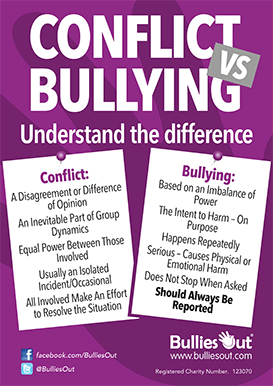
Very few people, when put to the test, have the integrity and moral courage to stand up against bullying, harassment, abuse, threats and corruption. The targets of adult bullying are selected often because they DO have the moral courage to challenge; many people will pass by on the other side.

A target of adult bullying is most often chosen because of their strength, not their weakness. Research shows that targets of bullying tend to have highly developed empathy, and sensitivity for others, a high degree of perceptiveness, high moral values, a well-developed integrity, a strong sense of fair play and reasonableness, a low propensity to violence, a reluctance to pursue grievance, disciplinary or legal action, a strong forgiving streak and a mature understanding of the need to resolve conflict with dialogue. Often, targets of bullying are independent, self-reliant and “different” in some way. Weak people often disingenuously confuse these hallmarks of character with weakness.

Bullies aim to inflict psychological injury more often than physical injury. Their main aim is to control, discredit, isolate and eliminate their target.

The word “victim” also allows disingenuous people to tap into and stimulate other people’s misconceptions and prejudices of victimhood which include the inference that the person was somehow complicit in the abuse. (See just-world fallacy and victim-blame narrative). So I use the word “target”, which is also accurate because bullying involves the intentional singling out of a person for abuse.

Bullies, who have no integrity, are vindictive, aggressive, demanding, and regularly violate others’ boundaries; displaying aggression does not respect peoples’ rights, and a bully’s “requests” come with a negative consequence if the course of action demanded by the bully is declined. A bully’s bad behaviour is entirely his or her responsibility, they intend to cause their targets harm, to undermine them and damage them socially, emotionally, psychologically and sometimes, physically. And they often do.

Bullies typically isolate and dehumanise their targets in order to disempower them. It’s a key tactic of control used by all abusers, it can be particularly injuring, emotionally.

The major triggers for bullying come from the bully’s own sense of inadequacy, according to research. Feeling envious and threatened by others with competence, integrity and popularity, the bully will project onto them their own inadequacy and incompetence, and often the bully will use their own behaviours and thoughts, attributing them to their target, to rally support for their “cause”. The inadequacy or envy of a bully is often translated into negative language used intentionally to completely diminish the target’s positive qualities, socially.

Using unwarranted criticism and threats, the bully tries to control their target and subjugate them, without a thought for that persons’ contributions, reputation, well-being, health or self confidence. Sooner or later this person – the bully’s target – realises that they are not only being “managed” but bullied, and they will start to show signs of resistance to that. Often, anything said in the target’s self-defence will be distorted and used by the bully, too. Gaslighting involves attempts to either negate or redefine a target’s experiences, and abusers often use this method.

The bully often fears exposure of his/her own incompetence and inadequacy, and takes steps to disable the the target, typically by isolating them and/or destroying their credibility and reputation among peers and decision-makers, putting them out of the picture in the workplace through dismissal, forced resignation or even early retirement. Once the target has gone, within about two weeks, the bully’s focus turns to someone else and the cycle starts again.

Some people enjoy the sense of power and control that bullying others gives them.  

Online bullies aim to isolate the target, destroy their credibility and force them out of established communities and groups.

When faced with a bully, your only responsibility is to protect yourself from the emotional, social and/or physical harm that the bully intends to cause you.

I’ve noticed an increase in online bullying, which some of my friends are experiencing, too. That is what prompted this article. It’s a myth that only vulnerable and weak people are targeted by bullies. Most often it is strong people – articulate and decent people who think independently, who have conviction in their beliefs, who are intelligent, cogent and coherent and strong-minded – that are targeted, as they are most often perceived as a threat because their qualities tend to inadvertently highlight the inadequacies of bullies. 

Vulnerable people and bystanders are, however, often manipulated and sucked into the bullies’ strategies. Bullies are more likely to stop if their audience shows disapproval, but most bystanders are reluctant to do so, studies show, for a variety of reasons. Bullies rely on bystander apathy and this often leads to the target feeling a further sense of isolation.
EFkXPz8WsAA1Wfm

Much of the bullying I have witnessed recently has been entirely political, with articulate and conscientious activists being targeted for very personal attacks, discrediting, smear campaigns and trolling. I see that those who are particularly adept at debate and providing well-evidenced, well-reasoned responses, posts and comments tend to get the attention of bullies and trolls, who are most often supporters of either right-wing or occasionally, minor and “alternative” left wing political parties that frequently employ negative campaigning and lies to try to gain credibility.

bully

Bullying is a form of scapegoating and projection. We know that scapegoating is a hostile socio-psychological discrediting operation in which people move blame and responsibility away from themselves and towards a target person or group. It is also a practice were angry feelings and inappropriate accusation are placed on others. Quite understandably, the target feels persecuted and receives misplaced vilification, blame and criticism; and the victim is likely to suffer rejection from those who the perpetrator seeks to influence and again, an increasing feeling of isolation. We live in a society where bullying has become increasingly acceptable, and certainly, as form of doing politics.

A major contributing factor to this increase in bullying is the collective behaviours of the current government, which has perpetuated, permitted and endorsed prejudices against marginalised social groups, such as disabled and unemployed people, with a complicit media amplifying these prejudices. Their policies embed a punitive approach towards the poorest social groups. This in turn means that those adminstering the policies, such as staff at the Department for work and pensions and job centres, for example, are also bound by punitive, authoritarian behaviours directed at a targeted group.

As authority figures and role models, their behaviour establishes a framework of acceptability. Parliamentary debates are conducted with a clear basis of one-upmanship and aggression rather than being founded on rational exchange. Indeed, the prime minister sneers at rationality and does not engage in a democratic dialogue, instead he employs the tactics of a bully: denial, scapegoating, vilification, attempts at discrediting, smearing and character assassinations. This in turn gives wider society permission and approval to do the same.

Scapegoating has a wide range of focus: from “approved” enemies of very large groups of people down to the scapegoating of individuals by other individuals. The scapegoater’s target always experiences a terrible sense of being personally edited and re-written, with the inadequacies of the bully inserted into public accounts of their character, isolation, ostracism, exclusion and sometimes, expulsion and elimination. The sense of isolation is often heightened by other people’s reluctance to become involved in challenging bullies, usually because of a bystander’s own discomfort and fear of reprisal.

Bullies don’t like to have their lies exposed. That’s not to say that all supporters of those minority parties are bullies: they’re not. On a personal level, despite the fact that most of my political criticism in debate and on my site has been directed at the Conservatives (evident on this site, for example, which is actually identified as a Human Rights site) most of the bullying I have personally encountered this past twelve months has been from a small group of Green Party members, curiously. 

This is possibly because the Green Party regard the Labour Party as their “enemy” in elections – in that they compete for supporters with similar values – rather than the Conservatives, and therefore spend a lot of time vilifying Labour. This has fuelled some grassroot Green supporters in attacks on key Labour supporters, particularly the ones who are adept at challenging lies and point out the Green Party’s negative campaigning and electioneering strategies.

I’m an anarchist, but have decided to vote Labour, because the alternative – 5 more years of such a destructive and authoritarian Conservative government – is untenable. People are dying because of Tory policies. I can’t in good conscience turn away from that and pretend it isn’t happening. I’ve been quite vocal about this on social media and on this site. 

I was also targeted by “Tommy Robinson” (real name is Stephen Christopher Yaxley-Lennon), the ex-leader of far-right English Defence League (EDL). He used my account details on Twitter and Facebook, designed and shared a malicious meme, claiming I had made comments that I hadn’t, and invited people to “let her know what you think of her”. I had hundreds of messages that included death and rape threats from the far-right, and one threat from Combat 18. I involved the police, but Robinson claimed several people had access to his account, and denied any knowledge of the meme. It was shared in and among groups like the National Front, Britain First, some UKIP groups, and even a couple of Tory councillors reposted it.

My sin? He was harassing me on Twitter, wouldn’t engage in reasonable debate, he was quite abusive and I told him to do one and leave me be. He didn’t like that. 

Bullying becomes obvious when you scrutinise who is actually doing the attacking on a personal level. Debate and political criticism are one thing: personal commentaries, character assassinations, attacks, threats, abuse and harassment are bullying. I have seen that quite often, bullying tactics include manipulating people’s perceptions to portray themselves as the injured party, with their target being the villain. However, again, scrutiny of who is actually instigating and doing the personal attacking will reveal the real bully or bullies.

Bullies show a complete lack of remorse for the damage they are intending to inflict on their target.Victim-blame narratives aside, it’s never wise to ignore bullying; bullies use provocation to elicit a response from their target and if you ignore it the provocation will simply get worse. That is the nature of bullying. Ignoring a bully actually gives him/her permission to continue bullying. Ignoring a bully sends the signal that it is acceptable to bully that person.

Furthermore, ignoring a bully tells bystanders that is acceptable to bully that person and inevitably, this becomes embedded in our culture. It’s worth looking at Gordon Allport’s Ladder of Prejudice to see exactly how that process works. If a bully’s audience or peers show disapproval and don’t become complicit, the bully will be discouraged from continuing their abuse. The biggest fear a bully has is that of being exposed for what they really are.

Bullies project their inadequacies, shortcomings, behaviours, anger and spite on to other people to distract and divert attention away from themselves and their own inadequacies and to avoid facing up to the same scrutiny. The vehicle for projection is blame, criticism and allegation. Once a target realises this, they can take comfort from the fact that every time they are blamed, criticised or subjected to another specious allegation by the bully, the bully is implicitly admitting or revealing something about themselves. Not that it is much of a comfort.

A target’s awareness of projection can help them translate whatever they are being accused of into an awareness of the bully’s own misdemeanours. Again, the bully may be identified by the fact that they are the ones loudly criticising and attempting to discredit the target, rather than there being any evidence of the converse.

Vilifying the target is the most frequently used as a gaslighting tactic in bullying. This  is a powerful means of putting the victim on the defensive while simultaneously masking the aggressive intent of the manipulator, the bully then falsely accuses the victim of being an abuser in response when the victim stands up for or defends themselves or their position.

Nobody’s behaviour is perfect, and many balanced, well-intentioned people will at some time unjustifiably or inadvertently upset others. When this is drawn to their attention, they are usually horrified and will do what they can to make amends and ensure it isn’t repeated. That’s what reasonable and mature people do.

Serial bullies, on the other hand, do not want to know about the negative effects of their behaviour. Denial, retaliation and feigning victimhood are some of the ways that bullies express their antipathy for anyone who is able to describe their behaviour, see through their mask of normality or help others to do the same.

Here are some recognisable bullying traits and tactics, designed to damage, isolate, discredit and eliminate the target:

  • bullies are adept at exploiting the trust and needs of individuals, organisations and groups, for personal gain.
  • bullies react to criticism with denial, retaliation, feigned victimhood.
  • the bully grooms bystanders, and the target, to believe the target deserves the treatment they are receiving and attempts to limit contact between others and their target. Often the bully will use communications that exclude the target so that there is no opportunity for them to defend themselves and present their truth.
  • the bystanders see only the Dr Jekyll side of the bully, but only the target sees the Mr/Ms Hyde side; Dr Jekyll is sweet, manipulative and charming, Mr/Ms Hyde is evil; Mr/Ms Hyde is the real person, Dr Jekyll is an act.
  • bullies exert power and control by a combination of selectively withholding information and spreading lies and disinformation, therefore everyone has a distorted picture – of only what the bully wants them to see.
  • the target finds that in any response, everything they say and do is twisted, distorted and misrepresented.
  • bullies are adept at manipulating people’s perceptions with intent to engender a negative view of the target in the minds of others – this is achieved through undermining and discrediting, including the creation of doubts and suspicions and the sharing of lies.
  • bullies use other people to further the aim of discrediting their target, creating a false impression of consensus.
  • bullies poison the atmosphere and actively poison people’s minds against the target when close to being outwitted and exposed, the bully feigns victimhood and turns the focus on themselves as previously stated – another example of manipulating people through their emotions such as guilt, sympathy, feeling sorry for the bully. Many bystanders are hoodwinked by the bully’s ruses for abdicating responsibility and evading accountability, they may say, for example: “that’s all in the past”, “let’s focus on the future” , “you need to make a fresh start”, and “forgive and forget”, “you’ve got to move on”, “sticks and stones” and so on.
  •  bystanders often feel cognitive dissonance and usually minimise their discomfort by reasoning to avoid any responsibility, it usually goes this way because they themselves don’t want to become targets. They may say things like: “just ignore them”, “stand up to them” , “I’ve personally  never had any problems with him/her”, “Oh I never get involved in personal differences” and so on. Even worse, they may imply that you did something wrong to “attract” the bullying.
  • the bully encourages and manipulates as many bystanders as possible to lie, act dishonorably and dishonestly, withhold information and spread lies and misinformation, the bully manipulates bystanders to punish the target for alleged infractions, so the bystanders also become instruments of harassment.
  • some people gain gratification (a perverse feeling of satisfaction) from seeing others in distress and thus become complicit in the bullying and a few people think that bullying is funny.
  • some observers regard behavioural responses that are reasonable and civilised as a sign of weakness rather than maturity. Many seem to lack critical thinking skills and analytical abilities and so cannot see through the facade or the bully’s mask of deceit. Even when it is obvious, sometimes. There’s very often an element of not wanting to see, too. Other people fear becoming targets themselves, and so “go along to get along.” Complicity because of fear of reprisals.
  • bullies are extremely vindictive and will do everything in their power to damage and destroy anyone who can see through their mask of deceit. In very rare cases you may receive information from a bystander who wants to help but is afraid to do so publicly for fear of retribution – and fear of becoming the next target.
  • apathy and indifference to the distress of others are widespread. The bully relies on this.

“Bullying is a compulsive need to displace aggression and is achieved by the expression of inadequacy (social, personal, interpersonal, behavioural, professional) by projection of that inadequacy onto others through control and subjugation (criticism, exclusion, isolation etc). Bullying is sustained by abdication of responsibility (denial, counter-accusation, pretence of victimhood) and perpetuated by a climate of fear, ignorance, indifference, silence, denial, disbelief, deception, evasion of accountability, tolerance and reward (eg promotion) for the bully.”
Tim Field, 1999

The Law and Cyber-bullying:

As cyber-bullying is a relatively new phenomenon, the UK courts are still trying to catch up with it and sentence offenders effectively. Though no laws specifically apply to cyber-bullying alone, there are several laws which can be applied in cyber-bullying cases:

  • Protection from Harassment Act 1997
  • Criminal Justice and Public Order Act 1994
  • Malicious Communications Act 1988
  • Communications Act 2003
  • Breach of the Peace (Scotland)
  • Defamation Act 2013

In 2012 The Crown Prosecution Service published guidelines on how cyber-bullying cases would be assessed against current laws, which you can find here.

On January 1st 2014 the Defamation Act 2013 came into order, and can be read here.

Examples of bullying:

What a bully might say when held to account

One day in the life of a blogger.

Someone elses’ perspective: A few words about respect and: One day in the life of a blogger – kittysjones. It’s worth reading the comments thread on these articles by Mike Sivier, too.

Related

Interesting article on the empath, apath (bystander) and sociopath triangle: it’s a useful model of analysis for those who have experienced abuse and wondered: why me? –EMPATHIC PEOPLE ARE NATURAL TARGETS FOR SOCIOPATHS – PROTECT YOURSELF
psychopathy101: Projection Beware of individuals spreading rumors about others behind their back, psychopaths are cowards, know that they are telling lies, enjoy hurting others and very afraid of being found out of who they really are, thus everything takes place in the “shadows”/behind the “targets” back.   To remember; the “bully” is telling everyone about him/herself  (thoughts and actions) what he/she has done, is doing or is about to do.”

Introduction to the Serial Bully “Perhaps the most easily recognisable Serial Bully traits are:

  • Jekyll and Hyde nature – Dr Jekyll is “charming” and “charismatic”; “Hyde” is “evil”;
  • Exploits the trust and needs of organisations and individuals, for personal gain;
  • Convincing liar – Makes up anything to fit their needs at that moment;
  • Damages the health and reputations of organisations and individuals;
  • Reacts to criticism with Denial, Retaliation, Feigned Victimhood;
  • Blames victims/targets;
  • Moves to a new target when the present one burns out.

What is a Bully “Projection behaviour and denial are hallmarks of the serial bully. It is believed by some that bullying is present behind all forms of harassment, discrimination, prejudice, abuse, persecution, conflict and violence.

What bullies fear most is exposure and being called publicly to account for their behaviour so they can go to great lengths to keep their target (victim) quiet from misdirection when it is reported to using threats of disciplinary action, dismissal, gagging clauses and fear.

Despite the façade that such people put up, bullies have another side to them. What complicates matters is that the  bully may not be aware or acknowledge to themselves they very often suffer from one or more of the following:

# Envy# Jealousy# Low self-confidence# Low self-esteem# Feel insecure# Seething with resentment# Bitterness# Hatred# Anger# Inadequacy# And may have a wide range of prejudices as a vehicle for dumping anger onto others.”

About the impact of abusive language: Sticks and stones: abusive labels, self concept – when words become weapons

Further information:

Bullying can cause injury to health and make people ill, with some or all of the symptoms below. Many, if not all of these symptoms are consequences of the high levels of stress and anxiety that bullying creates:

  • shattered self-confidence, low self-worth, low self-esteem
  • reactive depression, lethargy, hopelessness, anger, futility and more
  • hypersensitivity, fragility, isolation, withdrawal
  • obsession, not being able to stop thinking about the experience in all its detail
  • hypervigilance (feels like but is not paranoia), being constantly on edge
  • uncharacteristic irritability and angry outbursts
  • tearfulness, bursting into tears regularly and over trivial things
  • sweating, trembling, shaking, palpitations, panic attacks
  • bad or intermittently-functioning memory, forgetfulness, especially with trivial day-to-day things
  • poor concentration, can’t focus on anything for long
  • skin problems such as eczema, psoriasis, athlete’s foot, ulcers, shingles, urticaria if prone to them
  • irritable bowel syndrome
  • flashbacks and replays, obsessiveness, can’t get the bullying out of your mind
  • tiredness, exhaustion, constant fatigue sleeplessness, nightmares, waking early, waking up more tired than when you went to bed
  • headaches and migraines
  • frequent illness such as viral infections especially flu and glandular fever, colds, coughs, chest, ear, nose and throat infections (stress may play havoc with the immune system.)
  • suicidal thoughts, self-harm.

For the symptoms of injury to health caused by prolonged stress (such as that caused by bullying, harassment, abuse etc) click here. For details of the trauma that can result, click here.
changeworld2013

Related

Conservatives, cruelty and the collective unconscious


I don’t make any money from my work. But you can help by making a donation and help me continue to research and write informative, insightful and independent articles, and to provide support to others. The smallest amount is much appreciated – thank you.

DonatenowButton cards

TORIES SPENT £114,000 ON FACEBOOK LIKES AND ADS IN JUST ONE MONTH – Political Scrapbook

1209102_539900659412800_1664499134_n

Many thanks to Robert Livingstone

Article originally posted on Political Scrapbook, 13 Jan, 2014.

They’ve already been accused of trying to “buy the General Election” by quietly raising the legal spending limit by £6.2 million to £32.7m in the face of concerns from the Electoral Commission over ‘undue influence’. The party has reportedly amassed a war chest of more than £70 million.

So if you want a flavour of how much cash Tories could be splashing on their bid to retain power, have a look at the document below. It’s a £114,000 invoice from Facebook to the Conservative Party — and that’s for just one month.

The bill (which Scrapbook obtained as part of the spending returns for the Rochester and Strood by-election) is dated 2 December and lists its ‘billing period’ as ‘NOV-14′.

Tory Facebook invoice

The invoice is itemised as follows:

  • “Email Collection New” — £71,147.25
  • “Page likes – Conservatives” — £23,998.82
  • “4040 Likes” — £12,713.38
  • “Kelly Tolhurst for Rochester and Strood” — £3,084.41
  • “Video advertising” — £4,014.35

If this is representative, it means they could be spaffing around £1 million per year on Facebook alone.

Cameron, debt and misinformation – Richard Murphy

10689499_731152076954323_875040546185242333_n

Originally posted on Tax Research UK,  12 January 2015

The Guardian reports this morning that:

Britain will be on the “path to ruin” if Labour takes charge of the public finances, David Cameron will say on Monday as he warns parents and grandparents of the dangers to future generations if the country fails to deal with its debts.

So let’s talk debt:

All data is from the HM Treasury Pocket Bank for 30 September. I have extrapolated 2014/15 borrowing form the August data to suggest whole year borrowing of just over £107 billion based on average proportion of total year borrowing to 31 August over the past five years.

The conclusions are stark: the Coalition has borrowed more than four times more a year than 3.3 times a year what Labour did, on average.

In five years the Coalition has borrowed more than Labour did in 13, by a considerable margin.

And there wasn’t an unforeseen banking crisis on the Coalition’s watch.

But what’s very odd is the data on gilt yields from the Government. In April 1998 long dated gilts yielded 5.71%. A decade later that was 4.5%. By April 2012 it was 3.31% and in April 2014 this had little changed at 3.46%, but now it is 2.62%. If we had a debt crisis very clearly risk would have increased and so interest rates would have risen. But they haven’t. Interest rates have fallen, significantly, and not just to reflect inflation.

So first of all we have no gilt crisis.

Second, we have no affordability crisis.

And third, we have a lost opportunity to invest at rates lower than we have almost ever known, which lost opportunity is why we have an economic crisis.

It’s very hard to see how one man can get as much wrong as David Cameron can in the repeated sentiment he has to offer to the UK. But the evidence is clear: every single word of what he has to say is deeply misleading because it is so wrong. After five years in office all he has learned is that keeping repeating the misinformation is the only policy he can find that he still thinks worth pursuing. And, unfortunately, some still believe him.


Labour MPs speak out against the TTIP and investigation opens into the impacts on environmental protections

923022_488684277867772_33457858_n

The impact of the controversial Transatlantic Trade and Investment Partnership trade deal on environmental protections in Europe is to be investigated by parliament. Opposition MPs will examine if the agreement could weaken regulations on chemical and pesticide use, oil and gas extraction and genetically modified food.

The Transatlantic Trade and Investment Partnership (TTIP) is a planned free trade agreement between the European Union and the US. Those who support it claim that it will “boost” economies. However there have been many concerns raised regarding this agreement. Critics say that not only have the economic benefits of TTIP have been overstated, it will additionally put downward pressure on regulation in sectors such as health and the environment and poses a significant threat to national democratic decision-making.

Worryingly, moves by a future democratically elected government to put the deregulation process into reverse and bring our public services – including our NHS, railways, water, energy and other utilities – back into public ownership would be confronted by an international court system (ISDS) where lawyers will judge what is or is not a barrier to “free trade”. And it will be carried out behind closed doors. Corporates can go on to sue nation states that stand in the way of “free trade” and threats to future as well as actual losses to profits.

In August 2014, Labour MP Katy Clark urged David Cameron to stop the EU-US trade pact from opening more public services to the private sector.

The Transatlantic Trade and Investment Partnership (TTIP), which has remained under negotiation behind closed doors, “would let companies sue if national governments pass laws that hurt profits,” Ms Clark warned.

This is bad news for our existing public services such as the NHS, or other services that we may wish to take back into public ownership such as the railways.

“Private companies already run certain services but under the new plans the government would never be allowed to run these again, as doing so would hurt the profits of the companies involved.”

Since discussions on the content of the Treaty have remained secret, its exact content is unknown, (including to the Labour Party) but private firms on both sides of the Atlantic are keen to use competition rules to force open what remains of the public sector.

During a parliamentary debate in February, secured by back bench Labour MP John Healy, Labour MPs, including Katy Clark, raised many concerns about the TTIP.  Jeremy Corbyn said: “Why is there such secrecy surrounding the negotiations? Why are not all the documents on the table? Why are the demands made on European public services by the American negotiators not made public? Why are not the demands made in the other direction also made public? I suspect that, if the agreement ever comes to fruition, every Parliament in Europe and the US system will be presented with a fait accompli: they will be told that they have to accept it.”

Ian Lavery  commented: “A number of people have said that there must be a good business case for the transatlantic trade and investment partnership. I think that we need much more than a good business case. I am concerned that there are huge inherent dangers in the TTIP for many working people and for public services in the UK. My major concern is that the trade agreement has the potential to dilute workers’ rights.”

Katy Clark, the North Ayrshire and Arran MP, wrote to the Prime Minister urging him to protect public services and pointed out that France won the right to continue supporting its film industry and that the US had blocked any deal on its finance sector.

She said: “If the leaders of these countries can protect what’s important to them, then David Cameron can do the same for Britain.”

Neil Clark from the Campaign for Public Ownership, said the Labour MP’s warning was timely as people had “still not woken up to the consequences of TTIP.”

“It is fundamentally undemocratic, since though large majorities of the public are in favour of renationalising key services such as the railways or energy, subsequent governments would be unable to do so without breaking the terms of the pact.

“But it would impose privatisation forever and must be stopped in its tracks.”

Angela Eagle said: “I know that following widespread public concern, the European Commission halted negotiations on the investor state dispute settlement (ISDS) section of TTIP pending the outcome of a public consultation. I appreciate that there are serious concerns about the potential impact of the ISDS provisions and I hope that the European Commission will consider the responses to this consultation carefully.”

In November last year, Labour MP Clive Efford, with the backing of the party’s leadership, called for the exemption of the NHS from the trade deal. It was a victory for the Private Member’s Bill to repeal the Tory privatisation of the NHS and Exempt the NHS from the TTIP Agreement. Mr Efford said: “The Bill will not save the NHS overnight – only the election of a Labour government can do that. But it does give all MPs the opportunity to accept that the 2012 Act has been a disaster and to begin to create an NHS which puts patient care at the centre of all it does, not private profit.”

Andy Burnham, the shadow Health Secretary, claimed that signing TTIP could jeopardise the founding principles of the health service. The many critics of this trade agreement fear that the deal would leave the NHS vulnerable to takeover by American healthcare giants and undermine the principle of a service free at the point of delivery.

Joan Walley MP, chair of the Commons Select Environmental Audit Committee (EAC), which launched its inquiry on 8th January, said: “We will be investigating whether it really is possible to sign such a deal and at the same time safeguard European environmental standards, as negotiators have claimed.

Greater transatlantic trade and investment could be beneficial for Britain, but we must monitor these talks carefully to ensure they are not trading-in the rules that keep our food and environment safe.”

A recent report from the Center for International Environmental Law (Ciel) argues that the European chemical industry wants the US system of chemical risk assessment to be adopted, which the group says would allow the use of over 80 pesticides currently banned in the EU. Other campaigners say US biotech companies want to use TTIP to open EU borders to imports of genetically modified food.

Samuel Lowe, from Friends of the Earth, said: “With the potential for essential environmental and food standards to be discarded as ‘trade irritants’, the TTIP presents a unique challenge to the health of our environment. The EAC should scrutinise the proposals and ensure that these serious concerns are no longer brushed under the carpet.”

Absolutely. Labour has said very clearly that they won’t back this Treaty unless the NHS and other key public services are excluded. The crucial inquiry, which Labour MPs have called for is welcome. It`will focus on the potential environmental impacts in the UK of TTIP, including through changes to regulations and product standards and the operation of an “inter-state dispute settlement” regime; and on the potential effects on developing countries. Gathering evidence is an essential when it comes to the process of agreeing, formulating or rejecting policies


Further reading:

The coming Corporatocracy and the death of democracy

Just what will TTIP mean for our jobs, environment, consumer rights – and publicly provided health service?

Lord Howe said we couldn’t exempt the NHS because it would place our pharmaceutical companies at a disadvantage.

If we don’t do something about the TTIP it may be all of us who will be at a disadvantage.

And one thing which is clear is that the TTIP will open up the NHS to American private health companies.”

There are some things we just can’t afford to risk – and the NHS is one of them.
Andy Burnham has already been to Brussels to discuss NHS exemptions.
Labour is committed to them.

“The report – on the workings of NAFTA – the North American Free Trade Agreement – which has been around for 20 years suggests we may need to go further – and we certainly need far more open discussion of what’s at stake.

This is something the LibDem/Tory Coalition seem very reluctant to have.
Could the pattern of funding of the Tory party have anything to do with that?

We merely ask.” – TTIP/ EU-US Trade Agreement – you can’t trust the LibDem/Tory Coalition with the NHS Alex Sobel MP


Pictures courtesy of  Robert Livingstone

Labour would end this Government’s demonisation of benefits claimants – Chi Onwurah MP

430847_149933881824335_1645102229_n (1)

This afternoon I will be leading a debate on the treatment – or more accurately the demonisation – of benefits claimants.

On my website I publish monthly pie charts of the issues constituents raise with me. Benefits is consistently in the top three.

Benefits claimants are by definition going through a tough time; they may have lost a job, have an illness or disability or are in low-paid or part time work, or they are caring for young children or relatives, making it harder to work.

They need our support, our care, concern for and understanding of the challenges they face. As our Shadow Secretary of State Rachel Reeves has said: “Jobcentres, and the HMRC offices that currently administer tax credits, are vital public services that British citizens pay for with their taxes. People who use them have as much right to expect fair and respectful treatment as patients in an NHS hospital, parents dealing with their child’s school, or victims reporting a crime at a police station.”

But it has become increasingly clear to me that that is not what is happening.

I have dealt with casework where the only explanation for the inhumane way in which my constituents were being treated is that the employees of the Department and its agencies had forgotten – or had been told to forget – that benefits claimants were people, human beings with lives, loved ones and feelings.

In the debate I give three examples. I could have given three hundred.

The first a vulnerable constituent on Employment Support Allowance and incapacity allowance. He was being helped by Newcastle Welfare Rights, who told the DWP that after suddenly being found fit to work:

“..he was acutely distressed; he struggled to talk, he was having thoughts of suicide, he had also started drinking alcohol to cope and had struggled to leave the house”

Despite supporting psychological assessments, other evidence, and an attempted suicide, the decision was not reversed and in January 2014 he was found hanged by his neighbour.

The second case an IT worker made unemployed, earnestly applying for every possible vacancy.

But he was sanctioned by the Jobcentre because his work search record was judged inadequate – in the week his father died.

Now think about that for a moment. Is there anyone in this country of whatever political persuasion who does not believe that a son should be given the opportunity to grieve for and bury his father?

Whether or not he is claiming benefits.

Yet the culture that this Government has put in place is such that this is what happens. And whilst Esther McVey may claim it is nothing to do with them, organisational culture is determined by those at the top.

My third example is a constituent sanctioned at the beginning of December for not returning a review form he never received which asked him the same questions he answered when he first signed on. Despite trying to complete the form over the phone, going to the Job Centre, asking for and being promised an emergency payment he spent the whole month including the festive period dependent on handouts from friends and family, unable to afford heating or even to go and see his young daughter at Christmas.

And all the while the Government is paying for adverts on buses saying “Think you know a Newcastle upon Tyne Benefits Cheat? Report them anonymously.”

There are people on benefits who are abusing the system – who take what they can get and consider benefits both a lifestyle and a right.

But that is a very small proportion. It is estimated that 0.7% of welfare spending is lost to fraud in comparison with 1.3% lost to overpayment because of mistakes.

I have yet to see adverts encouraging people to turn in tax evaders, despite the Treasury itself estimating the ‘tax gap’ at £34 bn and others putting it much higher.

The sense that they are being treated as second class citizens, scroungers, cheats, has a terrible impact on the wellbeing and particularly the mental health of claimants.

I have some experience of that.

I was brought up largely on benefits. We were a one parent family. It was very hard for my mother who was crippled with rheumatoid arthritis and also suffered breast cancer, not only because of our poverty but also because of her shame at taking hand outs.

I am very glad she did not have to face the sort of vilification and abuse experienced now, abuse caused in part by a sustained campaign from some politicians on the right.

Contrary to what many of them would imagine, I was brought up with a strong work ethic, and also to believe that the state would provide a robust safety net for those that needed it.

I am not proud that I grew up on benefits. But I am not ashamed either. A Labour Government must and will put an end to this Government’s demonisation of those claiming benefits today.

Author: Chi OnwurahMember of Parliament for Newcastle Central.

The full debate may be read here on Hansard2.30pm, 7 Jan 2015: from Column 112WH.

scroll2

 Labour MPs have persistently raised the issue of the government and media demonisation of those claiming benefits in Parliamentry debate, challenging serial offenders such as Iain Duncan Smith. Other MPs included are Glenda Jackson, Dame Anne Begg, Anne McGuire, Liam Byrne, John McDonnell and Sheila Gilmore, amongst others.

Rachel Reeves has also pledged to end the benefit sanction targets.

I am pleased that Labour have also pledged to legislate to protect disabled people from hate crime . We need to see an end to the stigmatisation of people who have to rely on lifeline benefits. After all, most people needing support have worked and paid taxes, they ought to be able to claim the support that they have paid for without being punished and scapegoated by the government and media. KSJ

1450041_569755536427312_1698223275_n

Thanks to Robert Livingstone 


The ultimate aim of the “allthesame” lie is division and disempowerment of the Left.

1796655_294409220710133_3373329_n

The speech-writer for David Cameron in the run-up to the 2010 general election, Ian Birrellseems to have finger in every lie on behalf of the Tories. He’s the contributing editor of The Mail on Sunday, whilst writing columns regularly in several other papers. He’s been published in The Guardian, The Wall Street Journal, The Economist, The Daily Mail, The Financial Times, The Times, The Observer, The London Evening Standard, The Sun, The Daily Telegraph, The Sunday Telegraph, The Independent, The Independent on Sunday, Prospect, New Statesman and The Spectator.

On the 2nd January, Birrell cobbled together a somewhat strange and hugely speculative article in the Guardianclaiming that “a Tory-Labour unity coalition may be the only way forward after 7 May” and the two parties have more in common with each other than with the insurgents. A national government would prevent a constitutional crisis.”

There are no quotes or citations, just an unsubstantiated comment: “But most people in Westminster privately predict a hung parliament.”

As I said, entirely speculative, seemingly without an aim.

Birrell also claims there was “a brief flicker of unity” between the parties during the Scottish referendum. That’s a neat side-stepping of the fundamental fact that Labour, like most socialists, have always been internationalists, which has absolutely nothing to do with the Tories’ position on Scottish independence at all, and everything to do with Labour’s core values. It’s also a claim frequently made by the Scottish Nationalists –  Labour “sided with the Tories.” Anyone would think that the Scottish National Party want to undermine support for the Labour Party in Scotland…

There is of course a subtext to Birrell’s article. It is a piece of propaganda. The subtext is “the mainstream political parties are all the same.”

The “allthesame” myth came straight from Tory HQ. The BBC’s Tory correspondent Nick Robinson admitted live on air that Cameron’s best chance of winning the next election is if people believe politicians are “all the same.” That is very clearly not the case. I think this is a major ploy aimed at propagandarising an exclusively class-based identity politics, to target and fragment the “working class left.”

It purposefully excludes other social groups and also sets them against each other, for example, working class unemployed people attacking migrants – it really is divisive, anti-democratic, and quite deliberately flies in the face of Labour’s equality and diversity principles. That’s the problem with identity politics: it tends to enhance a further sense of social segregation, fragmentation and it isn’t remotely inclusive.

Of course it also enhances the tropes “outoftouch” and  “allthesame.” It’s a clever strategy, because it attacks Labour’s equality and inclusive principles – the very reason why the Labour movement happened in the first place – and places restriction on who ought to be included.

Think of that divisive strategy 1) in terms of equality; 2) in terms of appealing to the electorate; 3) in terms of policy. Note how it imposes limits and is reductive.

It also demoralises and confuses people.

The Tories set this strategy up in the media, UKIP have extended it further and the minority rival parties, including the Green Party and the Scottish National Party have utilised the same rhetoric tool: all of these parties frequently use the term “liblabcon”for example. That’s a sort of cognitive shortcut to what has been tacitly accepted, apparently, as a “common sense” view that partisanship amongst the mainstream parties is dead. I’ve written at length about this process of “normalisation” –  how social conservatism and neoliberalism have been absorbed culturally, and how this serves to naturalise the dominance of the Right and stifle the rationale for critical debate here – Manufacturing consensus: the end of history and the partisan man.

Be prepared for much more of this propaganda tactic: the Right are engaged in an all out war.

Firstly they know that Ed Miliband has edited their script, abandoning the free-market fundamentalist consensus established by Thatcherism in favour of social democracy.

Secondly, the right-wing media barons who set the terms of what is deemed politically palatable in Britain have never forgiven Ed Miliband for his endorsement of Leveson, which they believe is an unacceptable threat to their power.

Thirdly, they know Labour under Ed Miliband may well actually win the 2015 election.

It doesn’t take much effort to work out that the two main parties in competition have nothing in common at all. They debate oppositionally in parliament. Cameron attacks Miliband at every opportunity and on a very personal level, quite often. It’s plain, if you listen to the parliamentary debates, that neither man can stand what the other represents.

And how would the Tories and Labour reconcile their fundamental differences regarding human rights, the European Convention On Human Rights (ECHR) and the European Union? How about the bedroom tax? The National Health Service? Taxation? The welfare reforms? Equality? These are issues on which the two rival parties will never be able reach a consensus.

10635953_696483917087806_7307164383030383606_n

It’s quite difficult to assert that there are significant differences between the parties, because of the constant repetition of the “allthesame” lie. It has become almost like a comforting, lulling mantra and a shortcut from cognitive dissonance. People often get quite angry when confronted with evidence that challenges this soundbite. But policies provide very good evidence, they are scripted from ideologies and are statements of a party’s intentions.

Ed Miliband has been cautious in making policy promises and has said that he won’t pledge anything that he may not be able to deliver. Here are Labour’s key policies to date, each has been costed and evidenced.

The thing about policies that have been passed into law is that they can be verified on the Parliamentary website and elsewhere. How many of you reading this think that Blair was a “Thatcherite”? I’m not a Blairite. I do like Miliband, who is a very different leader than Blair was. Miliband denounced New Labour in 2010. His stance on Syria in 2013 draws a clean line under the Blair approach. Yet Blair is still being used as a stick to hit the Labour Party with.

The claims made in lying articles in the media and the often inaccurate and distorted claims of fringe party supporters are based on a propaganda technique called transfer and association, which is a method of projecting negative (or positive) qualities of a person, entity, object, or value (an individual, group, organisation) to another in order to discredit it (or sometimes, to make the second more acceptable, this tactic is used in advertising a lot.)

It evokes an emotional response, which stimulates the target to identify with recognised authorities. But that stick is hitting a closed door now. Newsflash: Blair hasn’t been party leader for some years.

I worked on compiling a list of New Labour’s policies, and despite Blair’s faults, there really were some outstanding achievements, such as the Equality Act, the Human Rights Act, various animal welfare laws, Every Child Matters and the Good Friday Agreement. I have listed New Labour’s achievements with a comparable list of the Coalition’s “memorable” moments, too. If you hated Blair, and see him as some sort of high priest of neoliberalism, it’s probably even more important that you read this. I promise it will help you to understand cognitive dissonance, at the very least, and perhaps to appreciate the importance of evidence and critical thinking: Political parties – there are very BIG differences in their policies.

And this, for some balance and perspective: Thatcher, Mad Cow Disease and her other failings, the Blair detour and déjà entendu, Mr Cameron.

The “allthesame” lie is a way of neutralising opposition to dominant ideas. It’s a way of disguising partisanship and of manipulating and reducing democratic choices. It’s nothing less than a political micro-management of your beliefs and decision-making.

It also reduces public expectation of opposition and in doing so it establishes diktats: it’s a way of mandating acceptance of ideology, policies or laws by presenting them as if they are the only viable alternative. And those that refuse to accept the diktats are enticed by the marginal parties who offer much, safe in the knowledge that they won’t have to rationalise, evidence, cost or deliver those promises. This also plays a part in diluting viable opposition, because the smaller parties tend to employ the same strategy to gain credibility and support – negative campaigning and repeated lies and soundbites.

Lynton Crosby, who has declared that his role is to destroy the Labour Party, rather than promote the Conservatives, based on any notion of merit, is also all about such a targeted “divide and rule” strategy. This is a right wing tactic of cultivating and manipulating apostasy amongst support for the opposition. It’s a very evident ploy in the media, too, with articles about Labour screaming headlines that don’t match content, and the Sun, Mail and Telegraph in particular blatantly lying about Labour’s policy intentions regularly.

Propaganda isn’t always obvious, and that’s how it works. We need to be very mindful of this.

Ultimately, the only party that will gain from any of this negative campaigning approach and divisive propaganda is the Tories. And that is who we should be collectively opposing.

The Tories launched their election campaign a couple of days ago, and already, it’s obvious that the entire campaign is founded on attempting to undermine Labour’s  credibility by telling lies about their economic management – The Tory election strategy is more of the same: Tories being conservative with the truth.

Contrast the Conservative with the truth approach I’ve discussed here with Miliband’s consistently genuine approach to politics – Ed Miliband: Labour election campaign will be one of hope, not falsehood.  

Whatever party you support and regardless of whether or not we agree on the issues I raise, my key aim, whenever I write, is to inspire a sense of responsibility and some critical thinking. That helps to reliably inform our decision-making.

I won’t apologise to my critics for being a Labour Party supporter, but I will always provide evidence and analysis to support and justify my own views and I will always be happy to engage in dialogue, provided that it’s a respectful and polite exchange. No party is above criticism, quite rightly so, as politics has to be an accountable, reflective and responsive process. That’s what democracy is about.

There is, however, a big difference between genuine criticism, on the one hand and propaganda and lies on the other, which are being masqueraded as “criticism.” If debate isn’t established on a genuine, critical exploration of evidence and establishing truths, then it’s not debate: it’s simply indoctrination.

Related

Don’t believe everything you think: it’s almost election time.

From  Psycho-Linguistics to the Politics of Psychopathy. Part 1: Propaganda

Ed Miliband is the biggest threat to the status quo we’ve seen for decades.

Once you hear the jackboots, it’s too late.

The moment Ed Miliband said he’ll bring socialism back to Downing Street.

Ed Miliband’s policy pledges at a glance

Miliband is an excellent leader, and here’s why.

Cameron’s Nudge that knocked democracy down: mind the Mindspace.

403898_365377090198492_976131366_nThanks to Robert Livingstone for the excellent memes.

The Tory election strategy is more of the same: Tories being conservative with the truth

1235473_537097386359794_65317730_n (1)

The following email is fromBack to messagesthe Conservative Campaign HQ, it’s packed with the most jaw-droppingly blatant lies and it marks the launch of their election campaign:

Your friends need to see this:

Conservative Campaign HQ (bulletin@mail.conservatives.com)
02/01/2015

Newsletters

To: Susan Jones

Our plan is working – and we need to stay on the road to a stronger economy. Please share our poster today and let everyone know:

 Let’s stay on the road to a stronger economy

When the Conservatives came into office in 2010, Britain was on the brink of bankruptcy. People were losing their jobs and families were worried about the future.

So we took difficult decisions to get our economy back on track.

Five years later, thanks to the measures we’ve taken and the hard work of the British people, the deficit has been halved, new businesses are opening up across the country, and there are a record number of people in work, with the security of a pay packet.

We need to stay on the road to a stronger economy – and your friends need to know about the important choice facing Britain in this election year.

Britain has come a long way in five years. We can’t go back to Labour’s way of more borrowing, more debt and higher taxes. Instead, let’s stay on the road that has brought us this far – the road that is securing a better future for everyone in our country.

Please share our poster today and let your friends know the important choice facing Britain this year.

Thank you,

Conservative Campaign HQ

Promoted by Alan Mabbutt on behalf of the Conservative Party, both at 4 Matthew Parker Street, London, SW1H 9HQ

Here is my response

Lie number 1. “When we came into office in 2010, Britain was on the brink of bankruptcy.”

The Office for Budget Responsibility (OBR) head rebuked Osborne for lying: Robert Chote said that the UK was never at risk of bankruptcy. Yet despite this public rebuke for lying, the Tories continue to peddle the same lie. Having established the OBR to act as a check on the government, the Chancellor and the Conservative Party might want to listen to its head and finally concede that there was no basis for his claim in 2010.

For the full list of official rebukes for Tory lies, please see here

Lie number 2. “People were losing their jobs and families were worried about the future.”

united-kingdom-unemployment

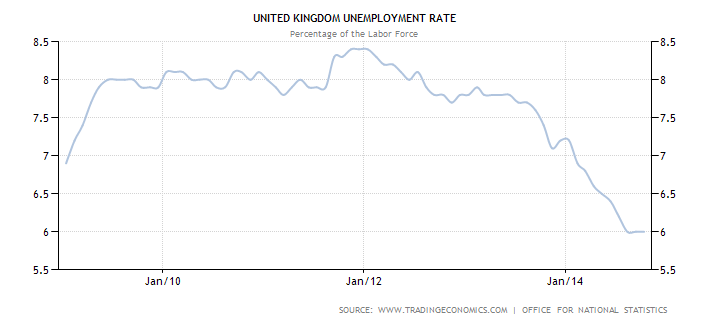
1381256_10151703147396305_1638953570_n (1)Note that after an increase in people losing their jobs under the Tory-led Coalition since 2010, the apparent decrease in job losses in the first graph coincides with the introduction of the new benefit sanction regime in 2012.

We know that the Conservatives measure unemployment by using a conveniently heavily biased system called “off-flow” that includes all of the numbers of people thrown off Jobseekers’ Allowance through sanctions. Indeed, it emerged during an ongoing inquiry instigated by the parliamentary Work and Pensions Select Committee, through research conducted by Professor David Stuckler, that more than 500,000 Job Seekers Allowance (JSA) claimants have disappeared from unemployment statistics, without finding work, since the sanctions regime was substantially extended in October, 2012.

And let’s not forget that sanctions are a draconian and target-driven removal of lifeline benefits – the amount of money that the state previously deemed necessary for meeting basic needs, and as such, cannot possibly be justified when all they may ever achieve is forcing people to focus on basic survival rather than on gaining employment. The Work and Pensions Select Committee have accused the Conservatives of using benefit sanctions to massage unemployment figures.

Other problems with off-flow and the far-fetched claims of the Conservative Party are highlighted in: A letter of complaint to Andrew Dilnot regarding Coalition lies about employment statistics.

The Treasury saw a drop in revenue of 25 billion pounds from income tax, which doesn’t tally with the account of rising employment and this certainly refutes the claim that was made about wages rising last year by this Government, too.

As for “families were worried for the future”, the impact of this government’s austerity measures has had a significantly negative impact on women and children, and particularly lone parents. The setting up of the Welfare State enshrined a commitment to state support for those unable to support themselves.

This government is dismantling that commitment. In the process they are destroying many of our basic rights: to universal free healthcare; protection from domestic violence and abuse; decent, affordable housing; pension and employment rights; education and training; and access to the legal system. Some facts:

  •  More than 70% of the revenue raised from direct tax and benefit
    changes will come from female taxpayers. (Parliamentary research 2011).
  •  92% of single parents are women. Although they are amongst
    the poorest in our society, they face not only the brunt of the cuts
    with the slashing of their benefits, but government and media
    demonisation as “benefit scroungers”.
  •  Women’s unemployment is rising sharply, largely owing to
    public sector cutbacks. Black and minority ethnic women are
    particularly hard hit.
  •  Poverty levels not seen since the 1930’s Depression, are
    returning, as is childhood malnutrition.
  • 1 out of 6 charities fear they will have to close in 2013 due to lack of funds.(From the Charities Aid Foundation report 2012).See also: Austerity measures disproportionately affecting women should be consigned to the bonfires of history from November 2014

Lie number 3. “So we took difficult decisions to get our economy back on track.”

Thanks to the Labour government’s excellent management of the consequences of the global crash caused by the banks and financial insitutions,  we were out of recession by 2010. So the Tory austerity measures, which targeted the poorest people, were completely unjustifiable. Osborne used the “bankrupcy lie” to legitimise an entirely ideological Tory-led programme of “shrinking the state“, cutting social support for those who need it and slashing public services. However, whilst the poorest paid dearly, this government handed out £107, 000 each per year to millionaires in the form of a “tax break”.

“This government will not cut [the] deficit in a way that hurts those we most need to help, that divides the country, or that undermines the spirit and ethos of our public services.”  Keynote speech by David Cameron, at the launch of The Conservative party’s manifesto in Milton Keynes, June 7th 2010.

That was another lie.

The economy is NOT “back on track” at all, despite the savage and punitive cuts imposed on the most vulnerable citizens.

 Lie number 4. “The deficit has been halved.”

Cameron has been rebuked twice for lying about “paying down the debt” already. The national debt is still rising. It currently stands at more than twice its level than when the Coalition took office.  Osborne is responsible for more debt than every Labour chancellor in history combined. Even the staunchly Tory Spectator commented that it’s: “… a depressing point: the Tory leadership is prepared to use dishonesty as a weapon in this election campaign.”

Fraser Nelson also refutes that the deficit has been halved – see: Which Tory MPs will repeat the porkie about ‘halving’ the deficit?

For a government whose raison d’etre is deficit reduction, the Coalition really isn’t very good at all.

Lie number 5. “New businesses are opening up across the country.”

150102businesses

 Thanks to Mike Sivier for the infographic

Lie number 6. “Our plan is working” / “..the road that is securing a better future for everyone in our country.”

Current human rights abuses of women, children and disabled people cannot possibly be regarded as “securing a better future for everyone.” The Tories have also pledged to repeal our human rights act and to withdraw from the European Commission on Human Rights. A government that cannot respect human rights and recognise the equal worth of citizens is certainly not interested in securing a better future for everyone at all. Nor can the slashing of public services, the National Health Service, welfare and other social protections be in anyway about securing a better future for all of us, or even “most” of us.

How is increasing hunger and malnutrition in our “best interests” as a so-called civilised society. This is the 5th wealthiest nation in the world. Shame on this government.

Lie number 7. The first Tory election campaign picture is not a photograph of a British road, as Osborne claimed:  The Road to Weimar image shows Tories can’t be trusted to tell the truth. – Mike Sivier.

Let’s not forget the Tory  2010 pre-election promises, broken and deleted from record on the internet. And valid criticism of their spinner of Tory yarns and opposition smears, also deleted. This is not a democratic government that values political accountability, nor is it one that is prepared to bear any scrutiny at all.

And the word “Tories” is clearly an abbreviation of “tall stories”

(more…)

Some thoughts for 2015

10635953_696483917087806_7307164383030383606_n

In one respect, I think there is nothing new under the sun when it comes to socio-political ideas. Underpinning political ideologies basically tend towards either an elitist, individualist, traditional, prescriptive and regressive narrative or a democratic, collectivist, divergent, responsive and progressive one. The latter is a relatively recent part of our history, evolving as a response to the harsh and oppressive social conditions imposed by the former.

And one of the themes throughout my writing this past two years is that we need to grasp the meanings offered by the learning opportunities of history in order to progress. But here we are, with a government that has undone 100 years of civil rights achievements in just 4 years. It’s a government that will scrap our Human Rights Act and withdraw from the European Convention on Human Rights (ECHR) given the opportunity – another 5 years in office.

I’ve written at length on this site about how and why human rights arose and why we need them. To undo the progressive international laws that were developed in response to the atrocities of World War 2 and in response to fascism would be a terrible and historic tragedy with horrific ramifications for democracy. Human rights provide basic protection from corrupt and fascistic governments. The UN declaration of Human Rights is founded on the tenet that each and every human life has equal worth.

Human Rights are our means of protection from uncivilising forces, brutal regimes, fascism, totalitarianism, inequality, social injustices and genocide. The Coalition are currently in breach of the UN conventions of the rights of women, children and are under investigation for gross abuses of disabled people’s human rights. This is frankly terrifying. The government hasn’t simply betrayed us as a society, pushing at established moral and legal boundaries, it has betrayed each of us on an intimate level. The consequences of Coalition policies intrude on people’s lives, re-shaping experiences, causing damage and harm. Those who have, so far, escaped the consequences of this government’s draconian policies are reduced to either denial or bystander apathy and tainted by it. The harm being inflicted isn’t just on a material level because of the cuts: it’s damaging on a psychic level, too.

This is the time we live in. We have regressed so much as a society in such a short space of time. This past four years have been a political process of uncivilising, and have seen the wilful destruction of much of the gains made from our progressive post-war settlement.

One of my areas of interest is ideology and how that translates into policies. The Human Rights Act was a Labour legislation, and the last Labour government signed us up to the rights of disabled people’s convention. They also gave us the Equality Act, and the current government have been quietly editing that. But without those laws, we would not have won the handful of cases that we have against the current administration. Human rights are paramount – the very foundation of democracy and civilised society.

Ideology narrates and informs policies. It tells us something of what a government intends to do. Most of the people reading here are not surprised at what the Tories have done, though we are still shocked. I’ve lobbied Labour for the past few years, seeking clarity regarding their own intentions towards the most vulnerable citizens. They have responded steadily and positively. There are still some issues that need to be addressed, such as the legal aid bill. But I appreciate that review, evidence and costing have to happen before any policy repeal. That is how needs-led policy happens.

I have already said this many times, but will say it again because it’s crucially important. The electoral system is currently established as pretty much a two party competition. Other fringe parties have drawn some support away from the main two, but none of these have developed sufficiently  to give us a credible, clear, coherent and viable alternative to the mainstreamed narratives.

The only way to see  positive change and protect our citizens is a Labour vote as it stands. We don’t have an ideal situation, sure. But this is not the time to be protest voting or experimenting with radicalism, because our society as a whole is in peril, and many of us  won’t survive another Tory term.

We must not risk another 5 years of uncivilising, regressive, punitive and damaging right-wing policies and I can’t condone the actions of those intent on splitting the left-wing vote. Besides, I’ve yet to see a set of policy proposals, costed and evidenced, that are as clearly stated and positive as Labour’s are, to date. If you value our NHS, public services, equality, education, welfare, human rights, democracy, freedom of speech, justice, animal welfare and rights and ecology, amongst other things, then the only way to preserve and enhance those is through a Labour government.

It was Sue Marsh who said something along the lines of “let’s get out of hell first, then we can work on building our utopia.”

She’s right. We will never make any progress if the Tories remain in power. Ever.

We must be vote them out. Labour is our safest and most viable option.

That is our only starting point, without a Labour victory in 2015, we cannot make progress and evolve as a society at all.

Stepping into 2015, I’m armed with hope that this year we will see a process begin again that will shape a world that is fair, safe, civilised and a comfortable place for all and not just a few.

Wishing everyone the very, very best for 2015.

Upwards and onwards.

Related:
Ed Miliband’s message is a statement of hope for the future –  Ed Miliband’s New Year Message: “2015 is a year of possibility, the chance to change direction”.
Ed Miliband’s policy pledges at a glance
47 more good reasons to vote labour
Political parties – there are very BIG differences in their policies.


Ed Miliband’s New Year Message: “2015 is a year of possibility, the chance to change direction”.

Here is Ed Miliband’s New Year speech, which reflects the needs of the nation: it is responsive and offers us a message of hope for the future:

Transcript of the speech:

“I want to wish you a very Happy New Year, from my family to yours. This is the season for new beginnings and hopes for the future. And Britain is ready for a new beginning. Because I don’t have to tell you that all over our country today, there are people working harder and harder, but standing still: families struggling with bills that are growing faster than their wages; young people, taking on mountains of debt to get a proper education, only to find themselves with no job at the other end; and an NHS where people are waiting longer and longer to get the care they need.

“It doesn’t have to be this way. As this New Year dawns, we have the chance to change direction; a chance to build a recovery for all of Britain; to fight for policies that actually honour and reward hard work; and hold the banks and energy companies accountable. We have the chance- all of us together- to fight for a new plan that cuts our deficit responsibly, without threatening our NHS or short changing our children and their future. This year, we have the power to bring about the change working families all over Britain need. This isn’t about idle dreams or empty promises. It’s about a real, concrete plan: a plan for a recovery which reaches your kitchen table.

“In the coming months, I look forward to sharing our ideas with you about how we raise wages, give our young people a proper chance to get on, set fair rules for immigration and rescue our NHS. None of this will be easy or instant. But it is possible if we run the country in a different way: with a different idea, a different plan: putting working people first. And I know we will be a better, stronger and more prosperous country for it. So this is a moment of possibility for Britain. We have it within our grasp not just to see out the old year but to see out the old ways of running the country. Can we do it? Of course we can.

“This coming year, we mark the seventieth anniversary of the end of the second world war, when our parents and grandparents overcame the most daunting odds to rebuild. After the war, badly battered and deeply in debt, Britain rose again. We built the NHS, a modern welfare state, homes for people to live in and still dealt with our debts; we set the stage for a generation of progress for working people. Today’s challenges are different. But if we could walk through those fires, we surely can meet the problems of our time. We can build a country that works for everyday people. Change is possible if we reach for it. If you are one of the millions of people who think Britain can do a lot better, I am with you. I am with you and this year, together, we can bring about the change we need.”

Related:
Ed Miliband’s policy pledges at a glance
47 more good reasons to vote Labour
Here’s what I believe – Ed Miliband
Ed Miliband’s 10 Biggest Successes as Labour Leader, at a glance – LabourLeft
Ed Miliband is an excellent leader, and here’s why.
Miliband’s New Year message hits the nail on the head
– Mike Sivier