Category: Campaign

The Labour Party tells David Cameron to abandon plans to dismantle the Human Rights Act

936319_485819054820961_1954794757_nA group of senior Labour Party figures have said that David Cameron should drop his plans to dismantle the Human Rights Act.

In a joint letter, headed by acting leader Harriet Harman and Lord Falconer, the Shadow Secretary of State for Justice, the Prime Minister is asked to abandon his plans to scrap the Act entirely.

Harriet Harman said: “What an irony that yesterday the Prime Minister was presiding over the celebration of Magna Carta at the same time he’s planning to undermine the Human Rights Act.

“No wonder that though he mentioned human rights in South Africa – and preyed in aid Nelson Mandela – and mentioned human rights in India – and preyed in aid Ghandi – he could not bring himself to mention Europe and our Convention.”

The Human Rights Act is a UK law passed by the Labour government in 1998. It means that you can defend your rights in the UK courts, instead of having to travel to Strasbourg – and that public organisations, including the Government, the Police and local councils, must treat everyone equally, with fairness, dignity and respect.

The Human Rights Act protects all of us – young, old, rich and poor. It originates from an international response to the atrocities of World War Two, including the Holocaust and fascist regimes. The Human Rights Act consolidates much of the United Nations Declaration of Human Rights, 1948.

The whole point of Human Rights is that they are universal. Yet despite this, the Government wants to replace our Human Rights Act with their “British Bill of Rights and Responsibilities”. This would weaken everyone’s rights, they would become open to subjective interpretation – leaving politicians to decide when our fundamental freedoms should and should not apply.

This is the same Conservative Party who despise open justice, who have destroyed legal aid and tried to destroy Judicial Review. This is the same Party that thinks they are above the Rule of Law. It is the same Party that has systematically dismissed the Human Rights of disabled people, women and children.

The letter to David Cameron says:

Dear Prime Minister

As you are aware, this year is the 800th anniversary of the signing of Magna Carta, a year to celebrate Britain’s role as a guarantor of individual rights. Yet, as we celebrate this great landmark, the commitment to individual human rights now appears to be under threat.

The Universal Declaration of Human Rights – adopted in 1948 – which Conservative politicians contributed to – enshrines:

  • The right to life, liberty and security
  • The right to a fair trial
  • Protection from torture
  • Freedom of thought, conscience, religion, speech and assembly
  • The right to free elections
  • The right not to be discriminated against

Which of these rights do you not agree with?

Defending the Human Rights Act and our membership of the European Convention on Human Rights is not straightforward because it often involves defending the rights of an unworthy individual from a legitimate authority, or the rights of an unpopular minority from a popular majority.

The Human Rights Act is always going to be a nuisance to those in power because it stops them getting on and doing things unconstrained. But there is an inherent susceptibility for those who have power to extend it, to over-reach and ultimately abuse it. And that is irrespective of how legitimate that power is, how they acquired that power and whether or not they think they are doing the right thing.

So it is right that government ministers should have to look over their shoulder and that their power is tempered by other people’s rights. And we do need to have our executive and our legislature set within a framework of human rights.

This is important to people’s human rights here in Britain and for the human rights of those in other countries. If we were to walk away from our international human rights treaty obligations, we would not be able to press other countries to respect human rights. We cannot say to others in Europe – particularly Eastern Europe – that they should stay within a European framework but that we have somehow outgrown it, or don’t need it anymore.

Human rights are part of, not at variance with, our British values and they matter for our place in the world.

We understand you have put your plans on hold for a year, while you work out exactly how you will go about the dismantling of our human rights laws.

We ask you today to abandon your plans entirely, and as a result of the public interest in this issue, will be releasing this letter to the media.”

It is signed by the Rt Hon Harriet Harman MP, Interim Leader of the Labour Party, and the Rt Hon Lord Charles Falconer QC, Shadow Lord Chancellor and Shadow Secretary of State for Justice.

The letter is also signed by Andy Slaughter, shadow minister for justice, Lord Bach, shadow attorney general, Karl Turner, shadow solicitor general, Keir Starmer MP, Baroness Corston, former chair of the Joint Committee on Human Rights, Baroness Kennedy QC and Kate O’Rourke, chairman of the Society of Labour Lawyers.

Related:

A strong case for the Human Rights Act

Human rights are the bedrock of democracy, which the Tories have imperiled.

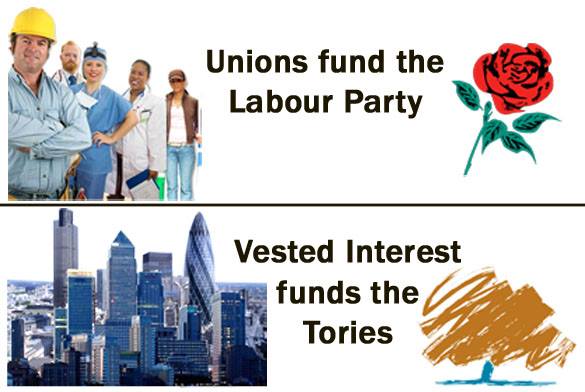
15553155399_94869b2dcd_oMany thanks to Rob Livingstone for his excellent memes


The link between Trade Unionism and equality

10553308_680322242037307_1558281906340939819_n

In an article I wrote earlier this year – Conservatism in a nutshell – I outlined some basic themes of New Right Conservative ideology. I said:

Conservatives don’t like social spending or welfare – our safety net. That’s because when you’re unemployed and desperate, companies can pay you whatever they feel like – which is inevitably next to nothing. You see, the Tories want you in a position to work for next to nothing or starve, so their business buddies can focus on feeding their profits, which is their only priority. Cheap-labour conservatives don’t like the minimum wage, or other improvements in wages and working conditions. These policies undo all of their efforts to keep you desperate. They don’t like European Union labour laws and directives either, for the same reason.

Conservatives prioritise handing out our money to their big business partners, no matter what it costs us as a society. For example, a spending breakdown reveals how NHS funding has flowed to private firms, much of that money has gone to companies with corrupt ties to the Tories, whilst health care is being rationed, care standards have plummeted, services are cut, and by the end of the next financial year, health service workers will have had their pay capped for six years, prompting fully justified strike action.

Following the tide of sleaze and corruption allegations, Cameron “dealt” with parliamentary influence-peddling by introducing the Gagging Act, which is primarily a blatant attack on trade unions (which are the most democratic part of the political funding system) and Labour Party funding, giving the Tories powers to police union membership lists, to make strike action very difficult and to cut union spending in election campaigns.

The Transparency of Lobbying, non-Party Campaigning, and Trade Union Administration Bill is a calculated and partisan move to insulate Tory policies and records from public and political scrutiny, and to stifle democracy. And there are many other examples of this government removing mechanisms of transparency, accountability and safeguards to rights and democracy.

We have witnessed a dramatic increase in levels of economic inequality this past four years, reflected in the fact that income differences between top earners and those on the lowest wages are now higher than at any time since records began. The UK now ranks as one of the most unequal societies in the developed world, even more unequal than the US, home of the founding fathers of neoliberalism. Our current levels of inequality have far exceeded the point at which campaigners need any further proof to show how socially corrosive and life-limiting the subsequent deepening poverty is.

Despite the legislative framework of Labour’s Equality Act, passed in 2010, there is a growing gender-based pay gap, continued abuse of agency workers, the problem of the two-tier work force and the contracting out of public servicesStrong trade unions improve public services, too.

Speaking at a press conference on the first day of the 2014 TUC Congress, TUC General Secretary Frances O’Grady said:

“The key message of this year’s congress is Britain needs a pay rise and I also expect many of the debates on the floor to focus on the importance of the coming general election for people at work.

Today, I want to highlight the threat posed by the Conservative Party’s promised manifesto proposals on strike ballots.

Because these proposals are designed to make unions weaker. And if unions become weaker, then the chances of people winning a pay rise, improving living standards and tackling inequality in Britain today will become a good deal harder.

The Conservative Party is not just proposing a few more bureaucratic obstacles that will make life a bit more difficult for trade unions.

Taken together, they would effectively ban strikes by the back door. And, on top of that, they would open up elected union leaders to increased surveillance by the state.

They are not just an attack on fundamental liberties. They will act to lower living standards for the majority of working people – whether or not they are union members.”

One half of the British population owns 9% of household wealth whilst the other half owns 91% of the wealth; and the five richest families in the UK are wealthier than the poorest 20% of the entire population.

Conservatives are always obsessed with “economic growth”, but we know from history that economic expansion in itself does not promote equality: it is the types of employment, the rules and structure of the economy and policies that matter most. Conservative governments always create high levels of inequality.  Furthermore, they rarely manage to bring about the economic growth they promise. But recession due to reduced public spending is an inbuilt feature of neoliberalism, as we witnessed during the Thatcher era.

Inequality hinders growth in another important way: it fuels social conflict. However, social diversity has no negative impact on economic growth, despite what those on the blame-mongering Right would try and have us believe. It is economic policies that shape inequalities, not minority groups: they are the casualities of inequality not its creators.

Economic inequality is also about discrimination. Black and ethnic minority workers are disadvantaged in finding employment. Dismissal of pregnant workers is a widespread practice. Last year, the wage gap between men and women’s earnings increased and the progress previously made towards equal pay has been reversed.

Cameron’s government has mobilised resentment and fear on the part of relatively privileged social groups in relation to other subordinate or putatively threatening groups of politically defined Others – immigrants, unemployed people, disabled people, unionised workers, single mothers and so on.

Social inequalities and hierarchies are defended by Conservatives and secured in several ways. The defence of power, wealth and property, when threatened, tends to be micro-managed via rigid authoritarianism, through systems of mobilised prejudice and through free-market policies (the predictable effects of which are to transfer wealth upwards). All Conservative politics pivot on a fundamental commitment – the defence of privilege, status, and thus sustaining social inequality.

But it is only by shifting money from the high-hoarding rich to the high-spending rest of us, and not the other way around, that investment and growth may be stimulated and sustainable.

The Office of Budgetary Responsibility forecasts that the Coalition are facing a £17BILLION blackhole after the low pay  that their own policies have strongly encouraged have caused a slump in tax payments to the treasury.

It is very clear that austerity is not an economic necessity, but rather, it is an ideological preference, used as a justification for “shrinking the State” whilst defending power, wealth and privilege.

The Coalition have introduced trade union laws which inhibit trade union recruitment, activity and collective bargaining. Employment rights are being removed, at a time when policies have reduced access to unfair dismissal protection and access to employment tribunals.

Trade unions are most effective when all workers are represented and therefore trade unionism encourages social inclusion. Collective bargaining and representational support will not work in the long term if some workers have substantially less to gain from the process than others.

For this reason, trade unions and the Labour Party have worked at eliminating sex, race and other forms of discrimination in the workplace. This has taken time, given how deeply ingrained inequalities have been in our society. We know that where trade unions are active, employers are more likely to have equal opportunities policies.

But for proper support of economic equality, trade unions need legal protection for their activities so they may operate freely and build effective social solidarity and promote egalitarianism.  Trade unions seek increased participation by working people in the decisions that influence their lives and a fairer distribution of the nation’s wealth. That is the antithesis of Conservatism.

Freedom to speak out against injustice, to campaign for economic equality and to work together through trade unions are underpinned by rights set out in the European Convention on Human Rights (ECHR). It’s no surprise that Cameron has pledged to exit the ECHR and to scrap Labour’s Human Rights Act.

To tackle economic inequality and build a fairer society, it is essential that trade-unions can operate freely and that collective bargaining is renewed. The impoverishment and exploitation of any one group of workers is a threat to the well-being and livelihood of everyone.

Building a future economy where the benefits of work and profit are shared requires legal reform in support of effective trade unions.

Lydia Hayes and Tonia Novitz from the Centre For Labour and Social Studies have written  the following proposals, designed to change public policy, so that trade unions are better able to represent their members, by  simplifying the statutory procedure for trade union recognition, and putting in place arrangements for sector-wide collective bargaining:

1. Introduce a legal framework through which trade unions can freely organise and engage in collective action to build economic equality.

2. Amend trade union recognition legislation so that all workers who choose to join a union can be represented in collective bargaining and other workplace matters.

3. Ensure the law provides for sectoral bargaining which can set minimum terms and conditions across an industry or a service sector.

4. Defend human rights which protect the functioning of trade unions (including rights to free speech, freedom of assembly and freedom of association).

5. Give trade unions access to workers and workplaces, so that they can advise on the benefits of membership and collective bargaining.

6. Enable workers to have access to information about trade unions at their workplace so that they can make an informed choice and easily join a trade union if they want to.

None of this will happen during the current government’s term, because Conservatism is in diametric opposition to trade unionism, equality, human rights and egalitarianism.

Related
The Institute of employment Rights

10174840_680246428711555_4476316988383611981_n

Thanks to Robert Livingstone for the graphics.


I don’t make any money from my work. I am disabled because of illness and have a very limited income. But you can help by making a donation to help me continue to research and write informative, insightful and independent articles, and to provide support to others. The smallest amount is much appreciated – thank you.

DonatenowButton

UK becomes the first country to face a UN inquiry into violations of disabled peoples’ human rights

994442_352804464870608_5110112617916821526_n (1)

We ought to be very concerned about the government’s declaration that they intend to withdraw from the European Convention on Human Rights, (ECHR) and to repeal our own Human Rights Act, (HRA). One has to wonder what Cameron’s discomfort with the HRA is. The Act, after all, goes towards protecting the most vulnerable citizens from neglect of duty and abuse of power. The rights protected by the HRA are drawn from the 1950 European Convention on Human Rights, which was a way of ensuring that we never again witness the full horrors of the second world war, and overwhelmingly, one of the greatest stains on the conscience of humanity – the Holocaust.

Human Rights establish a simple set of minimum standards of decency for humankind to hold onto for the future. The European Convention on Human Rights and Fundamental Freedoms was drafted as a lasting legacy of the struggle against fascism and totalitarianism, as well as the atrocities of world war 2.

What kind of government would want those basic protections for citizens overturned?

One that doesn’t value or wish to uphold the universal protection of its citizens. From the State.

Last month, a new report, Dignity and Opportunity for All: Securing the Rights of Disabled People in the Austerity Era – Jane Young is the lead author – exposed the Coalition’s failure to meet its international human rights obligations under both the UN Convention on the Rights of People with Disabilities (UNCRPD) and the International Covenant on Economic, Social and Cultural Rights (ICESCR).

The report – also published by the Just Fair Coalition, a consortium of 80 national charities including Amnesty International, Save the Children, and Oxfam, says the UK is in clear breach of its legal obligations. Support structures for many disabled people have disappeared or are under threat as local authorities cut social care budgets, while cuts to social security will leave many disabled people without lifeline support for daily living.

Jane Campbell, a cross-bench peer who is disabled herself, said: “It is both extremely worrying and deeply sad that the UK – for so long regarded as an international leader in protecting and promoting disabled people’s rights – now risks sleepwalking towards the status of a systematic violator of these same rights.”

The UK government seems to be the first to face such a high-level international inquiry, initiated by the United Nations Committee because of “grave or systemic violations” of the rights of disabled people. That ought to be a source of shame for the Coalition, especially considering that this country was once considered a beacon of human rights, we are (supposedly) a first-world liberal democracy, and a very wealthy nation, yet our government behave like tyrants towards the poorest and some of the most vulnerable citizens of the UK.  As disability specialist, campaigner and first-class human rights activist, Samuel Miller says: “Britain is [now] a retrograde society and a flagrant violator of human rights—especially the rights of the sick and disabled”. 

It’s because of the sterling work of people such as Mr Miller that the UN have been made aware of our dire situation, here in the UK. Many of us have contacted the UN and made submissions, detailing the detrimental impacts that punitive Tory policies such as the bedroom tax, other welfare “reforms” (cuts), including the increasing use of extremely punitive welfare sanctions which leave people without the means to meet their most basic survival needs, the draconian Work Capability Assessment, brutal Tory targets for reducing spending and local authority cuts, for example, are having on ill and disabled people.

This is a government who refuse to undertake a cumulative impact assessment of their “reforms” and also continue to dismiss any evidence provided that challenges their own glib and deceitful account as “anecdotal” or “scaremongering”. Yet we are expected to regard Tory soundbites such as the “culture of entitlement” and the “something for nothing culture” which are ideologically motivated rather than   resting on some sort of empirical evidence. The Tories believe that their opinions alone somehow justify the cruel removal of people’s lifeline benefits and support. 

There’s more than one issue here, though it’s plain that the government have no intention of addressing any of the terrible consequences of their draconian policies, and use denial and stigmatising others to deflect attention from their aims. I am reminded of Techniques of Neutralisation – a well known collection of tactics used historically to justify prejudiced views, discriminatory and oppressive policies and  despotic actions.

Another related and important issue is that people’s qualitative experiences should matter to any decent democratic government, but the Coalition is far more concerned with its persistent attempts at DISCREDITING those experiences, (such attempts to invalidate and exclude the narrative of experiences of previously and presently marginalised people is a hallmark of the oppressive, supremacist condescension of historically powerful and privileged groups) –  denying their victims a voice and remedy. We know that this is not a democratic government that serves its citizens and reflects their needs, equally or otherwise.

Thanks to the sterling work of Dr Simon J Duffy, from the Centre for Welfare Reform, among others, we know that the austerity measures in the UK have disproportionately affected those people with disabilities and their carers. Dr Duffy’s work on the impact of the austerity cuts shows us that:

  • People in poverty are targeted 5 times more than most citizens
  • Disabled people are targeted 9 times more than most citizens
  • People needing social care are targeted 19 times more than most citizens

Yet, this government claims a cumulative impact assessment is “too difficult and costly”, I suggest that they use their considerable publicly donated, tax-collected wealth to fund the work of the Centre for Welfare Reform, who managed to undertake this work without hitting the obstacles the government claims it has. This said, perhaps the findings are the real obstacle that the government are concerned about. Because those findings are damning, and tell us that the welfare “reforms” are NOT “fair” as claimed, and are causing harm, distress, hardships and sometimes, death. The grossly punitive, draconian “reforms” need to be repealed.

The UN Committee has the power to launch an inquiry if it receives “reliable information” that violations have been committed, and as the Labour Government signed up to the protocol in 2009 – the UNCRPD and the international covenant on economic, social and cultural rights – it is legally binding. Many of us have used the Optional Protocol to the Convention on the Rights of Persons with Disabilities to send communication and make submissions since 2012.

Austerity measures and welfare “reforms” such as the bedroom tax (which is in itself established by the UN as being a contravention of human rights law) mean the rights of disabled people to independent living, work, and adequate social security have been seriously undermined, causing significant hardship and harm, quite often leading to tragic consequences.

Such investigations are necessarily conducted “confidentially”, so the UNCRPD  has formally refused to confirm or deny that the UK is being investigated. However, a recording has emerged (one hour and twenty five minutes long, watch from one hour and four minutes) of a former CRPD member seemingly revealing that the inquiry has been launched.

Professor Gabor Gombos, who is the co-founder of Voice of Soul, Hungary’s first organisation for ex-users and survivors of Mental Health Institutions, and co-chair of the World Network of Users and Survivors of Psychiatry, can be heard informing the audience that CRPD has “started its first inquiry procedure against the United Kingdom”.

He informs the Sixth International Disability Law Summer School at the National University of Ireland in Galway, June, that inquiries are only used where there are suspicions of “grave” violations of human rights. He says: “Where the issue has been raised and the government did not really make effective actions to fix the situation – it is a very high threshold thing – the violations should really be grave and very systemic.”

Earlier this year, the level of UK benefits paid in pensions, jobseeker’s allowance and incapacity benefits was deemed “manifestly inadequate” because it falls below 40% of the median income of European states, by the Council of Europe in Strasbourg.

The finding in an annual review of the UK’s adherence to the council’s European social charter is likely to provoke a fresh dispute between the government and European legal structures. Iain Duncan Smith, the work and pensions secretary, dismissed it as “lunacy”.

Not an open, accountable minister, or government, then.

The Council of Europe, which has 47 member states, said the conclusions were legally binding in the same way that judgements relating to the European Convention on Human Rights had to be applied by member states.

Aoife Nolan, professor of International Human Rights Law at the University of Nottingham and a trustee of Just Fair said government policies were compromising disabled people’s human rights.

“Not only do these policies cause significant hardship and anxiety, but they also amount to impermissible backward steps in relation to disabled people’s human rights, contrary to the UN human rights framework.”

The report was submitted to the United Nations, which, as I’ve previously outlined in earlier articles here, is in the process of reviewing UK compliance with its obligations to the rights of disabled people.

Last year, Amnesty International condemned the erosion of human rights of disabled people in UK, and the Joint Parliamentary Committee on Human Rights conducted an inquiry into the UK Government’s implementation of Article 19 of the United Nations Convention on the Rights of Persons with Disabilities – the right to live independently and to be included in the community. The inquiry, which began in 2011, has received evidence from over 300 witnesses.

The inquiry highlighted just how little awareness, understanding and employment of the Convention there is by the Tory-led government. Very few of the witnesses made any specific reference to the Convention in their presented evidence, despite the inquiry being conducted by the Parliamentary Human Rights Committee, with the terms of reference clearly framing the inquiry as being about Article 19 of the UNCRPD.

“This finding is of international importance”, said Oliver Lewis, MDAC Executive Director, “Our experience is that some Governments are of the view that the CRPD is nothing more than a policy nicety, rather than a treaty which sets out legal obligations which governments must fulfil.”

The report is particularly critical of the Minister for Disabled People (Maria Miller, at the time) who told the Committee that the CRPD was “soft law”. The Committee criticised this as “indicative of an approach to the treaty which regards the rights it protects as being of less normative force than those contained in other human rights instruments.” (See the full report.) The Committee’s view is that the CRPD is hard law, not soft law. 

Quite properly so. The whole point of human rights legislation is that it is universally applied, regardless of characteristics, preferences or belonging to a specific community or social group. The Tories seem to believe that poor people, disabled people and those with mental and physical illness should enjoy fewer rights than others.

Dr Hywel Francis MP, Chair of the Committee, said: “We are concerned to learn that the right of disabled people to independent living may be at risk through the cumulative impact of current reforms. Even though the UK ratified the UNCPRD in 2009 with cross-party support, the Government is unable to demonstrate that sufficient regard has been paid to the Convention in the development of policy with direct relevance to the lives of disabled people. The right to independent living in UK law may need to be strengthened further, and we call on the Government and other interested organisations to consider the need for a free-standing right to independent living in UK law.”

“The Government is meant to include disabled people in making sure people have their human rights upheld. We are concerned that a part of the Law on treating people equally and fairly (Equality Act section 149) does not say any more that disabled people should be involved. This is a step backwards.”

In other words, the Tory-led Coalition has quietly removed this part of the Equality Act.

The budget of the Equality and Human Rights Commission (EHRC), which was established by the Labour Party when they were drafting this flagship policy, is being reduced by over 60%, its staffing cut by 72%, and its powers restricted by the Coalition. Provisions that are being repealed by the Enterprise and Regulatory Reform (ERR) Bill include the duty on public authorities to have due regard to the need to reduce socioeconomic inequalities.

Savage Legal aid cuts from April 2013 have also contributed significantly to creating further barriers to ensuring Equal Rights law protect us, and the Tory-driven Legal Aid Bill also contravenes our right to a fair trial under Article 6(1) of the European Convention on Human Rights.

This is not a coincidental multiple policy timeline, but rather a very coordinated political attack on potential legal challenges at a time when Tory-led severe and devastating multiple welfare and provision cuts have affected disabled people so disproportionately. The changes, which came into effect in April, will hit “the same group of disabled people over and over again”. 

Our political freedoms and human rights must not be subservient to Tory notions of ‘economic success’. Democracy is not about the private accumulation of wealth of a few millionaires at the expense of others. It is about the wise use of the collective wealth – pubic funds – for the common good of the public – that must extend to include ALL of our citizens. And a decent, civilised, democratic society supports its vulnerable members and upholds universal human rights.

We need to ask why our government refuses to instigate or agree an inquiry into the substantial rise in deaths among ill and disabled people, as these deaths are quite clearly a correlated consequence of this government’s policies.

What kind of government uses the media to scapegoat and stigmatise ill and disabled people, by lying and inventing statistics to “justify” the persecution of our most vulnerable citizens, and the withdrawal of their crucial lifelines and support?

One that does not value those lives, or regard them as having an equal worth with others.

scroll2

I’m adding this comment from Samuel Miller, as it highlights his ongoing, excellent, valuable and much appreciated work with the United Nations on our behalf, which is a most welcomed addition to our own ongoing submissions of evidence over the past couple of years:

A superlative piece, which I will bring to the attention of senior UN officials. Ahead of the September meeting of the Human Rights Council (see third paragraph of :-http://mydisabilitystudiesblackboard.blogspot.ca/2014/08/an-inopportune-time.html), I will shortly submit an inquiry request to the CRPD and Human Rights Council, petitioning them to open an investigation into Britain’s benefit-sanctioning regime. (At the request of Jorge Araya, UNCRPD Secretary, I am completing a bibliography of media articles on this subject, with particular focus on inappropriate sanctions.)

You already know my views on this matter: http://twishort.com/1RVfc.

My bibliographic assignment for the UNCRPD Secretary might be an indication that the UN has already opened an investigation into Britain’s benefit-sanctioning regime, but for the sake of certainty I’ll make that request myself.”

And further:  See my letter to High Commissioner, Navi Pillay, below. I included your superb article in my letter, Sue.

Subject: There is an urgent need for a UN investigation into the United Kingdom’s benefit-sanctioning regime

Samuel Miller 

Attachments3:58 PM 

High Commissioner Navi Pillay
Office of the United Nations High Commissioner for Human Rights (OHCHR)
Palais Wilson
52 rue des Pâquis
CH-1201 Geneva, Switzerland.

Dear Ms. Pillay,

I am a 57-year-old Disability Studies specialist and disability activist from Montreal, Canada who has been communicating frequently and voluntarily, since January 2012, to senior United Nations officials, on the welfare crisis for the United Kingdom’s sick and disabled.

(See attached, and the following:

http://www.twitlonger.com/show/n_1rp0uui,
http://www.twitlonger.com/show/n_1rtnc63,
http://www.twitlonger.com/show/n_1rtvfk5 )
.

It is my understanding that a 22-page letter, pointing out that cuts to social security benefits introduced by Iain Duncan Smith and enforced by his Department for Work and Pensions on behalf of the Coalition government may constitute a breach of the UK’s international treaty obligations to the poor, will also be discussed at a meeting of the UN Human Rights Council in New York, in September. It is signed by Raquel Rolnik, the former UN special rapporteur on adequate housing; Magdalena Sepúlveda Carmona, the former UN special rapporteur on extreme poverty; and Olivier De Schutter, the former UN special rapporteur on the right to food.

Could you please add, as an addendum to that letter, my partial bibliography on Britain’s benefit-sanctioning regime, which is attached below in PDF format. My views can be found on page two; I am extremely concerned about the British government’s soaring use of benefit sanctions, and the evidence from MPs and the Work & Pensions Committee, which provides oversight of the Department for Work and Pensions, is especially compelling and strongly suggests that the government is stitching-up benefit claimants and is involved in a cover-up of that fact. The refusal of the government to agree to the Work & Pensions Committee’s request for an independent inquiry into this matter only compounds suspicion.

In closing, I would be most appreciative if the Human Rights Council and the OHCHR would open an investigation into this matter. This article (https://kittysjones.wordpress.com/2014/08/16/uk-becomes-the-first-country-to-face-a-un-inquiry-into-disability-rights-violations/) is very worthy of your—and their—attention, as well.

I wish to congratulate you on your tenure as High Commissioner, and wish you every success in your future endeavors.

Warm regards

Samuel Miller


14533697838_dffcc736f2_o (1)

Pictures courtesy of  Robert Livingstone 

scroll2

The last Labour government introduced a host of measures to strengthen the rights of our most vulnerable groups – in particular they protected the rights of disabled people. They formulated the Human Rights Act 1998. They passed the Disability Discrimination Act 2005, introduced the Equality Act 2010, formed the Equality and Human Rights Commission, and, in 2009, the Labour government signed the United Nations convention on the rights of persons with disabilities.

The few successful cases we have seen brought against the Tories are down to these Labour laws. We mustn’t lose sight of that. And I’ve every faith that a Labour government will address the gross injustices extended by the draconian of this government, using the existing laws, and their currently proposed policy of prosecuting people for hate speech against the vulnerable.


I don’t make any money from my work and I am not funded. I am disabled because of illness and struggle to get by. But you can help me continue to research and write informative, insightful and independent articles, and to provide support to others, by making a donation. The smallest amount is much appreciated – thank you.

DonatenowButton

A strong case for the Human Rights Act

994442_352804464870608_5110112617916821526_n (1)

The Human Rights Act 1998 (HRA) is a straightforward statute, that works by allowing individuals in the UK to enforce their rights in their local courts.  The Act makes available a remedy for breach of a Convention right without the need to go to the European Court of Human Rights in Strasbourg.

It was designed to supplement the European Convention on Human Rights (ECHR). It also requires public authorities to respect the rights of those they serve. As a part of Labour’s 1997 commitment to a new constitutional settlement, it represented a new way of thinking about law, politics and the relationship between public authorities and individuals.

The Act provides that it is unlawful for a public authority to act in such a way that contravenes Convention rights. Section 7 of the HRA enables any person with standing to raise an action against a public authority which has acted or proposes to act in such a way that contravenes the Convention. A person will have standing to do so provided they would satisfy the “victim test” stipulated by Article 34 of the Convention. This is a more rigorous standard than is ordinarily applied to standing in English (although not Scottish) judicial review.

However, the Act also provides a defence for public authorities if their Convention violating act is in pursuance of a mandatory obligation imposed upon them by Westminster primary legislation.

The rights protected by the Act are quite simple. They include the right to life, liberty and the right to a fair trial; protection from torture and ill-treatment; freedom of speech, thought, religion, conscience and assembly; the right to free elections; the right to fair access to the country’s education system; the right to marry and an overarching right not to be discriminated against. Cameron has argued that it should be repealed since just 10 years after its implementation (the HRA came into force in October 2000) … so that he can pass another Act.

No other country has proposed de-incorporating a human rights treaty from its law so that it can introduce a Bill of Rights. The truly disturbing aspect of Cameron’s Bill of Rights pledge is that rather than manifestly building on the HRA, it’s predicated on its denigration and repeal. One has to wonder what his discomfort with the HRA is. The Act, after all, goes towards protecting the vulnerable from neglect of duty and abuse of power.

Do you really believe Cameron (Or Farage, who also states that he intends to repeal the HRA, given the opportunity) is more likely to build on existing rights and freedoms or to destroy them? The front page agendas of the Sun and Daily Mail indicate the latter. The Tories have hijacked the language of a Bill of Rights in order to weaken them.

History

The rights protected by the HRA are drawn from the 1950 European convention on human rights, which was a way of ensuring that we never again witness the full horrors of the second world war, and overwhelmingly, one of the greatest stains on the conscience of humanity – the Holocaust. Winston Churchill was one of the main drivers of the Convention, it was largely drafted by UK lawyers and the UK was one of the first countries to ratify it in 1951.

This was the establishing of a simple set of minimum standards of decency for humankind to hold onto for the future. The European Convention on Human Rights and Fundamental Freedoms (ECHR) was drafted as a lasting legacy of the struggle against fascism and totalitarianism, as well as the atrocities of world war two.

Yet the HRA is quite often portrayed by the Right as a party political measure. However, whilst the Human Rights Act is ultimately recognised as one of the greatest legacies of Labour in government, Cameron seems oblivious to the fact that Human Rights are not objects to be bartered away. They arose from struggles that were begun long ago by past generations who gave their lives for these rights to be enshrined in our laws.

The position of the Conservative party was clarified by Chris Grayling, the justice secretary, when he revealed late last year that “replacement” of the HRA would be part of the Tory election campaign. The only thing that has held the Tories in check during this government has been the opposition from Liberal Democrats to any diluting of the Act or to our commitment to the European Convention. The Labour Party, has been equally consistently adamant that it intends to retain the HRA, and to remain committed to the Convention.

The outcome of the local and European elections has now intensified the debate. The UKIP challenge will no doubt push the Tories even further right: to further distance itself from the obligations under the Convention, which is frequently wrongly described by Tories and the press as an EU treaty.

When the decision to give domestic effect to the European Convention on Human Rights took place in Northern Ireland, the negotiators to the Good Friday agreement made sure that this was included. The Labour Government agreed to incorporate the Convention through an international treaty with the Government of the Republic of Ireland on the basis of a quid pro quo. The Human Rights Act was a crucial part of the peace accord.

The HRA is misunderstood and very often misrepresented by right-wing politicians and the media, it has been variously portrayed as a threat to parliamentary sovereignty, a European imposition, and a “villain’s charter.” It is in reality, however, a victim’s charter. It provides a vital framework for such debate amongst people of good will.

Tory ministers are a major source of national embarrassment when they denounce the European Court of Human Rights whilst instructing the rest of the world, including other European states, to respect our collective international human rights obligations and “the rule of law.” Human Rights legislation exists throughout the free world. Free speech, the right to a fair trial, respect for private life and the prohibition on torture are values which distinguish democratic societies from fascist states.

An inquiry led by the Equality and Human Rights Commission demonstrated that the HRA has been effective in influencing the everyday practice and procedure of a range of public authorities, from the police to social workers, care homes to mental health hospitals. The HRA does not set criminals above the victim, despite the media myths. Nearly all of the rights are informed and qualified by the need for public protection, and many human rights cases have involved  victims challenging governments for gross failures to protect them.

These are positive developments which UKIP and the Tories seek to overturn.

The case for the HRA is a strong one. It is a moral case based not only on learning from the history of some of the worst violations of human rights before and during the second world war, but also from recent history – the here and now. If a new settlement based on social inclusion and greater equality is to be reached, the HRA should not be viewed suspiciously, as a burden, but promoted as an instrument of equality, social cohesion and public purpose. It is expected of a democratic government to improve the understanding and application of the Act. That is an international expectation, also.

There is no justification for editing or repealing the Act itself, that would make Britain the first European country to regress in the level and degree of our human rights protection. It is through times of recession and times of affluence alike that our rights ought to be the foundation of our society, upon which the Magna Carta, the Equality Act and the Human Rights Act were built – protecting vulnerable citizens from the powerful and ensuring those who govern are accountable to the rule of law.

Observation of human rights distinguishes democratic leaders from dictators and despots. Human Rights are the bedrock of our democracy, they are universal, and are a reflection of a society’s and a governments’ recognition of the equal worth of every citizens’ life.

Worth reading:

The protection of freedom under the Human Rights Act: some illustrations

A journalist’s guide to the Human Rights Act


68196_116423458427191_5364492_nPicture courtesy of Robert Livingstone 

Clause 99, Catch 22 – State sadism and silencing disabled people

37079_433060243430176_1848475368_n

Here is the Hansard record of The Work Capability Assessments – Mandatory Reconsideration adjournment debate – it’s the 6th debate about Employment Support Allowance (ESA) tabled by Labour MP Sheila Gilmore, who has worked very hard to present her gathered and substantial evidence to an indifferent government about the terrible consequences of their sadistic sickness and disability “reforms”.

Section 102 and Schedule 11 of the Welfare Reform Act, (Clause 99) is the (State) power to require revision before appeal. People who wish to challenge a benefit decision will no longer be allowed to lodge an appeal immediately. Instead, the government introduced mandatory revision or review stage, during which a different Department of Work and Pensions (DWP) decision maker will reconsider the original decision and the evidence and, if necessary, send for more information.

We have campaigned since 2012 to raise awareness of Clause 99. During the Consultation period, I wrote a response to the government’s proposals, which many people used as a template for their own responses. I remember that Black Triangle, amongst others, ran a campaign also, and I remember that we ALL RAISED THE SAME CONCERNS.

In summary, the main concerns were that basic rate ESA was to be withdrawn during the mandatory review period, leaving sick and disabled people with no money to live on, whilst the DWP reconsidered their own “fit for work decisions” that were wrong.

I know that our Consultation responses were ignored by the government. The changes were introduced anyway, despite our grave concerns. Since October 2013 people have to apply for mandatory reconsideration separately before they can lodge an appeal. We were also very worried that no time limit was established for the DWP to undertake and complete the mandatory review. Our concerns were fully justified, as it’s emerged that people are waiting 7-10 weeks for the mandatory review decision. Meanwhile, these people cannot appeal. And have no money to live on.

An added concern is that this system as it stands demands such a lot from people who may be very vulnerable, seriously ill and/or have mental health problems. Their difficulties are exacerbated by cuts in legal aid for welfare rights advice and cuts in local authority grants. There is a significant contraction of the availability of help for those who need it the most from advice agencies.

Last year, Lord Freud suggested people awaiting their mandatory review should apply for Jobseekers Allowance (JSA) and then re-claim assessment-rate ESA if they have to appeal. However JSA claimants have to be available for and actively seeking work, and this is beyond people with disabilities or health conditions. As a result, many are ending up without any support at all from the State, having been deemed too “fit” to be eligible for ESA, but too sick or disabled to claim JSA, because these people cannot meet the high level of conditionality or remain available for work.

These people are left with NO lifeline benefits for periods as long as ten weeks. It seems Penning is oblivious to the fact that DWP “decision-makers” are demonstrating quite clearly that their initial “fit for work” responses are plainly and fundamentally wrong, it seems that Tory Ministers have engineered a situation that places some of the most vulnerable disabled people in a nightmarish situation where bureaucrats tell them they are both fit and unfit for work. Both contradictory decisions are then used to withdraw lifeline benefits. That’s not only grossly unfair, it’s terribly cruel. It also demonstrates how completely arbitrary DWP “decision-making” is, in order to justify removing people’s support.

Even when it’s the case that someone manages to make a successful claim for JSA, they are greatly at risk of being sanctioned because of the high level of conditionality, and the requirement to be available for work, in order to remain eligible for the benefit.

Furthermore, there is growing evidence that the DWP are closing existing ESA claims when a person successfully claims JSA during the mandatory review period, on the grounds that it isn’t possible to have two ongoing claims for two separate benefits open at the same time. This effectively means that people lose their right to appeal for the reinstating of their ESA, as their original ESA claim has ended.

This is how disabled people, amongst whom are some of our most vulnerable citizens, are being treated, what kind of government would allow such an utterly unacceptable degree of absolute callous indifference into what was originally designed as a system of support? A system that is now punishing people because they are sick or disabled? And what sort of government ignores the evidence of the extreme suffering and distress they are causing people?

How can this government show no remorse whatsoever, or decent and normal concern in the face of so many accounts of such human suffering and desperation – and heartbreaking comments such as “one constituent sold off his few remaining possessions to survive.” 

Many are relying on already stretched food banks, whilst others are taking out high interest loans. This situation is being exacerbated by growing delays. As we’ve pointed out, the law needs to change so claimants can be paid ESA at the assessment rate during the reconsideration process. This shouldn’t actually cost any money, as it is paid at the same rate as JSA – that benefit officials suggest claimants should receive anyway. I know that Sheila Gilmore is pushing to see basic rate ESA reinstated. She is also demanding that a statutory time limit is set on how long reconsideration decisions take. But Penning remains adamant that this isn’t going to happen.

Sheila notes that this issue was raised with Ministers when the legislation was going through the House and in subsequent sittings of the Work and Pensions Committee, for example. In April 2012, the Administrative Justice and Tribunals Council warned that the absence of a time limit could have the effect of “delaying indefinitely the exercise of the right of appeal to an independent tribunal”.  

Many of the key issues with the mandatory review can be seen summarised herehere and here. Sheila Gilmore and Anne Begg have covered these extensively during the ongoing Work and Pensions Committee ESA inquiry, as well as during the course of the many separate tabled debates.

Penning, I’m sorry to say, remained indifferent when he was confronted with evidence of the unforgivable suffering, the links to suicide, the links with high risk of homelessness, hunger, anxiety and stress, and the exacerbation of illness and mental health conditions in vulnerable people – this government’s policies are creating these extreme hardships. Bearing in mind this is meant to be our government’s support for very vulnerable sick and disabled people, his position is indefensible. So are his objections to answering these questions before. He said: “Actually, this is a bit like groundhog day. According to my file, this is the hon. Lady’s fifth debate on the subject. She said that it was the sixth; perhaps we missed one….

I am slightly concerned, because I said many of the things that I am about to say to her Committee only a few days ago. I hope that its members will pay attention to what I say, because during the speech of the hon. Member for Edinburgh East I feared that the report might have already been written.” 

Perhaps if he told the truth, listened and did his job properly, there would be no need for us to raise the same concerns again and again.

I doubt I could be an MP, I probably lack the necessary constraint, I’m afraid the sneer in his words, given the gravity of the situation for so many sick and disabled people, would have possibly elicited an out of character, but unstoppable, spontaneous punch in his spiteful, indifferent face, such is my anger. And really it’s impossible to see the welfare “reforms” as anything other than callous, spiteful and scripted sadism and indifference to people’s pain and desperation. I’ve always loathed bullies.

Sheila Gilmore said she had been told by Mark Hoban previously – last September – that claimants could request “flexible conditionality”, to avoid the difficulties imposed by JSA conditionality criteria. However, DWP’s Director acknowledged in April – some seven months later – that “not all advisors had been aware of this”. As Sheila Gilmore responded: “It is hard to have confidence in the Department, given that previous assurances were clearly unfounded.

Penning said: “As a Minister in the DWP, I am absolutely determined that we will ensure that taxpayers’ money is spent wisely; that it goes to the people who need it; that we put in place training for the right people…”

He seems to have overlooked the fact that most people claiming ESA have worked, paid income tax, and are still contributing proportionally more tax than those on the highest incomes pay, via VAT, Council Tax, the Bedroom Tax and an array of other stealth charges

And very clearly, the “people who need it” are NOT getting the support they need.

As Sheila Gilmore points out: “There is also an administration cost involved in a claimant receiving the assessment rate of ESA, ceasing to receive it, claiming JSA and then potentially claiming the assessment rate of ESA again. These are significant costs when multiplied by the number of people involved. In addition, if everybody claimed JSA successfully, they would receive benefit at exactly the same rate as they would have been getting on ESA, so if there are any savings to be anticipated, is it because ministers thought that people would, in fact, struggle to claim JSA during the reconsideration process, given that administration costs are likely to outweigh anything else? ”

“I am sure that cannot be the case.” she added.

I’m not bound by Parliamentary codes of conduct, as Sheila is. So I can say freely and categorically that it IS the case, and we anticipated this at the Consultation stage. Furthermore, the government know that WE know this, but they remain unremorseful, refusing to re-introduce assessment rate ESA, and to place a time limit on the reconsideration process.

Clause 99 has been introduced to make appealing wrong decisions that we are fit for work almost impossible. Sick and disabled people are effectively being silenced by this Government, and the evidence of a brutal, de-humanising, undignified and grossly unfair system of “assessment” is being hidden. More than 10,600 people have died  between 2010 – 2011, this a significant increase in mortality because of the current system, (the government have refused to release the data regarding ESA-related deaths since 2011 despite numerous Freedom Of Information (FOI) requests) and it is absolutely terrifying that our Government have failed to address this.

Instead, they have made the system even more brutal, de-humanising and unfair. What kind of Government leaves sick and disabled people without the means to feed themselves and keep warm? Clause 99 is simply an introduction of obstructive and Kafkaesque bureaucracy to obscure the evidence of an extremely unfair and brutal system. By creating another layer of brutality, the Government is coercing people into silence.

Successful appeals were evidence of an unjust system, and now, having made the process of appeal almost impossible, we have ministers trying to claim that suddenly the system is fine.

It’s FAR from fine.

430847_149933881824335_1645102229_n (1)Thanks to Robert Livingstone for his brilliant artwork.

I would also like to say a BIG thank you to Sheila Gilmore, Dame Anne Begg, Debbie Abrahams and all other MPs who work tirelessly in challenging and opposing the avalanche of social injustices and authoritarian policies this government have inflicted on those least able to fight back themselves.

A letter of complaint to Andrew Dilnot regarding Coalition lies about employment statistics

 10270806_319228004894921_8005540502444686357_n
I’ve written the following to Andrew Dilnot:

Dear Sir,

I write in response to the government claims made recently regarding employment. During Prime Minister’s questions in Parliament on Wednesday, Mr Cameron said that the number of people in full-time employment had risen. Other ministers, such as Esther McVey have echoed these claims.

We are growing the economy and we’ve got more people in work,”  Mr Cameron said.

And: The number of people out of work in the UK fell by 133,000 to a fresh five-year low of 2.2 million in the three months to March, official figures show.The jobless rate also fell to a five-year low of 6.8%, the Office for National Statistics (ONS) has said”.

I am very concerned about the accuracy of these claims, and should like to challenge both the validity and reliability of them, given the current methodological problems with measurement, which the ONS have acknowledged in part, previously.

To count as unemployed, people have to say they are not working, are available for work and have either looked for work in the past four weeks or are waiting to start a new job they have already obtained. Someone who is out of work but doesn’t meet these criteria counts as “economically inactive”. The results from a selected sample, based on narrow criteria, are then weighted to give an estimate that reflects the entire population.

The other measure of joblessness – the claimant count – is published for each single month. It doesn’t suffer from the limitations of sample size and sampling frame, because it derives from the numbers of Jobseeker’s Allowance (JSA) claimants recorded by Jobcentre Plus, so a monthly figure is possible right down to local level. But because many people who are out of work won’t be eligible for JSA, it’s an  even narrower measure.

I draw your attention to the following, taken from the Summary of recommendations: Response from the Employment Related Services Association (ERSA) to the Work and Pensions Select Committee inquiry into Jobcentre Plus, dated May, 2013:

Jobcentre Plus performance metrics:

  • The effectiveness of Jobcentre Plus (JCP) should be measured by sustained job outcomes rather than off-benefit flows to create greater incentives to support jobseekers into employment and provide a more accurate picture of success rates. This would address potential perverse incentives to sanction claimants inappropriately, plus ensure greater comparability between JCP provision and contracted out provision.
  •   Such a change could help to provide greater transparency in order to identify those who would benefit from intensive employment support. Such a performance metric would prevent the phenomenon of ‘cycling’, jobseekers moving between short term jobs and unemployment for many years, but not building up the length of time of continual unemployment to qualify them for specialist support.

In particular, I wish to draw your attention to this from the same document – Response from ERSA to the Work and Pensions Select Committee inquiry into JCP, 2013:

4.1. JCP is measured by off-benefit flows rather than sustained job outcomes. This can create perverse incentives to move jobseekers into short term employment outcomes, rather than refer them to long term contracted out support. It can also create a perverse incentive to sanction claimants as discussed below.

ERSA recommends that whilst off-benefit checks are monitored for national statistical purposes, job outcome and sustainment measure, comparable to the Work Programme, should be introduced for Jobcentre Plus. This would enable analysis between the performance of JCP and contracted out provision and provide accurate value for money comparisons.

5.1. DWP point to off-benefit flows as an indication of the effectiveness of pre-Work Programme support. However, analysis undertaken by Policy Exchange calls into question the validity of off-benefit figures as a success measure given that many do not go into sustainable employment or simply move on to another type of benefit.

8.1 As identified by the Committee in its report into the experience of different user groups on the Work Programme, the use of sanctions is inconsistent. 

Providers are obliged to notify Jobcentre Plus if a jobseeker fails to undertake an activity, for example if they miss an appointment. The decision as to whether to actually enact sanctions rests with Jobcentre Plus though. This means that sanctions are not applied even though a provider may think there is a clear case to do so. Conversely, a provider may be satisfied with the progress made by a participant but may be overruled by Jobcentre Plus who have a case for applying conditionality.

For example, one ERSA member reported that Jobcentre Plus decided to sanction a Work Programme participant for insufficient use of the Universal Jobmatch website, despite the fact that the provider had explicitly asked the participant to focus on resolving some other issues ahead of any formal job search activity. Sanctioning represented a great setback in the trust and progress made up to that point. ERSA agrees with the recommendation put forward by the Committee in its most recent report into the Work Programme for DWP to conduct a review of sanctioning activity with a view to ensuring that the processes are clearly understood by participants and consistently applied.

8.2 Part of the problem lies in the fact that Jobcentre Plus is measured by off-benefit flows rather than sustained job outcomes. This therefore means that a situation in which a Personal Advisor applies a sanction that may in fact damage an individual’s progress to employment, would register as a success according to the off-benefit flow measure. ERSA believes that measuring Jobcentre Plus success by sustained job outcomes would remove any perverse incentives to sanction individuals.

So, in summary, simply measuring how many people end their claims for benefits does not reveal the true impact of jobcentre services, nor does it accurately reflect the numbers of those moving into employment.

Let’s not forget that in 1996, the Conservative government introduced the jobseeker’s allowance that cut benefits to young people up to 18 years old – the new allowance was designed to replace unemployment benefit and income support. Young people excluded from eligibility for benefit are therefore absent from unemployment statistics.

The Department has simplified its performance measures and now primarily targets the move by claimants away from benefits, or “off-flow”, as a simple and intuitive measure of performance. However, this gives no information about how individual jobcentres perform in supporting claimants to work. Some may have found work but, in more than 40 per cent of cases, the reason for moving off benefits is not actually recorded.

I am also concerned that underemployment continues to remain very high, despite a small fall of 7,000 in the number in involuntary part time work, the total still stands at 1.42m. This is an increase of a 100 per cent beyond the pre-recession level of 701,000. The rise in employment also continued to be driven by self-employment, which is extraordinary as self-employment is a relatively small part of the UK jobs market. But although just one in seven workers are self-employed, over half of all jobs growth over the year has been in this type of employment. The TUC share this concern, and have said that some people have been forced in to self-employment as they have no alternative.

Previous TUC’s analysis  suggests that rising self-employment is part of a wider shift towards insecure employment, rather than as a result of a growing number of people starting up new companies as ministers have claimed. Analysis shows that self-employed workers are often earning less, underemployed, and have less job security than employees.

One very important issue not currently considered is that since the government does not track or follow up the destination of all those leaving the benefit system, as discussed, the off-flow figures will inevitably include many having their claim ended for reasons other than securing employment, including sanctions, awaiting mandatory review, appeal, death, hospitalisation, imprisonment, on a government “training scheme” (see consent.me.uk  and the Telegraph – those on workfare are counted as employed by the Labour Force Survey.)

Furthermore, last week Iain Duncan Smith met a whistle-blower who has worked for his Department for Work and Pensions for more than 20 years. Giving the Secretary of State a dossier of evidence, the former Jobcentre Plus adviser told him of a “brutal and bullying” culture of “setting claimants up to fail”.

“The pressure to sanction customers was constant,” he said. “It led to people being stitched-up on a daily basis.”

The whistle-blower wishes to be anonymous but gave his details to Iain Duncan Smith, DWP minister Esther McVey and Neil Couling, Head of Jobcentre Plus, who also attended the meeting. He said:

“We were constantly told ‘agitate the customer’ and that ‘any engagement with the customer is an opportunity to ­sanction.”

Iain Duncan Smith and his department have repeatedly denied there are targets for sanctions. However, the whistle-blower says:

“They don’t always call them targets, they call them ‘expectations’ that you will refer people’s benefits to the decision maker. It’s the same thing.”

He claimed managers fraudulently altered claimants’ records, adding: “Managers would change people’s appointments without telling them. The appointment wouldn’t arrive in time in the post so they would miss it and have to be sanctioned. That’s fraud. The customer fails to attend. Their claim is closed. It’s called ‘off-flow’ – they come off the statistics. Unemployment has dropped. They are being stitched up.”

Labour MP Debbie Abrahams, the member of the DWP Select Committee who set up the meeting, has renewed her call for an inquiry into inappropriate sanctioning. Debbie said:

“I am deeply concerned that sanctions are being used to create the illusion the Government is bringing down unemployment.

It is my belief that the claims made by David Cameron and his ministers are an unwarranted, far-fetched inferential leap from methodological premises that don’t stand up to scrutiny, for all of the reasons I have outlined. I felt obliged to draw your attention to this matter, not least because I am not alone in my concerns, and I feel very strongly that it is immoral of any government to mislead the public to which it is meant to be accountable.

Yours sincerely
Ms Susan Jones.

Related article: Austerity, socio-economic entropy and being conservative with the truth

Petition to Stop DWP Minsters Spinning Statistics 

995658_494538353949031_779653065_n
Thanks to  Robert Livingstone for the pictures.

Freedom of Information tribunal on benefit deaths – April 23

tory cuts
That we live in times when a government can withhold information about the impact of its policies on sick and disabled people, the poorest and the vulnerable is extraordinary, and certainly reflects the fact that we are no longer a democracy.

We knew in 2012 that an average of 73 sick and disabled people were dying after they had their lifeline benefits withdrawn. But now the government refuses to provide us with information about deaths since then. It’s my own belief that this refusal is because the truth will be horrifying and that even those that supported benefit cuts originally will raise their objections when they learn the truth. We cannot claim to be a civilised society when our government policy is killing some of our most vulnerable citizens.

Well done Mike Sivier, for standing up against an increasingly authoritarian government, and good luck from your fellow campaigners.

From Vox Political: Freedom of Information tribunal on benefit deaths – April 23.

“The only way the public can judge whether this has worked, or whether more must be done to prevent unnecessary deaths, is by examining the mortality statistics, but these have been withheld”. 

Yes, just like the toxic clause 99 – mandatory review – silences those wishing to appeal, also hiding evidence from the public eye. The Tories are showing form here.

 In a so-called democracy, ALL campaigning is both essential and part of an inbuilt safeguard against authoritarianism.

Vox Political: Case proven? Government stays away from benefit deaths tribunal

Related:

The ESA ‘Revolving Door’ Process, and its Correlation with a Significant Increase in Deaths amongst the Disabled.
Briefing on How Cuts Are Targeted – Dr Simon Duffy

How to deal with an Atos mole and cunningly fake, complex Messiahs.

564387_382388205164047_1299018142_n

I’m an ordinary person who happens to be ill, and like many others, I also happen to have a few strong principles, a strong sense of fairness, justice and I am clear on what’s decent, right and wrong. I don’t want to be a leader of any kind, nor do I see myself as an “expert” on disability issues. I don’t believe we should be looking to individuals for answers, to speak for us, or to take responsibility for us. One size does not fit all: our individual challenges vary greatly, and so, therefore, will our individual solutions, and the level of support we may need.

So we need a broad variety of spokespersons to reflect a wide spectrum of needs within our community, and we ought to welcome such a pluralist approach and recognise our diversity as a great strength. Furthermore, much campaigning is about issues around social exclusion, we can only approach this effectively by making sure our own principles are inclusive.

Some campaigners are far from inclusive, however. My own experiences recently of online bullying and trolling have led me to conclude that some of the militant far left and some of the more nihilistic anarchists are as divisive and brutal as the right, and every bit as damaging to our unity, collective sense of purpose, and motivation.

Furthermore, some of these are people claiming to be “real socialists” but I’ve yet to witness any genuine cooperative spirit amongst them. The same group of bullies tried their utmost to have me excluded from campaign groups on Facebook, they gossip-monger with malicious relish, tell whopping lies (apparently I’m a “snout” for the establishment, I work for British Intelligence Services) and troll my own groups, all of this is ultimately because I happen to support the Labour Party.

Two of the groups of people concerned are part of well-known, large campaigning organisations, and these groups claim to support people who are disabled, and speak out for our collective rights. That should never be conditional or contingent on specific political affiliations. One of these groups is simply a front for the Scottish National Party. Their hostility and bullying behaviour towards Labour supporting disabled people has earned them some notoriety.

The group of rather hard line Narxists have no inclusive principles, they aren’t tolerant, nor do they acknowledge diversity; there is no acceptance of alternative views to their own, no open-mindedness, or willingness and capacity for debate, or critical thinking.

And since when was socialism hierarchical? Or about bullying, or being so exclusive? I’m seriously concerned that many people claiming to be “more socialist than you” fail to recognise fundamental socialist principles, such as cooperation, mutual aid, collectivism, tolerance, inclusion and solidarity.  And the absolute importance and necessity of democratic dialogue and exchange.

We ought to be suspicious and wary of those that try to isolate and alienate others. That is very divisive authoritarian behaviour, usually reserved for the far right and has got nothing to do with socialism. We have to BE the change we want to see. Practice what we are preaching, as it were.

Recently, many campaigners supported a man who claimed he was on hunger strike because of his bitter and degrading experience of Atos – one so many of us are all too familiar with. We were to find out over time, however, that he had another agenda, which was more about self-publicity, the promotion of rather unpleasant views founded on misogyny and homophobia (under the guise of “Christianity”) and a variety of other extremely right wing inclinations and views. I witnessed fellow campaigners bullied and abused online by this previously apparently meek and mild character.

Though I had recognised early on that he did not like to acknowledge the work of fellow activists, and he seemed just a tad ego-bound, I said nothing, and watched, bemused, as he was pushed to the forefront of disability campaigning for a while. When people like this let themselves down, they tend to pull a lot of others with them, unfortunately.

A lesson to be learned, perhaps, is that we need to be wary of people that are not inclusive in their approach to campaigning. This man struggled with including a whole social group – women. This character also declared that he hates “lefties”. He ran a bit of an exclusive club for a while.

He also employed very divisive tactics: he exercised some expertise in setting up campaigners to squabble and fight with fellow campaigners. That’s a skill that the Tories have shown excellence in, too. The man’s behaviour online showed early signs that ought to have informed us to proceed with care. Nonetheless he had a huge following for a while. Not that I would ever endorse withdrawing support regarding his experiences with Atos on the grounds of his political inclinations, but we should not tolerate divisive individuals manipulating others for personal gain.

As activists, we can each help inspire others to feel strong, to participate in leading themselves, to become interested and responsible enough to want to join in a community and mutually champion and promote positive changes, based on an outward-looking collectivism. There’s a lot of value in group work, reciprocity, mutual support and the principle of cooperation.

None of us are alone.

It really struck me recently that being disabled doesn’t in itself necessarily engender compassion for others, or empathy: we don’t come especially designed with a philanthropic outlook on life or with a ready-made awareness of the issues others face with their own disabilities. Nor of how to fight for equality, or transcend stigma and prejudice.

We each face a combination of unique challenges and solutions, which are not easily compared and many of our solutions will need to be individually tailored. However, we also face commonly experienced social barriers to equality because of specific legislation (or a lack of it), many of the same prejudices and the same social, economic and political processes.

We currently have very justified anxieties regarding the marked increase in disability hate crime that the Tory-led propaganda campaign has resulted in, many sick and disabled people have also stated that they feel harassed and bullied by the Department for Work and Pensions and Atos. Many in our community talk of the dread they feel when they see the brown Atos envelope containing the ESA50 form arrive through the letter box. The strain of constantly fighting for ESA entitlement and perpetually having to prove that we are a “deserving” and “genuine” sick and disabled person is clearly taking a toll on so many people’s health and wellbeing.

Many families of those who have died have said that the constant strain, anxiety and stress of this revolving door process has contributed significantly to their loved ones’ decline in health and subsequent death. The figures from the DWP, and the marked contrast between the ESA and IB death statistics certainly substantiate these claims. But every medical professional knows that stress exacerbates chronic illness.

FoI request to the Department for Work and Pensions showed that people having their claim for Employment Support Allowance (ESA) stopped, between October 2010 and November 2011, with a recorded date of death within six weeks of that claim ceasing, who were until recently claiming Incapacity Benefit, totalled 310. Between January and November 2011, those having their ESA claim ended, with a recorded date of death within six weeks of that claim ending totalled 10,600. 

Bearing in mind that those who were successfully migrated to ESA from IB were assessed and deemed unfit for work, (under a different assessment process, originally) one would expect that the death rates would be similar to those who have only ever claimed ESA. This is very clearly not the case.

The significant quantifiable increase in deaths over this period coincides with the Government’s almost totalitarian styled rapid-fire austerity legislation aimed at the marginalised groups –  the Welfare “Reforms”, which were hammered through parliament in the face of protest, horror, disbelief, fear and mass opposition. The Tories cited “financial privilege” to trample over opposition, and drown out the voices of protest. Those protesting and challenging this Bill notably included many from the House of Lords.

Few activists would disagree that this sets the stark context of our current struggle. We really don’t need struggles among ourselves as well.

Well, except for one activist, who says:

“I am tired of the way a minor [sic] of extremists who portray themselves as disability activists feel they can make libellous claims against ATOS without taking any accountability for their actions. They claim ATOS kills thousands of disabled people with no evidence, no formal investigation or logic. In fact, their lies are designed to cause panic and distress amongst real disabled people to the point they are pushed towards suicide, so the activists are in reality the killers.” Simon Stevens.

By “extremists”, this person is talking about the likes of me and Atos Miracles, who offer support and share information for sick and disabled people. The evidence of our “claim” comes from the Department for Work and Pensions – their own figures. Furthermore, we have demanded a formal investigation into the deaths, and so far the Government have refused, using arguments to justify that refusal which sound remarkably similar to the ones that this man is trotting out.

We need to ask ourselves why the Government won’t investigate the substantial increase of deaths of sick and disabled people, if this is all about “extremists” like us “scaremongering”. After all, you’d think they would welcome the opportunity to demonstrate any validity of their theory. Instead, the DWP are now refusing to release further information regarding the number of ESA-related deaths. I wonder why, anyone would think there is something to hide.

And “libellous claims”? More than 40 per cent of the reports carried out on disability benefit claimants by the back-to-work assessor Atos are flawed and unacceptable, according to an audit commissioned by the Government. Let’s not lose sight of the fact that the Atos contract was written by this Government, to include targets that direct the removal of benefit to sick and disable people, however. Atos are something of a facade, and the real problem is this Government’s policy and intention.

Following months of complaints about grossly unfair and nonchalantly slapdash decisions made by Atos, the Department for Work and Pensions  audited around 400 of the company’s written reports on disability claimants, grading them A to C. Of these, 41 per cent came back with a C, meaning they were unacceptable and did not meet the required standard. Looks like the Government are buck-passing, to me.

“If I was the government, I would not tolerate these obsessive paranoid fuelled [sic] attacks and simply exclude the abusers from the benefit system, same with those who attack ILF, because why should they tolerate people’s anti-social and destructive behaviour because they are disabled and society fears making them accountable as equal citizens. No other group would be tolerated but disabled extremists are celebrated by the media despite the harm they do to real disabled people.

It is time the government got a backbone and protected real disabled people from the extremists who abuse the system in their name.” Simon Stevens

So, anyone questioning or challenging the Government (and this campaigner, for that matter) isn’t a “real” disabled person, and “paranoid and extremist”? Actually I work with others to support many people who are not activists, but are sick and disabled. Many are suicidal and terrified long before they speak to us. Why do so many people need support in the first place?

Furthermore, it is common knowledge through our shared experiences of assessment, and from information that Atos whistle-blowers have furnished us with that every single question asked by Atos is designed to justify ending our claim for ESA and passing us as “fit for work.” That is what Atos are contracted to do by the Government. This is not a genuine medical assessment, but rather, an opportunity for the DWP to take away the financial support that we are entitled to.

The person I quoted is a self-appointed “disability consultant” and advisor to Atos. However, he has learned that there are consequences for his appalling treatment of other genuine disability campaigners. He will no longer be sponsored by Leonard Cheshire Disability (LCD) who had selected three disabled campaigners to attend this autumn’s Labour, Liberal Democrat and Conservative party conferences as part of a new scheme trialled last year by Leonard Cheshire Disability (LCD). Many of us wrote to LCD to complain because of this campaigner’s abusive and incredibly far-right comments to other disabled people.

This campaigner, who recently wrote an article for the Huffington Post praising Atos while conveniently forgetting to mention that he worked for them – has been dropped by the charity after we complained he was abusive to people with illness and disabilities. Quite properly so.

This man does not reflect the diverse range of needs within our community, nor was he elected or chosen to represent us. And as a spokesperson for Atos, he has nothing to say about the systematic removal of our lifeline benefits by this Company, or the consequences of that. Those are our very real collective experiences, and this man is trying to invalidate those experiences.

Many of his messages have been aimed at campaigners protesting at the Government’s welfare cuts and “reforms”, particularly those angry at the standard of the work capability assessments (WCAs) carried out by Atos Healthcare.

He told one activist: “Get off your computer, how dare you use a computer and claim [you are] unable to work you fake git”.

And he told another: “I can guess you are either fat, abused alcohol or drugs with your many illnesses”.

And another: “How the fuck can I represent bitter and twisted miserable sub humans like you? Proof you exist”.

He has also asked:

“Why do we bother educating disabled people?  So why do we not go a step further and use ATOS to assess people to see if they were worthy of an education if they will never be able to work? Using this logic, it means fair not to waste money educating people who will not benefit from it!”

He seems wilfully oblivious to the fact that Article 2 of the Protocols of the European Convention on Human Rights provides for the right not to be denied an education, regardless of anyone else’s toxic bigotry and prejudiced opinion on the matter. It’s also worth bearing in mind that equal opportunity principles and the core idea that we each have equal worth, regardless of ability, are fundamental to disability rights campaigning, and that there are laws in place that don’t permit the kind of spite and discrimination that he proposes, thankfully. Yet.

Education is not simply a vocational issue, either. There is no rule that says it has to be so.

This “campaigner” has been busy today emailing fellow campaigners who have challenged him and shamefully threatening them, he has claimed that when people are assessed by Atos he will ensure that their benefits are taken from them. This man is a deplorable bully.

I don’t think I have ever seen such an unlikely and dangerous “disability consultant”, or such a shamefully prejudiced mole …self-appointed “spokesperson” for disabled people. I don’t think this man represented any of the wide array of needs and interests of the disabled community whatsoever, nor did he understand the experiences of other ill and disabled people, clearly. He displayed a remarkable lack of empathy and compassion for others. In fact he is downright callous.

And there’s a thought: we have no way of knowing how many other people within our community are plants, shills, moles, agents provocateurs and so forth. That there ARE such damaging tactics to disrupt campaigns and fragment our movement is well-established.

Remember how Margaret Thatcher and her cabinet were desperate for victory against the miners? And prepared to go to any lengths. For the first time in a post-war national strike the police were openly used as a political weapon. Agents provocateurs and spies were deployed and the state benefits system used to try and starve the miners back.

Former Tory chancellor Nigel Lawson subsequently admitted that preparations for the strike were, “just like re-arming to face the threat of Hitler in the 1930s”. Evidence emerged – after the event – about the role of MI5, MI6, the CIA and ultra-right wingers like David Hart and Tim Bell, who advised Thatcher during the dispute.

The Tories used agents provocateurs following the Six Gagging Acts 1819, when “every meeting for radical reform is an overt act of treasonable conspiracy against the King and his Government”. They do have a lot of previous form.

The Act restricted the freedom of the legitimate press. Radical publications simply went “underground”.

The Tories historically fight dirty and have a history of devious tactics such as infiltrating the far left, to provoke and manufacture toxic divisions to fragment us and recently we have been witnessing such fragmentation within our community.

Anne Rae, chair of Greater Manchester Coalition of Disabled People, said that the campaigners challenging Government policies had become “pretty fragmented”, so there was a need for a national organisation with the “confidence and credibility to speak for disabled people with a strong voice”.

Rae is a former member of the Union of the Physically Impaired Against Segregation (UPIAS), which is often credited with giving birth to the social model of disability in the 1970s.

She said:

“There has got to be discussions about how we can form a national network, if not a national organisation, which has the confidence and credibility to speak for disabled people with a strong voice, because at the moment the voices against the Government are pretty fragmented. We need to have a recognisable voice.”

She also said that disabled people attacking the Government had to understand the need for a well-argued case against the oppression they were fighting against.

She said: “People will respect you if you have a reasoned, structured argument for what you are asking for.”

Rae said the disabled people’s movement had been weakened by funding cuts by local authorities, with the lack of “core funding” for disabled people’s organisations – rather than just project funding –  a “big problem”.

But she said she also believed that the Government had “head-hunted” people from the movement, who had then been forced to “water down their radical views”.

“My view is everybody who is funded by the Government is going to protect their continuity and you cannot bite the hand that feeds you.”

She said that no organisation would “stand by their radical principles” in such a situation, because they knew their funding would stop.

Rae was speaking to Disability News Service at an event held to debate the future of the social model, organised as part of Reclaiming Our Futures, a week of action led by Disabled People Against Cuts.

She also said she was “very suspicious” of the Government’s Office for Disability Issues, which she said was “giving the impression of supporting disabled people”  but was actually destroying people’s “radical mindset” and turning them into “effective speakers but empty speakers full of empty rhetoric”. (With thanks to John Pring, who spoke with Anna Rae.)

We do need to take care here, however, because not all campaigners can be described as “radical”, but that doesn’t make them “wrong” in any way. There’s a whole debate to be had, anyway, about the merits of amelioration versus revolution, about what is feasible, and about precisely how we may proceed with our attempts in making essential positive changes. We do have a political system and parliamentary processes that are simply not amenable to radicalism. Furthermore, we also have an authoritarian Government that does not tolerate even healthy debate and criticism, let alone revolutionary ideas.

There is certainly a need for some strategic thinking here to circumvent the Tory barriers to genuine political dialogue. Perhaps, therefore, one option we have when directly facing Government Ministers is to prioritise and take care assessing what is most likely to be a realistically achievable outcome. That approach doesn’t make a person unsympathetic to more radical aims at all, and the reality is that we need both approaches to fulfil what are essentially commonly shared ideals, aims and goals. We can endorse the credibility and value of both approaches within our community, because both are necessary, both have merit and ultimately share the same aim. We must do what we can do.

Again this is also about valuing inclusivity, pooling our resources and skills, valuing diversity, and about recognising the worth of every effort whilst being mindful of the Tories penchant for dirty tricks and manipulation.

These are extraordinary times. It’s truly incredible how circumstances may transform us. Three years ago the only articles I wrote were about philosophy, sociology, psychology and my various other interests. My own struggles were mostly about how to work, be there for my boys, care for my terminally poorly father, spend some quality time with him, and manage my illness, though I wasn’t as ill back then.

My father was a strong trade unionist, and staunch Labour supporter with an incredibly strong sense of social justice and fairness. In a way, I am glad he cannot see what is happening now to all of the civilised policies and supportive social structures people of his generation, and before him, fought so hard to establish, it would break his heart. He always did loathe the Tories, did my dad.

I used to use Facebook to talk psychology, philosophy, art, poetry and science, and to simply chat. Now it’s all about awareness-raising and sharing information about our dire situation here in the UK. We have an extremely corrupt and authoritarian Government, many are suffering extreme hardship, and many have died because of the imposed ideologically – driven austerity measures here in the UK.

I know I am not alone in that all of this has deeply affected me. Were I not sick and disabled, this would STILL affect me, because it is offensive to my own sense of decency, fairness and social justice. And I know that if one social group is persecuted, and is denied their rights, this affects US ALL. I am reminded once again of “First they came ”  by Martin Niemöller.

I’ve met some extraordinary people through our mutual struggle, though. Some bright beacons of strength and courage, both in real life, and on Facebook. And I don’t know about anyone else, but I have learned that resilience comes from finding the strength to face the despair of our circumstances.

My best satirical one-liners come from bitter responses, not that I’m particularly gifted that way, as others here are. The writing that I do springs from shock, indignation, anger, sorrow and pain – because of what is being done to my friends, to our people and OUR Country. I’m not a professional writer, (though I have had work published before,) but I do bear witness as best I can. As do so many others.

There are many of us doing what we can, when we can, in our own way. I respect and admire every one of you, and acknowledge your personal struggles in a bigger battle here.

Each contribution is equally valuable, precious, and I want to see people uniting more, supporting each other, and recognising the worth of each and every effort. That means putting aside those issues that have led to divisions amongst us, and weakened us in our opposition to this tyrannical Government of Bullingdon brats. Now is the time to be standing together, strong, not one for petty squabbles, interpersonal politics, or allowing others to create divisions.

So stop it.

Upwards and onwards. In unity, mutual respect, love and solidarity!

484915_406658609403673_862424497_n (1)

Many thanks to our Robert Livingstone for his outstanding memes and art contributions


I don’t make any money from my work. But you can support Politics and Insights and contribute by making a donation which will help me continue to research and write informative, insightful and independent articles, and to provide support to others. The smallest amount is much appreciated, and helps to keep my articles free and accessible to all – thank you. 

DonatenowButton

What the Labour Party achieved, lest we forget

1. Longest period of sustained low inflation since the 60s.
2. Low mortgage rates.
3. Introduced the National Minimum Wage and raised it to £5.52 per hour.
4. Over 14,000 more police in England and Wales.
5. Cut overall crime by 32 per cent.
6. Record levels of literacy and numeracy in schools.
7. Young people achieving some of the best ever results at 14, 16, and 18.
8. Funding for every pupil in England has doubled.
9. Employment is at its highest level ever.
10. 3,700 rebuilt and significantly refurbished schools; including new and improved classrooms, laboratories and kitchens. 
11. 85,000 more nurses.
12. 32,000 more doctors.
13. Brought back matrons to hospital wards.
14. Devolved power to the Scottish Parliament.
15. Devolved power to the Welsh Assembly.
16. Dads now get paternity leave of 2 weeks for the first time.
17. NHS Direct offering free convenient patient advice.
18. Gift aid was worth £828 million to charities last year.
19. Restored city-wide government to London.
20. Record number of students in higher education.
21. Child benefit up 26 per cent since 1997.
22. Delivered 2,200 Sure Start Children’s Centres.
23. Introduced the Equality and Human Rights Commission.
24. £200 winter fuel payment to pensioners & up to £300 for over-80s.
25. On course to exceed our Kyoto target for reducing greenhouse gas emissions.
26. Restored devolved government to Northern Ireland.
27. Over 36,000 more teachers in England and 274,000 more support staff and teaching assistants.
28. All full time workers now have a right to 24 days paid holiday.
29. A million pensioners lifted out of poverty.
30. The Child Poverty Act – 600,000 children lifted out of relative poverty.
31. Introduced child tax credit giving more money to parents.
32. Scrapped Section 28 and introduced Civil Partnerships.
33. Brought over 1 million social homes up to standard.
34. Inpatient waiting lists down by over half a million since 1997: the shortest waiting times since NHS records began.
35. Banned fox hunting.
36. Cleanest rivers, beaches, drinking water and air since before the industrial revolution.
37. Free TV licences for over-75s.
38. Banned fur farming and the testing of cosmetics on animals.
39. Free breast cancer screening for all women aged between 50-70.
40. Free off peak local bus travel for over-60s and disabled people.
41. New Deal – helped over 1.8 million people into work.
42. Over 3 million child trust funds started.
43. Free eye test for over 60s.
44. More than doubled the number of apprenticeships.
45. Free entry to national museums and galleries.
46. Overseas aid budget more than doubled.
47. Heart disease deaths down by 150,000 and cancer deaths down by 50,000.
48. Cut long-term youth unemployment by 75 per cent.
49. Free nursery places for every three and four-year-olds.
50. Free fruit for most four to six-year-olds at school. 
51. Gender Recognition Act 2004/5
52. Good Friday Agreement in Northern Ireland.
53. Walk-in Health Centres and GP out of hours Service.
54. Digital hearing aids, through the NHS.
55. Children’s Act 2004, 2008 – Every Child Matters.
56. Introduced Smoke–Free legislation, 2007 – child health improving continually since.
57. Retail Distribution Review – ending commission for financial advisers
58. Introduced legislation to make company ‘blacklisting’ unlawful.
59. The Equality Act.
60. Established the Disability Rights Commission in 1999.
61. The Human Rights Act.
62. Signed the European Social Chapter.
63. Launched £1.5 billion Housing Pledge of new affordable housing.
64. The Autism Act 2009.
65. New Deal for Communities Regeneration Programme.
66. All prescriptions free for people being treated for cancer or the effects of cancer.
67. Introduced vaccination to be offered to teenage girls to protect against cervical cancer.
68. Rough sleeping dropped by two thirds and homelessness at its lowest level since the early 1980s
69. 2009 Marine and Coastal Access Act.
70. Increased Britain’s offshore wind capacity than any country in the world, to provide enough electricity to power 2 million homes.
71. Led the campaign to win the 2012 Olympics for London.
72. Introduced the first ever British Armed Forces and Veterans Day to honour past and present achievements of our armed forces.
73. Created a new right of pedestrian access, so that every family has equal opportunity to access the national coastline.
74. Led the campaign to agree a new international convention banning all cluster munitions.
75. Launched the Swimming Challenge Fund to support free swimming for over 60s and under 16s.
76. Sustainable Communities Actcreated community safety partnerships.
77. Set up a dedicated Department for International Development.
78. Cancelled approximately 100 per cent of debt for the world’s poorest countries.
79. Helped lift 3 million people out of poverty each year, globally.
80. Helped to get 40 million more children into school, globally.
81. Worked to ensure polio is on the verge of being eradicated, globally.
82. Ensured 3 million people are now able to access life-preserving drugs for HIV and AIDS.
83. Improved water/sanitation services for over 1.5 million people.
84. Launched a Governance and Transparency Fund to improve governance and increase accountability in poor countries.
85. The Neighbourhood Renewal programme – introduced funding for neighbourhood improvements.
86. The Extending Schools Program – included Breakfast and Homework clubs to improved levels of educational achievement and the longer term life chances of disadvantaged children.
87. Launched the Connexions  Service – provided valuable careers advice and support to young people seeking employment.
88. Introduced Working Family Tax credits to support low paid parents in work and to pay for childcare.
89. Introduced the Education Maintenance Allowance (EMA)
90. Established The Future Jobs Fund to provide all young people access to a job, training or education.
91. Introduced Warm Front –  helped 2.3 million vulnerable households, those in fuel poverty, with energy efficiency improvements.
92. Guaranteed paid holidays – introduced a law to ensure that everyone who works is entitled to a minimum paid holiday of 5.6 weeks,
93. Introduced the right to request flexible working.
94. Introduced improved work hours – introduced a law so employers cannot force employees to work more than 48 hours a week.
95. Protection against unfair dismissal – introduced protections for workers and increased the maximum compensation from £12,000 to around £63,000.
96. Introduced Rights for Part-time workers – the right to equal pay rates, pension rights, pro-rata holidays and sick pay.
97. Introduced the Right to breaks at work
98. Introduced the Right to representation  – every worker can be a member of a trade union and be represented in grievance and disciplinary hearings.
99. Rights for parents and carers – introduced the right to time off to deal with unexpected problems for their dependants, such as illness.
100. Introduced literacy and numeracy hours in schools and extended diversity to the curriculum.
101. Reduced class sizes to 30 for 5-7 year old children.
102. Introduced a public interest test, allowing governments to block international business takeovers on three specific grounds: media plurality, national security or financial stability.
103. Introduced the (anti-)Bribery Act 2010
104. Established the Standards Board for England under Labour’s Local Government Act 2000 for promoting and ensuring high ethical standards and code of conduct in local government.

105. Introduced the first ever Climate Change Act 2008.
106. Introduced robust an comprehensive child protection and welfare measures through Every Child Matters policy.

544807_370332463014480_1710535589_nThanks to Rory Doona for this excellent graphic.


 This list was condensed from: Political Parties – NOT all as bad as each other

Some more sources here.

1- 50 were originally listed in the Telegraph. However, I recognised that some of Labour’s best achievements were not included, so I gathered the rest together over couple of years for this compilation. 

Where Labour policies are cited, I have researched and verified them to ensure that the list accurate. You can find them listed on 

See also: Labour’s animal welfare policies

Many thanks to Robert Livingstone for his valuable additions and for his brilliant pictures.

The UK Government have got it wrong about our Human Rights.

564882_438358886199493_1982719183_n
The Joint Parliamentary Committee on Human Rights has conducted an inquiry into the UK Government’s implementation of Article 19 of the United Nations Convention on the Rights of Persons with Disabilities (UNCRPD) – the right to live independently and to be included in the community. The inquiry which began in 2011 has received evidence from over 300 witnesses.

The inquiry has highlighted just how little awareness, understanding and employment of the Convention there is by the Tory-led Government.  Very few of the witnesses made specific reference to the Convention in their presented evidence, despite the inquiry being conducted by the Parliamentary Human Rights Committee, with the terms of reference clearly framing the inquiry as being about Article 19 of the UNCRPD.

“This finding is of international importance”, said Oliver Lewis, MDAC Executive Director, “Our experience is that many Governments are of the view that the CRPD is nothing more than a policy nicety, rather than a treaty which sets out legal obligations which governments must fulfil.”

The report is particularly critical of the Minister for Disabled People (Maria Miller, at the time) who told the Committee that the CRPD was “soft law”. The Committee criticised this as “indicative of an approach to the treaty which regards the rights it protects as being of less normative force than those contained in other human rights instruments.” (See para. 23 in the report, the link is at the foot of this article.) The Committee’s view is that the CRPD is hard law, not soft law.

Dr Hywel Francis MP, Chair of the Committee, said: “We are concerned to learn that the right of disabled people to independent living may be at risk through the cumulative impact of current reforms. Even though the UK ratified the UNCPRD in 2009 with cross-party support, the Government is unable to demonstrate that sufficient regard has been paid to the Convention in the development of policy with direct relevance to the lives of disabled people. The right to independent living in UK law may need to be strengthened further, and we call on the Government and other interested organisations to consider the need for a free-standing right to independent living in UK law.”

“The Government is meant to include disabled people in making sure people have their human rights upheld. We are concerned that a part of the Law on treating people equally and fairly (Equality Act section 149) does not say any more that disabled people should be involved. This is a step backwards.”

In other words, the Tory-led Coalition has quietly removed this part of the Equality Act.

The budget of the Equality and Human Rights Commission (EHRC), which was established by the Labour Party when they were drafting this flagship policy, is being reduced by over 60%, its staffing cut by 72%, and its powers restricted by the Coalition. Provisions that are being repealed by the Enterprise and Regulatory Reform (ERR) Bill include the duty on public authorities to have due regard to the need to reduce socio-economic inequalities.

Savage Legal Aid cuts from April 2013 have also contributed significantly to creating further barriers to ensuring Equal Rights law protect us, and the Tory-driven Legal Aid Bill also contravenes our right to a fair trial under Article 6(1) of the European Convention on Human Rights.

This is not a coincidental multiple policy timeline, but rather a very coordinated political attack on potential legal challenges at a time when Tory-led severe and devastating multiple welfare and provision cuts have affected disabled people so disproportionately. The changes, which came into effect in April, will hit the same group of disabled people over and over again”.

The threats to the legal infrastructure make it all the more important to mobilise all disadvantaged groups around equality as a fundamental human right.

The Report draws attention to several significant Human Rights issues, including:

  • the need for freestanding legislation to protect the right to independent living in UK law,
  • the effect of current reforms to benefits and services on the ability of disabled people to enjoy independent living,
  • the role played by the UNCRPD in policy development and decision-making at all levels of government,
  • the need for the use of equality impact assessments,
  • the effects of devolution on implementation of the UNCRPD, and
  • hate crime

The right to independent living does not exist as a free-standing right in UK law. Although it is protected and promoted to some extent by a matrix of rights, the Committee believes that this is not enough. It argues that the Government and other interested parties should immediately assess the need for, and feasibility of, legislation to establish independent living as a free-standing right. In addition, the Committee concludes that the UNCRPD is “hard law” and that the Government should fulfil their obligations under the Convention on that basis.

The Committee finds that:

  • reforms to benefits and services (let’s be frank here, they are not welfare “reforms”, they are cuts) risk leaving disabled people without the support they need to live independently;
  • restrictions in local authority eligibility criteria for social care support, the replacement of the Disability Living Allowance with Personal Independence Payment, the closure of the Independent Living Fund and changes to housing benefit risk interacting in a particularly harmful way for disabled people;
  • people fear that the cumulative impact of these changes will force them out of their homes and local communities and into residential care.

It also finds that:

  • the Government has not conducted an Equality impact assessment of the cumulative impact of current “reforms” on disabled people. The Report urges them do so, and to report on the extent to which these “reforms “are enabling them and local authorities to comply with their obligations under the UNCRPD.
  • The Committee states that the Government should make a commitment to Parliament that they will give due consideration to the articles of the Convention when making legislation. The UNCRPD did not have a significant role in the development of policy and legislation, as is required by the Convention.

Furthermore, the Committee criticises changes to the duties of public authorities in England under the Equality Act 2010, which no longer require the production of equality impact assessments of changes in policy, nor the involvement of disabled people in developing policies which will affect them.

The Committee also expresses a major concern over a growing incidence of hate crime against disabled people and urges the Government take action to foster respect for the rights and dignity of disabled people.

Article 19 states that the Government must always ensure it “stops things getting worse.” This has NOT happened. The quality of so many sick and disabled people’s lives in this Country has been radically, significantly and DELIBERATELY reduced since the Tory-led Coalition took Office in 2010. This needs to change as a matter of urgency.

The Government’s “reforms” have led to a terrible increase in deaths amongst sick and disabled people, and we have already seen a significant rise in suicides that are directly linked with the Tory-driven austerity measures.

When we genuinely seek to improve the situation of the poorest and vulnerable, first of all we will need to spend time studying the privileged elite and their lifestyle choices of tax avoidance, their own economic lasciviousness and lack of capacity for personal and social responsibility.

We need to pay attention to Government handouts (of our money) to banks, private businesses and the wealthy: we need to appraise the dependency and culture of entitlement that these sponsored acts have fostered, and of course special focus should be on the amoral decisions and anti-social actions of the feckless, scrounging wealthy, and with particularly careful, critical scrutiny of the Government responsible for policies that re-distribute and concentrate our wealth and their advantage and power, therefore creating social divisions, inequality and poverty, perpetuating and extending it.

The Tory-led Coalition prefers to take money from the vulnerable, the sick and disabled, and hand it out to millionaires.

We need to ask why our Government refuses to instigate or agree an inquiry into the substantial rise in deaths amongst sick and disabled people, as these deaths are so clearly a direct consequence of this Government’s policies. What kind of Government uses the media to scape-goat and stigmatise sick and disabled people, by lying and inventing statistics to “justify” the persecution of some of our most vulnerable citizens, and the withdrawal of their crucial lifelines and support?

One that does not value those lives, or regard them as having an equal worth with others.

We are raising more money for the rich” – David Cameron, 12th December 2012


Further reading:

Archbishop Tartaglia adds to protest against Atos assessments which ‘trample on human dignity’

The European courts have their priorities wrong. Why aren’t they stopping the disability deaths? – Mike Sivier, Vox Political

Did They Hope We Wouldn’t Notice? Under The Smokescreen – John D Clare

The Coming Tyranny and The Legal Aid Bill – KittySJones

CRPD IS “HARD LAW” – UK PARLIAMENT

The Summary of the Report on Implementation of the Right of Disabled People to Independent Living: easy read version  and the full length report

644117_408620012540866_785481358_nMany thanks to Robert Livingstone for his outstanding art work.