Former DUP leader, Peter Robinson, (left) in paramilitary uniform, 1986.
The following story, first published in the IrishTimes on 16 May, is of a massive donation to the DUP, which reads like a John le Carré novel – but voters need facts, not fiction.
What connects Brexit, the DUP, dark money and a Saudi prince? By Fintan O’Toole
If Northern Ireland were a normal democracy, the election campaign would be dominated by a single question: how did the Democratic Unionist Partyend up advancing the cause of a united Ireland through its support for Brexit? More specifically: what role did dark money play in that extraordinary decision? This story has all the makings of a John le Carré thriller but democracy on this island needs facts, not fiction.
To recap briefly: two days before the Brexit referendum last June, the Metro freesheet in London and other British cities came wrapped in a four-page glossy propaganda supplement urging readers to vote Leave. Bizarrely, it was paid for by the DUP, even though Metro does not circulate in Northern Ireland. At the time, the DUP refused to say what the ads cost or where the money came from.
We’ve since learned that the Metro wraparound cost a staggering £282,000 (€330,000) – surely the biggest single campaign expense in the history of Irish politics. For context, the DUP had spent about £90,000 (€106,000) on its entire campaign for the previous month’s assembly elections. But this was not all: the DUP eventually admitted that this spending came from a much larger donation of £425,622 (€530,000) from a mysterious organisation, theConstitutional ResearchCouncil.
Mystery
The mystery is not why someone seeking to influence the Brexit vote would want to do so through the DUP. Disgracefully, Northern Ireland is exempt from the UK’s requirements for the sources of large donations to be declared. The mystery, rather, is who were the ultimate sources of this money and why was it so important to keep their identities secret.
The Constitutional Research Council is headed by a Scottish conservative activist of apparently modest means, Richard Cook. It has no legal status, membership list or public presence and there is no reason to believe that Cook himself had half a million euro to throw around. But the DUP has been remarkably incurious about where the money ultimately came from.Peter Geoghegan (sometimes of this parish) and Adam Ramsay of the excellent openDemocracy website did some digging and what they’ve come up with is, to put it mildly, intriguing.
What they found is that Richard Cook has a history of involvement with a very senior and powerful member of the Saudi royal family, who also happens to have been a former director of the Saudi intelligence agency. In April 2013, Cook jointly founded a company called Five Star Investments with Prince Nawwaf bin Abdul Aziz al Saud. The prince, whose address is given as a royal palace in Jeddah, is listed on the company’s initial registration as the holder of 75 per cent of the shares. Cook had 5 per cent. The other 20 per cent of the shares belonged to a man called Peter Haestrup, a Danish national with an address in Wiltshire, whose own colourful history we must leave aside for reasons of space.
No casual investor
Prince Nawwaf, who died in 2015, was no casual investor. He had been Saudi minister for finance, government spokesman and diplomatic fixer before becoming head of intelligence. His son, Mohammed bin Nawwaf, has, moreover, been the Saudi ambassador to both the UK and Ireland since 2005. When Five Star was set up in 2013, Prince Nawwaf was 80, had suffered a stroke and used a wheelchair. It seems rather remarkable that he was going into business with a very minor and obscure Scottish conservative activist. But we have no idea what that business was. Five Star never filed accounts. In August 2014, the Companies Office in Edinburgh threatened to strike it off and in December it was indeed dissolved.
It may be entirely co-incidental that the man who channelled £425,622 to the DUP had such extremely high level Saudi connections. We simply don’t know. We also don’t know whether the current Saudi ambassador had any knowledge of his father’s connection to Richard Cook. But here’s the thing: the DUP claims not to know either. And that is at best reckless and at worst illegal.
Arlene Fostertold the BBC in late February that she did not even know how much the mystery donor had given the party. Then the party, under pressure, revealed the amount, but insisted that ascribing the donation to Cook’s Constitutional Research Council was enough and people should stop asking questions. Then, in early March,Jeffrey Donaldsontold openDemocracy that the DUP did not need to know the true source of the money.
But this is simply untrue. The UK electoral commission is clear: “a donation of more than £500 cannot be accepted… if the donation is from a source that cannot be identified”. The legal onus is on the DUP to establish that the real donor was entitled to put money into a UK political campaign. If it can’t do that, it has to repay the £425,622. Since it has not done so, we have to assume it knows the true source is not, for example, a foreign government – which would be illegal.
The DUP has harmed Northern Ireland and endangered the union it exists to protect. How much did the lure of dark money influence that crazy decision? Any self-respecting voter would want to know.
The Democratic Unionist Party (DUP) is more closely ideologically aligned to the Conservatives than previous coalition partners the Lib Dems, who have ruled themselves out of propping up any minority government. But who are they?
The DUP is a right-wingunionistpolitical party inNorthern Ireland. It was founded byIan Paisleyin 1971, at the height of the Troubles, who led the party for the next 37 years. Now led by ArleneFoster, it is the party with the most seats in the Northern Ireland Assemblyand is the fifth-largest party in the House of Commons of the United Kingdom. Following the 2017 general election, the party has agreed to support a Conservative minority government, following a hung parliament, on a case-by-case basis on matters of “mutual concern”. The DUP have historic links with the Loyalist terrorists.
As social conservatives, they are a party that arose in part to oppose the civil rights movement and nationalism in Northern Ireland.
Conservatives and the DUP have ties that go back many years. When Enoch Powellwas expelled from the Conservative party for his extreme racism and highly divisive politics, he moved to Northern Ireland.
As a unionist, Powell accused the Heath government of undermining the Government at Stormont. He opposed the abolition of the devolved Parliament in 1972. Following his departure from the Conservatives, Powell was recruited by the Ulster Unionists to stand in the seat of South Down, winning it in the second election of 1974. He continued to serve as an MP in Northern Ireland during some of the worst years of the Troubles. Powell strongly opposed the Anglo-Irish Agreement, which gave Dublin a formal say in the running of Northern Ireland for the first time. In a heated exchange in the House of Commons on 14 November 1985, the day before the agreement was signed, Powell accused Prime Minister Margaret Thatcher of “treachery”.
In 1997, Lady Thatcher said Powell was right to oppose the Anglo-Irish Agreement, as she spoke of her regret over the deal.
He believed the only way to stop the IRA was for Northern Ireland to be an integral part of the United Kingdom, governed in the same as its other constituent parts.
His campaign manager was Jeffrey Donaldson. Donaldson said, “I worked alongside two of the greatest names in Unionism in the 20th century.
“Between 1982 and 1984 I worked as Enoch Powell’s constituency agent, successfully spearheading Mr. Powell’s election campaigns of 1983 and 1986.”
Donaldson is the longest serving of the DUP’s MPs.
Ian Paisley pictured with the Red Beret of the Ulster Resistance at a rally in Ballymena, attended by Peter Robinson and Alan Wright Ulster Clubs Chairman.
Despite the fact that the British government claimed neutrality and deployed military forces to Northern Ireland simply to “maintain law and order” during the Troubles, the British security forces focused on republican paramilitaries and activists, and theBallast investigationbythePolice Ombudsmanconfirmed that British forces colluded on several occasions with loyalist paramilitaries, were involved in murder, and furthermore obstructed the course of justice when claims of collusion and murder were investigated.
It’s often a forgotten detail that the British Army shot dead thirteen unarmed male civilians at a proscribed anti-internment rally in Derry, on 30 January, 1972 (“Bloody Sunday”). A fourteenth man died of his injuries some months later and more than fourteen other civilians were wounded. The march had been organised by theNorthern Ireland Civil RightsAssociation(NICRA).
This was one of the most prominent events that occurred during the Northern Irish Conflict as it was recorded as the largest number of people killed in a single incident during the period.
Bloody Sunday greatly increased the hostility of Catholics and Irish nationalists towards the British military and government while significantly elevating tensions during the Northern Irish Conflict. As a result, the Provisional Irish Republican Army (IRA) gained more support, especially through rising numbers of recruits in the local areas.
Government files declassified in 2015 show that the government thought the DUP may have used the Ulster Resistance as “shock troops” during protests against the Anglo-Irish Agreement.
The DUP is firmly opposed to the extension of abortion rights to Northern Ireland. Their leader, Arlene Foster, last year vowed to maintain the province’s ban on abortion, except where the life of the woman is at risk.
Official party policy does not provide an exception from their position on abortion even for victims of rape. The closest they’ve come to concession on the issue was leader Arlene Foster agreeing to “carefully consider” a High Court ruling that said banning abortion for rape victims was against British and European human rights laws.
DUP MP Ian Paisley Jr said gay relationships were “offensive and obnoxious” in 2005 and in 2007 said he was “pretty repulsed by gay and lesbianism”.
The party blocked gay marriage law despite it winning approval by Northern Ireland’s parliament in 2015. They used a legal tool to prevent same-sex unions passing it to law after it passed a knife-edge vote in the Assembly.
Gay marriage divisions threatened to derail this year’s power-sharing talks in Stormont when the DUP refused to back down.
The DUP’s former environment minister described climate change as a “con.” There are also creationists within the party.
Ulster Resistance Flag ‘C’ Division, bearing the Red Hand of Ulster emblem
During the Troubles, the DUP opposed attempts to resolve the conflict that would involve sharing power with Irish nationalists/republicans, and rejected attempts to involve the Republic of Ireland in Northern Ireland affairs. It campaigned against the Sunningdale Agreement of 1974, the Anglo-Irish Agreementof 1985, and the Good FridayAgreement of 1998. In the 1980s, the party moved to create a paramilitary movement, which culminated in the Ulster Resistance.
Back in March, an election was triggered in Northern Ireland. The DUP had slumped in public opinion polls after it emerged that they are linked to a major financial scandal. The Renewable Heat Incentive, known locally as theCash For Ash scandal, was set up under DUP politician Arlene Foster, and appears to have been badly mismanaged, resulting in a loss of some £400 million to the Northern Irish taxpayer.
After Foster refused to stand down, Sinn Fein walked away from the power-sharing agreement, thereby triggering the election.
Foster said she was willing to support a public inquiry into a botched green energy scheme that will cost taxpayers up to £500m and has triggered the current political crisis.
But the Democratic Unionist party leader said she was not afraid of elections to a new Northern Ireland assembly, while acknowledging that any campaign would be rancorous and “brutal”.
Lord Hain said today that the Conservatives have not been neutral regarding Northern Ireland (NI) since Cameron’s government, and have been headed towards “backroom deals” with the DUP for some time. This has all served to undermine the Balance of Powers at Stormont, and risks jeopardising the peace process in NI. As it is, the Assembly, estabished in 1998 following the Good Friday Agreement, is in crisis and has been for months.
The proposed DUP alliance will not help that situation one bit, nor can the Conservatives claim any neutrality in any interventions, since they are so dependent on the DUP to prop them up, permitting them stay in office. But it is power for the sake of power, rather such an alliance serving the national interest.
Northern Ireland’s political settlement is currently teetering on the edge of collapse. If that is to be prevented, somehow the DUP and Sinn Fein need to reach an agreement, re-establishing the Balance of Powers and they probably need support, to be encouraged into doing so. If the British Government is in a formal arrangement with the DUP that will, to put it mildly, greatly complicate the process. How can the Northern Ireland Minister possibly appear to be neutral in any negotiations? To risk peace in Northern Ireland for the sake clinging onto power is despicable.
Article 1 (v) of theGood Friday Agreementcommits the “sovereign government” to exercise its power with “rigorous impartiality.”
As MatthewScottsays: “Only by quibbling over the precise meaning of “sovereign government” can a deal between the DUP and the sovereign government in Westminster be understood as anything other than a breach of the Good Friday Agreement. The spirit of the agreement is abundantly clear: Britain is meant to be impartial between the Northern Ireland parties. It is not acceptable to be Perfidious Albion just to let a broken Prime Minister stagger on for a few more months. By even contemplating this deal Mrs May is playing with a blow-torch in a petrol station.”
My work is unfunded and I don’t make any money from it. But you can support Politics and Insights and contribute by making a donation which will help me continue to research and write informative, insightful and independent articles, and to provide support to others.
The Conservatives have conducted their election campaign with sneering contempt, meaningless soundbites, trivial glittering generalities and barely a veneer of democratic engagement.
The misleading comments, half-truths, out of context one-liners and misquotes that have dominated the Conservatives’ typically authoritarian approach are a disgrace to politics, and the media that has accommodated these deplorable tactics and vapid crib sheet insults without holding the government to account have also played a part in undermining our democracy and distorting the terms of debate.
Any question the Tories are asked that they would prefer not to answer is met with a descent into gossipmongering about Jeremy Corbyn and Diane Abbott. And when pressed, the Conservatives are always conservative with the truth. They are masters at erecting fact proof screens. This shows that the Conservatives have nothing but contempt for our democratic process.
The corporate media are providing fewer and fewer venues for genuine democratic deliberation of political issues. Ordinary citizens are most often being treated as passive receptacles of “information” provided by media networks. It’s all style over content, though. The media should never be reduced to being a front for Conservative fake news.
Indexing, and media framing means that large organizations authorised to advance a news agenda often take their direction from political elites, and rely on those elite actors as sources of “information.” Media literacy and public democratic debate has little room to thrive in such a media environment. That needs to change. The public’s trust in the media has already been undermined considerably over recent years. The biggest concern is the negative impact that this has on our democracy and on public interest.
The Tories have no decorum, nor do they offer any genuine discussion about the details of Conservative policies whatsoever. Even worse, the Conservatives are so arrogant, they don’t feel they have to discuss their policy intentions or behave in an accountable and transparent manner at all. This is a government that have got their own way for far too long. They have spent their campaign telling the public who they should and should not vote for. To vote for anyone but the Conservatives, they say, is “dangerous”.
Not if you happen to be sick and disabled, however. Ask the United Nations.
A strategy of tension and perpetuated myths
Despite what the Conservatives have been saying to the public, Jeremy Corbyn signed a motion in the House of Commons that condemned IRA violence and “extended its sympathy to the relatives of those murdered”.
He supported an early day motion put forward by Labour MP David Winnick to commemorate the victims of the IRA bombing in Birmingham in 1974.
The motion was tabled on the 20 year anniversary of the attack that killed 21 people and injured 182 others and was signed by Corbyn in November 1994.
Themotion said: “This House notes that it is 20 years since the mass killings of 21 people in Birmingham as a result of terrorist violence; deplores that such an atrocity occurred and again extends its deepest sympathy to the relatives of those murdered and also to all those injured. And strongly hopes that the present cessation of violence by the paramilitary organisations in Northern Ireland will be permanent and thus ensure that such an atrocity as took place in Birmingham as well as the killings in many other places both in Northern Ireland itself and Great Britain will never occur again.”
Despite the fact the Labour leader has said several times during televised interviews that he condemns “all bombing” that took place during that period, journalists, political editors and correspondents seem to nonetheless feel a need to constantly ask if he will “denounce” IRA terrorism. The Conservatives have been permitted to peddle untruths and manipulate half truths unchecked. It’s almost as if Lynton Crosby, the high priest of divisive politics, dead cats and dog whistles, has widely distributed a crib sheet of a limited range of limited questions to be repeated over and over, such as this one, to divert everyone from any discussion whatsoever about policies or anything remotely meaningful.
I’m rather disgusted in our so-called “impartial” national media for allowing this to happen without any critical thought or investigation whatsoever. Or genuine facilitation of democratic debate. You know, those things that journalists and such are actually paid to do.
If someone pressed me over and over to denounce the IRA and to imply that England were entirely blameless in the Troubles, I would have been much less polite than Corbyn. This was an absolutely disgusting manipulation of Corbyn’s integrity.
It is possible to feel sympathy for ALL of those deaths and those family and loved ones left behind, in such a tragic, violent and seemingly relentless ethno-nationalist conflict.
Despite the fact that the British government claimed neutrality and deployed military forces to Northern Ireland simply to “maintain law and order”, the British security forces focused on republican paramilitaries and activists, and the Ballast investigation by the Police Ombudsman confirmed that British forces colluded on several occasions with loyalist paramilitaries, were involved in murder, and furthermore obstructed the course of justice when claims of collusion and murder were investigated.
The British Army shot dead thirteen unarmed male civilians at a proscribed anti-internment rally in Derry, on 30 January, 1972 (“Bloody Sunday”). A fourteenth man died of his injuries some months later and more than fourteen other civilians were wounded. The march had been organised by theNorthern Ireland Civil Rights Association(NICRA).
This was one of the most prominent events that occurred during the Northern Irish Conflict as it was recorded as the largest number of people killed in a single incident during the period.
Bloody Sunday greatly increased the hostility of Catholics and Irish nationalists towards the British military and government while significantly elevating tensions during the Northern Irish Conflict. As a result, the Provisional Irish Republican Army (IRA) gained more support, especially through rising numbers of recruits in the local areas.
It’s possible to recognise that those civilian deaths were an outrage and tragic. It’s possible to recognise the pain of their loved ones and families left behind. It’s also possible to condemn the acts of terrorism that left english civilians dead, too. It’s possible to honour ALL of those people who were killed in the conflict. I do.
Human lives are equally precious and have equal worth. It’s a mark of insighfulness, maturity and integrity to recognise this. History has a scattering of despots commiting atrocities and genocide, because they refused to consider all people as human beings. It seems we never learn, though. Holding this perspective does not mean that I cannot also condemn acts of despicable terrorism.
The Good Friday Agreement in 1998 brought lasting peace. History actualy showed that Corbyn’s approach was the right one. So we need to ask ourselves why it is that Theresa May, her party, and the media are so fixated on events that happened over 20 years ago. For the record, Margaret Thatcher heldsecret meetings with the IRA to negotiate peace. John Major also had established links with the IRA for the same reason.
Quite properly so. It’s reasonable to expect our government to explore diplomatic solutions to conflicts in order to keep citizens safe.
It beggars belief that the media have permitted this opportunist political hectoring from the Tories to continue relatively unchallenged. It didn’t take a lot of research – fact checking – to find this information, yet nobody else seems to have bothered.
It’s against the law for politicians to lie about their opponent’s character, or misrepresent them during an election campaign, by the way. I’m saving up all f those dark ads to send to the Electoral Commission with my complaint.
Just to emphasis how absurd the Conservative election campaign has become, it’s worth considering this:
And this
Does Prince Charles have “links with terrorists”?
How about Donald Trump?
Gosh, I have a strong sense of deja vu
There is a picture of Corbyn circulating in both the mainstream media and on social media that was taken in 1995 with Gerry Adams, (of Sinn Fein), in an attempt to try to link Corbyn with IRA “sympathies”, albeit indirectly. The picture was actually taken after the Downing Street Declaration (an agreement between the UK and Ireland that the Northern Irish people had the right to self-determination) which led to the first IRA ceasefire, under Major’s government. Corbyn contributed to the debate by pushing the IRA to abandon the bombings and sit down to negotiate since the 1980s. He has made it clear that he prefers diplomatic solutions to war. Rightly so. War should only ever be considered as a last resort. Wars do not keep people safe, but sometimes they become necessary, of course.
Voting against Anti-Terrorism Legislation
Jeremy Corbyn has voted against Anti-Terrorism Bills. They are complex pieces of legislation which have sometimes presented human rights conflicts within the details, for example. Theresa May also voted against Anti-Terrorism Legislation in 2005. The Conservatives have certainly been conservative with the truth and misled the public, implying that Corbyn is “soft” on terrorism, but of course Theresa May isn’t. Strong and stable propaganda from the Selfservatives.
Amber Rudd said recently on the televised leader’s debate:“I am shocked that Jeremy Corbyn, just in 2011, ‘boasted’ that he had opposed every piece of anti-terror legislation in his 30 years in office.”
Much to Rudd’s discomfort, Corbyn has replied:
“Can I just remind you that in 2005 Theresa May voted against the anti-terror legislation at that time. She voted against it, as did David Davis, as did a number of people that are now in your cabinet, because they felt that the legislation was giving too much executive power.” ( Jeremy Corbyn, BBC Election Debate.)
I looked at the voting records to fact check this. Corbyn is right, of course. Here is what I found:
On 28 Feb 2005: Theresa May voted no on the Prevention of Terrorism Bill — Third Reading
On 9 Mar 2005: Theresa May voted no on Prevention of Terrorism Bill — Rejection of New Lords’ Amendment — Sunset Clause
On 9 Mar 2005: Theresa May voted no on Prevention of Terrorism Bill — Rejection of Lords’ Amendment — Human Rights Obligations
On 10 Mar 2005: Theresa May voted no on Prevention of Terrorism Bill — Insisted Amendment — on Human Rights Obligations
Terrorism Act 2000 – legislation introduced by the Labour government which gave a broad definition of terrorism for the first time. The Act also gave the police the power to detain terrorist suspects for up to seven days and created a list of proscribed terrorist organisations.
May: Absent from the final vote.
Counter-terrorism Act 2008
This legislation gave powers to the police to question terrorist suspects after they had been charged. It also tried to extend detention without charge to 42 days, but the Labour government abandoned this after being defeated in the House of Lords.
May: Absent from thevote.
Political journalists are uninterested in serious political debate, and have permitted, fairly uniformly, Conservative propaganda to frame the debates, with the same misquotes, misinformation and misleading and trivial emphasis being repeated over and over. That the government are using such underhand tactics – mostly smear and fearmongering attempts – to win an election, unchallenged, is disgraceful. To witness such illiberal discussion taking place without a shred of concern is actually pretty frightening.
We have seen, over the last 7 years, the Conservatives’ authoritarianism embedded in punitive policies, in a failure to observe the basic human rights of some social groups, in their lack of accontability and diffusion of responsibility for the consequences of their draconian policies, and in their lack of democratic engagement with the opposition. Hurling personal insults, sneering and shouting over critics has become normalised by the Tories. People don’t recoil any more from what has often been dreadfully unreasonable hectoring. But they ought to.
Journalists may uphold public interest, they may contribute to the damage of democratic discourse, or they may remain indifferent. They make choices. One day the public will recognise those choices for what they are. The media have permitted a government to run an election campaign on simply telling people who they should not vote for, rather than one which informs people of policy choices, impacts and future political intentions. That is not healthy for democracy, which has been reduced by the Conservatives to gossipmongering, a lack of decorum, misquotes, dark ads and nudging people’s voting decisions.
You can learn such a lot about a person from the tone they use, and by a basic analysis of their language. The unforgettable slips by Iain Duncan Smith recently, when pressed about the triple tax lock and manifesto – “Look, what we were trying to get away with… er… get away from, rather…”
Who could forget Cameron’s slip: “We are saving more money for the rich”. A couple of moments of inadvertent truth.
Theresa May says “I will”. A lot.
Jeremy Corbyn says “WE will”.
Only one of them is democratic and open to genuine dialogue. The other one is Theresa May.
My work is unfunded and I don’t make any money from it. But you can support Politics and Insights and contribute by making a donation which will help me continue to research and write informative, insightful and independent articles, and to provide support to others.
The recent terrorist attack resulting in the cold-blooded murder of innocent men, women and children has been turned into an inappropriate strategy for the Conservatives to extend partisan politics. Every one of the lives lost is a horrible tragedy. The consequences of the loss for each family will be difficult and painful to bear as it is.
Now really isn’t the time for political posturing and opportunistic electioneering.
Illustration: Martin Rowson
Theresa May, who has already pledged that the Conservatives will regulate and control the internet, was much more aggressive in her tone than previously. The London Bridge attack had its roots in Islamic extremism, she said: “We cannot allow this ideology the safe space it needs to breed. Yet that is precisely what the internet, and the big companies that provide internet-based services, provide.”
I don’t recall the IRA depending on the internet. Or mobile phones for that matter. There were no “safe space” online social networks to “radicalise” would-be IRA members, but those terror attacks happened, nonetheless. They ended when we negotiated lasting peace in 1998 through the Good Friday Agreement.
It’s been said many times that terrorists hate our democracy and want to destroy it. However, surely a police state is not the answer. The answer to illiberalism isn’t more illiberalism.
A governing system is illiberal when, despite the fact that elections take place, citizens are cut off from knowledge about the activities of those who exercise real power because of a lack of civil liberties. Theresa May is the most illiberal prime minister in living memory.
A government that polices the internet as a response to terror attacks doesn’t bode well for democracy, either, though I do like a “strong and stable” internet connection as much as the next person.
She continued: “We need to work with allied democratic governments to reach international agreements that regulate cyberspace to prevent the spread of extremism and terrorism planning.”
This government are adept at blaming others for their own failure to meet their basic responsibilities towards citizens. What we see time and again is aggressive authoritarian posturing and diversion strategies in the place of genuine and rational problem solving.
How about ensuring we have a government that puts our safety first; one that that is not secretly helpingcountries that support jihadi groups. Theresa May has mentioned working with “allied democratic governments”. But it’s really the undemocratic ones – Saudi Arabia, for example – that would be a good place to start.
The problem of our government’s significant contribution to global instability
Theresa May, welcomed in Riyadh by Saudi Arabian crown prince Muhammad bin Nayef.
The Conservatives have a long history of selling arms and weapon componentsto unstable nations and repressive regimes. Information about the Thatcher government’s duplicitous record in selling arms to Iraqemerged in the mammoth Scott inquiry of 1996. The judge found that although Conservative ministers had restricted major “sharp” arms sales to President Saddam Hussein, they had also connived at ways round Britain’s supposed neutrality. As the 1992-93 Scott Inquiry into arms-to-Iraq uncovered, until the time Saddam invaded Kuwait in August 1990, Baghdad had been a profitable recipient of UK arms for over a decade.
From 1980 to 1990 under Thatcher’s Cabinet, the United Kingdom provided £3.5 billion in trade credits to Iraq. This support continued on either side of Saddam’s ordering the poison gassing of Iranian conscript troops in 1983-84, and of his own people in Halabja, Kurdistan, in 1988, killing 5,000 innocent civilians. Thatcher sold the components of chemical weapons to Hussein.
Trade export credits to Iraq rose from £175 million in 1987 (before Halabja) to £340 million after Halabja, according to a press release from the then Department for Trade and Industry. Five months after the Halabja massacre, Thatcher’s foreign secretary, Sir Geoffrey (now Lord) Howe, noted in a report to Thatcher that with the August 1988 Iran-Iraq peace deal agreed, “opportunities for sales of defense equipment to Iran and Iraq will be considerable.”
The UK government is still secretly selling arms to Saudi Arabia and other countries under an opaque type of export licence. The military and defence industry is a major player in the UK economy, worth around £7.7bn a year.
But many of the countries buying British arms are run by governments with dubious human rights records, even though the destinations of such exports are supposed to meet human rights standards.
There are also serious questions to be asked about the role of Saudi Arabia in fuelling terrorism and extremism in the region. There is no question that domestic solutions to terrorism are needed, but these are not aided in any way by arming human rights abusing regimes like Saudi Arabia. UK arms export law is very clear. It says that licences for military equipment should not be granted if there is a “clear risk” that it “might” be used in serious violation of international humanitarian law. By any reasonable interpretation these criteria should surely prohibit all arms sales to Saudi Arabia that could be used in Yemen.
Saudi Arabia has been widely condemned for its role in the Yemeni conflict, where its airstrikes have beenresponsible forlarge numbersof civilian deaths.
Thousands have died in the Yemen campaign, with the Saudis accused of targeting civilians. Four-fifths of the population is in need of aid, and famine is gripping the country. But despite this, and protests from human rights groups and the United Nations, the UK has continued to arm the Saudi regime, licensing about £3.3bn of weapons to the kingdom since the bombing ofYemenbegan in March 2015.
More than £3bn of British-made weaponry was licensed for export last year to 21 of the Foreign Office’s 30 “human rights priority countries” – those identified by the government as being where “the worst, or greatest number of, human rights violations take place”, or “where we judge that the UK can make a real difference”. Listed countries that last year bought British arms and military equipment include:
■ Saudi Arabia, which has been accused of perpetrating war crimes in Yemen.
■Bahrain, which used troops to quell protests following the Arab spring.
■Burundi, which is being investigated by the UN for human rights violations.
■ TheMaldives, which in 2015 jailed its former president, Mohamed Nasheed, for 13 years following what critics said was a politically motivated show trial.
In 2014 the UK licensed just £170m of arms to 18 of the 27 countries then on the “priority countries” list. The massive increase in sales was largely attributable to sales of weapons to Saudi Arabia. The largest export licence granted was for £1.7bn of fighter jets, agreed in May 2015. In July 2015 the UK approved the export of £990m of air-to-air missiles. In September, it approved the sale of £62m of bombs to the country. All three sales took place after the bombing of Yemen began in March 2015, prompting concerns that civilian buildings have been targeted, and widespread human rights violations taking place.
In 2015 the UK also approved licences of £84m of military equipment to Egypt, despite concerns about the country’s direction since the July 2013 coup that ousted its elected president, Mohamed Morsi. Figures show that in July 2015, a month after the UK refused export licences for the sale to Egypt of components for machine guns and training small arms ammunition, it approved the sale of sniper rifles, ammunition, pistols, body armour and assault rifles.
“This is a clear case of the government saying one thing and doing another, and exposes the blatant doublespeak and hypocrisy that lies at the heart of UK foreign policy,” said Andrew Smith of theCampaign Against Arms Trade(CAAT), which compiled the export sales figures.
“These arms sales are going to countries that even the Foreign Office accepts are run by some of the most brutal and oppressive regimes in the world,” he said. “The humanitarian situation in many of these countries is only getting worse, and yet the arms sales are increasing. They aren’t just providing military support for human rights abusers; they are sending a strong political support too.”
Last year, Peter Oborne wrote: “Jeremy Corbyn cannot be faulted for calling a debate on Yemen. For the past 18 months, Britain has been complicit with mass murder as our Saudi allies have bombarded Yemen from the air, slaughtering thousands of innocent people as well as helping fuel a humanitarian calamity.
Corbyn clearly felt that it was his duty as leader of a responsible and moral opposition to challenge this policy.”
Corbyn has said today:“The “difficult conversations” suggested by the Prime Minister in her Downing Street speech this morning should start with Saudi Arabia and other Gulf states that have funded and fuelled extremist ideology”.
“Our priority must be public safety and I will take whatever action is necessary and effective to protect the security of our people and our country,” Corbyn told his audience.
“That includes full authority for the police to use whatever force is necessary to protect and save life as they did last night, as they did in Westminster in March.
“You cannot protect the public on the cheap. The police and security services must get the resources they need, not 20,000 police cuts.
“Theresa May was warned by the Police Federation but she accused them of ‘crying wolf’.”
The inquiry that Corbyn refers to – an investigation into the foreign funding of extremist Islamist groups – may never be published, the Home Office has admitted. It is thought to focus on Saudi Arabia, which the UK recently approved £3.5bn worth of arms export licences to.
Tom Brake, the Liberal Democrat foreign affairs spokesman, has written a letter to the Prime Minister pressing her on when the report will be published and what steps she proposes to take to address “one of the root causes of violent extremism in the UK”.
He goes on to say: “You will agree with me that the protection of our country, of the British people, is the most important job of any government. Certainly, more important than potential trade deals with questionable regimes, which appear to be the only explanation for your reticence.
“When will this report be finished and published? And what steps do you propose to take to address one of the root causes of violent extremism in the UK?”
Brake and others have accused May of adopting a “short-sighted approach” to the funding of violent Islamist groups in the UK and urged that those who fund them should be called out publicly.
Despite claimed actions by the Saudi government to counter ISIS, the country’s religious establishment follows the same ideology as the terrorist group: wahhabism. Hillary Clinton’s US State Department memo, dated 17 August 2014, stated: “We need to use our diplomatic and more traditional intelligence assets to bring pressure on the governments of Qatar and Saudi Arabia, which are providing clandestine financial and logistic support to Isis and other radical Sunni groups in the region.”
This comes after Home Secretary Amber Rudd suggested during a leadership debate, that UK arms sales to Saudi Arabia are “good for industry.”
Jeremy Corbyn is absolutely right to identify British foreign policy as a proximate cause of – not a justification for – terrorist threats (Guardianreport, 26 May). Six weeks ago, the PM led a trade mission to Saudi Arabia. Under fire from Labour, she denied the UK had been selling its principles for the sake of trade deals for the post-Brexit era. Saudi Arabia is primarily important for selling us oil, and spending billions on buying arms.
Yet many experts, including professionals in our intelligence and security services, have pointed to the connections between wars our government has supported or fought in other countries and terrorism here at home.
Corbyn has pointed out: “That assessment in no way reduces the guilt of those who attack our children. Those terrorists will forever be reviled and held to account for their actions. But an informed understanding of the causes of terrorism is an essential part of an effective response that will protect the security of our people that fights rather than fuels terrorism.”
The UK, the second-largest arms exporter in the world, approved licences for the sale of £7.7bn of arms last year, but its licensing export regime is under acute scrutiny amid fears British weaponry is being routinely used in Yemen. Last week a British-made cluster bomb, dating from the 1980s, was found to have been dropped on a village in Yemen, even though the use and supply of such weapons is banned under international law.
The Government has recently approved £3.5bn worth of arms export licences to Saudi Arabia and a stream of British ministers have visited the kingdom to solicit trade, despite its ongoing involvement in the bombing campaign in Yemen.
On 5 October 2014, retired General Jonathan Shawtold the Daily Telegraphthat Qatar and Saudi Arabia were “primarily responsible for the rise of the extremist Islam that inspires Isil terrorists,” emphasising “This is a timebomb funded by Saudi and Qatari money and that must stop.”
Foreign policy clearly plays some role in the recent horrific terror events in the UK. Consider the testimony ofJomana Abedi, the sister of the Manchester murderer, who said of her brother:“He saw the explosives America drops on children in Syria, and he wanted revenge,” before adding, rather chillingly: “Whether he got that is between him and God.”
There is also theposthumous videoreleased by Mohammad Sidique Khan, key organiser of the 7/7 bombers, in which he cast himself as an “avenger” for the 2003 invasion of Iraq. And recall too the warnings ofBritain’s security services, who feared the Iraq war would lead to increased radicalisation.
British foreign policy, including the involvement of troops in Iraq and Afghanistan, has exacerbated the risk of terrorist attacks by destabilising the Middle East and fuelling suspicion of the west.
In a speech at the Chatham House thinktank in May, Corbyn suggested a Labour government would seek to rely on a “triple commitment” to defence, development and diplomacy, to protect Britain’s interests, rather than a “bomb first, talk later” mentality. He has definitely stuck to is guns, as it were. He presents a genuinely in-depth, rational problem solving approach to protecting UK citizens.
Following the terror attack on Manchester, the Conservatives have seized on the electioneering opportunity to try and paint Labour as somehow “soft on terrorism.”
But in addition to using diplomacy to address the problem of terrorism and its root causes, Labour pledge to put 20,000 more police officers on the streets. Corbyn said:Labour will reverse the cuts to our emergency services and police. Once again in Manchester, they have proved to be the best of us. Austerity has to stop at the A&E ward and at the police station door. We cannot be protected and cared for on the cheap.”
It is Corbyn who is prepared to look at the bigger and deeper picture regarding the causes of terrorism in the UK. The Conservatives prefer to suppress information regarding government contributions to those causes. The suppressed report is expected to reveal links between Saudi Arabia and extremist groups in the UK. It was commissioned by the last coalition government in 2015 and due to be published last year but has never been emerged. Critics of the government believe it has been suppressed due to the UK government’s ongoing trade relationships with the country.
Controlling the internet is a logical extension of May’s authoritarian Snooper’s Charter, which won’t stop terror attacks on the UK. Instead it will simply introduce huge restrictions on what people can post, share and publish online.
Government figures compiled by Campaign Against Arms Trade (CAAT) show the UK has licenced over £4.1 billion of arms to the Middle East since the last election in May 2015, and that two thirds of UK arms exports go to the Middle East.
The government’s arms deals include £15million in sales over the past five years to Libya, large parts of which are already controlled by the ISIS.
Saudi is the hotbed of Islamist terror groups across the world. Yet on the televised leader’s debate, Amber Rudd defended Theresa May’s murderous Saudi allies who export an extremism which threatens our national security. She saidthat it was “good for industry”, a response that has appalled every other political party leader.
Arming the oil rich Islamist regimes may well be a lucrative political business but it really doesn’t matter to the Conservatives how many innocent civilians the Saudis massacre in Yemen using British weapons. Or the potential implications for innocent civilians in the UK.
The conditions created by the West’s war-sanctions-war policy in Iraq since 1991, left the country utterly broken, and a fertile breeding ground for extremism. In 2014, John Pilger wrote:“like Pol Pot and the Khmer Rouge, ISIS are the mutations of a western state terror dispensed by a venal imperial elite undeterred by the consequences of actions taken at great remove in distance and culture.”
The Conservatives have remained supremely unconcerned that the ISIS terrorists being bombed in Syria and Iraq by UK forces arefilled with Saudi fightersand funded by Saudi cash. After all, selling weapons to both sides of a conflict has got to be more profitable than just selling weapons to one.
Theresa May has indicated that she in favour of the UK joining the US military action against Bashar al-Assad if she wins next month’s election. Boris Johnson, the Foreign Secretary, has previously indicated that the British Government could bypass the Commonsand join Donald Trump’s military campaign in war-ravaged Syria if asked by the US administration. Speaking last month, Johnson said it would be “very difficult to say no” if the US asked the UK to join its efforts against Bashar al-Assad’s dictatorial regime in response to another chemical attack. He said “How exactly we were able to implement that would be for the Government, the Prime Minister.”
Whitehall has a deep, long-standing special relationship with the extremist Saudis: it is arming them, backing them, apologising for them, and supporting their regional policies. At the same time, the Saudis have been helping to create the monster that now threatens the British public. So, too, have the policies of the British government also contributed.
May’s reluctance to disapprove of Trump’s increasingly rash decisions, such as his departure from the Paris Agreement, indicates quite clearly that she is not at all the “strong and stable” leader that she claims to be.
A group of British volunteers fighting Isis in Syria have called on the UK to vote for Jeremy Corbyn.
Members of the Kurdish People’s Protection Units (YPG) and its International Freedom Battalion backed the Labour leader’s controversial comments on foreign policy following the Manchester attack.
“Only Jeremy Corbyn knows the way to stop Isis – through a foreign policy that cuts off their funding and supplies at the source.
Only he has been outspoken in his condemnation of the oppression of Kurds in the Middle East at this crucial time, with the Kurdish-led Syrian Democratic Forces about to defeat Isis in their capital of Raqqa.
The longer Theresa May is Prime Minister, the less safe everybody is, both here in Syria and back home in the UK.
They accused May of allowing jihadis, including the Manchester bomber, Salman Abedi, to travel between the UK and Libya during the country’s civil war, as well as selling arms to countries that support Islamist rebels in Syria.
“Along with her toffee-nosed millionaire colleagues in the Conservative Party, she has brought nothing but instability to this region,” their statement read.
Nuclear terrorism is also now a growing threat. In March 2016, it was reported that a senior Belgian nuclear official was being monitored by ISIS suspects linked to the November 2015 Paris attacks leading Belgium authorities to suspect that ISIS was planning on abducting the official to obtain nuclear materials for a “dirty bomb”.
In April 2016, EU and NATO security chiefs warned that ISIS are plotting to carry out nuclear attacks on the UK and Europe. It is also feared that Islamic State of Iraq and the Levant (Isil) have obtained a stockpile of former Iraqi short range missiles such as surface to air rockets. There is a “justified concern” that Islamist fanatics in Syria and Iraq are trying to obtain the means of mass destruction such as biological, chemical and radiological weapons.
The risk of nuclear attack is exacerbated by aggressive first strike posturing
In April, the United Nations (UN) published a major report which highlights the massive risk of both an accidental and the deliberate use of the world’s most catastrophic weapons. The “poor relations” between nuclear powers has contributed to an atmosphere that “lends itself to the onset of crisis,” the reportby the UN Institute for Disarmament Research says.
The report said: “The rise in cyber warfare and hacking has left the technical vulnerabilities of deadly nuclear weapons systems exposed to risk from states and terrorist groups.”
It went on: “Nuclear deterrence works – up until the time it will prove not to work. The risk is inherent and, when luck runs out, the results will be catastrophic.”
“The more arms produced, particularly in countries with unstable societies, the more potential exists for terrorist acquisition and use of nuclear weapons.”
The report added that denuclearisation would require “visionary leadership”, but added this was “sadly rare” as many powerful states have “increasingly turn inward”. Nationalism has certainly grown on a global scale over recent years.
The report goes on to say that new technology and spending on nuclear weapons had “enhanced” the risk of a detonation. However, it acknowledged the secrecy surrounding the programmes made it difficult to accurately assess their true scope.
Increased reliance on technology has also introduced new problems. In the past, accidental nuclear detonations have been averted by human decisions. Replacing military officers with computers could therefore rule out a potential safety check on the weapons, and open the possibility of hacking a nuclear weapon.
The report also referenced the January 2017 decision of the Bulletin of the Atomic Scientists Science to move theDoomsday Clock to two and a half minutes to midnightbecause of fears of a nuclear event – the most risky position it has been at since 1953.
The politics of megalomania
In April 2017 Defence Secretary Michael Fallon confirmed that the UKwould use nuclear weapons in a “pre-emptive initial strike” in “the most extreme circumstances.” He doesn’t specify precisely what those circumstances may be. Nor does he say which country may be the UK’s likeliest target.
In an extraordinary act of aggressive posturing, he added that a first strike may be launched even if Britain itself was not under threat of nuclear attack. He said that national security need not be under threat to warrant a “pre-emptive” nuclear launch.
Asked in what circumstances the Conservatives would launch a first strike, Fallon replied: “They are better not specified or described, which would only give comfort to our enemies and make the deterrent less credible.”
He clearly doesn’t understand the principle of “deterrence”, then. That is pretty scary. You would hope that a government responsible for the safety of citizens would only ever launch a nuclear attack as a very last resort, once all other options, such as diplomacy and negotiation, had been completely exhausted. How discomforting that Fallon sees the UK public as disposable – collateral damage. Why on earth would anyone trust a defence secretary who makes such an irrational comment – “even if Britain itself was not under threat of nuclear attack. He said that national security “need not be under threat to warrant a “pre-emptive” nuclear launch”. It sounds very much like the Conservatives have a specific target in mind, to me. I don’t think the changed nuclear posture – and without an open review – has come about incidentally or on a whim.
That statement doesn’t bode well for democratic accountability, nor is it particularly reassuring that the Conservatives plan to prioritise the safety and protection citizens’ lives and the planet. That is surely the key strategic value of having a nuclear deterrent – that all parties in a potential conflict would be reluctant to launch a first strike because of the catastrophic consequences of a probable retaliation.
Fallon continued: “The whole point about the deterrent is that you have got to leave uncertainty in the mind of anyone who might be thinking of using weapons against this country.”
No you don’t. The point of deterrence is that nuclear weapons deter a first strike because of an assumed retaliatory second strike.
Fallon also insisted that critics of Trident – including senior military figures who have ridiculed the idea that it is an effective deterrent – were “absolutely wrong”.
A report – British military attitudes to nuclear weapons and disarmament – by theNuclear Information Service(NIS) and theNuclear Education Trust– is a ground-breaking study into military thinking on nuclear weapons. And it is rather startling to find that the military establishment is far from unanimous on the issue of Trident replacement. Some participants in the study, commenting on the exorbitant cost of Tridentreplacement, stated that “no circumstances justify the large amounts of money required by [Trident] and this money would be better spent elsewhere.” The problem is that a majority of the wider public generally support having of a nuclear deterrent.
Many participants in the NIS survey were also unclear about many aspects of the UK’s nuclear weapons, including their costs, purpose and credibility. Many in the military think Trident is a “political” tool and little more and many would rather see the money spent on equipment which could actually be used: especially at a time when the forces have been faced with spending cuts.
The Labour party manifesto states a clear commitment to renewing Trident under a Labour government. However, controversy in the media – directed by misleading comments from the Conservatives – has unbelievably problematised Corbyn’s perfectly reasonable caution in committing to launching a pre-emptive nuclear attack.
Personally I would much rather the prime minister put effort into finding rational diplomatic solutions to protect the UK citizenry, rather than dancing in an unholy, manic glee at the very prospect of our assured nuclear annihilation.
The debate, being cheer-led from the right, has descended into a macabre and somewhat irrational political point-scoring exercise, using a strategy of tension in an attempt at portraying the opposition leader as “weak”. This is a tactic that the Conservatives use at every single election, regardless of who is the leader of the opposition. Usually, though, they don’t show a grotesque display of eagerness to bring about Armageddon to demonstrate a “strong and stable” leadership.
Deterrence and Mutually Assured Destruction: what that actually means
Mutually assured destruction (MAD) is a military doctrine andnational security policyin which a full-scale use of nuclear weaponsby two or more opposing sides would cause thecomplete annihilationof both the attacker and the defender. MADis based on the strategy ofdeterrence, which holds that the threat of using catastrophic weapons against an enemy prevents the enemy’s use of those same weapons. The strategy is a form of Nash equilibrium(games theory), in which, once armed, neither side has any incentive to initiate a conflict or to disarm.
The deterrence strategy further rests on assumption that neither side will dare to launch afirst strike because the other side wouldlaunch on warning(also calledfail-deadly) or with surviving forces (asecond strike), resulting in unacceptably catastrophic losses for both parties.The strategic MAD payoff is therefore an ongoing expectation of a tense global stability and peace.
The major flaw in a first strike approach is that it encourages the opponent to perform a massivecounterforcefirst strike. If both sides of a conflict adopt the same stance of massive response, it may result in unlimited and globally devastatingescalation(a “nuclear spasm”), each believing that the other will back down after the first round of retaliation. This said, both problems are not unique to massive retaliation, but to nuclear deterrence as a whole.
It is for these reasons that many countries have adopted a minimum credible deterrent/second strikepolicy. Previously we had a policy of using nuclear weapons only as a defence.
Many of those arguing both for and against no-first-use misunderstand it: The policy reflects the power to set the rules of war, rather than some wayward pacifist ideal to end all war. Countries that issue no-first-use pledges boast strong conventional militaries. These states want to encourage a model of war where their army meets the enemy on a conventional battlefield with clearly defined rules – the kind of war, in other words, that they usually win. Nuclear weapons upend this model, because they help weaker actors, the North Koreas and Pakistans of the world, produce extraordinary destruction, level the playing field, and cast victory into doubt.
Therefore, a no-first-use pledge could potentially reinforce a powerful state’s strategic advantage by discouraging other countries from developing nuclear arsenals, and by dissuading nuclear-armed countries from pushing the button. This would happen with the assurance that a state would not fire first – thereby keeping war safely bound and safely winnable, on the powerful state’s terms.
“Countries that contemplate or introduce a no-first-use policy are almost always strong states that enjoy a conventional-weapons edge. Since its first nuclear test in 1964, China has repeatedlydeclaredthat it “undertakes not to be the first to use nuclear weapons at any time or under any circumstances.” It’s no coincidence that China is the most powerful East Asian country, and would hold the advantage in any conventional war with South Korea, Vietnam, Japan, or Taiwan (assuming, of course, that the United States stayed out). The spread of nuclear weapons in East Asia would diminish China’s strategic advantage; therefore, Beijing seeks to prevent this outcome with a no-first-use policy.
India announced in 1999 that it “will not be the first to initiate a nuclear strike, but will respond with punitive retaliation should deterrence fail.” In 2003, India qualified its no-first-use pledge by stating, “in the event of a major attack against India, or Indian forces anywhere, by biological or chemical weapons, India will retain the option of retaliating with nuclear weapons.” Again, it’s no coincidence that India is very likely to prevail over Pakistan in a future conventional war. India has a history of winning previous contests, and currently spends about $50 billion per year on defense compared to Pakistan’s $9.5 billion. New Delhi can safely issue a no-first-use pledge in the hope of keeping the strategic terrain favorable.
In 2016, General James E. Cartwright, former head of the US Strategic Command, and Bruce G. Blair, former Minuteman launch officer, co-authored an op-ed in The New York Times in favor of a U.S. no-first-use policy. They showed, explicitly, how power undergirds the proposed doctrine. “Our nonnuclear strength, including economic and diplomatic power, our alliances, our conventional and cyber weaponry and our technological advantages, constitute a global military juggernaut unmatched in history. The United States simply does not need nuclear weapons to defend its own and its allies’ vital interests, as long as our adversaries refrain from their use.”
If a country is willing to use nuclear weapons, it’s also willing to break a promise.
By contrast, weak states don’t even think about a no-first-use policy. Indeed, threatening to push the button early in a conflict is the basis of their deterrent plan. During the Cold War, when the Soviet Union had conventional superiority in Europe, the United States and its NATO allies intended to escalate to nuclear war if the Red Army launched an invasion. Similarly, today, Pakistan explicitly threatensto retaliate with nuclear weapons if it is ever attacked – even through a conventional invasion.
Viewed through a strategic – and perhaps more cynical – lens, the no-first-use doctrine also has a huge credibility problem. For the US pledge to truly matter, a president who otherwise favors a nuclear first strike would have to decide not to press the button because of this policy. But in an extreme national crisis – one involving, say, North Korean nuclear missiles – a president is unlikely to feel bound by America’s former assurance. After all, if a country is willing to use nuclear weapons, it’s also willing to break a promise.
Champions and critics of no-first-use often cast it as a principled policy and a revolutionary step, for good or for ill. But the idealistic symbolism of no-first-use betrays an underlying reality. Disavowing a first strike is a luxury afforded to the strong, and they play this card in the hope of strategic benefit. If Obama made a dramatic announcement of no-first-use, it would probably have less impact than people think because other countries wouldn’t follow suit, especially if they’re weak. And, in any case, the promise may be meaningless because no one can predict a president’s calculus when staring down a nuclear holocaust.
No-first-use is the policy of Goliath, not Gandhi.”
Former US Secretary of Defense William Perry said: “During my period as Secretary of Defense, I never confronted a situation, or could even imagine a situation, in which I would recommend that the President make a first strike with nuclear weapons – understanding that such an action, whatever the provocation, would likely bring about the end of civilization.”
Perry’s life’s work, most of it highly classified, was nuclear weapons. He played a supporting role in the Cuban Missile Crisis, during which he went back to his Washington hotel room each night, fearing he had only hours left to live. He later founded his own successful defense firm, helped revolutionize the US way of high-tech war, and honed his diplomatic skills seeking common ground on security issues with the Soviets and Chinese.
Nuclear bombs are an area of expertise for Perry, who had assumed they would be largely obsolete by now, seven decades afterHiroshima and Nagasaki, a quarter of a century after the fall of the Soviet Union. Instead, once again they have become a contemporary nightmare, and an emphatically ascendant one. A Russian president has recently make bellicose boasts about his arsenal. An American president free-associates on Twitter about starting a new nuclear arms race. Decades of cooperation between the two nations on arms control is nearly at a standstill. And, unlike the original Cold War, this time there is a world of busy fanatics excited by the prospect of a planet with more bombs – people who have already demonstrated the desire to slaughter many thousands of people in an instant.
Disarmament has fallen far from the top of the policy priority list. The largest upcoming generation, the millennials, were raised in a time when the problem felt largely solved, and it’s easy for them to imagine it’s still quietly fading into history.
Since the end of the Cold War, we no longer think about the threat of a nuclear holocaust every day. It’s not embedded in our public psyche. During the Cold War the United States relied on deterrence rather than prevention as the central principle of its security strategy. However, Trump’s recent posturing indicates a far more aggressive stance, implying a shift from a defensive to a rather more offensive approach, making him an extremely unpredictable custodian of the substantial US nuclear arsenal.
The problem is that the threat of a nuclear event and escalation is no longer retreating. Perry said in an interview in his Stanford office: “Today, the danger of some sort of nuclear catastrophe is greater than it was during the Cold War,and most people are blissfully unaware of this danger.”
Areport published today, during the UK’s General Election period, seeks to reframe the nuclear debate within the UK. The report comes from the British American Security Information Council (BASIC) and the United Nations Association (UNA-UK).
Up until now, the debate has been dominated by the decision about whether to invest in a renewal of the Trident system, linked to political judgements about the responsibilities of governments to maintain strong defence capabilities. As a result, wider questions about how best to tackle global nuclear dangers have been neglected.
This matters, particularly as the crisis with North Korea unfolds, but also as relations with Russia deteriorate and states frustrated with a lack of progress on disarmament begin negotiating a treaty to ban nuclear weapons without any nuclear armed states in the room. Commitment to the bargain at the heart of the nuclear non‑proliferation regime, always a little shaky as interpretations of its priorities have been contested, could easily fray, with drastic risks to global security.
This issue sits within broader questions about the UK’s role in the world. As we move through a period of growing instability, the need for effective international mechanisms to promote security is greater than at any other time since the UN was founded. Their success depends on states’ willingness to work together. The increasingly fractious geopolitical environment, however, is impeding progress and putting further pressure on our post-war international system, already overstretched by the convergence of multiple crises.
As a permanent member of the UN Security Council, a nuclear weapon state and one of the largest aid donors, the UK is an important player on the world stage. The international system has delivered prosperity and security for the UK as a whole. Its breakdown could have serious – and, in the context of nuclear weapons, existential – consequences for the country. Unfortunately, the UK has not been immune to the growing reluctance by states to invest in the continuing health of this system.
Over the past decade, voices calling for a narrower outlook have grown louder in this country, as in many the world over. But the line between national and global interests is disappearing. British foreign policy must embrace this reality and prioritise strengthening collective efforts to create a more peaceful world.
The need for nuclear disarmament through multilateral diplomacy is greater now than it has been at any stage since the end of the Cold War. Trust and confidence in the existing nuclear non-proliferation regime is fraying, tensions are high, goals are misaligned, and dialogue is irregular.
In Meaningful Multilateralism, BASIC and UNA–UKoffer 30 multilateral disarmament proposals for the incoming UK Government after the General Election on June 8, themed according to three types of leadership the UK has previously shown in disarmament:
• Diplomatic leadership
• Technical leadership
• Leadership by example
The Conservatives don’t fulfil any of these criteria because of their strong authoritarian tendencies, and they certainly haven’t demonstrated a preference for diplomacy or leadership by example in particular.
Whatever one’s position on Trident, there are meaningful steps that can be taken in multilateral disarmament, and the next UK Government should actively take a leadership role.
The current growing global instability is a turn of events that has William Perry, former US defense Secretary, obsessed with one question: Why isn’t everyone as terrified as he is?
Why indeed.
There is a crisis in the Nuclear Non-Proliferation Treaty, with its vision unraveling due to different views on disarmament. If the deterrence principle were to break down, the potential global humanitarian impact would be truly apocalyptic. The strategic offence doctrine of Mutually Assured Destruction means just that. In such an exchange, there can’t possibly be a winner. It wouldn’t be a simple act of genocide. A nuclear exchange may well culminate in omnicide– a small word that means the totalising enormity of the end of everything for everyone. Even a restrained tactical exchange would most probably have catastrophic bioecological and wider global impacts, and a devastating breakdown of civilisation.
Everyone agrees that the risk of nuclear war is bad; if all else were equal, we would rather not have this risk. But all else is not equal. The probability of nuclear war is not zero. Nuclear deterrence can fail. It is a fallacy to presume that just because no nuclear war has occurred since the post-World War II advent of nuclear deterrence, therefore it will never happen. The historical record contains several near-misses in which nuclear war was narrowly avoided due in no small part to luck.
The argument that nuclear deterrence makes the world a safer place is not particularly persuasive.
First strike posturing is considerably less so.
My work is unfunded and I don’t make any money from it. But you can support Politics and Insights and contribute by making a donation which will help me continue to research and write informative, insightful and independent articles, and to provide support to others.
George Osborne, the architect of many an omnishambolic budget, has called the Conservative manifesto “the most disastrous in recent history” in a suprisingly critical editorial.
The LondonEvening Standard derided the Tories’ campaign attempt to launch a “personality cult” around the prime minister. Osborne attacked Theresa May’s handling of Brexit as marred by “high-handed British arrogance”. He said the campaign had “meandered from an abortive attempt to launch a personality cult around May to the self-inflicted wound of the most disastrous manifesto in recent history”.
He has already mocked May’s net migration target as “economically illiterate” and branded Brexit a “historic mistake” since becoming the London paper’s editor.
The editorialthen mockingly suggested the current conversation among Downing Street aides would likely be along the lines of: “Honey, I shrunk the poll lead.”
The Evening Standard has also criticised the government’s manifesto meltdown over the highly unpopular “dementia tax”, saying: “Just four days after the Conservative manifesto proposals on social care were announced,Theresa May has performed an astonishing U-turn, and bowed in the face of a major Tory revolt over plans to increase the amount that elderly homeowners and savers will pay towards their care in old age.
There will now be a cap on the total care costs that any one individual faces. The details are still sketchy but it is not encouraging that the original proposals were so badly thought through.”
In another article titled “U-turn on social care is neither strong nor stable”, it says: “Current Tory leaders should have been ready to defend their approach. Instead we had a weekend of wobbles that presumably prompted today’s U-turn. The Pensions Secretary Damian Green was unable to answer basic questions in a TV interview about who will lose their fuel payments, and how much extra money will go into social care.
“Either the Government is prepared to remove these payments from millions of pensioners who are not in poverty, and don’t receive pension credit, and spend their substantial savings on social care; or they chicken out, target the tiny percentage of pensioners who are on higher tax rates, save paltry sums and accept the whole manoeuvre is a gimmick. Certainly, if the savings are to pay for a new care cap, then many pensioners will lose their winter fuel payment. This isn’t for consultation after an election — it’s an issue of honesty before an election.”
With the Tories’ poll lead diminishing, Liberal Democrat leader Tim Farron has warned that the proposed “dementia tax” would become May’s version of the poll tax which led to Margaret Thatcher’s downfall.
Whilst Osborne is free to speak his mind, it’s an irony that many charities have complained they have been silenced from criticising the Conservative social care plans despite the fact they will be hugely damaging to elderly and disabled people across the country.
The charity said May’s decision tomeans test winter fuel allowancewould “inadvertently” result in some of the poorest pensioners in the country losing the support, adding that “will literally cost lives”.
The charity also claimed that the so-called “dementia tax” on social care in the home would stop people who need support from seeking it.
“We are ready to speak out at one minute past midnight on 9 June,” the charity leader added, but stressed they were too afraid to do so now.
Sir Stephen Bubb, who runs the Charity Futures thinktank but previously led Acevo, an umbrella organisation for voluntary organisations, said it was notable how quiet his sector had been about the policy.
He went on to say: “The social care proposals strike at the heart of what charities do but they should be up in arms about them but it hasn’t happened. It is two problems: there is the problem of the so-called “gagging act”, but also the general climate of hostility towards charities means there is a lot of self censorship.”
“Charities that once would have spoken out are keeping quiet and doing a disservice to their beneficiaries. They need to get a bit of a grip.”
He cited the example of the Prime Minister hitting out at the British Red Cross after its chief executive claimed his organisation was responding to a “humanitarian crisis” in hospitals and ambulance services.
It’s not the only time the Conservatives have tried to gag charities for highlighting the dire impacts of Tory policies. In 2014, MPs reported Oxfam to the Charity Watchdog for campaigning against poverty. I guess the Joseph Rowntree Foundation had better watch it, too. What next, will they be reporting the NSPCC for campaigning for children’s welfare?
Lifting the lid on austerity Britain reveals a perfect storm – and it’s forcing more and more people into poverty.
The Oxfam campaign that sent the Conservatives into an indignant rage and to the charity watchdog to complain was an appeal to ALL political parties to address growing poverty. Oxfam cited some of the causes of growing poverty in the UK, identified through research (above).
Tory MP Priti Patel must have felt that the Conservatives are exempt from this appeal, due to being the architects of the policies that have led to a growth in poverty and inequality, when she said: “With this Tweet they have shown their true colours and are now nothing more than a mouthpiece for left wing propaganda.”
I’m wondering when concern for poverty and the welfare of citizens become the sole concern of “the left wing”. That comment alone speaks volumes about the attitudes and prejudices of the Conservatives.
Bubb said: “That was a warning shot. So many charity leaders do feel that if they do speak out there will be some form of comeback on them. The Charity Commission has been notably absent in defending charity rights to campaign – the climate has been hostile to the charity voice.”
There is some fear that charities face a“permanent “chilling effect”after the Electoral Commission said they must declare any work that could be deemed political over the past 12 months to ensure they are not in breach of the Lobbying Act.
Another senior figure also said charities were too afraid to speak out on the social care proposals. “We are all scared of the lobbying act and thus most of us are not saying much during the election. There was the same problem in the EU referendum – if you criticise the government then you are being “political”.
During the referendum a row broke out after the Charity Commission issued guidelines that some charities interpreted as preventing them from making pro-EU arguments.
I don’t understand Conservatism or the lack of rationale of its supporters.
As an ideology, it lacks coherence and scope. Conservative policies lack an empirical evidence base.
It doesn’t take very much critical scrutiny to understand that it is purely ideology (as opposed to socioeconomic needs) and traditional class-based prejudices and moralising that drive Tory legislation. Conservative rhetoric seems so random and inconsistent to me. We have an extremely regressive and authoritarian government with something of a feudal vision, thatclearly hasno problem with disregarding andcontravening the human rightsof some social groups – especially those groups that are deemed “protected”.
The Conservatives have no problem dismantling the progressive social gains of our post-war settlement (for example, legal aid, social housing, the NHS, the welfare state). The same government wants to bring back the ancient and barbaric ritual of fox hunting, yet it has the cheek to claim its opposition will “take us back to the seventies”. Mind you, theysay that about every Labour leader at every general election.
I was recently chatting with a political social psychologist about my lack of understanding about the Conservative’s profoundly antisocial and antidemocatic worldview. He told me that Conservatives have a very different moral worldview to those on the left, based on authority and discipline, (which is why they always tend towards a punitive authoritarianism in power) that lacks the notion of human dignity. As such, they are likely to experience a lower “disgust” response to human rights abuses.
There is a continuing debate on whether cognitive or emotional mechanisms underlie moral judgments, or whether emotional mechanisms actually shape cognitive ones. Recent studies have illustrated that emotions – particularly disgust – play a prominent role in moral reasoning. It seems to have a particularly strong influence on our judgments in the social andpolitical domains, too. We can feel disgust for immoral actions, for people, or for entire social groups.
Presenting some social groups as “disgusting” by the creation of stereotypes and the use of stigmatising rhetoric can also be used intentionally to create social divisions by manipulating social prejudices. Others find the political act of dehumanising others disgusting.
Social stigma messages bear certain recognisable attributes: they provide cues to categorize and distinguish people, and to demarcated groups as a discrete social entity; they imply a responsibility and blame for receiving placement within this demarcated outgroup and an associated “moral peril”, and this distinguished group is then associated to physical, social and economic peril.
Stigma messages evoke a variety of emotions – fear, anger and disgust – that motivate people to adopt relevant or related social attitudes. Stigma attitudes encourage the sharing of stigma messages with others in a network, which may, subsequently, bond ingroup members whilst further alienating the outgroup.
Media portrayals of disabled people that preempted public sympathy for those most affected by the punitive Conservative welfare “reforms” – a Conservative euphemism for disproportionately targeted and devastating austerity cuts. Political rhetoric framed the cuts in terms of “incentives” to “encourage” sick and disabled people into work, implying that they are simply “workshy” rather than unable to work, and making out that they are an economic burden on “the tax payer”.
My own observations are that Conservatives are rather more moralising than moral. They create folk devils, and use the media to generate public disgust and disdain to fuel moral panics and maintain social outgroups. You can always predict where the next round of austerity cuts will be targeted by the group that is being demonised in the media, and by the othering rhetoric of ministers – usually it’s a variation on the “scrounger/striver” dichotomy and the “burden on the tax payer” narrative.
The Conservatives also reconstruct the world hierarchically – Conservative policies quiteclearly generate and sustain inequality. I don’t understand why anyone would think that some lives are more important and worth more than others, but Conservatives really do.
Conservatives also have a strong need to keep a tight control of the world around them, they seem to fear change and make sense of social reality via taxonomies, categories and counts. As a defense mechanism, it’s really rather anally retentive.
They think that inequality is the “natural order” of things, based on notions of “deserving” and “undeserving”, so inevitably, they think some people’s lives are worth less than others. They don’t seperate wealth, power and status from rights,unfortunately, and miss the whole point of universal human rights frameworks. For the New Right neoliberals, the only rights that matter are property rights and the liberty to compete for resources and wealth. However, human rights are all about holding the wealthy and powerful to account, to prevent abuses of power.
Surely any government that has such a blatant disregard for the rights of some citizens is a serious cause for concern in a wealthy, so-called first world democracy. Democracy by its very nature is, after all, supposed to be inclusive.
You can discern a lot about people by looking at their attitude and behaviour towards animals, because that indicates how they will regard and treat people with little power. Killing animals for “sport” is something I find loathsome and abhorrent. I don’t understand why anyone would or could be so cruel.
The Dark Triad
Inflicting acts of intentional animal torture and cruelty is quite often associated with antisocial personality disorders. In particular, it is associated with a triad of specific characteristics of personality – Machiavellianism,narcissism, and psychopathy (the malevolent Dark Triad). A 2013 study carried out by Dr. Phillip Kavanagh and his colleagues examined the relationship between the three Dark Triad personality traits and attitudes towards animal abuse and self-reported acts of animal cruelty. The study found that the psychopathy trait especially was related to intentionally hurting or torturing animals, and was also a composite measure of all three Dark Triad traits.
So how does animal cruelty link with how a person regards and treats other people?
I’m not going to argue here that all Conservatives are psychopaths. However, I am going to explore values, behaviours, traits, attitudes and worldviews using a framework of psychology.
So, what makes a Conservative a Conservative?
Some researchers have linked personality traits with political ideology. For example, Robert (Bob) Altemeyer’s right wing authoritarianism (RWA) construct emphasises submission, obedience, conventionalism, and aggression as a result of social learning (Altemeyer, 1998), conformist personality, and danger-themed worldviews.
An additionalauthoritarian variable, social dominance orientation (SDO; Pratto, Sidanius, Stallworth, & Malle, 1994), found endorsement of intergroup hierarchies and inequalities resulting from a “tough-minded personality” that prefers inequality among social groups, lacks empathy and holds competitive, individualist worldviews (Duckitt, 2005).
Social Dominance Orientation (SDO) is negatively correlated with empathy, tolerance, communality, and altruism. As I said, Consevatives tend to be quite antisocial.
Some people much prefer wide social inequalities. SDO is conceptualised as a measure of individual differences in levels of group-based discrimination; that is, it is a measure of a person’s preference for status-ranking and hierarchy within society and domination over what are perceived as lower-status outgroups. And animals, whose lives are seen as unimportant and disposable.
So Conservatives tend to show a predisposition toward anti-egalitarianism within and between social groups. High scores of SDO predict stereotyping, discrimination and prejudice. SDO also correlates with forms of right wing authoritarianism.
These characteristics and differences may be framed in a theory of basic human values.
Emotional disgust plays an important role in our ethical outlook more generally. We find certain types of unethical actions disgusting, and this operates to keep us from engaging in them and makes us express disapproval of them. But according to research, psychopaths have extremely high thresholds for disgust. Of course, psychopaths fail to recognise even the most universal social obligations and norms.
Much of the way people make sense of the world is through emotion. It informs our “gut” decisions, it forges and sustains our connections to people and places, our sense of belonging and purpose. It is almost impossible to imagine life without feelings – until you come across a psychopath.
However, psychopaths often cover up their emotional coldness and moral deficit with an above average level of ever-ready charisma and engaging charm. That’s how psychopaths gain power over others and manipulate them ruthlessly, as a means to their own ends. They have a glib and superficial, but usually plausible and cunning charm that obscures their lack of empathy, principles and remorse.
Psychopaths don’t tend to be socially awkward. They are often of better-than-average intelligence. They do not express true remorse, genuine emotion or a desire to change. Though they are often experts at telling people what they want to hear.
Social dominance orientationis a personality trait which predicts social and political attitudes, and is a widely used social psychological scale. SDO as a measurable individual difference arose fromsocial dominance theory. Individuals who score high in SDO desire to maintain and, in many cases, increase the differences between social statuses of different groups, as well as individual group members. Typically, they are controlling, manipulative, competitive, aggressive, dominating, tough, and unempathic, uncaring power-seekers.
People scoring high in SDO also prefer strongly hierarchical group orientations. Often, people who score high in SDO have strongly held beliefs in forms of social Darwinism. It has also been found that men are generally higher than women in SDO measures.
Studies have found that SDO has a strong positive relationship withauthoritarian, sexistand racist beliefs. With right wing authoritarianism (RWA),it contributes to different forms of prejudice; SDO correlates to higher prejudice against socioeconomically disadvantaged groups, RWA correlates to higher prejudice against threatening groups, while both are associated with increases in prejudice for “dissident” groups.
SDO is linked with callous affect (which is to be found on thepsychopathysub-scale) – the “polar opposite” of empathy. Research also strongly suggests that those scoring high on SDO proactively avoid scenarios that could prompt them to be more empathetic or tender-minded. This avoidance also decreases concern for the welfare of others.
SDO also has a direct effect on generalized prejudice, as lack of empathy makes one unable to put oneself in another other person’s shoes, which is also a predictor of prejudice and antidemocratic views. Extensiveresearchhas provided evidence that a high social dominance orientation is strongly correlated with Conservative political views, and opposition to policy programmes and policies that aim to promote equality. SDO is also positively and significantly correlated with Dark Triad variables.
Narcissism, Machiavellianism, and psychopathy correlated with immigrant threat perceptions and increased prejudice.
I have a theory that while psychopaths simply lack the capacity for empathy, and can’t learn it, empaths can become desensitised, and unlearn concern for the welfare of others – they can be switched off.Research also suggests this is true. Democratic societies tend to be lower in SDO measures. That’s genuinely democratic societies, which requires the inclusion of all social groups, not just politically defined ingroups.
Political interventions can shift compassionate left wing people temporarily to the political right. And notably, none of them seem to have anything substantive to do with policy, or with the widely understood political and ideological differences between the left and right.
Here is a list of five things that can switch off left wing liberals, courtesy ofChris Mooney, an American science and political journalist:
Distraction. Several studies have shown that “cognitive load” – in other words, requiring people to do something that consumes most or all of their attention, like listening to a piece of music and noting how many tones come before each change in pitch – produces a conservative political shift.
Inone study, for instance, left wing and conservative subjects were asked whether government health care should be extended to a hypothetical group of AIDS victims who were responsible for their own fates (they’d contracted the disease while knowing the risks, and having unprotected sex anyway).
Those on the left of the political spectrum, who were not under load – not distracted – wanted to help such people, despite the fact that they were personally responsible for their plight. But the left wingers under load were much more like conservatives, appearing to reason using the just world fallacy: that this group of AIDS victims had “gotten what they deserved”. (Cognitive load did not appear to change the view of conservatives in the study.)
Drunkenness. Alcohol intoxication is not unlike cognitive load, in that it cuts down the capacity for in-depth, nuanced thinking, and privileges economical, quick responses. Sure enough, in arecent studyof 85 bar patrons, blood alcohol content was related to increased political conservatism for left wingers and conservatives alike.
The drinkers still knew whether they were left leaning or conservative, of course. But when asked how much they agreed with a variety of statements of political principles – like, “Production and trade should be free of government interference”—higher blood alcohol content was associated with giving more conservative answers.
Time Pressure. In another study reported in thesame paper, participants were asked how much they endorsed a variety of politically tinged words, like “authority” and “civil rights.” In one study condition, they had to see the term and respond to it in about 1.5 seconds; in the other condition, they had 4 seconds to do so. This made a political difference: subjects under time pressure were more likely to endorse conservative terms.
Cleanliness/Purity. In another fascinating study, subjects who were asked political questions near a hand sanitizer, or asked to use a hand wipe before responding, also showed a rightward shift. In this case, political conservatism was being tied not to distraction, but rather, to disgust sensitivity – an emotional response to preserve bodily purity.
Fear. After 9/11, public support for President George W. Bush also immediately swelled. In fact, astudyshowed that Bush’s approval ratings increased whenever terror alert levels were issued by the Department of Homeland Security. Meanwhile, the phenomenon of “liberal hawks” who wanted to attack Iraq was much remarked upon. Why is that?
The answer seems to involve the amygdala, a region of the emotional brain that conditions our life-preserving responses to danger. Its activity seems to have political implications: When we’re deeply afraid, tough and decisive leaders are more appealing to us. So are militaristic and absolute responses, like going to war and the death penalty; things like civil liberties, meanwhile, matter less to us.
It is unlikely that all of the phenomena discussed above involve the same cognitive mechanism. For instance, disgust sensitivity is probably operating through a different part of the brain than fear sensitivity. Still, priming people to feel either fear or disgust in this context (the need for “cleanliness”) seems to favor political conservatism, and of course, may be manipulated in favour of politically conservative candidates.
What all of this suggests in conclusion: Maybe we’ve been thinking about political ideology in very much the wrong way. It seems to be at least partly rooted in things deeper and more primal than the policy issues of the day, and how we individually reason that we ought to handle them. And this can be very easily manipulated.
Moreover, it is striking that the research literature does not, at least at present, contain such a plethora of ways to bring about a temporary left wing shift – to make conservatives move left. Instead, what these cases seem to reveal are some inherent conservative political advantages, especially at times of deep fear, uncertainty, and stress. (And we’ve seen some of those recently.)
Aristotle famously wrote that “man is by nature a political animal.” Perhaps it’s about time that we pay more attention to what the word “nature” here really means.
However, the more that a society encourages citizens to cooperate and feel concern for the welfare of others, the lower the SDO is in that culture. High levels of national income and empowerment of women are also associated with low national SDO, whereas more traditional societies with lower income, patriarchal organisation and more closed institutional systems are associated with a higher SDO.
As neoliberals, the Conservatives see the state as a means to reshape social institutions and social relationships hierarchically, based on a model of a competitive market place. This requires a highly invasive power and mechanisms of persuasion, manifested in an authoritarian turn. Public interests are conflated with narrow economic outcomes. Public behaviours are politically micromanaged and modified. Social groups that don’t conform to ideologically defined economic outcomes and politically defined norms are stigmatised and outgrouped.
Othering and outgrouping have become common political practices, it seems.
Rhetoric that draws on dehumanising language may be used to desensitise citizens to the welfare of others, as previously discussed. The media is sometimes used to amplify demogogues – leaders who gain popularity by exploitingprejudice and ignorance among the public, by appealing directly to the emotions of the crowd and shutting down reasoned debate and decorum. Demagogues quite often overturn established customs of political conduct and democracy, and have no empathy for those outgroups that they direct the public’s manipulated prejudices towards.
The rise of the of the Conservative demagogue and the return of political incorrectness
As a political idiom, Conservatism seems unlikely to spawn demagogues. However, the rise of the neoliberal New Right marked a radical break with tradition for the Conservatives.
Demagogues often advocate immediate, forceful action to address a “national crisis” (corresponding with a danger-themed worldview) while accusing moderate and thoughtful opponents of “weakness” or “disloyalty”. Or even “economic incompetence”. Demagogues are skilled at turning power deriving from popular support into a force that undermines the very freedoms and rule of law that democracies are made to protect.
The most fundamental technique of all demagogues isscapegoating: blaming an ingroup’s problems on an outgroup, usually of a different socioeconomic class, ethnicity or religion. For example, the Conservatives exploited a global economic crisis to begin dismantling the welfare state, unforgivably stigmatising and outgrouping disabled people and others claiming lifeline social security, and targeting them with an extremely disproportionate and punitive burden of austerity cuts, using the media to amplify their construction of folk devils to stir up public moral panic.
People who need welfare support were portrayed as “scroungers” and “frauds” (regardless of the fact that this is largely untrue) to desensitise the public regarding the often devastating impacts of the subsequent draconian policy programme.
Demagogues have often encouraged their supporters to violently intimidate opponents, both to solidify loyalty among their supporters and to discourage or physically prevent people from speaking out or voting against them.
Most demagogues make a show of appearing to be down-to-Earth, ordinary citizens just like the people whose votes they seek.
Who are they trying to kid?
Ideologies that promote or maintain group inequality are the tools that legitimise discrimination. To work, ideologies appear as self-apparent truths, while those that promote them appeal to emotions and prejudice. The use of slogans as a vehicle for emotive messaging is also common among demagogues.
Like “Taking our country back” , “Are you thinking what we’re thinking” and other political straplines that indicate clearly that the “Big Society” isn’t so big on equality and diversity. However, as history ought to have taught us, nationalist demagogues don’t simply target the group that you may dislike. They move on to other social groups – usually scapegoating those with the least power to divert you from the damage that those with the most power are inflicting on our society.
Even “Strong and stable leadership”, trotted out over and over, amidst the fourth wave of feminist activism, is coming from a party that is notoriously resistant to structural change through positive discrimination schemes. There is lots of evidence that self declared “strong leaders” (rather than democratic ones) are usually not, and can cause a lot of damage, politically andin the workplace.
“Strong leadership” most often entails the promotion of a compelling vision by such leaders of a totalistic nature; individual consideration, expressed in a “recruitment system” designed to activate a process analogous to conversion; and the promotion of a culture characterized by conformity and the penalising of dissent. This is a feature of neoliberalism rarely discussed: it’s incompatible with democracy and human rights.
Pinochet promised “strong leadership and economic stability”, following his coup d’état and subsequent neoliberal experiment, aided and abetted by the Chicago boys. Both Pinochet’s Chile and Hitler’s Germany highlight the dangers of self proclaimed “strong leaders” with a liking for positivism, technocratic “solutions” and a disregard for democracy and human rights. Neoliberalism requires an authoritarian government to impose it, as it invariably leads to the repression of the majority of people, and the “economic freedom” of a small, privileged group.
Demagogues often seem to be incoherent and glib, but it is because they tailor their public messaging to meet the perceptions and attitudes of a variety of groups, aiming at as wide an audience as possible, hoping to appeal to everyone.
However, those peddling right wing “populist” think narratives generally commit intellectual malpractice, as the foundation of their superficial anti-elitism is founded on yet more social oppression, hierarchies, supremicist reasoning, prejudice and constructed categories of social scapegoats. It’s little more than a flimsy sales pitch for more elitism. And welfare chauvinism.
Many demagogues also focus on the exploitation of national “crises” to push through controversial policies while citizens are too emotionally and physically distracted by disasters, upheavals or wars to mount an effective resistance. Neoliberalism is the ultimate form of such “disaster capitalism”.
I don’t level the terms “authoritarian”, “demagogue” and “populist” arbitrarily against politicians I don’t like: these are categories that have been academically established following vigorous research, quite independently of my own views.
Right wing demagogues tend to present a tax paying, beleaguered white middle class of economic “producers,” encouraging them to see themselves as being inexorably squeezed by parasitic groups above and below.
The rage is whipped up and directed upwards against a caricature of the conspiratorial “faceless bureaucrats,” “banksters” and “plutocrats” – rather than challenging an unfair economic system run on behalf of the privileged and powerful wealthy and corporate interests. The attacks and oppression generated by such populist white rage, however, is most painfully felt by those that are scapegoated with perceived lower socioeconomic status and historically. this has always been immigrants, refugees, and other traditionally marginalized groups, such as disabled people, lone parents and those out of work.
Meanwhile the media is used as a political tool to erect fact proof screens around fundamental truths.
To divert opposition to this process, we have a manufactured and confusing era of “fake news” and “post truth” that suits state agendas. We have extensive state surveilance, and “behaviour change” programmes, which include the online presence of covert astroturfers and psychological operations teams attempting to infiltrate, manipulate, warp and control online discourse and public perception, and in doing so, are compromising the integrity of the internet itself.
The Conservative’s behaviour change agenda is also embedded in public policies that target in particular those who are the casualties of government economic policies, to imply blame in order to stigmatise and punish people, while systematically withdrawing our social security support and public services, and withdrawing the means of redress and remedy – legal aid has gone. Yet the Conservatives know that without equal access to justice, ordinary people simply cease to be free.
The rise of right wing political populists threatens democracy worldwide, says a new report from Human Rights Watch (HRW) released earlier this month.
Trump and other populist leaders work from a similar propaganda crib sheet that supports bigotry, prejudice and discrimination; scapegoats immigrants and refugees for economic problems; encourages people to give up their rights in favour of authoritarian rule as a defense against perceived “outside threats”; and foments division between demographics, the report states.
HRW executive director Kenneth Roth says: “The rise of populism poses a profound threat to human rights. Trump and various politicians in Europe seek power through appeals to racism, xenophobia, misogyny, and nativism. They all claim that the public accepts violations of human rights as supposedly necessary to secure jobs, avoid cultural change, or prevent terrorist attacks. In fact, disregard for human rights offers the likeliest route to tyranny.”
Roth cited Trump’s campaign promises to curtail women’s and minority rights, deport millions of immigrants, use torture against detainees, and crack down on freedom of the press, as examples of “the politics of intolerance.”
Roth goes on to say: “We forget at our peril the demagogues of the past: the fascists, communists, and their ilk who claimed privileged insight into the majority’s interest but ended up crushing the individual. When populists treat rights as obstacles to their vision of the majority will, it is only a matter of time before they turn on those who disagree with their agenda.”
He also noted parallel campaigns in Europe that used xenophobia and nationalism to encourage people to vote away their rights, with Brexit being one of the most prominent outcomes.
Back in 2000, Hugo Young wrote an article in the Guardian entitled Enoch Powell was expelled for this kind of demagoguery. Quoting William Hague, he says: “Labour has made this country a soft touch for the organised asylum racketeers who are flooding the country with bogus asylum seekers.”
“That translates: asylum is ipso facto a racket, aliens are taking over Britain, every one of them is a fraudster until proved otherwise. All that’s missing is the Tiber flowing with blood.
“For we’ve been here before. The only difference between Enoch Powell’s philippic in 1968 against the migrant masses whose numbers were destroying the British nation, and Mr Hague’s demagogic caricature of asylum in 2000, is that whereas Powell was expelled from the shadow cabinet for saying what he said, today’s shadow cabinet has made his political strategy their own.
“Ann Widdecombe, Hague’s blustering ally in this matter, finds it perfectly respectable to list each of the mild pro-immigrant measures Labour has taken since 1997 as part of her anti-asylum indictment, without ever referring to the causes of the increased demand. As far as the Tory party is concerned, the Kosovo war never happened and Balkan, let alone Somali or Rwandan or Nigerian or Colombian, tragedies do not exist – though Rhodesia looks like being an exception.
“A screen of respectability sometimes covers Mr Hague’s own words. There are references to the need to protect “genuine” asylum-seekers from the rest. But here is authentic bogusness, the genuine bogus article, addressed to a party which in its present incarnation shows no interest in asylum-seekers of any kind, the genuine any more than the deceiving.
“Any such refinement would complicate the political message, now delivered into the local elections, that the Tories alone can be relied on to take a harsh line against the flooding influx of racketeering aliens.”
It’s possible to identify an emergent right wing populist theme right here. And an overall strategy for creating scapegoats. I can’t help but wonder how many of those ordinary people who felt that Powell’s infamous “Rivers of Blood” speech “spoke to them” would feel the same resonance with what he wrote about hospital waiting lists in his book Medicine and Politics:
“It might (!) be thought macabre to observe thatif people are on a waiting list long enough, they will die—usually from some cause other than that for which they joined the queue. Short of dying, however, they frequently get bored or better, and vanish.”
Nobody really knows if Powell has ever tried to make a joke, but if he has that passage was not it. It was written, with much more in the same heartless vein, by a man who was once Minister of Health.
During a meeting with parents of babies that had been born with severe deformities caused by the morning sickness drug thalidomide, he was remarkably unsympathetic to the victims, refusing to meet any with affected babies. He simply said that“anyone who took so much as an aspirin put himself at risk.”
Powell had an unrepentant contempt for popular opinion, despite his apparent rapport with supporters of “ethnic nationalism” and a dark void where his empathy should have been. The Thatcher era Conservatives, fueled the rise far right groups such as the National Front. Cameron’s government fueled the rise of UKIP. It suits their purpose in creating social division and diversion. As for Powell, well he was simply an unrepentant, ruthlessly ambitious capitalist politician.
Powell also refused to launch a public inquiry into the Thalidomide scandal, resisted calls to issue a warning against any left-over thalidomide pills that might remain in people’s medicine cabinets (as US President John F. Kennedy had done), and said“I hope you’re not going to sue the Government…. No one can sue the Government.”
Since Powell, there has always been an easily identifiable racial minority for the Tories to blame for all working class problems and frustrations usually created by the Conservatives.
Many of the socially liberal democratic gains made in the form of our post-war sttlement for the UK citizenry are being dismantled by the Conservatives, and they show no shame in using a “them and us” rhetoric to achieve it. That is, each time they have created a convenient “them” to point to.
And that’s the thing about fascism and demagoguery. It grows. Fascists don’t just target and punish social groups that you may not like. They add to their repertoire all the time. First it may be “foreigners”, next it may be disabled people and those without jobs, then the elderly.
A fascist is a fascist, regardless of who you are and how safe from prejudice you think you may be. The truth is that no-one who is an ordinary citizen is safe. Prejudice multitasks. The growth of social prejudice, originating from nationalism, has historically led some societies to commit the most terrible and inhumane acts.
In light of this discussion, I don’t understand Conservatism one bit. I can’t understand why it has persisted. The Conservatives, from Thatcher onwards, have remained disciples of the anecdotal dictator who thought that the way to eradicate poverty in Chile was to kill poor people by slow starvation, and “disappear” his many opponents.
I don’t understand ordinary people who support the Conservatives, because their “long term economic plan” has to be enforced by an authoritarian government. It will entail an incremental closing down of trade union activity, the loss of even basic citizens rights, the prohibition of all political activities and all forms of free expression, including on the internet, which the Conservatives intend to regulate and control.
It will entail the constant division and reduction of our society into further “us and them” categories. It will require the use of cultivated widespread public fear and anxiety as a constant diversion to the growing inequalities, human rights abuses and mass poverty that the government intend to inflict on the UK via the neoliberal policy programme.
I don’t understand how anyone can fail to see that state oppression – repression for the majorities and “economic freedom” for a minority of privileged groups – are two sides of the same Conservative coin drawn from a neoliberal currency. I don’t understand why people cannot see this unfolding now.
I don’t understand why the penny hasn’t yet dropped.
I don’t make any money from my work. But you can support Politics and Insights and contribute by making a donation which will help me continue to research and write informative, insightful and independent articles, and to provide support to others. The smallest amount is much appreciated, and helps to keep my articles free and accessible to all – thank you.
In 2008 there were 700,000 people with dementia in the UK. That number is rising rapidly and is projected to be over 1 million by 2025. One in three people over 65 will end their lives with a form of dementia. In 2008 there were 580,000 people with dementia needing Carers in England.
Not all Dementia Sufferers are home owners. For the age group most likely to suffer Dementia 71.6% (45-75+) of the population do own their own home. The average home is worth £215,847 at 2017 prices. So, of the one million people with dementia by 2025, 716,000 will be sitting on assets worth a total of £154Bn.
Imagine being able to take ownership of £154Bn of assets simply by waiting ten years. That is the Dementia Tax. By 2027 those who are currently suffering from even mild dementia symptoms will have to pay for care as the value of the Home will be taken into account when means testing financial support for social care.
Currently, Carers put £132Bn into the Economy purely through Caring Services. This is the amount of money after all benefits – not just Attendance Allowance or Carers Allowance – are paid out. Carers are, in general, the next generation for Dementia sufferers – the children and grandchildren. In total, the Dementia Tax will be taking £286Bn from people who already pay substantial amounts into the economy and have been doing so for two generations.
That means penalising people until 2050 and it does not even make financial sense.
A report from the London School of Economics and King’s College London commissioned by the Alzheimer’s Society estimated the financial cost of dementia at over £17 billion for the state and families in 2008. This cost grew significantly as the number of people with dementia rose. A King’s Fund study estimated that the cost of dementia in England would rise from £14.9 billion per year in 2007 to £24 billion (at 2007 prices) by 2026, making up 74% of mental health service costs. Using £154Bn of assets to pay for £24Bn of expenditure is not only poor economics it is an invitation to fraud on an industrial scale.
The less well understood outcome will be a house price collapse leaving first time buyers in negative equity for the first time since the 1980s. In efforts to reduce the amount paid for Care Services, it will become rational for Carers of Dementia Sufferers to undervalue the property to bring the total estate under £100,000 for the purposes of means testing. Undervaluation to receive benefits is, in Social Security Law, fraud. Which will result in a market in avoidance and evasion promoting corruption. The policy, itself, is about effective money laundering which is, always, corrupt.
This undervaluation of properties will, inevitably, signal to the markets that house prices are dropping and so provide pressure to further reduce house prices. This will leave existing first time buyers at risk of negative equity. When Dementia Sufferers within the Dementia Tax Regime begin to die, First Time Buyers will sell to escape negative equity. Resulting in an extreme boom and crash market that will last for decades. The initial boom will be hailed as an economic miracle until the initial crash reveals the depth of the problem. In 2007 the National Audit Office estimated that £102 million could be saved by reducing the time people Dementia Sufferers stay in hospital.
A Lincolnshire case study they found that people with dementia on orthopaedic wards were staying over 24 days on average compared to under 17 days for people without. That increased length of Hospital stay is increasingly expensive as Private Contractors provide the service. At the same time, the Private Contractors, driven by profit, have no incentive to move Dementia sufferers out of Hospitals. The overall outcome is that Hospitals will become bed blocked by Private Contractors and that will feed back to poorer Accident and Emergency Service, longer waiting times and increased ill health in the general population.
The Dementia Tax is a poorly thought out policy that has one objective: releasing £154Bn of assets into financial markets. With the net contribution of £29Bn to the UK economy from the Insurance Sector in 2015, the indication is that the £154Bn will be a five year soft landing for the Insurance Sector on exit from the EU. That soft landing will, inevitably, be a source of capital flight from the UK to other EU capitals such as Dublin, Paris and Berlin. Which leaves the policy cascading out from the Health and Social Care Sector to cascade destabilisation across the Economy.
There are 379 authorised Life Insurance Companies in the UK. 200 are UK authorised and 179 are headquartered in another European country and passport in under the EU Third Life Directive. With the unfolding of Exit from the European Union, the Dementia Tax creates a mechanism for capital flight from the UK via those 179 passported Life Insurance companies. If the UK wishes to retain a working financial services relationship after exit then those 47.2% of Life Insurance Companies passported into the UK market will become the potential source of almost £73Bn of capital flight.
It is a poorly thought out, uncosted, scheme that seeks to buy time for the Tories. Given the public availability of information that can be used to cost the scheme, and the pieces of past research that show how poor equity-release is for solving financial problems, where did the Dementia Tax actually come from?
Sources: National Audit Office, Alzheimers Society, Association Of British Insurers. Picture: Madeline Von Foerster. “The Promise II” (Death And The Maiden).
A plurality of views and perspectives is a fundamental ingredient of a flourishing democracy. Freedom of speech is a prerequisite of an inclusive, genuine democracy. When a government tries to stifle some perspectives, and control which views may be expressed or permitted online, it’s an indication that we have left democracy behind, and strayed into the realms of authoritarianism.
If Theresa May gets to form a new government next month, then it would appear that the Conservatives will be attempting a regulatory land grab of the Internet. But, if the Conservatives’ digital record is anything to go by, its pledge to negotiate an “international settlement” and be a “global leader” for an incredibly complex area of Internet and data law looks, frankly, like the stuff of dystopian movies about totalitarian regimes. I suspect the phrase “digital crime” is set to take on a whole new meaning.
May is planning to introduce far-reaching regulations on the way the internet works, allowing the government to decide what is said online. Much of the internet is currently controlled by private businesses like Google and Facebook, Theresa May intends to allow government to decide what is and isn’t published, the manifesto strongly suggests.
I’m all for an internet environment that is safe and free from harassment and bullying. However, we already have legislation in place to ensure that it is.
The proposed laws would also force technology companies to delete anything that a person posted when they were under 18.
The companies would be forced to help controversial government schemes like its Prevent strategy, by promoting “counter-extremist narratives”.
It seems that this is a Conservative reaction to theEU Digital Single Market Project. It’s aim is “to create a true digital single market, where the free movement of goods, persons, services and capital is ensured — and where citizens and businesses can seamlessly and fairly access online goods and services: whatever their nationality, and wherever they live.” (Commission Press Release May 2015).
The new EU digital single market legislative package seeking to improve cross-border access to digital services and create a level playing field for companies will be launched in 2015. The Commission will also seek to complement the regulatory telecommunications environment, modernise EU legislation on copyright and audio-visual media services, simplify the rules for consumers making online purchases, and enhance cyber-security. This ambitious agenda includes concluding the long-running negotiations over data protection reform.
As my friend Hubert Huzzah has pointed out, the European Single Digital Market will make it difficult to defraud people, and importantly, it will the Election manipulation in the form of “we are just advertising on Facebook” strategies worthless.
The Conservative plans are in keeping with the Conservatives’ commitment that the online world must be regulated and controlled as strongly as the offline one, and that the same rules should apply in both.
“Our starting point is that online rules should reflect those that govern our lives offline,” the Conservatives’ manifesto says, in justification for the new level of regulation.
In laying out its plan for increased regulation, the so-called “small state” Tories anticipate and reject potential criticism that such rules could put people at risk.
“While we cannot create this framework alone, it is for government, not private companies, to protect the security of people and ensure the fairness of the rules by which people and businesses abide,” the document reads. “Nor do we agree that the risks of such an approach outweigh the potential benefits.”
Tucked away at the end of the Conservative’s manifesto, it’s clear that May wants to introduce huge changes to the way the internet works:
“We will take up leadership in a new arena, where concern is shared around the world: we will be the global leader in the regulation of the use of personal data and the Internet.”
Among the new self -appointed powers proposed, the government intends to force internet companies to remove “explicit” or “extremist material”, backed by legal power to impose fines.
This is a government that has labeled disability campaigners “extremists” and fully endorsed the media labeling of those in standing in democratic opposition to Conservative policies as “saboteurs”.
The Conservatives say “Some people say that it is not for government to regulate when it comes to technology and the internet. We disagree.”
The Conservatives are claiming this proposal is part of an ambitious attempt by the party to impose some sort of “decorum” on the internet and social media.
Senior Conservatives have also confirmed toBuzzFeed Newsthat the phrasing indicates that the government intends to introduce huge restrictions on what people can post, share and publish online.
The plans will allow Britain to become “the global leader in the regulation of the use of personal data and the internet”, the manifesto claims.
Internet imperialism, how very Conservative.
There are many proposed measures in the manifesto that are designed to make it easier to do business online, of course, but the Conservatives are proposing a rather more oppressive approach when it comes to social networks.
One particular issue that caught my eye was the Conservative’s voiced “concerns about online news”, warning the government is willing to “take steps to protect the reliability and objectivity of information that is essential to our democracy”, while pledging to “ensure content creators are appropriately rewarded for the content they make available online”.
One Tory sourceclarifiedthat this comment relates to Google and Facebook’s growing dominance of the advertising market, which the newspaper industry believes is crushing its business model. The source suggested that if the web giants failed to act voluntarily then they could be forced by legislation to find ways to financially compensate traditional news producers.
Implications for social media
So, the Conservatives will also seek to regulate the kind of news that is posted online and how companies are paid for it.
This may have some potentially serious implications for the growing number of online independent media platforms that have developed precisely because of an undemocratic crisis of representation inour mainstream media, which has increasingly become an unreliable source of objective news, generally.
Independent media includes any form of autonomous media project that is free from institutional dependencies, and in particular, from the influence of government and corporate interests.
We are not constrained by the interests of society’s major power-brokers. So far.
I haven’t forgotten Iain Duncan Smith’s pledge to “monitor” the BBC’s news coverage for “left wing bias”, or the jackbooted government officials visiting the Guardian offices to smash the hard drives containing the Snowden leaks. This doesn’t signal a coming improvement if it is to be based on Tory standards of “objective and reliable”.
The manifesto also says that the government will work even harder to ensure there is no “safe space for terrorists to be able to communicate online”. That is apparently a reference in part to its work to encourage technology companies to build backdoors into their encrypted messaging services – which gives the government the ability to read terrorists’ messages, but also weakens the security of everyone else’s messages, technology companies have warned.
Imagine a future when the only online reflection of reality is a Conservative one. Antisocial media.
“In every really great world-shaking movement, propaganda will first have to spread the idea of this movement. Thus, it will indefatigably attempt to make the new thought processes clear to the others, and therefore to draw them over to their own ground, or to make them uncertain of their previous conviction.
Now, since the dissemination of an idea, that is, propaganda, must have a firm backbone, the doctrine will have to give itself a solid organization. The organization obtains its members from the general body of supporters won by propaganda. The latter will grow the more rapidly, the more intensively the propaganda is carried on, and the latter in turn can work better, the stronger and more powerful the organization is that stands behind it.” Adolph Hitler, Mein Kampf.
Hitler’s promise of “strong government and stability” was widely supported particularly by industrialists and businesses, who were terrified of the left wing unions, socialism and communism.
A lot of people describe Theresa May as a New Right Conservative, some have been misled by her semantic shifts and claimed she is a “red Tory”. However, it seems she is more of an old right wing authoritarian, after all.
The stuff of nightmares.
I don’t make any money from my work. I am disabled because of illness and have a very limited income. Successive Conservative chancellors have left me in increasing poverty. But you can help by making a donation to help me continue to research and write informative, insightful and independent articles, and to provide support to others. The smallest amount is much appreciated – thank you.
When the Department for Work and Pensions are reviewing their own decisions.
Mandatory reviews were introduced by the Conservative government to deter people from appealing unfairDepartment for Work and Pensions decisions. They are not actually genuine reconsiderations. A Freedom of Information (FoI) request has revealed that there is a target set so that decisions in at least 80% of cases are to be upheld in the Department’s favour. That is regardless of the actual details and circumstances of each case under review, and the level accuracy, fairness and rationale that informed the original decision. This fundamentally removes an opportunity for access to justice and the right to redress for people who are on the end of unfair political decision making processes.
“This appears to be an absolutely outrageous interference by the executive with the rule of law.”
Absolutely. Icampaignedagainst the introduction of Mandatory Reconsideration back in 2012/13, precisely because it smacks of despicable political authoritarianism and rigid ideological antiwelfareism.
The key measures which are used by the Department for Work and Pensions to monitor Mandatory Reconsideration (MR) Performance are: a) 90% to be cleared within target. b) 80% of the original decisions are to be upheld. The performance measures for April 2016 – March 2017 are: % MR Cleared within target = 70.2% % MR Original Decision Upheld = 87.5%
Note: This should now be read alongside my next blog on Muddled language, as it appears that the DWP did not mean what it said in answer to the FOI request.
From time to time I have been invited to help seriously disabled people attain their rights after their applications for appropriate benefits have been turned down by agents appointed by the Department of Work and Pensions (DWP).
I have just been given an award for Discretionary Housing Payment (DHP). Not sure how much I will get towards my rent as the award notice doesn’t make much sense, but I got it after sending in my medical evidence recently.
It means I get to keep a roof over my head for a bit longer, anyway. It’s very, very difficult to get an award of DHP now, as it has been madehighly conditional, partly because councils are so strapped for cash due to Conservative cuts, partly because Conservative policies, such as the bedroom tax and other “reforms”, have increased the need considerably for this support.
My own council informed me that already there are very little funds left for DHP. I applied because since becoming too ill to work, my income has dwindled to the point where I’m now short by more than £100 per month to pay for my rent, council tax, food and fuel. I don’t have a spare room, but I have to pay council tax currently because my son is taking a couple of months out from university to care for me, following a severe bout of pneumonia and sepsis, which almost cost me my life. My son is therefore classed as a “non dependent”. Despite the fact he has no income out of term time, he is still expected to contribute to the rent. I am currently so poor because of draconian Conservative policies.
So imagine my surprise and disgust when I got an email today from the Conservative campaign director, asking me to donate £30 to the Tory election campaign. You couldn’t make it up.
Note the nudges used in their grubby mail opening: “We’ve had a great response…” which is an approach that the Behavioural Insights Team at the heart of the cabinet office call “social norming“. It was designed by the advertising industry and is increasingly being used in polcy and political rhetoric to create a false consensuseffect. Social norming is increasingly being used in policies aimed at behavioural change. That the government is using such an approach from their Nudge Unit to influence voting behaviour is deplorable.
This kind of nudge is based on the bandwaggon propaganda technique. It’s an improper appeal to emotion, used for the purpose of swaying the opinions of an audience. This technique involves encouraging people to think or act in some way simply because other people are doing so, or so it is implied. It’s an appeal to “join the winning side” because pretty much everyone apparently endorses it, after all.
Plus there is an urge for us to “all stand together”, remarkably, from a government that has intentionally caused massive social division in order to manipulate the populations’ perceptions and behaviours towards politically scapegoated others, (unemployed and disabled people, refugees and asylum seekers, for example) to divert attention from the fact that Conservative policies are causing massive inequality as their policies reward the wealthy and punish the poorest citizens, their policies are aimed at dismantling the social gains of our post war settlement, and creating scapegoats and the growth of social prejudice as a diversionary tactic to protect those responsible for our ruined economy – the financier class and the government.
I’m wondering just how many people needing social security would be donating half their weekly income to these sadistic jokers after years of their extremely punitive “reforms”?
I’m guessing none.
Quite properly so.
Here is a copy of the email, with my considered response:
The stakes couldn’t be higher, Susan, we need you. Elections are always hard fought. Only Theresa May and the Conservatives can ensure we have strong leadership, certainty and stability through Brexit and beyond.
From: Conservative Campaign Headquarters Subject: We Stand Together
Dear Susan,
This is urgent.
In 6 weeks’ time there will be a general election. Your donation is vital. It is vital to bolster an election campaign that aims to strengthen Theresa May’s and the UK’s negotiating position on Brexit.
Your donation will help defeat Jeremy Corbyn, and our Lib Dem and SNP opponents, who together are planning to disrupt our Brexit negotiations, raise taxes, increase borrowing and waste.
Will you be one of our General Election 2017 Fighting Fund supporters, and will you help us get on with the job of making life in the United Kingdom even better, Susan?
We are finalising our election plans now, Susan. Will you donate to our campaign and become a Fighting Fund supporter today?
Thanks for your support,
Conservative Campaign Headquarters
Promoted by Alan Mabbutt on behalf of the Conservative Party, both at 4 Matthew Parker Street, London, SW1H 9HQ
My measured response:
Susan Jones 05:56
RE: We need to stand together Susan
To: Darren Mott – Chief Agent and Director of Campaigning
After this government’s policies have systematically robbed me of an adequate income, I am afraid I haven’t even enough money to meet my basic needs, let alone donate to a party that has nothing but disdain for those of us who become too ill to work. I have worked most of my life and contributed tax and National Insurance, only to see you dismantle the social gains of our publicly funded post-war settlement and hand out my money to millionaires and rogue multinationals.
You’re right, the stakes have never been higher. That’s why I will be campaigning as hard as I possibly can for a Labour government, which will acknowledge and reflect public needs in their policies. That’s rather more democratic than a government that imposes their own needs on the population to meet their ideological and draconian policy outcomes.
I don’t make any money from my work and I am not funded. I am disabled because of illness and struggle to get by. But you can help me continue to research and write informative, insightful and independent articles, and to provide support to others, by making a donation. The smallest amount is much appreciated – thank you.
The Conservatives’ summer budget saw a new national minimum wage set. However, it has been re-branded as a “national living wage” as the Conservatives claim that it should be what people need to live on. Employers will no longer be allowed to pay the £6.70-an-hour rate, but will have to pay the new “national living wage” of £7.20 an hour to people over the age of 25. Call me a cynic, but the psychosemantic re-branding of a minimum wage increase of less than a pound an hour is a diversion because the government intend to stop subsidising low wages through tax credits.
Increasing the minimum wage is simply not adequate to reduce poverty. Forty per cent of individuals earning between the minimum wage and the actual amount that would be the Living Wage campaigners want, are in households in the top half of the income distribution. They aren’t poor. Tax credits on the other hand are much more highly targeted at those in need of support. Whilst the public understand what the minimum wage was about, renaming this new policy the “National Living Wage” will inevitably create confusion, as many will incorrectly assume that the government are targeting the same rate as that advocated by the Living Wage campaign – a figure based on estimates in line with the cost of living. They aren’t.
The current UK Living Wage ought to be £8.25 an hour
The current London Living Wage ought to be £9.40 an hour
However, the Resolution Foundation have issued a press releasethat says the Prime Minister should allow the in-built flexibility of the “national living wage” to “take its course.”
Conor D’Arcy, Policy Analyst at the Resolution Foundation, said: “Some businesses are unhappy about a higher minimum wage, particularly amid the post-referendum uncertainty. But backsliding on the government commitment is unnecessary given the in-built flexibility of the policy to adjust to changing economic circumstances. It would also be costly for millions of low paid workers, so the Prime Minister should stick to her guns.”
Backsliding on the so-called “National Living Wage” (NLW) could leave some full-time workers up to £1,000 a year worse off by 2020 – with women, the young and older workers most likely to lose out – according to the new analysis published yesterday (Wednesday) by the Resolution Foundation.
Earlier this year, the introduction of the NLW delivered an average 7.5 per cent pay rise to around 4.5 million workers aged 25 and over. Low-paid workers are set for another four years of above average pay rises as it approaches its target ‘bite’ of being worth 60 per cent of typical hourly pay by 2020.
More recently, May has put tackling squeezed living standards at the centre of her new government. However, some business organisations have called on the government to water down its plans following the EU referendum. In a letter to the Business Secretary Greg Clark, 16 trade associations called on government to “exercise caution” in light of “the economic uncertainties the country faces”.
Such calls are understandable given the challenge of a higher wage floor for some businesses. However the Foundation says that the in-built flexibility of the NLW – which automatically adjusts to economic shifts by being pegged to typical hourly pay, rather than the £9 cash figure that many people associate the policy with – means that there is no need to water down the policy.
The Foundation’s analysis, based on the latest summary of independent economic forecasts published by the Treasury, shows that the NLW is currently on track to rise to around £8.70 in 2020. That’s lower than the £9 forecast in the March 2016 Budget, due to expectations of weaker wage growth. The Foundation notes that the projected figure for 2020 is likely to rise and fall in coming years as wage forecasts are updated and the actual impact of implementing Brexit becomes clear.
The Foundation says the Prime Minister should therefore stick to her guns and press on with implementing a policy that will deliver a pay rise for six million workers – and support her vision for an economy that works for everyone, not just the privileged few.
Torsten Bell, Director of the Resolution Foundation, said:
“Theresa May is right to stick to her guns on the National Living Wage. Britain has a serious low pay problem and now of all times is not the moment to put off dealing with it.”
The Foundation adds that sticking to the current policy is very different to pursuing a cash target of £9 or higher in the face of weaker overall wage growth. That approach, which some advocate, could jeopardise the success of the NLW.
Ahead of a crucial meeting of the Low Pay Commission in October to decide their recommendation for next April’s NLW rate, the analysis shows that should the government scale back its ambition over the next four years – for example by raising the NLW at a similar pace to the recent minimum wage increases applied after the 2008 financial crisis – its value would fall by around 55p per hour in 2020. This would lower the annual pay of a full-time worker on the NLW by around £1,000, relative to current plans. Should the current ‘bite’ of the NLW be maintained, rather than increased to 60 per cent by 2020, the annual pay would be reduced by £1,500.
Around one in five women and one in five workers aged 26-30 would lose out from any backsliding on the National Living Wage, as would over a quarter of workers aged 66 and over.
The Foundation says that the main focus for the government should now be on implementation. To do this, it is calling for the government’s upcoming industrial strategy and productivity plan to include a focus on the often unheralded low-paying sectors of the economy, and not just on areas like digital and high-value manufacturing. This will help employers handle the higher labour costs brought about by the NLW.
The analysis is part of the Foundation’s upcoming report Low Pay Britain 2016, which will be published later this month.
Conor D’Arcy, Policy Analyst at the Resolution Foundation, said:
“The National Living Wage is a hugely popular policy that is set to deliver a pay rise to six million of Britain’s lowest paid workers and play a pivotal role in the Prime Minister’s vision for an economy that works for everyone, not just the privileged few.
“Understandably some businesses are unhappy about a higher minimum wage, particularly amid the post-referendum uncertainty. But backsliding on the government commitment is unnecessary given the in-built flexibility of the policy to adjust to changing economic circumstances. It would also be costly for millions of low paid workers, so the Prime Minister should stick to her guns.
“The government’s attention should instead turn to the huge task of implementation. This should ensuring that its upcoming industrial strategy includes the less glamorous but hugely important sectors like retail and hospitality, which are at the coalface of Britain’s huge low pay challenge.”
Review recommendations
While the National Living Wage is a welcome boost to low earners, the Living Wage with its genuine link to an acceptable cost of living, remains as vital as ever.
But as we have made clear, improvements are possible in both methods and seeking alignment will inevitably lead to change. We believe the recommendations we have outlined in this review represent a genuine improvement over the current methods. The aligned method should be more representative, more robust and, most importantly, driven to a greater extent by changes in the cost of living.
Inevitably, calculating a Living Wage requires judgement calls. Policy changes like the introduction of Universal Credit would always have required judgements on how the new system is phased into the rate. Having a body like the Living Wage Commission to make such decisions when required in future can only be an asset to the Living Wage campaign as it moves forward.
The natural question which follows these recommendations is what impact is likely on the rates themselves. However, the next steps are for the Living Wage Commission to consider our recommendations. The options they choose will determine the extent to which the rates vary from their current levels.
Broadly speaking however, the aligned method we have recommended is likely to have an upward effect on the London Living Wage. We consider this to be an unavoidable consequence of a Living Wage rooted in an up-to-date basket of goods with a more diverse mix of family types. There is a clear discrepancy in the target income between London and the rest of the UK, and as highlighted by recent analysis on the size of London salary weightings[1] the differential between rates should be larger than at present. The exact size of the increase will depend on the Living Wage Commission and Mayor’s response to our review. They also have a role in setting out a how to implement and transition to the new rates in London and the rest of the UK.
The Living Wage Commission is expected to respond to our review in September 2016. With a strong, aligned methodology and an enhanced governance structure, we see no reason why the Living Wage cannot continue to raise the wages of workers across the UK, delivering more families an acceptable standard of living.
Notes
The ‘bite’ of the National Living Wage – its value relative to typical hourly pay – is set to increase by 4.3 percentage points over the next four years. The ‘bite’ of the National Minimum Wage (NMW) increased 1.7 percentage points in the four years following the financial crisis. Should the NLW instead follow this path, rather than the one currently set out, its value in 2020 would fall to £8.17 an hour. That’s 55p an hour less than the latest economic forecasts imply, equivalent to £1,075 to a full-time worker on the NLW.
The Resolution Foundation forecasts that by 2020 around 12 per cent of workers will be earning the National Living Wage, including 19 per cent of women, 19 per cent of 26-30 year olds and 26 per cent of workers aged 66+.
I don’t make any money from my work. But you can help me keep going by making a donation so I can continue to research, to write free, informative, insightful and independent articles, and to provide support to others. The smallest amount is much appreciated – thank you.


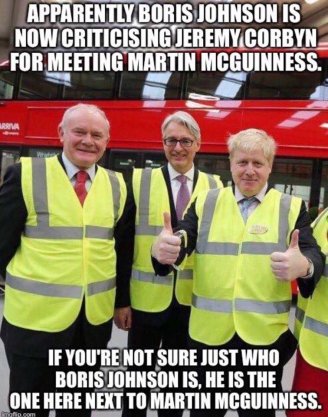


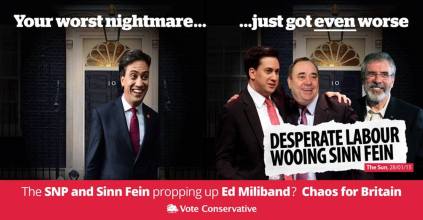

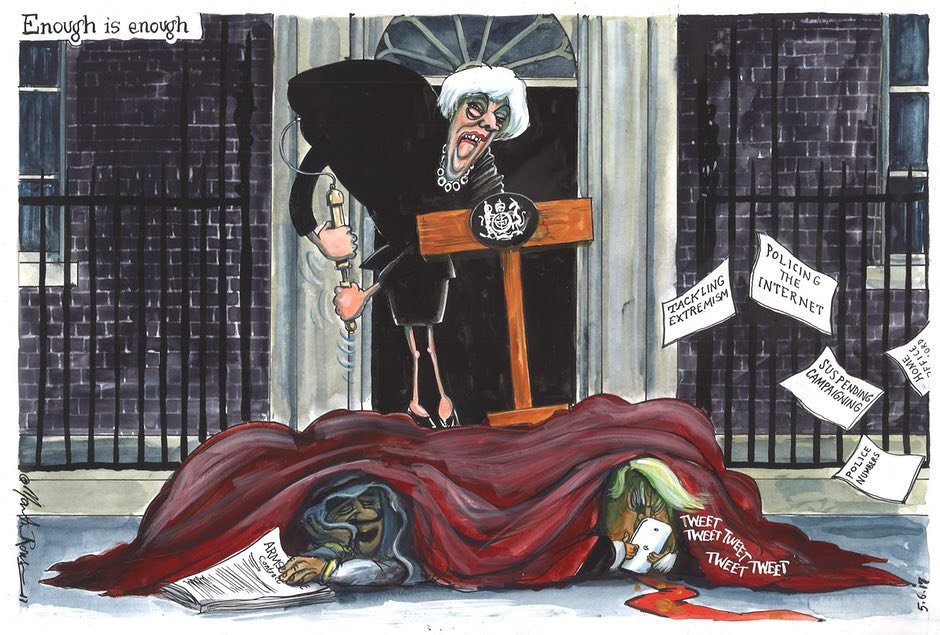
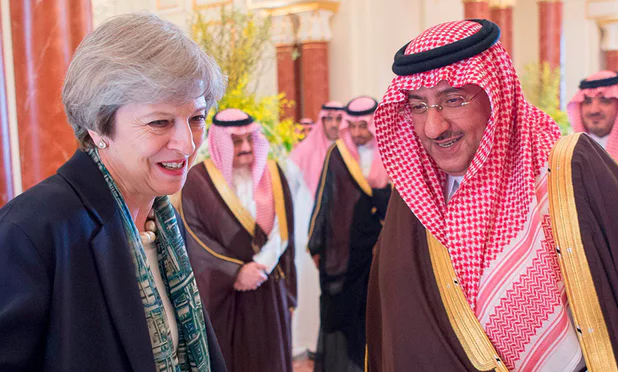


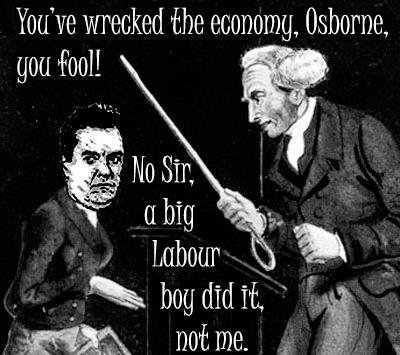


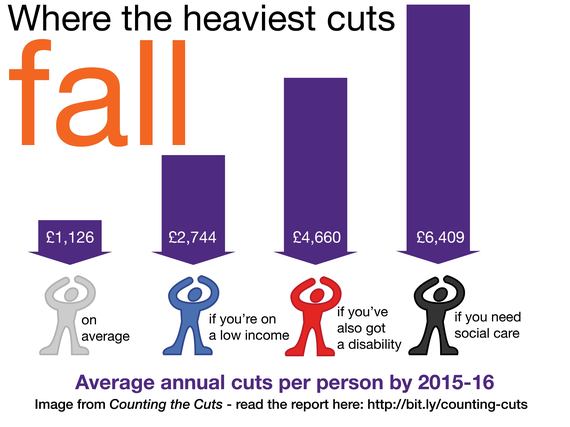
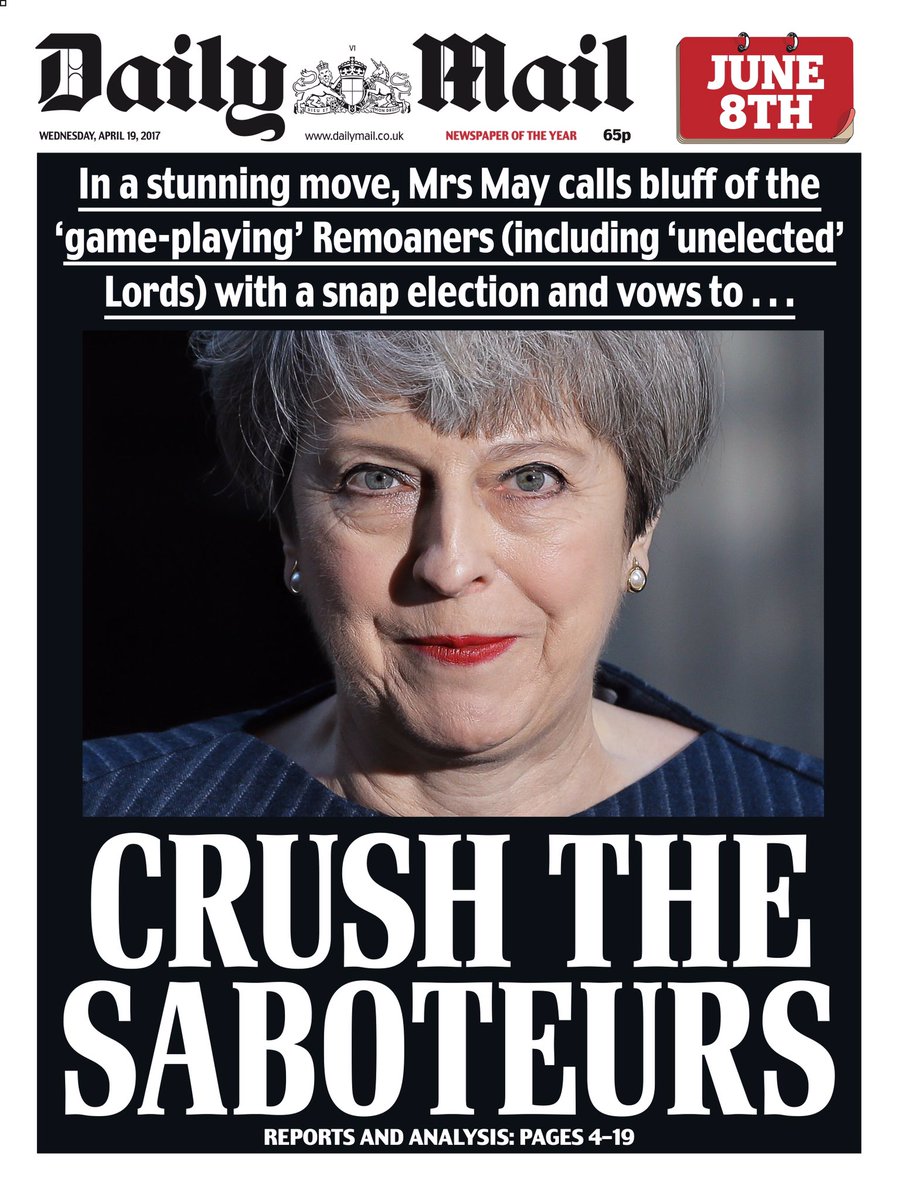


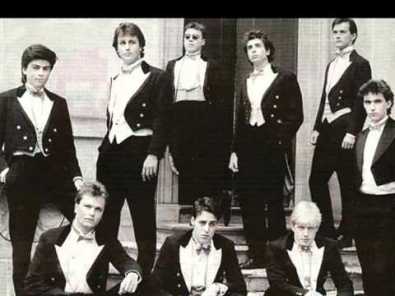

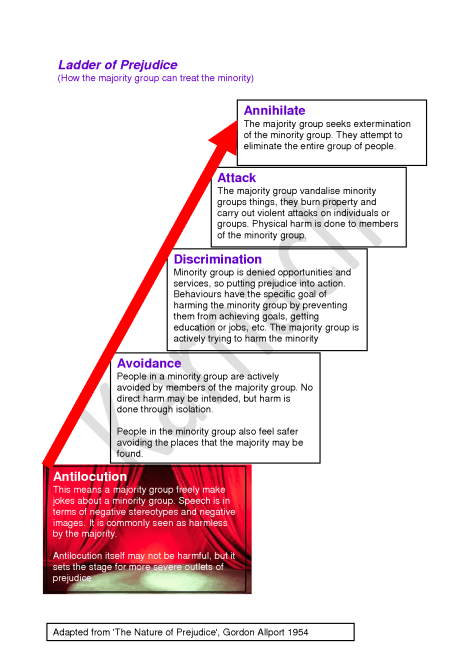


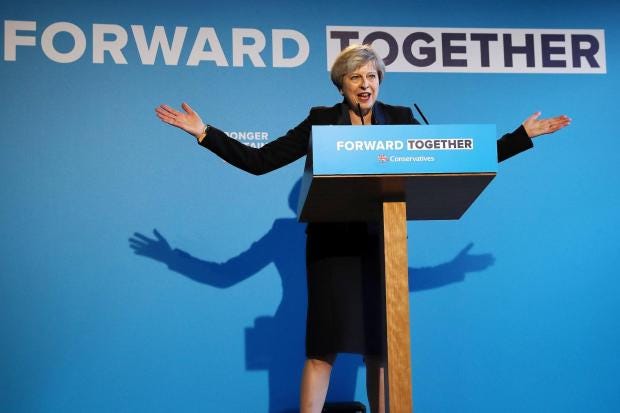


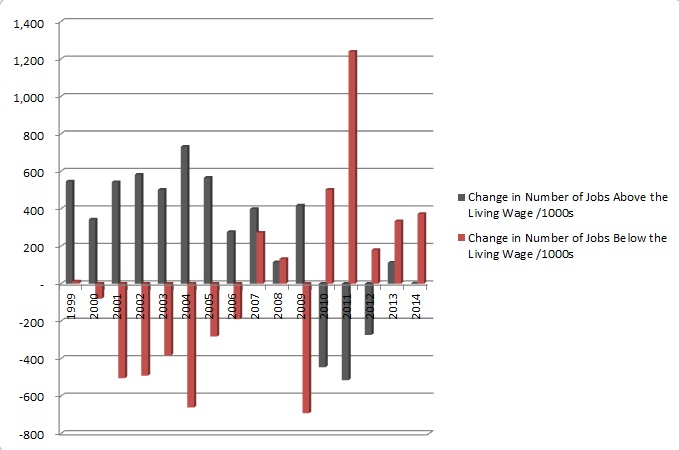


 Politics and Insights