Category: Human Rights

Austerity is the unfavourable treatment of protected social groups, leading to unfair disadvantage

Image result for political discrimination uk

The Equality and Human Rights Commission (EHRC) said an analysis of all the changes to tax, social security and public spending since the Conservatives came to power in 2010 showed the poorest citizens have been hit hardest by tax, social security and public spending reforms and are set to lose at least 10% of their income.

Ahead of next week’s budget, the Commission has published its independent report on the impact that changes to all tax, social security and public spending reforms from 2010 to 2017 will have on people by 2022.

Undertaken as a “cumulative impact assessment”, the Commission’s report, which looks at the impact the reforms have had on various groups across society, highlights that those political decisions will affect some groups more than others:

  • black households will face a 5% loss of income (more than double the loss for white households)
  • families with a disabled adult will see a £2,500 reduction of income per year (this is £1,000 for non-disabled families
  • families with a disabled adult and a disabled child will face a £5,500 reduction of income per year (again, compared to £1,000 for non-disabled families)
  • lone parents will struggle with a 15% loss of income (the losses for all other family groups are between 0 and 8%)
  • and women will suffer a £940 annual loss (more than double the loss for men)
  • the biggest average losses by age group, across men and women, are experienced by the 65 to 74 age group (average losses of around £1,450 per year) and the 35 to 44 age group (average losses of around £1,250 per year).

The government have persistently claimed that conducting a cumulative impact assessment of their “reforms” is “too difficult”.

David Isaac, of the EHRC, says: “We have encouraged the government to carry out this work for some time, but sadly they’ve refused. We have shown that it is possible.” 

Previously, the Women’s Budget Group estimated that by 2020 women will shoulder 85% of the burden of the government’s changes to the tax and benefits system – with low-income black and Asian women paying the highest price

The Centre for Welfare Reform calculated that disabled people are being hit nine harder than the rest of the population. These organisations managed to carry out cumulative impact assessments, and without the generous funding that the government has at their disposal. This demonstrates that there is a difference between finding something “difficult” to undertake, and not actually wanting to undertake the task, while making glib excuses to avoid doing so. 

Public policies are expressed political intentions regarding how our society is organised and governed. They have calculated social and economic aims and consequences. Governments generally monitor the impact of their policies. The Conservatives have refused to monitor the impact of their draconian welfare policies because they knew in advance that they are discriminatory. 

Austerity policies target already economically marginalised groups, cutting their incomes further. It’s not plausible that ministers were unaware that this would lead to further economic disadvantage of those groups, while widening social inequality and increasing poverty.  

While the poorest citizens are set to lose nearly 10% of their incomes, a minority of the wealthiest citizens will lose barely 1%, yet the government claim that inequality has “reduced.” Despite the claims that “We’re all in it together” and “we want to help tjose people “just about managing”, it’s clear that Conservative policies are completely detached from public interests and needs. Conservative austerity policies are designed and intended to intentionally discriminate aginst the very poorest citizens. 

It is against the law to discriminate against socially protected groups  – including on the grounds of ethnicity, gender, age and disability. The government’s traditional ideological prejudices, which have been clearly expressed in their socioeconomic policies, have brought about:

  • the less favourable treatment of groups with protected characteristics 
  • the targeting of some social groups disproportionately with austerity policies that extend direct discrimination, leaving people with protected characteristics at an unfair disadvantage

Prices, as measured by official inflation figures, are nearly 14% higher now than they were in 2010, although Unison say that between the start of 2010 and the close of 2015, the cost of living, as measured by the Retail Prices Index, rose by a total of 19.5%. This creates even further hardship for those people already targeted by Conservative austerity cuts.

Image result for Tory prejudices UK sexism


Image result for Tory prejudices UK disabled people
Traditional Conservative prejudices, which have ultimately led to economic marginalisation, disadvantage and stigmatisation of some social groups

David Isaac, the Chair of the EHRC, which is responsible for making recommendations to government on the compatibility of policy and legislation with equality and human rights standards, warned of a “bleak future”.

Isaac said: “The Government can’t claim to be working for everyone if its policies actually make the most disadvantaged people in society financially worse off. We have encouraged the Government to carry out this work for some time, but sadly they have refused. We have shown that it is possible to carry out cumulative impact assessments and we call on them to do this ahead of the 2018 budget.


“If we want a prosperous and, in line with the Prime Minister’s vision, a fair Britain that works for everyone, the Government must come clean and provide a full and cumulative impact analysis of all current and future tax and social security policies. It is not enough to look at the impact of individual policy changes. If this doesn’t happen those most in need will face an extremely bleak future.”


The Commission is calling on the Government to:

  • commit to undertaking cumulative impact assessments of all tax and social security policies ahead of the 2018 budget
  • reconsider existing policies that are contributing to negative financial impacts for those who are most disadvantaged
  • implement the socio-economic duty from the Equality Act 2010 so public authorities must consider how to reduce the impact of socio-economic disadvantage of people’s life chances (the Conservatives edited the Labour party’s original version of Equality Act and removed this duty before implementing it).

The assessment undertaken by the EHRC considered changes to income tax, national insurance contributions, indirect taxes (VAT and excise duties), means-tested and non-means-tested social security benefits, tax credits, universal credit, national minimal wage and national living wage.


See also:

Austerity is “economic murder” says Cambridge researcher

The Paradise Papers, austerity and the privatisation of wealth, human rights and democracy

From 2013 – Follow the Money: Tory ideology is all about handouts to the wealthy that are funded by the poor


I don’t make any money from my work. I am disabled because of illness and have a very limited income. I don’t have a plasma TV or Sky. I do eat a lot of porridge, though. Successive Conservative chancellors have left me in increasing poverty. But you can help by making a donation to help me continue to research and write informative, insightful and independent articles, and to provide support to others. The smallest amount is much appreciated – thank you. 

DonatenowButton

Labour member in Northern Ireland issues hunger strike ultimatum – Max Webster

Matt Beeching 

Matt Beeching is a member of a political party you may have heard of, and one quite a lot of us voted for in the 2017 general election.

Nothing unusual about that; except he’s something of a rarity: he’s a member of a political party that fields no candidates in either local or national elections, because Mr Beeching lives in Northern Ireland (originally from Eastleigh, Southampton UK); And he’s a member of a party with one of the biggest affiliations in Europe – the Labour party.

And because of what he sees as terrible wrongs, he says he’s making a stand.

Matt Beeching is presently on hunger protest. He served as a secretary of Upper Bann Labour branch.

Labour agreed a pact not to field candidates against the Social Democratic and Labour Party (SDLP)* in the six counties, and it’s this that’s at the heart of Matt’s decision, he says.

He posted a statement to Facebook on Monday the 17th at midday declaring his intentions, citing both the status of abortion in Northern Ireland (it’s illegal, a stance backed by the DUP, Sinn Fein, and the SDLP), and the inability of the Northern Ireland Executive to discharge its duties in something approaching a fair and democratic manner.

“The SDLP is no longer a party of the working class,” Beeching told me on the phone earlier from his Portadown home.

“They have no interest in the trade union movement. Labour do care
about the working classes, and about unionising workers, but without funding or resources we can’t effectively help people.”

Matt’s Facebook statement goes on to say: “I firmly believe that there is a large cross section of voters in Northern Ireland that are grossly under-represented that truly desire a different approach to the standard orange and green politics.

I am not angry, I am not upset, I am calm and reserved. Therefore, I am prepared to take this action to its ultimate end, however I am hopeful and trustful that the powers that be, that can meet these demands and do not allow this to get to that point. The ball is in their court.”

Beeching, a resident in Northern Ireland for seventeen years, clearly cares about what is happening to the people of the province, but feels that being on the periphery of politics is “meaningless”.

He says: “The Labour party has 3,000 members in Northern Ireland, which is amazing, but without influence we’re not taken seriously. There’s people here who need us and it’s wrong.”

Matt says he feels he has no choice, and that this is a causeworth dying for”, it says in his Facebook statement.

His hunger protest demands are as follows:

Labour UK to allow Labour Party Northern Ireland members to stand candidates for elections at all levels of government in Northern Ireland including Local, Regional Assembly and General Elections;
• Labour Party UK to give Labour Party Northern Ireland full regional status and all support, funding and representatives on NEC as per Welsh and Scottish Labour;
Labour UK to furnish Labour Party in Northern Ireland members full parity in benefits and support as with the other regions;
• Sinn Fein Northern Ireland and The Democratic Unionist Party to come to an agreement and form the Northern Ireland Executive and to start Northern Ireland Assembly parliament as quickly as possible, and to start representing the people that elected them.

He says: “Yes, there’s a review underway at the moment, thanks to the surge in support for Labour in the province, but there’s no timetable, no clear process, no criteria.”

For Beeching, the Labour-shaped hole is proving to be a real issue. And so he says he feels forced to take extreme measures.

“From midnight tonight (17th July 2017) I will refuse to eat any food solids, of any kind, until such time as the… demands have been met in full,” his Facebook statement reads.

This is not a decision I have taken lightly, but feel passionately that it is the only course of action left to take.”

I asked Beeching about the Labour response. He said: “They are aware of it. And yes they’re worried, but this was my decision; I didn’t seek permission from the executive. I am a committed Labour activist and Corbyn supporter. I wish no harm to him or Labour or what the party represents.”

Beeching says: ”People are suffering harshly from Tory austerity… people are suffering now, as we speak but it’s going unchallenged and I don’t think the SDLP are effective in doing that because they only appeal to middle-class nationalists.”

So again, I cannot and will not support, vote for or join a nationalist party. I feel this is unfair and wholly undemocratic. This is something I feel very strongly about.”

In a Facebook live broadcast today, Beeching said: “We are told to support and vote for the SDLP but the system is null and void…

If we are to bring about change in the United Kingdom, we should also recognise the failings in Northern Ireland that affect people and especially to those who vote Labour, and want to vote Labour, but cannot do so. 

Labour’s National Executive Committee is currently undergoing a consultation process on the issue of putting up candidates and it is right that it runs its full course,” adds Matt.

This is indeed a very difficult situation. It is hoped that representatives from the Labour Party will speak with Beeching in the hope of bringing his hunger protest to an early and satisfactory conclusion. 


* The SDLP; Irish: Páirtí Sóisialta Daonlathach an Lucht Oibre) is a social-democratic and Irish nationalist political party in Northern Ireland. The SDLP currently has 12 MLAs in the Northern Ireland Assembly; but lost its three remaining Parliamentary seats in the 2017 general election.

The SDLP has fraternal links with other European social-democratic parties, including the Irish Labour Party and British Labour Party (neither of which contests elections in Northern Ireland), and is affiliated to the Socialist International and Party of European Socialists

The SDLP party platform advocates Irish reunification, and the further devolution of powers while Northern Ireland remains part of the United Kingdom.

Jeremy Corbyn had already launched a consultation on standing candidates in the region after Labour membership there swelled under his leadership.

Guest post by Max Webster, Editor for Provocateur.

Editing and additional information by Kitty Jones

A brief and blunt discussion about ‘economic competence’ before the general election

Image result for people power

The question asked shouldn’t ever have been how will Labour fund their costed manifesto. We have permitted this expedient Conservative diversion for long enough. It should have been exposed for what it is when George Osborne was rebuked for lying about Labour’s administration and economic management, and David Cameron was rebuked twice for claiming that his government were “paying down the debt“. They have done no such thing, however, and despite a substantial number of official rebukes for telling lies, the Conservatives have remained blatantly conservative with the truth

The real question that matters is this: where is the public’s money that citizens, their parents and grandparents have paid into the Treasury all these years? Why is there nothing to show for it over the past seven years? Why are increasing numbers of citizens of every age experiencing hardship and distress

This is a despicable way for a government to treat people who have contributed to this country’s fortune and development.

Why are older people being robbed of their lifelong national insurance contribution and tax investment and now being told they must fund their own care?  Why are older people being forced to work longer before they may retire? New government “calculations” suggest a “hard Brexit” – with migration being dramatically reduced – could push up the age of retirement and force people to work into their mid-70s. It has created further uncertainty regarding the future of state pensions.

At the same time, there has been an unprecedented rise in the mortality rate, according to Office for National Statistics (ONS) data. For the past few decades, there has been a very strong improvement in life expectancy in the UK, both at birth but also for older people 

But that trend has slowed down since 2011, and is now reversing. According to the actuarial company, Mercer, winter deaths of people aged 65 and over has increased by 11 per cent over the last two years. Yet the Conservatives are planning to cut winter fuel payements to “target those most in need”.

There’s that Tory phrase again, which reflects a euphemising tendency of a government that does not care for the welfare of UK citizens, and signals the intent to strip away every single civilised public support mechanism and provision that has grown from the social gains of our post-war settlement. The social gains PAID FOR BY THE PUBLIC FOR THE PUBLIC. 

What kind of government does not care that citizens are dying prematurely because of their policies? Or that cases of malnutrition in the UK are rising?

Why are d
isabled people being left without adequate living standards, dignity, independence and sometimes, being left to die, because we have a government that can’t even observe their basic human rights? The only rights that matter to the Conservatives are the property “rights” of the wealthy and the right of millionaires to accummulate more money by dispossessing everyone else.

The “Economic Enclosure Acts” would be a more fitting name for the Conservative “reforms” and austerity programme.

Where has the money gone that was taken from those people targeted with punitive policies and a deeply patronising “behaviour change” agenda that simply reflects a government’s traditional class prejudices, all in the name of “economic growth” and the ideologically driven Conservative austerity programme, the burden of which fell on our poorest and most vulnerable citizens?

What kind of government financially punishes disabled and elderly people simply for being disabled and old? It’s the Conservatives that need to change their behaviours. Perhaps someone should inform the economic Darwinists in government that we moved on from dehumanising eugenic policies after the terrible consequences of them in Nazi Germany. 

What is the point of a government in an “economically stable”and wealthy first world country that does not ensure a basic standard of living and health for the majority of citizens, and fails to fulfil basic human rights obligations?

This is a government that has failed to protect the human rights of our children.

Why are our children going hungry, fed by food banks and by concerned school teachers when their parents are in work or have worked? Why are young people under 25, disabled people and people in social housing not considered worthy of having a secure home of their own? 

Why are those in low paid or part time, insecure work being punished by the government with in-work sanctions, for the sins of exploitative, increasingly unregulated employers and rubbish government supply-led labour market policies that clearly don’t work?

We have permitted a government to relinquish its responsibilities and obligations towards some members of the public. Why doesn’t the social and economic welfare of these social groups matter to the government? Are we not citizens in a so-called first world democracy?

Where is the investment in our public services? Why are rogue multinationals making billions from the public on the pretext of “saving money”? If that’s “economic competence” then I’m Jerry Cornelius, one of the greatest fictional and darkly hilarious anti-hero nihilists of all time. 

What have the Conservatives done wth OUR money, our NHS and our public services? And why on earth would we continue letting them “disappear” our money, adding to the now massive national deficit? The Conservatives have borrowed more money this past seven years than every single Labour government combined throughout history. There is NOTHING to show for it, except for a few rogue multinationals like Atos, Maximus and G4S making huge and private profit and a few millionaires hoarding our wealth and demanding more.

The UK now has the highest level of  socioeconomic inequality in Europe.

THIS is what Cameron meant when he said he would “tackle” the “culture of entitlement”. He meant that ordinary people would no longer be treated as democratic citizens with rights. He meant that our society should regress to a time when there was no legal aid, social housing, welfare state and no National Health Service. Despicably, the Conservatives have deliberately stigmatised groups of citizens in order to get away with dismantling our social safeguards, caliming that they are a “burden” to “tax payers”. As the older generation about to be hit with pension cuts and the “dementia tax” will tell you, ordinary people are ALL tax payers. 

The authoritarians need to go.

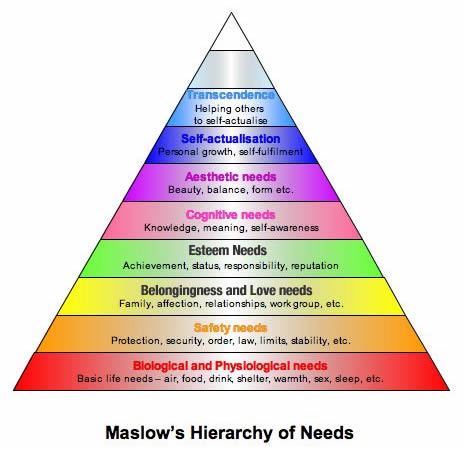
The NHS and welfare state are essential for the lives, health and wellbeing of our fellow citizens as well as ourselves. Without being able to meet basic needs, people are unable to meet higher level psychosocial ones, such education and work. Ancel Keys once said “Starved people cannot be taught democracy.” Abraham Maslow would certainly agree with that. He said  “Man lives by bread alone when there is no bread.” When people are hungry, food becomes their only priority and motivation.

Any effective measure of a government’s economic competence must surely include an evaluation of the proportion of a population that are able to meet their basic living requirements. 

maslows_hierarchy_of_needs-4
If you value our public services, including those providing emergency care such as the NHS, the the fire service, police, social care, mental health services, social security and pensions and education, all of which have been savagely cut these past 7 years, then you need to know that they are NOT safe in Conservative hands. Nor are our human rights. A genuinely strong and stable economy ought to include everyone. 

The Labour Party has made a comittment in their manifesto to ensure that our public services are safe, funded and there for everyone who needs them. They will also preserve our human rights act. Human rights are there to ensure the wealthy and powerful are accountable to the rest of us, and to ensure governments don’t abuse and exclude social groups, such as disabled people, elderly people and children. Like access to justice – and legal aid has also almost gone at the hands of the Conservatives – human rights are the bedrock of democratic societies.

If you value the civilised and civilising features of our society, then you must vote on 8 June to preserve them. If you don’t have need of them yourself, consider that your parents, children and friends may do in the future. Let’s halt the socially regressive destruction of our public services.

Let’s make sure that everyone is included in our society, and ensure that we live in a democracy.

Let’s make June the end of May. 

Let’s take our country forward again.

 Image result for Vote Labour


I don’t make any money from my work. I am disabled because of illness and have a very limited income. 

But you can help by making a donation to help me continue to research and write informative, insightful and independent articles, and to provide support to others. The smallest amount is much appreciated – thank you.

DonatenowButton

Vote Labour to uphold the rights of disabled people – our letter to the Guardian

Image result for Human rights are universal

The following letter was published in the Guardian today, written and signed by a group of academics, professionals, campaigners and grassroots activists who work together cooperatively.

We collaborate to fulfil our mutual aims of achieving a progressive, civilised, just and safe society for all. We hope to do this by ensuring that the society we are a part of is democratic and fully inclusive: we want a civilised society that observes and meets its human rights obligations on behalf of all social groups. This isn’t happening currently. (See: UN’s highly critical report confirms UK government has systematically violated the human rights of disabled people).

As an independent researcher, writer, campaigner, and as a disabled person, I am very proud to be included among them. 

westminster-20121020-00081

Many disabled people see Labour’s policies as a lifeline, say the 30 signatories to this letter. 

For chronically ill and disabled people, recent years have been a disaster. The UN recently found “reliable evidence that the threshold of grave or systematic violations of the rights of persons with disabilities has been met” (Report, 8 November 2016).

We have been forced through a work capability assessment that the government’s own expert adviser described as “inhumane”, and which in 2015 was found to be associated with an additional 599 suicides.

Many needing help are now forced through another persecutory assessment – the personal independence payment – designed to reduce the numbers qualifying for help by half a million.

Social care has been so savagely cut that some young disabled must wear incontinence pads for lack of toileting assistance. People can’t take any more of this.

Many disabled people are not party-political, but see Labour’s policies for disabled people as a lifeline – envisioning a society where people are treated as human beings deserving of respect, equality and a decent life. Please, don’t endorse recent human-rights abuses; endorse the human rights of disabled people by registering, and by voting Labour on 8 June.

Paul Atkinson Jungian psychotherapist
Stef Benstead Spartacus Network
Peter Beresford Co-chair, Shaping Our Lives
Gary Bourlet Founder, People First Movement in England
Dr Emma Bridger Research fellow in psychology
Professor Woody Caan Journal of Public Mental Health
Dr Kelly Camilleri Registered clinical psychologist
Merry Cross
Dr David Drew Labour Parliamentary candidate for Stroud
Nick Duffell Psychohistorian
Dr Simon Duffy Centre for Welfare Reform
Dr Dina Glouberman Skyros Holistic Holidays
Catherine Hale Chronic Illness Inclusion Project
AC Howard DWPexamination.org – For The UK’s Disabled Community
Chris Johnstone General practitioner
Sue Jones Psychologists Against Austerity, researcher and writer, campaigner
Jayne Linney Disability activist
Alec McFadden TUC Salford
Helen McGauley Trainee clinical psychologist, Lancaster University
Beatrice Millar Person-centred counsellor/psychotherapist
Rev Paul Nicolson Taxpayers Against Poverty
Gavin Robinson Alliance for Counselling and Psychotherapy
Professor Andrew Samuels University of Essex
Nicola Saunders Psychotherapist
Martyn Sibley Disability blogger
Mike Sivier Vox Political
Professor Ernesto Spinelli
Mo Stewart Independent researcher, disability studies
Gail Ward
Dr Jay Watts Queen Mary, University of London
Dr Claudia GillbergSenior Research Associate in Education; Fellow at Centre for Welfare Reform and Disability Rights Activist

Dr Richard House Alliance for Counselling and Psychotherapy


Join the debate – email guardian.letters@theguardian.com

Read more Guardian letters – click here to visit gu.com/letters


I don’t make any money from my work. I am disabled because of illness and have a very limited income. The budget didn’t do me any favours at all.

But you can help by making a donation to help me continue to research and write informative, insightful and independent articles, and to provide support to others. The smallest amount is much appreciated – thank you.

DonatenowButton

The government has failed to protect the human rights of children

Related image

The UK has plummeted from 11th position to 156th in global ranking for meeting its children’s rights obligations in the space of just a year. The UK now ranks among the bottom 10 global performers in the arena of improving the human rights of the child, after it achieved the lowest possible score across all six available indicators in the domain of Child Rights Environment (CRE), according to the KidsRights Index 2017.

The Index gathers data from Unicef and the United Nations Committee on the Rights of the Child (UNCRC) to identify global trends in the arena of children’s rights protection. It comprises a ranking for all UN member states that have ratified the UN Convention on the Rights of the Child, a total of 165 countries. 

The report says that a nation’s prosperity does not always guarantee children’s rights. Interestingly, economically better performing countries are not necessarily doing a better job when it comes to safeguarding the rights of children.

This year’s overall worst performing countries are the United Kingdom, Papua New Guinea, New Zealand, Guinea-Bissau, Equatorial Guinea, Chad, Vanuatu, Sierra Leone, Afghanistan and Central African Republic.

Very serious concerns have been raised about structural discrimination in the UK. Muslim children are facing increased discrimination following recent anti-terrorism measures, and a rise in discrimination against gypsy and refugee children in recent years.

The KidsRights Index is comprised of 5 domains: 

  1. Right to Life
  2. Right to Health
  3. Right to Education
  4. Right to Protection
  5. Enabling Environment for Child Rights

Marc Dullaert, founder and chairman of the KidsRights Foundation, has urged the UK government to treat non-discrimination as a policy priority, and to speed up the process of aligning its child protection laws with the Convention on the Rights of the Child at both the national and devolved levels, as well as in all crown dependencies.

He said: “Discrimination against vulnerable groups of children and youths is severely hampering opportunities for future generations to reach their full potential.” 

“Following the general election, the new government should demonstrate to the world that it will not allow the retreat from the EU to adversely affect the rights and opportunities of its children.” 

In light of the findings, Lord Philip Hunt, shadow deputy leader of the House of Lords and shadow health spokesperson, accused the Government of “inactivity” and “inadequate service provision”, urging it to do more to protect the rights of the child.

He said: “This report exposes the inactivity of the current UK government and inadequate service provision in this most important area of policy making; rights of the child.” 

“The UK is the sixth largest economy globally and therefore has the resources at its disposal to ensure that our children are adequately protected and cared for across multiple disciplines. Our children are our future and the barometer of our approach to social justice and the state of our society.”

Although many states have adopted new children’s rights policies in recent years, the Index reveals that implementation is often not evident, and many new policies fail to fully comply with the principles and provisions of the Convention on the Rights of the Child.

The Index rates and ranks the extent to which a country has implemented the general principles of the Convention on the Rights of the Child while taking into account the basic infrastructure for making and implementing children’s rights policies. Portugal is this year’s global top ranking nation, with France, Norway, Sweden, Finland and Spain also ranking in the top ten.

The Index methodology means that extremely poor performances in one domain cannot be compensated by higher scores in other domains, as all of areas children’s rights are deemed to be equally important.

The report concluded that many industrialised nations, and especially the UK, are falling far short of allocating sufficient budgets towards creating a stable environment for children’s rights, by neglecting their leadership responsibilities and failing to invest in the rights of children to the best of their abilities.

Human rights and the impact of childhood poverty 

Earlier this month, another damning report published by the Royal College of Paediatrics, Child Health (RCPCH) and Child Poverty Action Group (CPAG) revealed that more than two-thirds of paediatricians believe poverty and low income contribute “very much” to the ill health of children that they work with. 

The report – Poverty and child health: views from the frontline  is based on a survey of more than 250 paediatricians across the country, whose comments provide an insight into the grave reality of life for the millions of UK children living in poverty.

Latest figures show that more than one in four (nearly 4 million) children in the UK live in poverty – with projections suggesting this could rise to 5 million by the end of the decade.

The report explores number of areas including food insecurity, poor housing and worry, stress and stigma – and the effect of these issues on the health of children.  

The report reveals that:

  • more than two-thirds of paediatricians surveyed said poverty and low income contribute ‘very much’ to the ill health of children they work with
  • housing problems or homelessness were a concern for two-thirds of respondents.
  • more than 60% said food insecurity contributed to the ill health amongst children they treat 3
  • 40% had difficulty discharging a child in the last 6 months because of concerns about housing or food insecurity
  • more than 50% of respondents said that financial stress and worry contribute ‘very much’ to the ill health of children they work with

Alison Garnham, Chief Executive of the Child Poverty Action Group, said:

“Day in, day out doctors see the damage rising poverty does to children’s health. Their disquiet comes through in the survey findings and should sound alarms for the next government. Low family incomes, inadequate housing and cuts to support services are jeopardising the health of our most vulnerable children.

“We can and must do better to protect the well-being of future generations. reinstating the UK’s poverty-reduction targets would be an obvious place to start.” 

Professor Russell Viner, Officer for Health Promotion at the Royal College of Paediatrics and Child Health, said:

“Poverty has a devastating effect on child health and this report makes disturbing reading. The health impact on children living in poverty is significant – whether that’s increased likelihood of respiratory problems, mental ill-health or obesity – than children living in more affluent areas.

“Worryingly, almost half of those surveyed feel the problem is getting worse, with the combination of increasing poverty, housing problems and cuts to services meaning more families are struggling.”  

The RCPCH and CPAG are calling on whoever forms the next Government to tackle poverty urgently through: 

  • the restoration of binding national targets to reduce child poverty, backed by a national child poverty strategy
  • the adoption of a ‘child health in all policies’ approach to decision making and policy development, with Her Majesty’s Treasury disclosing information about the impact of the Chancellor’s annual budget statement on child poverty and inequality
  • the reversal of public health cuts to ensure universal early years services, including health visiting and school nursing, are prioritised and supported financially, with additional targeted help for children and families experiencing poverty
  • the reversal of cuts to universal credit which will leave the majority of families claiming this benefit worse off.

As one survey respondent said: “We cannot expect to have a healthy future for the UK if we leave children behind. Poverty makes children sick.”

There were 3.9 million children living in “relative poverty” in 2014-15, up from 3.7 million a year earlier, according to figures from the Department for Work and Pensions (DWP).

The report follows the release of  figures from the DWP which revealed one in four (nearly four million) children in the UK live in poverty – with projections suggesting this could rise to five million by the end of the decade.

It’s not as if the government have been unaware of the consequences of their policies and the implications of a consistent failure to uphold the UK’s human rights obligations towards children. In 2014, the Children’s Commissioner warned that the increasing inequality resulting from the austerity cuts, and in particular, the welfare reforms, means that Britain is now in breach of the United Nations Convention on the Rights of the Child, which is supposed to protect children from the adverse effects of government economic measures.

In 2015, the Children’s Commissioner criticised the Conservative’s tax credit cuts and called for measures to reduce the impact that the changes will have on the poorest children. Anne Longfield, who took up her role on 1 March 2015, called on the government to exempt 800,000 children under five from tax credit cuts and to offer additional support to families with a child under five-years-old.

The role of Children’s Commissioner was established under Labour’s Children Act in 2004 to be the independent voice of children and young people and to champion their interests and bring their concerns and views to the national arena. The Commissioner’s work must take regard of children’s rights (the United Nations Convention on the Rights of the Child) and seek to improve the wellbeing of children and young people.

However, the government rejected the findings of what they deemed the “partial, selective and misleading” Children’s Commissioner report. The Commissioner wrote to the Chancellor to call for children in the poorest families aged under five to be protected from the cuts.

However, George Osborne shamefully remained brazenly unrepentant.

A damning joint report written by the four United Kingdom Children’s Commissioners for the UN Committee on the Rights of the Child’s examination of the UK’s Fifth Periodic Report under the UN Convention on the Rights of the Child (UNCRC), dated 14 August 2015, says, in its overall assessment of the UK’s record: 

“The Children’s Commissioners are concerned that the UK State Party’s response to the global economic downturn, including the imposition of austerity measures and changes to the welfare system, has resulted in a failure to protect the most disadvantaged children and those in especially vulnerable groups from child poverty, preventing the realisation of their rights under Articles 26 and 27 UNCRC. 

The best interests of children were not central to the development of these policies and children’s views were not sought. 

Reductions to household income for poorer children as a result of tax, transfer and social security benefit changes have led to food and fuel poverty, and the sharply increased use of crisis food bank provision by families. In some parts of the UK there is insufficient affordable decent housing which has led to poorer children living in inadequate housing and in temporary accommodation.

Austerity measures have reduced provision of a range of services that protect and fulfil children’s rights including health and child and adolescent mental health services; education; early years; preventive and early intervention services; and youth services. 

The Commissioners are also seriously concerned at the impact of systematic reductions to legal advice, assistance and representation for children and their parents/carers in important areas such as prison law; immigration; private family law; and education. This means that children are denied access to remedies where their rights have been breached.

The Commissioners are also concerned at the future of the human rights settlement in the United Kingdom due to the UK Government’s intention to repeal the Human Rights Act 1998 (HRA) which incorporates the European Convention on Human Rights (ECHR) into domestic law; replace it with a British Bill of Rights (the contents of which are yet to be announced), and ‘break the formal link between British courts and the European Court of Human Rights’.

The HRA has been vital in promoting and protecting the rights of children in the United Kingdom and the European Court of Human Rights has had an important role in developing the protection offered to children by the ECHR.The Commissioners are concerned that any amendment or replacement of the HRA is likely to be regressive.”

In another regressive and punitive policy move by the government, from April 6 2017, child tax credits and universal credit across the UK will be restricted to the first two children in a family. This measure will affect all households with two or more children that have an additional child after this date.

Analysis by consultancy Policy in Practice revealed a low-income family whose third or additional child is born before midnight on the day before the policy came into force would qualify for up to £50,000 in tax credit support over 18 years whereas a similar family whose third child is born on April 6 will miss out.

The government says it wants to save money and make the tax credit system “fairer”. It intends the two-child restriction to “influence the behaviour” of less well-off families by making them “think twice” about having a third child. But it also accepts there is no evidence to suggest this will happen.

This is an extremely regressive eugenic policy, with its emphasis being on social class. Eugenics was discredited following its terrible escalation and consequences in Nazi Germany.  

The two children only policy also a reflects a politically motivated form of crude behaviourism –  behaviour modification through the use of financial punishments. It’s probably true that all authoritarians and tyrants are behaviourists of sorts.

Critics say that at current birth rates, 100,000 third or subsequent children will not qualify for tax credit support over the next 12 months, inflating child poverty figures by at least 10% by 2020.

Social Darwinism is linked closely with eugenic ideas – a view that society and economics will naturally “check” the problem of dysgenics if no welfare policies are in place. 

The Conservative government has steadily dismantled the welfare state over the past seven years, so that now, there is no longer adequate support provision for people both in work and out of work, to meet their basic living needs. 

The current retrogressive, draconian approach to poverty needs to radically change if we are to be a nation that respects and upholds the human rights of all its citizens.


I don’t make any money from my work. I am disabled because of illness and have a very limited income. But you can help by making a donation to help me continue to research and write informative, insightful and independent articles, and to provide support to others. The smallest amount is much appreciated – thank you.

DonatenowButton

Theresa May euphemizes savage cuts to PIP when confronted by an angry disabled person demanding democratic accountability

Theresa May

The prime minister has been avoiding confrontation with real citizens and voters so far, and has simply concerned herself with a series of stage-managed media appearances featuring Conservative supporters.

However, Theresa May faced a series of difficult questions after she was confronted by a furious voter over cuts to disability benefits while she was campaigning in Abingdon, Oxfordshire.

Cathy Mohan, who has learning difficulties, challenged the Prime Minister over Conservative cuts, which meant she lost her carer. She also asked about how others had been affected as the Disability Living Allowance (DLA) is replaced by the new cost cutting Personal Independence Payment (PIP). She told the PM that she has been forced to live on £100 a month in benefits after being denied essential support with the extra costs of coping with a learning disability.

In the footage captured by Channel 5 News, the voter demanded tht the government return to the DLA payments system, explaining that she couldn’t survive on the PIP scheme that has replaced it. 

Suprisingly, The Express also ran the story, although it was interesting to note the language use and interpretation to describe the exchange, with the Prime Minister “replying”, “saying”, “concluding” and Cathy “continuing her tirade” and “her rant“. Anyone would think that the Express journalist wanted to portray this citizen demanding democratic inclusion as unreasonable. 

Cathy simply asked: “Theresa, are you going to help people with learning difficulties? 

It’s good to see the Prime Minister being held democratically accountable for once by a real member of the public with a real life account of the devastating impacts of Tory austerity cuts, which have fallen disproportionately on those with the very least, and those who are among our most vulnerable citizens. 

2014-02-17-BurdenoftheCuts-thumb

You can see Cathy angrily and bravely confronting the Prime Minister here

Cathy says “I’m being serious, I want you to do something for us.”

 May replied: “We’ve got a lot of plans for people with mental health in particular…”

But absolutely furious with being fobbed off,  Cathy swiftly interrupted the Prime Minister and continued: “And learning difficulties? 

Because I’ve got mild learning disabilities and I haven’t got a carer at the moment, and I’m angry.

I would like somebody to help me because I can’t do everything I want to do.

I’m talking about everybody not just me, for everybody who’s got mental health and anybody who’s got learning disabilities.

I want them not to have their money taken away from them, and being crippled.

They just took it all away from me,” she said.

She added: “The fat cats keep the money and us lot get nothing.”

It’s true that the vulture capitalist private companies undertaking disability assessments take millions from the public purse to deliver pseudo-medical assessments that are specifically designed to make it unlikely that your claim will be successful, regardless of how ill and disabled you are. 

An audit report concluded that the Department for Work and Pension’s spending on contracts for disability benefit assessments is expected to double in 2016/17 compared with 2014/15. The government’s flagship welfare-cutting scheme will be actually spending more money on the assessments themselves than it is saving in reductions to the benefits bill – as Frances Ryan pointed out in the Guardian, it’s the political equivalent of burning bundles of £50 notes.

The report also states that only half of all the doctors and nurses hired by Maximus – the US outsourcing company brought in by the Department for Work and Pensions to carry out the assessments – had even completed their training.

The NAO report summarises:

£1.6 billion
Estimated cost of contracted-out health and disability assessments over three years, 2015 to 2018

£0.4 billion
Latest expected reduction in annual disability benefit spending

13%
Proportion of ESA and PIP targets met for assessment report quality meeting contractual standard (September 2014 to August 2015).

See: Doctors bribed with 70-90k salaries to join Maximus and “endorse a political agenda regardless of how it affects patients.”

May responded by using trite and meaningless sloganised reassurances: “The government is “particularly focused on those who are most in need”.

“Focusing on those most in need” is a Conservative euphemism for cutting lifeline support for those who need it, by a series of incremental restrictions to the eligibility criteria for PIP.

The criteria for receiving PIP has recently been restricted by the Conservatives, leading to more than 160,000 vulnerable people being denied the additional financial help that they once received.

May continued: What I can do is ensure that we’re giving more help to people with mental health and learning disabilities.

We want to ensure when we look at the help we’re giving to people with any disability that particularly we focus on those who are most in need.”

PIP is a non means tested benefit for people with a long-term health condition or impairment, whether physical, sensory, mental, cognitive, intellectual, or any combination of these. It is an essential financial support towards the extra costs that ill and disabled people face, to help them lead as full, active and independent lives as possible, including staying in work. 

Before 2010, policies that entailed cutting lifeline support for disabled people and those with serious illnesses were unthinkable. Now, systematically dismantling social security for those citizens who need support the most has become the political norm.

Any social security policy that is implemented with the expressed aim of “targeting those most in need” and is implemented to replace a policy that is deemed “unsustainable” is invariably about cost cutting, aimed at reducing the eligibility criteria for entitlement. The government were explicit in their statement about the original policy intent behind PIP. However, what it is that defines those “most in need” involves ever-shrinking, constantly redefined categories, pitched at an ever-shifting political goalpost.

Two independent tribunals have ruled that the Department for Work and Pensions (DWP) should expand the scope and eligibility criteria of PIP, which helps both in-work and out-of work disabled people fund their additional living costs. 

Following a court ruling in favour of disabled people, the government rushed in an “urgent change” to the law to prevent many people with mental health conditions being awarded the mobility component of PIP. Without any parliamentary debate. The court held that people  with conditions such as severe anxiety can qualify for the enhanced rate of the mobility component, on the basis of problems with “planning and following a journey”, or “going out”.  The new regulations were rushed in without any dialogue with the Social Security Advisory Committee, too, via statutory instrument. 

The government’s new regulations will reverse the recent ruling and means that people with mental health conditions such as severe anxiety who can go outdoors, even if they need to have someone with them, are much less likely to get an award of even the standard rate of the PIP mobility component. The new regulations also make changes to the way that the descriptors relating to taking medication are interpreted, again in response to a ruling by a tribunal in favour of disabled people.

The first tribunal said more points should be available in the “mobility” element for people who suffer “overwhelming psychological distress” when travelling alone. The second tribunal recommended more points in the “daily living” element for people who need help to take medication and monitor a health condition. 

The DWP warned that it would cost £3.7bn extra by 2022 to implement the court rulings. The government have responded by formulating an extremely authoritarian “emergency legislation” to stop the legal changes that the upper tribunals had ruled on from happening. From 16 March the law was changed, without any democratic conversation with disabled people and related organisations, or debate in parliament, so that the phrase “For reasons other than psychological distress will be added to the start of descriptors c, d and f in relation to “Planning and following journeys”on the PIP form.

It’s worth noting that the Coalition Government enshrined in law a “commitment” to parity of esteem for mental and physical health in the Health and Social Care Act 2012. In January 2014 it published the policy paper Closing the Gap: priorities for essential change in mental health (Department of Health, 2014), which sets out 25 priorities for change in how children and adults with mental health problems are supported and cared for.

The limiting changes to PIP legislation certainly does not reflect that commitment.  

Let us not forget that last year, the United Nations’ highly critical report confirmed that the UK government has systematically violated the human rights of disabled people.

And let us not forget that this government dismissed the findings of the inquiry and each of the major concerns raised, calling it “offensive”.

It’s rather more offensive that a government of one of the wealthiest so-called democratic nations in the world chooses to disregard its human rights obligations towards disabled people, often leaving them without lifeline support and with devastating consequences, whilst gifting millionaires and rogue multinationals with tax payers money.

Image result for disabled people's rights uk


I don’t make any money from my work. I am disabled because of illness and have a very limited income. But you can help by making a donation to help me continue to research and write informative, insightful and independent articles, and to provide support to others. The smallest amount is much appreciated – thank you.
DonatenowButton

Disabled people are once again confronting the spectre of social isolation – Jane Campbell


Superficially the UK leads the world on disability rights, but colossal cuts are undermining the progress made over the last few decades
 
Lady Jane Campbell at her home in Surbiton, Surrey
Lady Jane Campbell served on the House of Lords select committee reviewing the impact of the Equality Act. Photograph: Martin Godwin for the Guardian

On Monday, disabled representatives from disability organisations across England, Scotland and Wales presented reports to the UN Committee on the Rights of Persons with Disabilities in Geneva. It is now eight years since the UK ratified the UNCRPD with cross-party support and this is the committee’s first full examination of the UK’s performance.

So how are we doing? The government is fond of claiming that the UK is a “world leader” on disability rights. Superficially, this claim remains fairly accurate. We have the most comprehensive and proactive equality law anywhere in the world; social care legislation and practice that embodies the principle of choice and control; a social security system that claims to recognise the extra costs of disability; and law and regulations to advance accessibility.

It is important to remind ourselves of what disabled people have achieved over the past 30-40 years of disability rights activism, as we have charted our journey from objects of care and charity to becoming active, contributing citizens. But any assessment of progress cannot be confined solely to what we now have, or where we were in the past. And judging by the UK’s direction of travel, the government’s claim of world leadership quickly unravels: we are seeing big cuts to services and watering down of rights and opportunities of disabled people. 

Last year, I served on the House of Lords select committee, reviewing the impact of the Equality Act on disabled people. We found that this government’s deregulatory zeal and spending cuts significantly undermined the intended effect of the act. Employment tribunal fees, legal aid cuts and loss of advice services have put the act’s protection beyond the reach of most disabled people. And colossal cuts to the Equality and Human Rights Commission’s budget have left the act under-promoted and unenforced.

The UK’s mental health and mental capacity laws fail to comply with the CRPD, which stipulates that disability cannot be grounds for denying people equal recognition before the law or for depriving people of their liberty. Yet in England, there has been a 10% rise in detention each year for the past two years. More than half of these cases related to people with dementia, and a significant minority to adults with learning disabilities. The sanctioned use of restraint, seclusion and anti-psychotic medication remains commonplace on mental health and learning disabilty wards, violating people’s rights to physical and mental integrity and to live free from torture, inhuman or degrading treatment.

NHS benchmarking data revealed that there were 9,600 uses of restraint during August 2015 in mental health wards in England, while the Learning Disability Census 2015 found that one-third of patients with a learning disability were subject to the use of restraint in 2015-16.

Unexpected deaths of mental health in-patients, or those cared for at home in England, are up by 21% yet, unlike deaths in police, prison or immigration detention, there is no system of independent investigation. Since 2011, hospitals in England have investigated just 222 out of 1,638 deaths of patients with learning disabilities. Among deaths they classed as unexpected, hospitals inquired into just over a third.

The Care Act fails to ensure disabled people’s right to independent living, and swingeing cuts in health, social care and benefits are eroding the availability of support and people’s right to exercise choice and control. Disabled people are confronting the spectre of re-institutionalisation as councils and clinical commissioning groups limit the amount they spend on individual packages of support

The UN disability rights committee has already reported on the negative impact of the UK’s measures to cut social security spending. Yet further disability benefit cuts continue to be implemented and the extension of punitive sanctions to those hitherto assessed as unable to work is being proposed on the back of declining investment in employment support.

“Nothing about us without us” is the international motto of the disability rights movement, but there is little evidence of disabled people being involved in policy development. The last 10 years have seen the proportion of public appointees with a self-declared disability halve in number, while helpful measures to support more disabled people into politics, such as the Access to Elected Office Fund, have been suspended in England.

Advancing the rights of disabled people requires good leadership to establish coherence and coordination in Whitehall, and in devolved and local government. The Office for Disability Issues was set up for this very task, but has become a shadow of its former self. But in Wales and Scotland, things are more positive, with the convention firmly embedded in policy and strategy. 

If the UK wants to maintain the mantle of world leader on disability rights, it must see the forthcoming examination as an opportunity to listen and take stock. If it fails to do so, current and future generations of disabled people face the slow, inexorable slide back towards social death once again.

aaeaaqaaaaaaaad4aaaajdk1ytqwzdyxltjinwytngjhmc05njdlltmyzmu4mty4owi5za

Government subverts judicial process and abandons promise on mental health ‘parity of esteem’ to strip people of PIP entitlement

2014-02-17-BurdenoftheCuts-thumb

Personal Independence Payment is a non means tested benefit for people with a long-term health condition or impairment, whether physical, sensory, mental, cognitive, intellectual, or any combination of these. It is an essential financial support towards the extra costs that ill and disabled people face, to help them lead as full, active and independent lives as possible.

Before 2010, policies that entailed cutting lifeline support for disabled people and those with serious illnesses were unthinkable. Now, systematically dismantling social security for those citizens who need support the most has become the political norm.

Any social security policy that is implemented with the expressed aim of “targeting those most in need” and is implemented to replace a policy that is deemed “unsustainable” is invariably about cost cutting, aimed at reducing the eligibility criteria for entitlement. The government were explicit in their statement about the original policy intent behind Personal Independence Payment. However, what it is that defines those “most in need” involves ever-shrinking, constantly redefined categories, pitched at an ever-shifting political goalpost.

Disability benefits were originally designed to help sick and disabled people meet their needs, additional living costs and support people sufficiently to allow  a degree of dignity and independent living. You would be mistaken in thinking, however, that Personal Independent Payment was designed for that. It seems to have been designed to provide the Treasury with ever-increasing pocket money. Or as the source of profit for private providers who constantly assess, monitor, coerce and attempt to “incentivise” those people being systematically punished and impoverished by the state to make “behaviour changes,” which entail them not being disabled or ill and taking any available employment, regardless of its suitability. 

The government have already considered ways of reducing the eligibility criteria for the daily living component of Personal Independence Payment (PIP) by narrowing definitions of aids and appliances, and were kite flying further limits to eligibility for PIP last  year

Two independent tribunals have ruled that the Department for Work and Pensions (DWP) should expand the scope and eligibility criteria of Personal Independence Payment (PIP), which helps both in-work and out-of work disabled people fund their additional living costs. 

Following a court ruling in favour of disabled people last month, the government is rushing in an “urgent change” to the law to prevent many people with mental health conditions being awarded the mobility component of PIP. The court held that people  with conditions such as severe anxiety can qualify for the enhanced rate of the mobility component, on the basis of problems with “planning and following a journey”, or “going out”. 

The government’s new regulations will reverse the recent ruling and means that people with mental health conditions such as severe anxiety who can go outdoors, even if they need to have someone with them, are much less likely to get an award of even the standard rate of the PIP mobility component. The new regulations also make changes to the way that the descriptors relating to taking medication are interpreted, again in response to a ruling by a tribunal in favour of disabled people.

The first tribunal said more points should be available in the “mobility” element for people who suffer “overwhelming psychological distress” when travelling alone. The second tribunal recommended more points in the “daily living” element for people who need help to take medication and monitor a health condition. 

The Department for Work and Pensions (DWP) warned that it would cost £3.7bn extra by 2022 to  implement the court rulings. The government have responded by formulating “emergency legislation” to stop the legal changes that the upper tribunals had ruled on from happening. From 16 March the law will be changed, without any democratic conversation with disabled people and related organisations, or debate in parliament, so that the phrase “For reasons other than psychological distress” will be added to the start of descriptors c, d and f in relation to “Planning and following journeys” on the PIP form.

It’s worth noting that the Coalition Government enshrined in law a commitment to parity of esteem for mental and physical health in the Health and Social Care Act 2012. In January 2014 it published the policy paper Closing the Gap: priorities for essential change in mental health (Department of Health, 2014), which sets out 25 priorities for change in how children and adults with mental health problems are supported and cared for. The limiting changes to PIP legislation does not reflect that commitment.  

The new regulations are being rushed in without any dialogue with the Social Security Advisory Committee, too. 

The government have designed regulations which would, according to Penny Mordaunt, be about “restoring the policy originally intended when the Government developed the PIP assessment”.

The original policy intent was to create an opportunity to limit eligibility for those people previously claiming Disability Living Allowance (DLA) whilst they were being reassessed for PIP, which replaced DLA. And to limit successful new claims. 

Mordaunt also said in a written statement to MPs: “If not urgently addressed, the operational complexities could undermine the consistency of assessments, leading to confusion for all those using the legislation, including claimants, assessors, and the courts.

“It is because of the urgency caused by these challenges, and the implications on public expenditure, that proposals for these amendments have not been referred to the Social Security Advisory Committee before making the regulations.”

An ever-shifting, ever-shrinking goalpost

Any social security policy that is implemented with the expressed aim of “targeting those most in need” is invariably about cost cutting and reducing eligibility criteria for entitlement. The government were explicit in their statement about the original policy intent of Personal Independence Payment. 

The government has already considered ways of reducing eligibility criteria for the daily living component of Personal Independence Payment by narrowing definitions of aids and appliances, last  year

Prior to the introduction of PIP, Esther McVey stated that of the initial 560,000 claimants to be reassessed by October 2015, 330,000 of these are targeted to either lose their benefit altogether or see their payments reduced.

We ought to challenge a government that displays such contempt for the judicial system, and ask where the ever-reductive quest for the ever-shrinking category of “those with the greatest need” will end. 

Labour’s Shadow Work and Pensions Secretary, Debbie Abrahams MP, criticised the government’s decision to overturn the tribunal rulings, she said“Instead of listening to the court’s criticisms of PIP assessments and correcting these injustices, this government have instead decided to undermine the legal basis of the rulings”.

Abrahams added: “This is an unprecedented attempt to subvert an independent tribunal judgement by a right-wing government with contempt for judicial process.

By shifting the goal posts, the Tory Government will strip entitlements from over 160,000 disabled people, money which the courts believe is rightfully theirs. This is a step too far, even for this Tory government.”

The government seem to think that PIP is a policy that ought to benefit only the needs of a government on an ideological crusade to reduce social security away to nothing – “to target those in greatest need” – an ever-shrinking, constantly redefined and shifting category of disability.

It is not a democratic government: they are unwilling to engage in a dialogue with the public or to recognise and reflect public needs: that’s an authoritarian elite taking public money and handing it out to a very wealthy minority group in the form of “incentivising” tax cuts, who then say to the public that providing lifeline support for disabled people and those with mental health/medical conditions is “unsustainable”.

Implications for the UK’s obligations regarding the UN convention on the human rights of disabled persons and the Equality Act

The new PIP changes, pushed through without any public conversation or democratic exchange with disabled people, are in breach of both the UN convention on the rights of disabled persons, and the UK Equality Act.

In the Equality Analysis PIP assessment criteria document, the government concede that: “Since PIP is a benefit for people with a disability, impairment or long-term health condition, any changes will have a direct effect on disabled people. The vast majority of people receiving PIP are likely to be covered by the definition of “disability” in the Equality Act 2010.

By definition, therefore, the UT [upper tribunal] judgment results in higher payments to disabled people, and reversing its effect will prevent that and keep payments at the level originally intended. The difference in income will clearly make a real practical difference to most affected claimants, and (depending on factors such as their other resources) is capable of affecting their ability to be independently mobile, access services etc – all matters covered by the UN Convention on the Rights of Persons with Disabilities as set out at the start of this Analysis.”

It goes on to say in the document: “However, this does not necessarily mean that the increased payments that would result from the judgment are a fair reflection of the costs faced by those affected, or represent a fair approach as between different groups of PIP claimants.” 

People with the following conditions are likely to be affected by the reversal of the upper tribunal’s ruling on those needing support to manage medication, monitor a health condition, or both:

Diabetes mellitus (category unknown), Diabetes mellitus Type 1 (insulin dependent), Diabetes mellitus Type 2 (non-insulin dependent), Diabetic neuropathy, Diabetic retinopathy, Disturbances of consciousness – Nonepileptic – Other / type not known, Drop attacks, Generalised seizures (with status epilepticus in last 12 months), Generalised seizures, (without status epilepticus in last 12 months), Narcolepsy, Non epileptic Attack disorder (pseudoseizures), Partial seizures (with status epilepticus in last 12 months), Partial seizures (without status epilepticus in last 12 months), Seizures – unclassified Dizziness – cause not specified, Stokes Adams attacks (cardiovascular syncope), Syncope – Other / type not known.

People with the following conditions are likely to be affected by the reversal of the independent tribunal’s ruling regarding PIP mobility awards, with conditions in the general category of “severe psychological distress”:

Mood disorders – Other / type not known, Psychotic disorders – Other / type not known, Schizophrenia, Schizoaffective disorder, Phobia – Social Panic disorder, Learning disability – Other / type not known, Generalized anxiety disorder, Agoraphobia, Alcohol misuse, Anxiety and depressive disorders – mixed Anxiety disorders – Other / type not known, Autism, Bipolar affective disorder (Hypomania / Mania), Cognitive disorder due to stroke, Cognitive disorders – Other / type not known, Dementia, Depressive disorder, Drug misuse, Stress reaction disorders – Other / type not known, Post-traumatic stress disorder (PTSD), Phobia – Specific Personality disorder, Obsessive compulsive disorder (OCD).

The government’s so-called commitment to a “parity of esteem for mental health and physical health” was clearly nothing more than an empty promise – an opportunistic platitude. This is a government that says  one thing and then does exactly the opposite.

 It’s all part of a broader gaslighting and linguistic techniques of neutralisation strategy that passes as Conservative “justification” for their draconian deeds and bullying, discriminatory and uncivilised austerity regime, aimed disproportionately at disabled people.

Commenting on the Ministerial announcement (made yesterday, 23rd February), Rob Holland, Public Affairs Manager at Mencap and Disability Benefits Consortium Parliamentary Co-Chair said:

“We are concerned by these changes to the criteria for Personal Independence Payment (PIP). These risk further restricting access to vital support for thousands of disabled people. Last year, MPs strongly opposed restrictions to PIP and the Government promised no further cuts to disability benefits. Other changes have already had a devastating impact on thousands and in far too many cases people have had to rely on tribunals to access the support they need.

We are deeply disappointed as a coalition of over 80 organisations representing disabled people that we were not consulted about these proposals and their potential impact. The Government must ensure the views of disabled people are properly considered before they proceed with these changes.”

tough-choices


The full ministerial statement can be read here.

Download a copy of the new regulations here.

Related

PIP disability benefit test ‘traumatic and intrusive’

PIP and the Tory monologue

Government guidelines for PIP assessment: a political redefinition of the word ‘objective’


I don’t make any money from my work. I am disabled because of illness  and have a very limited income. But you can help by making a donation to help me continue to research and write informative, insightful and independent articles, and to provide support to others. The smallest amount is much appreciated – thank you.

DonatenowButton cards

National consultation on the rights of disabled people – the Labour party’s disability equality roadshow

https-cdn-evbuc-com-images-26194810-195402787332-1-original

Jeremy Corbyn, Paul Rutherford and Debbie Abrahams at the Roadshow in Manchester

The Labour party would like to invite you to attend the Disability Equality Roadshow, an event asking disabled people, their carers and service providers, which policies Labour should develop to best defend and extend their rights.

The events are free and the next one is to be held in the North East in Newcastle on 3 December. You can register to attend here.

Regardless of your personal party affiliations, I think as many of us as possible need to attend these events and have a positive input into policy because we need political parties to recognise disabled people’s needs, especially given the past six years of harrowing and disproportionately targeted austerity cuts and systematic violation of disabled people’s human rights.

I don’t support the Liberal Democrats, but nonetheless have permitted the party to use some of my work on disabled people’s rights and the impact of austerity on their site, because our needs and views ought to matter to every political party. Something as fundamental as the recognition and observation of human rights should be a collaborative and collective cross-party endeavour – a cooperative effort in a democratic, inclusive society.

Human rights should not be a party political issue, but it’s a fact that they are. The Conservatives want to repeal our Human Rights Act, and that must not happen. The government have already demonstrated clearly that they will not observe the rights of disabled people. Without a robust legal framework in place, we would have absolutely no access to justice and redress, and no protection from the brutality and disregard of an increasingly authoritarian government .

Debbie Abrahams has organised and launched the Roadshow, which is an important opportunity for us to have a democratic say in political decision-making and shape future policies. 

The Labour party are using the United Nations Convention on the Rights of Disabled People as a framework to help develop policies not just on social security but on education, health and social care, justice and more. It was the last Labour government that signed the UK up to the Convention.

The Roadshow will be going across the country to every region and to every nation state. 

Debbie is the Member of Parliament for Oldham East and Saddleworth and Shadow Secretary of State for Work and Pensions. She has represented the constituency since her by-election victory in January 2011.

Debbie was a member of the Work and Pensions Select Committee from June 2011-March 2015, where she led the call for an independent inquiry into the Government’s punitive New Sanctions Regime. She was re-elected as a member of the Work and Pensions Committee in July 2015 until her appointment as Shadow Minister for Disabled People in September 2015.  In June 2016 she was appointed Shadow Secretary of State for Work and Pensions.

Debbie is passionate about tackling inequalities and has campaigned extensively for a fairer society, setting up the Oldham Fairness Commission to deliver this in her own constituency. 

The Labour party assure us that the next Labour government will ensure that the UK upholds its obligations under the UN convention on persons with disabilities. They say their “commitment to people-powered politics means that they believe that future social security policy should be co-produced with deaf and disabled people, carers and service providers”. That is our democratic right. The party want to transform our social security system, based on the principles of dignity, independence and support. 

 The Labour party say they will listen to our views on improving social security, removing the punitive elements such as sanctions, the work capability assessment and the bedroom tax, to ensure it is fit for purpose; ensuring fair and equal access to employment for people who can and want to work; suitable housing and education; improving the provision of care and best supporting carers. 

If you have any additional access needs please email Huma on huma_haq@labour.org.uk by Thursday 1st December. 

Hope to see you there.


DATE AND TIME: Sat 3 December 2016, 10:45 – 13:45 GMT

LOCATION: Unite the union

John Dobson Street

Newcastle upon Tyne

NE1 8TW

View Map

Report on the UK Government’s failing human rights record submitted to UN

humanrights-01.jpg

coalition of 175 civil society organisations has raised grave concern about the impact of the government’s welfare “reforms” and living standards in the UK, hate crimes, mental health, deteriorating prison conditions, stop and search powers and the Conservative’s plans to repeal the Human Rights Act, among other issues. The organisations include Age UK, Just Fair, Inclusion (London and Scotland), the TUC, Unicef UK, Rights Watch, The Law Centres Network, Mind, the Mental Health Foundation and Stonewall. 

The coalition contributed to a report which calls on the United Nations (UN) to recognise the evidence from the wide range of civil society groups and to ensure the UK Government, and the devolved administrations, are accountable for taking appropriate action and measures to redress many raised human rights concerns. The report authors caution that a high proportion of the 132 recommendations from the last United Nations hearings in 2012 have not been implemented.

The British Institute of Human Rights (BIHR) announced the launch of the Joint Civil Society Report, on the 22 September. It was submitted to the United Nations in Geneva last Thursday as part of the Universal Periodic Review of the UK. 

The report was produced as part of Human Rights Check UK project, which has been assessing human rights changes since the UK was last reviewed by the UN in 2012. BIHR have engaged with over 175 organisations across England, Scotland and Wales through both a call for evidence and by hosting a series of events across Great Britain. These groups range from local community advocacy groups to large national organisations, working on issues such as health, age related issues, children’s issues, justice, education, welfare and many others.

Many of the issues and concerns raised in this report of 84 pages have been under-reported in the mainstream media.

The human rights framework in the UK is being eroded

A key theme throughout the evidence received are serious concerns regarding the proposed repeal of the Human Rights Act. Civil society organisations were worried that a new Bill of Rights would offer weaker human rights protections, particularly impacting the most vulnerable members of society.

The report says repeal of the act would be a “denigration of international human rights law.” It also says in the submission: “The UK’s retrogressive debates are already negatively influencing other countries. There is increasing concern that the UK’s political rhetoric will, if not checked, threaten the coherence and credibility of the post-second world war human rights settlement.”

The report also says: The rhetoric in national media and among senior officials often repeatedly misrepresents and misreports judicial cases, “blaming” human rights laws for situations/decisions which are about other laws or are only partially about human rights (often centring on groups considered “unpopular” or “undeserving”). When the Human Rights Act has positively supported people, this is rarely discussed.

It is vital that the UK Government guarantees it will build upon the Human Rights Act, rather than amending or repealing it via a new bill of rights. Refusal to give such a guarantee should be recognised as an indication that there is a significant risk of the human rights framework in the UK being eroded.”

These are all concerns that I have raised myself over the last two years, along with many other campaigners.

Other key issues raised were related to growing poverty and inequality across the UK as a result of welfare “reforms” and austerity measures. The report reflects the damaging impact that Conservative policies are having on a number of human rights issues, including access to justice, children and women’s rights and the right to an adequate standard of living. These are problems and themes which many of us have been campaigning and writing about for the last four or five years.

Social security no longer alleviates poverty and homelessness

Many concerns were raised about the impact of the welfare cuts, growing poverty and an inadequate standard of living in the UK. The report said that recent policy and legislative changes have seen a regression in standards of living and the welfare system’s ability to tackle poverty, homelessness and unemployment. Many organisations reported that this is having a negative impact on marginalised social groups, among which are some of our most vulnerable citizens. 

For example, the abolition of disability premiums may result in 100,000 disabled children losing up to £28 a week. Changes to personal allowances will leave single parents with severe disability needs with £73 less a week. There was recognition of the discriminatory impact of the bedroom tax on disabled adults and children, carers, domestic violence victims, separated parents and others.

The benefit cap disproportionately impacts on single parents, children and BME groups. The Supreme Court ruled that the cap violates the United Nations Convention on the Rights of the Child  (UNCRC) but did not overturn the policy. The UK Government has further reduced the cap to £20,000 per annum for households outside of London and £23,000 for those within Greater London through the Welfare Reform Work Act 2016, affecting 92,000 more households.

The report also said that benefit sanctions have significantly increased and that evidence strongly suggests links to rising destitution and food bank use. Many people have received sanctions in “error”. The authors pointed out that there is no empirical evidence that sanctioning is in any way effective in “getting people back to work”. 

It was also noted that the government claim to have introduced a National Living Wage in 2016, to increase minimum wage to over £9 per hour by 2020. This does not apply to those under 25. Rates are not set in accordance with recommendations from the Living Wage Foundation.

Further concerns raised are freezes to working-age benefits for four years from April 2017, the removal of the Child Tax Credit entitlement for third or subsequent children born after 6 April,  repeal of the Child Poverty Act 2010. Although the Government will publish child poverty data, there are no longer statutory targets or a duty to report.

The report authors also acknowledged that there been an unprecedented rise in the use of food banks, and several submissions directly related this to welfare cuts and austerity measures. One million people were provided with 3 days of emergency food in 2015/16. 

It was noted that the Parliamentary committee recently (2015) assessed the impact of the Equality Act 2010 on disability discrimination, concluding it was unsatisfactory. Particular issues raised in evidence submissions include: the significant and disproportionate impact of welfare cuts on disabled people, e.g. Work Capability Assessments have seen many disabled people incorrectly assessed as fit for work; concerns about the portrayal of disabled people as “benefit scroungers”, perpetuated by some sections of the media and political leaders, and new tribunal fees being a disincentive to bringing discrimination cases forward. 

There was also widespread concern expressed that cuts to legal aid have impacted on the most disadvantaged groups in society, deterring potentially successful legal cases and challenges, and removing sources of advice and support. There is a disproportionate impact on women, children, BME communities, disabled people and people living in poverty.

Among the recommendations made:-

The UK government should:

  •  Monitor and review the impact of welfare reforms on living standards, increased poverty and food insecurity, and work to break the link between welfare support and poverty
  •  Pause and review its sanctioning policy, ensuring no person is pushed in to destitution
  •  Abolish the spare room subsidy since it causes destitution and has not served its purpose
  •  Reconsider changes to child poverty policy and ensure no child is living  in poverty
  •  Create a living wage that accurately reflects the cost of living within the UK

Among other human rights failings, the report highlights the fact that race is the most commonly recorded motivation (82%) for hate crimes in England and Wales and that the Brexit vote coincided with a surge in such offences. It links reports on the government’s policy of creating a “hostile environment” for migrants with discrimination against those from minority communities. It’s true that political and media rhetoric about migration is loaded with dehumanising metaphors.

Mental health service funding cuts and government policies are having negative impacts on vulnerable people

Evidence submitted highlighted a number of serious issues, including:

  • The underfunding of mental health services, resulting in just 25% of people receiving help.
  • In England, funding for mental health trusts has dropped in real terms by 8.25% since 2010.
  • Shortfalls in services have resulted in the police responding to people in crisis. In 2014-15, in England and Wales, the police picked up 23,128 people in mental health crisis and 4,537 were taken to a police cell because there was no other safe place available (although this is down from the previous year).
  •  Patients being placed in units far away from their home and support networks as a result of closing in-patient units. In 2015-16, 5,411 patients were sent ‘out of area’.
  •  The disparity across the UK in accessing talking therapies. In 2014-15, 33% of people in England waited longer than 28 days to start treatment following referral and 7% longer than 90 days. In Wales, data shows 57% of people waited over three months for an assessment and their first session.
  •  Concern that legal protections for people with mental capacity issues are not sufficient, including that the Mental Capacity Act and the Deprivation of Liberty Safeguards in England and Wales are no longer fit for purpose (the Law Commission is reviewing both) and that the Adults with Incapacity Act in Scotland is not compatible with human rights standards.

Trade Unions and charities have been systematically disempowered

Serious concern was expressed that recent legislation has introduced unjustified, disproportionate and discriminatory restrictions on trade unions activities. The Trade Union Act 2016 sets statutory thresholds and substantial new legal hurdles which unions must overcome to take lawful industrial action in defence of their jobs, livelihoods, wages and working conditions.

The “Lobbying Act” has created additional layers of regulation for charities and Trade Unions, already subject to rules on political activities. The Lobbying Act’s chilling effect has been reported across jurisdictions. Research found 63% of charity respondents said the Act will make it harder to achieve their charitable objectives.

The recent Hodgson Review concluded that the Act did not strike the right balance. The UK Government has yet to respond to the report’s recommendations.  CSOs are also critical of UK Government proposals to introduce an “anti-advocacy clause”, restricting organisations that receive public money from lobbying Government.

There are concerns about flawed research underpinning the proposal and its impact on civil society organisations (CSOs) being able to amplify community voices with the State. This has implications for democracy.

The Trade Union Act 2016 sets statutory thresholds and substantial new legal hurdles which unions must overcome to take lawful industrial action in defence of their jobs, livelihoods and working conditions.

There is widespread concern about the impact of the UK referendum to leave the European Union on human rights. Whilst the Human Rights Act is separate from the EU, a number of other rights-based standards emanate from the EU, including equality and employment law standards. 

Stephen Bowen, the chief executive of BIHR, said: “The UK government needs to listen, not just to the United Nations but to the voices of the huge range of organisations closer to home that have shared their serious concern. They are troubled the government is taking the UK towards further isolationism and disregarding the United Nations, worsening the situation with welfare and legal aid cuts, and wanting to scrap the Human Rights Act, weakening its accountability for our rights at home as well as internationally.”

The report was launched on 22 September at Westminster, with contributions from Sir Nicolas Bratza (Chair of BIHR, and former president of the European Court of Human Rights), David Isaac CBE (Chair of the Equality and Human Rights Commission), the Rt Hon. Harriet Harman QC MP (Chair of the Joint Committee of Human Rights) and BIHR deputy director, Sanchita Hosali.

Harriet Harman, welcomed the report for its breadth and depth, and said she would be raising the issues explained with the Justice Secretary, Liz Truss, when she appears at the JCHR next month. Harriet spoke about how the UK level government debates on human rights were leading to a corrosion of rights domestically, and undermining the core principle of universalism. 

She spoke of how the UK needs to recognise and celebrate, not disparage, international accountability, whether that be at the UN or the European Court of Human Rights. Yet the contrast between what the UK Government says domestically versus what is said at the UN can be like “hearing two different administrations.”

Director, Stephen Bowen, conveyed whole-hearted thanks to the 175+ organisations that have helped shape BIHR’s report, to root it in the very real and pressing issues many people in the UK face in ensuring their universal human rights are respected, protected and fulfilled. The breadth and depth of organisations involved is a testament to how significant human rights are in the UK.


images


I don’t make any money from my work. But you can contribute by making a donation and help me continue to research and write informative, insightful and independent articles, and to provide support to others. The smallest amount is much appreciated – thank you.

DonatenowButton cards