Category: Human Rights

David Cameron promised a further £7.2 BILLION tax cuts to the rich at the expense of the poor

1450041_569755536427312_1698223275_n

I wrote an article last year – Follow the Money: Tory Ideology is all about handouts to the wealthy that are funded by the poor – which outlines Coalition policies that have widened inequalities and increased poverty by handing out public money to the wealthy that has been taken from the poorest. I pointed out that this Government have raided our tax-funded welfare provision and used it to provide handouts to the very wealthy – £107,000 EACH PER YEAR in the form of a tax break for millionaires, amongst other things.

And what does our imperturbable chancellor promise if this disgrace of a government is re-elected? True to Tory form, more of the same: austerity for the poor and public services cuts, and tax breaks for the wealthiest.

But further cuts to lifeline benefits and public services is surely untenable. Absolute poverty has risen dramatically, this past four years, heralding the return of Victorian illnesses that are associated with malnutrition. People have died as a consequence of the welfare “reforms”. Supporting the wealthy has already cost the poorest so very much, yet this callous, indifferent, morally nihilistic  government are casually discussing taking even more from those with the very least.

This isn’t anything to do with economic necessity: it’s all about Tory ideology. Under the guise of austerity, the Tory-led Coalition have stripped our welfare and public services down to the bare bones. Any further cuts will destroy what remains of our post-war settlement.

Despite facing a global recession, the Labour Government invested in our public services, and borrowed substantially less in thirteen years than the Coalition have in just three years. UK citizens were sheltered very well from the worst of the global bank-induced crash.

Gordon Brown got it right in his championing of the G20 fiscal stimulus, agreed at the London summit of early April 2010, which was a continuation of his policies that had served to steer the UK economy out of the consequences of a global recession, and to protect citizens from the consequences of cuts to services and welfare.

Osborne’s policy of imposing austerity and budget cuts on an economy that was actually recovering was a catastrophic error. The austerity propelled the economy backwards and into depression; and, far from using public spending as a countervailing force against the cutbacks in private sector investment, the Coalition’s budget cuts served to aggravate the crisis. Many people are suffering terribly as a consequence, reduced to a struggle for survival.

And in these socio-economic circumstances, the Tories have pledged a further £7.2 BILLION tax cuts to the rich. The funding for the tax cuts will come from further catastrophic “savings” made at the expense of the poorest yet again – £25 billion more to be sliced from welfare, Local Authorities,  education, police and other vital services.

Three things are immediately clear. Firstly, without the ramping up of VAT in 2010, to 20%, Osborne would be in even more dire financial straits than he is.

Secondly, income tax has, despite allegedly rising employment, failed to increase.

Thirdly, corporation tax, targeted for cuts, year after year, has slumped. The tax system is increasingly veering toward very regressive – biased in favour of the wealthy – consumption taxes, which affects the poorest, most, and failing to deliver fairer taxes on income.

This is the result of government policy: increasing VAT but cutting corporation tax, and the engineered kind of “recovery” we have ended up with. The Office for Budgetary Responsibility (OBR) reminded us in October of the extent of the Coalition’s failure to reduce the deficit.

Public sector net borrowing in 2013-14 was originally expected to be £60 billion; the out-turn for borrowing was £108 billion (on a comparable basis). This amounts to a shortfall of nearly £50 billion, with borrowing approaching double the original predictions made when the government’s austerity policies were announced in 2010.

Much of this shortfall is accounted for by the current earnings crisis. UK workers are suffering the longest and most severe decline in real earnings since records began in Victorian times, according to an analysis published by the TUC. But Tories always lower wages, and hike up the cost of living. And whilst workers are struggling to make ends meet, private business owners/Tory donors are raking in millions of pounds. But this is exactly how Tories like to run society in a nutshell.

It’s their imposition of a feudalist schemata for social relationships. Cognitively, Tories are the equivalent of historical egocentric toddlers: they are stuck at this painful stage of arrested development.

“The deficit reduction programme takes precedence over any of the other measures in this agreement” – stated in the Coalition Agreement.

For a government whose raison d’etre is deficit reduction, the Coalition really isn’t very good at all. But austerity reflects the triumph of discriminatory Tory ideology over needs-led, evidenced-based policy making.

The OBR said the forecast from 2010 was over-optimistic because it did not take into consideration the effect of lower wages as well as a higher levels of tax-free personal allowance on the upper brackets of income tax. National Insurance contributions were also £7.4 billion below forecast.

Which brings us back to the issue of further tax cuts for the wealthy, with no mention of raising wages for the poorer work-force, and of course there is the promise of more cuts to come for those relying on lifeline benefits. I don’t think that the Coalition cares that their policies don’t balance the books, as it were, or mend the economy. Nor do they care what the consequences are for the wider public.

TUC General Secretary Frances O’Grady said:

The government’s failure to get wages growing again has not only left families far worse off than in 2010, it’s put the public finances in a mess too. The economy has become very good at creating low-paid jobs, but not the better paid work that brings in income tax. The Chancellor’s sums just don’t add up – he can’t make the tax cuts for the better off that he is promising and meet his deficit reduction target without making cuts to public services.

His cuts would be so deep that no government could deliver them without doing damage to both the economy and the fabric of our society. We can’t cut our way out of this problem any more than we can dig ourselves out of a hole. More austerity would only keep us stuck in a downward spiral. The Chancellor should use next week’s Autumn Statement to invest in growth and to put a wages recovery at the top of the agenda.

Shadow Chancellor Ed Balls said:

Nobody will be fooled by pie in the sky promises of tax cuts when David Cameron cannot tell us where the money is coming from. Even the Tories admit this is an unfunded commitment of over £7 billion, so how will they pay for it? Will they raise VAT on families and pensioners again?

Cameron has also announced the basic rate before we start paying tax would rise from £10,500 to £12,500. While a worker on £12,500 would save £500 a year, someone earning £50,000 would keep £1,900 extra.

Those earning up to £123,000 would be £484 richer. Someone on £12,500 would save £500 a year, while someone on up to £50,000 would keep £1,900 extra. And the £500 tax cut for basic rate earners will be almost wiped out by George Osborne’s raid on in-work benefits.

Paul Johnson of the Institute for Fiscal Studies think tank says it was:

very difficult to see how the £7billion tax giveaway could be paid for.

We’re looking at promises of £7billion of tax giveaways in the context of an overall plan to get the deficit down but even without tax giveaways that requires pretty extraordinary levels of spending cuts such that most government departments will see their spending cut by a third by 2020.

How are you going to afford this? Even more dramatic spending cuts?

At the Tory Conference, Cameron promised to expand the National Citizen Service youth project for every teenager in the country, have the lowest rate of corporation tax of any major economy.

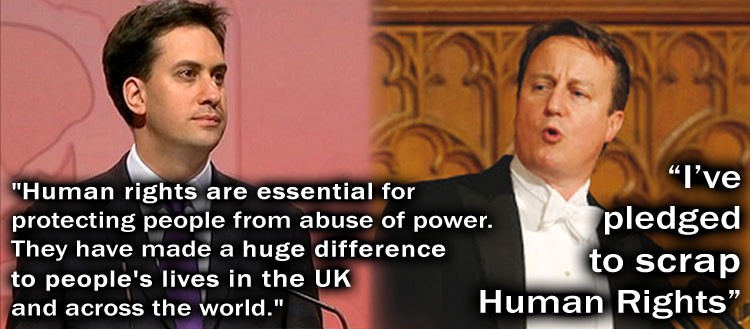
There was also a pledge to abolish youth unemployment by the end of the decade. But the Tory faithful gave the loudest applause for his pledge to scrap the Human Rights Act.

This is a truly terrifying pledge, because human rights were originally formulated as an international response to the atrocities of the 2nd World war, and to ensure that citizens are protected from abuses of their government.

A Labour Party analysis found the proposed tax break would hand David Cameron and other Cabinet ministers an extra £132 a year. But a family with two children with one earner on £25,000 a year would lose £495 by 2017-17 due to the benefits freeze announced by Mr Osborne.

The Tory plan is based solely on spending cuts, mainly directed at the working age poor. And the Conservative plan to raise the higher rate threshold to £50,000 means that  working-age poor people are to fund a tax cut that is four times greater for higher rate tax payers than for basic rate taxpayers.

Ed Balls said in response:

David Cameron’s speech showed no recognition that working people are £1,600 a year worse off under the Tories nor that the NHS is going backwards on their watch. The only concrete pledge we’ve had from the Tories this week is a promise to cut tax credits by hundreds of pounds for millions of hard working people while keeping a £3 billion tax cut for the richest one per cent.

TUC general Secretary Frances O’Grady added:

No amount of dressing up can hide the fact that the policies in this speech pass by those who need the most help to reward richer voters.

Alison Garnham, Chief Executive of Child Poverty Action Group, said:

What was missing in the PM’s speech was any recognition that independent projections show that child poverty rates are set to soar. We know that raising the personal tax allowance is an ineffective way of supporting low paid families.Independent analysis shows that just 15% of the £12 billion required to raise the PTA to £12,500 would go to working families in the lowest-income half of the population.

Many simply don’t earn enough to benefit from this policy, and those that do just see their benefits and tax credits withdrawn as their incomes rise.

The Institute for Fiscal Studies showed in their Green Budget publication this year that just 15% of the gains from increasing the personal allowance would benefit the poorest half of Britons, concluding:

There are better ways to help the low paid via the tax and benefit system.

Ex-Treasury official James Meadway,  now a senior economist at the New Economics Foundation, said Cameron’s changes were:

irresponsible, expensive gimmicks that scarcely affect the poorest workers.

They imply swingeing public sector cuts and mean handing over more cash to the already rich.

Ed Miliband will respond tomorrow (Monday), declaring that the Tories’ failure to tackle the cost-of-living crisis has helped cost the Exchequer £116.5 billion – leading to higher borrowing and broken promises on the deficit. The price tag, equivalent to almost £4,000 for every taxpayer, is based on new research from the House of Commons Library being published by the Labour Party.

This shows that low pay and stagnant salaries, combined with soaring housing costs and the failure to tackle root causes of increased welfare bills, means that over the course of this Parliament:

  • Income tax receipts have fallen short of forecasts by more than £66 billion.
  • National Insurance Contributions are £25.5 billion lower than expected.
  • Spending on social security is £25 billion higher than planned [despite brutal cuts to lifeline benefits]

Mr Miliband is expected to say the test for George Osborne in this week’s Autumn Statement will be to set out a plan to build a recovery for working people – one which recognises the link between the living standards and Britain’s ability get the deficit down.

He is expected to say:

For a very long time, our country has worked well for a few people, but not for everyday people. “We live in a country where opportunities are too skewed to those at the top, where too many people work hard for little reward, where too many young people can’t find a job or apprenticeship worthy of their talents, and where families can’t afford to buy a home of their own.

For all the Government’s boasts about a belated economic recovery, there are millions of families still caught in the most prolonged cost-of-living crisis for a century.  For them this is a joy-less and pay-less recovery.

My priority as Prime Minister will be tackling that cost-of-living crisis so that hard work is properly rewarded again, so that our children can dream of a better future, so that our public services including the NHS are safe.

Building a recovery that works for everyday people is the real test of the Autumn Statement.

But that isn’t a different priority to tackling the deficit. Building a recovery that works for most people is an essential part of balancing the books.

The Government’s failure to build a recovery that works for every-day people and tackle the cost-of-living crisis isn’t just bad for every person affected, it also hampers our ability to pay down the deficit.

Britain’s public finances have been weakened by a Tory-led Government overseeing stagnant wages which keep tax revenues low.

Britain’s public finances have been weakened by Tory policies which focus on low paid, low skilled, insecure jobs – often part-time or temporary – because they do not raise as much revenue as the high skill, high wage opportunities we need to be creating.

And our public finances have been weakened by higher social security bills to subsidise low paid jobs and the chronic shortage of homes.   

The result has been David Cameron and George Osborne missing every single target they set themselves on clearing the deficit and balancing the books by the end of this parliament.

Their broken promises, their abject failure, are not an accident. They are the direct result of an outdated ideology which says all a Government has to do is look after a privileged few at the top and everyone else will follow.

That is why this Government has done a great job of squeezing the middle, but a bad job of squeezing the deficit.

The test this week for David Cameron and George Osborne is whether they recognise that Britain will only succeed and prosper for the long term by tackling the cost-of-living crisis and building a recovery which works for the many, not just for a few.

Or whether they will just offer more of the same old ideas that have failed them, failed everyday working people, and failed Britain over the past four years.

10001887913_f8b7888cbe_o

Thanks to Robert Livingstone for the brilliant memes

Aktion Arbeitsscheu Reich, Human Rights and infrahumanisation

1379986_541109785958554_2049940708_n

The European Convention on Human Rights, which came into force on 3 September 1953, guarantees a range of political rights and freedoms of the individual against interference by the State. The Convention came about as an international response to the horrors of World War Two, and the Holocaust.

Before the incorporation of the Convention, people in the United Kingdom could only complain of unlawful interference with their Convention rights by lodging a petition with the European Commission of Human Rights in Strasbourg. That all changed on 2 October 2000 when Labour’s Human Rights Act 1998 came into force, allowing UK citizens to sue public bodies for violations of their Convention rights in domestic courts.

David Cameron wants to scrap the Human Rights Act and has pledged to leave the European Convention. Human Rights are the bedrock of any democracy. He also wants to scrap consultations, impact assessments, audits, judicial reviews: all essential safeguards for citizens and mechanisms of democracy. 

Government policies are expressed political intentions, regarding how our society is organised and governed. They have calculated social and economic aims and consequences.

How policies are justified is increasingly being detached from their aims and consequences, partly because democratic processes and basic human rights are being disassembled or side-stepped, and partly because the government employs the widespread use of propaganda to intentionally divert us from their aims and the consequences of their ideologically (rather than rationally) driven policies. Furthermore, policies have become increasingly detached from public interests and needs.

A clear example of an ideologically-driven policy is the Welfare “Reform” Act, which is founded on a stigmatising, Othering narrative: benefit recipients are portrayed as the enemy that battles against fairness and responsibility. The mythological economic “free-rider,” a “burden on the state.” The “reforms” left people in receipt of lifeline benefits much worse off than they were, the word reform has been used as a euphemism for cuts.

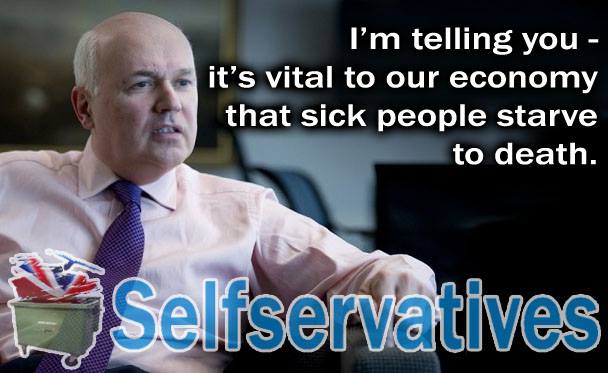
Iain Duncan Smith’s Department for Work and Pensions  (DWP) has launched a new propaganda scapegoating  advertising campaign encouraging people to phone a hotline if they suspect somebody they know is fraudulently claiming benefits.

I’m sure that serious fraudulent claimants inform their friends and neighbours of their every activity, including holidays, sleeping arrangements, moments of intimacy and all of their benefit payment details, all the time, so that makes sense…

Mark Harper said: “Those who cheat the system need to know we will use everything in our power to stop them stealing money from hardworking taxpayers.”  

Yet we know that there isn’t a real distinction between benefit claimants and hard-working taxpayers, as the Tories would have us believe. Many people on benefits are also in work, but are not paid a sufficient wage to live on. Most people claiming benefits, including disabled people, have worked and contributed income tax previously.

It’s worth bearing in mind that the poorest citizens, including people claiming benefits, pay proportionally more indirect taxes than the wealthiest citizens, such as VAT. The strivers/skivers rhetoric is simply a divert, divide and scapegoating strategy. Growing social inequality evidently generates a political necessity for creating scapegoats and cultivating prejudices.

The real cost of out-of-work benefits is over-estimated in relation to the welfare bill for pensions and in-work benefits such as tax credits and housing benefit, obscuring the increasing role that the British state plays in subsidising the scandalously low wages paid by increasingly exploitative employers, in order to meet a minimum standard of living for the hardworking.

The hardworking taxpayer myth is founded on a false dichotomy, since it is estimated that around 70% of households claim benefits of one kind or another at some point in their lives. In the current climate of poor pay, poor working conditions, job insecurity, and high living costs, the myth of an all pervasive welfare-dependent something for nothing culture is being used to foster prejudice and resentment towards those unfortunate enough to be out of work. It also serves to bolster right-wing justification narratives that are entirely ideologically driven, which are aimed at dismantling the welfare state, while concurrently undermining public support for it.

As the Huff Post’s Asa Bennett points out, there are much bigger costs to the taxpayer that the government are reluctant to discuss.

For example, the tax gap, charting the estimated amount of taxes unpaid thanks to evasion, avoidance, error and criminality, soared to £34 billion, according to HM Revenue and Customs. This equates to £1 in every £15 owed in taxes not being collected last year.

The National Audit Office found that the Department for Work and Pensions had made £1.4 billion in declared benefit overpayments, an increase of nearly 6%.

Meanwhile, the DWP estimate that between £7.5 billion and £12.3 billion of the six main benefits it administered were left unclaimed in 2009/2010. On top of that. HMRC suggest that several billion pounds more is most in unclaimed tax credits, with childless families missing out on £2.3 billion worth. That’s a grand total of 22.1 billion that ordinary taxpayers aren’t claiming, even though they are entitled to do so. 

Iain Duncan Smith’s Department have wasted an estimated total of £6,221,875,000.00 of taxpayers’ money on the implementation of Universal Credit and private company contracts, amongst other things. (See We can reduce the Welfare Budget by billions: simply get rid of Iain Duncan Smith ). 

Duncan Smith’s claims that his policies are about fairness and saving taxpayers’ money, simply don’t stand up to scrutiny. 

The policies are entirely ideologically-driven. We have a government that uses words like workshy to describe vulnerable social groups. This is a government that is intentionally scapegoating poor, unemployed, disabled people and migrants. One Tory councillor called for the extermination of gypsies, more than one Tory MP has called for illegal and discriminatory levels of pay for disabled people. A conservative deputy mayor said, unforgivably, that the “best thing for disabled children is the guillotine.”

These weren’t “slips”, it’s patently clear that the Tories believe these comments are acceptable, and we need only look at the discriminatory nature of policies such as the legal aid bill, the wider welfare “reforms” and research the consequences of austerity for the most economically vulnerable citizens – those with the “least broad shoulders” –  to understand that these comments reflect how conservatives think.

This is a government that is using public prejudice to justify massive socio-economic inequalities and their own policies that are creating a steeply hierarchical society based on social Darwinist survival of the fittest neoliberal “small state” principles.

The Tory creation of socio-economic scapegoats, involving vicious stigmatisation of vulnerable social groups, particularly endorsed by the mainstream media, is simply a means of manipulating public perceptions and securing public acceptance of the increasingly punitive and repressive basis of the Tories’ welfare “reforms”, and the steady stripping away of essential state support and provision.

The political construction of social problems also marks an era of increasing state control of citizens with behaviour modification techniques, (under the guise of paternalistic libertarianism) all of which are a part of the process of restricting access rights to welfare provision and public services.

The mainstream media has been complicit in the process of constructing deviant welfare stereotypes and in engaging prejudice and generating moral outrage from the public:

“If working people ever get to discover where their tax money really ends up, at a time when they find it tough enough to feed their own families, let alone those of workshy scroungers, then that’ll be the end of the line for our welfare state gravy train.” James Delingpole 2014

Delingpole conveniently fails to mention that a majority of people needing lifeline welfare support are actually in work. He also fails to mention that while this government were imposing austerity on the poorest citizens, the wealthiest got generous handouts from the Treasury, in the form of tax breaks – hundreds of thousands of pounds each per year. 

Poverty cannot be explained away by reference to simple narratives of the workshy scrounger as Delingpole claims, no matter how much he would like to apply such simplistic, blunt, stigmatising, dehumanising labels that originated from the Nazis (see arbeitssheu.)

This past four years we have witnessed an extraordinary breakdown of the public/private divide, and a phenomenological intrusion on the part of the state and media into the lives of the poorest members of society. (For example, see: The right-wing moral hobby horse: thrift and self-help, but only for the poor. ) Many people feel obliged to offer endless advice on thrift and self help aimed at persuading poor people to “manage” their poverty better.

Hannah Arendt wrote extensively about totalitarian regimes, in particular Nazism and Stalinism, which she distinguishes from Italian Fascism, because Hitler and Stalin sought to eliminate all restraints upon the power of the State and furthermore, they sought to dominate and control every aspect of everyone’s life. There are parallels here, especially when one considers the continued attempts at dismantling democratic processes and safeguards since the Coalition took office.

Many policies are aimed at ‘incentivising’ certain behaviours and perceptions of citizens, using psychology to align them with political and defined economic goals. Citizens are increasingly seen by government as a means to an end.

Further parallels may be found here: Defining features of Fascism and Authoritarianism

Between February 1933 and the start of World War Two, Nazi Germany underwent an economic “recovery” according to the government. Rather like the “recovery” that Osborne and Cameron are currently claiming, which isn’t apparent to most citizens.

This economic miracle, sold to the people of Germany, entailed a huge reduction in unemployment. However, the main reason for this was fear – anyone who was found guilty of being “workshy” (arbeitssheucould then be condemned to the concentration camps that were situated throughout Germany. Hitler frequently referred to the economic miracle, whilst people previously employed in what was the professional class were made to undertake manual labour on the autobahns. People didn’t refuse the downgraded status and pay, or complain, lest they became Arbeitsscheu Reich compulsory labor camp prisoners, and awarded a black triangle badge for their perceived mental inferiority and Otherness.

Behaviour can be controlled by manipulating fear, using a pattern of deprivation. Benefit sanctions, for example, leave “workshy” people without the means to meet their basic survival needs and are applied for periods of weeks or months and up to a maximum of 3 years.

That the government of a so-called first world liberal democracy is so frankly inflicting such grotesquely cruel punishments on some of our most vulnerable citizens is truly horrific. It’s also terrifying that the media and the British public are complicit in this: they fail to recognise that the Social Darwinism inherent in Tory ideological grammar is being communicated through discourses and policies embodying crude behaviour modification techniques and an implicit eugenic subtext .

There were various rationales for the Nazi Aktion T4 programme, which include eugenics, Social Darwinism, racial and mental “hygiene”, cost effectiveness and the welfare budget.

Those involved with the operation of the Aktion T4 programme used the term euthanasia as bureaucratic cover, in the minimal public relations effort to invest what was essentially eugenics. It is clear that none of the killing was done to alleviate pain or suffering on the part of the victims. Rather, the evidence, including faked death certificates, deception of the victims and of the victims’ families, and widespread use of cremation, indicates the killing was done solely according to the socio-political aims and ideology of the perpetrators. The Nazis believed that the German people needed to be “cleansed” of the so-called racial enemies, but the Aktion T4 programme also included people with disabilities, the poor and the workshy.  

Although many were gassed using carbon monoxide or killed by lethal injection, many more of these people deemed “life unworthy of life” were simply starved to death.

The Holodomor – “extermination by hunger” –  was Joseph Stalin’s intentionaly inflicted famine, designed to destroy  people in the Ukraine seeking independence from his rule. As a result, an estimated 7,000,000 people starved to death. The attitude of the Stalinist regime in 1932–33 was that many of those starving to death were “counterrevolutionaries”idlers” or “thieves” who “fully deserved their fate”. In 2008, the European Parliament adopted a resolution that recognised the Holodomor as a crime against humanity.

Implementing policies that lead to members of vulnerable social groups starving, which is an INTENTIONAL political act, however, is not currently included in the UN Treaty definition of genocide. Nor are disabled people amongst the categories of groups protected by the Convention on the Prevention and Punishment of the Crime of  Genocide.

While I am very aware that we need take care not to trivialise the terrible events of Stalinist Russia and Nazi Germany by making casual comparisons, there are some clear and important parallels on a socio-political level and a psycho-social one, that I feel are crucially important to recognise.

Gordon Allport studied the psychological and social processes that create a society’s progression from prejudice and discrimination to genocide. In his research of how the Holocaust happened, he describes socio-political processes that foster increasing social prejudice and discrimination and he demonstrates how the unthinkable becomes tenable: it happens incrementally, because of a steady erosion of our moral and rational boundaries, and propaganda-driven changes in our attitudes towards politically defined others, that advances culturally, by almost inscrutable degrees.

The process always begins with political scapegoating of a social group and with ideologies that identify that group as the Other: an “enemy” or a social “burden” in some way. A history of devaluation of the group that becomes the target, authoritarian culture, and the passivity of internal and external witnesses (bystanders) all contribute to the probability that violence against that group will develop, and ultimately, if the process is allowed to continue evolving, extermination of the group being targeted.

Economic recession, uncertainty and political systems on the authoritarian -> totalitarian spectrum contribute to shaping the social conditions that seem to trigger Allport’s escalating scale of prejudice.

In the UK, the media is certainly being used by the right-wing as an outlet for blatant political propaganda, and much of it is manifested as a pathological persuasion to hate others. The Coalition clearly have strong authoritarian tendencies, and that is most evident in their anti-democratic and behaviourist approach to policy, human rights, equality, social inclusion and processes of government accountability.

Vulnerable groups are those which our established principles of social justice demand we intervene to help, support and protect. However, the Coalition’s rhetoric is aimed at a deliberate identification of citizens as having inferior behaviour. The poorest citizens are presented as a problem group because of their individual faulty characteristics, and this is intentionally diverting attention from  wider socio-economic and political causes of vulnerability. Individual subjects experiencing hardships have been placed beyond state protection and are now the objects of policies that embody behaviourism, and pathologising, punitive and coercive elements of social control. Vulnerable people are no longer regarded as human subjects, the state is acting upon them, not for or on behalf of them.

People are still debating if Stalin’s Holodomor conforms to a legal definition of genocide, no-one doubts that Hitler’s gas chambers do, though Hitler also killed thousands by starvation.

Our own government have formulated and implemented policies that punish unemployed people for being “workshy” – for failing to meet the never-ending benefit conditionality requirements which entails the use of negative incentives, coercion and behaviour modification to “support” a person into  work –  by withdrawing their lifeline benefit. We also know that sanction targets have led to many people losing lifeline benefits for incoherent and grossly unfair reasons that have nothing to do with an unwillingness to cooperate or work.

Since benefits were originally calculated to meet basic living requirements – food, fuel and shelter – it’s  inconceivable that the government haven’t already considered the consequences of removing people’s means of meeting these fundamental survival needs. Of course, the Tory claim that this draconian measure is to incentivise people to “find work” doesn’t stand up to scrutiny when we consider that there isn’t enough work for everyone, and certainly not enough work around that pays an adequate amount to actually survive on.

Furthermore, the Tories “incentivise” the  wealthy by rewarding them with more money (such as the £107,000  tax break that was handed out to each millionaire every year from our own taxes by Osborne). It flies in the face of our conventional and established wisdom that reducing people to starvation and desperation will somehow motivate people to do anything other than to try and survive. (See Maslow’s Hierarchy, and two tragic accounts of the consequences of imposed sanctions.)

Tory austerity is all about ideology – the dehumanisation of the poor, and the destruction of public services and provisions – state infrastructure – and nothing to do with the state of the economy. It’s also about cutting money from the poorest and handing it to the wealthiest. Many economists agree that austerity is damaging to the economy.

There has been a media complicity with irrational and increasingly punitive Tory policies. But why are the public so compliant?

Decades of  research findings in sociology and psychology inform us that as soon as a group can be defined as an outgroup, people will start to view them differently. The very act of demarcating groups begins a process of ostracisation.

As well as the political and social definitions of others, there also exists deeper, largely unconscious beliefs that may have even more profound and insidious effects. These are related to whether people claiming benefits are even felt to be truly, properly human in the same way that “we” are.

This is called infrahumanisation. Infra means “below”, as in below or less than fully human. The term was coined by a researcher at the University of Louvain called Jacque-Philippe Leyens to distinguish this form of dehumanisation from the more extreme kind associated with genocide.

However, I don’t regard one form of dehumanisation as being discrete from another, since studies show consistently that it tends to escalate when social prejudice increases. It’s a process involving accumulation.

According to infrahumanisation theory, the denial of uniquely human emotions to the outgroup is reflective of a tacit belief that they are less human than the ingroup.

Poor people, homeless people, drug addicts and welfare claimants are the frequently outgrouped. It is these most stigmatised groups that people have the most trouble imagining having the same uniquely human qualities as the rest of us. This removes the “infrahumanised” group from the bonds, moral protection and obligations of our community, because outgrouping de-empathises us.

This would explain why some people attempt to justify the cuts, which clearly fall disproportionately on the most vulnerable. This is probably  why fighting the austerity cuts is much more difficult than simply fighting myths and political propaganda. I think the government are very aware of the infrahumanisation tendency amongst social groups and are manipulating it, because growing social inequality generates a political necessity for social prejudices to use as justification narratives.

During a debate in the House of Lords, Freud described the changing number of disabled people likely to receive the employment and support allowance as a bulge of, effectively, stock”. After an outraged response, this was actually transcribed by Hansard as “stopped”, rendering the sentence meaningless.  He is not the only person in the Department for Work and Pensions who uses this term. The  website describes disabled people entering the government’s work programme for between three and six months as 3/6Mth stock.

This infrahumanised stock are a source of profit for the companies running the programme. The Department’s delivery plan recommends using  credit reference agency data to cleanse the stock of fraud and error.

The linguistic downgrading of human life requires dehumanising metaphors: a dehumanising socio-political system using a dehumanising language, and it is becoming familiar and pervasive: it has seeped almost unnoticed into our lives.

Until someone like Freud or Mellins pushes our boundaries of decency a little too far. Then we suddenly see it, and wonder how such prejudiced and discriminatory comments could be deemed acceptable and how anyone could possibly think they would get away with such blatantly offensive rhetoric without being challenged. It’s because they have got away with less blatantly offensive comments previously: it’s just that they pushed more gently and so we didn’t see.

It’s also the case that the government distorts people’s perceptions of the  aims of their policies by using techniques of neutralisation. An example of this method of normalising prejudice is the use of the words “incentivise” and “help” in the context of benefit sanctions, which as we know are intentionally extremely punitive, and people have died as a consequence of having their lifeline benefit withdrawn.

As Allport’s scale of prejudice indicates, hate speech and incitement to genocide start from often subliminal expressions of prejudice and subtle dehumanisation, which escalate. Germany didn’t wake up one morning to find Hitler had arranged the murder of millions of people. It happened, as many knew it would, and was happening whilst they knew about it. And many opposed it, too.

The dignity and equal worth of every human being is the axiom of international human rights. International law condemns statements which deny the equality of all human beings.

As a so-called civilised society, so should we.

526544_532055030197363_2137237288_n
Pictures courtesy of Robert Livingstone

Inquiry to be launched into ex-soldier’s death after JSA stopped – Mike Sivier

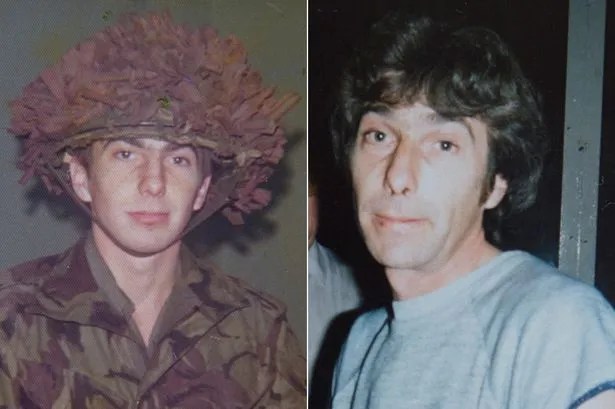
The late David Clapson [Image: change.org petition site].

MPs are set to hold an inquiry into benefit sanctions after 200,000 people signed a petition in the wake of an ex-soldier’s death.

More than 211,000 people signed a Change.org petition started by Gill Thompson calling for an inquiry into benefit sanctions after diabetic David Clapson, 59, was found dead in his home.

Gill’s three-month campaign called for an independent inquiry into benefit sanctions – which refers to occasions that money is withheld from claimants if they fail to meet the terms agreed.

The Work and Pensions cross-party select committee has now agreed and its inquiry into benefit sanctions is due to start early next year. It is expected to be completed shortly before the General Election in May.

David, from Stevenage – who worked for 29 years, had his £71.70 weekly allowance stopped and died three weeks later. When his body was found by a friend, his electricity card was out of credit, meaning the fridge where he kept the insulin he used to treat his diabetes was not working.

He died from diabetic ketoacidosis three weeks after his benefits were stopped, caused by not taking insulin. A coroner found that when David died there was no food in his stomach.

Gill, 57, from London, has welcomed the decision to hold an inquiry. She said: “I’m still getting my head around the announcement. It’s still so overwhelming. When I started the petition I didn’t know what would happen.

“It wasn’t just for David. Nothing can replace him but the one thing I thought I could do was to make sure this doesn’t happen to anyone else.

“I’m not normally a campaigner and David wasn’t someone who liked a fuss, but sometimes in life there are certain things you have to do – and starting this petition was one of them.

“I am so glad I did it now. I hope, through this investigation, lessons will be learnt. People turn to the state when they are in need – that is what the system is for – a safety net for hard working people like my brother when they need a bit of support.”

Debbie Abrahams, MP for East Oldham and Saddleworth, has been calling on the DWP select committee, of which she is a member, to hold an inquiry into “inappropriate use” of benefit sanctions since November last year.

She said: “Gill has shown great courage in the wake of her brother’s appalling death to take on this cruel government and its inhuman policy of targeting vulnerable people who are reliant on social security.

“The huge response to Gill’s Change.org petition with more than 200,000 signatures is proof that the British public will not stand by and do nothing when they see vulnerable people suffering.”

“The government has done everything it can to avoid having this inquiry. There is increasing evidence of the negative effects of social security sanctions on some of the most vulnerable in society, which shows that their so-called welfare reforms don’t work. This is a government that doesn’t give a damn about ordinary people.

“Latest figures show that there are now more people in working families who are living in poverty than in workless and retired families combined.”

Many thanks to Vox Political

Related

Benefit sanctions are not fair and are not helping people into work

Rising ESA sanctions: punishing the vulnerable for being vulnerable

Punishing Poverty: A review of benefits sanctions and their impacts on clients and claimants

Rising ESA sanctions: punishing the vulnerable for being vulnerable10177255_710935002309364_996655242459079802_n

Many thanks to Robert Livingstone


Human rights are the bedrock of democracy, which the Tories have imperiled.

not negot
The prime minister has again confirmed that a future majority Conservative government would repeal Labour’s landmark legislation – the Human Rights Act , 1998 – and replace it with a “British Bill of Rights”, as I reported back in Julyand he has previously pledged to leave the  European Convention on Human Rights, as I’ve also reported.

And I wrote this earlier today: The lord chancellor is dismantling the rule of law, which discusses how  Grayling is preparing to unveil Tory plans to scrap Britain’s human rights laws. The plans would repeal the Human Rights Act and break the formal link between the European Court of Human Rights and British law. Its judgement would now be treated as “advisory” and need to be approved by parliament. 

Grayling has already tried to take legal aid from the poorest and most vulnerable, in a move that is so clearly contrary to the very principle of equality under the law. He turned legal aid into an instrument of discrimination. He has tried to dismantle the vital legal protection available to the citizen – judicial review – which has been used to stop him abusing his powers again and again. He has tried to restrict legal aid for domestic abuse victims, welfare claimants seeking redress for wrongful state decisions, victims of medical negligence, for example. And now he wants to take away citizens’right to take their case to the European court.

I have argued elsewhere that even if we were to take a Conservative perspective, it’s still the case that the only way to wed the principle of a “pursuit of economic liberty” with wider justice is by a basic notion of equality before the law, through the equal access to justice. This means that the State must fund the means of contract enforcement and free and fair trial legal costs, for those who cannot afford it. If the State fails to fulfil this contingent function, then we simply cease to be free. 

The Tory attack on our universal human rights is not about euroscepticism, terrorists, cats, “common sense” or any of the other Sun and Daily Mail endorsed ideological justifications they are using. It is about scrapping our essential legal protections against the state, with each Tory policy advancing authoritarianism by almost inscrutable degrees, eroding our democratic freedoms further and further.

Director of the civil rights organisation Liberty, Shami Chakrabarti, said: “Shame on the prime minister for citing Churchill, while promising to trash his legacy. The convention protects both prisoners of war and soldiers sent off to fight and die with inadequate equipment. But the prime minister believes there is no place for human rights in Helmand – on that, he and Isis agree.”

Amnesty UK’s campaigns director, Tim Hancock, said: “Theresa May made much in her speech about how we must stand up and fight for human rights abroad, it makes absolutely no sense to denigrate those same rights at home.

It’s exasperating to hear the prime minister vow to tear up the Human Rights Act again – so he can draft ‘his own’. Human rights are not in the gift of politicians to give. They must not be made a political plaything to be bestowed or scrapped on a whim. It’s time politicians accepted that they too have to follow the rules and that those rules include the civilising human rights standards Churchill championed.”

In his speech to the Tory party conference in Birmingham, Cameron did not explicitly threaten to withdraw from the European convention on human rights, a move that would have wide-ranging, international repercussions for the UK’s relationship with Europe.

The prime minister told Conservative delegates: “It’s not just the European Union that needs sorting out – it’s the European court of human rights. When that charter was written, in the aftermath of the second world war, it set out the basic rights we should respect.

But since then, interpretations of that charter have led to a whole lot of things that are frankly wrong. Rulings to stop us deporting suspected terrorists. The suggestion that you’ve got to apply the human rights convention even on the battlefields of Helmand. And now – they want to give prisoners the vote. I’m sorry, I just don’t agree.”

Erm… hello, Mr Cameron, but this isn’t just about egocentric ole’ you.

Last time I checked, this was a first-world liberal democracy, and not your “kingdom”, or a totalitarian state. The principle that “all power ultimately rests with the people and must be exercised with their consent” lies at the heart of democracy. Democracy is premised on the recognition and protection of people’s right to have a say in all decision-making processes which is itself based on the central principle of equality of all human beings.

The purpose of democracy, like that of human rights protection, is to uphold the dignity of every individual and to ensure that the voices of the weakest are also heard. Its core values – freedom, equality, fraternity, accommodation of diversity and the assurance of justice underpin the norms of human rights as well.

Democracy is one of the universal core values and principles of the United Nations. Respect for human rights and fundamental freedoms and the principle of holding periodic and genuine elections by universal suffrage are essential elements of democracy. These values are embodied in the Universal Declaration of Human Rights and further developed in the International Covenant on Civil and Political Rights which enshrines a host of political rights and civil liberties underpinning meaningful democracies.

The Rule of Law and Democracy Unit stands as the Office of the High Commissioner for Human Rights (OHCHR) focal point for democracy activities. The Unit works to develop concepts and operational strategies to enhance democracy and provide guidance and support to democratic institutions through technical cooperation activities and partnership with the relevant parts of the UN, notably the UN Democracy Fund, the Department of Political Affairs and the newly established UN Working Group on Democracy. Legal and expert advice are provided as required to OHCHR field operations on relevant issues such as respect for participatory rights in the context of free and fair elections, draft legislation on  national referenda and training activities.

The strong link between democracy and human rights is captured in article 21(3) of the Universal Declaration of Human Rights, which states:

“The will of the people shall be the basis of the authority of government; this will shall be expressed in periodic and genuine elections which shall be by universal and equal suffrage and shall be held by secret vote or by equivalent free voting procedures.” 

The link is further developed in the Covenant on Civil and Political Rights which enshrines a host of political rights and civil liberties underpinning meaningful democracies. The rights enshrined in the International Covenant on Economic, Social and Cultural Rights and subsequent human rights instruments covering group rights (e.g.indigenous peoples, minorities, people with disabilities) are equally essential for democracy as they ensure inclusivity for all groups, including equality and equity in respect of access to civil and political rights.

More recently, in March 2012, the Human Rights Council adopted a resolution titled “Human rights, democracy and the rule of law,” which reaffirmed that democracy, development and respect for all human rights and fundamental freedoms were interdependent and mutually reinforcing.

The Council called upon States to make continuous efforts to strengthen the rule of law and promote democracy through a wide range of measures. It also requested the OHCHR, in consultation with States, national human rights institutions, civil society, relevant inter-governmental bodies and international organizations, to draft a study on challenges, lessons learned and best practices in securing democracy and the rule of law from a human rights perspective.

Human rights, democracy and the rule of law are core values of the European Union, too. Embedded in its founding treaty, they were reinforced when the EU adopted the Charter of Fundamental Rights in 2000, and strengthened still further when the Charter became legally binding with the entry into force of the Lisbon Treaty in 2009.

I think that the Conservative Party, even if they managed a narrow majority, ought to be expecting to find it very difficult to pass such a seriously partisan bill. That they aren’t troubles me greatly.Graylings’ documented proposals have drawn a furious response from the Tories’ coalition partners. Simon Hughes, the Liberal Democrat justice minister, said: “The Conservatives don’t care about the rights of British citizens – they care about losing to Ukip. These plans make no sense: you can’t protect the human rights of Brits and pull out of the system that protects them.”

Europe’s human rights laws were designed by British lawyers to reflect British values of justice, tolerance and decency. We will not allow the Tories to take away the hard-won human rights of British people when in the UK or anywhere else in Europe.

Andrea Coomber, director of the civil rights group Justice, said: “Conservative party policy now says: ‘We support minimum human rights standards, but only if we define their content.’ A patchwork of national rules would mean no standard at all; every human being, subject only to the whims of national interest. This vision would reset the clock to 1945, before Eleanor Roosevelt, Churchill and Maxwell-Fyfe ever put pen to paper.”

Sadiq Khan, the shadow justice secretary, said: “Once again David Cameron is pandering to UKIP instead of standing up for the rights and best interests of the people of Britain. The truth is that our courts have been free to interpret rulings by the European convention on human rights for 50 years – the Human Rights Act did nothing to change that fact.”

Labour’s Human Rights Act ought to be a source of pride. It is a civilised and a civilising law. It ensures that Britain remains a nation where key universal benchmarks of human decency and protections against state abuse are upheld by the courts. There is already a modern British bill of rights already. It is called the Human Rights Act (HRA).

The rights protected by the Act are quite simple. They include the right to life, liberty and the right to a fair trial; protection from torture and ill-treatment; freedom of speech, thought, religion, conscience and assembly; the right to free elections; the right to fair access to the country’s education system; the right to marry and an overarching right not to be discriminated against. Cameron has argued that it should be repealed just 10 years after its implementation (the HRA came into force in October 2000) … so that he can pass another Act.

No other country has proposed de-incorporating a human rights treaty from its law so that it can introduce a Bill of Rights. The truly disturbing aspect of Cameron’s Bill of Rights pledge is that rather than manifestly building on the HRA, it’s predicated on its denigration and repeal. One has to wonder what his discomfort with the HRA is. The Act, after all, goes towards protecting the vulnerable from neglect of duty and abuse of power. Are we really believe Cameron (Or Farage, who also states that he intends to repeal the HRA, given the opportunity) is more likely to build on existing rights and freedoms or to destroy them?

The front page agendas of the Sun and Daily Mail indicate quite plainly the latter. And they have established form. Tory policies violate International Human Rights  standards, a fact that was met with only sneering contempt and denial from our authoritarian government. I’ve written at length previously about the Tory-led persecution of some of our most vulnerable citizens.

It seems to me that their callous indifference to the welfare of UK citizens is coupled with a drive to avoid international scrutiny and accountability, as well as at a national level. The government are certainly seeking to insulate themselves from legal challenge, and restrict the ability of citizens to hold to account future governments that break the law. And this general trend of creeping authoritarianism doesn’t bode well, coupled with the intent to scrap our protective rights, here.

The rights protected by the HRA are drawn from the 1950 European convention on human rights, which was a way of ensuring that we never again witness the full horrors of the second world war, the rise of Fascism and overwhelmingly, one of the greatest stains on the conscience of humanity – the Holocaust. Winston Churchill was one of the main drivers of the Convention, it was largely drafted by UK lawyers and the UK was one of the first countries to ratify it in 1951.

This was the establishing simple set of minimum standards of decency for humankind to hold onto for the future. The European Convention on Human Rights and Fundamental Freedoms (ECHR) was drafted as a lasting legacy of the struggle against fascism and totalitarianism. Yet the HRA is quite often portrayed by the Right as a party political measure.

However, whilst the Human Rights Act is ultimately recognised as one of the greatest legacies of Labour in government, Cameron seems oblivious to the fact that Human Rights are not objects to be bartered away. They arose from struggles that were begun long ago by past generations who gave their lives for these rights to be enshrined in our laws.

B8EQnPnIAAA2CNo

The whole point of human rights is that they are universal

Related

Defining features of Fascism and Authoritarianism

The Coming Tyranny and the Legal Aid Bill

Children are being denied justice and their human rights by legal aid cut

Amnesty International has condemned the erosion of human rights of disabled people in UK

UK becomes the first country to face a  UN inquiry into disability rights violations

The word “Tories” is an abbreviation of “tall stories”

1450041_569755536427312_1698223275_n


“The deficit reduction programme takes precedence over any of the other measures in this agreement”
 – stated in the Coalition Agreement.

For a government whose raison d’etre is deficit reduction, the coalition really isn’t very good at all.

Of course the truth is that this whole process of prolonged austerity is NOT about deficit-cutting. It’s just the cover for Tory ideology. It is actually about “shrinking the state” and squeezing the public sector until it becomes marginal, then none existent, in an entirely market-driven, competitively individualist society. The banker crisis-generated deficit has been a gift to the Tories in enabling them to launch the scuttlebutt that public expenditure has to be massively cut back, which they would never have been able to get away with without the deficit-reduction excuse in the first place.

And I am still seeing the “inherited debt” LIES that the Tories are still telling, despite official rebuke from the Office for Budget Responsibility (OBR) chief Robert Chote. This is the same Tory-led government that lost our triple A Moody and Fitch credit rating, and that borrowed more in 3 years than Labour did in 13. Figures from the Office for National Statistics (ONS) showed that the coalition had borrowed £430.072 billion in just 3 short years, whereas the last Labour government managed to borrow just £429.975 billion in 13 years, and unlike the  Tories, Labour invested most of what they borrowed in public services.

After continuously lying that the UK had the biggest debt in the world, George Osborne admitted to the Treasury Select Committee that he did not know the UK under Labour had the lowest debt in the G7. Also, confirmed by the Organisation for Economic Co-operation and Development (OECD). Those who have used cash terms (instead of percentages) have done so to scare, mislead and give less than half the story.

The much banded about 2010 deficit of “over 11%” is false. This is the Public Sector Net Borrowing (PSNB – total borrowings) and not the actual budget deficit which was -7.7%. (See OBR Economic and Fiscal Outlook March 2012  page 19, table 1.2.)

Secondly, in 1997 Labour inherited a deficit of 3.9% of GDP (not a balanced budget) and by 2008 it had fallen to 2.1% – a reduction of a near 50% – now that’s impressive. Hence, it’s implausible and ludicrous to claim there was “overspending.”

It’s common sense, in cash terms, that a millionaire’s debt would be greater than most people’s. Therefore, the UK would have a higher debt and deficit than most countries because we are the sixth largest economy. Therefore, its laughable to compare UK’s debt and deficit with Tuvalu’s who only have a GDP/Income of £24 million whilst, the UK’s income is £1.7 trillion.

In 1997, Labour inherited a debt of 42% of GDP. By the start of the global banking crises 2008 the debt had fallen to 35% –  almost a 22% reduction (page 6 ONS). Surprisingly, a debt of 42% was not seen as a major problem and yet at 35% you would think the sky was suddenly falling, to hear the Tories acting up.

The deficit was then exacerbated by the global banking crises after 2008. (See HM Treasury archives). The IMF have also concluded the UK experienced an increase in the deficit as result of a large loss in output/GDP caused by the global banking crisis and not even as result of the bank bailouts, fiscal stimulus and bringing forward of capital spending. It’s basic economics: when output falls the deficit increases.

The large loss in output occurred because the UK, like the US, have the biggest financial centres and as this was a global banking crisis we suffered the most, and not as a result of overspending prior to and after 2008 – as the International Money Fund (IMF) concur.

The UK national debt is the total amount of money the British government owes to the private sector and other purchasers of UK gilts. The national debt now stands at £1.5 TRILLION (and rising).

So a further saving of £3 Billion in benefits, as proposed by Osborne, will clear the debt in, say, a mere… 500 YEARS.

Once again, this exposes the nonsense of the “reducing the deficit” excuse as being a genuine motivation behind cutting the incomes of the poorest and the most vulnerable citizens in the UK.

Gosh. Tories in “telling lies” shocker. Here’s a  few more:

In October 2010, Cameron said : “But it’s fair that those with broader shoulders should bear a greater load.”

The prime sinister minister talked of “fairness” as he tried to dodge the criticism that the poorest would suffer from the second big announcement of that week: a cap on benefits paid to out-of-work households.

Cameron said his government would: “always look after the sick and the vulnerable”, but said that: “society will have to rethink its approach to fairness.” 

It hasn’t been “rethought” : it was the very first austerity cut.

He lied, because:

Cameron also said said : “Too many people thought: ‘I’ve paid my taxes, the state will look after everything.’ But citizenship isn’t a transaction – in which you put your taxes in and get your services out. It’s a relationship – you’re part of something bigger than yourself and it matters what you think and feel and do.”

Well actually, Cameron, your arrogance will be your greatest downfall, because we DO have a right in a so-called democracy to demand transparency and accountability from government, the state IS responsible for maintaining essential public services and provision, AND for upholding our human rights. Citizenship isn’t all about responsibility and giving to the government and an elite of millionaires – there IS something of a contract which we call “democracy”. 

Citizenship is a foundational and structural institution of democracy, insofar as it is both a legal status and a societal and political value. As a status, citizenship bestows a collection of rights and a set of responsibilities on individuals who are free and equal in rights.

In a democracy, citizenship is not a privilege that may be granted by the government at their discretion; it is a right.

Someone should remind Cameron that the term democracy comes from the Greek language and translates simply as “rule by the people”. The so-called “democracies” in classical antiquity (Athens and Rome) represent precursors of modern democracies. Like modern democracy, they were created as a reaction to a concentration and abuse of power by the rulers. Yet the theory of modern democracy was not formulated until the Age of Enlightment (17th/18th centuries), when philosophers defined the essential elements of democracy: separation of powers, basic civil rights / human rights, religious liberty and separation of church and state.

In order to earn the label democracy, a country needs to fulfill some basic requirements – and they need not only be written down in it’s constitution but must be kept up in everyday life by the government:

  • Guarantee of basic Human Rights to every individual person (including poor people and sick and disable people) vis-à-vis the state and its authorities as well as vis-à-vis any social groups (especially religious institutions) and vis-à-vis other persons.
  • Separation of Powers between the institutions of the state:
    Government [Executive Power],
    Parliament [Legislative Power] and
    Courts of Law [Judicative Power]
  • Freedom of opinion, speech, press and mass media
  • Religious liberty
  • General and equal right to vote (one person, one vote)
  • Good Governance (focus on public interest and the absence of corruption).

I think the Conservatives have spectacularly failed on meeting most of these criteria.

We also have an absolute democratic right to ask: what have you done with OUR money?

This was (allegedly) a liberal democracy before you took office, Cameron, not your “kingdom”.

Democracy isn’t something the government is elected to redefine and “manage”.


It’s worth noting that the word “Tory” was originally used as term of abuse. It derives from the Middle Irish word “tóraidhe” which means outlaw, robber or brigand. That explains Conservative policies, then. This Government is certainly robbing the poor to give  handouts to the rich.

Further reading

The Great Debt Lie and the Myth of the Structural Deficit

The mess we inherited” – some facts with which to fight the Tory Big Lies

Tory dogma and hypocrisy: the “big state”, bureaucracy, austerity and “freedom” State

A catalogue of official rebukes for Tory lies: Austerity, socio-economic entropy and being conservative with the truth

540525_186110078206715_79170441_n
Pictures courtesy of Robert Livingstone

UK becomes the first country to face a UN inquiry into violations of disabled peoples’ human rights

994442_352804464870608_5110112617916821526_n (1)

We ought to be very concerned about the government’s declaration that they intend to withdraw from the European Convention on Human Rights, (ECHR) and to repeal our own Human Rights Act, (HRA). One has to wonder what Cameron’s discomfort with the HRA is. The Act, after all, goes towards protecting the most vulnerable citizens from neglect of duty and abuse of power. The rights protected by the HRA are drawn from the 1950 European Convention on Human Rights, which was a way of ensuring that we never again witness the full horrors of the second world war, and overwhelmingly, one of the greatest stains on the conscience of humanity – the Holocaust.

Human Rights establish a simple set of minimum standards of decency for humankind to hold onto for the future. The European Convention on Human Rights and Fundamental Freedoms was drafted as a lasting legacy of the struggle against fascism and totalitarianism, as well as the atrocities of world war 2.

What kind of government would want those basic protections for citizens overturned?

One that doesn’t value or wish to uphold the universal protection of its citizens. From the State.

Last month, a new report, Dignity and Opportunity for All: Securing the Rights of Disabled People in the Austerity Era – Jane Young is the lead author – exposed the Coalition’s failure to meet its international human rights obligations under both the UN Convention on the Rights of People with Disabilities (UNCRPD) and the International Covenant on Economic, Social and Cultural Rights (ICESCR).

The report – also published by the Just Fair Coalition, a consortium of 80 national charities including Amnesty International, Save the Children, and Oxfam, says the UK is in clear breach of its legal obligations. Support structures for many disabled people have disappeared or are under threat as local authorities cut social care budgets, while cuts to social security will leave many disabled people without lifeline support for daily living.

Jane Campbell, a cross-bench peer who is disabled herself, said: “It is both extremely worrying and deeply sad that the UK – for so long regarded as an international leader in protecting and promoting disabled people’s rights – now risks sleepwalking towards the status of a systematic violator of these same rights.”

The UK government seems to be the first to face such a high-level international inquiry, initiated by the United Nations Committee because of “grave or systemic violations” of the rights of disabled people. That ought to be a source of shame for the Coalition, especially considering that this country was once considered a beacon of human rights, we are (supposedly) a first-world liberal democracy, and a very wealthy nation, yet our government behave like tyrants towards the poorest and some of the most vulnerable citizens of the UK.  As disability specialist, campaigner and first-class human rights activist, Samuel Miller says: “Britain is [now] a retrograde society and a flagrant violator of human rights—especially the rights of the sick and disabled”. 

It’s because of the sterling work of people such as Mr Miller that the UN have been made aware of our dire situation, here in the UK. Many of us have contacted the UN and made submissions, detailing the detrimental impacts that punitive Tory policies such as the bedroom tax, other welfare “reforms” (cuts), including the increasing use of extremely punitive welfare sanctions which leave people without the means to meet their most basic survival needs, the draconian Work Capability Assessment, brutal Tory targets for reducing spending and local authority cuts, for example, are having on ill and disabled people.

This is a government who refuse to undertake a cumulative impact assessment of their “reforms” and also continue to dismiss any evidence provided that challenges their own glib and deceitful account as “anecdotal” or “scaremongering”. Yet we are expected to regard Tory soundbites such as the “culture of entitlement” and the “something for nothing culture” which are ideologically motivated rather than   resting on some sort of empirical evidence. The Tories believe that their opinions alone somehow justify the cruel removal of people’s lifeline benefits and support. 

There’s more than one issue here, though it’s plain that the government have no intention of addressing any of the terrible consequences of their draconian policies, and use denial and stigmatising others to deflect attention from their aims. I am reminded of Techniques of Neutralisation – a well known collection of tactics used historically to justify prejudiced views, discriminatory and oppressive policies and  despotic actions.

Another related and important issue is that people’s qualitative experiences should matter to any decent democratic government, but the Coalition is far more concerned with its persistent attempts at DISCREDITING those experiences, (such attempts to invalidate and exclude the narrative of experiences of previously and presently marginalised people is a hallmark of the oppressive, supremacist condescension of historically powerful and privileged groups) –  denying their victims a voice and remedy. We know that this is not a democratic government that serves its citizens and reflects their needs, equally or otherwise.

Thanks to the sterling work of Dr Simon J Duffy, from the Centre for Welfare Reform, among others, we know that the austerity measures in the UK have disproportionately affected those people with disabilities and their carers. Dr Duffy’s work on the impact of the austerity cuts shows us that:

  • People in poverty are targeted 5 times more than most citizens
  • Disabled people are targeted 9 times more than most citizens
  • People needing social care are targeted 19 times more than most citizens

Yet, this government claims a cumulative impact assessment is “too difficult and costly”, I suggest that they use their considerable publicly donated, tax-collected wealth to fund the work of the Centre for Welfare Reform, who managed to undertake this work without hitting the obstacles the government claims it has. This said, perhaps the findings are the real obstacle that the government are concerned about. Because those findings are damning, and tell us that the welfare “reforms” are NOT “fair” as claimed, and are causing harm, distress, hardships and sometimes, death. The grossly punitive, draconian “reforms” need to be repealed.

The UN Committee has the power to launch an inquiry if it receives “reliable information” that violations have been committed, and as the Labour Government signed up to the protocol in 2009 – the UNCRPD and the international covenant on economic, social and cultural rights – it is legally binding. Many of us have used the Optional Protocol to the Convention on the Rights of Persons with Disabilities to send communication and make submissions since 2012.

Austerity measures and welfare “reforms” such as the bedroom tax (which is in itself established by the UN as being a contravention of human rights law) mean the rights of disabled people to independent living, work, and adequate social security have been seriously undermined, causing significant hardship and harm, quite often leading to tragic consequences.

Such investigations are necessarily conducted “confidentially”, so the UNCRPD  has formally refused to confirm or deny that the UK is being investigated. However, a recording has emerged (one hour and twenty five minutes long, watch from one hour and four minutes) of a former CRPD member seemingly revealing that the inquiry has been launched.

Professor Gabor Gombos, who is the co-founder of Voice of Soul, Hungary’s first organisation for ex-users and survivors of Mental Health Institutions, and co-chair of the World Network of Users and Survivors of Psychiatry, can be heard informing the audience that CRPD has “started its first inquiry procedure against the United Kingdom”.

He informs the Sixth International Disability Law Summer School at the National University of Ireland in Galway, June, that inquiries are only used where there are suspicions of “grave” violations of human rights. He says: “Where the issue has been raised and the government did not really make effective actions to fix the situation – it is a very high threshold thing – the violations should really be grave and very systemic.”

Earlier this year, the level of UK benefits paid in pensions, jobseeker’s allowance and incapacity benefits was deemed “manifestly inadequate” because it falls below 40% of the median income of European states, by the Council of Europe in Strasbourg.

The finding in an annual review of the UK’s adherence to the council’s European social charter is likely to provoke a fresh dispute between the government and European legal structures. Iain Duncan Smith, the work and pensions secretary, dismissed it as “lunacy”.

Not an open, accountable minister, or government, then.

The Council of Europe, which has 47 member states, said the conclusions were legally binding in the same way that judgements relating to the European Convention on Human Rights had to be applied by member states.

Aoife Nolan, professor of International Human Rights Law at the University of Nottingham and a trustee of Just Fair said government policies were compromising disabled people’s human rights.

“Not only do these policies cause significant hardship and anxiety, but they also amount to impermissible backward steps in relation to disabled people’s human rights, contrary to the UN human rights framework.”

The report was submitted to the United Nations, which, as I’ve previously outlined in earlier articles here, is in the process of reviewing UK compliance with its obligations to the rights of disabled people.

Last year, Amnesty International condemned the erosion of human rights of disabled people in UK, and the Joint Parliamentary Committee on Human Rights conducted an inquiry into the UK Government’s implementation of Article 19 of the United Nations Convention on the Rights of Persons with Disabilities – the right to live independently and to be included in the community. The inquiry, which began in 2011, has received evidence from over 300 witnesses.

The inquiry highlighted just how little awareness, understanding and employment of the Convention there is by the Tory-led government. Very few of the witnesses made any specific reference to the Convention in their presented evidence, despite the inquiry being conducted by the Parliamentary Human Rights Committee, with the terms of reference clearly framing the inquiry as being about Article 19 of the UNCRPD.

“This finding is of international importance”, said Oliver Lewis, MDAC Executive Director, “Our experience is that some Governments are of the view that the CRPD is nothing more than a policy nicety, rather than a treaty which sets out legal obligations which governments must fulfil.”

The report is particularly critical of the Minister for Disabled People (Maria Miller, at the time) who told the Committee that the CRPD was “soft law”. The Committee criticised this as “indicative of an approach to the treaty which regards the rights it protects as being of less normative force than those contained in other human rights instruments.” (See the full report.) The Committee’s view is that the CRPD is hard law, not soft law. 

Quite properly so. The whole point of human rights legislation is that it is universally applied, regardless of characteristics, preferences or belonging to a specific community or social group. The Tories seem to believe that poor people, disabled people and those with mental and physical illness should enjoy fewer rights than others.

Dr Hywel Francis MP, Chair of the Committee, said: “We are concerned to learn that the right of disabled people to independent living may be at risk through the cumulative impact of current reforms. Even though the UK ratified the UNCPRD in 2009 with cross-party support, the Government is unable to demonstrate that sufficient regard has been paid to the Convention in the development of policy with direct relevance to the lives of disabled people. The right to independent living in UK law may need to be strengthened further, and we call on the Government and other interested organisations to consider the need for a free-standing right to independent living in UK law.”

“The Government is meant to include disabled people in making sure people have their human rights upheld. We are concerned that a part of the Law on treating people equally and fairly (Equality Act section 149) does not say any more that disabled people should be involved. This is a step backwards.”

In other words, the Tory-led Coalition has quietly removed this part of the Equality Act.

The budget of the Equality and Human Rights Commission (EHRC), which was established by the Labour Party when they were drafting this flagship policy, is being reduced by over 60%, its staffing cut by 72%, and its powers restricted by the Coalition. Provisions that are being repealed by the Enterprise and Regulatory Reform (ERR) Bill include the duty on public authorities to have due regard to the need to reduce socioeconomic inequalities.

Savage Legal aid cuts from April 2013 have also contributed significantly to creating further barriers to ensuring Equal Rights law protect us, and the Tory-driven Legal Aid Bill also contravenes our right to a fair trial under Article 6(1) of the European Convention on Human Rights.

This is not a coincidental multiple policy timeline, but rather a very coordinated political attack on potential legal challenges at a time when Tory-led severe and devastating multiple welfare and provision cuts have affected disabled people so disproportionately. The changes, which came into effect in April, will hit “the same group of disabled people over and over again”. 

Our political freedoms and human rights must not be subservient to Tory notions of ‘economic success’. Democracy is not about the private accumulation of wealth of a few millionaires at the expense of others. It is about the wise use of the collective wealth – pubic funds – for the common good of the public – that must extend to include ALL of our citizens. And a decent, civilised, democratic society supports its vulnerable members and upholds universal human rights.

We need to ask why our government refuses to instigate or agree an inquiry into the substantial rise in deaths among ill and disabled people, as these deaths are quite clearly a correlated consequence of this government’s policies.

What kind of government uses the media to scapegoat and stigmatise ill and disabled people, by lying and inventing statistics to “justify” the persecution of our most vulnerable citizens, and the withdrawal of their crucial lifelines and support?

One that does not value those lives, or regard them as having an equal worth with others.

scroll2

I’m adding this comment from Samuel Miller, as it highlights his ongoing, excellent, valuable and much appreciated work with the United Nations on our behalf, which is a most welcomed addition to our own ongoing submissions of evidence over the past couple of years:

A superlative piece, which I will bring to the attention of senior UN officials. Ahead of the September meeting of the Human Rights Council (see third paragraph of :-http://mydisabilitystudiesblackboard.blogspot.ca/2014/08/an-inopportune-time.html), I will shortly submit an inquiry request to the CRPD and Human Rights Council, petitioning them to open an investigation into Britain’s benefit-sanctioning regime. (At the request of Jorge Araya, UNCRPD Secretary, I am completing a bibliography of media articles on this subject, with particular focus on inappropriate sanctions.)

You already know my views on this matter: http://twishort.com/1RVfc.

My bibliographic assignment for the UNCRPD Secretary might be an indication that the UN has already opened an investigation into Britain’s benefit-sanctioning regime, but for the sake of certainty I’ll make that request myself.”

And further:  See my letter to High Commissioner, Navi Pillay, below. I included your superb article in my letter, Sue.

Subject: There is an urgent need for a UN investigation into the United Kingdom’s benefit-sanctioning regime

Samuel Miller 

Attachments3:58 PM 

High Commissioner Navi Pillay
Office of the United Nations High Commissioner for Human Rights (OHCHR)
Palais Wilson
52 rue des Pâquis
CH-1201 Geneva, Switzerland.

Dear Ms. Pillay,

I am a 57-year-old Disability Studies specialist and disability activist from Montreal, Canada who has been communicating frequently and voluntarily, since January 2012, to senior United Nations officials, on the welfare crisis for the United Kingdom’s sick and disabled.

(See attached, and the following:

http://www.twitlonger.com/show/n_1rp0uui,
http://www.twitlonger.com/show/n_1rtnc63,
http://www.twitlonger.com/show/n_1rtvfk5 )
.

It is my understanding that a 22-page letter, pointing out that cuts to social security benefits introduced by Iain Duncan Smith and enforced by his Department for Work and Pensions on behalf of the Coalition government may constitute a breach of the UK’s international treaty obligations to the poor, will also be discussed at a meeting of the UN Human Rights Council in New York, in September. It is signed by Raquel Rolnik, the former UN special rapporteur on adequate housing; Magdalena Sepúlveda Carmona, the former UN special rapporteur on extreme poverty; and Olivier De Schutter, the former UN special rapporteur on the right to food.

Could you please add, as an addendum to that letter, my partial bibliography on Britain’s benefit-sanctioning regime, which is attached below in PDF format. My views can be found on page two; I am extremely concerned about the British government’s soaring use of benefit sanctions, and the evidence from MPs and the Work & Pensions Committee, which provides oversight of the Department for Work and Pensions, is especially compelling and strongly suggests that the government is stitching-up benefit claimants and is involved in a cover-up of that fact. The refusal of the government to agree to the Work & Pensions Committee’s request for an independent inquiry into this matter only compounds suspicion.

In closing, I would be most appreciative if the Human Rights Council and the OHCHR would open an investigation into this matter. This article (https://kittysjones.wordpress.com/2014/08/16/uk-becomes-the-first-country-to-face-a-un-inquiry-into-disability-rights-violations/) is very worthy of your—and their—attention, as well.

I wish to congratulate you on your tenure as High Commissioner, and wish you every success in your future endeavors.

Warm regards

Samuel Miller


14533697838_dffcc736f2_o (1)

Pictures courtesy of  Robert Livingstone 

scroll2

The last Labour government introduced a host of measures to strengthen the rights of our most vulnerable groups – in particular they protected the rights of disabled people. They formulated the Human Rights Act 1998. They passed the Disability Discrimination Act 2005, introduced the Equality Act 2010, formed the Equality and Human Rights Commission, and, in 2009, the Labour government signed the United Nations convention on the rights of persons with disabilities.

The few successful cases we have seen brought against the Tories are down to these Labour laws. We mustn’t lose sight of that. And I’ve every faith that a Labour government will address the gross injustices extended by the draconian of this government, using the existing laws, and their currently proposed policy of prosecuting people for hate speech against the vulnerable.


I don’t make any money from my work and I am not funded. I am disabled because of illness and struggle to get by. But you can help me continue to research and write informative, insightful and independent articles, and to provide support to others, by making a donation. The smallest amount is much appreciated – thank you.

DonatenowButton

Benefit sanctions are not fair and are not helping people into work

maslow-5Hierarchy of human needs – Abraham Maslow

If we  cannot fulfil our most basic survival needs, we cannot be motivated or “incentivised” to do anything else.

scroll2Here are two articles about the terrible, extremely harsh and punitive consequences of the governments’ historically regressive, ethically challenging benefit sanctions regime. This is a very cruel and limited application of operant conditioning: the government are applying punishment to vulnerable people who need the support of lifeline benefits to meet their fundamental survival needs, under the guise of “paternalistic libertarianism.”  

The punishments are applied most frequently to the most vulnerable people. Our welfare system was designed to support people, but under the Tory-led Coalition, it has been transformed into an administration that is run on unethical principles, akin to the Milgram experiment, with the difference that the punishments used are real, and decisions to punish welfare claimants are resulting in very real and terrible consequences.

It’s a biological fact that when people cannot meet their basic survival needs – food, fuel and shelter – they will die. Everybody understands this, no matter how well-insulated by personal wealth they may be. The government understands this.

The welfare “reforms” are harming people, and are causing deaths.

Article from The Guardian by

“I was ill with hunger, went to prison for stealing food and became homeless”

In collecting evidence for his review of the failings of the benefits sanctions process, welfare expert Matthew Oakley could have spoken to me. Since 2011, I’ve been sanctioned many times. I received a long benefits sanction due to a mix-up about Work Programme courses I should have attended as a condition of receiving out-of-work benefits. Life became hell. Once my food had run out, I had no money to buy more. I was sent back on the Work Programme but without funds to feed myself. The hunger was unbearable. I did not have the energy to turn up. This led to another sanction.

The sanctions became a vicious cycle as I became too ill to do anything. When I did get a job interview, I looked like a zombie as I had lost so much weight. I could not focus properly and lacked energy. Support from friends and family fell away as they assumed I was addicted to drugs. I was just hungry. I tried contacting my local MP but he did not seem interested. I felt alone and trapped. With nobody to turn to, and feeling like it was my only option, I pocketed a sandwich from a supermarket. I was arrested and fined £80. I had no way of paying and spent a week in prison for non payment. I lost my flat as I was £1,000 in rent arrears and I had piles of outstanding bills.

After a year without benefits, I approached a local homeless shelter for help. They took me in and fed me until the sanction was over. It was only in the hostel that I discovered that I was entitled to hardship payments, of which the Jobcentre had failed to inform me. I now volunteer at the homeless shelter as a thank you for all their help and because it feels good to help feed hungry people. I’ve tried my hardest to avoid more sanctions, but I’ve since been sanctioned for missing my signing in appointment, because I was at a job interview, of all things.

And I’m not alone. A research programme I’m involved in at Leeds University has heard from other people, such as Chloe, who was sanctioned for not doing enough to find work. “Four to eight weeks with no money is pretty alarming when you’ve got kids and bills and a house to run. I think I’ve cried solid for two weeks. I can’t cope,” she told researchers.

As Rosie, another single mother from the study put it: “They’re all right saying that you’re sanctioned as a punishment for not going in [for an appointment] but what am I and my son meant to eat? If that’s the only money we’re getting, what are we meant to do?” I thought “sanctions” were for criminal countries who pose a threat to the world. But now I know they are used against ordinary citizens too.

scroll2

From Mirror columnist Ros Wynne-Jones

‘Bullying’ welfare system of this Conservative Party drives vulnerable to brink

On Wednesday Gill Thompson is launching a petition on behalf of her brother David Clapson – who died after being sanctioned.

It calls on David Cameron to hold an inquiry into benefit sanctions – the term for when money is withheld from welfare claimants as a punishment.

“My brother David Clapson, a diabetic ex-soldier, died starving and destitute because he was penalised by the Job Centre for missing a meeting,” the petition says.

“David had his £71.70 weekly allowance stopped, meaning he couldn’t afford food or electricity. He was penniless, starving and alone.

“His electricity card was out of credit, meaning the fridge where he should have kept his diabetes insulin chilled was not working.

“Three weeks after his benefits were stopped he died from diabetic ketoacidosis – caused by not taking his insulin.”

David’s story is awful beyond measure. He had worked for 29 years, including five in the Army and 16 with British Telecom, and been a carer for several years for his sick mother.

When he died he had just £3.44 to his name, six tea bags, a tin of soup and an out-of-date can of sardines. A coroner also found he had no food in his stomach.

David Clapson
Tragic: David as a soldier, left, and later.

I have written many times about the cruelty of sanctions and the need for the independent inquiry called for by Debbie Abrahams MP.

Abrahams even thought she had got Esther McVey to agree to one at a Work and Pensions Select Committee meeting – but the Government backtracked after the meeting.

I believe there may be a link between unemployment figures and sanctions – and that is what an inquiry needs to confirm or deny. It also needs to explain why almost one million poor, unemployed and vulnerable people needed “punishing” last year.

A few months ago, a campaigner sent me a link to a desperate message on David Cameron’s Facebook page. It was a suicide note, written to the PM by a mother who said she had been sanctioned to live on £25 a week for not attending the Work Programme.

The letter said she had been unable to attend because of mental health problems including anxiety, agoraphobia and post traumatic stress disorder.

“You see, I don’t really want to live any more,” the letter read. “Not in the world you have created… I prefer this way to starving to death.

“Please tell my daughter I loved her very much and am doing this to protect her.” When I tracked down the woman, she had survived her suicide attempt.

But she had given up her daughter to social services, fearing that she couldn’t afford to feed her – and because she felt the effect the stress had had on her mental health meant she could no longer care for her.

Her daughter remains in care.

“How could I attend the Work Programme?” she asked me. “I can’t even leave my own front door.”

After the incident, in May, the woman received a letter from the DWP saying her sanction had been overturned. It was dated the same day as her suicide attempt. She would have died not knowing that the decision had been overturned.

The same week, in this column, I told the story of a Job Centre Plus adviser for 20 years, who warned of a “brutal and bullying” culture setting customers up to fail.

“The pressure to sanction customers was constant,” he said. “It led to people being stitched up on a daily basis.”

The Coalition toughened the sanctions regime for benefit claimants in 2012. Charities including the Joseph Rowntree Foundation, Gingerbread and St Mungo’s have warned that sanctioned claimants face “destitution”.

Meanwhile, food bank provider the Trussell Trust has linked the sanction regime to people being forced to turn to food banks.

In January, I interviewed the family of Sheila Holt, forced on to the Work Programme at the threat of sanctions. Her mental health problems meant she was too terrified to attend.

Sheila Holt
Coma: Sheila Holt.

Sheila’s family say the pressure led to her being sectioned, and ultimately to her having a heart attack which left her in a coma.

Nine months later, Sheila is still in hospital and is now being moved to a special nursing home as doctors say she is unlikely to fully regain consciousness.

“She is being fed by a tube,” her father Kenneth, 74, told me.

“She still can’t breathe by herself. She can’t speak, but we think maybe she can hear us. She cries if the nurse touches her.”

In May, Kenneth received a full apology from the then Minister for Disabled People, Mike Penning.

“The minister told me he was very sorry,” Ken told me, after travelling to the DWP with his MP, Simon Danczuk.

“He said Sheila should never, ever have been treated the way she was.

“He said: ‘I promise you this will not happen to any other family. The buck stops with me’.”

Penning has since been moved from the DWP to become Police Minister.

The DWP says sanctions are a necessary means of getting people into work. “The overwhelming majority of jobseekers do the right thing in return for their benefits, for example by looking for work and turning up to appointments and job interviews,” said a DWP spokesman.

“Decisions to sanction the small minority of claimants for not doing all they can to look for work are not taken lightly – and we have robust checks, appeals processes and hardship payments in place for those who disagree or who need further financial support.”

But what Gill Thompson, Sheila’s family, and the woman who wrote to David Cameron all want to know is how can the Government justify a punitive system that is driving people to foodbanks, to starvation and death.

Related:

Black Propaganda

Punishing Poverty: A review of benefits sanctions and their impacts on clients and claimants

The targeting, severity and impact of sanctions on benefit claimants needs urgent review

Poverty

430847_149933881824335_1645102229_n (1)With thanks to Robert Livingstone

A distillation of thoughts on Tory policies aimed at marginalised groups

14533697838_dffcc736f2_o (1)
Government policies are expressed political intentions, regarding how our society is organised and governed. They have calculated socio-economic aims and consequences. None of the policies that this government have formulated regarding the “support and care” of some of the most vulnerable citizens, for example, could be seen as anything other than expressions of intended harm.

Unintended consequences may arise from implementing policies, however, governments usually evaluate the merit, worth and consequences of policies, using criteria governed by a set of standards for evaluating, after implementation, and before implementation by carrying out a cumulative impact assessment. There has been neither a review nor a cumulative assessment of the welfare “reforms” carried out by the government to date. (The Social Security Advisory Committee (SSAC) submitted a report with several recommendations for a cumulative impact assessment of welfare reform, which were recently rejected by Lord Freud, in a letter, on behalf of the government). 

Equality impact assessments, introduced in Labour’s 2010 Equality Act, involve assessing “the likely or actual effects of policies or services on people in respect of disability, gender and racial equality”. They are essential to improving fairness and in ensuring policies aren’t discriminatory. But the prime minister said there was too much “bureaucratic nonsense” and policy-makers should use “judgement” rather than “tick boxes”.

On the 19th of November 2012, the prime minister announced that equality impact assessments would no longer be undertaken for government decisions. That is extremely worrying, as this law was designed to prevent discrimination against people who are categorised as being disadvantaged or vulnerable within society. Removing this legal requirement also serves to hide the evidence of discrimination.

Services and support for the disabled people have been cut, lifeline benefits have been restricted by a variety of means, such as benefit cuts (not “reforms”), the revolving door process application of the work capability assessment, benefit sanctions, the mandatory reconsideration process, the Bedroom Tax, the Council Tax, and severe cuts to council support and care provisions. People are suffering, as a direct consequence of policies since 2010, some have died. These are policies that are blatantly discriminatory. The implications of the “reforms” really are a matter of life and death for many.

Disability-related harassment and hate crime has increased in Britain, the result of an implicit campaign by both the Conservatives and its media allies to discredit all disabled benefit claimants. This represents one element of a renewed campaign to label some people as a “burden” to society, a view that has gained renewed currency this past four years. Such ideas leave those groups particularly vulnerable to further socio-political abuse

The government are using the pretext of the economic crisis (that began with the Global Financial Crisis of 2008) and has now been extended through austerity measures to initiate a new war of attrition against disabled people, unemployed people and other disadvantaged communities.

Eugenic theories are most commonly associated with Nazi Germany’s racially motivated social policies. The Nazis sought the improvement of the Aryan race or Germanic “Ubermenschen“- master race – through eugenics, which was the foundation of Nazi ideology. Those people targeted by the Nazis were identified as “life unworthy of Life“- “Lebensunwertes Leben” – including but not limited to the “idle”, “insane”, “degenerate”, “dissident”, “feeble-minded”, homosexual and the generally weak, for elimination from the chain of heredity.

More than 400,000 people were sterilised against their will, whilst 275,000 were killed under Action T4, a “euthanasia” program. However, there is quite a broad definition of eugenics and I propose that because it has been so thoroughly discredited, it has been forced to “go incognito” over the last century.

The public support for eugenics greatly waned after the fall of Nazi Germany and the Nazi attempt to use eugenic justifications for the Holocaust at the Nuremberg Trials. Right-wing philosopher, Roger Scruton, said in an article in The American Spectator “The once respectable subject of eugenics was so discredited by Nazism that “don’t enter” is now written across its door” implying he would like to see more openness to eugenics as an idea. In a way, he does make a valid point, because when what was once stated explicitly becomes implicit and tacit, it is difficult to challenge, and essential debate is therefore stifled.

Eugenics is the infamous idea that governments should decide which kinds of citizens ought to be considered desirable  – the consensus tends to be that these are  white, athletic, intelligent, and wealthy – and which kinds of citizens ought to be considered undesirable – these tended to be black, Jewish, disabled, or poor –  and employ the power of the State to encourage increases of desirable citizens (positive eugenics) and encourage decreases of undesirable citizens (negative eugenics).

Eugenics is specifically State interference in and engineering of the “survival of the fittest”. That is happening here in the UK, with Tory policies like the extremely punitive welfare “reforms”, which are aimed at the most vulnerable citizens – such as those who are sick and/or disabled – all too often denying them the means to meet basic survival needs.

Prior to the Holocaust, eugenics was widely accepted in the UK, particularly as it fitted well with the dominant paradigm – comprised of laissez faire economics, competitive individualism, Malthus’s ideas on population control and Spencer’s Social Darwinism. The ruling elite feared that offering medical treatment and social services to disabled people would undermine the natural struggle for existence and lead to the degeneration of the human race. Those ideas, once explicitly endorsed are now implicitly captured in policies and Conservative narratives about sanctions, “conditionality,”  “making work pay,” (compare with the principle of less eligibility enshrined in the New Poor Law) “fairness,” “incentives,” “scroungers,” and so forth.

A crucial similarity with the early part of the century and now is reflected in Tory austerity rhetoric – a perceived shortage of resources for health and welfare. Another parallel is the scape-goating process and a rise in the level of social prejudices and discrimination.

Anti-immigration rhetoric, reflected in the media, with the vilification of sick and disabled people and the poor, has preceded policies particularly aimed at the steady removal of State support indicating a clear scape-goating process, and this isn’t indicative of a government that is “neglectful”- it is patently intentional, hence the pre-emptive “justification” narratives to garner public support and acceptance towards such punitive and harsh policies.

So, the first purpose of such justification narratives is to make cruel and amoral policies seem acceptable. However, such propaganda narratives also serve to intimidate the targeted minority, leading them to question whether their dignity and social status is secure.

Furthermore, this type of hate speech is a gateway to harassment and violence. (See Allport’s scale of prejudice, which shows clearly how the Nazis used this type of propaganda and narrative to justify prejudice, discrimination, to incite hatred and ultimately, to incite genocide.)

As Allport’s scale indicates, hate speech and incitement to genocide start from often subtle expressions of prejudice. The dignity, worth and equality of every individual is the axiom of international human rights. International law condemns statements which deny the equality of all human beings. Article 20(2) of the ICCPR requires states to prohibit hate speech.

Hate speech is prohibited by international and national laws, not because it is offensive, but rather, because it amounts to the intentional degradation and repression of groups that have been historically oppressed. In the UK, we have a government that endorses the repression of the historically oppressed.

This government’s schadenfreude, the intent and motivation behind the draconian policies that we’ve seen this past 4 years, which target the most vulnerable citizens most of all, is debated. Some people believe that the policies are a consequence of a redistribution of wealth from the poorest to the wealthy rather than being malicious acts. But the Tories laughed on hearing the accounts of suffering of the poor because of the bedroom tax and the food bank, for all to see, during parliamentary debate with the opposition.

But entertaining the idea for a moment that the inflicted suffering is not a motivation but, rather, a consequence, well that would make the Government at the very least indifferent, callous, indifferent and unremorseful, since they show a supreme lack of concern for the plight of those least able to defend themselves against injustice and inflicted poverty. And such indifference contravenes fundamental human rights. It violates international laws.

Either way, I feel shock and anger at the recognition that all of those principles and beliefs we held dear – such as justice, fairness, democracy, freedom, Government accountability, equality (at least in terms of the worth of each life), institutionalised philanthropy – all trodden under foot by advocates of Social Darwinism- an aristocratic elite – in just 4 years. And the faith we each had in those collective ideals undermined by the constant perpetuation of socially divisive propaganda tactics from the right. Dividing people by using blame and prejudice further weakens our opposition to oppression.

Where is the investigation into the very high number of deaths associated with the Tory-led welfare reforms? The government have been made aware of those deaths through parliamentary debate, yet they persist in denying any causal link with the  significant increase of vulnerable people dying, and their savage cuts to lifeline benefits. If there is no causal link, an inquiry would demonstrate that, surely?

It’s a universally recognised fact that if people are prevented from meeting their basic survival needs, they will die. Benefit sanctions, and cuts to welfare and public services, the rising cost of living and the depression of wages are having a detrimental effect on many. I don’t imagine that it’s the case that everyone but the government are aware of this. Yet the policies remain.

Deciding who should be allocated resources and who should not is also founded on Social Darwinist and eugenic thinking. 

The Coalition will leave more debt than all Labour governments since 1900. The current government’s now responsible for £517 billion of the trillion-plus-pound UK public debt, compared to £472 billion accrued during the 33 years Labour led the country since the turn of the twentieth century. And the figures look even worse when you adjust for inflation. When you do that, the Coalition’s share jumps to nearly half of the total debt.

But the Coalition don’t meet any public’s needs, they simply serve the wants of the 1%. Labour invested in public services, the Tories have bled them dry. So, what have they done with the money? Because the a proportion of the public have seen only austerity cuts. The same groups have witnessed and experienced a narrowly targeted austerity programme, where multiple cuts to funding for their essential support have selectively hit over and over. These policies are intentional.

Withholding State support for disabled people, unemployed people and the poorest citizens – support paid for via our taxes – is a deliberate act. Whilst our government have been busy denying the eugenics-by-stealth consequences of their diabolical policies in this Country, back in 2012, the Guardian exposed the fact that the British government has spent millions of pounds funding a policy of forced sterilisation of the poor in India as part of an effort to reduce human population to “help combat climate change”. But we also know that many Tories deny climate change exists.

The governments of China and India practice hard eugenics, underwritten by American and British tax money, these are coercive measures undertaken by governments  to decrease citizen population. The exposure of support for hard eugenics prompted denial and backtracking.  United Nations Population Fund (UNFPA) claims to support “voluntary family planning” in China. They assume that women are aware that conceiving a  second child will result in a forced abortion are free to make  choices – thus the forced abortion is a State arrangement entered into “voluntarily.”

Hard eugenics is the ideology that is hiding behind Hitler. But soft eugenics  is based on the same pathological belief – that a government should spend its resources to prevent the propagation of those whom the government believes to be  “detrimental” to society and economic production. Here in the UK, our government has been quite explicit in its drive to end “the something for nothing culture”.

Our taxes have been handed out to the wealthy and State support has been steadily withdrawn from the vulnerable. Government policies are an explicit statement of political and socio-economic intentions. Policies based on Social Darwinism and eugenics cannot be justified.

Our morality is liberated from the biological, reductionist constraints of evolutionary thinking. We relate to one another through culture, shared histories, language, morality, and law. Even if it were true that we are biologically determined – fixed by evolution, as intentional beings, we are not culturally fixed. There is a difference between what we are, and who we ought to be.

The theories of Social Darwinism, eugenics, and sociobiology involve biological reductionism. A recognition of the importance of biological conditions and even “human nature” need and ought not involve biological reductionism. And to embrace reductionism is to ultimately deny our capacity for making rational choices. But we exceed the limits of reductionism and determinism every time we make any claim to knowledge (including those claims of reductionism and determinism), make a choice, discuss ethics and morals, explore possibilities, create, discover, invent – we are greater than the sum of our parts.

The humanist ideas of human potential have never interested the Tories. However, humanist principles, particularly those of Maslow are  very closely connected to our human rights and the development of our welfare state. Maslow’s  psychology about possibility, not restraints. His metaphysics were all about the possibilities of change and progress, within a democratic framework. These ideas run counter to Tory ideology.

It’s therefore of no surprise that the Tory-led Coalition has steadily eroded our welfare, and Cameron has stated plainly that he fully intends to repeal the Human Rights Act and withdraw from the European Convention on Human Rights. A central tenet of human rights law is that all humans have equal worth. We know that Conservatives such as Cameron don’t hold that view. This is a government that chooses to treat some of our most our most vulnerable citizens brutally, with absolutely no regard for their legal and moral obligation to ensure that our taxes are used to meet our most basic needs.

There can be no justification for editing or repealing the Human Rights Act itself, that would make Britain the first European country to regress in the level and degree of our human rights protection. It is through times of recession and times of affluence alike that our rights ought to be the foundation of our society, upon which the Magna Carta, the Equality Act and the Human Rights Act were built – protecting the vulnerable from the powerful and ensuring those who govern are accountable to the rule of law, and as an instrument of equality, social cohesion and public purpose. It is expected of a democratic government to improve the understanding and application of the Act. That is an international expectation, also. Quite rightly so.

Observation of human rights distinguishes democratic leaders from dictators and despots. Human Rights are the bedrock of our democracy, they are universal, and are a reflection of a society’s and a governments’ recognition of the equal worth of every citizens’ life. We need to ask, in light of the issues I’ve raised here, why would any government want to opt out of such protections for its citizens? We know from history that a society which isn’t founded on the basic principles of equality, decency, dignity and mutual respect is untenable and unthinkable. scroll2 Article 2 of the Convention on Human Rights uses the following definitions of genocide, amongst others:

  • Killing members of the group
  • Causing serious bodily or mental harm to members of the group.
  •  Deliberately inflicting on the group conditions of life calculated to bring about its physical destruction in whole or in part
  • Imposing measures intended to prevent births within the group
  •  Forcibly transferring children of the group to another group

The right to life contained in Article 2:

  • Prohibits the State from intentionally killing;
  • and  requires an effective and proper investigation into all deaths caused by the State.

scroll2 This is a brief summary taken from a longer piece of work: Eugenics is hiding behind Hitler, and informs Tory policies.

Manly P Hall

Many thanks to Robert Livingstone for his brilliant works of art

Eugenics is hiding behind Hitler, and it informs Tory and Labour policies.

eugenics

One of the commentators on this site raised some interesting issues, in response to part of an article that I wrote, which warrant some discussion.

I had said: “Eugenics is now embodied in economic acts, carried out by a government that has systematically rigged the neoliberal market, the act of [state] murder simply requires policies that leave the poorest and the most vulnerable people without support to meet their basic survival needs, denial from government that this is happening, and then it’s just a matter of withholding or hiding the evidence ….  the Right are and always have been Social Darwinists.”

The response: “I think you exaggerate a bit by bringing in eugenics – which was a deliberate attempt to wipe out/sterilise large proportions of the poor, whereas here it’s only a side effect that the powerful aren’t particularly concerned about.

There is a strong sense of the ‘deserving and undeserving poor’ in Tory narratives though, and I find the lack of empathy mindboggling. Particularly as David Cameron himself had a severely disabled son, so must have first-hand knowledge of the expensive nature of care for the disabled.

I don’t disagree with them [the Tories] being Social Darwinists at all – there is a brutal ‘survival of the fittest’ logic to many of their policies in practice. But eugenics is different – I don’t believe that anyone in the current government actually wants the poor and disabled to be dead or infertile, just that they don’t want to pay to support them. There’s a small, but important, distinction between neglect and genocide.” 

There are several facets to my initial response. Firstly, eugenics is tightly entwined with social Darwinist ideology. Charles Darwin’s theory of natural selection and concept of the “struggle for existence,” presented in his On the Origin of Species in 1859, captivated the minds of biologists and policy makers. Darwin’s ideas also played to the dangerously receptive imaginations of certain members of Victorian society. It resonated strongly with ideological individualism and with laissez faire economics – the dominant paradigm of the era.  The ideas became embedded in political and economic theory and policies.  Francis Galton, Darwin’s half-cousin, introduced his own controversial idea—the theory of eugenics—in 1883.  He used “natural selection” as the basis of his theory to describe selective breeding in humans as a means to improve the “fitness” of the human race. These ideas were part of a broader notion of  “progress” during the era of modernity.  Any idea that aims at ensuring the “survival of the fittest” is essentially eugenic.

The cross-over of natural selection themes from “science” into political and social thinking is reflected in the fact that it was a sociologist, not a scientist, who coined the term “survival of the fittest” – the very Conservative Herbert Spencer.

Neoliberalism, which has been the dominant framework of socio-economic organisation since the Thatcher era, is underpinned with eugenic notions. It justifies “competitive individualism” and both creates and legitimises wide economic inequalities. 

While the government may not be committing conspicuous murder, people ARE dying as a consequence of Conservative policies. Ethically, is there any difference between withdrawing lifeline support for vulnerable citizens and letting “nature take its course” on the one hand, and taking up more visible and overt methods of eliminating perceived “faulty” traits” and disposing of “undesirable” people on the other? Some people call the government’s “eugenics by indifference'”approach ‘democide‘, rather than genocide.

However,  policies tend to have INTENDED aims and consequences.

The pertinent question is: are the well-documented welfare-related deaths an intentional consequence of Conservative policies or simply because of government “neglect” regarding consequences of their policies? Does withdrawing essential state support for the poorest citizens, disabled citizens and vulnerable social groups constitute eugenics? 

I think it does. A government that kills citizens, regardless of the means that are used, is not a democratic one. Nor is it in any way liberal. 

The objectives of democide include the disintegration of the political and social institutions of culture, language, national feelings, religion, and the economic existence of national groups; the destruction of the personal security, liberty, health, dignity; and sometimes, the lives of the individuals belonging to such groups. While genocide is regarded generally as political murder on the basis of race, democide covers a broader definition to include those killed in large numbers as a result of government policies, regardless of ethnicity. 

There is an intimate and historical connection between Social Darwinism and eugenics, which is worth some discussion, because ideology has considerable bearing on policies, and policies may be regarded as objective statements of political intent regarding how a government thinks society should be socioeconomically organised.

Social Darwinism was one of the pillars of fascism and Nazi ideology, and the consequences of the application of policies based on notions of “survival of the fittest” by the Nazis drove the eugenics program, which eventually created a very powerful international backlash against the theory, culminating in the Universal Declaration of Human Rights

Social Darwinists interpret human society primarily in terms of biology, struggle, competition, and natural law (a philosophy based on what are considered to be the immutable characteristics of human nature). Social Darwinism characterises a variety of past and present social policies and theories. Social Darwinism explains the philosophical rationalisation behind racism, imperialism, capitalism and eugenics.

The term quite rightly has negative implications for most people because we consider it a rejection of democracy,  decency, compassion, civilisation and social responsibility, and a devaluing of human life.

Neoliberalism is incompatible with democracy, human rights and notion of equality. It is all about competitive individualism and it also normalises  inequality. Neoliberal ideology has become a throw back to the New Poor Law of 1834. The poorest are financially punished for being poor, while the very wealthy are consistently rewarded for being rich. It doesn’t take a genius to work out why inequality is so high in the UK, or why poverty continues to grow. When Tories, and more recently, the Labour government tell us they want to ‘grow the economy’ we should be asking ‘for whom’? Who will benefit from this? Because so far, all we see is government policies that make the poorest citizens even poorer. We are gradually being excluded from economic consideration, and the poorest are seeing their lifeline support ripped away. 

Any social policy based on an underpinning philosophy of Social Darwinism –  explicitly or implicitly – invariably has eugenic implications. Modern eugenics was rooted in the Social Darwinism of the late 19th century, and is used to justify a hierarchy of entitlement to rights, State withdrawal of support for the most marginalised (and vulnerable) social groups, with all of its associated metaphors of fitness, competition, and intrinsic, tautological rationalisations of inequality.

I want to make clear at this point that any consideration of the political and psychosocial processes that culminated in the atrocities of the Holocaust is not in any way an attempt to trivialise those events. Quite the contrary. In recognising the processes that important researchers such as Gordon Allport identified – the unfolding stages involved in the growth of prejudice in a society that manifests othering, outgrouping, and permits a society to incrementally discriminate and hate over time – and in drawing parallels, we may try to ensure that such atrocities never happen again.
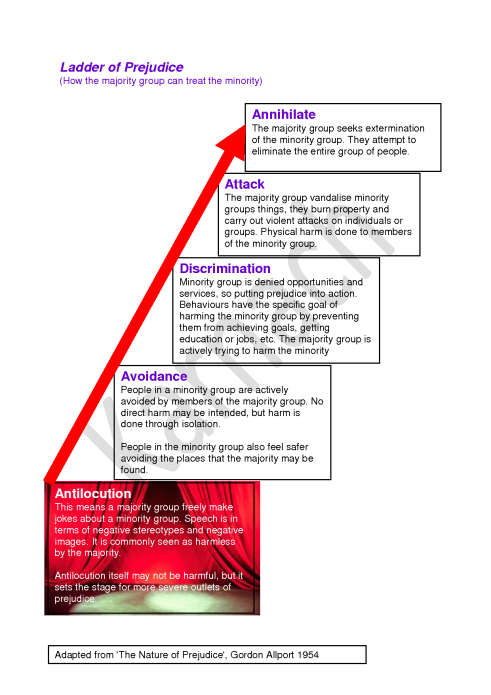
Allport's ladder

Eugenic theories are most commonly associated with Nazi Germany’s racially motivated social policies. The Nazis sought the improvement of the Aryan race or Germanic Ubermenschen – master race – through eugenics, which was the foundation of Nazi ideology.

Those people targeted by the Nazis were identified as life unworthy of Life Lebensunwertes Leben – including but not limited to the “idle”, “insane”, “degenerate”, “dissident”, “feeble-minded”, homosexual and the generally weak, for elimination from the chain of heredity. More than 400,000 people were sterilised against their will, whilst 275,000 were killed under Action T4, a “euthanasia” programme.

However, there is quite a broad definition of eugenics and I propose that because it has been so thoroughly discredited, it has been forced to “go incognito” over the last century. The public support for eugenics greatly waned after the fall of Nazi Germany and the Nazis’ attempt to use eugenic justifications for the Holocaust at the Nuremberg Trials.

Right-wing philosopher, Roger Scruton, said in an article in the American Spectator: “The once respectable subject of eugenics was so discredited by Nazism that “don’t enter” is now written across its door,” implying he would like to see more openness to eugenics as an idea. In a way, he does make a valid point, because when what was once stated explicitly becomes implicit and tacit – normalised – it is difficult to oppose and challenge, essential debate is therefore stifled.

Eugenics is the infamous idea that governments should decide which kinds of citizens ought to be considered desirable – the consensus tends to be that these are white, athletic, intelligent, and wealthy – and which kinds of citizens ought to be considered undesirable – these tended to be black, Jewish, disabled, or poor –  and employ the power of the State to encourage increases of desirable citizens (positive eugenics) and encourage decreases of undesirable citizens (negative eugenics).

Eugenics is specifically State interference in and engineering of the “survival of the fittest”. That is happening here in the UK, with Tory policies like the extremely punitive welfare “reforms”, which are aimed at the most vulnerable citizens – such as those who are seriously ill and/or disabled – all too often denying them the means to meet basic survival needs.

The founder of eugenics, Sir Francis Galton, who was a half-cousin of  Charles Darwin, formulated the idea that the protection afforded by civil society had prevented the kind of natural selection occurring in Darwin’s Origin of Species from happening in humans, thus perpetuating the existence of “weak and feeble-minded” people who would have been unable to survive in the “state of nature”.

Thomas Malthus went further, and is most often considered the founding father of this ideology of profound antihumanism: he also believed that giving support to the needy would only imperil everyone else, because resources are limited, so the brutal reality was that it was better to let them starve. Malthus held the belief that the poor are akin to a “horde of vermin whose unconstrained aspirations and appetites endanger the natural order”: that tyrannical measures are necessary to constrain humanity.

It was Malthus that offered a pseudo-scientific basis for the idea that human reproduction always outstrips available resources. Following this pessimistic and inaccurate assessment of the capacity of human ingenuity to develop new resources, Malthus advocated oppressive policies that led to the starvation of millions in India and Ireland.

Malthus’s position as professor at the British East India Company training college gave his theories considerable influence over Britain’s administration of India through most of the nineteenth century, which led to the official response of neglect to India’s periodic famines.

Malthus wrote about restraints on population growth which included famine, disease and war. His theory was later used to explain the British government policy of maintaining agricultural exports from Ireland during the Great Famine (1845-49) in which at least 1.5 million people died of starvation or the side-effects of malnutrition, and at least another million immigrated.

Malthus was also very influential in bringing about the punitive Poor Law Amendment Act of 1834. His work, An Essay on the Principle of Population, was a product of that era, it resonated with the laissez-faire framework of competitive individualism, and the dominant socio-political paradigm. It remains influential today, despite being thoroughly discredited, not least by social history since his time of writing.

Prior to the Holocaust, eugenics was widely accepted in the UK. Malthus’s ideas on population control and Spencer’s Social Darwinism fitted neatly into the sociopolitcal ideological framework. The ruling elite feared that offering medical treatment and social services to disabled people would undermine the natural struggle for existence and lead to the degeneration of the human race.

Those ideas, once explicitly endorsed, are now implicitly captured in policies and Conservative narratives about sanctions, “conditionality,”  “making work pay,” (compare with the principle of less eligibility enshrined in the New Poor Law) “fairness,” “incentives,” “scroungers,” and so forth. A crucial similarity with the early part of the century and now is reflected in Tory austerity rhetoric – a perceived shortage of resources for health and welfare. Another parallel is the scapegoating process and a rise in the level of social prejudices and sociopolitical discrimination.

Anti-immigration rhetoric, reflected in the media, with the vilification of sick and disabled people and the poor, has preceded policies particularly aimed at the steady removal of State support indicating a clear scapegoating process, and this isn’t indicative of a government that is “neglectful”- it is patently intentional, hence the pre-emptive “justification” narratives to garner public support and acceptance towards such punitive and harsh policies.

So, the first purpose of such justification narratives is to make cruel and amoral policies seem acceptable. However, such propaganda narratives also serve to intimidate the targeted minority, leading them to question whether their dignity and social status is secure. In many instances, such intimidation is successful.

Furthermore, this type of hate speech is a gateway to harassment and violence. (See Allport’s scale of prejudice, which shows clearly how the Nazis used this type of propaganda and narrative to justify prejudice, discrimination, to incite hatred and ultimately, to incite genocide.)

As Allport’s scale indicates, hate speech and incitement to genocide start from often subtle expressions of prejudice. The dignity, worth and equality of every individual is the axiom of international human rights. International law condemns statements which deny the equal worth of all human beings. This is for very good reason.

Article 20(2) of the ICCPR requires states to prohibit hate speech. Hate speech is prohibited by international and national laws, not because it is offensive, but rather, because it amounts to the intentional degradation and repression of groups that have been historically oppressed. In the UK, we have a government that endorses the repression of the historically oppressed.

Social Darwinists generally argue that the “strong” should see their wealth and power increase while the weak should see their wealth and power decrease. In most contemporary western societies these views tend to emphasise competition between individuals for resources in a neoliberal State. In the UK, this idea is very apparent in the policies of the conservative-led government, and previously, we saw similar views from Thatcher.

The biological concept of “adaptation” is used by the Right to claim that the rich and powerful are better adapted to the social and economic climate of the time, and the concept of natural selection perpetuates the supremacist argument that it is natural, normal and proper for the strong to thrive at the expense of the weak.

Notions of deserving and undeserving poor flourished at a time when Social Darwinism and eugenics where widely acceptable here in the UK. The utilitarianism of Jeremy Bentham and John Stuart Mill, identifying moral actions in public policy as those which produce the greatest good for the greatest number, also support the contention that, whilst in the short term the interests of the poor would seem to be supported by public relief, the ultimate result of relief is detrimental to their interests.

Social Darwinism was popular in the late Victorian era in England, America, and elsewhere and the ethical philosophies of Conservatives are underpinned by a strongly elitist view based on the pseudo-scientific arguments of “adaptation and natural selection.” The Victorian era has made a deep impact upon many contemporary Conservatives, such as Gove and Osborne.

Michael Gove has written: For some of us Victorian costume dramas are not merely agreeable ways to while away Sunday evening but enactments of our inner fantasies … I don’t think there has been a better time in our history” in “Alas, I was born far too late for my inner era”.

A better time for whom, precisely? It was a time of child labour, desperation, prostitution, low life expectancy, disease, illiteracy, workhouses, and a truly dog-eat-dog social perspective. Or was it the deferential protestant work ethic reserved only for the poor, the pre-destiny of the aristocracy, and “the rich man in his castle, the poor man at his gate” that appeals to Gove?

In a speech to the Confederarion of British Industry, (CBI) George Osborne argued that both parties in the coalition had revitalised themselves by “revisiting their 19th-century roots.”

Herbert Spencer’s Social Darwinism, with his dictum “the survival of the fittest” – he was a sociologist, not a biologist – provided further support for the view that the “vices” of the lowest class in society make such persons undeserving of help from those who were financially privileged. (“Us” are the fittest: “Them” – the “Other” – are not.)

It is but a short step from the eugenics movement of the early twentieth century to the radical individualism of Ayn Rand, the latter’s popularity on the Right continuing to support a Conservative libertarian celebration of selfishness – “Nobody is mine.”

And:1965037_301820166635705_1502392114_n (1)
Conservatives have always seen society and human relationships in terms of hierarchies, based on “red in tooth and claw” Darwinist conflict. A hierarchy is any system of persons or things ranked one above the other, on the basis of human worth.

The term was originally used to describe the system of church government by priests graded into ranks. Organised religion is very hierarchical. Hierarchical thinking is about seeing the world through systems of  worth, domination or importance. But the central principle of human rights is that each have equal worth: that we are all equally important. But hierarchies ensure that privilege and decision-making is not socially distributed. Nor is power.

The very way that Tories think leads to a collision between their ideology and our human rights, and is completely incompatible with the principles of equality and democracy. Tories think that some people hold a more important place in society than others. This reduces people – they become inferiors or superiors, and really, that is about unequal distribution of power, subordination and domination – those power relationships are no longer entirely notional, we have moved some distance from being a liberal democracy these past four years – and feudalism and manorialism are very Tory ideals. 

It’s worth noting that disabled people have been disproportionately affected by the government’s austerity programme. People are dying prematurely because the government has radically cut their lifeline support, leaving them without the means to meet their fundamental survival needs.

To summarise, there are strong links between the neoliberal idea of competitive individualism, Social Darwinism, social inequalities, eugenics, nationalism, fascism and authoritarianism. Those ideas are implicit in Tory rhetoric, because they form the very foundations of Tory ideology. A society with inequalities is and always has been the ideologically founded and rationalised product of Conservative Governments. Inequality is at the heart of ‘competitive individualism’ which is at the heart of neoliberal ideology. In any competitive system, there are always a handful of ‘winners’ and many more ‘losers’. 

Robert Michel’s iron law of oligarchy describes the inevitable tendency of hierarchical organisations to become oligarchic in their decision making – anti-democratic. And prejudice is an in-built feature of hierarchy, because of the stratified nature of power, esteem and status.  Right-wing populism so often takes the form of distrust of the European Union, and of politicians in general, combined with anti-immigrant rhetoric, and a call for a return to “traditional, national values”.

Those “traditional values” that the Tories cherish, and often speak about, mean the end of our hard-earned rights, the end of any principle of the equal worth of everyone, the end of government accountability and increasingly, legal restraint, the end of democracy, the end of access to social opportunities, the end of any meaningful citizen autonomy. Yet these are civilising conditions. The Tories would prefer to have us outwardly oppressed and inwardly repressed, and fighting amongst ourselves for ever-decreasing resources.

This government’s schadenfreude, the intent and motivation behind the draconian policies that we’ve seen this past four years, which target the most vulnerable citizens most of all, is debated.

Some people believe that the policies are a consequence of a redistribution of wealth from the poorest to the wealthy rather than being malicious acts. But the Tories laughed on hearing the accounts of suffering of the poor because of the bedroom tax and an increasing dependency on food banks, for all to see, during parliamentary debate with the opposition.

But entertaining the idea for a moment that the inflicted suffering is not a motivation but rather, a consequence, well that would make the Government at the very least indifferent, callous and unremorseful, since they show a supreme lack of concern for the plight of those least able to defend themselves against injustice and inflicted poverty. And such indifference contravenes fundamental human rights. It breaches international laws.

Either way, I feel shock and anger at the recognition that all of those principles and beliefs we held dear – such as justice, fairness, democracy, freedom, Government accountability, equality (at least in terms of the worth of each life), institutionalised philanthropy – all trodden under foot by advocates of Social Darwinism – an aristocratic elite – in just four years. And the faith we each had in those collective ideals undermined by the constant perpetuation of socially divisive propaganda tactics from the Right.

Dividing people by using blame and prejudice further weakens our opposition to oppression. It’s a strategy the Tories have mastered.

Government policies are expressed political intentions, regarding how our society is organised and governed. They have calculated socio-economic aims and consequences. None of the policies that this government have formulated regarding the “support and care” of some of the most vulnerable citizens could be seen as anything other than expressions of intentional harm.

Services and support have been cut, lifeline benefits have been restricted by a variety of means, such as the revolving door process application of the work capability assessment, benefit sanctions, the mandatory reconsideration process.

Where is the investigation into the very high number of deaths associated with the Tory-led welfare reforms? The government have been made aware of those deaths through parliamentary debate, yet they persist in denying any “causal link” with the significant increase of sick and disabled people dying and their savage cuts to lifeline benefits. If there is no causal link, an inquiry would demonstrate that, surely?

It’s a universally recognised fact that if people are prevented from meeting their basic survival needs, they will die. Benefit sanctions, and cuts to welfare and public services, the rising cost of living and the depression of wages are having a detrimental effect on many. I don’t imagine that it’s the case that everyone but the government are aware of this. Yet the harmful policies remain.

The Coalition will leave more debt than all Labour governments since 1900. The current government’s now responsible for £517 billion of the trillion-plus-pound UK public debt, compared to £472 billion accrued during the 33 years Labour led the country since the turn of the twentieth century.

And the figures look even worse when you adjust for inflation. When you do that, the Coalition’s share jumps to nearly half of the total debt.

But the Coalition don’t meet any public’s needs, they simply serve the wants of the 1%. Labour invested in public services, the Tories have bled them dry. So, what have they done with the money? Because the public have seen only austerity cuts.

These policies are intentional. Withholding State support for poor, disabled, ill and vulnerable people – paid for via our taxes – is a deliberate act.

While our government have been busy denying the eugenics-by-stealth consequences of their diabolical policies in this Country, back in 2012, the Guardian exposed the fact that the British government has spent millions of pounds funding a policy of forced sterilisation of the poor in India as part of an effort to reduce human population to “help combat climate change”. But we also know that many Tories deny climate change exists.

The governments of China and India practice hard eugenics, underwritten by American and British tax money, these are coercive measures undertaken by governments to decrease citizen population.  The exposure of support for hard eugenics prompted denial and backtracking.  United Nations Population Fund (UNFPAclaims to support “voluntary family planning” in China. They assume that women, who are aware that conceiving a second child will result in a forced abortion, are free to make choices – thus the forced abortion is a State arrangement entered into “voluntarily.”

Hard eugenics is the ideology that is hiding behind Hitler. But soft eugenics  is based on the same pathological belief – that a government should spend its resources to prevent the propagation of those who the government believes to be “detrimental” to society and economic production. It won’t be long before there is some UK policy that imposes a restriction on the number of children poor people may have – probably “soft” eugenic policy, initially. Perhaps a limit on the number of children that unemployed or underemployed families may claim support for. Of course that will have ghastly ramifications for the human rights of children, since it would discriminate against a child on the grounds of when he/she was born.

Here in the UK, our government has been quite explicit in its drive to end “the something for nothing culture”. Our taxes  have been handed out to the wealthy and State support has been steadily withdrawn from the vulnerable. Government policies are an explicit statement of political and socio-economic intentions.

Policies based on Social Darwinism and eugenics cannot be justified. Our morality is liberated from the biological, reductionist constraints of evolutionary thinking. We relate to one another through culture, shared histories, language, morality, and law. Even if it were true that we are biologically determined – fixed by evolution, as intentional beings, we are not culturally fixed.

There is a difference between what we are, and who we are. There is also a difference between what is and what ought to be. The theories of Social Darwinism, eugenics and sociobiology involve biological reductionism. A recognition of the importance of biological conditions and even “human nature” need and ought not involve biological reductionism. And to embrace reductionism is to ultimately deny our capacity for making rational choices.

But we exceed the limits of reductionism and determinism every time we make any claim to knowledge (including those claims of reductionism and determinism), make a choice, discuss ethics and morals, explore possibilities, create, discover, invent – we are greater than the sum of our parts. The humanist ideas of human potential have never interested the Tories.

However, humanist principles, particularly those of Maslow, are very closely connected to our human rights and the development of our welfare state. Maslow’s psychology about possibility, not restraints. His metaphysics were all about the possibilities of change and progress, within a democratic framework. These ideas run counter to Tory ideology.

It’s therefore of no surprise that the Tory-led Coalition has steadily eroded our welfare and public service provisions and that Cameron has stated plainly that he fully intends to repeal the Human Rights Act and withdraw from the European Convention on Human Rights

This is a government that chooses to treat our most vulnerable citizens brutally, with absolutely no regard for their legal and moral obligation to ensure that our taxes are used to meet our most basic needs.

There can be no justification for editing or repealing the Human Rights Act itself, that would make Britain the first European country to regress in the level and degree of our human rights protection. It is through times of recession and times of affluence alike that our rights ought to be the foundation of our society, upon which the Magna Carta, the Equality Act and the Human Rights Act were built – protecting the vulnerable from the powerful and ensuring those who govern are accountable to the rule of law, and as an instrument of equality, social cohesion and public purpose.

It is expected of a democratic government to improve the understanding and application of the Act. That is an international expectation, also. Quite rightly so.

Observation of human rights distinguishes democratic leaders from dictators and despots. Human Rights are the bedrock of our democracy, they are universal and are a reflection of a society’s and a governments’ recognition of the equal worth of every citizens’ life.

We need to ask, in light of the issues I’ve raised here, why would any government want to opt out of such protections for its citizens?

We know from history that a society which isn’t founded on the basic principles of equality, decency, dignity and mutual respect is untenable and unthinkable.

scroll2

Article 2 of the Convention on Human Rights uses the following definitions of genocide, amongst others:

  • Killing members of the group
  • Causing serious bodily or mental harm to members of the group.
  •  Deliberately inflicting on the group conditions of life calculated to bring about its physical destruction in whole or in part
  • Imposing measures intended to prevent births within the group
  •  Forcibly transferring children of the group to another group

The right to life contained in Article 2:

  • Prohibits the State from intentionally killing;
  • and  requires an effective and proper investigation into all deaths caused by the State.

14533697838_dffcc736f2_o (1)

Pictures courtesy of Robert Livingstone

My work isn’t funded and I don’t get paid to write. But you can support Politics and Insights, and help me to continue researching, analysing and writing independently.

The smallest amount is much appreciated, and helps to keep my articles free and accessible to all – thank you.

And a massive thank you to those who have already contributed.

DonatenowButton
cards