Category: Illness and disablility

GPs told to consider making fit notes conditional on patients having appointment with work coach

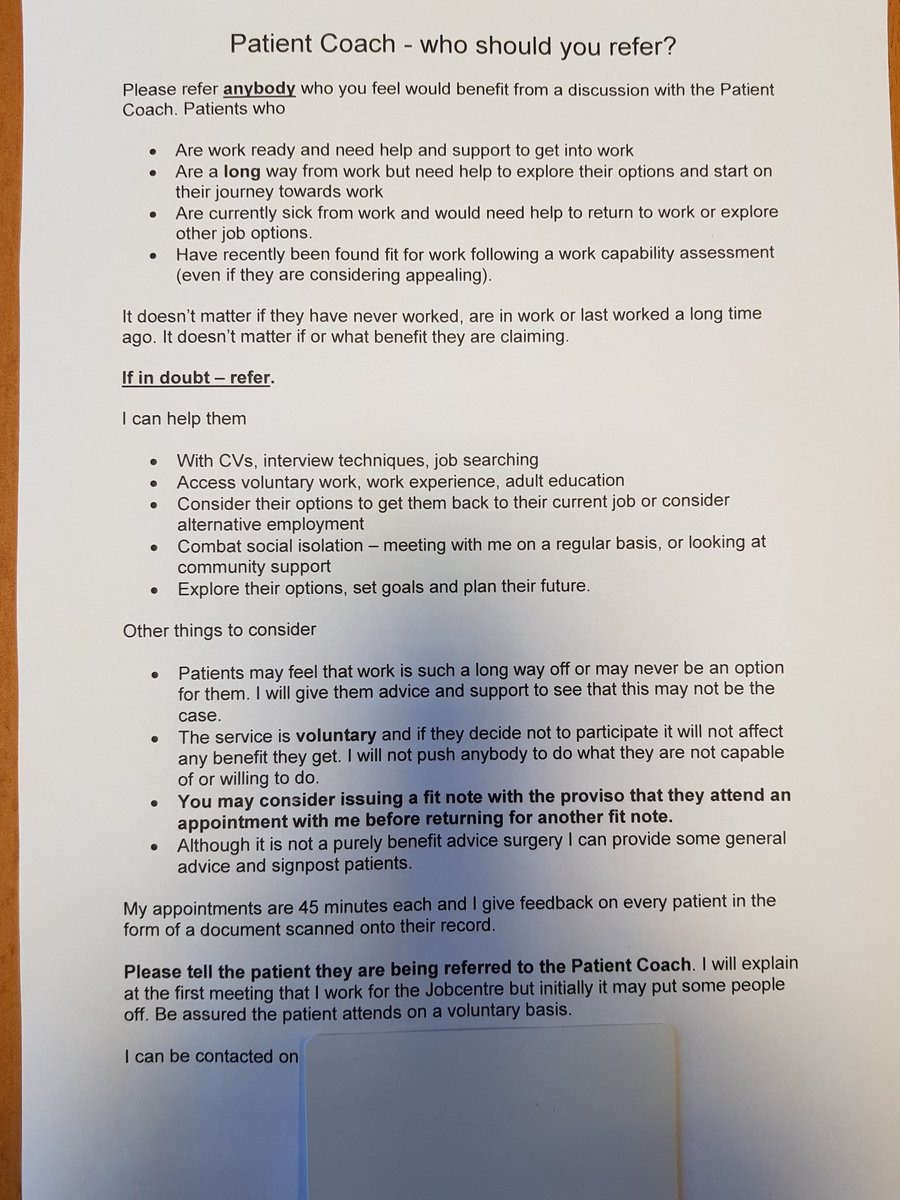
Thanks to  for the copy of a patient work coach letter to GPs.

One of the most worrying comments on the above letter is that despite claiming the work coach service is voluntary, and that if a patient refuses to engage “it won’t affect any benefit they get”, the letter then goes on to suggest that doctors may consider the issuing of subsequent fit notes conditional (“with the proviso that”) on their patient attending a meeting with the work coach. That one sentence simply makes a mockery of the claim that patient engagement with work coaches is voluntary. 

Illnesses don’t respond to provisos or caveats. People don’t suddenly recover when the Department for Work and Pensions decides that they are fit for work. When job centre staff tell GPs to stop issuing sick notes to patients it can have catastrophic consequences, from which the government never seem to learn. In fact they don’t even acknowledge the terrible costs that their deeply flawed policies are inflicting on citizens. 

Julia Savage is a manager at Birkenhead Benefit Centre in Liverpool. In 2016, she wrote a letter (an ESA65B notification form) addressed to a GP regarding a seriously ill patient. It said:

We have decided your patient is capable of work from and including January 10, 2016.

“This means you do not have to give your patient more medical certificates for employment and support allowance purposes unless they appeal against this decision.

“You may need to again if their condition worsens significantly, or they have a new medical condition.” 

The GP subsequently repeatedly refused to provide him with new fit notes, even as his health deteriorated, and he died months later.

James Harrison – the patient – had been declared “fit for work” and the letter stated that he should not get further medical certificates. The Department for Work and Pensions contacted his doctor without telling him, and ordered him to cease providing sick certification, James died, aged 55.

He was very clearly not fit for work.

It is very worrying that the ESA65B form is a standardised response to GPs from the Department for Work and Pensions following an assessment where someone has been found fit for work.  

The government as boardroom doctors: political jobsworths

The Department for Work and Pensions issued a new guidance to GPs in 2013, regarding when they should issue a Fit Note. This was updated in December 2016. 

In the dogma document, doctors are warned of the dangers of “worklessness” and told they must consider “the vital role that work can play in your patient’s health”. According to the department, “the evidence is clear that patients benefit from being in some kind of regular work”

As a matter of fact, it isn’t clear at all.

The idea that people remain ill deliberately to avoid returning to work  – what Iain Duncan Smith and David Cameron termed “the sickness benefit culture” – is not only absurd, it’s very offensive. This is a government that not only disregards the professional judgements of doctors, it also disregards the judgements of ill and disabled people. However, we have learned over the last decade that political “management” of people’s medical conditions does not make people healthier or suddenly able to work.

Government policies, designed to ‘change behaviours’ of ill and disabled people have resulted in harmdistress and sometimes, in premature deaths.

Call me contrary, but whenever I am ill with my medical and not political illness, I generally trust my qualified GP or consultant to support me. I would never think of making an appointment to see the irrational likes of Esther McVey or Iain Duncan Smith for advice on lupus, or to address my health needs and treatment. 

The political de-professionalisation of medicine, medical science and specialisms (consider, for example, the ghastly implications of permitting job coaches to update patient medical files), the merging of health and employment services and the recent absurd declaration that work is a clinical “health” outcome, are all carefully calculated strategies that serve as an ideological prop and add to the justification rhetoric regarding the intentional political process of dismantling publicly funded state provision, and the subsequent stealthy privatisation of Social Security and the National Health Service. 

De-medicalising illness is also a part of that increasingly behaviourist-neoliberal process:  “Behavioural approaches try to extinguish observed illness behaviour by withdrawal of negative reinforcements such as medication, sympathetic attention, rest, and release from duties, and to encourage healthy behaviour by positive reinforcement: ‘operant-conditioning’ using strong feedback on progress.” Gordon Waddell and Kim Burton in Concepts of rehabilitation for the management of common health problems. The Corporate Medical Group, Department for Work and Pensions, UK. 

Waddell and Burton are cited frequently by the Department for Work and Pensions (DWP) as providing ‘scientific evidence’ that their policies are “verified” and “evidence based.” Yet the DWP have selectively funded their research, which unfortunately frames and constrains the theoretical starting point, research processes and the outcomes with a heavy ideological bias. 

This behaviourist framing simply shifts the focus from the medical conditions that cause illness and disability to the ‘incentives’, behaviours and perceptions of patients and ultimately, to neoliberal notions of personal responsibility and self-sufficient citizenship in the dehumanising context of a night watchman, non-welfare state, absent of any notion of human rights. 

Medication, rest, release from duties, sympathetic understanding – the remedies to illness – are being appallingly redefined as ‘perverse incentives’ for ill health, yet the symptoms necessarily precede the prescription of medication, the Orwellian renamed (and political rather than medical) “fit note” and exemption from work duties. Notions of ‘rehabilitation’ and medicine are being redefined as behaviour modification: here it is proposed that operant conditioning in the form of negative reinforcement –  punishment – will cure’ ill health. 

It’s a completely slapstick rationale, hammered into shape by a blunt instrument – political ideology. People cannot simply be ‘incentivised’ (coercion is a more appropriate term) into not being ill. Punishing people for being poor by removing their support does not ‘help’ them to stop being poor, either, despite the  doublespeak and mental gymnastic pseudoscientific rubbish the government spouts.

Turning health care into a government work programme 

The government dogmatically assert “The idea behind the fit note is that individuals do not always need to be fully recovered to go back to work, and in fact it can often help recovery to return to work.” 

It was 2015 when I wrote a breaking article about the government’s Work and Health programme, raising concerns that the Nudge Unit team were working with the Department for Work and Pensions and the Department of Health to trial social experiments aimed at finding ways of: “preventing people from falling out of the jobs market and going onto Employment and Support Allowance (ESA).” 

“These include GPs prescribing a work coach, and a health and work passport to collate employment and health information. These emerged from research with people on ESA, and are now being tested with local teams of Jobcentres, GPs and employers.”

Of course the government hadn’t announced these ‘interventions’ in the lives of ill and disabled people. I found out about it quite by chance because I happened to read Matthew Hancock’s  conference speech: The Future of Public Services.

I researched a little further and found an article in Pulse – a publication for for medical professionals – which confirmed Hancock’s comment: GP practices to provide advice on job seeking in new pilot schemeI posted my own article on the Pulse site in October 2015, raising some of my concerns.

Many of us have warned that the programme jeopardises doctor-patient confidentiality, risks alienating patients from their doctors and perverts the primary role and ethical mission of the healthcare system, which is to help people to recover from illnesses. Placing job coaches in GP surgeries makes them much less inaccessible, because it turns appointments potentially into areas of pressure and coercion. That is the very last thing someone needs when they become ill.

One worry was that the government may use the ‘intervention’ as a further opportunity for sanctioning ill and disabled people for ‘non-compliance’. People who are ill often can’t undertake work related tasks precisely because they are ill. Until recent years, this was accepted as common sense, and any expectation of sick people having to conform with such rigid welfare conditionality was quite properly regarded as both unfair and unrealistic.

I expressed concern that the introduction of  job coaches in health care settings, peddling the myth that ‘work is a health outcome’ would potentially conflict with the ethics and role of a doctor. I also stated my concern about the potential that this (then) pilot had for damaging the trust between doctors and their patients. 

In another article in 2016, titled Let’s keep the job centre out of GP surgeries and the DWP out of our confidential medical records, I outlined how GPs had raised their own concerns about sharing patient data with the Department for Work and Pensions – and quite properly so. 

Pulse reported that the Department for Work and Pensions (DWP) plans to extract information from GP records, including the number of Med3s or so-called ‘fit notes’  issued by each practice and the number of patients recorded as ‘unfit’ or ‘maybe fit’ for work, in an intrusive move described by GP leaders as amounting to “state snooping.”

Part of the reason for this renewed government attack on ill and disabled people is that the Government’s flagship fit note scheme, which replaced sick notes five years ago in the hope it would see GPs sending thousands more employees back to work to reduce sickness-related absence, despite GPs having expressed doubts since before its launch, has predicably failed.

The key reason for the failure is that employers did not take responsibility for working with employees and GPs seriously, and more than half (59%) of employers said they felt unable to support employees by making all of the legally required workplace adjustments for those who had fit notes signed as “may be fit for work.” Rather than address this issue with employers, the government has decided instead to simply coerce patients back into work without essential support.

Another reason for the failure of this scheme is that most people who need time off from work are ill and genuinely cannot return to work until they have recovered. Regardless of the government’s concern for the business and state costs of sick leave, people cannot be simply ushered out of illness and into work by the state to “contribute to the economy.”

When a GP says a person is ‘unfit for work’, they generally ARE unfit for work, regardless of whether the ‘business friendly’ government likes that or not. And regardless of the politically prescribed Orwellian renaming of sick notes, which show ‘paternalist’ linguistic behaviourism in action.

In 2017, the General Medical Council (GMC) – independent regulator for doctors in the UK – wrote a response to the government’s green paper: Improving Lives: The Work, Health and Disability Green Paper consultation. The authors of the document begin by saying ” Our purpose is to protect, promote and maintain the health and safety of the public by ensuring proper standards in the practice of medicine.”

The response continues: “Where doctors are expected to play a role in initiatives such as those set out in the Green paper, our concern is to ensure that any responsibilities that might be placed on doctors would be consistent with their professional obligations and would not risk damaging patients’ trust in their doctors. While we believe that many of the Green paper proposals are promising, we are concerned that key elements appear to present a conflict with the ethical responsibilities we place on doctors. The comments below are seeking clarification in these areas.”

And: “We understand from this Green paper, and from the Department of Work and Pensions’ published FOI response, dated 22 December 2016, that the work coaches who will conduct the mandatory health and work conversation with claimants will not be health professionals. There is a risk that claimants will not get the right support in setting health and work-related goals during this mandatory conversation if the work coach does not have clinical expertise.

“It would be helpful to know whether work coaches will be expected to have access to the claimant’s healthcare team and/or health records to inform these conversations. If so, we would appreciate reassurance that there will be a process for obtaining consent from the claimant, and providing assurance to the relevant health professionals that the individual has provided consent. Given that work coaches do not require medical expertise, we have some concerns about these conversations leading claimants to agree to health-related actions in a Health and Work ‘claimant commitment’. It seems possible that agreed actions might not be clinically appropriate for that individual or not the best course of action given their health condition. 

If a claimant commitment were reviewed by the claimant’s doctor (or other healthcare professional), and the doctor concluded that there was a health risk; then would the claimant be free to withdraw from the commitment without facing a benefits penalty? If not, then this would put the doctor and patient in a very difficult position, if it appeared that the patient had been poorly advised by the work coach and was not making an informed, voluntary decision in requesting a particular treatment or care regime from their doctor. 

We note the intention is for any agreement made in the Health and Work Conversation to be seen as voluntary. However, it seems to us that since the Conversation itself is mandatory and a Claimant commitment may influence subsequent handling of an individual’s Work Capability assessment, then in practice claimants may see these agreements as mandatory.

“As a result they may feel pressured to accept advice and make commitments which may not be appropriate in their case. This would place theirdoctors in a difficult ethical position, and we are concerned to ensure that this is not the case.

The authors add: “… we make it clear in our guidance that doctors must consider the validity of a patient’s consent to treatment if it is linked with access to benefits. Doctors should be aware that patients may be put under pressure by employers, insurers, or others to accept a particular investigation or treatment (paragraph 41, Consent: patients and doctors making decisions together).

“Difficulty could arise if a doctor does not believe that a patient is freely consenting to treatment and is instead only giving consent due to financial pressure. Doctors must be satisfied that they have valid consent before providing  treatment, which means they could be left with a difficult decision as to whether to refuse treatment in the knowledge that this could affect the patients benefit entitlements.” 

The GMC also raise concerns about how sensitive health data is collected and shared for purposes other for patients’ direct care, without patients being informed or giving consent. The government have simply proposed to access health care data to support “any assessment for financial support” and told GPs to assume consent has been given.

Promoting the myth that work is a ‘clinical outcome’ 

A Department for Work and Pensions research document published back in 2011 – Routes onto Employment and Support Allowance – said that if people believed that work was good for them, they were less likely to claim or stay on disability benefits. 

Of course it may be the case that people in better health work because they can, and have less need for healthcare services simply because they are relatively well, rather than because they work. 

From the document“The belief that work improves health also positively influenced work entry rates; as such, encouraging people in this belief may also play a role in promoting return to work.”

The aim of the research was to “examine the characteristics of ESA claimants and to explore their employment trajectories over a period of approximately 18 months in order to provide information about the flow of claimants onto and off ESA.” 

A political decision was made that people should be “encouraged” to believe that work was “good” for their health. There is no empirical basis for the belief, and the purpose of encouraging it is simply to cut the numbers of disabled people claiming Employment and Support Allowance (ESA) by “helping” them into work.

Another government document from 2014 – Psychological Wellbeing and Work – says: We know that being in work is good for wellbeing and that mental health problems are an increasing issue for the nation and so the Minister for Welfare Reform and the Minister for Care and Support jointly sought to expand the evidence base on common mental health problems.  

“A number of Government programmes assess and support those with mental health difficulties to work, but it is internationally recognised that the evidence base for successful interventions is limited. 

“The Contestable Policy Fund gives ministers alternative avenues to explore new thinking and strategies that offer cross-Government benefits. This report was commissioned through this route.” 

And: “Within the time and resources available for this study the research team did not undertake extensive assessment of the quality of the evidence base (eg assessing the research design and methodology of previous studies)”

The government have gone on to declare with authoritarian flourish that they now want to reinforce their proposal that “work is a health outcome.” Last year, a report by the Mental Health Task Force and chaired by Mind’s Paul Farmer, recommended that employment should be recognised as a ‘health outcome’.  I’m just wondering how people with, say, personality disorders, or psychosis are suddenly going to overcome the nature of their condition and all of a sudden successfully hold down a job for a minimum of six months.

Mind those large logical gaps… 

This has raised immediate concerns regarding the extent to which people will be pushed into work they are not able or ready to do, or into bad quality, low paid and inappropriate work that is harmful to them, under the misguided notion that any work will be good for them in the long run.

It has become very evident over recent years that the labour market is not delivering an adequate income for many citizens and despite “record levels of employment”, the problem seems to be getting bigger. The government’s answer to the problem has been to extend punishment those on low pay, rather than tackle employers who pay exploitative, low wages.

The idea of the state persuading doctors and other professionals to “sing from the same [political] hymn sheet”, by promoting work outcomes in social and health care settings is more than a little Orwellian. Co-opting professionals to police the welfare system is very dangerous. 

In linking receipt of welfare with health services and “state therapy,” with the single intended outcome explicitly expressed as employment, the government is purposefully conflating citizen’s widely varied needs with economic outcomes and diktats, isolating people from traditionally non-partisan networks of relatively unconditional support, such as the health service, social services, community services and mental health services.

Public services “speaking with one voice” as the government are urging, will invariably make accessing support conditional, and further isolate already marginalised social groups. Citizens’ safe spaces for genuine and objective support is shrinking as the state encroaches with strategies to micromanage those using public services. This encroachment will damage trust between people needing support and professionals who are meant to deliver essential public services, rather than simply extending government dogma, prejudices and discrimination.

State micromanagement of tenants

The GMC say in their response to the government’s proposals: “We are unclear about the evidence that might support a move to the position that ‘being in employment’ should be regarded as a ‘clinical outcome’ that healthcare professionals are expected to work towards with people of employment age seeking health-related advice and treatment. This is a highly contentious issue and indeed Dame Carol Black’s report certainly makes clear that there is limited support for this within the profession.” 

I’m not unclear. There is no evidence. In an era of small state neoliberalism and ideologically driven austerity, it is an act of sheer political expediency to claim that ‘worklessness’ is the reason for the poor health outcomes that are in fact correlated with increasing inequality, poverty and lower standards of living – higher mortality;  poorer general health, long-standing illness, limiting longstanding illness; poorer mental health, psychological distress, psychological/psychiatric morbidity; higher medical consultation, medication consumption and hospital admission rates.

Both social security and the National Health Service have been intentionally underfunded and run down by the Conservatives, who have planned and partially implemented a piecemeal privatisation process by stealth, to avoid a public backlash.

Unemployment (not ‘worklessness’ –  that’s part of the privileged discourse of neoliberalism, which serves to marginalise the structural aspects of persistent unemployment and poverty, by transforming these into individual pathologies of benefit ‘dependency ‘and ‘worklessness’) is undoubtedly associated with poverty, because welfare provision no longer meets the most basic living costs.

However to make an inferential leap and claim that work is therefore ‘good’ for health’ is incoherent, irrational and part of an elaborate political gaslighting campaign of an authoritarian government, who simply don’t want to address growing poverty and inequality caused by their own neoliberal policies.

The direction that government policy continues to be pushed in represents a serious threat to the health, welfare, wellbeing, basic human rights, democratic inclusionand lives of patients and the political independence of health professionals.


Related

The new Work and Health Programme: government plan social experiments to “nudge” sick and disabled people into work 

Illustration by Jack Hudson


My work is unfunded and I don’t make any money from it. This is a pay as you like site. If you wish you can support me by making a one-off donation or a monthly contribution. This will help me continue to research and write independent, insightful and informative articles, and to continue to support others.

DonatenowButton

Blind chef who accidently set him self on fire deemed ‘fit for work’ by DWP

The 51-year-old was registered partially sighted five months ago (Photo: Russell Marcus)

51 year old Russel Barton was registered partially sighted five months ago (Photo: Russell Burton) 

Russell Burton was registered partially sighted earlier this year, after burning himself with oil and setting his clothing on fire accidently at work. Burton has worked as a professional chef for the 25 years, but says his deteriorating eyesight means that he is unable to carry on in that job.

Now he fears for his future because the Department of Work and Pensions have claimed he is ‘fit for work’ so he isn’t eligible for disability benefit.

Yet he cannot apply for work as a chef and he lacks the skills and experience to be considered for other roles. He says after 10 months of signing on he’s had no help with retraining from the government. 

Burton had tried to keep his health problems hidden from his bosses, but was “let go of” four times in 18 months after repeatedly missing orders and following several accidents in the kitchen. The last time this happened, in January this year, Burton said he had to acknowledge that he had to leave behind the career he’s known and loved all of his life. Then, five months ago, his doctor approved him as registered partially sighted. 

Burton says he has been switched back and forth between Jobseeker’s Allowance (JSA) and Employment Support Allowance (ESA) six times this year – and each time his money is delayed, which is making him depressed and anxious. He added “Each time they switch me between benefits I can be waiting a month of two for my money. They just tell me ‘go to a food bank”.  

“No-one will hire me as a chef anymore and I know myself I just can’t be in a kitchen anymore because I’m a health and safety risk to myself and to others. I tried to hide it for the last five years but I clearly can’t anymore.

“I’m keen to find a new career but no-one gets back to me when I apply for jobs I’ve no experience in. The Job Centre has promised me help with retraining but I’ve had zero support so far.” 

He explains: “One time I was holding a tea towel that caught fire and then the sleeves of my top went up.”

Since birth, Russell’s left eye as been affected by amblyopia. The childhood condition means that vision doesn’t develop properly. Children with this problem can see less clearly out of the affected eye and rely more on the ‘good’ eye. This has caused blind spots and double vision for Burton.

Five years ago, he suffered macular scarring in the righ eye — his ‘good eye’ — as an amateur photographer, as he was trying to capture the sun’s corona, which caused his central vision to go blurred and distorted.

Burton says he’s keen to find a new career path but wants some help with re-training 

He explained how his deteriorating eyesight impacted on his chef work: “I was missing tickets – in a restaurant a chef could get 120 tickets an hour and I was struggling to read them. There were times I cut myself chopping, you’re under pressure to work fast and that’s dangerous without good eyesight.

“One time I was holding a tea towel that caught fire and then the sleeves of my top went up. Other times I’d splashed myself with hot oil as I hadn’t seen there was any there in the pan.”

Burton says: “There’s an awful mentality with Job Centre staff where they think it’s acceptable or normal to leave people for months without money. The system is broken.”

Burton who lives with his partner Rachel and her two children, said the uncertainty and insecurity of his income has had an impact on his mental health: “For months I became a recluse, I didn’t go out anywhere or see anyone,” he said.

He has also lost two stone over the last nine months, which he believes is due to a combination of stress and an undiagnosed stomach condition. 

He said: “The doctors thought I had an ulcer but that’s now been ruled out but they don’t know what’s causing my gastrointestinal problems. It doesn’t help that when I’ve been switched to contributions based JSA or ESA I’ve not been entitled to free prescriptions so I’ve not been able to afford to buy the medicines I need to help settle my stomach.”

Burton said he feels “extremely let down” by the state.

“There’s an awful mentality with Job Centre staff where they think it’s acceptable or normal to leave people for months without money and they just say ‘go to a food bank’ when you complain.

“Food banks should be an absolute last resort for people. The system is broken.” 

A system that coerces people who may, through no fault of their own, pose a danger to themselves or others to work is definitely broken. If Russell Barton has an accident in the work place, who is culpable? Barton has expained the impact of his condition, and outlined some of the consequences. The Department for Work and Pensions have taken absolutely no notice of him. He may find some work he can do, but there are serious restrictions on the kind of work he can now do. 

It’s utterly appalling and cruel that people like Russell Barton are placed in situations where they are left for long periods with no income, and then forced to look for work within an extremely competitive employment market when there are such significant health and safety barriers to the kinds of work he can undertake. 

It’s a social security system that has been set up intentionally to fail people, and furthermore it is placing people in unacceptable situations of danger.


I don’t make any money from my research and writing. I’m disabled through illness and on a very low income, but this is something I can do.  If you like, can make a donation to help me continue to research and write free, informative, insightful and independent articles, and to provide support to others going through ESA, PIP and Universal Credit assessment and appeal. The smallest amount is much appreciated – thank you.

DonatenowButton

New research shows welfare sanctions are punitive, create perverse incentives and are potentially life-threatening

Image result for 3 year study show sanctions don't work

Two days ago I published an article about people who have been harmed by welfare  sanctions because they were chronically ill. Two of those people died as a consequence of actions taken by the Department for work and Pensions – see Welfare sanctions are killing people with chronic illnesses

Several studies over the last few years have found there no evidence that benefit sanctions ‘help’ claimants find employment, and most have concluded that sanctions have an extremely detrimental impact on people claiming welfare support.

However, the Conservatives still insist that benefit conditionality and sanctions regime is ‘helping’ people into work. 

Yesterday, an important study was published, which warned what many of us have known for a long time – that sanctions are potentially life-threatening. The authors of the study warn that sanctioning is  “ineffective” and presents “perverse and punitive incentive that are detrimental to health”.

The study – Where your mental health just disappears overnightdrew on an inclusive and democratic qualitative methodology, adding valuable insight as well as empirical evidence that verifies that sanctions are harmful, life-threatening and do not work as a positive incentive to ‘help’ people into work. The authors’ conclusions further validate the wide and growing consensus that sanctions should be completely halted.

The researchers say that benefits sanctions and conditions are simply pushing disabled people further from employment as well as damaging their health.

The research was carried out jointly by the University of Essex and Inclusion London, and it was designed to investigate the experiences of people claiming the Work Related Activity (WRAG) component of Employment and Support Allowance (ESA).  

The authors of the report are: Ellen Clifford of Inclusion London, Jaimini Mehta, a Trainee Clinical Psychologist at the University of Essex, Dr Danny Taggart, Honorary Clinical Psychologist and Dr Ewen Speed, both from School of Health and Social Care, also at the University of Essex.

WRAG claimants are deemed suitable for some work related activity and failure to engage can lead to ESA payments being cut or ‘sanctioned’. Under Universal Credit, the ESA WRAG is being replaced by the Limited Capability for Work group (LCW). The ESA Support Group is replaced by the Limited Capability for Work Related Activity group (LCWRA). 

The research team found that all of the participants in the study experienced significantly detrimental effects on their mental health. The impact of sanctions was life threatening for some people.

For many, the underlying fear from the threat of sanctions meant living in a state of constant anxiety and fear. This chronic state of poor psychological welfare and constant sense of insecurity caused by the adverse consequences of conditionality can make it very difficult for people to engage in work related activity and was made worse by the extremely unpredictable way conditionality was applied, leaving some participants unsure of how to avoid sanctions. The researchers concluded that conditionality is an ineffective psychological intervention. It does not work as the government have claimed.

The research report and findings were launched at an event in Parliament hosted by the  cross-bench peer Baroness Tanni Grey-Thompson.

Ellen Clifford, Campaigns and Policy Manager at Inclusion London, said: “This important research adds to the growing weight of evidence that conditionality and sanctions are not only harmful to individuals causing mental and physical negative impacts, but are also counter-productive in their aim of pushing more disabled people into paid work.

“Universal Credit, which is set to affect around 7 million people with 58% of households affected containing a disabled person, will extend and entrench conditionality.

“This is yet another reason why the roll out of Universal Credit must be stopped and a new system designed based on evidence based approaches and co-produced with disabled people and benefit claimants.”

The results also showed that participants wanted to engage in work and many found meaning in vocational activity. However, the WRAG prioritised less meaningful tasks.

In addition, it was found that rather than ‘incentivising’ work related activity, conditionality meant participants were driven by a range of behaviourist “perverse and punitive incentives”, being asked to engage in activity that undermined their self-confidence and required them to understate their previous achievements.

Other themes that emerged during the study included more negative experiences of conditionality, which included feeling controlled, a lack of autonomy and work activities which participants felt were inappropriate or in conflict with their personal values.

The government have claimed that generous welfare creates ‘perverse incentives’ by making people too comfortable and disinclined to look for work. However, international research has indicated that this isn’t true. One study found that generous welfare actually creates a greater work ethic than less generous provision.

Dr Danny Taggart, Lecturer in Clinical Psychology at the University of Essex, said: “Based on these findings, the psychological model of behaviour change that underpins conditionality and sanctioning is fundamentally flawed.

“The use of incentives to encourage people to engage in work related activity is empirically untested and draws on research with populations who are not faced with the complex needs of disabled people.

“The perverse and punitive incentives outlined in this study rendered participants so anxious that they were paradoxically less able to focus on engagement in vocational activity.

“More research needs to be undertaken to understand how to best support disabled people into meaningful vocational activity, something that both the government and a majority of disabled people want.

“This study adds further evidence to support any future research being undertaken in collaboration with disabled people’s organisations who are better able to understand the needs of disabled people.” 

Participants in the study commented on some of the perverse incentives: “The new payments for ESA from this year are £73 a week as opposed to £102. Well if you’re on £102 a week because you’ve been on it for longer than 6 or 12 months and you know if you go back to work and it turns out you’re not well enough to carry on then you’re coming back at the new rate of £73 per week. That’s going make you more cautious and its counter-productive and it increases the stress.” (Daniel). 

“After 13 weeks I have to go and put a new claim in. After 13 weeks if the job doesn’t last, or if I get made redundant, or if I get terminated or the contract stops, I then have to go into starting all over again. Reassessment etc. So, I’m worse off.” (Dipesh).

Another form of perverse and punitive incentive arises because qualifications are regarded as an impediment to employment, not an asset; “So when the Job Centre says to you, you should remove your degree from your CV because they don’t want you to be over qualified when you apply for the jobs they give… The impact on your feeling of self-worth… They told me to remove it and if I didn’t I would be punished and would be sanctioned… This is the way that the Job Centre chip away at your confidence and all those sorts of things.” (Charlie).

The report discusses the stark impact of sanctions, described by ‘Charlie’. The authors say: “We include a fuller narrative in this case as it incorporates a number of the themes that came up for the sample as a whole – the perverse and punitive incentives and double binds involved in the WRAG, the mental health crises caused by Conditionality and Sanctioning, and how these pushed people further away from employment.

Charlie explains: “It became a really stressful time for me… we didn’t have a foodbank that was open regularly so I didn’t have that as an option… So, what I was doing instead, because quite quickly my electricity went out… So, all my food was spoilt that was in the freezer. I managed to last for another 5-6 days of food from stuff that I had in the house. So, after that I started to go, I was on a work programme but was never called in. So, I’d go in anyway and there were oranges and apples in a fruit bowl, so I would just go in there and steal the oranges and bananas so I would have something to eat. Then they finally made a decision that I was going to be sanctioned… And there was this image which will probably stay with me for the rest of my life. 

“On Christmas day I was sat alone, at home just waiting for darkness to come so I could go to sleep and I was watching through my window all the happy families enjoying Christmas and that just blew me away. And I think I had a breakdown on that day and it was really hard to recover from and I’m still struggling with it. And it was only my aunt,
I’ve got an aunt in Scotland, every year she sends me £10 for my birthday and £10 for Christmas. And so on the Saturday after Christmas, the first postal day, I received £20 from her and so then I could buy some electricity and food. I was then promptly sick because I’d gorged myself, because I ate too quickly.” 

The authors add Charlie’s description of a meeting with the same advisor who had sanctioned him following the Christmas break and how it has affected him since: “So finally, when new year had ended and I had to go back and sign with that same woman who had sanctioned me. She said that being sanctioned had shown her that I didn’t have a work ethic. Now I’d been working pretty much solidly since I was 16 and it was only out of redundancy that I was out of work… 

“The problem I had with that was the woman who sanctioned me was in the same place and it made me extremely nervous. I now have a problem going into the Job Centre because I literally start shaking because of the damage that the benefit sanction did to me… So yeah that was part, the sanction was one of the reasons that triggered the mental health and problems I’m having now…it was awful and I ended up trying to commit suicide… to me that was the last straw and I went home and I just emptied the drawer of tablets or whatever and I ended up in A&E for a couple of days after they’d pumped my stomach out.” (Charlie).

The report also echoes a substantial part of my own work in critiquing the behaviourist thinking that underpins the idea of sanctions. The ideas of conditionality and sanctions  arose from Behavioural Economics theories. (See also my take on the hostile environment created by welfare policy and practices that are based on behaviourism and a language of neoliberal ‘incentives’ –  The connection between Universal Credit, ordeals and experiments in electrocuting laboratory rats).

The study finds “no evidence to support the use of this modified form of Behavioural Economics in relation to Disabled people”.

The report authors say: “These models of behaviour change are not applicable for Disabled People accessing benefits. The incentives offered by Conditionality and Sanctioning involve threats of removing people’s ability to access basic resources. This induces a state of anticipatory fear that negatively impacts on their mental health and renders them less able to engage in work related activity.”

The report concludes that the DWP should end sanctions for disabled people. The authors recommended that the DWP works inclusively with disabled groups to come up with a better system.

It was once a common sense view that if you remove people’s means of meeting basic survival needs – such as for food, fuel and shelter –  their lives will be placed at risk. Welfare support was originally designed to cover basic needs only, so that when people faced difficult circumstances such as losing their job, or illness, they weren’t plunged into absolute poverty. Now our social security does not adequately meet basic survival needs. It’s become acceptable for a state to use the threat and reality of hunger and destitution to coerce citizens into conformity.

Why sanctions and conditionality cannot possibly work

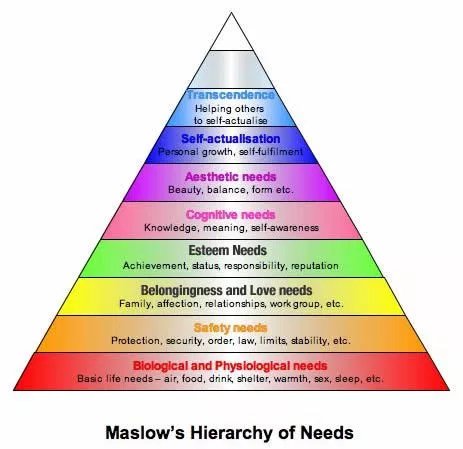
One fundamental reason why sanctions can never work as the government has claimed, to ‘incentivise’ people into work centres on Abraham Maslow’s groundbreaking work on human needs. Maslow highlights that people can’t fulfil their ‘higher level’ psychosocial needs when their survival needs are compromised. When people are reduced to a struggle for survival, that takes up all of their motivation and becomes their only priority. 

The Minnesota Starvation experiment verified Maslow’s theory. 


One of the uniquely important features of Britain’s welfare state was the National Insurance system, based on the principle that people establish a right to benefits by making regular contributions into a fund throughout their working lives. The contribution principle has been a part of the welfare state since its inception. A system of social security where claims are, in principle, based on entitlements established by past contributions expresses an important moral rule about how a benefits system should operate, based on reciprocity and collective responsibility, and it is a rule which attracts widespread public commitment. National Insurance is felt intuitively by most people to be a fair way of organising welfare.

The Conservative-led welfare reforms had the stated aim of ensuring that benefit claimants – redefined as an outgroup of free-riders – are entitled to a minimum income provided that they uphold responsibilities, which entail being pushed into any available work, regardless of its pay, conditions and appropriateness. The government claim that sanctions “incentivise” people to look for employment.

Conditionality for social security has been around as long as the welfare state. Eligibility criteria, for example, have always been an intrinsic part of the social security system. For example, to qualify for jobseekers allowance, a person has to be out of work, able to work, and seeking employment.

But in recent years conditionality has become conflated with severe financial penalities (sanctions), and has mutated into an ever more stringent, complex, demanding set of often arbitrary requirements, involving frequent and rigidly imposed jobcentre appointments, meeting job application targets, providing evidence of job searches and mandatory participation in workfare schemes. The emphasis of welfare provision has shifted from providing support for people seeking employment to increasing conditionality of conduct, in a paternalist attempt to enforce particular patterns of behaviour and to monitor claimant compliance.

The Conservatives have broadened the scope of behaviours that are subject to sanction, and have widened the application of sanctions to include previously protected social groups, such as ill and disabled people, pregnant women and lone parents.

Ethical considerations of injustice and the adverse consequences of welfare sanctions have been raised by politicians, charities, campaigners and academics. Professor David Stuckler of Oxford University’s Department of Sociology, amongst others, has found clear evidence of a link between people seeking food aid and unemployment, welfare sanctions and budget cuts, although the government has, on the whole, tried to deny a direct “causal link” between the harsh welfare “reforms” and food deprivation. However, a clear correlation has been established. 

A little more about behavioural economics and welfare policy

I’ve written extensively and critically about how Behavioural Economics and the ‘behaviourist turn’ has become embedded in welfare policies and administration. 

The use of targeted citizen behavioural conditionality in neoliberal policy making has expanded globally and is strongly linked to the growth in popularity of behavioural economics theory (“nudge”) and the New Right brand of “libertarian paternalism.”

Reconstructing citizenship as highly conditional stands in sharp contrast to democratic principles, rights-based policies and to policies based on prior financial contribution, as underpinned in the social insurance and social security frameworks that arose from the post-war settlement.

The fact that the poorest citizens are being targeted with theory-based “interventions” also indicates discriminatory policy, reflecting traditional Conservative class-based prejudices. It’s a very authoritarian approach to poverty and inequality which simply strengthens existing power hierarchies, rather than addressing the unequal distribution of power and wealth in the UK. 

Some of us have dubbed this trend neuroliberalism because it serves as a justification for enforcing politically defined neoliberal outcomes. A hierarchical socioeconomic organisation is being shaped by increasingly authoritarian policies, placing the responsibility for growing inequality and poverty on individuals, sidestepping the traditional (and very real) structural explanations of social and economic problems, and political responsibility towards citizens.

Such a behavioural approach to poverty also adds a dimension of cognitive prejudice which serves to reinforce and established power relations and inequality. It is assumed that those with power and wealth have cognitive competence and know which specific behaviours and decisions are “best” for poor citizens.

Apparently, the theories and “insights” of cognitive bias don’t apply to the theorists applying them to increasingly marginalised social groups. No one is nudging the nudgers. Policy has increasingly extended a neoliberal cognitive competence and decision-making hierarchy as well as massive inequalities in power, status and wealth.

It’s interesting that the Behavioural Insights Team have more recently claimed that the state using the threat of benefit sanctions may be counterproductive”. Yet the idea of increasing welfare conditionality and enlarging the scope and increasing the frequency of benefit sanctions originated from the behavioural economics theories of the Nudge Unit in the first place.

The increased use and rising severity of benefit sanctions became an integrated part of welfare conditionality in the Conservative’s Welfare Reform Act, 2012. The current sanction regime is based on a principle borrowed from behavioural economics theory – an alleged cognitive bias we have called “loss aversion.”

It refers to the idea that people’s tendency is to strongly prefer avoiding losses to acquiring gains. The idea is embedded in the use of sanctions to “nudge” people towards compliance with welfare rules of conditionality, by using a threat of punitive financial loss, since the longstanding, underpinning Conservative assumption is that people are unemployed because of alleged behavioural deficits and poor decision-making. Hence the need for policies that “rectify” behaviour.

I’ve argued elsewhere, however, that benefit sanctions are more closely aligned with operant conditioning (behaviourism) than “libertarian paternalism,” since sanctions are a severe punishment intended to modify behaviour and restrict choices to that of compliance and conformity or destitution. At the very least this approach indicates a slippery slope from “arranging choice architecture” in order to “support right decisions” that assumed to benefit people, to downright punitive and coercive policies that entail psycho-compulsion, such as sanctioning and mandatory workfare. 

For anyone curious as to how such tyrannical behaviour modification techniques like benefit sanctions arose from the bland language, inane, managementspeak acronyms and pseudo-scientific framework of “paternal libertarianism” – nudge – here is an interesting read: Employing BELIEF: Applying behavioural economics to welfare to work, which is focused almost exclusively on New Right small state obsessions. Pay particular attention to the part about the alleged cognitive bias called loss aversion, on page 7.

And this on page 18:

“The most obvious policy implication arising from loss aversion is that if policy-makers can clearly convey the losses that certain behaviour will incur, it may encourage people not to do it”.

And page 46:

“Given that, for most people, losses are more important than comparable gains, it is important that potential losses are defined and made explicit to jobseekers (eg the sanctions regime)”.

The recommendation on that page:

“We believe the regime is currently too complex and, despite people’s tendency towards loss aversion, the lack of clarity around the sanctions regime can make it ineffective. Complexity prevents claimants from fully appreciating the financial losses they face if they do not comply with the conditions of their benefit”.

The paper was written in November 2010, prior to the Coalition policy of increased conditionality and the extended sanctions element of the Conservative-led welfare reforms in 2012. 

The Conservatives duly “simplified” sanctions by extending them in terms of severity and increasing the frequency of use. Sanctions have also been extended to include previously protected social groups, such as lone parents, sick and disabled people.

Unsurprisingly, none of the groups affected by conditionality and sanctions were ever consulted, nor were they included in the design of the government’s draconian welfare policies.

The misuse of psychology by the government to explain unemployment (it’s claimed to happen because people have the “wrong attitude” for work) and as a means to achieve the “right” attitude for job readiness. Psycho-compulsion is the imposition of often pseudo-psychological explanations of unemployment and justifications of mandatory activities which are aimed at changing beliefs, attitudes and disposition. The Behavioural Insights Team have previously propped up this approach.

Techniques of neutralisation

It is unlikely that the government will acknowledge the findings of the new study which presents further robust evidence that unacceptable, punitive welfare policies are causing distress, fear, anxiety, harm, and sometimes, death.

To date, we have witnessed ministers using techniques of neutralisation to express faux outrage and to dismiss legitimate concerns and valid criticism of their policies and the consequences on citizens as “scaremongering”. 

It isn’t ‘scaremongering’ to express concern about punitive policies that are targeted to reduce the income of social groups that are already struggling because of limited resources, nor is it much of an inferential leap to recognise that such punitive policies will have adverse consequences. 

Political denial is oppressive – it serves to sustain and amplify a narrow, hegemonic political narrative, stifling pluralism and excluding marginalised social groups, excluding qualitative and first hand accounts of citizen’s experiences, discrediting and negating counternarratives; it sidesteps democratic accountability; stultifies essential public debate; obscures evidence and hides politically inconvenient, exigent truths.

Research has frequently been dismissed by the Conservatives as ‘anecdotal’. The government  often claims that there is ‘no causal link’ established between policies and harm. However, denial of causality does not reduce the probability of it, especially in cases where a correlation has been well-established and evidenced.

The government have no empirical evidence to verify their own claims that their ideologically-driven punitive policies do not cause harm and distress, while evidence is mounting that not only do their policies cause harm, they simply don’t work to fulfil their stated aim.

You can read the new research report from Inclusion London and the University of Essex in full here.

Related

DWP sanctions have now been branded ‘life-threatening’

Two key studies show that punitive benefit sanctions don’t ‘incentivise’ people to work, as claimed by the government

The new Work and Health Programme: government plan social experiments to “nudge” sick and disabled people into work

Exclusive: DWP Admit Using Fake Claimant’s Comments In Benefit Sanctions Leaflet

Benefit Sanctions Can’t Possibly ‘Incentivise’ People To Work – And Here’s Why

Nudging conformity and benefit sanctions

Work as a health outcome, making work pay and other Conservative myths and magical thinking


I don’t make any money from my work. But you can make a donation if you like, to help me continue to research and write free, informative, insightful and independent articles, and to provide support to others. The smallest amount is much appreciated – thank you.

DonatenowButton