Category: Political ideology

The poverty of responsibility and the politics of blame. Part 3 – the Tories want to repeal the 2010 Child Poverty Act

demcracy

Political theories of poverty vary across the political spectrum, with those on the right tending to individualise social problems more generally, and those on the left tending to socialise them. Very different policy implications stem from each perspective.

Since the Thatcher era, the New Right have developed a distinctive behaviourist approach to poverty, founded on the idea that poor people are poor because they lack certain qualities and traits.

In 2013, Iain Duncan Smith worked on developingbetter measures of child povertyto provide a “more accurate reflection of the reality of child poverty.” According to the Conservatives, poverty isn’t caused by a lack of income.

The Coalition conducted a weighted and biased consultation at the time that did little more than provide a Conservative ideological framework in the form of leading questions, to catch carefully calculated, led and subliminally shaped public responses.

Iain Duncan Smith has indicated he will repeal the 2010 Child Poverty Act, which committed the government to a target of eradicating child poverty in the UK by 2020. He has dispensed with the current relative definition of poverty (anyone in a household beneath 60% of median income), abandoned the targets and introduced a new (although rather unclear) definition: the child poverty target is to be replaced with a new duty to report levels of educational attainment, “worklessness” and addiction, rather than relative material deprivation and disadvantage.

Duncan Smith argues that the measures set originally by Tony Blair are a “poor measure of poverty”, and he claims that families can fall or go above the relative poverty line for reasons that have little to do with their material wealth.

Using the Centre for Social Justice’s 2012 report Rethinking Child Poverty, (set up by none other than Iain Duncan Smith in 2004) to support his ideological perspective, Duncan Smith’s account of UK poverty is defined by bad parenting, by alcohol dependency and drug-addiction.

There is of course very little focus on accounts of parents who are poor because they are unemployed or in low-paid work. Or because of government policies that are directed at rewarding wealthy people and punishing poor people. (See also: We are raising more money for the rich.) Duncan Smith said:

“We know in households with unstable relationships, where debt and addiction destabilise families, where parents lack employment skills, where children just aren’t ready to start school, these children don’t have the same chances in life as others. It is self evident.”

Of course it’s also “self-evident” that debt, addiction and unstable relationships happen to wealthy people as well, so as far as causal explanations of poverty go, this one certainly lacks credibility and coherence.

Furthermore, I propose that a lack of opportunities and life chances arise from the cumulative effects of discriminatory economic and social structures and policies. Iain Duncan Smith went on to say:

“They cannot break out of that cycle of disadvantage. We are currently developing these measures right now – family breakdown, problem debt and drug and alcohol dependency – and we will report each year on these life chances as well.”

The Conservatives are claiming that poverty arises because of the “faulty” lifestyle choices of people with personal deficits and aim to reconstruct the identities of poor people via psychopolitical interventions, but it is only through a wholesale commitment to eliminating poverty by addressing unemployment, underemployment, job insecurity, low paid work, inadequate welfare support and institutionalised inequalities that any meaningful social progress can be made.

Over the last five years, the UK has become the most unequal country in Europe, on the basis of income distribution and wages. If that increase in inequality arose because of individual failings, as the Conservatives are claiming, why have those personal failings only become apparent so suddenly within the past five years? The Child Poverty Action Group voiced concerns :

“The statement isn’t about strengthening efforts to end child poverty, but about burying the failure of the government’s child poverty approach. And with more cuts coming down the line, child poverty is set to rise.”

The Bell Swerve

Iain Duncan Smith draws on a framework of ideas that was shaped to a large extent by the white male supremacist musings of Charles Murray, the controversial ultra-conservative American sociologist that exhumed social Darwinism and gave the bones of it originally to Bush and Thatcher to re-cast.

Murray’s New Right culture of poverty theory popularised notions that poverty is caused by an individual’s personal deficits and character flaws; that the poor have earned their position in society; the poor deserve to be poor because this is a reflection of their lack of qualities and level of abilities. Murray’s very controversial work The Bell Curve was a novel of racist pseudoscience and manipulated, misleading statistics which he used to propose that social inequality is caused by the genetic inferiority of the black and Latino communities, women and the poor.

According to Murray, disadvantaged groups are disadvantaged because, on average, they cannot compete with white men, who are intellectually, psychologically and morally superior. Murray advocates the total elimination of the welfare state, arguing that public policy cannot overcome the “innate deficiencies” that cause unequal social and educational outcomes.

Many critics, including myself, regard Murray as a white supremacist, a nationalist that has a long history of advocating discredited ideas that are rooted in eugenics. Nonetheless, Murray has had a significant influence on Conservative thinking about welfare in particular, both here in the UK and across the Atlantic.

“Unless the government sets out a clear target for improving the life chances of the poorest families, its agenda for healing social division in our country will lack both ambition and credibility.”

The Children’s Commissioner issued a statement regarding the repeal of the Child Poverty Act:

“The Child Poverty Act targets were not just about relative poverty – which is a measure of inequality, important in itself – but also included a measure of material deprivation. Critically, the new measures proposed today would not include any tangible measure of poverty, hunger, cold, or deprivation of any kind. Poverty is a financial measure. Unemployment statistics and statistics on educational attainment are already collected.

“The majority of children living in poverty have at least one parent who is working. Employment is important but if wages do not rise substantially in relation to living costs it will not provide a route out of poverty alone. The Joseph Rowntree Foundation has today published a report stating that families with children working full-time on the National Minimum Wage are now 15% short of the Minimum Income Standard that people believe offers an acceptable standard of living.  Today’s announcement will effectively confine to history any figures on the millions of children being raised in families who experience in-work poverty denying them necessities such as adequate food, clothing and heating.”

Last year, the Children’s Commissioner said that the increasing inequality which has resulted from the cuts, and in particular, the welfare reforms, means that Britain is now in breach of the United Nations Convention on the Rights of the Child, which protects children from the adverse effects of government economic measures.

Austerity cuts are disproportionately targeted at the poorest. It’s particularly shameful that absolute poverty has returned to Britain since 2010, given that we are the 5th wealthiest nation in the world. That indicates clearly just how much inequality has increased under the Conservatives since 2010.

Poverty and inequality are a consequence of the way that society is organised, political decision-making and how resources are allocated through discriminatory government policies.

Poverty arises because of the behaviour of the powerful and wealthy, not the poor.

___

See also:

The Poverty of Responsibility and the Politics of Blame

The poverty of responsibility and the politics of blame – part 2

The just world fallacy

The right-wing moral hobby horse: thrift and self-help, but only for the poor

The New New Poor Law

UK Wealth Divide widens, with inequality heading for “most unequal country in the developed world”

Poor people are poor because they don’t know how to get something from nothing

1957929_293215800829475_303676825_oPictures courtesy of  Robert Livingstone

BBC reports unsurprisingly that Newcastle City Council has been ‘forced’ to plunder welfare funds

Newcastle Civic CentreNewcastle City Council said it would have to stop providing crisis loans to vulnerable residents

The BBC reports that a north-east council says government budget cuts are forcing it to use funding earmarked for vulnerable residents.

Newcastle City Council is using money previously ring-fenced for welfare and crisis loans on other frontline services.

Labour council deputy leader Joyce McCarty said it was facing “really tough choices”.

The government said local councils were best placed to decide priorities.

However, the government is proposing to cut a further £12bn from its annual welfare budget.

Funding for welfare grants and crisis loans was devolved to local control in 2013/14.

Ring-fencing was removed from 2015/16 and the cash now goes into the council’s central budget.

The authority said it could not prioritise discretionary loans over its statutory obligations and would only be able to allocate £120,000, compared with last year’s £229,000, for emergency welfare payments.

The Council had been forced to “make some really, really tough choices between providing frontline services and offering this level of support” to poorer residents, Ms McCarty said.

The Tees Valley Community Foundation, a private charity which helps to support those in need, said they expected more requests for help as a result.

Chief executive Hugh McGouran said he expected to see “a rapid increase” in demand.

“Twelve billion is such an eye watering figure,” he said.

“There’s going to be some significant cuts and I think people will start to turn more and more to charities to try and plug that gap.”

The government claim that nationally-run community care grants and crisis loans had been “poorly targeted and failed to help those most in need”.

“Local authorities now choose how best to support local welfare needs,” a Department for Communities and Local Government spokesman said.

“Additional money had been provided to assist authorities dealing with pressures on local welfare and health and social care,” he said.

However, I believe that this comment is little more than a platitude, intended to blur central government accountabilty. The government know precisely how much money is available to each council. How is it conceivable that local authorities have been provided with additional funding when this is offset with overall steep local authority budget cuts by the same government?

Moreover, the largest cuts have been made in the poorest areas, as the Institute for Fiscal Study (IFS) point out, with the same areas set to lose the most again over the next few years.

During the last term, local authorities in England with communities ranked in the top 20 per cent for health deprivation and disability have faced an average reduction in spending power of £205 per head – 12 times the average for places in the bottom 20 per cent.

Communities ranked in the top fifth for income deprivation affecting older people saw an average reduction in spending power of £229 per head while the average reduction for places in the bottom fifth was just £39.

Perhaps it’s worth noting that those authorities in the most deprived areas tend to be those that are predominantly Labour. This clearly indicates that the government is purposefully targeting Labour councils for dispropotionately higher cuts than Conservative ones.

The Joseph Rowntree Foundation (JRF) also point out that severe cuts to local authority budgets are having a profound effect on the services people receive. The poorest communities and residents are being hardest hit and those least able to cope with service withdrawal are bearing the brunt of the Conservative austerity drive.

It’s inconceivable that this isn’t intentional, targeted austerity on the part of the government.

The shadow Secretary of State for Communities and Local Government, Hilary Benn, said earlier this year that it was “irresponsible and unfair” for the Conservatives to have imposed the biggest reductions in local authority budgets on those communities with the highest numbers of older people living in deprived households.

“The A&E crisis in our NHS, driven in part by insufficient social care provision where it is needed, shows that the Tories can’t be trusted with vitally important health and social care services,” he said.

How Covert Agents Infiltrate the Internet to Manipulate, Deceive, and Destroy Reputations – Glenn Greenwald

One of the many pressing stories that remains to be told from the Snowden archive is how western intelligence agencies are attempting to manipulate and control online discourse with extreme tactics of deception and reputation-destruction. It’s time to tell a chunk of that story, complete with the relevant documents.

Over the last several weeks, I worked with NBC News to publish a series of articles about “dirty trick” tactics used by GCHQ’s previously secret unit, JTRIG (Joint Threat Research Intelligence Group). These were based on four  classified  GCHQ  documents presented to the NSA and the other three partners in the English-speaking “Five Eyes” alliance.

Today, we at the Intercept are publishing another new JTRIG document, in full, entitled “The Art of Deception: Training for Online Covert Operations.”

By publishing these stories one by one, our NBC reporting highlighted some of the key, discrete revelations: the monitoring of YouTube and Blogger, the targeting of Anonymous with the very same DDoS attacks they accuse “hacktivists” of using, the use of “honey traps” (luring people into compromising situations using sex) and destructive viruses.

But, here, I want to focus and elaborate on the overarching point revealed by all of these documents: namely, that these agencies are attempting to control, infiltrate, manipulate, and warp online discourse, and in doing so, are compromising the integrity of the internet itself.

Among the core self-identified purposes of JTRIG are two tactics: (1) to inject all sorts of false material onto the internet in order to destroy the reputation of its targets; and (2) to use social sciences and other techniques to manipulate online discourse and activism to generate outcomes it considers desirable.

To see how extremist these programs are, just consider the tactics they boast of using to achieve those ends: “false flag operations” (posting material to the internet and falsely attributing it to someone else), fake victim blog posts (pretending to be a victim of the individual whose reputation they want to destroy), and posting “negative information” on various forums.

Here is one illustrative list of tactics from the latest GCHQ document we’re publishing today:

Other tactics aimed at individuals are listed here, under the revealing title “discredit a target”:

Then there are the tactics used to destroy companies the agency targets:

GCHQ describes the purpose of JTRIG in starkly clear terms: “using online techniques to make something happen in the real or cyber world,” including “information ops (influence or disruption).”

Critically, the “targets” for this deceit and reputation-destruction extend far beyond the customary roster of normal spycraft: hostile nations and their leaders, military agencies, and intelligence services. In fact, the discussion of many of these techniques occurs in the context of using them in lieu of “traditional law enforcement” against people suspected (but not charged or convicted) of ordinary crimes or, more broadly still, “hacktivism”, meaning those who use online protest activity for political ends.

The title page of one of these documents reflects the agency’s own awareness that it is “pushing the boundaries” by using “cyber offensive” techniques against people who have nothing to do with terrorism or national security threats, and indeed, centrally involves law enforcement agents who investigate ordinary crimes:

No matter your views on Anonymous, “hacktivists” or garden-variety criminals, it is not difficult to see how dangerous it is to have secret government agencies being able to target any individuals they want – who have never been charged with, let alone convicted of, any crimes – with these sorts of online, deception-based tactics of reputation destruction and disruption.

There is a strong argument to make, as Jay Leiderman demonstrated in the Guardian in the context of the Paypal 14 hacktivist persecution, that the “denial of service” tactics used by hacktivists result in (at most) trivial damage (far less than the cyber-warfare tactics favored by the US and UK) and are far more akin to the type of political protest protected by the First Amendment.

The broader point is that, far beyond hacktivists, these surveillance agencies have vested themselves with the power to deliberately ruin people’s reputations and disrupt their online political activity even though they’ve been charged with no crimes, and even though their actions have no conceivable connection to terrorism or even national security threats.

As Anonymous expert Gabriella Coleman of McGill University told me, “targeting Anonymous and hacktivists amounts to targeting citizens for expressing their political beliefs, resulting in the stifling of legitimate dissent.” Pointing to this study she published, Professor Coleman vehemently contested the assertion that “there is anything terrorist or violent in their actions.”

Government plans to monitor and influence internet communications, and covertly infiltrate online communities in order to sow dissension and disseminate false information, have long been the source of speculation.

Harvard Law Professor Cass Sunstein, [co-author of “Nudge”], a close Obama adviser and the White House’s former head of the Office of Information and Regulatory Affairs, wrote a controversial paper in 2008 proposing that the US government employ teams of covert agents and pseudo-independent advocates to “cognitively infiltrate” online groups and websites, as well as other activist groups.

Sunstein also proposed sending covert agents into “chat rooms, online social networks, or even real-space groups” which spread what he views as false and damaging “conspiracy theories” about the government. Ironically, the very same Sunstein was recently named by Obama to serve as a member of the NSA review panel created by the White House, one that – while disputing key NSA claims – proceeded to propose many cosmetic reforms to the agency’s powers (most of which were ignored by the President who appointed them).

But these GCHQ documents are the first to prove that a major western government is using some of the most controversial techniques to disseminate deception online and harm the reputations of targets. Under the tactics they use, the state is deliberately spreading lies on the internet about whichever individuals it targets, including the use of what GCHQ itself calls “false flag operations” and emails to people’s families and friends.

Who would possibly trust a government to exercise these powers at all, let alone do so in secret, with virtually no oversight, and outside of any cognizable legal framework?

Then there is the use of psychology and other social sciences to not only understand, but shape and control, how online activism and discourse unfolds. Today’s newly published document touts the work of GCHQ’s “Human Science Operations Cell,” devoted to “online human intelligence” and “strategic influence and disruption”:

Under the title “Online Covert Action”, the document details a variety of means to engage in “influence and info ops” as well as “disruption and computer net attack,” while dissecting how human beings can be manipulated using “leaders,” “trust,” “obedience” and “compliance”:

The documents lay out theories of how humans interact with one another, particularly online, and then attempt to identify ways to influence the outcomes – or “game” it:

We submitted numerous questions to GCHQ, including: (1) Does GCHQ in fact engage in “false flag operations” where material is posted to the Internet and falsely attributed to someone else?; (2) Does GCHQ engage in efforts to influence or manipulate political discourse online?; and (3) Does GCHQ’s mandate include targeting common criminals (such as boiler room operators), or only foreign threats?

As usual, they ignored those questions and opted instead to send their vague and nonresponsive boilerplate: “It is a longstanding policy that we do not comment on intelligence matters. Furthermore, all of GCHQ’s work is carried out in accordance with a strict legal and policy framework which ensures that our activities are authorised, necessary and proportionate, and that there is rigorous oversight, including from the Secretary of State, the Interception and Intelligence Services Commissioners and the Parliamentary Intelligence and Security Committee. All our operational processes rigorously support this position.”

These agencies’ refusal to “comment on intelligence matters” – meaning: talk at all about anything and everything they do – is precisely why whistleblowing is so urgent, the journalism that supports it so clearly in the public interest, and the increasingly unhinged attacks by these agencies so easy to understand. Claims that government agencies are infiltrating online communities and engaging in “false flag operations” to discredit targets are often dismissed as conspiracy theories, but these documents leave no doubt they are doing precisely that.

Whatever else is true, no government should be able to engage in these tactics: what justification is there for having government agencies target people – who have been charged with no crime – for reputation-destruction, infiltrate online political communities, and develop techniques for manipulating online discourse? But to allow those actions with no public knowledge or accountability is particularly unjustifiable.

Documents referenced in this article:

Controversial GCHQ Unit Engaged in Domestic Law Enforcement, Online Propaganda, Psychology Research – Glenn Greenwald and Andrew Fishman

Introduction

A visit by Government national security agents on Saturday 20 July 2013 to smash up computers at The Guardian newspaper office in London hit the news surprisingly quietly, when Edward Snowden exposed a gross abuse of power and revealed mass surveillance programmes by American and British secret policing agencies (NSA and GCHQ) last year. (More detailed information here).

David Miranda, partner of Glenn Greenwald, the Guardian interviewer of the whistleblower Edward Snowden, was held for 9 hours at Heathrow Airport and questioned under the Terrorism Act. Officials confiscated electronics equipment including his mobile phone, laptop, camera, memory sticks, DVDs and games consoles.

This was a profound attack on press freedoms and the news gathering process, and Greenwald said:

“To detain my partner for a full nine hours while denying him a lawyer, and then seize large amounts of his possessions, is clearly intended to send a message of intimidation.”

Absolutely. Since when was investigative journalism a crime?

Since it flies in the face of an increasingly authoritarian and psychocratic government that exercises rigid control over public access to information, and manipulates public perceptions and behaviours.

Sure, it sounds like the basis of a conspiracy theory doesn’t it?

But it’s not.

___

The following article was originally posted on The Intercept site by Glenn Greenwald and Andrew FishmanReproduced here with thanks.


The spy unit responsible for some of the United Kingdom’s most controversial tactics of surveillance, online propaganda and deceit focuses extensively on traditional law enforcement and domestic activities — even though officials typically justify its activities by emphasizing foreign intelligence and counterterrorism operations.

Documents published today by The Intercept demonstrate how the Joint Threat Research Intelligence Group (JTRIG), a unit of the signals intelligence agency Government Communications Headquarters (GCHQ), is involved in efforts against political groups it considers “extremist,” Islamist activity in schools, the drug trade, online fraud and financial scams.

Though its existence was secret until last year, JTRIG quickly developed a distinctive profile in the public understanding, after documents from NSA whistleblower Edward Snowden revealed that the unit had engaged in “dirty tricks” like deploying sexual “honey traps” designed to discredit targets, launching denial-of-service attacks to shut down Internet chat rooms, pushing veiled propaganda onto social networks and generally warping discourse online.

Early official claims attempted to create the impression that JTRIG’s activities focused on international targets in places like Iran, Afghanistan and Argentina. The closest the group seemed to get to home was in its targeting of transnational “hacktivist” group Anonymous.

While some of the unit’s activities are focused on the claimed areas, JTRIG also appears to be intimately involved in traditional law enforcement areas and U.K.-specific activity, as previously unpublished documents demonstrate. An August 2009 JTRIG memo entitled “Operational Highlights” boasts of “GCHQ’s first serious crime effects operation” against a website that was identifying police informants and members of a witness protection program. Another operation investigated an Internet forum allegedly “used to facilitate and execute online fraud.” The document also describes GCHQ advice provided “to assist the UK negotiating team on climate change.”

Particularly revealing is a fascinating 42-page document from 2011 detailing JTRIG’s activities. It provides the most comprehensive and sweeping insight to date into the scope of this unit’s extreme methods. Entitled “Behavioral Science Support for JTRIG’s Effects and Online HUMINT [Human Intelligence] Operations,” it describes the types of targets on which the unit focuses, the psychological and behavioral research it commissions and exploits, and its future organizational aspirations. It is authored by a psychologist, Mandeep K. Dhami.

Among other things, the document lays out the tactics the agency uses to manipulate public opinion, its scientific and psychological research into how human thinking and behavior can be influenced, and the broad range of targets that are traditionally the province of law enforcement rather than intelligence agencies.

JTRIG’s domestic and law enforcement operations are made clear. The report states that the controversial unit “currently collaborates with other agencies” including the Metropolitan police, Security Service (MI5), Serious Organised Crime Agency (SOCA), Border Agency, Revenue and Customs (HMRC), and National Public Order and Intelligence Unit (NPOIU). The document highlights that key JTRIG objectives include “providing intelligence for judicial outcomes”; monitoring “domestic extremist groups such as the English Defence League by conducting online HUMINT”; “denying, deterring or dissuading” criminals and “hacktivists”; and “deterring, disrupting or degrading online consumerism of stolen data or child porn.”

It touts the fact that the unit “may cover all areas of the globe.” Specifically, “operations are currently targeted at” numerous countries and regions including Argentina, Eastern Europe and the U.K.

JTRIG’s domestic operations fit into a larger pattern of U.K.- focused and traditional law enforcement activities within GCHQ.

Many GCHQ documents describing the “missions” of the “customers” for which it works make clear that the agency has a wide mandate far beyond national security, including providing help on intelligence to the Bank of England, to the Department for Children, Schools and Families on reporting of “radicalization,” to various departments on agriculture and whaling activities, to government financial divisions to enable good investment decisions, to police agencies to track suspected “boiler room fraud,” and to law enforcement agencies to improve “civil and family justice.”

Previous reporting on the spy agency established its focus on what it regards as political radicalism. Beyond JTRIG’s targeting of Anonymous, other parts of GCHQ targeted political activists deemed to be “radical,” even monitoring the visits of people to the WikiLeaks website. GCHQ also stated in one internal memo that it studied and hacked popular software programs to “enable police operations” and gave two examples of cracking decryption software on behalf of the National Technical Assistance Centre, one “a high profile police case” and the other a child abuse investigation.

The JTRIG unit of GCHQ is so notable because of its extensive use of propaganda methods and other online tactics of deceit and manipulation. The 2011 report on the organization’s operations, published today, summarizes just some of those tactics:

Throughout this report, JTRIG’s heavy reliance on its use of behavioral science research (such as psychology) is emphasized as critical to its operations. That includes detailed discussions of how to foster “obedience” and “conformity”:


In response to inquiries, GCHQ refused to provide on-the-record responses beyond its boilerplate claim that all its activities are lawful.

———

Documents published with this article:

Propaganda techniques part one: Glittering Generalities – language and the New Word Order.

Image result for securing a better futurePropaganda techniques

Introduction.

This is part one of a series of articles I am writing about propaganda techniques, with the aim of explaining the seven main types that The Institute for Propaganda Analysis identified in 1938, and looking at current examples of their use.

Propaganda techniques are still very commonly used in the media, in advertising, in politics, in rhetoric and debate. In the US, much of the work by the Institute of Propaganda Analysis tended to focus on the techniques of persuasion used by Stalin and Hitler. Many people think that there is no need for research nowadays, but propaganda techniques are still being used widely.

In Britain, the current government has adopted a psychocratic approach to governing, reflected in public policies that have a central aim of  directing”behavioural change” of targeted social groups, and are founded on quasi-scientific understandings of the basis of human decision-making.

The Conservatives claim to champion the small-state and minimal intervention, yet the consequences of their policies insidiously intrude into people’s everyday experiences and thoughts. Our attitudes and beliefs are being manipulated, our decision-making is being “nudged,” citizens are being micro-managed and policed by the state.

The Conservatives use Orwellian-styled rhetoric crowded with words like “market forces”, “meritocracy” “autonomy”, “incentivisation”, “democracy”, “efficient, small state”, and even “freedom”, whilst all the time they are actually extending a brutal, bullying, extremely manipulative, all-pervasive state authoritarianism.

Furthermore, this authoritarianism entails a mediacratic branch of government that powerfully manipulates public opinion. The mind-numbing mainstream media is conformative rather than informative, and is designed to manufacture and manage public consensus, whilst setting agendas for what ought to be deemed important issues. The media is scripting events rather than simply reporting them, filtering information by deciding which events may and may not have precedence.

And really, it’s the same old same old. Propaganda is an extremely powerful weapon and seizing control of the mainstream media is one of the first things that all tyrants do:

“Everything within the state, nothing outside the state, nothing against the state.” Benito Mussolini.

The current government is not interested in any form of democratic dialogue. They simply want to set a rigid agenda to control socio-political outcomes to benefit the powerful and wealthy elite.

We are witnessing attempts to control virtually all aspects of social life, including the economy, education, our private life, morals and the beliefs and attitudes of citizens. We are also seeing the rise of political behaviourism, which is closely linked with totalitarian forms of thinking.

The officially proclaimed ideology penetrates into the deepest reaches of societal structure and the totalitarian government seeks to completely control the thoughts and actions of its citizens.” Richard Pipes.

Recent public policies related to behavioural change exploit the emotive, automatic drivers of decision-making through methods such as subconscious priming or default settings. This is extremely worrying, as it bypasses rational processes, and has some serious implications for conceptions of human autonomy and agency, which is central to the design of liberal democracies.

Democracy is based on a process of dialogue between the public and government, ensuring that the public are represented: that governments are responsive, shaping policies that address identified social needs. However, Conservative policies are no longer about reflecting citizen’s needs: they are increasingly all about telling us how to be.

So we do need to expose and challenge such insidious, anti-democratic state control freakery and psychocratic shenanigans.

scroll2Part 1. Glittering Generalities: all that glitters is glib, not gold.

Glittering Generalities is one category of the seven main propaganda techniques identified by the Institute for Propaganda Analysis in 1938. It’s a device often used by the media and in political rhetoric to persuade us to approve and accept something without examining any evidence.

This is a propaganda technique purposefully designed to divert and distract, so that people are less likely to develop their own critical thoughts. This said, the purpose of all forms of propaganda is to tell you what to think, and not how to think.

Glittering Generalities capitalise on increasingly sloganised political discourses, leading to a loss of conceptual clarity, over-idealisation and they also reflect conceptual miserliness – a tendency for some people to prefer simple, superficial and easy answers, rather than having to expend time and effort to grapple with complexity, critical analysis and the need to weigh up evidence. They also succeed in conveying codified messages that reference underpinning discourses which are often prejudiced and controversial, but presented in a way that bypasses any detailed scrutiny, as a consensus view and “common sense.”  An example is the slogan “Taking our country back” as it references an underpinning racist, supremicist discourse.

Gordon Allport’s Principle of Least Effort is a theory that humans engage in economically prudent thought processes, taking “short-cuts” instead of acting like “naive scientists” who rationally investigate, weigh evidence, costs and benefits, test hypotheses, and update their expectations based upon the results of the “experiments” that are a part of our everyday actions.

Sometimes we are more inclined to act as cognitive misers, using mental short-cuts to make assessments and decisions, concerning issues and ideas about which we know very little, as well as issues of great salience.

The term “Cognitive Miser” was coined by Fiske and Taylor (in 1984) to refer, like Allport, to the general idea that individuals frequently rely on simple and time efficient strategies when evaluating information and making decisions.

Rather than rationally and objectively evaluating new information, the cognitive miser assigns new information to categories that are easy to process mentally. These categories arise from prior information, including schemas, scripts and other knowledge structures, such as stereotypes, that have been stored in our memory.

The cognitive miser tends not to extend much beyond established belief when considering new information. This of course may perpetuate prejudices and cognitive biases.

Glittering Generalities imply – or signpost us – via common stock phrases to our own tacit knowledge, which often lies below our current focal awareness – prior information, beliefs, ideals, values, schemata and mental models, stereotypes and so on, creating the impression that the person using the terms and phrases understands and sees the world as you do, creating a false sense of rapport by doing so. Or the feeling that some very important recognition has been made.

Glittering Generalities propaganda is sometimes based on a kind of logical fallacy known as Equivocation – it is the misleading use of a term with more than one meaning (usually by glossing over which meaning is intended at a particular time)

Glittering Generalities is a technique very often used by people who seek to stifle debate, sidestep accountability and suppress democratic processes. Because Glittering Generalities tend to obscure or gloss over serious areas of disagreement, they hide controversy and submerge alternative propositions.

As such, Glittering Generalities may often be used to neutralise opposition to dominant ideas. It’s a way of disguising partisanship and of manipulating and reducing democratic choices. It’s part of a process of the political micro-management of your beliefs and decision-making.

It also reduces public expectation of opposition and in doing so it contributes to establishing diktats: it’s a way of mandating acceptance of ideology, policies or laws by presenting them as if they are the only viable alternative.

This propaganda technique bypasses rationality altogether, by employing morally laden or emotionally appealing words and phrases so closely associated with highly valued concepts and beliefs that carry conviction – convince us – without need for enquiry, supporting information or reason.

The meanings of such words and phrases is generally based on a loose, tacit public consensus, often varying between groups and individuals. Semantic shift describes a process of how the meanings of words may change over time, but meanings also shift and vary amongst social groups. Language is elusive and changeable. (Words like wicked and bad, for example, shifted subculturally. Originally: evil, corrupt, sinful, malevolent → superb, excellent, great, fantastic. ) Let’s not forget that when we use language, it is with purpose and intent.

So, Glittering Generalities are rather like platitudes or clichés presented as semantic signs to cognitive short-cuts that are often used to distract and placate people, they provide a superficial, broad, symbolic map to a logical cul-de-sac. They are superficially appealing and convincing but ultimately empty, meaningless words or phrases.

To summarise, Glittering Generalities may be identified by the following criteria:

  • Use of attractive, but vague “virtue” words that make speeches and other communications sound good, but in practice say nothing in particular.
  • Use of lulling linguistic patterns such as alliteration, metaphor and reversals that turn your words into easy to remember soundbites that often flow and rhyme in hypnotic patterns.
  • Use of words that appeal to morals and values, which often themselves are related to triggering of powerful emotions.
  • A common element of glittering generalities are intangible nouns that embody ideals, such as freedom, democracy, integrity, justice, respect.

Some further examples of Glittering Generalities are: economic plan, all in it together, big society,  freedom, family values, the common good, democracy,  principles, choice, incentivise, efficiency, fairness, hard-working families, parental choice, a caring society, fiscal responsibility, market choice, meritocracy, personal responsibility, making work pay, scroungers and strivers, anti-austerity, socialism, progressive, disenfranchised, deceit, Westminster establishment, the needs of the people, but that’s all just semantics really.

A good example of a Glittering Generality is the Conservative’s phrase “making work pay.” It refers to the Tory welfare “reforms” which were nothing to do with the level of wages. How does reducing benefits for unemployed people actually make work pay? Especially given the fact that wages have dropped for those in work, at the same time, the cost of living has risen, and consequently many working people are now living in poverty. The question to ask is: making work pay for whom?

The Tories have an Orwellian dexterity in manipulating semantic shifts. They do like to dress-up words and parade them as something else. For example, take the word “reform,” which usually means to make changes to an institution, policy or practice in order to improve it. The welfare “reforms” have involved the steep and steady reduction of welfare provision and an increase in political scapegoating and victim-blame narratives.

We have also seen the return of absolute poverty since the “reforms” were (undemocratically) implemented in 2012, which can hardly be considered as an “improvement” to what came before the Tories made savage and brutal cuts to poor people’s lifeline benefits, making them even poorer, with some people dying as a consequence.

Then there is the Tory drift on the word “fair.”  It’s generally taken to mean treating people equally without favouritism or discrimination, and without cheating or trying to achieve unjust advantage.

However, the Conservatives have repeatedly claimed that cutting people’s lifeline benefits is “fair.”  As I’ve previously stated, the value of wages has also dropped to its lowest level ever, whilst the cost of living has risen and many in low paid work are now living in poverty, in reality the welfare cuts have simply made people desperate enough to take any low paid work, which does not alleviate circumstances of poverty.

Furthermore, how can the welfare cuts be regarded as remotely fair, when they took place in a context where the government handed out £107,000 of public funds to each millionaire, in the form of an annual tax break?

Finally, it’s not only the Tories that utilise propaganda techniques, and some parties on the Left have also used Glittering Generalities. These parties especially capitalized on the public’s growing cynicism and dissatisfaction with the “Westminster establishment.” UKIP and the Scottish National Party drew on nationalism (and independence,) whilst using superficial, simplistic and ambiguous phrases and symbols, the Green Party and other Left-wing factions also drew on public dissatisfaction with “mainstream parties” and appealed to people’s hopes and fears to present an “alternative.”

Both the Greens and the Scottish nationalists presented a rhetoric skillfully tailored and laden with words and phrases that reflect progressive ideals whilst also claiming a position that opposed austerity. Yet this lacked integrity, as the rhetoric wasn’t fully connected to actual manifesto policies.

Crucially, the Scottish National Party’s spending plans implied deeper cuts than Labour’s plans entailed over the next five years, as the Institute for Fiscal Studies (IFS) said in a report in April, highlighting a “considerable disconnect” between the nationalist’s rhetoric on austerity and their policies.

The Green Party had a similar disconnect between an anti-austerity rhetoric and their incompatable policy proposals of a zero-growth economy and the universal citizen’s income. The latter was heavily criticised because, as it was modelled, the universal basic income would create deeper poverty for the poorest citizens and further extend social inequality.

The Labour Party ran a more rational but superficially less appealing campaign based on improving the material conditions of society for the majority of people. The policy plans for an extensively redistributive tax system, for example, matched the rhetoric about addressing growing social inequality, as well as a social reality. But the current climate of  right-wing anti-intellectualism, widespread disillusionment with the political establishment and increasing public disengagement from democracy doesn’t prompt a rational exploration of policy proposals and any analysis of potential consequences for society from many people.

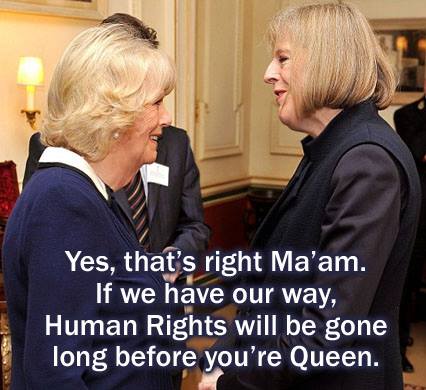
The Labour Party tells David Cameron to abandon plans to dismantle the Human Rights Act

936319_485819054820961_1954794757_nA group of senior Labour Party figures have said that David Cameron should drop his plans to dismantle the Human Rights Act.

In a joint letter, headed by acting leader Harriet Harman and Lord Falconer, the Shadow Secretary of State for Justice, the Prime Minister is asked to abandon his plans to scrap the Act entirely.

Harriet Harman said: “What an irony that yesterday the Prime Minister was presiding over the celebration of Magna Carta at the same time he’s planning to undermine the Human Rights Act.

“No wonder that though he mentioned human rights in South Africa – and preyed in aid Nelson Mandela – and mentioned human rights in India – and preyed in aid Ghandi – he could not bring himself to mention Europe and our Convention.”

The Human Rights Act is a UK law passed by the Labour government in 1998. It means that you can defend your rights in the UK courts, instead of having to travel to Strasbourg – and that public organisations, including the Government, the Police and local councils, must treat everyone equally, with fairness, dignity and respect.

The Human Rights Act protects all of us – young, old, rich and poor. It originates from an international response to the atrocities of World War Two, including the Holocaust and fascist regimes. The Human Rights Act consolidates much of the United Nations Declaration of Human Rights, 1948.

The whole point of Human Rights is that they are universal. Yet despite this, the Government wants to replace our Human Rights Act with their “British Bill of Rights and Responsibilities”. This would weaken everyone’s rights, they would become open to subjective interpretation – leaving politicians to decide when our fundamental freedoms should and should not apply.

This is the same Conservative Party who despise open justice, who have destroyed legal aid and tried to destroy Judicial Review. This is the same Party that thinks they are above the Rule of Law. It is the same Party that has systematically dismissed the Human Rights of disabled people, women and children.

The letter to David Cameron says:

Dear Prime Minister

As you are aware, this year is the 800th anniversary of the signing of Magna Carta, a year to celebrate Britain’s role as a guarantor of individual rights. Yet, as we celebrate this great landmark, the commitment to individual human rights now appears to be under threat.

The Universal Declaration of Human Rights – adopted in 1948 – which Conservative politicians contributed to – enshrines:

  • The right to life, liberty and security
  • The right to a fair trial
  • Protection from torture
  • Freedom of thought, conscience, religion, speech and assembly
  • The right to free elections
  • The right not to be discriminated against

Which of these rights do you not agree with?

Defending the Human Rights Act and our membership of the European Convention on Human Rights is not straightforward because it often involves defending the rights of an unworthy individual from a legitimate authority, or the rights of an unpopular minority from a popular majority.

The Human Rights Act is always going to be a nuisance to those in power because it stops them getting on and doing things unconstrained. But there is an inherent susceptibility for those who have power to extend it, to over-reach and ultimately abuse it. And that is irrespective of how legitimate that power is, how they acquired that power and whether or not they think they are doing the right thing.

So it is right that government ministers should have to look over their shoulder and that their power is tempered by other people’s rights. And we do need to have our executive and our legislature set within a framework of human rights.

This is important to people’s human rights here in Britain and for the human rights of those in other countries. If we were to walk away from our international human rights treaty obligations, we would not be able to press other countries to respect human rights. We cannot say to others in Europe – particularly Eastern Europe – that they should stay within a European framework but that we have somehow outgrown it, or don’t need it anymore.

Human rights are part of, not at variance with, our British values and they matter for our place in the world.

We understand you have put your plans on hold for a year, while you work out exactly how you will go about the dismantling of our human rights laws.

We ask you today to abandon your plans entirely, and as a result of the public interest in this issue, will be releasing this letter to the media.”

It is signed by the Rt Hon Harriet Harman MP, Interim Leader of the Labour Party, and the Rt Hon Lord Charles Falconer QC, Shadow Lord Chancellor and Shadow Secretary of State for Justice.

The letter is also signed by Andy Slaughter, shadow minister for justice, Lord Bach, shadow attorney general, Karl Turner, shadow solicitor general, Keir Starmer MP, Baroness Corston, former chair of the Joint Committee on Human Rights, Baroness Kennedy QC and Kate O’Rourke, chairman of the Society of Labour Lawyers.

Related:

A strong case for the Human Rights Act

Human rights are the bedrock of democracy, which the Tories have imperiled.

15553155399_94869b2dcd_oMany thanks to Rob Livingstone for his excellent memes


Lord Bach: Civil Legal Aid – a disaster area?

994596_517805604955639_608589568_n

Legal aid is a welfare provision for people who could otherwise not afford counsel from the legal system. Legal aid was originally established by the Legal Aid and Advice Act, 1949.

Legal aid is regarded as central in providing access to justice by ensuring equality before the law, the right to counsel and the right to a fair trial. Article 7 of the Universal Declaration of Human Rights says that: “All are equal before the law and are entitled without any discrimination to equal protection of the law.”

The United Nations state that this principle is particularly important to minorities and to the poor.

Everyone must be treated equally under the law regardless of their race, gender, national origin, color, ethnicity, religion, disability, or other characteristics, without privilege, discrimination, or bias.

Labour peer Lord Bach has accused the previous of Government of jeopardising social welfare through changes made to legal aid entitlement and has urged ministers to review the legislation.

This article was originally published on PoliticsHome on June 10, reproduced here with thanks:

Part 1 of LASPO has been in force for two years. In that time, many of our most vulnerable citizens have been unable to receive legal advice and assistance to help them with problems in areas of housing, debt, employment, immigration, and welfare benefits. Not only have they been deprived access to justice, but these problems are now being allowed the opportunity to escalate leading to possible greater costs when the state has to intervene. On top of this, eleven law centres have had to close, making it even more difficult for the poorest to get justice, and providers of social welfare law have declined in numbers, as without legal aid, both law centres and solicitors firms have been deprived of a large amount of income.

Two recent reports – one from the House of Commons Justice Select Committee, the other from the Public Accounts Committee – have carefully described the failings of the LASPO Act in convincing terms. The government is yet to indicate when it will respond to these reports. This was legislation which even the Permanent Secretary at Ministry of Justice conceded began without the usual preliminary research being done. It was just a way to save money and damn the consequences. Unfortunately the consequences are deadly serious for citizens, for providers and not least for the reputation of the English legal system.

It is time for a thorough review. My question in the Lords today will urge Ministers to instigate this at once. The ‘exceptional cases’ provision which was supposed to pick up cases that should receive legal aid but couldn’t because of the Act has failed miserably. The Minister of Justice estimate regarding how many exceptional cases there would be has proved laughably high.

Perhaps most disturbing of all is that in those few areas where legal aid is still available under the Act, the take-up has been decreasing.

This is nothing to do with lack of demand for advice. But with people just not knowing that support is still available. The Minister of Justices’ overall savings in this field have also exceeded expectation. Surely it is time to put some of that money back into helping people at a difficult time in their lives?

Social Welfare Law has moved a long way towards being destroyed. It is now time for the government to take stock and begin to restore what was only a few years ago one of the jewels in the crown of English Justice.


Related

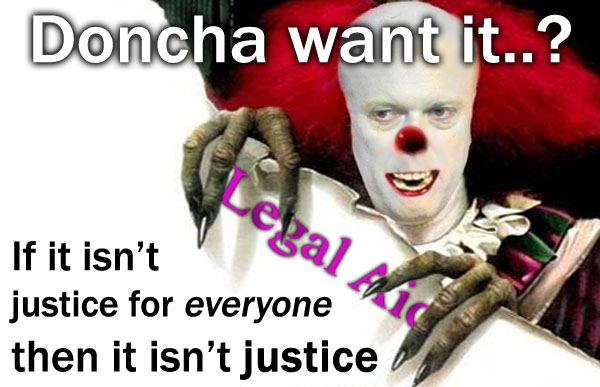
Children are being denied justice and their human rights by legal aid cuts

Devastating blow to Grayling as judges halt his legal aid reform

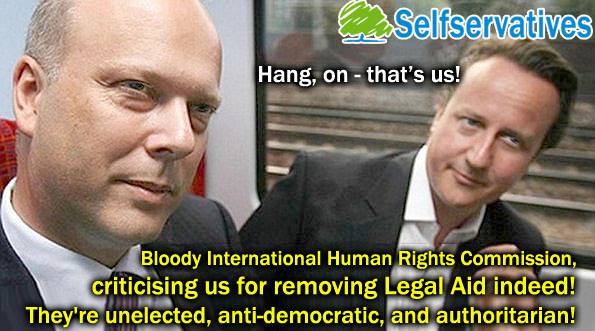
The coming tyranny and the Legal Aid bill

The government’s Legal Aid cuts are leaving vulnerable people with nowhere to turn

7005_494073677328832_658777491_n (1)Pictures courtesy of Robert Livingstone.

Poor people are poor because they don’t know how to get something from nothing

220px-1895-Dictionary-Phrenolog

The government have introduced a new character divination and assessment framework to determine eligibility for social security

It’s truly remarkable that whenever we have a Conservative government, we suddenly witness media coverage of an unprecedented rise in the numbers of poor people who suddenly seem to develop a considerable range of baffling personal ineptitudes and immediately dysfunctional lives.

We see a proliferation of “skivers” and “scroungers”, an uprising of “fecklessness”, a whole sneaky “culture of entitlement”, “drug addicts”, a riot of general all-round bad sorts, and apparently, the numbers of poor people who suddenly can’t cook a nutritious meal has climbed dramatically, too. We are told that starvation is not because of a lack of money and access to food, but rather, it’s because Britain is “broken”, and people like freebie handouts at food banks, they don’t know how to budget and cook, that’s according to the Conservative Baroness Jenkin of Kennington. 

She recommends that poor people eat porridge, since it only costs 4 pence a bowl. You can always imagine the milk, sugar and the fuel to warm it, if push comes to shove. Or better still, just cook it on the aga, or the barbi outside. Sorted.

1390648_548165358586330_1740107407_n

The alarming rise in numbers of adults who have suddenly forgotten how to cook and eat porridge since David Cameron took Office, up to last year.

Still, at least we are graced with the thrift and self-help moralising about poor people from the fabulously rich in the media. After all, there must be something wrong with someone who does nothing to help themselves to spend nothing creatively and still somehow manages to have nothing to show for it. The truth is that too many of these poor people are rubbish at being poor.

Jamie Oliver, amongst others, says that poor people always have a very large plasma TV. Thanks for that great tip, Jamie. If you bought one whilst in work, you should get rid of it immediately and buy an even larger one from your benefit.

You must also subscribe to Sky and get a big dish put on your house. Trade in your furniture and household items the very moment you stop working, and buy them all again so you don’t have to live with the guilt and shame of having anything you may have (inadvertently, I’m sure) bought from what you once disgracefully earned.

Another top tip is have lots of children that you can’t afford. Poor people need to try very hard to get pregnant only ever once they are absolutely broke. Never plan your children when you are in work, or down and out in prosperity, that’s a big no-no. Make sure you lose the job, house and everything else first. To be genuinely poor, you must have every child while facing utter destitution. 

This said, the government are going to kindly compensate those of you who had your children when you thought your job was secure and you were generally on your uppers. You are to be incentivised to breed less by having no support for any child born after the first two. Phew! Thank you, Iain Duncan Smith. It’s incentivisation and nudge. And I thought it was Victorian era eugenics.

Basically, some permanently outraged and loudly indignant, terminally curtain twitching, tutting people who work in what they think are secure jobs and have no children think that they are personally funding your children when you get made redundant. They prefer that their money is spent on handouts and tax breaks to the millionaires, crony capitalists and vulture big businesses instead. 

Some wealthy people like to feel included in designing your lifestyle choices and you can provide opportunity for a suffering wealthy person to share their guilt-fuelled outrage, malice and spite. It’s therapeutic for them, helping to alleviate their sense of resentment, shame and inadequacy. Projection is, after all, a very valuable self-defence mechanism for anally retentive hoarders. So is threatening to leave the country when confronted with the possibility of having to actually pay some tax. They cost such a lot to keep, these grumbling misers, I think we should just let them go. In fact I propose we provide a free flight booking and packing service for them, because it would be a shame to shock them out of a lifetime of handouts and entitlement.

Another top poverty tip from the top is make sure you take expensive holidays abroad, walk your dog if you have one and go to the pub. You must make sure you get someone to take photos of you looking busy, ordinary and happy and post on Facebook, or better still, send them to the Department for Work and Pensions. 

Many Sun and Daily Mail readers think that disabled poor people aren’t allowed to do or even try anything at all that looks ordinary and normal, they get very distressed and outraged that you aren’t suffering enough, and hidden away being busily housebound, so they will kindly report you. Strictly in your best interests of course, because to these kind, unprejudiced, well-meaning souls, there’s nothing more important than ensuring your complete social and economic exclusion, sacrifice and distress, and it’s the surest way of getting your benefit stopped, then you can get on with wallowing in your hard-won destitution, suffering and absolute poverty. Because as this thrifty government of self-helping, help themselves specialists has demonstrated, you’re absolutely worth it.

And as the government tells us, poor people will only stop being poor if we “incentivise” them by making them even more poor.

Rich people, on the other hand, really need “incentivising” by being given even more money. That’s just social justice and fairness, say the Tories. 

It’s common sense, and endorsed by top aspiring entrepreneur scientists in the cabinet office, called “behavioural economists.” I love technocrats, me. How incredibly lucky we have such great career-orientated folk designing “choice architecture” just for homeless and poor people. It’s a good job the nudgers don’t need any nudging with their authoritarian neoliberal cognitive biases and pro-status quo policy decisions, as the rest of us are just so fallible, gullible and inept that we simply have to be nudged in line. It’s well worth sacrificing democracy so that the government can have citizens who meet the government’s demands and economic needs.

Who needs a government that recognises and addresses citizens needs? 

Apparently, not us.

Job-Opportunities-850x390
One of the greatest joys of being poor is that many people who aren’t poor have got generous and seemingly endless advice for you. There are lots of sound tips around on how to get on with being poor quietly. And the media are interested in sharing all the details of your private life with the public, so they can tut, moralise, have some outrage, grumble, seethe and foam a lot, and then give you their “advice.” Because they care so much.

All designed to make you feel so much better about your state-designed and allocated personal failings. Lucky us.

And besides, who needs a welfare state when all it does is create poverty and turn people into cognitively malfunctioning idiots who are also very hungry? Those Tories must be creative geniuses, they made work pay by cutting welfare, driving down wages and raising the cost of living. See what I mean? 

They really should redefine the Orwell prize, the Tories would win it every year. Champions of ordinary people, they are, exposing social evils and injustices as they go, distributing work fare, poverty, authoritarianism, insecurity and behavioural change on all those faulty people that are being failed by neoliberalism and those mysterious boardroom decision makers that give us the entertaining myth of “market forces”.   

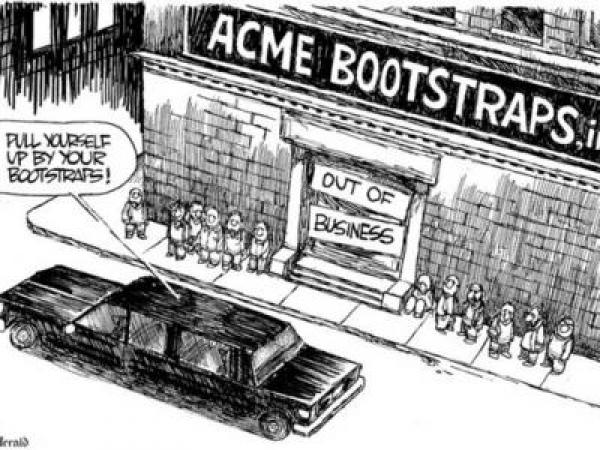
Bootstraps

Nowadays, the better off are so envious of your lucky life experiences and lack of choices that many are thinking of becoming disabled, just so they can share that exclusive pauper status for themselves. They want to own your poverty and I suspect they’d like to privatise and commercialise it. But we know that the poor invented poverty, and so it must be exclusively ours.

Poor people fake their poverty and mismanage their generous share of nothing

A recent report from Samuel Smiles and Verity Malthus, on behalf of ThanAtos, the private company hired by the government to assess people to see if they are genuinely on the point of death from starvation in order to be eligible for poverty, says that many are just feigning starvation and despair and some are even faking thinness.

This is why we have to target support only at “those in greatest need”.

ThanAtos’s research shows that many expect to be provided with food bank vouchers so they can continue to be parked on deluxe standards of suffering indefinitely.

The report said: “These poor people have taken the easy, stress-free option of not sending their children up chimneys and into t’mills any more and won’t even try their hand at pick-pocketing and prostitution. Those were once respected pauper activities, but now these poor people are jumping on the band-waggon and tarnishing the good name of thrift, self-help and state-inflicted misery.

“Far too many of those who claim they are poor don’t even have a plasma screen and a sky dish, and we know for a fact that they don’t eat takeaways, take drugs, smoke or drink cheap cider, they lack personal ineptitudes, and many don’t even have loads of unkempt children, so they are just frauds and they must have very poor budgeting skills. The problem is that once people see the privilege and benefits of gnawing hunger and destitution, they all want some. It’s all supply-led, people just want poverty as a freebie.”

How very true, it’s a real social problem. Once people begin to appreciate the Dickensian chic of malnutrition, rickets and scurvy, and many other low budget, value Victorian age diseases, they want to dash out and buy some immediately. It is becoming something of a trend. In fact the poverty porn industry has really taken off. 

The growing popularity of being very hungry has enticed many these past four years. The ease by which malnutrition can be acquired under this generous government, has been welcomed and hailed as the new poor law come-back, the return of a Golden Feudal Age for the Conservatives.

It’s a very welcomed return of nostalgic, ever so quaint and cute Social Darwinist Tory principles. But some have said that this Government has clearly created a tide of social problems, as very few people were incompetently hungry and desperately silly enough to need food banks under the last Labour government.

In fact I didn’t even know they existed back then. But that’s the “Big Society” for you. What a bright idea to replace welfare with charity and state “therapy.” Silly poor people, they just need to learn to be more creative in how they spend their state funded and allocated nothing, that’s why they end up with nothing. It’s the new generous Tory something from nothing culture, just for the poor.

Those poor people need to get one of those work fare jobs. Put them in their place. That’ll sort ’em out. What those poor people need is discipline. And a good hiding never did any harm. I say bring back the birch and the stocks. That’ll teach ’em.

It’s just like the good old Victorian days. Hurrah!

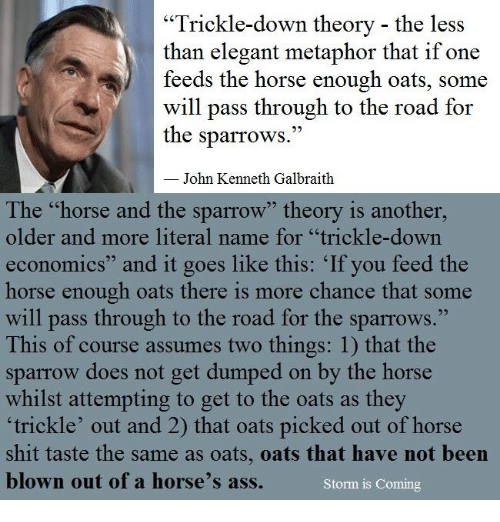
trickle-down-theory-the-less-than-elegant-metaphor-that-if-one-11938559Supply-side economics and the pecking order


I don’t make any money from my work. I am disabled because of illness and have a very limited income. I don’t have a plasma TV or Sky. I do eat a lot of porridge, though. Successive Conservative chancellors have left me in increasing poverty. But you can help by making a donation to help me continue to research and write informative, insightful and independent articles, and to provide support to others. The smallest amount is much appreciated – thank you. 

DonatenowButton

Stigmatising unemployment: the government has redefined it as a psychological disorder

proper Blond

The current government has made the welfare system increasingly conditional on the grounds that “permissive” welfare policies have led to welfare “dependency.” Strict behavioural requirements and punishments in the form of sanctions are an integral part of the Conservative ideological pseudo-moralisation of welfare, and their  “reforms” aimed at making claiming benefits much less attractive than taking a low paid, insecure, exploitative job.

Welfare has been redefined: it is preoccupied with assumptions about and modification of the behaviour and character of recipients rather than with the alleviation of poverty and ensuring economic and social wellbeing.

The stigmatisation of people needing benefits is designed purposefully to displace public sympathy for the poor, and to generate moral outrage, which is then used to further justify the steady dismantling of the welfare state.

But the problems of austerity and the economy were not caused by people claiming welfare, or by any other powerless, scapegoated, marginalised group for that matter, such as migrants. The problems have arisen because of social conservatism and neoliberalism. The victims of this government’s policies and decision-making are being portrayed as miscreants – as perpetrators of the social problems caused by the government’s decisions, rather than as the casualities.

And actually, that a recognisable bullying tactic known as projection, (the vehicle for projection is blame, criticism and allegation), as is scapegoating.

The 2015 budget included plans to provide online Cognitive Behaviour Therapy to 40,000 claimants and people on the Fit for Work programme, as well as putting therapists in more than 350 job centres.

I wrote an article in March about the government plans to make the receipt of social security benefits conditional on undergoing “state therapy.” I raised concern about ethical issues – such as consent, the inappropriateness of using behaviour modification as a form of “therapy,” and I criticised the proposed Cognitive Behaviour Therapy (CBT) programme on methodological and theoretical grounds, as well as considering wider implications.

I’ve written at length about the coercive and punitive nature of the conservative psychopolicy interventions, underpinning the welfare “reforms,” and giving rise to increased welfare “conditionality” and negative sanctions.

In particular, I’ve focussed on the influence of the Cabinet’s Behavioural Insights Team or “nudge unit” and “the application of behavioural science and psychology to public policy. (See: The nudge that knocked down democracy, The power of positive thinking is really political gaslighting, and Despotic paternalism and punishing the poor. Can this really be England? )

I was pleased to see that the BBC reported a summary of the research findings of Lynne Friedli and Robert Stearn, which was supported by the Wellcome Trust. The report – Positive affect as coercive strategy: conditionality, activation and the role of psychology in UK government workfare programmes reflects many of the concerns raised by other professionals. I strongly recommend you read it. (See: Psychologists Against Austerity: mental health experts issue a rallying call against coalition policies.)

The BBC summarised from the report that benefit claimants are being forced to take part in “positive thinking” courses in an effort to “change their personalities.” Those people claiming benefits that do not exhibit a “positive” outlook must undergo “reprogramming” or face having their benefits cut. This is humiliating for job seekers and does not help them find suitable work.

New benefit claimants are interviewed to find out whether they have a “psychological resistance” to work, with those deemed “less mentally fit” given more “intensive coaching.”

And unpaid work placements are increasingly judged on psychological results, such as improved motivation and confidence, rather than whether they have led to a job.

The co-author of the report, Lynne Friedli, describes such programmes, very aptly, as “Orwellian.” She says:

“Claimants’ ‘attitude to work’ is becoming a basis for deciding who is entitled to social security – it is no longer what you must do to get a job, but how you have to think and feel.

“This makes the government’s proposal to locate psychologists in job centres particularly worrying.

“By repackaging unemployment as a psychological problem, attention is diverted from the realities of the UK job market and any subsequent insecurities and inequalities it produces.”

Friedli also criticised the way psychologists were being co-opted as “government enforcers” and called on professional bodies to denounce the practice.

Quite rightly so. It’s our socio-economic system, and the ideologues who shape it that present the problems, not the groups of people forced to live in it as its casualities – the “collateral damage” of neoliberalism and social conservatism.

“I don’t think anything can justify forced psychological coercion. If people want to go on training courses that should be entirely voluntary,” Lynne told BBC News.

She also questioned the aim of the motivational courses and welfare-to-work placements, which felt like “evangelical” self-help seminars.

“Do we really want a world where the only kind of person considered employable is a ‘happy clappy’, hyper-confident person with high self-esteem?

“That is a very a narrow set of characteristics. There is also a role in the workplace for the ‘eeyore’ type.”

Absolutely. Frankly, I would rather have health and safety programmes that are designed by a pessimist, capable of thinking of the worst case scenario, for example, than by a jolly, positively biased, state-coerced optimist.

I would also prefer pessimistic appraisal of social policies. That way, we may actually have impact assessments carried out regarding the consequences of Conservative policies, instead of glib, increasingly Orwellian political assurances that are on the other, more scenic, illusory side across the chasm from social realities.

Although pessimism and depression are considered to be affective disorders, in a functional magnetic resonance imaging study of the brain, depressed patients were shown to be more accurate in their causal attributions of positive and negative social events, and in self assessments, and assessment of their own performance of tasks, than non-depressed participants, who demonstrated a positive bias.

As a former community-based psychosocial practitioner who saw the merits and value of a liberationist model, the question that needs to be asked is: for whose benefit is CBT being used, and for what purpose? Seems to me that this is about helping those people on the wrong side of punitive government policy to accommodate that, and to mute negative responses to negative situations.

The socially dispossessed are being coerced by the state, part of that process is the internalisation of the negative images of themselves created and propagated by their oppressors.

CBT is not based on a genuinely liberational approach, nor is it based on any sort of democratic dialogue. It’s all about modifying and controlling behaviour, particularly when it’s aimed at such a narrow, politically defined and specific outcome.

The problem that we need to confront is politically designed and perpertuated social injustice, rather than the responses and behaviour of excluded, stigmatised individuals in politically oppressed, marginalised social groups.

CBT is founded on blunt oversimplifications of what causes human distress – for example, in this case it is assumed that the causes of unemployment are psychological rather than socio-political, and that assumption authorises intrusive state interventions that encode a Conservative moral framework which places responsibility on the individual, who is characterised as “faulty.”

However, democracy is based on a process of dialogue between the public and government, ensuring that the public are represented: that governments are responsive, shaping policies that address identified social needs. Conservative policies are quite clearly no longer about reflecting citizen’s needs: they are increasingly about telling us how to be.

As I have said elsewhere, as well as aiming at shaping behaviour, the psycho-political messages being disseminated are all-pervasive, entirely ideological and not remotely rational: they reflect and are shaping an anti-welfarism that sits with Conservative agendas for neoliberal welfare “reform”, austerity policies, the small State (minarchism) and also legitimises them. (I’ve written at length elsewhere about the fact that austerity isn’t an economic necessity, but rather, it’s a Tory ideological preference.) The Conservatives are traditional, they are creatures of habit, rather than being responsive and rational.

Conservative narratives, amplified via the media, have framed our reality, stifled alternatives, and justified Tory policies that extend psychological coercion including through workfare; benefit sanctions; in stigmatising the behaviour and experiences of poor citizens and they endorse the loss of autonomy for citizens who were disempowered to begin with.

Many of the current ideas behind “reforming” welfare come from the Behavioural Insights  Team – the Nudge Unit at the heart of the Cabinet. Nudge theory has made Tory ideology, with its totalitarian tendencies, seem credible, and the Behavioural Insights Team have condoned, justified and supported punitive, authoritarian policies, with bogus claims about “objectivity” and by using discredited pseudoscience. Those policies have contravened the human rights of women, children and disabled people, to date.

Nudge-based policy is hardly in our “best interests,” then.

526544_532055030197363_2137237288_n
Pictures courtesy of Robert Livingstone


I don’t make any money from my work. I am disabled because of illness. But you can contribute by making a donation and help me continue to research and write informative, insightful and independent articles, and to provide support to others.

The smallest amount is much appreciated – thank you.

DonatenowButton

Watchdog that scrutinises constitutional reform is quietly abolished and Tory proposals are likely to lead to constitutional crisis.

 936319_485819054820961_1954794757_n

The Political and Constitutional Reform Committee, which was originally established for the duration of the 2010 parliament, has been very quietly scrapped following a meeting of party whips.

Originally, the cross-party committee was established to scrutinise the plans of the Coalition government, such as the House of Lords Reform and the Alternative Vote – many of which never made it onto the statute books.

The parliamentary committee’s main role was to scrutinise proposed major constitutional changes. This undemocratic development is especially worrying given the likelihood of significant constitutional changes in the forthcoming parliament, with the referendum on  membership of the European Union set to be held within the next two years.

There are further plans for devolution of powers to Scotland and Wales, as well as to cities, and it is expected that these will be delivered at the same time as the government repeals the Human  Rights Act, and draws up a bill of rights to replace it.

Considerable doubt exists among experts that the Council of Europe, a human rights watchdog responsible for ensuring the Convention is upheld, will accept the Tories’ proposals. In fact the plans are highly unlikely to be accepted. As a result, it is quite widely believed Britain will disengage from the European Convention on Human Rights (ECHR) and undermine Europe’s’ civil liberties framework in the process.

Cameron has previously pledged to withdraw from the ECHR, indicating plainly that he is indifferent to the fact that such a withdrawal would very likely spark a complex constitutional crisis in the UK.

If the Human Rights Act is repealed in its entirety, the repeal will apply to the whole of the UK. The Scotland Act gives powers to the Scottish Parliament, provided that they comply with the ECHR (among other things). This would not change with repeal of the Human Rights Act alone.

However, human rights are also partially devolved (the Scottish Parliament, for example, has set up a Scottish Human Rights Commission), and so any unilateral repeal of the Human Rights Act by Westminster would violate the Sewell Convention, which outlines that the Westminster government will: “not normally legislate with regard to devolved matters in Scotland without the consent of the Scottish Parliament.” Nicola Sturgeon has stated clearly that the Scottish National Party oppose the repeal of the Human Rights Act.

And similar principles apply through the memoranda of understandings with each of the devolved legislatures in the UK.

In Northern Ireland, human rights are even further devolved than in Scotland, and the Human Rights Act (HRA) is explicitly mentioned in the Good Friday Act in 1998. To repeal the HRA would violate an international treaty as the Agreement was also an accord between two sovereign states – the UK and the Irish Republic.

Repealing the HRA unilaterally would put the UK in violation of the Good Friday Agreement, and its international treaty obligations to Ireland.  This would certainly damage our international reputation, as well as having consequences for the reciprocity on which the Treaty depends.

It’s quite possible that it would also be understood within Northern Ireland as a violation of both letter and the spirit of the Good Friday Agreement,  signalling that the UK government were no longer committed to the Agreement.

The Good Friday Agreement was also subject to a referendum in both Northern Ireland and the Republic of Ireland, both having to consent for the Agreement to be implemented.  The referendum enabled the Agreement to have widespread legitimacy, but importantly, because it took place in both parts of Ireland, it answered historic Republican claims to be using violence to secure the “right to self-determination” of the Irish people.

It was also necessary to changing the Irish Constitution. So a unilateral move away from UK commitments carries serious bad faith and democratic legitimacy implications, potentially with deeply problematic historical consequences.

The Conservatives also have plans to reintroduce the redefining of parliamentary constituency boundaries in a way that will be advantageous to the Conservative party. It is estimated that the planned changes will help the Tories to win up to 20 extra seats at a future election.

It was during the last term that the proposals were originally put forward. Labour and Liberal Democrat MPs were joined by those of smaller parties – including the SNP, Plaid Cymru, the DUP,  the Greens and Respect – to defeat the proposals, giving them majority in voting down the Tory plans for boundary changes.

The Tories are also committed to implementing a form of “English vote for English” laws – a move which will further undermine ties within the UK. But this pre-election pledge placed an emphasis upon English voting rights to undermine the nationalist appeal of UKIP south of the Border, whilst spotlighting the constitution to bolster the Scottish National Party in Scotland, again using nationalism tactically  to disadvantage the Labour Party.

At a time when the government is planning potentially turbulent constitutional changes in the forthcoming parliament, the move to abolish the watchdog – The Political and Constitutional Reform Committee – will serve to insulate the Tories from democratic accountability and scrutiny.

The Political and Constitutional Reform Committee had instigated an inquiry in 2013 regarding increasingly inconsistent standards in the quality of legislation, which resulted in several key recommedations, one of which was the development of a Code of Legislative Standards, and another was the creation of a Legislative Standards Committee.

The government response was little more than an extravagant linguistic exercise in avoiding accountability, transparency and scrutiny. Having waded through the wordy Etonian etiquette of paragraph after paragraph in the formal responses to each recommendation, the meaning of each may be translated easily enough into just one word: no.

For example: “A bill when it is published is the collectively agreed view of the whole Government on how it wishes to proceed. The process by which it has arrived at that view is a matter for the Government, not for Parliament.”

“The Government does not believe that a Code of Legislative Standards is necessary or would be effective in ensuring quality legislation. It is the responsibility of government to bring forward legislation of a high standard and it has comprehensive and regularly updated guidance to meet this objective. … Ultimately, it is for Ministers to defend both the quality of the legislation they introduce and the supporting material provided to Parliament to aid scrutiny.”

It’s troubling that the House of Lords Constitution Committee raised concerns during the inquiry that there is currently no acceptable watertight definition of what constitutional legislation actually is. The current ad hoc process of identifying which bills to take on the Floor of the House of Commons in a Committee of the whole House lacks transparency: it is clear that differentiation is taking place in order to decide which bills are to be considered by a Committee of the whole House, but the decision-making process is “unclear.” The very worrying response:

“The Government does not accept that it would be helpful to seek to define “constitutional” legislation, nor that it should automatically be subject to a different standard of scrutiny. The tests suggested by Lord Norton and the list of characteristics suggested by Professor Sir John Baker are themselves subjective: whether something raises an important issue of principle, or represents a “substantial” alteration to the liberties of the subject [citizen], for example, are matters more for political rather than technical judgement.

Well no, such matters may be more for legal judgement, given the current framework of Human Rights and Equality legislation. The idea that the law is superior to the megrims of rulers is the cornerstone of English constitutional thought as it developed over the centuries. The Universal Declaration of Human Rights and the European Convention on Human Rights both refer to the Rule of Law.
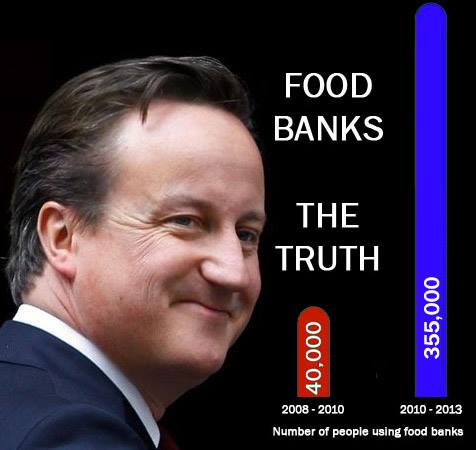
The Universal Declaration of Human Rights of 1948, is the historic international recognition that all human beings have fundamental rights and freedoms, and it recognises that “… it is essential, if man is not to be compelled to have recourse, as a last resort, to rebellion against tyranny and oppression, that human rights should be protected by the rule of law…”

And of course there are implications for our current understanding of the word “democracy.”

Oh. There you have it: the government does seem to regard the liberty of citizens to be enclosed within their own doctrinal boundaries. Those Tory boundaries are entirely defined by partisan dogma and value-judgements, ad hoc justifications, all of which distinctly lack any coherence and rational expertise. Or independence and protection from state intrusion and abuse.

This is a government that has taken legal aid from the poorest and most vulnerable, in a move that is contrary to the very principle of equality under the law.

The Tories have turned legal aid into an instrument of discrimination. They have tried to dismantle a vital legal protection available to the citizen – judicial review – which has been used to stop the Conservatives abusing their powers again more than once. The Tories have restricted legal aid for domestic abuse victims, welfare claimants seeking redress for wrongful state decisions, victims of medical negligence, for example.

Reflected in many Conservative proposals and actions is the clear intent on continuing to tear up British legal protections for citizens and massively bolstering the powers of the state.

The hypocrisy is evident in that this is a government which claims to pride itself on its dislike for the state. But in every meaningful way, the Tories are vastly increasing state powers and intrusive authoritarian reach.

564882_438358886199493_1982719183_n