The PR industry arose to promote and protect private interests in neoliberal economies
Public Relations (PR) and propaganda are key mechanisms by which power and influence are won (and lost). PR consultancies are also behind significant victories on behalf of big business, resulting in a tilted, biased market. PR emerged as a distinct discipline as a result of threats to the interests of business and government along with a ‘promotional culture’.
Evidence indicates that PR arose rapidly in tandem with neoliberal policies. Those countries with the most marked privatisation and deregulation from the 1980s onwards – the US, the UK and Japan – had the largest PR industries. By contrast, countries such as France and Germany, which retained significant elements of consensus-based policies and state investment in industry, have much smaller PR industries. The global PR industry is dominated by a few big players, most of which are US or UK in origin and
ownership.
Relative size of PR agencies in Europe, the US and Japan:
The expansion and power of Trans National Corporations (TNCs) relative to nation states has been a key spur to the development of communications conglomerates, which provide a full range of ‘promotional’ services and aspire to a global reach. TNCs’ influence over the policy making process by entering an international market place has also led to a globalising of the PR industry.
Multinational corporations, particularly in the US, and increasingly in the UK, look for global PR agencies who can operate adaptably and locally, wherever they are needed.
The consensus in British politics was based on a compromise between organised labour and capital, which was founded on the post war 1945 settlement. This did secure real and significant democratic advances for ordinary citizens in the shape of the NHS, the welfare state, universal education, significant public ownership of utilities and heavy industry and, partly as a result, some amelioration of inequality in wealth distribution.
The end of the consensus in British politics during the New Right era ushered in more competitive politics in which traditions were displaced by a neoliberal tilt to the market in government policy. The crisis of the consensus shifted decisively with the 1979 election of Margaret Thatcher’s government which favoured the role and ‘right’ of employers to ‘manage’, with government rolling back state mediation.
During the Thatcher era, changes in the communication strategies of the nationalised industries were crucial to the changed relationships between management and workers. Controversial government actions and policies also led to a vast increase in PR spending by governments and by corporations in their attempts to influence government policy.
Fundamental to this is the relationship between PR, lobbying, and neoliberalism, (particularly the privatisation of national assets and the deregulation of business and service provision in state institutions). There are several parts to this relationship which are interrelated and in some respects, mutually reinforcing. These include:
• Lobbying and preparation for deregulation, • Spending on privatisation by government/nationalised industries, • Spending by newly privatised companies, • Spending on promotion by industries and professions following deregulation, • Increased spending on PR in the new business climate created by the deregulation of the City.
Conservative policies could not work without the PR industry and the PR industry would not have developed in the spectacular way it did without consecutive Conservative governments. The British privatisations of the 1980s were instrumental in the rapid expansion of the PR industry.
Once industries are privatised, PR, corporate identity consultants and advertising are needed to promote the private interests of the companies and as a part of their strategic armoury to create positive public images of them. By the 1990s, accountancy firms also routinely employed lobbying firms.
Lobbying increased deregulation which increased PR spending by encouraging financial institutions to market themselves, and by ‘selling’ the marketing. Nowadays there are no matters for business, government or private interest pressure groups that have not been first addressed by promotional professionals, which has made, in turn, further contribution to shaping economic-political life and profoundly reduced the quality of our democracy.
PR consultancy and neoliberal ideology are intimately connected, the role of PR has facilitated an institutional corruption in British governance.
The rise of political branding and marketing, where the primary development involves the way political candidates, parties, government, lobbyists and groups have borrowed communication techniques from the private sector in the attempt to achieve strategic objectives like gaining votes, driving public opinion or influencing legislation, is generally regarded to be an Americanisation of campaigning in the UK.
However, the identifiable practices like negative advertising, personalised politics, and high pre-election campaign expenditures are generally more about maintaining a neoliberal status quo, and these methods are a ‘whatever it takes’ approach that are subsequently exported in a pre-packaged box of persuasion techniques to other countries. Political identities are being constructed rather than given, policies are presented on showroom dummies, dressed up in techniques of persuasion. Yet there is evidence to suggest that overexposure to this kind of window dressing and made-over political coverage has contributed towards widespread political alienation.
The rise of political marketing with its techniques of ‘spin’, selling and persuasion may have somewhat undermined the credibility of political leaders and institutions, with the elevation of style over content and image over substance, along with a concomitant ‘brand and package’ pack mentality political journalism, ultimately leading to hardened public cynicism. We are after all, inhabiting a world dominated by PR operations that leave little place for objective reporting. Every message that the public receives is “sponsored” by someone trying to sell us something – be it a product, a service, a candidate, a government or a legislative act.
The content of the messages is calculated to generate superficial and shallow emotive responses rather than inspiring deliberative, rational and critical thinking.
It wouldn’t be such a stretch to imagine that, in addition to the reductionist and glib sloganisation of politics, the normalised use of emotive, negative and ‘attack’ Conservative political advertising may in fact demobilise the electorate, too.
The Conservatives in the ‘war room’ – a case study
The UK PolicyGroup is the UK branch of a notorious US political organisation – Definers Public Affairs– which has worked for Donald Trump’s administration and has aggressively targeted his critics. The company boasts: “What sets us apart is our focus on political-style research, war room media monitoring, political due diligence and rapid response communications.
“We help our clients navigate public affairs challenges, influence media narratives and make informed decisions to disrupt crowded markets.
“The global political, policy and corporate communications landscapes are evolving rapidly. Decision makers need high quality research to make informed decisions and need relevant content to drive the court of public opinion and provide context to shape decisions by policymakers.
“With affiliates in Washington, D.C., and Silicon Valley, UK Policy Group employs some of the best communicators, researchers and media analysts as part of our team.”
The Conservatives have outsourced their “research” to the UK Policy Group, privatising their dirt digging and smear campaigns.
US lobbying firm Definers Public Affairs was founded by Mitt Romney’s 2012 presidential campaign manager, Matt Rhoades and former Republican National Committee research director Joe Pounder. Rhoades and Pounder are also directors of UK Policy Group.
Definers made headlinesin December 2017 when it was paid US$120,000 in a no-bid contract by the United States Environmental Protection Agency (EPA) to build up dossiers of compromising information on “resistance figures”, opposed to the policy agenda of Scott Pruitt, and Donald Trump, the man who appointed him. Definers cancelled the contract in short order after its activities were exposed.
UK Policy Group was originally called, and registered with Companies House as, ‘UK Rising’. Rhoades and Pounder are co-founders of America Rising, a political action committee (PAC), that specialises in helping [Republican] party candidates and Conservative groups find damaging information on political rivals. Both companies “craft convincing narratives and focused messaging”.
The expansion byDefiners Public Affairs came at a time when US lobbying firms were eyeing UK expansion in anticipation of flood of Brexit-related work.
UK Policy Group’s website unambiguously states it works for ‘corporate clients’, however, not a single one of those running the company has a significant private sector background. In fact, each of the five individuals standing alongside Pounder and Rhoades is intimately connected with the Conservative Party.
Former government officials are advising this highly controversial company. The UK company’s vice president isAndrew Goodfellow,who was the Conservative Party’s director of policy and research. He specialised in ‘opposition’ research.
James Caldecourtwas previously a Political Adviser in the Conservative Research Department, also specialising in ‘opposition’ research, and was part of George Osborne’s team while he served as Chancellor of the Exchequer 2010 — 2015. He has worked on several national election and referendum campaigns in political, policy and operational roles. Louis McMahon worked for two tears for two Conservative government ministers, and previously co-authored a criminal justice report for the Center for Social Justice think tank, founded by Conservative MP Iain Duncan Smith MP in 2004.
Ameet Gill, who was the former director of strategy Number 10 and founder of lobbying company Hanbury Strategy, is providing consultancy to the firm. Official documentsreveal that David Cameron ’s former director of strategy, Gill, was given permission by parliamentary authorities to accept a contract advising the firm through his political strategy company Hanbury Strategy. Pelham Groom, a company director, was previously head of ‘media monitoring’ for the Conservative Party. Chris Brannigan, Theresa May’s former Director of Government Relations is also a member of the group’s advisory board. Rhiannon Gloveris an analyst, formerly, the late duty press officer for the Conservative Party and researcher in the office of Nick Hurd.
The company says: “We offer our clients an end-to-end system of research on issues and opponents, monitoring the news cycles, and shaping narratives via rapid rebuttal communications.
UKPG provides our clients with unparalleled campaign-style research as the foundation of driving informed decisions that allow them to shape public opinion, and impact outcomes.”
The company employs people to find damaging information on political rivals. Scrutinising the personal histories, online videos and posts of Labour Party candidates, the company collects dossiers of potential discrediting and smear material to be handed to the Conservative Party. It’s understood that the information is then handed to right-wing websites and newspapers to construct narratives and add a veneer of evidence to negative articles.
The company expansion by US-based company Definers Public Affairs came at a time when US lobbying firms were eyeing UK expansion “in anticipation of flood of Brexit-related work, using their capacity to influence the national news cycle’ and as a ‘master of opposition research”.
Ian Lavery MP, Labour Party Chair, said: “I am disappointed but not surprised to hear that in an attempt to deflect from their total lack of direction and policy, the Tories are reduced to digging low and dragging British politics through the gutter, in the desperate hope that they may find some salacious morsel.
“This kind of base mudslinging has no place in British democratic debate, and deflects from the real issues facing people today. It is time that Theresa May stops spending money and effort on these tactics and focuses on policies to improve the lives of those who have suffered because of her government’s heartless policies.”
It may be argued that there are communications requirements of modern democracies. However, a representative democracy requires that political communication is dialogic – it flows in both directions between government and people. In fact that is a prerequisite. Instead we witness a manipulative neoliberal monologue from the current administration.
Neoliberal Conservative governments and the PR industry are very closely aligned, each profiting from the other. The condition of the spectacular growth of the PR and lobbying industry was to facilitate and profit from the marked redistribution of wealth from the poorest citizens to the rich, establishing, elevating and securing the prioritisation of the private interests and power base of the 1% over and above – and at the expense of – public interests.
I don’t make any money from my work. I’m disabled through illness and on a very low income. But you can make a donation to help me continue to research and write free, informative, insightful and independent articles, and to provide support to others. The smallest amount is much appreciated – thank you.
Parsing Jewish groups on the grounds of their political beliefs and preferences is deplorable. I have seen the right-slanted media going all out to discredit and denigrate left wing Jewish groups in particular this past few weeks. The general theme has been that Conservative Jews are “good” and left wing Jews are somehow “bad”. In their haste to portray the entire left of centre as dangerous “cultists” and “antisemites”, some of media commentators have inadvertently displayed their own antisemitism for all to see.
Antisemitism on any grounds is an affront in a so-called civilised and democratic country. Abuse, discrimination and oppression directed at people because of their political beliefs is also contrary to our human rights legislation. Our freedom of expression – protected by Article 10 of the Human Rights Act – is fundamental to a functioning democracy. It means we’re free to hold opinions and ideas and share them with others without the State interfering – which is crucial to keeping our government accountable and transparent.
Article 10 covers:
political expression – including peaceful protests and demonstrations.
The thing about human rights is that they apply to everyone. They would be pretty pointless if they only apply to Conservatives or Centrists. As it is, those of us who oppose neoliberalism are being targeted not only by Conservatives, but by the neoliberal faction within the Labour party.
Antisemitic comments from pundits that target left wing Jews
Over the last few weeks, I have witnessed abuse and experienced it myself from those on the right, and some of the so-called “moderates” in the Labour party. I have written about and campaigned against prejudice for a number of years, and discussed the dangers of a divided society where prejudice and discrimination are permitted to grow – including racism, antisemitism and other expressions of prejudice. These are issues I feel very strongly about. My support of the Labour party is based on principles of solidarity inclusion, equality, valuing diversity, mutual aid, and its antidiscriminatory, human rights-based policies.
I believe that when division and prejudice are permitted to grow within a society, many groups are systematically stigmatised – prejudice “multitasks”. These are invariably groups that have been traditionally marginalised from societies, and most vulnerable to political abuse – disabled people, Jewish people, other ethnic groups, poor people and those deemed to be political “dissidents”, among others. I belong to two of those groups.
In 2014, the UK witnessed the highest level of antisemitism since records began. It does not begin to address this serious problem when it is simply used as a political weapon by the right and centre to discredit the Labour party leader. That is not the same thing as saying there are no antisemitic Labour party members. I have witnessed antisemitism on the far left on two occasions over the last few years. The people concerned were actually Green party members. I challenged it and I always will. Where there are allegations of antisemitism made, the Labour party must be permitted to investigate those allegations and the evidence fairly. Once that is done, the party must then act.
In a world where people can set up fake accounts and troll groups to disrupt discussions, and discredit commentators, it is best to check if the allegations are also genuine. Having experienced this from trolls or shills on the far right and far left, I know that this happens.
The accusations of “smearing” are not a statement that antisemitism does not exist on the left. It exists throughout our society. That isn’t “whataboutery”, it’s an evidenced statement of fact. I am convinced that the antisemitism debate has been politically weaponised by the right and centrists because of the abuse I have experienced myself – including from the executive director of Progress.
Those left of centre – including Jewish groups – are also experiencing abuse in the mainstream media and on social media. If antisemitism in the Labour party was “rife” as the right are claiming, the left leaning Jewish groups would most certainly have been among the first to raise this serious issue. As it is, their accounts are being marginalised, discredited and stifled by the right.
There has never been a more oppressive, dnagerously authoritarian culture within UK politics as there is right now.
Jewish opinions from the left
Many Jewish groups who are left wing have pointed out that their voices have been marginalised by the Board of Deputies of British Jews and other right leaning groups.
The chair of the Jewish Voice for Labour group said on Radio 4’s Today programme: “None of us in my group has ever experienced any antisemitism within the Labour Party.”
In an interview this morning ahead of Jeremy Corbyn’s meeting with the Board of Deputies and the Jewish Leadership Council, Jenny Manson said evidence of the “very worst” antisemitism “has always been” on the far-right.
Asked about Margaret Hodge’s comments, suggesting she had never known antisemitism in Labour to be as bad it was now, Manson said that Hodge would have been better advised to “go to the Labour Party rather than complain to the media about it”.
Dismissing claims that antisemitism was “rife” within the party, Manson said: “In my area I talk to other Jewish people in my acquaintance and that’s the general consensus.
“What we are saying is it is a misery and a tragedy that Margaret Hodge and other Labour MPs have received nasty antisemitic comments.
“I suspect most of these have been on social media and I suspect nobody has actually worked hard to find out who this nasty stuff is coming from.
“If they do I think it’s much better to go to the Labour Party than to complain to the media about it.”
Discussing Jeremy Corbyn’s attempts to deal with the issue, Manson added: “What we can’t have is a witchhunt. What the Board of Deputies and the JLC seem to be demanding far too often… is that people should be expelled from the Labour Party without due process.”
Manson also referred to a survey conducted by the Campaign Against Antisemitism group saying: “Evidence including very recent evidence commissioned by a Jewish body suggests the very worst antisemitism is still on the right, on the far right and always has been.”
Last year, President of the Board of Deputies of British Jews, Jonathan Arkush, told The Jerusalem Post that he and his colleagues met in Belfast with DUP leader Arlene Foster and the party’s Westminster leader Nigel Dodds, whom he described as having been “exceptionally warm and friendly.”
The DUP has strong links to Protestant churches and is staunchly pro-Israel. It has also publicly stated its support for the Board of Deputies’ “Ten Commitments” – a part of its Jewish Manifesto that includes requests to parliamentarians regarding policy on issues that affect British Jewry.
The DUP defends Northern Ireland remaining part of the United Kingdom and takes a conservative approach to social issues. The party’s 10 seats would give May a fragile but workable partnership.
While Arkush said that an arrangement between the two parties would promote the UK’s strong friendship with Israel, he also noted that “May is clearly a strong friend of Israel and her authority and her government’s ability to govern has been weakened, so that is not something our community can take lightly.”
Back in 2016, it was reportedthat the British Jewish community responded angrily after Jonathan Arkush, the president of the Board of Deputies, publicly congratulated Donald Trump on his election win.
In a statement published on the Board’s website, Arkush said: “I would like to congratulate Donald Trump on his victory.
“After a divisive campaign, I hope that Mr Trump will move to build bridges and ensure that America’s standing as a beacon of progress, tolerance and free-thinking remains strong.”
Arkush’s statement sparked a wave of negative responses on social media. Aaron Simons was one of the first to respond to the announcement, and his reaction set the tone for much that followed:
@BoardofDeputiesTrump mainstreams antisemites in a way unseen since the Nazis and you congratulate him? Revolting.
Dr Ruvi Ziegler, law lecturer at the University of Reading, tweeted: “What does an organisation representing British Jewry congratulate this vile man endorsed by the KKK? #NotInMyName”
Rachel Wenstone, a former National Union of Students vice-president, responded: “WHAT THE HELL IS THIS?! Why did you think this was at all necessary? You do know that you’re congratulating the KKK-backed candidate?”
Ivor Caplin, a former British Defence Minister and ex-MP for Hove, was personally critical of Mr Arkush, saying: “Arkush should have kept quiet but he seeks publicity instead of reflecting concerns of Jews.”
Arkush did not escape criticism from fellow Board members.
“I don’t think it’s @BoardofDeputies job to congratulate Donald Trump on his election, and I’m sure the Jewish community will agree with me”, said Tal Ofer, who is on the Board’s executive committee and defence division.
Other members echoed that sentiment:
Ella Rose@ellarachelrose
No words for how badly this statement is judged. I’m embarrassed to be a Deputy.
Board of Deputies of British Jews
✔@BoardofDeputies
President Jonathan Arkush congratulates Donald Trump – http://www.bod.org.uk/president-jonathan-arkush-congratulates-donald-trump/ …
The Republican’s final campaign advert before yesterday’s poll was widely criticised by Jewish groups for itsalleged antisemitic overtones.
Jay Stoll – who is a member of the Jewish Labour Movement executive, said:
“The Board has misjudged the anxieties that many have over the election of a racist demagogue to the highest office in the world. I not only question the necessity of the statement, but believe it is actively harmful to our relations with other faith groups who are deeply fearful of the election’s outcome.
“The Board should not be congratulating a candidate endorsed by a range of white supremacists, including the KKK, and it is mind-blowing that this even needs pointing out.”
More than 90 young British Jews had put their names to a letter addressed to Arkush, expressing their concern at the Board’s decision to congratulate Trump.
The letter was signed by members of the Board of Deputies including Amos Schonfeld, Liron Velleman and Ben Lewis, as well as members of the Jewish Labour Movement and workers from Jewish youth groups including Habonim-Dror, RSY-Netzer and Noam.
“We do not welcome the ascendancy of Donald Trump and Mike Pence,” the letter said.
“We urge the Board of Deputies to retract their congratulations and show their support to American communities that have been targeted with Trump’s incendiary rhetoric throughout this campaign.
“It is beneath contempt to congratulate a candidate who was censured by the ADL for using antisemitic tropes, who has enabled mainstream antisemitic abuse and who has secured the endorsement of the KKK and other white supremacists.
“This message of congratulations is contrary to our community’s best interests and is an affront to our ancestors and contemporaries who have stood against racism and fascism in all its forms.”
I posted this article on Twitter, with the comment that Jonathan Arkrush supports the DUP and Conservative coalition. I was immediately attacked by the executive director of Progress, Richard Angell, who ludicrously called me a “liar”, a “racist” and said the post was “whataboutery”. I did point out to him that the article wasn’t actually mine. I’ve also been called a”cultist”. I have strongly opposed and campaigned against racism, antisemitism and other forms of prejudice, discrimination, exclusion and oppression for a number of years. There was nothing in my comment that was untrue or even remotely “racist”.
The “whataboutery” charge also doesn’t hold, since the political preferences of Arkrush are relevant in that they have some influence on his motivations and narrative. Pointing out someone’s political preference is in no way denying antisemitism. As it is, there are different, sometimes contradictory perspectives and narratives being presented from the left and right wing Jewish communities. Highlighting that does not mean I either endorse or deny antisemitism within the Labour party.
“The Jewish Socialists’ Group expresses its serious concern at the rise of antisemitism, especially under extreme right wing governments in central and Eastern Europe, in America under Donald Trump’s Presidency and here in Britain under Theresa May’s premiership. The recent extensive survey by the highly respected Jewish Policy Research confirmed that the main repository of antisemitic views in Britain is among supporters of the Conservative Party and UKIP.
“This political context, alongside declining support for the Tories, reveals the malicious intent behind the latest flimsy accusations of antisemitism against Jeremy Corbyn and the Labour Party. These accusations have come from the unrepresentative Board of Deputies and the unelected, self-proclaimed “Jewish Leadership Council”, two bodies dominated by supporters of the Tory Party.”
The rest of the article is also worth a read. (Link above).
I don’t make any money from my work. I’m disabled through illness. But you can make a donation to help me continue to research and write free, informative, insightful and independent articles, and to provide support to others. The smallest amount is much appreciated – thank you.
I rarely venture into large retail areas and shopping centres. They make me feel unwell. I’m rather claustrophobic to begin with. I also have lupus, one of my symptoms is a quite extreme photosensitivity. The lighting in these places quite often triggers an attack of vertigo, nausea, incapacitating disorientation, co-ordination difficulties, muscle rigidity, temporary and severe visual distortions and a very severe headache.
However, I visited one recently with a friend, who was doing some last-minute Christmas shopping. He promised we would visit just two shops, and that our visit would be over quickly.
What struck me straight away is how much retail design is now just about revenue-producing. Shopping malls are unforgiving, soulless and unfriendly places. I was reminded of something I read by David Harvey, about the stark reality of shrinking, privatised and devalued public spaces. Neoliberal marketisation has manifested ongoing conflicts over public access to public space, where profiteering reigns supreme.
My experience of a shopping mall was deeply alienating and physically damaging. It brought with it a recognition of how some groups of people are being coerced and physically situated in the world – how citizens think and act is increasingly being determined by ‘choice architecture’ – which is all-pervasive: it’s situated at a political, economic, cultural, social and material level. Hostile architecture – in all of its forms – is both a historic and contemporary leitmotif of hegemony.
Architecture, in both the abstract and the concrete, has become a mechanism of asymmetrically changing citizens’ perceptions, senses, choices and behaviours – ultimately it is being used as a means of defining and targeting politically defined others, enforcing social exclusion andimposing an extremely authoritarian regime of social control.
Citizens targeted by a range of ‘choice architecture’ as a means of fulfiling a neoliberal ‘behavioural change’ agenda (aimed at fulfiling politically defined neoliberal ‘outcomes’) are those who are already profoundly disempowered and, not by coincidence, among the poorest social groups. The phrase choice architecture implies a range of offered options, with the most ‘optimal’ (defined as being in our ‘best interest’) highlighted or being ‘incentivised’ in some way. However, increasingly, choice architecture is being used to limit the choices of those who already experience heavy socioeconomic and political constraints on their available decision-making options.
The shopping mall made me ill very quickly. Within minutes the repulsive lighting triggered an attack of vertigo, nausea, co-ordination and visual difficulties. I looked for somewhere to sit, only to find that the seating was not designed for actually sitting on.
The public seating that’s just a prop.
This radically limited my choices. In order to sit down to recover sufficiently to escape the building, the only option I had was to buy a drink in a cafe, where the seating is rather more comfortable and fulfils its function. I needed to sit down in order to muster myself to head for the exit, situated at the other end of the building.
At this point it dawned on me that the hostile seating also fulfils its function. In my short visit, I had been ushered through the frightfully cold, clinical and unfriendly building, compelled to make a purchase I didn’t actually want and then pretty much rudely ejected from the building. It wasn’t a public space designed for me. Or for the heavily pregnant woman who also needed to sit for a while. It didn’t accommodate human diversity. It didn’t extend a welcome or comfort to all of its guests. The functions and comforts of the building are arranged to be steeply stratified, reflecting the conditions of our social reality. The only shred of comfort it offered me was conditional on making a purchase.
When the purpose of public seating isn’t taking the weight off your feet and providing rest.
Urbanomics and the cutting edge of social exclusion: what is ‘defensive architecture’ defending?
Social exclusion exists on multiple levels. The distribution of wealth and power, access to citizenship rights and freedoms, political influence and consideration are a few expressions of inclusion or exclusion. It also exists and operates in time and space – in places.
Our towns and cities have also increasingly become spaces that communicate to us who ‘belongs’ and who isn’t welcome. From gated communities and the rise of private policing, surveillance and security to retail spaces designed to fulfil pure profiteering over human need, our urban spaces have become extremely anticommunal; they are now places where an exclusive social-spatial order is being defined and enforced. That order reflects and contains the social-economic order.
Retail spaces are places of increasing psychological and sensual manipulation and control. Hostile architecture is designed and installed to protect the private interests of the wealthy, propertied class in upmarket residential areas and to protect the private profiteering interests of the corporate sector in retail complexes.
The very design of our contemporary cities reflects, directs and amplifies political and social prejudices, discrimination and hostility toward marginalised social groups. Hostile architectural forms prevent people from seeking refuge and comfort in public spaces. Places that once reflected human coexistence are being encroached upon, restrictions are placed on access and limits to its commercial usage, demarcating public and private property and permitting an unrestrained commodification of urban spaces and property.
In 2014, widespread public outrage arose when a luxury London apartment building installed anti-homeless spikes to prevent people from sleeping in an alcove near the front door. The spikes, which were later removed following the public outcry, drew public attention to the broader urban phenomenon of hostile architecture.
Dehumanising ‘defensive architecture’ – ranging from benches in parks and bus stations that you can’t actually sit on, to railings that look like the inside ofiron maidens, to metal spikes that shriek ‘this is our private space, go away’ – is transforming urban landscapes into a brutal battleground for the haves and socioeconomically excluded have-nots. The buildings and spaces are designed to convey often subtle messages about who is welcome and who is not.
Hostile architecture is designed and installed to target, frustrate deter and ultimately exclude citizens who fall within ‘unwanted’ demographics.
Although many hostile architecture designs target homeless people, there are also a number of exclusion strategies aimed at deterring congregating young people, many of these are less physical or obvious than impossibly uncomfortable seating, which is primarily designed and installed to prevent homeless people from finding a space to sleep or rest. However, the seating also excludes others who may need to rest more frequently, from sitting comfortably – from pregnant women, nursing mothers with babies and young children to those who are ill, elderly and disabled citizens.
Some businesses playclassical music as a deterrent– based on an assumption that young people don’t like it. Other sound-based strategies include the use ofhigh-frequency sonic buzz generators(the ‘mosquito device’) meant to be audible only to young people under the age of 25.
Some housing estates in the UK have alsoinstalled pink lighting, aimed at highlighting teenage blemishes, and deterring young males, who, it is assumed, regard pink ‘calming’ light as ‘uncool’. There is little data to show how well these remarkably oppressive strategies actually work. Nor is anyone monitoring the potential harm they may cause to people’s health and wellbeing. Furthermore, no-one seems to care about the psychological impact such oppressive strategies have on the targeted demographics – the intended and unintended consequences for the sighted populations, and those who aren’t being targeted.
Blue lighting in public toilets via Unpleasant Design
Blue lighting has been used in public toilets todeter intravenous drug users; the colour allegedly makes it harder for people to locate their veins. It was claimed that public street crime declined in Glasgow, Scotland following theinstallation of blue street lights,but it’s difficult to attribute this effect to the new lighting. Blue may have calming effects or may simply (in contrast to yellow) create an unusual atmosphere in which people are uncomfortable – actingout or otherwise. So questions remain about causality versus correlation. Again, no-one is monitoring the potential harm that such coercive strategies may cause. Blue light is particularly dangerous for some migraine sufferers and those with immune-related illnesses, for example, and others who are sensitive to flickering light.
Hostile architecture isn’t a recent phenomenon
Charles Pierre Baudelaire wrote a lot about the transformation of Paris in the 1850s and 1860s. For example, The Eyes of the Poorcaptures a whole series of themes and social conflicts that accompanied the radical re-design of Paris under Georges-Eugène Haussmann‘s controversial programme of urban planning interventions.
Baron Haussmann was considered an arrogant, autocratic vandal by many, regarded as a sinister man who ripped the historic heart out of Paris, driving his boulevards through the city’s slums to help the French army crush popular uprisings. Republican opponents criticised the brutality of the work. They saw his avenues as imperialist tools to neuter fermenting civil unrest in working-class areas, allowing troops to be rapidly deployed to quell revolt. Haussmann was also accused of social engineering by destroying the economically mixed areas where rich and poor rubbed shoulders, instead creating distinct wealthy arrondissements.
Baudelaire opens the prose by asking his lover if she understands why it is that he suddenly hates her. Throughout the whole day, he says, they had shared their thoughts and feelings in the utmost intimacy, almost as if they were one. And then:
“That evening, feeling a little tired, you wanted to sit down in front of a new cafe forming the corner of a new boulevard still littered with rubbish but that already displayed proudly its unfinished splendors. The cafe was dazzling. Even the gas burned with all the ardor of a debut, and lighted with all its might the blinding whiteness of the walls, the expanse of mirrors, the gold cornices and moldings…..nymphs and goddesses bearing on their heads piles of fruits, pates and game…..all history and all mythology pandering to gluttony.
On the street directly in front of us, a worthy man of about forty, with tired face and greying beard, was standing holding a small boy by the hand and carrying on his arm another little thing, still too weak to walk. He was playing nurse-maid, taking the children for an evening stroll. They were in rags. The three faces were extraordinarily serious, and those six eyes stared fixedly at the new cafe with admiration, equal in degree but differing in kind according to their ages.
The eyes of the father said: “How beautiful it is! How beautiful it is! All the gold of the poor world must have found its way onto those walls.”
The eyes of the little boy: “How beautiful it is! How beautiful it is! But it is a house where only people who are not like us can go.”
As for the baby, he was much too fascinated to express anything but joy – utterly stupid and profound.
Song writers say that pleasure ennobles the soul and softens the heart. The song was right that evening as far as I was concerned. Not only was I touched by this family of eyes, but I was even a little ashamed of our glasses and decanters, too big for our thirst. I turned my eyes to look into yours, dear love, to read my thoughts in them; and as I plunged my eyes into your eyes, so beautiful and so curiously soft, into those green eyes, home of Caprice and governed bythe Moon, you said:
“Those people are insufferable with their greatsaucer eyes. Can’t you tell the proprietor to send them away?”
So you see how difficult it is to understand one another, my dear angel, how incommunicable thought is, even between two people in love.”
I like David Harvey‘s observations on this piece. He says “What is so remarkable about this prose poem is not only the way in which it depicts the contested character of public space and the inherent porosity of the boundary between the public and the private (the latter even including a lover’s thoughts provoking a lover’s quarrel), but how it generates a sense of space where ambiguities of proprietorship, of aesthetics, of social relations (class and gender in particular) and the political economy of everyday life collide.”
The parallels here are concerning the right to occupy a public space, which is contested by the author’s lover who wants someone to assert proprietorship over it and control its uses.
The cafe is not exactly a private space either; it is a space within which a selective public is allowed for commercial and consumption purposes.
There is no safe space – the unrelenting message of hostile architecture
What message do hostile architectural features send out to those they target? Young people are being intentionally excluded from their own communities, for example, leaving them with significantly fewer safe spaces to meet and socialise. At the same time, youth provision has been radically reduced under the Conservative neoliberal austerity programme – youth services were cut by at least £387m from April 2010 to 2016. I know from my own experience as a youth and community worker that there is a positive correlation between inclusive, co-designed, needs-led youth work interventions and significantly lower levels of antisocial behaviour. The message to young people from society is that they don’t belong in public spaces and communities. Young people nowadays should be neither seen nor heard.
It seems that the creation of hostile environments – operating simultaneously at a physical, behavioural, cognitive, emotional, psychological and subliminal level – is being used to replace public services – traditional support mechanisms and provisions – in order to cut public spending and pander to the neoliberal ideal of austerity and ‘rolling back the state’.
It also serves to normalise prejudice, discrimination and exclusion that is political- in its origin. Neoliberalism fosters prejudice, discrimination and it seems it is incompatible with basic humanism, human rights, inclusion and democracy.
The government are no longer investing in more appropriate, sustainable and humane responses to the social problems created by ideologically-driven decision-making, anti-public policies and subsequently arising structural inequalities – the direct result of a totalising neoliberal socioeconomic organisation.
For example, homeless people and increasingly disenfranchised and alienated young people would benefit from the traditional provision of shelters, safe spaces, support and public services. Instead both groups are being driven from the formerly safe urban enclaves they inhabited into socioeconomic wastelands and exclaves – places of exile that hide them from public visibility and place further distance between them and wider society.
Homelessness, poverty, inequality, disempowerment and alienation continue but those affected are being exiled to publicly invisible spaces so that these processes do not disturb the activities and comfort of urban consumers or offend the sensibilities of the corporate sector and property owners. After all, nothing is more important that profit. Least of all human need.
Homelessness as political, economic and public exile
Last year, when interviewed by the national homelessness charity Crisis,rough sleepers reported being brutally hosed with water by security guards to make them move on, and an increase in the use of other ‘deterrent’ measures. More than 450 people were surveyed in homelessness services across England and Wales. 6 in 10 reported an increase over the past year in ‘defensive architecture’ to keep homeless people away,making sitting or lying down impossible – including hostile spikes and railings, curved or segregated, deliberately uncomfortable benches and gated doorways.
Others said they had experienced deliberate ‘noise pollution’, such as loud music or recorded birdsong and traffic sounds, making it hard or impossible to sleep. Almost two-thirds of respondents said there had been an increase in the number of wardens and security guards in public spaces, who were regularly moving people on in the middle of the night, sometimes by washing down spaces where people were attempting to rest or sleep. Others reported noise being played over loudspeakers in tunnels and outside buildings.
Crisis chief executive Jon Sparkes said he had been shocked by the findings. He said: “It’s dehumanising people. If people have chosen the safest, driest spot they can find, your moving them along is making life more dangerous.
“The rise of hostile measures is a sad indictment of how we treat the most vulnerable in our society. Having to sleep rough is devastating enough, and we need to acknowledge that homelessness is rising and work together to end it. We should be helping people off the streets to rebuild their lives – not just hurting them or throwing water on them.”
‘Defensive architecture’ is a violent gesture and a symbol of a profound social and cultural unkindness. It is considered, calculated, designed, approved, funded and installed with the intention to dehumanise and to communicate exclusion. It reveals how a corporate oligarchy has prioritised a hardened, superficial style and profit motive over human need, diversity, complexity and inclusion.
Hostile architecture is covert in its capacity to exclude – designed so that those deemed ‘legitimate’ users of urban public space may enjoy a seemingly open, comfortable and inclusive urban environment, uninterrupted by the sight of the casualities of the same socioeconomic system that they derive benefit from. Superficially, dysfunctional benches and spikes appear as an ‘arty’ type of urban design. Visible surveillance technologies make people feel safe.
It’s not a society that everyone experiences in the same way, nor one which everyone feels comfortable and safe in, however.
Hidden from public view, dismissed from political consideration
Earlier this month, Britain’s statistics watchdog said it is considering an investigation into comments made by Theresa May following complaints that they misrepresented the extent of homelessness and misled parliament.
The UK Statistics Authority (UKSA) confirmed that concerns had been raised after the prime minister tried to claim in Parliament that ‘statutory homelessness peaked under the Labour government and is down by over 50 per cent since then.’ Official figures show that the number of households in temporary accommodation stood at 79,190 at the end of September, up 65% on the low of 48,010 in December 2010. Liberal Democrat peer Olly Grender, who made the complaint, also raised concerns last year about the government’s use of the same statistics.
Grender said: “It seems particularly worrying, as we learn today of the increase in homelessness, that this government is still using spin rather than understanding and solving the problem.”
Baroness Grender’s previous complaintprompted UKSA to rebuke the Department for Communities and Local Government. The department claimed homelessness had halved since 2003 but glossed over the fact this referred only to those who met the narrow definition of statutory homelessness, while the overall number of homeless people had not dropped.
May was accused of callousness when Labour MP Rosena Allin-Khan recently raised questions about homelessness and the rise in food bank use. The prime minister responded, saying that families who qualified as homeless had the right to be found a bed for the night. She said: “Anybody hearing that will assume that what that means is that 2,500 children will be sleeping on our streets. It does not.
“It is important that we are clear about this for all those who hear these questions because, as we all know, families with children who are accepted as homeless will be provided with accommodation.”
Finger wagging authoritarian Theresa May tells us that children in temporary accommodation are not waking up on the streets.
However, Matthew Downie, the director of policy at the Crisis charity for homeless people, said: “The issue we’ve got at the moment is that it’s just taking such a long time for people who are accepted as homeless to get into proper, stable, decent accommodation. And that’s because local councils are struggling so much to access that accommodation in the overheated, broken housing market we’ve got, and with housing benefit rates being nowhere near the market rents that they need to pay.”
He said that while May highlighted a decline in what is categorised as ‘statutory homelessness’, rough sleeping had increased by 130% since 2010.
The category of ‘statutory homelssness’ has also been redefined to include fewer people who qualify for housing support.
Last year, May surprisingly unveiled a £40 million package designed to ‘prevent’ homelessness by intervening to help individuals and families before they end up on the streets. It was claimed that the ‘shift’ in government policy will move the focus away from dealing with the consequences of homelessness and place prevention ‘at the heart’ of the government’s approach.
Writing in theBig Issue magazine– sold by homeless people – May said: “We know there is no single cause of homelessness and those at risk can often suffer from complex issues such as domestic abuse, addiction, mental health issues or redundancy.”
However, there are a few causes that the prime minister seems to have overlooked, amid the Conservative ritualistic chanting about ‘personal responsibility’ and a ‘culture of entitlement’, which always reflects assumptions and prejudices about the causal factors of social and economic problems. It’s politically expedient to blame the victims and not the perpetrators, these days. It’s also another symptom of failing neoliberal policies.
It’s a curious fact that wealthy people also experience ‘complex issues’ such as addiction, mental health problems and domestic abuse, but they don’t tend to experience homelessness and poverty as a result. The government seems to have completely overlooked the correlation between rising inequality and austerity, and increasing poverty and homelessness – which are direct consequences of political decision-making. Furthermore, a deregulated private sector has meant that rising rents have made tenancies increasingly precarious.
Last year, ludicrously, the Government backed new law to prevent people made homeless through government policy from becoming homeless. The aim is to ‘support’ people by ‘behavioural change’ policies, rather than by supporting people in material hardship – absolute poverty – who are unable to meet their basic survival needs because of the government’s regressive attitude and traditional prejudices about the causes of poverty and the impact of austerity cuts.
Welfare ‘reforms’, such as the increased and extended use of sanctions, the bedroom tax, council tax reduction, benefit caps and the cuts implemented by stealth through Universal Credit have all contributed to a significant rise in repossession actions by social landlords in a trend expected to continue to rise as arrears increase and temporary financial support shrinks.
Housing benefit cuts have played a large part in many cases of homelessness caused by landlords ending a private rental tenancy, and made it harder for those who lost their home to be rehoused.
The most recent National Audit Office (NAO) report on homelessness says, in summary:
88,410 homeless households applied for homelessness assistance during 2016-17
105,240 households were threatened with homelessness and helped to remain in their own home by local authorities during 2016-17 (increase of 63% since 2009-10)
4,134 rough sleepers counted and estimated on a single night in autumn 2016 (increase of 134% since autumn 2010)
Threefold approximate increase in the number of households recorded as homeless following the end of an assured shorthold tenancy since 2010-11
21,950 households were placed in temporary accommodation outside the local authority that recorded them as homeless at March 2017 (increase of 248% since March 2011)
The end of an assured shorthold tenancy is the defining characteristic of the increase in homelessness that has occurred since 2010
Among the recommendations the NAO report authors make is this one: The government, led by the Department [for Housing] and the Department for Work and Pensions, should develop a much better understanding of the interactions between local housing markets and welfare reform in order to evaluate fully the causes of homelessness.
Record high numbers of families are becoming homeless after being evicted by private landlords and finding themselves unable to afford a suitable alternative place to live, government figuresfrom last year have also shown. Not that empirical evidence seems to matter to the Government, who prefer a purely ideological approach to policy, rather than an evidence-based one.
The NAO point out that Conservative ministers have not evaluated the effect of their own welfare ‘reforms’ (a euphemism for cuts) on homelessness, nor the effect of own initiatives in this area. Although local councils are required to have a homelessness strategy, it isn’t monitored. There is no published cross-government strategy to deal with homelessness whatsoever.
Ministers have no basic understanding on the causes or costs of rising homelessness, and have shown no inclination to grasp how the problem has been fuelled in part by housing benefit cuts, the NAO says. It concludes that the government’s attempts to address homelessness since 2011 have failed to deliver value for money.
More than 4,000 people were sleeping rough in 2016, according to the report, an increase of 134% since 2010. There were 77,000 households – including 120,000 children – housed in temporary accommodation in March 2017, up from 49,000 in 2011 and costing £845m a year in housing benefit.
Homelessness has grown most sharply among households renting privately who struggle to afford to live in expensive areas such as London and the south-east, the NAO found. Private rents in the capital have risen by 24% since the start of the decade, while average earnings have increased by just 3%.
Cuts to local housing allowance (LHA) – a benefit intended to help tenants meet the cost of private rents – have also contributed to the crisis, the report says. LHA support has fallen behind rent levels in many areas, forcing tenants to cover an average rent shortfall of £50 a week in London and £26 a week elsewhere. This is at the same time that the cost of living has been rising more generally, while both in-work and out-of-work welfare support has been cut. It no longer provides sufficient safety net support to meet people’s basic needs for fuel, food and shelter.
It was assumed when welfare amounts were originally calculated that people would not be expected to pay rates/council tax and rent. However, this is no longer the case. People are now expected to use money that is allocated for food and fuel to pay a shortfall in housing support, and meet the additional costs of council tax, bedroom tax and so on.
Local authority attempts to manage the homelessness crisis have been considerably constrained by a shrinking stock of affordable council and housing association homes, coupled with a lack of affordable new properties. London councils have been reduced to offering increasingly reluctant landlords£4,000 to persuade them to offer a tenancy to homeless families on benefits.
Housing shortages in high-rent areas mean that a third of homeless households are placed in temporary housing outside of their home borough, the NAO said. This damages community and family ties, disrupts support networks, isolates families and disrupts children and you people’s education.
London councils are buying up homes in cheaper boroughs outside of the capital to house homeless families, in turn exacerbating the housing crisis in those areas.
Polly Neate, the chief executive of the housing charity Shelter, said: “The NAO has found what Shelter sees every day, that for many families our housing market is a daily nightmare of rising costs and falling benefits which is leading to nothing less than a national crisis.”
Matt Downie, the director of policy and external affairs at Crisis, said: “The NAO demonstrates that while some parts of government are actively driving the problem, other parts are left to pick up the pieces, causing misery for thousands more people as they slip into homelessness.”
Meg Hillier MP, the chair of the Commons public accounts committee, said the NAO had highlighted a ‘national scandal’. “This reports illustrates the very real human cost of the government’s failure to ensure people have access to affordable housing,” she added.
More than 9,000 people are sleeping rough on the streets and more than 78,000 households, including 120,000 children, are homeless and living in temporary accommodation, often of a poor standard, according to the Commons public accounts committee.
The Committee say in a report that the attitude of the Department for Communities and Local Government (DCLG) to reducing homelessness has been ‘unacceptably complacent’.
John Healey, the shadow housing secretary, said: “This damning cross-party report shows that the Conservatives have caused the crisis of rapidly rising homelessness but have no plan to fix it.
“This Christmas the increase in homelessness is visible in almost every town and city in the country, but today’s report confirms ministers lack both an understanding of the problem and any urgency in finding solutions.
“After an unprecedented decline in homelessness under Labour, Conservative policy decisions are directly responsible for rising homelessness. You can’t help the homeless without the homes, and ministers have driven new social rented homes to the lowest level on record.”
Surely it’s a reasonable and fundamental expectation of citizens that a government in a democratic, civilised and wealthy society ensures that the population can meet their basic survival needs.
The fact that absolute poverty and destitution exist in a wealthy, developed and democratic nation is shamefully offensive. However, Conservatives tend to be outraged by poor people themselves, rather than by their own political choices and the design of socioeconomic processes that created inequality and poverty. The government’s response to the adverse consequences of neoliberalism is increasingly despotic and authoritarian.
The comments below from Simon Dudley, the Conservative Leader of the Maidenhead Riverside Council and ironically, a director of a Government agency that supports house building, (Homes and Community Agency (HCA)) reflect a fairly standardised, authoritarian, dehumanising Conservative attitude towards homelessness.
Note the stigmatising language use – likening homelessness and poverty to disease – an epidemic. Dudley’s underpinning prejudice is very evident in the comment that homelessness is a commercial lifestyle choice, and the demand that the police ‘deal’ with it highlights his knee-jerk authoritarian response:
Dudley uses the word ‘vagrancy’, which implies that it is the condition and characteristics of homeless people who causes homelessness, rather than social, political and economic conditions, such as inequality, low wages, austerity and punitive welfare policies. The first major vagrancy law was passed in 1349 to increase the national workforce and impose social control following the Black Death, by making ‘idleness’ (unemployment) and moving to other areas for higher wages an offence. The establishment has a long tradition of punishing those who are, for whatever reason, economically ‘inactive’: who aren’t contributing to the private wealth accumulation of others.
The Vagrancy Act of 1824 is an Act of Parliament that made it an offence to sleep rough or beg. Anyone in England and Wales found to be homeless or begging subsistence money can be arrested. Though amended several times, certain sections of the original 1824 Vagrancy Act remain in force in England and Wales. It’s main aim was removing undesirables from public view. The act assumed that homelessness was due to idleness and therefore deliberate, and made it a criminal offence to engage in behaviours associated with extreme poverty.
The language that Dudley uses speaks volumes about his prejudiced and regressive view of homelessness and poverty. And his scorn for democracy.
The 1977 Housing (Homeless Persons) Act restricted the homeless housing requirements so that only individuals who were affected by natural disasters could receive housing accommodation from the local authorities. This was partly due to well-organised opposition from district councils and Conservative MPs, who managed to amend
the Bill considerably in its passage through Parliament, resulting in the rejection of many homeless applications received by the local government because of strict qualifying criteria.
For the first time, the 1977 Act gave local authorities the legal duty to house homeless people in ‘priority’ need, and to provide advice and assistance to those who did not qualify as having a priority need. However, the Act also made it difficult for homeless individuals without children to receive accommodations provided by local authorities, by reducing the categories and definitions of ‘priority need’.
Use of the law that criminalises homeless people may generally include:
Restricting the public areas in which sitting or sleeping are allowed.
Removing the homeless from particular areas.
Prohibiting begging.
Selective enforcement of laws.
Murphy James, manager of the Windsor Homeless Project, branded Cllr Dudley’s comments ‘disgusting’ and described the Southall accommodation offered by the Royal Borough of Windsor & Maidenheadas ‘rat infested’.
He said: “It shows he hasn’t got a clue. He has quite obviously never walked even an inch in their shoes.
“It is absolutely disgusting he is putting out such an opinion that it is a commercial life choice.”
James added the royal wedding should not be the only reason for helping people on the streets.
“I am a royalist but it should have zero to do with the royal wedding,” he said.
“Nobody in this country should be on the streets.”
Dudley should pay more attention to national trends instead of attempting to blame homeless people for the consequences of government policies, as many in work are also experiencing destitution.
This short film challenges the stereoytypes that Dudley presents. This is 21st century Britain. But still there are people without homes, still people living rough on the streets, including some who are in work, even some doing vital jobs in the public sector, low paid and increasingly struggling to keep a roof over their heads. Central government doesn’t keep statistics on the ‘working homeless’. But we do know that overall the number of homeless people is once again on the rise.
Meanwhile, figures obtained via a Freedom of Information request by the Liberal Democrats from 234 councils show almost 45,000 people aged 18-24 have come forward in past year for help with homelessness. With more than 100 local authorities not providing information, the real statistic could well be above 70,000.
As Polly Toynbee says: “Food banks and rough sleeping are now the public face of this Tory era, that will end as changing public attitudes show rising concern at so much deliberately induced destitution.”
While the inglorious powers that be spout meaningless, incoherent and reactionary authoritarian bile, citizens are dying as a direct consequence of meaningless, incoherent and reactionary Conservative policies.
I don’t make any money from my work. I am disabled because of illness and have a very limited income. But you can help by making a donation to help me continue to research and write informative, insightful and independent articles, and to provide support to others. The smallest amount is much appreciated – thank you.
Andrew Marr interviews David Gauke about the effects of welfare sanctions
David Gauke claims that the government’s harsh sanctions regime is to ‘change the behaviours’ of people who need to claim support from the welfare state. This is the welfare state that everyone, including those needing support, has funded through the National Insurance and tax system. Gauke clearly thinks that starving people and making them destitute will somehow punish people into working more. He’s riding the fabled rubber bicycle.
Gauke clearly needs to read Abraham Maslow’s work and the results of the Minnesota starvation experiment, because a vast amount of empirical evidence indicates that when people can’t maintain their basic living requirements – fulfilment of basic physical needs for food, fuel and shelter, which every human being has – then they simply will not have the capacity to fulfil higher level psychosocial needs, and that includes looking for work.
Gauke tried to imply that more people are working and this is somehow linked to the punitive conditionality regime. However, he chose to completely ignore comments outlining how more people have become homeless, now face soaring debt and face more risk of experiencing mental health problems because of sanctions.
The government have ensured via systematic deregulation that the ‘supply side’ labour market is designed to suit the wants of employers and not the needs of employees. Much employment is insecure and wages have been driven down to the point where they are exploitative and no longer cover even the basic livings costs of workers. Wages have stagnated, and are most likely to remain stagnated for the foreseeable future.
An international study has recently shown that, rather than acting as a ‘perverse incentive’ as the Conservatives claim, generous welfare states tend to encourage people to work. This fits with Maslow’s framework, and findings of the extensive Minnesota starvation experiment, among many other reliable and valid sources of empirical evidence, indicating that sanctions cannot possibly work to ‘incentivise’ or motivate people to work.
If Gauke was remotely interested in ‘getting it right’, he would have surely paid a little attention to this and other important research findings. However, he seems very happy to operate from within his own and his party’s state of perpetual confirmation bias.
Pressing him on the harmful effects of benefit sanctions, in the interview, Andrew Marr quoted an open letter to the Independentsigned by representatives of the British Psychological Society (BPS) and the other leading UK psychotherapy organisations.
The letter called on the government, in the words quoted by Andrew Marr, to “immediately suspend the benefits sanctions system” because:
“We see evidence … which links sanctions to destitution, disempowerment, and increased rates of mental health problems …
“Vulnerable people with multiple and complex needs, in particular, are disproportionately affected.”
In his reply, Gauke completely ignored this, and simply restated that work ‘can help people’s mental health’, while Marr mentioned that the National Audit Office and Public Accounts Committee have both criticised the Department for Work and Pension for not knowing enough about the effect of sanctions. Gauke implied that sanctions are pretty much experimental – a sort of trial and error approach, that the government ‘doesn’t always get right’.
Actually, it’s not a government that gets much right. It’s not so long ago that government officials admitted that claimant’s comments used in an official benefit sanctions information leaflet were ‘for illustrative purposes only’. The Department for Work and Pensions tried to claim, using fake case studies, and fake ‘testimonials’ that people were ‘happy’ to be sanctioned. The government attempted to manufacture evidence, in other words, to justify the use of despotic state behaviours. It’s not a government that feels any need to be transparent and accountable. It is one, however, thatlikes to get its own way, regardless of how harmful and damaging that may be.
Something I have also raised concerns about on previous occasions is that behavioural economics – the ideological and experimental ‘libertarian paternalist’ approach of the government in changing the behaviours of citizens (note it’s mostly poor citizens that are being targeted for nudge ‘interventions’) – isn’t being monitored, nor does it operate within a remotely ethical framework. No-one seems to care about the potential for abuse here, or about the potential for the state to inflict lasting psychological damage on citizens via its imposition of psychomanagement.
It’s hardly surprising that an authoritarian government using psychological coercion on the poorest citizens by inflicting extreme punishments – in making food, fuel and shelter (basic survival needs) entirely conditional on citizens’ absolute compliance – is causing serious harm and psychological distress to those citizens. It isn’t how people expect governments to behave in a developed, very wealthy so-called democracy.
Behavioural economics entails ‘nudging’ citizens without their informed consent to change their perceptions and behaviours, so that they meet politically defined economic outcomes. The idea of increasing the severity andduration of welfare sanctions came from behavioural economists, who claim, along with the government, that they know what is ‘best’ for citizens and society. Apparently, conditions entailing starvation and destitution is ‘best’ for poor citizens, while handouts, tax cuts and offshore banking is best for the very wealthy minority.
When citizens experiencing such a deep fear of being sanctioned that they are forced to sit through a jobcentre interview while having a heart attack, when vulnerable disabled people are taking their own lives, rather than face a precarious future in a country that is no longer kind; when the government’s actions are causing real and irreversible harm to people who are ill; when the government’s ‘interventions’ are killing people, when cases of suffering, malnutrition and other poverty related diseases begin to reappear, after decades of progress through the welfare state, now being undone when the government refuses to acknowledge these consequences and does nothing to change its own enormously damaging behaviours – simply continuing to deny these inevitable consequences of its own actions – we must ask ourselves if those political actions and the consequences are fully intended.
Policies are political statements of intent, they provide messages about how a government thinks society and the economy should be organised and this is being imposed on citizens. The more a social group suffers the adverse consequences of a failing economic system, the more the government punishes them. It’s despicable.
Ordinarily, governments in wealthy democracies are supposed to reflect the needs of the public they serve. This government expects the public to reflect the needs of the government and meet economic policy outcomes. The neoliberal framework is profoundly damaging, however, to most ordinary citizens. It seems it cannot be imposed without a considerable degree of authoritarianism, and irrational, unevidenced and pretty vile ideological justification. The justification simply reflects Conservative class prejudices and an elitism. All of this of course turns democracy completely on its head.
Gauke showed not a shred of remorse or concern regarding the terrible impact of sanctions during that interview. He simply didn’t respond, insisting instead that conditionality is necessary for ‘behaviour change’, and as a ‘fair’ gesture to that mythological beast of burden, the ‘tax payer’. While Gauke is casually discussing the political misuse of the worst kind of brutal, punitive behaviourist pseudopsychology, which is designed solely to prop up a failing economic system and to justify the steady dismantling of the welfare state, real and qualified psychologists are telling the government about the unforgivable harm and damage they are inflicting. The Conservatives are simply refusing to listen and engage with citizens.
The welfare state has always entailed a degree of conditionality ever since its inception. However, Gauke tried to claim that the extremely impoverishing sanctions now being imposed for often arbitrary reasons – on people who are late for an appointment, who are too ill to attend a meeting, or for a range of other reasons that indicate barriers people may face in complying with often meaningless, trivial tasks – are somehow ‘necessary’. But we know that most people who need to claim welfare support are either past working age, or they are actually in work.
So let’s get this straight, it’s a government that believes withdrawing the means of meeting basic survival needs of poor people is necessary. Let that sink in for a moment.
The arrogant and taken-for-granted assumption is that poor people need behaviour changing ‘state therapy’, when the fault lies with the socioeconomic and political system. Not only has this government done their utmost to pathologise poor people, and scapegoat them for a failing political-economic system, it is a government that is quite happy to watch people suffer. If people can’t meet their basic needs for food, fuel and shelter, they will die. This is a government that is OK with people dying because of government policies. Take a moment to think that through.
Gauke also claimed that work is the only sustainable basis for lifting people out of poverty. As stated previously, most of our welfare spending is on supporting people in work. The problem of low wages is not one that warrants the punitive ‘behaviour change’ approach aimed at those on poor pay and in precarious employment. It’s not as if the government values collective bargaining and trade union interventions. The behaviour that needs changing is that of exploitative, profit driven employers. Yet already disempowered citizens on low pay are being sanctioned for not ‘progressing in work’. This government is absolutely disgraceful, vindictive and unremittingly cruel.
‘Making work pay’ is a simply a Conservative euphemism for the dismantling of the welfare state – a civilised and civilising institution that came into existence to ensure that no-one faces starvation, destitution and the ravages of absolute poverty.
Gauke conveniently overlooked the fact that the majority of people needing support have worked, many move in and out of low paid, insecure employment, others are in employment but are not paid an adequate amount to meet even their essential living costs. In fact the majority are in employment. Everyone – in work and out – pays taxes and contributes to the treasury. Well, except for those with havens and the power to say ‘this is what we will pay, take it or leave it’ to the government. ‘Sweetheart deals’ generally don’t come from sweet hearts. These are people who don’t care if the welfare state, NHS and other gains made from our post-war settlement are being plundered and destroyed: they are the cheerleaders of social and economic destruction and the architects of absolute poverty for others.
Gauke also claimed that work was the only sustainable basis for ‘helping people out of poverty.’ However the original aim of the architects of the welfare state was to ensure no-one lived in absolute poverty. This is a government that fully intends to continue dismantling our social security system, regardless of the harm that this does to individuals and to society as a whole.
The BPS’s call for the suspension of benefit sanctions was repeated in our reportPsychology at Work, which was launched last month. The report said sanctions should be suspended pending an independent review into the link between their use and their impact on the mental health and wellbeing of claimants.
The Society called on the government to commit to an end-to-end review of the Work Capability Assessment process in order to bring about the culture change needed to make it beneficial.
Psychology at Work also made recommendations for creating a psychologically healthy workplace and supporting neurodiverse people at work.
Here is the Society’s full open letter to the Independent:
The DWP must see that a bad job is worse for your mental health than unemployment
We, the UK’s leading bodies representing psychologists, psychotherapists, psychoanalysts, and counsellors, call on the Government to immediately suspend the benefits sanctions system. It fails to get people back to work and damages their mental health.
Findings from the National Audit Office (NAO) show limited evidence that the sanctions system actually works, or is cost effective.
But, even more worrying, we see evidence from NHS Health Scotland, the Centre for Welfare Conditionality hosted by the University of York, and others, which links sanctions to destitution, disempowerment, and increased rates of mental health problems. This is also emphasised in the recent Public Accounts Committee report, which states that the unexplained variations in the use of benefits sanctions are unacceptable and must be addressed.
Vulnerable people with multiple and complex needs, in particular, are disproportionately affected by the increased use of sanctions.
Therefore, we call on the Government to suspend the benefits sanctions regime and undertake an independent review of its impact on people’s mental health and wellbeing.
But suspending the sanctions system alone is not enough. We believe the Government also has to change its focus from making unemployment less attractive, to making employment more attractive – which means a wholesale review of the back to work system.
We want to see a range of policy changes to promote mental health and wellbeing. These include increased mental health awareness training for Jobcentre staff – and reform of the work capability assessment (WCA), which may be psychologically damaging, and lacks clear evidence of reliability or effectiveness.
We urge the Government to rethink the Jobcentre’s role from not only increasing employment, but also ensuring the quality of that employment, given that bad jobs can be more damaging to mental health than unemployment.
This should be backed up with the development of statutory support for creating psychologically healthy workplaces.
These policies would begin to take us towards a welfare and employment system that promotes mental health and wellbeing, rather than one that undermines and damages it.
Professor Peter Kinderman, President, British Psychological Society (BPS)
Martin Pollecoff, Chair, UK Council for Psychotherapy (UKCP)
Dr Andrew Reeves, Chair, British Association for Counselling and Psychotherapy (BACP)
Helen Morgan, Chair, British Psychoanalytic Council (BPC)
Steve Flatt, Trustee, British Association of Behavioural and Cognitive Psychotherapies (BABCP)
It seems that real psychologists believe it is the government, rather than poor people, who need to change their behaviours.
I don’t make any money from my work. I am disabled because of illness and have a very limited income. But you can help by making a donation to help me continue to research and write informative, insightful and independent articles, and to provide support to others. The smallest amount is much appreciated – thank you.
Conservative MP Wendy Morton says Universal Credit ‘helps’ people into work and criticises opposition MPs for ‘scaremongering.’ However, the new benefit has pushed people into debt and rent arrears, with some forced to rely on food banks to survive. It’s difficult to see precisely how a social security benefit that creates those circumstances could possibly help people into work.
The introduction of Universal Credit was aimed at ‘incentivising’ people into work and to work longer hours, by ensuring that for those needing to claim welfare support, the experience was as uncomfortable as possible. Under the Conservatives, social security has been transformed into a system that metes out discipline, coercing citizens into compliance with state-defined economic outcomes, rather than serving as a national insurance-funded provision to meet people’s basic necessities, should they need it – which was the original intention behind the welfare state.
The introduction of ordealsand harsh conditionality in the process of welfare administration was designed to ensure that no-one felt secure or ‘entitled’ to claim support. The Conservatives believe provision for meeting people’s basic survival needs when they experience financial disadvantage somehow produces ‘perverse incentives’ that make being out of work a more favourable option than looking for work.
However, much research – both historic and recent – has indicated that unless people are secure in being able to meet their basic needs – which requires having sufficient resources to cover the cost of fundamental necessities such as food, fuel and shelter consistently – then it is highly unlikely they will be able to fulfil higher level psychosocial needs, including looking for work. In short, absolute poverty limits human potential. It’s therefore simply not possible to punish people out of being poor. The problem of poverty is structural and material, it doesn’t arise because of some kind of moral, character or behavioural deficit on the part of poor people.
We learned this through the consequences of the punitive 1834 Poor Law, the research of Benjamin Seebohm Rowntree and the later work of Peter Townsend. Rowntree’s discovery was that poverty arises as the result of low wages, which went against the traditionally held view that poor people were somehow responsible for their own circumstances. The Conservatives view is a regressive one.
The Government has claimed that disciplinary sanctions are a method of enforcing “cultural and behavioural change” of people claiming both in-work and out-of-work social security. This of course assumes that people’s behaviours are a problem in the first place.
Sanctions don’t address the decision-making of employers – who are ultimately responsible for establishing rates of pay and the hours of work for employees – nor do they address exploitation or structural problems, such as political decision-making that results in inequality, poverty, reduced access to opportunity and resources and a deregulated labour market that creates constraints for those looking for work.
Sanctions are one of the government’s draconian methods of ‘making work pay’. This is what Conservatives like Morton mean by ‘helping people into work. She means that people are being systematically punished into increasing their economic productivity, regardless of whether that actually ‘pays’ for them and alleviates poverty. It means that the Government has abdicated responsibility for the consequences of its own policy and decision-making regarding the UK’s socioeconomic organisation, choosing instead to scapegoat the casualties of those policies and decisions.
Furthermore, contrary to the government’s claims, international research has shown that generous welfare provision actually increases the likelihood that people will have a stronger work ethic and be much more willing and able to look for work.
The Institute for Fiscal Study (IFS) carried out an independent study of Universal Credit and have estimated that the government’s social security reform will cut welfare spending by £2.7bn a year, and will hit working people on low incomes particularly hard. Single parents who work and two-parent households where both work are most likely to lose out, the study found.
Robert Joyce, an associate director at the IFS and one of the report’s authors, said the long-run effect of the introduction of universal credit would be “to reduce benefits for working families on average – a reversal of the original [stated] intention”.
The Department for Work and Pensions claimed that Universal Credit was “transforming lives across the country, with claimants moving into work significantly faster and earning more than under the old system”. Universal credit would be in all jobcentres by the spring and once fully rolled out it would generate £6.7bn in economic benefit every year.”
It’s certainly changing lives. But not in the way it’s claimed to.
The government have never hidden the fact that they aim to make big savings through their systematic welfare ‘reforms’ (a word that has become a Conservative euphemism for cuts).
The road to tyranny
Last month, the leader of the House of Commons, Andrea Leadsom, was accused by senior Conservatives MPs of paving the way for tyranny, after the government whipped its MPs to abstain on a Labour motion on universal credit. Labour’s motion passed unanimously despite the concerns of several Conservative rebels, but some Tory MPs were infuriated at being urged by their own party to ignore it.
Valerie Vaz, the shadow leader of the house, pressed Leadsom on the government’s response. She said: “This is where we make the law. This is not a school debating chamber. This is a disorganised government, disrespectful to the house.”
“I know the government didn’t want to hear about people in rent arrears struggling to feed their families when they’re in work, but that’s the reality when government policy is failing.”
Conservative MP Heidi Allen broke down in the House of Commons during the emotional Labour-led debate on Universal Credit on Tuesday, where the government conceded it would finally release the ‘confidential’ reports into the impact of the welfare reform’s rollout.
The debate came as the government pledged it will make universal credit reports from between 2012 and 2015 available to the select committee in a concession to Labour, but work and pensions secretary David Gauke said they should not be made public. A ruling in August was made by the information commissioner that five of the government’s reports should be released to campaigners because their publication would be in the public interest.
The Government have said they would continue to challenge the reports being released to the public, even though the reports will be given to the committee, after Labour used a parliamentary device called a ‘humble address’ to the Queen, requesting ministers release project assessment reviews conducted into the welfare reform.
The Information Commissioner’s Office has already said the papers should be published publicly and in full.
Mind you, we are still waiting for the public release of the Health and Social Care risk register, and have been since 2012.
Perish the thought that the Government should value democratic transparency and accountability. Or that it should face the consequences of its own policies and decision-making.
Field had intervened to give Allen a chance to compose herself, saying: “I’m just amazed for the first time I’ve been able to report those events publicly without weeping.
“I’m so affected by them, I’m affected as she is. That’s the debate we’re really having – how do we represent here the desperateness of many of our constituents when many of us feel we can’t offer them hope,” he said.
Earlier Field had said, remarkably, that his constituents were being hit by the cumulative impact of reforms under both Labour and Conservative governments.
He said: “On my last surgery Friday, for the first time ever a gentleman rose after we had spoken, I had tried to persuade him not to commit suicide, such was the desperateness that he saw the future for himself, and I realised the hand that shook my hand was wet. He’d been crying. And the hand that shook my hand was the hand that wiped away those tears.”
Field also recounted how a charity in his constituency had helped a family who brought in a child that was “crying with hunger”.
The family were so short of money that they had been invited to a funeral by their neighbours so that they could finish the food left by other guests.
Field said: “This is the background of growing destitution that I see in my constituency and against which we have to judge Universal Credit and the debate we’re having today.”
Labour and some Conservative MPs have repeatedly voiced concern about the long wait faced by fresh claimants to be paid benefits once they apply for universal credit, originally six weeks but reduced to five in last month’s budget.
The concerns about Universal Credit arose because of the harrowing accounts of experiences that MPs have heard directly from their constituents. Charities have also fedback to MPs about the distress and hardship they have witnessed from people going through the system. For example, the Trussell Trust, a charity which provides food banks, said demand had risen in areas where Universal Credit was introduced.
It said at the House of Commons inquiry into Universal Credit: “In 2016-17 food banks in areas of full Universal Credit rollout saw a 16.85% average increase in referrals for emergency food, more than double the national average of 6.64%.”
Newcastle Council have also said during the House of Commons inquiry: “We think that Universal Credit can place some vulnerable residents at risk of destitution and homelessness.” And the body which manages Newcastle’s council houses said Universal Credit claimants were more than £1 million in arrears on their rent.
Liverpool City Council reported “an increasing number of citizens contacting the service for assistance through local welfare provision, to provide funds for food and other essentials”.
The council, already dealing with funding cuts, said it was “encountering significant financial losses” because it was having to provide temporary accommodation for people who had been made homeless.
The debate on Tuesday happened because some citizens are experiencing extreme distress and hardship and have reported their circumstances to their MPs. This is, after all, how a democracy works. MPs represent their constituents.
Now more than one Conservative MP has dismissed those citizens’ accounts as ‘scaremongering,’ which is an attempt to deny that those experiences are true, while also denying culpability.
Morton (Conservative MP for Aldridge Brownhills) said Universal Credit, which ‘replaces’ a range of existing benefits including Housing Benefit, was ‘helping’ people find work. However, Universal Credit doesn’t entirely replace the amount that the range of benefits provided to meet people’s basic needs.
Speaking in the Commons debate about Universal Credit, she said: “It is this Government who are helping people, which is why I am disappointed to have sat through a lot of this debate and heard scaremongering stories from Opposition Members.
I flinch when I hear the government say they are going to ‘help’ people, especially when that ‘help’ is directed at marginalised social groups. Who among us really needs that draconian and Dickensian brand of help?
The Conservatives seem to think that their strictly class-based and ‘helpful’ punishment is somehow in people’s’ best interests. They claim with a straight face that the system of punishing sanctions being inflicted on the poorest citizens is ‘fair’. There isn’t a system in place that punishes people fairly who hoard their wealth offshore, however, causing such damage to the economy that the Government say they were somehow forced to impose austerity on the poorest citizens so the nation could ‘live within its means’. Well, some of the nation. For many don’t have the means to live, now.
It’s not poor people who need to change their behaviours. It is a Government that is happy to preside over growing inequality, increasing absolute poverty and social injustice. It is those very wealthy people who feel they are not obliged to contribute to a society that they have taken so much from.
The Department for Work and Pensions has said no claimant needed to wait that long without funds, saying emergency payments to cover the period can be requested and received within three days and paid back over 12 months.
Speaking in the debate, Gauke also accused Labour politicians and the media of ‘scaremongering’, which he said was leading families to believe they had no way of accessing help.
However, they don’t have any way of accessing help.
Gauke spoke the language of despots fluently when he said that he was granting the request on an ‘exceptional basis’ and said the reports would only give a partial picture of the policy’s impact, given how it had subsequently ‘been revised.’ He also said he would consider redacting certain information, such as that which is ‘commercially sensitive’, while the documents were being handed over in exceptional circumstances and did not ‘set a precedent.’
Field was clearly uneasy about the condition that his committee keep the reports confidential, and said that he would seek guidance from Commons Speaker John Bercow about “what sense of secrecy or of honour binds us” when the committee finally do get the documents.
Hunger and desperation used quite ruthlessly by a “health care professional” to controversially justify refusing a disability support claim. Access to food banks can only happen if you are referred by a professional, such as a doctor or social worker. Furthermore, you can generally have a maximum of only 3 referrals per year. The ESA and PIP eassessment guidance says that a person must be able to walk the distance specified “reliably, consistently, safely and in a timely manner.”
Iain Duncan-Smith struggled financially once, but then he got off his backside and was given a Tudor mansion by his father-in-law, the fifth Baron Cottesloe, which proves rewards come to those prepared to make an effort. Reuters.
“Universal Credit doesn’t go far enough – work won’t pay until people are running naked through stinging nettles to get their benefits.
As Universal Credit develops, it can encourage other skills, so if your electricity has been cut off, you have to screw your application form into a ball and dribble it through a line of cones before kicking it into a bucket. That way you can soon come off benefits and earn £5m a year as a winger for Manchester City.” Mark Steel, writing for the Independent
The Conservative notion of “deserving” and “undeserving” poor is a false dichotomy. No-one deserves to be poor
“Deserving” is a politically divergent word if there ever was one. The Conservatives have used it to apparently wage an all out class war, using austerity as a smokescreen. They certainly don’t take the side of the proverbial underdog. In fact the more need you have, the less this government considers you “deserving” of support and sympathy.
Policies aimed at people with what are politically regarded as “additional needs” are largely about ensuring your compliance, conformity and commitment to “behavioural change”, on the assumption that people somehow erroneously “choose” to need financial support. Claiming any form of state support has come to entail a deeply hostile and extremely challenging process that is causing psychological distress and often, physical harm, to our most vulnerable citizens. There are plently of examples of cases where this has happened documented on this site alone.
Such a disciplinarian mindset is now embedded in social security policy, rhetoric and administration. But we’ve been here before, back in 1832, when the Poor Law Amendment Act was aimed at categorising and managing “deserving” and “undeserving” poor. Those considered “deserving” were unfortunately placed in workhouses and punished by a loss of citizens freedoms and rights, in order to “deter” people from being poor. (See also The New New Poor Law, 2013.)
I’ve yet to come across a single case of someone being punished out of their poverty. Someone ought to send every government minister a copy of Maslow’s hierarchy of human needs, and remind them all that our post-war social security was originally designed and calculated to ensure people could meet the costs of basic survival needs, such as for food, fuel and shelter.
It was recognised back then that people struggling with basic survival requirements were highly unlikely to fulfil other higher level psychosocial potential, such as looking for work. If we want people to find work, we must first ensure they have the necessary resources to do so. And that the work available will make a real difference to their standard of living.
Poor people don’t create poverty, state decision-making does. The economy and labor market conditions do. The punitive approach to poverty didn’t work in the 1800s and 1900s, and it isn’t working and can’t possibly be made to work now. It’s an ideological dead horse. It died because of the brutal and unrelentless use of too much political brutality, the heavy hand of the state offering all stick and no carrots for poor people.
Being poor is itself punishing enough. Now the poor are being punished for being punished with poverty. No-one chooses to be poor, our overarching socioeconomic organisation is founded on the very principles of competition. Neoliberalism invariably means there will be a few “winners” (1%) and a lot of “losers” (99%). It’s embedded in the very nature of such a competitive system that emphasises individualism, rather than collectivism, to create increasing inequality and poverty.
It’s worth considering that people on low pay, or with part-time hours in work are also being sanctioned, if they claim “top up” benefits to supplement their exploitative rate of pay or poor and unstable work conditions. This fact is hardly a good advertisment for the government’s claim of “making work pay”, unless of course we refer back to the poor law reform “deterrence” of 1834. Apparently, making welfare sufficiently punitive to deter people from claiming it is how we make work pay, not by raising wages in line with the cost of living. Silly me. I mistook a propaganda soundbite at face value. It seems old ideolologies die hard, with a vengeance.
Apparently it’s an individual’s fault for not “progressing in work”. Nothing to do with increasingly precarious employment situations, executive decision-making, or a deregulated labor market, of course.
In-work benefits have effectively subsidised employers’ wage costs. Yet low paid workers are being punished by the government for this state of affairs.
It’s not so long ago that we had a strong trade union movement that used collective bargaining as a method of improving wages and working conditions. But the free market ideologues don’t like trade unions, or welfare provision. They like a neat, tidy and very small, limited interventionist state. Or so they claim.
The paradox, of course, is that in order to reduce supportive provisions, and dismantle the welfare state in order to fulfil the terms and conditions of neoliberalism, the government has to implement strategies that ensure citizen compliance. Many of those strategies are increasingly authoritarian, rather than “non interventionist”, in nature.
It’s not the welfare state, but the state of welfare that is the pressing problem
Private companies have become more firmly embedded in the core concerns of all departments of government in designing and delivering on public and social policies, and policies have become increasingly detached from public need, and more directed at meeting private interests, largely involving making huge and private profits. The Conservatives don’t seem to consider that rogue private businesses like G4S, Atos, Maximus, A4E, and so on, are extensions of the state, fulfilling what are, after all, state-determined functions.
Of course this creates an imbalance between the role of the welfare state in aiding private capital and its role in maintaining and supporting labor, and fulfilling the basic needs of citizens. Corporate welfare underpins neoliberal economies, and it costs the public far more than reduced public provisions promises to save.
In January 2016, the National Audit Office(NAO) published its evaluation of the DWP’s health and disability assessment contracts. It said the cost of each Work Capability Assessment (WCA) had risen from £115 under Atos to £190 under Maximus. The report also states that only half of all the doctors and nurses hired by Maximus – the US outsourcing company brought in by the Department for Work and Pensions (DWP) to carry out the assessments – hadeven completed their training.
The NAO report summarised:
5.5 Million assessments completed in five years up to March 2015
65% Estimated increase in cost per Employment and Support Allowance (ESA) assessment based on published information after transfer of the service in 2015 (from £115 to £190)
84% Estimated increase in healthcare professionals across contracts from 2,200 in May 2015 to 4,050 November 2016
£1.6 billion Estimated cost of contracted-out health and disability assessments over three years, 2015 to 2018
£0.4 billion
Latest expected reduction in annual disability benefit spending
13% Proportion of ESA and Personal Independence Payment (PIP) targets met for assessment report quality meeting contractual standard (September 2014 to August 2015).
Before 2010, cuts to disability support were unthinkable. Now the Treasury regards our provision as their pocket money for tax cuts for the very wealthy
This summary reflects staggering economic incompetence, a flagrant, politically motivated waste of tax payers money and even worse, the higher spending has not created a competent or ethical assessment framework, nor is it improving the lives of sick and disabled people. Some people are dying after being wrongly assessed as “fit for work” and having their lifeline benefits brutally withdrawn. Maximus is certainly not helping the government to serve even the most basic needs of sick and disabled people.
However, Maximus, and other private companies involved in the delivery of welfare programmes are serving the needs of a “small state” doctrinaire neoliberal government, and making a massive profit in doing so. It would cost much less to simply pay people the support they were once simply entitled to. However, the Conservatives are systematically dismantling the UK’s social security system, not because there is an empirically justifiable reason or economic need to do so, but because the government has purely ideological, anticollectivist prescriptions.
As well as the heavy cost of each assessment to the public purse, there is also the considerable cost of many tribunals, because of the many “wrong decisions”on the part of the Department for Work and Pensions. That’s despite the fact that the government introduced another layer of bureacracy in the form of “mandatory review” in order to deter appeals. People going through mandatory review for a decision to stop their ESA cannot claim ESA again until after mandatory review (if you need to appeal, you can claim ESA once you have the review decision), and so are forced to either try and claim Universal Credit, going 6 weeks at least without any support, or to wait out the Review outcome, which has no set time limit, but usually takes at least 6 weeks for the decision about the original decision. Which is usually the same decision as the original decision, due to outrageous targets that were revealed in the department’s response to a Freedom of Informationrequest,that stated staff conducting mandatory reconsideration reviews were held to a “key performance indicator” that said “80 per cent of the original decisions are to be upheld”.
This is a government that claims social security is “unsustainable” and a “burden” on the public purse, yet has no problem with an extraordinary profligacy with public funds and dispossessing tax payers when it comes to implementing “cost-cutting” and draconian welfare “reforms.” Conservative anti-welfare dogma and traditional prejudices are costing the UK billions of pounds.
The Tories are all about ideology and not facts. As two authors astutely noted recently, the government seems to be driven by an idea that creating the conditions of purgatory for those they consider “undeserving” will somehow cleanse, redeem and purify people into not being so sinfully poor. So it’s not actually “welfare” any more, but rather, it’s a “correctional” institution, for coercing citizens into conformity, compliance and a class contingent meekness, with a liberal dash of the protestant work ethic in with the catholic inquisition flavoured ingredients in the mix. Yes, the nasty authoritarian Conservatives really do think like this.
Disability support is virtually impossible to access for many people that doctors consider severely disabled, and involves a measured and ritualised humiliation. Theassessments are solely designed to look for “discrepancies” in people’saccountsof how their illness/disability impacts on your day to day living. In other words, it is aimed at looking for reasons, no matter how flimsy, to ensure that welfare support for disabled and ill people is pretty much unobtainable.
Those questions you are asked by the (inappropriately named) Health Care Professional (HCP) that seem like innocent conversation, such as “Do you watch TV? Do you like the Soaps?” translate onto a report that says “Can sit unaided for at least half an hour”. “Do you have a pet?”becomes “Can bend to feed cat/dog.” “Do you use the internet at all?” becomes “No evidence of focus or cognitive difficulties, adequate hand dexterity.”
If you wear any jewellry, that may be noted and used as evidence that you have dexterity in your hands, even if you have severe arthritis and can’t fasten your buttons or a zip, you won’t be asked if you ever remove your locket/ring/earrings. It will be assumed that you do. It’s a kind of opportunism of neglect and assumption used by HCPs to justify refusing some elements of PIP, or all of your claim. Or it’s the difference between being placed in the ESA Support Group, being placed in the WRAG on the lower award, or simply being refused an award altogether, and told you are “fit for work”.
If you are unfortunate enough to need a referral to a food bank, and you actually manage to get to the appointment, because you are desperate, that may also be used as evidence that you can walk further than 200 or 500 metres, even if you can’t, and managed to get a lift there and back.
Challenging such ridiculous assumptions wears you down. It creates distress when someone acting as a gatekeeper to the support you need dismisses your medical reports and account with such disdain, just stopping short of calling you a liar. Challenging the reasons provided for the DWP refusing you a PIP or ESA award is tedious, very stressful and time consuming and tiring. I’m sure that if you manage to do so successfully, even the fact that you managed to collate evidence, ask you doctor for supportive evidence and so forth may be used as evidence that you can function too well to warrant any support. If you demonstrate any ingenuity in coping with your condition, you’ve basically had it.
Once upon a time, support for disabled people was designed to help us remain independent, and to enable us to participate in society. PIP is non means-tested and people can claim it (allegedly) whilst in work.
However, I worked for social services until I became too ill to work. I loved my job, and my salary was very good, too. It was a terribly dehumanising experience to have to face the fact I was no longer well enough and fit for my post. 7 years later, at my PIP assessment, it was decided that my previous job “proved” that I don’t currently have “any cognitive problems.”
That’s despite the assessor acknowledging in the report I now even need an aid to remember to take my treatments and medications, and that during the appointment, I had to be reminded several times what I’d been asked, as I kept forgetting what I was supposed to be answering. I have systemic lupus erythematosus (SLE), and cognitive dysfunction is very commonly experienced symptom of this illness.
People have even been refused PIP at appeal because they “spend too much time on Facebook.” Too much for what, exactly? Last time I checked, there were no laws in place that meant sick and disabled citizens were prohibited from using social media. Since when did it become acceptable for government officials to endorse and promote the social exclusion of disabled people online?
But apparently, contradictions and paradoxes are allowed if you happen to be the assessing HCP. The report said that I was “thin” abut “adequately nourished”. She didn’t check my vitamin and mineral levels at all. Nor did she ask me about what I ate and how often. She just said that the aids I have were “adequate” (a perch stool, easy to use tin opener and specially designed easy to use cutlery, which are not especially designed for disabled people, but are easier for me to use because of the handle design and the steak knives instead of standard ones.)
What’s the point of welfare “support” if so few people are able to access it, despite their obvious need?
The United Nations (UN)inquiry into the allegations many of us made regarding the systematic abuse of the human rights of disabled people in the UK has exposed the multiple injustices of targeted cuts and the disproportionate burden of austerity heaped on sick and disabled people, their carers and their families, evidencing and detailing the effects of a range of policy measures affecting them that have been introduced since 2010. These include the bedroom tax and cuts to disability benefits, funds to support independence and social care.
The report concludes that the overall effect of what is now an essentially punitive welfare regime, which has been based almost entirely on unevidenced political claims and assumptions, has had an extremely detrimental and regressive effect on the rights of disabled people, to live independently, to meet their basic needs, to seek and stay in work, and to be able to live an ordinary life as citizens.
The UN report documented multiple violations of disabled people’s rights, including the way that they are politically portrayed as being lazy and a “burden on taxpayers”, the harm to health caused by unfair assessments, the cuts to legal aid and curtailed access to justice, the imposition of the bedroom tax and the ending of the Independent Living Fund.
I wrote a lengthy article about the unsurprising but nonetheless disquieting report findings and recommendations, as I read throughit at the time,here.
The government have of course indignantly refused to accept the findings of the UN, or accept the accounts of individuals and campaigners like me, disability groups and charities, and other organisations. That’s because the government prefer to cling relentlessly to free market dogma and their traditional prejudices rather than face empirical evidence, facts and truths.
The days of genuine support, to ensure disabled people can maintain dignity and independence, and to be socially, economically, politically and culturally included, are gone. PIP and ESA focus exclusively on what you can’t do: on “functionality”. If you walk your dog or take a holiday, this is taken to somehow indicate that you are not ill or disabled enough to need support. In fact the media turns you into some kind of nasty folk devil and state parasite for trying to live as normal life as possible. If the government and media had their way, we would be trapped indoors in abject misery, or institutionalised.
How dare we try to live an ordinary life.
The government have formulated draconian policies aimed particularly at disabled people. And unemployed people, low paid people, and young people. And migrants. And old people who, like many disabled people, have paid in contributions towards a welfare system, should they need it, but now they also have to work until they drop.
Hey, and you thought governments are elected to meet public needs and spend our money wisely? No, apparently we’re here to serve government needs, to behave exactly as the Conservatives think we should.
Welfare as a deterrent to… well, welfare.
And social security has been redesigned to punish those citizens who have the misfortune to find themselves in poverty.
I don’t make any money from my work. But you can support Politics and Insights and contribute by making a donation which will help me continue to research and write informative, insightful and independent articles, and to provide support to others. The smallest amount is much appreciated, and helps to keep my articles free and accessible to all – thank you.
The real – Right wing authoritarian meets Pinochet
The fake – Déjà vu: the Tories seem to imply that every Labour leader has “links” with the IRA and need a “coalition of chaos” to succeed.
There is a picture of Corbyn circulating in both the mainstream media and on social media that was taken in 1995 with Gerry Adams, of Sinn Fein, in an attempt to try and link Corbyn with the IRA, albeit indirectly. The picture was actually taken after the Downing Street Declaration (an agreement between the UK and Ireland that the Northern Irish people had the right to self determination) which led to the first IRA ceasefire.
Corbyn contributed to the debate by pushing the IRA to abandon the bombings and sit down to negotiate since the 1980s. Margaret Thatcher held secret meetings with the IRA with the very same objective. By 1995, the Conservative Prime Minister John Major had taken the first hugely important steps towards peace in Northern Ireland. Blair built on that with the Good Friday Agreement, which led to lasting peace.
Corbyn has publicly denounced ALL acts of terrorism. Several times.
You never hear of the Tories being “concerned” about Prince Charles’s links with the IRA, do you.
Or Donald Trump’s
and curiously, Boris Johnson’s (what a complete hypocrit).
The Conservatives win general elections by using a combination of lying, smearing the opposition, misquoting the opposition and micro-targeted psychological manipulation that largely entails fearmongering and more lies. Furthermore, much of this approach is being embedded in “dark ads” on social media, which target individuals, and are tailored according to the psychological profile of the recipient, to manipulate their perceptions. The profiling is based on “big data”, collected from a variety of sources, including social media platforms. The role of big data and social data and the micro-targeting of voters to influence voting decisions and election outcomes cannot be ignored.
The Information Commissioner’s Office (ICO), a public body in charge of data protection in Britain, began a formal investigation into the use of data analytics for political purposes last month. In a statement, an ICO spokesperson said:
“These tools have a significant potential impact on individuals’ privacy,” adding that public awareness about how personal data was being collected online was generally low.
“It is important that there is greater and genuine transparency about the use of such techniques.”
Facebook itself has declined to comment on its advertising sales strategy for the British election.
In 2015, I wrote an article about Cameron being subjected to much ridicule after he misquoted the leader of the opposition, Jeremy Corbyn, by taking his comments out of context, during the Prime minster’s Conservative party conference speech. This led to thousands of people sharing a video of Cameron himself describing Osama bin Laden’s death as “a tragedy.”
Corbyn’s original comments had come from an interview with Iranian news channel, The Agenda. During the interview, Jeremy Corbyn, who was actually introduced as an “outspoken rebel in the Labour party’s ranks”, said:
“There was no attempt whatsoever that I can see to arrest him, to put him on trial, to go through that process.
This was an assassination attempt, and is yet another tragedy, upon a tragedy, upon a tragedy.
The World Trade Center was a tragedy, the attack on Afghanistan was a tragedy, the war in Iraq was a tragedy. Tens of thousands of people have died. Torture has come back on to the world stage, been canonised virtually into law by Guantanamo and Bagram.”
However the malicious Cameron made no show of an attempt at quoting Corbyn correctly and instead used the old quote out of context, to mislead people, claiming he felt Corbyn somehow constituted a “threat to national security.” This is a long running theme in Conservative propaganda.
BBC’s Steven Sackurhas previously saidthat as soon as Corbyn was elected as Labour party leader, the Conservatives “issued propaganda” suggesting that Corbyn is a “threat” to national security. He also pointed directly to the government’s fundamental lack of accountability, transparency and democracy in the unprecedented move to refuse to share military and intelligence information in 2015, which is conventionally shared with the leader of the opposition.
“National security” is a theme that has run through the Conservatives campaigns and media commentary since. It works because it generates fear. It’s the political use of psychological manipulation at its very worst, as it presents an “enemy” for the public to vote against, rather than something inspiring to vote for.
The Conservative party always emphasise and distort issues of national defense and magnify our perception of threat, whether of foreign aggressors, immigrants, terrorists, or “invading” ideologies like Socialism (seethe Zinoviev letter, for example). They reduce and present the world as a frightening place, and justify authoritarian policies to remedy the perceived threats. This is then used to portray the party as “strong”, and any opposition as “weak”.
The Conservatives, with the cooperation of much of the media, are using this strategy of tension, designed intentionally to create public alarm, to divide, manipulate, and control public opinion using fear, propaganda, disinformation, intensive psychological operations and false flags in order to achieve their strategic aims – to portray the left as a “threat” to the wellbeing of society – and it reverberates around the media, to be used as part of an arsenal of pro-establishment, anti-progressive propaganda to discredit Corbyn. That is before he even has an opportunity to put the record straight. Yet even a glance through the Labour manifesto shows that this “threat” patently untrue.
The Labour party has again accused the Conservatives of creating “fake news” after a Tory attack video that went viral was edited to show Jeremy Corbyn refusing to condemn the IRA, when in fact the Labour leader said: “I condemn all the bombing by the loyalists and the IRA.”
The 85-second montage of Corbyn’s quotes has been circulating online for the last week and has been viewed 5.3m times, three times more than any other political campaign video. The Conservatives are also payingFacebook to insert it into people’s news feeds. It is subtitled: “On June 9th, this man could be Prime Minister. We can’t let that happen.”
Actually, we can and must. The frightful and unthinkable alternative is an extreme authoritarian right wing government with clear fascistic tendencies.
Another Facebook advert that was paid for by the Conservatives claims Corbyn wants to abolish Britain’s armed forces. This is false. The Labour manifesto pledges to spend 2% of GDP on defence and states: “We will ensure that our armed forces are properly equipped and resourced to respond to wide-ranging security challenges.”
A spokesperson for the Labour Party said: “The Conservatives are running a hateful campaign based on smears, innuendo and fake news.
“They do so because they have nothing to offer the British people and their super-rich donors fear Labour’s plan to transform Britain for the many not the few.”
For balance, the Guardian asked Conservative HQ if they wanted to highlight false claims in any Labour party advertisments, but it declined.
The media don’t help people sift facts from fiction either. Home Secretary Amber Rudd has claimed several times that she is “worried” about Labour’s ability to deal with terror threats. She based her claim on Corbyn’s “voting record”, saying:
“I am shocked that Jeremy Corbyn, just in 2011, boasted that he had opposed every piece of anti-terror legislation in his 30 years in office.”
Much to Rudd’s discomfort, Corbyn has replied:
“Can I just remind you that in 2005 Theresa May voted against the anti-terror legislation at that time. She voted against it, as did David Davis, as did a number of people that are now in your cabinet, because they felt that the legislation was giving too much executive power.” – Jeremy Corbyn, Labour leader, BBC Election Debate.
I looked at the voting records to fact check this. Corbyn is right, of course. Here is what I found:
On 28 Feb 2005: Theresa May voted no on the Prevention of Terrorism Bill — Third Reading
On 9 Mar 2005: Theresa May voted no on Prevention of Terrorism Bill — Rejection of New Lords’ Amendment — Sunset Clause
On 9 Mar 2005: Theresa May voted no on Prevention of Terrorism Bill — Rejection of Lords’ Amendment — Human Rights Obligations
On 10 Mar 2005: Theresa May voted no on Prevention of Terrorism Bill — Insisted Amendment — on Human Rights Obligations
Terrorism Act 2000 – legislation introduced by the Labour government which gave a broad definition of terrorism for the first time. The Act also gave the police the power to detain terrorist suspects for up to seven days and created a list of proscribed terrorist organisations.
May: Absent from the final vote (there was no Second Reading)
Counter-terrorism Act 2008
This legislation gave powers to the police to question terrorist suspects after they had been charged. It also tried to extend detention without charge to 42 days, but the Labour government abandoned this after being defeated in the House of Lords.
May: Absent from the vote
Character assassination
Character assassination is a deliberate and sustained process that destroys the credibility and reputation of a person, institution, or social group. The method involves a mix of open and covert methods, such as raising false accusations, planting and fostering rumours, and manipulating information. It may also involve exaggeration, misleading half-truthsto present an untrue picture of the targeted person. It is a form ofdefamation and typifies the Conservative overuse ofad hominemargument in debate.
The Labour leader’s rising popularity, particularly since his recent televised appearances, has led to the Conservatives stepping up their heavy targeting of Corbyn with nine out of 10 oftheir adverts attacking him, according to an analysis of 889 Facebook ads placed by the three main parties into the feeds of more than 8,000 voters. The data has been gathered by the Who Targets Me projectand analysed by the Bureau of Investigative Journalism.
One ad is subtitled: “A leader who supports our armed forces or one who wants to abolish them? The choice is clear: Corbyn and your security is too big a risk.”
By contrast, the Labour party hardly Theresa May in its social media campaign with only 9% of the 136 different ads seen so far by Who Targets Me referring to the prime minister.
The adverts that Labour is promoting hardest are related to policy, but the majority are urging people to get out and vote. The next most common topics addressed in paid for ads by the party are the NHS and tuition fees. The Conservatives are focusing most on smearing Corbyn, Brexit, the economy and security while the Liberal Democrats are using Facebook ads to talk about Brexit and dementia but also to seek donations.
The fact that the Conservatives feel safe enough to reduce politics to little more than smear and fear campaigning, and accusing anyone opposing them as subverting “the people’s will” indicates just how dangerously authoritarian they are.
It’s not as if the Conservatives have demonstrated any such democratic accountability and actually care about what the wider public think, until the run-up to an election day. Nor do they listen to what we have to say. A plurality of perspectives and healthy debate are the foundation of democracy, yet the Conservatives don’t want that.
Elections are supposed to provide choices: the opportunity for voters to have a say on the big issues. There is no shortage of serious questions facing Britain in 2017 – not just what type of relationship we want with the European Union after we leave, but on a much wider range of important economic and social challenges, after seven years of an unsuccessful “long term plan” of austerity cuts.
It’s time to ensure that your voting decision is based on real policy choices, a responsible decision that prioritises both societies’ and your own best interests, rather than on a fleeting emotional response from empty style-over-content marketing strategies, and superficial glittering generalities captured in a meaningess Tory slogan or meme. The Tories don’t do dialogue or democracy: they simply shout over their opponents and critics very loudly to stifle healthy debate. They also pay a lot of money to ensure that they saturate social media with toxic smear campaigns and lies.
Don’t let the Tories buy the election again.
I don’t make any money from my work. But you can support Politics and Insights and contribute by making a donation which will help me continue to research and write informative, insightful and independent articles, and to provide support to others. The smallest amount is much appreciated, and helps to keep my articles free and accessible to all – thank you.
A protester was arrested for “breaching the peace” and dragged away by the police from a peaceful protest, as the prime minister’s car arrived in Wrexham before the launch of the Welsh Conservative manifesto.
Connor was dragged to the ground by police as May’s motorcade swept past. Blowing a horn, he attempted to move towards the car with a banner before he was pounced on, tackled and dragged away, surrounded by hordes of photographers and journalists. A journalist and fellow campaigners asked if he was under arrest, an officer said: “Yes, he’s under arrest.” Pressed on what charge, he replied: “Breach of the peace.”
Connor was dragged along the floor, whilst shouting “This is the fascist state that we are living in under Theresa May’s regime.”
He told reporters who were present that he was protesting about the “repeal of the foxhunting Act, fracking, austerity, “state therapy”, – the lot”.
“I’ve not done nothing wrong,” he added.
Another demonstrator told police that Connor, who appeared to have a Merseyside accent, had “done nothing wrong” and described their response as a farce.
Theresa May has said she would give Conservative MPs a free vote on the ban, most likely meaning that in a planned and highly regressive move, the ban will be lifted if the party wins the number of seats it seems to expect to.
25-year-old Connor was later released without charge.
Superintendent Nick Evans claims: “Our policing operation today was proportionate and necessary.”
Article 11 Right to protest and freedom of association
Everyone has the right to freedom of peaceful assembly. This is a right closely linked to the right to freedom of expression. The right to peaceful protest in the UK is expressly guaranteed under the European Convention of Human Rights (ECHR).
It provides a means for public expression and is one of the key foundations of a democratic society.
The right applies to protest marches and demonstrations, press conferences, public and private meetings, counter-demonstrations, “sit-ins”, motionless protests etc.
The right only applies to peaceful gatherings and does not protect intentionally violent protest.
This was not a violent protest.
There may be interference with the right to protest if the authorities prevent a demonstration from going ahead; halt a demonstration; take steps in advance of a demonstration in order to disrupt it; and store personal information on people because of their involvement in a demonstration.
The right to peaceful assembly cannot be interfered with merely because there is disagreement with the views of the protesters or because it is likely to be inconvenient and cause a nuisance or there might be tension and heated exchange between opposing groups.
There is a positive obligation on the State to take reasonable steps to facilitate the right to freedom of assembly, and to protect participants in peaceful demonstrations from disruption by others.
The rights to free speech and protest, along with the right to form and join associations or groups, are found in Articles 10 and 11 of the UKHuman Rights Act1998.
These rights can be limited by law to protect the interests of others, but only when the limitation is proportionate and necessary in a democratic society.
So, for example:
the right to free speech will not protect a person who tries to spread hateful lies against another but it will protect fair comment;
the right to protest won’t protect violent gatherings but it will protect peaceful protest.
In recent years we have seen a variety of measures introduced that undermine the right to protest and freedom of speech:
Laws that were explicitly intended to combat anti-social behaviour, terrorism and serious crime are routinely used against legitimate protesters;
Broadly drafted anti-terrorism offences of ‘encouragement’ and ‘glorification’ of terrorism threaten to make careless talk a crime;
Membership of certain organisations can be banned under anti-terror laws even if the organisation is non-violent and political;
Hate speech lawshave been extended in a piecemeal way to ban ever-expanding categories of speech;
Broad anti-terrorism powers ofstop and search have been used to harass and stifle peaceful protesters;
Protest around Parliamenthas been severely restricted by laws limiting and overly regulating the right to assemble and protest around Parliament.
Another Conservative government will undermine both the right to protest and disassemble our human rights more generally.
I don’t make any money from my work. I am disabled because of illness and have a very limited income.
But you can help by making a donation to help me continue to research and write informative, insightful and independent articles, and to provide support to others. The smallest amount is much appreciated – thank you.
A plurality of views and perspectives is a fundamental ingredient of a flourishing democracy. Freedom of speech is a prerequisite of an inclusive, genuine democracy. When a government tries to stifle some perspectives, and control which views may be expressed or permitted online, it’s an indication that we have left democracy behind, and strayed into the realms of authoritarianism.
If Theresa May gets to form a new government next month, then it would appear that the Conservatives will be attempting a regulatory land grab of the Internet. But, if the Conservatives’ digital record is anything to go by, its pledge to negotiate an “international settlement” and be a “global leader” for an incredibly complex area of Internet and data law looks, frankly, like the stuff of dystopian movies about totalitarian regimes. I suspect the phrase “digital crime” is set to take on a whole new meaning.
May is planning to introduce far-reaching regulations on the way the internet works, allowing the government to decide what is said online. Much of the internet is currently controlled by private businesses like Google and Facebook, Theresa May intends to allow government to decide what is and isn’t published, the manifesto strongly suggests.
I’m all for an internet environment that is safe and free from harassment and bullying. However, we already have legislation in place to ensure that it is.
The proposed laws would also force technology companies to delete anything that a person posted when they were under 18.
The companies would be forced to help controversial government schemes like its Prevent strategy, by promoting “counter-extremist narratives”.
It seems that this is a Conservative reaction to theEU Digital Single Market Project. It’s aim is “to create a true digital single market, where the free movement of goods, persons, services and capital is ensured — and where citizens and businesses can seamlessly and fairly access online goods and services: whatever their nationality, and wherever they live.” (Commission Press Release May 2015).
The new EU digital single market legislative package seeking to improve cross-border access to digital services and create a level playing field for companies will be launched in 2015. The Commission will also seek to complement the regulatory telecommunications environment, modernise EU legislation on copyright and audio-visual media services, simplify the rules for consumers making online purchases, and enhance cyber-security. This ambitious agenda includes concluding the long-running negotiations over data protection reform.
As my friend Hubert Huzzah has pointed out, the European Single Digital Market will make it difficult to defraud people, and importantly, it will the Election manipulation in the form of “we are just advertising on Facebook” strategies worthless.
The Conservative plans are in keeping with the Conservatives’ commitment that the online world must be regulated and controlled as strongly as the offline one, and that the same rules should apply in both.
“Our starting point is that online rules should reflect those that govern our lives offline,” the Conservatives’ manifesto says, in justification for the new level of regulation.
In laying out its plan for increased regulation, the so-called “small state” Tories anticipate and reject potential criticism that such rules could put people at risk.
“While we cannot create this framework alone, it is for government, not private companies, to protect the security of people and ensure the fairness of the rules by which people and businesses abide,” the document reads. “Nor do we agree that the risks of such an approach outweigh the potential benefits.”
Tucked away at the end of the Conservative’s manifesto, it’s clear that May wants to introduce huge changes to the way the internet works:
“We will take up leadership in a new arena, where concern is shared around the world: we will be the global leader in the regulation of the use of personal data and the Internet.”
Among the new self -appointed powers proposed, the government intends to force internet companies to remove “explicit” or “extremist material”, backed by legal power to impose fines.
This is a government that has labeled disability campaigners “extremists” and fully endorsed the media labeling of those in standing in democratic opposition to Conservative policies as “saboteurs”.
The Conservatives say “Some people say that it is not for government to regulate when it comes to technology and the internet. We disagree.”
The Conservatives are claiming this proposal is part of an ambitious attempt by the party to impose some sort of “decorum” on the internet and social media.
Senior Conservatives have also confirmed toBuzzFeed Newsthat the phrasing indicates that the government intends to introduce huge restrictions on what people can post, share and publish online.
The plans will allow Britain to become “the global leader in the regulation of the use of personal data and the internet”, the manifesto claims.
Internet imperialism, how very Conservative.
There are many proposed measures in the manifesto that are designed to make it easier to do business online, of course, but the Conservatives are proposing a rather more oppressive approach when it comes to social networks.
One particular issue that caught my eye was the Conservative’s voiced “concerns about online news”, warning the government is willing to “take steps to protect the reliability and objectivity of information that is essential to our democracy”, while pledging to “ensure content creators are appropriately rewarded for the content they make available online”.
One Tory sourceclarifiedthat this comment relates to Google and Facebook’s growing dominance of the advertising market, which the newspaper industry believes is crushing its business model. The source suggested that if the web giants failed to act voluntarily then they could be forced by legislation to find ways to financially compensate traditional news producers.
Implications for social media
So, the Conservatives will also seek to regulate the kind of news that is posted online and how companies are paid for it.
This may have some potentially serious implications for the growing number of online independent media platforms that have developed precisely because of an undemocratic crisis of representation inour mainstream media, which has increasingly become an unreliable source of objective news, generally.
Independent media includes any form of autonomous media project that is free from institutional dependencies, and in particular, from the influence of government and corporate interests.
We are not constrained by the interests of society’s major power-brokers. So far.
I haven’t forgotten Iain Duncan Smith’s pledge to “monitor” the BBC’s news coverage for “left wing bias”, or the jackbooted government officials visiting the Guardian offices to smash the hard drives containing the Snowden leaks. This doesn’t signal a coming improvement if it is to be based on Tory standards of “objective and reliable”.
The manifesto also says that the government will work even harder to ensure there is no “safe space for terrorists to be able to communicate online”. That is apparently a reference in part to its work to encourage technology companies to build backdoors into their encrypted messaging services – which gives the government the ability to read terrorists’ messages, but also weakens the security of everyone else’s messages, technology companies have warned.
Imagine a future when the only online reflection of reality is a Conservative one. Antisocial media.
“In every really great world-shaking movement, propaganda will first have to spread the idea of this movement. Thus, it will indefatigably attempt to make the new thought processes clear to the others, and therefore to draw them over to their own ground, or to make them uncertain of their previous conviction.
Now, since the dissemination of an idea, that is, propaganda, must have a firm backbone, the doctrine will have to give itself a solid organization. The organization obtains its members from the general body of supporters won by propaganda. The latter will grow the more rapidly, the more intensively the propaganda is carried on, and the latter in turn can work better, the stronger and more powerful the organization is that stands behind it.” Adolph Hitler, Mein Kampf.
Hitler’s promise of “strong government and stability” was widely supported particularly by industrialists and businesses, who were terrified of the left wing unions, socialism and communism.
A lot of people describe Theresa May as a New Right Conservative, some have been misled by her semantic shifts and claimed she is a “red Tory”. However, it seems she is more of an old right wing authoritarian, after all.
The stuff of nightmares.
I don’t make any money from my work. I am disabled because of illness and have a very limited income. Successive Conservative chancellors have left me in increasing poverty. But you can help by making a donation to help me continue to research and write informative, insightful and independent articles, and to provide support to others. The smallest amount is much appreciated – thank you.
In February 2015, the characteristically intemperate David Cameron said that the Conservatives are “waging an all-out war on mediocrity” in schools. In higher education, there is a drive to quantify the humanities and make them achievement-oriented instead of collaborative and intellectual.
This is a government that has already proposed a retrogressive, enforced segregation of pupils based on ability, setting inclusion policy back at least 30 years. This is also an attack on the very principle of inclusion. Conservative policies have always tended to establish and perpetuate social hierarchies, ranking and outgrouping.
Neoliberalism has turned our society into one that seems to value only reductionist, deterministic, technocratic and instrumental modes of thought and methods that simply entail quantification and reduction of the diversity of human experiences. The humanities, social sciences and arts have been politically sidelined. Funding is being cut in universities.
This jeopardises public awareness, stifles debate about issues of social justice and other important sociocultural concerns in education. It devalues subjective experiences, meaning, insight, understanding, interpretation, intention and a wide range of other qualities that make up what it is to be human. It’s a profoundly dehumanising economic framework.
In May, the government’s Higher Education White Paper, Success as a Knowledge Economy, set out a rigidly economistic perspective, stating that “progress is found via choice and competition”, indicating the political aim to complete the process of neoliberalising our universities.
Will Davies describes the awful jargon in the document as “empty sloganeering” and “euphemisms for destruction” in his excellent article for The Sociological Review, in July. He also quotes Andrew McGettigan, who says:
“This is a document that bristles with resentment towards the established university sector. One wants to ask: why do you hate universities so much? What exactly is the problem? It is sad to imagine the task faced by its anonymous Whitehall authors, almost certainly university-educated, perhaps in their late 20s or 30s with memories of university life still relatively clear.
Perhaps they chose a civil service career over more lucrative alternatives because they’d long been interested in politics or were attracted to the quirks and traditions of public office. The authors of this document would know that what they’ve written is bullshit.”
There’s more than a whiff of technocratic idealism peppered throughout the paper, with phrases like: “perfectly calibrated ‘satisfaction’ and fees, where every ‘incentive’ is ‘aligned’.”
“It is the application of this [neoliberal market] model to universities that produces the curious spectacle of a right-wing government championing students. Traditionally, of course, students have been understood by such governments, at least from the 1960s onwards, as part of the problem. They “sponged off” society when they weren’t “disrupting” it.
But now, students have come to be regarded as a disruptive force in a different sense, the shock-troops of market forces, storming those bastions of pre-commercial values, the universities. If students will set aside vague, old-fashioned notions of getting an education, and focus instead on finding the least expensive course that will get them the highest-paying job, then the government wants them to know that it will go to bat for them.”
You can see clearly that the government regards universities as some sort of neoliberal sorting mechanism. It’s all part of the regressive positivist service: relentless measurement, rating and monitoring.
As Davies points out, “teaching” has been reduced: it’s just one more euphemism, like “provider” or “stakeholder.” He’s right. “Knowledge” is reduced to the status of commodity. Intelligence becomes private equity. Students are reduced to consumers. They are buying a neoliberal outcome: a possibility of more a comfortable place in a social Darwinist food chain. Pedagogy has been replaced by econometrics. In the government white paper, the word “competition” makes 47 appearances, “critical thinking” just the one (and only as a “soft skill attractive to employers.”) It seems the humanities, arts and social sciences are missing in action.
The White Paper outlines that “we need to confront the possibility of some institutions choosing (or needing) to exit the market. This is a crucial part of a healthy, competitive and well-functioning market.” Every institution will need “a student protection plan in place to prepare for the event of closure. In other words, it’s a Conservative neoliberal utopia of “creative destruction” through competition, nudging the exit of the “underperforming.” In other words, the Conservatives are telling us here that some universities will have to go.
Anti-intellectualism
Michael Gove’s assertion that“people in this country have had enough of experts”indicates a virulent authoritarian strain of anti-intellectualism, marking the triumph of the irrational over the rational, prejudice over theoretical framework and hypothesis, and techniques of persuasion over empirical evidence. It’s prevalent in political discourse. Reactionary anti-expert sentiments arise most often whenever political dogma is exposed and challenged by experts and research evidence. What we are left with is the tyranny of ideology and the political anecdote. In this context the only objective truths that matters are the (almost supernatural) “market forces,” power and money.
It’s crucial that there is an organised challenge to the corporate managerialists who have seized universities and subverted their purpose, transforming them into homogenous, subdued, and above all, controversy-free, managed enclosures.
Intellectuals should play a role in informing opinion and shaping debate, but those who have the most to contribute, especially to political debates and to shaping policy, come from those departments that are now on the danger list in many universities. This is partly because they don’t bring in huge amounts of money in research grants.
The government prefers a technocratic approach to public policy, founded on a pseudo-intellectualism that is concerned only with the escalating illogic of neoliberalism and narrow, dehumanising economic outcomes. Social psychology and public policy are replaced with private, cost-effective, experience-shrinking nudge, the diversity of the social sciences and any democratic dialogue with the public are increasingly submerged because of a prejudice for Conservative neo-positivism in social research and a narrow instrumentalist approach to economic outcomes, for example. These simply serve to fuel the circulatory, self-confirming neoliberal idiom of belief from within.
“Fascism combats […] not intelligence, but intellectualism which is a sickness of the intellect […] not a consequence of its abuse, because the intellect cannot be used too much. It derives from the false belief that one can segregate oneself from life.” – Giovanni Gentile, addressing a Congress of Fascist Culture, Bologna, 30 March 1925
Authoritarians (including fascists) often use anti-intellectual propaganda and public sentiment to oppress political dissent. It’s used to maintain political stability and a rigid social order. During the 1970s in Cambodia under the rule of Pol Pot and the Khmer Rouge, people were killed simply for being academics or even for merely wearing glasses (as it suggested literacy) in the Killing Fields.
In the Spanish Civil War and the following dictatorship, General Francisco Franco’s civilian repression, the White Terror campaign, killed an estimated 200,000 civilians, heavily targeting writers, artists, teachers and professors. In Brazil, the liberational and radical educator, Paulo Freire, was first imprisoned, then exiled for “being ignorant”, he was an “international subversive” and a “traitor to Christ and the people of Brazil” according to the organisers of the coup d’ Etat. On 16 November, 1989, the Jesuit rector of the Universidad Centroamericana in El Salvador, the Rev. Ignacio Ellacuría, was dragged from his bed in the middle of the night and shot point-blank in his garden by an elite military squad. Five other Jesuit priests and educators, along with their housekeeper and her daughter, were ordered to lie face down on the lawn and were brutally executed.
The Rev. Ignacio Martín-Baró was a liberational social psychologist whose research focused on the psychic conditions of living in a context of structural violence. The Rev. Segundo Montes taught anthropology with a view to the effects of social stratification and the displaced victims of the civil war. The Rev. Amando López Quintana was the chairman of the philosophy department but worked weekends as a parish priest and championed a mass-literacy campaign, like Paulo Freire. This is because literacy was a prerequisite for voting. These were rare heroes, champions of liberation, equality and social justice, who died because their beliefs and practices challenged the established order and power structure.
Here in the UK, we are witnessing a different, much less directly brutal kind of political silencing. It’s more of a psychic war. There is a diminishment of critical thought and counter-narrative, involving the undermining of intellectual standards within learning and public discourse which tends to trivialise meaningful information, culture and academic standards. Such a “dumbing down” disguises the intellectual complexity of issues, controversies, perspectives in a debate and arguments presented, reducing controversy to oversimplistic soundbites, at the expense of factual accuracy, meaningful depth and rationality.
It’s difficult to see how the government can make any claim to “extending choices” for students in such a repressive and ever-shrinking context.
There is diminishing political support for the arts, cultural studies, literature, social sciences, politics, philosophy and history in a neoliberal context. Yet many of these subjects incubate fertile and radical critique and conceptually frame crucial public debates. Radical voices are being silenced, alternative narratives are being erased, intellectuals are being ostracised. In a functioning democracy, scrutiny, critique and debate regarding the state is essential. Without these, we become at best a managed democracy; its mechanisms and processes a mere facade.
Being Conservative with the truth
“Anti-intellectualism has been a constant thread winding its way through our political and cultural life, nurtured by the false notion that democracy means that ‘my ignorance is just as good as your knowledge'”. Issac Asimov
Anti-intellectualism has always performed a strategic Conservative ideological function – which is to shield the status quo from systematic criticism.
Edmund Burke, the philosophical founder of modern Conservatism, favoured an anti-intellectualism which succeeded as a strategy of deterrence against radicalism; it became the basis of a hegemonic strategy for the British elite establishment to strengthen and maintain their position. It’s been on the Conservative ideological cheat sheet ever since.
Burke’s ideology of anti-theory and “common sense” has been enormously successful. It’s become somewhat ingrained in our national character, yet his plea and his deep suspicion of theory and the abstract was nothing more than part of his philosophical defence of the ruling order. If anything, the last five years ought to have taught those of us with a commitment to progressive politics that we should steer well clear of sloganised rhetoric and the discourse of “common sense,” with its empty but glittering generalities.
Of course Burke was a leading skeptic with respect to democracy. Although he admitted that theoretically, in “some cases” it might be desirable, he insisted a democratic government in Britain in his day would not only be inept, but also (strangely) oppressive. He opposed democracy for a couple of basic reasons. Firstly, he believed that government required a degree of intelligence, skill and knowledge of the sort that occurred rarely among the public. So, he was certainly an elitist on more than one level.
Secondly, he thought that if they had the vote, common people had “dangerous and angry passions” that could be aroused easily by demagoguery; he feared that the authoritarian impulses that could be harnessed by these passions would undermine the cherished traditions of Conservatism and established religion, leading to revolution and confiscation of property. Historically, the Conservatives have managed to make political dissent seem alien to the national psyche. The steep power and privilege structure in the UK is almost invisible to us, and difficult to question, precisely because it has become so normalised. Similarly, more recently, neoliberalism has become a doxa; it’s presented as a fait accompli – ascommon sense; the only possible way of political, social and economic organisation.
Justine Greening meet Paulo Friere. You know you really should.
Freire recognised that emphasis on individual characteristics are a result of social relations, and to view such individualistically de-emphasises the role of social structure and is responsible for the incorrect attribution of sociopolitical problems to the individual. Liberation education and psychology address this by re-orienting the focus from an individualistic to a social one. Using this framework, the behaviour of oppressed people is conceptualised not through intra-psychic processes, but as a result of an alienating environment.
Freire advocated authentic dialogue-based learning, where the role of the student shifts from object to active, critical subject. Freire heavily endorsed students’ ability to think critically about their education situation, this way of thinking allows them to recognise connections between their individual problems and experiences and the social contexts in which they are embedded.
Realising one’s consciousness is the first step ofpraxis, which is defined as the power and know-how to take action against oppression, whilst stressing the importance of liberating education. Praxis involves engaging in a cycle of theory, application, evaluation, reflection, and then referring back to theory. Social transformation is possible through praxis at the collective level.
The key concept of liberation education and psychology is concientización: critical consciousness – a recognition of the intrinsic connectedness of the person’s experience and the sociopolitical structure. Freire believed education to be a political act that could not be divorced from pedagogy. Freire defined this as a main tenet of his critical “Pedagogy of the Oppressed.” Teachers and students must become aware of the politics that surround education. The way students are taught and what they are taught serves a political agenda. Teachers themselves have political notions that they bring into the classroom.
Freire attacked what he called the “banking” concept of education, in which the student was viewed as a passive participant – empty accounts to be “filled” by the teacher. He notes that “it transforms students into receiving objects. It attempts to control thinking and action, leads men and women to adjust to the world, and inhibits their creative power.”
In 1999, PAULO, a National Training Organisation named in honour of Freire, was established in the United Kingdom. This agency was approved by the New Labour Government to represent some 300,000 community-based education practitioners working across the UK (myself included). It was a platform also, perhaps surprisingly, for Blair’sre-democratising democracyprogramme, based on a dialogic democracy, and a recognition of the centrality of life politics.
PAULO was given formal responsibility for setting the occupational training standards for people working in this field, and was based on a revolutionary anarchist/Marxist model of critical education. Even outside of that political context, Freire’s collective works, and especiallyPedagogy of the Oppressed, has huge value and merit as a direction for an approach to teaching which is based on self awareness, community awareness, political awareness, responsibility, critical thinking, creativity, dialogue and social solidarity, and not on manipulation and oppression.
The Tories, however, are unrelentingly authoritarian, and this is reflected in their notions of “education”, which are: “Raising standards (through “setting” and taking those segregated off record: the “disappeared”)… and restoring discipline – so our children can compete with the world’s best and enjoy a better future.”
So nothing at all there about developing human potential, personal development, social development or even building the fundamental capacity for critical thinking.
A person who has not had opportunities to think critically about social and political reality, but simply accepts it is thereby participating in the world in a way that has been organised and designed for him/her by others.
If being human means exercising choice and freedom, then such uncritical, passive acceptance means being less than human.
But Tories prefer us that way. They don’t like to extend equal opportunities.
Meet the new professional witch prickers
The following letter was originally published in theGuardianon 8 August, 2014. It describes the high and dry wind that blew in metricised competition, a mythology of pure instrumentalism, to be administered by a billowing, neologistic managerial bureaucracy
Dear leaders,
I address you as “leaders” because, for some reason (perhaps manager comes too close to rhyming with janitor for your liking), you’ve increasingly taken to styling yourselves in this way. How grand. How imposing. How spurious.
Leaders are followed. The capacity and willingness to drive people along with the use of the pitchfork ofthreatened redundancyor the flaming torch of disciplinary action does not make a leader and the mere fact that you so brazenly call yourselves leaders is evidence of the malaise that prompts me to write.
For the record, if you’re not Alexander, Napoleon, Monty or the modern equivalent you’re not really a leader. Be neither managers nor leaders. Be provosts, masters, principals, vice-chancellors, rectors, deans, registrars, bursars. How quaint. How medieval. How refreshing.
Some problems
I know you think I ought to feel insignificant, as a mere teaching and research drone. My saying any of this is, of course, in forlorn hope. You listen to us all, and ignore us all: very egalitarian; very democratic.
Dictators (elected or not) always ignore everyone who’s not a member of the ruling clique. You’re not collegial just because you go around addressing people as colleagues all the time. Actually, there’s an inverse relationship. The more you say it, the more you show that you don’t really believe it. You simply want secure fiefdoms for the members of your cliques at the expense of making others into vassals with even fewer rights than hitherto.
Everything is directed towards that end. You break your own rules and make it up as you go along to suit yourselves. There is no genuine collegiality, no trust, no sense of equality in a republic of ideas.
So, whether you’re elected leaders (as in older universities such as mine) or appointed, your currency is the same: ill-conceived change to entrench the interests of your cliques and for the sake of being seen to do something. It’s a simple truth, but lost on people who “lead”, that all progress requires change but not all change constitutes progress. There is such a thing as change for the worse and that’s what you’re presiding over. Take three examples:
Instead of standing up for the idea of the university against the league tablers you prefer riding the tail of that tiger – taking the credit when an institution’s on the up and making sure we catch the blame when it’s falling.
Seemingly, there’s never enough money… except when there’s more for new administrative staff: courtiers for the ruling clique.
And, of course, there’s money to pay for rebranding. (But don’t you realise that the only thing any branding consultant ever sells is him- or herself? They persuade the shallow-minded to think in their terms and sell the idea that they can unerringly influence others as well.)
Some solutions
1) Defend what we do against governments and other external interests with vigour and courage.
2) Don’t change for the sake of being seen to do something and don’t confuse change with progress.
3) Accept that the university is a community made up of all those who serve it, not your plaything; nobody can be sacrificed in your name.
4) Stay involved, but don’t interfere. (Although there’s more science in scientology than management science.)
5) Trust academics to do good work. (Almost all of them do.)
6) Favour principles, not rules, but follow the rules you have and stop letting power win over truth and reason.
7) Remember that culture trumps system.
8) Stop thinking and speaking in the terms given by the deadly triumvirate: pseudo-intellectuals, neo-liberals and technofuturists.
9) Never again use the word strategy: with whom are you at war?
10) Stop calling people colleagues until you’ve learned to mean it.
Yours,
Homo Academicus
PS. I’m sorry if I’ve written this in something too much like English for your liking, not enough “going forwards”, “high level vision statements” and so forth, but I still use words to reveal, not to obscure.
PPS. Are you remotely troubled that so many academics are resorting to anonymous writing/blogging to say these things?
Golconda – René Magritte
This anonymous academic is a professor in the arts and has taught in universities and colleges in Scotland, England and Ireland.
If you’d like to contribute an anonymous piece about the trials and tribulations of university life, contactclaire.shaw@theguardian.com.
—
I don’t make any money from my work. But you can contribute by making a donation and help me continue to research and write informative, insightful and independent articles, and to provide support to others. The smallest amount is much appreciated – thank you.


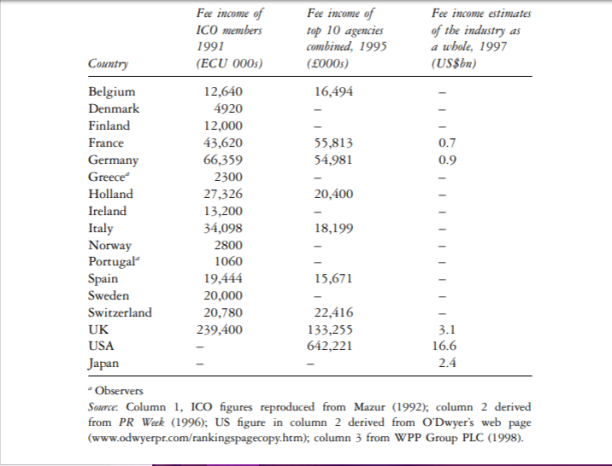


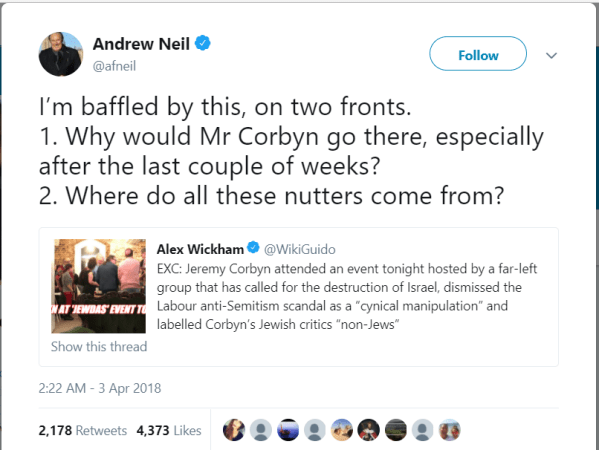








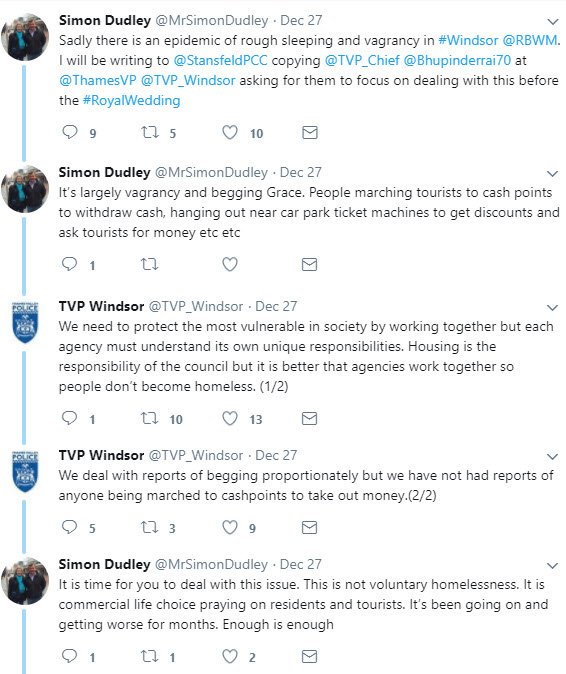


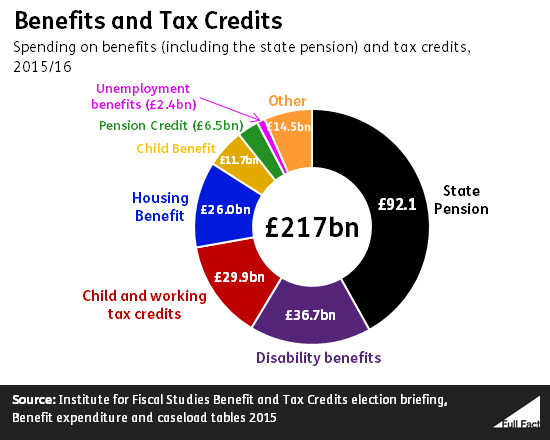




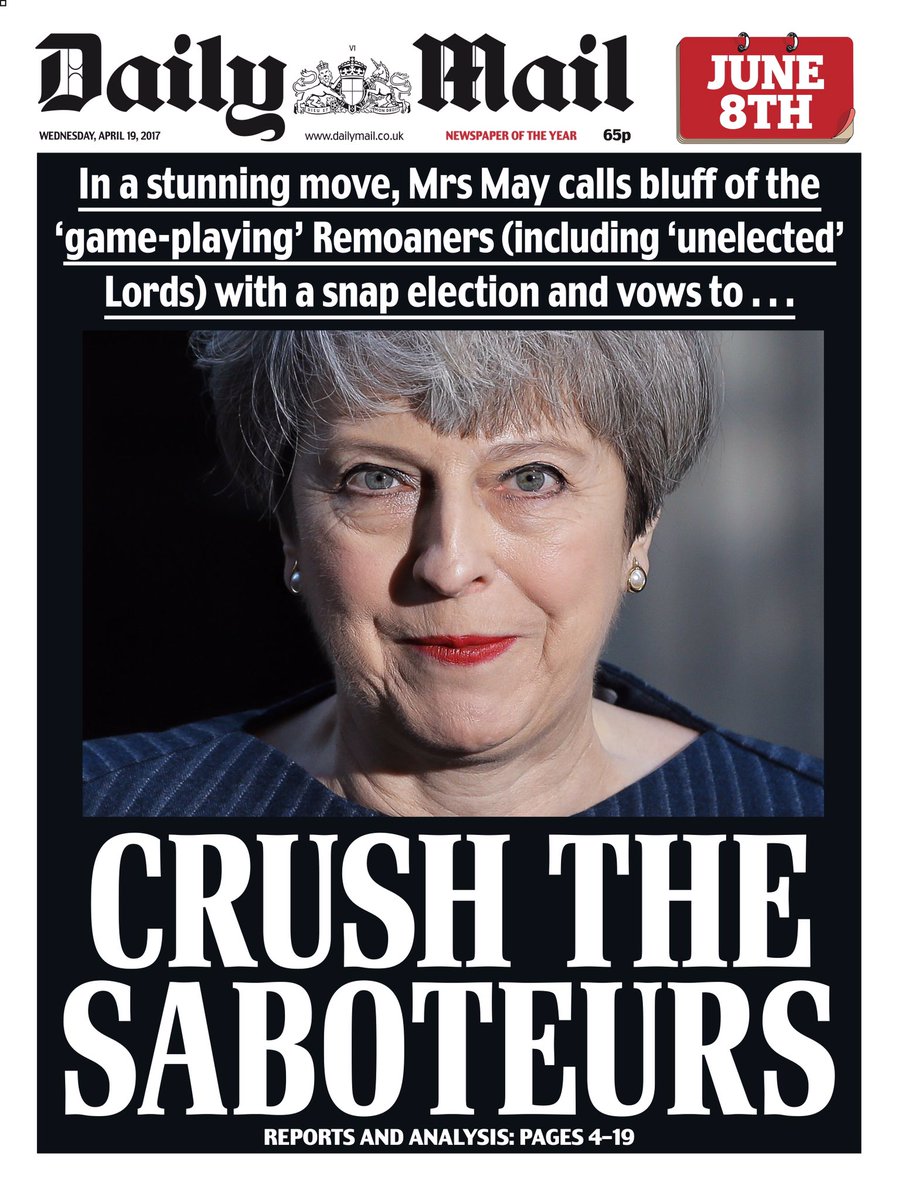




 Politics and Insights