
Tag: Ben Phillips

Numbers of cases of malnutrition continue to soar in the UK

Minnes

The Office of National Statistics (ONS) have released figures that show 391 people died from malnutrition in 2015. There were 746 hospital admissions for malnutrition in just 12 months. The statistics also show two people in the UK are admitted to hospital with the condition every day in what campaigners have called a “national scandal.” 

Health minister Nicola Blackwood confirmed the numbers in a written answer in Parliament.

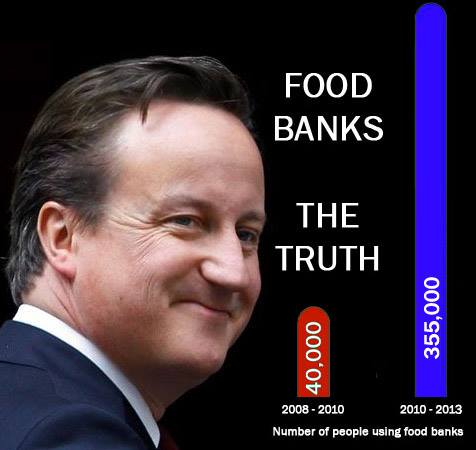
More than six people a month perish from starvation in England, which is one of the richest nations in the world.  The UK’s biggest food bank network, the Trussell Trust, provided more than a million three-day food packages over the past year, including 415,866 to children.What is worrying is that people may only have this support for a maximum of three days and have to be referred by a professional, such as a doctor or social worker.

Chairman Chris Mould said: It’s a scandal that people living in the sixth largest economy in the world are going hungry, which is why we’re working to engage the public, other charities and politicians from all parties to find solutions to the underlying causes of food poverty.

Our food banks support many thousands of people in various states of hunger.

Some people have been missing meals for days at a time; others have been unable to afford certain food groups or have sacrificed quality for long periods of time to keep costs down.

This, no doubt, has a negative effect on their health – and for people at the extreme end of the scale it will lead to malnutrition.

Every day we meet families across the UK who are struggling to put enough nutritious food on the table and hear from parents who go without food so their children have enough to eat.”

A Department for Work and Pensions spokeswoman said: “We now have record numbers of people in work and wages rising faster than inflation. 

But we need to go further, which is why we’ve committed to increase the National Living Wage, we’re taking the lowest paid out of income tax and our welfare reforms are ensuring it always pays to work.”

However it seems that “making work pay” is a euphemism for punishing those out of work or those in part-time or low-paid work with absolute poverty. In December 2015, I wrote about research from the Child Poverty Action Group, Oxfam, Church of England and the Trussell Trust which found that failures in the social safety net itself are most often the trigger for food bank referrals.

The report said that while money is tight for many reasons, including bereavement, relationship breakdown, illness or job loss, issues such as sanctions, delays in benefits decisions or payments or being declared “fit for work” led people to turn to food banks for support.

  • Around a third of foodbank users in the sample were waiting for a decision on their benefits – and struggling in the meantime
  • Between 20 and 30% more had their household benefits reduced or stopped because of a sanction

Other factors included loss of income due to the “bedroom tax” or the benefit cap. For between half and two-thirds of the people included in this research, the immediate income crisis was linked to the operation of the benefits system (with problems including waiting for benefit payments, sanctions, or reduction in disability benefits) or tax credit payments.

Amongst this group of people are many that are actually in low-paid work, claiming top-up benefits. The remaining number of people needing support from food banks to meet their most basic need are certainly in work, making a complete mockery of the Department for Work and Pension’s statement.

The research used 40 in-depth interviews with food bank users, data from over 900 users at three food banks around the country, and detailed analysis of nearly 200 clients accessing one food bank in Tower Hamlets. Another academic study said the government’s welfare reformsincluding benefit sanctions and the bedroom tax, are a central factor in the explosion in the numbers of impoverished people turning to charity food banks

The study, part of a three-year investigation into emergency food provision, was carried out by Hannah Lambie-Mumford, a Sheffield University researcher who co-authored a recently published government report into the extent of food aid in the UK.

That report concluded there was insufficient evidence to demonstrate a clear causal link between welfare reform and food bank demand in the UK. This is because the government has refused to make that information available by ensuring the reason for food bank referrals are no longer recorded. But Lambie-Mumford’s study says the rise in demand for charity food is a clear signal “of the inadequacy of both social security provision and the processes by which it is delivered”.

In 2015, more than 2,000 cases of patients with malnutrition were recorded by 43 hospital trusts in a single year.

There were 193 “episodes” of malnutrition in 12 months at Salford Royal NHS Foundation Trust alone, according to new figures.

Freedom of Information (FOI) figures show a rise of 259 between the 43 trusts compared with three years previously.

With the more recent introduction of more stringent in-work conditionality, including the extension of sanctions to those in part-time and low-paid work, the Conservative’s coercive psychopolitical approach to poverty will invariably make it even more difficult for many more to meet their basic survival needs.

At the same time, in 2014,  Community Links published a study called Just about Surviving which revealed that far from encouraging people on benefits to move into work, the draconian welfare cuts have pushed many further from employment. The report said that the state has reduced welfare support to the point where it barely enables people to survive.

Overwhelmingly, the reforms have made people “feel insecure and vulnerable to even small fluctuations in their small income or circumstance; continuing to erode their resilience.”

Furthermore, by forcing people into stressful situations where day-to-day survival becomes a pressing priority, the “reforms” (that are, in reality, simply cuts to people’s benefits), which were hailed by the Conservatives as a system of help and incentives – to “nudge” people into changing their behaviour so that they try harder to find work – are in fact eroding people’s motivation. In other words, the reforms have deincentivised and hindered people looking for employment, achieving the very opposite to the intent claimed by the Tories, to justify their draconian policies.

The report states that people are caught between trying to escape welfare reform through poor employment alternatives and feeling trapped in poverty. They move in and out of low paid work and are extremely susceptible to financial shocks and unprepared for the future.

In 2014, Oxfam’s director of campaigns and policy, Ben Phillips, said: “Britain is becoming a deeply divided nation, with a wealthy elite who are seeing their incomes spiral up, while millions of families are struggling to make ends meet.”

“It’s deeply worrying that these extreme levels of wealth inequality exist in Britain today, where just a handful of people have more money than millions struggling to survive on the breadline.”

Diseases associated with malnutrition, which were very common in the Victorian era in the UK, became rare with the advent of our welfare state and universal healthcare, but they are now making a reappearance because of the rise of numbers of people living in absolute poverty.

NHS statistics indicate that the number of cases of gout and scarlet fever have almost doubled within five years, with a rise in other illnesses such as scurvy, cholera, whooping cough and general malnutrition. People are more susceptible to infectious illness if they are under-nourished.

In 2013/14, more than 86,000 hospital admissions involved patients who were diagnosed with gout – an increase of 78 per cent in five years, and of 16 per cent on the year before. Causes of gout include a lack of vitamin C in the diet of people who are susceptible.

The figures from the Health and Social Care Information Centre (HSCIC) show a 71 per cent increase in hospital admissions among patients suffering from malnutrition – from 3,900 admissions in 2009-10 to 6,690 admissions in 2013-14.

Cases of scarlet fever admitted to hospital doubled, from 403 to 845, while the number of hospital patients found to be suffering from scurvy also rose, with 72 cases in 2009/10 rising to 94 cases last year.

The figures also show a steep rise in cases diagnosed with cholera, a water-borne disease which was extremely prevalent in the 19th century, causing nearly 40,000 deaths.

The new in-work conditionality regime may eventually apply to around one million more people.

The quantity of food being bought in food stores is also decreasing. It doesn’t take a genius to work out that repressed, stagnant wages and RISING living costs will result in reduced sale volumes. Survation’s research in March 2014 indicates that only four out of every ten of UK workers believe that the country’s economy is recovering.

But we know that the bulk of the Tory austerity cuts were aimed at those least able to afford any cut to their income.

We really must challenge the Conservative’s use of words such as “encourage” and “support” and generally deceptive language use in the context of what are, after all, extremely punitive, coercive  policies. The government intends to continue formulating policies which will punish sick and disabled people, unemployed people, the poorest paid, and part-time workers.

Meanwhile, the collective bargaining traditionally afforded us by trade unions has been systematically undermined by successive Conservative governments, showing clearly how the social risks of the labour market are being personalised and redefined as being solely the economic responsibility of individuals rather than the government and profit-driven big business employers.
 

1390648_548165358586330_1740107407_n

Related

Welfare sanctions cannot possibly incentivise people to work

The Coalition are creating poverty via their policies

Welfare sanctions make vulnerable reliant on food banks, says YMCA

Study finds Need For Food Banks IS Caused By Welfare Cuts

It’s absolute poverty, not “market competition” that has led to a drop in food sales.

Welfare reforms, food banks, malnutrition and the return of Victorian diseases are not coincidental, Mr Cameron

The politics of punishment and blame: in-work conditionality


I don’t make any money from my work. But you can contribute by making a donation and help me continue to research and write informative, insightful and independent articles, and to provide support to others. The smallest amount is much appreciated – thank you.

DonatenowButton cards

Welfare reforms, food banks, malnutrition and the return of Victorian diseases are not coincidental, Mr Cameron

1390648_548165358586330_1740107407_n
The coalition will leave more debt than all Labour governments since 1900. The current government is now responsible for £517 billion of the trillion-plus-pound UK public debt, compared to £472 billion accrued during the 33 years Labour led the country since the turn of the twentieth century.

And the figures look even worse when you adjust for inflation. When you do that, the Coalition’s share jumps to nearly half of the total debt.

But the Coalition don’t meet any public needs, they simply serve the wants of a powerful, wealthy elite. Labour invested in public services, the Tories have bled them dry. So, what have they done with the money? Because the public have seen only austerity cuts. And the most vulnerable citizens bear the brunt of the cuts.

Oxfam’s director of campaigns and policy, Ben Phillips, said: “Britain is becoming a deeply divided nation, with a wealthy elite who are seeing their incomes spiral up, while millions of families are struggling to make ends meet.”

“It’s deeply worrying that these extreme levels of wealth inequality exist in Britain today, where just a handful of people have more money than millions struggling to survive on the breadline.”

Diseases associated with malnutrition, which were very common in the Victorian era in the UK, became rare with the advent of our welfare state and universal healthcare, but they are now making a reappearance because of the rise of numbers of people living in absolute poverty.

NHS statistics indicate that the number of cases of gout and scarlet fever have almost doubled within five years, with a rise in other illnesses such as scurvy, cholera, whooping cough and general malnutrition. People are more susceptible to infectious illness if they are under-nourished.

In 2013/14, more than 86,000 hospital admissions involved patients who were diagnosed with gout – an increase of 78 per cent in five years, and of 16 per cent on the year before. Causes of gout include a lack of vitamin C in the diet of people who are susceptible.

The figures from the Health and Social Care Information Centre (HSCIC) show a 71 per cent increase in hospital admissions among patients suffering from malnutrition – from 3,900 admissions in 2009-10 to 6,690 admissions in 2013-14.

Cases of scarlet fever admitted to hospital doubled, from 403 to 845, while the number of hospital patients found to be suffering from scurvy also rose, with 72 cases in 2009/10 rising to 94 cases last year.

The figures also show a steep rise in cases diagnosed with cholera, a water-borne disease which was extremely prevalent in the 19th century, causing nearly 40,000 deaths.

While total numbers remain low, the 22 cases last year compare with just 4 in 2009/10, the statistics show.

Dr Theresa Lamagni, Public Health England’s head of streptococcal infection surveillance, said the total number of notifications of scarlet fever this year has already reached 12,580 cases – the highest since 1970.

Cases of measles in hospital rose, from 160 to 205 cases, with a small rise in admissions for whooping cough, from 285 to 289 cases over the five years examined.

The figures on malnutrition follow a series of scandals of care of the elderly, with doctors, remarkably, forced to prescribe patients with drinking water or put them on drips to make sure they do not become severely dehydrated.

Charities have warned that too many patients are being found to be malnourished after being admitted to hospitals from care homes, as well as from their own homes.

However, Labour have said the figures a national scandal.

Luciana Berger MP, Labour’s Shadow Public Health Minister, said: “This shouldn’t be happening in 21st century Britain and the Government’s response is hopelessly complacent.

“People are living under greater pressure and struggling with the cost of living”.

“Hundreds of thousands are forced to turn to food banks and sadly it’s unsurprising people are eating less, and eating less healthily too”.

“David Cameron needs to listen to what the experts are saying and tackle the cost of living crisis that is driving people into food poverty.”

Cases of malnutrition have been steadily increasing since the 2010 general election.

In 2009/10 there were 3,899 hospital admissions for this, in 2010/11 there were 4,660, in 2011/12 there were 5,396 then in 2012/13 this had risen again to 5,594.

People unable to feed themselves adequately needing hospital admission saw a significant rise to 6,686,  where malnutrition was the primary or secondary diagnosis during 2013/14.This is a rise of 71 per cent from 3,899 in the year up to April 2010.

Chris Mould, chief executive of the Trussell Trust which runs a nationwide network of food banks, said: “This shows increases in diseases related to poverty and that’s alarming.

“Our food banks see tens of thousands of people who have been going hungry, missing meals and cutting back on the quality of the food they buy.

“We know quite a large proportion of the population are struggling to get nutritious food on the table. And at the extreme end of that you get people who are malnourished”.

“We don’t believe anyone should have to go hungry in the UK”.

“The scale of the increases we’re seeing must be further investigated to find out why this is happening”.

Scurvy is a disease associated with pirates stuck at sea for long periods – has increased by 31 per cent in England since 2010. This is caused by a lack of vitamin C and is usually due to an inadequate diet without enough fresh fruit and vegetables.

Figures from January this year from the NHS indicate that there were 833 hospital admissions for children suffering from Rickets – a condition which is caused by a lack of Vitamin D, from 2012-13. Ten years ago, the figure was just 190.

The disease, which causes softening of the bones and permanent deformities, was common in 19th century Britain but was almost eradicated by improvements in nutrition. The body produces vitamin D when it is exposed to the sun, but it’s clear that adequate diet plays an important role, too, since the decline of Rickets happened at a time when we saw an improvement in the diets of the nation as a whole.

It is thought that malnutrition is the main cause, children are most at risk if their diet doesn’t include sufficient levels of vitamin D.

Low incomes, unemployment and benefit delays have combined to trigger increased demand for food banks among the UK’s poorest families, according to a report commissioned by the government and released earlier this year,

The report directly contradicts the claim from a government minister that the rise in the use of food banks is linked to the fact that there are now more of them. It says people turn to charity food as a last resort following a crisis such as the loss of a job, or problems accessing social security benefits, or through benefit sanctions.

The review emerged as the government comes under pressure from church leaders and charities to address increasing prevalence of food poverty caused by welfare cuts. The End Hunger Fast campaign called for a national day of fasting on 4 April to highlight the issue.

The report was written by  food policy experts from the University of Warwick, and it was passed to ministers in June 2013 but had remained undisclosed until February 2014, creating reasonable speculation that the government suppressed its findings.

Examining the effect of welfare changes on food bank use was not a specific part of its remit, and the report is understood to have undergone a number of revisions since early summer, ordered by the Department for Food and Agriculture and the Department for Work and Pensions (DWP).

The researchers found that a combination of rising food prices, ever-shrinking incomes, low pay, increasing personal debt, and benefit payment problems meant an increasing number of families could not afford to buy sufficient food.

In a letter to the British Medical Journal, a group of doctors and senior academics from the Medical Research Council and two leading universities said that the effect of Government policies on vulnerable people’s ability to afford food needed to be “urgently” monitored.

The group of academics and professionals said that the surge in the number of people requiring emergency food aid, a decrease in the amount of calories consumed by British families, and a doubling of the number of malnutrition cases seen at English hospitals represent “all the signs of a public health emergency that could go unrecognised until it is too late to take preventative action”.

The health specialists also said:“Access to an adequate food supply is the most basic of human needs and rights”.

The authors of the letter, who include Dr David Taylor-Robinson and Professor Margaret Whitehead of Liverpool University’s Department of Public Health, say that they have serious concerns that malnutrition can have a long-lasting impact on health, particularly among children.

Tory ministers have repeatedly insisted that there is no “robust link” between the welfare reforms and rising food bank use, whilst welfare minister Lord Freud claimed the rise in food bank use was because there were more food banks and because the food was free.

It ought to be noted, not least by the government, that people may only access food banks when they are referred by a professional agency, such as social services, the DWP or a Doctor. In particular, vouchers for emergency food parcels tend to be given by benefits officials.

In all but exceptional cases, Trussell Trust food banks will only issue a food parcel to someone with a voucher from an accredited agency. Claimants are limited to emergency aid on three occasions only. This indicates that need, rather than availability, is the key reason for the increased use of food banks since 2010.

Together with the pressure created by rising prices and falling wages, there has been a marked increase in demand for emergency food aid since the welfare reforms came into effect. And this is affecting both people in and out of work.

More than half of people who have visited a food bank since April were referred because of social security problems.

The Government claimed the rapid increase in malnutrition cases “could be partly due to better diagnosis”.

I don’t imagine that it’s likely that Doctors have suddenly become better at diagnosis since 2010.

I do, however, think there is much scope for improvement in the capacity of Tory ministers for understanding correlation, basic cause and effect and simple connections.

However, Tory skills in mendacity, creating diversions and ad hominem are second to none.


See also:

Poverty

 An email to authoritarian Tory MPs Charlie Elphicke, Priti Patel and Conor Burns

Quantitative Data on Poverty from the Joseph Rowntree Foundation.

430835_148211001996623_1337599952_n (1)

Pictures courtesy of Robert Livingstone