Tag: Brexit

The Resolution Foundation’s review of the Conservative’s “Living Wage”

longer_term_living_wage


The Conservatives’ summer budget saw a new national minimum wage set. However, it has been  re-branded as a “national living wage” as the Conservatives claim that it should be what people need to live on. Employers will no longer be allowed to pay the £6.70-an-hour rate, but will have to pay the new “national living wage” of £7.20 an hour to people over the age of 25. Call me a cynic, but the psychosemantic re-branding of a minimum wage increase of less than a pound an hour is a diversion because the government intend to stop subsidising low wages through tax credits. 

Increasing the minimum wage is simply not adequate to reduce poverty. Forty per cent of individuals earning between the minimum wage and the actual amount that would be the Living Wage campaigners want, are in households in the top half of the income distribution. They aren’t poor. Tax credits on the other hand are much more highly targeted at those in need of support. Whilst the public understand what the minimum wage was about, renaming this new policy the “National Living Wage” will inevitably create confusion, as many will incorrectly assume that the government are targeting the same rate as that advocated by the Living Wage campaign – a figure based on estimates in line with the cost of living. They aren’t.

The Living Wage Foundation say:

  • The current UK Living Wage ought to be £8.25 an hour
  • The current London Living Wage ought to be £9.40 an hour

However, the Resolution Foundation have issued a press release that says the Prime Minister should allow the in-built flexibility of the “national living wage” to “take its course.”

Conor D’Arcy, Policy Analyst at the Resolution Foundation, said: “Some businesses are unhappy about a higher minimum wage, particularly amid the post-referendum uncertainty. But backsliding on the government commitment is unnecessary given the in-built flexibility of the policy to adjust to changing economic circumstances. It would also be costly for millions of low paid workers, so the Prime Minister should stick to her guns.”

Backsliding on the so-called “National Living Wage” (NLW) could leave some full-time workers up to £1,000 a year worse off by 2020 – with women, the young and older workers most likely to lose out – according to the new analysis published yesterday (Wednesday) by the Resolution Foundation.

Earlier this year, the introduction of the NLW delivered an average 7.5 per cent pay rise to around 4.5 million workers aged 25 and over. Low-paid workers are set for another four years of above average pay rises as it approaches its target ‘bite’ of being worth 60 per cent of typical hourly pay by 2020.

More recently, May has put tackling squeezed living standards at the centre of her new government. However, some business organisations have called on the government to water down its plans following the EU referendum. In a letter to the Business Secretary Greg Clark, 16 trade associations called on government to “exercise caution” in light of “the economic uncertainties the country faces”.

Such calls are understandable given the challenge of a higher wage floor for some businesses. However the Foundation says that the in-built flexibility of the NLW – which automatically adjusts to economic shifts by being pegged to typical hourly pay, rather than the £9 cash figure that many people associate the policy with – means that there is no need to water down the policy.

The Foundation’s analysis, based on the latest summary of independent economic forecasts published by the Treasury, shows that the NLW is currently on track to rise to around £8.70 in 2020. That’s lower than the £9 forecast in the March 2016 Budget, due to expectations of weaker wage growth. The Foundation notes that the projected figure for 2020 is likely to rise and fall in coming years as wage forecasts are updated and the actual impact of implementing Brexit becomes clear.

The Foundation says the Prime Minister should therefore stick to her guns and press on with implementing a policy that will deliver a pay rise for six million workers – and support her vision for an economy that works for everyone, not just the privileged few.‎

Torsten Bell, Director of the Resolution Foundation, said:

“Theresa May is right to stick to her guns on the National Living Wage. Britain has a serious low pay problem and now of all times is not the moment to put off dealing with it.”

The Foundation adds that sticking to the current policy is very different to pursuing a cash target of £9 or higher in the face of weaker overall wage growth. That approach, which some advocate‎, could jeopardise the success of the NLW.

Ahead of a crucial meeting of the Low Pay Commission in October to decide their recommendation for next April’s NLW rate, the analysis shows that should the government scale back its ambition over the next four years – for example by raising the NLW at a similar pace to the recent minimum wage increases applied after the 2008 financial crisis – its value would fall by around 55p per hour in 2020. This would lower the annual pay of a full-time worker on the NLW by around £1,000, relative to current plans. Should the current ‘bite’ of the NLW be maintained, rather than increased to 60 per cent by 2020, the annual pay would be reduced by £1,500.

Around one in five women and one in five workers aged 26-30 would lose out from any backsliding on the National Living Wage, as would over a quarter of workers aged 66 and over.

The Foundation says that the main focus for the government should now be on implementation. To do this, it is calling for the government’s upcoming industrial strategy and productivity plan to include a focus on the often unheralded low-paying sectors of the economy, and not just on areas like digital and high-value manufacturing. This will help employers handle the higher labour costs brought about by the NLW.

The analysis is part of the Foundation’s upcoming report Low Pay Britain 2016, which will be published later this month.

Conor D’Arcy, Policy Analyst at the Resolution Foundation, said:

“The National Living Wage is a hugely popular policy that is set to deliver a pay rise to six million of Britain’s lowest paid workers and play a pivotal role in the Prime Minister’s vision for an economy that works for everyone, not just the privileged few.

“Understandably some businesses are unhappy about a higher minimum wage, particularly amid the post-referendum uncertainty. But backsliding on the government commitment is unnecessary given the in-built flexibility of the policy to adjust to changing economic circumstances. It would also be costly for millions of low paid workers, so the Prime Minister should stick to her guns.

“The government’s attention should instead turn to the huge task of implementation. This should ensuring that its upcoming industrial strategy includes the less glamorous but hugely important sectors like retail and hospitality, which are at the coalface of Britain’s huge low pay challenge.”

Review recommendations

  • While the National Living Wage is a welcome boost to low earners, the Living Wage with its genuine link to an acceptable cost of living, remains as vital as ever.
  • But as we have made clear, improvements are possible in both methods and seeking alignment will inevitably lead to change. We believe the recommendations we have outlined in this review represent a genuine improvement over the current methods. The aligned method should be more representative, more robust and, most importantly, driven to a greater extent by changes in the cost of living.
  • Inevitably, calculating a Living Wage requires judgement calls. Policy changes like the introduction of Universal Credit would always have required judgements on how the new system is phased into the rate. Having a body like the Living Wage Commission to make such decisions when required in future can only be an asset to the Living Wage campaign as it moves forward.
  • The natural question which follows these recommendations is what impact is likely on the rates themselves. However, the next steps are for the Living Wage Commission to consider our recommendations. The options they choose will determine the extent to which the rates vary from their current levels.
  • Broadly speaking however, the aligned method we have recommended is likely to have an upward effect on the London Living Wage. We consider this to be an unavoidable consequence of a Living Wage rooted in an up-to-date basket of goods with a more diverse mix of family types. There is a clear discrepancy in the target income between London and the rest of the UK, and as highlighted by recent analysis on the size of London salary weightings[1] the differential between rates should be larger than at present. The exact size of the increase will depend on the Living Wage Commission and Mayor’s response to our review. They also have a role in setting out a how to implement and transition to the new rates in London and the rest of the UK.
  • The Living Wage Commission is expected to respond to our review in September 2016. With a strong, aligned methodology and an enhanced governance structure, we see no reason why the Living Wage cannot continue to raise the wages of workers across the UK, delivering more families an acceptable standard of living.

Notes 

  • The ‘bite’ of the National Living Wage – its value relative to typical hourly pay – is set to increase by 4.3 percentage points over the next four years. The ‘bite’ of the National Minimum Wage (NMW) increased 1.7 percentage points in the four years following the financial crisis. Should the NLW instead follow this path, rather than the one currently set out, its value in 2020 would fall to £8.17 an hour. That’s 55p an hour less than the latest economic forecasts imply, equivalent to £1,075 to a full-time worker on the NLW.
  • The Resolution Foundation forecasts that by 2020 around 12 per cent of workers will be earning the National Living Wage, including 19 per cent of women, 19 per cent of 26-30 year olds and 26 per cent of workers aged 66+. 

I don’t make any money from my work. But you can help me keep going by making a donation so I can continue to research, to write free, informative, insightful and independent articles, and to provide support to others. The smallest amount is much appreciated – thank you.

DonatenowButton cards

Disabled people’s human rights in further jeopardy because of Brexit

equality+act+image

The UK government has tended to regard human rights as optional; as being rather more like ‘guidelines’ than laws, and often, as a mere inconvenience and barrier to the fulfillment of their ideological commitments.

Opportunities for disabled people in the workplace are likely to come under further threat unless government prioritises the recreation of EU safeguards into British statute. That is according to diversity consultancy, The Clear Company, which contributes to the government’s Disability Confident Campaign.

Former Paralympian Baroness Grey-Thompson has also warned that leaving the European Union would prevent British people with disabilities benefiting from plans to boost accessibility.

She added that Brexit would also risk a recession that would leave less money to be spent on support services. She said:

“Our membership of the European Union has had real, positive benefits for the millions of UK residents with limiting long-term illnesses, impairments or disabilities.

“It has helped to counter workplace discrimination, obliged transport providers to make their services more accessible and secured access to some UK disability benefits for Britons living in other EU countries.

“Not only would leaving Europe jeopardise these, it would close us off from enjoying the rewards of upcoming legislation that will further increase accessibility and risk a recession that would leave less money to be spent on much-needed support services.”

Fiona McGhie, Public Law expert at Irwin Mitchell, said:

“What Brexit would affect is the ability to potentially rely on the European Charter of Fundamental Rights (CFR) which in particular includes many wider social and economic rights, such as the rights to fair and just working conditions, to healthcare and to have personal data protected. If disabled people wished to try and strike down UK legislation as incompatible with rights under CFR under EU law – that avenue may not be available after the vote to leave.”

In the wake of the referendum, the following is an official press release from ResponseSource, which is a journalist enquiry service that provides a press release wire:

The EU promotes the active inclusion and full participation of disabled people in society, in line with the EU human rights approach to disability issues, through priorities including accessibility, participation, social protection and external action. It works around a firm ethos that disability is a rights issue rather than a matter for discretion.

From an employment perspective, the objective of the European Commission’s European Disability Strategy 2010-2020 is to significantly raise the number of people with disabilities working in the open labour market. They represent one-sixth of the EU’s overall working-age population, but their employment rate is comparatively low at around 50%.

The EU promotes the active inclusion and full participation of disabled people in society, in line with the EU human rights approach to disability issues, through priorities including accessibility, participation, social protection and external action. It works around a firm ethos that disability is a rights issue rather than a matter for discretion.

Commenting on this morning’s revelation, Kate Headley, Development Director at The Clear Company, said:

“As long as the UK was part of the EU, disabled people had the benefit of EU frameworks and directives to act as a safety-net against British government and any power it may exert. Now, the future of policy which most affects disabled people is in the hands of Whitehall alone.

“There is no doubt that EU-derived laws, and EU-led initiatives, have had a largely positive impact on the disabled community. This may explain why Miro Griffiths, a former government adviser and project officer for the European Network on Independent Living, recently went on record to say he believed that Britain’s exit from the EU “would have dire consequences for disabled people”. Our priority now is to help ensure that the rights disabled people currently hold are protected post-Brexit.

“Aside from the issues of how the UK’s decision to exit will impact the NHS and wider care services, the European Health Insurance Card, and EU Air Passengers Regulation – all of which disproportionately affect those with disabilities – we must also look at the effect on disabled people in the workplace.”

“The EU’s record on assisting disabled workers is strong. Its Employment Equality Directive 2000, for example, led to the removal of the original exemption in the Disability Discrimination Act (DDA) for employers with fewer than 20 staff in the UK, so that in 2004 it became unlawful for any UK employer to discriminate against disabled people. The employment directive also led to the DDA being changed to make direct discrimination by employers against disabled people unlawful.”

“The TUC has identified employment rights that could well be under threat from a government no longer required to comply with EU legislation. Many of these promote health and well-being at work and home, such as the Working Time Directive, which protects from stress and ill-health that arise from working excessive hours including health service workers.”

“I would urge the government, post Article 50, to recreate the safeguards that disabled people have benefited from under EU membership into British statute. We will gladly continue to support the government in the development of strategy and stand by our commitment to support employers and employees alike. Amid the avalanche of new legislation which will almost certainly flood Whitehall in the coming months, laws that safeguard and support disabled workers must be prioritised as EU law recedes.”

Related

Unfortunately, the UK government has systematically violated the human rights of disabled people. It’s highly unlikely, given the current context, that the Conservatives will recreate the EU safeguards and incorporate them in protective legislation.

The new Work and Health Programme: government plan social experiments to “nudge” sick and disabled people into work

Prime minister dismisses UN inquiry into government’s discriminatory treatment of disabled people

The biggest barrier that disabled people face is a prejudiced government

The Government’s brutal cuts to disability support isn’t ‘increasing spending’, Chancellor, but handing out tax cuts to the rich is

If even the DWP isn’t Disability Confident, how will a million disabled people get jobs? – Bernadette Meaden

Lots of little Englanders wont make Britain great

stream_img

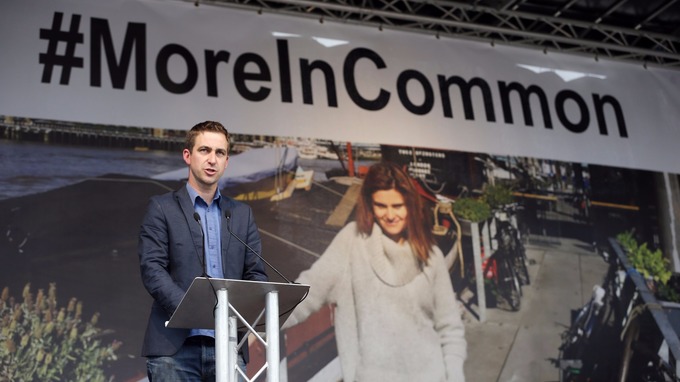
 Brendan Cox gave a moving speech yesterday in honour of his wife as worldwide tributes were held on what would have been the MP’s 42nd birthday.

Some people have been angered by my previous article about the murder of MP Jo Cox, and insist that Thomas Mair committed the murder because he was “mentally ill” and unstable. That’s a cop out, it’s taking the comfortable and easy option as far as offering explanations go. Many people are mentally ill, but they do not plan cold-blooded murders. My article explored the political, social, economic and cultural context of prejudice more generally, and the appalling normalisation of a corrosive, far Right rhetoric. It was hardly controversial.

England as a nation has often experienced confusion, seemingly lost and adrift, uncertain of its role since the end of empire, and of course, the rise of devolution. Our sense of collective identity has been portrayed as fragile, especially by the Right wing media. But “national identity” is always a facade. More recently, we witnessed the unprecedented rise of nationalism in Wales and Scotland, where patriotic sentiment runs high, whilst in England, the insular, self-regarding enclave of Government has a strong whiff of a deeply disdainful supremicist Regency aristocracy. There are no local loyalties to be seen there, well, none that extend further than just 1% of the Country. Neither post-imperial cringing nor nationalism will alter that. 

Brexit is an English rather than a British symptom of a collective sense of disempowerment. But those responsible for the erosion of democracy in the UK are in London, not Brussels. It was the Conservatives that provided opportunity for UKIP and the far Right to become established as a populist part of the mainstream political conversation, the Tory rhetoric, founded on social divisions and established hierarchy, has created a space for far Right’s subversive “insurgency”.

And Brexit may well hasten the further breakup of Britain. The constitutional fallout will also extend to Northern Ireland. A Leave vote would turn the open border between Northern Ireland and the Republic into a guarded frontier with Europe, since Ireland would remain a member in the union. This would undermine a major provision of the 1998 Good Friday Agreement, the peace deal that ended three decades of the Troubles.

Prejudice in the UK is manifested not only in racism, but in dominant narratives and policies directed against sick and disabled people, unemployed people, people on low pay and poor people more generally. There is also a growing culture of sexism, increasingly evident in the impact of Conservative policies. We have never been more fragmented as a society, nor has any other UK government in our lifetime been responsible for such extensive, divisive social outgrouping, systematic exclusion and massive inequality. And it’s intentional. The thing about prejudice is that it multitasks, grows and culminates, invariably, in violence.

Thomas Mair, it emerges, is a neo-Nazi who managed to remain stable and calculating enough to plot, gain weapons and to savagely kill Jo. Furthermore, she was targeted because of her strong beliefs, clear principles and her outstanding work. That’s not a random or impulsive act, it was intentional and deliberate. He knew what he was doing. I’ve yet to come across a mental illness that directs a person to murder someone they consider a political opponent in cold blood. Furthermore, to use the term “mental illness” so casually and to present it as the single reason for what he did risks adding another layer of stigma and social prejudice, potentially, for those with mental illness. Yet another prejudice.

For those of you who don’t think that the far Right, including groups like Britain First, encourage hatred and violence, well I have had some direct experience of it. Last year shortly before the General Election, a malicious meme about me was designed and circulated by Tommy Robinson, formerly leader of the English Defence League. It was eagerly shared on every Right wing page on every social media platform, by every single Right wing group, from UKIP to Britain First. There were even a few Conservatives that posted it. Robinson claimed that I had dismissed the Rotherham child abuse as a “far Right myth”, which of course is absolutely untrue. I’d basically told him to stop mithering me on Twitter, to go peddle his Right wing myths elsewhere.  He had been aggressive and rude.  I never mentioned Rotherham or child abuse to him during any of the exchange.

He used my account details and photo to direct people to “tell her what you think of her.” I had death threats, rape threats and threats of murder from combat 18. I had to involve the police. In my teens, under the Thatcher government, I was part of the Anti-Nazi League and Rock Against Racism movements. On peaceful demonstrations, the National Front  turned up and I had my head kicked in and stitched up more than once by size 20 male boots, just because I was there. Are all of these people “mentally ill”, or is it truer to say that the far Right are motivated by fear, anger and hatred, intolerant of anyone who doesn’t agree with their misanthropy, or their petty, mean and grubby prejudices?

I think it’s the latter. My article cites psychosocial studies of the growth of prejudice and outlines the terrible consequences of that. I cited, as I often do,  Gordon Allport’s “The Growth of Prejudice,” for example. I asked for people in our society to pause, and take a good look at what is going down, because of the perpetuation of prejudice, and the politics of division, of social outgrouping, of a culture of us and politically constructed others.

In an interview following the brutal murder of MP Jo Cox, her bereaved husband, Brendan, has said that Jo was “very worried” about the political culture in the UK.

He said: “I think she was very worried the language was coarsening, that people were being driven to take more extreme positions, that people didn’t work with each other as individuals.

On issues it was all much too tribal and unthinking.”

He said that Jo was “particularly worried about the direction of politics, around creating division and playing on people’s worst fears rather than their best instincts.”

The Times reports that Jo was preparing a report on the dangers of far-right nationalism when she was murdered, which she had planned to publish on June 29.

Nationalist Jack Buckby, press officer of “Liberty” GB, ex-member of the BNP, launched a despicable political point scoring and smearing campaign against the Labour Party. He offered an endorsement of violence by suggesting it’s somehow justified, and issued something of a threat as a consequence of Labour’s continued commitment to diversity and equality. Buckby wants to see a candidate put forward from this far Right group (himself) in Jo Cox’s community, when all other parties have stated they will not contest the by-election out of respect for Jo. He said:

“The Labour Party has blood on its hands. And by shutting down debate and labeling working class people concerned about their communities as racists, they risk driving desperate, disenfranchised people to further horrendous acts like this.”

“Concerned about their communities” is a euphemism for hate, racism, violence and murder, then. Deeply divisive, despicably Machiavellian politics.

Even more despicable and utterly inappropriate is this post, which my friend and fellow writer, Steve Topple, screengrabbed:

libertyGBJoCox-


Brendan Cox said of his wife: 

“She was a politician and she had very strong political views and I believe she was killed because of those views. I think she died because of them, and she would want to stand up for those in death as much as she did in life. 

I don’t want people ascribing views to her that she didn’t have, but I certainly want to continue to fight for the legacy and for the politics and views that she espousedThey were what she was. She died for them, and we definitely want to make sure we continue to fight for them.” 

British and American imperialists employed the language of social Darwinism to promote and justify Anglo-Saxon expansion and domination of other peoples. Such different personalities as Machiavelli, Sir Francis Bacon, Ludwig Gumplowicz, Adolf Hitler, and Benito Mussolini, each reasoning on different grounds, nevertheless arrived at similar conclusions. Imperialism to them is part of the natural struggle for survival. Those endowed with “superior” qualities are “destined” to rule all others. Imperialism has been morally excused as the means of liberating peoples from tyrannical rule or of bringing them the benefits of a “superior” way of life. Imperialism is all about human aggressiveness and greed, the search for security, drive for power and prestige and particularly nationalist emotions, amongst other things.

Nationalism is anti-progressive. It’s a paradigm of competitive individualism that further undermines principles of cooperation, equality and social cohesion. It’s also a recognisable symptom of the rise of fascism. The UKIP brand of Parish pump politics nurtures fear, spite and vilifies people on the basis of one of our most wonderful assets: our human diversity.

Related

Support Hope Not Hate.

Donate to the Jo Cox memorial fund.


I don’t make any money from my work. But you can support Politics and Insights and contribute by making a donation which will help me continue to research and write informative, insightful and independent articles, and to provide support to others. The smallest amount is much appreciated, and helps to keep my articles free and accessible to all – thank you.

DonatenowButton
cards

Brexit, dirty campaigning, the TTIP and a case for Remain

images


“We cannot be content with the state of the EU as it stands. But that does not mean walking away, but staying to fight together for a better Europe.”  Jeremy Corbyn, Statement to The Guardian, 28 July 2015.

Despite his reservations, and a desire to see progressive reform within the European Union, Mr Corbyn strongly supports the Remain campaign. He has been very clear about his views, and he has presented powerful arguments to support his position. He says:

“I have seen first-hand jobs, investment, workers’ rights and environmental protection that being part of the EU helps secure for working people. That’s why, despite its faults, I believe it’s best we vote to stay and work with our friends to make the changes Europe needs.”

It was therefore something of a surprise to see the Leave campaign use a quote with such malicious intent from Mr Corbyn, that was so outdated and out of context, to deliberately mislead people into thinking that the Labour leader supports Brexit.

This post was sponsored on Facebook, and came up more than once in my feed: Stand with Jeremy Corbyn.  

The site is promoted by Matthew Elliot, the founder and former Chief Executive of the TaxPayers’ Alliance and Big Brother Watch. He also acted as Campaign Director for the successful NOtoAV campaign in the 2011 Alternative Vote referendum. He is the Founder and was the Chief Executive of Business for Britain, and is now the Chief Executive of the Vote Leave Campaign Committee, having founded and been the chief executive of the main Vote Leave.

Elliott also founded the Politics and Economics Research Trust (PERT) in 2004. Labour MP and former Shadow Minister for Europe, Emma Reynolds, raised significant questions about the affairs of the TPA and PERT, she wrote to the Charity Commission and said that “PERT may be in breach of charities legally binding commitments to preserve their independence, specifically regarding political activity and the delivery of charitable objectives.”

Of £532,000 PERT paid out in grants in 2014, £300,000 went to the TPA and £205,000 to Business for Britain, both of which are Eurosceptic. £10,000 went to Global Britain, which has campaigned for Brexit. Charitable trusts are not allowed to be used for political purposes under British charity law.

There were some pretty grubby tricks employed during November 2015, when the group established a fake company in order to gain entry to a speech being given by the Prime Minister at the Confederation of British Industry where they heckled him and held banners stating “CBI = voice of Brussels.” Dominic Cummings, campaign director of Leave, subsequently stated:

“You think it is nasty? You ain’t seen nothing yet. These guys have failed the country, they are going to be under the magnifying glass. Tough shit … It is going to be tough”.

The campaign group also stated their intention to target and disrupt meetings of pro-EU organisations and companies. In a letter to the Electoral Commission, Eric Pickles, the former Conservative cabinet minister, said he believed Vote Leave had disqualified itself from lead status in the referendum (which entitles the campaign to public funding) after it pledged to run a “nasty” campaign against opponents.

The European referendum, some have argued, is more important than any general election, because it will potentially change Britain’s relationship with Europe and the rest of the world. There’s a lot of grand and quaint imperialist talk from the Leave camp about power, sovereignty and Britain’s “place in the world.” But it’s a clever sales pitch, nonetheless, as it harnesses the public restiveness, which reflects a broader disquiet with social democracy in the UK. 

I have to agree with Michael Sandel’s comment, in his excellent interview in today’s New Stateman with Jason Crowley: “A big part of the debate has been about economics – jobs and trade and prosperity – but my hunch is that voters will decide less on economics than on culture and ­questions of identity and belonging.”

The Right have always been strongly inclined towards socioeconomic outgrouping, creating categories of others, using stigma and scapegoating techniques to formulate justification narratives for policy that is purposefully designed to impose gross social inequalities. This alienates already marginalised groups, fragments social identities, and of course, breaks social solidarity. It’s therefore no surprise that immigration and othering have been the focus of a substantial part of the Brexit campaign.

He goes on to say: “Social democracy is in desperate need of reinvigoration, because it has over the past several decades lost its moral and civic energy and purpose. It’s become a largely managerial and technocratic orientation to politics. It’s lost its ability to inspire working people, and its vision, its moral and civic vision, has faltered. So for two generations after the Second World War, social democracy did have an animating vision, which was to create and to deepen and to articulate welfare states, and to moderate and provide a counterbalance to the power of unfettered market capitalism.

“This was the raison d’être of social democracy, and it was connected to a larger purpose, which was to empower those who were not at the top of the class system, to empower working people and ordinary men and women, and also to nurture a sense of solidarity and an understanding of citizenship that enabled the entire society to say we are all in this together. But over the past, well, three or four decades, this sense of purpose has been lost, and I think it begins with the Ronald Reagan/Margaret Thatcher era.”   

Yes, the transatlantic neoliberal turn. The commentary throughout the article is coherent and compelling, and well worth the read.

Leaving the EU would mean the UK giving up its place and influence in Europe, turning back the clock and retreating from the established global power networks of the 21st century. It would also legitimize the Conservatives’ crusade against what remains of a political settlement based on an inclusive, multicultural democracy. Without a level of international scrutiny and legal safeguards, I believe that this Conservative governments’ already evident authoritarian inclinations would be held under rather less constraint. 

The Labour Party, except for a small handful of eurosceptics, is now firmly pro-Europe  – we are, after all, internationalists – despite the fact that leader Jeremy Corbyn has in the past questioned whether the EU structure delivers more for business than it does workers. The Scottish National Party, most of the Liberal Democrats, Green Party and Welsh nationalists Plaid Cmyru are firmly placed with the ‘In’ camp. 

Jeremy Corbyn has said that David Cameron must not have a carte blanche to negotiate away workers’ rights as part of his desired EU reform package, ahead of the in-out referendum. However, Corbyn knows for sure that workers’ rights will not be stronger if the UK ends up outside the EU. 

It was the New Labour Government who ended the Tories’ opt-out on EU social policy (the “social chapter” as it was then called) back in 1998. The Trades Union Congress (TUC) have also staunchly defended workers’ rights in the EU over the last two decades. Now Cameron is aiming to undermine such positive EU employment laws in the UK, as the Tories successfully did back in the 1990s with an across-the-board opt-out. This said, Cameron’s “re-negotiation” has been pretty quickly sidelined. 

A Labour government could easily opt back into any areas that the Tories did succeed in opting-out of, as long as the UK is still an EU member state. The real attack on workers’ rights would inevitably happen if the UK left the EU. Then it would be straightforward for the Tory government to repeal other directives protecting workers’ rights. And they would – obligations to implement EU laws would cease, and so leaving the EU would reduce rather than help workers’ rights. And joining the EU again in the future would be very difficult – it would require a new referendum and fresh negotiations with Brussels, at the very least.

One final point. Some on the Left have said that the Transatlantic Trade and Investment Partnership (TTIP) is a reason for them to vote to leave the EU.  I can understand this, because the TTIP will lead to a large-scale transfer of democratic power to multinationals. It is a blueprint for deregulation and privatisation. 

The Left Leave group argue that the deal promotes the privatisation of the NHS, and that leaving the EU would mean avoiding TTIP and hence save Britain’s free healthcare system. However, TTIP would still have a strong influence on the UK economy. Once outside the EU, the UK would be unable to stop the TTIP, or shape it. TTIP would create a transatlantic marketspace that would influence British firms and the UK economy by aligning regulation in the US and EU.  

Britain would need to stop trading with both the EU and the US to escape the TTIP’s regulations. The EU, like the US, would most likely remain an important trading partner for the UK in the event of a success for the Brexit campaign. Brexit is premised on extreme free trade agreements coupled with looser regulation to make us more “competitive.” 

The TTIP deal was supposed to be signed by now – but together, the Progressive Alliance of Socialists and Democrats (S&D) group and Europe’s people have seriously stalled things. Would it really be possible to stop such a move if we couldn’t link up with campaigners across Europe? If being in the EU has brought us TTIP, it has also brought us the means to stop it. Labour MEPs fought hard to secure support within the EU to get the toxic Investor State Dispute Settlement (ISDS) clause removed from the TTIP at the negotiating table last year. 

This was an excellent achievement by our own Labour MEPs within the broader S&D group. The ISDS contradicts principles of democratic accountability and would potentially allow one government to bind another for decades to come. Unlike the great majority of other treaties, investment treaties have very long minimum lifespans ranging up to 30 years. 

Much debate has arisen concerning the impact of controversial ISDS on the capacity of governments to implement reforms and legislative and policy programs related to public health, environmental protection, labour and human rights. 

In the UK, we already have a highly corporatised Government. We have witnessed scandalous price-rigging, and massive job losses, decreased standards in service delivery and a disempowerment of our Unions. This is because the Tories will always swing policy towards profiting private companies and not towards meeting public needs, as we know. 

In Britain, privatisation was primarily driven by Tory neoliberal ideological motives, to “roll back the frontiers of the State.” 

This Conservative government has done everything possible to push the most extreme version of TTIP, just as they’ve fought against pretty much every financial regulation, from bankers bonuses to a financial transaction tax. Cameron has his own programme of stripping away laws that direct big business towards reasonable behaviours and standards, no matter how important those laws are for safeguarding people and our environment.

 —

Related

Three excellent articles: –

EU debate: what are the real choices? – Red Pepper

The energy of the Brexiteers and Trump is born of the failure of elites Michael Sandel / Jason Cowley

#BREXIT ANTI-IMMIGRATION ARGUMENT CONTINUES WAR AGAINST POOR – Rupert Dreyfus/Consented


I don’t make any money from my work. But you can support Politics and Insights and contribute by making a donation which will help me continue to research and write informative, insightful and independent articles, and to provide support to others. The smallest amount is much appreciated, and helps to keep my articles free and accessible to all – thank you.
DonatenowButton

Job vacancies fall as fears over potential Brexit brings uncertainty to the labour market

20131243153252734_20

New figures published yesterday reveal a 7.3% drop in the number of advertised job vacancies in the UK since the start of the year, as experts warn fears that the UK may leave the European Union are fueling job market uncertainty.

One of the biggest uncertainties surrounding “Brexit” is the fact that such an exit has never been done before, so no one really knows what the exact fallout will be. This is in addition to major concerns that the impact of a Brexit would be profound and irreversible, and would lead to a significantly diminished international role for the UK.

There has been a marked drop in advertised vacancies since the start of the year, and warnings that discussions about the UK leaving the European Union is fuelling job market uncertainty. 

“Hiring habits are changing, it’s a sign of potential instability and employers are retaining their best workers for longer,” says Doug Monro, co-founder of Adzuna.

According to Adzunda’s latest Job Market Report, jobseekers are facing fewer options in 2016, as falling vacancies and rising competition impact upon work prospects. This contradicts the Department for Work and Pensions statement that:

“Official figures show that job vacancies are at an all-time high, with a record 31.4 million people in work and the unemployment rate now at a 10-year low.”

The Job Market report summarises that:

  • ‘New year, new job’ phenomenon fails to take off, as employer hiring drops off amid bosses’ successful long term focus on retaining and upskilling existing employees
  • January sees number of advertised vacancies fall 7.3% to 1,079,711, declining for the second consecutive month as jobseekers find themselves with fewer choices
  • Competition for jobs hots up, rising to 0.61 applicants per vacancy from 0.54 in December, as Northern cities Sunderland and Hull see toughest competition
  • Manufacturing, Finance, Energy, Media and Retail sectors see cuts in January, resulting in thousands of job losses across the UK’s core industries
  • Advertised salaries, meanwhile, show a glimmer of hope, rising 0.8% month-on-month to reach £33,593 in January, with Northern Ireland and Wales leading the recovery
  • French the top foreign language for new hires in the UK jobs market despite Brexit fears, with 8,401 current vacancies looking for French linguistic skills.

Monro comments: “January’s jobs market has failed to take flight. The normal rhythm of hiring hasn’t happened – vacancy levels are down and job competition is getting tougher. Fewer options for those looking for new jobs is putting pressure on career plans. Hiring habits are changing in a sign of potential instability and employers are retaining their best workers for longer.”

He goes on to say:

 “A potential Brexit brings new unknowns into the jobs market. Politicians are at risk of fuelling uncertainty fears – and only increasing doubts. By doing so they’re risking a weaker jobs market. It’s a dangerous game to play – thousands of employers and employees are already on edge. This lack of consensus is causing understandable concern for many companies. Business expansions and hiring sprees are being put on hold as a result. EU languages are still in high demand throughout the UK and whichever road the referendum takes us down, this is sure to remain so.”

“Languages have always been vital to the international ambitions of companies. But now they’re becoming even more lucrative to have as a jobseeker. A French speaker, or German speaker in a company can make all the difference and open up new business channels and deals. In the interconnected world, learning a second language is a fantastic way to differentiate yourself from other applicants and claim a higher salary. It’s hard work to learn a foreign tongue, but employers are willing to pay more for it – so it’s a skill worth pursuing. For industries such as IT, which is growing its international reach, and for healthcare, which is dealing with more diverse patients than ever, having another language may soon become a necessity.”

January saw a total of 1,079,711 job vacancies advertised in the UK, down 7.3% from 1,164,502 in December – in the largest monthly drop since 2012. Advertised job vacancies have now fallen 13.7% since November, when 165,000 more jobs were on the market (1,244,772). A long-term focus on upskilling existing employees and prioritising retention means companies can now sidestep the search for fresh talent, filling positions in-house rather than looking elsewhere.

Widespread job losses across a range of UK sectors mean several industry key players are no longer in a position to take on new hires. Energy giant BP cut 7,000 jobs earlier this month, alongside the loss of over 2,500 manufacturing roles by Tata and Bombardier. Lloyds and Virgin Media similarly saw large job losses of 1,755 and 900 employees respectively. The Retail and Manufacturing sectors have seen large vacancy falls in the wake of job losses in January. Current vacancies in the Manufacturing sector stand at 14,022 – down 9% from 15,466 roles last month. Similarly, the Retail sector saw vacant positions fall 13% to 32,143, from 36,881 in December.

Jobseekers with language skills are managing to buck the downward vacancy trend however, as demand for multilingual workers has risen.

There are currently over 35,000 job vacancies for applicants with linguistic skills and with an average advertised salary of £36,026 for bilingual positions across the UK.

French is the most popular language with employers, with 8,401 available positions currently asking for proficiency. This is closely followed by German (7,820 vacancies), Spanish (4,267) and Italian (3,856).

There is a rare consensus amongst UK economists: they overwhelmingly believe that leaving the EU is bad for the country’s economic prospects. In the Financial Times’s annual poll of more than 100 leading thinkers, not one thought a vote for Brexit would enhance UK growth in 2016.

A recent Government report has also warned that it could take more than 10 years to set up new trade details and negotiate Brexit, and car manufacturing, farming, financial services and the lives of millions of Britons would be impacted negatively. Bosses at more than a third of the UK’s biggest businesses have also signed a letter supporting the campaign to remain in the European Union. Chairmen and chief executives at 36 FTSE 100 companies – including BT, Marks & Spencer, Kingfisher and Vodafone – warned a Brexit would “deter investment and threaten jobs.” The 36 are among the names of 200 business leaders, representing 1.2 million employees, to put their names to the letter.

The heads of six British companies owned by German car giant BMW, including  Mini and Rolls-Royce have told British workers that exit from the European Union could drive up costs and have an impact on its workforce. A letter was sent to 8,000 Rolls-Royce employees, including workers in Goodwood, West Sussex, and Oxford. A report produced this week warned that the car industry would be badly hit by Brexit.

It outlines how more than half of MINIs and most of the British-made engines and components are exported to the EU. Also, it described how Brexit would hit hard the way Rolls Royce brings in cars and spare parts from the continent.

“Tariff barriers would mean higher costs and higher prices and we cannot assume that the UK would be granted free trade with Europe from outside the EU.

“Our employment base could also be affected, with skilled men and women from most EU countries included in the 30 nationalities currently represented at the home of Rolls-Royce here at Goodwood,” the letter said.

Nearly 1,000 projects at 78 UK universities and research centres are dependent on funds from the European Research Council (ERC). The UK has more ERC-funded projects than any other country, accounting for 22% of all ERC-funded projects – more than 25 recipient countries put together. The collaborations that have made the UK such an important player are dependent on the free movement of scientists into the UK. About 15% of academic staff at UK institutions are non-UK EU nationals, a figure that rises to 20% among elite universities.

You can read the full Job Market Report here