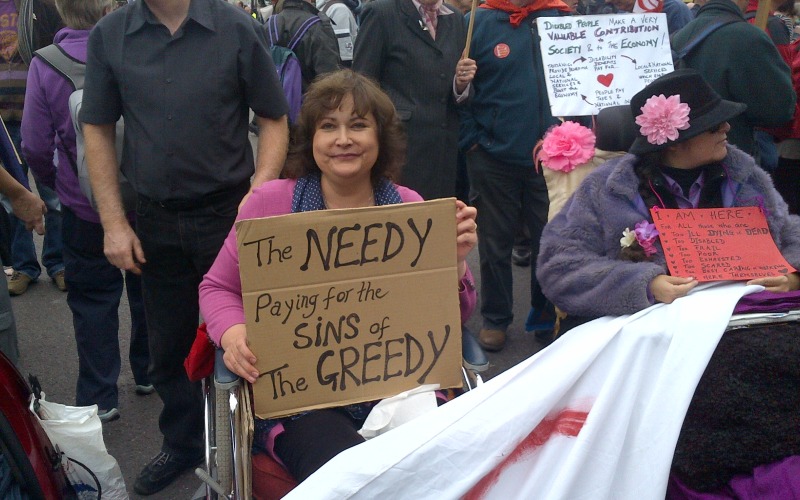
Tag: Esther McVey

Government guidelines for PIP assessment: a political redefinition of the word ‘objective’

images

Thousands of disabled people have already lost their specialist Motability vehicles because of Conservative PIP cuts and many more are likely to be affected.

Personal Independence Payment is a non means tested benefit for people with a long-term health condition or impairment, whether physical, sensory, mental, cognitive, intellectual, or any combination of these. It is an essential financial support towards the extra costs that ill and disabled people face, to help them lead as full, active and independent lives as possible.

The Department for Work and Pensions (DWP) have issued a guidance document for providers carrying out assessments for Personal Independence Payment (PIP), which was updated last month. It can be found here: PIP Assessment Guide.

The DWP Chief Medical Officer states that this is a supplementary guidance, in addition to “the contract documents agreed with providers as part of the commercial process, providing guidance for health professionals [HPs] carrying out assessment activity and for those responsible for putting in place and delivering processes to ensure the quality of assessments.”

Words like “fair”, “quality”,  “support”, “reform” and even “objective” have been given a very subjective, highly specific Conservative semantic make-over, to signpost and reference a distinctive underpinning ideology, and to align them with neoliberal and New Right anti-welfare discourse and outcomes, over the last five years.

There is some preemptive dodging of criticism and patronising get-out clauses in the document, for example: “It must be remembered that some of the information may not be readily understood by those who are not trained and experienced HPs.”

This comment is indicative of the lack of transparency in the terms, conditions and process of assessments, and how they are generally carried out. It also emphasises the professional gap between the “health professional” employed by the state to carry out the “functional capacity” assessments in the context of a neoliberal welfare state, and medical health professionals, whose wider work is generally not directly linked to the politically defined conditionality of welfare support.

If you fundamentally disagree with any of the approach outlined in the content of the document, or the policy, it’s because you “fail to comprehend it”, simply because you haven’t trained as a HP. 

I had no idea that HPs are the only people who can work out policy outcomes and who recognise government cuts, small state ideology and general cost-cutting measures for what they are, despite the thumping Orwellian semantic shifts and language use that is all about techniques of neutralisation (where the rhetoric used obscures or “neutralises” the negative aims and harmful consequences of the policy.)

Firstly, the HPs are not so much “health professionals”, but rather, “re-trained disability analysts.” Their role entails assessing the impact of illness and disability on the “functional capacity” of individuals in direct relation to justification or refusal of a PIP award only. Furthermore, it is the decision of the HP to “determine whether any additional evidence needs to be gathered from health or other professionals supporting the claimant.”

Often at the appeal stage, it turns out HPs frequently decide not to ask for further evidence.  The DWP must take all medical evidence into account when making a decision about PIP claims. Yet the DWP say: “In many cases, appeals are granted because further medical evidence is provided.” 

However, neither HPs nor the DWP decision-makers contact people’s GP or other professionals for more information about their health condition very often. This indicates that people are having to go to court, often waiting months for their appeal to be heard, because of deliberately under-informed, poorly evidenced DWP decisions. 

Furthermore, it says in the government guidance to GPs:  “Your patient should complete the forms to support their [PIP] claim using information that they have to hand, and should not ask you for information to help them do this, or to complete the forms yourself.” 

It seems that the DWP are determined to continue making ill-informed, medically unevidenced decisions as long as they can get away with it. 

The ‘functional’ assessment

From the document: “The assessment for PIP looks at an individual’s ability to carry out a series of key everyday activities. The assessment considers the impact of a claimant’s health condition or impairment on their functional ability rather than focusing on a particular diagnosis. Benefit will not be paid on the basis of having a particular health condition or impairment but on the impact of the health condition or impairment on the claimant’s everyday life.”

This process of assessment, however, is a very speculative one, with inferences drawn from seemingly unrelated questions and assumed circumstances, such as “do you have a pet?” This translates into “can bend from the waist to feed a cat/dog” on the HP’s report to the DWP.

During examination, people are asked to perform a series of movements, and inferences are drawn from these regarding the performance of day to day tasks. The movements bear no resemblance to ordinary day to day tasks, nor do they take into account the use of aids and adaptations that people may use to carry out daily tasks.

Furthermore, the person being assessed isn’t presented with the assumptions drawn from the examination and questions, which means they are not provided with an opportunity to verify any claim made by the HP, or to say if they can manage to feed their pet “reliably, safely and consistently”, or if their family have to feed the animal for much of the time. 

From the document: “The HP should check the consistency of what is being said by using different approaches, asking questions in different ways or coming back to a previous point. When considering inconsistencies, HPs should bear in mind that some claimants may have no insight into their condition, for example claimants with cognitive or developmental impairments.”

I know of a lady who wore a gold locket. It was simply assumed at her assessment that despite her extremely arthritic fingers, and information about her pain and the lack of movement in her hands from her GP, that she had sufficient dexterity to fasten and unfasten the clasp. Had she been asked, she would have informed the HP that she never took the locket off, even in the shower. 

This approach – “checking for inconsistencies” by using indirect questioning and assumption is NOT “objective”. It is a calculated strategy to justify a starting point of disbelief and skepticism regarding the accounts provided by ill and disabled people about the impact of their conditions and disabilities on their day-to-day living. As such, it frames the entire assessment process, weighting it towards evidence gathering to justify refusing awards, rather than being “objective”.

It’s simply a method based on side-stepping and discounting people’s own accounts and experiences of their disability, and any medical evidence submitted to verify that.

This approach is also mirrored in the Work Capability Assessment, reflecting Conservative cynicism and prejudice towards sick and disabled people. (See: What you need to know about Atos Assessments – it provides a good overview from a whistle-blower of how responses to seemingly casual observations and apparently conversational questions are re-translated into “inconsistencies” which are then used to justify refusing a claim.)

The introduction of PIP was framed by New Right anti-welfarism

Secondly, “PIP is replacing Disability Living Allowance (DLA), which has become outdated and unsustainable. The introduction of PIP will ensure the benefit is more fairly targeted at those who face the greatest barriers, by introducing a simpler, fairer, more transparent and more objective assessment, carried out by health professionals” [All boldings mine].

In other words, PIP is aimed at cutting welfare costs and support for people who would previously have been eligible for Disability Living Allowance (DLA). We are told that it’s no longer possible as a society to support all disabled people who need help with the additional costs that they face simply because they are ill and disabled, so the government propose to establish those “with the greatest need” by using a more stringent assessment process, which is claimed to be fair and more “objective”.

A recent review led the government to conclude that PIP “doesn’t currently fulfil the original policy intent”, which was to cut costs and “target” the benefit to “those with the greatest need.” That originally meant a narrowing of eligibility criteria for people formerly claiming Disability Living Allowance, increasing the number of reassessments required, and limiting the number of successful claims.

Controversially, the cuts to disability benefits (including the £30 per week cut from those claiming ESA in work related activity group) will fund tax cuts for the most affluent – the top 7% of earners. The chancellor raised the threshold at which people start paying 40p tax, in a move that will probably see many wealthier people pulled out of the higher rate of income tax. Osborne said he wanted to “accelerate progress” towards the Conservative’s manifesto pledge of raising the threshold for the 40p rate to £50,000 in 2020. 

Prior to the introduction of PIP, Esther McVey stated that of the initial 560,000 claimants to be reassessed by October 2015, 330,000 of these are targeted to either lose their benefit altogether or see their payments reduced. Of course the ever-shrinking category of “those with the greatest need” simply reflects a government that has made a partisan political decision to cut disabled people’s essential income to fund a financial gift to the wealthiest citizens. There is no justification for this decision, nor is it “fair.”

Fiona Colegrave, who is chief medical adviser, clinical governance and in charge of training for PIP at Capita, says: “As a disability assessor (DA), you are required to assess objectively how someone’s health conditions affect them and submit a report that is fair, reliable and can be justified with evidence because, if necessary, it may need to be scrutinised through an appeals process.

For these reasons, it is essential we equip DAs with the skills required to manage the assessment process, including: time management; questioning techniques; non-advocacy; collating all available evidence and identifying contradictions; and using an analytical but empathetic approach.

It is important for DAs to establish a rapport with the claimant, so that claimants feel like they have been able to express, in their own words, how their disability affects them and so they know that a DA will produce a report that accurately reflects their functional ability.”

Only “feel like”? Feedback from “claimants” says that DAs do NOT accurately reflect their “functional ability” in reports. And note the reductive use of the word  “claimant” – language use that places the other at a psychological distance from the author and administrators, objectifying them, as if people claiming PIP and other benefits are a homogenous group of people, bound by characteristics rather than circumstances, in a context of political decision-making.

It becomes easier to disassociate from someone you view “objectively” and to distance yourself from the impact of your calculated and target-led decision-making, constrained within a highly political framework. Such an objectification of a person or group of people serves to de-empathise us, which is a key characteristic requirement of neoliberal ideology, embedded in inhumane “small state” policy and extended via administrative (and outsourced, privatised) practices. It leaves us much less likely to relate to the circumstances, emotions or accept the needs and choices of others.

Surely a considerable part of our experience of being objectively diagnosed as ill and/or disabled, in any case, is a person’s subjective experience of it, rather than categories and counts; quantifiable, reductive and speculative statements about how we may perform highly specific tasks.

Quantitative medical evidence is important, because it does often give a general indication of conditions that would entail loss of function. But considering medical evidence isn’t a central part of the assessment process. Whether or not we can perform certain tasks, and inferences drawn from that are the central considerations for PIP eligibility.

Many conditions “fluctuate” – they vary so much that it’s difficult to assess performance of specific tasks consistently. Many conditions become progressively worse at a varied pace, often leaving little scope for a person developing coping strategies and adapting their everyday lives to the changes as they happen, such as a progressive loss of mobility, cognitive impairment, mood changes, anxiety, depression, sleep disruption and other psychological impacts, and the increasing pain and fatigue that they may experience.   

If the process were genuinely “fair, accurate and objective” then there would be no need for mandatory reviews and scrutiny through the appeals process. The introduction of the mandatory review – another layer of bureaucracy and a barrier to justice, where the DWP decide whether their first decision should be changed – has deterred many from appealing wrong decisions.

Those making the decisions about PIP awards are: “trained DWP staff who are familiar with the legislation governing PIP, but who do not have a healthcare background. The HP enables CMs to make fair and accurate decisions by providing impartial, objective and justified advice.

The PIP assessment is geared towards looking for “inconsistencies” in “functional limitations”. For example, if you say you can’t sit unaided for half an hour, but then say that you watch soaps on TV, it will be assumed you sit unaided for at least half an hour to watch TV, and that will be classed as a “discrepancy between the reported need and the actual needs of the claimant.”

The whole assessment is set up and designed to look for “inconsistencies.” In other words, the assessor is looking for any excuse to justify a decision that you are not among those in “greatest need” for a PIP award. The entire process happens within a framework of reducing welfare costs, after all. This makes a mockery of the government’s fondness for using the word “objective.”

What can we do to try to counter the state bias towards political cost-cutting, which is embedded in the assessment process? 

Well, we can use the guidelines and existing legislation to ensure that we are heard clearly. We can also raise awareness that, whilst most ill and disabled people tend to emphasise how well we cope, and remain positive about what we can do independently, and we often tend to understate our needs for support, in assessment situations, that tendency is likely to be used to trivialise the impact of our condition and disabilities on day-to-day “functioning.”

Reliability

The government says in the PIP handbook: “For a descriptor to apply to a claimant, they must be able to reliably complete the activity as described in the descriptor. Reliably means whether they can do so:

 safely – in a manner unlikely to cause harm to themselves or to another person, either during or after completion of the activity

 to an acceptable standard

 repeatedly – as often as is reasonably required, and

 in a reasonable time period – no more than twice as long as the maximum period that a non-disabled person would normally take to complete that activity.” 

If you cannot complete an activity reliably, safely and repeatedly, as outlined, then you must be regarded as unable to complete that task at all.  The reliability criteria are an important key protection for disabled people claiming both PIP and Employment and Support Allowance (ESA).

From the document: “Symptoms such as pain, fatigue and breathlessness should be considered when determining whether an activity can be carried out repeatedly. While these symptoms may not necessarily stop the claimant carrying out the activity in the first instance, they may be an indication that it cannot be done as often as is required.”

And: “The following situations highlight examples where an individual may be considered unable to repeatedly complete a descriptor in the way described due to the impact this would have:

A person who is able to stand and move 20 metres unaided, but is unable to repeat it again that day cannot do it repeatedly as you would reasonably expect people to move 20 metres more than once a day • A person who is able to prepare a meal, but the exhaustion from doing so means they cannot then repeat the activity at subsequent meal times on the same day. This means they cannot complete the activity repeatedly as it is reasonable to expect people to prepare a meal more than once a day.”

This also applies to people with mental health conditions, which may also impact on a person being able to carry out tasks reliably, repeatedly and safely.

Time periods, fluctuations and descriptor choices

The document says: “The impact of most health conditions and disabilities can fluctuate. Taking a view of ability over a longer period of time helps to iron out fluctuations and presents a more coherent picture of disabling effects. The descriptor choice should be based on consideration of a 12-month period.

This should correlate with the Qualifying Period and Prospective Test for the benefit – so in the 3 months before the assessment and in the 9 months after. A scoring descriptor can apply to claimants in an activity where their impairment(s) affect(s) their ability to complete an activity, at some stage of the PIP regulations.

 The following rules apply: If one descriptor in an activity is likely to apply on more than 50% of the days in the 12-month period – the activity can be completed in the way described on more than 50% of days – then that descriptor should be chosen.

If more than one descriptor in an activity is likely to apply on more than 50% of the days in the period, then the descriptor chosen should be the one that is the highest scoring. For example, if D applies on 100% of days and E on 70% of days, E is selected. Where one single descriptor in an activity is likely to not be satisfied on more than 50% of days, but a number of different scoring descriptors in that activity together are likely to be satisfied on more than 50% of days, the descriptor likely to be satisfied for the highest proportion of the time should be selected.

For example if B applies on 20% of days, D on 30% of days and E on 5% of days, D is selected. If someone is awaiting treatment or further intervention, it can be difficult to accurately predict its level of success or whether it will even occur. Descriptor choices should therefore be based on the likely continuing impact of the health condition or disability as if any treatment or further intervention has not occurred.

The timing of the activity should be considered, and whether the claimant can carry out the activity when they need to do it. For example, if taking medication in the morning (such as painkillers) allows the individual to carry out activities reliably when they need to throughout the day, although they would be unable to carry out the activity for part of the day (before they take the painkillers), the individual can still complete the activity reliably when required and therefore should receive the appropriate descriptor.”

Again, “fluctuating conditions” include many mental health conditions.

Risk and safety

“When considering whether an activity can be carried out safely it is important to consider the risk of a serious adverse event occurring. However, the risk that a serious adverse event may occur due to impairments is insufficient – the adverse event has to be likely to occur.”

Even if complex probability calculations were used – and I am certain HPs are unlikely to have been trained to use such formulae – there is no “objective” way of calculating risk of serious “adverse” events over time.

However, it is not such a big inferential leap to recognise that continually cutting essential lifeline support for sick and disabled people will ultimately lead to harm, distress, hardship and other negative consequences for individuals and will have wider social, cultural and economic “adverse” consequences, too.
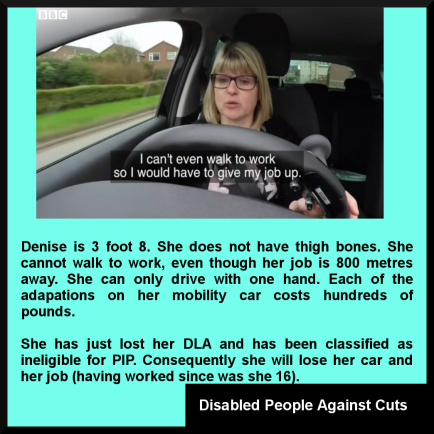
dpac

“Making work pay” for whom?

See also:

PIP Assessment Guide A DWP guidance document for providers

Personal Independence Payment handbook

Government Toolkit of information for support organisations

Relevant:

PIP and the Tory monologue

Government plans further brutal cuts to disability support

Consultation as government seek to limit disabled people’s eligibility for Personal Independence Payment

Second Independent Review of Personal Independence Payment assessment


I don’t make any money from my work. I’m a disabled person with lupus, and I’m stuggling to get by. But you can help by making a donation and enable me to continue to research and write informative, insightful and independent articles, and to provide support to others going through disability benefit assessment processes and appeals. The smallest amount is much appreciated – thank you.

DonatenowButton cards

Government plans further brutal cuts to disability support

358-burden-of-cuts

Disabled people are already carrying a disproportionately high burden of the austerity cuts, despite government claims of economic recovery.

Government ministers are planning to cut a key element of the Personal Independent Payment (PIP). Last year a consultation indicated that the Conservatives were considering ways of reducing eligibility criteria for the daily living component of PIP, by narrowing definitions of aids and appliances.

From January 2017, the cut is likely to hit people experiencing incontinence, who struggle to dress themselves, and those facing other fundamental barriers to health and essential basic care. The cut, it is estimated, will affect at least 640,000 disabled people by 2020.

Controversially, it is alleged that the cuts to disability benefit will fund tax cuts for the most affluent – the top 7% of earners. The Chancellor is set to raise the threshold at which people start paying 40p tax, in a move that will probably see  many wealthier people pulled out of the higher rate of income tax, in the coming budget. Mr Osborne says he wants to “accelerate progress” towards the Conservative’s manifesto pledge of raising the threshold for the 40p rate to £50,000 in 2020, it is understood.

Meanwhile, under the plans announced on Friday, sick and disabled people will be much less likely to receive essential disabled benefits if they use aids such as a handrail or a walking stick to get dressed or use the toilet.

The Department for Work and Pensions reviewed a sample of 105 cases of people who had scored all, or the majority, of their points for PIP due to aids and appliances, in order to assess the extent to which the award may reflect extra costs.

The review led the government to conclude that PIP “doesn’t currently fulfil the original policy intent”, which was to cut costs and “target” the benefit to “those with the greatest need.” That originally meant a narrowing of eligibility criteria for people formerly claiming Disability Living Allowance, increasing the number of  reassessments required, and limiting the number of successful claims.

Prior to the introduction of PIP, Esther McVey stated that of the initial 560,000 claimants to be reassessed by October 2015, 330,000 of these are targeted to either lose their benefit altogether or see their payments reduced. Of course the ever-shrinking category of “those with the greatest need” simply reflects a government that has simply made a partisan political decision to cut disabled people’s essential income to fund a financial gift to the wealthiest citizens. There is no justification for this decision, nor is it “fair.”

The government now  claim that the proportion of people awarded the daily living component of PIP, who scored all of their points because they need aids and appliances, has more that tripled, from 11 per cent in April 2014 to 35 per cent in 2015.

The PIP assessment currently examines an individual’s ability to complete ten daily living activities and two mobility activities. Regular reviews were also introduced by the last government to ensure that claimants continue to receive the “right level of support.”

The increase has largely been driven by a significant and sustained rise in relation to activities one, four, five and six: preparing food, washing and bathing, dressing and undressing, and managing incontinence and toileting. Around three-quarters of those who score all of their points through aids and appliances score the minimum number of daily living points needed to qualify for the standard rate of the daily living component.

The government ridiculously claim that the “evidence” presented to the review suggested that in some instances points were being awarded “… because claimants chose to use aids and appliances, rather than needed them.”  And noted that in many cases “ these were non-specialised items of very low cost.”

However, it’s very difficult to justify cutting support for people who require aids to meet fundamental needs such as preparing food, dressing, basic and essential personal care and managing incontinence.

Ministers have now announced their intention to cut PIP for people who currently receive it to help them afford specially-adapted appliances and equipment. Examples of qualifying equipment currently includes adapted cutlery for people who find it difficult to hold things for long periods of time and specially-designed household items for people less able to stand.

Justin Tomlinson, the disabilities minister, said that the cuts to funding for aids and appliances for the disabled could save about £1bn a year and was announced the week before the budget. Charities warned that the cuts to personal independence payments (PIP) would be devastating after the move was confirmed by Tomlinson on Friday.

Tomlinson, said: “The introduction of Personal Independence Payment to replace the outdated Disability Living Allowance for working age claimants has been a hugely positive reform.

But it is clear that the assessment criteria for aids and appliances are not working as planned. Many people are eligible for a weekly award despite having minimal to no extra costs and judicial decisions have expanded the criteria for aids and appliances to include items we would expect people to have in their homes already.

We consulted widely to find the best approach. And this new change will ensure that PIP is fairer and targets support at those who need it most.”

Only a Conservative minister would claim that taking money from sick and disabled people is somehow “fair,” and they frequently do. The cuts of £120 a month to the disability benefit employment support allowance (ESA) are also claimed to be “fair.” and “supportive.” Though I have yet to hear an explanation of how this can possibly be the case. Ministers claimed that people subjected to the ESA Work Related Activity Group cuts could claim PIP if they required support with extra living costs, but now we are told that PIP is to be cut, too.

Bearing in mind the Department for Work and Pensions “review” was based on a sample of just 105 people, it’s very difficult to see how further inhumane cuts to the lifeline income for this group of amongst the most disabled citizens can possibly be justified. How did ministers “plan” the assessment criteria for aids and appliances to work, exactly?  People qualifying for PIP need extra support in meeting their living costs.

A coalition of 25 disability charities has written to the Government to warn against plans that would strip some disabled people of a key payments meant to help them live more independent lives.

The Disability Benefits Consortium wrote to Justin Tomlinson, to argue that proposed changes to Personal Independence Payment – or PIP – assessments would have a “severe impact” on people’s security and make it harder for them to find work.

Debbie Abrahams, the shadow disabilities minister, said: “Removing support for people who need help to use the toilet or dress is an attack on dignity.”

“These further cuts would represent another huge blow, making life even more difficult for many people who already facing huge barriers.”

Phil Reynold, policy and campaigns adviser at Parkinson’s UK, said: “If someone needs aids and appliances to carry out the most basic tasks that most people take for granted then they clearly need ongoing support to live independently, which is often expensive. They should not be penalised by making personal independence payments even more difficult to claim.”

Michelle Mitchell, chief executive of the MS Society, said: “This decision could have a devastating impact on the lives of people with MS. In the worst cases, they could lose up to £150 a week.

PIP is an essential benefit which goes towards the extra cost of being disabled. The new plans will fail some of the most vulnerable people in society and we have serious concerns about the future health and welfare of those affected.”

The government is currently being investigated by the United Nations because of  serious allegations that many of us have made regarding the welfare “reforms”, which have extended gross and systematic abuse of the human rights of disabled people. The UK is the first country to be subject to an investigation regarding the government’s failure to meet legal obligations to uphold disabled people’s human rights. In the 6th wealthiest nation of the world, and a so-called liberal democracy, this treatment of an already marginalised and protected social group is utterly shameful.

536738_306169162785952_999031084_n

scroll2

I don’t make any money from my work and I’m not funded. You can support Politics and Insights by making a donation to help me continue researching and writing independently, and to continue to help others.

DonatenowButton
cards

Thousands of disabled people have lost their specialist Motability vehicles because of Conservative benefit cuts and many more are likely to be affected

westminster-20121020-00081


In 2012, Esther McVey, then the Minister for people with disabilities, as good as admitted there are targets to reduce or remove eligibility for the new disability benefit Personal Independent Payment (PIP), which was to replace Disability Living Allowance. How else could she know in advance of people’s reassessment that 330,000 of claimants are expected to either lose their benefit altogether or see their payments reduced as she had informed the House of Commons?

This was a clear indication that the new assessment framework was designed to cut support for disabled people. A recent review led the government to conclude that PIP doesn’t currently fulfil the original policy intent, which was to cut costs and “target” the benefit to “those with the greatest need.”

That basically meant a narrowing of eligibility criteria for people formerly claiming Disability Living Allowance, increasing the number of reassessments required, and limiting the number of successful claims. The government have used the review to attempt to justify further restrictions to PIP eligibility, aimed at cutting support for people who require aids to meet fundamental needs such as preparing food, dressing, basic and essential personal care and managing incontinence. “Greatest need” has become an ever-shrinking category under Conservative austerity measures. 

McVey also said that around 200 disabled people in every parliamentary constituency were likely to lose their Motability vehicle when she changed the qualifying walking distance limit from 50 metres to 20-metres. 

And she pointed out that one of the Department for Transport’s own publications, Inclusive Mobility, recommends that “seating should be provided on pedestrian routes at intervals of no more than 50 metres, and that parking spaces for blue badge holders should preferably be provided within 50 metres of the facilities they serve”.

The Motability Scheme helped around 650,000 disabled people to lease specialist cars, wheelchairs and scooters. Anyone on the highest level of the Disability Living Allowance (DLA) was entitled to join the scheme which also helped to pay for expensive adaptations. Motability provides financial help (grants) to disabled people who would not otherwise be able to afford the vehicle or adaptations they need, and the charity undertakes a range of fundraising activities to contribute to the provision of financial help to those Scheme customers whose allowance does not cover the cost of the mobility solution that they need.

Last year, Motability revealed that around 100 disabled people claiming PIP are losing their crucial vehicle benefit every week.

According to Motability, who lease specialised cars and powered wheelchairs to disabled people, 3,000 out of 8,000 of their customers who have so far been reassessed for PIP, who were previously claiming the Disability Living Allowance, have lost their eligibility for the scheme and have therefore had to give up their vehicles.

Motability raised concerns that the government reforms to DLA would affect many more. It has.

Nearly 14,000 disabled people have had their mobility vehicle confiscated after the changes to benefit assessment, which are carried out by private companies. Many more, yet to be reassessed, are also likely to lose their specialised vehicles.

Under the new PIP rules thousands more people who rely on disability allowance to keep their independence are set to lose their vehicles. Many had been adapted to meet their owners’ needs and many campaigners warn that it will lead to a devastating loss of independence for disabled people.

A total of 45% or 13,900 people, were deemed as not needing the higher rate of PIP, and therefore lost their vehicles after reassessment. And out of the 31,200 people who were once on the highest rate of DLA who have been reassessed, just 55%, or 17,300 – have kept their car.

Given that many Motability vehicles are specially adapted to meet the highly individual needs of each person, I wonder what happens to all of those vehicles that are lost under the new restricted benefit eligibility criteria.

Around 51,200 disabled people have joined the Motability scheme using their PIP. Around 360,000 more people will undergo PIP reassessments and that will include “indefinite” or “lifetime” awards under the original DLA support.

Perhaps the government expect that severely and chronically ill people will miraculously recover, their progressive illness will stop progressing, maybe people will grow new limbs, find cures of their own where medical professionals and drug companies have failed and battle their “choice” of disability alone.

Being disabled is very expensive. The charity Scope has calculated that disabled people pay a huge financial penalty over and above the everyday living costs faced by the typical able-bodied person – on average £550 per month. One in ten pay more than £1000 a month over the odds.

Expenses range from door-to-door taxis to get around, extra heating costs, pricey specialist items like wheelchairs, hoists, or stair lifts. There may be extra laundry costs, continence aids, special dietary requirements, a need for home help and meals on wheels. Some disabilities place more wear and tear on shoes and clothing, some people need suitable kinds of footwear. Non-prescription medical items are also an additional cost. These are just a few examples of extra expenses. There are many more that most able-bodied people wouldn’t ever need to think of.

Liz Sayce, chief executive of Disability Rights UK, said: “Being disabled costs money.

The Personal Independence Payment is supposed to help with those costs, but many people are being denied the benefit because they are not assessed properly. Sometimes that means people lose their cars; a massive blow which impacts on their ability to remain independent, take part in their communities or get and keep a job.”

Recent research revealed that of all the appeals related to PIP, 60% of tribunals have ruled in the claimant’s favour.

Motability provides a support package, including a £2,000 grant, to anyone forced to leave the scheme following a PIP reassessment.

The charity added: “This helps individuals to remain mobile, in many cases by purchasing a used car. Motability has already provided some £16m in support through this transitional package.”

The Conservative claim that “Government is committed to supporting the most vulnerable” doesn’t stand up to scrutiny, given the Conservative policy record, including cruelly scrapping the Independent Living Fund, which has had a hugely negative impact on those trying their best to lead independent and dignified lives, and the Access To Work funding has been severely cut, this is also a fund that helps people and employers to cover the extra living costs arising due to disabilities that might present barriers to work. 

Mr Duncan Smith said at the Conservative conference last year that many sick and disabled people “wanted to work” and that the Government should give them “support” to find jobs and make sure the welfare system encouraged them to get jobs. I’m wondering what the word “support” actually means to Conservatives, because there’s every indication that over the past five years, there has only been a withdrawal of essential support and lifeline benefits from those who need them the most.

Article 19 of the United Nations Convention on the rights of persons with disabilities states that persons with disabilities have access to a range of in-home, residential and other community support services, including personal assistance necessary to support living and inclusion in the community, and to prevent isolation or segregation from the community. Article 20 states that Parties shall take effective measures to ensure personal mobility with the greatest possible independence for persons with disabilities, including by:

a) Facilitating the personal mobility of persons with disabilities in the manner and at the time of their choice, and at affordable cost;

b) Facilitating access by persons with disabilities to quality mobility aids, devices, assistive technologies and forms of live assistance and intermediaries, including by making them available at affordable cost;

c) Providing training in mobility skills to persons with disabilities and to specialist staff working with persons with disabilities;

d) Encouraging entities that produce mobility aids, devices and assistive technologies to take into account all aspects of mobility for persons with disabilities.

Article 28 requires that States Parties recognise the right of persons with disabilities to an adequate standard of living for themselves and their families, including adequate food, clothing and housing, and to the continuous improvement of living conditions, and should take appropriate steps to safeguard and promote the realisation of these rights without discrimination on the basis of disability.

It’s difficult to see how the government’s cuts to lifeline disability benefits can possibly be consistent with their obligations to uphold human rights law. 


images

Despotic paternalism and punishing the poor. Can this really be England?

382035_141704259313964_676863845_n
Framing the game

Earlier this year, David Cameron defended his welfare “reforms”, claiming that: “Labour has infantilised benefit claimants”, and he argued it was “not big-hearted” to leave people claiming sickness allowances when “they could be incentivised to get treatment for alcohol dependence or obesity.”

I should not need to point out that despite the bizarre attempt at stigmatising sick and disabled people with such a loaded, moralising and media agenda-setting comment from our PM, the majority of people claiming sickness benefits are neither dependent on alcohol nor are they claiming because they are obese. This said, I think that alcohol dependence and obesity are illnesses that ought to be treated with compassion instead of moralising. But the general public on the whole do not hold this view. Cameron knows that. In fact Cameron has contributed to the scapegoating of social groups, outgrouping and public division significantly over the past five years

I claim sickness benefit simply because I have a life-threatening illness called lupus. There is no cure, and no-one may imply I am ill because of “life-style choices”. However, people using alcohol often have underlying mental distress, and drinking alcohol is pretty much a social norm. Poverty often means that people are forced to buy the cheapest food, which is the least healthy option. Some illnesses and disabilities cause mobility problems, and some treatments cause weight gain. So it cannot be assumed that alcohol dependence and obesity are simply about “making wrong choices” after all. 

I have to say that it IS “big-hearted” to leave me claiming benefits, Mr Cameron, because I am no longer fit for work. Indeed I was forced to take my case to tribunal after your government tried to “kindly” incentivise me to abandon my legitimate claim for sickness benefit, and the tribunal panel decided that if I were return to my profession(s) (social work and previously, youth and community work – with young people at risk of offending,) that would, though no fault of my own, place me in situations that are an unacceptable risk to my health and safety, and of course would also place others – vulnerable young people – at risk. Which is why I claimed sickness benefit in the first place – because I am too ill to work.

Libertarian paternalism isn’t “fatherly”

Mr Cameron, however, thinks he knows better and continues to insist that it is is everyone’s best interests to work. I can assure him that isn’t the case. So can many others with chronic illnesses and disabilities.

Back in 2013, Esther McVey defended the increased use of welfare conditionality and benefit sanctions in front of the work and pensions committee by infantilising claimants and playing the behaviourist paternalistic libertarian nudge card. She said: “What does a teacher do in a school? A teacher would tell you off or give you lines or whatever it is, detentions, but at the same time they are wanting your best interests at heart.”

“They are teaching you, they are educating you but at the same time they will also have the ability to sanction you.”

Since when did the state become comparable with a strict, punitive, authoritarian headmaster at a remedial school called “we know what’s best for you” in this so-called first-world liberal democracy?  That is not democracy at all: it’s despotic paternalism.

One of the cruellest myths of inequality is that some people are poor because they lack the capability to be anything else. Meritocracy is a lie. It is used to justify the obscene privileges and power at the top of our steep social hierarchy and the cruel exclusion and crushing, humiliating deprivation at the bottom. No-one seems to want to contemplate that people are poor because some people are very very rich, and if the very rich have a little less, the poor could have a little more.

Neoliberalism is a socioeconomic system founded entirely on competition. This means that people have to compete for resources and opportunities, including jobs. Inevitably such as system generates “winners” and “losers”. Poverty has got nothing to do with personal “choices”; the system itself creates inequalities.

Deserving and undeserving: the rich deserve more money, the poor deserve punishment

At least one third of those people with the most wealth have inherited it. It’s a manifestation of prejudice that poor people are seen as “less deserving”, based on “ability” and on vulgar assumptions regarding people’s personal qualities and character. In fact the media, mostly talking to itself,  in judging “the undeserving”  has given a veneer of moral authority to an ancient Conservative prejudice. It’s very evident in policies. The austerity cuts don’t apply to the fabulously lucky wealthy. Whilst the poorest citizens have seen their welfare cut and wages decrease, as the cost of living spirals upwards, millionaires were handed a tax break of £107, 000 each per year.

Surely our stratified social system of starkly divided wealth, resources, power, privilege and access is punishment enough for poor people.

As Ed Miliband pointed out: “David Cameron and George Osborne believe the only way to persuade millionaires to work harder is to give them more money.

But they also seem to believe that the only way to make you (ordinary people) work harder is to take money away.”  So Tory “incentives” are punitive, but only if you are poor. Wealth, apparently, is the gift that just keeps on giving.

Tories create “scroungers” and “skivers”

As I’ve commented elsewhere, it’s truly remarkable that whenever we have a Conservative government, we suddenly witness media coverage of an unprecedented rise in the numbers of poor people who suddenly seem to develop a considerable range of baffling personal ineptitudes and immediately dysfunctional lives.

We see a proliferation of  “skivers” and “scroungers”, an uprising of “fecklessness”, a whole sneaky “culture of entitlement”, “drug addicts”, a riot of general all-round bad sorts, and apparently, the numbers of poor people who suddenly can’t cook a nutritious meal has climbed dramatically, too. We are told that starvation is not because of a lack of money and access to food, but rather, it’s because people don’t know how to budget and cook.

That’s odd, because I always thought that poverty is a consequence of the way society is organised and how resources are allocated through government policies.

That’s a fundamental truth that we seem to be losing sight of, because of the current poverty of state responsibility and the politics of blame.

However, the current government has made the welfare system increasingly conditional on the grounds that “permissive” welfare policies have led to welfare “dependency”.  Strict behavioural requirements and punishments in the form of sanctions were an integral part of the conservative moralisation of welfare, and their  “reforms” aimed to make claiming benefits less attractive than taking a low paid, insecure job.

Sanctions simply worsen the position of the most vulnerable and disadvantaged citizens. Creating desperation by removing people’s means of basic survival forces them into low paid, insecure work and exerts a further downward pressure on conditions of employement and wages. It commodifies the reserve army of labor, which is strictly in the interests of exploitative, profit-driven plutocrats.

Can this really be England? 

Cruel Brittania. A man with heart problems was sanctioned because he had a heart attack during a disability benefits assessment and so failed to complete the assessment. A lone mother was sanctioned because she was a little late for a jobcentre  interview, as her four year old daughter needed the toilet.

A man with diabetes was sanctioned because he missed an appointment due to illness, he died penniless, starving, without electricity and alone as a consequence. His electricity card was out of credit, which meant that the fridge where he should have kept his insulin chilled was not working. Three weeks after his benefits were stopped he died from diabetic ketoacidosis – because he could not take his insulin. Here are 11 more irrational, unfair, purely punitive applications of sanctions.

How can removing the basic means of survival for the poorest people in our society possibly incentivise them, “help them into work” or be considered to be remotely “fair”?

There are targets set for imposing benefit sanctions. Jobcentre managers routinely put pressure on staff to sanction people’s benefits, according to their union. Failure to impose “enough” sanctions is said to result in staff being “subject to performance reviews” or losing pay.  “Success” as an employee at the jobcentre is certainly not about helping people to get a job but rather, it’s about tricking them out of the money they need to meet their basic needs. Such as food, fuel and shelter. Welfare is no longer a safety net: it is an institutionalisation of systematic state punishment of our poorest citizens.

Angela Neville worked as an adviser in Braintree jobcentre, Essex, for four years and she has written a play with two collaborators, her friends Angela Howard and Jackie Howard, both of whom have helped advocate for unemployed people who were threatened with benefit sanctions by jobcentre staff.

One central motivation behind the play was how “morally compromising” the job had become. In one scene an adviser tells her mother that it’s like “getting brownie points” for cruelty. When Neville herself became redundant in 2013, she was warned about being sanctioned for supposedly being five minutes late to a jobcentre interview.

There was a strong feeling among the playwrights that the tendencies in wider society and the media to stigmatise and vilify benefits claimants needed to be challenged and refuted. The play opens with a scene where “nosey neighbours” spot someone on sickness benefit in the street and assume they must be skiving instead of working.

This perspective is one shared widely amongst disabled people, groups, organisations and charities that advocate for and support disabled people, and is evidenced by the rapid rise of disability-related hate crime since 2010, reaching the highest level since records began by 2012. The UK government is currently the first to face a high-level international inquiry, initiated by the United Nations Committee because of “grave or systemic violations” of the rights of disabled people.

That ought to be a source of shame for the both the government and the public, especially considering that this country was once considered a beacon of human rights, we are (supposedly) a first-world liberal democracy, and a very wealthy nation, yet our government behave like tyrants towards the most vulnerable citizens of the UK. And the public have endorsed this.

“This play is about getting people to bloody think about stuff. Use their brains. Sometimes I think, crikey, we are turning into a really mean, spying on our neighbour, type of society,” Angela said.

The title of the play, Can This be England? is an allusion to the disbelief that Angela Neville and many of us feel at how people on benefits are being treated. And she describes the play, in which she also acts, as a “dramatic consciousness-raising exercise”. The idea behind this production is that the play may be performed very simply, with minimum rehearsal. Scripts are carried throughout and few props are used.

It can take place in any room of a suitable size, and there is no need for stage lighting. The script is freely available to all who wish to use it for performances to raise awareness (non-commercial purposes). Click HERE to download a PDF file. If you find it useful please e-mail any feedback to Angela Neville at the Show and Tell Theatre Company.

Psychopolitics

Welfare has become increasingly redefined: it is now pre-occupied with assumptions about and modification of the behaviour and character of recipients rather than with the alleviation of poverty and ensuring economic and social well-being. The stigmatisation of people needing benefits is designed purposefully to displace public sympathy for the poor, and to generate moral outrage, which is then used to further justify the steady dismantling of the welfare state.

Framed by ideological concerns, the welfare “reforms” reflect an abandonment of concern for disadvantage and the meeting of human needs as ends in themselves. We have witnessed an extremely punitive system emerge, under the Tories, at a time when jobs are becoming increasingly characterised by insecurity and poor pay. Last year, two-thirds of people who found work took jobs for less than the living wage (£7.85 an hour nationally, £9.15 in London), according to the annual report from the Joseph Rowntree Foundation.

There are as many people in work that are now in poverty as there are out of work, partly due to a vast increase in insecure work on zero-hours contracts, or in part-time or low-paid self-employment. Poverty-level wages have been exacerbated by the number of people reliant on privately rented accommodation and unable to get social housing, the report said. Evictions of tenants by private landlords outnumber mortgage repossessions and are the most common cause of homelessness. The rapidly rising cost of living – price rises for food, energy and transport – have so many people on low pay struggling to make ends meet.

But pay for people on what were comfortable incomes previously is now outstripped by inflation, leaving many more struggling with rising prices. Public spending has decreased, having a knock-on effect on the economy.

Economic Darwinism doesn’t promote growth

Last year, I wrote about the study from the Organisation for Economic Co-operation and Development (OECD), who found what most of us already knew: that income inequality actually stifles economic growth in some of the world’s wealthiest countries, whilst the redistribution of wealth via taxes and benefits encourages growth.

The report from the OECD, a leading global think tank, shows basically that what creates and reverses growth is the exact opposite of what the current right-wing government are telling us, highlighting the rational basis and fundamental truth of Ed Miliband’s comments in his speech – that the Tory austerity cuts are purely ideologically driven, and not about managing the economy at all.

There is a dimension of vindictiveness in the Tory claim that cutting people’s lifeline benefits will somehow “make work pay”, once you see past the Orwellian unlogic of the statement, and recognise the extent of waged poverty in the UK. Making work pay would rationally need to involve a rise in wages, surely, but that has not happened.

To understand this, it is important to grasp the elitist socio-economic priorities that are embedded in Conservative ideology, which I’ve outlined previously in Conservatism in a nutshell. The whole idea beneath the Orwellian doublespeak is comparable with the punitive Poor Law Amendment Act of 1834 – in particular, we can see a clear parallel with the 1834 “less eligibility principle” and the Tory notion of “making work pay” which I’ve previously discussed in The New New Poor Law.

The parallels are underpinned by a shift from macro-level socio-economic explanations of poverty and state responsibility to micro-level punitive, moral psychologising, scapegoating, and the abdication of state (and public) responsibility.

Policies provide a conceptual frame of reference, which tend to shape public attitudes, they are also deeply symbolic gestures that convey subliminal messages. The Conservative war on welfare and the NHS further devalues the worth of human life, turning the needy into a disposable state commodity, a coerced, desperate reserve army of cheap labour.

It also conveys the message that to care about the survival and well-being of others is futile; it pathologises collectivism, cooperation and altruism. This is a government that operates entirely by generating fear and division, on a social, economic and cultural level, but also, increasingly intrusively, within phenomenological, psychological and psychic dimensions too.

How did the poor become such an easy enemy of the state, and how can the public believe the dominant narrative that pathologises the victim, and fail to recognise the irrational, circular argument of benefit sanctions, when the conservatives’ reasoning is that the application of sanctions demonstrates the moral ineptitude of the individual – but it merely acts to justify poverty and inequality.

The perverse logic runs as follows: welfare for the poorest citizens – those who require collective responses to poverty – can only retain public support by threatening to, and by actually making the poorest even poorer. Is this really welfare?

No, not any more.

How can welfare ever be about some politically manufactured, apocryphal and malevolent desire for retribution, based on pseudo-moralising about the poor and demoralised, and a concern for the spiteful, perverted, mean-spirited sense of satisfaction for the better off, at the expense of the material and biological well-being of those in need: the poorest and most vulnerable citizens?

Conservative rhetoric is designed to have us believe there would be no poor if the welfare state didn’t “create” them. If the Conservatives must insist on peddling the myth of meritocracy, then surely they must also concede that whilst such a system has some beneficiaries, it also creates situations of insolvency and poverty for many others.

Democracy exists partly to ensure that the powerful are accountable to the vulnerable. The Conservatives have blocked that crucial exchange, they despise the welfare state, which provides the vulnerable with protection from  exploitation by the powerful.

As I’ve argued elsewhere, the wide recognition that unbridled capitalism causes casualties is why the welfare state came into being, after all – because when we allow such competitive economic dogmas to manifest, there is inevitably going to be winners and losers. That is the nature of competitive individualism, and along with crass inequality, it’s an implicit, undeniable and fundamental part of the meritocracy script.

Poverty is created by government policies that reflect a pursuit of free market ideals;  by the imposition of neoliberal economic policies – the sort of policies that ensure taxes cuts for the wealthy, banish fiscal and other business regulations, shred the social safety net, and erode social cohesion and stability, whilst directing the media and population to chant the diversionary mantra of self-reliance and individual responsibility.

Poverty intrudes on people’s lives, it dominates attention and constantly commands that our biologically-driven priorities are met, it reduces cognitive resources, it demotivates, it overwhelms, it reduces experience of the world to one of material paramountcy which cannot be transcended, it stifles human potential.

Need is NOT greed, regardless of the malicious justification narratives in the media and spiteful political rhetoric from the champions of social Darwinism and the Randian self-serving free market. Meeting basic survival imperatives – food, warmth and shelter – is a fundamental prerequisite for life. If the means for meeting these basic survival needs is taken away, then people will die. Surely even the most cold, callous, psychopathic and dogmatic defenders of the status quo can manage to work that one out.

Punishing poor people with more poverty is savage, obscene, barbaric, brutal, and can NEVER work to “incentivise” people to not be poor, nor can it change the pathological idiom that shapes and imposes such unfortunate, unforgiving and unforgivable circumstances on those with the least in the first place.

430835_148211001996623_1337599952_n (1)With thanks to Robert Livingstone for his excellent memes

It’s absolute poverty, not “market competition” that has led to a drop in food sales.

1450041_569755536427312_1698223275_n
Public spending in food stores fell for the first time on record in July this year, putting the UK recovery in doubt. Such a worrying, unprecedented record fall in food sales indicates that many consumers evidently have yet to feel the benefit of the so-called recovery.

The price of food was 0.2% higher than a year ago. The Office for National Statistics (ONS) started collecting the data for food sales in 1989The volume of food sales was also down last month, by 1.5% on an annualised basis.

There was also a marked fall in petrol consumption, and the only prominent area of growth was in spending that entailed use of mail order catalogues, and at market stalls, as people use credit to buy essential items and shop around for cheap alternatives and bargains.

Food manufacturing is the UK’s single largest manufacturing sector. The food and drink supply chain is a major part of the UK economy, accounting for 7% of GDP, employing over 3.7 million people, and generating at least £80 billion per year,  according to data from the Cabinet Office. There was an increase in the food sector (excluding agriculture) from 2000-2009 in Britain; the whole UK economy increased by 47% during the same period.

The Office for National Statistics has put the recent decline down to “prolonged discounting and price wars”.

However, crucially, the quantity of food bought in food stores also decreased by 1.5 per cent year-on-year in July.

It doesn’t take a genius to work out that repressed, stagnant wages and RISING living costs are going to result in reduced sale volumes. Survation’s research in March this year indicates that only four out of every ten of UK workers believe that the country’s economy is recovering. But we know that the bulk of the Tory austerity cuts were aimed at those least able to afford any cut to their income.

What we need to ask is why none of the mainstream media articles, or the ONS account, duly reporting the drop in food sales, have bothered to link this with the substantial increase in reported cases of malnutrition and related illnesses across the UK. It’s not as if this correlation is a particularly large inferential leap, after all.

It stands to reason that if people cannot afford food, they won’t be able to buy it. Furthermore, that consumers were not actually considered as a part of the ONS and media assessment is frankly strange, to say the least, with emphasis being placed solely on deterministic market competition criteria, and hardly a skim over any analysis of the social-political conditions that have undoubtedly contributed to the significant drop in food sales.

Food banks provide food aid to people in acute need, usually following referral by health or social care professionals, such as social workers, doctors, health visitors, and organisations such as the Citizens Advice Bureau and Jobcentre Plus. The Department for Work and Pensions has acknowledged that there is internal guidance to staff on signposting to food banks and a recent Freedom of Information request reported in The Guardian, revealed a “high level process” to be observed by jobcentre staff for referring claimants who say that they are suffering hardship and need food.

The role of Jobcentre Plus in referring people to food banks was described by Mark Hoban, Minister of State for Employment at the Department for Work and Pensions (DWP) as follows in December 2012: “The DWP, through Jobcentre Plus, operates a foodbank referral service. This is a simple signposting process which builds on the Jobcentre Plus standard practice of holding, locally, the details of organisations to which we signpost claimants who tell us they are in financial difficulty. Jobcentre Plus will only signpost claimants when they can offer no more help.”

Jobcentre Plus have been “signposting” people to food banks nationally since September 2011. Circumstances where a Jobcentre might make a referral to a food bank include:

  •  where a Crisis Loan or Short Term Benefit Advance had been refused;
  •  where a change in circumstances had affected a person’s entitlement to benefit, or reduced the amount they receive;
  •  where payment of benefit had been delayed (e.g. because a claim was still being
    assessed, or DWP was awaiting information to enable a decision on a claim).

The original version of the Jobcentre Plus referral form included boxes to tick to indicate the reason for the referral. However, the report in the Guardian on 6 September 2013 highlighted that the DWP had suddenly “unilaterally redesigned the food bank vouchers it issues to clients” – the three boxes on the previous form which had enabled JobCentre Plus “to indicate why they referred the person: because of benefit delay, benefit change, or refusal of crisis loan … have been removed from the new version of the form. The vouchers no longer tell the [Trussell] trust why the person has been referred”.

As Patrick Butler astutely observed, this has the effect of removing data that helps highlight why impoverishment caused by welfare “reform” has become one of the biggest single drivers of people turning to food banks. The Government needs political cover for lying ministers such as Freud and McVey, who like to pretend food banks have nothing to do with austerity and welfare reform; but the DWP sends its impoverished customers in droves to them anyway.

Research by the Joseph Rowntree Foundation and others indicates quite clearly that:

  • Some of the increase in the number of people using food banks is
    caused by unemployment, increasing levels of underemployment,
    low and falling income, and rising food and fuel prices. The
    National Minimum Wage and benefits levels need to rise in line
    with inflation, in order to ensure that families retain the ability to
    live with dignity and can afford to feed and clothe themselves and
    stay warm.
  • More alarmingly, up to half of all people turning to food banks
    are doing so as a direct result of having benefit payments delayed,
    reduced, or withdrawn altogether. Figures gathered by the Trussell
    Trust show that changes to the benefit system are the most common reasons for people using food banks;these include changes to crisis loan eligibility rules, delays in payments, Jobseeker’s Allowance ,sanctions and sickness benefit
    reassessments.
  • There is very clear evidence that the benefit sanctions regime is leading to destitution, hardship and hunger on a large scale.

Furthermore, in November last year, in a letter to the British Medical Journal, a group of doctors and senior academics from the Medical Research Council and two leading universities said that the effect of Government austerity policies on vulnerable people’s ability to afford food needed to be “urgently” monitored.

There was a significant surge in the number of people requiring emergency food aid, a decrease in the amount of calories consumed by British families, and a doubling of the number of malnutrition cases seen at English hospitals, which represents “all the signs of a public health emergency that could go unrecognised until it is too late to take preventative action,” they wrote.

Despite mounting evidence for a growing food poverty crisis in the UK, Tory ministers continue to maintain the lie that there is “no robust evidence” of a link between their sweeping welfare “reforms” and a rise in the use of food banks. However, publication of research into the phenomenon, commissioned by the Government itself, was delayed, amid speculation that the findings may prove embarrassing for the Government.

“Because the Government delayed the publication of research it commissioned into the rise of emergency food aid in the UK, we can only speculate that the cause is related to the rising cost of living and increasingly austere welfare reforms,” the public health experts wrote. It is very evident that the welfare state is “failing to provide a robust last line of defence against hunger.”

The authors of the letter, who include Dr David Taylor-Robinson and Professor Margaret Whitehead of Liverpool University’s Department of Public Health, say that malnutrition can have a devastating, long-lasting impact on health, particularly amongst children.

Chris Mould, chief executive of the Trussell Trust, the largest national food bank provider, said that one in three of the 350,000 people who required food bank  support at the Trussell Trust centres alone this year were children. It is estimated that by 2013, at least 500,000 people were reliant on food aid.

Access to adequate food is the most basic of human needs and rights. The right to food is protected under international human rights and humanitarian law and the correlative state obligations are equally well-established under international law. This right is recognised in the 1948 Universal Declaration of Human Rights (Article 25) as part of the right to an adequate standard of living, and is enshrined in the 1966 International Covenant on Economic, Social and Cultural Rights (Article 11).

Olivier De Schutter (a United Nations Special Rapporteur on the Right to Food) recently pointed to increases in the number of food banks in developed countries  such as the UK as an indicator that Governments are “in danger of failing in their duty to protect citizens under the International Covenant on Economic, Social and Cultural Rights” (IESCR), which states that all citizens should have access to adequate diet without having to compromise other basic needs.

Whilst the Department for Work and Pensions (DWP) claims that the benefits system provides a “safety net for essentials such as food”, the evidence increasingly does not support this claim. In fact, there is substantial and ever-mounting evidence that the inadequacies of the welfare safety net are now directly driving the growth of hunger and reliance on charitable food handouts.

The BBC reported the “‘Shocking increase’ in Employment Support Allowance (ESA) sickness benefit sanctions” on August 13th, within the first three months of 2014, there were 15,955 sanctions on ESA claimants, compared with 3,574 in the same period last year. I reported about the impact of sanctions in February, 2014, and I reported the substantial increase in ESA sanctions May 2014, along with the Benefits and Work site, amongst other “non-mainstream” writers. It’s incredible that the BBC, with relatively vast resources to hand hasn’t bothered researching and reporting this issue until now.

Perhaps this explains the BBC’s endorsement of the Government welfare “reforms” and their complicity with the persecution of sick and disabled people: James Purnell – one  of the chief architects of the current government’s “reforms”  (Gordon Brown had previously rebuffed Purnell’s proposals, and Purnell resigned as a consequence), is the BBC’s Director of Strategy & Digital which “brings together Communications, Future Media, Marketing, Policy, Research and Development and Strategy”. So, Mr Purnell is on the Executive Board, which, I am sure, contributes to the BBC’s current degree of “impartiality”, especially evident in attempts to defer delivery of politically damning news, or in their other quest to purposefully deliver politically motivated factual detours.

There is currently no established government measure of food poverty. A recent report by the Centre for Economics and Business Research defined households who have to spend more than 10% of their annual income on food as being in food poverty.

The Food Ethics Council states that food poverty means that an individual or household isn’t able to obtain healthy, nutritious food – they have to eat what they can afford or find, not what they choose to.

If people can’t meet basic survival needs, then that is defined as absolute poverty. We haven’t seen absolute poverty in the UK since before the inception of the welfare state. Until  now.

“Food banks open across the country, teachers report children coming to school hungry; advice services and local authorities prepare for the risks attached to welfare reform. There is evidence of a rising number of people sleeping rough, and destitution is reported with increasing frequency.” Julia Unwin, Joseph Rowntree Foundation, 2013.

“In households which cannot afford an adequate diet for their children, 93% have at least one adult who “skimps” on their own food to try to protect the children. Half a million children are not adequately fed in the UK today, not as a result of negligence but due to a lack of money.” Poverty and Social Exclusion UK. 2013.

We know that the imposed limitations on welfare processes and procedures have been found to be impacting on the growing demand for food banks. Decision-making around sanctions has been found to be particularly problematic from the perspective of food banks, where decisions were seen as unfair and/or arbitrary. Similarly, errors made in declaring people on Employment Support Allowance fit for work were also highlighted, by research undertaken by the Sheffield University Political Economy Research Institute.

More generally, “ineffective administration” of lifeline welfare payments is also seen to be an important driver of need, where people’s payments are delayed or stopped and they are left with no or heavily reduced income. Tory policy changes to the length of time sanctions run for (from 2 weeks to 3 years) is “significantly problematic”, given the  enormous implications for financial insecurity. And resultant absolute poverty.

Basic incomes are being reduced, making it much more difficult for people to make ends meet. In addition, “reforms” – which is the Orwellian Tory word for severe cuts – impacting on food poverty include the cap to benefit payments, the Bedroom Tax, and the loss of full Council Tax exemption for many benefit claimants.

No-one should be hungry, without food in this Country. That there are people living in a politically imposed state of absolute poverty is unacceptable in the UK, the world’s sixth largest economy (and the third largest in Europe). This was once a civilised first-world country that cared for and supported vulnerable citizens. After all, we have paid for our own welfare provision, and we did so in the recognition that absolutely anyone can lose their job, become ill or have an accident that results in disability. This is a Government that very clearly does not reflect the needs of the majority of citizens.

It is also unacceptable in a so-called liberal democracy that we have a Government that has persistently denied the terrible consequences of their own policies, despite  overwhelming evidence that the welfare “reforms” are causing people, harm, distress and sometimes, death. Furthermore, this is a Government that has systematically employed methods to effectively hide the evidence of the harm caused to others as a consequence of their devastating, draconian “reforms” from the public. This clearly demonstrates an intention to deceive, and an intention to continue causing people harm.

In English criminal law, intention is one of the types of mens rea (Latin for “guilty mind”) that, when accompanied by an actus reus (“guilty act”), constitutes a crime. It’s difficult to envisage that anyone in the UK would fail to understand that any act that prevents people from accessing food, and the means of meeting other basic survival needs, such as shelter, will cause them harm.

This is a Government that knows exactly what it is doing.

1459720_569627496440116_902730897_n
Many thanks to Robert Livingstone for his excellent artwork

PIP and the Tory monologue

644117_408620012540866_785481358_n

Here is a very important leaked correspondence between Dame Anne Begg and Esther McVey regarding PIP. (Personal Independence Payment, which is to replace Disability Living Allowance.) The correspondence flags up some serious concerns regarding a lack of transparency and accountability, responsiveness and a basic lack of following established democratic norms and protocol on the part of  the current Government. Mounting successful challenges to reform requires having detailed information regarding that reform. Here is clear evidence that the Conservatives are intentionally stifling democratic dialogue.

There are some serious issues raised in Esther McVey’s response that signal some very worrying changes to advisory groups and their role in how they influence policies. Esther McVey is indicating that the Secretary of State has already moved away from dialogue with, and paying heed to independent groups, as well as secretly deciding that any input and advice at all does not need to be published and open to public scrutiny. It signals that the Government will no longer be obliged to do anything more than pay lip service to consulting independent groups. Of course such consultations are crucial mechanisms of democratic process, scrutiny, the safeguarding of human rights, as well as Government transparency and accountability. Here we see evidence that these mechanisms are being very quietly dismantled. This clearly signals an authoritarian turn on the part of the government.

McVey has managed to avoid going before the Work and Pensions Select Committee, and she is telling the Committee that she intends to publish the Government’s response the SAME DAY as the secondary regulations are presented to Parliament. This gives us no time whatsoever for scrutiny, analysis, preparation or effective challenge.

Letter from Anne Begg to Esther McVey:

Dear Minister

Disability Living Allowance and Personal Independence Payment (PIP)

You will be aware from the debate in Westminster Hall on 25 October that the Committee has a number of outstanding concerns about the eligibility criteria and plans for implementation for PIP. As you know, we had hoped to explore these issues in an evidence session with you in November. Committee staff had been in the process of trying to identify a suitable date through your officials.

We first invited you to appear during the week of 5 November but you did not have a diary slot available that week. You then offered 9.00 am on 12 or 13 November, but neither of these was possible for Committee members (particularly as one was a Monday morning when we are travelling from our constituencies). Our next suggestion was 21 November.

The issue now seems to have moved on from being simply a diary problem. Your officials have indicated that you would prefer not to give evidence before the PIP Regulations are published because you feel you would be unable to answer the Committee’s questions. I would like to make clear that our intention was that our evidence session should inform the drafting of the Regulations, and the eligibility criteria, before they are finalised and laid before Parliament. The change in your position suggests to us that final decisions have already been made.

We would be grateful for your response to the following questions to help clarify the situation:

1. When do you plan to respond to the consultations on the draft assessment criteria and thresholds and on finalising the detailed rules for PIP?

2. Will the relevant Regulations, including the draft assessment criteria, be published in draft and subject to some form of further consultation, before they are laid before Parliament? If so, what is the timescale for this and what scope will there be to amend them further?

3. When do you expect the final Regulations to be laid (officials have been able to tell us only that they will be laid “before the end of the year”). If it is your position that it is already too late for the Committee to influence the finalising of the relevant Regulations, I would ask you to give a commitment to appear before us as soon as possible after they are laid, to explain the rationale for the final decisions you have made.

Draft Public Bodies (Abolition of the Disability Living Allowance Advisory Board) Order 2013

Departmental select committees (DSCs) have a formal role in scrutinising draft Orders laid under the Public Bodies Act. Departments are required to bring these draft Orders to the attention of the relevant DSC. The Committee has the power, as set out in Cabinet Office guidance, to recommend an extension of the laying period to 60 days if it decides this is necessary to ensure proper scrutiny.

DWP staff failed to bring the Draft Order on the DLA Advisory Board, which was laid on 15 October, to the Committee’s attention. The Committee staff only became aware of it because the House of Lords Secondary Legislation Scrutiny Committee contacted them to discuss the respective action each committee planned to take.

We are concerned about this lack of recognition by the Department of my Committee’s formal scrutiny role in relation to draft Orders under the Public Bodies Act. Officials have tried to allay the Committee’s concerns about the draft Order by saying that it does not do anything significant. I would make two points about this. Firstly, it is for the Committee to decide whether any matter within its remit is significant or not, including draft Orders. Secondly, the agreed formal procedures should be adhered to whether or not officials regard an issue as significant.

I would be grateful for your assurance that the Department will adhere to the agreed procedure on future occasions.

We understand that the Lords Scrutiny Committee has expressed concerns about the Department’s failure to carry out any consultation on the proposed abolition and has recommended an extension of the scrutiny period to 60 days [12th Report, HL 55, 1 November 2012]. We agree with this recommendation.

Turning to the substantive issues raised by the draft Order, the Committee staff made clear to your officials that we were willing to deal with these as part of the broader oral evidence session with you on PIP—if you had been able to attend a meeting before the 40-day laying period expires on 28 November.

As you no longer intend to appear before us in November, we would be grateful for your response to the following questions on the implications of the abolition of the DLA Advisory Board:

1. What measures will be put in place to protect the interests of non working-age claimants who will continue to claim DLA?

2. What measures will be put in place to protect the interests of working-age DLA claimants prior to their migration to PIP?

3. What will be the composition of the PIP advisory group referred to in paragraph 7.5 (b) of the PBO explanatory memorandum?

4. Will the advice of the PIP advisory group be published?
I would be grateful for your response by Friday 9 November.

Yours sincerely
Dame Anne Begg MP

Chair
Dame Anne Begg.

I suppose the terms of authoritarianism extend to have an impact on opposition parties and affect their capacity to gather information and organise actions much the same as they do campaigners and the general population. Again, without being provided with information and crucial detail, it becomes very difficult to mount a successful challenge against controversial legislation. This is a Government that does exactly what it chooses, and barely bothers justifying itself. Consider, for example, that no impact assessment was carried out regarding the welfare reforms. Or that the risk register concerning the Health and Social Care Bill has yet to be published and made accessible to the public.

It’s also noteworthy that Cameron is currently proposing that consultations, equality impact assessments, audits, judiciary review are all simply “inconveniences” that are (and I quote) “… not how you get things done…” 

Ask yourself what kind of things Cameron “wants to get done” bearing in mind that every single policy that this Government has designed and implemented has been about taking money away from the poorest people, and reducing the lives and experiences of the most vulnerable citizens, rather than enhancing those lives in any way.

Consider that these legislative mechanisms are important to democratic process, accountability, procedure and law, as well as being basic human rights safeguards. This is a Government that clearly is not about reflecting and meeting the needs of the public.

The Government have been made aware that sick and disabled people are dying after Atos have assessed them as fit for work. Ask yourself what kind of Government flatly and loudly denies that this is the case, without investigating the truth of the many serious concerns raised, and looking at the many cases that have been presented to them during debates in Parliament. What kind of Government tells lies about marginalised social groups, and propagates hateful stereotypes of marginalised citizens in the media to justify removing their welfare – calculated to cover basic living costs. Welfare provision is paid for via taxes, which many sick and disabled people have also paid. Our welfare support is NOT a “handout”: it is our money, our national insurance, paid by us for when we have a need of support. Social security.

Below are a couple of key paragraphs from McVey’s response to Dame Begg. These reflect the quiet dismantling of the Disability Living Advisory Committee, and the fact there is no advisory report or a formal advisory group regarding the development of PIP. Note again that the Government is not big on following procedure, or being transparent, accountable and consultative.

E. McVey: “Public Bodies (Abolition of the Disability Living Advisory Board) Order 2013

Please accept my apologies that the draft Order was not formally brought to the attention of the Committee as it should have been done. I understand that Cabinet Office made the Secretariat of the Committee aware that a draft Order was in the offing earlier in the year but unfortunately procedures were not followed through on a formal basis as they should have been. I will ensure that the Department will adhere to the agreed procedure on future occasions.

I hope my answers to your questions explain why we have taken the view that this Body which has not been asked to give any advice since 2008 had an extremely limited remit and why officials thought it proportionate to deal with the questions you raise on a correspondence basis. We certainly had no intention of disparaging the important role the Committee undertakes. I have set out my replies to your questions below.”….

“There will not be a PIP Advisory Group in the way that the Disability Living Allowance advisory group operates. In the Explanatory Document to the Public Body Order we explain that we have decided to use time-limited advisory groups and that the people asked to help us develop the assessment criteria for Personal Independence Payment (the Assessment Development Group) encompassed a wide range of expertise across health, social care and disability, including from occupational therapy, psychiatry, physiotherapy, social work, general practice, as well as representatives from Equality 2025 and Disability Rights UK. We included the Assessment Development Group in the Explanatory Memorandum as an example of how the Secretary of State is using a time-limited advisory group in policy development.”….

[Note the fact that the time limited invisible Advisory group approach doesn’t apply to just the PIP legislative development, it is to apply to ALL policy development. Also note she later goes on to say that “There was no FORMAL Advisory group, there is therefore no formal report from the Group, nor is there a requirement to publish their advice.”]

Section 89 of the Welfare Reform Act 2012 requires the Secretary of State to lay before Parliament an independent report on the operation of assessment within two years of regulations under section 80 coming into force and a second report within four years of that date.

Will the advice of the advisory Group be published?

As mentioned above there is no formal Advisory Group. The assessment criteria for Personal Independence Payment were developed in close collaboration with the Assessment Development Group. Although members sometimes submitted written comments on proposals, advice was generally given verbally and captured in meeting minutes.

There is therefore no formal report from the Group, nor is there a requirement to publish their advice, although we have published details of the development process in the explanatory notes which have accompanied the first and second drafts of the assessment criteria. The explanatory notes can be found at http://www.dwp.gov.uk/policy/disability/personal-independence-payment/the-assessment-criteria/

I hope this reply is helpful to the Committee.

Esther McVey MP
Parliamentary Under Secretary of State and Minister for Disabled People

Anne Begg : “Disability groups have not been consulted about the framing of the PIP assessment contracts or the guidance to assessors, so, although there has been limited consultation, the wider implications of how the measure will work in practice have not been subject to any kind of co-production. In one meeting, the Disability Benefits Consortium told us that the documents had been counted in and counted up, and that it had been given 15 minutes to look at them. That, again, is hardly co-production.

On the PIP assessment, the Government have said that there will be a requirement for face-to-face assessments for most claimants. That also raises a number of questions. On what basis did the Government come to that conclusion? Will the Government not be able to take account of existing evidence in most cases? That leads me to a question on a slightly different point: will there be any transfer of information already held by the Department for Work and Pensions, so that people do not have continually to remind it of such things as, “This is a glass eye, and of course I am not going to see out of it.” That is not as daft as it sounds. Sometimes, when people have gone for a WCA they have been asked what vision they have in their left eye when they have not had a left eye for decades.” – Dame Anne Begg, Daily Hansard – Westminster Hall 25 Oct 2012 : Column 319WH Westminster Hall.

Here is the full response from Esther McVey :

Dame Anne Begg MP
Chair
Work and Pensions Select Committee
7 Millbank
LONDON
SW1A 0AA
8 November 2012

Dear Anne

Thank you for your letter of 1 November. I am sorry we have been unable to identify an opportunity in November for me to appear before the Select Committee to discuss the PIP assessment criteria and regulations.

The Department has taken considerable time to develop the assessment criteria, throughout which we have sought to be transparent and to engage with and seek the views of disabled people, their organisations and parliamentarians. Our initial proposals for Disability Living Allowance reform, including the high-level principles of the assessment, were published in December 2010.

We published a first draft of the detailed proposals for the assessment criteria and regulations in May 2011, a second draft in November 2011 and ran significant consultations on both. The consultation on the second draft ran from January to the end of April this year, during which we received around 1,100 written responses and met with around 60 disability organisations.

Since the consultation closed on April 30 the Department has been carefully considering the responses received to identify any areas that we need to change to ensure that the assessment is both fair and operates effectively. As part of this we have also considered the comments made in the Select Committee’s report of 19 February and during the evidence session attended by my predecessor in December 2011.

We have also been working to test proposals for change, so we can understand the likely impact of the revised assessment. This work has now concluded and we have reached conclusions on the content of the finalised assessment criteria and regulations. We are now in the process of finalising the drafting of the government response and regulations and discussing the detail with colleagues across government.

We intend to publish a joint response to the consultations on the assessment criteria and benefit rules as soon as it is ready. While we do not yet have a firm date for publication, I am confident that it will be before the December recess. I do appreciate that many people would have liked an earlier response but it has been essential to take our time on this important issue and make sure we get the decisions right.

We have also not yet reached any final decisions on the publication of the PIP regulations but I think it likely that the key regulations will be published and laid on the same day as the government response.

Given the significant engagement that has already been undertaken, we are not intending to carry out any further consultation on draft regulations. However, we agreed during the passage of the Welfare Reform Act that the key regulations on PIP relating to benefit entitlement would be affirmative, which will allow Parliament further opportunity to scrutinise them.

I realise that this response is likely to be disappointing. However, I do consider that the development of our proposals for PIP has been carried out in a transparent and consultative fashion and that there has been full opportunity for the Committee to comment and offer suggestions for changes over the two year development process. We will be offering briefing sessions to MPs and Peers to explain the government response and regulations before the regulations are debated and I would be very happy to appear before the Select Committee to do the same to explain the rationale, as you suggest.

Draft Public Bodies (Abolition of the Disability Living Advisory Board) Order 2013

Please accept my apologies that the draft Order was not formally brought to the attention of the Committee as it should have been done. I understand that Cabinet Office made the Secretariat of the Committee aware that a draft Order was in the offing earlier in the year but unfortunately procedures were not followed through on a formal basis as they should have been. I will ensure that the Department will adhere to the agreed procedure on future occasions.

I hope my answers to your questions explain why we have taken the view that this Body which has not been asked to give any advice since 2008 had an extremely limited remit and why officials thought it proportionate to deal with the questions you raise on a correspondence basis. We certainly had no intention of disparaging the important role the Committee undertakes. I have set out my replies to your questions below.

1. What measures will be put in place to protect the interests of non working-age claimants who will continue to claim DLA?

DLAAB ‘s function is to issue the Secretary of State with independent advice. It does not exist to protect DLA claimants’ interests although of course the Board members had an interest in the integrity of the benefit system. It is not part of the decision making process for benefits and has no power to intervene in individual claims for Disability Living Allowance and Attendance Allowance. DLAAB has not provided any advice since 2008.

Work undertaken by the Board over the years concentrated mainly on medical reports on specific conditions or illnesses. This was usually because the department had detected a potential issue. For instance the department noted that DLA spending on “behavioural disorder” cases (which included ADHD cases) had increased much more rapidly than spending on other child recipients. In light of this the Board was asked to advise:

  •  whether there has been an increase in the number of children diagnosed with ADHD generally and, if so, suggest reasons for the increase; and 
  •  could the increased numbers of children in receipt of DLA be directly related to the increase in diagnosis or were there other reasons?

The Secretary of State will still commission work if he thinks this is necessary using task and finish groups as and when required and ensuring that the appropriate specialisms are covered. Even with the wide breath of professions covered by DLAAB it was still necessary on occasion to co-opt professionals with particular expertise as in the Attention Deficit Hyperactivity Disorder study where a Consultant Child and Adolescent Psychiatrist was asked to provide advice.

Claimants have always had the right to ask for a reconsideration if they are unhappy with a decision and then appeal to an independent tribunal if still dissatisfied. The Welfare Reform Act 2012 includes powers to require all claimants to seek a reconsideration before they can appeal to an independent tribunal. There is a complaints system which claimants can utilise which is advertised on the DWP website. Claimants may also apply to the Independent Case Examiner, if they consider the department has not treated them fairly or have not dealt with complaints in a satisfactory manner.

2. What measures will be put in place to protect the interests of working-age DLA claimants prior to their migration to PIP.

As explained above this was never the role of DLAAB. The same rights apply to working- age and non working-age people.

3. What will be the composition of the PIP advisory group referred to in paragraph 7.5 (b) of the PBO explanatory memorandum?

There will not be a PIP Advisory Group in the way that the Disability Living Allowance advisory group operates. In the Explanatory Document to the Public Body Order we explain that we have decided to use time-limited advisory groups and that the people asked to help us develop the assessment criteria for Personal Independence Payment (the Assessment Development Group) encompassed a wide range of expertise across health, social care and disability, including from occupational therapy, psychiatry, physiotherapy, social work, general practice, as well as representatives from Equality 2025 and Disability Rights UK. We included the Assessment Development Group in the Explanatory Memorandum as an example of how the Secretary of State is using a time-limited advisory group in policy development.

We will also continue to liaise and listen to other stakeholders of and from disability organisations including Equality 2025 which is a non-departmental public body of publicly-appointed disabled people. The group offers strategic, confidential advice to government on issues that affect disabled people. This advice can include participation in the very early stages of policy development or in-depth examination
of existing policy. The group works with ministers and senior officials across government.

Section 89 of the Welfare Reform Act 2012 requires the Secretary of State to lay before Parliament an independent report on the operation of assessment within two years of regulations under section 80 coming into force and a second report within four years of that date.

4. Will the advice of the advisory Group be published?

As mentioned above there is no formal Advisory Group. The assessment criteria for Personal Independence Payment were developed in close collaboration with the Assessment Development Group. Although members sometimes submitted written comments on proposals, advice was generally given verbally and captured in meeting minutes. There is therefore no formal report from the Group, nor is there a requirement to publish their advice, although we have published details of the development process in the explanatory notes which have accompanied the first and second drafts of the assessment criteria. The explanatory notes can be found at http://www.dwp.gov.uk/policy/disability/personal-independence-payment/the-assessment-criteria/

I hope this reply is helpful to the Committee.

Esther McVey MP
Parliamentary Under Secretary of State and Minister for Disabled People


Picture by Robert Livingstone

Pictures courtesy of Rob Livingstone 

I ought to update this in light of recent events. Campaigners won an important victory regarding an essential regulation being excluded from the PIP legislation, namely, the “reliably, repeatedly and safely” adjustment, that is an essential mechanism in ensuring that “fluctuating” conditions are fairly considered and assessed.

However, many disabled activists were shocked and angry when Esther McVey, the Conservative minister for disabled people, suddenly announced the unexpected changes in December. The alterations to the regulations that will decide who is eligible for the new personal independence payment (PIP) – which will gradually replace working-age disability living allowance from this April – saw the key walking distance criteria reduced from 50 to 20 metres.

There has been absolutely NO Consultation on this whatsoever. That in itself warrants a legal challenge. The alteration of the distance criteria has been challenged by the Labour  Party, too. Anne McGuire, Labour’s shadow minister for disabled people, said disabled people had “been alarmed at the hurdle they will now face before being awarded the enhanced mobility rate”.

She said: “Most of those who have looked at these descriptors would say that a 20-metre qualifying distance simply does not provide a practical level of mobility.”

She said about 200 disabled people in every parliamentary constituency were likely to lose their Motability vehicle with a 20-metre qualifying distance.

And she pointed out that one of the Department for Transport’s own publications, Inclusive Mobility, recommends that “seating should be provided on pedestrian routes at intervals of no more than 50 metres, and that parking spaces for blue badge holders should preferably be provided within 50 metres of the facilities they serve”.

Another issue that concerns me is that McVey as good as admitted there are built in targets to reduce/remove eligibility for PIP. How could she know in advance of assessments, otherwise, that “330,000 of claimants are expected to either lose their benefit altogether or see their payments reduced”, as she informed the House of Commons?

http://www.guardian.co.uk/society/2013/apr/08/disabled-claimants-legal-action-mobility-tests