Tag: Human Rights Act

Some thoughts for 2015

10635953_696483917087806_7307164383030383606_n

In one respect, I think there is nothing new under the sun when it comes to socio-political ideas. Underpinning political ideologies basically tend towards either an elitist, individualist, traditional, prescriptive and regressive narrative or a democratic, collectivist, divergent, responsive and progressive one. The latter is a relatively recent part of our history, evolving as a response to the harsh and oppressive social conditions imposed by the former.

And one of the themes throughout my writing this past two years is that we need to grasp the meanings offered by the learning opportunities of history in order to progress. But here we are, with a government that has undone 100 years of civil rights achievements in just 4 years. It’s a government that will scrap our Human Rights Act and withdraw from the European Convention on Human Rights (ECHR) given the opportunity – another 5 years in office.

I’ve written at length on this site about how and why human rights arose and why we need them. To undo the progressive international laws that were developed in response to the atrocities of World War 2 and in response to fascism would be a terrible and historic tragedy with horrific ramifications for democracy. Human rights provide basic protection from corrupt and fascistic governments. The UN declaration of Human Rights is founded on the tenet that each and every human life has equal worth.

Human Rights are our means of protection from uncivilising forces, brutal regimes, fascism, totalitarianism, inequality, social injustices and genocide. The Coalition are currently in breach of the UN conventions of the rights of women, children and are under investigation for gross abuses of disabled people’s human rights. This is frankly terrifying. The government hasn’t simply betrayed us as a society, pushing at established moral and legal boundaries, it has betrayed each of us on an intimate level. The consequences of Coalition policies intrude on people’s lives, re-shaping experiences, causing damage and harm. Those who have, so far, escaped the consequences of this government’s draconian policies are reduced to either denial or bystander apathy and tainted by it. The harm being inflicted isn’t just on a material level because of the cuts: it’s damaging on a psychic level, too.

This is the time we live in. We have regressed so much as a society in such a short space of time. This past four years have been a political process of uncivilising, and have seen the wilful destruction of much of the gains made from our progressive post-war settlement.

One of my areas of interest is ideology and how that translates into policies. The Human Rights Act was a Labour legislation, and the last Labour government signed us up to the rights of disabled people’s convention. They also gave us the Equality Act, and the current government have been quietly editing that. But without those laws, we would not have won the handful of cases that we have against the current administration. Human rights are paramount – the very foundation of democracy and civilised society.

Ideology narrates and informs policies. It tells us something of what a government intends to do. Most of the people reading here are not surprised at what the Tories have done, though we are still shocked. I’ve lobbied Labour for the past few years, seeking clarity regarding their own intentions towards the most vulnerable citizens. They have responded steadily and positively. There are still some issues that need to be addressed, such as the legal aid bill. But I appreciate that review, evidence and costing have to happen before any policy repeal. That is how needs-led policy happens.

I have already said this many times, but will say it again because it’s crucially important. The electoral system is currently established as pretty much a two party competition. Other fringe parties have drawn some support away from the main two, but none of these have developed sufficiently  to give us a credible, clear, coherent and viable alternative to the mainstreamed narratives.

The only way to see  positive change and protect our citizens is a Labour vote as it stands. We don’t have an ideal situation, sure. But this is not the time to be protest voting or experimenting with radicalism, because our society as a whole is in peril, and many of us  won’t survive another Tory term.

We must not risk another 5 years of uncivilising, regressive, punitive and damaging right-wing policies and I can’t condone the actions of those intent on splitting the left-wing vote. Besides, I’ve yet to see a set of policy proposals, costed and evidenced, that are as clearly stated and positive as Labour’s are, to date. If you value our NHS, public services, equality, education, welfare, human rights, democracy, freedom of speech, justice, animal welfare and rights and ecology, amongst other things, then the only way to preserve and enhance those is through a Labour government.

It was Sue Marsh who said something along the lines of “let’s get out of hell first, then we can work on building our utopia.”

She’s right. We will never make any progress if the Tories remain in power. Ever.

We must be vote them out. Labour is our safest and most viable option.

That is our only starting point, without a Labour victory in 2015, we cannot make progress and evolve as a society at all.

Stepping into 2015, I’m armed with hope that this year we will see a process begin again that will shape a world that is fair, safe, civilised and a comfortable place for all and not just a few.

Wishing everyone the very, very best for 2015.

Upwards and onwards.

Related:
Ed Miliband’s message is a statement of hope for the future –  Ed Miliband’s New Year Message: “2015 is a year of possibility, the chance to change direction”.
Ed Miliband’s policy pledges at a glance
47 more good reasons to vote labour
Political parties – there are very BIG differences in their policies.


David Cameron promised a further £7.2 BILLION tax cuts to the rich at the expense of the poor

1450041_569755536427312_1698223275_n

I wrote an article last year – Follow the Money: Tory Ideology is all about handouts to the wealthy that are funded by the poor – which outlines Coalition policies that have widened inequalities and increased poverty by handing out public money to the wealthy that has been taken from the poorest. I pointed out that this Government have raided our tax-funded welfare provision and used it to provide handouts to the very wealthy – £107,000 EACH PER YEAR in the form of a tax break for millionaires, amongst other things.

And what does our imperturbable chancellor promise if this disgrace of a government is re-elected? True to Tory form, more of the same: austerity for the poor and public services cuts, and tax breaks for the wealthiest.

But further cuts to lifeline benefits and public services is surely untenable. Absolute poverty has risen dramatically, this past four years, heralding the return of Victorian illnesses that are associated with malnutrition. People have died as a consequence of the welfare “reforms”. Supporting the wealthy has already cost the poorest so very much, yet this callous, indifferent, morally nihilistic  government are casually discussing taking even more from those with the very least.

This isn’t anything to do with economic necessity: it’s all about Tory ideology. Under the guise of austerity, the Tory-led Coalition have stripped our welfare and public services down to the bare bones. Any further cuts will destroy what remains of our post-war settlement.

Despite facing a global recession, the Labour Government invested in our public services, and borrowed substantially less in thirteen years than the Coalition have in just three years. UK citizens were sheltered very well from the worst of the global bank-induced crash.

Gordon Brown got it right in his championing of the G20 fiscal stimulus, agreed at the London summit of early April 2010, which was a continuation of his policies that had served to steer the UK economy out of the consequences of a global recession, and to protect citizens from the consequences of cuts to services and welfare.

Osborne’s policy of imposing austerity and budget cuts on an economy that was actually recovering was a catastrophic error. The austerity propelled the economy backwards and into depression; and, far from using public spending as a countervailing force against the cutbacks in private sector investment, the Coalition’s budget cuts served to aggravate the crisis. Many people are suffering terribly as a consequence, reduced to a struggle for survival.

And in these socio-economic circumstances, the Tories have pledged a further £7.2 BILLION tax cuts to the rich. The funding for the tax cuts will come from further catastrophic “savings” made at the expense of the poorest yet again – £25 billion more to be sliced from welfare, Local Authorities,  education, police and other vital services.

Three things are immediately clear. Firstly, without the ramping up of VAT in 2010, to 20%, Osborne would be in even more dire financial straits than he is.

Secondly, income tax has, despite allegedly rising employment, failed to increase.

Thirdly, corporation tax, targeted for cuts, year after year, has slumped. The tax system is increasingly veering toward very regressive – biased in favour of the wealthy – consumption taxes, which affects the poorest, most, and failing to deliver fairer taxes on income.

This is the result of government policy: increasing VAT but cutting corporation tax, and the engineered kind of “recovery” we have ended up with. The Office for Budgetary Responsibility (OBR) reminded us in October of the extent of the Coalition’s failure to reduce the deficit.

Public sector net borrowing in 2013-14 was originally expected to be £60 billion; the out-turn for borrowing was £108 billion (on a comparable basis). This amounts to a shortfall of nearly £50 billion, with borrowing approaching double the original predictions made when the government’s austerity policies were announced in 2010.

Much of this shortfall is accounted for by the current earnings crisis. UK workers are suffering the longest and most severe decline in real earnings since records began in Victorian times, according to an analysis published by the TUC. But Tories always lower wages, and hike up the cost of living. And whilst workers are struggling to make ends meet, private business owners/Tory donors are raking in millions of pounds. But this is exactly how Tories like to run society in a nutshell.

It’s their imposition of a feudalist schemata for social relationships. Cognitively, Tories are the equivalent of historical egocentric toddlers: they are stuck at this painful stage of arrested development.

“The deficit reduction programme takes precedence over any of the other measures in this agreement” – stated in the Coalition Agreement.

For a government whose raison d’etre is deficit reduction, the Coalition really isn’t very good at all. But austerity reflects the triumph of discriminatory Tory ideology over needs-led, evidenced-based policy making.

The OBR said the forecast from 2010 was over-optimistic because it did not take into consideration the effect of lower wages as well as a higher levels of tax-free personal allowance on the upper brackets of income tax. National Insurance contributions were also £7.4 billion below forecast.

Which brings us back to the issue of further tax cuts for the wealthy, with no mention of raising wages for the poorer work-force, and of course there is the promise of more cuts to come for those relying on lifeline benefits. I don’t think that the Coalition cares that their policies don’t balance the books, as it were, or mend the economy. Nor do they care what the consequences are for the wider public.

TUC General Secretary Frances O’Grady said:

The government’s failure to get wages growing again has not only left families far worse off than in 2010, it’s put the public finances in a mess too. The economy has become very good at creating low-paid jobs, but not the better paid work that brings in income tax. The Chancellor’s sums just don’t add up – he can’t make the tax cuts for the better off that he is promising and meet his deficit reduction target without making cuts to public services.

His cuts would be so deep that no government could deliver them without doing damage to both the economy and the fabric of our society. We can’t cut our way out of this problem any more than we can dig ourselves out of a hole. More austerity would only keep us stuck in a downward spiral. The Chancellor should use next week’s Autumn Statement to invest in growth and to put a wages recovery at the top of the agenda.

Shadow Chancellor Ed Balls said:

Nobody will be fooled by pie in the sky promises of tax cuts when David Cameron cannot tell us where the money is coming from. Even the Tories admit this is an unfunded commitment of over £7 billion, so how will they pay for it? Will they raise VAT on families and pensioners again?

Cameron has also announced the basic rate before we start paying tax would rise from £10,500 to £12,500. While a worker on £12,500 would save £500 a year, someone earning £50,000 would keep £1,900 extra.

Those earning up to £123,000 would be £484 richer. Someone on £12,500 would save £500 a year, while someone on up to £50,000 would keep £1,900 extra. And the £500 tax cut for basic rate earners will be almost wiped out by George Osborne’s raid on in-work benefits.

Paul Johnson of the Institute for Fiscal Studies think tank says it was:

very difficult to see how the £7billion tax giveaway could be paid for.

We’re looking at promises of £7billion of tax giveaways in the context of an overall plan to get the deficit down but even without tax giveaways that requires pretty extraordinary levels of spending cuts such that most government departments will see their spending cut by a third by 2020.

How are you going to afford this? Even more dramatic spending cuts?

At the Tory Conference, Cameron promised to expand the National Citizen Service youth project for every teenager in the country, have the lowest rate of corporation tax of any major economy.

There was also a pledge to abolish youth unemployment by the end of the decade. But the Tory faithful gave the loudest applause for his pledge to scrap the Human Rights Act.

This is a truly terrifying pledge, because human rights were originally formulated as an international response to the atrocities of the 2nd World war, and to ensure that citizens are protected from abuses of their government.

A Labour Party analysis found the proposed tax break would hand David Cameron and other Cabinet ministers an extra £132 a year. But a family with two children with one earner on £25,000 a year would lose £495 by 2017-17 due to the benefits freeze announced by Mr Osborne.

The Tory plan is based solely on spending cuts, mainly directed at the working age poor. And the Conservative plan to raise the higher rate threshold to £50,000 means that  working-age poor people are to fund a tax cut that is four times greater for higher rate tax payers than for basic rate taxpayers.

Ed Balls said in response:

David Cameron’s speech showed no recognition that working people are £1,600 a year worse off under the Tories nor that the NHS is going backwards on their watch. The only concrete pledge we’ve had from the Tories this week is a promise to cut tax credits by hundreds of pounds for millions of hard working people while keeping a £3 billion tax cut for the richest one per cent.

TUC general Secretary Frances O’Grady added:

No amount of dressing up can hide the fact that the policies in this speech pass by those who need the most help to reward richer voters.

Alison Garnham, Chief Executive of Child Poverty Action Group, said:

What was missing in the PM’s speech was any recognition that independent projections show that child poverty rates are set to soar. We know that raising the personal tax allowance is an ineffective way of supporting low paid families.Independent analysis shows that just 15% of the £12 billion required to raise the PTA to £12,500 would go to working families in the lowest-income half of the population.

Many simply don’t earn enough to benefit from this policy, and those that do just see their benefits and tax credits withdrawn as their incomes rise.

The Institute for Fiscal Studies showed in their Green Budget publication this year that just 15% of the gains from increasing the personal allowance would benefit the poorest half of Britons, concluding:

There are better ways to help the low paid via the tax and benefit system.

Ex-Treasury official James Meadway,  now a senior economist at the New Economics Foundation, said Cameron’s changes were:

irresponsible, expensive gimmicks that scarcely affect the poorest workers.

They imply swingeing public sector cuts and mean handing over more cash to the already rich.

Ed Miliband will respond tomorrow (Monday), declaring that the Tories’ failure to tackle the cost-of-living crisis has helped cost the Exchequer £116.5 billion – leading to higher borrowing and broken promises on the deficit. The price tag, equivalent to almost £4,000 for every taxpayer, is based on new research from the House of Commons Library being published by the Labour Party.

This shows that low pay and stagnant salaries, combined with soaring housing costs and the failure to tackle root causes of increased welfare bills, means that over the course of this Parliament:

  • Income tax receipts have fallen short of forecasts by more than £66 billion.
  • National Insurance Contributions are £25.5 billion lower than expected.
  • Spending on social security is £25 billion higher than planned [despite brutal cuts to lifeline benefits]

Mr Miliband is expected to say the test for George Osborne in this week’s Autumn Statement will be to set out a plan to build a recovery for working people – one which recognises the link between the living standards and Britain’s ability get the deficit down.

He is expected to say:

For a very long time, our country has worked well for a few people, but not for everyday people. “We live in a country where opportunities are too skewed to those at the top, where too many people work hard for little reward, where too many young people can’t find a job or apprenticeship worthy of their talents, and where families can’t afford to buy a home of their own.

For all the Government’s boasts about a belated economic recovery, there are millions of families still caught in the most prolonged cost-of-living crisis for a century.  For them this is a joy-less and pay-less recovery.

My priority as Prime Minister will be tackling that cost-of-living crisis so that hard work is properly rewarded again, so that our children can dream of a better future, so that our public services including the NHS are safe.

Building a recovery that works for everyday people is the real test of the Autumn Statement.

But that isn’t a different priority to tackling the deficit. Building a recovery that works for most people is an essential part of balancing the books.

The Government’s failure to build a recovery that works for every-day people and tackle the cost-of-living crisis isn’t just bad for every person affected, it also hampers our ability to pay down the deficit.

Britain’s public finances have been weakened by a Tory-led Government overseeing stagnant wages which keep tax revenues low.

Britain’s public finances have been weakened by Tory policies which focus on low paid, low skilled, insecure jobs – often part-time or temporary – because they do not raise as much revenue as the high skill, high wage opportunities we need to be creating.

And our public finances have been weakened by higher social security bills to subsidise low paid jobs and the chronic shortage of homes.   

The result has been David Cameron and George Osborne missing every single target they set themselves on clearing the deficit and balancing the books by the end of this parliament.

Their broken promises, their abject failure, are not an accident. They are the direct result of an outdated ideology which says all a Government has to do is look after a privileged few at the top and everyone else will follow.

That is why this Government has done a great job of squeezing the middle, but a bad job of squeezing the deficit.

The test this week for David Cameron and George Osborne is whether they recognise that Britain will only succeed and prosper for the long term by tackling the cost-of-living crisis and building a recovery which works for the many, not just for a few.

Or whether they will just offer more of the same old ideas that have failed them, failed everyday working people, and failed Britain over the past four years.

10001887913_f8b7888cbe_o

Thanks to Robert Livingstone for the brilliant memes

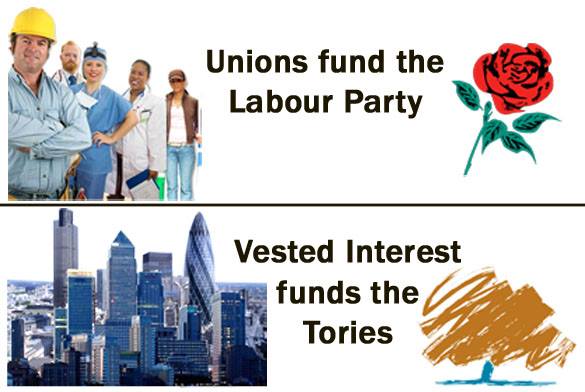
The link between Trade Unionism and equality

10553308_680322242037307_1558281906340939819_n

In an article I wrote earlier this year – Conservatism in a nutshell – I outlined some basic themes of New Right Conservative ideology. I said:

Conservatives don’t like social spending or welfare – our safety net. That’s because when you’re unemployed and desperate, companies can pay you whatever they feel like – which is inevitably next to nothing. You see, the Tories want you in a position to work for next to nothing or starve, so their business buddies can focus on feeding their profits, which is their only priority. Cheap-labour conservatives don’t like the minimum wage, or other improvements in wages and working conditions. These policies undo all of their efforts to keep you desperate. They don’t like European Union labour laws and directives either, for the same reason.

Conservatives prioritise handing out our money to their big business partners, no matter what it costs us as a society. For example, a spending breakdown reveals how NHS funding has flowed to private firms, much of that money has gone to companies with corrupt ties to the Tories, whilst health care is being rationed, care standards have plummeted, services are cut, and by the end of the next financial year, health service workers will have had their pay capped for six years, prompting fully justified strike action.

Following the tide of sleaze and corruption allegations, Cameron “dealt” with parliamentary influence-peddling by introducing the Gagging Act, which is primarily a blatant attack on trade unions (which are the most democratic part of the political funding system) and Labour Party funding, giving the Tories powers to police union membership lists, to make strike action very difficult and to cut union spending in election campaigns.

The Transparency of Lobbying, non-Party Campaigning, and Trade Union Administration Bill is a calculated and partisan move to insulate Tory policies and records from public and political scrutiny, and to stifle democracy. And there are many other examples of this government removing mechanisms of transparency, accountability and safeguards to rights and democracy.

We have witnessed a dramatic increase in levels of economic inequality this past four years, reflected in the fact that income differences between top earners and those on the lowest wages are now higher than at any time since records began. The UK now ranks as one of the most unequal societies in the developed world, even more unequal than the US, home of the founding fathers of neoliberalism. Our current levels of inequality have far exceeded the point at which campaigners need any further proof to show how socially corrosive and life-limiting the subsequent deepening poverty is.

Despite the legislative framework of Labour’s Equality Act, passed in 2010, there is a growing gender-based pay gap, continued abuse of agency workers, the problem of the two-tier work force and the contracting out of public servicesStrong trade unions improve public services, too.

Speaking at a press conference on the first day of the 2014 TUC Congress, TUC General Secretary Frances O’Grady said:

“The key message of this year’s congress is Britain needs a pay rise and I also expect many of the debates on the floor to focus on the importance of the coming general election for people at work.

Today, I want to highlight the threat posed by the Conservative Party’s promised manifesto proposals on strike ballots.

Because these proposals are designed to make unions weaker. And if unions become weaker, then the chances of people winning a pay rise, improving living standards and tackling inequality in Britain today will become a good deal harder.

The Conservative Party is not just proposing a few more bureaucratic obstacles that will make life a bit more difficult for trade unions.

Taken together, they would effectively ban strikes by the back door. And, on top of that, they would open up elected union leaders to increased surveillance by the state.

They are not just an attack on fundamental liberties. They will act to lower living standards for the majority of working people – whether or not they are union members.”

One half of the British population owns 9% of household wealth whilst the other half owns 91% of the wealth; and the five richest families in the UK are wealthier than the poorest 20% of the entire population.

Conservatives are always obsessed with “economic growth”, but we know from history that economic expansion in itself does not promote equality: it is the types of employment, the rules and structure of the economy and policies that matter most. Conservative governments always create high levels of inequality.  Furthermore, they rarely manage to bring about the economic growth they promise. But recession due to reduced public spending is an inbuilt feature of neoliberalism, as we witnessed during the Thatcher era.

Inequality hinders growth in another important way: it fuels social conflict. However, social diversity has no negative impact on economic growth, despite what those on the blame-mongering Right would try and have us believe. It is economic policies that shape inequalities, not minority groups: they are the casualities of inequality not its creators.

Economic inequality is also about discrimination. Black and ethnic minority workers are disadvantaged in finding employment. Dismissal of pregnant workers is a widespread practice. Last year, the wage gap between men and women’s earnings increased and the progress previously made towards equal pay has been reversed.

Cameron’s government has mobilised resentment and fear on the part of relatively privileged social groups in relation to other subordinate or putatively threatening groups of politically defined Others – immigrants, unemployed people, disabled people, unionised workers, single mothers and so on.

Social inequalities and hierarchies are defended by Conservatives and secured in several ways. The defence of power, wealth and property, when threatened, tends to be micro-managed via rigid authoritarianism, through systems of mobilised prejudice and through free-market policies (the predictable effects of which are to transfer wealth upwards). All Conservative politics pivot on a fundamental commitment – the defence of privilege, status, and thus sustaining social inequality.

But it is only by shifting money from the high-hoarding rich to the high-spending rest of us, and not the other way around, that investment and growth may be stimulated and sustainable.

The Office of Budgetary Responsibility forecasts that the Coalition are facing a £17BILLION blackhole after the low pay  that their own policies have strongly encouraged have caused a slump in tax payments to the treasury.

It is very clear that austerity is not an economic necessity, but rather, it is an ideological preference, used as a justification for “shrinking the State” whilst defending power, wealth and privilege.

The Coalition have introduced trade union laws which inhibit trade union recruitment, activity and collective bargaining. Employment rights are being removed, at a time when policies have reduced access to unfair dismissal protection and access to employment tribunals.

Trade unions are most effective when all workers are represented and therefore trade unionism encourages social inclusion. Collective bargaining and representational support will not work in the long term if some workers have substantially less to gain from the process than others.

For this reason, trade unions and the Labour Party have worked at eliminating sex, race and other forms of discrimination in the workplace. This has taken time, given how deeply ingrained inequalities have been in our society. We know that where trade unions are active, employers are more likely to have equal opportunities policies.

But for proper support of economic equality, trade unions need legal protection for their activities so they may operate freely and build effective social solidarity and promote egalitarianism.  Trade unions seek increased participation by working people in the decisions that influence their lives and a fairer distribution of the nation’s wealth. That is the antithesis of Conservatism.

Freedom to speak out against injustice, to campaign for economic equality and to work together through trade unions are underpinned by rights set out in the European Convention on Human Rights (ECHR). It’s no surprise that Cameron has pledged to exit the ECHR and to scrap Labour’s Human Rights Act.

To tackle economic inequality and build a fairer society, it is essential that trade-unions can operate freely and that collective bargaining is renewed. The impoverishment and exploitation of any one group of workers is a threat to the well-being and livelihood of everyone.

Building a future economy where the benefits of work and profit are shared requires legal reform in support of effective trade unions.

Lydia Hayes and Tonia Novitz from the Centre For Labour and Social Studies have written  the following proposals, designed to change public policy, so that trade unions are better able to represent their members, by  simplifying the statutory procedure for trade union recognition, and putting in place arrangements for sector-wide collective bargaining:

1. Introduce a legal framework through which trade unions can freely organise and engage in collective action to build economic equality.

2. Amend trade union recognition legislation so that all workers who choose to join a union can be represented in collective bargaining and other workplace matters.

3. Ensure the law provides for sectoral bargaining which can set minimum terms and conditions across an industry or a service sector.

4. Defend human rights which protect the functioning of trade unions (including rights to free speech, freedom of assembly and freedom of association).

5. Give trade unions access to workers and workplaces, so that they can advise on the benefits of membership and collective bargaining.

6. Enable workers to have access to information about trade unions at their workplace so that they can make an informed choice and easily join a trade union if they want to.

None of this will happen during the current government’s term, because Conservatism is in diametric opposition to trade unionism, equality, human rights and egalitarianism.

Related
The Institute of employment Rights

10174840_680246428711555_4476316988383611981_n

Thanks to Robert Livingstone for the graphics.


I don’t make any money from my work. I am disabled because of illness and have a very limited income. But you can help by making a donation to help me continue to research and write informative, insightful and independent articles, and to provide support to others. The smallest amount is much appreciated – thank you.

DonatenowButton

Cameron pledges to leave the European Convention on Human Rights.

994442_352804464870608_5110112617916821526_n
BBC (Conservative) political editor Nick Robinson said a report written by a working group of Conservative lawyers has predicted that the so-called British Bill of Rights would force changes in the way the Strasbourg court operates. Robinson unbelievably quoted Theresa May on the radio earlier today, from this:

“We all know the stories about the Human Rights Act. The violent drug dealer who cannot be sent home because his daughter – for whom he pays no maintenance – lives here. The robber who cannot be removed because he has a girlfriend. The illegal immigrant who cannot be deported because – and I am not making this up – he had pet a cat.”

Of course this was a lie. At the time May made the bizarre claim, the Judicial Office intervened and stated “This was a case in which the Home Office conceded that they had mistakenly failed to apply their own policy – applying at that time to that appellant – for dealing with unmarried partners of people settled in the UK. That was the basis for the decision to uphold the original tribunal decision – the cat had nothing to do with the decision.” The recently “retired” Ken Clarke also clarified at a Telegraph fringe event that no-one had ever avoided being deported for owning a cat.

482882_456712161064984_1212213617_n

Theresa May is far from alone amongst the Conservatives with a deep disdain for our obligations to uphold international human rights laws. It’s no surprise that David Cameron has also pledged to explore ways to leave the European Convention on Human Rights (ECHR) again, in the wake of the departure of his most senior legal advisor, according to the Daily Telegraph.

Ken Clarke said: “It is unthinkable for Britain to leave the European Convention on Human Rights,” as he also became a departing Cabinet minister. The Prime Minister is believed to have wanted rid of the Attorney General Dominic Grieve because he was supportive of Britain’s continued ECHR membership.

Labour has dubbed the Cabinet reshuffle “the massacre of the moderates”, pointing to the departure of pro-Europe and “One Nation” Tories such as David Willetts, Nick Hurd and Oliver Heald.

It’s long been the case that the Tories and the right-wing press have deliberately blurred the boundaries between the European Union and the European Council of Human Rights, which are of course completely different organisations. I assumed that this was a misdirection ploy.

However it is the case that the member states of the EU agreed that no state would be admitted to membership of the EU unless it accepted the fundamental principles of the European Convention on Human Rights and agreed to declare itself bound by it. I also think that Conservatives, who regard both institutions as “interfering”, do see the Union and the Council as the same in terms of both being international frameworks requiring the British government to have a degree of democratic accountability at an international level.

In his parting interview, Mr Clarke, who has held office in every Conservative government since 1972 and is also the party’s most prominent Europhile, said the debate was “absurd”.

“I personally think it’s unthinkable we should leave the European Convention on Human Rights; it was drafted by British lawyers after the Second World War in order to protect the values for which we fought the War for.” He’s right, of course.

The years immediately after the Second World War marked a turning point in the history of human rights, as the world reeled in horror of the Nazi concentration camps, there came an important realisation that although fundamental rights should be respected as a matter of course, without formal protection, human rights concepts are of little use to those facing persecution.

So in response to the atrocities committed during the War, the International Community sought to define the rights and freedoms necessary to secure the dignity and worth of each individual. In 1948 the newly formed United Nations adopted the Universal Declaration of Human Rights (UDHR), one of the most important agreements in world history.

Shortly afterwards another newly formed international body, the Council of Europe, set about giving effect to the UDHR in a European context. The resulting European Convention on Human Rights was signed in 1950 and ratified by the United Kingdom, one of the first countries to do so, in 1951. At the time there were only ten members of the Council of Europe. Now 47 member countries subscribe to the European Convention, and in 1998 the Human Rights Act was passed by the Labour Party in order to “give further effect” to the European Convention in British law.

Previously, along with the Liberal Democrats, Grieve was able to thwart attempts to reform the ECHR, and opposed pulling out altogether. The plan to reform it is being led by the Justice Secretary Chris Grayling but Grieve has pledged to continue to fight for Britain’s membership from the backbenchers. Though Clegg had agreed to a British Bill of Rights, he was strongly opposed to withdrawing from the ECHR.

Grieve understood that ECHR is about the fundamental rights of the citizen and ought to be cherished in the same way as the Magna Carta and Habeas Corpus are. But as we know, this is not a typical view amongst Conservatives, who frequently cite the same examples of “foreign criminals” being allowed to stay in the country as evidence it is “not working”.

The Prime Minister’s spokesman said that the sacking of Grieve had not led to a change in Government’s policy. However he pledged action if the Conservatives are elected next year without the Liberal Democrats: “If you are asking me about party manifestos, the Prime Minister has previously said that he wants to look at all the ways that we can ensure we are able to deport those who have committed criminal offences.”

Mr Grieve said he would defend human rights legislation from the back benches to “contribute to rationality and discourse”.

“If we send out a sign that human rights don’t matter, that is likely to be picked up in other countries which are also signatory states such as Russia.”

The Conservatives are very likely to go into the next election with a proposal to repeal Labour’s Human Rights Act, which enshrines the European Convention in British law, and replace it a British Bill of Rights. We have witnessed this Conservative-led government blatantly contravene human rights with policies such as the Bedroom Tax, the Legal Aid Bill, and there is a backlog of cases awaiting Hearing.

The Equality and Human Rights Commission (established under Labour’s Human Rights  Act) have suffered significant cuts to funding, from 70 million when Labour were in Government to just 25 million since the Coalition took Office, up until 2012, with fears that this will be further reduced to just 18 million. This has meant severe staffing reductions, and a massive backlog of work, and at a time when many are seeking to bring forward cases regarding the impact of Government legislation.

Human rights were formulated to protect us from governments such as this one. This is a government that chooses to treat our most vulnerable citizens despicably brutally, with absolutely no regard for their legal and moral obligation to meet our most basic needs.

Such a disregard of fundamental rights is historically associated with despots and tyrants

It’s clear that this government see human rights as an inconvenience and an obstacle to their future policy plans.

A central tenet of human rights law is that all humans have equal worth. We know that Conservatives such as Cameron don’t hold that view, there is an inherent, persistent strand of Social Darwinism that is clearly evident in Tory ideology, manifested in their policies, and they prefer and shape a hierarchical society founded on inequalities.

Disregard and contempt for human rights has led to atrocities. Human rights are safeguards, they establish moral principles that set out certain standards of human behaviour, and they are universal, providing in principle social and legal protections for all.

We need to ask why would any government want to opt out of such protections for its citizens?

We know from history that a society which isn’t founded on the basic principles of equality, decency, dignity and mutual respect is untenable and unthinkable.

7005_494073677328832_658777491_n
Pictures courtesy of Robert Livingstone