Tag: Human Rights

The Paradise Papers, austerity and the privatisation of wealth, human rights and democracy

351-burden-cuts-by-population

Outdated Conservative ideology has long framed the social safety net as an obstacle to national prosperity, the government claims that welfare somehow depresses economic growth and job creation. Indeed, Conservative efforts to dismantle the welfare state have been a constant in UK national politics. However, the truth is that as income inequality increases, the potential for economic growth is constrained. Seven years of austerity aimed at the poorest citizens have provided empirical evidence that does not verify the government’s claims.

The Conservatives also claim that welfare creates “perverse incentives” and “moral hazards” – it produces negative “unintended consequences,” as people who are eligible for support don’t have a job. Welfare is therefore reduced to ensure that people are not comfortable in claiming financial support, in order to “make work pay”. The problem with that, however, is that many people who work are also struggling to make ends meet. Work doesn’t pay because a miserly state provides perverse incentives for unscrupulous profit-driven employers to pay miserly wages that are well below average living costs. There has also been a marked loss of job security, too, over the last seven years.

All of this reflects a troubling reality of the labour market – that without government regulations and collective bargaining – the government have a history of legislating to undermine trade unions and traditionally loathe collective bargaining – employers are able to use “competition” to reduce wages. This state of affairs is clearly attributable to political decisions. It can be traced back over decades of policies favouring businesses at the expense of established employee rights. 

In the free market, all that matters is how many people are capable of doing your job. Competition matters, at least on paper. It doesn’t matter what qualities and skills you have. Workers are not paid according to their skills, they’re paid according to what they can negotiate with their employers. The more people there are in the labour market, the less bargaining power they have. The steady reduction of the support offered by the welfare state creates desperation, and also significantly reduces peoples’ choices regarding employment. It creates a race to the bottom, where wages are depressed and stagnating, and “efficiency” rules, along with the profit motive.

Furthermore, some employers are discriminatory, and pay workers different wages on the grounds of disability, age, race, or gender.

Changing policies to include a progressive tax structure would enhance economic growth and see a structural lowering in the unemployment, underemployment and low pay rates, with the other very valuable benefit of being ethical, fair, decent and compassionate. There are several excellent macro-economic reasons for substantially raising wages AND raising welfare. Notably, it could boost consumption, reduce inequality as well enhance economic growth.

In 2014, the Organisation for Economic Co-operation and Development (OECD) published a report that stated income inequality actually stifles economic growth in some of the world’s wealthiest countries, whilst the redistribution of wealth via progressive taxation and benefits encourages growth.

The report from the OECD, a global think tank, shows basically that what creates and reverses growth is the exact opposite of what the current neoliberal government are telling us. It highlights that the Conservative austerity programme is purely ideologically driven, and not about effectively managing the economy at all. However, many of us already knew this was so. The Conservatives have managed to narrate neoliberal ideology effectively, it became naturalised, and established as an “intuitive” and common sense kind of justification system for crass inequality, (accumulation by the wealthy through the dispossession of the poor) while its very design was to fragment the truth and disjoint rationality. This is precisely how dominant ideologies operate. 

Austerity was never about what works for the economy. Austerity is simply a front for policies that are entirely founded on ideology, which is all about “handouts” to the wealthy that are funded by the poor

If we provide support for those on low incomes, there will inevitably be higher aggregate spending, more jobs and a stronger economy. And if the income distribution continues to include those on low incomes, rather than the current redistribution to the wealthiest, there will be a lift in the growth potential of the economy. Unemployment would be structurally lower and there would be a self-supporting cycle of stronger economic activity as a result.

The Paradise Papers and the privatised magic money tree

Tax havens are one of the key engines of the rise in global inequality. I started writing this article just as the Paradise Papers leak hit the media, following information that was garnered by the German newspaper Süddeutsche Zeitung – which also received the Panama Papers last year – and shared by the International Consortium of Investigative Journalists with partners including the Guardian, the BBC and the New York Times.

Conservatives argue that economic inequality is essential to a healthy economy to generate the financial incentives for individuals to remain in further and higher education, to work hard and to invest their savings in productive enterprises, all of which will result in faster economic growth and rising average living standards. Wealthy people create jobs, and so the poorest citizens will benefit indirectly from economic inequality as some of the benefits of faster economic growth “trickle down” to them. The Conservatives claim that wealthy people are essential to the economy because they “create jobs” and more wealth. 

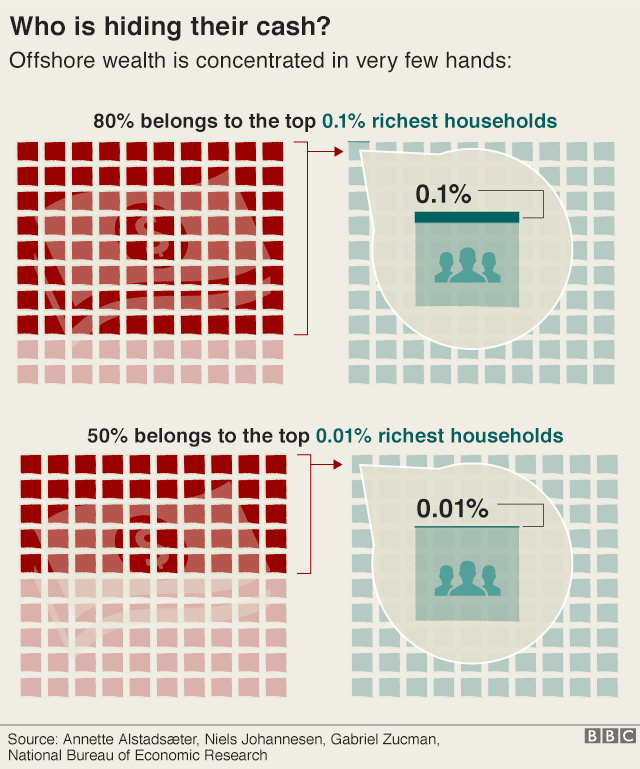
However, regardless of the plausibility of the debate about competition, meritocracy,  equality of opportunity, rather than equality of outcome – and the debate around wealth redistribution, the world’s super-wealthy have taken advantage of lax tax rules to siphon off at trillions of pounds, from their home countries’ economies and hoard it abroad – and the offshore drain involves a sum larger than the entire American economy. The sheer scale of hidden assets held by the super-wealthy also strongly suggests that standard measures of inequality, which tend to rely on surveys of household income or wealth in individual countries, radically underestimate the true level of inequality – the gap between rich and poor. 

Wealth doesn’t “trickle down”: it’s hidden away offshore. It’s hoarded. If you are remotely concerned about fairness and inequalities of wealth and power, you really must be concerned about the very existence of tax havens, and the significant impact this has on national economies. The Conservatives prize the idea of private property, and that impacts on their decision-making. Rather than address the issue that would have had a larger positive impact on our economy – tax avoidance and hoarding – they chose instead to impose austerity on the poorest citizens in the UK, they made “difficult choices” to dismantle the welfare state and raid our public funds, damaging our services and eroding our post war social safeguards. Wealth doesn’t “trickle down”, it trickles away offshore. Furthermore, it’s not feasible that the government was unaware of this. They have chosen to focus on supply side labor policies, and blaming the poorest for the big hole in the economy, some of which followed the banking crisis. They have chosen to regard our public services as “unsustainable” to prop up the immoral financial habits of a wealthy and powerful elite.

At the centre of the Paradise leak is Appleby, a law firm with outposts in Bermuda, the Cayman Islands, the British Virgin Islands, the Isle of Man, Jersey and Guernsey. The project has been called the Paradise Papers. It reveals (courtesy of the Guardian):

Graphic showing who is hiding their cash

The disclosures will certainly put pressure on world leaders, including Trump and the prime minister, Theresa May, who have both paid lip service to the idea of curbing aggressive tax avoidance schemes. 

The publication of this investigation, for which more than 380 journalists have spent a year combing through data that stretches back 70 years, comes at a time of growing global income inequality.

In the UK, the ideologically driven austerity programme has also contributed significantly to the redistribution of public funds from the poorest citizens to the wealthiest. I’ve said this before, but I’m going to say it again: 

Government policies are expressed political intentions regarding how our society is organised and governed. They have calculated social and economic aims and consequences. In democratic societies, citizen’s accounts of the impacts of policies ought to matter. But for the past seven years, the government have been completely disengaged with the public, and have failed to listen to accounts of the detrimental impacts of their public policies on marginalised social groups.

In the UK, the way that policies are justified is being increasingly detached from their aims and consequences, partly because democratic processes and basic human rights are being disassembled or side-stepped, and partly because the government employs the widespread use of linguistic strategies and techniques of persuasion to intentionally divert us from their aims and the consequences of their ideologically (rather than rationally) driven policies. Furthermore, policies have become increasingly detached from public interests and needs.

The justification offered by the government for its draconian policies aimed at society’s most marginalised (and protected) social groups is that welfare and other supportive public services are “unsustainable”. The government claims that “difficult decisions” have to be made, which invariably entail cuts to essential services and provisions, because we don’t have enough money.

In truth, the government simply has other plans for the money available, and prioritises the desires of the very wealthy, at the expense of meeting the needs of the poor. 

Other justifications reflect the behaviourist turn, which perpetuates the “culture of poverty” myth and embeds behaviourist theories regarding the presumed attitudes and “cognitive incompetence” of the poorest citizens in policies, which extend a disciplinarian and “correctional” element. However, such narratives and policies indicate a government of evidence-free fanatics. In policy, everything is something you decide to do, and there is nothing that you have to do. There are always alternative choices to consider regarding how our economy is managed.

Few things demonstrate the Conservatives’ wake of glib lies than their record on welfare spending – an area in which they have overseen a culture of waste. Just look at disability benefits. We’re told repeatedly that spending on “welfare” for disabled people is “out of control”, yet earlier this year it emerged that the Department for Work and Pensions has gone nearly £200m over budget, in paying two private companies from the public purse to run the personal independence payments (PIP) assessment system.

Then there is the Work Capability Assessment scandal. The National Audit Office (NAO) scrutinises public spending for Parliament and is independent of government. In their audit report last year, the NAO concluded that the Department for Work and Pension’s spending on contracts for disability benefit assessments is expected to double in 2016/17 compared with 2014/15. The government’s flagship welfare-cut scheme will be actually spending more money on the assessments themselves than it is saving in reductions to the benefits bill. It would be cheaper, and of course much more ethical to simply pay people what they were previously entitled to, based on their own doctors’ professional judgement.

The NAO report reflects staggering economic incompetence, a flagrant, politically motivated waste of tax payers money and even worse, the higher spending has not created a competent or ethical assessment framework, nor is it improving the lives of sick and disabled people. People are dying after being wrongly assessed as “fit for work” and having their lifeline benefits brutally withdrawn. Maximus is certainly not helping the government to serve even the most basic needs of sick and disabled people.

However, Maximus is serving the needs of a “small state” doctrinaire neoliberal government. The Conservatives are systematically dismantling the UK’s social security system, not because there is an empirically justifiable reason or economic need to do so, but because the government has purely ideological, anticollectivist prescriptions, and other plans for our public funds.

The Conservatives have now spent at least £700m in taxpayers’ money on these contracts with multinationals alone, despite the fact that the process they use is so flawed that one charity reported that as many as four out of five rejections for PIP that were appealed against were overturned. That indicates, at the very least, the use of a severely flawed assessment process. PIP assessments are purposefully designed to ensure that people are less likely to be found eligible for the support in meeting the additional costs of being disabled. Then there is the massive cost of tribunals to add to the cost of administrating the “cuts”. 

Meanwhile, multinational companies are shifting a growing share of profits offshore – €600bn in the last year alone – the leading economist Gabriel Zucman will reveal in a study to be published later this week. That money leaves a hole in our economy, which is refilled at the expense of those with the very least to contribute to paying off the “national debt” – another Conservative obsession and justification for their austerity programme. 

The human costs of a “business friendly” neoliberal economy

The government have long claimed that they are “helping” sick and disabled people into work. This “support” entails putting disabled people through systematic ordeals, and constantly moving ever-shrinking goalposts – the claimed objective of which is “targeting” resources to “those most in need”.

The Conservatives use glib, patronising, ridiculous and baffling phrases in their rhetoric, guidelines and policy papers, saying things like they don’t want disabled people to “fall out of employment”, for example. Yet PIP, which is a non means tested payment, quite often supports people in employment, as did the now abolished Independent Living Fund. But PIP is very difficult to qualify for. At my own assessment, my previous post (which ended seven years ago, with social services) was actually used as “evidence” that I don’t have significant cognitive difficulties. However I was forced to give up that post when I became too ill to work. PIP certainly doesn’t seem to be about supporting disabled people in maintaining independence, despite its title.

If it were, then we wouldn’t be witnessing so many losing their award as they are transferred from Disability Living Allowance, or seeing it reduced. Many disabled people are losing their mobility award and consequently, their motability vehicles, which inevitably means that some in this group won’t be able to continue working.

The government has targeted disabled people in order to cut their support and to make savings by reducing the availability of lifeline support that was once accessible to those of us unlucky enough to be disabled, to become ill or have an accident, leaving us unable to earn an income. You know, those provisions that our national insurance pays for.

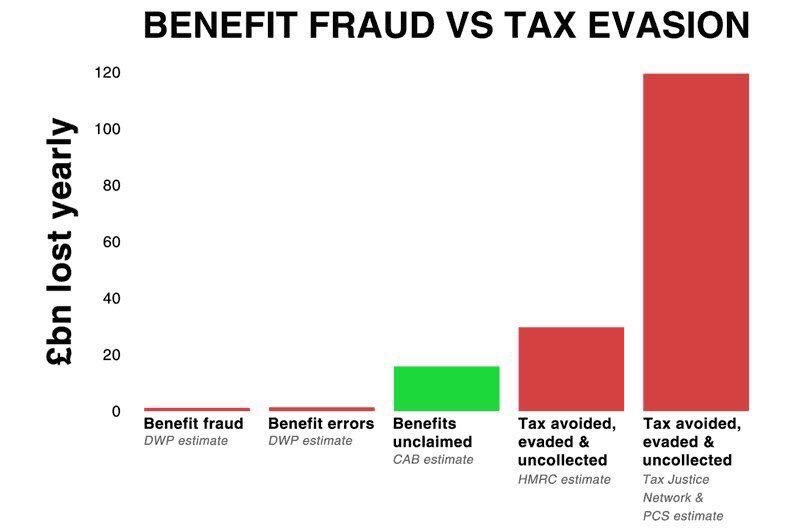
There is no reason whatsoever to presume that disabled people are “frauds”. The ordeals that have been introduced into the welfare system to deter fraud are not justifiable, since prior to the “reforms”, welfare fraud stood at just 0.7%/. Some of that tiny percentage was actually down to bureaucratic error, too, as administrative errors are included in the statistic. 

The claim that the ordeals incorporated into the system are to “protect the public purse” from fraud is utter rubbish. The ordeals deter most people from claiming, unless they absolutely have no choice. I’ve put off claiming PIP since 2012, when I was advised to by my doctor. Who wants to suffer the utter loss of dignity and punishment that the system meters out unless they really REALLY have to.

Some perspective:
People don’t “fall” out of their jobs: they become too ill to work or they lose their jobs because they are disabled. Every person facing an assessment is in that position because both they and their doctor have concluded that they are unfit for work – too unwell or unable. But the government refuses to accept first hand accounts and the professional opinion of professionals.

The government isn’t “helping” disabled people; it is making it as difficult as possible for people to claim support. The Conservatives are actually trying to coerce sick and disabled people who cannot work to work. Let’s have it straight. Because the whole process is so difficult, and because you are assessed and reassessed constantly, often having to go through mandatory review then appeal, which takes months and months on end, people with chronic illnesses especially experience worsening health because of the terrible stress and strain they are placed under by the state, and are therefore even LESS likely to “move closer” to employment.

In looking to make savings on disability benefits, the government is inflicting unacceptable harm and damage on disabled people. The system damages people’s health, wellbeing and more generally, their lives, because they have to struggle endlessly for a little basic support that most civilised societies would deem essential and  unproblematic.

All of this is because of the insulting assumption the Conservatives make that people who have illnesses or are disabled for other reasons are using their circumstances to wriggle out of their obligations to work, and of course, to fulfil their duty towards national production and the economy. Unfortunately, disability and medical conditions often restrain people from full participation in society, whether they like that or not. Cutting support will simply make inclusion and participation even less likely. 

How assessments are weighted towards the miserly state

The government has justified cuts to welfare more generally by making claims about the characters, attitudes and cognitive capacities of people claiming social security more generally. However, regardless of the front of blame-mongering rhetoric, both ESA and PIP were never intended to be easily accessible support mechanisms for disabled people. The very design of the assessments indicates this.

The Work Capability Assessment is a “norm-referenced” system, not a criterion-referenced system. These terms refer to different ways in which the evidence gathered from an assessment process is used. Criteria-referenced systems are considered to be objective and consider each case individually and on its own terms. Norm-referencing is designed to compare and rank assessments in relation to one another, rather than in relation to objective criteria. Norm-reference assessments score better or worse against a hypothetical standard,  which is determined by comparing scores against the overall performance results of a statistically selected group (a cohort). 

All of which is a sophisticated way of saying that there are in-built targets. To receive ESA, someone must score the required number of points and fall within the proportion of people the system will actually permit.  In practice, this means there is a finite number of people who can be awarded benefit, and that’s regardless of the number of people who actually meet the eligibility criteria. A serious limitation of norm-reference assessments is that the reference group – the cohort – may not represent the current population of those being assessed. Norm-referencing does not ensure that an  assessment is valid, either (i.e. that it measures the construct it is intended to measure). There is nothing to stop a government from using a very biased sample of the population, when they select a cohort.

In 2007, Conservative MP Timothy Boswell warned (9 Jan 2007 : Column 169): “I can imagine circumstances […] in which a future minister […] might wish to say: ‘We will introduce a norm. We are not going to have, by definition, more than 1.5 million people on employment and support allowance,’ and the tests will, in effect, be geared to deliver that result.”

The reassessment of everyone claiming Incapacity Benefit and all disabled people claiming Income Support became a major Conservative crusade that was, we were told, to save billions of pounds a year from the welfare budget, in the Conservative age of austerity. 

Similarly PIP assessments were developed to fit with a pre-conceived idea of how many people ought to qualify for support. The assessment is designed to allocate as few points as possible, by ignoring the real barriers people face in their daily living and assessing a person’s ability to “function” by using the most trivial  and non comparable descriptors.  Esther McVey disclosed in 2012 that she anticipated 300,000 disabled people would have their disability support cut or ended during the change over from Disability Living Allowance (DLA) to PIP. That statement came before a single assessment had taken place. If that isn’t a declaration of the real intention behind the introduction of PIP, and that the assessment itself is pretty arbitrary, then I don’t know what is. It does strongly suggest the assessments are not being conducted fairly and “objectively”. 

In 2012, a GP posed as a trainee Atos assessor and recorded undercover video footage that was later broadcast by Channel 4’s investigative current affairs programme Dispatches. In the film, trainers warned the NHS doctor that if, on average, he were to recommend more than one claimant per day for the Support Group (out of the eight he would be expected to see each day) he would be subject to an increased level of management scrutiny through a mechanism known as “targeted audit”. The undercover doctor was told:

“If it’s more than I think 12% or 13%, you will be fed back ‘your rate is too high’.”

An assessor under “targeted audit” would have all of their reports scrutinised before they were sent to the Department for Work and Pensions (DWP) and would no longer be allowed to recommend any claimants for the Support Group without asking for permission first. When the doctor asked an experienced assessor where these rules had come from, she replied: “The DWP”.

Both the DWP and Atos categorically denied ever having had any target for getting claimants off sickness benefits. However, both eventually admitted that Support Group “norms” were being used nationwide, though they both denied that the purpose of “targeted audit” was to limit the number of claimants placed in the Support Group.

Atos said that the audit process triggered by the breach of a “norm” was intended to ensure consistency across the firm’s UK team: if the assessor’s reports met the DWP’s expectations, the healthcare professional would not be asked to change their recommendations.

The decision-making process for awards certainly do not command public confidence, they depend on assessments of “functional impact” that are far from a precise science. In fact it isn’t “science” at all. There is a continuing widespread misperception that PIP is a medical test rather than an assessment of functional capacity, not helped by the fact that assessors are refered to as “Health Professionals”, and Atos claims to be a “medical Service”, while Maximus claims it conducts a “health assessment” rather than a work capability assessment. 

Last November, a United Nations (UN) committee published a scathing report on the consequences of the austerity policies pursued by the UK government in welfare and social care, which it described as “grave and systematic violations” of the rights of people with disabilities. Many of us have raised our concerns and fears with the UK government about the harsh impacts of austerity on disabled people, following the publication of the welfare “reform” bill in 2012, but we were ignored. 

The members of the House of Lords, opposition ministers, the Work and Pensions committee, disabled people’s organisations, charities and support groups and many individuals all tried to engage the government, but to no avail. We were excluded from any democratic dialogue, with accusations of “scaremongering”, and then silenced with false statistics and dishonest claims from Conservative ministers, who presented to us nothing but their own prejudice and contempt. 

We meticulously presented cases to ministers that demonstrated the hardship, harm, distress, loss of independence and dignity, and sometimes, the deaths, that correlate with the reforms and cuts. However, the first hand accounts of our experiences of Conservative policies, as disabled people, were loudly dismissed as “anecdotal evidence”. Over and over we were told by ministers that there was no “proven causal link” established between the policies and the frightening events that we were experiencing and reporting. The fact that the government refused to listen to us and were so uncompromising added another dimension and depth to the fears we experienced.

Many of us raised felt we had no choice but to raise our concerns and fears with the United Nations using the Optional Protocol to the Convention on the Rights of Persons with Disabilities – a side-agreement to the Convention which allows its parties to recognise the competence of the Committee on the Rights of Persons with Disabilities to consider complaints from individuals. Many of us have been documenting and submitting evidence to the UN since 2012. There followed an inquiry, more evidence was gathered. The government dismissed the UN report as “patronising and offensive”. However, given that the government is well aware that disabled people and disability organisations were responsible for the complaints that initiated the inquiry, the  patronising and offensive bluster and attitude is descending from Whitehall. 

A recent report from the UN expressed grave concern regarding care and treatment policies, which were described as insufficient to the extent of being “inconsistent with the right to life of persons with disabilities as equal and contributing members of society”.

Labour’s Debbie Abrahams, the shadow work and pensions secretary said “The UN committee has found that this Tory government is still failing sick and disabled people. Their damning report highlights what many disabled people already know to be true: that they are being forced to bear the brunt of failed Tory austerity policies.”

Before 2010, the very idea of cutting disability support was unthinkable. The Conservative behaviourist turn is a cruel front for inexcusably squeezing a few pounds more from disabled peopleso that wealthy people can avoid paying tax.

Thatcher’s government was fond of perpetuating the “culture of poverty” myth, but the current government has taken that to a new low, and has implemented costly big state policies which aim at “recifying” behaviours considered “not in our best interests”. The only beneficiaries are the private companies and multinationals who make a profit from administering the punitive cuts. The cuts which are costing more to implement than they can possibly save, in a “business friendly” political climate. One where the government tells us that we need to “incentivise” wealthy people to create jobs and contribute to the economy by giving them more money, while poor people are “incentivised” by not having enough money to meet their basic survival needs. Accumulation by the wealthy by dispossession of the poorest.

Welfare has incorporated a Conservative moral crusade aimed at coercing conformity and compliance to draconian state-determined conditions.

Meanwhile, some very wealthy people are making massive profits from the governments’ austerity programme, particularly the welfare “reforms”. 

Conservatism is synonymous with social and economic inequality – with handouts for the rich and subsequently, much less money for the poor. 

In the UK, democracy, human rights, independence, wellbeing, security, freedom and wealth have been privatised. Only 1% of the population can afford them these days, and they tend to bank offshore.  

paradise-papers-logo-icij-759 (1)


I don’t make any money from my work. But you can support Politics and Insights and contribute by making a donation which will help me continue to research and write informative, insightful and independent articles, and to provide support to others. The smallest amount is much appreciated, and helps to keep my articles free and accessible to all – thank you. 

DonatenowButton

The Labour Party’s approach to the United Nations

 una-uk-c


The United Nations Association (UNA-UK) has written to all major UK political parties, asking them for a statement on the United Nations. By shedding light on the approaches taken by different parties we hope to contribute to an informed national conversation on foreign policy, and help raise awareness of the ways in which the international system delivers benefits to British citizens.

Read more on this initiative and read other parties’ statements.

The Labour Party’s approach to the United Nations

The next few years provide the greatest opportunities in a generation for Britain to take a leading part in advancing a progressive international agenda in key areas of international concern from climate change, environmental degradation, womens’ rights, poverty reduction, natural disasters, disease and tackling some of the worst human rights abuses.

For Britain to prosper both at home and abroad, we need to seize the opportunity to shape the international agenda and support institutions like the UN from the dangers arising from global instability.

This means taking unmistakable steps to demonstrating our commitment to the UN and invest in greater diplomacy to harness respect, cooperation and goodwill for Britons across the globe.

The life chances, security and prosperity of our citizens are interdependent on our international agenda. Achieving our goals for our own nation requires working in harmony with other nations and the UN to accomplish a peaceful, progressive international agenda, one that reduces rather than increases tensions with other countries.

Unlike the Conservatives, Labour is deeply committed to improving and enhancing Britain’s support for the UN and we will redouble our efforts to distribute the proceeds of internationalism fairly, protecting and promoting rights and taking a steer from the UN to mitigate conflict.

A Labour Government will put human rights at the heart of our foreign policy and forge meaningful solidarity with other countries to entrench peace, security and trade relations for Britain.

The next Labour Government will commit to smooth British/UN relations, supportive of the UN and cooperative with various UN organs. And as a permanent member of the UN Security Council we will provide a lead by respecting the authority of international law with the aim of establishing a new world order based on conflict resolution, social justice, mutual respect and benefit.


vote_labour_red


See also: UNA-UK LAUNCHES MANIFESTO FOR 2017 GENERAL ELECTION

Nothing about you without you – the Labour party manifesto for disabled people

dis manifesto.png

FOREWORD

Over the last seven years disabled people have borne the brunt of the cuts inflicted on them by the Conservative Government and the Coalition before them.

The cuts have had a detrimental effect on the lives of disabled people, cutting living standards and undermining their access to education, social care and to justice.

Two years ago the United Nations (UN) convened a committee to investigate state violations of the UN Convention of the Rights of Persons with Disabilities (UN CRPD). Last year the UN published their report and concluded that the Conservative Government had committed ‘grave, systematic violations of the rights of persons with disabilities.’

This is a damning indictment of the treatment of disabled people by the Conservatives, one which shames us as a country.

We believe in a social model of disability, a society which removes the barriers restricting opportunities and choices for disabled people. As such we will build on the previous Labour government’s commitment to disabled people in 2009 as signatories to the UN CRPD. A Labour government will incorporate the UN CRPD into UK law.

We are proud of the manifesto we have developed with, and for, disabled people, and would like to take the opportunity of thanking everyone who has taken part in Labour’s Disability Equality Roadshow over the last year. We have crossed the length and breadth of the country to engage with disabled people and their carers, capturing their views on what needs to change for disabled people to live full and independent lives.

We will continue to work with disabled people in government, fulfilling our promise of ‘nothing about you, without you’.

Jeremy Corbyn, Leader of the Labour Party

Debbie Abrahams, Shadow Work & Pensions Secretary

Marie Rimmer Shadow, Minister for Disabled People.

To access full CONTENT click here (PDF)

After seven years of punitive policies and systematic abuse of the human human rights of disabled people by the coalition and Conservative governments, it is such a profound relief to see Labour have developed this manifesto, using consultations as a democratic opportunity to HEAR and include us in political decision making, and will strongly support disabled people and their families. I am proud to have contributed to this via the consultation held in Newcastle.

Here is a brief summary of some of Labour’s policies:

  • Labour will make it a priority to repeal the numerous cuts in social security support for people with disabilities. They will do this through a new Social Security Bill that will be passed within the first year of the new parliament.

  • Labour will reverse the £30 per week cut that the Tories recently imposed on disabled people who receive Employment and Support Allowance (ESA).

  • Labour will scrap the Bedroom Tax that has cruelly and disproportionately hit over 400,000 families with disabled members with punitive charges for “spare” rooms that are often used to store medical equipment, or for carers to sleep in.
  • Labour will end the pointless and needlessly expensive continuous reassessments of disabled people with permanent disabilities, chronic illness and degenerative illness.

  • Labour will end the privatisation of disability assessments so that disabled people never again have to face the indignity degradation of having to prove their disability to some corporate bureaucrat with targets to throw as many disabled people off their benefits as possible.
  • Labour will scrap the discriminatory and degrading Work Capacity Assessment (WCA) regime that costs billions more to administer than it actually saves in reduced payments in social security support for disabled people.
  • Labour will end the privatisation of disability assessments so that disabled people never again have to face the indignity degradation of having to prove their disability 
  • Labour will scrap the Personal Independence Payment (PIP) assessment regime too.
  • Labour will replace the WCA and PIP assessment regimes with a system where personal advisers help to provide every disabled person who feels capable of work to develop a tailored personal plan, adopting a genuinely holistic approach. Those who feel they can’t work will be supported without punishment or threat of uncertainty.
  • Labour will incorporate the UN Convention on the Rights of Persons with Disabilities into UK law. And observe the law.
  • Labour will scrap  the draconian sanctions regime that has consigned hundreds of thousands of disabled people to absolute destitution. 
  • Labour will increase the Carer’s Allowance by £11 per week to bring it into line with the rate of unemployment benefit. 
  • Labour will reverse the Tories’ assault on the Bereavement Allowance.

The Labour Party manifesto is a fantastic demonstration that they have been listening to the concerns of disabled people and their families.

The manifesto presents a set of policies that will make people’s lives better.

I’ve summarised a handful of policies here, so be sure to read the full document.

DSCN3314.JPG

 Alex Cunnigham, me, Debbie Abrahams and Gail Ward at the Disability Equality Roadshow in Newcastle

Peaceful anti-fox hunting protester arrested for ‘breaching the peace’ at Welsh Tory manifesto launch

With thanks to B Heard Media

A protester was arrested for “breaching the peace” and dragged away by the police from a peaceful protest, as the prime minister’s car arrived in Wrexham before the launch of the Welsh Conservative manifesto

Connor was dragged to the ground by police as May’s motorcade swept past. Blowing a horn, he attempted to move towards the car with a banner before he was pounced on, tackled and dragged away, surrounded by hordes of photographers and journalists. A journalist and fellow campaigners asked if he was under arrest, an officer said: “Yes, he’s under arrest.” Pressed on what charge, he replied: “Breach of the peace.”

Connor was dragged along the floor, whilst shouting “This is the fascist state that we are living in under Theresa May’s regime.” 

He told reporters who were present that he was protesting about the “repeal of the foxhunting Act, fracking, austerity, “state therapy”,  – the lot”.

“I’ve not done nothing wrong,” he added.

Another demonstrator told police that Connor, who appeared to have a Merseyside accent, had “done nothing wrong” and described their response as a farce.

Theresa May has said she would give Conservative MPs a free vote on the ban, most likely meaning that in a planned and highly regressive move, the ban will be lifted if the party wins the number of seats it seems to expect to. 

 25-year-old Connor was later released without charge.

Superintendent Nick Evans claims: “Our policing operation today was proportionate and necessary.” 

Article 11 Right to protest and freedom of association

Everyone has the right to freedom of peaceful assembly. This is a right closely linked to the right to freedom of expression. The right to peaceful protest in the UK is expressly guaranteed under the European Convention of Human Rights (ECHR).

It provides a means for public expression and is one of the key foundations of a democratic society.

The right applies to protest marches and demonstrations, press conferences, public and private meetings, counter-demonstrations, “sit-ins”, motionless protests etc.

The right only applies to peaceful gatherings and does not protect intentionally violent protest.

This was not a violent protest.

There may be interference with the right to protest if the authorities prevent a demonstration from going ahead; halt a demonstration; take steps in advance of a demonstration in order to disrupt it; and store personal information on people because of their involvement in a demonstration.

The right to peaceful assembly cannot be interfered with merely because there is disagreement with the views of the protesters or because it is likely to be inconvenient and cause a nuisance or there might be tension and heated exchange between opposing groups.

There is a positive obligation on the State to take reasonable steps to facilitate the right to freedom of assembly, and to protect participants in peaceful demonstrations from disruption by others.

The rights to free speech and protest, along with the right to form and join associations or groups, are found in Articles 10 and 11 of the UK Human Rights Act 1998.

These rights can be limited by law to protect the interests of others, but only when the limitation is proportionate and necessary in a democratic society.

So, for example:

  • the right to free speech will not protect a person who tries to spread hateful lies against another but it will protect fair comment;
  • the right to protest won’t protect violent gatherings but it will protect peaceful protest.

In recent years we have seen a variety of measures introduced that undermine the right to protest and freedom of speech:

  • Laws that were explicitly intended to combat anti-social behaviour, terrorism and serious crime are routinely used against legitimate protesters;
  • Broadly drafted anti-terrorism offences of ‘encouragement’ and ‘glorification’ of terrorism threaten to make careless talk a crime;
  • Membership of certain organisations can be banned under anti-terror laws even if the organisation is non-violent and political;
  • Hate speech laws have been extended in a piecemeal way to ban ever-expanding categories of speech;
  • Broad anti-terrorism powers of stop and search have been used to harass and stifle peaceful protesters;
  • Protest around Parliament has been severely restricted by laws limiting and overly regulating the right to assemble and protest around Parliament.

Another Conservative government will undermine both the right to protest and disassemble our human rights more generally.


I don’t make any money from my work. I am disabled because of illness and have a very limited income. 

But you can help by making a donation to help me continue to research and write informative, insightful and independent articles, and to provide support to others. The smallest amount is much appreciated – thank you.

DonatenowButton

Vote Labour to uphold the rights of disabled people – our letter to the Guardian

Image result for Human rights are universal

The following letter was published in the Guardian today, written and signed by a group of academics, professionals, campaigners and grassroots activists who work together cooperatively.

We collaborate to fulfil our mutual aims of achieving a progressive, civilised, just and safe society for all. We hope to do this by ensuring that the society we are a part of is democratic and fully inclusive: we want a civilised society that observes and meets its human rights obligations on behalf of all social groups. This isn’t happening currently. (See: UN’s highly critical report confirms UK government has systematically violated the human rights of disabled people).

As an independent researcher, writer, campaigner, and as a disabled person, I am very proud to be included among them. 

westminster-20121020-00081

Many disabled people see Labour’s policies as a lifeline, say the 30 signatories to this letter. 

For chronically ill and disabled people, recent years have been a disaster. The UN recently found “reliable evidence that the threshold of grave or systematic violations of the rights of persons with disabilities has been met” (Report, 8 November 2016).

We have been forced through a work capability assessment that the government’s own expert adviser described as “inhumane”, and which in 2015 was found to be associated with an additional 599 suicides.

Many needing help are now forced through another persecutory assessment – the personal independence payment – designed to reduce the numbers qualifying for help by half a million.

Social care has been so savagely cut that some young disabled must wear incontinence pads for lack of toileting assistance. People can’t take any more of this.

Many disabled people are not party-political, but see Labour’s policies for disabled people as a lifeline – envisioning a society where people are treated as human beings deserving of respect, equality and a decent life. Please, don’t endorse recent human-rights abuses; endorse the human rights of disabled people by registering, and by voting Labour on 8 June.

Paul Atkinson Jungian psychotherapist
Stef Benstead Spartacus Network
Peter Beresford Co-chair, Shaping Our Lives
Gary Bourlet Founder, People First Movement in England
Dr Emma Bridger Research fellow in psychology
Professor Woody Caan Journal of Public Mental Health
Dr Kelly Camilleri Registered clinical psychologist
Merry Cross
Dr David Drew Labour Parliamentary candidate for Stroud
Nick Duffell Psychohistorian
Dr Simon Duffy Centre for Welfare Reform
Dr Dina Glouberman Skyros Holistic Holidays
Catherine Hale Chronic Illness Inclusion Project
AC Howard DWPexamination.org – For The UK’s Disabled Community
Chris Johnstone General practitioner
Sue Jones Psychologists Against Austerity, researcher and writer, campaigner
Jayne Linney Disability activist
Alec McFadden TUC Salford
Helen McGauley Trainee clinical psychologist, Lancaster University
Beatrice Millar Person-centred counsellor/psychotherapist
Rev Paul Nicolson Taxpayers Against Poverty
Gavin Robinson Alliance for Counselling and Psychotherapy
Professor Andrew Samuels University of Essex
Nicola Saunders Psychotherapist
Martyn Sibley Disability blogger
Mike Sivier Vox Political
Professor Ernesto Spinelli
Mo Stewart Independent researcher, disability studies
Gail Ward
Dr Jay Watts Queen Mary, University of London
Dr Claudia GillbergSenior Research Associate in Education; Fellow at Centre for Welfare Reform and Disability Rights Activist

Dr Richard House Alliance for Counselling and Psychotherapy


Join the debate – email guardian.letters@theguardian.com

Read more Guardian letters – click here to visit gu.com/letters


I don’t make any money from my work. I am disabled because of illness and have a very limited income. The budget didn’t do me any favours at all.

But you can help by making a donation to help me continue to research and write informative, insightful and independent articles, and to provide support to others. The smallest amount is much appreciated – thank you.

DonatenowButton

Theresa May’s Vapid Vision for a One-Party State – William Davies

The following article is written in part by William Davies and published in The New York Times, on May 11, 2017.

LONDON — Britain today confronts a variety of deep, even existential, uncertainties. The terms of its exit from the European Union, the country’s long-term economic prospects and Scotland’s future within the United Kingdom are all in the balance. In contrast to these unknowns, the outcome of the general election on June 8 already feels concrete: The Conservatives, consistently between 17 percent and 20 percent ahead in the polls, are on course for a landslide victory.

In calling this election (despite promises not to) and in her campaigning for it, Prime Minister Theresa May is exploiting this contrast. The Conservatives are being presented as a new type of “people’s party,” under which everyone can huddle to stay safe from the multiple storms that are brewing. Mrs. May and her party are treating this election as too important to be reduced to political divides. With no explanation of how, she claims that “every single vote for me and Conservative candidates will be a vote that strengthens my hand in the negotiations for Brexit.”

This is where Mrs. May’s strategy and rhetoric become disconcerting. Ever since she took over from David Cameron last summer, she has spoken as if Britain is a nation harmoniously united, aside from the divisive forces of party politics and liberal elites seeking to thwart the “will of the people.” The first part of this is simply untrue: Forty-eight percent of the public voted to remain in the European Union, while the other 52 percent held various ideas of what leaving could or should mean in practice.

Prime Minister Theresa May of Britain speaks at the Dhamecha Lohana Centre in Harrow, England, on Monday. CreditPool photo by Stefan Rousseau


Mrs. May’s idea that her opponents are merely playing self-interested political “games” is a classic populist trope, one that suggests that constitutional democracy is really an obstacle standing between people and leader. The prime minister’s rhetoric since calling the general election has implied that the best outcome for “the national interest” would be to eradicate opposition altogether, whether that be in the news media, Parliament or the judiciary. For various reasons (not least the rise of the Scottish National Party) it is virtually impossible to imagine the Labour Party achieving a parliamentary majority ever again, as Mrs. May well knows. To put all this another way, the main purpose of this election is to destroy two-party politics as Britain has known it since 1945. 

One way in which Mrs. May has aggressively pursued this outcome is in her unusual framing of the choice before the British electorate. We are used to politicians presenting policy proposals and promises to the public. Of course, in practice this involves spin doctors seeking to cast their party’s policies in the best light, news outlets twisting the message depending on their political biases and many voters turning away in disgust because they don’t believe a word politicians say. That’s the routine.

The Labour Party, despite occasional populist swipes at the news media, has been sticking roughly to this script. There is a certain irony in this, seeing as Labour, under the socialist leadership of Jeremy Corbyn, has become viewed by many pundits and voters as an implausible party of government. But Labour has nevertheless been regularly putting out clear and reasonably worked-out policy proposals since the election was announced on April 18.

By contrast, Mrs. May has made scarcely any statements regarding policy. Her speeches and campaign literature are peppered with the slogan “strong and stable leadership,” a phrase she then recites on the few occasions that she takes questions from journalists or members of the public. The very basis on which she is asking to be trusted and to be elected seems different from an ordinary policy platform. From a leader of a party still in thrall to Margaret Thatcher, Mrs. May’s virtual silence on the economy is astonishing. The decision to vote Conservative is not to be based on knowledge of what a Conservative government will do — nobody has much of a clue about anything right now — but because of the desperate need for “strong and stable leadership.”

scroll2

May doesn’t speak to us in the recognisable language of a first world liberal democracy. She loathes our proud heritage of human rights. Her inauthentic glittering generalities, delivered robot-style, mask an underlying ideological narrative of scorched earth neoliberal policies, the details of which she refuses to share with us.

That said, it isn’t terribly surprising. If the votes in the general election were to be cast on the strength of public policies, rather than wedge issues and cringeworthy dog whistling slogans, then the Labour party will most certainly win. The Conservatives have left a blaze trail of antisocial policies, which the public have thus far been slow to register. A win for the Conservatives in June will be regarded as an endorsement for the party to finish dismantling the social gains of our post-war settlement: legal aid, welfare, the NHS, social housing and a genuine democracy.

May’s has previously stated her support for a Bill of Rights, one that doesn’t “bind the hands of parliament”. The Conservatives still intend to try and repeal our existing Human Rights Act. This is very worrying, since human rights were designed originally to protect citizens from authoritarian governments like this one. 

The Conservatives have already taken away legal aid, which is so clearly contrary to the very principle of equality under the law. In fact they have turned legal aid into an instrument of discrimination. The government has also tried to dismantle another vital legal protection  – judicial review – which has been used to stop them from abusing political power on several occasions.

The years immediately after the second world war marked a turning point in the history of human rights, as the world reeled in horror at the rise of fascism and the Nazi concentration camps, there came an important realisation that although fundamental rights should be respected as a matter of course, without formal protection, human rights concepts are of little use and consolation to those facing persecution.

So in response to the atrocities committed during the war, the international community sought to define the rights and freedoms necessary to secure the dignity and worth of each and every individual. In 1948 the newly formed United Nations adopted the Universal Declaration of Human Rights (UDHR), one of the most important agreements in world history.

Democracy is one of the universal core values and principles of the United Nations. Respect for human rights and fundamental freedoms and the principle of holding periodic and genuine elections by universal suffrage are essential elements of democracy. These values are embodied in the Universal Declaration of Human Rights and further developed in the International Covenant on Civil and Political Rights which enshrines a host of political rights and civil liberties underpinning meaningful democracies.

Human rights, democracy and the rule of law are core values of the European Union, too. Embedded in its founding treaty, they were reinforced when the EU adopted the Charter of Fundamental Rights in 2000, and strengthened still further when the Charter became legally binding with the entry into force of the Lisbon Treaty in 2009.

A legally binding human rights framework must be applied universally, and implemented without the “interpretation” and interference from individual governments. Furthermore, the State must fund the means of contract enforcement and free and fair trial legal costs, for those who cannot afford it.

If the State fails to fulfil this contingent function, then citizens simply cease to be free.

Image result for Pinochet propaganda

Pinochet claimed that Chile needed a “strong and stable leadership”, following his coup d’état. He went on to become adept at using his power to kill his political opponents – the “saboteurs”.

Government policies are expressed political intentions, regarding how our society is organised and governed. They have calculated social and economic aims and consequences.

How policies are justified is being increasingly detached from their aims and consequences, partly because democratic processes and basic human rights are being disassembled or side-stepped, and partly because the government employs the widespread use of propaganda to intentionally divert us from their aims and the consequences of their ideologically (rather than rationally) driven policies. Furthermore, policies have become increasingly detached from public interests and needs.

No wonder the Prime Minister chooses not to discuss Conservative policies and future policy proposals. 

Opposition and a plurality of perspectives are essential to a democracy. To dismiss anyone with a different view as a “saboteur” is to speak the language of tyranny. This translates as “democracy is sabotaging May’s government.”


“In a way, the world-view of the Party imposed itself most successfully on people incapable of understanding it. They could be made to accept the most flagrant violations of reality, because they never fully grasped the enormity of what was demanded of them, and were not sufficiently interested in public events to notice what was happening.”
George Orwell, Nineteen Eighty-Four.

The primary purpose of propaganda, for Orwell, is to eliminate individual thought and expression. In using euphemisms and metaphors, for example, which one does not create by him or herself, an individual neither creates his/her thoughts nor chooses his/her words; the process of thinking is completely eliminated.

Hannah Arendt wrote Origins of Totalitarianism during the 1940s, a period following on from the atrocities of world war two. Her research raises some fundamental questions about how tyranny can arise and also, the most dangerous forms of political scapegoating and dehumanisation, and the horrific inhumanity to which it can lead. Arendt’s analysis of propaganda and the function of intentional state lies seems particularly relevant here and now in the UK.  

Arendt explained that in Nazi Germany, the opposition was poorly equipped to fight the state because they didn’t understood either the purpose of propaganda or the language of totalitarianism.

The language reveals an intent. So, for example, when the Nazis formulated propaganda about the Jewish community, the opposition would focus on the lack of truth content, and meticulously fact-check the statements made, revealing them to be lies. 

However, Arendt goes on to explain that the propaganda was never intended to be a statement of fact, it was meant to be an outline of intention. 

The Tory creation of socioeconomic scapegoats, involving vicious stigmatisation of vulnerable social groups, particularly endorsed by the mainstream media, is simply a means of manipulating public perceptions and securing public acceptance of the increasingly punitive and repressive basis of the Conservatives’ welfare “reforms”, and the steady stripping away of essential state support and lifeline provision. That the othering rhetoric appeared in the media – the deliberate political act of spoiling and stigmatising a group identity – signaled the government’s intentions towards those groups that were targeted. 

The linguistic downgrading of human life requires dehumanising metaphors: a dehumanising socio-political system using a dehumanising language, and it is becoming familiar and pervasive: it has seeped almost unnoticed into our lives. 

The political construction of social problems also marks an era of increasing state control of citizens with behaviour modification techniques, (under the guise of paternalistic libertarianism) all of which are a part of the process of restricting access rights to welfare provision.

The mainstream media has been complicit in the process of constructing deviant welfare stereotypes – folk devils – and in generating moral outrage that is primarily emotive, rather than having any basis in rationality, from the public.

McGill University political philosophy professor, Jacob T. Levy says “The great analysts of truth and language in politics [including] George Orwell, Hannah Arendt, Vaclav Havel – can help us recognize this kind of lie for what it is…. Saying something obviously untrue, and making your subordinates repeat it with a straight face in their own voice, is a particularly startling display of power over them. Sometimes – often – a leader with authoritarian tendencies will lie in order to make others repeat his lie both as a way to demonstrate and strengthen his power over them.It’s something that was endemic to totalitarianism.”

Arendt and others recognised, writes Levy, that “being made to repeat an obvious lie makes it clear that you’re powerless.” She also recognized the function of an avalanche of lies to render a populace powerless to resist, the phenomenon we now refer to asgaslighting”:

quote-the-result-of-a-consistent-and-total-substitution-of-lies-for-factual-truth-is-not-that-hannah-arendt-115-98-77

“The Party told you to reject the evidence of your eyes and ears. It was their final, most essential command… And if all others accepted the lie which the Party imposed – if all records told the same tale – then the lie passed into history and became truth.”  George Orwell, Nineteen eighty-four.

Kitty S Jones.


I don’t make any money from my work. But you can contribute by making a donation and help me continue to research and write informative, insightful and independent articles, and to provide support to others. The smallest amount is much appreciated – thank you.

DonatenowButton


Disabled people are once again confronting the spectre of social isolation – Jane Campbell


Superficially the UK leads the world on disability rights, but colossal cuts are undermining the progress made over the last few decades
 
Lady Jane Campbell at her home in Surbiton, Surrey
Lady Jane Campbell served on the House of Lords select committee reviewing the impact of the Equality Act. Photograph: Martin Godwin for the Guardian

On Monday, disabled representatives from disability organisations across England, Scotland and Wales presented reports to the UN Committee on the Rights of Persons with Disabilities in Geneva. It is now eight years since the UK ratified the UNCRPD with cross-party support and this is the committee’s first full examination of the UK’s performance.

So how are we doing? The government is fond of claiming that the UK is a “world leader” on disability rights. Superficially, this claim remains fairly accurate. We have the most comprehensive and proactive equality law anywhere in the world; social care legislation and practice that embodies the principle of choice and control; a social security system that claims to recognise the extra costs of disability; and law and regulations to advance accessibility.

It is important to remind ourselves of what disabled people have achieved over the past 30-40 years of disability rights activism, as we have charted our journey from objects of care and charity to becoming active, contributing citizens. But any assessment of progress cannot be confined solely to what we now have, or where we were in the past. And judging by the UK’s direction of travel, the government’s claim of world leadership quickly unravels: we are seeing big cuts to services and watering down of rights and opportunities of disabled people. 

Last year, I served on the House of Lords select committee, reviewing the impact of the Equality Act on disabled people. We found that this government’s deregulatory zeal and spending cuts significantly undermined the intended effect of the act. Employment tribunal fees, legal aid cuts and loss of advice services have put the act’s protection beyond the reach of most disabled people. And colossal cuts to the Equality and Human Rights Commission’s budget have left the act under-promoted and unenforced.

The UK’s mental health and mental capacity laws fail to comply with the CRPD, which stipulates that disability cannot be grounds for denying people equal recognition before the law or for depriving people of their liberty. Yet in England, there has been a 10% rise in detention each year for the past two years. More than half of these cases related to people with dementia, and a significant minority to adults with learning disabilities. The sanctioned use of restraint, seclusion and anti-psychotic medication remains commonplace on mental health and learning disabilty wards, violating people’s rights to physical and mental integrity and to live free from torture, inhuman or degrading treatment.

NHS benchmarking data revealed that there were 9,600 uses of restraint during August 2015 in mental health wards in England, while the Learning Disability Census 2015 found that one-third of patients with a learning disability were subject to the use of restraint in 2015-16.

Unexpected deaths of mental health in-patients, or those cared for at home in England, are up by 21% yet, unlike deaths in police, prison or immigration detention, there is no system of independent investigation. Since 2011, hospitals in England have investigated just 222 out of 1,638 deaths of patients with learning disabilities. Among deaths they classed as unexpected, hospitals inquired into just over a third.

The Care Act fails to ensure disabled people’s right to independent living, and swingeing cuts in health, social care and benefits are eroding the availability of support and people’s right to exercise choice and control. Disabled people are confronting the spectre of re-institutionalisation as councils and clinical commissioning groups limit the amount they spend on individual packages of support

The UN disability rights committee has already reported on the negative impact of the UK’s measures to cut social security spending. Yet further disability benefit cuts continue to be implemented and the extension of punitive sanctions to those hitherto assessed as unable to work is being proposed on the back of declining investment in employment support.

“Nothing about us without us” is the international motto of the disability rights movement, but there is little evidence of disabled people being involved in policy development. The last 10 years have seen the proportion of public appointees with a self-declared disability halve in number, while helpful measures to support more disabled people into politics, such as the Access to Elected Office Fund, have been suspended in England.

Advancing the rights of disabled people requires good leadership to establish coherence and coordination in Whitehall, and in devolved and local government. The Office for Disability Issues was set up for this very task, but has become a shadow of its former self. But in Wales and Scotland, things are more positive, with the convention firmly embedded in policy and strategy. 

If the UK wants to maintain the mantle of world leader on disability rights, it must see the forthcoming examination as an opportunity to listen and take stock. If it fails to do so, current and future generations of disabled people face the slow, inexorable slide back towards social death once again.

aaeaaqaaaaaaaad4aaaajdk1ytqwzdyxltjinwytngjhmc05njdlltmyzmu4mty4owi5za

Urgent: UK-US trade inquiry and consultation quietly launched by select committee, deadline for submissions this Monday

923022_488684277867772_33457858_n

A Commons Select Committee launched a public inquiry on 2 February. The International Trade Committee invited the public to send their views regarding the upcoming UK-US trade deal. The Committee will use those ideas to form recommendations for the government’s approach to the deal. 

However, in addition to the fact that the inquiry wasn’t widely publicised, the time scale given for responding is less than a month. The deadline for written submissions is (unbelievably) Monday 27 February 2017

The Conservatives wholly endorsed the Trans Pacific Partnership (TPP) and the Transatlantic Trade and Investment Partnership (TTIP), which would have enshrined the rights of corporations under International Law, and restrict future governments in overturning the changes through the threat of expensive legal action. These are the largest trade agreements in history, and yet they are NOT open for review, debate or amendment by Parliaments or the public.

The agreements would have shifted the balance of power between corporations and the state – effectively creating a corporatocracy. It would have NO democratic foundation or restraint whatsoever. The main thrust of the agreement was that corporations will be able to actively exploit their increased rights through the TPP and TTIP to extend the interests of the corporation, which is mostly to maximise their profits.

Human rights and public interests certainly would not have been a government priority. Six hundred US corporate advisors have had input into the TTIP. The draft text was not made available to the public, press or policy makers. The level of secrecy around the trade agreement was unparalleled. The majority of US Congress were also kept in the dark while representatives of US corporations were consulted and privy to the details.

A major concern for many of us was that many of the regulations likely to be affected under TTIP are designed to protect our health and the environment by setting safe levels of pesticides in food and chemicals in our toiletries and household cleaning products for example. These safeguards will be eroded or eliminated, potentially exposing people to greater risks of unsafe, unregulated commercial goods to support the interests of multinationals.

The infamous TTIP (and the EU-Canada trade deal CETA) provide likely blueprints for future trade deals. So we also have a good idea of what kind of potential dangers for our public services, such as the NHS, lie ahead. Trump, like the Conservative government here in the UK, is a strong advocate of deregulation and “free market competition” – which effectively means that (even more) of our public services are at risk of being sold off to big multinational companies.

The Conservative privatisation programme has been an unmitigated failure. We have witnessed scandalous price rigging, massive job losses and job insecurity, decreased wages and poorer working conditions, profoundly decreased standards in service delivery, disempowerment of our unions, and above all, at terrible cost to many citizens. But then the Conservatives will always swing policy towards benefiting private companies and not the public, as we know. In Britain, privatisation is primarily driven by the neoliberal New Right’s ideological motives, to “roll back the frontiers of the State” and to “increase efficiency”. 

SumOfUs – a global campaign that fights for people over profits, and is committed to curbing the growing power of corporations – have drafted six key demands for a better, more just trade deal with the aim of “letting Theresa May know right from the start that we won’t let her turn Brexit into a corporate takeover.” 

The SumOfUs community has urged the UK government to uphold the following principles in negotiating a trade agreement with the US: 

1. Labour, climate and human rights agreements and how they’re implemented in UK law should take precedence over the trade agreement.

2. Violations of human rights, workers’ rights and environmental protection should be sanctionable, and those sanctions meaningful and effective. 

3. Negotiations need to happen transparently and inclusively. Text proposals as well as consolidated treaty texts need to be published to allow for public scrutiny and robust debate. Corporations must not be granted privileged access.

4. No special rights for investors. The deal should not enable US corporations to sue the UK over policy in the public interest that threatens their profits.

5. All public services must be exempt and protected from corporate takeover. 

6. No race to the bottom on regulation – all laws should be harmonised to the highest standard and should always allow a party to go beyond the levels of protections agreed upon.

You can visit SumOfUs site to add your name to their message to the International Trade Committee, and endorse the six outlined principles. 

The inquiry is to examine the potential for a UK-US trade agreement, the opportunities and challenges any agreement might present and the implications for the production and sale of goods and services on both sides of the Atlantic. It will make recommendations to the Government on how it should approach trade relations with the US. 

Interested organisations or individuals are invited to submit written evidence to the Committee. (Quickly.)

Terms of reference

The Committee is particularly interested in the following:

  • what the UK’s priorities and objectives should be in negotiating any such agreement;
  • the possible impacts (positive and negative) on specific sectors of the UK economy from such an agreement;
  • the extent to which any agreement could and should open up markets in services, including public services; 
  • the extent to which any agreement could and should open up markets in public procurement;
  • how any agreement should approach regulation, including regulatory harmonisation;
  • what dispute-resolution mechanism should form part of any such agreement; and
  • what involvement, if any, the UK should seek to have in the North American Free Trade Area or any future regional free trade agreement involving the USA.

Send a written submission to the International Trade Committee

Update: The deadline for written submissions is extended to Tuesday 7 March 2017. Written evidence should be submitted via the inquiry page, so you will still have to act quickly to have your say.

Chair’s comments

On launching the inquiry, Committee Chair Angus MacNeil MP commented:

“It seems highly likely that a trade deal with the US will be this Government’s first step in their attempts to reshape the UK’s economic relationship with the rest of the world. This will be a tough test. The UK will be entering negotiations led by a newly formed department. They may feel the need for a deal to show the rest of the world, and domestic audience, that the UK is open for business. And any outline agreement could impact on how our negotiations progress with the EU. 

The US might not be expected to offer many concessions, either. In his first days in office, President Trump has not shied away from implementing his campaign pledges, no matter how radical. How will his pledge to buy American and hire American sit with his aim to negotiate a deal “very quickly” with the UK? Is the President’s desire to prove his reputation for winning in deals bad news for a UK wanting some form of equal partnership?

Most importantly, this is a necessary inquiry as we must move beyond the showmanship and controversy that will no doubt be a feature of this process, and drill down to the detail of what is proposed. What should be the UK’s red lines? What sectors could win and lose? Will access to public services be on the table? 

Crucially, we want to explore how far Ministers should be prepared to go to get the marquee deal they are after.”

Related

A UK trade deal with Trump? Be careful what you wish for

imgres


I don’t make any money from my work. I am disabled because of illness  and have a very limited income. But you can help by making a donation to help me continue to research and write informative, insightful and independent articles, and to provide support to others. The smallest amount is much appreciated – thank you.

DonatenowButton cards

Brendan Mason’s brutal murder reflects the darkest consequence of bias motivated behaviour.

brendan_mason_montage2

Brendan Mason, who was brutally murdered by two young men he thought were his friends.
Picture courtesy of the Leicester Mercury

Warning: this article was very distressing to write, and is likely to be very upsetting to read.

Two men who filmed themselves savagely beating a young man with learning difficulties and taunting him, telling him to “smile for the camera”, have been sentenced by Leicester crown court to life imprisonment for his murder. 

In the early hours of 5 July last year, Joshua Hack, aged 21, and Keith Lowe, 22, lured Brendan Mason, a 23 year old man with learning difficulties, to a park, where they said they wanted to spend time with him. Mason believed the two men to be his friends.

When the three of them arrived at the park, Hack and Lowe hung Mason from a tree. They took turns hitting him while the other held him down for several hours, cruelly laughing and taunting him. 

Mason was beaten unconscious, the two young men stripped him naked and threw his body in a pond, leaving him for dead in Abbey Park, Leicester. He was found by park groundsmen at 7.40 am naked, unconscious and bleeding and was airlifted to Walsgrave Hospital in Coventry. 

Medics discovered Mason had 99 separate injuries to his head and body, including brain injury, five broken ribs and a collapsed lung. He died from his injuries later that day.

Hack previously admitted murder. However, Lowe denied it.  However, he was forced to change his plea four days into his trial, after police produced video as evidence of what he did, which he had tried to delete from his phone. 

The court heard the attack had been planned the night before and that Hack and Lowe misinterpreted his behaviour towards a girl at a party. Prosecutor Miranda Moore QC said: “They were describing Brendan as a paedophile and nothing could be further from the truth.”

Mason’s learning difficulties led to a bias in how his ordinary social interactions were perceived.  

She added that police had recovered a “‘trophy’ picture of Lowe standing behind the naked and beaten Brendan, who is sitting cross-legged on the floor”.

A second video, lasting 53 seconds, was deliberately filmed on the mobile phone for others to see. The police managed to retrieve it from cloud storage, showing Lowe taking a direct part in the beating. Lowe had attempted to delete the footage from his phone.

 Moore said: “The audio that goes with it makes that clear.”

The court heard that in the second video, Lowe says: “Brendan. Look at him. Told you whatever he’d done to you, I’d do worse to him, told you that. Move your hand away from your face. Move your hand away from your face now.”

 Moore told the court:

“Officers were able to see the video on the Cloud, showing an unfortunate scene.

It shows Brendan’s battered and naked body with Lowe landing blows.

It was being made for a third party to show them what happened to Brendan.”

The court was also presented with Facebook messages the pair were sending each other while they were in the park with Mason prior to the attack. They used the Facebook messages to plan the attack. Mason who had trusted the two men, believing they were his friends, had no idea to what was about to take place.

At 2:46am, Hack sent Lowe a message saying: “Just hit him and we can both ****off when he’s K’ Od.  Just do it dude.” 

Lowe replied: “Shall we do it because he’s f**ked me off with the lies.”

The court heard how Mason died from inflicted, brutal and unsurvivable brain injuries.

 Mason’s family said in a statement:

“It is not right how two evil people can do such a horrific thing and leave a massive hole in our lives that will never be filled again.

Brendan was a lovely young man and he was so happy. He had numerous learning difficulties and very poor vision.

Even though Brendan had numerous learning difficulties and was very easily led by others, he always knew right from wrong.

The police have been a big part of our life for the past seven months; they have been amazing, but there will never be closure for us.”

Sentencing the two men to life in prison, Judge Michael Chambers said: “You [Lowe and Hack] subjected him [Mason] to a brutal and sustained attack in which you caused him great pain and humiliation.

Brendan Mason was only 23 with his life before him. You subjected him to a merciless attack with extreme violence.

He was sadly a vulnerable young man with learning difficulties. He was kicked mercilessly while naked. The video found was a chilling and deeply disturbing recording of Brendan naked, being kicked repeatedly to the head.

He’s even told to remove his hands from his face so you can kick him. You subjected him to a brutal and sustained attack of extreme violence. You caused him great pain and humiliation.

This was a planned attack, during which you filmed each other assaulting him and you revelled in what you had done, bragging to others. You stripped him naked and left him unconscious. He died later that day.”

The judge added that Hack had lied in his first interview with the police and had even gone with friends to lay flowers at the scene where Mason’s body was found. He said Lowe had bleached his bloodstained trousers, washed his hooded top and hidden his blood-spattered shoes in a bid to cover his tracks.

Senior investigating Officer Detective Chief Inspector Mick Graham said after the trial: “Brendan was known to the defendants and considered them as friends, and they lured him to the park with the full intention of hurting him. Brendan was subjected to a vicious, sustained attack which was filmed by his attackers on their phones. He was left naked and alone in the park having been brutally beaten.”

Hack and Lowe were caught on CCTV footage casually walking into a McDonald’s after they had stripped, hung and then beaten Mason into unconsciousness, seriously and fatally injuring him, and leaving him for dead. Lowe had kept Mason’s mobile phone which he and his then girlfriend were using in the following days.

The growth of prejudice, discrimination and hate crime: Allport’s ladder

Gordon Allport studied the psychological, social, economic and political processes that create a society’s progression from prejudice and discrimination to violence, hate crime and eventually, if the process continues to unfold without restraint, to genocide. In his landmark exploration of how the Holocaust happened, Allport describes psychological and socio-political processes that foster increasing social prejudice and discrimination and he provides insight into how the unthinkable becomes socially and psychologically acceptable: it happens incrementally, because of a steady erosion of our moral and rational boundaries, and propaganda-driven changes in our attitudes towards “others” that advances culturally, by almost inscrutable degrees.

The process always begins with political scapegoating of a social group and with ideologies that identify that group as an “enemy” or a social “burden” in some way. A history of devaluation of the group that becomes the target, authoritarian culture, and the passivity of internal and external witnesses (bystanders) all contribute to the probability that violence against that group will develop, and ultimately, if the process is allowed to continue evolving, genocide.

Economic recession, uncertainty and authoritarian or totalitarian political systems contribute to shaping the social conditions that trigger Allport’s escalating scale of prejudice. The Conservatives are authoritarians, and prejudice towards vulnerable and socially protected minority groups is almost a cardinal Conservative trait.

Conservatives and the right more generally tend to view the social world hierarchically and are more likely than others to hold prejudices toward low-status groups. This is especially true of people who want their own group to dominate and be superior to other groups – a characteristic known as social dominance orientation. (Pratto, Sidanius, Stallworth, & Malle, 1994). 

Neoliberalism, as an overarching political-economic project of the New Right, establishes and maintains social hierarchies and the strong competitive individualism embedded in neoliberal ideology sets up conflict over resources between social groups, undermining social cooperation and solidarity. 

As inequality has grown in the UK, poverty has also invariably increased, which has caused fear and resentment towards intentional, politically constructed scapegoats and outgroups. 

The nature of prejudice

Prejudice, which is based on unjustified generalisations about groups of people, is reductive, it obscures the complexity of the human experience because the person with prejudices oversimplifies the diversity of life found in a single society or throughout the world.  The rise in prejudice and discrimination in the UK is because of right wing ideology and mythology, designed purposefully to divert the public from the fact that they are being systematically dispossessed of their wealth by a minority, and to maintain the legitimacy (and growing wealth) of those perpetrators in power.

The media is far from objective, benign and politically neutral, in fact we have handful of offshore billionaires that have, along with the government, subverted democracy and established a cultural hegemony. This self-appointed elite are telling you that some human lives are worthless, whilst investing in their own, quite literally, at all cost to our society.

The European Commission against Racism and Intolerance (ECRI) reprimanded some British media outlets, particularly tabloid newspapers, for “offensive, discriminatory and provocative terminology”.

In their report, the ECRI said hate speech was a serious problem in the UK. It cited Katie Hopkins’ infamous column in The Sun, where she likened refugees to “cockroaches” and sparked a scathing response from the UN High Commissioner for Human Rights, and the same newspaper’s debunked claim over “1 in 5 Brit Muslims’ sympathy for jihadis”

“ECRI urges the media to take stock of the importance of responsible reporting, not only to avoid perpetuating prejudice and biased information, but also to avoid harm to targeted persons or vulnerable groups,” the report concluded.

It also named David Cameron and Nigel Farage as among the British politicians and institutions accused of fuelling rising xenophobia in the UK as debate continues to rage over Brexit, the refugee crisis and terrorism.

It found a “number of areas of concern” over intolerant political discourse and hate speech, as well as violent racial and religious attacks.

The media is being used by and large as a right-wing outlet for political techniques of persuasion, our culture has been saturated with a pathological persuasion to hate others. And prejudice tends to multitask, it doesn’t prefer one social group. It grows.

We live in a society where more than one in two disabled people have experienced bullying or harassment in the workplace, according to research by the disability charity Scope.

The survey of 1,009 disabled UK adults during August 2016 reveals 53% have been bullied or harassed at work because of their disability.

We have a government that does not observe the basic rights of disabled people. Furthermore, the Conservatives have systematically contravened the human rights of disabled persons. This is a government that uses gaslighting to avoid dialogue and democratic accountability regarding the consequences of their draconian, discriminatory  and illegal policies. Techniques of neutralisation used by the government include the manipulative use of language that is designed to mislead, for example, using the word “help” and support” to describe punitive policies and harsh cuts to lifeline support for disabled people.

The stereotypical mainstream media portrayals of people with disability and medical conditions as “shirkers” and “fakes”, with a significant increase in articles focusing on disability benefit and fraud has impacted negatively on people’s views and perceptions of  disability related benefits, leading to perceptual bias. This was a tactical political move to de-empathise the public,  preempting any objection and backlash to the brutal cuts the Conservatives applied to disabled people’s lifeline social security.

There are political and economic constraints imposed on this group of people by a highly discriminatory government. This sends out a message to the public – that disabled people have fewer rights than other citizens; that disabled people are not experts of their own condition or experiences and need the state to “incentivise” them to “overcome” their disabilities, and institutionalised discrimination, and that it is okay to direct prejudice at disabled people as they are somehow “less” than other citizens. 

Policies are systemised, intentional political actions and reflect how the government thinks society ought to be. The majority of austerity cuts have been directed at those with disabilities. The recent removal of the Employment Support Allowance (ESA) work related activity component; the scrapping of the Independent Living Fund; the purposeful reduction in those people deemed eligible for ESA using an amended and harsher work capability assessment; the reduction in those deemed eligible for Personal Independent Payment and subsequent access to the motability scheme, may be regarded as punitive measures aimed at an “undeserving” group. Such policies have systematically stigmatised, outgrouped and ultimately, contributed to the cultural dehumanisation of disabled people.

The discriminatory cuts have caused ill people to feel desperate and worthless by depriving them of the practical means to live, and have become another means of promoting an ideology defined by exclusion and inequality. Many people with medical conditions have died as a consequence of not being able to meet their basic needs, people with mental distress and illness have been pushed over the precipice, and have taken their own lives.

There has been a 213 per cent rise in hate crimes against disabled people, with figures rising 40% per year from 2015. Lee Irving was brutally murdered in June, 2015. Irving had severe learning difficulties. He was bullied and tortured over several days at a house in Newcastle. When he died from his terrible injuries, his tormentors dumped his body on a footpath. Wheatley’s mother, Julie Mills, his then girlfriend Nicole Lawrence, 22, and his accomplice Barry Imray, 35, who also has learning difficulties, did nothing to protect Irving. They were bystanders Wheatley’s mother, Julie Mills, 52, his then girlfriend Nicole Lawrence, 22, and his accomplice Barry Imray, 35, who also has learning difficulties, did nothing to protect Irving. They were passive bystanders.

The justification narrative for the last two government’s targeted austerity policies, and the policies themselves have entailed negative role modelling which has influenced the attitudes and behaviours of the public. Hate crimes are bias motivated behaviours.

The major contributing factor to the increase in hate crime is the collective bias, attitudes and behaviours of the current government, which has perpetuated, permitted and endorsed prejudices against social groups, with a largely complicit media amplifying these prejudices. Their policies embed a punitive approach towards the poorest social groups. This in turn means that those administering the policies, such as staff at the department for work and pensions and job centres, for example, are also bound by punitive, authoritarian behaviours directed at a targeted group. 

As authority figures and role models, the government’s behaviour establishes a framework of acceptability. Parliamentary debates are conducted with a clear basis of one-upmanship and aggression rather than being founded on rational exchange. Indeed, Cameron openly sneered at rationality and didn’t engage in a democratic dialogue, instead he employed the tactics of a bully: denial, scapegoating, vilification, attempts at discrediting, smearing and character assassinations. This behaviour in turn gives wider society permission and approval to do the same.

Scapegoating has a wide range of focus: from “approved” enemies of very large groups of people down to the scapegoating of individuals by other individuals. The scapegoater’s target always experiences a terrible sense of being personally edited and re-written, with the inadequacies of the perpetrator inserted into public accounts of their character, isolation, ostracism, exclusion and sometimes, expulsion and elimination. The sense of isolation is often heightened by other people’s reluctance to become involved in challenging bullies, usually because of a bystander’s own discomfort and fear of reprisal. 

The consequences of bystander apathy

Hate crime directed at disabled people has steadily risen over the past five years, and is now at the highest level it’s ever been since records began. That’s the kind of society we have become. 

Prejudice and discrimination cause inequality, which in turn causes more prejudice and discrimination. It requires the linguistic downgrading of human life, it requires dehumanising metaphors: a dehumanising socio-political system using a dehumanising language, and it has now become normalised, familiar and all-pervasive: it has seeped almost unnoticed into our lives. It has started to erode the natural inhibitions that prevent us from inflicting harm on other human beings.

Perpetrators have become increasingly confident in the “validity” of their prejudice, the public are being systematically desensitised and indoctrinated. Mocking, negative stereotypes and negative images become a part of our everyday culture and language: hate speech is normalised, discriminatory policies and practices flourish, hate crimes – bias motivated behaviours – are permitted.

Because we have allowed this process to unfold, as a society. 

The Holocaust is the most thoroughly documented example of the extreme cruelty, savagery and hideousness of dehumanisation. It’s a little too easy to imagine that the Third Reich was an aberration. We can take the easy option and dismiss the Holocaust as a very unusual phenomenon – a mass insanity instigated by a small group of deranged ideologues who conspired to seize political power and exercise their monstrously evil will.

It’s comforting to imagine that these were uniquely cruel and savage people. However, one of the most disturbing discoveries about how the Holocaust happened is not that all of the Nazis were madmen and monsters. It’s that they were mostly ordinary human beings, in a society of ordinary citizens like you and I. 


Related

Another bias motivated murder – Who killed Jo Cox?

Conservatives, cruelty and the collective unconscious: behind the cellar door


I don’t make any money from my work. But you can help me continue to research and write informative, insightful and independent articles, and to provide support to others by making a donation. The smallest amount is much appreciated – thank you.

DonatenowButton cards

National consultation on the rights of disabled people – the Labour party’s disability equality roadshow

https-cdn-evbuc-com-images-26194810-195402787332-1-original

Jeremy Corbyn, Paul Rutherford and Debbie Abrahams at the Roadshow in Manchester

The Labour party would like to invite you to attend the Disability Equality Roadshow, an event asking disabled people, their carers and service providers, which policies Labour should develop to best defend and extend their rights.

The events are free and the next one is to be held in the North East in Newcastle on 3 December. You can register to attend here.

Regardless of your personal party affiliations, I think as many of us as possible need to attend these events and have a positive input into policy because we need political parties to recognise disabled people’s needs, especially given the past six years of harrowing and disproportionately targeted austerity cuts and systematic violation of disabled people’s human rights.

I don’t support the Liberal Democrats, but nonetheless have permitted the party to use some of my work on disabled people’s rights and the impact of austerity on their site, because our needs and views ought to matter to every political party. Something as fundamental as the recognition and observation of human rights should be a collaborative and collective cross-party endeavour – a cooperative effort in a democratic, inclusive society.

Human rights should not be a party political issue, but it’s a fact that they are. The Conservatives want to repeal our Human Rights Act, and that must not happen. The government have already demonstrated clearly that they will not observe the rights of disabled people. Without a robust legal framework in place, we would have absolutely no access to justice and redress, and no protection from the brutality and disregard of an increasingly authoritarian government .

Debbie Abrahams has organised and launched the Roadshow, which is an important opportunity for us to have a democratic say in political decision-making and shape future policies. 

The Labour party are using the United Nations Convention on the Rights of Disabled People as a framework to help develop policies not just on social security but on education, health and social care, justice and more. It was the last Labour government that signed the UK up to the Convention.

The Roadshow will be going across the country to every region and to every nation state. 

Debbie is the Member of Parliament for Oldham East and Saddleworth and Shadow Secretary of State for Work and Pensions. She has represented the constituency since her by-election victory in January 2011.

Debbie was a member of the Work and Pensions Select Committee from June 2011-March 2015, where she led the call for an independent inquiry into the Government’s punitive New Sanctions Regime. She was re-elected as a member of the Work and Pensions Committee in July 2015 until her appointment as Shadow Minister for Disabled People in September 2015.  In June 2016 she was appointed Shadow Secretary of State for Work and Pensions.

Debbie is passionate about tackling inequalities and has campaigned extensively for a fairer society, setting up the Oldham Fairness Commission to deliver this in her own constituency. 

The Labour party assure us that the next Labour government will ensure that the UK upholds its obligations under the UN convention on persons with disabilities. They say their “commitment to people-powered politics means that they believe that future social security policy should be co-produced with deaf and disabled people, carers and service providers”. That is our democratic right. The party want to transform our social security system, based on the principles of dignity, independence and support. 

 The Labour party say they will listen to our views on improving social security, removing the punitive elements such as sanctions, the work capability assessment and the bedroom tax, to ensure it is fit for purpose; ensuring fair and equal access to employment for people who can and want to work; suitable housing and education; improving the provision of care and best supporting carers. 

If you have any additional access needs please email Huma on huma_haq@labour.org.uk by Thursday 1st December. 

Hope to see you there.


DATE AND TIME: Sat 3 December 2016, 10:45 – 13:45 GMT

LOCATION: Unite the union

John Dobson Street

Newcastle upon Tyne

NE1 8TW

View Map