

On May 4, there was a debate in the House of Lords about discussions with Disability Rights UK and the Disability Benefits Consortium on identifying a mobility criterion in the Personal Independence Payment (PIP) assessment framework, which was led by Liberal Democrat Baroness Thomas.
Baroness Thomas of Winchester tabled a Motion to resolve in the House of Lords:
“That this House calls on Her Majesty’s Government to hold urgent talks with Disability Rights UK and the Disability Benefits Consortium to identify a mobility criterion in the Personal Independence Payment (PIP) “moving around” assessment which is fairer than the current 20 metre distance, in the light of the impact on reassessed disabled claimants and the resulting large number of successful appeals.”
She said: “Tabling a Motion is an unusual course to take, but I assure the House that there is nothing fatal about it. However, if it were to be agreed, it would send a powerful message that this House is very concerned about this particular government policy and is taking a constructive approach to seeing what can be done to help the situation.
Why am I so concerned about the “Moving around” section? Because the relevant walking distance test for PIP has been made much harder than the Disability Living Allowance (DLA) test, meaning that by the Government’s own estimate the number of people on enhanced or higher-rate mobility will go down from around 1 million people to 600,000 by 2018.
Some 400 to 500 Motability cars a week are now being handed back by disabled claimants whose condition may not have improved but who are losing not just their car but, in many cases, their independence. Under DLA, the walking distance was 50 metres, which was in the Department for Transport guidance on inclusive mobility. The new distance of 20 metres is just under two London bus lengths, and is unrecognised in any other setting. There is no evidence that it is a sensible distance for the test, and it is not used anywhere else by the Government.
So someone with a walking frame, say, who can just about manage 20 to 30 metres, will not usually qualify for PIP. I see the Minister even now sharpening her pencil to make a note reminding her to tell me that this is a travesty of the truth. No, I have not forgotten the reliability criteria, which were made statutory in the last Parliament—thanks, in fact, to the intervention of the Liberal Democrats. The full reliability criteria in the PIP guidance are that 20 metres must be able to be walked,
“safely … to an acceptable standard …repeatedly … and … in a reasonable time period”.
Baroness Thomas added: “To sum up, to be told that the bill for PIP is too high and must be cut by more than halving the walking distance test is a real slap in the face for thousands of disabled people, particularly those of working age with lifetime awards under DLA. Of course the bill is going up—because the disabled population is going up. The Government must have factored that into their calculations years ago. The last thing that anyone wants is for more and more disabled people to become socially isolated and totally reliant on other services for everything they need. A great deal of money could actually be saved by other government departments, such as health, social services, employment and transport, by making the PIP walking distance fairer. I beg to move.”
There were also some outstanding contributions made in this debate by Baroness Sherlock (Labour), Baroness Grey-Thompson (Cross Bench), Baroness Masham of Ilton (Cross Bench), Lord Low of Dalston (Cross Bench), Baroness Brinton (Liberal Democrat), Baroness Doocey (Lib Dem), Lord McKenzie of Luton (Labour), amongst others.
I recommend that you read the debate in full here: Personal Independence Payment: Mobility Criterion.
One very important issue raised in this debate was clarified in a statement made by The Minister of State, Department for Work and Pensions, Baroness Altmann (Conservative). She said:
“I would like to clarify what appears to be a widespread misconception regarding the differences between the mobility assessment in PIP and the mobility assessment in DLA. Many noble Lords have spoken of a “20-metre rule”, but there is no such rule. Some people believe that we have changed the assessment of a distance a claimant is able to walk from 50 metres to 20 metres. This is not the case. The higher rate of DLA was always intended to be for claimants who were unable, or virtually unable, to walk. This is still the case in PIP, but we have gone further.
Under PIP, if a claimant cannot walk up to 20 metres safely, reliably, repeatedly and in a timely manner, they are guaranteed to receive the enhanced rate of the mobility component. If a claimant cannot walk up to 50 metres safely, reliably, repeatedly and in a timely manner, then they are guaranteed to receive the enhanced rate of the mobility component. [My bolding]
I can assure the noble Baroness, Lady Brinton, that if a claimant is in extreme pain, they will be assessed as not reliably able to walk that distance. The reliability criteria are a key protection for claimants.
It was after my department’s work with the noble Baroness and noble Lords in 2013 that we set out these terms, not just in guidance but in regulations, confirming our commitment to getting this right. If a claimant cannot walk up to 50 metres without such problems, they will still be entitled to the mobility component at the standard rate. If they cannot walk that distance reliably and in the other ways in which we have protected it, they will be entitled to the enhanced rate. Therefore, the enhanced mobility component of PIP goes to those people who are most severely impacted and who struggle to walk without difficulty.”
I co-run advice and support groups for disabled people, and have to say that the majority of accounts of experiences I witness from those going through the PIP assessment process do not tally with Baroness Altmann’s claims.
So, in light of these claims, which were made despite evidence presented during the debate to the contrary, Baroness Tanni Grey-Thompson is gathering further evidence, and she requests that anyone who can walk less then 50 metres and who has lost their PIP, please get in touch with her: Baroness Tanni Grey-Thompson DBE – Email: greythompsont@parliament.uk
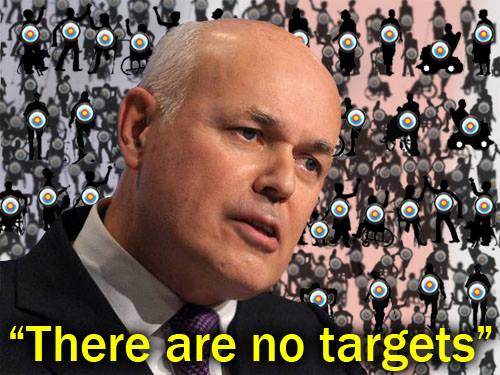
Picture courtesy of Robert Livingstone





 Politics and Insights