Tag: #privatisation

WORKING FOR PATIENTS OR NOT? – a guest post by Suzanne Kelsey

imgres


A guest post by Suzanne Kelsey, who is a key campaigner for the NHS, amongst other things.

In 1988, when Margaret Thatcher had been in office for some 9 years, and the very foundations of our NHS had been shaken with more of the public encouraged to use private medical care,  there were serious concerns about capacity in the hospital services as waiting lists increased and wards closed.  The Conservative government appointed a group of people, without consulting the health professions, to look at this growing problem.

As a result of this the NHS experienced the most significant cultural shift since its inception with a White Paper entitled, ‘Working for Patients, ’ which proposed what we now  know as the ‘Internal Market’ and the development of the purchase provider split. GPs become the purchaser and the hospitals are the providers. This passed into law as the NHS and Community Care Act 1990. Understandably there was a great deal of opposition from trade unions, Labour and the general public but it went ahead as did the Private Finance Initiative in 1992 implemented for the first time in the UK by the Conservative government of John Major.

There is no doubt that further major problems were created for our NHS, although I would question if on the same scale as we are currently witnessing with the threat of complete privatisation and the sell-off of our publically funded service to huge private international companies, who have been waiting in the wings for quite some time and would have been rubbing their hands in glee some years ago if Thatcher and the Conservatives had continued in office.

The definition of ‘privatisation’ also needs to be acknowledged because with the downgrading of facilities and existing provision struggling to meet demands, more and more people will become anxious and tempted to pay for their treatment even if it is to ensure they have a hospital bed!

We must never let this practice become the ‘norm.’ Campaigners must ensure that the ‘free at point of use’ core principle is upheld or we will be taken back to pre-war years, removing freedom from fear that was fought long and hard for by our champions of social justice. At the same time we must remember the mantra, ‘public health not private wealth’ with numerous examples available to us of how private companies will always put profits before patients, but more of that later.

When Tony Blair became Prime Minister in 1997 he inherited a very impoverished NHS and although we expected him to abolish the internal market this did not happen, perhaps for a variety of justifiable reasons. How do you replace crumbling hospitals and inadequate resources without massively raising taxes, whilst also limiting the upheaval that had already been caused?

Alan Milburn was Minister of State at the Department of Health during this time and he stated that after years of the Tory’s gross underfunding, there was absolutely no money to fund the infrastructure, hence the use of John Major’s PFI initiative. Labour therefore it would seem had little choice but to implement this because of the historic neglect of the NHS under the Conservatives that led to understaffing and an NHS unable to manage with the rising expectations of the population, coupled with the costly advances in modern medicine and technology.

A global recession, which was not Labour’s fault, further compounded the challenges of meeting the complex needs of the nation’s health care. Dennis Skinner MP for Bolsover Derbyshire, passionately summarised this in parliament in 2014 when he stated; ‘Between 1997 and 2010 Labour dragged the NHS from the depths of degradation that the Tories had left it in and hoisted it back to the pinnacles of achievement.’

I would like to pose some questions to those experts of marketisation and competition. My knowledge is very limited on the economic implications but I am learning, slowly but surely, through my long involvement with local and national campaigning, speaking to key people in politics and campaign groups, who are also passionate about our NHS. I become increasingly frustrated when people continually blame Labour for the introduction of privatisation  Yes Blair did carry on certain aspects of it which was a disappointment for many, including me, but perhaps my arguments surely go some way to addressing why this was.

  •  My first question is in the title of this article; ‘IS THIS WORKNG FOR PATIENTS OR NOT?’
  •  If Labour had made such massive inroads into privatisation surely there would have been no need for the Coalition’s unwieldy and costly three billion pound reforms, so huge they were just about visible from outer space and the truth is many of those who voted for it would not have time to read it fully. The bill was a long time in the writing and despite the pause because of massive opposition it was nevertheless hastily introduced by the Coalition, despite all the election promises, notably, ‘there will be no top down reorganisation of the NHS.’ They have as predicted caused unprecedented chaos and in fact a major crisis in our NHS, with exhausted frontline workers propping up a system, becoming totally stressed, angry and demoralised.

Many of the population are afraid of becoming ill, because of worrying inadequacies not only at primary and secondary health care levels but also in social care. The frail and elderly feel a burden as they are constantly labelled as ‘bed blockers,’ Thus long queues have been created to see your GP and at A+E, the gateway to the hospital, all of which can result in a lack of timely care. In contrast however Labour ensured patient satisfaction was at its highest with waiting times were at their lowest and the NHS during their time was lauded as one of the best, if not the best health service in the world.

  • Were the massive and unprecedented reforms therefore unnecessary and unjustified?
  • What are the implications for binding private contracts that have taken place across large swathes of the country if hopefully there is a change of government?
  • What lesson have been learnt from the withdrawal of Circle, the private company that took over Hitchingbrooke hospital, with claims of managers installed by these private operators creating a ‘blame culture?’ Allegedly Circle were willing to ensure local GPs incurred financial losses as long as it meant corporations continued to make a profit and the damning report about the quality of care in this hospital is shocking. CQC inspecting the hospital felt obliged to intervene when they became fearful of a sickening child and Professor Mike Richards the chief inspector of hospitals said that the findings were the worst it had ever published.
  • Clive Efford Labour MP for Eltham, South East London,   presented a private members bill to parliament in November 2014,which in order to avoid further top down reorganisation, focussed on the most damaging aspects of the Health and Social Care Act 2012, that gave powers to competition regulators to interfere in decisions of local health care commissioners. The most significant change is that the Secretary of State is once again accountable to you and me through parliament. If the bill is passed he can no longer avoid answering parliamentary questions by saying that it is down to local decision making and not his responsibility. Efford’s Bill also provides that neither EU competition rules nor EU procurement rules will apply. That is an important change from the present because, at the moment, a disappointed private provider can sue an NHS commissioner for damages for failing to put a service out to tender or running a tender process wrongly. My thanks to Clive Efford for that explanation and for securing a vote of 241 for the bill to 18 against.
  • How is this Bill progressing and how it is being supported by NHS campaign groups and health professionals.
  • If the Conservatives are allowed to waltz back in by a public who have been influenced by the hype and propaganda through a biased media and/or have become disengaged, disenchanted or disillusioned , or indeed confused by the outrageous claims of some minor parties who seem to be making it up as they go along, what do we do next!?

I hear talk of a revolution being the only answer from those extremists who are likely to be the least affected by one. Perhaps we would do well to remember that our NHS has just seen the biggest revolution since its inception in 1948. Unfortunately we have seen a glimpse into our future and the outcomes are dire, if we do not use our votes wisely.

Suzanne Kelsey 1stFebruary 2015

http://www.nhshistory.net/shorthistory.htm#_ednref15

http://www.nhs.uk/NHSEngland/thenhs/nhshistory/Pages/NHShistory1948.aspx

https://abetternhs.wordpress.com/2011/01/18/commissioning-and-the-purchaser-provider-split/

http://www.healthp.org/node/71

http://labourlist.org/2014/11/commons-pass-vote-on-clive-effords-nhs-bill/

http://www.telegraph.co.uk/news/politics/11333986/Damning-report-as-first-private-firm-to-run-NHS-hospital-pulls-out.html

Battle with GPs led to Circle’s retreat from Hinchingbrooke hospital,   The Guardian, January 9, 2015

Hinchingbrooke staff in CQC abuse concerns fear bosses BBC, September 29, 2014

http://www.independent.co.uk/news/uk/uks-healthcare-ranked-the-best-out-of-11-western-countries-with-us-coming-last-9542833.html

Selling off NHS for profit: Tories’ and Liberal Democrats’ links with private healthcare firms revealed

252299_486936058042594_609527550_n

Article from the Mirror 

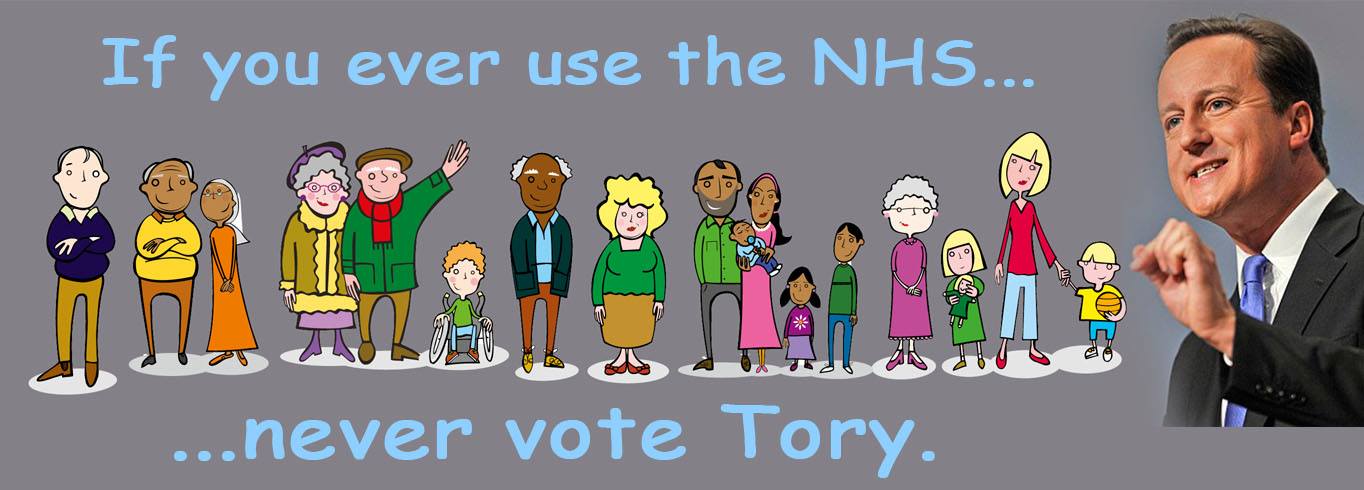
PM David Cameron and Health Secretary Jeremy Hunt are among 64 Tory MPs named in a study by Unite – Lib Dems Nick Clegg and Vince Cable are also on the list.

One in five Coalition MPs have links with private firms who could profit from the Government’s NHS reforms, a damning dossier will reveal on Tuesday.

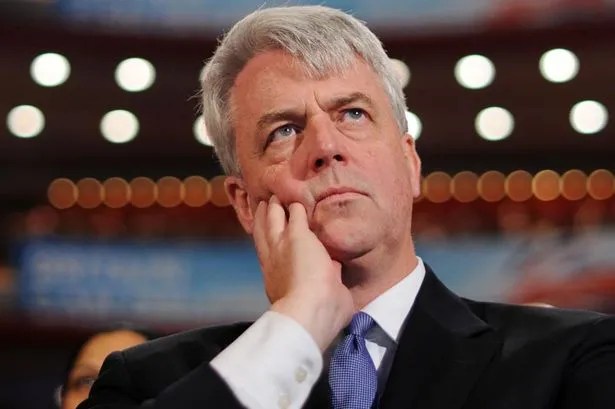
Prime Minister David Cameron, former Health Secretary Andrew Lansley and his successor Jeremy Hunt are among 64 Tory MPs named in a study by the Unite union.

Deputy PM Nick Clegg and Business Secretary Vince Cable are among seven Liberal Democrats on the list.

All 71 MPs named in the dossier voted in favour of the Government’s controversial Health and Social Care Act in 2012, which opened up the NHS to more private firms.

It comes ahead of Friday’s crunch vote on Labour frontbencher Clive Efford’s Private Members’ Bill, when MPs will decide whether to scrap key sections of the Act.

[However, the only way to see the Act scrapped in full is to make sure we have a Labour Government on May 7th 2015, as the Labour Party have pledged to repeal the entire Act since it came into being, in 2012.]

Unite general secretary Len McCluskey raged: “This dossier of disgrace exposes the corruption at the heart of our Government’s sinister health reforms.”

‘Dossier of shame’: Clegg, Cameron, Hague, Hunt, Duncan Smith and Lansley are named.

Len McCluskey at the Daily Mirror Real Britain Fringe

Unite leader Len McCluskey

He added: “The Government’s real plan is the complete and irreversible privatisation of our NHS.”

Many of the MPs named in the document have directly received donations from business leaders or firms with links to the private health industry.

There is no suggestion any of the politicians or donors acted illegally.

The Conservative Party stressed tonight that all donations are reported to the Electoral Commission in line with electoral law.

But critics said the dossier shines a bright light on the close ties between members of the ­Coalition and the private health industry.

Mr McCluskey said: “The sheer scale of the conflict of interest is staggering.

“But it is the subsequent betrayal and privatisation of our NHS, driven by the monstrous Health and Social Care Act, that has made this a genuine scandal for our democracy.”

The dossier shows Mr Lansley, the chief architect of the Coalition’s NHS reforms, accepted a £21,000 donation in November 2009 from John Nash, the former chairman of Care UK.

Andrew Lansley


Chief architect: Former Health Secretary Lansley received £21k from former chairman of Care UK.

 Two other Tory MPs received donations from Mr Nash’s wife Caroline.

Hunt, who took over as Health Secretary when Mr Lansley was sacked in September 2012, received more than £20,000 from hedge fund baron Andrew Law, a major investor in health care firms.

Other Cabinet Ministers to have received donations include Leader of the Commons William Hague, who accepted £20,000 from MMC Ventures, the part-owner of The Practice plc which runs 60 GP surgeries.

And Culture ­Secretary Sajid Javid received £11,000 from Moundsley Healthcare Ltd.

The Prime Minister is named in the dossier after handing a life peerage to nursing and care home tycoon Dolar Popat, who has given the Tories more than £200,000 in donations.

Tory Dolar: PM Cameron, pictured, gave peerage to nursing and care home tycoon who donated £200k+

Work and Pensions Secretary Iain Duncan Smith has share options in hygiene tech firm Byotrol, which sells products to the NHS.

Foreign Secretary Philip Hammond is named because his former firm Castlemead is a health care and nursing home developer.

Andy Burnham, Labour’s Shadow Health Secretary, said of the Tories: “They were bankrolled by private health in Opposition as they drew up secret plans to put market forces at the heart of the NHS.

“And once in Government, MPs and peers with links to private health voted it through without a mandate from the public.”

For the Lib Dems, the dossier says party leader Mr Clegg received a £5,000 donation to his constituency office from Alpha Medical Consultancy.

And Vince Cable was given £2,000 by Chartwell Care Services, which is owned by Chartwell Health & Care plc.

Liberal Democrat leader Nick Clegg accompanied by shadow chancellor Vince CableDonations: Clegg’s (left) office received £5k while Cable was given £2k
Tonight a Conservative spokesman hit back, and said: “Here in the ­Conservative Party, donations don’t buy our leader, our candidates or our ­policies. If only the same could be said of Unite and the Labour Party.

“The most important thing with NHS care is that it is high quality and free at the point of delivery.”

A Lib Dem spokesman said his party had “stopped Conservative privatisation plans and reversed Labour’s special favours to private health companies”.

He added: “We have already committed to spending at least £1billion extra on health and care in each year of the next Parliament.”

Some MPs’ health connections

  • George Osborne, Chancellor: Received donation through Conservative Campaign HQ from Julian Schild whose family made £184m in 2006 by selling hospital bed-makers Huntleigh Technology
  • Michael Fallon, Defence Secretary: Former director of Attendo AB, a Swedish private health company
  • Philip Hammond, Foreign Secretary: Beneficiary of a trust which owns controlling interest in nursing home developer Castlemead Ltd
  • David Davis, former Shadow Home Secretary: Received £4,250 for a speaking engagement for health insurance company Aviva
  • Liam Fox, former Defence Secretary: Received £5,000 from iIPGL Ltd, which purchased health care company Cyprotex
  • John Redwood, former Cabinet Minister: Advised the private equity company which runs Pharmacy2u
  • Vince Cable, Business Secretary: Received a donation of £2,000 from Chartwell Care Services, which is 100% owned by Chartwell Health & Care PLC.

    Click here for a full list of MPs with links to private healthcare firms

    See also: The Coalition has deliberately financially trashed the NHS to justify its privatisation


    1912510_690135534389311_7775048840596309303_o

The coming Corporatocracy and the death of democracy

923022_488684277867772_33457858_n
“Fascism should more appropriately be called Corporatism because it is a merger of state and corporate power.”
Benito Mussolini.

“The real corruption that has eaten into the heart of British public life is the tightening corporate grip on government and public institutions – not just by lobbyists, but by the politicians, civil servants, bankers and corporate advisers who increasingly swap jobs, favours and insider information, and inevitably come to see their interests as mutual and interchangeable… Corporate and financial power have merged into the state.”Seumus Milne.

The Conservative privatisation programme has been an unmitigated failure. We have witnessed scandalous price rigging, and massive job losses, decreased standards in service delivery and a disempowerment of our Unions. But then the Tories will always swing policy towards benefiting private companies and not the public, as we know. In Britain, privatisation was primarily driven by Tory ideological motives, to “roll back the frontiers of the State”. The “survival of the fittest’ Conservative social policies are simple translations from the “very privileged survival of the wealthiest at all cost” and “profiteering for Tory donors and sponsors'” economic ideology.

Consider, for example, who the beneficiaries of Tory workfare policy are. Despite spectacular failure in “helping people into work”, these schemes persist. In 2012, the National Institute of Economic and Social Research (NIESR) reviewed the DWP’s impact assessment into how its “mandatory work programme” was working. Former Cabinet Office chief economist and NIESR director Jonathan Portes wrote: “Whatever your position on the morality of mandatory work programmes like these – the costs of the programme, direct and indirect, are likely to far exceed the benefits.”

“At at time of austerity, it is very difficult to see the justification for spending millions of pounds on a programme which isn’t working.”

So we ask ourselves who benefits from this “scheme”. Big business does of course. They get free labour, funded by the tax payer, to maximise profits. The service providers also benefit. What this means is that the money “saved”’ in public sector cuts has been used to subsidise some of this Country’s richest companies, and they have been provided with free labour from a reserve of State induced unemployment. Workfare is nothing less than the gross exploitation of the economic victims of this Government.

The apparent Conservative desire for wider share ownership in some instances of privatisation was certainly intended to make the privatisation reforms difficult to reverse: it would make them very expensive to reverse, but also, it’s partly because re-nationalisation risks alienating the critical middle class swing voters in the electorate, quite apart from the fiscal implications.

Private ownership is considered by the Tories as one of the better ways of reducing the power of the trades unions, and with it the perceived support for the opposition Labour Party. Indeed, creating counterweights to the perceived and mythologised “monolithic” unions meant that inadequate attention was given to dispersed control and competition, evident in the early utility privatisations of telecoms and gas, for example.

Privatisation and liberalisation are distinct policies, whilst it is possible (and common) to privatise services without liberalising, it is less often understood that one can liberalise without privatisation.

For example, it is quite common for gas and electricity distribution networks to be municipally owned, with private ownership elsewhere. After the collapse of Railtrack, the British Government created Network Rail, a not-for-profit-distribution public-private partnership, a quasi-commercial public entity that is a compromise between the desire to renationalise and a desire to keep the debt off the public sector’s balance sheet.

Roads are almost entirely in public ownership while transport services are almost entirely privately supplied. The main case for privatising networks like the power grid is that they can be more effectively exposed to profit-related incentives, while at the same time clarifying the nature of regulation, and separating the regulatory and ownership functions.

Of course the alternative view is that the state can better pursue its interests [on behalf of citizens] by direct control through ownership than by indirect control through regulation. Tory privatisation has been a total failure. It’s entirely ideologically driven.

The Conservatives are endorsing the Trans Pacific Partnership (TPP) and the Transatlantic Trade and Investment Partnership (TTIP) , which will enshrine the rights of Corporations under International Law, and restrict future governments in overturning the changes through the threat of expensive legal action. These are the largest trade agreements in history, and yet they are NOT open for review, debate or amendment by Parliaments or the public. This agreement will shift the balance of power between Corporations and the State – effectively creating a Corporatocracy. It will have NO democratic foundation or restraint whatsoever. The main thrust of the agreement is that Corporations will be able to actively exploit increased rights in the TPP and TTIP to extend the interests of the corporation, which is mostly to maximise their profits.

Human rights and public interests won’t be a priority. Six hundred US corporate advisors have had input into this trade agreement. The draft text has not been made available to the public, press or policy makers. The level of secrecy around this agreement is unparalleled. The majority of US Congress is being kept in the dark while representatives of US corporations are being consulted and privy to the details.

A major concern is that many of the regulations likely to be affected under TTIP are designed to protect our health and the environment by setting safe levels of pesticides in food and chemicals in our toiletries and household cleaning products for example. These safeguards will be eroded or eliminated, potentially exposing people to greater risks of unsafe, unregulated commercial goods to support  the interests of multinationals.

In November, WikiLeaks published a draft chapter of the agreement – and the reasons for secrecy became clear. The draft confirms our fears that this agreement tips the balance of power between Corporations and the State and citizens firmly in favour of Corporations.

The Transatlantic Trade and Investment Partnership includes a particularly toxic mechanism called investor-state dispute settlement (ISDS). Where this has been forced into other trade agreements, it has allowed big global corporations, already with too much power, to sue Governments in front of secretive arbitration panels composed of corporate lawyers, which bypass our domestic courts and override the decisions of parliaments and interests of citizens. Not that this would be a particular issue in the case of the UK, with the Government always favouring policies that promote the interests of such powerful businesses at the expense of the public, anyway. But this mechanism would also remove any chance whatsoever of public interests being a consideration in the decision-making process  In short, it will bypass what remains of our democratic process completely.

We have seen already that this mechanism is being used by mining companies elsewhere in the world to sue governments trying to keep them out of protected areas; by banks fighting financial regulation; by a nuclear company contesting Germany’s decision to switch off atomic power. After a big political fight we’ve now been promised plain packaging for cigarettes. But it could be anexed by an offshore arbitration panel. The tobacco company Philip Morris is currently suing the Government in Australia through the same mechanism in another treaty.

In the UK, we already have a highly corporatised Government. These agreements will suppress internet freedom, restrict civil liberties, decimate internal economies, stop developing countries distributing the lowest cost drugs, endanger public healthcare, and hand corporations the right to overturn decisions made by democratic governments in the public interest.

The chief agricultural negotiator for the US is the former Monsanto lobbyist, Islam Siddiqui. If ratified, the TPP would impose punishing regulations that give multinational corporations unprecedented rights to demand taxpayer compensation for policies that corporations deem a barrier to their profits.

It seems to me that our Government has been paving the way for this shortcut to corporocratic hell since they took Office. If you want an idea of what kind of socio-political changes the outlined Agreements will entail, J P Morgan gave us a chilling preview, earlier this year. What J P Morgan made clear is that “socialist” and collectivist inclinations must be removed from political structures; localism must be replaced with strong, central, authority; labour rights must be removed, consensus politics [that’s democracy] must cease to be of concern and the right to protest must be curtailed.

This is an agenda for hard right, corporatist government.

Say goodbye forever to your human rights, to democracy, and to the environment.

252299_486936058042594_609527550_n
Pictures courtesy of Robert Livingstone

scroll2

Please ask your MP to sign the EDM:

TRANSATLANTIC TRADE AND INVESTMENT PARTNERSHIP

Session: 2013-14
Date tabled: 26.11.2013
Primary sponsor: Lucas, Caroline
Sponsors: Meale, Alan Caton, Martin Hopkins, Kelvin Corbyn, Jeremy Flynn, Paul

That this House is concerned about the inclusion of investor-to-state dispute settlements in the Transatlantic Trade and Investment Partnership (TTIP); notes that their inclusion would enable foreign investors to file complaints against a national government whenever investors perceive a violation of their rights and that these complaints are filed directly to international arbitration tribunals and completely bypass national courts and the judicial system; believes there is a real risk that these provisions in the TTIP could overturn years of laws and regulations agreed by democratic institutions on social, environmental and small business policy on both sides of the Atlantic and is of the view that the Government’s assertions about the economic benefits of the trade deal are questionable; further believes that any transatlantic partnership implies a relationship based on mutual trust, respect and shared values, something that the ongoing revelations about US secret services’ surveillance of EU citizens and public representatives up to the highest level has shown to be gravely lacking; therefore calls for investor-to-state dispute settlements to be removed from the TTIP; and further calls on the Government to push for talks on the partnership agreement to be frozen immediately, in order to allow for a full public debate and Parliamentary scrutiny from both Houses of Parliament with a view to establishing whether full transparency and fundamental EU rights and rules can be guaranteed.

Early day motion 793

The Alternative Trade Mandate Alliance (and the Corporate Europe Observatory), which has just been launched, is a European alliance of over 50 civil society organisations. It forwards a proposal to make EU trade and investment policy work for people and the planet, not just the profit interests of a few.

EU – wide campaign to make Trade/Investment Policies work for People not Corporations

Further reading:

The lies behind this transatlantic trade deal

How the EU is making NHS privatisation permanent

THE SECRET TRADE AGREEMENT ABOUT TO COMPLETE THE CORPORATE TAKEOVER OF DEMOCRACY 

Osborne’s bid to end democracy by the back door


Every child used to matter: a summary of “Remembering when Every Child Mattered”


The Coalition: from all that mattered to the secretive dismantling of State support

Michael Gove certainly put the “Tory” in “peremptory”. When he took office in Sanctuary Buildings, it was as the secretary of state for education, not children. He gave Every Child Matters (ECM) a swift name change, and a radical shift in focus, the very day after the Coalition came into office. Authoritarians plan well in advance, it seems, and set their designs in motion very swiftly. The new Government placed a ban on the phrase “Every Child Matters” as part of a widespread change in terminology within Whitehall departments. Effectively, the ECM policy was scrapped.

Details of the changes are revealed in an internal Department for Education (DfE) memo, split into two columns for words used before 11th May and those which should be replaced. The phrase “Every Child Matters” was immediately replaced with the phrase “helping children achieve more”. Achievement was only one of the original five ECM outcomes, and the other four have now been dropped. Family intervention projects – another ECM policy development, have been disbanded, and that phrase is also banned from use within Gove’s despotic and linguistically pauperised Department.

One of the first things Gove did was to rename the original and expansive Department for Children, Schools and Families (DCSF) as a considerably reduced Department for Education (DfE). The Every Child Matters webpages are still linked to this site, but with the warning (a Tory- led Government health warning…) that:

“A new UK Government took office on 11 May. As a result, the content on this site may not reflect current Government policy.

All statutory guidance and legislation published on this site continues to reflect the current legal position unless otherwise indicated.”

Gove also recommended that Contactpoint is scrapped, with a focus on a “signposting system” (usually a direct referral) focusing on “genuinely vulnerable children”. This ridiculous statement implies that some children have been somehow fraudulently obtaining child protection and welfare services and support. And that professionals are not capable of recognising “genuinely vulnerable” from not vulnerable. What this attempted “targeting services” rhetoric translates as is “we are going to cut funding”.

The original Department’s rainbow motif, complete with brightly coloured cartoon children – derisively referred to as “munchkins” by Conservative advisers – was ditched in favour of stark, austere, dark Conservative blue lettering. The Coalition have quietly pushed a shift from the Labour recognition of children’s potential, promoting their well-being and safety to a flat uni-dimensional standards linked achievement.

Schools no longer have a statutory duty to promote children’s spiritual, social and emotional well-being, and the Labour idea of a self- aware and responsible Citizenship based element to education was also removed from the curriculum. (Though the Conservatives have changed the definition and terms of “responsible citizenship” since, it’s now used as a form of state coercion to justify withdrawal of tax funded support provision). Ofsted no longer grade schools on this: Tory ministers seem to regard the ECM initiative’s goals as distractions from schools’ core purpose. No longer do children need to “enjoy and achieve” – just achieve. Local cutbacks are making it harder for schools to bring in specialised support. Once again. Same old Tories. Same old essential support provision being stripped away.

What was a “Children’s Plan” under the Labour Government is now a “free market education plan” marking Goves shift from free schools to “for profit” schools. This, of course, is certain to cause institutional confusion, with each school having individual freedom, self publicity and marketing responsibility and with no universal statutory protection policy in place. The whole-child approach has been abandoned in favour of a narrow focus on educational standards.

Michael Gove described the “Every Child Matters agenda” as “meddlesome”, but what he really meant is that this Government are not prepared to fund the health, safety, protection and well-being of every child that needs support. Labour ministers wanted to do more than just protect children, they wanted to “ensure that every child has the chance to fulfil their potential”. This Government are not interested in the welfare or the potential of our children.

It’s common sense that if you are really focused on improving attainment and helping children to achieve educationally, as Gove is claiming, that attainment is inextricably linked to their overall well-being. The dismantling of ECM has some very far reaching and negative consequences, for child protection and welfare, equal opportunities, acknowledging diversity, family support, respite care, education provision (especially for those pupils that don’t have mainstream needs) are but a few that come to mind.

Every Child Matters was a Labour policy, which was joined up thinking at its very best. The policy is the best in terms of child protection and welfare that we have ever seen. In addition to a robust and crucially effective and preventative approach to child protection (overdue since the beginning of social care, as previously the emphasis had simply been on “crisis intervention”), Labour’s ambition is to improve these outcomes for all children and to narrow the gap in outcomes between those who do well and those who do not.

In January 2001, the health secretary, Alan Milburn, ordered a statutory public inquiry into Victoria Climbie’s horrific death, which was headed by former chief inspector of social services, Lord Herbert Laming. The Labour Government drove a moral impetus, in addition to implementing Lord Laming’s recommendations within a coherent and comprehensive policy framework, legislating to address the significant gaps in child welfare provision, more broadly.

Child protection became EVERYONE’S responsibility and concern. Compassion, equality, holism, and the cooperative principle lay behind   the far-reaching Labour reforms that followed. Every Child Matters is the overarching title for the significant, positive, comprehensive flagship policy, which required all public sector organisations working with children to come together to prevent any more tragedies.

Enshrined at the heart of Every Child Matters was the Paramountcy Principle: this states that the welfare of children is at all times paramount and overrides all other considerations. This reflects a “whole child” approach to welfare and protection, as well as a holistic inter-agency approach to achieving that.

Using the Common Assessment Framework (CAF),  professionals could identify the additional, complex and unique individual needs of the child. CAFs  facilitated the identifying of needs, and the allocation of a lead professional to co-ordinate the provision that was developed quite often by co-opting appropriate agencies and professionals, and by drawing together those professionals already involved in provision for the child/young person, who then worked together co-operatively, as a specialist “team around the child”.

The CAF also facilitated goal-orientated practice and positive outcome-based, tailored provision. The work was planned monitored and evaluated throughout the process. Indeed monitoring and evaluation were built into the process, and CAF paperwork and the database prompted continual scrutiny and accountability throughout.

This was an outstanding comprehensive, coherent, robust child protection and welfare policy, formulated to prevent any more tragedies like the horrific abuse, torture and death of Victoria Climbie. Clearly, Gove doesn’t have the same priorities as the rest of us. The progress that ECM reflects in social work theory and practice, and other professions that involve work with children, was phenomenal. Now that progress has been undone by a Tory-led Government, whose primary concerns include how to make money from selling off our childrens’ school playing fields, and “for profit” schools, with the dismantling of Childrens’ Services, it is very clear that the current Government have no intention whatsoever of protecting our children and ensuring their well-being.

With the very challenging cuts that local authorities face, many have had to severely reduce their children’s social care budget by up to a fifth – forcing them to focus purely on their statutory responsibilities, and barely, at times. Labour’s development of the effective, comprehensive and crucial preventative support services has been totally demolished by the Coalition. Apparently, Gove thinks that children and young people’s safety and well-being is optional.

68 per cent of our front line children’s services have had cuts to their budgets in 2011 alone. Bearing in mind these are also providing statutory services and also considering that many local authorities are pessimistic about the future of these services, and with most charities previously funded to undertake ECM outcome based work –  work with families in which children are struggling at school because of problems at home including poverty, adult mental health problems, domestic violence, substance abuse truancy  and poor housing – being also fearful for the future of the most vulnerable members of society. In some areas, support for vulnerable children of school age has just been cut from the budget completely. And as we know, the worst of the cuts is yet to come.

When the full extent of the welfare reforms is realised next year – the benefit cap, the bedroom tax, and the poll tax style council tax via the Localism Bill, which are still yet to come, the numbers of children and young people facing substantially increased deprivation and poverty will rise steeply, with problems such as increased risk of neglect, risk of emotional and physical abuse – the resilience of parents is more likely to be affected by poverty, (the NSPPC (2008) Inform study recognises this link) mental health problems, lack of educational attainment and fewer life chances (further compounded by other punitive Coalition policies, that have significantly reduced equal opportunities) amongst other significant complex, interconnected problems becoming much more commonplace.

Poor and vulnerable children will need extensive support from both statutory frontline services and range of other support services that are no longer in place. The impact of Coalition cuts on the lives of so many vulnerable children and adults, together with the dismantling of essential welfare, support and protection services, will be catastrophic, and very likely, an irreversible horror that we – as a so called civilised society – will have to face.

“Each child’s story is worthy of telling. There should not be a sliding scale of death. The weight of it is crushing.” – Anderson Cooper

The original full length article is here