Tag: Techniques of Neutralisation

A few thoughts on the implications of the United Nations report

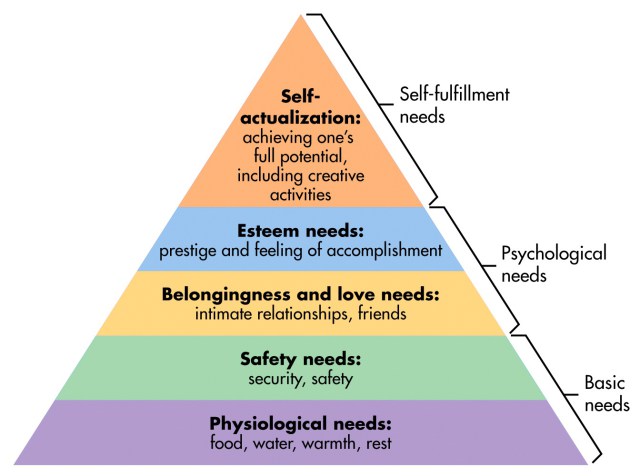
maslow-5
There is an important link between human needs and human rights that the Conservatives have dismally and persistently failed to recognise

The United Nations (UN) inquiry into the allegations many of us made regarding the systematic abuse of the human rights of disabled people in the UK has exposed the multiple injustices of targeted cuts and the disproportionate burden of austerity heaped on sick and disabled people, their carers and their families, evidencing and detailing the effects of a range of policy measures affecting them that have been introduced since 2010. These include the bedroom tax and cuts to disability benefits, funds to support independence and social care.

The report concludes that the overall effect of what is now an essentially punitive welfare regime, which has been based almost entirely on unevidenced political claims and assumptions, has had an extremely detrimental and regressive effect on the rights of disabled people, to live independently, to meet their basic needs, to seek and stay in work,  and to be able to live an ordinary life as citizens.

The UN report documented multiple violations of disabled people’s rights, including the way that they are politically portrayed as being lazy and a “burden on taxpayers”, the harm to health caused by unfair assessments, the cuts to legal aid and curtailed access to justice, the imposition of the bedroom tax and the ending of the Independent Living Fund.

I wrote a lengthy article about the unsurprising but nonetheless disquieting report findings and recommendations as I read it, here.

Predictably, the government responded to the damning contents of the report by denying a “causal link” between their policies and the evidenced accounts of the consequences being presented to them. Yet the government have never monitored the cumulative impact of their policies and successive cuts on disabled people, and they told the UN rapporteurs that it was “not possible or practical” to carry out an impact assessment on how reforms would affect disabled people. The UN disagreed, and stated that with the evidence and data already available, the government could have done this. 

The UN have called on the government to carry out a cumulative impact assessment. The government have refused to comply with any of the recommendations the UN has made. However, that means they cannot legitimately claim that there is “no causal link demonstrated” regarding the austerity measures and psychological distress, severe hardship, deteriorating health and death, as they have persistently refused to investigate the associations that academics, charities, disabled people’s organisations, individual campaigners and opposition MPs have consistently demonstrated. Denial isn’t empirical evidence or any kind of proof that your claims are valid. Nor does withholding evidence of correlation disprove causality.

It was also noted that the government failed to listen to the concerns of disabled people it had claimed to involve in policy making processes. Disabled people and their representative organisations “were not meaningfully taken into account in the decision-making and had little or no influence on policy decisions.”

The implication is that disabled people have not been democratically included. The government have persisted in treating us as objects of policies, rather than seeing us as democratic subjects and citizens. 

Also of note: “The [individual] impact assessments conducted by the State party prior to the implementation of several measures of its welfare reform expressly foresaw an adverse impact on persons with disabilities.”

The State party has not conducted a comprehensive human rights-based cumulative impact assessment even though reliable sources have indicated it is feasible.”

The UN stated that the Department for Work and Pensions (DWP) failed to properly investigate people’s deaths after their social security payments were stopped. t was noted that the government had made no “attempts at objective, thorough, open and impartial investigation(s)” to look at the alleged 90 deaths a month, despite being aware that there was widespread public concern about this.

Among other concerns, the committee said the UK government had used rhetoric to stigmatise disabled people, negatively influencing public perceptions. The report says that disabled people “have been… negatively portrayed as being dependent or making a living out of benefits; committing fraud as benefit claimants; being lazy and putting a burden on taxpayers, who are paying ‘money for nothing’. Persons with disabilities continue to experience increasing hostility, aggressive behaviour and sometimes attacks to their personal integrity.”

The committee said it found no evidence to support any of these ideas, especially the idea that disabled claimants were committing benefit fraud.

The committee were very critical of the legal aid cuts, which have created a significant barrier for people challenging benefits decisions and holding the government accountable:

“Evidence indicates that legal aid to challenge administrative decisions ending or curtailing their benefits before first-tier tribunals has been restricted. Legal aid for cases before those tribunals has also been curtailed. Similarly, access to review by an independent and impartial tribunal has been restricted by the introduction of mandatory reconsideration procedures before the same administrative entity that has ruled on benefits.”

I was pleased to see the United Nations report highlight a fundamental prejudice that informed the very basis of the “functional capacity approach” of the Work Capability Assessment (WCA), as well as commenting on the major flaws of the assessment process itself. The WCA is based on the assumption that a health condition or disability should not automatically be regarded as a “barrier” to work and that work itself can have health benefits. However these assumptions have been controversial from the outset.

The WCA places focus entirely on how we as individuals experience our illness and impairments. As such, this approach does not permit us to place our experiences of disadvantage in the context of how organisations, institutions, policy-makers and wider society interact with us. Despite the government claiming that they take a social model approach, eligibility for benefits and services is still being determined by assessment of how much our own bodies are affected by illness and impairment rather than the disabling social, cultural and political barriers that we experience.

The report said: Work Capability Assessments do not take into account the “support persons with disabilities need to perform a job or the complex nature of some impairments and conditions.” 

The inquiry also found that welfare assessors displayed a “lack of awareness and limited knowledge of disability rights and specific needs”, and disabled people experienced distress, “anxiety and psychological strain” as a result of this flawed process, and the financial insecurity that it generates.

“The committee observes that measures have caused financial hardship to persons with disabilities resulting in arrears, debts, evictions and cuts to essentials such as housing and food,” the report said.

The Government’s own research, published in June this year, revealed that one of the cornerstones of their austerity campaign – that cutting social security means recipients will be more likely to find work – is fundamentally flawed. 

Researchers found that cutting unemployed peoples’ benefits had the opposite effect to what is being claimed – something that many of us have also previously argued. The study, carried out by Oxford city council and the Department for Work and Pensions, found unemployed people become less likely to get a job when benefits are cut. Instead of looking for work, they are forced to devote their energies to surviving day-to-day. For every £1 in benefits cut per week, a person’s chance of getting a job drops by 2 per cent.

The government can no longer justify its narrative about benefit cuts, claiming that they are  “incentives” to “support” people into work.

Beyond the rhetoric – the hidden agenda

There is a wider agenda driving the welfare “reforms” and it is important to consider the hidden ideological dimension and the language references and signposts to that, as well as the superficial narratives and semantic shifts being deployed as a PR exercise, techniques of neutralisation and gaslighting to obscure political intentions and the consequences of policies.

The UN report effectively exposed the justification narratives presented by the government for their welfare “reforms” as unfounded and unsupported by empirical evidence. This report is just the beginning, it arms us with an invaluable weapon with which to continue our campaigning, and shape future challenges and debate to government policies and social injustice.  

The Conservatives have an ideological commitment to a “small state” and this is fueled by privatisation and an ever-expanding neoliberal competitive “market place.” The market place, private profit opportunities and neoliberal outcomes have been conflated with citizen’s interests and needs.

The welfare “reforms” have presented the opportunity to promote and deliver private income protection provision via profit making companies operating in free markets. Insurance companies and right-wing think tanks have been attempting to steer governments in this direction for many years. 

For example, Matthew Oakley, a senior researcher at the Social Market Foundation, and government advisor, recently published a report entitled Closing the gap: creating a framework for tackling the disability employment gap in the UK, in which he suggests considering a “role that a form of privately run social insurance could play in both increasing benefit generosity and improving the support that individuals get to manage their conditions and move back to work.

Oakley also proposes abolishing the ESA Support Group. To meet extra living costs because of disability, Oakley says that existing spending on PIP and the Support Group element of ESA should be brought together to finance a new extra costs benefit. Eligibility for this benefit should be determined on the basis of need, with an assessment replacing the WCA and PIP assessment. The Conservative definition of “the basis of need” seems to be an ever-shrinking category.

May’s new director of policy, John Godfrey, is a keen advocate of what in his last job, at financial services giant Legal and General, he called “Beveridge 2.0”: using technology to introduce new forms of “social insurance”.

Godfrey told a campaigning group, the Financial Inclusion Commission, last year that the systems used to deliver “auto-enrolment”, the scheme that ensures all low-income workers have a pension, could also be used to help the public insure themselves against “unexpected events”.

“There is a clear lesson from auto-enrolment that if you have a plumbing network or an infrastructure that works, that auto-enrolment infrastructure could be used for other things which would encourage financial inclusion: things like, for example, life cover, income protection and effective and very genuine personal contributory benefits for things like unemployment and sickness,” he said. “They can be delivered at good value if there is mass participation through either soft compulsion or good behavioural economics.”

Note the context shift in use of the term “inclusion”, which was originally deemed a democratic right, now it’s being discussed narrowly in terms of individual responsibility.

A report published by the Adam Smith Institute as far back as 1995 – The Fortune Account – also sets out proposals to replace “state welfare” with an insurance system “operated by financial institutions within the private sector”.

Mo Stewart has spent eight years researching the influence of the US insurance giant Unum over successive UK governments, and how it led to the introduction of the “totally bogus” work capability assessment (WCA), which she says was designed to make it harder for sick and disabled people to claim out-of-work disability benefits.Stewart’s book, Cash Not Care: The Planned Demolition Of The UK Welfare State, was published in September. She states that the assessment was modeled on methods used by the controversial company Unum to deny protection to sick and disabled people in the US who had taken out income protection policies.

She goes on to say that the WCA was “designed to remove as many as possible from access to [employment and support allowance]on route to the demolition of the welfare state”, with out-of-work disability benefits to be replaced by insurance policies provided by private companies like Unum.

Stewart warns us that the UK is now close to adopting a US-style model.  

The implications of the inquiry findings for Conservative welfare policies 

The government has announced further welfare measures which will affect disabled people including a four year freeze for most working-age benefits, reductions in the Benefit Cap, changes to tax credits and to Universal Credit, and abolishing the “Work-Related Activity Component” for new ESA claims from 2017.

As noted in the UN report: “The State party continues its policy of reducing social benefits of persons with disabilities as reflected in the Welfare Reform and Work Act 2016.” 

Article 28 of the Convention on the rights of persons with disabilities (CRPD) says: Adequate standard of living and social protection – This article affirms the rights of persons with disabilities to an adequate standard of living for themselves and their family, and to social protection without discrimination on the basis of disability. This right includes access to assistance from the state with disability-related expenses for persons with disabilities and their families.

The report reiterated something that many of us have noted and discussed in detail previously: that there is no evidence of a causal relationship between a reduction in social security and an increase in employment amongst disabled and sick people. Nor does welfare “dependency” “disincentivise” people seeking employment more generally. It was pointed out in UN report that these views are not evidenced. The two assumptions are embedded in justifications of Conservative welfare policies, and are prejudices that have been around since the Thatcher administration.

Bearing in mind these are key assumptions underpinning current policies and the proposals set out in the recent work, health and disability green paper –  for example, the recent decision to reduce the money paid to people who have been assessed as being unfit to work but able to undertake work related activity (those people in the Employment and Support Allowance work related activity group (WRAG)) is based on the same assumption- the Department for Work and Pensions have claimed  – that it will “remove the financial incentives that would otherwise discourage claimants from taking steps back to work”.

Particularly important in the current context and given the government’s recent work, health and disability green paper, the UN report says that: “Given the barriers that still prevent the full participation of persons with disabilities in the labour market and mean higher unemployment rates for them, income-maintenance social security schemes are particularly important for persons with disabilities. Such schemes allow them to maintain their autonomy and freedom of control and choice of their living arrangements and day-to-day activities. Without an adequate level of social protection, persons with disabilities run the risk of being isolated, segregated from the community and/or institutionalized. 

States parties should find an adequate balance between providing an adequate level of income security for persons with disabilities through social security schemes and supporting their labour inclusion. The two sets of measures should be seen as complementary rather than contradictory.

Measures aimed at facilitating the inclusion in the labour market of beneficiaries of social security should include transitional arrangements to ensure income protection while they reach a certain threshold and sustainability in their wages. They should become eligible again without delay if they lose their jobs.” 

Although many of us have been discussing these issues for a few years, the inquiry has consolidated a lot of valuable evidence and provided a concise rebuttal of government justification narratives for cuts in support for disabled people, which we really needed to be presented to the government formally, from an independent, official and international witness.

Though the government have tended to dismiss much evidence to date of the harm that their policies are causing, such as that which has been presented through case studies by shadow ministers, as “anecdotal”, it is rather more difficult to dismiss and ignore the substantial evidence presented as a result of rigorous international scrutiny.

The government response was founded on denials, more misdirectional rhetoric and techniques of neutralisation, defensive arrogance, authoritarian scorn and contrived outrage, rather than being about stepping up to democratic accountability, reasoned discussion and rationality. No sign of civilised conscience and decent concern regarding the impact of the prejudice and discrimination that is being intentionally and systematically embedded in Conservative policies, aimed at disabled people, at all. 

The government’s response to the UN report bears little resemblance to the lived experiences of disabled people, despite claims to the contrary. The government has justified systematic cuts to disabled people’s social security by claiming such cuts “incentivise” people to find work. The cuts are a form of punishment (apparently for our own “good”) designed to bring about “behaviour change” and this approach is founded on the wrongly perceived attitudes of disabled people, who this government consistently describes as being “parked on benefits” with the “misperception that they can’t work”. 

This does nothing at all to address the barriers disabled people face in finding and staying in work, nor does it address the acknowledged prejudiced attitudes of employers and Conservative ministers. It’s not long ago that Conservative welfare minister David Freud expressed the view that disabled people should work for less than the minimum wage. He wasn’t the only one, either. Philip Davies expressed the same view, claiming that disabled people “are the most disadvantaged by the national minimum wage,” so they should be “permitted” to work for less in order to “compete” in the labor market. Davies described criticism of his remarks that disabled people could work for less than minimum wage as “leftwing hysteria”.

It seems that Conservatives believe that the only way of “helping” disabled people in any way is by simply taking money from them. 

In their response to the UN report, the government say: “The United Kingdom is proud of its record in supporting disabled people to lead more independent lives and participate more fully in society. More than 20 years ago the UK legislated to protect disabled people’s rights. It now spends around £50 bn a year on benefits to support disabled people and people with health conditions, which is over £6 bn more than in 2010. That is around 5% of GDP, or over 6% of government spending. The UK spends more on disabled people and people with health conditions than the OECD average, and countries such as Germany, France and the USA.”

That’s definitely Conservatives being… conservative with the truth again.

The Institute of Fiscal Studies (IFS) report on spending on benefits for disabled people says the actual spend is £36,063 bn but this is partly in benefits that are not counted as working age disability benefits: War Pensions, Attendance Allowance for over 65s, Statutory Sick pay, Carer’s Allowance, Industrial Injuries Benefits and the ILF which the government has closed)

The total of those benefits not paid to working age disabled people is £7,908bn

That makes the actual spend on all working age benefits for disabled people £28,155 billion

The IFS report says: “The spending on DLA/PIP is only half what it was in 1995-96. Spending across Great Britain on disability benefits in 2014–15 was £13.5 billion. At 0.8% of national income this is half the level of disability benefit spending when it was at its peak in 1995–96.

The overall number of individuals receiving disability benefits has fallen slightly since the mid-1990s. But this is in the presence of underlying demographic change that would have tended to push UP the numbers receiving considerably – both overall population growth and the baby boomer generation reaching older working ages.”

It’s not clear if the spending figures include the massive costs of private companies that are contracted by the state, ironically, to cut welfare spending. 

The National Audit Office (NAO) report earlier this year scrutinised public spending for parliament, and is independent of government. The report indicates how public services are being appropriated for purely private benefit.

The audit report in January concluded that the Department for Work and Pension’s spending on contracts for disability benefit assessments is expected to double in 2016/17 compared with 2014/15. The government’s flagship welfare-cut scheme will be actually spending more money on the assessments conducted by private companies than it is saving in reductions to the benefits bill.

From the report:

£1.6 billion
Estimated cost of contracted-out health and disability assessments over three years, 2015 to 2018

£0.4 billion
Latest expected reduction in annual disability benefit spending.

This summary reflects staggering economic incompetence, a flagrant, politically motivated waste of tax payer’s money and even worse, the higher spending has not created a competent or ethical assessment framework, nor is it improving the lives of sick and disabled people. Private companies like Maximus are paid millions from our welfare budget, yet they are certainly not “helping the government” to serve even the most basic needs of sick and disabled people.

I will be challenging the government’s response to the UN report fully in due course. It would be good to see some collaborative effort from disabled campaigners and activists in addressing the government as comprehensively as possible. If anyone is interest in working together on this, just contact me here via the comment section.

The UN committee will meet to discuss the government’s comments and determine a response in Geneva, in March 2017. 

Meanwhile it’s crucial that we use the body of evidence collated by the UN and the conclusions drawn in the report effectively. For example, our responses to the consultation on the work, health and disability green paper must address the underpinning propositions and delve beneath the superficial rhetoric and glittering generalities, rather than permitting the DWP’s weighted and somewhat leading questions to shape the outcome of the consultation.

We must use the UN findings constructively to continue to challenge existing policies, and any which arise in the future to violate the human rights of disabled persons. 

We need to continue to coherently and collectively challenge the government’s assumptions on which their proposals for work, health and disability policy are based, none of which are not supported by a shred of solid empirical evidence.


I don’t make any money from my work. But you can help by making a donation to enable me continue to research and write informative, insightful and independent articles, and to continue to provide support to others. The smallest amount is much appreciated – thank you.

DonatenowButton cards

Initial thoughts on the work, health and disability green paper

proper Blond

I’ve read the government’s Work, health and disability green paper: improving lives and consultation from end to end. It took me a while, because I am ill and not always able to work consistently, reliably and safely. It’s also a very long and waffling document. I am one of those people that the proposals outlined in this green paper is likely to affect. I read the document very carefully.

Here are a few of my initial thoughts on what I read. It’s organised as best I can manage, especially given the fact that despite being dismally unsurprised, I am scathing.

The context indicates the general intent

“The fact is that Ministers are looking for large savings at the expense of the poorest and most vulnerable. That was not made clear in the general election campaign; then, the Prime Minister said that disabled people would be protected.”Helen Goodman, MP for Bishop Auckland, Official Report, Commons, 2/3/16; cols. 1052-58.

I always flinch when the government claim they are going to “help” sick and disabled people into work. That usually signals further cuts to lifeline support and essential services are on the way, and that the social security system is going to be ground down a little further, to become the dust of history and a distant memory of a once civilised society. 

If the government genuinely wanted to “help” sick and disabled people into work, I’m certain they would not have cut the Independent Living Fund, which has had a hugely negative impact on those trying their best to lead independent and dignified lives, and the Access To Work funding has been severely cut, this is also a fund that helps people and employers to cover the extra living costs arising due to disabilities that might present barriers to work.

The government also made the eligibility criteria for Personal Independence Payment (PIP) – a non-means tested out-of- work and an in-work benefit – much more difficult to meet, in order to simply reduce successful claims and cut costs. This has also meant that thousands of people have lost their motability vehicles and support.

Earlier this year, it was estimated at least 14,000 disabled people have had their mobility vehicle confiscated after the changes to benefit assessment, which are carried out by private companies. 

Under the PIP rules, thousands more people who rely on this support to keep their independence are set to lose their vehicles – specially adapted cars or powered wheelchairs. Many had been adapted to meet their owners’ needs and many campaigners warn that it will lead to a devastating loss of independence for disabled people.

A total of 45% or 13,900 people, were deemed as not needing the higher rate of PIP, and therefore lost their vehicles after reassessment. And out of the 31,200 people who were once on the highest rate of Disability Living Allowance (DLA) who have been reassessed, just 55%, or 17,300 – have kept their car.

dpac
In 2012, Esther McVey, then the Minister for people with disabilities, as good as admitted there are targets to reduce or remove eligibility for the new disability benefit PIP, which was to replace DLA. How else could she know in advance of people’s reassessment that 330,000 of claimants are expected to either lose their benefit altogether or see their payments reduced as she had informed the House of Commons. 

This was a clear indication that the new assessment framework was designed to cut support for disabled people. A recent review led the government to conclude that PIP doesn’t currently fulfil the original policy intent, which was to cut costs and “target” the benefit to an ever-shrinking category of “those with the greatest need.” 

The Government was twice defeated in the Lords over their proposals to cut Employment and Support Allowance (ESA) for sick and disabled people in the work related activity group (WRAG) from £103 to £73. However the £30 a week cut is to go ahead after bitterly disappointed and angry peers were left powerless to continue to oppose the Commons, which has overturned both defeats.

The government hammered through the cuts of £120 a month to the lifeline income of ill and disabled people by citing the “financial privilege” of the Commons, and after Priti Patel informing the Lords, with despotic relish, that they had “overstepped their mark” in opposing the cuts twice. 

A coalition of 60 national disability charities condemned the government’s cuts to benefits as a “step backwards” for sick and disabled people and their families. The Disability Benefits Consortium said that the cuts, which will see people lose up to £1,500 a year, will leave disabled people feeling betrayed by the government and will have a damaging effect on their health, finances and ability to find work. 

Research by the Consortium suggests the low level of benefit is already failing to meet disabled people’s needs. A survey of 500 people in the affected group found that 28 per cent of people had been unable to afford to eat while in receipt of the benefit. Around 38 per cent of respondents said they had been unable to heat their homes and 52 per cent struggled to stay healthy.

Watching the way the wind blows

Earlier this year I wrote that a government advisor, who is a specialist in labor economics and econometrics, has proposed scrapping all ESA sickness and disability benefits. Matthew Oakley, a senior researcher at the Social Market Foundation, recently published a report entitled Closing the gap: creating a framework for tackling the disability employment gap in the UK, in which he proposes abolishing the ESA Support Group.

To meet extra living costs because of disability, Oakley says that existing spending on PIP and the Support Group element of ESA should be brought together to finance a new extra costs benefit. Eligibility for this benefit should be determined on the basis of need, with an assessment replacing the WCA and PIP assessment. 

I think the word “need” is being redefined to meet politically defined neoliberal economic outcomes. 

Oakely also suggests considering a “role that a form of privately run social insurance could play in both increasing benefit generosity and improving the support that individuals get to manage their conditions and move back to work.” 

I’m sure the rogue company Unum would jump at the opportunity. Steeped in controversy, with a wake of scandals that entailed the company denying people their disabilty insurance, in 2004, Unum entered into a regulatory settlement agreement (RSA) with insurance regulators in over 40 US states. The settlement related to Unum’s handling of disability claims and required the company “to make significant changes in corporate governance, implement revisions to claim procedures and provide for a full re-examination of both reassessed claims and disability insurance claim decisions. 

The company is the top disability insurer in both the United States and United Kingdom. By coincidence, the company has been involved with the UK’s controversial Welfare Reform Bill, advising the government on how to cut spending, particularly on disability support. What could possibly go right? 

It’s difficult to see how someone with a serious, chronic and progressive illness, (which most people in the ESA Support Group have) can actually “manage” their illness and “move back into work.” The use of the extremely misinformed, patronising and very misleading term manage implies that very ill people actually have some kind of choice in the matter.

For people with Parkinson’s disease, rheumatoid arthritis, lupus and multiple sclerosis, cancer and kidney failure, for example, mind over matter doesn’t fix those problems, positive thinking and sheer will power cannot cure these illnesses, sadly. Nor does refusing to acknowledge or permit people to take up a sick role, or imposing benefit conditionality and coercive policies to push chronically ill people into work by callous, insensitive and inept and often medically unqualified assessors, job advisors and ministers.  

The Reform think tank has also recently proposed scrapping what is left of the disability benefit support system, in their report Working welfare: a radically new approach to sickness and disability benefits and has called for the government to set a single rate for all out of work benefits and reform the way sick and disabled people are assessed.  

The Reform think tank proposes that the government should cut the weekly support paid to 1.3 million sick and disabled people in the ESA Support Group from £131 to £73. This is the same amount that Jobseeker’s Allowance claimants receive. It is claimed that the cut will  somehow “incentivise” those people to find work, as if they simply lack motivation, rather than being ill and disabled. However, those people placed in the Support Group after assessment have been deemed by the state as unlikely to be able to work again in the near future, many won’t be able to work again. It would therefore be very difficult to justify this proposed cut, given the additional needs that disabled people have, which is historically recognised, and empirically verified by research. 

Yet the authors of the report doggedly insist that having a higher rate of weekly benefit for extremely sick and disabled people encourages them “to stay on sickness benefits rather than move into work.” People on sickness benefits don’t move into work because they are sick. Forcing them to work is outrageous. 

The report recommended savings which result from removing the disability-related additions to the standard allowance should be reinvested in support services and extra costs benefits – PIP. However, as outlined, the government have ensured that eligibility for that support is rapidly contracting, with the ever-shrinking political and economic re-interpretation of medically defined sickness and disability categories and a significant reduction in what the government deem to be a legitimate exemption from being “incentivised” into hard work.

The current United Nations investigation into the systematic and gross violations of the rights of disabled people in the UK because of the Conservative welfare “reforms” is a clear indication that there is no longer any political commitment to supporting disabled people in this country, with the Independent Living Fund being scrapped by this government, ESA for the work related activity group (WRAG) cut back, PIP is becoming increasingly very difficult to access, and now there are threats to the ESA Support Group. The Conservative’s actions have led to breaches in the CONVENTION on the RIGHTS of PERSONS with DISABILITIES – CRPD articles 4, 8, 9, 12, 13, 14, 15, 17, and especially 19, 20, 27 and 29 (at the very least.)

There are also probable violations of articles 22, 23, 25, 30, 31.

The investigation began before the latest round of cuts to ESA were announced. That tells us that the government is unconcerned their draconian policies violate the human rights of sick and disabled people.

And that, surely, tells us all we need to know about this government’s intentions.

Coercing those deemed to ill to work into work. It’s not “nudge”: it’s psycho-compulsion

The casual discussion in the green paper about new mandatory “health and work conversations” in which work coaches will use “specially designed techniques” to “help” some ESA claimants “identify their health and work goals, draw out their strengths, make realistic plans, and build resilience and motivation” is also cause for some concern. 

Apparently these conversations were “co-designed with disabled people’s organisations and occupational health professionals and practitioners and the Behavioural Insights Teamthe controversial Nudge Unit, which is part-owned by the Cabinet Office and Nesta.

Most people who read my work regularly will know by now that I am one of the staunchest critics of nudge, which is being used as an antidemocratic, technocratic, pseudoscientific political tool to provide a prop and disguise for controversial neoliberal policies. It’s very evident that “disabled people’s organisations” were not major contributors to the design. It’s especially telling that those people to be targeted by this “intervention” were completely excluded from the conversation. Sick and disabled people are reduced to objects of public policy, rather than being seen as citizens and democratic subjects capable of rational dialogue.  

John Pring at Disability News Service (DNS) adds: “Grassroots disabled people’s organisations (DPOs) have criticised the government’s decision to exclude them from an event held to launch its new work, health and disability green paper. 

The event for “stakeholders” was hosted by the disability charity Scope at its London headquarters, and attended by Penny Mordaunt, the minister for disabled people.

The Department for Work and Pensions (DWP) said in its invitation – it turned down a request from Disability News Service to attend – that the event would “start the consultation period” on its green paper, Improving Lives. 

It said that it was “launching a new conversation with disabled people and people with health conditions, their representatives, healthcare professionals and employers”.  

But DWP has refused to say how many disabled people’s user-led organisations were invited to the event, and instead suggested that DNS submit a freedom of information request to find out.
But DNS has confirmed that some of the most prominent user-led organisations with the strongest links to disabled people were not invited to the launch, including Shaping Our Lives, Inclusion London, Equal Lives, People First (Self Advocacy) and Disabled People Against Cuts.” 

For further discussion of the policy context leading up to the green paper, see The new Work and Health Programme: government plan social experiments to “nudge” sick and disabled people into work from October 2015. 

Also see G4S are employing Cognitive Behavioural Therapists to deliver “get to work therapy” and Stephen Crabb’s obscurantist approach to cuts in disabled people’s support and also Let’s keep the job centre out of GP surgeries and the DWP out of our confidential medical records from earlier this year.

The dismal and incoherent contents of the green paper were entirely predictable.

The Conservatives claim work is a “health” outcome: crude behaviourism

A Department for Work and Pensions research document published back in 2011 – Routes onto Employment and Support Allowance – said that if people believed that work was good for them, they were less likely to claim or stay on disability benefits.

It was then decided that people should be “encouraged” to believe that work was “good” for health. There is no empirical basis for the belief, and the purpose of encouraging it is simply to cut the numbers of disabled people claiming ESA by “encouraging” them into work. Some people’s work is undoubtedly a source of wellbeing and provides a sense of purpose. That is not the same thing as being “good for health”. For a government to use data regarding opinion rather than empirical evidence to claim that work is “good” for health indicates a ruthless mercenary approach to a broader aim of dismantling social security.

From the document: “The belief that work improves health also positively influenced work entry rates; as such, encouraging people in this belief may also play a role in promoting return to work.”

The aim of the research was to “examine the characteristics of ESA claimants and to explore their employment trajectories over a period of approximately 18 months in order to provide information about the flow of claimants onto and off ESA.”

The document also says: “Work entry rates were highest among claimants whose claim was closed or withdrawn suggesting that recovery from short-term health conditions is a key trigger to moving into employment among this group.”

“The highest employment entry rates were among people flowing onto ESA from non-manual occupations. In comparison, only nine per cent of people from non-work backgrounds who were allowed ESA had returned to work by the time of the follow-up survey. People least likely to have moved into employment were from non-work backgrounds with a fragmented longer-term work history. Avoiding long-term unemployment and inactivity, especially among younger age groups, should, therefore, be a policy priority. ” 

“Given the importance of health status in influencing a return to work, measures to facilitate access to treatment, and prevent deterioration in health and the development of secondary conditions are likely to improve return to work rates”

Rather than make a link between manual work, lack of reasonable adjustments in the work place and the impact this may have on longer term ill health, the government chose instead to promote the cost-cutting irrational belief that work is a “health” outcome. Furthermore, the research does conclude that health status itself is the greatest determinant in whether or not people return to work. That means that those not in work are not recovered and have longer term health problems that tend not to get better.

Work does not “cure” ill health. To mislead people in such a way is not only atrocious political expediency, it’s actually downright dangerous.

As neoliberals, the Conservatives see the state as a means to reshape social institutions and social relationships based on the model of a competitive market place. This requires a highly invasive power and mechanisms of persuasion, manifested in an authoritarian turn. Public interests are conflated with narrow economic outcomes. Public behaviours are politically micromanaged. Social groups that don’t conform to ideologically defined economic outcomes are stigmatised and outgrouped.

Othering and outgrouping have become common political practices, it seems.

Stigma is a political and cultural attack on people’s identities. It’s used to discredit, and as justification for excluding some groups from economic and political consideration, refusing them full democratic citizenship.

Stigma is being used politically to justify the systematic withdrawal of support and public services for the poorest – the casualties of a system founded on competition for allegedly scarce wealth and resources. Competition inevitably means there are winners and losers. Stigma is profoundly oppressive.

It is used as a propaganda mechanism to draw the public into collaboration with the state, to justify punitive and discriminatory policies and to align citizen “interests” with rigid neoliberal outcomes. Inclusion, human rights, equality and democracy are not compatible with neoliberalism.

Earlier this year, I said: The Conservatives have come dangerously close to redefining unemployment as a psychological disorder, and employment is being redefined as a “health outcome.” The government’s Work and Health programme involves a plan to integrate health and employment services, aligning the outcome frameworks of health services, Improving Access To Psychological Therapies (IAPT), Jobcentre Plus and the Work Programme.

But the government’s aim to prompt public services to “speak with one voice” is founded on questionable ethics. This proposed multi-agency approach is reductive, rather than being about formulating expansive, coherent, comprehensive and importantly, responsive provision.

This is psychopolitics, not therapy. It’s all about (re)defining the experience and reality of a social group to justify dismantling public services (especially welfare), and that is form of gaslighting intended to extend oppressive political control and micromanagement. In linking receipt of welfare with health services and “state therapy,” with the single intended outcome explicitly expressed as employment, the government is purposefully conflating citizen’s widely varied needs with economic outcomes and diktats, isolating people from traditionally non-partisan networks of relatively unconditional support, such as the health service, social services, community services and mental health services.

Public services “speaking with one voice” will invariably make accessing support conditional, and further isolate already marginalised social groups. It will damage trust between people needing support and professionals who are meant to deliver essential public services, rather than simply extending government dogma, prejudices and discrimination.

Conservatives really seem to believe that the only indication of a person’s functional capacity, value and potential is their economic productivity, and the only indication of their moral worth is their capability and degree of willingness to work. But unsatisfactory employment – low-paid, insecure and unfulfiling work – can result in a decline in health and wellbeing, indicating that poverty and growing inequality, rather than unemployment, increases the risk of experiencing poor mental and physical health. People are experiencing poverty both in work and out of work.

Moreover, in countries with an adequate social safety net, poor employment (low pay, short-term contracts), rather than unemployment, has the biggest detrimental impact on mental health. 

There is ample medical evidence (rather than the current raft of political dogma) to support this account. (See the Minnesota semistarvation experiment, for example. The understanding that food deprivation in particular dramatically alters cognitive capacity, emotions, motivation, personality, and that malnutrition directly and predictably affects the mind as well as the body is one of the legacies of the experiment.)

Systematically reducing social security, and increasing conditionality, particularly in the form of punitive benefit sanctions, doesn’t “incentivise” people to look for work. It simply means that people can no longer meet their basic physiological needs, as benefits are calculated to cover only the costs of food, fuel and shelter.

Food deprivation is closely correlated with both physical and mental health deterioration. Maslow explained very well that if we cannot meet basic physical needs, we are highly unlikely to be able to meet higher level psychosocial needs. The government proposal that welfare sanctions will somehow “incentivise” people to look for work is pseudopsychology at its very worst and most dangerous.

In the UK, the government’s welfare “reforms” have further reduced social security support, originally calculated to meet only basic physiological needs, which has had an adverse impact on people who rely on what was once a social safety net. Poverty is linked with negative health outcomes, but it doesn’t follow that employment will alleviate poverty sufficiently to improve health outcomes.

In fact record numbers of working families are now in poverty, with two-thirds of people who found work in 2014 taking jobs for less than the living wage, according to the annual report from the Joseph Rowntree Foundation a year ago.

Essential supportive provision is being reduced by conditionally; by linking it to such a narrow outcome – getting a job – and this will reduce every service to nothing more than a political semaphore and service provision to a behaviour modification programme based on punishment, with a range of professionals being politically co-opted as state enforcers.

The Government is intending to “signpost the importance of employment as a health outcome in mandates, outcomes frameworks, and interactions with Clinical Commissioning Groups.”

I have pointed out previously that there has never been any research that demonstrates unemployment is a direct cause of ill health or that employment directly improves health, and the existing studies support the the idea that the assumed causality between unemployment and health may actually run in the opposite direction. It’s much more likely that inadequate social security support means that people cannot meet all of  their basic survival needs (food, fuel and shelter), and that contributes significantly to poor health outcomes.

It’s not that unemployment is causing higher ill health, but that ill health and discrimination are causing higher unemployment. If it were unemployment causing ill health, at a time when the government assures us that employment rates are currently “the highest on record,” why are more people becoming sick?

The answer is that inequality and poverty have increased, and these social conditions, created by government policies, have long been established by research as having a correlational relationship with increasing mental and physical health inequalities. 

For an excellent, clearly written and focused development of these points, the problem of “hidden” variables and political misinterpretation, see Jonathan Hulme’s Work won’t set us free.

Semantic thrifts: being Conservative with the truth

Prior to 2010, cutting support for sick and disabled people was unthinkable, but the “re-framing” strategy and media stigmatising campaigns have been used by the Conservatives to systematically cut welfare, push the public’s normative boundaries and to formulate moralistic justification narratives for their draconian policies. Those narratives betray the Conservative’s intentions.

Not enough people have questioned what it is that Conservatives actually mean when they use words like “help”, “support”, and “reform” in the context of government policies aimed at disabled people. Nor have they wondered where the evidence of “help” and “support” is hiding. If you sit on the surface of Conservative rhetoric and the repetitive buzzwords, it all sounds quite reasonable, though a little glib.

If you scrutinise a little, however, you soon begin to realise with horror that Orwellian-styled techniques of neutralisation are being deployed to lull you into a false sense of security: the ideologically directed intentions behind the policies and the outcomes and consequences are being hidden or “neutralised” by purposefully deceptive, misdirectional political rhetoric. It’s a kind of glittering generalities tokenism ; a superficial PR ritual of duplicitous linguistic detoxification, to obscure deeply held traditional Conservative prejudices and ill intent.

Rhetoric requires the existence of an audience and an intent or goal in the communication. Once you stand back a little, you may recognise the big glaring discrepancies between Conservative chatter, policies, socioeconomic reality and people’s lived experiences. At the very least, you begin to wonder when the conventional ideological interests of the Conservatives suddenly became so apparently rhetorically progressive, whilst their policies have actually become increasingly authoritarian, especially those directed at the most disadvantaged social groups.

The ministerial foreword from Damian Green, Secretary of State for Work and Pensions and Jeremy Hunt, Secretary of State for Health, is full of concern that despite the claim that “we have seen hundreds of thousands more disabled people in work in recent years”, there are simply too many sick and disabled people claiming ESA.

They say: We must highlight, confront and challenge the attitudes, prejudices and misunderstandings that, after many years, have become engrained in many of the policies and minds of employers, within the welfare state, across the health service and in wider society. Change will come, not by tinkering at the margins, but through real, innovative action. This Green Paper marks the start of that action and a far-reaching national debate, asking: ‘What will it take to transform the employment prospects of disabled people and people with long-term health conditions?’

I think mention of the “engrained attitudes, prejudices and misunderstandings within the welfare state and across the health service” is the real clue here about intent. What would have been a far more authentic and reassuring comment is “we have met with disabled people who have long-term health conditions and asked them if they feel they can work, and what they need to support them if they can.”

Instead, what we are being told via subtext is that we are wrong as a society to support people who are seriously ill and disabled by providing civilised health and social care, social security and exempting them from work because they are ill or injured.

Ministers say:Making progress on the government’s manifesto ambition to halve the disability employment gap is central to our social reform agenda by building a country and economy that works for everyone, whether or not they have a long-term health condition or disability. It is fundamental to creating a society based on fairness [..] It will also support our health and economic policy objectives by contributing to the government’s full employment ambitions, enabling employers to access a wider pool of talent and skills, and improving health.”

I think that should read: “By building a country where everyone works for the [politically defined] economy.”

There’s patronising discussion of how disabled people should be “allowed to fulfil their potential”, and that those mythic meritocratic principles of talent determination and aspiration should be “what counts”, rather than sickness and disability. There are some pretty gaping holes in the logic being presented here. It is assumed that prejudice is the reason why sick and disabled people don’t work.

But it’s true that many of us cannot work because we are too ill, and the green paper fails to acknowledge this fundamental issue.

Instead “inequality” has been redefined strictly in terms of someone’s employment status, rather than as an unequal social distribution of wealth, resources, power and opportunities. All of the responsibility and burden of social exclusion and unemployment is placed on sick and disabled people, whilst it is proposed that businesses are financially rewarded for employing us.

Furthermore, it’s a little difficult to take all the loose talk seriously about the “injustice” of ill people not being in work, or about meritocratic principles and equal opportunities, when it’s not so long ago that more than one Conservative minister expressed the view that disabled people should work for less than the minimum wage. This government have made a virtue out of claiming they are giving something by taking something away. For example, the welfare cuts have been casually re-named reforms in Orwellian style. We have yet to see how cutting the lifeline benefits of the poorest people, and imposing harsh sanctioning can possibly be an improvement for them, or how it is helping them.

The Conservatives are neoliberal fundamentalists, and they have supplanted collective, public values with individualistic, private values of market rationality. They have successfully displaced established models of welfare provision and state regulation through policies of privatisation and de-regulation and have shifted public focus, instigating various changes in subjectivity, by normalising individualistic self-interest, entrepreneurial values, and crass consumerism. And increasing the social and material exclusion of growing numbers living in absolute poverty.

Basically, the Tories tell lies to change perceptions, divert attention from the growing wealth inequality manufactured by their own policies, by creating scapegoats.

Another major assumption throughout the paper is that disabled people claiming ESA are somehow mistaken in assuming they cannot work: “how can we improve a welfare system that leaves 1.5 million people – over 60% of people claiming Employment and Support Allowance – with the impression they cannot work and without any regular access to employment support, even when many others with the same conditions are flourishing in the labour market? How can we build a system where the financial support received does not negatively impact access to support to find a job? How can we offer a better user experience, improve system efficiency in sharing data, and achieve closer alignment of assessments?”

The government’s brand of armchair pseudo-psychology, propped up by the Nudge Unit, is used to justify increasingly irrational requirements being embedded in policy. The government intend to merge health and employment services, redefining work as aclinical health outcome. According to the government, the “cure” for unemployment due to illness and disability and sickness absence from work, is… work.

The new work and health programme, “support” for disabled people, is actually just another workfare programme. We know that workfare tends to decrease the likelihood of people finding work.

Work is the only politically prescribed “route out of poverty” for disabled people, including those with mental distress and illness, regardless of whether or not they are actually well enough to work. In fact the government implicitly equates mental health with economic productivity. Work will set us free. Yet paradoxically, disabled people haven’t been and won’t be included in the same economic system which is responsible for their exclusion in the first place.

Competitive market economies exclude marginalised groups, that’s something we ought to have learned from the industrial capitalism of the last couple of centuries. GPs inform us that employers are not prepared to make the necessary inclusive workplace adjustments sick and disabled people often need to work.

But in a dystopic Orwellian world where medical sick notes have been  politically redefined as ”fit notes”, sick and disabled people are no longer exempt from work, which is now held to be a magic “cure”. People are already being punished and coerced into taking any available job, regardless of its appropriateness, in an increasingly competitive and exclusive labor market.

The nitty gritty

You know the government are riding the fabled rubber bicycle when they calmly propose coercing the most disabled and ill citizens who are deemed unlikely to work by their doctors and the state (via the Work Capability Assessment) into performing mandatory work-related activities and finding jobs. Previously, only those assessed as possibly capable of some work in the future and placed in the Work Related Activity Group (WRAG) were expected to meet behavioural conditionality in return for their lifeline support.

However, the government have cut the WRAG component of Employment and Support Allowance (ESA) – another somewhat Orwellian name for a sickness and disability benefit – so that this group of people, previously considered to have additional needs because of their illness and disability, are no longer supported to meet the extra costs they face. The ESA WRAG rate of pay is now to be the same as Job Seeker’s Allowance.

If the government make work related activity mandatory for those people in the ESA Support Group, it will mean that very sick and disabled people will be sanctioned for being unable to comply and meet conditionality. This entails the loss of their lifeline support. The government have the cheek to claim that they will “protect and support” the most vulnerable citizens.

Hello, these ARE among our most vulnerable citizens. That’s why they were placed in the ESA support group in the first place.

Apparently, sick citizens are costing too much money. Our NHS is “overburdened” with ill people needing healthcare, our public services are “burdened” with people needing… public services. It is claimed that people are costing employers by taking time off work when they are ill. How very dare they.

Neoliberals argue that public services present moral hazards and perverse incentives. Providing lifeline support to meet basic survival requirements is seen as a barrier to the effort people put into searching for jobs. From this perspective, the social security system, which supports the inevitable casualties of neoliberal free markets, has somehow created those casualties. But we know that external, market competition-driven policies create a few “haves” and many “have-nots.” This is why the  welfare state came into being, after all – because when we allow such competitive economic dogmas to manifest without restraint, we must also concede that there are always ”winners and losers.”

Neoliberal economies organise societies into hierarchies.The UK currently ranks highly among the most unequal countries in the world.

Inequality and poverty are central features of neoliberalism and the causes of these sociopolitical problems therefore cannot be located within individuals.

The ESA Support Group includes people who are terminally ill, and those with degenerative illnesses, as well as serious mental health problems. It’s suggested that treating this group of people with computer based Cognitive Behaviour Therapy (cCBT), and addressing obesity, alcohol and drug dependence will “help” them into work.

Ministers claim that this group merely have a “perception” that they can’t work, and that they have been “parked” on benefits. It is also implied that illness arises mostly because of lifestyle choices.

Proposals include a punitive approach to sick and disabled people needing support, whilst advocating financial rewards for employers and businesses who employ sick and disabled people.

And apparently qualified doctors, the public and our entire health and welfare systems have ingrained “wrong” ideas about sickness and disability, especially doctors, who the government feels should not be responsible for issuing the Conservatives recent Orwellian “fit notes” any more, since they haven’t “worked” as intended and made every single citizen economically productive from their sick beds.

So, a new “independent” assessment and private company will most likely soon have a lucrative role to get the government “the right results”.

Meanwhile health and social care is going to be linked with one main outcome: work. People too ill to work will be healthier if they… work. Our public services will cease to provide public services: health and social care professionals will simply become co-opted authoritarian ideologues.

Apparently, the new inequality and social injustice have nothing to do with an unequal distribution of wealth, resources, power and opportunities. Apparently our society is unequal only because some people “won’t” work. I’m just wondering about all those working poor people currently queuing up at the food bank, maybe their poorly paid, insecure employment and zero hour contracts don’t count as working.

I’ve written as I read this Orwellian masterpiece of thinly disguised contempt and prejudice. I don’t think I have ever read anything as utterly dangerous and irrational in all my time analysing Conservative public policy and the potential and actual consequences of them. These utterly deluded and sneering authors are governing our country, shaping our life experiences, and those of our children.

The sick role and any recovery time from illness or accident that you may need has been abolished. Work will cure you.

Well, at least until you die.
75629_107145729354964_2536493_n

Pictures courtesy of Robert Livingstone

The closing date for the consultation is 17 February 2017.
You can download the full consultation document from this link.
You can take part in the consultation from this link.


I don’t make any money from my work. But you can support me by making a donation and help me continue to research and write informative, insightful and independent articles, and to continue to provide support to others. The smallest amount is much appreciated – thank you.


DonatenowButton

The benefit cap, phrenology and the new Conservative character divination

“This is a round up.”

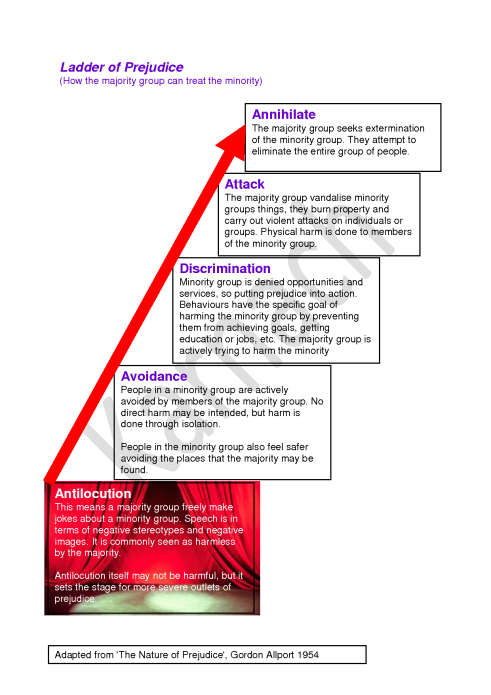
The song is about a world where citizens are deeply suspicious of one another, where fear of the Other is politically instigated and nurtured, social conformity, discrimination, exclusion and prejudice reign supreme. It’s about a society blindly climbing Allport’s ladder.


“Of the forehead, when the forehead is perfectly perpendicular, from the hair to the eyebrows, it denotes an utter deficiency of understanding.” Johann Kaspar Lavater, phrenologist (1741–1801).


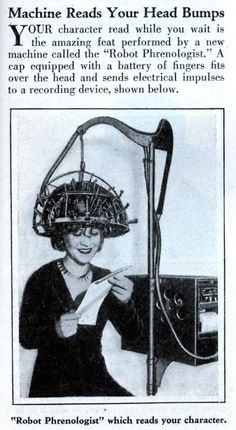
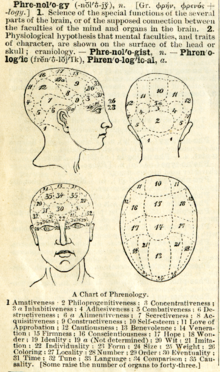
Back in the nineteenth century, phrenology was the preferred “science” of personality and character divination. The growth in popularity of “scientific” lectures as entertainment also helped spread phrenology to the masses. It was very popular among the middle and working classes, not least because of its simplified principles and wide range of social applications that were supportive of the liberal laissez faire individualism inherent in the dominant Victorian world view. It justified the status quo. Even Queen Victoria and Prince Albert invited the charlatan George Combe to feel the bumps and “read” the heads of their children.

During the early 20th century, there was a revival of interest in phrenology, partly because of studies of evolution, criminology and anthropology (pursued by Cesare Lombroso). Some people with political causes used phrenology as a justification narrative for European superiority over other “lesser” races. By comparing skulls of different ethnic groups it supposedly allowed for ranking of races from least to most evolved.

It’s now largely regarded as an obsolete and curious amalgamation of primitive neuroanatomy, colonialist supremicism with a dash of moral philosophy. However, during the 1930s Belgian colonial authorities in Rwanda used phrenology to explain the so-called superiority of Tutsis over Hutus. More recently in 2007, the US State of Michigan included phrenology (and palm reading) in a list of personal services subject to sales tax. 

Any system of belief that rests on the classification of physical characteristics is almost always used to justify prejudices, social stratifying and the ranking of human worth. It highlights what we are at the expense of the more important who we are. It profoundly dehumanises and alienates us.

Though the saying “you need your bumps feeling” has lived on, may the pseudoscience of phrenology rest in pieces. 

CrIY-YQWEAQyIeg

Phrenology is dead: long live the new moralising pseudoscience

The Conservatives have simplified the art of personality and character divination. They have set up a new economic department of the mind called the Behavioural Insights Unit. This fits with the age old Conservative motif of a “broken Britain”and their obsessive fear of social “decay and disorder.” Apparently, we are always on the point of moral collapse, as a society. And apparently, it isn’t the government’s decision-making that is problematic: poor people are entirely responsible for the poor state of our country. Those who have the very least are to blame. That’s why they need such targeted austerity policies, to ensure they have even less. We can’t have the poor being rewarded with not being poor, that’s just bad for big business.

Under every Conservative government, we suddenly see the proliferation of bad sorts; cognitively biased and morally incompetent people making the wrong choices everywhere and generally being inept, non-resilient and deficient characters. The way to diagnose these problems of character, according to the government, is to establish whether or not someone is “hard working”. This is usually determined by the casting of chicken bones, and a quick look at someone’s bank balance. If it lies offshore, you are generally considered a jolly good sort.

If you need to claim social security, be it in-work or out-of-work support, then you are most definitely a “wrong sort”; a faulty person and therefore in need of some state treatment to put you right, just to ensure that your behaviours are optimal and aligned with politically defined neoliberal outcomes. Apparently, poor people are the new “criminal types.” The only cure, according to the government, is to make poor people even poorer, by a variety of methods, including a thorough, coercive nudging: a “remedial” income sanctioning and increased conditionality to eligibility for support; benefit cuts; increasing welfare caps and a systematic dismantling of the welfare state more generally,

Oh, and regular shaming, outgrouping, stigmatising and scapegoating in the meanstream media and political rhetoric, designed to create folk devils and moral panic.

The new benefit cap: a policy designed by the neoliberal rune casters

The regressive benefit cap will save a paltry amount of money in the short term. In the long term it will cost our health and social services many millions. It’s misleading of the government to claim that it will save the “tax payers” money, since most people needing to claim social security have worked and paid taxes too. VAT is also a tax, and last time I checked, people needing support because they lost their job or became sick or injured are not exempt from paying taxes. In fact the poorest families pay the highest proportion of their income in tax

We forget that people in poverty pay taxes because we forget how many different ways we are taxed:

  • VAT
  • Duties
  • Income tax
  • National Insurance
  • Council tax
  • Licences
  • Social care charges, and many others taxes
  • Bedroom tax

Of course there’s a stark contrast in the way the state coerces the poorest citizens into behaving “responsibly”, carrying the full burden of austerity, while there is an abject failure to rein in executive pay, or to tax the Conservative party paymasters, and recover the billions lost in revenue to the Treasury through tax havens.

Poor people get the bargain basement package of behavioural incentives – which is all stick and no carrots – whereas the wealthy get the deluxe kit, with no stick and plenty of financial rewards. 

Nearly a quarter of a million children from poor families will be hit by the extended household benefit cap due to be introduced this autumn, according to the government’s latest analysis of the impact of the policy. It will see an average of £60 a week taken out of the incomes of affected households that are already poor, pushing them even deeper into poverty. About 61% of those affected will be female lone parents.

The cap will damage the life chances of hundreds of thousands of children, and force already poor families to drastically cut back on the amount they spend on essential items to meet basic needs, such as food, fuel and clothing. Originally benefit rates were calculated to meet basic survival needs – covering the costs of food, fuel and shelter only. 

The new cap unjustifiably restricts the total amount an individual household can receive in benefits to £23,000 a year in London (£442 a week) and £20,000 in the rest of the UK (£385 a week). It replaces the existing cap level of £26,000. All of this support is dependent on whether or not you comply with the very complex conditionality criteria. The support can be withdrawn suddenly, in the form of a sanction, for any number of reasons, and quite often, because your benefit advisor simply has targets to reach in order to let you know that nothing at all may be taken for granted: eating, feeding your children, sleeping indoors and keeping warm in particular.  

The government claims the cap incentivises people to search for work, and says that 23,000 affected households have taken a job since the introduction of the first cap in 2013. However, the government uses “off flow” as a measurement of employment, which is unreliable, as studies have indicated many claimants simply vanish from record.

Worryingly, an audit in January this year found that the whereabouts of 1.5 million people leaving the welfare records each year is “a mystery.” The authors also raise concern that the wellbeing of at least a third of those who have been sanctioned “is anybody’s guess.” It’s not the first time these concerns have been raised.

It emerged in 2014, during an inquiry which was instigated by the parliamentary Work and Pensions Select Committee, that research conducted by Professor David Stuckler shows more than 500,000 Job Seekers Allowance (JSA) claimants have disappeared from unemployment statistics, without finding work, since the sanctions regime was toughened in October, 2012.

This means that in August 2014, the claimant count – which is used to gauge unemployment – is likely to be very much higher than the 970,000 figure that the government is claiming, if those who have been sanctioned are included.

A Department for Work and Pensions (DWP) spokesman said: “The benefit cap restored fairness to the system by ending the days of limitless benefit claims and provides a clear incentive to move into work.”

However, firstly, social security is based on a national insurance contribution principle, and was already fair. Most people have worked and contributed to their own provision. Secondly, people in work are also poor. Those on low pay who need to claim additional support are also being sanctioned for “non-compliance”. In fact  much of our welfare spending goes towards supporting those people in work on low wages. We spend most on pensions, a large amount on in-work benefits and relatively little provision is for those out of work. The DWP don’t half chat some rubbish. A fair system would entail the government ensuring that employers pay adequate wages that cover rising living costs, instead of permitting employers to profit from our welfare state.

In a deregulated labour market, poorly paid workers are now held individually and entirely responsible for how much they earn, how many hours they work, and generally “progressing in work”. If they don’t “progress”, then what used to be an issue for trade unions and collective bargaining is now an issue addressed by punitive social security law, authoritarian welfare “advisors” and financial penalties.  

You can see where the incremental increases in the benefit cap are leading the public. The justifications and line of reasoning presented by the Conservatives are leading us down a cul-de-sac of rationale, where the welfare state is completely dismantled, and the reason given will be that this ensures “everyone works”, regardless of labour market conditions and the availability of reasonable quality and secure jobs that pay enough to support people, meeting their basic needs sufficiently to lift them out of poverty.

If these measures are intended to force people into work, this government’s self-defeating, never-ending austerity policy is hardly the ideal economic climate for job creation and growth, and where are the affordable social homes for the growing ranks of low paid workers in precarious financial situations because of increasing job insecurity and zero hour contracts? The gig economy is a political fig leaf.

An official evaluation of the cap by the Institute for Fiscal Studies in 2014 found the “large majority” of capped claimants did not respond by moving into work, and a DWP-backed study in Oxford published in June found that cutting benefit entitlements made it less likely that unemployed people would get a job. Not that we didn’t already know this. If people cannot meet their basic needs, then they simply struggle to survive and cannot be “incentivised” to meet higher level psychosocial needs. The government need to read about Maslow’s hierarchy of needs, and the Minnesota starvation experiment. (See Welfare sanctions can’t possibly “incentivise” people to work .)

Joanna Kennedy, chief executive of the charity Z2K, said: “Our experience helping those affected by the original cap shows that many of those families will have to reduce even further the amount they spend on feeding and clothing their children, and heating their home to avoid falling into rent arrears and facing eviction and homelessness.”

As Patrick Butler points out in the Guardian, the government have already been ordered to exempt carers from the cap after a judge ruled last year that it unlawfully discriminated against disabled people by capping benefits for relatives who cared for them full time. Ministers had argued that carers who looked after family members for upwards of 35 hours a week should be treated as unemployed.

A previous court ruling found that the benefit cap breached the UK’s obligations on international children’s rights because the draconian cuts to household income it produced left families unable to meet their basic needs. This is the fifth wealthiest nation in the world, and supposedly a first world liberal democracy.

The deputy president of the supreme court, Lady Hale, said in her judgment: “Claimants affected by the cap will, by definition, not receive the sums of money which the state deems necessary for them adequately to house, feed, clothe and warm themselves and their children.

As Stephen Preece from Welfare Weekly pointed out yesterday, the word vulnerable suggests that people are weak, when in fact they are only made vulnerable through the actions or inaction of those around them, including (and especially) the government. I agree. To label people as vulnerable displaces responsibility from government and diverts us from the reality and nature of the punitive policies aimed at poor citizens – this is political oppression. 

Ideological justification narratives and pseudoscience

I waded through the government document Welfare Reform and Work Act: Impact Assessment for the benefit cap. Basically the government use inane nudge language and their central aim is to “incentivise behavioural change” throughout the assessment. But they then claim that they can’t predict or accurately measure that. It is very difficult to measure psychobabble accurately though, it has to be said.

There are a lot of techniques of neutralisation and euphemisms peppered throughout the document. For example, taking money away from the poorest citizens is variously described as: “achieving fairness for taxpayers” (as previously stated, people claiming benefits have usually worked: they have and continue to pay taxes); “ensures there is a reasonable safety net of support for the most vulnerable” (by cutting it away further).and “strengthening work incentives”. 

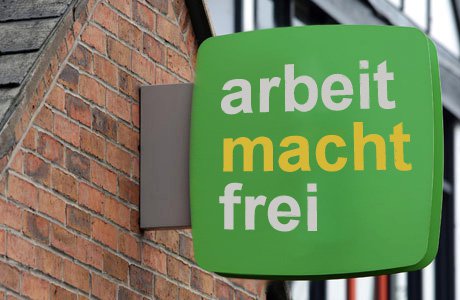
For those alleged free riders claiming support because they fell on hard times, “doing the right thing” and “moving into work” is deemed to be the ultimate aim of the cap, regardless of whether or not the work is secure, appropriate, with adequate levels of pay to lift people out of poverty. Work, in other words, will set us free.

I also took the time and trouble to read the studies that the government cited as “evidence” to support their pseudoscientific claims. The government misquoted and misapplied the research they used, too. They made claims that were NOT substantiated by the scant research referenced. And there are many more studies that completely refute the outrageous and ideologically premised government claims made in this document. 

For example, Freud makes the claims that: “Children in households where neither parent is in work are much more likely to have challenging behaviour at age 5 than children in households where both parents are in paid employment. Growing up in a workless household is associated with poorer academic attainment and a higher risk of being not in education, employment and training (NEET) in late adolescence.”

The study cited was Barnes, M. et al. (2012) Intergenerational Transmission of Worklessness: Evidence from the Millennium Cohort Study and Longitudinal Study of Young People in England. Department for Education research report 234. It says:

“Though it must be stated that much of the association between parental worklessness and these outcomes was attributable to these other risk factors facing workless families. Parental worklessness had no independent effect on a number of other outcomes, such as children’s wellbeing (not being happy at school, being bullied and bullying other children), feelings of lack of control, becoming a teen parent, and risky behaviour. This evidence provides limited support for a policy agenda targeted only at getting parents back into work. ”

It is poverty, not “worklessness” that creates poor social outcomes. That is why around half of the people queuing at food banks are those in work. The biggest proportion of welfare support paid out is in-work benefits.

Freud also states that: “A lower cap recognises that many hard working families earn less than median earnings – a lower cap provides a strong work incentive.”

Actually, raising wages in line with the cost of living would be a far better incentive, instead of punishing unemployed people for the failings of a Conservative government that always oversees an increasingly desperate reserve army of labour, and ever-falling wages. 

Perhaps one of the most outrageous claims made in the document is that the cap is consistent with “UN Convention on the Rights of Persons with Disabilities.” Those sick and disabled people in the ESA work-related activity group are not protected from the cap. The government is currently being investigated by the UN for “gross and systematic” abuses of the human rights of disabled people, because of the previous welfare “reforms” (a euphemism for cuts).

This is an authoritarian government that is coercing people into any low paid and insecure work, regardless of how suitable it is. It’s about dismantling the welfare state, bit by bit. It is about ensuring people are desperate so that people’s right to turn down jobs that are unsuitable, thus reducing any kind of scope for collective bargaining to improve working conditions and pay, is removed. It’s also about bullying people into doing what the government wants then to do, removing autonomy and choices. That isn’t “incentivising”, it’s plain and brutal state coercion. All bullies and tyrants are behaviourists. 

It’s impossible not to feel at least a degree of concern and outrage reading such incoherent, flimsy and glib rubbish from an ideologically-driven government waging a full on class war on the poorest citizens, and then claiming that is somehow “fair” to the “taxpayer”. And it’s noteworthy that there is a harking back to the discredited and prejudiced theories of Keith Joseph – “intergenerational worklessness” – which were debunked by the theorists’ OWN research back in the Thatcher era. It is being paraded as irrefutable fact once again. 

I’m expecting a government phrenology unit to be established soon.

And an announcement that the Department for Work and Pensions is to be renamed the Malleus Maleficarum.

220px-1895-Dictionary-Phrenolog


CONTRIBUTE TO POLITICS AND INSIGHTS

I don’t make any money from my work. But you can contribute by making a donation and help me continue to research and write informative, insightful and independent articles, and to provide support to others. The smallest amount is much appreciated – thank you.
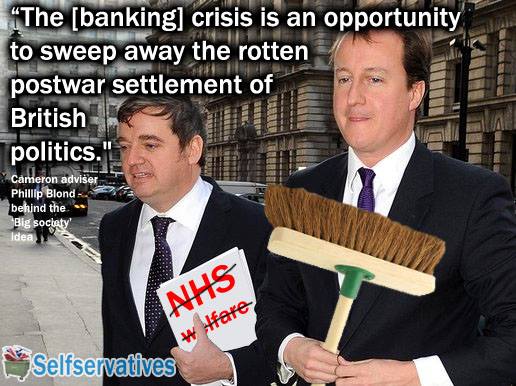
DonatenowButton cards

The Government’s brutal cuts to disability support isn’t ‘increasing spending’, Chancellor, but handing out tax cuts to the rich is

Chancellor George Osborne


2 wrag

Source: Hansard

Context

Many of us recognised in 2012, when the welfare “reforms” and other cuts to public services that support the poorest citizens were forced through parliament despite considerable opposition, using only the “financial privilege” of the Commons as a justification, that the Conservatives are on an ideological crusade, which flies in the face of public needs, democracy and sound economics, to shrink the welfare state and privatise our essential services.

In a wealth transfer from the poorest to the very rich, we have witnessed the profits of public services being privatised, but the losses have been socialised – entailing a process of economic enclosure for the wealthiest, whilst the burden of losses have been placed on the poorest social groups and our most vulnerable citizens – largely those who are ill, disabled and elderly. The Conservative’s justification narratives regarding their draconian policies, targeting the poorest social groups, have led to media scapegoating, social outgrouping, persistent political denial of the aims and consequences of policies and reflect a wider process of political disenfranchisement of the poorest citizens, especially sick and disabled people.

That the cuts are ideologically driven, and have nothing whatsoever to do with economic necessity, was demonstrated only too well by the National Audit Office (NAO) report earlier this year. The NAO scrutinises public spending for Parliament and is independent of government. The report indicates how public services are being appropriated for purely private benefit.

The audit report in January concluded that the Department for Work and Pension’s spending on contracts for disability benefit assessments is expected to double in 2016/17 compared with 2014/15. The government’s flagship welfare-cut scheme will be actually spending more money on the assessments conducted by private companies than it is saving in reductions to the benefits bill.

From the report:

£1.6 billion
Estimated cost of contracted-out health and disability assessments over three years, 2015 to 2018

£0.4 billion
Latest expected reduction in annual disability benefit spending.

This summary reflects staggering economic incompetence, a flagrant, politically motivated waste of tax payers money and even worse, the higher spending has not created a competent or ethical assessment framework, nor is it improving the lives of sick and disabled people. Some people are dying after being wrongly assessed as “fit for work” and having their lifeline benefits brutally withdrawn. Maximus is certainly not helping the government to serve even the most basic needs of sick and disabled people.

However, Maximus is serving the private needs of a “small state” doctrinaire neoliberal government, and making lots of private profit whilst it does so. The Conservatives are systematically dismantling the UK’s social security system, not because there is an empirically justifiable reason or economic need to do so, but because the government has purely ideological, anticollectivist, antidemocratic, profoundly uncivilising prescriptions and longstanding prejudices.

Last week I wrote about the £30 a week Employmen Support Allowance (ESA) work related activity group (WRAG) cuts, which the Government have forced through the legislative process, despite meeting with widespread opposition, the government claim that it is their financial privilege to do so. Yesterday I wrote about the brutal cuts that are planned for Personal Independence Payments (PIP) for sick and disabled people, which are aimed at saving money by reducing eligibility for the support. The cut, it is estimated, will affect at least 640,000 disabled people by 2020, who may lose up to £150 a week. This is money that provides essential support for people who need help to prepare food, use the toilet or dress themselves, amongst other things, and to maintain a degree of dignity and independence.

The cuts to ESA and Personal Independent Payments (PIP) take place in the context of a Tory manifesto that included a pledge not to cut disability benefits. In fact in March last year, the Prime Minister signalled that the Conservatives will protect disabled claimants from welfare cuts in the next parliament (this one). Cameron said the Conservatives would not “undermine” PIP, which was introduced under the Coalition to save money by “targeting those most in need.” Now it seems those most in need are not the ones originally defined as such.

At the time he told BBC Breakfast: “We’ve replaced one benefit – Disability Living Allowance – with a new benefit – Personal Independence Payment – it’s working well, it is also going to lead to some savings over time and we haven’t created that benefit in order to undermine it. We want to enhance it and safeguard it.”

Semantic thrifts: being Conservative with the truth

Only a Conservative minister would claim that taking money from sick and disabled people is somehow “fair,” or about “helping”, “supporting” or insultingly, “incentivising” sick and disabled people who have already been deemed unfit for work by their doctors and the state via the work capability assessment to work.

The Tories all too frequently employ such semantic shifts and euphemism – linguistic strategies – as an integral part of a wider range of techniques of neutralisation that are used, for example, to provide linguistic relief from conscience and to suspend moral constraint – to silence both “inner protest” and public objections – to the political violation of social and moral norms; to justify acts that cause harm to others whilst also denying there is any subsequent harm being inflicted; to deny the target’s and casualties’ accounts and experiences of political acts of harm, and to neutralise remorse felt by themselves or other witnesses.

Media discourse has often preempted the Conservative austerity cuts, resulting in the identification, stereotyping and scapegoating of the groups in advance of the targeted, discriminatory policies. Media discourse is being used as a vehicle for the government to push their ideological agenda forward without meeting legitimate criticism, public scrutiny and without due regard for essential democratic processes and safeguards.

The five neutralisation techniques identified by Gresham Sykes and David Matza are: denial of responsibility, denial of injury, denial of victims, appeal to higher loyalties, and condemnation of condemners.

The really critical part of Sykes and Matza’s argument is that rationalisations precede immoral, cruel or controversial acts and are a key factor in making deviant behaviour possible (amongst delinquents, the mafia or Conservative ministers). As such, the rationalisations betray intent.

The cuts of £120 a month to the disability benefit Employment Support Allowance  are also claimed to be “fair.” and “supportive.” Though I have yet to hear a coherent and rational  explanation of how this can possibly be the case. Ministers claimed that people subjected to the ESA Work Related Activity Group cuts could claim PIP if they required support with extra living costs, but now we are told that PIP is to be cut, too.

Osborne’s techniques of neutralisation: calling a cut “increased spending”

The chancellor has defended his decision to use the cuts in disability benefits to fund tax breaks for the wealthy. On the Andrew Marr show yesterday, he was questioned about his decision to cut PIP, currently made to over 640,000 disabled people in a bid to save at least £1.2 billion. Many severely disabled people are facing a cut of up to £150 a week under the new reduced eligibility assessment criteria.

Controversially, the cuts to disability benefits will fund tax cuts for the most affluent – the top 7% of earners. The Chancellor is set to raise the threshold at which people start paying 40p tax, in a move that will probably see  many wealthier people pulled out of the higher rate of income tax, in the coming budget. Mr Osborne says he wants to “accelerate progress” towards the Conservative’s manifesto pledge of raising the threshold for the 40p rate to £50,000 in 2020, it is understood. The average annual income in the UK is around £27,000. 

Andrew Marr said: You’re taking money out of the pockets of some of the most vulnerable people in this country, disabled people. These are the people who can least afford the sacrifice, the people with the weakest shoulders.

And you’re changing the rules to hit them. Is that really your priority?”

Osborne ludicrously claimed that the Conservative government was “increasing spending on disabled people”, he said: “Controlling welfare bills is part of what you need to do if you’re a secure country confronting the problems in the world.”

But as Marr pointed out, the cuts to ESA and PIP show an intended substantial reduction on government spending to essential support for disabled people.

From January 2017, the cut to PIP is likely to hit sick and disabled people who face fundamental barriers to health and essential basic care. The cut, it is estimated, will affect at least 640,000 disabled people by 2020.

Andrew Marr went on to say: “At the same time as you’re raising thresholds to help middle-class tax payers, it’s going to seem a very callous set of priorities.”

However, Mr Osborne maintained that the brutal and uncivilised cuts were “necessary to improve the economic conditions in the UK”. He said: “Yes, times are tough. The fiscal situation is a difficult one. All Western countries are not productive enough.”

You can see the interview here:


Austerity and premature mortality

Since 2011, a year after the government began their austerity programme, mortality rates have increased rapidly. Advisers to Public Health England (PHE) have warned that the 4-year trend may be the worst since World War II.

Data from the Office of National Statistics shows a 5.4% (27,000) increase in deaths in the past year alone, prompting calls for an urgent investigation. The year-on-year rise, to a total of 528,340 deaths, is the highest since 1968.

PHE said the elderly were bearing the worst of Tory austerity cuts, with women suffering disproportionately, though this is partly because they live longer, however, it is also due to a growing crisis in the NHS and cuts to social care. Professor Danny Dorling, from Oxford University, an advisor to PHE on older age life expectancy, said:

“When we look at 2015, we are not just looking at one bad year. We have seen excessive mortality – especially among women – since 2012.”

Figures show that the number of deaths had been falling steadily until 2011, a year after the government began their austerity programme, when deaths rates began to increase rapidly.

Professor Dorling cited Tory austerity as the biggest cause:

“I suspect the largest factor here is cuts to social services – to meals on wheels, to visits to the elderly.”

Empirical research published two years ago demonstrated the high a cost the country paid in terms of health and wellbeing for the Thatcher administration’s economic and social policies. The study, which looked at material from existing research and data from the Office for National Statistics, illustrates that Thatcherism resulted in the unnecessary and unjust premature deaths of British citizens, together with a substantial and continuing burden of suffering and a widespread degradation of wellbeing. Co-author and researcher Professor Clare Bambra from the Wolfson Research Institute of Health and Wellbeing said that deaths from violence and suicide all increased substantially during the Thatcher era in comparison with other countries. Regional inequalities in life expectancy between north and south were also exacerbated, as were health inequalities between the richest and poorest in British society.

Professor Bambra also says that the welfare cuts implemented by Thatcher’s governments led to a rise in poverty rates from 6.7% in 1975 to 12% by 1985; poverty is well known to be one of the major causes of ill health and mortality. Income inequality also increased in the Thatcher period, as the richest 0.01% of society had 28 times the mean national average income in 1978 but 70 times the average by 1990. Other research (The Spirit Level) indicates that income inequality is internationally associated with higher mortality and morbidity.

Welfare reform minister, Lord Freud, refused to monitor the number of people who take their own lives as a result of the £120-a-month cut planned for those people in the work related activity group (WRAG), claiming employment and support allowance from April 2017. Concerns were raised in the House of Lords last week, when Baroness Meacher, amongst others, warned that for the most vulnerable, the cut was “terrifying” and bound to lead to increased debt.

Condemning the truly callous and terrible actions of the Treasury, she urged ministers to monitor the number of suicides in the year after the change comes in, adding: “I am certain there will be people who cannot face the debt and the loss of their home, who will take their lives.”

Many people have died as a consequence of the welfare “reforms.”

Not only have the government failed to carry out an impact assessment regarding the cuts, Lord Freud said that the impact, potential increase in deaths and suicides won’t be monitored, apart from “privately” because individual details can’t be shared and because that isn’t a “useful approach”.

He went on to say “We have recently produced a large analysis on this, which I will send to the noble Baroness. That analysis makes it absolutely clear that you cannot make these causal links between the likelihood of dying – however you die – and the fact that someone is claiming benefit.”

Actually, a political refusal to investigate an established correlation between the welfare “reforms” and an increase in the mortality statistics of those hit the hardest by the cuts – sick and disabled people – is not the same thing as there being no causal link. Often, correlation implies causality and therefore such established links require further investigation. It is not possible to disprove a causal link without further investigation.

Whilst the government continue to deny there is a causal link between their welfare policies, austerity measures and an increase in premature deaths and suicides, they cannot deny there is a clear correlation establised, which warrants further research and political accountability.

Then they came for the ESA Support Group …

Despite the fact that this government face a UN inquiry into grave and systematic abuses of the human rights of disabled people, the blatant attacks on a social group with legally protected characteristics continues and the Conservatives continue to target disabled people for a disproportionately large and unfair burden of austerity cuts.

A government advisor, who is a specialist in labour economics and econometrics, has proposed scrapping all ESA sickness and disability benefits. Matthew Oakley, a senior researcher at the Social Market Foundation, recently published a report entitled Closing the gap: creating a framework for tackling the disability employment gap in the UK, in which he proposes abolishing the ESA Support Group. To meet extra living costs because of disability, Oakley says that existing spending on PIP and the Support Group element of ESA should be brought together to finance a new extra costs benefit. Eligibility for this benefit should be determined on the basis of need, with an assessment replacing the WCA and PIP assessment. The Conservative definition of “the basis of need” seems to be an ever-shrinking category.

Oakely also suggests considering a “role that a form of privately run social insurance could play in both increasing benefit generosity and improving the support that individuals get to manage their conditions and move back to work.”

I’m sure the private company Unum would jump at the opportunity. Steeped in controversy, with a wake of scandals that entailed the company denying people their disabilty insurance, in 2004, Unum entered into a regulatory settlement agreement (RSA) with insurance regulators in over 40 US states. The settlement related to Unum’s handling of disability claims and required the company “to make significant changes in corporate governance, implement revisions to claim procedures and provide for a full re-examination of both reassessed claims and disability insurance claim decisions.

The company is the top disability insurer in both the United States and United Kingdom. By coincidence, the  company has been involved with the UK’s controversial Welfare Reform Bill, advising the government on how to cut spending, particularly on disability support. What could possibly go right?

It’s difficult to see how someone with a serious, chronic and often progressive illness, (which most people in the ESA Support Group have) can actually “manage” their illness and “move back into work.” The use of the extremely misinformed, patronising and very misleading term manage implies that very ill people actually have some kind of choice in the matter. For people with Parkinson’s disease, rheumatoid arthritis, lupus and multiple sclerosis, cancer and kidney failure, for example, mind over matter doesn’t fix those problems, positive thinking and sheer will power cannot cure these illnesses sadly. Nor does benefit conditionality and being coerced into work by callously insensitive and medically ignorant assessors, advisors and ministers.

The Reform think tank has also recently proposed scrapping what is left of the disability benefit support system, in their report Working welfare: a radically new approach to sickness and disability benefits and has called for the government to set a single rate for all out of work benefits and reform the way sick and disabled people are assessed. 

Reform says the government should cut the weekly support paid to 1.3 million sick and disabled people in the ESA Support Group from £131 to £73. This is the same amount that Jobseeker’s Allowance claimants receive. However, those people placed in the Support Group after assessement have been deemed by the state as unlikely to be able to work again. It would therefore be very difficult to justify this proposed cut.

Yet the authors of the report doggedly insist that having a higher rate of weekly benefit for extremely sick and disabled people encourages them “to stay on sickness benefits rather than move into work.”

The report recommended savings which result from removing the disability-related additions to the standard allowance should be reinvested in support services and extra costs benefits – PIP. However, as outlined, the government have ensured that eligibility for that support is rapidly contracting, with the ever-shrinking political and economic re-interpretation of medically defined sickness and disability categories and a significant reduction in what the government deem to be a legitimate exemption from being “incentivised” into hard work.

The current United Nations investigation into the systematic and gross violations of the rights of disabled people in the UK because of the Conservative welfare “reforms” is a clear indication that there is no longer any political commitment to supporting disabled people in this country, with the Independent Living Fund being scrapped by this government, ESA for the work related activiy group (WRAG) cut back, PIP is becoming increasingly very difficult to access, and now there are threats to the ESA Support Group. The Conservative’s actions have led to breaches in the CONVENTION on the RIGHTS of PERSONS with DISABILITIES – CRPD articles 4, 8, 9, 12, 13, 14, 15, 17, and especially 19, 20, 27 and 29 (at the very least.) There are also probable violations of articles 22, 23, 25, 30, 31.

The investigation began before the latest round of cuts to ESA and PIP were announced.


426785_10151205298996274_171693454_n

Reverse the ESA disability benefit cut: sign the petition

Extend the PIP consultation & stop cuts to supporting terminally ill & disabled: sign the petition


Related

A tale of two suicides and a very undemocratic, inconsistent government

Paternalistic Libertarianism and Freud’s comments in context

Let’s keep the job centre out of GP surgeries and the DWP out of our confidential medical records

Conservative governments are bad for your health

Research finds strong correlation between Work Capability Assessment and suicide

Benefits Assessor: How Long Are You Likely To Have Parkinson’s?

scroll2

I don’t make any money from my work and I’m not funded. You can support Politics and Insights by making a donation to help me continue researching and writing independently, and to continue to help others.

DonatenowButton
cards

If the Tories don’t like being compared to the Nazis, they need to stop behaving like despots.


2 authoritarians

Two authoritarians on the far right of the political spectrum.

Apparently the Conservatives are cross about being compared with the Nazis. Mike Sivier at Vox Political wrote about the circumstances of the comparison, which arose on Monday: This ignorant Tory councillor had better try justifying the deaths his party has caused.

Human Rights abuses

This is a government that is currently at the centre of a United Nations inquiry into abuses of the human rights of sick and disabled people, and is also in breach of the rights of women and children, because of their anti-humanist, draconian welfare “reforms”.

While I am very aware that we need take care not to trivialise the terrible events of the Holocaust by making casual comparisons, there are some clear and important parallels with what is happening to sick and disabled people, poor people and those who are unemployed in the UK and the ideological processes in Nazi Germany: events on a political, cultural and a psychosocial level, that I feel are crucially important to recognise.

Conservative policies are entirely ideologically driven. We have a government that frequently uses words like workshy to describe vulnerable social groups. This is a government that is intentionally scapegoating poor, unemployed, disabled people and migrants. A few  years ago, a Tory councillor said that “the best thing for disabled children is the guillotine.” More recently, another Tory councillor called for the extermination of gypsies, more than one Tory MP has called for illegal and discriminatory levels of pay for disabled people.

These weren’t “slips”, it’s patently clear that the Tories believe these comments are acceptable, and we need only look at the discriminatory nature of policies such as the legal aid bill, the wider welfare “reforms” and research the consequences of austerity for the poorest and the vulnerable citizens – those with the “least broad shoulders” –  to understand that these comments reflect how Conservatives think.

This is a government that is manipulating public prejudice to justify massive socio-economic inequalities and their own policies that are creating a steeply hierarchical society based on social Darwinist survival of the wealthiest libertarian, minarchist principles. Society is being re-arranged by the Conservatives into hierarchies of human worth, based on traditional 19th century notions of ‘deserving’ and ‘undeserving’.

Conservatives have always seen society and human relationships in terms of hierarchies, based on “red in tooth and claw” Darwinist conflict. A hierarchy is any system of persons or things ranked one above the other. The government claim that this kind of inequality and ‘competition’ for scarce resources is somehow ‘good’ for the economy. They say that people who are higher in the hierarchy got there on merit. However, at least a third of wealthy people inhereited their wealth and power. Cameron included.

Hierarchy was originally used to describe the system of church government by priests graded into ranks. Organised religion is very hierarchical. Hierarchical thinking is about seeing the world through systems of domination, ranks and importance. But the central principle of human rights is that we each have equal worth: that we are all equally important. But hierarchies ensure that privilege and decision-making is not socially distributed. Nor is power.

The very way that Tories think leads to a collision between their ideology and our human rights, and is completely incompatible with the principles of equality and democracy. Tories think that some people hold a more important place in society than others. This reduces people – they become inferiors or superiors, and really, that is about unequal distribution of power, subordination and domination – those power relationships are no longer entirely notional, we have moved some distance from being a liberal democracy these past five years – and feudalism and manorialism are very Tory ideals.

To summarise, there are strong links between the right-wing idea of competitive individualism, Social Darwinism, social inequalities, eugenics, nationalism, fascism and authoritarianism. Those ideas are implicit in Tory rhetoric, because they form the very foundations of Tory ideology. A society with inequalities is and always has been the ideologically founded and rationalised product of Conservative Governments.

The creation of scapegoats, categories of others and outgrouping

The malicious creation of socio-economic scapegoats, involving vicious stigmatisation of vulnerable social groups, particularly endorsed by the mainstream media, is simply a means of manipulating public perceptions and securing public acceptance of the increasingly punitive and repressive basis of the Tories’ welfare “reforms”, and the steady stripping away of essential state support and provision. At the same time, wages are depressed, many jobs are insecure, or zero-hour contracts and working conditions are declining.

web-earnings-graphic

A coerced labor force is a key feature of most despotic, authoritarian, totalitarian and fascist states and as history has taught us, ALL eugenicist-founded tyrannies.

The political construction of social problems also marks an era of increasing state control of citizens with behaviour modification techniques, (under the guise of “paternalistic libertarianism”) all of which are a part of the process of restricting access rights to welfare provision.

The mainstream media has been complicit in the process of constructing deviant welfare stereotypes and in engaging prejudice and generating moral outrage from the public:

“If working people ever get to discover where their tax money really ends up, at a time when they find it tough enough to feed their own families, let alone those of workshy scroungers, then that’ll be the end of the line for our welfare state gravy train.” James Delingpole 2014

Poverty cannot be explained away by reference to simple narratives of the workshy scrounger as Delingpole claims, no matter how much he would like to apply such simplistic, blunt, stigmatising, dehumanising labels that originated from the Nazis (see arbeitssheu.)

This past five years we have witnessed an extraordinary breakdown of the public/private divide, and a phenomenological intrusion on the part of the state and media into the lives of the poorest members of society. (For example, see: The right-wing moral hobby horse: thrift and self-help, but only for the poor.)

Ideology

Hannah Arendt wrote extensively about totalitarian regimes, in particular Nazism and Stalinism, which she distinguishes from Italian Fascism, because Hitler and Stalin sought to eliminate all restraints upon the power of the State and furthermore, they sought to dominate and control every aspect of everyone’s life. There are parallels here, especially when one considers the continued attempts at dismantling democratic processes and safeguards since the Coalition first took office. And the quiet editing and steady erosion of our protective laws

Between February 1933 and the start of World War Two, Nazi Germany underwent an economic “recovery” according to the government. Rather like the “recovery” that Osborne and Cameron are currently claiming, which isn’t apparent to the majority of citizens.

This economic miracle, sold to the people of Germany, entailed a huge reduction in unemployment. However, the main reason for this was fear – anyone who was found guilty of being workshy (arbeitssheucould then be condemned to the concentration camps that were situated throughout Germany. Hitler frequently referred to the economic miracle, whilst people previously employed in what was the professional class were made to undertake manual labour on the autobahns. People didn’t refuse the downgraded status and pay, or complain, lest they became Arbeitsscheu Reich compulsory labor camp prisoners, and awarded a black triangle badge for their perceived mental inferiority and Otherness.

Behaviour can be controlled by manipulating fear, using a pattern of deprivation. Benefit sanctions, for example, leave “workshy”people without the means to meet their basic survival needs and are applied for periods of weeks or months and up to a maximum of 3 years. That the government of a so-called first world liberal democracy is so frankly inflicting such grotesquely cruel punishments on vulnerable citizens is truly horrific. It’s also terrifying that the media and to some extent, the wider British public are complicit in this: they fail to recognise that the Social Darwinism inherent in Tory ideological grammar is being communicated through discourses and policies embodying crude behaviour modification techniques and an implicit eugenics subtext .

There were various rationales for the Nazi Aktion T4 programme, which include eugenics, Social Darwinism, racial hygiene, cost effectiveness and reducing the welfare budget.

The social psychology of eugenics

Gordon Allport studied the psychological and social processes that create a society’s progression from prejudice and discrimination to genocide. In his research of how the Holocaust happened, he describes socio-political processes that foster increasing social prejudice and discrimination and he demonstrates how the unthinkable becomes tenable: it happens incrementally, because of a steady erosion of our moral and rational boundaries, and propaganda-driven changes in our attitudes towards politically defined others, that advances culturally, by almost inscrutable degrees.

The process always begins with political scapegoating of a social group and with ideologies that identify that group as  the Other: an “enemy” or a social “burden” in some way. A history of devaluation of the group that becomes the target, authoritarian culture, and the passivity of internal and external witnesses (bystanders) all contribute to the probability that violence against that group will develop, and ultimately, if the process is allowed to continue evolving, extermination of the group being targeted.

Economic recession, uncertainty and authoritarian or totalitarian political systems contribute to shaping the social conditions that seem to trigger Allport’s escalating scale of prejudice.

In the UK, the media is certainly being used by the right-wing as an outlet for blatant political propaganda, and much of it is manifested as a pathological persuasion to hate others. The Conservatives clearly have strong authoritarian tendencies, and that is most evident in their anti-democratic approach to policy, human rights, equality, social inclusion and processes of government accountability.

Vulnerable groups are those which our established principles of social justice demand we intervene to help, support and protect.  However, the Conservative’s rhetoric is aimed at a deliberate identification of citizens as having inferior behaviour. The poorest citizens are presented as a problem group because of their individual faulty characteristics, and this is intentionally diverting attention from wider socio-economic and political causes of vulnerability. Individual subjects experiencing hardships have been placed beyond state protection and are now the objects of policies that embody behaviourism, and pathologising, punitive and coercive elements of social control. Vulnerable people are no longer regarded as human subjects, the state is acting upon them, not for or on behalf of them.

People are still debating if Stalin’s Holodomor conforms to a legal definition of genocide, no-one doubts that Hitler’s gas chambers do, though Hitler also killed thousands by starvation.

Our own government have formulated and implemented policies that punish unemployed people for being “workshy” – for failing to meet the never-ending benefit conditionality requirements which entails the use of negative incentives and behaviour modification to “support” a person’s into  work –  by withdrawing their lifeline benefit. We also know that sanction targets have led to many people losing lifeline benefits for incoherent and grossly unfair reasons that have nothing to do with an unwillingness to cooperate or work.

Since benefits were originally calculated to meet basic living requirements – food, fuel and shelter – it’s  inconceivable that the government haven’t already considered the consequences of removing people’s means of meeting these fundamental survival needs. Of course, the Tory claim that this draconian measure is to incentivise people to “find work” doesn’t stand up to scrutiny when we consider that there isn’t enough work for everyone, and certainly not enough work around that pays an adequate amount to actually survive on.

Furthermore it flies in the face of long-established and conventional wisdom which informs us that if you reduce people by removing their means of survival, those people cannot be motivated to do anything else but to struggle and survive. Maslow tells us that unless we meet basic survival needs, we cannot be motivated to meet higher level psychosocial ones.

Tory austerity is all about ideology – the dehumanisation of the poor, and the destruction of public services and provisions – state infrastructure – and nothing to do with the state of the economy. It’s also about cutting money from the poorest and handing it to the wealthiestMany economists agree that austerity is damaging to the economy.

There has been a media complicity with irrational and increasingly punitive Tory policies. But why are the public so compliant?

Decades of  research findings in sociology and psychology inform us that as soon as a group can be defined as an outgroup, people will start to view them differently. The very act of demarcating groups begins a process of ostracization.

As well as the political and social definitions of others, there also exists deeper, largely unconscious beliefs that may have even more profound and insidious effects. These are related to whether people claiming benefits are even felt to be truly, properly human in the same way that “we” are.

This is called infrahumanisation. Infra means “below”, as in below or less than fully human. The term was coined by a researcher at the University of Louvain called Jacque-Philippe Leyens to distinguish this form of dehumanisation from the more extreme kind associated with genocide.

However, I don’t regard one form of dehumanisation as being discrete from another, since studies show consistently that it tends to escalate when social prejudice increases. It’s a process involving accumulation.

According to infrahumanisation theory, the denial of uniquely human emotions to the outgroup is reflective of a tacit belief that they are less human than the ingroup.

Poor people, sick and disabled people, homeless people people with mental illness and social security claimants are the most frequently outgrouped. It is these most stigmatised groups that people have the most trouble imagining having the same uniquely human qualities as the rest of us. This removes the “infrahumanised” group from the bonds, moral protection and obligations of our community, because outgrouping de-empathises us.

This would explain why some people attempt to justify the austerity cuts, which clearly fall disproportionately on the most vulnerable. This is probably  why fighting the austerity cuts is much more difficult than simply fighting myths and political propaganda. I think the government are very aware of the infrahumanisation tendency amongst social groups and are manipulating it, because growing social inequality generates a political necessity for social prejudices to use as justification narratives.

The linguistic downgrading of human worth

During a debate in the House of Lords, Freud described the changing number of disabled people likely to receive the employment and support allowance as a “bulge of, effectively, stock. After an outraged response, this was actually transcribed by Hansard as “stopped”, rendering the sentence meaningless.  He is not the only person in the Department of Work and Pensions who uses this term. The website describes disabled people entering the government’s work programme for between three and six months as 3/6Mth stock.

This infrahumanised stock are a source of profit for the companies running the programme. The Department’s delivery plan recommends using  credit reference agency data to cleanse the stock of fraud and error”.

The linguistic downgrading of human life requires dehumanising metaphors: a dehumanising socio-political system using a dehumanising language, and it is becoming familiar and pervasive: it has seeped almost unnoticed into our lives.

Until someone like Freud or Mellins pushes our boundaries of decency a little too far. Then we suddenly see it, and wonder how such prejudiced and discriminatory comments could be deemed acceptable and how anyone could possibly think they would get away with such blatantly offensive comment without being challenged. It’s because they have got away with less blatantly offensive comments previously: it’s just that they pushed more gently and so we didn’t see.

The government also distorts people’s perceptions of the aims of their policies by using techniques of neutralisation. An example of this method of normalising prejudice is the use of the words “incentivise” and “help” in the context of benefit sanctions, which as we know are intentionally extremely punitive, and people have died as a consequence of having their lifeline benefit withdrawn.

As Allport’s scale of prejudice indicates, hate speech and incitement to genocide start from often subliminal expressions of prejudice and subtle dehumanisation, which escalate. Germany didn’t wake up one morning to find Hitler had arranged the murder of millions of people. It happened, as many knew it would, and was happening whilst they knew about it. And many opposed it, too.

The dignity and equal worth of every human being is the axiom of international human rights. International law condemns statements which deny the equality of all human beings.

As a so-called civilised society, so should we.

Much of this was taken from a longer article: Aktion Arbeitsscheu Reich, Human Rights and infrahumanisation

I’ve written at length about the link between Conservative policies and premature deaths of ill and disabled people on this site. And the government’s attempts at hiding that information. For example:

A tale of two suicides and a very undemocratic, inconsistent government

Techniques of neutralisation: David Cameron’s excuses for Iain Duncan Smith

The Tories are epistemological fascists: about the DWP’s Mortality Statistics release

The government need to learn about the link between correlation and causality. Denial of culpability is not good enough.

Black Propaganda

Remembering the Victims of the Government’s Welfare “Reforms”


I don’t make any money from my work. But you can support me by making a donation and help me continue to research and write informative, insightful and independent articles, and to provide support to others. The smallest amount is much appreciated – thank you.

DonatenowButton

Tory policies are class contingent, express prejudice and are discriminatory

incon
Conservatives persistently peddle a fallacy that they don’t subscribe to an ideological belief system.
Francis Fukuyama announced the end of history and the arrival of a post-ideological world. But Fukuyama’s declarations were really just New Right ideology incognito.

I always saw Fukuyama as an ardent champion of ultra-neoliberalism, and he disguised his neo-conservatist ideology behind apparently benign virtue words and phrases (as part of a propaganda technique called Glittering Generalities), such as “Man’s universal right to freedom.” 

He meant the same sort of self-interested “freedom” as Ayn Rand – “a free mind and a free market are corollaries.” He meant the same kind of implicit Social Darwinist notions long-held by Conservatives like Herbert Spencer – where the market rather than evolution decides who is “free,” who survives; and as we know, that’s rigged in favour of a minority of rich and powerful people, by rich and powerful people. Tory ideology does not ever yield a remotely utilitarian outcome.

Fukuyama’s ideas have been absorbed culturally, and serve to naturalise the dominance of the Right, to stifle the rationale for critical debate and discredit alternatives. Not all “common sense” is established by consensus, nor does it always make sense. Tacit assumptions and prejudices often lie beneath the stock of glittering generalities and comforting soundbites that are quite commonly what passes as public and political acumen.

To quote Owen Jones:

“Since they were founded as a modern political force in 1834, the Conservatives have acted as the parliamentary wing of the wealthy elite. When I was at university, a one-time very senior Tory figure put it succinctly at an off-the-record gathering: the Conservative Party, he explained, was a “coalition of privileged interests. Its main purpose is to defend that privilege. And the way it wins elections is by giving just enough to just enough other people.”

It’s not just that Tories don’t reflect working class interests though. It’s much worse. Margaret Thatcher’s policies caused premature deaths, and her Cabinet were far less harsh towards unemployed, sick and disabled people than Cameron’s government.

A research report which looked at over 70 existing research papers concludes that as a result of unnecessary unemployment, welfare cuts and damaging housing policies, the former prime minister’s legacy includes the unnecessary and unjust premature death of many British citizens, together with a substantial and continuing burden of suffering and loss of well-being.

It doesn’t take a genius to work out that if you inflict stress and harm on people who are already ill, by withholding their lifeline support; by constantly reassessing them and telling them they are fit for work when they clearly are not; by invalidating their experiences, by forcing them to fight for the means of survival – without having the means of survival, it will probably exacerbate any illness and quite possibly, this will kill them.

Cameron and his government have consistently displayed an absolute lack of concern for sick and disabled people, who have borne the brunt of Tory austerity cuts. Yet it’s inconceivable that Conservatives don’t grasp the fact that their policies are at least potentially very harmful, and certainly very punitive in nature.

Government policies are expressed political intentions, regarding how our society is organised and governed. They have calculated social and economic aims and consequences.

Tory ideology is founded on toxic subterranean values and principles, which are anachronistic and incompatible with a society that has evolved to value democracy, human rights and the socio-economic gains from our post-war settlement.

Conservatives have always seen inequality as a necessary and beneficial element to a market driven economy, for example; and their policies tend to assemble a steeply hierarchical society, especially given their small state fetishism, which involves removing socioeconomic support services and civilising mechanisms such as welfare, free healthcare and access to legal aid.

Beneath the familiar minarchist, class contingent Conservative policies and neoliberal schema is a tacit acceptance of socioeconomic Darwinism and a leaning towards eugenicist principles, expressed most clearly recently in the withdrawal of tax credit support for low paid families with more than two children, in order to “change behaviours” as Iain Duncan Smith put it. The reasoning behind this is the government believe they can “nudge” poor people into “breeding” less. Such a class contingent policy, based on archaic methods of operant conditioning, reflects a deep prejudice and also demonstrates a considerable degree of authoritarianism that is certainly incompatible with democracy.

(See also David Freud was made to apologise for being a true Tory in public, Paternalistic Libertarianism and Freud’s comments in context and What will the Tories suggest next. “Compassionate” eugenics?)

The Tories employ a variety of strategies to attempt to justify their ideology, narratives and policies amongst which are techniques of neutralisation. These are used to rationalise or justify acts that contravene social norms or that are illegal.  There are five basic techniques of neutralization; denial of responsibility; denial of injury; denial of victims; condemnation of the condemners and an appeal to higher loyalties.

The recognition of techniques of neutralisation by David Matza and Gresham Sykes happened during their work on Edwin Sutherland’s Differential Association in the 1950s. Matza and Sykes were working on juvenile delinquency at the time, and they theorised that the same techniques could be found throughout society and published their ideas in Delinquency and Drift, 1964.

It was Alexander Alverez who identified that these techniques were used more broadly at a socio-political level in Nazi Germany to “justify” the Holocaust. He added a sixth technique – Disengagement and Dehumanisation.

Such techniques allow people to neutralise and temporarily suspend their commitment to societal and moral values, and to switch off their own “inner protests”, providing them with the freedom to commit deviant acts. Some people don’t have such inner protests – psychopaths, for example – but they may employ techniques of neutralisation to manipulate, and switch off the conscience protests of others.

It’s clear that this is a method frequently employed by the government. The Tories systematically attempt to distort meanings, to withhold, or to deny any evidence that may expose the impact of their draconian policies on targeted social groups.

For example, when the Tories habitually and dishonestly use the word “reform” in reference to cutting public funding or support and “help” and “support” is Tory-speak that means to coerce and punish. The claim that the bedroom tax is “helping” people into workorhelping child poverty– when empirical research shows that 96% of those affected by the bedroom tax can NOT downsize due to a lack of available homes in their area – is a completely outrageous lie. People can’t move as there is a housing crisis, which is due to a lack of affordable homes and appropriately sized accommodation.

How can policies that further impoverish the poorest ever “help them to into work” or alleviate poverty? It’s glib, irrational tosh from a Government that can’t do coherent, joined up thinking, and even worse, thinks that we can’t either.

Forms of social prejudice are normalised gradually, almost inscrutably and incrementally – in stages. Allport describes the political, social and psychological processes, and how techniques of persuasion – propaganda – are used to facilitate stigmatising and dehumanisation of targeted groups to justify discrimination, until the unthinkable becomes acceptable, because of a steady erosion of our moral and rational boundaries.

The prejudice happens on a symbolic level first – via language – and it starts with subtlety, such as the use of divisive and stigmatising phrases like “scroungers and strivers” in the media and political rhetoric, referring to people who need support and social security as “stock”, suggesting that disabled people are not worth a minimum wage and so on.

These comments and strategies are not “mistakes”; this is how Conservatives really think. People who are prejudiced very seldom own up to being so, nor do bullies. They employ linguistic strategies, deceitful, diversionary and irrational responses that makes challenging them very difficult.

But as history has taught us, we really must challenge them.

This was taken from a longer article, in part – Techniques of neutralisation: David Cameron’s excuses for Iain Duncan Smith

Related

Conservatism in a nutshell

Briefing on How Cuts Are Targeted – Dr Simon Duffy

Inverted totalitarianism and neoliberalism. Oh dear.

There is no such thing as a ‘one nation’ Tory: they always create two nations

Inequality has risen: Incomes increased for the richest last year, but fell for everyone else

The UK is now the most unequal country in EU, and Cameron has been very conservative with the truth

Cameron’s Gini and the hidden hierarchy of worth

Follow the Money: Tory Ideology is all about handouts to the wealthy that are funded by the poor

‘We are raising more money for the rich’ revisited: some thoughts

UK becomes the first country to face a UN inquiry into disability rights violations

Aktion Arbeitsscheu Reich, Human Rights and infrahumanisation

A list of official rebukes for Tory lies

demcracyPictures courtesy of Robert Livingstone

Techniques of neutralisation – a framework of prejudice

71915_457283111007889_61730291_n

Societies may help to enable or hinder disabled people through policies and attitudes. We have moved such a long way from the Labour era of “celebrating diversity and equality” and from a time of simply celebrating the achievements of disabled people. Now we can’t walk or ride in our wheelchairs with our head up in public for fear of attack, or someone in parliament or the media attempting to invalidate our life experiences, rewriting them, implying we are faking our disability in some way, or that somehow, we made a “wrong life choice” that resulted in our illness and disability, turning us into a “burden on the state” that most of us have contributed to.

We have somehow been labelled the “undeserving poor.” This government have lied and lied to try and justify their punitive policies, claiming that their austerity cuts, which are aimed disproportionately at sick and disabled people and the system of punishing sanctions are “fair.” Our lives have become the moral property of the moralising government, a wilfully ignorant public and egocentric celebrities who like to offer is their “lifestyle tips”. We are no longer free to just be.

How did this level of democratic exclusion, malicious outgrouping and stigmatisation happen in a so-called civilised liberal democracy?

Our own government have deliberately manufactured and perpetuated misconceptions about disabled people via their rhetoric, intentional, strategic lies and manipulated statistics.

The Tories have unforgivably cultivated and manipulated the very worst of the public’s prejudices. They have created prejudiced cultural scripts that justify their policies, which also serve to alienate and scapegoat us, we have become marginalised, outgrouped, defined as the Other.

Language and narrative play a key role in the process of outgrouping and scapegoating. Consider, for example, that some of the most draconian policies are referred to as “reforms.” But we know that the changes, rather than improving people’s lives as implied, the word “reform” has been used by the Conservatives as a euphemism for cuts to essential public services, support and social safety nets. Social security cuts and sanctions that entail the withdrawal of lifeline income to meet basic survival needs (benefits were calculated to meet only the the cost of food, fuel and shelter) are claimed to “help” people to look for work, and to “make work pay.” Cuts to disability income are claimed to “support” disabled people into work.

The idea of techniques of neutralisation was first proposed by David Matza and Gresham Sykes during their work on Edwin Sutherland’s Differential Association in the 1950s. Matza and Sykes were working on juvenile delinquency, they theorised that the same techniques could be found throughout society and published their ideas in Delinquency and Drift, 1964.

They identified the following propaganda methods by which, they believed, delinquents justified their illegitimate actions, and Alexander Alverez identified these methods used at a socio-political level in Nazi Germany to “justify” the Holocaust:

1. Denial of responsibility. The offender(s) will propose that they were victims of circumstance or were forced into situations beyond their control.

For example, this technique was used by the Nazis and usually took the form that the perpetrator was “only carrying out orders from above.”

2. Denial of injury. The offender insists that their actions did not cause any harm or damage.

For example, under the Nazi regime this took the form of special language which hid or disguised what was actually being done, euphemisms in which killing became “special treatment,” “cleansing”and many other similar examples.

3. Denial of the victim. The offender believes that the victim deserved whatever action the offender committed.

For example, The Nazis ensured it was widely believed that Jews were involved in a conspiracy to enslave the whole world, so that killing them was self-defence. Although a fabrication, many Germans, appeared to have believed it to be true.

4. Condemnation of the condemners. The offenders maintain that those who condemn their offence are doing so purely out of spite, or are shifting the blame from themselves unfairly.

For example, claims made by the German government and the media that the other countries that were condemning the Nazis were historically guilty of worse crimes, such as the treatment of blacks and Native Americans in the United States and the treatment of native peoples in the French, British and Spanish colonies.

5. Appeal to higher loyalties. The offender suggests that his or her offence was for the greater good, with long term consequences that would justify their actions, such as protection of a friend/social group/nation.

For example, German perpetrators of genocide thought of themselves as patriots, nobly carrying out their duty.

6. Disengagement and Denial of Humanity is a category that Alverez
added to those techniques formulated by Sykes and Matza because of its special relevance to the Holocaust. Nazi propaganda portrayed Jews and other non-Aryans as subhuman. Dehumanisation was explicitly orchestrated by the government. This also very clearly parallels Gordon Allport’s work on explaining how prejudice arises.

Any one of these six techniques can serve to encourage violence by neutralising the norms against prejudice, aggression and murder, to the extent that they are all implemented together, as they apparently were under the Nazi regime, a whole society can seemingly forget its normative rules, moral values and laws , in order to engage in wholesale prejudice, hatred and genocide.

We really must challenge our own government’s attempts to normalise prejudice. One voice can make a difference amongst many. Social norms are the unwritten rules that govern social behaviour. These are customary standards for behaviour that are widely shared by members of a culture. We know that it is possible for an articulate and vocal minority to stem the normative influence of a larger majority. It’s up to each of us to have a responsible role in meta-scripting  those norms.

Wittgenstein once said “The limits of my language are the limits of my  world.”

Words are powerful. As well as describing, signifying, explaining, persuading, interpreting, deceiving and so on, they may also issue commands and instructions.

Language is impactful and speech is an intentional act. We “spell” words. Spelling may also be described as “words or a formula purported to have magickal powers.” Narratives may create change or support existing orders. With words, both spoken and unspoken, we can shape and re-shape the universe. We can create. We can also destroy. Einstein changed the meaning of the word “mass” and transformed Newton’s universe of structures to his own universe of events. He created a different universe, such is the power of conceptualisation and communication.

We can oppress or liberate with a few intentional words. We can both speak and be the change we want to see. The choice and challenge is collectively ours.


Techniques of neutralisation: Cameron says keep calm and carry on climbing Allport’s ladder

599849_369461329790068_1640090166_n
The Conservatives have deliberately created socio-economic conditions of austerity to benefit the wealthy at the expense of the poorest. They have created cultural scripts that justify their policies, which also serve to alienate and demonise politically constructed categories of the other. Individuals in the most vulnerable social groups, as a consequence, experience feelings of being out-grouped, estrangement from their community and society, experience an outsider status and antagonism and aggression from other ingroups.

It’s recognised in social psychology that people define themselves to a large degree in terms of social groupings and generally, it seems people have a tendency to denigrate others who don’t fit into those groups, with a little prompting.

Others who share our particular qualities are identified as our “ingroup,” and those who do not are our “outgroup.” The Conservatives are basically manipulating an inclination we seem to have towards prejudice, in order to foster and extend social divisions and undermine social cohesion, by creating artificial categories of outgroups. The calculated “striver versus scrounger” rhetoric is one example of this.

Yet as humans we also possess a need to belong, and to be accepted by others. Conformity is one recognisable response of people managing feelings of rejection, of not belonging and of not being accepted. Division and isolation tends to foster obedience.

Alienation (isolation between groups also leads to engulfment within them, and some loss of identity) is the fundamental condition for inter-group conflict. The Asch conformity experiments were a series of laboratory experiments in the 1950s that demonstrated the significant degree to which an individual’s own opinions are influenced by those of a majority group.

Milgram demonstrated that conformity can take precedence over one’s own moral values and principles, and that authority figures and small-scale interactions within wider group behaviour can create significant barriers to individual autonomy.

Divide, diffuse, demoralise and divert certainly seems to be the current political strategy of governance.

However, although it is difficult to resist the majority opinion if each of us is isolated, follow-ups to the Asch experiment also showed that the number of dissenting voices among experimental subjects made a difference to the results – and that just one voice can make a difference amongst many, liberating others from the conformity and obedience tendencies.

Techniques of neutralisation are a linguistic and psychological method employed by people to develop a special set of justifications for their behaviour when such behaviour violates social norms and collective morality.

Such techniques allow people to neutralise and temporarily suspend their commitment to societal values, and to switch off their own “inner protests”, providing them with the freedom to commit deviant acts. Some people don’t have such inner protests – psychopaths, for example – but they may employ techniques of neutralisation to manipulate, and switch off the conscience protests of others.

It’s clear that this is a method frequently employed by the government and that the Tories systematically attempt to distort meanings, to minimise the impact of what they are doing.

For example, when they habitually use the word “reform” euphemistically, what they are referring to is an act that entails the removal of financial support. “Help” and “support” is Tory-speak that means to punish, to compel “behaviour change” (self-reliance without support from the state) and to remove further lifeline support from the group being threatened with Conservative “support”.  

However, when people don’t have enough money to meet their basic needs – which is what welfare was designed to cover, originally (to meet the costs of food, fuel and shelter only) – they struggle and cannot meet higher level psychosocial ones. If people are left without the means to meet the costs of fulfilling their basic needs for long, they will die.

For example, the claim that the bedroom tax is “helping” people into work” or helping child poverty” – when research  shows that 96% of those affected by the bedroom tax can NOT downsize due to a lack of available homes in their area – is a completely outrageous lie. People can’t move as there is a housing crisis, which is due to a lack of affordable homes and appropriately sized accommodation.

How can policies that further impoverish the poorest citizens ever help them to find work or alleviate child poverty, as the government claims? It’s an astonishing lie.

This means that most people have to find extra rent costs from benefits that were calculated to meet only the costs of basic survival needs such as food and fuel, and furthermore, were calculated with the assumption that people on benefits also received full housing costs via housing benefit.

At a time when the cost of living has risen so steeply, and the value of benefits has actually decreased to the point where this essential support is nowmanifestly inadequateaccording to the Council of Europe in Strasbourg, it’s inconceivable to regard the bedroom tax as anything other than grossly punitive to the most the poorest, disabled people and some of the most vulnerable citizens.

The idea of techniques of neutralisation was first proposed by David Matza  and Gresham Sykes during their work on Edwin Sutherland’s Differential Association in the 1950s.  Matza and Sykes were working on ideas about juvenile delinquency, they theorised that the same techniques could be found throughout society and published their ideas in Delinquency and Drift, 1964.

They identified the following methods by which, they believed, delinquents/deviants justified their illegitimate actions, and Alexander Alverez identified these methods used at a sociopolitical level in Nazi Germany to justify” the Holocaust:

  • Denial of responsibility. The offender(s) will propose that they were victims of circumstance or were forced into situations beyond their control. For example, the frequently cited statement that the perpetrator was “only carrying out orders from above.”
  • Denial of injury. The offender insists that their actions did not cause any harm or damage. For example, under the Nazi regime this took the form of special language which hid or disguised what was actually being done, euphemisms in which killing became “special treatment,” “cleansing”and many other similar examples.
  • Denial of the victim. The offender believes that the victim deserved whatever action the offender committed. For example, The Nazis ensured it was widely believed that Jews were involved in a conspiracy to enslave the whole world, so that killing them was self-defence. Although a fabrication, many Germans appeared to have believed it to be true.
  • Condemnation of the condemners. The offenders maintain that those who condemn their offence are doing so purely out of spite, or are shifting the blame from themselves unfairly. For example, claims made by the German government and the media that the other countries that were condemning the Nazis were historically guilty of worse crimes, such as the treatment of blacks and Native Americans in the United States and the treatment of native peoples in the French, British and Spanish colonies.
  • Appeal to higher loyalties. The offender suggests that his or her offence was for the greater good, with long term consequences that would justify their actions, such as protection of a friend/social group/nation. For example, German perpetrators of genocide thought of themselves as patriots, nobly carrying out their duty.Disengagement and Denial of Humanity is a category that Alverez added to those techniques formulated by Sykes and Matza because of its special relevance to the Holocaust. Nazi propaganda portrayed Jews and other non-Aryans as subhuman. Dehumanisation was explicitly orchestrated by the government. This also very clearly parallels Allport’s work, explaining how prejudice arises.

Any one of these six techniques can serve to encourage violence by neutralising the norms against prejudice, aggression and murder. To the extent that they are all implemented together, as they were under the Nazi regime, to that extent a whole society can seemingly forget its moral values and laws , in order to engage in wholesale prejudice, hatred and murder.

Our own government have deliberately manufactured and perpetuated misconceptions about disabled people via their rhetoric, intentional, strategic lies and manipulated statistics.

With the support of a conformist media, the coalition have officialised prejudice, scapegoating, vilification and alienation of already marginalised social groups, hatred – and they have given their permission for people to perpetrate hate crimes by their own negative role modelling.

Disability hate crime in 2011 was at its highest level since records began. Last year, it was also found that victims of disability hate crime are being let down by the criminal justice system and attacks are not being properly recorded, according to a report by three official inspectorates.

Recently, the Department for Work and Pensions (DWP) have been reprimanded for series of rule breaches in which official statistics were used inaccurately, inappropriately, or to “spin” stories about benefit claimants in the media.

The Commons Work and Pensions committee cites examples where the UK Statistics Authority criticised the use of DWP statistics, including by the Secretary of State, Iain Duncan Smith, and Party Chairman Grant Shapps.

The Committee stated that the government was warned as early as 2011 to take more care over the way it presented information on benefits statistics to the media. Ministers had replied then by saying they had a “robust” system in place to ensure no abuses took place. But this was clearly a lie.

The committee notes, in a published report into DWP performance, that problems still remained and that the UK Statistical Authority had reprimanded the department a number of times in 2013 for the way it used welfare statistics.

The Department of Work and Pensions Select Committee report also highlights how government use of statistics are not being used objectively to shed light on policy implementation, they are being used instead to prop up misconceptions and established preconceptions. Anne McGuire said:

“The DWP ministers and its press office have been found guilty yet again of trying to pull the wool over the public’s eyes by its failure to be clear what exactly the statistics show.”

The DWP used its “new figures” to persuade two right-wing newspapers to run stories claiming that the rise in DLA claimants proved the need for reform.

The Sun newspaper claimed the number of DLA claimants on “handouts” was “soaring” at the rate of “one every ten minutes”, and that ministers believed the figures “proved they are right to scrap DLA from April” and replace it with the “tough” new PIP.

The Daily Mail claimed that a new DLA claimant was “signing on” every nine minutes, and that “the rush to secure the state payout is thought to be because its replacement will have tougher eligibility tests”. The article says:

“The cost to the taxpayer is now £13billion a year. An astonishing seven out of ten claimants – 71 per cent – have been offered the benefit for life without any checks to see if they still need it, according to the Department for Work and Pensions.”

Rise: A new applicant is signing on to claim DLA every nine minutes, the latest figures show

The Daily Mail trivialising disability and illness. The caption reads – “Rise: A new applicant is signing on to claim DLA every nine minutes, the latest figures show”


“From April, DLA will gradually be replaced by the Personal Independence Payment (PIP), which is being introduced in an attempt to cut the nation’s benefits bill.”

Note the divisive dichotomy: tax payers are apparently a discrete group of people, portrayed as carrying the financial burden of this social group. However, both DLA and PIP are also classed as in-work support. Many disabled people claiming these benefits do so in order to remain independent and to support them in work. Both benefits were designed to meet the additional living costs that disabled people face because of their disability, to help them remain independent, and are not means tested.

A recent British Social Attitudes survey showed that the Tory austerity cuts may well have become aligned with public opinion, as views have hardened towards perceived “benefits scroungers”. This was a politically calculated outcome, and is used as a self-perpetuating justification for the government’s punitive policies that target the most vulnerable social groups.

It was both individual and collective behaviours that contributed to the Holocaust. Allport’s studies helped us to understand that severe, targeted, personally destructive scapegoating and bullying was a major part in the incremented stages of public acceptance of the unacceptable.

There are some thematic parallels between the social processes and history leading up to the Holocaust and the bigotry, prejudice and targeted bullying we are witnessing in our own society.

What really worries me is how it’s become everyday and almost ordinary to us. And how we fail to link micro and macro level prejudices and behaviours. Ordinary people become easily invested in the values of a morally bankrupt status quo and may participate in terrible behaviours that are seemingly unthinkable in civilised society. History has taught us that.

Perpetrators – in this case our own government – typically require assistance to manipulate the opinions of others, usually to portray their target as the miscreant. Allport’s Scale is a measure of the manifestation of prejudice in a society.

Gordon Allport is a psychologist who researched how the Holocaust happened. There are identifiable ideological parallels here. They are clear and real:

Stage 1. Antilocution. This is when speech is in terms of negative stereotypes and negative images. This is also called hate speech. It sets the stage for more severe outlets for prejudice. When a government does this, it is giving the public permission to hate others.

Stage 2. Avoidance: Members of the majority group actively avoid people in a minority group. No direct harm may be intended, but harm is done through isolation, and this may include also other forms of social exclusion.

Stage 3. Discrimination: Minority group is discriminated against by denying them opportunities and services and so putting prejudice into action. Behaviours have the specific goal of harming the minority group by preventing them from achieving goals, getting education or jobs, etc. The majority group harms the minority.

Stage 4. Physical Attack: The majority group may vandalize, burn or destroy minority group property and carry out violent attacks on individuals or groups. Physical harm is done to members of the minority group. Examples are lynchings of blacks, pogroms against Jews in Europe and British Loyalists in the 1700s. Incidents of hate crime against disabled people has risen massively since the Tories took office.

Final stage 5. Extermination: The majority group seeks extermination or removal of the minority group. They attempt to eliminate either the entire or a large fraction of a group of people (e.g., Indian Wars to remove Native Americans, lynchings of African-Americans, Final Solution to the “Jewish Question” in Nazi Germany, the Rwandan Genocide, and ethnic cleansing in the Bosnian War). When people deliberately or unthinkingly side with abusers to facilitate the destruction of a targeted victim/group, they play institutional roles very similar to the bureaucrats of the Nazi regime.

There are not just victim/target and perpetrator roles, bystanders play a key role in enabling perpetrators, too. Bystanders are not guilty of simply looking the other way. They are complicit in the abuse; often they are among the key enablers leading to the final elimination of the target. And whether that’s on the level of social groups that are being targeted, or individuals, it’s all part of the same methodology and ideology.

We know that the Asch experiment is related closely to the Stanford Prison and Milgram experiments, in that it tries to show how perfectly normal human beings can be pressured into atypical and irrational  behaviour by authority figures, or by the consensus of opinion around them. Asch’s paradigm indicates that having social support is an important tool in combating conformity. Techniques of neutralisation may serve to help people (including the government) to rationalise acts of prejudice and violence.

However, these experiments lack a degree of ecological credibility – in that they do not necessarily relate to real-life situations, though they undoubtedly reveal something of our human tendencies.

We must challenge our own government’s attempts to normalise prejudice. One voice can make a difference amongst many. Social norms are the unwritten rules that govern social behaviour. These are customary standards for behaviour that are widely shared by members of a culture.

We know that it is possible for an articulate and vocal minority to stem the normative influence of a larger majority. It’s up to each of us to have a responsible role in meta-scripting or re-scripting those norms.

Wittgenstein once said: “The limits of my language are the limits of my  world.”

Words are powerful. As well as describing, signifying, explaining, persuading, interpreting, deceiving and so on, they may also issue commands and instructions. We “spell” words. Spelling may also be described as “words or a formula purported to have magickal powers.”

With words, both spoken and unspoken, we can shape and re-shape the universe. We can create. Einstein changed the meaning of the word “mass” and transformed Newton’s universe of structures to become his own – one of events. It’s a different universe.

We can oppress, liberate or transform with a few intentional words. The choice is ours.

changeworld2013


My work is unfunded and I don’t make any money from it. I am disabled because of illness and struggle to get by. But you can support Politics and Insights and contribute by making a donation which will help me continue to research and write informative, insightful and independent articles, and to provide support to others. DonatenowButton


Defining features of Fascism and Authoritarianism

999622_566748676727998_1599547969_n

Max Weber’s principle of Verstehen is a fundamentally critical approach in all social sciences, including politics, and we can see the consequences of its absence in the cold, pseudo-positivist approach of the Coalition in the UK. Their policies clearly demonstrate that they lack the capacity to understand, or meaningfully “walk a mile in the shoes of another”. The Coalition treat the population of the UK as objects of their policies and not as equal, subjective human beings. Policies are designed by the government, for the government, and reflect nothing of public interests.  Whenever the government are challenged and confronted with evidence from citizens that their policies are causing harm, they simply deny the accounts and experiences of those raising legitimate concerns.

The Conservatives do not serve us or meet our needs, they think that we, the public, are here to serve political needs and to fulfil politically defined economic outcomes. Citizens are seen as a means to government ends. We are ‘economic units’. In fact we are being increasingly nudged to align our behaviours with narrow, politically defined neoliberal outcomes.

My own starting point is that regardless of any claim towards the merits of value-freedom in any discussion about society, we cannot abdicate moral responsibility, cannot justify moral indifference. We see values and principles enshrined in a positive approach, exemplified in our laws, human rights and democratic process. We are also seeing an erosion of this tendency towards a globalisation of values, and inclusion of a recognition and account of the full range of human experiences in policy making. Indeed recently in the UK, public policy has become an instrument of stigmatisation, social exclusion and increasing minoritization. 

As a society, we have allowed the state to redefine our collective, universal, relatively egalitarian and civilising support structures, such as social housing, legal aid, welfare and broader public services as being somehow problematic. Those who need support are stigmatised, scapegoated, outgrouped and othered. The government tells us that welfare and other public services present “moral hazards”, and that they “disincentivise” citizens to be self sufficient. Yet the social gains of our post-war settlement were made to include everyone, should they fall on difficult times. We each pay into the provision, after all.

These provisions are civilising and civilised socioeconomic mechanisms that ensure each citizen’s life has equal dignity and worth; that no-one dies prematurely because of absolute poverty or because they have no access to justice, medical care and housing. 

Our post-war settlement was the closest that we ever came to a genuine democracy, here in the UK. It arose because of the political consensus, partly founded on a necessity of the state to meet the social needs of the newly franchised working class. 

However, we are now being reduced in terms of human worth: dehumanised to become little more than economically productive actors. We have a government that tends to describe protected vulnerable social groups in terms of costs to the State, regardless of their contributions to society, and responsibility is attributed to these social groups via political scapegoating in the media and state rhetoric, while those decision-makers actually responsible for the state of the economy have been exempted, legally and morally, and are hidden behind complex and highly diversionary ‘strategic communication’ campaigns and techniques of neutralisation (elaborate strategies of denial and rebuff).

Techniques of neutralisation are a series of methods by which those who commit illegitimate acts temporarily neutralise certain values within themselves which would normally prohibit them from carrying out such acts, such as morality, obligation to abide by the law, and so on. In simpler terms, these are psychological methods for people to turn off “inner protests” when they do, or are about to do something they themselves perceive as wrong. Some people don’t have such inner protests – psychopaths, for example – but they employ techniques of neutralisation to manipulate and switch off those conscience protests of others.

Language use can reflect attempts at minimising the impact of such wrongful acts. The Mafia don’t ever commit “murder”, for example, instead they “take someone out”, “whack them” or “give someone their medicine”. But the victim ends up dead, no matter what people choose to call it. Examining discourses and underpinning ideologies is useful as a predictive tool, as it provides very important clues to often hidden political attitudes and intentions – clues to social conditions and unfolding events. Linguistic habits are frequently important symptoms of underlying feelings and attitudes.

We know that benefits, for example, are calculated to meet basic living requirements only, such as food, fuel and shelter needs. To take away that basic support is devastating for those people having to struggle for basic survival. The Labour Party recently managed to secure concessions that ensured that the right of appeal for those sanctioned is maintained.

Iain Duncan Smith wanted to remove that right. But appeals take months to happen, and meanwhile people are left suffering  enormously, living in absolute poverty, as a result of having no money to meet their most fundamental survival needs. 

Sanctions are not “help” for jobseekers. Sanctions are state punishment and a form of persecution. It doesn’t matter how hard you look for work when you are one of 2,500,000 unemployed people and there are only 400,000 jobs available. If we want to help people into work we need to create decent pay and secure jobs, rather than punishing individuals for being out of work during the worst recession for over 100 years.

Work is no longer a guaranteed route out of poverty, as wages have stagnated and remain lower than they were before the global recession. More than half of the people queuing at food banks are in work. Reducing welfare has also lowered wages, as people who are desperate are forced to take any form of employment with poor conditions and wages. 

In a similar way, the Tories attempt to to distort meanings, to minimise the impact of what they are doing. For example, when they habitually use  the word “reform”, what they are referring to is an act that entails “removal of income”, “cuts”, and  punitive “incentives”, “help” and “support”: Tory-speak “help” means to “punish and take from”. Targets for such punishment and cuts are translated as Tory “statistical norms” or “not targets but aspirations” and “robust expectations of performance”. As I said earlier, these are techniques of neutralisation. Or Newspeak, if you prefer.

The “help” and “incentivisation” that the Tory-led Coalition have provided for jobseekers in the recession, at a time when quality jobs are scarce, secure and stable full-time work is also scarce, are entirely class contingent and punitive. Decent jobs that pay enough to get by on are like …well…Tory statistics; conjured from the aether, a very cheap trick – an illusion. We know that unemployment and underemployment are rising. 

Sartre once said that oppressors oppress themselves as well as those they oppress. Freedom and autonomy are also reciprocal, and it’s only when we truly recognise our own liberty that we may necessarily acknowledge that of others. Conservatism has always been associated with a capacity to inhibit and control, and never liberate. We need to take responsibility for the Government that we have. In fact we must.

Fascism evolves over a period of time. No-one ever woke up one morning to find it had suddenly happened overnight. It’s an ongoing process just as Nazism was. Identifying traits is therefore useful. Fascism and totalitarianism advance by almost inscrutable degrees. 

If you really think it could never happen here, you haven’t been paying attention this past few years to the undemocratic law repeals and quiet edits – especially laws that protect citizens from state abuse – the muzzling of the trade unions, a hatred of left and socialist perspectives, the corporocratic dominance and rampant cronyism, the human rights abuses, the media control and othering narratives, the current of anti-intellectualism and other serious blows to our democracy.

Dr. Lawrence Britt examined the fascist regimes of Hitler (Germany), Mussolini (Italy), Franco (Spain), Suharto (Indonesia) and several Latin American regimes. Britt found 14 defining characteristics common to each, and it is difficult to overlook some of the parallels with the characteristics of the increasingly authoritarian government here in the UK:

1. Powerful and continuing Nationalism – fascist regimes tend to make constant use of patriotic mottos, slogans, soundbites, symbols, songs, and other paraphernalia. Flags are seen everywhere, as are flag symbols on clothing and in public displays.

2. Disdain for any recognition of Human Rights – politically justified by stirring up fear of “enemies” and the need for “security”, the people in fascist regimes are persuaded that human rights can be ignored in certain cases because of “need.” The public tend to become apathetic, or look the other way, some even approve of persecution, torture, summary executions, assassinations, long incarcerations of prisoners, often without charge and so forth. But the whole point of human rights is that they are universal.

3. Identification of enemies and scapegoats used as a unifying cause – the public are rallied into a unifying patriotic frenzy over the need to eliminate a perceived common threat or foe: social groups; racial, ethnic or religious minorities; liberals; communists; socialists, terrorists international organisations and so forth.

4. Supremacy of the Military – even when there are widespread domestic problems, the military is given a disproportionate amount of government funding, and the domestic agenda is neglected. Soldiers and military service are glamorised.

5. Rampant sexism – The governments of fascist nations tend to be almost exclusively male-dominated. Under fascist regimes, traditional gender roles are made more rigid. Divorce, abortion and homosexuality are suppressed and the state is represented as the ultimate guardian of the family institution. Policies emphasise traditional and rigid roles. The government become the ‘parent’, because they “know what’s best for you”. Families that don’t conform are pathologised. 

6. Controlled mass media – the media is directly controlled by the government, but in other cases, the media is indirectly controlled by government regulation, or by ensuring strategically placed sympathetic media spokespeople and executives. Censorship is very common.

7. Obsession with “National Security” and protecting “borders”- fear is used as a motivational tool by the government over the masses.

8. Historically, religion and Government are intertwined – governments in fascist nations tend to use the most common religion of the nation as a tool to manipulate public opinion. Religious rhetoric and terminology is common from government leaders, even when the major tenets of the religion are diametrically opposed to the government’s policies or actions. But technocratic rule – referencing ‘science’ may also be used to appeal to the public and garner a veneer of  credibility.

9. Corporate Power is protected – The industrial and business aristocracy of a fascist nation often are the ones who put the government leaders into power, creating a mutually beneficial business/government relationship and power elite.

10. Labour power is suppressed – because the organising power of labour is the only real threat to a fascist government, labour unions are either eliminated entirely, or are severely suppressed.

11. Disdain for intellectuals and the Arts – fascist nations tend to promote and tolerate open hostility to higher education, and academia. It is not uncommon for professors and other academics to be censored or even arrested. Free expression in the arts and letters is openly attacked.

12. Obsession with Crime and Punishment – under fascist regimes, the police are given almost limitless power to enforce laws. The people are often willing to overlook police abuses and even forego civil liberties in the name of patriotism. There is often a national police force with virtually unlimited power in fascist nations.

13. Rampant cronyism and corruption – fascist regimes almost always are governed by groups of friends and associates who appoint each other to government positions and use governmental power and authority to protect their friends from accountability. It is not uncommon in fascist regimes for national resources and even treasures to be appropriated or even outright stolen by government leaders.

14. Fraudulent elections – sometimes elections in fascist nations are a complete sham. Other times, elections are manipulated by smears, the strategic misuse of psychology and propaganda campaigns, and even assassination of opposition candidates has been used, use of legislation to control voting numbers or political district boundaries, and of course, strategic communications together with targeted manipulation of the media. Fascist nations also typically use their judiciaries to manipulate or control elections, historically.

All fascist governments are authoritarian, but not all authoritarian governments are fascists. Fascism tends to arise with forms of ultra-nationalism. Authoritarianism is anti-democratic. Totalitarianism is the most intrusive; a ‘totalising’ form of authoritarianism, involving the attempted change, control and regulation of citizens’ perceptions, beliefs, emotions, behaviours, accounts and experiences. (See “nudge”, the Cambridge Analytica scandal, and the “Integrity Initiative” scandal, for example)

Authoritarian legitimacy is often based on emotional appeal, especially the identification of the regime as a “necessary evil” to combat easily recognisable societal problems, such as economic crises, with “tough choice”.

Authoritarian regimes commonly emerge in times of political, economic, or social instability, and because of this, especially during the initial period of authoritarian rule, such governments may have broad public support. Many won’t immediately recognise authoritarianism, especially in formerly liberal and democratic countries.

In the UK, there has been an incremental process of un-democratising, permeated by a wide variety of deliberative and disassembling practices which have added to the problem of recognising it for what it is.

Authoritarians typically prefer and encourage a population to be apathetic about politics, with no desire to participate in the political process. Authoritarian governments often work via propaganda techniques to cultivate such public attitudes, by fostering a sense of a deep divide between social groups, society and the state, they tend to generate prejudice between social groups, and repress expressions of dissent, using media control, law amendments or by quietly editing existing laws.

There is a process of gradual habituation of the public to being governed by shock and surprise; to receiving decisions and policies deliberated and passed in secret; to being persuaded that the justification for such deeds was based on real evidence that the government parades in the form of propaganda. It happens incrementally. Many don’t notice the calculated step-by-step changes, but those that do are often overwhelmed with the sheer volume of them.

Authoritarians view the rights of the individual, (including those considered to be human rights by the international community), as subject to the needs of the government. Of course in democracies, governments are elected to represent and serve the needs of the population.

Again, the whole point of human rights, as a protection for citizens, is that they apply universally. They are premised on a view that each human life has equal worth.

Democracy is not only about elections. It is also about distributive and social justice. The quality of the democratic process, including transparent and accountable government and equality before the law, is critical. Façade democracy occurs when liberalisation measures are kept under tight rein by elites who fail to generate political inclusion. See Corporate power has turned Britain into a corrupt state  and also Huge gap between rich and poor in Britain is the same as Nigeria and worse than Ethiopia, UN report reveals.

Some of the listed criteria are evident now. I predict that other criteria will gain clarity over the next couple of years.

“One doesn’t see exactly where or how to move. Believe me, this is true. Each act, each occasion, is worse than the last, but only a little worse. You wait for the next and the next. You wait for the one great shocking occasion, thinking that others, when such a shock comes, will join with you in resisting somehow. You don’t want to act, or even to talk, alone; you don’t want to “go out of your way to make trouble.” Why not? – Well, you are not in the habit of doing it. And it is not just fear, fear of standing alone, that restrains you; it is also genuine uncertainty.

“Uncertainty is a very important factor, and, instead of decreasing as time goes on, it grows. Outside, in the streets, in the general community, “everyone is happy. One hears no protest, and certainly sees none. You know, in France or Italy there will be slogans against the government painted on walls and fences; in Germany, outside the great cities, perhaps, there is not even this.

In the university community, in your own community, you speak privately to your colleagues, some of whom certainly feel as you do; but what do they say? They say, “It’s not so bad” or “You’re seeing things” or “You’re an alarmist.” (Or “scaremonger”)

“And you are an alarmist”. You are saying that this must lead to this, and you can’t prove it. These are the beginnings, yes; but how do you know for sure when you don’t know the end, and how do you know, or even surmise, the end?

On the one hand, your enemies, the law, the regime, the Party, intimidate you. On the other, your colleagues pooh-pooh you as pessimistic or even neurotic. You are left with your close friends, who are, naturally, people who have always thought as you have.” –  Milton Mayer, They Thought They Were Free.

Citizens feel increasingly powerless to shape the political institutions that are meant to reflect their interests. Politicians must relearn how to speak to disenfranchised citizens in an inclusive, meaningful way, to show that dysfunctional democracies can be mended.

Directing collective fear, frustration and cultivating hatred during times of economic turbulence at politically constructed scapegoats – including society’s protected groups which are historically most vulnerable to political abuse – has never been a constructive and positive way forward.

As Gordon Allport highlighted, political othering leads to increasing prejudice, exclusion, social division, discrimination, hatred and if this process is left to unfold, it escalates to hate crime, violence and ultimately, to genocide.

Othering and outgrouping are politically weaponised and strategic inhumanities designed to misdirect and convince populations suffering the consequences of intentionally targeted austerity, deteriorating standards of living and economic instability – all of  which arose because of the actions of a ruling financial class – that the “real enemy is “out there”, that there is an “us” that must be protected from “them.”

In the UK, democracy more generally is very clearly being deliberately and steadily eroded. And worse, much of the public has disengaged from participatory democratic processes.

It’s time to be very worried.

Allport's ladder

Further reading

“We must keep alert, so that the sense of these words will not be forgotten again. Ur-Fascism is still around us, sometimes in plainclothes. It would be so much easier, for us, if there appeared on the world scene somebody saying, “I want to reopen Auschwitz, I want the Black Shirts to parade again in the Italian squares.” Life is not that simple. Ur-Fascism can come back under the most innocent of disguises. Our duty is to uncover it and to point our finger at any of its new instances—every day, in every part of the world. Franklin Roosevelt’s words of November 4, 1938, are worth recalling: “I venture the challenging statement that if American democracy ceases to move forward as a living force, seeking day and night by peaceful means to better the lot of our citizens, fascism will grow in strength in our land.” Freedom and liberation are an unending task.” Umberto Eco, in Ur-Fascism


Politics and Insight’s independent, measured, authoritative reporting has never been so vital, or in the public interest. These are turbulent, decade-defining times. Whatever lies ahead for us all, I will be with you – investigating, disentangling, analysing and scrutinising, as I have done for the last 9 years. 

More people, like you, are reading and supporting independent, investigative and in particular, public interest journalism, than ever before.

I don’t make any money from my research and writing, and want to ensure my work remains accessible to all.

I have engaged with the most critical issues of our time – the often devastating impact of almost a decade of Conservative policies, widespread inequality to the influence of big tech on our lives. At a time when factual information is a necessity, I believe that each of us, around the world, deserves access to accurate reporting with integrity and the norms of democracy at its heart. 

My editorial independence means I set my own agenda and present my own research and analyisis.  My work is absolutely free from commercial and political interference and not influenced one iota by billionaire media barons.  I have worked hard to give a voice to those less heard, I have explored where others turn away, and always rigorously challenge those in power.

This morning I came across this on Twitter:

John Mann@LordJohnMann

I can this morning announce that as government advisor on antisemitism that I will be instigating an investigation this January into the role of the Canary and other websites in the growth of antisemitism in the United Kingdom. https://twitter.com/supergutman/status/1205296902301990912 

Marlon Solomon@supergutman

Who’d have guessed that Mendoza – one of the people most responsible for toxifying the British left with racially charged conspiracy theories about Jews – would blame a Jew before anyone else.

Whoever takes control of Labour, from whatever faction, please fuck these people off.

View image on Twitter
3,147 people are talking about this

Independent journalists are now facing a threat from an authoritarian government, who have successfully managed to distort our mainstream media.

I did expect this promise of a purge on left leaning sites if Boris Johnson was returned to office, but not quite so soon after the event. It’s a case of vote Tory on Thursday, get fascism by Saturday. 

John Mann isn’t by a long stretch the only so-called moderate ex-Labour neoliberal  extremist whipping up McCarthyist hysteria and hate. But he has been strategically placed for a while by the Conservatives to destroy independent sites like mine. He’s a particularly nasty individual.

My first step to fight back in the coming year is to join the National Union of Journalists (NUJ). It is an essential protection, now.

It’s not cheap, especially for someone like me, as I’ve no income from my work. I pay WordPress to keep adverts off my site, too. But I am one of those people who often has to make daily choices about whether to eat or keep warm. I am disabled because of an illness called lupus. Like many others in similar circumstances, I am now living in fear for our future under a government that has already systematically and gravely violated the human rights of disabled people, which has resulted in fear, suffering, harm and all too often, premature death.

I hope you will consider supporting me today, or whenever you can. As independent writers, we will all need your support to keep delivering quality research and journalism that’s open and independent.

Every reader contribution, however big or small, is so valuable and helps keep me going. 

DonatenowButton