Tag: UKIM

The Centre for Social Justice say Brexit is ‘an opportunity’ to introduce private insurance schemes to replace contribution-based social security

Image result for demolition of welfare state UK kittysjones

I’ve written two lengthy pieces about the new report and submission this month to the UNCRPD – UK Independent Mechanism update report to the UN Committee on the Rights of Persons with Disabilities (published October 2018 by the Equality and Human Rights Commission) – which provides an independent assessment of the UK Independent Mechanism (UKIM) on the “disappointing” lack of progress by the UK governments to implement the UN’s recommendations since August 2017. You can access the articles here and here

The UKIM report says that the government “has not taken appropriate measures to combat negative and discriminatory stereotypes or prejudice against persons with disabilities in public and the media, including the government’s own claims that ‘dependency’ on benefits is in itself a disincentive of employment.” 

This is important because it shows just how embedded traditional Conservative prejudice is in policy design and within the practices that social security administration has come to entail. 
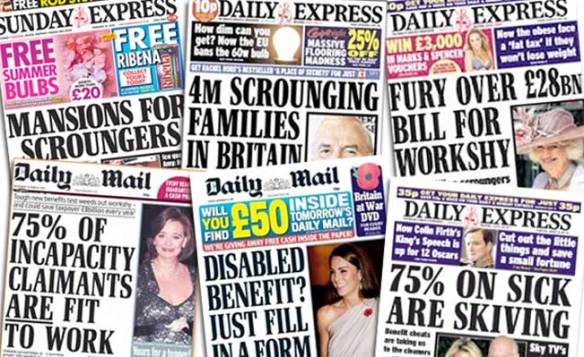
Image result for welfare state UK

The idea that welfare somehow creates the problems it was designed to alleviate, such as poverty and inequality, has become almost ‘common sense’ and because of that, it’s a narrative that remains largely unchallenged. The Conservatives believe that generous welfare provision creates ‘perverse incentives’. Yet international research has shown that generous welfare provision leads to more, better quality and sustainable employment. 

Moreover, this ideological position has been used politically as a justification to reduce social security provision so that it is no longer an adequate amount to meet citizens’ basic living needs. The aim is to discredit the welfare system itself, along with those needing its support. The government have long wished to replace the publicly funded social security provision ultimately with mandatory private insurance schemes.

The idea that welfare creates ‘dependency’ and ‘disincentivises’ work has been used as a justification for the introduction of cuts and an extremely punitive regime entailing ‘conditionality’ and sanctions. The governenment have selectively used punitive behavioural modification elements of behavioural economics theory and its discredited behaviourist language of ‘incentives’ to steadily withdraw publicly funded social security provision.

However, most of the public have already contributed to social security, those needing support tend to move in and out of work. Very few people remain out of work on a permanent basis. The Conservatives have created a corrosive and divisive myth that there are two discrete groups in society: tax payers and ‘scroungers’ – a class of economic free riders.

This intentionally divisive narrative of course is not true, since people claiming welfare support also pay taxes, such as VAT and council tax, and most have already worked and will work again, given the opportunity to do so. For those who are too ill to work, as a so-called civilised society, we should not hesitate to support them.

The government’s mindset is very disciplinarian. In their view, everyone else needs ‘corrective treatment’ to ensure that society is shaped and ruled the way they think it ought to be. The government believes that rather than addressing social problems – many of which are created and perpetuated by their own policies, such as growing inequality and absolute poverty – can be addressed by ‘incentivising’ people to ‘behave’ differently. In other words, they believe that people can be punished out of poverty, being ill, being out of work, and from being less “competitive”, cost effective citizens, letting down the Conservative’s constructed, overarching neoliberal state.

The ’round table’ report from the Centre for Social Justice 

Public policies that are supposed to address fundamental human needs arising from sickness and disability are tainted by a neoliberal idée fixe. The leitmotif is a total corporacratic commodification of human needs and relationships. This has entailed the government permitting private companies to build toll gates to essential support services, building hierarchies of human worth within the closed and entropic context of a competitive market place, where resources are “scarce” and people are being herded; where the only holding principle that operates is profit over human need.

In a report from the Centre for Social Justice (an Orwellian title if ever there was one) called REFORMING CONTRIBUTORY BENEFITS (2016), David Cameron is quoted in the introduction: 

“We have already come a long way in the last 5 years. In the last Parliament we created Universal Credit so that work would always pay. We capped benefits so we struck the right balance between incentivising work and supporting the most vulnerable. And we set up the largest programme to get people into work since the 1930s with over a million people coming off the main out of work benefits and over 2 million getting into work. But when it comes to reforming, we still have further to go …” David Cameron, June 2015.

The Centre for Social Justice (CSJ) is a neoliberal right wing think tank, founded by Iain Duncan Smith. The CSJ has played an important role in the design and development of Universal Credit. 

In the opening paragraph, the report says: “William Beveridge’s original blueprint for a welfare state had personal contributions at its core. Indeed, there is widespread consensus that the contributory principle inculcates a degree of responsibility and ownership in a system that has been criticised for breeding dependency.” (My emphasis).

These are views widely held by neoliberal Conservatives, not everyone else.

As UKIM pointed out in their report, the term “welfare dependency” is itself controversial, often carrying derogatory connotations that the recipient of welfare support is unwilling to work. This narrative has diverted attention from the structural factors that cause and entrench poverty, such as government policy, labour market conditions and economic change. Instead of focusing on how to tackle the root causes of poverty, the Conservatives have focused instead on attacking the supposed poor character, morals and psychology of those needing social security support.

This narrative transforms individual experiences of social inequality and being in poverty into a personal failing, rather than a failure of the state. The ideas came from political writers such as Lawrence M. Mead. In his 1986 book Beyond Entitlement: The Social Obligations of Citizenship, Mead argued that American welfare was too permissive, giving out benefit payments without demanding anything from poor people in return, particularly not requiring the recipient to work. Mead viewed this as directly linked to the higher incidence of social problems among poor Americans, more as a cause than an effect of poverty. Neoliberal governments in both the US and UK found these ideas appealing, and the government of Margaret Thatcher imported several other similar US ideas. 

Charles Murray argued that American social policy ignored people’s inherent tendency to ‘avoid hard work’ and to be ‘amoral’, and that from the ‘War on Poverty’ onward the government had given welfare recipients disincentives to work, marry, or have children in wedlock. His 1984 book Losing Ground was also highly influential in the welfare reforms of the 1980s and 90s, and remains so among neoliberal Conservatives. 

Murray exhumed social Darwinism and gave the bones of it originally to Bush and Thatcher to re-cast. Murray’s culture of poverty theory popularised notions that poverty is caused by an individual’s personal deficits; that the poor have earned their position in society; the poor deserve to be poor because this is a reflection of their lack of qualities, poor character and level of abilities.

Of course, this perspective also assumes that the opposite is true: wealthy and “successful” people are so because they are more talented, motivated and less lazy, and are thus more deserving. Just like the widely discredited social Darwinism of the Victorian era, proposed by the likes of Conservative sociologist Herbert Spencer, (who originally coined the phrase “survival of the fittest,” and not Darwin, as is widely held) these resurrected ideas have a considerable degree of popularity in upper-class and elite Conservative circles, where such perspectives provide a justification for extensive privilege. In addition, poor communities are seen as socialising environments where values such as fatalism are transmitted from generation to “workshy” generation.

Charles Murray and Lawrence Mead clearly made an impact on the international policy debate in the 1980s, partly due to the legitimisation that they received from the support of the Reagan and Thatcher administrations for their central claims. They were particularly influential in the growth of work fare and a welfare system based on punishment and psycho-compulsion. Murray claimed the underclass of poor people avoid work because of the “overgenerous” nature of welfare benefits. Mead argued that a “culture of poverty” meant that workfare policies are required to ‘reintegrate’ and ‘incentivise’ the ‘unemployed poor.’ 

This toxic brand of neoliberal anti-welfarism, amplified by the corporate media, has aimed at reconstruction of society’s “common sense” assumptions, values and beliefs. Class, disability and race narratives in particular, associated with traditional prejudices and categories from the right wing, have been used to nudge the UK to re-imagine citizenship, human rights and democratic inclusion as highly conditional.  

Leaving the European Union provides an opportunity for the government to shift what is left of social security from public to private provision

The round table paper discusses the ‘further reform’ to welfare that Cameron hinted at:

One of the reasons why this has not happened so far has been the commitment to EU rules on maintaining a benefit programme that is exportable. The British Government succeeded in establishing that Universal Credit would not be exportable as long as contributory benefits were. 

Had contributory benefits been abolished whilst UK social security was bound by EU law, this would have exposed Universal Credit (the significantly larger budget) to exportability. In light of the British vote to leave the EU, however, there is now the possibility of reforming contributory benefits without breaching EU law.” 

The authors of the report say reforming welfare would mean “[a] new insurance model would also allow competition, greater diversification and, finally, the opportunity for claimants to take control over their long term financial support.” 

During the round table discussion, participants discussed a “potential solution”  put forward by private company Legal & General. The report itself carries legal & General’s logo. 

The suggestion was to replace the contributory benefits system with a low premium social insurance scheme delivered by employers through an auto-enrolment structure. This new social insurance scheme would take the form of a ‘rainy day guarantee’, where beneficiaries would make regular payments into the scheme, which would protect against the risk of “future income shocks as a result of long term sickness or unemployment.”

The target for the new social insurance scheme would initially be individuals from “the professional and skilled class who have fewer transactional experiences with Government. They are less likely to suffer a shock to income from illness or sudden unemployment and often need support  infrequently and for less than six months.”

“The infrastructure of this new social insurance scheme could replicate that of the auto-enrolment pension products that have been phased-in under the previous and current Governments. Employers could offer new employees access to a ‘social insurance product’ that could be administered by a private sector organisation, though partially facilitated by the Government.”

The authors also say: “During the roundtable discussion, a significant question emerged over whether a new social insurance product would be compulsoryor voluntary. One concern raised in discussion was that a voluntarysystem risks not gaining a critical mass that enables it to function,whereas a compulsory programme could undermine public confidence in the state welfare system.”

Yes, the one that most citizens have already contributed to. It is not ‘state’ welfare, it is publicly funded social security.

The report continues: One of the barriers to wide-spread acceptability of a private insurance model ahead of a state-contributory benefits model is the emotional reaction by claimants who have paid taxes but are no longer entitled to a benefit payment. Many trust the system to pay out – any alternative outcome could undermine trust in the state welfare system.

“Herein lies a problem: many people place a high degree of trust in the welfare system, only to be disappointed when it delivers less than they expect it to. Part of the challenge in proposing an insurance model, therefore, is to communicate the benefits compared to the state system.”

The benefits to whom, exactly? Legal & General and the wider private insurance sector ?

More of the rub: “Another challenge is the extent to which a new social insurance model could be extended to include both unemployment and sickness support currently covered by ESA and JSA contributory benefits. PwC (PricewaterhouseCoopers) has estimated that the annual cost of sickness absence in the UK is almost £29 billion. (Hyperlinks added by me). 

“Insurance premiums are calculated on risk and probability, such that if the risk and the probability are high,the premiums will also be high. From an insurance perspective, unemployment is seen as a greater long-term risk than sickness. Company efforts to mitigate the risk may thus mean premiums rise to an amount greater than the £11 per month previously stated.” 

Prioritising private business profit over collective human needs: the neoliberal model

In their conclusion and policy recommendations, the authors say:  

“As this report has discussed, the contributory benefits system is ripe for reform and the proposition of a social insurance model poses a potential solution. With regards to the implementation of a social insurance programme to replace contributory benefits  participants at the round table discussion made the following conclusions: 

  •  Premiums should be treated as income in the Universal Credit system, promoting use of the social insurance system.  
  • The notion of a social insurance model must be communicated correctly; Lessons can be learned from past government announcements on, for example, privately run prisons.
  • The support of business is essential, and communication must be clear as this is another product that sits alongside auto-enrolled pensions, the new lifetime ISA, and the apprenticeship levy
  • High opt-out rates risk destabilising the functionality of a voluntary model, and will therefore determine the necessity of a mandatory system or at the least an opt out model.
  • Individuals who do not draw down on their insurance pot could be offered financial recourse in the form of either a savings or pensions benefit.

“Overall, the opportunity to reform contributory benefits has arrived,the political and economic climate allows for it, and the presence of a strong alternative policy makes it possible and practical.”

You can read the full report here.

Some thoughts

The government says it believes that:

  • the current [welfare] system is too complex
  • there are insufficient incentives to encourage people on benefits to start paid work or increase their hours

The government are aiming to:

  • make the benefit system ‘fairer’ and more affordable
  • reduce poverty, ‘worklessness’ and welfare dependency
  • reduce levels of fraud and error. 

However,  ‘worklessness’ and ‘welfare dependency’ are contested categories based on assumptions and not empirical evidence. 

Our welfare state originally arose as a social security safety net – founded on an assurance that as a civilised and democratic society we value the well-being and health of every citizen.

There was a cross-party political consensus that such provision was in the best interests of the nation as a whole at a time when we were collectively spirited enough to ensure that no one should be homeless or starving in modern Britain.

As such, welfare is a fundamental part of the UK’s development –  our progress – the basic idea of improving people’s lives was at the heart of the welfare state and more broadly, it reflects the evolution of European democratic and rights-based societies.

Now the UK “social security” system is anything but. It has regressed to reflect the flawed and discredited philosophy underpinning the 1834 Poor Law Amendment Act, to become a system of punishments aimed at the poorest and most marginalised social groups. The Poor Law principle of less eligibility – which served as a deterrence to poor people claiming poor relief is embodied in the Conservative claim of Making work pay: benefits have been reduced to make the lowest paid, insecure employment a more appealing option than claiming benefits.

Back in the 1970s, following his remarks on the cycle of deprivation, Keith Joseph established a large-scale research programme devoted to testing its validity. One of the main findings of the research was that there is no simple continuity of social problems between generations of the sort required for his thesis. At least half of the children born into disadvantaged homes do not repeat the pattern of disadvantage in the next generation.

Despite the fact that continuity of deprivation across generations is by no means inevitable – the theory is not supported by empirical research – the idea of the cycle of ‘worklessness’ has become common sense. Clearly, common perceptions of the causes of poverty are (being) misinformed. The individual behaviourist theory of poverty predicts that the same group of people remain in poverty. This doesn’t happen.

However, the structural theory predicts that different people are in poverty over time (and further, that we need to alter the economic structure to make things better). Longitudinal surveys show that impoverished people are not the same people every year. In other words, people move in and out of poverty: it’s a revolving door, as predicted by structural explanations of poverty.

Therefore the very ideological premises of Conservative welfare policy is unevidenced and fundamentally flawed.

Problems with social security provision delivered through private insurance schemes

The National Insurance Scheme (NIS) provides cash benefits for sickness and disability,  unemployment, the death of a partner, retirement, and so on. Citizens already  earn entitlement to these benefits by paying National Insurance contributions;

  • The National Health Service (NHS), which provides medical, dental and optical treatment and which is normally available free of charge only to people who live in Great Britain and Northern Ireland;  
  • The child benefit and Child Tax Credit schemes, which provide cash benefits for people bringing up children;   
  • Non-contributory benefits for certain categories of disabled persons or carers;  
  • Other statutory payments made by employers to employees entitled to maternity, paternity and adoption leave.

The government’s ‘low tax low welfare view of society, coupled with a decade of very low wages and rising costs of living has created ‘tax constraints’ that conflict with the demands made on the welfare state, the government says. Substituting private insurance for tax-financed welfare provision is being touted as some kind of painless way out of those self imposed ‘constraints’.  

However, in general, switching from tax-financed social security to private insurance, where premiums are related to each individual’s risk status, will be ‘regressive’, that is, it will benefit the better-off at the expense of the less well-off. Certain citizens will not be offered cover because their level of risk is too high to make it profitable and economic for private insurance companies. This will also add to the regressive effects. Certain risks will be excluded from cover as a result of the nature of the insurance market.  

If the state still provides some kind of safety net, it may end up with all of the ‘downside risk’ but none of the ‘upside gain’: if things turn out badly and insurers are unable to meet their commitments, the state has to fill the gap created, but if things turn out well, it is the insurers who keep the surplus and profit.

In discussing the future of the welfare state, the question of whether the private sector should take on some of the insurance functions currently provided by social security has  almost inevitably arisen. However, much of this debate has a purely ideological basis.

Switching from social security to private insurance generally increases costs for those on low incomes; premium levels for products mean that those with average incomes and average risk also lose. For many insurance products, women, older people and those in poor health lose the most. 

For many with higher incomes, the role of permanent health insurance is already filled by long-term occupational sick pay while for those with lower incomes, affording enough cover to get clear of means-tested benefit entitlement is difficult. 

Uncertainty over future long-term care needs and costs makes policies virtually impossible to assess, for both consumers and providers, making reliance on private insurance a dubious proposition. The nature of the risks leads to policies which limit coverage and exclude some groups, including those without good employment records and people with disabilities.

Tax-financed provision offers not only the most equitable but also the most efficient solution, minimising costs to average-risk as well as high-risk and low-income ‘consumers’ and preserving the advantages of unified public finances.

Furthermore, it retains the integrity of the original aims of the welfare state and ensures a democratic state.

UKIM’s report to the UNCRPD raised other concerns about the potentially negative impact of Brexit on the human rights of disabled people, which you can read about here.


Related

This explores the overlapping neoliberal ideas aimed at the reform of both welfare and health care in the UK – Rogue company Unum’s profiteering hand in the government’s work, health and disability green paper

The Poverty of Responsibility and the Politics of Blame 

The connection between Universal Credit, ordeals and experiments in electrocuting laboratory rats

 The government plan social experiments to “nudge” sick and disabled people into work

A critique of benefit sanctions:  the Minnesota Starvation Experiment and  Maslow’s Hierarchy of Needs

The benefit cap, phrenology and the new Conservative character divination

Stigmatising unemployment: the government has redefined it as a psychological disorder


My work is unfunded and I don’t make any money from it. But you can support Politics and Insights by making a donation which will help me continue to research and write informative, insightful and independent articles and to provide support to others.

Concerns about the impact of Brexit on the human rights of disabled people in update report to UNCRPD

Image result for Human rights disabled people UK

Yesterday I wrote an article about the government’s shameful lack of progress on disability rights in the UK. I discussed the details of a new report and the recommendations made by the UK Independent Mechanism update report to the UN Committee on the Rights of Persons with Disabilities.

This is a summary of some key concerns that I only touched on in my original write up, and it also focuses on one of the important themes that emerged in the report: the potential impact of Brexit on disabled people’s rights. 

The new report and submission to the UNCRPD – UK Independent Mechanism update report to the UN Committee on the Rights of Persons with Disabilities (published October 2018) – provides an independent assessment of the UK Independent Mechanism (UKIM) on the “disappointing” lack of progress by the UK governments to implement the UN’s recommendations since August 2017. 

A year on, there is still no comprehensive UK-wide strategy demonstrating how the UK will implement the CRPD Committee’s recommendations. There has also been “continued reluctance” from the UK Government to accept the conclusions of the CRPD Committee’s inquiry report on the impact of the UK Government’s policies on the rights of disabled people. 

Disabled people across the UK continue to face serious regression of their rights to an adequate standard of living and social protection, to live independently and to be included in the community. UKIM has reiterated that the grave and systematic violations identified by the CRPD Committee need to be addressed as a matter of urgency and that the overall approach of the UK Government towards social security protection requires a complete overhaul, so that it is informed by human rights frameworks, standards and principles, to ensure disabled people’s rights are respected, protected and fulfilled.

Despite the empirical evidence presented from a variety of researchers and the UN investigation concerning the significantly adverse effect of welfare reform on disabled people’s rights to independent living and to an adequate standard of living and social  security, the UK Government has failed to act on this evidence and to implement the CRPD Committee’s recommendations regarding these rights.

The authors of the report remain seriously concerned about the continued failure of the UK Government to conduct an assessment of the cumulative impact on disabled people  of multiple policy, cuts and law reforms in relation to living standards and social security. 

In the section about prejudice and negative attitudes, the report also cites a shameful example of rhetoric from the government that has potentially reinforced negative attitudes and the stigma surrounding mental health and disability: “This includes the Chancellor of the Exchequer, Philip Hammond, stating before a Committee of the UK Parliament: ‘It is almost certainly the case that by increasing participation in the workforce, including far higher levels of participation by marginal groups and very high levels of engagement in the workforce, for example of disabled people – something we should be extremely proud of – may have had an impact on overall productivity measurements.’

Many people understood this statement as indicating that the increase in disabled people in employment is partly responsible for the UK’s decreasing productivity.”

The report also says that employment rates for disabled people have actually risen only very marginally.  

Conservative prejudice is embedded in social security policy and administration

The UKIM report says that government has not taken appropriate measures to combat negative and discriminatory stereotypes or prejudice against persons with disabilities in public and the media, including the government’s own claims that ‘dependency’ on benefits is in itself a disincentive of employment. This is important because it shows just how embedded Conservative prejudice is in policies and within our social security administration.

The idea that welfare somehow creates the problems it was designed to alleviate, such as poverty and inequality, has become almost ‘common sense’ and because of that, it’s a narrative that remains largely unchallenged. Yet international research has shown that generous welfare provision leads to more, better quality and sustainable employment. 

Moreover, this ideological position has been used politically as a justification to reduce social security provision so that it is no longer an adequate amount to meet citizens’ basic living needs. The aim is to discredit the welfare system itself, along with those needing its support. The government have long wished to replace the publicly funded social security provision ultimately with mandatory private insurance schemes.

The idea that welfare creates ‘dependency’ and ‘disincentivises’ work has been used as a justification for the introduction of cuts and an extremely punitive regime entailing ‘conditionality’ and sanctions. The governenment have selectively used punitive behavioural modification elements of behavioural economics theory and its discredited behaviourist language of ‘incentives’ to steadily withdraw publicly funded social security provision.

However, most of the public have already contributed to social security, those needing support tend to move in and out of work. Very few people remain out of work on a permanent basis. The Conservatives have created a corrosive and divisive myth that there are two discrete groups in society: tax payers and ‘scroungers’ – a class of economic free riders. This of course is not true, since people claiming welfare support also pay taxes, such as VAT and council tax, and most have already worked and will work again, given the opportunity to do so. For those who are too ill to work, as a so-called civilise society, we should not hesitate to support them.

In the recommendations, the authors say the government should implement broad mass media campaigns, in consultation with organisations representing persons with disabilities, particularly those affected by the welfare reform, to promote them as full rights holders, in accordance with the Convention; and adopt measures to address complaints of harassment and hate crime by persons with disabilities, promptly investigate those allegations, hold the perpetrators accountable and provide fair and appropriate compensation to victims.

As a society we take tend to take human rights for granted. We seldom think about rights because much of the time, there is no need to. It’s not until we directly experience discrimination and oppression that we recognise the value of having a universal human rights framework. Our rights define the relationship between citizen and state, and ensure that there is no abuse of power. However, we no longer have equal access to justice and redress for human rights breaches and discrimination. 

The high demand for advice on disability benefits since the government’s welfare reform means that the almost complete removal of welfare benefits from the scope of legal aid has had a disproportionate impact on disabled people or those with a long-term health condition.

People entitled to disability benefits relied on legal aid to support appeals of incorrect decisions and to provide a valuable check on decision-making concerning eligibility for welfare support. The revisions to the financial eligibility criteria for legal aid have had a disproportionate impact on various groups including disabled people, women, children and migrants. This is because of the restrictions that the government placed on legal aid accessibility with the Legal Aid, Sentencing and Punishment of Offenders Act 2012 (LASPO).

There has been a 99% decrease in support provided by the Legal Aid Agency for clients with disability-related welfare benefits issues, compared with pre-LASPO levels, and the total number of such claims has plummeted from 29,801 in 2011/12 to 308 in 2016/17.

The government has failed to ensure access to justice, removing appropriate legal advice and support, including through reasonable and procedural accommodation for disabled people seeking redress and reparation for the violation of their rights, as covered in the  report.

It’s difficult to imagine that this wasn’t a coordinated effort on the part of the government to restrict citizen freedoms, support and access to justice for precisely those who need justice and remedies the most.

Human rights don’t often seem as though they matter, until they do. But by then, it may be too late. 

Concerns about the impact of Brexit on the human rights of disabled people

In 2016, I wrote an article about concerns raised regarding the rights of disabled people following Brexit. Earlier this year, I wrote another article about my concerns that the European fundamental rights charter was excluded in the European Union (EU) withdrawal Bill, including protection from eugenic policy.

The result of the EU referendum on the UK’s membership of the European Union, and forthcoming withdrawal, carries some obvious and very worrying implications for the protection of citizens rights and freedoms in the UK. Historically the UK Conservative government has strongly opposed much of Europe’s social rights agenda.

So it was very concerning that the House of Commons voted down a Labour amendment to ensure that our basic human rights are protected after Brexit, as set out in the European Union Charter. 

The EU Withdrawal Bill threatened to significantly reduce existing human rights protections. It excluded both the EU Charter of Fundamental Rights (in its entirety) and the right of action for violations of EU General Principles from domestic law after the UK’s withdrawal. It also handed sweeping powers to ministers to alter legislation without appropriate parliamentary scrutiny, placing current rights and equality laws at risk.

Worryingly, Suella Fernandes, who was promoted to the Brexit department earlier this year warned in November last year that transposing the ‘flabby’ charter into British law would give UK citizens additional protections on issues such as “biomedicine, eugenics, personal data and collective bargaining.”

However, the very fact that anyone at all in government objects to retaining these fundamental rights and protections indicates that we do very clearly need them.

It should be inconceivable that a democratic legislature would vote to take away citizens rights. The regressive step means the loss of the Charter goes rights that simply don’t exist in the Human Rights Act or in our common law. Gone is the enforceable right to human dignity. Gone are our rights to data protection, comprehensive protection for the rights of the child, a free-standing right to non-discrimination, protection of a child’s best interests and the right to human dignity, refugee rights, the right to conscientious objection, academic freedom and wide-ranging fair trial rights to name but a few. Then there are the losses of economic and social rights. Gone too, are the right to a private life, freedom of speech, equality provisions and employment rights governing how workers are treated. These are all laws that protect us all from abuses of power. 

A group of more than 20 organisations and human rights legal experts, including the Equality and Human Rights Commission, signed an open letter on the importance of the Charter of Fundamental Rights ahead of the EU (Withdrawal) Bill returning to Parliament on 16 January this year. The letter was published in the Observer.

Trevor Tayleur, an associate professor at the University of Law, explained that the charter, although narrower in focus than the Human Rights Act, offers a far more robust defence of fundamental rights.

“At present, the main means of protecting human rights in the UK is the Human Rights Act 1998 (HRA) ,” he said. “This incorporates the bulk of the rights and freedoms enshrined in the European convention on human rights into UK law and thereby enables individuals to enforce their convention rights in the UK courts. However, there is a significant limitation to the protection afforded by the HRA because it does not override acts of parliament.

“In contrast, the protection afforded by the EU charter of fundamental rights is much stronger because where there is a conflict between basic rights contained in the charter and an act of the Westminster parliament, the charter will prevail over the act.” 

Under the HRA, only an individual who is a “victim” of a rights violation can bring a claim, whereas anyone with “sufficient interest” can apply for judicial review based on the Charter (see this briefing at p 11)

In their report, UKIM say:  “There are fears that the significant uncertainty in relation to Brexit will lead to a further deterioration of disabled people’s rights.

“The lack of a devolved government in Northern Ireland is also a specific concern to that jurisdiction, because it is significantly inhibiting the relevant departments from taking the required steps. Without a clear and coordinated plan for how the UK and devolved governments will address the UN recommendations systematically, the limited steps taken so far are unlikely to be enough to address the concerns raised by the CRPD Committee.”

The report goes on to say: “Following the European Union (EU) referendum in June 2016, there continues to be significant uncertainty regarding the future applicability of  existing human rights protections in the UK that derive from EU law. The EU Charter of Fundamental Rights was excluded from the European Union (Withdrawal) Act 2018, meaning that from ‘exit day’ it will no longer apply in domestic law. 

“As a result, domestic protections are more vulnerable to repeal. The Charter goes further than the non-discrimination provisions in the Equality Act 2010 or the European Convention on Human Rights (ECHR). Article 26 of the Charter, in particular, is a useful interpretive tool to support disabled people’s right to independence and integration and participation in the community. 

The European Union (Withdrawal) Act 2018 also leaves human rights protections at risk of being changed through the use of wide-ranging delegated powers. This means that changes to fundamental rights currently protected by EU law can be made by ministers through secondary legislation [statutory instruments, usually reserved for ‘non-controversial policy amendments] without being subject to full parliamentary scrutiny.

The EU is itself a party to the CRPD. Under EU law, international treaties to which the EU is party have a different status than they do under UK law. For example, EU law (unlike UK law) must be interpreted consistently with the CRPD. To ensure there is no regression, and that disabled people in the UK benefit from future progress driven by the CRPD, the UK Government should ensure these protections are incorporated into UK law, for example by giving enhanced status to the CRPD. 

The Conservatives have used secondary legslation to try and quietly push through several very controversial policies over recent years, such as £4bn-worth of cuts to family tax credits, and the removal of maintenance grants from around half a million of the poorest students in England. The changes mainly hit disabled, ethnic minority and older students.

The government have introduced swathes of significant new laws covering everything from fracking to fox hunting and benefit cuts without debate and scrutiny on the floor of the House of Commons. Many of these policies were not included in the Conservatives’ election manifesto and were nodded through by obscure Commons committees without the substance of the change being debated.

After the House of Lords successfully challenged the tax credit instrument, the Government then proposed limiting peers rights to reject statutory instruments. This would mean if one was rejected by the Lords, the ministers would simply have to retable it and it would pass automatically.  All of this should be seen alongside other Conservative proposals – including limits on freedom of information, changes to constituency boundaries and electoral registration, attempts to choke the opposition of funding within the Trade Union Bill, and the Lobbying Act. 

In light of this repressive pattern of behaviour, you could be forgiven for thinking that we’ve entered the realms of constitutional gerrymandering, with an authoritarian executive waging war on the institutions that hold them to account. With its fear of opposition and loathing of challenge, the government wants to stifle debate, shut down opposition and block proper scruting and democratic accountability. 

It is within this authoritarian political context that many of us have raised concerns about the impact of Brexit on the human rights of disabled citizens.

I’m always concerned that language use sometimes reinforces prejudices against disabled people by focusing on us as a group as ‘vulnerable’ and as ‘those in need’, as opposed to citizens and rights holders. However, grave and systematic violations of disabled peoples’ human right inevitably increases our vulnerability to further political abuse. 

The Yogyakarta Principles, one of the international human rights instruments use the term “vulnerability” as such potential to abuse and/or social and economic exclusion. Social vulnerability is created through the interaction of social forces and multiple “stressors”, and resolved through social (as opposed to individual) means. 

Social vulnerability is the product of social inequalities. It arises through social, cultural, political and economic processes. 

While some individuals within a socially vulnerable context may break free from the hierarchical order, social vulnerability itself persists because of structural – social, cultural economical and political – influences that continue to reinforce vulnerability. Some campaigners are very critical of the use of the word ‘vulnerability’, because they feel it leads to attitudes and perceptions of disabled people as passive victims

Since 2010, no social group has organised, campaigned and protested more than disabled people. Many of us have lived through harrowing times under this government and the last, when our very existence has become so precarious because of targeted and cruel Conservative policies and disproportionate cuts to our lifeline support. Yet we have remained strong.in our resolve. Despite this, some of our dear friends and comrades  have been tragically lost – they have not survived, yet many of them were very strong in their resolve to challenge discrimination and oppression.

In one of the wealthiest democratic nations on earth, no group of people should have to fight for their survival. Vulnerability is rather more about the potential for some social groups being subjected to political abuse than it is about individual qualities. Disabled people currently  are and have been. This is empirically verified by the report and conclusions drawn from the United Nations inquiry into the grave and systematic violations of disabled people’s human rights here in the UK, by a so-called democratic government. 

The government’s ‘paternalism’ is authoritarian gaslighting

Over recent years, Conservative policies have become increasingly ‘paternalist’, also reflecting the authoritarian turn, in that they are designed to act upon us, to ‘change’ our behaviours through the use of negative reinforcement (‘incentives’), while we are completely excluded from policy design and aims. Our behaviours are being aligned with neoliberal outcomes, conflating our needs and interests with the private financial profit of the powerful. 

As one of the instigators of the United Nations investigation, to which I regularly submitted evidence regarding the government’s systematic violations of the human rights of disabled people, and as a person with disability, I don’t care for being  described by Damian Green as “patronising” or being told that disabled people – the witnesses of the investigation – presented an “outdated view” of disability in the UK. This is a government minister attempting to discredit and re-write our accounts and experiences while ignoring the empirical evidence we have presented. Such actions are profoundly oppressive.

The only opportunity disabled people have been presented with to effectively express our fears, experiences and concerns about increasingly punitive and discriminatory policies, to voice a democratic opinion more generally and to be heard, has been in dialogue with an international human rights organisation, and still this government refuse to hear what we have to say. Nor are we consulted with, democratically included or invited to participate in the executive’s decision-making that directly affects us. As UKIM note: 

“There is a continued lack of action from the UK and devolved governments on the CRPD Committee’s recommendations. This includes setting up systems that will  ensure that disabled people and their organisations are involved in the design, implementation, and monitoring and evaluation of legislation, policy or programmes that affect their lives. It remains unclear how the new Inter-Ministerial Group on Disability and Society will work with disabled people and their organisations, and UKIM, to promote and monitor implementation of UN CRPD. 

“It is particularly concerning that the UN CRPD’s requirement to effectively involve disabled people and their organisations is not specifically reflected in the inter-ministerial group’s terms of reference. Nor do the terms of reference refer to the CRPD or the CRPD Committee’s recommendations.”

Oppression always involves the objectification of those being dominated; all forms of oppression imply the devaluation of the subjectivity and experiences of the oppressed.

This is very evident in the government’s approach to designing policies that act upon us.  The government has consistently failed to actively consult, engage with and include disabled people, our representative organisations and give due consideration to our views in the design, implementation, monitoring and evaluation of any legislation, policy or programme action related to our rights. Furthermore, the current Minister of State for Disabled People, Health and Work, Sarah Newton, has refused to meet with disabled people and allied organisations. (See also I’m a disabled person and Sarah Newton is an outrageous, gaslighting liar.)

Last year, Theresia Degener, who leads the UN’s Committee on the Rights of Persons with Disabilities (CRPD), said the UK Government has “totally neglected” disabled people, during a two day meeting with UK government officials in Geneva.

Degener told them: “Evidence before us now and in our inquiry procedure as published in our 2016 report reveals that social cut policies have led to a human catastrophe in your country, totally neglecting the vulnerable situation people with disabilities find themselves in.” 

The Government’s welfare cuts have resulted in “grave and systematic violations” of the rights of disabled people – a claim opposed by ministers but supported by UK courts.

For example, Judges have ruled that three of the government’s flagship welfare policies are illegal because of the impact they have on disabled people and single parents. In January 2016, the Court of Appeal declared the so-called ‘bedroom tax’ unlawful because of its consequences for disabled children, as well as victims of domestic violence. 

Sanctions imposed on people who refused to or could not take part in the Department for Work and Pension’s ‘back to work’ schemes were also thrown out by Court of Appeal judges in April 2016. In June 2017 the High Court said the government’s benefit cap is unlawful and causes “real misery for no good purpose”.  This year, a High Court ruling found that the Personal Independence Payments (PIP) policy had discriminated against people with mental health conditions. 

Between 2011 and 2017 the Department of Work and Pensions (DWP) underpaid more than £450,000,000 in means-tested benefits, due to its mishandling of the process by which claimants were moved from incapacity benefit to employment and support allowance.

When announcing its plans to remedy those underpayments on 14th December 2017, the DWP claimed the law ‘barred’ it from paying claimants any underpayments arising before 21st October 2014. That would have had two serious effects: first, up to £150,000,000 of the underpaid benefit would have been kept by the Government instead of passed to citizens who were deprived of it through no fault of their own; and second, any arrears which were paid to disabled people could after 52 weeks have been treated as ‘capital’, and reduced or stopped their ongoing entitlement to benefit.

In March 2018 the Child Poverty Action Group, acting for one affected claimant, brought judicial review proceedings in R (Smith) v Secretary of State for Work and Pensions JR/1249/2018 arguing that the DWP’s position was unlawful. The DWP accepted that it ‘got the law wrong’. The DWP said it will now start making those payments. It was necessary to take legal action against the Government because it said it had no legal power to fully remedy the consequences of a major error it had made in transferring claimants from incapacity benefit to employment and support allowance.

Ministers have also accused by the UN of misleading the public about the impact of Government policies by refusing to answer questions and using statistics in an “unclear way.”

Gaslighting.

The CRPD Committee has requested that the State party (the government) disseminate the concluding observations of their inquiry widely, including to non-governmental organisations and organisations of persons with disabilities, and to disabled people themselves and members of their families, in national and minority languages, including sign language, and in accessible formats, including Easy Read, and to make them available on the government website on human rights. 

That hasn’t happened and is unlikely to do so in the future. So please do share this article – The government’s shameful lack of progress on disability rights in the UK – new report update and submission to the UNCRPD Committee, and the UKIM update and shadow report widely.


I don’t make any money from my work. I’m disabled through illness and on a very low income. But you can make a donation to help me continue to research and write free, informative, insightful and independent articles, and to provide support to others. I co-run a group online that helps people with ESA and PIP claim, assessment, mandatory review and appeal, increasingly providing one to one emotional support, too.

The smallest amount is much appreciated – thank you.

DonatenowButton