The UK’s most extensivestudy of welfare conditionalityhas found that welfare sanctions are “ineffective” at “supporting” people into work and are more likely to reduce those affected to poverty, ill-health or survival crime.
Despite dogmatic claims by Conservative ministers in recent years that rigorously enforced conditionality – including mandatory 35-hour job searches – “‘incentivised’ claimants to move off benefits into work”, the research found the positive impact was negligible.
The Economic and Social Research Council-funded study of welfare conditionality was carried out between 2013 and 2018 by researchers at six universities. It included repeat qualitative interviews over two years with 481 welfare service users in England and Scotland as well as interviews with 57 policy experts and 27 focus groups.
The five-year research programme that has been following the lives of hundreds of claimants concludes that the controversial policy of cutting benefits as a punishment for alleged failures to comply with jobcentre rules has been “little short of disastrous.”
For those people interviewed for the study who did gain employment, the most common outcome was a series of short-term, insecure jobs, interspersed with periods of unemployment, rather than a shift into sustained, well-paid work.
Sanctions generally delivered poor outcomes, including debt, poverty and reliance on charities such as food banks, the study found. Often imposed for trivial and seemingly cruel reasons, they frequently triggered high levels of stress, anxiety and depression.
The director of the study, Professor Peter Dwyer, based at the University of York, said “The outcomes from sanctions are almost universally negative.”
One research finding is that, in many cases, the threat of sanctions had the unintended effect of encouraging a “culture of counterproductive compliance and futile behaviour” among some claimants, who learned “the rules of the game” rather than becoming genuinely “engaged with work.” This of course is through necessity, as social security payments are claimed by people who need support to meet their basic survival needs: welfare (barely) covers the costs of food, fuel and shelter.
The authors of the research paper conclude: “Benefit sanctions do little to enhance people’s motivation to prepare for, seek or enter paid work. They routinely trigger profoundly negative personal, financial, health and behavioural outcomes.”
Many campaigners, including myself, have been pointing this out for years. It’s a fundamental truth – established by Abraham Maslow, and verified by a range of comprehensive studies, including the Minnesota semi-starvation experiment – that if people cannot meet their basic survival needs, that becomes their “cognitive priority” – their primary motivation. People caught in absolute poverty cannot then higher level psychosocial needs, until their basic survival needs are met. It takes a monstrously authoritarian government to ignore these empirical facts and to continue to punish citizens by withdrawing their fundamental means of survival.
The researchers call for a review of the use of sanctions, including an immediate moratorium on benefit sanctions for disabled peoplewho are disproportionately affected, together with an urgent “rebalancing” of the social security system to focus less on compliance and more on helping claimants into work.
The research report says that in the “rare” cases where claimants did move off benefits into sustained work, personalised job support, not sanctions, was the key factor. With few exceptions, however, jobcentres were more focused on enforcing benefit rules rather than helping people gain employment.
“Although some examples of good practice are evident, much of the mandatory job search, training and employment support offered by Jobcentre Plus and external providers is too generic, of poor quality and largely ineffective in enabling people to enter and sustain paid work,” the report says.
It’s very worrying that the research highlighted those citizens with “chaotic lives” – who were homeless or had addictions, for example – reacted to the “inherent hassle” of the conditionality system by dropping out of the social security system altogether. In some cases, they moved into survival crime, such as drug dealing.
Low-paid workers on universal credit who were subject to so-called“in-work conditionality”– a requirement for them to work more hours or face sanctions – in some cases elected to sign off, foregoing rent support and tax credits, to avoid what they saw as constant, petty harassment from jobcentre staff.
Welfare conditionality – the notion that eligibility for benefits and services should be linked to claimants’ compliance with certain rules and behaviours – has been progressively embedded into the UK social security system since the 1990s, although the scope and severity intensified dramatically after 2012, when the Conservative-led coalition “reformed” the welfare system.
Sanctions are imposed when claimants supposedly breach stringent jobcentre rules, typically by failing to turn up for appointments on time, or at all, or for failing to apply for “enough jobs”. They are effectively fined by having their benefit payments stopped for a minimum of four weeks (about £300) and a maximum of three years. This means that money to meet their basic living requirements is cut.
At its peak in 2013, under the then secretary of state for work and pensions, Iain Duncan Smith, there were more than a million sanctions. Between 2010 and 2015, a quarter of all people on jobseeker’s allowance were sanctioned, with the Department for Work and Pensions (DWP) issuing £132m in sanctions penalties in 2015.
Sanctions fell to 350,000 in 2016 as a series of critical reports emerged questioning their effectiveness and calling for changes, including from the all-partywork and pensions select committee, the DWP’s social security advisory committee and the National Audit Office.
Dalia Ben-Galim, the policy director at the single parents’ charity Gingerbread, said: “Rather than threatening single parents with sanctions and widening the ‘conditionality’ agenda, it would be much more valuable to enable the conditions to support employment such as affordable childcare, access to flexible work and personalised support through job centres.”
A DWP spokesperson said: “Our research shows that over 70% of JSA claimants say sanctions make it more likely they will comply with reasonable and agreed requirements, and it is understandable that people meet certain expectations in return for benefits.
The DWP spokesperson continued with platitudes: “We tailor requirements to individual cases and sanctions are only used in a very small percentage of cases when people fail to meet their agreed requirements set out in their claimant commitment.”
Labour’s shadow secretary for work and pensions Margaret Greenwood said: “The current sanctions system is immoral and ineffective. It is not helping people into employment and at the same time is leaving vulnerable people on the brink of destitution, without any source of income for long periods.”
The authors of the report further conclude that the DWP’s sanctions regime:
“…compromises attempts to end child poverty. At best, current practice fails to support lone parents in the way proposed; at worst, it compounds the disadvantage they already face. The ethical legitimacy of the present system is highly questionable as a consequence.”
Conservative anti-welfare discourse excludes the structural context of unemployment and poverty from public conversation by transforming these social problems into individua ones of ‘welfare dependency’ and ‘worklessness.’ The consequence is an escalating illogic of authoritarian policy measures which have at their core the intensification of punitive conditionality.
Such policies and interventions are then rationalised as innovative […] ultimately the presented political aim is to ‘mend’ Britain’s supposedly ‘broken society’ and to restore a country that ‘lives within its means’… bringing about a neoliberal utopia built on ‘economic competitiveness’ in a ‘global race.’
Disadvantage has become an individualised, private matter, rather than […] an inevitable feature of neoliberal […] competitive individualism. This allows the state to depoliticise social problems, while at the same time, justifying […] changing citizens’ behaviours to fit with neoliberal outcomes.
The government’s policies, founded on scapegoating already marginalised social groups, and creating “hostile environments” for the poorest citizens, including those with disabilities, who have been disproportionately weighed down with the burden of austerity, have caused immeasurable human suffering and untold damage to the very fabric of what was once a civilised society.
The answer to the problems generated by the politically imposed system of neoliberalism that fails the majority of citizens, according to the dogmatic government, is to apparently apply even more rigid neoliberal policies as an almost farcical sticking plaster.
The Conservative’s answer to social problems such as inequality and poverty, which own policies createand extend, is to impose ideologically formulated “behavioural change” programmes on the poorest citizens, as a prop for dismally failing neoliberalism. All authoritarians are bullies and all bullies aim to change the behaviours of others. This technocratic and authoritarian approach to policy always entails the creation of scapegoats that the government then punish.
In 2002, as party chairwoman, Theresa May told the Conservatives that they were seen as the “nasty party”. Sixteen years later and under her premiership, that description of an authoritarian and rigidly ideologically driven government has never been more apt.
I don’t make any money from my work. I am disabled because of illness and have a very limited income. But you can help by making a donation to help me continue to research and write informative, insightful and independent articles, and to provide support to others. The smallest amount is much appreciated – thank you.
The prejudice and stereotypes that fuelled eugenic thinking during the last century. In the UK, the Conservatives’ policies reflect this regressive and authoritarian approach to a class-based ‘population control’.
In 2015 I wrote an article that expressed my grave concerns about the Conservatives’ welfare cuts. I discussed the Conservatives’ announced plansto cut welfare payments for larger families, in what amounts to a two-child policy. Welfare rules with such a clearly defined eugenic basis, purposefully aimed at reducing the family size of some social groups – in this case the poorest citizens – rarely come without serious repercussions.
Iain Duncan Smith said in 2014 thatlimiting child benefit to the first twochildren in a family is “well worth considering” and “could save a significant amount of money.” The idea was being examined by the Conservatives, despite previously being vetoed by Downing Street because of fears that it could alienate parents.
Asked about the idea on the BBC’s Sunday Politics programme, Duncan Smith said:
“I think it’s well worth looking at,” he said. “It’s something if we decide to do it we’ll announce out. But it does save significant money and also it helps behavioural change.”
Firstly, this is a clear indication of the government’s underpinning eugenicist designs – exercising control over the reproduction of the poor, albeit by stealth. It also reflects the erroneous underpinning belief that poverty somehow arises because of faulty individual choices, rather than faulty political decision-making, labour market conditions, ideologically driven socioeconomic policies and politically imposed structural constraints.
Such policies are not only very regressive, they are offensive, undermining human dignity by treating children as a commodity – something that people can be incentivised to do without.
Moreover, a policy aimed at restricting support available for families where parents are either unemployed or in low paid work is effectively a class contingent policy.
I also wrote: Limiting financial support to two children may also have consequences regarding the number of abortions. Abortion should never be an outcome of reductive state policy. By limiting choices available to people already in situations of limited choice – either an increase of poverty for existing children or an abortion – then women may feel they have no choice but to opt for the latter.
That is not a free choice, because the state is inflicting a punishment by withdrawing support for those citizens who have more than two children, which will have negative repercussions for all family members. Furthermore, abortion as an outcome of state policy rather than personal choice is a deeply traumatic experience, as accounts from those who have experienced such coercion have testified. Although dressed up in the terminology of behavioural economics, if the state limits choices for some social groups, that is a discriminatory, coercive form of behaviourism. Removing support for a third child is also discriminatory.
UK poverty charity Turn2Us recently submitted written evidence to the Work and Pensions select committee, regarding the ongoing inquiry into the impact of the Benefit Cap.
The charity’s report discusses worrying trends reported by their helpline over the last year: “The most worrying trend that is emerging is pregnant women asking the call handler to undertake a benefit check to ascertain what they would be entitled to if they continue with the pregnancy, citing that the outcome will help them to decide whether they continue with the pregnancy or terminate it.”
Those women who have abortions from choice are very often not prepared emotionally to deal with the aftermath, finding themselves experiencing unexpected grief, anger and depression.
Post-Abortion Syndrome (PAS) is a group of psychological symptoms that include guilt, anxiety, depression, thoughts of suicide, drug or alcohol abuse, eating disorders, a desire to avoid children or pregnant women, and traumatic flashbacks to the abortion itself.
Women considering abortion and those who feel they have no other choice have a right to know about the possible emotional and psychological risks of their choice. One of the biggest risk factors for the development of PAS arises when the abortion is forced, or chosen under pressure. Research suggests women commonly feel pressured into abortion, either by other people or by circumstances. And sometimes, by the state.
Many people choose to have children when they are in favorable circumstances. However, employment has become increasingly precarious over the last decade, and wages have been depressed and stagnated. The cost of living has also risen, leaving many in hardship. A large number of citizens move in and out of work, as opportunity permits. The Conservatives say that “work is the route out of poverty”, and claim employment is at an “all time high”, yet this has not helped people out of poverty at all. The ‘gig economy’ has simply made opportunities to secure, well paid employment much scarcer.
The two-child policy treats some children as somehow less deserving of support intended to meet their basic needs, purely because of the order of their birth.
Abortion should be freely chosen, it should never be an outcome of state policy in a so-called civilised democracy.
Yesterday I read about ‘Sally’ (not her real name) and the heartbreaking choice she was forced to make. She says she could not bear for family and friends to know what she has been through, so she wished to remain anonymous. Sally and her partner discovered, almost halfway through her pregnancy, that the government no longer pays child tax credit and the child element of universal credit for more than two children. The rule applies to babies born after April 6, 2017 and it’s been widely condemned by human rights and women’s rights organisations, religious leaders and child poverty campaigners.
Last month the charity mentioned earlier –Turn2us –which helps people to navigate access to social security benefits, tweeted that they have seen a “worrying trend” of pregnant women contacting them with questions about the social security benefits they are entitled toand saying they may have to terminate their pregnancies as a result of the savage cuts.
Sally’s extremely distressing experience adds evidence to this account. She and her partner already have two children; sons aged 4 and 5. She’s currently receiving universal credit after being found fit for work following 12 years of claiming employment and support allowance, as she suffers from PTSD.
She explains that she doesn’t live with her partner as they can’t afford to live together. She goes on to say: “[The pregnancy] wasn’t planned as such but it wasn’t avoided.
“We were happy to have another child if it happened and we had discussed after the last one was born that we would be very happy to have another child.”
Sally explained her partner is looking for work, but is finding it very difficult to find suitable employment.
“He is currently studying to be a personal trainer so he can earn money to support us.”
Knowing that money would be tight but trusting in her partner’s future earning potential and the safety net of the social security safety net, Sally began to buy items for the baby and booked herself in for a scan.
It was her third successful pregnancy so she knew what to expect and was delighted when she began to feel kicks and movement.
Then she says that she heard news that changed everything. “I was four months along and planning what other things we would need to buy for this baby, and then my friend said any child born after 2017, you will not be able to get any extra money for.
Sally replied “that cannot possibly be true.”
But sadly it is. Sally and her partner were then forced to make a decision they would never have contemplated otherwise. “We are barely surviving now,” says Sally.
“I have two sons but I’ve been denied the chance to have a daughter” – [because of] the callous policy that forces women across the country to choose between their unborn child and being able to look after their existing ones.”
Many people in work rely on tax credits or Universal Credit to support their families because their earnings are too low to meet the cost of living. Even if Sally’s partner found employment, they would still be unable to claim additional support for another child.
Sally told the Mirror that following her termination, she came around from the anaesthetic crying.
She had been fully sedated while the doctors terminated her four-month pregnancy, a pregnancy she says she had desperately wanted to continue. Sally says “It wasn’t planned, but it was very wanted.”
“I was crying when wheeled me in. They kept asking ‘are you sure you want to do this?’ and I couldn’t even answer, I just had to nod my head.” She goes on to say “I think it’s something I will never forgive myself for.”
“I knew we couldn’t do it to the children already born and we couldn’t do it to the unborn child.”Sally added.
“We thought we could make it work somehow but, honestly, even if we both got a job and 85% of our childcare paid for we still could not afford childcare let alone food.”
Cancelling a scan and midwife appointments, Sally instead booked herself in for a termination. At four months gone that could no longer be a swift appointment, she needed a general anaesthetic and an operation.
“I cried at every appointment regarding the termination and I woke up crying from the operation as well,” she said.
“I think it’s something I will never forgive myself for. I know I should have prevented it from happening in the first place. My partner was devastated but he tried not to show any emotion because I was so upset.
“He also couldn’t come with me as he had tolook after our children so I went alone.”
As the couple prepared to end the pregnancy they tried to find a way to make it work.
“Even on the day he kept saying: ‘Are we sure we should do this? There must be some way that we can keep it.’”
In desperation, they even discussed whether her partner should earn money in less legitimate ways. “He was ready to turn back to crime to support us,” admitted Sally. “But I said if he is in jail how can I cope alone with 3 kids and no money?”
It’s left Sally questioning whether politicians have any regard or respect for her children, and what kind of system leaves her with no choice but to abort a wanted pregnancy or rely on crime to get by.
“I feel guilty, ashamed, angry. The Government does not value my right to a family at all or my family, I’m being penalised for being born poor.
“I have two sons but I’ve been denied the chance to have a daughter unless we live in complete and utter poverty. I’m disgusted by the Government; I think a two-child limit is sick and disgusting.”
No-one should ever be placed in such a terrible and distressing situation in a wealthy, so-called civilised society.
The Department for Work and Pensions (DWP) has described the two-child limit as “ensur[ing] that the benefits system is fair to those who pay for it, as well as those who benefit from it, ensuring those on benefits face the same financial choices around the number of children they can afford as those supporting themselves through work”.
Everyone pays for the welfare system. People move in and out of work and contribute when they earn. Many people affected by the two-child policy are actually in work. Wages have been depressed and have stagnated, while the cost of living has risen. It’s a myth that there is a discrete class of people that pays tax and another that does not. People who need lifeline welfare support also pay taxes. Many in work are not paid enough to support themselves and therefore rely on support. The problems that needs to be addressed are insecure employment and low pay, but instead the government is punishing citizens for the hardships caused by their own policies
It is grossly inhumane and unfair to punish those citizens and their children affected by circumstances that are constrained because of political and socioeconomic conditions.
This is a point that completely disregards the fact that 70% of those claiming tax credits are in work, according to the Child Poverty Action Group (CPAG). And it ignores the desperation of women like Sally, forced to abort pregnancies they want to keep.
Clare Murphy, director of external affairs at abortion provider the British Pregnancy Advisory Service(BPAS), says: “Financial pressures, job or housing insecurity are often among key reasons for women deciding to end an unwanted pregnancy.
“But the third child benefit cap is more than that because it penalises those already in the most challenging financial circumstances – and as anti-poverty campaigners have noted, it breaks what has been a fundamental link between need and the provision of support, and also discriminates against children simply because of the order they were born in.
“As a charity that has spent the last five decades counselling pregnant women, we know that women don’t decide to continue with pregnancies because they think they could make a bit of money doing so – £7.60 per day to be precise, when it comes to child tax credit for poorer families,” Clare said.
“They do so because that child is wanted and would be a much-loved addition to their family.”
Moreover, this rule implies that women can always control their fertility when in fact they don’t even have an automatic right to abortion if their contraception lets them down.
“Contraception frequently fails women,” said Clare. “More than half of women we see for advice about unplanned pregnancy were using contraception when they conceived, including many women using the effective hormonal methods.
“We have seen cuts to contraceptive services and one reason BPAS campaigned so hard last year to bring the price of emergency contraception down was because we feared some women were simply being priced out of protection when their regular method failed.
“Ministers speak about people having to make ‘choices’ about the number of children in their families. It is important to note that women in the UK still do not have the right to choose abortion – it can only be provided if two doctors agree that she meets certain criteria and the abortion takes places in specific licensed premises, unlike any other medical procedure.”
Pritie Billimoria, head of communications at Turn2us, said: “A third child is worth no more or no less than a first or second born.
“No parent can see into the future. Parents may be able to comfortably support a third child today but may be a bereavement, divorce or redundancy away from needing state help. We need to see children protected from growing up in poverty in the UK and that means scrapping this limit.”
Parents may become ill or have an accident that leaves them disabled and unable to work, too. It is immoral to punish people and their children for circumstances that are very often outside of their control.
The policy also been roundly criticised by religious leaders: 60 Church of England bishops joined the Board of Deputies of British Jews and the Muslim Council of Britain to call for the policy to be scrapped. Many childrens’ charities, human rights and equality campaigners have also condemned the policy.
The Government has removed benefits from children who simply have no say in being born or in the number of existing children in their families and the results are already showing.
CPAG estimates that more than 250,000 children will be pushed into poverty as a result of this measure by the end of the decade, representing a 10% increase in child poverty. Meanwhile a similar number of children already living in poverty will fall deeper into poverty.
A Government spokesperson said: “This policy ensures fairness between claimants and those who support themselves solely through work. We’ve always been clear the right exceptions are in place and consulted widely on them.”
Note the word “solely”. This policy applies to low paid families, too. Yet no family would choose to be poorly paid for their work. This is a punishment for the sins and profit incentive of exploitative employers, and as such, it is profoundly unfair and unjust.
Clare Murphy goes on to say “We see abortion as a fundamental part of women’s healthcare and something which should be a genuine matter of choice – no woman should be left in the position of undergoing abortion because she simply would not be able to put food on the plate or clothes on the back of a new baby.
As I wrote in 2015, many households now consist of step-parents, forming reconstituted or blended families. The welfare system recognises this as assessment of household income rather than people’s marital status is used to inform benefit decisions. The imposition of a two child policy has implications for the future of such types of reconstituted family arrangements.
If one or both adults have two children already, how can it be decided which two children would be eligible for child tax credits? It’s unfair and cruel to punish families and children by withholding support just because those children have been born or because of when they were born.
And how will residency be decided in the event of parental separation or divorce – by financial considerations rather than the best interests of the child? That flies in the face of our legal framework which is founded on the principle of paramountcy of the needs of the child. I have a background in social work, and I know from experience that it’s often the case that children are not better off residing with the wealthier parent, nor do they always wish to.
Restriction on welfare support for children will directly or indirectly restrict women’s autonomy over their reproduction. It allows the wealthiest minority freedom to continue having childrenas they wish, while aiming to curtail the poorest citizens by ‘disincentivising’ them from having larger families, by using financial punishment. It also imposes a particular model of family life on the rest of the population. Ultimately, this will distort the structure and composition of the population, and it openly discriminates against the children of large families.
People who are in favour of eugenics believe that the quality of a race can be improved by reducing the fertility of “undesirable” groups, or by discouraging reproduction and encouraging the birth rate of “desirable” groups. The government’s notion of “behavioural change” is clearly aimed at limiting the population of working class citizens.
Eugenics arose from the social Darwinism and laissez-faire economics of the late 19th century, which emphasised competitive individualism, a “survival of the fittest” philosophy and sociopolitical rationalisations of inequality.
Eugenics is now considered to be extremely unethical and it was criticised and condemned widely when its role in justification narratives of the Holocaust was revealed.
But that doesn’t mean it has gone away. It’s hardly likely that a government of a so-called first world liberal democracy – and fully signed up member of the European Convention on Human Rights and a signatory also to the United Nations Universal Declaration – will publicly declare their support of eugenics, or their authoritarian tendencies, for that matter, any time soon.
Any government that regards some social groups as “undesirable” and formulates policies to undermine or restrict that group’s reproduction rights is expressing eugenicist values, whether those values are overtly expressed as “eugenics” or not.
Human rights and the implications of the Conservatives’ two-child policy
Article 25 of the Universal Declaration of Human Rights, of which the UK is a signatory,states:
Everyone has the right to a standard of living adequate for the health and well-being of himself and of his family, including food, clothing, housing and medical care and necessary social services, and the right to security in the event of unemployment, sickness, disability, widowhood, old age or other lack of livelihood in circumstances beyond his control.
Motherhood and childhood are entitled to special care and assistance. All children, whether born in or out of wedlock, shall enjoy the same social protection.
Anassessment report by the four children’s commissioners of the UK called on the government to reconsider imposing the deep welfare cuts, voiced “serious concerns” about children being denied access to justice in the courts, and called on ministers to rethink plans at the time to repeal the Human Rights Act.
The commissioners, representing each of the constituent nations of the UK, conducted their review of the state of children’s policiesas part of evidence they will present to the United Nations.
Many of the government’s policy decisions are questioned in the report as being in breach of the convention, which has been ratified by the UK.
England’s children’s commissioner, Anne Longfield, said:
“We are finding and highlighting that much of the country’s laws and policies defaults away from the view of the child. That’s in breach of the treaty. What we found again and again was that the best interest of the child is not taken into account.”
Another worry is the impact of changes to welfare, and ministers’ decision to cut £12bn more from the benefits budget. As of 2015, there were 4.1m children living in absolute poverty – 500,000 more than there were when David Cameron came to power. Earlier this year, the government’s own figures showed that the number of children in poverty across the UK had surged by 100,000 in just one a year, prompting calls for ministers to urgently review cuts to child welfare. Government statistics published on in January show 4.1 million children are now living in relative poverty after household costs, compared with four million the previous year, accounting for more than 30 per cent of children in the country. The Government’s statistics are likely to understate the problem, too.
It’s noted in the commissioner’s report that ministers ignored the UK supreme court when it found the “benefit cap” – the £25,000 limit on welfare that disproportionately affects families with children, and particularly those with a larger number of children – to be in breach of Article 3 of the convention – the best interests of the child are paramount:
“In all actions concerning children, whether undertaken by public or private social welfare institutions, courts of law, administrative authorities or legislative bodies, the best interests of the child shall be a primary consideration.”
The United Nation’s Convention on the Rights of the Child (UNCRC) applies to all children and young people aged 17 and under. The convention is separated into 54 articles: most give children social, economic, cultural or civil and political rights, while others set out how governments must publicise or implement the convention.
The UK ratified the Convention on the Rights of the Child (UNCRC) on 16 December 1991. That means the State Party (England, Scotland, Wales and Northern Ireland) now has to make sure that every child benefits from all of the rights in the treaty. The treaty means that every child in the UK has been entitled to over 40 specific rights. These include:
Article 1
For the purposes of the present Convention, a child means every human being below the age of eighteen years unless under the law applicable to the child, majority is attained earlier.
Article 2
1. States Parties shall respect and ensure the rights set forth in the present Convention to each child within their jurisdiction without discrimination of any kind, irrespective of the child’s or his or her parent’s or legal guardian’s race, colour, sex, language, religion, political or other opinion, national, ethnic or social origin, property, disability, birth or other status.
2. States Parties shall take all appropriate measures to ensure that the child is protected against all forms of discrimination or punishment on the basis of the status, activities, expressed opinions, or beliefs of the child’s parents, legal guardians, or family members.
Article 3
1. In all actions concerning children, whether undertaken by public or private social welfare institutions, courts of law, administrative authorities or legislative bodies, the best interests of the child shall be a primary consideration.
2. States Parties undertake to ensure the child such protection and care as is necessary for his or her well-being, taking into account the rights and duties of his or her parents, legal guardians, or other individuals legally responsible for him or her, and, to this end, shall take all appropriate legislative and administrative measures.
3. States Parties shall ensure that the institutions, services and facilities responsible for the care or protection of children shall conform with the standards established by competent authorities, particularly in the areas of safety, health, in the number and suitability of their staff, as well as competent supervision.
Article 4
States Parties shall undertake all appropriate legislative, administrative, and other measures for the implementation of the rights recognized in the present Convention. With regard to economic, social and cultural rights, States Parties shall undertake such measures to the maximum extent of their available resources and, where needed, within the framework of internationalco-operation.
Article 5
States Parties shall respect the responsibilities, rights and duties of parents or, where applicable, the members of the extended family or community as provided for by local custom, legal guardians or other persons legally responsible for the child, to provide, in a manner consistent with the evolving capacities of the child, appropriate direction and guidance in the exercise by the child of the rights recognized in the present Convention.
Article 6
1. States Parties recognize that every child has the inherent right to life.
2. States Parties shall ensure to the maximum extent possible the survival and development of the child.
Article 26
1. States Parties shall recognize for every child the right to benefit from social security, including social insurance, and shall take the necessary measures to achieve the full realization of this right in accordance with their national law.
2. The benefits should, where appropriate, be granted, taking into account the resources and the circumstances of the child and persons having responsibility for the maintenance of the child, as well as any other consideration relevant to an application for benefits made by or on behalf of the child.
If you have been affected by the issues raised in this article then you can contact Turn2usfor benefits advice and support, or BPAS for pregnancy advice and support, including help to end a pregnancy if that’s what you decide.
I don’t make any money from my work. I’m disabled through illness and on a very low income. But you can make a donation to help me continue to research and write free, informative, insightful and independent articles, and to provide support to others. The smallest amount is much appreciated – thank you.
The ‘national livingwage‘ (which is actually an inadequate rise in the minimum wage) was one of the centrepieces of the Osborne budget back in 2015 – which does not apply to those people under 25. Osborne exhorted young people to “earn or learn” in a budget speech that also cut their entitlement to receiving benefits and student grants, prompting serious complaints that young people had been unfairly targeted.
The policy to end automatic entitlement for the housing element of Universal Credit was announced by David Cameron and Osborne in 2014 and was introduced last April. Housing and homeless organisations warned last year that it will cause grave hardship and force cash-strapped councils to meet higher costs for emergency accommodation. The plans of a review, and potential for a government u-turn on the housing element payment for young people were actually announced last year.
The controversial policy has now been dropped to “reassure young people” they will “receive the help with housing costs that they need.”
McVey said: “The change I am announcing today means that young people on benefits will be assured that if they secure a tenancy, they will have support towards their housing costs in the normal way.”
Matt Hancock released details of ‘radical plans’ in August 2015 “to end long-term youth unemployment and decades of welfare dependency.” He “pledged that the cross-government Earn or Learn Taskforce he chairs will create a ‘no excuses’ culture to support youth employment. ”
However, we know by now that ‘targeted support’ is a euphemism for draconian welfare conditionality and sanctions. Of course the Conservatives’ ideas were not original. They were imported from the neoliberal Tony Abbott led coalition government in Australia, who announced their ‘earn or learn’ programme back in 2014. Like our own Conservative government, the neoliberal Abbott administration framed welfare as a “trap”, claiming the existence of a ‘culture of dependency’, a radical New Right myth extended from the likes of Charles Murray, which has been thoroughly debunked over the last few decades.
To sustain an ideological commitment to ‘small state’ antiwelfarism, neoliberal welfare narratives are reduced to a language about creating ‘incentives’ and discipline as opposed the traditional established narratives that portray a safety net provision to support people in meeting their basic survival needs (food, fuel and shelter).
The traditional justification for paying citizens social security in order to ensure they can meet their fundamental needs has been ludicrously turned on its head and presented as a ‘malfunction’ of welfare – apparently it ‘creates poverty’ instead of alleviating it – by neoliberals.
In addition, welfare dependency arguments are based on a number of false assumptions and prejudices, because of the ‘small state’ ideological commitments of neoliberals. There is a long tradition, stretching back to the Poor Law Amendment act of the 1830s, of political capitalists trying to use welfare to ‘improve’ the poor. Conservatives and some of the economic liberals (as opposed to social liberals) tend to present ‘problems’ with welfare in a moralistic way – they say it systemises “perverse incentives”, or that it it rewards “immoral behaviour”. The goal of welfare reform from this perspective is therefore justified as being about paternalism: administering and imposing discipline, instilling the “right attitude” and coercing behavioural change, rather than alleviating absolute poverty.
The “Youth Obligation” is simply an extension of that approach.
‘Reservations’ have been expressed about the Youth Obligation’s mandatory requirement that young jobseekers apply for a training opportunity or work placement after six months of claiming support.
The Youth Obligation programme, in areas where full universal credit is running, requires claimants aged between 18 and 21 to undergo ‘intensive job-support training, including work experience, skills workshops, mentoring, help with job applications and interviews, and training in maths, English and IT.’
Those young people still unemployed after six months are given compulsory vocational training and work experience in a sector with a high number of vacancies or encouraged to take up a traineeship.
The youth homelessness charity Centrepoint commissioned the Institute for Employment Studies (IES) to seek the views of vulnerable young people, as well as training providers and charitable organisations who work with them, to further explorethe possible implications of the Youth Obligation for the most disadvantaged young people.
Young people surveyed, who had experience of unemployment and/or were living in supported accommodation, consistently stressed that they would only be encouraged to engage in a training opportunity or work placement if it was linked to their career aspirations, or if it did not present other barriers such as being too far to travel or not providing sufficient pay. If Jobcentre Plus were unable to provide access to high-quality opportunities they could see value in, many felt that they would simply disengage and stop claiming benefit.
Previous research has shown how homeless young people find it difficult to meet the conditionality terms of their benefit claim, and are disproportionately affected by benefit sanctions compared to the wider claimant population.
However, it is inexcusable that the state considers it is justified in withdrawing financial support that is meant to ensure people can meet their basic living requirements, if young people, living in a wide range of circumstances, cannot meet the inflexible, behaviourist conditionality requirements, including those of the work fare scheme.
The ‘U-turn’ on housing costs for young people
TheUK government has announced todaythat it will amend social security regulations so that all 18 to 21-year-olds will be entitled to claim support for housing costs within the scope of Universal Credit provision. The announcement has been timed for the upcoming local elections in May.
The government says its ‘rethink’ is in line with their Homelessness Reduction aims, which comes into force next month, ‘reiterating its commitment to eradicate rough sleeping by 2027’.
Young people will also be given “comprehensive and intensive work-focussed support”, whether they are ‘learning’ or ‘earning’, as part of the ‘Youth Obligation’. Young people will need to sign up to this commitment to be eligible for housing support.
Work and Pensions Secretary of State, Esther McVey, said: “We want every young person to have the confidence to strive to fulfil their ambitions.
“For those young people who are vulnerable or face extra barriers, Universal Credit provides them with intensive, personalised support to move into employment, training or work experience; so no young person is left behind as they could be under the old benefits system.
“As we rollout Universal Credit, we have always been clear we will make any necessary changes along the way. This announcement today will reassure all young people that housing support is in place if they need it.”.
Denise Hatton, Chief Executive for YMCA England & Wales, said: “YMCA welcomes today’s announcement by the Government but we have long argued that the policy was flawed from the outlet and would not deliver what the Government said it would.
“Our 2015 research showed that scrapping housing benefit for young people wouldn’t drive them to ‘earn or learn’ as the majority would find it impossible to find training and employment without having a stable and safe home.
“By removing automatic entitlement to housing support, the Government took away a vital safety net from some of the country’s most vulnerable young people, who have no choice but to rely on it during their times of crisis and need.
“Reinstating housing benefit allows thousands of young people across the country to get the helping hand their need and support them to get their lives back on track.”
Margaret Greenwood MP, Labour’s Shadow Work and Pensions Secretary, said: “Labour welcomes this major U-turn and the fact that the Government have enacted another policy from our popular manifesto.
“However, housing support has been frozen until 2020 and young people still face major problems in finding affordable housing.
“The sight of young people sleeping on our streets has become all too common under this Conservative Government. Behind the homelessness figures, there are many young adults having to sofa surf or remain living with their parents.
“Labour will invest in genuinely affordable housing, regulate the private rented sector and ensure that all young people have a secure home.”
SNP’s Social Justice spokesperson Neil Gray said: “This major u turn from the Tories shows they have finally realised that penalising young people – as they had done until now – is simply callous and could only lead to a rise in homelessness for young people.
“Any change of policy in the shambolic and damaging roll out of UC is welcome – but we need to see detail from the DWP on what they mean by saying young people will need to sign up to a ‘youth obligation‘ before accessing this much-needed benefit – how that will work.
“We also need clarification on whether or not these changes will be linked in any way with sanctions. Our young people need support into work and into homes and not to be penalised as they start their life by having vital financial support removed from them.
“The SNP Scottish Government has always mitigated this callous policy and provided support to under 21s through the Scottish Welfare Fund, and the social security bill ensured this support would be in legislation – at an estimated cost of up to £6.5 million by 2020.
“It is shameful that it’s taken the UK Government till now before realising this policy was just wrong from the start.
“The Tories think they make any cuts in welfare and get away with it – £4bn in annual cuts to Scotland by the end of the decade. now they have u-turned on this, they can reverse all these cuts and realise people need a helping hand up not pushed into poverty.”
The other catch
As Joe Halewood scathingly points out, the amount of housing costs payable under Universal Credit to young people may be limited to the shared accommodation rate (SAR) for 18 – 21 year olds in private sector housing. There are limited exemptions from SAR, but some only apply to people of certain ages. The outcome of these changes to young people’s housing support is that the majority of single young people aged under 35 who are unable to work, looking for work or on a low income will be living in houses that have multiple occupation.
Today’s announcement neglected to include the information regarding the reduced rate of housing benefit under the Local Housing Allowance rules. Social housing more generally is difficult to access, but young people are even more constrained. This is, in part due to a decrease in the number of social housing completions. There is currently little political support for social housing from the government.
During the Spending Review and Autumn Statement 2015, Osborne announced an intention to restrict the level of Housing Benefit, or the housing element of Universal Credit, claimed by tenants in social housing (council and housing association ‘stock’) to the Local Housing Allowance (LHA) rate. LHA rates currently apply to most Housing Benefit claimants living in the private rented sector and entitlement is related to household size. A delay in applying the LHA caps and an extension to all Universal Credit claimants was announced during the Autumn Statement 2016, after many charities and academics raised concerns regarding the likely negative impacts.
Housing Benefit restrictions based on the size of the property occupied have applied to tenants in the private rented sector since 1989. However further changes to legislation were made in 2011, which restricted the number of rooms permitted per child under the age of 18 if they were same sex, and under 16 if they weren’t. Children under those ages are expected to share a bedroom.
Theresa May dropped the plans to cap housing benefit for social housing and supported accommodation, which had been blamed for an 85% decline in new homes being built for vulnerable people last October.
The prime minister told MPs in the Commons that it would no longer roll out welfare changes that would have resulted in people living in sheltered accommodation having their housing benefit capped in line with private sector rents. The changes wereset to save the Treasury £520m by 2020.
May said it was important to “ensure the funding model is right so all providers of supported housing are able to access funding effectively”.
Several schemes for new housing for vulnerable people have either been postponed, cancelled or face closure, a drop from 8,800 to just 1,350 homes, a survey for the National Housing Federation found last year .Uncertainty over the proposed changes to housing benefit have been blamed by many for the decline.
Critics said the LHA rates would have created a postcode lottery and had no relationship to the cost of providing specialist housing in supported accommodation, which include homes for war veterans, disabled people and women fleeing domestic violence.
The shadow housing minister, John Healey, said his party was “winning the arguments and making the running on government policy” but said it would look closely at the detail.
Labour was due to call on the government to rule out cuts to supported housing during an opposition day debate, but following the climbdown, Healey said the prime minister now needed to commit to a system “which safeguards the long-term future and funding of supported housing”.
The Conservatives’ had originally planned the move to apply LHA rates to Housing Benefit claimants living in the social rented sector, which would have meant that the SAR would also apply to council and housing association tenants under the age of 35 from April 2019 if they are in receipt of Universal Credit, or if their tenancy began or was renewed after April 2016 and they are not living in supported accommodation. (Source: House of Commons Library research briefing, 13 November 2017).
I can’t help but wonder what caveat Esther McVey was referring to in her dissembling use of the vague phrase “in the normal way”.
‘Securing a tenancy’ isn’t an easy task for young people who need to on very low incomes. Young people tend to have low eligibility for social housing, with priority being given to families. There is a lack of social housing that is suitable for young people, also. Furthermore, The traditional presumption that younger people have recourse to the parental home has been challenged by the introduction of the ‘spare room subsidy’, which finacially penalises parents in social housing for keeping a room free in case their adult children may need to return.
The Conservatives have tended to place an emphasis on home ownership and the private sector in particular, for example: “We want to support the private rented sector to grow, to meet continuing demand for rented homes” (HM Government, 2011; Cameron, 2014).
It has always been the case, historically, that younger people are most strongly represented in the private rented sector,because this sector is the most readily accessible to this group. A survey (Shelter, 2014) found that less than a quarter (23 per cent) of working adults aged 20-34 living in the parental home wanted to be there, and that the lack of affordable housing was the main stated reason for still living at home. At the same time, wider changes in the economy and labour market have made it harder for young people to enter, remain and progress in employment.
Under the Localism Act, 2011, local authorities are now empowered to discharge their homelessness duty to households deemed statutorily homeless through the offer of a twelve-month private rented sector assured shorthold tenancy. Younger single people, who as ‘non-priority’ cases have largely been excluded from social housing provision as a consequence of their perceived lower level of need, are now increasingly in competition for property with ‘priority’ households that have in the past been offered a social housing tenancy.
The failure to meet the housing needs of young people is predicated on a presumption that the parental home will always be available if affordable privately rented property is not available. However as I have stated, the bedroom tax prevents parents from keeping a room for their adult children, in the event of them returning home. The government has consistently failed to respond to the housing option constraints place on young people.
To datewe have seenevery indication that the implementation of Universal Credit is about cutting the level of support that people received under the old system, to the point where even some of its proponents have feared it has become too mean and inadequate to work for those it is meant to help.
Disabled people, for example, are set to lose the disability premiumsunder Universal Credit that are currently payable under the employment and support (ESA) benefit. The disability income guarantee is set to be abolished for new claimants who are disabled, and the cut will affect many of those who have a change of circumstances, too, such as moving to an area with full Universal Credit roll-out while they are still claiming ESA.
Crisis and other charities have campaigned against the SAR, saying that the modest single room rate would exclude people from housing and increase the risk of homelessness for people in the under-35 age group. (The definition of ‘young person’ was also changed by the government, from under 25 to under 35).
Charities were also concerned that there was not enough accommodation to cater for people under the age of 35 who would require rooms in shared accommodation. There were also concerns that people would be pushed into unsuitable housing or into sharing accommodation inappropriately.
David Orr, chief executive at the National Housing Federation, said: “It’s very good news the government are restoring housing benefit to 18-21 year olds.
“This benefit cut has been creating great confusion over whether young people were eligible for these vital funds. Housing associations have told us that as a result they have seen more young, vulnerable people sleeping rough, or forced to depend on unscrupulous private landlords and dangerous accommodation. This was a policy that made no sense and today’s decision is a positive sign they are listening on welfare reform.”
It’s only taken the government five years and immense amounts of pressure from the opposition, charities and academics to see the damage and harm that these policies are causing. The small concession has just restored provision for young citizens to meet a basic survival need, which should never have been removed in the first place, in a wealthy, so-called civilised society.
However, any support provided under Universal Credit is precarious, and constantly under threat from the extended, draconian sanction regime, which includes punitive financial penalties and the withdrawal of lifeline support to people in work but on low pay or working part-time hours. Even if young people manage to navigate the series of ordeals built into the rigid and old school behaviourist conditionality of the Youth Obligation, there are further ordeals awaiting, even if they find work.
Young people are very likely to be low earners who require additional Universal Credit support to meet living costs, and because the ‘national living wage’ is paid only to those aged 25 and over, this simply adds to the problems experienced by this social group. The government welfare ‘reforms (a euphemism for cuts) were never about “making work pay”. They were about dismantling our social security system, a cut at a time.
Now the government have perhaps realised that those social groups that have been disproportionately targeted for affected by their austerity programme are actually comprised of voters too. The Conservatives are currently attempting to engage with young people to persuade them vote for them.
There is still a long way to go before we may celebrate such a small concession on the part of a government that has demonstrated over and over just how much it despises our vital social security safety net. The same government that introduced the bedroom tax and two welfare caps, cuts to disabled people’s vital lifeline support and has presided over a deregulated job market offering increasingly insecure, poor quality and low paid employment for the past eight years, whilst steadily dismantling our essential social safety net.
I don’t make any money from my work. But you can support Politics and Insights and contribute by making a donation which will help me continue to research and write informative, insightful and independent articles, and to provide support to others. The smallest amount is much appreciated, and helps to keep my articles free and accessible to all – thank you.
Sarah’s story: Turned out to be fiction rather than fact
In 2015, Welfare Weekly exposed the Department for Work and Pensions for using fake testimonies from fake characters via a well-placed freedom of information (FoI) request, revealing that the lengths that the government is prepared to go to justify extremely punitive policies. Remarkably, even the Chartered Institute of Public Relations (CIPR)were alarmed at the level of deception, and said it had written to all of its members who work at the Department to find out whether they had played any part in putting the leaflet together.
Sarah Pinch, the CIPR’s president, said: “Falsely creating the impression of independent, popular support is a naive and opaque technique which blatantly disregards the CIPR’s standards of ethical conduct. It is deeply disappointing if public relations professionals allowed it to be published.”
This happened during the same month that the it was only this month that the UK statistics watchdog censured the DWP for “understating the scale” of its sanctionsregime – essentially failing to release adequate data to give jobseekers or the public a genuine picture of the way it’s imposing sanctions, and of monitoring the real impact of this draconian policy. The revelation that the DWP has faked information to distort the reality that so many citizens face is reflective of how deep the rot is in the entire system.
In letter to Duncan Smith, Andrew Dilnot writes: “In the manner and form published, the statistics do not comply fully with the principles of the Code of Practice, particularly in respect of accessibility to the sources of data, information about the methodology and quality of the statistics, and the suggestion that the statistics were shared with the media in advance of their publication.”
However, the figures cited also included single mothers, people who were seriously ill, and people awaiting testing. Grant Shapps was also rebuked by UK Statistics Authority for misrepresenting benefit figures – the Tory chairman claimed that “nearly a million people” (878,300) on incapacity benefit had dropped their claims, rather than face a new medical assessment for its successor, the employment and support allowance.
The figures, he claimed, “demonstrate how the welfare system was broken under Labour and why our reforms are so important”. The claim was faithfully reported by the Sunday Telegraphbut as the UK Statistics Authority confirmed in its response to Labour MP Sheila Gilmore, it was entirely fabricated.
In his letter to Shapps and Duncan Smith, UKSA chair Andrew Dilnot wrote that the figure conflated “official statistics relating to new claimants of the ESA with official statistics on recipients of the incapacity benefit (IB) who are being migrated across to the ESA”. Of the 603,600 incapacity benefit claimants referred for reassessment as part of the introduction of the ESA between March 2011 and May 2012, just 19,700 (somewhat short of Shapps’s “nearly a million) abandoned their claims prior to a work capability assessment in the period to May 2012.
The figure of 878,300 refers to the total of new claims for the ESA closed before medical assessment from October 2008 to May 2012. Thus, Shapps’s suggestion that the 878,300 were pre-existing claimants, who would rather lose their benefits than be exposed as “scroungers”, was entirely wrong. Significantly, there is no evidence that those who abandoned their claims did so for the reasons ascribed by Shapps.
Now the DWP have been found out submitting fake claims to the Work and Pensions Committee. The DWP claimed the Institute for Fiscal Stdies (IFS) had reviewed its data which asserts that UC will help more than 250,000 people into employment, once the flagship welfare reform is fully implemented across the UK. However the IFS have contradicted the claim, leading to heavy criticism regarding the DWP’s statement and ‘evidence’ regarding Universal Credit’s ‘causal relatonship’ with employment.
“A central part of the Department for Work and Pension’s (DWP) case for the benefit of Universal Credit (UC) is their assertion of its effect on employment. In to a request for an estimate of the magnitude of that effect, DWP stated it has “determined” that UC will result in 250,000 more people in employment once it is fully implemented.
150,000 more due to “increased financial incentives to work”
50,000 more due to “increased conditionality”
60,000 due to “simplification of the benefit system”
(That’s basically euphemisms for cuts, sanctions, and more cuts and sanctions)
The Department’s response ( PDF800 KB)did not answer any of the Chair’s specific questions, although it did supply an account of academic research papers that have informed the Department’s work on UC, and restated the principles underlying those three ostensible benefits of the reform.
DWP concluded by stating: “The approach to our analysis underpinning these estimates was reviewed by the Institute for Fiscal Studies.”
The IFS’ reply ( PDF 197 KB)starts out “clarifying the role we had in reviewing DWP’s approach” in coming up with the numbers:
“Note that at no stage did we review their approach to estimating the impact of increased conditionality or simplification, to which they attribute 50,000 and 60,000 respectively of the overall 250,000 forecast effect on employment”.
The employment impact of Universal Credit is highly uncertain
The IFS goes on to say: “Neil Couling’s letter to Baroness Hollis on 16 November states that the 250,000 figure is based on the same methodology we reviewed in 2012. For the reasons given above, that can only be true of the element (150,000) which is a result of changes to financial incentives. And we are not in a position to confirm whether and to what extent DWP took on board our comments and implemented our recommended improvements before applying the methodology….”
“The employment impact of UC is highly uncertain. The move to UC involves a number of changes for which it is hard to find comparable precedents (especially UK precedents)” — casting doubt on DWP’s use of academic evidence to substantiate its estimates — “It is not even possible to produce statistical margins of error for estimates of the employment impact, as the nature of the uncertainty is not conducive to standard statistical analysis…”
“Sadly, it will be difficult even after the event to produce convincing estimates of the overall employment impact of UC. The early impact estimates that DWP have published – cited in the Minister’s letter of 12 March – apply only to a small group of claimants who are not affected by UC in the same way as most other claimants […]” and;
“We emphasise that the overall employment impact of UC will conceal very different effects for different groups in the population, with employment rates likely to rise for some and fall for others.”
The last point contradicts what DWP have previously told the Committee when asked about the impact on other groups:
“We remain committed to producing robust comparative analysis of the employment impacts of Universal Credit. As we informed the Committee we are planning to expand the analysis for single cases in the Live Service to couples and families in both services.
This analysis will estimate a labout market impact for these broader claimant groups. In this instance it is misleading to draw a distinction between two services. The underlying policy for both is the same so any comparative analysis will hold true for both systems”.
Lack of evidence
Rt Hon Frank Field MP, Chair of the Committee, said:
“The ongoing lack of evidence to back up the much-vaunted employment impact of Universal Credit was already extremely disappointing. But to have our specific queries about basis of this claim answered with airy, irrelevant and, it appears, plainly inaccurate assertions adds insult to injury.
The IFS’ letter shows that Old Mother Hubbard hasn’t got much in the cupboard, despite the bragging of the Department. This clumsy and ill-judged attempt to piggyback on one of the most trusted, unimpugnable authorities on public policy and finance would be farcical if it was not so deeply worrying.”
Call it what it is, Frank. It’s just more glib, ideologically driven lies.
I don’t make any money from my work. But you can support Politics and Insights and contribute by making a donation which will help me continue to research and write informative, insightful and independent articles, and to provide support to others. The smallest amount is much appreciated, and helps to keep my articles free and accessible to all – thank you.
Many of us have said previously that the government’s ‘flagship’ policy, Universal Credit (UC), is about implementing further cuts to welfare support by stealth. However, the loss of income to disabled people through hidden cuts has been under-reported.
Despite the systematic cuts to support that was originally calculated to provide sufficient support to meet the costs of citizens’ basic living needs, UC is on course to deliver only marginal taxpayer savings despite driving through the huge cuts in benefit payments to many claimants, according to the Office for Budget Responsibility (OBR), last month.
Disabled people who qualified for the support component of income-related Employment and Support Allowance and (ESA)are also eligible for a disability premium. This is also called the Disability Income Guarantee. However, as a result of the abolition of both the severe disability premium (SDP) and enhanced disability premium (EDP) under UC rules, according to the disability charity, Scope,the cut to the disability income guarantee will see disabled people lose as much as £395 a month.
The UC system has made an estimated £11bn in savings, mainly through Treasury cuts to the original set level of universal credit rates – most notably through reductions to work allowances, which will save around £3bn, and the removal of £2bn in disability premium payments – but UC planning and delivery has also incurred £8.5bn in expenses.
Legal challenge
A terminally ill man is challenging the governmentregarding their catastrophic universal credit (UC) policy. Known only as ‘TP,’ a 52-year-old ex-City worker – who has non-Hodgkin lymphoma and a condition called Castleman disease which affects the lymph nodes – is launching a landmark challenge at the high court after becoming worse off under the new benefit system. The outcome of the legal challenge could have widespread implications for an estimated 230,000 disabled people who will be hit by the removal of disability premiums under UC rules.
TP discovered his illness is terminal in 2016 and he moved to London to receive treatment, but as it was an area where UC had already been rolled out in the capital, his lifeline support was cut by £178 a month.
The government has previously claimed that disabled people will be protected by ‘top-up payments’ as they transfer to UC but such payments are not planned to be implemented until July 2019. Transitional Protection will only be available to people who are moved over to Universal Credit from ‘legacy’ benefits (even though nothing has happened which makes them need to start a new benefit claim). The government calls this process ‘managed migration’. There will not be any managed migration until the Universal Credit full digital service is available in all areas – July 2019 or possibly later. No further details, as yet, have been published by the government regarding transitional protection.
The Department for Work and Pensions have claimed UC means that support is “focused on those who need it most”, but a government removing SDP and EDP, which is support designed to help severely disabled people who live without a carer – is pulling a basic safety net from citizens with the greatest needs.
This cut will also affect disabled lone parents who may rely on their benefits to pay for support to shop, cook and wash, for example. The cut may mean that they will be forced to rely on their own children as carers.
This exceptionally cruel cut will affect a social group that have already been hit the hardest by austerity. It’s difficult to imagine that these further targeted withdrawals of support are not deliberate.
Furthermore, councils hit by government funding cuts are increasingly charging disabled people for social care – and those who need to claim SDP don’t have a family carer, and so often have a greater need for council social care support. Scope found earlier this year that disabled people have to pay on average an extra £570 a month for the costs of disability for anything from specialist equipment and treatments excluded from charge exemptions on prescription, to taxis and a special diet, with one in five paying more than £1,000 extra per month.
“Yet severely disabled people will collectively lose £2bnin disability premium payments (a fraction of what the government is spending on UC’s delayed rollout). Or to put it another way, a mother with multiple sclerosis won’t be able to afford to put the heating on or pay for a carer to help her wash.”
Universal Credit doesn’t meet the aims stated by government and lacks a political consensus of support
Last October, theResolution Foundationsaid that a spree ofTreasury-driven welfare cutssince 2015 has left UC unable to meet its original aims of ‘strengthening work incentives’ and supporting the incomes of low-income families.
The Foundation warned that the current fragile political consensus in support of universal credit risks breaking down unless ministers refinance the reform and fix multiple design and implementation problems.
At the time, Conservative MP Wendy Morton, David Gauke and other Conservatives responded by claiming that Universal Credit ‘helps’ people into work and criticised opposition MPs for ‘scaremongering.’ However, the new benefit has pushed people into debt and rent arrears, with some forced to rely on food banks to survive. It’s difficult to see precisely how a social security benefit that creates those extremely challenging circumstances could possibly help people into work.
The leader of the House of Commons, Andrea Leadsom, was accused by senior Conservatives MPs of “paving the way for tyranny”, after the government whipped its MPs to abstain on a Labour motion on universal credit. Labour’s motion passed unanimously despite the concerns of several Conservative rebels, but some Tory MPs were infuriated at being urged by their own party to ignore it.
Deliveroocouriers plan legal action against the food delivery firm to claim better employment rights including the minimum wage, sick pay and holiday.
The 20 delivery riders say they are employees and not, as the company argues, self-employed contractors. In the latest challenge to employment conditions in thegig economy, they are seeking compensation for not receiving holiday pay and for being paid wages below the legal minimum for employees.
Uber claimed that its 40,000 drivers in the UK are self-employed, and therefore not entitled to pensions, holiday pay, or other basic employment rights. An employment tribunal in London disagreed, calling Uber’s argument that it was simply a technology company “ridiculous”, and they were relying on “fictions and twisted arguments.”
HMRC is investigating delivery giant Hermes for paying workers less than the minimum wage. Staff receive no holiday or sick pay, and risk losing work if they can’t make their rounds due to illness or lack of childcare.
Some 78 couriers working for Hermes, a company that describes itself as “the UK’s largest nationwide network of self employed couriers”, have subsequently made complaints to Frank Field, the chairman of the House of Commons work and pensions select committee.
It is estimated that falsely classifying workers as self-employed is costing the UK up to £314m per year in lost tax and national insurance contributions.
The Resolution Foundation – a think tank that aims to improve pay for families – partly has blamed the changing nature of the self-employed workforce. Their report says: “With the introduction and growth of the [so-called] New Living Wage, by 2020 more than 1 in 7 are expected to be paid at or only just above the legal minimum. This increases the need for employers and government to provide personal progression opportunities to get people beyond the wage floor.”
Currently, the government expects individuals to make in-work progression without support, or facefinancial penalties (sanctions)to their top up Universal Credit. This draconian approachforces unreasonable responsibility onto individualsand their familes, because the problem of low pay is one of exploitative employers and government policy rather than of individual behaviour.
Employers are responsible for setting pay levels and terms. The problem is more broadly one of the key features ofneoliberalism, which has led to increasing employment precarity, characterised by insecure, exploitative forms of work. Meanwhile, the organisation of labour and collective bargaining by trade unions are being portrayed as “market distortions” by a government (and a party) that has legislatedmercilessly to undermine the basic rights and fair levels of pay for employees.
The Labour party have pledged to reverse the Conservative’s anti-union laws if they are elected June.
The political logrolling of the profit incentive presents us with the most unedifying and hard face of neoliberalism, in which human need is profoundly devalued; the employee is merely availed of as an object of value extraction. The Conservatives certainly don’t value the idea of “a fair day’s wage for a fair day’s work”, despite all their rhetoric about “making work pay”. Over the past six years, we learned that this slogan was only a semantic decoy: a cover for the dismantling of our welfare state by a creeping, unremitting stealth.
The report went on to say that many more people had taken up lower-paid jobs in the so-called “gig economy“, essentially self-employed workers taking on a variety of different roles, while the proportion of self-employed business owners with their own staff had fallen. The number of hours worked by the self-employed had also declined.
The foundation said this had limited wage growth before the financial crash, but that pay had been “squeezed” in real terms more recently, falling £100 a week by 2013-14.
Last year, TUC general secretary Frances O’Grady said: “Britain’s new generation of self-employed workers are not all the budding entrepreneurs ministers like to talk about.
“While some choose self-employment, many are forced into it because there is no alternative work. Self-employment today too often means low pay and fewer rights at work.”
The Resolution Foundation’s most recent briefing looks at the final quarter of labour market data for 2016. It says: “Most importantly, inflation has risen rapidly in recent months, weighing heavily on real pay growth – though published pay statistics will take some time to fully reflect this. Well over a third of the workforce are experiencing shrinking pay packets according to the latest figures, in sectors ranging from accommodation to finance and the public sector. Many more will join them in the coming months as inflation continues to rise, with pay across the economy as a whole set to have fallen in the first three months of 2017.
Indeed, our ‘Spotlight’ article notes that real pay in the public sector has likely now begun a fall that could well last for several years. Conversely, private sector pay growth will continue to outpace the headline average earnings figures.”
A Department for Business spokesperson said the government was “committed to building an economy that works for everyone”.
Last year, Damian Green said, in a speech at the Resolution Foundation, that the private sector and voluntary sector “should be more involved in the provision of welfare services”. Green’s endorsement of the “exciting” gig economy and the “huge potential” that it offered came just the month after an employment tribunal found that drivers for the Uber car service should in fact get the minimum wage and paid holiday.
Green also said: “The Government is a necessary, but not sufficient provider of welfare.”
Shadow Digital Economy minister Louise Haigh tabled an amendment to the Government’s Digital Economy Bill, New Clause 24, following the tribunal ruling against Uber.
She said there was still a danger that despite the ruling, Silicon Valley multinationals and other employers could use “loopholes” to break the rules and get around workers’ protections.
Haigh said: “This is a landmark ruling for workers in the digital economy, and a great victory for the GMB and its members.
“The digital economy was supposed to promise choice and flexibility, but the reality for too many in the sector is that they are overworked, underpaid and exploited by bosses they never meet and who do not even fulfil their basic duties as an employer.
The Work and Pensions Committee report
In a new report the Work and Pensions Committee also concluded that the government must close the loopholes that are currently allowing “bogus” self-employment practices, which are potentially creating an extra burden on the welfare state while simultaneously reducing the tax contributions that sustain it. Increasingly, some companies are using self-employed workforces as cheap labour, excusing themselves from both responsibilities towards their workers and from substantial National Insurance liabilities, pension auto-enrolment responsibilities and the Apprenticeship Levy.
In an inquiry that has had to be curtailed because of the election, the Committee heard from “gig economy” companies like Uber, Amazon, Hermes and Deliveroo, and from drivers who work with them. The evidence taken painted starkly contrasting pictures of the effect and impact of “self-employment” by these companies.
Companies utlilising self-employed workforces frequently promote the idea that flexible employment is contingent on self-employed status, but the Committee says this is a fiction.
The report
The Committee says:
The apparent freedom companies enjoy to deny workers the rights that come with “employee” or “worker” status fails to protect workers from exploitation and poor working conditions. It also leads to substantial tax losses to the public purse, and potentially places increased strain on the welfare state.
Designating workers as self-employed because their contract offers none of the benefits of employment puts the cart before horse. It is clear, though, that this logic has taken hold, enabling companies to propagate a myth of self-employment. This myth frequently fails to stand up in court, but individuals face huge risks in challenging their employment status that way.
Where there are tax advantages to both workers and businesses in opting for a self-employed contractor arrangement, there is little to stand in the way.
An assumption of the employment status of “worker” by default, rather than “self-employed” by default, would protect both those workers and the public purse. It would put the onus on companies to provide basic safety net standards of rights and benefits to their workers, and make the requisite contributions to the social safety net. Companies wishing to deviate from this model would need to present the case for doing so, shifting the burden of proof of employment status onto the better resourced company.
Self-employed people and employees receive almost equal access to all of the services funded by National Insurance, especially with the introduction of the new state Pension, yet the self-employed contribute far less. The incoming government should set out a roadmap for equalising employee and self-employed National Insurance Contributions.
The Department for Work and Pensions (DWP) needs to ensure that its programmes and resources reflect the positive contribution that self-employment can make to society and the economy. This may require an expansion of specialist support in JobCentre Plus.
The DWP is seeking to support entrepreneurship without subsidising unprofitable self-employment. The existing Minimum Income Floor (MIF) in Universal Credit (UC) does not get this balance right and risks stifling viable new businesses. The incoming Government should urgently review the MIF with a view to improving its sensitivity to the realities of self-employment. Until this is complete, the MIF should not apply to self-employed UC claimants.
Chair’s comments
Frank Field MP, Chair of the Committee, said;
“Companies in the gig economy are free-riding on the welfare state, avoiding all their responsibilities to profit from this bogus “self-employed” designation while ordinary tax-payers pick up the tab. This inquiry has convinced me of the need to offer “worker” status to the drivers who work with those companies as the default option. This status would be a much fairer reflection of the work they undertake which seems to fall between what most of us would think of as “self-employed” or “employed”.
It would also protect them from some of the appalling practices that have been reported to the Committee in this inquiry. Uber’s recent announcement that it will soon charge its drivers for sickness cover is just another way of pushing costs onto the workforce, to reinforce the impression that those workers are self-employed.
Self-employment can be genuinely flexible and rewarding for many, but “workers” and “employees” can and do work flexibly. Flexibility is not the preserve of poorly paid, unstable contractors, nor does the brand of “flexibility” on offer from these gig economy companies seem reciprocal. It is clearly profit and profit only that is the motive for designating workers as self-employed. The companies get all the benefits, while workers take on all the risks and the state will be expected to pick up the tab, with little contribution from the companies involved.
It is up to Government to close the loopholes that are currently being exploited by these companies, as part of a necessary and wide ranging reform to the regulation of corporate behaviour.”
My work is unfunded and I don’t make any money from it. I am disabled because of illness and struggle to get by. But you can support Politics and Insights and contribute by making a donation which will help me continue to research and write informative, insightful and independent articles, and to provide support to others.
Under in-work conditionality, those people claiming Universal Credit who are already working up to 35 hours a week – and who may never have been unemployed in their life – are forced to seek more work hours, higher pay, oran extra job as a condition of receiving low-wage top-ups and other benefits, or else face sanctions.
Low-paid workers put through this process report “dehumanising” and “intimidating” experiences. Following years of government rhetoric about prizing “hardworking people”, suddenly many hard working people have found themselves subject to the same sanctions as out-of-work claimants.
A woman from Barrow described how she was given a benefit sanction after missing a job centre appointment because she took a last-minute offer of extra part-time work.
The punishment is one of three she has received, which she sayshave left her and her partner on the breadline for a year.
The couple were forced to use Barrow’s foodbank and town community kitchen so they didn’t starve, whilst living without heat or power on occasions when the high tariff pre-payment electricity meter at their rented home ran out of credit.
Hitting out at the unfair sanctions at the heart of the benefit system, the couple say this punitive approach is making them ill.
The woman, who is in her 20s, says she has applied for scores of jobs in a bid to secure full-time work, said: “I was given some extra hours on a Monday morning starting at 7am.
“My job centre appointment was at 9.30am and I didn’t have any credit on my phone. I took the work and called to explain about the appointment the next day but it was a sanction.
“I got another one for missing a workshop about Twitter. I know how to use Twitter but it didn’t make any difference. They’ll sanction you for anything.”
The sanctions have had such a detrimental effect that the couple faced homelessness when they could no longer afford the rent on their two-bedroom home.
They moved into a one-bedroom flat in the town after the landlord offered to accept a deferred deposit.
“We try our hardest,” she told the North WestEvening Mail.
“I would love to have a full-time job but we’re really struggling. The stress has made me ill. These sanctions are not fair; they need to be stopped.”
The government claim that sanctions are a method of enforcing “cultural and behavioural change” of people claiming both in-work and out-of-work social security. This of course assumes that people’s behaviours are a problem in the first place. Sanctions don’t address the decision-making of employers – who are ultimately responsible for establishing rates of pay and the hours of work for employees – exploitation, structural problems, such as access to opportunity and resources and labour market constraints.
Barrow councillor and former job centre employee Michael Cassells said there needed to be more flexibility in the system to ensure sanctions were dished out fairly.
“There’s no doubt sanctions are cruel and causing real hardship and, unfortunately, in most cases, people are not told they can appeal against them, or how to do it.
“We need this system to be looked at so that people are treated with respect and empathy. Otherwise they simply feel they are trying their best but hitting a brick wall with nowhere to turn to for help.”
The government’s Universal Credit legislation has enshrined the principle that working people in receipt of in-work benefits may face benefits sanctions if they are deemed not to be trying hard enough to find higher-paid work. It’s not as if the Conservatives have ever valued legitimate collective wage bargaining. In fact theirlegislative track recordconsistentlydemonstrates that they despise it, prioritising the authority of the state above all else.
There are profoundly conflicting differences in the interests of employers and employees. The former are generally strongly motivated to purposely keep wages as low as possible so they can generate profit and pay dividends to shareholders and the latter need their pay and working conditions to be such that they have a reasonable standard of living.
Workplace disagreements about wages and conditions are now typically resolved neither by collective bargaining nor litigation but are left to management prerogative. This is because Conservative aspirations are clear. Much of the government’s discussion of legislation is preceded with consideration of the value and benefit for business and the supply end of the labour market. They want a cheap, disciplined reserve army of labour and low cost workers, unable to withdraw their labour, unprotected by either trade unions or employment rights and threatened with destitution via benefit sanction cuts if they refuse to accept low paid, low standard work. Similarly, desperation and the “deterrent” effect of the 1834 Poor Law amendment served to drive down wages.
In the Conservative’s view, trade unions distort the free labour market which runs counter to New Right and neoliberal dogma. Since 2010,the decline in UK wage levelshas been amongst the very worst in Europe. The fall in earnings under the Coalition is the biggest in any parliament since 1880, according to analysis by the House of Commons Library, and at a time when the cost of living has spiralled upwards.
In-work conditionality enforces a lie and locates blame within individuals for structural problems – political, economic and social – created by those who hold power. Despite being a party that claims to support “hard-working families,” the Conservatives have nonetheless made several attempts to underminethe income security of a significant proportion of that group of citizens recently. Their proposed tax credit cuts, designed to creep through parliament in the form of secondary legislation, which tends to exempt it from meaningful debate and amendment in the Commons, was halted only because the House of Lords have been paying attention to the game.
Benefit sanctions are leaving people almost destitute, with some individuals being pushed toward “survival crime” in order to eat and children missing school because parents can’t pay the bus fare. These are the preliminary findings ofa major study into increased restrictions on receiving benefits in the UK welfare system, published in full earlier this year.
The research, led by the University of York, also shows the controversial extension of benefit sanctions to working people on Universal Credit can produce disincentives to work.
The government clearly intends to continue formulating draconian policies which will punish sick and disabled people, unemployed people, the poorest paid, and part-time workers. Meanwhile, the collective bargaining traditionally afforded us by trade unions has been systematically undermined by successive Conservative governments, showing clearly how the social risks of the labour market are being personalised and redefined as being solely the economic responsibility of individuals rather than the government and profit-driven big business employers.
My work is unfunded and I don’t make any money from it. But you can support Politics and Insights and contribute by making a donation which will help me continue to research and write informative, insightful and independent articles, and to provide support to others.
It’s disappointing and very worrying that a published report from the Work and Pensions Committee says: “The employment support service for in-work claimants of Universal Credit (UC) holds the potential to be the most significant welfare reform since 1948, but realising this potential means a steep on-the-job learning curve, as the policy appears to be untried anywhere in the world.”
The Work and Pensions Committee recommendations in the report are:
Given there is no comprehensive evidence anywhere on how to run an effective in-work service, the DWP will be learning as it develops this innovation. The Committee says:
for the reform to work, it must help confront the structural or personal barriers in-work claimants face to taking on more work, such as a lack of access to childcare and limited opportunities to take on extra hours or new jobs
the question of applying proposed sanctions is complex: employed people self-evidently do not lack the motivation to work. The use of financial sanctions for in-work claimants must be applied very differently to those for out-of-work claimants
a successful in-work service will also require partnership between JCP and employers to a degree not seen before.
Frank Field MP, Chair of the Committee said:
“The in-work service promises progress in finally breaking the cycle of people getting stuck in low pay, low prospects employment. We congratulate the Government for developing this innovation. As far as we can tell, nothing like this has been tried anywhere else in the world. This is a very different kind of welfare, which will require developing a new kind of public servant.”
This imprudent comment from Field implies that individuals need financial punishments in order to find work with better prospects and higher pay. Yet there are profoundly conflicting differences in the interests of employers and employees. The former are generally strongly motivated to purposely keep wages as low as possible so they can generate profit and pay dividends to shareholders and the latter need their pay and working conditions to be such that they have a reasonable standard of living. It’s not as if the Conservatives have ever valued legitimate collective wage bargaining. In fact their legislative track record consistently demonstrates that they hate it, prioritising the authority of the state above all else.
Workplace disagreements about wages and conditions are now typically resolved neither by collective bargaining nor litigation but are left to management prerogative. This is because Conservative aspirations are clear. Much of the government’s discussion of legislation is preceded with consideration of the value and benefit for business and the labour market. They want cheap labour and low cost workers, unable to withdraw their labour, unprotected by either trade unions or employment rights and threatened with destitution via benefit sanction cuts if they refuse to accept low paid, low standard work. Similarly, desperation and the “deterrent” effect of the 1834 Poor Law amendment served to drive down wages.
In the Conservative’s view, trade unions distort the free labour market which runs counter to New Right and neoliberal dogma. Since 2010, the decline in UK wage levels has been amongst the very worst declines in Europe. The fall in earnings under the Tory-led Coalition is the biggest in any parliament since 1880, according to analysis by the House of Commons Library, and at a time when the cost of living has spiralled upwards.
It’s worth considering that in-work conditionality and sanctions may have unintended consequences for employers, too. If employees are coerced by the State to find better paid and more secure work, and employers cannot increase hours and accommodate in-work progression, who will fill those posts? Financial penalties aimed at employees will also negatively impact on the performance and reliability of the workforce, because when people struggle to meet their basic physical needs, their cognitive and practical focus shifts to survival, and that doesn’t accommodate the meeting of higher level psychosocial needs and obligations, such as those of the workplace. It was because of the recognition of this, and the conventional wisdom captured in the work of social psychologists such as Abraham Maslow that provided the reasoning behind the policy of in-work benefits and provision in the first place.
In-work conditionality reinforces a lie and locates blame within individuals for structural problems – political, economic and social – created by those who hold power. Despite being a party that claims to support “hard-working families,” the Conservatives have nonetheless made several attempts to undermine the income security of a signifant proportion of that group of citizens recently. Their proposed tax credit cuts, designed to creep through parliament in the form of secondary legislation, which tends to exempt it from meaningful debate and amendment in the Commons, was halted only because the House of Lords have been paying attention to the game.
Last month I wrote about the Department for Work and Pensions running a Trial that is about “testing whether conditionality and the use of financial sanctions are effective for people that need to claim benefits in low paid work.”
The Department for Work and Pensions submitted a document about the Randomised Control Trial (RCT) they are currently conducting regarding in-work “progression.” The submission was made to the Work and Pensions Committee in January, as the Committee have conducted an inquiry into in-work conditionality. The document specifies that:“This document is for internal use only and should not be shared with external partners or claimants.”
The document focuses on methods of enforcing the “cultural and behavioural change” of people claiming both in-work and out-of-work social security, and evaluation of the Trial will be the responsibility of the Labour Market Trials Unit. (LMTU). Evaluation will “measure the impact of the Trial’s 3 group approaches, but understand more about claimant attitudes to progression over time and how the Trial has influenced behaviour changes.”
Worryingly, claimant participation in the Trial is mandatory. There is clearly no appropriate procedure to obtain and record clearly informed consent from research participants. Furthermore, the Trial is founded on a coercive psychopolitical approach tolabour market constraints, and is clearly expressed as a psychological intervention, explicitly aimed at “behavioural change” and this raises some very serious concerns about research ethics and codes of conduct, which I’ve discussed elsewhere. It’s also very worrying that this intervention is to be delivered by non-qualified work coaches.
“This report shows there are significant challenges facing the new Universal Credit system, not least how to ensure work pays and people are incentivised in to jobs. As a result, it is deeply worrying that at the early part of the rollout, huge Tory cuts to work allowances will undermine this aim, as 2.5 million working families will left over £2,100 a year worse off.
“If Universal Credit is to be returned to its original intentions of supporting and encouraging people in to work then Stephen Crabb needs to change his mind and reverse the Tory cuts to working families urgently.
“It’s also problematic that the committee found there is insufficient information available after a year of piloting in-work conditionality, especially given the complete mess that has been made of the existing sanctions regime. The DWP should move quickly to make available as much information as possible, to ensure the roll out of Universal Credit is properly scrutinised.”
This post was written for Welfare Weekly, which is a socially responsible and ethical news provider, specialising in social welfare related news and opinion.
I don’t make any money from my work. But you can support Politics and Insights and contribute by making a donation which will help me continue to research and write informative, insightful and independent articles, and to provide support to others. The smallest amount is much appreciated, and helps to keep my articles free and accessible to all – thank you.
The Department for Work and Pensions has submitted a document about the Randomised Control Trial (RCT) they are currently conducting regarding in-work “progression.” The submission was made to the Work and Pensions Committee in January, as the Committee have conducted an inquiry into in-work conditionality. The document specifies that: “This document is for internal use only and should not be shared with external partners or claimants.”
So please share widely.
The Department for Work and Pensions claim that the Trial is about “testing whether conditionality and the use of financial sanctions are effective for people that need to claim benefits in low paid work.” The document focuses on methods of enforcing the “cultural and behavioural change” of people claiming both in-work and out-of-work social security, and evaluation of the Trial will be the responsibility of the Labour Market Trials Unit. (LMTU). Evaluation will “measure the impact of the Trial’s 3 group approaches, but understand more about claimant attitudes to progression over time and how the Trial has influenced behaviour changes.”
Worryingly, claimant participation in the Trial is mandatory. There is clearly no appropriate procedure to obtain and record clearly informed consent from research participants. Furthermore, the Trial is founded on a coercive psychopolitical approach to labour market constraints, and is clearly expressed as a psychological intervention, explicitly aimed at “behavioural change” and this raises some serious concerns about research ethics and codes of conduct. It’s also very worrying that this intervention is to be delivered by non-qualified work coaches.
The British Psychological Society (BPS) have issued a code of ethics in psychology that provides guidelines for the conduct of research. Some of the more important and pertinent ethical considerations are as follows:
Informed Consent.
Participants must be given the following information relating to:
• A statement that participation is voluntary and that refusal to participate will not result in any consequences or any loss of benefits that the person is otherwise entitled to receive.
• Purpose of the research.
• Procedures involved in the research.
• All foreseeable risks and discomforts to the participant (if there are any). These include not only physical injury but also possible psychological.
• Subjects’ right to confidentiality and the right to withdraw from the study at any time without any consequences.
Protection of Participants
Researchers must ensure that those taking part in research will not be caused distress. They must be protected from physical and mental harm. This means you must not embarrass, frighten, offend or harm participants.
Normally, the risk of harm must be no greater than in ordinary life, i.e. participants should not be exposed to risks greater than or additional to those encountered in their normal lifestyles. Withdrawing lifeline support that is calculated to meet the costs of only minimum requirements for basic survival – food, fuel and shelter – as a punishment for non-compliance WILL INVARIABLY cause distress, harm and loss of dignity for the subjects that are coerced into participating in this Trial. Participants should be able to leave a study at any time if they feel uncomfortable.
The Economic and Social Research Councilhas recently issued a new research ethics framework, and the website has lots of useful guidance that is also worth referring to.
In the UK, the Behavioural Insight Team is testing paternalist ideas for conducting public policy by running experiments in which many thousands of participants receive various “treatments” at random. Whilst medical researchers generally observe strict ethical codes of practice, in place to protect subjects, the new behavioural economists are much less transparent in conducting behavioural research interventions.
Unfortunately there is nothing to prevent a government from deliberately exploiting a research framework as a way to test out highly unethical and ideologically-driven policies. It is not appropriate to apply a biomedical model of prescribed policy “treatments” to people experiencing politically and structurally generated social problems, such as unemployment, inequality and poverty, for example.
Some background
I wrote last year about the Work and Pensions Committee’sin-work progression in Universal Credit inquiry. The Department for Work and Pensions (DWP) intends to establish an “in-work service”, designed to encourage individual Universal Credit claimants on very low earnings to increase their income. Benefit payments may be stopped if claimants fail to take action as required by the DWP. The DWP is conducting a range of pilots to test different approaches but there is very little detail about these. The new regime might eventually apply to around one million people.
We really must challenge the Conservative’s use of words such as “encourage” and “support” and generally deceptive language use in the context of what are, after all, extremely punitive, coercive policies.
I wrote a statement at the time regarding my own submission to the inquiry, prompted by Frank Field’s spectacularly misguided and conservative statement. Here are a few of the issues and concerns I raised:
Field refered to the Conservative “welfare dependency” myth, yet there has never been any empirical evidence to support the claims of the existence of a “culture of dependency” and that’s despite the dogged research conducted by Keith Joseph some years ago, when he made similar claims.
In fact, arecent international studyof social safety nets from The Massachusetts Institute of Technology (MIT) and Harvard economists categorically refutes the Conservative “scrounger” stereotype and dependency rhetoric. Abhijit Banerjee, Rema Hanna, Gabriel Kreindler, and Benjamin Olken re-analyzed data from seven randomized experiments evaluating cash programs in poor countries and found “no systematic evidence that cash transfer programmes discourage work.”
The phrase “welfare dependency” diverts us from political discrimation via policies, increasing inequality, and it serves to disperse public sympathies towards the poorest citizens, normalising prejudice and resetting social norm defaults that then permit the state to target protected social groups for further punitive and “cost-cutting” interventions to “incentivise” them towards “behavioural change.”
Furthermore, Welfare-to-Work programmes do not “help” people to find jobs, because they don’t address exploitative employers, structural problems, such as access to opportunity and resources and labour market constraints. Work programmes are not just a failure here in the UK, but also in other countries, where the programmes have run extensively over at least 15 years, such as Australia.
Welfare-to-work programes are intimately connected with the sanctioning regime, aimed at punishing people claiming welfare support. Work programme providers are sanctioning twice as many people as they are signposting into employment (David Etherington, Anne Daguerre, 2015), emphasising the distorted priorities of “welfare to work” services, and indicating a significant gap between claimant obligations and employment outcomes.
The Conservatives have always constructed discourses and shaped institutions which isolate some social groups from health, social and political resources, with justification narratives based on a process of class-contingent characterisations and the ascribed responsiblisation of social problems such as poverty, using quack psychology and pseudoscience. However, it is socioeconomic conditions which lead to deprivation of opportunities, and that outcome is undoubtedly a direct consequence of inadequate and discriminatory political decision-making and policy.
It’s worth bearing in mind that many people in work are still living in poverty and reliant on in-work benefits, which undermines the Libertarian Paternalist/Conservative case for increasing benefit conditionality somewhat, although those in low-paid work are still likely to be less poor than those reliant on out-of-work benefits. The Conservative “making work pay” slogan is a cryptographic reference to the punitive paternalist 1834 Poor Law principle of less eligibility.
The government’s Universal Credit legislation has enshrined the principle that working people in receipt of in-work benefits may face benefits sanctions if they are deemed not to be trying hard enough to find higher-paid work. It’s not as if the Conservatives have ever valued legitimate collective wage bargaining. In fact their legislative track recordconsistently demonstrates that they hate it, prioritising the authority of the state above all else.
There are profoundly conflicting differences in the interests of employers and employees. The former are generally strongly motivated to purposely keep wages as low as possible so they can generate profit and pay dividends to shareholders and the latter need their pay and working conditions to be such that they have a reasonable standard of living.
Workplace disagreements about wages and conditions are now typically resolved neither by collective bargaining nor litigation but are left to management prerogative. This is because Conservative aspirations are clear. Much of the government’s discussion of legislation is preceded with consideration of the value and benefit for business and the labour market. They want cheap labour and low cost workers, unable to withdraw their labour, unprotected by either trade unions or employment rights and threatened with destitution via benefit sanction cuts if they refuse to accept low paid, low standard work. Similarly, desperation and the “deterrent” effect of the 1834 Poor Law amendment served to drive down wages.
In the Conservative’s view, trade unions distort the free labour market which runs counter to New Right and neoliberal dogma. Since 2010, the decline in UK wage levels has been amongst the very worst in Europe. The fall in earnings under the Coalition is the biggest in any parliament since 1880, according to analysis by the House of Commons Library, and at a time when the cost of living has spiralled upwards.
In-work conditionality enforces a lie and locates blame within individuals for structural problems – political, economic and social – created by those who hold power. Despite being a party that claims to support “hard-working families,” the Conservatives have nonetheless made several attempts to undermine the income security of a significant proportion of that group of citizens recently. Their proposed tax credit cuts, designed to creep through parliament in the form of secondary legislation, which tends to exempt it from meaningful debate and amendment in the Commons, was halted only because the House of Lords have been paying attention to the game.
The government intends to continue formulating policies which will punish sick and disabled people, unemployed people, the poorest paid, and part-time workers. Meanwhile, the collective bargaining traditionally afforded us by trade unions has been systematically undermined by successive Conservative governments, showing clearly how the social risks of the labour market are being personalised and redefined as being solely the economic responsibility of individuals rather than the government and profit-driven big business employers.
My work is unfunded and I don’t make any money from it. But you can support Politics and Insights and contribute by making a donation which will help me continue to research and write informative, insightful and independent articles, and to provide support to others.
The government’s undeclared preoccupation withbehavioural change through personal responsibilityisn’t therapy. It’s simply a revamped version of Samuel Smiles’s bible of Victorian and over-moralising, a Conservative behaviourist hobby-horse: “thrift and self-help” – but only for the poor, of course.
Smiles and other powerful, wealthy and privileged Conservative thinkers, such as Herbert Spencer, claimed that poverty was caused largely by the “irresponsible habits” of the poor during that era. But we learned historically that the socioeconomic circumstances caused by political decision-making creates poverty. Meanwhile, the state abdicates its democratic responsibilities of meeting the public’s needs and for transparency and accountability for the outcomes and social consequences of its own policies.
Conservative rhetoric is designed to have us believe there would be no poor people if the welfare state didn’t somehow “create” them. If the Tories must insist on peddling the myth of meritocracy, then surely they must also concede that whilst such a system has some beneficiaries, it also creates situations of insolvency and poverty for others.
In other words, the same system that allows some people to become very wealthy is the same system that condemns others to poverty.
This wide recognition that the raw “market forces” of the old liberal laissez-faire (and the current starker neoliberalism) causes casualties is why the welfare state came into being, after all – because when we allow such competitive economic dogmas to manifest, there are invariably winners and losers.
That is the nature of “competitive individualism,” and along with inequality, it’s an implicit, undeniable and fundamental part of the meritocracy myth and neoliberal script. And that’s before we consider the fact that whenever there is a Conservative government, there is no such thing as a “free market”: in reality, all markets are rigged for elites. For example, we have a highly regulated welfare state that enforces “behaviour change” via a punitive conditionality regime, coercing a reserve army of labour into any available work, and a highly deregulated labour market which is geared towards making profit and is not prompted to provide adequately for the needs of a labour force.
Society as taxpayers and economic free-riders – a false dichotomy
The Conservatives have constructed a justification narrative for their draconian and ideologically-driven cuts to social security by manufacturing an intentionally socially divisive and oversimplistic false dichotomy. Citizens have been redefined as either taxpayers (strivers) or economic free-riders (skivers). Those people currently out of employment, regardless of the reason, are categorised and portrayed through political rhetoric and in the media as economic free-riders – the “something for nothing culture.”
However, not only have most people currently claiming social security, including the majority of disabled people, worked and contributed tax and national insurance, people needing social security support also contribute significantly to the Treasury, because they pay the largest proportion of VAT, council tax, bedroom tax, council care costs and a variety of other stealth taxes.
A massive proportion of welfare expenditure goes towards paying private companies and organisations to “get people back to work” and in rewarding shareholders with savings from the systematic reduction in benefits. This approach has not helped people out of employment to find secure, appropriate work with acceptable levels of pay, because it rests on a never-ending reduction in the value of the minimum benefit level, which was originally calculated to meet subsistence costs – only those costs of fundamental survival needs, such as for fuel, food and shelter – so that those in poverty are made even poorer, less able to meet basic needs, to serve as an “incentive” to make the advantages of any work, regardless of its quality, pay and conditions, appear to be greater than it is.
This is what Conservatives mean by “making work pay.” It’s exactly the same disciplinarian approach as that which was enshrined in the 1834 Poor Law Amendment Act – the principle of less eligibility.The 1834 Act was founded on a political view that the poor were largely responsible for their own situation, which they could change if they chose to do so.
Seriously, does anyone really imagine that people actually choose to be poor?
The impact of this approach on the large numbers of disabled people in particular, who had no choice but to seek welfare in the Workhouse, was that they were treated very harshly and depersonalised.
It’s also clear that the underpinning Poor Law Amendment categories of “deserving” and “undeserving” poor – another false dichotomy – and the issue of eligibility for social security is still on the Conservative welfare policy agenda. Worryingly, the current trend is for the government to create stereotypes, frequently portraying the recipients of types of support, such as Disability Living Allowance, as passive or inactive economic free-riders, when in fact the Allowance was paid to some individuals working in the paid labour market, and the withdrawal of such funds, prevents them continuing with such paid work. More recently, the difficulties that many disabled people have encountered in accessing Personal Independence Payments (PIP) because of increasingly narrow eligibility criteria, have meant that many who depend on the income to meet the additional costs of living independently, such as specially adapted motability vehicles, have been forced to give up work.
The state confines its attention mainly to re-connecting disabled people deemed too ill to work with the labour market, without any consideration of potential health and safety risks in the workplace, as a strategy of “support.” Without any support.
As previously summarised, the Conservatives justify the draconian cuts to support as providing “incentives” for people to work, by constructing a narrative that rests on the false and socially divisive taxpayer/free-rider dichotomy:
By “trolls” Michael Fabricant actually means disabled people and campaigners responding to his tweet.
Of course one major flaw in Fabricant’s reasoning is that many people passed as fit for work are anything but. The other is that disabled people pay taxes too.
The increasing conditionality of welfare mirrors the increasing conditionality of the labour market
Under the guise of lifting burdens on business, the government has imposed burdens on those with disabilities by removing the “reasonable adjustments” that make living their lives possible and allowing dignity. The labour market is unaccommodating, providing business opportunities for making profit, but increasingly, the needs and rights of the workforce are being politically sidelined. This will invariably reduce opportunities for people to participate in the labour market because of its increasingly limiting terms and conditions.
Of those that may be able to work, over time, their would-be employers have not engaged with legal requirements and provided adjustments in the workplace to support those disabled people seeking employment. The government have removed the Independent Living Fund, and reduced Access to Work support, Personal Independence Payment (PIP) is very difficult to access because of the stringent eligibility criteria, whilst the disability benefit Employment Support Allowance was also redesigned to be increasingly difficult to qualify for.
Policies, which exclude disabled people from their design and rationale, have extended and perpetuated institutional and cultural discrimination against disabled people.
The universal character of human rights is founded on the inherent dignity of all human beings. It is therefore axiomatic that people with medical conditions that lead to disabilities, both mental and physical, have the same human rights as the rest of the human race. The United Nations is currently investigatingthis government’s gross and systematic violations of the Convention on the Rights of Persons with Disabilities (CRPD), and a recent report from theHouse of Lords Select Committeeon the Equality Act 2010 and Disability, investigating the Act’s impact on disabled people, has concluded that the Government is failing in its duty of care to disabled people, because it does not enforce the act. Furthermore, the Select Committee concludes that the government’sred tape challengeis being used as a pretext for removing protections for disabled people. This is a government that regards the rights and protections of disabled people as nothing more than a bureaucratic inconvenience.
The inflexibility of the labour market isn’t an issue for only disabled people. The Department for Work and Pensions (DWP) intends to establish an “in-work service”, designed to encourage individual Universal Credit claimants on very low earnings to increase their income. Benefit payments may be stopped if claimants fail to take action as required by the DWP. The DWP is conducting a range of pilots to test different approaches but there is very little detail about these. The new regime might eventually apply to around one million people. In december last year, the The Work and Pensions Committee opened an in-work progression in Universal Credit inquiryto consider the Department’s plans and options for a fair, workable and effective approach.
The Conservatives continue to peddle the “dependency” myth, yet there has never been any empirical evidence to support the claims of the existence of a “culture of dependency” and that’s despite the dogged research conducted by Keith Joseph some years ago, when he made similar claims. In fact, a recent international study of social safety nets from The Massachusetts Institute of Technology (MIT) and Harvard economists categorically refutes the Conservative “scrounger” stereotype and dependency rhetoric. Abhijit Banerjee, Rema Hanna, Gabriel Kreindler, and Benjamin Olken re-analyzed data from seven randomized experiments evaluating cash programmes in poor countries and found “no systematic evidence that cash transfer programmes discourage work.”
The phrase “welfare dependency” diverts us from political discrimation via policies, increasing inequality, and it serves to disperse public sympathies towards the poorest citizens, normalising prejudice and resetting social norm defaults that then permit the state to target protected social groups for further punitive and “cost-cutting” interventions to “incentivise” them towards “behavioural change.”
Furthermore, Welfare-to-Work programmes do not “help” people to find jobs, because they don’t address exploitative employers, structural problems, such as access to opportunity and resources and labor market constraints. Work programmes are not just a failure here in the UK, but also in other countries, where the programmes have run extensively over at least 15 years, such as Australia.
Welfare-to-work programes are intimately connected with the sanctioning regime, aimed at punishing people claiming welfare support. Work programme providers are sanctioning twice as many people as they are signposting into employment (David Etherington, Anne Daguerre, 2015), emphasising the distorted priorities of “welfare to work” services, and indicating a significant gap between claimant obligations and employment outcomes.
The Conservatives have always constructed discourses and shaped institutions which isolate some social groups from health, social and political resources, with justification narratives based on a process of class-contingent characterisations and the ascribed responsiblisation of social problems such as poverty, using quack psychology and pseudoscience. However, it is socioeconomic conditions which lead to deprivation of opportunities, and that outcome is undoubtedly a direct consequence of inadequate political decision-making and policy.
It’s worth bearing in mind that many people in work are still living in poverty and reliant on in-work benefits, which undermines the libertarian paternalist/Conservative case for increasing benefit conditionality somewhat, although those in low-paid work are still likely to be less poor than those reliant on out-of-work benefits.
The government’s Universal Credit legislation has enshrined the principle that working people in receipt of in-work benefits may face benefits sanctions if they are deemed not to be trying hard enough to find higher-paid work. It’s not as if the Conservatives have ever valued legitimate collective wage bargaining. In fact their legislative track record consistently demonstrates that they hate it, prioritising the authority of the state above all else.
There are profoundly conflicting differences in the interests of employers and employees. The former are generally strongly motivated to purposely keep wages as low as possible so they can generate profit and pay dividends to shareholders and the latter need their pay and working conditions to be such that they have a reasonable standard of living.
Workplace disagreements about wages and conditions are now typically resolved neither by collective bargaining nor litigation but are left to management prerogative. This is because of deregulation to suit employers and not employees. Conservative aspirations are clear. They want cheap labour and low cost workers, unable to withdraw their labour, unprotected by either trade unions or employment rights and threatened with destitution via benefit sanction cuts if they refuse to accept low paid, low standard work. Similarly, desperation and the “deterrent” effect of the 1834 Poor Law amendment served to drive down wages.
The global financial crisis presented an opportunity for Conservative supporters of labour market deregulation to once again champion “economic growth” at any costs by “lifting the regulatory burdens on business.” Neoliberal commentators argued that highly regulated labour markets perform reasonably well during boom periods but cannot cope with recessions – and that therefore the UK and other developed economies need to deregulate their labour markets to ensure a strong economic recovery (even though the UK already has one of the most deregulated labour markets in the developed world).
The “problems” with labour market regulation are seen by Conservatives as being rooted in:
The social security system which provides a safety net and maintains basic living standards for those who are out of work, by reducing the gap in living standards between those in and those out of work, it diminishes the incentive to find or keep jobs. Where the safety net is financed by taxes on wages, it also raises total labour costs.
Minimum wages which may “price workers out of jobs” if set at levels above those prevailing in an unregulated labour market.
Employment protection legislation, such as restrictions on the ability of employers to hire and fire at will, also raises labour costs, diminishes flexibility and willingness to hire, thus reducing employment. (See Beecroft report)
Trade unions which raise wages to levels which “destroy jobs and reduce productivity and efficiency through restrictive practices.” (See Trade Union Bill).
Regulation of the labour market, however, is crucial to compensate for the wide inequality in bargaining power between employers and employees; to realise comparative wage justice; to increase employee’s job security and tenure, therefore encouraging investment in skills (both by the employer and employee), which has a positive impact on labour productivity and growth, and to ensure that a range of basic community, health and safety standards are observed in the workplace.
In the Conservative’s view, trade unions distort the free labour market which runs counter to New Right and neoliberal dogma.
Since 2010, the decline in UK wage levels has been amongst the very worst in Europe. The fall in earnings under the Coalition is the biggest in any parliament since 1880, according to analysis by the House of Commons Library, and at a time when the cost of living has spiralled upwards.And whose fault is that? It’s certainly not the fault of those who need financial support to meet their basic survival needs despite being in employment.
So we may counter-argue that:
Genuine minimum standards, including minimum wages are needed. Without them the lower end of the market becomes casualised, insecure and sufficiently low-paid, which in turn also produces major work incentive problems. On the other hand, regulation that protects or gives power to already powerful groups in the labour market creates serious inequality in access to work. Additionally, the creation of special types of labour exempt from normal regulation is particularly unhelpful. It often tends to reinforce the privileged status of core workers while generating jobs which are unsuitable vehicles for tackling the problem of social exclusion.
The benefit system needs to take into account that those who take entry-level jobs may require additional help from the welfare state to support their families. Without this type of benefit, adults in poorer families will be the last to take such relatively low-paying entry-level positions. Furthermore, a highly conditional social security system that provides below subsistence-level support also serves to disincentivise people because financial insecurity invariably creates physiological, psychological, behavioural and motivational difficulties, people in circumstances of absolute poverty are forced to shift their cognitive priority to that of surviving, rather than being “work ready.” This was historically observed by social psychologist Abraham Maslow in his classic work on human motivation and well-evidenced in research, such as the Minnesota semistarvation experiment, amongst many other comprehensive studies.
Employment taxes, on both employers and employees, should be progressive to support the creation of new jobs rather than making the already employed work longer hours. Yet the UK system also has numerous large incentives to offer employees insecure and short-hour contracts. This is remarkably short-sighted and counterproductive.
The balance of “incentives” in Conservative policies.
The following cuts came into force in April 2013:
1 April – Housing benefit cut, including the introduction of the ‘bedroom tax’
1 April – Council tax benefit cut
1 April – Legal Aid savagely cut
6 April – Tax credit and child benefit cut
7 April – Maternity and paternity pay cut
8 April – 1% cap on the rise of in working-age benefits (for the next three years)
8 April – Disability living allowance replaced by personal independence payment (PIP), with the aim of saving costs and “targeting” the support
15 April – Cap on the total amount of benefit working-age people can receive
In 2012, Ed Miliband said: “David Cameron and George Osborne believe the only way to persuade millionaires to work harder is to give them more money.
But they also seem to believe that the only way to make you (ordinary people) work harder is to take money away.”
He was right.
Here are some of the Tory “incentives” for the wealthy:
Falling taxes – top rate of tax cut from 50% to 45% for those earning over £150,000 a year. This is 1% of the population who earn 13% of the income.
No mansion tax and caps on council tax mean that the highest value properties are taxed proportionately less than average houses.
Benefited most from Quantitative Easing (QE) – the Bank of England say that as 50% of households have little or no financial assets, almost all the financial benefit of QE was for the wealthiest 50% of households, with the wealthiest 10% taking the lions share
Tax free living – extremely wealthy individuals can access tax avoidance schemes which contribute to the £25bn of tax which is avoided every year, as profits are shifted offshore to join the estimated £13 trillion of assets siphoned off from our economy
£107, 000 each per annum gifted to millionaires in the form of a “tax break.”
Disabled people have carried most of the burden of Conservative austerity cuts:
The Conservatives are on an ideological crusade, which flies in the face of public needs, democracy and sound economics, to shrink the welfare state and privatise our essential services.
In a wealth transfer from the poorest to the very rich, we have witnessed the profits of public services being privatised, but the losses have been socialised – entailing a process of economic enclosure for the wealthiest, whilst the burden of losses have been placed on the poorest social groups and our most vulnerable citizens – largely those who are ill, disabled and elderly. The Conservative’s justification narratives regarding their draconian policies, targeting the poorest social groups, have led to media scapegoating, social outgrouping, persistent political denial of the aims and consequences of policies and reflect a wider process of political disenfranchisement of the poorest citizens, especially sick and disabled people.
This is juxtaposed with the more recent gifted tax cuts for the wealthiest, indicating clearly that Conservatives perceive and construct social hierarchies with policies that extend inequality and discrimination. The axiom of our international human rights is that we each have equal worth. Conservative ideology is fundamentally incompatable with the UK government’s Human Rights obligations and with Equality law. The chancellor clearly regards public funds for providing essential lifeline support for disabled people as expendable and better appropriated for adding to the disposable income for the wealthy.
Public policy is not an ideological tool for a so-called democratic government to simply get its own way. Democracy means that the voices of citizens, especially members of protected social groups, need to be included in political decision-making, rather than so frankly excluded.
Government policies are expressed political intentions regarding how our society is organised and governed. They have calculated social and economic aims and consequences. In democratic societies, citizen’s accounts of the impacts of policies ought to matter.
However, in the UK, the way that policies are justified is being increasingly detached from their aims and consequences, partly because democratic processes and basic human rights are being disassembled or side-stepped, and partly because the government employs the widespread use of linguistic strategies and techniques of persuasion to intentionally divert us from their aims and the consequences of their ideologically (rather than rationally) driven policies. Furthermore, policies have become increasingly detached from public interests and needs.
We elect governments to meet public needs, not to “change behaviours” of citizens to suit government needs and prop up policy “outcomes” that are driven entirely by traditional Tory prejudice and ideology.
—
I don’t make any money from my work and I’m not funded. You can support Politics and Insights by making a donation to help me continue researching and writing independently, and to continue to help others.



 PDF 1.38 MB







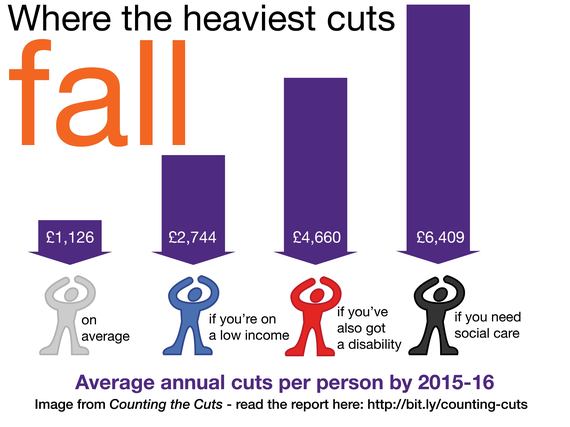


 Politics and Insights