Tag: victim blame

Poor people are poor because they don’t know how to get something from nothing

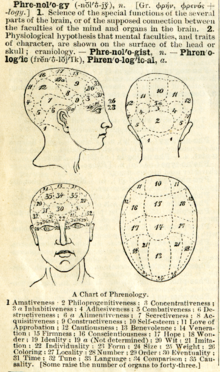
220px-1895-Dictionary-Phrenolog

The government have introduced a new character divination and assessment framework to determine eligibility for social security

It’s truly remarkable that whenever we have a Conservative government, we suddenly witness media coverage of an unprecedented rise in the numbers of poor people who suddenly seem to develop a considerable range of baffling personal ineptitudes and immediately dysfunctional lives.

We see a proliferation of “skivers” and “scroungers”, an uprising of “fecklessness”, a whole sneaky “culture of entitlement”, “drug addicts”, a riot of general all-round bad sorts, and apparently, the numbers of poor people who suddenly can’t cook a nutritious meal has climbed dramatically, too. We are told that starvation is not because of a lack of money and access to food, but rather, it’s because Britain is “broken”, and people like freebie handouts at food banks, they don’t know how to budget and cook, that’s according to the Conservative Baroness Jenkin of Kennington. 

She recommends that poor people eat porridge, since it only costs 4 pence a bowl. You can always imagine the milk, sugar and the fuel to warm it, if push comes to shove. Or better still, just cook it on the aga, or the barbi outside. Sorted.
1390648_548165358586330_1740107407_n

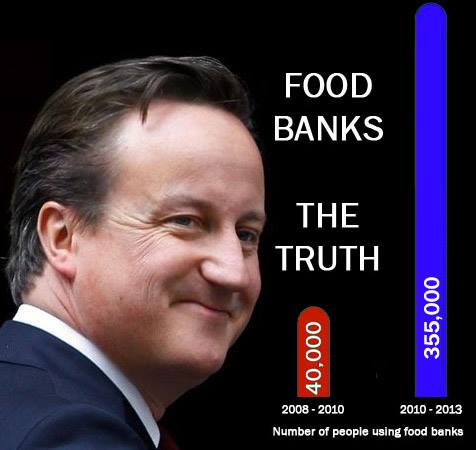
The alarming rise in numbers of adults who have suddenly forgotten how to cook and eat porridge since David Cameron took Office, up to last year.

Still, at least we are graced with the thrift and self-help moralising about poor people from the fabulously rich in the media. After all, there must be something wrong with someone who does nothing to help themselves to spend nothing creatively and still somehow manages to have nothing to show for it. The truth is that too many of these poor people are rubbish at being poor.

Jamie Oliver, amongst others, says that poor people always have a very large plasma TV. Thanks for that great tip, Jamie. If you bought one whilst in work, you should get rid of it immediately and buy an even larger one from your benefit.

You must also subscribe to Sky and get a big dish put on your house. Trade in your furniture and household items the very moment you stop working, and buy them all again so you don’t have to live with the guilt and shame of having anything you may have (inadvertently, I’m sure) bought from what you once disgracefully earned.

Another top tip is have lots of children that you can’t afford. Poor people need to try very hard to get pregnant only ever once they are absolutely broke. Never plan your children when you are in work, or down and out in prosperity, that’s a big no-no. Make sure you lose the job, house and everything else first. To be genuinely poor, you must have every child while facing utter destitution. 

This said, the government are going to kindly compensate those of you who had your children when you thought your job was secure and you were generally on your uppers. You are to be incentivised to breed less by having no support for any child born after the first two. Phew! Thank you, Iain Duncan Smith. It’s incentivisation and nudge. And I thought it was Victorian era eugenics.

Basically, some permanently outraged and loudly indignant, terminally curtain twitching, tutting people who work in what they think are secure jobs and have no children think that they are personally funding your children when you get made redundant. They prefer that their money is spent on handouts and tax breaks to the millionaires, crony capitalists and vulture big businesses instead. 

Some wealthy people like to feel included in designing your lifestyle choices and you can provide opportunity for a suffering wealthy person to share their guilt-fuelled outrage, malice and spite. It’s therapeutic for them, helping to alleviate their sense of resentment, shame and inadequacy. Projection is, after all, a very valuable self-defence mechanism for anally retentive hoarders. So is threatening to leave the country when confronted with the possibility of having to actually pay some tax. They cost such a lot to keep, these grumbling misers, I think we should just let them go. In fact I propose we provide a free flight booking and packing service for them, because it would be a shame to shock them out of a lifetime of handouts and entitlement.

Another top poverty tip from the top is make sure you take expensive holidays abroad, walk your dog if you have one and go to the pub. You must make sure you get someone to take photos of you looking busy, ordinary and happy and post on Facebook, or better still, send them to the Department for Work and Pensions. 

Many Sun and Daily Mail readers think that disabled poor people aren’t allowed to do or even try anything at all that looks ordinary and normal, they get very distressed and outraged that you aren’t suffering enough, and hidden away being busily housebound, so they will kindly report you. Strictly in your best interests of course, because to these kind, unprejudiced, well-meaning souls, there’s nothing more important than ensuring your complete social and economic exclusion, sacrifice and distress, and it’s the surest way of getting your benefit stopped, then you can get on with wallowing in your hard-won destitution, suffering and absolute poverty. Because as this thrifty government of self-helping, help themselves specialists has demonstrated, you’re absolutely worth it.

And as the government tells us, poor people will only stop being poor if we “incentivise” them by making them even more poor.

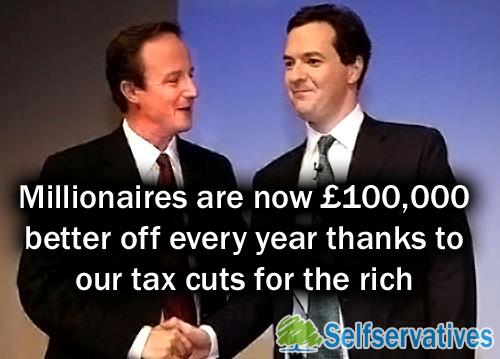
Rich people, on the other hand, really need “incentivising” by being given even more money. That’s just social justice and fairness, say the Tories. 

It’s common sense, and endorsed by top aspiring entrepreneur scientists in the cabinet office, called “behavioural economists.” I love technocrats, me. How incredibly lucky we have such great career-orientated folk designing “choice architecture” just for homeless and poor people. It’s a good job the nudgers don’t need any nudging with their authoritarian neoliberal cognitive biases and pro-status quo policy decisions, as the rest of us are just so fallible, gullible and inept that we simply have to be nudged in line. It’s well worth sacrificing democracy so that the government can have citizens who meet the government’s demands and economic needs.

Who needs a government that recognises and addresses citizens needs? 

Apparently, not us.

Job-Opportunities-850x390
One of the greatest joys of being poor is that many people who aren’t poor have got generous and seemingly endless advice for you. There are lots of sound tips around on how to get on with being poor quietly. And the media are interested in sharing all the details of your private life with the public, so they can tut, moralise, have some outrage, grumble, seethe and foam a lot, and then give you their “advice.” Because they care so much.

All designed to make you feel so much better about your state-designed and allocated personal failings. Lucky us.

And besides, who needs a welfare state when all it does is create poverty and turn people into cognitively malfunctioning idiots who are also very hungry? Those Tories must be creative geniuses, they made work pay by cutting welfare, driving down wages and raising the cost of living. See what I mean? 

They really should redefine the Orwell prize, the Tories would win it every year. Champions of ordinary people, they are, exposing social evils and injustices as they go, distributing work fare, poverty, authoritarianism, insecurity and behavioural change on all those faulty people that are being failed by neoliberalism and those mysterious boardroom decision makers that give us the entertaining myth of “market forces”.   
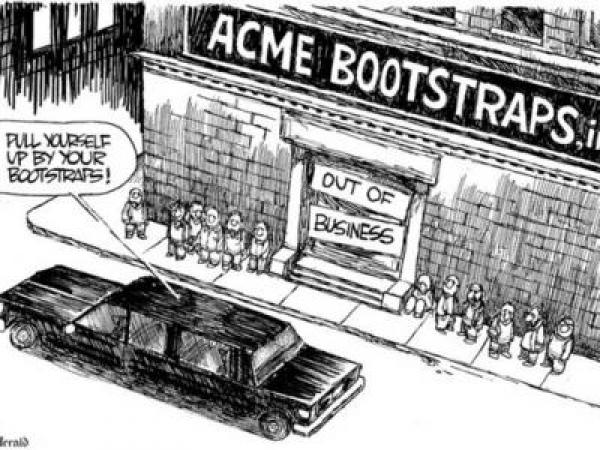
Bootstraps

Nowadays, the better off are so envious of your lucky life experiences and lack of choices that many are thinking of becoming disabled, just so they can share that exclusive pauper status for themselves. They want to own your poverty and I suspect they’d like to privatise and commercialise it. But we know that the poor invented poverty, and so it must be exclusively ours.

Poor people fake their poverty and mismanage their generous share of nothing

A recent report from Samuel Smiles and Verity Malthus, on behalf of ThanAtos, the private company hired by the government to assess people to see if they are genuinely on the point of death from starvation in order to be eligible for poverty, says that many are just feigning starvation and despair and some are even faking thinness.

This is why we have to target support only at “those in greatest need”.

ThanAtos’s research shows that many expect to be provided with food bank vouchers so they can continue to be parked on deluxe standards of suffering indefinitely.

The report said: “These poor people have taken the easy, stress-free option of not sending their children up chimneys and into t’mills any more and won’t even try their hand at pick-pocketing and prostitution. Those were once respected pauper activities, but now these poor people are jumping on the band-waggon and tarnishing the good name of thrift, self-help and state-inflicted misery.

“Far too many of those who claim they are poor don’t even have a plasma screen and a sky dish, and we know for a fact that they don’t eat takeaways, take drugs, smoke or drink cheap cider, they lack personal ineptitudes, and many don’t even have loads of unkempt children, so they are just frauds and they must have very poor budgeting skills. The problem is that once people see the privilege and benefits of gnawing hunger and destitution, they all want some. It’s all supply-led, people just want poverty as a freebie.”

How very true, it’s a real social problem. Once people begin to appreciate the Dickensian chic of malnutrition, rickets and scurvy, and many other low budget, value Victorian age diseases, they want to dash out and buy some immediately. It is becoming something of a trend. In fact the poverty porn industry has really taken off. 

The growing popularity of being very hungry has enticed many these past four years. The ease by which malnutrition can be acquired under this generous government, has been welcomed and hailed as the new poor law come-back, the return of a Golden Feudal Age for the Conservatives.

It’s a very welcomed return of nostalgic, ever so quaint and cute Social Darwinist Tory principles. But some have said that this Government has clearly created a tide of social problems, as very few people were incompetently hungry and desperately silly enough to need food banks under the last Labour government.

In fact I didn’t even know they existed back then. But that’s the “Big Society” for you. What a bright idea to replace welfare with charity and state “therapy.” Silly poor people, they just need to learn to be more creative in how they spend their state funded and allocated nothing, that’s why they end up with nothing. It’s the new generous Tory something from nothing culture, just for the poor.

Those poor people need to get one of those work fare jobs. Put them in their place. That’ll sort ’em out. What those poor people need is discipline. And a good hiding never did any harm. I say bring back the birch and the stocks. That’ll teach ’em.

It’s just like the good old Victorian days. Hurrah!
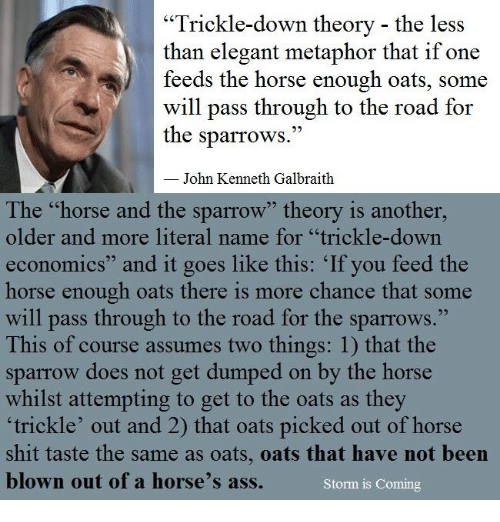
trickle-down-theory-the-less-than-elegant-metaphor-that-if-one-11938559Supply-side economics and the pecking order


I don’t make any money from my work. I am disabled because of illness and have a very limited income. I don’t have a plasma TV or Sky. I do eat a lot of porridge, though. Successive Conservative chancellors have left me in increasing poverty. But you can help by making a donation to help me continue to research and write informative, insightful and independent articles, and to provide support to others. The smallest amount is much appreciated – thank you. 

DonatenowButton

The power of positive thinking is really political gaslighting

The power of positive thinking.

The government invests a lot of time and money in “nudging” people to accept the unacceptable.

George Osborne announced in the budget that the government will be funding a “package of measures” to improve employment outcomes which will entail putting Cognitive Behaviour Therapists in more than 350 job centres to provide “support” to those with “common mental health conditions,” and making online access to Cognitive Behaviour Therapy available for people who are claiming employment support allowance (ESA) and job seekers allowance (JSA).

From the HM Treasury document – Budget 2015, page 64: 1.236:

“Budget 2015 also announces a package of measures to improve employment outcomes for people with mental health conditions. Starting from early 2016, the government will provide online Cognitive Behavioural Therapy (CBT) to 40,000 Employment and Support Allowance and Jobseeker’s Allowance claimants and individuals being supported by Fit for Work. From summer 2015, the government will also begin to co-locate Improving Access to Psychological Therapies (IAPT) therapists in over 350 Jobcentres, to provide integrated employment and mental health support to claimants with common mental health conditions.”

The government put up an online contract notice which specifically states:

“This provision is designed to support people with common mental health conditions to prepare for and move into work, with intervention at the earliest possible point in a claim to benefit or access to the Fit for Work service.”

Under the government’s plans, therapists from the NHS’s Improving Access to Psychological Therapies (IAPT) programme would support jobcentre staff to assess and treat claimants, who may be referred to online cognitive behavioural therapy (CBT) courses.

We really must question the ethics of linking receipt of welfare with “state therapy,” which, upon closer scrutiny, is not therapy at all. Linked to such a narrow outcome – getting a job – this is nothing more than a blunt behaviour modification programme. The fact that the Conservatives plan to make receipt of benefits contingent on participation in “treatment” worryingly takes away the fundamental right of consent.

Cognitive Behaviour Therapy (CBT) is used to change how you think (“Cognitive”) and what you do (“Behaviour”). It bypasses context, emotions, personal history, experiences and narrative, to a large extent, and tends to focus on the “here and now.”

CBT is an approach that facilitates the identification of “negative thinking patterns” and associated “problematic behaviours” and challenges them. This approach is, at first glance, a problem-solving approach. However, it is of course premised on the assumption that interpreting situations “negatively” is a bad thing, and that thinking positively about difficult or distressing events is somehow beneficial.

The onus is on the individual to adapt to their distress and difficult circumstances by perceiving their circumstances in a stoical and purely rational way.

So we need to ask what are the circumstances that the government are expecting people claiming welfare support to accept stoically. Sanctions? Work fare? Being forced to accept very poorly paid work, abysmal working conditions and no security? The loss of social support, public services and essential safety nets?  Stigma? Starvation and destitution? State punishment and exclusion?

It’s all very well challenging people’s thoughts but for whom is CBT being used, and for what purpose? Seems to me that this is about helping those people on the wrong side of punitive government policy to accept and accommodate that, and to mute negative responses to negative situations. CBT in this context is not based on a genuinely liberational approach, nor is it based on any sort of democratic dialogue. It’s all about modifying and controlling behaviour, particularly when it’s aimed at such a narrow, politically defined and highly specific outcome.

CBT is too often founded on blunt oversimplifications of what causes human distress – for example, in this case it is assumed that the causes of unemployment are psychological rather than sociopolitical, and that assumption authorises intrusive state interventions that encode a distinctly Conservative moral framework which places responsibility on the individual, who is characterised as “faulty” in some way.

There is also an underpinning assumption that working is good for mental health, and that being in employment indicates mental wellbeing. However, isn’t it more likely the case that healthier people are in work, those who aren’t well enough to work don’t?

It’s well-established that poverty is strongly linked with a higher likelihood of being diagnosed with a mental illness. But that does not mean working is therefore somehow “good” in some way, for mental wellbeing. Therapy does not address social conditions and context, and so it permits society to look the other way, while the government continue to present mental illness as an individual weakness or vulnerability, and a consequence of “worklessness” rather than a fairly predictable result of living a stigmatised, marginalised existence of material deprivation.

Inequality and poverty are political constructions and arise because of ideology, intention and policy-formulated socioeconomic circumstances, but the Conservatives have transformed established explanations into a project of constructing behavioural and emotional problems as “medical diagnoses” for politically-created (and wholly ideologically endorsed) socioeconomic problems.

Austerity, which targets the poorest citizens disproportionately for cuts to their lifeline income and essential services, was one ideologically-driven political decision taken among alternative, effective and more humane choices.

The government are not strangers to behaviour modification techniques and have been applying crude behaviourism to public policy, drawing on the “expertise” of the Behavioural Insights Team (BIT)  – the “Nudge Unit” – that they established and installed in the Cabinet Office in 2010. (See Mind the Mindspace, which outlines some of the implications of a government extending operant conditioning via policies to an unconsenting public.)

It is disadvantaged people and excluded groups who are the primary targets of enormously pseudoscientific, coercive and punitive psychopolicy interventions. It’s a kind of technocratic ‘fix’, designed solely to align the perceptions and behaviours of those citizens failed and harmed by our current socioeconomic organisation to nonetheless accommodate and accept neoliberal outcomes.

The casual manner in which advocates of behaviourism dismiss the right of people to behave in accordance with their own feelings, intuition and instincts exposes their authoritarian (not “libertarian paternalistic”) ambitions.

It’s frankly terrifying that our so-called democratic government is waging an ideological crusade directed at altering citizens’ thoughts and behaviour, and avoiding any accountability, sidestepping any engagement in potentially difficult political debate about their policies and the impacts that they have.

The objectives adopted by the Nudge Unit choice architects, politico-therapists and psychocrats are entirely about the state micromanagement of public perceptions and behaviours.

These objectives resemble ambitions usually associated with totalitarian regimes. This is a gross state intrusion into a previously private domain – our thoughts, perceptions and behaviours. Not only is this government trespassing on an intimate, existential level; it is tampering with – editing – our perceptions and experiences, damaging and isolating the poorest citizens, burdening them with the blame for the consequences of state policies while also editing out state responsibilities towards citizens.

Both CBT and Nudge are aimed at pushing people in ways that bypass reasoning. The assumption is that because our decision-making ability is limited we need to use non-rational means to persuade people to do what is “good” for them. But who has the moral authority to decide that? This is not about helping people make better choices – it’s about coercing people to make the choices that policymakers want them to make. And again, those “choices” are based on enforcing conformity to the ideological commitments of policymakers.

This psychocratic turn is in diametric opposition to Enlightenment narratives – it fosters a profound anti-rationality and anti-autonomy approach, it’s not remotely democratic: it’s based on a ridiculous premise that people use their freedom and liberty poorly, but somehow, those passing that judgement on everyone else are exempted from such judgements themselves. It is also extends profoundly anti-humanistic consequences.

Apparently, some people think that everyone else is susceptible to flawed thinking and behaviours, but that theory magically excludes the theorist from such human failings, since they are claiming some objective, mind-independent vantage point – a position far away from the rest of us. It’s like saying: this is your “human nature” but not ours.

Whether or not we agree on the efficacy of CBT as a therapeutic model in principle is a small consideration which is overshadowed by the fact that the government are using such “therapeutic” techniques as a highly partisan tool – to enforce traditional Tory biases and prejudices and to achieve their ideologically-driven policy agenda.

CBT will be deployed in job centres to simply favour the political objectives of neoliberal Conservatism: propping up an anti-progressive austerity agenda, regressive ideology, endorsing an ever-shrinking state, while reflecting a profound  Tory misanthropy.

The social problems arising because of a lack of provision will remain unaddressed and unchallenged because of the Conservative paradigm shift in positivist – causal explanations of political and social problems: it’s not down to policy, it’s all the fault of individuals (who are of course those individuals affected adversely by state policy.)

CBT is a short-term treatment, which is cheap and simple to deliver. I suspect this is one other reason for it becoming more popular with the Coalition than is warranted.

CBT has limitations for treating certain groups, including people with severe and treatment-resistant depression and those with personality disorders.

Studies concerning the efficacy of CBT have consistently found high drop-out rates compared to other treatments, with the numbers abandoning therapy often being more than five times higher than other treatments groups. (P. Cuijpers,  A. van Straten, G.  Andersson & P. Van Oppen. (2008)).

Researchers analysed several clinical trials that measured the efficacy of CBT administered to young people who self-injure. The researchers concluded that none of them were found to be efficacious. (See: Task force on the promotion and dissemination of psychological procedures: A reported adopted by the Division 12 Board – D. Chambless, K. Babich, P. Crits-Christoph,  E. Frank, M. Gilson & R. Montgomery. (1993)).

CBT fails fundamentally on a theoretical level: it lacks basic clarity, depth and coherence. It doesn’t provide a definition of “clear and correct” thinking – curiously, CBT theorists develop a framework for determining distorted thinking without developing a framework for “cognitive clarity” or what would be deemed “healthy, normal thinking.” This has left a large space for partisan definitions and political agendas.

And why is irrational thinking considered to be a source of mental and emotional distress when there is no evidence of rational thinking causing psychological wellbeing? Furthermore, social psychology has never demonstrated that the normal cognitive processes (whatever they are) of the average person are irrational.

CBT is deterministic: it denies agency and any degree of free-will. Human behaviour, in this view, is determined by the cognitive processes invoked by external stimuli. It focuses on the former, ignoring the latter. CBT theory basically contends that what you feel is somehow not very important to why you do what you do and think what you think.

But human beings are not automata: we are complex and multi-faceted. Our emotionality is a fundamental part of being human, too – our emotional bonds and attachments, and our interactions with significant others over time contribute hugely to shaping who we are: we are socially situated and contextualised. We are intersubjective, reciprocal and intentional beings. A therapy that sidelines how we feel must surely, at best, be regarded as superficial in its efficacy, scope and reach.

Moreover, in emphasising thought processes to the exclusion of complex and legitimate emotions, therapists may contribute to the harmful repression and denial of feelings.

CBT encourages an unhealthy avoidance of psychological discomfort and distress by diverting thoughts from the source of discomfort. CBT may rouse immature, neurotic and pathological defence mechanisms. It devalues resilience based on mature coping strategies such as openness, courage, mindfulness, acceptance and emotional self-sufficiency.

Not only is that psychologically unhealthy for a person, it’s bad for society as it desensitises and de-empathises people, stultifies learning from experience by disconnecting people’s thoughts from their circumstances and from others. It discourages personal development and stifles ‘resilience’.

Perhaps the most damning criticism of CBT is that it encourages self-deception and self-blame within clients and patients, because it maintains the status quo. The basic premise of cognitive therapy is: except for how the patient thinks, everything is okay. You can see why this would appeal to the Conservatives.

Poor mental health is often linked with poverty (Melzer et al. 2004) poor community integration, and competitiveness among social groups (Arrindell et al., 2003). Key questions arise as to the efficacy, therefore, of working with individuals, when much research suggests community work would be much more effective (Orford, 2008).

The Beacon Project (Stuteley, 2002) was pioneered by health workers who supported those with depression and other health problems by working with their whole community – addressing their basic social needs and developing mutual social support systems. There were significant changes in physical and mental health for the whole community, showing the benefits of fostering a psychology of mutual support, altruism, cooperation and collaboration: building social capital.

Human needs, public services and provisions, developmental processes, social relationships and contexts are important to any comprehensive model of mental health. Community work offers something that CBT can’t: unlimited scope and reach, sustainable, self-perpetuating, long-lasting provision with an inbuilt preventative agenda. It’s also a prefigurative model. As such, it is founded on democratic principles and the values of  genuine dialogue.

But the government has no interest in addressing mental health and wellbeing or building social support provisions. The government insists that people’s problems are self-generated and endogenous. But the socioeconomic context, policy decisions and consequences are the fundamental cause of unemployment, poverty and much mental distress.

When people are affected by social problems with structural causes, such as poverty and inequality, this in turn leads to a lack of opportunity, economic disadvantage and deprivation, unemployment, ill-health, absolute poverty (increasingly), poor housing, political scapegoating and punishment via policy, it’s ludicrously and grossly unfair to further stigmatise them and claim that their problems arise because of how they think and behave.

For the Tories, the only aim of CBT is a strongly emphasised participation in the labour-market, with minimal expectations of the state and minimal reliance on public services.

“Social problems are often the consequence of the choices that people make.” David Cameron.

No. Social problems are most often the consequence of a government that uses policy to create social inequality, poverty, social exclusion and extremely challenging economic circumstances for those people who have the least to start with. The government uses denial and a process of individualising blame for the problems caused by this government’s ideological austerity programme, which is used to legitimise further cruel constraint by those socio-economic factors caused by the government.

The Tories would have us believe that poor people suddenly become inadequate whenever we have a Tory government. They don’t, but they do become poorer. They are then held responsible and punished for the consequences of Conservatism.

If anyone needs to change the way they think, it’s certainly the Conservatives.

Update June 26, 2015: Mental health workers protest at move to integrate clinic with jobcentre

“This month Prof Jamie Hacker Hughes, president of the British Psychological Society (BPS), pointed out recent research which presented evidence that claimants had been forced to accept psychological treatment. Researchers from Hubbub and Birkbeck, University of London, found unemployment was being rebranded as a psychological disorder in many advanced economies, with interventions being introduced to promote a positive outlook or leave claimants of welfare to face sanctions.

Dave Harper, a reader in clinical psychology at the University of East London, told the Guardian he believed there was an ideological agenda driving the government’s proposals.

“We are in a recession,” Harper said. “There are not many jobs out there and this is implying that unemployed people are to blame for their situation. It’s shifting the focus away from economic policy and on to the individual.”

As a BPS member, I was happy to see a clear, ethical statement from the President.

Related

The just world fallacy

Cameron’s Nudge that knocked democracy down – a summary of the implications of Nudge theory

526544_532055030197363_2137237288_n

Pictures courtesy of Robert Livingstone

My work isn’t funded. But you can support Politics and Insights, and help me to continue researching, analysing and writing independently, and supporting others.

The Poverty of Responsibility and the Politics of Blame

574552_411798808889653_918253014_n

Government consultation on measuring child poverty. So, what’s that about?

The Government are currently developing “better measures of child poverty” to provide a “more accurate reflection of the reality of child poverty.” According to the Tory-led Coalition, poverty isn’t caused by a lack of income. The Coalition have conducted a perfunctory consultation that did little more than provide a Conservative ideological framework to catch carefully calculated, subliminally-shaped public responses.

This supremacist framework was pre-fabricated by the strange déjà vu musings of Charles Murray, the American sociologist that exhumed social Darwinism and gave the bones of it originally to Bush and Thatcher to re-cast. Murray’s culture of poverty theory popularised notions that poverty is caused by an individual’s personal deficits; that the poor have earned their position in society; the poor deserve to be poor because this is a reflection of their lack of qualities, poor character, low intelligence and level of abilities generally. 

Of course, this perspective also assumes that the opposite is true: wealthy and “successful” people are so because they are more talented, motivated and less lazy, and are thus more deserving. Just like the widely discredited social Darwinism of the Victorian era, proposed by the likes of Conservative sociologist Herbert Spencer, (who originally coined the phrase “survival of the fittest,” and not Darwin, as is widely held) these resurrected ideas have a considerable degree of popularity in upper-class and elite Conservative circles, where such perspectives provide a justification for extensive privilege and greed. In addition, poor communities are seen as ‘socialising environments’ where values such as fatalism are transmitted from generation to “workshy” generation.

Perhaps that’s why Thatcher destroyed so many communities: in a bid to drive her own demon out. It was invoked by a traditional Tory ritual of blame. Political responsibility was sacrificed, and that’s also become a traditional Tory ritual.

According to traditionalist right wing sociologists Kingsley Davis and Wilbert Moore, not only is poverty a reflection of one’s lack of talents, but inequality is necessary and functional for society. Some positions are socially more important (or functional) than others. Such important positions usually require deferred gratification – sacrifices – to be attained: surgeons need long years of education and dedication to finally practice their crafts. Therefore, it is legitimate that those who make such sacrifices be rewarded with money, power and prestige. Such rewards are offered to motivate the best and brightest to aim for such positions. The poor are poor because they are less intelligent, talented, driven, innovative, motivated, self-restrained and hard working, according to the right-wing pseudomeritocratic narrative. 

Of course we know from psychological studies that the “brightest and best” are often driven by greed, ruthlessness, hunger for power and status: narcissism and psychopathic ambitions, and that the genuinely brightest and best are very often less well financially rewarded for more virtuous and intelligent behaviours.

The salary/pay differences between nurses and footballers is a good example that highlights the myth of meritocracy. We reward good eye and foot coordination skills in footballers and prize them far more highly as a society than we do caring, medical knowledge and health and healing skills in nurses.

How we organise socially (which is shaped considerably within a dominant paradigm of competitive individualism, and a Conservative neoliberal economic framework) and how we endorse and reward behaviours as a society is also a big factor in the distribution of competitive, (as opposed to cooperative) greedy, narcissistic, (as opposed to empathic, collectivist) psychopathic traits in those holding the most financially rewarding positions of power.

Blame-the-victim theories of poverty assume that all individuals think alike independently of their social context and circumstances. They ignore the actual resilience and ingenuity that people in absolute poverty mobilise in order to simply survive. And these theories also ignore the tremendous social obstacles that block people’s path to prosperity, such as war or political and ethnic repression. They ignore, in particular, the crucially significant role that Government decision-making and policy plays in shaping inequalities, and the distribution of wealth.

An overview of the underhanded, not the underclass.

In the consultation, material deprivation was mentioned almost in passing. Iain Duncan Smith memorably said recently that poverty isn’t caused by a lack of money. Oh really? Hmmm…  I suppose if you are stranded on a desert island, then it isn’t, but that’s not applicable here as a line of reasoning, Iain. Although I have seen many impoverished souls amongst the rich, I have yet to see a materially deprived wealthy person. Gosh, I’m surprised you didn’t know that the elite do tend to accomplish avoiding vagabondage and pauperism with aplomb, Iain.

Other “causes” of poverty outlined in the document include “worklessness,” unmanageable debt, poor housing, parental skill level, family stability,  and quality education, substance abuse and addiction … and it’s sounding like a Charles Murray Bell Curve mantra to me. Tory ritualistic chanting again.

Eugenics in a ball gown.

This Tory and almost quaint positivist notion of “cause and effect” – personal and socio-cultural inadequacies cause social inequality and poverty – is teleological (functionalist): poor housing, unmanageable debt, family instability and lack of access to quality education are all outcomes of poverty, not causes. I know this to be true, having worked with families that were experiencing difficulties caused by periods of deprivation and poverty, and I have to report that those sorts of misfortunes happened to people regardless of their social background. (Although I must add that none of the upper class or elite, to my knowledge, have ever required intensive support from social services.)

Yet these ideas have become tacitly accepted socially, politicised vigorously and relentlessly, and given pseudo-credibility in the largely right-wing agendarised media. Inequality in Britain today is now so stark, yet there is remarkably little public concern or anger about poverty. (But plenty of anger about the “feckless” poor.) Indeed, compassion and concern for the poorest in society has declined substantially due to the sustained and increasing prevalence of the view that poverty is largely caused by laziness and is the fault of the individual, and that is also simply a shruggable, unavoidable fact of life. Poverty is caused by the poor. It’s not a generous or an expansive view of human nature, from the Tory ontological camp.

Moreover, much of the British public believes that there are sufficient opportunities to succeed for those who try hard enough, and also that it is the middle class which actually struggles the most, economically. These assumptions are highly Conservative, ideologically, with political implications that limit public support for egalitarianism and extensive wealth redistribution from rich to poor, and stifle empathy and understanding for the victims of poverty. There is also, of course, the fact that many don’t want to think about the issue at all, because it causes discomfort and unease: making poverty visible reminds people on some subliminal level, no matter how much they blame the victim, that poverty could nonetheless happen to anyone. The saying goes that most of us are just a couple of pay cheques away from destitution. To many, this is tacit knowledge, but such misfortune will never happen to them.

Competition is threaded throughout the Conservative neoliberal ideological framework, and the Tories have always been inclined to see society as having a hierarchical organisation and structure. Competitive individualism is an all-pervasive social contagion, and has led to those who have the least feeling that they are competing the most for rapidly disappearing resources. This is why the media propaganda campaigns of the Government have seen success, because the Government, via the media, has tapped into this contagion and constructed convenient scapegoats.

Sick and disabled people have been negatively labelled and stigmatised by the media, and it’s no coincidence that hate crimes directed at this social group have significantly increased. We see the poor who work hating the poor unemployed, we see the poor unemployed hating poor immigrants, and we see people who are poor and ill saying that they deserve more support than others that are also poor and ill.

Yet instead of maintaining divisions, the casualities of this Government’s policies would do better to organise, cooperate and mutually support each other. There’s a few socialist principles to counter the isolating poverty trance that many of us are in danger of succumbing to. We can’t afford to be dazed. “Divide and conquer” as a propaganda strategy has certainly been effective, and whilst the authoritarian diversionary (middle) finger is being pointed in blame at the poor and the vulnerable, the real villains are stealing all of our money, and stripping away our publicly funded services and support programs, and enjoying huge tax cuts and handouts as they go. Poverty and wealth do tend to grow together. It’s no coincidence.

I do not agree with the idea that “worklessness” is the cause of child poverty, or many of the other “causes” proposed in the consultation document. We are in an economic recession, and I do believe the Government has a duty to protect the most vulnerable of its citizens, rather than blaming them for the consequences of Government policies. What has happened instead is Coalition policies have contributed enormously to creating more poverty and are set to continue to do so, at a rapid pace, especially once the rest of the cuts via the Localism Bill, Bedroom Tax and Benefit Cap are implemented from April. Coalition policies have of course generated more money for the wealthy, with the very wealthiest gaining around £107, 000 each per year, for example, whilst austerity targets the poorest disproportionately. That is the cause of poverty: utilising social and economic policies to bring about a hugely unequal, grossly unfair and unmerited redistribution of wealth.

In a time of economic recession, jobs are lost, unemployment rates are rising, (despite what we are being told by Cameron – how can we possibly have the best employment rates since the 1960’s, when we are in the middle of the worst global recession we have seen for many decades?) and businesses are increasingly facing bankruptcy, it is therefore hardly fair to penalise the unemployed. Yet taking money from those who have the least via the “reforms,” sanctions and work fare is the Government’s response to the rising unemployment, and to sickness and disability, too. We know that work fare results in even more job losses, because we know that businesses are inclined to get rid of paid workers and replace them with free labour, which comes funded from the tax payer, and so further increases company profits.

We know that private companies are driven by the profit motive, and that they ride roughshod over human needs. They employ the cheapest (and therefore least qualified and professional) workforce that they can. They provide the cheapest materials, economise and make “efficiency savings” in services they provide.

Add to that the matter of Government targets to “incentivise” businesses through further financial reward – with the political aim of reducing State support for the poorest and most vulnerable – and we have the most corrupt and inhumane profiting from human misery, with private companies such as Atos being encouraged explicitly (contractually and via policies) to inflict misery, and being financially rewarded for inflicting that misery, suffering, sometimes death, and of course, increasing financial hardship and poverty. Companies like Atos and A4E reflect the very worst aspects of “vulture capitalism”. It is the asset-stripping of our public services, selling them off and exploiting people for profit, no matter what the cost is to those people.

Sanctions of up to 3 years – stopping a person’s basic means of survival (benefit covers the cost of food and fuel, with housing benefit covering the other basic survival need – shelter) means that those who cannot find work will quite likely die. That’s a fact. Evidence of this biological fact is well articulated by Abraham Maslow  (see Maslow’s Hierarchy.)  Maslow’s proposition also illuminates clearly why poor people cannot be “incentivised” or “helped” through sanctions and  punishment, or motivated by these methods to find none existent jobs when they are struggling to survive.

When people are struggling to meet their most basic needs, they cannot summon the effort to do anything else. The Government expect us to believe that punishing poor people will somehow cure them of their poverty, although many people who are not claiming a benefit won’t know about the punishment regime in place for the unemployed poor, since the use of words by the Government like “helping” people into work (that isn’t real) is such a big detour from truth, and it makes a completely menacing, sneering mockery of the real meaning of that word.  Ah, those “caring” Conservatives are at it again …

We really need to ask ourselves what kind of Government would steal money from the poorest citizens through “reforming” the system of welfare provision, when we are in recession. Then ask again why there is a desire to redefine poverty in a way that excludes the obvious reason for it: a lack of money. One cannot help but wonder why the Coalition think that poor people need money taken from them to “incentivise” them, but very wealthy people need money giving to them, to “incentivise” them. Where did the money come from that rewarded so well those who do not need it ? Oh yes, I can see now….

A simple truth is that poverty happens because some people are very, very rich. That happens ultimately because of Government policies that create, sustain and extend inequalities. The very wealthy are becoming wealthier, the poor are becoming poorer. This is a consequence of  “vulture capitalism” – at the core of Tory ideology – designed by the opportunism and greed of a few, it is instituted, facilitated and directed by the Tory-led Coalition.  

Welfare provision was paid for by the public, via tax and NI contributions. It is not a “handout.” It is not the Government’s money to cut. That is our provision, paid for by us to support us if and when we need it. It’s the same with the National Health Service. These public services and provisions do not and never did belong to the Government to sell off, make profit from, and strip bare as they have done.

Low wages and low benefit levels, rising unemployment and a high cost of living are major causes of poverty. “Worklessness” is a made up word to imply that the consequences of Government policies are somehow the fault of the victims of traditional Tory prejudices.

It’s a psychological and linguistic attack on the vulnerable – blaming the unemployed for unemployment, and the poor for poverty. Those are a consequence of Coalition policies. The Coalition take money from those who need it most to give away to those who need it least. That causes poverty. The Coalition are creating poverty via the consequences of policies. Occasionally they do admit it, or more likely, slip up with a truth. (It was Steve Webb in this case, in addition to the opposition.)

Bearing in mind we are in a recession, I believe that the way the most vulnerable have been treated is unforgivable, and inhumane, and it also breaches several basic human rights. Poverty is caused by economic policies driven by political prejudice and ideology. Poverty is generated through structural – socio-economic – conditions that some Governments impose on a population. I would therefore like to see acknowledgement of this in the Tory-led  measurement of poverty. It’s time the Coalition took some responsibility for the appalling and miserable conditions and human suffering that they are deliberately imposing on the Citizens that they are meant to serve

Given the Coalition’s significant contribution to the continuing rise in childhood poverty, it’s worth noting their abject failure to meet their obligations to make provision for children at risk from the effects of poverty, because they prefer instead to make provision for those who need it the very least: the already very wealthy.

Signatories (such as the UK, since 1991) of the United Nations Convention on the Rights of the Child (the most rapidly and widely ratified international human rights treaty in history), are legally obliged to protect children from the adverse effects of economic policies.

The Coalition’s austerity measures, which target the poorest citizens for the greatest proportion of cuts, must surely breach this Convention.

Article 3: (Best interests of the child.) The best interests of children must be the primary concern in making decisions that may affect them. All adults should do what is best for children. When adults make decisions, they should think about how their decisions will affect children. This particularly applies to BUDGET, POLICY AND LAW MAKERS.

That would be the Government.

 The Convention Rights of Children


382035_141704259313964_676863845_n

Pictures courtesy of Robert Livingstone.


I don’t make any money from my work. But you can support Politics and Insights and contribute by making a donation which will help me continue to research and write informative, insightful and independent articles, and to provide support to others. The smallest amount is much appreciated, and helps to keep my articles free and accessible to all – thank you.

DonatenowButton