Tag: welfare reforms

Malnutrition, austerity and eugenics.

Minnes

Earlier this year, I reported that figures released by The Office of National Statistics (ONS) showed 391 people died from malnutrition in 2015. There were 746 hospital admissions for malnutrition in just 12 months. The statistics also showed two people in the UK are admitted to hospital with the condition every day in what campaigners have called a “national scandal.” 

Official figures more recently from the Department of Health reveal that people with malnutrition accounted for 184,528 of days in hospital beds taken up in England taken up last year, a huge rise on 65,048 in 2006-07. The sharp increase is adding to the pressures on hospitals, which are already struggling with record levels of overcrowding and limited resources because of underfunding.

161127-malnutrition-stats

Critics and campaigners have said the upward trend is a result of austerity and rising absolute poverty, deep cutbacks in recent years to meals on wheels services for the elderly and inadequate social care support, especially for older people. 

Theresa May has made it clear there will be no end to Tory austerity, she said:“What I’m clear about is we’re going to continue as we have done in Government over the last six years – ensuring that we’re a country that can live within our means.” 

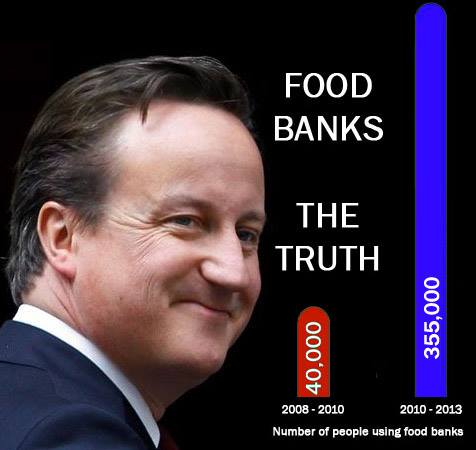
The figures once again directly contradict the glib claim from government ministers that the rise in the use of food banks is linked to the fact that there are now more of them. Ludicrously, millionaire David Freud has claimed that people use food banks just because they provide a  “free good”.  However, research shows that people turn to charity food as a last resort following a crisis such as the loss of a job, the delays and problems accessing social security benefits, and through benefit sanctions. 

People may only be referred to a food bank by a professional such as a social worker or GP. If someone turns up without a voucher, food bank staff put them in touch with relevant local agencies who can assess whether they need a voucher and signpost them to the right services. The number of people receiving emergency food is disproportionate to the number of new food banks opening: following the welfare “reforms”, by 2013, numbers helped by food banks increased by 170% whilst there was only a 76% increase in new food banks opening. 

Over 50% of children living in poverty in the UK are from working households and many of the people helped by food banks are in work, with the rising cost of living combined with no rise in low wages causing many to hit a crisis where they can’t afford to met basic needs such as eating.

Jonathan Ashworth, the shadow health secretary, unearthed the latest figures in a response to a recent parliamentary question submitted to the health minister Nicola Blackwood. He said: 

“These figures paint a grim picture of Britain under the Conservatives. Real poverty is causing vulnerable people, particularly the elderly, to go hungry and undernourished so much so that they end up in hospitalOur research reveals a shocking picture of levels of malnutrition in 21st-century England and the impact it has on our NHS. This is unacceptable in modern Britain.”

In a very wealthy first-world  democracy, it is completely unacceptable that anyone is left hungry, malnourished and in absolute poverty.

The Department of Health figures showed that the number of “bed days” accounted for by someone with a primary or secondary diagnosis of malnutrition rose from 128,361 in 2010-11, the year the coalition came to power, to 184,528 last year – a 61% rise over five years.

The National Institute for Health and Care Excellence classes someone as malnourished if they have a body mass index of less than 18.5, have suffered the unintentional loss of more than 10% of their weight over the last three to six months, or if they have a BMI under 20 and have unintentionally seen their weight drop by more than 5% over the previous three to six months.

The worrying decision by the chancellor, Philip Hammond, not to fund the NHS or social care with any more money in his autumn statement last week will only worsen this already unacceptable situation.

Ashworth said: “The reality is the government have failed this week to both give the NHS and social care the extra investment it needs while also failing to invest in prevention initiatives to foster healthier lifestyles. The cuts to public health budgets along with an emaciated obesity strategy are both utterly misguided.” 

Figures are not available for exactly how many patients accounted for the 184,528 bed days last year, but information supplied to Ashworth by the House of Commons library shows that 57% of the patients were women and that 42% were over-65s.

Worryingly, four out of five people who needed inpatient hospital care because of malnutrition were admitted as an emergency, which suggests their health had deteriorated significantly in the days before they were taken in.

Not enough health and social care professionals have the time or knowledge to correctly identify malnutrition.

Stephen Dalton, the chief executive of the NHS Confederation, which represents hospitals, said: “Our members take malnutrition seriously. Good nutrition is a fundamental human right our citizens can expect, and vulnerable, particularly older, people are most at risk of serious consequences if denied basic compassionate care. At a time of unprecedented demand on health and social care we need to be alert and will take seriously any reliable evidence of basic care not being delivered.”

Time and time again, when challenged and confronted with overwhelming empirical evidence of the harm that their class-contingent austerity policies and welfare “reforms” are inflicting on citizens, the government simply deny any “causal link”. They say that the increase in absolute poverty, malnutrition and hunger, deaths and distress are unrelated to their policies, which they claim to be “working”.

With no sign that the government are going to emerge from behind their basic defence mechanism of collective denial – nor are the Conservatives remotely interested in investigating a clear correlation between their blatant attacks on the poorest citizens via their draconian policies and the terrible hardships people are suffering –  we do have to wonder what the real intention is underpinning such clearly targeted austerity.

Conservative ideology seems to be founded on the hypothesis of an inborn and “natural order” – a society that is based on a human hierarchy of worth. The Conservatives feel justified that they are part of a superior class in society and therefore they have an entitlement to hold power. Their policies don’t include the majority of us in their design or aims. The government are not democratic, they are authoritarians. Conservative policies act upon ordinary citizens and have become increasingly detached from citizen needs.

I was accused of the terrible crime of being an “interfering do-gooder” recently by someone with social Darwinist ideals. I couldn’t understand his ferocity. Then I made a connection, the proverbial penny dropped. Again. I suddenly felt very weary, disgusted and shocked – the recognition froze me. Again

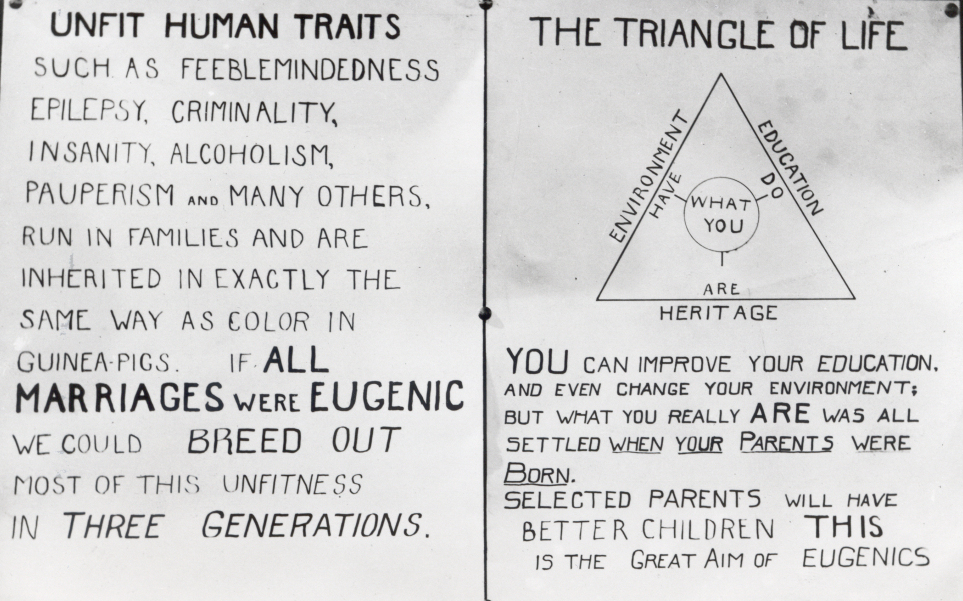
Historically, eugenicists thought that misguided “do-gooders”, by giving poor people help and support, were allowing them to survive “unnaturally”, and were consequently interfering in human “natural selection”, a benign force which they thought was “deselecting” the people with the “weakest” genes and the “moral defectives”.  The Conservatives moralise about people who are poor and their punitive anti-welfare policies indicate plainly that they think that poor people have moral deficits.

The Conservative message that poverty is caused by character or behavioural “defects” and not socioeconomic and political circumstances should have been ringing alarm bells very loudly everywhere. The problem with authoritarian governments is they usually have sufficient power, one way or another, to mute the alarm. The first base of power over public perceptions that all authoritarians build is invariably facilitated by the corporate mass media. 

Austerity, “the national debt”, “a country living within its means”, “hardworking families”, the scrounger/striver rhetoric, “hard choices” and the “culture of entitlement” has all been a smokescreen for eugenic policies.

We cannot find any comfort in the belief that the government are simply neglectful policy makers. The persistent and loud denial regarding the increasingly precarious existence of the poorest citizens – especially disabled people – and the loud refusal to investigate the correlation between austerity policies and social outcomes that are damaging and harmful, and to consider the empirical evidence of humanitarian harm presented by citizens, academics, charities and campaigners, indicates a government that is not ignorant of the consequences, yet has no intention of changing their policies. The Conservatives are appallingly unconcerned about the terrible harm they are inflicting on invididuals and on our society.

 “Eugenic goals are most likely to be attained under another name than eugenics.” – Frederick Osborn

00632639d492f019c3b926c95ecf003f

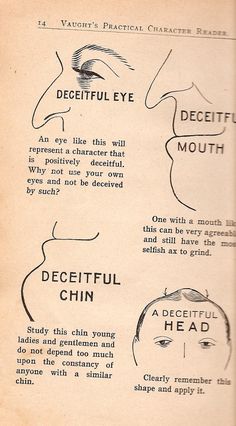
The art of character divination: this type of historical human stereotyping still exists. It is evident in Conservative narratives and their calculated justification rhetoric of draconian welfare policies:

apsimg1481

I don’t make any money from my work. But you can help by making a donation and help me continue to research and write informative, insightful and independent articles, and to provide support to others. The smallest amount is much appreciated – thank you.

DonatenowButton cards

A few thoughts on the implications of the United Nations report

maslow-5
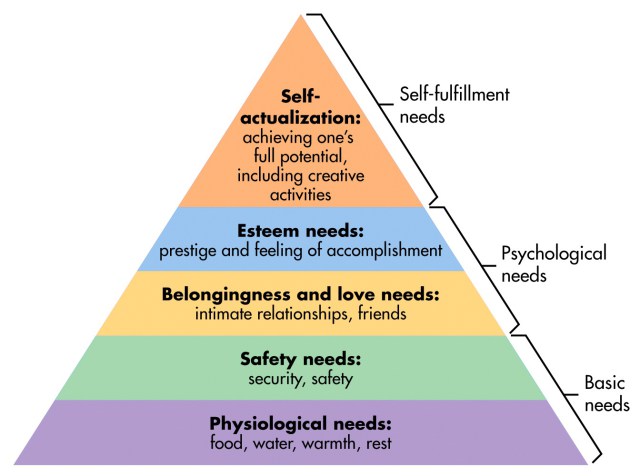
There is an important link between human needs and human rights that the Conservatives have dismally and persistently failed to recognise

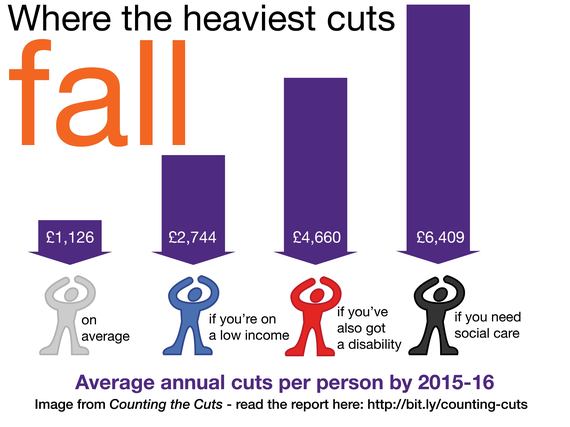
The United Nations (UN) inquiry into the allegations many of us made regarding the systematic abuse of the human rights of disabled people in the UK has exposed the multiple injustices of targeted cuts and the disproportionate burden of austerity heaped on sick and disabled people, their carers and their families, evidencing and detailing the effects of a range of policy measures affecting them that have been introduced since 2010. These include the bedroom tax and cuts to disability benefits, funds to support independence and social care.

The report concludes that the overall effect of what is now an essentially punitive welfare regime, which has been based almost entirely on unevidenced political claims and assumptions, has had an extremely detrimental and regressive effect on the rights of disabled people, to live independently, to meet their basic needs, to seek and stay in work,  and to be able to live an ordinary life as citizens.

The UN report documented multiple violations of disabled people’s rights, including the way that they are politically portrayed as being lazy and a “burden on taxpayers”, the harm to health caused by unfair assessments, the cuts to legal aid and curtailed access to justice, the imposition of the bedroom tax and the ending of the Independent Living Fund.

I wrote a lengthy article about the unsurprising but nonetheless disquieting report findings and recommendations as I read it, here.

Predictably, the government responded to the damning contents of the report by denying a “causal link” between their policies and the evidenced accounts of the consequences being presented to them. Yet the government have never monitored the cumulative impact of their policies and successive cuts on disabled people, and they told the UN rapporteurs that it was “not possible or practical” to carry out an impact assessment on how reforms would affect disabled people. The UN disagreed, and stated that with the evidence and data already available, the government could have done this. 

The UN have called on the government to carry out a cumulative impact assessment. The government have refused to comply with any of the recommendations the UN has made. However, that means they cannot legitimately claim that there is “no causal link demonstrated” regarding the austerity measures and psychological distress, severe hardship, deteriorating health and death, as they have persistently refused to investigate the associations that academics, charities, disabled people’s organisations, individual campaigners and opposition MPs have consistently demonstrated. Denial isn’t empirical evidence or any kind of proof that your claims are valid. Nor does withholding evidence of correlation disprove causality.

It was also noted that the government failed to listen to the concerns of disabled people it had claimed to involve in policy making processes. Disabled people and their representative organisations “were not meaningfully taken into account in the decision-making and had little or no influence on policy decisions.”

The implication is that disabled people have not been democratically included. The government have persisted in treating us as objects of policies, rather than seeing us as democratic subjects and citizens. 

Also of note: “The [individual] impact assessments conducted by the State party prior to the implementation of several measures of its welfare reform expressly foresaw an adverse impact on persons with disabilities.”

The State party has not conducted a comprehensive human rights-based cumulative impact assessment even though reliable sources have indicated it is feasible.”

The UN stated that the Department for Work and Pensions (DWP) failed to properly investigate people’s deaths after their social security payments were stopped. t was noted that the government had made no “attempts at objective, thorough, open and impartial investigation(s)” to look at the alleged 90 deaths a month, despite being aware that there was widespread public concern about this.

Among other concerns, the committee said the UK government had used rhetoric to stigmatise disabled people, negatively influencing public perceptions. The report says that disabled people “have been… negatively portrayed as being dependent or making a living out of benefits; committing fraud as benefit claimants; being lazy and putting a burden on taxpayers, who are paying ‘money for nothing’. Persons with disabilities continue to experience increasing hostility, aggressive behaviour and sometimes attacks to their personal integrity.”

The committee said it found no evidence to support any of these ideas, especially the idea that disabled claimants were committing benefit fraud.

The committee were very critical of the legal aid cuts, which have created a significant barrier for people challenging benefits decisions and holding the government accountable:

“Evidence indicates that legal aid to challenge administrative decisions ending or curtailing their benefits before first-tier tribunals has been restricted. Legal aid for cases before those tribunals has also been curtailed. Similarly, access to review by an independent and impartial tribunal has been restricted by the introduction of mandatory reconsideration procedures before the same administrative entity that has ruled on benefits.”

I was pleased to see the United Nations report highlight a fundamental prejudice that informed the very basis of the “functional capacity approach” of the Work Capability Assessment (WCA), as well as commenting on the major flaws of the assessment process itself. The WCA is based on the assumption that a health condition or disability should not automatically be regarded as a “barrier” to work and that work itself can have health benefits. However these assumptions have been controversial from the outset.

The WCA places focus entirely on how we as individuals experience our illness and impairments. As such, this approach does not permit us to place our experiences of disadvantage in the context of how organisations, institutions, policy-makers and wider society interact with us. Despite the government claiming that they take a social model approach, eligibility for benefits and services is still being determined by assessment of how much our own bodies are affected by illness and impairment rather than the disabling social, cultural and political barriers that we experience.

The report said: Work Capability Assessments do not take into account the “support persons with disabilities need to perform a job or the complex nature of some impairments and conditions.” 

The inquiry also found that welfare assessors displayed a “lack of awareness and limited knowledge of disability rights and specific needs”, and disabled people experienced distress, “anxiety and psychological strain” as a result of this flawed process, and the financial insecurity that it generates.

“The committee observes that measures have caused financial hardship to persons with disabilities resulting in arrears, debts, evictions and cuts to essentials such as housing and food,” the report said.

The Government’s own research, published in June this year, revealed that one of the cornerstones of their austerity campaign – that cutting social security means recipients will be more likely to find work – is fundamentally flawed. 

Researchers found that cutting unemployed peoples’ benefits had the opposite effect to what is being claimed – something that many of us have also previously argued. The study, carried out by Oxford city council and the Department for Work and Pensions, found unemployed people become less likely to get a job when benefits are cut. Instead of looking for work, they are forced to devote their energies to surviving day-to-day. For every £1 in benefits cut per week, a person’s chance of getting a job drops by 2 per cent.

The government can no longer justify its narrative about benefit cuts, claiming that they are  “incentives” to “support” people into work.

Beyond the rhetoric – the hidden agenda

There is a wider agenda driving the welfare “reforms” and it is important to consider the hidden ideological dimension and the language references and signposts to that, as well as the superficial narratives and semantic shifts being deployed as a PR exercise, techniques of neutralisation and gaslighting to obscure political intentions and the consequences of policies.

The UN report effectively exposed the justification narratives presented by the government for their welfare “reforms” as unfounded and unsupported by empirical evidence. This report is just the beginning, it arms us with an invaluable weapon with which to continue our campaigning, and shape future challenges and debate to government policies and social injustice.  

The Conservatives have an ideological commitment to a “small state” and this is fueled by privatisation and an ever-expanding neoliberal competitive “market place.” The market place, private profit opportunities and neoliberal outcomes have been conflated with citizen’s interests and needs.

The welfare “reforms” have presented the opportunity to promote and deliver private income protection provision via profit making companies operating in free markets. Insurance companies and right-wing think tanks have been attempting to steer governments in this direction for many years. 

For example, Matthew Oakley, a senior researcher at the Social Market Foundation, and government advisor, recently published a report entitled Closing the gap: creating a framework for tackling the disability employment gap in the UK, in which he suggests considering a “role that a form of privately run social insurance could play in both increasing benefit generosity and improving the support that individuals get to manage their conditions and move back to work.

Oakley also proposes abolishing the ESA Support Group. To meet extra living costs because of disability, Oakley says that existing spending on PIP and the Support Group element of ESA should be brought together to finance a new extra costs benefit. Eligibility for this benefit should be determined on the basis of need, with an assessment replacing the WCA and PIP assessment. The Conservative definition of “the basis of need” seems to be an ever-shrinking category.

May’s new director of policy, John Godfrey, is a keen advocate of what in his last job, at financial services giant Legal and General, he called “Beveridge 2.0”: using technology to introduce new forms of “social insurance”.

Godfrey told a campaigning group, the Financial Inclusion Commission, last year that the systems used to deliver “auto-enrolment”, the scheme that ensures all low-income workers have a pension, could also be used to help the public insure themselves against “unexpected events”.

“There is a clear lesson from auto-enrolment that if you have a plumbing network or an infrastructure that works, that auto-enrolment infrastructure could be used for other things which would encourage financial inclusion: things like, for example, life cover, income protection and effective and very genuine personal contributory benefits for things like unemployment and sickness,” he said. “They can be delivered at good value if there is mass participation through either soft compulsion or good behavioural economics.”

Note the context shift in use of the term “inclusion”, which was originally deemed a democratic right, now it’s being discussed narrowly in terms of individual responsibility.

A report published by the Adam Smith Institute as far back as 1995 – The Fortune Account – also sets out proposals to replace “state welfare” with an insurance system “operated by financial institutions within the private sector”.

Mo Stewart has spent eight years researching the influence of the US insurance giant Unum over successive UK governments, and how it led to the introduction of the “totally bogus” work capability assessment (WCA), which she says was designed to make it harder for sick and disabled people to claim out-of-work disability benefits.Stewart’s book, Cash Not Care: The Planned Demolition Of The UK Welfare State, was published in September. She states that the assessment was modeled on methods used by the controversial company Unum to deny protection to sick and disabled people in the US who had taken out income protection policies.

She goes on to say that the WCA was “designed to remove as many as possible from access to [employment and support allowance]on route to the demolition of the welfare state”, with out-of-work disability benefits to be replaced by insurance policies provided by private companies like Unum.

Stewart warns us that the UK is now close to adopting a US-style model.  

The implications of the inquiry findings for Conservative welfare policies 

The government has announced further welfare measures which will affect disabled people including a four year freeze for most working-age benefits, reductions in the Benefit Cap, changes to tax credits and to Universal Credit, and abolishing the “Work-Related Activity Component” for new ESA claims from 2017.

As noted in the UN report: “The State party continues its policy of reducing social benefits of persons with disabilities as reflected in the Welfare Reform and Work Act 2016.” 

Article 28 of the Convention on the rights of persons with disabilities (CRPD) says: Adequate standard of living and social protection – This article affirms the rights of persons with disabilities to an adequate standard of living for themselves and their family, and to social protection without discrimination on the basis of disability. This right includes access to assistance from the state with disability-related expenses for persons with disabilities and their families.

The report reiterated something that many of us have noted and discussed in detail previously: that there is no evidence of a causal relationship between a reduction in social security and an increase in employment amongst disabled and sick people. Nor does welfare “dependency” “disincentivise” people seeking employment more generally. It was pointed out in UN report that these views are not evidenced. The two assumptions are embedded in justifications of Conservative welfare policies, and are prejudices that have been around since the Thatcher administration.

Bearing in mind these are key assumptions underpinning current policies and the proposals set out in the recent work, health and disability green paper –  for example, the recent decision to reduce the money paid to people who have been assessed as being unfit to work but able to undertake work related activity (those people in the Employment and Support Allowance work related activity group (WRAG)) is based on the same assumption- the Department for Work and Pensions have claimed  – that it will “remove the financial incentives that would otherwise discourage claimants from taking steps back to work”.

Particularly important in the current context and given the government’s recent work, health and disability green paper, the UN report says that: “Given the barriers that still prevent the full participation of persons with disabilities in the labour market and mean higher unemployment rates for them, income-maintenance social security schemes are particularly important for persons with disabilities. Such schemes allow them to maintain their autonomy and freedom of control and choice of their living arrangements and day-to-day activities. Without an adequate level of social protection, persons with disabilities run the risk of being isolated, segregated from the community and/or institutionalized. 

States parties should find an adequate balance between providing an adequate level of income security for persons with disabilities through social security schemes and supporting their labour inclusion. The two sets of measures should be seen as complementary rather than contradictory.

Measures aimed at facilitating the inclusion in the labour market of beneficiaries of social security should include transitional arrangements to ensure income protection while they reach a certain threshold and sustainability in their wages. They should become eligible again without delay if they lose their jobs.” 

Although many of us have been discussing these issues for a few years, the inquiry has consolidated a lot of valuable evidence and provided a concise rebuttal of government justification narratives for cuts in support for disabled people, which we really needed to be presented to the government formally, from an independent, official and international witness.

Though the government have tended to dismiss much evidence to date of the harm that their policies are causing, such as that which has been presented through case studies by shadow ministers, as “anecdotal”, it is rather more difficult to dismiss and ignore the substantial evidence presented as a result of rigorous international scrutiny.

The government response was founded on denials, more misdirectional rhetoric and techniques of neutralisation, defensive arrogance, authoritarian scorn and contrived outrage, rather than being about stepping up to democratic accountability, reasoned discussion and rationality. No sign of civilised conscience and decent concern regarding the impact of the prejudice and discrimination that is being intentionally and systematically embedded in Conservative policies, aimed at disabled people, at all. 

The government’s response to the UN report bears little resemblance to the lived experiences of disabled people, despite claims to the contrary. The government has justified systematic cuts to disabled people’s social security by claiming such cuts “incentivise” people to find work. The cuts are a form of punishment (apparently for our own “good”) designed to bring about “behaviour change” and this approach is founded on the wrongly perceived attitudes of disabled people, who this government consistently describes as being “parked on benefits” with the “misperception that they can’t work”. 

This does nothing at all to address the barriers disabled people face in finding and staying in work, nor does it address the acknowledged prejudiced attitudes of employers and Conservative ministers. It’s not long ago that Conservative welfare minister David Freud expressed the view that disabled people should work for less than the minimum wage. He wasn’t the only one, either. Philip Davies expressed the same view, claiming that disabled people “are the most disadvantaged by the national minimum wage,” so they should be “permitted” to work for less in order to “compete” in the labor market. Davies described criticism of his remarks that disabled people could work for less than minimum wage as “leftwing hysteria”.

It seems that Conservatives believe that the only way of “helping” disabled people in any way is by simply taking money from them. 

In their response to the UN report, the government say: “The United Kingdom is proud of its record in supporting disabled people to lead more independent lives and participate more fully in society. More than 20 years ago the UK legislated to protect disabled people’s rights. It now spends around £50 bn a year on benefits to support disabled people and people with health conditions, which is over £6 bn more than in 2010. That is around 5% of GDP, or over 6% of government spending. The UK spends more on disabled people and people with health conditions than the OECD average, and countries such as Germany, France and the USA.”

That’s definitely Conservatives being… conservative with the truth again.

The Institute of Fiscal Studies (IFS) report on spending on benefits for disabled people says the actual spend is £36,063 bn but this is partly in benefits that are not counted as working age disability benefits: War Pensions, Attendance Allowance for over 65s, Statutory Sick pay, Carer’s Allowance, Industrial Injuries Benefits and the ILF which the government has closed)

The total of those benefits not paid to working age disabled people is £7,908bn

That makes the actual spend on all working age benefits for disabled people £28,155 billion

The IFS report says: “The spending on DLA/PIP is only half what it was in 1995-96. Spending across Great Britain on disability benefits in 2014–15 was £13.5 billion. At 0.8% of national income this is half the level of disability benefit spending when it was at its peak in 1995–96.

The overall number of individuals receiving disability benefits has fallen slightly since the mid-1990s. But this is in the presence of underlying demographic change that would have tended to push UP the numbers receiving considerably – both overall population growth and the baby boomer generation reaching older working ages.”

It’s not clear if the spending figures include the massive costs of private companies that are contracted by the state, ironically, to cut welfare spending. 

The National Audit Office (NAO) report earlier this year scrutinised public spending for parliament, and is independent of government. The report indicates how public services are being appropriated for purely private benefit.

The audit report in January concluded that the Department for Work and Pension’s spending on contracts for disability benefit assessments is expected to double in 2016/17 compared with 2014/15. The government’s flagship welfare-cut scheme will be actually spending more money on the assessments conducted by private companies than it is saving in reductions to the benefits bill.

From the report:

£1.6 billion
Estimated cost of contracted-out health and disability assessments over three years, 2015 to 2018

£0.4 billion
Latest expected reduction in annual disability benefit spending.

This summary reflects staggering economic incompetence, a flagrant, politically motivated waste of tax payer’s money and even worse, the higher spending has not created a competent or ethical assessment framework, nor is it improving the lives of sick and disabled people. Private companies like Maximus are paid millions from our welfare budget, yet they are certainly not “helping the government” to serve even the most basic needs of sick and disabled people.

I will be challenging the government’s response to the UN report fully in due course. It would be good to see some collaborative effort from disabled campaigners and activists in addressing the government as comprehensively as possible. If anyone is interest in working together on this, just contact me here via the comment section.

The UN committee will meet to discuss the government’s comments and determine a response in Geneva, in March 2017. 

Meanwhile it’s crucial that we use the body of evidence collated by the UN and the conclusions drawn in the report effectively. For example, our responses to the consultation on the work, health and disability green paper must address the underpinning propositions and delve beneath the superficial rhetoric and glittering generalities, rather than permitting the DWP’s weighted and somewhat leading questions to shape the outcome of the consultation.

We must use the UN findings constructively to continue to challenge existing policies, and any which arise in the future to violate the human rights of disabled persons. 

We need to continue to coherently and collectively challenge the government’s assumptions on which their proposals for work, health and disability policy are based, none of which are not supported by a shred of solid empirical evidence.


I don’t make any money from my work. But you can help by making a donation to enable me continue to research and write informative, insightful and independent articles, and to continue to provide support to others. The smallest amount is much appreciated – thank you.

DonatenowButton cards

UN’s highly critical report confirms UK government has systematically violated the human rights of disabled people

2014-02-17-BurdenoftheCuts-thumb

The United Nations (UN) have published a report following investigation into the allegations of “grave and systematic” abuses of the human rights of disabled people in the UK. Campaigners and disabled people’s groups contacted the UN, making formal complaint about violations of disabled people’s rights and raising serious concerns about the consequences of the welfare reforms for disabled people, in 2012, which triggered the inquiry under article 6 of the Optional Protocol to the Convention on the Rights of Persons with Disabilities (CRPD). Many of us also made further submissions, supporting the inquiry with evidence. The report has been welcomed by disability campaigners, with many saying the findings come as no surprise.

The report said “The Committee is impressed by the amount of data collected by stakeholders who contributed to the inquiry.”

The highly critical report was published in Geneva yesterday afternoon. It concludes that the rights of disabled people to live independently, to work, and achieve an adequate standard of living have been detrimentally affected by austerity measures. The range of measures aimed at reducing public spending since 2010, including controversial changes such as the bedroom tax, and cuts to disability benefits and social care budgets have disproportionately and adversely affected disabled people.

The UN report of the findings of contraventions by the UK government to the rights of disabled people, which said much of what many of us have been writing and campaigning about for the past four years –  since the controversial 2012 Welfare “Reform” Act and the targeted austerity programme – said nothing that many of us didn’t already know. But reading it personally was a surprisingly powerful emotional experience, despite the measured and emotionally-neutral language used throughout the report.

Whilst I am relieved most of our concerns, research, analysis and experiences were confirmed on one level, and that the government were exposed for their withholding of evidence, and of sometimes manufacturing it; of excluding disabled people from any consultation regarding the cuts to their support, I am nonetheless still shocked that we live in a country  with a society that has permitted a government to treat sick and disabled people with such contempt, excluding us from full democratic citizenship and denying us basic human rights.

Members of the UN committee of 18 independent experts visited Britain in October 2015 and the report was based on more than 200 interviews and some 3,000 pages of documentary evidence.

The 22-page report condemned the radical and largely unmonitored welfare cuts and benefit caps, and social care cuts introduced as a major part of the Conservative’s austerity programme – the government claimed these cuts would make the welfare system “fairer and reduce benefit fraud.” The UN found no evidence of benefit fraud or fairness.

As anticipated, the UK government has rejected the UN report, saying in a formal response that its findings presented an “inaccurate picture” of life for disabled people in the UK:  “While the government continues to improve and build on the support available to disabled people, it stands by and is proud of its record.”

The government went on to say: “As a strong parliamentary democracy, where the voices and opinions of disabled people are represented and listened to, the UK is a place where disabled people’s rights are respected, promoted and upheld.”

As a person who is disabled because of illness, and someone who has supported many other disabled people going through assessments, mandatory reviews and tribunals, I can say that our collective experiences indicate that we are NOT represented, nor have we been listened to. Our rights have clearly not been respected, promoted and upheld. The government have treated disabled people with contempt, we have not been included in the economy, we have experienced political and social prejudice and discrimination, we have not been extended equal opportunities, nor have we been permitted full citizenship and recognition of our human rights.

The government feel it’s acceptable to lie about the fact that they have failed to recognise our human rights, outrageously claiming that disabled people are “supported.” I have never heard of “support” that entails the systematic removal of people’s lifeline income, which was originally calculated to meet only basic needs.

The response is telling. The government did not produce evidence to substantiate their claims and denials, and there wasn’t a shred of concern for disabled people or remorse expressed about the distress and harm that the Conservative’s targeted austerity cuts have caused; there was just a refusal to be accountable and transparent, more denial and more gaslighting.

In their lengthy rebuttal, the Conservatives claimed that the UN inquiry was “too narrow in scope” and that the UK government did not plan to follow-up on the recommendations any further.

The inquiry findings

The conclusion of UN inquiry: “The Committee considers that there is reliable evidence that the threshold of grave or systematic violations of the rights of persons with disabilities has been met in the State party.

The facts submitted by the source were disputed by the State party. The Committee engaged in a verification exercise in which the facts that appeared to be controversial were cross-checked with data collected from a variety of sources, including parliamentary inquiries, reports of the independent monitoring body of the Convention, official statistics, reports and data originating from other government departments or units, entity governments, research institutes, service providers, academic centres, independent experts, former government officers, grass-roots non-governmental organizations, organizations of persons with disabilities and individuals.

In some cases, some State party’s statements were not supported by evidence collected by the investigation. In others, the State party indicated that no data were available. The findings below are based on a comprehensive analysis of data provided by various sources.

The Committee observes that various pieces of legislation related to recent welfare policies do not fully enforce the international human rights framework related to social protection and independent living. In connection thereto, it was observed that in the field of social protection, persons with disabilities have not been properly considered as right-holders and entitled to benefits with regard to their right to social protection.

Similarly, while the Care Act 2014 reflects the principles of well-being of persons with disabilities and underlines the objective of personalization of support packages, it fails to properly acknowledge the elements of autonomy and control and choice, which are intrinsic to the right to independent living as referred to in article 19 of the Convention.”

That conclusion is based on the following findings of systematic violations of the convention:

(a) The State party has implemented a policy aimed at reforming its welfare system and the reforms have been justified in the context of austerity measures to achieve fiscal and budgetary policy consolidation;

(b) The assumptions made under the policy include that: taxpayers need to be treated with fairness; large numbers of persons with disabilities have been relying and dependent on social benefits; persons are better off in work than on benefits; the dependency of persons with disabilities on benefits is in itself a disincentive to move them into employment; the number of persons with disabilities relying on social benefits were to be decreased; and tightening sanctions and conditionality of social benefits is a legitimate tool for incentivizing their moving into employment;

(c) The impact assessments conducted by the State party prior to the implementation of several measures of its welfare reform expressly foresaw an adverse impact on persons with disabilities;

(d) Several measures have disproportionally and adversely affected the rights of persons with disabilities;

(e) Measures resulting in reduction of support provided to meet the extra cost of disability, denial of reasonable accommodation in assessment procedures and realization of the right to employment have had a discriminatory effect on persons with disabilities;

(f) The core elements of the rights to independent living and being included in the community, an adequate standard of living and social protection and their right to employment have been affected: persons with disabilities affected by policy changes have had their freedom of choice and control over their daily activities restricted, the extra cost of disability has been set aside and income protection has been curtailed as a result of benefit cuts, while the expected policy goal of achieving decent and stable employment is far from being attained;

(g) There is evidence that a large number of persons with disabilities have been affected (e.g. 13,900 persons with disabilities have lost their Motability schemes and therefore their adapted cars, upon implementation of Personal Independence Payment up to February 2016; 492,180 had been placed in the Employment and Support Allowance work-related activity group by end of 2015; 41,792 Employment and Support Allowance work-related activity group sanctions were handed out up to March 2014);

(h) Evidence gathered nationally by the Parliament, the independent monitoring framework, universities and research institutes and centres and independent experts, has documented adverse and disproportionate effects of measures on persons with disabilities;

(i) The State party has not conducted a comprehensive human rights-based cumulative impact assessment even though reliable sources have indicated it is feasible;

(j) The State party continues its policy of reducing social benefits of persons with disabilities as reflected in the Welfare Reform and Work Act 2016.

Comments from the report

“Evidence indicates that legal aid to challenge administrative decisions ending or curtailing their benefits before first-tier tribunals has been restricted. Legal aid for cases before those tribunals has also been curtailed. Similarly, access to review by an independent and impartial tribunal has been restricted by the introduction of mandatory reconsideration procedures before the same administrative entity that has ruled on benefits.”

Further observation: “The availability of support [for disabled people] is established on the basis of what is considered to be an affordable service in the market, rather than on the specific needs of the person concerned.”  Austerity measures were introduced and targeted disproportionately at disabled people at the same time that UK millionaires were awarded a tax cut of £107, 000 each per year. What is considered “an affordable service” is entirely founded on ideologically driven political decision making and has no basis on economic necessity.

Critical comment about Conservative propaganda and scapegoating: “The roll out of those policies included the issuing of statements by high-ranking officers that the reform was aimed at making the welfare system fairer to taxpayers and more balanced and transparent and reducing benefit fraud. Persons with disabilities have been regularly portrayed negatively as being dependent or making a living out of benefits, committing fraud as benefit claimants, being lazy and putting a burden on taxpayers, who are paying “money for nothing”.

Although the State party produced evidence of formal efforts and public awareness campaigns to improve the image of persons with disabilities, the inquiry collected evidence that persons with disabilities continue to experience increasing hostility, aggressive behaviour and sometimes attacks to their personal integrity. The inquiry also found no substantiation of the alleged benefit fraud by persons with disabilities.”

Importantly: “Public sector equality duty obliges State authorities to carry out impact assessments when they plan to introduce measures, including legislative measures, to ensure that groups with protected characteristics, among them persons with disabilities, are properly consulted and any adverse impact on them is properly justified.

The State party submitted evidence that it has complied with domestic legal duties for all the intended changes to the welfare system. The inquiry collected evidence that a major piece of legislation of the welfare reform, the Welfare Reform Act 2012, was not thoroughly compliant with those requirements. Similarly, a court of law found that the decision to close the Independent Living Fund was not in compliance with domestic equality duty, which compelled the authorities of the State party to carry out another equality assessment.

The inquiry also collected evidence that the views of persons with disabilities and their representative organizations who had participated in consultations launched by the State party, were not meaningfully taken into account in the decision-making and had little or no influence on policy decisions. “

Particularly important in the current context and government work, health and disability green paper, the UN says that: “Given the barriers that still prevent the full participation of persons with disabilities in the labour market and mean higher unemployment rates for them, income-maintenance social security schemes are particularly important for persons with disabilities. Such schemes allow them to maintain their autonomy and freedom of control and choice of their living arrangements and day-to-day activities. Without an adequate level of social protection, persons with disabilities run the risk of being isolated, segregated from the community and/or institutionalized. 

States parties should find an adequate balance between providing an adequate level of income security for persons with disabilities through social security schemes and supporting their labour inclusion. The two sets of measures should be seen as complementary rather than contradictory. Measures aimed at facilitating the inclusion in the labour market of beneficiaries of social security should include transitional arrangements to ensure income protection while they reach a certain threshold and sustainability in their wages. They should become eligible again without delay if they lose their jobs.”

One of the recommendations is that the state party: “Take appropriate measures to combat any negative and discriminatory stereotypes or prejudice against persons with disabilities in public and the media, including that dependency on benefits is in itself a disincentive of employment; implement broad mass media campaigns, in consultation with organizations representing persons with disabilities, particularly those affected by the welfare reform, to promote them as full rights holders, in accordance with the Convention; and adopt measures to address complaints of harassment and hate crime by persons with disabilities, promptly investigate those allegations, hold the perpetrators accountable and provide fair and appropriate compensation to victims.”

“[…] including that dependency on benefits is in itself a disincentive of employment.”  This also has implications for the recent green paper, which discusses at length “incentives” for addressing disabled people in the ESA support group being “parked” on benefits and “mistakenly perceiving” that they are too ill to work. The findings of the inquiry expose most of the Conservative’s underpinning assumptions in the green paper, and in all their “interventions” aimed at disabled people, as utter tosh. (I will be including quotes from the UN report in my consultation responses to the work, health and disability green paper.) 

Most of the cuts to social security have been justified by that particular myth, and so has the increased, harsh welfare conditionality, the extremely punitive sanctions and exploitative workfare schemes, the endless pseudopsychological state “therapy” aimed at “behaviour change”, attitude modification, nudging and coercion, condescending character assassinations, and of course it’s worth considering the lucrative contracts handed to profiteering private providers ironically costing us billions, whilst being contracted to take money from poor people to save the “tax payer” money. 

Further comment:“Evidence indicates several flaws in the processes related to the Employment and Support Allowance. In particular, the Committee notes that, despite several adjustments made to the Work Capability Assessment, the assessment has continued to be focused on a functional evaluation of skills and capabilities, and puts aside personal circumstances and needs, and barriers faced by persons with disabilities to return to employment, particularly those of persons with intellectual and/or psychosocial disabilities. In the initial period covered by the present report, evidence indicates a significant percentage of assessments were overturned by tribunals.”

“The situation of persons with disabilities deemed “fit to work” is not monitored as such. Those who have re-entered the system by claiming the Job Seeker’s Allowance to support them until they find work face stringent levels of conditions and sanctions, which do not take into account the specific barriers they face. The Committee was informed that, in some cases, sanctions had led to financial hardship for persons with disabilities, and particularly persons with intellectual and/or psychosocial disabilities. 

The State party initially stated that it did not monitor deaths that occurred after assessments. Evidence gathered during the inquiry indicated that, in 2012 and 2015, such information was released by the Department of Work and Pension following freedom of information requests. Additionally, information originated from official sources indicated that 33 deaths of claimants who died after being assessed were being examined. The State party claims that there is no causal link. The Committee is not aware of any attempts at objective, thorough, open and impartial investigation regarding those deaths by an independent body.”

Recommendations

The Committee recommends that the State party:

      (a)          Conduct a cumulative impact assessment of the measures adopted since 2010, referred to in the present report, on the rights to independent living and to be included in the community, social protection and employment of persons with disabilities. The State party should ensure that such assessment is rights-based and meaningfully involves persons with disabilities and their representative organizations;

      (b)          Ensure that any intended measure of the welfare reform is rights-based, upholds the human rights model of disability and does not disproportionately and/or adversely affect the rights of persons with disabilities to independent living, an adequate standard of living and employment. To prevent adverse consequences, the States party should carry out human rights-based cumulative impact assessments of the whole range of intended measures that would have an impact on the rights of persons with disabilities;

      (c)          Ensure that: any intended legislation and/or policy measure respects the core elements of the rights analysed in the present report; persons with disabilities retain their autonomy, choice and control over their place of residence and with whom they live; they receive appropriate and individualized support, including through personal assistance, and have access to community-based services on an equal basis with others; they have access to security social schemes that ensure income protection, including in relation to the extra cost of disability, that is compatible with an adequate standard of living and ensure their full inclusion and participation in society; and they have access and are supported in gaining employment in the open labour market on an equal basis with others;

      (d)          Ensure that public budgets take into account the rights of persons with disabilities, that sufficient budget allocations are made available to cover extra costs associated with living with a disability and that appropriate mitigation measures, with appropriate budget allocations, are in place for persons with disabilities affected by austerity measures;

      (e)          Introduce all adjustments necessary to make all information, communications, administrative and legal procedures in relation to social security entitlements, independent living schemes and employment/unemployment-related support services fully accessible to all persons with disabilities;

      (f)           Ensure access to justice, by providing appropriate legal advice and support, including through reasonable and procedural accommodation for persons with disabilities seeking redress and reparation for the alleged violation of their rights, as covered in the present report;

      (g)          Actively consult and engage with persons with disabilities through their representative organizations and give due consideration to their views in the design, implementation, monitoring and evaluation of any legislation, policy or programme action related to the rights addressed in the present report;

      (h)          Take appropriate measures to combat any negative and discriminatory stereotypes or prejudice against persons with disabilities in public and the media, including that dependency on benefits is in itself a disincentive of employment; implement broad mass media campaigns, in consultation with organizations representing persons with disabilities, particularly those affected by the welfare reform, to promote them as full rights holders, in accordance with the Convention; and adopt measures to address complaints of harassment and hate crime by persons with disabilities, promptly investigate those allegations, hold the perpetrators accountable and provide fair and appropriate compensation to victims;

      (i)           Ensure that, in the implementation of legislation, policies and programmes, special attention is paid to persons with disabilities living with a low income or in poverty and persons with disabilities at higher risk of exclusion, such as persons with intellectual, psychosocial or multiple disabilities and women, children and older persons with disabilities. Those measures should be put in place within contributive and non-contributive regimes;

      (j)           Set up a mechanism and a system of human rights-based indicators to permanently monitor the impact of the different policies and programmes relating to the access and enjoyment by persons with disabilities of the right to social protection and an adequate standard of living, the right to live independently and be included in the community and the right to work, in close consultation with persons with disabilities and their representative organizations in all regions and countries that constitute the State party;

      (k)          Respond to the present report within the time limit prescribed under the Optional Protocol, widely disseminate the Committee’s findings and recommendations and provide appropriate follow-up to the recommendations of the present report, including during the consideration of the State party’s initial report before the Committee.

164204381

Inquiry reports

1. Report of the Inquiry Concerning the United Kingdom of Great Britain and Northern Ireland carried out by the Committee under article 6 of the Optional Protocol to the Convention

2. Observations of the Government of the United Kingdom of Great Britain and Northern Ireland on the report of the Inquiry carried out by the Committee under article 6 of the Optional Protocol to the Convention


I don’t make any money from my work. But you can help by making a donation to enable me continue to research and write informative, insightful and independent articles, and to continue to provide support to others. The smallest amount is much appreciated – thank you.

DonatenowButton cards

Report on the UK Government’s failing human rights record submitted to UN

humanrights-01.jpg

coalition of 175 civil society organisations has raised grave concern about the impact of the government’s welfare “reforms” and living standards in the UK, hate crimes, mental health, deteriorating prison conditions, stop and search powers and the Conservative’s plans to repeal the Human Rights Act, among other issues. The organisations include Age UK, Just Fair, Inclusion (London and Scotland), the TUC, Unicef UK, Rights Watch, The Law Centres Network, Mind, the Mental Health Foundation and Stonewall. 

The coalition contributed to a report which calls on the United Nations (UN) to recognise the evidence from the wide range of civil society groups and to ensure the UK Government, and the devolved administrations, are accountable for taking appropriate action and measures to redress many raised human rights concerns. The report authors caution that a high proportion of the 132 recommendations from the last United Nations hearings in 2012 have not been implemented.

The British Institute of Human Rights (BIHR) announced the launch of the Joint Civil Society Report, on the 22 September. It was submitted to the United Nations in Geneva last Thursday as part of the Universal Periodic Review of the UK. 

The report was produced as part of Human Rights Check UK project, which has been assessing human rights changes since the UK was last reviewed by the UN in 2012. BIHR have engaged with over 175 organisations across England, Scotland and Wales through both a call for evidence and by hosting a series of events across Great Britain. These groups range from local community advocacy groups to large national organisations, working on issues such as health, age related issues, children’s issues, justice, education, welfare and many others.

Many of the issues and concerns raised in this report of 84 pages have been under-reported in the mainstream media.

The human rights framework in the UK is being eroded

A key theme throughout the evidence received are serious concerns regarding the proposed repeal of the Human Rights Act. Civil society organisations were worried that a new Bill of Rights would offer weaker human rights protections, particularly impacting the most vulnerable members of society.

The report says repeal of the act would be a “denigration of international human rights law.” It also says in the submission: “The UK’s retrogressive debates are already negatively influencing other countries. There is increasing concern that the UK’s political rhetoric will, if not checked, threaten the coherence and credibility of the post-second world war human rights settlement.”

The report also says: The rhetoric in national media and among senior officials often repeatedly misrepresents and misreports judicial cases, “blaming” human rights laws for situations/decisions which are about other laws or are only partially about human rights (often centring on groups considered “unpopular” or “undeserving”). When the Human Rights Act has positively supported people, this is rarely discussed.

It is vital that the UK Government guarantees it will build upon the Human Rights Act, rather than amending or repealing it via a new bill of rights. Refusal to give such a guarantee should be recognised as an indication that there is a significant risk of the human rights framework in the UK being eroded.”

These are all concerns that I have raised myself over the last two years, along with many other campaigners.

Other key issues raised were related to growing poverty and inequality across the UK as a result of welfare “reforms” and austerity measures. The report reflects the damaging impact that Conservative policies are having on a number of human rights issues, including access to justice, children and women’s rights and the right to an adequate standard of living. These are problems and themes which many of us have been campaigning and writing about for the last four or five years.

Social security no longer alleviates poverty and homelessness

Many concerns were raised about the impact of the welfare cuts, growing poverty and an inadequate standard of living in the UK. The report said that recent policy and legislative changes have seen a regression in standards of living and the welfare system’s ability to tackle poverty, homelessness and unemployment. Many organisations reported that this is having a negative impact on marginalised social groups, among which are some of our most vulnerable citizens. 

For example, the abolition of disability premiums may result in 100,000 disabled children losing up to £28 a week. Changes to personal allowances will leave single parents with severe disability needs with £73 less a week. There was recognition of the discriminatory impact of the bedroom tax on disabled adults and children, carers, domestic violence victims, separated parents and others.

The benefit cap disproportionately impacts on single parents, children and BME groups. The Supreme Court ruled that the cap violates the United Nations Convention on the Rights of the Child  (UNCRC) but did not overturn the policy. The UK Government has further reduced the cap to £20,000 per annum for households outside of London and £23,000 for those within Greater London through the Welfare Reform Work Act 2016, affecting 92,000 more households.

The report also said that benefit sanctions have significantly increased and that evidence strongly suggests links to rising destitution and food bank use. Many people have received sanctions in “error”. The authors pointed out that there is no empirical evidence that sanctioning is in any way effective in “getting people back to work”. 

It was also noted that the government claim to have introduced a National Living Wage in 2016, to increase minimum wage to over £9 per hour by 2020. This does not apply to those under 25. Rates are not set in accordance with recommendations from the Living Wage Foundation.

Further concerns raised are freezes to working-age benefits for four years from April 2017, the removal of the Child Tax Credit entitlement for third or subsequent children born after 6 April,  repeal of the Child Poverty Act 2010. Although the Government will publish child poverty data, there are no longer statutory targets or a duty to report.

The report authors also acknowledged that there been an unprecedented rise in the use of food banks, and several submissions directly related this to welfare cuts and austerity measures. One million people were provided with 3 days of emergency food in 2015/16. 

It was noted that the Parliamentary committee recently (2015) assessed the impact of the Equality Act 2010 on disability discrimination, concluding it was unsatisfactory. Particular issues raised in evidence submissions include: the significant and disproportionate impact of welfare cuts on disabled people, e.g. Work Capability Assessments have seen many disabled people incorrectly assessed as fit for work; concerns about the portrayal of disabled people as “benefit scroungers”, perpetuated by some sections of the media and political leaders, and new tribunal fees being a disincentive to bringing discrimination cases forward. 

There was also widespread concern expressed that cuts to legal aid have impacted on the most disadvantaged groups in society, deterring potentially successful legal cases and challenges, and removing sources of advice and support. There is a disproportionate impact on women, children, BME communities, disabled people and people living in poverty.

Among the recommendations made:-

The UK government should:

  •  Monitor and review the impact of welfare reforms on living standards, increased poverty and food insecurity, and work to break the link between welfare support and poverty
  •  Pause and review its sanctioning policy, ensuring no person is pushed in to destitution
  •  Abolish the spare room subsidy since it causes destitution and has not served its purpose
  •  Reconsider changes to child poverty policy and ensure no child is living  in poverty
  •  Create a living wage that accurately reflects the cost of living within the UK

Among other human rights failings, the report highlights the fact that race is the most commonly recorded motivation (82%) for hate crimes in England and Wales and that the Brexit vote coincided with a surge in such offences. It links reports on the government’s policy of creating a “hostile environment” for migrants with discrimination against those from minority communities. It’s true that political and media rhetoric about migration is loaded with dehumanising metaphors.

Mental health service funding cuts and government policies are having negative impacts on vulnerable people

Evidence submitted highlighted a number of serious issues, including:

  • The underfunding of mental health services, resulting in just 25% of people receiving help.
  • In England, funding for mental health trusts has dropped in real terms by 8.25% since 2010.
  • Shortfalls in services have resulted in the police responding to people in crisis. In 2014-15, in England and Wales, the police picked up 23,128 people in mental health crisis and 4,537 were taken to a police cell because there was no other safe place available (although this is down from the previous year).
  •  Patients being placed in units far away from their home and support networks as a result of closing in-patient units. In 2015-16, 5,411 patients were sent ‘out of area’.
  •  The disparity across the UK in accessing talking therapies. In 2014-15, 33% of people in England waited longer than 28 days to start treatment following referral and 7% longer than 90 days. In Wales, data shows 57% of people waited over three months for an assessment and their first session.
  •  Concern that legal protections for people with mental capacity issues are not sufficient, including that the Mental Capacity Act and the Deprivation of Liberty Safeguards in England and Wales are no longer fit for purpose (the Law Commission is reviewing both) and that the Adults with Incapacity Act in Scotland is not compatible with human rights standards.

Trade Unions and charities have been systematically disempowered

Serious concern was expressed that recent legislation has introduced unjustified, disproportionate and discriminatory restrictions on trade unions activities. The Trade Union Act 2016 sets statutory thresholds and substantial new legal hurdles which unions must overcome to take lawful industrial action in defence of their jobs, livelihoods, wages and working conditions.

The “Lobbying Act” has created additional layers of regulation for charities and Trade Unions, already subject to rules on political activities. The Lobbying Act’s chilling effect has been reported across jurisdictions. Research found 63% of charity respondents said the Act will make it harder to achieve their charitable objectives.

The recent Hodgson Review concluded that the Act did not strike the right balance. The UK Government has yet to respond to the report’s recommendations.  CSOs are also critical of UK Government proposals to introduce an “anti-advocacy clause”, restricting organisations that receive public money from lobbying Government.

There are concerns about flawed research underpinning the proposal and its impact on civil society organisations (CSOs) being able to amplify community voices with the State. This has implications for democracy.

The Trade Union Act 2016 sets statutory thresholds and substantial new legal hurdles which unions must overcome to take lawful industrial action in defence of their jobs, livelihoods and working conditions.

There is widespread concern about the impact of the UK referendum to leave the European Union on human rights. Whilst the Human Rights Act is separate from the EU, a number of other rights-based standards emanate from the EU, including equality and employment law standards. 

Stephen Bowen, the chief executive of BIHR, said: “The UK government needs to listen, not just to the United Nations but to the voices of the huge range of organisations closer to home that have shared their serious concern. They are troubled the government is taking the UK towards further isolationism and disregarding the United Nations, worsening the situation with welfare and legal aid cuts, and wanting to scrap the Human Rights Act, weakening its accountability for our rights at home as well as internationally.”

The report was launched on 22 September at Westminster, with contributions from Sir Nicolas Bratza (Chair of BIHR, and former president of the European Court of Human Rights), David Isaac CBE (Chair of the Equality and Human Rights Commission), the Rt Hon. Harriet Harman QC MP (Chair of the Joint Committee of Human Rights) and BIHR deputy director, Sanchita Hosali.

Harriet Harman, welcomed the report for its breadth and depth, and said she would be raising the issues explained with the Justice Secretary, Liz Truss, when she appears at the JCHR next month. Harriet spoke about how the UK level government debates on human rights were leading to a corrosion of rights domestically, and undermining the core principle of universalism. 

She spoke of how the UK needs to recognise and celebrate, not disparage, international accountability, whether that be at the UN or the European Court of Human Rights. Yet the contrast between what the UK Government says domestically versus what is said at the UN can be like “hearing two different administrations.”

Director, Stephen Bowen, conveyed whole-hearted thanks to the 175+ organisations that have helped shape BIHR’s report, to root it in the very real and pressing issues many people in the UK face in ensuring their universal human rights are respected, protected and fulfilled. The breadth and depth of organisations involved is a testament to how significant human rights are in the UK.


images


I don’t make any money from my work. But you can contribute by making a donation and help me continue to research and write informative, insightful and independent articles, and to provide support to others. The smallest amount is much appreciated – thank you.

DonatenowButton cards

Second Independent Review of Personal Independence Payment assessment


2014-02-17-BurdenoftheCuts-thumb
Any social security policy that is implemented with the expressed aim of “targeting those most in need” is invariably about cost cutting and reducing eligibility criteria for entitlement. The government were explicit in their statement about the original policy intent of Personal Independence Payment. The government has already considered ways of reducing eligibility criteria for the daily living component of Personal Independence Payment by narrowing definitions of aids and appliances, earlier this year.

In July, the Department for Work and Pensions appointed Paul Gray CB to undertake the second “independent review” of the Personal Independence Payment (PIP) assessment. This is the second independent review as required by Section 89 of the Welfare Reform Act 2012.

This review includes a call for evidence of the PIP assessment. It seeks information about how the PIP assessment is “working.” The consultation includes all stages of the PIP process, with a particular focus on the use of further evidence in the claim process, data sharing and the claimant experience. 

However, I’m just wondering where the ever-reductive targeting quest for the ever-shrinking category of “those with the greatest need” will end. The evidence that a policy “working” is usually related to the stated original aim. In this case, PIP isn’t a policy aimed at meeting the needs of disabled people. It’s a policy that is ultimately aimed at cutting support for ill and disabled people.

We have already witnessed a shrinking of eligibility criteria for people formerly claiming Disability Living Allowance, a marked increase in the number of reassessments required, and a limiting of the number of successful claims. Prior to the introduction of PIP, Esther McVey stated that of the initial 560,000 claimants to be reassessed by October 2015, 330,000 of these are targeted to either lose their benefit altogether or see their payments reduced.

Any “review” will therefore be framed by the original intent of the policy. However, that does not mean we should not respond to reviews and submit evidence, as a review provides us with an opportunity to flag up concerns regarding inadequacies experienced by those the policy is meant to support, too. The policy is not meant to serve the government, who are on an ideological crusade to dismantle all social security support, ultimately.

Disability benefits were originally designed to help sick and disabled people meet their needs, additional living costs and support people sufficiently to allow  a degree of dignity and independent living. You would be mistaken in thinking, however, that Personal Independent Payment was designed for that. It seems to have been designed to be the  Treasury’s ever-increasing pocket money. Or as profits for private providers who constantly assess, monitor, coerce and attempt to “incentivise” those people being systematically impoverished by the state to make “behaviour changes” by taking any low paid, insecure and poor quality work, regardless of how suitable or appropriate that is.

Apparently, that is the Conservative psychobabble “cure” for “worklessness,” which, regardless of market conditions, health, socioeconomic circumstances and poor political decision-making, is always down to an individual’s “bad behavioural choices.” The government regard work as a “health outcome.” I expect that soon, work coaches will replace doctors, and the Department for Work, health and Pensions will subsume the NHS.

For what it’s worth, Paul Gray will use evidence from the second review to inform his report to the Secretary of State for Work and Pensions. The second review will be laid before Parliament by April 2017.

Individuals and organisations are invited to submit evidence to help inform the review by answering the following questions. Where the Department for Work and Pensions use the word “condition” in these questions they mean disabilities, health conditions and impairments. They use “condition” for short.

Your responses can only be taken into account if you press submit at the end of the survey form, if you send a submission using that method.

The deadline for submissions is 5pm on 16 September 2016.

Your privacy
The note on privacy: “By providing personal information for the purposes of this call for evidence, it is understood that you consent to its disclosure and publication. If you want the information in your response to be confidential, please explain why and we will endeavour to do so. However we cannot guarantee to do this.”


Ways to respond

Respond online

or

Email: pip.independentreview@dwp.gsi.gov.uk

Write to:
PIP Independent Review Team
                 Department for Work and Pensions                  
                 Floor 4  
                 Caxton House 
                 Tothill Street 
                 London    
                 SW1H 9NA

Related

“Consideration of the ability of a claimant to carry out an activity safely, to an acceptable standard, repeatedly and in a reasonable time period is key to the PIP assessment. We recognise that these ‘reliability criteria’ and the rules setting out how fluctuating conditions should be considered are an important protection for claimants, and these are enshrined in legislation” – Government’s second response to the first Independent Review of the Personal Independence Payment Assessment

Consultation as government seek to limit disabled people’s eligibility for Personal Independence Payment

Request For Evidence – PIP: mobility Criterion

PIP and the Tory monolgue

Numbers of cases of malnutrition continue to soar in the UK

Minnes

The Office of National Statistics (ONS) have released figures that show 391 people died from malnutrition in 2015. There were 746 hospital admissions for malnutrition in just 12 months. The statistics also show two people in the UK are admitted to hospital with the condition every day in what campaigners have called a “national scandal.” 

Health minister Nicola Blackwood confirmed the numbers in a written answer in Parliament.

More than six people a month perish from starvation in England, which is one of the richest nations in the world.  The UK’s biggest food bank network, the Trussell Trust, provided more than a million three-day food packages over the past year, including 415,866 to children.What is worrying is that people may only have this support for a maximum of three days and have to be referred by a professional, such as a doctor or social worker.

Chairman Chris Mould said: It’s a scandal that people living in the sixth largest economy in the world are going hungry, which is why we’re working to engage the public, other charities and politicians from all parties to find solutions to the underlying causes of food poverty.

Our food banks support many thousands of people in various states of hunger.

Some people have been missing meals for days at a time; others have been unable to afford certain food groups or have sacrificed quality for long periods of time to keep costs down.

This, no doubt, has a negative effect on their health – and for people at the extreme end of the scale it will lead to malnutrition.

Every day we meet families across the UK who are struggling to put enough nutritious food on the table and hear from parents who go without food so their children have enough to eat.”

A Department for Work and Pensions spokeswoman said: “We now have record numbers of people in work and wages rising faster than inflation. 

But we need to go further, which is why we’ve committed to increase the National Living Wage, we’re taking the lowest paid out of income tax and our welfare reforms are ensuring it always pays to work.”

However it seems that “making work pay” is a euphemism for punishing those out of work or those in part-time or low-paid work with absolute poverty. In December 2015, I wrote about research from the Child Poverty Action Group, Oxfam, Church of England and the Trussell Trust which found that failures in the social safety net itself are most often the trigger for food bank referrals.

The report said that while money is tight for many reasons, including bereavement, relationship breakdown, illness or job loss, issues such as sanctions, delays in benefits decisions or payments or being declared “fit for work” led people to turn to food banks for support.

  • Around a third of foodbank users in the sample were waiting for a decision on their benefits – and struggling in the meantime
  • Between 20 and 30% more had their household benefits reduced or stopped because of a sanction

Other factors included loss of income due to the “bedroom tax” or the benefit cap. For between half and two-thirds of the people included in this research, the immediate income crisis was linked to the operation of the benefits system (with problems including waiting for benefit payments, sanctions, or reduction in disability benefits) or tax credit payments.

Amongst this group of people are many that are actually in low-paid work, claiming top-up benefits. The remaining number of people needing support from food banks to meet their most basic need are certainly in work, making a complete mockery of the Department for Work and Pension’s statement.

The research used 40 in-depth interviews with food bank users, data from over 900 users at three food banks around the country, and detailed analysis of nearly 200 clients accessing one food bank in Tower Hamlets. Another academic study said the government’s welfare reformsincluding benefit sanctions and the bedroom tax, are a central factor in the explosion in the numbers of impoverished people turning to charity food banks

The study, part of a three-year investigation into emergency food provision, was carried out by Hannah Lambie-Mumford, a Sheffield University researcher who co-authored a recently published government report into the extent of food aid in the UK.

That report concluded there was insufficient evidence to demonstrate a clear causal link between welfare reform and food bank demand in the UK. This is because the government has refused to make that information available by ensuring the reason for food bank referrals are no longer recorded. But Lambie-Mumford’s study says the rise in demand for charity food is a clear signal “of the inadequacy of both social security provision and the processes by which it is delivered”.

In 2015, more than 2,000 cases of patients with malnutrition were recorded by 43 hospital trusts in a single year.

There were 193 “episodes” of malnutrition in 12 months at Salford Royal NHS Foundation Trust alone, according to new figures.

Freedom of Information (FOI) figures show a rise of 259 between the 43 trusts compared with three years previously.

With the more recent introduction of more stringent in-work conditionality, including the extension of sanctions to those in part-time and low-paid work, the Conservative’s coercive psychopolitical approach to poverty will invariably make it even more difficult for many more to meet their basic survival needs.

At the same time, in 2014,  Community Links published a study called Just about Surviving which revealed that far from encouraging people on benefits to move into work, the draconian welfare cuts have pushed many further from employment. The report said that the state has reduced welfare support to the point where it barely enables people to survive.

Overwhelmingly, the reforms have made people “feel insecure and vulnerable to even small fluctuations in their small income or circumstance; continuing to erode their resilience.”

Furthermore, by forcing people into stressful situations where day-to-day survival becomes a pressing priority, the “reforms” (that are, in reality, simply cuts to people’s benefits), which were hailed by the Conservatives as a system of help and incentives – to “nudge” people into changing their behaviour so that they try harder to find work – are in fact eroding people’s motivation. In other words, the reforms have deincentivised and hindered people looking for employment, achieving the very opposite to the intent claimed by the Tories, to justify their draconian policies.

The report states that people are caught between trying to escape welfare reform through poor employment alternatives and feeling trapped in poverty. They move in and out of low paid work and are extremely susceptible to financial shocks and unprepared for the future.

In 2014, Oxfam’s director of campaigns and policy, Ben Phillips, said: “Britain is becoming a deeply divided nation, with a wealthy elite who are seeing their incomes spiral up, while millions of families are struggling to make ends meet.”

“It’s deeply worrying that these extreme levels of wealth inequality exist in Britain today, where just a handful of people have more money than millions struggling to survive on the breadline.”

Diseases associated with malnutrition, which were very common in the Victorian era in the UK, became rare with the advent of our welfare state and universal healthcare, but they are now making a reappearance because of the rise of numbers of people living in absolute poverty.

NHS statistics indicate that the number of cases of gout and scarlet fever have almost doubled within five years, with a rise in other illnesses such as scurvy, cholera, whooping cough and general malnutrition. People are more susceptible to infectious illness if they are under-nourished.

In 2013/14, more than 86,000 hospital admissions involved patients who were diagnosed with gout – an increase of 78 per cent in five years, and of 16 per cent on the year before. Causes of gout include a lack of vitamin C in the diet of people who are susceptible.

The figures from the Health and Social Care Information Centre (HSCIC) show a 71 per cent increase in hospital admissions among patients suffering from malnutrition – from 3,900 admissions in 2009-10 to 6,690 admissions in 2013-14.

Cases of scarlet fever admitted to hospital doubled, from 403 to 845, while the number of hospital patients found to be suffering from scurvy also rose, with 72 cases in 2009/10 rising to 94 cases last year.

The figures also show a steep rise in cases diagnosed with cholera, a water-borne disease which was extremely prevalent in the 19th century, causing nearly 40,000 deaths.

The new in-work conditionality regime may eventually apply to around one million more people.

The quantity of food being bought in food stores is also decreasing. It doesn’t take a genius to work out that repressed, stagnant wages and RISING living costs will result in reduced sale volumes. Survation’s research in March 2014 indicates that only four out of every ten of UK workers believe that the country’s economy is recovering.

But we know that the bulk of the Tory austerity cuts were aimed at those least able to afford any cut to their income.

We really must challenge the Conservative’s use of words such as “encourage” and “support” and generally deceptive language use in the context of what are, after all, extremely punitive, coercive  policies. The government intends to continue formulating policies which will punish sick and disabled people, unemployed people, the poorest paid, and part-time workers.

Meanwhile, the collective bargaining traditionally afforded us by trade unions has been systematically undermined by successive Conservative governments, showing clearly how the social risks of the labour market are being personalised and redefined as being solely the economic responsibility of individuals rather than the government and profit-driven big business employers.


1390648_548165358586330_1740107407_n

Related

Welfare sanctions cannot possibly incentivise people to work

The Coalition are creating poverty via their policies

Welfare sanctions make vulnerable reliant on food banks, says YMCA

Study finds Need For Food Banks IS Caused By Welfare Cuts

It’s absolute poverty, not “market competition” that has led to a drop in food sales.

Welfare reforms, food banks, malnutrition and the return of Victorian diseases are not coincidental, Mr Cameron

The politics of punishment and blame: in-work conditionality


I don’t make any money from my work. But you can contribute by making a donation and help me continue to research and write informative, insightful and independent articles, and to provide support to others. The smallest amount is much appreciated – thank you.

DonatenowButton cards

UN to question the Conservatives about the two-child restriction on tax credits

get

The government’s decision to limit child tax credits to two children only per family, unless a further child is the result of rape, has been referred to a United Nations human rights panel. 

The government has made an exception to the tax credit limit for children conceived through rape – though what policies will be put in place to process this exemption have yet to be specified.

A formal complaint by the Scottish National Party MP Alison Thewliss to the UN will be examined by its official committee on the rights of the child, before hearings on the impact of the Conservative’s welfare “reforms” next week. A UK government delegation will have to explain how the “reforms” conform to the UN obligations on child poverty. 

The UN has asked the UK government to provide evidence on whether ministers had carried out an impact assessment into how the welfare cuts including the implementation of the benefits cap “and other benefits cuts” would affect children.

In a letter to Alison Thewliss, the UN said it had also asked for information on “the measures being taken to mitigate negative impact of this reform on the enjoyment of the rights of children, particularly those in vulnerable situations”.

The UN committee is expected to deliver its final recommendations to the UK government in early June.

Alison Thewliss.
                                                                   Alison Thewliss.

Thewliss, who held a meeting with the welfare reform minister Lord Freud earlier this week, described the rape clause as “medieval”. She said it “stigmatises mother and child, and risks discriminating against those who may for religious or traditional reasons have larger families.”

Eugenics by stealth

Last year I wrote about the government plans to restrict child tax credit payments to two children in families, with the stated intention of directing behavioural change, so that poor families wouldn’t have more children that they “can afford.” This assumes, of course that family situations remain static, and that people don’t experience downward mobility because of job market insecurity, accident or ill health. The Conservatives had announced plans to cut welfare payments for larger families at that time. Whilst this might not go quite as far as imposing limits on the birth of children for poor people, it does effectively amount to a two-child policy.

A two-child policy is defined as a government-imposed limit of two children allowed per family or the payment of government subsidies only to the first two children. 

The restriction in support for children of larger families significantly impacts on the autonomy of families, and their freedom to make decisions about their family life. Benefit rules purposefully aimed at reducing family size rarely come without repercussions.

It’s worth remembering that David Cameron ruled out cuts to tax credits before the election when asked during interviews. Tax credit rates weren’t actually cut in the recent Budget – although they were frozen and so will likely lose some of their value over the next four years because of inflation.

Some elements were scrapped, and of course some entitlements were restricted. But either way a pre-election promise not to cut child tax credits sits very uneasily with what was announced in the budget.

Iain Duncan Smith said last year that limiting child benefit to the first two children in a family is “well worth considering” and “could save a significant amount of money.” The idea was being examined by the Conservatives, despite previously being vetoed by Downing Street because of fears that it could alienate parents. Asked about the idea on the BBC’s Sunday Politics programme, Duncan Smith said:

“I think it’s well worth looking at,” he said. “It’s something if we decide to do it we’ll announce out. But it does save significant money and also it helps behavioural change.”

Firstly, this is a clear indication of the Tories’ underpinning eugenicist designs – exercising control over the reproduction of the poor, albeit by stealth. It also reflects the underpinning belief that poverty somehow arises because of faulty individual choices, rather than faulty political decision-making and ideologically driven socioeconomic policies.

Such policies are not only very regressive, they are offensive, undermining human dignity by treating children as a commodity – something that people can be incentivised to do without.

Moreover, a policy aimed at restricting support available for families where parents are either unemployed or in low paid work is effectively a class-contingent policy.

The tax child credit policy of restricting support to two children seems to be premised on the assumption that it’s the same “faulty” families claiming benefits year in and year out. However, extensive research indicates that people move in and out of poverty – indicating that the causes of poverty are structural rather than arising because of individual psychological or cognitive deficits.

The Joseph Rowntree Foundation published a study that debunked  the notion of a “culture of worklessness” in 2012.  I’ve argued with others more recently that there are methodological weaknesses underlying the Conservative’s regressive positivist/behaviourist theories, especially a failure to scientifically test the permanence or otherwise of an underclass status, and a failure to distinguish between the impact of “personal inadequacy” and socioeconomic misfortune.

Limiting financial support to two children may also have consequences regarding the number of abortions. Abortion should never be an outcome of reductive state policy. By limiting choices available to people already in situations of limited choice – either an increase of poverty for existing children or an abortion, then women may feel they have no choice but to opt for the latter. That is not a free choice, because the state is inflicting a punishment by withdrawing support for those choosing to have more than two children, which will have negative repercussions for all family members.

Many households now consist of step-parents, forming reconstituted or blended families. The welfare system recognises this as assessment of household income rather than people’s marital status is used to inform benefit decisions. The imposition of a two-child policy has implications for the future of such types of reconstituted family arrangements.

If one or both adults have two children already, how can it be decided which two children would be eligible for child tax credits?  It’s unfair and cruel to punish families and children by withholding support just because those children have been born or because of when they were born. Or because of the circumstances of their birth.

And how will residency be decided in the event of parental separation or divorce – by financial considerations rather than the best interests of the child? That flies in the face of our legal framework which is founded on the principle of paramountcy of the needs of the child. I have a background in social work, and I know from experience that it’s often the case that children are not better off residing with the wealthier parent, nor do they always wish to.

Restriction on welfare support for children will directly or indirectly restrict women’s autonomy over their reproduction. It allows the wealthiest minority to continue having babies as they wish, whilst aiming to curtail the poor by disincentivisingbreeding” of the “underclass.” It also imposes a particular model of family life on the rest of the population. Ultimately, this will distort the structure and composition of the population, and it openly discriminates against the children of large families.

Article 25 of the Universal Declaration of Human Rights, of which the UK is a signatory, reads:

  1. Everyone has the right to a standard of living adequate for the health and well-being of himself and of his family, including food, clothing, housing and medical care and necessary social services, and the right to security in the event of unemployment, sickness, disability, widowhood, old age or other lack of livelihood in circumstances beyond his control.
  2.  Motherhood and childhood are entitled to special care and assistance. All children, whether born in or out of wedlock, shall enjoy the same social protection.

The United Nation’s Convention on the Rights of the Child (UNCRC) applies to all children and young people aged 17 and under. The convention is separated into 54 articles: most give children social, economic, cultural or civil and political rights, while others set out how governments must publicise or implement the convention.

The UK ratified the Convention on the Rights of the Child (UNCRC) on 16 December 1991. That means the State Party (England, Scotland, Wales and Northern Ireland) now has to make sure that every child benefits from all of the rights in the treaty. The treaty means that every child in the UK has been entitled to over 40 specific rights. These include:

Article 6

1. States Parties recognize that every child has the inherent right to life.

2. States Parties shall ensure to the maximum extent possible the survival and development of the child.

Article 26

1. States Parties shall recognize for every child the right to benefit from social security, including social insurance, and shall take the necessary measures to achieve the full realization of this right in accordance with their national law.

There are other relevant Convention Articles here, which the Conservative’s two-child policy also potentially compromises or violates.

_47839782_logo_226


My work is unfunded and I don’t make any money from it. But you can support Politics and Insights and contribute by making a donation which will help me continue to research and write informative, insightful and independent articles, and to provide support to others.


DonatenowButton

cards


Stephen Crabb’s obscurantist approach to cuts in disabled people’s support

proper Blond

It’s less than two months ago that the new Work and Pensions secretary, Stephen Crabb, assured us that the Government had “no further plans” for specific welfare cuts. Now, he has admitted that welfare is to be the source of further austerity cuts to “bring down the deficit,” bearing in mind that the last budget saw alternative  and far more fair, humane measures taken off the table when the Conservatives controversially announced cuts to disability benefits to fund tax cuts for the most affluent – the top 7% of earners. The Chancellor raised the threshold at which people start paying the 40p tax. This leaves the poorest and some of our most vulnerable citizens carrying the entire burden of austerity and the whole responsibility for cutting the deficit.

Of course Crabb assumes we believe that austerity is an economic necessity and not an ideological choice. However, austerity is being used as a euphemism for the systematic dismantling of the gains of our post-war settlement: welfare, social housing, the NHS, legal aid and democracy. There is no such thing as conditional democracy. It can’t be rationed out or applied with prejudice and discrimination. That would make it something else, more akin to totalitarianism and not a necessarily inclusive democracy.

The Government has already made substantial cuts to the Employment and Support Allowance disability benefit, cutting the rate for new claimants in the Work Related Activity Group by £30 a week from 2017. Now the Work and Pensions Secretary has said he wants to go further than the £12 billion welfare cuts declared in the Conservative manifesto and to “re-frame discussion” around disability welfare support, signalling his intention to cut expenditure on disability benefits through further reform to the welfare system. The Conservatives are clearly using the word “reform” as a euphemism for dismantling the welfare state in its entirety.

Prior to 2010, cutting support for sick and disabled people was unthinkable, but the “re-framing” strategy and media stigmatising campaigns have been used by the Conservatives to systematically cut welfare, push the public’s normative boundaries and to formulate moralistic justification narratives for their draconian policies. Those narratives betray the Conservative’s intentions.

Crabb said that he will set out a “discursive” Green Paper on the additional proposed cuts to disability benefits later this year. Iain Duncan Smith had previously promised a more formal White Paper which was considered key to persuading Tory rebels to vote through the cuts despite opposition in February.

The shadow Work and Pensions secretary, Owen Smith, said that the Government should reverse the ESA cuts which had already been passed, adding that the Conservatives needed to offer clarity on how the “reforms” would support disabled people into work.

He said: “Yet again the Tories have let down disabled people, by breaking their promise to quickly publish firm plans on supporting disabled people in to work.

“When the Tories forced through cuts to Employment Support Allowance in the face of widespread opposition they bought off their own rebels with a promise to have a firm plan in place by the summer.

“Now the new Secretary of State has confirmed that he is going to downgrade the plan to a Green Paper, effectively kicking the issue in to the long grass for months, if not years.

The flimsy case for the cuts to Employment Support Allowance is now totally blown apart by this broken promise and the Tories must listen to Labour’s calls for them to be reversed.”

Remarkably, Crabb has claimed that disability benefit cuts are among policies “changing things for the better.” However, if cutting people’s income is such a positive move, we do need to ask why the Conservatives won’t consider taxing wealthy people proportionately, distributing the burden of austerity more fairly amongst UK citizens, instead of handing out money for tax cuts to those who need the very least support, at the expense of those who need the most.

The secretary for Work and Pensions has said: “The measures  that have either already been legislated for or announced get us to the £12 billion [welfare cuts planned in the Conservative manifesto].

Does that mean welfare reform comes to an end? I would say no. I’ve already pointed to what I see as one of the big challenges of welfare reform – and that’s around work and health.”

Crabb told MPs on Work and Pensions Select Committee that he would deploy “smart strategies” for cutting expenditure on disability and sickness benefits and would hopefully be able to secure the support of disability charities.

“In terms of how you make progress of welfare reform there when you are talking about people who are very vulnerable, people with multiple barriers, challenges, sicknesses, disabilities – I am pretty clear in my mind that you can’t just set targets for cutting welfare expenditure,” he said.

“When you’re talking about those cohorts of people you’ve actually got to come up with some pretty smart strategies for doing it which carry the support and permission of those people and organisations who represent those people who we are talking about.”

Both Crabb and his predecessor, Duncan Smith, have claimed that there are “millions of sick and disabled people parked on benefits,” yet rather than providing support for those who may be able to work, the Conservatives have abolished the Independent Living Fund and made substantial reductions to payments for the Access To Work scheme, creating more barriers instead of providing support for those who feel they are well enough to work.

A government advisor, who is a specialist in labour economics and econometrics, has proposed scrapping all ESA sickness and disability benefits. Matthew Oakley, a senior researcher at the Social Market Foundation, recently published a report entitled Closing the gap: creating a framework for tackling the disability employment gap in the UK, in which he proposes abolishing the ESA Support Group. To meet extra living costs because of disability, Oakley says that existing spending on PIP and the Support Group element of ESA should be brought together to finance a new extra costs benefit. Eligibility for this benefit should be determined on the basis of need, with an assessment replacing the WCA and PIP assessment. The Conservative definition of “the basis of need” seems to be an ever-shrinking category.

Oakely also suggests considering a “role that a form of privately run social insurance could play in both increasing benefit generosity and improving the support that individuals get to manage their conditions and move back to work.”

I’m sure the private company Unum would jump at the opportunity. Steeped in controversy, with a wake of scandals that entailed the company denying people their disabilty insurance, in 2004, Unum entered into a regulatory settlement agreement (RSA) with insurance regulators in over 40 US states. The settlement related to Unum’s handling of disability claims and required the company “to make significant changes in corporate governance, implement revisions to claim procedures and provide for a full re-examination of both reassessed claims and disability insurance claim decisions.

The company is the top disability insurer in both the United States and United Kingdom. By coincidence, the  company has been involved with the UK’s controversial Welfare Reform Bill, advising the government on how to cut spending, particularly on disability support. What could possibly go right?

It’s difficult to see how someone with a serious, chronic and progressive illness, (which most people in the ESA Support Group have) can actually “manage” their illness and “move back into work.” The use of the extremely misinformed, patronising and very misleading term manage implies that very ill people actually have some kind of choice in the matter. For people with Parkinson’s disease, rheumatoid arthritis, lupus and multiple sclerosis, cancer and kidney failure, for example, mind over matter doesn’t fix those problems, positive thinking and sheer will power cannot cure these illnesses, sadly. Nor does refusing to acknowledge or permit people to take up a sick role, or imposing benefit conditionality and coercive policies to push chronically ill people into work by callous and insensitive and medically ignorant assessors, advisors and ministers.  

The Reform think tank has also recently proposed scrapping what is left of the disability benefit support system, in their report Working welfare: a radically new approach to sickness and disability benefits and has called for the government to set a single rate for all out of work benefits and reform the way sick and disabled people are assessed. 

Reform says the government should cut the weekly support paid to 1.3 million sick and disabled people in the ESA Support Group from £131 to £73. This is the same amount that Jobseeker’s Allowance claimants receive. However, those people placed in the Support Group after assessement have been deemed by the state as unlikely to be able to work again. It would therefore be very difficult to justify this proposed cut.

Yet the authors of the report doggedly insist that having a higher rate of weekly benefit for extremely sick and disabled people encourages them “to stay on sickness benefits rather than move into work.”

The report recommended savings which result from removing the disability-related additions to the standard allowance should be reinvested in support services and extra costs benefits – PIP. However, as outlined, the government have ensured that eligibility for that support is rapidly contracting, with the ever-shrinking political and economic re-interpretation of medically defined sickness and disability categories and a significant reduction in what the government deem to be a legitimate exemption from being “incentivised” into hard work.

The current United Nations investigation into the systematic and gross violations of the rights of disabled people in the UK because of the Conservative welfare “reforms” is a clear indication that there is no longer any political commitment to supporting disabled people in this country, with the Independent Living Fund being scrapped by this government, ESA for the work related activiy group (WRAG) cut back, PIP is becoming increasingly very difficult to access, and now there are threats to the ESA Support Group. The Conservative’s actions have led to breaches in the CONVENTION on the RIGHTS of PERSONS with DISABILITIES – CRPD articles 4, 8, 9, 12, 13, 14, 15, 17, and especially 19, 20, 27 and 29 (at the very least.) There are also probable violations of articles 22, 23, 25, 30, 31.

The investigation began before the latest round of cuts to ESA were announced. That tells us that the government is unconcerned their draconian policies violate the human rights of sick and disabled people.

And that, surely, tells us all we need to know about this government.

 —

This post was written for Welfare Weekly, which is a socially responsible and ethical news provider, specialising in social welfare related news and opinion.


I don’t make any money from my work. But you can support Politics and Insights and contribute by making a donation which will help me continue to research and write informative, insightful and independent articles, and to provide support to others. The smallest amount is much appreciated, and helps to keep my articles free and accessible to all – thank you.
DonatenowButton
cards


Court maintains benefit sanctions are unlawful

0_0_0_0_370_308_csupload_52703375

Maslow’s hierarchy of human needs. If people cannot fulfil their basic physiological needs, such as for food, fuel and shelter, they cannot move on to meet higher level psychosocial needs, such as looking for work.

The Court of Appeal have dismissed a legal challenge by the Government, the Independent reports.  Sanctions imposed on thousands of benefit claimants for not taking part in the DWP’s so-called “back-to-work” schemes are unlawful, a court has ruled. 

Three Court of Appeal judges upheld an earlier decision by the High Court, potentially paving the way for millions in refunds to people who had their incomes cut while they were unemployed.

But ministers argued that the new law also retroactively applied to people whose sanctions had been imposed before the law was passed.

The High Court and Appeal Court have now both ruled that the retroactive legislation is not lawful, however.  

“We have … held – upholding the decision of the High Court – that in the cases of those claimants who had already appealed against their sanctions the Act was incompatible with their rights under the European Convention on Human Rights,” Lord Justice Underhill said.

“Under the Human Rights Act that ‘declaration of incompatibility’ does not mean that the 2013 Act ceases to be effective as regards those claimants; it is up to the Government, subject to any further appeal, to decide what action to take in response.”

After a previous Supreme Court judgment ruled some sanctions unlawful the Government passed a new law to make them legal. 

The sanctions had originally been ruled unlawful because a court said the Government had not provided sufficient information to claimants on how to make representations before benefits were stopped.

That ruling was won by university graduate Cait Reilly, from Birmingham, who challenged having to work without wages at a local Poundland outlet.

The sanctions system has been widely criticised, including by academics, policy analysists, campaigners, charities and MPs on the Work and Pensions Select Committee. A report by the committee suggested the system might be ‘purely punitive’ and not aimed at helping people find work.

The Government had originally feared that up to £130 million could be paid back in refunds, but the DWP now believes it will only have to pay back under £2 million because of the limited scope of the judgement.

The latest court judgement is the latest in a string of legal setbacks for the Government’s benefit reforms.

The controversial “bedroom tax” was branded “discriminatory” and “unlawful” by a court in January of this year.

Last month the Department also lost a legal challenge to keep problems with Universal Credit under wraps after a freedom of information request from campaigners. 

A spokesperson for the DWP said: “It’s only right that jobseekers do all they can to find work while claiming benefits. We are considering the judgment.”

It’s only right that in a very wealthy first-world liberal democracy we can expect a government to meet their human rights obligations and uphold the law.

Sanctions and welfare cuts can’t possibly “incentivise” people to work as claimed by the Conservatives, a wealth of historical empirical evidence has established that financial insecurity and poverty demotivates people, changes cognitive priority and reduces them to simply struggling to survive.

Infantilizing the nation – an insight into Conservative ‘paternalism’

                                               hqdefault                                                 Young Bullers


Paternalist parenting classes? Heaven forbid

The Prime Minister claims that every family needs help in improving behaviour and discipline. Ironically, this is from a politician who claims to despise the “nanny state”. He much prefers the Bullingdon brand of paternalist interference in people’s everyday lives. Cameron is also recommending “parenting classes” for all, which is understandable given his own strong instincts as a parent. He left his own child in a pub, after all.

Of course Cameron feels that it’s other people that need parenting and discipline. After all, this is a man who spent his early adulthood involved in bizarre initiation rituals, patriarchal debauchery, recklessly banqueting, getting drunk, trashing college rooms and pubs, listening to Supertramp and smoking pot with James Delingpole and vandalising restaurants. In 2013, it was reported that members of the Bullingdon Club were required to burn a £50 note in front of a beggar as part of an “initiation ceremony”. How encouraging to see the elite showing responsibility, compassion, a concern for social justice and cohesion, equality and alleviating poverty, at an early age.

Now that’s a real deviant subculture.

The draconian sentences handed down to the rioters in 2011, advocated by Cameron –  like the 23-year-old student with no previous convictions who was jailed for the maximum permitted six months after pleading guilty to stealing bottles of water worth £3.50 from Lidl in Brixton, for example –  shows only too well that he believes there is one rule for the Oxford elite and another for the rest of the society. Punishment is a central component of the social order and a means by which social order is produced and maintained.

Actually, defining others as deviant is, too. It’s a Conservative means of enhancing social power and status differentials by degrading the rule-breaker’s status and power.

Cameron’s response to the riots reflects a characteristically Bullingdon conservative disdain: an authoritarian, strict and oppressive approach towards perceived, labelled and stigmatised subordinates. Conservatives have always seen the social world as being organised in terms of hierarchies of worth. Smashing up a pub or restaurant and causing 10k worth of damage is no problem if you can cough up the costs on the spot to keep your thuggish behaviour private, hidden away from the scrutiny of the legal system and the public. Money talks and bullshit struts.

The Conservatives inform us that it is bad parents that cause poverty, opting for a rhetoric of authoritarian populism, creating cardboard monsters, manufacturing folk devils and moral outrage for the tabloids, making excuses for the consequences of their own prejudiced and damaging policy-making.

The establishment is a kind of Moebius strip of finger-pointing, arrogant, moralising privileged and feckless bullies passing the buck. And importantly, these wayward boys and girls always get their own way. They can’t democratically govern the country; they lack the social skills, motivation, developmental and emotional capacity to actually engage in any genuine and democratic dialogue with ordinary people, so they rule. Conservatives have always prefered the simplicity of a socio-economic system defined by inherited social ranks.

Cameron says that the government’s Life Chances Strategy – an “initiative to target tackle child poverty” – will include a plan for “significantly expanding parenting provision”. It will also recommend ways to “incentivise” all parents to take up the offer of classes. The hope is, presumably, that if the middle class take Cameron up on his offer of state parenting instructions, the process of social norming will provide the foundation of state-defined “correct behaviours” for the insubordinate working classes, who are perpetually caught up, according to the Tories, in a pathological cycle of something or other, and therefore need state therapy from elitist antipodean role models to set them straight and put them in their place. It’s the new behaviourism: do as we say, but not what we do.

It seems that poverty is to be addressed with nothing more than a paternalist brand of cheap psychopolitics. The government won’t be dipping their hands into the treasury, which is what’s needed. Instead they prefer to employ shabby techniques of persuasion aimed at indoctrinating a Conservative world-view and enforcing conformity as a replacement for genuinely needs-led and evidence-based policies.

At no point does Cameron mention any commitment to improving people’s standard of living, or ensuring that families have a basic level of income in order to meet their fundamental needs, such as food, fuel and shelter – because struggling to meet basic material needs are the main barriers for people experiencing poverty. It’s sobering to consider that the Tory obsession with the work ethic, embodied in their mantra “making work pay”, is nothing more than a meaningless glittering generality, that purposefully diverts attention from elitist policy-making, and subsequent growing poverty and inequality.

Around half of those who are in poverty and of working age live in a household where at least one person works. The steady drop in real wages since 2010, according to the Office for National Statistics, is the longest for 50 years.

Furthermore, since 2010, the decline in UK wage levels has been amongst the very worst in Europe. The fall in earnings under the Coalition is the biggest in any parliament since 1880, according to analysis by the House of Commons Library, and at a time when the cost of living has spiralled upwards.

Ah, and Cameron uttered that inane managementspeak word again – “incentivise”. It never bodes well when Conservatives use that word. It means he has been listening to the psychobabbling of the Nudge Unit, again. Welfare sanctions, which are the punitive withdrawal of lifeline benefits from people who need to claim welfare support to meet their basic needs are claimed to “incentivise” people to find a job, despite empirical evidence to the contrary, and the cuts to child tax credit, limiting support to just two children, are based on the charming and archaic eugenicist idea that poor people ought to be “incentivised” to have fewer children.

Rich people are apparently “incentivised” by large cash carrots, but poor people just get the brutal, merciless stick. What a classic example of flagrant Conservative ideological incoherence.

Psychopolitical paternalism doesn’t address poverty, it is simply a way of apportioning blame, of abdicating political responsibility and ensuring that poor people accept the Conservative and neoliberal decree that they somehow deserve to be poor.

Cameron claims that:

“Families are the best anti-poverty measure ever invented. They are a welfare, education and counselling system all wrapped up into one. Children in families that break apart are more than twice as likely to experience poverty as those whose families stay together. That’s why strengthening families is at the heart of our agenda.”

The announcement from Cameron was welcomed by Relate, whose chief executive, Chris Sherwood, said:

“Relationship support can help to reduce family breakdown, which is a key driver of poverty and can result in poor outcomes for children.”

Actually, family breakdown is quite often a consequence of poverty, not a cause of it. Back in 2010, Fergus Drake, director of UK programmes with Save the Children expressed an unease that many of us felt, regarding the Conservative’s feckless drive to offload the responsibility for poverty onto poor people, who are casualities of the consequences of neoliberalism, which extends discriminatory economic policies. He said:

“We would say poverty causes family breakdown rather than vice versa. If you are worried about putting food on the table, or being able to turn on the heater so you can have a hot bath, the stress that causes to a relationship can make things really difficult.”

Poverty isn’t caused by family breakdown, it’s caused by discriminatory policies and social insititutions that extend and perpetuate inequality. We are now the most unequal country in the European Union, and even more unequal than the US. If Cameron really wanted to address childhood poverty, he would ensure that people have enough to meet their basic needs, instead of steadily withdrawing welfare support and cutting public services. He should end the class-contingent austerity that his government have imposed on only the poorest people.

Tim Nichols, of the Child Poverty Action Group, agrees that the Conservatives should be careful not to confuse causes and consequences. He says:

“We don’t think that this is robust strategy. Tackling child poverty can’t be done without more redistribution.”

Cameron is talking ideologically-driven nonsense, reflecting traditional Tory prejudices. This government has become obsessed with moralising about and manipulating individual agency, which is increasingly seen as being to blame for high levels of poverty and social exclusion in the UK, which are created entirely by callous, discriminatory political policies. Political gaslighting does not help people out of poverty.

People are poor because they don’t have enough money to meet their needs. That is what Cameron needs to acknowledge and address.

Parenting and elitist-authoritarian ideology

Cameron’s paternalist-authoritarian turn was evident back in 2010, when he said that:

“Discipline is the foundation of a good education. Headteachers need to decide on exclusions.”

Most people that have worked in either formal or informal education settings are very aware that using punishment and threats is very counterproductive. Making young people suffer in order to change their future behaviour can often elicit temporary compliance, but this strategy is highly unlikely to lead to conversion or to help children become ethical, responsible decision makers in the long term. Punishments don’t involve any engagement of deliberative processes.

Punishment, even if referred to euphemistically as “consequences,” tends to generate oppositional behaviours, anger and defiance.  Furthermore, it models the use of power rather than reason and damages the important trust-based relationship between adult and child.

Authoritarian models of parenting are emotionally and physically traumatising. There’s an Old Testament brand of harshness in conservative authoritarian approaches to human behaviours.

Authoritarian parents often have prejudices based on wealth and what may be defined as “achievement”, gender, class and race. They tend to be highly competitive, lacking warmth and empathy. They teach their children to compete at all costs, and to win by whatever means. Most authoritarians are behaviourists, with a preference for punishments rather than rewards to control others.

Authoritarians tend to advocate corporal punishment, they see freedom as chaotic, they can’t tolerate ambiguity or recognise the complexities and subtleties of human conduct, and they tend to advocate capital punishment.

Because authoritarian parents expect absolute obedience, children raised in such settings are typically very good at following rules.

However, they often lack self-discipline. Children raised by authoritarian parents are not encouraged to explore and act independently, so they never really learn how to set their own limits and personal standards.

Whilst developmental experts agree that rules, boundaries and consistency are important for children to have, most believe that authoritarian parenting is too punitive and lacks the warmth, unconditional love, safety, trust and nurturing that children need.

Of course public schools also foster authoritarianism and elitism. Boarding school: the trauma of the ‘privileged’ child by Joy Schaverien explores the emotional deprivation and abuse that many experience as a result of public school culture. Psychotherapist Nick Duffell (2000) wrote a book based on workshops he has conducted over ten years with adults who attended boarding schools as children. He has identified many lasting pathological psychological patterns common in those he calls Boarding school survivors.

In his recent work: Wounded Leaders: the Psychohistory of British Elitism and the Entitlement Illusion, Nick says:

“A cherished national character ideal, eschewing vulnerability and practising a normalised covert hostility based on bullying in the dorm adversely affects even those who did not have the privilege of such an education. It leaves Britain in the social and emotional dark ages, led by “the boys in the men that run things.

This specific culture of elitism, protected by financial interests and the “It never did me any harm” syndrome, means that Britain is unlikely to foster the kind of leadership necessary in our world of increasing complexity, which needs a communal mindset and cooperative global solutions. But worse, new scientific evidence shows that this hyper-rational training leaves its devotees trapped within the confines of an inflexible mind, beset with functional defects, presented here as the Entitled Brain.”

It’s a sobering thought that so many boarding school survivors – psychologically and emotionally damaged individuals – are involved in running the country and determining the terms and conditions of our lives.

002fc17b9115fe26a6ed5d9d58b1ece1.603x472x1


I don’t make any money from my work. My articles are free. If you like, you can make a donation to help me continue to research and write free, informative, insightful and independent articles, and to provide support to others. The smallest amount is much appreciated – thank you.

DonatenowButton