Month: June 2015

BBC reports unsurprisingly that Newcastle City Council has been ‘forced’ to plunder welfare funds

Newcastle Civic CentreNewcastle City Council said it would have to stop providing crisis loans to vulnerable residents

The BBC reports that a north-east council says government budget cuts are forcing it to use funding earmarked for vulnerable residents.

Newcastle City Council is using money previously ring-fenced for welfare and crisis loans on other frontline services.

Labour council deputy leader Joyce McCarty said it was facing “really tough choices”.

The government said local councils were best placed to decide priorities.

However, the government is proposing to cut a further £12bn from its annual welfare budget.

Funding for welfare grants and crisis loans was devolved to local control in 2013/14.

Ring-fencing was removed from 2015/16 and the cash now goes into the council’s central budget.

The authority said it could not prioritise discretionary loans over its statutory obligations and would only be able to allocate £120,000, compared with last year’s £229,000, for emergency welfare payments.

The Council had been forced to “make some really, really tough choices between providing frontline services and offering this level of support” to poorer residents, Ms McCarty said.

The Tees Valley Community Foundation, a private charity which helps to support those in need, said they expected more requests for help as a result.

Chief executive Hugh McGouran said he expected to see “a rapid increase” in demand.

“Twelve billion is such an eye watering figure,” he said.

“There’s going to be some significant cuts and I think people will start to turn more and more to charities to try and plug that gap.”

The government claim that nationally-run community care grants and crisis loans had been “poorly targeted and failed to help those most in need”.

“Local authorities now choose how best to support local welfare needs,” a Department for Communities and Local Government spokesman said.

“Additional money had been provided to assist authorities dealing with pressures on local welfare and health and social care,” he said.

However, I believe that this comment is little more than a platitude, intended to blur central government accountabilty. The government know precisely how much money is available to each council. How is it conceivable that local authorities have been provided with additional funding when this is offset with overall steep local authority budget cuts by the same government?

Moreover, the largest cuts have been made in the poorest areas, as the Institute for Fiscal Study (IFS) point out, with the same areas set to lose the most again over the next few years.

During the last term, local authorities in England with communities ranked in the top 20 per cent for health deprivation and disability have faced an average reduction in spending power of £205 per head – 12 times the average for places in the bottom 20 per cent.

Communities ranked in the top fifth for income deprivation affecting older people saw an average reduction in spending power of £229 per head while the average reduction for places in the bottom fifth was just £39.

Perhaps it’s worth noting that those authorities in the most deprived areas tend to be those that are predominantly Labour. This clearly indicates that the government is purposefully targeting Labour councils for dispropotionately higher cuts than Conservative ones.

The Joseph Rowntree Foundation (JRF) also point out that severe cuts to local authority budgets are having a profound effect on the services people receive. The poorest communities and residents are being hardest hit and those least able to cope with service withdrawal are bearing the brunt of the Conservative austerity drive.

It’s inconceivable that this isn’t intentional, targeted austerity on the part of the government.

The shadow Secretary of State for Communities and Local Government, Hilary Benn, said earlier this year that it was “irresponsible and unfair” for the Conservatives to have imposed the biggest reductions in local authority budgets on those communities with the highest numbers of older people living in deprived households.

“The A&E crisis in our NHS, driven in part by insufficient social care provision where it is needed, shows that the Tories can’t be trusted with vitally important health and social care services,” he said.

Debbie Abrahams MP Calls Slow Disability Payments “Unjust And Inhumane”

536738_306169162785952_999031084_nOldham East and Saddleworth MP Debbie Abrahams is calling for an end to the ‘injustice of delayed payments to disabled and terminally ill people’.

Mrs Abrahams has spoken in a Westminster debate detailing her concerns about the quality of the Personal Independence Payment (PIP), how assessments are processed, and the huge toll slow payments are putting on thousands of disabled people and their families.

In her speech, the Labour MP said: “Along with other Labour MPs I welcome welfare reforms where we can see there will be genuine benefit.

“But the PIP process has been beset with problems since it was introduced – the toll of process cannot be overestimated.”

The National Audit Office report, which came out in February last year, described it as a ‘poor early operational performance’ with ‘long uncertain delays’ for new PIP claimants.

At that time, the average wait was 107 days – for terminally ill claimants, claims were taking 28 days on average.

Mrs Abrahams added: “I heard from a woman whose partner has cancer and is waiting for radiotherapy – they have been living on £113 a week since they applied at the beginning of April.

“There is also an effect on passported benefits such as a carer’s allowance, disability premiums and concessionary travel.”

It is estimated that 602,000 people currently receiving Disability Living Allowance will not be eligible for PIP, by 2018 – £24billion will have been cut from 3.7million disabled people.

Mrs Abrahams noted that about a third of respondents to a survey of more than 4,000 Parkinson’s suffers said they are ‘financially worse off’ since being diagnosed.

She said: “For more than a quarter of them money concerns are having a negative impact on their Parkinson’s.

“Some 42,000 people are waiting more than 42 weeks, and four out of 10 people are still waiting for their PIP claim to be processed.”

After the debate Debbie said: “How the government expects people to manage with no money for so long is a complete mystery to me.

“It was clear from this debate that there is no remorse from the government. I still find it hard to comprehend their injustice and inhumanity.

“There is evidence of a culture of intimidation and general hassling of claimants on JSA, ESA and DLA/PIP – the delays are just another way of making people ‘give up’.

“If there is one message I would like to get across it is that this could be you or me!

“We could become ill, or have an accident and become disabled, or lose our jobs and then we’d rely on our welfare system.

“We should be proud not just of our NHS but of all parts of our welfare system. This is what a wealthy, humane society such as the UK should do for its citizens. 

“Yes, there will always be people who misuse the system but they are a tiny, tiny minority and not as the government always tries to imply the majority. The evidence just doesn’t support them.”

Thanks to Neil Athey.

10177255_710935002309364_996655242459079802_nPictures courtesy of Robert Livingstone.

How Covert Agents Infiltrate the Internet to Manipulate, Deceive, and Destroy Reputations – Glenn Greenwald

One of the many pressing stories that remains to be told from the Snowden archive is how western intelligence agencies are attempting to manipulate and control online discourse with extreme tactics of deception and reputation-destruction. It’s time to tell a chunk of that story, complete with the relevant documents.

Over the last several weeks, I worked with NBC News to publish a series of articles about “dirty trick” tactics used by GCHQ’s previously secret unit, JTRIG (Joint Threat Research Intelligence Group). These were based on four  classified  GCHQ  documents presented to the NSA and the other three partners in the English-speaking “Five Eyes” alliance.

Today, we at the Intercept are publishing another new JTRIG document, in full, entitled “The Art of Deception: Training for Online Covert Operations.”

By publishing these stories one by one, our NBC reporting highlighted some of the key, discrete revelations: the monitoring of YouTube and Blogger, the targeting of Anonymous with the very same DDoS attacks they accuse “hacktivists” of using, the use of “honey traps” (luring people into compromising situations using sex) and destructive viruses.

But, here, I want to focus and elaborate on the overarching point revealed by all of these documents: namely, that these agencies are attempting to control, infiltrate, manipulate, and warp online discourse, and in doing so, are compromising the integrity of the internet itself.

Among the core self-identified purposes of JTRIG are two tactics: (1) to inject all sorts of false material onto the internet in order to destroy the reputation of its targets; and (2) to use social sciences and other techniques to manipulate online discourse and activism to generate outcomes it considers desirable.

To see how extremist these programs are, just consider the tactics they boast of using to achieve those ends: “false flag operations” (posting material to the internet and falsely attributing it to someone else), fake victim blog posts (pretending to be a victim of the individual whose reputation they want to destroy), and posting “negative information” on various forums.

Here is one illustrative list of tactics from the latest GCHQ document we’re publishing today:

Other tactics aimed at individuals are listed here, under the revealing title “discredit a target”:

Then there are the tactics used to destroy companies the agency targets:

GCHQ describes the purpose of JTRIG in starkly clear terms: “using online techniques to make something happen in the real or cyber world,” including “information ops (influence or disruption).”

Critically, the “targets” for this deceit and reputation-destruction extend far beyond the customary roster of normal spycraft: hostile nations and their leaders, military agencies, and intelligence services. In fact, the discussion of many of these techniques occurs in the context of using them in lieu of “traditional law enforcement” against people suspected (but not charged or convicted) of ordinary crimes or, more broadly still, “hacktivism”, meaning those who use online protest activity for political ends.

The title page of one of these documents reflects the agency’s own awareness that it is “pushing the boundaries” by using “cyber offensive” techniques against people who have nothing to do with terrorism or national security threats, and indeed, centrally involves law enforcement agents who investigate ordinary crimes:

No matter your views on Anonymous, “hacktivists” or garden-variety criminals, it is not difficult to see how dangerous it is to have secret government agencies being able to target any individuals they want – who have never been charged with, let alone convicted of, any crimes – with these sorts of online, deception-based tactics of reputation destruction and disruption.

There is a strong argument to make, as Jay Leiderman demonstrated in the Guardian in the context of the Paypal 14 hacktivist persecution, that the “denial of service” tactics used by hacktivists result in (at most) trivial damage (far less than the cyber-warfare tactics favored by the US and UK) and are far more akin to the type of political protest protected by the First Amendment.

The broader point is that, far beyond hacktivists, these surveillance agencies have vested themselves with the power to deliberately ruin people’s reputations and disrupt their online political activity even though they’ve been charged with no crimes, and even though their actions have no conceivable connection to terrorism or even national security threats.

As Anonymous expert Gabriella Coleman of McGill University told me, “targeting Anonymous and hacktivists amounts to targeting citizens for expressing their political beliefs, resulting in the stifling of legitimate dissent.” Pointing to this study she published, Professor Coleman vehemently contested the assertion that “there is anything terrorist or violent in their actions.”

Government plans to monitor and influence internet communications, and covertly infiltrate online communities in order to sow dissension and disseminate false information, have long been the source of speculation.

Harvard Law Professor Cass Sunstein, [co-author of “Nudge”], a close Obama adviser and the White House’s former head of the Office of Information and Regulatory Affairs, wrote a controversial paper in 2008 proposing that the US government employ teams of covert agents and pseudo-independent advocates to “cognitively infiltrate” online groups and websites, as well as other activist groups.

Sunstein also proposed sending covert agents into “chat rooms, online social networks, or even real-space groups” which spread what he views as false and damaging “conspiracy theories” about the government. Ironically, the very same Sunstein was recently named by Obama to serve as a member of the NSA review panel created by the White House, one that – while disputing key NSA claims – proceeded to propose many cosmetic reforms to the agency’s powers (most of which were ignored by the President who appointed them).

But these GCHQ documents are the first to prove that a major western government is using some of the most controversial techniques to disseminate deception online and harm the reputations of targets. Under the tactics they use, the state is deliberately spreading lies on the internet about whichever individuals it targets, including the use of what GCHQ itself calls “false flag operations” and emails to people’s families and friends.

Who would possibly trust a government to exercise these powers at all, let alone do so in secret, with virtually no oversight, and outside of any cognizable legal framework?

Then there is the use of psychology and other social sciences to not only understand, but shape and control, how online activism and discourse unfolds. Today’s newly published document touts the work of GCHQ’s “Human Science Operations Cell,” devoted to “online human intelligence” and “strategic influence and disruption”:

Under the title “Online Covert Action”, the document details a variety of means to engage in “influence and info ops” as well as “disruption and computer net attack,” while dissecting how human beings can be manipulated using “leaders,” “trust,” “obedience” and “compliance”:

The documents lay out theories of how humans interact with one another, particularly online, and then attempt to identify ways to influence the outcomes – or “game” it:

We submitted numerous questions to GCHQ, including: (1) Does GCHQ in fact engage in “false flag operations” where material is posted to the Internet and falsely attributed to someone else?; (2) Does GCHQ engage in efforts to influence or manipulate political discourse online?; and (3) Does GCHQ’s mandate include targeting common criminals (such as boiler room operators), or only foreign threats?

As usual, they ignored those questions and opted instead to send their vague and nonresponsive boilerplate: “It is a longstanding policy that we do not comment on intelligence matters. Furthermore, all of GCHQ’s work is carried out in accordance with a strict legal and policy framework which ensures that our activities are authorised, necessary and proportionate, and that there is rigorous oversight, including from the Secretary of State, the Interception and Intelligence Services Commissioners and the Parliamentary Intelligence and Security Committee. All our operational processes rigorously support this position.”

These agencies’ refusal to “comment on intelligence matters” – meaning: talk at all about anything and everything they do – is precisely why whistleblowing is so urgent, the journalism that supports it so clearly in the public interest, and the increasingly unhinged attacks by these agencies so easy to understand. Claims that government agencies are infiltrating online communities and engaging in “false flag operations” to discredit targets are often dismissed as conspiracy theories, but these documents leave no doubt they are doing precisely that.

Whatever else is true, no government should be able to engage in these tactics: what justification is there for having government agencies target people – who have been charged with no crime – for reputation-destruction, infiltrate online political communities, and develop techniques for manipulating online discourse? But to allow those actions with no public knowledge or accountability is particularly unjustifiable.

Documents referenced in this article:

Facing psychological coercion and manipulation has become a daily part of claiming benefits

https://theconversation.com/assets/logos/logo-06bb368c6cefc24489deacdf1b92722fe048d510a19f90fade0ba79c5fb6d90d.png

Authors: Felicity Callard and Robert Stearn. Republished here with thanks.

Curing unemployment is a growth market for psychologists. Job Centres are becoming medical centres, claimants are becoming patients, and unemployment is being redefined as a psychological disorder.

Made-up ailments such as “psychological resistance to work” and “entrenched worklessness” feature in ministerial speeches and lucrative Department for Work and Pensions (DWP) contracts, without attracting a murmur of protest from professional psychologists.

Psychological explanations for unemployment – the failings of the maladjusted jobseeker – isolate, blame, and stigmatise unemployed people. They reinforce myths about “cultures of worklessness”; they obscure the realities of the UK labour market and the political choices that underpin it. The same is true of psychological prescriptions for treating unemployment.

Interventions

People claiming benefits are already subject to psycho-interventions through mandatory courses designed to promote “employability” and “job readiness”. And as we show in a new paper published in Medical Humanities, “positive psychology” is pervasive in Job Centres (the newly privatised Behavioural Insights Team has trained more than 20,000 Job Centre staff. A narrow set of approved psychological and personality traits are widely touted as essential to getting and keeping a job: confidence, optimism, positive, aspirational, motivated, and infinitely flexible.

Positive psychology is pervasive in Job Centres.
Employment by Shutterstock

Motivational “messaging” targets both staff and claimants, and is set to intensify. The 2015 budget sets out government plans to put therapists in job centres this summer. Online cognitive behavioural therapy will also be provided, in order to “improve employment outcomes” for claimants with mental health conditions. (Some of the many problems with these approaches have recently been discussed in The Conversation.)

The “change your attitude” message of positive psychology is enforced by unsolicited “positive thinking” emails sent to claimants, and in mandatory “employability” training courses promising to help with “self-esteem, self-confidence and motivation”.

Employability, workfare and sanctions

People on benefits are made to take part in various pointless and humiliating psychological group activities (like building paper clip towers to demonstrate team work), or take completely meaningless and unethical psychological tests to determine their “strengths”. But the goal is not a job with pay that you can live on. Instead, this is an intensive “change your attitude” programme, which – along with other forms of workfare – is designed to force people off benefits.

Workfare is a name for the different kinds of “work-for-your-benefits” schemes, exported from the US, which have spread to many rich democracies over the last two decades. In the UK, unemployed people are forced to work unpaid for a charity, business, or local authority in order to continue to be eligible for benefits (both Job Seekers’ Allowance and Employment and Support Allowance – the benefit paid to sick and disabled people).

Workfare also includes coaching, skills-building and motivational workshops, and schemes that are part training course, part unpaid work placement. Failure to take part in these schemes may result in harsher or more demanding workfare activities or benefit sanctions.

High Court ruled unpaid work schemes like Poundland’s were lawful.
Pittaya Sroilong, CC BY

Sanctions amount, as David Webster has recently argued, to a “secret penal system”. Entrenched, arbitrary, and unaccountable, they deprive people of the money they need to eat and live. Workfare – backed by sanctions – also ensures a steady supply of free labour, replacing paid jobs, further depressing wages, and creating a claimant workforce without the legal status and rights normally given to workers. The unemployed person is a generator of income for everyone except themselves.

At the same time, assessing “employability” and enforcing activities said to increase it is now a central function of workfare, stimulating the growth of a state-sanctioned, state-contracted industry heavily influenced by – and reliant upon – psychological “magic” .

“Employability” isn’t a set of skills or attributes required for a specific job or job offer (receptionist, bus driver, call centre operator, care worker). Rather, it is about personality and emotions: achieving a generic upbeat state; having the characteristics, attitudes and habits of “the sort of person who can get a job” – the familiar roll call of confidence, self esteem, motivation and aspiration so celebrated by the CBI, as they lament the absence of these “job ready” attributes in young people leaving school or university and identify “a positive attitude as the key foundation of employability”.

Attitudes to work

This means that “attitude to work” – boosted by confidence courses and assertiveness sheets – becomes a legitimate basis for deciding who is and who is not entitled to social security and a condition placed on receipt of benefits.

In the past, conditionality related to things like refusing to take a job after receiving three offers of work. This was hardly beyond criticism. Now, the supposed absence of positive affect can trigger some form of sanction. “Lack of work experience or motivation” is one of the criteria for being sent on a Community Work Placement – six months’ unpaid community service for 30 hours a week.

Esther McVey, former minister of state for employment, talked about targeting people who are “less mentally fit, bewildered, despondent”, and about the difference between those who are “apprehensive but willing” and those who are “reticent but disengaged”. While unfit claimants will be sent on “more intensive coaching”, those who are “optimistic” can be placed on less rigorous regimes. This is how the DWP will decide who is to be punished with “extra support” – 35 hours a week at a Job Centre.

Medical professionals as state enforcers

The 2015 Conservative manifesto stated that claimants who “refuse a recommended treatment” may have their benefits reduced. This attempt to co-opt medical professionals as state enforcers is what led to the first protest by psychologists. However, while campaigns such as Psychologists Against Austerity have focused on the psychological impact of welfare reform, there has been little mention of psychology’s central role in disciplining and punishing people claiming benefits, or of the ethics of psychological conditionality.

Notwithstanding the UK’s low pay, no pay economy featuring a growing number of precarious, exploitative and part-time jobs, what employers want is “enthusiasm” and workfare is designed to ensure they get it. The “engage” training module will help job seekers achieve “a mindset that appeals to employers, assertiveness, confidence, understanding the benefits of work, motivation and coping with low mood”. In the Job Centre and at the premises of private training providers these positive psychological imperatives – frequently laughable in themselves – are plugged into a violent and coercive sanctions regime.

substituting outcomes

The frameworks used for DWP evaluations of workfare schemes overwhelmingly focus on their psychological benefits. The explanation psychology offers, the treatment it delivers and legitimates, and the kinds of outcome it recognises, are also specified in DWP contracts worth hundreds of thousands of pounds (Focus the Mind, Achieve your Potential, Engage for Success). A programme for JSA/ESA claimants older than 50 even aims to persuade people that age discrimination doesn’t exist.

These developments raise important questions about the ethics of extending state surveillance – and state-contracted surveillance – to psychological characteristics. Psychology can offer a powerful critical perspective on these kinds of compulsion. But pressing issues of accountability and complicity have not been addressed by professional psychological bodies, in spite of persistent lobbying from anti-workfare campaigners. Boycott Workfare says that BACP – which sets standards for therapeutic practice – has been silent, and that they are still waiting for a statement from the British Psychological Society (BPS). Far from addressing the validity or ethics of assessing claimants for “psychological resistance to work”, BPS put out a press release noting that tests should be undertaken by qualified staff.

Psychological coercion and manipulation are part of the day-to-day experience of claiming benefits. It is time the profession took a stand against them.

Co-author Lynne Friedli is a researcher with Hubbub, an interdisciplinary project of scientists, public health experts, clinicians and humanists funded by the Wellcome Trust and run from Durham University, with support from the Max Planck Institutes and the University of York.The Conversation

Felicity Callard is Director of Hubbub (The Hub at Wellcome Collection) and Reader at Durham University.

Robert Stearn is PhD candidate in English and Humanities at Birkbeck, University of London.

This article was originally published on The Conversation.
Read the original article.

Controversial GCHQ Unit Engaged in Domestic Law Enforcement, Online Propaganda, Psychology Research – Glenn Greenwald and Andrew Fishman

Introduction

A visit by Government national security agents on Saturday 20 July 2013 to smash up computers at The Guardian newspaper office in London hit the news surprisingly quietly, when Edward Snowden exposed a gross abuse of power and revealed mass surveillance programmes by American and British secret policing agencies (NSA and GCHQ) last year. (More detailed information here).

David Miranda, partner of Glenn Greenwald, the Guardian interviewer of the whistleblower Edward Snowden, was held for 9 hours at Heathrow Airport and questioned under the Terrorism Act. Officials confiscated electronics equipment including his mobile phone, laptop, camera, memory sticks, DVDs and games consoles.

This was a profound attack on press freedoms and the news gathering process, and Greenwald said:

“To detain my partner for a full nine hours while denying him a lawyer, and then seize large amounts of his possessions, is clearly intended to send a message of intimidation.”

Absolutely. Since when was investigative journalism a crime?

Since it flies in the face of an increasingly authoritarian and psychocratic government that exercises rigid control over public access to information, and manipulates public perceptions and behaviours.

Sure, it sounds like the basis of a conspiracy theory doesn’t it?

But it’s not.

___

The following article was originally posted on The Intercept site by Glenn Greenwald and Andrew FishmanReproduced here with thanks.


The spy unit responsible for some of the United Kingdom’s most controversial tactics of surveillance, online propaganda and deceit focuses extensively on traditional law enforcement and domestic activities — even though officials typically justify its activities by emphasizing foreign intelligence and counterterrorism operations.

Documents published today by The Intercept demonstrate how the Joint Threat Research Intelligence Group (JTRIG), a unit of the signals intelligence agency Government Communications Headquarters (GCHQ), is involved in efforts against political groups it considers “extremist,” Islamist activity in schools, the drug trade, online fraud and financial scams.

Though its existence was secret until last year, JTRIG quickly developed a distinctive profile in the public understanding, after documents from NSA whistleblower Edward Snowden revealed that the unit had engaged in “dirty tricks” like deploying sexual “honey traps” designed to discredit targets, launching denial-of-service attacks to shut down Internet chat rooms, pushing veiled propaganda onto social networks and generally warping discourse online.

Early official claims attempted to create the impression that JTRIG’s activities focused on international targets in places like Iran, Afghanistan and Argentina. The closest the group seemed to get to home was in its targeting of transnational “hacktivist” group Anonymous.

While some of the unit’s activities are focused on the claimed areas, JTRIG also appears to be intimately involved in traditional law enforcement areas and U.K.-specific activity, as previously unpublished documents demonstrate. An August 2009 JTRIG memo entitled “Operational Highlights” boasts of “GCHQ’s first serious crime effects operation” against a website that was identifying police informants and members of a witness protection program. Another operation investigated an Internet forum allegedly “used to facilitate and execute online fraud.” The document also describes GCHQ advice provided “to assist the UK negotiating team on climate change.”

Particularly revealing is a fascinating 42-page document from 2011 detailing JTRIG’s activities. It provides the most comprehensive and sweeping insight to date into the scope of this unit’s extreme methods. Entitled “Behavioral Science Support for JTRIG’s Effects and Online HUMINT [Human Intelligence] Operations,” it describes the types of targets on which the unit focuses, the psychological and behavioral research it commissions and exploits, and its future organizational aspirations. It is authored by a psychologist, Mandeep K. Dhami.

Among other things, the document lays out the tactics the agency uses to manipulate public opinion, its scientific and psychological research into how human thinking and behavior can be influenced, and the broad range of targets that are traditionally the province of law enforcement rather than intelligence agencies.

JTRIG’s domestic and law enforcement operations are made clear. The report states that the controversial unit “currently collaborates with other agencies” including the Metropolitan police, Security Service (MI5), Serious Organised Crime Agency (SOCA), Border Agency, Revenue and Customs (HMRC), and National Public Order and Intelligence Unit (NPOIU). The document highlights that key JTRIG objectives include “providing intelligence for judicial outcomes”; monitoring “domestic extremist groups such as the English Defence League by conducting online HUMINT”; “denying, deterring or dissuading” criminals and “hacktivists”; and “deterring, disrupting or degrading online consumerism of stolen data or child porn.”

It touts the fact that the unit “may cover all areas of the globe.” Specifically, “operations are currently targeted at” numerous countries and regions including Argentina, Eastern Europe and the U.K.

JTRIG’s domestic operations fit into a larger pattern of U.K.- focused and traditional law enforcement activities within GCHQ.

Many GCHQ documents describing the “missions” of the “customers” for which it works make clear that the agency has a wide mandate far beyond national security, including providing help on intelligence to the Bank of England, to the Department for Children, Schools and Families on reporting of “radicalization,” to various departments on agriculture and whaling activities, to government financial divisions to enable good investment decisions, to police agencies to track suspected “boiler room fraud,” and to law enforcement agencies to improve “civil and family justice.”

Previous reporting on the spy agency established its focus on what it regards as political radicalism. Beyond JTRIG’s targeting of Anonymous, other parts of GCHQ targeted political activists deemed to be “radical,” even monitoring the visits of people to the WikiLeaks website. GCHQ also stated in one internal memo that it studied and hacked popular software programs to “enable police operations” and gave two examples of cracking decryption software on behalf of the National Technical Assistance Centre, one “a high profile police case” and the other a child abuse investigation.

The JTRIG unit of GCHQ is so notable because of its extensive use of propaganda methods and other online tactics of deceit and manipulation. The 2011 report on the organization’s operations, published today, summarizes just some of those tactics:

Throughout this report, JTRIG’s heavy reliance on its use of behavioral science research (such as psychology) is emphasized as critical to its operations. That includes detailed discussions of how to foster “obedience” and “conformity”:


In response to inquiries, GCHQ refused to provide on-the-record responses beyond its boilerplate claim that all its activities are lawful.

———

Documents published with this article:

Propaganda techniques part one: Glittering Generalities – language and the New Word Order.

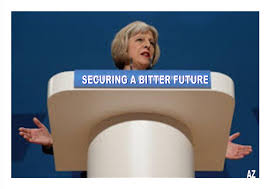
Image result for securing a better futurePropaganda techniques

Introduction.

This is part one of a series of articles I am writing about propaganda techniques, with the aim of explaining the seven main types that The Institute for Propaganda Analysis identified in 1938, and looking at current examples of their use.

Propaganda techniques are still very commonly used in the media, in advertising, in politics, in rhetoric and debate. In the US, much of the work by the Institute of Propaganda Analysis tended to focus on the techniques of persuasion used by Stalin and Hitler. Many people think that there is no need for research nowadays, but propaganda techniques are still being used widely.

In Britain, the current government has adopted a psychocratic approach to governing, reflected in public policies that have a central aim of  directing”behavioural change” of targeted social groups, and are founded on quasi-scientific understandings of the basis of human decision-making.

The Conservatives claim to champion the small-state and minimal intervention, yet the consequences of their policies insidiously intrude into people’s everyday experiences and thoughts. Our attitudes and beliefs are being manipulated, our decision-making is being “nudged,” citizens are being micro-managed and policed by the state.

The Conservatives use Orwellian-styled rhetoric crowded with words like “market forces”, “meritocracy” “autonomy”, “incentivisation”, “democracy”, “efficient, small state”, and even “freedom”, whilst all the time they are actually extending a brutal, bullying, extremely manipulative, all-pervasive state authoritarianism.

Furthermore, this authoritarianism entails a mediacratic branch of government that powerfully manipulates public opinion. The mind-numbing mainstream media is conformative rather than informative, and is designed to manufacture and manage public consensus, whilst setting agendas for what ought to be deemed important issues. The media is scripting events rather than simply reporting them, filtering information by deciding which events may and may not have precedence.

And really, it’s the same old same old. Propaganda is an extremely powerful weapon and seizing control of the mainstream media is one of the first things that all tyrants do:

“Everything within the state, nothing outside the state, nothing against the state.” Benito Mussolini.

The current government is not interested in any form of democratic dialogue. They simply want to set a rigid agenda to control socio-political outcomes to benefit the powerful and wealthy elite.

We are witnessing attempts to control virtually all aspects of social life, including the economy, education, our private life, morals and the beliefs and attitudes of citizens. We are also seeing the rise of political behaviourism, which is closely linked with totalitarian forms of thinking.

The officially proclaimed ideology penetrates into the deepest reaches of societal structure and the totalitarian government seeks to completely control the thoughts and actions of its citizens.” Richard Pipes.

Recent public policies related to behavioural change exploit the emotive, automatic drivers of decision-making through methods such as subconscious priming or default settings. This is extremely worrying, as it bypasses rational processes, and has some serious implications for conceptions of human autonomy and agency, which is central to the design of liberal democracies.

Democracy is based on a process of dialogue between the public and government, ensuring that the public are represented: that governments are responsive, shaping policies that address identified social needs. However, Conservative policies are no longer about reflecting citizen’s needs: they are increasingly all about telling us how to be.

So we do need to expose and challenge such insidious, anti-democratic state control freakery and psychocratic shenanigans.

scroll2Part 1. Glittering Generalities: all that glitters is glib, not gold.

Glittering Generalities is one category of the seven main propaganda techniques identified by the Institute for Propaganda Analysis in 1938. It’s a device often used by the media and in political rhetoric to persuade us to approve and accept something without examining any evidence.

This is a propaganda technique purposefully designed to divert and distract, so that people are less likely to develop their own critical thoughts. This said, the purpose of all forms of propaganda is to tell you what to think, and not how to think.

Glittering Generalities capitalise on increasingly sloganised political discourses, leading to a loss of conceptual clarity, over-idealisation and they also reflect conceptual miserliness – a tendency for some people to prefer simple, superficial and easy answers, rather than having to expend time and effort to grapple with complexity, critical analysis and the need to weigh up evidence. They also succeed in conveying codified messages that reference underpinning discourses which are often prejudiced and controversial, but presented in a way that bypasses any detailed scrutiny, as a consensus view and “common sense.”  An example is the slogan “Taking our country back” as it references an underpinning racist, supremicist discourse.

Gordon Allport’s Principle of Least Effort is a theory that humans engage in economically prudent thought processes, taking “short-cuts” instead of acting like “naive scientists” who rationally investigate, weigh evidence, costs and benefits, test hypotheses, and update their expectations based upon the results of the “experiments” that are a part of our everyday actions.

Sometimes we are more inclined to act as cognitive misers, using mental short-cuts to make assessments and decisions, concerning issues and ideas about which we know very little, as well as issues of great salience.

The term “Cognitive Miser” was coined by Fiske and Taylor (in 1984) to refer, like Allport, to the general idea that individuals frequently rely on simple and time efficient strategies when evaluating information and making decisions.

Rather than rationally and objectively evaluating new information, the cognitive miser assigns new information to categories that are easy to process mentally. These categories arise from prior information, including schemas, scripts and other knowledge structures, such as stereotypes, that have been stored in our memory.

The cognitive miser tends not to extend much beyond established belief when considering new information. This of course may perpetuate prejudices and cognitive biases.

Glittering Generalities imply – or signpost us – via common stock phrases to our own tacit knowledge, which often lies below our current focal awareness – prior information, beliefs, ideals, values, schemata and mental models, stereotypes and so on, creating the impression that the person using the terms and phrases understands and sees the world as you do, creating a false sense of rapport by doing so. Or the feeling that some very important recognition has been made.

Glittering Generalities propaganda is sometimes based on a kind of logical fallacy known as Equivocation – it is the misleading use of a term with more than one meaning (usually by glossing over which meaning is intended at a particular time)

Glittering Generalities is a technique very often used by people who seek to stifle debate, sidestep accountability and suppress democratic processes. Because Glittering Generalities tend to obscure or gloss over serious areas of disagreement, they hide controversy and submerge alternative propositions.

As such, Glittering Generalities may often be used to neutralise opposition to dominant ideas. It’s a way of disguising partisanship and of manipulating and reducing democratic choices. It’s part of a process of the political micro-management of your beliefs and decision-making.

It also reduces public expectation of opposition and in doing so it contributes to establishing diktats: it’s a way of mandating acceptance of ideology, policies or laws by presenting them as if they are the only viable alternative.

This propaganda technique bypasses rationality altogether, by employing morally laden or emotionally appealing words and phrases so closely associated with highly valued concepts and beliefs that carry conviction – convince us – without need for enquiry, supporting information or reason.

The meanings of such words and phrases is generally based on a loose, tacit public consensus, often varying between groups and individuals. Semantic shift describes a process of how the meanings of words may change over time, but meanings also shift and vary amongst social groups. Language is elusive and changeable. (Words like wicked and bad, for example, shifted subculturally. Originally: evil, corrupt, sinful, malevolent → superb, excellent, great, fantastic. ) Let’s not forget that when we use language, it is with purpose and intent.

So, Glittering Generalities are rather like platitudes or clichés presented as semantic signs to cognitive short-cuts that are often used to distract and placate people, they provide a superficial, broad, symbolic map to a logical cul-de-sac. They are superficially appealing and convincing but ultimately empty, meaningless words or phrases.

To summarise, Glittering Generalities may be identified by the following criteria:

  • Use of attractive, but vague “virtue” words that make speeches and other communications sound good, but in practice say nothing in particular.
  • Use of lulling linguistic patterns such as alliteration, metaphor and reversals that turn your words into easy to remember soundbites that often flow and rhyme in hypnotic patterns.
  • Use of words that appeal to morals and values, which often themselves are related to triggering of powerful emotions.
  • A common element of glittering generalities are intangible nouns that embody ideals, such as freedom, democracy, integrity, justice, respect.

Some further examples of Glittering Generalities are: economic plan, all in it together, big society,  freedom, family values, the common good, democracy,  principles, choice, incentivise, efficiency, fairness, hard-working families, parental choice, a caring society, fiscal responsibility, market choice, meritocracy, personal responsibility, making work pay, scroungers and strivers, anti-austerity, socialism, progressive, disenfranchised, deceit, Westminster establishment, the needs of the people, but that’s all just semantics really.

A good example of a Glittering Generality is the Conservative’s phrase “making work pay.” It refers to the Tory welfare “reforms” which were nothing to do with the level of wages. How does reducing benefits for unemployed people actually make work pay? Especially given the fact that wages have dropped for those in work, at the same time, the cost of living has risen, and consequently many working people are now living in poverty. The question to ask is: making work pay for whom?

The Tories have an Orwellian dexterity in manipulating semantic shifts. They do like to dress-up words and parade them as something else. For example, take the word “reform,” which usually means to make changes to an institution, policy or practice in order to improve it. The welfare “reforms” have involved the steep and steady reduction of welfare provision and an increase in political scapegoating and victim-blame narratives.

We have also seen the return of absolute poverty since the “reforms” were (undemocratically) implemented in 2012, which can hardly be considered as an “improvement” to what came before the Tories made savage and brutal cuts to poor people’s lifeline benefits, making them even poorer, with some people dying as a consequence.

Then there is the Tory drift on the word “fair.”  It’s generally taken to mean treating people equally without favouritism or discrimination, and without cheating or trying to achieve unjust advantage.

However, the Conservatives have repeatedly claimed that cutting people’s lifeline benefits is “fair.”  As I’ve previously stated, the value of wages has also dropped to its lowest level ever, whilst the cost of living has risen and many in low paid work are now living in poverty, in reality the welfare cuts have simply made people desperate enough to take any low paid work, which does not alleviate circumstances of poverty.

Furthermore, how can the welfare cuts be regarded as remotely fair, when they took place in a context where the government handed out £107,000 of public funds to each millionaire, in the form of an annual tax break?

Finally, it’s not only the Tories that utilise propaganda techniques, and some parties on the Left have also used Glittering Generalities. These parties especially capitalized on the public’s growing cynicism and dissatisfaction with the “Westminster establishment.” UKIP and the Scottish National Party drew on nationalism (and independence,) whilst using superficial, simplistic and ambiguous phrases and symbols, the Green Party and other Left-wing factions also drew on public dissatisfaction with “mainstream parties” and appealed to people’s hopes and fears to present an “alternative.”

Both the Greens and the Scottish nationalists presented a rhetoric skillfully tailored and laden with words and phrases that reflect progressive ideals whilst also claiming a position that opposed austerity. Yet this lacked integrity, as the rhetoric wasn’t fully connected to actual manifesto policies.

Crucially, the Scottish National Party’s spending plans implied deeper cuts than Labour’s plans entailed over the next five years, as the Institute for Fiscal Studies (IFS) said in a report in April, highlighting a “considerable disconnect” between the nationalist’s rhetoric on austerity and their policies.

The Green Party had a similar disconnect between an anti-austerity rhetoric and their incompatable policy proposals of a zero-growth economy and the universal citizen’s income. The latter was heavily criticised because, as it was modelled, the universal basic income would create deeper poverty for the poorest citizens and further extend social inequality.

The Labour Party ran a more rational but superficially less appealing campaign based on improving the material conditions of society for the majority of people. The policy plans for an extensively redistributive tax system, for example, matched the rhetoric about addressing growing social inequality, as well as a social reality. But the current climate of  right-wing anti-intellectualism, widespread disillusionment with the political establishment and increasing public disengagement from democracy doesn’t prompt a rational exploration of policy proposals and any analysis of potential consequences for society from many people.

The UK is defending tax abuse, not promoting ‘tax competition’ – Richard Murphy

Image result for quotes about tax havens

Many thanks to Richard Murphy at Tax Research UK for this excellent article:

The Guardian has reported that:

Britain will reject plans announced in Brussels this week to combat industrial-scale tax avoidance by the world’s biggest multinationals, the Treasury minister responsible for tax policy has said.

David Gauke, financial secretary to the Treasury, told representatives from the European parliament that Britain would not adopt the measures to introduce certain common tax rules. “He was very clear that the UK is insisting on tax competition,” said German MEP Michael Theurer, who met with the UK treasury minister on Thursday. “It was really a shock from the minister.”

I met that EU delegation yesterday afternoon, representing the Fair Tax Mark with Meesha Nehru. I can say as a result that the comments made by HMRC and David Gauke in the morning were still reverberating in the afternoon and I think Michael Theurer is spot on with his comments.

It is shocking that the UK is so dedicated to tax competition. The suggestion that tax competition between states is something to be promoted is dangerous idea when all competition is necessarily predicated on the idea that it is acceptable for participants to fail. We cannot afford failed states and anything that even hints at that possibility has no place in the international tax system.

That does not mean that international uniformity is necessary, but cooperation and, where appropriate, harmonisation, are essential if tax is not to be an instrument to exercise control from one state over another. In this context there should be no mistaking the fact that those who propose tax competition are the ones who are seeking to exercise control. Time and again right wing think tanks have said things like this by Dan Mitchell of the US based Center for Freedom and Prosperity[i], writing on this occasion for the UK based Adam Smith Institute:

Tax competition exists when people can reduce tax burdens by shifting capital and/or labour from high-tax jurisdictions to low-tax jurisdictions. This migration disciplines profligate governments and rewards nations that lower tax rates and engage in pro-growth tax reform.

The emphasis is mine, and appropriate. Think tanks like those Mitchell works for go out of their way to defend tax havens[ii]. And what they are really saying is that tax havens should be able to use their laws to undermine the tax laws of other states by inducing the relocation of economic activity to low tax jurisdictions. This is what tax competition means, and this is what the UK is subscribing to.

There can be no doubt that some low tax states – like Ireland – have induced some real companies to relocate real economic activities through the offer of low taxes. But it’s also entirely true that places like Ireland are also part tax haven activity which induces no real change in economic activity at all, barring the relocation of where accountants record the profits of the companies for whom they work for tax purposes. This process is called profit shifting[iii].

Profit shifting is, I stress, a pen pushing exercise, usually backed by a lot of paperwork. Perhaps the biggest single expose of the activity to date cam from the Luxleaks disclosures in late 2014[iv]. The key issue there was secrecy, as it always is in these cases. That’s why the EU was on its mission in the UK yesterday.  Large companies secured tax advantages from the use of obscure Luxembourg subsidiaries that had little or no economic substance to them where the details of what they were doing was hidden from the states who lost tax as a result.

This is the reality of tax competition from tax havens that right wing think tanks promote on behalf of their corporate funders. It is why in 2009 I suggested that in most cases tax havens were better described as secrecy jurisdictions[v]. These I defined as places that intentionally create regulation for the primary benefit and use of those not resident in their geographical domain with that regulation being designed to undermine the legislation or regulation of another jurisdiction and with the secrecy jurisdictions also creating a deliberate, legally backed veil of secrecy that ensures that those from outside the jurisdiction making use of its regulation cannot be identified to be doing so. This, of course, is exactly what Luxembourg did in the Luxleaks cases. Most of the tax scandals of recent years have revolved around this tax haven secrecy being used to hide the artificial relocation of profits. Google did that to move profit to Bermuda; Starbucks did it to Switzerland via the Netherlands and Amazon did it to Luxembourg: the theme is always the same.

It’s important to say in that case that this so called tax competition is not about real competition or anything like it. Any economist knows that competition to be fair requires that all the participants have available to them all the information they need to make an informed decision. Tax competition works in exactly the opposite way, and hides everything from view that it can, which reveals what this activity really is: it is economic warfare waged from tax havens that are places that have sold their right to legislate to facilitate attacks on the law of other countries, and then provide secrecy to ensure that those involved cannot, as far as possible, be identified.

The EU is seeking to eliminate this abuse, albeit without the vigour I would wish for. But what’s really shocking is not just that so many tax havens are British, but that we will go so blatantly out of our way to defend tax abuse, which is what David Gauke is doing.

__________

[i] http://www.adamsmith.org/sites/default/files/images/stories/tax-competition.pdf

[ii] See, for example, http://www.adamsmith.org/research/think-pieces/save-the-tax-havens-we-need-them/ by the director of the Adam Smith Institute

[iii] The OECD is dedicated to ending it. See http://www.oecd.org/ctp/beps.htm

[iv] http://www.icij.org/project/luxembourg-leaks

[v] http://www.financialsecrecyindex.com/PDF/SecrecyWorld.PDF

– See more at: http://www.taxresearch.org.uk/Blog/2015/06/19/the-uk-is-defending-tax-abuse-not-promoting-tax-competition/#sthash.idDFKWMm.dpuf

Labour faces a dilemma: which way do we turn?

1234134_539964652739734_1075596050_n

I’ve remained quite detached from the Labour leadership debates. I’ve seen an awful lot of infighting that saddens me, much of it has been fueled by what is now standardised, mainstreamed mediacratic misinformation, misquotes and generally fiendish right-wing mischief-making. I’ve purposefully avoided getting caught in the crossfire.

Most of you already know my position on the matter – that whilst I think Jeremy Corbyn reflects my own values and principles most closely and has my support, I will continue to campaign from within the Labour Party for progressive change, regardless of who is leading. I will also continue to campaign to raise public awareness as best I can at a broader level, regarding key social issues.

I’ve said elsewhere that I have never regarded a Labour government as the end of our fight for progressive and positive change, but rather, as the only viable starting point.

The Labour Party is a broad church. I can respect other people’s various preferences for a party leader. Not least because I recognise that the Labour Party is on the horns of a dilemma. However, much of that dilemma has been created by the shifting Overton Window, nudged ever rightwards by the radical Conservative neoliberal paternalists in office.

It’s worth considering that even the least esteemed party leader has given us social policies that have meant most of society are much better off than they are under ANY Tory government. Yet here we are with a second term of Conservative austerity: welfare is being dismantled, the NHS is being steadily privatised, public services are stripped of funding, there is growing inequality, grinding poverty and increasingly, human rights abuses.

It’s a point that many people seem to miss. The so-called High Priest of neoliberalism – Tony Blair – presented us with some outstanding social policies nonetheless, such as the Human Rights Act, the Equality Act, the Climate Change Act, the Anti-Bribery Act, Every Child Matters, the Fox Hunting Ban and animal welfare policies, Good Friday Agreement, and many more, which the Tories are currently very busy trying to repeal. These policies certainly defy the widespread, retrospectively applied “Thatcherist” label and do not fully warrant the sheer extent of knee-jerk hatred that people pour out at any mention of Blair nowadays. This said, Blair was certainly a neoliberal, and his social safety nets were designed entirely in that context: to protect people from the very worst ravages of the economic neoliberalism that he endorsed.

Without the Human Rights Act and the Equality Act, we would not have won any of the legal cases brought against the Tories, regarding the welfare reforms.

Just for the record, I am not a Blairite. I didn’t like the Third Way – left-wing social policies with a neoliberal economics compromise. I protested against Iraq. However, if the Party is to learn, develop and move on, we must have an open mind, a balanced view and not dismiss the lessons from merits and success because there were also failures. And Blair’s synthesis of a reduced, ethical socialism was at least founded on an idea that we can remove some of the unjust elements of capitalism by providing state safeguards, including social welfare, public services and via protective policies. Now we are desperately fighting to preserve that basic layer of traditional and institutionalised social justice. The persistent Conservative narrative, comprising of tales of “welfare dependency” and “scroungers” have  de-normalised collectivism and shifted the balance between citizen rights and responsibilities, unfavourably.

As a result, the Labour Party is caught between a rock and a hard place. Many supporters don’t seem to know which way to turn.

Some people think we should take a sharp left turn, re-embracing our post-war principles, others feel we would be better moving right towards a Blairist central destination, more in line with the perception of where the ever-narrowing Overton Window has placed shifting public opinion. Do people want a principled-responsive or populist-responsive party?  The latter option, it is held, will make the party seem more electable. The difficulty is that the apparent public shift to the right make achieving both options difficullt. And neither direction is without risk.

Perhaps one way to define the dilemma clearly is by seeing it as that of “the real” and “the ideal” – the “real” is that we have to appeal to the broadest base of the population that we can, yet without compromising our inclusive, internationalist principles, we will continue to lose supporters to UKIP and the right. The “ideal” is that we very much need to build bridges with other progressive, anti-austerity parties, appealing to and uniting the left. But that is also risky because there has been a public shift to the right, here in England, at least.

Nationalism in England seems to have pulled many to the right, nationalism in Scotland (allegedly) pulled people left.

I don’t hide the fact that I am skeptical about the claims made by the Scottish National Party, and have pointed out more than once that Sturgeon’s skillful rhetoric, which is peppered with Glittering Generalities, does not connect up with concomitant policies.

The latter direction – the ideal – is the most appealing to me, and probably the easiest one to take, since it means compromising few if any of our traditional core values and principles. And of course, it presents a very clear, much needed alternative to social conservatism and neoliberalism. If we aim at uniting the left it would obviously make an election win much more likely in the future.

It is down to us to continue to raise public awareness about the devasting socio-economic consequences of Conservatism and unfettered neoliberalsm, and to present a clear, bold, coherent and cogent alternative.

We need to be shouting loudly that austerity has nothing to do with economic competence, it’s an ideologically-driven, crude experiment in human despair, for a start. We need to smash the illusion of cosy consensus, reflected in the Conservative and mediacratic smoke and mirror rhetoric.

The fact that the right-wing Sun feels at liberty to publicly endorse Kendall, who is widely perceived as the tame Blairite candidate for the leadership, indicates the extent to which the establishment want to thwart even a gesture of democratic socialism. Within OUR party.

And then there are the vile Conservative party supporters who never fail to descend to the blatantly despicable, launching a campaign to elect Jeremy Corbyn as the next Labour leader, strictly as a manipulative and opportunist event to discredit what they fear and loathe the most.

See, for example: For just a £3 membership fee you can help consign the party to electoral oblivion in 2020 – and silence its loony Left foreverThey really wish. The arrogant authoritarians think they can decide the 2020 general election in advance and on behalf of the voting public.

It’s not as if the ridiculous Right’s dominant social Conservative/neoliberal narrative has any coherence, it’s a just a flimsy justifcation of crass inequality, cruelty and primitive tyranny.

There’s a lot of bad faith and reduced trust amongst many of us on the somewhat factionalised left, which makes working together a far from easy task. Nonetheless, it seems to be the only viable option, to me.

Perhaps we simply need a timely reminder that the real enemy is and always was the Tories – they are relentlessly and systematically uncivilising and desolating the country, dismantling our post-war settlement – our finest achievement – and they are coldly and  remorsely destroying many people’s lives. And then blaming their victims, punishing those that they have impoverished for being poor.

We must make sure that the unremitingly savage social Darwinist dystopia that the Tories have designed is not normalised by the malicious political and media establishment, the swivel-eyed, ever-scornful twittering Conservative commentariat. Tyranny and cruelty must not become so casualised and entrenched in the public’s psyche that we forget what it is to be civilised, forget how to be humane, forget basic human kindness. If we lose hope, lose faith in each other, we really are lost.

We must present our alternative narrative, remembering that once our society evolved and progressed, now it is diminishing and regressing. It’s time to push back at the enclosing, stifling boundaries, crushing human potential as it drags us inwards, reducing us from human subjects to objects of increasingly depopulated, dehumanising socio-economic policies founded on ideology, not human need.

There is a great need for the ever-fragmented left to work together to achieve common aims, and placed less emphasis on the minutiae of party politics and divisive electioneering tactics, prioritising crucial social issues and needs instead.

Many people are suffering terribly because of brutal Tory policies, and we would be shabby, barren socialists indeed if we didn’t give our full attention and effort to doing our best in working cooperatively to organise and fight collectively to oppose the authoritarians and push back hard for positive change.

What’s the point in sterile debating and fighting amongst ourselves about what “real” socialism is when we don’t do the necessary joined-up thinking that brings about its practice?

I say let’s do it. Let’s be the change we want to see.

The alternative is to continue to witness the terrible consequences of a pathological world-view, now creeping forward to catastrophically affect more and more ordinary people, as Tory authoritarian ideology is translated from Darwinist rhetoric into public  policies that manifest harsh, bleak social realities.

Many Green Party supporters have rejoined the Labour Party to support Jeremy Corbyn. There is still a clear unifying momentum going on at grassroots level, and it’s overwhelmingly behind a clear, socialist alternative. Let’s go with the flow.

Upwards and onwards.

changeworld2013


I don’t make any money from my work. I am disabled because of illness and have a very limited income.

But you can help by making a donation to help me continue to research and write informative, insightful and independent articles, and to provide support to others. The smallest amount is much appreciated – thank you.

DonatenowButton

UN report: Britains ‘boy’s club culture’ – women in the UK are left vulnerable to violence, poverty & hardship


I wrote last year that Conservative small-state ideology has led to “depopulated” social policies, resuting in the dehumanisation of people in some social groups, and it indicates that Tory policy-makers see the public as objects of their policies, and not as human subjects. Policies are inceasingly being detached from public needs. We therefore need to ask whose needs Conservative policies are fulfilling.

In 2010 the Equality and Human Rights Commission warned the government about its potential failure to meet its legal duties. This followed concerns raised by the Fawcett Society amongst others, regarding the estimated grossly disproportionate impact of the austerity cuts on women.

The Commission recognised the serious concerns about the impact of the deficit reduction measures on vulnerable groups and, in particular, following the House of Commons library report, the impact of the budget on women. The Commission stated:

We have written to the Treasury to ask for reassurance that they will comply with their equality duties when making decisions about the overall deficit reduction, and in particular in relation to any changes to tax and benefits for which they are directly responsible.”

A more inclusive understanding of the range of impacts on both men and women is essential in the formulation of gender-aware, as opposed to gender-blind, policy responses to recession and recovery. It’s clear that the UK government is not interested in collating information regarding impacts and subsequent implications regarding inequality, yet they do have a legal duty to do so.

A previous United Nations Committee report on the Elimination of Discrimination against Women highlights areas where women’s rights in the UK had come to a standstill and appallingly, shamefully, some rights have been reversed.

On August 13, 2013, the Committee on the Elimination of Discrimination against Women released its concluding observations on the UK’s seventh periodic report on 26 July 2013.

Concerns raised by the Committee include protection from discrimination under the Public Sector Equality Duty, the impact of austerity measures on women and women’s services, and restrictions on women’s access to legal aid.

The Equality and Human Rights Commission (EHRC) published its submission to the United Nations Committee on the Elimination of All Forms of Discrimination Against Women on 1 July 2013. In its submission the Commission, as a national human rights institution, identifies key issues it believes should be highlighted as actions following the examination and sets out a number of questions the Committee may wish to put to the Government. You can see a full list here – UK Government still in breach of the human rights convention on gender discrimination.

Despite Labour’s protective Human Rights Act and Equality Act, Britain has become increasingly sexist, has an all-pervasive, patriarchal “boy’s club culture” and Conservative austerity measures are leaving women increasingly vulnerable to violence, poverty and hardship, the UN special rapporteur for women, Rashida Manjoo, has recently said.

The special rapporteur said there was “a more visible presence of sexist portrayals of women and girls” and a “marketisation of women’s and girls’ bodies” in the UK, which was “more pervasive than elsewhere.”

She warned that sexual bullying and harassment were now “routine” in UK schools, according to NGOs she had interviewed, and recommended that schools have mandatory education modules on sexism. “The state has a responsibility to protect, to prevent, to punish, to provide effective remedies,” she said. “These are part of the state’s responsibility.”

Rashida added: “Have I seen this level of sexist cultures in other countries? It hasn’t been so in-your-face.”

Amongst the figures quoted in her report are: 30% of women in England and Wales have reported experience of domestic abuse since the age of 16; 77 women were killed by partners or former partners in 2012-13; 18,915 sexual crimes against children were recorded in England and Wales in 2012-13; and almost one in three 16- to 18-year-old girls have experienced “groping” or other unwanted sexual touching at school.

The special rapporteur also drew attention to the disproportionate impact of funding cuts on the provision of services to women and girls at risk of violence, and the adverse consequenes of the Tory welfare “reforms.”

Access to trauma services, financial support and housing are crucial, yet current reforms to the funding and benefits system continue to adversely impact women’s ability to address safety and other relevant issues,” Rashida said.

She added that the austerity cuts “not only [affected] the specific provision of ‘violence against women’ services’, but also had a more general impact as poverty and unemployment were known contributory factors.”

“Service providers argue that they are being forced to make cuts to their frontline services as a result of reduced funding, whether by closing refuges, reducing support hours, or increasing waiting lists … current reforms to the funding and benefits system continue to adversely impact women’s ability to address safety and other relevant issues.”

Manjoo also heavily criticised the bedroom tax, she recognised that it makes it very difficult for women to escape domestic violence. She also attacked the Conservative government’s austerity programme.

She said: “Austerity measures are having an effect on the provision of services to address violence against women, as well as other cross-cutting issues affecting women such as poverty and unemployment.” 

Rashida Manjoo quite properly condemned the lack of human rights-driven government measures to combat violence against women and girls.

The special rapporteur, who travelled across the UK during a 16-day fact-finding mission into violence against women, said she was barred at the gates of Yarl’s Wood immigration detention centre on Monday, on instructions “from the highest levels of the Home Office”.

Manjoo received reports of violations at the privately run Yarl’s Wood centre, near Bedford, before her visit to the UK, and said she wanted to verify the allegations of abuse. Last month a Jamaican woman, Christine Case, 40, died at the centre, which holds about 400 women.

After repeated unsuccessful requests to the Home Office, the investigator attempted an independent visit to Yarl’s Wood. Under the terms of her mandate, Manjoo should have been offered unrestricted access.  A Home Office spokesperson said a tour of Yarl’s Wood “was never agreed as part of this fact-finding mission.” 

So much for democratic, open, transparent and accountable government.

In her preliminary report, (and unsurprisingly,) Manjoo said the number of women detained in prisons and immigration centres in the UK was rising, with a significant over-representation of black and minority ethnic women.

“A large number of women in detention have a history of being subjected to violence prior to being imprisoned … the strong link between violence against women and women’s incarceration, whether prior to, during or after incarceration, needs to be fully acknowledged,” she said.

Manjoo also said the UK court system is “widely perceived to be biased in favor of men.

Rashida Manjoo’s full 24 page report is expected to be published later this year and will be presented at a meeting of the UN Human Rights Council in Geneva on Tuesday.

The report’s findings echo the views of  many campaigners, including hundreds of psychotherapists, counsellors and mental health practitioners, who in April used a rallying, open letter to the Guardian to warn against “malign” welfare reforms and severe austerity measures.

The group of signatories, made up of therapists, psychotherapists and mental health experts, said Britain has seen a “radical shift” in the mental state of ordinary people since the coalition came to power.

British society has been “thrown completely off balance by the emotional toxicity of neoliberal thinking” and the distress this is causing and the wide adverse effects of this ideology are particularly visible in therapists’ consulting rooms.

This letter sounds the starting-bell for a broadly based campaign of organisations and professionals against the damage that neoliberalism is doing to the nation’s mental health,” they added.

A democratic government, especially in a very wealthy, so-called liberal first-world country, is expected to reflect and accommodate the needs of a population in its policy-making, and to formulate policies within a human rights framework.

That clearly is not happening in the UK.


Related

Welfare reforms and the language of flowers: the Tory gender agenda

994596_517805604955639_608589568_n
Pictures courtesy of Robert Livingstone


I don’t make any money from my work. But you can support Politics and Insights and contribute by making a donation which will help me continue to research and write informative, insightful and independent articles, and to provide support to others. The smallest amount is much appreciated, and helps to keep my articles free and accessible to all – thank you. 

DonatenowButton

Psychologists Against Austerity: Mobilising Psychology for Social Change – The Campaign

tumblr_m81dzafFA21qcekj1o1_500From Brazil, a dystopic and darkly satirical film about life under a bureaucratic, totalitarian government, written by Terry Gilliam.

There is an irony there, somewhere….

Fri. 26th. MARCH ON STREATHAM JOBCENTRE to protest against forced state “therapy” on people claiming benefits.

Meet 1.30pm at Streatham Memorial Gardens.

Click here for The Campaign.

Click here for Briefing Paper.

  Click here for some background,

and here