Month: June 2015

The Labour Party tells David Cameron to abandon plans to dismantle the Human Rights Act

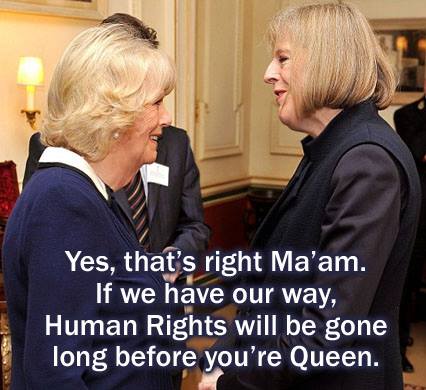
936319_485819054820961_1954794757_nA group of senior Labour Party figures have said that David Cameron should drop his plans to dismantle the Human Rights Act.

In a joint letter, headed by acting leader Harriet Harman and Lord Falconer, the Shadow Secretary of State for Justice, the Prime Minister is asked to abandon his plans to scrap the Act entirely.

Harriet Harman said: “What an irony that yesterday the Prime Minister was presiding over the celebration of Magna Carta at the same time he’s planning to undermine the Human Rights Act.

“No wonder that though he mentioned human rights in South Africa – and preyed in aid Nelson Mandela – and mentioned human rights in India – and preyed in aid Ghandi – he could not bring himself to mention Europe and our Convention.”

The Human Rights Act is a UK law passed by the Labour government in 1998. It means that you can defend your rights in the UK courts, instead of having to travel to Strasbourg – and that public organisations, including the Government, the Police and local councils, must treat everyone equally, with fairness, dignity and respect.

The Human Rights Act protects all of us – young, old, rich and poor. It originates from an international response to the atrocities of World War Two, including the Holocaust and fascist regimes. The Human Rights Act consolidates much of the United Nations Declaration of Human Rights, 1948.

The whole point of Human Rights is that they are universal. Yet despite this, the Government wants to replace our Human Rights Act with their “British Bill of Rights and Responsibilities”. This would weaken everyone’s rights, they would become open to subjective interpretation – leaving politicians to decide when our fundamental freedoms should and should not apply.

This is the same Conservative Party who despise open justice, who have destroyed legal aid and tried to destroy Judicial Review. This is the same Party that thinks they are above the Rule of Law. It is the same Party that has systematically dismissed the Human Rights of disabled people, women and children.

The letter to David Cameron says:

Dear Prime Minister

As you are aware, this year is the 800th anniversary of the signing of Magna Carta, a year to celebrate Britain’s role as a guarantor of individual rights. Yet, as we celebrate this great landmark, the commitment to individual human rights now appears to be under threat.

The Universal Declaration of Human Rights – adopted in 1948 – which Conservative politicians contributed to – enshrines:

  • The right to life, liberty and security
  • The right to a fair trial
  • Protection from torture
  • Freedom of thought, conscience, religion, speech and assembly
  • The right to free elections
  • The right not to be discriminated against

Which of these rights do you not agree with?

Defending the Human Rights Act and our membership of the European Convention on Human Rights is not straightforward because it often involves defending the rights of an unworthy individual from a legitimate authority, or the rights of an unpopular minority from a popular majority.

The Human Rights Act is always going to be a nuisance to those in power because it stops them getting on and doing things unconstrained. But there is an inherent susceptibility for those who have power to extend it, to over-reach and ultimately abuse it. And that is irrespective of how legitimate that power is, how they acquired that power and whether or not they think they are doing the right thing.

So it is right that government ministers should have to look over their shoulder and that their power is tempered by other people’s rights. And we do need to have our executive and our legislature set within a framework of human rights.

This is important to people’s human rights here in Britain and for the human rights of those in other countries. If we were to walk away from our international human rights treaty obligations, we would not be able to press other countries to respect human rights. We cannot say to others in Europe – particularly Eastern Europe – that they should stay within a European framework but that we have somehow outgrown it, or don’t need it anymore.

Human rights are part of, not at variance with, our British values and they matter for our place in the world.

We understand you have put your plans on hold for a year, while you work out exactly how you will go about the dismantling of our human rights laws.

We ask you today to abandon your plans entirely, and as a result of the public interest in this issue, will be releasing this letter to the media.”

It is signed by the Rt Hon Harriet Harman MP, Interim Leader of the Labour Party, and the Rt Hon Lord Charles Falconer QC, Shadow Lord Chancellor and Shadow Secretary of State for Justice.

The letter is also signed by Andy Slaughter, shadow minister for justice, Lord Bach, shadow attorney general, Karl Turner, shadow solicitor general, Keir Starmer MP, Baroness Corston, former chair of the Joint Committee on Human Rights, Baroness Kennedy QC and Kate O’Rourke, chairman of the Society of Labour Lawyers.

Related:

A strong case for the Human Rights Act

Human rights are the bedrock of democracy, which the Tories have imperiled.

15553155399_94869b2dcd_oMany thanks to Rob Livingstone for his excellent memes


Government turns a blind eye to work capability assessment related deaths and expect the public to do the same

11046274_80388630968089cam c

Tory ministers are facing further pressure to reveal information about how many people have died after being assessed as “fit for work.” Labour MP for central Newcastle-upon-Tyne, Chi Onwurah, has joined over 120,000 people that have signed a petition to demand that the Government release the figures.

Many campaigners have been calling on the Department for Work and Pensions (DWP) to publish the figures since November 2012.

Mrs Onwurah, who led a Commons debate on welfare earlier this year, said: “One of the most powerful and distressing examples in my debate was of a man who had committed suicide.

“If someone dies after being found fit to work it doesn’t necessarily mean that being found fit to work had an impact in their death, so I can understand that the Government might fear the figures would be misinterpreted.

“But if the Government has figures then they should share those, and allow people to interpret them fairly.

“This isn’t just a matter of dry statistics. It is about about the health-affecting impact that having been found fit to work can have on claimants.

“And I know that because I see them in my surgery on a regular basis.

“When bad decisions are made I know they can have a life-destroying impact on vulnerable people. So it makes sense for the Government to share that data.”

It was in January of this year that Mrs Onwurah told MPs about a vulnerable constituent who had tragically committed suicide after being found fit for work. He was claiming Employment Support Allowance and incapacity allowance. He was being supported by Newcastle Welfare Rights, who told the DWP that after suddenly being found fit to work:

“.. he was acutely distressed; he struggled to talk, he was having thoughts of suicide, he had also started drinking alcohol to cope and had struggled to leave the house”

Despite supporting psychological assessments, other evidence, and an attempted suicide, the decision was not reversed and in January 2014 he was found hanged by his neighbour.

Mrs Onwurah said: “My constituent was found hanged in his home by a neighbour. He was well known to Newcastle Welfare Rights, from which he had received considerable support in his dealings with the Department for Work and Pensions.

“He had been in receipt of employment and support allowance, and previously incapacity benefit, and he was engaging well with Newcastle Welfare Rights until November 2013, when he underwent a work capability assessment.”

The Department for Work and Pensions (DWP) insists it is irresponsible to suggest deaths which follow an assessment that claimants are fit to work were caused by the assessment.

The DWP originally published statistics in July 2012  after several of us submitted Freedom of Information requests (FOIs). The released statistics indicated that 10,600 people had died between January and November 2011 who had been claiming Employment Support Allowance (ESA), and where the date of death was within six weeks of the claim ending.

The DWP publication caused huge controversy, although many people disagreed over what the figures actually showed. Ministers subsequently blocked publication of any updated figures.

At the time, I made a statistical cross comparison of deaths, and the information released showed that people having their claim for Employment Support Allowance (ESA) stopped, between October 2010 and November 2011, with a recorded date of death within six weeks of that claim ceasing, who were until recently claiming Incapacity Benefit (IB) – and who were migrated onto ESA – totalled 310. Between January and November 2011, those having their ESA claim ended, with a recorded date of death within six weeks of that claim ending totalled 10,600. The DWP did not provide information regarding whether or not people had died before or after their benefit claim was ended, which complicated matters.

However, there is a very substantial and significant statistical variation over a comparatively similar time scale (although the 10,600 deaths actually happened over a shorter time scale – by 3 months) that appears to be correlated with the type of benefit and, therefore, the differing eligibility criteria – the assessment process – as both population samples of claimants on ESA and IB contain little variation regarding the distribution in the cohorts in terms of severity of illness or disability. 

Bearing in mind that those who were successfully migrated to ESA from IB were assessed and deemed unfit for work, (under a different assessment process, originally) one would expect that the death rates would be similar to those who have only ever claimed ESA.

This is very clearly not the case. And we know that the ESA assessment process has actually excluded many seriously ill people from entitlement because of the media coverage of individual tragic cases, when a person deemed fit for work by Atos has died soon after the withdrawal of their lifeline benefit, and of course, such accounts of constituents’ experiences and case studies, as evidence, informs Parliamentary debate, as well as the ongoing Work and Pension Committee inquiry into ESA, details of which may be found on the Hansard parliamentary record.

An official watchdog has also ordered the Government to release further information about how many people have died after going through the work capability assessment (WCA) which had resulted in a decision that they were fit for work, since the last publication in 2012.

The ruling was made after an appeal by Mike Sivier, a fellow campaigner, freelance journalist and a carer that runs the Vox Political blog who has himself been pushing for the figures to be published since the summer of 2013.

Being assessed as fit for work would mean that someone is expected to start looking for a job, take part in training designed to “prepare them for employment”, including workfare programmes – and would face the prospect of sanctions as part of the strict welfare conditionality regime – losing their lifeline benefits – unless they comply.

Mike also used the Freedom of Information Act to ask how many people who died between November 2011 and May 2014 had been found “fit for work”, or told they should move towards finding work.

But the Department for Work and Pensions refused his request, saying it was already preparing to publish the information.

Mr Sivier appealed to Information Commissioner, Christopher Graham, who ordered the DWP to publish the data within 35 days of his ruling on April 30, 2015.

But the Department of Work and Pensions has instead decided to appeal this ruling.

Campaigners now want to know what the government is trying to hide and the online petition demanding that Work and Pensions Secretary Iain Duncan Smith stop attempting to block publication of the statistics has been signed by more than 120,000 people on the website: www.change.org.

A spokeswoman for the DWP said: “We have been clear that we intended to publish these statistics – but we need to make sure they meet the high standards expected by the UK Statistics Authority before we do so.”

Many sick and disabled people have said that the constant strain, anxiety and stress of what they have described as a “revolving door process” of assessment, review, appeal and re-assessment, has contributed significantly to a decline in their health.

The previous figures from the DWP, and the marked contrast between the ESA and IB death statistics certainly substantiate these claims that the assessment process places a great deal of stress on people who are often seriously ill. Anyone with a chronic illness will tell you that stress invariably exacerbates their condition.

At a meeting in June 2012, British Medical Association doctors voted that the Work Capability Assessment (WCA) should be ended “with immediate effect and be replaced with a rigorous and safe system that does not cause unavoidable harm to some of the weakest and vulnerable in society”.

The vote has not been acknowledged by Atos or by the Government, although it was reported widely in the media at the time. On 22 May 2013, a landmark decision by the courts in a judicial review brought by two individuals with mental health problems ruled that the WCA is not fit for purpose, and that Atos assessments substantially disadvantage people with mental health conditions. Despite the ruling’s authoritative importance, the decision had a similar lack of real-world effect as it did not halt or slow down the WCA process: Atos and the DWP have ignored the judgement and its implications.

In mid-January 2012, there was a significant scandal as media were alerted to the fact that the WCA had found a man in a coma to be “fit for work”. Work Capability Assessments have found patients with brain damage, terminal cancer, severe multiple sclerosis, and Parkinson’s Disease to be fit for work. On 24 April 2013, a woman who was a double heart and lung transplant patient died in her hospital bed only days after she was told after a WCA that her allowance was being stopped and that she was fit for work.

In August 2011, twelve doctors working for Atos as disability assessors were placed under investigation by the General Medical Council because of allegations of misconduct in relation to their duty of care to patients. One doctor was forced to resign from Atos after being told to change a report about an individual, pointing out “the General Medical Council makes it clear that doctors must not change a report and risk being disciplined for unprofessional conduct if they do”.

There are many more well-documented problems with the Work Capability Assessment. It’s mired in controversy. Yet since 2010 the current government has continued to expand its role to reassess millions of  people that the DWP had already judged to be entitled to Incapacity Benefit. The government also made changes to the framework of the test to make ESA more difficult to claim.

Despite the controversy, the government continues to show a somewhat baffling and extremely troubling disinterest in the serious problems related to the increased means-testing and conditionality of sickness and disability benefits that they have introduced.

Another major area of concern is that there is a clear absence of impact monitoring, regarding the changes they have made to policy. I find it curious that whilst the DWP couldn’t state either way which side of a claim ending that the deaths happened, journalists and the government shrug the figures off, rather than actually INVESTIGATING the matter.

I have lost 3 friends during the past three years, who each died tragically just after being told they were fit for work, their lifeline benefit support was ended. Families who have suffered bereavement related to ESA claims consistently report that it is the stress of the assessment, the strain of being told they are fit to work when they are not, and the fact that chronically sick people then have to fight for their lifeline benefits that causes a further decline in their health, and the exceptional stress, caused by government welfare policy that is very punitive in nature, that is leading to some people dying.

It’s inconceivable that the government have failed to understand that placing very ill people in a position where their lifeline benefit is stopped so they have to fight for the means to meet their most basic needs – those of food, fuel and shelter – will potentially be very harmful, having a detrimental impact on their health, which may be fatal.

Further related reading:  Cross-party concerns raised in Parliament about Atos assessments, with evidence – presented cases studies of people who died AFTER their lifeline benefit was withdrawn – Atos comes under attack in emotional Commons debate

How many persons has Atos killed today? – Michael Meacher MP

Black Propaganda

What you need to know about Atos assessments

Clause 99, Catch 22 – State sadism and silencing the vulnerable

Labour would end this Government’s demonisation of benefits claimants – Chi Onwurah MP

Essential information for ESA claims, assessments and appeals

Remembering the victims of the Government’s welfare “reforms”

385294_195107567306966_1850351962_n

Thanks to Robert Livingstone for his excellent pictures.

Lord Bach: Civil Legal Aid – a disaster area?

994596_517805604955639_608589568_n

Legal aid is a welfare provision for people who could otherwise not afford counsel from the legal system. Legal aid was originally established by the Legal Aid and Advice Act, 1949.

Legal aid is regarded as central in providing access to justice by ensuring equality before the law, the right to counsel and the right to a fair trial. Article 7 of the Universal Declaration of Human Rights says that: “All are equal before the law and are entitled without any discrimination to equal protection of the law.”

The United Nations state that this principle is particularly important to minorities and to the poor.

Everyone must be treated equally under the law regardless of their race, gender, national origin, color, ethnicity, religion, disability, or other characteristics, without privilege, discrimination, or bias.

Labour peer Lord Bach has accused the previous of Government of jeopardising social welfare through changes made to legal aid entitlement and has urged ministers to review the legislation.

This article was originally published on PoliticsHome on June 10, reproduced here with thanks:

Part 1 of LASPO has been in force for two years. In that time, many of our most vulnerable citizens have been unable to receive legal advice and assistance to help them with problems in areas of housing, debt, employment, immigration, and welfare benefits. Not only have they been deprived access to justice, but these problems are now being allowed the opportunity to escalate leading to possible greater costs when the state has to intervene. On top of this, eleven law centres have had to close, making it even more difficult for the poorest to get justice, and providers of social welfare law have declined in numbers, as without legal aid, both law centres and solicitors firms have been deprived of a large amount of income.

Two recent reports – one from the House of Commons Justice Select Committee, the other from the Public Accounts Committee – have carefully described the failings of the LASPO Act in convincing terms. The government is yet to indicate when it will respond to these reports. This was legislation which even the Permanent Secretary at Ministry of Justice conceded began without the usual preliminary research being done. It was just a way to save money and damn the consequences. Unfortunately the consequences are deadly serious for citizens, for providers and not least for the reputation of the English legal system.

It is time for a thorough review. My question in the Lords today will urge Ministers to instigate this at once. The ‘exceptional cases’ provision which was supposed to pick up cases that should receive legal aid but couldn’t because of the Act has failed miserably. The Minister of Justice estimate regarding how many exceptional cases there would be has proved laughably high.

Perhaps most disturbing of all is that in those few areas where legal aid is still available under the Act, the take-up has been decreasing.

This is nothing to do with lack of demand for advice. But with people just not knowing that support is still available. The Minister of Justices’ overall savings in this field have also exceeded expectation. Surely it is time to put some of that money back into helping people at a difficult time in their lives?

Social Welfare Law has moved a long way towards being destroyed. It is now time for the government to take stock and begin to restore what was only a few years ago one of the jewels in the crown of English Justice.


Related

Children are being denied justice and their human rights by legal aid cuts

Devastating blow to Grayling as judges halt his legal aid reform

The coming tyranny and the Legal Aid bill

The government’s Legal Aid cuts are leaving vulnerable people with nowhere to turn

7005_494073677328832_658777491_n (1)Pictures courtesy of Robert Livingstone.

Poor people are poor because they don’t know how to get something from nothing

220px-1895-Dictionary-Phrenolog

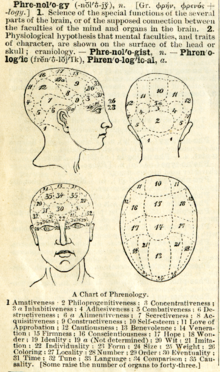
The government have introduced a new character divination and assessment framework to determine eligibility for social security

It’s truly remarkable that whenever we have a Conservative government, we suddenly witness media coverage of an unprecedented rise in the numbers of poor people who suddenly seem to develop a considerable range of baffling personal ineptitudes and immediately dysfunctional lives.

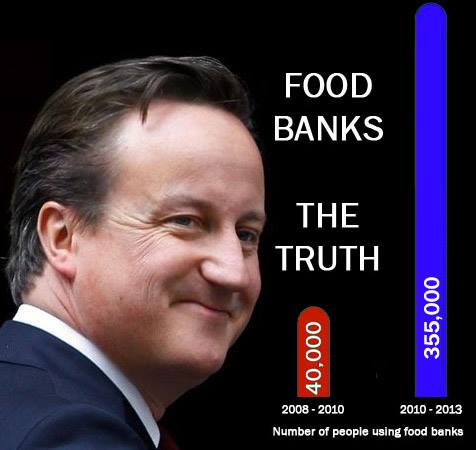
We see a proliferation of “skivers” and “scroungers”, an uprising of “fecklessness”, a whole sneaky “culture of entitlement”, “drug addicts”, a riot of general all-round bad sorts, and apparently, the numbers of poor people who suddenly can’t cook a nutritious meal has climbed dramatically, too. We are told that starvation is not because of a lack of money and access to food, but rather, it’s because Britain is “broken”, and people like freebie handouts at food banks, they don’t know how to budget and cook, that’s according to the Conservative Baroness Jenkin of Kennington. 

She recommends that poor people eat porridge, since it only costs 4 pence a bowl. You can always imagine the milk, sugar and the fuel to warm it, if push comes to shove. Or better still, just cook it on the aga, or the barbi outside. Sorted.

1390648_548165358586330_1740107407_n

The alarming rise in numbers of adults who have suddenly forgotten how to cook and eat porridge since David Cameron took Office, up to last year.

Still, at least we are graced with the thrift and self-help moralising about poor people from the fabulously rich in the media. After all, there must be something wrong with someone who does nothing to help themselves to spend nothing creatively and still somehow manages to have nothing to show for it. The truth is that too many of these poor people are rubbish at being poor.

Jamie Oliver, amongst others, says that poor people always have a very large plasma TV. Thanks for that great tip, Jamie. If you bought one whilst in work, you should get rid of it immediately and buy an even larger one from your benefit.

You must also subscribe to Sky and get a big dish put on your house. Trade in your furniture and household items the very moment you stop working, and buy them all again so you don’t have to live with the guilt and shame of having anything you may have (inadvertently, I’m sure) bought from what you once disgracefully earned.

Another top tip is have lots of children that you can’t afford. Poor people need to try very hard to get pregnant only ever once they are absolutely broke. Never plan your children when you are in work, or down and out in prosperity, that’s a big no-no. Make sure you lose the job, house and everything else first. To be genuinely poor, you must have every child while facing utter destitution. 

This said, the government are going to kindly compensate those of you who had your children when you thought your job was secure and you were generally on your uppers. You are to be incentivised to breed less by having no support for any child born after the first two. Phew! Thank you, Iain Duncan Smith. It’s incentivisation and nudge. And I thought it was Victorian era eugenics.

Basically, some permanently outraged and loudly indignant, terminally curtain twitching, tutting people who work in what they think are secure jobs and have no children think that they are personally funding your children when you get made redundant. They prefer that their money is spent on handouts and tax breaks to the millionaires, crony capitalists and vulture big businesses instead. 

Some wealthy people like to feel included in designing your lifestyle choices and you can provide opportunity for a suffering wealthy person to share their guilt-fuelled outrage, malice and spite. It’s therapeutic for them, helping to alleviate their sense of resentment, shame and inadequacy. Projection is, after all, a very valuable self-defence mechanism for anally retentive hoarders. So is threatening to leave the country when confronted with the possibility of having to actually pay some tax. They cost such a lot to keep, these grumbling misers, I think we should just let them go. In fact I propose we provide a free flight booking and packing service for them, because it would be a shame to shock them out of a lifetime of handouts and entitlement.

Another top poverty tip from the top is make sure you take expensive holidays abroad, walk your dog if you have one and go to the pub. You must make sure you get someone to take photos of you looking busy, ordinary and happy and post on Facebook, or better still, send them to the Department for Work and Pensions. 

Many Sun and Daily Mail readers think that disabled poor people aren’t allowed to do or even try anything at all that looks ordinary and normal, they get very distressed and outraged that you aren’t suffering enough, and hidden away being busily housebound, so they will kindly report you. Strictly in your best interests of course, because to these kind, unprejudiced, well-meaning souls, there’s nothing more important than ensuring your complete social and economic exclusion, sacrifice and distress, and it’s the surest way of getting your benefit stopped, then you can get on with wallowing in your hard-won destitution, suffering and absolute poverty. Because as this thrifty government of self-helping, help themselves specialists has demonstrated, you’re absolutely worth it.

And as the government tells us, poor people will only stop being poor if we “incentivise” them by making them even more poor.

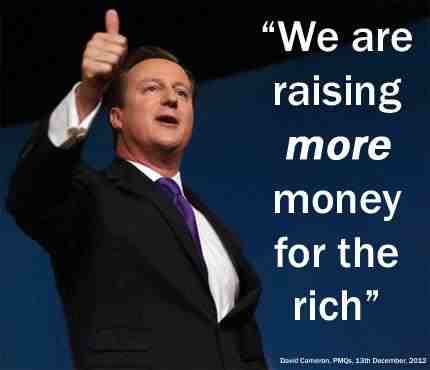
Rich people, on the other hand, really need “incentivising” by being given even more money. That’s just social justice and fairness, say the Tories. 

It’s common sense, and endorsed by top aspiring entrepreneur scientists in the cabinet office, called “behavioural economists.” I love technocrats, me. How incredibly lucky we have such great career-orientated folk designing “choice architecture” just for homeless and poor people. It’s a good job the nudgers don’t need any nudging with their authoritarian neoliberal cognitive biases and pro-status quo policy decisions, as the rest of us are just so fallible, gullible and inept that we simply have to be nudged in line. It’s well worth sacrificing democracy so that the government can have citizens who meet the government’s demands and economic needs.

Who needs a government that recognises and addresses citizens needs? 

Apparently, not us.

Job-Opportunities-850x390
One of the greatest joys of being poor is that many people who aren’t poor have got generous and seemingly endless advice for you. There are lots of sound tips around on how to get on with being poor quietly. And the media are interested in sharing all the details of your private life with the public, so they can tut, moralise, have some outrage, grumble, seethe and foam a lot, and then give you their “advice.” Because they care so much.

All designed to make you feel so much better about your state-designed and allocated personal failings. Lucky us.

And besides, who needs a welfare state when all it does is create poverty and turn people into cognitively malfunctioning idiots who are also very hungry? Those Tories must be creative geniuses, they made work pay by cutting welfare, driving down wages and raising the cost of living. See what I mean? 

They really should redefine the Orwell prize, the Tories would win it every year. Champions of ordinary people, they are, exposing social evils and injustices as they go, distributing work fare, poverty, authoritarianism, insecurity and behavioural change on all those faulty people that are being failed by neoliberalism and those mysterious boardroom decision makers that give us the entertaining myth of “market forces”.   

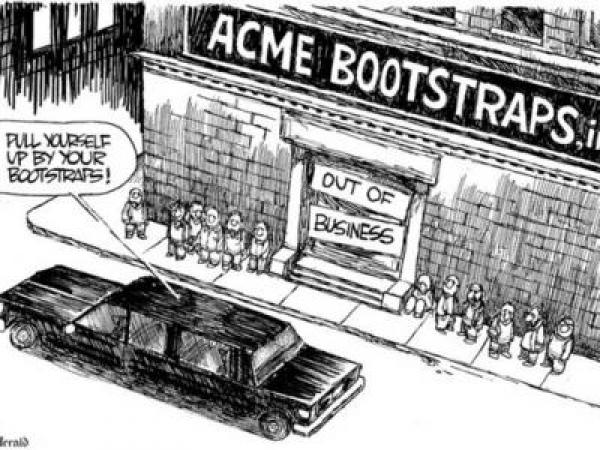
Bootstraps

Nowadays, the better off are so envious of your lucky life experiences and lack of choices that many are thinking of becoming disabled, just so they can share that exclusive pauper status for themselves. They want to own your poverty and I suspect they’d like to privatise and commercialise it. But we know that the poor invented poverty, and so it must be exclusively ours.

Poor people fake their poverty and mismanage their generous share of nothing

A recent report from Samuel Smiles and Verity Malthus, on behalf of ThanAtos, the private company hired by the government to assess people to see if they are genuinely on the point of death from starvation in order to be eligible for poverty, says that many are just feigning starvation and despair and some are even faking thinness.

This is why we have to target support only at “those in greatest need”.

ThanAtos’s research shows that many expect to be provided with food bank vouchers so they can continue to be parked on deluxe standards of suffering indefinitely.

The report said: “These poor people have taken the easy, stress-free option of not sending their children up chimneys and into t’mills any more and won’t even try their hand at pick-pocketing and prostitution. Those were once respected pauper activities, but now these poor people are jumping on the band-waggon and tarnishing the good name of thrift, self-help and state-inflicted misery.

“Far too many of those who claim they are poor don’t even have a plasma screen and a sky dish, and we know for a fact that they don’t eat takeaways, take drugs, smoke or drink cheap cider, they lack personal ineptitudes, and many don’t even have loads of unkempt children, so they are just frauds and they must have very poor budgeting skills. The problem is that once people see the privilege and benefits of gnawing hunger and destitution, they all want some. It’s all supply-led, people just want poverty as a freebie.”

How very true, it’s a real social problem. Once people begin to appreciate the Dickensian chic of malnutrition, rickets and scurvy, and many other low budget, value Victorian age diseases, they want to dash out and buy some immediately. It is becoming something of a trend. In fact the poverty porn industry has really taken off. 

The growing popularity of being very hungry has enticed many these past four years. The ease by which malnutrition can be acquired under this generous government, has been welcomed and hailed as the new poor law come-back, the return of a Golden Feudal Age for the Conservatives.

It’s a very welcomed return of nostalgic, ever so quaint and cute Social Darwinist Tory principles. But some have said that this Government has clearly created a tide of social problems, as very few people were incompetently hungry and desperately silly enough to need food banks under the last Labour government.

In fact I didn’t even know they existed back then. But that’s the “Big Society” for you. What a bright idea to replace welfare with charity and state “therapy.” Silly poor people, they just need to learn to be more creative in how they spend their state funded and allocated nothing, that’s why they end up with nothing. It’s the new generous Tory something from nothing culture, just for the poor.

Those poor people need to get one of those work fare jobs. Put them in their place. That’ll sort ’em out. What those poor people need is discipline. And a good hiding never did any harm. I say bring back the birch and the stocks. That’ll teach ’em.

It’s just like the good old Victorian days. Hurrah!

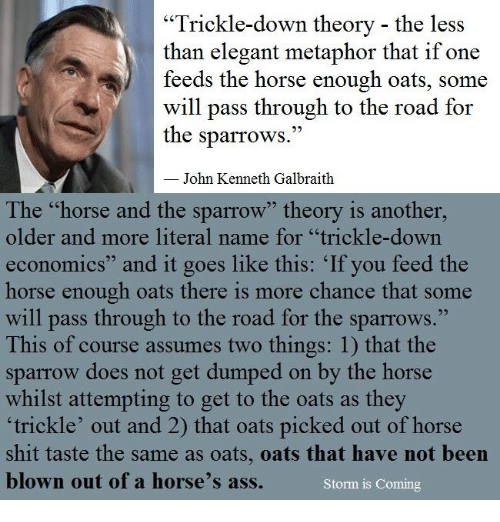
trickle-down-theory-the-less-than-elegant-metaphor-that-if-one-11938559Supply-side economics and the pecking order


I don’t make any money from my work. I am disabled because of illness and have a very limited income. I don’t have a plasma TV or Sky. I do eat a lot of porridge, though. Successive Conservative chancellors have left me in increasing poverty. But you can help by making a donation to help me continue to research and write informative, insightful and independent articles, and to provide support to others. The smallest amount is much appreciated – thank you. 

DonatenowButton

Psychologists Call For Reform Of The Work Capability Assessment

 See also: What you need to know about Atos assessments.
292533_330073053728896_1536469241_nMany thanks to Robert Livingstone for the excellent memes

Stigmatising unemployment: the government has redefined it as a psychological disorder

proper Blond

The current government has made the welfare system increasingly conditional on the grounds that “permissive” welfare policies have led to welfare “dependency.” Strict behavioural requirements and punishments in the form of sanctions are an integral part of the Conservative ideological pseudo-moralisation of welfare, and their  “reforms” aimed at making claiming benefits much less attractive than taking a low paid, insecure, exploitative job.

Welfare has been redefined: it is preoccupied with assumptions about and modification of the behaviour and character of recipients rather than with the alleviation of poverty and ensuring economic and social wellbeing.

The stigmatisation of people needing benefits is designed purposefully to displace public sympathy for the poor, and to generate moral outrage, which is then used to further justify the steady dismantling of the welfare state.

But the problems of austerity and the economy were not caused by people claiming welfare, or by any other powerless, scapegoated, marginalised group for that matter, such as migrants. The problems have arisen because of social conservatism and neoliberalism. The victims of this government’s policies and decision-making are being portrayed as miscreants – as perpetrators of the social problems caused by the government’s decisions, rather than as the casualities.

And actually, that a recognisable bullying tactic known as projection, (the vehicle for projection is blame, criticism and allegation), as is scapegoating.

The 2015 budget included plans to provide online Cognitive Behaviour Therapy to 40,000 claimants and people on the Fit for Work programme, as well as putting therapists in more than 350 job centres.

I wrote an article in March about the government plans to make the receipt of social security benefits conditional on undergoing “state therapy.” I raised concern about ethical issues – such as consent, the inappropriateness of using behaviour modification as a form of “therapy,” and I criticised the proposed Cognitive Behaviour Therapy (CBT) programme on methodological and theoretical grounds, as well as considering wider implications.

I’ve written at length about the coercive and punitive nature of the conservative psychopolicy interventions, underpinning the welfare “reforms,” and giving rise to increased welfare “conditionality” and negative sanctions.

In particular, I’ve focussed on the influence of the Cabinet’s Behavioural Insights Team or “nudge unit” and “the application of behavioural science and psychology to public policy. (See: The nudge that knocked down democracy, The power of positive thinking is really political gaslighting, and Despotic paternalism and punishing the poor. Can this really be England? )

I was pleased to see that the BBC reported a summary of the research findings of Lynne Friedli and Robert Stearn, which was supported by the Wellcome Trust. The report – Positive affect as coercive strategy: conditionality, activation and the role of psychology in UK government workfare programmes reflects many of the concerns raised by other professionals. I strongly recommend you read it. (See: Psychologists Against Austerity: mental health experts issue a rallying call against coalition policies.)

The BBC summarised from the report that benefit claimants are being forced to take part in “positive thinking” courses in an effort to “change their personalities.” Those people claiming benefits that do not exhibit a “positive” outlook must undergo “reprogramming” or face having their benefits cut. This is humiliating for job seekers and does not help them find suitable work.

New benefit claimants are interviewed to find out whether they have a “psychological resistance” to work, with those deemed “less mentally fit” given more “intensive coaching.”

And unpaid work placements are increasingly judged on psychological results, such as improved motivation and confidence, rather than whether they have led to a job.

The co-author of the report, Lynne Friedli, describes such programmes, very aptly, as “Orwellian.” She says:

“Claimants’ ‘attitude to work’ is becoming a basis for deciding who is entitled to social security – it is no longer what you must do to get a job, but how you have to think and feel.

“This makes the government’s proposal to locate psychologists in job centres particularly worrying.

“By repackaging unemployment as a psychological problem, attention is diverted from the realities of the UK job market and any subsequent insecurities and inequalities it produces.”

Friedli also criticised the way psychologists were being co-opted as “government enforcers” and called on professional bodies to denounce the practice.

Quite rightly so. It’s our socio-economic system, and the ideologues who shape it that present the problems, not the groups of people forced to live in it as its casualities – the “collateral damage” of neoliberalism and social conservatism.

“I don’t think anything can justify forced psychological coercion. If people want to go on training courses that should be entirely voluntary,” Lynne told BBC News.

She also questioned the aim of the motivational courses and welfare-to-work placements, which felt like “evangelical” self-help seminars.

“Do we really want a world where the only kind of person considered employable is a ‘happy clappy’, hyper-confident person with high self-esteem?

“That is a very a narrow set of characteristics. There is also a role in the workplace for the ‘eeyore’ type.”

Absolutely. Frankly, I would rather have health and safety programmes that are designed by a pessimist, capable of thinking of the worst case scenario, for example, than by a jolly, positively biased, state-coerced optimist.

I would also prefer pessimistic appraisal of social policies. That way, we may actually have impact assessments carried out regarding the consequences of Conservative policies, instead of glib, increasingly Orwellian political assurances that are on the other, more scenic, illusory side across the chasm from social realities.

Although pessimism and depression are considered to be affective disorders, in a functional magnetic resonance imaging study of the brain, depressed patients were shown to be more accurate in their causal attributions of positive and negative social events, and in self assessments, and assessment of their own performance of tasks, than non-depressed participants, who demonstrated a positive bias.

As a former community-based psychosocial practitioner who saw the merits and value of a liberationist model, the question that needs to be asked is: for whose benefit is CBT being used, and for what purpose? Seems to me that this is about helping those people on the wrong side of punitive government policy to accommodate that, and to mute negative responses to negative situations.

The socially dispossessed are being coerced by the state, part of that process is the internalisation of the negative images of themselves created and propagated by their oppressors.

CBT is not based on a genuinely liberational approach, nor is it based on any sort of democratic dialogue. It’s all about modifying and controlling behaviour, particularly when it’s aimed at such a narrow, politically defined and specific outcome.

The problem that we need to confront is politically designed and perpertuated social injustice, rather than the responses and behaviour of excluded, stigmatised individuals in politically oppressed, marginalised social groups.

CBT is founded on blunt oversimplifications of what causes human distress – for example, in this case it is assumed that the causes of unemployment are psychological rather than socio-political, and that assumption authorises intrusive state interventions that encode a Conservative moral framework which places responsibility on the individual, who is characterised as “faulty.”

However, democracy is based on a process of dialogue between the public and government, ensuring that the public are represented: that governments are responsive, shaping policies that address identified social needs. Conservative policies are quite clearly no longer about reflecting citizen’s needs: they are increasingly about telling us how to be.

As I have said elsewhere, as well as aiming at shaping behaviour, the psycho-political messages being disseminated are all-pervasive, entirely ideological and not remotely rational: they reflect and are shaping an anti-welfarism that sits with Conservative agendas for neoliberal welfare “reform”, austerity policies, the small State (minarchism) and also legitimises them. (I’ve written at length elsewhere about the fact that austerity isn’t an economic necessity, but rather, it’s a Tory ideological preference.) The Conservatives are traditional, they are creatures of habit, rather than being responsive and rational.

Conservative narratives, amplified via the media, have framed our reality, stifled alternatives, and justified Tory policies that extend psychological coercion including through workfare; benefit sanctions; in stigmatising the behaviour and experiences of poor citizens and they endorse the loss of autonomy for citizens who were disempowered to begin with.

Many of the current ideas behind “reforming” welfare come from the Behavioural Insights  Team – the Nudge Unit at the heart of the Cabinet. Nudge theory has made Tory ideology, with its totalitarian tendencies, seem credible, and the Behavioural Insights Team have condoned, justified and supported punitive, authoritarian policies, with bogus claims about “objectivity” and by using discredited pseudoscience. Those policies have contravened the human rights of women, children and disabled people, to date.

Nudge-based policy is hardly in our “best interests,” then.

526544_532055030197363_2137237288_n
Pictures courtesy of Robert Livingstone


I don’t make any money from my work. I am disabled because of illness. But you can contribute by making a donation and help me continue to research and write informative, insightful and independent articles, and to provide support to others.

The smallest amount is much appreciated – thank you.

DonatenowButton

What if David Cameron is an evil genius? – Frankie Boyle

Picture courtesy of Robert Livingstone

Originally published in the Guardian, June 1.

The prime minister has successfully pursued an agenda more radical than Thatcher’s – and has managed it without anybody being terribly worried by him.

“They abolished the Human Rights Act” sounds like the first sentence of an Aldous Huxley novel. The Conservatives actually campaigned on a manifesto pledge to get rid of human rights and people voted for it. As electoral choices go, it’s not far off choosing to be ruled by a dry, whispering voice taunting you from an antique mirror.

Here, in what may well be the final years of our civilisation, I would like to ask a question that has been worrying me for some time. What if David Cameron is a genius? A shrewd and malevolent psychopath who thinks two moves deeper into the game than any of his opponents? What if there sits in Downing Street today a modern-day Moriarty, living in a world where his schemes are only kept in check by the deductive brilliance of Harriet Harman? As Holmes would say, look at the evidence. Cameron has managed to set England against Scotland, Scotland against Labour. He has given his enemies the referendums they asked for, and won. He has left Nick Clegg looking like one of those terrified mouse faces that you find in an owl pellet. He has successfully pursued an agenda more radical than Thatcher’s with less popular support than John Major.

Most impressively, Cameron has managed all this without anybody being terribly worried by him. Immediately after his re-election he announced: “For too long we have been a passively tolerant society, saying to our citizens so long as you obey the law we will leave you alone.” A statement so far to the right that it conceded the political centre ground to Judge Dredd.

We have an idea of Cameron as an empty suit – he’s remarkably forgettable for someone who has a face like a gammon travel iron. What if this is simply a character he chooses to play? We can see the mileage Boris Johnson has got out of playing the fairly simple character of a sort of pissed-up dandelion. What if Cameron’s persona is actually more crafted and insidious? He has a brisk, stiff air of wishing he was somewhere else. We imagine he would much rather be a few years in the future, heading up some foundation that’s advising Qatar on how to bid for the Winter Olympics. Perhaps that’s quite an effective manner to adopt when robbing a country. Announcing in a clipped voice that you’ll be out of our hair just as soon as you’ve privatised the NHS, terribly sorry for any inconvenience. Cameron having a down-to-business persona is not terribly unlike one of those gangs who do heists in high-vis jackets.

Speaking of which, I’ve always thought that Batman hired Robin simply to draw fire: throwing a teenage boy a bright yellow cape and telling him to run through a darkened warehouse full of goons. There seems to be little difference in getting Michael Gove to dress up in a bib and plus fours and throwing him into a roomful of barristers. Gove’s appointment as justice secretary seems to be somewhere between a sardonic trolling of the judiciary and simple misdirection. If he ever does have to produce a Bill of Rights it will be a Producers-style clusterfuck that draws attention away from all the real business of the government.

Why else would he have put Gove there? Are we to imagine that his priority in choosing someone to draft tricky legislation was that they have a face that’s easy to carve into a pumpkin? Gove is a distraction for a robbery, who has been hired to be a kind of human bin fire. When the real business of the Transatlantic Trade and Investment Partnership ratification is under way, he’ll be wheeled out on Newsnight looking like a treefrog trying to escape from a scrotum and the whole culture will stop to take aim.

It’s time we accepted the true depth and horror of Cameron’s genius. In the run up to announcing a legislative programme entirely composed of the sort of things the Sheriff of Nottingham would yell at villagers as threats, he had everybody talking about foxes. He’s introducing the bulk interception of our emails and the only feeling it seems to have provoked from the public is mild arousal. He got quarter of a million people to sign a petition for a Human Rights Act referendum that they would definitely lose (British people think the European court of human rights is all about making sure that Ian Brady can get Netflix or marmalade or something). Indeed, Cameron had us all talking about human rights legislation while quietly pursuing a TTIP trade deal that will make human rights meaningless compared with those of corporations.

And there we may have the real clue to Cameron’s manner. He is a sort of bored viceroy engaged in the handover of power from government to corporations. He has a detailed idea of what life will be like 10 years down the line, when sovereignty is subordinated to corporate courts. He probably feels that, in context, we are churlish to get upset at this colourful, Lannisterish little government he has got together for the handover. Imagine the wry contempt the master criminal must have felt for Holmes, living at the centre of the brutal British empire and imagining that Moriarty’s little crimes were the worst thing in the world.

Despotic paternalism and punishing the poor. Can this really be England?

382035_141704259313964_676863845_n
Framing the game

Earlier this year, David Cameron defended his welfare “reforms”, claiming that: “Labour has infantilised benefit claimants”, and he argued it was “not big-hearted” to leave people claiming sickness allowances when “they could be incentivised to get treatment for alcohol dependence or obesity.”

I should not need to point out that despite the bizarre attempt at stigmatising sick and disabled people with such a loaded, moralising and media agenda-setting comment from our PM, the majority of people claiming sickness benefits are neither dependent on alcohol nor are they claiming because they are obese. This said, I think that alcohol dependence and obesity are illnesses that ought to be treated with compassion instead of moralising. But the general public on the whole do not hold this view. Cameron knows that. In fact Cameron has contributed to the scapegoating of social groups, outgrouping and public division significantly over the past five years

I claim sickness benefit simply because I have a life-threatening illness called lupus. There is no cure, and no-one may imply I am ill because of “life-style choices”. However, people using alcohol often have underlying mental distress, and drinking alcohol is pretty much a social norm. Poverty often means that people are forced to buy the cheapest food, which is the least healthy option. Some illnesses and disabilities cause mobility problems, and some treatments cause weight gain. So it cannot be assumed that alcohol dependence and obesity are simply about “making wrong choices” after all. 

I have to say that it IS “big-hearted” to leave me claiming benefits, Mr Cameron, because I am no longer fit for work. Indeed I was forced to take my case to tribunal after your government tried to “kindly” incentivise me to abandon my legitimate claim for sickness benefit, and the tribunal panel decided that if I were return to my profession(s) (social work and previously, youth and community work – with young people at risk of offending,) that would, though no fault of my own, place me in situations that are an unacceptable risk to my health and safety, and of course would also place others – vulnerable young people – at risk. Which is why I claimed sickness benefit in the first place – because I am too ill to work.

Libertarian paternalism isn’t “fatherly”

Mr Cameron, however, thinks he knows better and continues to insist that it is is everyone’s best interests to work. I can assure him that isn’t the case. So can many others with chronic illnesses and disabilities.

Back in 2013, Esther McVey defended the increased use of welfare conditionality and benefit sanctions in front of the work and pensions committee by infantilising claimants and playing the behaviourist paternalistic libertarian nudge card. She said: “What does a teacher do in a school? A teacher would tell you off or give you lines or whatever it is, detentions, but at the same time they are wanting your best interests at heart.”

“They are teaching you, they are educating you but at the same time they will also have the ability to sanction you.”

Since when did the state become comparable with a strict, punitive, authoritarian headmaster at a remedial school called “we know what’s best for you” in this so-called first-world liberal democracy?  That is not democracy at all: it’s despotic paternalism.

One of the cruellest myths of inequality is that some people are poor because they lack the capability to be anything else. Meritocracy is a lie. It is used to justify the obscene privileges and power at the top of our steep social hierarchy and the cruel exclusion and crushing, humiliating deprivation at the bottom. No-one seems to want to contemplate that people are poor because some people are very very rich, and if the very rich have a little less, the poor could have a little more.

Neoliberalism is a socioeconomic system founded entirely on competition. This means that people have to compete for resources and opportunities, including jobs. Inevitably such as system generates “winners” and “losers”. Poverty has got nothing to do with personal “choices”; the system itself creates inequalities.

Deserving and undeserving: the rich deserve more money, the poor deserve punishment

At least one third of those people with the most wealth have inherited it. It’s a manifestation of prejudice that poor people are seen as “less deserving”, based on “ability” and on vulgar assumptions regarding people’s personal qualities and character. In fact the media, mostly talking to itself,  in judging “the undeserving”  has given a veneer of moral authority to an ancient Conservative prejudice. It’s very evident in policies. The austerity cuts don’t apply to the fabulously lucky wealthy. Whilst the poorest citizens have seen their welfare cut and wages decrease, as the cost of living spirals upwards, millionaires were handed a tax break of £107, 000 each per year.

Surely our stratified social system of starkly divided wealth, resources, power, privilege and access is punishment enough for poor people.

As Ed Miliband pointed out: “David Cameron and George Osborne believe the only way to persuade millionaires to work harder is to give them more money.

But they also seem to believe that the only way to make you (ordinary people) work harder is to take money away.”  So Tory “incentives” are punitive, but only if you are poor. Wealth, apparently, is the gift that just keeps on giving.

Tories create “scroungers” and “skivers”

As I’ve commented elsewhere, it’s truly remarkable that whenever we have a Conservative government, we suddenly witness media coverage of an unprecedented rise in the numbers of poor people who suddenly seem to develop a considerable range of baffling personal ineptitudes and immediately dysfunctional lives.

We see a proliferation of  “skivers” and “scroungers”, an uprising of “fecklessness”, a whole sneaky “culture of entitlement”, “drug addicts”, a riot of general all-round bad sorts, and apparently, the numbers of poor people who suddenly can’t cook a nutritious meal has climbed dramatically, too. We are told that starvation is not because of a lack of money and access to food, but rather, it’s because people don’t know how to budget and cook.

That’s odd, because I always thought that poverty is a consequence of the way society is organised and how resources are allocated through government policies.

That’s a fundamental truth that we seem to be losing sight of, because of the current poverty of state responsibility and the politics of blame.

However, the current government has made the welfare system increasingly conditional on the grounds that “permissive” welfare policies have led to welfare “dependency”.  Strict behavioural requirements and punishments in the form of sanctions were an integral part of the conservative moralisation of welfare, and their  “reforms” aimed to make claiming benefits less attractive than taking a low paid, insecure job.

Sanctions simply worsen the position of the most vulnerable and disadvantaged citizens. Creating desperation by removing people’s means of basic survival forces them into low paid, insecure work and exerts a further downward pressure on conditions of employement and wages. It commodifies the reserve army of labor, which is strictly in the interests of exploitative, profit-driven plutocrats.

Can this really be England? 

Cruel Brittania. A man with heart problems was sanctioned because he had a heart attack during a disability benefits assessment and so failed to complete the assessment. A lone mother was sanctioned because she was a little late for a jobcentre  interview, as her four year old daughter needed the toilet.

A man with diabetes was sanctioned because he missed an appointment due to illness, he died penniless, starving, without electricity and alone as a consequence. His electricity card was out of credit, which meant that the fridge where he should have kept his insulin chilled was not working. Three weeks after his benefits were stopped he died from diabetic ketoacidosis – because he could not take his insulin. Here are 11 more irrational, unfair, purely punitive applications of sanctions.

How can removing the basic means of survival for the poorest people in our society possibly incentivise them, “help them into work” or be considered to be remotely “fair”?

There are targets set for imposing benefit sanctions. Jobcentre managers routinely put pressure on staff to sanction people’s benefits, according to their union. Failure to impose “enough” sanctions is said to result in staff being “subject to performance reviews” or losing pay.  “Success” as an employee at the jobcentre is certainly not about helping people to get a job but rather, it’s about tricking them out of the money they need to meet their basic needs. Such as food, fuel and shelter. Welfare is no longer a safety net: it is an institutionalisation of systematic state punishment of our poorest citizens.

Angela Neville worked as an adviser in Braintree jobcentre, Essex, for four years and she has written a play with two collaborators, her friends Angela Howard and Jackie Howard, both of whom have helped advocate for unemployed people who were threatened with benefit sanctions by jobcentre staff.

One central motivation behind the play was how “morally compromising” the job had become. In one scene an adviser tells her mother that it’s like “getting brownie points” for cruelty. When Neville herself became redundant in 2013, she was warned about being sanctioned for supposedly being five minutes late to a jobcentre interview.

There was a strong feeling among the playwrights that the tendencies in wider society and the media to stigmatise and vilify benefits claimants needed to be challenged and refuted. The play opens with a scene where “nosey neighbours” spot someone on sickness benefit in the street and assume they must be skiving instead of working.

This perspective is one shared widely amongst disabled people, groups, organisations and charities that advocate for and support disabled people, and is evidenced by the rapid rise of disability-related hate crime since 2010, reaching the highest level since records began by 2012. The UK government is currently the first to face a high-level international inquiry, initiated by the United Nations Committee because of “grave or systemic violations” of the rights of disabled people.

That ought to be a source of shame for the both the government and the public, especially considering that this country was once considered a beacon of human rights, we are (supposedly) a first-world liberal democracy, and a very wealthy nation, yet our government behave like tyrants towards the most vulnerable citizens of the UK. And the public have endorsed this.

“This play is about getting people to bloody think about stuff. Use their brains. Sometimes I think, crikey, we are turning into a really mean, spying on our neighbour, type of society,” Angela said.

The title of the play, Can This be England? is an allusion to the disbelief that Angela Neville and many of us feel at how people on benefits are being treated. And she describes the play, in which she also acts, as a “dramatic consciousness-raising exercise”. The idea behind this production is that the play may be performed very simply, with minimum rehearsal. Scripts are carried throughout and few props are used.

It can take place in any room of a suitable size, and there is no need for stage lighting. The script is freely available to all who wish to use it for performances to raise awareness (non-commercial purposes). Click HERE to download a PDF file. If you find it useful please e-mail any feedback to Angela Neville at the Show and Tell Theatre Company.

Psychopolitics

Welfare has become increasingly redefined: it is now pre-occupied with assumptions about and modification of the behaviour and character of recipients rather than with the alleviation of poverty and ensuring economic and social well-being. The stigmatisation of people needing benefits is designed purposefully to displace public sympathy for the poor, and to generate moral outrage, which is then used to further justify the steady dismantling of the welfare state.

Framed by ideological concerns, the welfare “reforms” reflect an abandonment of concern for disadvantage and the meeting of human needs as ends in themselves. We have witnessed an extremely punitive system emerge, under the Tories, at a time when jobs are becoming increasingly characterised by insecurity and poor pay. Last year, two-thirds of people who found work took jobs for less than the living wage (£7.85 an hour nationally, £9.15 in London), according to the annual report from the Joseph Rowntree Foundation.

There are as many people in work that are now in poverty as there are out of work, partly due to a vast increase in insecure work on zero-hours contracts, or in part-time or low-paid self-employment. Poverty-level wages have been exacerbated by the number of people reliant on privately rented accommodation and unable to get social housing, the report said. Evictions of tenants by private landlords outnumber mortgage repossessions and are the most common cause of homelessness. The rapidly rising cost of living – price rises for food, energy and transport – have so many people on low pay struggling to make ends meet.

But pay for people on what were comfortable incomes previously is now outstripped by inflation, leaving many more struggling with rising prices. Public spending has decreased, having a knock-on effect on the economy.

Economic Darwinism doesn’t promote growth

Last year, I wrote about the study from the Organisation for Economic Co-operation and Development (OECD), who found what most of us already knew: that income inequality actually stifles economic growth in some of the world’s wealthiest countries, whilst the redistribution of wealth via taxes and benefits encourages growth.

The report from the OECD, a leading global think tank, shows basically that what creates and reverses growth is the exact opposite of what the current right-wing government are telling us, highlighting the rational basis and fundamental truth of Ed Miliband’s comments in his speech – that the Tory austerity cuts are purely ideologically driven, and not about managing the economy at all.

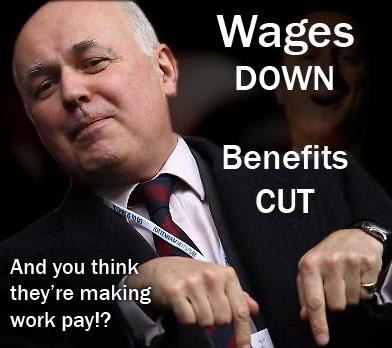
There is a dimension of vindictiveness in the Tory claim that cutting people’s lifeline benefits will somehow “make work pay”, once you see past the Orwellian unlogic of the statement, and recognise the extent of waged poverty in the UK. Making work pay would rationally need to involve a rise in wages, surely, but that has not happened.

To understand this, it is important to grasp the elitist socio-economic priorities that are embedded in Conservative ideology, which I’ve outlined previously in Conservatism in a nutshell. The whole idea beneath the Orwellian doublespeak is comparable with the punitive Poor Law Amendment Act of 1834 – in particular, we can see a clear parallel with the 1834 “less eligibility principle” and the Tory notion of “making work pay” which I’ve previously discussed in The New New Poor Law.

The parallels are underpinned by a shift from macro-level socio-economic explanations of poverty and state responsibility to micro-level punitive, moral psychologising, scapegoating, and the abdication of state (and public) responsibility.

Policies provide a conceptual frame of reference, which tend to shape public attitudes, they are also deeply symbolic gestures that convey subliminal messages. The Conservative war on welfare and the NHS further devalues the worth of human life, turning the needy into a disposable state commodity, a coerced, desperate reserve army of cheap labour.

It also conveys the message that to care about the survival and well-being of others is futile; it pathologises collectivism, cooperation and altruism. This is a government that operates entirely by generating fear and division, on a social, economic and cultural level, but also, increasingly intrusively, within phenomenological, psychological and psychic dimensions too.

How did the poor become such an easy enemy of the state, and how can the public believe the dominant narrative that pathologises the victim, and fail to recognise the irrational, circular argument of benefit sanctions, when the conservatives’ reasoning is that the application of sanctions demonstrates the moral ineptitude of the individual – but it merely acts to justify poverty and inequality.

The perverse logic runs as follows: welfare for the poorest citizens – those who require collective responses to poverty – can only retain public support by threatening to, and by actually making the poorest even poorer. Is this really welfare?

No, not any more.

How can welfare ever be about some politically manufactured, apocryphal and malevolent desire for retribution, based on pseudo-moralising about the poor and demoralised, and a concern for the spiteful, perverted, mean-spirited sense of satisfaction for the better off, at the expense of the material and biological well-being of those in need: the poorest and most vulnerable citizens?

Conservative rhetoric is designed to have us believe there would be no poor if the welfare state didn’t “create” them. If the Conservatives must insist on peddling the myth of meritocracy, then surely they must also concede that whilst such a system has some beneficiaries, it also creates situations of insolvency and poverty for many others.

Democracy exists partly to ensure that the powerful are accountable to the vulnerable. The Conservatives have blocked that crucial exchange, they despise the welfare state, which provides the vulnerable with protection from  exploitation by the powerful.

As I’ve argued elsewhere, the wide recognition that unbridled capitalism causes casualties is why the welfare state came into being, after all – because when we allow such competitive economic dogmas to manifest, there is inevitably going to be winners and losers. That is the nature of competitive individualism, and along with crass inequality, it’s an implicit, undeniable and fundamental part of the meritocracy script.

Poverty is created by government policies that reflect a pursuit of free market ideals;  by the imposition of neoliberal economic policies – the sort of policies that ensure taxes cuts for the wealthy, banish fiscal and other business regulations, shred the social safety net, and erode social cohesion and stability, whilst directing the media and population to chant the diversionary mantra of self-reliance and individual responsibility.

Poverty intrudes on people’s lives, it dominates attention and constantly commands that our biologically-driven priorities are met, it reduces cognitive resources, it demotivates, it overwhelms, it reduces experience of the world to one of material paramountcy which cannot be transcended, it stifles human potential.

Need is NOT greed, regardless of the malicious justification narratives in the media and spiteful political rhetoric from the champions of social Darwinism and the Randian self-serving free market. Meeting basic survival imperatives – food, warmth and shelter – is a fundamental prerequisite for life. If the means for meeting these basic survival needs is taken away, then people will die. Surely even the most cold, callous, psychopathic and dogmatic defenders of the status quo can manage to work that one out.

Punishing poor people with more poverty is savage, obscene, barbaric, brutal, and can NEVER work to “incentivise” people to not be poor, nor can it change the pathological idiom that shapes and imposes such unfortunate, unforgiving and unforgivable circumstances on those with the least in the first place.
430835_148211001996623_1337599952_n (1)With thanks to Robert Livingstone for his excellent memes

Mother sanctioned for taking four year old child to the toilet

430847_149933881824335_1645102229_n (1)A mother from Fife was left without money for a month because she stopped to take her four-year-old daughter to the toilet, making her 10 minutes late for an appointment.

The heartless benefit sanction has left a struggling mother unable to pay heating bills and relying on a food bank to feed her children.

Children’s charity Barnardo’s revealed the mum’s plight but have kept her personal details private.

Barnardo’s Mark Ballard said: “She was without money for four weeks and was unable to purchase fuel cards for her gas and electricity meters or feed her children.

A number of other household bills went unpaid and she had to borrow money from friends and relatives to survive. This put her further into debt and damaged relationships with people who were previously supportive.”

The Scottish Welfare Committee are investigating the impact of Tory welfare reforms on women. MSPs will hear from 12 charities and groups including Barnardo’s, the Scottish Refugee Council, Women’s Aid and the Scottish TUC.

About 20 per cent of women’s income comes from the benefits and tax credit system – compared with 10 per cent for men – according to a study by the Fawcett Society.

Since 2010, £26billion of cuts have been made to benefits, tax credits, pay and pensions. About 85 per cent of those cuts were taken from women’s incomes.

Pregnant women are also being penalised by the sanctions regime, according to charity One Parent Families Scotland.

Clare Adamson, a member of the welfare committee, said: “There needs to be an immediate review of the UK Government’s conditionality and sanctions regime.

The Department for Work and Pensions should not be allowed to impose any more unfair sanctions on vulnerable people. We need the power to put a stop to this relentless assault on vulnerable people and to design a new and better system.”

The UK Government have repeatedly denied claims that welfare advisers are encouraged to hit sanctions targets.

A spokesman added: “Sanctions are only used as a last resort for the tiny minority who refuse to take up the support which is on offer.”

That is clearly NOT the case here. A mother taking a child to the toilet, and being late for an appointment is not someone refusing to “take up the support on offer,” nor was this sanction applied as “a last resort.”

This would hardly pass a test of reasonableness.

Scottish Tory welfare spokesman Alex Johnstone said: “Our welfare reform measures have worked in reducing poverty by getting people off benefits and back to work.”

I don’t believe that depriving mothers and their children of their lifeline benefit, which was originally calculated to meet basic and essential survival costs can ever be considered to be “reducing poverty” or helping this person into work. In fact it’s obvious to most people that such a callous act is likely to do the exact opposite.

There is now a large amount of evidence indicating that sanctions are most often applied in an arbitrary and extremely unfair way, plunging families into severe poverty, with devastating effects on people’s health and well-being.

995658_494538353949031_779653065_nThanks to Robert Livingstone for his excellent memes.

High Court orders Judicial Review of Benefit Cap and its impact on disabled people and their carers.

430847_149933881824335_1645102229_n (1)

Article courtesy of Rebekah Carrier.

The High Court has ordered that a judicial review challenge to the ‘benefit cap’ and its impact upon disabled people and their carers should proceed to a full hearing, and that this hearing must take place urgently.  The Secretary of State for Work and Pensions, Iain Duncan Smith, unsuccessfully argued that the claim should be dismissed.  Mr Justice King rejected the Secretary of State’s arguments, granted permission to the claimants and ordered that the hearing must take place no later than 30th October this year.

The High Court’s Order comes shortly after the Supreme Court ruled that the benefit cap breaches the rights of children, meaning that they are not provided with “adequate food, clothing, warmth and housing, the basic necessities of life” (Lord Kerr).

Last year the Government also conceded that the cap had “unintended consequences” for victims of domestic violence living in women’s refuges, and so amended the regulations to remove women’s refuges from the cap.

Now the High Court will examine whether the cap also breaches the rights of disabled people and their carers.  The High Court’s Order also comes at a time when the Government in the Queen’s Speech has made clear its intention to cut the cap even further.

The claim is brought by two families – and in both, an adult relative is providing full time care to their elderly and disabled grandmothers.  They are able to perform their caring roles only with the support of state benefits, covering their housing and living expenses, and both are in receipt of Carers’ Allowance.

The families argue that the benefit cap is unfair and unlawful because of its impact on carers and those who they care for.  Included in the group of families who are capped are those who receive Carer’s Allowance.

To qualify for Carer’s Allowance the benefit claimant has to be providing full time care – upwards of 35 hours a week – to a severely disabled person who receives Disability Living Allowance (DLA). This means that anyone receiving Carer’s Allowance is by definition not available to work, because they must be providing care.  The Secretary of State has provided an exemption from the cap to those who receive DLA – but not to their carers.

Two categories of carer only are exempt: carers for children or spouses.  Any carer who provides care to another adult, such as a parent or grandparent, is caught by the cap.

One of the claimants, Ashley Hurley, is a young woman who was brought up by her grandmother and who is committed to providing her with the care and support which she needs.  She has said:

I had understood that the benefit cap was meant to encourage people to work and to address the problem of children growing up in workless families. I do not understand why it should apply to me as I do work, looking after my grandmother. If I did not care for my grandmother, then I suppose that we would have to ask the Council to pay for care for her. It would certainly cost the State more to pay someone to provide the care that I provide, and my grandmother would be very distressed about having care provided by strangers. Indeed, I expect that both her mental and physical health would rapidly deteriorate if this happened. I do not feel that I would be able to allow this to happen, and I do not understand why the government would think it was better for the State to care for my grandmother instead of her own family.”

The solicitor for the families, Rebekah Carrier, said:

“My clients have been hit by the benefit cap because they are disabled or they provide essential care to their disabled relatives.  They are not skivers – they are strivers.  They provide full time care and save the State money.  The Government seeks to justify the cap by the financial savings achieved but the long term consequences of this arbitrary benefit cap are likely to have not only devastating consequences for individual disabled people and those who care for them, but serious financial costs.  If Ashley Hurley is forced into stopping her work as a carer, the State will have to pick up the tab and arrange alternative care.  This is not a fair or sensible policy.

The Supreme Court has already ruled that the benefit cap breaches international protections for the rights of children. Now the High Court has allowed this claim to proceed, considering whether it also breaches the rights of disabled people and their carers.  The Government must halt this policy which simply hits vulnerable people.”

544840_330826693653532_892366209_nMany thanks to Robert Livingstone for the excellent illustrations.