Month: September 2015

The alternative narrative – Corbyn’s full speech to the TUC

Sisters and brothers, thank you very much for inviting me here today.  I must admit it seems to be a very fast journey we are on at the present time and, to me, it is an enormous honour to be invited to address the TUC.  It only seems a very short time ago that your General Secretary, Frances O’Grady, did me the honour of coming to speak at the nominating meeting in my constituency, Islington North, and now she has invited me here to address the TUC.  I am very grateful, Frances, for what you did there and I am delighted to be here today because I am, and always will be, an active trade unionist.  That is in my body.

I have been a trade union member all my life.  I was an organiser for the National Union of Public Employees before I became a Member of Parliament.  I realise this is deeply controversial because they are now part of Unison but you can only be in one union at a time; you know the problem.  That taught me a great deal about people, about values, and about the value of trade unions in the everyday lives of ordinary people.  School cleaners, they have a hard time, school meals workers being badly treated, school caretakers looking for some security in their jobs, all those issues that are day-to-day work of trade unions and those that attack and criticise trade unions should remember this.

There are six million of us in this country.  We are the largest voluntary organisation in Britain.  Every day we make a difference in looking after people in their ordinary lives as well as a huge contribution in the wider community.  Unions are not just about the workplace, they are also about society as a whole, life as a whole, and the right of the working class to have a voice in society as a whole.  That is why trade unionism is so important.

We celebrate the values of solidarity, of compassion, of social justice, fighting for the under-privileged, and of working for people at home and abroad.  Whilst we value and protect the rights that we have in this country, the same thing does not apply to trade unionists all over the world.  Those people that died in that dreadful fire in China where there was a free market philosophy around the operation of a port, fire-fighters died trying to protect other workers who should have been protected by decent health and safety conditions.  All around the world, Colombia and many other places, trade unionists try to survive trying to stand up for their rights.

Trade unions in Britain have achieved a fantastic amount in protection and in the wider society.  We need to stand in solidarity with trade unionists all over the world demanding exactly the same things as we have secured for ourselves and trying to defend for ourselves.  Trade unionism is a worldwide movement, not just a national movement and we should never be ashamed to say that.

There are those that say trade unions are a thing of the past and the idea of solidarity, unity, and community are a thing of the past.  Ever since this Labour leadership election was announced, and I have taken part in it, I have spoken at 99 different events all over Britain, 99 events in 99 days.  Those events were often very large.  They would bring together people that had been estranged from the Labour movement or indeed from the Labour Party and they would bring together young people who had not been involved in that kind of politics before.

What brought them together was a sense of optimism and hope.  What brought them together was a sense of the way things can be done better in politics in Britain.

Those values I want restored to the heart of the Labour Party, which was of course itself a creation of the trade unions and socialists in the first place.  I have some news to report to you.  Ever since last Saturday, large numbers of people have been joining the Labour Party and the last figure I got, that was Saturday afternoon, 30,000 people have become members of the Labour Party.   Our membership is now more than a third of a million, and rising.  Over half a million people were able to take part in that election.

But the values that people bring to joining the Party and the Party brings to them have to be things that we fight for every single day.  I want the unions and the Labour Party to work together to win people over to the basic values we all accept, to change minds, and change politics, so that we can have a Labour government, we can look in a different direction, we can look away from the policy of growing inequality and look to a society that grows in equality, in confidence, in involvement of everybody, and does not allow the gross levels of poverty and inequality to get worse in Britain.  That is what the Tories have in store for us.

But Labour must become more inclusive and open and I have had the very interesting task in the last few days of a number of events and a number of challenges.

The first thing I did on being elected was to go and speak at a rally in saying Refugees are Welcome Here because they are victims of human rights abuses and other abuses.   I thought it was important to give that message out, that we recognise human rights abuses and the victims of it all over the world from wherever they come, they are human beings just like you and me, we hold out our hands and our hearts to them, and we want to work with them for a safer and better world.  They are seeking the same things that we are seeking.

Later, the next day, I wanted also to give a message about how we intend to do things and the kind of society we want.  So, I was very proud to accept an invitation to attend a mental health open day in my constituency, or a nearby constituency, to show that we believe the NHS is vital and valuable as it obviously and absolutely is but there are many people who suffer in silence from mental health conditions, suffer the abuse that often goes with those conditions, and the rest of society passes by on the other side.  Mental illness is an illness just like any other, it can be recovered from, but we have to be prepared to spend the time and the resources and end the stigma surrounding mental illness which often comes with stress, workplace stress, poverty, and many other things.

There are other messages we have to put and the media has been absolutely full of midnight oil burning sessions in appointments to the new Shadow Cabinet of the Parliamentary Labour Party.  After consideration and thought, and lots of discussion, we have assembled and appointed a Shadow Cabinet of a majority of women members for the first time ever in history.

To show how determined we are on a number of specific areas of policy, there is a specific Shadow Minister, Luciana Berger, who is dealing with mental health issues.  She will be at the table along with everyone else, and there is a specific Minister dealing with housing, and that is because I believe that John Healey will put the case very well.  The issue is that we have to address the housing crisis that faces so many people all over this country.  The free market is not solving the problem of homelessness.

The free market is not allowing people to lead reasonable lives when they are paying excessive rents in the private-rented sector. We have to change our housing policies fundamentally by rapidly increasing a council house building programme to give real security to people’s lives.

But there are other issues that we have to address, and that is how we make our party and our movement more democratic. The election process that I have just come through was an electorate of 558,000 people, the largest electorate ever for an internal party election.  The number of votes that were cast for me were more than twice the total membership of the Tory Party in the whole country.  That is something to savour.

But all those people coming forward to take part in this process came forward, yes, because they were interested, yes, because they were hopeful but, yes, because they wanted to be part of a democratic process where we make policy together.  We live in a digital age, we live in an age where communications are much easier and we live in an age where we can put our views to each other in a much quicker and in a much more understandable form.  So we don’t need to have policymaking that is top down from an all-seeing, all-knowing leader who decides things.  I want everybody to bring their views forward, every union branch, every party branch and every union, so we develop organically the strengths we all have, the ideas we all have and the imagination we all have.

When we have all had a say in how we develop, say, the housing policy, or, say, the health policy, say any other particular area of environmental protection or anything else, if everyone has been involved in that policymaking, they own the policy that is there at the end.  They are more determined to campaign and fight for it. They are more likely to mobilise many more people around it, so we don’t go through until 2020 with a series of surprises, but we go through to 2020 with a series of certainties, that we are a growing, stronger movement, we are more confident and more determined than ever and, above all, we are going to win in 2020 so we see the end of this Tory Government.

When politicians get out of touch with reality, they sometimes forget where skillsets really lie.  Can I give you an example.  When I was a union organiser, we used to get involved in negotiations about work-study arrangements, the time it took to drive a van from place A to place B and how long it took to load the van, all those kind of issues.  So we would go in there and start negotiations, and I would always go to the branch meeting before hand and say, “Who here is keen on betting?”

Every hand went up, of course.  “Who’s the best at betting?”  One particular hand would be pointed to, and I would say, “Can you come along to the negotiations?”  “Why?”  Because that member had brilliant skills at mental arithmetic — this was pre computer days — and he would work out very quickly, and he would say sotto voce to me, “They are lying to you, Jerry. Don’t accept it”, or whatever.   Skills at the workplace, skills of ordinary people, knowledge of ordinary people.  The elite in our society look with contempt on people with brilliance and ideas just because  they don’t speak like them or look like them.  Let’s do things differently and do things together.

Had we had a different approach, would we now have the millstone of private finance initiatives around the necks of so many hospitals and so many schools in this country, or would we, instead, have a more sensible form of public sector borrowing to fund for investment and fund for the future, rather than handing over our public services to hedge funds, which is exactly what this Government would like us to do?  Be confident, be strong.  We have lots of knowledge and lots of power.

I have worked with unions affiliated to the Labour Party and not affiliated to the Labour Party, and I work with all trade unions because I think that is what the Leader of the Labour Party should do.  I think the Leader of the Labour Party, if invited, should always be at the TUC. I see it as an organic link.

I want to say a special mention to one group of workers who are here.  They are doing their best to defend something we all own, know and love.  Welcome to those strikers from PCS from the National Gallery for what they are going through at the present time.   They look after our national treasures in the National Gallery.  They do it well.

They love what they do and they love what we have got in our National Gallery.  Please, let’s not privatise our galleries and privatise our staff.  We welcome and we recognise the skills of those people who work in all those places and so many other places as being a precious national asset, not something to be traded away on the market of privatisation.  Well done to you for your campaign.

Yesterday the Tories put the Second Reading of the Trade Union Bill to Parliament, and, sadly, it achieved its Second Reading and it has now gone into Committee.  Basically, they are declaring war on organised labour in this country ever since they won the General Election, albeit with the support of 24% of the electorate.  Yesterday, I was proud to sit alongside Angela Eagle on our Front Bench to oppose the Trade Union Bill, and she rightly said, and I quote: “This Bill is a dangerous attack on basic liberties that would not be tolerated by the Conservative Party if they were imposed on any other section of society.”  Stephen Doughty gave an excellent reply, and Labour MPs spoke with passion, knowledge and understanding of the dangers of this Bill.

It is quite interesting how the Tories champion deregulation wherever regulation is ever mentioned.  How many times have we heard that, Ministers for Deregulation, Departments for Deregulation, Ministers who will tear up all regulations?  But one thing they really want to regulate is organised labour and the trade unions in this country. I think that sauce for the goose is sauce for the gander, don’t you?

So we have to oppose it and recognise what they are doing.  The burdens they are placing, as one Tory MP admitted, are actually the strategy that was used by General Franco in Spain on his control of the trade unions in Spain.  They seem to still think that it is right just to attack trade unions because they exist.  I am not going to be lectured to by saying, “If the Labour Party gets too close to unions it puts us all on the back foot.”  I am sorry.  Trade unions are an essential and valuable part of modern Britain.  Six million people voluntarily join trade unions and I am proud to be a trade unionist.  That is why we are going to fight this Bill all the way.  When we have been elected with a majority in 2020, we are going to repeal this Bill and replace it with a workers’ rights agenda and something decent and proper for the future.

Every difficulty actually gives you an opportunity, and the difficulty is that this Bill has been placed in front of us, but it gives us the opportunity to defend civil liberties and traditional freedoms and explain to the wider public, beyond trade union members and others, that it is actually a threat to the liberties of all of us.  Because by calling into question the right of free association of trade unions they are actually in contravention, in my view, of Article 11 of the European Convention of Human Rights.

They are also in contravention, as Stephen pointed out in his reply yesterday, to the International Labour Organisation conventions.  So we are going to continue our opposition to this.  They are threatening the right of peaceful protest by looking to criminalise picketing.  They are even threatening the right to free speech by seeking to limit what a union member can say on social media during a dispute.  Are we really going to have teams of civil servants or lawyers or police or somebody trawling through massive numbers of twitter messages, Facebook messages, to find something somebody said about their employer or about an industrial dispute?

What kind of intrusive society are they really trying to bring about.  We have got to fight this Bill all the way, because if they get it through it’s a damage to civil liberties and for everybody in our society.  They will use it as a platform to make other attacks on other sections of our community. Let’s be strong about this.

We also have to promote trade unionism and understand that good trade unions, good trade union organisation, yes, it protects people in the workplace, yes, it leads to better pay, better conditions and better salaries and better promotional opportunities as a whole, but it also means there is often better management in those places where unions are very strong.  The two things actually go together and are very important.  Where unions are weak, job security is weak, conditions get worse and you look at the results of what this Conservative Government are doing.  They want to raise the threshold on strike ballots, so I would like to ask the Prime Minister this question: if you want trade unions to vote in ballots, why leave unions with the most archaic, expensive, inefficient method of voting you could find, why not modernise the balloting?

Above all, why not go forward and secure workplace balloting ensuring that every member of a trade union can vote securely and secretly at their own workplace?  That, surely, is something we all want in this Bill for ourselves.

But they are also attacking the rights of trade unions to be involved in the wider society.  The Tories have always been concerned about the right of trade unions to be involved in political actions in any way.  Why shouldn’t workers, organised together in a union, express a political view?  Why shouldn’t they use their funds, if they wish, on political or public campaigning?  We had the Act in the last Parliament that restricted the participation of unions and charities in public commentary during elections.  This is taking it a stage even further.  They seem quite relaxed about the involvement of hedge funds and funny money in politics.  They seem absolutely obsessed with the cleanest money in politics, which is trade union funds being used for political campaigning.

So we are going to oppose this Bill with every opportunity we get. We are going to expose it for what it is and we are going to try and stop it passing. As I have said, we will try to replace this Bill with something much better.

But there are other issues that we have to remind ourselves about what is going on at the present time. The Welfare Reform Bill is anything but welfare reform. It is all about building on the cuts they have already made, making the lives of the most vulnerable and poorest people in our society even worse.  The disability benefits cuts that have been made over the past five years and the availability of the work test have had some disastrous — appalling — consequences where people have even committed suicide and taken their own lives out of a sense of desperation. I simply ask the question: what kind of a society are we living in where we deliberately put regulations through knowing what the effects are going to be on very poor and very vulnerable people who end up committing suicide?  And we say it is all part of a normal process.  No, it is not!

The reduction in the benefit cap has the effect of socially cleansing many parts of our cities.

Owen Smith and I had discussions last night about amendments that we are going to put down to the Welfare Reform Bill. As far as I am concerned, the amendments we are putting forward are to remove the whole idea of the benefit cap altogether. We need to raise wages and regulate rents rather than to have a welfare system that do things, of subsidising high rents and low wages.  Surely, we can do things differently and better if we really want to?  We will bring down the welfare bill in Britain by controlling rents and boosting wages, not by impoverishing families and the most vulnerable people.

I have to leave straightaway after I have concluded my remarks here because I want to be back in Parliament to vote against their attempt to cut the tax credits that act as a lifeline to millions of people.  Barnados say it will take £1,200 per year away from a lone parent of two working full time on the minimum wage.  The Government says there is no alternative to this. John McDonnell, our new Shadow Chancellor of the Exchequer, is setting out what the alternatives are.

They call us “deficit deniers”, but then they spend billions in cutting taxes for the richest families and for the most profitable businesses.  What they are as is “poverty deniers”.  They are ignoring the growing queues at food banks; they are ignoring the housing crisis; they are cutting tax credits when child poverty rose by half-a-million under the last government to over four million.  Let’s be clear. Austerity is actually a political choice that this Government has taken and they are imposing it on the most vulnerable and poorest in our society.

It is our job as Labour to set out a vision for a better society and campaign proudly against Britain’s greatest democratic organisation, the trade union Movement.  Our shared vision will be delivered by shared campaigning, a Labour Party proud to campaign for the trade unions and a trade union Movement proud to campaign with Labour.  We have a job to do, to understand the process that has been going through in politics in Britain, to understand the levels of inequality that are there, to understand the levels of insecurity of people on zero-hours contracts, students with massive debts and understand the stress and tension that so many people have.

We are actually quite a rich country. We are actually a country that is deeply unequal. Surely, the whole vision of those who founded our unions and founded our political parties was about doing things differently. That generation, those brilliant people brought us the right to vote, got women the right to vote, brought us the National Health Service and brought us so many other things. We build on that in the way we do our policy, we build on that in the way we develop our movement, and we build on that in the way that we inspire people to come together for a better, more decent, more equal, fairer and more just society.  These things are not dreams.  These things are practical realities that we, together, intend to achieve.

Thank you very much.

__

See also – A change is gonna come: new page, new Labour

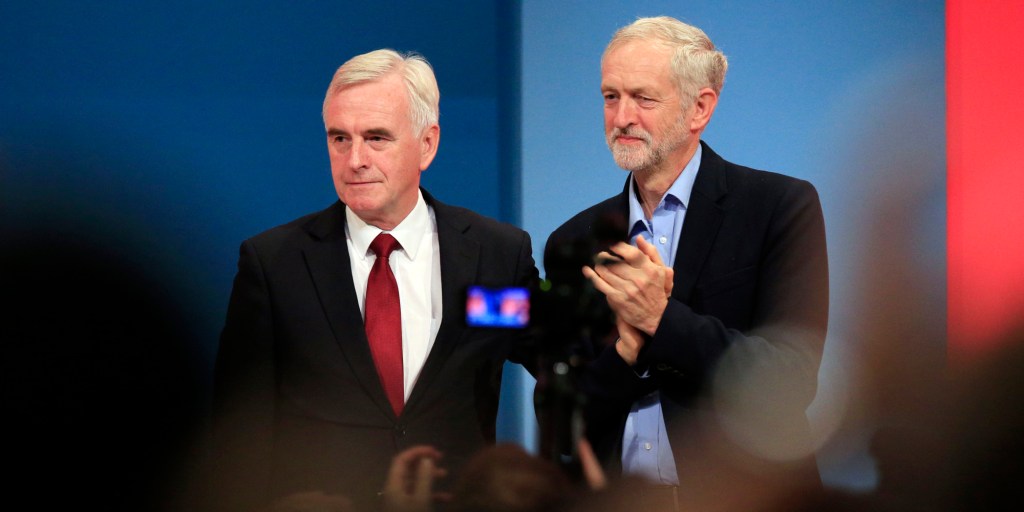
Image result for corbyn at TUC

An inclusive well done to all who worked to bring about the UN Inquiry into the systematic and grave violations of disabled people’s human rights

377683_445086432227557_1770724824_n (1)

I reported last August that the United Nations is to carry out an unprecedented inquiry into “systematic and grave violations” of disabled people’s human rights by the UK government. The UK is the first developed country to face such an inquiry, a fact which should be a source of shame for the Conservatives.

Many campaigners have been concerned for a long time by the disproportionate impact of the Tory-led cuts on disabled people. Many of those campaigners have themselves been adversely affected by the Tory’s draconian welfare cuts, myself included.

My own experiences of the Government’s Work Capability Assessment process led to a deterioration in my health in 2011. (I have lupus, a chronic and life-threatening autoimmune illness). I was wrongly assessed as fit for work, after being forced to give up my job as a mental health social worker because I was deemed too ill to work by my doctor, and my benefit was withdrawn – my only source of income. I appealed and after waiting nine months for the tribunal, I won.

Since then I have worked to support others going through this often harrowing and extremely punitive process. I co-run a group on Facebook called ESA/DLA, which offers support and free legal advice to sick and disabled people facing adverse circumstances because of the draconian Tory policies. The other administrators are Tracey Flynn, who is a qualified human rights specialist, Robert Livingstone, a friend and fellow campaigner, and Sonia Wilson, who originally set the group up. We are all ill and affected by disabilty. We welcome the United Nations inquiry, and both Tracey and I have made our own detailed submissions to the UN.

I reported in 2013 that the Joint Parliamentary Committee on Human Rights conducted an inquiry into the UK Government’s implementation of Article 19 of the United Nations Convention on the Rights of Persons with Disabilities (UNCRPD) – the right to live independently and to be included in the community. The inquiry which began in 2011 has received evidence from over 300 witnesses.

As I reported last month, the UN inquiry has taken place under the Convention’s Optional Protocol on the Rights of Persons with Disabilities, which is a side-agreement to the Convention on the Rights of Persons with Disabilities. It was adopted on 13 December 2006, and entered into force at the same time as its parent Convention on 3 May 2008. As of July 2015, it has 92 signatories and 87 state parties.

The Optional Protocol establishes an individual complaints mechanism for the Convention similar to that of other Conventions. But this Protocol also accepts individual economic, social and cultural rights. Parties agree to recognise the competence of the Committee on the Rights of Persons with Disabilities to consider complaints from individuals or groups who claim their rights under the Convention have been violated. The Committee can request information from and make recommendations to a party.

In addition, parties may permit the Committee to investigate, report on and make recommendations on “grave or systematic violations” of the Convention. The mechanism has allowed many disabled campaigners to submit reports and evidence to the United Nations, including myself.

The inquiry has arisen because of the hard work of many campaigners, since 2012. As well as collective contributions from prominent disability rights groups such as Disabled People Against the Cuts (DPAC), many other groups and independent campaigners have also worked very hard to make this inquiry happen, and have submitted evidence to the UN. That needs to be acknowledged, we need to be inclusive and celebrate the achievement of everyone who has collaborated and contributed to this.

I would like to say a special and personal thank you to Samuel Miller, a Canadian disability rights specialist who has supported many campaigners here in the UK, and who also recognised the retrogressive and draconian nature of Tory policies. Samuel has worked hard to submit reports and evidence to the UN over the last few years, he has included and incorporated the work of other campaigners, such as myself, as well as supporting other campaigners with their own independent submissions.

The WOW campaign also deserve a massive thank you for their work in raising awareness of the need for a cumulative impact assessment of the welfare “reforms”. Another thank you goes to Jane Young, for her work and leading authorship of the Dignity and Opportunity for All: Securing the rights of disabled people in the austerity era report for the Just Fair consortium.

A massive thank you to everyone who has contributed to awareness raising and campaigning for the rights of disabled people, many have worked so hard, independently, unsupported and with quiet determination and strength.

Every single contribution is precious and every effort is valued and deserves recognition, inclusion and thanks.

Another personal thanks goes to Dr Simon Duffy, director of think tank The Centre for Welfare Reform for his research and hard work. He demonstrated through independent research carried out since 2010 that the UK Government has targeted cuts on people in poverty and people with disabilities.

Many of us have consistently and repeatedly pointed to the disproportionate, negative impact of the bedroom tax on sick and disabled people; the closure of the Independent Living Fund (ILF); the political stigmatisation of sick and disabled people and the role played by the media in inflaming disability hate crime; the extent of cuts to local authority care funding; the government’s persistent unwillingness to carry out cumulative impact assessment of its “reforms” on sick and disabled people; the impact of benefit sanctions on disabled people; delays in benefit assessments; and the government’s reluctance to monitor disabled people found fit for work and who have lost their lifeline benefits – their only means of support.

Dr Duffy said:

“In fact the people with the most severe disabilities have faced cuts several times greater than those faced by cuts to the average citizen. This policy has been made even worse by processes of assessment and sanctions that are experienced as stigmatising and bullying.

The government has utterly failed to find jobs for the people they target – people who are often very sick, who have disabilities or who have mental health problems.

Instead we are seeing worrying signs that they are increasing rates of illness, suicide and poverty.”

In December 2014, the UN Human Rights Council created the role of UN Special Rapporteur on the rights of persons with disabilities. Part of the Special Rapporteur’s broad mandate is to report annually to the Human Rights Council and General Assembly with recommendations on how to better promote and protect the rights of persons with disabilities.

The Special Rapporteur, Catalina Devandas Aguilar, will be coming to the UK in the next couple of months to gather further evidence of the grave and systematic  violations of disabled people’s human rights.

United Nations (UN) investigations are conducted confidentially, I’ve already submitted evidence. Anyone wishing to make a submission may contact the UN here:

Catalina Devandas Aguilar
Special rapporteur on the rights of persons with disabilities
Address: OHCHR-UNOG; CH-1211 Geneva 10, Switzerland
Email: sr.disability@ohchr.org

Witnesses will be asked to sign an agreement to prevent them from speaking about the meeting with the UN rapporteurs, or identifying who gave evidence. The UN said that confidentiality is necessary to secure the co-operation of the host country and importantly, to protect witnesses.

Evidence submitted to the inquiry, its subsequent report to the UK government and the government’s response will not be published until the CRPD meets to discuss the inquiry in Geneva in 2017.


536738_306169162785952_999031084_n
Images courtesy of Robert Livingstone

A change is gonna come: new page, new narrative, NOT New Labour

Labour party annual conference 2015


Back in early June, I was asked to do an
interview with A Very Public Sociologist, just as Jeremy Corbyn decided to put himself forward as a candidate for the Labour Party leadership. Phil’s first question of course was: Have you made your made up about the Labour leadership?

Jeremy Corbyn was my initial, intuitive choice. This was founded on my previous knowledge of him as an MP that I have always respected and admired. I recognise that Corbyn has always presented a clarified, strong, ethical and material socialism; that he had a strong aim to extend the scope of Labour Party values and push the boundaries of debate to include genuine socialist propositions and alternatives. That is a much needed, valuable development, as an artificially constructed neoliberal consensus has stifled progress in social policies for a long time.

Corbyn has a refreshing sociological imagination, which is a welcomed change from the Conservative’s starkly anti-social focus; ideologically driven repressive, rigid hierarchical thinking, ranking and organising and economic lack of imagination.

But being me, I took a reluctant step back and analysed the situation that the Party was in post-election, adding a rationale; which prompted the only commentary I’ve written about the leadership competition and the dilemmas facing the Labour Party.

I concluded that a change in direction and a left-leaning leader was most likely to be the best bet for the future, despite the misgivings of some about how such a leader would appeal to an apparently right-shifted, UKIP and Tory-voting public. The right-pitching view through the Overton window has made my hair and toes curl since 2010. 

However, as stated, I don’t believe there is a neoliberal, New Right consensus. No-one was genuinely consulted, after all. The world isn’t really filled with irrational, glib, superficial people who all think broadly the same things and who swallow glittering generalities and mediacratic soundbites. Nobody in their right mind would endorse the massive inequalities we are now seeing, and the return of absolute poverty, as a consequence of the stealth policies that are dismantling our welfare state and NHS.

I’m a fairly optimistic realist, after all.

One of the biggest strengths of Corbyn and McDonnell’s powerful anti-austerity alternative narrative is that it will give many more ordinary people a larger stake in our economy. We know that austerity doesn’t work. It’s been used as a front for discriminatory policies that reflect an underlying Conservative extremist and prejudiced ideology.

Young people in particular, who have been betrayed by an older generation that has been happy enough to witness the dismantling of state provision – the provision that they have benefitted from all of their own lives – will hopefully show that such expedient political trade-offs which systematically punish the traditionally disenfranchised, are absolutely unacceptable. Now young people have a hope-inspiring and inclusive alternative that will mobilise their participation in democracy.  

The alienation of politically constructed outgroups has profoundly undermined our democracy for a long time. We now have a much-needed change – a viable alternative narrative – for the better. Such an inclusive approach will undermine the Conservatives’ “no alternative” approach – founded on the pleas that austerity is “inevitable” – to public policy, ensuring that they have to listen to a broader section of society and reflect their needs and views in economic and social policies.

Conservative intentions have nothing at all to do with economic necessity, but rather, austerity is nothing more than an ideologically-driven effort to downsize the British state, particularly, to dismantle welfare, legal aid, social housing and the NHS – they are erasing our post-war settlement. The next generation are left with much less opportunity and support than we have enjoyed, the first generation in a long time that are worse off than their parents. We need to change that.

Last December in his annual fiscal statement, George Osborne, the high priest of austerity, set out plans to extend his austerity cuts until 2020, by which time, his projections showed, over-all public spending as a percentage of GDP would fall to the lowest level since the 1930s, reducing state provision to rubble .

In the run-up to this year’s general election, Osborne disavowed these figures. But once he was safely back on Downing Street, he cunningly announced a new spending review aimed at cutting the budgets of some government departments by another twenty-five or thirty per cent, with some of the biggest cuts falling on welfare support.

Labour’s recent increasingly homeopathic approach to public debate and policysimilia similibus curentur: “like cures like” – hasn’t exactly made room for a sturdy challenge to Tory pseudoscience and polished psychobabble, deployed to justify their draconian and frankly vindictive regressivism.

There have been many calls over the last few years from activists and from disillusioned, largely disengaged ex-members that we need to “take back” the Labour Party, reclaim it and make it a “party of the people” again, instead of a Party of opportunist “career politicians”. Well, that has certainly happened.

Yet despite the inevitable logic of what has happened, I still can’t believe Jeremy Corbyn’s landslide win – nearly 60%.  Corbyn was the 200 to 1 outsider at the start!  I have always maintained that the best leaders are those who don’t seek leadership, but rather, are often reluctantly thrust forward in situations because of their convictions, others come to trust their skills and judgements – and Jeremy Corbyn certainly didn’t prepare for this, but he has taken an unprecedented popularity amongst grassroot supporters and members, and leadership election success in his sure, determined and tightly principled stride.

In his leadership campaign, Corbyn promised to give Labour members a much greater say in the party’s policymaking process, and quite properly so. That is democratic, after all. I believe that proportional representation is also on the table.

His key proposals include renationalisation of the railways, quantitative easing to fund infrastructure, opposing austerity, controlling rents and creating a national education service. And staunchly defending the welfare state, the NHS and access to justice.

Andy Burnham is calling for the party to get behind Corbyn. I always felt that he’s fundamentally a decent man; I’m glad he has been much more gracious than the other candidates. His tireless fight to save our NHS has been outstanding work, we need that kind of dedication from our MPs on the frontbench.

It’s sad that there have been a handful of resignations, but I know many of you will be very happy to see the Blairite stand weakened.

Now the real fight starts. I’m hoping to see a more unified approach amongst my friends, fellow party supporters and members now that the new leadership has been democratically established. This is just the start of our fight for a fair, progressive, civilised UK. Regardless of who you wanted to win, we can’t defeat the Tories and mediacracy in 2020 without willingness and good faith amongst ourselves. We need unity, belief and strength. Solidarity.

Of course the corporate “journalicians” – the puppets of the right-wing establishment – will try to build a hefty damn against the turning tide. We now have one of the most left wing, anti-establishment leaders in Labour Party history.

Evidently that’s a threat to the security of the Conservative Party, leading to mediacratic hysteria and screamingly paranoid, charmless bullying headlines already. This said, it was to be expected: Conservatives have always displayed fears of nonexistent or overblown bogeymen that threaten social order, as well as demonstrating a deft expertise at manufacturing folk devils and inflaming moral panics.

Indeed other psychologists analysing political conservatism as motivated social cognition would certainly verify my comments: these theorists have integrated theories of personality (namely authoritarianism, dogmatism–intolerance of ambiguity), epistemic and existential needs (for closure, regulatory focus, “terror management”), and ideological rationalisation (social dominance, system justification), all of which explain the elaborate Tory and mediacratic manipulations of facts. And dogma.

The Tories are so afraid of alternative perspectives, progress and change – they are such anal retentives that their fearfully and deeply inserted anti-social heads emerge sooner or later where they feel safest and most at home: in the feudal era of their own ancestors.

As well as scaring anachronistic Conservatives into hysterical declarations and reducing them to spasms of gut-clenching horror, brother Corbyn presents us with a relaxed, easy confidence, and a very welcomed alternative and rational narrative that makes a lot of sense in terms of pragmatic problem-solving. His civilised, progressive, inclusive and democratic pro-social vision managed to unite and gain support from many of the Greens and some SNP supporters already. He has appealed to many who have been disengaged from politics and who have felt disenfranchised for a long time. He has already come to represent hope for a better future. That’s a remarkable achievement.

More than 40 leading economists, including a former adviser to the Bank of England, have made public their support for Jeremy Corbyn’s anti-austerity policies, dismissing Tory claims that they are “extreme”.

The only other feasible alternative post-election for the Labour Party was to try to gain the support from those who defected to UKIP and the Tories this year, by maintaining the austerity myth for the sake of “economic credibility” and for me, that’s untenable because it would entail a gross contravention of Labour’s core values and principles. Though some of the UKIP supporters are undoubtedly amongst those who have felt disenfranchised on the basis of class alone. However, I am sure that Corbyn will reflect a fundamentally new über-inclusivity  that will address the trend towards alienation and anomie.

One thing is certain: the tiresome, disempowering and incredibly lazy soundbite that many on the left have previously delivered in criticism of the Labour Party- “they’re all the same” – won’t be used as the recycled nugget of folk wisdom with any whiff of credibility any more.

Politics is about to become very, very interesting. We needed a credible, strong and appealing alternative to mainstreamed prejudices, and to the social conservatism and neoliberal orthodoxy that became the dominant paradigm following Francis Fukuyama’s “End of History” t
riumphalism. His end of ideology thesis was nothing but more ideology, based on a manufactured consensus after all. Free-market dogma. 

I believe we have got that appealing, rational alternative narrative. 

Upwards and onwards.

 proper Blond


I don’t make any money from my work. I am disabled because of illness and have a very limited income.

But you can help by making a donation to help me continue to research and write informative, insightful and independent articles, and to provide support to others. The smallest amount is much appreciated – thank you.

DonatenowButton

Full Fact’s ‘fit for work’ coverage is unfit for use as toilet paper – Vox Political

http://i0.wp.com/voxpoliticalonline.com/wp-content/uploads/2015/08/falsefacts.png

I had my own issues with Full Fact last year, when the site supported Tom Chivers of the Telegraph in denying that sick and disabled people had died after their lifeline benefits had been stopped by the Department of Work and Pensions, despite the fact that the Hansard Parliamentary record and the media have recorded many examples of this being the case. The row I had with Tom Chivers last year about the mortality statistics can be seen here – Black Propaganda.

This article is from Mike Sivier at Vox Political:

Here’s a slimy little article for you: Sam Ashworth-Hayes’ piece on the benefit deaths at Full Fact.

The fact-checking website set him to respond to reporting of the DWP’s statistical release on incapacity benefit-related deaths, and he’s done a proper little cover-up job.

“It was widely reported that thousands of people died within weeks of being found ‘fit for work’ and losing their benefits,” he scribbled.

“This is wrong.

“Within weeks of ending a claim, not within weeks of an assessment.”

Not true – unless Sam is saying the DWP has failed to answer my Freedom of Information request properly.

If Sam had bothered to check the FoI request to which the DWP was responding, he would have seen that it demanded the number of ESA claimants who had died since November 2011, broken down into categories including those who had been found fit for work and those who had had an appeal completed after a ‘fit for work’ decision.

The date the claim ended is irrelevant; the fact that they were found fit for work and then died is the important part.

If the DWP finds someone fit for work, then it ends the claim anyway, you see. Obviously.

But Sam continues: “If someone is found fit for work, they can appeal the decision, and continue to receive ESA during the appeal process. There is no way of telling how long after the start of the appeal process those claims ended.”

Not true.

The statistical release covers those who had had such an appeal completed and then died – 1,360 of them. The release does not state that they should be considered separately from those who had a fit for work decision, meaning that this is one of several areas in which the release is not clear. In order to err on the side of caution, This Writer has chosen not to add them to the 2,650 total of those found fit for work. Any who were still deemed to be fit for work after their appeal ended, I have deemed to be among the 2,650.

The release most emphatically does not mention those who had appealed against a fit for work decision, but the appeal was continuing when they died, as Sam implies. The DWP asked me to alter my request to exclude them, and I agreed to do so. Therefore Sam’s claim is false. Nobody included in these figures died mid-appeal. Some died after being found fit for work again. Some died after winning their appeal and while they were continuing to receive their benefit – but they do not skew the figures because they aren’t added onto the number we already had (we don’t know how many of them succeeded because the DWP has chosen to follow the letter of the FoI request and has not provided that information). The outcome of the appeal is, therefore, irrelevant.

The point is, the decision that they were fit for work was wrong, because they died.

Let’s move on. Under a section entitled Mortality rates matter, Sam burbles:

“If 2,380 people were found fit for work from late 2011 to early 2014, and all 2,380 subsequently died in the process of challenging that decision, that would indicate that something was almost certainly going wrong in the assessment process.”

2,380? He means 2,650! For a person supposedly checking the facts, this was an elemental mistake to make.

“But if 2 million people were found to be fit for work, there would be less concern that the assessment process was going wrong; one in 1,000 dying could just be the result of the ‘normal’ level of accident, misfortune and sudden illness.

“If we want to know if people found fit for work are more likely to die than the general population, then age-standardised mortality rates would let us make that comparison while adjusting for differences in age and gender.

“Unfortunately, the DWP has not published an age-standardised mortality rate for those found ‘fit for work’.”

Fortunately, This Writer has been directed to a site whose author has attempted just that. This person states that the problem is that we don’t know how many people were found fit for work in total – only that there were 742,000 such decisions during the period in question. This would suggest that the number of people dying within the two-week period used by the DWP is 0.35 per cent of the total. We know that there were 74,600 deaths among the general working-age population in 2013 – a population totalling around 39 million – meaning the chance of dying within any two-week period was 0.007 per cent. So, using these crude figures, the probability of an incapacity benefits claimant dying after being found fit for work is no less than 50 times higher than for the working-age population as a whole, and probably much higher.

So sure, if Sam thinks mortality rates matter, let him look at that.

His article isn’t fit to be toilet paper, though.

Read the original article at the Vox Political Facebook page.

It’s truly priceless that Iain Duncan Smith can accuse anyone of misrepresenting statistics with a straight face.

430847_149933881824335_1645102229_n (1)

I’m not well at the moment and supposed to be resting, but I must make some comment on record regarding the disgraceful behaviour yesterday in parliament of Priti Patel and Iain Duncan Smith, such is my utter disbelief, disgust and outrage.

For example, Debbie Abrahams (Oldham East and Saddleworth) (Labour) asked the very reasonable question:

“The Government’s own data show that people in the work-related activity group are twice as likely to die than the general population. How can the Secretary of State justify £30-a-week cuts for people in that category?”

Duncan Smith made a petty and vindictive retort to avoid answering the question:

“The hon. Lady put out a series of blogs on the mortality stats last week that were fundamentally wrong. Her use of figures is therefore quite often incorrect. I simply say to her—[Interruption.] She has had an offer to meet the Under-Secretary of State for Work and Pensions, my hon. Friend the Member for North Swindon (Justin Tomlinson), time and again, but she just wants to sit in the bitter corner screaming abuse.”

Hardly a reasonable and adult response to a very reasonable question, which wasn’t anything remotely like “screaming abuse” as claimed. In light of the many official public rebukes that the Tories have faced for telling lies and using fake statistics, and given the fact that the Government face a United Nations inquiry regarding the fact that their welfare “reforms” are incompatible with the Convention on the Rights of Persons with Disabilities, it’s truly remarkable that Priti Patel and Iain Duncan Smith have the cheek to call disability campaigners “thugs” and imply the opposition MPs are “liars”, when they are faced with valid concerns and founded criticisms regarding the consequences of their draconian policies.

This said, a well-known bullying tactic is projection of the bully’s own inadequacies and nasty traits onto their victims to cover their tracks. Scapegoating is used to divert public attention, to discredit the victims and invalidate their experience of bullying and to justify the bully’s own vicious actions towards their targets. It’s so telling that bullies always accuse others of the very things that they themselves are guilty of.

Rather than do the decent, democratic thing and organise an independent inquiry into the Work Capability Assessment related deaths of sick and disabled people, and carry out a legally required cumulative impact assessment of their nasty, punitive and cruel welfare “reforms”, the Tories prefer to simply loudly and repeatedly deny that there is any correlation between their policies and the increased mortality statistics, released recently by the Department of Work and Pensions, following the order of the Information commissioner and a tribunal ruling.

Debbie Abrahams, amongst others, had raised concerns regarding the  recent mortality statistics release, as well as calling for an inquiry into the cruel sanctions regime that is leaving people without their lifeline benefits, and too often, without the means of meeting basic survival needs. The aggression, malice, defensive diversionary tactics and lack of capacity for rational response that Patel and Duncan Smith demonstrated was frankly far beyond disgusting: it was frightening.

These ministers are sneering, dishonourable, dishonest and callous Social Darwinist stains in British political history and they need removing from the position of power that they occupy, simply on the grounds that they are formulating and continually justifying policies that cause harm, distress, and sometimes, terrible and tragic consequences for sick and disabled people. That they demonstrate such a fundamental lack of concern for the welfare of UK citizens and persist in their refusal to accept that there is even a possibility that Tory policies may be causing harm to ill and disabled people is a very damning indictment.

Yet these ministers have no grounds whatsoever for their claims that there is no provable causal link between their policies and the increase in mortality, because the correlation is shown by their own record of statistics. The same statistics that they fought very hard to withhold.

Denial, sneering and directing malice at anyone who raises concerns and by accusing everyone else of being liars does not constitute a reasoned debate, as is expected of a government, nor does it count as empirical evidence of the claims being made by Tory ministers.

So it’s absolutely priceless comment from Patel and Duncan Smith that opposition ministers, who have raised concerns and cited cases of extreme hardship and tragic deaths many times – all recorded on the Hansard record, as well as in the media – that are clearly correlated with the welfare “reforms,” are “liars” and are “misrepresenting statistics” by the despicable liar Iain Duncan Smith.

It’s very reasonable to raise concerns about policies that are damaging people. It’s unreasonable of the government to deny those concerns have any legitimacy, despite evidence to the contrary. Many of us have gone through the Tory-reformed Work Capability Assessment more than once and know only too well what a dreadfully stressful experience it is, and how the strain tends to exacerbate illness, only to be dismissed by the Tories and told that the accounts we have provided and the cases we present as evidence of the urgent need for investigation are merely “anecdotal”.

Yet when the government talk of “scroungers”, the “workshy”, “generations of ‘worklessness’”, a “culture of entitlement”, a “something for nothing culture”, we are expected to accept that at face value as “empirical evidence”. With no offer of reasoned discussion.

The Tories are masters at closing down crucial open and democratic debate, which worries me greatly. This is not a government that models responsible and accountable behaviours towards UK citizens, or the opposition parties, for that matter.

With further debate about the assisted dying Bill due in parliament, one Tory minister said: “ We have to legislate on behalf of the weak and vulnerable”. However, the Tories’ track record on policies aimed at the weak and vulnerable is hardly shining with compassion and good intention.

This is a government that doesn’t provide adequate support for many sick and disabled people to live, so I doubt it has the capacity for the compassionate administration of assisted dying. It’s a government that prefers to simply scapegoat rather than support social groups and dismiss them as some kind of “burden on the state”. How could we be sure that “euthanasia” won’t simply become another Tory method of reducing welfare and healthcare costs?

Yet most sick and disabled people have worked and paid for their own support provision. And for those that have been unable to work, any civilised country would choose to support them, rather than direct malice at them. I don’t think this is a good context to debate euthanasia – with such an untrustworthy and unreasonable government in power and with their history of draconian policies, and rationing of health care and welfare for those most in need of support. Such class-directed rationing of services and the systematic closing down of access to support is very clearly underpinned by Social Darwinist ideology.

In fact I am very worried because history has taught us that there’s a very steep, slippery slope from euthanasia to eugenics.

As I have discussed elsewhere, the point-blank refusal to enter into an open debate and allow an open, independent inquiry into the deaths that are correlated with Tory policy is extremely worrying and reflects a callous, irrational and undemocratic government that draws on a toxic and implicit eugenicist ideology and presents a distinctly anti-enlightenment, impervious epistemological fascism from which to formulate justification narratives for their draconian policies, in order to avoid democratic accountability and to deflect well-reasoned and justified criticism.

This is not the conduct expected of a government of a very wealthy, so-called first-world liberal democracy. It’s not the behaviour of accountable, responsible, decent, moral, rational and reasonable people, either.

See also:

Black Propaganda

Iain Duncan Smith used false statistics again to justify disability benefit cuts again

A list of official rebukes for Tory lies

Department of Department of Work and Pensions officials admit to using fake claimant’s comments to justify benefit sanctions

The Department of Whopping Porkies is rebuked as claimants suddenly develop mysterious superpowers after being sanctioned

A distillation of thoughts on Tory policies aimed at the vulnerable

We can reduce the Welfare Budget by billions: simply get rid of Iain Duncan Smith

UN officials to visit UK over coming months to investigate whether Iain Duncan Smith’s “reforms” to disability benefits are compatible with Human Rights

The Daily Mail is a far-right rag and an utter disgrace for meddling in the Human Rights of sick and disabled people

Techniques of neutralisation – a framework of prejudice

UK becomes the first country to face a UN inquiry into disability rights violations

385294_195107567306966_1850351962_nPictures courtesy of Robert Livingstone


I don’t make any money from my work. I am disabled because of illness and have a very limited income. But you can help by making a donation to help me continue to research and write informative, insightful and independent articles, and to provide support to others. The smallest amount is much appreciated – thank you.

DonatenowButton cards

A critical analysis of the DWP’s Mortality Statistics release


Disability rights activists protest in London, November 2016

The government’s release of mortality statistics related to sickness and disability benefits has caused fierce debate about what the figures actually mean. It has to be said that the way the figures were presented – in a flat descriptive way – makes drawing causal links and inferences very difficult and making useful comparisons impossible. This of course was intentional.

There’s a simple difference between descriptive and inferential statistics – descriptive statistics simply summarise a current dataset, it’s just raw data. Subsequently, analysis is limited to the data and does not provide a scope that permits the extrapolation of any conclusions about a group or population. Inferential statistics are usually used to test an hypothesis, and aim to draw conclusions about an additional population outside of the dataset. Inferential statistics allow researchers to make well-reasoned inferences about the populations in question, and may be tested for validity and reliability, using various appropriate formulae.

To complicate matters further, the Department for Work and Pensions (DWP) claim that they don’t keep detailed information regarding whether a person died before or after their benefit claim was ended. So when the data is about people who died within six weeks of their claim ending, it could mean that the claim ended before they died, or after, because the person had died.

Of course the question we need to ask is why the DWP don’t keep a more accurate record of that data. And furthermore, why are the government so supremely unconcerned about even basic monitoring of the consequences of their welfare “reforms” on sick and disabled people?

I had a lengthy debate with Tom Chivers from the Telegraph last year about this very issue. He said that it was most reasonable to assume that the overwhelming majority of deaths happened before the claim ended, rather than the converse being true. He criticised campaigners for claiming that people were dying as a consequence of the “reforms”.

However, we know from media coverage of some of those tragic deaths that people have died as a consequence of having their employment and support allowance (ESA) benefit claim ended. We also know from the debates in parliament that have been tabled by the opposition on this topic, and the inquiries instigated by the work and pensions committee, that many people have been adversely affected by having their claims ended because they were assessed as “fit for work”, some of the cases presented had also died – details of which can be found on the Hansard record.

So it isn’t a reasonable assumption that most people died and then had their claim closed, on the part of Tom Chivers (and others) at all. But there’s more.

I made a statistical cross comparison of deaths, using the same Department for Work and Pensions statistics as Tom Chivers, though my analysis was undertaken the year before his. I found that the data showed people having their claim for Employment Support Allowance (ESA) stopped, between October 2010 and November 2011, with a recorded date of death within six weeks of that claim ceasing, who were until recently claiming Incapacity Benefit (IB) – and who were migrated onto ESA – totalled 310.

Between January and November 2011, those having their ESA claim ended, with a recorded date of death within six weeks of that claim ending totalled 10,600.

This is a very substantial, significant statistical variation over a comparatively similar time scale (although the 10,600 deaths actually happened over a shorter time scale – by 3 months) that appears to be correlated with the type of benefit and, therefore, the differing eligibility criteria – the assessment process – as both population samples of claimants on ESA and IB contain little variation regarding the distribution in the cohorts in terms of severity of illness or disability. Bearing in mind that those who were successfully migrated to ESA from IB were assessed and deemed unfit for work, (under a different assessment process, originally) one would expect that the death rates would be similar to those who have only ever claimed ESA.

This is very clearly not the case.

Further evidence that very ill and disabled people have been excluded from an award of ESA may be found in the statistical outcomes of tribunals – there is a consistently very high success rate amongst those who have appealed Atos/DWP decisions, over that time period. Those on IB were not required to have continuous assessments, whereas those on ESA are constantly required to undergo the Work Capability Assessment.

Dr Steven Bick indicated that there are targets to reduce the number of people who “qualify” for ESA payments, the WCA is unfairly and irrationally weighted towards finding people fit for work, often when it’s clearly not the case, so each assessment is simply an opportunity for the DWP to end claims. Many claimants have described a “revolving door” process of endless assessment, ceased ESA claim, (based on an outcome of almost invariably being wrongly “assessed” as fit for work), appeal, successful appeal outcome, benefit reinstated, only to find just three months later that another assessment is required.

The uncertainty and loss of even basic security that this process creates, leading to constant fear and anxiety, is having a damaging, negative impact on the health and well-being of so many. A significant proportion of those required to have endless assessments have very obviously serious illnesses such as cancer, kidney failure, lung disease, heart disease, severe and life-threatening chronic conditions such as multiple sclerosis, lupus, myalgic encephalomyelitis, rheumatoid arthritis, brain tumours, severe heart conditions, and severe mental health illness, for example. To qualify for ESA, the claimant must provide a note from a doctor stating that the person is unfit for work.

There can be no justification for subjecting people who are so ill to further endless assessments, and to treating us as if we have done something wrong. Negative labelling, marginalising and stigmatising sick and disabled people via propaganda in the media, using despiteful and malicious terms such as “fraudster”, “workshy” and “feckless” is a major part of the government’s malevolent attempt at justification for removing the lifeline of support from sick and disabled citizens.

In addition to very justified anxieties regarding the marked increase in disability hate crime that the Tory-led propaganda campaign has resulted in, many sick and disabled people have also stated that they feel harassed and bullied by the Department for Work and Pensions and Atos. All of this is taking place in a setting of government generosity to very wealthy people, with Osborne implementing austerity cuts, which disproportionately target the poorest citizens, at the same time as he awarded millionaires £107, 000 each per year in the form of a tax cut.

Many sick and disabled people talk of the dread they feel when they see the brown Atos envelope containing the ESA50 form arrive through the letter box. The strain of constantly fighting for ESA entitlement – a lifeline support calculated to meet basic needs –  and perpetually having to prove that we are a ‘deserving’ and ‘genuine’ sick and disabled person is clearly taking a toll on so many people’s health and well being. I know from personal experience that this level of stress and anxiety exacerbates chronic illness. 

Many families of those who have died have said that the constant strain, anxiety and stress of this revolving door process has contributed significantly to their loved ones’ decline in health and subsequent death. The figures from the DWP, and the marked contrast between the ESA and IB death statistics certainly substantiate these claims. At a meeting in June 2012, British Medical Association doctors voted that the Work Capability Assessment (WCA) should be ended “with immediate effect and be replaced with a rigorous and safe system that does not cause unavoidable harm to some of the weakest and vulnerable in society”.

On 22 May 2013, a landmark decision by the courts in a judicial review brought by two individuals with mental health problems ruled that the WCA is not fit for purpose, and that Atos assessments substantially disadvantage people with mental health conditions. Despite the ruling’s authoritative importance, the decision had a similar lack of real-world effect as it did not halt or slow down the WCA process: Atos and the DWP have ignored the judgement and its implications.

Many of us have reasonably demanded a cumulative impact assessment of government welfare policies, AND an inquiry into the statistically significant increase in mortality rates correlated with the government’s welfare “reforms” aimed at sick and disabled people, only to be told that the cases we present as evidence of the need for investigation are merely “anecdotal”.

Yet when the government talk of “scroungers”, the “workshy”, “generations of ‘worklessness'”, a “culture of entitlement”, a “something for nothing culture”, we are expected to accept that at face value as ’empirical evidence”. With no offer of evidence or reasoned discussion to support these ideological claims.

There is an argument to be had (which I’ve presented previously) about the need for more methodological pluralism in social and political research, with a leaning towards qualitative data. The government should not be attempting to invalidate people’s accounts of their own everyday experiences and attempting to re-write them to suit themselves. I’ve a strongly qualitative preference when it comes to methodology, because of issues relating to validity, reliability and because of the meaningful, authentic, rich details that can be gathered this way. Using quantitative methods only tends to exclude the voices of those groups that are being studied. Qualitative methodologies also tend to be more conducive to understanding issues being researched, rather than simply describing them numerically. Statistics tend to dehumanise because they exclude the narratives of citizens’ lived experiences, and of how they make sense of their circumstances.

As it is, we have ministers shamefully rebuked by the Office for National Statistics (ONS) for lying to justify extremely punitive welfare cuts, more than once, yet with even more cuts to come, and an ongoing United Nations’ inquiry into this government’s human rights abuses, it’s very worrying that there is a silence and lack of concern from the wider public about any of these issues.

The point blank refusal to enter into an open debate and open an inquiry into the deaths that are correlated with Tory policy reflects a callous, irrational and undemocratic government that draws on an underpinning toxic social Darwinist ideology and presents a distinctly anti-enlightenment, impervious epistemological fascism from which to formulate justification narratives for their draconian policies, in order to avoid democratic accountability and to deflect well-reasoned and justified criticism.

That ought to be a cause for considerable concern for the wider public of the UK – a very wealthy, former first-world liberal democracy.


Campaigners from Disabled People against Cuts (DPAC) protest in central London against welfare reform


Endnote

A few people have asked me what epistemology means. It’s a branch of philosophy, very relevant to science and the social sciences, that is the study and investigation of the origin, nature, methods, and limits of human knowledge. It’s about what and how we understand. It’s related to ontology, which is the study of the nature of reality and existence, and both branches of philosophy are important to social sciences such as politics, sociology and psychology, influencing methodology – informing how we conduct research.

I’m always happy to explain any terms or phrases I use. I sometimes use sociology or psychology terminology and conceptual frameworks, because these are often very useful for presenting clearly defined and very specific meanings, and for framing debates meaningfully to raise our understanding of social issues. But I don’t assume everyone has done a degree in the social sciences, so please don’t hesitate to ask for meanings.

I always do when I don’t understand something.


I don’t make any money from my work. But you can help by making a donation to help me continue to research and write informative, insightful and independent articles, and to provide support to others. The smallest amount is much appreciated – thank you.

DonatenowButton