Author: Kitty S Jones

I’m a political activist with a strong interest in human rights. I’m also a strongly principled socialist. Much of my campaign work is in support of people with disability. I am also disabled: I have an autoimmune illness called lupus, with a sometimes life-threatening complication – a bleeding disorder called thrombocytopenia. Sometimes I long to go back to being the person I was before 2010. The Coalition claimed that the last government left a “mess”, but I remember being very well-sheltered from the consequences of the global banking crisis by the last government – enough to flourish and be myself. Now many of us are finding that our potential as human beings is being damaged and stifled because we are essentially focused on a struggle to survive, at a time of austerity cuts and welfare “reforms”. Maslow was right about basic needs and motivation: it’s impossible to achieve and fulfil our potential if we cannot meet our most fundamental survival needs adequately. What kind of government inflicts a framework of punishment via its policies on disadvantaged citizens? This is a government that tells us with a straight face that taking income from poor people will "incentivise" and "help" them into work. I have yet to hear of a case when a poor person was relieved of their poverty by being made even more poor. The Tories like hierarchical ranking in terms status and human worth. They like to decide who is “deserving” and “undeserving” of political consideration and inclusion. They like to impose an artificial framework of previously debunked Social Darwinism: a Tory rhetoric of division, where some people matter more than others. How do we, as conscientious campaigners, help the wider public see that there are no divisions based on some moral measurement, or character-type: there are simply people struggling and suffering in poverty, who are being dehumanised by a callous, vindictive Tory government that believes, and always has, that the only token of our human worth is wealth? Governments and all parties on the right have a terrible tradition of scapegoating those least able to fight back, blaming the powerless for all of the shortcomings of right-wing policies. The media have been complicit in this process, making “others” responsible for the consequences of Tory-led policies, yet these cruelly dehumanised social groups are the targeted casualties of those policies. I set up, and administrate support groups for ill and disabled people, those going through the disability benefits process, and provide support for many people being adversely affected by the terrible, cruel and distressing consequences of the Governments’ draconian “reforms”. In such bleak times, we tend to find that the only thing we really have of value is each other. It’s always worth remembering that none of us are alone. I don’t write because I enjoy it: most of the topics I post are depressing to research, and there’s an element of constantly having to face and reflect the relentless worst of current socio-political events. Nor do I get paid for articles and I’m not remotely famous. I’m an ordinary, struggling disabled person. But I am accurate, insightful and reflective, I can research and I can analyse. I write because I feel I must. To reflect what is happening, and to try and raise public awareness of the impact of Tory policies, especially on the most vulnerable and poorest citizens. Because we need this to change. All of us, regardless of whether or not you are currently affected by cuts, because the persecution and harm currently being inflicted on others taints us all as a society. I feel that the mainstream media has become increasingly unreliable over the past five years, reflecting a triumph for the dominant narrative of ultra social conservatism and neoliberalism. We certainly need to challenge this and re-frame the presented debates, too. The media tend to set the agenda and establish priorities, which often divert us from much more pressing social issues. Independent bloggers have a role as witnesses; recording events and experiences, gathering evidence, insights and truths that are accessible to as many people and organisations as possible. We have an undemocratic media and a government that reflect the interests of a minority – the wealthy and powerful 1%. We must constantly challenge that. Authoritarian Governments arise and flourish when a population disengages from political processes, and becomes passive, conformist and alienated from fundamental decision-making. I’m not a writer that aims for being popular or one that seeks agreement from an audience. But I do hope that my work finds resonance with people reading it. I’ve been labelled “controversial” on more than one occasion, and a “scaremonger.” But regardless of agreement, if any of my work inspires critical thinking, and invites reasoned debate, well, that’s good enough for me. “To remain silent and indifferent is the greatest sin of all” – Elie Wiesel I write to raise awareness, share information and to inspire and promote positive change where I can. I’ve never been able to be indifferent. We need to unite in the face of a government that is purposefully sowing seeds of division. Every human life has equal worth. We all deserve dignity and democratic inclusion. If we want to see positive social change, we also have to be the change we want to see. That means treating each other with equal respect and moving out of the Tory framework of ranks, counts and social taxonomy. We have to rebuild solidarity in the face of deliberate political attempts to undermine it. Divide and rule was always a Tory strategy. We need to fight back. This is an authoritarian government that is hell-bent on destroying all of the gains of our post-war settlement: dismantling the institutions, public services, civil rights and eroding the democratic norms that made the UK a developed, civilised and civilising country. Like many others, I do what I can, when I can, and in my own way. This blog is one way of reaching people. Please help me to reach more by sharing posts. Thanks. Kitty, 2012

Government rebuked again for misusing statisics – this time on homelessness

1235473_537097386359794_65317730_n (1)
Liberal Democrat peer, Baroness Rosalind Grender, has submitted a formal complaint to the UK Statistics Authority about the government’s misuse of homelessness statistics in press notices and parliamentary debates.

In a letter responding to her concerns, Ed Humpherson, the Authority’s director general, said he agreed with her complaint. He described the Department’s use of the figures as “disappointing” and that it was “potentially misleading” to the public.

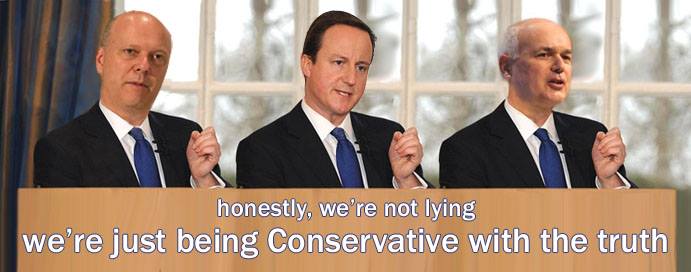
It’s not the first time the government has been reprimanded officially, for trying to mislead the public. Who could forget David Cameron being rebuked by the statistics watchdog over national debt claims – The PM said the government was “paying down Britain’s debts” in a political broadcast, even though the debt was rising (and continues to increase).

Then there was Iain Duncan Smith’s unforgettable misuse of benefit statistics – he was rebuked by Office for National Statistics (ONS) for his claim that 8,000 people moved into work as a result of the benefit cap which was found to be “unsupported by the official statistics.” 

Later in that same month, Duncan Smith also drew criticism and a reprimand for claiming around 1 million people have been “stuck on benefits” for at least three of the last four years “despite being judged capable of preparing or looking for work”. However, the figures cited also included single mothers, people who were seriously ill, and people awaiting assessment.

Anyone would think that the Conservatives are trying to hide the damaging consequences of their draconian policies. (See: The DWP mortality statistics: facts, values and Conservative concept control.) 

The UK Statistics Authority disputed figures announced by the Department for Communities and Local Government, which claimed last year that homelessness had been more than halved since 2003.

However, the government’s claim was based on a very narrow statutory definition of homelessness which included only those who authorities are obliged to help. The number did not take into account homeless people who were given assistance under other schemes.The overall number of people facing homelessness has not dropped. The government also did not explicitly include the statutory homelessness definition in parliamentary debates in the House of commons and Lords, or in press releases.

A spokesperson for the Department for Communities and Local Government said: “We’re aware of the issue raised and have taken steps to make sure this does not arise in future.”

Baroness Grender welcomed the finding saying that the Government “has been caught out playing a numbers game, rather than accepting there is a problem, and getting on with the important work of finding solutions”.  

“It is time to stop spinning the statistics and start solving the problem,” she said.


Looks like my list from 2014  – A list of official rebukes for Tory lies – needs updating.


Related

Government backs new law to prevent people made homeless through government laws from becoming homeless

Labour Party To Refer Groundless Iain Duncan Smith Claim To Statistics Watchdog Again


I don’t make any money from my work. I am disabled because of illness and have a very limited income. But you can help by making a donation to help me continue to research and write informative, insightful and independent articles, and to provide support to others. The smallest amount is much appreciated – thank you. 

DonatenowButton cards


Mental Wealth Alliance response to the psy professional bodies’ statement on benefit sanctions and mental health

aaeaaqaaaaaaaad4aaaajdk1ytqwzdyxltjinwytngjhmc05njdlltmyzmu4mty4owi5za

The British Psychological Society (BPS) has responded jointly with other psychological bodies to call on the UK Government to suspend its cruel and degrading benefit sanctions regime.

The BPS say that the government should suspend its benefit sanctions system as it fails to get people back to work and damages their mental health. s

The professional bodies highlight evidence that sanctions, or the threat of sanctions (benefit cuts following a claimant’s failure to comply with jobcentre conditions, e.g. missing an appointment with their work coach) can result in destitution, hardship, widespread anxiety and feelings of disempowerment.

The call came in a joint response to the Government’s consultation, ‘Improving Lives’, from the British Psychological Society, the British Association of Counselling and Psychotherapy, the British Psychoanalytic Council, the British Association for Behavioural and Cognitive Psychotherapies and the UK Council for Psychotherapy.

Findings from the National Audit Office  show that there is limited evidence the sanctions system actually works, or is cost effective. The bodies argue that the Government needs to change focus from trying to make unemployment less attractive, to trying to make employment more attractive.

BPS President Professor Peter Kinderman said:

“We call for the benefits sanctions regime to be suspended until the completion of an independent review of their impact on people’s mental health and wellbeing

While there is evidence that the sanctions process is undermining mental health and wellbeing, there is no clear evidence that it leads to increased employment.  Vulnerable people with specific multiple and complex needs are being disproportionately affected by the increased use of sanctions.”

In order to improve mental health, the bodies have also called for:

  • Jobcentres to care about the quality of work they provide – citing evidence that bad jobs can be more damaging to mental health than unemployment.
  • The development of statutory support for creating psychologically healthy workplaces.
  • Increased mental health awareness training for jobcentre staff.
  • Review and reform of the work capability assessment (WCA), which may be psychologically damaging, and lacks clear evidence of reliability or effectiveness. 

The Mental Wealth Alliance have written a response to the collective statement on benefit sanctions and mental health:

Source: the free psychotherapy network

From:

Mental Wealth Alliance [1]

 Mental Health Resistance Network; Disabled People Against Cuts; Recovery in the Bin; Boycott Workfare; The Survivors Trust; Alliance for Counselling and Psychotherapy; College of Psychoanalysts; Psychotherapists and Counsellors for Social Responsibility; Psychologists Against Austerity; Free Psychotherapy Network; Psychotherapists and Counsellors Union; Social Work Action Network (Mental Health Charter); National Unemployed Workers Combine; Merseyside County Association of Trades Union Councils; Scottish Unemployed Workers’ Network; Critical Mental Health Nurses’ Network; National Health Action Party.

To:

British Association for Behavioural and Cognitive Psychotherapies

British Association for Counselling and Psychotherapy

British Psychoanalytic Council

British Psychological Society

United Kingdom Council for Psychotherapy

30th January 2017

MWA response to the psy professional bodies’ statement on benefit sanctions and mental health  30th November 2016

We welcome the call from the psychological therapy bodies for the government to suspend the use of sanctions by the DWP subject to the outcomes of an independent review of its welfare policies and their potential damage to the mental health of benefit claimants. Given the accumulation of evidence over many years of the material and psychological suffering inflicted on benefit claimants by workfare-based conditionality[2], it has been frankly shocking that the professional bodies directly concerned with the mental health of the nation have preferred to welcome and participate in workfare policies rather than publicly and vociferously dissociate themselves.

The timing of the statement is given to be the recent report on sanctions by the National Audit Office. Welcome as its report is, the NAO’s perspective on government policy is primarily monetary, not one of health, ethics and social justice. Its “vision is to help the nation spend wisely”.  The choice of this timing represents realpolitik on the part of the professional bodies no doubt, as perhaps is the intention of the conditional statement: “The sanctions process may be detrimental to people’s mental health and wellbeing”. But surely as psychotherapists and counsellors we can do better to represent the overwhelming evidence of personal suffering on such a scale than point to poor returns on expenditure and an ambivalent proposal that sanctions may be detrimental to people’s mental health.

Sanctions are only one dimension, albeit at the sharp end, of a welfare regime based on the political assertion that people need to be coerced off benefits and “nudged” into work. The psychological pressure of WCA and PIP assessments, job search rules, work programmes on “good employee” behaviours and the regular cuts to welfare benefits generally are part and parcel of the psycho-compulsion of the DWP benefits regime.[3]

We dispute the government’s premise that work is a therapeutic priority for people suffering from mental health difficulties. The marshalling of evidence for this modern-day workhouse mentality lacks both substance and integrity. Work has become the ideological mantra for neoliberal welfare policies.

Obviously where people want to work and where employment possibilities exist that will support and nourish people’s mental health, then encouragement, training and professional support should be available. But why is there no acknowledgement of the hundreds of thousands of claimants with mental health difficulties who cannot work, whether they want to or not?[4] Where is the evidence that people with mental health difficulties are actually benefiting from what is now two decades of workfare conditionality in the UK? Where is the evidence that in our current labour market decent jobs exist that will nourish people’s mental health? And where is the evidence that psychological therapy for benefit claimants with long-term mental health disabilities succeeds in supporting them into decent jobs they want, can survive and maintain?

When the professional bodies say, “an estimated 86-90% of people with mental health conditions that are not in employment want to work”, they are supporting the proposition that getting into work is an overwhelmingly important and efficacious goal for this group of benefit claimants. It is not clear where this figure comes from and what it means.

A similar figure is quoted by The Royal College of Psychiatrists’ report on Mental Health and Work (2013)[5], making use of a Sheffield study by J. Secker and others (2001)[6]. In fact, Secker finds that of their sample of 149 unemployed service users, when asked if they were interested in work of any kind – including voluntary and supported work –  “around half (47%) responded positively, and almost the same proportion (43%) had a tentative interest. Only 15 people (10%) had no interest in work”. At the same time, only 25% of respondents saw full-time employment as a long-term goal. 71% said that their preferred vocational assistance would be “help for mental health/keep current service”.[7]

This study does not translate into “86-90% of people with mental health conditions that are not in employment want to work”.[8] What it points to is the complex texture of attitudes, desires and fears around waged work that are the common experience of service users, alongside the harsh realities of the current labour market, the socio-economic environment generally, and the dire state of mental health services of all kinds more particularly.[9]

From our point of view, the professional bodies’ statement is a step in the right direction. It is a step that must now be followed through with active political pressure on the DWP and the Dept of Health to suspend sanctions and set up an independent review of their use, including the damage they inflict on people’s mental health.  Parliament has already called for such a review.[10]

But more than this, the remit of such a review should include all aspects of conditionality in a benefits system that deploy psycho-compulsion through mandatory rules or through the more subtle imposition of behavioural norms which aim to override the claimant’s voice.

We again suggest that the psy professional bodies would benefit by widening their own conversations to include service users and the rank and file of their membership. They would also win more credibility as organisations with ethical and social values independent of the government’s policies of dismantlement of social security and the welfare state if they were willing to make transparent their currently private conversations with DWP.


[1] Mental Wealth Alliance (MWA), formerly the Mental Wealth Foundation, is a broad, inclusive coalition of professional, grassroots, academic and survivor campaigns and movements. We bear collective witness and support collective action in response to the destructive impact of the new paradigm in health, social care, welfare and employment. We oppose the individualisation and medicalisation of the social, political and material causes of hardship and distress, which are increasing as a result of austerity cuts to services and welfare and the unjust shift of responsibility onto people on low incomes and welfare benefits. Our recent conference focused on Welfare Reforms and Mental Health, Resisting the Impact of Sanctions, Assessments and Psychological Coercion.

[2] Parliamentary committees, the national press, endless reports from charities, service user organisations, people with disabilities, claimants unions and workfare campaigners have been reporting the physical and psychological damage of ‘welfare reform’ and its tragic outcomes for a decade.

[3] On psycho-compulsion and the benefits system see Friedli and Stearn http://mh.bmj.com/content/41/1/40.full and https://vimeo.com/157125824

[4] In February 2015 over a million people claiming ESA under a MH diagnosis were in either the Support Group or WRAG. Over 70% of new applicants for ESA are found unfit for work

https://www.gov.uk/government/uploads/system/uploads/attachment_data/file/470545/3307-2015.pdf

[5]https://www.gov.uk/government/uploads/system/uploads/attachment_data/file/212266/hwwb-mental-health-and-work.pdf p.17

[6] Secker, J., Grove, B. & Seebohm, P. (2001) Challenging barriers to employment, training and education for mental health service users. The service users’ perspective. London: Institute for Applied Health & Social Policy, King’s College London.

[7] Ibid, pp. 397-399

[8] Compare a DWP survey of disabled working age benefit claimants in 2013. 56% of 1,349 respondents agreed that they wanted to work. Only 15% agreed that they were currently able to work. Only 23% agreed that having a job would be beneficial for their health. https://www.gov.uk/government/uploads/system/uploads/attachment_data/file/224543/ihr_16_v2.pdf

[9] For example, some of this complexity is flagged by Blank, Harries and Reynolds (2012) The meaning and experience of work in the context of severe and enduring mental health problems: An interpretative phenomenological analysis Work: 47 45(3)    “Stigma, the disclosure of a mental health problem and the symptoms of the mental health problem are frequently described, as well as feelings of hopelessness, seeing recovery as uncertain, and feeling a lack of encouragement from services. Difficulties in accessing occupational health services, having a disjointed work history, lack of work experience, age, lack of motivation and fears about competency, as well as the social benefits system and caring commitments, are also experienced as barriers to accessing employment for people with mental health problems.”

[10] https://www.parliament.uk/business/committees/committees-a-z/commons-select/work-and-pensions-committee/news/benefit-sanctions-report


I don’t make any money from my work. I am disabled because of illness and have a very limited income. But you can help by making a donation to help me continue to research and write informative, insightful and independent articles, and to provide support to others. The smallest amount is much appreciated – thank you. 

DonatenowButton cards

Government Attack on Benefits Claimants: A Message from the Counselling and Psychotherapy Alliance

aaeaaqaaaaaaaad4aaaajdk1ytqwzdyxltjinwytngjhmc05njdlltmyzmu4mty4owi5za

In a letter to the national news media, an organisation representing mental health professionals in the UK write:

“The Alliance for Counselling and Psychotherapy is a nationally recognised interest group of mental health professionals from diverse clinical and academic backgrounds. 

We were appalled to learn that last Friday, February 24th, without consultation or warning, the Government launched yet another vicious attack on the psychological, as well as financial resources of benefit claimants with mental health and physical disabilities (Tory ministers have rewritten the law to deny increased disability benefit payments to more than 150,000 people Daily Mirror, 24 Feb).

In response to the latest Government attack on benefits claimants with mental health and physical disabilities, the Alliance (which is part of the Mental Wealth Alliance) has written to the press and to the major psy-organisations, who we call upon to take a much more critical stance on these issues.

Emergency legislation has over-ridden the rulings of two tribunals that the Department for Work and Pensions (DWP) should expand the reach of Personal Independence Payments (PIP). At stake is mobility support for over 140,000 people who suffer “overwhelming psychological distress” when travelling alone, and more than 1,000 people who need help to take medication and monitor a health condition.

The courts ruled both categories of support needed to be included in the PIP assessment of people’s needs. The DWP itself admits this will include for example those who have a learning disability, diabetes, epilepsy, anxiety or dementia.

In September 2016, Theresa May and her DWP ministers promised there would be no more welfare cuts on top of the string of draconian measures agreed last year as the final contribution of Cameron and Osborne’s campaign to punish those who cannot work. It seems her promise was another lie.

With delicious irony, Disabilities Minister Penny Mordaunt said this latest move would “make sure we are giving support to those who need it most”. Meanwhile on Marr this Sunday, Tory party chairman Patrick McGloughlin responded to criticism of the emergency legislation by stating “as far as supporting disabled people in this country is concerned, we do very proudly.

This is a government determined, come hell or high water, to strip welfare provision to the absolute bone, an ideological commitment it justifies in terms of the fiscal necessity of austerity savings and the therapeutic magic for all benefit claimants of getting themselves into work.

As mental health professionals, we find it tragic and painful to be living through a period in which the social contract between the advantaged and the disadvantaged is under full-frontal attack.

More particularly, we find it shameful that our own professional bodies – psychotherapists, counsellors, psychologists and psychiatrists – continue to participate in the abuse of human rights and of their own ethical codes through their involvement in the psycho-compulsion of benefits complainants through the DWP’s workfare and Work and Health policies.

We call on the government to reverse its policies of welfare cuts as a minimum step to honouring Theresa May’s promises for a fairer deal for those struggling to cope to maintain any decent conditions of life.

And we call upon our fellow ‘psy’ professionals to now insist on a withdrawal of all involvement in supporting the psychological coercion and punishment by the DWP of the most disadvantaged members of our society.

Yours sincerely,

Paul Atkinson and Professor Andrew Samuels (for the Alliance for Counselling and Psychotherapy)

See both letters from the Alliance by clicking on the link below .

Source: Government Attack on Benefits Claimants: A Message from the Alliance

Tory MP says PIP should only go to ‘really disabled’ people, not those with anxiety ‘taking pills at home’

tories-19

George Freeman, MP for Norfolk and chair of the Prime Minister’s Policy Board, has defended the government’s decision to subvert the judicial system, by disregarding the rulings of two independent tribunals concerning Personal Independence Payment (PIP) for disabled people.

In an interview on Pienaar’s Politics, on BBC 5 Live, Freeman said: 

“These tweaks [new regulations to cut PIP eligibility] are actually about rolling back some bizarre decisions by tribunals that now mean benefits are being given to people who are taking pills at home, who suffer from anxiety”.

He claimed that the “bizarre” upper tribunal rulings meant that “claimants with psychological problems, who are unable to travel without help, should be treated in a similar way to those who are blind.”

He said: “We want to make sure we get the money to the really disabled people who need it.”

He added that both he and the Prime Minister “totally” understood anxiety, and went on to say: “We’ve set out in the mental health strategy how seriously we take it.” 

He said: “Personal Independence Payments reforms were needed to roll back the bizarre decisions of tribunals.” 

Freeman’s controversial comments about people with anxiety “at home taking pills” implies that those with mental health problems are faking their disability. He trivialises the often wide-ranging disabling consequences of mental ill health, and clearly implies that he regards mental illnesses as somehow not “real” disabilities.

His comments contradict the government’s pledge to ensure that mental health and physical health are given a parity of esteem, just months after the Prime Minister pledged to take action to tackle the stigma around mental health problems. 

Yet people with the following mental health conditions are likely to be affected by the reversal of the Independent Tribunal’s ruling on PIP mobility awards – those in particular who suffer “overwhelming psychological distress” when travelling alone:

Mood disorders – Other / type not known, Psychotic disorders – Other / type not known, Schizophrenia, Schizoaffective disorder, Phobia – Social Panic disorder, Learning disability – Other / type not known, Generalized anxiety disorder, Agoraphobia, Alcohol misuse, Anxiety and depressive disorders – mixed Anxiety disorders – Other / type not known, Autism, Bipolar affective disorder (Hypomania / Mania), Cognitive disorder due to stroke, Cognitive disorders – Other / type not known, Dementia, Depressive disorder, Drug misuse, Stress reaction disorders – Other / type not known, Post-traumatic stress disorder (PTSD), Phobia – Specific Personality disorder, Obsessive compulsive disorder (OCD).

Note that some of the listed conditions have known physiological causes, too, such as “Cognitive disorder due to stroke”, whereas Agoraphobia, “Stress reaction disorders”, PTDS, some anxiety and depressive disorders, substance use and PTDS, for example, most often arise because of context, circumstances, events and  experiences, whilst the aetiology of some of the other listed conditions is not yet clearly understood by medical experts.

Regardless of the cause of an illness, it is not possible or appropriate to use constructed and arbitrary taxonomies and hierarchical ranks of disability to decide in advance of an assessment how those conditions negatively impact on disabled people’s capacity to live their lives, to perform tasks, their dignity, social inclusion and independence. Freeman’s generalisation was therefore completely inappropriate.

Freeman’s comments signposted the Conservative’s “deserving” and “undeserving” narrative, implying that some disabled people are faking their illnesses. However, disabled people do not “cheat” the social security system: the system has been redesigned by the government to cheat disabled people.

Criticism

Despite some scathing comments and challenges from the opposition, Freeman maintains: “My point was that these PIP reforms are partly about rolling back some frankly bizarre decisions in tribunals which have seen money that should go to the most disabled spent on people with really much less urgent conditions.”

The chief executive of Scope, Mark Atkinson. said: “It is unhelpful to make crude distinctions between those with physical impairments and mental health issues because the kind of impairment someone has is not a good indicator of the costs they will face.

Many disabled people will be now be anxiously waiting to hear as to whether or not these tighter rules will affect their current PIP award.

The government must offer clarity and reassurance that these new measures will not negatively affect the financial support that disabled people receive now or in the future, and that they stand by their commitment to making no further changes to disability benefits in this Parliament.”

Debbie Abrahams MP, Shadow Work and Pensions Secretary has also responded to the comments by Freeman. She said:

“Mr Freeman must immediately apologise for the comments he made regarding sick and disabled people.

Freeman dismissed the needs of people with mental health conditions saying support should go to “really disabled people” rather than those who are “taking pills at home, who suffer from anxiety.

Not only does this fly in the face of the commitment to ‘parity of esteem’ for people with mental health conditions, but it directly contradicts Theresa May’s comments on mental health and two recent tribunal judgements.”

The Shadow Chancellor, John McDonnell, has called on Philip Hammond not to go ahead with the £3.7bn worth of cuts to PIP which will hit 160,000 disabled people.

The announcement about the two controversial regulations to be imposed without any parliamentary scrutiny and debate, and without any democratic dialogue with disabled people, was sneaked out last week by the government. It will mean 160,000 disabled people are likely to see a loss in their income as a direct effect of the changes made by the government to how PIP is awarded.

 McDonnell said

“Theresa May has used the cover of the by-elections to sneak out this announcement hurting so many vulnerable disabled people.

His is a return to the worst politics of spin that so tarnished our politics for so long. It is an act of immense bad faith. She is degrading politics and demeaning the role of Prime Minister.

Next week the Tories will make out that the economy and the public finances are doing better, however, they are planning to go ahead with a £3.7 billion cut to the disabled.

This time last year when the economy and public finances were not doing as well, and the then Chancellor George Osborne tried to cut PIP, Labour stopped him. And in his u-turn he claimed that he could “absorb” the cost of reversing this cut.

Hammond can’t hide from these PIP cuts in his Budget. He needs to explain why he can’t absorb them like his predecessor while he is still going ahead with tax giveaways to the very wealthiest in our country.”

But cutting PIP may cost more than it will save. 

PIP is an in-work benefit as well as being accessible to disabled people out of work. Cutting PIP will invariably mean that some disabled people can no longer remain sufficiently independent to work. Many have lost their higher mobility rate component when they were reassessed for PIP after claiming Disability Living Allowance (DLA), and as a consequence, have lost their motability vehicles – which includes wheelchairs as well as specially adapted cars –  leaving many completely housebound and unable to work. 

The Conservative claim that “the government is committed to supporting the most vulnerable” doesn’t stand up to scrutiny, given the Conservative’s policy record, including cruelly scrapping the Independent Living Fund, which has had a hugely negative impact on those trying their best to lead independent and dignified lives, and the Access To Work funding has been severely cut, this is also a fund that helps people and employers to cover the extra living costs arising due to disabilities that might present barriers to work.

The mental-physical illness distinction is a false dichotomy

It’s not appropriate to dichotomise mental and physical illness, as they are not clearly distinct. Most people would probably recognise that trauma, anxiety and stress can exacerbate illnesses that have a clear physiological basis. However, illnesses that have clearly defined “physical” symptoms can often also cause mental illness. Depression resulting from dealing with chronic pain and adapting to progressive illness and increasing disability is one example of the overlap between the physical and mental dimensions of illness.

I have lupus, which is an autoimmune illness that potentially progressively damages the joints, tendons, muscles, nerves, skin, eyes, blood cells, capacity to fight infections, heart, lungs, kidneys, stomach and liver. And the brain.

Most people with lupus complain of severe headaches, cognitive dysfunction, short-term memory loss and often, coordination difficulties. However, some suffer from depression and anxiety as a direct consequence of inflammatory changes in the brain, and some people also experience mood disorders.  Other forms of neuropsychiatric lupus include psychosis, seizures, stroke and vascular dementia, chorea and cerebrovascular disease. There is often no clear boundary between the mental and physical symptoms of illness.

Health and wellbeing have socioeconomic determinants

Another important consideration is the context in which people live, this also has a significant impact on health and wellbeing. There is an extremely unequal distribution of power and wealth in the UK. There are also corresponding unequal distributions of opportunity, health and psychological wellbeing, inclusion, human rights and citizen freedoms more generally, such as freedom of choice and participation in democracy.

Precarity and anxiety directed by the state through targeted and discriminatory policies at the poorest citizens mediates and maintains a repressive state–citizen power relationship.

There is also an emerging and clear “cognitive” hierarchy: those in positions of power are formulating policies that are premised on a fundamental assumption that poverty happens because of something that poor people don’t do, or that they do “wrong”, and this happens because of cognitive errors and  “wrong” behaviours and attitudes. The assumption, of course, is that the policy decision-makers are more cognitively and behaviourally competent than those they are “nudging” to change their thinking and behaviour.

However, we know that an economic system founded on mythical “market forces, an even more mythical meritocracy – amongst other just-world fallacies – and competitive individualism, which sets citizen groups fighting for increasingly scarce resources, creates just a few “winners”(around 1%) and many more who are dispossessed (99%). 

Policies controversially aimed at “correcting behaviours” are increasingly punitive (benefit sanctions, increased welfare conditionality generally and restrictions on child tax credits are examples of the government’s behaviourist approach) that draw on psychosocial dynamics – imported from techniques of persuasion at the low end of the advertising industry – build and reproduce socioeconomic hierarchies, not only materially, but through dominant discursive practices, and also through inflicting precarity and perpetual anxiety on those people who have the least share of national wealth. 

It’s remarkable that a government that claims “work is beneficial to health” also fail to recognise the impact of neoliberal socioeconomic organisation, prejudiced political narratives and draconian policies, the relationship between growing inequality and increasing poverty, and how this toxic context has a detrimental effect on people’s physical health and psychological wellbeing.

The Conservatives are so busy diverting public attention, and pointing out what they think those people who need mitigation from the worst ravages of neoliberalism are “doing wrong”, they fail to recognise and acknowledge what it is that the government is doing wrong.

When people are attacked, oppressed and controlled psychologically by a so-called democratic government that embeds punishment at the heart of public policies to target the poorest citizens, it’s hardly surprising they become increasingly ill.

slide_3
I wrote a longer article about this for Scisco Media, which can be read here: Social security has been redesigned to cheat disabled people


I don’t make any money from my work. I am disabled because of illness and often struggle as have a very limited income. But you can help by making a donation to help me continue to research and write informative, insightful and independent articles, and to provide support to others. The smallest amount is much appreciated – thank you.

DonatenowButton cards

Urgent: UK-US trade inquiry and consultation quietly launched by select committee, deadline for submissions this Monday

923022_488684277867772_33457858_n

A Commons Select Committee launched a public inquiry on 2 February. The International Trade Committee invited the public to send their views regarding the upcoming UK-US trade deal. The Committee will use those ideas to form recommendations for the government’s approach to the deal. 

However, in addition to the fact that the inquiry wasn’t widely publicised, the time scale given for responding is less than a month. The deadline for written submissions is (unbelievably) Monday 27 February 2017

The Conservatives wholly endorsed the Trans Pacific Partnership (TPP) and the Transatlantic Trade and Investment Partnership (TTIP), which would have enshrined the rights of corporations under International Law, and restrict future governments in overturning the changes through the threat of expensive legal action. These are the largest trade agreements in history, and yet they are NOT open for review, debate or amendment by Parliaments or the public.

The agreements would have shifted the balance of power between corporations and the state – effectively creating a corporatocracy. It would have NO democratic foundation or restraint whatsoever. The main thrust of the agreement was that corporations will be able to actively exploit their increased rights through the TPP and TTIP to extend the interests of the corporation, which is mostly to maximise their profits.

Human rights and public interests certainly would not have been a government priority. Six hundred US corporate advisors have had input into the TTIP. The draft text was not made available to the public, press or policy makers. The level of secrecy around the trade agreement was unparalleled. The majority of US Congress were also kept in the dark while representatives of US corporations were consulted and privy to the details.

A major concern for many of us was that many of the regulations likely to be affected under TTIP are designed to protect our health and the environment by setting safe levels of pesticides in food and chemicals in our toiletries and household cleaning products for example. These safeguards will be eroded or eliminated, potentially exposing people to greater risks of unsafe, unregulated commercial goods to support the interests of multinationals.

The infamous TTIP (and the EU-Canada trade deal CETA) provide likely blueprints for future trade deals. So we also have a good idea of what kind of potential dangers for our public services, such as the NHS, lie ahead. Trump, like the Conservative government here in the UK, is a strong advocate of deregulation and “free market competition” – which effectively means that (even more) of our public services are at risk of being sold off to big multinational companies.

The Conservative privatisation programme has been an unmitigated failure. We have witnessed scandalous price rigging, massive job losses and job insecurity, decreased wages and poorer working conditions, profoundly decreased standards in service delivery, disempowerment of our unions, and above all, at terrible cost to many citizens. But then the Conservatives will always swing policy towards benefiting private companies and not the public, as we know. In Britain, privatisation is primarily driven by the neoliberal New Right’s ideological motives, to “roll back the frontiers of the State” and to “increase efficiency”. 

SumOfUs – a global campaign that fights for people over profits, and is committed to curbing the growing power of corporations – have drafted six key demands for a better, more just trade deal with the aim of “letting Theresa May know right from the start that we won’t let her turn Brexit into a corporate takeover.” 

The SumOfUs community has urged the UK government to uphold the following principles in negotiating a trade agreement with the US: 

1. Labour, climate and human rights agreements and how they’re implemented in UK law should take precedence over the trade agreement.

2. Violations of human rights, workers’ rights and environmental protection should be sanctionable, and those sanctions meaningful and effective. 

3. Negotiations need to happen transparently and inclusively. Text proposals as well as consolidated treaty texts need to be published to allow for public scrutiny and robust debate. Corporations must not be granted privileged access.

4. No special rights for investors. The deal should not enable US corporations to sue the UK over policy in the public interest that threatens their profits.

5. All public services must be exempt and protected from corporate takeover. 

6. No race to the bottom on regulation – all laws should be harmonised to the highest standard and should always allow a party to go beyond the levels of protections agreed upon.

You can visit SumOfUs site to add your name to their message to the International Trade Committee, and endorse the six outlined principles. 

The inquiry is to examine the potential for a UK-US trade agreement, the opportunities and challenges any agreement might present and the implications for the production and sale of goods and services on both sides of the Atlantic. It will make recommendations to the Government on how it should approach trade relations with the US. 

Interested organisations or individuals are invited to submit written evidence to the Committee. (Quickly.)

Terms of reference

The Committee is particularly interested in the following:

  • what the UK’s priorities and objectives should be in negotiating any such agreement;
  • the possible impacts (positive and negative) on specific sectors of the UK economy from such an agreement;
  • the extent to which any agreement could and should open up markets in services, including public services; 
  • the extent to which any agreement could and should open up markets in public procurement;
  • how any agreement should approach regulation, including regulatory harmonisation;
  • what dispute-resolution mechanism should form part of any such agreement; and
  • what involvement, if any, the UK should seek to have in the North American Free Trade Area or any future regional free trade agreement involving the USA.

Send a written submission to the International Trade Committee

Update: The deadline for written submissions is extended to Tuesday 7 March 2017. Written evidence should be submitted via the inquiry page, so you will still have to act quickly to have your say.

Chair’s comments

On launching the inquiry, Committee Chair Angus MacNeil MP commented:

“It seems highly likely that a trade deal with the US will be this Government’s first step in their attempts to reshape the UK’s economic relationship with the rest of the world. This will be a tough test. The UK will be entering negotiations led by a newly formed department. They may feel the need for a deal to show the rest of the world, and domestic audience, that the UK is open for business. And any outline agreement could impact on how our negotiations progress with the EU. 

The US might not be expected to offer many concessions, either. In his first days in office, President Trump has not shied away from implementing his campaign pledges, no matter how radical. How will his pledge to buy American and hire American sit with his aim to negotiate a deal “very quickly” with the UK? Is the President’s desire to prove his reputation for winning in deals bad news for a UK wanting some form of equal partnership?

Most importantly, this is a necessary inquiry as we must move beyond the showmanship and controversy that will no doubt be a feature of this process, and drill down to the detail of what is proposed. What should be the UK’s red lines? What sectors could win and lose? Will access to public services be on the table? 

Crucially, we want to explore how far Ministers should be prepared to go to get the marquee deal they are after.”

Related

A UK trade deal with Trump? Be careful what you wish for

imgres


I don’t make any money from my work. I am disabled because of illness  and have a very limited income. But you can help by making a donation to help me continue to research and write informative, insightful and independent articles, and to provide support to others. The smallest amount is much appreciated – thank you.

DonatenowButton cards

Unethical academics are making a mockery of our education system

aaeaaqaaaaaaaamkaaaajgq4nzqyyjexltu3ngmtndk3zi1hmjgyltziytjkmjdhyzjmnw

Here are two short articles from the Guardian’s Academics Anonymous, which provide insight into two particular problems experienced in universities.

A culture of unethical behaviour is thriving at our universities. But these are publicly funded institutions – and must be held to account.

On the face of it, ethics in academia have transformed over the past few decades – most, if not all, universities now have ethics committees to oversee the quality of research. Yet experience has shown me that, in reality, many academics pay little heed to ethics.

What qualifies as research is open to question, and increasingly academics working in non-traditional areas are not even engaging with the ethics committee at their own universities. Worse, educators are behaving unethically with respect to the university more widely, their professions and the UK taxpayer.

There are academics who have full-time corporate jobs while also receiving a university salary. There are clear examples in many Russell Group institutions. There are academics from professions such as medicine, engineering, law and archaeology who have either part-time or full-time contracts with other employers. Particularly worthy of note are the law academics who work full-time in practice at a law firm while also receiving a full-time university or college salary. 

Is the taxpayer subsidising the legal profession? And what happens to the independence of their university research? The boundaries of these moonlighting academic researchers are defined by their commercial practice.

Some seem not to have much real interest in being academics at all. Yet they are able to use academic titles to give them independent expert status in industry, build a career outside of academia, and ultimately gain financial recompense far greater than an academic salary.

These are not isolated cases, and universities contain many examples of other ways the system is being exploited. At one university, for example, an academic paid about £20,000 to hire a room less than 100m from their university for an event more about self-promotion than academic content.

I’ve witnessed academics hiring students to work on external career projects despite the fact that they are paid by the university. I’ve seen them fixing research contracts at part-time rates of pay while expecting the person to work full time, when full-time contracts are available. Others use their expertise to accredit foreign items looted from war-torn countries for auction houses and the wealthy elite (giving some form of provenance to the stolen treasure, be that through inclusion in an academic article, translating writing on the object, or providing a history of the object for a seller or owner).

Then there are the academics at prestigious institutions who spend just one day a week during term time at their universities, while living and working in other countries. They have signed contracts stating they will contribute to university life – but this is hardly possible if they’re located elsewhere.

No one is begrudging academic success, or ignoring other honourable academics who spend their free time lecturing classes – even at weekends, and for free, in some cases. But there is a widespread cultural problem surrounding ethics at universities.

There is little attention paid to how academics behave or deliver their duties. The remit of university ethics committees – which have clearly not stayed in touch with the issues – needs to be extended to include the decision-making of these academics. Universities are publicly funded institutions and play an important role in societal development. The taxpayer and the students paying high fees should be demanding answers.

If we the educators, paid for by the British taxpayer, do not operate and practise with the strictest ethical codes, how can we expect the rest of society to adopt sound ethical standards? Not only this, but the value of a university education is being diminished.

The ethics problem is systemic, but the solution is simple: academics should be made to disclose conflicts of interest in their jobs, and disclose external contracts and earnings to their university and the public. It is time to relieve the taxpayer of these unethical academics – and ensure that research independence, ethical behaviour and accountability are passed on to the next generation of students, academics and professionals.

Related

Rogue company Unum’s profiteering hand in the government’s work, health and disability green paperwhich in part lays out an account of the revolving door between corrupt corporate and political institutions and handful of careerist academics spinning out a lucrative, ideological and neoliberal niche for themselves.

I’m an academic but I took a corporate job. Should I be ashamed?


uk_university_148613260114861326019872

I’m a British academic, but no longer feel welcome in the UK

Much has been written about the possible brain drain among European nationals following the Brexit vote. A huge 76% of European academics are thinking about leaving the UK. But they aren’t the only ones who feel unwelcome here. I’m a British academic, and I’m leaving to take up a post in Europe.

Thanks to now-mainstream racist and anti-immigration discourses and policies, I no longer feel at home here. For me, Brexit is the last straw, building on foundations laid by the government’s net migration policy (upheld by the supreme court last week). Introduced in 2012 to reduce immigration to “sustainable levels” by limiting family reunification, it has directly undermined my right to family life.

My personal experience of the policy began when I married a non-EU citizen in 2011 while conducting doctoral fieldwork in his home country. Although we’ve now been married six years, my husband has never been able to enter the UK. Our first application for a tourist visa, so that he could meet my family over Christmas in 2012, was rejected on the grounds that I did not have sufficient savings. 

I couldn’t apply for a two-year “leave to enter” visa for him either, because despite juggling part-time teaching and consultancy contracts, I didn’t earn over the £18,600 net income threshold that permits British nationals to invite a non-EU spouse. This threshold is designed to bar entry to individuals who would end up claiming benefits, but ignores other types of assets. In my case, I lived rent-free with my parents so my husband and I would never have had to seek recourse to public funds.

It is estimated that the threshold affects just over 40% of the British working population and discriminates against women in particular. As many as 17,800 families can be broken up each year, and in many cases the policy has actually created de facto single parents reliant on the welfare state.

I now have a full-time job at a university I adore, where I did two Master’s degrees and my PhD. The combination of departments and research centres at my institution makes it the perfect place for me to work. I take great pleasure in my job, which involves supporting less privileged students to enter higher education. And I have been lucky in that my supervisers and colleagues have been unwaveringly supportive, both professionally and emotionally.

I always assumed that I would settle with my husband in the UK, given my strong networks in British academia and the fact that my biological family all live here. But the most my husband and I see each other in person is for one to two weeks up to three times a year, and we maintain our relationship through Skype. Although we would love to start a family, we’ve postponed having children for several years as I couldn’t face the insecurity of giving birth to and raising a baby without him.

I now earn enough to bring my husband to the UK, but applications for “leave to enter” and especially “permanent settlement” are extremely onerous and expensive (£1,500 for the former and £6,000 for the latter). This is compounded by the fact that English is not the official language in his home country, so for permanent settlement he must pass exams requiring a standard of English well beyond that needed for everyday life in the UK. Because he also presents dyslexia symptoms, we would face the cost of years of private language lessons if we are to live together.

Like many other couples, the hurdles, uncertainty, and ongoing distance between us have negatively affected us both financially and emotionally. Until I recently secured a contract at a European university, we were in a constant state of anxiety as to whether we would ever find a solution to our situation.

Incredibly, I have more rights in Europe than I do in Britain as a British citizen. European countries realise the value of highly-skilled employees in making their universities competitive. For instance, Germany’s Humboldt Research Fellowship [pdf] provides a stipend for dependent family members, and funds language acquisition for non-German researchers and their spouses.

I have invested heavily in my academic career, and Britain has invested in me: I benefited from several degrees at previously subsidised rates of £3,500 a year, not to mention a prestigious Research Council PhD grant. But I don’t feel a sense of duty to “give back” to a country that denies me the right to family life.

Debates about the risks that the net migration policy and hard Brexit pose to academia have tended to focus on restrictions on international students [pdf], and the challenges UK universities will face in retaining and recruiting the best academics and securing collaborative research grants. Yet the potential loss of British academics affected by absurd family reunification rules, or those with EU spouses uncertain after Brexit, has remained largely invisible.

But after following the comments on various academic blogs, I sense that I am not the only one looking for an escape route. Theresa May’s model of Global Britain is anything but, and risks alienating those with personal and professional links to the world beyond this small island. Evidence shows that highly skilled Brits are currently emigrating en masse as salaries and quality of life are so much better elsewhere – and there is no reason to assume that this won’t apply to British academics after Brexit.

 Related

No longer welcome: the EU academics in Britain told to ‘make arrangements to leave’

Brexit exodus: EU academics ‘already pulling out’ of UK universities, MPs warned

Both articles are from the Guardian’s Academics Anonymous, which is the blog series where academics tell it like it is. If you would like to be the next contributor to the anonymous blogpost about the trials, tribulations and frustrations of university life, get in touch here.


Lords table motion to kill new Tory restrictions on PIP

westminster-20121020-00081

It’s estimated that around 160,000 disabled people will be stripped of their entitlement to support for the additional costs they face because of their disability after the government shifted the goalposts to deal with upper tribunal legal rulings, according to the Labour Party.

Debbie Abrahams, shadow work and pensions secretary, said: “Instead of listening to the court’s criticisms of personal independence payment assessments and correcting these injustices, the government has instead decided to undermine the legal basis of the rulings.

This is an unprecedented attempt to subvert an independent tribunal judgment by a government with contempt for judicial process.

By shifting the goalposts, the Tory government will strip entitlements from over 160,000 disabled people, money which the courts believe is rightfully theirs.

This is a step too far, even for this Tory government. Labour will stand with disabled people, who have already borne the brunt of seven years of austerity, in fighting this injustice.”

(See also:  Government subverts judicial process and abandons promise on mental health ‘parity of esteem’ to strip people of PIP entitlement. )

Labour opposes the reform and will also seek to block the statutory instrument in the House of Lords and the House of Commons.

According to the Liberal Democrat Voice, the Liberal Democrats have tabled a motion to kill the government attempts to severely restrict disability benefits. 

The government will have used a statutory instrument that amends the Welfare Reform Act 2012. However, statutory instruments are generally used for non-controversial policy changes, and changes that don’t require much parliamentary scrutiny and debate. That clearly is not the case for the Conservative’s contentious Personal Independence Payment regulations, that attempt to overturn court rulings that are meant to be independent of government influence.

The move follows the recent undemocratic announcement by the government that they will be tightening the criteria for claimants of Personal Independence Payments (PIP) which will see people with serious illnesses such as diabetes, epilepsy and a wide range of mental illnesses left without support.

The purpose of Upper Tribunals

The government has introduced the restrictive regulations after losing two cases at tribunals, showing an utter contempt for the UK judiciary system. However, the UK tribunal system is part of the national system of administrative justice

Administrative law is the body of law that governs the activities of administrative agencies of government. It is designed to independently review the decisions of governments, and as such, it provides protection and promotion of fundamental rights and freedoms for citizens.

The Upper Tribunal is a superior court of record, giving it equivalent status to the High Court and it can both set precedents and can enforce its decisions (and those of the First-tier Tribunal) without the need to ask the High Court or the Court of Session to intervene. It is also the first (and only) tribunal to have the power of judicial review. (The Conservatives have a historical dislike of judicial review. See for example: The real “constitutional crisis” is Chris Grayling’s despotic tendencies and his undermining of the Rule of Law.)

The Tribunals, Courts and Enforcement Act 2007 created a new unified structure for tribunals and recognises legally qualified members of tribunals as members of the judiciary of the United Kingdom who are guaranteed continued judicial independence. This means that the judiciary is kept discrete from other branches of government. That is so that courts are not subjected to improper influence from the other branches of government, or from private or partisan interests.

Judicial Independence is vital and important to the idea of separation of powers. The intent behind this concept is to prevent the concentration of political power and provide for checks and balances. It has been significantly influenced by judicial independence principles developed by international human rights constitutional documents. in the application of the European Convention on Human Rights in British law through the Human Rights Act 1998, which came into force in the UK in 2000.

The government’s new regulations are a particularly autocratic move, aimed at simply overturning two legal rulings that the government did not like, partly because their zealotry concerning their anti-welfarism and “small state” neoliberal ideology has been challenged. The regulations were ushered in and imposed so that they would not be subjected to parliamentary scrutiny and debate or democratic dialogue with disabled people or groups and organisations that support and advocate for those with disability. 

From Penny Mordaunt’s statement:

“The first judgement held that needing support to take medication and monitor a health condition should be scored in the same way as needing support to manage therapy, like dialysis, undertaken at home. Until this ruling, the assessment made a distinction between these two groups, on the basis that people who need support to manage therapy of this kind are likely to have a higher level of need, and therefore face higher costs.

The second held that someone who cannot make a journey without assistance due to psychological distress should be scored in the same way as a person who needs assistance because they have difficulties navigating. By way of example, the first group might include some people with isolated social phobia or anxiety, whereas the second group might include some people who are blind. Until this ruling, the assessment made a distinction between these two groups, on the basis that people who cannot navigate, due to a visual or cognitive impairment, are likely to have a higher level of need, and therefore face higher costs.”

Responding to the announcement, Baroness Cathy Bakewell, Liberal Democrat Shadow Secretary of State for Work and Pensions, said:

“The government is using its recent losses in court as an excuse to severely restrict disability benefits. Rather than listening to the ruling they are using it to make matters worse for disabled people – that is utterly outrageous.

What makes things even worse is that they have sneaked this announcement out under the cover of by-elections. These decisions impact the lives of vulnerable people, Liberal Democrats will not allow the Conservatives to get away with treating people with disabilities with such total contempt.”

The Liberal Democrats contributed to scuppering the government’s plans to restrict tax credits back in October 2015.

Personally, I welcome any collaborative effort to challenge the Conservative’s draconian policies which deny people the help and support that they need. 


Related

Government defeated twice on tax credit cuts in House of Lords

Government signal move to curb the powers of the House of Lords after tax credit defeat

The Strathclyde Review clarifies the Conservatives’ authoritarianism

A black day for disabled people – disability benefit cuts enforced by government despite widespread opposition


I don’t make any money from my work. I am disabled because of illness and have a very limited income. But you can help by making a donation to help me continue to research and write informative, insightful and independent articles, and to provide support to others. The smallest amount is much appreciated – thank you.

DonatenowButton cards

Dangerous new changes planned to force sick people into work – or into poverty – Debbie Abrahams

With many thanks to Open Democracy.

The government promised to help disabled people back into work. They’re failing – and now it looks like they’re targeting those who need higher levels of support.


The punitive changes to social security for sick and disabled people were recently highlighted in the film I, Daniel Blake

The Government published its long-awaited ‘Improving Lives: Work, Health and Disability’ Green Paper at the end of October 2016 after originally promising a White Paper in 2015. The White Paper was supposed to define how disabled people would be supported into work and meet the Government’s manifesto pledge of halving the disability employment gap of 34% by 2020 (currently it stands at 32%).

The employment gap was used to justify further draconian cuts in social security support for disabled people in the Welfare Reform and Work (WRW) Bill published last summer. In particular, the Bill announced cuts of approximately £1,500 a year in Employment and Support Allowance to half a million people in the Work-Related Activity Group (ESA WRAG) – those people who had been found not fit for work, but who may be in the future – to be introduced in April 2017.

The 2016 Welfare Reform and Work Act followed the 2012 Welfare Reform Act which Scope estimated by 2018 will have cut nearly £28bn of social security support to 3.7m disabled people. Of course this doesn’t include £4.6bn cuts in social services support since 2010 or the NHS crisis, both of which affect disabled people.

The Green Paper, the consultation for which closed on 17th February just 6 weeks before the ESA WRAG cuts come into place, makes the bold claim that ‘…employment can… promote recovery.’

The issue I have with this statement, and the tone of the Green Paper as a whole, is that this implies that disabled people and people with chronic conditions would recover if only they tried a bit harder, or their doctors weren’t such soft touches. It doesn’t mention ‘shirkers’ directly but comments on how some people with the same condition languish in the ESA Support Group whilst others “flourish at work”, making it clear that’s what they’re thinking, ignoring their own rhetoric about “not treating everyone in a one-size-fits-all way”.

As a former Public Health consultant who researched into the health effects of work and worklessness, I agree that some work is good for health, but I don’t agree with the Government’s flawed thinking underpinning this: that it’s OK for people to return to work when they are still not fit, because it may help. This is not just unsound, it’s dangerous.

The scapegoating of disabled people, which includes people with physical or mental impairments and long-term health conditions as defined under the 2010 Equality Act, has been a hallmark of this Government and the previous Coalition. But even the conclusion of the United Nations inquiry that the UK Government has been responsible for ‘grave…systematic violations’ of the UN Convention on the Rights of Persons with Disabilities since 2010, has been met with Government stonewalling.

It is already well established that disabled people are twice as likely to live in poverty as non-disabled people as a result of the extra costs associated with their disability. Currently 4.2 million disabled people live in poverty and I have been informed from unpublished analysis by an Economic and Social Research Council research project that this is getting worse.

The Government has refused to stop the cuts to ESA WRAG and Universal Credit’s Limited Capacity to Work which come in this April, which will undoubtedly increase the numbers of disabled people living in poverty, threatening their health and well-being. Various discretionary funds may be available, for example the Flexible Support Fund, but there is no guarantee of support and they are quite specific in what they can be used for.

The timing of these cuts when there has been a negligible reduction in the disability employment gap is quite shocking. The Green Paper rings alarm bells that people in the ESA Support Group are the next to be targeted. Linked to this, the new Work Capability Assessment criteria which the Government announced last September (after I committed to scrap the Work Capability Assessment) will be published later this year. These will give a clear indication what the Government’s real agenda is.

The Green Paper also talks about employers and the need for them to invest more in workplace health and occupational health support. This is, of course, very important; 90% of disability and long-term health conditions are acquired, so it is absolutely right to examine what can be done to reduce the risk of employees falling ill and how employers can make reasoned adjustments to support an employee to stay in work if they become disabled. But Access to Work helped only 36,000 disabled people stay in or access work in 2015 out of the 1.4m disabled people who are fit and able to work.

To date, the Disability Confident Campaign launched in 2015 has been a dismal failure making a negligible impact on the disability employment gap. Changes in employer attitudes and behaviour needs practical support, including Access to Work. But what is the Government doing to support employers, especially small businesses given that nearly half the workforce is employed by them? How can a small business access affordable, timely occupational health support? With the NHS in crisis and waiting times for non-urgent treatments escalating, how will timely interventions to help people back to work be delivered?

As always with this Government and the previous Coalition, they are happy to point fingers at everyone else without taking any responsibility themselves. They talk about the impact of work on health and the need for ‘culture change’ and to ‘reinforce health as a work outcome’ but what about the impacts of the social security system on the health of claimants? Their policies have a direct impact on people’s health in the punitive, humiliating way they are too often implemented, but also through the real, enduring poverty and hardship people are forced to live under.

Labour will hold this Conservative Government to account on all these areas, developing meaningful, alternative, approaches with disabled people, employees, and employers as part of our Disability Equality Roadshow. If this Government is committed to a fairer society, they should stop trying to rebuild the economy off the backs of poor, sick and disabled people.

Labour believe, like the NHS, our social security system should be there for all of us in our time of need, based on principles of inclusion, support and security for all, assuring us of our dignity.   

Related

Labour’s Disability Equality Roadshow is a nationwide public consultation about policy with disabled people  Make sure you go and have your say – Labour’s Disability Equality Roadshow comes to Newcastle

The next Disability Equality Roadshow event will be held in London on 27th Feb. Sign up here, to see when the consultation will be held in your area: Eventbrite -Labour’s Disability Equality Roadshow-Brixton. Attending the consultations is free.


I don’t make any money from my work. I am disabled because of illness and have a very limited income. But you can help by making a donation to help me continue to research and write informative, insightful and independent articles, and to provide support to others. The smallest amount is much appreciated – thank you.

DonatenowButton cards

Government subverts judicial process and abandons promise on mental health ‘parity of esteem’ to strip people of PIP entitlement

2014-02-17-BurdenoftheCuts-thumb

Personal Independence Payment is a non means tested benefit for people with a long-term health condition or impairment, whether physical, sensory, mental, cognitive, intellectual, or any combination of these. It is an essential financial support towards the extra costs that ill and disabled people face, to help them lead as full, active and independent lives as possible.

Before 2010, policies that entailed cutting lifeline support for disabled people and those with serious illnesses were unthinkable. Now, systematically dismantling social security for those citizens who need support the most has become the political norm.

Any social security policy that is implemented with the expressed aim of “targeting those most in need” and is implemented to replace a policy that is deemed “unsustainable” is invariably about cost cutting, aimed at reducing the eligibility criteria for entitlement. The government were explicit in their statement about the original policy intent behind Personal Independence Payment. However, what it is that defines those “most in need” involves ever-shrinking, constantly redefined categories, pitched at an ever-shifting political goalpost.

Disability benefits were originally designed to help sick and disabled people meet their needs, additional living costs and support people sufficiently to allow  a degree of dignity and independent living. You would be mistaken in thinking, however, that Personal Independent Payment was designed for that. It seems to have been designed to provide the Treasury with ever-increasing pocket money. Or as the source of profit for private providers who constantly assess, monitor, coerce and attempt to “incentivise” those people being systematically punished and impoverished by the state to make “behaviour changes,” which entail them not being disabled or ill and taking any available employment, regardless of its suitability. 

The government have already considered ways of reducing the eligibility criteria for the daily living component of Personal Independence Payment (PIP) by narrowing definitions of aids and appliances, and were kite flying further limits to eligibility for PIP last  year

Two independent tribunals have ruled that the Department for Work and Pensions (DWP) should expand the scope and eligibility criteria of Personal Independence Payment (PIP), which helps both in-work and out-of work disabled people fund their additional living costs. 

Following a court ruling in favour of disabled people last month, the government is rushing in an “urgent change” to the law to prevent many people with mental health conditions being awarded the mobility component of PIP. The court held that people  with conditions such as severe anxiety can qualify for the enhanced rate of the mobility component, on the basis of problems with “planning and following a journey”, or “going out”. 

The government’s new regulations will reverse the recent ruling and means that people with mental health conditions such as severe anxiety who can go outdoors, even if they need to have someone with them, are much less likely to get an award of even the standard rate of the PIP mobility component. The new regulations also make changes to the way that the descriptors relating to taking medication are interpreted, again in response to a ruling by a tribunal in favour of disabled people.

The first tribunal said more points should be available in the “mobility” element for people who suffer “overwhelming psychological distress” when travelling alone. The second tribunal recommended more points in the “daily living” element for people who need help to take medication and monitor a health condition. 

The Department for Work and Pensions (DWP) warned that it would cost £3.7bn extra by 2022 to  implement the court rulings. The government have responded by formulating “emergency legislation” to stop the legal changes that the upper tribunals had ruled on from happening. From 16 March the law will be changed, without any democratic conversation with disabled people and related organisations, or debate in parliament, so that the phrase “For reasons other than psychological distress” will be added to the start of descriptors c, d and f in relation to “Planning and following journeys” on the PIP form.

It’s worth noting that the Coalition Government enshrined in law a commitment to parity of esteem for mental and physical health in the Health and Social Care Act 2012. In January 2014 it published the policy paper Closing the Gap: priorities for essential change in mental health (Department of Health, 2014), which sets out 25 priorities for change in how children and adults with mental health problems are supported and cared for. The limiting changes to PIP legislation does not reflect that commitment.  

The new regulations are being rushed in without any dialogue with the Social Security Advisory Committee, too. 

The government have designed regulations which would, according to Penny Mordaunt, be about “restoring the policy originally intended when the Government developed the PIP assessment”.

The original policy intent was to create an opportunity to limit eligibility for those people previously claiming Disability Living Allowance (DLA) whilst they were being reassessed for PIP, which replaced DLA. And to limit successful new claims. 

Mordaunt also said in a written statement to MPs: “If not urgently addressed, the operational complexities could undermine the consistency of assessments, leading to confusion for all those using the legislation, including claimants, assessors, and the courts.

“It is because of the urgency caused by these challenges, and the implications on public expenditure, that proposals for these amendments have not been referred to the Social Security Advisory Committee before making the regulations.”

An ever-shifting, ever-shrinking goalpost

Any social security policy that is implemented with the expressed aim of “targeting those most in need” is invariably about cost cutting and reducing eligibility criteria for entitlement. The government were explicit in their statement about the original policy intent of Personal Independence Payment. 

The government has already considered ways of reducing eligibility criteria for the daily living component of Personal Independence Payment by narrowing definitions of aids and appliances, last  year

Prior to the introduction of PIP, Esther McVey stated that of the initial 560,000 claimants to be reassessed by October 2015, 330,000 of these are targeted to either lose their benefit altogether or see their payments reduced.

We ought to challenge a government that displays such contempt for the judicial system, and ask where the ever-reductive quest for the ever-shrinking category of “those with the greatest need” will end. 

Labour’s Shadow Work and Pensions Secretary, Debbie Abrahams MP, criticised the government’s decision to overturn the tribunal rulings, she said“Instead of listening to the court’s criticisms of PIP assessments and correcting these injustices, this government have instead decided to undermine the legal basis of the rulings”.

Abrahams added: “This is an unprecedented attempt to subvert an independent tribunal judgement by a right-wing government with contempt for judicial process.

By shifting the goal posts, the Tory Government will strip entitlements from over 160,000 disabled people, money which the courts believe is rightfully theirs. This is a step too far, even for this Tory government.”

The government seem to think that PIP is a policy that ought to benefit only the needs of a government on an ideological crusade to reduce social security away to nothing – “to target those in greatest need” – an ever-shrinking, constantly redefined and shifting category of disability.

It is not a democratic government: they are unwilling to engage in a dialogue with the public or to recognise and reflect public needs: that’s an authoritarian elite taking public money and handing it out to a very wealthy minority group in the form of “incentivising” tax cuts, who then say to the public that providing lifeline support for disabled people and those with mental health/medical conditions is “unsustainable”.

Implications for the UK’s obligations regarding the UN convention on the human rights of disabled persons and the Equality Act

The new PIP changes, pushed through without any public conversation or democratic exchange with disabled people, are in breach of both the UN convention on the rights of disabled persons, and the UK Equality Act.

In the Equality Analysis PIP assessment criteria document, the government concede that: “Since PIP is a benefit for people with a disability, impairment or long-term health condition, any changes will have a direct effect on disabled people. The vast majority of people receiving PIP are likely to be covered by the definition of “disability” in the Equality Act 2010.

By definition, therefore, the UT [upper tribunal] judgment results in higher payments to disabled people, and reversing its effect will prevent that and keep payments at the level originally intended. The difference in income will clearly make a real practical difference to most affected claimants, and (depending on factors such as their other resources) is capable of affecting their ability to be independently mobile, access services etc – all matters covered by the UN Convention on the Rights of Persons with Disabilities as set out at the start of this Analysis.”

It goes on to say in the document: “However, this does not necessarily mean that the increased payments that would result from the judgment are a fair reflection of the costs faced by those affected, or represent a fair approach as between different groups of PIP claimants.” 

People with the following conditions are likely to be affected by the reversal of the upper tribunal’s ruling on those needing support to manage medication, monitor a health condition, or both:

Diabetes mellitus (category unknown), Diabetes mellitus Type 1 (insulin dependent), Diabetes mellitus Type 2 (non-insulin dependent), Diabetic neuropathy, Diabetic retinopathy, Disturbances of consciousness – Nonepileptic – Other / type not known, Drop attacks, Generalised seizures (with status epilepticus in last 12 months), Generalised seizures, (without status epilepticus in last 12 months), Narcolepsy, Non epileptic Attack disorder (pseudoseizures), Partial seizures (with status epilepticus in last 12 months), Partial seizures (without status epilepticus in last 12 months), Seizures – unclassified Dizziness – cause not specified, Stokes Adams attacks (cardiovascular syncope), Syncope – Other / type not known.

People with the following conditions are likely to be affected by the reversal of the independent tribunal’s ruling regarding PIP mobility awards, with conditions in the general category of “severe psychological distress”:

Mood disorders – Other / type not known, Psychotic disorders – Other / type not known, Schizophrenia, Schizoaffective disorder, Phobia – Social Panic disorder, Learning disability – Other / type not known, Generalized anxiety disorder, Agoraphobia, Alcohol misuse, Anxiety and depressive disorders – mixed Anxiety disorders – Other / type not known, Autism, Bipolar affective disorder (Hypomania / Mania), Cognitive disorder due to stroke, Cognitive disorders – Other / type not known, Dementia, Depressive disorder, Drug misuse, Stress reaction disorders – Other / type not known, Post-traumatic stress disorder (PTSD), Phobia – Specific Personality disorder, Obsessive compulsive disorder (OCD).

The government’s so-called commitment to a “parity of esteem for mental health and physical health” was clearly nothing more than an empty promise – an opportunistic platitude. This is a government that says  one thing and then does exactly the opposite.

 It’s all part of a broader gaslighting and linguistic techniques of neutralisation strategy that passes as Conservative “justification” for their draconian deeds and bullying, discriminatory and uncivilised austerity regime, aimed disproportionately at disabled people.

Commenting on the Ministerial announcement (made yesterday, 23rd February), Rob Holland, Public Affairs Manager at Mencap and Disability Benefits Consortium Parliamentary Co-Chair said:

“We are concerned by these changes to the criteria for Personal Independence Payment (PIP). These risk further restricting access to vital support for thousands of disabled people. Last year, MPs strongly opposed restrictions to PIP and the Government promised no further cuts to disability benefits. Other changes have already had a devastating impact on thousands and in far too many cases people have had to rely on tribunals to access the support they need.

We are deeply disappointed as a coalition of over 80 organisations representing disabled people that we were not consulted about these proposals and their potential impact. The Government must ensure the views of disabled people are properly considered before they proceed with these changes.”

tough-choices


The full ministerial statement can be read here.

Download a copy of the new regulations here.

Related

PIP disability benefit test ‘traumatic and intrusive’

PIP and the Tory monologue

Government guidelines for PIP assessment: a political redefinition of the word ‘objective’


I don’t make any money from my work. I am disabled because of illness  and have a very limited income. But you can help by making a donation to help me continue to research and write informative, insightful and independent articles, and to provide support to others. The smallest amount is much appreciated – thank you.

DonatenowButton cards

Brendan Mason’s brutal murder reflects the darkest consequence of bias motivated behaviour.

brendan_mason_montage2

Brendan Mason, who was brutally murdered by two young men he thought were his friends.
Picture courtesy of the Leicester Mercury

Warning: this article was very distressing to write, and is likely to be very upsetting to read.

Two men who filmed themselves savagely beating a young man with learning difficulties and taunting him, telling him to “smile for the camera”, have been sentenced by Leicester crown court to life imprisonment for his murder. 

In the early hours of 5 July last year, Joshua Hack, aged 21, and Keith Lowe, 22, lured Brendan Mason, a 23 year old man with learning difficulties, to a park, where they said they wanted to spend time with him. Mason believed the two men to be his friends.

When the three of them arrived at the park, Hack and Lowe hung Mason from a tree. They took turns hitting him while the other held him down for several hours, cruelly laughing and taunting him. 

Mason was beaten unconscious, the two young men stripped him naked and threw his body in a pond, leaving him for dead in Abbey Park, Leicester. He was found by park groundsmen at 7.40 am naked, unconscious and bleeding and was airlifted to Walsgrave Hospital in Coventry. 

Medics discovered Mason had 99 separate injuries to his head and body, including brain injury, five broken ribs and a collapsed lung. He died from his injuries later that day.

Hack previously admitted murder. However, Lowe denied it.  However, he was forced to change his plea four days into his trial, after police produced video as evidence of what he did, which he had tried to delete from his phone. 

The court heard the attack had been planned the night before and that Hack and Lowe misinterpreted his behaviour towards a girl at a party. Prosecutor Miranda Moore QC said: “They were describing Brendan as a paedophile and nothing could be further from the truth.”

Mason’s learning difficulties led to a bias in how his ordinary social interactions were perceived.  

She added that police had recovered a “‘trophy’ picture of Lowe standing behind the naked and beaten Brendan, who is sitting cross-legged on the floor”.

A second video, lasting 53 seconds, was deliberately filmed on the mobile phone for others to see. The police managed to retrieve it from cloud storage, showing Lowe taking a direct part in the beating. Lowe had attempted to delete the footage from his phone.

 Moore said: “The audio that goes with it makes that clear.”

The court heard that in the second video, Lowe says: “Brendan. Look at him. Told you whatever he’d done to you, I’d do worse to him, told you that. Move your hand away from your face. Move your hand away from your face now.”

 Moore told the court:

“Officers were able to see the video on the Cloud, showing an unfortunate scene.

It shows Brendan’s battered and naked body with Lowe landing blows.

It was being made for a third party to show them what happened to Brendan.”

The court was also presented with Facebook messages the pair were sending each other while they were in the park with Mason prior to the attack. They used the Facebook messages to plan the attack. Mason who had trusted the two men, believing they were his friends, had no idea to what was about to take place.

At 2:46am, Hack sent Lowe a message saying: “Just hit him and we can both ****off when he’s K’ Od.  Just do it dude.” 

Lowe replied: “Shall we do it because he’s f**ked me off with the lies.”

The court heard how Mason died from inflicted, brutal and unsurvivable brain injuries.

 Mason’s family said in a statement:

“It is not right how two evil people can do such a horrific thing and leave a massive hole in our lives that will never be filled again.

Brendan was a lovely young man and he was so happy. He had numerous learning difficulties and very poor vision.

Even though Brendan had numerous learning difficulties and was very easily led by others, he always knew right from wrong.

The police have been a big part of our life for the past seven months; they have been amazing, but there will never be closure for us.”

Sentencing the two men to life in prison, Judge Michael Chambers said: “You [Lowe and Hack] subjected him [Mason] to a brutal and sustained attack in which you caused him great pain and humiliation.

Brendan Mason was only 23 with his life before him. You subjected him to a merciless attack with extreme violence.

He was sadly a vulnerable young man with learning difficulties. He was kicked mercilessly while naked. The video found was a chilling and deeply disturbing recording of Brendan naked, being kicked repeatedly to the head.

He’s even told to remove his hands from his face so you can kick him. You subjected him to a brutal and sustained attack of extreme violence. You caused him great pain and humiliation.

This was a planned attack, during which you filmed each other assaulting him and you revelled in what you had done, bragging to others. You stripped him naked and left him unconscious. He died later that day.”

The judge added that Hack had lied in his first interview with the police and had even gone with friends to lay flowers at the scene where Mason’s body was found. He said Lowe had bleached his bloodstained trousers, washed his hooded top and hidden his blood-spattered shoes in a bid to cover his tracks.

Senior investigating Officer Detective Chief Inspector Mick Graham said after the trial: “Brendan was known to the defendants and considered them as friends, and they lured him to the park with the full intention of hurting him. Brendan was subjected to a vicious, sustained attack which was filmed by his attackers on their phones. He was left naked and alone in the park having been brutally beaten.”

Hack and Lowe were caught on CCTV footage casually walking into a McDonald’s after they had stripped, hung and then beaten Mason into unconsciousness, seriously and fatally injuring him, and leaving him for dead. Lowe had kept Mason’s mobile phone which he and his then girlfriend were using in the following days.

The growth of prejudice, discrimination and hate crime: Allport’s ladder

Gordon Allport studied the psychological, social, economic and political processes that create a society’s progression from prejudice and discrimination to violence, hate crime and eventually, if the process continues to unfold without restraint, to genocide. In his landmark exploration of how the Holocaust happened, Allport describes psychological and socio-political processes that foster increasing social prejudice and discrimination and he provides insight into how the unthinkable becomes socially and psychologically acceptable: it happens incrementally, because of a steady erosion of our moral and rational boundaries, and propaganda-driven changes in our attitudes towards “others” that advances culturally, by almost inscrutable degrees.

The process always begins with political scapegoating of a social group and with ideologies that identify that group as an “enemy” or a social “burden” in some way. A history of devaluation of the group that becomes the target, authoritarian culture, and the passivity of internal and external witnesses (bystanders) all contribute to the probability that violence against that group will develop, and ultimately, if the process is allowed to continue evolving, genocide.

Economic recession, uncertainty and authoritarian or totalitarian political systems contribute to shaping the social conditions that trigger Allport’s escalating scale of prejudice. The Conservatives are authoritarians, and prejudice towards vulnerable and socially protected minority groups is almost a cardinal Conservative trait.

Conservatives and the right more generally tend to view the social world hierarchically and are more likely than others to hold prejudices toward low-status groups. This is especially true of people who want their own group to dominate and be superior to other groups – a characteristic known as social dominance orientation. (Pratto, Sidanius, Stallworth, & Malle, 1994). 

Neoliberalism, as an overarching political-economic project of the New Right, establishes and maintains social hierarchies and the strong competitive individualism embedded in neoliberal ideology sets up conflict over resources between social groups, undermining social cooperation and solidarity. 

As inequality has grown in the UK, poverty has also invariably increased, which has caused fear and resentment towards intentional, politically constructed scapegoats and outgroups. 

The nature of prejudice

Prejudice, which is based on unjustified generalisations about groups of people, is reductive, it obscures the complexity of the human experience because the person with prejudices oversimplifies the diversity of life found in a single society or throughout the world.  The rise in prejudice and discrimination in the UK is because of right wing ideology and mythology, designed purposefully to divert the public from the fact that they are being systematically dispossessed of their wealth by a minority, and to maintain the legitimacy (and growing wealth) of those perpetrators in power.

The media is far from objective, benign and politically neutral, in fact we have handful of offshore billionaires that have, along with the government, subverted democracy and established a cultural hegemony. This self-appointed elite are telling you that some human lives are worthless, whilst investing in their own, quite literally, at all cost to our society.

The European Commission against Racism and Intolerance (ECRI) reprimanded some British media outlets, particularly tabloid newspapers, for “offensive, discriminatory and provocative terminology”.

In their report, the ECRI said hate speech was a serious problem in the UK. It cited Katie Hopkins’ infamous column in The Sun, where she likened refugees to “cockroaches” and sparked a scathing response from the UN High Commissioner for Human Rights, and the same newspaper’s debunked claim over “1 in 5 Brit Muslims’ sympathy for jihadis”

“ECRI urges the media to take stock of the importance of responsible reporting, not only to avoid perpetuating prejudice and biased information, but also to avoid harm to targeted persons or vulnerable groups,” the report concluded.

It also named David Cameron and Nigel Farage as among the British politicians and institutions accused of fuelling rising xenophobia in the UK as debate continues to rage over Brexit, the refugee crisis and terrorism.

It found a “number of areas of concern” over intolerant political discourse and hate speech, as well as violent racial and religious attacks.

The media is being used by and large as a right-wing outlet for political techniques of persuasion, our culture has been saturated with a pathological persuasion to hate others. And prejudice tends to multitask, it doesn’t prefer one social group. It grows.

We live in a society where more than one in two disabled people have experienced bullying or harassment in the workplace, according to research by the disability charity Scope.

The survey of 1,009 disabled UK adults during August 2016 reveals 53% have been bullied or harassed at work because of their disability.

We have a government that does not observe the basic rights of disabled people. Furthermore, the Conservatives have systematically contravened the human rights of disabled persons. This is a government that uses gaslighting to avoid dialogue and democratic accountability regarding the consequences of their draconian, discriminatory  and illegal policies. Techniques of neutralisation used by the government include the manipulative use of language that is designed to mislead, for example, using the word “help” and support” to describe punitive policies and harsh cuts to lifeline support for disabled people.

The stereotypical mainstream media portrayals of people with disability and medical conditions as “shirkers” and “fakes”, with a significant increase in articles focusing on disability benefit and fraud has impacted negatively on people’s views and perceptions of  disability related benefits, leading to perceptual bias. This was a tactical political move to de-empathise the public,  preempting any objection and backlash to the brutal cuts the Conservatives applied to disabled people’s lifeline social security.

There are political and economic constraints imposed on this group of people by a highly discriminatory government. This sends out a message to the public – that disabled people have fewer rights than other citizens; that disabled people are not experts of their own condition or experiences and need the state to “incentivise” them to “overcome” their disabilities, and institutionalised discrimination, and that it is okay to direct prejudice at disabled people as they are somehow “less” than other citizens. 

Policies are systemised, intentional political actions and reflect how the government thinks society ought to be. The majority of austerity cuts have been directed at those with disabilities. The recent removal of the Employment Support Allowance (ESA) work related activity component; the scrapping of the Independent Living Fund; the purposeful reduction in those people deemed eligible for ESA using an amended and harsher work capability assessment; the reduction in those deemed eligible for Personal Independent Payment and subsequent access to the motability scheme, may be regarded as punitive measures aimed at an “undeserving” group. Such policies have systematically stigmatised, outgrouped and ultimately, contributed to the cultural dehumanisation of disabled people.

The discriminatory cuts have caused ill people to feel desperate and worthless by depriving them of the practical means to live, and have become another means of promoting an ideology defined by exclusion and inequality. Many people with medical conditions have died as a consequence of not being able to meet their basic needs, people with mental distress and illness have been pushed over the precipice, and have taken their own lives.

There has been a 213 per cent rise in hate crimes against disabled people, with figures rising 40% per year from 2015. Lee Irving was brutally murdered in June, 2015. Irving had severe learning difficulties. He was bullied and tortured over several days at a house in Newcastle. When he died from his terrible injuries, his tormentors dumped his body on a footpath. Wheatley’s mother, Julie Mills, his then girlfriend Nicole Lawrence, 22, and his accomplice Barry Imray, 35, who also has learning difficulties, did nothing to protect Irving. They were bystanders Wheatley’s mother, Julie Mills, 52, his then girlfriend Nicole Lawrence, 22, and his accomplice Barry Imray, 35, who also has learning difficulties, did nothing to protect Irving. They were passive bystanders.

The justification narrative for the last two government’s targeted austerity policies, and the policies themselves have entailed negative role modelling which has influenced the attitudes and behaviours of the public. Hate crimes are bias motivated behaviours.

The major contributing factor to the increase in hate crime is the collective bias, attitudes and behaviours of the current government, which has perpetuated, permitted and endorsed prejudices against social groups, with a largely complicit media amplifying these prejudices. Their policies embed a punitive approach towards the poorest social groups. This in turn means that those administering the policies, such as staff at the department for work and pensions and job centres, for example, are also bound by punitive, authoritarian behaviours directed at a targeted group. 

As authority figures and role models, the government’s behaviour establishes a framework of acceptability. Parliamentary debates are conducted with a clear basis of one-upmanship and aggression rather than being founded on rational exchange. Indeed, Cameron openly sneered at rationality and didn’t engage in a democratic dialogue, instead he employed the tactics of a bully: denial, scapegoating, vilification, attempts at discrediting, smearing and character assassinations. This behaviour in turn gives wider society permission and approval to do the same.

Scapegoating has a wide range of focus: from “approved” enemies of very large groups of people down to the scapegoating of individuals by other individuals. The scapegoater’s target always experiences a terrible sense of being personally edited and re-written, with the inadequacies of the perpetrator inserted into public accounts of their character, isolation, ostracism, exclusion and sometimes, expulsion and elimination. The sense of isolation is often heightened by other people’s reluctance to become involved in challenging bullies, usually because of a bystander’s own discomfort and fear of reprisal. 

The consequences of bystander apathy

Hate crime directed at disabled people has steadily risen over the past five years, and is now at the highest level it’s ever been since records began. That’s the kind of society we have become. 

Prejudice and discrimination cause inequality, which in turn causes more prejudice and discrimination. It requires the linguistic downgrading of human life, it requires dehumanising metaphors: a dehumanising socio-political system using a dehumanising language, and it has now become normalised, familiar and all-pervasive: it has seeped almost unnoticed into our lives. It has started to erode the natural inhibitions that prevent us from inflicting harm on other human beings.

Perpetrators have become increasingly confident in the “validity” of their prejudice, the public are being systematically desensitised and indoctrinated. Mocking, negative stereotypes and negative images become a part of our everyday culture and language: hate speech is normalised, discriminatory policies and practices flourish, hate crimes – bias motivated behaviours – are permitted.

Because we have allowed this process to unfold, as a society. 

The Holocaust is the most thoroughly documented example of the extreme cruelty, savagery and hideousness of dehumanisation. It’s a little too easy to imagine that the Third Reich was an aberration. We can take the easy option and dismiss the Holocaust as a very unusual phenomenon – a mass insanity instigated by a small group of deranged ideologues who conspired to seize political power and exercise their monstrously evil will.

It’s comforting to imagine that these were uniquely cruel and savage people. However, one of the most disturbing discoveries about how the Holocaust happened is not that all of the Nazis were madmen and monsters. It’s that they were mostly ordinary human beings, in a society of ordinary citizens like you and I. 


Related

Another bias motivated murder – Who killed Jo Cox?

Conservatives, cruelty and the collective unconscious: behind the cellar door


I don’t make any money from my work. But you can help me continue to research and write informative, insightful and independent articles, and to provide support to others by making a donation. The smallest amount is much appreciated – thank you.

DonatenowButton cards