Author: Kitty S Jones

I’m a political activist with a strong interest in human rights. I’m also a strongly principled socialist. Much of my campaign work is in support of people with disability. I am also disabled: I have an autoimmune illness called lupus, with a sometimes life-threatening complication – a bleeding disorder called thrombocytopenia. Sometimes I long to go back to being the person I was before 2010. The Coalition claimed that the last government left a “mess”, but I remember being very well-sheltered from the consequences of the global banking crisis by the last government – enough to flourish and be myself. Now many of us are finding that our potential as human beings is being damaged and stifled because we are essentially focused on a struggle to survive, at a time of austerity cuts and welfare “reforms”. Maslow was right about basic needs and motivation: it’s impossible to achieve and fulfil our potential if we cannot meet our most fundamental survival needs adequately. What kind of government inflicts a framework of punishment via its policies on disadvantaged citizens? This is a government that tells us with a straight face that taking income from poor people will "incentivise" and "help" them into work. I have yet to hear of a case when a poor person was relieved of their poverty by being made even more poor. The Tories like hierarchical ranking in terms status and human worth. They like to decide who is “deserving” and “undeserving” of political consideration and inclusion. They like to impose an artificial framework of previously debunked Social Darwinism: a Tory rhetoric of division, where some people matter more than others. How do we, as conscientious campaigners, help the wider public see that there are no divisions based on some moral measurement, or character-type: there are simply people struggling and suffering in poverty, who are being dehumanised by a callous, vindictive Tory government that believes, and always has, that the only token of our human worth is wealth? Governments and all parties on the right have a terrible tradition of scapegoating those least able to fight back, blaming the powerless for all of the shortcomings of right-wing policies. The media have been complicit in this process, making “others” responsible for the consequences of Tory-led policies, yet these cruelly dehumanised social groups are the targeted casualties of those policies. I set up, and administrate support groups for ill and disabled people, those going through the disability benefits process, and provide support for many people being adversely affected by the terrible, cruel and distressing consequences of the Governments’ draconian “reforms”. In such bleak times, we tend to find that the only thing we really have of value is each other. It’s always worth remembering that none of us are alone. I don’t write because I enjoy it: most of the topics I post are depressing to research, and there’s an element of constantly having to face and reflect the relentless worst of current socio-political events. Nor do I get paid for articles and I’m not remotely famous. I’m an ordinary, struggling disabled person. But I am accurate, insightful and reflective, I can research and I can analyse. I write because I feel I must. To reflect what is happening, and to try and raise public awareness of the impact of Tory policies, especially on the most vulnerable and poorest citizens. Because we need this to change. All of us, regardless of whether or not you are currently affected by cuts, because the persecution and harm currently being inflicted on others taints us all as a society. I feel that the mainstream media has become increasingly unreliable over the past five years, reflecting a triumph for the dominant narrative of ultra social conservatism and neoliberalism. We certainly need to challenge this and re-frame the presented debates, too. The media tend to set the agenda and establish priorities, which often divert us from much more pressing social issues. Independent bloggers have a role as witnesses; recording events and experiences, gathering evidence, insights and truths that are accessible to as many people and organisations as possible. We have an undemocratic media and a government that reflect the interests of a minority – the wealthy and powerful 1%. We must constantly challenge that. Authoritarian Governments arise and flourish when a population disengages from political processes, and becomes passive, conformist and alienated from fundamental decision-making. I’m not a writer that aims for being popular or one that seeks agreement from an audience. But I do hope that my work finds resonance with people reading it. I’ve been labelled “controversial” on more than one occasion, and a “scaremonger.” But regardless of agreement, if any of my work inspires critical thinking, and invites reasoned debate, well, that’s good enough for me. “To remain silent and indifferent is the greatest sin of all” – Elie Wiesel I write to raise awareness, share information and to inspire and promote positive change where I can. I’ve never been able to be indifferent. We need to unite in the face of a government that is purposefully sowing seeds of division. Every human life has equal worth. We all deserve dignity and democratic inclusion. If we want to see positive social change, we also have to be the change we want to see. That means treating each other with equal respect and moving out of the Tory framework of ranks, counts and social taxonomy. We have to rebuild solidarity in the face of deliberate political attempts to undermine it. Divide and rule was always a Tory strategy. We need to fight back. This is an authoritarian government that is hell-bent on destroying all of the gains of our post-war settlement: dismantling the institutions, public services, civil rights and eroding the democratic norms that made the UK a developed, civilised and civilising country. Like many others, I do what I can, when I can, and in my own way. This blog is one way of reaching people. Please help me to reach more by sharing posts. Thanks. Kitty, 2012

Fabian Commission condemns Cameron’s indifference to growing food poverty

poverty+kid

Poverty, and particularly child poverty, is increasing. Welfare cuts, austerity measures and low wages have pushed hundreds of thousands, including more than 300,000 children, below the poverty line since 2012, despite Tory claims to the contrary, according to the New Policy Institute (NPI) thinktank, who undertook a study after the government refused to bring forward the publication of official data which would have shown the impact on poverty figures of the major welfare reforms introduced in 2013, and enabled the coalition’s record to be properly scrutinised before the election.

The Fabian Society has accused the Government of lacking a strategy to combat food poverty and said proposed tax-credit cuts could become an even bigger driver of poverty and food insecurity than low wages. A year-long independent food and poverty commission by the Fabian Society found the Government lacks any strategy for addressing hunger in the UK, making a mockery of the prime minster’s party conference pledge to lead “an all-out assault on poverty” earlier this month.

The Fabian Commission on Food and Poverty has brought together experts, as well as those experiencing poverty, to look at the roles of government, civil society and the food industry in increasing the availability and accessibility of sustainable, nutritious food.

The final report of the Fabian Commmission on Food and Poverty is due to be launched later today.

The Commission is chaired by Geoff Tansey, a renowned writer, consultant and Trustee of the Food Ethics Council. The Commission also includes leading representatives from across civil society, trade unions, academia and the food industry.

Food is becoming more and more expensive, and falling real incomes make healthy, nutritious diets less affordable. Yet food plays a wider role in society than nutrition. We use it to celebrate family events, milestones, rites of passage, festivals, to socialise with, and to express ourselves. Food poverty also means that people often experience social exclusion as well as hunger.

Yet only last week, David Cameron insisted at Prime Minister’s Questions: “I do not want anyone in our country to have to rely on food banks.”

Whilst the chair of the commission, Geoff Tansey, acknowledged Cameron’s comments, he said: “But for food – people’s most basic need – he currently has no means of achieving this aim and no plan to deliver a reduction in food banks, let alone tackle the other links between food and poverty.

“The commission has even found that the Government has no count of the number of people who currently lack secure access to nutritious, affordable food.”

A recent NHS statistics release show that 7,366 people were admitted to hospital with a primary or secondary diagnosis of malnutrition between August 2014 and July this year, compared with 4,883 cases in the same period from 2010 to 2011 – a rise of more than 50 per cent in just four years. Cases of other diseases rife in the Victorian era including scurvy (an illness arising through a lack of vitamin C), scarlet fever, cholera and whooping cough have also increased since 2010.

Chris Mould, chairman of the Trussell Trust, which runs a nationwide network of foodbanks, said they saw “tens of thousands of people who have been going hungry, missing meals and cutting back on the quality of the food they buy”. 

“We meet families from across the UK struggling to put enough food on the table and, at the extreme end, you get people who are malnourished,” he said. “We often see parents who are going without food so that they can feed their children, and these parents often struggle to afford enough nutritious food for their children, too. We don’t think anyone should have to go hungry in the UK, which is why we’re working to engage the public, other charities and politicians across parties to find solutions to the underlying causes of food poverty.”

The Mirror revealed on Monday how food bank volunteers will feed hundreds more hungry children this week:  Children from deprived families will go without free school meals during half term, leaving their hard-up parents unable to afford an additional meal every day.

The desperate reliance on food banks was one of the problems investigated by the panel, during its fact-finding tour interviewing food producers, charities and those living on the breadline.

Mr Tansey has warned it was “not enough to ensure people don’t go hungry. Food banks are just the tip of the iceberg of a much bigger problem.

“We need to make sure no-one lives in fear of not being able to feed themselves or their family, and to break the bigger links between food and poverty and their effect on people’s health, the environment and working conditions.”

The Fabian Society wants an end to food banks by 2020. Its report also calls for a tax on sugary drinks to see if the higher price cuts demand for unhealthy food, appointing a minister charged with eliminating household food insecurity and launching “food access plans” so people find it easier to buy “affordable, nutritious food”.

The commission’s report says: “We need to recognise that food banks and charitable food providers are not solutions to household food insecurity, they are symptoms of society’s failure to ensure everybody is sustainably well-fed.”

The report also notes that many people who are too poor to afford food do not use food banks for fear of the stigma of being labelled.

The report comes just two months after the children’s commissioner issued a report warning that the government’s continued austerity programme, especially the welfare reforms, does not conform to the standards of the United Nations Convention on the Rights of the Child, which protects children from the adverse effects of government economic measures.

The new Work and Health Programme: government plan social experiments to “nudge” sick and disabled people into work


Illustration by Jack Hudson

The government’s Nudge Unit team is currently working with the Department for Work and Pensions and the Department of Health to trial social experiments aimed at finding ways of: “preventing people from falling out of the jobs market and going onto Employment and Support Allowance (ESA).”

“These include GPs prescribing a work coach, and a health and work passport to collate employment and health information. These emerged from research with people on ESA, and are now being tested with local teams of Jobcentres, GPs and employers.”

This is a crass state intrusion on the private and confidential patient-doctor relationship, which ought to be about addressing medical health problems, and supporting people who are ill, not about creating yet another space for obsessive political micromanagement. It’s yet another overextension of the coercive arm of the state to “help” people into work. Furthermore, this move will inevitably distort people’s interactions with their doctors: it will undermine the trust and rapport that the doctor-patient relationship is founded on.

In the current political context, where the government extends a brutally disciplinarian approach to basic social security entitlement, it’s very difficult to see how the plans to place employees from the Department for Work and Pensions in GP practices can be seen as anything but a threatening gesture towards patients who are ill, and who were, up until recent years, quite rightly exempted from working. Now it seems that this group, which includes some of our most vulnerable citizens, are being politically bullied and coerced into working, regardless of the consequences for their health and wellbeing.

Of course the government haven’t announced this latest “intervention” in the lives of disabled people. I found out about it quite by chance because I read Matthew Hancock’s recent conference speech: The Future of Public Services.

I researched a little further and found an article in Pulse which confirmed Hancock’s comment: GP practices to provide advice on job seeking in new pilot scheme.

Hancock is appointed Minister for the Cabinet Office and Paymaster General, and was previously the Minister of State for Business and Enterprise. He headed David Cameron’s “earn or learn” taskforce which aims to have every young person earning or “learning” from April 2017.

He announced that 18 to 21-year-olds who can’t find work would be required to do work experience (free labour for Tory business donors) as well as looking for jobs or face losing their benefits. But then Hancock is keen to commodify everyone and everything, including public data.

However his references to “accountability and transparency” don’t stand up to much scrutiny when we consider the fact that he recently laid a statement before parliament outlining details about the five-person commission that will be asked to decide whether the Freedom of Information act is too expensive and “overly intrusive.”

He goes on to say: “And this brings me onto my second area of reform: experimentation. Because in seeking to improve our services, we need to know what actually works.”

But we need to ask for whom services are being “improved” and for whom does such reform work, exactly?

And did any of the public actually consent to being experimented upon by the state?

Or to having their behaviour modified without their knowledge?

Now that the nudge unit has been privatised, it is protected from public scrutiny, and worryingly, it is also no longer subject to the accountability afforded the public by the Freedom of Information Act.

The Tory welfare “reforms” are a big business profiteering opportunity, whilst lifeline benefits are being steadily withdrawn: policy context

The current frame of reference regarding Conservative welfare policies is an authoritarian and punitive one. It’s inconceivable that a government proposing to continue cutting the lifeline income of sick and disabled people, including a further £120 a month to those people in the ESA Work Related Activity group (WRAG), will suddenly show an interest in actually supporting disabled people. There are also proposals to further limit eligibility for Personal Independence Payments (PIP) for sick and disabled people. 

From the shrinking category of legitimate “disability” to forcing people to work for no pay on exploitative workfare schemes, “nudge” has been used to euphemistically frame punitive policies, “applying the principles of behavioural economics to the important issue of the transition from welfare to work.” (From: Employing BELIEF: Applying behavioural economics to welfare to work, 2010.)

And guess who sponsored the “research” into “nudging” people into workfare? Steve Moore, Business Development Director from esg, which is a leading welfare to work and vocational skills group, created through the merger and acquisition of four leading providers in the DWP and LSC sector.” How surprising.

It’s even more unsurprising that esg was established by two Conservative donors with very close ties to ministers, and were subsequently awarded very lucrative contracts with the Department for Work and Pensions. I think there may have been a “cognitive bias” in operation there, too. But who is nudging the nudgers?

Of course the “aim” of the “research” is: “breaking the cycle of benefit dependency especially for our hardest to help customers, including the “cohort” of disabled people.”

However, there’s no such thing as a “cycle of benefit dependency”, it’s a traditional Tory prejudice and is based on historically unevidenced myths. Poverty arises because of socioeconomic circumstances that are unmitigated through government decision-making. In fact this government has intentionally extended and perpetuated inequality through its policies.

2020health – Working Together is a report from 2012 that promotes the absurd notion of work as a health outcome.  This is a central theme amongst ideas that are driving the fit for work and the work and health and programme. Developing this idea further, Dame Carol Black and David Frost’s Health at Work – an independent review of sickness absence was aimed at reviewing ways of “reducing the cost of sickness to employers, ‘taxpayers’ and the economy.” Seems that the central aim of the review wasn’t a genuine focus on sick and disabled people’s wellbeing and “health outcomes,” then. Black and Frost advocated changing sickness certification to further reduce the influence of GPs in “deciding entitlement to out-of-work sickness benefits.”

The subsequent “fit notes” that replaced GP sick notes (a semantic shift of Orwellian proportions) were designed to substantially limit the sick role and reduce recovery periods, and to “encourage” GPs to disclose what work-related tasks patients may still be able to perform. The idea that employers could provide reasonable adjustments that allowed people who are on sick leave to return to work earlier, however, hasn’t happened in reality.

The British Medical Association (BMA) has been highly critical of the language used by the government when describing the fit for work service. The association said it was “misleading” to claim that fit for work was offering “occupational health advice and support” when the emphasis was on sickness absence management and providing a focused return to work.

The idea that work is a “health” outcome is founded on an absurd and circular Conservative logic that people in work are healthier than those out of work. It’s true that they are, however, the government have yet again confused causes with effects. Work does not make people healthier: it’s simply that healthy people can work and do. People who have long term or chronic illnesses often can’t work. The government’s main objection to sick leave and illness more generally, is that it costs businesses money. As inconvenient as that may be, politically and economically, it isn’t ever going to be possible to cure people of serious illnesses by cruelly coercing them into work.

The government’s removal of essential in-work support for disabled people – such as the Independent Living Fund, and the replacing of Disability Living Allowance  with Personal Independence Payment in order to reduce eligibility, cut costs and “target” support to those most severely disabled, and the cuts to the Access To Work scheme – means that it is now much more difficult for those disabled people who want to work to find suitable and supported employment.

The politics of punishment

There’s a clear connection between the Nudge Unit’s obsession with manipulating “cognitive bias” – in particular, “loss aversion” – and the increased use, extended scope and severity of sanctions, though most people succumbing to the Nudge Unit’s guru effect (ironically, another cognitive bias) think that “nudging” is just about prompting men to pee on the right spot in urinals, or persuading us to donate organs and to pay our taxes on time.

When it comes to technocratic fads like nudge, it’s worth bearing in mind that truth and ethics quite often have an inversely proportional relationship with the profit motive.

For anyone curious as to how such tyrannical behaviour modification techniques like benefit sanctions arose from the bland language, inane, managementspeak acronyms and pseudo-scientific framework of “paternal libertarianism” – nudge – read this paper, focused almost exclusively on New Right obsessions, paying particular attention to the part about “loss aversion” (a cognitive bias according to behavioural economists) on page 7.

And this on page 18: The most obvious policy implication arising from loss aversion is that if policy-makers can clearly convey the losses that certain behaviour will incur, it may encourage people not to do it,” and page 46: “Given that, for most people, losses are more important than comparable gains, it is important that potential losses are defined and made explicit to jobseekers (e.g.the sanctions regime).” 

The recommendation on that page: We believe the regime is currently too complex and, despite people’s tendency towards loss aversion, the lack of clarity around the sanctions regime can make it ineffective. Complexity prevents claimants from fully appreciating the financial losses they face if they do not comply with the conditions of their benefit.”

The Conservatives duly “simplified” sanctions by extending them in terms of severity, frequency and by broadening the scope of their application to include previously protected social groups.

The paper was written in November 2010, prior to the Coalition policy of increased “conditionality” and extended sanctions element of the Tory-led welfare “reforms” in 2012.

Sanctioning welfare recipients by removing their lifeline benefit – originally calculated to meet the cost of only basic survival needs – food, fuel and shelter – isn’t about “arranging choice architecture”, it’s not nudging: it’s operant conditioning. It’s a brand of particularly dystopic, psychopolitical neobehaviourism, and is all about a totalitarian level of micromanaging people to ensure they are obedient and conform to meet the needs of the “choice architects” and policy-makers.

Nudge even permeates language, prompting semantic shifts towards bland descriptors which mask power and class relations, coercive state actions and political intentions. One only need to look at the context in which the government use words like “fair”, “support”, “help” “justice” and “reform” to recognise linguistic behaviourism in action. Or if you prefer, Orwellian doublespeak.

It’s rather difficult to see how starving people and threatening them with destitution can possibly improve the well-being of many socially excluded people, and help to bring them to inclusion.”

The conclusion that Ancel Keys drew from the Minnesota Starvation Experiment in the the US during the 1940s, (which explored the physical and psychological effects of undernutrition, and stressed the dramatic, adverse effect that starvation had on competence, motivation, behaviour, mental attitude and personality) was that “democracy and nation building would not be possible in a population that did not have access to sufficient food.”

No amount of bland and meaningless psychobabble or intransigent, ideologically-tainted policies can legitimize the economic sanctioning of people who are already poor and in need of financial assistance.

Apparently, citizenship and entitlement to basic rights and autonomy is a status conferred on only the currently economically productive. Previous employment and contributions don’t count as “responsibility,” and don’t earn you any rights – the government believes that citizens owe a perpetual debt of unconditional service to the Conservative’s steeply stratified economy. Not much of a social contract, then. Cameron says he wants to “build a responsible society” by removing people’s rights and reducing or removing their lifeline income. Presumably, free invisible bootstraps are part of the deal.

Government decision-making has contributed the most significant influence on “health outcomes.” Conservative policies have entailed a vicious cutting back of support and a reduction of essential provision for sick and disabled people. In fact this group have been disproportionately targeted for austerity cuts time and time again, massively reducing their lifeline income. It’s not being “workless” that has a detrimental impact on people’s health and wellbeing: it is the deliberate impoverishment of those requiring state aid and support, funded from the public purse, (including contributions from those who now need support), which is being dogmatically and steadily withdrawn.

Making work pay for whom?

If work truly paid, then there would be no need to incentivise” almost 1.2 million low-paid workers claiming the new universal credit with the threat of in-work benefit sanctions if they fail to “take steps to boost their earnings.”

It’s very difficult to see how punishing individuals for perhaps being too ill to work more that a few hours, or those working for low pay or part-time in the context of a chronically weak labour market, depressed wages and with little scope for effective negotiating and collective bargaining can possibly be justified. It’s an utterly barbaric way for a government to treat citizens.

Surely if the government was genuinely seeking to increase choices and to widen access to the workplace for sick and disabled people, it would not be cutting the very programmes supporting and extending this aim, such as the Access to Work scheme  – a fund that helps people and employers to cover the extra living costs arising due to disabilities that might present barriers to work – and the Independent Living Fund.

This government has pushed at the public’s rational and moral boundaries, establishing and attempting to justify a draconian trend of punishing those unable to work, and what was previously unthinkable – stigmatising and punishing legally protected social groups such as sick and disabled people – has become somehow acceptable. We are on a very slippery slope, clearly mapped out previously by Allport’s scale of prejudice.

People’s needs don’t disappear just because the government has decided to “pay down” an ever-growing debt and build a “surplus” by taking money from those that have the least. Or because the government doesn’t like “big state interventions.”

So the recent proposed cut to ESA – and this is a group of sick and disabled people deemed physically incapable of work by doctors – is completely unjustified and unjustifiable. No amount of pseudo-psychology and paternalist cruelty can motivate or “incentivise” people who are medically ill.

It’s for disabled individuals and their doctors – professionals, specialists and experts – to decide if a person can work or not, it’s not the role of the state, motivated only by a perverse economic Darwinist ideology. Maslow taught us that we must attend to our physiological needs before we may be motivated to meet higher level psychosocial ones.

Iain Duncan Smith is a zealot who actually tries to justify further punitive cuts to disabled people’s provision by claiming that working is “good” for people and is the only “route out of poverty.”

Presumably he believes work can cure people of the serious afflictions that they erroneously thought exempted them from full-time employment. 

He stated: “There is one area on which I believe we haven’t focused enough – how work is good for your health. Work can help keep people healthy as well as help promote recovery if someone falls ill. So, it is right that we look at how the system supports people who are sick and helps them into work.”

Duncan Smith undoubtedly “just knows” that his absurd claim is “right.” He’s never really grown out of his “magical thinking” stage, or transcended his dereistic tendencies. His department had to manufacture “evidence” recently in a ridiculous attempt to support Iain Duncan Smith’s imaginative, paternalist claim that punitive sanctions are somehow “beneficial” to claimants, by using fake characters to supply fake testimonials, but this was rumbled and exposed by a well-placed Freedom of Information request from Welfare Weekly.

Recent research indicates that not all work serves to “keep people healthy” nor does it ever “promote recovery.” This assumption that work can promote recovery in the case of people with severe illness and disability – which is why people claim ESA – is particularly bizarre. We have yet to hear of a single case involving a job miracle entailing people’s limbs growing back, vision being restored, or a wonder cure for heart failure, cerebral palsy, multiple sclerosis and lupus, for example.

The government’s Fit for Work scheme is founded on exactly the same misinformative nonsense. It supports profit-making for wealthy employers, at the expense of the health and wellbeing of employees that have been signed off work because of medically and professionally recognised illness that acts as a real barrier to work.

Furthermore, there is no proof that work in itself is beneficial. Indeed much research evidence strongly suggests otherwise.

And where have we heard these ideas from Iain Duncan Smith before?

Arbeit macht frei.

If work really paid then surely there would be no need to “nudge” people by using sanctions, regardless of whether or not they are employed. “Making work pay” is all about reducing support for those who the government deems “undeserving,” to “discourage welfare dependency” by making any support as horrible as the workhouse – founded on the principle of “less eligibility”, where conditions for those in need of support were punitive and kept people in a state of desperation so that even the lowest paid work in the worst of conditions would seem appealing.

The public/private divide

For a government that claims a minarchist philosophy, remarkably it has engineered an unprecedented blurring of public/private boundaries and a persistent violation of traditionally private experiences, including thoughts, beliefs, preferences, autonomy and attitudes via legislations and of course a heavy-handed fiscal conflation of public interests with private ones.

This also caught my attention from Matthew Hancock’s speech transcript:

“My case is that we need continuous improvement in public services. And for that we must reform the relationship between citizen and state. [My bolding]

“The case for reform is strong. Because people have high and rising expectations about what our public services should deliver. Because budgets are tight, and we have to make significant savings for our country to live within her means.”

Basically, the “paternalistic libertarian” message here is that we will have to expect less and less from the state, as the balance between rights and responsibilities is heavily weighted towards the latter, hence requiring the “reform” of the relationship between citizen and state.

However, surely it is active, democratic participation in processes of deliberation and decision-making that ensures that individuals are citizens, not subjects.

Social democracy evolved to include the idea of access to social goods and improving living standards as a means of widening and legitimizing the scope of political representation.

Political policies are defined as (1) The basic principles by which a government is guided. (2) The declared objectives that a government  seeks to achieve and preserve in the interest of national community. As applied to a law, ordinance, or Rule of Law, it’s the general purpose or tendency considered as directed to the welfare or prosperity of the state or community.

Once upon a time, policy was a response from government aimed at meeting public needs. It was part of an intimate democratic dialogue between the state and citizens. Traditional methods of participating in government decision-making include:

  • political parties or individual politicians
  • lobbying decision makers in government
  • community groups
  • voluntary organisations
  • public opinion
  • public consultations
  • the media

Nowadays, policies have been unanchored from any democratic dialogue regarding public needs and are more about monologues aimed at shaping those needs to suit the government. 

Nudge does not entail citizen involvement in either its origin or design. The state intrusions are at such an existential level, of an increasingly authoritarian nature, and are of course reserved for the poorest, who are deemed “irrational” and incapable of making “the right decisions.”

Yet those “faulty decisions” are deemed so from the perspective of the Behavioural Insights Team, (the “Nudge Unit”) who are not social psychologists: they are predominantly concerned with behavioural economics, decision-making and how governments influence people – “economologists”, changing people’s behaviours, enforcing compliance to fulfil political aims. That turns democracy completely on its head.

The Nudge Unit gurus claim that we need help to “correct our cognitive biases”, but those who make policies have their own whopping biases, too.

Nudge is the new fudging

Nudge is a prop for New Right neoliberal ideology that is aimed at dismantling a rights-based society and replacing it with an insidiously nudged, manipulated, compliant, and entirely “responsible”, “self-reliant” population of divided, isolated state-determined individuals who expect nothing from their elected government.

The Conservatives are obsessive about strict social taxonomies and economic enclosures. The Nudge Unit was set up by David Cameron in 2010 to try to “improve” public services and save money. The asymmetrical, class-contingent application of paternalistic libertarian “insights” establishes a hierarchy of decision-making “competence” and autonomy, which unsurprisingly corresponds with the hierarchy of wealth distribution.

So Nudge inevitably will deepen and perpetuate existing inequality and prejudice, adding a dimension of patronising psycho-moral suprematism to add further insult to politically inflicted injury. Nudge is a fashionable fad that is overhyped, trivial, unreliable; a smokescreen, a prop for neoliberalism and monstrously unfair, bad policy-making.

As someone who (despite the central dismal and patronising assumptions about the irrationality of others that king nudgers have as a central cognitive bias and the traditional prejudices that Tory ideology narrates,) manages to make my own decisions relatively without bias, intelligently, rationally, critically, carefully and coherently, and that, along with my professional and academic background, I can and will conclude that no matter how you dress it up, nudge is a pretentious, cringeworthy pseudo-intellectual dead-end.

 A Nudge for the Conservatives from history

The more things change for the Tories, the more they tend to stay the same.

In the 1870s, England had a recession and the Conservatives launched a Crusade of cuts to welfare expenditure to diminish “dependency” on poor law outdoor relief – non-institutional benefits called “out-relief” because it was paid to the poor in their own homes from taxation, rather than their having to go into the punitive “deterrent” workhouses.

The Crusade included cutting medical payments to lone mothers, widows, the elderly, chronically sick and disabled people and those with mental illness. The 1834 Poor Law amendment was shaped by people such as Jeremy Bentham, who argued for a disciplinary, punitive approach to social problems and particularly poverty, whilst Thomas Malthus focused attention on overpopulation, and moralising about the growth of illegitimacy. He placed emphasis on moral restraint rather than poor relief as the best means of easing the poverty of the lower classes. 

David Ricardo argued that there was a problem with poor relief provision “interfering” with an iron law of wages. Ricardo claimed that aid given to poor workers under the old Poor Law to supplement their wages had the effect of undermining the wages of other workers, so that the Roundsman System and Speenhamland system led employers to reduce wages, and needed reform to help workers who were not getting such aid and rate-payers whose poor-rates were going to subsidise low-wage employers. Yet we found, despite Ricardo’s pet theory, that the poor law deterrent element served to push wages down further.

The effect of poor relief, in the absurd view of the reformers, was to undermine the position of the “independent labourer.” They also wanted to “make work pay.” And end the “something for nothing” culture. But much subsequent evidence shows that reducing support for people out of work actually drives wages and working conditions down.

Neither the punitive poor law amendment act of 1834 or the Crusade “helped” people into work or addressed the lack of available paid work – that’s unemployment, not the made-up and intentionally stigmatizing word “worklessness”.

And its utter failure as a credible account of poverty – the-blame-the-individual narrative and the notion that relief discourages “self-reliance” – fuelled the national insurance act of 1911 and the development of the welfare state along with the other civilising and civilised benefits of the post-war settlement. 

The Conservatives inadvertently taught us as a society precisely why we need a welfare state.

We learned that it isn’t possible to be “thrifty” or help ourselves if we haven’t got the means for meeting basic survival needs. Nor is it possible to be nudged out of poverty when the means of doing so are not actually available. No amount of moralising and pseudo-psychologising about poor people actually works to address poverty, and structural socioeconomic inequalities.

The government’s undeclared preoccupation with behavioural change through personal responsibility is simply a revamped version of Samuel Smiles’s bible of Victorian and over-moralising, a hobby-horse: “thrift and self-help” – but only for the poor, of course. Smiles and other powerful, wealthy and privileged Conservative thinkers, such as Herbert Spencer, claimed that poverty was caused largely by the irresponsible habits of the poor during that era. But we learned historically that socioeconomic circumstances caused by political decision-making creates poverty.

Conservative rhetoric is designed to have us believe there would be no poor people if the welfare state didn’t somehow “create” them. If the Tories must insist on peddling the myth of meritocracy, then surely they must also concede that whilst such a system has some beneficiaries, it also creates situations of insolvency and poverty for others.

In other words, the same system that allows some people to become very wealthy is the same system that condemns others to poverty.

This wide recognition that the raw “market forces” of the old liberal laissez-faire (and the current starker neoliberalism) causes casualties is why the welfare state came into being, after all – because when we allow such competitive economic dogmas to manifest, there are invariably winners and losers.

That is the nature of “competitive individualism,” and along with inequality, it’s an implicit, undeniable and fundamental part of the meritocracy myth and neoliberal script. And that’s before we consider the fact that whenever there is a Conservative government, there is no such thing as a “free market”: in reality, all markets are rigged for elites.

Public policy is not an ideological tool for a so-called democratic government to simply get its own way. Democracy means that the voices of citizens, especially members of protected social groups, need to be included in political decision-making, rather than so frankly excluded.

We elect governments to meet public needs, not to “change behaviours” of citizens to suit government needs and prop up policy “outcomes” that are driven entirely by traditional Tory prejudice and ideology.

And by the way, we call any political notion that citizens should be totally subject to an absolute state authority “totalitarianism,” not “nudge.”

demcracy
Courtesy of Robert Livingstone

Update: The government have since announced the introduction of a number of “policy initiatives” aimed at reducing the number of people claiming Employment and Support Allowance (ESA). These initiatives are currently still at a research and trialing stage. Health Management, a subsidiary of MAXIMUS are to deliver the fit for work programme, which was set up based on recommendations from the Health at Work – an independent review of sickness absence report by Dame Carol Black and David Frost. The review was aimed at “reducing the cost of sickness to employers, ‘taxpayers’ and the economy.”

Fit for Work occupational health professional will have access to people’s diagnoses from their fit notes, the fit note end date and any further information that the GP considers relevant to their absence from work or current treatment (at the discretion of the GP). The primary referral route for an assessment for the Maximus programme will be via the GP.

The government is cutting funding for contracted-out employment support by 80%, following the Spending Review. The Department for Work and Pensions has indicated that total spending on employment will be reduced, including not renewing Mandatory Work Activity and Community Work Placements, the new Work and Health Programme will have funding of around £130 million a year – around 20% of the level of funding for the unsuccessful Work Programme and Work Choice, which it will replace.

Iain Duncan Smith says: “This Spending Review will see the start of genuine integration between the health and work sectors, with a renewed focus on supporting people with health conditions and disabilities return to and remain in work. We will increase spending in this area, expanding Access to Work and Fit for Work, and investing in the Health and Work Innovation Fund and the new Work and Health Programme.” 

Meeting the Government’s goal of halving the employment gap between disabled and non-disabled workers – moving around one million more disabled people into work – will be no easy task. Not least because despite Iain Duncan Smith’s ideological commitments, and aims to “reduce welfare dependency,” most disabled people who don’t work (and claim ESA) can’t do so because of genuine and insurmountable barriers such as incapacitating and devastating, life-changing illness. No amount of targeting those people with the Conservative doublespeak variant of “help” and nasty “incentivising” via welfare sanctions and benefit cuts will remedy that.


Government signal move to curb the powers of the House of Lords after tax credit defeat

Queen

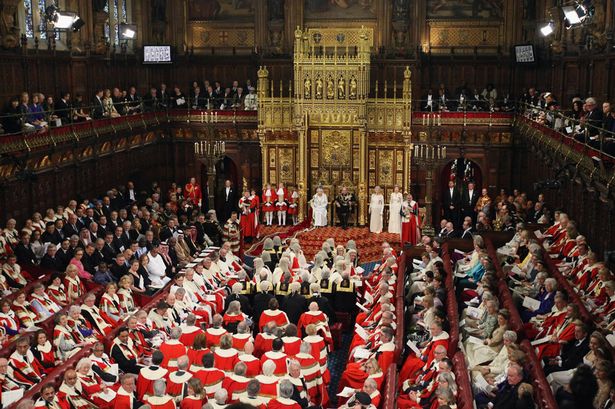
Following the government’s embarrassing defeat on the proposed tax credit cuts in the House of Lords yesterday, the Conservatives are planning to curtail the powers of the Peers. Both the chancellor and David Cameron said the defeats have raised a “constitutional issue” which they were determined to tackle.

A Downing Street spokesman has said: “The prime minister is determined we will address this constitutional issue. A convention exists and it has been broken. He has asked for a rapid review to see how it can be put back in place.”

Yet even Lord Lawson, the former Conservative chancellor, voiced that he was struggling to support the tax credit cuts and he called on Osborne to do more to help low-income earners. He said: “Here a great deal of the harm is at the lowest end, and that is what needs to be looked at again. That is what concerns me.”

He added: “It is not just listening which is required [from the government] but change.”

The Clerk of the Parliaments has confirmed that Commons financial privilege does not extend to statutory instruments. Many Peers pointed out throughout the debate that welfare policy isn’t “budgetary.”

But on Tuesday, Downing Street will outline plans for a “rapid review”, which will examine ways to secure the “supremacy of the House of Commons on financial matters and secondary legislations, after the prime minister accused peers of “breaking a constitutional convention.” A furious Cameron is planning to set limits on the power of the House of Lords after George Osborne suffered a major and humiliating blow yesterday, when Peers voted to delay tax credit cuts in order to protect those who would lose out.

The Upper House voted in favour of a motion by the former Labour minister Lady Hollis to halt the cuts until the government has responded to new evidence regarding the likely negative impact of the cuts on protected social groups, and produces a scheme to compensate low-paid workers for three years. 

Baroness Lister pointed out that no impact assesment was carried out regarding the cuts, and said “the Bill is an example of none evidence-based policy making. She said “It betrays lack of understanding of policy and people’s lives,” and added “getting an impact assessment from the government is like pulling teeth”.

Lord Campbell observed during the debate that because of the Conservative’s pre-election lies, and because the public were deliberately mislead by several statements from the Tories, saying there would be “no cuts to tax credits,”  that “constitutional convention and niceties are not a priority.”

Meanwhile, George Osborne has indicated he will seek to calm tensions by softening the impact of the planned cuts which have been put on hold by the vote in the Upper House. In language that reflected some of the motion, he told the BBC he would help people struggling in the “transition” period when he delivers his autumn statement on 25 November.

He said: “Unelected Labour and Liberal Lords have defeated a financial matter passed by the elected House of Commons, and David Cameron and I are clear that this raises constitutional issues that need to be dealt with. However, it has happened and now we must address the consequences of that. I said I would listen and that is precisely what I intend to do. I believe we can achieve the same goal of reforming tax credits, saving the money we need to secure our economy while at the same time helping in the transition. That is what I intend to do at the autumn statement.”

The “rapid review” will establish ways of guaranteeing that “financial measures” cannot be overturned by the House of Lords despite the fact that Labour successfully argued that because the tax credits were being introduced through a statutory instrument and had not been declared as a formal financial measure, the move in the Upper House was justified. The review will examine ways of guaranteeing that statutory instruments cannot be overturned by the Lords, who have only done so on five occasions.

Downing Street and Treasury officials spoke after Hollis’s motion was passed by 289 to 272 votes. Peers also voted in favour of a milder motion by the crossbench Peer Lady Meacher – by 307 to 277 votes – that also declined to support the cuts until the government responds to the Institute for Fiscal Studies analysis of the negative impacts of the Bill. A fatal motion, tabled by the Liberal Democrat Peer Lady Manzoor, would have halted the Bill, but it was defeated by 310 votes to 99.

During the Lords debate, Baroness Smith said that 60% of the population want to see a u-turn on this policy. She also points out that the original Labour tax credit legislation wasnt subject to financial privilege. She also said that the government truncated the legislative process to introduce a wide reaching and radical change of policy, to avoid a degree of scrutiny. Baroness Hollis urged peers to support the working poor, not government. She argued that the Commons votes were taken based on incomplete evidence.

John McDonnell, the shadow Chancellor, said: “George Osborne has got to think again. He has been defeated twice in the House of Lords tonight, but there are a large number of Conservative MPs as well who have been telling him very, very clearly he has got to think again.”

Just hours before the Lord’s debate, fresh evidence emerged of the potential impact of the tax credit changes on low-paid employees.

Policy in Practice, a welfare-to-work consultancy, calculated that some workers will be able to keep just 7p in every extra £1 they earn, effectively putting them on a 93 per cent marginal tax rate.

The report concluded the overall package of measures – including raising the national minimum wage and increasing the tax allowance – would leave two-thirds of claimants worse off and warned that owner-occupiers would be worst affected.

The calculations were revealed by the Conservative-supporting Spectator, which has urged a rethink of the policy that has been likened to the poll tax.

4-38-degrees-get.jpgA 38 Degrees campaigner outside the Houses of Parliament. An online campaign sought to drum up support among members of the Second Chamber to vote against motion.

Courtesy of Getty images.

Government defeated twice on tax credit cuts in House of Lords

Lords voting

I doubt there’s a single person on low pay that is happy about the Conservative proposals to cut their tax credits and subsequently, their living standards, further. Today, research by welfare reform group Policy in Practice comes as peers prepare to debate George Osborne’s proposals, and it concludes that two-thirds of working tax credit recipients will be worse off in 2020.

The tax credit cuts were deliberately left out of the Tory manifesto, and when asked directly if his government was going to cut tax credits, Cameron chose to lie and said no. Now the Conservatives are claiming that this policy, never declared before the election, is somehow a “central plank” of the budget. The claim that Conservatives had previously declared cuts to welfare doesn’t stand up to scrutiny, either, because they did not specify what cuts they would make, despite being asked several times, and they claim to be a party that is all about “making work pay”. 

The Conservatives are claiming that the cuts were “democratically voted” through in the House of Commons, yet their majority in the lower House may not have happened at all, had they been honest prior to the election and declared their intention to cut people’s tax credits. 

The threats issued to the Upper House from the government arose  because the Conservatives are facing defeat on what is an extremely unpopular reform, even amongst their own party ranks, and are truly remarkable, showing a contempt for democratic process and a lack of willingness to engage in genuine, transparent democratic dialogue.

Earlier this year, the Institute for Fiscal Studies (IFS) asked George Osborne to specify how he will reach targets announced in the budget, given that the poorest had been the hardest hit by draconian benefit cuts already. The IFS said that the worst of the UK’s spending cuts are still to come.

I said at the time that it’s not that Osborne can’t answer the IFS challenge: he won’t.

David Gauke, the Treasury secretary at the time was pressed repeatedly on the BBC’s Daily Politics to explain if the Tories would detail their planned welfare cuts beyond the £3billion previously specified.

He replied: “We will set it out nearer the time which will be after the election.”

Pre-general election television comments have exposed Prime Minister David Cameron’s lies about his party’s proposal to reduce child tax credits. During a special episode of BBC’s Question Time, aired in April, presenter David Dimbleby asks: “There are some people that are worried about you cutting child tax credits, are you saying absolutely as a guarantee that you’d never have it?”

To which the Prime Minister responds: “First of all child tax credit we increased by 450 pounds …” Dimbleby interjects: “And it’s not going to fall?” to which the PM clearly replies: “It’s not going to fall.”

It’s therefore a bit much to hear lectures on democratic process from a government that was so dishonest to the electorate before the election.

Following an impassioned, powerful and eventful three-hour debate, the Lords voted by 289 votes to 272 – a majority of 17 – for low-income families to be given “full transitional protection” from the cuts for at least three years.

They also supported a motion by 307 votes to 277 – a majority of 30 – calling for the cuts to be delayed until the Government responds to analysis of their impact by the Institute for Fiscal Studies and considers “mitigating action”.

Lord Campbell observed in the House of Lords Tax credit debate today that because of the Conservatives pre-election lies, and because the public were deliberately misled by several statements saying there would be “no cuts to tax credits,”  that “constitutional convention and niceties are not a priority.”

There are three separate motions from the Liberal Democrats, Labour and the crossbenchers presented to the Peers, calling for the cuts to be either scrapped or paused and re-scrutinised after further evidence has been gathered. The Liberal Democrats want to completely scrap the changes, which is a risky tactic that many have deemed a “fatal motion.” Labour are seeking to delay the changes, so that the Commons may re-scrutinise them in light of new evidence, and respond to that evidence, to mitigate the impact on the poorest, and crossbencher, Lady Meacher, is also calling for a delay in the cuts.

During the Lords debate, Baroness Smith said that 60% of the population want to see a u-turn on this policy. She also points out that the original Labour tax credit legislation wasnt subject to financial privilege. She said that the government truncated the legislative process to introduce a wide reaching and radical change of policy, to avoid a degree of scrutiny. Baroness Hollis urged peers to support the working poor, not government. She argued that the Commons votes were taken based on incomplete evidence. Her very powerful speech was delivered to a completely silent Upper House.

Labour’s shadow Lords leader Baroness Smith expressed her regret that the focus of the debate has been largely on the constitution rather than the people that will be affected by the changes.

She said there is “no constitutional crisis at all”, and “peers will not exceed their powers but will also not be cowed in their responsibility to hold the government to account.”

The Clerk of the Parliaments has confirmed that Commons financial privilege does not extend to statutory instruments. Many Peers have pointed out throughout the debate that welfare policy isn’t “budgetary.”

Conservative Chancellor Lord Lawson said: “I am torn because I believe there are aspects to these measures which need to be reconsidered and indeed changed. The great harm, or a great deal of the harm, is at the lowest end and that is what needs to be looked at again. That is what concerns me.

I think it is perfectly possible with tweaking it to take more from the upper end of the tax credit scale and less from the lower end of the tax credit scale.”

He also said  “It is not just listening which is required [from the government] but change”.

Baroness Hollis said that the government will save money as a result of the increase in the minimum wage. And by 2019 most tax credit claimants won’t be claiming tax credits because they will be on universal credit. Taken over the course of the parliament, the government will be making savings, “probably exceeding the very cuts the government demands,” she said.

The Reverend Christopher Foster pointed out that wage levels are low and the cuts are likely to have a very negative impact, including raising indebtedness, social injustice, damaged lives, ruining life chances, with detrimental consequences to mental health. He said this government provides  “a carrot for some, a stick for others” .

He went on to say that the cuts to the poorest are morally indefensible – “a punishment, not encouragement”.  He urged a vote in the interests of the poorest workers, saying he was appalled at the government for “masking the issues.” He called for house to clearly express disapproval at the government proposals. He said: “The Bill is not acceptable in its current form.” Like others, he emphasised that the government has moral obligations, and needs to do more than simply meeting fiscal targets.

Conservative Lord Mackay tried to argue a case for Commons financial privilege, as did other Conservative peers, including Lord Tebbit.

Baroness Lister pointed out that no impact assesment was carried out regarding the cuts, and said “the Bill is an example of none evidence-based policy making.”

She said “It betrays a lack of understanding of policy and people’s lives,” and added “getting an impact assessment from the government is like pulling teeth”.

She also pointed out that the cuts will affect protected groups. Carers and disabled people will be negatively impacted, and the self-employed won’t have their losses offset at all by the “living wage.”

She cited the Resolution Foundation research, that finds 200, 000 children, rising to 600,000 by 2020, will be plunged into poverty because of the proposed cuts. She said there is “no adequate defence of policy – lone parents will be hardest hit. Tax allowances and the living wage won’t mitigate the impact.”

She concluded that child tax credits were introduced to address child poverty, and that the Bill penalises hard work. She pointed out that “the House of Lords has a role of scrutinising policy – and this policy doesn’t stand up to scrutiny”.

The first vote was on Liberal Democrat Baroness Manzoor’s amendment to move to the above motion: “to leave out all the words after “that” and insert “this House declines to approve the draft Regulations laid before the House o7 September.”

This would have killed off the legislation, but it was defeated by by 310 votes to 99 – a majority of 211.

Welfare must not be seen as the Treasury’s disposable income

In the 2010 Coalition emergency budget, David Cameron claimed that austerity measures were to be introduced only to reduce the deficit.

Doesn’t anyone else remember that since then, David Cameron stood up at a Lord Mayor’s banquet in London, in front of the financial elite, in November 2013 and ostensibly admitted – and from an ostentatious golden throne, no less – that austerity was not an emergency response to difficult economic events after all, but a permanent disassembling of the state, signalling that he had no intention of resuming public spending once the structural deficit has been eliminated.

Many of us had already recognised that the cuts were ideologically driven. But not enough of us to make a difference in May and to vote and prevent an unforgivable betrayal of future generations. It’s also a grievous betrayal of the previous generations who fought to establish universal suffrage and fought to secure the post-war settlement. Our Social Security, Legal Aid and National Health Service. These are civilising and civilised prerequisites for a fair, human rights-based first world democracy.

proper Blond
There was another fall in income tax receipts that sent Britain’s deficit
spiralling to £12.1bn in August, the widest shortfall in government funding since 2012. So where is our money going exactly?

For a government whose raison d’etre is deficit reduction, the Conservatives aren’t very good at all. And the rigid emphasis on a series of self-imposed fiscal moving goalposts is distracting the government from the social, moral and democratic obligations it is also expected to uphold.

The Office for National Statistics said low wages and a dip in corporation tax receipts were to blame for the worsening situation, which will put pressure on George Osborne ahead of “tough” expenditure decisions due in November when Whitehall agrees its five-year spending targets.

But if you look at Conservative policies, which are designed to redistribute and privatise public wealth, it’s easy to see why this has happened.

The Conservatives regard the income of the poorest as somehow dispensable – the compensatory and disposable income of the Conservative state. Yet the very mention of raising taxes for the rich is met with shrieks of outrage and threats to leave the country. This is always justified in advance by a fresh mainstream narration of the puritan work ethic and the myth of meritocracy.

What’s yours is mine, what’s mine is my own.

What did the imperturbable chancellor promise before the election? True to Tory form, more of the same: austerity for the poor, more public services cuts, and tax breaks for the wealthiest. No mention of tax credit cuts, though, even when Conservatives were asked directly about those. Several times.

But further cuts to lifeline benefits and public services are surely untenable. Absolute poverty has risen dramatically this past four years, heralding the return of Victorian illnesses that are associated with malnutrition. People have died as a consequence of the welfare “reforms”. Supporting the wealthy has already cost the poorest so very much, yet this callous, indifferent, morally nihilistic government are casually discussing taking even more from those with the very least.

Our welfare state arose as a social security safety net – founded on an assurance that as a civilised and democratic society we value the wellbeing and health of every citizen.

There was a cross-party political consensus that such provision was in the best interests of the nation as a whole at a time when we were collectively spirited enough to ensure that no one should be homeless or starving in modern Britain.

As such, welfare is a fundamental part of the UK’s development –  our progress – the basic idea of improving people’s lives was at the heart of the welfare state and more broadly, it reflects the evolution of European democratic and rights-based societies.

A welfare state is founded on the idea that government plays a key role in ensuring the protection and promotion of the economic and social wellbeing of its citizens. It is based on the principles of equality of opportunity, equitable distribution of wealth, and both political and social responsibility for those unable to avail themselves of the minimal provisions for wellbeing.

It was recognised that people experienced periods of economic difficulty because of structural constraints such as unemployment and recession, through no fault of their own. It was also recognised that poor health and disability may happen to anyone through no fault of their own.

The welfare state arose in the UK during the post-war period, and following the Great Depression, for numerous reasons, most of these were informed by research carried out into the causes of poverty, its effects on individuals and more broadly, on the UK economy. There were also political reasons for the Conservatives and Liberals supporting the poorer citizens – the newly enfranchised working class.

Charles Booth in London and Sebohm Rowntree in York carried out the first serious studies of poverty and its causes. They both discovered that the causes were structural – casual labour, low pay, unemployment, illness and old age – not laziness, fecklessness, drunkenness and gambling, as previously assumed. The poverty studies raised awareness of the extent of poverty in Britain and the myriad social problems that caused it, and that it caused.

The Boer war of 1899-1902 highlighted the general poor state of health of the nation. One out of every three volunteers failed the army medical due to malnutrition, other illnesses due to poor diet and very poor living conditions. The military informed the government at the time of the shockingly poor physical condition of many of those conscripted.

We learned that the effects of poverty were potentially damaging to  the whole of society. Health problems and infectious disease – rife in the overcrowded slums – could affect rich and poor alike. It was recognised that the economy suffered if large numbers of people were too poor to buy goods and social problems such as exploitation, debt, crime, prostitution and drunkenness were a direct result of poverty, and not the cause of it.

Related image
The discovery of  widespread poor health as a consequence of poverty raised concerns about Britain’s future ability to compete with new industrial nations such as Germany and the USA. National efficiency would only increase if the health and welfare of the population improved. It was recognised that welfare is about extending opportunities, not “dependency”.

At the same time, the growth of the Labour Party and Trade Unionism presented a threat to the Liberals and the Conservatives. The new working class voters were turning to these organizations to improve their lives. The traditionally laissez-faire Liberals recognised this and supported the idea of government support for the working class.

Yet since 2010, there’s been an unprecedented, historic assault on the very ideal of social security, and it’s sustained and systematic: it didn’t stop with the 2012 welfare cuts.

As I’ve said elsewhere, welfare has been redefined by the Conservatives: it is pre-occupied with assumptions about and modification and monitoring of the behaviour and character of recipients, rather than with the alleviation of poverty and ensuring economic and social well-being.

Policies aimed at restricting support available for families where parents are either unemployed or in low paid work are effectively class contingent policies.

The vast total of around £25bn in benefit cuts already set in motion by the chancellor brings in less than he has freely handed out in personal tax allowances, generous tax breaks, petrol duties and corporation tax cuts. To govern is to make choices. It’s worth noting that the Conservative’s “difficult choices” are resolved by targeting the same social groups, over and over.

Cuts to welfare have been offset by the cost of tax cuts higher up income scale, with no overall contribution to paying down deficit, according to an unsurprising comprehensive study of social policies.

Professor John Hills, director of the London School of Economics (LSE) Centre for Analysis of Social Exclusion, said: “Protection of some of the core parts of the welfare state from the greatest cuts, and initial protection of the value of benefits, meant that those at the bottom, and important services, were initially shielded from the worst effects of the recession.

“But in the second part of the coalition’s period, selective cuts to benefits and to unprotected services have begun to take their toll, leaving the next government … with much greater social policy challenges than the coalition inherited.”

If David Cameron had been honest and declared that his government intended to dismantle our social infrastructure; the welfare state (and yes, that means in-work benefits too), the NHS, legal aid, and to refuse to honour any meaningful legal commitment to human rights, whilst handing out the money generated from this unravelling of our civilising institutions and services, in the form of handsome rewards to feckless millionaires, would he be in office now?

The Tory mantra “Making work pay” is a doublespeak soundbite version of the 1834 Poor Law principle of less eligibility, which is founded on the atrocious idea that poverty is caused by people simply refusing to work, and it can be “cured” if it is made as unbearable as possible. People will work if they are shamed and psychologically coerced. The whole idea of less eligibility is that “workless” people have to be kept in penury to “teach” them value of the work ethic and to discourage others from becoming an “idle pauper.”

But many poor people are in work.

The tax credit cuts proposed by the Conservatives exposed the “shirker” myth for what it is: a lazy, barely coherent narrative – a cover story for an ideologically driven and increasingly irrational government that is happy to reintroduce Dickensian levels of absolute poverty so that a few rich people can increase their wealth. Punishing poor people and creating a desperate class that are prepared to work for next to nothing rather than starve on a grossly inadequate and punitive social security system serves to drive wages down further, reduces working conditions and removes constraint from private sector profit-making.

It serves to dampen down collective bargaining. It changes the relationship between employers and employees, as well as between the state and citizens, turning increasingly desperate, impoverished people into a reserve army of cheap labour.

The welfare “reforms” were never about “making work pay.”

Unless, of course, you ask “for whom, precisely?” 

1379986_541109785958554_2049940708_nCourtesy of Robert Livingstone

Related

The Tories’ war on welfare has caused untold suffering. Here are three ways we can stop it

The New New Poor Law

Conservatism in a nutshell

Five reasons the Lords should vote to block tax credit proposals today – Policy in Practice

Policy in Practice was asked to pull together a briefing note on the changes to tax credits ahead of the showdown today in the House of Lords.

We work with our local authority partners to carry out detailed, household level analysis on the impacts of reforms now, all the way through to 2020. We take into account a sample of over 100,000 working age households, and assess the cumulative impact of tax and benefit reforms on household income.

Our findings were put succinctly by a benefits manager in a Conservative constituency:

‘The government wants people to work, but this goes against that’.

Policy in Practice is working with local authorities to map the impacts of welfare reforms on each low income household. To understand more about how we can help you to understand how people in your local authority will be impacted, click here.

1. Two-thirds of Working Tax Credit recipients can expect to be worse off in 2020

Based on analysis on over 100,000 households of working-age in receipt of Housing Benefit and Council Tax support, and taking into account the impact of the National Living Wage at £9.00 per hour, and a personal tax allowance of £12,500, we find that 67% of Working Tax Credit recipients will still be worse off in 2020, compared with today.

* Analysis update: We have updated our analysis this morning to take into account the 30 hours of free childcare that will be available to three and four year olds. If we assume that all households with children age three to four will be better off (which may not necessarily be the case) we find that half of all Working Tax Credit recipients within our sample will still be worse off in 2020.

2. Owner-occupiers will be among the hardest hit when the reforms first land in April 2016

Tax credit savings will be partly offset by higher Housing Benefit and Council Tax Support payments. Because tax credits reduce entitlement to other benefits, 57% of tax credit savings will be offset by increased Housing Benefit and Council Tax Support.These savings will not by spread evenly. Many owner-occupiers, who do not receive Housing Benefit, will not have their tax credit cuts mitigated and may find themselves pushed into crisis.

Some in receipt of Housing Benefit and Council Tax Support will see their support increase by up to 85p for each pound lost in tax credits. This support, which offsets the some of the impact of the cuts, will erode over time due to increased earnings under the National Living Wage. Higher earnings cause tax credits, Housing Benefit and Council Tax Support to be withdrawn, often simultaneously.

3. Work incentives will be weakened within tax credits and Universal Credit

A higher withdrawal rate will make it harder for people that try to earn their way back to their original standard of living. Working Tax Credit recipients that choose to counter the loss by increasing their earnings will lose up to an additional 7p for each pound earned. Effective tax rates may increase up to 93p in the pound.

4. Higher effective taxes make it harder to respond by increasing earnings, while people on low or no earnings will not be affected

To qualify for Working Tax Credit, households have to work a certain number of hours to be considered in remunerative work: 16 hours per week for lone parents and disabled people, 24 hours for couples with children and 30 hours for people without children. The option to increase their working hours may be limited, and will be penalised by a higher withdrawal rate of tax credits.

Tax credit recipients who are not in work and the lowest earners, including self-employed households (some of whom are thought to under-report their earnings) will not be impacted by these changes. Those that contribute most to the economy will be hardest hit.

5. The government was elected to reform the welfare system to make work pay

Low effective tax rates within tax credits and Universal Credit reward enterprise and endeavor, help lower earners, and aid progression in work. They ensure that more of the benefits of a National Living Wage and a lower tax threshold reach lower earners. Protecting the lower withdrawal rate within tax credits would send the message that this government is the party not only of low taxes, but of low effective taxes.

Identify which households will be impacted in advance

We find that frontline advisors within local organisations want to work with the government to support people toward greater independence, and to deliver on the policy intent. However, too often they don’t feel they have enough information to properly advise their customers.

To avoid leaving advisors on the back foot, local authorities including Birmingham, Newcastle, North Hertfordshire and Hounslow, are working with Policy in Practice to map the impact of welfare reforms on each individual household on a low income within their local authority.


This article was originally published today on the Policy in Practice site. You can read the original here.

Osborne’s tax credit omnishambles reveals the profound elitism of the Tories

Chancellor George OsborneI don’t know a single person on low pay that is happy about the Conservative proposals to cut their tax credits and subsequently, their living standards, further. This policy was deliberately left out of the Tory manifesto, and when asked directly if his government was going to cut tax credits, Cameron chose to lie and said no. Now the Conservatives are claiming that this policy, never declared before the election, is suddenly somehow a “central plank” of the budget. The claim that Conservatives had declared cuts to welfare doesn’t stand up to scrutiny, either, because they claim to be a party that is all about “making work pay”. 

The Conservatives are claiming that the cuts were “democratically voted” through in the House of Commons, yet their majority in the lower House may not have happened at all, had they been honest prior to the election and declared their intention to cut people’s tax credits. 

Furthermore, the cuts were presented in the form of secondary legislation – as a Statutory Instrument – which notoriously receive little scrutiny and very limited debate time in the Commons. Statutory instruments are intended to be used for simple, non-controversial measures, in contrast to more complex items of primary legislation (known as Bills.) The Government always ensure they have a majority on any Statutory Instrument committee and the MPs are chosen by Whips. This enables government to push through their legislative programme with very little scrutiny, exacerbating a lack of democratic transparency and accountability of the Executive.

The threats issued to the Upper House from the government arose because the Conservatives are facing probable defeat on what is an extremely unpopular reform, even amongst their own party ranks, and are truly remarkable, showing a contempt for democratic process and a lack of willingness to engage in genuine, transparent democratic dialogue.

Earlier this year, the Institute for Fiscal Studies (IFS) asked George Osborne to specify how he will reach targets announced in the budget, given that the poorest had been the hardest hit by draconian benefit cuts already. The IFS said that the worst of the UK’s spending cuts are still to come.

I said at the time that it’s not that Osborne can’t answer the IFS challenge: he won’t.

David Gauke, the Treasury secretary at the time was pressed repeatedly on the BBC’s Daily Politics to explain if the Tories would detail their planned welfare cuts beyond the £3billion previously specified.

He replied: “We will set it out nearer the time which will be after the election.”

Pre-general election television comments have exposed Prime Minister David Cameron’s lies about his party’s proposal to reduce child tax credits. During a special episode of BBC’s Question Time, aired in April, presenter David Dimbleby asks: “There are some people that are worried about you cutting child tax credits, are you saying absolutely as a guarantee that you’d never have it?”

To which the Prime Minister responds: “First of all child tax credit we increased by 450 pounds…” Dimbleby interjects: “And it’s not going to fall?” to which the PM clearly replies: “It’s not going to fall.”

As Simon Szreter, Professor of history and public policy at the University of Cambridge, points out about the party claiming “A Britain that rewards work” as its slogan:

It is a measure of just how much George Osborne’s post-election attack on tax credits represents an assault of genuinely historic proportions on Britain’s poor that his PM has made reference to the 1911 Parliament Act in his railing against popular protest and his fear of blocking measures in the House of Lords. Let us remember why the act was brought in by the Liberal government of Asquith and Lloyd George.

The landed wealth elite, including men such as George Osborne’s direct ancestors, the Anglo-Irish baronets of Ballentaylor, dominated the House of Lords. They rejected the elected government’s policy – democratically tested at the bar of two general elections in 1910 – to impose new progressive forms of taxation on the super-wealthy to help fund such basic social security measures for the working poor as pensions and the first National Insurance Act.

He goes on to say:

Mr Cameron is darkly mentioning the Parliament Act of 1911 to cow the House of Lords into compliance because the upper chamber is no longer exclusively the club of the wealth elite as it was in 1911. The alternative, as Mr Cameron’s timely recollection of the 1911 Parliament Act reminds us all, is for parliament to ensure that the financial elite pay their way more fully in our society, a case that is all the more compelling considering their undisputed role in punching a hole in the nation’s finances in 2008.

The problem today is not control over the House of Lords. Today’s financial elite have found that it is much more efficient to exert their control over the House of Commons itself. This they do though a Tory party that is almost entirely funded by them and whose administration is safely in the hands of a chancellor who fully appreciates the importance of looking after the interests of the nation’s wealth elites. After all, he is the future 18th baronet of Ballentaylor.

Even Conservative MPs, such as Heidi Allen, have pointed out the hypocrisy of the proposed tax credit cuts. But as I’ve pointed out previously, the slogan “making work pay” has a lot in common with the 1834 Poor Law principle of less eligibility, rather than it being a genuine statement of intent from the Tories. Unless of course, you ask “Making work pay for whom?”

Further cuts to provisions, services and welfare – support for the poorest – is unthinkable and untenable, especially when there are other choices that the government could have made.

For example, the prime minister made it clear that lavish tax cuts for the better off will be the £7bn prize for returning him to Downing Street. This came after a £48bn in public service cuts, the like of which the country has never known.

“The people whose hard work and personal sacrifices have got us through these difficult times should come first,” Cameron said.

So who exactly worked hardest and took the heaviest burdens – and what exactly will be their reward? Certainly not those who made most sacrifices – the same low earners whose working tax credits and benefits George Osborne will happily cut again by another £12bn.

ed wealthRelated

Tax Credits Cuts ‘Will Widen The Gap In Inequalities’

Cuts To Tax Credits Could Breach Children’s Rights, Warns Commissioner

Follow the Money: Tory Ideology is all about handouts to the wealthy that are funded by the poor

There is no such thing as a ‘one nation’ Tory: they always create two nations

Conservatism in a nutshell

The word “Tories” is an abbreviation of “tall stories”

Jeremy Corbyn is being stalked by a pantomime horse

3359686

In a recent stage production called “Closing The Barn Door after the Chicken Coup,” a well-known actor who plays the rear end of a horse has complained how much he dislikes Labour party leaders, just on principle. He’s a Labour MP; he says that it’s good to have a hobby in his spare time.

“I hate them all. But more than any of them, I really feel that Corbyn is just too beardy, and I simply can’t get behind him,” says the sullen actor.

“I say neigh, neigh and thrice neigh. How very dare he. He’s only gone and appealed to the tens of thousands of new party recruits, enthusing them by his pesky kid anti-austerity messages. I’m worried that the electorate will spot what a sham Tory austerity is soon, because of such strong opposition from the extremists amongst them who are sick of being made poorer. That simply must not happen.

We can’t have a Labour party that is just about social things for any Tom, Dick or Harry. We need to look after big business. I know all about trickle down economics, being the back end of a mule. In the 1800s it was called the “horse and sparrow” theory. You feed the big horse all the oats and the many little sparrows get to feed in its wake. That’s what it’s all about. I say give all the money to the big private horses.”

I think he means that the public are being fed horse shit.

The actor claims to be a long-standing supporter and member of the Labour party, as well as a part-time MP. However, earlier this year he complained bitterly to the Daily Mail that the then party leader, Ed Miliband, is “a f****** knob.”  As Labour’s new self-appointed publicist, the actor has become famous for his nonsensical outbursts, controversial business interests and excessively large luvvie ego, which is the impressive size of a cathedral.

He told the Mail on Sunday: “I would be prepared to stand as a stalking horse against Jeremy Corbyn.”

“My only intention is to secure a better leader for the Labour party as they’re all rubbish, none of them are ever good enough, in my very important opinion. They need to be nagged. The person to do it is me me me!”

Although the actor says “We know that Labour only wins when it is united and when it is patriotic and speaks for the whole country,” he has nonetheless decided that unbridled disunity and carping about the party is the best way forward. From the back.

He says: “The only way forward for the Labour party is for them to stop opposing the Conservatives completely, especially on welfare cuts and austerity. This crazy left wing politics is nonsense and needs to stop.  And it would do us no harm to behave like blue-collar UKIP supporters. I say we should bring back hanging as well, that would get us elected as most of the public like reality TV entertainment and punishing the poor. We should do what the public want.”

When asked about his leading role as the rear end of a horse, he replied: “Farce doesn’t begin to describe my position any more, it’s the political equivalent of all the slapstick staples and stables rolled into one. But I make hay while the sun shines from my back end.”

He wouldn’t disclose the identity of the front end of the horse, despite the truth being right under his nose. But he has never been one to bury his head in the … sand, and said his real ambition was to progress and play the rear end of a rocking horse.

The actor complained that during the pantomime, the horses head kept pitching abruptly further and further to the right, whilst he couldn’t see where he was going. It made him feel very un-stable. But he added “It’s much better than turning left I suppose.”

He went on to say: “It’s a night mare. Sometimes it’s better to laugh than cry. Because the inescapable truth from here is painfully hard to countenance.”

It must be difficult to keep a tight reign from his position, which lends a form to his pressing sense of inadequacy. Yet despite his own unfortunate position, with his nose pressed firmly to the grind, the actor, left in the dark and certainly left behind, went on to say that “Corbyn should let his trousers fall down and John McDonnell plant a custard pie in his face.”

“The world’s my stage and I’m a horse’s ass”, he added.

A recent Gallop poll showed that many agree. He is.

images

John McDonnell’s letter to George Osborne shows just who the real worker’s party is

1340487044-cleaners-protest-at-john-lewis-in-oxford-st--london_1294776

It’s been a remarkably eventful week in politics. We have seen furious, tantruming Conservatives threatening the unprecedented and profoundly undemocratic retaliation of suspending the House of Lords or flooding it with Tories if peers decide to proceed with the step of using the so-called “fatal motion” to halt the Chancellor’s very unpopular plans to cut working tax credits. We have seen the announcement that the Tories intend to scrap the Human Rights Act by next summer.  It was revealed that the minister’s code of conduct has been quietly edited to remove obligations to uphold international laws.

This came as the Prime Minister tried to downplay the significance of the United Nations inquiry into “grave and systematic” breaches of the rights of disabled people in the UK because of Conservative policies, when held to account by Jeremy Corbyn at Prime Ministers Questions this week.

The pace of change at the hands of the so-called small state, non-interventionist Conservatives is dizzyingly fast and the undercurrents and implications have tsunami proportions.

Anyone would think that such a bombardment of releases in the news was a deliberate tactic to keep us in a perpetually diverted state of confusion; that we are being nudged away from  opportunities for rational analysis and to rally and present coherent critical challenges to what is going down. Fancy that – a government that refuses to be transparent and held to account in a so-called first world liberal democracy …  

However, the Shadow Chancellor, John McDonnell, has been busy writing to George Osborne, even offering to put politics aside and support him if he chooses to reverse the changes to tax credits fairly and in full.

John writes a powerful appeal to the Conservatives to do the right thing, and he shows who really is the “party for workers” – and it’s certainly not the Conservatives.

The full text of the letter is below:

Dear George,

It has only been three months since the Summer Budget when you chose to break the promise that David Cameron made to the British people during the election – that the Tories would not touch tax credits.

We now know that you plan to cut £1,300 from over 3 million families who are in work and doing all they can to pay the bills and get to the end of each month.

Last week you said that you were “comfortable” with this decision, and David Cameron said he was “delighted”, but the British people will not be happy that you are breaking the promise David Cameron gave to them during the election campaign and that working families are having their tax credits cut to pay for tax giveaways to a few wealthy individuals.

Now, you, me and everyone else in Westminster knows that you will have to u-turn on this issue. However, you need to do it in full. It can’t be a fudge. Not some partial reversal that scores cheap headlines, yet leaves people still worse off or lands another burden on middle and low earners or the poorest in our society. You need to drop this policy completely.

I know first-hand that for politicians the fallout from changing policy can be tough. But sometimes you have to be big enough to admit you got it wrong and do the right thing.

So I am appealing to you to put the interests of these 3 million families ahead of any concerns you may have about losing face and ahead of petty party politics. If you do, I promise you personally and publicly that if you u-turn and reverse this decision fairly and in full, I will not attack you for it.

To restore faith in our political system it’s time that politicians stopped making promises at elections that they won’t keep when in power – this is the lesson the Lib Dems learnt the hard way on tuition fees.

For the sake of those 3 million families, and the British people’s trust in politics, please see sense and fully u-turn on your cuts to tax credits.

I look forward to hearing from you.  

Yours sincerely,

John

Benefit sanctions: Britain’s secret penal system – Dr David Webster

With many thanks to the Centre for Crime and Justice Studies.

Benefits claimants are subjected to an ‘amateurish, secret penal system which is more severe than the mainstream judicial system’, writes Dr David Webster of the University of Glasgow.

Few people know that the number of financial penalties (‘sanctions’) imposed on benefit claimants by the Department of Work and Pensions now exceeds the number of fines imposed by the courts. In Great Britain in 2013, there were 1,046,398 sanctions on Jobseeker’s Allowance claimants, 32,128 on Employment and Support Allowance claimants, and approximately 44,000 on lone parent recipients of Income Support. By contrast, Magistrates’ and Sheriff courts imposed a total of only 849,000 fines.

Sanctioned benefit claimants are treated much worse than those fined in the courts. The scale of penalties is more severe (£286.80 – £11,185.20 compared to £200 – £10,000). Most sanctions are applied to poor people and involve total loss of benefit income.

Although there is a system of discretionary ‘hardship payments’, claimants are often reduced to hunger and destitution by the ban on application for the first two weeks and by lack of information about the payments and the complexity of the application process. The hardship payment system itself is designed to clean people out of resources; all savings or other sources of assistance must be used up before help is given.

Decisions on guilt are made in secret by officials who have no independent responsibility to act lawfully; since the Social Security Act 1998 they have been mere agents of the Secretary of State. These officials are currently subject to constant management pressure to maximise penalties, and as in any secret system there is a lot of error, misconduct, dishonesty and abuse.

The claimant is not present when the decision on guilt is made and is not legally represented. While offenders processed in the court system cannot be punished before a hearing, and if fined are given time to pay, the claimant’s punishment is applied immediately. Unlike a magistrate or sheriff, the official deciding the case does not vary the penalty in the light of its likely impact on them or their family. If the claimant gets a hearing (and even before the new system of ‘Mandatory Reconsideration’ only 3 per cent of sanctioned claimants were doing so), then it is months later, when the damage has been done.

‘Mandatory reconsideration’, introduced in October 2013, denies access to an independent Tribunal until the claimant has been rung up at home twice and forced to discuss their case with a DWP official in the absence of any adviser – a system which is open to abuse and has caused a collapse in cases going to Tribunal.

Yet the ‘transgressions’ (DWP’s own word) which are punished by this system are almost exclusively very minor matters, such as missing a single interview with a Jobcentre or Work Programme contractor, or not making quite as many token job applications as the Jobcentre adviser demands.

How did we get to this situation? Until the later 1980s, the social security system saw very little use of anything that could be called a sanction. Unemployment benefits were seen as part of an insurance scheme, with insurance-style conditions. Any decision on ‘disqualification’ (as it was called) from unemployment benefit was made by an independent Adjudication Service, with unrestricted right of appeal to an independent Tribunal. The maximum disqualification was 6 weeks, and those disqualified had a right to a reduced rate of Supplementary Benefit assessed on the normal rules.

‘Sanctions’ are almost entirely a development of the last 25 years.

[“Conditionality” has been a part of welfare to some degree since its inception. However, the Coalition made sanctions a key part of welfare conditionality as a part of their welfare “reforms in 2012, considerably increasing their severity, timescale and frequency. My insert. KSJ].

The British political class has come to believe that benefit claimants must be punished to make them look for work in ways the state thinks are a good idea. Yet the evidence to justify this does not exist. A handful of academic papers, mostly from overseas regimes with milder sanctions, suggest that sanctions may produce small positive effects on employment. But other research shows that their main effect is to drive people off benefits but not into work, and that where they do raise employment, they push people into low quality, unsustainable jobs.

This research, and a torrent of evidence from Britain’s voluntary sector, also shows a wide range of adverse effects. Sanctions undermine physical and mental health, cause hardship for family and friends, damage relationships, create homelessness and drive people to Food Banks and payday lenders, and to crime. They also often make it harder to look for work. Taking these negatives into account, they cannot be justified.

Benefit sanctions are an amateurish, secret penal system which is more severe than the mainstream judicial system, but lacks its safeguards. It is time for everyone concerned for the rights of the citizen to demand their abolition. 


David Webster’s written and oral evidence to the House of Commons Work and Pensions Committee inquiry into Benefit Sanctions beyond the Oakley Review is available on the Parliament.uk website and and his other papers on sanctions are available via Child Poverty Action Group.

This article first appeared on Monday, 26 January, 2015 on the  Centre for Crime and Justice Studies site. You can read the original here

Related
Sanctions are founded on Tory psychobabble. You can’t “incentivise” people by starving them

Department of Department of Work and Pensions officials admit to using fake claimant’s comments to justify benefit sanctions