Author: Kitty S Jones

I’m a political activist with a strong interest in human rights. I’m also a strongly principled socialist. Much of my campaign work is in support of people with disability. I am also disabled: I have an autoimmune illness called lupus, with a sometimes life-threatening complication – a bleeding disorder called thrombocytopenia. Sometimes I long to go back to being the person I was before 2010. The Coalition claimed that the last government left a “mess”, but I remember being very well-sheltered from the consequences of the global banking crisis by the last government – enough to flourish and be myself. Now many of us are finding that our potential as human beings is being damaged and stifled because we are essentially focused on a struggle to survive, at a time of austerity cuts and welfare “reforms”. Maslow was right about basic needs and motivation: it’s impossible to achieve and fulfil our potential if we cannot meet our most fundamental survival needs adequately. What kind of government inflicts a framework of punishment via its policies on disadvantaged citizens? This is a government that tells us with a straight face that taking income from poor people will "incentivise" and "help" them into work. I have yet to hear of a case when a poor person was relieved of their poverty by being made even more poor. The Tories like hierarchical ranking in terms status and human worth. They like to decide who is “deserving” and “undeserving” of political consideration and inclusion. They like to impose an artificial framework of previously debunked Social Darwinism: a Tory rhetoric of division, where some people matter more than others. How do we, as conscientious campaigners, help the wider public see that there are no divisions based on some moral measurement, or character-type: there are simply people struggling and suffering in poverty, who are being dehumanised by a callous, vindictive Tory government that believes, and always has, that the only token of our human worth is wealth? Governments and all parties on the right have a terrible tradition of scapegoating those least able to fight back, blaming the powerless for all of the shortcomings of right-wing policies. The media have been complicit in this process, making “others” responsible for the consequences of Tory-led policies, yet these cruelly dehumanised social groups are the targeted casualties of those policies. I set up, and administrate support groups for ill and disabled people, those going through the disability benefits process, and provide support for many people being adversely affected by the terrible, cruel and distressing consequences of the Governments’ draconian “reforms”. In such bleak times, we tend to find that the only thing we really have of value is each other. It’s always worth remembering that none of us are alone. I don’t write because I enjoy it: most of the topics I post are depressing to research, and there’s an element of constantly having to face and reflect the relentless worst of current socio-political events. Nor do I get paid for articles and I’m not remotely famous. I’m an ordinary, struggling disabled person. But I am accurate, insightful and reflective, I can research and I can analyse. I write because I feel I must. To reflect what is happening, and to try and raise public awareness of the impact of Tory policies, especially on the most vulnerable and poorest citizens. Because we need this to change. All of us, regardless of whether or not you are currently affected by cuts, because the persecution and harm currently being inflicted on others taints us all as a society. I feel that the mainstream media has become increasingly unreliable over the past five years, reflecting a triumph for the dominant narrative of ultra social conservatism and neoliberalism. We certainly need to challenge this and re-frame the presented debates, too. The media tend to set the agenda and establish priorities, which often divert us from much more pressing social issues. Independent bloggers have a role as witnesses; recording events and experiences, gathering evidence, insights and truths that are accessible to as many people and organisations as possible. We have an undemocratic media and a government that reflect the interests of a minority – the wealthy and powerful 1%. We must constantly challenge that. Authoritarian Governments arise and flourish when a population disengages from political processes, and becomes passive, conformist and alienated from fundamental decision-making. I’m not a writer that aims for being popular or one that seeks agreement from an audience. But I do hope that my work finds resonance with people reading it. I’ve been labelled “controversial” on more than one occasion, and a “scaremonger.” But regardless of agreement, if any of my work inspires critical thinking, and invites reasoned debate, well, that’s good enough for me. “To remain silent and indifferent is the greatest sin of all” – Elie Wiesel I write to raise awareness, share information and to inspire and promote positive change where I can. I’ve never been able to be indifferent. We need to unite in the face of a government that is purposefully sowing seeds of division. Every human life has equal worth. We all deserve dignity and democratic inclusion. If we want to see positive social change, we also have to be the change we want to see. That means treating each other with equal respect and moving out of the Tory framework of ranks, counts and social taxonomy. We have to rebuild solidarity in the face of deliberate political attempts to undermine it. Divide and rule was always a Tory strategy. We need to fight back. This is an authoritarian government that is hell-bent on destroying all of the gains of our post-war settlement: dismantling the institutions, public services, civil rights and eroding the democratic norms that made the UK a developed, civilised and civilising country. Like many others, I do what I can, when I can, and in my own way. This blog is one way of reaching people. Please help me to reach more by sharing posts. Thanks. Kitty, 2012

The BBC expose a chasm between what the Coalition plan to do and what they want to disclose

1379986_541109785958554_2049940708_n

“Traditions are not killed by facts” – George Orwell.

The Conservatives are creatures of habit rather than reason. Traditional. That is the why their policies are so stifling and anti-progressive for the majority of us. It’s why Tory policies don’t meet public needs.

There’s always an air of doom and gloom when we have a Tory government, and a largely subdued, depressed, repressed nation, carrying vague and fearful intuitions that something truly catastrophic is just around the corner.

I can remember the anxiety and creeping preternatural fear amongst young people in the eighties, and our transcendent defiance, which we carried like the banners at a Rock Against Racism march, back in the Thatcher era. We always witness the social proliferation of fascist ideals with a Tory government, too. It stems from the finger-pointing divide and rule mantra: it’s them not us, them not us. But history refutes as much as it verifies, and we learned that it’s been the Tories all along.

With a Conservative government, we are always fighting something. Poverty, social injustice: we fight for political recognition of our fundamental rights, which the Tories always circumvent. We fight despair and material hardship, caused by the rising cost of living, low wages, high unemployment and recession that is characteristic of every Tory government.

I think people often mistranslate what that something is. Because Tory rhetoric is all about othering: dividing, atomising of society into bite-sized manageable pieces by amplifying a narrative of sneaking suspicion and hate thy neighbour via the media.

The Tories are and always have been psychocrats. They insidiously intrude into people’s everyday thoughts and try to micro-manage and police them. They use Orwellian-styled rhetoric crowded with words like “market forces”, “meritocracy” “autonomy”, “incentivisation”, “democracy”, “efficient, small state”, and even “freedom”, whilst all the time they are actually extending a brutal, bullying, extremely manipulative, all-pervasive authoritarianism.

The Conservative starting point is control of the media and information. All Conservatives do this, and historically, regardless of which country they govern. (As well as following the hyperlinks (in blue) to British and Canadian media takeovers, also, see the Australian media Tory takeover via Murdoch, from last year: The political empire of the News Corp chairman.)

As we saw earlier this year when the Tories launched an attack on Oxfam, any implied or frank criticism of Conservative policies or discussion of their very often terrible social consequences is stifled, amidst the ludicrous accusations of “politically biased.”

When did concern for poverty and the welfare of citizens become the sole concern of “the left wing”? I think that casually spiteful and dismissive admission of indifference tells us all we need to know about the current government’s priorities. And no amount of right-wing propaganda will hide the fact that poverty and inequality rise under every Tory government. And how is it possible to discuss poverty meaningfully without reference to the policies that cause it? That isn’t “bias”: it’s truthful. Tory policies indicate consistently that when it comes to spending our money, the Tories are very generous towards the wealthy, and worse than parsimonious regarding the rest of us.

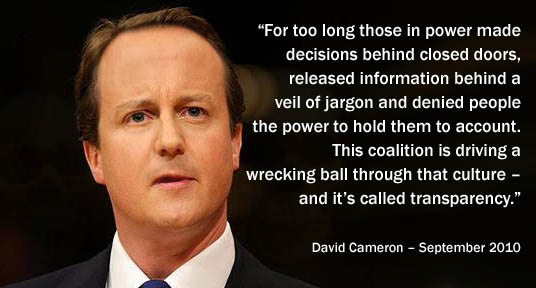
Then there are the Tory pre-election promises, all broken and deleted from the internet. And valid criticism of their spinner of Tory yarns and opposition smears, also deleted. This is not a democratic government that values political accountability, nor is it one that is prepared to bear any scrutiny at all.

The Conservatives are attempting to intimidate the BBC (again) into silence regarding its candid commentary regarding the autumn statement made by Osborne, exposing the vast scale of cuts to come for the British public. I’m pleased to see the BBC hitting back, for once, with a robust defence, declaring that: “We’re satisfied our coverage has been fair and balanced and we’ll continue to ask ministers the questions our audience want answered.”

It was BBC assistant political editor Norman Smith’s description of the Office for Budget Responsibility (OBR) response to the autumn statement document as “the book of the doom” and his suggestion that the UK was heading “back to the land of Road to Wigan Pier” that provoked Osborne’s outrage.

But whilst journalists are hardly unknown for hyperbole, Smith certainly can be cleared of this charge. Because many agree that the figures contained in the OBR blue book are truly remarkable and worry-provoking. Many of us have concluded the same, from the OBR and Institute of Fiscal Studies (IFS) to an army of quietly reflective bloggers, who have collectively anticipated this purely ideological outcome for some time.

The BBC are absolutely right to point out to the public that there will be severe social repercussions as a consequence of the scale of cuts that Osborne is planning, especially given that sixty percent of the cuts are yet to come.

The judgements of the OBR, which Osborne set up, and IFS, were at least as damning as the BBC’s, but it’s worth noting that the Chancellor doesn’t publicly attack either report. Because he can’t.

Instead the Conservatives have accused the BBC of “bias” and “systematic exaggeration,”  David Cameron and George Osborne launched an unprecedented attack on the coverage of the Autumn Statement. However, the Conservatives have been openly policing the media for a while. (See: Tories to closely monitor BBC for left wing bias ahead of party conference season and: Once you hear the jackboots, it’s too late.)

Senior Tory MP Andrew Bridgen suggested there was a risk that unless the BBC was “scrupulously fair” in its reporting, it may “drive voters into the arms of Labour”, adding the threat “and may even find its future funding arrangements affected.”

A blatant threat.

On Thursday, Bridgen wrote to Rona Fairhead, the BBC Trust’s chairperson, to complain “about a pattern of systematic exaggeration in the BBC’s reporting of the Autumn Statement”. It’s not his first complaint about alleged bias, either: he whined when the TUC’s senior economist Duncan Weldon became Newsnight’s new economics correspondent earlier this year.

Mr Bridgen said he wanted “to seek assurances that in the remaining six months until the general election your coverage will demonstrate the impartiality and balance that the public, and indeed the BBC charter, demand”.

He added: “Over the last four years the entire nation has pulled together to achieve something many said could not be done: we are now the fastest growing advanced economy in the developed world. The sacrifices and hard work of the British people are ill-served by pessimistic reporting which obscures our economic success with the language of fear and doom.”

I don’t think this is about “impartiality” or what best serves the British people. This is about the Conservatives not getting their own way, so they resort to bullying and  attempts to discredit people who have simply told the truth.

The Chancellor responded angrily to the references to Orwell’s The Road to Wigan Pier in the Today report on BBC Radio 4. He said: “I would have thought the BBC would have learned from the last four years that its totally hyperbolic coverage of spending cuts has not been matched by what has actually happened. I had all that when I was interviewed four years ago and has the world fallen in? No it has not.”

Well, that all depends George. For many people, the only genuine growth we’ve seen is in poverty, inequality, destitution, hunger, suffering and referrals to foodbanks. And deaths. So yes, for growing numbers, their’ world has fallen in.

A BBC spokesman said the BBC was satisfied that the Today programme’s coverage had been “fair and balanced and we gave the Chancellor plenty of opportunity to respond on the programme.”

And the comments were justified because the Office for Budget Responsibility had itself said that nominal government consumption will fall to its lowest level since 1938, the BBC said.

Both the OBR and IFS said in their responses to the autumn statement that Britain has not seen public spending reduced to this level as a proportion of GDP since the grim days of the 1930s.

The public sector spending cuts over the next five years set out in the autumn statement may force a “fundamental re-imagining of the state,” the Institute for Fiscal Studies said in their report.

The warning from the IFS – Britain’s public spending analysts – came only hours after Osborne had angrily rounded on the BBC, accusing its reporters of “totally hyperbolic” reporting about his spending plans and “conjuring up bogus images of the 1930s depression”.

The IFS confirmed that the scale of cuts to departmental budgets and local government would reduce the role of the state to a point where it would have “changed beyond recognition.” The government’s spending watchdog, the Office for Budget Responsibility (OBR), also said yesterday that Osborne’s statement indicated that with the cuts set out in Treasury assumptions, we would see the state reduced to its smallest size relative to GDP for 80 years – since the 1930s.

It was about this era, the Great Depression, against which Orwell set The Road to Wigan Pier, in his account of the bleak living conditions, social injustices, suffering and misery of the working class in the Northwest of England. Norman Smith made an apt comparison.

Scenes from the Jarrow Crusade, 1936, Marchers from Jarrow in the North East of England, walk to London where they will hand in a petition to the House of Commons in a plead for more work as the depression and starvation of the 1930's hits hard

Scenes from the Jarrow Hunger March, 1936, Marchers from Jarrow in the North East of England, walked to London where they handed a petition to the House of Commons in a plead for more work as the depression and starvation of the 1930’s hit hard

Osborne admitted to John Humphrys two hours later, that “difficult” decisions on welfare would include freezing working age benefits for two years and lowering the welfare cap on spending from £26,000 for a family each year on benefits to a maximum of £23,000. But he maintained his glib assurances that the outlook was not as grim as Smith and Humphrys were claiming.

With the cost of living rising sharply year after year, and with the catastrophic consequences of the first wave of welfare “reforms” now clearly evident, it is difficult to envisage how the outlook for the poorest can be deemed anything other than enduringly, grindingly bleak.

If any evidence was needed that the Conservatives fear the political consequences of the cuts to come, the assault on the BBC’s coverage of the autumn statement has certainly provided it. The Conservative responses are strictly about discrediting the BBC as a means of pre-election damage-limitation, and not about the accuracy or “bias” of the reporting, because Osborne had not anticipated that the real consequences of his budget plans would be shared with the public. Most people don’t, after all, read the OBR or IFS forecasts and reports. As it is, Osborne had set out to mislead the public, and was well and truly exposed.

The IFS director, Paul Johnson, said: “The chancellor is right to point out that it has proved possible to implement substantial cuts over this parliament. One cannot just look at the scale of implied cuts going forward and say they are unachievable. But it is surely incumbent upon anyone set on taking the size of the state to its smallest in many generations to tell us what that means.

It’s also worth bearing in mind that Clegg has claimed co-authorship of the budget statement. Clegg’s absence from parliament for the third Wednesday in a row suggests he is farcically trying to distance himself from David Cameron and Osborne in the run-up to the election.

However, he attempted to take credit for the central policies of the statement, including the stamp duty overhaul unveiled by Osborne, when questioned on his LBC 97.3 radio show by Ed Balls, the shadow chancellor.

“Everything in that autumn statement is there because we’ve agreed it and I fully support it,” Clegg said.

The BBC exposed the chasm between what the Tory-led Coalition plan and what they are prepared to disclose and discuss publicly. That’s because of a chasm that exists between Tory ideology and a genuine economic problem-solving approach to policy: Osborne’s autumn budget statement was entirely about political gesturing, designed to divert attention from the sheer extent of social and economic damage  wreaked by five years of strictly ideologically-prompted policy.

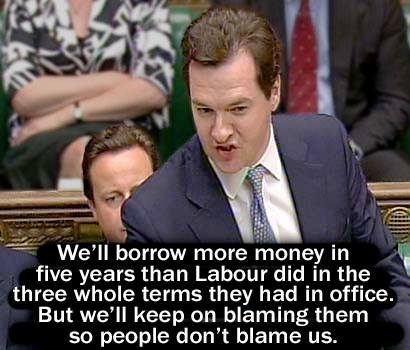
This is a Chancellor who rested all of his credibility on paying down the debt and has borrowed more than every Labour government combined.

It must be abundantly clear that the Tory aim of much bigger and destructive cuts after 2015 is not about deficit reduction, but the destruction of the public sector, our services and social safety nets, the undoing of a century of our the hard-won achievements of civil rights movements, and all in favour of greedy, elevated, unbridled market forces.

Conservatism is centred around the preservation of traditional social hierarchy and inequality. Tories see this, erroneously, as an essential element for expanding economic opportunity. But never equal opportunity.

Conservatives think that civilised society requires imposed order, control and clearly defined classes, with each person aware of their rigidly defined “place” in the social order. Conservatism is a gate-keeping exercise geared towards economic discrimination and preventing social mobility for the vast majority.

It is these core beliefs that fuel Osborne’s stubborn adherence to austerity policies, even though it is by now patently obvious that austerity isn’t working for the economy, and for majority of the public. It never will.

942124_214298768721179_2140233912_nThanks to Robert Livingstone for the memes.

Related

Osborne’s Autumn statement reflects the Tory ambition to reduce State provision to rubble

Ed Balls: response to the Autumn Statement

Osborne’s Autumn statement reflects the Tory ambition to reduce State provision to rubble

Embedded image permalink

Osborne’s austerity measures have achieved nothing, except deepening poverty, widening economic inequality, and destitution for the poorest and most vulnerable communities – and Osborne announced in his Autumn statement that we face at least four more years of it.

Austerity is not an economic necessity, nor is it temporary measure to balance the books, but rather, it reflects the Conservative’s long-standing ideological commitment to dismantle the gains and achievements of the post war settlement: public services, the welfare state and the National Health Service.

The plans, according to the Treasury spending watchdog, the Office of Budget Responsibility, also presume the loss of a further one million public sector jobs by 2020, a renewed public sector pay squeeze and a further freezing of tax credits.

Robert Chote, the Office for Budget Responsibility chairman, conceded that the projections sent to him by the Treasury meant there would have to be a “very sharp squeeze” on spending in the next parliament. He added that so far the UK has seen 40 percent of the necessary cuts in this parliament and the next 60 percent would fall under the next parliament. 

The chairman says that spending on public services as a share of gross domestic product is set to fall by considerably more over the next five years than it did over the last five years, accounting for the lion’s share of the shift from a budget deficit of percent of GDP to a surplus of around 1 percent of GDP. He says that spending in non-protected departments will fall from £147 billion in 2014/15 to £86 billion in 2019/20 – on top of all the cuts to spending in recent years.

With a shortfall in tax receipts set to increase the size of the deficit by £25 billion during the next parliament, the Office for Budget Responsibility said the only way Osborne could balance the books would be through shrinking the state to a level not seen since before the Second World War:

“Total public spending is now projected to fall to 35.2 percent of GDP by 2019-20, taking it below the previous post-war lows reached in 1957-8 and 1999-2000 to what would probably be its lowest level in 80 years”.

The Office for Budget Responsibility (OBR) has written an extremely critical economic forecast and analysis of the spending cuts, clearly expressing the risks that the Chancellor is running and the scale of the damage his strategy will inflict on what remains of our public services.

Key findings from the damning analysis are:

The scale of planned post-election spending cuts is severe.

“Between 2009-10 and 2019-20, spending on public services, administration and grants by central government is projected to fall from 21.2 per cent to 12.6 per cent of GDP and from £5,650 to £3,880 per head in 2014-15 prices. Around 40 per cent of these cuts would have been delivered during this Parliament, with around 60 per cent to come during the next. The implied squeeze on local authority spending is similarly severe.

And as stated: “Total public spending is now projected to fall to 35.2 per cent of GDP in 2019-20, taking it below the previous post-war lows reached in 1957-58 and 1999-00 to what would probably be its lowest level in 80 years.”

The spending cuts are playing the most significant role in deficit reduction and of the tax rises Osborne introduced, it’s the most regressive (VAT) which are making the largest contribution:

“Just over 80 per cent of the reduction is accounted for by lower public spending. Just under 20 percent of the drop in borrowing is accounted for by higher receipts, with the majority having taken place by 2012-13, largely as result of rises in the standard rate of VAT.”

So despite the cuts, the Chancellor has failed to meet any of his original targets (to have closed the structural deficit over a parliament and to have debt falling as a proportion of GDP) and it’s unlikely that his new plan can be delivered.

The OBR say:

“On the Government’s latest plans and medium-term assumptions, we are now in the fifth year of what is projected to be a 10-year fiscal consolidation.

It remains on course to miss its supplementary target, to have net debt falling as a share of GDP in 2015-16.

On our best estimate of a like-for-like basis, borrowing is expected to be higher in the initial years of the forecast and slightly lower from 2016-17 than we thought in March. The largest single-year effect of a Government decision comes via its new assumption for total spending in 2019/20, although this does not appear in the Treasury’s table of policy decisions. This implies another cut in current spending by central government departments in that year equivalent to £14.5 billion”.

Wage growth has been very poor, which has affected income tax revenues. And growth is expected to slow after the election next year. In part, this will be because of the scale of government cuts, which of course also bring real economic risks.

The OBR say:

“Lower wage growth has reduced our income tax forecast. The fall in unemployment is not yet pushing pay settlements up significantly.

We still expect the economy to lose momentum through 2015 – and by a little more than we thought in March – thanks to weaker external demand and the expectation that consumer spending growth will slow to rates more in line with growth in people’s incomes.

The Government’s fiscal plans imply three successive years of cash reductions in government consumption of goods and services from 2016 onwards, the first since 1948. The corresponding real cuts directly reduce GDP. The economy should be able to adjust to such changes over time, but it is unlikely to be a simple process when monetary policy is already very loose and external demand subdued.

Over the course of the next Parliament, we project that government employment will fall by 1.0 million, compared to the 0.4 million decline that we are likely to have seen over this Parliament.”

The OBR’s damning conclusion is that real wages will not be back to even the pre-recession peak within five years (as opposed to household debt which is well on track to surpass it’s previous highs).

The OBR’s critical report on Osborne’s budget plans warns us that 60 percent  of the spending cuts have not yet been implemented in this parliament, and Osborne’s planned cuts will mean that by the end of the next government,  public spending is projected to fall to its lowest level as a proportion of GDP since the 1930s. And this was a period in history when we had no public services, no NHS, no effective welfare support, no education system, no social housing, no legal aid. Those post-war provisions have formed the very foundations of our democracy.

Osborne’s Autumn Statement has revealed that the Conservative mission to shrink the State will be complete by the budget of 2019/20 if their current budget plans remain unchallenged, and if the Conservatives remain in office.

They must not be permitted to inflict any further damage on the foundations of our once democratic society. We must ensure that they don’t.

From the Independent – The Autumn Statement: 4 charts that show how badly George Osborne has got it wrong:

GDP growth has been much lower than forecast in 2010


Government borrowing has been considerably higher every year

As a result the national debt is much higher as a share of GDP than predicted in 2010

Wages have also grown much less than expectations four years ago

 In the Autumn statement, the growth forecast for 2014 is likely to be, finally, in line with the 2010 forecast, at around three percent. But the forecast for public borrowing for 2014-15 is expected to be remain close to £100bn, meaning the deficit will remain stuck in cash terms. If the Chancellor ever had any genuine hopes of balancing the books by the end of the Parliament, the chances of fulfilling them  disappeared long ago.

Despite facing a global recession, the Labour Government invested in our public services, and borrowed substantially less in thirteen years than the Coalition have in just three years. UK citizens were sheltered very well from the worst of the global bank-induced crash.

Gordon Brown got it right in his championing of the G20 fiscal stimulus, agreed at the London summit of early April 2010, which was a continuation of his policies that had served to steer the UK economy out of the consequences of a global recession, and to protect citizens from the consequences.

Osborne’s policy of imposing austerity and budget cuts on an economy that was actually recovering was a catastrophic error. The austerity cuts have propelled the economy backwards and into depression; and, far from using public spending as a countervailing force against the cutbacks in private sector investment, the Coalition’s budget cuts served to aggravate the crisis. Many people are suffering terribly as a consequence, many  have been reduced to a struggle for basic survival.

People have died as a direct consequence of the austerity cuts.

Further cuts to provisions, services and welfare – support for the poorest – is unthinkable and untenable.

600839_539897852746414_2066719011_n


Update: The Institute for Fiscal Studies (IFS) have also agreed with this analysis. In their report, they say: “The Autumn Statement means the UK is set for cuts on a colossal scale. One thing is for sure. If we move in anything like this direction, whilst continuing to protect health and pensions, the role and shape of the state will have changed beyond recognition.”


1450041_569755536427312_1698223275_n
Many thanks to Robert Livingstone for his excellent and often prophetic memes

Sabotaging judicial review is one of this government’s most vicious acts

Removing the right for the individual to seek legal remedy for unlawful behaviour of the state – one of the coalition’s worst moments.

The coalition government is guilty of many crimes since its creation in 2010. But by steamrollering through changes to judicial review, they are seeking to insulate themselves from challenge, and restrict the ability of the British people to hold to account future governments that break the law.

Ministers are often defendants to applications for judicial review, precisely why they do not like it. But such applications are not brought lightly, and, crucially, have to pass an initial test of securing the court’s permission to proceed to a hearing. Very often the mere lodging of an application will produce a rethink by the decision making body leading to the correction of any flaw in the process. Equally, other interested parties can seek the court’s permission to intervene in the case to offer expert opinion in support of one or other of the parties. Many cases are resolved without a full hearing.

But this isn’t good enough for the present government, now engaged in seeking to reverse the substantial defeats it sustained in three votes in the House of Lords on amendments which sought to preserve judicial discretion in determining applications on a range of issues.

The fettering of judicial discretion has been a recurring feature of the government’s numerous attempts to reshape our justice system, a curious way of building up to the celebrations of the 800th anniversary of Magna Carta next year. It proved unacceptable to peers across the chamber, pitifully few of whom spoke in support of the government.

The proposals have attracted trenchant criticism from, among other eminent lawyers, the President of the Supreme Court, Lord Neuberger, the Master of the Rolls, Lord Dyson, the former Lord Chief Justice, Lord Woolf, and the Joint Committee on Human Rights, the Constitution Committee and the Delegated Powers and Regulatory Reform Committee. Characteristically, the Lord Chancellor is determined to reverse the decision of the Lords, albeit with some minor unsatisfactory changes in relation to interveners.

The House of Lords is traditionally, and reasonably, reluctant to challenge the elected chamber, but where the rights of the citizen are concerned, and where the government can be seen to legislate to immunise itself against legal challenge, there is an overwhelming case for it to do so.

Given the political arithmetic of the second chamber, much will depend on the Liberal Democrats, who have long, and with some justification, proclaimed themselves to be supporters of civil liberties and accountable government. Several spoke and voted in favour of the amendments passed by the Lords.

It falls to them and their colleagues in the House of Commons to redeem their party’s reputation by joining crossbench and Labour peers, and hopefully some Conservatives, in rejecting the government’s amendments to the Bill, which, for the record was never part of the coalition agreement.

Shadow justice minister Andy Slaughter MP and Labour justice spokesperson in the Lords Jeremy Beecham.

scroll2

Judicial review challenges government decisions, maintains government accountability and subjects them to scrutiny in the courts but David Cameron has claimed that the procedure is “time-wasting” and the justice secretary, Chris Grayling, has accused charities of exploiting cases for “publicity purposes.”

Judicial review is a safeguard of human rights and a fundamental part of democratic process.

A coalition of 35 organisations claims charities may face punitive costs if they challenge future government decisions.The 35 charities work on a wide range of issues, including representing children and older people, people with disabilities, bereaved families and victims of torture on issues as diverse as housing, fair treatment at work, healthcare, freedom of expression and privacy online.

Andrea Coomber, director of the legal rights group Justice, which coordinated the protest, said: “Judicial review is one of the very few means we can challenge public bodies and government departments which act unlawfully. We should all be watchdogs when the government tries to rewrite the rules in its favour.”

Alison Garnham, chief executive of the Child Poverty Action Group, said: “Judicial review is often the last line of protection the most vulnerable people in our society have against bad decisions made by powerful decision-makers. The public interest is served by empowering ordinary citizens to challenge unlawful decision-making, not by rewriting the rules so decisions made by the state, in effect, are put beyond the rule of law.”

The supporting charities include: Action against Medical Accidents, AIRE Centre, Amnesty International UK, Article 19, Asylum Support Appeals Project, Campaign for Freedom of Information, Children’s Rights Alliance England, Disability Law Service, English PEN, Equality and Diversity Forum, Fair Trials International, Human Rights Watch, Immigration Law Practitioners Association, Law Centres Network, JustRights, Just for Kids Law, Liberty, The Media Legal Defence Initiative, National Autistic Society, NDCS, Open Rights Group, Prisoners’ Advice Service, Privacy International, Public Concern at Work, Reprieve, Redress, Rights Watch UK and Sense.

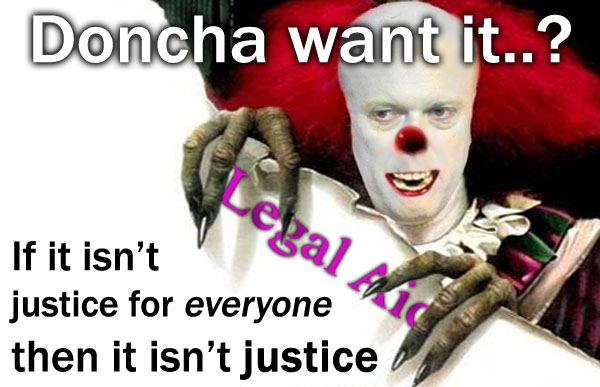
Grayling has tried to take legal aid from the poorest and most vulnerable, in a move branded contrary to the very principle of equality under the law. He turned legal aid into an instrument of discrimination. He has tried to dismantle a vital legal protection available to the citizen – judicial review – which has been used to stop him abusing his powers again and again. He has tried to restrict legal aid for domestic abuse victims, welfare claimants seeking redress for wrongful state decisions, victims of medical negligence, for example. And now he wants to take away citizens’rights to take their case to the European court.

His every action is intent on tearing up British legal protections for citizens and massively bolstering the absolute powers of the state.

The hypocrisy is evident in that this is a government which claims to pride itself on its dislike for the state. But in every meaningful way, it is vastly increasing its powers, and authoritarian reach.

15553155399_94869b2dcd_o
 Thanks to Robert Livingstone for the pictures

David Cameron promised a further £7.2 BILLION tax cuts to the rich at the expense of the poor

1450041_569755536427312_1698223275_n

I wrote an article last year – Follow the Money: Tory Ideology is all about handouts to the wealthy that are funded by the poor – which outlines Coalition policies that have widened inequalities and increased poverty by handing out public money to the wealthy that has been taken from the poorest. I pointed out that this Government have raided our tax-funded welfare provision and used it to provide handouts to the very wealthy – £107,000 EACH PER YEAR in the form of a tax break for millionaires, amongst other things.

And what does our imperturbable chancellor promise if this disgrace of a government is re-elected? True to Tory form, more of the same: austerity for the poor and public services cuts, and tax breaks for the wealthiest.

But further cuts to lifeline benefits and public services is surely untenable. Absolute poverty has risen dramatically, this past four years, heralding the return of Victorian illnesses that are associated with malnutrition. People have died as a consequence of the welfare “reforms”. Supporting the wealthy has already cost the poorest so very much, yet this callous, indifferent, morally nihilistic  government are casually discussing taking even more from those with the very least.

This isn’t anything to do with economic necessity: it’s all about Tory ideology. Under the guise of austerity, the Tory-led Coalition have stripped our welfare and public services down to the bare bones. Any further cuts will destroy what remains of our post-war settlement.

Despite facing a global recession, the Labour Government invested in our public services, and borrowed substantially less in thirteen years than the Coalition have in just three years. UK citizens were sheltered very well from the worst of the global bank-induced crash.

Gordon Brown got it right in his championing of the G20 fiscal stimulus, agreed at the London summit of early April 2010, which was a continuation of his policies that had served to steer the UK economy out of the consequences of a global recession, and to protect citizens from the consequences of cuts to services and welfare.

Osborne’s policy of imposing austerity and budget cuts on an economy that was actually recovering was a catastrophic error. The austerity propelled the economy backwards and into depression; and, far from using public spending as a countervailing force against the cutbacks in private sector investment, the Coalition’s budget cuts served to aggravate the crisis. Many people are suffering terribly as a consequence, reduced to a struggle for survival.

And in these socio-economic circumstances, the Tories have pledged a further £7.2 BILLION tax cuts to the rich. The funding for the tax cuts will come from further catastrophic “savings” made at the expense of the poorest yet again – £25 billion more to be sliced from welfare, Local Authorities,  education, police and other vital services.

Three things are immediately clear. Firstly, without the ramping up of VAT in 2010, to 20%, Osborne would be in even more dire financial straits than he is.

Secondly, income tax has, despite allegedly rising employment, failed to increase.

Thirdly, corporation tax, targeted for cuts, year after year, has slumped. The tax system is increasingly veering toward very regressive – biased in favour of the wealthy – consumption taxes, which affects the poorest, most, and failing to deliver fairer taxes on income.

This is the result of government policy: increasing VAT but cutting corporation tax, and the engineered kind of “recovery” we have ended up with. The Office for Budgetary Responsibility (OBR) reminded us in October of the extent of the Coalition’s failure to reduce the deficit.

Public sector net borrowing in 2013-14 was originally expected to be £60 billion; the out-turn for borrowing was £108 billion (on a comparable basis). This amounts to a shortfall of nearly £50 billion, with borrowing approaching double the original predictions made when the government’s austerity policies were announced in 2010.

Much of this shortfall is accounted for by the current earnings crisis. UK workers are suffering the longest and most severe decline in real earnings since records began in Victorian times, according to an analysis published by the TUC. But Tories always lower wages, and hike up the cost of living. And whilst workers are struggling to make ends meet, private business owners/Tory donors are raking in millions of pounds. But this is exactly how Tories like to run society in a nutshell.

It’s their imposition of a feudalist schemata for social relationships. Cognitively, Tories are the equivalent of historical egocentric toddlers: they are stuck at this painful stage of arrested development.

“The deficit reduction programme takes precedence over any of the other measures in this agreement” – stated in the Coalition Agreement.

For a government whose raison d’etre is deficit reduction, the Coalition really isn’t very good at all. But austerity reflects the triumph of discriminatory Tory ideology over needs-led, evidenced-based policy making.

The OBR said the forecast from 2010 was over-optimistic because it did not take into consideration the effect of lower wages as well as a higher levels of tax-free personal allowance on the upper brackets of income tax. National Insurance contributions were also £7.4 billion below forecast.

Which brings us back to the issue of further tax cuts for the wealthy, with no mention of raising wages for the poorer work-force, and of course there is the promise of more cuts to come for those relying on lifeline benefits. I don’t think that the Coalition cares that their policies don’t balance the books, as it were, or mend the economy. Nor do they care what the consequences are for the wider public.

TUC General Secretary Frances O’Grady said:

The government’s failure to get wages growing again has not only left families far worse off than in 2010, it’s put the public finances in a mess too. The economy has become very good at creating low-paid jobs, but not the better paid work that brings in income tax. The Chancellor’s sums just don’t add up – he can’t make the tax cuts for the better off that he is promising and meet his deficit reduction target without making cuts to public services.

His cuts would be so deep that no government could deliver them without doing damage to both the economy and the fabric of our society. We can’t cut our way out of this problem any more than we can dig ourselves out of a hole. More austerity would only keep us stuck in a downward spiral. The Chancellor should use next week’s Autumn Statement to invest in growth and to put a wages recovery at the top of the agenda.

Shadow Chancellor Ed Balls said:

Nobody will be fooled by pie in the sky promises of tax cuts when David Cameron cannot tell us where the money is coming from. Even the Tories admit this is an unfunded commitment of over £7 billion, so how will they pay for it? Will they raise VAT on families and pensioners again?

Cameron has also announced the basic rate before we start paying tax would rise from £10,500 to £12,500. While a worker on £12,500 would save £500 a year, someone earning £50,000 would keep £1,900 extra.

Those earning up to £123,000 would be £484 richer. Someone on £12,500 would save £500 a year, while someone on up to £50,000 would keep £1,900 extra. And the £500 tax cut for basic rate earners will be almost wiped out by George Osborne’s raid on in-work benefits.

Paul Johnson of the Institute for Fiscal Studies think tank says it was:

very difficult to see how the £7billion tax giveaway could be paid for.

We’re looking at promises of £7billion of tax giveaways in the context of an overall plan to get the deficit down but even without tax giveaways that requires pretty extraordinary levels of spending cuts such that most government departments will see their spending cut by a third by 2020.

How are you going to afford this? Even more dramatic spending cuts?

At the Tory Conference, Cameron promised to expand the National Citizen Service youth project for every teenager in the country, have the lowest rate of corporation tax of any major economy.

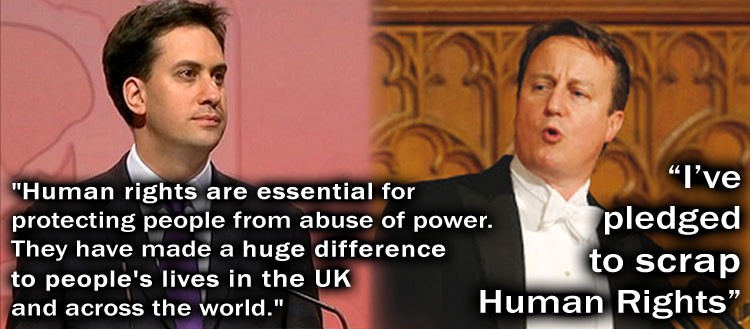
There was also a pledge to abolish youth unemployment by the end of the decade. But the Tory faithful gave the loudest applause for his pledge to scrap the Human Rights Act.

This is a truly terrifying pledge, because human rights were originally formulated as an international response to the atrocities of the 2nd World war, and to ensure that citizens are protected from abuses of their government.

A Labour Party analysis found the proposed tax break would hand David Cameron and other Cabinet ministers an extra £132 a year. But a family with two children with one earner on £25,000 a year would lose £495 by 2017-17 due to the benefits freeze announced by Mr Osborne.

The Tory plan is based solely on spending cuts, mainly directed at the working age poor. And the Conservative plan to raise the higher rate threshold to £50,000 means that  working-age poor people are to fund a tax cut that is four times greater for higher rate tax payers than for basic rate taxpayers.

Ed Balls said in response:

David Cameron’s speech showed no recognition that working people are £1,600 a year worse off under the Tories nor that the NHS is going backwards on their watch. The only concrete pledge we’ve had from the Tories this week is a promise to cut tax credits by hundreds of pounds for millions of hard working people while keeping a £3 billion tax cut for the richest one per cent.

TUC general Secretary Frances O’Grady added:

No amount of dressing up can hide the fact that the policies in this speech pass by those who need the most help to reward richer voters.

Alison Garnham, Chief Executive of Child Poverty Action Group, said:

What was missing in the PM’s speech was any recognition that independent projections show that child poverty rates are set to soar. We know that raising the personal tax allowance is an ineffective way of supporting low paid families.Independent analysis shows that just 15% of the £12 billion required to raise the PTA to £12,500 would go to working families in the lowest-income half of the population.

Many simply don’t earn enough to benefit from this policy, and those that do just see their benefits and tax credits withdrawn as their incomes rise.

The Institute for Fiscal Studies showed in their Green Budget publication this year that just 15% of the gains from increasing the personal allowance would benefit the poorest half of Britons, concluding:

There are better ways to help the low paid via the tax and benefit system.

Ex-Treasury official James Meadway,  now a senior economist at the New Economics Foundation, said Cameron’s changes were:

irresponsible, expensive gimmicks that scarcely affect the poorest workers.

They imply swingeing public sector cuts and mean handing over more cash to the already rich.

Ed Miliband will respond tomorrow (Monday), declaring that the Tories’ failure to tackle the cost-of-living crisis has helped cost the Exchequer £116.5 billion – leading to higher borrowing and broken promises on the deficit. The price tag, equivalent to almost £4,000 for every taxpayer, is based on new research from the House of Commons Library being published by the Labour Party.

This shows that low pay and stagnant salaries, combined with soaring housing costs and the failure to tackle root causes of increased welfare bills, means that over the course of this Parliament:

  • Income tax receipts have fallen short of forecasts by more than £66 billion.
  • National Insurance Contributions are £25.5 billion lower than expected.
  • Spending on social security is £25 billion higher than planned [despite brutal cuts to lifeline benefits]

Mr Miliband is expected to say the test for George Osborne in this week’s Autumn Statement will be to set out a plan to build a recovery for working people – one which recognises the link between the living standards and Britain’s ability get the deficit down.

He is expected to say:

For a very long time, our country has worked well for a few people, but not for everyday people. “We live in a country where opportunities are too skewed to those at the top, where too many people work hard for little reward, where too many young people can’t find a job or apprenticeship worthy of their talents, and where families can’t afford to buy a home of their own.

For all the Government’s boasts about a belated economic recovery, there are millions of families still caught in the most prolonged cost-of-living crisis for a century.  For them this is a joy-less and pay-less recovery.

My priority as Prime Minister will be tackling that cost-of-living crisis so that hard work is properly rewarded again, so that our children can dream of a better future, so that our public services including the NHS are safe.

Building a recovery that works for everyday people is the real test of the Autumn Statement.

But that isn’t a different priority to tackling the deficit. Building a recovery that works for most people is an essential part of balancing the books.

The Government’s failure to build a recovery that works for every-day people and tackle the cost-of-living crisis isn’t just bad for every person affected, it also hampers our ability to pay down the deficit.

Britain’s public finances have been weakened by a Tory-led Government overseeing stagnant wages which keep tax revenues low.

Britain’s public finances have been weakened by Tory policies which focus on low paid, low skilled, insecure jobs – often part-time or temporary – because they do not raise as much revenue as the high skill, high wage opportunities we need to be creating.

And our public finances have been weakened by higher social security bills to subsidise low paid jobs and the chronic shortage of homes.   

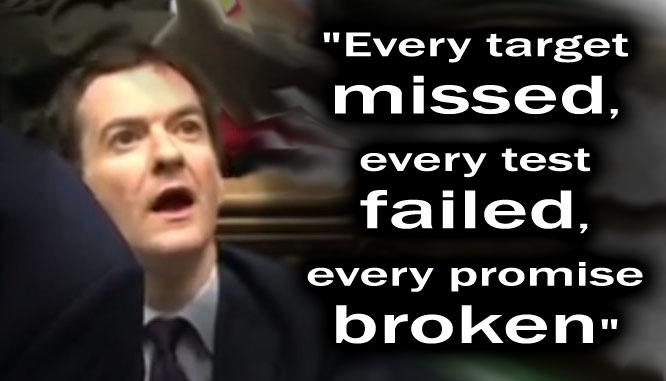
The result has been David Cameron and George Osborne missing every single target they set themselves on clearing the deficit and balancing the books by the end of this parliament.

Their broken promises, their abject failure, are not an accident. They are the direct result of an outdated ideology which says all a Government has to do is look after a privileged few at the top and everyone else will follow.

That is why this Government has done a great job of squeezing the middle, but a bad job of squeezing the deficit.

The test this week for David Cameron and George Osborne is whether they recognise that Britain will only succeed and prosper for the long term by tackling the cost-of-living crisis and building a recovery which works for the many, not just for a few.

Or whether they will just offer more of the same old ideas that have failed them, failed everyday working people, and failed Britain over the past four years.

10001887913_f8b7888cbe_o

Thanks to Robert Livingstone for the brilliant memes

Brighton’s Greens, Council Tax and a disgraceful act of moral blackmail

Neil Schofield-Hughes's avatarNotes from a Broken Society

There’s an old political saw that history repeats itself, first as tragedy, then as farce. As they come to the end of four years in office, and as they start the process of setting out their last budget, the peculiar genius of Brighton and Hove’s Green Party may well have been to turn that formulation on its head: last year was farce, but this year has tragedy written all over it.

For a second year running, the Greens are proposing a substantial increase in Council Tax – next year of 5.9% – that would require the approval of a referendum.  And the arguments are largely the same; that an increase of this magnitude is needed to offset the effects of austerity.

And the same arguments against such a rise apply this year too: that it is an entrenchment of austerity, using legislation designed to reduce the power of local authorities…

View original post 663 more words

The link between Trade Unionism and equality

10553308_680322242037307_1558281906340939819_n

In an article I wrote earlier this year – Conservatism in a nutshell – I outlined some basic themes of New Right Conservative ideology. I said:

Conservatives don’t like social spending or welfare – our safety net. That’s because when you’re unemployed and desperate, companies can pay you whatever they feel like – which is inevitably next to nothing. You see, the Tories want you in a position to work for next to nothing or starve, so their business buddies can focus on feeding their profits, which is their only priority. Cheap-labour conservatives don’t like the minimum wage, or other improvements in wages and working conditions. These policies undo all of their efforts to keep you desperate. They don’t like European Union labour laws and directives either, for the same reason.

Conservatives prioritise handing out our money to their big business partners, no matter what it costs us as a society. For example, a spending breakdown reveals how NHS funding has flowed to private firms, much of that money has gone to companies with corrupt ties to the Tories, whilst health care is being rationed, care standards have plummeted, services are cut, and by the end of the next financial year, health service workers will have had their pay capped for six years, prompting fully justified strike action.

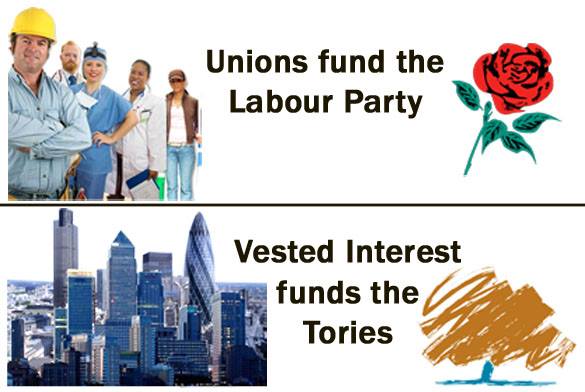
Following the tide of sleaze and corruption allegations, Cameron “dealt” with parliamentary influence-peddling by introducing the Gagging Act, which is primarily a blatant attack on trade unions (which are the most democratic part of the political funding system) and Labour Party funding, giving the Tories powers to police union membership lists, to make strike action very difficult and to cut union spending in election campaigns.

The Transparency of Lobbying, non-Party Campaigning, and Trade Union Administration Bill is a calculated and partisan move to insulate Tory policies and records from public and political scrutiny, and to stifle democracy. And there are many other examples of this government removing mechanisms of transparency, accountability and safeguards to rights and democracy.

We have witnessed a dramatic increase in levels of economic inequality this past four years, reflected in the fact that income differences between top earners and those on the lowest wages are now higher than at any time since records began. The UK now ranks as one of the most unequal societies in the developed world, even more unequal than the US, home of the founding fathers of neoliberalism. Our current levels of inequality have far exceeded the point at which campaigners need any further proof to show how socially corrosive and life-limiting the subsequent deepening poverty is.

Despite the legislative framework of Labour’s Equality Act, passed in 2010, there is a growing gender-based pay gap, continued abuse of agency workers, the problem of the two-tier work force and the contracting out of public servicesStrong trade unions improve public services, too.

Speaking at a press conference on the first day of the 2014 TUC Congress, TUC General Secretary Frances O’Grady said:

“The key message of this year’s congress is Britain needs a pay rise and I also expect many of the debates on the floor to focus on the importance of the coming general election for people at work.

Today, I want to highlight the threat posed by the Conservative Party’s promised manifesto proposals on strike ballots.

Because these proposals are designed to make unions weaker. And if unions become weaker, then the chances of people winning a pay rise, improving living standards and tackling inequality in Britain today will become a good deal harder.

The Conservative Party is not just proposing a few more bureaucratic obstacles that will make life a bit more difficult for trade unions.

Taken together, they would effectively ban strikes by the back door. And, on top of that, they would open up elected union leaders to increased surveillance by the state.

They are not just an attack on fundamental liberties. They will act to lower living standards for the majority of working people – whether or not they are union members.”

One half of the British population owns 9% of household wealth whilst the other half owns 91% of the wealth; and the five richest families in the UK are wealthier than the poorest 20% of the entire population.

Conservatives are always obsessed with “economic growth”, but we know from history that economic expansion in itself does not promote equality: it is the types of employment, the rules and structure of the economy and policies that matter most. Conservative governments always create high levels of inequality.  Furthermore, they rarely manage to bring about the economic growth they promise. But recession due to reduced public spending is an inbuilt feature of neoliberalism, as we witnessed during the Thatcher era.

Inequality hinders growth in another important way: it fuels social conflict. However, social diversity has no negative impact on economic growth, despite what those on the blame-mongering Right would try and have us believe. It is economic policies that shape inequalities, not minority groups: they are the casualities of inequality not its creators.

Economic inequality is also about discrimination. Black and ethnic minority workers are disadvantaged in finding employment. Dismissal of pregnant workers is a widespread practice. Last year, the wage gap between men and women’s earnings increased and the progress previously made towards equal pay has been reversed.

Cameron’s government has mobilised resentment and fear on the part of relatively privileged social groups in relation to other subordinate or putatively threatening groups of politically defined Others – immigrants, unemployed people, disabled people, unionised workers, single mothers and so on.

Social inequalities and hierarchies are defended by Conservatives and secured in several ways. The defence of power, wealth and property, when threatened, tends to be micro-managed via rigid authoritarianism, through systems of mobilised prejudice and through free-market policies (the predictable effects of which are to transfer wealth upwards). All Conservative politics pivot on a fundamental commitment – the defence of privilege, status, and thus sustaining social inequality.

But it is only by shifting money from the high-hoarding rich to the high-spending rest of us, and not the other way around, that investment and growth may be stimulated and sustainable.

The Office of Budgetary Responsibility forecasts that the Coalition are facing a £17BILLION blackhole after the low pay  that their own policies have strongly encouraged have caused a slump in tax payments to the treasury.

It is very clear that austerity is not an economic necessity, but rather, it is an ideological preference, used as a justification for “shrinking the State” whilst defending power, wealth and privilege.

The Coalition have introduced trade union laws which inhibit trade union recruitment, activity and collective bargaining. Employment rights are being removed, at a time when policies have reduced access to unfair dismissal protection and access to employment tribunals.

Trade unions are most effective when all workers are represented and therefore trade unionism encourages social inclusion. Collective bargaining and representational support will not work in the long term if some workers have substantially less to gain from the process than others.

For this reason, trade unions and the Labour Party have worked at eliminating sex, race and other forms of discrimination in the workplace. This has taken time, given how deeply ingrained inequalities have been in our society. We know that where trade unions are active, employers are more likely to have equal opportunities policies.

But for proper support of economic equality, trade unions need legal protection for their activities so they may operate freely and build effective social solidarity and promote egalitarianism.  Trade unions seek increased participation by working people in the decisions that influence their lives and a fairer distribution of the nation’s wealth. That is the antithesis of Conservatism.

Freedom to speak out against injustice, to campaign for economic equality and to work together through trade unions are underpinned by rights set out in the European Convention on Human Rights (ECHR). It’s no surprise that Cameron has pledged to exit the ECHR and to scrap Labour’s Human Rights Act.

To tackle economic inequality and build a fairer society, it is essential that trade-unions can operate freely and that collective bargaining is renewed. The impoverishment and exploitation of any one group of workers is a threat to the well-being and livelihood of everyone.

Building a future economy where the benefits of work and profit are shared requires legal reform in support of effective trade unions.

Lydia Hayes and Tonia Novitz from the Centre For Labour and Social Studies have written  the following proposals, designed to change public policy, so that trade unions are better able to represent their members, by  simplifying the statutory procedure for trade union recognition, and putting in place arrangements for sector-wide collective bargaining:

1. Introduce a legal framework through which trade unions can freely organise and engage in collective action to build economic equality.

2. Amend trade union recognition legislation so that all workers who choose to join a union can be represented in collective bargaining and other workplace matters.

3. Ensure the law provides for sectoral bargaining which can set minimum terms and conditions across an industry or a service sector.

4. Defend human rights which protect the functioning of trade unions (including rights to free speech, freedom of assembly and freedom of association).

5. Give trade unions access to workers and workplaces, so that they can advise on the benefits of membership and collective bargaining.

6. Enable workers to have access to information about trade unions at their workplace so that they can make an informed choice and easily join a trade union if they want to.

None of this will happen during the current government’s term, because Conservatism is in diametric opposition to trade unionism, equality, human rights and egalitarianism.

Related
The Institute of employment Rights

10174840_680246428711555_4476316988383611981_n

Thanks to Robert Livingstone for the graphics.


I don’t make any money from my work. I am disabled because of illness and have a very limited income. But you can help by making a donation to help me continue to research and write informative, insightful and independent articles, and to provide support to others. The smallest amount is much appreciated – thank you.

DonatenowButton

The Coalition are creating poverty via their policies

PANews+BT_N0321471377269205233A_I1

“David Cameron and George Osborne believe the only way to persuade millionaires to work harder is to give them more money.

But they also seem to believe that the only way to make ordinary people work harder is to take money away.”

Ed Miliband.

Source: Hansard, December 12, 2012.

The largest study into poverty in the UK has prompted fresh urges for the government to take measures to tackle growing levels of poverty. The Poverty and Social Exclusion in the United Kingdom (PSE) project is a collaboration between the University of Bristol, University of Glasgow, Heriot Watt University, Open University, Queen’s University (Belfast), University of York, the National Centre for Social Research and the Northern Ireland Statistics and Research Agency.

The project commenced in April 2010 and will run for three-and-a-half years. The research has revealed that inequality in the UK is growing.

The research paper presents an analysis of child poverty and social exclusion in the UK, drawing on data from the 2012 Poverty and Social Exclusion Survey and is the final report on this element of the PSE project. It advances the measurement of child poverty by using three different measures: a child deprivation measure, based on socially perceived necessities, the conventional income poverty measure (but with a more realistic equivalence scale) and a PSE measure which combines deprivation and low income.

The research finds the rates of child poverty for each measures are similar at 30%, 33% and 27% respectively. It also finds, from a new analysis of intra-household distribution, that child deprivation would be much higher if parents were not sacrificing their own living standards for the sake of their children. Analysing the characteristics of poverty, it confirms that a majority of poor children are now living in households with someone in employment.

Perhaps this is the most interesting revelation unearthed by the report: the fact that most of the people living in poverty are employed, dispelling the myth perpetuate by Tory ministers that poverty is a consequence of “worklessness”.

The research found that the majority of children living below the breadline live in small families with at least one employed parent.

Almost 18 million people are unable to afford adequate housing, while one in three do not have the money to heat their homes in winter.

Professor David Gordon said: “The Coalition government aimed to eradicate poverty by tackling the causes of poverty. Their strategy has clearly failed. The available high quality scientific evidence shows that poverty and deprivation have increased since 2010, the poor are suffering from deeper poverty and the gap between the rich and poor is widening.”

We know that benefit delays and the grossly punitive sanction regime are causing dire hardship for people who claim out-of-work benefits, including disabled people  who are deemed unfit for work by their doctor.

We are not simply talking about relative deprivation, here, which is more of a statement about degrees of social exclusion. We are talking about absolute poverty, which is a measure of how many can’t afford basic necessities to support life – food, fuel and shelter.

There are many current studies about poverty, all of which conclude pretty much the same: that poverty and inequality are rising, that people are struggling to meet their most basic needs, and that those who were already the poorest citizens have been hit the hardest by Coalition cuts

The problem isn’t that the government “aren’t doing enough” to tackle poverty: the real problem is that Tory policies are creating poverty.

Three things are immediately clear. Firstly, without the ramping up of VAT in 2010, to 20%, Osborne would be in even more dire financial straits right now. Secondly, income tax has, despite apparently rising employment, failed to increase. Thirdly, corporation tax, targeted for cuts, year after year, has slumped.

The tax system is increasingly veering toward very regressive – biased in favour of the wealthy – consumption taxes, and failing to deliver fairer taxes on income. This is a result of government policy, increasing VAT but cutting corporation tax, and the engineered kind of “recovery” we have ended up with.

We know that austerity is not an economic necessity, as claimed by the Coalition: it’s a Tory ideological preference, aimed at fulfilling a Tory obsession: “shrinking the State“.

We also know that Cameron, who rested all of his political credibility on “paying down the debt” hasn’t done so. In fact, he’s increased it, and the Coalition have borrowed more in just the first three years in Office than the Labour Party – faced with a global banking crisis – did in their entire thirteen years in Office.

If we scrutinise the Coalitions’s policies, which very clearly reflect their ideology, it becomes difficult to see how they could do anything but create inequality and poverty:

These cuts, aimed at the poorest, came into force in April 2013:

  • 1 April – Housing benefit cut, including the introduction of the bedroom tax
  • 1 April – Council tax benefit cut
  • 1 April – Legal Aid savagely cut
  • 6 April – Tax credit and child benefit cut
  • 7 April – Maternity and paternity pay cut
  • 8 April – 1% cap on the rise of in working-age benefits (for the next three years)
  • 8 April – Disability living allowance replaced by personal independence payment (PIP)
  • 15 April – Cap imposed on the total amount of benefit working-age people can receive.

At the same time, note the Tory “incentives” for the wealthy:

  • Rising wealth – 50 richest people from this region increased their wealth by £3.46 billion last year to a record £28.5 billion.
  • Falling taxes – top rate of tax cut from 50% to 45% for those earning over £150,000 a year. This is 1% of the population who earn 13% of the income.
  • No mansion tax and caps on council tax mean that the highest value properties are taxed proportionately less than average houses.
  • Benefited most from Quantitative Easing (QE) – the Bank of England say that as 50% of households have little or no financial assets, almost all the financial benefit of QE was for the wealthiest 50% of households, with the wealthiest 10% taking the lions share
  • Tax free living – extremely wealthy individuals can access tax avoidance schemes which contribute to the £25bn of tax which is avoided every year,as profits are shifted offshore to join the estimated £13 trillion of assets siphoned off from our economy.
  • Millionaires were awarded a “tax break” of £107,000 each per year.

This year, research from the Office of National Statistics showed that the quantity of food bought in food stores also decreased by 1.5 per cent year-on-year in July.

It doesn’t take a genius to work out that repressed, stagnant wages and RISING living costs are going to result in reduced sale volumes. Survation’s research in March this year indicates that only four out of every ten of UK workers believe that the country’s economy is recovering. But we know that the bulk of the Tory austerity cuts were aimed at those least able to afford any cut to their income.

Once again, what we need to ask is why none of the mainstream media articles, or the Office of National Statistics account, duly reporting the drop in food sales, have bothered to link this with the substantial increase in reported cases of malnutrition and related illnesses across the UK.

It’s not as if this correlation is a particularly large inferential leap, after all.

No-one should be hungry, without food in this country. That there are people living in a politically imposed state of absolute poverty is unacceptable in the UK, the world’s sixth largest economy (and the third largest in Europe). This was once a civilised first-world country that cared for and supported vulnerable citizens. After all, we have paid for our own welfare provision, and we did so in the recognition that absolutely anyone can lose their job, become ill or have an accident that results in disability. This is a Government that very clearly does not reflect the needs of the majority of citizens.

It is also unacceptable in a so-called liberal democracy that we have a Government that has persistently denied the terrible consequences of their own policies, despite  overwhelming evidence that the welfare “reforms” are causing people, harm, distress and sometimes, death. Furthermore, this is a Government that has systematically employed methods to effectively hide the evidence of the harm caused to others as a consequence of their devastating, draconian “reforms” from the public. This clearly demonstrates an intention to deceive, and an intention to continue causing people harm.

Cameron told us in 2012, in a rare moment of truth (albeit an unintentional one),  that he is raising more money for the rich. That money has been raised because as their policies indicate clearly, the Tories have taken it from the poorest.

How many policy-related deaths does it take to change a government?

What will it take for the wider public to recognise a despotic regime for what it is: a government that does not democratically reflect the needs of most citizens in the UK, one that is inflicting unforgivable punishment on those that our society once protected?

What kind of government causes harm to citizens?

With the hierarchical ranking in terms of “deserving” and “undeserving” poor, the artificial and imposed framework of Social Darwinism: a Tory rhetoric of division, where some people’s worth matters more than others, how do we, as conscientious campaigners, help the wider public see that there are no divisions based on some moral measurement, or character- type: there are simply people struggling and suffering in poverty, who are being dehumanised by a callous, vindictive Tory government that believes, and always has, that the only token of our human worth is wealth.

Tory policies ensure that the wealthy are rewarded with more wealth and they punish the poorest with grinding, unforgiving, unforgivable absolute poverty.

Waste your vote on the Green Party – or choose a green Labour government – Sadiq Khan

Live Green, vote Labour.

By Sadiq Khan, in the Independent

Ed Miliband played a key role in saving the Copenhagen climate change talks from collapse.

Most Green Party supporters share the same values and aims as the Labour Party: reducing inequality, saving the NHS, building more homes, a commitment to human rights and civil liberties and protecting our environment. It’s what gets us out of bed in the morning and it’s why we entered politics.

Like me, they were proud of the many amazing achievements of the last Labour government: the introduction of the minimum wage, reducing child poverty by a third, the introduction of the Human Rights Act, civil partnerships and the groundbreaking Climate Change Act. But after 13 years of Labour government, they also had concerns on issues such as civil liberties and the Iraq war.

These concerns were shared by Ed Miliband in 2010. It’s why he ran for the leadership of the Labour Party on a message of change, it’s why I decided to support him and, ultimately, it’s why he won. Under Ed’s leadership Labour has rediscovered its radicalism and boldness and we have redoubled our historic fight against inequality.

Labour’s policies are the most radical of any party, six months away from a general election that there’s every chance we will win. Reducing inequality is at the heart of our economic agenda. We will massively increase the minimum wage, bring back the 10p tax rate for low earners and scrap the bedroom tax. We will introduce a mansion tax on properties worth more than £2m, and bring back the bankers’ bonus tax and the 50p tax rate for the very wealthiest. We will build 200,000 homes a year by the end of the next parliament, invest at least £2.5bn in the NHS and make schools accountable to local communities again.

On human rights and civil liberties, we are committed to defending our Human Rights Act from Tory attacks and staying in the European Court of Human Rights. We will extend voting to 16- and 17-year-olds. And we will end the abuse of stop-and-search powers. When it comes to foreign policy, Ed has apologised for the Iraq war, which both he and I opposed. We stopped David Cameron’s rush to war in Syria last year, and just last month we voted in Parliament to recognise Palestine.

Ed’s environmental credentials put David Cameron to shame. Ed was the first Secretary of State for Climate Change – a position he fought to create. He played a key role in saving the Copenhagen climate change negotiations from collapse. We will build on our Climate Change Act by creating 1.5 million new green jobs by 2025, making five million homes energy-efficient within 10 years and make the UK’s energy supply carbon-free by 2030.

There will always be those who say we need to go further. But ideals alone are not enough – it’s action that makes a difference to people’s lives. I visited Brighton last week, where the Green Party has run the council since 2011. The council is in real trouble and deeply unpopular with local people. Recycling rates have fallen dramatically and are now among the worst in the country. Less than a third of the affordable homes that were promised have been built. There have been months of strikes by council workers because pay and conditions have been attacked. Piles of rubbish were left festering on the streets throughout a summer of discontent. For me, the failed Green experiment in Brighton shows that creating a better society needs more than just the right values, it also needs realistic plans that can be put into action.

All the opinion polls say that the Green Party will not win a single MP next year. Even Caroline Lucas, with whom I agree on a great many things, looks set to lose her seat. The only party that can form a green and progressive government is Labour.

Like it or not, under the first-past-the-post system, every vote for the Green Party only makes it one vote easier for the Conservatives to win the election. It splits the progressive vote in many constituencies, and means that Tory candidates can win, despite a clear progressive majority opposed to them. Voting for the Green Party next year will only make it more likely that David Cameron will stay on as Prime Minister. That means more tax cuts for the rich, failures on climate change and the continued privatisation of the NHS.

I want those voters considering supporting the Green Party next year to give Labour a chance to prove that we are a truly radical party again. We will be a government they can be proud of and I want them to vote for us with pride. Because the choice is clear: you can either vote for the Green Party, or for a green government – and that can only mean a Labour government.

Sadiq Khan chairs Labour’s Green Party Strategy Unit and is shadow Justice Secretary

Former Bury UKIP chairman jailed for child porn offences – Bury Times

With thanks to Mike Sivier at Vox Political for flagging this up.

Peter Entwhistle [Image: Bury Times].

A FORMER chairman of Bury’s UK Independence Party has been jailed for grooming children and possessing nearly 200,000 indecent images of children, writes Andrew Bardsley in the Bury Times.

Peter Entwistle spoke to children on MSN Messenger and other social network sites in a sexualised manner, asking them to commit sexual acts for his own satisfaction, Bolton Crown Court heard today (November 24).

The 52-year-old named himself the ‘Naughty Doctor’, using an explicit picture of two women as his profile picture, and spoke to a 13-year-old girl and a 12-year-old boy, who he believed was a girl.

In addition, when police officers raided his house in January 25 last year, they found thousands of indecent images of children stored on a number of computers, USB sticks and some which had been printed out.

Entwistle was sentenced to four years and eight months in prison after pleading guilty to 21 counts at an earlier hearing, including possessing and distributing indecent images of children as well as inciting and the attempted inciting of children to commit sexual acts. He will be placed on the sexual offenders register for life, and would be subject to a sexual offences prevention order.

The court was told that Entwistle, of Broad Oak Lane, Bury, had one previous conviction of indecently exposing himself to a woman in the 1980s, but had otherwise had a clean record.

Iain Simkin, defending Entwistle, read out a letter to the court from Alistair Burt, who was the [Tory] MP for Bury North from 1983 to 1997, which referenced his “good character” .

Judge Elliot Knopf added: “You are now 52-years-old, and you have, until these matters, led an exemplary life, which is attributed to by various letters I have received from people ranging from family, colleagues, the rector of churches and an MP.”

The court was also told that Entwistle was seeking treatment from a psychiatrist for depression.

He was a founder member of Bury UKIP in March 2011, and resigned as party chairman in January 2013.

1904028_714854408584090_8727785646514177390_n

Thanks to Robert Livingstone.

scroll2

Perhaps this real, verifiable case will prompt UKIP supporters attempting to smear Labour MPs with unfounded and unsubstantiated allegations to think twice.

For example, perhaps we will now see an end to this despicable type of smear campaigning, based entirely on lies: Police called after UKIP leaflet claims ‘Labour-run Bolton’ is being investigated over child sex abuse. Police have confirmed that neither Bolton Council nor any Bolton councillors are being investigated as part of Operation Doublet, of course.

UKIP’s hypocrisy is breath-taking. The only record of Lord Pearson of Rannoch (the former Leader of UKIP and their leader in the Lords) asking a question on child abuse is on 13th October this year, after the Police and Crime Commissioner by-election was called.(Link here.) Yet he has been in the House of Lords since 1990. Even this one question is focused entirely on the UKIP obsession with Muslims, ignoring the fact that child abuse happens in all areas of the country and is not exclusive to any culture, community, race or religion.

And, once again, when there was discussion recently about child abuse in the Lords, no UKIP peers were present at all. In the European Parliament, UKIP abstained in a vote to strengthen current legislation on sexual abuse, sexual exploitation of children and child pornography in 2011. (Link here).

Seems to me that UKIP’s “concerns” about children’s welfare and protection are only apparent during their Tory-styled negative campaigning. Without any decent policies to offer, all they can do is try and smear Labour.

The last Labour government gave us the most comprehensive and effective child protection and child welfare policy we have ever had: Every Child Matters, which the Tories scrapped the very day after they took office. UKIP  haven’t said a word about this, because they are too busy trying to score cheap and nasty political points, rather than concerning themselves with what actually matters.

Kitty.

See also: The father of the main prosecution witness in Britain’s biggest child sex grooming scandal has accused Nigel Farage of exploiting the issue for political gain.

Related
UKIP: Parochialism, Prejudice and Patriotic Ultranationalism.
When the oppressed are oppressive too

.get