Author: Kitty S Jones

I’m a political activist with a strong interest in human rights. I’m also a strongly principled socialist. Much of my campaign work is in support of people with disability. I am also disabled: I have an autoimmune illness called lupus, with a sometimes life-threatening complication – a bleeding disorder called thrombocytopenia. Sometimes I long to go back to being the person I was before 2010. The Coalition claimed that the last government left a “mess”, but I remember being very well-sheltered from the consequences of the global banking crisis by the last government – enough to flourish and be myself. Now many of us are finding that our potential as human beings is being damaged and stifled because we are essentially focused on a struggle to survive, at a time of austerity cuts and welfare “reforms”. Maslow was right about basic needs and motivation: it’s impossible to achieve and fulfil our potential if we cannot meet our most fundamental survival needs adequately. What kind of government inflicts a framework of punishment via its policies on disadvantaged citizens? This is a government that tells us with a straight face that taking income from poor people will "incentivise" and "help" them into work. I have yet to hear of a case when a poor person was relieved of their poverty by being made even more poor. The Tories like hierarchical ranking in terms status and human worth. They like to decide who is “deserving” and “undeserving” of political consideration and inclusion. They like to impose an artificial framework of previously debunked Social Darwinism: a Tory rhetoric of division, where some people matter more than others. How do we, as conscientious campaigners, help the wider public see that there are no divisions based on some moral measurement, or character-type: there are simply people struggling and suffering in poverty, who are being dehumanised by a callous, vindictive Tory government that believes, and always has, that the only token of our human worth is wealth? Governments and all parties on the right have a terrible tradition of scapegoating those least able to fight back, blaming the powerless for all of the shortcomings of right-wing policies. The media have been complicit in this process, making “others” responsible for the consequences of Tory-led policies, yet these cruelly dehumanised social groups are the targeted casualties of those policies. I set up, and administrate support groups for ill and disabled people, those going through the disability benefits process, and provide support for many people being adversely affected by the terrible, cruel and distressing consequences of the Governments’ draconian “reforms”. In such bleak times, we tend to find that the only thing we really have of value is each other. It’s always worth remembering that none of us are alone. I don’t write because I enjoy it: most of the topics I post are depressing to research, and there’s an element of constantly having to face and reflect the relentless worst of current socio-political events. Nor do I get paid for articles and I’m not remotely famous. I’m an ordinary, struggling disabled person. But I am accurate, insightful and reflective, I can research and I can analyse. I write because I feel I must. To reflect what is happening, and to try and raise public awareness of the impact of Tory policies, especially on the most vulnerable and poorest citizens. Because we need this to change. All of us, regardless of whether or not you are currently affected by cuts, because the persecution and harm currently being inflicted on others taints us all as a society. I feel that the mainstream media has become increasingly unreliable over the past five years, reflecting a triumph for the dominant narrative of ultra social conservatism and neoliberalism. We certainly need to challenge this and re-frame the presented debates, too. The media tend to set the agenda and establish priorities, which often divert us from much more pressing social issues. Independent bloggers have a role as witnesses; recording events and experiences, gathering evidence, insights and truths that are accessible to as many people and organisations as possible. We have an undemocratic media and a government that reflect the interests of a minority – the wealthy and powerful 1%. We must constantly challenge that. Authoritarian Governments arise and flourish when a population disengages from political processes, and becomes passive, conformist and alienated from fundamental decision-making. I’m not a writer that aims for being popular or one that seeks agreement from an audience. But I do hope that my work finds resonance with people reading it. I’ve been labelled “controversial” on more than one occasion, and a “scaremonger.” But regardless of agreement, if any of my work inspires critical thinking, and invites reasoned debate, well, that’s good enough for me. “To remain silent and indifferent is the greatest sin of all” – Elie Wiesel I write to raise awareness, share information and to inspire and promote positive change where I can. I’ve never been able to be indifferent. We need to unite in the face of a government that is purposefully sowing seeds of division. Every human life has equal worth. We all deserve dignity and democratic inclusion. If we want to see positive social change, we also have to be the change we want to see. That means treating each other with equal respect and moving out of the Tory framework of ranks, counts and social taxonomy. We have to rebuild solidarity in the face of deliberate political attempts to undermine it. Divide and rule was always a Tory strategy. We need to fight back. This is an authoritarian government that is hell-bent on destroying all of the gains of our post-war settlement: dismantling the institutions, public services, civil rights and eroding the democratic norms that made the UK a developed, civilised and civilising country. Like many others, I do what I can, when I can, and in my own way. This blog is one way of reaching people. Please help me to reach more by sharing posts. Thanks. Kitty, 2012

Ed Miliband’s policy pledges at a glance

Yesterday, Ed Miliband made these 15 promises to every UK voter. We need to share these widely because we know that the mainstream media will never mention them.
10400807_415871645231622_2705736404001209489_n
With many thanks to Vital Voter Views for this meme.

A summary of Labour’s key policies

100 policy pledges to date

Cameron’s pre-election contract: a catalogue of lies

69499_402101786526022_367197910_n (1)

I felt that this post was very worth preserving from Conservativehome, since it is a signed contract between the Conservatives and UK citizens, the insincerity of which is very evident four years on from when it was written. I took the liberty of converting the PDF into JPEG digital images, to preserve an exact copy of the contract, just in case the Tories decide to delete the original – well they do have form, after all. (See: Some of the promises the Tories are trying to delete from the internet  and  Lynton Crosby’s staff deleted valid criticism from Wikipedia, for example.)                              

So this is our contract with you. I want you to read it and – if we win the election – use it to hold us to account. If we don’t deliver our side of the bargain, vote us out in five years’ time.”

Signed D. Cameron
May 2010.

a-contract-with-the-voters-1 (1)a-contract-with-the-voters-2
Gordon Brown’s “economic  incompetence” in the face of a global crisis caused mostly by US bankers, steered us out of recession by 2010, with no need for austerity measures. Furthermore, the Tories have borrowed more in just 3 years than Labour did in 13 and have not invested that money in public services. In fact the only people to have benefited from any investment at all this past 4 years are a few private companies that donate to the Conservative Party and a handful of millionaires.

Oh, and surely “incompetent” would include losing the Fitch and Moody triple A credit ratings, after promising to keep them … oh yes, that was Osborne, wasn’t it.

I could go on and address all of the other lies, but I know readers can see the enormous gap between the Tory pledges and the reality of four years of Conservative-led Government.

You cannot trust the Tories with the economy, or anything else for that matter. A glance at the pre-election empty promises and their bare-faced lies demonstrates this very well.

Vote them out, May 7th, 2015.

And vote Labour.

What Labour achieved, lest we forget

Key Labour policies

More Tory lies, with official rebukes

DWP admits investigating 60 benefit-related deaths since 2012 – John Pring

536738_306169162785952_999031084_n

From Disability News Service

The Department for Work and Pensions (DWP) has carried out 60 secret reviews into benefit-related deaths in less than three years, Disability News Service (DNS) can reveal.

DWP released the figures in response to a series of Freedom of Information Act (FoI) requests by DNS.

It said in one response that DWP had carried out “60 peer reviews following the death of a customer” since February 2012.

There have been numerous reports of disabled people whose deaths have been linked to the employment and support allowance (ESA) claim process, or the refusal or removal of ESA and other benefits, including the writer Paul Reekie, who killed himself in 2010, and the deaths of Nick Barker, Jacqueline Harris, Ms DE, and Brian McArdle.

Many of the cases became widely-known through media reports of inquests, but in the case of Ms DE, the Mental Welfare Commission for Scotland concluded that the WCA process and the subsequent denial of ESA was at least a “major factor in her decision to take her own life”.

But DWP has consistently denied any connection between the coalition’s welfare reforms and cuts and the deaths of benefit claimants.

This week, DWP also released guidance used by its staff to decide whether a peer review was necessary, and guidance for authors of a peer review.

This reveals that the role of a review is to “determine whether local and national standards have been followed or need to be revised/improved”, while a review must be carried out in every case where “suicide is associated with DWP activity”.

It also says that peer reviews might also be considered in cases involving “customers with additional needs/vulnerable customers”.

As with previous FoI requests by DNS and many other disabled campaigners, DWP refused to answer some of the questions because it claimed that it planned to publish information itself “in due course”.

It also said it had only begun to keep national records of internal reviews since February 2012, and that it was too expensive to find figures from local and district records showing how many such reviews there had been before that date.

Another of the FoI responses stated that it was too expensive to produce information showing how many letters DWP has received from coroners expressing concern that a death may have been linked to the non-payment or withdrawal of a benefit.

Bob Ellard, speaking on behalf of the steering group of Disabled People Against Cuts (DPAC), said the disclosure that DWP had investigated 60 claimant deaths since 2012 was a “damming revelation”.

He called for an urgent independent inquiry into the suicides and other deaths of benefit claimants.

Ellard said: “We still don’t know enough about this as the DWP continue to use the small print in the FoI laws to prevent disclosure of information that is in the public interest.

“We are calling for the deaths and suicides of benefit claimants to be urgently investigated by an independent authority.

“We believe that these tragic deaths are as a direct result of [Conservative work and pensions secretary] Iain Duncan Smith’s policies and we want him to be called to account.”

He said NHS figures showed a general rise in self-harm and suicide, which many campaigners believe is connected with the effects of “cuts and austerity”.

McArdle said he would like to know how many coroners had made recommendations to DWP in the wake of inquests into benefit-related suicides and other deaths.

He said: “I think the public has a right to know whether coroners have made these recommendations to prevent similar tragedies happening again.”

DNS reported last month how DWP had repeatedly contradicted its own position on benefit-related deaths.

It originally stated, in an FoI response, that it did not hold any records on deaths linked to, or partially caused by, the withdrawal or non-payment of disability benefits.

Mark Harper, the Conservative minister for disabled people, later told DNS that he did not “accept the premise” that DWP should collect and analyse reports of such deaths.

But the Liberal Democrat DWP minister Steve Webb appeared to contradict Harper when he said the following week that when the department becomes aware of worrying cases “they do get looked at”.

A DWP spokesman finally told DNS last month that it carries out reviews into individual cases, where it is “appropriate”.

598830_399390316797169_2004284912_nThanks to Robert Livingstone for the pictures

Welfare sanctions make vulnerable reliant on food banks, says YMCA

10407927_677369232332608_5384979058089243718_n
Report by charity criticises ‘head in the sand’ policy on benefit sanctions as being behind significant increase in food poverty

From Patrick Butler,  social policy editor, The Guardian.

The YMCA says government benefits policy has increased vulnerable young people’s reliance on food bank handouts. Photograph: Sean Smith for the Guardian
The YMCA, the UK’s oldest youth charity, has warned the government that its changes to welfare policy are driving vulnerable young people to become reliant on food bank handouts rather than preparing them for jobs.

About 5,000 young people were referred by YMCAs to food banks last year, it said in a report, with benefit sanctions cited as the main reason for what it called a “significant increase” in the number of clients falling into food poverty.

The YMCA accused ministers of having their “heads in the sand” over welfare changes and they must urgently fix flaws in the benefits system that leave an increasing number of young people penniless.

The charity, which has 114 branches in England, works with care leavers and youngsters who have left home to escape abuse or family breakdown. The majority of those referred to food banks were people living in special supported accommodation.

Denise Hatton, YMCA England chief executive, told the Guardian: “For me, the benefit system is there to support the most vulnerable people. We are in touch with young people and we know the system which is there to protect them is failing them, and the government must want to do something about that.”

She said the government could no longer ignore the way jobcentres were treating vulnerable young people. “The welfare system was set up to protect and provide a safety net for those individuals in their time of need and so that no one would be left without money to be able to afford food. However, our evidence shows it is failing in this role.

“It is unacceptable in this day and age that anyone should have to rely on the kindness of strangers in order to eat.”

The YMCA’s criticisms of a rigid “tick box” approach to benefits that imposes strict punishments for infringements but fails to meet the needs of individuals with complex needs echoes the findings of the government-commissioned Oakley review of sanctions, published in July, which said the system placed disproportionate burdens on the most vulnerable.

Ministers have persistently rejected claims that the rise in referrals to food banks has been driven by sanctions and delays in benefit payments, but Hatton said the link was incontrovertible. “I have been in this kind of work for 30 years, working with young people on the ground, and I have never known it like this.”

The charity said a lack of flexibility in jobcentre culture and practice meant the benefits system was unable to respond to the challenges faced by youngsters who had chaotic lifestyles or learning difficulties.

Jobcentre staff focused on pushing claimants into intensive work-search activity such applying for jobs and completing CVs, even when young people were emotionally unprepared for work. When they failed to meet these tough conditions they were punished by having their benefits stopped, with the effect that they were left further from the job market.

The YMCA cites the case of Joshua, 21, from Nelson, Lancashire, who was sanctioned after attending one of its residential courses designed to prepare him for volunteering. Although he told the jobcentre about the course and provided evidence it would help him find a job, he was sanctioned for having missed an appointment and had his jobseeker’s allowance stopped for three months.

Joshua said: “I went three months living on food parcels from the local mosques and the church, which was really degrading because you lose all your dignity. The assistance I got was purely from the YMCA and Stepping Stones [a housing charity], other than that I think I would have starved.”

The YMCA said: “We are fortunate to live in a country where people and communities give so charitably. However, relying upon this goodwill and other organisations to pick up the pieces should not be seen by the government as a substitute to fixing a welfare system that is driving many young people into hardship rather than employment.”

Although jobcentres are able in theory to offer hardship payments to vulnerable and penniless claimants who have been sanctioned, the YMCA says one in four of its clients said they were not told of this potential source of support, while even fewer knew they could apply to their local councils’ welfare assistance scheme for crisis help.

Even where they did know this help was available, however, many youngsters were deemed ineligible, with nearly a third of YMCAs referring clients to food banks because they had been turned down for hardship payments or crisis loans.

Department for Work and Pensions (DWP) figures show that the proportion of young people having their payments stopped for alleged infringements has doubled since tighter conditions were applied to unemployment benefit claims in October 2012.

The YMCA says in its report: “While there is recognition among YMCAs and young people that conditionality is an important element of any benefit system, the way it is being administered and the focus on punishing perceived ‘bad behaviour’ over rewarding those doing the right thing is having a detrimental effect on the wellbeing of young people.”

A DWP spokesman said: “There is no robust evidence that our reforms are linked to increased use of food banks and these claims are based on anecdotal evidence. “The reality is benefit processing times are improving and we continue to spend £94bn a year on working age benefits to ensure there is a strong safety net in place.”

scroll2

It is inconceivable that the Government need any further evidence in order to understand that sanctioning – no matter how much pseudo-psychological behaviourism or “nudging”is used to attempt to justify it – means depriving people of lifeline benefits which were calculated to meet basic and essential living needs – food, fuel and shelter –  and this will inevitably lead to hardship, suffering and a struggle to survive. That isn’t “anecdotal”: it’s a biological fact.

Kittysjones.

Related

Government under fire for massaging unemployment figures via benefit sanctions from Commons Select Commitee

Benefit sanctions are not fair and are not helping people into work

PCS Conference: Jobcentre Staff Demand End Of ‘Despicable’ Benefits Sanctions From Iain Duncan Smith

Rising ESA sanctions: punishing the vulnerable for being vulnerable

Welfare reforms, food banks, malnutrition and the return of Victorian diseases are not coincidental, Mr Cameron

It’s absolute poverty, not “market competition” that has led to a drop in food sales.

 tory cutsThanks to Robert Livingstone for his excellent memes

Big questions for Boris over corrupt billion dollar property deal

Channel Four Exclusive: Boris Johnson is under fire over his handling of a £1bn deal for a Chinese firm to redevelop a huge site on London’s historic Royal Albert Dock.

From Michael Crick, political correspondent.

This follows an investigation by Channel 4 News into the track record in China of the firm which won the contract – ABP – and into whether ABP were given favourable treatment during the tender process.

There are also questions over donations to the Conservative Party from an Anglo-Chinese businesswoman who acted as adviser to ABP.

Sir Alistair Graham, a former chairman of the government’s Committee on Standards in Public Life, suggested to Channel 4 News there should be an independent investigation into the tendering process for the development, which will take place on publicly-owned land.

“It has the smell of a semi-corrupt arrangement, doesn’t it?” he told Channel 4 News:

“If, in fact, somebody is going through a sham process to ensure that someone they want to be successful in the process, but it’s not a level playing field for UK companies, and there have been some financial transactions of an intimate nature then that smells to me of a semi corrupt arrangement.”

In May 2013 the Greater London Authority granted Advanced Business Park – known as ABP – the tender to develop the 35-acre site at the Royal Albert Dock, a derelict site opposite London’s City Airport. The development was hailed by Boris Johnson as “a beacon for investors”, and ABP hope that the site will become an important forum for scores of Chinese firms operating in Britain. The project will include 3.2 million square feet of office space, leisure facilities, and 845 residential flats. It is thought to be China’s largest property investment in the UK.

ABP’s human rights record

Our film raises serious concerns about ABP’s human rights record in China. We discovered that ABP, and their partners in Chinese local government, were involved in the forced removal of some residents from their homes at the site of their one completed development in Beijing. We have obtained amateur video footage, shot by a resident, of demolition teams tearing down a family’s home with all their possessions inside, on Christmas Day 2010. The family also say they were denied fair compensation for losing their home. We have substantial legal paperwork detailing their efforts to secure proper compensation in the Chinese courts.

Boris Johnson confirmed to me in an interview for Channel 4 News that neither he, nor the Greater London Authority (which Johnson runs), assessed ABP’s human rights record in China as part of the evaluation process.

Johnson also said ABP’s human rights record in China “wasn’t relevant to the tendering process.” But the Mayor promised to “look at” any new information.

Sir Alastair Graham disagrees: “Of course, in any bidding process one of the first things you look at is the track record of what they have done. Are they a safe pair of hands, or have they got a style of operation that would be totally inappropriate and alien in the UK?” Enquiries by Channel 4 News strong also suggest ABP had what could be perceived as an unfairly cosy relationship with London and Partners, Boris Johnson’s taxpayer funded agency set up to attract foreign investment to London.

In particular, London and Partners has been sharing an office with ABP in Beijing since March 2012. London and Partners was involved in the marketing of the project, and was described as a “stakeholder” in the tender process. Channel 4 News has official documentation which show that they were asked to make an assessment of ABP’s claims that the company had lined up other Chinese companies that would take space in the new development – a critical aspect of ABP’s pitch.

What’s more, Tongbo Liu, the former head of London and Partners, who used to act as Boris Johnson’s personal representative in China, left the agency to work for ABP in March 2012, while the tender process was still going on. He has told us that ABP took over the lease of the office at the same time paying 70 per cent of the rent.

‘They are a subsidiary of the Mayor’

We have confirmation from London and Partners that ABP currently have the lease of the London and Partners office in Beijing and L&P pay 30 per cent of the rent. In a statement we were told that ABP moved into the office in Beijing in 2011, but that the two bodies had separate leases with the landlords until January 2013.

Nicky Gavron, Labour’s most senior member on the Greater London Assembly, told us: “The Mayor set up London and Partners, and London and Partners are his inward investment arm, and he funds two thirds of them. So they are a subsidiary of the Mayor. The Mayor appoints the Chairman. So you would expect the Mayor to have a grip on the practices of London and Partners.”

Gavron added: “If there are questions raised about London and Partners, I think then it raises concerns about the Mayor’s overseeing of the practices of London and Partners.” She agreed that the buck stopped with Boris Johnson.

“When you are executive Mayor and a one-man band, it does.” The Mayor of London Boris Johnson told me in an interview this week that the tendering process was “fair and square” and the development was good for London: “This area you are talking about in the Docklands, has basically been derelict for about 50 years,” he said. “The proposal to develop it and create a new business park seems to us to be very positive and I think it will be a very great thing for London.

It will represent a significant investment in the city. It will drive jobs, drive employment, enable us to get homes built, because when you get jobs, you can get homes going.”

Xuelin Black, married to the Home office minister

The third area our film explores is the role played by Xuelin Black, an Anglo-Chinese businesswoman who is married to the Home office minister Lord (Michael) Bates. Black suggested the Royal Dock site to the boss of ABP, Xu Weiping, and even registered a company called ABP London China to help push the project forward, though the company was dissolved two years later, and she says she established it without the knowledge of Xu Weiping. Between 2010 and 2012 Xuelin Black gave donations which total at least £162,000 to the Conservative Party.

Since ABP won the contract these big donations have dried up. She insists the money was hers, and didn’t come from ABP or Xu Weiping, and she says she has continued to give money to the Tories. But her donations are now about £5,000 a year, not enough to appear on the Electoral Commission’s public register of party donations. Our revelations about the Royal Albert Dock development are unlikely to prove fatal to Boris Johnson, but they may add to his reputation for cutting corners. The post of Mayor of London was established to overcome bureaucratic hurdles and push through major projects like this.

But in his rush to bring big foreign investment to London at a time of recession, should Johnson have done more to examine ABP’s background, and did the cosiness of his people with ABP mean that the whole process was not a level playing field, and therefore unfair to the dozen other bidders for the development, most of whom were British.

Read the investigation from Channel Four here

The establishment are ‘frit’ because Ed Miliband is the biggest threat to the status quo we’ve seen for decades

10424302_677497562319775_766713150422913861_n“We’re in a fight not because our opponents think we’re destined to lose the election. But because they fear we can win. And between now and the election they are going to use every tactic to try to destabilise, distract us and throw us off course. Our task, the task for every person in this party, is simple: To focus our eyes on the prize of changing this country.” Ed Miliband.

Ed Miliband has pledged to take on “vested interests” and “powerful forces” in his bid to win the next general election. Not even the Crosby and Murdoch-orchestrated media campaign, which was aimed at demoralising, undermining and monstering Ed Miliband can disguise the fact that the Tories are in a state of panic.

In fact the media campaign, aimed at attempting to undermine Miliband’s credibility as a leader, arose precisely because Miliband is the biggest threat to the UK power base and status quo that we’ve seen for many decades. He’s challenging the neo-liberal consensus of the past 30 years – now that is a plain indication of strong leader, and someone with personal strength and courage.

As for the media, and the attempt at agenda-setting, well we’ve known for the past four years that there is now a big chasm between what is real, and what is deemed “newsworthy”. Because the mainstream media have no interest in public interests, only vested ones. It’s about time that we reclaimed our democracy and showed them that WE set the agenda, not overpaid and highly corrupted journalists and editors. Or monopolies like the wake of scandals that is News Corp.

In his inspiring speech at the University of London, Ed Miliband said he would tackle a “zero-zero economy”, saying people were on so-called zero-hours contracts while the rich “get away with zero tax”. He talked about the Labour policy to defend our NHS – currently being fragmented by a privatisation programme that no-one voted for – which was particularly welcome, funded by a clampdown on tax avoidance and taxing hedge funds and cigarette companies.

He said he would “I am willing to put up with whatever is thrown at me in order to fight for you.”, and that it was the party’s “duty… not to shrink from the fight, not to buckle under the pressure but to win”.

This is a very strong indication of a very strong leader, who won’t be threatened or intimidated by Crosby’s dog-whistle, negative smear campaigning tactics. Miliband has indicated quite plainly that he intends to return to the “true soul” of the Labour Party, his frequent use of the inclusive word “together” putting social solidarity back on the agenda, and heralding a new politics of social and economic democracy. Miliband is about a politics where no-one is abandoned.

Shadow health secretary Andy Burnham said there had not been a “shred of truth” in a newspaper story linking him with a leadership plot, calling it “pure fiction”.

Speaking on BBC Radio 4’s Today programme, he said Mr Miliband had shown “courageous leadership” in the face of attacks from “vested interests” who did not want Labour to win.

He added: “There has been a campaign in the last few days to destabilise and demoralise us.

My message today is that it won’t work, in fact it is going to galvanise us.”

And it has.

Miliband said Labour would talk about immigration: “but always on the basis of Labour values, not Ukip values.” He added: “We know that the deep discontent with the country gives rise to those who suggest false solutions. But unlike the Tories, what we will never do is try to out-Ukip Ukip.” I found this particularly reassuring, as a consistent reflection of traditional Labour inclusion, equality and diversity principles.

Miliband certainly has the fight and belief in what is right to get into Downing Street, he is  “driven by how we must change the country. That is why I am in this job, that is why it matters to me, that is what drives me on.” Quite properly so.

He said he wants to be prime minister because the country was “deeply unequal, deeply unfair, deeply unjust”.

This inequality is not some accident. It is driven by beliefs about how you run countries and how we should run Britain,” he said.

Wrong beliefs.

The belief that insecurity is the way you make working people work harder.

[I swear Mr Miliband could have written Conservatism in a nutshell!] 

The view that low pay is the only way we can compete in the world.

The idea that markets will always get the right outcome, even if that means powerful interests have all the power.

The notion that we cannot afford decent public services when money is tight.

And above all, the most mistaken view of all, that the success of the country depends just on a few at the top.

And when they do well, everyone in Britain does well.

These are the failed ideas of the past.

Beliefs that have had their time.”

This isn’t the speech of a “career politician”: it’s the speech of a partisan, conviction politician, Miliband is precisely the prime minister that this country so desperately needs.

Meanwhile, Nick Clegg has ignored official rebukes from the OBR and ONS for telling lies, and has taken to the same tired old lying again, claiming that the previous Labour government “left the economy in a mess”. A remarkable comment from a deputy prime minister, who’s government have borrowed more in 4 years than the last Labour government borrowed in 13,  and whose “Economic Plan” has depressed real wages for the past 4 years, causing extreme hardship, and the return of Victorian levels of  absolute poverty and inequality, affecting many UK citizens. Perhaps Clegg is hoping the public have forgotten that it was the Coalition that lost us the Moody and Fitch triple  A credit ratings, and not Labour.

And in light of yesterday’s news concerning the foreign exchange fines, as banks were handed £2.6bn in penalties for market rigging, even George Osborne conceded that “Today we take tough action to clean up corruption by a few so that we have a financial system that works for everyone. It’s part of a long-term plan that is fixing what went wrong in Britain’s banks and our economy.”  The recession in 2007/8 was caused by a global banking crisis which began with the collapse  of Lehman Brothers, a sprawling global bank, in September 2008, which almost brought down the world’s financial system.

Brown steered us out of that recession by 2010, and the Tories, with their bogus austerity plan, designed to reward the wealthy with more wealth, taken from the poorest, and least able to shoulder the burden of the cuts, put us back into recession. Tories ALWAYS cause recessions, just like Thatcher and Major did.

Labour builds, the Tories always destroy.

scroll2

A must read: Ed Miliband’s powerful speech 

An excellent summary of Ed Miliband’s values and views:  Here’s what I believe – “People sometimes say to me politicians are all the same. That couldn’t be further from the truth. So let me explain what I stand for, in the simplest terms”.

Ed Miliband is an excellent leader, and here’s why.


10359559_723668077702723_4383422308887814918_nThanks to Robert Livingstone


Will GPs be bribed to put you back to work? – Mike Sivier.

Fit note: could GPs be paid to get patients back to work? (Photo: JH Lancy for GP Online)

Doctors could ask for funding from the Department of Work and Pensions (DWP) to ensure patients go back to work quickly, a top NHS England official has suggested, according to GP Online. Is this the next stage in Iain Duncan Smith’s war on the sick?

Addressing the annual conference of the out-of-hours provider body Urgent Health UK, Professor Keith Willett, national director for acute episodes of care, said getting a patient in to see a GP quickly and issued with a return to work certificate could save the government two weeks of benefits payments.Oh really? And what if the patient isn’t better by then?

He said: “So, in the same way as health has given social care the Better Care Fund, and said “come and help us out”, we could, arguably, go to work and pensions and say, ‘Excuse me, we can get them to go back to work seven days quicker. Can we have some of your money to be able to do that?’”

Correct me if I’m wrong, but the gentleman seems to be admitting that doctors are signing people off work who don’t need it – and suggesting that the DWP should bribe them into sending people back to work.

Why is he following an Iain Duncan Smith narrative that has not been proved?


Miliband is an excellent leader, and here’s why.

10424302_677497562319775_766713150422913861_n
Breaking news: Thirty MPs. and almost the entire nation demand that Cameron stands down. UKIP defectors say he’s not leadership quality, and can’t eat a chip butty without looking stupid, and Lynton Crosby blames Labour…

Odd, isn’t it, that the media didn’t declare that Cameron’s leadership is in crisis, recently, with the two high profile UKIP defections.

Rumour-mongering in the media, paraded as newsworthy headlines, about “discontent” over Miliband’s leadership is based almost entirely on two cowardly backbenchers – who have curiously chosen to remain anonymous and thus remain conveniently unquotable – grumbling about Miliband.

Welcome to the new era of media-amplified political campaigning Crosby-style: the politics of spite.

Not only is this malicious approach meant to be potentially profoundly damaging to Miliband, but to candidates and of course, to the millions of people that are suffering enormously under the current regime, who desperately need a Labour government. It’s an attempt to divide the party and its supporters. But isn’t that what the Tories always do?

I wonder if the positive comments about Miliband and the support from Labour shadow minsters will make it into the mainstream media, after all, these far outnumber the comments of a pair of anonymous backstabbers. I somehow doubt it.

Tristram Hunt, the shadow education secretary, said Miliband was on course to become an “innovative, reforming, radical” prime minister.

Miliband is being so viciously but insubstantially attacked, and on such a superficial level, precisely because he is the most left-wing leader of the Labour party for decades.

The right-wing and their lackeys in the media are engaged in an all out propaganda war. Firstly they right know that Ed Miliband has edited their script, abandoning the free-market fundamentalist consensus established by Thatcherism in favour of social democracy. Secondly, the right-wing media barons who set the terms of what is deemed politically palatable in Britain have never forgiven Ed Miliband for his endorsement of Leveson, which they believe is an unacceptable threat to their power. Thirdly, they know Labour under Ed Miliband is set to win the 2015 election.

Socialism for a Sceptical Age, by Ralph Miliband was about the continued relevance of socialism in a post-communist world. Ed Miliband has said that the final few sentences of this book are his favourites of all his father’s work:

In all the countries there are people in numbers large and small who are moved by the vision of a new social order in which democracy, egalitarianism and co-operation – the essential values of socialism – would be the prevailing values of social organization. It is in the growth of their numbers and in the success of their struggles that lies the best hope for mankind.”  

“Socialism is not a rigid economic doctrine, but ‘a set of values’ It is ‘a tale that never ends’. Indeed, the strange fact is that  while there’s capitalism, there’ll be socialism, because there is always a response to injustice.” Ed  Miliband. (Source – The moment Ed Miliband said he’ll bring socialism back to Downing Street .)

This provides a good insight into what Miliband is all about.

And he’s right.

Yvette Cooper, the shadow home secretary, and Andy Burnham, the shadow health secretary, said the speculation in the Times was a lie.

Andy Burnham told Sky News: “The stories in today’s newspapers are complete and pure fiction. There is not a shred of truth in them.

What I think it’s part of is a deliberate and desperate attempt to destabilise the Labour party and to divide us. But I can say this: it won’t work. We are a united team, we are united behind Ed.”

Rachel Reeves said: “A Labour government will make a huge difference to the lives of millions of people. But we’ll only get one if we stay united behind Ed Miliband.”

Chuka Umunna, the shadow business secertary, hailed Miliband for taking Labour to within “touching distance” of government. In his blog on the PoliticsHome website he wrote: “We have a leader who has kept us united and overseen the renewal which so eluded us at the end of our time in government. Ed is an honest, sincere man of deep beliefs, and these are just some of the reasons why I backed his campaign to become leader. In an era of extreme scepticism about politics, these are not qualities most people attribute to politicians. What is too often not remarked upon is that these are qualities which people – even our political opponents – attribute to Ed.”

I agree entirely. Miliband is consistently honest and has shown integrity. And another one of Miliband’s greatest virtues is that he re-humanises politics. For him, people’s individual experiences matter, and he always cites many examples throughout his speeches. He includes qualitative accounts from real people. It’s a particularly contrasting quality to Cameron’s unempathic, dehumanising, quantitative, scapegoating, and negative labelling approach.

As I have previously said, the Tories always strive to foster divisions, or the illusion of them. One of their approaches has been to perpetuate an impression that MPs are “allthesame”.  This  myth came straight from Tory HQ.

BBC’s Tory correspondent Nick Robinson admitted live on air that Cameron’s best chance of winning the next election is if people believe politicians are “all the same”. But that is very clearly not the case. I think one major ploy has been to use propaganda based on an exclusively class-based identity politics aimed at the “working class”: an approach that UKIP have most overtly tried to adopt. The Tories are more about subterfuge and covert propaganda.

Identity politics purposefully excludes other social groups and also sets them against each other, for example, working class unemployed attacking migrants – it’s really is divisive, anti-democratic, and quite deliberately flies in the face of Labour’s equality and diversity principles. That’s the problem with identity politics: it tends to enhance a further sense of social segregation, and it isn’t remotely inclusive.

Of course it also enhances the myth of “out of touch”/ “allthesame”. It’s a clever strategy, because it attacks Labour’s equality and inclusive principles – the very reason why the Labour movement happened in the first place – and places restriction on who ought to be ‘included’. Think of that divisive strategy 1) in terms of equality. 2) in terms of appealing to the electorate 3) in terms of policy. Note how it imposes limits and is reductive.

Only a year ago, even the Torygraph stated that Ed Miliband is proving himself to be a brave and adroit leader. If Mr Miliband is remembered for nothing else, his stand on Syria changed the course of history. The Murdoch media empire, propagandarising for the US-led wars of the last two decades, is now isolated in its obsessive screeching for military action, and the fact that MPs ignored the bellicose pro-“intervention” editorials in Murdoch papers is a clear indication as to just how much they are declining in influence.

Let us not forget that it has been an iron law of politics since most of today’s Cabinet were in nursery that you do not “take on” Rupert Murdoch. And that if you were foolhardy enough to try, you would end up fatally weakened.

Ed Miliband did. He has shown he has principles and courage on many occasions, sadly this is very seldom reported and reflected fairly in the media. And Miliband didn’t just take the easy option of calling for specific action targeted at the paper where the hacking scandal began – that would have been a safer way of doing it – but by calling for a whole judicial enquiry. Rupert Murdoch probably thought that Ed would leave it at that. But no, when the leader of the Opposition turned up at the proceedings of that enquiry, he said explicitly that if he were Prime Minister, he would seek to limit the percentage of media that one man could own. Quite properly so.

Then there was the banks. Many in the Labour party would have preferred him to stick safely to making outraged noises about misconduct, Miliband pushed for one wide enough to cover the whole culture of banking which had led to the global crisis – a much bigger threat to the banks. After that, Ed threatened them with separation between their investment (casino) and retail (piggy bank) arms. Each time Miliband had the opportunity to ease off, he went further. These are not the actions of a weak leader.

Some will argue that the banks and the media were both wounded giants: once-powerful interests which had been left limping by the financial crisis and the phone hacking scandal respectively.

But Ed Miliband didn’t stop with them. In the last few years he has taken on the energy companies too. Not in a small way either, for example, by threatening to legislate to make sure that they give the elderly their cheapest tariffs (although he has done that too). But by actually threatening to break up the Big Six unless they start giving consumers a better deal. That is not a small threat for a potential Prime Minister to make.

I have every faith in this man, as a decent, principled and strong leader of the Labour party and future Prime Minister.

When Miliband clearly outlined his view that there needed to be a proper international process at the United Nations that was evidence-led regarding Syria, he argued powerfully that we needed the “time and space” to come to a judgement and that we shouldn’t rush headlong into a political timetable that was being driven elsewhere. A government source told the Times, unbelievably: “No 10 and the Foreign Office think Miliband is a fucking cunt and a copper-bottomed shit.”

Several churlish Tory Ministers, regrettably, chose to heckle him with the word “weak”.

They wish.

scroll2

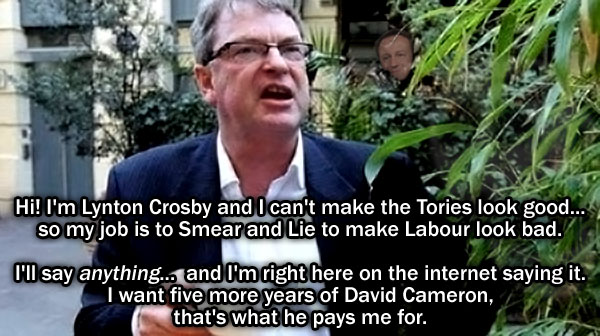
Here are 46 more reasons why Miliband is an excellent leader, with a sound foundation of effective and much-needed costed and evidence-based policy proposals:

1. Labour pledge to build  200,000 by 2020, focusing on social housing.

2. Labour pledged to create a State-Owned Rail Company that would compete and win back Rail Franchises.

3. Labour vow to cut business rates for small firms.

4. Labour vowed to introduce an increased Bankers’ Bonus Tax if they win in 2015.

5. Labour promised Free Childcare worth £5,000 a year for working parents who had children aged 3&4.

6. Labour committed to Sacking ATOS, Serco and G4S if they win the election.

7. Ed Miliband promised to repeal the Bedroom Tax.

8. Ed Balls pledged to reverse the Pension Tax relief that the Tories gifted to millionaires.

9. Labour promised to reverse the Tory Tax cut for Hedge Funds.

10. Labour pledged they will create 200,000 Apprenticeships

11. Ed Miliband vowed to increase the fine levied on firms not paying the Minimum Wage by 1000% to £50,000.

12. Labour are to introduce a new Disability Hate Crime Prevention Law.

13. Labour would freeze gas and electricity bills for every home and business in the UK for at least 20 months, the big energy firms would be split up and governed by a new tougher regulator to end overcharging.

14. Voting age to be lowered to 16.

15. NHS to be re-nationalised.

16. Miliband also said that any private company that does not meet the needs of the public will be brought under state control.

17. Labour will ban exploitative zero hour contracts.

18.  Labour have pledged to introduce a living wage.

19.  Labour have pledged to reverse the £107,000 tax break that the Tories have given to the millionaires.

20. Labour will reintroduce the 50p tax.

21. Labour will repeal clause 119.

22. Labour will introduce a law making Private Companies subject to the Freedom of Information Act.

23. Labour will introduce a Mansion Tax on properties worth more than £2 million

24.  Labour will make up the difference to the value in the minimum wage is restored, reversing the Tory cut of 5%.

25. Labour will halt Michael Gove’s Free School Expansion Programme.

26. Labour will abolish the Tory ban on Local Education Authorities opening State Schools once more.

27. Labour will scrap George Osborne’s “Shares for Rights” scheme that has opened up a tax loophole of £1 billion .

28. Labour will launch a full public inquiry into blacklisting.

29. Labour will ensure Water Companies place the poorest households on a Social Tariff that makes it easier for them to pay their Water Bills.

30. Labour will double the tax duty on Pay Day Lenders and will use the additional £13,000,000 that raises to help foster more Credit Unions.

31. Labour will impose a cap on the cost of credit, setting a limit at which Pay Day Lenders can charge borrowers.

32. Labour will regulate food labelling to simplify pricing so that Supermarkets cannot con customers.

33. Labour plan to introduce a Bill that would ban Recruitment Consultancy firms from only hiring abroad & ban firms from paying temporary workers less than permanent staff.

34. Labour would set up a Financial Crime Unit, with increased staffing, in the Serious Fraud Office to enable the SFO to pursue bankers who break the law.

35. Labour will break up the banks, separating retail banking from investment banking.

36. Labour will scrap Police Commissioners.

37. Labour will introduce a Forces & Veterans Bill of Rights to build upon the Military Covenant.

38. As a minimum measure, Labour will at least cut Tuition Fees by 33%.

39. Labour will introduce measures to prevent corporate tax avoidance.

40. Labour will also increase the Bank Levy by £800m a year.

41. Labour will scrap the Profit Tax Cut (Corporation Tax) that George Osborne has already announced for 2015.

42. Labour will scrap Cameron’s “Gagging” Act.

43. Labour will ensure all MPs will be banned from receiving any income from corporations after 2015.

44. Labour will tackle the abuse and exploitation of migrant labour that undercuts wages.

45. Labour will extend their 2002 public interest test to protect us from exploitative multinational takeovers.

46. Labour will end unpaid workfare.
10853165213_ddb97ac601_oThanks to Robert Livingstone for the memes used in this article.


Government under fire for massaging unemployment figures via benefit sanctions from Commons Select Committee

385294_195107567306966_1850351962_n

Benefits sanctions are financial penalties that are given to people who are deemed to have not met the conditions for claiming benefits. The social security system has always been based on people meeting certain conditions – this has  been true for all working-age benefit claimants, with sanctions applicable to those who fail to observe those conditions. This has been the case since its inception.

However, the Coalition changed the conditions and increased the application, duration and severity of sanctions that apply to those claiming Job Seekers Allowance (JSA) and extended the application of sanctions to those in the Work Related Activity Group of those claiming Employment and Support Allowance (ESA). Since 2012, benefit payments can be suspended for a minimum of four weeks and for up to three years where a person “fails to take sufficient steps to search for work”, to “prepare themselves for the labour market” or where they turn down an offer of employment or leave a job voluntarily.

It emerged during an ongoing inquiry instigated by the parliamentary Work and Pensions Select Committee that Research conducted by Professor David Stuckler shows that more than 500,000 Job Seekers Allowance (JSA) claimants have disappeared from unemployment statistics, without finding work, since the sanctions regime was toughened in October, 2012.

This means that in August 2014, the claimant count – which is used to gauge unemployment – is likely to be very much higher than the 970,000 figure that the government is claiming, if those who have been sanctioned are included.

The research finding confirms what many of us already knew.

Professor Stuckler, who has analysed data from 375 local authorities, said: “The data clearly show that many people are not leaving Job Seekers Allowance for work but appear to be being pushed off in unprecedented numbers in association with sanctions.”

The Work and Pensions Committee decided to conduct a further in depth inquiry into benefit sanctions policy, following the findings of the research. This inquiry will consider aspects of sanctions policy which were outside the remit of the Oakley Review. (You can see the terms of reference for the inquiry, and submissions are invited, all details of which are here – Committee launch inquiry into benefit sanctions.)

Labour MP, Debbie Abrahams, said: “Sanctions are being applied unfairly to job-seekers, as well as the sick and disabled.

The reason the Government is doing this is that it gets them off the JSA claimant figures, so it looks like there are fewer people unemployed.”

The Government claims that sanctioned claimants who leave the benefit system are going into work – they also claim that their punitive sanctions regime “works”. But the Oxford study found this is untrue in a “majority” of cases.

Debbie Abrahams asked the Tory Minister Iain Duncan Smith how many people were excluded from unemployment figures after being sanctioned but not going into work.

In the angry exchange, during the Work and Pensions Committee questions session yesterday, Mr Duncan Smith said that Ms Abrahams’ claims were “ludicrous”.

Mrs Abraham said: “Hundreds of thousands of people have had their benefits stopped for a minimum of four weeks and then approximately a quarter of these people, from the research that I’ve seen, are disappearing.

They are leaving and we don’t know where they are going. That’s an absolute indictment of this policy and it’s a little bit worrying if we’re trying to tout this internationally as a real success story.”

Mr Duncan Smith responded: “Well I don’t agree with any of that. I actually believe the sanctions regime as applied is fair, we always get the odd case of …”

The MP for Oldham East and Saddleworth cut in and said : “People have died after being sanctioned, Minister.”

“No, I don’t agree with that,” Mr Duncan Smith answered. But he has yet to provide any evidence that supports his view.

Many of us have been calling for an inquiry following the death of  former soldier David Clapson. He died starving after being sanctioned for missing a single Job Centre meeting. David had type one diabetes, which is an autoimmune illness. He was unable to afford to maintain an electricity supply to keep his fridge running, where he safely stored his life-saving insulin. Sadly David is not an isolated case, and this government have been presented with many other cases of extreme hardship and suffering because of sanctions, which they simply deny.

Of course a DWP spokesman dismissed the study, saying: “It looks to be partially based on unreliable data.”

I don’t see how that could be the case. The data presented in the study explictly relates to people vanishing from the DWP’s records after claiming Job Seekers Allowance, who are not in work, so the comment from the DWP isn’t even a coherent, rational response.

We do know that the real problem is not people that people aren’t trying hard enough to work, or failing to try,  but rather, it is the Tories ideological obsession with austerity policies that contract the economy and fail to provide the job opportunities that people are desperately looking for. And the fact that the government are lying to hide the consequences of their damaging and extremely cruel policies.Those policies are ultimately about removing support from people that need it, as part of a broader ideological aim of dismantling welfare provision.

Since the government does not track or follow up the destination of all those leaving the benefit system, as discussed, the off-flow figures will inevitably include many having their claim ended for reasons other than securing employment, including sanctions, awaiting mandatory review, appeal, death, hospitalisation, imprisonment, on a government “training scheme” (see consent.me.uk  and the Telegraph – those on workfare are counted as employed by the Labour Force Survey.)

And it’s clear that sanctions, which are a crudely applied politicised form of punitive behaviourist pseudo-psychology, are being used to prop up an insidious ideological drive to remove people’s basic lifeline support at a time when they need it.  Sanctions are the removal of money that the state previously deemed necessary for meeting basic needs, and as such, cannot possibly be justified when all they may ever achieve is to force people to focus on basic survival rather than on gaining employment.

544547_466042163465317_917876792_n

Many thanks to Robert Livingstone for the excellent pictures.

Related

A letter of complaint to Andrew Dilnot regarding Coalition lies about employment statistics

Punishing Poverty: A review of benefits sanctions and their impacts on clients and claimants

Rising ESA sanctions: punishing the vulnerable for being vulnerable

Conservatives should repay cost of misleading tax stunt, says TUC

Over the past four years, the government has scapegoated people who need to claim benefits by blaming them for their circumstances, which are actually because of Tory-led economic policies. This is a government that is ideologically opposed to welfare provision of any kind, and we have already seen the steady dismantling of our post- war settlement, which was agreed by the main political parties at the time, and comprised of a mixed economy, a free public sector, free healthcare and education, a guaranteed state pension, social welfare provision and access to legal aid.

There was a political consensus that this was the basis for a healthy society. The provisions under the post-war settlement, together with our observation of human rights, have been the solid basis of our democratic society, until recently.

To justify their ideology, and their draconian policies, the government have used a propaganda campaign that has vilified benefit claimants, and portrayed them as a “burden on the taxpayer.” Of course we know that most people needing welfare have also paid tax, and aren’t a discrete group at all. Indeed, the poorest pay a proportionally higher percentage of tax in this country. And the government have form for telling big lies.

Thanks to the Tory-led government propaganda machine, we have a society that deems it acceptable that wealthy people don’t pay taxes, and when faced with the prospect of contributing to a society that they have taken so much from, it’s considered the norm that they complain and threaten to move abroad.

When poor people lose money, they become homeless, starve and die. That is also becoming a norm.

George Osborne has promised to send a letter out to tax payers every year, telling us where our money is being spent. The problem is that it’s just another part of the Tory propaganda campaign to portray our welfare system as a “burden on tax payers”, in order to justify  disassembling it completely. So Osborne has lied, by conflating public sector pensions with welfare, but by splitting state pensions – the bulk of our welfare bill – from the standard and established category of “welfare spending”, amongst other things. This has been done this to make the welfare budget look bigger than it actually is.

141105osbornetaxsummary
George Osborne’s grossly misleading summary

.
141105richardmurphy1
This is from Richard Murphy, from Tax Research UKwhich gives us an accurate picture of government spending.

The TUC say that the Treasury’s breakdown of how tax revenue is spent by government is a political stunt, the costs of which should be repaid to taxpayers.

The tax breakdown given in tax statements has been criticised by the Institute for Fiscal Studies for labelling a quarter of all spending “welfare”. The Institute says that this includes areas such as public service pensions and social care, whereas only 14 per cent of public spending is on working-age benefits – and much of this is spent on people in work.

TUC General Secretary Frances O’Grady said: “The Conservatives have been caught blue-handed using tax payers’ money for party political campaigning. They should now be made to pay the full costs of this stunt.”

The tax breakdown given in tax statements has been criticised by the Institute for Fiscal Studies (ILF) for claiming that  a quarter of all spending “welfare”. The Institute says that this includes areas such as public service pensions and social care, however,  only 14 per cent of public spending is on working-age benefits – and much of this is spent on people in work.

The government has started to send out information on how tax revenue is spent to individuals who pay income tax or National Insurance contributions. It has broken down spending into a number of categories. The biggest of these is “welfare”, which represents a quarter of total spending. State pensions also appear as a separate category, accounting for 12% of spending. In this observation we look at what counts as pension and welfare spending, and offer some alternative breakdowns.

Spending on state pensions is straightforward. This is essentially just the annual spend on the basic state pension and earnings-related state pensions from various different schemes.

“Welfare” spending, at 25% of the total, is taken directly from the government’s public expenditure statistical analyses. It is the total spending defined as “social protection” in these analyses, less spending on state pensions. Total spending on social protection comes in at £251 billion in 2013-14, which is about 37% of total public spending of £686 billion (before accounting adjustments). Take off £83 billion of spending on state pensions and you get to £168 billion on “welfare” – very nearly a quarter of total spending.

What is included in that “welfare” total?

It includes £28.5 billion on “personal social services”. This is a number that in many analyses one would want to report separately from other welfare spending. It includes spending on a range of things, such as looked-after children and long term care for the elderly, the sick and disabled. Unlike other elements of “social protection” it is not a cash transfer payment and in many ways has more in common with spending on health than spending on social security benefits.

Another £20 billion of the spending counted under welfare is pensions to older people other than state pensions. That includes spending on public service pensions – to retired nurses, soldiers and so on [1]. This is not spending that would normally be classed as “welfare”. The rest of the pay package of a public sector worker is included as departmental spending within the department of that worker. One could either report such pension payments separately or, like pay, as part of the relevant spending function. The pay of nurses counts as health spending. One could count their pensions in the same way.

That leaves around £120 billion of other welfare spending, which can be broken down in a number of different ways.

Since the government has chosen to report state pension spending separately, one obvious division would be to separate spending on those of working age and those of pension age. In addition to state pensions a further £28 billion is spent on pensioners, of which £15 billion goes on benefits specifically for that group, such as pension credit, attendance allowance and winter fuel payment, while the remaining £13 billion is largely spent on housing benefit and disability living allowance. So of the £205 billion or so spent on tax credits and social security benefits about £111 billion is spent on those over pension age and £94 billion on those of working age.

Figure 1 and Table 1 show this breakdown of the 25% of total spending described as “welfare” by the government, alongside the 12% spent on state pensions. 4% goes on “personal social services”, 3% on public service pensions, 4% on other benefits for pensioners, and the remaining 14% on benefits for those of working age.

Figure 1. Breakdown of “welfare” as a share of total spending

Sources: Public Expenditure Statistical Analyses, Department for Work and Pensions benefit expenditure tables.

Table 1. Breakdown of “welfare” as a share of total spending


Sources: see Figure 1.

It could of course be argued that this would provide too much detail. But there are five categories reported in the government’s breakdown of spending, each representing less than 2 percent of total spending. If it is worth reporting contributions to the EU budget which represent less than 0.1 percent of total spending then there might be a case for providing this additional breakdown of “welfare spending”.

There are of course other ways of breaking down spending on social security benefits. The Office for Budget Responsibility (OBR)  for example, show spending on the elderly, sick and disabled, families with children, the unemployed and help with housing costs (table 2.1 here)

In our survey of the benefits system we provide a similar split (table 3.1 here), separating out spending according to its function as best we can. There are clearly different judgments one can make here (we include attendance allowance in spending aimed at the sick and disabled, rather than the elderly for example), but it does give a good sense of the overall spending priorities within the system. Table 2 shows this split, including the 12 percent of total spending going on state pensions, and excluding the 4 percent spent on personal social services and the 3 percent reported as going on pensions other than the state pension (both of which the government includes in “welfare”).

Table 2. Welfare spending by function


Note: categories correspond to the primary recipient of a given benefit, rather than capturing all of the expenditure on each group.

Source: Department for Work and Pensions benefit expenditure tables.

There are different ways of reporting how our taxes are spent, and there is a balance to be struck between the amount of detail presented and clarity of message. Lumping a quarter of total spending into one bucket labelled “welfare” may not strike the most helpful balance, especially when it includes such diverse items as spending on social care, public service pensions, disability benefits, child benefit and unemployment benefits.

Note: The IFS provides detailed breakdowns of tax revenue here, benefit spending here, and other public service spending here.

[1] It is also not the number reported by the OBR when looking at spending on public service pensions (see table 4.24 here). The OBR reports gross spending of £36 billion and “net” spending – i.e. gross spending less contributions received – of £10.5 billion. But for the purposes of this note we stick with the numbers published in PESA.

Image: http://www.kayamarart.com

Related

REVEALED: The Government will use its new tax summaries to MISLEAD THE PUBLIC about welfare spending

The OBR shows why welfare cuts won’t control spending

The personal tax statement George Osborne doesn’t want you to see

Tax leaflet or Targetted Anti Welfare Propoganda?

Please sign the petition from Mike Sivier: Withdraw the new ‘Annual Tax Summary’ and apologise for misleading the public