Author: Kitty S Jones

I’m a political activist with a strong interest in human rights. I’m also a strongly principled socialist. Much of my campaign work is in support of people with disability. I am also disabled: I have an autoimmune illness called lupus, with a sometimes life-threatening complication – a bleeding disorder called thrombocytopenia. Sometimes I long to go back to being the person I was before 2010. The Coalition claimed that the last government left a “mess”, but I remember being very well-sheltered from the consequences of the global banking crisis by the last government – enough to flourish and be myself. Now many of us are finding that our potential as human beings is being damaged and stifled because we are essentially focused on a struggle to survive, at a time of austerity cuts and welfare “reforms”. Maslow was right about basic needs and motivation: it’s impossible to achieve and fulfil our potential if we cannot meet our most fundamental survival needs adequately. What kind of government inflicts a framework of punishment via its policies on disadvantaged citizens? This is a government that tells us with a straight face that taking income from poor people will "incentivise" and "help" them into work. I have yet to hear of a case when a poor person was relieved of their poverty by being made even more poor. The Tories like hierarchical ranking in terms status and human worth. They like to decide who is “deserving” and “undeserving” of political consideration and inclusion. They like to impose an artificial framework of previously debunked Social Darwinism: a Tory rhetoric of division, where some people matter more than others. How do we, as conscientious campaigners, help the wider public see that there are no divisions based on some moral measurement, or character-type: there are simply people struggling and suffering in poverty, who are being dehumanised by a callous, vindictive Tory government that believes, and always has, that the only token of our human worth is wealth? Governments and all parties on the right have a terrible tradition of scapegoating those least able to fight back, blaming the powerless for all of the shortcomings of right-wing policies. The media have been complicit in this process, making “others” responsible for the consequences of Tory-led policies, yet these cruelly dehumanised social groups are the targeted casualties of those policies. I set up, and administrate support groups for ill and disabled people, those going through the disability benefits process, and provide support for many people being adversely affected by the terrible, cruel and distressing consequences of the Governments’ draconian “reforms”. In such bleak times, we tend to find that the only thing we really have of value is each other. It’s always worth remembering that none of us are alone. I don’t write because I enjoy it: most of the topics I post are depressing to research, and there’s an element of constantly having to face and reflect the relentless worst of current socio-political events. Nor do I get paid for articles and I’m not remotely famous. I’m an ordinary, struggling disabled person. But I am accurate, insightful and reflective, I can research and I can analyse. I write because I feel I must. To reflect what is happening, and to try and raise public awareness of the impact of Tory policies, especially on the most vulnerable and poorest citizens. Because we need this to change. All of us, regardless of whether or not you are currently affected by cuts, because the persecution and harm currently being inflicted on others taints us all as a society. I feel that the mainstream media has become increasingly unreliable over the past five years, reflecting a triumph for the dominant narrative of ultra social conservatism and neoliberalism. We certainly need to challenge this and re-frame the presented debates, too. The media tend to set the agenda and establish priorities, which often divert us from much more pressing social issues. Independent bloggers have a role as witnesses; recording events and experiences, gathering evidence, insights and truths that are accessible to as many people and organisations as possible. We have an undemocratic media and a government that reflect the interests of a minority – the wealthy and powerful 1%. We must constantly challenge that. Authoritarian Governments arise and flourish when a population disengages from political processes, and becomes passive, conformist and alienated from fundamental decision-making. I’m not a writer that aims for being popular or one that seeks agreement from an audience. But I do hope that my work finds resonance with people reading it. I’ve been labelled “controversial” on more than one occasion, and a “scaremonger.” But regardless of agreement, if any of my work inspires critical thinking, and invites reasoned debate, well, that’s good enough for me. “To remain silent and indifferent is the greatest sin of all” – Elie Wiesel I write to raise awareness, share information and to inspire and promote positive change where I can. I’ve never been able to be indifferent. We need to unite in the face of a government that is purposefully sowing seeds of division. Every human life has equal worth. We all deserve dignity and democratic inclusion. If we want to see positive social change, we also have to be the change we want to see. That means treating each other with equal respect and moving out of the Tory framework of ranks, counts and social taxonomy. We have to rebuild solidarity in the face of deliberate political attempts to undermine it. Divide and rule was always a Tory strategy. We need to fight back. This is an authoritarian government that is hell-bent on destroying all of the gains of our post-war settlement: dismantling the institutions, public services, civil rights and eroding the democratic norms that made the UK a developed, civilised and civilising country. Like many others, I do what I can, when I can, and in my own way. This blog is one way of reaching people. Please help me to reach more by sharing posts. Thanks. Kitty, 2012

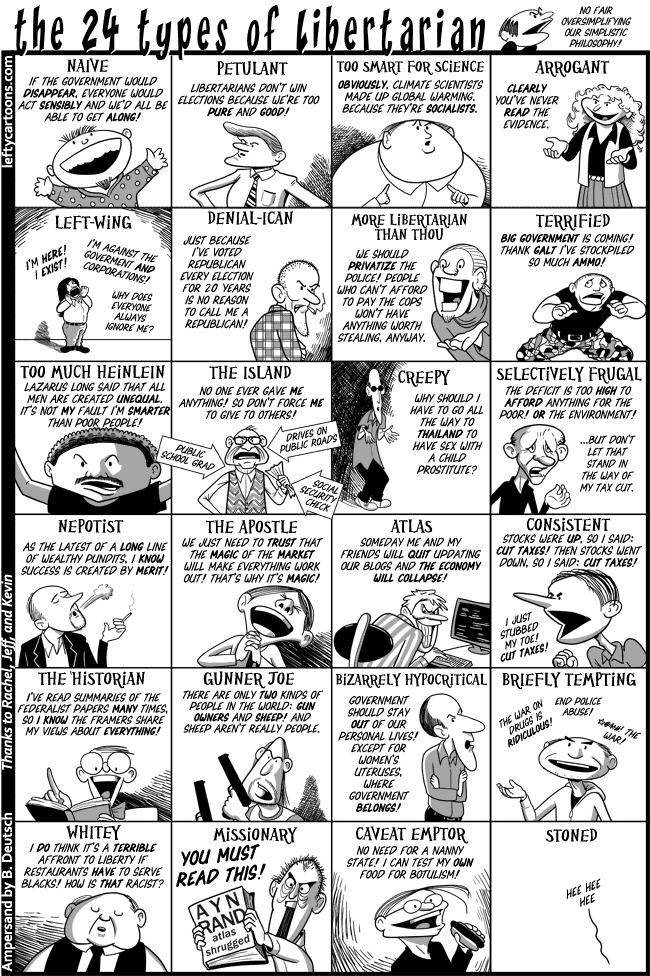
Libertarian Paternalism and David Freud’s comments in context

1374718_540929452643254_208125039_n (1)

.

It’s taken just four years since Labour’s Equality Act was implemented for it to appear reasonable for a government minister to propose that disabled people have fewer rights and are of less worth than everyone else. Only a corporocratic Tory would call exploiting disabled people for profit “support” and try and make out they are doing us a favour.

The Tories have made a virtue out of claiming they are giving something by taking something away. For example, the welfare cuts have been casually re-named reforms in true Orwellian style. We have yet to see how cutting the lifeline benefits of the poorest people, and imposing harsh sanctioning can possibly be an improvement for them, or how it is helping them into none-existent work, in a time of inflated living costs and recession.

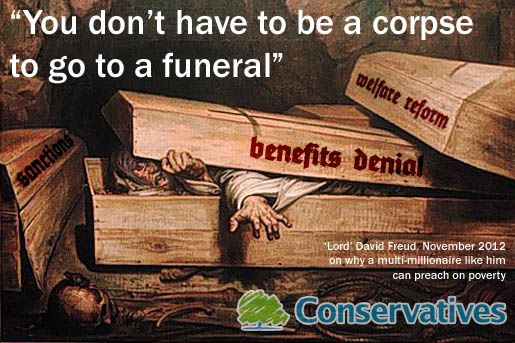
This said, even the Tories have been forced to distance themselves from David Freud’s “business-friendly” Tory  commentary, about the lower economic worth of disabled people. 

Anyone endorsing Freud’s comments should perhaps try substituting the word “disabled” with “woman” or “gay” or any ethnic group and see how far they get with that.

We do have laws that demand people are treated equally, regardless of their characteristics, and for good reason, especially when people commenting on this issue think it’s ever acceptable to discriminate against disabled people. But then there’s also the issue of basic decency, and of what a civilised society allows and doesn’t allow. It’s telling that the loudest of defences for  Freud’s blatantly discriminatory remarks came from the Adam Smith Institute, who would have everyone on less than the minimum wage if they had their “all hail the competitive, managed free-market” minarchist way. 

The real hypocrisy of Libertarians is that they know that the invisible hand of the market goes hand in hand with the iron fist of the state, in their rigged game. Indeed, politically  the idealised neoliberal small state has not disengaged from the public domain but its authoritarian arm has been extended.

Under the guise of a “new paternalism” (much the same as the old Tory 19th Century paternalism), which reduces the social world to the theories of behavioural economics and narrow neoliberal outcomes, the Tories have aligned public values with tradition – legitimated by a claimed concern for the welfare of society – but in reality it’s clear that Conservative paternalism is and always has been shorthand for hierarchical societies based upon privilege and a rigid control over the mass of people’s freedom, responsibilities (to the state), wellbeing and opportunities.

This is simply a social control mechanism with its micro-managerial politics; the tendency for politicians to devolve not power but responsibility for decision-making to citizens, without any reference to human experiences, constraints, or either micro or macro-level circumstances. And without extending genuine choices. It’s as if we have been placed in a state of perpetual Tabula rasa. The government and media re-write our narratives upon us.

Its also a preposterous zero-sum approach to wealth distribution. For the Tories, inequality is seen as necessary and beneficial.

State interventions this past four years have ensured that only the poorest and most vulnerable are left to the mercy of market forces, whilst welfare, in any meaningful sense, applies only to the wealthiest. Whilst austerity has been inflicted on the most vulnerable citizens in our society, the millionaires have enjoyed tax breaks and increased salaries. The elite play a rigged game: lobbying, the revolving doors between business and politics, being above the law, and tax-payer funded bailouts. The free-market isn’t open to the poor.

True laissez-faire capitalism is left for imposition only for the most vulnerable citizens, and only after we have been squeezed dry by those lying, pro-interventionist minarchists, who ensure that all protective, supportive public provision has been removed, and the public services we depend upon have been plundered and then sold off to the ever-circling private business and capitalist class vultures.

My point is this: the Tories, as neoliberal fundamentalists, have supplanted collective, public values with individualistic, private values of market rationality. They have successfully displaced established models of welfare provision and state regulation through policies of privatisation and de-regulation and have shifted public focus, instigating various changes in subjectivity, by normalising individualistic self-interest, entrepreneurial values, and crass consumerism. And increasing the social  and material exclusion of growing numbers living in absolute poverty

Basically, the Tories tell lies to change perceptions, divert attention from the growing wealth inequality manufactured by their own policies, by creating scapegoats and stigma. 

Freud’s comments have reduced disabled people’s worth to their economic value. Just as all Tories conflate everyone’s worth to an economic value. Human needs are being conflated to narrow neoliberal outcomes.

And they do tell such lies to justify their policy interventions.

For example, Disability Living Allowance (DLA) allows disabled people to purchase home adaptations, medication, treatment and equipment themselves. It is a very modest benefit of around £70 a week, it saves the taxpayer money because it allows early intervention, preventative treatment and, most importantly of all, it allows disabled people to work.

In fact the majority of DLA claimants were in work and use the extra cash to pay for the transport, software, screen readers, tactile keyboards and orthopaedic chairs, and so forth, thus allowing more and more disabled people to do a 9 to 5 job.

Yet the Chancellor said, in his 2010 emergency budget speech, that the Tory instigated reassessments for DLA would “significantly improve incentives to work, despite the fact that DLA has nothing whatsoever to do with unemployment.

“BRITAIN’S shirkers’ paradise shame with hordes of work shy benefit claimants was blamed last night for much of our economic mess…

…we have managed to create a block of people in Britain who do not add anything to the greatness of this country. (Now THAT is a typified Tory view)

They  have become conditioned to be users of services, not providers of money. This is a huge part of the reason we have this massive deficit. We have had to borrow vast sums of money. We went on this inflated spending spree”  –  More lies from Iain Duncan Smith, in The Sun, 1 December 2010, despite an official rebuke from the Office for National Statistics.

Duncan Smith has somehow forgotten that the global banking crisis is responsible for the recession, not poor people without jobs, and as for the lies about New Labour’s “big spending”  Fabianism, which has no empirical basis, it’s worth noting that total public spending under the Thatcher Governments averaged 42.11 per cent of GDP and, under the Blair Governments, 36.59 per cent (Source: HM Treasury, 2010).

The Access to Work fund was re-established by the last Labour Government to ease the transition to work for disabled people, by paying grants to businesses for vital equipment. It was put in place to support people with disabilities, it aimed to reduce inequalities between disabled people and non-disabled people in the workplace by removing practical barriers to work. This fund has seen severe cuts since 2010, which flies in the face of this Government’s claim to “make work pay” for all. By reducing this essential funding, the Coalition have effectively excluded many from work.

Additionally, disabled people with the highest support needs have been left in fear and distress following the Government announcement that it is to callously abolish a key source of independent living support. The Government decision to close the Independent Living Fund and devolve responsibility to severely under-funded local authorities follows a consultation that disabled people claim is unlawful and on which an urgent hearing scheduled by the High Court to go ahead on 13/14 March 2013.

Labour have also challenged the decision to close this crucial source of support. Labour has called for the retention of this vital fund which benefits the most severely disabled. To show her support for the retention of Independent Living Fund, which is relied upon by over 19,000 severely disabled, Labour’s Dame Anne Begg is the primary sponsor of  an Early Day Motion calling on the Government to reverse their decision to close the fund in June 2015. You can view the EDM here.

In May 2014,  the Court of Appeal, in the case of Bracking and others v Secretary of State for Work and Pensions found that the Department of Work and Pensions’ decision to close the Fund was not lawful, overturning a High Court decision of April 2013. It decided that the Department had not complied with the Public Sector Equality Duties imposed by section 149 of the Equality Act 2010. Opportunity for new applications for this funding was closed in June 2010 by the Coalition. Once again this plainly indicates that the Coalition do not consider the needs of disabled people as important, and clearly demonstrates the extent of their disgustingly eager ideological drive to strip away essential provision and support for the vulnerable.

As Sir Bob Hepple QC has pointed out, some provisions of the Labour Government’s Equality Act were very quietly edited by the Coalition, (only roughly 90% of the Act came into force, after the Coalition quickly said it would be “reviewing several sections of the legislation passed by parliament in April 2010,”) whilst other provisions have been repealed by the Enterprise and Regulatory Reform (ERR) Bill, including the duty on public authorities to have due regard to the need to reduce socio-economic inequalities.

The failure to implement the Act in full certainly sends out a clear signal that creating a more equal society is not priority for the Coalition. However, perhaps even more important has been the Conservative defense of increasing economic inequality, the lionisation of a Randian selfish individualism and a proliferation of ideological justification narratives regarding the dismantling the “Big (Welfare) State”, where the latter, in Orwellian fashion, is now being indicted for many of the very social and economic ills that the free-market era has actually delivered.

Ed Miliband is right to demand Freud’s resignation, and right to defend our vulnerable citizens from potential exploitation: that is not “playing politics” as claimed by the likes of Paul Staines and James Delingpole,  Freud was certainly not a victim in this.

To put this in context, the Labour Party introduced a host of measures to strengthen the rights of disabled people. They passed the Disability Discrimination Act 2005, introduced the Equality Act 2010, and formed the Equality and Human Rights Commission, and, in 2009, the Labour government signed the United Nations convention on the rights of persons with disabilities.

Kate Green and Anne McGuire have pointed out that the original intentions when Labour introduced the Employment Support Allowance (ESA)pilot and an assessment of people’s capacity for work, have been distorted – that the original aim was to be a supportive and facilitative process, with Disability Living Allowance (DLA), and other supportive measures in place to help people with disability lead a dignified life, fulfilling their potential, but, as Anne McGuire has pointed out, the renegotiation of the Atos contract by the current Government, (along with the addition of targets to remove people’s benefits, and sanctions,) has rebalanced the system to be punitive, rather than facilitative.

Of course the Tories have been very quick to blame Labour for the current situation, however, following a review of their pilot, Labour warned the government of problems with the Work Capability Assessment (WCA), which Iain Duncan Smith duly ignored, passing the ESA system into law, making the WCA even more problematic, and as stated, re-contracting Atos “in line with the welfare reforms”, including targets to take people’s lifeline benefits away, despite the claims made by the Tory liars.

Comparing policies indicates clearly the stark differences between the parties, and given the briefing from Labour from their ESA review that was blatantly disregarded, and the refusal of the Coalition to undertake a cumulative impact assessment of the “reforms”, it’s clear that the Tories do not regard the poorest and most vulnerable worthy of government diligence, accountability, support and fair treatment.

We simply cannot allow such a vindictive, uncivilised government another five years to harm our most vulnerable citizens, further undermine our democracy, destroy our public services and welfare provisions and trample our human rights. This is the first government to face a United Nations inquiry into disability rights violations. And that is absolutely shameful for a wealthy so-called first world liberal democracy.

Never in this country have those who fight for democracy and social justice carried a greater burden or faced the possibility of bigger losses of human rights, human freedoms, human dignity and human welfare than they do right now.
 

1459165_266124213538634_1461740450_n

Pictures courtesy of Robert Livingstone


An open letter from Rachel Reeves to Iain Duncan Smith: Universal Credit questions that need answering

12787_401370889932445_1764534847_n


By Rachel Reeves 

At your party conference you announced your intention to “accelerate the delivery of Universal Credit … from the New Year, bringing forward the national roll-out through 2015/16 to every community across Great Britain”.

As 985,920 fewer people receiving are Universal Credit than you originally said would be claiming the new benefit by April 2014, acceleration is clearly necessary.

However, given the litany of problems with the delivery of this scheme to date, and the £130m of public money wasted on IT, it would be extremely worrying if even the limited expansion of the scheme you have announced was being driven more by a political  timetable than by due concern for effective and efficient delivery.

Yesterday I visited the North West to find out first-hand how the Universal Credit pathfinders had been working in practice. I met with local authorities, the voluntary sector, housing providers and work programme contractors as well as staff and managers at the Jobcentre in Ashton-under-Lyme, which as you know has had the longest experience of handling Universal Credit claims. I would like to take this opportunity to record my gratitude and appreciation for the time they took to meet me and I am grateful also to you and officials at the DWP for helping to arrange this.

These meetings confirmed to me that the principle of Universal Credit is a good one that could bring real benefits to claimants, communities and taxpayers. It was also very clear that professionals across the public, private and voluntary sectors in these areas are working extremely hard to make Universal Credit a success.

However it was also clear that there remain a range of serious problems with the current operation of Universal Credit which risk being replicated and multiplied across the country on a far larger scale if Universal Credit unless they are resolved.

The serious problems that were raised with me included:

  •  the IT systems and related work processes around Universal Credit claims remain “clunky”, poor at handling complex or dynamic circumstances, and prone to delays and mistakes in processing claims and making payments.
  •  a significant level of system error which currently needs to be identified and corrected through costly manual checks.
  •  particular problems and high rates of error associated with the incorporation of the housing costs element of Universal Credit.
  •  concerns that claimants had not been informed of, or had difficulty in accessing, budgeting support, advance payments or alternative payment arrangements.
  •  an extremely high incidence of rent arrears that implied very substantial financial and administrative burdens for housing providers as caseloads increase.
  • the meaning of “in-work conditionality” and how in-work support will be delivered by jobcentres remains extremely unclear despite the fact that numbers of Universal Credit claimants in work will increase as the caseload expands and matures and the integral importance of this element to the programme’s aim of providing a different set of incentives to progress in work and increase working hours
  •  joint-working between the DWP and relevant local partners is patchy and there is poor data-sharing between the two, with little automatic integration of information on claimants and their circumstances.

The problems which I was told about during my visit are leading to concerns about the risks to claimants and additional costs to the public purse when Universal Credit is rolled out in other parts of the country. Therefore I am writing today to ask that you give us clarity and assurance on the following key issues:

1. What guarantee can you give that the IT systems for Universal Credit will not increase levels of error and delays in processing claims, payments and changes of circumstances?

2. What is your estimate of the current cost of manual processes for identifying and rectifying system errors, and how will you prevent this increasing as the caseload expands?

3. Will you publish a full evaluation of the impact of including new claims with a housing cost element in current Pathfinder areas before introducing Universal Credit to new areas?

4. Will you guarantee that all Universal Credit claimants will be fully informed of their options for budgeting support, advance payments and alternative payment arrangements, and set strict and published limits for the time taken to process and deliver on requests made?

5. What are the current levels of awareness and take up of options for budgeting support, advance payments and alternative payment arrangements among current claimants?

6. What increases in levels of rent arrears and related proceedings do you anticipate with the increasing incorporation of housing cost elements into the Universal Credit caseload?

7. How has “in work conditionality” been delivered in practice so far? What are the outcomes and lessons of its implementation so far? How will it be rolled out nationally?

8. What information on claimants and the circumstances and their partners is currently shared automatically between the DWP and relevant partners, and what can only be shared manually? What information cannot be provided even on request?

9. What steps will you take to ensure that joint working between the DWP and relevant partners is improved before introducing Universal Credit in new areas?

10. Will local authorities and voluntary sector partners in every area receive the same level of additional funding and support from the DWP for supporting the introduction of Universal Credit as has been available to Pathfinders? What has been the cost of this, and what will be the cost of extending it to all areas of the country?

And following your written ministerial statement of 13 October:

11. What IT system will underpin the full national roll-out, if, as you have stated, testing of the “enhanced digital service” is to start “later this year” in a “limited local area?

12. What exactly has been “assured by the Major Projects Authority and signed off by HM Treasury”, especially give the statement that “we will keep all longer-term plans under review.

13. When will a long-term plan for the full-implementation of Universal Credit be published?

14. How many people will be on universal credit by 2015, 2016, 2017 and 2018?

15. By what date will universal credit be rolled out entirely across the country?

16. By what date will the migration of all legacy benefits have been completed?

I look forward to hearing from you.

Rachel Reeves MP is shadow secretary of state for work and pensions.

Related: We can reduce the Welfare Budget by billions: simply get rid of Iain Duncan Smith

377683_445086432227557_1770724824_n (1)Pictures by Robert Livingstone
Children’s health – a casualty in Osborne’s war on the poor


Fenland Sunset

As George Osborne promises fresh hardship for the working poor, Professor Michael Marmot and Dr Angela Donkin look at the impact of growing inequality on child health

Clare Sambrook writes: Speaking at his party’s conference, Chancellor George Osborne harked back to the Steam Age, the “golden age” of Boulton, Murdoch and Watt, “when the spirit of invention was alive and the marriage of business and science made everything possible.” Osborne said: “I want us to be that Britain. Let’s raise the ambition of the nation so that everyone has the chance to succeed.”

Then he promised that a future Conservative government would freeze benefits to people of working age, squeezing the already stressed working poor. Over to Prof Sir Michael Marmot and Dr Angela Donkin:

Persisting social inequalities in early child development and an alarming increase in poverty were among figures we (the UCL Institute of Health Equity) published last week. We have been monitoring trends in health inequalities and their causes since the publication in 2010 of Fair Society, Healthy Lives: the Marmot Review.

The findings show a worrying picture. Inequalities in life expectancy and healthy life expectancy persist. The difference between life expectancy at birth between the most and least deprived areas of the country is eight years for women, and nine point two years for men.

There is an even higher level of inequalities in healthy life expectancy – that is the length of time someone can expect to live in good health.  For example if you are a man, you can expect to live 55 years in good health in Manchester, compared to 70.3 years in Richmond upon Thames.

We have shown, previously, that the majority of the variation in health can be explained by inequalities in the conditions in which we are born, grow, live, work and age. To address these inequalities in the life course Fair Society, Healthy Lives set out its policy recommendations, in six domains: To ensure every child has the best start in life,

1. Enable all children, young people and adults to maximise their capabilities and have control over their lives,

2. Create fair employment and good work for all,

3. Ensure a healthy standard of living for all,

4. Create and develop healthy and sustainable places and communities,

5. Strengthen the role and impact of ill-health prevention.

The Government white paper that followed Fair Society, Healthy Lives (Healthy Lives, Healthy People: Our strategy for public health in England) accepted all but one of the recommendations (the recommendation for a minimum income for healthy living). Encouragingly as well, alongside a general acceptance of the need for action, there has been significant support from the Department for Health, with for instance, the introduction of the Public Health Outcomes Framework (PHOF) within England. PHOF is a monitoring system with the ultimate aim of reducing health inequalities.

However the results regarding trends in the causes of health inequalities are discouraging.  More needs to be done across all government departments, and the approach needs to be joined up.

A key focus should be early child development.  Good early development is a predictor of better health outcomes in later life.

The Department for Education’s own figures sadly show only 52 per cent of children achieved a good level of development at the end of reception class. For those on free school meals this drops to a heart sinking 36 per cent. It isn’t as simple as being poor = bad health and being rich = good health. There is a gradient. For each step up the social ladder, for each increase in income decile, our health and the social determinants (the conditions in which we are born, grow, live, work and age) improve.

If we compare ourselves to other countries, then we don’t perform as well as we ought to on measures of child well-being. A Unicef report last year placed the UK in 16th place in the OECD, below Slovenia, the Czech Republic and Portugal.

Figures from the Joseph Rowntree Foundation, which we have made available at a regional level, illustrate that the number of households who do not have enough money to live a healthy life has increased by a fifth, between 2008/9 and 2011/12: from 3.8 million to 4.7 million. Currently, 23 per cent of households, fall below this poverty threshold.

In London, where costs are higher, more than one in four households (29.4 per cent) did not receive enough income to live a healthy life.  It is a disgrace that in this country nearly a million people will need to use food banks by the end of the year, according to estimates by the Trussell Trust.

If incomes are insufficient, it is more difficult to have adequately sized housing, free from damp, and adequately heated. It is more difficult to buy a nutritious diet, with fruits, vegetables and lean meat, leaving people to buy cheaper filling food, full of processed carbohydrates and fats.

Families with children will struggle to provide them with the opportunities for enrichment that other families do, they will avoid having birthday parties and friends round to play, they will struggle to buy birthday presents, sports equipment and warm clothes. Parents will be stressed, and less able to respond to children positively, which we know is important for their development.

Thomas Piketty, in his book Capital in the Twenty-First Century, captured attention by pointing to dramatic increases in the concentration of income and wealth – we are heading back to 19th Century levels. This increasing concentration of capital and income is not good for our society.

If we want a healthy economy, a healthy population, a fair society, a population with lower crime, we ought to be very concerned.

It is now the case in England that a majority of people below the poverty line are in households where at least one adult is in work. Whatever one’s political leaning, a failure to reward people adequately for hard work, cannot surely be the basis of a civilised society.

We need to ensure that work creates the opportunity for a healthy life, that the jobs created provide sufficient income and a healthy working environment.

We must do more to tackle health inequalities, starting from birth.  If we need a motivation beyond our ethical responsibilities, then we would do well to remember that health inequalities come at a huge cost.

More children reaching a good level of development means less financial burdens on the NHS in later life. Lower unemployment means less economic inactivity.  Better working conditions mean less money lost to sick pay and less cost to the NHS. Tackling these issues has the potential to save many billions in future years.

With many thanks to Counterfire


Related

Inequality has risen: Incomes increased for the richest last year, but fell for everyone else.

Poverty

It’s absolute poverty, not “market competition” that has led to a drop in food sales

Quantitative Data on Poverty from the Joseph Rowntree Foundation.

tory cuts

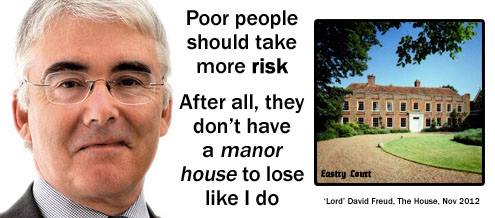
David Freud was made to apologise for being a true Tory in public

1459165_266124213538634_1461740450_n

Lord Freud, a Conservative Welfare Reform Minister, has admitted comments he made that some disabled people are  not worth” the full national minimum wage”  were “offensive”, after they were disclosed by Ed Miliband during Prime Minister’s Questions yesterday afternoon. The Labour leader has called on the Tory peer to resign. Cameron called for a full apology from Freud.

He has since apologised after slipping up and suggesting that disabled people are “not worth” the national minimum wage and some could only be paid “£2 an hour.” Cameron says the comments made by Lord Freud at the Tory conference do not represent the views of government. However, his austerity measures and the welfare “reforms” tell us a very different story.

Cameron betrayed his anger at being challenged when he once again alluded to his severely disabled late son, Ivan, and his late father, as he told Miliband that he would take no lectures on disabled people.

This is not the first time that the prime minister has used his son in anger, as a tactic designed to cause others emotional discomfort, deflect criticism and to avoid answering difficult questions regarding this government’s harsh and punitive policies towards disabled people.

The Labour leader quoted Freud, saying: “You make a really good point about the disabled. There is a group where actually, as you say, they’re not worth the full wage.”

Amidst cries of “outrage” and “shame” from the Labour benches, Mr Miliband said: “To be clear about what the Welfare Reform Minister said, it’s very serious. He didn’t just say disabled people weren’t worth the minimum wage, he went further and he said he was looking at whether there is something we can do, if someone wants to work for £2 an hour.”

He added: “Surely someone holding those views can’t possibly stay in your Government?”

Cameron said: “Those are not the views of the government, they are not the views of anyone in the government. The minimum wage is paid to everybody, disabled people included.”

Clearly very angry, the prime minister added: “Let me tell you: I don’t need lectures from anyone about looking after disabled people. So I don’t want to hear any more of that. We pay the minimum wage, we are reforming disability benefits, we want to help disabled people in our country, we want to help more of them into work. And instead of casting aspersions why doesn’t he get back to talking about the economy.”  

Once again, note the rhetorical diversionary tactics that Cameron used.

Miliband responded: “I suggest, if he wants to protect the rights of disabled people, he reads very carefully what his welfare minister has said because they are not the words of someone who ought to be in charge of policy related to disabled people.

“In the dog days of this government the Conservative party is going back to its worst instincts – unfunded tax cuts, hitting the poorest hardest, now undermining the minimum wage. The nasty party is back.”

In the Guardian said: We are in the climate of the Work Programme  and  employment and support allowance travesties, in jobseeker’s allowance sanctions and personal independent payment delays.

Coerced, free labour and a shrinking, ever conditional benefit system. Freud has not spoken out of turn, but encapsulated Conservative attitudes to both disabled people and workers: pay them as little as possible and they will be grateful for it.

The Tories are not content with forcing disabled people into work. They want to pay them a pittance when they get there. I suppose we can thank Freud. The government has been producing enough measures that infers disabled people are slightly less than human. He’s finally said it out loud.”

I couldn’t agree more. Freud’s comments are simply a reflection of a wider implicit and fundamental Social Darwinism underpinning Tory ideology, and even Tim Montgomerie, who founded the Conservative­Home site has conceded that: “Conservative rhetoric often borders on social Darwinism…and has lost a sense of social justice.”

Of course the problem with such an ideological foundation is that it directly contradicts the basic principles that modern, western democracy was founded on, it is incompatible with our Human Rights Act, which enshrines the principle that we are each of equal worth. And our Equality Act, introduced by Labour to ensure that people are not discriminated against on the grounds of their disability, gender, age and a variety of other protected characteristics.

Sam Bowman, research director of the Adam Smith Institute, has said that Freud was “shamefully mistreated” by Labour leader Ed Miliband.

The Adam Smith Institute – a think tank that promotes Conservative “libertarian and free market ideas”, minarchism and claims it is:“known for its pioneering work on privatization, deregulation, and tax reform, and for its advocacy of internal markets in healthcare and education, working with policy-makers”  – has, perhaps unsurprisingly, defended Lord Freud’s disgraceful comments regarding striving disabled workers.

Mr Bowman said: “His (Freud’s) point was that the market value of some people’s wages is below the minimum wage. This is often true of the severely disabled and can have appalling consequences for their self-esteem and quality of life.”

He added: “To point out that someone’s market value is less than minimum wage has nothing to do with their moral value as human beings.”

I beg to differ. We have a government that claims meritocratic principles define those who are worthy and deserving of wealth.We have a government that generates socially divisive narratives founded on ideological dichotomies like strivers and skivers. We have a government that systematically disregards the human rights of disabled people. Their very policies define the moral value they attribute to the poor, disabled people and the wealthy, respectively. This defence is based on a false distinction, because the Tories conflate market value and moral value explicitly, their policies are evidence of that.

The think tank president, Madsen Pirie,  once said: “We propose things which people regard as being on the edge of lunacy. The next thing you know, they’re on the edge of policy.”  

This group of neoconservatives brought you the fundamentals of Thatcher’s poll tax, the Adam Smith Institute was also the ideological driving force behind the sales of council house stock. If you need any further convincing of their Tory credentials, then their proposals that the National Health Service should establish an internal market with hospitals buying the use of facilities from other districts and from the private sector ought to be sufficient.

The Institute has always been a fierce critic of the NHS, it thinks that the government should only regulate healthcare and that healthcare should be privately funded and privately provided by private sector companies. The Adam Smith Institute said: Congratulations to the new Health Secretary Andrew Lansley, for what could be the biggest revolution in the UK’s state-run National Health Service for 60 years. 

Also recommended by this group of privatisation vultures was an internal market system for UK schools that would have (reduced) state funds to follow students to independently run academic institutions. This approach to school funding is now Coalition policy. Following the Institute’s call for the use of private businesses by local governments, many council-run local services, such as waste collection and cleaning, were contracted out. Additionally, local governments are now required to solicit competitive bids for local services.

And it was this group of Hayek-worshipping, pro-exploitation neofeudalists, who don’t declare their funding sources, that called for a radical shake-up of welfare policy, which would make work requirements absolutely central to the benefits system. These proposals subsequently became Tory policy.

And who could forget their peddling of unfettered free markets and trade as an objection to fair trade?

In the UK and elsewhere, such Conservative neoliberal ideas have drastically changed how states operate. By heavily promoting market-based economies that highly value competition and efficiency, such neoliberalist economies have moved countries to retrogressively adopting Social Darwinist philosophies to prop up free market “logic”. 

Bourdieu (1999) contends that neoliberalism as a form of national governance has become a doxa, or an unquestioned and simply accepted world-view.(See also Manufacturing consensus: the end of history and the partisan man.)

Harvey (2005) is not surprised that the ideas of capitalism have been infused into political, social, and cultural institutions at state-level. By placing a mathematical quality on social life, the neoconservatives have encouraged a formerly autonomous state to regress into penal state that values production, competition, and profit above all else, and social issues and consequences are increasingly disregarded.

Tories view their brand of economics as a social science that is capable of explaining all human behaviours, since all social agency is thought to be directed by a rationale of individualistic and selfish goals. And the focus on the individual means that ideas related to concepts such as “the public good” and realities such as “the community” are now being discarded as unnecessary components of a welfare state.

Unsurprisingly, then, high unemployment, gross inequality, and increasingly absolute poverty are increasingly blamed on individuals rather than on structural/economic constraints.

Tory economic policy is designed to benefit only a very small class of people. Such a world-view also makes it easier to justify the thought that some people are deserving of much more than others because, after all, it is a common refrain that we are all responsible for our own destinies. (See the just-world fallacy.)

Freud’s comment was not a momentary lapse, nor was it unrepresentative of Tory views more generally. He is the contemptuous architect of the grossly punitive Tory Bedroom Tax that disproportionately affects households of disabled people. The Tories endorsed Freud’s discriminatory policy proposal, and savagely ridiculed the UN rapporteur, Raquel Rolnik, when she pointed out, very professionally and reasonably, that the policy contravened human rights.

He is the same government minister that rejected suggestions that austerity policies have led to an increase in food bank use – making the jaw-droppingly astonishing suggestion that food bank charities are somehow to blame. This former investment banker and peer told the Lords that the increase in the usage of food banks was “supply led”.

He said: “If you put more food banks in, that is the supply. Clearly, food from the food banks is a free good and by definition with a free good there’s almost infinite demand.”

Poverty reduced to individual neoliberal motivational formulae. Yet it is the government that are responsible for policies that create and sustain inequality and poverty.

In the wake of the longer wait for unemployment benefits introduced by George Osborne, a massive increase in the use of cruel benefit sanctions, the introduction of the mandatory review, during which benefits are not payable to disabled people, Freud also rejected suggestions by leading food bank operators that delays in benefit payments drove demand for emergency food aid.

Such brutal, dehumanising and inequitable treatment of our most vulnerable citizens cannot be regarded as an exceptional incident: the Tories have formulated policies that have at their very core the not so very subliminal message that we are worthless and undeserving of support, basic honesty and decency.

Social Darwinism, with its brutalising indifference to human suffering, has been resurrected from nineteenth century and it fits so well with the current political spirit of neoliberalism. As social bonds are replaced by narcissistic, unadulterated materialism, public concerns are now understood and experienced as utterly private miseries, except when offered up to us on the Jerry Springer Show or Benefit Street as spectacle.

The Tories conflate autonomy (the ability to act according to our own internalised beliefs and values) with independence (not being reliant on or influenced by others). Tories like Freud have poisoned the very idea that we are a social species, connected by mutual interdependencies that require a degree of good will, kindliness and willingness to operate beyond our own exclusive, strangle hold of self-interest.

The time has come to ask ourselves what possible benefit to society such a government actually is – what use is an authoritarian, punitive state that is more concerned with punishing, policing and reducing citizens than with nurturing, supporting and investing in them?

224079_411432638926270_715135125_n

Tory Values Explained In One Easy Chart

A snapshot of stupidity – from a Ukip voter

carswell

Quote from an “informed” resident of Clacton, after casting a carefully considered vote…

 UKIP suffers from a chronic, persistent failure to appeal to three key groups of voters – women (because of the chauvinistic and anti-feminist views of Ukip members and politicians); young people (who find the party almost farcically out of touch with their own world-view) and ethnic minorities (because of its strident and emotive language about immigration), but UKIP does represent something of a “blue-collar revolt”- its electoral base is “old, male, working class, white and less educated,” say academics Matthew Goodwin and Robert Ford. This would explain the strong anti-intellectual prejudice. Anti-intellectualism is a dominant feature of far-right politics.

And apparently, in Clacton, so is forgetfulness.

Gosh Carswell, the great “voice of the people” overthrowing that Westminster right-wing establishment…. with an established right-wing member of the establishment…

Ukip: for when the Tories aren’t Tory enough….

1904028_714854408584090_8727785646514177390_n


 Perhaps it was that toupée that fooled ’em….

scroll2

Many thanks to Robert Livingstone for his pictures.

Related

UKIP, Conservatism and the racist race to the bottom

UKIP: Parochialism, Prejudice and Patriotic Ultranationalism

Why did people in Clacton vote for UKIP in by-election? Here’s an exercise in superficial thinking

Minister insists DWP is right to ignore reports of deaths linked to benefits

536738_306169162785952_999031084_n

The new Conservative minister for disabled people has insisted that his department is right to ignore reports of deaths linked to the loss or non-payment of disability benefits.

The Tory pre-paid punishment and anti-welfare card. Again

526544_532055030197363_2137237288_n
Iain Duncan Smith told delegates at the Tory conference in Birmingham: “I have long believed that where parents have fallen into a damaging spiral – drug or alcohol addiction, even problem debt, or more – we need to find ways to safeguard them – and more importantly, their families, their children, ensuring their basic needs are met.

Benefits paid should go to support the well-being of families, not “to feed their destructive habits”.

Work and Pensions Secretary Iain Duncan Smith proposed that a “smartcard” scheme would see benefit payments loaded onto prepaid cash cards, and that transactions would be automatically stopped if people tried to buy anything on them but essentials. Again.

Smart Cards entered our collective consciousness during autumn 2012, as Iain Duncan Smith declared his intention to attempt to discipline Britain’s “troubled” families. In unveiling his proposals at the Conservative Conference  back in October  2012, Duncan Smith attempted to frame the cards as better value for taxpayers’ money, implying that poor people don’t pay taxes, (when we actually pay proportionally more) and his rhetoric stigmatised all benefit claimants: I am looking […] at ways in which we could ensure that money we give [benefit claimants] to support their lives is not used to support a certain lifestyle. 

MP Alex Shelbrooke presented his (rejected) private member’s bill in December 2012, providing us with yet another shuddering glimpse into the underlying Tory moral outrage and punitive attitudes towards people claiming benefits. He argued for a “welfare cash card” to limit spending to absolute basics. Despite his scapegoating narrative about addressing “idleness”, Shelbrooke’s restrictions were intended to apply to those in work, who claim benefits such as tax credits and housing benefit, thus penalising and stigmatising those on a minimum or low wage, also.

A principled objection is that we should not be stigmatising people and reducing their freedom to spend money as they wish just because they are forced to spend some time out of work, or because they aren’t paid a wage that is sufficient to live on.

And having been previously rejected, this is certainly not a democratically endorsed policy.

This is an authoritarian restriction on what people claiming benefits can buy, and is a particularly spitefully directed ideological move that does not make ANY sense in terms of the wider economy, or in terms of any notion of “supporting” people, and “fairness.” The latter two categories of reason would entail extending opportunities  and freedoms, not repressing them. Financial hardship already limits choice. When people are struggling financially, budgeting isn’t the problem: low wages, benefit cuts and rising costs of essentials are. Those factors are shaped by government policies, not poor people.

And no matter how this is semantically dressed up by the Tories, poor people don’t respond to “corrective” narratives and policy like Pavlov’s dogs. Yet the Tories nevertheless insist on placing  a pseudo-psychological variant of operant conditioning – behaviour modification – at the core of their psychopathic control freakery  repressive rhetoric. This isn’t about state “assistance” for the entitled poor.  It’s about state interference and intrusion. And more blaming and punishing the victim. 

The Tories have historically thought that poor people “deserve” to have their rights and freedoms curtailed, so that their corporate whores can profit.Tory policies create and sustain inequality because they have an underpinning Social Darwinist philosophy at their core, which is masqueraded as meritocracy.

Restrictions on spending will mean that money is being removed from the wider economy. Limiting “consumer choice” and spending flies in the face of the Tories own free market dogma, after all.

Furthermore, as it stands legally, the government cannot currently stipulate how people claiming benefits spend their money.

The sheer pace and blatancy of Cameron’s austerity program – a front for the theft and redistribution of public wealth to Tory donor private company bank accounts – is unprecedented, even for conservatives.

When the state makes judgements about what constitutes a necessity, and then enforces this on the poorest and most vulnerable citizens, it creates a “peasant” and “benevolent dictator” dichotomy. This is not democratic, progressive or ethically sound.

Conservatives claim to believe in personal responsibility, limited government, free markets, individual liberty, traditional values and a strong national defence. They believe the role of government should be to provide people the freedom necessary to pursue their own goals. Conservatives claim their policies generally emphasise “empowerment of the individual to solve problems”. So how does any of this tally with welfare cuts and prepaid cards, the removal of human rights, removal   of access to legal aid, limiting housing options for the poorest, and the welfare “conditionality” and sanction regime, for example?

As Christine Clifford  pointed out: “This is an interpretation of the individual based on an ideology bereft of informed knowledge of human beings and their need for social connection and interdependence.”1965037_301820166635705_1502392114_n (1)

Article One of the Declaration of Human Rights recognises our fundamental social context, it says: “All human beings are born free and equal in dignity and rights. They are endowed with reason and conscience and should act towards one another in a spirit of brotherhood.”

All Tory policy aimed at the poorest is a direct attack on equality, dignity and human freedom. It also aims at segregating and stigmatising the most vulnerable social groups.

The welfare state is a safety net to which we all contribute so that if circumstance dictates, we may use it: something those least likely to ever need it conveniently forget. When the state start incorporating punitive addendums, we lose sight of the wider issue. The poor have been deliberately stigmatised through a caricature of “scrounging, recklessness and fecklessness.”

Something that troubles me greatly is that the Tory definition of “troubled family” conflates poverty, ill health, unemployment and criminality. Iain Duncan Smith claims to be targeting substance abusers (“drug addicts” and “alcoholics”) but it’s clear that the government’s definition means he’s referring largely to the poor and disabled people. His proposal to deal with people who don’t buy their children food because they’re “drug addicted” would actually target people who don’t buy food because they can’t afford it.

And of course, once again we see the disciplinarian Tories blaming and stigmatising vulnerable people for the conditions that Tory policies have caused.  If such “troubled families” existed families (and the Joseph Rowntree foundation research has put paid to the myth of “families with three generations unemployed” ), it would not be reasonable to treat their situations as an issue of personal spending choices rather than a consequence of how our economy is run.

The Tories have, over the past four years, parodied a political process that is supposed to be about engaging the public’s rational, conscious minds, as well as facilitating their needs within society. Instead we see the employment of psychobabble and behaviourism by right-wing authoritarians, the former to appeal with a superficial authority directly to people’s irrational, primitive impulses which have little apparent bearing on issues outside of their own narrow self-interest, and the latter to manipulate and control them. The media are complicit in propping up an increasingly incoherent, irrational and phenomenologically violent ideology.

Tory policies have imposed increasingly damaging, punitive restrictions on the freedoms and limitations on choices available to our poorest and most vulnerable citizens. As well as having a determination to control and restrict every dimension of poor people’s lives, the oppressive Tories – those lying minarchists – intrude on an intimate psychological level, repressing, brutalising people’s very sense of self and assaulting their dignity with labels of loathing, with a constant monologue of hatred, a vicious contempt and pitiless, sadistic scorn. I can see it, I can feel it and I can hear it.

And these are not the actions of a democratic government.

538861_380839531985581_164896303_nMany thanks to Robert Livingstone for his excellent pictures

Thoughts On Human Rights and Society

robin-mcburnie's avatarRobin McBurnie

Human Rights are a basic requirement of any form of social structure. They are the basic agreement amongst groups of people as to the minimum standard of treatment any individual member of that group may expect from any other member, or group of members.

The exact nature of this minimum standard has of course changed over time. Changes which one would hope would be recognised as an improved direction. Unfortunately deteriorations have also occurred in different Cultures and Geographical (Political) regions.

This Agreement is unfortunately almost always expressed in terms of explicit Rights, without direct specification of the corresponding implied Responsibilities. Human Rights could be better described as Human Responsibilities as understanding the Responsibility implied by any “Right” actually defines the case of and for that Right better than simply stating the Right itself.

When looked at as a set of responsibilities, Human Rights can never be considered to be…

View original post 1,468 more words

Human rights are the bedrock of democracy, which the Tories have imperiled.

not negot
The prime minister has again confirmed that a future majority Conservative government would repeal Labour’s landmark legislation – the Human Rights Act , 1998 – and replace it with a “British Bill of Rights”, as I reported back in Julyand he has previously pledged to leave the  European Convention on Human Rights, as I’ve also reported.

And I wrote this earlier today: The lord chancellor is dismantling the rule of law, which discusses how  Grayling is preparing to unveil Tory plans to scrap Britain’s human rights laws. The plans would repeal the Human Rights Act and break the formal link between the European Court of Human Rights and British law. Its judgement would now be treated as “advisory” and need to be approved by parliament. 

Grayling has already tried to take legal aid from the poorest and most vulnerable, in a move that is so clearly contrary to the very principle of equality under the law. He turned legal aid into an instrument of discrimination. He has tried to dismantle the vital legal protection available to the citizen – judicial review – which has been used to stop him abusing his powers again and again. He has tried to restrict legal aid for domestic abuse victims, welfare claimants seeking redress for wrongful state decisions, victims of medical negligence, for example. And now he wants to take away citizens’right to take their case to the European court.

I have argued elsewhere that even if we were to take a Conservative perspective, it’s still the case that the only way to wed the principle of a “pursuit of economic liberty” with wider justice is by a basic notion of equality before the law, through the equal access to justice. This means that the State must fund the means of contract enforcement and free and fair trial legal costs, for those who cannot afford it. If the State fails to fulfil this contingent function, then we simply cease to be free. 

The Tory attack on our universal human rights is not about euroscepticism, terrorists, cats, “common sense” or any of the other Sun and Daily Mail endorsed ideological justifications they are using. It is about scrapping our essential legal protections against the state, with each Tory policy advancing authoritarianism by almost inscrutable degrees, eroding our democratic freedoms further and further.

Director of the civil rights organisation Liberty, Shami Chakrabarti, said: “Shame on the prime minister for citing Churchill, while promising to trash his legacy. The convention protects both prisoners of war and soldiers sent off to fight and die with inadequate equipment. But the prime minister believes there is no place for human rights in Helmand – on that, he and Isis agree.”

Amnesty UK’s campaigns director, Tim Hancock, said: “Theresa May made much in her speech about how we must stand up and fight for human rights abroad, it makes absolutely no sense to denigrate those same rights at home.

It’s exasperating to hear the prime minister vow to tear up the Human Rights Act again – so he can draft ‘his own’. Human rights are not in the gift of politicians to give. They must not be made a political plaything to be bestowed or scrapped on a whim. It’s time politicians accepted that they too have to follow the rules and that those rules include the civilising human rights standards Churchill championed.”

In his speech to the Tory party conference in Birmingham, Cameron did not explicitly threaten to withdraw from the European convention on human rights, a move that would have wide-ranging, international repercussions for the UK’s relationship with Europe.

The prime minister told Conservative delegates: “It’s not just the European Union that needs sorting out – it’s the European court of human rights. When that charter was written, in the aftermath of the second world war, it set out the basic rights we should respect.

But since then, interpretations of that charter have led to a whole lot of things that are frankly wrong. Rulings to stop us deporting suspected terrorists. The suggestion that you’ve got to apply the human rights convention even on the battlefields of Helmand. And now – they want to give prisoners the vote. I’m sorry, I just don’t agree.”

Erm… hello, Mr Cameron, but this isn’t just about egocentric ole’ you.

Last time I checked, this was a first-world liberal democracy, and not your “kingdom”, or a totalitarian state. The principle that “all power ultimately rests with the people and must be exercised with their consent” lies at the heart of democracy. Democracy is premised on the recognition and protection of people’s right to have a say in all decision-making processes which is itself based on the central principle of equality of all human beings.

The purpose of democracy, like that of human rights protection, is to uphold the dignity of every individual and to ensure that the voices of the weakest are also heard. Its core values – freedom, equality, fraternity, accommodation of diversity and the assurance of justice underpin the norms of human rights as well.

Democracy is one of the universal core values and principles of the United Nations. Respect for human rights and fundamental freedoms and the principle of holding periodic and genuine elections by universal suffrage are essential elements of democracy. These values are embodied in the Universal Declaration of Human Rights and further developed in the International Covenant on Civil and Political Rights which enshrines a host of political rights and civil liberties underpinning meaningful democracies.

The Rule of Law and Democracy Unit stands as the Office of the High Commissioner for Human Rights (OHCHR) focal point for democracy activities. The Unit works to develop concepts and operational strategies to enhance democracy and provide guidance and support to democratic institutions through technical cooperation activities and partnership with the relevant parts of the UN, notably the UN Democracy Fund, the Department of Political Affairs and the newly established UN Working Group on Democracy. Legal and expert advice are provided as required to OHCHR field operations on relevant issues such as respect for participatory rights in the context of free and fair elections, draft legislation on  national referenda and training activities.

The strong link between democracy and human rights is captured in article 21(3) of the Universal Declaration of Human Rights, which states:

“The will of the people shall be the basis of the authority of government; this will shall be expressed in periodic and genuine elections which shall be by universal and equal suffrage and shall be held by secret vote or by equivalent free voting procedures.” 

The link is further developed in the Covenant on Civil and Political Rights which enshrines a host of political rights and civil liberties underpinning meaningful democracies. The rights enshrined in the International Covenant on Economic, Social and Cultural Rights and subsequent human rights instruments covering group rights (e.g.indigenous peoples, minorities, people with disabilities) are equally essential for democracy as they ensure inclusivity for all groups, including equality and equity in respect of access to civil and political rights.

More recently, in March 2012, the Human Rights Council adopted a resolution titled “Human rights, democracy and the rule of law,” which reaffirmed that democracy, development and respect for all human rights and fundamental freedoms were interdependent and mutually reinforcing.

The Council called upon States to make continuous efforts to strengthen the rule of law and promote democracy through a wide range of measures. It also requested the OHCHR, in consultation with States, national human rights institutions, civil society, relevant inter-governmental bodies and international organizations, to draft a study on challenges, lessons learned and best practices in securing democracy and the rule of law from a human rights perspective.

Human rights, democracy and the rule of law are core values of the European Union, too. Embedded in its founding treaty, they were reinforced when the EU adopted the Charter of Fundamental Rights in 2000, and strengthened still further when the Charter became legally binding with the entry into force of the Lisbon Treaty in 2009.

I think that the Conservative Party, even if they managed a narrow majority, ought to be expecting to find it very difficult to pass such a seriously partisan bill. That they aren’t troubles me greatly.Graylings’ documented proposals have drawn a furious response from the Tories’ coalition partners. Simon Hughes, the Liberal Democrat justice minister, said: “The Conservatives don’t care about the rights of British citizens – they care about losing to Ukip. These plans make no sense: you can’t protect the human rights of Brits and pull out of the system that protects them.”

Europe’s human rights laws were designed by British lawyers to reflect British values of justice, tolerance and decency. We will not allow the Tories to take away the hard-won human rights of British people when in the UK or anywhere else in Europe.

Andrea Coomber, director of the civil rights group Justice, said: “Conservative party policy now says: ‘We support minimum human rights standards, but only if we define their content.’ A patchwork of national rules would mean no standard at all; every human being, subject only to the whims of national interest. This vision would reset the clock to 1945, before Eleanor Roosevelt, Churchill and Maxwell-Fyfe ever put pen to paper.”

Sadiq Khan, the shadow justice secretary, said: “Once again David Cameron is pandering to UKIP instead of standing up for the rights and best interests of the people of Britain. The truth is that our courts have been free to interpret rulings by the European convention on human rights for 50 years – the Human Rights Act did nothing to change that fact.”

Labour’s Human Rights Act ought to be a source of pride. It is a civilised and a civilising law. It ensures that Britain remains a nation where key universal benchmarks of human decency and protections against state abuse are upheld by the courts. There is already a modern British bill of rights already. It is called the Human Rights Act (HRA).

The rights protected by the Act are quite simple. They include the right to life, liberty and the right to a fair trial; protection from torture and ill-treatment; freedom of speech, thought, religion, conscience and assembly; the right to free elections; the right to fair access to the country’s education system; the right to marry and an overarching right not to be discriminated against. Cameron has argued that it should be repealed just 10 years after its implementation (the HRA came into force in October 2000) … so that he can pass another Act.

No other country has proposed de-incorporating a human rights treaty from its law so that it can introduce a Bill of Rights. The truly disturbing aspect of Cameron’s Bill of Rights pledge is that rather than manifestly building on the HRA, it’s predicated on its denigration and repeal. One has to wonder what his discomfort with the HRA is. The Act, after all, goes towards protecting the vulnerable from neglect of duty and abuse of power. Are we really believe Cameron (Or Farage, who also states that he intends to repeal the HRA, given the opportunity) is more likely to build on existing rights and freedoms or to destroy them?

The front page agendas of the Sun and Daily Mail indicate quite plainly the latter. And they have established form. Tory policies violate International Human Rights  standards, a fact that was met with only sneering contempt and denial from our authoritarian government. I’ve written at length previously about the Tory-led persecution of some of our most vulnerable citizens.

It seems to me that their callous indifference to the welfare of UK citizens is coupled with a drive to avoid international scrutiny and accountability, as well as at a national level. The government are certainly seeking to insulate themselves from legal challenge, and restrict the ability of citizens to hold to account future governments that break the law. And this general trend of creeping authoritarianism doesn’t bode well, coupled with the intent to scrap our protective rights, here.

The rights protected by the HRA are drawn from the 1950 European convention on human rights, which was a way of ensuring that we never again witness the full horrors of the second world war, the rise of Fascism and overwhelmingly, one of the greatest stains on the conscience of humanity – the Holocaust. Winston Churchill was one of the main drivers of the Convention, it was largely drafted by UK lawyers and the UK was one of the first countries to ratify it in 1951.

This was the establishing simple set of minimum standards of decency for humankind to hold onto for the future. The European Convention on Human Rights and Fundamental Freedoms (ECHR) was drafted as a lasting legacy of the struggle against fascism and totalitarianism. Yet the HRA is quite often portrayed by the Right as a party political measure.

However, whilst the Human Rights Act is ultimately recognised as one of the greatest legacies of Labour in government, Cameron seems oblivious to the fact that Human Rights are not objects to be bartered away. They arose from struggles that were begun long ago by past generations who gave their lives for these rights to be enshrined in our laws.

B8EQnPnIAAA2CNo

The whole point of human rights is that they are universal

Related

Defining features of Fascism and Authoritarianism

The Coming Tyranny and the Legal Aid Bill

Children are being denied justice and their human rights by legal aid cut

Amnesty International has condemned the erosion of human rights of disabled people in UK

UK becomes the first country to face a  UN inquiry into disability rights violations