Category: Conservatives

My response to Brandon Lewis when he invited me to support the Conservatives

Image result for brandon lewis and theresa May

I was surprised to get the following email from Brandon Lewis, the Conservative party chairman, yesterday. 

I’ve published my response below the email.

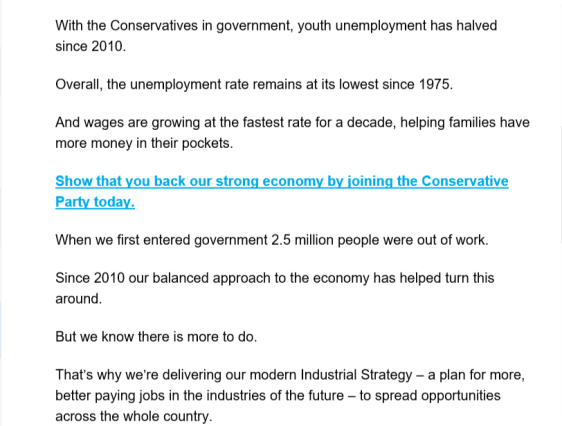
Brandon lewis1

Brandon Lewis 2

brandon lewis 3

My response:

I want to share some news with you, Brandon,

I won’t ever be supporting the Conservatives. 

The government claims that austerity will ensure our children don’t inherit debt. That’s utter rubbish. I have seen my 2 youngest sons struggle making ends meet to get through university. Their tuition fees cost a lot more than our young people are permitted to borrow through the student loans company to meet their living costs each year. Despite the poorest students struggling to get by, they will still come away from university with a debt that is the same size as my mortgage was in 2003. My sons also lost their Education Maintenance Allowance because of your government.  To be frank, your party have caused my family and loved ones nothing but increasing hardship.

That’s how much this government values young people. Not very much. Certainly not enough to invest in their future, or in in opportunities that are meaningful and secure. My generation had access to free higher education. This generation is the first in a long time to be worse of than their parents were, in multiple ways, and not just because of the heavy costs of an education.

One of the first acts the Tories did when they took office in 2010 was to scrap Labour’s Every Child Matters child protection and welfare policy. In fact Gove quietly removed it the very day after the election. They then decimated youth services.

Jobs have become increasingly precarious. Worker’s rights and conditions are deteriorating and exploitation is flourishing because you have viciously attacked trade unionism and undermined the principle of collective bargaining. You have also deregulated the labour market because you are, after all, the ‘business friendly’ party.

Conservative corporatocratic principles have tilted the balance of power away from workers, leading to blatantly exploitative employment practices and grim, insecure working conditions. Your ‘business friendly’ agenda is the reason for bank bailouts, excessive pay for CEOs, increasing socioeconomic inequality, as well as the exploitation of national treasuries, people, and natural resources. Such an approach constitutes proto-fascism. 

Historically, fascists have operated from a social Darwinist perspective of human relations. Like the Conservatives, they create and value inequality. In terms of economic practices, this has generally meant promoting the interests of successful and monopolistic big business while destroying trade unions and other organisations of the working class. Fascists also promoted nationalism. I’m sure you don’t need me to point out the numerous uncomfortable parallels here, including your party’s stranglehold on the media. 

“Fascism should more appropriately be called Corporatism because it is a merger of state and corporate power” – attributed to Benito Mussolini, but probably came from Giovanni Gentile, the philosopher of fascism, in the first edition of the Italian Encyclopedia (Enciclopedia Treccani).

In 2013, JP Morgan wrote a document, which I read at the time – The Euro Area Adjustment—About Half-Way There. Firstly,  they say that financial measures are necessary to ensure that major investment houses such as JP Morgan can continue to reap huge profits from their speculative activities in Europe. Secondly, the authors maintain, it is necessary to impose ‘political reforms’ aimed at suppressing opposition to the massively unpopular austerity measures being imposed at the behest of the banks. 

The authors write: “The political systems in the periphery were established in the aftermath of dictatorship, and were defined by that experience. Constitutions tend to show a strong socialist influence, reflecting the political strength that left-wing parties gained after the defeat of fascism.

“Political systems around the periphery typically display several of the following features: weak executives; weak central states relative to regions; constitutional protection of labour rights; consensus-building systems which foster political clientalism; and the right to protest if unwelcome changes are made to the political status quo. The shortcomings of this political legacy have been revealed by the crisis.

Whatever the historical inaccuracies in their analysis, there can not be the slightest doubt that the authors of the JP Morgan report are arguing for governments to adopt authoritarianism to complete the process of social counterrevolution that is already well underway across Europe.

What JP Morgan is making clear is that anything resembling ‘socialism’ or left inclinations must be removed from political structures; localism must be replaced with strong, central authority; labour rights must be removed, consensus (democracy) and the right to protest must be curtailed. In short, JP Morgan called for authoritarian measures to suppress the working class and wipe out its social gains since the post-war settlement. This is the unadulterated anti-philanthropic voice of neoliberalism, which your party has embraced. 

Last year 16,333 people in the London borough of Kensington and Chelsea voted in the general election for Jeremy Corbyn’s Labour party, a constituency that has always been Conservative. Curiously, as the Financial Times pointed out, Kensington is where the senior European bankers live.  Andrea Orcel, chief executive of UBS’s investment bank, is among its denizens. BNP Paribas employs 7,500 people in London, and above VP level, most of them live in the vicinity of South Kensington station – 25% of inhabitants of the South Kensington neighbourhood in particular work in finance. It is inferred that the swing happened in part because of the complete hash that your party is making of Brexit.

Your ‘high employment’ narrative does not benefit citizens, who face zero hour contracts, little employment security and more than half of those people needing to claim welfare support are in work. Your definition of ‘employment’ includes people who work as little as one hour a week. It includes carers. It also includes people who have been sanctioned.

Now there is a perverse incentive to furnish a hostile environment of DWP administrative practices in action.

When your party took office in 2010, on average citizens earned £467 a week. The latest figures from the Office for National Statistics (ONS) show that we now take home £460 a week. In other words, average wages have gone down in real terms during the eight years of Conservative-Lib Dem and Conservative governments, while the cost of living has risen substantially. It’s a misleading to make these claims at all when weekly earnings are actually 1.3 per cent lower now in real terms than they were when the Conservatives took office in 2010.

Furthermore, the ONS also produced household data suggesting that the true rate of unemployment is 4 times greater than the government’s preferred statistic.

The Conservative’s official definition of unemployment disguises the true rate, of course. In reality, about 21.5% of all working-age people (defined as ages 16 to 64) are without jobs, or 8.83 million peopleaccording to the Office for National Statistics. I know whose statistics I believe, given your party’s track record of abusing figures and telling lies.

Here is more data here on the effect of chronic underemployment of the unemployment rate, and the depressing new reality of the gig economy.

Conservatives being conservative with the truth as ever.

As ever we are witnessing the same old cheap labour Conservatism, where profits grow and wages are a stagnated pittance. Private companies gatekeep resources and services that were originally intended to meet the most basic needs of citizens, costing the tax payer billions while offering nothing in return but misery and cruel ideologically driven behaviourist practices. 

The clue is in the name: the word “Tory” I guess. It derives from the Middle Irish word tóraidhe, which means outlaw, robber or brigand, from the Irish word tóir, meaning “pursuit”, since outlaws were “pursued men”. It was originally used to refer to an Irish outlaw and later applied to Confederates or Royalists in arms. The term was originally one of abuse. As far as I am concerned, it remains so.

The Tories live by plundering. They steal people’s wages, public services, human rights and liberties, public provision and labour, in order to raise more money for the rich.

People know that wages are low, because of their daily experiences. The cost of living has risen, while wages have remained depressed throughout the last 8 years. People in work have had to queue at food banks, and in-work poverty is growing. Meanwhile you have pared publicly funded welfare support down to the bone. We pay for public services that your government seems to think we shouldn’t need. Your government is a sanctimonious, arrogant Victorian relic, with scant regard for citizens rights and democracy.

A personal account of why I won’t ever support the Conservatives

I’m a disabled person and from where I am trying to stand, I can see very clearly and first hand how your government have taken money from the poorest citizens and handed it out to your very wealthy and powerful friends. At the same time that you were imposing austerity on the poorest citizens and savage cuts on welfare and public services – placing a disproportionate burden on disabled people in particular – you were handing out tax cuts to millionaires to the tune of £107,000 each per year. Your austerity programme was very class contingent. Your generosity is pure elitism in action. Your ‘accumulation by wealthy through dispossession of the poorest’ approach to economics creates a hole in our economy which you attempt to plug every time by squeezing the poorest citizens. It’s a vicious cycle of vicious class discrimination and despotic behaviour, Brandon. 

And you richly reward private companies to gatekeep publicly funded services, causing those who have funded and continue to fund those safety net provisions distress and harm when they need to access the support they have paid for.

I have experienced this first hand. After working for many years, I became too ill to work in 2010, just as the Conservative-led coalition took office. I was forced to give up a social work job I loved because I was very ill. The last 8 years have been the bleakest I have ever known. Not just because I am seriously ill, but because your government have treated my human rights and those of other disabled people as somehow optional and increasingly conditional. Yet the whole point of human rights is that they are universal.

Disabled people like me have been forced to carry the heaviest burden of austerity because of traditional Conservative prejudices. In the last 8 years I have undergone 4 assessments, mandatory review, appeal and years of unwarranted distress and hardship, exacerbating my illness. I lost my home.

At my last ESA assessment, I was so ill that I collapsed. It was just 3 months after I had won my appeal. The nurse who conducted my first assessment said I was fit for work and I scored zero points. Her report must have been about someone else, because it bore no resemblance to my disability, my illness, my life or the assessment. At my last ESA assessment, I ensured that the interview was recorded. The doctor I saw could not understand why the Department for Work and Pensions had sent me for a reassessment when I was so clearly very unwell and having to take chemotherapy. Remarkably, following my collapse, he kindly sent me home in a taxi and Atos paid for it. It was either that or an ambulance.

Because my experiences claiming ESA were so distressing, I couldn’t face claiming PIP for SEVEN years. My local council had helped me, despite the miserly cuts you have imposed on them, (especially in view of the current surplus) because I needed aids and appliances in my home to maintain my mobility, and they offered support with my PIP claim. The assessment experience was once again appalling, leaving me in a lot more pain than when I arrived for the examination. Furthermore, I was told I could not have a point awarded for cognitive difficulties, despite the fact it was noted in the report that I needed prompting during the interview several times, and that my short-term memory is poor – I need aids to remember to take my medication, for example.

The assessor, having acknowledged my cognitive difficulties, went on to conclude somewhat incoherently that it wasn’t a problem. The point was the difference between a basic award and an enhanced award.  The reasoning for deducting that point went as follows: I used to have a driving licence in 2003. I worked as a social worker until 2010 – when I became too ill to work. She also said that I have a degree (gained in 1996, long before I became ill). Therefore there is ‘no evidence’ that [in 2017] my illness has caused cognitive problems, despite it being known to do so. I haven’t been able to drive since 2005 because I developed a sensitivity to flicker, which causes partial seizures. Just driving past lamp posts, telegraph posts and trees triggers vertigo, blindness, severe coordination difficulties, speech difficulties, altered states of consciousness, and muscle rigidity and twitching. I haven’t worked for 8 years, since becoming seriously ill. 

The DWP didn’t even bother to respond to my request for a mandatory review.

My experiences are not isolated events. They have become commonplace for so many others. Your government continues to refuse to listen to people like me. You have dismissed us, deplorably, as ‘scaremongers’. Such political gaslighting is shameful.

You have refused to listen to the concerns raised by the United Nations regarding the systematic and grave violations of disabled people’s human rights because of your excruciatingly punitive policies that create hostile environments for those social groups your government clearly despises.

So I’m sure you will understand why I cannot ever support an authoritarian government that refuses to listen to so many citizens’ accounts of their experiences of extremely punitive government policies, or one that refuses to democratically include them in policy design and support them in participating in the economy and society.

What is the point of a government of a wealthy country that not only fails to ensure that all citizens can meet their basic survival needs, but also remains completely indifferent to those needs?

So my answer is no, Brandon.

Ask yourself: what has your party ever done for people like me, my loved ones and my friends? 

With utmost sincerity,

Sue Jones

Related

Conservatism in a nutshell

JP Morgan wants Europe to be rid of social rights, democracy, employee rights and the right to protest (2013)


I don’t make any money from my work and have a very limited income. But you can help  if you like by making a donation to help me continue to research and write informative, insightful and independent articles, and to provide support to others. The smallest amount is much appreciated – thank you. 

DonatenowButton 

British Medical Association proposals deemed passive ‘euthanasia by stealth’ for disabled people with degenerative illnesses

Image result for euthanasia 

The British Medical Association have put forward proposals in response to legal test cases in which judges ruled that qualified NHS staff and officials no longer required a court’s permission to withdraw artificial nutrition and hydration from those patients who are incapacitated and unable to communicate or feed themselves.

The Supreme Court justices’ decision in July supported the right of doctors to withdraw life-sustaining nutrition on their own authority, provided they had the explicit permission of the patient’s family or, where no family existed, medical proxy. If there is a disagreement and the decision is finely balanced, an application should still be made to the Court Of Protection. 

The Court of Protection is the specialist court for all issues relating to people who lack capacity to make specific decisions. The court can make decisions and appoint deputies to make decisions about someone’s property and financial affairs or their healthcare and personal welfare.

Under the Mental Capacity Act 2005 (which is also currently being re-written by the government), the court has the power to:

• make decisions about the personal welfare or property and financial affairs of people who lack the capacity to make such decisions themselves;
• make declarations about a person’s capacity to make a decision;
• make decisions in relation to serious medical treatment cases, which relate to providing, withdrawing or withholding treatment to a person who lacks capacity;
• authorise deprivation of liberty in relation to a person’s care and residence arrangements;
• appoint a deputy to make ongoing decisions on behalf of a person who lacks capacity, in relation to either the person’s personal welfare or property and financial affairs; and
• make decisions about a Lasting Power of Attorney or Enduring Power of Attorney, including whether the power is valid, objections to registration, the scope of the  attorney’s powers and the removal of attorney’s powers

According to the draft proposals currently being circulated by the British Medical Association (BMA), doctors should be granted the authority to end the lives not only of those patients who are near death or in vegetative or minimally conscious states but also “the much larger group of patients who have multiple co-morbidities, frailty or degenerative neurological conditions.”  

This also includes stroke patients and those with “rapidly progressing brain injury.”   

However, on the NHS site, it says: “In most cases, a minimally conscious state isn’t usually considered to be permanent until it’s lasted several years. 

“It’s impossible to predict the chances of someone in a state of impaired consciousness improving.” 

“Supportive treatment is used to give the best chance of natural improvement. 

“This can involve:

  • providing nutrition through a feeding tube 
  • making sure the person is moved regularly so they don’t develop pressure ulcers
  • gently exercising their joints to prevent them becoming tight
  • keeping their skin clean
  • managing their bowel and bladder (for example, using a tube known as a catheter to drain the bladder)
  • keeping their teeth and mouth clean
  • offering opportunities for periods of meaningful activity – such as listening to music or watching television, being shown pictures or hearing family members talking.” 

And importantly: “It’s impossible to predict the chances of someone in a state of impaired consciousness improving.”

The authors of the BMA document say: “Due to the degenerative nature of their condition, these patients are on an expected downward trajectory and will inevitably die, usually as a result of their underlying condition, although perhaps not imminently and could, potentially, go on living for many years.”

In the Executive Summary of the BMA document, it says that no second opinion need be obtained unless there is ‘reasonable doubt about the diagnosis or prognosis, or where the healthcare team has limited experience of the condition in question’ [ …] ‘it is not necessary to wait until (investigations) have been completed’ if there is not ‘sufficient evidence’ that they will ‘affect the outcome of the best interests assessment’ 

Nutrition and hydration delivered by tubes is currently legally defined as ‘medical treatment’ and not ‘basic ‘care’.  

There have been a number of legal developments that change the way such decisions about life-prolonging treatments are made, in addition to the recent court judgments and the government’s radical withdrawal of the Court of Protection’s Practice Direction 9E which addresses protections concerning serious medical treatment.

The direction was effectively abolished by the Ministry of Justice  and the changes came into effect last December. The Court of Protection in English law is a superior court of record created under the Mental Capacity Act 2005. It has jurisdiction over the property, financial affairs and personal welfare of people who lack mental capacity to make decisions for themselves. 

As the changes to protections were introduced via secondary legislation – a negative resolution statutory instrument – there was very little parliamentary scrutiny. Furthermore, as the instrument is subject to negative resolution procedure no statement regarding implications in relation to the European Convention on Human Rights was required from government ministers, nor was public consultation deemed necessary. An Impact Assessment has not been prepared for this instrument. 

The fact that the UK government had already made amendments to safeguarding laws to accommodate these proposals, which took effect last December, and now plan to make it easier to remove people’s liberty under the Mental Health Act without public consultation, has caused deep unease. In the latest proposed changes to the Mental Health Act, the government seems to think it is appropriate to consider restrictions of people’s liberties as part of their overall ‘care package.’

Picture

The Law Society has issued a rather damning briefing on the Mental Capacity (Amendment) Bill 2018 that moved to a Lords committee stage, early last month.

In their briefing, the society say: “While agreeing that simplification is needed and acknowledging that there are resource constraints, these constraints are “insufficient justification for not implementing fully the safeguards recommended by the Law Commission.” 

It is in light of the most recent change in legislation that the British Medical Association (BMA) put forward  proposals that mean doctors may be permitted to end the lives of patients who may otherwise have survived for years, by the withdrawal of nutrition and hydration, without the need to go to court. While this reduces substantial cost to the NHS in terms of legal fees and in the prolonged treatment for some patients, not everyone is comfortable with these developments.

Writing critically about the legislation changes last year, Mohamed Y Rady and Joseph L. Verheijde say:

“(1) starvation and dehydration is certain to cause death without the presence of concurrent life-limiting disease or life-threatening illness and (2) the dying process by starvation and dehydration can last two to three weeks and can be distressful to both patients and their families. We disagree with the legal and clinical stipulation (post-Bland [a legal case]) that assisted nutrition and hydration (ANH) is medical treatment. Instead, as adopted in many other jurisdictions, we hold that ANH constitutes ‘a basic compassionate care service rendered to disabled persons’. 

“We think that court oversight is of practical importance for the safety of the general public and the protection of vulnerable disabled persons in society.

“We outline our rationale for advocating that court oversight should not be limited to Vegative State/Minimal Conscious State but should include any person.”

The authors added:  “The clinical guidelines have distinguished only three levels of disorders of consciousness (DOC) (coma, Vegative State (VG), and Minimal Conscious State (MCS) based on clinical assessment for the presence or absence of awareness and wakefulness. However, the diagnostic accuracy of the guidelines’ criteria and definitions of the three levels of DOC has not been validated scientifically. Cohort studies suggest that the rate of clinical misdiagnosis in VS is at least 41% and this error rate has not declined over the past 15 years.

“Incorrect diagnosis can result in a fatal outcome because of premature withdrawal of medical care and ANH. The clinical guidelines have not yet acknowledged the relevance of contemporary neuroscience advances to increase the diagnostic accuracy and expand on the available therapeutic options in DOC. Incorrect diagnosis and/or withholding of therapy in DOC violates the trust of families in the transparency and truthfulness of clinicians who are making life and death decisions on behalf of their loved ones.

“The clinical guidelines have recommended that a neurological diagnosis and prognosis should be made at least within four weeks after the onset of prolonged DOC to determine futility of continued medical care and ANH (Royal College of Physicians of London. Under these circumstances, we propose that court oversight can provide an additional safeguard by including independent neuroscience experts to confirm the clinical diagnosis and prognosis of DOC and to ensure that the decision-making processes are well-informed and as rigorous as possible. Life and death decisions in DOC should be supported by contemporary neuroscience, among other considerations, and not be based on outdated clinical guidelines.”

In summary, the authors propose that until such time as we have greater clarity and understanding about the disorders of consciousness, and about the legal and ethical principles to be applied, there remains a need for independent oversight and that applications to the court should continue to be obligatory in all cases where the withdrawal of ANH is proposed, at least for the time being.

Their paper can be read in full here.

The BMA proposals to withdraw nutrition and hydration tubes have also been condemned as ‘euthanasia by stealth’.

Dr Peter Saunders, from the group Care Not Killing, said: “This is a recipe for euthanasia by stealth, but all in the name of autonomy and best interests – the very worst kind of doctor paternalism justified on the grounds that the patient would have wanted it.

“There are conceivably tens of thousands of patients in England and Wales who are vulnerable to the use and abuse of this guidance.

“It will be almost impossible to work out what has happened in a given case and there are no legal mechanisms in place for bringing abusers to justice.”

The landmark Bland ruling set down that artificial nutrition and hydration by tube are not normal feeding but ‘medical treatment’. It also said that it might not be in a patient’s best interests to be treated, and if medical treatment is not in the best interests of a patient who cannot speak for themselves, it can be stopped. Tony Bland, a Liverpool football supporter was just twenty-two when he suffered severe brain damage in the crush at Hillsborough football stadium in April 1989. The court ruled that he should be allowed to die.

The BMA document was circulated, however, in June. This follows after a court ruling in 2017, which concluded that there was no requirement for court approval before removing patients’ nutrition and hydration tubes.

More recently in July, the country’s highest appeal court, the Supreme Court, ruled in the test case of a patient known only as ‘Y’ that doctors can decide a patient should die without reference to a court.

A spokesman for the BMA said that decisions surrounding the withdrawal of clinically assisted nutrition and hydration (CANH) presented “clinical, ethical and legal challenges.” 

He added: “Following a number of legal developments, the BMA has been working with the Royal College of Physicians and the General Medical Council to produce guidance on best practice for health professionals when facing decisions about CANH.

“CANH is a form of medical treatment. The aim of medical treatment is not simply to prolong life at all costs, and the courts have been clear that in some circumstances it will not be in the best interests of the individual patients to receive it.

“Those making these decisions must do so in full dialogue with families to determine what is right for the individual patient, and of course, when there is any disagreement the court still has an important role to play.”

These proposals come at a time when health care has been subjected to increasing rationing. 

The BMA document says that the decisions on removing nutrition and hydration tubes should be taken by consultants for hospital patients, or GPs for those in nursing or residential homes or living in their own homes. It was suggested that families or friends should be consulted, usually through ‘best interests meetings’ set up to decide whether it would be better for a patient to live or die. However, the BMA suggested that family and friends should not have the final say on the matter.

In the Executive Summary, the BMA say that no second opinion need be obtained unless there is ‘reasonable doubt about the diagnosis or prognosis, or where the healthcare team has limited experience of the condition in question’ [ …] ‘it is not necessary to wait until (investigations) have been completed’ if there is not ‘sufficient evidence’ that they will ‘affect the outcome of the best interests assessment’ 

Shockingly, the BMA also propose that when patients die after the withdrawal of nutrition and hydration tubes, this should not be mentioned on death certificates. Instead only the underlying original condition should be given.

Professor Patrick Pullicino, from East Kent Hospitals University NHS Trust, said that this directs doctors to falsify death certificates. It tells doctors to put down the pre-existing condition and not that they died of dehydration. It will totally conceal the statistics of patients who are being dehydrated to death.”

Understandably, doctors and campaigners who are opposed to euthanasia and the deliberate termination of life by medical staff have condemned the proposals.

Pullicino, who is the consultant that helped expose the controversial hospital deaths under the discredited Liverpool Care Pathway, said the BMA plan was ‘terrible’. 

He added: “It codifies current practices of withdrawing food and fluid at the end of life and thereby encourages it.

“It facilitates the extension of end-of-life pathways to people with neurological diseases who are not dying, which is a very negative thing because there are a lot of disabled neurological patients.

“It perpetuates the myth of ‘best interests’, which has been shown to be erroneous and reflective of members’ views and not of the real best interests of the patients.”

I agree. My inital thoughts are that we need to guarantee people with disabilities have access to high quality palliative care. We need to have a process which reviews every incidence of proposed euthanasia, and that panel needs to include people with disabilities. We need to ensure that family members and service providers or anyone else who will benefit financially cannot abuse any application for end of life withdrawal of clinically assisted nutrition and hydration.

We also need to ensure the absolute transparency and accountability of decision-makers, which must include an accurate and honest record of cause of death on death certificates. Coroners have a duty to prevent future deaths, where medical mistakes have been made.

There is no clear definition of ‘degenerative diseases’ in the BMA document. Some illnesses, such as multiple sclerosis, lupus and other autoimmune mediated diseases, for example, may be progressive. Several of these illnesses may affect the neurological system. Most of the treatments for this group of disorders are experimental. People can improve over time, with or without some treatments, following periods of being critical ill. Many of the treatments are only prescribed as a last resort, as they are prohibitively expensive (biologics in particular) especially at a time of heavy NHS funding cuts. The outcomes of these diseases are widely variable from one person to the next. People may have indefinite remissions after years of being seriously ill. 

Even if these types of disease are not currently included in the BMA guidelines, complications or co-morbidities and frailty arising over the course of an illness may be.  

What guarantee do we have that the categories won’t expand over time?

The legislative changes have been couched in terms of ‘saving money’. The purpose of the NHS is to save lives. Everyone has the basic right to life, that must not be contingent on the ideological preferences of a ‘small state’ neoliberal government. ‘Best interests’ are not an political category, nor are they open to ideological interpretation. 

The UK government’s brand of ideological paternalism towards poor people claiming welfare support, for example, involves the removal of the means of meeting basic survival needs as a punishment in the form of sanctions, also considered to be in people’s ‘best interests’.

Unemployment itself has been redefined as a psychological or character disorder over the last few years, and the welfare state has become a political environment for administering discipline, which has shifted it away from the original purpose of providing basic support and alleviating poverty. Behavioural economics has contributed to bolstering this perspective by pathologising people who need support from publicly funded public services via claims of ‘cognitive deficits’ of poor people, rather than acknowledging the structural explanations of poverty.  Perish the thought that a socioeconomic system founded on competition would foster inequality. 

In healthcare there has been a shift towards ‘behavioural medicine’ too, apparent in the controversial PACE trial and a general emphasis on people’s ‘lifestyle choices,’ and personal responsibility. However these are extremely overly simplistic ideolological narratives that have not emerged because of robust empirical evidence. Public services were not originally designed to punish poor people who need them. Yet the withdrawal of the means of citizens meeting their basic survival needs seems to have become normalised. Pathologising and punishing people who need the support of public services has somehow become acceptable. 

The increasing rationing of treatments within the NHS and the neoliberal logic underpinning this is also a cause for concern. People who need support from any public service are subjected to increasing conditionality and rationing in an era of neoliberal austerity.

A spokesman for the BMA said that decisions surrounding the withdrawal of clinically assisted nutrition and hydration (CANH) presented “clinical, ethical and legal challenges.” 

He added: “Following a number of legal developments, the BMA has been working with the Royal College of Physicians and the General Medical Council to produce guidance on best practice for health professionals when facing decisions about CANH.

“CANH is a form of medical treatment. The aim of medical treatment is not simply to prolong life at all costs, and the courts have been clear that in some circumstances it will not be in the best interests of the individual patients to receive it.

Those making these decisions must do so in full dialogue with families to determine what is right for the individual patient, and of course, when there is any disagreement the court still has an important role to play.

“We shared the draft guidance in confidence with legal and health professionals and organisations and patient support groups to seek their views. The final version will reflect last month’s Supreme Court judgment when it is published this year.” 

The guidance says it is based on the current legal position which it defines as follows:

  • Clinically assisted nutrition and hydration (CANH) – essentially food and fluids by a fine tube through the nose or through the skin into the stomach – is a form of medical treatment
  • Treatment should only be provided when it is in a patient’s ‘best interests’
  • Decision makers should start from the presumption that it is in a patient’s best interests to receive life-sustaining treatment but that presumption may be overturned in individual cases
  • All decisions should be made in accordance with the Mental Capacity Act 2005 (which the government is proposing to amend).

The 77-page ‘confidential’ document, which is currently out for ‘consultation’ (although only to a few selected individuals), has been prepared by the BMA in conjunction with the Royal College of Physicians (RCP) and the doctors’ regulatory authority, the General Medical Council (GMC). It will not be open for public consultation at any point before publication later in the autumn.

The draft guidance, which builds on case and statute law and on previous practice guidelines, has huge implications for the care of some of the most vulnerable people in England and Wales.

However, it does not permit assisted dying – which is when a patient wants to end their life. British parliaments have consistently refused to legalise active euthanasia or assisted suicide for people with a quality of life they would not find ‘acceptable’ or would not ‘have wanted’. The BMA is proposing that doctors, not patients should make the choice to end a life, and that to end lives by starvation and dehydration, rather than with a lethal injection, is somehow perfectly acceptable.

So acceptable in fact that the BMA propose starvation and dehydration or withdrawal of care (or treatment if you wish) should be left off the death certificate, suggesting instead that the ‘underlying medical condition’ should be recorded as the cause of death. This suggestion does not inspire confidence in transparency and accountability concerning such fundamentally irreversible medical decisions, since the record of death hides errors in judgment and diagnoses, prevents scrutiny and prevents coroners from fulfilling the mandatory obligation to ‘prevent future deaths’ in the case of medical incompetence, negligence, abuse, deceit and error.


I don’t make any money from my work. I am disabled because of an illness called lupus. If you want to, you can help by making a donation to help me continue to research and write informative, insightful and independent articles, and to provide support to others.

I’m currently working on a very old, borrowed, temperamental and slow laptop as mine has broken. I am trying to raise money to buy a reconditioned one so I can keep working. The smallest amount is much appreciated – thank you.

DonatenowButton

This Government Is No World Leader On Disability – Its Record Is Shameful

This article was written by Marsha de Cordova, who is the Labour MP for Battersea, on 24 July. It was originally published in the HuffPost.

At today’s Global Disability Summit, the government will present itself as a leader on disability rights – disabled people know that it is anything but.

Today the government will host the Global Disability Summit in London but the Tories are no world leaders on disability rights – their record is abysmal.

The government’s hypocrisy is no more clearly demonstrated than in the fact that the Secretary of State hosting the summit – which is aimed at guaranteeing “the rights, freedoms, dignity and inclusion” of disabled people – is Penny Mordaunt, who was herself minister for disabled people when a UN report found that the government had violated disabled people’s rights. 

The UN published this report two years ago, after the UN Committee on the Rights of Persons with Disabilities had taken the unprecedented step of investigating one of its signatories – the UK government – for breaching its obligations under the UN Convention on the Rights of Persons with Disabilities.

The committee’s findings were unambiguous: The government had caused “grave and systematic” violations of disabled people’s rights. The committee chair described austerity as having led to a “human catastrophe” for disabled people.

These judgements were hardly news to the millions of disabled people who had been struggling under government policies.

The hypocrisy of the government is staggering. The Minister for Disabled People recently had the audacity to claim that she was “utterly committed” to the UN Convention on the Rights of Persons with Disabilities”, yet the government is still yet to even provide a detailed response to the UN Committee’s more than 80 recommendations, and it rejected the UN’s damning judgement out of hand.

This hypocrisy is starkly evident in the summit’s “Charter for Change”, which takes as its cornerstone the UN Convention on the Rights of Persons with Disabilities. Since the Secretary of State overseeing the summit was a former Minister for Disabled People in a government that was condemned by the UN for breaking that convention, how can she talk with a straight face to world leaders and disabled people’s organisations about this?

The charter includes 10 commitments for participants to agree to, 8 of which the government has itself clearly violated (and one of which is empty posturing).

For example, it calls on countries to commit to “gather and use better data and evidence to understand and address the scale, and nature, of challenges faced by persons with disabilities”.

Yet one of the major recommendations from the committee is for the government to carry out a cumulative impact assessment of its tax and social security changes since 2010, something the government has stubbornly refused to do.

We know this can be done – the Equality and Human Rights Commission has done it, finding that those changes had a particularly damaging impact on disabled people.

Another call of the charter is for countries to “eliminate stigma and discrimination through legislation”. This will sound like a bad joke to the estimated 220,000 disabled people wrongly denied social security support due to what the High Court called “blatantly discriminatory” changes to Personal Independence Payments.

The charter concludes with a commitment to “hold ourselves and others to account for the promises we have made here today.” For this commitment to be made by Mordaunt’s department – under whose watch the government excused itself from promises it was committed to as part of the UN Convention – beggars belief. 

This government treats disabled people with disdain and contempt. From the Bedroom Tax to swingeing cuts to Personal Independence Payments, government cuts have been felt most acutely by those already struggling.

The Department for Work and Pensions charge sheet of failures is long, including an “error” that led to more than 70,000 ill and disabled people being underpaid thousands in Employment and Support Allowance, with what a public accounts committee recently described as a “culture of indifference” leading to it taking six years for this error to begin to be corrected.

The government’s Work Capability Assessments, carried out by profit-driven private companies, have been linked to a dramatic increase in the number of disabled people attempting suicide.

At the Global Disability Summit, the government will try to present itself as a world leader on disability rights. But disabled people know that it is anything but.

Let us remind them of the verdict of the United Nations: “Grave and systematic” rights violations, a “human catastrophe” for disabled people.

On behalf of all those disabled people whose voices have been ignored, we cannot and will not let the government escape the truth. Their record on disability rights shames this country.

Related

A few thoughts on the implications of the United Nations report


I write voluntarily, and do the best I can to raise awareness of political and social issues. In particular I research and write about how policy impacts on citizen wellbeing and human rights. I also co-run a group on Facebook to support other disabled people going through ESA and PIP assessments, mandatory reviews and appeals.

I don’t make any money from my work. I am disabled and don’t have any paid employment. But you can contribute by making a donation and help me continue to research and write informative, insightful and independent articles, and to provide support to others. The smallest amount is much appreciated – thank you.

DonatenowButton

My response to the Conservative Chairman’s invitation to join the Conservative party

Image result for Tory psychographic profilingAn example of audience segmenting, according to a psychographics methodology. I wonder what category data analysts think that I fit into. Whichever it is, they most definitely got me wrong. Note the dehumanising labels (objectification: “the struggler, “the resigned”) and stereotyping. I struggle on little income, don’t consume junk food or very much alcohol, though I have an occasional glass of red wine with a meal. I’m not aimless, I have academic qualifications, but no physical skills as I am disabled because of an illness. I am certainly someone who fits with “the reformer” description but I am not “at the leading edge of society”.  

Psychology has always been used as a tool for political manipulation, particularly in authoritarian regimes. Psychographics uses ‘personality type’ to predict behaviour. The data is gathered from online activity, surveys and other sources. It is then analysed and segmented. Strategic communications are then tailored to fit with each category. For example, those identified as having traits of anxiety may be targeted with political messages aimed at generating fear. Those with materialistic traits may be targeted with political messages about promised tax cuts, and those with progressive tendencies may get a political message claiming that public services are valued and public sector workers are going to have a pay raise after almost a decade of exploitatively low pay.

It’s not a brand-new concept; in the documentary Century of the Self, Adam Curtis shows how researchers from the Stanford Research Institute (SRI) used psychology to understand personality types and so predict political behaviour of the US public during the 1980s. The SRI sent out a huge survey to build an understanding of personal motivations. Strategic political communications are tailored to fit the profiled ‘audience segments.’ 

What is interesting about this is a friend of mine also had an email asking him to join the Conservative party, but his message was rather more about generating fears regarding a future Labour government. My friend suffers from an anxiety disorder. I think it is highly likely the Conservatives are using psychographics and microtargeting techniques. This would certainly fit with the profiles of companies that the government hire for their election campaigns.

I received the following email from Brandon Lewis, the Conservative Chairman, today. I have set out (and sent) my response below:

Dear Sue,
Today we’ve announced the biggest public sector pay rise in almost a decade, recognising the vital work that teachers, the police, our armed forces, prison officers, doctors and dentists do. 
  • This year an early career teacher will get a pay rise of £800.
  • A typical police constable will see £760 a year more.
  • The average soldier will get a £680 pay increase, plus a one-off payment of £300 this year.
This has only been possible because of our balanced approach to the public finances.
Getting debt falling, while investing in our vital services and keeping taxes low.
Backing businesses to help to grow our economy and pay the taxes which fund our public services.
Agree with our decision to increase pay for our dedicated public-sector workers? Then join the Conservative Party today.
These pay rises couldn’t have happened under a Labour government because they don’t know how to handle the economy.
Labour would mean more debt, higher taxes, fewer jobs – and less money available for our public services.
Yours sincerely,
Brandon Lewis, The Rt. Hon. Brandon Lewis MP
Conservative Party Chairman 

My response:

Dear Brandon, 

It’s not enough to adopt progressive language, as that simply attempts to muddy the waters and target persuasive, nudge type at progressives like me with blatant lies. No matter how you try to dress this appeal, your lies are still are still lies. I am not persuaded by this superficial and glib ‘strategic communication’ from you. Your policies are still draconian and have been for the past seven years. Nothing you say to me, no matter how carefully constructed, will change either your authoritarian policies or the wake of terrible consequences of those harmful and socially damaging policies.

A Labour government would never treat our public sectors so badly. You say that this is the biggest public sector pay rise in almost a decade, and also, that you value our public sector workers’ vital work. This is a contradiction, because if you genuinely recognised and valued that vital work, you would not have waited almost a decade to reward that work. Under your government, we have witnessed hard-working nurses having to rely on food banks. We have seen doctors, nurses and other medical professionals striking in protest of their poor pay and conditions. When a government truly values public sector workers, they don’t have a need to strike and protest.

As for Labour not knowing how to handle an economy, well I must disagree. When you took office, may I remind you that the last Labour government had steered the UK out of the global recession by the last quarter of 2009. Your government put us back in recession in 2011 with your ill-conceived austerity programme, which shrunk the economy and led to those you targeted with the unfairest of burdens of cuts suffering so you could hand out tax cuts to the millionaires.

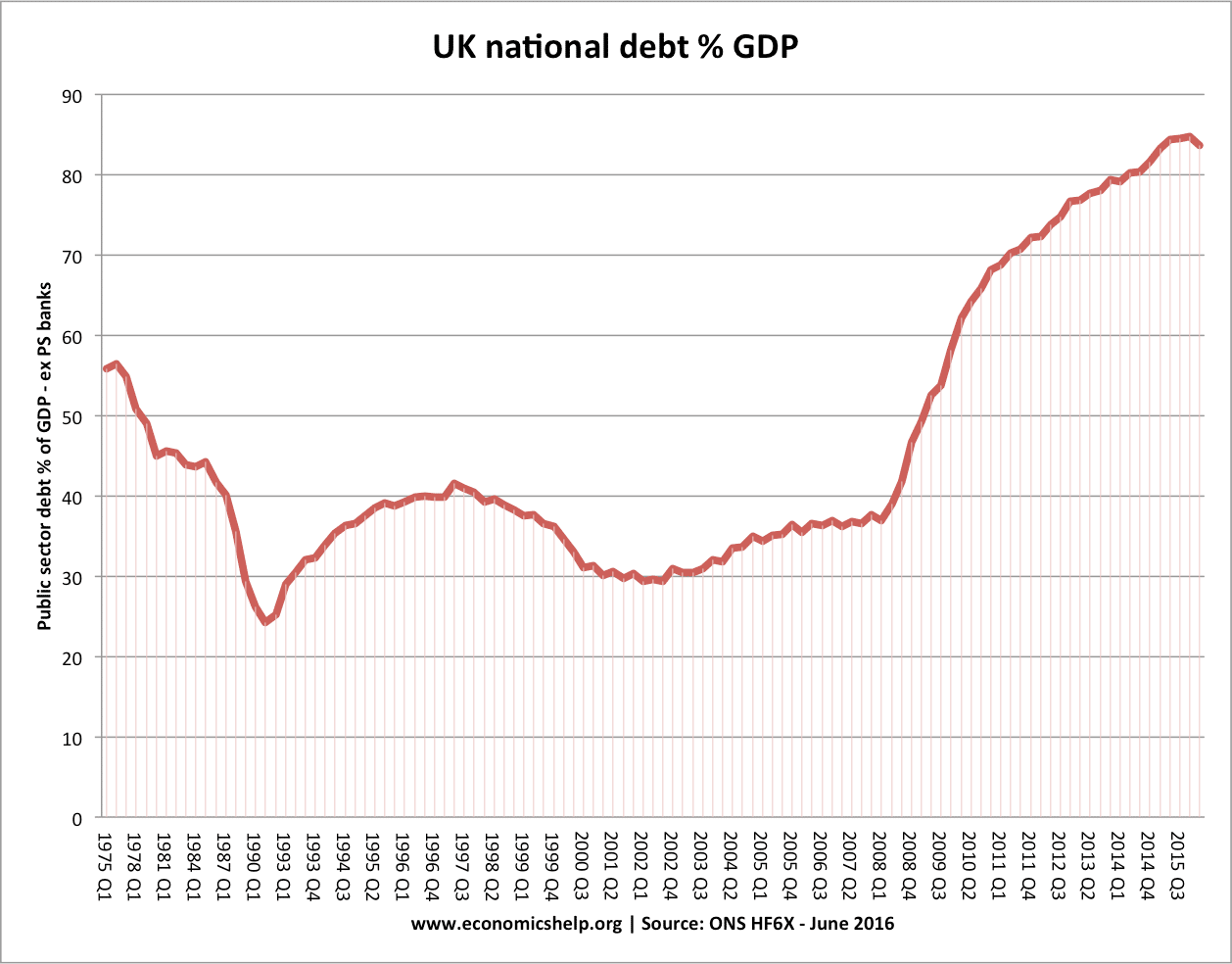
As of Q1 (the first quarter of) 2018, UK government debt amounted to £1.78 trillion, or 86.58% of total GDP, at which time the annual cost of servicing (paying the interest) the public debt amounted to around £48 billion (which is roughly 4% of GDP or 8% of UK government tax income.

For a government that platformed itself on the idea of economic competence, promising to eliminate the deficit, I have to say the reality does not match your rhetoric. You stated in 2010 that you would eliminate the deficit by the 2015/16, and by 2014, admitted that the structural deficit would not be eliminated until the financial year 2017/18. This forecast was also pushed back to 2018/19 in March 2015, and then again to 2019/20 in July 2015, before the target of a return to surplus at any particular time was finally abandoned by the then Chancellor of the Exchequer George Osborne in July 2016.

It was a Tory-led government that lost the Moody’s Investors Service triple A grade, despite your pledges to keep it secure. Moody’s credit ratings represent a rank-ordering of creditworthiness, or expected loss. The Fitch credit rating was also downgraded due to increased borrowing by the Tories, who have borrowed more in 8 years than Labour did in 13. In fact it has been said that since 2010, your government has borrowed more than every Labour government combined. Quite an achievement.

The Conservatives have seized an opportunity to dismantle the institutions you have always hated since the post-war social democratic settlement – institutions of health, welfare, education, culture and human rights which should be provided for all citizens. . Offering and inflicting only regressive policies and devastating cuts, the your party lies you dismantle our social democracy, our public services, fundamental rights and the very basis of our basic civilisation.

Furthermore, the Conservatives have a track record of mismanaging the UK economy. Thatcher and Major also caused recessions in the UK, these were not because of global conditions, but because of their policies. 

Tell me, what is the point of a government in an “economically stable”and wealthy first world country that does not ensure that all citizens can meet their basic needs, and that fails to observe and fulfil basic human rights obligations?

Finally I draw your attention to the growing numbers of people living in poverty, with more than half of those people in work. Whatever your notion of a growing economy actually is, we don’t share it, because we expect that citizens actually benefit from a growing economy, rather than propping it up for the wealthy few.

Meanwhile your government have blatantly and systematically violated the human rights of disabled people, among other groups, and now you claim that the economy has grown, you still have yet to remedy the harm and distress caused to those of us on the receiving end of your draconian policies which are founded on traditional Conservative prejudices against historically marginalised groups. 

A growing economy is of no value to ordinary people when its benefits are hoarded by the very wealthiest minority, when public our wealth is transformed into private profit and placed offshore, leaving a large hole in our economy, that your own government attempts to fill by imposing more and more cuts on those with the very least. 

I have over 700 pieces of work that documents your policies and the consequences of those, collated from my own research, other academic research, and importantly, from citizens’ own accounts. Let me know if you want me to present you with this evidence of how your government has seriously mismanaged the economy and public funds, though as a government that claims to be accountable, to date you have shown a remarkable and  woeful disinterest in serious challenges to your neoliberal dogma, with its incompatibility to established human rights frameworks and democracy. Your answer to a failing neoliberal system is to apply even more aggressive neoliberal policies. Those policies are killing people, causing distress and suffering. That is inexcusable.

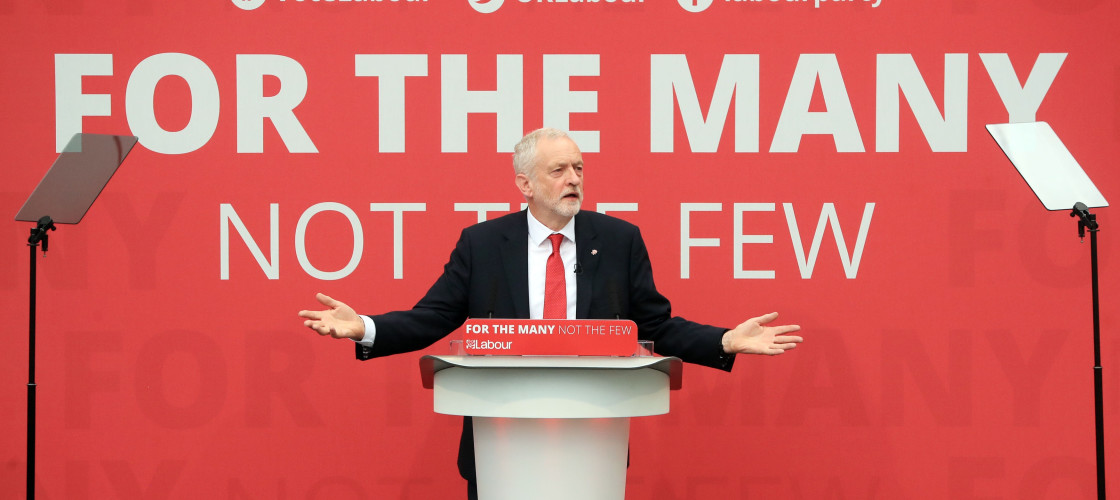
I am a Labour party member. I support Jeremy Corbyn’s Labour party, and will be continuing to campaign for a Labour government, and to vote for the many, not the few.

Very sincerely,
and in considerable restraint,

Sue Jones

Related image


I don’t make any money from my work. I am disabled and don’t have any paid employment. But you can contribute by making a donation and help me continue to research and write informative, insightful and independent articles, and to provide support to others. The smallest amount is much appreciated – thank you.

DonatenowButton

The link between plots to murder left wing politicians, the rise of social prejudice and Conservative neoliberal dogma

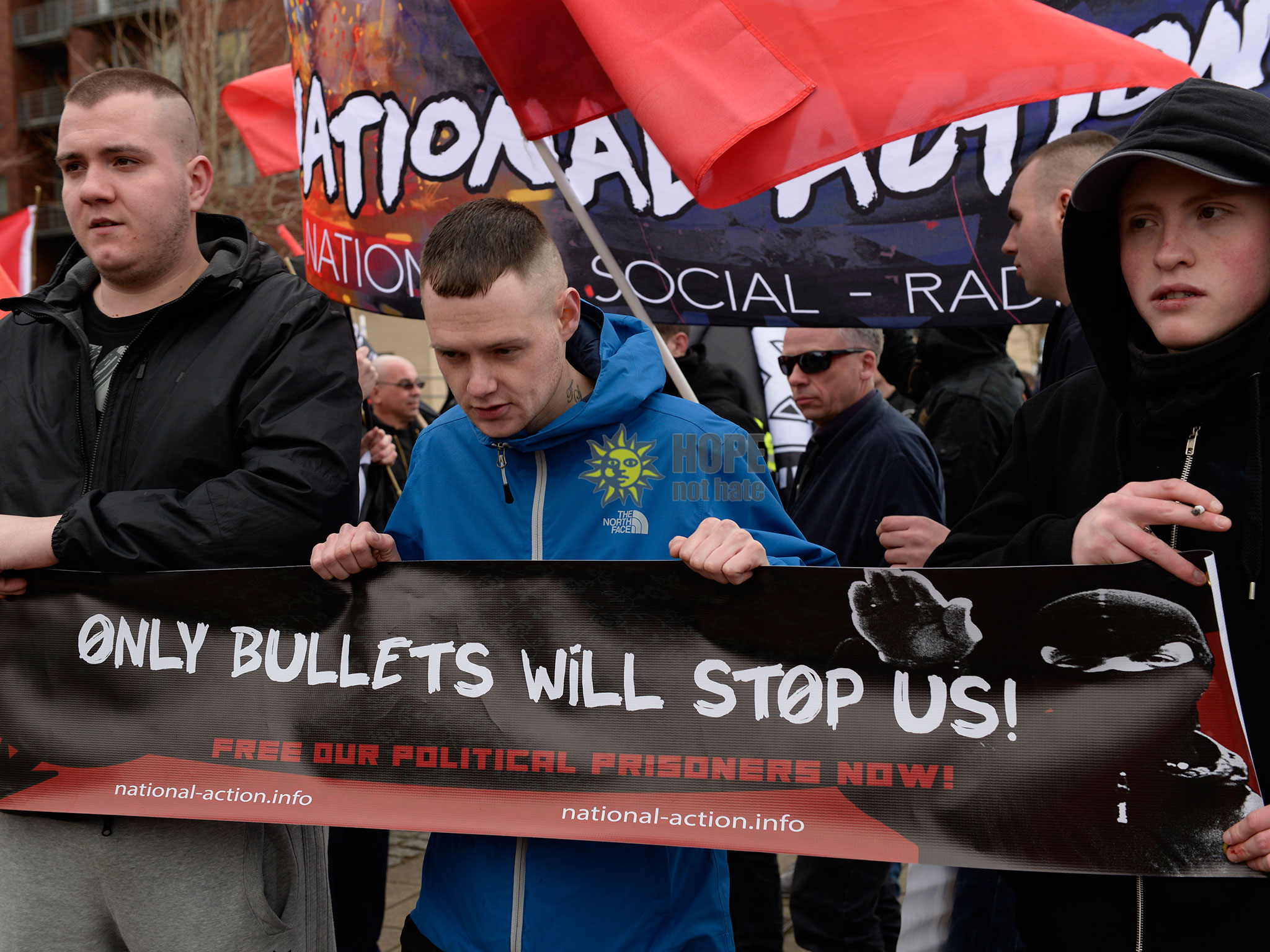
hope-not-hate-national-action-4.pngNational Action, a far-right group that was banned in 2016 by the Home Secretary Amber Rudd over its support of the murder of Labour MP Jo Cox, who was shot and stabbed to death in 2016 by neo-Nazi Thomas Mair. The group was not disbanded, however and continued to operate under the cover of front groups.

“A prejudice, unlike a simple misconception, is actively resistant to all evidence that would unseat it.” Gordon W. Allport

The plot to murder Rosie Cooper

The leader of a neo-nazi group was arrested following a police investigation into a murder plot to target Labour MP Rosie Cooper. He has been given an eight year sentence.

Cooper, the MP for West Lancashire, has thanked a former neo-Nazi group member for saving her life after he exposed the far-right terrorist plot to murder her with a machete.

The National Action group is a far-right neo-Nazi organisation based in the UK. Founded in 2013, the group is secretive, and has rules to prevent members from talking openly about the organisation. “Death to traitors, freedom for Britain” became a slogan for the group after being said in court by Thomas Mair, who was glorified in online propaganda calling for “murders.”

Police had no intelligence that the extremist National Action member was preparing to kill Rosie Cooper until one of the group members, Robbie Mullen, sounded the alarm to a campaign group, Hope Not Hate, who passed the information on to Rosie’s fellow Labour MP Ruth Smeeth. The group’s former chair and plotter, Jack Renshaw, was later arrested. 

The 23-year-old extremist Renshaw has admitted plotting to kill his local Labour MP and had already bought a 19 inch machete, which investigators found hidden in an airing cupboard at his home. He had also researched his targets’ movements. 

Cooper said: “I think it’s awful that any public servant – teacher, nurse, doctor, police, MP – should be targeted and threatened with violence simply because of the job they do. To that end, I’d like to thank Robbie Mullen whose information saved my life.  

“I’d also like to thank Lancashire and Merseyside Police and the counterterrorism police who have supported me greatly, and who have kept me, my staff and the general public safe.”

Mullen had been in contact with Hope Not Hate for several months as he tried to find a way out of the terrorist organisation, which went underground following the government ban.

His fears that its repulsive rhetoric against Jews, non-whites and “race traitors” would tip over into bloody action were confirmed when the group met in a Warrington pub on 1 July last year. Renshaw felt antagonised after being arrested on suspicion of sexually grooming a child and for stirring up racial hatred with two of his speeches in Blackpool and Leeds. Seeking revenge on both the police and “establishment”, he told fellow fanatics of a plot to kill both Rosie Cooper and a female officer who had investigated him.

Mullen said that Renshaw felt that police officers were “destroying his life and trying to make it sound like he was a paedophile”.

Jack Renshaw pleaded guilty to preparing to engage in an act of terrorism by buying a knife to kill the politician and threatening a police officer. Renshaw, from Skelmersdale in Lancashire, has also been convicted of inciting racial hatred in speeches in 2016.

He was accused of being a member of National Action, but the jury failed to reach a verdict.

They also failed to reach verdicts on Andrew Clarke, 33, and Michal Trubini, 35.

Garron Helm, 24, was acquitted of the same charge.

National Action is the first extreme right-wing group to be banned by the government since World War Two and had recruited up to 100 members. 

The court heard that the group planned to “wipe out” non-white people” by “any means necessary”.

Jack Renshaw
Jack Renshaw pleaded guilty to preparing an act of terrorism and threatening a police officer

Head of Investigations for Counter Terrorism Policing in the North West, detective superintendent Will Chatterton, said: “Today’s result has enabled the spotlight to be shone on the sickening activities of the banned extreme right-wing organisation National Action.

“During the trial, one of those jailed today stood before the court and openly denied the Holocaust had taken place – an unimaginably horrific event that resulted in the murder of millions of Jews at the hands of the Nazi regime.

“Today’s result is a body blow to extreme right-wing organisations such as National Action.

“It sends out a clear message that counter-terrorism officers and partner agencies will rigorously identify and investigate any violently extreme individual or group who seek to bring a reign of terror to our shores.”

London’s Old Bailey heard: “Renshaw stated that if he was charged, he was going to kill Rosie Cooper, his local MP. He explained his plan was then to take some people hostage in a pub and when the police arrived he would demand to speak to DC Victoria Henderson.

“When the officer arrived, he would kill her. Renshaw said that after he had killed Ms Henderson he would then commit ‘suicide by cop’ by pretending to have a suicide vest on.”

Prosecutors said the would-be terrorist intended to make a “white jihad” video stating that the attack was carried out in the name of National Action that would be released after his death.

Another National Action member, Matthew Hankinson, said Renshaw should target a synagogue – even if there were children inside – because “all Jews are the same, they’re all vermin”. During the conversation, Renshaw said that he had purchased a machete to use in the attack, which was found days later hidden in a cupboard at a home where he was staying in Skelmersdale.

After stating his intentions, he wrote a series of ominous Facebook posts saying he was “past caring” and “it will all be over soon”. 

One comment said: “I’ll laugh last but it may not be for the longest.” 

Matthew Collins, the Hope Not Hate researcher who was contacted by Mullen, said police “knew absolutely nothing” of the plot. He told the Independent:

“They didn’t monitor them [after the ban on National Action], “They thought that because they were a bunch of skinny little white boys that when they banned them they would go to bed like naughty children. But they had an ideology that developed like a sickness, they developed a lust for violence and an attack was inevitable.”

Renshaw admitted the plot, while fellow neo-Nazis Christopher Lythgoe and Hankinson were also jailed for terror offences. Lythgoe declared himself national leader of the terrorist group, while Hankinson organised security and gave a speech calling for Nazis to “split the people into two groups, the racially loyal nationalists and the traitors”.

A jury deliberated for 20 hours to find Lythgoe guilty of membership of National Action but clear him of involvement in the terror plot, which he was alleged to have approved by telling Renshaw not to “f*** it up”.

Jailing the 32-year-old for eight years, Mr Justice Jay said he “did nothing to stop or discourage” the plot to kill Ms Cooper, adding: “You are a fully-fledged neo-Nazi complete with concomitant, deep-seated racism and antisemitism.”

The judge described National Action as having a “truly evil and dystopian vision” of waging a race war and said that without Lythgoe’s obsessive determination it would have “withered and died on the vine”.

“Fortunately… the truly evil and dystopian vision I am describing could never have been achieved through the activities of National Action, a very small group operating at the very periphery of far-right wing extremism. The real risk to society inheres instead in the carrying out of isolated acts of terror inspired by the perverted ideology I have been describing.”

Hankinson, 24, of Newton-le-Willows in Merseyside, was also found guilty of being a prominent member of the terrorist group and was jailed for six years. The Old Bailey jury acquitted Garron Helm, 24, of Seaforth in Merseyside, of being a member of National Action after it was made a proscribed organisation.

It failed to reach verdicts on Renshaw, Andrew Clarke, 33, and Michal Trubini, 35, from Warrington, for the same charge. 

Cooper, who was in court for the verdicts, later thanked Jeremy Corbyn, the prime minister and “every single member of this house for the kindness they have shown me” in an emotional address to parliament.

Theresa May replied: “Can I first of all say how very good it is to see her in her place and I know from the response that is a view that is shared across the whole of this house.”

However, I have written previously more than once about how the extremely divisive approach of Conservative governments has provided a space for far-right groups to flourish. The Thatcher era also saw the rise of neo-Nazi groups like the National Front. White supremicist thinking, be it from the likes of academics like Charles Murray or ordinary UKIP members, seems to be a key symptom of a broader disease – competitive individualism, which lies at the heart of neoliberalism. Neoliberalism is a system that enables a handful of ‘winners’ and many more ‘losers’. That is, after all, the nature of competition.

However, the public would be unlikely to accept a socioeconomic system that benefits so few people unless it was sold to them with the idea that anyone may benefit, providing they deserve to do so. Neoliberalism is therefore sold as a system of opportunities. We are led to believe that there is room at the top for everyone, and those at the bottom are there because of their own personal flaws, rather than because the system itself inevitably distributes opportunities very unequally and demands the establishment of a hierarchy comprised of a few ‘winners’ and many more ‘losers.’  Furthermore, it’s a system that enables winners to keep on winning. This continued winning is facilitated by dispossessing everyone else.

Neoliberalism, competitive individualism and racism

“What is familiar tends to become a value.” Gordon W. Allport

The myth of meritocracy – the idea that an individual’s personal qualities, skills and character may justify social inequality is itself an endorsement of the differential values placed on social groups by government and society, establishing a hierarchy of human worth. Notions of meritocracy have whitewashed historical forms of dispossession. Individuals are blamed for their poverty or held in esteem for their wealth and power, even when at least a third of very wealthy people inherited their wealth, regardless of their personal qualities and character.

These justifications of inequalities have been normalised since the Thatcher administration, though Conservatives have traditionally been elitist. Institutional discrimination has somehow sidestepped the issue of traditional marginalisation and  dispossession of some social groups, and the hate crimes with which it is historically associated. The culture of individualism itself is both a blind justification for and an explanation of social injustice and inequality.

Neoliberal ideology demands that every aspect of social life is brought (or bought) within the competitive market place, including relationships, thus objectifying and dehumanising, transforming norms, moral and ethical values, culture, ideals and principles – such as democracy and even the environment – very planet we live on.

It is the basis of how neoliberal ideology determines worth, allocates a category, a numerical and moral value, depending on how a person, human group, resource or geographical area stand up to the neoliberal test – their potential exploitability for profit. Justice, health, welfare, education, opportunity, the means to meet basic human needs and human potential itself are reduced to commercial commodification.

Within this overarching neoliberal framework, we have witnessed the rise of ‘us’ and ‘them’, the reoccurrence of virulent parochialism and nationalism, of pathologising, scapegoating and dispossession of disadvantaged groups and the rapid expansion of injustice and inequality. The world in its entirety exists solely for the benefit of the neoliberal market. Those not buying are being sold.

The ability to deflect public anger away from the architects of inequality and direct it at a variety of politically constructed scapegoats, demonstrates the consistent pattern for neoliberal demagogues – the government perpetually blames others for the failings of neoliberal dogma and policy.

Anti-racist scholar Robin J DiAngelo has argued that the discourse of individualism functions to: deny the significance of race and the advantages of being white; hide the accumulation of wealth over generations; deny social and historical context; prevent a macro analysis of the institutional and structural dimensions of social life; deny collective socialisation and the power of dominant culture (media, education and so on to shape our perspectives and ideology; function as neo-colourblindness and reproduce the myth of meritocracy; and make collective action difficult.

Furthermore, being viewed as an individual is a privilege only available to the dominant group. He argues that while we may be considered individuals in general, white insistence on individualism in discussions of racism in particular functions to obscure and maintain racism. Racists tend to see others as a threat to individualism, their perceptions and their own culture. Individualism tends to undermine regard for communities.

From internationalism to nationalism

The Conservatives (and those further right) have parochialised both explanations of and responses to the global economic crisis, reducing us to a gossiping around the parish-pump type of politics. Parochialism entails neglect of the interests of identified “outsiders”, and this kind of isolationist tendency has also provided a political platform for nationalism. 

Parochialism tends to support inter-group hostilities, and it tends to lead to violations of human rights, as we are currently witnessingParochialism directly opposes a fundamental set of [internationally agreed] principles that constitute these rights: namely that all humans beings are of equal worth, and that human rights are universally applicable – they apply to everyone.

Even to the social groups that you may not like.

The whole point of human rights is that they apply universally, and that they are not simply provision for the already wealthy and powerful. They are a mechanism that is designed to hold the wealthy and powerful accountable.

The Conservatives have suspended the human rights of some disadvantaged communities, and made a “hostile environment” the norm for its policy strategies directed at marginalised social groups. The policies that extend the hostile environment are founded on the government’s traditional prejudices. In doing so, the government have normalised those prejudices, legitimised discrimination and role modelled behaviours and attitudes that are not only fundamentally unacceptable. They are dangerous.

The subtext of discriminatory policies permits the open expression of social prejudices. The message presented to the public is that some communities should not be included in our society, they are not worthy of human rights, nor should they be treated with dignity and respect. Furthermore, the punitive nature of Conservative policies aimed at disadvantaged groups signals that punishing others is acceptable. 

The Conservatives have historically hated trade unions, and have launched a raft of laws to disempower the trade union movement. Recently, the far-right launched an unprovoked violent attack on senior RMT official Steve Hedley after he and thousands of other anti-fascists had turned out in central London to oppose a “free Tommy Robinson” march.

It seems extraordinary that working class Tommy Robinson supporters are turning acts of violence on an official of an organisation that promotes working class rights and solidarity, and fights oppression.

Sometimes the oppressed are very oppressive too.

 Hope Not Hate)

Steve Hedley, following the unprovoked violent attack last weekend

However, it’s also worth bearing in mind that fascists never stop at discriminating against and persecuting the one social group of your choice. Fascists are fascists and tend to discriminate almost indiscriminately. However, fascists generally spare the establishment, curiously enough. Pastor Martin Niemöller famously observed public complicity and the consequences of bystander apathy and silence when he wrote: “First they came for the socialistsand I did not speak out – Because I was not a Socialist…”

Of course Britain is not divided by race and culture: it’s divided by wealth inequalities fueled by the government’s ideology, policies and austerity programme.  Blaming people who are unemployed, sick and disabled, refugees and immigrants for the failings of the government has fueled misperceptions that drive support for the far-Right. People complain they can’t get council houses, surely the only really honest question an honest politician ought to ask is: “Why aren’t there more council houses?”

And when there are large numbers of people receiving unemployment benefit or tax credits, then the only honest question to ask is: “Why is the economy failing to provide enough jobs, or ensure that employers pay adequate wages?”

As a society that once promised equality and democracy, we now preside over massive inequalities of wealth: that’s a breeding ground for racism, classism and other vicious resentments.

Hate crime directed at disabled people has risen over the past five years, and is now at the highest level it’s ever been since records began. That’s the kind of society we have become.

Austerity cuts and the steady and deliberate erosion of democratic inclusion have served to awaken the disgruntled beast within people, the one that feeds on anger, disempowerment, demoralisation, fear, resentment and uncertainty. And loss of a sense of meaning and identity.

And wherever antipathy and a degree of enmity exist, the far-Right have always tried to perpetuate, exploit and increase public rancour. The fascism of the 20s and 30s gained prominence because it played on wider public fears, manipulating them, and deflecting attention, as ever, from those who are truly to blame for dire social conditions: the ever-greedy elite. There’s a well-established link between political extremism, economic hardship and recession and social cleavages, with the far-Right “anti-system” parties now deceitfully winning the support of those who would never previously have thought of themselves as extremists. 

The political right have always sought to divide sections of the poor and middle class and set them to fight one against the other; to have us see enemies in our midst which do not exist, so that we see economic policies – the Tory-rigged “free market” competition – as the solution rather than the cause of our problems.

Many people are disgruntled because of our socioeconomic circumstances. Prejudiced discourse is being used politically to divert attention from the fact that our socioeconomic organisation is the problem, rather than those that have been diminished and denigrated by it. 

When you just feed the disgruntled beasts, you only end up with beasts.

I’ve often written about the right’s tendency to infrahumanise, dehumanise and create categories of “others”; scapegoating, using the media to stigmatise groups, create folk devils, and to extend the politics of division and prejudice, and hate-mongering rhetoric. I’ve also written about how Conservative governments always work to encourage the rise of far-right groups and a toxic climate of individualism and nationalism. 

Thatcher’s government was no different. Now Conservatives need to take some responsibility for what that kind of context does to people’s sense of identity and mental health, to social solidarity and community cohesion. They need to take some responsibility for transforming what was a diverse and reasonably tolerant culture into one of labeling and bullying, and ultimately into one of murder and plots to murder. Perhaps the Conservatives need to read Gordon Allport’s work about how prejudice escalates and as a reminder from history about the terrible social consequences of that, again.

Gordon Allport studied the psychological and social processes that create a society’s progression from prejudice and discrimination to genocide. In his research of how the Holocaust happened, he describes sociopolitical processes that foster increasing social prejudice and discrimination and he demonstrates how the unthinkable becomes tenable: it happens incrementally, because of a steady erosion of our moral and rational boundaries, and propaganda-driven changes in our attitudes towards politically defined others, that advances culturally, by almost inscrutable degrees.

Decades of research findings in sociology and psychology inform us that as soon as a group can be defined as an outgroup, people will start to view them differently. The very act of demarcating groups begins a process of ostracisation.

The process always begins with the political scapegoating of a social group and with ideologies that identify that group as the Other: an “enemy” or a social “burden” in some way. A history of devaluation of the group that becomes the target, authoritarian culture, and the passivity of internal and external witnesses (bystanders) all contribute to the probability that violence against that group will develop, and ultimately, if the process is allowed to continue evolving, extermination of the group being targeted.

Economic recession, uncertainty and political systems on the authoritarian -> totalitarian spectrum contribute to shaping the social conditions that seem to trigger Allport’s escalating scale of prejudice.

Prejudice requires the linguistic downgrading of human life, it requires dehumanising metaphors: a dehumanising sociopolitical system using a dehumanising language, and it has now become familiar and all-pervasive: it has seeped almost unnoticed into our lives. Because we permitted it to do so. 

The government (and the media) have shown contempt for rational debate, democracy and for the opposition. They role model appallingly authoritarian, abusive and bullying behaviour for the public to see. Their language is dehumanising, referring, for example, to the left as a “cult”, and these strategies permit others to engage in the same behaviours. 

The Conservatives have also tended to lump reasonable opposition, challenges, legitimate democratic dialogue and action into the same category as examples of abuse. 

The government made a strategic decision to discredit, smear and delegitimise the official opposition, portraying Labour’s left supporters as “extremists”, “dangerous”, and “terrorist sympathisers”. Such an attack tactic has some very chilling and profoundly anti-democratic implications, because it leaves the left exposed as a dangerous internal enemy, which legitimises radical right wingers’ belief that the left needs to be “eliminated”.

The Conservatives then claim that the “hard left” are abusive to divert attention – this “abuse” accusation is one of many techniques used by the right to police the boundaries of “acceptable” political thought.

Jo Cox was murdered. This has been linked to the rhetoric employed by hardcore right-wing Brexit campaign. Others, including myself, have also linked it with a growth in wider social prejudice, and the social divisions which have been politically fostered, motivated and manipulated by the Conservatives. Lynton Crosby’s dog whistle racism and negative campaigning strategies have been a key feature of elections over recent years and have normalised below the radar “coded” racist messaging, with the inbuilt “safeguard” of plausible deniability.

Dog whistling is designed to trigger previously indoctrinated prejudice, bigotry and  hatred without being recognised by outsiders as hateful speech in prejudiced communities. The legitimising of sentiment which has previously been considered inappropriate is one of Crosby’s trademarks, and this approach has steadily pushed at public moral boundaries, making hate speech and hate crime much more likely. 

The philosopher Jennifer Saul has how the linguistic drift of increasingly intolerant speech can lead to racist violence. As we become habituated to a subject of speech, our standard of what is acceptable to say (or not say) shifts, which in turn opens up possibilities for how we may act.

Of course intolerant speech is that which creates categories of outgrouped others, and this process of othering hasn’t been confined to ethnic minoritiesThe Conservatives have also stigmatised disabled people, social security claimants more generally, trade unions, public sector workers, among others and have systematically demonised and personally discredited critics, opposition (including charities and academics), and especially, those on the left.

The government has consistently sent out a broader message, in the form of a series of coded emotive appeals and sometimes, quite explicitly stated, that the left has/will take your taxes and give it to “undeserving” minorities. Those “minorities” are disabled people, people in low paid work, people who have lost their job, as well as asyum seekers and migrants.

As opposed to tax cheating millionaires and rogue multinationals.

This is a government that has sneeringly labelled those reasonably calling for an end to austerity, adequate funding for our public services and adequate social security protection for disabled people as “unrepentant Marxists”, “Trots”, “the Hard Left”, “the Loony Left”,  and who ran almost all of their election campaign as a strategic, pointed, deeply personal smear attack on Jeremy Corbyn and some of the shadow cabinet. 

The Conservatives ran an election campaign that was almost entirely about character assassinations and smearing the opposition, rather than offered policies. It was also about telling the electorate who they must and must not vote for. They seem to have forgotten that it is the public who decide who is “fit” to run the country, not the increasingly authoritarian incumbent government. We live in a democracy, after all, not a one-party state.

We need to recognise their moral and rational boundaries are being politically manipulated and systematically pushed. That has consequences. Increasing inequality, poverty, prejudice, discrimination and social injustice and social isolation, decreasing democracy, social inclusion and civic rights are just some such consequences. There are many more, some happening at a profoundly existential level. All at a time when supportive provision is being steadily withdrawn, public and mental health services are in crisis because of the Conservative cuts to funding. And many people are dying as a consequence.

Against this backdrop, it’s also become almost normal for the far right to murder and plot to murder left-wing politicians. Those of us who object and challenge the way things have become are dismissed and labelled with derogatory terms like “scaremonger”, “virtue signaller” and so on. 

Jo Cox was a dedicated Labour MP, who fought tirelessly for social justice. She was just 41 and was taken from a husband and two young children, as well as her friends and constituents. Her final words were “my pain is too much.” Jo’s grieving husband, Brendan, has urged us to “fight the hatred that killed her.”  We must.

It must be time to recognise that each and every one of us bears some responsibility and has some positive contribution to make to the kind of society we live in.

To make it the one we want to live in.

And surely that society is not the one we witness today.


Related image

Related

Austerity Brings Extremism: Why the Welfare State Is the Key to Understanding the Rise of Europe’s Far Right

UKIP: Parochialism, Prejudice and Patriotic Ultranationalism

The still face paradigm, the just world fallacy, inequality and the decline of empathy

It’s time the government took some lessons in the ethical use of power and influence amid the discussion about abuse

Not one day more: Tory councillor suspended for sneering racism and vindictive Tory anti-welfarism

A couple more lies that politicians and the media have told about Jeremy Corbyn – editing someone’s character is abusive

From the Zinoviev letter to the Labour party coup – the real enemy within

Conservatives, cruelty and the collective unconscious


I don’t make any money from my work. But you can support Politics and Insights and contribute by making a donation which will help me continue to research and write informative, insightful and independent articles, and to provide support to others. The smallest amount is much appreciated, and helps to keep my articles free and accessible to all – thank you.

DonatenowButton

Tory minister endorses making hostile environment for homeless people even more hostile

Kit Malthouse, the new housing minister, thinks that homeless people can be simply “incentivised” out of their homelessness.

The new Conservative Housing Minister has a very controversial record on homelessness, during his tenure at Westminster City Council – in that he wasn’t fond of there being any homeless people within Westminster and tried to clear them from the City. He once claimed that homeless people in the UK are “too comfortable” sleeping on the streets and suggested that “hosing them out of doorways” was the ‘right’ policy approach, it has been reported.

He’s not much of a housing enthusiast, evidently. Malthouse was previously elected to the London Assembly seat of West Central, and within days was also appointed by Boris Johnson as Deputy Mayor for Policing, a role in which he served for four years. In 2012 he was moved to become the first Deputy Mayor for Business and Enterprise, with a brief to improve employment figures in the capital.

Callous Christopher Laurie ‘Kit’ Malthouse, a former work and pensions minister, was appointed as Ministry of Housing, Communities and Local Government by Theresa May, after Dominic Rabb was announced as the new Brexit Secretary in the wake of a rebellion and resignations over the Prime Minister’s approach to leaving the EU. 

Anyone hoping for a softer and more humane approach to Britain’s homelessness crisis are likely to be disappointed, because Malthouse has a shameless history of contempt and animosity towards homeless citizens.

As Deputy Leader of Westminster City Council, Malthouse was accused of being “ruthless” towards homeless people and rough sleepers, including supporting the idea of “hosing them out of doorways”, according to Mirror Online.

In April 2008 he boasted: “We certainly instituted a policy of making life – it sounds counterintuitive and cruel – more uncomfortable; that is absolutely right.”

He added: “One of the targets [I was] set was to [remove] more than halve the number in Westminster. 

“Working with a number of charities and groups across Westminster we analysed the problem, and one of the issues was that in many ways – it sounds counterintuitive – life was too comfortable on the street.

“I know that sounds an awful thing to say but let me finish the argument, OK?.”

It sounds a Conservative thing to say.  The Conservatives have approached the social problems that their own policies have created, such as increasing poverty and destitution – by blaming and punishing those affected by neoliberal policies. That approach isn’t ‘counterintuitive’, it’s brutal, callous and dishonest. This approach, dressed up in the language of nudge, is an attempt at propping up a failing system, and justifying Tory dogma. It’s a government that’s fond of meaningless management jargon and boardroom psychological woo woo. 

I have yet to hear of a homeless person who stopped being homeless because they were made to face even more ordeals. The idea that gratuitously punishing (euphemised as “incentivising”) poor and homeless people ‘out of’ poverty and homelessness is utterly barbaric . Punitive and hostile policies simply present people with further barriers to escaping dire circumstances and perpetuate the misery of poverty and homelessness. 

Malthouse continued: “There were, at the time, plenty, well-funded – we managed to get quite a lot of funding – night shelters and night centres; we managed to extract a cheque for £130,000 for St. Martin’s so it could stay open all night.

“The difficulty was getting rough sleepers into those centres so that they could be interacted with, their needs could be met.”

He has also been reported as saying: “The idea that everyone begging is down on their luck is a fantasy”, and claimed in the run up to the last General Election that people who are forced to visit foodbanks do so because they ‘cannot properly manage their finances.’

Malthouse, now MP for North West Hampshire, described the council’s campaign of “positive and negative incentives” as an attempt to reduce ‘begging’ in the area. 

After 27 homeless people were arrested by police in 2004, Malthouse argued that his “zero tolerance” approach to homelessness should be adopted by other local authorities.

Alexandra Morris, Managing Director of online letting agent MakeUrMove, said: “It is hugely disappointing that the housing brief is once again the poor relation. We’re staring down the barrel of a very real housing crisis.

“The Government needs to make housing a priority, and this starts with appointing an expert on housing with a firm commitment to the role.”

Malthouse was told to resign in 2016 as patron of the MS Society, the national charity that campaigns on issues surrounding multiple sclerosis, and was no longer seen as “suitable” for the position after he voted in favour of cuts to ESA that would see people with multiple sclerosis among hundreds of thousands of disabled people to lose critical allowances.

The charity Crisis was among those to take exception to Malthouse’s approach – called  Operation Loose Change – which was enacted by Westminster Council and the Met Police.

A spokesperson for the charity said: “All this will create is a series of additional barriers for people wanting to escape homelessness for good. 

“The vast majority of people who beg are homeless and all are vulnerable. What they desperately need is support to deal with their problems and find a route back into society. Ignoring these problems and embarking on costly crackdowns is a waste of public money and grossly demeaning to homeless people.”

It’s worth noting that according to TheyWorkForYou, Malthouse has voted:

  • Consistently for new High Speed Rail infrastructure (HS2) (2 for – 0 against – 0 abstentions)
  • Consistently for reducing funding to local governments (3 for – 0 against – 0 abstentions)
  • Generally voted against increasing powers to local government (4 for – 11 against – 0 abstentions)
  • Consistently voted for phasing out secure tenancies for life (5 for – 0 against – 0 abstentions)
  • Consistently voted for charging a market rent to high earners renting a council home (5 for – 0 against – 0 abstentions).

Malthouse’s statement following his appointment at the Ministry of Housing, Communities and Local Government: “I am delighted to be appointed as Minister of State for Housing.

“Building the homes this country needs is a top priority for this government. I am keen to build on the real progress that has been made and start working with the sector so we can deliver more homes, restore the dream of home ownership and build a housing market fit for the future.”

“I’m also committed to continuing the important work of supporting those affected by the Grenfell Tower tragedy and ensuring people are safe, and feel safe in their homes.”

I can’t help but wonder, given his last paragraph, what “real progress” he is referring to.

Neoliberalism is based on competitive individualism. In such a competitive system it’s inevitable that there will be a few “winners” and many “losers”. That’s what “competition” means. It means no rewards for most people – inequality and poverty for the many, wealth for a few. It’s not possible to “work hard” to change this. Inequality is entrenched because of the system of governance and policy choices. Therefore it’s hardly fair or appropriate for a government to blame and punish people for the failings of their own imposed ideology – a political and economic mode of organisation – which most ordinary people did not intentionally choose.
Related image
Related

From the abstract to the concrete: urban design as a mechanism of behaviour change and social exclusion

Two very vulnerable homeless men left to die in sub-zero temperatures

Please don’t walk on by. We are better than this


My work is unfunded and I don’t make any money from it. But you can help support my work on Politics and Insights if you like, by making a donation. This will help me continue to research and write informative, insightful and independent articles, and to provide support and advice to others who are going through disability claims, assessments, mandatory reviews and appeals.

DonatenowButton

Dear BBC, please stop reporting what Guido Fawkes says, he’s just a far right propagandist

Tim Fenton of Zelo Street wrote an excellent article yesterday – see BBC Bias – This Time It’s Blatant, in which he observes how mainstream media coverage of the Information Commissioner’s Facebook fine inexcusably diverted attention from the illegal activities of the Leave campaign to framing the Labour party as the sole miscreants regarding the data analytics/ Aggregate IQ scandal, exposed by Carole Cadwalladr, indicating the subversion of our democracy.

However, the mainstream news coverage of these pressing issues itself reveals that the subversion is very real. 

The Information Commissioner’s Office (ICO) investigation highlighted the extent to which political parties were using personal data sold on by data brokers without public consent. It was announced that the ICO is expanding its 14-month investigation into data and politics, which has centred on the Facebook data leak, into whether Arron Banks, a major donor to the campaign for the UK to leave the EU, improperly gave pro-Brexit groups data about voters obtained for insurance purposes.

The ICO is also investigating whether Banks’ Eldon Insurance Limited’s call-centre staff used customer databases to make calls on behalf of Leave.EU. The official Remain campaign, Britain Stronger In Europe, is also being investigated over how it collected and shared personal information. The ICO opened its inquiry in May 2017 “to explore practices deployed during the UK’s EU referendum campaign but potentially also in other campaigns”. 

Elizabeth Denham, the information commissioner, said the ICO had been “astounded” by the amount of personal data in the possession of Britain’s political parties. (See The government hired several murky companies plying the same methods as Cambridge Analytica in their election campaignwhich details the many subterranean companies that the government employed during the run-up to last year’s general election.)

It’s understood that the ICO sent warning letters to 11 political parties and notices compelling them to agree audits of data protection practices, and started a criminal prosecution against SCL Elections – parent company of Cambridge Analytica, after accusing the company of failing to deal properly with a data request. The investigation also found that Aggregate IQ, a Canadian electoral services company, had “significant links” to Cambridge Analytica, Denham said, and “may still retain” data about UK voters; the ICO has filed an enforcement notice against the company to stop processing that data.

Denham also said the impact of behavioural advertising, when it came to elections, was “significant” and called for a code of practice to “fix the system”.

Despite the scope of the investigations, the only issue mentioned on the BBC site was concerning the Labour party. Fenton observes “By yesterday afternoon, the sole mention of the Facebook and AIQ story on their website was an item titled “New mums’ data illegally sold to Labour.”

Fenton also notes: “Almost as a footnote in the Facebook, AIQ and Vote Leave story, the Guardian noted that ‘As part of its investigation, the ICO also issued a notice of intent to take regulatory action against Lifecycle Marketing (Mother & Baby) Limited, a data broker that provides information to new mothers and the trading name of the website Emma’s Diary, which was used by the Labour party’. Then a familiar player came into view.” 

“The perpetually thirsty Paul Staines and his rabble at the Guido Fawkes blog told their readers ‘Labour Party’s Data Broker Fined £140,000 By Information Commissioner’, ending their highly selective analysis with the sneering comment ‘Labour MPs have been tweeting about the ICO report on Facebook data breaches all day. Oddly none have mentioned the above finding. Sure Carole Cadwalladr will be splashing on this for the Observer this weekend’. And there it might have stayed.

“Except for the BBC. By yesterday afternoon, the sole mention of the Facebook and AIQ story on their website was an item titled “New mums’ data illegally sold to Labour”. The framing of the story by the Guido Fawkes blog was accepted as fact by the BBC.” 

In response to the ICO’s report, Conservative MP, Damian Collins, chair of a parliamentary committee, who are investigating online disinformation, said it was “essential that the public know whether other organisations harvested data from Facebook.” He said: “This cannot by left to a secret internal investigation at Facebook.

“If other developers broke the law we have a right to know, and the users whose data may have been compromised in this way should be informed.”

We also have a right to know about his own government’s involvement in using data without the public’s consent, but he is curiously quiet on this score.

“We were significantly concerned around the nature of the data that the political parties had access to,” said Steve Wood, the deputy information commissioner, “and we followed the trail to look at the different data brokers who were supplying the political parties.

The important question to ask is what are we being diverted from?

Earlier this year, I followed the trial of the Conservative’s spending on data analytic companies during the run up to the snap general election last year.  This is because the Conservatives were, by and large, the biggest client of many private firms that peddle “psychographic targeting”, “strategic communications” and “behavioural change” methods.

Curiously, despite the fact that this information is very accessible on the Electoral Commission’s website, I haven’t seen it reported anywhere. Anyone would think the information was being suppressed.

It was only a matter of time before the powerful tools of digital tracking and corporate surveillance, including techniques designed for manipulating opinions and behaviours, shifted from the realm of PR, product and service marketing to politics and voter targeting.

The markets for personal data have always been markets for behavioural control also. And markets of behavioural control are composed of those who sell opportunities to influence behaviour for power and profit, and those who purchase such opportunities.  

Screengrab taken at 2pm on Tuesday from AIQ’s homepage

While the government’s controversial ‘dark ads’ campaign attracted some concerned commentary last year, in part because it used data and psychographic profiling to manipulate individual traits and characteristics, it seems like no-one is joining the dots, still. 

The government paid out vast amounts of money to the following companies for ‘research’ and data collection, ‘unsolicited material to electors’, psychographic profiling, ‘strategic communcations’, and ‘targeted’ advertising services: 

Experian, (paid £683,636.34) Reed Consultancy, (paid £178,558.03), Google Analytics (paid £1,020,232.17), Facebook (paid £3,177,416.68), Twitter (paid £56,504.32), among others, to research, canvass and advertise their party ‘brand’.

And £76,800 was spent advertising through Express Newspapers.

Blue Telecoms were paid £375,882.56 for ‘unsolicited material to electors’ and ‘advertising’. It says on their site that Blue Telecoms is a trading name for Direct Market Solutions Ltd. The company director is Sascha Lopez , a businessman who stood as a local council candidate for the Tories in the 2017 local elections. He is also an active director of the Lopez Group, although that company’s accounts are very overdue, there is an active proposal to strike off on the government’s Companies House page. If directors are late in filing their company accounts, and don’t reply to warnings from Companies House, their company can be struck-off the Companies House register and therefore cease to exist. Other companies he was active in have been liquidated (3) and dissolved (2).

An undercover reporter working for Channel 4 News secured work at Blue Telecoms, in Neath, South Wales. In an area plagued by unemployment and low wages, the call centre hired up to a hundred people on zero-hours contracts. For weeks, they contacted thousands of potential voters in marginal seats across the UK. 

Another company that the Conservatives used and paid £120,000 out to for market research and canvassing during their general election campaign is Outra. Jim Messina is the executive director, and the team includes Lynton Crosby.

outra.png
Crosby Textor (listed as CTF) also earned £4,037,400 for ‘market research/canvassing’.

Messina Group Inc were also paid £544,153.57 for transport, advertising, market research and canvassing. This company uses data analytics and ‘intelligence’ services.  The company conducts “Targeted Ads Programs [….] ensuring precise targeting via Facebook, geo-targeting, zipcodes, IP addresses, and other tactics”. 

The company also says:

MGI.png

The Messina Group are in a ‘strategic partnership with Outra serving as one of Outra’s primary advisors on data, analytics, and ‘customer engagement.’

British electoral law forbids co-ordination between different campaign groups, which must all comply with strict spending limits. If they plan tactics or co-ordinate together, the organisations must share a cap on spending.

Combobulate Limited, which is listed as a management consultancy, earned £43,200 from the Tories for ‘research/canvassing’ and for ‘unsolicited material to electors’. The director is listed as Nicholas Jack Walton Mason, also listed as the director of Uplifting DataMason is also listed as Director of Mason Investment Consultants Limited, which was dissolved via compulsory strike-off .

Another similar company, An Abundance Limited, which is listed as a ‘behaviour change agency’, were paid £2,400 for ‘market research and canvassing’ by the Conservatives in the run-up to the election last year. 

Populus Data Solutions, who say they provide “state of the art data capture”, were paid £196,452 for research/canvasing and ‘unsolicited material to electors’. This company have also developed the use of biometrics – facial coding in particular.

St Ives management services were paid £3,556,030.91, for ‘research/canvasing,’ ‘unsolicited material to electors’, advertising, overheads and general administration, media and rallies, and manifesto material.

sims

Edmonds Elder Ltd, a digital consultancy, were paid £156,240.00 for advertising. The site  says the company also provides services in vague sounding ‘government affairs’ “We use cutting-edge digital techniques to help government affairs teams make the case for their policy and regulatory positions – harnessing support from communities across the country to ensure a positive outcome.”  

Craig Elder is also the Conservative party’s digital director. Tom Edmonds was the Conservative party’s creative director between 2013 and 2015.

Hines Digital  who is a partner of Edmonds Elder Ltd, is a conservative digital agency that builds strong brands, huge email lists, and big league fundraising revenue for our clients, helping conservative campaigns & causes, and companies, achieve their goals.”

It also says on the site that “Hines worked with conservative campaigns & causes in fifteen U.S. states and nine countries.” The company designed the ‘digital infrastructure’ of Theresa May’s leadership campaign launch in 2016, they built her website (but aren’t listed in election expenses.) Hines says: 

That timely initial website launch proved invaluable. Approximately 35% of her overall email list signed up on that first day, a significant shot in the arm on Day One made possible because her team — led in part by our partners at Edmonds Elder—was prepared to capitalize on the day’s earned media through effective online organizing.

Overall, the initial holding page saw a 18% conversion rate on day one — meaning nearly 1/5 people who visited the website signed up to join the campaign. That’s a fantastic response to a site optimized for supporter recruitment.”

eldre

And“We are experts at identifying people online – and targeting them to drive the activity your organisation needs.”

With political adverts like this, which aren’t fact checked and only the person targeted gets to see them:

Walker Media Limited are a digital marketing and media company, they facilitate Facebook adverts and campaigns, among other services. They were paid £798,610.21 from the Conservatives’ election campaign. One of their other social media marketing campaigns listed on their site is for “The Outdoor and Hunting Industry”.

Simon Davis serves as the Chief Executive Officer at Walker Media Holdings Limited and Blue 449. Davis served as Managing Director ofWalker Media at M&C Saatchi plc, a global PR and advertising company, who have worked for the Conservatives before, designing campaign posters and anti-Labour adverts – including the controversial ‘New Labour, New Danger’ one in particular.

There are a few subsidiaries of this company which include “harnessing data to find, engage and convert customers efficiently through digital media.” M&C Saatchi acquired the online media ‘intelligence agency’ Human Digital, whose “innovative approach marries rich behavioural insight with robust metrics.”

There is a whole submerged world of actors making huge profits from data mining and analytics, ‘targeted audience segmentation’, behaviour change techniques, ‘strategic communications and political lobbying, and governments garnering power through paying for these techniques. Much of the PR and lobbying industry is built upon the same territory of interests: financial profit, maintaining power relations and supporting the vested interests of the privileged class. The subterranean operations of the surveillance and persuasion industry and citizen manipulation has become the establishment’s norm, hidden in plain view.

The data mining, analytics and the entire persuasion market exists because large corporations and governments want to micromanage and psychoregulate citizens. However, such intrusive surveillance and micromanagement poses fundamental challenges to our democratic norms and personal autonomy.  

With the exception of the exceptional and dilligent work of Carole Cadwalladr and Channel 4, it’s very clear that the mainstream has largely failed to fulfil its vital role in upholding honesty, brokering facts and upholding our democratic principles, and if we cannot depend on journalistic ethics, democracy is in very deep trouble indeed, not least because of the authoritarian government in office.


Related

Brexit, law firms, PR, lobbying and the communication ‘dark arts’ political hires

The government hired several murky companies plying the same methods as Cambridge Analytica in their election campaign

Facebook fined a mere £500,000 for lack of transparency and failing to protect users’ information

Cambridge Analytica, the commodification of voter decision making and marketisation of democracy

Nudge and neoliberalism


I don’t make any money from my work. But you can help by making a donation to help me continue to research and write informative, insightful and independent articles, and to provide support to others. The smallest amount is much appreciated – thank you.

DonatenowButton

Boris Johnson lies to prime minister in resignation letter

Boris Johnson wrote a two-page resignation letter to Theresa May
Boris Johnson’s resignation letter

“If a country cannot pass a law to save the lives of female cyclists — when that proposal is supported at every level of UK Government — then I don’t see how that country can truly be called independent.”

That’s what Boris Johnson wrote yesterday in his resignation letter. But a Channel 4 factcheck showed that it’s just another occasion of Boris being conservative with the truth.

This parting missive on the issue of Brexit — which he was apparently still writing when Number 10 confirmed his departure — spends a lot of time waffling on vehicle regulation.

The former Foreign Secretary wrote: “we seem to have gone backwards since the last Chequers meeting in February, when I described my frustrations, as Mayor of London, in trying to protect cyclists from juggernauts. 

We had wanted to lower the cabin windows to improve visibility; and even though such designs were already on the market, and even though there had been a horrific spate of deaths, mainly of female cyclists, we were told we had to wait for the EU to legislate on the matter.” 

His concluding thought on the issue: “If a country cannot pass a law to save the lives of female cyclists — when that proposal is supported at every level of UK Government — then I don’t see how that country can truly be called independent.” 

It wasn’t “supported at every level of UK Government” at all. 

Boris spectacularly neglects to mention that the regulations he’s talking about were in fact put forward by the European Parliament, and backed by 570 MEPs, with 88 voting against. He also fails to acknowledge that those laws have actually been passed.

More crucially, Johnson is telling tall stories with he claims that the laws in question were “supported at every level of UK Government.”

When the regulations were put forward by the EU, the UK government explicitly did not support the proposals.

A government spokesperson told BBC News in 2014: “Where we are not supporting European Parliament proposals, it is simply because they will not produce practical changes in cab design and could lead to additional bureaucracy for Britain.” 

The European Council, which includes representation from the UK government, later adopted the directive.

It’s inconceivable that Johnson didn’t know that the European Parliament had proposed the laws, he also knew that the UK government opposed them — because he explicitly called out ministers on the issue at the time. 

In January 2014, Johnson said: “If these amendments, supported by dozens of cities across Europe, can succeed, we can save literally hundreds of lives across the EU in years to come. I am deeply concerned at the position of the British Government and urge them to embrace this vital issue.” 

Perhaps in his hasty drafting, Johnson has dismembered misremembered the exact chain of events, confused among the dying reverberations of all the other Euromyths he told.

Johnson’s old boss, Max Hastings, once said: “It is a common mistake to suppose Johnson a nice man. He is a man of remarkable gifts, flawed by an absence of conscience, principle or scruple.”

Yes. What a cuddly, tousled, eccentric, deceitful, narcissistic, bigoted lying thug.

Image result for boris johnson

Related

Boris Johnson Has Ruined Britain – The New York Times

Au revoir, blundering Boris’: Europe reacts to political chaos in UK The Guardian

The past really is another country. Let’s leave Boris Johnson thereThe Guardian

“The government is well rid of a foreign secretary whose grotesque colonial fantasies were an affront to the world.

“Boris Johnson was only given a pass on his grotesque racism because of the snivelling class deference of UK political media.”

Birds of a feather…


I don’t make any money from my work. My articles are free. If you like, you can make a donation to help me continue to research and write free, informative, insightful and independent articles, and to provide support to others. The smallest amount is much appreciated – thank you.

DonatenowButton

An introduction to Dominic Raab, the new Brexit sectarian


Dominic Raab, the hard Brexit Sectarian Secretary  – who has replaced David Davis following his resignation last night – is a hard right libertarian and supports a hard Brexit. He’s been a fiercely loyal pro-Brexit outrider from the backbenches, and made broadcast outings more regularly than some ministers during the general election.

As a staunch neoliberal, he said in 2010 that “positive discrimination is wrong in the same way as negative discrimination. It means people are thinking in terms of social criteria and it is anti-meritocratic.” 

Raab states openly that he doesn’t ‘believe’ in human rights or equality. 

It’s likely that May’s decision to appoint a staunch Brexiteer to the role is an olive branch to ever-restive Leave-supporting MPs who could seize on Davis’ resignation as an opportunity to launch a leadership challenge against her.

Raab was a co-founder of Change Britain, effectively a continuity wing of the Vote Leave campaign. Raab is a former lawyer for Linklaters, advising on EU and trade law and an ex-chief of staff to Davis. Linklaters has also hired Hanbury Strategy to provide the law firm with policy advice ‘in connection with the impact of Brexit on their clients’ businesses’. It also employs former foreign secretary William Hague as chair of its international advisory group. Of course, another of Hanbury Strategies’ clients is AggregateIQ Data Services Ltd.

Raab said last year that Brexit offers the UK’s legal sector “enormous” opportunities and that Britain already had a reputation as being a “global centre for business as being the best place to resolve disputes”. The legal industry employs 300,000 people — two-thirds outside London — and revenue generated by legal activities in the UK is £31.5bn, he said, adding that legal expertise is one of Britain’s unique selling points. Advising business on Brexit is certainly a lucrative role.

Raab was speaking at the Policy Exchange in London at the launch of a report by Linklaters, which explores ways of ‘ improving’ Britain’s ‘competitiveness’ after Brexit by ‘enhancing the rule of law’. The report concluded that Brexit ‘creates an opportunity to reinforce the rule of law in Britain’ and to make laws that are clear and ‘manageable’. It says one danger is that the future pressure on the government and parliament’s time after Brexit could result in “hastily drafted and poorly scrutinised laws that unintentionally subvert the rule of law.”

The Linklaters report concludes that Brexit will not allow Britain to change its laws completely but “it will provide a once in a generation opportunity to make material improvements” and says clearer legislation will help provide businesses “with the certainty and fairness they need to invest, employ and transact in the UK.”

The report says after Brexit it will be the responsibility of the UK parliament to enact laws in areas that are currently within the competency of the EU and this opportunity will require “some innovation” on the part of parliament. It urges that parliamentary processes to scrutinise new laws should be simplified and it also urges that the volume of legislation and regulation should be reduced. 

It’s kind of ironic that for all the domestic haggling and wrangling on Brexit, we risk forgetting that internationally, Britain is the place people think of as the place they would most like to come to resolve their disputes. That is a unique comparative advantage for us.” 

Raab went on: “As we seek to minimise legal risk please let’s not cower in a corner afraid of our shadow — Britain is better than that,” adding there were opportunities for post-Brexit Britain to build on its reputation as a centre for ‘legal expertise’. He sees the UK as a haven for businesses who want  a more ‘relaxed’ legal system, presumably, than elsewhere.

Despite his support for a full break with the European Union, in Raab’s constituency, Esher and Walton, citizens voted 58.4 percent to 41.6 percent to remain. He doesn’t like worker’s rights (most Tories don’t, they get in the way of exploitation and profiteering). Raab has links to an extended network of individuals and organisations pushing deregulation and climate science denial. In 2012, he wrote a piece for the Taxpayers’ Alliance demanding the government be transparent about the cost of its climate policies. 

Raab has voted against allowing a right to remain for EU nationals already in living in the UK after Brexit. He has also campaigned to change the UK’s Human Rights Act.

He was also a part of the Leave Means Leave campaign, despite his name being removed from the site recently, which was also supported by some of the UK’s most prominent climate science deniers such as former Tory MP and now Lord Peter Lilley, and Democratic Unionist Party (DUP) MP Sammy Wilson. It was also supported by libertarian Tories calling for deregulations which have previously pushed disinformation on climate change including Jacob Rees-Mogg John Redwood, Christopher Chope and Ian Paisley to name a few. The Labour Party and Trade Unions have expressed concerns about his appointment, as Raab has also advocated scaling the minimum wage back.

Rabb is a co-author of the hard-right ‘Britannia Unchained‘ manifesto in 2012, along with Kwasi Kwarteng, Priti Patel, Chris Skidmore and Liz Truss, who collectively claimed that British workers ‘prefer a lie-in to hard work’ and that British people ‘are amongst the worst idlers in the world’.

Raab is also a keen advocate and supporter of the notorious libertarian Taxpayers’ Alliance, who bleat that rich people have to pay a little back to the society they gained so much from. Back in 2011, Raab proposed, in a pamphlet published by the Centre for Policy Studies entitled ‘Escaping the Strait Jacket’, that should the UK leave the EU this should be seen as an opportunity to slash protections for workers.

Referring to David Cameron’s attempts to renegotiate Britain’s relationship with the EU, at the time, Raab wrote: “This opportunity should be seized, and used to remove some of the obstacles to British business.” 

Paul Blomfield, Labour’s Shadow Brexit Minister, said: “The new Brexit Secretary has long harboured ambitions to slash vital workplace protections and rights, and the Prime Minister has now put him in a position to do so.

“This latest blow for workers comes a few days after the Cabinet failed to rule out a race to the bottom with the EU on crucial employment protection. It’s become abundantly clear once again that this chaotic Tory Government cannot be trusted with people’s rights after Brexit.”

Tim Roache, GMB General Secretary said: “This appointment signals a promotion of a hard right figurehead who has shown contempt for working people in Britain.

“Theresa May has appointed someone who think British workers are lazy and have too many rights and he has already published plans to slash vital rights from the minimum wage to rights for agency workers.

“The hard won rights of UK workers are already under serious threat in the post-Brexit landscape – basic things like not being forced to work 60 hours a week and being able to get home to see your family.

“Dominic Raab’s appointment now poses a direct and immediate threat to working people in Britain.

At a time when we see a Tory back bencher salivating at the prospect of axing the Working Time Directive, the new Brexit Minister needs be clear where he stands on workers’ rights – the public will not accept a Brexit that makes life harder for working people.”

As a campaigning anti-unionist, Raab had also presented an ultimately unsuccessful Ten Minute Rule Bill proposing that emergency service and transport Unions should be required by law to ensure that strike votes receive 50% support of union members. Raab argued that reform was needed to prevent “militant union bosses” holding the “hard working majority” to ransom.

I guess he doesn’t get the whole idea of ‘collective bargaining’, then, unless of course, it involves big business gathering together to lobby the government for labour market deregulation and bigger profits.

In February this year, Raab advertised for an unpaid intern just ahead of a Department for Business, Energy and Industrial Strategy publication, responding to the Taylor review on insecure work. The BEIS report criticised “exploitative unpaid internships” saying “an employer cannot avoid paying someone the minimum wage simply by calling them an ‘intern’ or saying that they are doing an internship.” 

Earlier in the year while he was serving as Housing Minister, Raab courted controversy by claiming that immigration to the United Kingdom had driven up housing prices by as much as 20 percent. Raab’s claims were then challenged by the UK Statistics Authority which asked that he publish the information supporting his allegation. When produced, it transpired that the information he cited was based on modelling long-since considered discredited and out of date, leading to criticism of his performance in his ministerial role. 

In 2015, he voted against explicitly requiring an environmental permit for fracking activities and voted not to ban the exploitation of unconventional petroleum for at least 18 months and not to require a review of the impact of such exploitation on climate change.

In 2011, the self-pitying, privileged white male waged a gender war on feminists, calling them “amongst the most obnoxious bigots”. He said he feels that men get a raw deal ‘from the cradle to the grave’ because of  “anti-male discrimination in rights of maternity/paternity leave”, young boys being “educationally disadvantaged compared to girls”, and because “divorced or separated fathers are systematically ignored by the courts”. Raab clains: “Men work longer hours, die earlier, but retire later than women”.  I guess child-rearing and being burdened with a disproportionate share of household chores, which isn’t salaried, don’t count as ‘work’. 

Related

Brexit, law firms, PR, lobbying and the communication ‘dark arts’ political hires


I don’t make any money from my work. But you can help by making a donation to help me continue to research and write informative, insightful and independent articles, and to provide support to others. The smallest amount is much appreciated – thank you.

DonatenowButton

Barnet Capita contractor on fraud charge

Unison members working for Barnet Council protest over outsourcing

Unison members working for Barnet Council protest over outsourcing.

The Times Series reports that a former member of staff on a council contract with outsourcing firm Capita has been charged in a £2 million fraud case.

The former Barnet Council employee, on a Regional Enterprise contract with the outsourcer, appeared at Willesden Magistrates’ Court on Tuesday, July 3, to face two separate charges of fraud by abuse of position. 

The Conservative Barnet council has become something of a “commissioning council”, which means outsourcing pretty much everything it can. Capita has already come under fire for ‘serious failings’ in pension management and has been fined by the council over accounting failures.

In May, the council was called on to take financial reporting back from Capita’s control after a report revealed a £9.5 million black hole had opened up in the local authority’s budget for the coming financial year.

The council’s policy and resources committee discussed the Capita contract review and considered a range of options for service delivery at a meeting on July 19. The review of the contract with the private provider could see seven services brought back under the council’s control after a report admitted there were areas of ‘persistent poor performance’ in the outsourcing model.

If it decides to go ahead with the review report’s recommendations, finance, strategic HR, management of the council’s land and property, highways, regeneration, strategic planning and cemeteries and crematoriums will be brought back in-house. The council’s Labour group, which opposed the outsourcing plans before the contracts were signed, said it would support plans to bring them back in-house. 

Labour Cllr Barry Rawlings said: “The Conservatives clearly decided not to admit the failure of their central ideology of mass-outsourcing during the local elections, which raises the question as to how honest they were with voters in the run-up to the local elections. 

“Mass outsourcing was a gamble made by the Conservatives. It, and they, have failed the people of Barnet. It is time to take back control.”

Barnet Council claims the partnership with the company has led to significant financial savings, as well as efficiencies and improvements across a range of services.

The Regional Enterprise (Re) deal with Capita was signed in 2013 and covers a range of services, including environmental health, regeneration and highways.

A Barnet Council spokesperson said: “The council has recovered the money from Re as a result of this alleged fraud, and we took immediate action to increase financial controls and monitoring of the outsourced finance service.

“We have also commissioned an independent review of financial controls, the results of which will be presented to the Council’s Audit Committee on Tuesday, 17 July.”

The council have confirmed that the total value of money obtained fraudulently was over £2 million.

The case has been referred to Harrow Crown Court, where the next hearing will take place on Tuesday, July 31.


Related

Neoliberalism and corruption: hidden in plain sight


I don’t make any money from my work. I’m disabled through illness and on a very low income. But you can make a donation to help me continue to research and write free, informative, insightful and independent articles, and to provide support to others. The smallest amount is much appreciated – thank you.

DonatenowButton