Category: Illness and disablility

Disabled people face a hostile environment of calculated, strategic ordeals to deny support

PIP court

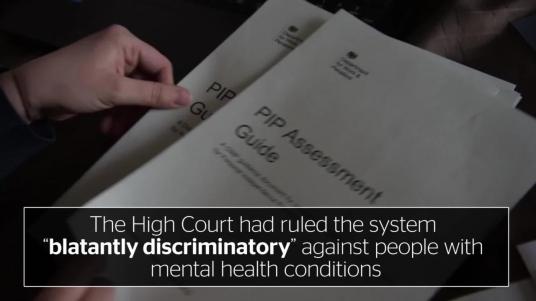
Disabled people face a hostile environment comprised of strategically placed and thoroughly demoralising ordeals, which are being passed off as arising because of bad administrative practices and simple errors. However, such ordeals are happening far too frequently to have arisen through random error. Furthermore, there is an identifiable pattern of government sponsored behaviours that has emerged within privately contracted companies hired to deliver disability assessments, and within the Department for Work and Pensions, which is aimed at simply denying people support.

Many people who have challenged a Department for Work and Pensions’ (DWP) decision not to award them Personal Independent Payment (PIP) in court successfully are finding that soon after they have won their appeal, they face a reassessment, and their award is taken from them again.

Even when people appeal, the system is rigged against them applying for legal support, and cuts to charities mean any support at all is shrinking away. Official figures last year showed that legal aid cuts mean ill and disabled people appealing their lifeline support through what have been consistently shown to be fatally flawed assessments and irrational, poorly evidenced DWP decision-making, are denied legal support in a staggering 99% of cases.

This means that someone with severe depression, or battling serious illnesses such as multiple sclerosis, cystic fibrosis or connective tissue illnesses for example, are left to take on a long, exhausting and complex legal case against the government, alone. 

The assessment process is set up to remove people’s disability benefits entirely because the evidence provided in medical notes by GPs and consultants, and the account of ill and disabled people, are not deemed by the state to be as credible as a snapshot report by a private company assessor, based on a half hour interview.

Private companies are motivated purely by making profit. This perverse incentive leaves no room for improving the dire situation that people, often at their most vulnerable, are facing. Improving performance as a service provider, or of prioritising human needs in a system that was originally designed to do so offers no reward for companies such as Maximus and Atos, because the government has been willing to pay them – from public funds – for atrocious failings that have harmed people and caused much distress. 

Since PIP was launched in 2013 to reduce the costs of disability support, the increasingly reduced access to financial assistance to help with the additional costs of being disabled has forced more than 75,000 people to give up their specially-adapted Motability vehicles. 

The UN have found that government policies have brought about “grave and systematic violations of disabled people’s rights” in the UK.

As someone who has gone through both PIP and Employment and Support Allowance (ESA) assessments and subsequent appeal, and as someone who co-runs a support group online for others going through this system, I know that both the assessment processes are beset by profound administrative failures and ordeals which seem to be wholly designed to work to the disadvantage of  ill and disabled people.

A report last year called Access Denied: Barriers to Justice in the Disability Benefits System, shows some of the immense suffering that the adversarial social security system causes disabled people and the long, exhausting and difficult process people who are ill have to go through to finally get the support they deserve and have paid into.

After being wrongly turned down at assessment, people must first go through mandatory review which can take anything from a few weeks to several months. The DWP argues that claims are fully reviewed at this stage, but the fact that 69 per cent of claimants win their appeal after having gone through MR proves that the MR itself is failing to correct the assessment’s flaws.

Case study: ‘Rose’

I spoke to someone this week who has faced two tribunals regarding her PIP award.  After successfully appealing the first, Rose (not her real name) had a face to face assessment when her review was due in July 2017.  The DWP decided to end her award, so she requested a mandatory review.  The DWP ‘lost’ Rose’s request twice after she had sent it, and then failed to log it and upload it onto their system.

Many other people have reported that they are not being notified of mandatory review outcomes, too, finding out after months of phone calls that the original decision was upheld. People cannot appeal until they have gone through a mandatory review, and several people told me they think the delaying tactics are deliberate, to discourage them from appealing DWP decisions. 

The mandatory review request in Rose’s case was sent in September 2017. The DWP acknowledged it had been received but had not been ‘logged’. As she was kept in the dark, Rose rang to find out what was happening over a month later in November, and was told once again hat the DWP had  ‘forgot’ to put it on the system.

She told me “They just said that there were always delays and to be patient and didn’t tell me why it had been delayed in the first place, then didn’t log it yet again”.

She added: “The DWP finally did the MR in a rush (and did not change anything from the original decision obviously) when I phoned again a month after that in Dec 2017 (as I still hadn’t heard anything) and they finally admitted what had happened both times. They sort of apologised on the phone but that was it. The MR document didn’t even change one letter of their original decision.”

Rose then waited almost a year for a tribunal date, which was arranged for 19 December 2018.

She told me: “The tribunal was very hard. It was not my first or even my second, as I fought and won before a couple of years ago after having two hearings adjourned because I was too upset to continue. But I won.

“It was an interrogation in a proper court room, with very quick fire questions and a very bizarre one, to presumably try to catch me out right at the end as I was standing up.

“The judge asked where I went to get my nails done!? I have never had my nails done in my life. I actually laughed and showed them my very short, bitten, discoloured nails. When I told my parents about that bit, they were furious and quite rightly said ‘would he have asked a man something like that?'”

The court didn’t reach a decision that day.

Rose said: “They did not decide on the day as it was 3.45pm (the hearing started at 3) and they were finished for the day – it was almost Christmas. The staff there definitely seemed to be winding down to say the least.

“Whilst I was crying in the waiting area, the receptionists were all screeching and laughing about their party plans, which I felt was pretty jarring and unprofessional. 

“I finally got my letter on Christmas eve telling me that they had awarded me standard rates on both daily living and mobility components, which I was relatively happy with.

“Although relieved, I do think it should have been enhanced rate on daily living but they never consider finances / therapy in most cases I’ve heard. I wasn’t so happy with the amount of time awarded (see below) but I was relieved to have an award.”

Rose waited for around five weeks to hear from the DWP, anxious that they may be considering appealing the tribunal’s decision. After being prompted to ring them by  someone online offering her advice, she was told it was usual for the DWP to contact people to check details before they can sort out an award and backpay.

Rose told me: “I don’t have my own phone so used my parents’. The DWP said that their self imposed deadline to ‘sort it out’ was within six weeks and it would be paid then.

“I  phoned up again to check something and they said the same… then phoned yet again when the six weeks was up, a few days later, and I still hadn’t heard anything.

“The guy on the phone said he didn’t know why I hadn’t heard anything (he was lying as they did know by then) but said that there was nothing he could do and to just to be patient.

“I was distressed, pretty hysterical and in tears at this point on the phone to him and felt a bit sorry for him, as I don’t think he could understand much of what I was saying.”

Rose became more and more anxious and worried, so emailed her MP  in the hope that she could find out what was going on. She told me she was petrified that the tribunal outcome was being appealed.

Her MP phoned a special DWP ‘hotline’ and immediately found out that there was a problem, as the tribunal decision letter that Rose and the DWP had received on Christmas eve had one tiny date error on it: the court had written that Rose’s  PIP award should be backdated from the 07/07/2017 rather than 02/07/2017 .

Rose said: “The error apparently meant that they couldn’t pay me until it had gone back to the courts service to be changed (and then back to the DWP and right back to the back of the queue) which could take months, depending on how busy they were. 

“I would NOT have known this if the MP’s office had not have got involved ….the DWP outright lied to me on the phone more than once when they knew what was happening and further to that should really have picked up on this earlier i.e. when it was received by them before Christmas, according to the MP’s assistant.

“The MP’s assistant emailed the courts email address (apparently the only way he could contact them as they don’t have a hotline to HMCTS like they do to other government departments) and told me that they had two weeks to respond to him with further details.

“The day before that deadline this week (now 9 weeks since the tribunal) they contacted him and said that apparently the courts are STILL waiting for my file to be sent from an ‘offsite storage facility’ and it has not even got to the judge yet to sign. They have known about this since the 25th January (which is when the DWP finally contacted them, they took over a month to realise the mistake)! You’d think sending a simple file would not take that long…..

“They refuse to give timescales (the MP’s assistant has emailed them back to ask for some but obviously they then have 2 weeks to respond to that request again!) ….and obviously after the judge deigns to have time to change it, it then has to go back to the DWP to sort out (and go to the back of their queue again).

Rose told me “I can’t believe this, I need this money to live on. I SHOULD have had it every month since July 2017 (20 months back dated almost)! I’m at the end of my tether and don’t think I can cope with much more.

“It has almost been 20 months that I have been living on the breadline, just on my ESA as I don’t claim anything else. This whole process has made me so very ill. I mean I’m ill anyway, very ill but the added of all of this and the constant mistakes and errors and not knowing what’s going on and waiting has out me on the verge of sending me into crisis again. I have started self harming more regularly, my psychiatrist has put my medication up yet again and I don’t think I can cope with this anymore.”

Rose added “There will be no respite either, even when /if this gets sorted out, as I have just had my ESA renewal forms (ESA50) through last week …which is what sent me into a [mental health] crisis a couple of years ago.

“I will also have to apply for PIP again at the end of this year presumably as most of the backdated PIP will then be gone, as they only gave me 3 years. They felt I ‘could get better’, which is utterly laughable.”

Rose has Ehlers Danlos Syndrome (EDS), which is a degenerative genetic connective tissue disorder which causes constant chronic pain, chronic fatigue and frequent joint dislocations, with it’s concurrent POTS [postural orthostatic tachycardia syndrome], MCAS [a mast cell autoimmune disorder]and IBS. Rose also has spinal scoliosis, kyphosis, three ruptured spinal discs and trigeminal neuralgia. She is undergoing investigations for dyspraxia as well. 

She also has bipolar with severe depression and chronic anxiety.

She told me: “I’m a relatively intelligent person who used to have a very good job before I became too ill to cope (something the DWP have repeatedly used against me, that and my degrees). 

“Obviously mental health can improve in some cases, which is probably what they were getting at (very unlikely though with this strain constantly happening. I can’t see anyone going through this terrible system having time to gather their thoughts and improve in any way, shape or form when they constantly make you fight and justify why you are ill).

“But EDS is a degenerative genetic illness and the symptoms severely impact on my mental health as it is. Trigeminal neuralgia also only gets worse with age. The latter is also known as the ‘suicide disease’ because of the amount of people who have killed themselves rather than live with the pain. It’s said to be one of the most painful things you can get.

“It’s ridiculous, these are things that aren’t just going to go away. I have already been ‘not well’ for 20 years now, but was forced to finally give up work in 2009 after years of struggling and disciplinary meetings for being off sick so much. Yet the judge only gave me an award for three years, as it is, because they thought I could ‘improve’, which is impossible. 

“I’m so scared, this can’t be right, living in constant fear like this. Why do they hate us so much? I still can’t get hold of my welfare advisor at the local council to help me with my ESA50 either. I emailed him on the 12th and have left phone messages on his mobile and with his colleagues.

“I’m just so petrified that they will find some excuse not to give this [PIP award] to me now altogether. At the same time I am terrified that my ESA will be taken away and I’ll be left with nothing. The timing of the ESA reassessment is atrocious (but not surprising). I’ve been on ESA, in the support group since 2013 and have never had an assessment for that. Not until now, anyway.”

The tribunal granted Rose’s appeal. Because of the date error on the court letter, it may be justifiable that the error needs to be rectified by the court before the DWP issue the money she is owed in PIP backpay – from the date of her claim. However, Rose is entitled to ongoing PIP payments too. The DWP know this, yet haven’t given her a single payment. There is no credible reason for not paying her ongoing award in the meantime.

Recently, I have seen a large number of cases where people are being re-assessed earlier than the DWP had stated and they are losing their awards. For those on PIP and ESA, it’s become commonplace for people to be going through appeals for both awards at the same time, or successively, which means there is no respite from the extreme strain that they are being put through. The thing that strikes me is that in every case, the decision to end someone’s award is irrational and cruel, most often with absolutely no reasonable justification provided in the assessment reports, which are invariably completely inaccurate.   

The endless ordeal of re-assessments and withdrawals of support for disabled people; the introduction of heavily bureaucratic mandatory reviews, designed to deter appeals; the withdrawal of support and the long periods people are being left without any means of meeting even basic needs; the fact that mandatory review very rarely changes the decision to end an award and then the awful experience of having to appeal again is certainly convincing evidence of an intentionally created hostile environment for ill and disabled people – those very people the government claims it protects. 

There are also the unofficial, undeclared and non-legislative means that the Department for Work and Pensions frequently use to try at every opportunity to end claims. For example, it’s fairly common for the DWP to try to end ESA claims because a disabled person has been awarded PIP – a non means-tested income to support day-to-day independence and meet the costs of the additional needs arising because of disabilities. The DWP often try to claim that this is “standard” process when someone has “another award.” But PIP does not affect people’s  eligibility for ESA at all.

The endless tactics deployed by the DWP are designed to force disabled people to go through the thoroughly demoralisng, anxiety-provoking and punitive claim process all over again – which means a huge reduction in income because during the mandatory review, people cannot claim any ESA, and following MR, they will then only be eligible for the basic rate ESA. This also means there will be another long wait for another harrowing assessment, which presents a further opportunity for the withdrawal of lifeline disability support, and so on.

This kind of ruthless tactic was probably also designed to ensure that people never feel secure while needing lifeline support – a kind of informal Poor Law-styled “deterrence”.

Earlier this year, through a parliamentary question from Labour MP Madeleine Moon, it was revealed that more than 17,000 people died waiting for a DWP decision on their PIP claim between April 2013 and April 2018.

Disclosed official DWP data also reveals that 7,990 people died within six months of having a claim for PIP rejected by callous DWP ‘decision makers’. This indicates that contrary to Conservative minister’s claims, those most in need of support are being catastrophically failed by the assessment and decision making regime. 

Of these, 3,680 died within just three months of having their PIP applications rejected by the DWP.

I’m wondering what it will take for the government to admit that the system is unacceptably cruel and to acknowledge the mounting empirical evidence that, rather than supporting those most in need, the system is intentionally set up to deny support to as many people as possible, regardless of their needs and regardless of the ethical red line that has been shamefully crossed by the Conservatives under the guise of ‘welfare reform’.


I don’t make any money from my work. I am struggling to get by, like many other ill and disabled people. But if you like, you can contribute by making a donation and help me continue to research and write informative, insightful and independent articles, and to provide support to others going through the disability assessment process, mandatory review and appeals. The smallest amount is much appreciated – thank you.

DonatenowButton

DWP is trying to co-opt GPs in forcing ill people into work

facade welfare

Yesterday on Twitter, I posted one of my previous posts – Jobcentre tells GP to stop issuing sick notes to patient assessed as ‘fit for work’ and he died in which I discuss a letter addressed to a GP regarding a seriously ill patient. It said:

We have decided your patient is capable of work from and including January 10, 2016.

“This means you do not have to give your patient more medical certificates for employment and support allowance purposes unless they appeal against this decision.”

The patient, James Harrison, had been declared “fit for work” and the letter stated that he should not get further medical certificates. 

However, 10 months after the Department for Work and Pensions (DWP) contacted his doctor without telling him, he died, aged 55. James clearly wasn’t fit for work. 

The GP had stopped issuing medical certificates when the DWP told him to. It is completely unacceptable that James Harrison was left struggling without support, when he was clearly very ill. It is also unacceptable that James’ GP was given instructions from the state – that caused harm – without James’ knowledge. 

The certificates – so-called fit notes – demonstrate that the government seems to have some difficulty in recognising that sometimes people get ‘sick’ and require support via the provision they have paid into.

Austerity: When the state takes money from the public and hands it out to millionaires

David Cameron, however, had other plans for the UK. He said: “We simply have to get to grips with the sicknote culture that means a short spell of sickness absence can far too easily become a gradual slide to a life of long-term benefit dependency.

“The new welfare bill – described as the biggest shake-up of the system since it was set up 60 years ago – is designed to say end the culture of the fit and healthy being able to refuse work being rewarded for staying at home.”

However, the statement isn’t coherent. He infers that people are recovering from a brief period of illness and then refusing to return to work. As we have learned at great human cost over the last few years, this legislation has destroyed the lives of thousands of people who are ill. It was always intended to take away support from those who need it most. That is evident in the Conservatives’ incoherent attempt at a justification narrative, propped up by the right wing media. 

It never seemed to have crossed Cameron’s mind that 1) people’s medical conditions may worsen, they may have a chronic or degenerative illness. Being chronically ill does not make a person ‘benefit dependent’, it simply makes them ill. 2) The public contributes to the treasury, which is in part a funding mechanism towards social security and other state provisions, via tax and national insurance. This is done on the understanding that the state ensures that citizens can meet their basic survival needs. The Conservatives have clearly stated they have ‘other’ ideas on how our public funds should be spent, which does not include meeting the needs of the public.

The state is responsible for handling public funds. It is unacceptable that such contentious neoliberal ideology is being used by the Conservatives to dismantle state provision for those who need it most, while deliberately targeting the poorest citizens with austerity cuts. Meanwhile, millionaires are rewarded with generous tax cuts from the public purse. At the time when the welfare reform act was passed, millonaires were handed a tax cut of £107,000 each per year. This callous and unjustified approach to social administration is destroying people’s lives and has profoundly damaged our democracy and society, while seriously and systematically violating the human rights of the UK’s most marginalised groups.

It is very worrying that the clearly dangerous ESA65B form is a standardised response to GPs from the DWP following an assessment where someone has been found fit for work.  I discussed some of the raised issues further in another article from last year that I posted on Twitter yesterday – GPs told to consider making fit notes conditional on patients having appointment with work coach 

It’s even more worrying that the part clarifying ‘fit notes’ should continue if a person is appealing a ‘fit for work’ has been removed from the standard letter, and a line added that says: “In the course of any further consultations with […] we hope you will also encourage [the patient]in [their]efforts to return to, or start, work.” 

I always worry when the government uses the words “encourage”, “help” and “support” in the context of policies and political practices that affect disabled people. They are usually techniques of neutralisation – euphemisms for the actions embedded in punitive and harmful policies.

This growing practice of the state intruding in the confidential relationship between a GP and patient undermines trust, it damages the professionalism and clinical expertise of doctors and threatens the safety and wellbeing of patients. It shrinks the safe spaces for citizens to escape the increasingly oppressive practices of the government. It turns GPs into non-neutral agents of the state.

We know from the high rate of success at appeal for Employment and Support Allowance claims that the DWP’s decision making regarding ill and disabled people’s ‘work capability’ is truly atrocious and negligent, and there is absolutely no convincing empirical evidence that “work is a health outcome”. (See: Work as a health outcome, making work pay and other Conservative myths and magical thinking.)

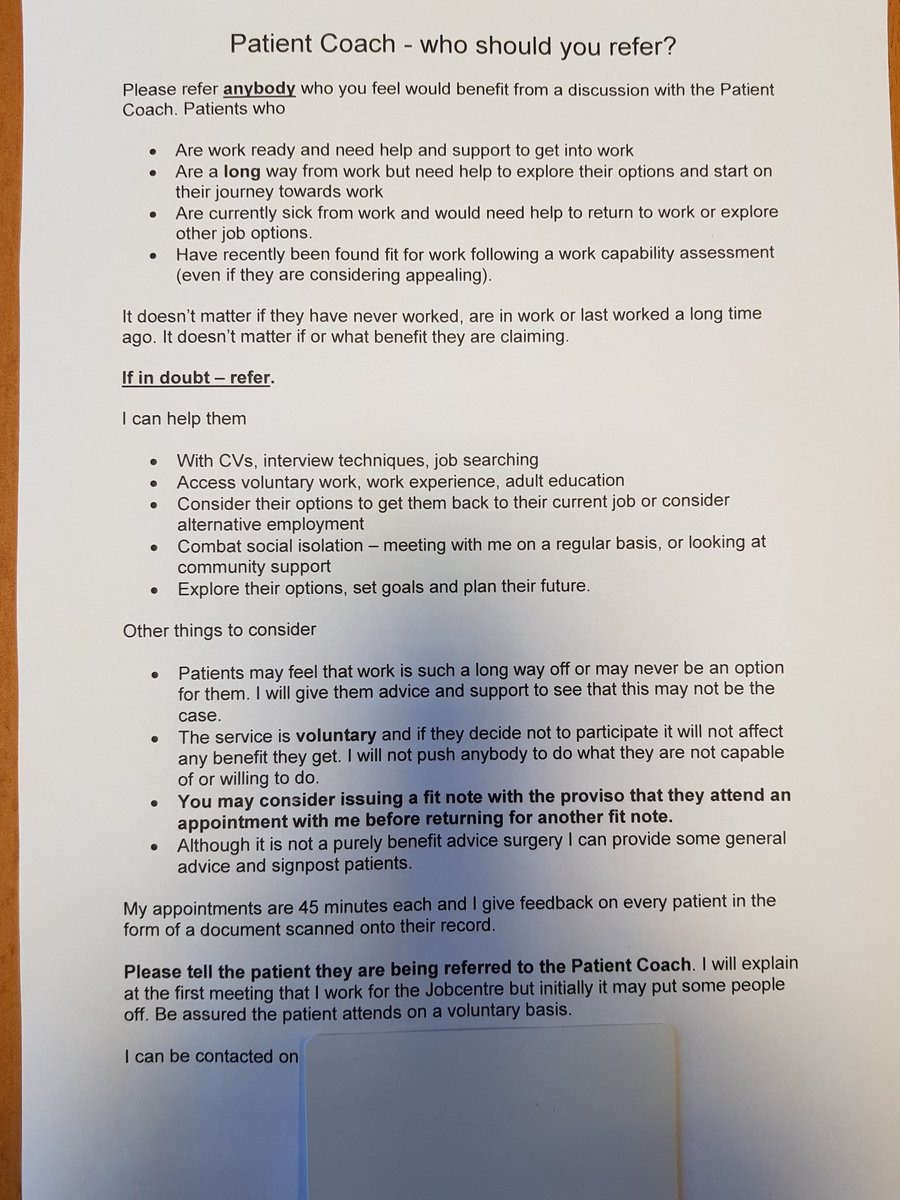
Last year, jobcentre staff were forced to withdraw guidance that urged GPs in Leeds to use deceitful tactics to attempt to get people who are ill off social security support and into work. The shocking guidance asked doctors to send patients for a 45-minute session with a “Patient Coach” – without mentioning that the coach actually worked for the the DWP.

It was even suggested that GPs withhold sick notes unless patients agreed to attend an appointment with the work coach. 

This is a tactic many of us have previously warned of – the government attempting to co-opt doctors to police ill and disabled people, pushing them into work, regardless of whether or not it is appropriate or safe to do so. But it also indicates the direction of travel for healthcare in the UK. The government intend to make that provision conditional also. (See Tories propose nudge, big business AI initiative and ‘personal responsibility’ in place of adequate health care funding.)

The government is forcing people who are ill into either work or into poverty, and both  outcomes are absolutely ethically unacceptable, a violation of rights, authoritarian and very dangerous. Increasingly, poverty is being used as a weapon to coerce people into work. However, many jobs are not paying enough for people to meet their living costs, so it is no guarantee that work will alleviate poverty.

The government seems to think that citizenship rights ought to be entirely conditional on people being economically useful to the government.

If we fail to be so, we are being treated as disposable political commodities. But citizens are not a means to state imposed ends and ideological aims in wealthy so-called first world democracies. And democratic governments don’t generally impose ‘behavioural change’ techniques on citizens, or professionals, for that matter, in order to make them complicit in the abuse and oppression of marginalised groups. The state is increasingly policing and punishing the poorest citizens, leaving them completely isolated and without any reliable support whatsoever.

The ESA65B is misleading GPs and deterring people from appealing wrongful  DWP decisions

On the DWP’s ESA65B GP’s letter template most recently placed on the government site, titled “Help us support your patient to return to or start work” it says: “We assessed [Title] [First name] [Surname] on and decided that [select] is capable of doing some work, but this might not be the same type of work [select] may have done before.

“We know most people are better off in work, so we are encouraging [Title] [First name] [Surname] to find out what type of work [select] may be able to do with [select] health condition or disability through focused support at [select] local Jobcentre Plus.

“In the course of any further consultations with [Title] [First name] [Surname] we hope you will also encourage [select] in [select] efforts to return to, or start, work

“Please do not give [Title] [First name] [Surname] any more fit notes relating to [select] disability/health condition for ESA purposes.

The problem is that people appealing wrongful DWP work capability decisions need to provide sickness certification in order to proceed.

Minister for disabled people, Sarah Newton, responded to one of several Written Questions from Emma Dent Coad, saying: “The ESA65B letter is issued to GPs in every case where an ESA claimant has been found ‘fit for work’. This process was built into the IT system as part of the introduction of ESA in October 2008. 

“Following a Ministerial requirement by the Cabinet Secretary, which was endorsed by the Secretary of State for Work and Pensions, the content of the ESA65B letter has been improved in order to explain to GPs the type of support customers can expect to receive from their local Jobcentre, and to ask GPs to encourage customers in their efforts to return to work.” [My emphasis]. 

GPs are trained and tasked to objectively address health and wellbeing, they should not be co-opted as government ideologues.

The decision to change the letter template was made without any scrutiny from or consultation with parliament and the public. It’s worth reading the series of questions by Emma Dent Coad. Prompting accountable and transparent answers from Sarah Newton appears similar to an exercise in pulling teeth. The responses given display the arrogance, contempt and delusions of an authoritarian government.

When people become ill, they make an appointment with my GP, and not the secretary of state for work and pensions, and for very good reasons. People need support and treatment, not someone spouting ideologically orchestrated dangerous claptrap about how work is ‘good’ for them. It seems the notion of convalescence and recovery are incompatible with the government’s aim of “getting Britain working”.

Catastrophically inaccurate assessments within the DWP are the norm. The government are intentionally reducing access to essential support and services for ill and disabled people, and this ideological attack is causing material hardship, suffering, distress and sometimes, it is killing people. 

The contentious “fit for work” assessment is forcing severely ill people to look for work and sanctioning them if they’re exhausted, in too much pain to get out of bed, while delays in social security are forcing cancer patients to food banks, and the bedroom tax results in bed-bound ill and disabled people facing horrifying threats of eviction. 

These are the direct consequence of intentionally punitive government policies, which aim at enforcing ‘personal responsibility’ and ‘behavioural change’ on those citizens with the fewest choices.

Dan Carden’s letter to Amber Rudd

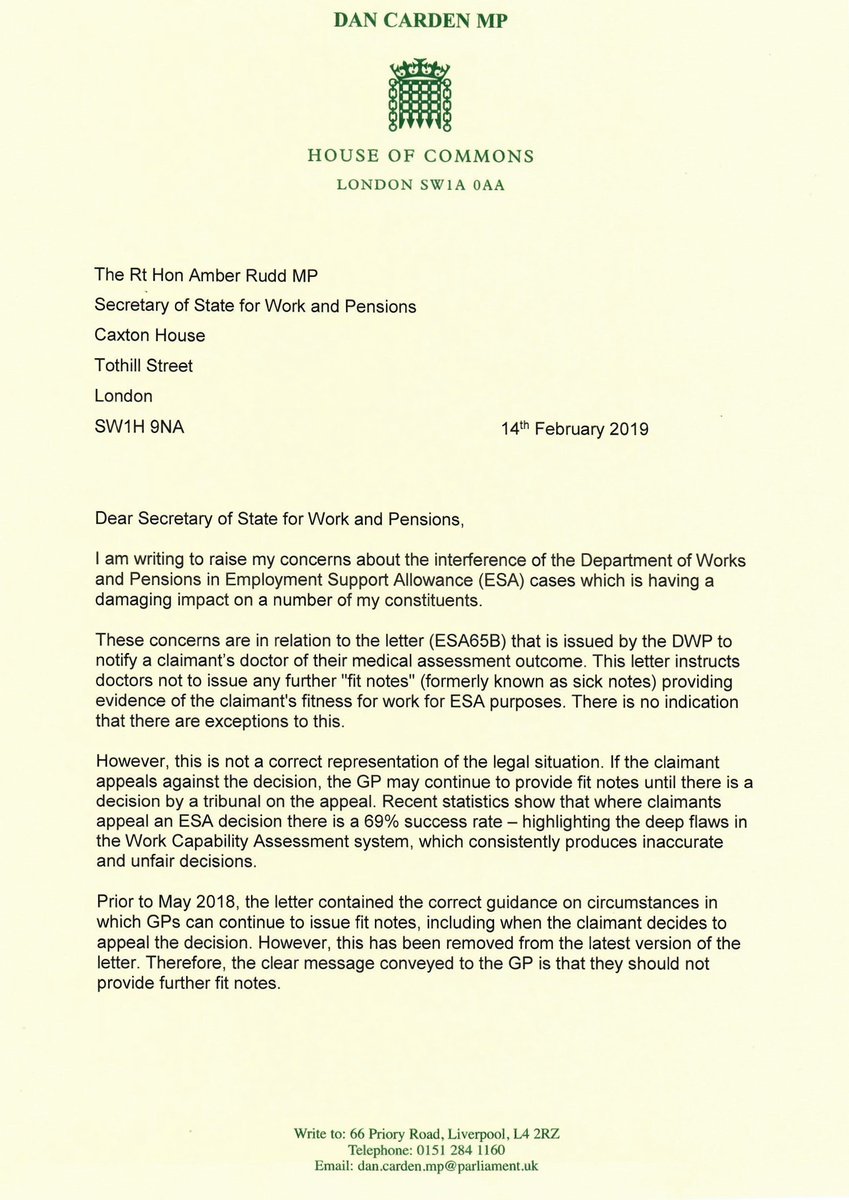
I was pleased to see Liverpool Walton MP Dan Carden’s letter to Amber Rudd (below) which addresses some of the concerns many of us have raised. He also notes that without a GP’s ‘fit note’, (the Conservative’s Orwellian rebrand of the sick note) it isn’t possible for people challenging Department for Work and Pensions (DWP) decisions to claim Employment and Support Allowance (ESA) in the interim period, until their appeal is heard at Tribunal. 

Indeed, people who have lodged an appeal against a wrongful decision have been blocked from claiming ESA while awaiting the hearing, due to the misleading letter routinely sent from the DWP to doctors. This prevents untold numbers of low-income claimants from accessing financial support while they wait for months on end to go to tribunal. 

Entitlement to ESA pending appeal is enshrined in the ESA Regulations to cover the whole of the period leading up the hearing. It is also possible to have the payment backdated to cover the Mandatory Review waiting period too – it can take over six weeks for the DWP to review their original decision, over which time people are left without welfare support.

However, ESA pending appeal is not paid automatically – people usually have to ask for it, and must provide fit notes from their GP, presenting these along with their appeal acknowledgment letter from the Tribunal Courts to their local Job Centre. The Job Centre should report back to the DWP who will arrange for ESA pending appeal to be paid.

It simply isn’t appropriate for the DWP to interfere in a GP’s professional and qualified judgement, especially given the high rate of successful ESA appeals, indicating just how poor the decisions issued by the DWP actually are concerning people’s capacity to work. 

Dan’s letter:

DzTKHDpWoAA0VSi

DzTKISmW0AAPXWq

Related

Jobcentre tells GP to stop issuing sick notes to patient assessed as ‘fit for work’ and he died.

Rogue company Unum’s profiteering hand in the government’s work, health and disability green paper

The new Work and Health Programme: government plan social experiments to “nudge” sick and disabled people into work

Tories propose nudge, big business AI initiative and ‘personal responsibility’ in place of adequate health care funding


I don’t make any money from my work. But you can contribute by making a donation and help me continue to research and write informative, insightful and independent articles, and to provide support to others. The smallest amount is much appreciated – thank you.
DonatenowButton

Disabled people claiming PIP are being forced to go through two assessments

PIP pic

Benefits and Work have reported that a number of their members in recent weeks have been been made to go through a second Personal Independent Payment (PIP) assessment before a decision is made on their award, because there was a problem with the first assessment report.

One member faced a two hour assessment on Christmas Eve. In January they were contacted by Capita and told that the assessment was “incomplete” and that someone was to be “sent round to finish it.”

Capita have refused to say what information was missing and would not provide a copy of the report until it was complete.

One member told Benefits and Work:

“This has left me feeling very anxious. All they would say is that they needed further information as the last assessment was incomplete. I’m confused. I feel that they want to trip me up even though I was completely truthful about my conditions in the last assessment.”

I co-run an online group to support people going through PIP and Employment and Support Allowance claims, assessments, mandatory review and appeals. Our members are also reporting that this is happening to them, too.

One person told me: “After suffering two heart attacks and a quadruple bypass plus a brain tumour and a previous devastating head injury , which will never be “cured” he was told to apply for PIP.

“Three months later and the lady sent from a brain injury charity, to help him , phoned up the Department for Work and Pensions regarding his assessment and they denied having any knowledge of said assessment and said it will have to be done again.

“The stress is unbearable for my partner.

“Horrendous.”

Another person said: “I had my assessment in November. I rang to see why I wasn’t told a decision just before Christmas and was told I would need another assessment as the one I’d had didn’t give enough evidence to make the decision.

“I collapsed at the assessment in the examination because I was told to stand up from my wheel chair and I can’t. What more evidence do they need? I have rheumatoid arthritis and a severe spine injury, they have medical evidence from my doctor? I can’t face it all again. The stress is making me very poorly.”

Another member had almost completed their assessment when it was suddenly stopped and they were told they would have to return for a new, full assessment. The only reason they were given was that the assessment should have been done by a physiotherapist instead of a nurse.

One Benefits and Work member took her son for a PIP assessment which lasted 2 hours and 15 minutes. However, this person was then told that the assessor had not filed the report so they would have to return for a new assessment.

The new assessor took 1 hour and 30 minutes. The assessor claimed that she had the original report on screen and would take information from that, but she did not actually do so. As a result our member did not give some of the information that had been covered in the first report.

The member said:

“I was too worried at the time to complain but I did contact my MP.”

Another member was contacted after their assessment in December and told that she would have to attend a second assessment in February before a decision on her claim could be made. When they asked why:

“I was told it was to do a more robust assessment and that if I didn’t attend they would refuse my claim.”

The person concerned is understandably very anxious about the repeat assessment:

“I am in total meltdown mode and if the first one is anything to go by I’m dreading the next one. I was so stressed and anxious I could barely control myself but did manage to answer all the questions they asked.”

One member’s 16 year old child is about to be moved from Disability Living Allowance (DLA) to PIP. They had an assessment in December but have now been asked to attend a second one before a decision is made.

The member commented:

“So I guess we just go to the 2nd assessment and do it all again then? Just what a overly anxious child wants eh!!”

Another member had their PIP assessment in December as part of the process of moving from an indefinite DLA award. However, in January they were contacted by Capita who said that the DWP had requested further information and they would have to have a further assessment. Capita have not said what further information is needed or why it can’t be collected by phone.

The member said:

“I am sick with worry I was already suffering with even more anxiety than usual due to going through this process.”

The PIP assessment process is enormously stressful for many people. To have to go through it twice with no adequate explanation as to why seems unfair and unreasonable. At the very least, people should receive a letter of apology and an explanation of why a telephone conversation would not be sufficient to put matters right.

Please consider complaining to your MP if this happens to you.

Benefits and Work are interested in hearing from anyone else who has been forced to attend two assessments.  Please click on the link and leave your comment here.

You can also leave a comment on this article, as I will be sending this information to government and shadow ministers.


I don’t make any money from my work. But you can contribute by making a donation and help me continue to research and write informative, insightful and independent articles, and to provide support to others. The smallest amount is much appreciated – thank you.
DonatenowButton

Campaigners organise ‘First Do No Harm lobby’, aimed at preventing further social security related deaths

this ESA round

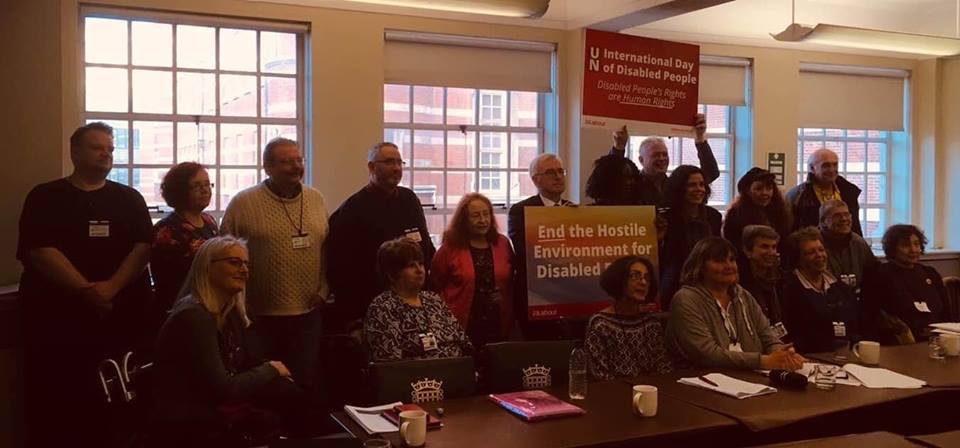
Disabled campaigners, researchers and organisations who have played a key role in exposing the discrimination and harm caused by the government’s social security reforms have been travelling to Westminster to attend round table discussions with five Labour shadow ministers. The meetings are chaired by Shadow Chancellor John McDonnell. I was invited to attend by John McDonnell’s office in September, because of my own ongoing campaign work.

The meetings are also the launch of a series of campaigning efforts and consultation between the Labour party, disabled activists, researchers and allied organisations. Labour MPs also hope to secure support from members of other political parties in the longer term.

We will be continuing to challenge the government’s persistent denial of a ‘causal link’ between their draconian social security policies and the distress, systematic human rights violations, serious harm and deaths of disabled people that have arisen in correlation with those policies.

Unless the government undertakes a cumulative impact assessment of the harm and  injustices that have followed in the wake of their welfare reform acts, they cannot provide evidence to support their own claims and flat denials that their policies are causing hardship, harm and distress. 

Public health experts from the Universities of Liverpool and Oxford have also produced a research report titled First, do no harm’: are disability assessments associated with adverse trends in mental health? A longitudinal ecological study. It highlights that the process of reassessing people on incapacity benefit for the new employment and support allowance (ESA) from 2010 to 2013 was “associated with” an extra 590 suicides, 279,000 additional cases of self-reported mental health problems, and the prescribing of a further 725,000 anti-depressants.

Speaking to the Huffington Post last year, the shadow chancellor said that he became furious during a Parliamentary debate when he demanded a comprehensive assessment of the cumulative impact of welfare reforms on disabled people and the government refused. He praised the website Calum’s List, which details the cases of at least 60 deaths linked to welfare cuts.

He added:  “We said to the Government we know now from Calum’s List, listing people from reports in the press and elsewhere of people committing suicide as a result of Government cuts.

We knew the Government were monitoring some coroners’ reports and we wanted them published, but [then DWP minister Esther] McVey wouldn’t and I got really angry.”

“Next week, what we are doing is getting a group of campaigning organisations and a group of experts together to talk about the way in which Work Capability Assessments are still having an impact, to try to get to the bottom in terms of mental health and suicide.”

McDonnell added that Labour’s first Queen’s Speech include legislation “making sure we have a welfare and benefit system that lifts people out of poverty”.

He said that his Hayes and Harlington constituency casework now operates an open-door system four days a week due to demand from people hit by government cuts. 

He added: “Helen who runs my office said the casework now is on a scale and a depth of suffering that we’ve never seen before. And this in a constituency with the [Heathrow] airport, high levels of employment but wages not matching the housing costs and the pressure on people working all hours just to keep a roof over their heads.

“If anything goes wrong they fall out of the system. Last month we were dealing with two families living in cars. We also have the ‘beds in sheds’ phenomenon, families living in a shed or garage rented out to them, it’s staggering really.

“Before this last eight years, those sort of horrendous situations would be infrequent but you wouldn’t have someone so heavily sanctioned. The sanctions often impact on people with mental health conditions hardest.”

The Labour party’s track record of inclusion and democratic consultation with disabled citizens and their communities contrasts starkly with the Conservative’s exclusionary ‘we know better than you’ approach to disability policies. The government have imposed cuts on disabled people, acting upon them as if they are objects of policy rather than being citizens within a democracy.  

Government policies are expressed political intentions regarding how our society is organised and governed. They have calculated social and economic aims and consequences. In democratic societies, citizens’ accounts of the impacts of policies ought to matter.

However, in the UK, the way that welfare policies are justified is being increasingly detached from their aims and consequences, partly because democratic processes and basic human rights are being disassembled or side-stepped, and partly because the government employs the widespread use of linguistic strategies and techniques of persuasion to intentionally divert us from their aims and the consequences of their ideologically (rather than rationally) driven policies. Furthermore, policies have more generally become increasingly detached from public interests and needs.

The Labour party listen to citizens’ accounts, and have always acknowledged our concerns. John McDonnell was involved in the setting up of Disabled People Against the Cuts (DPAC). After a nationwide round of consultations with disabled people about policies which enshrine the Equality and Human Rights acts, led by Debbie Abrahams, the Labour party wrote an additional manifesto, outlining policies for disabled people, called Nothing about you without you, which many of us have contributed to.

DSCN3314.JPG

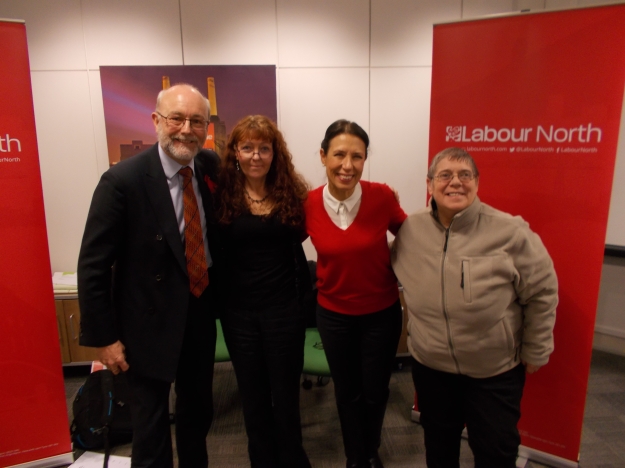
Alex Cunningham, me, Debbie Abrahams and Gail Ward after the Disability Equality Roadshow and consultation in December, 2016.

The First Do No Harm lobby on 13 February aims to expose the continued harm caused to disabled people by government social security reforms, and to seek safeguarding changes to the social security system. It follows many years of growing concerns about the controversial Work Capability Assessment (WCA) and the failure of Department for Work and Pensions (DWP) ministers to make the necessary changes to make the assessment process safe.

Disability rights campaigners and MPs will focus on the repeated failure of the DWP to ensure that the “further medical evidence” needed to demonstrate a disabled person’s eligibility for out-of-work disability benefits is always collected, particularly for claimants with mental health conditions.

The three key asks of the lobby are:

1. To incorporate the principle of “First Do No Harm” into the assessment process for disabled people in the welfare system.
2. To call for the publication of a cumulative impact assessment of social security changes to disabled people.
3. To implement an assessment framework that treats disabled people with dignity and respect.

The lobby has been facilitated by Labour’s Treasury and work and pensions teams, through shadow chancellor John McDonnell and shadow work and pensions secretary Margaret Greenwood. Both Labour MPs and activists hope that MPs from all parties will attend. 

Shadow chancellor, John McDonnell has previously said that he believed the ongoing meetings with disability rights campaigners and allied organisations could herald the start of “a significant movement to expose the brutality of the system” and secure “permanent change”.

He told Disability News Service: “Disabled people have had enough of the continuing austerity, attacks and discrimination.

“The lobby will brief on the plight of disabled people and lobby for reform to protect against this harm.” The aim is to push for the principle of “First Do No Harm” to be included in the benefits assessment process, through a framework that “treats disabled people with dignity and respect”.

The lobby also aims to push the government to acknowledge years of raised concerns by our community to carry out a cumulative assessment of the impact of its social security cuts and reforms on disabled people. 

Campaigners will also call for an end to the government’s punitive sanctions and conditionality regime.

The First Do No Harm lobby is the first organised action arising from the ongoing meetings between disabled activists and allies and Labour shadow ministers, including John McDonnell, Margaret Greenwood and shadow minister for disabled people Marsha de Cordova.

Both Margaret Greenwood and Marsha de Cordova are to speak at the briefing as part of the lobby on 13 February.

A mass lobby is one way of using your right to turn up to the House of Commons and request a meeting with your MP as one of his or her constituents. An MP’s role is to represent a constituent’s interests – even if he or she does not entirely agree with them. As each MP may have up to 90,000 constituents to look after, it is best to be as brief, clear and courteous as possible when you meet your MP.   

Disabled people or allies who want their MP to attend the lobby should write to their MP – you can find MP’s email addresses here: WriteToThem – to inform them you wish to seek an appointment on the day of the lobby. 

The lobby is due to take place on Wednesday 13 February between 1pm and 6pm, with the briefing from 2-3.30pm, in the Palace of Westminster’s committee room 15. The committee room can be used for one-to-one meetings with MPs or further discussions on the issue from 1pm-2pm and then from 3.30pm-6pm 

ESA lalst 3

The most recent meeting at Portcullis House, Westminster.


Related

John McDonnell attacks Tory disability cuts and vows to address suicides linked to welfare reforms

Lobby aims to persuade MPs that DWP must First Do No Harm on assessments

Labour’s Disability Equality Roadshow comes to Newcastle

Nothing about you without you – the Labour party manifesto for disabled people

I very much wanted to attend this very important mass lobby and contacted my MP in respect of this. However, unfortunately I am currently not well enough to travel down to Westminster. I will, however, be working hard promoting the event on social media. 


I don’t make any money from my work. But you can make a donation if you wish and help me continue to research and write informative, insightful and independent articles, and to provide support to others going through disability claims, assessments, mandatory reviews and appeals. The smallest amount is much appreciated – thank you.
DonatenowButton

‘Disability confident’ DWP acted ‘perversely’ in sacking of disabled woman, court says

disability-confident-image-version.jpg

The government’s meaningless Disability Confident campaign.

The Guardian reports that a disabled woman was discriminated against when she was unfairly sacked by the Department for Work and Pensions, which behaved in a “perverse” and “blinkered” manner, a judge has found. 

Isabella Valentine was employed by the DWP on a programme designed to get vulnerable, long-term unemployed people back into work by nurturing and training apprentices over a 12-month period, bringing them to a point where they could apply for jobs in the usual way. Instead, “inexplicable and strange” disciplinary measures were taken by the DWP after just four days’ sickness that led to Valentine’s dismissal. 

“I suffer regular migraines that are so severe and unpredictable that I am officially classed as disabled. Because of that and a lack of qualifications, I haven’t been able to find decent employment,” said Valentine.

“When I was handpicked for this programme, I was so happy. I hoped that I had finally found employers who would let me do a good job while being understanding of the time off I sometimes have to take because of my migraines. 

“Instead, I was made to feel small and so stressed that my migraines got even worse. Not only were no reasonable adjustments made for my disability as legally required but I was subject to the same strict and unbending rules that permanent employees had to work by.” 

She added: “My manager started harassing me on the first day I took off sick because of a migraine. By the fourth day, the department had started disciplinary proceedings and decided to dismiss me. Which it then did.” 

In his judgment, the employment judge, Robin Postle, said: “[Valentine’s treatment] does beg the question, why, given the nature of why the claimant was put on the course, to try and get her back into the workplace, the [DWP] did not make reasonable adjustments [under the Equality Act 2010], in disregarding migraine absences, or indeed, simply taking no further action. The claimant has suffered unfavourable treatment and she had a disability.” 

The DWP has been taken to the employment tribunal by staff almost 60 times over claims of disability discrimination in a 20-month period. The DWP, which has about 75,000 staff, has the worst record on disability discrimination of any large government department with 57 cases, compared with 20 cases against the Home Office (which has about 30,000 staff), 32 against the Ministry of Justice (about 70,000 staff) and 29 against HM Revenue and Customs (about 60,000 staff). 

The number of allegations made by disabled staff is surprising because the DWP is responsible for the much-criticised Disability Confident scheme, which aims to help employers recruit and retain disabled employees. DWP claims to be a Disability Confident leader”, the highest of the scheme’s three levels. 

Valentine’s manager was told she would require extra support and leeway to enable her to complete the course. The Suffolk Law Centre solicitor Carol Ward fought the case as part of the National Lottery Reaching Communities-funded project Tackling Discrimination in the East, said: “The behaviour of the DWP was particularly inexplicable and strange because the whole point of the course was to help the apprentices who struggled to cope in the workplace. 

“The claimant had been personally chosen by a DWP work coach. The scheme specifically said apprentices would need nurturing and support, and that they weren’t expected to contribute to the business in the same way as those recruited in the usual way. But as soon as she hit the four-day absence trigger, disciplinary procedures were started.” 

The behaviour of Valentine’s managers was, the judge found, “frankly perverse”. Meetings with Valentine were frequently misrepresented in “clearly incorrect” letters sent by her direct manager. 

Instead of exercising the discretion available to her, the same manager “slavishly followed the policy in a blinkered manner”, while a second manager “had a closed mind”. A third manager who conducted Valentine’s appeal failed to do basic checks on the considerable leeway that had been granted to many other apprentices on the same course.

The consequence was a “predetermined decision” to dismiss Valentine before she had even returned from her second period of sick leave. 

“This was particularly surprising given the fact that [one of the managers said] it became clear very quickly that this was a group of people who needed a lot of support as they were not used to the working environment and needed support to help them cope,” said the judge. 

The DWP said: “We accept this decision. Our general approach is a supportive one – we provide employees with free access to counselling, health advice, physiotherapy and workplace adjustments to manage absences, and we do not dismiss staff without proper consideration and taking professional advice.”

The evidence strongly suggests otherwise. 


My work is unfunded and I don’t make any money from it. This is a pay as you like site. If you wish you can support me by making a one-off donation or a monthly contribution. This will help me continue to research and write independent, insightful and informative articles, and to continue to provide support others who are affected by the welfare ‘reforms’. DonatenowButton

Universal Credit is an unmitigated catastrophe for ill and disabled people

Image result for pictures universal credit

I co-run an online advice and support group for people going through Personal Independence Payment (PIP) and Employment and Support Allowance (ESA) claims, assessments, mandatory reviews and appeals. Recently there has been a spike in people being reassessed for their awards of both kinds of support much earlier than expected. Furthermore, many are seeing their longstanding awards being taken from them by the Department for Work and Pensions following the reassessment, when this is clearly unjustifiable.

Failing a work capability assessment usually triggers migration onto Universal Credit.

For example, a significant proportion of this group have chronic or degenerative illnesses that are not going to improve. If someone with such a condition is deemed unfit for work, or in need of extra support to meet their needs and maintain independence, given that it’s highly improbable that their condition will improve,  it’s more than unreasonably cruel that following review, these people have lost their awards, most often based on highly inaccurate reports from assessors and the Department’s decision makers.

One person received a letter notifying her of an early ESA review – it wasn’t due until next year – just days after she had seen her PIP award removed, following a review that was not due until 2021. 

Those people claiming Universal Credit (UC) and needing a work capability assessment because they have not previously received ESA are experiencing long delays (often around six months) before the assessment appointments are finally arranged. This is true even when there is clear evidence of ill health and/or disability, and it means people miss out on additional payments. Some are being subjected to conditionality and sanctions because they are being given inappropriate requirements to look for work while they wait for their assessment. 

A recurring problem with UC is the failure of DWP staff to include a limited capability for work (LCW) or limited capability for work related activity (LCWRA) element in a claim for Universal Credit for people moving from ESA, who had already been assessed as entitled to the equivalent element in ESA. These components are supposed to be automatically included in UC but people are reporting that it this is not happening.

Two people who had been claiming ESA for two or more years, both placed in the support group following their assessments, triggered ‘natural migration’ when they claimed Discretionary Housing Payment (DHP) because of hardship. One person’s local council had wrongly made ‘non dependent’ deductions for her adult son, pushing her into hardship and rent arrears. As she was awarded PIP at the daily living rate, non dependent deductions should not have been made, as the standard daily living award exempts people from those deductions in this group of PIP  claimants.   

She later reported that non dependent deductions were wrongly taken from her UC housing element, also. She said that the problem arose because PIP awards are not logged on the system, which means that once the underpayments were eventually rectified, she still had to remind her advisor that she was exempt from non dependent deductions being made to her housing costs. The problem keeps arising, however, with some of the deductions still being made some months. She also told me that her mandatory review request was completely ignored.

The DHP application from both people in the support group triggered a move from existing benefits on to UC. When migrated from ESA on to UC, people in the ESA support group should be automatically awarded the extra element of UC (the ‘limited capability for work-related activity element’) and should not be required to undertake any work related activity. However this did not happen and both were refused this element. Another person was told, wrongly, that she would need to undergo another work capability assessment and another was asked to undertake inappropriate work related activities which he were unable to carry out because of his illness.  

Several others have also reported that they have submitted requests for mandatory review and not had any response. One person was told that they had to ring to request the review, rather than requesting it in writing. She was then told that because more than one month had passed since the decision she was challenging, she could not request a mandatory review. 

Special rules exist for terminally ill people who are expected to live less than six months, to fast-track their claims for support and to allow certain health-related payments to be paid at the highest rate without needing further assessment. One person applied for UC and was incorrectly told that there was no special rules provision under UC. She was asked to provide evidence that she could not carry out work related activities before she could receive the payments due to her and have her work related conditionality lifted, despite the fact she had submitted a DS 1500 report from her consultant.

Another person who is terminally ill told me that his advisor said there was no evidence that he had submitted a DS 1500 report. By this time, he had already waited seven weeks for his UC claim to be processed. He was still waiting for a PIP assessment date. 

Another problem arising for disabled people is that some are experiencing difficulty making new-style ESA claims (which are based on National Insurance contributions, rather than being income related) in ‘full service’ jobcentre areas, and are being wrongly advised to claim UC in circumstances where that is not required. 

One very vulnerable young person told me that he was flatly refused when he asked to claim the disability element of UC. His GP had told him he was unfit for work. His work coach said that he was “not allowed” to claim disability benefit under UC rules. He was sanctioned because he could not carry out  work related activities, which also had an impact on his partner. He needed support with a mandatory review request and his doctor submitted a report from the young man’s consultant. His sanction was overturned after seven weeks. That is seven weeks of hunger, fuel poverty and threats of eviction because of mounting rent arrears. 

Transitional protection for disabled people

The government recently announced transitional protections, include paying the Limited Capability for Work element in Universal Credit if someone has been continuously entitled to ESA and entitled to the Work-Related Activity Component in ESA prior to 3rd April 2017 and are migrated to Universal Credit. This means people with ESA awards after that date, or those making a new claim for UC will not get the disability income guarantee which is only provisionally available to others.

The government have recently postponed the migration of people who have a PIP award onto UC, because there is no transitional protection in place, which means people will lose their disability premium. Transitional protection of disabled peoples’ disability income guarantee is not due to come into effect until later this year (July). 

However, when people have a change in circumstances, they are automatically migrated onto UC. The change may include moving house, or a change in the amount of support you get, or someone joining or leaving your household. It’s been reported that changes to housing benefit awards – such as an increase, or a DHP award – have also triggered ‘natural migration’ onto UC. 

People who already claim Working Tax Credit and become ill are being asked to claim UC. Those who claim income-based jobseeker’s allowance and need to attend court or Jury Service, or are remanded in custody, are also being asked to claim UC.  If someone starts work that would normally entitle them to working tax credits, or if they work, but their hours drop below 16 hours a week, they will be asked to claim UC. If someone already claims Child Tax Credits and income based legacy benefits and starts work with enough hours to satisfy Working Tax Credit conditions, they will also be asked to claim UC.

A high court judgement last year said that the loss of disability premiums (the disability income guarantee) under UC is discriminatory and contrary to the European Convention on Human Rights. 

The government conceded after some reluctance that they would ensure transitional protection is in place for people who receive the severe disability premium via their legacy benefits. However, there are three types of disability premium, and the government have so far only mentioned protecting one of them, though it is implied that the other premiums will be included. 

Many of us have said previously that the government’s ‘flagship’ failure, UC, is about implementing further cuts to social security support by stealth. However, the loss of income to disabled people through hidden cuts was under-reported. Last year I wrote about how the disability income guarantee that legacy benefits ensured had been removed from UC – Disability Income Guarantee abolished under Universal Credit rules – a sly and cruel cut.

The draft regulations setting out the managed migration process, including details of transitional protection, were consulted on by the Social Security Advisory Committee  (SSAC) in July 2018. The SSAC report and the Government’s response were published in November 2018. Some changes were made to the Regulations as a result of SSAC’s report. The draft regulations were also published on November 2018 and were expected to be debated in Parliament this month (January 2019.)

However, in the draft regulations, only one of the three disability rates is mentioned in the planned transitional provisions – the Severe Disability Premium (SDP). 

On the government site, it says there a three rates under ESA and/or PIP:

“Disability premium

You’ll get:

  • £33.55 a week for a single person
  • £47.80 a week for a couple

Severe disability premium

You’ll get:

  • £64.30 a week for a single person
  • £128.60 a week for a couple if you’re both eligible

Some couples will be eligible for the lower amount of £64.30 a week instead.

Enhanced disability premium

You’ll get:

  • £16.40 a week for a single person
  • £23.55 a week for a couple if at least one of you is eligible

You can get the disability premium on its own. You might get the severe or enhanced disability premium as well if you’re eligible for them. There are (complex) rules of eligibility which are outlined on the same site. For example, if you have a ‘non dependent’ child living with you, that makes you ineligible for the severe disability premium, but you may be entitled to one or both of the others.

If you get income-related Employment and Support Allowance (ESA) you cannot get the disability premium, but you may still qualify for the severe and enhanced premiums.”

The draft regulations did not clarify whether all of the disability income guarantee rates will be included in the transitional protections arrangements. 

In a letter to the Social Security Advisory Committee, the government says of the new draft regulations: “They also introduce transitional protection payments and additional provisions to support existing and former Severe Disability Premium recipients.”

The Secretary of State for Work and Pensions also says in the letter: “In designing Universal Credit, one of the key aims was to simplify the existing system. For people with health conditions and disabilities, a conscious choice was made not to replicate every aspect of disability provision in the current system, which contains 7 different disability payments. Instead, the right levels of support can be provided through 2 rates of payments, reflecting the current Employment and Support Allowance components.” [My emphasis]

The choice was originally to cut all disability premiums for those with a ‘change in circumstances’ and new claims. The hardships that this decision has caused were intentional. 

A House of Commons briefing paper entitled Universal Credit and the claimant count outlines why “Universal Credit is increasing the number of people claiming unemployment benefits, by requiring a broader group of claimants to look for work than was the case under Jobseeker’s Allowance.” 

However, UC also requires other groups of people who were previously exempt from conditionality to look for work, or to increase their hours and pay, if they already work.

This means that the increased application of conditionality and sanctions regime will affect families and couples, where one person – not necessarily the person who has made the claim – has been sanctioned. For the first time, UC will mean families who are in work but on low pay will also be subject to sanctioning if they don’t make efforts to increase their hours or pay. It’s not clear what provision is in place to safeguard children and vulnerable family members form the impact of severe hardship when a family member is sanctioned.

Furthermore, last year the government’s own research, together with a mass of other studies, have clearly demonstrated that sanctions do not work as the Conservatives claim they were intended to. Frank Field, chair of the Work and Pensions Committee, accused ministers of trying to bury the findings of a secret DWP report, rather than give parliament the chance to debate how to better help low-paid workers. 

Field said if UC were to be built into a “line of defence against poverty, rather than an agent in its creation”, a more careful application of sanctions would require “urgent attention”.

He added: “Likewise, any new service to help the low-paid should be built around the provision by a dedicated caseworker of information, advice and guidance, as part of a clear and agreed contract which is aimed at helping them to earn more money and, crucially, overcoming the barriers that currently prevent them from being able to do so.” 

The government’s report came after a major report from the UK’s biggest food bank network found the rollout of UC would trigger an explosion in food bank use, with data showing that moving onto the new welfare support was the fastest growing cause of food bank referrals. The Trussell Trust said urgent changes to the new welfare system were needed to protect vulnerable claimants from falling into hardship or dropping out of the benefit system altogether. 

Garry Lemon, director of policy at the Trussell Trust, said: “We owe it to ourselves to have a benefits system that gives us support when we need it most, and ensures everyone has enough money to afford the absolute essentials. 

“Yet our research shows that the more people are sanctioned, the more they need foodbanks. On top of this, government’s own research shows that sanctioning under universal credit has no effect in encouraging people to progress in work. 

“With the next stage of universal credit about to rollout to three million people, it is vital that we learn from evidence on the ground and avoid the mistakes of the past.” 

Margaret Greenwood, Labour’s shadow work and pensions secretary, said it was “shocking” that the government was sanctioning working people who are “just trying to do the right thing”.

She said: “This report shows that there is no evidence that sanctioning helps people increase their earnings. Meanwhile, wages are still below 2008 levels and millions of people are stuck in insecure work. 

“Universal credit is clearly failing in its current form. Labour is committed to a root-and-branch review of the social security system to ensure it tackles poverty and provides support when people need it.” 

In a damning report in 2016, the National Audit Office castigated the DWP for failing to monitor people whose benefits had been docked and suggested the system cost more money than it saved. 

Yet a DWP spokesperson said: “The ‘in work progression trials’ helped encourage claimants to increase their hours, seek out progression opportunities and take part in job-related training.

“The trials delivered positive results for many of the lowest paid people who claim universal credit and we are now considering the findings.” 

This is political gaslighting, which reveals a government’s intentions to continue implementing a draconian welfare policy, regardless of the significant and mounting empirical evidence – including from their own research – demonstrating this punitive does nothing to ‘support’ people into work, or into better paid jobs. In fact it prevents people from doing anything other than struggling to survive.

The briefing – Universal Credit and the claimant count  – says “In Full Service areas existing legacy benefit claimants may move onto Universal Credit if they experience a change of circumstances such that they would have had to make a new claim for a different legacy benefit. As new claims for legacy benefits are no longer possible, only Universal Credit can be claimed.  The DWP refers to this as “natural migration.”

“Existing legacy benefit claimants whose circumstances do not change will remain on their existing benefits until they are invited to make a claim for Universal Credit at the final “managed migration” stage. This is expected to begin in late 2020 and be completed by December 2023, but will be preceded by a managed migration pilot involving 10,000 households starting in July 2019.”

The briefing provides an outline of why the claimant count has risen in areas where UC has been rolled out:

“Universal Credit requires a broader span of people to look for work than was the case for legacy benefits.

“The introduction of Universal Credit means that more claimants are required to look for work as a condition of receiving the benefit. This is referred to as “conditionality”.

“For example, someone out of work who previously claimed Child Tax Credit or Housing Benefit but not Jobseeker’s Allowance was not required to look for work. Under Universal Credit they are required to look for work, subject to certain exceptions.

“Similarly, under Universal Credit, the partners of claimants are now required to seek work. Previously, if someone was in employment and claiming tax credits or housing benefits but their partner was not in work (and not claiming Jobseeker’s Allowance), there was no requirement for their partner to look for work. This is no longer the case, subject to an earnings threshold and certain exceptions.

“The OBR has estimated that conditionality will be extended to around 300,000 additional claimants.

“Additional conditionality will also be applied to Universal Credit claimants who would otherwise have received Education and Support Allowance (ESA), and the OBR has estimated that around 150,000 claimants will be required to look for work as a result. Furthermore, the OBR has forecast that around 450,000 newly-eligible Universal Credit claimants will face further additional conditionality requirements (though not necessarily an obligation to look for work).”

If people are not obliged to look for work, what is the point in imposing conditionality them?

And: “New claimants who are awaiting or appealing Work Capability Assessments are being required to look for work. Some of the claimants who under the legacy system would previously have claimed ESA are initially subject to all work-related
requirements upon starting a new claim to Universal Credit, pending their Work Capability Assessment.

“New ESA claimants who can provide a ‘fit note’ are treated as having a limited capacity for work pending their Work Capability Assessment. This is not the default position under Universal Credit.

“Although a claimant must meet with a Jobcentre Plus Work Coach within seven days of applying for Universal Credit to agree the conditions attached to their receipt of benefits, the period until a Work Capability Assessment takes place is often much longer. During this period, Work Coaches set conditionality based on their understanding of the claimant’s health condition, but there are concerns that Work Coaches may struggle to identify claimant support needs accurately.

“Those claimants who are required to look for work will be included in the claimant count statistics. We might expect some to drop out of the claimant count again once the Work Capability Assessment has taken place, assuming they are judged to have limited capability for work, but they can remain on full conditionality for an extended period (and thus remain in the claimant count statistics).”

And confirming the accounts of disabled people I have supported:

“In addition, there have been reports that some claimants moving from ESA onto Universal Credit who have limited capability for work are being required to undergo a new Work Capability Assessment, and in the meantime are subject to full conditionality. Under Regulation 19 of the Universal Credit (Transitional Provisions) Regulations 2014 (SI 2014/1230 as amended), these people should be treated, from the outset of their Universal Credit application, as having limited capacity for work without the need for a Work Capability Assessment. The Child Poverty Action Group (CPAG) has reported this as one of the most common problems highlighted by advisers.” 

It’s crossed my mind more than once that the sudden increase in early ESA and PIP reassessments may be linked to an aim to reduce the costs of the government’s unanticipated legal requirement to pay disabled and ill people transitional protection when they are migrated onto UC, or when they are forced to claim UC because of a change in circumstance – hence work coaches telling people in both ESA groups frequently that they have to undergo another assessment, when the rules state very clearly that they don’t.

The cases  I have highlighted here reflect only my most serious concerns about some of the consequences UC is having for ill and disabled people. It’s worrying that the problems I have outlined were not confined to just a couple of areas; the errors and problems seem to be entrenched on a systemic and national scale.


Related 

The rush to throw sick or disabled people off ESA and force them onto Universal Credit goes on while the DWP talks bollocks about support…


My work is unfunded and I don’t make any money from it. This is a pay as you like site. If you wish you can support me by making a one-off donation or a monthly contribution. This will help me continue to research and write independent, insightful and informative articles, and to continue to provide support others who are affected by the welfare ‘reforms’DonatenowButton

250,000 disabled people sent 45-page form demanding evidence by DWP bureaucrats following DWP underpayment blunder

Image result for disabled people

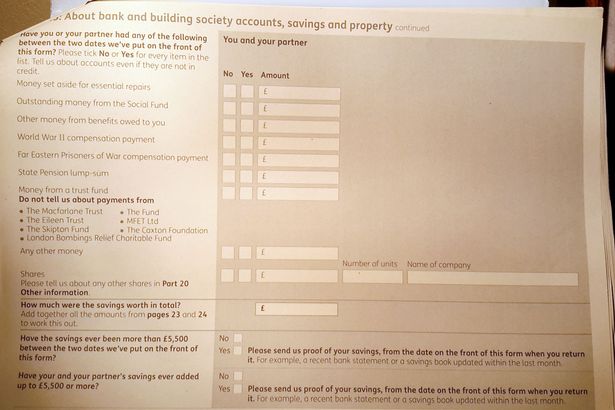
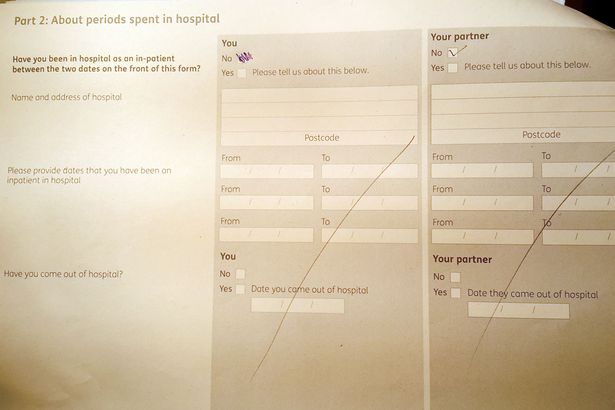
The Department for Work and Pensions (DWP) have issued ‘senseless’ 45 page forms to thousands of ill and disabled people who are owed £970m in unpaid Employment and Support Allowance (ESA) by the government, leaving people having to provide evidence of details of their lives from up to seven years ago.

More than 250,000 people are being told they must fill out the ‘scandalous’ 45 page form to have their award changed after a government error has left them underpaid by thousands of pounds.

Unreasonably, families are expected to recall intricate financial details and arrangements from up to seven years ago. The form asks claimants to state exact dates they were in hospital and give details of insurance payouts, mortgage payments and savings. 

Campaigners warn it is “passing the buck” to benefit claimants who now face an unnecessary barrier to justice.

Shadow Minister for Disabled People, Marsha De Cordova, branded the form “scandalous”, adding: “People will very often not have kept the evidence the DWP is asking for which could lead to many being denied vital support once again.”

The 45 page form is being sent to thousands of people who are owed £970m in unpaid ESA dating back to 2011, through no fault of their own. 

The government blunder, revealed earlier this year, affects people who moved from older incapacity benefit – Incapacity Benefit to ESA between 2011 and 2014,when the government made fundamental cost-cutting changes to the welfare system. In total 570,000 cases are currently being reviewed, of which 180,000 are expected to receive back payments by the end of 2019.

A DWP spokesperson insists that everyone owed money will receive it. But some claimants expressed bafflement after the ESA3(IBR) form dropped on their doormats.

Carol Willoughby, 73, from Chessington, was asked to fill in details dating back to February 2013 for her 68-year-old husband Michael.

ESA claim form

 A page of the form asks about money set aside for repairs or from a pension.

Questions on her form included “please provide dates that you have been an inpatient in hospital” and requests to state amounts of lump-sum state pension, trust fund income and money set aside for essential repairs.

Mrs Willoughby said: “The DWP were supposed to check all the errors and deal with it.

“Now they’re putting the onus back onto us to provide all the information going back five years, half of which we won’t have any more.

“It will take me hours. They’re asking ‘have you been in hospital, when were you in, how long were you in for’.”

ESA claim 2

Another page asks for details of dates and visits to hospital from years ago.

When they were asked about Mr Willoughby’s case, the DWP said that some 261,000 of the excessively bureaucratic forms have been sent out.

This huge figure is utterly shocking, and it comes just weeks after the Mirror revealed up to 15,000 people caught up in the scandal have already died.

James Taylor, Head of Policy at disability charity Scope, said: “This feels like the DWP is passing the buck onto disabled people and their families.

“They have already been short-changed by bureaucratic errors in the welfare system that go back nearly a decade. 

“The DWP need to make sure that those who have missed out on their full ESA entitlement are payed back promptly with the minimum amount of stress and anxiety.”

ESA claim 3
The intrusive form also asks disabled people to provide details of payments from ex-partners, if relevant

Ayaz Manji, policy officer at mental health charity Mind, said the DWP must ensure “nobody falls through the gaps”.

He added: “Those of us with mental health problems can struggle to navigate a complex application process.

“The DWP needs to do all it can to take responsibility for fixing these errors.

“It’s senseless to place unnecessary barriers in front of those who have already gone through a lengthy, complicated and stressful process.”

Yes, anyone would think that the government have placed this bureaucratic barrier in front of ill and disabled people to make it as difficult as possible for them to be fairly reimbursed the money they were entitled to but not paid because of a government error.

esa claim 4
The form asks for details of property owned in the dates on the form.

A DWP spokeswoman insisted people only need to complete sections that are relevant to their circumstances. Officials claim that anyone can seek help completing the form over the phone, and where needed staff can arrange a home visit.

The DWP are also contacting people who they do not hear from within three weeks of sending out a form.

The DWP spokeswoman said: “We want to have all the information we need to make sure everyone gets the money they are owed and anyone can provide this over the phone with our support.”

I wonder why the DWP bothered with the forms, then, if that’s the case. 

It’s widely assumed that public services are organized and delivered for the benefit of citizens. The reality, however, is very different. The more we scrutinise the role and function of different government departments and programmes, the clearer it becomes that they are being redesigned to bring direct and indirect benefits to private businesses.

Ministers have been accused of creating a “hostile environment for sick and disabled people” following the blunder, which occurred when claimants were transferred onto the main sickness benefit, ESA.

Both PIP and DLA are designed to help people with the extra costs of disability, or long-term health conditions, yet any award is reluctantly made, and all too often people have to go to court to challenge extremely inaccurate assessment reports and enormously unfair decision-making.

Yet the British public are funding corporations as well as government departments, and we should expect and demand that those businesses observe certain conditions of basic fairness. Private companies were hired to fulfil a role of  discrediting disabled people’s accounts of their disability, and to engage in very bad report writing, with an ultimate aim of resource gatekeeping. At the same time, legal aid was withdrawn to prevent citizens from accessing justice and seeking redress.

The Centre for Health and Disability Assessments Ltd (Maximus, who conduct Universal Credit Work Capability Assessments) saw profits double between 2016 and 2017. 

One director got a £373k dividend and £12 million was paid in shares. Thousands of disabled and ill people had their lifeline support cut due to the private companies contracted to gatekeep essential financial support. The majority of ill and disabled people have worked and paid tax. They now need to draw on their social insurance, and are finding instead of support, they face punitive policies and a hostile environment, while big businesses are making obscene levels of profit for inflicting  hardship and utter misery on some of our most vulnerable citizens.  

Meanwhile, the government and media constructed a narrative to demonise and condemn the poorest citizens, labelling them as undeserving “scroungers” and would be “fraudsters.” This was a justification narrative –  an attempt to try and pass the state abuse of disabled people as somehow “fair”. 

Image result for disabled benefit scroungers

The government has awarded at least £1.4billion of outsourcing contracts linked to the roll-out of Universal Credit and the other welfare reforms since 2012.

The 10 highest value contracts awarded by DWP linked to Universal Credit and welfare reforms since 2012

  • £595million to Maximus People Services Ltd for health and disability assessment services. 
  • £207million to Atos for Personal Independence Payments assessment service Lot 1 contract extension (Lot numbers refer to different geographical areas)
  • £184million to Atos for Personal Independence Payments assessment service Lot 3
  • £122million to Capita for Personal Independence Payments assessment service contract extension Lot 1
  • £122million to Capita for Personal Independence Payments assessment service contract Extension Lot 2
  • £90million to Atos for a medical services IT contract
  • £8.2million to Serco to deliver a new claims telephony service for Personal Independence Payments
  • £6million to Advanced Personnel Management Group to provide healthcare staff to conduct work capability assessments for Universal Credit and Employment Support Allowance
  • £3.9million to Pinnacle People Limited for Phase 2 of the New Enterprise Allowance Scheme in the north east to support people into self-employment and to start their own businesses
  • £3.3million to Ixion Holdings (Contracts) Limited for Phase 2 of the New Enterprise Allowance Scheme in London and the home counties

Source: Tussell

It’s about time we had a public debate about the size and uses of the corporate welfare state. And about democratic accountability.

Curiously, none of those private companies that were contracted to profit through disabled people’s loss and distress have received forms that demand evidence and details of their histories.

Corporate welfare is prioritised rather more by the government than citizen welfare. In fact private companies are faced with perverse incentives – to generate profit requires undermining the welfare of citizens.


I don’t make any money from my work. If you want to, you can help by making a donation to help me continue to research and write informative, insightful and independent articles, and to provide support to others.

DonatenowButton

The ‘Intensive Personalised Employment Support’ programme & the problematic political application of Lewin’s theory of change

An ‘Intensive Personalised Employment Support’ programme is to be introduced which will “provide personalised employment support for long-term unemployed disabled people,” the new Work and Pensions Secretary Amber Rudd has announced.

“Disabled people will be able to work with a dedicated key worker to get and stay in employment,” she says.

The support comes from a new £40 million fund and is expected to benefit around 10,000 people.

The Intensive Personalised Employment Support programme will provide “highly personalised packages of employment support for people who are at least a year away from moving into work.”

People will be provided with coaching to help build their independence, confidence and motivation, as well as work experience to help boost their career prospects.

Rudd added: “Everyone, no matter what their background is, should have the opportunity to thrive in the workplace, and having the right support in place for disabled people is one of my greatest priorities.

“To truly help people transform their lives, there can be no one-size-fits-all approach.

“That’s why this new programme is designed to offer people, who may think they will never move into work, tailored support to help them overcome any personal barriers they may have in the first instance, and then to focus on boosting their skills.

“There are also huge economic benefits to improving disability employment rates. More than half of disabled people are in work, but in order to realise the full potential of disabled people in Britain we want to go further and see one million more disabled people in work by 2027.”

People on the scheme will be offered a dedicated key worker who will work with them to overcome complex barriers which may be preventing them from entering work, ensuring they have a personal support network in place.

The voluntary scheme will be rolled out across England and Wales in 2019, and applicants will receive support for up to 21 months, including 6 months of in-work support for those who get a job.

Neil Heslop, Chief Executive of Leonard Cheshire, said: “Many disabled people with complex needs face significant barriers in accessing the workplace. It’s crucial that specialised employment support is available and the government responds to the challenges people often encounter.

“A more tailored approach can help reach those who are not currently receiving any employment support or skills development. The experiences of disabled people must be central for this support to meaningfully build confidence in an ongoing way, reflecting their individual circumstances and aspirations.”

The Intensive Personalised Employment Support programme will support people living with a disability who are unlikely to move into work within the next year or longer and may need additional support. Other existing government support to help disabled people get into and stay in work includes the Disability Confident scheme, the Work and Health programme, the Access to Work grant and Jobcentre Plus services.

The pathfinder report that informed the Intensive Personalised Employment Support programme

The government has established a managerial type of policy context in which it is aiming to “provide support which could enable disabled people to undertake employment in the open market rather than in protected or segregated employment.” 

The government have in particular targeted those disabled people who have just started claiming Employment and Support Allowance, before they undergo a work capability assessment for ‘interventions’. This approach is founded on an entrenched belief that “the longer a disabled person or an individual with a health condition is unemployed, the harder it is for them to return to work.”  

However, an alternative explanation is that those who are not employed because of a health condition for longer periods are simply too ill to work. Nonetheless, the government has focused on notions of “work-readiness” as a means to “help” disabled people into work, which tends to sidestep the barriers that people face because they are chronically, often progressively and incurably unwell. It’s something the government simply refuses to accept, preferring instead to focus on perceived negative ‘attitudes and behaviours’, and the assumption that disabled people somehow lack skills and ‘character’. 

Research was carried out by IFF Research Ltd on behalf of the Department for Work and Pensions, to evaluate the Personalisation Pathfinder trial, which was introduced in April 2015 in three Districts: South West Wales, Surrey and Sussex and Greater Wessex. The report can be found here.  

In part, the research aimed to “establish whether the Pathfinder worked in moving out-of-work individuals with a disability and/or health condition closer to employment and, if so, how and why it achieved this. Specifically, the objectives of the research were to understand:   

  • Take-up of the Pathfinder programme – detailing the profile of individuals who joined the scheme in terms of employment history, claimant group, nature of health condition etc., as well as exploring the reasons and motivations for taking part  
  • The impact on outcomes for claimants. This includes both ‘hard’ impacts such as claim status and employment outcomes as well as ‘soft’ impacts such as attitudes towards work, levels of job-seeking activities, and perceptions of ability to manage health conditions 
  • Value for money 
  • Any impacts on the reputation of DWP and/or Jobcentre Plus among claimants.

The chief purpose of the Personalisation Pathfinder was to help claimants to become “work ready” through offered tailored support to those with a disability or health condition who are unemployed, and it aimed to investigate the impacts of an approach focused on personalisation, flexibility, peer support, and integration with local support.  

The report discusses findings from two waves of a basic quantitative survey with claimants on the Personalisation Pathfinder as well as from qualitative interviews with claimants and Pathfinder stakeholders.  

Job seeker’s Allowance (JSA) claimants with a health condition or disability accounted for the greatest proportion of participants on the Pathfinder (50 per cent), followed by Employment and Support Allowance (ESA) pre-Work Capability Assessment (WCA) claimants (38 per cent). 

Only around one in eight (12 per cent) of the participants were ESA Work Programme ‘completers’ (WP). The majority of participants had been in employment at some point before joining the Pathfinder (76 per cent). Six in ten had left their previous employment due to health related reasons and more than seven in ten regarded their health as a key barrier to returning to work. 

Perhaps unsurprisingly, participants claiming JSA were generally less likely to perceive their disability as impacting on their employment before joining the Pathfinder. They were also, unsurprisingly, less likely to believe their health condition or disability limited their ability to return to work. They tended to report fewer barriers to returning to work and were therefore generally more positive about this prospect. Three in ten claimants were in work twelve months after joining the Personalisation Pathfinder. 

ESA pre-WCA claimants were most likely to have found work while on the trial. Nearly a third of this group had, however, returned to a previous employer or job.

ESA WP Completers were the least likely to have found work, but the ones who did were more likely than the other claimant groups to credit the support they received from the Pathfinder in moving them into work. ESA WP Completers were also more likely to feel they needed health related support that the Pathfinder could not offer and that this prevented them from moving closer to employment.

The authors clearly stated that it is not possible to assess from the research what proportion of claimants would have achieved these outcomes without the assistance of the Pathfinder. Although there are indications of “work-readiness” improving among those who did not find work – and I am not sure how one measures that – improvements in wellbeing and social isolation, it was concluded,  were “more modest”. 

Methodology: some first glance criticism

The research was framed by the political application of the theory of change – this is essentially a description of how and why a desired change is expected to happen in a particular context. It is focused in particular on mapping out or “filling in” what has been described as the “missing middle” between what a programme or change initiative does (its activities or interventions) and how these lead to desired goals being achieved.

It does this by first identifying the desired long-term goals and then works backwards from these to identify all the conditions (outcomes) that must be in place (and how these related to one another ‘causally’) for the goals to occur. Government sectors use the theory of change to promote various managed social and political changes, to define their long-term goals. 

So it is a model based on backcasting, which is a planning method that starts with defining a desirable future and then works backwards to identify policies and programmes that will connect that specified future to the present.

The outcomes in a theory of change must be coupled with indicators that guide and facilitate measurement. The measurement is often of changes in behaviours and perceptions. Not on political and socio-economic context and personal circumstances.

However, any serious explanation of anything in the social world should be suspect if it only uses one theory – e.g. a theory of financial incentives, or peer influences. All successful models are assemblies of multiple elements and theories – and they are open to exploration. Anyone familiar with systems thinking will be dubious of linear explanations, especially where complex  phenomena like disability, employment, homelessness, poverty or social isolation are concerned.

One key problem with the theory of change is that it does not model how events happen; rather, it models how strategists believe things will happen. Theory of change is a forecast that shows what conditions they believe must exist for other conditions to come into being. It’s easy to see how the model may very easily accommodate and amplify assumptions, prejudices and channel bias. The model may confuse accountability with ideology, ambitions and hopes.

Often, theory of change is insular and parochial, too. It can fail to take the external context into account. This is an important criticism in the context of current government behavioural change programmes, as the emphasis is entirely on individuals, who are somehow viewed as detached from their social, cultural, economic and policy contexts. 

Participation in the programme was voluntary. However, people decided not to engage with the programme, so the invitation letters were reworded, making the statement about the programme’s voluntary basis of participation less prominent, to nudge people into engaging. That is unethical, because it bypasses the important condition of fully informed consent. Yet later in discussion between job coaches and claimants, the voluntary aspect became important in retaining some participants:

The voluntary issue is quite interesting actually, because I have had people who have come back from the Work Programme, have sat down in front of me and you can tell have arrived expecting me to say, ‘Right, you’re going to do this/you’re going to do that/you’re going to do this’, and they’ve been quite defensive, and they’ve said, ‘You know I can’t work.

“So when I’ve said, you know, ‘That’s fine, you don’t have to. This is a voluntary programme’, they’ve almost said, ‘Oh don’t walk away. I’m interested’, you know. The voluntary thing has definitely produced a different reaction from people.”

Nonetheless, some 11% of the participants still said they were unaware they had a choice in whether they participated. Nearly one-fifth (19 per cent) of claimants thought that the Personalisation Pathfinder was mandatory; this proportion rose to 36 per cent for ‘ESA WP Completers.’  And even those who understood that participation was voluntary nonetheless expressed fears that they may be sanctioned if they refused to engage (page 59):

“I did not feel I could say no to the Pathfinder, because if we don’t do what they say, they’ll stop our money.” (JSA Caseload claimant, Surrey and Sussex).

Another criticism of the pathfinder is that it does not seem to differentiate between perceived health-related barriers to work and actual health-related barriers to work. Part of the aim of the programme was to influence people’s perceptions of barriers, a strategy which had little impact overall. Because despite the government’s magical thinking on this issue, health related barriers are very real, and not something that ill people choose to conjure up in their minds.

Another problem with the theory of change approach is that it doesn’t confirm the plausibility of the theory. Also, to be able to test, refine, and improve a theory of change over time, you need to be able to accurately measure its key elements. Not differentiating between Conservative notions of perceived and actual health-related barriers leads to measurement problems, for example.

Another major criticism of applied behavioural scientist Kurt Lewins theory of change model is that it ignores the influence of organisational power, conflict and politics; it is “top-down” and management-driven. As such, it is non-dialogic – a very authoritarian approach to policy making. 

This is down to a misuse of the original theory and its underpinning intents. This presents an irony given that Lewin’s original wish was to extend democratic values and resolve social conflicts. Even critics of Lewin’s work have drawn on his Field Theory to develop their own models of change. Including the government.

Any change that the Conservatives initiate is generally imposed on others and micromanaged. If prescribed, theory of change quickly becomes a compliance exercise and loses much of its original  value. Theory of change frameworks requires a commitment to an open, reflective and realistic approach. The Conservatives seem completely incapable of any of those prerequisites for any reliable and meaningful social research to benefit anyone but themselves.

Assumptions reflect deeply held beliefs, norms and ideological perspectives. These inform the design and implementation of programmes. The quality of a theory of change process rests on ‘making assumptions explicit’ and making strategic thinking realistic and transparent. Power relations, both in the programme’s context and within organisations, limit the ability to challenge established ways of thinking and working. So a theory of change process often brings to the surface conflicts and tensions which require negotiation. 

It’s certainly true to say that some “politicians, like any other social group that is in a rarefied or tightly knit, small community, will frequently suffer from psychological ‘groupthink’.” Dr Paul Taffinder, Chartered psychologist.

Common pitfalls of using theory of change, and rules of thumb for taking a systemic approach: pitfall 1) neglect context. rule of thumb 1) understand context. pitfall 2) change others only. rule of thumb 2) know yourself. pitfall 3) think in linear terms. rule of thumb 3) think systemically. pitfall 4) seek safety in certainty. rule of thumb 4) learn and adapt. pitfall 5) change is technical. rule of thumb 5) recognise change is personal.


I don’t make any money from my work. I am disabled because of illness and have a limited income. But you can help me if you like by making a donation to help me continue to research and write informative, insightful and independent articles, and to provide support to others. The smallest amount is much appreciated – thank you.
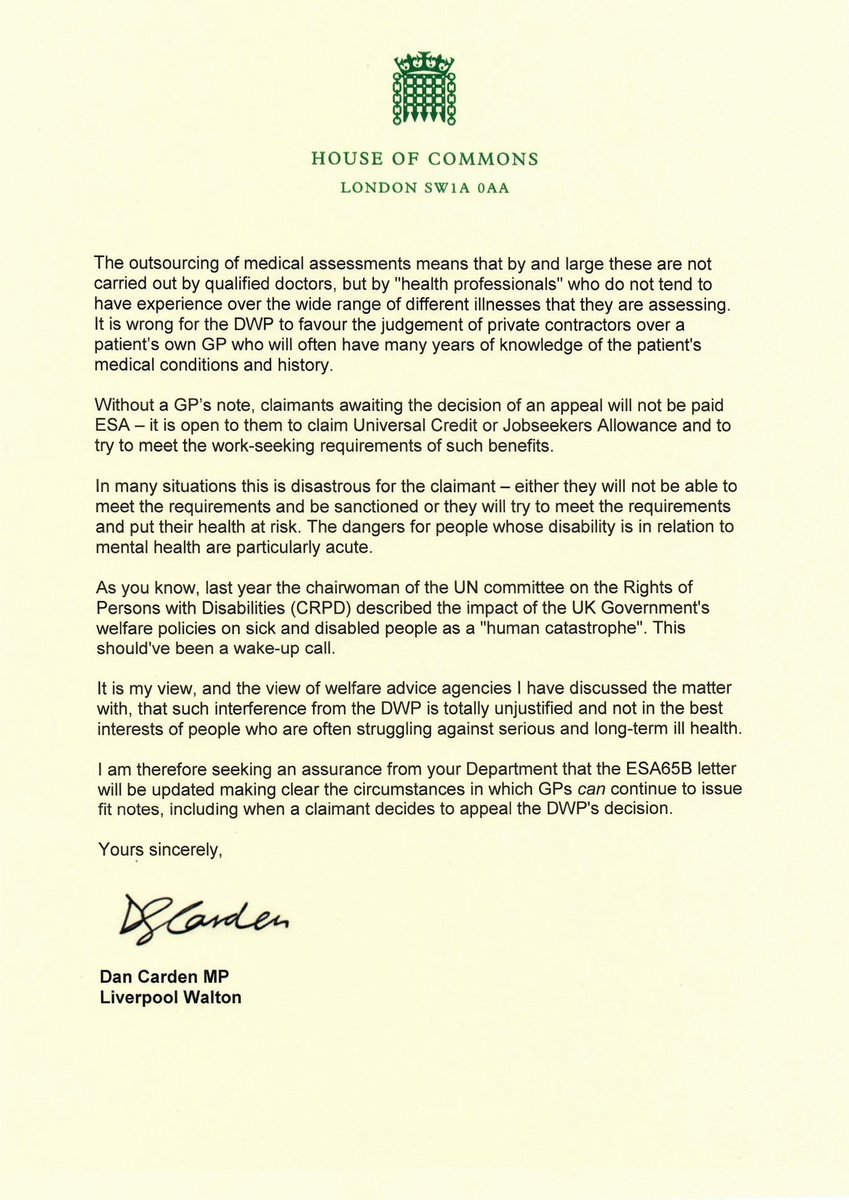
DonatenowButton

‘This is our country, this is what the government are doing: targeting the vulnerable’, says Charlotte’s mother

Caroline Austin says: “This is Charlotte, my daughter, who has severe multiple sclerosis. She cant walk. She has a catheter, she can’t hold anything. She can’t feed herself, she’s weak. She has days where she can hardly talk or breathe properly. She is heat sensitive, the list goes on.

“I want as many people to see this …. universal credit has not given Charlotte any money since 29th September, despite me telling them [DWP] how severely disabled she is … even if she gets her money, she still will lose the severe disability allowance of £120.00 per month. I have to produce another sick note and they have said she could still be assessed for work. Our government should be ashamed.

“Charlotte could not go to a food bank even if she wanted to. Although I’ve tried to help as much as I can, she’s now fallen into arrears with some of her bills. It is shameful that the government will not accept her sick note been indefinately signed off. Our country should not be driving people into poverty because the system is failing the wrong people.

“I’m sure if given the choice of spending most of her time in bed or going to work, I’m sure Charlotte would love to work. As a mother, dealing with her illness and watching her suffer is hard. I’m now trying to sort this out too. All I can say is I stay strong for Charlotte, but some people don’t have this strength and that’s when they give up.”

Only around 1 in 10 universal credit claimants are unemployed, and those that are out of work typically get a job after 12 weeks. This was also true of unemployed people claiming job seeker’s allowance.

Universal credit is mainly a support for low income workers and people unable to work due to illness or because of caring responsibilities. Its scale is enormous, encompassing around 7 million families. These are people who cannot change their circumstances, yet the benefit conditionality of universal credit is extremely punitive. As families need more support because of extra costs, around half of all children in the UK will live in families exposed to the system of universal credit.

When universal credit has been rolled out in an area, Trussell Trust says that foodbank use goes up 52%. Rent arrears also increase.  It is patently obvious that universal credit leads to huge increases in hardship for many families.

It is undeniable that universal credit causes hardship, anxiety and distress for many.  There is a 5-week initial wait for a payment and other delays designed into the system. It’s apparently acceptable to the government that people spend 5 weeks with no means to meet their basic survival needs for food, fuel and shelter.  

There are other delays and stoppages because the bureaucracy is failing citizens and is difficult to navigate. Budgeting problems arise because of the wildly varying payments and deductions.

And when people do get the benefit successfully, they are shocked to discover that actually, the amount is simply far too little to meet even their most basic living costs.

It’s almost as if the government have intentionally created a system that ensures people don’t have a moment’s peace. It’s as if Conservative ministers believe that keeping people in a state of profound anxiety, and in circumstances of uncertainty and precarity, with the constant threat of absolute poverty, it will all somehow combine ‘help’ people into work. Even though a large proportion of those claiming welfare support are actually already in work, yet these families are still very unacceptably poor.

Poverty and the threat of even deeper poverty has never ‘incentivised’ anyone into work. Abraham Maslow explained all to well that unless people meet their basic survival needs, they simply cannot fulfil psychosocial ones. Not only is universal credit making people’s lives unbearably awful, it is destroying their human potential, too.

Many problems are fundamentally designed in and are ongoing throughout the claim. As I’ve stated, most of those affected are disabled people who can’t work, those with caring responsibilities, in the longer term, and low paid workers with families. The problems are not going away and the government aren’t listening to legitimate concerns being raised over and over.

They are not putting safeguards in place for very vulnerable people like Charlotte. 

Those who are yet to move onto universal credit are the longer term claimants. That includes lots of low paid families with children and, really worryingly, people with the most debilitating long-term health conditions, like Charlotte. The problems are going to become catastrophic unless the government listens and makes changes to the existing system. But to date, the Conservatives have fundamentally refused to take any responsibility for their own punitive policy, and the DWP have developed a ‘fortress mentality’ when it comes to legitimate concerns and criticisms being raised.   

A recent devastating National Audit Office report into universal credit concluded that Department for Work and Pensions (DWP) was institutionally defensive and prone to dismissing uncomfortable evidence of operational problems. Welfare secretary Esther McVey felt the need to make a speech in July in which she promised that where problems arose in future the department would “put our hands up, [and] admit things might not be be going right”.

It’s also clear – in the words of the public accounts committee – that there is a “culture of indifference” within the DWP and wider government.

It’s time that government ministers started to listen to citizens’ voices, to service users – as well as campaigners, researchers, charities and the opposition. And the United Nations. 

Universal credit’s malign effects are obvious to anyone who actually looks, and is willing to listen to the voices of those affected by this punitive, mean-spirited and fixated, theory-laden, ideologically driven, miserly provision, that was, at the end of the day, paid for by the very public who are claiming it.

Related image


My work is unfunded and I don’t make any money from it. This is a pay as you like site. If you wish you can support me by making a one-off donation or a monthly contribution. This will help me continue to research and write independent, insightful and informative articles, and to continue to support others.

DonatenowButton

Neil was forced to spend 6 hours applying for Universal Credit just after having surgery for brain cancer

Neil MacVicar is in remission from a brain tumour (Photo: Fabio De Paola)

Neil MacVicar is now in remission from a brain tumour (Photo: Fabio De Paola) 

Neil MacVicar was diagnosed with cancer at the age of 25 in December 2016. Doctors found a tumour the “size of a plum” on his brain.

Just twelve days after neurosurgery to remove the growth, when he should have been recovering and preparing for gruelling radiotherapy, Neil was forced to go to the Jobcentre to sign on for Universal Credit.

The application can be difficult for claimants in good health. For a cancer patient  struggling with exhaustion and confusion from an operation, it was nearly impossible. It took Neil six gruelling hours in total to complete his application.

He was staying with his family in Inverness at the time, and Neil cannot understand why, given his circumstances, he was made to endure that and why the Jobcentre could not have obtained the information from his doctors.

He is now in remission after successful surgery and treatment, and says he was let down by the “bizarre” system. 

Neil told inews :“They had me sitting in the actual Jobcentre for a little bit trying to fill in the forms. Then I went home and had to do it. My concentration was all over the place so it took me absolutely ages. I don’t understand why they couldn’t just get that [information] from the doctors.”

“I thought I was being perceived as scamming the system. I had cancer. I felt really let down to be honest,” he says.

It took Neil a while to realise there was something wrong with his health. He moved to London from Scotland seven years ago, was working hard as a bar manager at the time. The work was “stressful work with long hours” but he started to experience dizziness, which he suspected was related to an earache. With his symptoms getting worse, he went to hospital while visiting his family in Inverness, on Scotland’s northeast coast.

He said: “Doctors realised I had a brain tumour the size of a plum. They rushed me through to Aberdeen for surgery. And then a week or two later they phoned me to say it was cancer. It wasn’t a benign tumour.”

Knowing he would have to stay in Scotland for the duration of his treatment, Neil decided to keep renting his room in Islington, northwest London. “I thought I would be bouncing back and returning to my normal life relatively quickly.”

Before he began six weeks of aggressive radiotherapy, Neil tried to sign on to Universal Credit. Following the stressful and lengthy application process, his anger and disappointment only intensified as he had to wait about six weeks for his first payment to come through. When his money did arrive, Neil was shocked at the amount: £780. It covered his rent and bills for his room in London but left him with barely anything to live on day-to-day. 

“I phoned them up to say there must be mistake. I was kept on hold for an hour at a time when I was going through my radiotherapy only to be told because I’m 25, I’m not an adult so I should just move back in with my parents. And then they told me it was my fault for living in Islington and that it’s expensive there and I could just move somewhere cheaper.

He added: “I’m very independent. I’ve lived by myself since I was 19 so hearing that I’m not an adult was absolutely insane to me. I was old enough to get married, buy booze and serve in the army but [I wasn’t considered an] adult [to get] benefits. It really got me down.”

After recovery over a few months, Neil moved back to London in June 2017 and continued to receive Universal Credit. He was eager to get back into work but could only do a part-time job because the cancer had left him with severe fatigue. 

“There was no support there. I kept saying to my work coach [Jobcentre employees who help claimants move into employment] I was desperate for work. She didn’t lift a single finger to help me find anything. Nothing at all. Which has really pissed me off to be honest.”

Neil, now 27, has found a job as a support worker for a charity which helps people with mental health problems receive their benefits. He says his experience with Universal Credit has left him feeling “down, angry and upset”. 

“I had multiple times when I was in tears because of it. On top of everything; the amount of shit I had to go through with the cancer and surgery.”

He added: “I think if I didn’t have the support network of my parents and friends I’d either be homeless or dead and that’s the reality. As a cancer patient, every single bit of this has penalised me for trying to move forward in my life. There has been no help or support [from the Jobcentre], only from charities which are inundated with people struggling with Universal Credit.”  

Macmillan Cancer Support’s chief executive Lynda Thomas said: “People with cancer should be able to focus their energy on their health, not worrying about how to make ends meet when they are too unwell to work.”

“It is unacceptable to force patients to risk infection at Jocentres, log onto computers from hospital and wait more than a month for vital financial support, even at the end of their lives.

“The system is failing people with cancer and we urge the Government to fix this benefit, before tens of thousands more vulnerable people are put at risk of hardship.”

A Department for Work and Pensions spokesperson said: “Universal Credit is a flexible benefit, and we can reschedule appointments, if people make us aware that they are unwell.

“We’re committed to ensuring that people with health conditions get the support they’re entitled to. Decisions on PIP are made following consideration of all the information provided by the claimant, including supporting evidence from their GP or medical specialist.”

The Department seem to disregard the fact that sometimes people are simply too ill to provide an indifferent wall of bureaucracy with endless evidence that they are ‘really’ ill. 

Anyone in need of welfare advice can call Macmillan’s free support line on 0808 808 00 00 or visit www.macmillan.org.uk 


My work is unfunded and I don’t make any money from it. This is a pay as you like site. If you wish you can support me by making a one-off donation or a monthly contribution. This will help me continue to research and write independent, insightful and informative articles, and to continue to support others.

DonatenowButton