Category: Mental Health

The new social prescribing: ask not what your government can do for you

socialprescribing


I have a background in community work and have always seen it as a progressive mechanism for social transformation; challenging oppression; extending inclusion and democracy; offering learning and personal growth opportunities; empowerment, social justice, equity, fairness, participation, self-determination, amongst many other things. Communities potentially provide essential support for individuals, groups and organisations, and opportunities for reciprocity. Good community work promotes human development, and fosters civic responsibility through solidarity, cooperation and mutual aid.

Social prescribing is basically a community-based referral: it’s a means of enabling primary care services to refer patients with psycho-social, emotional or practical needs to a range of local, non-clinical services, often provided by the voluntary and community sector, and it’s aim is to improve people’s mental health, physical health and wellbeing, using community interventions.

In practice this means that GPs, nurses and other healthcare practitioners work with patients to identify non-medical opportunities or interventions that will help, improving support and the wider social aspects of their lives. The services that patients can choose from include everything from debt counselling, support groups, allotments and walking clubs, to community cooking classes and one-to-one coaching. Both evidence and commons sense suggests that social prescribing may be particularly appropriate and beneficial for isolated, marginalised groups. And needs-led community provision that supports and enhances psychosocial health and wellbeing is an excellent idea.

Poor mental health is often correlated with poverty, (Melzer et al. 2004) poor community integration, and competitiveness amongst social groups (Arrindell et al., 2003). Key questions arise as to the efficacy, therefore, of working with individuals, when much research suggests community work would be more effective (Orford, 2008).

So far so good.

I had the following message yesterday from friend and fellow writer, Linda:

“I have received an email from my local Tory MP letting me (and other constituents) know that he is going to be setting up a ‘Mental Health Surgery’ Hub with a ‘Mental Health Expert’ who will be handing out ‘social Prescriptions’ as he says he is aware that many mental health problems are caused by ‘Social Problems’. Im wondering if there is perhaps a wider agenda from the Conservatives.”

This is the relevant paragraph taken from his email:

“Since my election in May I have been surprised at the number of my constituents with different mental health issues, so much so I am looking to run a surgery ‘hub’ with a mental health specialist so people can drop in and have their needs assessed and be issued with a form of ‘social prescription’. I recognise many mental health issues are caused or exacerbated by social factors so sometimes a social solution can be more effective than a medical one.

I did a little research.

The 2010 Marmot Review (Fair Society, Healthy Lives) of health inequalities identified social prescribing as an, “approach [that] facilitates greater participation of patients and citizens and support in developing health literacy and improving health and wellbeing”.

It identified additional NHS healthcare costs linked to inequality as being well in excess of £5.5 billion per year. It is claimed that social prescriptions can cut the NHS bill.

However, despite the growing popularity of social prescriptions amongst cash and resource-strapped professionals, the University of York has surprisingly produced research to show that there is little good quality evidence that social prescribing is cost-effective.

But the thing that bothers me the most is the link that the Conservative government have made between social prescriptions, cost-cutting and (as I deeply suspected) as a mechanism of extending behavioural modification (euphemistically called “nudging” by the government’s team of behavioural economists and decision-making “experts”).

I read several current reviews of social precribing, each mentioning both criteria in recommendations for “success.”:

“The work of social prescribing health trainers fits with the approach of the Coalition Government as described in its White Paper on Public Health which emphasises the need to ‘build people’s self esteem and confidence’ in order to bring about changes in behaviour.”

It also fits with the Marmot Review’s recommendation on tackling the social problems that undermine health and with the Coalition Government’s approach to behaviour change as outlined in recent publications such as MINDSPACE.” (Link added by me.)

and:

“In times when finances are under pressure and the NHS is charged with achieving ‘better for less’, primary care needs to be looking at how to do things differently.”

Nesta, who now partly own the Government’s Behavioural Insights Team (the Nudge Unit) are of course at the forefront of promoting social prescriptions amongst medical professionals, firmly linking what is very good idea with very anti-democratic Conservative notions of behaviour change, citizen responsibility and small-state ideology. So, it’s no longer just about helping people to access a wider range of community-based services and support, social prescribing has also places strong emphasis on “encouraging patients to think about how they can take better care of themselves.”

Of course, there is what may easily be construed as a whopping self-serving process of linking behavioural change with social prescribing, opening some potentially very lucrative opportunities for Nesta.  

However, taken at face value, the idea of promoting patient participation in their own care sounds very democratic and reasonable. Common sense, in fact.

In this context, social prescribing can be seen as a logical extention of the Biopsychosocial model (BPS) of ill health. The biological component of the model is based on a traditional allopathic (bio-medical) approach to health. The social part of the model investigates how different social factors such as socioeconomic status, culture and poverty impact on health. The psychological component of the biopsychosocial model looks for potential psychological causes for a health problem such as lack of self-control, difficulties with coping, emotional turmoil, and negative thinking.

Of course a major criticism is that the BPS model has been used to disingenuously trivialise and euphemise serious physical illnesses, implying either a psychosomatic basis or reducing symptoms to nothing more than a presentation of malingering tactics. This ploy has been exploited by medical insurance companies (infamously by Unum Provident in the USA) and government welfare departments keen to limit or deny access to medical, social care and social security payments, and to manufacture ideologically determined outcomes that are not at all in the best interests of patients, invalidating diagnoses, people’s experience and accounts, and the existence of serious medical conditions.

Unum was involved in advising the government on making the devastating cuts to disabled people’s support in the UK’s controversial Welfare Reform Bill. (See also: The influence of the private insurance industry on the UK welfare reforms.)

Secondly, this is a government that tends to emphasise citizen responsibilities over rights, moralising and psychologizing social problems, whilst quietly editing out government responsibilities and democratic obligations towards citizens.

For example, poverty, which is caused by political decisions affecting socioeconomic outcomes, is described by the Conservatives, using elaborate victim-blame narratives, and this is particularly objectionable at a time when inequality has never been greater in the UK. Poverty may only be properly seen in a structural context, including account of the exclusion and oppression experienced by those living in poverty, the global neoliberal order, the gender order, the disability, racial, sexual and other orders which frame social life and precipitate poverty in complex and diverse ways. It’s down to policy-makers to address the structural origins of poverty, not the poor, who are the casualities of politically imposed structural constraints.

In this context, social prescriptions are used to maintain the status quo, and are likely to be part of a broader process of responsibility ascription – based on the traditional Conservative maxim of self-help, which is used to prop up fiscal discipline and public funding cuts, the extensive privatisation of public services, defense of private property and privilege, and of course, the free market. The irony of the New Right, neoliberal, paternalistic libertarianism is that the associated policies are not remotely libertarian. They are strongly authoritarian. It’s a government that doesn’t respond to public needs, but rather, it’s one that pre-determines public interests to fit within an ideological framework

A government that regards individuals as the architects of their own misfortune tends to formulate policies that act upon individuals to change their behaviour, rather than to address the structural constraints (and meet public needs,) such as social injustice and unequal access to resources. This isn’t a government prepared to meet public needs at all. Instead it’s a government that expects citizens to change their behaviour to accommodate the government’s ideologically directed needs.

That approach flies in the face of established professional community work values and principles.

Poor people suffering mental ill health because we live in a society that is extremely unequal, are blamed by the government for the “symptoms” of their poverty – poor eating habits and “lifestyle choices”. But poverty is all about limited choices, which is itself not a “lifestyle choice.” No-one actually chooses to be poor. Government policies, social structures and systemic failures create poverty.

The Conservatives extend an economic Darwinism, coupled with an extremely intrusive disciplinary approach, mass surveillance and a stigmatising rhetoric, whilst moralising a free-market framework that constrains many and preserves the privilege of a few. The absurdity is this: if an economic framework isn’t meeting the needs of a population, it isn’t an adequate response for the government to act upon citizens who have become casualities of that framework, to persuade or coerce people into fitting within an increasingly harmful and useless socioecomomic ideology.

There is a clear correlation with low socioeconomic status and poor mental health. Poverty is a complex, multidimensional phenomenon, encompassing the lack of means to satisfy basic needs, lack of control over resources, often, a lack of access to education, exclusion from opportunities, and poor health. Poverty is intrinsically alienating and distressing, and of particular concern are the direct and indirect effects of poverty on the development of psychosocial stress. (See also: The Psychological Impact of Austerity – Psychologists Against Austerity.)

State “therapy” aimed at changing the behaviour of individuals diverts attention from growing inequality, and from policies that are creating circumstances of absolute poverty. It also diverts attention from the fact that if people cannot meet their basic physiological needs, they cannot possibly be “incentivised” to meet higher level psychosocial ones. 

I wrote a critical analysis of the government proposal to introduce Cognitive Behaviour Therapists to deliver state “therapy” in job centres earlier this year, with the sole aim of improving “employment outcomes.” There is also an extensive critique of Cognitive Behaviour Therapy (CBT) included in the article, along with some discussion about the merits of community work, which is very relevant to this discussion. (See: The power of positive thinking is really political gaslighting.)

I also wrote earlier this year about how the government has stigmatised and redefined unemployment, problematizing and re-categorising it as an individual psychological disorder. Both articles are very pertinent to this discusion. (See: Stigmatising unemployment: the government has redefined it as a psychological disorders.)

Welfare has been redefined: it is a now a reflecton of a government pre-occupied with assumptions about and modification of the behaviour and character of recipients rather than with the alleviation of poverty and ensuring economic and social wellbeing.

The stigmatisation of people needing benefits is designed purposefully to displace public sympathy for the poor, and to generate moral outrage, which is then used to further justify the steady dismantling of the welfare state.

Many psychosocial problems have arisen because of social conservatism and neoliberalism. The victims of this government’s policies and decision-making are being portrayed as miscreants – as perpetrators of the social problems caused by the government’s decisions.

It’s all too often the case that good ideas are placed in political ideological frameworks, distorted, and are then applied to simply justify and prop up dogma.

Meanwhile, mental health services are facing crisis because of budget cuts by this government, Local Authorities and community services have also been cut to the bone. (See: The cost of the cuts: the impact on local government and poorer communities.) Those with mental health problems are stranded on an ever-shrinking island.

Policy initiatives such as social prescriptions, which focus on how to remediate problems at an individual level, seeing both poverty and mental illness, for example, as simply states of being – rather than dealing with the generative political and economic practices and social relations framework which precipitated that state in the first place, effectively depoliticises political problems leaving people with an internalised state of oppression, disabling them from taking effective action.

The political refusal to permit people to voice their concerns and anxieties in political rather than personal terms further exacerbates sociopolitical marginalisation, low status, it breaks a sense of connectedness with others and wider communities, it reinforces a sense isolation and of personal responsibility for circumstances that are politically constructed and disowned.


Work Programme continues to harm people with mental health problems

10270806_319228004894921_8005540502444686357_n
The Government’s Work Programme is making the lives of people with mental health problems worse, and having a detrimental impact on people’s ability to work, research by a leading mental health charity has found.

A report from Mind said the flagship scheme, which requires people to take unpaid work allocated by contractors or face losing their lifeline benefits, was taking entirely the wrong approach and actually damaging people’s motivation and capacity to work.

The research found that most people who are on the scheme because of their mental health problems reported worsening health issues due to their experiences of it.

83 per cent of people surveyed said the scheme’s “support” had made their mental health problems worse or much worse.

The latest statistics from the Department for Work and Pensions (DWP) reveal that less than 8 per cent of people being supported by Employment and Support Allowance (ESA) have moved into employment through the Work Programme. Around half of people on ESA are being supported primarily because of their mental health problems.

Tom Pollard, Policy and Campaigns Manager at Mind, said:

“These latest figures provide further evidence that the overwhelming majority of people with disabilities and mental health problems are not being helped by the Government’s flagship back-to-work support scheme. A recent report from Mind found that people with mental health problems are less likely to be supported into employment through the Work Programme than those with other health conditions and are more likely to have their benefits sanctioned.”

Even more worryingly, the majority of respondents to our survey said the Work Programme was actually making their health worse, and as a result they had needed more support from health services and felt further from work than previously. Mind is calling for everyone with a mental health problem who is receiving mainstream support through this scheme to be placed onto a new scheme and offered more personalised, specialist support which acknowledges and addresses the challenges people face in getting and keeping a job.”

Additionally, over three quarters of people – 76 per cent – said the Work Programme had actually made them feel less able to work than before they were coerced to participate in the scheme.

The results resonate with figures released in a number of previous years suggesting that people on the Work Programme are actually far less likely to return to work than people who are simply left to their own initiative.

In the first year of the £450 million programme, just two out of 100 people on the scheme returned to work for more than six months.

In 2013 Labour’s then shadow work and pensions secretary Liam Byrne described the scheme as “literally worse than doing nothing”.

Mind’s chief executive Paul Farmer wrote:

“Cutting someone’s support for failing to meet certain requirements causes not just financial problems but a great deal of psychological distress too.

Mind was one of a group of six mental health organisations to respond to a Work and Pensions Committee Welfare to Work inquiry within which we voiced concerns with the system and made a number of recommendations for improving benefits and back-to-work support. A number of schemes deliver far more effective support to people with mental health problems, at a fraction of the cost of the Work Programme.

WorkPlace Leeds, for example, delivered by Leeds Mind, costs much less than the Work Programme and achieves far better outcomes, with nearly a third (32 per cent) of people with severe and enduring mental health problems gaining paid employment. Schemes such as these are far more helpful and effective in supporting those ready and able to work into fulfilling, appropriate paid employment, relevant to their individual skills and ambitions.

We wholeheartedly support the Government’s aspiration to halve the disability employment gap by helping a million more disabled people into work. However, this will only happen if bold changes are made. As the Welfare Reform and Work Bill makes its way through Parliament, Mind is calling on Employment Minister Priti Patel to overhaul the benefits system, by focusing less on pressurising people and investing more in tailored, personalised support. We’re calling for everyone with mental health problems on the Work Programme to be taken out of this scheme, and instead given alternative support which acknowledges and addresses the challenges they face in getting and keeping a job.”

There are perverse political incentives for pushing people onto workfare programmes. The DWP has simplified its performance measures and now primarily targets the move by claimants away from benefits, or “off-flow”, as a simple and intuitive measure of performance. However, this gives no information about how individual jobcentres perform in supporting claimants to work. Some may have found work but, in more than 40 per cent of cases, the reason for moving off benefits is not actually recorded.

The government does not track or follow up the destination of all those leaving the benefit system, and so the off-flow figures will inevitably include many having their claim ended for reasons other than securing employment, including sanctions, awaiting mandatory review, appeal, death, hospitalisation, imprisonment, on a government “training scheme” (see consent.me.uk  and the Telegraph – those on workfare are counted as employed by the Labour Force Survey, which informs government “employment” statistics.)

Workfare programmes offer further opportunity for imposing sanctions, too. Last year, Iain Duncan Smith met a whistle-blower who has worked for his Department for Work and Pensions for more than 20 years. Giving the Secretary of State a dossier of evidence, the former Jobcentre Plus adviser told him of the development of a “brutal and bullying” culture of “setting claimants up to fail”.

“The pressure to sanction customers was constant,” he said. “It led to people being stitched-up on a daily basis.”

The whistle-blower wished to remain anonymous but gave his details to Iain Duncan Smith, DWP minister Esther McVey and Neil Couling, Head of Jobcentre Plus, who also attended the meeting.

“We were constantly told ‘agitate the customer’ and that ‘any engagement with the customer is an opportunity to ­sanction’,”  he told them. 

Iain Duncan Smith and his department have repeatedly denied there are targets for sanctions.

“They don’t always call them targets, they call them ‘expectations’ that you will refer people’s benefits to the decision maker,”  the whistle-blower says. “It’s the same thing.”

He said that managers fraudulently altered claimants’ records, adding: “Managers would change people’s appointments without telling them. The appointment wouldn’t arrive in time in the post so they would miss it and have to be sanctioned. That’s fraud. The customer fails to attend. Their claim is closed. It’s called ‘off-flow’ – they come off the statistics. Unemployment has dropped. They are being stitched up.”

The Department of Work and Pensions no longer meets the needs of people requiring support to find work. Instead it serves only the requirements of an ideologically-driven, irrational and authoritarian government.


Related

The Government are under fire for massaging employment statistics

A letter of complaint to Andrew Dilnot regarding Coalition lies about employment statistics

544840_330826693653532_892366209_nPictures courtesy of Robert Livingstone

The Psychological Impact of Austerity – Psychologists Against Austerity

Image result for psychologists against austerity

A recent report from the Psychologists Against Austerity collective directly links cuts to public services with mental health problems.

Well-established psychological research that explains these links already exists. However, this knowledge has been missing from the debate on austerity so far.

Psychologists are often in a position to see the effects that social and economic changes have on people. We also occupy a relatively powerful position as professionals and therefore have an ethical responsibility to speak out about these effects.

Introduction

The Coalition government since 2010 has implemented a program of cuts to public services and welfare that has disproportionately affected  the most vulnerable people in our society in the name of ‘Austerity’. Measures like the bedroom tax, cuts to disability benefits, the introduction of Universal Credit and cuts to local government, social services and NHS budgets have been presented by the Coalition as necessary to the UK’s economic recovery.

Ideas like ‘the nation has maxed out its credit card’ and austerity as a painful but necessary medicine have been used to frame these policy choices as unavoidable and moral.

We argue that recent cuts are both avoidable and immoral. As psychologists we are often in a position to see the effects that societal and economic conditions have on people.

Psychologists also occupy a relatively powerful position as professionals with access to resources like theory and research and therefore have an ethical responsibility to speak about these effects. Indeed, according to the British Psychological Society (BPS) code of ethics, part of the standard for competence is sensitivity to developments in our social and political context.

It is imperative to take into account the psychological costs of austerity for individuals and communities. Psychological impacts of recent austerity policies have been little discussed in media and policy debates, yet there is clear and robust research linking recent austerity policies with damaging psychological outcomes.

Work at an epidemiological level on social determinants of health like the Marmot Review and The Spirit Level shows robust evidence for the effects of social inequality on health, including emotional well-being. Mental health problems are associated with markers of low income and social economic status in all the developed nations, no matter which indicator is used. There are indications of higher levels of mental health problems following austerity, with a rise in antidepressant prescriptions, and GPs reporting increasing numbers of mental health appointments, and a rise in male suicides.

Since the financial crisis, suicides have increased in European countries that have adopted austerity policies (UK, Greece, Spain and Portugal), but not in those who have protected their welfare state (Iceland and Germany). In this paper, we assume that the emotional well-being of societies and individuals is determined by multiple factors that interact with each another. These include economic, societal, familial, psychological and biological influences.

We use the terms ‘emotional well-being’, ‘distress’ and ‘mental health problems’ rather than ‘mental illness’. This is because there is disagreement about whether emotional difficulties are best understood as a product of individual pathology, or a consequence of toxic environments and difficult life experiences. We use diagnostic terminology as a proxy for a wide range of experiences of distress, which are biographically unique. As psychologists, we believe that the diagnostic and medical understanding of ‘mental illness’ often neglects socioeconomic context.

As Lynne Friedli says:

“Mental health is produced socially: the presence or absence of mental health is above all a social indicator and therefore requires social, as well as individual solutions.”

Psychological research provides evidence for some of the wide range of pathways by which increasing social inequality and austerity increase emotional distress. In this paper, we have outlined well-established pathways to short and long term psychological damage from austerity policies; we have called these ‘austerity ailments’.

They are:

  • Humiliation and shame
  • Fear and distrust
  • Instability and insecurity
  • Isolation and loneliness
  • Being trapped and powerless

Key conclusions

Austerity policies have damaging psychological costs. Mental health problems are being created in the present, and further problems are being stored for the future.

We have identified five ‘Austerity Ailments’. These are specific ways in which austerity policies impact on mental health. These experiences have been shown to increase mental health problems. Prolonged humiliation following a severe loss trebles the chance of being diagnosed with clinical depression. Job insecurity is as damaging for mental health as unemployment.

Feeling trapped over the long term nearly trebles the chances of being diagnosed with anxiety and depression. Low levels of trust increase the chance of being diagnosed with depression by nearly 50 per cent.

These five ‘ailments’ are indicators of problems in society, of poisonous public policy, weakness of social cohesion and inequalities in power and wealth. We also know what kind of society promotes good health.

Key markers are that societies are equal, participatory and cohesive.

Some important indicators of a psychologically healthy society are:

1. Agency
2. Security
3. Connection
4. Meaning
5. Trust

Mental health isn’t just an individual issue. To create resilience and promote wellbeing, we need to look at the entirety of the social and economic conditions in which people live.

Implications and recommendations

The evidence presented in this report indicates that a range of key psychological experiences can be directly linked to public policy, and are sensitive to macro social and economic changes.

It is therefore crucial that policy makers and service developers consider the psychological impacts of current and future policies. Creating the conditions for wellbeing and resilience directly helps to prevent distress in the short and long term, thereby saving resources and reducing suffering.

 We call for:

  • Social policy that works towards a more equitable and participatory society, to facilitate individual well-being, resilient places, and strong communities.
  •  Policy makers to take into account the psychological impacts of macro social and economic changes.
  • A social security system that empowers and supports, rather than punishing people in times of need.
  • Public services to increase focus on preventing distress, improving citizen participation and social justice, as well as help facilitate the five positive indicators above.
  • Co-production to be one such model of public service reform. This approach harnesses individuals’ and communities’ assets and expertise rather than viewing them just as passive recipients of and burdens on services.
  • A community-led approach to mental health and emotional wellbeing that develops collective responses to individual needs and by doing so works to strengthen communities and build on communal resources.

You can read the full briefing paper here.


Image result for psychologists for social change


I don’t make any money from my work. I’m disabled through illness and on a very low income. But you can make a donation to help me continue to research and write free, informative, insightful and independent articles, and to provide support to others. The smallest amount is much appreciated – thank you.

DonatenowButton

Psychologists Against Austerity: Mobilising Psychology for Social Change – The Campaign

tumblr_m81dzafFA21qcekj1o1_500From Brazil, a dystopic and darkly satirical film about life under a bureaucratic, totalitarian government, written by Terry Gilliam.

There is an irony there, somewhere….

Fri. 26th. MARCH ON STREATHAM JOBCENTRE to protest against forced state “therapy” on people claiming benefits.

Meet 1.30pm at Streatham Memorial Gardens.

Click here for The Campaign.

Click here for Briefing Paper.

  Click here for some background,

and here

Poor people are poor because they don’t know how to get something from nothing

220px-1895-Dictionary-Phrenolog

The government have introduced a new character divination and assessment framework to determine eligibility for social security

It’s truly remarkable that whenever we have a Conservative government, we suddenly witness media coverage of an unprecedented rise in the numbers of poor people who suddenly seem to develop a considerable range of baffling personal ineptitudes and immediately dysfunctional lives.

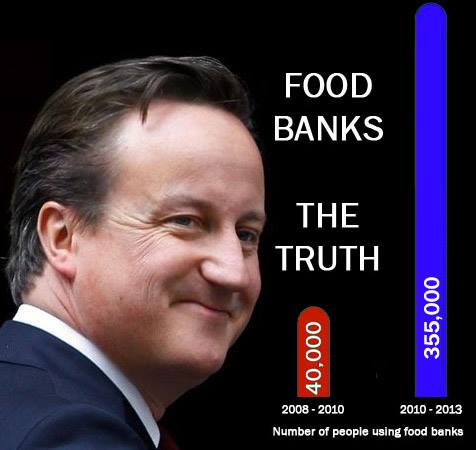
We see a proliferation of “skivers” and “scroungers”, an uprising of “fecklessness”, a whole sneaky “culture of entitlement”, “drug addicts”, a riot of general all-round bad sorts, and apparently, the numbers of poor people who suddenly can’t cook a nutritious meal has climbed dramatically, too. We are told that starvation is not because of a lack of money and access to food, but rather, it’s because Britain is “broken”, and people like freebie handouts at food banks, they don’t know how to budget and cook, that’s according to the Conservative Baroness Jenkin of Kennington. 

She recommends that poor people eat porridge, since it only costs 4 pence a bowl. You can always imagine the milk, sugar and the fuel to warm it, if push comes to shove. Or better still, just cook it on the aga, or the barbi outside. Sorted.

1390648_548165358586330_1740107407_n

The alarming rise in numbers of adults who have suddenly forgotten how to cook and eat porridge since David Cameron took Office, up to last year.

Still, at least we are graced with the thrift and self-help moralising about poor people from the fabulously rich in the media. After all, there must be something wrong with someone who does nothing to help themselves to spend nothing creatively and still somehow manages to have nothing to show for it. The truth is that too many of these poor people are rubbish at being poor.

Jamie Oliver, amongst others, says that poor people always have a very large plasma TV. Thanks for that great tip, Jamie. If you bought one whilst in work, you should get rid of it immediately and buy an even larger one from your benefit.

You must also subscribe to Sky and get a big dish put on your house. Trade in your furniture and household items the very moment you stop working, and buy them all again so you don’t have to live with the guilt and shame of having anything you may have (inadvertently, I’m sure) bought from what you once disgracefully earned.

Another top tip is have lots of children that you can’t afford. Poor people need to try very hard to get pregnant only ever once they are absolutely broke. Never plan your children when you are in work, or down and out in prosperity, that’s a big no-no. Make sure you lose the job, house and everything else first. To be genuinely poor, you must have every child while facing utter destitution. 

This said, the government are going to kindly compensate those of you who had your children when you thought your job was secure and you were generally on your uppers. You are to be incentivised to breed less by having no support for any child born after the first two. Phew! Thank you, Iain Duncan Smith. It’s incentivisation and nudge. And I thought it was Victorian era eugenics.

Basically, some permanently outraged and loudly indignant, terminally curtain twitching, tutting people who work in what they think are secure jobs and have no children think that they are personally funding your children when you get made redundant. They prefer that their money is spent on handouts and tax breaks to the millionaires, crony capitalists and vulture big businesses instead. 

Some wealthy people like to feel included in designing your lifestyle choices and you can provide opportunity for a suffering wealthy person to share their guilt-fuelled outrage, malice and spite. It’s therapeutic for them, helping to alleviate their sense of resentment, shame and inadequacy. Projection is, after all, a very valuable self-defence mechanism for anally retentive hoarders. So is threatening to leave the country when confronted with the possibility of having to actually pay some tax. They cost such a lot to keep, these grumbling misers, I think we should just let them go. In fact I propose we provide a free flight booking and packing service for them, because it would be a shame to shock them out of a lifetime of handouts and entitlement.

Another top poverty tip from the top is make sure you take expensive holidays abroad, walk your dog if you have one and go to the pub. You must make sure you get someone to take photos of you looking busy, ordinary and happy and post on Facebook, or better still, send them to the Department for Work and Pensions. 

Many Sun and Daily Mail readers think that disabled poor people aren’t allowed to do or even try anything at all that looks ordinary and normal, they get very distressed and outraged that you aren’t suffering enough, and hidden away being busily housebound, so they will kindly report you. Strictly in your best interests of course, because to these kind, unprejudiced, well-meaning souls, there’s nothing more important than ensuring your complete social and economic exclusion, sacrifice and distress, and it’s the surest way of getting your benefit stopped, then you can get on with wallowing in your hard-won destitution, suffering and absolute poverty. Because as this thrifty government of self-helping, help themselves specialists has demonstrated, you’re absolutely worth it.

And as the government tells us, poor people will only stop being poor if we “incentivise” them by making them even more poor.

Rich people, on the other hand, really need “incentivising” by being given even more money. That’s just social justice and fairness, say the Tories. 

It’s common sense, and endorsed by top aspiring entrepreneur scientists in the cabinet office, called “behavioural economists.” I love technocrats, me. How incredibly lucky we have such great career-orientated folk designing “choice architecture” just for homeless and poor people. It’s a good job the nudgers don’t need any nudging with their authoritarian neoliberal cognitive biases and pro-status quo policy decisions, as the rest of us are just so fallible, gullible and inept that we simply have to be nudged in line. It’s well worth sacrificing democracy so that the government can have citizens who meet the government’s demands and economic needs.

Who needs a government that recognises and addresses citizens needs? 

Apparently, not us.

Job-Opportunities-850x390
One of the greatest joys of being poor is that many people who aren’t poor have got generous and seemingly endless advice for you. There are lots of sound tips around on how to get on with being poor quietly. And the media are interested in sharing all the details of your private life with the public, so they can tut, moralise, have some outrage, grumble, seethe and foam a lot, and then give you their “advice.” Because they care so much.

All designed to make you feel so much better about your state-designed and allocated personal failings. Lucky us.

And besides, who needs a welfare state when all it does is create poverty and turn people into cognitively malfunctioning idiots who are also very hungry? Those Tories must be creative geniuses, they made work pay by cutting welfare, driving down wages and raising the cost of living. See what I mean? 

They really should redefine the Orwell prize, the Tories would win it every year. Champions of ordinary people, they are, exposing social evils and injustices as they go, distributing work fare, poverty, authoritarianism, insecurity and behavioural change on all those faulty people that are being failed by neoliberalism and those mysterious boardroom decision makers that give us the entertaining myth of “market forces”.   

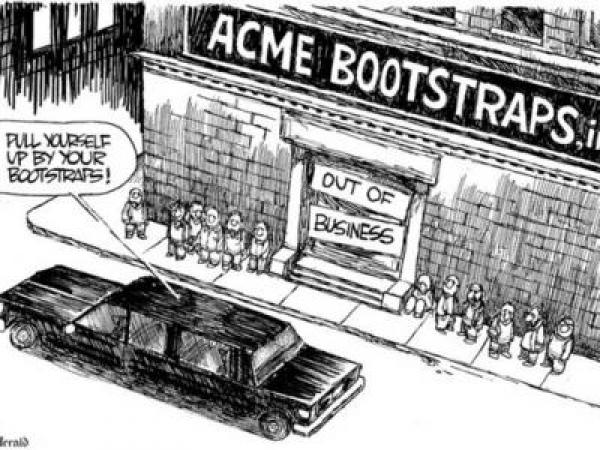
Bootstraps

Nowadays, the better off are so envious of your lucky life experiences and lack of choices that many are thinking of becoming disabled, just so they can share that exclusive pauper status for themselves. They want to own your poverty and I suspect they’d like to privatise and commercialise it. But we know that the poor invented poverty, and so it must be exclusively ours.

Poor people fake their poverty and mismanage their generous share of nothing

A recent report from Samuel Smiles and Verity Malthus, on behalf of ThanAtos, the private company hired by the government to assess people to see if they are genuinely on the point of death from starvation in order to be eligible for poverty, says that many are just feigning starvation and despair and some are even faking thinness.

This is why we have to target support only at “those in greatest need”.

ThanAtos’s research shows that many expect to be provided with food bank vouchers so they can continue to be parked on deluxe standards of suffering indefinitely.

The report said: “These poor people have taken the easy, stress-free option of not sending their children up chimneys and into t’mills any more and won’t even try their hand at pick-pocketing and prostitution. Those were once respected pauper activities, but now these poor people are jumping on the band-waggon and tarnishing the good name of thrift, self-help and state-inflicted misery.

“Far too many of those who claim they are poor don’t even have a plasma screen and a sky dish, and we know for a fact that they don’t eat takeaways, take drugs, smoke or drink cheap cider, they lack personal ineptitudes, and many don’t even have loads of unkempt children, so they are just frauds and they must have very poor budgeting skills. The problem is that once people see the privilege and benefits of gnawing hunger and destitution, they all want some. It’s all supply-led, people just want poverty as a freebie.”

How very true, it’s a real social problem. Once people begin to appreciate the Dickensian chic of malnutrition, rickets and scurvy, and many other low budget, value Victorian age diseases, they want to dash out and buy some immediately. It is becoming something of a trend. In fact the poverty porn industry has really taken off. 

The growing popularity of being very hungry has enticed many these past four years. The ease by which malnutrition can be acquired under this generous government, has been welcomed and hailed as the new poor law come-back, the return of a Golden Feudal Age for the Conservatives.

It’s a very welcomed return of nostalgic, ever so quaint and cute Social Darwinist Tory principles. But some have said that this Government has clearly created a tide of social problems, as very few people were incompetently hungry and desperately silly enough to need food banks under the last Labour government.

In fact I didn’t even know they existed back then. But that’s the “Big Society” for you. What a bright idea to replace welfare with charity and state “therapy.” Silly poor people, they just need to learn to be more creative in how they spend their state funded and allocated nothing, that’s why they end up with nothing. It’s the new generous Tory something from nothing culture, just for the poor.

Those poor people need to get one of those work fare jobs. Put them in their place. That’ll sort ’em out. What those poor people need is discipline. And a good hiding never did any harm. I say bring back the birch and the stocks. That’ll teach ’em.

It’s just like the good old Victorian days. Hurrah!

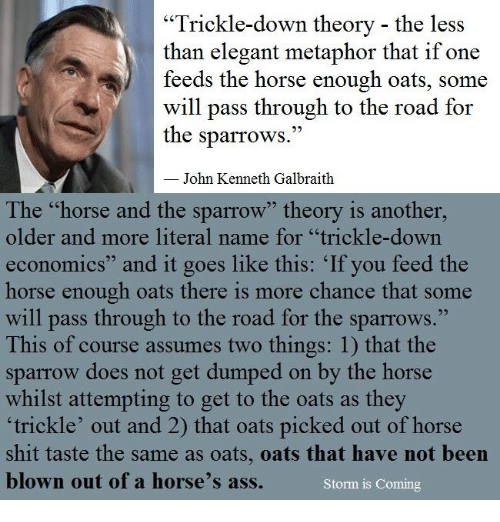
trickle-down-theory-the-less-than-elegant-metaphor-that-if-one-11938559Supply-side economics and the pecking order


I don’t make any money from my work. I am disabled because of illness and have a very limited income. I don’t have a plasma TV or Sky. I do eat a lot of porridge, though. Successive Conservative chancellors have left me in increasing poverty. But you can help by making a donation to help me continue to research and write informative, insightful and independent articles, and to provide support to others. The smallest amount is much appreciated – thank you. 

DonatenowButton

Stigmatising unemployment: the government has redefined it as a psychological disorder

proper Blond

The current government has made the welfare system increasingly conditional on the grounds that “permissive” welfare policies have led to welfare “dependency.” Strict behavioural requirements and punishments in the form of sanctions are an integral part of the Conservative ideological pseudo-moralisation of welfare, and their  “reforms” aimed at making claiming benefits much less attractive than taking a low paid, insecure, exploitative job.

Welfare has been redefined: it is preoccupied with assumptions about and modification of the behaviour and character of recipients rather than with the alleviation of poverty and ensuring economic and social wellbeing.

The stigmatisation of people needing benefits is designed purposefully to displace public sympathy for the poor, and to generate moral outrage, which is then used to further justify the steady dismantling of the welfare state.

But the problems of austerity and the economy were not caused by people claiming welfare, or by any other powerless, scapegoated, marginalised group for that matter, such as migrants. The problems have arisen because of social conservatism and neoliberalism. The victims of this government’s policies and decision-making are being portrayed as miscreants – as perpetrators of the social problems caused by the government’s decisions, rather than as the casualities.

And actually, that a recognisable bullying tactic known as projection, (the vehicle for projection is blame, criticism and allegation), as is scapegoating.

The 2015 budget included plans to provide online Cognitive Behaviour Therapy to 40,000 claimants and people on the Fit for Work programme, as well as putting therapists in more than 350 job centres.

I wrote an article in March about the government plans to make the receipt of social security benefits conditional on undergoing “state therapy.” I raised concern about ethical issues – such as consent, the inappropriateness of using behaviour modification as a form of “therapy,” and I criticised the proposed Cognitive Behaviour Therapy (CBT) programme on methodological and theoretical grounds, as well as considering wider implications.

I’ve written at length about the coercive and punitive nature of the conservative psychopolicy interventions, underpinning the welfare “reforms,” and giving rise to increased welfare “conditionality” and negative sanctions.

In particular, I’ve focussed on the influence of the Cabinet’s Behavioural Insights Team or “nudge unit” and “the application of behavioural science and psychology to public policy. (See: The nudge that knocked down democracy, The power of positive thinking is really political gaslighting, and Despotic paternalism and punishing the poor. Can this really be England? )

I was pleased to see that the BBC reported a summary of the research findings of Lynne Friedli and Robert Stearn, which was supported by the Wellcome Trust. The report – Positive affect as coercive strategy: conditionality, activation and the role of psychology in UK government workfare programmes reflects many of the concerns raised by other professionals. I strongly recommend you read it. (See: Psychologists Against Austerity: mental health experts issue a rallying call against coalition policies.)

The BBC summarised from the report that benefit claimants are being forced to take part in “positive thinking” courses in an effort to “change their personalities.” Those people claiming benefits that do not exhibit a “positive” outlook must undergo “reprogramming” or face having their benefits cut. This is humiliating for job seekers and does not help them find suitable work.

New benefit claimants are interviewed to find out whether they have a “psychological resistance” to work, with those deemed “less mentally fit” given more “intensive coaching.”

And unpaid work placements are increasingly judged on psychological results, such as improved motivation and confidence, rather than whether they have led to a job.

The co-author of the report, Lynne Friedli, describes such programmes, very aptly, as “Orwellian.” She says:

“Claimants’ ‘attitude to work’ is becoming a basis for deciding who is entitled to social security – it is no longer what you must do to get a job, but how you have to think and feel.

“This makes the government’s proposal to locate psychologists in job centres particularly worrying.

“By repackaging unemployment as a psychological problem, attention is diverted from the realities of the UK job market and any subsequent insecurities and inequalities it produces.”

Friedli also criticised the way psychologists were being co-opted as “government enforcers” and called on professional bodies to denounce the practice.

Quite rightly so. It’s our socio-economic system, and the ideologues who shape it that present the problems, not the groups of people forced to live in it as its casualities – the “collateral damage” of neoliberalism and social conservatism.

“I don’t think anything can justify forced psychological coercion. If people want to go on training courses that should be entirely voluntary,” Lynne told BBC News.

She also questioned the aim of the motivational courses and welfare-to-work placements, which felt like “evangelical” self-help seminars.

“Do we really want a world where the only kind of person considered employable is a ‘happy clappy’, hyper-confident person with high self-esteem?

“That is a very a narrow set of characteristics. There is also a role in the workplace for the ‘eeyore’ type.”

Absolutely. Frankly, I would rather have health and safety programmes that are designed by a pessimist, capable of thinking of the worst case scenario, for example, than by a jolly, positively biased, state-coerced optimist.

I would also prefer pessimistic appraisal of social policies. That way, we may actually have impact assessments carried out regarding the consequences of Conservative policies, instead of glib, increasingly Orwellian political assurances that are on the other, more scenic, illusory side across the chasm from social realities.

Although pessimism and depression are considered to be affective disorders, in a functional magnetic resonance imaging study of the brain, depressed patients were shown to be more accurate in their causal attributions of positive and negative social events, and in self assessments, and assessment of their own performance of tasks, than non-depressed participants, who demonstrated a positive bias.

As a former community-based psychosocial practitioner who saw the merits and value of a liberationist model, the question that needs to be asked is: for whose benefit is CBT being used, and for what purpose? Seems to me that this is about helping those people on the wrong side of punitive government policy to accommodate that, and to mute negative responses to negative situations.

The socially dispossessed are being coerced by the state, part of that process is the internalisation of the negative images of themselves created and propagated by their oppressors.

CBT is not based on a genuinely liberational approach, nor is it based on any sort of democratic dialogue. It’s all about modifying and controlling behaviour, particularly when it’s aimed at such a narrow, politically defined and specific outcome.

The problem that we need to confront is politically designed and perpertuated social injustice, rather than the responses and behaviour of excluded, stigmatised individuals in politically oppressed, marginalised social groups.

CBT is founded on blunt oversimplifications of what causes human distress – for example, in this case it is assumed that the causes of unemployment are psychological rather than socio-political, and that assumption authorises intrusive state interventions that encode a Conservative moral framework which places responsibility on the individual, who is characterised as “faulty.”

However, democracy is based on a process of dialogue between the public and government, ensuring that the public are represented: that governments are responsive, shaping policies that address identified social needs. Conservative policies are quite clearly no longer about reflecting citizen’s needs: they are increasingly about telling us how to be.

As I have said elsewhere, as well as aiming at shaping behaviour, the psycho-political messages being disseminated are all-pervasive, entirely ideological and not remotely rational: they reflect and are shaping an anti-welfarism that sits with Conservative agendas for neoliberal welfare “reform”, austerity policies, the small State (minarchism) and also legitimises them. (I’ve written at length elsewhere about the fact that austerity isn’t an economic necessity, but rather, it’s a Tory ideological preference.) The Conservatives are traditional, they are creatures of habit, rather than being responsive and rational.

Conservative narratives, amplified via the media, have framed our reality, stifled alternatives, and justified Tory policies that extend psychological coercion including through workfare; benefit sanctions; in stigmatising the behaviour and experiences of poor citizens and they endorse the loss of autonomy for citizens who were disempowered to begin with.

Many of the current ideas behind “reforming” welfare come from the Behavioural Insights  Team – the Nudge Unit at the heart of the Cabinet. Nudge theory has made Tory ideology, with its totalitarian tendencies, seem credible, and the Behavioural Insights Team have condoned, justified and supported punitive, authoritarian policies, with bogus claims about “objectivity” and by using discredited pseudoscience. Those policies have contravened the human rights of women, children and disabled people, to date.

Nudge-based policy is hardly in our “best interests,” then.

526544_532055030197363_2137237288_n
Pictures courtesy of Robert Livingstone


I don’t make any money from my work. I am disabled because of illness. But you can contribute by making a donation and help me continue to research and write informative, insightful and independent articles, and to provide support to others.

The smallest amount is much appreciated – thank you.

DonatenowButton

Conservatives, cruelty and the collective unconscious

fastThis offensive image mocks the Stroke Association’s Act FAST poster – illustrating each of the charity’s three signs of a stroke, “Face, Arms and Speech”, with a picture of Ed Miliband, being mocked as a victim of brain damage.

The Conservatives, using social media accounts for Kensington and Chelsea borough, have been accused of circulating this offensive and callous graphic mocking Ed Miliband as a stroke victim, finishing with the phrase “Time to LOL.”

The entire Twitter account has since been deleted and the ward’s Facebook page has changed its name to “London parks and trees” and now, strangely, to “Parks Lnd.”

Since when, in the 21st century, did it become an acceptable part of democratic dialogue to attempt to ridicule and reduce political opponents by systematically mocking their physical characteristics? Or by contemptuously defining, discrediting and dismissing them as ill and disabled? Moreover, how has it become acceptable that ill and disabled people are held up as objects of political derision?

Amidst claims of an attempted cover-up, Campden’s three Tory councillors have denied having anything to do with the post. Councillor Catherine Faulkes said that she and her two elected colleagues do not run the page – but has refused to say who does.

She told the Mirror:“I don’t want to comment on who operates it. We’re investigating them and we’re investigating the Twitter account because there’s the possibility it might have been hacked.”

I don’t buy that. Conservatives have always coldly conceived society as a hierarchy of human value, and they have, from their pinnacle of supremicist, self-appointed authority, historically cast the poorest and the most vulnerable citizens as the putative “enemies of civilization.” Social Darwinism is written in bold throughout their policies.

There has never been a clearer contrast between the values and approach of the two main political parties: the Tories are undemocratic, they state plainly that some people’s lives don’t matter – the food bank debate and the bedroom tax debate are further examples of how Conservatives reduce human subjects to objects of derision.

While Labour MPs spoke out in the debates about the terrible hardships that vulnerable families in their constituencies are facing, we were faced with the unedifying spectacle of Tory MPs laughing, jeering and shouting their spiteful glee at the plight of those people that this government have intentionally impoverished – after all, policies are plain and legislated statements of intent.

By contrast, the Labour Party have fostered a counter-narrative that is decent, democratic, inclusive and about a fundamental equality of the worth of each human life, founded on a strong commitment to human rights – without which there can be no meaningful social justice and democracy.

The narcissism of nudging

Labour recognise human potential, and surely that is what progressive politics is about, ultimately: human and social development. The Tories, on the other hand, never fail to stifle our individual potential, social evolution and development.

Progressives liberated themselves from the pre-occupation with superficial characteristics and taxonomic ranking of human beings – the emphasis on “what” we are – and began to cherish “who” we are, delving into our human potential and celebrating  one o our greatest assets – our diversity – as much as our individual, equal worth.

The Conservatives have created a Darwinist socioeconomic landscape – they always do – and yet take it upon themselves to “civilise” we “irrational” heathens, using disdainful behaviourist nudges that deny our autonomy by acting upon us, telling us how to be, rather than acting for and with us. They construct rhetoric peppered with authoritarian morality, blame, ascribed motives – the poor are dismissed as “scroungers” for example. Projection is a defence process by which personal inferiority is recognised as a perceived moral deficiency in others. It’s a bully’s way of protecting their ego – an assembled fantasy – from their psyche.

I have often thought that beneath the need to control others and cruel behaviour lies a profound emptiness. Scorn, spite, rage, anger, and hatred are ways of filling the emptiness. Perhaps some people believe it is better to feel sadistic than to feel nothing at all. To stop feeling, after all, is to die. Or perhaps investing such hatred in others is a way of undoing their own profound self-loathing.

We are being led by a group of people that have failed to grasp the myth of individualism: identity is a deceit, it is nothing more than a constructed, superficial mask that is tied to largely unconscious impulses. Whilst we, in appalled fascination, watch on, these preachers of materialism measure out our human worth in meagre pounds and pennies, whilst presenting us with reductive, impoverishing sermons on primitivity, dominance and cruelty. They ask us to blame ‘them’ not ‘us’ for the increasing problems we face as a society. 

Not content with scapegoating societies’ most vulnerable groups, the Conservatives want to take away their lifeline support as well,on the grounds that they are ‘non deserving.’

I’ve often wondered where does human cruelty towards fellow humans come from, and why do we permit it, as a so-called civilised society?

We are climbing Allport’s ladder

I’ve previously discussed Gordon Allport’s work which explored the psycho-sociological processes that led to the Holocaust. Allport knew that it’s crucial to recognise social prejudices and dehumanization, because these processes push our rational and moral boundaries, gradually eroding the natural inhibitions that prevent us from inflicting harm on other human beings. The stages of prejudice unfold, permitting bullying, cruelty, persecution and ultimately, Allport’s end-stage: systemic genocide.

It’s a social process of barely perceptible stages: the perpetrators become increasingly confident in the “validity” of their prejudice, the public are systematically desensitised and indoctrinated. Mocking, negative stereotypes and negative images become a part of our everyday culture and language: hate speech is normalised, discriminatory policies and practices flourish, hate crimes are permitted.

On a psychic level, our repressed, destructive urges; the reservoir of darkness that is our shadow selves; our uncivilised rage and fear – previously sublimated – are manipulated and directed at politically constructed scapegoats.

For me, Gordon Allport and Carl Jung respectively show us that when those who have never confronted our instinctive, collective fear of the dark are urged to open their own cellar door, it is others that are consumed by the ferocity of the straining beast that is found there.

Those right-wing critics of left-wing political correctness are wrong. Far from it stifling free speech, political correctness liberates us by actually acknowledging the straining beast within us all, and helps us to begin a dialogue about how we can help each other find our way in the dark. That has got to be so much better than denial and projection, which happens beyond the light of reflection, integration and consciousness. Hate speech isn’t free speech at all: it’s aim is to intimidate, silence and to close down democratic debate.

And the consequences of denial and projection are scapegoating, prejudice, discrimination, persecution of others, all of which may lead to genocide if we fail to address such social manifestations from our psyche.

Jungians believe that our own shadow contains and reflects the shadow of society, which is fed by ancestral, abandoned, neglected and repressed collective values: the collective unconscious. Our psyche is an assemblage of our timeless collective fantasies. There are shared, fundamental elements that make up the collective unconscious and generate a limiting framework around which our psychic material organises. Jung referred to those elements as archetypes.

We are much more than that which we choose, embody, perform, and identify with. The common importance of the collective unconscious makes people especially vulnerable to political manipulation, especially in an era of mass media.

Psychopathology is considered by Jungians to be the independent ability of the psyche to create morbidity, disorder, illness, abnormality and suffering in any part of its manifest behaviour and to imagine and experience life through a distorted perspective. Social psychology has shown us that even at a basic normative level, social group values, beliefs and behaviours are very vulnerable to manipulation and corruption. (See Milgram experiment, Stanford Prison experiment, for example.)

The medium is the message

The media is far from objective, benign and politically neutral, in fact we have handful of offshore billionaires that have subverted  democracy and established a cultural hegemony. This self-appointed elite are telling you that some human lives are worthless, whilst investing in their own, quite literally, at all cost to our society.

The United Nations High Commissioner for Human Rights has said recently that UK tabloid coverage of “immigration” is directly linked to the loss of life (of refugees) in the Mediterranean, for example. The media have created a category of others, and desensitised the public to the humanitarian crisis that has unfolded. Using the word “immigration” implies that people are travelling from choice. These people are not migrants: they are desperate refugees.

The United Nations statement says that an article in which Katie Hopkins described  refugees as “cockroaches” and “feral humans” resembled dehumanizing, pro-genocide propaganda. (See also – Media Migrant Propaganda ‘Can Cost Lives’ (Video).)

little girl

This dear human child tragically lost her precious life on Sunday.  Her “feral” family were fleeing for their lives.

They were trying to save her.

The number of people fleeing war, oppressive regimes, unspeakable horror, pain and absolute poverty in the Middle East and Africa has risen sharply in recent months. Around 65% of the refugees are from the Syrian civil war zone. Their desperation is being exploited by profiteering smugglers, linked with organised crime, who charge exorbitant fees for transport in often unseaworthy cargo vessels, cramming hundreds of human beings into locked holds.

It is now estimated that for every 1,000 refugees that are known to have crossed the Mediterranean, more than 46 lose their lives in shipwrecks. The actual number might be much higher.

In a strongly worded statement issued on Friday, the High Commissioner said tabloid “misinformation” about immigration was fed into a “nasty underbelly of racism” lurking beneath the migration issue. He noted that the media in Nazi Germany “described people their masters wanted to eliminate as rats and cockroaches.”

“Under the guise of freedom of expression, [negative coverage is] being allowed to feed a vicious cycle of vilification, intolerance and politicization of migrants,” High Commissioner Zeid Ra’ad Al Hussein said in the statement.

However, the word “migrant” implies choice of movement. These people are fleeing for their lives, they are not migrants: they are refugees.

Prejudice multitasks

For those of you that hate refugees, and fail to recognise others as being of equal worth to you, perhaps it’s worth considering that the Nazis didn’t simply exterminate the ethnic group of public choice, they also exterminated sick and disabled people, social democrats, socialists, trade unionists, freemasons, communists, and anarchists, the Roma, Slavs, Polish people, gay people, poor people, vagrants, pacifists, people with mental illness – including those with war-induced PTSD, unemployed people, drug addicts, people who were better artists than Hitler, and the list was continually extended. You see, prejudice and cruelty multi-task very well, and scapegoating and persecution doesn’t stay confined to the social group you may dislike: fascists are mercilessly fascists, regardless of who you are.

Jung once remarked on Hitler: “You know you could never talk to this man; because there is nobody there … It is not an individual; it is an entire nation.”  He was referring to the collective unconscious. I am reminded of ancient cultures sacrificing to their “Gods”, offering up their joys of cruelty to appease.

Conservatives are liturgists of competitive individualism, market forces and minarchism. The ecclesiastical procession of our own right-wing state is ritualistically sacrificing people to appease their own god: neoliberalism.

The ability to recognise and translate our collective, remnant, dark impulses, and excercise self-control is a rare and remarkable virtue. Yet the collective conscious contains all aspects of human nature: light and dark, beautiful and ugly, good and evil, if we would only turn to look at it.

The Holocaust is the most thoroughly documented example of the extreme savagery and hideousness of dehumanization.  It’s a little too easy to imagine that the Third Reich was an aberration. We can take the easy option and dismiss the Holocaust as a very unusual phenomenon – a mass insanity instigated by a small group of deranged ideologues who conspired to seize political power and exercise their monstrously evil will.

It’s comforting to imagine that these were uniquely cruel and savage people. However, one of the most disturbing discoveries about how the Holocaust happened is not that all of the Nazis were madmen and monsters. It’s that they were mostly ordinary human beings.

Behind the cellar door

My point is simply this: every one of us is vulnerable. Every single human being is susceptible to frailties – we are each partial, and easily compromised: open to the ravages of fear, doubt, insecurity, anger and loneliness, and to the shadow of our unchosen choices – the person we choose to be always invites a dark double – the person we choose not to be – the psychic twin we keep leashed deep in our psychic basement, as it were. The more we repress, the darker our shadow becomes, and the greater its influence.

By alienating our self and our own shared, instinctual foundation, we fail to recognise when it motivates us, animates us and directs our deeds. It is all to easy, therefore, for those who are politically motivated to manipulate our perceptions, to touch and rouse the ancient predatory instincts we all have locked away in the cellar of our psyche.

Perhaps a definition of evil is suffering transferred to others. In the process, whatever started the original pain is forgotten and the energy of it moves around amplifying revenge and cruelty until someone somewhere contains it, and transforms it by walking in the shoes of many others towards empathy, wisdom, kindness and compassion. We have that wonderful potential. All we need to realise it is the courage to face our selves. Beyond the cellar door. And by facing our selves, we recognise all others.

Anyone who has recognised transference as a potentially therapeutic tool in a group setting will tell you that emotions are a tangible, primordial, manifest life-force, moving indiscriminately, relentlessly from person to person, animating, hating, hurting, loving and healing. E-motion -> movement.

We are primarily emotional creatures. Advertisers and propagandists know this. Many of us deny it. However, as developed human beings we endeavour to learn and to recognise the base elements of the psyche and arbitrate: mature adults liberate their self, both from the deceptive cover of the persona, (some call this the ego – our superficial individual identity –  though the ego is also considered to be a mediator between self and society) and from the power of (universal and personal) unconscious impulses. But the more we repress, the more the leashed shadow strains for release from the force of our resistance.

Perhaps if we were to rename and redefine the shadow archetype as “teacher”, we would find the motivation and courage to face what is in the darkness of our collective basement. And learn.

Know thyself – Delphic maxim.

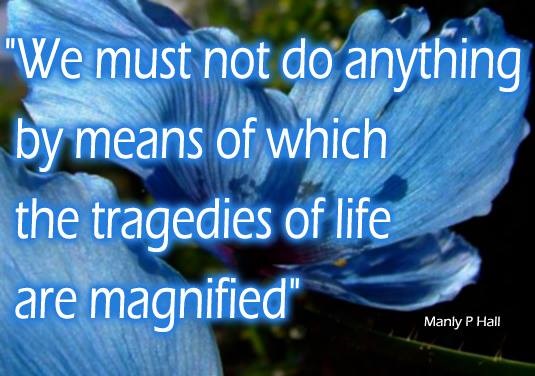
Manly P HallPicture courtesy of Robert Livingstone.

Endnote

Here, I’ve used Jungian concepts as a frame of analysis. Jung provides us with an expansive frame of reference and an invaluable therapeutic tool, yet his work has all too often been devalued and dismissed as “new age mysticism.” But for me, any kind of personal development may be deemed “spiritual” without necessarily having any reference to a systemic religion.

It is proposed that Jung had a profound influence on the development of quantum theory through his own theory of synchronicity – as a mode of relationship that is acausal and non-local – an idea that influenced Wolfgang Pauli, in particular, as well as other physicists.

Jung’s archetypes have also been identified as universal and this seems to have been verified at an anthropological level.

They certainly have a powerful cross-cultural resonance.


I don’t make any money from my work. I am disabled because of illness and have a very limited income. But you can help by making a donation to help me continue to research and write informative, insightful and independent articles, and to provide support to others. The smallest amount is much appreciated – thank you. 

DonatenowButton

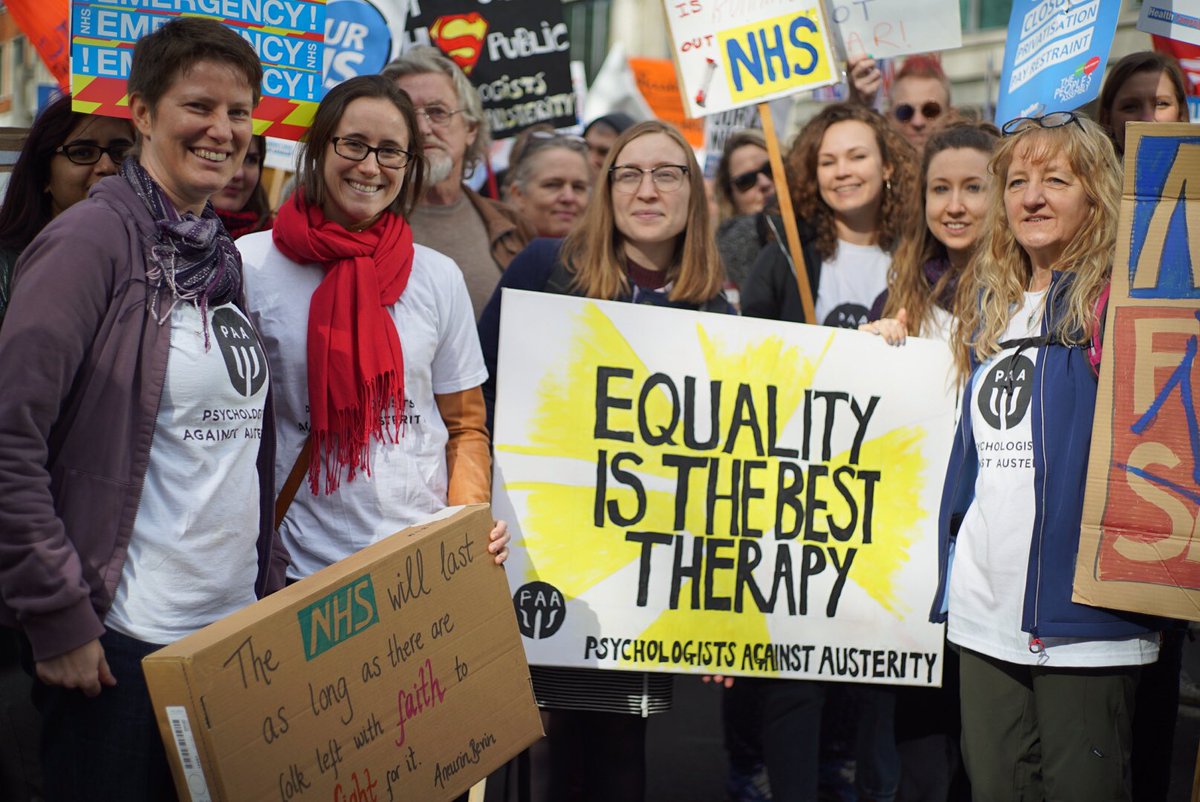
Psychologists Against Austerity: mental health experts issue a rallying call against coalition policies.

PAA-550x369

I wrote an article in March about the government plans to make the receipt of social security benefits for those with mental illnesses conditional on undergoing “state therapy.” I raised concern about ethical issues – such as consent, the inappropriateness of using behaviour modification as a form of “therapy,” and I criticised the proposed Cognitive Behaviour Therapy (CBT) programme on methodological and theoretical grounds, as well as considering wider social implications.

The 2015 budget included plans to provide online CBT to 40,000 claimants and people on the Fit for Work programme, as well as putting therapists in more than 350 job centres.

Since I wrote, over 400 psychotherapists, counsellors and mental health practitioners have written an open letter, published by the Guardian, about the broader, profoundly disturbing psychological and quality-of-life implications of the coalition government’s austerity cuts and policies. However, the letter was particularly critical of the government’s benefits sanctions scheme, which has been condemned by many of us – human rights advocates across the state – as brutal, unjust, ill-conceived, ineffective and inhumane.

In particular, the letter stated that the government’s proposed policy of linking social security benefits to the receipt of “state therapy” is utterly unacceptable. The measure, casually coined “get to work therapy,” was discussed by Chancellor for the Exchequer George Osborne during his last budget.

The letter’s supporters included psychotherapist and writer Susie Orbach. She called the Conservative proposals “beyond shocking.” Echoing the concerns I raised earlier this year, she said:

“It undermines the fundamental principles of one’s right to physical and mental care – that you have to be able to consent and that the people you go to have to be highly trained and have your best interests and aren’t meeting targets.”

The letter’s signatories, all of whom are experts in the field of mental health, have said such a measure is counter-productive, “anti-therapeutic,” damaging and professionally unethical. The “intimidatory disciplinary regime” facing benefits claimants would be made even worse by further unacceptable proposals outlined in the budget.

Among the groups represented by the signatories were Psychologists Against Austerity, Britain’s Alliance for Counselling and Psychotherapy, Psychotherapists and Counsellors for Social Responsibility, the Journal of Public Mental Health, and a range of academic institutions including Goldsmiths, Birkbeck, the University of London, the University of Amsterdam, Manchester Metropolitan University, the University of Brighton, Disabled People Against the Cuts and others.

More generally, the wider reality of a society thrown completely off-balance by the emotional toxicity of social conservatism combined with economic neoliberalism (which I have argued is manifestly authoritarian) is affecting Britain in profound and complex ways, the distressing effects of which are often most visible in therapist’s consulting rooms.

This letter sounds the starting-bell for a broadly based campaign of organisations and professionals against the damage that neoliberalism is doing to the nation’s mental health.

The letter said that for now, we call on all the parties in this election to make it clear that they will urgently review such regressive, anti-therapeutic practices, and appropriately refashion their commitment to mental health if and when they enter government.

Andrew Samuels, an Essex University professor, and immediate past chair of the UK Council for Psychotherapy, said he believed there was “a bit of a public school ethos” behind the work-capability regime introduced under the conservative-liberal democrat coalition and new conservative plans.

Characterising the government attitude as “Pull yourself together man, for heaven’s sake,” Samuels added: “It is wholly inappropriate. It symbolises a society that has lost all moral compass.”

Absolutely. Public schools are notorious for a culture of bullying. However, it’s one thing to be treated as a privileged and insulated public school boy by a peer from an elite background to “character building” rhetoric, but quite another to adopt that same bullying approach towards the ill and most vulnerable citizens. All to justify an ideological drive to “shrink the state” and remove support from the poorest.

All of this said, public schools are regarded by many as institutions that inflict a particularly British form of child abuse and social control. I also think it has to be said that soul trauma and pain don’t respect social status.

Samuels insisted the open letter was not “pro-Labour” but was aimed at getting a review of measures taken and proposed over the past five years.

He said: “If Labour decides afterwards all this is in order, it will go on. But I don’t think it will.”

The Labour Party does value professional opinion and rational discourse. The Conservatives, on the other hand, are not widely recognised as a party that welcomes democratic, open debate, transparency and accountability. The Tories simply exclude critical professionals and representative organisations that may challenge and disagree from the discourse.

A spokesperson for Labour said mental health “is the biggest unaddressed health challenge of our age.”

“It’s essential that we give mental health the priority it deserves if we are to thrive as a nation and ensure the NHS remains sustainable for the future,” he said.

The Labour Party have pressured the government to “write parity of esteem between physical and mental health into law,” and in the response, Labour have stated that the party is committed to implementing this policy if elected in May.

The spokesman pledged the Labour will bring an end to the “scandal of the neglect of child mental health,” indicating a welcomed return to a comprehensive preventative approach. He said: “It is simply not right that when three-quarters of adult mental illnesses begin in childhood, children’s mental health services get just six per cent of the mental health budget.”

Richard House of the Alliance for Counselling and Psychotherapy, the letter’s main organiser, said there had been a mounting groundswell of concern: “When one hears story after story of dramatic negative health impacts, psychological and physical, after people are subjected to these back-to-work practices, the time has surely come for an ‘emotional audit’ of the impact of what, to many, appear to be heartless, un-thought-through policies that are merely penalising and punishing the already disadvantaged still further.”

Yes, the time has come for a change of government. On May 7, we must ensure that the regressive, oppressive regime of the past five years is replaced by a progressive, inclusive and democratic alternative.

Related

The power of positive thinking is really political gaslighting

The just world fallacy

Cameron’s Nudge that knocked democracy down – a summary of the implications of Nudge theory

Rising ESA sanctions: punishing the vulnerable for being vulnerable

Suicides reach a ten year high and are linked with welfare “reforms”

Mental Health Services in crisis because of Coalition cuts to funding

The Psychology of Austerity

A group of mental health professionals have come together under the banner of Psychologists Against Austerity (PAA) to highlight the psychological impact of austerity.

Now, with only a few weeks to go before the general election, PAA have started a campaign calling for a Parliamentary Inquiry into the psychological damage austerity has wreaked across the UK.

You can read more and sign our petition here: 38degrees/psychological costs of austerity inquiry.


I don’t make any money from my work. But you can support Politics and Insights and contribute by making a donation which will help me continue to research and write informative, insightful and independent articles, and to provide support to others. The smallest amount is much appreciated, and helps to keep my articles free and accessible to all – thank you. 

DonatenowButton

What will the Tories suggest next. “Compassionate” genocide?

68196_116423458427191_5364492_n
The Tory parliamentary candidate for Cambridge, Chamali Fernando sparked outrage and horror after saying mental health patients should wear wristbands to identify their conditions. Fernando was speaking at a hustings event hosted by the campaign group Keep Our NHS Public when she made the comment.

Andy Burnham, Labour’s Shadow Health Secretary, said:

“There has been an enormous amount of work in Parliament to challenge the stigma surrounding mental health. But comments like this are so disappointing – they set us back and remind us how far we have to go. Jeremy Hunt must disown these comments, instruct his candidate to apologise and make it clear that they form no part of Conservative Party policy.”

“This proposal shows the candidate’s harmful views on mental health.

Disability and Mental Health Adviser at University of the Arts, London Annabel Crowley said.

“Research carried out by the Institute of Psychiatry, Psychology & Neuroscience at King’s College London shows personal contact with mentally ill people is the most effective way to reduce discrimination.”

Crowley says Fernando’s proposals would only alienate the mentally ill and “further curtail their freedom,” which would encourage further stigmatization.

We need to provide adequate care and support, not blame the victims of a failing health service,” she added.

Mental Health Services are in crisis because of Coalition cuts to funding. The Government has been criticised for allowing mental health services to be cut disproportionately, as the NHS as a whole undergoes the most severe budget cut in its history. And let’s not forget that under the guise of a “policy of deinstitutionalisation,” Thatcher’s “Care in the Community” Bill was about anything but care: it was all about cutting costs, as reflected in the experiences of many people leaving long term institutional care and being left to fend for themselves in the community. “Compassionate Tories”: there is no such thing.

Dr. Pooky Kingsmith, a mental health specialist, said that she [Fernando] “fails to understand” what the wristbands would achieve “beyond increasing the stigma and prejudice already experience by mentally ill people.”

A petition has since been set up calling for Fernando to stand down in the election. The description on the petition read:

“This kind of thinking has no place in modern society and especially not in someone who is hoping to be elected as an MP.

I can’t see any possible justification in allowing Ms Fernando to continue to stand for election after showing such prejudice against the mentally ill, and if allowed to do so, shows a total disregard to the people in this country, who already have to battle against the misunderstanding and ignorance of their mental illness.”

Chamali Fernando was asked how the authorities could help the police better deal with people with mental health issues.

Fernando responded that wristbands which disclose a person’s illness could help barristers, such as herself, to better aid the public.

She said wearing colour-coded wristbands indicating the nature of the person’s condition would be helpful to professionals as “they often could not explain themselves.”

Perhaps Fernando had designs that are something like this in mind:


1936 illustration of Nazi camp ID-emblems.

The red triangle was used by the Nazis to identify social democrats, socialists, trade unionists, Freemasons and communists, for example. The pink triangle was primarily used for identifying homosexual men, and the black triangle was used to identify “asocial elements” (asozial) and “work shy” (arbeitsscheu) including those who were mentally ill, pacifists, vagrants and the Roma.

And for anyone itching to invoke Godwin’s law at this point, I suggest you hang fire and read about Allport’s Ladder of Prejudice. Whilst I am very aware that we need take care not to trivialise the terrible events of Nazi Germany by making casual comparisons, there are some clear and important parallels on a socio-political level and a psycho-social one, that I feel are crucially important to recognise.

Gordon Allport studied the psychological and social processes that create a society’s progression from prejudice and discrimination to genocide. In his research of how the Holocaust happened, he describes socio-political processes that foster increasing social prejudice and discrimination and he demonstrates how the unthinkable becomes acceptable: it happens incrementally, because of a steady erosion of our moral and rational boundaries, and propaganda-driven changes in our attitudes towards “others” that advances culturally, by almost inscrutable degrees.

The process always begins with political scapegoating of a social group and with ideologies that identify that group as an “enemy” or a social “burden” in some way. A history of devaluation of the group that becomes the target, authoritarian culture, and the passivity of internal and external witnesses (bystanders) all contribute to the probability that violence against that group will develop, and ultimately, if the process is allowed to continue evolving, genocide.

As I have discussed elsewhere on this site, we have a government that uses words like workshy to describe vulnerable groups. This is a government that is intentionally scapegoating poor, unemployed, disabled people and migrants. One Tory councillor called for the extermination of gypsies, more than one Tory MP has called for illegal and discriminatory levels of pay for disabled people. (See also David Freud was made to apologise for being a true Tory in public.)

David Freud’s comment that disabled people are not worth the minimum wage was not a momentary lapse, nor was it unrepresentative of Tory views more generally. He is the contemptuous architect of the grossly punitive Tory Bedroom Tax that disproportionately affects households of disabled people. The Tories endorsed Freud’s discriminatory policy proposal, and savagely ridiculed the UN rapporteur, Raquel Rolnik, when she pointed out, very professionally and reasonably, that the policy contravenes human rights.

He is the same government minister that rejected suggestions that austerity policies have led to an increase in food bank use – making the jaw-droppingly astonishing suggestion that food bank charities are somehow to blame. This former investment banker and peer told the Lords that the increase in the usage of food banks was “supply led”. He said:

“If you put more food banks in, that is the supply. Clearly, food from the food banks is a free good and by definition with a free good there’s almost infinite demand.”

Poverty reduced to blame-the-individual neoliberal motivational formulae. Yet it is the government that are responsible for policies that create and sustain inequality and poverty.

We need only look at the discriminatory nature of policies such as the legal aid bill, the wider welfare “reforms” and research the consequences of austerity for the vulnerable – those with the  “least broad shoulders” –  to understand that these comments reflect how conservatives think.

This is a government that is using public prejudice to justify massive socio-economic inequalities and their own policies that are creating a steeply hierarchical, society based on social Darwinist “survival of the fittest” libertarian, minarchist principles.

The Tory creation of socio-economic scapegoats, involving vicious stigmatisation of vulnerable social groups, particularly endorsed by the mainstream media, is simply a means of manipulating public perceptions and securing public acceptance of the increasingly punitive and repressive basis of the Tories’ welfare “reforms”, and the steady stripping away of essential state support and provision.

Let’s not forget that we were recently informed that the Tories plan to limit child benefit to the first two children because it would save money. The idea is being examined by the Conservatives, despite previously being vetoed by Downing Street because of fears that it could “alienate” parents.

Asked about the idea on the BBC’s Sunday Politics programme, Duncan Smith said:

“I think it’s well worth looking at. It’s something if we decide to do it we’ll announce out. But it does save significant money and also it helps behavioural change.”

This is a clear indication of the Tories’ underpinning eugenicist designs – exercising control over the reproduction of the poor, albeit by stealth. It also reflects the underpinning belief that poverty somehow arises because of faulty individual choices, (as opposed to faulty political decision-making and ideologically-driven socio-economic policies), that those choices are non-rational, stereotypical, and that reducing cost to the State involves making people change their “faulty,” stereotypical behaviours.

This government’s policies are contibuting significantly to mental illness: Suicides have reached a ten year high and are linked with welfare “reforms”.

And Osborne announced in the budget that the government will be funding a “package of measures” to improve “employment outcomes” which will entail putting Cognitive Behaviour therapists in more than 350 job centres to provide “support” to those with “common mental health conditions” who are claiming employment support allowance (ESA) and job seekers allowance (JSA).

As I have written elsewhere, the government have put up an online contract notice which specifically states:

“This provision is designed to support people with common mental health conditions to prepare for and move into work, with intervention at the earliest possible point in a claim to benefit or access to the Fit for Work service.”

Cognitive Behaviour Therapy (CBT) is used to change how you think (“Cognitive”) and what you do (“Behaviour”). It bypasses emotions, personal history and narrative, to a large extent, and tends to focus on the “here and now.” In this case, the here and now consists of taking any job available, regardless of its suitability, or face being sanctioned.

CBT is an approach that facilitates the identification of “negative thinking patterns” and associated “problematic behaviours” and challenges them. This approach is at first glance a problem-solving approach, however, it is of course premised on the assumption that interpreting situations “negatively” is a bad thing, and that thinking positively about bad events is beneficial.

The onus is on the individual to adapt by perceiving their circumstances in a stoical and purely rational way.

So we need to ask what are the circumstances that the government are expecting people claiming benefits to accept stoically. Sanctions? Work fare? Being forced to accept very poorly paid work, abysmal working conditions and no security? The loss of social support, public services and essential safety nets ? Starvation and destitution?

The political vilification of sick and disabled people and the poor, amplified in the media, has preceded policies particularly aimed at the steady removal of State support, indicating a clear scapegoating process, and this isn’t indicative of a government that is “neglectful”- it is patently intentional, hence the pre-emptive “justification” narratives to garner public support and acceptance towards such punitive and harsh policies.

As Frances Ryan says:

“The ideology of a small state or the belief that benefits build dependency are crass, irrelevant details to what at its core is simply a decision about how to treat a human being. This is particularly damning when one person has all the power and the other is forced through economic necessity to take whatever humiliation or pain they are given. To do that to someone – let alone hundreds of thousands – is no accident. It is a conscious decision, that has been made over and over again by this government.”

I’ve consistently expressed my own well-founded, carefully considered, evidenced view that the Tories are authoritarians,  social Dawinists, and their social policies are founded on a creeping and implicit eugenics by stealth, fueled by their preference for a steeply hierarchical, unequal society, anachronistic ideas about “deserving” and “undeserving”, which belong to the 1834 Poor Law era, and a behaviourist approach to socio-economic circumstances .

In Edgbaston, Keith Joseph, (1974) announced to the world that:

“The balance of our population, our human stock is threatened … a high and rising proportion of children are being born to mothers least fitted to bring children into the world and bring them up. They are born to mothers who were first pregnant in adolescence in social classes 4 and 5. Many of these girls are unmarried, many are deserted or divorced or soon will be. Some are of low intelligence, most of low educational attainment.”

And in 2010, the former deputy chairman of Conservative Party, Lord Howard Flight, told the London Evening Standard:

“We’re going to have a system where the middle classes are discouraged from breeding because it’s jolly expensive. But for those on benefits, there is every incentive. Well, that’s not very sensible.”

These comments are not momentary lapses, nor are they unrepresentative of Tory views more generally. They reflect the true colours of the nazi nasty party.

demcracy

Pictures courtesy of Robert Livingstone


My work is unfunded and I don’t make any money from it. I am disabled because of illness and struggle to get by. But you can support Politics and Insights and contribute by making a donation which will help me continue to research and write informative, insightful and independent articles, and to provide support to others.  DonatenowButton

Sticks and stones: abusive labels, self concept – when words become weapons

The socio-political perspective.

My friend Harry Ottley once told me, many years ago, that I could kill a man with words. It was at a time when I was struggling to come to terms with a series of horrible events. Recovering from trauma takes time and for a while, I wasn’t myself. I didn’t want any company at the time, and Harry, who simply wanted to offer support, found me somewhat antisocial and blunt.

We can heal, though. It takes time, a lot of soul-searching, it’s often a very painful process and there are no short cuts. One of the reasons I decided to study psychology and sociology was my abiding interest in how we are immersed in each other: we exist, connect, shape and are shaped in a social context: in an inter-subjective realm, our behaviours affect each other, often profoundly.

Language, narratives, ideologies, norms and all of the mechanisms we draw on to make sense of and to navigate the universe can stifle us, damage and repress us, but may also transform and liberate us.

Harry is right. What we say to each other matters very much.

The range of what we say and think and do is limited by what we don’t notice. And because we fail to notice that we fail to notice, there is little we can do to change; until we notice how failing to notice shapes our thoughts and deeds

Some people often use the “freedom of speech” plea to justify their prejudice. They say they have a right to express their thoughts. But speech is an intentional ACT. Hate speech is intended to do harm – it’s used purposefully to intimidate and exclude vulnerable groups. Hate speech does not “democratise” speech, it tends to monopolise it. Nor is it  based on reason, critical thinking or open to debate. Bigotry is a crass parody of opinion and free speech. Bigots are conformists – they tend not to have independent thought. Prejudice thrives on Groupthink.

Being inequitable, petty or prejudiced isn’t “telling it like it is” – a claim which is an increasingly common tactic for the right, and particularly UKIP – it’s just being inequitable, petty or prejudiced.  And some things are not worth saying. Really. We may well have an equal right to express an opinion, but not all opinions are of equal worth.

And the right-wing do frequently dally with hate speech. Hate speech generally is any speech that attacks a person or group on the basis of their race, religion, gender, disability, or sexual orientation. In law, hate speech is any speech, gesture or conduct, writing, or display which is forbidden because it may incite violence or prejudicial action against or by a protected individual or group, or because it disparages or intimidates a protected individual or group. Critics have argued that the term “hate speech” is a contemporary example of Newspeak, used to silence critics of social policies that have been poorly implemented in order to appear politically correct.

This term was adopted by US conservatives as a pejorative term for all manner of attempts to promote multiculturalism and identity politics, particularly, attempts to introduce new terms that sought to leave behind discriminatory baggage attached to older ones, and conversely, to try to make older ones taboo.

“Political correctness” arose originally from attempts at making language more culturally inclusive. Critics of political correctness show a curious blindness when it comes to examples of “conservative correctness.” Most often, the case is entirely ignored, or censorship of the Left is justified as a positive virtue.Perhaps the key argument supporting this form of linguistic and conceptual inclusion is that we still need it, unfortunately. We have a right-wing Logocracy, creating pseudo-reality by prejudicial narratives and words. We are witnessing that narrative being embedded in extremely oppressive policies and in their justification.

The negative impacts of hate speech cannot be mitigated by the responses of third-party observers, as hate speech aims at two goals. Firstly, it is an attempt to tell bigots that they are not alone. It validates and reinforces prejudice.

The second purpose of hate speech is to intimidate a targeted minority, leading them to question whether their dignity and social status is secure. In many cases, such intimidation is successful. Furthermore, hate speech is a gateway to harassment and violence. (See Allport’s scale of prejudice, which shows clearly how the Nazis used “freedom of speech” to incite hatred and then to incite genocide.) As Allport’s scale indicates, hate speech and incitement to genocide start from often subtle expressions of prejudice.

The dignity, worth and equality of every individual is the axiom of international human rights. International law condemns statements which deny the equality of all human beings. Article 20(2) of the ICCPR requires states to prohibit hate speech. Hate speech is prohibited by international and national laws, not because it is offensive, but rather, because it amounts to the intentional degradation and repression of groups that have been historically oppressed.

The most effective way to diffuse prejudice is an early preventative approach via dialogue: positive parenting, education and debate. Our schools, media and public figures have a vital part to play in positive role-modelling, like parents, in challenging bigotry, encouraging social solidarity, respect for diversity and in helping to promote understanding and empathy with others.

Hate speech categories are NOT about “disagreement” or even offence. Hate speech doesn’t invite debate. It’s about using speech to intentionally oppress others. It escalates when permitted, into harassment and violence. We learn this from history, and formulated human rights as a consequence.

UKIP would have us unlearn the lessons of the Holocaust so that people can say “I’m not being racist, but…” or “It’s not wrong to say immigrants should be sent home…” and so on.

Wittgenstein once said: “The limits of my language are the limits of my  world.”

Words are powerful. As well as describing, signifying, explaining, persuading, interpreting, obscuring, deceiving and so on, they may also issue commands and instructions. We “spell” words. Spelling may also be described as “words or a formula purported to have magickal powers.” Words act upon others and elicit responses.

Yes, they may profoundly impact on others. With words, both spoken and unspoken, we can shape and re-shape the universe. We shape and transform each other. We can create. Einstein changed the meaning of the word “mass” and transformed Newton’s universe of structures to his own – one of events. It’s a different universe.

We can oppress or liberate with a few intentional words. The choice is ours.

The psychological perspective

“Every relationship. . . implies a definition of self by others and other by self. . . A person’s ‘own’ identity can never be completely abstracted from his identity-for-others.” From Self and Others – R D Laing.

The human mind is social. Through a process of symbolic interactions, beginning as children, humans begin to define themselves meaningfully within the context of their socialisations.

The looking-glass self is a social psychological concept, first mentioned in Human Nature and the Social Order by Charles Cooley in 1902. It’s basis is that a person’s sense of self-hood arises from social, interpersonal interactions and the perceptions of others. We internalise those interactions. The term refers to how people shape their self-concepts based on their understanding of how others perceive them.

People tend to conform to how they think others think them to be,  especially children, since they don’t have the necessary experiences and inner resources to reject labels, and it’s difficult, or arguably impossible, to act differently from how a person thinks he or she is perpetually perceived. Individuals use language and thought as the basis of their self concept.

Cooley said: “The thing that moves us to pride or shame is not the mere mechanical reflection of ourselves, but an imputed sentiment, the imagined effect of this reflection upon another’s mind.”

Self-fulfilling prophecy is the behavioural confirmation effect, in which behaviour, influenced by expectations, causes those expectations to come true. People react, not only to the situations they are in, but also, and often primarily, to the way they perceive the situations and to the meaning they ascribe to their perceptions.

Sociologists often use the Pygmalion effect, interchangeably with self-fulfilling prophecy, and the effect is most often cited with regard to educational under-attainment, social class, race.

“When teachers expect students to do well and show intellectual growth, they do; when teachers do not have such expectations, performance and growth are not so encouraged and may in fact be discouraged in a variety of ways. How we believe the world is and what we honestly think it can become have powerful effects on how things will turn out.”  James Rhem, executive editor for the online National Teaching and Learning Forum.

In the context of race, gender and class, negative labelling is often associated with  socio-political control mechanisms and prejudice. Stereotypes and labels estrange us from our authentic possibilities. The attributions and labels that people exchange on a symbolic level, also have the function of instruction or injunction, this function may be denied,  giving rise to one type of “mystification”, rather like hypnotic suggestion.

“Pain in this life is not avoidable, but the pain we create avoiding [our own] pain is avoidable.” Ronnie D Laing.

It’s almost impossible for individuals – especially children – to avoid experiencing changes to their psyche and  subsequent actions following repeated emotional abuse (and physical abuse, psychological violence is so very often a precursor to physical violence).

Research consistently shows that children subjected to verbal aggression, may exhibit a range of serious disorders, including chronic depression, anxiety, post-traumatic stress disorder, dissociation and anger. Words Can Be Weapons is a powerful multimedia campaign based in China that illustrates how words may be turned into weapons, to illustrate that what we say can hurt and damage others, very literally.

The number of crimes committed by juveniles has doubled in China, and the Centre For Psychological Research in Shenyang says its studies link juvenile crime to childhood emotional abuse – a taboo subject in China. The centre partnered with the Beijing office of advertising agency Ogilvy and Mather. Six teenagers were interviewed in Shenyang Detention Centre about negative, hurtful statements their parents had said to them in the past, such as “moron” and “You’re a disgrace.” The video then transforms these words, powerfully, into replications of the actual weapons these young people later went on to use to commit crimes.

Juggi Ramakrishnan, Ogilvy and Mather’s executive creative director in Beijing, said, in a press release: “Verbal abuse of children is like setting off a time bomb. It explodes only much later, long after the original perpetrator has left the scene. And it is society that pays the price, as is evident from the rising rate of juvenile crime. We really needed to tell this ‘cycle-of-violence’ story in a way that will make people sit up and take notice.”

One young person begins his interview by saying:  “I guess my world must be a dark one… My mother would yell at me every day, often telling me to go away and die.”

When he heard these words again, this time from his manager, he lost his self-control and stabbed him. The campaign took the words that had haunted him his entire life, and turned them into a knife, like the one he had used in his assault.

The campaign, in the English language version of the video was published on YouTube in April but has only recently garnered the attention it deserves. It has all the content from the project, including full interviews with the young people who are residents in the Detention Centre, at: wordscanbeweapons.co

We know from extensive research that victims of emotional and psychological abuse may also become perpetrators, particularly if no support has been available for the victim. Though many do not.

Damaged self-esteem and psychological injury destabilises us, it may lead to learned, created and distorted or false behaviours as a defence against further psychic injury. Abusers distort our sense of self, lower our self-worth, disorder our emotional responses to others, destroy our faith in our own judgements, skew our perception of others, and erode our personal boundaries.

For children and young people especially, there’s a risk of victim or victimiser roles being normalised, because the experience of alternative  interactions is limited.

In psychology and sociology, internalisation is the process that involves the integration of attitudes, values, standards and the opinions of others into one’s own identity or sense of self.

Studies suggest that young people who have internalised a view of their self as “positive and good” tend to have a developmental trajectory toward pro-social behaviour, those with damaged selves are more likely struggle with the social rules, codes and norms of conduct, empathic affects to others, and adaptive behavioural strategies.

Our selves may be either authentic or false. False selves tend to be an adaptation to false realities.(As opposed to fake selves, which are contrived to manipulate others).

We live in times when the media constructs such false realities every day, with the UK government directing a scapegoating and vilification process which targets vulnerable groups, because of Tory traditional prejudices, in order to justify their ideological inclinations to dismantle the social gains of our post-war settlement, withdraw publicly funded state support for those in need. We have a conservative social order built upon bullying, abuse and coercion from the aristocratic top down: it’s a hierarchy of control and power. And the only authentic quality David Cameron has is his inauthenticity. He’s a typical public school bully, and his atrocious role-modeling gives others permission to bully.

As a consequence, everyday untenable situations arise for those least able to cope with them, because we internalise identity, and through a process of attribution, this currently involves political pretence, dishonesty, illusion, elusion, delusion, and media collusion. This is a government that has normalised abuse on every level, and the consequences of that inflicted psychic trauma will be with us for several generations to come.

7664_531871386882394_1484375941_n
Gaslighting
is a form of  mental abuse in which false information is presented with the intent of making victims doubt their own memory, perception and sanity. Instances may range from simple denial by an abuser that previous abusive incidents ever occurred, to the staging of  events and using a narrative with the intention of disorienting the victim, and “invalidating” their experience. The UK government uses gaslighting techniques, by calling critics “scaremongers”, by claiming cuts to services and provisions are “reforms”, and that coercive welfare sanctions “support” people into work, or “make work pay”, especially given the largest fall in wages ever.

Pictures courtesy of  Robert Livingstone 


I don’t make any money from my work. But you can support Politics and Insights and contribute by making a donation which will help me continue to research and write informative, insightful and independent articles, and to provide support to others. The smallest amount is much appreciated, and helps to keep my articles free and accessible to all – thank you. 

DonatenowButton

top 100 blogs