A research report published on Tuesday by the homeless charity St Mungo’s shows that four out of five (80%) rough sleepers who died in the capitol in 2017 had mental health needs, a huge increase from three in 10 (29%) in 2010. The rise in deaths of rough sleepers with mental health problems have risen sharply over the last seven years, prompting concern that specialist services are not reaching those who need them.
The number of people sleeping rough has risen by 169% since 2010. Last year in England more than 4,700 people slept rough on any one night, and a far larger number experienced rough sleeping during the course of the year.
The charity is calling on the prime minister to take urgent action to prevent more people dying on the streets and ensure that the deaths are not ignored. The charity says the government need to invest more in specialist support, as NHS services are “severely overstretched”. this could sometimes be overlooked. Petra Salva, director of St Mungo’s rough sleeping services, said:
“This is a scandal and something the government needs to recognise and do more about … there should be more funds and support for these groups but instead they have been cut over the years and that correlates in these people stuck living on the streets … these deaths are preventable.”
He added: “The rise is because rough sleepers with mental health support needs end up sleeping rough and the help isn’t there and when it is there it is not quick enough … access to help and support is getting harder and so the prevalence of death … is increasing.”
The report said “Research carried out by St Mungo’s showed that only 32% of the areas where 10 or more people are sleeping rough on any one night commission mental health services actively targeting people sleeping rough.”
The report also featured a survey of dozens of street outreach workers and 63% said they were aware of someone who had died while sleeping rough in their local authority area last year. However, only 23% had experienced a review being carried out.
“With access to vital emergency accommodation and support services getting harder and harder, it is unsurprising that the number people dying on the streets is rising. Urgent action to provide rapid relief from rough sleeping is needed to turn this around,” the report stated.
Having a mental health problem can create the circumstances which can cause a person to become homeless in the first place. Yet poor housing or homelessness can also increase the chances of developing a mental health problem, or exacerbate an existing condition. In turn, this can make it even harder for that person to recover. It also makes it very challenging to develop good mental health, to secure stable housing, to find or maintain a job, to stay physically healthy and to maintain relationships.
The figures come amid concern about the growing number of homeless deaths and the lack of reviews into what has led to them. Out of the hundreds of deaths that have occurred in recent years, reports suggest only eight have resulted in a review.
The Guardian and the Bureau of Investigative Journalists revealed earlier this year that 340 homeless people died on the streets or in temporary accommodation in the last six years, surging from 32 in 2013 to 78 in 2017. A further 59 deaths have been recorded so far this year, already more than the whole of 2016.
In the capital, the only place where a local authority records homeless deaths, 158 people died between 2010 and 2017, an average of one death a fortnight.
Experts and campaigners have warned that without official records, counts and reviews, it’s impossible to determine why so many homeless people are dying and design and take effective action to prevent future deaths.
Howard Sinclair, the St Mungo’s chief executive, said: “This is nothing short of a national scandal. These deaths are premature and entirely preventable.”
Sinclair said that he welcomed the government Homeless Rduction Act set out by Sajid Javid to reduce the number of people sleeping rough.
Though he added: “The forthcoming strategy presents a vital opportunity to make sure no one else dies as a result of sleeping rough. We are calling on the prime minister to follow through on her commitment to end rough sleeping by making sure all parts of the public sector play their part, especially the health, justice and welfare systems.”
The Homelessness Reduction Act received Royal Assent in April 2017 and will commence in April 2018. The Act places a new duty on local authorities to help prevent the homelessness of all families and single people, regardless of priority need, who are eligible for assistance and threatened with homelessness.
Matt Downie, director of policy and external affairs at Crisis, said: “In 21st-century Britain, nobody should be dying on our streets, especially when there is clear evidence to show that rough sleeping – and all forms of homelessness – can be ended.
“Homelessness is a devastating experience. People sleeping on our streets – who are experiencing the most visible form of homelessness – are exposed to everything from sub-zero temperatures, to violence, to debilitating illnesses. And all of these dangers puts them at serious risk of death.”
Back in 2016, Theresa May unveiled the £40 million package designed to prevent homelessness by intervening to help individuals and families before they ‘end up on the streets.’ It was claimed that the ‘shift’ in government policy will move the focus away from dealing with the consequences of homelessness and place prevention ‘at the heart’ of the Prime Minister’s approach. I criticised the approach at the time, as it was framed with a narrative of individualism, and was based on a considerable degree of political prejudice regarding the causes of homelessness, which positioned citizen ‘decision-making’ as a key factor.
The Conservatives fail or refuse to recognise that many problems in wider society arise as a consequence of a prejudiced ideology that shapes political decision making, and that contributes significantly towards homelessness. These structural causes include a lack of affordable housing; high levels of poverty, low wages, the high cost of living, unemployment and underemployment; welfare cuts, punitive sanctions and problems with the way benefits system operates. Also, the way that social housing is rationed has a direct impact on levels of homelessness.
In 2016, Sajid Javid, then Communities Secretary, announced that the Government will support reforms to England’s anti-homelessness laws and strengthen local authority duties to prevent people becoming homeless. But local authorities are already struggling to meet their statutory obligations because of years of underfunding because of the Conservatives’ ideological austerity.
The Homelessness Reduction Bill – a private member’s bill put forward by Conservative MP Bob Blackman – will place a duty on local authorities to help eligible people at risk of homelessness to secure accommodation, 56 days before they are threatened with eviction. However, councils have already expressed their concerns regarding delayed government code of guidance and funding on the Homelessness Reduction Act.
Announcing the Government’s support of the bill, Javid said: “No one should have to sleep rough on the streets. We want to build a country that works for everyone, not just the privileged few. That’s why we are determined to do all we can to help those who lose their homes and provide them with the support they need to get their lives back on track.
“This Government is therefore, very pleased to support Bob Blackman MP’s Private Members Bill, with its ambitious measures to help reduce homelessness.”
Blackman, the Conservative MP for Harrow East, said he welcomed the Government’s decision. He added: “Throughout my 24 years in local government prior to becoming an MP, I saw the devastation that can be caused by homelessness first hand, with too many people simply slipping through the net under the current arrangements.
“By backing this bill, the Government is demonstrating its commitment to an agenda of social justice and also shows that it is willing to listen. I look forward to working with Ministers going forward in order to bring about this important change in legislation.”
The 2013 annual State of the Nation report by the charities Crisis and Joseph Rowntree Foundation (JRF) revealed that the number sleeping rough had risen by six per cent in England that year, and by 13 per cent in London. There has been a 10 per cent increase in those housed temporarily, including a 14 per cent rise in the use of bed and breakfast accommodation.
Writing just a year after the highly controversial Welfare Reform Act was ushered through the legislative process on the back of Cameron’s claim to the “financial privilege” of the Commons , the JRF report authors explicitly blamed the Government’s welfare cuts for compounding the problems caused by the high cost and shortage of housing as demand outstripped supply. The researchers found found that the cap on housing benefit made it more difficult to rent from a private landlord, especially in London, and claimed the controversial “bedroom tax” has caused a sharp rise in arrears for people in public housing, particularly in the Midlands and North.
A separate survey by Inside Housing magazine showed that councils and housing associations are increasingly resorting to the threat of eviction, as the loss of an adequate social security safety net is causing increasing hardship for social housing tenants. The reduction of council tax benefit for people who were previously exempt from paying council tax has also contributed significantly to experiences of material hardship, too.
Ministers have emphatically denied that their reforms have contributed to the return of homelessness. However, homelessness has now risen in each of the years since the Tory-led coalition was formed – after falling sharply in the previous six years, and has continued to rise rapidly, since.
The government’s welfare policies have emerged as the biggest single trigger for homelessness now the economy has allegedly recovered, and are likely to increase pressure on households for the next few years, with the new benefit cap increasing the strain, according to the independent research findings in the HomelessnessMonitor 2015, the annual independent audit, published by Crisis and the Joseph Rowntree Foundation.
The Homelessness Monitor study 2015 found:
Housing benefit caps and shortages of social housing has led to homeless families increasingly being placed in accommodation outside their local area, particularly in London. Out-of-area placements rose by 26% in 2013-14, and account for one in five of all placements.
Welfare reforms such as the bedroom tax contributed to an 18% rise in repossession actions by social landlords in 2013-14, a trend expected to rise as arrears increase and temporary financial support shrink
Housing benefit cuts played a large part in the third of all cases of homelessness last year caused by landlords ending a private rental tenancy, and made it harder for those who lost their home to be rehoused.
The study said millions of people are experiencing precarious circumstances because of “hidden homelessness”, including families forced by financial circumstances to live with other families in the same house, and people categorised as “sofa surfers” who sleep on friends’ floors or sofas because they have nowhere to live.
At the same time, the Department for Work and Pensions also announced that it was cutting funding for homeless hostels and supported housing for disabled people by reducing supported housing benefit rent payments for three years. The homelessness reduction bill in the current policy context is yet another example of how Conservatives don’t seem to manage coherent, joined up thinking.
Howard Sinclair, the chief executive of the homelessness charity St Mungo’s, said the cut would leave the homeless charity with £3 million a year less to spend on services.
“The rent reduction will threaten the financial viability of some of our hostels and other supported housing schemes and offers no direct benefit to vulnerable tenants who mostly rely on housing benefit to cover their housing costs,” he said.
It’s just not good enough that the Government simply attempts to manipulate and colonise progressive rhetoric, claiming they ‘stand for social justice’, when they very clearly don’t walk the talk.
Conservative neoliberal “small state” anti-welfare policies are increasing homelessness. The bedroom tax, council tax benefit reductions, housing benefit reductions, welfare caps, sanctions, the deregulation of private sector, the selling off and privatising of social housing stock have all contributed to the current crisis of homelessness.
It was particularly remarkable that May claimed the government are “doing the right thing for social justice” yet the Conservative policy framework is, by its very design, inevitably adding to the precariousness of the situations those people with the least financial security are in.
Affordable, accessible and safe accommodation brings stability and security; provides a gateway to access health services like GPs; enhances social and community inclusion; and provides the basis for the right to private and family life. A home is vital for good mental and physical health, allowing people to live in safety, security, peace and dignity.
Currently there is no such ‘right to housing’ in itself, however, the right to an adequate standard of living, including housing, is recognised in the UN Covenant on Economic, Social and Cultural Rights.
Of course, there are numerous factors which can cause people to become homeless, many of which are beyond individual control, such as lack of affordable housing, disability and poverty. But what really needs to be highlighted is the two-way relationship between homelessness and mental health.
Government policies haven’t worked because they overlook the obvious. Despite Theresa May’s claims, the government tends to simply address the effects and not the real causes of homelessness. Unless the government actually address the growing inequality, poverty and profound insecurity that their own policies have created, then homelessness and absolute poverty will continue to increase.
You can help a homeless person by contacting Streetlink. (Click) When a rough sleeper is reported via the Streetlink app, or by phone – telephone number 0300-500 0914.
The details you provide are sent to the local authority concerned, so they can help connect the person to local services and support. You will also receive an update on what action was taken so you’ll know if the situation was resolved. StreetLink aims to offer the public a means to act when they see someone sleeping rough, and is the first step someone can take to ensure rough sleepers are connected to the local services and support available to them.
I write voluntarily, to do the best I can to raise awareness of political and social issues. In particular I research and write about how policy impacts on citizen wellbeing and human rights.
I don’t make any money from my work. I am disabled and don’t have any paid employment. But you can contribute by making a donation and help me continue to research and write informative, insightful and independent articles, and to provide support to others. The smallest amount is much appreciated – thank you.
Social security was originally designed to ensure that everyone was protected from the worst ravages of unfettered capitalism. To say that we have regressed as a society since then is an understatement.
‘Behavioural economics’ are currently embedded within our current welfare system. This is a technocratic solution to essentially politically created problems. It addresses social problems by simply shifting the blame and responsibility from state to individual. This has led to an increasingly punitive social security system, aimed at pushing people into employment, regardless of whether or not they are able to work. ‘Nudge’ is increasingly being used by an authoritarian Conservative government to ensure citizens behaviours are aligned with neoliberal ideology and policy outcomes.
People who are chronically ill are suffering terribly because of the government’s anti-welfare ideolology. Yet most of us have paid tax and National Insurance to ensure that we have access to social security if or when we need it, only to find that the hostile environment created by by the government has made claiming support an ordeal.
Many people have described a “revolving door” process of endless assessment, ceased ESA claim, (based on an outcome of almost invariably being wrongly “assessed” as fit for work), appeal, successful appeal outcome, benefit reinstated, only to find just three or four months later that another assessment is required.
The uncertainty and loss of even the most basic financial security to meet the bare necessities to survive that this process creates, leading to constant fear and anxiety, is having a damaging, negative impact on the health and wellbeing of so many. It’s appalling that in a first world so-called liberal democracy, sick and disabled people are being punished for being ill and disabled by a system that was originally intended to support them in meeting their most basic living costs.
Five years on, nothing has changed. People are still dying because of a system that is fundamentally flawed and not fit for purpose. The government are not listening to us.
I write all too regularly about disabled citizens who have been treated brutally because of Conservative policies, many who have died as a consequence of a system that is intentionally designed to punish people for their need.
I’m saddened to report that disabled woman has died from a heart attack after she was repeatedly refused vital financial support following disability assessments carried out by a private benefits firm, Atos, over a five year period.
Sandra Burns, who lived in Luton, was found dead at the bottom of the stairs at her home on 16 April. She was surrounded by letters from the Department of Work and Pensions (DWP) and overdue utility bills, having suffered what is believed to be a massive heart attack.
Sandra’s brother, Ian, toldLuton Today:“She was found dead at the foot of her stairs, apparently of a massive heart attack.
“She was surrounded by letters informing her that the gas, electricity, water, telephone and television were all in danger of being cut off.”
“This debt and anxiety lay all around her on the floor”.
Ian also said that the stress of the process had a degenerative impact on Sandra. He says that the work assessments were “punitive” and that they “ignored the comments of her GP”.
“These appeals would take six to eight months. Every single time, she won the appeal and got a backdated payment. But in that period, she would get into debt and lose her credit rating.
“And then she’d get back on an even keel until the next year, when the same thing would happen,” he added.
Sandra, who was 57, had worked in retail for 30 years before severe back pain caused by five fused vertebrae in her spine forced her to give up working. She had failed a number of work capability assessments over a five year period but had successfully challenged each decision at appeal.
The disability assessments were carried out at the time by Atos, on behalf of the DWP, who withdrew from a contract to carry out assessments for Employment and Support Allowance (ESA) following widespread failures and mounting criticism.
Each time she failed an assessment, Sandra found herself looking at a growing mountain of debts while she fought to have the harsh decisions overturned at appeal.
In a letter sent to the DWP before her death, Sandra wrote: “I am old school and would still be working if I could do it. Do you think I would be silly enough to do this? I have always worked.”
“Why do they think it’s ok to treat me like this? It’s not acceptable”.
Her Brother Ian said the difficulties of living with a chronic health condition, coupled with having to repeatedly fight for the benefits she desperately needed, caused her health to deteriorate.
He says that Atos“based their assessment on the fact she could walk the five or six steps of the stairwell to the interview room”.
“She could walk small distances and couldn’t stand for long”, he said.
“Every time ATOS assessed her, they judged her fit for work.”
“She described how one man said, ‘I’ve been watching you walk from the waiting room and as far as I’m concerned, you’re fit for work’.”
Ian Burns, who lives in Denmark, said his sister had become reclusive during the last year of her life, adding that he had last spoke to her on 3 April.
Having not heard from his sister for some time, Ian asked a friend and neighbour to check up on her.
He said: “They knocked on the door and went around the back. Through the kitchen window, they could see piles of dishes.
“The police came quarter of an hour later. They got through the back door and found her at the bottom of the stairs.”
Ian came to his sister’s home the following day. “I came the next day … all around the sofa was a pile of letters and debts.
“It was terrible heartbreak and I just feel it could have all been avoided… everyone is treated as cheats or maybe the DWP have an agenda.
“Whatever it is, it’s putting people like Sandra under incredible amounts of stress.”
A DWP spokesman, offering the usual discordant platitudes, said: “Our thoughts are with Ms Burns’ family. We are absolutely committed to ensuring that people get the support they’re entitled to.
“Assessments are carried out by qualified healthcare professionals who look at how someone’s disability or health condition impacts them on a day-to-day basis.”
Disabled people protesting about the punitive disability assessments in Parliament
If you have been affected by the issues raised in this article and need support, please contact theSamaritans free on 116 123 (UK).
I don’t make any money from my work. I’m disabled through illness and on a very low income. But you can make a donation to help me continue to research and write free, informative, insightful and independent articles, and to provide support to others. The smallest amount is much appreciated – thank you.
Mary Seacole was a British-Jamaican business woman and nurse who set up the British Hotel in the Crimea during the Crimean War. Not as well known as Florence Nightingale, she essentially spent all of her fortune tending to the British Wounded. She was Florence Nightingale’s copay. There are a wide range of reasons why Seacole ended up going from successful Businesswoman to Poverty but the cost of nursing care was a significant contributor.
The National Health Service (Co-funding and Co-Payment) Bill 2017-2019 is seen, on the Left, as introducing something new to the National Health Service: co-funding and co-payment. This is untrue: whenever someone pays for spectacles, dental treatment or a visit to the chiropodist, that falls, broadly into co-funding-co-payment. There is no need to legislate for these things. What the Bill is seeking to create is something a lot more than simple co-payment.
Seacole paid for treatment and facilities for British Soldiers in Crimea. She lacked the social connections in Britain to do anything other than pay the full economic costs for her efforts. The important point is that Seacole was co-funding and co-paying the Healthcare provisions of Florence Nightingale. Lacking the connections of Nightingale, Seacole was obliged to pay in full, up front, the market price of nursing care. Unlike Nightingale, Seacole was not economically supported in delivering nursing care. When the Crimean War ended, Seacole came to Britain and was both well known and sympathetically received but poor. Her fortunes were only really restored by patronage and public subscriptions to her.
Sir Christopher Robert “Chopper” Chope OBE son of a Judge, pioneered the sale of Council Houses – with such aggression he became known as Chopper. As Chairman of Conservative Way Forward he has been vocal in promoting the extremes of Thatcherism even to the detriment of his own Party. As a Private Landlord, in 2014, Chope filibustered a Liberal Democrat bill, with cross party support, seeking to make revenge evictions an offence. Again, in 2015, he filibustered a private member’s bill seeking to restrict car parking charges on Carers at hospitals. His vision is resolutely Thatcherite: he steered the Poll Tax through Parliament; and, his chosen tool is the Private Members Bill. Which helped to ensure the Referendum on European Membership took place. What he does not like he talks into the ground.
Which all begs the question of why a Thatcherite former vice-chairman of the Tory Party would be presenting a bill for co-payment and co-funding since the NHS already operates a co-payment system. Indeed, why would a Member of Parliament waste time on something that already happens when there are so many other issues demanding attention. Across Europe there are a variety of ways in which Healthcare is funded. All involve some degree of co-payment.
7. Co-insurance, with percentage decreasing with accumulated expenditure over a given period and with a ceiling: Denmark and Sweden.
8. Deductible co-payment: Ireland, Sweden.
9. Many countries have explicit exemptions for certain products, as well as for some patient and socio-economic groups.
The only places with zero co-payments are the Netherlands and Malta. Co-payment is the usual European model. Co-payment intrinsically limits the amount paid and allows for exemption. Even in Belgium, France, and so on, the percentage co-payment is open to reduction by negotiation, prepayment or even poverty. Importantly, co-payment takes place at the point of delivery. There is always a way to avoid the refusal of treatment with co-payment. The Economists explanation of co-payment is that it provides an entry cost into the Healthcare Market for the Healthcare recipient which avoids moral hazard. Moral hazard occurs when someone increases their exposure to risk when insured because they are insured. It is the accusation placed against the Banks in 2007. When there were claims Banks were ‘too big to fail’, the claims of moral hazard disappeared. Moral hazard only applies if you are, economically, small, according to policy makers. Fundamentally, co-payments across Europe have been about ensuring equity that is fairness not avoiding moral hazard.
Co-payment as a mechanism for ensuring fairness have always been viewed with suspicion by health economists because co-payment leads to value based pricing of healthcare. Value Based Pricing is distinct from Cost Based Pricing in placing a price onto goods or services based on the value to the purchaser not the cost to the provider. Cost Based Pricing determines how much the time and materials a service or goods cost, a profit margin is applied and the buyer charged.
Buyers of Cost Based Pricing products can always push prices down towards cost. The slogan Think like a patient, act like a taxpayer is being repeated, mantra-like, by close friend of Boris Johnson and former president of United Health Group Inc. – an American commercial health company – as the head of NHS England. It is intended to justify the moving of 36 treatments out of the NHS into a purely co-funded basis. Unlike co-payment, co-funding is never waived. Co-funding ensures that there is a fundamental shift in the relationship between Doctor and Patient.
Since 1948, the NHS has operated on the basis that a Doctor makes a decision about the treatment for a Patient and the Patient receives that treatment from the NHS. The decision involves no third parties. Under a co-funding healthcare model – the decisions about the value of the therapy are made by the Third Party Payee. That Third Party Payee both determines the pricing and the availability based on assessments of value. The Third Party explicitly shapes prescribing decisions through various guidelines and incentives. This is the general system that operates in the US where people think like a patient and act like a premium payer – because the tax paid is a premium paid to an Insurer. The difference between the experience of Florence Nightingale and Mary Seacole is the difference between co-payment and co-funding.
Florence Nightingale could decide on any treatment she wished to give to the Troops. When she did so, she could appeal to sponsors and donors to pay for those treatments. Mary Seacole recommended the treatments that she was experienced with which were particularly around communicable diseases such as cholera. Unless she could find an approving donor, she was obliged to pay out of her own funds. Lack of social connections and her acceptance of the need for Soldiers to have a social existence kept donations at a distance.
Both Nightingale and Seacole were operating on a cost based pricing model and the outcome for both were, economically, different. Both Nightingale and Seacole were accepting payments from those they treated but Seacole would waive fees for those who could not pay or if it served the health of others around that person for them to be treated. She was forced into co-funding of treatments because failing to treat cholera simply because someone cannot pay promotes the spread of cholera. It was that utilitarian compassion that made Seacole a national hero. It was also the success of her approach – that of broadly socialised medicine – that helped to galvanise the Far Right of the Conservative Party into demanding Seacole was removed from the national curriculum and to rabid opposition to her statue being erected as a memorial on NHS Property.
Legitimately, there are those who point out that the Tories are racists who have a problem with Black People from the Caribbean in the Health Service. That point is hugely important but ignores that Seacole was obliged to be a completely commercial healthcare provider which bankrupted her. The fundamental problem was not simplistically racism but that private healthcare simply fails to work. Which illustrates the kind of smokescreen that the Tories adopt: nudging people into an argument about one thing when the real issue is elsewhere: talk about racism and lose the NHS or talk about the NHS and suffer racism.
There is no mistake in saying that the Cosmopolitan nature of British society outside Whitehall and the Establishment is what created the NHS, and that Mary Seacole was an important step along the path to the 1948 Act; but, that distracts from what the National Health Service (Co-funding and Co-Payment) Bill 2017-2019 sets out to achieve.
Mary Seacole illustrated what happens when co-payment and co-funding coexist: someone goes bust. Co-payments are limited and, despite being almost universal in their enforcement, can be waived. Poor people should not die because they are not poor. Introducing co-funding ends the capacity to waive a co-payment. Co-payment is a gateway to full co-funding. Co-payment establishes a threshold price and the result is a shift from Cost Based Pricing to Value Based Pricing. Healthcare co-payment, connected to co-funding, nudges policy from Cost Based Healthcare to Value Based Healthcare by claiming that a Value Based Price should be “largely consistent with the values and preferences of the vast majority of the insured population”.
Value Based Pricing sets a prices according to the value of a product or service to the Payer rather than according to the cost of the product to the Seller. There needs to be no connection to cost based prices or even historical prices. The aim is simply to increase profitability without a need to increase sales volumes. Which is essential in commercial healthcare where successful treatment reduces the need for treatment and failed treatment removes customers from the market.
Value Based Pricing principally works in to the benefit of the Seller. It relies on the perceptions of the Buyer which leads right back to Nudge Theory. For Value Based Pricing the single most valuable emotion is not desire but fear. Realistically, it is Fear Based Pricing that relies on the Buyer being in fear of not obtaining the product. Co-payments create low level fear yet co-funding not only creates low level fear in the short term but reinforces that fear in the longer term. Which creates the environment for perpetual nudge. Value Based Pricing leads to such things as Surge Pricing as operated by Gig Economy Apps such as Uber. Surge Pricing raises price when there is higher demand because there is higher fear of not being able to obtain the service. For the Health Service that kind of Surge Pricing would be apparent around “flu season” or communicable disease outbreaks.
Value Based Pricing is not only about maximising profit but also acknowledge to be associated with high levels of fraud. Co-funding creates a purely Value Based Pricing market place, meaning that co-payments are, at best, a loss leader. With the current Co-payment system in place, it would be possible for a Pharmacist to look at a prescription and tell the Patient that a cheaper over the counter alternative exists. The same would be possible with a General Practitioner: it would be possible for a General Practitioner to recommend a box of generic paracetamol at twenty pence instead of a prescription at three pounds eighty.
Under a system where Co-funding and Co-payment are both present, it is normal for both General Practitioners and Pharmacists to be contractually unable to give any pricing advice whatsoever. Indeed, the American Medical Association, found that 28% of prescriptions for generic drugs included an element of overpayment and 6% of branded drugs included an element of overpayment. The prescription has become, for a good many Americans a nudge into purchasing. The General Practitioners and Pharmacists have terms and conditions dictated by a third party: which is the outcome of marketplace healthcare.
Overpayment at the point of dispensing is counted as healthcare fraud. The FBI estimates that Health Care Fraud costs American tax payers $80Bn/y. Of this amount $2.5Bn was recovered through the False Claims Act in the Financial year 2009-2010 at the cost of paying out $0.3Bn to whistle-blowers. Prescription fraud is not the only source of fraud. Wherever there is a mixture of co-payment and co-funding, there is an elevated level of fraud. This includes Billing for services not rendered, overcharging services and items through computer coding, duplicate charges for items, unbundling treatment packages and charging for individual items, excessive and unnecessary services as well as bribes and falsified medical records.
In fact, where there is fraud in any Healthcare System there is a reduction in life expectancy for Healthcare users. This is particularly evident where medical records are falsified for any reason. The single biggest source of fraudulent activity is around Third Parties being involved in the Patient-Doctor relationship.
The annual cost of Fit To Work assessments, in general, was expected to rise to £579m in 2016-17, it did so. Part of that rise was due to Atos walking away from a contract as Third Party to the Doctor Patient relationship for sick and disabled people. Each employment and support allowance (ESA) test had a price hike from £115 to £190 in order to continue doing them. This was hailed as being contracting out of public services when, in fact, it was the invention of a whole new service, already carried out by General Practitioners, in order to create a Third Party to the relationship between Doctors and Patients. The track record of that relationship has been abysmal – the majority of decisions based on the Third Party are overturned by an appeals process. The important thing is not to be distracted by the large, growing, literature and documentation of rising death rates, suicides and failed decisions but to focus on the entire Work Capability Assessment (WCA) being a government contract with Key Performance Indicators (KPI) that drive organisational behaviours.
By walking away from the contract, Atos demonstrated that the DWP were locked into a Value Based Pricing contract and so the 65% price hike from £115 to £190 is perfectly understandable. The simple reason that the Government paid up was that the assessment price was a co-funding arrangement.
The National Health Service (Co-funding and Co-Payment) Bill 2017-2019 sets out to achieve the institutionalisation of co-payment and co-funding into the NHS. Currently Co-payment exists but there is no lever to be pulled that can nudge Patients into behaving as Consumers. In articles about the frequency and magnitude of co-payments exceeding prescription costs, there is frequently expressed the concern that Consumers are prevented from knowing the full nature of the relationship between themselves and the Third Party. For example, Pharmacists and General Practitioners can be placed into a non disclosure relationship with the Third Party where they cannot be told of a better and cheaper treatment. Because the Third Party manages the relationship between Doctor and Patient. Surveys among US Independent Pharmacies indicate that, despite denials, this is common practice. Which makes perfect sense in an economy that is being pushed into Value Based Pricing even if it is reprehensible behaviour.
The promotion of Value Based Pricing into UK Healthcare is not simply about making a profit. It also seeks to promote behaviour change. To change the behaviour of all NHS Patients into being NHS Customers. Without institutionalised co-funding and co-payment as paired policies, turning Patients into Customers becomes an uphill struggle. Christopher Chope navigated the Poll Tax through the Commons, changing a property based taxation into a person based taxation. It turned out badly, yet neither he nor his opposition dwell upon the fundamental change of relationship between Electorate and Local Authorities that it created. The National Health Service (Co-funding and Co-Payment) Bill 2017-2019 has a far bigger impact.
Martin Shkreli, infamous for hiking the price of Tiopronin (trade name Thiola) from $1.30 to $30, caused outrage demonstrates the power of Value Based Pricing. In 2015, in Shkreli’s company acquired Daraprim: an out of patent drug with no generic version available. The price of a dose of the drug in the U.S. market increased from US$13.50 to US$750 per pill. In interviews, Shkreli explained that co-payments would be lower for patients as the new owner of the drug ensured many patients would get the drug at no cost, through a free drug program, and that it sold half of its drugs for one dollar. Which were all technically correct statements.
What they actually revealed was how dysfunctional co-payment becomes in the presence of co-funding. Co-funding introduces the Third Party to the Doctor Patient relationship. Which is already understood to be dysfunctional from the outcomes at the DWP. Importantly co-funding introduces a Choice Architecture into healthcare which makes future healthcare subject to the Libertarian Paternalism of Nudge.
Value Based Pricing is generally acknowledged to lack intellectual honesty. In reality it is a matter of charging what you can get away with not what the product or service costs. Organisations who deliver a product on a Value Based Pricing basis often push Cost Based Pricing onto their supply chain resulting in inflation of profits. In a commercial environment this is poor treatment but in a Healthcare environment it unsustainable poor treatment that kills the customer base as well as the supplier base.
Combined with co-funding, it locks new market entrants out and so ends the possibility of the NHS reducing costs. In that sense, locking co-payment and co-funding together is little more than an invitation to fraud. While Value Based Pricing is controlled by, for example, the National Institute Of Clinical Excellence (NICE), the advocacy is in favour of the Electorate. NICE might well make unpopular decisions but the are decisions that are rational and internationally respected. Passing Value Based Pricing decisions to a Third Party – as happened at the DWP – changes the advocacy to be for the owners of the treatment.
The National Health Service (Co-funding and Co-Payment) Bill 2017-2019 sets out in a deceptively simple amendment to Section 1 followed by an equally simple looking amendment to section 12E of the National Health Service Act 2006. The overall impact is to change the relationship between the NHS and the Patient:
“the making and recovery of charges is expressly provided for by or under any enactment, whenever passed”
Allows the Government to introduce charging by Statutory Instrument. A process that takes a week or so. This would allow for charges to be put in places for any treatment, drug, appliance or activity of the NHS by placing a document with the preamble: “In exercise of the powers conferred on me by The National Health Service (Co-funding and Co-Payment) Bill 2018, I hereby make the following Order:” At which point any charge can be placed into effect. The Statutory Instrument simply needs to remain unchallenged for 40 days and it becomes Law. The last occasion that the House of Commons annulled a Statutory Instrument was in 1979. So, whenever a Statutory Instrument is passed into law, NHS Charges to the Patient could be changed. Which simply means that all that is required is an active Lobbying Group and any NHS Tariff could be amended or even new ones created.
Which is not simply about nudging people to eat less sugar or cease smoking. It is about nudging Legislators to slavishly implement Value Based Pricing decisions of a wide range of goods, products, services, treatments and activities of the NHS. While this seems localised to the UK, the truth is the pricing of Drugs and Treatments in the NHS affects purchasing decisions in 40% of the World’s Health Services. Value Based Pricing in a global market is easier if your product is being sold at a premium in an influential local market. The creation of an institutional nudge has immense, global, commercial value. Lobbying in the UK would avoid scrutiny in, for example, the US but the outcome would be the same: Value Based Prices could rise in America. By nudging Legislator rather than end Customer, the cost of nudging is significantly reduced and the impact is far greater. Not only is the nudge guaranteed to work but it has the force of law to prevent it being dismantled.
The NHS has one of the price drug regimes in the World. Co-payment already exists and needs no legislation to be introduced: it is as simple as asking a General Practitioner to prescribe and asking the price. The National Health Service (Co-funding and Co-Payment) Bill 2017-2019 is not about kite flying or testing the waters or increasing choice for patients but about ensuring that Lobbyists are the Third Party getting between Doctors and Patients not only in the UK but right across the World.
What The National Health Service (Co-funding and Co-Payment) Bill 2017-2019 will promise is more choice and better, cheaper care. The experience in the US where co-payment and co-funding is in place is that Health Tourism increases – people find it cheaper to travel to Canada to get a prescription filled – and fraud rises; but, much more importantly, Healthcare ceases to be about health and becomes a significant way for Third Party Investors to manage social behaviour. The biggest Nudge possible: locking everybody into your marketing plans.
In the same way as Martin Shkreli could claim a price rise was a price fall on the basis of complex Value Based Pricing calculations that are commercial secrets, The National Health Service (Co-funding and Co-Payment) Bill 2017-2019 makes commercial secrets obligatory through Statutory Instruments, which not only ensures the NHS is privatised but that the Privatised NHS promotes healthcare cost rises across the planet.
It has been suggested that The National Health Service (Co-funding and Co-Payment) Bill 2017-2019 should be filibustered into oblivion. That would not end the drive toward Privatisation. It would also not prevent the Bill from being presented again in a similar but different form. This is the experience of the Poll Tax: it was never popular but it was navigated towards legislation by careful use of procedure. Similarly the progress of the European Referendum was navigated by the careful use of Private Members’ Bills. The National Health Service (Co-funding and Co-Payment) Bill 2017-2019 is simply another example of the well tried technique of Thatcherite MPs. This time it embeds nudge into a central Institution of Society: the NHS. The Bill should be utterly repudiated and, along with it, the underlying presumption that the entire population can be nudged and deceived and their health manipulated for profit.
I don’t make any money from my work. But you can make a donation to help me continue to research and write free, informative, insightful and independent articles, and to provide support to others. The smallest amount is much appreciated – thank you.
Christopher Chope, a Barrister and the Conservative MP for Christchurch, has proposed a private bill that would make provision for co-funding, and to extend the use of ‘co-payment’ – charges – throughout the National Health Service (NHS); and for “connected purposes.”
Though there are already some charges for health services such dental treatments, eye tests and prescriptions already, experts have warned that if the bill gains assent, it would open the floodgates to charging for a range of other services including GPs appointments and minor operations.
Recent changes to NHS prescribing guidelines has shown that the co-payment system is far from perfect. Controversial limits to the kind of conditions for which GPs can prescribe medication. Instead, patients will be given advice on what medications to buy from the pharmacy.
Simon Stevens, Chief Executive of NHS England, said: “Across the NHS our aim is to: ‘Think like a patient, act like a taxpayer’. The NHS is probably the most efficient health service in the world, but we’re determined to keep pushing further. Every pound we save from cutting waste is another pound we can then invest in better A&E care, new cancer treatments and much better mental health services.”
John O’Connell, Chief Executive of the TaxPayers’ Alliance approved the changes, adding that “It’s great news that NHS England will save a vast amount of taxpayers’ money by curbing prescriptions for basic items that are much cheaper to buy in the supermarket than they are to prescribe. Taxpayers should not be footing the bill for items like anti dandruff shampoo or athlete’s foot powder, so cutting out wasteful spending like this will mean that precious resources can be focused on frontline services. Patients too must remember that these items are not “free” – the money comes out of taxpayers’ pockets, so NHS England should be applauded for this move.”
However, someone should remind Stevens and O’Connell that everyone pays tax and national insurance. This kind of rationing is a steep and slippery slope to a health service that is no longer free at the point of delivery.
However, NHS has always been free at the point of delivery – that’s one of the founding principles on which it was created. Millions of ordinary people rely on this principle. Under no circumstances must we permit the government to take us back to the time when had to sell their household belongings to see their doctor. Citizens in a civilised and democratic society should not be penalised financially for being ill and needing NHS services.
Justin Madders MP, Labour’s Shadow Health Minister, said: “Once again we see the Tories’ true colours.
“At a time when the NHS is going through the biggest funding squeeze in its history and more than four million people are waiting for treatment, Tory MPs are proposing a two-tier system where those who can afford it get treated first.
“Labour’s first priority will be to give the NHS the funding it needs to protect an NHS free at the point of use for everyone who needs it.”
He was appointed as the Parliamentary Private Secretary to Peter Brooke, the Minister of State at the Treasury in 1986, before being promoted by Margaret Thatcher to serve in her government as the Parliamentary Under Secretary of State at the Department for the Environment later in the same year, where he was responsible for steering through the immensely unpopular “Community Charge” (best known as thePoll tax) legislation.
In June 2013 Chope was one of four MPs who camped outside Parliament in a move to facilitate parliamentary debate on what they called an “Alternative Queen’s Speech” – an attempt to show what a future Conservative government might deliver. 42 policies were listed including reintroduction of the death penalty and conscription, privatising the BBC, banning the burka in public places and preparation to leave the European Union.
Chope helped to lead backbench support for the motion calling for a European Referendum. He has also been heavily involved in the use of private member’s bills to achieve this aim. Chope came under fire in January 2013 for referring to some staff in the House of Commons as “servants”. Parallels were drawn between this opinion and his views on the minimum wage – which he has called to be abolished.
On 28 November 2014 Chope, a private landlord, filibustered a Liberal Democrat bill with cross party support intended to make revenge evictions an offence.
In 2014 Chope along with six other Conservative Party MPs voted against the Equal Pay (Transparency) Bill which would require all companies with more than 250 employees to declare the gap in pay between the average male and average female salaries.
He came under criticism in late 2014 for repeatedly blocking a bill that would ban the use of wild animals in circus performances, justifying his actions by saying “The EU Membership Costs and Benefits bill should have been called by the clerk before the circuses bill, so I raised a point of order”.
You can read Chope’s latest controversial and draconian bill: The National Health Service (Co-Funding and Co-Payment) Bill here.
GP and NHS campaigner, Bob Gill, says:
“Ever wondered why Government wanted to spend a fortune on the charging infrastructure for collecting relatively insignificant sums from illegal immigrants using the NHS?
Well that was the cover story. Reality is that charging was always intended to apply to everyone.
Here is the Bill to extend charging to all.”
Please tell your MPs to attend the debate and to argue and vote against it, whatever party they are.
Let’s not let the Conservatives get away with privatising our NHS by stealth.
Update
The bill did not get through the second reading, as it ran out of time. However, the Conservatives have rescheduled the bill for another attempt, on Friday 15 June.
I don’t make any money from my work. I’m disabled through illness and on a very low income. But you can make a donation to help me continue to research and write free, informative, insightful and independent articles, and to provide support to others. The smallest amount is much appreciated – thank you.
The comment below is from Marcus Moore, a former fellow BBC scriptwriter who has worked for the last three decades as a freelance writer, theatre practitioner and arts consultant. It’s a summary of how Conservatives have corrupted the BBC
The Duke of Hazzard – a flashback to the Thatcher era
I also used to write scripts for the BBC’s Community Programme Unit when I was very young, green and unreservedly creative. I witnessed Marmaduke Hussey’s appointment as Chairman of the BBC’s Board of Governors in 1986, following the death of Stuart Young. His appointment – which was not so much about cleaning out the Augean stables, but rather more about downsizing and refurbishing them – was thanks in part to his close connections to Margaret Thatcher’s Conservative Party. He “steered” the corporation through a period when there was pressure from the Conservative government to do so – it was being heavily criticised for its perceived left wing bias.
Conservatives always make this claim, Boris Johnson and Iain Duncan Smith more recently in 2012, set about “monitoring” the BBC for “left wing bias”. For Conservatives, the more things change, the more they must be made to stay the same.
What we are left with is reporting that is simply structured along the lines of government announcements. That’s not analysis and news, it is a publicly funded PR and strategic communcations service for an authoritarian government, which clearly sidesteps public interests and any idea of democratic accountability.
September 1986 Hussey received a call from the then home secretary, Douglas Hurd, offering him the chairmanship of the BBC governors.
The corporation was under constant attack from right wing politicians such as Norman Tebbit and Jeffrey Archer and apparently a constant goad to Margaret Thatcher, infuriated daily by the alleged “pinkoes” running the Today programme.
Only those close to the newspaper business had heard of this former chief executive of Times newspapers, he was notable for leading the company into a confrontation with the trade unions, with the support of William Rees-Mogg, then editor of The Times. They decided on a “big bang” solution, shutting down the newspapers in an effort to bring the unions to heel. Convinced that such shock tactics would cause almost instant capitulation, Hussey and his colleagues had devised no strategy on how to proceed if that did not happen. The closure lasted 50 weeks and, when the papers did finally return, the basic issues remained unresolved. The confrontation ended in ignominious defeat, and eventually, to the acquisition of The Times and Sunday Times by Rupert Murdoch.
An anonymous briefer at Conservative Central Office said at the time that Hussey’s job was “to make it bloody clear” that change was urgently required; he was “to get in there and sort it out”. Hurd subsequently denied issuing a brief, telling Hussey he would find out what he had to do when he got to the BBC. All the same, Duke went in the BBC awaiting further instructions.
Within three months of joining the BBC, he had forced the resignation of the director-general, Alasdair Milne – father of Guardian journalist and Corbyn advisor, Seumas Milne – following a series of rows between the BBC and the Conservative government. Milne wasn’t a socialist by any means, but he had represented the more independent spirit of BBC programme making at that time.
In the 1990s, Hussey also ended up in conflict with director general John Birt over his management style and Panorama’s controversial interview with Diana, Princess of Wales in 1995. It was said that Thatcher had installed Hussey to “sort out” the BBC. Such is the language of authoritarians who don’t like to be held to account.
Those of a less constrained New Right Conservative view saw Hussey as an illiberal Frankenstein and John Birt as his pet monster. They were devastated by the chairman’s lack of interest or skill in intellectual argument and his readiness to make big decisions on a basis of ignorance or prejudice. Conservative through and through.
Toeing the party line: Conservative bias
In 2016, a study by Cardiff University’s School of Journalism, Media and Cultural Studies revealed that the BBC has a “high dependency” on the Conservative Party for statistics. The study was used by the BBC Trust to conduct a report called ‘Making Sense of Statistics’, and confirmed that the Conservatives are responsible for three-quarters of the statistics that the BBC receives (and thus presents to the public) from political sources. This is extremely problematic as the Conservatives have been formally rebuked by the UK Statistics Authority on many occasions for using misleading or manufactured statistical data to justify ideologically driven policies, which reflect a neoliberal hegemony.
The BBC Trust report once again calls the impartiality of the BBC into question, and states that the corporation should not be so content with reporting statistics “straight from a press release”. It also concluded that the BBC has failed to “go beyond the headlines”. The report went on to say:
“The content analysis demonstrates that there is an especially high number of political figures providing statistical information on BBC [output],” said the report. “And Conservative politicians represented nearly three-quarters (73%) of these statistical references.
And that:
“BBC journalists need the confidence and skills to go beyond headlines, and to challenge misleading claims.”
“It is reasonable to expect the BBC to cover statements which the UK or devolved governments make. […] However, as Cardiff’s content analysis points out, it does make it vital that those statements are challenged where necessary so that the impartiality of the BBC’s coverage of political affairs is not affected.”
The analysis by Cardiff University found that there were “many instances” where quotes and statistics given to the broadcaster from the Conservative government were simply reported with a complete failure to fact-check and scrutinise the information or even question and challenge it on “any fundamental level”. The Conservatives are effectively handing the BBC a script to read from.
At the same time, the Government has perpetuated a myth that the BBC has a “left wing bias”. It’s a claim that has allowed the Conservatives and right wing to police the corporation and set the wider political agenda. For its part, the BBC has become fearful of crossing certain lines, and so remains generally complaint, and toes the party line.
Many of BBC journalists have Conservative party connections and most of its panelists are from the neoliberal centre right. They not only fail to comprehend and appreciate Jeremy Corbyn’s anti-neoliberalism and promise of policies that provide long overdue priority and support for ordinary citizens, they seem to loathe and fear it.
The BBC’s political output has long had more than its fair share of Conservatives in prominent roles – none more so than Andrew Neil, who previously worked for the Conservative’s Research Department and who now chairs the holding company that owns the Daily Telegraph and the Spectator. It is unusual for any broadcaster, whether left or right wing, to dominate political coverage as much as Neil does on the BBC, who fronts the weekday Daily Politics show and presents his own programmes on Sunday mornings and Thursday evenings.
The appointment of Robbie Gibb as May’s director of communications was unsurprising; he was treading a well-worn path, after all. May’s predecessor David Cameron appointed the then head of BBC TV News, Craig Oliver, to be his director of communications and before him the then Conservative Mayor of London, Boris Johnson, appointed Guto Hari, a BBC political correspondent, to head of his media team.
The news that two BBC men were lined up for those positions came at a time when the BBC faces unprecedented criticism from the left for its heavy Conservative bias. Quite properly so. While the Labour party naturally expect negative reporting from a press that is overwhelmingly aligned to the Conservatives and owned by billionaires, many of us have been shocked and appalled by the poor, inaccurate and often hostile coverage the party have received from the BBC, which is now seen as a pro-status quo, pro-establishment organisation.
A succession of senior BBC journalists have accepted that the Corporation’s political coverage struggles to escape the Westminster bubble, which is perhaps one reason why the BBC’s coverage of the last two general elections and the Brexit referendum failed to adequately reflect the national mood (though the BBC was far from being alone in this failing).
The BBC’s political editor, Laura Kuenssberg, has been a particular focus of criticism from Labour party supporters, and was found to have breached the BBC’s impartiality rules in an early and important report on Corbyn. This was intentional, and designed to mislead the public. The broadcaster’s regulator concluded that a Kuenssbergreport for the News at Six programme in November 2015 breached the broadcaster’s impartiality and accuracy guidelines, in a ruling that triggered an unreasonably angry response from the corporation’s director of news.
The News at Six item included a clip of the Labour leader stating: “I am not happy with a shoot-to-kill policy in general. I think that is quite dangerous and I think can often be counterproductive.”
The person who made the complaint is not named, but clarified that it was from neither Corbyn nor “anyone else on his behalf”. The complaint said that the news report misrepresented the Labour leader’s views on the use of lethal force and that it had wrongly suggested he was against the additional security measures which the item had said the Government was proposing. The Trust found that the inaccuracy was “compounded” when Kuenssberg went on to state that Corbyn’s message “couldn’t be more different” to that of the prime minister, who was about to publish anti-terrorism proposals.
Kuenssberg had disgracefully presented that as Corbyn’s response to a question put to him on whether he would be “happy for British officers to pull the trigger in the event of a Paris-style attack”, but as the Trust also concluded, Corbyn had been speaking in a different context. Kuenssberg intentionally edited an interview to give the incorrect impression that Corbyn disagreed with the use of firearms by police in incidents such as that month’s terrorist attacks in Paris. His purported answer to a question as broadcast in the report was in fact his reply to a more general (unbroadcast) question, not specifically about that terrorist attack. The Trust said that accuracy was particularly important when dealing “with a critical question at a time of extreme national concern.”
It’s impossible to see this as anything other than an attempt to deliberately mislead the public regarding Corbyn’s views. That she wasn’t dismissed indicates just how little the BBC prioritizes and values accuracy, genuine “objectivity” and “impartiality”. Furthermore, the doctored interview was not taken down from the BBC‘s site for some time, with Conservative MPs continuing to Tweet it.
Sir Michael Lyons, who chaired the BBC Trust from 2007 to 2011 and is a former Labour councillor, said that there had been “some quite extraordinary attacks on the elected leader of the Labour party”.
In 2016, he told the BBC’s The World at One: “I can understand why people are worried about whether some of the most senior editorial voices in the BBC have lost their impartiality on this.
“All I’m voicing is the anxiety that has been expressed publicly by others … We had here a charter review process which has been littered with wild kites flown which, we can’t see the string is held by the secretary of state, but the suspicion is that actually it’s people very close to him.
“His own comments have suggested that he might be blessed by a future without the BBC. Is the BBC strong enough to withstand a challenge to its integrity and impartiality?”
Lyons said there were “very real suspicions that ministers want to get much closer to the BBC, and that is not in anybody’s interests”. Corbyn told grassroots supporters that it was necessary for Labour to use social media to communicate with the public, because right wing media were censoring political debate in an unprecedented assault on the party. He is absolutely right.
The commodification of politics and the PR narrative
Vance Packard’s influential 1957 polemic, The Hidden Persuaders, described how “political hucksters” were now treating voters as spectator-consumers, not much interested in politics or its content, able to be roused only by controversy, stunts and personality. This approach seemed justified, Packard wrote, “by the growing evidence that voters could not be depended on to be rational. There seemed to be a strong illogical or non-logical element in their behaviour, both individually and in masses” (Packard 2007).
As Packard discovered in his research, this had been happily accepted by the commercial world which was abreast of the new approach – and which was exporting its techniques to the political communicators. He quotes an editorial in an early 1956 edition of the magazine The Nation’s Business, published by the US Chamber of Commerce, which reported: Both parties will merchandise their candidates and issues by the same methods that business has developed to sell goods […] no flag-waving faithfuls will parade the streets. Instead corps of volunteers will ring doorbells and telephones […]radio spot announcements and ads will repeat phrases with a planned intensity. Billboards will push slogans of proven power […] candidates need […] to look ‘sincerely at the TV camera’. (Packard 2007).
It was an early intimation of the replacement of political parties (the “faithfuls”) by public relations, a movement which has since advanced. Politics has been reduced to brand, reputation management and ‘strategic communications’.
More recently, the Leveson inquiry concluded that politicians “developed too close a relationship with the Press in a way which has not been in the public interest.” Public relations professionals are charged with organising media space, engagements and ensuring that their political candidate’s public profile stays positive.
Robbie Gibb, who headed the BBC’s political team at Westminster, is Theresa May’s new Director of Communications ( Robbie Gibb/Twitter ).
Jeremy Hunt said that the BBC Trust, which replaced the corporation’s board of governors in 2007, had to change and that the Tories were considering“ripping up the charter”ahead of its expiration in 2016 to achieve its plan.
The encroaching government influence on the BBC became more visible to the public in 2016, when the then culture secretary was accused of attempting to “bend the BBC to his political will” after it emerged he planned to have the government directly appoint most members of a new body to run the corporation.
Despite the early rhetoric about abolishing the trust, the then Culture Secretary, Jeremy Hunt, said he would only act “within the envelope set by the Royal Charter”, so major changes were not possible until the Charter expired after the end of 2016. Hunt had instead expressed his support for changing the name of the Trust and installing a new non-executive chairman on the BBC’s Executive Board.
The proposal to scrap the Trust was officially presented to Parliament as part of a charter review white paper on 12 May 2016. Governance of the BBC was transferred to the new BBC Board in April 2017.Sir David Clementibecame the new Chairman of the Board.
John Whittingdale said only two or three members of a 13-strong unitary board, which would replace the ‘discredited’ BBC Trust model, would be BBC executives while the rest would be government appointees.
Hall warned: “It will make key decisions on programmes and services, and it will work with me – as editor in chief – on how we manage our impartial journalism. It doesn’t feel to me that these tasks should be undertaken by government-appointed board members. The BBC is one of the world’s great public service broadcasters – not a state broadcaster. A strong, sustainable BBC needs new safeguards for independence, not yet more erosion.”
It’s another symptom of how oppressive the government has become, and how apparently acceptable it is to attack, discredit and threaten anyone who even looks as though they may presents a challenge, a criticism or an alternative perspective to threaten an increasingly authoritarian status quo.
Churnalism and the PR-isation of the news and public affairs
One time BBC Economics Editor Robert Peston – regarded as being among the most authoritative journalists in the UK – publicly lamented his profession’s increasingly “hideous and degrading” reliance on PR material.
“When I worked on the Sunday Telegraph a decade ago, the fax machine was strategically placed above the waste paper basket so that press releases went straight into what we called the round filing cabinet. Now newspapers are filled with reports based on spurious PR generated surveys and polls, simply to save time and money … More disturbing, perhaps, PRs seem to have become more powerful and effective as gatekeepers and minders of businesses, celebrities and public or semipublic figures … today’s PR industry has become much more machinelike, controlled – and in its slightly chilling way – professional(Peston 2014).
Roy Greenslade, professor of journalism and former Daily Mirror editor, reports similar tensions when he writes, in 2012, that “if the current trends [of more PR practitioners] continue, we will end up without the essential ‘media filter’ [of journalism] that … acts at its best on behalf of a public deluged with self interested public relations material”. He continues: “What we’re talking about here … is an assault on democracy”.
Both of these sentiments capture a zeitgeist of the state of journalism and PR in neoliberal democracies such as the UK and USA, and represent an issue that has moved up academic, public and professional agendas of concern in the last 10-15 years. This is commonly described as ‘churnalism’, which is characterised by a swelling PR industry, blurring job roles and a growing colonization of PR mindsets amongst journalists.
Here, churnalism – the use of unchecked PR material in news – is an outcome of the broader process of structural and professional change, and conflicting interests. PRs want the best possible news coverage for their paying clients, the occupational ideals of journalism are inter alia, “focus on truth, social reporting and democratic education”. Or at least they were.
Add to that the neoliberal turn: an economic model that has led to the marketisation of news and in turn, of journalism practices. What we witness is less original investigation, and more reactive journalism by way of writing up agency copy or PR material. The now habitual incorporation of media releases and other PR material into the news by journalists is not a new phenomenon, but the change in the scale and regularity in which this is now happening is.
A number of recent studies in the UK and US have established the success of PR practitioners in placing subsidies with news media to influence the media agenda, in turn influencing public opinion and the public agenda. There is significant political power to be exercised in both agenda setting and in the framing of news. Power is present in conceptions of agenda-building in media narratives and public discourse.
There is a climate of growing concern about ascendant PR and journalism in crisis. It should be of central concern that there has been a rapidly growing influence of PR and ‘communication’ professionals in the newsgathering and reporting process, and the consequent diminution of editorial independence and watchdog journalism in the UK.
Studies describe government and political press officers as “increasingly assertive in their relationships with journalists”, not just in terms of information management, but often, to the point of manipulation and aggression.
In truth, the BBC struggles to maintain independence from governments, who set the terms under which it operates, they appoint its most senior figures, who in future will be directly involved in day-to-day managerial decision making, and they set the level of the licence fee, which is the BBC’s major source of income. So given this context within which the BBC operates, it hardly amounts to independence in any substantive sense.
Critics can also point to a number of senior BBC figures with known Conservative associations. The Today presenter and former political editor, Nick Robinson, is a former president of Oxford University’s Conservative Association. James Harding, who as director of news has reputedly centralised the BBC’s news operations, is a former editor of The Times, and the BBC’s high profile political presenter, Andrew Neil, is well known as a right-winger, having briefly worked for the Conservative Party before making his name in Murdoch enterprises.
Robbie Gibb, the frontrunner to be the Tories’ new Alastair Campbell, is Andrew Neil’s editor at the Daily Politics. He is also the brother of Tory Minister Nicholas Gibb. Two senior Tory Ministers are also ex-BBC: Chris Grayling and Michael Gove.
Then there are the declared interestsof the Westminster bubble journalists. For example, Andrew Gimson, who is contributing editor of Conservative Home, is a commentator for the BBC, Associated Newspapers, the New Statesman, and he is also an associate consultant for a PR and political lobbyist consultancy,Lodestone Communications. He specialises in interviewing Cabinet ministers and other Conservative politicians, and wrote Boris Johnson’s biography. He started his career in the Conservative Research Department and has served as Deputy Editor of the Spectator, political columnist at the Independent on Sunday, and Berlin correspondent for the Daily Telegraph.
BBC political editor/commentator Laura Kuenssberg’s declared interests are: Journalism for The House Magazine. Speaking for Credit Suisse and Ernst and Young (registered July 2017). Chaired events for Intelligence Squared (debate/think tank) and Mischon (law firm), speaking for Healthcare Management Association (membership organisation) and JP Morgan (bank) (registered March 2018).
Timothy Shipman of the Sunday Times, and also commentator for Sky News, BBC Daily Politics and Sunday Politics, Radio 5 Live, LBC and Talk Radio. Paper Reviewer for BBC News Channel. Freelance journalism for The Spectator and the New Statesman. Under contract to Kirby Jones, a speaker agency, for public speaking. Fees received from the following for speaking engagements, most arranged via Kirby Jones: Artemis Asset management, Association of British Insurers, Axon Moore, Bain & Co, Bank of America Merrill Lynch, British Bookmaker’s Association, Housing 2017, Independent SchoolsBursar’s Association, the Legatum Institute, Oakhill Communications, Owen James Group, Policy Connect, Portland Communications, the Publishers Association, Westminster Policy Institute.
Then there is Andrew Neil. His declared interestsare as follows: Chairman, Press Holdings Media Group (The Spectator, Spectator Health, Life, Money and Australia; and Apollo, the international arts magazine). Chairman, ITP Magazine Group (Dubai). Chairman, The Addison Club (London). Director, Glenburn Enterprises Limited (provides media and consultancy services). Fees for speaking at, hosting or chairing an event were received from the following organisations: IBC (annual trade fair for global broadcasters); Credit Services Association (industry body for credit services and debt collection); Jefferies (investment bank); Pega Systems (Boston-based software provider); KPMG (global financial services); Construction News (publication for the construction industry); British Growth Fund (provides long-term capital to fast-growing UK companies); Association of Pension Providers (trade body for pensions industry); Retail Motor Industry Association (represents vehicle dealers); Chairman’s Group (private association of company chairmen); HSBC (global bank); White & Case (city law firm); Aberdeen Asset Management (global asset management); Exponent (private equity company); Christie & Co (property advisory service); Mayer Brown (global law firm); Titlestone (property finance company); Knight Frank (global estate agent); EY (global accountancy and consultancy service); Chartered Institute of Procurement and Supply (trade body which provides support for procurement and supply management); PipelineIndustries Guild (trade body for pipeline industries); SES (European satellite provider); Barnet Waddington (provider of actuarial, administration and consultancy services); Digital TV Group (association of digital TV broadcasters); BNP Paribas (global banking group); Philadelphia Committee on Foreign Relations (group of private individuals based in Greater Philadelphia area interested in foreign policy); Raymond Jones (financial services company); Incisive Media (information and events business). (Registered June 2017).
Holders of photo-identity passes as lobby journalists accredited to the Parliamentary Press Gallery or for parliamentary broadcasting are required to register:
‘Any occupation or employment for which you receive over £760 from the same source in the course of a calendar year, if that occupation or employment is in any way advantaged by the privileged access to Parliament afforded by your pass.’
When the global financial system went into meltdown, BBC interviews were dominated by City voices such as stockbrokers and hedge fund managers, rather than critics of a sector that had plunged the country into disaster. It’s not much of a surprise, however, in view of some of the listed interests of BBC personnel.
A certain kind of political-economic ‘common sense’ is constructed and negotiated amongst the political-media elite. The fact that this elite often share common private interests is also problematic. This raises serious questions about the capacity of the media to hold the government to account, to understand contemporary democratic politics, let alone entertain the idea of public interests.
Recent BBC coverage of the local elections was essentially a one party state broadcast. Labour were presented as “failing” to take seats. Yet the figures tell us a different story. While the results could have been better for Labour, the party did not do badly at all. Labour gained 77 seats and the Conservatives lost 33 seats overall.
There is no demarcation between corporate, media and government interests. Nick Robinson, former president of Oxford University’s Conservative Association, Kuenssberg and Neil are often held as the conspicuous examples of those promoting neoliberal-Conservative norms. However, those interests arereflected throughout the BBC’s reporting, including those who regularly make editorial decisions, which as study after study has shown, overwhelmingly defers to officialdom and upholds powerful private interests at the expense of public interests. The revolving door between consultancy/strategic communications/ PR companies, the media and the Government indicates the existence of a set of shared narrow norms and an ideological crib sheet.
The narrowly shared understanding of ‘politics’ among an elite of Conservative politicians, big business, the communications and PR industry, news maker sand opinion shapers is not only enormously unrepresentative of the public, but it also displays an increasingly tenuous grasp on broader democratic political reality.
The BBC was accused of “extreme bias” after it featured the altered image of Jeremy Corbyn against the Kremlin skyline during a segment about escalating tensions between the UK and Russia on Newsnight, despite presenter Evan Davies’ attempts to justify its use. The Labour leader was depicted wearing a Russian Bolshevik cap against a red-tinted backdrop of the St. Basil’s Cathedral while Ayesha Hazarika, former special advisor to Ed Milliband, and Corbyn ally Chris Williamson MP, were being interviewed about the Government’s response to the Skripal poisoning.
The BBC backdrop embeds a codified message to viewers that is almost subliminal, especially as it was presented on the same day that newspapers like the Daily Mail ran with such headlines as ‘CORBYN, THE KREMLIN STOOGE’.
The image that the BBC claimed to have used and not edited, was taken in 2016 and if you compare the two, there is certainly a red hue that has been applied along with lowerng the contrast and tightening the aspect ratio, which make Corbyn’s clothes appear darker.
This changes the look of the hat he is wearing, which makes it look more like a Russian ushanka hat, whilst there are noticeable differences in the ‘Newsnight’ image and an ushanka, to those who aren’t paying a massive amount of attention to the backdrop or are unable to see a comparison, it would certainly look like one on first look.
The BBC have rejected the criticisms of their programme while acknowledging they did edit the image, by saying that they previously did a similar mock up of Gavin Williamson on the same programme.
However, it is the context and framing that matters, as I am sure the BBC is very much aware.
Recently, the BBC disclosed a shocking revelation, in an article titled: ‘The vetting files: How the BBC kept out ‘subversives’’ . Left wing individuals were actively vetted by MI5 and barred from holding positions of influence within the Corporation.
The article says that the purpose of the MI5 vetting candidates for political roles within the BBC was to prevent the formation of a left wing government, stating: “The fear was that ‘evilly disposed’ engineers might sabotage the network at a critical time, or that conspirators might “discredit” the BBC so that ‘the way could be made clear for a left-wing government’”.
Portraying Her Majesty’s opposition as “subversives” and “conspirators” has some profound implications for democracy. However, it is still happening – the Labour party are portrayed by the incumbents as pathological, rather than as an essential mechanism of a wider functioning democracy.
For decades the BBC denied that job applicants were subject to political vetting by MI5. But in fact vetting began in the early days of the BBC and “continued until the 1990s”. Paul Reynolds, the first journalist to see all the BBC‘s vetting files, tells the story of the long relationship between the corporation and the Security Service.
“Policy: keep head down and stonewall all questions.” So wrote a senior BBC official in early 1985, not long before the Observer exposed so many details of the work done in Room 105 Broadcasting House that there was no point continuing to hide it.
By that stage, a policy of flatly denying the existence of political vetting – not just stonewalling, but if necessary lying – had been in place for five decades.
As early as 1933 a BBC executive, Col Alan Dawnay, had begun holding meetings to exchange information with the head of MI5, Sir Vernon Kell, at Dawnay’s flat in Eaton Terrace, Chelsea. It was an era of political radicalism and both sides deemed the BBC in need of “assistance in regard to ‘communist’ activities”.
“Formalities” was the code word for the vetting system
A memo from 1984 gives a run-down of organisations on the banned list. On the left, there were the Communist Party of Great Britain, the Socialist Workers Party, the Workers Revolutionary Party and the Militant Tendency. By this stage there were also concerns about movements on the far right – the National Front and the British National Party.
A banned applicant did not need to be a member of these organisations – association was enough.
Over the years, some BBC executives worried about the “deceptive” statements they had to make – even to an inquisitive MP on one occasion. But when MI5 suggested scaling back the number of jobs subject to vetting, the BBC argued against such a move. Though there were some opponents of vetting within the corporation, they had little influence until the Cold War began to thaw in the 1980s
These revelations completely dismantle the idea that the BBC has ever been a passive, impartial, politically neutral entity.
Of course, as I’ve outlines, the undue political influence on the BBC becomes clear when we investigate the backgrounds of prominent and influential BBC political figures. There’s arecurring pattern, with direct links to the Conservative party.
Owen Jones says“The main thing I’ve learned from working in the British media is that much of it is a cult. Afflicted by a suffocating groupthink, intolerant of critics, hounds internal dissenters, full of people who made it because of connections and/or personal background rather than merit.”
The Intellgience services have always worked to prevent a Labour government. Who could forget the fake Zinoviev letter, which was engineered by the establishment using the military and intelligence services to destabilise the first Labour government.
Britain’s most senior security and intelligence officials discussed the smearing of the Labour party just as it was emerging as a major political force according to previously secret documents. The potential repercussions of attempts by the intelligence agencies to damage the Labour party were debated at length by the little-known Secret Service Committee, later research – now released at theNational Archives– shows.
Noam Chomsky once said: “The smart way to keep people passive and obedient is to strictly limit the spectrum of acceptable opinion, but allow very lively debate within that spectrum – even encourage the more critical and dissident views. That gives people the sense that there’s free thinking going on, while all the time the presuppositions of the system are being reinforced by the limits put on the range of the debate.” It’s going down.
Dr Lawrence Brittwrote about the defining features of authoritarianism, fascism and totalitarianism. He outlined that among the key characteristics of a fundamnetal shift away from democracy is political censorship through a controlled mass media. He says that the media is either directly controlled by the Government, or indirectly controlled by government regulation, sympathetic media spokespeople and executives.
It’s a very sobering thought that the British Broadcasting Corporation currently fulfils all of those criteria.
Democracy has been profoundly compromised and corrupted by its colonisation. Lobbyists, professional private interest propagandists, corporate and financial power have merged with the state, and are all singing from the same crib sheet.
I don’t make any money from my work. I am disabled because of illness and have a very limited income. But you can help by making a donation to help me continue to research and write informative, insightful and independent articles, and to provide support to others. The smallest amount is much appreciated – thank you.
“We exploited Facebook to harvest millions of profiles. And built models to exploit that and target their inner demons”. Cambridge Analytica Whistleblower, Christopher Wylie.
Neuroliberalism
It’s been a longstanding major area of concern, of course, that neurotechnologies and ‘behavioural change’ techniques may be used to redirect citizen decision making without their explicit permission. After all, neuromarketing – the idea that the brain, behaviours, emotions and preferences can reveal hidden and profitable truths – is founded on the development of strategies of persuasion in order to profit.
This doesn’t just raise ethical concerns in the market place, since neuromarketing strategies are being used in wider contexts, such as in shaping political narratives and communications, election campaigning, policy making and within the media. The motive for employing these techniques is nonetheless about gaining a profit, if not financially, then certainly in terms of advantage and power.
I have criticised behavioural economics extensively and frequently on previous occasions, for precisely the same reasons. Since 2010, it has somehow become acceptable for governments to exercise an influence on the decision-making and behaviours of citizens. Libertarian paternalism, under the guise of ‘behavioural science’, has normalised a manipulative, authoritarian approach for state micro-management of the perceptions, decisions and behaviours of populations. However, being a political doctrine itself, libertarian paternalism is not value-neutral or ‘objective’.
Behavioural economics is a flagrant political misuse of psychology, a form of manipulation without the publics’ knowledge and consent. This of course has profound implications for democracy, as the state is ‘acting upon’ citizens in ways that they won’t recognise to change their behaviours and to manipulate their decision-making. In fact the government’s use of behavioural economics turns democracy completely on its head.
It’s accepted uncritically that people can pay companies and organisations to change people’s minds and persuade them to change their decisions and behaviours, be it simply aimed politically at individuals’ perceived ‘faulty’ decision-making, allegedly involved in their circumstances of poverty, claiming welfare support, or voting for a party that hasn’t paid a PR company to manipulateyour voting decision.
Harvard Law Professor Cass Sunstein, (co-author of “Nudge” and one of the founders of behavioural economics),wrote a controversial paper in 2008 proposing that the US government employ teams of covert agents and pseudo-independent advocates to “cognitively infiltrate” online groups and websites, as well as other activist groups.
Sunstein also proposed sending covert agents into “chat rooms, online social networks, or even real-space groups” which spread what he views as false and damaging “conspiracy theories” about the government. Ironically, the very same Sunstein was named by Obama to serve as a member of the NSA review panel created by the White House, one that – while disputing key NSA claims – proceeded to propose many cosmetic reforms to the agency’s powers (most of which were ignored by the President who appointed them).
Back in 2014, GCHQ documents released from the Edward Snowden archive by Glenn Greenwald, were the first to prove that a major western government is using some of the most controversial techniques to disseminate deception online and harm the reputations of targets. The ultimate aim, of course, is to shape public perceptions, decisions and behaviours.
Under the tactics they use, the state is deliberately spreading lies and misinformation on the internet about whichever individuals it targets, including the use of what GCHQ itself calls “false flag operations” and emails to people’s families and friends. The Snowden archive outlines how western intelligence agencies are attempting to manipulate and control online discourse with extreme tactics of deception and reputation-destruction.
Who would possibly trust a government to exercise these powers at all, let alone do so in secret, with virtually no oversight, and outside of any cognizable legal framework?
Then there is, as I’ve discussed, the political misuse of psychology and other social sciences to not only understand, but shape and control, how online activism and discourse unfolds.
Glenn Greenwald’s published document on the Intercept touts the work of GCHQ’s “Human Science Operations Cell,” devoted to “online human intelligence” and “strategic influence and disruption.” Under the title “Online Covert Action”, the document details a variety of means to engage in “influence and info ops” as well as “disruption and computer net attack,” while dissecting how human beings can be manipulated using “leaders,” “trust,” “obedience” and “compliance”.
It’s not such a big inferential leap to conclude that governments are attempting to manage legitimate criticism and opposition while stage-managing our democracy.
I don’t differentiate a great deal between the behavioural insights team at the heart of the Conservative cabinet office, and the dark world of PR and ‘big data’ and ‘strategic communications’ companies like Cambridge Analytica. The political misuse of psychology has been disguised as some kind of technocratic “fix” for a failing neoliberal paradigm, and paraded as neutral “science”.
However, its role as an authoritarian prop for an ideological imposition on the population has always been apparent to some of us, because the bottom line is that it is all about influencing people’s perceptions and decisions, using psychological warfare strategies.
The Conservatives’ behaviour change agenda is designed to align citizen’s perceptions and behaviours with neoliberal ideology and the interests of the state. However, in democratic societies, governments are traditionally elected to reflect and meet public needs. The use of “behaviour change” policy involves the state acting upon individuals, and instructing them how they must be.
Last year, I wrote a detailed article about some of these issues, including discussion of Cambridge Analytica’s involvement in data mining and the political ‘dark’ advertising that is only seen by its intended recipients. This is a much greater cause for concern than “fake news” in the spread of misinformation, because it is invisible to everyone but the person being targeted. This means that the individually tailored messages are not open to public scrutiny, nor are they fact checked.
A further problem is that no-one is monitoring the impact of the tailored messages and the potential to cause harm to individuals. The dark adverts are designed to exploit people’s psychological vulnerabilities, using personality profiling, which is controversial in itself. Intentionally generating and manipulating fear and anxiety to influence political outcomes isn’t a new thing. Despots have been using fear and slightly less subtle types of citizen “behaviour change” programmes for a long time.
About Cambridge Analytica: political psyops approach verified by a whistleblower
Controversy has arisen concerning Cambridge Analytica‘s use of personal information acquired by an external researcher, who claimed to be collecting it for “academic purposes”. The use of personal data collected without knowledge or permission to establish sophisticated models of user’s personalities raises ethical and privacy issues.
In a somewhat late response, Facebook banned Cambridge Analytica from advertising on its platform. The Guardian has further reported that Facebook had known about this security breach for two years, but did nothing to protect its millions of users.
It is well-known that Cambridge Analytica (CA) collects data on voters using sources such as demographics, consumer activity and internet activity, among other public and private sources. It has been reported that the company is using psychological data derived from millions of Facebook users, largely without users’ permission or knowledge. In short, the company operates using political voter surveillance and strategies of psychological manipulation.
The data analytics firm is a private company that offers services to businesses and political parties who want to “change audience behaviour”. CA combines data mining and data analysis with ‘strategic communication’ for the electoral process. It was created in 2013 as an offshoot of its British parent company, Strategic Communication Laboratories Group, to participate in US politics.
The company claims to use “data enhancement and audience segmentation techniques” providing “psychographicanalysis” for a “deeper knowledge of the target audience”. The company is known to use the ‘big five’ OCEAN scale of personality traits, among other methods of psychographic profiling.
The company also claims to use “behavioural microtargeting”and indicates that it can predict ‘needs’ of subjects and how these needs may change over time. Services then can be individually targeted for the benefit of its clients from the political arena, governments, and companies providing “a better and more actionable view of their key audiences.”
CA, who worked with Donald Trump’s election team and the Brexit campaign, has harvested millions of Facebook profiles of US voters, in one of the technological giant’s biggest ever data breaches, and used them to build a powerful software program to psychologically profile, predict and influence citizens’ voting choices. The managing director of CA’s controversial political division is Mark Turnbull, who spent 18 years at the communications firm Bell Pottinger before joining StrategicCommunication Laboratories(SCL), which is a British ‘behavioural science’ company.
The SCL Group, that once advised Nato on so-called ‘psy-ops’, is a private British behavioural research and strategic communication company. The company describes itself as “global election management agency”. SCL’s approach to propaganda is based upon a methodology developed by the associatedBehavioural DynamicsInstitute (BDI).
Nigel Oakes founded the latter and also set up SCL and using the new methodology from BDI, ran election campaigns and national communications campaigns for a broad variety ofinternational governments.
BDI say:“The goal of the BDI is to establish Behavioural Dynamics as a discipline for the study of group behaviour change.”
There isn’t much information around about BDI’s connection with military operations, though links with NATO are well-established – seeCountering propaganda: NATO spearheads use of behavioural change science,for example. From the article: “Target Audience Analysis, a scientific application developed by the UK based Behavioural Dynamics Institute, that involves a comprehensive study of audience groups and forms the basis for interventions aimed at reinforcing or changing attitudes and behaviour.”
SCL on the other hand, has a clearly defined defence and military division who: “Target Audience Analysis, a scientific application developed by the UK based Behavioural Dynamics Institute, that involves a comprehensive study of audience groups and forms the basis for interventions aimed at reinforcing or changing attitudes and behaviour.”
SCL has different ‘verticals’ in politics, military and commercial operations. All of those operations are based on the same methodology (Target Audience Analysis) and, as far as can be discerned from the outside, SCL and affiliates have very obscure corporate structures with confusing ownership.
In the United States, SCL has gained public recognition mainly though its affiliated corporation Cambridge Analytica. It was created in 2013 as an offshoot of its British parent company (the SCL Group,) to participate in US politics. In 2014, CA was involved in 44 US political races.
Their site says:“Cambridge Analytica uses data to change audience behavior.”
There doesn’t seem to be a lot of political will or respect on the right when it comes to the publics’ privacy, autonomy in decision making, citizens’ agency and civil liberties.
The current controversy
Working with a whistleblower and ex-employee of Cambridge Analytica, the Observer and Guardian have seen documents and gathered eyewitness reports that lift the lid on the data analytics company that helped Donald Trump to victory. The company is currently being investigated on both sides of the Atlantic.
It is a key subject in two inquiries in the UK – by the Electoral Commission, into the company’s possible role in the EU referendum and the Information Commissioner’s Office, into data analytics for political purposes – and one in the US, as part of special counsel Robert Mueller’s probe into Trump-Russia collusion.
Previous articles by Carole Cadwalladr in the Observer and Guardian newspapers, respectively published in February and May 2017, speculated in detail that CA had influenced both the Brexit/Vote Leave option in the UK’s 2016 EU membership referendum and Trump’s 2016 US presidential campaign with Robert Mercer’s backing of Donald Trump being key. They also discuss the legality of using the social data farmed. CA says it is pursuing legal action over the claims made in Cadwalladr’s articles.
The whistleblower, Chris Wylie, claims that the 50 million mostly American, profiles were harvested in one of Facebook’s biggest data breaches has caused outrage on both sides of the Atlantic, with lawmakers in both the UK and America, and a state attorney general calling for greater accountabilityand regulation. The profiles were harvested by a UK-based academic, Aleksandre Kogan, and his company, Global Science Research (GSR).
Wylie said the personal information mined was used to build a system to influence voters. The Canadian, who previously worked for Cambridge Analytica, has lifted the lid on this and other practices at the company, which he describes as a “full-service propaganda machine”.
Shortly before the story broke, Facebook’s external lawyers warned the Observer that it was making “false and defamatory” allegations and reserved Facebook’s legal position. Facebook denies the harvesting of tens of millions of profiles by CA, working with Cambridge academic Aleksandr Kogan and his firm GSR, was a data breach.
While Facebook insists that it wasn’t a data breach, claiming it was a violation by a third party app that abused user data, this responsibility offloading speaks volumes about Facebook’s approach to its users’ privacy.
Private companies benefit from a lack of transparency over how profits are made from our personal data. Their priority seems to be to silo and hoard our data, prioritising its more commercial uses. Yet we need to think about data differently, moving away from ideas of data as a commodity to be bought and sold, and used to generate profit for a few people – be it financial or political profit.
The internet, and later the World Wide Web, was originally intended to be a democratising force, accessible to all and without walls or ownership. But the reality today is rather different. The inequalities in wealth and power inherent in neoliberalism have seeped online, marketising and commodifying our personal details, choices, views, dispositions, likes and dislikes.
Personal data has become the driving force of the online economy, yet the economic and social value which can be generated from data is not remotely fairly distributed. In fact it isn’t being redistributed at all.
Facebook shoot the messenger
Facebook have also suspended the whistleblower Chris Wyliefrom the platform “pending further information” over misuse of data, along with his former employer, CA and its affiliates, and the academic they worked with, Aleksandr Kogan.
The public attack on Wylie came after he had approached Facebook about the data breach, offering to help investigate. He described it as a “chilling attack” on someone acting in the public interest.
“They acknowledged my offer but then turned around and shot the messenger. I’m trying to make amends for my mistakes and so should Facebook,” he told theGuardian.
“Facebook has known about this for at least two years and did almost nothing to fix it. This is not new. And it’s only by coming forward that Facebook is now taking action. People need to know this kind of profiling is happening.”
Kogan assembled the harvested information through an app on the site – it collected details of American citizens who were paid to take a personality test, but also gathered data on those people’s Facebook friends.
Kogan apparently had a deal to share this information with CA. But according to Wylie, most of this personal information had been taken without authorisation. He said Cambridge Analytica used it to build a powerful software program to predict and influence choices at the ballot box.
Last month, both Facebook and CA CEO Alexander Nix told the parliamentary inquiry into fake news that the company did not have or use private Facebook data, or any data from Kogan’s firm, GSR.
But in its statement on Friday night, explaining why it had suspended CAand Wylie, Facebook said it had known in 2015 that profiles were passed to Nix’s company.
“In 2015, we learned that a psychology professor at the University of Cambridge named Dr Aleksandr Kogan lied to us and violated ourplatform policies by passing data from an app that was using Facebook Login to SCL/Cambridge Analytica,”the statement said.
CA is heavily funded by the family of Robert Mercer, an American hedge-fund billionaire. I’ve mentioned Mercer in a previous article about the right’s undue influence on the media and on voting behaviour. Mercer made his money as apioneer in the field of Computational Linguistics.
The company was headed by Trump’s key adviser Steve Bannon. CA used personal information taken without authorisation in early 2014 to build a system that could profile individual US voters, in order to target them with ‘personalised’ persuasive political ‘advertisements’.
It’s scandalous that documents seen by the Observer, and confirmed by the Facebook statement, show that by late 2015 the Facebook had found out that information had been harvested on an unprecedented scale and failed to alert users, taking only limited steps to recover and secure the private information of more than 50 million individuals.
Last year, Dr Simon Moores, visiting lecturer in the applied sciences and computing department at Canterbury Christ Church University and a technology ambassador under the Blair government, said the Information commissioners Office’srecent decision to shine a light on the use of big data in politics was timely. He said:
“A rapid convergence in the data mining, algorithmic and granular analytics capabilities of companies like Cambridge Analytica and Facebook is creating powerful, unregulated and opaque ‘intelligence platforms’. In turn, these can have enormous influence to affect what we learn, how we feel, and how we vote. The algorithms they may produce are frequently hidden from scrutiny and we see only the results of any insights they might choose to publish.”
He goes on to say: ”They were using 40-50,000 different variants of an ad every day that were continuously measuring responses and then adapting and evolving based on that response.”
The head of the parliamentary committee investigating fake news has accused CA and Facebook of misleading MPs in their testimony.
After Wylie detailed the harvesting of more than 50 million Facebook profiles for CA, Damian Collins, the chair of the House of Commons culture, media and sport select committee, said he would be calling on the Facebook boss, Mark Zuckerberg, to testify before the committee.
He said the company appeared to have previously sent executives able to avoid difficult questions who had “claimed not to know the answers”.
Collins also said he would be recalling the CA’s CEO, Alexander Nix, to give further testimony. “Nix denied to the committee last month that his company had received any data from [his firm] GSR,” he said. “We will be contacting Alexander Nix next week asking him to explain his comments.”
Collins has attacked Facebook for appearing to have been “deliberately avoiding answering straight questions” in to the committee.
“It is now clear that data has been taken from Facebook users without their consent, and was then processed by a third party and used to support their campaigns,” Collins said. “Facebook knew about this, and the involvement of Cambridge Analytica with it.”
CA claimed that its contract with GSR stipulated that Kogan should seek “informed consent” for data collection and it had no reason to believe he would not.
GSR was “led by a seemingly reputable academic at an internationally renowned institution who made explicit contractual commitments to us regarding its legal authority to license data to SCL Elections”, a company spokesman said.
The Observer has seen a contract dated 4 June 2014, which confirms SCL, an affiliate of CA, entered into a commercial arrangement with GSR, entirely premised on harvesting and processing Facebook data. CA spent nearly $1m on data collection, which yielded more than 50 million individual profiles that could be matched to electoral rolls. It then used the test results and Facebook data to build an algorithm that could analyse individual Facebook profiles and determine personality traits linked to voting behaviour.
The algorithm and database together made a powerful political tool for the right. It allowed a campaign to identify possible swing voters and craft messages more likely to ‘resonate’.
“The ultimate product of the training set is creating a ‘gold standard’ of understanding personality from Facebook profile information,” the contract specifies. It promises to create a database of 2 million ‘matched’ profiles, identifiable and tied to electoral registers, across 11 states, but with room to expand much further.
CA responded to the Observer story on Twitter before Collins had said Nix would be recalled. “We refute(s) these mischaracterizations and false allegations,” it said:
“Reality Check: Cambridge Analytica uses client and commercially and publicly available data; we don’t use or hold any Facebook data,” the company said. “When we learned GSR sold us Facebook data that it shouldn’t have done, we deleted it all – system wide audit to verify.”
In response to the series of defensive Tweets put out by CA, I quoted several claims from CA’s own site, which I had cited in an article last year.
For example, the company offers to: “More effectively engage and persuade voters using specially tailored language and visual ad combinations crafted with insights gleaned from behavioral understandings of your electorate.”
And boasts:“Leveraging CA’s massive team of data scientists and academics, CA is able to provide optimal audience segments based on big data and psychographic modeling. Then, using a sophisticated electronic data delivery system, CA is able to provide TV advertising campaign data that may be used to inform media buyers about shows that have the highest concentrations of target audiences and the least amount of waste; all of which leading to higher media ROI [return on investment] and more voter conversions.”
“Psychographic Modeling”? “Conversions”? “[…] specially tailored language and visual ad combinations crafted with insights gleaned from behavioral understandings of your electorate” ?
That language doesn’t sound like “advertising” to me. It sounds like microsurveilance and psychological manipulation, using the vulnerabilities that make us susceptible to all kinds of manipulations, including the intentional manipulations performed by the political machinery of our culture.
If CA genuinely thought “people are smarter than that”, then their boasts about their service of psychographic modeling, behavioural science; “understandings of the electorates’ behaviour”, “changing voter behaviours” and increasing “conversions”, “driving” voters to the polls to win campaigns and so on is nothing more than an eloborate scam. Why bother attempting to manipulate people you think are not susceptible to manipulation?
Either way, this company has transgressed ethical boundaries, either as snake oil merchants, or as peddlers of snake oil on behalf of governments and other clients, while exploiting our personal data.
“CA Political will equip you with the data and insights necessary to drive your voters to the polls and win your campaign. We offer a proven combination of predictive analytics, behavioral sciences, and data-driven ad tech.”
“With up to 5,000 data points on over 230 million American voters, we build your custom target audience, then use this crucial information to engage, persuade, and motivate them to act.”
And offers to help to: “More effectively engage and persuade voters using specially tailored language and visual ad combinations crafted with insights gleaned from behavioral understandings of your electorate.”
One of our fundamental freedoms, as human beings, is that of owning the decision making regarding our own lives and experiences, including evaluating and deciding our own political preferences. To be responsible for our own thoughts, reflections, intentions and actions is generally felt to be an essential part of what it means to be human.
When David Cameron said that “knowledge of human behaviour” was part of his vision for a “new age of government” I was one of a few who didn’t see behavioural economics as the great breakthrough in social policy-making that it was being hailed as. Even the name ‘behavioural insights team’ suggests secrecy, surveilance and manipulation. It was only a matter of time before libertarian paternalism morphed into authoritarianism, hidden in plain view.
We are being told what our ‘best interests’ are by a small group of powerful people whose interests are that want to stay powerful, despite being dogmatic, self-righteous and wrong. Despite the fact that they need specialists in techniques of persuasion, rather than rational and democratic engagement, to appear credible to the electorate.
It seems that the overarching logic of New Right neoliberalism has led to the privatisation of citizens’ decision making and behaviour and a new form of exploiting the population by misuse of their trust and their personal information.
Also, it seems democracy has been commodified and marketised.
Update
Cambridge Analytica are trying to stop the broadcast of an undercover Channel 4 News report in which its chief executive talks unguardedly about its practices. Channel 4 reporters posed as prospective clients and had a series of meetings with Cambridge Analytica that they secretly filmed — including at least one with Alexander Nix, its chief executive.
Channel 4 declined to comment. Cambridge Analytica’s spokesman also declined to comment on the undercover Channel 4 report. The company is under mounting pressure over how it uses personal data in political and election campaign work. It was banned by Facebook on Friday, which claimed it had violated the social network’s rules by failing to delete Facebook user data collected by an app supposedly for ‘research purposes’.
—
Facebook is now investigating ties between one of its current employees and Cambridge Analytica. Joseph Chancellor, currently a researcher at Facebook, was a director of Global Science Research, a company that provided data to Cambridge Analytica.
The nature of Chancellor’s role as a director of Global Science Research and his knowledge of Kogan’s data collection practices are not clear. A spokesperson for Cambridge Analytica said “there was no recollection of any interactions or emails with” Chancellor.
Facebook didn’t mention Global Science Research. But Cambridge Analytica said on Saturday that it contracted the company in 2014 to “undertake a large scale research project in the United States.”
Global Science Research was incorporated in May 2014 and listed Kogan and Chancellor as directors, according to UK government records. (The records show that Global Science Research was dissolved in October 2017.)
—
Channel 4 News went ahead to broadcast the Cambridge Analytica exposé despite the legal threat.
I don’t make any money from my work. But you can support Politics and Insights and contribute by making a donation which will help me continue to research and write informative, insightful and independent articles, and to provide support to others. The smallest amount is much appreciated, and helps to keep my articles free and accessible to all – thank you.
Mindfulness is big business, worth in excess of US$1.0 billion in the US alone and linked – somewhat paradoxically – to an expanding range of must have products. These include downloadable apps (1300 at the last count), books to read or colour in, and online courses. Mindfulness practice and training is now part of a global wellness industry worth trillions of dollars.
Mindfulness has its origins in Buddhist meditation teachings and encourages the quiet observation of habituated thought patterns and emotions. The aim is to interrupt what can be an unhealthy tendency to over-identify with and stress out about these transient contents of the mind. By doing so, those who practice mindfulness can come to dwell in what is often described as a more “spacious” and liberating awareness. They are freed from seemingly automatic tendencies (such as anxiety about status, appearances, future prospects, our productivity) that are exploited by advertisers and other institutions in order to shape our behaviour. In its original Buddhist settings, mindfulness is inseparable from the ethical life.
The rapid rise and mainstreaming of what was once regarded as the preserve of a 1960s counterculture associated with a rejection of materialist values might seem surprising. But it is no accident that these practices of meditation and mindfulness have become so widespread. Neoliberalism and the associated rise of the “attention economy” are signs of our consumerist and enterprising times. Corporations and dominant institutions thrive by capturing and directing our time and attention, both of which appear to be in ever-shorter supply.
The attention economy
The celebrated French activist philosopher and psychotherapist Félix Guattari observed some time ago that contemporary capitalism had begun to determine who we think we are. The power of corporate media, advertising, video games, Hollywood and the rise of social media condition how we present and think about ourselves. And in turn, our visions of ourselves participate in the production of all other commodities.
As we have come to identify with our lives as consumers, our lives have been reduced to an infinite series of choices and transactions. At the same time, our relationships with a once flourishing biodiversity – both natural and cultural – atrophy and recede behind a series of screens, preserved only as televisual spectacle to salve our blighted collective sense of unease.
So there is a great deal at stake for companies competing to commodify and colonise our attention. We are no longer mere consumers captured by chance by skillful marketing. We have become subjects and products formed in the interplay of algorithms, technology and newly minted corporate tools that mine our relationships, tastes, moods and intimate preferences. These are then fed back into the system in a perfect loop on platforms developed by Facebook, Apple, Netflix and a host of others now busily turning our attention into a tradeable commodity.
But as our enclosure in this “attention economy” accelerates, our vulnerability to addiction, loneliness, depression and alienation is entrenched. The more we buy into a disenchanted world bereft of complexity, care and meaning, nature and other people appear to retreat behind a series of screens.
Screen life. ouh_desire/Shutterstock.com
McMindfulness
Meanwhile mindfulness, a practice with its roots in Buddhism, has mushroomed in popularity. This may seem odd. But the popular, secular variety of “mindfulness” – or “McMindfulness”, as it has been dubbed – can appear to offer a tailored, therapeutic response to many of the features of contemporary neoliberalism and the demands of the attention economy.
Indeed mindfulness-based practices are merging with the neoliberal logic of “self care”. They seem to be consistent with the imperative that we increasingly take responsibility for our own individual fates as they are set adrift from community. This is a logic that has become pervasive across our public and private institutions, where “self regulation” in pursuit of resilience is the new watchword. Adapt – or perish.
And so mindfulness is being sold as a respite from hyper-consumerism, or as support for our struggle to comply with pressures to enhance productivity in the workplace. It is being used, for example, as a form of self-discipline in the service of enhanced productivity in corporate and institutional settings. Equally, the practice is being deployed by institutions to help mitigate consequences at heightened moments of distress such as when staff are being prepared to adapt to news of their imminent redundancy.
Back to Buddhism?
So called secular therapeutic mindfulness practices, then, can operate on the same register as neoliberalism and the “attention economy”. That’s why the philosopher Slavoj Žižek once described Buddhism as the perfect supplement for a consumerist society. Žižek was only half right. The real problem is the selective appropriation of Buddhist practices, stripped of their ethical and philosophical insights. As a result, mindfulness practices are too often presented and taught without adequate acknowledgement of the power structures that are themselves an important source of our distress.
Buddhist scholarship differentiates between “right mindfulness” and “wrong mindfulness”. Mindfulness must be practised with attention to the operation of power and context if it is to generate useful and liberating insights. It is irreducible to exclusively personal or individual experience. Rather, it must be practised as a gateway to an ethics of care and community – the “mindful commons”. As the philosopher of care, María Puig de la Bellacasa, reminds us, all knowledge is situated: knowing and thinking are inconceivable without attention to relations. These including relations of power, which can bear down on and move through our bodies, minds and places, influencing the way we think.
Stripped of its ethical and contextual roots, mindfulness-based practices borrowed from Buddhist and Zen lineages risk shoring up the very sources of suffering from which the Buddha set out to liberate himself and others. But practised correctly, mindfulness – aligned with and informed by acknowledgement of powerful institutional sources of suffering – can be a pathway to critical engagement and resistance.
BHS was subject to “systematic plunder” by former owners and corporate raiders,Sir Philip Green, Dominic Chappell and their respective “hangers-on”, according to MPs. This led to the collapse of a company that once employed 11,000 people. There was little evidence found to support the reputation for retail business acumen for which Green was rewarded with a knighthood.
Green had “systematically extracted hundreds of millions of pounds from BHS, paying very little tax and fantastically enriching himself and his family, leaving the company and its pension fund weakened to the point of the inevitable collapse of both.”
Green was found to hold prime responsibility for the pensions black hole after years of refusing to provide sufficient funding, despite pleas from the fund’s independent trustees.
A damning report published in 2016, after weeks of evidence from former executives and advisers, says the “tragedy” of BHS was the “unacceptable face of capitalism” and raises questions about how the governance of private companies and their pension funds should be regulated.
Ahead of a joint Business and Work and Pensions Select Committee meeting, Green called the inquiry “biased”, and stated that he “therefore required [its chair, Frank Field] to resign”. Field pointed out that the size of the pensions deficit is a fact, not a matter of opinion, and that Parliament and not Green decides who chairs Committees.
Referring to the conduct of Green, Angela Eagle, the shadow business secretary, said: “In this situation it appears this owner extracted hundreds of millions of pounds from the business and walked away to his favourite tax haven, leaving the Pension Protection Scheme to pick up the bill.”
Earlier this month, faced with amendments in the House of Lords to its post-Brexit anti-money laundering Bill, the UK government continued to block and delay vital reforms to address the UK’s role in global corruption and money laundering.
Another amendment, also backed by Lords, would require the Overseas Territories – which include some of the most notorious UK’s tax havens – to publicly reveal the true owners of the companies registered there. Revealing these true, beneficial owners, would tackle the secrecy that currently shelters and enablesthe criminal and corrupt.
Rather than backing the amendment, which would bring these tax havens up to what David Cameron once described as the “gold standard”, the government yet again sought to block proposals to combat the UK tax haven’s central role in global corruption and money laundering.
Corruption is “the abuse of entrusted power for private gain.” Many people assume that corruption is something that happens mostly in developing democracies.
McMafiais multi-million pound series by the BBC, based on the book of the same name by Misha Glenny, who is an Advisor to Global Witness. The show focuses on corruption as the common thread linking the corporate and the criminal.
It explores how lawyers, politicians and the intelligence agencies join forces with money launderers and international crime rings to move funds around the world from London. Although the content is fictionalised and not based on any particular individual from real life, the themes it draws on are very real. The corrupt activities it seeks to expose is happening – in the UK, as well as right across the world – and it is destroying the lives of millions of people.
For those of you who don’t believe that the UK has a problem with corruption, ask yourself this: Would there still be commercial banking sector in this country if it weren’t for corruption? Remember the high-profile scandals: Libor rigging, insider trading, mis-sold pensions, endowment mortgage fraud, the payment protection insurance scams, and so on. Then ask yourself whether conning and squeezing the public is simply an aberration or is it in fact an established and embedded business model.
Where are the senior figures whose established practices, high risk-taking behaviours contributed significantly to triggering the global financial crisis – none of them have been held criminally liable or disqualified for reckless practices. There were no laws in place to regulate and restrain them. Cameron nonetheless continued with the ‘bonfire of red tape’, seeing regulation as a hindrance to “getting things done”. I wonder what sort of “things” he had in mind when he decided that public consultations, judicial review and impact assessments were yet more obstacles for “getting things done”.
The UK’s unreformed political funding system permits the very rich to buy the success of political parties, and also, there’s the revolving door that permits vulture capitalists like Adrian Beecroft and corporate executives to draft the laws and re-write policies that affect their profits. There are politicians with vested interests in privatisation, some who find additional “outside” work that compromises their role as representatives of the public and presents conflicts with democracy.
Then there are the small matters of the Panamaand Paradise Papers. The praetorian and mercenary outsourced delivery of the NHS, welfare, children and prison services by vulture capitalist private contractors, some of whom also administer controversial government policy, while shielding the government from scrutiny for the consequences.
Barclays Bank, JP Morgan, Swiss bank UBS, Royal Bank of Scotland and Deutsche Bank have all been fined by financial regulators for rigging practices, which are seen as market manipulation and corrosive to trust in the financial markets.
Corruption has in fact become an everyday part of British national life, it is systemic within leading institutions.
We tend to see corruption as isolated incidents of pathology, rather than an endemic disease of the model of socioeconomic organisation.
Neoliberalism: the institutionalisation of self interest and normalisation of private gains at public expense
Neoliberalism is the‘doctrine that market exchange is an ethic in itself, capable of acting as a guide for all human action’.(David Harvey, 2005.) A key set of ideas that fuelled the New Right’s neoliberal project are those of public choice theory. Various versions of public choice theory portray the whole idea of public service as itself corrupt. Public choice economists each make the same assumption – that although people acting in the political marketplace have some concern for others, their main motive, whether they are voters, politicians, lobbyists, or bureaucrats, is self-interest.
A public sector that aims to serve the general public interest and not serve the private interests of individuals is problematic for neoliberal theorists, and among them are the radical libertarian right, who strongly support private property rights and defend market distribution of natural resources and private property.
“There’s certainly no measurable concept that’s meaningful that could be called the public interest, because how do you weigh different interest of different groups and what they can get out of it? The public interest as a politician thinks it does not mean it exists. It’s what he thinks is good for the country. And if he’d come out say that that’s one thing, but behind this hypocrisy of calling something the public interest as if it exists. (See: The Trap (1/3):Fuck You Buddy!by Adam Curtis).
Within the neoliberal idiom, there is a fundamental inability to consider collective public interests. Buchanan says:
“We’re safer if we have politicians who are a bit self-interested and greedy than if we have these [collectivist] zealots. The greatest danger of course is the zealot who thinks that he knows best or she knows best for the rest of us. As opposed to being for sale, so to speak.”
So the theory of public choice runs like this: bureaucrats are inevitably self-interested, but if they deviate towards an ideology of “public service” they are not self-interested enough. Public choice theory attempts to discredit all conceptions of the public or general interest and a central strategy seems to be the introduction of mechanisms promoting institutional corruption.
Furthermore, there is no direct political reward for fighting powerful interest groups in order to confer benefits on a public that may not be aware of the benefits or of who conferred them. The incentives for good political management in the public interest are therefore seen as weak.
In contrast, interest groups are organised by people with very strong gains to be made from government action. They provide politicians with donations, campaign funds and campaigners. In return they receive the attention of politicians and very often gain support for their policy goals.
So because legislators have the power to tax and to extract resources in other coercive ways, and because it is assumed that voters monitor their behavior poorly, legislators behave in ways that are costly to citizens. More recently, there has been a growing public awareness, however, that ordinary citizens are paying a pro-rata share of a variety of catastrophically inefficient projects – the political justification for austerity, for example, is one consequence of a deregulated finance sector and subsequent reckless behaviours of various self-interested actors – that clearly do not benefit more than a small proportion of the population.
Public choice economics has shaped the neoliberal reforms to the civil service and public institutions, resulting in the slippery sloped internal market in the NHS, the dismantling of the welfare state and outsourcing of many other state functions, student fees in higher education, and the deregulation, bonfire-of-the-red-tape approach of the pro-market regulatory agencies of many other areas of public life, including the financial sector.
Sociologist David Miller, inNeoliberalism, Politics and Institutional Corruption: Against the ‘Institutional Malaise’ Hypothesis, says: “The process of opening the machinery of government to private interests required the influx of new ideas and practical ways of putting them into practice. As a result the neoliberal period saw the rise of a whole range of new policy intermediaries including management consultants, lobbyists, public relations advisers and think tanks. All work mainly for corporate interests, all have had material impacts on neoliberal reform, and all have as part of the same process expanded massively as a result.
“Lobbying and PR are omnipresent policy intermediaries. The PR industry grew, initially on the back of privatisation contracts. Lobbying and PR firms and their principals (mostly corporate actors) aim to dominate civil society, science, the media, politics and policy.
“[…] In the United Kingdom, the lobbying industry has – despite recurring controversy about its activities – been largely protected by government, which has refused to adequately require transparency from lobbyists and other influence peddlers.”
Right wing libertarians have a profound dislike of welfare states, they don’t like to pay tax and generally loathe public services, prioritising private property rights above all else. Individual liberty and personal responsibility are their mantras.
However, they do like the idea of enforced hierarchical power structures. David Cameron identified himself as a libertarian paternalist, implying a change in direction for his party. He also claimed the brand of red toryism, though this interpretation of ‘compassionate Conservatism’ was a rhetoric style only, rather than a change in policy direction. That has remained staunchly neoliberal.
Noam Chomskyhas criticised neoliberal ideology as being akin to “corporate fascism” because all methods of public control are removed from the economy, leaving it solely in the hands of authoritarian corporations.
Chomsky has also argued that the more radical forms of right-libertarianism are entirely theorectical and could never function in reality due to business’ reliance on government infrastructures and subsidies. Yet many right-libertarians claim big business is “a great victim of the state”, and with a straight face.
Neoliberalism can be seen as a system of reforms that directly enables corruption and the unbridled pursuit of private rather that public interests. Neoliberalism also hides corruption in plain view, by the use of divisive narratives that justify greed, wealth and privilege on the one hand, and inequality, growing povertyon the other. This is based on flimsy and simplistic notions of meritocracy – incongruent notions of “deserving” and “undeserving” lie at the heart of these narratives, along with prescribed, discrete, class-differentiated systems of “incentives” embedded in policies that ensure wealthy people are rewarded and poor people are punished have become normalised.
In David Milner’s words “corruption was deliberately introduced to serve particular (class) interests.”
Last year, The EU announced an investigation into a British government scheme that provides a loophole to help multinational companies pay less tax. The inquiry centres on a change to the UK’s “controlled foreign company” rules announced by the then chancellor, George Osborne, in 2011. The new rules were described by one expert at the time as a huge change, which meant companies could assume they were exempt from the anti-avoidance rules unless specifically caught.
The rule change, which came into effect in 2013, means a multinational company resident in the UK can lower its tax bill by shifting some taxable income to an offshore corporation, known as a “controlled foreign company”. CFCs are offshore subsidiaries that multinationals use to move capital around their global operations.
Although CFCs are not illegal, the European commission believes that the UK breaks EU competition rules, by giving an unfair advantage to multinationals, compared with British companies without foreign subsidiaries. HMRC revealed last year that multinationals avoided paying £5.8bn in taxes in 2016, some 50% more than government forecasts. This figure, which was reported by the Financial Times, does not include treasury losses from changes to the CFC rules that are now being investigated by the European commission.
Hidden in plain sight
Recent research has uncovered around 85,000 properties across the UK that are “secretly owned” by companies incorporated in UK tax havens, including more than 10,000 alone in the London Borough of Westminster.
Campaigners are calling for a property register aimed at lifting the shroud of secrecy, to be put in place sooner than the date the Government has earmarked for its implementation, which isn’t until 2021.
Transparency Internationalis a civil society organisation leading the fight against political corruption. In November last year, they published a report –Hiding in Plain Sight.It outlines Transparency International UK’s analysis of 52 cases of global corruption – amounting to £80 billion – and found hundreds of UK registered shell companies at the heart of these scandals. At the same time the UK’s system to prevent this abuse is failing.
The recent research found 766 companies registered in the UK that have been directly involved in laundering stolen money out of at least 13 countries. These companies are used as ‘layers’ to hide money that would otherwise appear suspicious, and have the added advantage of providing a respectability uniquely associated with being registered in the UK.
Transparency UK’s evidence has indicated that this is no accident. The UK is home to a network of Trust and Companies Service Providers (TCSP’s) that operate much like Appleby and Mossack Fonseca – companies at the heart of the Paradise and Panama Papers – who create these companies on behalf of their clients.
TCSPs register these companies to UK addresses, which are often nothing more than mailboxes. This has created ‘company factories’, where thousands of companies can be registered to unoccupied buildings with little to suggest any meaningful business occurs. We found half of the 766 questionable companies we identified were registered to only 8 separate addresses – in one instance a run-down building, next to a bank on Potters Bar High Street.
The recent Manafort indictment in the US also revealed that one of the companies alleged by the FBI to have been used to launder money was registered to a house in North London.
Duncan Hames, Director of Policy Transparency International UK, said:
“As fingers point to jurisdictions like Panama and Bermuda, it shames the UK that companies are being set up under our noses, with the sole purpose of laundering illicit wealth; money very often stolen from some of the poorest populations in the world, starving them of vital resources.”
“The UK is home to industrious company factories from which unscrupulous individuals provide the corrupt with the means to hide their ill-gotten gains. The UK should recognise it has its own Applebys and Mossack Fonsecas here on our doorstep.”
Weak Defences
With the UK as a destination of choice for those seeking to hide illicit wealth, the UK’s own defence mechanisms have proven to be woefully inadequate. Just six staff in Companies House are charged with policing 4 million companies, TCSPs have a poor track record of identifying and reporting money laundering with only 77 of the 400,000 suspicious activity reports filed last year coming from this sector.
Meanwhile TCSP’s can set up companies in the UK even if they are not registered or based here. This means they avoid being subject to UK regulation, and instead are bound by local laws, which are often unenforced or so weak as to be ineffective.
Duncan Hames said:
“Since the Panama Papers the UK has made some progress in targeting corrupt money but in a complicated and global system it’s often the case that as one area of weakness is addressed, more are discovered by those intent on channelling dirty money. Approaching Brexit it’s essential that the UK sends a clear signal that it won’t be a laundromat for corrupt individuals from around the world. It could start by ensuring it properly resources those who are meant to be our first line of defence, such as Companies House.”
Key Stats:
766 UK companies involved in 52 corruption and money laundering cases worth up to £80 billion
Those 766 companies could have cost a total of just £15,000 to set up
One quarter of these are still active today
Half of these registered to just 8 different addresses
Just 6 staff in Companies House police the integrity of some 4 million UK companies
TCSP’s filed just 77 of the 400,000 suspicious activity reports last year, which are designed to flag possible money laundering.
Key recommendations:
Prohibit non-UK registered agents from setting up companies to avoid TCSPs with no presence here, circumventing UK anti-money laundering checks
Use financial incentives to encourage UK companies to hold a UK bank account, discouraging the use of offshore bank accounts
Provide Companies House with sufficient resources to identify suspicious activity
UK Government should seek to apply a “failure to prevent” approach to money-laundering, meaning TCSP’s are held more accountable for forming companies that are used to launder money
Overhaul the UK’s anti-money laundering system.
Existing legislation
The main legislation governing bribery and corruption in the UK is Labour’s Bribery Act, 2010.
Initially scheduled to come into force in April 2010, this was changed to 1 July 2011, having been delayed twice following objections from, among others, the Confederation of British Industry. The Act repeals all previous statutory and common law provisions in relation to bribery, instead replacing them with the crimes of bribery, being bribed, the bribery of foreign public officials, and the failure of a commercial organisation to prevent bribery on its behalf.
The penalties for committing a crime under the Act are a maximum of 10 years’ imprisonment, along with an unlimited fine, and the potential for the confiscation of property under the Proceeds of Crime Act 2002, as well as the disqualification of directors under the Company Directors Disqualification Act 1986.
The Act has a near-universal jurisdiction, allowing for the prosecution of an individual or company with links to the United Kingdom, regardless of where the crime occurred. It was originally described as “the toughest anti-corruption legislation in the world” , however, some have raised concerns that the Act’s provisions may criminalise behaviour that is acceptable in the global market, and puts British business at a competitive disadvantage.
Guidance on the Bribery Act, released by the Ministry of Justice, included wording that could exclude some foreign companies listed in London from prosecution. Foreign companies that have subsidiaries in the UK could also escape the Act’s power.
One of the key aspects of the Bribery Act was its ability to catch both UK and foreign companies engaging in bribery anywhere in the world. The condition for the act to apply to foreign companies was that they had a business presence in the UK. Through the guidance on the Act the Ministry of Justice created what many see as aloophole that could insulate some foreign companies from prosecution.
In April 2016, the UK government published itsaction plan on anti-money launderingand counter-terrorist finance, setting out steps to address such risks and resulting in the commissioning of the Criminal Finances Act 2017 (the “Act”), which received royal assent on 27 April 2017. The Act came into force on 30 September 2017.
However, despite it being widely anticipated that a new offence would be created – of corporate failure to prevent economic crime (which would have incorporated the failure to prevent fraud, money laundering and false accounting) – disappointingly, the Act has not included this offence. It does, however, include two new corporate criminal offences for the failure to prevent the facilitation of tax evasion, whether in the UK (Section 45) or abroad (Section 46).
The Deferred Prosecution Agreement waters down the Bribery Act
In 2015, a landmark decision – the first Deferred Prosecution Agreement (DPA) was approved at the Royal Courts of Justice, by Lord Justice Leveson. The DPA was introduced as a means of alternative disposal following a criminal investigation into a corporate organisation back in February 2014, under the Crime and Courts Act 2013. It is only available to the Directors of the Crown Prosecution Service (CPS) and the Serious Fraud Office (SFO).
Under a DPA, proceedings are automatically suspended following charge, on the agreement that negotiated terms (which must be approved by the court) will be performed by the company. If the conditions are not complied with, then prosecution proceedings may be commenced. In order to enter a DPA the prosecutor must be satisfied that both the evidential test and the public interest test, as set out in the SFO DPA Code of Practice has been met.
The SFO reported that the DPA approved related to an SFO prosecution against Standard Bank Plc in relation to the alleged bribery of Tanzanian Government Members. Standard Bank Plc were indicted under section 7 of the Bribery Act 2010, for alleged failures to prevent bribery. Money talks and criminals walk.
As part of the DPA, Standard Bank paid US$25.2 million in financial orders and US$7 million in compensation to the Government of Tanzania. The bank also agreed to pay the SFO’s reasonable costs of £330,000 in relation to the investigation and subsequent resolution of the DPA. The bank’s fines were reduced by a third, because it brought the matter to regulators, and the agreement requires the continued cooperation of Standard Bank Plc with the SFO. They will be subject to an independent review of its existing anti-bribery and corruption controls, policies and procedures regarding compliance with the Bribery Act 2010 and other applicable anti-corruption laws.
David Green, the SFO director, said:“This landmark DPA will serve as a template for future agreements.The SFO contends that this was not a private plea “deal” or “bargain” between the prosecutor and the defendant company. The agreement offers a way in which a company can account for its alleged criminality to a criminal court. It has no effect until a judge confirms in open court that the DPA is in the interests of justice and that its terms are fair, reasonable and proportionate. DPA’s are intended only to be used in exceptional circumstances and allow investigators and prosecutors to focus resources on those cases where a prosecution is required.”
In 2016, ‘XYZ Ltd‘ became the SFO’s second DPA , which was concluded with the unnamed SME (Small and medium-sized enterprises), referred to only as XYZ Ltd due to ongoing proceedings. The company agreed to pay a total of £6.5m, including a financial penalty of £350,000 and disgorgement of profits of £6.2m of which a significant proportion was paid by the company’s US parent.
The Rolls Royce DPA, was something of a surprising landmark in the SFO’s approach to dealing with the most serious bribery cases. The judge himself commented that the appropriateness of a DPA in a case of such “egregious criminality over decades” and involving vast sums in corrupt payments could be seen as surprising, begging the question as to whether there was any future for criminal prosecutions for bribery.
Other commentators accused the SFO of a failure of courage in offering a DPA instead of taking the case to trial. Sir Brian Leveson QC, the president of the Queen’s bench division of the high court, said the case raised questions about whether it would ever be in the public interest to prosecute a company as big as Rolls-Royce.
“My reaction when first considering these papers was that if Rolls-Royce were not to be prosecuted in the context of such egregious criminality over decades, involving countries around the world, making truly vast corrupt payments and, consequentially, even greater profits, then it was difficult to see when any company would be prosecuted,” he wrote in his judgment.
The DPAs seem to be “the new normal” for bribery cases, but the SFO claim this is so only where the company demonstrates an exemplary response to rooting out ‘the problem’ and assisting the SFO in its investigation, which the judge in the Rolls Royce case acknowledged had been the case. (See UK Anti-Bribery Newsletter – Spring 2017 from Travers Smith).
In the case of Rolls-Royce, Robert Barrington, the executive director of Transparency International, said the SFO had presented “a poor case” for the DPA, saying: “This gives the impression that Rolls-Royce is too big to prosecute.”
He added:“There was talk about pensioners and employees, but no mention of the victims of corruption. The poor case could have been offset by details about the prosecution of individuals, but there was nothing about that. If these are not the circumstances for a prosecution, then what are?”
It seems that now, even the law is also open to market forces. People and organisations that have clearly broken the law can simply pay to sanitise their corruption and launder their reputation.
In the UK market economy, everything is for sale, with the wealthiest citizens finding considerable discounts on moral obligations and behavioural ethicality. It’s become very easy to lose track of why some things simply shouldn’t be. The Conservative’s privatisation programme has proved to be a theme park for economic crime and party profit; firms and politicians collude to ensure we have the ‘best’ system that money can buy.
We hear a lot from the right about how the market place extends liberty, but there is little discussion about the fundamental imbalance built into the system that has systematically disempowered many others who can’t afford to pay for their liberty. Or their legal fees and penalties. The market place is not neutral. It’s a place that where class discimination is rampant, traditional power relations are fortified and morally constrained behaviour is only ascribed to and required from the poorest citizens. All of this has profound implications for democracy.
The wake of scandals to date, in which large corporations, politicians, and bureaucrats engage in criminal activity in order to profit personally, facilitate mergers and block competition; in which officials accept private payments to facilitate private interests, and for public services rendered, demonstrates only too well the extent to which corruption is driven by the very economic and political reforms that are claimed to decrease it.
I don’t make any money from my work. I am disabled because of illness and have a very limited income. But you can help by making a donation to help me continue to research and write informative, insightful and independent articles, and to provide support to others. The smallest amount is much appreciated – thank you.
Yet another remarkable Conservative-led backlash against Oxfam’s annual report on global inequalityahead of the opening of the World Economic Forum in Davos was started almost as soon as the charity issued the press release. The report says that just 42 people hold as much wealth as the 3.7 billion who make up the poorest half of the world’s population. Inequality has widened over last year, with some 82% of the entire world’s money going to just 1% of the population.
The report says it is “unacceptable and unsustainable” for a tiny minority to accumulate so much wealth while hundreds of millions of people struggled on poverty pay. It called on world leaders to turn rhetoric about inequality into policies to tackle tax evasion and boost the pay of workers.
Mark Goldring, Oxfam GB chief executive, said: “The concentration of extreme wealth at the top is not a sign of a thriving economy, but a symptom of a system that is failing the millions of hardworking people on poverty wages who make our clothes and grow our food.”
Oxfam has made changes to its wealth calculations as a result of new data from the bank Credit Suisse. Under the revised figures, 42 people hold as much wealth as the 3.7 billion people who make up the poorer half of the world’s population, compared with 61 people last year and 380 in 2009. At the time of last year’s report, Oxfam said that eight billionaires held the same wealth as half of the world’s population.
The wealth of billionaires had risen by 13% a year on average in the decade from 2006 to 2015, with the increase of $762bn (the equivalent of £550bn) in 2017 – enough to end extreme poverty seven times over.
The charity also said nine out of ten of the world’s 2,043 dollar billionaires were men.
Goldring went on to say: “For work to be a genuine route out of poverty we need to ensure that ordinary workers receive a living wage and can insist on decent conditions, and that women are not discriminated against. If that means less for the already wealthy then that is a price that we – and they – should be willing to pay.”
An Oxfam survey of 70,000 people in 10 countries, including the UK, showed widespread public support for action to tackle inequality. Nearly two-thirds of people – 72% in the UK – said they want the government to urgently address the income gap between rich and poor in their country.
The New Right and neoliberals subsequently have advocated policies that aided the accumulation of profits and wealth in fewer hands with the argument that it would promote investment, thereby creating more jobs and more prosperity for all. As neoliberal policies were implemented around the world inequalities in wealth and income increased, there were health inequalities and poverty increased,contradicting neoliberal theories that by increasing the wealth at the top, everyone would become more affluent. Public funds were simply funnelled away into private hands. (See: the Paradise Papers, for example, and A few words about trickle down economics).
Furthermore, it’s become increasingly apparent that neoliberalism, as a totalising free-market ideology, is fundamentally incompatible with democracy and human rights frameworks.
The socioeconomic changes pushed through by the New Right in the US and the UK in the 80s removed constraints on bankers, made finance more important at the expense of manufacturing and reduced the power of unions, making it difficult for employees to secure as big a share of the national economic wealth as they had in previous decades.
The flipside of rising corporate profits and higher rewards for the top 1% of earners was stagnating wages for ordinary citizens against a backdrop of rapidly rising living costs, and of course, a subsequent higher propensity to get into debt.
Let’s not forget that the main factors behind the global economic crisis were ill-conceived and ideologically motivated fiscal and monetary policies, which were aided and abetted by inadequate regulation and a variety of other neoliberal policy ‘mistakes’. We subesequently learned that squeezing the oligarchs – those whose behaviours were responsible for the Great Recession – is seldom the strategy of choice among free market governments. Instead, they look to the less powerful – ordinary citizens – to carry the consequences and burdens of the greed and reckless risk-taking of the financiers. Government’s can’t stay tough on erstwhile cronies, after all.
The oligarchs use their influence to prevent precisely the sorts of reforms that are needed. Responsibility and blame for the recession and the failure of neoliberalism has been re-written: it’s because of the ‘culture of entitlement’, it’s because of the opposition’s previous ‘spendthrift’ policies; ‘it’s because of poor people’s sub-optimal, faulty behaviours’ and ‘cognitive biases’; it’s because of ‘scrounging’ welfare claimants; it’s down to disabled people who are ‘parked’ on welfare; it’s because of immigration which drains our resources: it’s down to ‘inefficient’ public services; it’s because of the ‘bloated’ state. It’s because of anything but what it actually was because of.
The pre-bust rising delinquencies in US subprime mortgages have all but been forgiven and forgotten. The political solution to catastrophically failing neoliberalism has simply been the application of more aggressive neoliberal policies.
Of course, in a society that celebrates the idea of self interest, greed and accumulating money, it’s easy to infer that the interests of the financial sector are the same as the interests of the country.
Meanwhile, in the UK, when people were asked what a typical British chief executive earned in comparison with an unskilled worker, people guessed 33 times as much. When asked what the ideal ratio should be, they said 7:1. Oxfam said that FTSE 100 bosses earned on average 120 times more than the average employee.
It’s unsurprising that the neoliberal ideologues are out in force, outraged as their hegemony is crumbling and their fig leaf has been removed. Astroturfing aggressively in an attempt to stigmatise knowledge that is an empirically inconvenience to neoliberal ideologues. The culprits are easily identified because they use the same crib sheet, with comments that are identical almost word for word.
The effects of inequality are not confined to the poor. A growing body of research shows that inequality damages the economy and the social fabric of the whole of society.
The International Monetary Fund (IMF)said last year: “Research at the IMF and elsewhere makes it clear that persistent lack of inclusion—defined as broadly shared benefits and opportunities for economic growth—can fray social cohesion and undermine the sustainability of growth itself.” And development experts point out that inequality compromises poverty reduction.
The IMF also say“While some inequality is inevitable in a market-based economic system, excessive inequality can erode social cohesion, lead to political polarization, and ultimately, lower economic growth.” In the Fiscal Monitor, the IMFdiscussed how fiscal policies can help achieve redistributive objectives.
The Institute for Economic Affairs (IEA), a think tank insisting since the 1950s that free market have an important role in solving economic and social problems, have spearheaded what can best be described as an aggressive right wing and neoliberal astroturfing campaign on Twitter. It’s because they know neoliberal dogma has run out of road. Manic privatisation, small state extremism, austerity and a profit over human need philosophy have shoved and abandoned us in an economic cul-de-sac.
The IEA are braying in response to Oxfam’s modest call for a fairer, progressive tax system and a more inclusive form of capitalism : “Yet again Oxfam gets it wrong on inequality and poverty, “ saysMark Littlewood, for example, who defends the neoliberal go-to trickle down approach, arguing for growing the overall size of the pie instead of quibbling about how it is sliced. He also says: “Higher minimum wages would also likely lead to disappearing jobs, harming the very people Oxfam intend to help.”
The origins of trickle-down theory: poor people are expected to live on a diet of horse sh*t.
Yet the growth of low paid and insecure employment under neoliberalism has placed an increasing burden on our rapidly shrinking public services and in particular, such exploitative thinking, which places profit over the needs and rights of workers, has placed a drain on our welfare system, with the highest proportion of costs – most benefits – being paid to people in low paid work.
Littlewood fails to make the link between inequality and growing poverty. You’d think that if this approach worked, we would have seen evidence of it over the years since the Thatcher era. Instead, we have witnessed growing inequality and the return of absolute poverty – which is when people cannot meet the costs to fulfil their basic survival needs, such as for fuel, food and shelter.
The worlds’ wealth and power is increasingly concentrated in fewer and fewer hands, undermining democracy in the process. On the IEA site, Kate Andrews also tries to completely separate inequality from poverty, but fails miserably in her justification of inequality of the grounds of meritocratic dogma. She intentionally overlooks the dynamics of the triangular relationship between distribution, poverty and economic growth. Poverty can be reduced through increases in income, through changes in the distribution of income, or through a combination of both.
This process of accumulation by dispossession intimately ties growing inequality with increasing poverty, especially in an age of neoliberal austerity, a programme which has targeted the poorest citizens disproportionately.
Increasing the income of poor citizens contributes to the expansion of the economy. Andrews also intentionally disregards the fact that almost everyone pays National Insurance and tax, and that poor people tend to pay proportionally more of their income in tax than very wealthy citizens. That’s if wealthy citizens choose to pay any tax at all – it’s become increasingly optional, politically, to tax the rich. It’s become increasingly apparent over the last decade that the real economic free-riders are the very wealthy and privileged, not the poorest citizens. Poverty and inequality isn’t ordained by the laws of either economics or physics. It’s the result of hegemonic decision-making, and rigidly institutionalised class advantage and disadvantage.
This is why big players such as the World Bank, United Nations, World Economic Forum, OECD and IMF have gone about setting twin goals and outlining recommendations that policy needs to simultaneously tackle poverty and inequality in rich as well as poor countries.
I’m just wondering if the Twitter trolls and astroturfers have yet ridiculously accused these institutions and organisations of being ‘Corbynites’ , ‘Marxists’ and of joining or supporting Momentum, as they did Oxfam.
The condition that people who champion social justice and object to inequality and poverty must be poor and oppressed, otherwise their proposition must be invalid is a peculiarly right wing one, based on a form of faulty narcissistic reasoning.
By attempting to shift the debate away from the policy changes that have caused inequality, neoliberals are simply trying to legitimate it without the merit of open and rational scrutiny.
One of the primary characteristics of this type of reasoning is an exaggerated sense of entitlement and resentfulness and outrage of other peoples’. These protagonists are the ultimate meritocrats, just as long as they can define who ‘deserves’ what and who does not. Despite the steadfast ethical values such neoliberal champions loudly profess, they are moral relativists in that what they adamantly deem immoral for others is somehow acceptable for themselves. Furthermore, they are also overly sensitive to any perceived slight, challenge or criticism, regardless of how legitimate it may be. Market competition is one thing, pluralism and a healthy competition of ideas is apparently quite another.
It’s very telling that any call for a degree of social justice and for protecting the poorest citizens against the worst ravages of capitalism is now dismissed by the right wing free market ideologues as ‘radical’. It betrays their utter indifference to the plight of the inevitable and innocent casualties of the catastrophically failing neoliberal experiment, imposed, regardless of the consequences, from the 1980s to date.
It isn’t possible to discuss growing global poverty without reference to its root causes and that invariably involves some reference to government priorities and policies. In a democracy, scrutiny of the impact of political decision-making and policies on citizens ought to be seen as a fundamental priority, rather than being simply increasingly indolently dismissed by authoritarians as ‘radical’ and ‘marxist’.
I don’t make any money from my work. But you can support Politics and Insights and contribute by making a donation which will help me continue to research and write informative, insightful and independent articles, and to provide support to others. The smallest amount is much appreciated, and helps to keep my articles free and accessible to all – thank you.
I rarely venture into large retail areas and shopping centres. They make me feel unwell. I’m rather claustrophobic to begin with. I also have lupus, one of my symptoms is a quite extreme photosensitivity. The lighting in these places quite often triggers an attack of vertigo, nausea, incapacitating disorientation, co-ordination difficulties, muscle rigidity, temporary and severe visual distortions and a very severe headache.
However, I visited one recently with a friend, who was doing some last-minute Christmas shopping. He promised we would visit just two shops, and that our visit would be over quickly.
What struck me straight away is how much retail design is now just about revenue-producing. Shopping malls are unforgiving, soulless and unfriendly places. I was reminded of something I read by David Harvey, about the stark reality of shrinking, privatised and devalued public spaces. Neoliberal marketisation has manifested ongoing conflicts over public access to public space, where profiteering reigns supreme.
My experience of a shopping mall was deeply alienating and physically damaging. It brought with it a recognition of how some groups of people are being coerced and physically situated in the world – how citizens think and act is increasingly being determined by ‘choice architecture’ – which is all-pervasive: it’s situated at a political, economic, cultural, social and material level. Hostile architecture – in all of its forms – is both a historic and contemporary leitmotif of hegemony.
Architecture, in both the abstract and the concrete, has become a mechanism of asymmetrically changing citizens’ perceptions, senses, choices and behaviours – ultimately it is being used as a means of defining and targeting politically defined others, enforcing social exclusion andimposing an extremely authoritarian regime of social control.
Citizens targeted by a range of ‘choice architecture’ as a means of fulfiling a neoliberal ‘behavioural change’ agenda (aimed at fulfiling politically defined neoliberal ‘outcomes’) are those who are already profoundly disempowered and, not by coincidence, among the poorest social groups. The phrase choice architecture implies a range of offered options, with the most ‘optimal’ (defined as being in our ‘best interest’) highlighted or being ‘incentivised’ in some way. However, increasingly, choice architecture is being used to limit the choices of those who already experience heavy socioeconomic and political constraints on their available decision-making options.
The shopping mall made me ill very quickly. Within minutes the repulsive lighting triggered an attack of vertigo, nausea, co-ordination and visual difficulties. I looked for somewhere to sit, only to find that the seating was not designed for actually sitting on.
The public seating that’s just a prop.
This radically limited my choices. In order to sit down to recover sufficiently to escape the building, the only option I had was to buy a drink in a cafe, where the seating is rather more comfortable and fulfils its function. I needed to sit down in order to muster myself to head for the exit, situated at the other end of the building.
At this point it dawned on me that the hostile seating also fulfils its function. In my short visit, I had been ushered through the frightfully cold, clinical and unfriendly building, compelled to make a purchase I didn’t actually want and then pretty much rudely ejected from the building. It wasn’t a public space designed for me. Or for the heavily pregnant woman who also needed to sit for a while. It didn’t accommodate human diversity. It didn’t extend a welcome or comfort to all of its guests. The functions and comforts of the building are arranged to be steeply stratified, reflecting the conditions of our social reality. The only shred of comfort it offered me was conditional on making a purchase.
When the purpose of public seating isn’t taking the weight off your feet and providing rest.
Urbanomics and the cutting edge of social exclusion: what is ‘defensive architecture’ defending?
Social exclusion exists on multiple levels. The distribution of wealth and power, access to citizenship rights and freedoms, political influence and consideration are a few expressions of inclusion or exclusion. It also exists and operates in time and space – in places.
Our towns and cities have also increasingly become spaces that communicate to us who ‘belongs’ and who isn’t welcome. From gated communities and the rise of private policing, surveillance and security to retail spaces designed to fulfil pure profiteering over human need, our urban spaces have become extremely anticommunal; they are now places where an exclusive social-spatial order is being defined and enforced. That order reflects and contains the social-economic order.
Retail spaces are places of increasing psychological and sensual manipulation and control. Hostile architecture is designed and installed to protect the private interests of the wealthy, propertied class in upmarket residential areas and to protect the private profiteering interests of the corporate sector in retail complexes.
The very design of our contemporary cities reflects, directs and amplifies political and social prejudices, discrimination and hostility toward marginalised social groups. Hostile architectural forms prevent people from seeking refuge and comfort in public spaces. Places that once reflected human coexistence are being encroached upon, restrictions are placed on access and limits to its commercial usage, demarcating public and private property and permitting an unrestrained commodification of urban spaces and property.
In 2014, widespread public outrage arose when a luxury London apartment building installed anti-homeless spikes to prevent people from sleeping in an alcove near the front door. The spikes, which were later removed following the public outcry, drew public attention to the broader urban phenomenon of hostile architecture.
Dehumanising ‘defensive architecture’ – ranging from benches in parks and bus stations that you can’t actually sit on, to railings that look like the inside ofiron maidens, to metal spikes that shriek ‘this is our private space, go away’ – is transforming urban landscapes into a brutal battleground for the haves and socioeconomically excluded have-nots. The buildings and spaces are designed to convey often subtle messages about who is welcome and who is not.
Hostile architecture is designed and installed to target, frustrate deter and ultimately exclude citizens who fall within ‘unwanted’ demographics.
Although many hostile architecture designs target homeless people, there are also a number of exclusion strategies aimed at deterring congregating young people, many of these are less physical or obvious than impossibly uncomfortable seating, which is primarily designed and installed to prevent homeless people from finding a space to sleep or rest. However, the seating also excludes others who may need to rest more frequently, from sitting comfortably – from pregnant women, nursing mothers with babies and young children to those who are ill, elderly and disabled citizens.
Some businesses playclassical music as a deterrent– based on an assumption that young people don’t like it. Other sound-based strategies include the use ofhigh-frequency sonic buzz generators(the ‘mosquito device’) meant to be audible only to young people under the age of 25.
Some housing estates in the UK have alsoinstalled pink lighting, aimed at highlighting teenage blemishes, and deterring young males, who, it is assumed, regard pink ‘calming’ light as ‘uncool’. There is little data to show how well these remarkably oppressive strategies actually work. Nor is anyone monitoring the potential harm they may cause to people’s health and wellbeing. Furthermore, no-one seems to care about the psychological impact such oppressive strategies have on the targeted demographics – the intended and unintended consequences for the sighted populations, and those who aren’t being targeted.
Blue lighting in public toilets via Unpleasant Design
Blue lighting has been used in public toilets todeter intravenous drug users; the colour allegedly makes it harder for people to locate their veins. It was claimed that public street crime declined in Glasgow, Scotland following theinstallation of blue street lights,but it’s difficult to attribute this effect to the new lighting. Blue may have calming effects or may simply (in contrast to yellow) create an unusual atmosphere in which people are uncomfortable – actingout or otherwise. So questions remain about causality versus correlation. Again, no-one is monitoring the potential harm that such coercive strategies may cause. Blue light is particularly dangerous for some migraine sufferers and those with immune-related illnesses, for example, and others who are sensitive to flickering light.
Hostile architecture isn’t a recent phenomenon
Charles Pierre Baudelaire wrote a lot about the transformation of Paris in the 1850s and 1860s. For example, The Eyes of the Poorcaptures a whole series of themes and social conflicts that accompanied the radical re-design of Paris under Georges-Eugène Haussmann‘s controversial programme of urban planning interventions.
Baron Haussmann was considered an arrogant, autocratic vandal by many, regarded as a sinister man who ripped the historic heart out of Paris, driving his boulevards through the city’s slums to help the French army crush popular uprisings. Republican opponents criticised the brutality of the work. They saw his avenues as imperialist tools to neuter fermenting civil unrest in working-class areas, allowing troops to be rapidly deployed to quell revolt. Haussmann was also accused of social engineering by destroying the economically mixed areas where rich and poor rubbed shoulders, instead creating distinct wealthy arrondissements.
Baudelaire opens the prose by asking his lover if she understands why it is that he suddenly hates her. Throughout the whole day, he says, they had shared their thoughts and feelings in the utmost intimacy, almost as if they were one. And then:
“That evening, feeling a little tired, you wanted to sit down in front of a new cafe forming the corner of a new boulevard still littered with rubbish but that already displayed proudly its unfinished splendors. The cafe was dazzling. Even the gas burned with all the ardor of a debut, and lighted with all its might the blinding whiteness of the walls, the expanse of mirrors, the gold cornices and moldings…..nymphs and goddesses bearing on their heads piles of fruits, pates and game…..all history and all mythology pandering to gluttony.
On the street directly in front of us, a worthy man of about forty, with tired face and greying beard, was standing holding a small boy by the hand and carrying on his arm another little thing, still too weak to walk. He was playing nurse-maid, taking the children for an evening stroll. They were in rags. The three faces were extraordinarily serious, and those six eyes stared fixedly at the new cafe with admiration, equal in degree but differing in kind according to their ages.
The eyes of the father said: “How beautiful it is! How beautiful it is! All the gold of the poor world must have found its way onto those walls.”
The eyes of the little boy: “How beautiful it is! How beautiful it is! But it is a house where only people who are not like us can go.”
As for the baby, he was much too fascinated to express anything but joy – utterly stupid and profound.
Song writers say that pleasure ennobles the soul and softens the heart. The song was right that evening as far as I was concerned. Not only was I touched by this family of eyes, but I was even a little ashamed of our glasses and decanters, too big for our thirst. I turned my eyes to look into yours, dear love, to read my thoughts in them; and as I plunged my eyes into your eyes, so beautiful and so curiously soft, into those green eyes, home of Caprice and governed bythe Moon, you said:
“Those people are insufferable with their greatsaucer eyes. Can’t you tell the proprietor to send them away?”
So you see how difficult it is to understand one another, my dear angel, how incommunicable thought is, even between two people in love.”
I like David Harvey‘s observations on this piece. He says “What is so remarkable about this prose poem is not only the way in which it depicts the contested character of public space and the inherent porosity of the boundary between the public and the private (the latter even including a lover’s thoughts provoking a lover’s quarrel), but how it generates a sense of space where ambiguities of proprietorship, of aesthetics, of social relations (class and gender in particular) and the political economy of everyday life collide.”
The parallels here are concerning the right to occupy a public space, which is contested by the author’s lover who wants someone to assert proprietorship over it and control its uses.
The cafe is not exactly a private space either; it is a space within which a selective public is allowed for commercial and consumption purposes.
There is no safe space – the unrelenting message of hostile architecture
What message do hostile architectural features send out to those they target? Young people are being intentionally excluded from their own communities, for example, leaving them with significantly fewer safe spaces to meet and socialise. At the same time, youth provision has been radically reduced under the Conservative neoliberal austerity programme – youth services were cut by at least £387m from April 2010 to 2016. I know from my own experience as a youth and community worker that there is a positive correlation between inclusive, co-designed, needs-led youth work interventions and significantly lower levels of antisocial behaviour. The message to young people from society is that they don’t belong in public spaces and communities. Young people nowadays should be neither seen nor heard.
It seems that the creation of hostile environments – operating simultaneously at a physical, behavioural, cognitive, emotional, psychological and subliminal level – is being used to replace public services – traditional support mechanisms and provisions – in order to cut public spending and pander to the neoliberal ideal of austerity and ‘rolling back the state’.
It also serves to normalise prejudice, discrimination and exclusion that is political- in its origin. Neoliberalism fosters prejudice, discrimination and it seems it is incompatible with basic humanism, human rights, inclusion and democracy.
The government are no longer investing in more appropriate, sustainable and humane responses to the social problems created by ideologically-driven decision-making, anti-public policies and subsequently arising structural inequalities – the direct result of a totalising neoliberal socioeconomic organisation.
For example, homeless people and increasingly disenfranchised and alienated young people would benefit from the traditional provision of shelters, safe spaces, support and public services. Instead both groups are being driven from the formerly safe urban enclaves they inhabited into socioeconomic wastelands and exclaves – places of exile that hide them from public visibility and place further distance between them and wider society.
Homelessness, poverty, inequality, disempowerment and alienation continue but those affected are being exiled to publicly invisible spaces so that these processes do not disturb the activities and comfort of urban consumers or offend the sensibilities of the corporate sector and property owners. After all, nothing is more important that profit. Least of all human need.
Homelessness as political, economic and public exile
Last year, when interviewed by the national homelessness charity Crisis,rough sleepers reported being brutally hosed with water by security guards to make them move on, and an increase in the use of other ‘deterrent’ measures. More than 450 people were surveyed in homelessness services across England and Wales. 6 in 10 reported an increase over the past year in ‘defensive architecture’ to keep homeless people away,making sitting or lying down impossible – including hostile spikes and railings, curved or segregated, deliberately uncomfortable benches and gated doorways.
Others said they had experienced deliberate ‘noise pollution’, such as loud music or recorded birdsong and traffic sounds, making it hard or impossible to sleep. Almost two-thirds of respondents said there had been an increase in the number of wardens and security guards in public spaces, who were regularly moving people on in the middle of the night, sometimes by washing down spaces where people were attempting to rest or sleep. Others reported noise being played over loudspeakers in tunnels and outside buildings.
Crisis chief executive Jon Sparkes said he had been shocked by the findings. He said: “It’s dehumanising people. If people have chosen the safest, driest spot they can find, your moving them along is making life more dangerous.
“The rise of hostile measures is a sad indictment of how we treat the most vulnerable in our society. Having to sleep rough is devastating enough, and we need to acknowledge that homelessness is rising and work together to end it. We should be helping people off the streets to rebuild their lives – not just hurting them or throwing water on them.”
‘Defensive architecture’ is a violent gesture and a symbol of a profound social and cultural unkindness. It is considered, calculated, designed, approved, funded and installed with the intention to dehumanise and to communicate exclusion. It reveals how a corporate oligarchy has prioritised a hardened, superficial style and profit motive over human need, diversity, complexity and inclusion.
Hostile architecture is covert in its capacity to exclude – designed so that those deemed ‘legitimate’ users of urban public space may enjoy a seemingly open, comfortable and inclusive urban environment, uninterrupted by the sight of the casualities of the same socioeconomic system that they derive benefit from. Superficially, dysfunctional benches and spikes appear as an ‘arty’ type of urban design. Visible surveillance technologies make people feel safe.
It’s not a society that everyone experiences in the same way, nor one which everyone feels comfortable and safe in, however.
Hidden from public view, dismissed from political consideration
Earlier this month, Britain’s statistics watchdog said it is considering an investigation into comments made by Theresa May following complaints that they misrepresented the extent of homelessness and misled parliament.
The UK Statistics Authority (UKSA) confirmed that concerns had been raised after the prime minister tried to claim in Parliament that ‘statutory homelessness peaked under the Labour government and is down by over 50 per cent since then.’ Official figures show that the number of households in temporary accommodation stood at 79,190 at the end of September, up 65% on the low of 48,010 in December 2010. Liberal Democrat peer Olly Grender, who made the complaint, also raised concerns last year about the government’s use of the same statistics.
Grender said: “It seems particularly worrying, as we learn today of the increase in homelessness, that this government is still using spin rather than understanding and solving the problem.”
Baroness Grender’s previous complaintprompted UKSA to rebuke the Department for Communities and Local Government. The department claimed homelessness had halved since 2003 but glossed over the fact this referred only to those who met the narrow definition of statutory homelessness, while the overall number of homeless people had not dropped.
May was accused of callousness when Labour MP Rosena Allin-Khan recently raised questions about homelessness and the rise in food bank use. The prime minister responded, saying that families who qualified as homeless had the right to be found a bed for the night. She said: “Anybody hearing that will assume that what that means is that 2,500 children will be sleeping on our streets. It does not.
“It is important that we are clear about this for all those who hear these questions because, as we all know, families with children who are accepted as homeless will be provided with accommodation.”
Finger wagging authoritarian Theresa May tells us that children in temporary accommodation are not waking up on the streets.
However, Matthew Downie, the director of policy at the Crisis charity for homeless people, said: “The issue we’ve got at the moment is that it’s just taking such a long time for people who are accepted as homeless to get into proper, stable, decent accommodation. And that’s because local councils are struggling so much to access that accommodation in the overheated, broken housing market we’ve got, and with housing benefit rates being nowhere near the market rents that they need to pay.”
He said that while May highlighted a decline in what is categorised as ‘statutory homelessness’, rough sleeping had increased by 130% since 2010.
The category of ‘statutory homelssness’ has also been redefined to include fewer people who qualify for housing support.
Last year, May surprisingly unveiled a £40 million package designed to ‘prevent’ homelessness by intervening to help individuals and families before they end up on the streets. It was claimed that the ‘shift’ in government policy will move the focus away from dealing with the consequences of homelessness and place prevention ‘at the heart’ of the government’s approach.
Writing in theBig Issue magazine– sold by homeless people – May said: “We know there is no single cause of homelessness and those at risk can often suffer from complex issues such as domestic abuse, addiction, mental health issues or redundancy.”
However, there are a few causes that the prime minister seems to have overlooked, amid the Conservative ritualistic chanting about ‘personal responsibility’ and a ‘culture of entitlement’, which always reflects assumptions and prejudices about the causal factors of social and economic problems. It’s politically expedient to blame the victims and not the perpetrators, these days. It’s also another symptom of failing neoliberal policies.
It’s a curious fact that wealthy people also experience ‘complex issues’ such as addiction, mental health problems and domestic abuse, but they don’t tend to experience homelessness and poverty as a result. The government seems to have completely overlooked the correlation between rising inequality and austerity, and increasing poverty and homelessness – which are direct consequences of political decision-making. Furthermore, a deregulated private sector has meant that rising rents have made tenancies increasingly precarious.
Last year, ludicrously, the Government backed new law to prevent people made homeless through government policy from becoming homeless. The aim is to ‘support’ people by ‘behavioural change’ policies, rather than by supporting people in material hardship – absolute poverty – who are unable to meet their basic survival needs because of the government’s regressive attitude and traditional prejudices about the causes of poverty and the impact of austerity cuts.
Welfare ‘reforms’, such as the increased and extended use of sanctions, the bedroom tax, council tax reduction, benefit caps and the cuts implemented by stealth through Universal Credit have all contributed to a significant rise in repossession actions by social landlords in a trend expected to continue to rise as arrears increase and temporary financial support shrinks.
Housing benefit cuts have played a large part in many cases of homelessness caused by landlords ending a private rental tenancy, and made it harder for those who lost their home to be rehoused.
The most recent National Audit Office (NAO) report on homelessness says, in summary:
88,410 homeless households applied for homelessness assistance during 2016-17
105,240 households were threatened with homelessness and helped to remain in their own home by local authorities during 2016-17 (increase of 63% since 2009-10)
4,134 rough sleepers counted and estimated on a single night in autumn 2016 (increase of 134% since autumn 2010)
Threefold approximate increase in the number of households recorded as homeless following the end of an assured shorthold tenancy since 2010-11
21,950 households were placed in temporary accommodation outside the local authority that recorded them as homeless at March 2017 (increase of 248% since March 2011)
The end of an assured shorthold tenancy is the defining characteristic of the increase in homelessness that has occurred since 2010
Among the recommendations the NAO report authors make is this one: The government, led by the Department [for Housing] and the Department for Work and Pensions, should develop a much better understanding of the interactions between local housing markets and welfare reform in order to evaluate fully the causes of homelessness.
Record high numbers of families are becoming homeless after being evicted by private landlords and finding themselves unable to afford a suitable alternative place to live, government figuresfrom last year have also shown. Not that empirical evidence seems to matter to the Government, who prefer a purely ideological approach to policy, rather than an evidence-based one.
The NAO point out that Conservative ministers have not evaluated the effect of their own welfare ‘reforms’ (a euphemism for cuts) on homelessness, nor the effect of own initiatives in this area. Although local councils are required to have a homelessness strategy, it isn’t monitored. There is no published cross-government strategy to deal with homelessness whatsoever.
Ministers have no basic understanding on the causes or costs of rising homelessness, and have shown no inclination to grasp how the problem has been fuelled in part by housing benefit cuts, the NAO says. It concludes that the government’s attempts to address homelessness since 2011 have failed to deliver value for money.
More than 4,000 people were sleeping rough in 2016, according to the report, an increase of 134% since 2010. There were 77,000 households – including 120,000 children – housed in temporary accommodation in March 2017, up from 49,000 in 2011 and costing £845m a year in housing benefit.
Homelessness has grown most sharply among households renting privately who struggle to afford to live in expensive areas such as London and the south-east, the NAO found. Private rents in the capital have risen by 24% since the start of the decade, while average earnings have increased by just 3%.
Cuts to local housing allowance (LHA) – a benefit intended to help tenants meet the cost of private rents – have also contributed to the crisis, the report says. LHA support has fallen behind rent levels in many areas, forcing tenants to cover an average rent shortfall of £50 a week in London and £26 a week elsewhere. This is at the same time that the cost of living has been rising more generally, while both in-work and out-of-work welfare support has been cut. It no longer provides sufficient safety net support to meet people’s basic needs for fuel, food and shelter.
It was assumed when welfare amounts were originally calculated that people would not be expected to pay rates/council tax and rent. However, this is no longer the case. People are now expected to use money that is allocated for food and fuel to pay a shortfall in housing support, and meet the additional costs of council tax, bedroom tax and so on.
Local authority attempts to manage the homelessness crisis have been considerably constrained by a shrinking stock of affordable council and housing association homes, coupled with a lack of affordable new properties. London councils have been reduced to offering increasingly reluctant landlords£4,000 to persuade them to offer a tenancy to homeless families on benefits.
Housing shortages in high-rent areas mean that a third of homeless households are placed in temporary housing outside of their home borough, the NAO said. This damages community and family ties, disrupts support networks, isolates families and disrupts children and you people’s education.
London councils are buying up homes in cheaper boroughs outside of the capital to house homeless families, in turn exacerbating the housing crisis in those areas.
Polly Neate, the chief executive of the housing charity Shelter, said: “The NAO has found what Shelter sees every day, that for many families our housing market is a daily nightmare of rising costs and falling benefits which is leading to nothing less than a national crisis.”
Matt Downie, the director of policy and external affairs at Crisis, said: “The NAO demonstrates that while some parts of government are actively driving the problem, other parts are left to pick up the pieces, causing misery for thousands more people as they slip into homelessness.”
Meg Hillier MP, the chair of the Commons public accounts committee, said the NAO had highlighted a ‘national scandal’. “This reports illustrates the very real human cost of the government’s failure to ensure people have access to affordable housing,” she added.
More than 9,000 people are sleeping rough on the streets and more than 78,000 households, including 120,000 children, are homeless and living in temporary accommodation, often of a poor standard, according to the Commons public accounts committee.
The Committee say in a report that the attitude of the Department for Communities and Local Government (DCLG) to reducing homelessness has been ‘unacceptably complacent’.
John Healey, the shadow housing secretary, said: “This damning cross-party report shows that the Conservatives have caused the crisis of rapidly rising homelessness but have no plan to fix it.
“This Christmas the increase in homelessness is visible in almost every town and city in the country, but today’s report confirms ministers lack both an understanding of the problem and any urgency in finding solutions.
“After an unprecedented decline in homelessness under Labour, Conservative policy decisions are directly responsible for rising homelessness. You can’t help the homeless without the homes, and ministers have driven new social rented homes to the lowest level on record.”
Surely it’s a reasonable and fundamental expectation of citizens that a government in a democratic, civilised and wealthy society ensures that the population can meet their basic survival needs.
The fact that absolute poverty and destitution exist in a wealthy, developed and democratic nation is shamefully offensive. However, Conservatives tend to be outraged by poor people themselves, rather than by their own political choices and the design of socioeconomic processes that created inequality and poverty. The government’s response to the adverse consequences of neoliberalism is increasingly despotic and authoritarian.
The comments below from Simon Dudley, the Conservative Leader of the Maidenhead Riverside Council and ironically, a director of a Government agency that supports house building, (Homes and Community Agency (HCA)) reflect a fairly standardised, authoritarian, dehumanising Conservative attitude towards homelessness.
Note the stigmatising language use – likening homelessness and poverty to disease – an epidemic. Dudley’s underpinning prejudice is very evident in the comment that homelessness is a commercial lifestyle choice, and the demand that the police ‘deal’ with it highlights his knee-jerk authoritarian response:
Dudley uses the word ‘vagrancy’, which implies that it is the condition and characteristics of homeless people who causes homelessness, rather than social, political and economic conditions, such as inequality, low wages, austerity and punitive welfare policies. The first major vagrancy law was passed in 1349 to increase the national workforce and impose social control following the Black Death, by making ‘idleness’ (unemployment) and moving to other areas for higher wages an offence. The establishment has a long tradition of punishing those who are, for whatever reason, economically ‘inactive’: who aren’t contributing to the private wealth accumulation of others.
The Vagrancy Act of 1824 is an Act of Parliament that made it an offence to sleep rough or beg. Anyone in England and Wales found to be homeless or begging subsistence money can be arrested. Though amended several times, certain sections of the original 1824 Vagrancy Act remain in force in England and Wales. It’s main aim was removing undesirables from public view. The act assumed that homelessness was due to idleness and therefore deliberate, and made it a criminal offence to engage in behaviours associated with extreme poverty.
The language that Dudley uses speaks volumes about his prejudiced and regressive view of homelessness and poverty. And his scorn for democracy.
The 1977 Housing (Homeless Persons) Act restricted the homeless housing requirements so that only individuals who were affected by natural disasters could receive housing accommodation from the local authorities. This was partly due to well-organised opposition from district councils and Conservative MPs, who managed to amend
the Bill considerably in its passage through Parliament, resulting in the rejection of many homeless applications received by the local government because of strict qualifying criteria.
For the first time, the 1977 Act gave local authorities the legal duty to house homeless people in ‘priority’ need, and to provide advice and assistance to those who did not qualify as having a priority need. However, the Act also made it difficult for homeless individuals without children to receive accommodations provided by local authorities, by reducing the categories and definitions of ‘priority need’.
Use of the law that criminalises homeless people may generally include:
Restricting the public areas in which sitting or sleeping are allowed.
Removing the homeless from particular areas.
Prohibiting begging.
Selective enforcement of laws.
Murphy James, manager of the Windsor Homeless Project, branded Cllr Dudley’s comments ‘disgusting’ and described the Southall accommodation offered by the Royal Borough of Windsor & Maidenheadas ‘rat infested’.
He said: “It shows he hasn’t got a clue. He has quite obviously never walked even an inch in their shoes.
“It is absolutely disgusting he is putting out such an opinion that it is a commercial life choice.”
James added the royal wedding should not be the only reason for helping people on the streets.
“I am a royalist but it should have zero to do with the royal wedding,” he said.
“Nobody in this country should be on the streets.”
Dudley should pay more attention to national trends instead of attempting to blame homeless people for the consequences of government policies, as many in work are also experiencing destitution.
This short film challenges the stereoytypes that Dudley presents. This is 21st century Britain. But still there are people without homes, still people living rough on the streets, including some who are in work, even some doing vital jobs in the public sector, low paid and increasingly struggling to keep a roof over their heads. Central government doesn’t keep statistics on the ‘working homeless’. But we do know that overall the number of homeless people is once again on the rise.
Meanwhile, figures obtained via a Freedom of Information request by the Liberal Democrats from 234 councils show almost 45,000 people aged 18-24 have come forward in past year for help with homelessness. With more than 100 local authorities not providing information, the real statistic could well be above 70,000.
As Polly Toynbee says: “Food banks and rough sleeping are now the public face of this Tory era, that will end as changing public attitudes show rising concern at so much deliberately induced destitution.”
While the inglorious powers that be spout meaningless, incoherent and reactionary authoritarian bile, citizens are dying as a direct consequence of meaningless, incoherent and reactionary Conservative policies.
I don’t make any money from my work. I am disabled because of illness and have a very limited income. But you can help by making a donation to help me continue to research and write informative, insightful and independent articles, and to provide support to others. The smallest amount is much appreciated – thank you.

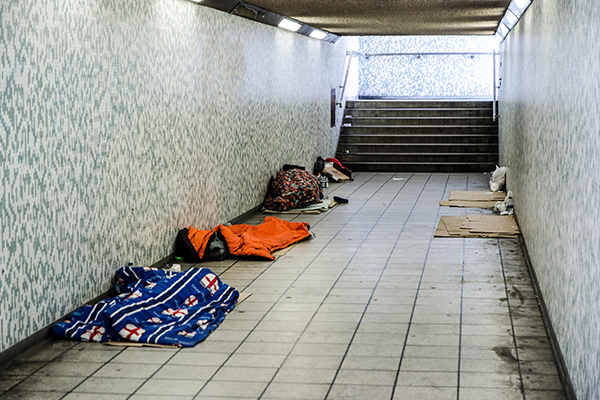


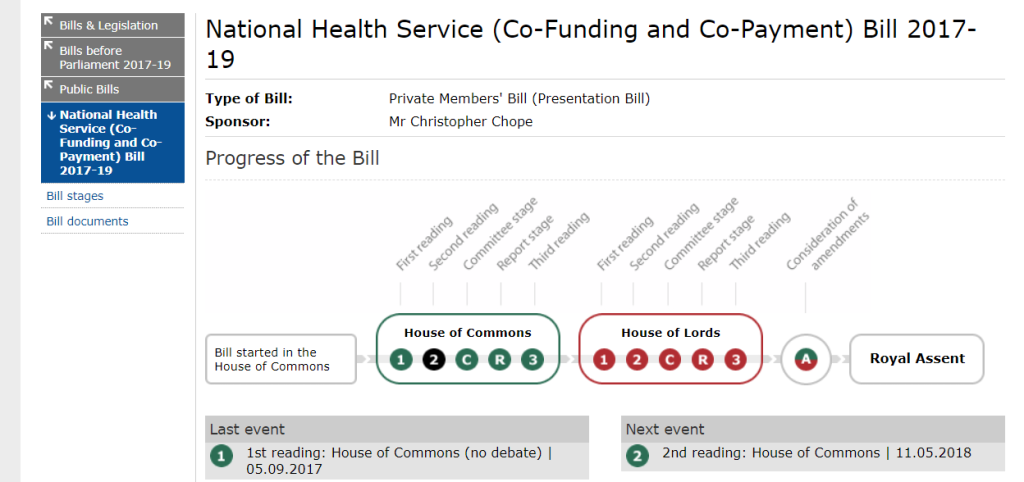
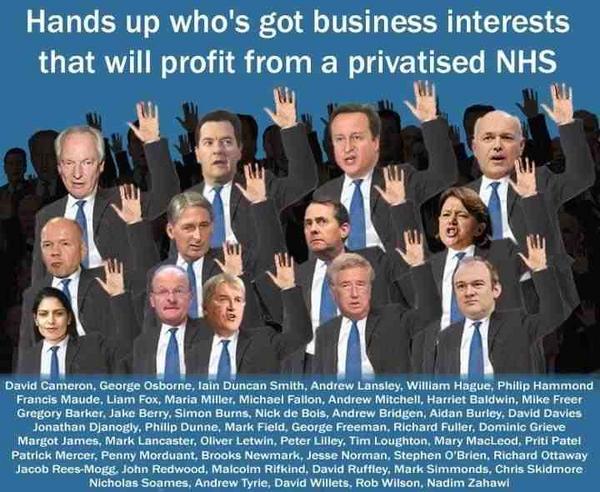

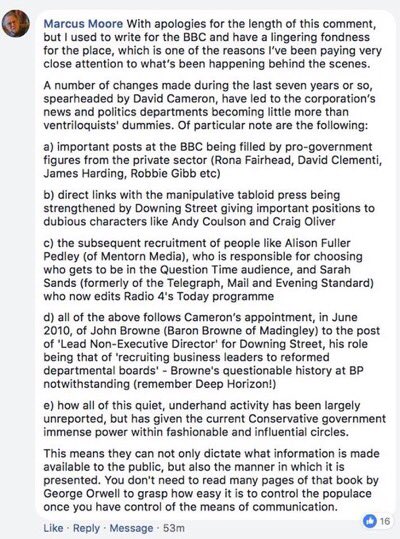
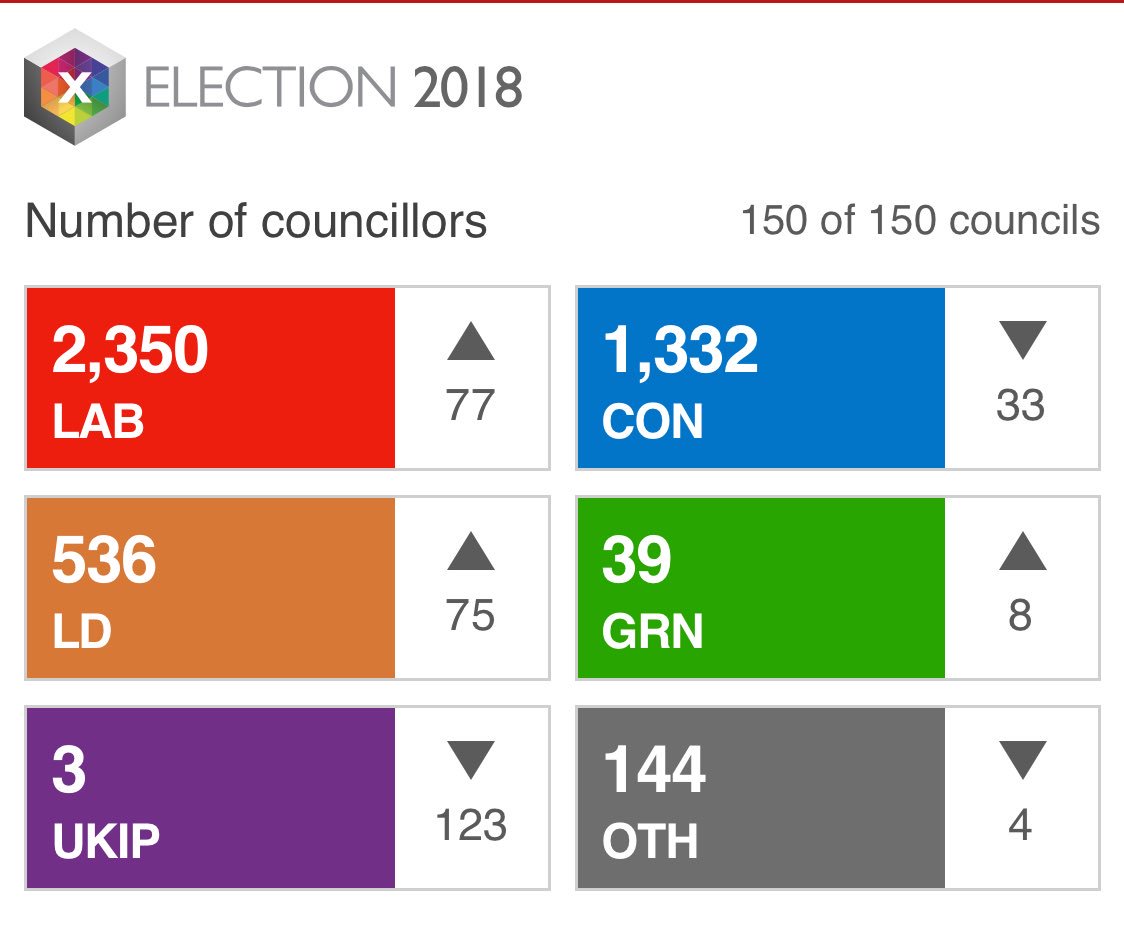
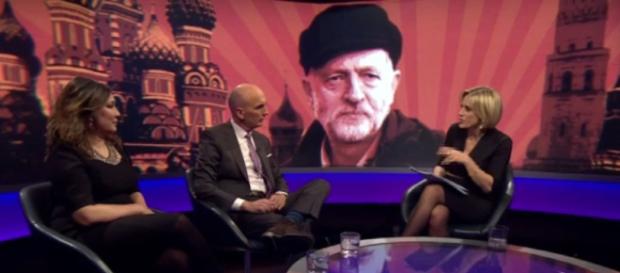

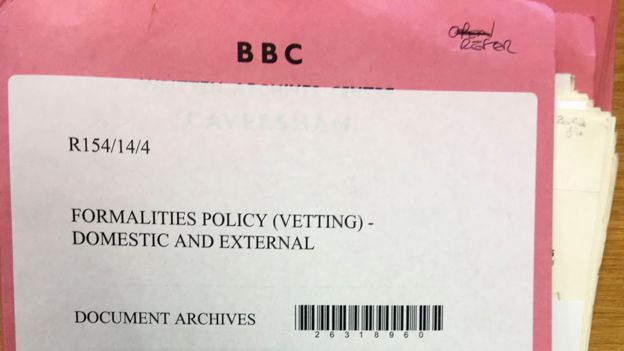





 Stripped of its ethical and contextual roots, mindfulness-based practices borrowed from Buddhist and Zen lineages risk shoring up the very sources of suffering from which the Buddha
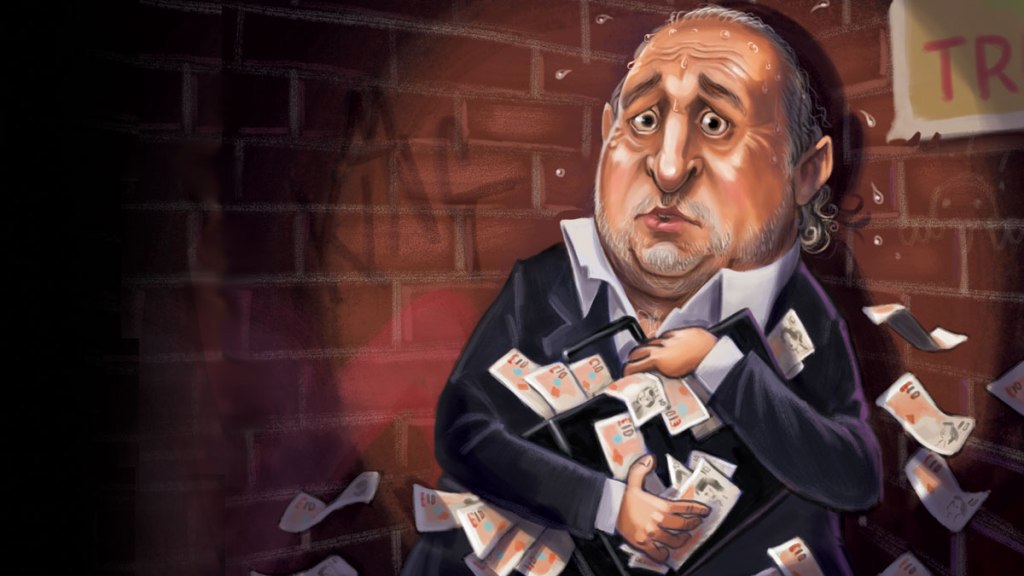

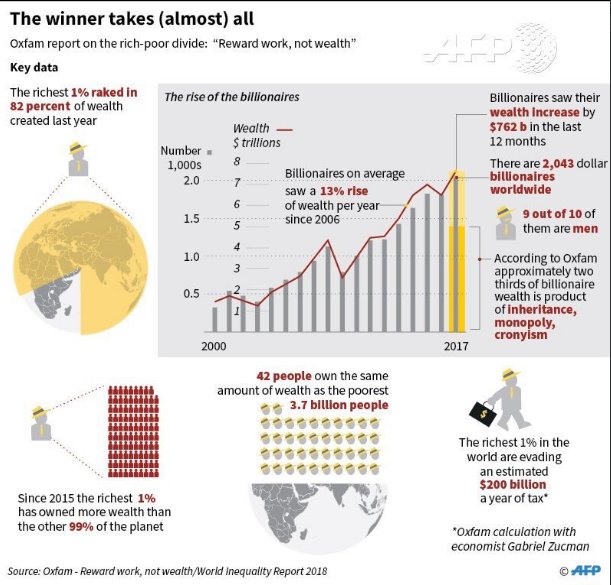
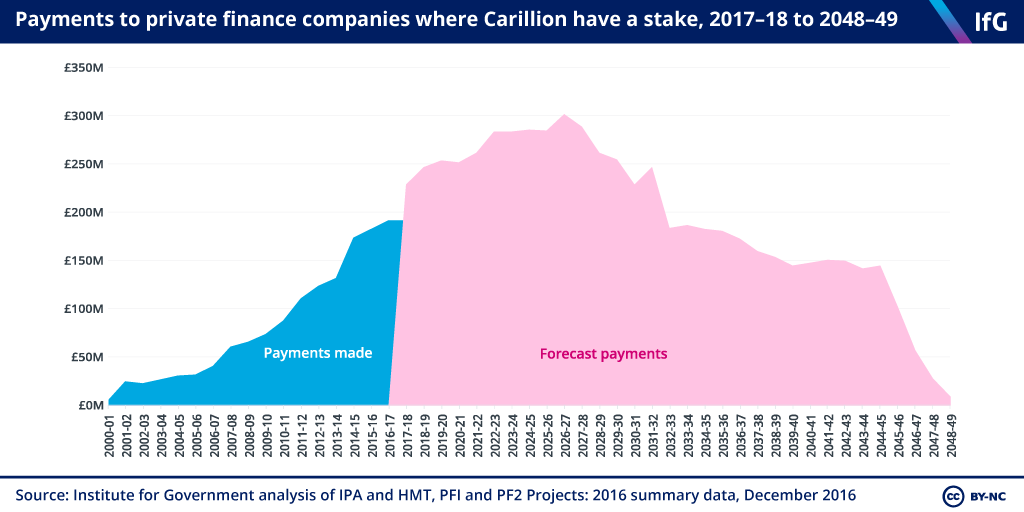
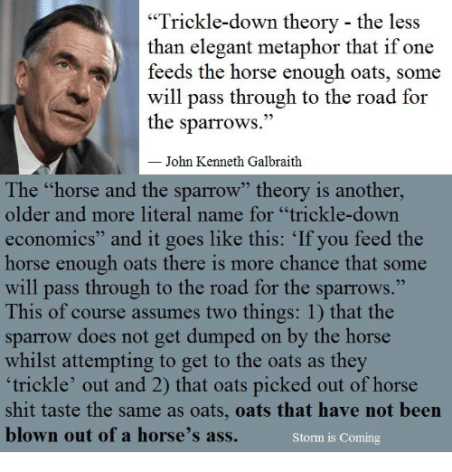
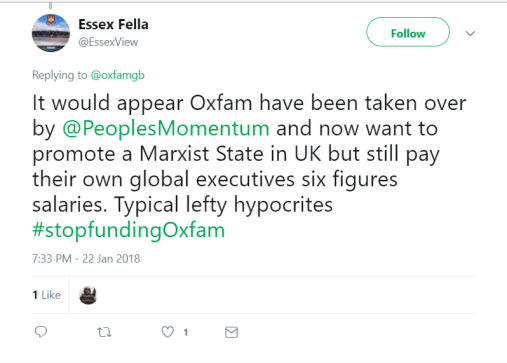









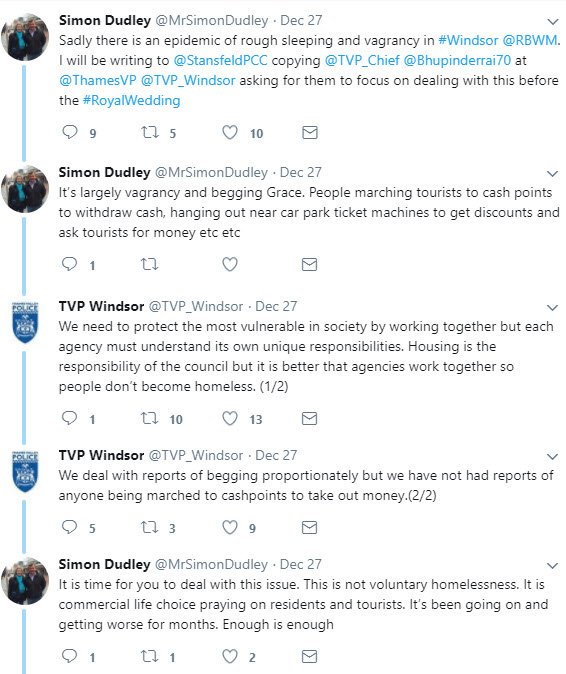

 Politics and Insights