Category: Neoliberalism

Conservatives forced to say they’ll ‘end austerity’ because they face electoral extinction

5939d6ea1d00004600cc1f8f

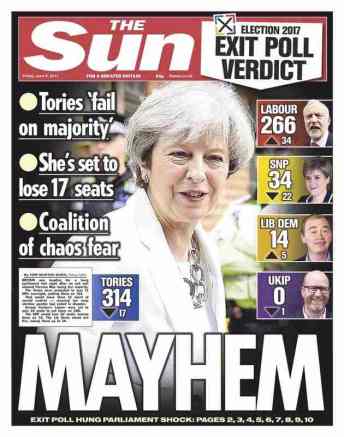
I think it’s safe to say that election opinion polls are no more useful than paying heed to Boris Johnson on a brandy binge, solemnly casting the runes and making wide ranging wishful but witless declarations. Theresa May made a decision to hold a snap election because Labour were polling badly, she saw an opportunity to increase the Conservative’s majority. She looks rather weak, wobbly and vapid now.

David Davies has loyally taken one on the chin, claiming it was his idea that May called the very ill-advised snap election. I didn’t know that Mr and Mrs May took him on walking holidays with them. That’s a bit weird and implies a kind of kinkiness that doesn’t bear thinking about.

Two of May’s close senior advisors were pushed onto their swords, too, in a bid to divert the blame for such a dreadful election result for the Tories. I wasn’t aware that the government permitted spin artists to write their policies as well as putting them through the PR machine. Still, the privileged class have always sacked their servants whenever they need to re-channel their own accountability.

I’d be more convinced that a sincere change in Tory campaign approach was due by the sacking of the wedgie and dog whistle king, the lizard of Oz, Lynton Crosby. He should go and take Murdoch with him.

The right-wing tabloids also announced the Conservative aim to “destroy” the Labour party, in savage, squawking and despotic headlines such as “Squash the saboteurs” and “Blue murder”. Brendan O’Neill gleefully announced the end of the Labour party in the Spectator back in February. The midstream media predictions and Tory plan backfired spectacularly, though many on the left were very anxious at the time.  

Media soundbites bite back hard

Here is a small sample of comments from journalists, now having to eat the toxic bile they spat out, wearing their disguise of professional contrarians. They were just glorified and well-paid trolls after all, attempting to stage-manage our democracy:

Jason Cowley, The New Statesman, March 30

“The stench of decay and failure coming from the Labour Party is now overwhelming. From the beginning we were opposed to the Corbyn leadership but, in the spirit of plural debate, happy to open our pages to him and his confidants. Our view was that Corbyn was ill-equipped to be leader of the opposition and, indeed, an aspirant prime minister…There was nothing in his record to suggest that he could remake social democracy or under­stand, let alone take advantage of, the post-liberal turn in our politics. The decline of Labour pre-dated Corbyn’s leadership, of course, but he and his closest allies have accelerated its collapse into irrelevance.”

Dominic Lawson, Sunday Times, April 30

“Corbyn’s cadre await the rout with open arms. A growing sense of puzzlement pervades Conservative campaign headquarters. Is their traditional Labour opponent at general elections really fighting to win? Or is something else going on? Obviously the individual Labour candidates will be trying their utmost to get the most votes they can. But the Tories have the peculiar sense that the Labour leadership is not properly trying.”

Dan Hodges, Daily Mail, April 29

“I’d been hearing increasingly wild stories about feedback on the doorsteps. One Tory MP told me any seat with a Labour majority of 8,000 or less was a target. Labour MPs said they were drawing that line at 10,000. Then I was told about the Bunker Project. So great is the potential scale of the meltdown, Labour moderates have identified a select group of MPs whose seats must be defended at all costs. They will receive additional financial resources and extra activists.”

Sebastian Payne, Financial Times, March 17

“The opposition leader has taken his party deep into the realms of unelectability and irrelevance. Some say he is a nice man, trying his best in a difficult job that he never wanted. That would be true if he had stepped aside by now for someone more suited to the role. Even Mr Corbyn must realise how incompetent he is at leading a serious political party.”

Allister Heath, Daily Telegraph, January 6

“Corbyn’s Labour Party faces electoral annihilation. Their poll ratings will deteriorate even further when the public finally starts to pay attention properly in the run-up to the next election. Corbyn would be lucky to get more than 26 per cent of the vote – and the Tories will be back over 40 per cent for the first time since John Major…The truth is that it is no longer possible for any sensible Labour politician to serve in Corbyn’s shadow cabinet while retaining their self-respect.” 

Suzanne Moore, The Guardian, January 11

“This is painful to watch. Labour now dwells in a kind of limbo. Nothing can move forward until he goes, and he will only go in an electoral wipe out…What vainglorious egotism, this willingness to kill a party for the thing he loves. One fundamental of populism is simply that it is popular. He is not.”  

Nick Cohen, The Observer, March 18  

“The Tories have gone easy on Corbyn and his comrades to date for the transparently obvious reason that they want to keep them in charge of Labour. In an election, they would tear them to pieces. They will expose the far left’s record of excusing the imperialism of Vladimir Putin’s gangster state, the oppressors of women and murderers of gays in Iran, the IRA, and every variety of inquisitorial and homicidal Islamist movement, while presenting itself with hypocritical piety as a moral force. Will there be 150, 125, 100 Labour MPs by the end of the flaying? My advice is to think of a number then halve it.”

The death toll of the meanstream media resonates with the chimes of freedom.


Image result for Jeremy Corbyn

The view through the Overton Window: the landscape of politics is fundamentally changed

The election results were a surprise to many, including some of those who support Labour. But Corbyn’s real achievement has been that the political landscape has changed forever. It’s a luxuriant and verdant pasture that defies the laws of neoliberal gravity – it’s a new land without the clutter of elite economic enclosures.

Ever since they won a small majority in 2015, the Conservatives have struggled to pass further austerity measures. They were forced to abandon planned cuts to tax credits and disability benefits. Philip Hammond dropped the proposed increase in National Insurance on self-employed citizens only a week after the Budget.

Now, Theresa May announces to her ministers that austerity is over. Take a moment to let that sink in. Corbyn’s aim when he put himself forward as Labour leader was originally to shift the debate about our economic organisation and to challenge the neoliberal orthodoxy.

Austerity is an intrinsic feature of neoliberalism, and has been presented as our only choice of economic organisation, since the Thatcher era. Blair’s continuation, albeit a watered down version, tempered with a handful of social protections to spare us from the worst ravages of unbridled capitalism, seemed to consolidate an “end of history” consensus that it was the only viable option. Of course it isn’t and never was. 

Corbyn has succeeded. The consensus is no more. What an extraordinary achievement. His alternative narrative has demolished the rights’ defining ideology and their reductive economic model of enclosure. 

Ed Miliband was hated by the Tories, especially because of his manifesto promise of a progressive, tax among other things, and the mainstain media hated him because of his intention to implement the Leveson recommendations. I think we should give him some credit for planting seeds in a ground that wasn’t quite fertile enough back then for the growth of a perenial bipartisan politics to flourish. It has now.  

Theresa May is poised to bring to a close seven years of ideologically driven, painful and pointless austerity after Conservative MPs warned that they would refuse to vote for further cuts. Gavin Barwell, her new advisor, explained that a key reason the Conservative party lost their majority in the election is because it “struggled” to convince people that their “quality of life” would improve under the Tories, while Jeremy Corbyn “tapped” into their concerns.

However, as we learned, it takes rather more than “convincing” rhetoric and “tapping into concerns”: it requires a genuinely alternative narrative and policies that demonstrate a commitment to the promises made. Corbyn did all of that.

Barwell has told the prime minister: “We are in danger of being deserted by the millions of working people who have deserted Labour because they don’t feel we are on their side.  

“They feel they [the Tories] are the party of BHS and not the NHS – by BHS I mean the corporate, awful revolting people like that Phillip Green and the dodgy guy he sold it to.”

804-cover-1200

The Conservatives have finally realised the inevitable: that their ideologically fueled austerity programme has made them pretty much unelectable by large sections of the population. What they hadn’t expected, though, is that young people would mobilise to participate in democracy and register their disaffection and alienation as a consequence of seven years of Tory-inflicted punishment and loss.

An attempt to re-brand the party because of the election result, however, is unlikely to be successful. The Conservatives have never been particularly accountable and transparent, and the public won’t forget the last seven years of punitive austerity that the Tories have now revealed to be neither necessary nor “in the public [or economic] interest.” Given that people have died as a consequence of the relentless austerity programme, such political expediency is highly unlikely to be forgiven.

The Conservative manifesto attack on pensions, the “dementia tax” and proposed winter fuel cuts also demonstrated to everyone that they had no respect for a section of the traditionally more right leaning electorate. If anything should have triggered the recognition that the Conservatives are callous and indifferent to the needs of the electorate, it is their utterly brutal treatment of disabled people for the last few years, leaving many of us suicidal and in utter despair. A moral boundary was crossed with impunity. It was always inevitable that other social groups would be targeted for damaging cuts to their lifeline support sooner or later.

There’s a big difference between having your hand forced to present an image that is simply more palatable to voters and facing difficulties in pushing controversial policy through the legislative process because of a diminished majority, and actually having a genuine motivation to make changes that genuinely benefit the public. Historically, the Conservatives have always been inclined towards authoritarianism, with a view that “there’s no gain without pain”. Their gain, our pain, that is. As for the declaration that austerity has ended, well, I’ll believe it when I see it.

The prime minister spent yesterday apologising to her cabinet and backbenchers, saying that she took full responsibility for losing the party’s Commons majority and running a poor campaign. “I’m the person who got us into this mess and I’m the one who will get us out of it,” she told a meeting of the 1922 Committee last night.

With Parliament being hung, the Conservatives don’t have much of a say, and austerity will all but end because they won’t be able to get further cuts through the legislative process with the ease they experienced previously. The DUP, who the Conservatives will depend on for their majority, have long opposed aggressive spending cuts, despite their controversial roots and extreme social conservatism. Their manifesto called for the abolition of the “bedroom tax” and the maintenance of universal pensioner benefits and the state pension “triple lock”.

Sources have said that Theresa May accepted that the electorate’s tolerance of austerity was “at an end” after Boris Johnson, David Davis and a series of Tory MPs told her that she had “misjudged the public mood.” So it is only the prospect of facing electoral annhilation and “minority related difficulties” that has prompted the so-called U-turn on austerity.

However, I wonder when May will apologise to the public for her party’s last few years of painful and pointless idologically driven austerity programme? Telling her MPs who lost their seats that they “didn’t deserve it” indicates that she still clings to power for the sake of power – authoritarianism – she clearly doesn’t understand democracy and does not respect the needs and wishes of the public.

Voters strongly signaled that they are tired of excruciating budget cuts. May has announced to her Ministers that austerity has ended solely because Jeremy Corbyn presented a viable and resonant alternative narrative for voters.

After accusing Labour of “magic money tree” economics, the Tories are now forced to reluctantly divert their own magic money away from the privileged 1%.

The Labour party’s anti-austerity manifesto helped propel Labour to its highest share of the vote since Tony Blair’s landslide victory in 2001.

There has already been some backlash, however. Fraser Nelson was bastard signaling on behalf of the beneficaries of neoliberalism yesterday on radio 4, telling anyone who was listening to his tedious tirade that “we have to balance the books”. He even defended the devastating cuts, controversially claiming that the decision to limit public expenditure has somehow helped the poorest citizens. 

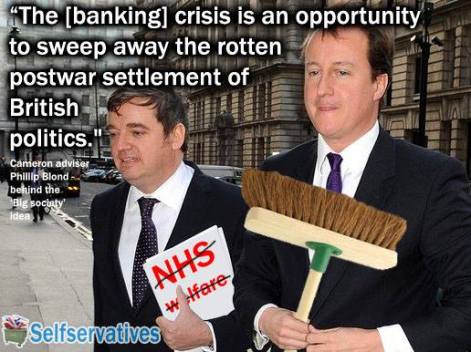
He’s part of the grotesque pro-neoliberal parade, they are currently out in force, telling us it’s okay that we have such a grossly unequal society, that people can’t meet their basic living needs and that working people need to use foodbanks, because the wealthy want to pay less tax and take more of our public funds to park offshore. Selfservatism at its most transparent and it’s very very ugly.

This privileged establishment mouthpiece thinks it’s acceptable that disabled people die prematurely and without dignity because of cuts to their lifeline support, that young people can’t afford a place of their own; that students have to take out the equivalent of a small mortgage just to study for a degree and extend their almost non-existent opportunities; that elderly people are faced with policies that stop just short of a government recommended euthanasia programme, just so the bleating, hectoring minority of beneficiaries of neoliberalism like him, with ridiculous affected accents and a culture of entitlement, pay less tax.

Nelson won’t like the fact that the run-up to the election also exposed a political culture in which debate is framed largely by appeals to base emotion, particularly in the painstream media, and has been disconnected from the details of policies on offer. The Conservatives and the press ran campaigns based on telling people who they should and should not vote for, attempting to stage manage our democracy.

Politics was reduced to fear, smearing, lying and gossip-mongering about individuals. All of the media used the repeated assertion of talking points to which factual rebuttals were ignored. The media have fueled a post-truth approach to politics, which differs from traditional contesting and falsifying of fact by rendering it of “secondary” importance. The electorate responded, and it’s hard lines for those media hard headlines. Farewell to the authoritarian Tory domination of authoritarian festering fake news.

The targeted dark ads campaign, which reflect a longstanding political misuse of psychology and personal data, were also doomed to fail for the very same reasons. People really don’t like to be told what to think and do, after all.

While post-truth has been described as a contemporary problem, there is a possibility that it has long been a part of political life, but was less notable before the advent of the Internet. Over recent years, we have been propelled into a world in which the state changes historic records daily to fit its propaganda aims of the day. But now, the public are starting to see this and are resisting the attempts at micro-management of their perceptions and voting behaviours. 

corbyn rainbow.png

Corbyn has established himself as a plausible, respectable, authentic and decent potential prime minister, despite the press gang telling us we shouldn’t under any circumstances see him that way. In the end, the likes of the Spectator, the Sun and Daily Mail did him a favour in scraping their evidently bottomless barrel of totalising ruthlessness, hatefulness, outrageous accusations, lies, half truths and misquotes. They went too far in telling people who they should vote for. Authoritarianism doesn’t work once people see it for what it is.

The Tories have tripped themselves up and lie winded and chaotically sprawling for all to see. They have lost their step on the road to hard Brexit, and lost their momentum. They won’t be able to implement their manifesto, and will struggle desperately to get any new austerity measures through parliament. Even the DUP won’t support more cuts.

But none of this will undo the damage already done.

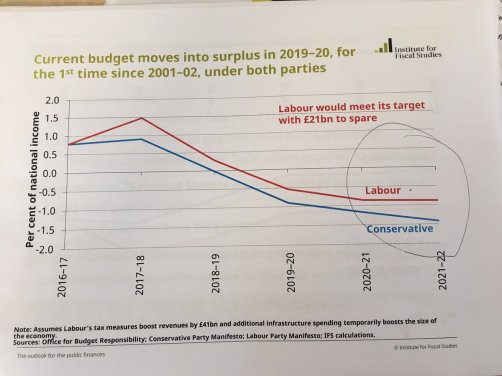
In contrast to the Conservatives, Labour costed their detailed manifesto meticulously, though it needs a little more work to ensure that the Institute of Fiscal Responsibility (IFS) see it as fully viable. However, the IFS have endorsed it overall, so far.
DAwfPxtWAAEs8DG

Barry Gardiner, shadow trade secretary, today spelled out a good Labour line for “achieving the benefits” of the single market: putting jobs and the economy first allows Labour to savage every authoritarian Brexit move that makes people poorer.

Quite properly so. Meanwhile, Labour can now get on with preparing for government.

An old spiritual that sounds so fresh in a new political context of hope.


My work is unfunded and I don’t make any money from it. But you can support Politics and Insights and contribute by making a donation which will help me continue to research and write informative, insightful and independent articles, and to provide support to others.

DonatenowButton

What I don’t understand about Conservatism

Image result for conservatism uk

I don’t understand Conservatism or the lack of rationale of its supporters.

As an ideology, it lacks coherence and scope. Conservative policies lack an empirical evidence base.

It doesn’t take very much critical scrutiny to understand that it is purely ideology (as opposed to socioeconomic needs) and traditional class-based prejudices and moralising that drive Tory legislation. Conservative rhetoric seems so random and inconsistent to me. We have an extremely regressive and authoritarian government with something of a feudal vision, that clearly has no problem with disregarding and contravening the human rights of some social groups – especially those groups that are deemed “protected”.

The Conservatives have no problem dismantling the progressive social gains of our post-war settlement (for example, legal aid, social housing, the NHS, the welfare state). The same government wants to bring back the ancient and barbaric ritual of fox hunting, yet it has the cheek to claim its opposition will “take us back to the seventies”.  Mind you, they say that about every Labour leader at every general election.

I was recently chatting with a political social psychologist about my lack of understanding about the Conservative’s profoundly antisocial and antidemocatic worldview. He told me that Conservatives have a very different moral worldview to those on the left, based on authority and discipline, (which is why they always tend towards a punitive authoritarianism in power) that lacks the notion of human dignity. As such, they are likely to experience a lower “disgust” response to human rights abuses.

There is a continuing debate on whether cognitive or emotional mechanisms underlie moral judgments, or whether emotional mechanisms actually shape cognitive ones. Recent studies have illustrated that emotions – particularly disgust – play a prominent role in moral reasoning. It seems to have a particularly strong influence on our judgments in the social andpolitical domains, too. We can feel disgust for immoral actions, for people, or for entire social groups. 

Presenting some social groups as “disgusting” by the creation of stereotypes and the use of stigmatising rhetoric can also be used intentionally to create social divisions by manipulating social prejudices. Others find the political act of dehumanising others disgusting. 

Social stigma messages bear certain recognisable attributes: they provide cues to categorize and distinguish people, and to demarcated groups as a discrete social entity; they imply a responsibility and blame for receiving placement within this demarcated outgroup and an associated “moral peril”, and this distinguished group is then associated to physical, social and economic peril.

Stigma messages evoke a variety of emotions – fear, anger and disgust – that motivate people to adopt relevant or related social attitudes. Stigma attitudes encourage the sharing of stigma messages with others in a network, which may, subsequently, bond ingroup members whilst further alienating the outgroup.

Image result for disability stigmatising messages in the newspapers

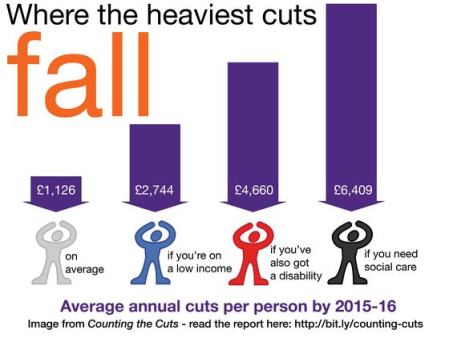
Media portrayals of disabled people that preempted public sympathy for those most affected by the punitive Conservative welfare “reforms” – a Conservative euphemism for disproportionately targeted and devastating austerity cuts. Political rhetoric framed the cuts in terms of “incentives” to “encourage” sick and disabled people into work, implying that they are simply “workshy” rather than unable to work, and making out that they are an economic burden on “the tax payer”.

2014-02-17-BurdenoftheCuts-thumb

My own observations are that Conservatives are rather more moralising than moral. They create folk devils, and use the media to generate public disgust and disdain to fuel moral panics and maintain  social outgroups. You can always predict where the next round of austerity cuts will be targeted by the group that is being demonised in the media, and by the othering rhetoric of ministers – usually it’s a variation on the “scrounger/striver” dichotomy and the “burden on the tax payer” narrative. 

The Conservatives also reconstruct the world hierarchically – Conservative policies quite clearly generate and sustain inequality. I don’t understand why anyone would think that some lives are more important and worth more than others, but Conservatives really do.

Conservatives also have a strong need to keep a tight control of the world around them, they seem to fear change and make sense of social reality via taxonomies, categories and counts. As a defense mechanism, it’s really rather anally retentive.

They think that inequality is the “natural order” of things, based on notions of “deserving” and “undeserving”, so inevitably, they think some people’s lives are worth less than others. They don’t seperate wealth, power and status from rights, unfortunately, and miss the whole point of universal human rights frameworks. For the New Right neoliberals, the only rights that matter are property rights and the liberty to compete for resources and wealth. However, human rights are all about holding the wealthy and powerful to account, to prevent abuses of power.

Surely any government that has such a blatant disregard for the rights of some citizens is a serious cause for concern in a wealthy, so-called first world democracy. Democracy by its very nature is, after all, supposed to be inclusive.

You can discern a lot about people by looking at their attitude and behaviour towards animals, because that indicates how they will regard and treat people with little power. Killing animals for “sport” is something I find loathsome and abhorrent. I don’t understand why anyone would or could be so cruel.

The Dark Triad

Inflicting acts of intentional animal torture and cruelty is quite often associated with antisocial personality disorders. In particular, it is associated with a triad of specific characteristics of personality – Machiavellianism, narcissism, and psychopathy (the malevolent Dark Triad). A 2013 study carried out by Dr. Phillip Kavanagh and his colleagues examined the relationship between the three Dark Triad personality traits and attitudes towards animal abuse and self-reported acts of animal cruelty. The study found that the psychopathy trait especially was related to intentionally hurting or torturing animals, and was also a composite measure of all three Dark Triad traits.

So how does animal cruelty link with how a person regards and treats other people?

I’m not going to argue here that all Conservatives are psychopaths. However, I am going to explore values, behaviours, traits, attitudes and worldviews using a framework of psychology.

So, what makes a Conservative a Conservative?

Some researchers have linked personality traits with political ideology. For example, Robert (Bob) Altemeyer’s right wing authoritarianism (RWA) construct emphasises submission, obedience, conventionalism, and aggression as a result of social learning (Altemeyer, 1998), conformist personality, and danger-themed worldviews. 

An additional authoritarian variable, social dominance orientation (SDO; Pratto, Sidanius, Stallworth, & Malle, 1994), found endorsement of intergroup hierarchies and inequalities resulting from a “tough-minded personality” that prefers inequality among social groups, lacks empathy and holds competitive, individualist worldviews (Duckitt, 2005). 

Social Dominance Orientation (SDO) is negatively correlated with empathy, tolerance, communality, and altruism. As I said, Consevatives tend to be quite antisocial.

Some people much prefer wide social inequalities. SDO is conceptualised as a measure of individual differences in levels of group-based discrimination; that is, it is a measure of a person’s preference for status-ranking and hierarchy within society and domination over what are perceived as lower-status outgroups. And animals, whose lives are seen as unimportant and disposable.

See Mass contempt for cruel, unscientific badger culling ignored and:


So Conservatives tend to show a predisposition toward anti-egalitarianism within and between social groups. High scores of SDO predict stereotyping, discrimination and prejudice. SDO also correlates with forms of right wing authoritarianism.

These characteristics and differences may be framed in a theory of basic human values.  

Emotional disgust plays an important role in our ethical outlook more generally. We find certain types of unethical actions disgusting, and this operates to keep us from engaging in them and makes us express disapproval of them. But according to research, psychopaths have extremely high thresholds for disgust. Of course, psychopaths fail to recognise even the most universal social obligations and norms.

Much of the way people make sense of the world is through emotion. It informs our “gut” decisions, it forges and sustains our connections to people and places, our sense of belonging and purpose. It is almost impossible to imagine life without feelings – until you come across a psychopath.

However, psychopaths often cover up their emotional coldness and moral deficit with an above average level of ever-ready charisma and engaging charm. That’s how psychopaths gain power over others and manipulate them ruthlessly, as a means to their own ends. They have a glib and superficial, but usually plausible and cunning charm that obscures their lack of empathy, principles and remorse.  

Psychopaths don’t tend to be socially awkward. They are often of better-than-average intelligence. They do not express true remorse, genuine emotion or a desire to change. Though they are often experts at telling people what they want to hear. 

Social dominance orientation is a personality trait which predicts social and political attitudes, and is a widely used social psychological scale. SDO as a measurable individual difference arose from social dominance theory. Individuals who score high in SDO desire to maintain and, in many cases, increase the differences between social statuses of different groups, as well as individual group members. Typically, they are controlling, manipulative, competitive, aggressive, dominating, tough, and unempathic, uncaring power-seekers.

People scoring high in SDO also prefer strongly hierarchical group orientations. Often, people who score high in SDO have strongly held beliefs in forms of social Darwinism. It has also been found that men are generally higher than women in SDO measures.

Studies have found that SDO has a strong positive relationship with authoritarian, sexist and racist beliefs. With right wing authoritarianism (RWA), it contributes to different forms of prejudice; SDO correlates to higher prejudice against socioeconomically disadvantaged groups, RWA correlates to higher prejudice against threatening groups, while both are associated with increases in prejudice for “dissident” groups. 

SDO is linked with callous affect (which is to be found on the psychopathy sub-scale) – the “polar opposite” of empathy. Research also strongly suggests that those scoring high on SDO proactively avoid scenarios that could prompt them to be more empathetic or tender-minded. This avoidance also decreases concern for the welfare of others.  

SDO also has a direct effect on generalized prejudice, as lack of empathy makes one unable to put oneself in another other person’s shoes, which is also a predictor of prejudice and antidemocratic views. Extensive research has provided evidence that a high social dominance orientation is strongly correlated with Conservative political views, and opposition to policy programmes and policies that aim to promote equality. SDO is also positively and significantly correlated with Dark Triad variables. 

Narcissism, Machiavellianism, and psychopathy correlated with immigrant threat perceptions and increased prejudice. 

I have a theory that while psychopaths simply lack the capacity for empathy, and can’t learn it, empaths can become desensitised, and unlearn concern for the welfare of others – they can be switched off. Research also suggests this is true. Democratic societies tend to be lower in SDO measures. That’s genuinely democratic societies, which requires the inclusion of all social groups, not just politically defined ingroups. 

Political interventions can shift compassionate left wing people temporarily to the political right. And notably, none of them seem to have anything substantive to do with policy, or with the widely understood political and ideological differences between the left and right. 

Here is a list of five things that can switch off left wing liberals, courtesy of Chris Mooney, an American science and political journalist: 

Distraction. Several studies have shown that “cognitive load” – in other words, requiring people to do something that consumes most or all of their attention, like listening to a piece of music and noting how many tones come before each change in pitch – produces a conservative political shift.

In one study, for instance, left wing and conservative subjects were asked whether government health care should be extended to a hypothetical group of AIDS victims who were responsible for their own fates (they’d contracted the disease while knowing the risks, and having unprotected sex anyway).  

Those on the left of the political spectrum, who were not under load – not distracted – wanted to help such people, despite the fact that they were personally responsible for their plight. But  the left wingers under load were much more like conservatives, appearing to reason using the just world fallacy: that this group of AIDS victims had “gotten what they deserved”. (Cognitive load did not appear to change the view of conservatives in the study.) 

Drunkenness. Alcohol intoxication is not unlike cognitive load, in that it cuts down the capacity for in-depth, nuanced thinking, and privileges economical, quick responses. Sure enough, in a recent study of 85 bar patrons, blood alcohol content was related to increased political conservatism for left wingers and conservatives alike. 

The drinkers still knew whether they were left leaning or conservative, of course. But when asked how much they agreed with a variety of statements of political principles – like, “Production and trade should be free of government interference”—higher blood alcohol content was associated with giving more conservative answers.

Time Pressure. In another study reported in the same paper, participants were asked how much they endorsed a variety of politically tinged words, like “authority” and “civil rights.” In one study condition, they had to see the term and respond to it in about 1.5 seconds; in the other condition, they had 4 seconds to do so. This made a political difference: subjects under time pressure were more likely to endorse conservative terms. 

Cleanliness/Purity. In another fascinating study, subjects who were asked political questions near a hand sanitizer, or asked to use a hand wipe before responding, also showed a rightward shift. In this case, political conservatism was being tied not to distraction, but rather, to disgust sensitivity – an emotional response to preserve bodily purity. 

Fear. After 9/11, public support for President George W. Bush also immediately swelled. In fact, a study showed that Bush’s approval ratings increased whenever terror alert levels were issued by the Department of Homeland Security. Meanwhile, the phenomenon of “liberal hawks” who wanted to attack Iraq was much remarked upon. Why is that? 

The answer seems to involve the amygdala, a region of the emotional brain that conditions our life-preserving responses to danger. Its activity seems to have political implications: When we’re deeply afraid, tough and decisive leaders are more appealing to us. So are militaristic and absolute responses, like going to war and the death penalty; things like civil liberties, meanwhile, matter less to us. 

It is unlikely that all of the phenomena discussed above involve the same cognitive mechanism. For instance, disgust sensitivity is probably operating through a different part of the brain than fear sensitivity. Still, priming people to feel either fear or disgust in this context (the need for “cleanliness”) seems to favor political conservatism, and of course, may be manipulated in favour of politically conservative candidates. 

What all of this suggests in conclusion: Maybe we’ve been thinking about political ideology in very much the wrong way. It seems to be at least partly rooted in things deeper and more primal than the policy issues of the day, and how we individually reason that we ought to handle them. And this can be very easily manipulated. 

Moreover, it is striking that the research literature does not, at least at present, contain such a plethora of ways to bring about a temporary left wing shift – to make conservatives move left. Instead, what these cases seem to reveal are some inherent conservative political advantages, especially at times of deep fear, uncertainty, and stress. (And we’ve seen some of those recently.)

Aristotle famously wrote that “man is by nature a political animal.” Perhaps it’s about time that we pay more attention to what the word “nature” here really means. 

However, the more that a society encourages citizens to cooperate and feel concern for the welfare of others, the lower the SDO is in that culture. High levels of national income and empowerment of women are also associated with low national SDO, whereas more traditional societies with lower income, patriarchal organisation and more closed institutional systems are associated with a higher SDO.  

As neoliberals, the Conservatives see the state as a means to reshape social institutions and social relationships hierarchically, based on a model of a competitive market place. This requires a highly invasive power and mechanisms of persuasion, manifested in an authoritarian turn. Public interests are conflated with narrow economic outcomes. Public behaviours are politically micromanaged and modified. Social groups that don’t conform to ideologically defined economic outcomes and politically defined norms are stigmatised and outgrouped. 

Othering and outgrouping have become common political practices, it seems. 

Rhetoric that draws on dehumanising language may be used to desensitise citizens to the welfare of others, as previously discussed. The media is sometimes used to amplify demogogues – leaders who gain popularity by exploiting prejudice and ignorance among the public, by appealing directly to the emotions of the crowd and shutting down reasoned debate and decorum. Demagogues quite often overturn established customs of political conduct and democracy, and have no empathy for those outgroups that they direct the public’s manipulated prejudices towards. 

The rise of the of the Conservative demagogue and the return of political incorrectness 

As a political idiom, Conservatism seems unlikely to spawn demagogues. However, the rise of the neoliberal New Right marked a radical break with tradition for the Conservatives. 

Demagogues often advocate immediate, forceful action to address a “national crisis” (corresponding with a danger-themed worldview) while accusing moderate and thoughtful opponents of “weakness” or “disloyalty”. Or even “economic incompetence”. Demagogues are skilled at turning power deriving from popular support into a force that undermines the very freedoms and rule of law that democracies are made to protect. 

The most fundamental technique of all demagogues is scapegoating: blaming an ingroup’s problems on an outgroup, usually of a different socioeconomic class, ethnicity or religion. For example, the Conservatives exploited a global economic crisis to begin dismantling the welfare state, unforgivably stigmatising and outgrouping disabled people and others claiming lifeline social security, and targeting them with an extremely disproportionate and punitive burden of austerity cuts, using the media to amplify their construction of folk devils to stir up public moral panic

People who need welfare support were portrayed as “scroungers” and “frauds” (regardless of the fact that this is largely untrue) to desensitise the public regarding the often devastating impacts of the subsequent draconian policy programme. 

Demagogues have often encouraged their supporters to violently intimidate opponents, both to solidify loyalty among their supporters and to discourage or physically prevent people from speaking out or voting against them.

Image result for crush the saboteursMost demagogues make a show of appearing to be down-to-Earth, ordinary citizens just like the people whose votes they seek.

theresa-may-cornwall-1

methodetimesprodwebbin6587d5c8-899e-11e6-aa51-f33df6df2868

images

                      Who are they trying to kid?

hqdefault

Ideologies that promote or maintain group inequality are the tools that legitimise discrimination. To work, ideologies appear as self-apparent truths, while those that promote them appeal to emotions and prejudice. The use of slogans as a vehicle for emotive messaging is also common among demagogues. 

Like “Taking our country back” , “Are you thinking what we’re thinking” and other political straplines that indicate clearly that the “Big Society” isn’t so big on equality and diversity. However, as history ought to have taught us, nationalist demagogues don’t simply target the group that you may dislike. They move on to other social groups – usually scapegoating those with the least power to divert you from the damage that those with the most power are inflicting on our society.  

Even “Strong and stable leadership”, trotted out over and over, amidst the fourth wave of feminist activism, is coming from a party that is notoriously resistant to structural change through positive discrimination schemes. There is lots of evidence that self declared “strong leaders” (rather than democratic ones) are usually not, and can cause a lot of damage, politically and in the workplace.

“Strong leadership” most often entails the promotion of a compelling vision by such leaders of a totalistic nature; individual consideration, expressed in a “recruitment system” designed to activate a process analogous to conversion; and the promotion of a culture characterized by conformity and the penalising of dissent. This is a feature of neoliberalism rarely discussed: it’s incompatible with democracy and human rights. 

Pinochet promised “strong leadership and economic stability”, following his coup d’état and subsequent neoliberal experiment, aided and abetted by the Chicago boys. Both Pinochet’s Chile and Hitler’s Germany highlight the dangers of self proclaimed “strong leaders” with a liking for positivism, technocratic “solutions” and a disregard for democracy and human rights. Neoliberalism requires an authoritarian government to impose it, as it invariably leads to the repression of the majority of people, and the “economic freedom” of a small, privileged group.

Image result for Pinochet strong and stable

Demagogues often seem to be incoherent and glib, but it is because they tailor their public messaging to meet the perceptions and attitudes of a variety of groups, aiming at as wide an audience as possible, hoping to appeal to everyone.

However, those peddling right wing “populist” think narratives generally commit intellectual malpractice, as the foundation of their superficial anti-elitism is founded on yet more social oppression, hierarchies, supremicist reasoning, prejudice and constructed categories of social scapegoats. It’s little more than a flimsy sales pitch for more elitism. And welfare chauvinism.  

Many demagogues also focus on the exploitation of national “crises” to push through controversial policies while citizens are too emotionally and physically distracted by disasters, upheavals or wars to mount an effective resistance. Neoliberalism is the ultimate form of such “disaster capitalism”. 

I don’t level the terms “authoritarian”, “demagogue” and “populist” arbitrarily against politicians I don’t like: these are categories that have been academically established following vigorous research, quite independently of my own views. 

Right wing demagogues tend to present a tax paying, beleaguered white middle class of economic “producers,” encouraging them to see themselves as being inexorably squeezed by parasitic groups above and below.

The rage is whipped up and directed upwards against a caricature of the conspiratorial “faceless bureaucrats,” “banksters” and “plutocrats” – rather than challenging an unfair economic system run on behalf of the privileged and powerful wealthy and corporate interests. The attacks and oppression generated by such populist white rage, however, is most painfully felt by those that are scapegoated with perceived lower socioeconomic status and historically. this has always been immigrants, refugees, and other traditionally marginalized groups, such as disabled people, lone parents and those out of work. 

Meanwhile the media is used as a political tool to erect fact proof screens around fundamental truths.

To divert opposition to this process, we have a manufactured and confusing era of “fake news” and “post truth” that suits state agendas. We have extensive state surveilance, and “behaviour change” programmes, which include the online presence of covert astroturfers and psychological operations teams attempting to infiltrate, manipulate, warp and control online discourse and public perception, and in doing so, are compromising the integrity of the internet itself.

The Conservative’s behaviour change agenda is also embedded in public policies that target in particular those who are the casualties of government economic policies, to imply blame in order to stigmatise and punish people, while systematically withdrawing our social security support and public services, and withdrawing the means of redress and remedy – legal aid has gone. Yet the Conservatives know that without equal access to justice, ordinary people simply cease to be free.

The rise of right wing political populists threatens democracy worldwide, says a new report from Human Rights Watch (HRW) released earlier this month. 

Trump and other populist leaders work from a similar propaganda crib sheet that supports bigotry, prejudice and discrimination; scapegoats immigrants and refugees for economic problems; encourages people to give up their rights in favour of authoritarian rule as a defense against perceived “outside threats”; and foments division between demographics, the report states.

HRW executive director Kenneth Roth says: “The rise of populism poses a profound threat to human rights. Trump and various politicians in Europe seek power through appeals to racism, xenophobia, misogyny, and nativism. They all claim that the public accepts violations of human rights as supposedly necessary to secure jobs, avoid cultural change, or prevent terrorist attacks. In fact, disregard for human rights offers the likeliest route to tyranny.”

Roth cited Trump’s campaign promises to curtail women’s and minority rights, deport millions of immigrants, use torture against detainees, and crack down on freedom of the press, as examples of “the politics of intolerance.”

Roth goes on to say: “We forget at our peril the demagogues of the past: the fascists, communists, and their ilk who claimed privileged insight into the majority’s interest but ended up crushing the individual. When populists treat rights as obstacles to their vision of the majority will, it is only a matter of time before they turn on those who disagree with their agenda.”

He also noted parallel campaigns in Europe that used xenophobia and nationalism to encourage people to vote away their rights, with Brexit being one of the most prominent outcomes.

He’s right. This kind of nationalist and anti-European rhetoric endangers not only economic prosperity, but also democracy. 

Political incorrectness is still incorrect

Back in 2000, Hugo Young wrote an article in the Guardian entitled Enoch Powell was expelled for this kind of demagoguery. Quoting William Hague, he says: “Labour has made this country a soft touch for the organised asylum racketeers who are flooding the country with bogus asylum seekers.” 

“That translates: asylum is ipso facto a racket, aliens are taking over Britain, every one of them is a fraudster until proved otherwise. All that’s missing is the Tiber flowing with blood.

“For we’ve been here before. The only difference between Enoch Powell’s philippic in 1968 against the migrant masses whose numbers were destroying the British nation, and Mr Hague’s demagogic caricature of asylum in 2000, is that whereas Powell was expelled from the shadow cabinet for saying what he said, today’s shadow cabinet has made his political strategy their own.

“Ann Widdecombe, Hague’s blustering ally in this matter, finds it perfectly respectable to list each of the mild pro-immigrant measures Labour has taken since 1997 as part of her anti-asylum indictment, without ever referring to the causes of the increased demand. As far as the Tory party is concerned, the Kosovo war never happened and Balkan, let alone Somali or Rwandan or Nigerian or Colombian, tragedies do not exist – though Rhodesia looks like being an exception.

“A screen of respectability sometimes covers Mr Hague’s own words. There are references to the need to protect “genuine” asylum-seekers from the rest. But here is authentic bogusness, the genuine bogus article, addressed to a party which in its present incarnation shows no interest in asylum-seekers of any kind, the genuine any more than the deceiving.

“Any such refinement would complicate the political message, now delivered into the local elections, that the Tories alone can be relied on to take a harsh line against the flooding influx of racketeering aliens.”

It’s possible to identify an emergent right wing populist theme right here. And an overall strategy for creating scapegoats. I can’t help but wonder how many of those ordinary people who felt that Powell’s infamous “Rivers of Blood” speech “spoke to them” would feel the same resonance with what he wrote about hospital waiting lists in his book Medicine and Politics:

“It might (!) be thought macabre to observe that if people are on a waiting list long enough, they will die—usually from some cause other than that for which they joined the queue. Short of dying, however, they frequently get bored or better, and vanish.”

Nobody really knows if Powell has ever tried to make a joke, but if he has that passage was not it. It was written, with much more in the same heartless vein, by a man who was once Minister of Health. 

During a meeting with parents of babies that had been born with severe deformities caused by the morning sickness drug thalidomide, he was remarkably unsympathetic to the victims, refusing to meet any with affected babies. He simply said that “anyone who took so much as an aspirin put himself at risk.”

Powell had an unrepentant contempt for popular opinion, despite his apparent rapport with supporters of “ethnic nationalism” and a dark void where his empathy should have been. The Thatcher era Conservatives, fueled the rise far right groups such as the National Front. Cameron’s government fueled the rise of UKIP. It suits their purpose in creating social division and diversion. As for Powell, well he was simply an unrepentant, ruthlessly ambitious capitalist politician.

Powell also refused to launch a public inquiry into the Thalidomide scandal, resisted calls to issue a warning against any left-over thalidomide pills that might remain in people’s medicine cabinets (as US President John F. Kennedy had done), and said “I hope you’re not going to sue the Government…. No one can sue the Government.”

Since Powell, there has always been an easily identifiable racial minority for the Tories to blame for all working class problems and frustrations usually created by the Conservatives.

Many of the socially liberal democratic gains made in the form of our post-war sttlement for the UK citizenry are being dismantled by the Conservatives, and they show no shame in using a “them and us” rhetoric to achieve it. That is, each time they have created a convenient “them” to point to. 

And that’s the thing about fascism and demagoguery. It grows. Fascists don’t just target and punish social groups that you may not like. They add to their repertoire all the time. First it may be “foreigners”, next it may be disabled people and those without jobs, then the elderly.

A fascist is a fascist, regardless of who you are and how safe from prejudice you think you may be. The truth is that no-one who is an ordinary citizen is safe. Prejudice multitasks. The growth of social prejudice, originating from nationalism, has historically led some societies to commit the most terrible and inhumane acts.

164204381

In light of this discussion, I don’t understand Conservatism one bit. I can’t understand why it has persisted. The Conservatives, from Thatcher onwards, have remained disciples of the anec­dotal dictator who thought that the way to eradicate pov­erty in Chile was to kill poor people by slow starvation, and “disappear” his many opponents.

I don’t understand ordinary people who support the Conservatives, because their “long term economic plan” has to be enforced by an authoritarian government. It will entail an incremental closing down of trade union activity, the loss of even basic citizens rights, the prohibition of all political activities and all forms of free expression, including on the internet, which the Conservatives intend to regulate and control.

It will entail the constant division and reduction of our society into further “us and them” categories. It will require the use of cultivated widespread public fear and anxiety as a constant diversion to the growing inequalities, human rights abuses and mass poverty that the government intend to inflict on the UK via the neoliberal policy programme.

I don’t understand how anyone can fail to see that state oppression – repression for the majorities and “economic freedom” for a minority of privileged groups – are two sides of the same Conservative coin drawn from a neoliberal currency. I don’t understand why people cannot see this unfolding now.

I don’t understand why the penny hasn’t yet dropped.


I don’t make any money from my work. But you can support Politics and Insights and contribute by making a donation which will help me continue to research and write informative, insightful and independent articles, and to provide support to others. The smallest amount is much appreciated, and helps to keep my articles free and accessible to all – thank you.

DonatenowButton

Noam Chomsky endorses Jeremy Corbyn. Here’s why

Image result for Noam Chomsky

Professor Noam Chomsky has urged the British electorate to vote for Labour. In an exclusive interview with the Guardian, earlier this month, Chomsky stated: “If I were a voter in Britain, I would vote for him.”

The linguist, cognitive academic and philosophical anarchist endorsed Jeremy Corbyn, and observes that the Labour Party would be doing far better in opinion polls if it were not for the “bitter” hostility of the mainstream media.

As Chomsky is world renowned for being a major critic of neoliberalism, it comes as no surprise that he supports a candidate who would reverse the radical socioeconomic reforms that Britain has gone through since the Thatcher era.

He said there were a lot of factors involved, but insisted that Labour would not be trailing the Conservatives so heavily in the polls if the media was more open to Corbyn’s agenda.  He said: “If he had a fair treatment from the media – that would make a big difference.” 

Asked what motivation he thought newspapers had to oppose Corbyn, Chomsky said the Labour leader had, like Bernie Sanders in the US, broken out of the “elite, liberal consensus” that he claimed was “pretty conservative”.

It’s potentially a fresh and hopeful view from the Overton window, if only we would open the curtains.

The academic, who was in Britain to deliver a lecture at the University of Reading on what he believes is the deteriorating state of western democracy, says that voters had turned to the Conservatives in recent years because of “an absence of anything else”.

He said: “The shift in the Labour party under [Tony] Blair made it a pale image of the Conservatives which, given the nature of the policies and their very visible results, had very little appeal for good reasons.”

He added that Labour had needed to “reconstruct itself” in the interests of working people, with concerns about human and civil rights at its core, arguing that such a programme could appeal to the majority of people. As a human rights activist, I have to agree.

Chomsky said that the future must lie with the left of the party. “The constituency of the Labour party, the new participants, the Momentum group and so on … if there is to be a serious future for the Labour party that is where it is in my opinion,” he said.

The comments came as Chomsky prepared to deliver a university lecture entitled Racing for the precipice: is the human experiment doomed?

He told the Guardian that he believed people had created a “perfect storm” in which the key defence against the existential threats of climate change and the nuclear age were being radically weakened.

“Each of those is a major threat to survival, a threat that the human species has never faced before, and the third element of this pincer is that the socio-economic programmes, particularly in the last generation, but the political culture generally has undermined the one potential defence against these threats,” he said.

Chomsky described the defence as a “functioning democratic society with engaged, informed citizens deliberating and reaching measures to deal with and overcome the threats”. 

He said that neoliberal policies are the reason for the breakdown in democracy, they had transferred power from public institutions to markets and deregulated financial institutions while failing to benefit ordinary people. 

It’s certainly true that neoliberalism is incompatible with democracy and human rights frameworks.

He said: “In 2007 right before the great crash, when there was euphoria about what was called the ‘great moderation’, the wonderful economy, at that point the real wages of working people were lower – literally lower – than they had been in 1979 when the neoliberal programmes began. You had a similar phenomenon in England.”

Chomsky said that the disillusionment that followed gave rise to the surge of anti-establishment movements – including Donald Trump and Brexit, but also Emmanuel Macron’s victory in France and the rise of Corbyn and Sanders. 

He said: The Sanders achievement was maybe the most surprising and significant aspect of the November election. Sanders broke from a century of history of pretty much bought elections. That is a reflection of the decline of how political institutions are perceived.”

But he said the positions that the US senator, who challenged Hillary Clinton for the Democratic nomination, had taken would not have surprised Dwight Eisenhower, who was US president in the 1950s.

“[Eisenhower] said no one belongs in a political system who questions the right of workers to organise freely, to form powerful unions. Sanders called it a political revolution but it was to a large extent an effort to return to the new deal policies that were the basis for the great growth period of the 1950s and 1960s.”

Chomsky believes that Corbyn stands in the same tradition.

The media is the massage

Chomsky has written extensively about the role of the free market media in reinforcing dominant ideology and maintaining the unequal distribution and balance of power. 

In Manufacturing Consent, Chomsky and Herman explore the pro-establishment media’s role in establishing the apparence of a political and economic orthodoxy (neoliberalism) and extending a seemingly normative compliance with state policies, while also marginalising antithetical or alternative perspectives, dismissing them as heresy. In the US and UK, most left wing commentors have a very diminished media platform from which to present their perspectives and policy proposals.

This “free-market” version of censorship is more subtle and difficult to identify, challenge and undermine than the equivalent propaganda system which was present in Nazi Germany or the Soviet Union. 

As Chomsky argues, the mainstream press is corporate owned and so reflects corporate priorities and interests. While acknowledging that some journalists are dedicated and well-intentioned, he says that the choice of topics and issues featured in the mass media, the unquestioned premises on which that “coverage” rests, and the range of opinions that are expressed are all constrained to reinforce the state’s dominant ideology.

Last year, research by YouGov found that the British media is the most right wing in Europe. Readers also ranked the British press as the most biased in all of the seven countries surveyed.

Noam Chomsky: I would vote for Jeremy Corbyn (extended interview) – BBC Newsnight

Noam Chomsky’s 8-Point Rationale for Voting for the “Lesser Evil” Candidate

Although this was written about the American political system, it applies equally well to the UK one.

Chomsky says: “Critics of “lesser evil voting” (LEV) should consider that their footing on the high ground may not be as secure as they often take for granted. 

Generally associated with the religious left, secular leftists implicitly invoke it when they reject LEV on the grounds that “a lesser of two evils is still evil.” Leaving aside the obvious rejoinder that this is exactly the point of lesser evil voting – i.e. to do less evil, what needs to be challenged is the assumption that voting should be seen a form of individual self-expression rather than as an act to be judged on its likely consequences. 

The basic moral principle at stake is simple: not only must we take responsibility for our actions, but the consequences of our actions for others are a far more important consideration than feeling good about ourselves.

Leaving aside the obvious rejoinder that this is exactly the point of lesser evil voting-i.e. to do less evil, what needs to be challenged is the assumption that voting should be seen a form of individual self-expression rather than as an act to be judged on its likely consequences, specifically those outlined in 4). The basic moral principle at stake is simple: not only must we take responsibility for our actions, but the consequences of our actions for others are a far more important consideration than feeling good about ourselves.

While some would suggest extending the critique by noting that the politics of moral witness can become indistinguishable from narcissistic self-agrandizement, this is substantially more harsh than what was intended and harsher than what is merited. That said, those reflexively denouncing advocates of LEV on a supposed “moral” basis should consider that their footing on the high ground may not be as secure as they often take for granted to be the case.

A third criticism of LEV equates it with a passive acquiescence to the bipartisan status quo under the guise of pragmatism, usually deriving from those who have lost the appetite for radical change. It is surely the case that some of those endorsing LEV are doing so in bad faith-cynical functionaries whose objective is to promote capitulation to a system which they are invested in protecting. Others supporting LEV, however, can hardly be reasonably accused of having made their peace with the establishment.

Their concern, as alluded to in 6) and 7) inheres in the awareness that frivolous and poorly considered electoral decisions impose a cost, their memories extending to the ultra-left faction of the peace movement having minimized the comparative dangers of the Nixon presidency during the 1968 elections. The result was six years of senseless death and destruction in Southeast Asia and also a predictable fracture of the left setting it up for its ultimate collapse during the backlash decades to follow.

The broader lesson to be drawn is not to shy away from confronting the dominance of the political system under the management of the two major parties. Rather, challenges to it need to be issued with a full awareness of their possible consequences.

This includes the recognition that far right victories not only impose terrible suffering on the most vulnerable segments of society but also function as a powerful weapon in the hands of the establishment center, which, now in opposition can posture as the “reasonable” alternative. A Trump presidency, should it materialize, will undermine the burgeoning movement centered around the Sanders campaign, particularly if it is perceived as having minimized the dangers posed by the far right.

A more general conclusion to be derived from this recognition is that this sort of cost/benefit strategic accounting is fundamental to any politics which is serious about radical change. Those on the left who ignore it, or dismiss it as irrelevant are engaging in political fantasy and are an obstacle to, rather than ally of, the movement which now seems to be materializing.

Finally, it should be understood that the reigning doctrinal system recognizes the role presidential elections perform in diverting the left from actions which have the potential to be effective in advancing its agenda. These include developing organizations committed to extra-political means, most notably street protest, but also competing for office in potentially winnable races. The left should devote the minimum of time necessary to exercise the LEV choice then immediately return to pursuing goals which are not timed to the national electoral cycle.

*****

1) Voting should not be viewed as a form of personal self-expression or moral judgement directed in retaliation towards major party candidates who fail to reflect our values, or of a corrupt system designed to limit choices to those acceptable to corporate elites.

2) The exclusive consequence of the act of voting in 2016 will be (if in a contested “swing state”) to marginally increase or decrease the chance of one of the major party candidates winning.

3) One of these candidates, Trump, denies the existence of global warming, calls for increasing use of fossil fuels, dismantling of environmental regulations and refuses assistance to India and other developing nations as called for in the Paris agreement, the combination of which could, in four years, take us to a catastrophic tipping point. Trump has also pledged to deport 11 million Mexican immigrants, offered to provide for the defense of supporters who have assaulted African American protestors at his rallies, stated his “openness to using nuclear weapons”, supports a ban on Muslims entering the U.S. and regards “the police in this country as absolutely mistreated and misunderstood” while having “done an unbelievable job of keeping law and order.” Trump has also pledged to increase military spending while cutting taxes on the rich, hence shredding what remains of the social welfare “safety net” despite pretenses.

4) The suffering which these and other similarly extremist policies and attitudes will impose on marginalized and already oppressed populations has a high probability of being significantly greater than that which will result from a Clinton presidency.

5) 4) should constitute sufficient basis to voting for Clinton where a vote is potentially consequential-namely, in a contested, “swing” state.

6) However, the left should also recognize that, should Trump win based on its failure to support Clinton, it will repeatedly face the accusation (based in fact), that it lacks concern for those sure to be most victimized by a Trump administration.

7) Often this charge will emanate from establishment operatives who will use it as a bad faith justification for defeating challenges to corporate hegemony either in the Democratic Party or outside of it. They will ensure that it will be widely circulated in mainstream media channels with the result that many of those who would otherwise be sympathetic to a left challenge will find it a convincing reason to maintain their ties with the political establishment rather than breaking with it, as they must.

8) Conclusion: by dismissing a “lesser evil” electoral logic and thereby increasing the potential for Clinton’s defeat the left will undermine what should be at the core of what it claims to be attempting to achieve.”

 
 —
 

Noam Chomsky is institute professor emeritus in the Department of Linguistics and Philosophy at Massachusetts Institute of Technology. His most recent books are Who Rules the World? (Metropolitan Books, 2016) and Requiem for the American Dream: The 10 Principles of Concentration of Wealth & Power (Seven Stories Press, 2017). His website is www.chomsky.info.

“Gig economy” companies exploit workers and are free-riding on the welfare state

Image result for gig economy uk

Deliveroo couriers plan legal action against the food delivery firm to claim better employment rights including the minimum wage, sick pay and holiday.

The 20 delivery riders say they are employees and not, as the company argues, self-employed contractors. In the latest challenge to employment conditions in the gig economy, they are seeking compensation for not receiving holiday pay and for being paid wages below the legal minimum for employees.

The Deliveroo worker’s move follows successful employment tribunal cases brought by cycle couriers at CitySprint, Excel and drivers for taxi app Uber. All three cases found the riders were workers, meaning they are entitled to basic employment rights including holiday pay and the minimum wage, rather than self-employed contractors with no employment rights. 

Uber claimed that its 40,000 drivers in the UK are self-employed, and therefore not entitled to pensions, holiday pay, or other basic employment rights. An employment tribunal in London disagreed, calling Uber’s argument that it was simply a technology company “ridiculous”, and they were relying on “fictions and twisted arguments.”

HMRC is investigating delivery giant Hermes for paying workers less than the minimum wage. Staff receive no holiday or sick pay, and risk losing work if they can’t make their rounds due to illness or lack of childcare.

Some 78 couriers working for Hermes, a company that describes itself as “the UK’s largest nationwide network of self employed couriers”, have subsequently made complaints to Frank Field, the chairman of the House of Commons work and pensions select committee.

It is estimated that falsely classifying workers as self-employed is costing the UK up to £314m per year in lost tax and national insurance contributions. 

A recent study has found that the average self-employed contractor is now paid less than in 1995

The Resolution Foundation – a think tank that aims to improve pay for families – partly has blamed the changing nature of the self-employed workforce. Their report says: “With the introduction and growth of the [so-called] New Living Wage, by 2020 more than 1 in 7 are expected to be paid at or only just above the legal minimum. This increases the need for employers and government to provide personal progression opportunities to get people beyond the wage floor.”

Currently, the government expects individuals to make in-work progression without support, or face financial penalties (sanctions) to their top up Universal Credit. This draconian approach forces unreasonable responsibility onto individuals and their familes, because the problem of low pay is one of exploitative employers and government policy rather than of individual behaviour.

Employers are responsible for setting pay levels and terms. The problem is more broadly one of the key features of neoliberalism, which has led to increasing employment precarity, characterised by insecure, exploitative forms of work. Meanwhile, the organisation of labour and collective bargaining by trade unions are being portrayed as “market distortions” by a government (and a party) that has legislated mercilessly to undermine the basic rights and fair levels of pay for employees.

The Labour party have pledged to reverse the Conservative’s anti-union laws if they are elected June.

The political logrolling of the profit incentive presents us with the most unedifying and hard face of neoliberalism, in which human need is profoundly devalued; the employee is merely availed of as an object of value extraction. The Conservatives certainly don’t value the idea of “a fair day’s wage for a fair day’s work”, despite all their rhetoric about “making work pay”. Over the past six years, we learned that this slogan was only a semantic decoy: a cover for the dismantling of our welfare state by a creeping, unremitting stealth.

The report went on to say that many more people had taken up lower-paid jobs in the so-called “gig economy, essentially self-employed workers taking on a variety of different roles, while the proportion of self-employed business owners with their own staff had fallen. The number of hours worked by the self-employed had also declined.

The foundation said this had limited wage growth before the financial crash, but that pay had been “squeezed” in real terms more recently, falling £100 a week by 2013-14.

Last year, TUC general secretary Frances O’Grady said: “Britain’s new generation of self-employed workers are not all the budding entrepreneurs ministers like to talk about.

“While some choose self-employment, many are forced into it because there is no alternative work. Self-employment today too often means low pay and fewer rights at work.”

The Resolution Foundation’s most recent briefing looks at the final quarter of labour market data for 2016. It says: “Most importantly, inflation has risen rapidly in recent months, weighing heavily on real pay growth – though published pay statistics will take some time to fully reflect this. Well over a third of the workforce are experiencing shrinking pay packets according to the latest figures, in sectors ranging from accommodation to finance and the public sector. Many more will join them in the coming months as inflation continues to rise, with pay across the economy as a whole set to have fallen in the first three months of 2017.

Indeed, our ‘Spotlight’ article notes that real pay in the public sector has likely now begun a fall that could well last for several years. Conversely, private sector pay growth will continue to outpace the headline average earnings figures.”

A Department for Business spokesperson said the government was “committed to building an economy that works for everyone”.

Last year, Damian Green said, in a speech at the Resolution Foundation, that the private sector and voluntary sector “should be more involved in the provision of welfare services”. Green’s endorsement of the “exciting” gig economy and the “huge potential” that it offered came just the month after an employment tribunal found that drivers for the Uber car service should in fact get the minimum wage and paid holiday. 

Green also said: “The Government is a necessary, but not sufficient provider of welfare.” 

Shadow Digital Economy minister Louise Haigh tabled an amendment to the Government’s Digital Economy Bill, New Clause 24, following the tribunal ruling against Uber. 

She said there was still a danger that despite the ruling, Silicon Valley multinationals and other employers could use “loopholes” to break the rules and get around workers’ protections. 

Haigh said: “This is a landmark ruling for workers in the digital economy, and a great victory for the GMB and its members.

“The digital economy was supposed to promise choice and flexibility, but the reality for too many in the sector is that they are overworked, underpaid and exploited by bosses they never meet and who do not even fulfil their basic duties as an employer.

The Work and Pensions Committee report

In a new report the Work and Pensions Committee also concluded that the government must close the loopholes that are currently allowing “bogus” self-employment practices, which are potentially creating an extra burden on the welfare state while simultaneously reducing the tax contributions that sustain it. Increasingly, some companies are using self-employed workforces as cheap labour, excusing themselves from both responsibilities towards their workers and from substantial National Insurance liabilities, pension auto-enrolment responsibilities and the Apprenticeship Levy. 

In an inquiry that has had to be curtailed because of the election, the Committee heard from “gig economy” companies like Uber, Amazon, Hermes and Deliveroo, and from drivers who work with them. The evidence taken painted starkly contrasting pictures of the effect and impact of “self-employment” by these companies.

Companies utlilising self-employed workforces frequently promote the idea that flexible employment is contingent on self-employed status, but the Committee says this is a fiction.

The report

The Committee says:

  • The apparent freedom companies enjoy to deny workers the rights that come with “employee” or “worker” status fails to protect workers from exploitation and poor working conditions. It also leads to substantial tax losses to the public purse, and potentially places increased strain on the welfare state.
  • Designating workers as self-employed because their contract offers none of the benefits of employment puts the cart before horse. It is clear, though, that this logic has taken hold, enabling companies to propagate a myth of self-employment. This myth frequently fails to stand up in court, but individuals face huge risks in challenging their employment status that way.
  • Where there are tax advantages to both workers and businesses in opting for a self-employed contractor arrangement, there is little to stand in the way.
  • An assumption of the employment status of “worker” by default, rather than “self-employed” by default, would protect both those workers and the public purse. It would put the onus on companies to provide basic safety net standards of rights and benefits to their workers, and make the requisite contributions to the social safety net. Companies wishing to deviate from this model would need to present the case for doing so, shifting the burden of proof of employment status onto the better resourced company. 
  • Self-employed people and employees receive almost equal access to all of the services funded by National Insurance, especially with the introduction of the new state Pension, yet the self-employed contribute far less. The incoming government should set out a roadmap for equalising employee and self-employed National Insurance Contributions.
  • The Department for Work and Pensions (DWP) needs to ensure that its programmes and resources reflect the positive contribution that self-employment can make to society and the economy. This may require an expansion of specialist support in JobCentre Plus.
  • The DWP is seeking to support entrepreneurship without subsidising unprofitable self-employment. The existing Minimum Income Floor (MIF) in Universal Credit (UC) does not get this balance right and risks stifling viable new businesses. The incoming Government should urgently review the MIF with a view to improving its sensitivity to the realities of self-employment. Until this is complete, the MIF should not apply to self-employed UC claimants.

Chair’s comments

Frank Field MP, Chair of the Committee, said;

“Companies in the gig economy are free-riding on the welfare state, avoiding all their responsibilities to profit from this bogus “self-employed” designation while ordinary tax-payers pick up the tab. This inquiry has convinced me of the need to offer “worker” status to the drivers who work with those companies as the default option. This status would be a much fairer reflection of the work they undertake which seems to fall between what most of us would think of as “self-employed” or “employed”. 

It would also protect them from some of the appalling practices that have been reported to the Committee in this inquiry. Uber’s recent announcement that it will soon charge its drivers for sickness cover is just another way of pushing costs onto the workforce, to reinforce the impression that those workers are self-employed.

Self-employment can be genuinely flexible and rewarding for many, but “workers” and “employees” can and do work flexibly. Flexibility is not the preserve of poorly paid, unstable contractors, nor does the brand of “flexibility” on offer from these gig economy companies seem reciprocal. It is clearly profit and profit only that is the motive for designating workers as self-employed. The companies get all the benefits, while workers take on all the risks and the state will be expected to pick up the tab, with little contribution from the companies involved.

It is up to Government to close the loopholes that are currently being exploited by these companies, as part of a necessary and wide ranging reform to the regulation of corporate behaviour.”

Uber


My work is unfunded and I don’t make any money from it. I am disabled because of illness and struggle to get by. But you can support Politics and Insights and contribute by making a donation which will help me continue to research and write informative, insightful and independent articles, and to provide support to others.  DonatenowButton

Dishonest ways of being dishonest: an exploration of Conservative euphemisms

imgres

Conservatives are especially conservative with the truth: the media are the message

In 2004, George Lakoff, professor of linguistics at Berkeley, wrote Don’t Think of an Elephant! Lakoff’s central point was that how issues are framed – which points of view the media and other political agenda setters defined as important and acceptable, and the language used to do so – largely shapes how voters think about them. 

Media manipulation involves a series of related techniques in which partisans create images or arguments that favour their own particular interests. Such tactics may include the use of logical fallacies, psychological manipulations, deception, linguistic, rhetorical and propaganda techniques, and often involve the suppression of information or alternative perspectives by simply crowding them out.  

Discrediting and minimisation are often used in persuading other people or social groups to stop listening to certain perspectives and arguments, or by simply diverting public attention elsewhere. An example of diversion is the recent widespread scapegoating of refugees and people who need social security, such as disabled people or those who have lost their jobs, in a bid to maintain the hegemony of neoliberalism and its values at a time when its failings were brought into sharp focus during and following the global crisis – also exposing failings in the behaviours and practices of the government and the vulture capitalist financier class.

Neoliberalism always gravitates towards increasing inequality, extending and deepening poverty. Fear mongering is sometimes used with a diversion or misdirection propaganda technique to mask this, and may be pervasive. Sometimes politicians and media commentators suddenly take a debate in a weird and irrational but predictable direction to avoid democratic accountability.

The process often begins with a marginalised group being singled out and held to blame for the socioeconomic problems created by the system of socioeconomic organisation itself. Using the construction of folk devils (welfare “skivers” , “workshy” “something for nothing culture”, “culture of entitlement” or “dependency” for example), the political class and media generate moral panic and outrage, which serves to de-empathise the public and to justify the dehumanisation of politically created outgroups.

Stigma, prejudice and discrimination follow, all of which serves to subvert responsibility for the harmful consequences and distress experienced by the targeted group. In the UK, people needing welfare support, and particularly disabled people, have been stigmatised and then targeted with discriminatory policies which have placed a disproportionate burden of austerity – cuts to lifeline support and services – on that social group. The policies have also contravened disabled people’s human rights.

Meanwhile, the vulture capitalist financier class are still being rewarded, profiting from often reckless, economic and socially damaging behaviours. Of course it’s business as usual for this group, regardless of the pressing need for behavioural change and an increased responsibility-taking mindset among them. After all, it is this group that have caused most damage to our economy, and on a global scale.

The media and the government conflate neoliberal authoritarian behaviours, and policies that cause distress and harm to marginalised social groups, with “power and strength”, and any opposition to this with “weakness”.

Campaigners against social injustice are labeled “extremist” and politicians on the left who stand up against prejudice and discrimination are labeled “weak”, “anti-British” and extensively ridiculed and smeared. Every single Labour leader, with the exception of Blair, has had this treatment from the mainstream media.

During the coalition and Conservative governments, the tabloids have chosen and framed most of the debates that have dominated domestic politics in the UK, ensuring that immigration, welfare, law and order, the role of the state, and Britain’s relationship with Europe have all been discussed in increasingly right wing terms, while almost ironically, the government have colonised progressive rhetoric to cover their intentions.

There is therefore a growing chasm between Conservative discourse, and policy intentions and outcomes. There isn’t a bridge between rhetoric and reality. 

The Conservatives have plundered from left wing narrative purely to broaden their superficial appeal and to neutralise opposition to controversial and contentious policy. The legislative context in which such language is being used is completely at odds with how it is being described by purposefully stolen terms and phrases which are being applied most deceitfully.

The negative associations because of Conservative policies have eclipsed the original meanings of the imported language. I always flinch when a Conservative minister says that the government is intending to “support” disabled people into work, or that they want to make welfare “fair” and they support “social justice”,  for example. These words are used in a context of coercive and punitive policy measures.

It’s very disorienting and disarming to see the language of social justice, democracy, inclusion and equality being used to justify and describe policies which extend social injustice, authoritarianism, exclusion and inequality. It’s also much more difficult to challenge actions that are disguised by a tactic of extensive euphemising, that draws on glittering generalities and the narrative of the opposition (the left generally).

Only a Conservative minister would claim that taking money from the lifeline support of sick and disabled people is somehow “fair,” or about “helping”, “supporting” or insultingly, “incentivising” people who have already been deemed unfit for work by their doctors and the state via the work capability assessment, to work.

The Tories all too frequently employ such semantic shifts and euphemism – linguistic strategies – as an integral part of a wider range of techniques of neutralisation that are used, for example, to provide linguistic relief from conscience and to suspend moral constraint – to silence both “inner protest” and public objections – to the political violation of social and moral norms and human rights; to justify acts that cause harm to others while also denying there is any subsequent harm being inflicted by austerity policies; to deny the targeted population’s accounts and experiences of political acts of harm, and to neutralise any remorse felt by themselves and other witnesses.

Media discourse has often preempted a fresh round of Conservative austerity cuts, resulting in the identification, scapegoating and marginalisation of social groups in advance of targeted, discriminatory policies. Media discourse is being used as a vehicle for the government to push their ideological agenda forward without meeting legitimate criticism, opposition and public scrutiny and without due regard for essential democratic processes and safeguards. The mainstream media will not challenge or undermine the wider state-corporate nexus of which it is a fundamental part.

Noam Chomsky has written extensively about the role of the free market media in reinforcing dominant ideology and maintaining the unequal distribution and balance of power. In Manufacturing Consent, Chomsky and Herman explore the media’s role in establishing the apparence of a political and economic orthodoxy (neoliberalism) and extending a seemingly normative compliance with state policies, while also marginalising antithetical or alternative perspectives, dismissing them as heresy. In the US and UK, most left wing commentors have a very diminished media platform from which to present their perspectives and policy proposals.

This “free-market” version of censorship is more subtle and difficult to identify, challenge and undermine than the equivalent propaganda system which was present in Nazi Germany or the Soviet Union. 

As Chomsky argues, the mainstream press is corporate owned and so reflects corporate priorities and interests. While acknowledging that some journalists are dedicated and well-intentioned, he says that the choice of topics and issues featured in the mass media, the unquestioned premises on which that “coverage” rests, and the range of opinions that are expressed are all constrained to reinforce the state’s dominant ideology.

How to tell lies dishonestly

Propaganda, PR, spin, manipulation, and techniques of neutralisation (a kind of doublespeak aimed at “switching off” your inner conscience, remorse and morality, and that of witnesses, so you can do things normally considered unacceptable, immoral or plain evil), are indirect or convoluted ways of telling lies. These techniques are very sneaky, often providing “get outs”. As such, the tactics are dishonest ways of being dishonest. While often providing a cover or superficial style of “truth”, the underlying content is always a big lie.

Not “a series of possibilities” or a “terminological inexactitude,” or “a series of misunderstandings” or “an unwise commitment”, but a lie. 

Even the labels “fake news”, “post rationalism” and “post truth” are euphemisms. We live in an age of great political deceit and lies, and an ineffectual, trivial lexicon to describe it.

That’s intentional, manipulative whopping whopper political lies.

The Conservatives have developed a notorious lexicon of euphemisms, especially designed to divert challenges and debate, to hide their aims and intentions and to reduce opposition, in order to manufacture an illusion of consensus, consistent with old school diversionary and bandwaggon propaganda methods.

Winston Churchill came up with the crafty phrase “terminological inexactitude,” which means being conservative with the truth (see what I did there), or to be more direct, it means telling lies. There are indirect ways of lying – less honest ways of being intentionally dishonest, if you will.

Euphemisms are often a form of doublespeak; they are words used to hide, distort or “neutralise” reality.  Euphemisms put political intentions, actions and their consequences in a better light, in much the same way that the mafia employs language to minimise the consequences of their actions. No-one is ever murdered by the mafia, to hear them talk, instead they are simply “given their medicine” , “clipped” or “wacked”, for example. However you say it, people still end up dead, unfortunately. The mafia say that disposing of the bodies of their murder victims is “spring cleaning”.

A credibility assessment of Tory narrating and editing: the sin in the spin exposed

1. “Reforms” = The stealthy privatisation of public wealth. Conservative “reforms” entail cuts to social provisions and public services – paid for by everyone – which support the poorest citizens when they experience hardship. The money is then re-allocated to the wealthiest citizens via generous tax cuts and lower business tax  rates which effectively privatises wealth and profit, while making any risks and costs a social burden.

2. “Targeting those in greatest need” = savage and increasing cuts to social security provision, and in particular, to disabled people’s lifeline support. No-one actually qualifies for support, any more. However, a handful may get a favorable outcome when assessors flip a coin to decide which of the very ill people they meet and put through the mill are lucky enough to meet their target of permitting around six successful claims per year. From 2017, the target will reduce again to three. By 2020, no-one will “need” disability benefits and support, as we will all be cured by work fare and CBT.

Ultimately, this entails a constant moving goalpost of eligibility to publicly funded support. The government reduces the numbers of those previously entitled to welfare by constant, changing and unstated political redefinition of “need”, while implying to the public that welfare and those who need it are dispensable.

3. “Making work pay” = dismantling social security by stealth and driving down wages, ensuring that private companies profit.

4. “National living wage” = small and pitiful increase in minimum wage that does not offset welfare cuts (Universal Credit, benefit cap, reduced eligibility criteria for disability benefits) and other losses, such as job insecurity, poor working conditions, zero hour contracts.

5. “Supporting/helping people into work” = extremely punitive measures of behavioural conditionality and financial sanctions that hinder people in finding appropriate work, aimed at cutting social security spending and presenting lifeline benefits as dispensable to the public, whilst coercing people to behave in ways that benefit the state and that do not benefit those citizens being manipulated and coerced to fulfil the aims of the policy makers.

2, 3, 4 and 5 also undermine collective bargaining, since people are being coerced to take any work available, rather than suitable, secure work with acceptable pay and working conditions. This puts a downward pressure on wages.

6.  “Worklessness” = a made up word that disguises job precarity, unemployment and underemployment, because of government, economic and labour market failure, followed by political scapegoating and widespread, brutal cultural bullying of the poorest citizens.

7. “Extremists”= peaceful campaigners who object to social injustice, anyone else who doesn’t support the neoliberal status quo, authoritarianism, inequality, growing poverty and human rights abuses.

8. “Hard working strivers” = compliant and exploited citizens whose consumerism and systematic oppression keeps Tory donor big businesses in profit. As an imposed ideal, the work ethic also props up injustices like work fare, political scapegoating and prejudice directed at people who lose their jobs and need social security.

9. “Democracy” = authoritarianism, so that means it’s whatever the Tories say it is.

It entails policies which engineer a set of changes with huge distributional consequences: tax credit and benefit cuts will mean low-income working families with children will become significantly worse off, while wealthier families stand to gain a lot as a result of increases in the personal allowance and higher rate tax threshold, for example. 

Recent analysis by the Resolution Foundation shows four fifths of the gains from income tax cuts go to the most affluent half of households, while the poorest third of households will shoulder two-thirds of the government’s benefit cuts. This is an extraordinary indictment on a government that claims to have “fairness” and “social justice” at its heart.

10. “Progressive”= extremely regressive, almost feudal.

11. “Behavioural change”= to separate citizens from the prospects of material progress and to condition them to accept both the status quo and the short straw of neoliberal ” market forces”, cunningly disguised as invisible bootstraps.

12. “Policy” = a method of siphoning money from the poorest citizens and public services into corporate and millionaires’ bank accounts, while punishing the poorest citizens as they are robbed, by telling all and sundry it’s their own fault that they are poor. Usually involves an element of character divination and quack “cures” for “faulty” people. Often justified by an implied “trickle down” of wealth.

Neoliberal policies require a political framework of authoritarianism as they don’t benefit most people, and strip our public assets. A lot of neoliberalism is about governments kidding people that neoliberalism doesn’t cause massive inequalities, poverty, and the removal of publicly funded social support mechanisms.

While the state shrinks radically in terms of what it provides for ordinary people to meet their needs, it paradoxically develops a massive and increasingly bureaucratic order to deceive ordinary people and to impose an authoritarian rule and control citizen perceptions and behaviours, allowing the government to keep on imposing ruthless scorched earth neoliberal policies so that a few very, very wealthy folk can get even wealthier whilst everyone else becomes increasingly miserable and struggles in meeting their basic survival needs.

13.  “Supply side economics” = founded on the mythical “trickle down” and the side-splittingly comedic idea that reducing taxes for the wealthiest will increase Treasury revenue. Usually, it’s hiked VAT and another raid on disabled people’s lifeline support that does that.

The economist John Kenneth Galbraith wrote, “Mr. David Stockman has said that supply-side economics was merely a cover for the trickle-down approach to economic policy – what an older and less elegant generation called the horse-and-sparrow theory: If you feed the horse enough oats, some will pass through to the road for the sparrows.” This basically means the majority of the population are fed a pile of horsesh*t.

14. “Free market”= economic Darwinism, the triumph of rogue multinationals and predatory capitalism, which brings about the commodification of every single basic human need so a few corporations can make sustained, massive profits, while everyone else is dispossessed by the government. 

15. “Big society” = oppressive bureaucratic state that is enforcing the systematic dismantling of the social gains we made with our post-war settlement. It also means privatisation and cutting public services down to Victorian size, but excluding the gin houses. So, in a nutshell, no support but lots of authoritarian surveilance, control and punishment from the government, who continue to spend the public’s taxes on funding tax cuts to millionaires, reducing corporate tax, letting big companies off from their obligations, bailing out banks that cause global recessions and subsidising those hard done by big businesses. 

16. “Work experience” = free labour, exploitation opportunities and big profits for the government’s corporate sponsors. Also part of a wider plan to dismantle welfare and to undermine trade unions and collective bargaining.

17. “The law” = whatever the Tories say it is. If they don’t like it, they simply ignore or re-write it.

18. “Cutting the deficit” = it means to probably more than double it, but it’s also a smokescreen for a strong neoliberal programme of austerity and redistributing public wealth into a few private bank accounts, mostly offshore.

19. “Fair” = whatever the Tories say it is. Usually, Conservative “fairness” entails taking money from the poorest citizens, raiding public funds and handing it out to very wealthy people and providing rogue companies with contracts to help them do so.

Ethically bankrupt companies such as Atos, G4S and Maximus also generally cost the public billions more than they promise to save.

20. “Social justice” = rather like Augusto Pinochet’s bureaucratic authoritarianism: huge and growing social inequality, absolute poverty and harsh financial penalties for many people, such as those who are economically inactive because they are too ill to work, and those who have exploitative employers paying them a pittance. Sanctions and welfare conditionality are held to be “fair” and about Conservative “social justice”.

Low taxes for stingy and disproportionately resentful millionaires, who have gained the most from society but don’t feel like giving anything back, is also considered by the Conservatives as “social justice”. Poor and disabled people experiencing harm, distress and dying because of the Conservative austerity cuts is also included in this definition, as are aggressive government denials of “causal links” between blatantly draconian policies and any human suffering whatsoever. Apparently punitive policy that imposes starvation and destitution on the poorest people is in their best interest.

21. “Causal relationship/cause and effect” = whatever the Tories say it is. Anything that challenges Conservative discourse is generally dismissed as “anecdotal”. However the government make up statistics to “empirically support” their own anecdotal narrative and dogma.

22. “Small state”= massively bureaucratic administration aimed at incredibly intrusive and controlling state interventions in the intimate areas of our lives, such as decision-making, attitudes, beliefs and behaviours. These technocratic interventions inevitably reduce the autonomy and remove the liberties of the poorest citizens, whilst those in positions of power, making the decisions, are not held accountable for the consequences of their abysmal, callous and usually very greedy choices.

The Behavioural Insights Team, at the heart of the Cabinet, are contributing to formulating policies to save the government money and to make a lot of profit from that. Their aim is to distract the public and “change the behaviours” of mostly poor citizens, providing both a prop and justification for failing neoliberal policies which result in widespread poverty, precarity and massive social inequalities. Welfare conditionality and sanctions, for example, are forms of punitive behavioural “correction” for the assumed character deficits and “faulty” psychology of people who are not wealthy. It seems the government think with impeccable logic that people can be punished out of being poor, by making them more poor in order to stop them being poor.

Meanwhile those who damaged the economy are left to continue making hefty profits from economy-damaging behaviours, because the government decided to make poor people pay for those “mistakes” via austerity measures instead. The behaviour change agenda sends out the message that it is individuals who somehow “choose” to be poor (yes, really), rather than poverty being an inevitable feature of an economic system that is weighted towards rewarding wealthy citizens while increasingly dispossessing the majority of ordinary citizens.

23. “We are all in it together” = it’s everyone for themselves, unless you are poor. The wealthy get socialism and special handshakes, the poor get laissez faire, the work ethic via operant conditioning, Samuel Smiles’ Victorian moralising bibles: Thrift and Self help, and a liberal dose of Malthusian miserablism.

24. “British values” = extremely divided society with a high level of social prejudice, inequality, absolute poverty and human rights abuses.

Used to redefine working class interests by the establishment, designed as a pressure cooker type of diversionary release for oppressed blue-collar workers, by offering them one “opportunity” to democratically register their alienation, anger and fear because of deteriorating social conditions and political disenfranchisement, via the populist Brexit campaign, while maintaining neoliberal hegemony and ensuring an ever-downward pressure on labour conditions, wages and collective bargaining.

25. “Integrated healthcare” = a combination of savage cuts, homeopathy, cognitive behavioural therapy, “pulling yourself together” and being told that “work is a health outcome” a lot. It’s failure precedes and contributes to justifying privatisation.

26. “Truthfully” = I want you to think I am being honest, but I am not. It’s a delivery style rather than being about actual truth content.

27. “Objectively”= the status quo; ideologically driven, more dogma to follow. Anti-intellectualism.

28. “Safe in our hands” = we fully intend to privatise all public services to make profit for big business and ourselves.

29. “Work is a health outcome” = the creation of an opportunity for big business to exploit sick and disabled people by politically coercing them into low paid, insecure work via punitive policies (euphemistically called “welfare conditionality”), and to build a desperate reserve army of labour, thus driving wages down further whilst simultaneously dismantling the welfare state and the NHS.

30. “Transparency” = corruption and authoritarianism.

euphemisms
Picture courtesy of Tom Pride.


I don’t make any money from my work and I am not funded. I am disabled because of illness and struggle to get by. But you can help me continue to research and write informative, insightful and independent articles, and to provide support to others, by making a donation. The smallest amount is much appreciated – thank you.

DonatenowButton

EHRC report highlights unacceptable political discrimination against disabled people


Untitled

Discrimination on the grounds of disability was made illegal 20 years ago when Parliament passed the Disability Discrimination Act 1995. Further legislative progress was made with the Human Rights Act (2008) and the Equality Act (2010). So discrimination can’t happen now. Right?

Wrong.

Disabled people are not being treated as being equal with other citizens and continue to be denied the respect, dignity, opportunities, an acceptable standard of living and other acceptable outcomes that non-disabled people take for granted.

The government claim that the economy has recovered from the effects of the global recession, but that recovery is not one that is shared equally to include everyone. If the economy is doing as well as the government claims, why are disabled people still facing austerity cuts to their lifeline support, while wealthy citizens are handed out substantial tax cuts? 

In one of the wealthiest countries in the world, targeting disabled people, who are much more likely to be living in poverty than other citizens, is absolutely inexcusable. However, the neoliberal right justify their rigid small state, pro-privatisation, deregulation, mythological meritocracy, low tax, high VAT and antiwelfare ideology with folklore economics. “Paying down the debt” has become an almost farcical bare-faced and parroted Conservative lie. 

proper-blond

The neoliberal small state “big society”.

The Equality and Human Rights Commission report is the most comprehensive analysis on how (or if) the rights of disabled people are observed and protected in Great Britain. The most recent report says that changes to benefit rules have had a particularly disproportionate, cumulative impact on disabled people’s right to live independently.

According to the report, titled Disability report: Being disabled in Britainwhich was published on Monday, the proportion of disabled people with no qualifications was nearly three times that of non-disabled people. (See also: Disabled students fear for their future as independence payments cut).

Fewer than half of disabled adults are in employment (47.6%), compared with almost 80% of non-disabled adults – and the gap between these groups has widened since 2010-11.

Food poverty has affected 18.4% of disabled people aged 16-64, compared with 7.5% of non-disabled people.

David Isaac, Chair of the Commission, commenting on the damning new state of the nation report into life for disabled people, said: “Whilst at face value we have travelled far, in reality disabled people are being left behind in society, their life chances remain very poor, and public attitudes have changed very little.

“This evidence can no longer be ignored. Now is the time for a new national focus on the rights of the thirteen million disabled people who live in Britain. They must have the same rights, opportunities and respect as other citizens.

“We must put the rights of disabled people at the heart of our society. We cannot, and must not, allow the next twenty years to be a repeat of the past.”

The research, which covers six key areas of life, finds that disabled people in Britain are experiencing disadvantages in all of them, and sets out vital areas for urgent improvement.

This includes: a lack of equal opportunities in education and employment; barriers to access to transport, health services and housing; the persistent and widening disability pay gap; deteriorating access to justice; and welfare “reforms” (cuts) significantly affecting the already low living standards of disabled people.

The Commission has also highlighted these issues to the United Nations, for their forthcoming examination of how the UK measures up to the international standards on the rights of disabled people (the Convention on the Rights of People with Disabilities – CRPD).

The United Nations (UN) has already determined that the UK government has systematically violated the rights of disabled people. The highly critical report, which was published in Geneva last December also concluded that the rights of disabled people to live independently, to work, and achieve an adequate standard of living have been detrimentally affected by the Conservative’s austerity programme.

The range of measures aimed at reducing public spending since 2010, including extremely controversial changes such as the bedroom tax, and cuts to disability benefits and social care budgets have disproportionately and adversely affected disabled people.

The UN’s 22-page report condemned the radical and largely unmonitored welfare cuts and benefit caps, and social care cuts introduced as a major part of the Conservative’s austerity programme – the government claimed these cuts would make the welfare system “fairer and reduce benefit fraud.” The UN found no evidence of benefit fraud or fairness.

However, the government have simply dismissed the UN’s fully evidenced report, which included the first-hand accounts of many of those disabled people affected by Conservative austerity, disability campaigners, researchers and advocacy organisations.

The Equality and Human Rights Commission report reveals:

  • In England, the proportion of children with Special Educational Needs achieving at least  5 A*-C GCSEs is three times lower than for non-disabled children (20.0% and 64.2% respectively). Disabled children are also significantly more likely to be permanently or temporarily excluded.
  • The qualification gap between disabled and non-disabled people has narrowed, but the proportion of disabled people with no qualifications was nearly three times that of non-disabled people, and the proportion of disabled people with a degree remained lower. 
  • More disabled people than non-disabled are living in poverty or are materially deprived. 
  • Social security “reforms” have had a particularly disproportionate, cumulative impact on the rights to independent living and an adequate standard of living for disabled people. Families in the UK with a disabled member are more likely to live in relative poverty than non-disabled families.
  • Across the UK, 18.4% of disabled people aged 16-64 were considered to be in food poverty compared with 7.5% of non-disabled people. Disabled people over the age of 65 were twice as likely as non-disabled people in the same age group to be in food poverty.
  • Disabled people continue to face problems in finding adequate housing, due to a shortage in accessible housing across Britain, and in Scotland the amount of wheelchair-adapted local authority housing for physically disabled people has decreased. Disabled people in Britain were also less likely to own their own home. 
  • Accessing healthcare services is problematic for disabled people, and they’re less likely to report positive experiences. Considerable shortcomings remain in all three countries in the provision of mental health services, where disabled adults are more likely to report poor mental health and wellbeing than non-disabled adults.
  • There is an urgent need for prisons to monitor and report on prisoner mental health. Prisoners are more likely to have mental health conditions compared with the general population, and 70% of prisoners who died from self-inflicted means between 2012 and 2014 had an identified mental health condition. 
  • Detentions in health and social care settings under the Mental Health Act 1983 are continuing to increase in England and Wales. The number of detentions in hospitals increased from 46,600 in 2009 to 2010 to 63,622 in 2016. 
  • Changes to legal aid in England and Wales have negatively affected disabled people’s access to justice. Across GB, there has been a 54% drop in employment tribunal claims on grounds of disability discrimination following the introduction of fees in July 2013. 
  • More disabled and non-disabled people overall are in work in Britain in 2015/16 compared to 2010/11. Despite this, less than half of disabled adults are in employment (47.6%), compared with almost 80% of non-disabled adults, and the gap between these groups has widened since 2010/11. However this is not the case across all impairment types, and for those with mental health conditions and those with physical disabilities the gap between them and non-disabled people has narrowed. 
  • The disability pay gap in Britain also continues to widen. Disabled young people (aged 16-24) and disabled women had the lowest median hourly earnings of all.

David Isaac continued: “This report should be used as a call to arms. We cannot ignore that disabled people are being left behind and that some people – in particular those with mental health conditions and learning disabilities – experience even greater barriers.

“We must have a concerted effort to deliver the changes that are desperately needed. Vital improvements are necessary to the law and policies, and services must meet the needs of disabled people.

“Britain must be a fair and inclusive society in which everyone has equal opportunities to thrive and succeed.”

The report calls on the UK, Scottish and Welsh governments to place a new national focus on disability equality, so that the rights of disabled people are fully realised and to deliver improvements in their experience and outcomes.

These include reducing the education and employment gaps for disabled people; ensuring that essential services such as housing, health and transport meet the needs of disabled people; and improve existing laws and policies to better protect and promote the rights of disabled people.

The Commission’s recent submission to the UN Committee on the Rights of Persons with Disabilities, produced jointly with the other equality and human rights commissions across the UK, also highlights the need to do more to protect the human rights of disabled people.

It contains 75 recommendations to the UK and devolved governments on how they can improve the rights disabled people enjoy across areas such as housing, transport, social care and employment. The main public examination of the UK by the UN Committee will take place in August 2017, and the Commission will work with the other UK equality and human rights commissions and disabled people and their organisations to help make the recommendations a reality.

Further to this activity, the Equality and Human Rights Commission is engaged in a range of ongoing work aimed improving the lives of disabled people, including legally enforcing the Equality Act, improving access to public services, housing and transport, analysing the impact of welfare reforms, and influencing new legislation.

In light of the cuts to Employment and Support Allowance (work-related activity group) and the recent re-writing of PIP regulations to save money for the Treasury from disabled people’s support, while at the same time the government chose to hand out tax cuts to millionaires, it is inevitable that the situation for disabled people will only get worse.

These additional cuts have happened since the UN published the report about the systematic violations of disabled people’s human rights, to which the government have responded with utter contempt.

Human rights, inclusion and equality are the bedrock of a democratic society. We know from experience over the last six years that we can not depend on this government to observe any of these prerequisite obligations. 

Andrew McDonald, Chair of disability charity, Scope, said: “It is shameful that in 2017 disabled people continue to face such high levels of inequality: at home, at school and at work. And Scope research shows too many continue to face prejudice day-in-day out. 

“But government action has been incoherent. While there have been some positive commitments, the impact of recent reductions and restrictions to benefits and inaction on social care threaten to make life harder for many disabled people. 

“We hope this report serves as a wake-up call. Urgent action is needed. If the government is serious about shaping a society that works for everyone, the Prime Minister should act now to set out a cross-departmental strategy to tackle the injustices disabled people face.”

Liz Sayce, Chief Executive of Disability Rights UK, said: “This new report makes sombre and disappointing reading, and highlights the unfairness disabled people continue to face, day in and day out.

“As a society, we say we want progress towards disabled people taking a full part in society; but instead we appear to be going backwards.  We need concrete plans from government, with outcomes measured regularly, to ensure we get back on track. We welcome the Equality and Human Rights Commission report and are keen to work with them and others to tackle discrimination.” 

Robert Meadowcroft, Chief Executive of Muscular Dystrophy UK, said: “Much of today’s report puts hard numbers on what we hear every day from people with muscle-wasting conditions about the extreme difficulties in finding a job, a safe place to live and accessing the opportunities many of us take for granted. 

“The government has to respond positively and urgently to the severity of today’s findings, not least in calling a halt to the damaging aspects of benefits reforms, but they are not the only people responsible for making society accessible to all. 

“Employers can be more proactive about making their workplaces and their recruitment policies more open to disabled people. Local councillors can increase their accessible housing targets. And we can collectively check our own attitudes to make sure that the Equality and Human Rights Commission has better news to report in 20 years’ time. This alarming report is a wake-up call that needs to be heard.” 

Let’s not pussyfoot around the deliberate socioeconomic exclusion of disabled people. It’s absolutely unacceptable that in a very wealthy so-called democratic state, disabled people still face so many disadvantages as a direct consequence of discriminatory government policies, across so many different areas of their lives compared to non-disabled people.  

The Conservative’s policies since 2012 that have doggedly aimed at cutting disabled people’s support have been preempted by an outgrouping rhetoric and an all-pervasive political scapegoating media campaign designed, to stir up resentment and desensitise the public to the consequences of policies which discriminate against disabled people. Such actions are a damning indictment of the political intention behind those policies. 

We now have a social security system that is the stuff of dystopian novels about totalitarian bureaucracy. Rather than providing support, welfare has been redesigned by the Conservatives to focus on compliance with unreasonable “behavioural” conditionality (which assumes that poverty is a “lifestyle choice, as opposed to the inevitable consequence of neoliberalism and policies which serve to engineer growing social inequality) and extremely punitive sanctions, rather than supporting people back into appropriate work. 

Stopping or threatening to stop someone’s lifeline support when they are too unwell to work is unforgivably cruel, inappropriate and completely ineffective at helping anyone into employment.

In fact, we know that sanctions will make it almost impossible for someone to find employment. Withdrawing lifefline support as a punishment is likely to create desperation and absolute poverty. The impact of poverty is greater, and often devastating on those people who are ill and disabled. If people cannot meet their basic living needs, they cannot possibly meet higher level psychosocial ones. 

maslows_hierarchy_of_needs-4

Sanctions cause unacceptable harm to people who are disabled and ill, and sometimes, sanctions kill people

It is not acceptable that a government in the UK continues to formulate regressive and punitive policies aimed at cutting support for disabled people, which create vulnerability, loss of independence and dignity, distress, psychological and physical damage, and is putting people’s lives at risk.

It is shameful and it needs to be halted.

PAY-Protesters-with-posters-outside-the-Dept-of-Work-Pensions


I don’t make any money from my work and I am not funded. I am disabled because of illness and struggle to get by. But you can help me continue to research and write informative, insightful and independent articles, and to provide support to others, by making a donation. The smallest amount is much appreciated – thank you.

DonatenowButton

Conditionality and discretionary housing payments: when paying rent is more important than buying food

gcs-guide-to-communications-and-behaviour-change1 - Copy

The government’s behavioural change agenda, which targets the poorest citizens, is being delivered via the increasing conditionality of social security and public service support provision. The underpinning rhetoric is that individual behaviours cause poverty, rather than government policies, which are causing a systemic unequal distribution of wealth.

Councils who are facing shortfalls in government funding to meet their statutory obligations have recently introduced behavioural conditionality to applications for awards of Discretionary Housing Payments (DHP). Most local authorities are now saying they will only help those who will have a “positive outcome” as a result of the support. Yet they claim that this is to ensure limited funds go to only those “most in need”.

The reasoning provided by councils for only supporting those “nearest to the labour market” to encourage “financial independence” is at odds with the aim of ensuring support goes to “those most in need”. Surely those unable to work through illness and disability, who are furthest away from the labour market, actually have more need, yet will be less likely to meet conditionaility requirements and so won’t receive the support that the government tells us is supposed to be in place for us.

DHP is now much less likely to be awarded for those in greatest need precisely because of the new conditionality criteria. It specifically supports people who are more able to find work. Those who can’t are expected to go without food and fuel to meet their housing costs and potentially face destitution.

Disabled people paying for disabled people’s support

On Thursday I went to apply for DHP as I no longer have enough money to live on, partly because of now having to pay council tax and bedroom tax. Like many people, my essential outgoings are considerably greater than my income. The government have claimed that disabled people like me can claim DHP as a safeguard from the financially damaging impact of the bedroom tax, which disproportionately affects disabled people.

However, my own council have warned me in advance that they have little funding left for providing DHP support.

ESA and other benefits were originally calculated to meet the costs of food and fuel, and other essential living costs, based on an assumption that you would also get FULL housing and council tax benefit. There hasn’t been full housing benefit provision for some years now, but previously, people who are disabled were exempt from paying council tax, until recent years.  

This is leaving some people without enough money to meet the costs of their basic survival needs – food, shelter and fuel. One reason I now have to pay more council tax, according to the statement from my local authority on my bill, is to raise money to meet the costs for the government’s pledged funds for improving adult social care – the adult social care precept. That is being taken from every household, including the poorest, many of which have people with serious medical conditions and disabilities in them.

My local authority says: “The introduction of the National Living Wage and increase in population means this is an area where we have seen significant financial pressures. The 2% increase will help us to maintain our current services.”

There’s a certain horrible irony here, too.

My local authority inform me that I now have to pay council tax to fund support for:

  • older people
  • people with a learning disability
  • people with a physical disability
  • people with sensory loss
  • people with mental health needs

The never-ending need to justify need: facing the bureaucratic wall around support provision

I am a person with physical disabilities because of an illness, and my only income is my ESA, at the support group rate. I ought to have claimed Personal Independence Payment (PIP) before now. However my experiences claiming ESA were extremely distressing and anxiety provoking, and that has deterred me. The enormous stress and anxiety of the assessments, facing a tribunal and then the reassessment almost immediately after I won my case in court exacerbated my already serious illness, and left me acutely and desperately ill for at least two years.

I’m a reasonably robust person ordinarily. I have worked most of my life, and I enjoyed my work, particularly the youth and community posts I undertook. I did a vocational part-time Master’s while I worked full time, and later went on to do mental health social work with young people at risk.

I was very unprepared for what followed when I suddenly became very ill with lupus. I was used to being fit, healthy and very active. I also had a good salary and a relatively comfortable standard of living. Though I was never very affluent, I had enough to cover my family’s needs, and to provide enough for my children to have stability.

I was forced to give up work as I was much too ill to fulfil my role competently and there were significant risks to my health in the workplace. My illness and some of the treatments I have also mean that I am very susceptible to infection. I caught a cold from a colleague in work and ended up with pneumonia and pleurisy more than once, for example. My illness impacted on my capacity to work for many reasons, such as an autoimmune bleeding disorder, widespread joint and tendon damage affecting my mobility, severe nerve pain, deteriorating eyesight, neurological problems, cognitive and coordination difficulties and so on. The tribunal panel (regarding my ESA eligibility) concluded that I had made the right decision to leave work because of the further serious risks to my health, after reading my medical reports from specialists. 

My house was repossessed because my modest mortgage payments became unmanageable as I had no way of making the payments. I did approach my local housing office for help, who told me they could only offer support once I was actually homeless. That would have meant having all my family’s possessions left on the street, too.

I found a house to rent just down the street for a very reasonable amount. In fact initially there was very little shortfall between my housing benefit and actual rent. I had two sons still at school, they didn’t want to leave the area as they were in their final years, and we have other family in this area. I was informed by the council that I would be eligible for housing benefit for a three bedroom house at that time. I took out a small loan for my deposit, as by then my last wage had long gone. The council were pleased I had managed to find cheap accommodation that suited my family’s needs.

I moved into the property, but I was very ill and struggled coping. My disability advisor at the job centre advised me to claim ESA at this time. By then I was having weekly chemotherapy treatment (Methotrexate) at the hospital and was considered unavailable for work, I didn’t (and couldn’t) meet the jobseeker’s allowance conditionality requirements, and my advisor recognised this.

Within two months of moving into the property, the law changed, and I had to pay bedroom tax for my older son’s room, as he was suddenly expected to share a room with his younger brother. There are no smaller houses locally, none with lower rents, and all of the limited number of two bedroom council flats here are inhabited. Not that moving again would have been easy for me as I was so poorly at this time. The first move down the street had affected my health, and exhausted me for months.

However, after almost a year of struggling to pay the bedroom tax, my oldest son reached 18 and my housing benefit went back up not long before he left for university.  I got almost a year of backpay when I won my ESA tribunal and that helped me get on top of my increasing debt, after months of really struggling. I also got a tax rebate from when I worked, also helped enormously. 

The Department for Work and Pensions (DWP) decided that they would take back an overpayment they made in 2007, while I was struggling on basic rate ESA, awaiting tribunal in 2011. I was also paying bedroom tax then. I had claimed income support briefly when I changed jobs, whilst I waited for social services to complete background checks that were necessary for my post. I couldn’t start the post until the checks were done. Meanwhile we had nothing to live on. The checks took three months.

I was entitled to a month of run-on benefit as a lone parent once I took up the post. However, despite the fact I had signed off, the income support payments continued another two months. I had phoned a couple of times and then written twice to inform the job centre again that I had taken up my post.

I don’t mind paying back the money I was overpaid. I did mind that the DWP also took back the run-on benefit that I was actually entitled to for the first month, and told me it was far too late to appeal that decision. The hefty deductions from my reduced ESA did cause me a lot of hardship, but at least I didn’t owe anything by the time I won the tribunal. It was claimed I did still owe money at one point and I had a letter saying my ESA back dated payment wasn’t going to be released as I owed money. I didn’t.

It’s almost as if the DWP want to keep people in a state of constant anxiety, despair and precarity, and to make sure that your life is never remotely acceptably comfortable, secure and safe. Social security is no longer a safety net, it seems to have been transformed into a bureaucratic wall that exists simply to discipline poor people and ensure as few people as possible have access to any lifeline support. The letters are written in a way that intends to cause anxiety, I am sure.

I managed financially for a couple of years, though budgeting on such a limited income is difficult. But having worked for a long time, I had furniture and household items, enough clothing and when things got very bad, I had a few personal items to sell if need be. 

Of course over time, vacuum cleaners, washing machines, fridges, kettles and cookers break down. Children grow and need clothes and shoes. I went a whole year without a washing machine when mine broke, but saved a little every month until I had enough for a second hand one. I don’t know how I managed to get by because much of the time I could barely walk or use my wrists/hands, but I had to wash clothes and bedding in the bath. It took up a lot of my time and effort. Poverty is cumulative, too. It gets much worse and more wearying as time goes by. If you are ill and disabled, the impacts of poverty are considerably greater.

Both my youngest sons are at university now. They come home out of term times. I feed them and support them as best I can, though we don’t have any money to cover their living costs. Both are at universities out of the region, they have student finance for term times, but both have struggled to meet living costs. When they come home, it’s for a couple of weeks, though considerably longer at Christmas. They have never managed to find work locally to tide them over out of term time, despite trying. No-one wants to hire people for a couple of weeks.

My oldest son found a part time job in his first year at university. He didn’t have regular hours and his employer simply called him when he needed him. However, my son’s travel costs to and from work exceeded what he earned, and more than once his allocated hours coincided with his lectures, which are compulsory.

Both boys are considered as living at home as they return home out of term times and are expected to return home once they complete their studies. 

In the new year, I caught ‘flu and within a couple of days I ended up with pneumonia and sepsis. At the time I was far too ill to know I was so poorly. It was my son who realised how serious my condition was and rang the ambulance, just in time.

I was already in a critical condition with septic shock when the ambulance arrived. My illness means my immunity to infection is very low, so I’m always at risk from pneumonia, kidney infections, random abscesses and so on, but this was the first time I have ever had life-threatening and severe sepsis. I was very ill in hospital and spent a couple of days drifting in and out of a bottomless sleep and hallucinating, while on the lifesaving IV treatments and fluids. I needed oxygen support for five days afterwards, anticoagulant injections, and continued taking combined oral antibiotics, steroids and a course of Tamiflu for a couple of weeks after I came home. 

When I got home from hospital in late January, we had no hot water or heating as my boiler had broken. But we used fan heaters, and I managed to keep warm in my room, I focused on recovery, until the electric went off because of a fault on a circuit. My landlord lives in the US currently and I had difficulty in contacting him. I had no choice but to find somewhere else to stay as the house was so cold it was uninhabitable, and we couldn’t cook food. I was still very weak and very slowly recovering. By this time my youngest son had returned to university. My oldest son and I had to stay with a friend.

The electrical fault was fixed and I got a new boiler fitted the following week. I remained weak and my pulmonary specialist told me it would likely be at least three months before I was fully recovered. I have been diagnosed with additional lung problems since, which showed up on a scan, following more tests showing my lung function is just 40% of what it is expected to be. Some of the problems are related to lupus, which has caused a lot of inflammation in both lungs.

My son decided I needed some additional support to recover and he has taken six months out from his degree to care for me. The alternative was for me to contact social services for support.

I now have to pay bedroom tax for his room, in addition to the council tax, as he is classed as a non-dependent adult. Having no boiler for several months has also meant I used a lot more electricity, so my bill is much bigger than usual, so my direct debit has more than doubled every fortnight. I managed to negotiate it down a bit, but it is still more than twice my usual payment. My new boiler is a lot more efficient than the old one, luckily, but I am nonetheless struggling to make ends meet.

So I applied for DHP.

I had an interview on Thursday at our local housing benefit office. 

Rent and council tax are more important than food and fuel, apparently

The interview went as follows:

Firstly, I was asked to give an account of my income and outgoings. 

Housing Officer: What have you done to look for work?

Me: I am in the Employment Support and Allowance Support Group (ESA). This is because I became too ill to work and it’s been agreed by my doctors, myself and the state that I can’t work “consistently, reliably and safely” due to the severity of my illness and the substantial risks I would face if I were to return to the workplace. I have tried to find a job writing from home that pays a wage to support myself, but had no luck so far. 

Housing Officer: What have you done to look for cheaper accommodation?

Me: I wasn’t aware I was expected to. However, there is no cheaper accommodation in the area, unless you have any two bedroom social housing to offer me. Then I would need considerable support in moving, as my illness means I have mobility problems, severe problems with profound fatigue, other health problems that make moving risky, and I also need to be organised to accommodate a strict routine for my health care.

Housing Officer: Have you considered taking in a lodger?

Me: I have no spare room to offer a lodger as my sons occupy them out of term time and are expected to return home once they graduate. However, I would not consider taking a stranger into my home because I am disabled and ill, therefore I am potentially vulnerable and feel that this may present an unacceptable risk to my wellbeing and safety. (See for example: Mother and son who ‘gave shelter to homeless man’ stabbed to death at family home.)

Housing Officer: Your weekly shopping average looks slightly high.

Me: Well at the moment it is for two of us. On Friday my youngest son is home for the Easter break, and I will then need to feed him too.

Housing Officer: I only want details of what you spend on yourself.

Me: Do the council expect that I leave my children without food?

(No response)

Me: My weekly shop includes essential items I can no longer get on prescription, such as eye drops, because my tear film is very poor, I don’t produce tears as I have Sjogren’s – painfully dry eyes – as part of my illness. I used to get moisturising drops on prescription from my opthalmologist but they have been discontinued. If I don’t use the eyedrops my cornea becomes scarred and I get eye infections.

I also have to buy sunblock, because I get a blistering and painful rash in the sunlight, even in winter – that’s also part of my illness.  

I have to buy detergents and toiletries that are very hypoallergenic and gentle because my skin is fragile, hypersensitive, prone to rashes and painful blistering in places because I have lupus and eczema, all of which leaves me prone to infection if I don’t treat the conditions with care. I also have to buy cleaning products and antibacterial items, to keep my home as clean as possible because my illness and treatments mean my immunity to infection is very poor. 

None of these items are available on prescription, but I do unfortunately need them. I have also included very modest clothing/footwear costs (I have to take care with footwear because I have severe Raynaud’s – a condition that causes very poor circulation that shuts down in my hands, feet and nose with even slight fluctuations in temperature – and so I need to keep my feet and hands warm.  I am prone to blisters from badly fitted shoes which then turn into serious infections and have developed sepsis at least once because of this. I also need shoes that are cushioned and support my Achilles tendons because of damage to them and my joints. 

I’ve also included modest costs for essential household items, which everybody needs sometimes due to wear and tear. I have a bleeding disorder, which affects me in a way that means I have to spend more on sanitary items than most people. I also have additional dietary needs because I am underweight, and I have IBS and acid reflux, which means I have to eat small meals frequently throughout the day. This is not a lifestyle choice: it’s because of my medical conditions.

Housing Officer: Don’t take any of the questions personally, everyone is asked the same.

Me: The problem with having the expectation of everyone having the same needs is that you then don’t have any opportunity to recognise the more vulnerable clients who need additional support because of their additional needs. Not everyone finds it easy to find suitable employment to support themselves.  Illness and disability can happen to anyone, it is sometimes a major barrier to working and I am not ill because of “lifestyle choices”: it’s not because of something I did or didn’t do. I have worked. Now I can’t. 

People are dying because of that built-in oversight and other government policies that don’t accommodate people’s circumstances and disregard their additional needs because of disability and illness. Many others are suffering unacceptable distress and harm to their health.

Housing Officer: I know.

She delivered that comment with complete and almost menacing detachment. I was so taken aback I couldn’t speak for a few moments. She didn’t even pause for breath, however.

The part that was by far the worst during the interview was this matter-of-fact agreement that people are dying as a result of the policies that she was calmly sat implementing.

It was delivered almost like a veiled threat: that if I didn’t or couldn’t comply with certain unstated behavioural requirements, which were not made explicit at any point during the interview or prior to it, I would also be left to die. 

I was then told I must “prioritise” my rent and council tax payments above everything else.

I explained that my rheumatology consultant has also told me I must prioritise eating well, putting weight on (I weighed less than 8 stones), and keeping warm (I have severe lupus-related Raynaud’s disease that leaves me very susceptible to severe infections and gangrene in winter.) I don’t have enough income to do both of those things, as it is. I explained again that I could meet my housing costs before I had to pay council and bedroom tax, and have managed to do so until now, and this is why I had applied for DHP.

My comment was met with silence. 

Apparently, not falling into rent and council tax arrears is more considered more important than meeting basic survival needs such as eating and keeping warm.

I was also almost casually asked if I had any pets or Sky TV. Next I was asked if I had a TV, broadband and a mobile phone contract. I was asked how much I spend on my phone monthly (it’s a pay as you go). I felt I was being turned into a Daily Mail stereotype by bureaucratic questioning that was designed to find ways of dismissing me as ineligible for support in an arbitrary way, under the cover of mundane chit chat.

The more I responded the more demand was placed on me to justify my outgoings, the more information I presented, the bigger the scope for potentially finding reasons for refusing my application.

ESA and PIP assessments work in much the same way – assessors fish for as much information as possible about your everyday life so they can use it to try and claim you are more able to work and less disabled than you and your doctor are claiming.

For example, “Do you watch soaps on TV?” – a deceptively conversational and informal question – may translate your response on the report potentially, as “Can sit unaided and concentrate for at least half an hour”.  The aims and motives behind the questions are deliberately obscured, so that you don’t have an opportunity to explain or clarify any details or challenge the assumptions being made to justify ending your lifeline support.

That gold locket and chain that was your mother’s, which you wear all the time because you can’t take it off, as the clasp is too difficult for your arthritic fingers, becomes a sign of finger and hand dexterity to an assessor, as it’s just assumed you take it off and put it on again. When I had a chest x-ray recently, I had to ask the radiographer to take it off. The whole process is designed to search out ways to discredit your doctor’s and your own account by any means at all concerning the level of your disability and the impact it has on your day to day living and work capability.  

Agents of state control and “changing behaviours”

Behavioural conditionality has now been built into every aspect of social safety net provision, this is to save costs and ultimately, to justify the dismantling of social security, public services and healthcare provision. It is justified by an ideological narrative of the neoliberal “small state”, austerity and paying off the national deficit, the “unsustainability” of safety net provision and the state re-translation of competitive individualism into a rhetoric of self help, thrift and “personal responsibility”. Only for the poorest, of course.  Thrift and self help doesn’t apply to government ministers, whose lavish lifestyles, food and fuel, housing costs, and so on are funded by the tax paying public. 

The behavioural change programme is being applied only to poor and vulnerable citizens. Against a backdrop of austerity and welfare “reforms” (cuts), millionaires were awarded a tax cut of £107,000 each per year, exempting them from the same obligation to practice personal responsibility, thrift and self help. The Conservatives’ low tax and low welfare society means that perversely, those who have a lot of money are not expected to contribute to our society, whereas those who are low earners or unemployed are expected to pay down the deficit and pull themselves up by imaginary bootstraps.

If you suffer or die in the process, apparently that is okay because the government inform us there is no “causal link” between such “adverse” consequences and their adverse policies. However, a correlation has been well-established by independent research and the narratives of many of those affected by the draconian policies, as well as campaigners.

What really struck me during my housing benefit interview was how the ordinary and seemingly reasonable woman in front of me seemed to suddenly shapeshift into a resentful, disapproving and prejudiced state drone who didn’t feel I deserved any support, about a third of the way into our interview.  I felt like Iain Duncan Smith was conducting the interview.

The government have built up almost impenetrable walls of authoritarian bureaucracy around social security provision, and a hive mind army to deliver their distinctive and punitive approach to poverty, which is now all pervasive. All bullies seek the “behavioural change” of others to get their own way.  Conditionality is built upon a behavioural change agenda to prop up neoliberal policies aimed at removing social provisions that the poorest citizens need to survive. Work is no longer the panacea it is held to be, since labour market deregulation and intentionally low social security creates a reserve army of labour, which “incentivises” profiteering employers to keep wages low. 

Even a trip to your GP is likely to trigger the question “do you work” these days, as job coaches are co-located in surgeries to enforce the government’s “work cure” and suck you back into a supply side reserve army of desperate labour. However, sometimes people are simply too ill to work. The state and its wall of bureaucracy, however, are absolutely refusing to accept this.

There is no end to intrusive state nudging and shoving, especially when you just want to be left to cope with being progressively ill in peace. The government believe that illness and disability are simply a set of “faulty” behaviours that need correcting, and that people will respond to a particularly punitive form of operant conditioning in order to change their behaviours to bring about a miraculous recovery. Work is considered a “health” outcome. However, work is a work outcome and has nothing whatsoever to do with a person’s health. In my own experience, work considerably contributed to the progression of my illness. Being constantly expected to work has also contributed significantly to the deterioration in my health.

Furthermore, I don’t recall giving consent for my taxes and national insurance to be used to pay rogue companies that cost the public billions to “save” relatively meagre amounts in welfare and public service spending just to punish, bully and coerce people who need support.

Nor did I give consent to a state experiment in value-laden, ideological, poorly designed and prejudice-determined operant conditioning on ill, disabled and unemployed citizens. 

tumblr_m81dzafFA21qcekj1o1_500

Cameron was surely mocking when he used this phrase as a slogan from Terry Gilliam’s darkly dystopic film, “Brazil”, which was coincidently about nightmarish totalitarian bureaucracy 

There were no innocent and random comments from the interviewing housing officer. Almost every question was geared towards making me feel guilty for being poor and not being in work, I was challenged over every single penny I spent, as if I have no right to food, items that I need to meet my complex health needs, and no right to extend an ordinary gesture of basic kindness and decency by taking in a stray cat that had no home and no-one. I’m surprised I wasn’t asked to sell everything I had bought and kept from when I worked.

I had no idea that disabled people could be refused support if they had a pet. Regardless of whether that pet was one you had when you were in better circumstances, working. How utterly callous to expect people to dispose of their cherished companions when they experience hard times, it’s cruel on the person and cruel on the poor and innocent animal.

Most pets cost very little to feed, too.

My cat is a great source of calm and comfort for me, at a time when I am struggling trying to constantly adapt to a progressive illness, and increasing absolute poverty.  I couldn’t bear to part with her.

I wonder what the decision-makers, who are gatekeeping funds that I have contributed to – and they are meant to support disabled people rather than punish them – expect a person should actually do with a cherished family pet, which may have been a part of a family long before severe financial problems and illness came along.

It’s rather like financially penalising people by cutting off support for some children just because a parent has lost a job and encountered difficult times. It’s a Poor Law/Work House mentality – we are all categorised as either “deserving” or “undeserving” based on our previous choices as well as our current ones. How very dare anyone have anything at all that gives them a little joy and comfort if they become too ill to work. Even if they worked for it prior to losing their job or becoming ill.

This said, those people who have never been able to work should be supported, unconditionally and without any resentment, to meet their living needs and to lead safe and secure lives. This is how a democratic, decent and civilised society should behave, after all.

2014-02-17-BurdenoftheCuts-thumb

I don’t need a behavioural change agenda. My behaviour didn’t put me in a position of hardship: ill-conceived state policies that disproportionately target ill and disabled people for austerity cuts are the root cause of my financial problems. I am not ill because of my behaviour, my medical condition arose because of a complex interplay between genetics (my mother and her father had a autoimmune/ connective tissue disease, and both my maternal aunt and uncle do), hormonal events (pregnancy was probably the trigger in my case, as that is when I first became ill, 21 years ago) and possibly some environmental triggers too, such as an infection. It was not because I did or didn’t do something. No-one could have predicted a pregnancy would trigger a autoimmune/connective tissue disease. No-one knows how it will progress either, unfortunately. I managed to work for some years whilst being ill, and stopped only because I absolutely had too when I my symptoms became too severe.

Neoliberalism is founded on the principles of “market competition” and competitive individualism. In competition, a few people do very well and “win”, and many more don’t. That is the nature of competition. This is how it works.

Neoliberalism itself causes inequality and poverty, whilst rewarding most the people who are already very wealthy. Addressing the “behaviours” of poor people to punish them into not being poor won’t change the consequences of inequality because of our socioeconomic organisation one bit. Poverty, by it’s very nature, reduces behavioural choices and opportunity.

It’s really the government who need to change their policies and prejudiced behaviours, not poor, ill and disabled people.

pie wealth

 
Related 

What do good Local Welfare Support and Conditionality Schemes look like? – The introduction of local welfare support and conditionality schemes are a side-effect of localisation.


I don’t make any money from my work. I am disabled because of illness and have a very limited income. Successive Conservative chancellors have left me in increasing poverty. But you can help by making a donation to help me continue to research and write informative, insightful and independent articles, and to provide support to others. The smallest amount is much appreciated – thank you. 
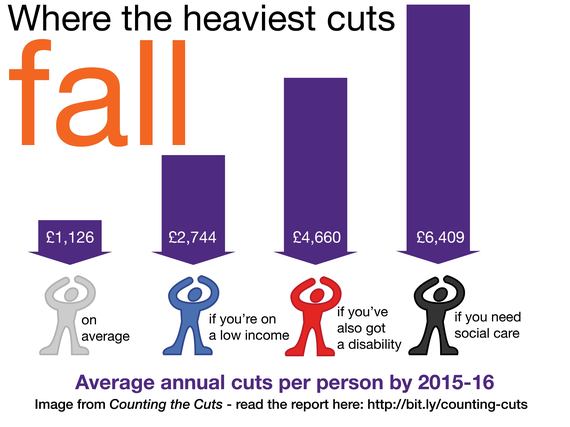
DonatenowButton

Poor working and social conditions are being propped up by the mass provision of CBT

freedom

According to the Counsellor’s Guide to Working with EAP, by 2013, almost 50% of the UK workforce was supported by an Employee Assistance Programme (EAP), representing 13.79 million people. The EAP industry began in the UK during the mid-1980s and has since become firmly established, with a rapid expansion in schemes following the recommendations made by Carol Black and David Frost in their report on sickness absence (Black & Frost, 2011). A high percentage of the larger public and private sector organisations and an increasing number of small to medium sized enterprises provide their employees with access to some form of short-term EAP service.  

The EAP association say, in their 2013 Market Watch report: “The difficult economic climate of the past five years may also be a driver, as employers look to support staff with non-work related issues to prevent these from intruding on the workplace.”

The Conservative’s austerity programme in the UK has presented the wellbeing industry with many lucrative business opportunities, and there are many profits being made on the growing poverty, inequality, social injustices and inevitable subsequent psychological distress of the population.

The relentless political drive towards the privatisation of government functions has turned traditional public services, social security and other safety net provision into profit-making enterprises as well. 

A major cause of economic inequality within market economies such as the UK is the determination of wages by the market. The systematic (and partisan) undermining of trade unions over recent years via Conservative legislation has seen the collapse of collectivism as the main way of regulating employment, and a substantial loss of space for bargaining for working rights, conditions and pay. The substantial cuts to social security support over the past few years have also served to drive wages down further

Neoliberalism, which was adopted as an overarching socioeconomic policy during the Thatcher and Reagan era onward, is premised on an idea that tight monetary control will contain inflation, and that labour market deregulation combined with regressive tax and benefit reform will somehow secure full employment. The expectation is that the more unequal redistribution of income and the freeing up of markets will dramatically improve competitive economic performance, and that the benefits of this higher rate of growth will trickle down the income distribution, benefiting everyone. Of course, that hasn’t happened.

The CBT technocratic sticking plaster

EAPs commonly use Cognitive Behavioural Therapy – usually in digital form – online or by phone – and it’s a “workplace-focused programme” to assist in the identifying and resolving of employee concerns, which affect, or may affect, performance. Such employee concerns typically include, but are not limited to:

Personal matters – health, relationship, family, financial, emotional, legal, anxiety, alcohol, drugs and other related issues.

Work matters – work demands, fairness at work, working relationships, harassment and bullying, personal and interpersonal skills and work/life balance.

According to NHS Choices, Cognitive behavioural therapy (CBT) is a talking therapy that can help you manage your problems by changing the way you think and behave.

CBT is a talking therapy that can help you manage YOUR problems by changing the way YOU think and behave. It doesn’t address your circumstances as such, nor does it address the socioeconomic and political context that imposes constraints and increasingly untenable living conditions on people.

In fact, the briefing document for counsellors working with EAP says:

“When working with an EAP referral it is important to remember that the organisation is your client as well as the individual concerned, therefore there will be two people who will be ‘in the room’ with you. It is, after all, the employer that is indirectly funding the sessions. Developing your understanding of the organisation will help you work with both ‘clients’ since an insight into the type of business and the pressures of this work can help you build up a rapport with the client.

[…] The employer is often keen to know whether the support offered by the EAP is having a business benefit. This will be part of the implicit or explicit requirements of the employer and they may need to have evidence of any return on investment. For instance, is there evidence that the employee/client has returned to work more quickly as a result of the counselling? Has the counselling prevented the client from taking time off work for sickness?”

This presents a constraining framework of conflicted interests for counsellors with favourable “outcomes” invariably weighted towards employers and not employees. How, for example, does a counsellor support someone in a decision to leave their job and find another with better conditions, more security and pay? In this context, the mass provision of CBT may be regarded as a technocratic “fix” for poor employment and social conditions, and is rather more about policing critical thinking and dissenting behaviours in the workplace than providing support for employees. Treating each individual as if the problems lie “within” their thoughts and behaviours also serves to discourage collective bargaining to improve workplace (and social) conditions.  

Although the briefing paper doesn’t tell us if 50% of the UK workforce have actually accessed the EAP services, the perceived need for this service provision and the growth of the industry tells us a lot about employment and social conditions in the UK.

And what does the mass provision of CBT tell us about how this is being addressed?

CBT has become a means of re-socialising those who have become casualities of neoliberalism to accept and internalise the normative “logic” of neoliberalism. It’s a repressive state “therapy” for micromanaging dissent and critical thinking. It inhibits progressive social change, by locating all of our socioeconomic and political problems within the thoughts and behaviours of individuals.

Meanwhile private providers are making lots of profit on something that can never work in the long term. By coercing individuals to accept the terrible burdens and ravages of neoliberalism, the state and co-opted agencies are propping up a socioeconomic system that is collapsing, and in the process, it is profoundly harming people.


My work is unfunded and I don’t make any money from it. But you can support Politics and Insights by making a donation which will help me continue to research and write informative, insightful and independent articles, and to continue to provide support to others.

DonatenowButton

Research finds damaging mental health discrimination ‘built into’ Work Capability Assessment. Again.

Research conducted by academics at Edinburgh’s Heriot-Watt and Napier universities confirms what many of us already knew: that the government’s “fit for work” assessment is causing permanent damage to some people’s mental health, from which they are not recovering. 

The researchers say in their report that the Work Capability Assessment (WCA) experience “for many, caused a deterioration in people’s mental health which individuals did not recover from”.

The study comes at the same time as John Pring, journalist from the Disability News Service (DNS) has exposed private provider Maximus in their use of “brutal and dangerous” questions about suicide intention directed at people with mental health problems during their assessments. 

Dr Jay Watts, a clinical psychologist and academic, told DNS that people should only be asked about suicidal ideation by a trained mental health professional who can offer help, or someone in an “existing trusting relationship with the individual”.

Watts said that WCAs were “degrading and humiliating experiences for most if not all claimants” and were carried out in a space which was “not a trustworthy one”.

She said: “Individuals are required to parade their distress and feel compelled to answer intrusive questions (for the means to live relies on this).”

She went on to say: “To ask about suicide or self-harm in this context brings huge risks.”

She added that such questioning “can be suggestive if the environment is unsafe.”

She said that claimants were “battered with multiple questions about that which is most personal” in disability assessments and questioned about suicide while the assessors are “typing away” on their keyboards.

Watts concluded: “I have no doubt that questions on suicidal ideation, and the degrading manner in which they are asked, are one reason behind the suicide spike associated with the WCA process.”

The tragic case of Michael O’Sullivan, who killed himself after being found fit for work by the government’s disability assessors, has also cast a spotlight on the harmful consequences of the work capability assessment, particularly in relation to people with mental health problems. 

Though O’Sullivan’s suicide is the first to have been judged a direct consequence of being found fit for work, the DWP has conducted 49 internal reviews into benefit-related deaths since 2012, according to data released following freedom of information requests by the Disability News Service.

Of these, no fewer than 40 were conducted following the suicide, or apparent suicide, of a person claiming benefit. This is both profoundly shocking and entirely unsurprising. It is the wholly predictable result of a system designed and operated by people who appear to lack even the most basic understanding of the realities of living with mental illness.

Despite providing reports from three doctors, including his GP, stating that he had long-term depression and agoraphobia, and was unable to work, O’Sullivan was taken off employment support allowance (ESA) and placed on jobseeker’s allowance. The decision to find him fit for work was made after an assessment by a Department for Work and Pensions (DWP) doctor, a former orthopaedic surgeon, who did not factor in the views of any of the three doctors treating O’Sullivan.

Work capability assessments discriminate against people with mental health problems and should be “redesigned entirely”, according to Professor Abigail Marks from Heriot-Watt University’s Centre for Research on Work and Wellbeing. This recent study also established, through dozens of in-depth interviews of people who had been through the tests, that “in the worst cases, the WCA experience led to thoughts of suicide”. Mental health charities said the contents of the interviews “reflect what we hear from people every day”.

The researchers interviewed 30 people with existing mental health conditions who had taken the tests throughout 2016. The majority of subjects suffered from depression or anxiety, whilst a smaller number had more complex issues like bipolar disorder or borderline personality disorder. In addition, the team interviewed individuals from advocacy organisations, Citizens Advice Bureau and a former employee of Ingeus, one of the private Work Programme providers.

Marks said: “It is unacceptable that healthcare professionals who act as assessors for the WCA, for example, physiotherapists, nurses, occupational therapists are not fully qualified or trained to assess mental health conditions, yet they seem to be able to override participants’ own GPs, community psychiatric nurses, and therapists.

The WCA must be entirely redesigned, and focus on the potential barriers to work for both physical and mental health problems.”    

The report also highlighted that WCAs make non-Work Programme work experience, or other voluntary work, almost ‘impossible’ for people with mental health conditions. 

Dr Gavin Maclean, research assistant at Edinburgh Napier University, said: “Many of the participants in the study found the experience of the WCA so damaging that they stopped engaging in work-based activity and did not return to it.

This could further reduce their long-term employability and potentially increase their dependency on benefits.”

Dr Sue Cowan, assistant professor of psychology in the School of Social Sciences, said: “For people with severe and enduring mental health conditions, voluntary work may be as ‘good as it gets’, as one of our participants stated.

This does not mean a failure to obtain more. Rather, it is a recognition that an individual is making a choice, and the current system does not recognise or support that in any way.

The assumption that engaging in voluntary work means an individual is fit for employment should be scrapped; there has to be much greater flexibility about undertaking training while on ESA and much greater value must be placed on voluntary work and work-preparation activity.”

The qualitative study highlights in particular a lack of expertise in mental health problems among WCA assessors and advice from the WCA that was not consistent with what people going through the assessment had been told by their own GPs. In one case recorded in the study, a participant recounted a doctor “actually physically gasping” during an appeal because of the poor quality of evidence recorded by a WCA assessor. 

Some participants reported being in tears or having panic attacks during the tests, and others told the researchers that the assessments were “making me feel worse”.

The researchers said that the extreme stress having to deal with multiple stigmas of being unemployed and having a mental health condition became “self-reinforcing and self-perpetuating”, leading to the deterioration of peoples’ condition.

It says in the report: “Our research has reinforced the fact that people with mental health problems face more stigma and discrimination than those with physical health conditions and that this discrimination is built into the WCA.” 

Professor Marks, the lead author of the study, who is based at Heriot-Watt University, told the Independent that people who worked closely with such cases reported that deterioration in mental health conditions was an “almost universal” response to the tests.

Key causes of extreme stress were said to be a claimant’s fear of losing their lifeline income, the prolonged nature of tests, a lack of specialist mental health training amongst assessors, and the fact the test was “clearly geared towards people with physical disabilities.”

This said, many people with physical disabilities have also stated that the WCA experience has had an adverse effect on their mental health. 

Marks says: “A lot of the people we spoke to were in a position where they are preparing to go back to work before their assessment – they were doing training courses, community initiatives, or volunteering.” 

“They said that after the assessment, because the assessment had caused them so much stress, they were unable to go back and take part in those activities because their mental health had had such a deterioration.

“Talking to the advocacy workers, as well, they said it was almost universal that after people had gone through an assessment there was a significant decrease in their mental health.” 

In October last year the Government announced that it would stop repeat Work Capability Assessments for people with chronic conditions, characterising the repeat assessments it was scrapping as “unnecessary stress and bureaucracy”.

Mental health charity Mind said the WCA was clearly “not fit for purpose” and that its lengthy and costly appeals processes could well make matters worse.

“The findings of this report are concerning but sadly not surprising, as they reflect what we hear from people every day,” Ayaz Manji, the charity’s policy and campaigns officer, said.

“People with mental health problems tell us that the current fit-for-work test causes a great deal of additional anxiety. We know the assessors rarely have sufficient knowledge or expertise in mental health, meaning many people don’t get the right outcome and then have to go through a lengthy and costly appeals process. 

“The current approach is not fit for purpose and needs to be replaced by an open and honest conversation based on each person’s individual needs.”

Debbie Abrahams, the shadow work and pensions minister, said the study was more proof that the WCA “is not only unfit for purpose, but is causing harm to some disabled people”.

She added: “That’s why I have committed Labour to scrapping these assessments completely and replacing them with a holistic, person-centred approach.”

As usual, a Department for Work and Pensions spokesperson dismissed the interviewees’ experiences as not “statistically significant”.

Apparently, qualitative data doesn’t count as “empirical evidence”, or contribute to it. Or put another way, if the government don’t want to count it, it doesn’t count.

The spokesperson said: “Only thirty people were interviewed for this report, which fails to acknowledge any of the significant improvements we have made to our assessments – particularly for people with mental health conditions.” 

“Last year alone at least 35,000 work capability assessments took place in Scotland to help ensure people get the right level of support that they need.”

In fact, 37 interviews were conducted for the study. Furthermore, there is much evidence outside of this study that supports the findings. Qualitative evidence often provides richer, more in-depth, detailed evidence than quantitative studies tend to permit. Yet the government insist that citizens’ own accounts are not important, regularly dismissing them as “anecdotal”.

The government have also failed to conduct a quantitative investigation into the established correlation between WCAs and a deterioration in mental health conditions.

In 2015, the “fit for work” tests, introduced to assess eligibility for disability benefit ESA, were again found to have caused relapses in patients with serious mental health conditions, Dr Jed Boarman, consultant with the Royal College of Psychiatrists, called for an  overhaul of the process.

Boardman, a consultant psychiatrist at the South London and Maudsley NHS trust, also said the WCA discriminates against those with mental health issues. 

Boardman, who treats patients with serious and long-term mental health problems, said: “People with severe long-term problems get very distressed about being assessed, probably because mistakes are made, because the process isn’t perfect, because they don’t feel they are being listened to in their interviews.

“You do see people relapsing as a consequence of getting distressed.”

His comments followed a study, published the previous month, that linked the WCA tests with an additional 590 suicides, increased mental health problems and hundreds of thousands of antidepressant prescriptions.

The study, published by the Journal of Epidemiology and Community Health, showed a correlation between worsening mental health and assessments under the WCA.

The Department for Work and Pensions described the study as “misleading.”

The study’s main author, Benjamin Barr, said it was crucial the DWP takes seriously concerns that WCAs are “severely damaging” mental health. He called on the department to release data it holds to researchers to allow further analysis of the health impact of the controversial test.

Boardman added: “Their primary criticism of our study is that we don’t have data specifically on people going through the WCA and consequent mental health problems,” said Barr, from the University of Liverpool. “They have data on who has died following the WCA and they could facilitate linkage of that data with health causes.”

Thousands of claimants have died after being found fit for work, according to statistics released in August 2015 by the DWP, following a freedom of information request and a determined and successful court appeal by Mike Sivier of Vox Political. Ministers insisted that the figures they have released could not be used to link claimant deaths to welfare reforms, but the government has refused to release figures that would make it possible to assess whether the death rate for people found fit for work is higher than normal.

Boardman and Mark’s concerns are echoed by psychologists and benefit advisers working with claimants, who say they have gathered a lot of qualitative evidence that WCAs cause much additional psychological distress for those with mental health issues.

Related

Maximus ‘admits’ using brutal and dangerous suicide questions – John Pring

Man leaves coroner letter as he fears Work Capability Assessment will kill him

Doctors bribed with 70-90k salaries to join Maximus and “endorse a political agenda regardless of how it affects patients.”

What you need to know about Atos

The importance of citizen’s qualitative accounts in democratic inclusion and political participation

Dying from inequality: socioeconomic disadvantage and suicidal behaviour – report from Samaritans


I don’t make any money from my work. I am disabled because of illness and have a very limited income. The budget didn’t do me any favours at all.

But you can help by making a donation to help me continue to research and write informative, insightful and independent articles, and to provide support to others. The smallest amount is much appreciated – thank you.
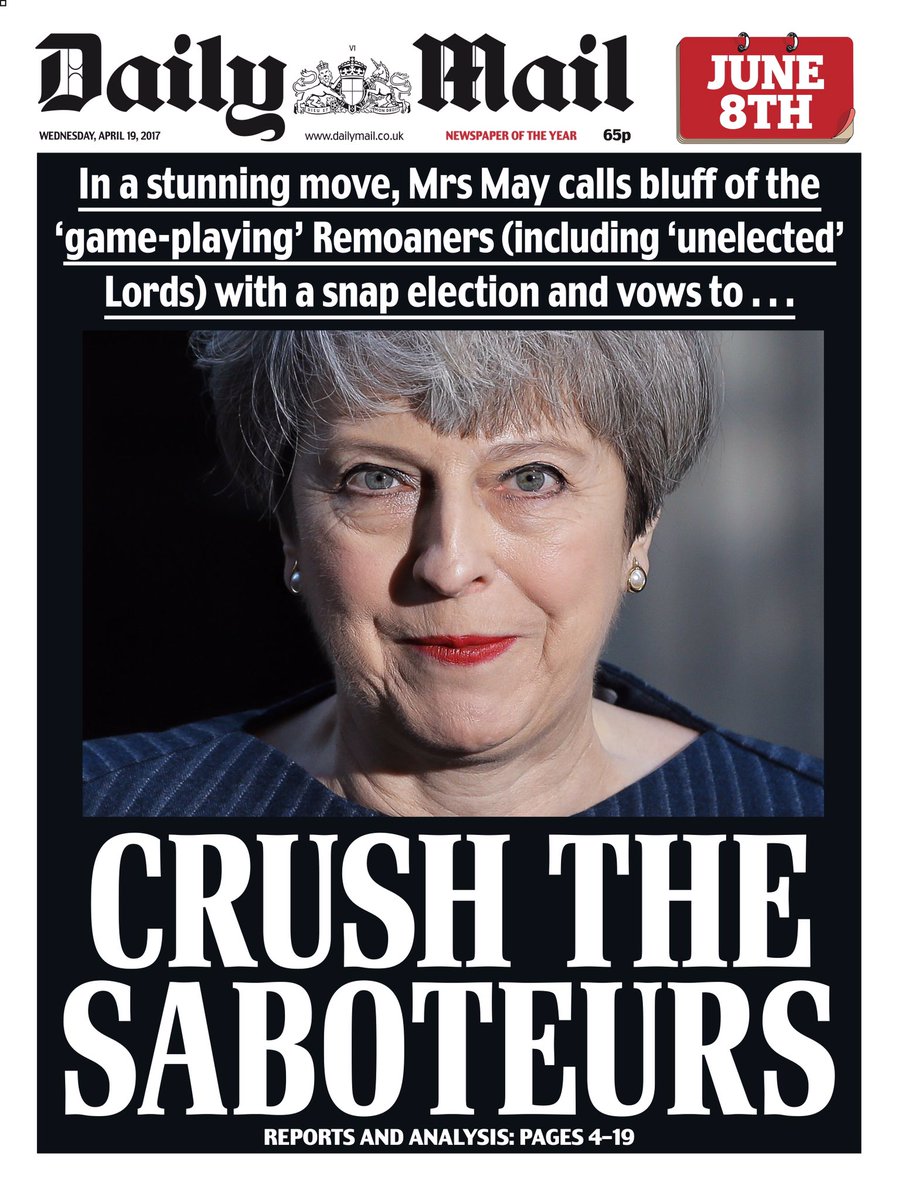
DonatenowButton cards

IAPT is value-laden, non-prefigurative, non-dialogic, antidemocratic and reflects a political agenda

arnstein-ladder-citizenship-participation

Arnstein’s ladder of citizen participation and inclusion. It represents the redistribution of power that enables marginalised citizens, presently excluded from the political and economic processes, to be purposefully included in the future.

The government’s Work and Health Programme, due to be rolled out this autumn, involves a plan to integrate health and employment services, aligning the outcome frameworks of health services, Improving Access to Psychological Therapies (IAPT), Jobcentre Plus and the Work Programme.

But the government’s aim to prompt public services and commissioned providers to “speak with one voice” is founded on traditional Conservative prejudices about people who need support. This proposed multi-agency approach is reductive, rather than being about formulating expansive, coherent, comprehensive and importantly, responsive mental health provision.

What’s on offer is psychopolitics, not therapy. It’s about (re)defining the experience and reality of a marginalised social group to justify dismantling public services (especially welfare). In linking receipt of welfare with health services and state therapy, with the single politically intended outcome of employment, the government is purposefully conflating citizens’ widely varied needs with economic outcomes and diktats, which will isolate people from traditionally non-partisan networks of unconditional support, such as the health service, social services, community services and mental health services.

Services “speaking with one voice” will invariably make accessing support conditional, and further isolate marginalised social groups. It will damage trust between people needing support and professionals who are meant to deliver essential public services, rather than simply extending government dogma, prejudices and discrimination. And meeting ideologically designed targets.

As neoliberals, the Conservatives see the state as a means to reshape social institutions and social relationships hierarchically, based on a model of a competitive market place. This requires a highly invasive power and mechanisms of persuasion, manifested in an authoritarian turn. Public interests are conflated with narrow economic outcomes. Public behaviours are politically micromanaged and modified. Social groups that don’t conform to ideologically defined economic outcomes and politically defined norms are stigmatised and outgrouped. 

Othering and outgrouping have become common political practices, it seems.

The Work and Health Programme is a welfare-to-work programme for people with disabilities, mental health problems and for long-term unemployed people, due to be rolled out in the autumn. In the recent Work, Health and Disability green paper, the government mentioned new mandatory “health and work conversations” in which work coaches will use “specially designed techniques” to “help” those people in the ESA Support Group – those assessed by their own doctors and the state as being unlikely to work in the near future – “identify their health and work goals, draw out their strengths, make realistic plans, and build resilience and motivation.” 

Apparently these “conversations” were “co-designed” by the Behavioural Insights Team.

Democracy is based on a process of dialogue between the public and government, ensuring that the public are represented: that governments are responsive, shaping policies that address identified social needs.

However, policies increasingly reflect a behaviourist turn. They are no longer about reflecting citizens’ needs: they are increasingly about telling some citizens how to be. This has some profound implications for democracy.

Neoliberal policies increasingly extend behaviour modification techniques that aim to quantifiably change the perceptions and behaviours of citizens, aligning them with narrow neoliberal outcomes through rewards or “consequences.” Rewards, such as tax cuts, are aimed at the wealthiest, whereas the most vulnerable citizens who are the poorest are simply presented with imposed cuts to their lifeline support as an “incentive” to not be poor. Taking money from the poorest is apparently “for their own good”.   

Defining human agency and rationality in terms of economic outcomes is extremely problematic. And dehumanising. Despite the alleged value-neutrality of behavioural economic theory and CBT, both have become invariably biased towards the status quo rather than progressive change and social justice.

Behavoural economics theory has permited policy-makers to indulge ideological impulses whilst presenting them as “objective science.” From a libertarian paternalist perspective, the problems of neoliberalism don’t lie in the market, or in growing inequality and poverty: neoliberalism isn’t flawed, nor are governments – we are. Governments and behavioural economists don’t make mistakes – only citizens do. No-one is nudging the nudgers. It’s assumed that their decision-making is infallible and they have no whopping cognitive biases of their own. 

“There’s no reason to think that markets always drive people to what’s good for them.” Richard Thaler.

There’s no reason whatsoever to think that markets are good for people at all. Let’s not confuse economics with psychology, or competitive individualism and economic Darwinism with collectivism and mutual aid. Behavioural economics may offer us titbit theories explaining individual consumer’s decision making, but it’s been rather unreliable in explaining socioeconomic and political contexts and complex systems such as financial crises, and of course behavioual economists don’t feel the same pressing need to explore the decision making and “cognitive bias” of the handful of people who cause those.

It wasn’t those with mental health problems currently claiming social security. They do much less damage to the economy, in fact IAPT means vulture capitalist private companies like G4S and trusts like Southern Care can turn a profit offering “support”. 

The current emphasis on quantitative methodology and standardisation has led to an overwhelming focus on measurement in IAPT settings. Mental health services are now dominated by IAPT, which focuses exclusively on “evidence-based” and short-term interventions for clients with particular diagnoses – mostly anxiety disorders and depression. Most workers in IAPT services offer CBT, often by minimally trained psychological wellbeing practitioners offering “low-intensity” interventions over few sessions.

Verificationism and standardisation leads to a focus on measurement in IAPT settings. CBT mutes the causes of distress, which do not reside “within” the individual: they are intersubjectively constructed, with cultural, socioeconomic and political dimensions. Furthermore, there is little room left for authentic dialogue – qualitative accounts of client’s experiences are not accommodated. In this context, CBT is authoritarian, rather than being prefigurative and genuinely dialogic.

Under the government’s plans, therapists from the IAPT programme are to support jobcentre staff to assess and treat claimants, who may be referred to online cognitive behavioural therapy (CBT) courses. 

We must question the ethics of linking receipt of welfare with “state therapy,” which, upon closer scrutiny, is not therapy at all. Linked to such a narrow outcome – getting a job – it amounts to little more than a blunt behaviour modification programme. The fact that the Conservatives have planned to make receipt of benefits contingent on participation in “treatment” also worryingly takes away the fundamental right of consent.

CBT facilitates the identification of “negative thinking patterns” and associated “problematic behaviours” and “challenges” them. This approach is at first glance a problem-solving approach, however, it’s of course premised on the assumption that interpreting situations “negatively” is a bad thing, and that thinking positively about bad events is beneficial.

The onus is on the individual to adapt by perceiving their circumstances in a stoical and purely “rational” way. 

So we need to ask what are the circumstances that we expect people to accept stoically. Socioeconomic inequality? Precarity? Absolute poverty? Sanctions? Work fare? Being forced to accept very poorly paid work, abysmal working conditions and no security? The loss of social support, public services and essential safety nets? Starvation and destitution?  

It’s all very well challenging people’s thoughts but for whom is CBT being used. For what purpose? It seems to me that this is about coercing those people on the wrong side of draconian government policy to accommodate that; to mute negative responses to negative situations. CBT in this context is not based on a genuinely liberational approach, nor is it based on democratic dialogue. It’s about modifying and controlling behaviour, particularly when it’s aimed at such narrow, politically defined and specific economic outcomes, which extend and perpetuate inequality. In this context, CBT becomes state “therapy” used only as an ideological prop for neoliberalism.

CBT tends to generate oversimplifications of the causes human distress. It’s not about helping people make better choices, it’s about coercing people to make the choices that policymakers want them to make. Those “choices” are based on enforced conformity to the ideological commitments of policymakers.

It’s assumed that the causes of unemployment are personal and attitudinal rather than sociopolitical or because of health barriers, and that particular assumption authorises intrusive state interventions that encode a Conservative moral framework, which places responsibility on the individual, who is characterised as “faulty” in some way. The deeply flawed political/economic system that entrenches inequality isn’t challenged at all: its victims are discredited and stigmatised instead.

Yet historically (and empirically), it has been widely accepted that poverty significantly increases the risk of mental health problems and can be both a causal factor and a consequence of mental ill health. Mental health is shaped by the wide-ranging characteristics and circumstances (including inequalities) of the social, economic and physical environments in which people live. Successfully supporting the mental health and wellbeing of people living in poverty, and reducing the number of people with mental health problems experiencing poverty, requires engagement with this complexity.

There is also widely held assumption that working is good for mental health, and that being in employment indicates mental wellbeing. It’s well-established that poverty is strongly linked with a higher likelihood of being diagnosed with a mental illness. That does not mean working is therefore somehow “good” for mental health. Encouraging people to work should entail genuine support, it shouldn’t entail taking away their lifeline income as punishment “incentive” if they can’t work.

An adequate level of social security to meet people’s basic survival needs is not mutually exclusive from encouraging people to find a suitable job.

It’s worth noting that research indicates in countries with an adequate social safety net, poor employment (low pay, short-term contracts), rather than “worklessness”, has the biggest detrimental impact on mental health. 

CBT does not address the socioeconomic and political context. It permits society to look the other way, whilst the government continue to present mental illness as an individual weakness or vulnerability, and a consequence of “worklessness” rather than a fairly predictable result of living a distressing, stigmatised, excluded existence and material deprivation in an increasingly unequal society.

Inequality and poverty arise because of ideology and policy-formulated socioeconomic circumstances, but the government have transformed established explanations into a project of constructing behavioural and cognitive problems as “medical diagnoses” for politically created socioeconomic problems. Austerity targets the poorest disproportionately for cuts to income and essential services, it’s one ideologically-driven political decision taken amongst alternative, effective and more humane choices.

Both nudge and CBT are being used to prop up austerity and reflect neoliberal managementspeak at its very worst. Neoliberal policies are causing profound damage, harm and distress to those they were never actually designed to “help”. Let’s not permit techniques of neutralisation: the use of rhetoric to obscure the real intention behind policies. It’s nothing less than political gaslighting.

The government’s profound antiwelfarist rhetoric indicates that there’s no genuine intention to support those people with mental health problems and others in need, despite their semantic thrifts and diversions.

Policies are expressed political intentions regarding how our society is organised and governed. They have calculated social and economic aims and consequences. In democratic societies, all citizen’s accounts of the impacts of policies ought to matter. 

However, in the UK, the way that policies are justified is being increasingly detached from their aims and consequences, partly because democratic processes and basic human rights are being disassembled or side-stepped, partly because the government employs the widespread use of linguistic strategies and techniques of persuasion to intentionally divert us from the aims and consequences of their ideologically driven and increasingly dehumanising policies. Furthermore, policies have become increasingly detached from public interests and needs. 

For people with mental health problems, policies are being formulated to act upon them as if they are objects, rather than autonomous human subjects. Such a dehumanising approach has contributed significantly to a wider process of social outgrouping, increasing stigmatisation and ultimately, to further socioeconomic and mental health inequalities.

It’s the government that need to change their behaviour.

It’s us that need to make a stand against hegemonic neoliberal discourse and injustice.

cp5w8ifxgaauf-u

This article was written for a zine to mark the protest at the 10th annual New Savoy conference on 15 March in London #newsavoy2017. You can read the zine, with other people’s excellent contributions, here.

Also, see: New Savoy Protest against psycho-compulsion of MH claimants – 15th March 2017.

You can read about the background to the Mental Wealth Alliance and the New Savoy demo and lobby here.

You can watch the video here from Let Me Look TV: Protest at the 10th Annual New Savoy Conference 15 March 2017.

Please share.

Related

The power of positive thinking is really political gaslighting

The importance of citizen’s qualitative accounts in democratic inclusion and political participation

A critique of the ‘Origins of Happiness’ study

A critique of Conservative notions of social research

Research finds damaging mental health discrimination ‘built into’ Work Capability Assessment. Again.

The Conservative approach to social research – that way madness lies


I don’t make any money from my work. I am disabled because of illness and have a very limited income. The budget didn’t do me any favours at all.

But you can help by making a donation to help me continue to research and write informative, insightful and independent articles, and to provide support to others. The smallest amount is much appreciated – thank you.

DonatenowButton cards