Category: Political ideology

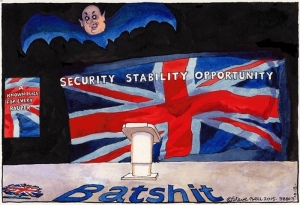
Tory rhetoric, the politics of psychobabble: it’s batshit telementalism and mystification

650
Oh come all ye faithful

The Conservative conference was a masterpiece of stapled together soundbites and meaningless glittering generalities. And intentional mystification. Cameron claims that he is going to address “social problems”, for example, but wouldn’t you think that he would have done so over the past five years, rather than busying himself creating them? Under Cameron’s government we have become the most unequal country in the European Union, even the US, home of the founding fathers of neoliberalism, is less divided by wealth and income than the UK.

I’m also wondering how tripling university tuition fees and reintroducing banding in classrooms can possibly indicate a party genuinely interested in extending equal opportunities.

“Champions of social justice and opportunities”? Must have been a typo in the transcript: it’s not champions but chancers.

Cameron also claims that the Conservatives are the “party for workers”, and of course lamblasted Labour. Again. Yet it was the Labour party that introduced tax credits to ensure low paid workers had a decent standard of living, and this government are not only withdrawing that support, we are also witnessing wages drop lower than all of the other G20 countries, since 2010, the International Labour Organisation reliably informs us.

This fall not only led to a tight squeeze on living standards, it also led to a shortfall in treasury income in the form of tax revenues. But all of this is pretty standard form for Conservative governments.

It’s interesting to note that the only standing ovation Cameron had for his speech from delegates was not related to policy proposals or even rhetoric. It was a response to the bitter, spiteful and typical Tory bullying approach to any opposition: in this case, an outburst of vindictive, unqualified personal comments, misquotes, misinformation and downright lies about Jeremy Corbyn.

It was more of the usual Conservative claptrap about Labour leaders “hating Britain”. Cameron used an out-of-context quote to paint Jeremy Corbyn as a “security-threatening, terrorist-sympathising, Britain-hating” leader. Cameron had failed to give any context to Mr Corbyn’s comments that he intentionally  misquoted, failing, for example, to mention the fact that Corbyn had said the lack of a trial for Bin Laden was the “tragedy”, not his death itself. The deliberate misquote, however, was met with a deft response from the Left, hoisting Cameron by his own petard.

Here is Cameron’s speech in full technicolour and spectacular ontological insecurity:

Cameron’s malicious comments reminded me again of the Tories’ history of dirty tricks, like the Zinoviev letter, the campaign against Harold Wilson, and made me think of the almost prophetic and increasingly less fictional A Very British Coup.

Even the BBC have called the Conservatives out on their very nasty anti-democratic propaganda campaign against Corbyn.

From the deluge of incoherent commentaries to the mechanisms of telling lies: Conservatives don’t walk the talk

The fact that there is now such an extensive gap between Conservative rhetoric, the claims being made and reality makes the task of critical analysis difficult and somewhat tiring, and I’m not the only writer to comment on this.

The Conservatives use language – semantic shifts – and construct incongruent, dissonance-inducing narratives to misdirect us, and to mask the aims and consequences of their policies.  For example, the words “fair”, “support” and the phrase “making work pay” have shifted to become simple socio-linguistic codifications for very regressive punitive measures such as cuts to social security support (comparable with the principle of less eligibility embedded in the Poor Law of 1834) and benefit sanctions.

The most striking thing about the Conservative conference, for me, isn’t just the gap between rhetoric and reality, it is also the gap between the bland vocabulary used and the references, meanings and implications of what was actually being said.

The semantics are also stratified. People who are unaffected by austerity policies will probably take the bland vocabulary at face value. Cameron said:

“The British people are decent, sensible, reasonable, and they just want a government that supports the vulnerable.”

However, the “vulnerable” know a very different reality to the one substituted and described on their behalf. People who are adversely affected by Conservative policy will regard the bland vocabulary as bewildering, deceitful, frightening – especially because of its incongruence with reality – and most likely, as very threatening. Such rhetoric is designed to hide intention, but it is also designed to deliberately invalidate people’s own experiences of Tory policies and ultimately, the consequences of an imposed Tory ideology.

Not that there can be any mistaking the threats aimed at sick and disabled people from Duncan Smith in his Conference speech. He said:

“We won’t lift you out of poverty by simply transferring taxpayers’ money to you. With our help, you’ll work your way out of poverty.”

Of course the Work and Pensions secretary employed a traditionally Tory simplistic, divisive rhetoric that conveniently sections the population into “deserving” tax payers and “undeserving” non-tax paying citizens, to justify his balefully misanthropic attitude towards the latter group, as usual. However, the majority of sick and disabled people have worked and have contributed tax. 

As Dr Simon Duffy, from the Centre for Welfare Reform, points out, the poor not only pay taxes they also pay the highest taxes.  For example, the poorest 10% of households pay 47% of their income in tax. This is a higher percentage than any other group. We tend to forget that people in poverty pay taxes because we forget how many different ways we are taxed:

  • VAT
  • Duties
  • Income tax
  • National Insurance
  • Council tax
  • Licences
  • Social care charges, and many others taxes.

Mr Duncan Smith said that many sick and disabled people “wanted to work” and that the Government should give them “support” to find jobs and make sure the welfare system encouraged them to get jobs.

We’ve seen the future and it’s feudal

Ah, he means “making work pay,” which is the Tory super-retro approach to policy-making, based on the 1834 Poor Law principle of less eligibility again.  The reality is that sick and disabled people are being coerced by the state into taking any very poorly paid work, regardless of whether or not they can work, and to translate the rhetoric further, Duncan Smith is telling us that the government will ensure the conditions of claiming social security are so dismal and brutal that no-one can survive it.

And Cameron’s promise during his address to the Conservative party conference that “an all-out assault on poverty” would be at the centre of his second term is contradicted by a sturdy research report from the Resolution Foundation that reveals planned welfare cuts will lead to an increase of 200,000 working households living in poverty by 2020.

Duncan Smith also criticised what he claimed was Labour’s “something for nothing culture” which was of course a very supportive and fair, reasonably redistributive system. He also dismissed and scorned the protests against his policies, which his party’s conference has been subject to. But demonstration and protest is a mechanism of democracy for letting a government know that their policies are having adverse consequences.

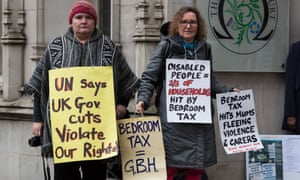
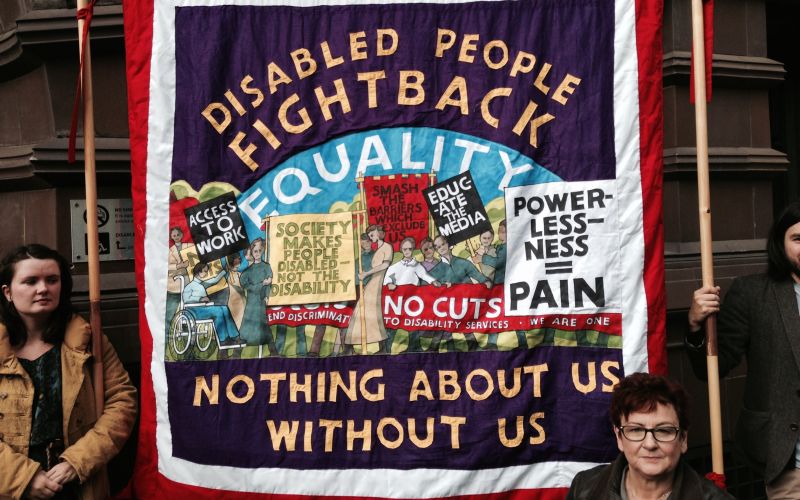
Many of the disabled protesters at the conference are being hounded, hurt and persecuted by this government and actually, we are fighting for our lives. But clearly this is not a government that listens, nor is it one that likes democratic dialogue and accountability.

In his teeth-grindingly vindictive and blindly arrogant speech, Duncan Smith also criticised the old Employment Support Allowance benefit for signing people off work when they were judged by doctors as too sick to work. He claimed that Labour treated disabled people as “passive victims.” I’m wondering what part of professional judgements that a person is too sick to work this lunatic and small-state fetishist finds so difficult to grasp. Duncan Smith is a confabulating zealot who drives a dogmatic steam-roller over people and their experiences until they take some Tory neo-feudalist deferential, flat-earth shape that he thinks they should be.

Let’s not forget that this government have actually cut support for disabled people who want to work. The Access To Work funding has been severely cut, this is a fund that helps people and employers to cover the extra living costs arising due to disabilities that might present barriers to work. The Independent Living fund was also cruelly scrapped by this Government, which also has a huge impact on those trying their best to lead independent and dignified lives.

By “support to get jobs”, what Duncan Smith actually means is no support at all. He means more workfare – free labor for Tory donors – and more sanctions – the removal of people’s lifeline social security. He also means that good ole’ totalitarian dictum of “behaviour change,” a phrase that the Tories are bandying about a lot, these days.  Ask not what the government can do for you.

And what about frail and elderly people needing support?

The public care sector has been cut by a third this past 5 years, yet people are still aging and living longer, so demand for the services has risen. We know that private residential care homes notoriously put profit over care standards, as yet there’s not been an equivalent local authority scandal, but cuts and gross underfunding mean care workers are stretched beyond limit, and there aren’t enough funds to run an adequate home care service. It’s mostly the very frail and elderly who need this service. And it’s those vulnerable citizens that are being increasingly left without adequate care, and certainly not care of a sufficient standard to maintain their dignity.

These are citizens that have paid into a social security system that was established for “cradle to the grave” support if it was needed. This government has so wickedly betrayed them. That’s hardly making a lifetime of work and contribution “pay”.

The knock on effect is that many people without adequate care end up stranded in hospital, taking up beds and resources, through no fault of their own, and as we know, the health service is also desperately struggling to provide adequate service because of Tory cuts.

The aim of Conservatives is not to meet public needs, but to nudge the public into complicity with Conservative ideology

Many writers, a number of MPs and Peers have variously likened Conservative rhetoric to George Orwell’s Doublespeak in his novel Nineteen Eighty Four. Others claim that the idea of a language and thought-manipulating totalitarian regime in the UK is absurd. But that said, I never thought I would witness an era of human rights abuses of disabled people, women and children by the government of a so-called first-world liberal democracy. The same government have also stated it’s their intention to repeal our Human Rights Act and exit the European Convention on Human Rights. I can understand the inclination towards disbelief.

There’s another group of people that know something is wrong,  precisely what that is becomes elusive when they try to think about it and the detail slips through their fingers, as it were, when they try to articulate it. But that’s what Tory rhetoric purposefully aims to generate in those who oppose Conservatism: confusion, cognitive dissonance and disbelief

Which brings me to the government’s woeful brand of “liberatarian paternalism” – manifested in the form of an authoritarian Nudge Unit. The fact that it exists at all and that it is openly engaged in changing people’s decision-making without their consent is an indication of an extremely anti-democratic, psychocratic approach to government. The Tories are conducting politics and policy-making using insidious techniques of persuasion and psycholinguistic hocuspocusery for psychic and material profiteering, ordinarily reserved for the very dubious, telemental, manipulative end of the diabolistic advertising industry.

Once a PR man, always a PR man, that’s David Cameron.

By telemental, I mean it’s based on a kind of communication model that is transmissional, linear, mechanistic – where people are treated as conforming, passive “receivers” of information constructs, rather than an interactive, participatory, dialogical and importantly, a democratic one where people are regarded as autonomous critical interpreters and negotiators. We’re being talked at, not with. The Tories are using telementation to communicate their ideological sales pitch, without any democratic engagement with the majority of citizens, and without any acknowledgement of their needs. (Telementation is a concept originally introduced by linguist Roy Harris. )

The co-author of Nudge theory, Cass Sunstein, actually suggested that government monitors political activism online, too. He has some links with GCHQ’s covert online operations which employ social science to inform their psychological operations to influence online interactions and outcomes. Sunstein proposed sending covert agents into “chat rooms, online social networks, or even real-space groups” which spread what he views as “false and damaging conspiracy theories” about the government. “Conspiracy” theories like this one, eh?

The nudging of psychobabble and neuroliberalism

Tory policy is all about social engineering using justification narratives founded on an insensate, draconian ideological and semantic unobtainium equivalent. It’s clear that this government lacks the experience and understanding necessary for the proper use of psychological terms.  The content of their smug and vindictive justification narratives and stapled-together, alienating and psychopathic rhetoric deviates markedly from even basic common sense and good judgement.

The Tories reduce long debated, complex ideas to surprisingly spiteful platitudes, and hand us back dogmas gift wrapped in aggrandized certitude.

Malice in blunderland.

There is an accessible government website outlining some of the Nudge Unit’s neurobabble and subliminal messaging “successes”, albeit the more mundane ones, like getting men to pee on the “right” part of a urinal. Or getting people to pay their taxes on time, or to donate organs.

The Nudge Unit’s behaviourism and psychological quackery, however, is all-pervasive. It has seeped into policy, political rhetoric, the media, education, the workplace, health services and is now embedded in our very vocabulary and social narrative. Every time you hear the phrase “behavioural change” you know it’s a government department acting upon citizens everywhere, using  basic, crude operant conditioning without their consent, instead of actually doing what public services should and meeting public needs. Instead, citizens are now expected to meet the government’s needs.

Where do you think the government got their pre-constructed ideological defence lexicon of psychobabble – they bandy about insidiously bland words like “incentivise” in the context of coercive state actions – such as the ideas for welfare increased conditionality and brutal operant conditioning based sanctions?

Did anyone actually ask for state “therapy” delivered by gaslighting, anti-socially disordered tyrants?

I sent an FOI asking the Department of Work and Pensions for the figures for sanctions since 2010 to the present, and I asked for the reasons they were applied. I also asked how sanctions can possibly “incentivise” or “help” people into work, and what research and academic/psychological/theoretical framework the claim is premised on, after I pointed out Maslow’s motivation theory based on a hierarchy of needs – accepted conventional wisdom is that you can’t fulfil higher level psycho-social needs without first fulfiling the fundamental biological ones.

If people are reduced to struggling to meet basic survival needs, then they can’t be “incentivised” to do anything else. And even very stupid people know that if you remove people’s means to eat, keep warm and shelter, they will probably die. It’s worth remembering that originally, benefits were calculated to meet only these basic survival needs. That’s why welfare is called a social “safety net”.
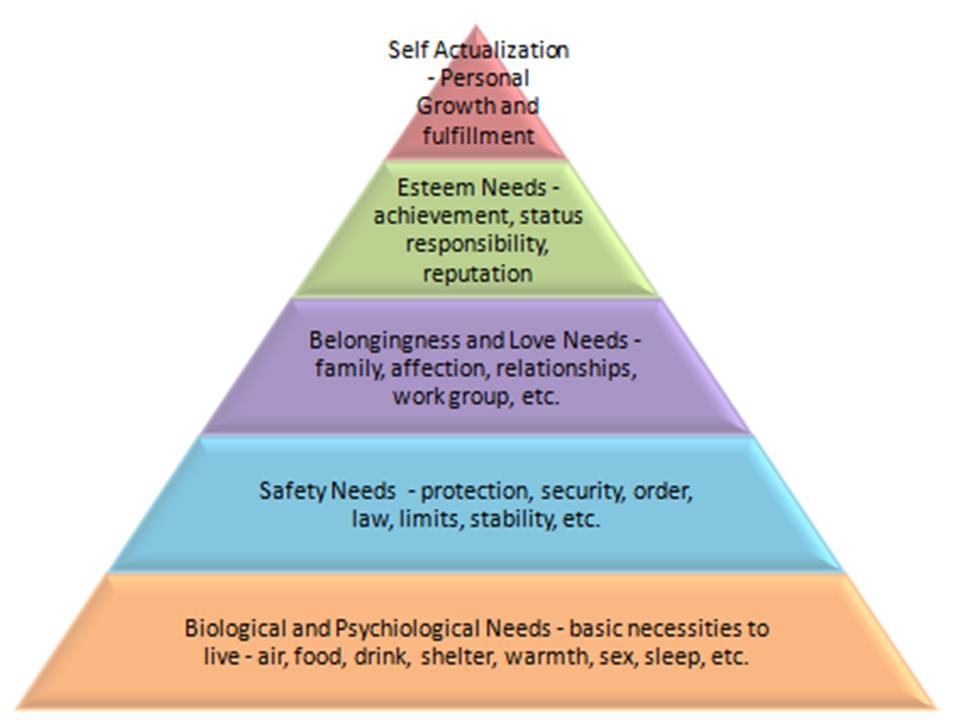
maslow-hierarchy-of-needsMaslow’s hierarchy of needs

There can be no justification whatsoever for removing that crucial safety net, and certainly not as a political punishment for people falling on hard times – that may happen to anyone through no fault of their own.

No matter what vocabulary is used to dress this up and attempt to justify the removal of people’s lifeline benefits, such treatment of citizens by an allegedly democratic, first-world government is unacceptable, despicable, cruel: it’s an act of violence that cannot fail to cause harm and distress, it traps people into absolute poverty and it is particularly reprehensible because it jeopardises people’s lives.

And what kind of government does that?

The nature of deception and psychological trauma

The Government are most certainly lying to project a version of reality that isn’t real.  Critical analysis of Tory rhetoric is a very taxing, tiring challenge of endlessly trying to make sense of disturbing relations and incoherent misfits between syntax and semantics, discourse and reality events. There’s a lot of alienating, fake humanism in there.

When politicians lie, there is a break down in democracy, because citizens can no longer play an authentic role in their own life, or participate in good faith in their community, state, and nation. Deception is cruel, confusing, distressing and anxiety-provoking: keeping people purposefully blind to what the real political agendas are and why things are happening in their name which do not have their agreement and assent.

Lying, saying one thing and doing another, creating a charade to project one false reality when something else is going on, is very damaging: it leaves people experiencing such deception deeply disorientated, doubting their own memory, perception and sanity.

To cover their tracks and gloss over the gaping holes in their logic, the Tories employ mystification techniques, the prime function of which is to maintain the status quo. Marx used the concept of mystification to mean a plausible misrepresentation of what is going on (process) or what is being done (praxis) in the service of the interests of one socioeconomic class (the exploiters) over or against another class (the exploited). By representing forms of exploitation as forms of benevolence, the exploiters confuse and disarm the exploited.

The order of concepts is not the order of things

On a psychological level, mystification is used in abusive relationships to negate the experience of abuse, to deceive and to avoid authentic criticism and conflict. Mystification often includes gaslighting, which is a process involving the projection and introjection of psychic conflicts from the perpetrator to the victim, and has a debilitating effect on the victim’s ability to think rationally and often, to function independently of the gaslighter. It can take many forms. In all instances, however, it involves the intentional, cold and cunning distortion of accounts of reality by a predator that systematically undermines the victim’s grasp of what is happening, distorting perceptions of events, editing and re-writing for the gaslighter’s own political, financial, or psychological ends.

And of course, gaslighting exploits the fact that human beings have a tendency to deny and repress those things that are too overwhelming and painful to bear. Much psychotherapy is based on creating a safe space for allowing experience of the dreadful – which as an event has already happened – to “happen.”

A memorable example of psychological mystification is presented in a case study cited by R.D. Laing. (In Did You used to be R.D.Laing, 1989). A woman finds her husband with a naked woman in the living room. She asks: “What is that naked woman doing in my house on my sofa!?” To which her gaslighting husband, without missing a beat, replied:  “That isn’t a woman, that’s a waterfall.” 

The poor woman felt her grasp of reality weaken, because she had trusted her husband and had always tended to believe him. She lost her self to a period of psychosis because of the deep trauma this event caused her. Her husband was an authoritarian figure. We tend to accept that authority figures tell the truth, with little questioning. But it’s not a safe assumption at all.

She was made to doubt her own perception and account of events, despite the utter absurdity of the alternative account of reality presented to her. To have one’s perception and experience of reality invalidated is very painful, threatening to the self and potentially extremely damaging.

We have a government that thinks nothing of using this type of distortion and deception to cover up the worst consequences of its policies.

This is a government of authoritarians and psychocrats who have an apparent cognitive dissonance: they decided that rich people are motivated only by fincancial gains, whilst poor people are motivated only by financial losses and punishments. However, when you replace the word “incentive” with the value-laden term “deserve”, and then slot it into an ideological framework with an underpinning social Darwinist philosophy, it becomes more coherent and actually, profoundly unpleasant. The Tories think that “social justice” is about taking money from those who need the most support, and handing it to those who don’t

This is a government that’s all about manufacturing conformity and obedience. The gospel, according to the likes of Iain Duncan Smith, is that we are the architects of our own misfortunes, but when it comes to good fortunes, well of course, the government claims responsibility for those. Incoherent, puerile proselytizing nonsense.

The truth of the human condition, according to the Tories, is that poor people scrounge, rich people are saintly and the former group needs humiliating and state “therapy” – degrading “paternalistic” corrective treatment, (mostly comprised of a barrage of anti-humanist ideology and the constant threat of, and often actual withdrawal of your lifeline income), whereas the latter group need all the praise, support and state handouts they can get.

This is a government that use a counterfeit and dark triad (particularly Machiavellian) inspired language to create an impression of plausibility and truth, and to hide their true aims. They are demogogues of a radical and reactionary anti-social agenda. Intolerance, fear and hatred, machismo and bullying tendencies are masqueraded as moral rectitude.

This is a government that uses superficial, incongruent, meaningless psychobabble to justify the most savage and cruelly coercive policies that we have seen in the UK during our lifetime. Those social groups unaffected by the policies think that the government are acting in our “best interests”, but people are suffering and dying as a consequence of these policies.

People’s life problems such as unemployment and poverty arise from bad decision-making from the government and are not clinical maladies, the use of or implying of pseudo-clinical terms in political victim-blame narratives and gaslighting is not meaningful or appropriate.

Political psychobabble is designed intentionally to limit the freedom of public comprehension, it neutralises our own vocabulary, and invalidates our experiences. The nasty party are engaged in psychic profiteering – a government of quacks spouting pretentious gibberish to justify taking money from the poorest citizens and handing it out to the very wealthy.

It’s irrational, incoherent psychobabble from over-controlling, obedience-obsessed irrationalists whose sole aim is to ensure the population conform to government needs, and meet the demands of neoliberalism, rather than, heaven forbid, wanting a democratic government and an economic system that actually meet public needs.

Or if you prefer plainspeak: Tory rhetoric is rather like a long-empty belfry – full of batshit.

Oh, that way madness lies.
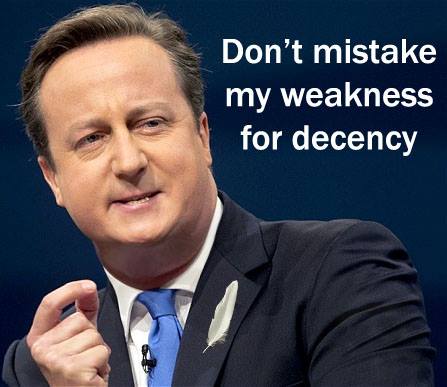
Cam weakness
Picture courtesy of Robert Livingstone

GPs bribed to send FEWER cancer patients for vital hospital tests – Mike Sivier

An important article from Vox Political (and the Mirror.) It needs to be shared.

Visit Vox Political for the full article

GPs are being offered cash to send fewer patients with suspected cancer to hospital for vital tests.Surgeries can claim thousands of pounds worth of “incentives” for not sending patients to hospitals for tests, scans and operations, according to an investigation by doctors’ magazine Pulse.

First appointments for cancer – which should happen within two weeks of a GP suspecting the disease – are included in some of the targets to cut referrals, the probe found.

The rewards are being offered by Clinical Commissioning Groups (CCGs), local NHS bodies responsible for commissioning of healthcare across the country.

The move comes as the NHS is trying to slash £22billion in costs before 2020.

Source: GPs ‘bribed’ to send FEWER cancer patients for vital hospital tests – Mirror Online

The Mirror blasted the policy, run by CCGs that were created as part of the Health and Social Care Act of 2012 which began the mass-privatisation of the NHS, in its editorial:

Bribing family doctors not to send patients to hospitals for cancer tests is sacrificing lives by turning the NHS into a cut-price market place.

GPs should never be awarded bonuses at the cost of the public’s health. Those incentives are indefensible, because the likelihood is that cancers will go undetected.

Early detection is vital and when England’s cancer survival rates are already among the lowest in Europe, Health Secretary Jeremy Hunt should be demanding that more people are tested sooner.

Doctors must be free to make objective decisions on medical grounds rather than receiving dangerous instructions that reduce patients to financial statistics.

But don’t blame your doctor. Blame the Government. A Tory Government. The NHS wasn’t perfect under Labour but the Tories don’t appear to care at all.

This wasteful party is handing down a death sentence for unsuspecting patients. And that’s unforgiveable.


Related

The Coalition has deliberately financially trashed the NHS to justify its privatisation

Selling off NHS for profit: Tories’ and Liberal Democrats’ links with private healthcare firms revealed

The commercialisation and undemocratising of the NHS: the commodification of patients

252299_486936058042594_609527550_nPicture courtesy of Robert Livingstone

If the Tories don’t like being compared to the Nazis, they need to stop behaving like despots.


2 authoritarians

Two authoritarians on the far right of the political spectrum.

Apparently the Conservatives are cross about being compared with the Nazis. Mike Sivier at Vox Political wrote about the circumstances of the comparison, which arose on Monday: This ignorant Tory councillor had better try justifying the deaths his party has caused.

Human Rights abuses

This is a government that is currently at the centre of a United Nations inquiry into abuses of the human rights of sick and disabled people, and is also in breach of the rights of women and children, because of their anti-humanist, draconian welfare “reforms”.

While I am very aware that we need take care not to trivialise the terrible events of the Holocaust by making casual comparisons, there are some clear and important parallels with what is happening to sick and disabled people, poor people and those who are unemployed in the UK and the ideological processes in Nazi Germany: events on a political, cultural and a psychosocial level, that I feel are crucially important to recognise.

Conservative policies are entirely ideologically driven. We have a government that frequently uses words like workshy to describe vulnerable social groups. This is a government that is intentionally scapegoating poor, unemployed, disabled people and migrants. A few  years ago, a Tory councillor said that “the best thing for disabled children is the guillotine.” More recently, another Tory councillor called for the extermination of gypsies, more than one Tory MP has called for illegal and discriminatory levels of pay for disabled people.

These weren’t “slips”, it’s patently clear that the Tories believe these comments are acceptable, and we need only look at the discriminatory nature of policies such as the legal aid bill, the wider welfare “reforms” and research the consequences of austerity for the poorest and the vulnerable citizens – those with the “least broad shoulders” –  to understand that these comments reflect how Conservatives think.

This is a government that is manipulating public prejudice to justify massive socio-economic inequalities and their own policies that are creating a steeply hierarchical society based on social Darwinist survival of the wealthiest libertarian, minarchist principles. Society is being re-arranged by the Conservatives into hierarchies of human worth, based on traditional 19th century notions of ‘deserving’ and ‘undeserving’.

Conservatives have always seen society and human relationships in terms of hierarchies, based on “red in tooth and claw” Darwinist conflict. A hierarchy is any system of persons or things ranked one above the other. The government claim that this kind of inequality and ‘competition’ for scarce resources is somehow ‘good’ for the economy. They say that people who are higher in the hierarchy got there on merit. However, at least a third of wealthy people inhereited their wealth and power. Cameron included.

Hierarchy was originally used to describe the system of church government by priests graded into ranks. Organised religion is very hierarchical. Hierarchical thinking is about seeing the world through systems of domination, ranks and importance. But the central principle of human rights is that we each have equal worth: that we are all equally important. But hierarchies ensure that privilege and decision-making is not socially distributed. Nor is power.

The very way that Tories think leads to a collision between their ideology and our human rights, and is completely incompatible with the principles of equality and democracy. Tories think that some people hold a more important place in society than others. This reduces people – they become inferiors or superiors, and really, that is about unequal distribution of power, subordination and domination – those power relationships are no longer entirely notional, we have moved some distance from being a liberal democracy these past five years – and feudalism and manorialism are very Tory ideals.

To summarise, there are strong links between the right-wing idea of competitive individualism, Social Darwinism, social inequalities, eugenics, nationalism, fascism and authoritarianism. Those ideas are implicit in Tory rhetoric, because they form the very foundations of Tory ideology. A society with inequalities is and always has been the ideologically founded and rationalised product of Conservative Governments.

The creation of scapegoats, categories of others and outgrouping

The malicious creation of socio-economic scapegoats, involving vicious stigmatisation of vulnerable social groups, particularly endorsed by the mainstream media, is simply a means of manipulating public perceptions and securing public acceptance of the increasingly punitive and repressive basis of the Tories’ welfare “reforms”, and the steady stripping away of essential state support and provision. At the same time, wages are depressed, many jobs are insecure, or zero-hour contracts and working conditions are declining.

web-earnings-graphic

A coerced labor force is a key feature of most despotic, authoritarian, totalitarian and fascist states and as history has taught us, ALL eugenicist-founded tyrannies.

The political construction of social problems also marks an era of increasing state control of citizens with behaviour modification techniques, (under the guise of “paternalistic libertarianism”) all of which are a part of the process of restricting access rights to welfare provision.

The mainstream media has been complicit in the process of constructing deviant welfare stereotypes and in engaging prejudice and generating moral outrage from the public:

“If working people ever get to discover where their tax money really ends up, at a time when they find it tough enough to feed their own families, let alone those of workshy scroungers, then that’ll be the end of the line for our welfare state gravy train.” James Delingpole 2014

Poverty cannot be explained away by reference to simple narratives of the workshy scrounger as Delingpole claims, no matter how much he would like to apply such simplistic, blunt, stigmatising, dehumanising labels that originated from the Nazis (see arbeitssheu.)

This past five years we have witnessed an extraordinary breakdown of the public/private divide, and a phenomenological intrusion on the part of the state and media into the lives of the poorest members of society. (For example, see: The right-wing moral hobby horse: thrift and self-help, but only for the poor.)

Ideology

Hannah Arendt wrote extensively about totalitarian regimes, in particular Nazism and Stalinism, which she distinguishes from Italian Fascism, because Hitler and Stalin sought to eliminate all restraints upon the power of the State and furthermore, they sought to dominate and control every aspect of everyone’s life. There are parallels here, especially when one considers the continued attempts at dismantling democratic processes and safeguards since the Coalition first took office. And the quiet editing and steady erosion of our protective laws

Between February 1933 and the start of World War Two, Nazi Germany underwent an economic “recovery” according to the government. Rather like the “recovery” that Osborne and Cameron are currently claiming, which isn’t apparent to the majority of citizens.

This economic miracle, sold to the people of Germany, entailed a huge reduction in unemployment. However, the main reason for this was fear – anyone who was found guilty of being workshy (arbeitssheucould then be condemned to the concentration camps that were situated throughout Germany. Hitler frequently referred to the economic miracle, whilst people previously employed in what was the professional class were made to undertake manual labour on the autobahns. People didn’t refuse the downgraded status and pay, or complain, lest they became Arbeitsscheu Reich compulsory labor camp prisoners, and awarded a black triangle badge for their perceived mental inferiority and Otherness.

Behaviour can be controlled by manipulating fear, using a pattern of deprivation. Benefit sanctions, for example, leave “workshy”people without the means to meet their basic survival needs and are applied for periods of weeks or months and up to a maximum of 3 years. That the government of a so-called first world liberal democracy is so frankly inflicting such grotesquely cruel punishments on vulnerable citizens is truly horrific. It’s also terrifying that the media and to some extent, the wider British public are complicit in this: they fail to recognise that the Social Darwinism inherent in Tory ideological grammar is being communicated through discourses and policies embodying crude behaviour modification techniques and an implicit eugenics subtext .

There were various rationales for the Nazi Aktion T4 programme, which include eugenics, Social Darwinism, racial hygiene, cost effectiveness and reducing the welfare budget.

The social psychology of eugenics

Gordon Allport studied the psychological and social processes that create a society’s progression from prejudice and discrimination to genocide. In his research of how the Holocaust happened, he describes socio-political processes that foster increasing social prejudice and discrimination and he demonstrates how the unthinkable becomes tenable: it happens incrementally, because of a steady erosion of our moral and rational boundaries, and propaganda-driven changes in our attitudes towards politically defined others, that advances culturally, by almost inscrutable degrees.

The process always begins with political scapegoating of a social group and with ideologies that identify that group as  the Other: an “enemy” or a social “burden” in some way. A history of devaluation of the group that becomes the target, authoritarian culture, and the passivity of internal and external witnesses (bystanders) all contribute to the probability that violence against that group will develop, and ultimately, if the process is allowed to continue evolving, extermination of the group being targeted.

Economic recession, uncertainty and authoritarian or totalitarian political systems contribute to shaping the social conditions that seem to trigger Allport’s escalating scale of prejudice.

In the UK, the media is certainly being used by the right-wing as an outlet for blatant political propaganda, and much of it is manifested as a pathological persuasion to hate others. The Conservatives clearly have strong authoritarian tendencies, and that is most evident in their anti-democratic approach to policy, human rights, equality, social inclusion and processes of government accountability.

Vulnerable groups are those which our established principles of social justice demand we intervene to help, support and protect.  However, the Conservative’s rhetoric is aimed at a deliberate identification of citizens as having inferior behaviour. The poorest citizens are presented as a problem group because of their individual faulty characteristics, and this is intentionally diverting attention from wider socio-economic and political causes of vulnerability. Individual subjects experiencing hardships have been placed beyond state protection and are now the objects of policies that embody behaviourism, and pathologising, punitive and coercive elements of social control. Vulnerable people are no longer regarded as human subjects, the state is acting upon them, not for or on behalf of them.

People are still debating if Stalin’s Holodomor conforms to a legal definition of genocide, no-one doubts that Hitler’s gas chambers do, though Hitler also killed thousands by starvation.

Our own government have formulated and implemented policies that punish unemployed people for being “workshy” – for failing to meet the never-ending benefit conditionality requirements which entails the use of negative incentives and behaviour modification to “support” a person’s into  work –  by withdrawing their lifeline benefit. We also know that sanction targets have led to many people losing lifeline benefits for incoherent and grossly unfair reasons that have nothing to do with an unwillingness to cooperate or work.

Since benefits were originally calculated to meet basic living requirements – food, fuel and shelter – it’s  inconceivable that the government haven’t already considered the consequences of removing people’s means of meeting these fundamental survival needs. Of course, the Tory claim that this draconian measure is to incentivise people to “find work” doesn’t stand up to scrutiny when we consider that there isn’t enough work for everyone, and certainly not enough work around that pays an adequate amount to actually survive on.

Furthermore it flies in the face of long-established and conventional wisdom which informs us that if you reduce people by removing their means of survival, those people cannot be motivated to do anything else but to struggle and survive. Maslow tells us that unless we meet basic survival needs, we cannot be motivated to meet higher level psychosocial ones.

Tory austerity is all about ideology – the dehumanisation of the poor, and the destruction of public services and provisions – state infrastructure – and nothing to do with the state of the economy. It’s also about cutting money from the poorest and handing it to the wealthiestMany economists agree that austerity is damaging to the economy.

There has been a media complicity with irrational and increasingly punitive Tory policies. But why are the public so compliant?

Decades of  research findings in sociology and psychology inform us that as soon as a group can be defined as an outgroup, people will start to view them differently. The very act of demarcating groups begins a process of ostracization.

As well as the political and social definitions of others, there also exists deeper, largely unconscious beliefs that may have even more profound and insidious effects. These are related to whether people claiming benefits are even felt to be truly, properly human in the same way that “we” are.

This is called infrahumanisation. Infra means “below”, as in below or less than fully human. The term was coined by a researcher at the University of Louvain called Jacque-Philippe Leyens to distinguish this form of dehumanisation from the more extreme kind associated with genocide.

However, I don’t regard one form of dehumanisation as being discrete from another, since studies show consistently that it tends to escalate when social prejudice increases. It’s a process involving accumulation.

According to infrahumanisation theory, the denial of uniquely human emotions to the outgroup is reflective of a tacit belief that they are less human than the ingroup.

Poor people, sick and disabled people, homeless people people with mental illness and social security claimants are the most frequently outgrouped. It is these most stigmatised groups that people have the most trouble imagining having the same uniquely human qualities as the rest of us. This removes the “infrahumanised” group from the bonds, moral protection and obligations of our community, because outgrouping de-empathises us.

This would explain why some people attempt to justify the austerity cuts, which clearly fall disproportionately on the most vulnerable. This is probably  why fighting the austerity cuts is much more difficult than simply fighting myths and political propaganda. I think the government are very aware of the infrahumanisation tendency amongst social groups and are manipulating it, because growing social inequality generates a political necessity for social prejudices to use as justification narratives.

The linguistic downgrading of human worth

During a debate in the House of Lords, Freud described the changing number of disabled people likely to receive the employment and support allowance as a “bulge of, effectively, stock. After an outraged response, this was actually transcribed by Hansard as “stopped”, rendering the sentence meaningless.  He is not the only person in the Department of Work and Pensions who uses this term. The website describes disabled people entering the government’s work programme for between three and six months as 3/6Mth stock.

This infrahumanised stock are a source of profit for the companies running the programme. The Department’s delivery plan recommends using  credit reference agency data to cleanse the stock of fraud and error”.

The linguistic downgrading of human life requires dehumanising metaphors: a dehumanising socio-political system using a dehumanising language, and it is becoming familiar and pervasive: it has seeped almost unnoticed into our lives.

Until someone like Freud or Mellins pushes our boundaries of decency a little too far. Then we suddenly see it, and wonder how such prejudiced and discriminatory comments could be deemed acceptable and how anyone could possibly think they would get away with such blatantly offensive comment without being challenged. It’s because they have got away with less blatantly offensive comments previously: it’s just that they pushed more gently and so we didn’t see.

The government also distorts people’s perceptions of the aims of their policies by using techniques of neutralisation. An example of this method of normalising prejudice is the use of the words “incentivise” and “help” in the context of benefit sanctions, which as we know are intentionally extremely punitive, and people have died as a consequence of having their lifeline benefit withdrawn.

As Allport’s scale of prejudice indicates, hate speech and incitement to genocide start from often subliminal expressions of prejudice and subtle dehumanisation, which escalate. Germany didn’t wake up one morning to find Hitler had arranged the murder of millions of people. It happened, as many knew it would, and was happening whilst they knew about it. And many opposed it, too.

The dignity and equal worth of every human being is the axiom of international human rights. International law condemns statements which deny the equality of all human beings.

As a so-called civilised society, so should we.

Much of this was taken from a longer article: Aktion Arbeitsscheu Reich, Human Rights and infrahumanisation

I’ve written at length about the link between Conservative policies and premature deaths of ill and disabled people on this site. And the government’s attempts at hiding that information. For example:

A tale of two suicides and a very undemocratic, inconsistent government

Techniques of neutralisation: David Cameron’s excuses for Iain Duncan Smith

The Tories are epistemological fascists: about the DWP’s Mortality Statistics release

The government need to learn about the link between correlation and causality. Denial of culpability is not good enough.

Black Propaganda

Remembering the Victims of the Government’s Welfare “Reforms”


I don’t make any money from my work. But you can support me by making a donation and help me continue to research and write informative, insightful and independent articles, and to provide support to others. The smallest amount is much appreciated – thank you.

DonatenowButton

BBC’s Stephen Sackur accuses Tories of spreading propaganda about Jeremy Corbyn, and of being unaccountable and undemocratic

“Generals and Majors always
seem so unhappy ‘less they got a war.”  Colin Moulding, XTC

In a BBC World News interview, Crispin Blunt, the Chairman of the Foreign Affairs Select Committee, said that the government is not under any obligation to share intelligence information with the new Labour leader Jeremy Corbyn.

His comments came just days after a senior serving general, scaremongering anonymously to the Sunday Times, said Mr Corbyn’s victory had been greeted with “wholesale dismay” in the army. The general said that any plans to scrap Trident, pull out of Nato or announce “any plans to emasculate and shrink the size of the armed forces” will meet fierce opposition. His hint that some in the military planned an illegal seizure of the state if Corbyn wins the next General Election is particularly extraordinary. He said the army would “use whatever means possible, fair or foul to maintain security.”

A coup d’état is an anachronistic and violent method of political engineering that happens only in one-party fascist, totalitarian and despotic states, it’s not an event you would expect to see used as a threat in a so-called first world liberal democracy.

Regardless of how far-fetched the threats may seem, that a general feels it’s okay to threaten a coup or “mutiny” against a future left-wing government using the mainstream right-wing press as a mouthpiece is a cause for some concern. It’s a symptom of how oppressive the establishment have become, and how apparently acceptable it is to attack, discredit and threaten anyone who presents a challenge and an alternative perspective to the status quo.  

The nameless, gutless and anti-democratic general’s comments reminded me of the Zinoviev letter, and the subversive plots in the 1960s and 1970s by the military and intelligence services to destabilise Harold Wilson’s government.

The Labour leader has said that as far as the party is concerned, the UK’s role in Nato is a matter for discussion for the shadow cabinet, the party at large and most importantly, the public. Emily Thornberry announced that there will be a public consultation regarding the value of the UK nuclear deterrent. That is, after all, the democratic thing to do.

The anonymous general claimed that there would be “mass resignations at all levels and you would face the very real prospect of an event which would effectively be a mutiny” if Mr Corbyn became [democratically elected] as prime minister.

The threat, regardless of its authenticity, is undoubtedly part of a broader strategy of tension, designed purposefully to create public alarm – to portray the left as a threat to the wellbeing of society – and it will reverberate around the media, to be used as part of an arsenal of pro-establishment, anti-progressive propaganda to discredit Corbyn.  

Mr Blunt told BBC Hardtalk‘s Stephen Sackur that the serving general’s opinion was “inappropriate”, did not reflect the view of the government and that if Jeremy Corbyn were elected prime minister the army like everyone else would have to carry out the instructions of the elected government.

In the meantime, Blunt said that it was a matter for the government to decide how much access to “privileged information” the leader of the opposition had access to. There would be no point in passing on such information if it would not “achieve consensus.”

In other words, the government don’t want a critical and democratic dialogue about potential military decisions. They are refusing to include anyone else in crucial political decision-making processes, if they don’t agree with the government. This kind of response is usually associated with authoritarian states, not liberal democracies.

Sackur said that as soon as Corbyn was elected, the Conservatives “issued propaganda” suggesting that Corbyn is a threat to national security. He also pointed directly to the government’s fundamental lack of accountability, transparency and democracy in the unprecedented move to refuse to share military and intelligence information, which is conventionally shared with the leader of the opposition.

Blunt simply confirmed Stephen Sackur’s point about the government’s lack of democracy, accountability and transparency.

Sackur exposed the rank hypocrisy of a government that claims to be democratic, yet does not tolerate parties with differing views, nor does it invite or engage in dialogue and critical debate, choosing instead to exercise totalitarian control over what ought to be democratic decision-making, the will and thoughts of others, including the public that a government is meant to serve.

Perhaps a coup in the event of a left-wing win in 2020 isn’t so far-fetched in the current oppressive political climate.

You can see the Hardtalk interview here on iPlayer:

http://bbc.in/1WgxmXF

Or here: http://www.mondonews.net/News/64885/video-no-obligation-to-share-intelligence

Related

Work Programme continues to harm people with mental health problems

10270806_319228004894921_8005540502444686357_n
The Government’s Work Programme is making the lives of people with mental health problems worse, and having a detrimental impact on people’s ability to work, research by a leading mental health charity has found.

A report from Mind said the flagship scheme, which requires people to take unpaid work allocated by contractors or face losing their lifeline benefits, was taking entirely the wrong approach and actually damaging people’s motivation and capacity to work.

The research found that most people who are on the scheme because of their mental health problems reported worsening health issues due to their experiences of it.

83 per cent of people surveyed said the scheme’s “support” had made their mental health problems worse or much worse.

The latest statistics from the Department for Work and Pensions (DWP) reveal that less than 8 per cent of people being supported by Employment and Support Allowance (ESA) have moved into employment through the Work Programme. Around half of people on ESA are being supported primarily because of their mental health problems.

Tom Pollard, Policy and Campaigns Manager at Mind, said:

“These latest figures provide further evidence that the overwhelming majority of people with disabilities and mental health problems are not being helped by the Government’s flagship back-to-work support scheme. A recent report from Mind found that people with mental health problems are less likely to be supported into employment through the Work Programme than those with other health conditions and are more likely to have their benefits sanctioned.”

Even more worryingly, the majority of respondents to our survey said the Work Programme was actually making their health worse, and as a result they had needed more support from health services and felt further from work than previously. Mind is calling for everyone with a mental health problem who is receiving mainstream support through this scheme to be placed onto a new scheme and offered more personalised, specialist support which acknowledges and addresses the challenges people face in getting and keeping a job.”

Additionally, over three quarters of people – 76 per cent – said the Work Programme had actually made them feel less able to work than before they were coerced to participate in the scheme.

The results resonate with figures released in a number of previous years suggesting that people on the Work Programme are actually far less likely to return to work than people who are simply left to their own initiative.

In the first year of the £450 million programme, just two out of 100 people on the scheme returned to work for more than six months.

In 2013 Labour’s then shadow work and pensions secretary Liam Byrne described the scheme as “literally worse than doing nothing”.

Mind’s chief executive Paul Farmer wrote:

“Cutting someone’s support for failing to meet certain requirements causes not just financial problems but a great deal of psychological distress too.

Mind was one of a group of six mental health organisations to respond to a Work and Pensions Committee Welfare to Work inquiry within which we voiced concerns with the system and made a number of recommendations for improving benefits and back-to-work support. A number of schemes deliver far more effective support to people with mental health problems, at a fraction of the cost of the Work Programme.

WorkPlace Leeds, for example, delivered by Leeds Mind, costs much less than the Work Programme and achieves far better outcomes, with nearly a third (32 per cent) of people with severe and enduring mental health problems gaining paid employment. Schemes such as these are far more helpful and effective in supporting those ready and able to work into fulfilling, appropriate paid employment, relevant to their individual skills and ambitions.

We wholeheartedly support the Government’s aspiration to halve the disability employment gap by helping a million more disabled people into work. However, this will only happen if bold changes are made. As the Welfare Reform and Work Bill makes its way through Parliament, Mind is calling on Employment Minister Priti Patel to overhaul the benefits system, by focusing less on pressurising people and investing more in tailored, personalised support. We’re calling for everyone with mental health problems on the Work Programme to be taken out of this scheme, and instead given alternative support which acknowledges and addresses the challenges they face in getting and keeping a job.”

There are perverse political incentives for pushing people onto workfare programmes. The DWP has simplified its performance measures and now primarily targets the move by claimants away from benefits, or “off-flow”, as a simple and intuitive measure of performance. However, this gives no information about how individual jobcentres perform in supporting claimants to work. Some may have found work but, in more than 40 per cent of cases, the reason for moving off benefits is not actually recorded.

The government does not track or follow up the destination of all those leaving the benefit system, and so the off-flow figures will inevitably include many having their claim ended for reasons other than securing employment, including sanctions, awaiting mandatory review, appeal, death, hospitalisation, imprisonment, on a government “training scheme” (see consent.me.uk  and the Telegraph – those on workfare are counted as employed by the Labour Force Survey, which informs government “employment” statistics.)

Workfare programmes offer further opportunity for imposing sanctions, too. Last year, Iain Duncan Smith met a whistle-blower who has worked for his Department for Work and Pensions for more than 20 years. Giving the Secretary of State a dossier of evidence, the former Jobcentre Plus adviser told him of the development of a “brutal and bullying” culture of “setting claimants up to fail”.

“The pressure to sanction customers was constant,” he said. “It led to people being stitched-up on a daily basis.”

The whistle-blower wished to remain anonymous but gave his details to Iain Duncan Smith, DWP minister Esther McVey and Neil Couling, Head of Jobcentre Plus, who also attended the meeting.

“We were constantly told ‘agitate the customer’ and that ‘any engagement with the customer is an opportunity to ­sanction’,”  he told them. 

Iain Duncan Smith and his department have repeatedly denied there are targets for sanctions.

“They don’t always call them targets, they call them ‘expectations’ that you will refer people’s benefits to the decision maker,”  the whistle-blower says. “It’s the same thing.”

He said that managers fraudulently altered claimants’ records, adding: “Managers would change people’s appointments without telling them. The appointment wouldn’t arrive in time in the post so they would miss it and have to be sanctioned. That’s fraud. The customer fails to attend. Their claim is closed. It’s called ‘off-flow’ – they come off the statistics. Unemployment has dropped. They are being stitched up.”

The Department of Work and Pensions no longer meets the needs of people requiring support to find work. Instead it serves only the requirements of an ideologically-driven, irrational and authoritarian government.


Related

The Government are under fire for massaging employment statistics

A letter of complaint to Andrew Dilnot regarding Coalition lies about employment statistics

544840_330826693653532_892366209_nPictures courtesy of Robert Livingstone

A change is gonna come: new page, new narrative, NOT New Labour

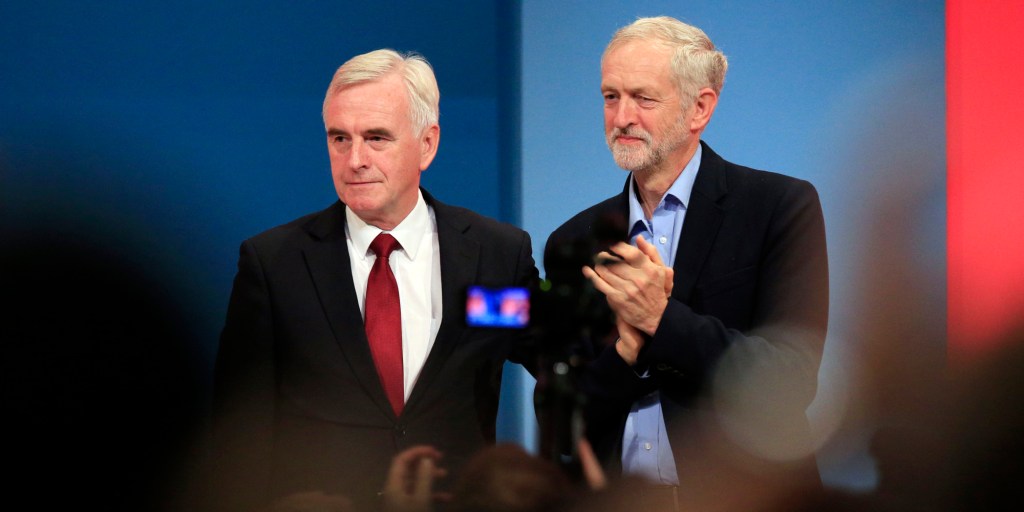
Labour party annual conference 2015


Back in early June, I was asked to do an
interview with A Very Public Sociologist, just as Jeremy Corbyn decided to put himself forward as a candidate for the Labour Party leadership. Phil’s first question of course was: Have you made your made up about the Labour leadership?

Jeremy Corbyn was my initial, intuitive choice. This was founded on my previous knowledge of him as an MP that I have always respected and admired. I recognise that Corbyn has always presented a clarified, strong, ethical and material socialism; that he had a strong aim to extend the scope of Labour Party values and push the boundaries of debate to include genuine socialist propositions and alternatives. That is a much needed, valuable development, as an artificially constructed neoliberal consensus has stifled progress in social policies for a long time.

Corbyn has a refreshing sociological imagination, which is a welcomed change from the Conservative’s starkly anti-social focus; ideologically driven repressive, rigid hierarchical thinking, ranking and organising and economic lack of imagination.

But being me, I took a reluctant step back and analysed the situation that the Party was in post-election, adding a rationale; which prompted the only commentary I’ve written about the leadership competition and the dilemmas facing the Labour Party.

I concluded that a change in direction and a left-leaning leader was most likely to be the best bet for the future, despite the misgivings of some about how such a leader would appeal to an apparently right-shifted, UKIP and Tory-voting public. The right-pitching view through the Overton window has made my hair and toes curl since 2010. 

However, as stated, I don’t believe there is a neoliberal, New Right consensus. No-one was genuinely consulted, after all. The world isn’t really filled with irrational, glib, superficial people who all think broadly the same things and who swallow glittering generalities and mediacratic soundbites. Nobody in their right mind would endorse the massive inequalities we are now seeing, and the return of absolute poverty, as a consequence of the stealth policies that are dismantling our welfare state and NHS.

I’m a fairly optimistic realist, after all.

One of the biggest strengths of Corbyn and McDonnell’s powerful anti-austerity alternative narrative is that it will give many more ordinary people a larger stake in our economy. We know that austerity doesn’t work. It’s been used as a front for discriminatory policies that reflect an underlying Conservative extremist and prejudiced ideology.

Young people in particular, who have been betrayed by an older generation that has been happy enough to witness the dismantling of state provision – the provision that they have benefitted from all of their own lives – will hopefully show that such expedient political trade-offs which systematically punish the traditionally disenfranchised, are absolutely unacceptable. Now young people have a hope-inspiring and inclusive alternative that will mobilise their participation in democracy.  

The alienation of politically constructed outgroups has profoundly undermined our democracy for a long time. We now have a much-needed change – a viable alternative narrative – for the better. Such an inclusive approach will undermine the Conservatives’ “no alternative” approach – founded on the pleas that austerity is “inevitable” – to public policy, ensuring that they have to listen to a broader section of society and reflect their needs and views in economic and social policies.

Conservative intentions have nothing at all to do with economic necessity, but rather, austerity is nothing more than an ideologically-driven effort to downsize the British state, particularly, to dismantle welfare, legal aid, social housing and the NHS – they are erasing our post-war settlement. The next generation are left with much less opportunity and support than we have enjoyed, the first generation in a long time that are worse off than their parents. We need to change that.

Last December in his annual fiscal statement, George Osborne, the high priest of austerity, set out plans to extend his austerity cuts until 2020, by which time, his projections showed, over-all public spending as a percentage of GDP would fall to the lowest level since the 1930s, reducing state provision to rubble .

In the run-up to this year’s general election, Osborne disavowed these figures. But once he was safely back on Downing Street, he cunningly announced a new spending review aimed at cutting the budgets of some government departments by another twenty-five or thirty per cent, with some of the biggest cuts falling on welfare support.

Labour’s recent increasingly homeopathic approach to public debate and policysimilia similibus curentur: “like cures like” – hasn’t exactly made room for a sturdy challenge to Tory pseudoscience and polished psychobabble, deployed to justify their draconian and frankly vindictive regressivism.

There have been many calls over the last few years from activists and from disillusioned, largely disengaged ex-members that we need to “take back” the Labour Party, reclaim it and make it a “party of the people” again, instead of a Party of opportunist “career politicians”. Well, that has certainly happened.

Yet despite the inevitable logic of what has happened, I still can’t believe Jeremy Corbyn’s landslide win – nearly 60%.  Corbyn was the 200 to 1 outsider at the start!  I have always maintained that the best leaders are those who don’t seek leadership, but rather, are often reluctantly thrust forward in situations because of their convictions, others come to trust their skills and judgements – and Jeremy Corbyn certainly didn’t prepare for this, but he has taken an unprecedented popularity amongst grassroot supporters and members, and leadership election success in his sure, determined and tightly principled stride.

In his leadership campaign, Corbyn promised to give Labour members a much greater say in the party’s policymaking process, and quite properly so. That is democratic, after all. I believe that proportional representation is also on the table.

His key proposals include renationalisation of the railways, quantitative easing to fund infrastructure, opposing austerity, controlling rents and creating a national education service. And staunchly defending the welfare state, the NHS and access to justice.

Andy Burnham is calling for the party to get behind Corbyn. I always felt that he’s fundamentally a decent man; I’m glad he has been much more gracious than the other candidates. His tireless fight to save our NHS has been outstanding work, we need that kind of dedication from our MPs on the frontbench.

It’s sad that there have been a handful of resignations, but I know many of you will be very happy to see the Blairite stand weakened.

Now the real fight starts. I’m hoping to see a more unified approach amongst my friends, fellow party supporters and members now that the new leadership has been democratically established. This is just the start of our fight for a fair, progressive, civilised UK. Regardless of who you wanted to win, we can’t defeat the Tories and mediacracy in 2020 without willingness and good faith amongst ourselves. We need unity, belief and strength. Solidarity.

Of course the corporate “journalicians” – the puppets of the right-wing establishment – will try to build a hefty damn against the turning tide. We now have one of the most left wing, anti-establishment leaders in Labour Party history.

Evidently that’s a threat to the security of the Conservative Party, leading to mediacratic hysteria and screamingly paranoid, charmless bullying headlines already. This said, it was to be expected: Conservatives have always displayed fears of nonexistent or overblown bogeymen that threaten social order, as well as demonstrating a deft expertise at manufacturing folk devils and inflaming moral panics.

Indeed other psychologists analysing political conservatism as motivated social cognition would certainly verify my comments: these theorists have integrated theories of personality (namely authoritarianism, dogmatism–intolerance of ambiguity), epistemic and existential needs (for closure, regulatory focus, “terror management”), and ideological rationalisation (social dominance, system justification), all of which explain the elaborate Tory and mediacratic manipulations of facts. And dogma.

The Tories are so afraid of alternative perspectives, progress and change – they are such anal retentives that their fearfully and deeply inserted anti-social heads emerge sooner or later where they feel safest and most at home: in the feudal era of their own ancestors.

As well as scaring anachronistic Conservatives into hysterical declarations and reducing them to spasms of gut-clenching horror, brother Corbyn presents us with a relaxed, easy confidence, and a very welcomed alternative and rational narrative that makes a lot of sense in terms of pragmatic problem-solving. His civilised, progressive, inclusive and democratic pro-social vision managed to unite and gain support from many of the Greens and some SNP supporters already. He has appealed to many who have been disengaged from politics and who have felt disenfranchised for a long time. He has already come to represent hope for a better future. That’s a remarkable achievement.

More than 40 leading economists, including a former adviser to the Bank of England, have made public their support for Jeremy Corbyn’s anti-austerity policies, dismissing Tory claims that they are “extreme”.

The only other feasible alternative post-election for the Labour Party was to try to gain the support from those who defected to UKIP and the Tories this year, by maintaining the austerity myth for the sake of “economic credibility” and for me, that’s untenable because it would entail a gross contravention of Labour’s core values and principles. Though some of the UKIP supporters are undoubtedly amongst those who have felt disenfranchised on the basis of class alone. However, I am sure that Corbyn will reflect a fundamentally new über-inclusivity  that will address the trend towards alienation and anomie.

One thing is certain: the tiresome, disempowering and incredibly lazy soundbite that many on the left have previously delivered in criticism of the Labour Party- “they’re all the same” – won’t be used as the recycled nugget of folk wisdom with any whiff of credibility any more.

Politics is about to become very, very interesting. We needed a credible, strong and appealing alternative to mainstreamed prejudices, and to the social conservatism and neoliberal orthodoxy that became the dominant paradigm following Francis Fukuyama’s “End of History” t
riumphalism. His end of ideology thesis was nothing but more ideology, based on a manufactured consensus after all. Free-market dogma. 

I believe we have got that appealing, rational alternative narrative. 

Upwards and onwards.

 proper Blond


I don’t make any money from my work. I am disabled because of illness and have a very limited income.

But you can help by making a donation to help me continue to research and write informative, insightful and independent articles, and to provide support to others. The smallest amount is much appreciated – thank you.

DonatenowButton

Full Fact’s ‘fit for work’ coverage is unfit for use as toilet paper – Vox Political

http://i0.wp.com/voxpoliticalonline.com/wp-content/uploads/2015/08/falsefacts.png

I had my own issues with Full Fact last year, when the site supported Tom Chivers of the Telegraph in denying that sick and disabled people had died after their lifeline benefits had been stopped by the Department of Work and Pensions, despite the fact that the Hansard Parliamentary record and the media have recorded many examples of this being the case. The row I had with Tom Chivers last year about the mortality statistics can be seen here – Black Propaganda.

This article is from Mike Sivier at Vox Political:

Here’s a slimy little article for you: Sam Ashworth-Hayes’ piece on the benefit deaths at Full Fact.

The fact-checking website set him to respond to reporting of the DWP’s statistical release on incapacity benefit-related deaths, and he’s done a proper little cover-up job.

“It was widely reported that thousands of people died within weeks of being found ‘fit for work’ and losing their benefits,” he scribbled.

“This is wrong.

“Within weeks of ending a claim, not within weeks of an assessment.”

Not true – unless Sam is saying the DWP has failed to answer my Freedom of Information request properly.

If Sam had bothered to check the FoI request to which the DWP was responding, he would have seen that it demanded the number of ESA claimants who had died since November 2011, broken down into categories including those who had been found fit for work and those who had had an appeal completed after a ‘fit for work’ decision.

The date the claim ended is irrelevant; the fact that they were found fit for work and then died is the important part.

If the DWP finds someone fit for work, then it ends the claim anyway, you see. Obviously.

But Sam continues: “If someone is found fit for work, they can appeal the decision, and continue to receive ESA during the appeal process. There is no way of telling how long after the start of the appeal process those claims ended.”

Not true.

The statistical release covers those who had had such an appeal completed and then died – 1,360 of them. The release does not state that they should be considered separately from those who had a fit for work decision, meaning that this is one of several areas in which the release is not clear. In order to err on the side of caution, This Writer has chosen not to add them to the 2,650 total of those found fit for work. Any who were still deemed to be fit for work after their appeal ended, I have deemed to be among the 2,650.

The release most emphatically does not mention those who had appealed against a fit for work decision, but the appeal was continuing when they died, as Sam implies. The DWP asked me to alter my request to exclude them, and I agreed to do so. Therefore Sam’s claim is false. Nobody included in these figures died mid-appeal. Some died after being found fit for work again. Some died after winning their appeal and while they were continuing to receive their benefit – but they do not skew the figures because they aren’t added onto the number we already had (we don’t know how many of them succeeded because the DWP has chosen to follow the letter of the FoI request and has not provided that information). The outcome of the appeal is, therefore, irrelevant.

The point is, the decision that they were fit for work was wrong, because they died.

Let’s move on. Under a section entitled Mortality rates matter, Sam burbles:

“If 2,380 people were found fit for work from late 2011 to early 2014, and all 2,380 subsequently died in the process of challenging that decision, that would indicate that something was almost certainly going wrong in the assessment process.”

2,380? He means 2,650! For a person supposedly checking the facts, this was an elemental mistake to make.

“But if 2 million people were found to be fit for work, there would be less concern that the assessment process was going wrong; one in 1,000 dying could just be the result of the ‘normal’ level of accident, misfortune and sudden illness.

“If we want to know if people found fit for work are more likely to die than the general population, then age-standardised mortality rates would let us make that comparison while adjusting for differences in age and gender.

“Unfortunately, the DWP has not published an age-standardised mortality rate for those found ‘fit for work’.”

Fortunately, This Writer has been directed to a site whose author has attempted just that. This person states that the problem is that we don’t know how many people were found fit for work in total – only that there were 742,000 such decisions during the period in question. This would suggest that the number of people dying within the two-week period used by the DWP is 0.35 per cent of the total. We know that there were 74,600 deaths among the general working-age population in 2013 – a population totalling around 39 million – meaning the chance of dying within any two-week period was 0.007 per cent. So, using these crude figures, the probability of an incapacity benefits claimant dying after being found fit for work is no less than 50 times higher than for the working-age population as a whole, and probably much higher.

So sure, if Sam thinks mortality rates matter, let him look at that.

His article isn’t fit to be toilet paper, though.

Read the original article at the Vox Political Facebook page.

It’s truly priceless that Iain Duncan Smith can accuse anyone of misrepresenting statistics with a straight face.

430847_149933881824335_1645102229_n (1)

I’m not well at the moment and supposed to be resting, but I must make some comment on record regarding the disgraceful behaviour yesterday in parliament of Priti Patel and Iain Duncan Smith, such is my utter disbelief, disgust and outrage.

For example, Debbie Abrahams (Oldham East and Saddleworth) (Labour) asked the very reasonable question:

“The Government’s own data show that people in the work-related activity group are twice as likely to die than the general population. How can the Secretary of State justify £30-a-week cuts for people in that category?”

Duncan Smith made a petty and vindictive retort to avoid answering the question:

“The hon. Lady put out a series of blogs on the mortality stats last week that were fundamentally wrong. Her use of figures is therefore quite often incorrect. I simply say to her—[Interruption.] She has had an offer to meet the Under-Secretary of State for Work and Pensions, my hon. Friend the Member for North Swindon (Justin Tomlinson), time and again, but she just wants to sit in the bitter corner screaming abuse.”

Hardly a reasonable and adult response to a very reasonable question, which wasn’t anything remotely like “screaming abuse” as claimed. In light of the many official public rebukes that the Tories have faced for telling lies and using fake statistics, and given the fact that the Government face a United Nations inquiry regarding the fact that their welfare “reforms” are incompatible with the Convention on the Rights of Persons with Disabilities, it’s truly remarkable that Priti Patel and Iain Duncan Smith have the cheek to call disability campaigners “thugs” and imply the opposition MPs are “liars”, when they are faced with valid concerns and founded criticisms regarding the consequences of their draconian policies.

This said, a well-known bullying tactic is projection of the bully’s own inadequacies and nasty traits onto their victims to cover their tracks. Scapegoating is used to divert public attention, to discredit the victims and invalidate their experience of bullying and to justify the bully’s own vicious actions towards their targets. It’s so telling that bullies always accuse others of the very things that they themselves are guilty of.

Rather than do the decent, democratic thing and organise an independent inquiry into the Work Capability Assessment related deaths of sick and disabled people, and carry out a legally required cumulative impact assessment of their nasty, punitive and cruel welfare “reforms”, the Tories prefer to simply loudly and repeatedly deny that there is any correlation between their policies and the increased mortality statistics, released recently by the Department of Work and Pensions, following the order of the Information commissioner and a tribunal ruling.

Debbie Abrahams, amongst others, had raised concerns regarding the  recent mortality statistics release, as well as calling for an inquiry into the cruel sanctions regime that is leaving people without their lifeline benefits, and too often, without the means of meeting basic survival needs. The aggression, malice, defensive diversionary tactics and lack of capacity for rational response that Patel and Duncan Smith demonstrated was frankly far beyond disgusting: it was frightening.

These ministers are sneering, dishonourable, dishonest and callous Social Darwinist stains in British political history and they need removing from the position of power that they occupy, simply on the grounds that they are formulating and continually justifying policies that cause harm, distress, and sometimes, terrible and tragic consequences for sick and disabled people. That they demonstrate such a fundamental lack of concern for the welfare of UK citizens and persist in their refusal to accept that there is even a possibility that Tory policies may be causing harm to ill and disabled people is a very damning indictment.

Yet these ministers have no grounds whatsoever for their claims that there is no provable causal link between their policies and the increase in mortality, because the correlation is shown by their own record of statistics. The same statistics that they fought very hard to withhold.

Denial, sneering and directing malice at anyone who raises concerns and by accusing everyone else of being liars does not constitute a reasoned debate, as is expected of a government, nor does it count as empirical evidence of the claims being made by Tory ministers.

So it’s absolutely priceless comment from Patel and Duncan Smith that opposition ministers, who have raised concerns and cited cases of extreme hardship and tragic deaths many times – all recorded on the Hansard record, as well as in the media – that are clearly correlated with the welfare “reforms,” are “liars” and are “misrepresenting statistics” by the despicable liar Iain Duncan Smith.

It’s very reasonable to raise concerns about policies that are damaging people. It’s unreasonable of the government to deny those concerns have any legitimacy, despite evidence to the contrary. Many of us have gone through the Tory-reformed Work Capability Assessment more than once and know only too well what a dreadfully stressful experience it is, and how the strain tends to exacerbate illness, only to be dismissed by the Tories and told that the accounts we have provided and the cases we present as evidence of the urgent need for investigation are merely “anecdotal”.

Yet when the government talk of “scroungers”, the “workshy”, “generations of ‘worklessness’”, a “culture of entitlement”, a “something for nothing culture”, we are expected to accept that at face value as “empirical evidence”. With no offer of reasoned discussion.

The Tories are masters at closing down crucial open and democratic debate, which worries me greatly. This is not a government that models responsible and accountable behaviours towards UK citizens, or the opposition parties, for that matter.

With further debate about the assisted dying Bill due in parliament, one Tory minister said: “ We have to legislate on behalf of the weak and vulnerable”. However, the Tories’ track record on policies aimed at the weak and vulnerable is hardly shining with compassion and good intention.

This is a government that doesn’t provide adequate support for many sick and disabled people to live, so I doubt it has the capacity for the compassionate administration of assisted dying. It’s a government that prefers to simply scapegoat rather than support social groups and dismiss them as some kind of “burden on the state”. How could we be sure that “euthanasia” won’t simply become another Tory method of reducing welfare and healthcare costs?

Yet most sick and disabled people have worked and paid for their own support provision. And for those that have been unable to work, any civilised country would choose to support them, rather than direct malice at them. I don’t think this is a good context to debate euthanasia – with such an untrustworthy and unreasonable government in power and with their history of draconian policies, and rationing of health care and welfare for those most in need of support. Such class-directed rationing of services and the systematic closing down of access to support is very clearly underpinned by Social Darwinist ideology.

In fact I am very worried because history has taught us that there’s a very steep, slippery slope from euthanasia to eugenics.

As I have discussed elsewhere, the point-blank refusal to enter into an open debate and allow an open, independent inquiry into the deaths that are correlated with Tory policy is extremely worrying and reflects a callous, irrational and undemocratic government that draws on a toxic and implicit eugenicist ideology and presents a distinctly anti-enlightenment, impervious epistemological fascism from which to formulate justification narratives for their draconian policies, in order to avoid democratic accountability and to deflect well-reasoned and justified criticism.

This is not the conduct expected of a government of a very wealthy, so-called first-world liberal democracy. It’s not the behaviour of accountable, responsible, decent, moral, rational and reasonable people, either.

See also:

Black Propaganda

Iain Duncan Smith used false statistics again to justify disability benefit cuts again

A list of official rebukes for Tory lies

Department of Department of Work and Pensions officials admit to using fake claimant’s comments to justify benefit sanctions

The Department of Whopping Porkies is rebuked as claimants suddenly develop mysterious superpowers after being sanctioned

A distillation of thoughts on Tory policies aimed at the vulnerable

We can reduce the Welfare Budget by billions: simply get rid of Iain Duncan Smith

UN officials to visit UK over coming months to investigate whether Iain Duncan Smith’s “reforms” to disability benefits are compatible with Human Rights

The Daily Mail is a far-right rag and an utter disgrace for meddling in the Human Rights of sick and disabled people

Techniques of neutralisation – a framework of prejudice

UK becomes the first country to face a UN inquiry into disability rights violations

385294_195107567306966_1850351962_nPictures courtesy of Robert Livingstone
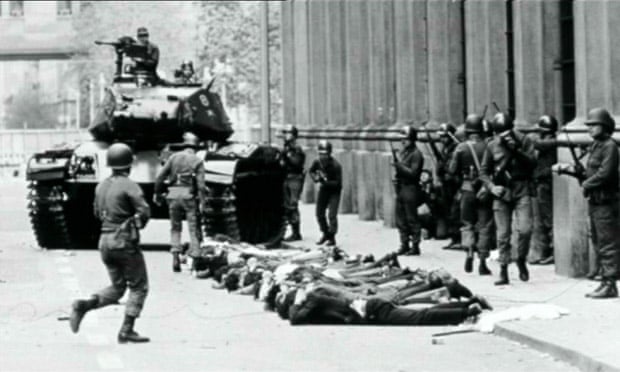

I don’t make any money from my work. I am disabled because of illness and have a very limited income. But you can help by making a donation to help me continue to research and write informative, insightful and independent articles, and to provide support to others. The smallest amount is much appreciated – thank you.

DonatenowButton cards

A critical analysis of the DWP’s Mortality Statistics release


Disability rights activists protest in London, November 2016

The government’s release of mortality statistics related to sickness and disability benefits has caused fierce debate about what the figures actually mean. It has to be said that the way the figures were presented – in a flat descriptive way – makes drawing causal links and inferences very difficult and making useful comparisons impossible. This of course was intentional.

There’s a simple difference between descriptive and inferential statistics – descriptive statistics simply summarise a current dataset, it’s just raw data. Subsequently, analysis is limited to the data and does not provide a scope that permits the extrapolation of any conclusions about a group or population. Inferential statistics are usually used to test an hypothesis, and aim to draw conclusions about an additional population outside of the dataset. Inferential statistics allow researchers to make well-reasoned inferences about the populations in question, and may be tested for validity and reliability, using various appropriate formulae.

To complicate matters further, the Department for Work and Pensions (DWP) claim that they don’t keep detailed information regarding whether a person died before or after their benefit claim was ended. So when the data is about people who died within six weeks of their claim ending, it could mean that the claim ended before they died, or after, because the person had died.

Of course the question we need to ask is why the DWP don’t keep a more accurate record of that data. And furthermore, why are the government so supremely unconcerned about even basic monitoring of the consequences of their welfare “reforms” on sick and disabled people?

I had a lengthy debate with Tom Chivers from the Telegraph last year about this very issue. He said that it was most reasonable to assume that the overwhelming majority of deaths happened before the claim ended, rather than the converse being true. He criticised campaigners for claiming that people were dying as a consequence of the “reforms”.

However, we know from media coverage of some of those tragic deaths that people have died as a consequence of having their employment and support allowance (ESA) benefit claim ended. We also know from the debates in parliament that have been tabled by the opposition on this topic, and the inquiries instigated by the work and pensions committee, that many people have been adversely affected by having their claims ended because they were assessed as “fit for work”, some of the cases presented had also died – details of which can be found on the Hansard record.

So it isn’t a reasonable assumption that most people died and then had their claim closed, on the part of Tom Chivers (and others) at all. But there’s more.

I made a statistical cross comparison of deaths, using the same Department for Work and Pensions statistics as Tom Chivers, though my analysis was undertaken the year before his. I found that the data showed people having their claim for Employment Support Allowance (ESA) stopped, between October 2010 and November 2011, with a recorded date of death within six weeks of that claim ceasing, who were until recently claiming Incapacity Benefit (IB) – and who were migrated onto ESA – totalled 310.

Between January and November 2011, those having their ESA claim ended, with a recorded date of death within six weeks of that claim ending totalled 10,600.

This is a very substantial, significant statistical variation over a comparatively similar time scale (although the 10,600 deaths actually happened over a shorter time scale – by 3 months) that appears to be correlated with the type of benefit and, therefore, the differing eligibility criteria – the assessment process – as both population samples of claimants on ESA and IB contain little variation regarding the distribution in the cohorts in terms of severity of illness or disability. Bearing in mind that those who were successfully migrated to ESA from IB were assessed and deemed unfit for work, (under a different assessment process, originally) one would expect that the death rates would be similar to those who have only ever claimed ESA.

This is very clearly not the case.

Further evidence that very ill and disabled people have been excluded from an award of ESA may be found in the statistical outcomes of tribunals – there is a consistently very high success rate amongst those who have appealed Atos/DWP decisions, over that time period. Those on IB were not required to have continuous assessments, whereas those on ESA are constantly required to undergo the Work Capability Assessment.

Dr Steven Bick indicated that there are targets to reduce the number of people who “qualify” for ESA payments, the WCA is unfairly and irrationally weighted towards finding people fit for work, often when it’s clearly not the case, so each assessment is simply an opportunity for the DWP to end claims. Many claimants have described a “revolving door” process of endless assessment, ceased ESA claim, (based on an outcome of almost invariably being wrongly “assessed” as fit for work), appeal, successful appeal outcome, benefit reinstated, only to find just three months later that another assessment is required.

The uncertainty and loss of even basic security that this process creates, leading to constant fear and anxiety, is having a damaging, negative impact on the health and well-being of so many. A significant proportion of those required to have endless assessments have very obviously serious illnesses such as cancer, kidney failure, lung disease, heart disease, severe and life-threatening chronic conditions such as multiple sclerosis, lupus, myalgic encephalomyelitis, rheumatoid arthritis, brain tumours, severe heart conditions, and severe mental health illness, for example. To qualify for ESA, the claimant must provide a note from a doctor stating that the person is unfit for work.

There can be no justification for subjecting people who are so ill to further endless assessments, and to treating us as if we have done something wrong. Negative labelling, marginalising and stigmatising sick and disabled people via propaganda in the media, using despiteful and malicious terms such as “fraudster”, “workshy” and “feckless” is a major part of the government’s malevolent attempt at justification for removing the lifeline of support from sick and disabled citizens.

In addition to very justified anxieties regarding the marked increase in disability hate crime that the Tory-led propaganda campaign has resulted in, many sick and disabled people have also stated that they feel harassed and bullied by the Department for Work and Pensions and Atos. All of this is taking place in a setting of government generosity to very wealthy people, with Osborne implementing austerity cuts, which disproportionately target the poorest citizens, at the same time as he awarded millionaires £107, 000 each per year in the form of a tax cut.

Many sick and disabled people talk of the dread they feel when they see the brown Atos envelope containing the ESA50 form arrive through the letter box. The strain of constantly fighting for ESA entitlement – a lifeline support calculated to meet basic needs –  and perpetually having to prove that we are a ‘deserving’ and ‘genuine’ sick and disabled person is clearly taking a toll on so many people’s health and well being. I know from personal experience that this level of stress and anxiety exacerbates chronic illness. 

Many families of those who have died have said that the constant strain, anxiety and stress of this revolving door process has contributed significantly to their loved ones’ decline in health and subsequent death. The figures from the DWP, and the marked contrast between the ESA and IB death statistics certainly substantiate these claims. At a meeting in June 2012, British Medical Association doctors voted that the Work Capability Assessment (WCA) should be ended “with immediate effect and be replaced with a rigorous and safe system that does not cause unavoidable harm to some of the weakest and vulnerable in society”.

On 22 May 2013, a landmark decision by the courts in a judicial review brought by two individuals with mental health problems ruled that the WCA is not fit for purpose, and that Atos assessments substantially disadvantage people with mental health conditions. Despite the ruling’s authoritative importance, the decision had a similar lack of real-world effect as it did not halt or slow down the WCA process: Atos and the DWP have ignored the judgement and its implications.

Many of us have reasonably demanded a cumulative impact assessment of government welfare policies, AND an inquiry into the statistically significant increase in mortality rates correlated with the government’s welfare “reforms” aimed at sick and disabled people, only to be told that the cases we present as evidence of the need for investigation are merely “anecdotal”.

Yet when the government talk of “scroungers”, the “workshy”, “generations of ‘worklessness'”, a “culture of entitlement”, a “something for nothing culture”, we are expected to accept that at face value as ’empirical evidence”. With no offer of evidence or reasoned discussion to support these ideological claims.

There is an argument to be had (which I’ve presented previously) about the need for more methodological pluralism in social and political research, with a leaning towards qualitative data. The government should not be attempting to invalidate people’s accounts of their own everyday experiences and attempting to re-write them to suit themselves. I’ve a strongly qualitative preference when it comes to methodology, because of issues relating to validity, reliability and because of the meaningful, authentic, rich details that can be gathered this way. Using quantitative methods only tends to exclude the voices of those groups that are being studied. Qualitative methodologies also tend to be more conducive to understanding issues being researched, rather than simply describing them numerically. Statistics tend to dehumanise because they exclude the narratives of citizens’ lived experiences, and of how they make sense of their circumstances.

As it is, we have ministers shamefully rebuked by the Office for National Statistics (ONS) for lying to justify extremely punitive welfare cuts, more than once, yet with even more cuts to come, and an ongoing United Nations’ inquiry into this government’s human rights abuses, it’s very worrying that there is a silence and lack of concern from the wider public about any of these issues.

The point blank refusal to enter into an open debate and open an inquiry into the deaths that are correlated with Tory policy reflects a callous, irrational and undemocratic government that draws on an underpinning toxic social Darwinist ideology and presents a distinctly anti-enlightenment, impervious epistemological fascism from which to formulate justification narratives for their draconian policies, in order to avoid democratic accountability and to deflect well-reasoned and justified criticism.

That ought to be a cause for considerable concern for the wider public of the UK – a very wealthy, former first-world liberal democracy.


Campaigners from Disabled People against Cuts (DPAC) protest in central London against welfare reform


Endnote

A few people have asked me what epistemology means. It’s a branch of philosophy, very relevant to science and the social sciences, that is the study and investigation of the origin, nature, methods, and limits of human knowledge. It’s about what and how we understand. It’s related to ontology, which is the study of the nature of reality and existence, and both branches of philosophy are important to social sciences such as politics, sociology and psychology, influencing methodology – informing how we conduct research.

I’m always happy to explain any terms or phrases I use. I sometimes use sociology or psychology terminology and conceptual frameworks, because these are often very useful for presenting clearly defined and very specific meanings, and for framing debates meaningfully to raise our understanding of social issues. But I don’t assume everyone has done a degree in the social sciences, so please don’t hesitate to ask for meanings.

I always do when I don’t understand something.


I don’t make any money from my work. But you can help by making a donation to help me continue to research and write informative, insightful and independent articles, and to provide support to others. The smallest amount is much appreciated – thank you.

DonatenowButton

Government Finally Reveals That More Than 4,000 Died Within Six Weeks Of Being Deemed ‘Fit For Work’

385294_195107567306966_1850351962_n

Figures released today show that between December 2011 to February 2014, 4,010 people died after being told they were fit for work, following a Work Capability Assessment (WCA). 40,680 died within a year of undergoing the WCA, making a bleak mockery of any claim that the WCA is a real and valid “assessment” of any kind. Or that our welfare system is “supportive” to those in most need, in any real or meaningful sense. Those people were clearly not at all “fit for work”.

Of the total figure, the Department for Work and Pensions (DWP) has revealed that 1,360 died after losing an appeal against the DWP decision that they were “fit for work”.

The statistical release actually tells us very little and makes inferences regarding causes of deaths almost impossible, as well as presenting data in a way that makes useful comparisons impossible. This is of course intentional.

The Government release does show that more than 80 people a month are dying after being declared “fit for work”.  2,380 people died between December 2011 and February 2014 shortly after being judged “fit for work” and after having their claim for ESA turned down.  7,200 claimants died after being awarded ESA and being placed in the work-related activity group (WRAG), which is an ESA group category comprised of people whom the government had judged were able to work towards getting back into work over time.

The figures have only been released after the Information Commission overruled a Government decision to block the statistics being made public.

Since November 2012, many campaigners, including myself, have been asking the Government to release the figures of people who died after being told they were fit for work. As Chi Onwurah, Labour MP for Newcastle, said earlier this year:

“When bad decisions are made I know they can have a life-destroying impact on vulnerable people. So it makes sense for the Government to share that data.”

The DWP originally published statistics in July 2012 after several of us submitted Freedom of Information requests (FOIs) for mortality rates related to the WCA. The released statistics indicated that 10,600 people had died between January and November 2011 who had been claiming Employment Support Allowance (ESA), and where the date of death was within six weeks of the claim ending.

The DWP publication caused huge controversy, although many people disagreed over what the figures actually showed. Ministers subsequently blocked publication of any updated figures.

At the time, I made a statistical cross-comparison of deaths, and the information released showed that people having their claim for ESA stopped, between October 2010 and November 2011, with a recorded date of death within six weeks of that claim ceasing, who were until recently claiming Incapacity Benefit (IB) – and who were migrated onto ESA – totalled 310. Between January and November 2011, those having their ESA claim ended, with a recorded date of death within six weeks of that claim ending totalled 10,600. The DWP did not provide information regarding whether or not people had died before or after their benefit claim was ended, which (intentionally) complicated matters.

However, there is a very substantial and significant statistical variation over a comparatively similar time scale (although the 10,600 deaths actually happened over a shorter time scale – by 3 months) that appears to be correlated with the type of benefit and, therefore, the differing eligibility criteria – the assessment process itself – as both population samples of claimants on ESA and IB contain little variation regarding the distribution in the cohorts in terms of severity of illness or disability. 

Bearing in mind that those who were successfully migrated to ESA from IB were assessed and deemed unfit for work, (under a different assessment process, originally) one would expect that the death rates would be similar to those who have only ever claimed ESA.

This is very clearly not the case. And we know that the ESA assessment process has actually excluded many seriously ill people from entitlement because of the media coverage of individual tragic cases, when a person deemed fit for work by Atos has died soon after the withdrawal of their lifeline benefit, and of course, such accounts of constituents’ experiences and case studies, as evidence, informs Parliamentary debate, as well as the ongoing Work and Pension Committee inquiry into ESA, details of which may be found on the Hansard parliamentary record.

The official watchdog ordered the Government to release further information about how many people have died after going through the WCA which had resulted in a decision that they were fit for work, since the last publication in 2012.

The ruling was made after an appeal by Mike Sivier, a fellow campaigner, freelance journalist and carer that runs the Vox Political blog, who has himself been pushing for the figures to be published since the summer of 2013.

TUC General Secretary Frances O’Grady has also called for an urgent enquiry into the figures, and said:

“We urgently need an enquiry into the government’s back-to-work regime. These disturbing findings cannot be swept under the carpet.

The fact that more than 80 people are dying each month shortly after being declared ‘fit for work’ should concern us all. These deaths relate to just one benefit – Employment Support Allowance (ESA).

We need a welfare system that supports people to find decent jobs not one that causes stress and ill health.”

The figures show that of the 4,010 who died after being told they were “fit for work”, 3,720 were in receipt of ESA, while 290 were on either Incapacity Benefit or its replacement, Severe Disablement Allowance.

The DWP were keen to stress throughout its “Mortality Statistics” report that: “Any causal effect between benefits and mortality cannot be assumed from these statistics.” 

However, it cannot and must not be assumed that there is no causal effect either, and I’ve argued at length that in fact evidence shows there IS a clear statistical correlation between the controversial Work Capability Assessment, the withdrawal of benefits and increased mortality.

I’ve argued many times that the correlation warrants further investigation into the causes of the statistically significant increase in mortality rates of those on Employment Support Allowance. Sometimes correlation implies causality. The Government have continued to flatly deny that correlation, claiming it was based on “anecdotal” evidence. 

Priceless comment from a Government that values the use of fake statistics to justify punitive, cruel “reforms” to our Social Security.

It’s inconceivable that the Government did not know in advance that cutting sick and disabled people’s lifeline support would cause them harm. It’s not exactly difficult to grasp that if you impose situations of a lot of stress and strain on very ill people, by, for example, imposing a constant revolving door of assessment, appeal and re-assessment on them, perpetually invalidating their experiences of being extremely ill, and then demanding that they find a job when they are incapable of coping and too ill to work, and withdrawing their LIFELINE benefits, that these people are likely to suffer severe exacerbations of their illness and may die prematurely.

Arguing that this group of people are seriously ill and may die anyway is NOT a reason to deny any association between policies and and increase in mortality rates. 

The increase in screaming “scrounger” headlines, scapegoating and propaganda-styled justification narratives in the tabloids that precedes each of the Tory Government’s punitive policies is another indication that Ministers know in advance that those policies are potentially damaging and detrimental to the vulnerable people they are aimed at.

The deliberate delay in the publication of the mortality figures is not only a disgrace for a so-called democratic Government that promised more “transparency and accountability” when it first took office, it also indicates that the Government had some awareness of the likely impact of their “reforms” to disability benefits. Hence the persistent refusal to carry out a cumulative impact assessment and the continued refusal to undertake an investigation into the causes of the increase in deaths, along with keeping the mortality figures from public scrutiny.

This suggests a Government withholding the evidence of policies that they knew in advance are likely to be detrimental to those they are aimed at, and also, of attempting to avoid justified criticism and to silence those of us the policies are likely to harm.

Had the Government been certain that there is no connection between their policies and harm, distress and an increased risk of mortality, I am certain that both an independent inquiry and a cumulative impact assessment would have happened by now.  As it is, when we raise our legitimate concerns about the impact of policies on some of the most vulnerable citizens, we are met with techniques of neutralisation, including accusations of ‘scaremongering’.

It’s time this authoritarian strategy was replaced with an evidenced-based, democratic approach to address these pressing issues. To date, it is the Government that has presented anecdotal evidence and treated the established correlation between their policies and increased harm to citizens as trivial and politically inconvenient. It’s also telling that Conservative ministers have consistently refused to meet with the disabled community.

With no democratic dialogue established, it’s easier for the Government to edit and invalidate citizens’ accounts of their lived experiences, imposing and presenting their own version of events instead.

Meanwhile, the Work Capability Assessment needs to be scrapped. 

See also:

The DWP release: Mortality Statistics: Employment and Support Allowance, Incapacity Benefit or Severe Disablement Allowance

Thousands have died after being found fit for work, DWP figures show – Patrick Butler

ESA ‘Revolving Door’ Process, and its Correlation with a Significant Increase in Deaths amongst Sick and Disabled People

Black Propaganda

Known number of deaths while claiming incapacity benefits nears 100,000 – Mike Sivier

What you need to know about Atos assessments

As predicted, Mandatory Review has effectively destroyed independent Tribunals

Clause 99, Catch 22 – State sadism and silencing the vulnerable

UK becomes the first country to face a UN inquiry into disability rights violations

Aktion Arbeitsscheu Reich, Human Rights and infrahumanisation

A distillation of thoughts on Tory policies aimed at the vulnerable

tories-19


I don’t make any money from my work. I am disabled because of illness and have very limited to funds to live on. But you can support Politics and Insights and contribute by making a donation which will help me continue to research and write informative, insightful and independent articles, and to provide support to others. The smallest amount is much appreciated, and helps to keep my articles free and accessible to all – thank you.

DonatenowButton