Category: Psychopolitics

Censorship: the F word is neoliberalism

images


I was locked out of my Facebook account earlier today, for allegedly “misusing” the share feature on my WordPress site. I shared a political article in political discussion groups, some of which I co-manage. Facebook conducted “security checks”, made me change my password, and when I was finally permitted to log back in, I found a notice telling me that my account was temporarily “restricted” for the fourth or fifth time this year. I can’t post or comment in any Facebook groups. Furthermore, the few posts that I made cannot be read, as people tell me they can’t open the link. They are getting a notice that says “content is unavailable.” Some of my previous posts have been completely removed, too. Not for the first time, either.

I made ten shares from my WordPress site, and I’ve since watched a friend make at least twenty shares of an article, she posted in some of the same groups as I had. She wasn’t booted from her account or given a temporary ban from posting like I was.

I posted this article on my own Facebook wall after I published it, and was asked to go through another security check …

Previously I had assumed that Facebook imposes account restrictions which are based on an algorithm. But now, I don’t believe this is the case.

Facebook is a business, is motivated by profit and can handle and disseminate its news any way it likes, and it does in much the same way as any newspaper or cable news channel. What is disappointing is that Facebook has long professed its political neutrality, and the manipulation of computer-driven trending news flies in the face of that promise to its billions of users.

Last Thursday, the Guardian reported that a team of news “editors” working in shifts around the clock were instructed on how to “inject” stories into the trending topics module on Facebook, and how to “blacklist” topics for removal for up to a day over reasons including “doesn’t represent a real-world event,” left to the discretion of the editors.

Facebook relies heavily on just 10 news sources to determine whether a trending news story has editorial authority.  The report said that “editors” were told: “You should mark a topic as ‘National Story’ importance if it is among the 1-3 top stories of the day,” reads the trending review guidelines for the US. “We measure this by checking if it is leading at least 5 of the following 10 news websites: BBC News, CNN, Fox News, The Guardian, NBC News, The New York Times, USA Today, The Wall Street Journal, Washington Post, Yahoo News or Yahoo.”

Yet the allegation, made by Gizmodo, which is a commercial enterprise that is a part of Gawker Media, whose founder and proprietor is Nick Denton, a British Internet entrepreneur, (who has also featured in the Sunday Times Rich List 2007) was that there is an inclination to censor Conservative stories. The BBC, Fox News (created by Australian-American right-wing media mogul Rupert Murdoch, who hired former Republican Party media consultant and NBC executive Roger Ailes as its founding CEO), CNN (with its prominent anti- Sanders bias), NBC, the controversial New York Times, Wall Street Journal (former The Wall Street Journal reporters have said that, since Rupert Murdoch bought the paper, news stories have been edited to adopt a far more Conservative tone, critical of Democrats), can hardly be described as having a “left-wing bias.”

I mean, come ON! What, with the BBC being such a veritable hotbed of communism, a bastion for ardent lefties such as Chris Patten and his successor, Rona Fairhead, in charge of strategic direction, for example.

Yeah, just kidding with you. 

Facebook’s policy to artificially inject stories, as long as they were validated by coverage from these outlets reflects the platform’s clear connection to perpetuating dominant, establishment narratives, replicating the same mainstream media biases, censorship and distortions. As one former curator said, “If it looked like it had enough news sites covering the story, we could inject it—even if it wasn’t naturally trending.

The practice clearly violates Facebook’s claims to make the trending news feed appear as strictly topics that have recently become popular on the site.

The criticism of “liberal bias” sounds to me much like Duncan Smith’s lament and subsequent rabid crusade to “closely monitor” the BBC for a non-existent “left-wing bias” a couple of years back, because the Conservatives don’t tolerate challenges and criticism, especially those made publicly, very well at all. Perhaps the critics meant “neoliberal.”

Strict guidelines are enforced around Facebook’s “involved in this story” feature, which pulls information from Facebook pages of newsmakers – say, a sports star or a famous author. The guidelines give editors ways to determine which users’ pages are appropriate to cite, and how prominently.

 I don’t agree that Facebook has a liberal or left-wing bias. It’s a business and its central motivation is to make a profit. However, I do believe that far from democratising how we access global information, the web has in fact restricted those information sources, reflecting a minority interest in much the same way that mainstream media outlets have. Much as large national chains and globalization have replaced the local shops with megastores and local trade and craftsmanship with assembly line production, the internet is centralising and gatekeeping information access from a myriad of websites and local newspapers and radio/television shows to a handful of single behemoth social platforms that wield universal global power and control over what we consume, shape what we desire and curate what we see. 

Indeed, social media platforms appear to increasingly view themselves no longer as neutral publishing platforms but rather as active mediators and curators of what we may be permitted to see. 

My site, though fairly popular among social media users, is clearly not considered to be “relevant” to Facebook’s increasingly tatty, diversionary  and outright censorship approach to news “editing.” However, Facebook doesn’t have any scruples about asking me for money to “boost” the reach of posts on my Politics and Insights community page, including for two articles that have each earned me a temporary ban for sharing in groups, Facebook actually removed those articles from the groups I had managed to post in. Then asked me to pay to increase the audience for them.

Although Facebook have been accused of a “liberal bias,” a second list, of 1,000 trusted sources, was provided to the Guardian by Facebook following the allegations. It includes prominent Conservative news outlets such as Redstate, Breitbart, the Drudge Report and the Daily Caller. I think that the Conservatives get FAR more than the alleged thin end of the partisan wedge space allocated on social media platforms.

Facebook has become a destination for fluff and nonsense, diverting interest from the real news and pressing social issues, favoring gossip-mongering about celebs, advertising and other trivia. 

Meanwhile, the Conservatives continue to shape our conceptual landscape with a ferocious level of control freakery, effectively airbrushing over anything that challenges and contradicts their hegemonic stranglehold.

1456601_560704250665774_390356424_n
Image courtesy of Robert Livingstone 

Update: The restriction on my Facebook account was lifted less than two hours ago.  I shared my latest article in four groups from my Facebook homepage. I then went onto my WordPress sharing feature to get a shortlink for the article, only to discover that the share link with Facebook had somehow been disconnected, there was a warning notice informing me that I needed to reconnect with Facebook. I did so, and then posted the shortlink, pasting it manually, in just two groups… and immediately got another Facebook ban from posting and commenting in groups, including the ones I set up or co-run, until 12.55am tomorrow (Thursday).

I’ve just submitted details about my recent experiences of Facebook censorship to this survey: https://onlinecensorship.org/ty

See also – http://www.bbc.co.uk/newsbeat/article/34872506/facebook-censorship-had-a-post-removed-and-dont-know-why

Second update: A few hours after the last ban was lifted, I tried to share my post written for Scisco Media via that site to ONE group just ONCE and was booted off my account, and had to prove my identity AGAIN and go through security checks, change my password AGAIN, logged back in, and my account is restricted AGAIN. I’ve a ban from posting and commenting in groups until tomorrow afternoon. Facebook sent me a notice saying that they detected “suspicious activity” on my account, and said it’s likely I used my password to log into a site that looked like Facebook. The notice said the problems on my account are probably because of “phishing.” But I changed my password at their request earlier this week, I have not logged out of Facebook since, and don’t use the same password on other sites. I never click on dubious links, I have decent security on my PC and never open emails unless I know where they are from. I don’t believe Facebook, though I suppose I could be wrong. I feel they really are taking the proverbial now. 

How does any of their line of reasoning regarding potential “phishing”, locking down my account, the ID and security checks, which would have been reasonable measures had my account actually been compromised, justify another ban from posting in my groups? It’s not a coherent explanation for the ban on posting in groups at all. I ran my security software, no problems were detected.

Fuckbook

Third update: My ban lifted. I shared two different posts in just four groups. I also tried to share my latest article about human rights for Scisco Media, directly from the site. I posted in just two human rights discussion groups and was immediately banned again, with a notice from Facebook that said: “Looks like you are misusing this feature.”  Today I have seen people posting articles in up to fifteen groups and they didn’t get a ban or a notice telling them that posting in multiple groups is “misuse” of the share feature. This is my fifth ban in six days. Absolutely ridiculous. I’m wondering why Facebook bothers encouraging people to set up discussion groups when people get banned for simply posting in them.

Actually, I’m now wondering, what is the point of Facebook?

Related

The BBC expose a chasm between what the Coalition plan to do and what they want to disclose

Lynton Crosby’s staff deleted valid criticism from Wikipedia

Cameron’s pre-election contract: a catalogue of lies

Once you hear the jackboots, it’s too late.

The bias in our mainstream media makes a lot more sense when you see who owns and runs it – Kerry-Anne Mendoza (The Canary)

How Covert Agents Infiltrate the Internet to Manipulate, Deceive, and Destroy Reputations – Glenn Greenwald (The Intercept)

Controversial GCHQ Unit Engaged in Domestic Law Enforcement, Online Propaganda, Psychology Research – Glenn Greenwald and Andrew Fishman

FACEBOOK ISN’T CENSORING CONSERVATIVE VIEWS – IT’S PUSHING A PRO-CORPORATIST AGENDA THAT IS STIFLING ROBUST DEBATE – Ivy Bader (Scisco Media)

I don’t make any money from my work. But you can support Politics and Insights and contribute by making a donation which will help me continue to research and write informative, insightful and independent articles, and to provide support to others. The smallest amount is much appreciated, and helps to keep my articles free and accessible to all – thank you.
DonatenowButtoncards

Report shows significant challenges facing the Universal Credit system

1450041_569755536427312_1698223275_n

It’s disappointing and very worrying that a published report from the Work and Pensions Committee says: “The employment support service for in-work claimants of Universal Credit (UC) holds the potential to be the most significant welfare reform since 1948, but realising this potential means a steep on-the-job learning curve, as the policy appears to be untried anywhere in the world.”

The Work and Pensions Committee recommendations in the report are:

Given there is no comprehensive evidence anywhere on how to run an effective in-work service, the DWP will be learning as it develops this innovation. The Committee says:

  • for the reform to work, it must help confront the structural or personal barriers in-work claimants face to taking on more work, such as a lack of access to childcare and limited opportunities to take on extra hours or new jobs
  • the question of applying proposed sanctions is complex: employed people self-evidently do not lack the motivation to work.  The use of financial sanctions for in-work claimants must be applied very differently to those for out-of-work claimants
  • a successful in-work service will also require partnership between JCP and employers to a degree not seen before.

Frank Field MP, Chair of the Committee said:

“The in-work service promises progress in finally breaking the cycle of people getting stuck in low pay, low prospects employment. We congratulate the Government for developing this innovation. As far as we can tell, nothing like this has been tried anywhere else in the world. This is a very different kind of welfare, which will require developing a new kind of public servant.”

This imprudent comment from Field implies that individuals need financial punishments in order to find work with better prospects and higher pay. Yet there are profoundly conflicting differences in the interests of employers and employees. The former are generally strongly motivated to purposely keep wages as low as possible so they can generate profit and pay dividends to shareholders and the latter need their pay and working conditions to be such that they have a reasonable standard of living. It’s not as if the Conservatives have ever valued legitimate collective wage bargaining. In fact their legislative track record consistently demonstrates that they hate it, prioritising the authority of the state above all else.

Workplace disagreements about wages and conditions are now typically resolved neither by collective bargaining nor litigation but are left to management prerogative. This is because Conservative aspirations are clear. Much of the government’s discussion of legislation is preceded with consideration of the value and benefit for business and the labour market. They want cheap labour and low cost workers, unable to withdraw their labour, unprotected by either trade unions or employment rights and threatened with destitution via benefit sanction cuts if they refuse to accept low paid, low standard work. Similarly, desperation and the “deterrent” effect of the 1834 Poor Law amendment served to drive down wages.

In the Conservative’s view, trade unions distort the free labour market which runs counter to New Right and neoliberal dogma. Since 2010, the decline in UK wage levels has been amongst the very worst declines in Europe. The fall in earnings under the Tory-led Coalition is the biggest in any parliament since 1880, according to analysis by the House of Commons Library, and at a time when the cost of living has spiralled upwards.

It’s worth considering that in-work conditionality and sanctions may have unintended consequences for employers, too. If employees are coerced by the State to find better paid and more secure work, and employers cannot increase hours and accommodate in-work progression, who will fill those posts? Financial penalties aimed at employees will also negatively impact on the performance and reliability of the workforce, because when people struggle to meet their basic physical needs, their cognitive and practical focus shifts to survival, and that doesn’t accommodate the meeting of higher level psychosocial needs and obligations, such as those of the workplace. It was because of the recognition of this, and the conventional wisdom captured in the work of social psychologists such as Abraham Maslow that provided the reasoning behind the policy of in-work benefits and provision in the first place. 

In-work conditionality reinforces a lie and locates blame within individuals for structural problems – political, economic and social – created by those who hold power. Despite being a party that claims to support “hard-working families,” the Conservatives have nonetheless made several attempts to undermine the income security of a signifant proportion of that group of citizens recently. Their proposed tax credit cuts, designed to creep through parliament in the form of secondary legislation, which tends to exempt it from meaningful debate and amendment in the Commons, was halted only because the House of Lords have been paying attention to the game.

Last month I wrote about the Department for Work and Pensions running a Trial that is about “testing whether conditionality and the use of financial sanctions are effective for people that need to claim benefits in low paid work.” 

The Department for Work and Pensions submitted a document about the Randomised Control Trial (RCT) they are currently conducting regarding in-work “progression.” The submission was made to the Work and Pensions Committee in January, as the Committee have conducted an inquiry into in-work conditionality. The document specifies that: This document is for internal use only and should not be shared with external partners or claimants.” 

The document focuses on methods of enforcing the “cultural and behavioural change” of people claiming both in-work and out-of-work social security, and evaluation of the Trial will be the responsibility of the Labour Market Trials Unit. (LMTU). Evaluation will “measure the impact of the Trial’s 3 group approaches, but understand more about claimant attitudes to progression over time and how the Trial has influenced behaviour changes.”

Worryingly, claimant participation in the Trial is mandatory. There is clearly no appropriate procedure to obtain and record clearly informed consent from research participants. Furthermore, the Trial is founded on a coercive psychopolitical approach to labour market constraints, and is clearly expressed as a psychological intervention, explicitly aimed at “behavioural change” and this raises some very serious concerns about research ethics and codes of conduct, which I’ve discussed elsewhere. It’s also very worrying that this intervention is to be delivered by non-qualified work coaches.

Owen Smith MP, Shadow Work and Pensions Secretary, commenting on the Work and Pensions Select Committee’s report  into ‘in-work progression’ in Universal Credit, said:

“This report shows there are significant challenges facing the new Universal Credit system, not least how to ensure work pays and people are incentivised in to jobs.  As a result, it is deeply worrying that at the early part of the rollout, huge Tory cuts to work allowances will undermine this aim, as 2.5 million working families will left over £2,100 a year worse off. 

“If Universal Credit is to be returned to its original intentions of supporting and encouraging people in to work then Stephen Crabb needs to change his mind and reverse the Tory cuts to working families urgently. 

“It’s also problematic that the committee found there is insufficient information available after a year of piloting in-work conditionality, especially given the complete mess that has been made of the existing sanctions regime.  The DWP should move quickly to make available as much information as possible, to ensure the roll out of Universal Credit is properly scrutinised.”

66864_464287263640807_1896397853_n
Pictures courtesy of Robert Livingstone

Related

Benefit Sanctions Can’t Possibly ‘Incentivise’ People To Work – And Here’s Why

Study of welfare sanctions – have your say

The politics of punishment and blame: in-work conditionality

It’s time to abolish “purely punitive” benefit sanctions


This post was written for Welfare Weekly, which is a socially responsible and ethical news provider, specialising in social welfare related news and opinion.


I don’t make any money from my work. But you can support Politics and Insights and contribute by making a donation which will help me continue to research and write informative, insightful and independent articles, and to provide support to others. The smallest amount is much appreciated, and helps to keep my articles free and accessible to all – thank you.

DonatenowButton
cards

Workfare coercion in the UK: an assault on persons with disabilities and their human rights – Anne-Laure Donskoy

boycott_workfare_front


Anne-Laure Donskoy
is an independent survivor researcher, this paper was published by the National Survivor User Network (NSUN) for mental health, which is an independent, service-user-led charity that connects people with experience of mental health issues to give us a stronger voice in shaping policy and services.

In a report, titled Workfare coercion in the UK: an assault on persons with disabilities and their human rights, she provides an in-depth consideration of psychocompulsion as a series of state-sponsored human rights violations. I recommend that you read this discussion in full.

She writes: While there is a lot of focus on coercion organised and implemented in psychiatry, less attention is being paid to state engineered welfare measures based on libertarian paternalism, which have coercive practices at their core. Among them are policies that strongly support behavioural change using positive psychology and cognitive behavioural therapy. Freidli and Stearn (2015) call this ‘psychocompulsion.'”

“The narrative of welfare is changing drastically. As Friedli says, we are moving from a “what people have to do [to find work] to what they have to be [demonstrating the right attitude to be employable]”. This is exemplified through the new ‘Work and Health Programme’ planned to be rolled out in England and Wales. This programme has many strands, including:−

  • Embedding psychological services within Job Centres
  • Placing ‘job coaches’ within GP surgeries for people with certain conditions (specifically people with mental health issues): the ‘Working Better’ pilot scheme is funded by the Department for Work and Pensions and the coaches will be provided by welfare to work agency, Remploy (a welfare-to-work subsidiary of the Maximus).”

She goes on to say: “It has come to light that these new programmes are also the subject of ‘research’. The new Work and Health Programme is currently at a research and trialing stage. As Kitty Jones writes, “Part of the experimental nudge element of this research entails enlisting GPs to “prescribe” job coaches, and to participate in constructing “a health and work passport to collate employment and health information.”

However, this ‘research’ (if one can call it so), has been heavily criticised because it is not sanctioned according to the usual robust ethical guidelines. Research that adheres to robust ethical guidelines would absolutely seek not to cause harm to its participants, and would seek their informed consent beforehand. This is not the case here where claimants are the participants, involuntary and ‘unconsented’, of an experiment they know nothing about.

“There are a wide range of legal and Human Rights implications connected with experimentation and research trials conducted on social groups and human subjects.”

A spokesperson for Disabled People Against the Cuts (DPAC), talked of the UN CRPD Committee’s visit to the UK and described the situation thus: It means the UN will examine the vicious and punitive attacks on disabled people’s independent living as well as the cuts which have seen so many placed in inhuman circumstances and has led to unnecessary deaths.”

There is a very detailed and important consideration of the implications of current UK policies within the context of the Convention on the Rights of Persons with Disabilities (CRPD) throughout this excellent article.

nudge2-618375_621x320


Related 

Cited on the article:

https://kittysjones.wordpress.com/2015/11/28/the-goverments-reductive-positivistic-approach-to-social-research-is-a-nudge-back-to-the-nineteenth-century/– The idea that it is both possible and legitimate for governments, public and private institutions to affect and change the behaviours of citizens whilst also [controversially] “respecting freedom of choice.”

https://kittysjones.wordpress.com/2015/12/14/the-department-for-work-and-pensions-dont-know-what-their-ethical-and-safeguarding-guidelines-are-but-still-claim-they-have-some/

Friedli L, et al.MedHumanit2015;41:40–47. doi:10.1136/medhum-2014-010622

http://www.disabilitynewsservice.com/coroners-ground-breaking-verdict-suicide-was-triggered-by-fit-for-work-test/

(among other work)

Watch – And This time its Personal Psychocompulsion & Workfare from wellredfilms on Vimeo.

Other related:

Cameron’s Nudge that knocked democracy down: mind the Mindspace

Let’s keep the job centre out of GP surgeries and the DWP out of our confidential medical records

Nudging conformity and benefit sanctions

My work is unfunded and I don’t make any money from it. But you can support Politics and Insights and contribute by making a donation which will help me continue to research and write informative, insightful and independent articles, and to provide support to others.

DonatenowButton

cards

Labour Party To Refer Groundless Iain Duncan Smith Claim To Statistics Watchdog Again

Steve Bell cartoon


Iain Duncan Smith is telling fibs again. Work and pensions secretary claims that 75% of jobseekers think that benefit sanctions have helped them “focus and get on.”

The following is reported by Rowena Mason and Patrick Butler, for theguardian.com on Saturday 12th March 2016:

Labour is to challenge Iain Duncan Smith’s claim that 75% of jobseekers think benefit sanctions have helped them “focus and get on” by lodging a complaint with the official statistics watchdog.

Owen Smith, the shadow work and pensions secretary, said he would write to Duncan Smith challenging him to back up the “groundless” figure and refer the matter to the UK Statistics Authority for investigation.

The work and pensions secretary made the claim in an interview with the Camden New Journal, in which he suggested many claimants were grateful for the consequences of benefit sanctions.

“Seventy-five per cent of all those who have been sanctioned say it helped them focus and get on. Even the people in the jobcentres think it’s the right thing to do … sanctions are the reason why we now have the highest employment levels ever in the UK, and more women in work,” Duncan Smith said.

“What we say is: ‘We’ll give you all the support but at the end of the day we expect you to do something for it: go back to work, take the job, take the interviews.’ And it works, talk to any of the advisers in the jobcentres.”

While out campaigning for the Tory London mayoral candidate, Zac Goldsmith, Duncan Smith also dismissed protests about the controversial sanctions regime as “a classic buzz from the left” and claimed “these people are never going to vote for us – you have to understand, these people hate us”.

Owen Smith said: “Iain Duncan Smith’s claim that 75% of people who had been sanctioned say it ‘helped them focus and get on’ is groundless and shows he is out of touch with the real impacts of policies introduced by his department.

In reality, widespread concerns have been raised about this government’s use of sanctions, including from their own advisers, which is why the cross-party work and pensions select committee called for a full independent review into the system.

However, Iain Duncan Smith is reluctant to accept such scrutiny. Labour is calling for far greater transparency and honesty in this debate, so we can ensure greater numbers of people are actually helped into work, while being treated fairly.

That is why I will be writing to the secretary of state to inform him that we will refer his use of data to the Statistics Authority and calling for the long overdue independent review into sanctions to begin.”

Duncan Smith is believed to have been referring to DWP research that found 72% of jobseeker’s allowance (JSA) claimants said awareness of sanctions made them “more likely to follow the rules.”

However, that paper also said: “There was no evidence from the survey that knowledge of JSA conditions led to actual movement into work. Respondents who said they were more likely to look for work because of their knowledge of JSA conditions were no more likely than other respondents to have moved into work when they left JSA.”

After the interview, the Department for Work and Pensions released a statement saying: “Decisions on sanctions aren’t taken lightly but are an important part of our benefits system – they are only ever used as a last resort and the number of sanctions continues to fall.”

It is not the first time the UK statistics watchdog has been asked to adjudicate on the DWP’s approach to the sanctions regime.

Last year, it asked the DWP to ensure its statements on jobseeker sanctions are “objective and impartial” following a series of complaints by experts.

At the time, the authority’s chair, Sir Andrew Dilnot, wrote to the DWP’s top statistician asking the department to publish far more data and give the public a clearer understanding of how it is imposing sanctions on jobseekers.

Sanctions are used by civil servants to penalise jobseekers when they are alleged to have broken benefit rules, with punishments becoming increasingly severe over the last parliament.

The government has faced repeated calls from Labour to rethink the system, but is resisting pressure for an independent inquiry.

The Commons work and pensions committee last year urged the government to hold a wide-ranging independent review of the regime to address widespread concerns that it is unfair, excessively punitive, and does little to help people get into work.

© Guardian News & Media Limited 2010.

Related

A List of Official Rebukes For Tory Lies

Department of Work and Pensions officials admit to using fake claimant’s comments to justify benefit sanctions

The Department of Whopping Porkies is rebuked as claimants suddenly develop mysterious superpowers after being sanctioned

A letter of complaint to Andrew Dilnot regarding Coalition lies about employment statistics

Audit finds whereabouts and circumstances of 1.5 million people leaving welfare records each year “a mystery”

Essentialising marginalised groups and using stigmatising personality constructs to justify dismantling social security is not “science”, it’s psychopolitics

002fc17b9115fe26a6ed5d9d58b1ece1.603x472x1

“It’s fear of the political-correctness brigade that has stopped my colleagues going public — quite sensibly, as it turns out. But I felt I owed it to the taxpayers who are funding the welfare state to publish these data.” Adam Perkins.

Tax payers who “fund the welfare state” are not a discrete class of citizens: most of them come to rely on it as a safety net to ensure they can meet their basic needs at some time in their life. Those currently claiming  social security benefits, who are not all of the same people who did last year or the year before, still contribute to one of the largest sources of revenue for the Treasury – VAT and other stealth taxes, such as council tax. In fact almost all benefits are paid back as taxes. The biggest beneficiaries of welfare are those employed to administrate it, especially the growing number of private sector “providers”.

Adam Perkins wrote a book that attempts to link neurobiology with psychiatry, personality and behavioural epigenetics, Lamarkian evolution, economics, politics and social policy. Having made an impulsive inferential leap across a number of chasmic logical gaps from neurobiology and evolution into the realms of social policy and political science, seemingly unfazed by disciplinary tensions between the natural and social sciences, particularly the considerable scope for paradigmatic incommensurability, he then made a highly politicised complaint that people are criticising his work on the grounds of his highly biased libertarian paternalist framework, his highly partisan New Right social Conservatism and neoliberal antiwelfarist discourse. 

The problem of discrete disciplinary discursive practices and idiomatic semantics, each presenting the problem of complex internal rules of interpretation, was seemingly sidestepped by Perkins, who transported himself with apparent ease simply on leaps of semantic faith to doggedly pursue and reach his neoliberal destination. He is certainly very fluent in the language of New Right Conservatism, it has to be said. I’m certain he must be very good friends with Charles Murray, of the Bell Curve fame during the Thatcher and Reagan era..

Many from across the political spectrum have objected to Perkins’s book because of the strong whiff of eugenics and social Darwinism that has hit the fan, along with the stench of the long-rotten corpse of Nazism. The atrocities associated with essentialising social groups – attributing “natural”, essential characteristics to members of specific culturally defined groups (based on gender, age, ethnic, “racial”, socioeconomic status, for example) – were thought to be long buried under the brutal and horrifying lessons of history, and quite properly considered taboo.

When societies essentialise others, it is assumed that individual differences can be explained by “inherent”, biological, “natural” characteristics shared by members of a group. Essentialising results in thinking, speaking and acting in ways that promote stereotypical and inaccurate interpretations of individual differences. It invariably involves political discourse that decontextualises structural inequality, using narrative that “relocates” it, coercing the responsibility, internalisation and containment of social problems within some individuals and groups. This always involves processes of projection, stigmatising, outgrouping and scapegoating.

Essentialist thinking is anchored in binary conceptual schema – simplistic and dualistic (two-categories: either this – or that) modes of thought. Both classic and contemporary social theorists have identified and challenged essentialist and dualistic ways of thinking about the social world. Essentialising as a process targets and stigmatises minority groups who historically do not have equal access to power in the cultural production and validation of “knowledge”.

In Perkins’s previous co-authored work – Personality and occupational markers of ‘solid citizenship’ are associated with having fewer children, which is a study of associations between personality and reproductive fitness, he claims that such associations may reveal the adaptive significance of human behavioural traits. He says: “What we dub ‘solid-citizenship’ personality characteristics such as self-control, diligence and responsibility may repay study from an evolutionary perspective as they protect against negative life-outcomes.” 

“Perkins et al. tend to regard risk as a synonym of probability and so equate evolutionary fitness with moral hazard.Hubert Huzzah.

Low conscientiousness, criminality, low educational attainment, low occupational status, extraversion, neuroticism, catholicism, a lack of diligence, responsibility, self control and other assigned personality characteristics are then linked with contraception use, and conflated with low socioeconomic status and negative life-outcomes that are curiously isolated from a wider socioeconomic context.

Again, the very idea that citizenship is defined by certain perceived personal qualities associated with conformity and Conservative values indicates Perkins’s tendency to politicise concepts of human “nature”, and conflate them with New Right narratives, reflected in his interests, choice of research topics and demonstrated in the framing of his conclusions. This reflects a wider current tendency towards the political medicalisation of social problems, which shifts public attention from the sociopolitical and economic context of inequality, poverty and social injustice to politically inculpated, marginalised outgroups.

I have written a lengthy critique of Adam Perkin’s controversial book called “The Welfare Trait.” Whilst I have criticised the work because of its quite blatant partisan ideological, political and economic inception and framing, I have also raised other important issues regarding problematic underpinning assumptions, which include commiting a fallacy of inventing fictitious proximal causes for behaviour, such as “perverse incentives,” problems with constructs of personality and difficulties measuring behaviour traits.

Much of the current understanding of personality from a neurobiological perspective places an emphasis on the biochemistry of the behavioural systems of reward, motivation, and punishment. But those are largely extrinsic factors, located, for example, in political and socioeconomic environments, external to the individual, who responds to their context. This theoretical stance is therefore both limited in terms of depth and explanatory coherence and limiting in terms of generating understanding – the study lacks comprehensiveness and methodological rigour – there is very little consideration of confounding variables, for example, which hinders further potential investigation and discovery. It also reflects in part a re-platforming of an over-simplistic Pavlovian behaviourism. Definition and theory of the biological basis of personality is not universally accepted. There are many conflicting theories of personality in the fields of psychology, psychiatry, philosophy, and neuroscience.

Perkins implies that welfare somehow creates personality disorders and “undesirable” traits. However, such pathologies are defined by experiences and behaviours that differ from societal norms and expectations.

Personality disorder (and mental illness) categories are culturally and historically relative. Diagnostic criteria and categories are always open to sociopolitical and economic definition, highly subjective judgments, and are particularly prone to political abuse.

As I’ve pointed out elsewhere, personality traits are notoriously difficult to measure reliably, and it is often far easier to agree on the behaviours that typify a disorder than on the reasons why they occur. As it is, there is debate as to whether or not personality disorders are an objective disorder, a clinical disease, or simply expressions of human distress and ways of coping. At the very least, there are implications regarding diagnoses that raise important questions about context, which include political and social issues such as inequality, poverty, class struggle, oppression, abuse, stigma, scapegoating and other structural impositions.

An over-reliance on a fixed set of behavioural indicators, some have argued, undermines validity, leaving personality disorder categories prone to “construct drift,” as the diagnostic criteria simply don’t provide adequate coverage of the construct they were designed to measure. There are no physical tests that can be carried out to diagnose someone with a personality disorder – there is no single, reliable diagnostic tool such as a blood test, brain scan or genetic test. Diagnosis depends on subjective judgment rather than objective measurement.

Perkins also conflates descriptive statements with prescriptive ones. Moral conclusions can’t be drawn from non-moral premises. In other words, just because someone claims to have knowledge of how the world is or how groups of people are (descriptive statements), this doesn’t automatically prove or demonstrate that he or she knows how the world ought to be (prescriptive statements).

There is a considerable logical gap between the claim that welfare is somehow “creating” some new kind of personality disorder, called “the employment-resistant personality”,  and advocating the withdrawal of support calculated to meet only the basic physiological needs of individuals – social security benefits only cover the costs of food, fuel and shelter.

Perkins does nothing to consider, isolate and explore confounding variables regarding the behaviours and responses of people needing social security support. He claims our current level of support is too high. However empirical evidence clearly indicates it is set far too low to meet people’s physiological needs fully.

Poverty affects people’s mental health as well as their physical health. There is a weight of empirical evidence confirming that food deprivation and income insecurity are profoundly psychologically harmful as well as physiologically damaging. (See the Minnesota semistarvation experiment, for example.) Describing people’s anger, despondency and distress at their circumstances as “antisocial” is profoundly oppressive. The draconian policies that contribute to creating those circumstances are antisocial, not the people impacted by those policies.

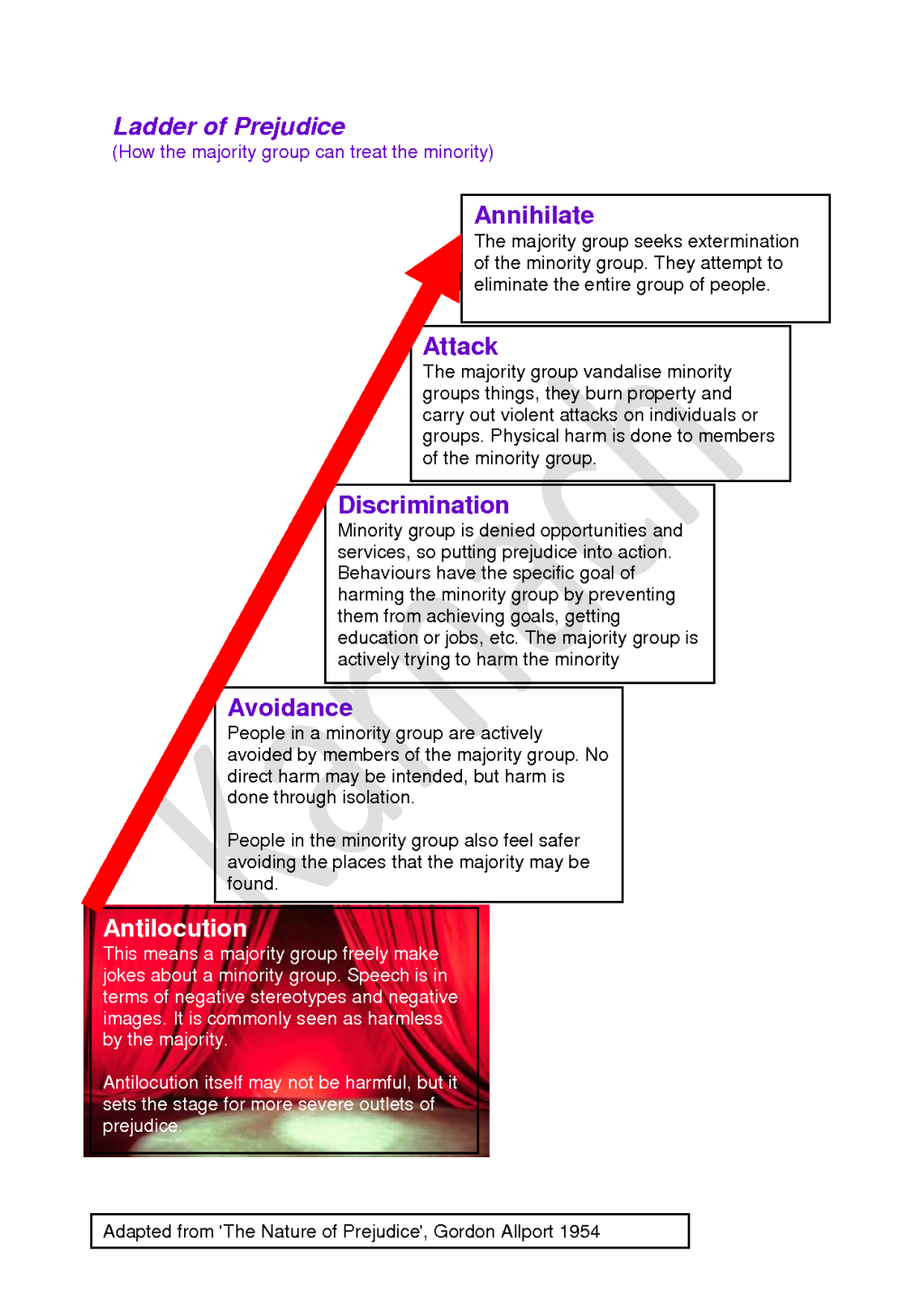
Climbing Allport’s Ladder of Prejudice

Since writing my own response to The Welfare Trait I have encountered a surprisingly high number of people in the UK who believe that anyone who can’t work should be left with no money at all to meet their basic survival needs. To clarify, that means they think that not everyone should have a fundamental right to life. My work was labelled “hysterical dogma” by one commentator on the Adam Smith Institute website. I have been very struck by how normalised social Darwinism and related perspectives have become over the last few years, again. And how people that disagree with those views are defined, increasingly as the other. Along with the growing number of other politically defined others. It’s a symptom of an increasingly authoritarian climate.

I was called a “politically correct bleeding heart leftard” by a eugenics advocate on the Telegraph comments section, and was truly baffled that someone could see social conscience, a sense of justice, basic, ordinary qualities of caring, empathy and compassion as somehow pathological qualities. It’s also remarkable that a group of people who claim that sanctions, which entail the removal of people’s means of meeting basic survival needs is “helping” or “supporting” people into work, somehow “fair” and about “making work pay” feel they can lecture anyone else on appropriate language choices, techniques of neutralisation, modes of linguistic behaviourism and censorship.

I have always felt strongly that we have a democratic duty to protect marginalised groups and look out for the cultural underdog –  it’s the oppressed that are denied a voice, their rights, autonomy and identity, not the oppressors. Underdogs are generally seen as casualties of injustice or persecution. They are also most often predicted to be losers in a struggle.

Of course not all underdogs remain underdogs. J.K. Rowling, a lone mother claiming social security, who wrote seven of the best-selling books of all time, created a vulnerable, lovable underdog character, Harry Potter – an oppressed but passionate orphan with character, modesty, integrity and all the best of human qualities. He grew up in a cupboard, wearing oversized hand-me-down clothes and doing accidental bursts of magic to get by. He came to face and fight the forces of evil that had oppressed and terrorised two generations of wizards and witches, and non-magical folk alike.

Jo Rowling had a very difficult seven-year period that left her coping with the death of her mother, who had multiple sclerosis, severe depression, the birth of her first child, divorce from her first husband and relative poverty until she finished the first novel in the series.

What is remarkable about Rowling isn’t her “rags to riches” success, though that is undoubtedly a commendable achievement: it’s the social, moral, and political inspiration she has given to so many, young and old alike, that really stands out, and her considerable philanthropy.

Rowling said: “I wanted Harry to leave our world and find exactly the same problems in the wizarding world. So you have the intent to impose a hierarchy, you have bigotry, and this notion of purity, which is this great fallacy, but it crops up all over the world. People like to think themselves superior and that if they can pride themselves in nothing else they can pride themselves on perceived purity.

Defining a group’s superiority and purity always means defining others as “inferior.”

But is it not normal to care about such issues? Surely that is how we relate to others, our inclination to bond originating from relationships within our families and with significant others, extending to wider communities, and to society as a whole? Yet this way of seeing the world is being pathologised by a growing number of people who see the world only in terms of hierarchies of status and human worth: a raw, “red in tooth and claw” competitive individualism, and always, it seems, for what they can get, how much they can profit and how much they can take from others, rather than what they can give to society.

The general public over the past 5 years have been generally treated by a government of elitist, antidemocratic, cognitive and class supremicists as a political means to an end. Meanwhile people raising genuine concerns about corruption, greed, the stigmatisation of minorities and the growing human rights abuses of marginalised social groups, authoritarianism and so on are ostracised, treated with scorn, ridicule and contempt, and turned into the growing number of Conservative folk devil constructs.

Names such as “extremists”, “raving trot” “loony leftie” “leftard” are bandied around so much now that those using the labels have lost sight of the fact that these are offensive and rude. The really worrying thing is my views are hardly extreme or remotely  radical  – I’m no “commie.” Most people on the political Left are just regular people wanting regular fairness, social justice, equal rights for all, an end to cruel and unnecessary cuts which target only the poorest, and an end to such crass socioeconomic policies that result in massive inequality and poverty. How did being so normal become so non-mainstreamed?

How can it possibly be that to care for the wellbeing of others in our society, and the kind of world our children will inherit from us is somehow wrong, that values of cooperation, mutual aid and compassion are not the norm, that taking a clear ethical position is something to be ashamed of or a reason to be mocked?

The Conservatives have a moralising, rather than a moral political position, and have you noticed that Tory moralising only ever applies to the poorest people and invariably generates public prejudice, discriminatory policies and fosters social divisions?

Political Correctness

It’s a sure sign that the Right have no arguments and critical reasoning to support their fundamental ideological position, that whenever their partisan narratives are challenged by our own narrative, then we are met with blatant attempts to close down debate by a barrage of nasty, resentful, immature name-calling and outrage that is thrown at anyone and everyone that challenges the cultural, epistemological and right-wing ontological status quo and neoliberal doxa.

Some people use the “freedom of speech” plea to justify their prejudice. They say they have a right to express their thoughts. However, speech is an intentional ACT. Hate speech is intended to do harm – it’s used purposefully to intimidate and exclude marginalised, disempowered and vulnerable groups. Hate speech does not “democratise” speech, it tends to monopolise it. Nor is it based on reason, critical thinking or open to debate. Bigotry is a crass parody of opinion and free speech. Furthermore, bigots are conformists – they tend not to have independent thought. Prejudice thrives on Groupthink.

Being inequitable, petty, resentful, vindictive and prejudiced isn’t “being truthful” or “telling it like it is” – a claim which is an increasingly common tactic for the Right – it’s just being inequitable, petty, resentful and prejudiced. And some things are not worth saying. We do have an equal right to express an opinion, but not all opinions are of equal worth. Free speech carries with it some responsibilities.

And the right-wing do frequently dally with hate speech. Hate speech generally is any speech that attacks a person or group on the basis of their race, religion, gender, disability, or sexual orientation. In law, hate speech is any speech, gesture or conduct, writing, or display which is forbidden because it may incite violence or prejudicial action against or by a protected individual or group, or because it disparages or intimidates a protected individual or group. Critics have argued that the term “hate speech” is a contemporary example of Newspeak, used to silence critics of social policies that have been poorly implemented in order to appear politically correct.

However, “political correctness” was adopted by US  New Right Conservatives as a pejorative term for all manner of attempts to promote civil rights, multiculturalism and identity politics, particularly, attempts to introduce new terms that sought to leave behind discriminatory baggage attached to older ones, and conversely, to try to make older ones taboo.

Importantly, political correctness arose originally from attempts at making language more culturally inclusive. Critics of political correctness show a curious blindness when it comes to examples of “Conservative correctness.” Most often, the case is entirely ignored, or censorship of the Left is justified as a positive virtue. Perhaps the key argument supporting this form of linguistic and conceptual inclusion is that we still need it, unfortunately. We have a right-wing Logocracy, creating pseudo-reality by prejudicial and discimatory narrative and words. We are witnessing that narrative being embedded in extremely oppressive policies and in their justification.

The negative impacts of hate speech cannot be mitigated by the responses of third-party observers, as hate speech aims at two goals. Firstly, it is an attempt to tell bigots that they are not alone. It validates and reinforces prejudice.

The second purpose of hate speech is to intimidate a targeted minority, leading them to question whether their dignity and social status is secure. In many cases, such intimidation is successful. Furthermore, hate speech is a gateway to harassment and violence. (See Allport’s scale of prejudice, which shows clearly how the Nazis used “freedom of speech” to incite hatred and then to incite genocide.) As Allport’s scale indicates, hate speech and incitement to genocide start from often subtle expressions of prejudice, which advance culturally by almost inscrutable degrees.

The dignity, worth and equality of every individual is the axiom of international human rights. International law condemns statements which deny the equality of all human beings. Article 20(2) of the ICCPR requires states to prohibit hate speech. Hate speech is prohibited by international and national laws, not because it is offensive, but rather, because it amounts to the intentional degradation and repression of groups that have been historically oppressed.

The most effective way to diffuse prejudice is an early preventative approach via dialogue: positive parenting, education and debate. Our schools, media and public figures have a vital part to play in positive role-modelling, like parents, in challenging bigotry, encouraging social solidarity, respect for diversity and in helping to promote understanding and empathy with others.

Hate speech categories are NOT about “disagreement” or “offence.” Hate speech doesn’t invite debate. It’s about using speech to intentionally oppress others. It escalates when permitted, into harassment and violence. We learned this from history, and formulated human rights as a consequence. In this context, political correctness is about inclusive free speech, with rationality, critical thinking, democratic civility and a degree of mutual respect chucked in.

I’m proud to be a part of an ethical, rational, reasonable, decent and civilised Left-wing.

And politically correct?

Damn right I am.

free speech - microphone

Freedom of speech isn’t about shouting the loudest, trying to intimidate, silence and disempower others or having the last word.

 —

My work is unfunded and I don’t make money from my writing. But you can contribute by making a donation and help me continue to research and write informative, insightful and independent articles, and to provide support to others. The smallest amount is much appreciated, it keeps my articles freely accessible – thank you.


DonatenowButton
cards

Adam Perkins, Conservative narratives and neuroliberalism

164204381.png

Eugenics in a ball gown

I had a little discussion with Richard Murphy yesterday, and I mentioned that the right-wing libertarian think tank, the Adam Smith Institute, (ASI) has endorsed* the controversial work of Adam Perkins – The Welfare Trait.” The ASI has been the impetus behind Conservative policy agendas and was the primary intellectual drive behind the privatisation of state-owned industries during the premiership of Margaret Thatcher, and alongside the Centre for Policy Studies and Institute of Economic Affairs, advanced a neoliberal approach towards public policy on privatisation, taxation, education, and healthcare, and have advocated the replacement of much of the welfare state by private insurance schemes.

(*The ASI review, written by Andrew Sabisky, was removed following wide criticism of Perkins’ methodology and other major flaws in his work. Consequently, the original hyperlink leads nowhere, so I’ve added an archived capture, to update.) 

Professor Richard Murphy, a widely respected political economist and commentator, has written an excellent article: The Adam Smith Institute is now willing to argue that those on benefits are genetically different to the rest of us on the Tax Research UK site, which I urge you to read. 

He says “What you see in this is the deliberate construction of an argument that those on benefits are genetically different from other people. The consequences that follow are inevitable and were all too apparent in the 1930s. And this comes from a UK think tank much beloved for Tory politicians.”

The Adam Smith Institute say this in their review of Adam Perkins’s book:

“With praiseworthy boldness, Perkins gets off the fence and recommends concrete policy solutions for the problems that he identifies, arguing that governments should try to adjust the generosity of welfare payments to the point where habitual claimants do not have greater fertility than those customarily employed. The book no doubt went to press before the Chancellor announced plans to limit child tax credits to a household’s first two children, but such a measure is very much in the spirit of this bullet-biting book. The explicit targeting of fertility as a goal of welfare policy, however, goes beyond current government policy. Perkins perhaps should also have argued for measures to boost the fertility of those with pro-social personalities, such as deregulation of the childcare and housing markets to cut the costs of sustainable family formation.”

And: “Over time, therefore, the work motivation of the general population is lowered. This occurs through both genetic and environmental channels. Personality traits are substantially heritable (meaning that a decent percentage of the variation in these traits is due to naturally occurring genetic variation). Given this fact, habitual welfare claimants with employment-resistant personalities are likely to have offspring with similar personalities.”

Personality disorder or simply maintaining the social order?

Two things concern me immediately. Firstly, there is no causal link established between welfare provision and “personality disorder” or “traits”, bearing in mind that the “employment-resistant personality” is an entirely made-up category and does not feature as a clinical classification in either the ICD-10 section on mental and behavioural disorders, or in the DSM-5. Nor is employment status currently part of any clinical diagnostic criteria. Personality disorders are defined by experiences and behaviours that differ from societal norms and expectations.

Personality disorder (and mental illness) categories are therefore culturally and historically relative. Diagnostic criteria and categories are always open to sociopolitical and economic definition, highly subjective judgments, and are particularly prone to political abuse.

Drapetomania” for example, was a pseudoscientific definition of a mental illness that labelled slaves who fled captivity in the 1800s. Samuel A. Cartwright, who invented the category, also prescribed a remedy. He said: “with proper medical advice, strictly followed, this troublesome practice that many Negroes have of running away can be almost entirely prevented. In the case of slaves “sulky and dissatisfied without cause” – apparently a warning sign of their imminent flight – Cartwright prescribed “whipping the devil out of them” as a “preventative measure.” As a further “remedy” for this “disease”, doctors also made running a physical impossibility by prescribing the removal of both big toes. Such abusive application of psychiatry and the medicalisation of distress and rational responses to ethnic degradation and dehumanisation is part of the edifice of scientific racism.

The classification of homosexuality as a mental illness was removed from the Diagnostic and Statistical Manual of Mental Disorders (DSM) in 1974, and was replaced by the subsequent categories of “sexual orientation disturbance” and then “ego-dystonic homosexuality,” the latter was not deleted from the manual until 1987. Medicalising and stigmatising the experiences, behaviours and beliefs of marginalised social groups, and attempting to discredit and invalidate those group’s collective experiences is a key feature of political and cultural oppression.

Personality traits are notoriously difficult to measure reliably, and it is often far easier to agree on the behaviours that typify a disorder than on the reasons why they occur. As it is, there is debate as to whether or not personality disorders are an objective disorder, a clinical disease, or simply expressions of human distress and ways of coping. At the very least, there are implications regarding diagnoses that raise important questions about context, which include political and social issues such as inequality, poverty, class struggle, oppression, abuse, stigma, scapegoating and other structural impositions.

An over-reliance on a fixed set of behavioural indicators, some have argued, undermines validity, leaving personality disorder categories prone to “construct drift,” as the diagnostic criteria simply don’t provide adequate coverage of the construct they were designed to measure. There are no physical tests that can be carried out to diagnose someone with a personality disorder – there is no single, reliable diagnostic tool such as a blood test, brain scan or genetic test. Diagnosis depends on subjective judgment rather than objective measurement.

A diagnosis of personality disorder is potentially very damaging and creates further problems for individuals by undermining their sense of self, denying their identity, experience and locating the problems, regardless of their origin and who is responsible for them, in themselves. This is in addition to exposing people to stigma and discrimination, both within the mental health system, quite often, and more broadly within our society. Medicalising and stigmatising human distress permits society to look the other way, losing sight of an individual’s social needs, experiences and context. It also alienates the stigmatised individual, and enforces social conformity, compliance and cultural homogeneity.

It may be argued that the concept of personality disorder obscures wider social issues of neglect, poverty, inequality, power relationships, oppression and abuse by focusing on the labelling of the individual. Rather than being concerned with the impact and prevalence of these issues, public outrage is focussed on containing and controlling people who challenge normative consensus and who are perceived to be dangerous. Because there is no objective test to make a diagnosis, this makes the basis of such diagnosis very questionable and highlights the propensity for its political and punitive usage. The “diagnosis” of many political dissidents in the Soviet Union with “sluggish schizophrenia” who were subsequently subjected to inhumane “treatments” led to questions about such diagnoses and punitive regimes through stigma, labeling, dehumanisation, coercion and oppression, for example.

Secondly, to recommend such specific policies on the basis of this essentially eugenic argument betrays Perkins’s intention to provide a pseudoscientific prop for the libertarian paternalist (with the emphasis being on behaviourism) brand of neoliberalism and New Right antiwelfarism.

The taken-for-granted assumption that the work ethic and paid labor (regardless of its quality) may define a person’s worth is also very problematic, as it objectifies human subjects, reducing people to being little more than neoliberal commodities. Or a disposable reserve army of labor, at the mercy of “free market” requirements, if you prefer.

The government is currently at the centre of a United Nations inquiry into abuses of the human rights of ill and disabled people, and is also in breach of the rights of women and children, because of their anti-humanist, draconian welfare “reforms”. Human rights are the bedrock of democracy. The fact that some social groups are experiencing political discrimination and the failure of a government in a wealthy first-world liberal democracy to observe what are meant to be universal human rights ought to be cause for concern.

The rise of neoeugenics

Holocaust documentation has highlighted that the medicalisation of social problems and systematic euthanasia of people in German mental institutions in the 1930s provided the institutional, procedural, and doctrinal origins of the genocide of the 1940s. Eugenics in Germany was founded on notions of “scientific progress,” and was about ensuring mental, racial and genetic “hygiene” and “improving” the German race, which ultimately led to eliminativist attitudes towards politically defined “impure” others.

Eugenics is a theory of the possibility of improving the qualities of the human species or a particular population. It encourages the reproduction of persons with socially defined “desirable genetic qualities” and discourages the reproduction of persons with socially defined “undesirable genetic qualities.” Taken to its most extreme form, eugenics supports the extermination of some groups who some others consider to be “undesirable” population.

One example of eugenic policy is the recent limiting of tax credit support for children in poorer families to two children only. Iain Duncan Smith said that this is to encourage “behavioural change” to prevent poorer families having “too many” children.

Eugenics is widely considered as a movement that endorses human rights violations of some social groups. At the very least, eugenic policy entails violations of privacy, the right to found a family, the right to freedom from discrimination, the right to socioeconomic security and social protection, and at worst, violations of the right to life.

I have frequently referred to Gordon Allport in my writing. He was a social psychologist who studied the psychological and social processes that create a society’s progression from prejudice and discrimination to genocide. Allport’s important work reminds us of the lessons learned from politically-directed human atrocities and the parts of our collective history it seems we would prefer to forget.

In his research of how the Holocaust happened, Allport describes sociopolitical processes that foster increasing social prejudice and discrimination and he demonstrates how the unthinkable becomes tenable: it happens incrementally, because of a steady erosion of our moral and rational boundaries, and propaganda-driven changes in our attitudes towards politically defined others, all of which advances culturally, by almost inscrutable degrees.

The process always begins with political scapegoating of a social group and with ideologies that identify that group as “undesirable” and as the Other: an “enemy” or a social “burden” in some way. A history of devaluation of the group that becomes the target, authoritarian culture, and the passivity of internal and external witnesses (bystanders) all contribute to the probability that violence against that group will develop, and ultimately, if the process is allowed to continue evolving, extermination of the group being targeted.

Othering is recognised in social psychology as part of an outgrouping process that demarcates those that are thought to be different from oneself or the mainstream, most often using stigmatising to generate public moral outrage. It tends to reinforce and reproduce positions of domination and subordination. Othering historically draws on essentialising explanations, culturalist explanations, behavioural explanations, genetic explanations and racialising explanations.

Hate crime, eugenics and Allport’s ladder

In the UK, much of the media is certainly being used by the right-wing as an outlet for blatant political propaganda, and much of it is manifested as a pathological persuasion to hate others. We are bombarded with anti-muslim rhetoric, “poverty porn”, headlines that condemn people needing social security as “workshy” and “scroungers.” The political scapegoating narrative directed at ill and disabled people has resulted in a steep rise in hate crimes directed at that group. By 2012, hate crime incidents against disabled people had risen to record levels, and has continued to climb ever since, rising by a further 41% last year alone. We are certainly climbing Allport’s ladder of prejudice.

A freedom of information request to the Department for Work and Pensions (DWP) discloses that between 2010 and 2015 the government closed 1,041,219 alleged cases of benefit fraud put forward by the public. Insufficient or no evidence of fraud was discovered in 887,468 of these. In 2015 alone, of the 153,038 cases closed by the DWP’s Fraud and Error Service, 132,772 led to no action. People can use an online form on the DWP website to anonymously report “suspects,” listing their eye colour, piercings, scars, tattoos and other details they deem relevant. Suspicions can also be logged through the DWP benefit fraud hotline.

The inaccurate reports throws into question multiple government advertising campaigns, claiming that the public has a “role” in identifying “benefit cheats”. Television adverts, social media posts, letters and radio campaigns have been used to warn claimants about fraudulently claiming benefits. Government statistics show fraudulent claims accounted for 0.7% – or £1.2bn – of total benefit expenditure in the financial year 2012-2013. Some of that figure may also contain a proportion of DWP errors. An estimated £1.6bn was underpaid to claimants by the DWP. Yet people’s neighbours are being encouraged to engage in a McCarthy-style reporting of suspected benefit fraud. And a significant proportion of the public are reporting innocent citizens.

There is considerable incongruence between cases of genuine fraud and public perception: an Ipsos Mori survey in 2013 found the public believed 24% of benefits were fraudulently claimed – 34 times greater than the level seen in official statistics.

The political construction of social problems also marks an era of increasing state control of citizens with behaviour modification techniques, (under the guise of paternalistic libertarianism) all of which are a part of the process of restricting access rights to welfare provision.

The mainstream media has been complicit in the process of constructing folk devils: establishing stigmatised, deviant welfare stereotypes and in engaging prejudice and generating moral outrage from the public:

“If working people ever get to discover where their tax money really ends up, at a time when they find it tough enough to feed their own families, let alone those of workshy scroungers, then that’ll be the end of the line for our welfare state gravy train.” James Delingpole 2014

Poverty cannot be explained away by reference to simple narratives of the workshy scrounger as Delingpole claims, no matter how much he would like to apply such simplistic, blunt, stigmatising, dehumanising labels that originated from the Nazis (see arbeitssheu.)

The Conservatives have strongly authoritarian tendencies, and that is most evident in their anti-democratic approach to policy, human rights, equality, social inclusion and processes of government accountability.

Conservative policies are entirely ideologically driven. It is a government that is manipulating public prejudice to justify massive socioeconomic inequalities and their own policies which are creating a steeply hierarchical society based on social Darwinist survival of the wealthiest “libertarian” principles. We have a government that frequently uses words like workshy to describe vulnerable social groups.

Conservative narrative and eugenics

This is a government intentionally scapegoating poor, unemployed, disabled people and migrants. A few years ago, a Tory councillor said that “the best thing for disabled children is the guillotine.” More recently, another Tory councillor called for the extermination of gypsies, more than one Tory (for example, Lord Freud, Philip Davies) have called for illegal and discriminatory levels of pay for disabled people, claiming that we are not worth a minimum wage to employers.

These weren’t “slips”, it’s patently clear that the Tories believe these comments are acceptable, and we need only look at the discriminatory nature of policies such as the legal aid bill, the wider welfare “reforms” and research the consequences of austerity for the poorest and the vulnerable – those with the “least broad shoulders” – to understand that these comments reflect how many Conservatives think.

Occasionally such narrative is misjudged, pushing a little too far against the boundaries of an established idiom of moral outrage, and so meets with public resistance. When this happens, it tends to expose the fault lines of political ideology and psychosocial manipulation, revealing the intentional political creation of folk devils and an extending climate of prejudice.

In EdgbastonKeith Joseph, (1974) announced to the world that:

“The balance of our population, our human stock is threatened … a high and rising proportion of children are being born to mothers least fitted to bring children into the world and bring them up. They are born to mothers who were first pregnant in adolescence in social classes 4 and 5. Many of these girls are unmarried, many are deserted or divorced or soon will be. Some are of low intelligence, most of low educational attainment.”

And in 2010, the former deputy chairman of Conservative Party, Lord Howard Flight, told the London Evening Standard:

“We’re going to have a system where the middle classes are discouraged from breeding because it’s jolly expensive. But for those on benefits, there is every incentive. Well, that’s not very sensible.”

In 2013, Dominic Cummings, a senior adviser to the UK Secretary of State for Education, provoked a flurry of complaints about his eugenicist approach, claiming that “a child’s performance has more to do with genetic makeup than the standard of his or her education.”

Steven Rose, Emeritus Professor of Biology, offered a more detailed analysis in New Scientist, concluding:

“Whatever intelligence is, these failures show that to hunt for it in the genes is an endeavour driven more by ideological commitment than either biological or social scientific judgement. To suggest that identifying such genes will enable schools to develop personalised educational programmes to match them, as Cummings does, is sheer fantasy, perhaps masking a desire to return to the old days of the 11 plus. Heritability neither defines nor limits educability.”

Pseudoscience has long been used to attempt to define and explain social problems. Lysenkoism is an excellent example. (The term Lysenkoism is used metaphorically to describe the manipulation or distortion of the scientific process as a way to reach a predetermined conclusion as dictated by an ideological bias, most often related to political objectives. This criticism may apply equally to either ideologically-driven “nature” and “nurture” arguments.)

Eugenics uses the cover and credibility of science to blame the casualities of socioeconomic systems for their own problems and justify an existing social power and wealth hierarchy. It’s no coincidence that eugenicists and their wealthy supporters also share a mutual antipathy for political progressivism, trade unionism, collectivism, notions of altruism and of co-operation and class struggle.

It isn’t what it ought to be

Adam Perkins wrote a book that attempts to link neurobiology with psychiatry, personality and behavioural epigenetics, Lamarkian evolution, economics, politics and social policy. Having made an impulsive inferential leap across a number of chasmic logical gaps from neurobiology and evolution into the realms of social policy and political science, seemingly unfazed by disciplinary tensions between the natural and social sciences, particularly the considerable scope for paradigmatic incommensurability, he then made a highly politicised complaint that people are criticising his work on the grounds of his highly biased libertarian paternalist framework, highly partisan New Right social Conservatism and neoliberal antiwelfarist discourse. 

The problem of discrete disciplinary discursive practices and idiomatic language habits, each presenting the problem of complex internal rules of interpretation, was seemingly sidestepped by Perkins, who transported himself across distinct spheres of meaning simply on leaps of semantic faith to doggedly pursue and reach his neuroliberal antiwelfarist destination. He seems to have missed the critical domain and central controversies of each discipline throughout his journey.

Perhaps he had a theory-laden spirit guide.

Einstein once famously said: “The theory tells you what you may observe.”

On reading Perkins’s central thesis, the is/ought distinction immediately came to mind: moral conclusions – statements of what “ought” to be – cannot be deduced from non-moral premises. In other words, just because someone claims to have knowledge of how the world is or how groups of people are – and how mice are, for that matter, since Perkins shows a tendency to conflate mice behaviour with human behaviour – (descriptive statements), this doesn’t automatically prove or demonstrate that he or she knows how the world ought to be (prescriptive statements).

There is a considerable logical gap between the unsupported claim that welfare is somehow “creating” some new kind of personality disorder, called “the employment-resistant personality”, and advocating the withdrawal of support calculated to meet only the basic physiological needs of individuals – social security benefits only cover the costs of food, fuel and shelter.

While Perkins’s book conveniently fits with Conservative small state ideology, behaviourist narratives, and “culture of dependency” rhetoric, there has never been evidence to support any of the claims that the welfare state creates social problems or psychological pathologies. Historically, such claims tend to reflect partisan interests and establish dominant moral agendas aimed at culturally isolating social groups, discrediting and spoiling their identities, micromanaging dissent, and then such discourses are used in simply justifying crass inequalities and hierarchies of human worth that have been politically defined and established.

It’s truly remarkable that whenever we have a Conservative government, we suddenly witness media coverage of an unprecedented rise in the numbers of poor people who have suddenly seemingly developed a considerable range of personal “ineptitudes” and character “flaws.” Under the Thatcher administration, we witnessed Charles Murray’s discredited pseudoscientific account of “bad” and “good” folk-types taking shape in discriminatory policy and prejudiced political rhetoric.

Social Darwinism has always placed different classes and races in hierarchies and arrayed them in terms of socially constructed notions of “inferiority” and “superiority.” Charles Murray’s controversial work The Bell Curve: Intelligence and Class Structure in American Life presents another example of a discredited right-wing ideological architect, funded by the right-wing, who was then used to prop up an authoritarian Conservative antiwelfarist dogma that was also paraded as “science.” Murray had considerable influence on the New Right Thatcher and Reagan governments. Critics were often dismissed, on the basis that they were identified with “censorious political correctness,” which of course was simply a right-wing attempt to close down genuine debate and stifle criticism. The Bell Curve was part of a wider campaign to justify inequality, racism, sexism, and provided a key theme in Conservative arguments for antiwelfarism and anti-immigration policies.

A recent comprehensive international study of social safety nets from the Massachusetts Institute of Technology (MIT) and Harvard economists refutes the Conservative “scrounger” stereotype and dependency rhetoric. Abhijit Banerjee, Rema Hanna, Gabriel Kreindler, and Benjamin Olken re-analyzed data from seven randomized experiments evaluating cash programs in poor countries and found “no systematic evidence that cash transfer programs discourage work.”

The phrase “welfare dependency” was designed to intentionally divert attention from political prejudice, discrimation via policies and to disperse public sympathies towards the poorest citizens. It is used to justify inequality.

Adam Perkins does nothing to consider, isolate and explore confounding variables regarding the behaviours and responses of people needing social security support. He claims our current level of support is too high. I beg to differ. Empirical evidence clearly indicates it is set much too low to meet people’s physiological needs fully. Poverty affects people’s mental health as well as their physical health. There is a weight of empirical evidence confirming that food deprivation and income insecurity is profoundly psychologically harmful as much as it is physiologically damaging. (See the Minnesota semistarvation experiment, for example.) Describing people’s anger, despondency and distress at their circumstances as “antisocial” is profoundly oppressive. The draconian policies that contribute to creating those circumstances are antisocial, not the people impacted by those policies.

If people can’t meet their basic survival needs, it is extremely unlikely that they will either have the capability or motivation to meet higher level psychosocial needs, including social obligations and responsibilities to find work and meet increasingly Kafkaesque welfare conditionality requirements.

However, people claiming social security support have worked and contributed to society. Most, according to research, are desperate to find work. Most do. It is not the same people year in year out that claim support. There is no discrete class of economic freeriders and “tax payers.” The new and harsh welfare conditionality regime tends to push people into insecure, low paid employment, which establishes a revolving door of work and welfare through no fault of those caught up in it.

There is a clear relationship between human needs, human rights, and social justice. Needs are an important concept that guide empowerment based practices and the concept is intrinsic to social justice. Furthermore, the meeting of physiological and safety needs of citizens ought to be the very foundation of economic justice as well as the development of a democratic society.

The Conservatives (and Perkins) claim that the social security system, which supports the casualties of neoliberal free markets, have somehow created those casualties. But we know that the competitive, market choice-driven Tory policies create a few haves and many have-nots.

As I’ve pointed out many times before, such political rhetoric is designed to have us believe there would be no poor if the welfare state didn’t “create” them. But if Conservatives must insist on peddling the myth of meritocracy, then surely they must also concede that whilst such a system has some beneficiaries, it also creates situations of insolvency and poverty for others.

Inequality is a fundamental element of the same meritocracy script that neoliberals so often pull from the top pockets of their bespoke suits. It’s the big contradiction in the smug meritocrat’s competitive individualism narrative. This is why the welfare state came into being, after all – because when we allow such competitive economic dogmas to manifest without restraint, there are always winners and losers. Inequality is a central feature of neoliberalism and social Conservatism, and its cause therefore cannot be located within individuals.

It’s hardly “fair”, therefore, to leave the casualties of competition facing destitution and starvation, with a hefty, cruel and patronising barrage of calculated psychopolicical scapegoating, politically-directed cultural blamestorming, and a coercive, punitive behaviourist approach to the casualities of inbuilt, systemic, inevitable and pre-designated sentences of economic exclusion and poverty.

That would be regressive, uncivilised, profoundly antidemocratic and tyrannical.

PAA-550x369


This work was cited and referenced in Challenging the politics of early intervention: Who’s ‘saving’ children and why, by Val Gillies and Rosalind Edwards, here.

My work is unfunded and I don’t make any money from it. But you can support Politics and Insights and contribute by making a donation which will help me continue to research and write informative, insightful and independent articles, and to provide support to others.


Granfalloonery, scapegoating, social dominance theory and Conservatism

images

Anyone who has read Kurt Vonnegut’s Cat’s Cradle will know what a granfalloon is. The University of Chicago awarded Vonnegut a Master’s in anthropology for what was essentially a work of satire, irony, black humor and parody. The term has since been adopted by market researchers and social scientists.

A granfalloon is a group of people who affect a proud and shared identity or some cohesive purpose, but whose mutual association is actually meaningless – associations and societies based on a shared but ultimately fabricated premise. Yet members often feel very superior in some way to others.

Granfalloons are powerful propaganda devices because they are easy to create and, once established, the granfalloon then defines social reality, establishes a normative order, by demarcating and maintaining social identities. Granfalloons also play to our strong normative tendencies towards sociability, grouping and a fundamental need for a sense of belonging, based on perceived shared characteristics. They tend not to like deviations from the norm. Or at least from what they perceive as the norm.  

However, group identities constructed around labels such as “strivers”, “tax payers” and “hard working families” are non inclusive, too. These are created politically to justify economic exclusion and outgrouping, and to manage public perceptions. Exclusive language and dominant, prejudiced narrative is an effective means of social control since it can be used to frame the interpretation of events. The group categories are designed to create or redefine moral norms and also, to stigmatise, to define deviance and to create scapegoats.

One of the purposes of the construction of granfalloons is to create categories of outsiders, as much as it is to create a false sense of privilege amongst ingroup members.

The granfalloon technique is used in advertising, in political rhetoric and by pseudoscientists, cults and other dubious groups, as a technique of persuasion in which individuals are encouraged to identify with a particular granfalloon or social group. The pressure to identify with a group is meant as a method of securing the individual’s loyalty and commitment through adoption of the group’s symbols, slogans, language, norms, rituals, actions, goals and beliefs. We like to conform and we like to “belong” and that is manipulated endlessly by granfallooners everywhere.

It’s ultimately very socially divisive. 

Think of UKIP’s extensive granfalloonery; the shrinking island of logic; an ever-decreasing ingroup of supremicists, and you get the gist. The only people who properly “belong” in UKIP  are older, “hard done by” white labourers, predominantly but not quite exclusively males, who don’t like anyone else’s social groups. Everyone else is “privileged” in some way, and that’s a bad thing to be, apparently. Scapegoating can often cause oppressed groups to attack other oppressed groups. Even when injustices are committed against a minority group by a majority ingroup, minorities sometimes lash out against a different minority group in lieu of confronting the more powerful majority.

Sometimes the oppressed can be very oppressive too.

Then there is the “all in it together” granfalloonery of Conservatism, where social groups are targeted by the ever-electioneering, purposeful and powerful elite to vote for policies that serve absolutely no-one but the elite, and cause real harm to other group members of society. All that “hate thy neighbour stuff”, you know: it’s the sick and disabled people, the unemployed people, the ethnic minorities, the working poor, the junior doctors, the unions, the Labour Party, Harold Wilson, Ed Miliband, Jeremy Corbyn, the “extremist” critics and academics. How very dare they.

But the biggest miscreants of all are in office, for crying out loud. “They’re behind you!” came the pantomime call from a usually passive, disengaged audience. We all know the score, yet here we are as an entire society of sub-grouped granfalloons, following all the divisive finger-pointing and scapegoating like dizzy, distracted cats running around in circles chasing unravelling strings.

tumblr_m81dzafFA21qcekj1o1_500

The Conservatives are creatures of habit rather than reason. Traditional. That is why their policies are so anti-progressive, and stifling for the majority of us. It’s also why Tory policies don’t meet public needs. 

I’ve observed before that there’s always an air of doom and gloom when we have a Tory government, and a largely subdued, depressed, repressed nation, carrying vague and fearful intuitions that something truly catastrophic is just around the corner.

I’ve said more than once before that we always witness the social proliferation of fascist ideals with a Tory government, too. It stems from the finger-pointing divide and rule mantra: it’s them not us, them not us. But history refutes as much as it verifies, and we learned that it’s been the Tories all along.

With a Conservative government, we are always fighting something. Poverty, social injustice: we are forced to compete and fight for political recognition of our fundamental rights, which the Tories always circumvent. We fight despair and material hardship, caused by the rising cost of living, low wages, high unemployment or more recently, underemployment, and recession that is characteristic of every Tory government.

I think people often mistranslate what that something is. Because Tory rhetoric is all about othering: dividing, atomising of society into bite-sized manageable pieces by amplifying a narrative of sneaking suspicion and hate thy neighbour via the media. Scapegoating serves as a mechanism of psychological dumping and emotional relief in acts of misplaced aggression towards oppressed outgroups for oppressed ingroups. The social order is maintained this way.

In social psychology, the granfalloon concept stems from research by the British social psychologist Henri Tajfel, in particular, from social identity theory. The significance of ingroup and outgroup categorization was identified using a method that has come to be known as the minimal group paradigm. In his research, Tajfel found that strangers would form groups on the basis of completely inconsequential criteria, such as liking certain paintings, fictions, pseudoscientific dogmas or Elvis.

In one study, Tajfel’s experimental subjects were asked to watch a coin toss. They were then designated to a particular group based on whether the coin landed on heads or tails. The subjects placed in groups based on such meaningless associations between them have consistently been found to “act as if those sharing the meaningless labels were kin or close friends.” Research demonstrates that people are differentially influenced by ingroup members. That is, under conditions where group categorisation is psychologically salient, people will shift their beliefs in line with ingroup social norms.

Outgrouping leads to the homogeneity effect. This is a process where the perception of members of an outgroup as being homogenous arises (“all the same”), while members of one’s ingroup are perceived as being individual and diverse. This is especially likely to occur on the basis of prejudiced, stereotyped negative characteristics. Of course ingroup members can be perceived as being similar to one another in regards to loosely identified positive characteristics. This effect is called ingroup homogeneity.

Authoritarian governments often utilise granfalloonery, maintaining social order by the creation of social allegiances through various means of outgrouping and ingrouping, socialisation and indoctrination. This is also used to justify prejudice, discrimination and socioeconomic inequality.

Being sociable is a positive human quality. But perhaps being duped by trivia and artificially constructed categories, intentionally stigmatised identities and politically constructed social taxonomies is also a human tendency. It seems so.

Granfalloonery is used as a propaganda technique. It is an improper appeal to emotion, which purposefully bypasses the rational thought-processes of populations. It used for the purpose of changing the opinions of a targeted audience or population. The closely related Bandwagon technique involves encouraging people to think or act in some way simply because other people are doing so.

Some people much prefer wide social inequalities. Social dominance orientation (SDO) is conceptualised as a measure of individual differences in levels of group-based discrimination; that is, it is a measure of a person’s preference for status-ranking and hierarchy within society and domination over what are perceived as lower-status outgroups. It is a predisposition toward anti-egalitarianism within and between social groups. High scores of SDO predict stereotyping, discrimination and prejudice. SDO correlates with forms of right-wing authoritarianism. Hello Mrs May.

The concept of SDO as a measurable individual difference arose from social dominance theory. Individuals who score high in SDO desire to maintain and, in many cases, increase the differences between social statuses of different groups, as well as individual group members. Typically, they are controlling, manipulative, competitive, aggressive, dominating, tough, and relatively unempathic, uncaring power-seekers. People scoring high in SDO also prefer hierarchical group orientations. Often, people who score high in SDO have strongly held beliefs in ‘meritocracy’, hierarchical societies and forms of social Darwinism.

See also:

Groupthink

False-consensus effect

How to sell a pseudoscience – Anthony R. Pratkanis

Don’t believe everything you think: cognitive dissonance

3822587_600x600


I don’t make any money from my work. But you can support Politics and Insights and contribute by making a donation which will help me continue to research and write informative, insightful and independent articles, and to provide support to others. The smallest amount is much appreciated, and helps to keep my articles free and accessible to all – thank you.

DonatenowButton

327,379 sick and disabled people were not paid their Christmas Bonus last year

david-cameron-main.jpg


Labour’s shadow Work and Pensions Secretary, Owen Smith MP, has accused the Department of Work and Pensions (DWP) of being “cruel and incompetent”, after at least 327,379 sick and disabled people were left without their £10 Christmas Bonus.

Benefits were originally calculated to meet only the basic costs of food, fuel and shelter. The Pensioners and Family Income Supplement Payments Act 1972 ensured that a Christmas Bonus of £10 is paid to the recipients of some benefits as a one off payment. The subsequent Pensioners’ Payments and Social Security Act of 1979 established the Bonus permanently, although the amount has never been uprated in line with rising prices and living costs. 

On the government site, it says:

The Christmas Bonus is a one-off tax-free £10 payment made before Christmas, paid to people who get certain benefits in the qualifying week. This is normally the first full week of December.

You don’t need to claim – you should get paid automatically.

Mr Smith said:

“They’ve [the DWP] now been forced to admit that 300,000 people went short because they couldn’t even manage to make a simple payment in time for the holidays.

People have always known the Tories are cruel, but they used to think they were at least competent.

Iain Duncan Smith seems to be having a good go at proving they’re both cruel and incompetent.”

A DWP spokesperson responded, saying 

“All regular ESA payments were made on time over Christmas, with the majority of people receiving their additional Christmas seasonal payment on schedule.

Due to an administrative error, a small minority may not receive their additional Christmas seasonal payment until the end of January.”

Some people have yet to receive their payment. How long does it take to fix an “administrative error”?

I can’t help but wonder about the reason presented by the DWP for the payment delays. I don’t believe it’s the truth, although I’d be amongst the first to acknowledge the Department’s wide-ranging ineptitude.

I am a sick and disabled person who claims ESA. Having worked all of my life, and after being forced though illness to give up a job and profession that I loved, I have to say that my standard of living has very drastically dropped, and I have experienced absolute poverty – times when I have not been able to meet even basic needs, such as keeping  warm and eating adequately. In 2012, a tribunal agreed with my decision to leave work on the grounds that my illness is now so severe it presents unacceptable risks to myself and potentially, to others in the work environment, as I am no longer able to fulfil even the basic responsibilities that my work entailed, reliably, consistently and safely. My consultant and GP fully supported my decision.

I wasn’t paid the Christmas Bonus in 2012, 2013 and 2014. I rang the DWP in 2014, when I realised I was entitled to the payment. After being told twice that the money had been paid into my account and it hadn’t, in October 2015, I finally received the backdated payments. I got a bizarre letter explaining that whilst the DWP had said they had paid me, they hadn’t, which I already knew.

I received my Christmas Bonus for 2015 on 14 January. It seems to me that the DWP seldom pay the Bonus unless you actually ask for it (several times) or unless an MP applies some ethical and rational pressure, as Owen Smith has done.

The government believe that any kind of welfare support creates perverse incentives for people not to work. There is no empirical evidence to support this claim. They also think that the general public are “cognitively incompetent,” drawing on the new paternalist behavioural economics (“nudge”) theoretical framework, their basic proposition is that we are fundamentally irrational and make faulty decisions that are founded entirely on our “cognitive biases.” Of course the new army of self-appointed cognitive experts and nudgers exist outside the realms of their own universal theory of “human nature” and are thus exempted from nudges. Poor people who need financial support are not.

The Tories also claim that one of the problems of providing social security arises because we believe the resulting income gain from employment is not enough to compensate for the (increased) work effort. However, the truly rational solution of course would be to raise the lowest wages, to provide a clear and positive “incentive” to work, when people are able, but instead the government have opted for a psychocratic, punitive approach, stigmatising those who are too ill to work to justify cutting essential lifeline benefits to amounts that barely cover the cost of meeting basic survival needs, adding the perpetual threat and administration of sanctions – which entail the complete withdrawal of support –  for any perceived non-compliance.

The conditionality regime means that eligibility for support requires constantly demonstrating an unbounded willingness to attend often pointless, resource and time-consuming jobcentre lectures from work coaches and advisors and applying for any job presented, regardless of its appropriateness, security or pay.

The Tories ludicrously claim that this punitive approach, entailing the systematic withdrawing of essential support, and the incremental dismantling of the welfare state, is “making welfare fair”,  “making work pay” , “helping people into work” and “supporting sick and disabled people” indicating an Orwellian tendency to turn the meaning of ordinary words into a form of tyranny.

Sanctions are founded on and legitimised by claptrap and psychobabble that originated from the pseudoscientific Behavioural Insights Team, too.  Perhaps the Tory “Grudge” Unit is a much more appropriate name for this mean and vindictive collection of neoliberal cognitive supremicists and economic Darwinists. Armchair psychopaths.

In particular, sanctions are founded on a theory of a cognitive bias called “loss aversion” which is being manipulated and turned into a big state stick to ensure that poor people are compliant with draconian benefit conditionality. “Loss aversion” is a behavioural economics theory that attempts to euphemise draconian policies; a substituted expression that serves as a technique of neutralisation for diabolical state actions designed to instil a deep fear of destitution and starvation amongst the increasingly growing precariat, we are perpetually “downsizing” our needs and expectations to become desperate, impoverished, needing to claim support from a system that most, if not all of us have paid into.

From the shrinking category of legitimate “disability” to forcing people to work in insecure jobs for low wages or for no pay at all on exploitative work fare schemes, nudge is being used to prop up neoliberal ideology, social conservatism, and to euphemistically frame punitive policies, “applying the principles of behavioural economics to the important issue of the transition from welfare to work.” (See Employing BELIEF:Applying behavioural economics to welfare to work, 2010 and Nudging Conformity and Benefit Sanctions, 2015.)

The steady drop in real wages since 2010, according to the Office for National Statistics, is the longest for 50 years. The fall in earnings under the Conservatives is the biggest in any parliament since 1880, according to analysis by the House of Commons Library.  “Making work pay” for whom, we should ask.

The Tories have a strongly anti-welfare ideology, and they also advocate using the tools of behavioural economics to “incentivise” people to work, and further claim that social security encourages dependency. Nudge theorists have proposed that making people’s present more livable with any kind of “cash gifts” only amplifies the alleged cognitive tendency people have to overestimate the magnitude of immediate benefits relative to the more distant ones of working. This is the kind of thinking that underpins Conservative policies aimed at keeping people who need to claim support perpetually poor, insecure and fearful.

However, there’s no such thing as a “cycle of benefit dependency”, it’s a traditional Tory prejudice and is based on historically unevidenced myths. Poverty arises because of socioeconomic circumstances that are unmitigated through government decision-making. In fact this government has intentionally extended and perpetuated inequality through its policies.

It’s therefore easy to see how deliberately withholding the Christmas Bonus would be justified by government officials. This government believes that people who have fallen on hard times and are desperate for financial support are driven by a “culture of entitlement.” People needing social security are being politically redefined as economic free riders. But most people claiming benefit have paid tax, national insurance, and continue to pay VAT and other hidden taxes. There is no discrete class of taxpayers: we ALL pay taxes, except of course for a number of the very wealthy and big businesses. Implying that people claiming social security are a “burden” on working people’s taxes is a fact screen, erected to prop up Tory ideology. Meanwhile the welfare state is being steadily dismantled by a government of neoliberal ideologues.

Perhaps this was just another paternalist experimental “trial” aimed at nudging sick and disabled people into work, and of course, it would be based entirely on operationalising the whopping cognitive biases and traditional prejudices of the Tories.

1002589_521987671204099_896277269_n (1)

Soul-breaking government scheme to provide ‘expert’ employment ‘support’ to young people in schools

430835_148211001996623_1337599952_n (1)


The so-called ‘small state’ government have pledged to intrude schools to place ‘demand-led, Jobcentre Plus staff to supplement careers guidance and help schools deliver their statutory duty to provide high-quality, independent and impartial careers advice.’

See government press release: Jobcentre Plus support rolled out to schools.

Isn’t all existing careers advice impartial?

Ah, I see that impartial now means: ‘to inform independent choice,’ according to the newly introduced Careers and Enterprise Company, who will work with Jobcentre Plus staff ‘to ensure schools receive a coherent and aligned offer.’

Aligned to what? 

The needs of local businesses and the neoliberal labour market and not the needs of young people.

To inform independent choice. That’s a bit like saying “If you do everything I say, you will be truly free to make your own choices.  

The Tories are experts in linguistic behaviourism, telling lies and social control freakery, but not very much else.

Impartial. It’s another one of those Tory definitions that mean something else completely. Like helping or supporting people into work, which actually means a crude type of punitive behaviourism  – the imposition of  punitive financial sanctions if you don’t do exactly what you are told, and actually, quite often, even if you do. I’ve never understood how starvation and destitution can ever help or incentivise anyone to find a job, especially when experience and empirical evidence tells us otherwise. The welfare state has been weaponised against the people it was designed to support: a penultimate, vindictive Tory tactic before they completely dismantle it once and for all.

In 2015, the government’s Earn or Learn taskforce announced a new 3-week programme to give young jobseekers an ‘unprecedented level of support that will help them find work within 6 months.’  Personally, I shudder at the very thought of the Tories supporting my own children. I don’t want them anywhere near young people more generally. Regressive and Orwellian Tory ‘support’ has killed adults. There is no conceivable way that this bunch of tyrants can ever be trusted with our children’s future.

From 2017, the new programme will offer ‘an intensive curriculum’ involving practicing job applications and interview techniques as well as extensive job searches, and is expected to take 71 hours over the first 3 weeks of the claim. Welcome to the ultimate libertarian paternalist’s dystopic ‘education’ programme.

This ‘expert employment support to young people’ has been launched by two utterly inept, lying, dogmatic Conservatives with a history of formulating extremely nasty, punitive approaches to state defined ‘welfare and wellbeing’ – Iain Duncan Smith and Priti Patel.

Someone should put them straight: education includes the opportunity to attend college and university. Curiously, the Conservative brand of ‘impartial’ career advice seems to be all about big business ‘leading the way’ by instilling the protestant work ethic in our children. Life and learning is about working for people who make profits. That is the order of the world. 

Children from the age of twelve are to be coached to undertake ‘work experience.’ To clarify, that’s work fare – stacking shelves at Poundland or sweeping floors at your local McDonald‘s, for no pay.

It’s difficult to see what kind of educational process such a Conservative ‘curriculum’ entails, although it does include a sequence of instruction: a barely concealed hidden curriculum which reinforces existing social inequalities by ‘educating’ students according to their class, promoting the acceptance of a social pre-destiny of exploitation without promoting rational and reflective consideration.

A veritable pedagogy of the oppressed.

Duncan Smith babbles:

This scheme is fundamentally about social mobility and social justice – ensuring we give all young people the best chance to get on in life.

Someone should tell this idiot that social justice is all about the fair and just relationship between the individual and society. This is measured by the distribution of wealth, resources, opportunities, freedoms for personal activity and social privileges. It is about removing barriers to social mobility, the creation of social safety nets and economic justice. There is no mention of work fare for adults and children, exploitation, corporate profits and Tory donors in any standard definition of social justice anywhere.

Steve Bell cartoon

It’s not as if the Conservatives have historically shown the slightest interest in and recognition of realising human potential. That’s far too progressive and would require the capacity for democratic dialogue instead of paternalist preaching and lofty class-contingent, traditionally prejudiced, moralising. The Tories have always prefered a steeply hierarchical world, comprised of ascribed social status.

What the Conservatives plan is a blatant programme of indoctrination and political micromanagement to ensure that young people learn their place and accept a future of exploitative, low paid, insecure jobs, without the prospect of real opportunities or the chance to go to university. It’s more psychoregulation and authoritarian politics and has nothing to do with genuine needs-led or evidence-based policy.

And it’s to be delivered in our schools: transforming them from Ideological State Apparatuses – ideologies have the function of masking the exploitative arrangements on which class societies are based – into unmasked Repressive State Apparatuses. Hidden in plain view.

Authoritarianism tends to become more visible and frankly expressed over time.

demcracy


I don’t make any money from my work. I am disabled because of illness and have a very limited income. But you can help by making a donation to help me continue to research and write informative, insightful and independent articles, and to provide support to others. The smallest amount is much appreciated – thank you.

DonatenowButton

The Department for Work and Pensions don’t know what their ethical and safeguarding guidelines are but still claim they have some

dc308-media_http1bpblogspot_yzchd

I have recently written quite extensively about problems with how the government conduct “research,” I’ve also highlighted the many official rebukes the Conservatives have faced because of their tendency to invent statistics to “verify” their ideologically-driven, value-laden “hypotheses.”

Who could ever forget the Department for Work and Pension’s fake testimonials from fake benefit claimants telling us all how fakely beneficial the fakesters had found having their fake lifeline benefits withdrawn for fake non-compliance, leading to fake improvements of behaviour, presumably after a bout of fake starvation and destitution.

The new Work and Health Programme, aimed at reducing the number of people claiming Employment and Support Allowance (ESA), is currently still at a research and trialing stage. Part of the experimental nudge element of this research entails enlisting GPs to “prescribe” job coaches, and to participate in constructing “a health and work passport to collate employment and health information.”  (See The new Work and Health Programme: the government plan social experiments to “nudge” sick and disabled people into work.)

This raised some serious ethical concerns for me, which I addressed in a Freedom of Information (FoI) request to the Department for Work and Pensions (DWP). The most important part of the request was:

I should like to ask what ethical guidelines are in place regarding the use of behavioural theory on claimants. What guidelines are in place to protect claimants from any potential adverse effects of trials and experiments using methods aimed at changing behaviours of claimants? And what method of gaining claimant consent (to be used as a subject in trials and experiments ) is used by the Department and by job centres?

I did ask a further three brief and reasonable questions, citing a source of information – The Government Communication Service guide to communications and behaviour change quoting from it and explaining the questions.

My request was refused.

The DWP response

I can confirm that we hold information falling within the description specified in your request. However, we estimate that the cost of complying with your request would exceed the appropriate limit for central Government, set by regulations at £600. This represents the estimated cost of one person spending 3½ working days in determining whether the Department holds the information, and locating, retrieving and extracting it.

Under section 12 of the Freedom of Information Act the Department is not therefore obliged to comply with your request and we will not be processing it further.

images

Firstly, something as fundamentally important as safeguarding and ethical guidelines regarding government behavioural/psychological experimentation should actually be available for public access and scrutiny, not hidden away in a place that allegedly takes so much time, effort and money to locate.

Anyone would think those comments are simply an obstructive tactic, if the DWP can confirm that they have the information, then surely that reduces the cost and time spent retrieving and extracting it to comply with my request. Wouldn’t you think?

Someone who is earning £600 for 3½days work is on a very generous annual salary of around £45K. Unless this person is being paid to be intentionally incompetent and obstructive, their job skills suck, it has to be said. So do the logic and reasoning skills of the person who wrote that response.

I also know from experience that the DWP regularly respond only partially. They had the option of answering some of my request, at least. After all, they claim to have the information, seems a shame not to share some of it.

However, because the ethical considerations of government experiments and trials on people needing welfare support are so very important, I have pursued this request further by taking the option of simplifying it.

I wrote:

Dear DWP CAXTON HOUSE Communications,

You confirm that you have the information that I requested, but then claim that it would exceed the £600 limit to provide that
information which you state is because of the “estimated cost of one person spending 3½ working days in determining whether the Department holds the information, and locating, retrieving and extracting it.”

If you confirm you have the information, then surely that reduces the cost and time spent retrieving and extracting it to comply with my request.

I will however simplify my request. Most people would expect that ethical guidelines, safeguards and the important matter of client consent to participating in Government trials and experiments on people needing welfare support is something that the DWP would have to hand – easy to retrieve and very important information that one would expect to be in the public domain in any case. But I can’t find it.

I refer again to the The Government Communication Service guide to communications and behaviour change –
https://gcn.civilservice.gov.uk/wp-conte…

In particular, I refer to page 5: “Behavioural theory is a powerful
tool for the government communicator, but you don’t need to be an experienced social scientist to apply it successfully to your work.”

I should like to ask:

  • What ethical guidelines are in place regarding the use of behavioural theory on claimants?
  • What guidelines are in place to protect claimants from any potential adverse effects of trials and experiments using methods aimed at changing the behaviours of claimants?
  • And what method of gaining claimant consent (to be used as a subject in trials and experiments ) is used by the Department for Work and Pensions and by job centres?

Yours sincerely,

Susan Jones

Link to the request

Here is the FoI request and response in full: Use of behavioural theory to change behaviours of people claiming benefits.

Under Section 16 of the FoI Act the DWP should assist me in helping to narrow my request so that it may fall beneath the cost limit. I have narrowed my request and submitted a shorter, simplified version, focussing on the ethical issues only. It is reasonable to expect the DWP, whose remit includes face to face work with some of our most vulnerable citizens, to have ethical and safeguarding guidelines and consent forms to hand without having to pay someone hundreds of pounds for days of work to “find and retrieve” information that ought to be in the public domain anyway. 

In the event of that request being refused, I will be pursuing this further via the Internal Review Mechanism, and if need be, I shall be contacting the Information Commissioner’s Office.

gcs-guide-to-communications-and-behaviour-change1

I wonder if the response was influenced by this

Update

My second amended request has been refused. I have therefore asked for an Internal Review. I said:

Dear DWP CAXTON HOUSE Communications,

I refer to your first response: “Under section 16 of the Act we
should assist you in helping you narrow your request so that it may fall beneath the cost limit. It may help to reduce the number of questions by refocusing it to only a few elements of the presently broad request. We will consider a fresh any revised request however we cannot guarantee that any revised request will fall within the cost limit.”

I subsequently submitted a narrowed and focussed request in
response, with just 3 basic questions from the initial FOI request. You responded by refering to my original request, and completely ignored my amended and narrowed down, shorter request.

I am therefore making a formal complaint that you did not address the reduced, simplified and narrowed down request. I am asking for an internal review.

I wrote:

“I should like to ask what ethical guidelines are in place
regarding the use of behavioural theory on claimants.

What guidelines are in place to protect claimants from any
potential adverse effects of trials and experiments using methods aimed at changing the behaviours of claimants?

And what method of gaining claimant consent (to be used as a
subject in trials and experiments ) is used by the Department for Work and Pensions and by job centres?”

You have stated that you do have this information. As I have
considerably narrowed down the request to 3 very basic questions, the costs involved in retrieving and providing it ought to be quite minimal. It’s also a very reasonable request. The DWP works with some of our most vulnerable citizens. It is especially important that in light of the current experimental nature of behavioural theories, and the current trialing of the new government health and work programme, that there are ethical guidelines and safeguards in place to protect vulnerable clients, and also, that there is a mechanism for gaining informed consent from clients who are subjects of trials and experiments.

These are issues that researchers within the medical sciences and social sciences have to consider every day. Using behavioural modification (“behavioural change theory”) methods on citizens without their consent and without engaging their deliberative processes has enormous ethical implications.

The British Psychological Society , for example, has strict code of
conduct and human research ethics –
http://www.bps.org.uk/sites/default/file…

And I refer to the Helsinki Declaration regarding medical research http://www.ncbi.nlm.nih.gov/pmc/articles…

The Geneva Declaration – https://en.wikipedia.org/wiki/Declaratio…

And the the Nuremberg code includes such principles as informed consent and absence of coercion; properly formulated scientific experimentation; and beneficence towards experiment participants – https://en.wikipedia.org/wiki/Nuremberg_…

These are just a few examples of codes of ethics regarding human research.

There are a wide range of legal and Human Rights implications
connected with experimentation and research trials conducted on social groups and human subjects. My request for clarification that there are ethical guidelines, safeguards and protections for subjects and basic consent mechanisms in place and the details of what they are is therefore a very reasonable one.

Yours sincerely,

Susan Jones

Link to this

I also added that Section 16 of the FoI Act places a duty on public authorities to provide reasonable advice and assistance to applicants. I was not provided with “advice or assistance.” I was not asked if I prefer to narrow my request in an alternative way to reduce costs (this is a breach of the section 16 duty to advise and assist). Nonetheless I did narrow my request, and that was completely ignored, the second response I received was related entirely to the initial request. In fact it was exactly the same response. I also challenged the DWP’s estimate of the costs of meeting my request. The rest of the grounds for my request for an Internal Review may be viewed here.