Category: Sickness and Disability

Maximus ‘has falsified results of fitness for work tests’, says MP – John Pring

By John Pring

The discredited US outsourcing giant contracted to carry out “fitness for work” tests on behalf of the government has been accused by an MP of “falsifying” the results of assessments.

Labour MP Louise Haigh attacked the track record, ethics and even criminal behaviour of Maximus in delivering public contracts in the US, during a debate on the work capability assessment (WCA).

But she also highlighted what she described as a “disconcerting pattern of behaviour” by Maximus in the UK since taking over the WCA contract from Atos last year.

She said: “There seems to be an alarming trend of cases being rejected based on factual errors or even – I hesitate to say this – falsification.”

Haigh (pictured speaking in the debate), a shadow Cabinet Office minister, also raised concerns that there was no way for the public to check whether targets set for Maximus by the government – such as the number of serious complaints and the payment of travel expenses within nine working days – were being met.


You can read the rest of this excellent article here

Related

Doctors bribed with 70-90k salaries to join Maximus and “endorse a political agenda regardless of how it affects patients.”

Iain Duncan Smith is complaining about valid criticisms of his draconian policies by journalists and social media commentators

36626_217452248405831_532419169_n

The Work and Pensions Select Committee has just published some letters between Frank Field, the chair, and Iain Duncan Smith, who responded to questions about the correlation between benefit assessments and suicide.

Mr Field had asked what data the Department for Work and Pensions collects on the deaths of benefit claimants.

The issue had been raised in a research report by Oxford University and Liverpool University entitled First Do No Harm, which I also reported on last year.

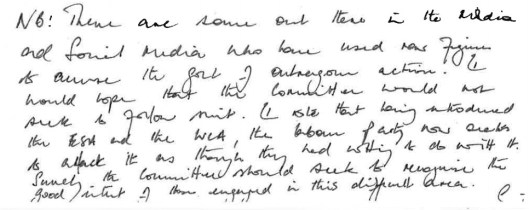
The letter addressed to Frank Field MP, features a barely legible hand-written footnote warning against listening to those “in the media and on social media” who “accuse the Government of outrageous actions.”

Duncan Smith writes in the footnote:

“There are some out there in the media and social media who have used [raw?] [ons ?- Office for National Statistics?] figures to accuse the govt of outrageous actions.

I would hope that the committee would not seek to follow suit. I [illegible] [note?] that having introduced ESA and the WLA, the Labour Party now seeks to attack it as though they had nothing to do with it.

Surely the committee should seek to recognise the good intent of those engaged in this difficult area.”

2014-02-17-BurdenoftheCuts-thumb
I would say that this blatant political discrimination constitutes an “outrageous action.” It’s difficult to recognise any “good intent” here, Mr Duncan Smith.

The correlation between the work capability assessment and suicide was established by academic researchers, not by journalists or social media commentators. We simply reported the findings.

Iain Duncan Smith will be accusing the United Nations (UN) of failing to see the government’s “good intent” when the inquiry into “grave and systematic violations” of the rights of disabled people in the UK concludes, next. Despite the fact that we are the first country to face such an inquiry, and given that the UN investigate only when there is evidence of grave and systematic violations of human rights, the prime minister has already dismissed the significance of the inquiry, ludicrously claiming “it may not be all it’s cracked up to be.”

It’s particularly noteworthy that when it comes to government claims, the same methodological rigour that they advocate for others isn’t applied. Indeed, many policies have clearly been directed by ideology and traditional Tory prejudices, rather than valid research and empirical evidence. The fact that no cumulative impact assessment has been carried out with regard to the welfare “reforms” indicates a government that is not interested in accountability, and examining the potential negative outcomes of policy-making. Policies are supposed to be about meeting public needs and not about inflicting Conservative dogma and old prejudices in the form of financial punishment on protected social groups.

As someone with a background in the social sciences, I have written extensive criticism of Iain Duncan Smith’s peculiar brand of epistemological and methodological fascism. He’s not exactly well known for his skill in statistical analysis, having been rebuked more than once for being notoriously conservative with the truth and numbers. Yet he feels compelled to dismiss the accounts of academics, campaigners, empirical evidence and the many qualitative accounts of those adversely impacted by his policies, in his vain attempt to exercise a stranglehold on his own peculiar brand of “truth.”

The goverment often claim that any research revealing negative social consequences arising from their draconian policies, which they don’t like to be made public “doesn’t establish a causal link.”  Recently there has been a persistent, aggressive and flat denial that there is any “causal link” between the increased use of food banks and increasing poverty, between benefit sanctions and extreme hardship and harm, between the work capability assessment and an increase in numbers of deaths and suicides, for example.

The government are referring to a scientific maxim: “Correlation doesn’t imply causality.” 

The tobacco industry made exactly the same claim about the established link between lung cancer and smoking.

It’s true that correlation is not the same as causation.

It’s certainly true that no conclusion may be drawn regarding the existence or the direction of a cause and effect relationship only from the fact that event A and event B are correlated.

Determining whether there is an actual cause and effect relationship requires further investigation.

This is something the government has persistently refused to do. (Here’s a full critique of Conservative methods of “social research”. I sent Mr Duncan Smith a copy, along with some information about proper definitions and measurement of poverty, but he clearly hasn’t read either. Unless he has included those in his arrogant and dismissive horror of “accusations”  criticisms on social media of course)

It is completely inaccurate to say that correlation doesn’t imply causation. It quite often does.

Here’s a final comment from a social media-based campaigner, analytical writer and a qualified social scientist who knows about statistical inference, causality and correlation and suchlike:

Iain Duncan Smith, you’re a blatant numpty.

160211IDSnote-outrageousaction

You can read the full letter here.

Thousands of disabled people have lost their specialist Motability vehicles because of Conservative benefit cuts and many more are likely to be affected

westminster-20121020-00081


In 2012, Esther McVey, then the Minister for people with disabilities, as good as admitted there are targets to reduce or remove eligibility for the new disability benefit Personal Independent Payment (PIP), which was to replace Disability Living Allowance. How else could she know in advance of people’s reassessment that 330,000 of claimants are expected to either lose their benefit altogether or see their payments reduced as she had informed the House of Commons?

This was a clear indication that the new assessment framework was designed to cut support for disabled people. A recent review led the government to conclude that PIP doesn’t currently fulfil the original policy intent, which was to cut costs and “target” the benefit to “those with the greatest need.”

That basically meant a narrowing of eligibility criteria for people formerly claiming Disability Living Allowance, increasing the number of reassessments required, and limiting the number of successful claims. The government have used the review to attempt to justify further restrictions to PIP eligibility, aimed at cutting support for people who require aids to meet fundamental needs such as preparing food, dressing, basic and essential personal care and managing incontinence. “Greatest need” has become an ever-shrinking category under Conservative austerity measures. 

McVey also said that around 200 disabled people in every parliamentary constituency were likely to lose their Motability vehicle when she changed the qualifying walking distance limit from 50 metres to 20-metres. 

And she pointed out that one of the Department for Transport’s own publications, Inclusive Mobility, recommends that “seating should be provided on pedestrian routes at intervals of no more than 50 metres, and that parking spaces for blue badge holders should preferably be provided within 50 metres of the facilities they serve”.

The Motability Scheme helped around 650,000 disabled people to lease specialist cars, wheelchairs and scooters. Anyone on the highest level of the Disability Living Allowance (DLA) was entitled to join the scheme which also helped to pay for expensive adaptations. Motability provides financial help (grants) to disabled people who would not otherwise be able to afford the vehicle or adaptations they need, and the charity undertakes a range of fundraising activities to contribute to the provision of financial help to those Scheme customers whose allowance does not cover the cost of the mobility solution that they need.

Last year, Motability revealed that around 100 disabled people claiming PIP are losing their crucial vehicle benefit every week.

According to Motability, who lease specialised cars and powered wheelchairs to disabled people, 3,000 out of 8,000 of their customers who have so far been reassessed for PIP, who were previously claiming the Disability Living Allowance, have lost their eligibility for the scheme and have therefore had to give up their vehicles.

Motability raised concerns that the government reforms to DLA would affect many more. It has.

Nearly 14,000 disabled people have had their mobility vehicle confiscated after the changes to benefit assessment, which are carried out by private companies. Many more, yet to be reassessed, are also likely to lose their specialised vehicles.

Under the new PIP rules thousands more people who rely on disability allowance to keep their independence are set to lose their vehicles. Many had been adapted to meet their owners’ needs and many campaigners warn that it will lead to a devastating loss of independence for disabled people.

A total of 45% or 13,900 people, were deemed as not needing the higher rate of PIP, and therefore lost their vehicles after reassessment. And out of the 31,200 people who were once on the highest rate of DLA who have been reassessed, just 55%, or 17,300 – have kept their car.

Given that many Motability vehicles are specially adapted to meet the highly individual needs of each person, I wonder what happens to all of those vehicles that are lost under the new restricted benefit eligibility criteria.

Around 51,200 disabled people have joined the Motability scheme using their PIP. Around 360,000 more people will undergo PIP reassessments and that will include “indefinite” or “lifetime” awards under the original DLA support.

Perhaps the government expect that severely and chronically ill people will miraculously recover, their progressive illness will stop progressing, maybe people will grow new limbs, find cures of their own where medical professionals and drug companies have failed and battle their “choice” of disability alone.

Being disabled is very expensive. The charity Scope has calculated that disabled people pay a huge financial penalty over and above the everyday living costs faced by the typical able-bodied person – on average £550 per month. One in ten pay more than £1000 a month over the odds.

Expenses range from door-to-door taxis to get around, extra heating costs, pricey specialist items like wheelchairs, hoists, or stair lifts. There may be extra laundry costs, continence aids, special dietary requirements, a need for home help and meals on wheels. Some disabilities place more wear and tear on shoes and clothing, some people need suitable kinds of footwear. Non-prescription medical items are also an additional cost. These are just a few examples of extra expenses. There are many more that most able-bodied people wouldn’t ever need to think of.

Liz Sayce, chief executive of Disability Rights UK, said: “Being disabled costs money.

The Personal Independence Payment is supposed to help with those costs, but many people are being denied the benefit because they are not assessed properly. Sometimes that means people lose their cars; a massive blow which impacts on their ability to remain independent, take part in their communities or get and keep a job.”

Recent research revealed that of all the appeals related to PIP, 60% of tribunals have ruled in the claimant’s favour.

Motability provides a support package, including a £2,000 grant, to anyone forced to leave the scheme following a PIP reassessment.

The charity added: “This helps individuals to remain mobile, in many cases by purchasing a used car. Motability has already provided some £16m in support through this transitional package.”

The Conservative claim that “Government is committed to supporting the most vulnerable” doesn’t stand up to scrutiny, given the Conservative policy record, including cruelly scrapping the Independent Living Fund, which has had a hugely negative impact on those trying their best to lead independent and dignified lives, and the Access To Work funding has been severely cut, this is also a fund that helps people and employers to cover the extra living costs arising due to disabilities that might present barriers to work. 

Mr Duncan Smith said at the Conservative conference last year that many sick and disabled people “wanted to work” and that the Government should give them “support” to find jobs and make sure the welfare system encouraged them to get jobs. I’m wondering what the word “support” actually means to Conservatives, because there’s every indication that over the past five years, there has only been a withdrawal of essential support and lifeline benefits from those who need them the most.

Article 19 of the United Nations Convention on the rights of persons with disabilities states that persons with disabilities have access to a range of in-home, residential and other community support services, including personal assistance necessary to support living and inclusion in the community, and to prevent isolation or segregation from the community. Article 20 states that Parties shall take effective measures to ensure personal mobility with the greatest possible independence for persons with disabilities, including by:

a) Facilitating the personal mobility of persons with disabilities in the manner and at the time of their choice, and at affordable cost;

b) Facilitating access by persons with disabilities to quality mobility aids, devices, assistive technologies and forms of live assistance and intermediaries, including by making them available at affordable cost;

c) Providing training in mobility skills to persons with disabilities and to specialist staff working with persons with disabilities;

d) Encouraging entities that produce mobility aids, devices and assistive technologies to take into account all aspects of mobility for persons with disabilities.

Article 28 requires that States Parties recognise the right of persons with disabilities to an adequate standard of living for themselves and their families, including adequate food, clothing and housing, and to the continuous improvement of living conditions, and should take appropriate steps to safeguard and promote the realisation of these rights without discrimination on the basis of disability.

It’s difficult to see how the government’s cuts to lifeline disability benefits can possibly be consistent with their obligations to uphold human rights law. 

 

images

Doctors bribed with 70-90k salaries to join Maximus and “endorse a political agenda regardless of how it affects patients.”

maximus-logoYes, but which people?


The National Audit Office (NAO) scrutinises public spending for Parliament and is independent of government. An audit report earlier this month concluded that the Department for Work and Pension’s spending on contracts for disability benefit assessments is expected to double in 2016/17 compared with 2014/15. The government’s flagship welfare-cut scheme will be actually spending more money on the assessments themselves than it is saving in reductions to the benefits bill – as
Frances Ryan pointed out in the Guardian, it’s the political equivalent of burning bundles of £50 notes.

The report also states that only half of all the doctors and nurses hired by Maximus – the US outsourcing company brought in by the Department for Work and Pensions to carry out the assessments – had even completed their training.

The NAO report summarises:

5.5
Million assessments completed in five years up to March 2015

65%
Estimated increase in cost per ESA assessment based on published information after transfer of the service in 2015 (from £115 to £190)


84%
Estimated increase in healthcare professionals across contracts from 2,200 in May 2015 to 4,050 November 2016

£1.6 billion
Estimated cost of contracted-out health and disability assessments over three years, 2015 to 2018

£0.4 billion
Latest expected reduction in annual disability benefit spending

13%
Proportion of ESA and PIP targets met for assessment report quality meeting contractual standard (September 2014 to August 2015).

This summary reflects staggering economic incompetence, a flagrant, politically motivated waste of tax payers money and even worse, the higher spending has not created a competent or ethical assessment framework, nor is it improving the lives of sick and disabled people. Some people are dying after being wrongly assessed as “fit for work” and having their lifeline benefits brutally withdrawn. Maximus is certainly not helping the government to serve even the most basic needs of sick and disabled people.

However, Maximus is serving the needs of a “small state” doctrinaire neoliberal government. The Conservatives are systematically dismantling the UK’s social security system, not because there is an empirically justifiable reason or economic need to do so, but because the government has purely ideological, anticollectivist prescriptions.

This is a government that claims social security is “unsustainable” and a “burden” on the public purse, yet has no problem with an extraordinary profligacy with public funds and dispossessing tax payers when it comes to implementing “cost-cutting” and draconian welfare “reforms.” Conservative anti-welfare dogma and prejudice are costing the UK billions of pounds.

In April 2014, Atos was forced to abandon their contract with the government because of a growing public backlash, but not before they had profited from very large sums of public money. Meanwhile, sick and disabled people have had their support callously slashed to the bone, people have suffered and some have died as a consequence of that. Yet our welfare state is being used as a sporting arena for big business profit-making, eating up public funds that were supposed to help people who have encountered difficulties meeting their basic needs through disability, losing their job or becoming ill.

The selling of our public services and lucrative contracting out of state functions to private companies who exchange public money for a notoriously poor service is a prominent feature of Tory “small state” Britain.

The Department for Work and Pensions uses the controversial work capability assessments to decide if people are eligible for benefits or to force those on long-term sick leave back into work. The assessment is conducted using a computer software package called Logic Integrated Medical Assessment (LiMA) application.

The assessments are heavily weighted towards finding people capable for work, regardless of the medical evidence presented by claimant’s own doctors. Patients with severe brain damage, kidney failure, cancer, multiple sclerosis and Parkinson’s Disease, amongst many others with seriously incapacitating illnesses, have been found fit for work. On 24 April 2013, a woman who was a double heart and lung transplant patient died in hospital only days after she had been told that her Incapacity Benefit was being stopped and that she was fit for work. There are many other instances of grave errors in the decision-making of the Department for Work and Pensions which are based on the work capability assessment.

Between April 2015 and March 2018, the Department for Work and Pensions expects to carry out around 7 million assessments which it estimates will cost a total of £1.6 billion.

The National Audit Office report on contracted-out “health and disability assessments” states that the cost of providing assessments is rising and providers are still struggling to meet expected performance standards, and that providers continue to struggle with hiring and training staff.

From the NAO summary:

“The Department continues, however, to struggle with setting targets and requirements with clear evidence and failed to adequately test bidders’ assumptions, for example about staff training, during the contract tender process. It does not yet have a clear strategy for contracting-out assessments and risks damaging market interest through tight procurement timetables, inflexibility towards critical assumptions and lack of transparency.

…For PIP, both providers have failed to meet targets for the quality of assessment reports since October 2013. The Department is paying more for assessments, caused in part by capacity shortages pushing up salaries.”

In the last month, recruitment website healthjobs.co.uk has added almost 100 job advertisements for “functional assessor” roles with Maximus, the US company contracted by the Department for Work and Pensions to conduct work capability assessments. Applicants are required to have two years post-qualification medical experience and are offered positions with whoppingly “incentivising” salaries that start at £72,000, with some roles attracting salaries of up to £98,000. The salary for a junior doctor working in the National Health Service (NHS) with two years of experience is approximately £30,000.

Junior doctors working within the NHS were forced to take industrial action recently – the first strike action for more than four decades – over the government’s proposed new junior doctor contracts, because of serious concerns about patient safety, the quality of doctor’s working lives and the lack of recognition regarding the strain of working long and unsocial hours.

The British Medical Association said:

“The biggest threat to patient care is the government’s insistence on removing safeguards which prevent junior doctors from being forced to work dangerously long hours without breaks, with patients facing the prospect of being treated by exhausted doctors.

“The government is threatening to impose contracts in which junior doctors have no confidence and which represents the first step in a wholesale attack on all NHS staff at night and over weekends. We want a contract that is safe for patients, fair for juniors and good for the NHS.”

Maximus offer substantially better working conditions and pay for junior doctors, but compromising patient safety is an inevitable consequence of the company drive to provide administrative solutions to improve the cost effectiveness … and efficiency of government-sponsored benefit programs.

One NHS doctor, Karl Norrington, noted on Twitter that despite Maximus’s company motto: “Helping Government Serve the People” – in reality Maximus is: “paying drs to medically endorse a political agenda regardless of how it affects patients.”

enhanced-9119-1453733217-2

Related

The disturbing truth about disability assessments

Why I blew the whistle on Atos fitness-for-work test

We can reduce the Welfare Budget by billions: simply get rid of Iain Duncan Smith


Frank Field’s New Report: Fixing Broken Britain?


In a study report that was published today – Fixing Broken Britain? An audit of working-age welfare reform since 2010, Labour MP Frank Field and co-author Andrew Forsey argue that: 

The Department for Business, Innovation and Skills should take a lead role in tackling the dependence of employers and landlords, whose subsidies in the form of tax credits and Housing Benefit have grown exponentially, by raising wages and productivity.

… the next front in welfare reform will see a fundamental switch from the Department for Work and Pensions – historically always responsible for welfare reform – to the Department for Business, Innovation and Skills, reflecting the new reform agenda.

Field and Forsey, writing for the cross-party think tank Civitas, propose that the next step of welfare reform:

 … involves a renewed drive to help those who have not yet been found a job under the Work Programme – principally the over-50s and the disabled. This should involve weighting the payment-by-results systems further in favour of those claimants facing the steepest barriers to work. This major task, and the prompt and efficient payment of benefits, should be the primary objective of the Department for Work and Pensions.

We believe the payment-by-results system the government introduced now requires a significant recalibration to give the most disadvantaged participants a fighting chance of getting and keeping a job.

The language used in the publication is controversial and I was both concerned and disappointed to see the phrase “welfare dependency” used more than once. It alludes to the Conservative claims of a so-called “culture of dependency”, for which there has never been any supportive empirical evidence presented, (and that’s despite Sir Keith Joseph’s notorious best efforts and meticulous but ultimately forlorn research into a neoliberal New Right myth.)

However, there is much empirical evidence to support structural explanations of unemployment and poverty, but the current government has tended to psychopoliticise these issues, blaming the character and attitudes of unemployed people, reflected in language shifts – for example, the frequent use of words such as “worklessness” which implies responsibility and choice – making unfortunate circumstances a very personal  burden – as opposed to “unemployment”, which at least accommodates factors such as labour market constraints, economic conditions, structural inequalities, state responsibilities and the consequences of political decision-making.

Field and Forsey also recommend “identifying claimants’ strengths and difficulties” as early as possible once they begin claiming benefit; early referrals to the new Work and Health Programme for those on any benefit in most need of support; and lifting the cap on numbers who can enrol on the voluntary welfare-to-work programme for claimants with disabilities, and extending the time for which they can participate.

The problem is that referrals are unlikely to be on a voluntary basis. One of the aims of the Work and Health Programme is to enlist the support of GPs in “prescribing” work coaches to sick and disabled people. Given the confidential nature of the patient/doctor relationship, such an intrusive measure is likely to ultimately undermine people’s trust in their GP, and leave sick people who genuinely cannot work feeling harrassed and coerced by the state. There is good evidence that the work programme has not increased sustainable employment outcomes, and furthermore, it has harmed people with mental health problems.

In fairness to Field and Dorsey, they do accommodate some structural factors in their analysis. They say:

A second major new front against benefit dependency involves raising the earnings of low-paid workers, which requires a national productivity strategy that can be built around the new National Living Wage. The major objective here is to prevent yesterday’s workless poor becoming today’s working poor.

The conditionality attached to the receipt of benefit may have made work an easier option, but real wage growth at the bottom end of the labour market has been the missing piece of the government’s welfare reform puzzle.

In order to enshrine work as the best route out of poverty, the next front in welfare reform must build upon the National Living Wage to deliver the higher productivity that can sustain rising real incomes across the board. This policy needs to be driven by the Secretary of State for Business, Innovation and Skills.

Field and Forsey criticise Universal Credit, stating that if it is ever rolled out nationally, it will not “incentivise” work.  They go on to say:

The government’s flagship welfare scheme will only deliver a lower marginal tax rate for certain groups of claimants and even for them it will be undermined by Universal Credit’s failure to encompass council tax support and free school meals.

Because of Universal Credit’s higher taper rate for many claimants the strategy of fixing “broken Britain” by offering lower withdrawal rates than the current system lies in ruins.

If creating an incentive to work is the goal the present system for the vast majority of claimants meets that goal more effectively. Any reduction in the marginal tax rate will only come for particular groups of Universal Credit claimants should the benefit be introduced.

But then, the failure of Universal Credit to encompass also Council Tax support and free school meals will throw all of these calculations into a mild chaos, to put it at its gentlest.

However, it’s clear that the whole point of Universal Credit is to facilitate a further withdrawal of funding for welfare support.

Field and Forsey argue in the report that because there is little prospect of Universal Credit being rolled out fully by 2020,  George Osborne should act now to “protect lower-paid families with children within the framework of the welfare cuts he is planning.”

They formulate a five-point plan for in-work benefit reform in the current parliament:

  • The tax credit system should be centred on lower-paid workers with children, with entitlements to families earning up to twice the level of the National Living Wage, a ceiling of £32,000.
  • By 2020, childless couples and single workers without children should no longer be eligible for support from the tax credit system.
  • Jobcentre Plus should be revamped so that staff have the skills to help claimants in work increase their hours and/or pay, either in their current job or by finding a new one.
  • Tax credit claimants should be allowed to increase their earnings by up to £5,000 in any 18-month period without any clawback of entitlement, so that they do not lose large chunks of income for working more or for better pay.
  • Vulnerable workers who cannot currently work a full week should be allowed to work up to 24 hours a week and claim Jobseeker’s Allowance or Employment and Support Allowance, rather than the current 16-hour maximum.

They say:

These five reforms would be much more effective in protecting those in work on modest earnings than anything the government is proposing. They build around the revolutionary idea the chancellor has introduced into British politics, particularly welfare reform, namely of introducing a National Living Wage.

This move begins the process of transferring the responsibility for lower earners’ welfare to employers and the Department for Business, Innovation and Skills, and away from the Department for Work and Pensions and Her Majesty’s Revenue and Customs.

However, this is a heavily corporate-sponsored “business friendly” neoliberal government with a clear anti-welfare agenda. What could possibly go right?

 —

 This post was written for Welfare Weekly, which is a socially responsible and ethical news provider, specialising in social welfare related news and opinion.

Consultation as government seek to limit disabled people’s eligibility for Personal Independence Payment

2014-02-17-BurdenoftheCuts-thumb


The government is considering ways of reducing eligibility criteria for the daily living component of Personal Independence Payment (PIP) by narrowing definitions of aids and appliances. Other suggestions for cuts include:

  • Targeting resources through a lump sum payment for claimants who meet or exceed the eligibility point threshold for the daily living component but score all of their points from aids and appliances. The value of this lump sum could be less than the cumulative value of the equivalent monthly payments. It could be discretionary and could be restricted, for example through the use of vouchers. It would not act as a passport to any other benefit or benefit premia and would not exempt claimants from the benefit cap.
  • A monthly payment below the equivalent weekly rate for claimants who meet or exceed the eligibility point threshold for the daily living component, at either rate, but score all of their points from aids and appliances. Again, this payment would not act as a passport to any other benefit or benefit premia and would not exempt claimants from the benefit cap.
  • A new condition of entitlement that claimants must score some points from a descriptor that does not relate to aids and appliances.

The government are conducting a consultation and invite views from all interested parties, especially disabled people and disability organisations.

The Department for Work and Pensions reviewed a sample of 105 cases of people who had scored all, or the majority, of their points for PIP due to aids and appliances, in order to assess the extent to which the award may reflect extra costs.

So, the review of just 105 claims has led the government to conclude that PIP doesn’t currently fulfil the original policy intent, which was to cut costs and “target” the benefit to “those with the greatest need.”

That basically meant a narrowing of eligibility criteria for people formerly claiming Disability Living Allowance, previously, increasing the number of reassessments required, and limiting the number of successful claims. Prior to the introduction of PIP, Esther McVey stated that of the initial 560,000 claimants to be reassessed by October 2015, 330,000 of these are targeted to either lose their benefit altogether or see their payments reduced.

I’m just wondering where the ever-reductive quest for the ever-shrinking category of “those with the greatest need” will end.

The PIP assessment currently examines an individual’s ability to complete ten daily living activities and two mobility activities. Regular reviews were also introduced by the last government to ensure that claimants continue to receive the “right level of support.”

The government now say that the proportion of people awarded the daily living component of PIP, who scored all of their points because they need aids and appliances, has more that tripled, from 11 per cent in April 2014 to 35 per cent in 2015.

This increase has largely been driven by a significant and sustained rise in relation to activities one, four, five and six: preparing food, washing and bathing, dressing and undressing, and managing incontinence and toileting. Around three-quarters of those who score all of their points through needing aids and appliances score the minimum number of daily living points needed to qualify for the standard rate of the daily living component.

The government claim that evidence presented to the review suggested that in some instances points were being awarded “… because claimants chose to use aids and appliances, rather than needed them.”  And noted that in many cases “ these were non-specialised items of very low cost.”

However, it’s very difficult to justify cutting support for people who require aids to meet fundamental needs such as preparing food, dressing, basic and essential personal care and managing incontinence.

The government also say:

“The results of the review suggest that significant numbers of people who are likely to have low or minimal additional costs are being awarded the daily living component of the benefit solely because they may benefit from aids and appliances across a number of the activities, despite the relatively low point score awarded for them.

In addition to this, recent judicial decisions, based on the current legislation, have broadened the scope of aids and appliances to include articles, such as beds and chairs, which are unlikely to be a reliable indicator of extra costs.

These developments are inconsistent with the original policy intent of awarding the benefit to claimants with the greatest need. We have therefore decided to consult on how aids and appliances are taken into account when determining entitlement to the daily living component.”


The consultation will run from 10 December 2015 until 29 January 2016.

You can access the consultation document here

Sick and disabled mother told her benefit is cut on the day she died

A mother who was battling a serious and debilitating lung condition was told that she no longer qualified for benefits on the day she died from her illness.

Dawn Amos, 67, died of chronic obstructive pulmonary disease (COPD), a collection of progressive lung diseases which cause severe breathing difficulties, and increases susceptibility to infections such as pneumonia.

The illness left Dawn with difficulty breathing, she was unable to walk for long periods of time, and she was left struggling to dress herself and unable to manage daily tasks independently.

She received attendance allowance from the Department of Work and Pensions (DWP) to help with the extra costs of her essential personal care for six months, before being reassessed.

Her heartbroken husband Mick Amos, 64, discovered a letter sent from the DWP two days after his wife’s death.

It was a notification that Mrs Amos’s allowance was being withdrawn, based on her “treatment, medication, symptoms and test results.”

The letter had been sent out on November 27, the day that Mr Amos had taken the extremely difficult and very distressing decision to turn off Dawn’s life support machine.

COPD is an incurable, chronic and progressive illness.

Mr Amos said: “It’s disgusting and heartbreaking. We had to turn her machine off.

“How ill do you have to be?

“On the day she died I came downstairs and she couldn’t breathe properly so I phoned the ambulance, who said if she gets worse call us back.

“As soon as I got off the phone she collapsed and I was on the phone again.

“She had stopped breathing and I was doing CPR while I was on the phone to the ambulance.”

Dawn was taken to Broomfield Hospital, where she was put on a life support machine.

Mr Amos and Dawn’s daughter, Karina Mann, agreed to turn off the machine the same day.

Karina, 42, said that her mother had received attendance allowance for six months before they [the DWP] asked to reassess her.

She said: “Obviously she was ill enough for the benefit because we had to watch her die.”

A spokesperson for the Department for Work and Pensions said:

“Our thoughts are with the family of Mrs Amos. The decision was based on evidence which included the opinion of Mrs Amos’ own GP.”

Clearly, the “evidence” was wrong. Again.

However, doctors are not actually permitted to give their medical opinion to the DWP. They are provided with a strictly limited “factual” government form to complete. Such restrictions on qualititative information and medical opinion apply to ALL government forms provided to GPs for the purpose of assessing the “evidence” of patient eligibility for all disability benefits, including Employment Support Allowance. The government informs GPs that:

“Decisions on benefit entitlement are made by non medical decision makers. Decision makers will use your report and will seek the advice of an experienced healthcare professional trained in disability assessment to review and interpret the report where needed.”

The Personal Independence Payment (PIP) form instructs GPs to:

“Please write down facts rather than opinion. We require an objective report – please only include information about symptoms that are recorded in the patient’s records and information about disabling effects that you or another healthcare professional have directly observed.

Please complete all sections as fully as possible but write “not known” if appropriate.  “Not known” can be helpful.”

Members of the General Practitioners Committee (GPC) have voiced concern that patients with long term conditions might be periodically “harrassed” by the Department for Work and Pensions  under the current assessment regime. Dr John Canning, chair of the GPC’s Professional Fees and Regulation Committee and a GP in Middlesbrough voiced concern about patients having to continually “prove” they deserve state support.

The government have persistently ignored the many evidence-based concerns raised by professionals, academic researchers, campaigners and opposition MPs that their austerity policies and anti-welfarism are having an extremely harmful effect, most often on our poorest and most vulnerable citizens.


Sometimes people are not fit for work, and that includes MPs, Mr Jackson.

1235473_537097386359794_65317730_n (1)

Stewart Jackson, the Conservative MP for Peterborough, has claimed that Labour MP Simon Danczuk has been “stitched up” by supporters of Jeremy Corbyn within the Labour Party. He commented after Mr Danczuk was suspended from the Labour Party pending an investigation into allegations that he sent sexually explicit text messages to a 17-year-old girl.

Posting on Twitter, Jackson said: “Simon Danczuk has obviously been foolish but he’s also been stitched up like a kipper by the Corbyn cronies in UK Labour.” 

Asked why he believed this to be the case, Mr Jackson replied: “Maybe the haste with which he’s been suspended for what appears to be something that is not a criminal offence if stupid.”

“Given he’s had some mental health issues, [the] more compassionate thing would be to have given him space and return to the issue next week.”

It is a serious cause for concern that this MP doesn’t know that it IS a criminal offence for an adult to have any sexual activity with a person under the age of 18, if the older person holds a position of trust and power, as such sexual activity is an abuse of the position of trust. The Sexual Offences Act 2003 provides this specific legal protection.

Danczuk allegedly exchanged a number of sexually explicit text messages with a 17-year-old girl, it has been reported.

Mr Danczuk, who is 49, sent the messages to Sophena Houlihan after she asked him for a job.

She said: “At the time I played along with it, but now I feel like he duped me. I was keen for a career in politics and he is a very high-profile MP and I was in awe of him.”

Mr Danczuk allegedly asked Miss Houlihan to meet at the Labour Party conference and reportedly suggested that she join him on a trip to Spain. He told her that he was “horny”.

It’s absolutely disgraceful that MPs, regardless of their party politics, think it is in any way acceptable to use their position of trust and power to attempt to justify exploitative or sexually predatory behaviours.

However , a lifelong Conservative supporter, felt that it is Mr Danczuk who is the victim of impropriety, and all because of his mere “foolishness.” She overlooked his serial objectification of women and sexist tendencies, then. She tweeted: “Ironic when we were supposed to be introduced to “kinder” politics! Hypocrites. JC et al dangerous.”

Sure. Some people will go to any lengths to divert attention and discredit the opposition leader, no matter how dogmatic, incoherent and ridiculous this shows them up to be. Or misogynistic, for that matter.

I can just see the headlines in the Sun now: Dangerous Jeremy Corbyn supporters made me become a stalking horse and then they turned me into a disgraceful, stalking sexual predator.

If Mr Danczuk is experiencing mental health problems, he deserves support and has my sympathies. However, the situation that has arisen doesn’t just raise issues that are simply about how “kindly” he is treated: it is also important to establish whether or not he is fit for his post and to ensure that he does not pose a risk to members of the public, as well as himself. Suspending Mr Danczuk is not “dangerous” at all, in fact it is the only reasonable and compassionate thing to do.

Last year, Danczuk saidWhen it comes to Mental Health Problems, being in work can be something that really helps. I know that keeping busy and being motivated certainly works for me.”

However, sometimes, people are simply too ill to work. We have an unhealthy political culture and a government that has persistently refused to accept that sometimes, people are very ill and severely incapacitated. We have witnessed an extended, perpetuated, prejudice-driven political moralising and vicious stigmatisation of people who are ill and out of work, presumably so that the unprecedented, uncivilised cuts to essential support for disabled people have a façade of political justification, at least. But certainly not a respectable, legitimate one.

In fact this government have rather horribly and deceitfully normalised coercing people to work, regardless of their physical or mental illness, and regardless of the extent to which a person is disabled. Furthermore, it is regardless of the potentially devastating consequences for the person who is ill, AND the people that they work with or come into contact with.

Sometimes people need to take time out to recover, and should feel that they are permitted to do so without being judged and punished by the state. And sometimes, people are too ill, and no longer fit for their role. Consideration of these issues is compassionate and kind.

Nobody would expect a person who suffers blackouts to drive a bus or bin waggon if they thought through the potentially devastating consequences. But political, cultural, psychological and financial coercion is being used to force people to work – the government continues to cut welfare, which was calculated to cover only the costs of meeting basic needs. Cruel sanctions and strict, inflexible, often unreasonable behavioural conditions are being imposed on lifeline benefit receipt, adversely affecting some of our poorest and most vulnerable citizens; unemployed and disabled people are stigmatised in the media – all of this is done with an utterly callous disregard of a person’s capacity to work, or the availabilty of appropriate and suitable employment opportunities, and this can have tragic consequences.

This is a government that champions outgrouping and scapegoating already socially marginalised groups. It isn’t likely that they will listen to reason, because traditional Tory prejudices concerning minoritized groups are historically established and deeply embedded in Conservative ideological grammar.

The Conservatives value the use of lies and deceit to get their own way. How fitting that the man who brought truly democratic and liberal values into Conservative electioneering, fostering a respect for diversity and championing equal opportunities, (stop laughing) has finally been awarded a knighthood for his highly salaried dastardy. The lizard of Oz, the kidder for kidders that kidded thousands, did declare war on the Scottish, he is very well known for his dogwhistle racism, but surely divided and prejudiced nations and ever-sinking standards of living are a price well worth paying when we have another Tory government. Hurrah!

The cult of Lyntonism is a by-product of the micro-managerialism, totalitarian tendencies and the widespread use of techniques of persuasion usually reserved for the advertising industry, that has infected the New Right, “libertarian paternalist” Conservative Party. You know, I always thought there is something very pre-war Berlin about the Crosby crocodile smile.

I keep forgeting that this is 2016, and that we live in a first-world liberal democracy. Don’t we?


Happy New year all.

10853165213_ddb97ac601_o
Pictures courtesy of Robert Livingstone

Update: Mr Stewart Jackson has blocked my Twitter account, surprisingly. It’s good to know how much Tory MPs value democratic exchange, reasoned discussion, transparency and accountability…

Blocked


Further news: Simon Danczuk Investigated Over Historic Rape Allegation By Lancashire Police


Court rules that Tory benefit cap unlawfully discriminates against disabled people

10407927_677369232332608_5384979058089243718_n

A high court judge has ruled that Iain Duncan Smith’s welfare policy unlawfully discriminates against disabled people by failing to exempt their carers from the benefit cap. The ruling is the second this year to criticise the cap. In March, the supreme court found that the cap left people claiming benefits unable to house, feed or clothe their family and was therefore in breach of the UK’s obligations regarding international human rights.

Mr Justice Collins said the government’s decision to apply the cap to full-time carers for adult relatives had created serious financial hardship for them, forcing many to give up caring for loved ones, and had also placed extra costs on the NHS and care services.

The ruling comes after two carers brought the case against the Department for Work and Pensions (DWP) following serious concerns that the benefit cap would unfairly harm those who care for their disabled children and relatives. The carers were caring for more than 35 hours a week, the judge said that they were effectively in work, even though they were in receipt of benefits, and therefore should be exempt from the cap.

Carers are able to claim about £60 a week if they care for relatives. These claims, however, were to be included in the £500 a week  benefit cap, which was introduced by the government in the belief that so-called “workless” families need to experience financial loss, a decrease in basic security and a severe decline in their standard of living in order to “incentivise” them to try harder to get a job.

On Thursday, the High Court ruled that the government had breached article 14 of the European Convention on Human Rights. Family carers who receive Carer’s Allowance should be exempt from the benefit cap. The High Court ruled that the Secretary of State for Work and Pensions had indirectly discriminated disabled people by failing to exempt unpaid carers for disabled family members from the cap.

Collins said: “To describe a household where care was being provided for at least 35 hours a week as ‘workless’ was somewhat offensive. To care for a seriously disabled person is difficult and burdensome and could properly be regarded as work.” 

Campaigners have welcomed the decision, highlighting the damaging effects the cap would have had on carers looking after  adult disabled relatives.

Rebecca Hilsenrath, chief executive of the Equality and Human Rights Commission, said: “We are pleased that the court has found the impact on disabled people of losing a family carer had not been properly considered.

“The effect could be profound and the loss of a trusted carer devastating.

“The substantial reduction of income could jeopardise the ability of those affected to continue to care for severely disabled relatives. The court noted that the Secretary of State did not provide any information to Parliament about the effect on disabled people if their family carer were unable to continue.

“The court also held that, rather than saving public money, it would cost considerably more for the care to be provided by local authorities or the NHS.”

Laywers acting for the secretary of state had argued that unpaid carers should be treated as unemployed people who should have to make the same choices as anyone else about whether to work or cut their living costs. But Collins said those providing full-time care could not be in full-time work unless they gave up or cut back significantly on their caring responsibilities.

Unpaid carers made “a huge contribution to society” and “saved the taxpayer the equivalent of £119bn a year,” he said. Were carers forced to give up their role, taxpayer-funded services would have to spend huge amounts providing the care instead.

The judge added that the government should exempt carers because “the cost to public funds if the cap is to be maintained is likely to outweigh to a significant extent the cost of granting the exemption.”

He said: “Nowhere in the impact assessments or in what was put before Parliament was the effect on the disabled of loss of family carers raised. It in my view should have been, since it ought to have been apparent that the impact of a possible loss of a trusted family carer could be profound.

“Reconsideration will I hope be given to whether the present regulatory regime is appropriate, having regard to the hardship it can and does produce.”

A DWP spokesperson said: “We are pleased that the court agrees that the benefit cap pursues a legitimate and lawful aim.

The court didn’t actually agree that.

“The Government values the important role of carers in society – and 98% are unaffected by the cap. We are considering the judgment and will respond in due course.”

On Thursday, the following “urgent” bulletin was released from the Department for Work and Pensions:

Judicial Review in the case of R v Secretary of State of the inclusion of Carer’s Allowance in the benefit cap.

1. Today the judgment has been handed down in a judicial review in the case of R v Secretary of State of the inclusion of Carer’s Allowance in the benefit cap.

2. We are pleased that the Court agrees that the benefit cap pursues a legitimate and lawful aim.

3. However the Court has asked us to look again at the indirect impact on those disabled people whose carer is subject to the cap on household benefit payments.

4. We will consider this judgment and set-out our position in due course. We are continuing to apply the benefit cap as now, and there is no change to applying the cap to carers.

 
The bulletin also provides some questions with answers to enable staff to respond to any enquiries they may receive. You can read those here.

The standard responses to many of the anticipated questions are:

 “We are considering the judgment and will set-out our position in due course.”

“The benefit cap continues to apply.”

 Steve Bell cartoon


Research finds strong correlation between Work Capability Assessment and suicide

IDS_n

In England between 2010 and 2013, just over one million recipients of the main out-of-work disability benefit, Employment Support Allowance (ESA) had their eligibility reassessed using a new stringent functional (as opposed to medical) checklist – the Work Capability Assessment.

Doctors, disability rights organisations, mental health chaities and individual campaigners, such as myself, have raised concerns that this has had an adverse effect on the mental health of claimants, but there have been no population level studies exploring the health effects of this or similar policies, until now.

Research, conducted by B Barr, D Taylor-Robinson, D Stuckler, R Loopstra, A Reeves, and M Whitehead, has established a link between the Work Capability Assessment (WCA) and suicide. The research, published in the Journal of Epidemiology and Community Health (which is peer-reviewed,) and carried out by social scientists from a variety of backgrounds, from the universities of Oxford and Liverpool, scrutinised the rates of mental health issues and suicide in different local authorities in England.

The study found that the authorities with a greater number of people undergoing WCAs also have more people reporting mental health problems, more people being prescribed antidepressants, and more people taking their own lives. The research found that every 10,000 assessments led to around six suicides.

For comparison in terms of statistical significance, isotretinoin, an acne medication which was notoriously linked to suicides, is associated with around four extra deaths per 10,000 treatments.

The researchers estimate that for every 10,000 people reassessed, you would expect to see an additional six suicides (95% confidence interval (CI) 2 to 9), an extra 2,700 reports of mental health problems (95% CI 548 to 4,840) and 7,020 extra antidepressants prescriptions (95% CI 3,930 to 10,100). By convention, 95% certainty is considered high enough for researchers to draw conclusions that can be generalised from samples to populations.

There have been more than 1 million assessments since the WCA was introduced, which suggests that there may be more than 600 people who have taken their own lives who would otherwise have not. The researchers say: “Our study provides evidence that the policy in England of reassessing the eligibility of benefit recipients using the WCA may have unintended but serious consequences for population mental health.”

There have been earlier claims and evidence that the Department for Work and Pension’s (DWP) reforms have led to deaths. However, the DWP has persistently refused to release data which would make it possible to assess whether the death rate for people found fit for work is higher than would be expected.

Both the assessment and appeals process itself, which is widely reported to be stressful, and the financial hardship that occurs when people are denied disability benefits, could result in negative health effects. There is good evidence that loss of income, particularly for people already on low incomes, increases the risk of common mental health problems.

People undergoing a WCA are likely to be particularly vulnerable to the adverse mental health consequences of this policy because a very high proportion have a pre-existing mental health problem. Furthermore, those with physical chronic illness are more prone to mental health problems such as reactive depression, and sometimes, forms of depression that are associated with the illness itself.

The research included efforts to rule out other possible causes of suicide – to eliminate potential confounding variables and bias – for example, there is no similar effect found in people over 65, who are not subject to the WCA – and so the results suggest that the link between the WCA and suicide is not due to “confounding” factors, but is most likely causal.

The Department for Work and Pensions has rejected the study’s findings. A spokesperson said in a statement: “This report is wholly misleading, and the authors themselves caution that no conclusions can be drawn about cause and effect.” 

However, the DWP have no grounds for their own claim whatsoever. Whilst correlation isn’t quite the same thing as cause and effect, it often strongly hints at a causal link, and as such, warrants further investigation. It certainly ought to raise concern from the DWP and ministers, regarding the negative impact of policy on many of the UK’s most vulnerable citizens.

The association with the WCA and its adverse effects is, after all, more clearly defined than the one between the drug isotretinoin and suicide, and the drug was withdrawn in the US and some European Member States.

In the UK, it is now (as of November last year) prescribed only under strict monitoring conditions, and patients are provided with warnings about the possibility of adverse psychiatric effects. No such warning and monitoring exists regarding the possible adverse psychiatric effects of the WCA. In fact the government have stifled both enquiry into a causal link and discussion of even the possibility there may be such a causal link, despite being presented with much evidence of a strongly indicated correlative association.

Dr Benjamin Barr, one of the researchers from Liverpool University, said that a causal link was likely: “Whilst we cannot prove from our analysis that this is causal, there are various reasons why this is a likely explanation,” he said.

He agreed that a study looking specifically at people who had undergone a WCA would be more precise, but added that the DWP has not released that information.

Dr Barr said: “If the DWP has data on this they should make it openly available to independent analysis.” He added that the DWP has so far chosen not to run a trial of its own into a link between WCAs and suicides.

The researchers found that those local areas where a greater proportion of the population were exposed to the reassessment process experienced a greater increase in three adverse mental health outcomes – suicides, self-reported mental health problems and antidepressant prescribing.

These associations were independent of baseline conditions in the areas, including baseline prevalence of benefit receipt, long-term time trends in these outcomes, economic trends and other characteristics associated with risk of mental ill-health. These increases followed – rather than preceded – the reassessment process.

The report concluded that the study results have important implications for policy. The WCA and reassessment policy was introduced without prior evidence of its potential impact or any plans to evaluate its effects. Given that doctors and other health professional have professional and statutory duties to protect and promote the health of patients and the public, this evidence that the process is potentially harming the recipients of these assessments raises serious ethical issues for those involved.

The Royal College of Psychiatrists has also said the research was of “high quality”, adding that it called into question the wisdom of the Government’s reforms.

Last year, coroner Mary Hassell told the DWP she had concluded that the “trigger” for Michael O’Sullivan’s suicide was his fit for work assessment.

“During the course of the inquest, the evidence revealed matters giving rise to concerns. In my opinion, there is a risk that future deaths will occur unless action is taken,” she wrote in the document, known as a Prevention of Future Deaths or regulation 28 report.

At the inquest, Hassell said O’Sullivan had been suffering from long-term anxiety and depression, “but the intense anxiety which triggered his suicide was caused by his recent assessment by the Department for Work and Pensions [benefits agency] as being fit for work and his view of the likely consequences of that”.

The inquest heard that the DWP assessing doctor, a former orthopaedic surgeon, did not factor in the views of any of the three doctors treating O’Sullivan. The coroner said O’Sullivan was never asked about suicidal thoughts, despite writing them down in a DWP questionnaire.

Previously, the loss or reduction of benefits has been cited by coroners as a factor in deaths and suicides of claimants.

The DWP have so far failed to respond coherently, other than with a denial of a “causal” link.

You can read the full research report here.

It’s not the only time that Conservative austerity policies have been implicated in causing harm to citizens. Nor is it the only time that Conservatives have responded with utter indifference to the disproportionately negative impact of their policies on the poorest people. 

A study from Durham University, which looked at over 70 existing research papers, concluded that as a result of unnecessary recession, unemployment, welfare cuts and damaging housing policies, Margaret Thatcher’s legacy includes the unnecessary and unjust premature death of many British citizens, together with a substantial and continuing burden of suffering and loss of wellbeing.

The research shows that there was a massive increase in income inequality under Baroness Thatcher – the richest 0.01 per cent of society had 28 times the mean national average income in 1978 but 70 times the average in 1990, and UK poverty rates went up from 6.7 per cent in 1975 to 12 per cent in 1985. Suicides increased.

Co-author Professor Clare Bambra from the Wolfson Research Institute for Health and Wellbeing at Durham University, commented: “Our paper shows the importance of politics and of the decisions of governments and politicians in driving health inequalities and population health. Advancements in public health will be limited if governments continue to pursue neoliberal economic policies – such as the current welfare state cuts being carried out under the guise of austerity.”

David Cameron’s government has gone much further than Thatcher ever did in cutting essential support and services for protected social groups, such as sick and disabled people, and poorer citizens.

 486294_4737578711832_1816039541_n

Pictures courtesy of Robert Livingstone