Category: Surveillance

The state is policing social security claimants in hospital and via their medical records to find reasons to cut their support

Related image

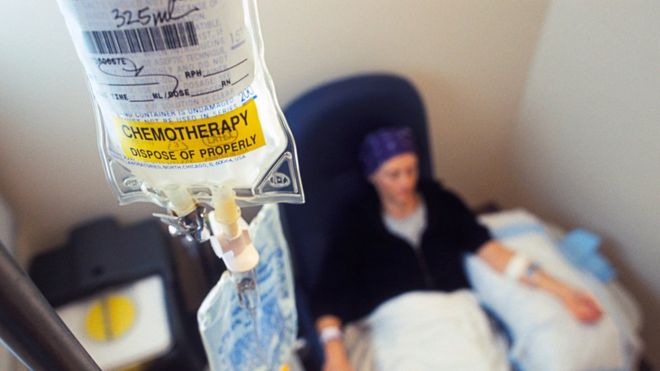
The Department for Work and Pensions (DWP) officers have been visiting patients in hospital to check if they are actually unwell, a damning new review into the roll-out of universal credit has revealed. This news comes after it emerged that the DWP are in the process of designing an automated system to trawl claimants NHS health records. 

Doctors have already raised serious concerns that social security claimants could be deterred from accessing healthcare after it emerged that the government is to start accessing medical records as an intrusive part of the welfare assessment process. A job advert posted by the DWP shows that a team in Leeds is building a system to “capture information from citizens and present this to DWP agents”. The work is proceeding on the controversial assumption that the consent of patients would make the system lawful. 

However the DWP have told doctors that when people make a claim for disability benefits, they have already consented for medical information to be shared.

GPs and charities said the plans resemble the controversial data-sharing scheme  between the Home Office and the NHS, which prompted outrage after it emerged some immigrants were subsequently afraid to access healthcare, ultimately forcing the government to end the policy.

In response, Professor Helen Stokes-Lampard, chair of the Royal College of GPs, expressed concern that the process would damage the doctor-patient relationship, and “deter vulnerable people from seeking medical assistance when they need it”.

“If the reports are true, the DWP, like the Home Office before them, must not consider GP patient data as an open resource to support them to carry out their duties. We are doctors, whose first interest is the care of our patient: we are not border guards, and we are not benefits assessors.

“We do not hold our patients’ confidential data to help other organisations check their eligibility for welfare, their immigration status, or any other function not related to their health and wellbeing,” she said.

Head of policy and profile at Law Centres Network, Nimrod Ben-Cnaan, said the sharing of people’s medical records would breach patient confidentiality and put GPs and other medical staff in the “invidious” position of benefits assessors.

However it seems the DWP are determined to co-opt doctors into policing people who are ill and claiming social security. I raised my own concerns about this back in 2015-16 and have continued to campaign on this issue, raising awareness of the implications and consequences of state intrusion in the health care of vulnerable citizens.

The DWP continually look for reasons to end people’s disability awards, even following assessments that have deemed them eligible. Trawling through people’s medical records presents another opportunity to look for tenuous reasons to cut people’s support claim. 

As does intruding on people who are ill in hospital.

The all-pervasiveness of welfare conditionality and the state panopticon

In 1965, American historian Gertrude Himmelfarb published an essay, The Haunted House of Jeremy Bentham, in which she portrayed Bentham’s mechanism of surveillance as a tool of oppression and social control. Bentham’s famous mechanistic and inhumane approach to human lives – the Panopticon – is a type of institutional building and a system of control designed by the English philosopher  in the late 18th century. The scheme of the design is to allow all (pan-) inmates of an institution to be observed (-opticon) by a single watchman without the inmates being able to tell whether or not they are being watched.

Bentham conceived the basic plan as being equally applicable to hospitals, schools, sanatoriums, and asylums. The idea is that people are in constant fear of being scrutinised, and so are coerced or compelled to regulate or change their own behaviour to comply. Bentham described the Panopticon as “a new mode of obtaining power of mind over mind, in a quantity hitherto without example”. Elsewhere, in a letter, he described the Panopticon prison as “a mill for grinding rogues honest.”

The Panopticon is the tool of a deeply suspicious state with a very pessimistic view of human nature. 

Last year, Dr Jay Watts wrote:  “The level of scrutiny all benefits claimants feel under is so brutal that it is no surprise that supermarket giant Sainsbury’s has a policy to share CCTV “where we are asked to do so by a public or regulatory authority such as the police or the Department for Work and Pensions”. Gym memberships, airport footage and surveillance video from public buildings are now used to build cases against claimants, with posts from social media used to suggest people are lying about their disabilities. More and more private companies are being asked to send in footage. The atmosphere is one of pervasive suspicion, fuelled by TV programmes such as Benefits Street and successive governments’ mentality of “strivers v skivers”. 

People claiming disability benefits have often raised concerns that the right to privacy is no longer their own – and this is a deliberate function of an extremely punitive regime.

Mass surveillance has become a norm in developed countries, through both the proliferation of overt measures like security cameras, the use of facial recognition software, but also more subtle and invasive means like data trawling, analysis, segmentation, psychograpic profiling and targeted , tailored ‘interventions’.

Governments, corporations and other powerful entities are able to comb through large volumes of data on specific people or larger demographics in order to gather information on them and exert control over their decision-making and behaviours. Nudge reflects the further development of covert state strategies to scrutinise and  manage citizens’ perceptions and behaviours.

Foucault, in Discipline and Punish, developed the Panopticon as a metaphor for the modern disciplinary society, in which the state constantly oversees the behaviour of the citizens, and he saw it as a mechanistic tool and oppressive system of permanent visibility as a tool of power. Foucault’s idea of panoptic architecture turned it into an omnipresent and insidious institution. It’s true to say that now, the disciplinary “eye of the state Inspector” is upon all of us. But some are scrutinised more than others.

More recently, DWP employees have also found to be interviewing people awaiting NHS treatment to ensure they were on the “right money” and not “abusing the system.” This is a particularly intrusive, oppressive practice, designed to police claims and scrutinise the ever-shrinking criteria of validity for someone’s need or social security support.

The visits were condemned as ‘grotesque’ by a council scrutiny panel in London, where it has emerged that hospitalised universal credit claimants have received shock visits from the welfare officials policing patient’s claims.

Islington’s Policy and Performance Scrutiny Committee, which has been tracking the full roll out of universal credit in Islington since last June, published a review earlier this month, where the information emerged that DWP officers have been pursuing ill claimants while in hospital.

In the meeting on 14 February, concern was expressed that DWP staff visiting claimants in hospital and this added to the stress that patients were already under while in hospital.

The DWP responded that “the visiting team may occasionally visit claimants in hospital but this would be done in a supportive manner and it happened on only a very small number of cases”.

On one occasion, DWP officers visited a person in hospital awaiting an operation because they had missed an appointment,
 reports the Islington Gazette.

The committee’s vice chair, Councillor Troy Gallagher, told the Gazette: “The fact that the DWP send people out to the hospital to interview and pursue people sends the wrong message.

“When people are in hospital they are not there to be chased and it’s not for the DWP to guess or validate if they are well or unwell. I think it’s callous.

“It’s an issue they need to amend quickly because it’s highly stressful and deeply upsetting.”

Cllr Gallagher added: “It’s grotesque and unbelievable.

“If someone says they’re unwell, whatever the reason is, you should always accept that.”

A DWP spokesperson said: “Jobcentre staff occasionally conduct hospital visits to confirm people’s bank account or rent details. This ensures we can pay their full benefits on time.”

They added that visits to claimants homes will be made “if necessary”.

The DWP told me “Claimants must inform the relevant benefit office when they go into hospital and when they come out. If they don’t report changes and they’re overpaid as a result, they have to pay back any money they owe. They may also have to pay a civil penalty.

“State Pension will not be affected.

“A stay in hospital affects people’s disability benefit support in the following ways:

“If someone has been in hospital for 28 days, they should stop receiving these benefits:

  • Attendance Allowance
  • Disability Living Allowance (DLA)
  • Personal Independence Payment (PIP)

“If someone is discharged but goes back into hospital within 28 days, the days spent in hospital on both occasions will be added together and if the total is more than 28 days they will lose eligibility until they go back home. They will still be paid for the days they spend at home between hospital stays.”

I was also informed: “Employment and support allowance is paid for an indefinite period as long as the other qualifying conditions are met. If someone is getting income-related employment and support allowance (ESA), certain premiums and housing costs are affected:

  • Severe disability premium will stop after four weeks if someone is in hospital and they lose their attendance allowance, disability living allowance care component or personal independence payment daily living component. If the person has a partner who is not in hospital and who also qualifies for the severe disability premium, they will continue to receive it.
  • Carer premium will stop 8 weeks after the person’s carer’s allowance stops.
  • After 52 weeks, they will lose the enhanced disability premium unless they have a partner who meets the conditions for the premium themselves. They will also lose their work-related activity or support component.”

It seems that documented evidence from doctors isn’t considered sufficient for the DWP to verify that someone is ill and in need of support. People who are ill in hospital are being treated as though they have done something wrong because of the effect their ill health has on their ability to work.

The government claims that disability support such as PIP is “targeted at those most in need”. Yet we see that those who are clearly most in need are being policed constantly and in an inexcusably intrusive, disrespectful way that strips disabled people of security and dignity.

What use is a social security system that is being designed to constantly work against those very people it was initially set up to help? 


I don’t make any money from my work. But if you like, you can contribute by making a donation and help me continue to research and write informative, insightful and independent articles, and to provide support to others going through PIP and ESA assessments, mandatory review and appeals. The smallest amount is much appreciated – thank you.

DonatenowButton


Inquiry needed into GCHQ’s spying on us

The following letter was published in the Guardian on Friday 10 July, 2015, from representatives of three leading human rights organisations, who have called on the prime minister David Cameron to launch an inquiry into why the intelligence services spied illegally on Amnesty International.

The revelation that GCHQ has been monitoring its communications came in a revised judgment this month from the Investigatory Powers Tribunal (IPT), the body responsible for handling complaints about state surveillance:

One measure of a free society is how it treats its NGOs and campaign organisations. The recent revelation (Rights groups targeted by GCHQ spies, 23 June) that Amnesty International has been snooped on by the UK security services is the death of the canary in the coalmine.

Ever since whistleblower Edward Snowden revealed the existence and scale of the US and UK mass surveillance programmes two years ago, campaign groups across the world have been worried that we are being spied on. We now know definitively that Amnesty International and the Legal Resources Centre in South Africa were. That is likely to be just the tip of the iceberg.

We only know what little we do because GCHQ fell foul of its own internal rules on handling communications once they had been intercepted.

As human rights organisations, we all work regularly with victims of abuses and government critics. That vital work is put in jeopardy if people can justifiably fear that their confidential communications with us might be opened up by governments.

Many questions remain. Which other organisations are being spied on? What confidential information was GCHQ looking at? Why was it of interest? Who read it? Was it shared? Is it still going on? How did it come to this?

David Cameron must immediately set up an independent inquiry into how spying on law-abiding human rights organisations was allowed to happen, and what justification there could possibly be for such an invasive and chilling violation of privacy.

Kate Allen, UK director, Amnesty International
Shami Chakrabarti, Director, Liberty
Gus Hosein, Executive director, Privacy International

Any plan to bypass or ban end-to-end encryption will only be of limited help in spying on terrorists. Though only the new permitted encryption schemes would be used in officially available apps, the fact that working encryption standards are open source and available means that anyone determined enough could program their own applications which use them. Terrorists are known to adapt their methods quickly, the public is not. I wonder why the spy masters and government are so determined to push through such legislation.

Mustafa Aydin,
Department of computer science, University of York.

In a separate letter sent by Amnesty to Cameron, the human rights group asks for an urgent meeting with the prime minister and for “as much as possible” of the IPT’s secret findings to be published.

Kate Allen, Amnesty UK’s director, said:

It’s absolutely shocking that Amnesty International’s private correspondence was deemed fair game for UK spooks, who have clearly lost all sense of what is proportionate or appropriate.

A key measure of a free society is how it treats its charities and NGOs. Snooping on charities is a practice straight out of the KGB handbook. If Amnesty International is being spied on, then is anyone safe?

Downing Street said it was considering its response to Amnesty International’s letter, repeating the government statement given at the time of the IPT judgment:

The IPT has confirmed that any interception by GCHQ in these cases was undertaken lawfully and proportionately, however technical errors were identified.

GCHQ takes procedure very seriously. It is working to rectify the technical errors identified by this case and constantly reviews its processes to identify and make improvements.”

3742

Satellite receiver dishes at a GCHQ facility near Bude, Cornwall.

“Snooping on charities is a practice straight out of the KGB handbook.”

And I thought the Tories were claiming to be minarchist types, with state shrinking aims …

Photograph: Education Images/UIG/Getty.

How Covert Agents Infiltrate the Internet to Manipulate, Deceive, and Destroy Reputations – Glenn Greenwald

One of the many pressing stories that remains to be told from the Snowden archive is how western intelligence agencies are attempting to manipulate and control online discourse with extreme tactics of deception and reputation-destruction. It’s time to tell a chunk of that story, complete with the relevant documents.

Over the last several weeks, I worked with NBC News to publish a series of articles about “dirty trick” tactics used by GCHQ’s previously secret unit, JTRIG (Joint Threat Research Intelligence Group). These were based on four  classified  GCHQ  documents presented to the NSA and the other three partners in the English-speaking “Five Eyes” alliance.

Today, we at the Intercept are publishing another new JTRIG document, in full, entitled “The Art of Deception: Training for Online Covert Operations.”

By publishing these stories one by one, our NBC reporting highlighted some of the key, discrete revelations: the monitoring of YouTube and Blogger, the targeting of Anonymous with the very same DDoS attacks they accuse “hacktivists” of using, the use of “honey traps” (luring people into compromising situations using sex) and destructive viruses.

But, here, I want to focus and elaborate on the overarching point revealed by all of these documents: namely, that these agencies are attempting to control, infiltrate, manipulate, and warp online discourse, and in doing so, are compromising the integrity of the internet itself.

Among the core self-identified purposes of JTRIG are two tactics: (1) to inject all sorts of false material onto the internet in order to destroy the reputation of its targets; and (2) to use social sciences and other techniques to manipulate online discourse and activism to generate outcomes it considers desirable.

To see how extremist these programs are, just consider the tactics they boast of using to achieve those ends: “false flag operations” (posting material to the internet and falsely attributing it to someone else), fake victim blog posts (pretending to be a victim of the individual whose reputation they want to destroy), and posting “negative information” on various forums.

Here is one illustrative list of tactics from the latest GCHQ document we’re publishing today:

Other tactics aimed at individuals are listed here, under the revealing title “discredit a target”:

Then there are the tactics used to destroy companies the agency targets:

GCHQ describes the purpose of JTRIG in starkly clear terms: “using online techniques to make something happen in the real or cyber world,” including “information ops (influence or disruption).”

Critically, the “targets” for this deceit and reputation-destruction extend far beyond the customary roster of normal spycraft: hostile nations and their leaders, military agencies, and intelligence services. In fact, the discussion of many of these techniques occurs in the context of using them in lieu of “traditional law enforcement” against people suspected (but not charged or convicted) of ordinary crimes or, more broadly still, “hacktivism”, meaning those who use online protest activity for political ends.

The title page of one of these documents reflects the agency’s own awareness that it is “pushing the boundaries” by using “cyber offensive” techniques against people who have nothing to do with terrorism or national security threats, and indeed, centrally involves law enforcement agents who investigate ordinary crimes:

No matter your views on Anonymous, “hacktivists” or garden-variety criminals, it is not difficult to see how dangerous it is to have secret government agencies being able to target any individuals they want – who have never been charged with, let alone convicted of, any crimes – with these sorts of online, deception-based tactics of reputation destruction and disruption.

There is a strong argument to make, as Jay Leiderman demonstrated in the Guardian in the context of the Paypal 14 hacktivist persecution, that the “denial of service” tactics used by hacktivists result in (at most) trivial damage (far less than the cyber-warfare tactics favored by the US and UK) and are far more akin to the type of political protest protected by the First Amendment.

The broader point is that, far beyond hacktivists, these surveillance agencies have vested themselves with the power to deliberately ruin people’s reputations and disrupt their online political activity even though they’ve been charged with no crimes, and even though their actions have no conceivable connection to terrorism or even national security threats.

As Anonymous expert Gabriella Coleman of McGill University told me, “targeting Anonymous and hacktivists amounts to targeting citizens for expressing their political beliefs, resulting in the stifling of legitimate dissent.” Pointing to this study she published, Professor Coleman vehemently contested the assertion that “there is anything terrorist or violent in their actions.”

Government plans to monitor and influence internet communications, and covertly infiltrate online communities in order to sow dissension and disseminate false information, have long been the source of speculation.

Harvard Law Professor Cass Sunstein, [co-author of “Nudge”], a close Obama adviser and the White House’s former head of the Office of Information and Regulatory Affairs, wrote a controversial paper in 2008 proposing that the US government employ teams of covert agents and pseudo-independent advocates to “cognitively infiltrate” online groups and websites, as well as other activist groups.

Sunstein also proposed sending covert agents into “chat rooms, online social networks, or even real-space groups” which spread what he views as false and damaging “conspiracy theories” about the government. Ironically, the very same Sunstein was recently named by Obama to serve as a member of the NSA review panel created by the White House, one that – while disputing key NSA claims – proceeded to propose many cosmetic reforms to the agency’s powers (most of which were ignored by the President who appointed them).

But these GCHQ documents are the first to prove that a major western government is using some of the most controversial techniques to disseminate deception online and harm the reputations of targets. Under the tactics they use, the state is deliberately spreading lies on the internet about whichever individuals it targets, including the use of what GCHQ itself calls “false flag operations” and emails to people’s families and friends.

Who would possibly trust a government to exercise these powers at all, let alone do so in secret, with virtually no oversight, and outside of any cognizable legal framework?

Then there is the use of psychology and other social sciences to not only understand, but shape and control, how online activism and discourse unfolds. Today’s newly published document touts the work of GCHQ’s “Human Science Operations Cell,” devoted to “online human intelligence” and “strategic influence and disruption”:

Under the title “Online Covert Action”, the document details a variety of means to engage in “influence and info ops” as well as “disruption and computer net attack,” while dissecting how human beings can be manipulated using “leaders,” “trust,” “obedience” and “compliance”:

The documents lay out theories of how humans interact with one another, particularly online, and then attempt to identify ways to influence the outcomes – or “game” it:

We submitted numerous questions to GCHQ, including: (1) Does GCHQ in fact engage in “false flag operations” where material is posted to the Internet and falsely attributed to someone else?; (2) Does GCHQ engage in efforts to influence or manipulate political discourse online?; and (3) Does GCHQ’s mandate include targeting common criminals (such as boiler room operators), or only foreign threats?

As usual, they ignored those questions and opted instead to send their vague and nonresponsive boilerplate: “It is a longstanding policy that we do not comment on intelligence matters. Furthermore, all of GCHQ’s work is carried out in accordance with a strict legal and policy framework which ensures that our activities are authorised, necessary and proportionate, and that there is rigorous oversight, including from the Secretary of State, the Interception and Intelligence Services Commissioners and the Parliamentary Intelligence and Security Committee. All our operational processes rigorously support this position.”

These agencies’ refusal to “comment on intelligence matters” – meaning: talk at all about anything and everything they do – is precisely why whistleblowing is so urgent, the journalism that supports it so clearly in the public interest, and the increasingly unhinged attacks by these agencies so easy to understand. Claims that government agencies are infiltrating online communities and engaging in “false flag operations” to discredit targets are often dismissed as conspiracy theories, but these documents leave no doubt they are doing precisely that.

Whatever else is true, no government should be able to engage in these tactics: what justification is there for having government agencies target people – who have been charged with no crime – for reputation-destruction, infiltrate online political communities, and develop techniques for manipulating online discourse? But to allow those actions with no public knowledge or accountability is particularly unjustifiable.

Documents referenced in this article: