Category: Uncategorized

The government is cutting funding for employment support by 80%

598830_399390316797169_2004284912_n

Meeting the Government’s goal of halving the employment gap between disabled and non-disabled workers – moving around one million more disabled people into work – will be no easy task. Not least because despite Iain Duncan Smith’s ideological commitments, most disabled people who don’t work can’t do so because of genuine barriers such as incapacitating and devastating illnesses. No amount of targeting those people with the Conservative doublespeak variant of “help” and nasty “incentivising” via welfare sanctions and benefit cuts will remedy that.

In a speech in August about work, health and disability, Duncan Smith says: “Let’s take the Work Programme. The Work Programme is, I believe, the most successful back to work programme we’ve ever seen.

“By March this year:

  • over 1 million people – or 70% of all referrals – had spent some time off benefit;
  • and over 430,000 people had moved into lasting employment.”

However, this is not a view shared widely amongst MPs. Last year, the Public Accounts Committee denounced the failure of Work Programme providers to target more help on the most “difficult cases” as a “scandal”. Almost 90 per cent of claimants of Employment and Support Allowance, which is paid to sick and disabled people, who are on the Work Programme have not been found jobs.

The government is cutting funding for contracted-out employment support by 80% following the Spending Review. The Department for Work and Pensions has indicated that total spending on employment will be reduced, including not renewing Mandatory Work Activity and Community Work Placements, the new Work and Health Programme will have funding of around £130 million a year – around 20% of the level of funding for the unsuccessful Work Programme and Work Choice, which it will replace.

The government is introducing a number of policy initiatives aimed at reducing the number of people claiming Employment and Support Allowance (ESA). This is the social security benefit for people with long term health conditions or disabilities. These initiatives are currently at a research and trialing stage.

Iain Duncan Smith says: “This Spending Review will see the start of genuine integration between the health and work sectors, with a renewed focus on supporting people with health conditions and disabilities return to and remain in work. We will increase spending in this area, expanding Access to Work and Fit for Work, and investing in the Health and Work Innovation Fund and the new Work and Health Programme.” (See  –The government plan social experiments to “nudge” sick and disabled people into work.)

At the Employment Related Services Association (ERSA) annual conference on Tuesday, Employment Minister Priti Patel said: “Funding for employment support will remain broadly stable” following the Spending Review.  

However, this will include funding for extending conditionality to more claimants under Universal Credit, and increased investment in Jobcentre Plus “support.” There is also an announcement of an increase in Access to Work spending. However, Patel’s speech, despite the title, is mostly pitched at meeting labour market conditions and employer’s needs, and not the needs of employees.

Ministers confirmed that the contracted-out element – the new Work and Health Programme – would receive around £130 million per year.

The Centre for Economic and Social Inclusion estimates that Work Programme expenditure is between £500 and £600 million per year – with our analysis for the last twelve months estimating expenditure of £530 million (pages 20-22 of this briefing (pdf)); while the Department has previously stated that Work Choice expenditure is around £80 million per year.

Commenting on the news, the Centre for Economic and Social Inclusion (CESI) Director of Policy and Research, Tony Wilson, stated:

“These huge reductions in funding for contracted employment support will have impacts both on the scale and the breadth of the new Work and Health Programme.  With just half of disabled people and those with health conditions in work, we have long argued that we need to do more and do it better.  However this new programme now appears to be doing the same or even less.  

This must cast doubt on the extent to which specialist employment support can make a meaningful contribution to the government’s manifesto commitment to halve the gap in employment rates between disabled people and the wider population.  And it will also have significant implications for those providers that have delivered the Work Programme and Work Choice.  We would urge the government to look again at this, and at the case for funding more support through the additional savings of supporting disabled people and those with health conditions back into work.”

The Scottish Cabinet Secretary for Fair Work, Skills and Training, Roseanna Cunningham has today written to UK Secretary of State for Work and Pensions Iain Duncan Smith to outline serious concerns over how the UK Government Spending Review will impact on unemployed Scottish people.

The changes announced will deliver a significant cut to funding for newly devolved services and therefore limit what Scotland is able to deliver.

In line with the Smith Commission recommendations, the Work Programme and Work Choice were to be devolved in less than 18 months. The Scottish Government embarked on a public consultation over the summer about the employability support services that people in Scotland want, and how they could help those “furthest from the labour market.”

Ms Cunningham said:

“The Work Programme as it stands is not fit for a modern Scotland. After hearing from those who use these service, communities, businesses, training providers and the trade unions, we now know what we want to provide. However, our ability to deliver this has been significantly impacted by poorly thought through Westminster policy proposals that have not been brought to our attention in an acceptable fashion.

“We estimate DWP intends to cut its spend on Scottish programmes to be devolved by around £40 million annually – around 75 per cent. This undermines the agreed intentions in Smith and comes on top of existing limitations in powers being devolved. It is our view that the Smith Commission envisaged the Scottish Government having greater influence over these issues from April 2017 and this cut diminishes their recommendations to an unacceptable level.

“The UK proposals will magnify the challenge of helping those further from the labour market into work. The prospect of an even more intensive use of sanctions will magnify the already disproportionate impact on young people and those with disabilities in Scotland who are subject to sanctions by JobCentre Plus.

“I have today written to the UK Work and Pensions Secretary seeking an explanation on the implications of the UK Spending Review announcements for Scotland and have demanded an urgent meeting of the Joint Ministerial Working Group on Welfare to discuss the issue.

“The clarity needed to procure services has also not been forthcoming from DWP with a number of information requests by the Scottish Government remaining unanswered after several months.

“The lack of information on this vital issue is unacceptable and this latest move will have serious implications on both unemployed people in Scotland and the support they require.”


This post was written for Welfare Weekly, which is a socially responsible and ethical news provider, specialising in social welfare related news and opinion.

Excess Winter Mortality in England and Wales rise by 151%

211055

The Office for National Statistics (ONS) released a health and social care statistical bulletin last month about the excess mortality figures last winter, and a projection of figures for this year. In 2014-2015, there was a 151% rise in excess winter deaths in England and Wales, which represents the biggest yearly increase since records began.

Excess deaths in winter (EWD) continue to be an important public health issue in the UK, potentially amenable to effective interventions. This excess mortality is highest in both relative and absolute terms in elderly people and for certain disease groups. It also varies from area to area. EWD are also associated with cold weather. However, it has been observed that other countries in Europe, especially the colder Scandinavian countries have relatively fewer excess winter deaths in winter compared to the UK.

Elderly people, individuals with low incomes (up to 9 million people in the UK live in fuel poverty), sick and disable people, those with mental health problems, babies and children under five, and pregnant women are considered vulnerable when the outside temperature drops below 6°C. Not all people living in fuel poverty is on benefits or are pension age. In fact, a study last winter found that half of households living in fuel poverty in the UK had someone in work.

The ineffective influenza vaccine was partly blamed for some of the increase over the 2014-15 period. The flu vaccine was quoted to have quite a low effectiveness, between 3% or 4%. By the end of the period it was quoted at 34%, but that is still below what we would expect, which is at least 50% effectiveness. However, most people offered the ‘flu vaccine are also offered a pneumonia vaccine. Pneumonia, a respiratory disease, is a complication of ‘flu that is the biggest cause of mortality. But pneumonia is a complication of other illnesses, too. People are much more susceptible to pneumonia when they are also malnourished and living in poverty. And the category “respiratory disease” includes asthma, bronchitis and a range of other illnesses. The ‘flu vaccine’s efficacy is really something of a red herring. Respiratory disease is always a major cause of death in the UK and research shows consistently that it is more likely to be correlated with poverty than an ineffective ‘flu vaccine.

Janet Morrison, the chief executive of the charity Independent Age, described the figures as shocking. She said: “Even discounting the impact of the flu, the figures are still far higher than in previous years.”

“Councils, the government and energy companies need to help with things like insulating homes and assistance with energy bills for vulnerable customers. But there are also simple things we can all do like checking on our frail and elderly family and neighbours in cold weather. And making sure they are able to take up their flu vaccination, wrap up warm and eat well.”

There were more excess winter deaths in females than in males, as is the case over previous years. Male excess winter deaths increased from 7,210 to 18,400, and female deaths from 10,250 to 25,500 between 2013-14 and 2014-15.

In 2014/15 excess  winter deaths increased significantly in all age groups compared with 2013/14.

Main points of the ONS Bulletin:

  • An estimated 43,900 excess winter deaths occurred in England and Wales in 2014/15; the highest number since 1999/00, with 27% more people dying in the winter months compared with the non-winter months.
  • The majority of deaths occurred among people aged 75 and over; there were an estimated 36,300 excess winter deaths in this age group in 2014/15, compared with 7,700 in people aged under 75.
  • There were more excess winter deaths in females than in males in 2014/15, as in previous years. Male excess winter deaths increased from 7,210 to 18,400, and female deaths from 10,250 to 25,500 between 2013/14 and 2014/15.
  • Respiratory diseases were the underlying cause of death in more than a third of all excess winter deaths in 2014/15.
  • The excess winter mortality index was highest in the South West in 2014/15 and joint lowest in Yorkshire and The Humber, and Wales.

Last month, David Cameron dismissed questions from Jeremy Corbyn about a looming winter crisis in the NHS (and the impact of the proposed cuts to tax credits) by mocking Labour’s move to the left under the new leader.

The prime minister declined an invitation from Corbyn to guarantee that the NHS will avoid a winter crisis this year and instead joked that he would award the Labour leader “full Marx” for creating his own winter crisis in his party.

Cameron has a very nasty habit of trivialising and diverting attention from what are often serious life and death issues for many of our most vulnerable UK citizens.

1375646_536960593040140_93313082_n

Image courtesy of Robert Livingstone

This post was written for Welfare Weekly, which is a socially responsible and ethical news provider, specialising in social welfare related news and opinion.

The media need a nudge: the government using ‘behavioural science’ to manipulate the public isn’t a recent development, nudging has been happening since 2010

8+Ways+to+Protect+Yourself+From+Emotional+Manipulation

Last year I wrote a critical article about the government’s Nudge Unit. The ideas of libertarian paternalism were popularised around five years ago by the legal theorist Cass Sunstein and the behavioural economist Richard Thaler, in their bestselling book Nudge. Sunstein and Thaler argue that we are fundamentally “irrational” and that many of our choices are influenced negatively by “cognitive bias.” They go on to propose that policymakers can and ought to nudge citizens towards making choices that are supposedly in their best interests and in the best interests of society.

But who nudges the nudgers?

Who decides what is in our “best interests”?

And how can human interests be so narrowly defined and measured in terms of economic outcomes, within a highly competitive, “survival of the fittest” neoliberal framework? The Nudge Unit is concerned with behavioural economics, not human happiness and wellbeing.

The welfare reforms, especially the increased application of behavioural conditionality criteria and the extended use of benefit sanctions, are based on a principle borrowed from behavioural economics theory – the cognitive bias called “loss aversion.” It refers to the idea that people’s tendency is to strongly prefer avoiding losses to acquiring gains. The idea is embedded in the use of sanctions to “nudge” people towards compliance with welfare rules of conditionality, by using a threat of punitive financial loss, since the longstanding, underpinning Conservative assumption is that people are unemployed because of behavioural deficits.

I’ve argued elsewhere, however, that benefit sanctions are more closely aligned with operant conditioning (behaviourism) than “libertarian paternalism,” since sanctions are a severe punishment intended to modify behaviour and restrict choices to that of compliance and conformity or destitution. But nudge was always going to be an attractive presentation at the top of a very slippery slope all the way down to open state coercion. Most people think that nudge is just about helping men to pee on the right spot on urinals, getting us to pay our taxes on time, or to save for our old age. It isn’t.

How can sanctioning ever be considered a rational political action –  that taking away lifeline income from people who are already struggling to meet their basic needs is somehow justifiable, or “in their best interests” or about making welfare “fair”?  The government claim that sanctions “incentivise” people to look for work. But there is an established body of empirical evidence which demonstrates clearly that denying people the means of meeting basic needs, such as money for food and fuel, undermines their physical, emotional and psychological wellbeing, and serves to further “disincentivise” people who are already trapped at a basic level of struggling to simply survive.

The Minnesota Semistarvation Experiment for example, provided empirical evidence and a highly detailed account regarding the negative impacts of food deprivation on human motivation, behaviour, sociability, physical and psychological health. Abraham Maslow, a humanist psychologist who studied human potential, needs and motivation, said that if a person is starving, the desire to obtain food will trump all other goals and dominate the person’s thought processes. This idea of cognitive priority is also represented in his classic hierarchy of needs. 

0_0_0_0_370_308_csupload_52703375

Maslow’s hierarchy of needs

In a nutshell, this means that if people can’t meet their basic survival needs, it is extremely unlikely that they will have either the capability or motivation to meet higher level psychosocial needs, including social obligations and responsibilities to job seek.

Libertarian paternalists claim that whilst it is legitimate for government, private and public institutions to affect behaviour the aims should be to ensure that “people should be free to opt out of specified arrangements if they choose to do so.” The nudges favoured by libertarian paternalists are also supposed to be “unobtrusive.” That clearly is not the case with the application of coercive, draconian Conservative welfare sanctions. (See Nudging conformity and benefit sanctions.)

Evidently the government have more than a few whopping cognitive biases of their own.

I have previously criticised nudge because of its fundamental incompatibility with traditional democratic principles, and human rights frameworks, amongst other things. Democracy is based on a process of dialogue between the public and government, ensuring that the public are represented: that governments are responsive, shaping policies that address identified social needs. However, policies are no longer about representing and reflecting citizen’s needs: they are all about telling us how to be.

I’ve also pointed out that nudge operates to manipulate at a much broader level, too. The intentional political construction of folk devils and purposeful culturally amplified references to a stereotype embodying fecklessness, idleness and irresponsibility, utilising moral panic and manufactured public outrage as an effective platform for punitive welfare reform legislation, is one example of the value-laden application of pseudoscientific “behavioural insights” theory. The new paternalists have drawn on our psychosocial inclinations towards conformity, which is evident in the increasing political use of manipulative normative messaging. (For example, see: The Behavioral Insights Team in the U.K. used social normative messages to increase tax compliance in 2011.) 

The paternalist’s behavioural theories have been used to increasingly normalise a moral narrative based on a crude underpinning “deserving” and “undeserving” dichotomy, that justifies state interventions imposing conditions of extreme deprivation amongst some social groups – especially those previously considered legally protected. Public rational and moral boundaries have been and continue to be nudged and shifted, incrementally. Gordon Allport outlined a remarkably similar process in his classic political psychology text, The Nature of Prejudice, which describes the psychosocial processes involved in the construction of categorical others, and the subsequent escalating scale of prejudice and discrimination.

So we really do need to ask exactly in whose “best interests” the new paternalist “economologists” are acting. Nudge is being targeted specifically at the casualties of inequality, which is itself an inevitability of neoliberalism. The premise of nudge theory is that poor people make “bad choices” rather than their circumstances being recognised as an inexorable consequence of a broader context in which political decisions and the economic Darwinism that neoliberalism entails creates “winners and losers.”

I have seen very little criticism of nudge in the mainstream media until very recently. On Monday the Independent published an article about how the Chancellor exploited our cognitive biases to secure his cuts to welfare, drawing particularly on the loss aversion theory. To reiterate, in economics decision theory, loss aversion refers to people’s tendency to strongly prefer avoiding losses to acquiring gains.

From the Independent article:

“Researchers have also found that people do not treat possible forgone gains resulting from a decision in the same way as equivalent potential out-of-pocket losses from that same decision. The forgone gains are much less psychologically painful to contemplate than the losses. Indeed, the gains are sometimes ignored altogether.

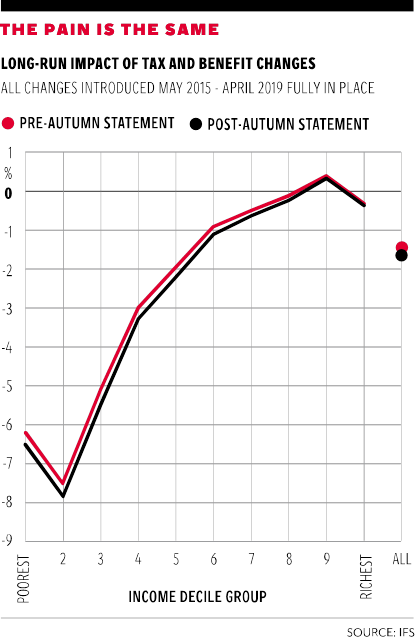
There was an apparent attempt to harness this particular psychological bias in George Osborne’s Autumn Statement. Of course the Chancellor was forced into a memorable U-turn on his wildly unpopular tax credit cuts. Millions of poor working families will now not see their benefits cut in cash terms next April. Yet the Chancellor still gets virtually all his previously targeted savings from the welfare bill by 2020.

How? Because the working age welfare system will still become much less generous in five years’ time. As research from the Institute for Fiscal Studies and the Resolution Foundation has shown, the typical low-income working family in 2020 will be hit just as hard as they were going to be before the Autumn Statement U-turn. The Chancellor seems to be calculating that the pain of future forgone gains will be less politically toxic than immediate cash losses.”

 image002

It’s hardly a revelation that the Conservative government are manipulating public opinion, using scapegoating, outgrouping and the creation of folk devils in order desensitize the public to the plight of the poorest citizens and to justify dismantling the welfare state incrementally. As I’ve pointed out previously, this has been going on since 2010, hidden in plain view.

In the article, Ben Chu also goes on to say:

“Experiments by Daniel Kahneman, Jack Knetsch and Richard Thaler also suggest that this stealth approach fits with people’s sense of fairness. They found that in a time of recession and high unemployment most people they surveyed thought a hypothetical company that cut pay in cash terms was acting unfairly, while one that merely raised it by less than inflation was behaving fairly.

There was another exploitation of our psychological biases in the Autumn Statement. The Chancellor announced an increase in stamp duty for people buying residential properties to let. That underscored the fact that the Chancellor remains wedded to the stamp duty tax, despite pressure from public finance experts to shift to a more progressive and efficient annual property tax (perhaps an overhauled council tax).

But Mr Osborne, like all his recent predecessors, realises that stamp duty, for all its deficiencies, tends to be less resented as a form of taxing property. Why? Because of “anchoring”. When people buy a house they are mentally prepared to part with a huge sum, usually far bigger than any other transaction they will make in their lives. The additional stamp duty payable to the Treasury on top of this massive sum, large though it is, seems less offensive. People resent it less than they would if the tax were collected annually in the form of a property tax – even if, for most, it would actually make little difference over the longer term. Sticking with stamp duty is the path of least resistance.”

There is another economologist “experiment” that seems to have slipped under the radar of the media – an experiment to nudge sick and disabled people into work, attempting to utilise GPs in a blatant overextension of the intrusive and coercive arm of the state. It is aimed at ensuring sick and disabled people don’t claim benefits. I don’t recall any mention of behaviourist social experiments on the public in the Conservative manifesto.

When I am ill, I visit a doctor. I expect professional and expert support. I wouldn’t consider consulting Iain Duncan Smith about my medical conditions. Or the government more generally. There are very good reasons for that. I’m sure that Iain Duncan Smith has Dunning–Kruger syndrome. He thinks he knows better than doctors and unreliably informs us that work can set you free, it can help prevent and cure illness.  Yet I’ve never heard of a single case of work curing blindness, heart disease, rheumatoid arthritis, cerebral palsy, multiple sclerosis, cancer or even so much as a migraine. I’ve also yet to hear of a person’s missing limbs miraculously growing back. The Conservative “medical intervention” entails a single prescription: a work coach from the job centre. State medicine – a single dose to be taken daily: Conservative ideology, traditional prejudice and some patronising and extremely coercive paternalism. The blue pill.

I don’t agree with the conclusions that Ben Chu draws in his article. Whilst he acknowledges that:

“The Government has a Behavioural Insights Team (or “Nudge Unit”) whose objective is to exploit the public’s psychological biases,” he goes on to say that it’s merely “to push progressive policies, such as getting us to save more for retirement and helping us make “better choices”, perhaps by counteracting the negative impact of loss aversion. But, as we’ve seen, the Chancellor is not above exploiting our biases in a cynical fashion too.” 

Progressive policies? The draconian welfare “reforms” aren’t remotely “progressive.” In the UK, the growth and institutionalisation of prejudice and discrimination is reflected in the increasing tendency towards the transgression of international legal human rights frameworks at the level of public policy-making. Policies that target protected social groups with moralising, stereotypical (and nudge-driven) normative messages, accompanied with operant disciplinary measures, have led to extremely negative and harmful outcomes for the poorest and most vulnerable citizens, but there is a marked political and social indifference to the serious implications and consequences of such policies.

There is a relationship between the world that a person inhabits and that person’s actions. Any theory of behaviour and cognition that ignores context can at best be regarded as very limited and partial. Yet the libertarian paternalists overstep their narrow conceptual bounds, with the difficulty of reconciling individual and social interests somewhat glossed over. They conflate “social interests” with neoliberal outcomes.

The asymmetrical, class-contingent application of paternalistic libertarian “insights” establishes a hierarchy of decision-making “competence” and autonomy, which unsurprisingly corresponds with the hierarchy of wealth distribution.

So nudge inevitably will deepen and perpetuate existing inequality and prejudice, adding a dimension of patronising psycho-moral suprematism to add further insult to politically inflicted injury. Nudge is a technocratic fad that is overhyped, theoretically trivial, unreliable; a smokescreen, a prop for neoliberalism and monstrously unfair, bad policy-making.

Libertarian paternalists are narrowly and uncritically concerned only with the economic consequences of decisions within a neoliberal context, and therefore, their “interventions” will invariably encompass enforcing behavioural modifiers and ensuring adaptations to the context, rather than being genuinely and more broadly in our “best interests.” Defining human agency and rationality in terms of economic outcomes is extremely problematic. And despite the alleged value-neutrality of the new behavioural economics research it is invariably biased towards the status quo and social preservation rather than progressive social change.

At best, the new “behavioural science” is merely theoretical, at a broadly experimental stage, and therefore profoundly limited in terms of scope and academic rigour, as a mechanism of explanation, and in terms of its capacity for generating comprehensive and coherent accounts and understandings of human motivation and behaviour.

At worst, the rise of this new form of psychopolitical behaviourism reflects, and aims at perpetuating, the hegemonic nature of neoliberalism.

But for the record, when a government attempts to micromanage and manipulate the behaviour of citizens, we call that “totalitarianism” not “nudge.” 

behavchange.jpg

Related reading

A critique of Conservative notions of social research

The government plan social experiments to “nudge” sick and disabled people into work

Mind the MINDSPACE: the nudge that knocked democracy down

Nudging conformity and benefit sanctions

The Thatcherite pressure group at the heart of the Tory bullying scandal

Tom Pride's avatarPride's Purge

conwayfor

With all the pages of copy that have been filed in the media about the Tory bullying scandal, it’s surprising how little has been written about the organisation at the heart of the bullying allegations – Conservative Way Forward.

CWF is a VERY important and influential organisation within the Tory Party. It is seen as the gatekeeper of Thatcher’s legacy. Here is its official list of presidents and patrons – a rollcall of Thatcherite luminaries, beginning with Thatcher herself:

FOUNDING PRESIDENT
The Rt Hon Baroness Thatcher of Kesteven LG OM FRS
HONORARY VICE-PRESIDENTS
Christopher Chope OBE MP
The Rt Hon Dr Liam Fox MP
The Rt Hon Greg Hands MP
The Rt Hon Lord Hague of Richmond FRSL
The Rt Hon Lord Parkinson of Carnforth
The Rt Hon Lord Tebbit of Chingford CH
PARLIAMENTARY COUNCIL
Sir Gerald Howarth MP – Chairman
James Cleverly MP – Deputy Chairman
Conor Burns MP
Rt. Hon. Greg Hands MP

View original post 354 more words

Corbyn has to get rid of the fanatics mistakenly called ‘realists’ and ‘moderates’

This is an excellent article, first published on the Flassbeck International Economics site, written by political economist, Doctor Will Denayer, which outlines the extensive damage that neoliberalism has caused to Britain and to democracy, endorsed and extended by successive governments since 1979. The author details the propaganda campaign pitched to discredit Corbyn, and concludes with an analysis of how the Labour Party under Jeremy Corbyn can win the next election, and says that the so called Labour “moderates” are anything but moderate. 

I was happy to see my own work linked and cited, too. Kitty.


jeremy-corbyn-1

Anmerkung Heiner Flassbeck: Wie nicht anders zu erwarten, formiert sich bei den Funktionären der Labour-Partei in England massiver Widerstand gegen Jeremy Corbyn, den von der Basis gewählten neuen Vorsitzenden. Will Denayer beschreibt die Stimmung in England sehr gut und zeigt das typische Dilemma auf, in dem sich sozialdemokratische Parteien wiederfinden, die nicht bereit sind, gesamtwirtschaftliche Überlegungen zur Basis ihres Handelns zu machen. Auch in Deutschland kennt man das zur Genüge.
 

For many months, it was a shameful and despicable spectacle to see the Labour bosses mount an attack of the lowest kind imaginable on  a candidate for the leadership of their party because he is a socialist. Or perhaps he’s just a social-democrat. The fear that the Labour party could fall into the hands of a social-democrat was too much for them to bear, so the political and media elite concocted to character-assassinate Jeremy Corbyn. Hundreds of vile articles were produced: Corbyn is an anti-Semite, a sexist, he is friends with the IRA, he is a pacifist, an old hippie, an ideological fossil from a bygone age, he is against the monarchy, with Corbyn we can’t win the 2020 elections. The labour bosses expelled thousands from the party on the flimsiest of excuses: they were ‘infiltrators’ from the left or from the right.

Corbyn received more criticism from the press than any other politician in living memory – and not only from tabloids such as The Sun or The Daily Mail. The liberal The Guardian, The Independent and the BBC gave Corbyn more contempt in a mere couple of months than Cameron suffered in years (see here for the last one of today). According to Jonathan Cook this highlights that, since Blair, both Labour and the Tories have been equally committed to upholding neoliberalism.

You can have either hardcore neoliberalism or slightly more softcore neoliberalism, but that is it (see also here). That is the horizon of British politics.

The assassination hasn’t worked. During the campaign, hundreds of thousands joined the Labour party. It was gigantic. The number of party members tripled. Something big was happening. Blair wrote two articles for The Guardian, begging not to vote for Corbyn’s Alice in Wonderland policies. People told him to go to The Hague. Gordon Brown produced a long diatribe. No one listened. The reason was simple: here is a man that the social base of Labour believes in, a man who speaks their language and defends their interests. Corbyn won by an enormous landslide: he got 59.5 % of the votes. Burnham got 19%, Cooper 17%, Kendall 4.5%.

The people had spoken, but in an oligarchy that does not count. The anti-Corbyn campaign intensified. When Corbyn said that he opposes modernising Trident, rebellion within the party and the shadow cabinet broke out, never mind that military experts and even generals say that he is right. And now, there is the issue of bombing IS. It is not important that a large majority of the population backs Corbyn. The crisis is so acute that manymoderates’ are leaving the party. Barbara Ellen explained her motives in The Guardian. She thinks that her party has been taken over by ‘a bunch of conceited hippies refusing to budge from their favourite beanbags.’ As she explains, ‘the terrible abyss of the Corbyn problem’ is how to deal with ‘politicians who think that looking electable is beneath them.’ And the term moderate became an insult: ‘it is considered too centrist, restrained, temperate, cautious.’

If Corbyn wants to survive, he has to get rid of these ‘moderates’ because they are fanatics. If Corbyn cannot win the 2020 election without the moderates, he cannot win the election with them either. Here’s why. Have a look at policy and what the moderates stand for. It is ideological garbage to portray these people as ‘moderates.’ There is nothing moderate about them and nothing social-democratic either. The Tories claim that there is enormous benefit fraud in the country: 28% to 30% of all social welfare claims may be fraudulent. They cite it as one of the reasons why ‘welfare reform’ is necessary. The real fraud in benefit claims is 0.3–0.5%.

As Owen Jones explains in Chav. The Demonization of the Working Class, that is far from the whole picture: many people abstain from benefits because they are afraid of getting in problems with the Department of Work or with Immigration. Of course, some people’s lives literally depend on benefits. Lose your benefits and you are done. The moderates know about these problems – everybody knows it.

According to Lansley and Mack, who wrote Breadline Britain, twenty million people in the UK are living in poverty. Three and a half million adults go hungry so they can feed their children. Energy prices doubled over the last decade, while average wages fell and benefit cuts push more people in poverty.

More than half of those in poverty are in employment, so it is hard to say that poverty is caused by the fickleness of those who are unwilling to work (see also here). Epidemiological research established a link between the Work Capability Assessment (WCA) and suicide (see also here). This was the reason for an expert group of the UN to step in. The research found that every 10,000 assessments led to around six suicides.

Since there have been more than 1 million assessments, there may be more than 600 people who have taken their own lives who would otherwise have not. The truth of the matter is that both the Conservatives and the Labour moderates have responded with utter indifference to these outright scandalous figures.  Kitty S Jones also refers to a study from Durham University that puts austerity in historical perspective. As a result of unnecessary recession, planned de-industrialisation to break the unions and the Labour opposition, unemployment, welfare cuts and housing policies, Thatcher’s legacy includes the premature death of many British citizens, together with a substantial and continuing intergenerational burden of suffering and loss of wellbeing. The research shows that the massive increase in income inequality under Thatcher – the richest 0.01 per cent of society had 28 times the mean national average income in 1978. By 1990, this was 70 times.

But Cameron has gone much further than Thatcher ever did in cutting essential support and services for protected social groups, such as sick and disabled people and poor citizens. What did the ‘moderates’ of Labour ever do about any of it, except giving speeches about a deserving society? Speaking of Alice in Wonderland: Blair asked Labour party members to vote against a social democrat, so that Labour could remain functional in implementing austerity of a degree that was even never seen under Thatcher.

It gets worse. I present the argument that the lack of any concrete reaction and outcry from Labour to the persecution (yes, persecution!) of the unemployed, the sick, the disabled and the poorest as undeserving scroungers cost Labour the election last May. The rhetoric of Labour is all about improving lives for hard working people, damn those without a job. Labour completely bowed to the ideology, which became, in effect the centre piece of New Labour, that the unemployed had to be made responsible, with an iron fist if necessary, that they had to be activated.

To those who say that Corbyn cannot win an election, the answer is that they lost one. It is clear that Labour lost the elections in last May because it alienated a large part of its traditional base (see here for analysis). And they went on after the elections. When the Tories passed the new welfare reform bill – more austerity, more cuts in welfare and in services, more privatisations, more workfare and more exclusion – many Labour moderates voted in favour of the bill.

The Tories pledged to give the NHS, the National Health Service, an extra £8 billion funding, but the reality is that cancer patients are being denied treatment because of lack of NHS funds.The NHS is safe in our handspromised Cameron, but in the meantime private firms have been handed 41% of the NHS, close to 10,000 NHS beds have been shut, close to 7,500 specialist nurses have been axed, ambulance stations have been closed, unfilled general practitioner posts quadrupled in the last 4 years and the NHS budget saw the worst real-term cut since 1973. Apart from delivering carefully crafted speeches, the Labour moderates did nothing.

Osborne, the chancellor of the Exchequer, created more debt than Labour did in 13 years, indeed, he oversaw the biggest rise in national debt since World War II. According to a City University Report, the budget deficit that Osborne wanted to cut to zero will rise to £40 billion by 2020. The main reason is that the treasury has underestimated the impact of welfare and departmental spending cuts on the broader economy and especially cuts to public sector investment (oh surprise!). The great majority of the public is, of course, opposed to the tornado of privatisations (see graph), but that is no reason to not go ahead with it. Still, I know of no example – not a single one – of the Labour moderates opposing the privatisations.

will
The Tory government oversaw the longest sustained decline in average wages since records began, while, in the same period, the average FTSE100 (Financial Times Stock Exchange 100) executive saw a 151% pay rise. Again, not one word from the moderates. Comedian Chris Purchase made a completely valid point: even if people on benefits do nothing else than drink and smoke (as common hallucination and prejudice go), they would still be paying more tax in the UK individually than Amazon. Did the moderates ever come up with a concrete policy measure that tackles tax evasion? Experts estimate that tax evasion costs the UK economy £25 billion every year, although
Lansley and Mack think that the true figure is likely to be far higher: up to a quarter of the world’s wealth is held in offshore accounts.

If the moderates did not do any of this, what did they do? They made £800 billion available to the bankers. Blair and Brown took the country to war. They introduced fees for students. In the meantime undergraduate student’s fees became the highest in the industrialised world (see here). They committed to austerity and fully accepted the ideology of welfare reform. They deregulated the financial economy and cut public services. The Labour moderates are pro TTIP. In what is still the fourth richest country on earth, close to 7,500 people were admitted to hospital because of malnutrition. Scurvy, scarlet fever, cholera and whooping cough have been increaing since 2010, (see here) but when is the last time that you heard a Labour moderate address homelessness or evictions? This is why Corbyn rose to power. Corbyn won on the basis of an authentic popular revolt of the population against austerity and neoliberalism, be it blue or red. People have enough.

But last week, Corbyn went too far. He opposes Cameron’s plan to bomb IS. Perhaps even more than 100 Labour MPs plan to defy him over the Syria air strikes. This is a real crisis. Twelve years after the moderates took the UK into an illegal war in which ca. 1.3 million Iraqis died, they do it again. This time the pretext is that there is an immanent threat and that an attack will make the UK safer. This is nonsense.

As Todhunter writes in Counterpunch, in the 12 years that preceded the invasion of Iraq, 65 people in Europe died by various terrorist attacks. In the 12 years since the invasion, the terrorist kill rate increased by nearly 600%. Apart from being utterly counterproductive (a point also made by Sahra Wagenknecht in the Tagesschau), bombing IS is illegal: there is no UN mandate for such action, no authorisation from Syria. And who’s paying? Defence Secretary Fallon defends the need ‘to spend less on some things like the welfare system and to spend more on things that really matter to keep our country safe’ (see here). As Todhunter says, with a £12 billion saving on cuts to the welfare budget, Fallon attempts to justify a £12 billion increase to the military budget to help pay for warships, Boeing maritime patrol crafts, surveillance drones and Lockheed Martin jets. The Labour moderates are losing their mind over the fact that Corbyn has the temerity to disagree.

There is only one reason why Labour cannot win an election under Corbyn on a left social democratic platform. Millions have been hammered by Tory austerity. Corbyn can win. The problem is that the Labour bosses want him gone. Corbyn’s policies are not their policies. It is very well possible that Corbyn will be ousted. It would prove that democracy and decency are gone. Frankly, the odds are against him.

You can read the original article here

Court rules that Tory benefit cap unlawfully discriminates against disabled people

10407927_677369232332608_5384979058089243718_n

A high court judge has ruled that Iain Duncan Smith’s welfare policy unlawfully discriminates against disabled people by failing to exempt their carers from the benefit cap. The ruling is the second this year to criticise the cap. In March, the supreme court found that the cap left people claiming benefits unable to house, feed or clothe their family and was therefore in breach of the UK’s obligations regarding international human rights.

Mr Justice Collins said the government’s decision to apply the cap to full-time carers for adult relatives had created serious financial hardship for them, forcing many to give up caring for loved ones, and had also placed extra costs on the NHS and care services.

The ruling comes after two carers brought the case against the Department for Work and Pensions (DWP) following serious concerns that the benefit cap would unfairly harm those who care for their disabled children and relatives. The carers were caring for more than 35 hours a week, the judge said that they were effectively in work, even though they were in receipt of benefits, and therefore should be exempt from the cap.

Carers are able to claim about £60 a week if they care for relatives. These claims, however, were to be included in the £500 a week  benefit cap, which was introduced by the government in the belief that so-called “workless” families need to experience financial loss, a decrease in basic security and a severe decline in their standard of living in order to “incentivise” them to try harder to get a job.

On Thursday, the High Court ruled that the government had breached article 14 of the European Convention on Human Rights. Family carers who receive Carer’s Allowance should be exempt from the benefit cap. The High Court ruled that the Secretary of State for Work and Pensions had indirectly discriminated disabled people by failing to exempt unpaid carers for disabled family members from the cap.

Collins said: “To describe a household where care was being provided for at least 35 hours a week as ‘workless’ was somewhat offensive. To care for a seriously disabled person is difficult and burdensome and could properly be regarded as work.” 

Campaigners have welcomed the decision, highlighting the damaging effects the cap would have had on carers looking after  adult disabled relatives.

Rebecca Hilsenrath, chief executive of the Equality and Human Rights Commission, said: “We are pleased that the court has found the impact on disabled people of losing a family carer had not been properly considered.

“The effect could be profound and the loss of a trusted carer devastating.

“The substantial reduction of income could jeopardise the ability of those affected to continue to care for severely disabled relatives. The court noted that the Secretary of State did not provide any information to Parliament about the effect on disabled people if their family carer were unable to continue.

“The court also held that, rather than saving public money, it would cost considerably more for the care to be provided by local authorities or the NHS.”

Laywers acting for the secretary of state had argued that unpaid carers should be treated as unemployed people who should have to make the same choices as anyone else about whether to work or cut their living costs. But Collins said those providing full-time care could not be in full-time work unless they gave up or cut back significantly on their caring responsibilities.

Unpaid carers made “a huge contribution to society” and “saved the taxpayer the equivalent of £119bn a year,” he said. Were carers forced to give up their role, taxpayer-funded services would have to spend huge amounts providing the care instead.

The judge added that the government should exempt carers because “the cost to public funds if the cap is to be maintained is likely to outweigh to a significant extent the cost of granting the exemption.”

He said: “Nowhere in the impact assessments or in what was put before Parliament was the effect on the disabled of loss of family carers raised. It in my view should have been, since it ought to have been apparent that the impact of a possible loss of a trusted family carer could be profound.

“Reconsideration will I hope be given to whether the present regulatory regime is appropriate, having regard to the hardship it can and does produce.”

A DWP spokesperson said: “We are pleased that the court agrees that the benefit cap pursues a legitimate and lawful aim.

The court didn’t actually agree that.

“The Government values the important role of carers in society – and 98% are unaffected by the cap. We are considering the judgment and will respond in due course.”

On Thursday, the following “urgent” bulletin was released from the Department for Work and Pensions:

Judicial Review in the case of R v Secretary of State of the inclusion of Carer’s Allowance in the benefit cap.

1. Today the judgment has been handed down in a judicial review in the case of R v Secretary of State of the inclusion of Carer’s Allowance in the benefit cap.

2. We are pleased that the Court agrees that the benefit cap pursues a legitimate and lawful aim.

3. However the Court has asked us to look again at the indirect impact on those disabled people whose carer is subject to the cap on household benefit payments.

4. We will consider this judgment and set-out our position in due course. We are continuing to apply the benefit cap as now, and there is no change to applying the cap to carers.

 
The bulletin also provides some questions with answers to enable staff to respond to any enquiries they may receive. You can read those here.

The standard responses to many of the anticipated questions are:

 “We are considering the judgment and will set-out our position in due course.”

“The benefit cap continues to apply.”

 Steve Bell cartoon


Tim Salter’s Could Be Fourth Confirmed Death Caused By The DWP

Politics and Insights joins Same Difference and Vox Political in feeling that one such suicide was one too many.

samedifference1's avatarSame Difference

Same Difference can never forget TimSalter – a disabled man who took his life due to Bedroom Tax fears.

His sister, Linda Cooksey, recently told VoxPolitical:

“My brother Tim Salter committed suicide on 25th September 2013.

“The coroner’s report stated, ‘Mr Salter … had hanged himself. He had problems with his mental health and was partially sighted.

“‘A major factor in his death was that his state benefits had been greatly reduced leaving him almost destitute and with threatened repossession of his home’.

“Tim had just over £50 in money and no food in the house when I found him on that Wednesday lunchtime!”

 Ms Cooksey is currently awaiting confirmation from the Parliamentary and Health Service Ombudsman that Mr Salter’s suicide was due to DWP benefit cuts.

If confirmed, this will be the fourth known case directly linked to the cuts.

Same Difference joins Vox Political in…

View original post 33 more words

The Minnesota Starvation Experiment provided empirical evidence that demonstrates clearly why welfare sanctions can’t possibly work as an “incentive” to “make work pay”

behavchange

“Behavioural theory is a powerful tool for the government communicator, but you don’t need to be an experienced social scientist to apply it successfully to your work.”

Alex Aiken
Executive Director of
Government Communications (Source).


Introduction

The Conservatives have always used emotive and morally-laden narratives that revolve around notions of “national decline” and a “broken society” to demarcate “us and them”, using overly simplistic binary schema. Conservative rhetoric reflexively defines what the nation is and who it excludes, always creating categories of others.

David Cameron’s government have purposefully manufactured a minimal group paradigm which is founded on a false dichotomy. People who “work hard” are deemed “responsible” citizens and the rest are stigmatized, labelled as “scroungers” and outgrouped (inaccurately) as irresponsible economic free riders. This prejudiced distinction requires a single snapshot of just one frozen point in time, and an assumption that people who claim welfare support are the same people year after year, but longitudinal studies indicate that over the course of their lives, most people move in and out of employment. Most people claiming welfare support have worked and made responsible contributions to society.

The Conservatives also claim that welfare provision itself is problematic, because it creates “a culture of dependency.” Yet there has never been evidence to support this claim. In fact, a recent international study of social safety nets from the Massachusetts Institute of Technology (MIT) and Harvard economists refutes the Conservative “scrounger” stereotype and dependency rhetoric. Abhijit Banerjee, Rema Hanna, Gabriel Kreindler, and Benjamin Olken re-analyzed data from seven randomized experiments evaluating cash programmes in poor countries and found “no systematic evidence that cash transfer programmes discourage work.”

The phrase “welfare dependencywas designed to intentionally divert attention from political prejudice, discrimation via policies and to disperse public sympathies towards the poorest citizens.

The Conservatives have always constructed discourses and shaped institutions which isolate some social groups from health, social and political resources, with justification narratives based on a process of class-contingent personalisations of social problems, such as poverty, using quack psychology and pseudoscience. However, it is social conditions which lead to deprivation of opportunities, and that outcome is a direct consequence of inadequate and biased political decision-making and policy.

Conditionality

One of the uniquely important features of Britain’s welfare state is the National Insurance system, based on the principle that people establish a right to benefits by making regular contributions into a fund throughout their working lives. The contribution principle has been a part of the welfare state since its inception. A system of social security where claims are, in principle, based on entitlements established by past contributions expresses an important moral rule about how a benefits system should operate, based on reciprocity and collective responsibility, and it is a rule which attracts widespread public commitment. National Insurance is felt intuitively by most people to be a fair way of organising welfare.

The Conservative-led welfare “reforms” had the stated aim of ensuring that benefit claimants – redefined as an outgroup of free-riders – are entitled to a minimum income provided that they uphold responsibilities, which entail being pushed into any available work. The  Government claim that sanctions “incentivise” people to look for employment.

Conditionality for social security has been around as long as the welfare state. Eligibility criteria have always been an intrinsic part of the social security system. For example, to qualify for jobseekers allowance, a person has to be out of work, able to work, and seeking employment.

But in recent years conditionality has become conflated with severe financial penalities (sanctions), and has mutated into an ever more stringent, complex, demanding set of often arbitrary requirements, involving frequent and rigidly imposed jobcentre appointments, meeting job application targets, providing evidence of job searches and mandatory participation in workfare schemes. The emphasis of welfare provision has shifted from providing support for people seeking employment to increasing conditionality of conduct, enforcing particular patterns of behaviour and monitoring claimant compliance.

Sanctions are “penalties that reduce or terminate welfare benefits in cases where claimants are deemed to be out of compliance with  requirements.” They are, in many respects, the neoliberal-paternalist tool of discipline par excellence – the threat that puts a big stick behind coercive welfare programme rules and “incentivises” citizen compliance with a heavily monitoring and supervisory administration. The Conservatives have broadened the scope of behaviours that are subject to sanction, and have widened the application of sanctions to include previously protected social groups, such as ill and disabled people, pregnant women and lone parents.

The new paternalists often present their position as striking a moderate, reasonable middle ground between rigid anti-paternalism on the one hand and an overly intrusive “hard” paternalism on the other. But the claim to moderation is difficult to sustain, especially when we consider the behavioural modification technique utilised here – punishment – and the consequences of sanctioning welfare recipients, many of whom are already struggling to meet their basic needs.

Nudge permits policy-makers to indulge their ideological impulses whilst presenting them as “objective science.” From the perspective of libertarian paternalists, the problems of neoliberalism don’t lie in the market, or in growing inequality and social stratification: neoliberalism isn’t flawed, nor are governments – we are. Governments don’t make mistakes – only citizens do.

Work programme providers are sanctioning twice as many people as they are signposting into employment (David Etherington, Anne Daguerre, 2015), emphasising the distorted priorities of “welfare to work” services, and indicating a significant gap between claimant obligations and employment outcomes.

Ethical considerations of injustice and the adverse consequences of welfare sanctions have been raised by politicians, charities, campaigners and academics. Professor David Stuckler of Oxford University’s Department of Sociology, among others, has found clear evidence of a link between people seeking food aid and unemployment, welfare sanctions and budget cuts, although the government has, on the whole, tried to deny a direct “causal link” between the harsh welfare “reforms” and food deprivation. However, a clear correlation has been established.

The current government demand an empirical rigour from those presenting legitimate criticism of their policy, yet they curiously fail in meeting the same exacting standards that they demand of others. Often, the claim that “no causal link has been established” is used as a way of ensuring that established, defined correlative relationships, (which often do imply causality,) are not investigated further. Qualitative evidence – case studies, for example – is very often rather undemocratically dismissed as “anecdotal,” which of course stifles further opportunities for important research and inquiry regarding the consequences and impacts of government policy. This also undermines the process of a genuine evidence-based policy-making, leaving a space for a rather less democratic ideology-based political decision-making.

Further concerns have arisen that food banks have become an institutional part of our steadily diminishing welfare state, normalising food insecurity and deprivation among people both in and out of work.

There is no evidence that keeping benefits at below subsistence level “incentivises” people to work. In fact research indicates it is likely to have the opposite effect. In 2010/2011, 61,468 people were given 3 days emergency food and support by the Trussell Trust and this rose to 913,138 people in 2013-2014.

At least four million people in the UK do not have access to a healthy diet; nearly 13 million people live below the poverty line, and it is becoming increasingly difficult for them to afford food. More than half a million children in the UK are now living in families who are unable to provide a minimally acceptable, nutritious diet. (Source: Welfare Reform, Work First Policies And Benefit Conditionality: Reinforcing Poverty And Social Exclusion? Centre for Enterprise and Economic Development Research, 2015.)

There is plenty of evidence that sanctions don’t help people to find work, and that the punitive application of severe financial penalties is having an extremely detrimental, sometimes catastrophic impact on people’s lives. We can see from a growing body of research how sanctions are not working in the way the government claim they intended.

Sanctions, under which people lose benefit payments for between four weeks and three years for “non-compliance”, have come under fire for being unfair, punitive, failing to increase job prospects, and causing hunger, debt and ill-health among jobseekers. And sometimes they result in death.

I want to discuss two further considerations to add to growing criticism of the extended use of sanctioning which are related to why sanctions don’t work. One is that imposing such severe financial penalties on people who need social security support to meet their basic needs cannot possibly bring about positive “behaviour change” or “incentivise” people to find employment, as claimed. This is because of the evidenced and documented broad-ranging negative impacts of financial insecurity and deprivation – particularly food poverty – on human physical health, motivation, behaviour and mental health.

The second related consideration is that “behavioural theories” on which the government rests the case for extending and increasing benefit sanctions, are simply inadequate and flawed, having been imported from a limited behavioural economics model (otherwise known as libertarian paternalism) which is itself ideologically premised.

At best, the new “behavioural science” is merely a set of theoretical propositions, at a broadly experimental stage, and therefore profoundly limited in terms of scope and academic rigour. As a mechanism of explanation, it is lacking  in terms of capacity for generating comprehensive, coherent accounts and understanding about human motivation and behaviour.

Furthermore, in relying upon a pseudo-positivistic experimental approach to human cognition, behavioural economists have made some highly questionable ontological and epistemologial assumptions: in the pursuit of methodological individualism, citizens are consequently isolated from the broader structural political, economic, sociocultural and established reciprocal contexts that invariably influence and shape an individual’s experiences, meanings, motivations, behaviours and attitudes, causing a problematic duality between context and cognition. The libertarian paternalist approach also places unfair and unreasonable responsibility on citizens for circumstances which lie outside of their control, such as the socioeconomic consequences of political decision-making.

Yet many libertarian paternalists reapply the context they evade in explanations of human behaviours to justify the application of their theory, claiming that their collective “behavioural theories” can be used to serve social, and not necessarily individual ends, by simply acting upon the individual to make them more “responsible.” (See, for example: Personal Responsibility and Changing Behaviour: the state of knowledge and its implications for public policy, David Halpern, Clive Bates, Geoff Mulgan and Stephen Aldridge, 2004.)

In other words, there is a relationship between the world that a person inhabits and that person’s actions. Any theory of behaviour and cognition that ignores context can at best be regarded as very limited and partial. Yet the libertarian paternalists overstep their narrow conceptual bounds, with the difficulty of reconciling individual and social interests glossed over somewhat.

The ideological premise on which the government’s “behavioural theories” and assumptions about unemployed and ill  and disabled people rests is also fundamentally flawed. Neoliberalism and social Conservatism are not working to extend wealth and opportunity to a majority of citizens. The shift away from a collective rights-based democratic society to a state-imposed moral paternalism, comprised almost entirely of unfunded, unsupported, decontextualised “responsible” individuals is simply an ideological edit of reality, hidden in plain sight within the tyranny of decision-makers deciding and shaping our “best interests”, to justify authoritarian socioeconomic policies that generate and perpetuate inequality and poverty. Libertarian paternalists don’t have much of a vocabulary for discussing any sort of collective, democratic, or autonomous and deliberative decision-making.

The Conservatives and a largely complicit media convey the message that poor people suffer from some sort of character flaw – a poverty of aspiration, a deviance from the decent, hard-working norm. That’s untrue, of course: poor people simply suffer from material poverty which may steal motivation and aspiration from any and every person that is reduced to struggling for basic survival.

It’s not a coincidence that those countries with institutions designed to alleviate poverty and inequality – such as a robust welfare state, a strong role for collective bargaining, a stronger tax and transfer system, have lower levels of income inequality and poverty.

url

The Minnesota Starvation Experiment volunteers

1. “Starved people can’t be taught democracy.” Ancel Keys

Imposing punishment in the form of financial sanctions on people who already have only very limited resources for meeting their basic survival needs is not only irrational, it is absurdly and spectacularly cruel. There is a body of evidence from a landmark study that describes in detail the negative impacts of food deprivation on physical and psychological health, including an account of the detrimental effects of hunger on motivation and behaviour.

During World War Two, many conscientious objectors wanted to contribute to the war effort meaningfully, and according to their beliefs. In the US, 36 conscientious objectors volunteered for medical research as an alternative to military service. The research was designed to explore the effects of hunger, to provide postwar rehabilitation for the many Europeans who had suffered near starvation and malnutrition during the war.

A high proportion of the volunteers were members of the historic peace churches (Brethren, Quakers, and Mennonites). The subjects, all healthy males, participated in a study of human semistarvation conducted by Ancel Keys and his colleagues at the University of Minnesota. The Minnesota Starvation Experiment, as it was later known, was a grueling six month study designed to gain insight into the physical and psychological effects of food deprivation. Those selected to participate in the experiment were a highly motivated and well-educated group; all had completed some college coursework, 18 had graduated, and a few had already begun graduate-level coursework.

images
The Minnesota laboratory

During the experiment, the participants were subjected to semistarvation, most lost 25% of their body weight in total. The participants underwent extensive tests throughout the experiment. Body weight, size, and strength were recorded, and basic functions were tracked using X-rays, electrocardiograms, blood samples, and metabolic studies. Psychomotor and endurance tests were given, as the men walked on the laboratory treadmills, and participants received intelligence and personality tests from a team of psychologists.

The men ate meals twice a day. Typical meals consisted of cabbage, turnips and half a glass of milk. On another day, it might be rye bread and some beans. Keys designed the meals to be carbohydrate rich and protein poor, simulating what people in Europe might be eating, with an emphasis on potatoes, cabbage, macaroni and whole wheat bread (all in meagre proportions). Despite the reduction in food, Keys insisted that the men try to maintain their active lifestyle, including the 22 miles of walking each week.

The negative effects of the reduced food intake quickly became apparent. The men rapidly showed a remarkable decline in strength and energy. Keys charted a 21 per cent reduction in their physical strength, as measured by their performance, using a variety of methods, including a back lift dynamometer. The men complained that they felt old and constantly tired.

There were marked psychological effects, too. They developed a profound mental apathy. The men had strong political opinions, but as the grip of hunger tightened, political affairs and world events faded into irrelevance for them. Even sex and romance lost their appeal. Food became their overwhelming priority. The men obsessively read cookbooks, staring at pictures of food with almost pornographic obsession. One participant managed to collect over a 100 cookbooks with pictures over the course of the experiment.

Minnes
Some subjects diluted their food with water to make the meagre proportions seem like more. Others would savour each little bite and hold it in their mouth as long as possible. Eating became ritualised and took a long time.

One of the volunteers recalled memorising the location of all of the lifts in the university buildings because he struggled climbing stairs, and even experienced difficulty opening doors, he felt so weak. The researchers recognised that “energy is a commodity to be hoarded – living and eating quarters should be arranged conveniently” in a subsequent leaflet designed to help in accommodating the increasing weakness and lethargy in people needing aid and support to recover from semistarvation.

Within just a few weeks of the study, the psychological stress that affected all of the subjects became too much for one of the men, Franklin Watkins. He had a ‘breakdown’ after having vivid, disturbing dreams of cannibalism in which he was eating the flesh of an old man. He had to leave the experiment. Two more subjects also suffered severe psychological distress and episodes of psychosis during the semistarvation period, resulting in brief stays in the psychiatric ward of the Minnesota university hospital. One of the men had also reported stealing scraps of food from bins.

Among the conclusions from the study was the confirmation that prolonged semistarvation produces significant increases in depression, ‘hysteria’ and ‘hypochondriasis’, which was measured using the Minnesota Multiphasic Personality Inventory. Most volunteers experienced periods of severe emotional distress and depression. There were extreme reactions to the psychological effects during the experiment including self-mutilation (one subject amputated three fingers of his hand with an axe, though the subject was unsure if he had done so intentionally or accidentally.)

The men also became uncharacteristically irritable, introverted and argumentative towards each other, they became less sociable, experiencing an increasing need for privacy and quiet – noise of all kinds seemed to be very distracting and bothersome and especially so during mealtimes. The men became increasingly apathetic and frequently depressed.

The volunteers reported decreased tolerance for cold temperatures, and requested additional blankets, even in the middle of summer. They experienced dizziness, extreme tiredness, muscle soreness, hair loss, reduced coordination, and ringing in their ears. They were forced to withdraw from their university classes because they simply didn’t have the energy or motivation to attend and to concentrate. Other recorded problems were anemia, profound fatigue, apathy, extreme weakness, irritability, neurological deficits, and lower extremity fluid retention, slowed heart rate among other symptoms.

The Minnesota Experiment also focused study on attitudes, cognitive and social functioning and the behaviour patterns of those who have experienced semistarvation. The experiment illuminated a loss of ambition, self-discipline, motivation and willpower amongst the men once food deprivation commenced. There was a flattening of affect, and in the absence of all other emotions, Doctor Keys observed the resignation and submission that hunger very often manifests.

The understanding that food deprivation dramatically alters emotions, motivation, personality, and that nutrition directly and predictably affects the mind as well as the body is one of the legacies of the experiment.

In the last months of the experiment, the volunteers were fed back to health. Different groups were presented with different foods and calorie allowances. But it was months, even years – long after the men had returned home – before they had all fully recovered. Keys published his full report about the experiment in 1950. It was a substantial two-volume work titled The Biology of Human Starvation. To this day, it remains the most comprehensive scientific examination of the physical and psychological effects of hunger.

Keys emphasised the dramatic effect that semistarvation had on motivation, mental attitude and personality, and he concluded that democracy and nation building would not be possible in a population that did not have access to sufficient food.

 —


Further study of the impact of food deprivation and starvation on
psychological and cognitive deterioration – The Psychological Effects of Starvation in the Holocaust

Cognitive function deficits and demotivation associated with food deprivation: Blood glucose influences memory and attention in young adults

Nutritional deficiencies and detrimental consequences for mental health: Nutrition and mental health

A comprehensive study of the detrimental impacts of food insecurity on the development, behaviour, mental health and wellbeing, learning, educational attainment, citizenship and physical health of children in America: Child Food Insecurity: The Economic Impact on our Nation

The effects of breakfast on cognitive performance, academic performance and in-class behaviour in adolescents

Comprehensive computerized assessment of cognitive sequelae of a complete 12-16 hour fast

The Minnesota food deprivation experiment also established a link between food insecurity and deprivation and later unhealthful eating practice, eating disorders and obesity – Journal of the American Dietetic Association

2. Abraham Maslow and the hierarchy of human needs

“It is quite true that man lives by bread alone – when there is no bread.”

Maslow was humanist psychologist. He proposed his classical theory of motivation and the hierarchical nature of human needs in 1943. His critical insights have been translated into an iconic pyramid diagram, which depicts the full spectrum of needs, ranging from physical to psychosocial. Maslow believed that people possess a set of simple motivation systems that are unrelated to the punishments and rewards that behaviourists proposed, or the complexities of unconscious desires proposed by the psychoanalysts.

Maslow said basically that the imperative to fulfil basic needs will become stronger the longer the duration that they are denied. For example, the longer a person goes without food, the more hungry and preoccupied with food they will become.

So, a person must satisfy lower level basic biological needs before progressing on to meet higher level personal growth needs. A pressing need would have to be satisfied before someone would give their attention to the next highest need. If a person has not managed to meet their basic physical needs, it’s highly unlikely that they will be motivated to fulfil higher level psychosocial ones.

Maslow recognised that although every human is capable and has the desire to move up the hierarchy of needs to fulfil their potential, progress is often disrupted by a failure to meet lower level needs. Life experiences, including the loss of a job, loss of a home, poverty, illness, for example, may cause an individual to become trapped at the lower needs levels of the hierarchy.

0_0_0_0_370_308_csupload_52703375
Maslow’s hierarchy of human needs

Some theorists have claimed that while Maslow’s hierarchy makes sense – it’s founded on an intuitive truth – it lacks scientific support. However, Maslow’s theory has certainly been verified by the findings of the Minnesota Experiment and other studies of the effects of food deprivation. Abraham Maslow’s humanist account of motivation also highlights the same connection between fundamental motives and immediate situational threats.

The experiment highlighted a striking sense of immediacy and fixation that arises when there are barriers to fulfilling basic physical needs – human motivation is frozen to meet survival needs, which take precedence over all other needs. This is observed and reflected in both the researcher’s and the subject’s accounts throughout the study. If a person is starving, the desire to obtain food will trump all other goals and dominate the person’s thought processes. This idea of cognitive priority is also clearly expressed in Maslow’s needs hierarchy. 

In a nutshell, this means that if people can’t meet their basic survival needs, it is extremely unlikely that they will have either the capability or motivation to meet higher level psychosocial needs, including social obligations and responsibilities to seek employment.


Conclusions: the poverty of responsibility and the politics of blame

American Conservative academic, Lawrence Mead, argued in 2010 that the government needed to “enforce values that have broken down” such as the “work ethic”, with an expensive, intrusive bureaucracy that “helped and hassled” people back to work. Mead was a Conservative political “scientist” who said that poverty was largely due to a breakdown of public authority. Poverty reflected disorder more than denials of opportunity. He felt that the poor were “too free,” rather than not free enough.

He believed that benefits should be “mean and conditional,” forcing recipients to take any available jobs. Calling himself a “new paternalist”, his proposal is that people must be taught to blame themselves for their hardships and accept that they deserve them. He believed that workfare should be an onerous threat, so that people opt out of the social security system altogether. (See: Guardian, June 16, 2010). Mead provided the theoretical basis for the American welfare reforms of the 1990s, which required adult recipients of welfare to work as a condition of aid.

The consequences of the US reforms have been dire for many families, both in and out of work. Many are now facing destitution as a consequence of the US welfare safety net being cut away. Mead also considerably influenced the UK Conservative-led welfare reforms.

The extremely conditional welfare approach that Mead advocated rests on the assumption that the problems it seeks to address are fundamentally behavioural in nature (rather than structural) and are therefore amenable to remedy through paternalist punishment, or, to borrow from the libertarian paternalist bland lexicon, through manipulation of  “cognitive biases“, in this case, one specifically known as loss aversion.

A paper, written in 2010 – Applying behavioural economics to welfare to work contained outlines of the pseudo-psychological justification for increasing the use of sanctions. The “research” was sponsored by Steve Moore, Business Development Director of esg , a key welfare to work consortium, which was established by two Tory donors with close ties to ministers. The Government’s Behavioural Insights Team (the “Nudge” Unit) provided a tenuous theoretical framework and a psychobabbled rationale for increasing and extending the use of benefit sanctions, transforming welfare provision into a system of directed political prejudice, discrimination and punishment.

The following year, in June, the government announced that it would toughen the sanctions regime, making it much more difficult for claimants to temporarily sign off benefits to avoid being forced into unpaid work. Perhaps the woefully under-recognised and under-acknowledged cognitive bias called “vested interests escaped the attention of libertarian paternalists, when esg were awarded two extremely lucrative government contracts with Iain Duncan Smith’s Department for Work and Pensions in 2011, which amounted to £73million.

So, the paper provides a justification narrative for welfare sanctions and mandatory work fare, and it also preempts an opportunity for work fare providers to make lots of profit and to subsidise private businesses with free labor at the expense of the UK’s poorest citizens and taxpayers. Yet the government’s own research also showed that the scheme does not help unemployed people to find paid employment once they have finished the four weeks of mandatory work “experience”. It also has no positive effect in “helping people off benefits” and into employment in the long term.

The libertarian paternalist justification narrative is basically a pseudoscientific attempt to pathologise and homogenise the psychology of unemployed people, justifying the need for a very lucrative “remedy,” which is costing the poorest citizens their autonomy, health and wellbeing. It’s also costing the public purse far more than it would to simply provide social security for people needing support in meeting their basic needs.

Furthermore, as I have previously pointed out, it flies in the face of established empirical evidence.

From the document in 2010, on page 18: The most obvious policy implication arising from loss aversion is that if policy-makers can clearly convey the losses that certain behaviour will incur, it may encourage people not to do it.” This of course assumes that being without a job is because of nothing more complex than opting for a “lifestyle choice.” 

And page 46: “Given that, for most people, losses are more important than comparable gains, it is important that potential losses are defined and made explicit to jobseekers (e.g.the sanctions regime).”

The recommendation on page 46: We believe the regime is currently too complex and, despite people’s tendency towards loss aversion, the lack of clarity around the sanctions regime can make it ineffective. Complexity prevents claimants from fully appreciating the financial losses they face if they do not comply with the conditions of their benefit.”

The Conservatives subsequently “simplified” sanctions by extending their use to previously protected groups, such as ill and disabled people and lone parents, increasing their severity and increasing the frequency of their use from 2012.

Of course there is a problem in assuming that punishing people will make them behave more “rationally,” and that is aside from the ethical dilemmas presented with neoliberal paternalists and businesses deciding what is “rational” and in other people’s “best interests.”

Deprivation substantially increases the risk of mental illnesses, including schizophrenia, depression, anxiety and substance addiction. Poverty can act as both a causal factor (e.g. stress resulting from poverty triggering depression) and a consequence of mental illness (e.g. schizophrenic symptoms leading to decreased socioeconomic status and prospects).

Poverty is a significant risk factor in a wide range of psychological illnesses. Researchers recently reviewed evidence for the effects of socioeconomic status on three categories: schizophrenia, mood and anxiety disorders and substance abuse. While not a comprehensive list of conditions associated with poverty, the issues raised in these three areas can be generalised, and have clear relevance for policy-makers.

The researchers concluded: “Fundamentally, poverty is an economic issue, not a psychological one. Understanding the psychological processes associated with poverty can improve the efficacy of economically focused reform, but is not a panacea. The proposals suggested here would supplement a focused economic strategy aimed at reducing poverty.” (Source: A review of psychological research into the causes and consequences of poverty, Ben Fell, Miles Hewstone, 2015.)

The Conservative shift in emphasis from structural to psychological explanations of poverty has far-reaching consequences. The recent partisan reconceptualision of poverty makes it much more difficult to define and measure. Such a conceptual change disconnects poverty from more than a century of detailed empirical and theoretical research, and we are witnessing an increasingly experimental approach to policy-making, as opposed to an evidence-based one, aimed solely at changing the behaviour of individuals, (to meet the demands of policy-makers) without their consent.

At least the Treasury is benefiting from the new conditionality and sanctions regime. Earlier this year, the Work and Pensions select committee heard independent estimates (committee member Debbie Abrahams MP said the DWP will not give or does not have figures) that since late 2012 sanctions had resulted in at least £275m being withheld from benefit claimants (the comparable figure for 2010 was £50m).

Many people in work are still living in poverty and reliant on in-work benefits, which undermines the libertarian paternalist case for increasing benefit conditionality somewhat, although those in low-paid work are still likely to be less poor than those reliant on out-of-work benefits. The Conservative “making work pay” slogan is a cryptographic reference to the punitive paternalist 1834 Poor Law principle of less eligibility.

But part of the government’s Universal Credit legislation is founded on the idea that working people in receipt of in-work benefits may face punitive benefits sanctions if they are deemed to be not trying hard enough to find higher paid work. It’s not as if the Conservatives have ever valued legitimate collective wage bargaining. In fact their legislative track record consistently demonstrates that they hate it, prioritising the authority of the state above all else.

Workplace disagreements about wages and conditions are now typically resolved neither by collective bargaining nor litigation but are left to management prerogative. Conservative aspirations are clear. They want cheap labor and low cost workers, unable to withdraw their labor, unprotected by either trade unions or employment rights and threatened with destitution via benefit sanction cuts if they refuse to accept low paid, low standard work. This is thought to “increase economic competitiveness.” Similarly, desperation and the “deterrent” effect of the 1834 Poor Law amendment served to drive down wages. In the Conservative’s view, trade unions distort the free labor market, which runs counter to New Right and neoliberal dogma.

Since 2010, the decline in UK wage levels has been among the very worst in Europe. The fall in earnings under the Coalition is the biggest in any parliament since 1880, according to analysis by the House of Commons Library, and at a time when the cost of living has spiralled upwards.
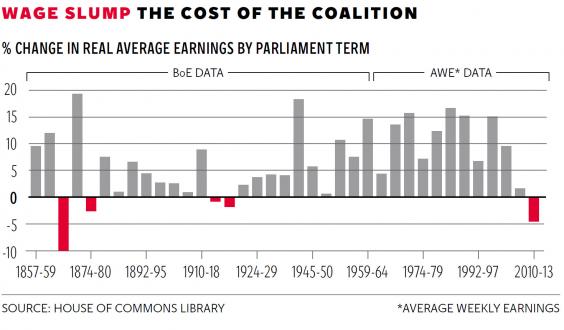
web-earnings-graphic

There has been a powerful shift back from progressive notions of collective social justice and equality to increasingly absurd, unfair and enforced individual responsibilities without concomitant rights, the underpinning Conservative view is that that socioeconomic inequality resulting from the free market is necessary and not something that the state need or should do anything about. Inequality in the UK is now greater than in any other European Union country, and including in the US. Yet the subsequent growing poverty and uncertainties of the labor market are irrationally held to be the responsibility of the individual.

In fact the state is forcefully redistributing the risks and burdens of job-market instability from the state to unemployed individuals. The “problem” of an entirely politically-defined  “welfare dependency” is presented with a “solution” in terms of a one-way transition into low-waged, poor quality work, which does not alleviate poverty.

Any analysis of the British economy over the past 40 years shows how the decline of union power since the early 1980s has coincided with the fall in the proportion of GDP that goes to wages, and the rise of private business profits. Boardroom pay has sky-rocketed whilst wages have been held down, as chief executives and directors no longer fear the effect of their pay rises on their staff. It’s a neoliberal myth that if firms are profitable, they are more likely to employ more workers, or that falling profitability is likely to reduce the demand for labor. One problem is that the government and employers have come to see the workforce as a disposable cost rather than an asset.

Wage repression has nothing whatsoever to do with workers, and threatening to punish low paid workers for their employer’s profit motive and the vagaries of an unregulated (liberalised) labor market by removing the in-work benefits that ensure exploited workers don’t face destitution is not only absurd, it is extremely cruel. The steady erosion of the post-war welfare state, and the increasing use of punitive approaches has served to further facilitate private sector wage repression. Nineteenth century notions of punitive deterrence have replaced civilised notions of citizen rights and entitlement, once again penalising people for the manifested symptoms but sidestepping the root causes of poverty.

Libertarian paternalist nudges may only work by stigmatising particular behaviours. The new “behavioural science” reflects an ideological and cultural rejuvenation of the Conservative’s ancient moral and prejudiced critique of the poor, polished by nothing more than pseudoscientific attempts at erecting a stage of credibility, using a kind of linguistic alchemy, based on purposefully manufactured semantic shifts and bland, meaningless acronyms.

What was once summarily dismissed from Victorian moralists such as Samuel Smiles, and Herbert Spencer, who is best known for the expression, and sociopolitical application of the social Darwinist phrase survival of the fittest, is now being recodified into the bland terminology and inane managementspeak acronyms emanating from the behavioural economics “insights” team – the semi-privatised Nudge Unit at the heart of the Cabinet Office.

This was the race to the bottom situation for many people in Victorian England, where conditions in the workhouses became appalling because conditions for unskilled workers were also appalling. It established a kind of market competition situation of the conditions of poverty, where “making work pay” invariably means never-ending reductions in the standard of living for unemployed people and those in low paid work. Benefit sanctions amount to cutting unemployment benefits, reducing choices by forcing people into any available low paid employment and have exactly the same effect: they drive down wages and devalue labour.

Narratives are representations of connected events and characters that have an identifiable structure, and contain implicit or explicit messages about social norms, and the topic being addressed as such may impact attitudes and behaviour. One way to shift perceptions and “change behaviours”, according to the new ‘economologists’, is through intensive social norms media campaigns. Media narratives are being nudged, too.

From MINDSPACE: Influencing behaviour through public policy,  David Halpern et al (2010):

“Framing is crucial when attempting to engage the public with behaviour change.”

“There are ways in which governments can boost their authority, and minimise psychological reactance in the public.”

Sometimes campaigns can increase perceptions of undesirable behaviour.”

Research shows that public ideas about poverty and unemployment depend heavily on how the issues are framed. When news media presentations frame poverty, for example, in terms of general outcome, people tend to believe that society collectively shares the responsibility for poverty. When poverty is framed as particular instances of individual poor people, responsibility is assigned to those individuals. In 1986, The General Social Survey documented how various descriptions of poor families influence the amount of assistance that people think they ought to have. Political framing is a powerful tool of social control. It agendarises issues (according to a dominant and Conservative economic, moral and social system that values thrift and moderation in all things, but mostly for the poorest people) and establishes the operational parameters of public debate.

The most controversial government policies are, to a large extent, reliant on dominant media narratives and images for garnering public endorsement. Prevailing patterns have emerged that systematically and intentionally stigmatise and scapegoat unemployed citizens, framing inequality and poverty as “causally linked” with degrees of personal responsibility, which is then used as a means of securing public acceptance for “rolling back the state.” News media define political issues for much of the public, and set simplistic access levels, often reducing  complex issues to basic dichotomies – and establishing default settings, to borrow from the lexicon of libertarian paternalists. Default settings allow policy-makers to shift the goalposts, and align public attitudes and behaviours with new policy objectives and outcomes. And ideology.

For example, one established default setting, is that hard work, regardless of how appropriate or rewarding, is the only means of escaping poverty. A variety of methods have been used to establish this, although the new paternalists tend to rely heavily on notions of political authority to manipulate social norms, the mainstream media has played a significant role in extending and propping up definitions of an ingroup of “hardworking families,” while othering, pathologising and outgrouping categories of persons previously considered exempt from employment, such as chronically ill and disabled people and lone parents.

The perpetual circulation of media images and discourse relating to characters pre-figured as welfare dependents, and accounts of the notion of a spiralling culture of dependency this past five years closely correspond with New Right narratives.

The marked shift from the principle of welfare provision on the basis of need to one that revisits nineteenth century notions of “deservingness” as a key moral criterion for the allocation of societal goods, with deservingness defined primarily in relation to preparedness to make societal contribution via paid work is likely to widen inequality. In fact behaviour theory approaches to policy simply prop up old Conservative prejudices about the nature of poverty, and provide pseudoscientific justification narratives for austerity, neoliberal and Conservative ideology. As such, nudge is revealed for what it is: an insidious form of behaviourism: operant conditioning; social engineering and the targeted and class-contingent restriction of citizen autonomy.

There are many examples on record of sanctions being applied unfairly, and of the devastating impact that sanctions are having on people who need to claim social security. Dr David Webster of Glasgow University has argued that benefit claimants are being subjected to an “amateurish, secret penal system which is more severe than the mainstream judicial system,” and that “the number of financial penalties (sanctions) imposed on benefit claimants by the Department of Work and Pensions now exceeds the number of fines imposed by the courts.

Furthermore, decisions on the “guilt” of noncompliance” are made in secret by officials who have no independent responsibility to act lawfully. Professor Michael Adler has raised concern that benefit sanctions are incompatable with the rule of law.

There is no doubt that sanctions are regressive, taking income that is designed to meet basic survival needs from families and individuals who are already very resource-constrained, is particularly draconian. But even by the proclaimed standards of the Department for Work and Pensions, sanctions are being applied unfairly, it’s a policy that has been based on discretionary arbitrary judgments, and the injustice and adverse consequences of welfare sanctions make their continued use untenable. As well as having clearly detrimental material and biological impacts, sanctions have unsurprisingly been associated with negative physical and mental health outcomes, increased stress and reduced emotional wellbeing recently, once again. (Dorsett, 2008; Goodwin, 2008; Griggs and Evans, 2010).

There has been a wealth of evidence that refutes the Conservative claim that benefit sanctions “incentivise” people and “help” them into employment. There is a distinction between compliance with welfare conditionality rules, off-flow  measurement and employment. Furthermore, there is no evidence that applying behaviourist principles to the treatment of people claiming social security, any subsequent behaviour change and positive employment outcomes are in any way correlated.

Sanctions don’t work, and the politics of punishment has no place in a so-called civilised society

The Conservative government have taken what can, at best, be described as an ambivalent attitude to evidence-gathering and presentation to support their claims to date. There is no evidence that welfare sanctions improve employment outcomes. There is no evidence that sanctions “change behaviours.” 

There is, in any case, a substantial difference between people conforming with welfare conditionality and rules, and gaining appropriate employment. And a further distinction between compliance and conversion. One difficulty is that since 2011, Job Centre Plus’s (JCP) primary key performance indicator has been off-flow from benefit at the 13th, 26th, 39th and 52nd weeks of claims. Previously JCP’s performance had been measured against a range of performance indicators, including off-flows from benefit into employment.

Indeed, when asked for evidence by the Work and Pensions Committee, one minister, in her determination to defend the Conservative sanction regime, regrettably provided misleading information on the destinations of JSA, Income Support and Employment Support Allowance claimants from 2011, that pre-dated the new sanctions regime introduced in 2012, in an attempt to challenge the findings of the University of Oxford/LSHTM study on the effects of sanctions on getting JSA claimants off-flow. (Fewer than 20 per cent of this group of people who were no longer in receipt of JSA were recorded as finding employment.) Source: Benefit sanctions policy beyond the Oakley Review – Work and Pensions.

National Assistance Scales were originally based on specialist calculation of the cost of a “basket of essential goods” necessary to sustain life that were devised by Seebohm Rowntree for Sir William Beveridge when he founded the Welfare State in the 1940s. Rowntree fixed his primary poverty threshold, in his pioneering study of poverty in York (1901), as the income required to purchase only physical necessities. The scales were devised to determine levels of support for unemployed people, sick and disabled people, and those who had retired or were widowed.

Rowntree’s research helped to advance our understanding of poverty. For example, he discovered that it was caused by structural factors –  resulting from unemployment and low wages, in 1899 – and not behavioural factors. Rowntree and Laver cited full employment policies, rises in real wages and the expansion of social welfare programmes as the key factors behind the significant fall in poverty by the 1950s. They could also demonstrate that, while 60% of poverty in 1936 was caused by low wages or unemployment, the corresponding figure by 1950 was only 1%. But we have witnessed a regression since Thatcher’s New Right era, and continue to do so because of an incoherent Conservative anti-welfare ideology, scapegoating narratives and neoliberal approaches to dismantling the social gains of the post-war democratic settlement.

Yet Rowntree’s basic approach to defining and addressing poverty remains unchallenged, both in terms of its empirical basis and in terms of positive social outcomes. There is categorically no doubt that human beings have to meet physical needs, having access to fundamental necessities such as food, fuel, clothing and shelter, for survival.

There is a weight of empirical evidence confirming that food deprivation is profoundly psychologically harmful as much as it is physiologically damaging. If people can’t meet their basic survival needs, it is extremely unlikely that they will either have the capability or motivation to meet higher level psychosocial needs, including social obligations, fulfilling responsibilities to find work and to meet conditionality requirements.

There is a clear relationship between human needs, human rights, and social justice. Needs are an important concept that guide empowerment based practices and the concept is intrinsic to social justice. Furthermore, the meeting of physiological and safety needs of citizens ought to be the very foundation of economic justice as well as the development of a democratic society.

An elitist, technocratic government that believes citizens are not reliably competent thinkers will treat those citizens differently to one that respects their reflective autonomy. Especially a government that has decided in the face of a history of contradictory evidence, that the “faulty behaviour” and decision-making of  individuals is the cause of social problems, such as inequality, poverty and unemployment.

Sanctioning  people who need financial support to meet their basic needs is cruel and can never work to “incentivise” people to “change their behaviours.” One reason is that poverty is not caused by the behaviour of poor people. Another is that sanctions work to demotivate and damage people, creating further perverse barriers to choices and opportunities, as well as stifling human potential.

Earlier this year, the Work and Pensions Select Committee heard evidence of a social security system that is built upon fear and intimidation. The Committee heard how sanctions can devastate claimant health and wellbeing. They impoverish already poor people and drive them to food banks. They can leave claimants even further away from work. Jobcentres routinely harass vulnerable jobseekers, “tripping them up” so they can stop their benefits and hit management-imposed sanctions targets (or as the Department for Work and Pensions would have it, “expectations” or “norms”).

Conservative claims about welfare sanctions are incommensurable with reality, evidence, academic frameworks and commonly accepted wisdom. It’s inconceivable that this government have failed to comprehend that imposing punishment in the form of financial sanctions on people who already have very limited resources for meeting their basic survival needs is not only irrational, it is absurdly and spectacularly cruel.

Sanctions are callous, dysfunctional and regressive, founded entirely on traditional Conservative prejudices about poor people and ideological assumptions. It is absolutely unacceptable that a government treats some people, including some of the UK’s most vulnerable citizens, in such horrifically cruel and dismissive way, in what was once a civilised first-world liberal democracy.

 
 images

Latest DWP information release reveals a huge rise in the numbers of sick and disabled people being sanctioned

IDS_n

The Department of Work and Pensions (DWP) have published new, updated figures yesterday, following on from the recent response from a Freedom of Information request from me, which show that over 70,000 Employment Support Allowance claimants have been sanctioned since the system was introduced in December 2012, indicating a huge rise from previous figures.

This is an horrifyingly high number, especially in light of the fact that this group is comprised of people who qualify for this benefit because they have been deemed unfit for work by qualified doctors and this has been further verified by the highly controversial state Work Capability Assessment (WCA).

The statistical release also shows that over a third of sanction decisions (over 23,000) were successfully challenged.

The sanction decisions are from December 2012 to June 2015, with the total at 70,452 for the following reasons –

  • 11,238 applied for failure to attend a mandatory interview; and
  • 59,219 applied for failure to participate in work related activity.

However:

This indicates quite clearly that sanctions are being applied unfairly and unreasonably, by the DWP’s own standards, with almost half being withdrawn when reviewed – that’s 21,831 wrongful sanctions, and more than half of the decisions that progressed to mandatory review were overturned.

There has been a rise of over 600 per cent in sanctions imposed on people with mental health problems claiming ESA. The mental health charity Mind have also analysed the figures and found that 19,259 people with mental illness had their benefits stopped under sanction in 2014-15 compared to just 2,507 in 2011-12 – a 668 per cent rise.

Research by the charity earlier this year found that 83 per cent of people on the Government’s Work Programme because of their mental health problems believed the scheme had made those problems worse.

76 per cent of the same group also said the scheme, which is enforced by sanctions, had made them actually less able to work than before they were allocated to it. Yet earlier this month, Priti Patel claimed that there was “no evidence” to suggest that claimants with mental health problems were being sanctioned more than anyone else. She also implied that there is “no evidence” that sanctions may damage people’s mental health. Yet it’s difficult to imagine how the constant threat of and reality of having lifeline income removed – money that is essential for meeting basic needs – doesn’t damage mental health.

Sanctions are the blatant and brutal use of behaviour modification techniques – using punishment to coerce people into “behavioural change”, regardless of a person’s circumstances, or the reasons why they may need to claim financial support.

Under the sanctions system introduced by Iain Duncan Smith, people can lose their lifeline benefits for up to three years if they fail to meet the government’s “requirements for jobseekers.”

However, the government’s own ESA eligibility criteria is at odds with the reasons provided for sanctioning people claiming this lifeline benefit: “You may get Employment and Support Allowance (ESA) if your illness or disability affects your ability to work.” That would also include “work-related activity.”

The Work Related Activity Group (WRAG) –  the group for people found unfit for work but thought to be capable of “preparing for work” at some point in the future – was never planned to treat the long-term ill as if they had a bad cold.

These are people who have been deemed “unfit for work by their own doctors and by the state via the WCA. As Declan Gaffney, analyst of the labor market and social security has pointed out, the person who introduced the Work Related Activity Group (WRAG) – Paul Gregg – said that the typical duration of people claiming this component of ESA was always estimated to be at least two years.

But whilst you’re in the work-related activity group, the DWP can sanction you if:

  • you don’t go to a work-focused interview
  • you go, but don’t take part in your interview
  • you don’t take part in a compulsory work-related activity that you’ve been asked to do

In order to qualify for ESA, a person has been deemed unfit for work by their doctor. To continue claiming ESA, a person must also be assessed by the state as unable to work, too. Except when they are told to carry out mandatory work-related activities. Even if someone is able to carry out some tasks sometimes, to make activities mandatory is to disregard the fact that some people in this group are very seriously ill, others have serious, chronic conditions that fluctuate – the symptoms vary from day-to-day, week to week, according to disease activity, and mental health problems are always unpredictable in terms of how they may affect people.

Iain Duncan Smith has recently signaled a fresh attack on disabled people’s vital benefits. He described ESA as “fundamentally flawed” and make clear that he plans to force more sick and disabled people off benefits and into work. George Osborne had announced in June that people on ESA will lose £30-a-week in the latest round of cuts to “encourage” them back into work.

It’s about time the government acknowledged that sanctions are state-inflicted punishments, rather than persisting in employing gaslighting techniques, attempting to undermine public perceptions and invalidate claimant’s experiences of brutal policies, by claiming sanctions are designed to “help”, “support” or “encourage” people to work. If the Conservatives were confident that sanctions are “fair” and effective, they wouldn’t need to hide behind such bland doublespeak.

In his conference speech Duncan Smith made it clear he wants to go much further and push thousands of people off ESA altogether.

“When ESA was introduced it was intended to be a short term benefit,” he said. [I’ve already pointed out previously that ESA was never intended to be “short term” at all.]

“We need to look at the system and in particular the assessment we use for ESA.” That comment fills many with a feeling of deep foreboding.

If this government genuinely cared about “supporting” people who are struggling to work due to illness or disability, they wouldn’t sanction, time limit, or directly cut lifeline benefits. Nor would they have annihilated in-work support such as Access to Work. Nor would we be seeing specialist disability employment advisors withdrawn from jobcenters.

Sanctioning is a cruel state punishment allegedly designed to bring about “behaviour change” so that people claiming support are “compliant” with conditionality rules. These are people who the DWP have already conceded are not fit for work.

Sanctions include the removal of lifeline benefits, which were originally calculated to meet only basic needs, such as food, fuel and shelter. The underpinning paternalist assumption is that sick and disabled people claim benefits because of “faulty behaviours” that warrant state “correction”, rather than needing to claim lifeline benefits because they are unable to work, or because of adverse labor market conditions.

Such punishment can never “help” people into work by reducing them to a struggle meeting their basic survival needs. As Abraham Maslow informs us, if we are reduced to struggling to meet our basic physical needs, we can’t be “incentivised” or motivated to meet higher level psychosocial ones.

Sanctions are ineffective as an incentive. They may well encourage rule-following and compliance, but they don’t help people into secure, sustainable employment that provides a wage that is sufficient to ensure an adequate standard of living. Nor do they cure serious chronic health conditions and disability.

Sick and disabled people face higher costs of living than others. The recognition of this is the reason why ESA is at a higher rate than jobseekers allowance. To place sick and disabled people in situations where they are struggling to meet basic needs is exceptionally cruel, and will invariably cause distress, harm and will very likely have an adverse impact on existing illness and health problems.

430835_148211001996623_1337599952_n (1)

Pictures courtesy of Robert Livingstone


This post was written for Welfare Weekly, which is a socially responsible and ethical news provider, specialising in social welfare related news and opinion.

Benefit Sanctions and the Rule of Law – Michael Adler

In this paper, Michael Adler, Emeritus Professor of Socio-Legal Studies, School of Social and Political Science, University of Edinburgh, highlights the enormous growth in the severity, the scope and the incidence of benefit sanctions in the UK since the turn of the century, and assesses the compatibility of the current sanctions regime with the ‘rule of law’. 

This blog is based on a paper presented at the Annual Conference of the Law Society of Scotland, held at the Edinburgh International Conference Centre on 2nd October 2015. The author is very grateful to David Webster, Jeff King and Colm O’Cinneide for their help.

Few people have written as clearly on the ‘rule of law’ as Tom Bingham, formerly Master of the Rolls, Lord Chief Justice of England and Wales, and Senior Law Lord in the UK Supreme Court, and I use his analysis as my starting point. According to Tom Bingham,[1] the ‘rule of law’ comprises eight principles. These are set out in Table 1 below:

Table 1: The eight principles of the Rule of Law

1. The law must be accessible and, so far as possible, intelligible, clear and predictable.
2. Questions of legal right and liability should ordinarily be resolved by application of the law and not of discretion.
3. The laws of the land should apply equally to all, save to the extent that objective differences justify differentiation.
4. Ministers and public officials at all levels must exercise the powers conferred on them in good faith, fairly for the purpose for which the powers were conferred, without exceeding the limits of such powers and not unreasonably.
5. The law must offer adequate protection of fundamental human rights.
6. Means must be provided for resolving, without prohibitive cost or inordinate delay, bona fide civil disputes which the parties themselves are unable to resolve.
7. Adjudicative procedures provided by the state should be fair.
8. The rule of law requires compliance by the state of its obligations in international law as in national law.

Since few members of the audience will have any personal experience of sanctions and most of you will probably only be dimly aware of their existence, the paper starts with an account of recent changes in the sanctions regime.

The origins of benefit sanctions

There is nothing new about benefit sanctions. When unemployment insurance was introduced in the UK under the National Insurance Act 1911, claimants could be disqualified from benefit for periods of up to six weeks for a limited number of reasons (mainly for having left work voluntarily, lost their job as a result of ‘misconduct’ or not being available for work). What is new is the striking increase in their scope and severity, and in their incidence. Most of these changes can be traced back to the Jobseeker’s Act 1995, which inserted the principle of ‘activation’ into social security for those deemed capable of work (or of progression towards it), made the receipt of benefit conditional on claimants’ job-seeking behaviour, required claimants to undertake training and job-search, and introduced sanctions for non-compliance.

THE increasing scope and severity of benefit sanctions

Benefit sanctions are now very much wider in scope (in that they are applied to more misdemeanours), greater in severity (in that they apply for longer periods) and more extensive in application (in that they apply to more people) than was formerly the case.

The main changes in the scope and severity of benefit sanctions since the 1980s are summarised in Table 2 below.

Table 2: Benefit Sanctions Then and Now

 THEN (pre-activation)  NOW (post-activation)
only passive ‒ mainly for ex-ante offences e.g. leaving work voluntarily, losing their job as a result of ‘misconduct’ or not being available for work also active ‒ mainly for ex-post offences, e.g. not ‘actively seeking work’, failure to participate in a training or employment scheme and missing an interview
applied to unemployed also apply to single parents and long-term sick and disabled people
applied to applicants for insurance benefits apply to applicants for all the main out-of-work benefits
applied for up to 6 weeks (1911-1986), 13 weeks (1986-1988) or 26 weeks (1988 onwards) now apply for up to 156 weeks (three years)
sanctioned claimants had a right to claim means-tested social assistance (at a reduced rate) immediately sanctioned claimants can apply for discretionary ‘hardship payments’ but, in many cases, only after a two week delay

The increasing incidence of benefit sanctions

In 2001, about 300,000 sanctions and disallowances were imposed by the Department for Work and Pensions (DWP) on JSA claimants. This figure remained fairly static for the next five years but started to rise quite sharply in 2006 and exceeded 1 million in 2013. Thus, the increase over the period was nearly 250 per cent. The number of sanctions fell to just over 700,000 in 2014, mainly because of the decline in unemployment and the corresponding reduction in the JSA caseload, which fell by about 30 per cent. However, this is more than twice the number imposed in 2001.

In addition to JSA sanctions, 34,000 sanctions were imposed on ESA claimants in 2013. The detailed statistics for sanctions and disqualifications are set out in Table 3 below.

Table 3: JSA and ESA Sanctions and Disqualifications, 2000-2014

Year Number of JSA sanctions imposed Change since 2001 (%) [see note below] Number of ESA sanctions imposed
2000 no statistics available
2001 300,104
2002 305,080 +1.65%
2003 282,096 -6.00%
2004 258,985 -13.70%
2005 267,172 -10.93%
2006 278,827 -7.09%
2007 351,341 +17.07%
2008 380,028 +26.63%
2009 471,476 +57.10% 19,087
2010 742,030 +147.26% 30,298
2011 738,850 +146.20% 4,817
2012 904,965 +201.55% 14,361
2013 1,046,398 +248.67% 34,022
2014 702,000 +133.92% 36,808

Note: 2001 was selected as the base year for comparisons because the statistical system changed in that year.

Source: The statistics are based on the DWP’s quarterly sanctions statistics, published in Jobseeker’s Allowance and Employment and Support Allowance sanctions and available at https://www.gov.uk/government/statistics/jobseekers-allowance-and-employment-and-support-allowance-sanctions-decisions-made-to-june-2014

Comparing benefit sanctions with court fines

To put these figures into perspective, we can compare changes in the number of benefit sanctions with changes in the number of fines imposed in the criminal courts in the period since 2000. While the incidence of benefit sanctions in Great Britain increased from about 300,000 to more than 1,000,000 over the period 2001-2013, the incidence of fines imposed in the criminal courts in England and Wales decreased from about 1,000,000 to about 800,000. Although it is not generally known, the incidence of benefit sanctions overtook the number of court fines in 2012. The gap opened up in 2013 but the number of benefit sanctions fell quite sharply in 2014, due mainly to a fall in the number of unemployed people. However, the number of benefit sanctions is still very high indeed. These changes are shown in Figure 1.

Figure 1. The Incidence of Criminal Fines and Benefit Sanctions 2000-2014

 Figure 1

Court fines are preceded by court proceedings and these provide a reasonable level of procedural protection. They are set at ‘moderate levels’ but, because judges impose fines without inquiring into offenders’ circumstances or ability to pay, and because many offenders are unemployed and/or poor, the extent of proportionality in imposing fines is not all that high. Fine default is quite a serious problem and, although it is being tackled, a few fine defaulters still end up in prison. The imposition of court fines is not, in principle, inconsistent with justice although the justice inherent in the process could be enhanced.

Benefit sanctions are not preceded by legal proceedings. There are established reconsideration and appeal procedures although, since there are no time limits, reconsideration can take a long time and sanctions are implemented without waiting for claimants’ cases to be considered. The number of appeals to an independent tribunal increased by more than 600 per cent over the period but Mandatory Reconsideration (MR), which was introduced in 2013, was designed to choke this off and appears to have done so. The number of appeals in the three month period October-December 2012 fell from 130,606 to 28,142 in the same period two years later, i.e. in 2014.

Until October 2013, when MR was introduced, claimants could either ask for the DWP’s decision to impose a sanction to be reviewed, in which case, this would be undertaken by a different decision maker, or they could appeal directly to a tribunal. Now they must first make an informal request for reconsideration (there is no form). The claimant is then telephoned by the original decision-maker and given a verbal ‘explanation’ or, on request, a written statement of reasons (WSOR), and may be given an opportunity to provide further information relevant to the decision. If the claimant accepts this explanation, the matter ends there. However, if the claimant disputes anything, the initial decision-maker will consider what they have to say, including any new evidence they present. The initial decision-maker may change his/her decision at this point but, if not, and the claimant insists, the initial decision maker (not the claimant) will request a formal Mandatory Reconsideration (MR), which is undertaken by a new, remotely-located Dispute Resolution Team (DRT), and only if they are turned down at this stage can they appeal to a tribunal. Claimants who wish to appeal must submit an application to HM Courts and Tribunals Service within one month of the date on which they were given the result of Mandatory Reconsideration. It is hardly surprising that the numbers of reviews and appeals have plummeted.

Thus, the combination of internal review and external appeal procedures does not provide an acceptable level of procedural protection. Those who receive benefit sanctions are, because they were on benefit and have had their benefit stopped, among the poorest people in society and the sanctions themselves are extremely severe since they can deprive claimants of all their income for periods ranging from four weeks to three years. If the courts were to impose fines set at the level of the offender’s disposable income, and go on doing this for lengthy periods, there would be an outcry. Sanctions for a non-criminal offence that are set at 100 per cent of the alleged offender’s income and applied repeatedly are, clearly, totally lacking in proportionality.

Vulnerable claimants are most likely to be sanctioned and, despite the availability of hardship payments, many of those who are sanctioned experience enormous hardship. Anecdotal evidence suggests that many of them end up becoming homeless, using food banks and resorting to crime. It is hard to see how these shortcomings could be rectified and it follows that benefit sanctions, as they have developed in the UK, are incompatible with justice. salient characteristics of court fines and benefit sanctions are compared in Table 4.

Table 4. The salient characteristics of court fines and benefit sanctions

Screenshot 2015-10-08 09.07.37

We now come to the question of whether benefit sanctions are compatible with the rule of law. My conclusions, and I must stress that these are my personal conclusions and that other people may wish to take issue with them, is that they are not. The consistency of benefit sanctions with Bingham’s eight principles is summarised in Table 5 and discussed in more detail below.

Table 5: Benefit Sanctions and the eight principles of the Rule of Law

Principle Assessment  Compliance
1 unclear whether the law is either accessible or intelligible, clear and predictable doubtful
2 most decisions involve discretion, disputes are handled internally and adjudication is rare no
3 sanctions apply to everyone in receipt of benefits yes
4 sanctions are often applied unreasonably and for trivial misdemeanours no
5 the right to a fair trial, guaranteed under Art. 6, is inadequately protected no
6 appeals to tribunals have virtually disappeared no
7 MR procedures weighted against claimants no
8 international law does not apply no
  1. Although the Decision Makers’ Guide provides guidance for DWP staff who make decisions about benefits and pensions and helps them make decisions that are accurate and consistent, claimants have not been provided with any comparable account of the law which sets out when sanctions can be imposed and how they can be challenged. However, since October 2013, new jobseekers have been required to sign a ‘Jobseekers’ Agreement’, which sets out what they need to do in order to receive state support, and they will have to renew this on a regular basis. They also have to provide evidence to prove they have met the requirements in their Jobseekers’ Agreement or a Jobseekers’ Direction, which specifies exactly what they are required to do, and those who fail to do so ‘without good reason’ risk losing their benefits. Although this is undoubtedly a step in the right direction, there must be very real doubts about whether the first principle is satisfied.
  2. The phrase ‘good reason’ is not defined in the legislation and depends on the circumstances of the case. Most disputes involve the exercise of discretion and are handled internally while independent adjudication is only used in the very small number of cases that are appealed to a tribunal. Whether this is sufficient to satisfy the second principle is an open question.
  3. Since the sanctions regime applies to everyone in receipt of benefits, the third principle appears to be satisfied.
  4. There is an accumulating body of evidence that sanctions are often applied unreasonably and for trivial misdemeanours. In addition, the absence of comprehensive quality assurance procedures and the failure to hold individual members of staff who have acted unfairly or unreasonably to account for their decisions, even where these overturned as a result of review or appeal, raise serious doubts about whether the fourth principle is satisfied.
  5. The attenuated arrangements for challenging the imposition of sanctions, which can leave people without any income, indicate that the right to a fair trial, guaranteed under Article 6 of the ECHR, it is inadequately protected. This suggests that the fifth principle is probably not satisfied.
  6. Cost is not an issue since there are no financial barriers to challenging the DWP’s decision to impose a sanction but delay is, mainly because there are no time limits for the DWP to reconsider its decision As a result, a claimant who wishes to challenge the imposition of a sanction may have to endure a long period without any income. Under MR, so many obstacles have been put in the way of getting to an independent Tribunal that Tribunal appeals have virtually disappeared; the right of appeal has become effectively purely theoretical. This indicates that the sixth principle is also probably not satisfied.
  7. The adjudicative procedures provided by the state in tribunals that hear appeals are undoubtedly fair. However, the MR process which is now the last recourse for almost all claimants is clearly unfair as it is completely one-sided. Moreover, the difficulty that claimants experience in accessing these procedures raises doubts about the fairness of the whole set of procedures for challenging sanctions. Thus, the seventh principle is also probably not satisfied.
  8. Benefit sanctions probably violate the International Covenant on Social and Cultural Rights. In addition, although Article 13 of the European Social Charter permits benefit sanctions, they must not deprive the person concerned of his/her means of subsistence. The situation in the UK is currently under review but, on these grounds, the eighth principle is also probably not satisfied.

The number of counts on which the current sanctions regime in the UK fails to satisfy the rule of law principles proposed by Lord Bingham indicate that there are serious questions about its legality ‒ in addition to its efficacy and humanity.

The most significant reform, which would undoubtedly make the sanctions regime more consistent with the rule of law, would involve giving claimants an opportunity to attend a hearing before a sanction is imposed (as is the case in in the USA) and continuing to pay benefit until the hearing has taken place. Another significant reform would involve abolition of the Mandatory Reconsideration procedure. Claimants who wished to challenge the imposition of a sanction would appeal directly to a tribunal. Cases could be reconsidered by the DWP before the hearing but, if the claimant’s case was not met in full, the appeal would then be heard by the tribunal. A further reform would involve reducing the severity of the sanctions that are imposed. In addition, some serious thought also needs to be given to reducing the scope of conditionality so that fewer sanctions are imposed in the first place. Unfortunately, given its commitment to conditionality and sanctions, it is most unlikely that any of these reforms will be accepted by the UK Government.

Minor reforms, such as issuing written statements of what claimants can expect from staff as well as what staff expect from claimants that would explain what the consequences for each party of failing to meet the expectations of the other are, and giving claimants a right to seek a review of these statements and to appeal against them to a tribunal, would help to make the administration of benefits fairer and more humane, as would strengthening the provision of hardship payments for those who are sanctioned. However, the prospect of minor reforms such as these being supported by the UK Government is, to say the least, unlikely.

In a recent Report, the House of Commons Work and Pensions Committee (2015) reiterated its previous call for a comprehensive, independent review of sanctions and for a serious attempt to resolve the conflicting demands on claimants made by DWP staff to enable them to take a common-sense view on good reasons for non-compliance. The Committee concluded that there was no evidence to support the longer sanction periods introduced in October 2012 and recommended the piloting of pre-sanction written warnings and non-financial sanctions. Sadly, these recommendations seem to have fallen on deaf ears and to date there has been no response from the DWP to the Report.

[1] Bingham, Tom (2010) The Rule of Law, London: Allen Lane.

You can read the original article here

For more about the origins of the extended use of sanctions, see here