Category: Uncategorized

Anyone worried about protecting the welfare state should concentrate on kicking out the Tories – Debbie Abrahams

 For the past five years the public have been subjected to propaganda about welfare by the Tories. The “scrounger” scapegoating rhetoric has been shaped entirely by Tory ideology, simply to justify their aim to strip back all of our social support provision, ultimately. Anyone who doubts this should read: Follow the Money: Tory Ideology is all about handouts to the wealthy that are funded by the poor and Briefing on How Cuts Are Targeted. 

If the Tories gain office for a second term, they will completely dismantle what is left of our welfare provision. The intention is explicit – expressed in many policies, such as the welfare “reforms” and in the plan to cut a further £12billion from welfare.

Unfortunately, the Tories’ divisive rhetoric has had a degree of success in creating social division, with many believing that those claiming benefits are not trying hard enough to find work. The Tories have called the Labour Party “the party of welfare,” and because of Tory policies and narratives that have stigmatised and penalised people needing welfare support, the Tories have effectively poisoned any rational discussion about welfare policy, partly because of peoples’ (justifiable) fear of being left with no support at all.

Many people believe the Tory “something for nothing” mythology, too. This has to be addressed and put right. However, it leaves the Labour Party with something of a minefield to navigate around, when it comes to discussing welfare, no matter how rationally it is approached. But that’s precisely how Tory rhetoric works: the electorate is purposefully atomised, we are pitched against each other with the illusions of conflicting needs; with conservative fables of those who deserve something and those who don’t: “them and us”. Competitive individualism doesn’t work well as a pre-election framework, especially for a party that is democratic and that pioneered our equality legislation. It really does mean working against the established grain.

Rachel Reeves has clarified previously that an economy that has many people needing support from the state is an economy that is actually failing. We need to ensure employers pay wages that are sufficient for people to live on, and provide enough work to ensure a decent quality of life. We also need to ensure enough affordable housing where people live and work.

It was with some disgust that I watched some of the fringe party supporters take one line out of context from a 45 minute summary of Labour welfare policy from Rachel Reeves simply to mislead people. Not for the first time.

However, cheap electioneering from the Green Party and Scottish National Party supporters, amongst others, using fearmongering for selfish political gain, based on dishonesty, does no-one any favours. Least of all themselves. How utterly deplorable to attempt to manipulate people’s perception using distortions of the truth and deliberately stoking peoples’ fear.

Rachel responded to that claim made by the Tories, whilst making it clear that: “Labour believes in strong safety net, work for those who can and support for those who can’t”.

This has been a consistent assurance from Labour for the past five years.

Kittysjones.

The following is an excellent article from Debbie Abrahams, Labour MP for Oldham East and Saddleworth:

As a member of the Work and Pensions Select Committee I get to see up close the Government’s dissolute, ideological approach to social security – whether it’s Iain Duncan Smith’s comments that he wants to limit child benefit to the first two children to instigate ‘behaviour change’ (that’s code for he doesn’t want poor people to have more than 2 children), Esther McVey’s response to Gill Thompson whose diabetic brother, David Clapson died after he was sanctioned, that it was ‘complicated’, or the fact that by 2018, 3.8m people with disabilities will have lost nearly £24bn of social security support.

I could go on about their dehumanising and ineffective revamped Work Capability Assessment process, terminally ill people being made to wait months for the financial support they need in the most dire of circumstances and the dramatic increase in people being made homeless as a result of the cruel bedroom tax, and so much more besides. Or highlight the fact that as part of Universal Credit roll-out, this Tory/Lib Dem Government are piloting sanctions for people who are in-work but are on low pay and in receipt of tax credits, which will be the next scandal if they are allowed back into power.

​But what I and so many find deeply offensive is the pejorative language that’s been used by this Government as they refer to people receiving social security as shirkers and scroungers. This belies the evidence and the Government and anyone else who wilfully misrepresents the facts should be ashamed of themselves.

That’s why I was disappointed to see some of the responses to my colleague, Rachel Reeves’ interview in the Guardian earlier this week. Rachel, like me, is passionate about ensuring a model of social welfare which retains its principles of inclusion, support and security for all; protecting anyone of us should we fall on hard times, assuring us of our dignity and the basics in life, and giving us a hand up, not a hand out. In her own words she told the Guardian interviewer:

“The welfare state was always supposed to be there to protect people in times of need, whether that was because they lost their job, or became disabled, or they had a child that was disabled, to help with the cost of childcare, to help you when you are no longer earning because you’re retired. That’s what the welfare state was created for. I want to ensure the welfare state is there for my children and their children in the future”

​As part of Labour’s commitment to this approach, she has promised to end the target-driven sanctions culture in Job Centres, reform the work capability assessment to a fairer, more holistic assessment process, and scrap the bedroom tax which hits more than 400,000 people, two thirds of whom are disabled. We know only too well how this cruel policy has affected people – carers who need an extra bedroom, and disabled families who need extra space for equipment – with many now struggling to stay in their home.

Labour will also guarantee a job for everyone who has been long-term unemployed, and we will end the scandal of low pay which is seeing 6.6 million people in working families living in poverty, by increasing the national minimum wage and helping more employers pay a living wage through tax rebates.

As Rachel Reeves has said before, Labour was​ a party born of the self-respect and solidarity of working communities. We want people to be able to go out to work and earn a living for themselves and their families. We are the only party that can deliver this. Another five years of the Tories will mean more hardship, more low pay and a more unequal economy that only benefits a few at the top. Now more than ever, our focus should be on making sure they don’t get that opportunity.

It you look at the policies we will put in place if we win the General Election on May 7, it couldn’t be clearer. We have a better plan for a better future, for everyone in Britain – whether working or unemployed, old or young, and regardless of disability, gender or race.
208082_397796890289845_858870070_n (1)

 Many thanks to Robert Livingstone for the hard work he puts into creating his excellent memes.

Labour’s fiscal targets mean cuts could end next year – Labourlist

Labour’s plans for deficit reduction could mean that spending cuts finish by 2016 – just as the Tories’ biggest planned cuts will start to kick in. The post-Budget briefing from the Institute for Fiscal Studies highlights “the big differences between the parties” on planned spending cuts.

At the publication of the briefing, Director of the IFS Paul Johnson said:

“Our latest estimates suggest that Labour would be able to meet its fiscal targets with no cuts at all after 2015-16.”

According to the report, the Tories’ spending plans would see larger cuts between 2016 and 2018 than anything that has been seen over the last five years, while these estimates suggest that Labour’s plans could see an end to cuts by that point. It also describes the post-recession period as “by far the slowest recovery in incomes in modern history”.

Ed Balls reacted to the report saying:

“This is a damning verdict on George Osborne’s Budget.

“The IFS says the Chancellor’s Budget plans involve annual spending cuts after the election which are twice as deep as anything we’ve seen in the last five years.

“The Tories have said today that they won’t tell us where their welfare cuts will come from until after the election. People will conclude that to make their sums add up the Tories would do what they always do – raising VAT again and putting our NHS at risk.

“As the IFS says, this government’s changes have hit the poorest hardest of all. And even on George Osborne’s flawed measure, the Tories have left people worse off today. If the Tories want to spend the election campaign telling people they’ve never had it so good, they’re even more out of touch than I thought.

“We need Labour’s better plan which will put working families first, balance the books in a fair way and save our NHS.”

With thanks to LabourList.

Related

Labour’s fiscal responsibility and caution isn’t austerity, so stop doing Lynton Crosby’s job for him.

Follow the Money: Tory Ideology is all about handouts to the wealthy that are funded by the poor

The OBR, fiscal consolidation and the economy – Labourlist

Balls warns second Tory term will mean bigger cuts than at any time since the war – Labourlist

Stagnant wages forcing Osborne to borrow billions more than he did last year  – Labourlist

Osborne’s Autumn statement reflects the Tory ambition to reduce State provision to rubble

tory lies

Thanks to Robert Livingstone for his excellent memes

The Green Dragon: a charlatan, convicted fraud and a bully

Just before last christmas I wrote a critical article about the Green Party. I was inundated with abuse, threats and insults from members and grassroots supporters, some of which were astonishingly reminiscent of the far-right thuggery and threats I once experienced from the National Front when I was involved with the Rock against Racism and Anti-Nazi League movements, at a time when Neo-Nazi and Fascist rhetoric was becoming more common in the UK.

I was in my mid-teens, hanging out at Wood Street Socialist Club, the Deeply Vale/Pickup Bank Festivals, co-running a local live music venue (The Gaiety, Bolton) and digging being in a band called “Oh no, it’s them again.”

Back in the early 80s I was just a kid, but these were times when I experienced a sense of community and belongingness; of organisation and collaboration; of a cooperative creativity and solidarity amongst a considerably politicised generation of young people, marred only by Thatcher’s oppressive government (though it has to be said that the Tory government probably contributed considerably to consolidating the various movements and campaigns I belonged to.)

It was marred also by my getting my head kicked in by a roughly size 10 Dr Martin boot on the rapid-firing foot of some bonehead fascist on a so-called peaceful protest against racism. National Front affront. I had twenty stitches.

And there was frequent hate mail addressed to “the paki lover,”  written in block capitals, shoved through the letterbox. My flat got turned over a few times, weird stuff happened and I had to move in the end, because the death threats meant that unless I had someone with me,  I was reluctant to go out. But I was a busy gal. Things to do.

That’s when I learned that political activism is often stifled by dirty and dangerous zealots, who believe that freedom of expression is exclusively theirs.

Back to the threats. They don’t stop me doing what I do. They never have.  As an adult, I am not so easily intimidated. Threaten me with a rapidly approaching size 10 Doc Martin nowadays and I will most likely very deftly wrap it around your neck for you.

So, down to the nitty gritty.

The Green Party claim to be “left”, many grassroots supporters also frequently inform us that they are “real socialists,” and that the party is very democratic, yet there as no democatic dialogue regarding the content of my article – that wasn’t criticised. I was.

For example, the following comment from my site is neither socialist in spirit nor does it extend a willingness for democratic engagement:


Peekaboo
says: December 24, 2014 at 5:44 pm

You dont know when to shut up do you. People like you get what they deserve and you will. We will make sure. Best put your time in looking after that Jones family. You never know whats around that dark corner do you.

Now I had assumed this was simply the work of unsophisticated grassroot supporters, with a tendency towards bullying, however, I’ve since learned this is NOT quite the whole story.

Amongst the usual abuse and “we know where you live” type of threats, I also got the following:


Henry Worthington
says: December 23, 2014 at 11:44 pm 

Thought you should know that the following has been posted about you on facebook today (not my page i should add) But a facebook user and activist with a host of contacts across Britain, all of whom will now have read this.
“And the ‘spook of the year award’ goes to Sue Jones (below). She hosts a blog under the name of ‘kittysjones’ which she uses to disemminate fabrications against organisations on the left. She appears to being ‘run’ by Scotland Yard’s Confidential Intelligence Unit. Remember her role is to collect information about you and to spread lies and plant false stories about the British left, as can be seen in her latest blog entry. Now she’s been ‘outed’ her capacity to do harm will soon thankfully be over – hope she spent her ’30 pieces’ wisely

Bravo. This Green gets the Thug of the Year Award.

As far as threats go, this is one of the more bizarre from the Green Party membership that I have received.

Nonetheless it is still a shameful attempt at intimidation and an attempt to discredit. And furthermore, it’s a lie of course –  fairly typical of the ongoing green smear campaign that I’ve been subjected to for the past couple of years. Other smears include I have 500 fake profiles, and numerous people, some that I didn’t even know, have actually been accused of being me and have been bullied. I’ve been called a “retard,” a “tranni” and a “Labour troll/shill,” a “UKIP voter,”  a “bunny boiler,” “paid Labour PR,”  amongst many other things.

“Henry’s” email address, which appears on my notification of his comment, along with his IP address, is: greendragonnews@gmail.com

This one was sent as a personal message on Facebook:
Conversation started Tuesday


Henry Worthington                                                   2/23, 11:07pm

The word is youre on a retainer from people in the british nuclear industry Ms Jones? Is this true? It’s certainly a very serious charge, and one which you should be very concerned about Ms Jones. Nothing worse than being publicly tarred a ‘snout’ for the British State. Have a very merry christmas wont you – and pass on yuletide regards to your friends PC Mark Kennedy and co.

Well it turns out that this lying bully is none other than a former “leader” of the Green Party in Wales.

This is the infamous Martin Shrewsbury, a convicted fraudster and charlatan, active in the Wales Green Party and a friend of the Jaguar-driving Pippa Bartolotti.

Shrewsbury was Green Party Welsh Assembly candidate in 2002. He was also health spokesman for the Green Party in 2003, Swansea. He was a lead candidate for the European Parliament and was elected in 2004. 

I was also informed by former Green Anne Greagsby, amongst others, that “Green Dragon” is Martyn Shrewsbury of Swansea.

Another person who has complained about Green Dragon and the general running of the Green Party in Wales is respected environmentalist Max Wallis

I found Shrewsbury on Facebook, apparently he was my friend since 2013, and has many of my comrades as friends, too.  A tad sneaky.

Here he is:

Martyn John Shrewsbury shared a link.


The Green Dragon: Oh dear Cynog

The date on the Cynog Dafis article from Walesonline article is from 17th September 2012, not today as you claim. Are you trying to deflect attention from Pippa’s latest flounce and dennoucement of Leanne Wood and Plaid Cymru that people are laughing at the Greens over?Lets see if you’ve got the gut…

agreenwales.blogspot.com|By green dragon

Note the link with “Henry Worthington” again via the Green Dragon blog.

This is a known troll and bully who attacks anyone who says a word of criticism regarding the greens. It didn’t take much investigation to discover a character(s) mired in controversy that has left a trail of very angry and perturbed people. He’s most certainly inclined to tell whopping and nasty lies, too.

To reiterate, Shrewsbury also uses the name “Henry Worthington” whose email address, which appears on the notification of his comment on my blogsite, is: greendragonnews@gmail.com

He also uses the aliasesHenry Strawbridge andBrig Strawbridge“.

And Martyn “Rowlands” Shrewsbury. He has form and history – See: Complaint against Martyn Shrewsbury by Dr. Myron Evans, and Further Evidence of Lying by Rowlands alias Martin Shrewsbury and also Shrewsbury Out!

Thanks to Robert Livingstone for his excellent memes.

A country where the next generation is doing worse than their parents is the definition of a country in decline – Ed Miliband

63268_113108112092059_4514415_n (1)Labour pledges to cut tuition fees

Ed Miliband has confirmed that if elected, Labour will cut tuition fees in England to £6,000 from autumn 2016. He has also promised that the policy would be non-negotiable in the event of a coalition. Mr Miliband explained that the fee cut would be funded by reducing tax relief on pensions for those earning more than £150,000 per year.

Speaking in Leeds, at the College of Music, Mr Miliband said that the tripling of higher education fees by he Coalition has been a “betrayal of an entire generation”, as students struggled with average debts of $44,000. He added that Nick Clegg’s broken promise to abolish university fees caused young people to doubt anyone in politics can be trusted.

“I made you a promise on tuition fees. I will keep my promise,” Miliband has vowed.

Non-repayable maintenance grants would also be extended by £400 per year for families with a total income below £42,000, to help cover students’ living costs.

The National Union of Students (NUS) has welcomed plans for a cut in fees.

“Forcing debt on to students as a way of funding universities is an experiment that has failed,” said NUS vice president, Megan Dunn.

“Higher education is a public good which should be publicly funded and shouldn’t involve any additional charges for students or graduates, but lowering tuition fees and a move away from the market in higher education is a positive step forward.

We would also welcome any improved financial support measures like an increase in maintenance loans, as we know that students are currently in the throes of a cost-of-living crisis.”

Ed Miliband set out the true cost of the Government’s disastrous tuition fees policy which has not only burdened graduates with debts unimaginable for previous generations – but the taxpayer, also, with billions of pounds more in national debt.

In his speech in Leeds, he warned that young people have been betrayed by this Government from their first days in school through declining training opportunities, the trebling of tuition fees, rising housing costs and even changes in voting registration which is denying them a voice in the coming election.

Unveiling Labour’s fourth election pledge, he set out details of Labour’s Zero-Based Review into Higher Education funding which show that under the system introduced by this government:

  • A total of £281 billion will have been added to the national debt by 2030.
  • Students will graduate with an average of £44,000 of debt.
  • National debt will grow by £16bn more by the end of the next parliament than the Government predicted only a year ago.
  • Write-offs from student loans are set to jump to £21bn a year over the next three decades – almost double the total spent now on police services in England and Wales.

Key extracts from the speech:

Ed Miliband said that this is the first time in almost a century when the next generation cannot expect to do better than the last – a huge issue not just for young people themselves but for their parents and grandparents too.

This used to be a country where it was almost taken for granted that the next generation would do better than the last. This was the Promise of Britain. Now we are a country where it is almost taken for granted they will do worse. 

This is a promise unfulfilled: all that talent, ambition, hope for the future going to waste. Plans put to one side, dreams dashed; the Promise of Britain is being broken. Today I appeal to every parent and grandparent in  Britain: we can turn this around for your children and your grandchildren. None of us want to see our kids treated like this. 

This is a disaster for them and a disaster for the future of Britain too –  a country where the next generation is doing worse than their parents is the definition of a country in decline.”

Ed Miliband said the Government is responsible for a betrayal of  young people.

“What has happened over the last five years is more than just a betrayal of election promises, it is a betrayal of an entire generation: a betrayal from their first steps to the time when they stride into the world of work; a betrayal from nursery to school, from college to university, a betrayal to the jobs or homes they hope to have afterwards – and even on their ability to vote.”

Ed Miliband criticises the Government for failing to act.

“All the young people of Britain have had from government during the last five years is blame, denial and broken promises. Young people out of work? Blame them for not making an effort. Apprenticeships for young people falling? Rebadge some training schemes for older workers and claim they’re going up. 

The cost of going to university? Promise one thing in an election and deliver exactly the opposite immediately after. Worried about being held to account by young people for all those broken promises?  Change the rules and it is harder for them to vote.”

Ed Miliband set out how the trebling of tuition fees has affected millions of young people.

“We all know that under David Cameron and Nick Clegg the fee cap for full-time undergraduates was trebled to £9,000 per year. With most universities charging close to the maximum, graduates now leave university with more than £44,000 debt on average. 

My generation would never have imagined beginning our adult life with that amount of debt. But this government expects it of this generation.”

Ed Miliband said this is not just burdening young people with debt but also the taxpayer.

“Today we are publishing our Zero Based Review into the current tuition fees system. Its findings are stark. It reveals beyond doubt that the scourge of debt is not just holding back young people, it is holding back our country. 

The Government has designed a system which is burdening students with debt today and set to weight down the taxpayer with more debt tomorrow.

This is a system that will have added an extra £16 billion more than predicted to public debt by the end of the next Parliament. If left unchecked the system will have added £281 billion to debt by 2030. And much of this money will never be paid back.  

By the late 2040s student loan write-offs will be hitting £21 billion a year – almost double the entire cost of police services in England and Wales. It must go down as one of the most expensive broken promises in history.”

We must extend equal opportunities to young people, widening access to higher education is one way of doing this. It also ensures we progress as an inclusive society, each generation building on the achievements of the last.

Full text: Ed Miliband’s speech pledging tuition fees cut.

rob miliFabulous memes by Robert Livingstone

Labour MEPs secure support to reject the ISDS clause in the TTIP

923022_488684277867772_33457858_n
In January, Labour MEPs called on the European Commission to provide alternatives to the inclusion of the Investor State Dispute Settlement (ISDS) in the Transatlantic Trade and Investment Partnership (TTIP), following its response to a Europe-wide public consultation.

Glenis Willmott, Labour MEP for the East Midlands, reports that Labour have secured the support of their colleagues in calling for the ISDS clause to be removed from the EU-US trade deal.

The controversial ISDS clause of the TTIP would allow private companies to sue governments if they felt that a decision or law impacted on their ability to make profit. It will now be opposed by the Progressive Alliance of Socialists and Democrats (S&D) group, which Labour MEPs are a part of.

On the 4 March, the S&D group in the European Parliament decided to oppose ISDS in an almost unanimous vote. The proposal was supported by 78 votes to five against. The adopted position was drafted by Labour MEP David Martin, who is the group co-ordinator on trade issues.

The S&D working group was headed by UK Labour Party MEPs including David Martin (chair), Jude Kirton-Darling (spokesperson on TTIP and CETA – The Comprehensive Trade and Economic Agreement: the negotiated EU-Canada treaty) and Richard Corbett (Labour’s Deputy Leader in the European Parliament).

David Martin said: “We have always been opposed to ISDS as a group, although we didn’t have a chance to adopt a formal decision on this matter since the last European elections in 2014. In doing so today, we are responding to the thousands of constituents and the many civil society organisations that have asked us to clarify our position.”

Jude Kirton-Darling added: “This decision … will prove to be a real game-changer, not only in the negotiations between the EU and the US but also with respect to the ratification of the Canada agreement.

The European Commission and Europe’s Conservatives will need our support in the end if they want to see TTIP through. Today, we are sending them a loud and clear message that we can only contemplate support if our conditions are met. One such condition is we do not accept the need to have private tribunals in TTIP.”

 Richard Corbett said: “Today the Labour Party has demonstrated that engaging with our neighbours across the EU yields tangible results in the interest of the general public. Labour were instrumental in securing this outcome, and this is a tribute to the hard work, commitment and resolve of Labour MEPs.”

Glenis Willmott summarised : “This decision by the S&D group will be a real game changer not only in the negotiations between the EU and the US but also for the approval of a trade agreement with Canada. The European Commission and centre-right group in the Parliament will need our support if they want to see TTIP through.

“Today, we are sending them a loud and clear message we can only support it if private tribunals are left out of TTIP. Labour has proven that engaging with our neighbours gets real results in the public interest. We were instrumental in getting this agreement and we will continue to stand up for the NHS and our public services.”

This is an excellent achievement. The ISDS contradicts principles of democratic accountability and would potentially allow one government to bind another for decades to come. Unlike the great majority of other treaties, investment treaties have very long minimum lifespans ranging up to 30 years.

Much debate has arisen concerning the impact of controversial ISDS on the capacity of governments to implement reforms and legislative and policy programs related to public health, environmental protection, labour and human rights.

It’s been of particular worry that the current Tory-led mass privatisation process has been a total failure. In the UK, we already have a highly corporatised Government. We have witnessed scandalous price-rigging, and massive job losses, decreased standards in service delivery and a disempowerment of our Unions. This is because the Tories will always swing policy towards benefiting private companies and not public needs, as we know.

In Britain, privatisation was primarily driven by Tory ideological motives, to “roll back the frontiers of the State.”

Where the ISDS has been forced into other trade agreements, it has allowed big global corporations, already with too much power, to sue Governments in front of secretive arbitration panels composed of corporate lawyers, which bypass our domestic courts and override the decisions of parliaments and interests of citizens.

Not that this would be a particular issue of concern in the case of the UK, with the current Government always favouring policies that promote the interests of such powerful businesses, anyway.

But this mechanism would also remove any chance whatsoever of public interests being a consideration in the decision-making process.  In short, it would bypass what remains of our democratic process completely. And it would bind subsequent governments.

Worryingly, moves by a future democratically elected government to put the deregulation process into reverse and bring our public services – including our NHS, railways, water, energy and other utilities – back into public ownership would be confronted by an international court system (ISDS) where lawyers will judge what is or is not a barrier to “free trade.” And to reiterate, it would be carried out behind closed doors. Corporates can go on to sue nation states that stand in the way of “free trade” and threats to future as well as actual losses to profits.

The Labour Party understand that no matter how economically beneficial the Conservatives have claimed the TTIP to be, potentially, such serious threats posed by the ISDS clause to civil rights, citizen well-being and democracy are untenable.

252299_486936058042594_609527550_nThanks to Robert Livingstone.

For Lotte Ryan, a friend and fellow campaigner

LotteLotte Ryan

The following is from my friend, Charlotte Ryan, who was expected to attend work interviews or lose her benefits just weeks before she died. This was written on December 12, 2014:

I have terminal cancer, my prognosis is 0-3 years and I was diagnosed in March 2014 with my brain stem glioma. In April 2014 I was placed in the support group* for 3 years and I have gone from being able-bodied to hopelessly disabled. I have many neurological deficits including diploplia, dyspraxia, dysarthria and dysphagia. To save you googling, this means that I have double vision and am going blind, I’m very clumsy and most days I drop everything I pick up, my speech is failing and one day I won’t be able to communicate verbally at all and I have such difficulty swallowing that I now have a feeding tube.

I cannot leave the house alone and I’m at risk of choking and need 24 hour care. They speak of me going into residential care, but they hope to keep me in my own home for as long as possible. The trouble is degenerative, nothing will get better, only worse, the cancer can’t be cured. I’m 37.

Now. I can deal with all that. I’m alive! And I can still do stuff!! What I cannot deal with is that I am on the work programme! I received this letter today (too late to ring the WP) demanding I attend an appointment with the Work Programme on Tuesday or they’ll stop my benefits. HOW SICK DOES A PERSON HAVE TO BE BEFORE THE HARASSMENT STOPS?”

terminal cancer work programmelotte 1lotte 2
lotte 3* The support group is supposed to be for people who the Department for Work and Pensions consider to have such severe health problems that there is no likelihood of their being able to undertake work or work-related activities.

Lotte was terminally ill. What kind of government treats cancer patients in such a callous, punitive way?

The last few weeks of Lotte’s life were difficult enough, without having to cope with the threat of losing her lifeline benefits because extremely unreasonable demands were made on her by an inhumane Department for Work and Pensions. Lotte is not the only terminally ill person to be hounded in this way. This has unacceptably happened to many.

 “life is like a pathway, a pathway lined with snow. Be careful with every step you take because every step will show.” Lotte Ryan.

Lotte was born on 12 July 1977, she died on 23 February, 2015, aged just 37 years. She left us this message:

Dear Friendlings, Don’t be spooked now, my cousin Chris, sisters Lis and Lucie, brother Jago and my Mum are writing this for me because I had to leave you all last week as you know. Sorry to go missing from here too for a while. My family have had a few things to do and wanted to get things right for me before informing you all of what’s happening.

My bash will be on Monday 16th March at 1.30 at Mendip Crematorium near Wells. You can google it to get directions because it’s not easy to find being up by the Glasto festival site and all.

Now I don’t want you spending your hard earned cash on flowers because I’ll have plenty of those from my family. If you want to bring me a rose and write me a message there will be a time and place for you to give those to me and I think I’d really like that. Nothing too ostentatious mind. You know I don’t do that stuff.

Cousin Chris has been getting a collection going for my charity of Caring in Bristol. If you want to donate and leave a message for me just go to justgiving.com/Lotte-Ryan and all will be revealed.

Share lots of happy memories and thoughts of me on this page, no arguing with anyone now or doing any naughty stuff. I’ve been hearing things (tut) and don’t forget to download any photies you may want to keep.

I love you all dear friendlings. My diary of a Mong is over. My journey is ended and I am at peace.

Lottekins.

Those we have lost cannot cry out for justice. It is a duty of the living to do so for them.

My thoughts are with everyone who has been affected by Lotte’s  death. She was so full of life, beautiful, funny, philosophical and remarkably brave. My sympathy and condolences to her family and all of her friends. She is much loved, and will be missed very much by many.

And Lotte, yes, I will see you again when I am free to leave. Be at peace x

Government fitness for work test is making disabled people more sick

IDS_n

In January, 2012, I wrote an article: The ESA ‘Revolving Door’ Process, and its Correlation with a Significant Increase in Deaths amongst the Disabled and I discussed the distress and harm that the current government work capability assessment is causing disabled people. I said:

Many claimants have described a “revolving door” process of endless assessment, ceased Employment Support Allowance (ESA) claim, (based on an outcome of almost invariably being wrongly “assessed” as fit for work), appeal, successful appeal outcome, benefit reinstated, only to find just 3 months later another assessment is required. The uncertainty and loss of even basic security that this process creates, leading to constant fear and anxiety, is having a damaging, negative impact on the health and well-being of so many.

A significant proportion of those required to have endless assessments have very obviously serious illnesses such as cancer, kidney failure, lung disease, heart disease, severe and life threatening chronic conditions such as multiple sclerosis, lupus, myalgic encephalomyelitis, rheumatoid arthritis, brain tumours, severe heart conditions, and severe mental health illness, for example. To qualify for ESA, the claimant must provide a note from a doctor stating that the person is unfit for work. There can be no justification for subjecting people who are so ill to further endless assessments, and to treating us as if we have done something wrong.

Marginalising and stigmatising sick and disabled people, amongst whom are some of our most vulnerable citizens, via propaganda in the media, using despiteful and malicious terms such as “workshy” and “feckless” is a major part of the Government’s malevolent “justification” to the public for removing the lifeline of support from the sick and disabled. We are climbing Allport’s Ladder

In addition to very justified anxieties regarding the marked increase in disability hate crime that the Tory-led propaganda campaign has resulted in, many sick and disabled people have also stated that they feel harassed and bullied by the Department of Work and Pensions and Atos. Many talk of the dread they feel when they see the brown Atos envelope containing the ESA50 form arrive through the letter box.

The strain of constantly fighting for ESA entitlement and perpetually having to prove that we are a “deserving” and “genuine” sick and disabled person is clearly taking a toll on so many people’s health and well being. Many families of those who have died have said that the constant strain, anxiety and stress of this revolving door process has contributed significantly to their loved ones’ decline in health and subsequent death. The figures from the DWP, and the marked contrast between the ESA and IB death statistics certainly substantiate these claims.

Leonard Cheshire, a charity that works with disabled people, surveyed 350 people who had been through the workplace capability assessment, which is used to establish whether benefit claimants are well enough to return to work.

More than six in 10 (65 per cent) of those who had gone through the process said they had ended up with more pain afterwards. Almost three quarters (72 per cent) said they found the assessment had a negative impact on their mental or physical health, or both. The same number described the face to face appointment as very stressful.

A teacher who was medically retired in 2011 due to progressive rheumatoid arthritis, said she left her appointment “feeling absolutely awful and suffered a lot of pain in the following days”. She went on to suffer a stroke a few weeks later, and believes the experience of undertaking a work fitness assessment was a contributing factor.

Andy Cole, campaigns director for Leonard Cheshire, said:

“This isn’t acceptable and no test should put someone through something that makes their condition worse.

We have known for a long time that this is an important issue. We had anecdotally hear this information but, [getting] it quantified in this way in quite such significant numbers, we were really surprised to see that it was this sort of figures.”

Harm may be caused by assessors because they did not have sufficient information about patients’ conditions. Less than half (42 per cent) said their assessor had evidence of their condition prior to the meeting. Only 21 per cent agreed with the statement:

“The assessor let me explain how my condition [or] disability affects me differently on different days or at different points during the day.”

Two thirds disagreed with the outcome of their assessment.

Mr Cole added:

“Some of the conditions are well documented through medical data going back decades. If that was used better there wouldn’t be a need for a test in the first place. It’s worth remembering that the test was fundamentally supposed to be about a benefit that helped people back into work. There are lots of issues around the test about whether it’s been able to achieve that.”

The research relates to the period during which the private company Atos was responsible for carrying out the assessments. Its work has ended after it pulled out of a government contract to manage disability claims early, and the American company Maximus has taken over delivery of the assessments from 1 March 2015.

The charity is calling on Maximus to take the findings of its survey into account when redesigning the fitness for work assessment process. It wants to see staff trained in specific medical conditions, (as most Atos assessors are non-specialised nurses or occupational therapists,) physical examinations restricted to cases of absolute necessity and for claimants to be aware they can say no to an examination if it will cause them pain.

However, a spokesman for the Department of Work and Pensions said:

“Healthcare professionals always take consent for any physical examination and ask claimants to tell them if any movement is uncomfortable. Examinations are not completed if they cause pain. Sufficient information is usually obtained through discussion, observation and a limited physical examination to assess the effects of disability.”

We know this to be untrue because of the high numbers of people needing to challenge wrong decisions.

One such person is Sharon Majek, 57, from Rugby, who has been unable to work since her mid-thirties after suffering a serious injury at work. She stopped an elderly patient from falling out of bed badly hurting her back. She was diagnosed with osteoarthritis, degenerative disk disease and fibromyalgia, leaving her in constant joint pain and with limited sensation in her hands.

She described her assessment as “traumatic”. She said:

“The doctor never made eye contact with me once, and that made me feel very uncomfortable. I was awaiting a knee replacement. He asked me to bend my knees. When I said I couldn’t he pushed it back. I was sweating with the pain. It swelled up later that day.”

Ms Majek was found fit for work so she asked to see a copy of her report, which she and her husband described as unrecognisable from the meeting they had attended. The decision was overturned at appeal. This is a very common and unacceptable experience amongst people claiming ESA.


Further reading:

What you need to know about Atos assessments.

Black Propaganda

Essential information for ESA claims, assessments and appeals

Clause 99, Catch 22 – State sadism and silencing the vulnerable


9686779559_e017dcf088_z
Thanks to Robert Livingstone for the memes

Labour plan to extend their excellent animal welfare policies

1390721_542502649152601_378674621_nI have often said that a person’s attitude towards animals is a pretty good indication of their attitude towards people, too. Valuing and respecting the right to life, and ensuring freedom from cruelty and abuse for all living beings is a fundamental starting point for a civilised society.

We know that the Labour Party’s track record on Human Rights is excellent: they brought us the Human Rights Act in 1998, and the Equality Act in 2010.

The Labour Party also have an excellent record of promoting animal rights and creating animal welfare law.

Six things you need to know about Labour’s future plans to protect animals

2) Labour will ban wild animals in circuses
Travelling circuses are no place for wild animals. Being moved from place to place in cramped and substandard enclosures, forced training and performance, loud noises and crowds of people are the unavoidable distressing realities for animals in circuses. Despite promising to ban the use of wild animals in travelling circuses, the Tory-led Government has failed to do so. The next Labour government will ban this cruel practice.

3) Labour will end the ineffective and inhumane badger culls
Badger culls are supposed to reduce Bovine TB but experts say the Tories’ culls will make the problem worse. Following repeated failures to meet deadlines and targets, the Tories are effectively pursing an unscientific mass cull with no rigorous monitoring or evaluation. Labour will end this and develop a better plan to eradicate Bovine TB.

4) Labour will improve the protection of dogs and cats
At present we have ineffective regulation, a lack of information for pet owners and a failure to deal with irresponsible and cruel breeding practices. Labour will review the inadequate regulations on the sale and breeding of dogs and cats and develop a new strategy to improve their welfare.

5) Labour will tackle wildlife crime and reduce animal cruelty on shooting estates
More needs to be done to protect animal welfare on shooting estates. The next Labour government will undertake an independent review into the most effective way to end the illegal persecution of birds of prey, such as the hen harrier; prevent non-target animals getting trapped in snares; and ensure the humane treatment of game birds.

6) Labour will lead the fight against global animal cruelty
The humane treatment of animals should be a benchmark for any civilised society. National governments have a duty to work together to prevent cruelty around the world. Labour will push to end all commercial whaling and prevent the poaching and near extinction of endangered species such as elephants, rhinos and tigers.

Here’s more on Labour’s plans to protect animals.

What Labour achieved lest we forget: animal welfare.

Many thanks to Robert Livingstone for the memes.


Legislative amendments from the Labour Party effectively constrain Tory plans to fast-track the fracking industry.

71407_222385347912521_137557564_n
In Government, the Labour Party led the way on an international level as the first nation to put climate change at the heart of the G8 and to call a United Nations Security Council meeting on climate change.

On 16 October 2008, Ed Miliband, then the Secretary of State for Energy and Climate Change, announced that the world’s first Climate Change Act would mandate an 80% cut overall in six greenhouse gases by 2050. The Act makes it the duty of the Secretary of State to ensure that the net UK carbon account for all six Kyoto greenhouse gases for the year 2050 is at least 80% lower than the 1990 baseline, toward avoiding dangerous climate change.

The Act aimed at ensuring the United Kingdom became a low-carbon economy and gave ministers powers to introduce the measures necessary to achieve a range of greenhouse gas reduction targets. An independent Committee on Climate Change was created under the Act to provide advice to the UK Government on these targets and related policies.

The next Labour Government will prioritise efforts to tackle climate change, both at home and abroad – just as the last Labour Government did.

It is worth remembering this historical legislative context: it has considerable bearing on why Labour opposes the current government’s almost fanatical faith in shale gas. Labour’s position on fracking is that the development of shale gas cannot and must not come at the expense of meeting our legally binding obligation to avoid dangerous climate change, nor can fracking be given any nod of approval at all without scrupulous environmental safeguards in place. Any future Labour policy on fracking, either way, would be formulated with care after drawing on research and the meticulous gathering of evidence of all potential environmental risks.

Over the last three years, Labour has worked with organisations including the RSPB, Friends of the Earth and the Local Government Association, drawing on work by Royal Academy of Engineering and other bodies to produce a list of vital conditions to reform the regulatory regime for shale gas. The conditions include independent inspection of well integrity, mandatory monitoring for fugitive emissions and a presumption against development in protected areas such as National Parks. They represent a comprehensive approach, based on scientific evidence, to bring a rigour and coherence to the UK’s regulatory framework.

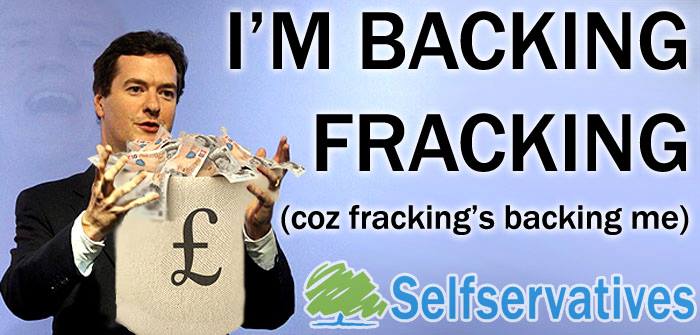
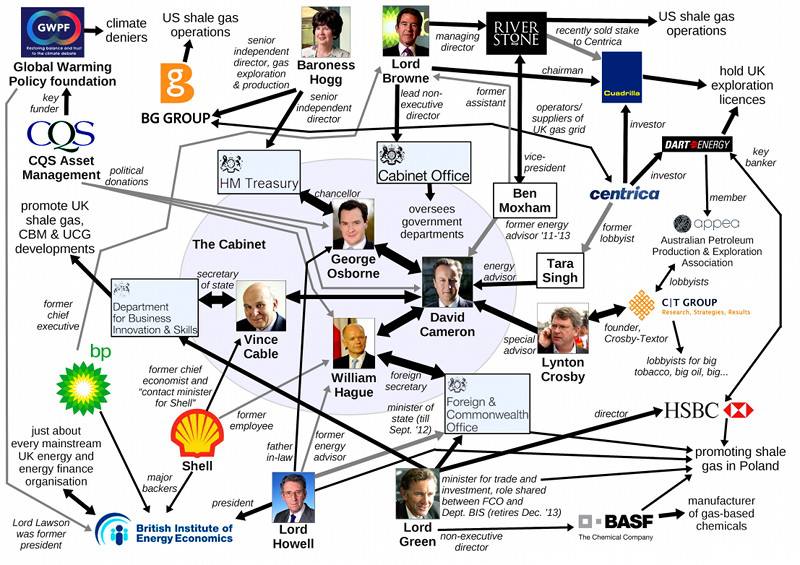
Labour recently successfully forced through these conditions as series of legislative amendments to constrain government plans to “fast-track” fracking. George Osborne, the chancellor, was demanding “rapid progress” from cabinet ministers, including delivering the “asks” of fracking company Cuadrilla.

As the Guardian reports: “Ministers were forced to accept Labour’s new environmental rules last week to avoid a rebellion by Conservative and LibDem backbench MPs, many of whom are facing opposition to fracking from constituents.”

Additionally: “Fracking is set to be banned on two-fifths of the land in England being offered for shale gas exploration by the government, according to a Guardian analysis.”

A moratorium, as proposed by the Green Party, would never have been successful at this stage, and Labour knew that. Had the moratorium actually scraped a successful yes vote, the Tories would most certainly not have abided by that, leaving them free without constraint to go ahead with their plans to fast-track the industry. Labour succeeded in binding them to agree on considerable restrictions, which will tie the Tories’ hands until well after the election, as well as excluding almost half of the Country’s potential shale gas sites from being potential drilling sites.

Such a wide-ranging ban is a significant blow to the UK’s fracking industry, which David Cameron and George Osborne have enthusiastically backed. The future of fracking now looks to be in the balance. Many analysts say the outlook for fracking is bleak.

The Guardian goes on to say: “An independent analysis by Greenpeace also found that 45 per cent of the 931 blocks being licensed for fracking in England were at least 50 per cent covered by protected areas, which it said was likely to make them unattractive to fracking companies.

“Just three per cent of the blocks have no protected areas at all, Greenpeace found.”

Louise Hutchins at Greenpeace UK added: “The shale industry’s seemingly irresistible advance is now looking more and more resistible every day, unless ministers can explain why fracking is too risky for the South Downs but perfectly safe in the Lancashire countryside, the next obvious step is to ban this controversial technique from the whole of the UK.”

There is always a populist option when it comes to doing politics. It’s rarely an effective approach, since it is based on superficial appeal only. Labour once again chose the rational, coherent and ultimately effective option, and with consistent foresight, they secured the best possible outcome.

945744_222576267893429_574558961_n


1016893_10151586093372831_133919409_nBig thanks to Robert Livingstone for the memes.


WORKING FOR PATIENTS OR NOT? – a guest post by Suzanne Kelsey

imgres


A guest post by Suzanne Kelsey, who is a key campaigner for the NHS, amongst other things.

In 1988, when Margaret Thatcher had been in office for some 9 years, and the very foundations of our NHS had been shaken with more of the public encouraged to use private medical care,  there were serious concerns about capacity in the hospital services as waiting lists increased and wards closed.  The Conservative government appointed a group of people, without consulting the health professions, to look at this growing problem.

As a result of this the NHS experienced the most significant cultural shift since its inception with a White Paper entitled, ‘Working for Patients, ’ which proposed what we now  know as the ‘Internal Market’ and the development of the purchase provider split. GPs become the purchaser and the hospitals are the providers. This passed into law as the NHS and Community Care Act 1990. Understandably there was a great deal of opposition from trade unions, Labour and the general public but it went ahead as did the Private Finance Initiative in 1992 implemented for the first time in the UK by the Conservative government of John Major.

There is no doubt that further major problems were created for our NHS, although I would question if on the same scale as we are currently witnessing with the threat of complete privatisation and the sell-off of our publically funded service to huge private international companies, who have been waiting in the wings for quite some time and would have been rubbing their hands in glee some years ago if Thatcher and the Conservatives had continued in office.

The definition of ‘privatisation’ also needs to be acknowledged because with the downgrading of facilities and existing provision struggling to meet demands, more and more people will become anxious and tempted to pay for their treatment even if it is to ensure they have a hospital bed!

We must never let this practice become the ‘norm.’ Campaigners must ensure that the ‘free at point of use’ core principle is upheld or we will be taken back to pre-war years, removing freedom from fear that was fought long and hard for by our champions of social justice. At the same time we must remember the mantra, ‘public health not private wealth’ with numerous examples available to us of how private companies will always put profits before patients, but more of that later.

When Tony Blair became Prime Minister in 1997 he inherited a very impoverished NHS and although we expected him to abolish the internal market this did not happen, perhaps for a variety of justifiable reasons. How do you replace crumbling hospitals and inadequate resources without massively raising taxes, whilst also limiting the upheaval that had already been caused?

Alan Milburn was Minister of State at the Department of Health during this time and he stated that after years of the Tory’s gross underfunding, there was absolutely no money to fund the infrastructure, hence the use of John Major’s PFI initiative. Labour therefore it would seem had little choice but to implement this because of the historic neglect of the NHS under the Conservatives that led to understaffing and an NHS unable to manage with the rising expectations of the population, coupled with the costly advances in modern medicine and technology.

A global recession, which was not Labour’s fault, further compounded the challenges of meeting the complex needs of the nation’s health care. Dennis Skinner MP for Bolsover Derbyshire, passionately summarised this in parliament in 2014 when he stated; ‘Between 1997 and 2010 Labour dragged the NHS from the depths of degradation that the Tories had left it in and hoisted it back to the pinnacles of achievement.’

I would like to pose some questions to those experts of marketisation and competition. My knowledge is very limited on the economic implications but I am learning, slowly but surely, through my long involvement with local and national campaigning, speaking to key people in politics and campaign groups, who are also passionate about our NHS. I become increasingly frustrated when people continually blame Labour for the introduction of privatisation  Yes Blair did carry on certain aspects of it which was a disappointment for many, including me, but perhaps my arguments surely go some way to addressing why this was.

  •  My first question is in the title of this article; ‘IS THIS WORKNG FOR PATIENTS OR NOT?’
  •  If Labour had made such massive inroads into privatisation surely there would have been no need for the Coalition’s unwieldy and costly three billion pound reforms, so huge they were just about visible from outer space and the truth is many of those who voted for it would not have time to read it fully. The bill was a long time in the writing and despite the pause because of massive opposition it was nevertheless hastily introduced by the Coalition, despite all the election promises, notably, ‘there will be no top down reorganisation of the NHS.’ They have as predicted caused unprecedented chaos and in fact a major crisis in our NHS, with exhausted frontline workers propping up a system, becoming totally stressed, angry and demoralised.

Many of the population are afraid of becoming ill, because of worrying inadequacies not only at primary and secondary health care levels but also in social care. The frail and elderly feel a burden as they are constantly labelled as ‘bed blockers,’ Thus long queues have been created to see your GP and at A+E, the gateway to the hospital, all of which can result in a lack of timely care. In contrast however Labour ensured patient satisfaction was at its highest with waiting times were at their lowest and the NHS during their time was lauded as one of the best, if not the best health service in the world.

  • Were the massive and unprecedented reforms therefore unnecessary and unjustified?
  • What are the implications for binding private contracts that have taken place across large swathes of the country if hopefully there is a change of government?
  • What lesson have been learnt from the withdrawal of Circle, the private company that took over Hitchingbrooke hospital, with claims of managers installed by these private operators creating a ‘blame culture?’ Allegedly Circle were willing to ensure local GPs incurred financial losses as long as it meant corporations continued to make a profit and the damning report about the quality of care in this hospital is shocking. CQC inspecting the hospital felt obliged to intervene when they became fearful of a sickening child and Professor Mike Richards the chief inspector of hospitals said that the findings were the worst it had ever published.
  • Clive Efford Labour MP for Eltham, South East London,   presented a private members bill to parliament in November 2014,which in order to avoid further top down reorganisation, focussed on the most damaging aspects of the Health and Social Care Act 2012, that gave powers to competition regulators to interfere in decisions of local health care commissioners. The most significant change is that the Secretary of State is once again accountable to you and me through parliament. If the bill is passed he can no longer avoid answering parliamentary questions by saying that it is down to local decision making and not his responsibility. Efford’s Bill also provides that neither EU competition rules nor EU procurement rules will apply. That is an important change from the present because, at the moment, a disappointed private provider can sue an NHS commissioner for damages for failing to put a service out to tender or running a tender process wrongly. My thanks to Clive Efford for that explanation and for securing a vote of 241 for the bill to 18 against.
  • How is this Bill progressing and how it is being supported by NHS campaign groups and health professionals.
  • If the Conservatives are allowed to waltz back in by a public who have been influenced by the hype and propaganda through a biased media and/or have become disengaged, disenchanted or disillusioned , or indeed confused by the outrageous claims of some minor parties who seem to be making it up as they go along, what do we do next!?

I hear talk of a revolution being the only answer from those extremists who are likely to be the least affected by one. Perhaps we would do well to remember that our NHS has just seen the biggest revolution since its inception in 1948. Unfortunately we have seen a glimpse into our future and the outcomes are dire, if we do not use our votes wisely.

Suzanne Kelsey 1stFebruary 2015

http://www.nhshistory.net/shorthistory.htm#_ednref15

http://www.nhs.uk/NHSEngland/thenhs/nhshistory/Pages/NHShistory1948.aspx

https://abetternhs.wordpress.com/2011/01/18/commissioning-and-the-purchaser-provider-split/

http://www.healthp.org/node/71

http://labourlist.org/2014/11/commons-pass-vote-on-clive-effords-nhs-bill/

http://www.telegraph.co.uk/news/politics/11333986/Damning-report-as-first-private-firm-to-run-NHS-hospital-pulls-out.html

Battle with GPs led to Circle’s retreat from Hinchingbrooke hospital,   The Guardian, January 9, 2015

Hinchingbrooke staff in CQC abuse concerns fear bosses BBC, September 29, 2014

http://www.independent.co.uk/news/uk/uks-healthcare-ranked-the-best-out-of-11-western-countries-with-us-coming-last-9542833.html