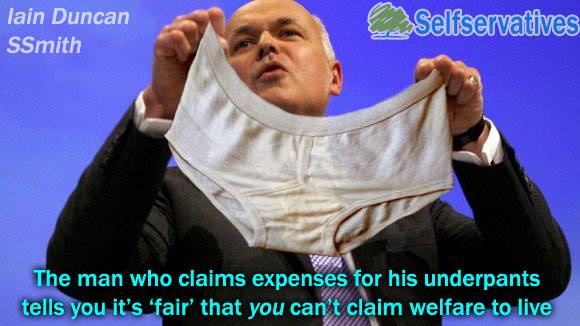
In March, MPs agreed a 2015-16 welfare cap of £119.5bn, which excluded the state pension and some unemployment benefits, such as Jobseeker’s Allowance (JSA) and Housing Benefit paid to JSA claimants, but it covers all other benefit expenditure. That also includes administration costs, staffing costs and so forth.
Social security benefits are by their very nature supposed to be needs-led, so if individuals meet the eligibility criteria for a benefit, and apply, then they will ordinarily receive that benefit. The welfare cap does not change this one bit. All it does, essentially, is require the Government either to justify where expenditure increases by more than forecast, or propose further welfare cuts to bring expenditure back into line. It will not turn social security into a cash-limited budget. The Conservatives use other ways to do that.
The cap was set in line with the Office for Budget Responsibility’s forecasts of benefit expenditure, with an additional “forecast margin” of two per cent added on. This means that the level of the cap will be £119.5 billion in 2015/16 with a forecast margin of £2.4 billion, rising to £126.7 billion by 2018/19 (with a forecast margin of £2.5bn).
So, there is a fundamental difference between a budget cap – as is the case here, and benefit cap, though people have tended to confuse the two. It became an issue when Labour decided to agree the Tory budget cap, and although it was for very good reason, some have made the claim that it was an indication of Labour’s consensus ad idem with regard to the Tory welfare “reforms”, when this very clearly is not the case.
And you do have to be suspicious of the probable intent lying somewhere behind that, especially when the BBC’s Tory correspondent Nick Robinson admitted yesterday, live on air, that Cameron’s best chance of winning the next election is if people believe politicians are “all the same”. That is very clearly not the case.
Lynton Crosby, who has declared that his role is to destroy the Labour Party, rather than promote the Conservatives, based on any notion of merit, is all about such a targeted “divide and rule” strategy. This is a right wing tactic of cultivating and manipulating apostasy amongst support for the opposition. It’s a very evident ploy in the media, too, with articles about Labour screaming headlines that don’t match content, and the Sun and Telegraph blatantly lying about Labour’s policy intentions regularly.
To clarify, the welfare cap does not actually limit funds for social security. It does, however, provide a mechanism for crucial Parliamentary debate to address the structural drivers of higher benefits spending. It may be used to demand Government accountability and to highlight the real reasons why benefits have risen: a massive recession, a cost of living crisis and repressed wages, an over-heating housing rental market, and the grossly inadequate support and opportunities for those out of work.
Rachel Reeves knew that it was unlikely that Iain Duncan Smith would manage to stay within the confines of the budget cap, not least because of his blatantly massive expenditure on programme failures such as the Universal Credit. However, Iain Duncan Smith has been systematically withholding information regarding the details, consequences and administration of his welfare “reforms”, and this makes effective challenge a little difficult.
However, Labour circumvented this by supporting the budget cap. This is entirely about creating opportunity for scrutinising how the budget is (mis)spent by the Government. And it’s very clear that despite the fact that the Tories set the terms of the cap, this is a debate that Labour will win strategically and rationally with ease.
Rachel Reeves said: “A Labour government would take a completely different approach, focusing on the things that drive increased social security spending – such as low pay, long-term unemployment and the inadequate supply of housing.
Labour would tackle low pay by strengthening the minimum wage and encouraging more employers to pay a living wage. We would get 200,000 homes a year built by 2020 to help bring down the cost of rents and tackle the housing crisis. And we would tackle the £330 million cost of long-term youth unemployment with a Compulsory Jobs Guarantee.
[Jobs for young people are to be created, using the banker’s bonus tax that Labour have already proposed].
Ministers are having to spend more because of the cost of their failing policies, waste and the cost-of-living crisis which has left working people an average of £1,600 a year worse off.
The levels of overspending and waste under this government are staggering. £1 billion has been spent on the government’s flagship Work Programme, but people who use the scheme are more likely to return to the Jobcentre than gain a job.
An astonishing £2.4 billion of taxpayers money has been overpaid in benefits by the government due to ‘official error’ since 2010. Long-term youth unemployment has doubled since 2010, costing £330 million a year. The housing benefit bill has risen since 2010, and figures in the Budget pointed to a further increase of £100 million in 2014-15, and £300 million in 2015-16. Universal Credit is now costing a staggering £161,000 per claimant according to figures released last week.
So, despite tough talking from ministers, the Budget well and truly confirmed their failure to control welfare costs.
A Labour government would take a completely different approach, focusing on the things that drive increased social security spending – such as low pay, long-term unemployment and the inadequate supply of housing”.
The Coalition is very close to breaching its self-imposed welfare cap as more people move off Jobseeker’s Allowance and onto sickness benefits, leaked government documents have revealed.
The internal memos which were seen and reported by the BBC suggest that Employment and Support Allowance (ESA) costs, intended for people who are unable to work because of sickness or disability, are rising with few cost-cutting options left available. The leaked documents say ESA is “one of the largest fiscal risks currently facing the government”, with the cost projected to rise by nearly £13bn between now and 2018-19.
Of course the biggest fiscal risk in reality is the billions in unpaid taxes, and the generous handouts to millionaires that the government have made over the last couple of years.
The documents’ authors suggest the main reason for the rising cost is an increasing number of people moving from JSA to ESA, partly because claimants are “less likely to face sanctions”.
It seems that sanctions are considered a major part of this Government’s welfare budget planning. It’s not as if we didn’t anticipate that the new Tory “conditionality” rules would serve to present opportunities for the government to remove benefits, rather than “supporting” jobseekers. Despite the persistent claims that no sanction targets exist, this government would struggle to deny convincingly that the current benefit rules don’t provide an incentive for the Department for Work and Pensions to sanction people.
A key aim of the government’s sickness benefit system is to “get people off welfare and into work”, but the documents reveal the severity of claimants’ illnesses and disabilities have been “underestimated”, and people are staying on the benefit “longer than expected”.
A range of cost-cutting options were offered in the documents, but the authors concluded that there appears to be “not much low-hanging fruit left”. One memo said: “This leaves us vulnerable to a breach [of the cap].”
Private firm Atos, which carries out health assessments for the government, has agreed to end its contract early, but the documents say the new contractor, due to be appointed in early 2015, is expected to cost roughly “three times as much” as Atos’s £100m annual deal. Private companies contracted to save money at the expense of people already facing significant hardship and disadvantage are costing the public purse billions more than they claim they will save, while stripping sick and disabled people of their lifeline support. The money paid to private providers like Atos, Maximus to “assess” the “work capability” of disabled people, and those delivering the various workfare schemes, comes out of the welfare budget too.
Ministers, who say welfare spending will come in under the cap, will have to give an explanation to Parliament if the limit is breached and ask MPs to approve additional spending. ·
Shadow work and pensions secretary Rachel Reeves, who anticipated this, said the work capability assessment was “in meltdown”, the Universal Credit was “chaos” and that people were being badly let down.
“It is a catalogue of total failure and threatens huge costs to the taxpayer,” she said.
“David Cameron must urgently get a grip of this chaotic department.”
Meanwhile, a report by MPs has branded the implementation of another benefit, Personal Independence Payments (PIP), a “fiasco”. PIP is replacing Disability Living Allowance, but the Commons Public Accounts Committee said the reform had been “rushed”, with some claims delayed by more than six months, causing unnecessary distress and severe hardship to thousands of people.
In February, it was revealed that Iain Duncan Smith’s welfare “reform” plan is costing £225,000 per person to implement, which prompted the Labour party to accuse the government of wasting money on a staggering scale. In the latest blow to the universal credit (UC) scheme, which has fallen behind schedule and will not be fully implemented until halfway through the next parliament, the figures show that £612m has been spent on introducing the new system since 2010.
Esther McVey disclosed how much had so far been spent on UC in a parliamentary reply to Rachel Reeves, the shadow work and pensions secretary. McVey said that the government had spent £612m of the £2bn earmarked in 2010 for implementing UC. The government spent £100m in 2011-12, £320m in 2012-13 and £192m in 2013-14.
Chris Bryant MP, the shadow welfare reform minister, said: “Iain Duncan Smith’s flagship policy has been plagued with delay after delay from the outset and millions of pounds have been wasted. We were once told universal credit would be on time and on budget and that a million people would be on the system by April this year, but this has come to nothing. It is staggering that the government has spent £225,000 per person on this project”.
Duncan Smith was heavily criticised by MPs over UC, which brings together six existing benefits, cutting them by stealth, when he appeared before the commons work and pensions select committee earlier this year. Labour MPs accused the work and pensions secretary of hiding failings in the IT system after he disclosed in his department’s annual report – the day after he gave evidence to the committee – that £41m had been written off.
The National Audit Office (NAO) challenged Duncan Smith’s claim that the IT failings had only cost £41m. It said that the DWP had been forced to write down £91m of software assets, three times more quickly than had been planned.
Now, the Government has admitted UC could cost taxpayers an additional £750 million after failing to decide how free school meals will work alongside the crisis-hit programme.
In response to a Parliamentary Question, Schools Minister David Laws said the additional cost of extending free school meals to all families in receipt of UC could reach £750 million a year. Under the current system, eligibility for free school meals is decided by certain benefits received by families such as income support.
However because UC is set to replace existing benefits, including in-work benefits, and will be claimed by families not currently in receipt of free school meals, the Government must decide on new eligibility criteria.
Since 2011, Labour has consistently asked questions on the issue but the Tory-led Government has still not decided what the Free School Meals criteria will be despite repeated assurances.
Until it reaches a decision it has said that all children in households receiving UC will automatically be eligible for free school meals – which could result in an extra £750 million of government spending.
Chris Bryant MP, Labour’s Shadow Minister for Welfare Reform, said:
“Ministers have ignored warnings about Universal Credit and free school meals for years.
“Now they have admitted the cost of their incompetence could reach £750 million.
“David Cameron must urgently get a grip of this latest Universal Credit fiasco with threatens to cost taxpayers millions of pounds.”
Dr Éoin Clarke at The Green Benches did an excellent piece of work which shows 16 ways that Iain Duncan Smith’s Department have wasted a total of £6,221,875,000.00 of taxpayers’ money.
Welfare Spending climbed £24bn this Parliament
(evidence from HM Treasury & Budget evidence)
- IDS’s spend on Private Consultants is up 59% this year (evidence)
- IDS’s spend on Temporary Staff is up 91% this year (evidence)
- £150million+ of taxpayers’ money wasted contesting successful appeals against unfair WCA assessments (evidence)
- The DWP have written off £140million in overpaid Housing Benefit paid in error since October 2010 (evidence)
- £241m of taxpayers’ money is set to be wasted in IT overspend for the Universal Credit Project (evidence)
- £90m of taxpayers’ money is wasted on IT equipment that won’t work in 2 years (evidence)
- £60m of taxpayers’ money paid to a Private Firm to carry out WCA assessments that they botched (evidence)
- £1.2bn wasted on over-payments at the DWP due to Fraud and Error for 3 years running (2010-11) (2011-12) (2012-13)
- £194m wasted on the Tory Back to Work Scheme for Troubled Families that helped just 3% of the families’ targeted (evidence)
- £2.25bn spent on a Work Programme that was only 10% successful wasting £2bn (evidence, evidence & evidence)
- £457m Youth Contract Scheme has achieved a 95% failure rate, wasting £434m (evidence)
- 40,000 Bedroom Tax victims are exempt due to a loophole that will cost taxpayers’ £29m (evidence)
- DHP increased to cover the mess of the Bedroom Tax costing taxpayers’ £150m (evidence)
- Impact study of Bedroom Tax arrears suggests £260m could be lost this year (evidence)
- IDS wasted £75,000 of taxpayers’ cash on a Bedroom Tax poll (evidence)
- Shares For Rights Scheme opens up a £1bn tax loophole (evidence)
Seems that Mr Duncan Smith, who may breach his own self-imposed welfare spending cap, is better at managing a “fudge it” than a budget.
The Department for Work and Pensions (DWP) has continually aimed to block publication of reports that would reveal the utter failure of the UC programme, despite a series of rulings insisting they should be released. A ruling by tribunal in March on information release provided us with glimpse into exactly how secretive the DWP is and the lengths that ministers will go to prevent the public (and the Opposition) seeing how catastrophic the UC project has become.
The ruling upheld a decision by the information commissioner to overrule the DWP on whether it would have to release some of the documents raising concerns about the UC programme.
What’s particularly telling about the tribunal report are the details of how even harmless information which would have struggled to get any press attention was aggressively kept secret by the DWP.
The DWP insisted publication would have a “chilling effect” on the working of the department – a standard defence against disclosure last used by Andrew Lansley to prevent publication of the risk register regarding his disastrous NHS “reforms”. The information tribunal ruled there was no evidence of that, but that there was “strong public interest” in publication.
Iain Duncan Smith appealed the decision. And lost. But the fact that he fought, spending tax payers money, to keep details of the programme secret, and that he has vetoed the publication of a damning internal assessment of UC in the first place is an affront to democracy, notions of transparency, accountable government and ministerial responsibility.
Despite the fact that information has been purposefully withheld by the government, the Labour Party has called for a “hard-headed” review of the coalition government’s supposedly flagship welfare reform, Universal Credit, also following the publication of an independent report on 23 June 2014. The very damning report highlights that Universal Credit will never be delivered successfully across the country without leaving the new system open to “fraud and error”.
The Universal Credit Rescue Committee was asked by Labour to explore ways of rescuing the government’s “mismanagement” in delivering the Universal Credit system and to assess whether the new benefit “is delivering value for money”.
The independent report also highlights a lack of transparency and accountability on the part of the government: “Delays and waste have plagued Universal Credit since its inception, a culture of secrecy and ‘good news reporting’ within the Department for Work and Pensions” has “hampered effective scrutiny of the project”.
Labour’s shadow secretary of State for Work and Pensions, Rachel Reeves, said:
“Universal Credit is in crisis. Mismanagement by incompetent ministers has wasted millions of pounds of taxpayer’s money and caused huge delays to this £12.8 billion programme.
“A Labour government will conduct an urgent review of waste, mismanagement and whether Universal Credit is delivering value for money. And we’ll call in the National Audit Office to make sure the review’s conclusions are robust.
The committee slammed the government for “repeated refusals to provide detailed information” which “makes it almost impossible to assess the current state of the project”.
According to the comprehensive report, the introduction of Universal Credit risks damaging work incentives and that crucially, council tax support should not have been left out of the new system. Universal Credit also poses a “significant risks for many women” who are often the main carer of a child, because the new system only allows for payments to be made to “one member of a couple”.
Rachel Reeves said:
“Labour’s review will lead to hard-headed decisions about whether Universal Credit can be rescued.
“If Universal Credit goes ahead we will make major changes to help families and businesses by cutting red tape for the self-employed and making payments of benefits for children to the person who is caring for them, not just the main earner. These changes that will be funded from within the existing budget”.
Iain Duncan Smith justified his entire welfare “reform” programme on falsified statistical “evidence” and particularly vicious scapegoating propaganda campaigns in the media aimed at vilifying the most vulnerable citizens in an attempt to justify cutting their lifeline support. He has failed spectacularly even at a basic level, if we take him on his own terms, Iain Duncan Smith’s claimed intent of “money saving on behalf of taxpayers” doesn’t stand up to scrutiny. But we must not forget that this minister is also responsible for the suffering and premature deaths of thousands.
This despicable, deceitful, lying and sadistic authoritarian minister, however, is merely one of many Tories that are quite clearly intending to fully dismantle all welfare support by stealth, and we need to keep that in mind. And this account reflects one battle in a much bigger, ongoing Tory-led war on the poorest and most vulnerable citizens of the UK.
This is an authoritarian government, it bypasses democratic process and operates in secrecy. Without crucial information about policy detail, impact assessment and implementation and administrative accounts, it becomes very difficult for any opposition, and to mount successful challenges to a government that propose consultations, equality impact assessments, audits, judiciary review are all simply “inconveniences” that are (and I quote Cameron): “… not how you get things done. ”
Ask yourself what kind of things this government “wants to get done” bearing in mind that every single policy that this government has formulated from its ideological compendium has been about handing out our money to private companies (and Tory donors) that are clearly unfit for purpose, whilst taking money away from the poorest – those already at the hand-to-mouth end of the economy – reducing the lives and experiences of the most vulnerable citizens, rather than enhancing those lives in any way.
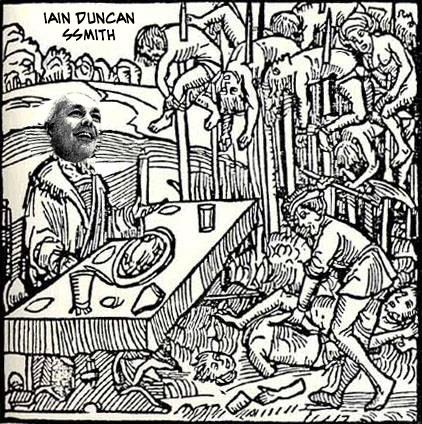
Pictures courtesy of Robert Livingstone





 Politics and Insights