Category: Welfare “reforms”

It’s absolute poverty, not “market competition” that has led to a drop in food sales.

1450041_569755536427312_1698223275_n
Public spending in food stores fell for the first time on record in July this year, putting the UK recovery in doubt. Such a worrying, unprecedented record fall in food sales indicates that many consumers evidently have yet to feel the benefit of the so-called recovery.

The price of food was 0.2% higher than a year ago. The Office for National Statistics (ONS) started collecting the data for food sales in 1989The volume of food sales was also down last month, by 1.5% on an annualised basis.

There was also a marked fall in petrol consumption, and the only prominent area of growth was in spending that entailed use of mail order catalogues, and at market stalls, as people use credit to buy essential items and shop around for cheap alternatives and bargains.

Food manufacturing is the UK’s single largest manufacturing sector. The food and drink supply chain is a major part of the UK economy, accounting for 7% of GDP, employing over 3.7 million people, and generating at least £80 billion per year,  according to data from the Cabinet Office. There was an increase in the food sector (excluding agriculture) from 2000-2009 in Britain; the whole UK economy increased by 47% during the same period.

The Office for National Statistics has put the recent decline down to “prolonged discounting and price wars”.

However, crucially, the quantity of food bought in food stores also decreased by 1.5 per cent year-on-year in July.

It doesn’t take a genius to work out that repressed, stagnant wages and RISING living costs are going to result in reduced sale volumes. Survation’s research in March this year indicates that only four out of every ten of UK workers believe that the country’s economy is recovering. But we know that the bulk of the Tory austerity cuts were aimed at those least able to afford any cut to their income.

What we need to ask is why none of the mainstream media articles, or the ONS account, duly reporting the drop in food sales, have bothered to link this with the substantial increase in reported cases of malnutrition and related illnesses across the UK. It’s not as if this correlation is a particularly large inferential leap, after all.

It stands to reason that if people cannot afford food, they won’t be able to buy it. Furthermore, that consumers were not actually considered as a part of the ONS and media assessment is frankly strange, to say the least, with emphasis being placed solely on deterministic market competition criteria, and hardly a skim over any analysis of the social-political conditions that have undoubtedly contributed to the significant drop in food sales.

Food banks provide food aid to people in acute need, usually following referral by health or social care professionals, such as social workers, doctors, health visitors, and organisations such as the Citizens Advice Bureau and Jobcentre Plus. The Department for Work and Pensions has acknowledged that there is internal guidance to staff on signposting to food banks and a recent Freedom of Information request reported in The Guardian, revealed a “high level process” to be observed by jobcentre staff for referring claimants who say that they are suffering hardship and need food.

The role of Jobcentre Plus in referring people to food banks was described by Mark Hoban, Minister of State for Employment at the Department for Work and Pensions (DWP) as follows in December 2012: “The DWP, through Jobcentre Plus, operates a foodbank referral service. This is a simple signposting process which builds on the Jobcentre Plus standard practice of holding, locally, the details of organisations to which we signpost claimants who tell us they are in financial difficulty. Jobcentre Plus will only signpost claimants when they can offer no more help.”

Jobcentre Plus have been “signposting” people to food banks nationally since September 2011. Circumstances where a Jobcentre might make a referral to a food bank include:

  •  where a Crisis Loan or Short Term Benefit Advance had been refused;
  •  where a change in circumstances had affected a person’s entitlement to benefit, or reduced the amount they receive;
  •  where payment of benefit had been delayed (e.g. because a claim was still being
    assessed, or DWP was awaiting information to enable a decision on a claim).

The original version of the Jobcentre Plus referral form included boxes to tick to indicate the reason for the referral. However, the report in the Guardian on 6 September 2013 highlighted that the DWP had suddenly “unilaterally redesigned the food bank vouchers it issues to clients” – the three boxes on the previous form which had enabled JobCentre Plus “to indicate why they referred the person: because of benefit delay, benefit change, or refusal of crisis loan … have been removed from the new version of the form. The vouchers no longer tell the [Trussell] trust why the person has been referred”.

As Patrick Butler astutely observed, this has the effect of removing data that helps highlight why impoverishment caused by welfare “reform” has become one of the biggest single drivers of people turning to food banks. The Government needs political cover for lying ministers such as Freud and McVey, who like to pretend food banks have nothing to do with austerity and welfare reform; but the DWP sends its impoverished customers in droves to them anyway.

Research by the Joseph Rowntree Foundation and others indicates quite clearly that:

  • Some of the increase in the number of people using food banks is
    caused by unemployment, increasing levels of underemployment,
    low and falling income, and rising food and fuel prices. The
    National Minimum Wage and benefits levels need to rise in line
    with inflation, in order to ensure that families retain the ability to
    live with dignity and can afford to feed and clothe themselves and
    stay warm.
  • More alarmingly, up to half of all people turning to food banks
    are doing so as a direct result of having benefit payments delayed,
    reduced, or withdrawn altogether. Figures gathered by the Trussell
    Trust show that changes to the benefit system are the most common reasons for people using food banks;these include changes to crisis loan eligibility rules, delays in payments, Jobseeker’s Allowance ,sanctions and sickness benefit
    reassessments.
  • There is very clear evidence that the benefit sanctions regime is leading to destitution, hardship and hunger on a large scale.

Furthermore, in November last year, in a letter to the British Medical Journal, a group of doctors and senior academics from the Medical Research Council and two leading universities said that the effect of Government austerity policies on vulnerable people’s ability to afford food needed to be “urgently” monitored.

There was a significant surge in the number of people requiring emergency food aid, a decrease in the amount of calories consumed by British families, and a doubling of the number of malnutrition cases seen at English hospitals, which represents “all the signs of a public health emergency that could go unrecognised until it is too late to take preventative action,” they wrote.

Despite mounting evidence for a growing food poverty crisis in the UK, Tory ministers continue to maintain the lie that there is “no robust evidence” of a link between their sweeping welfare “reforms” and a rise in the use of food banks. However, publication of research into the phenomenon, commissioned by the Government itself, was delayed, amid speculation that the findings may prove embarrassing for the Government.

“Because the Government delayed the publication of research it commissioned into the rise of emergency food aid in the UK, we can only speculate that the cause is related to the rising cost of living and increasingly austere welfare reforms,” the public health experts wrote. It is very evident that the welfare state is “failing to provide a robust last line of defence against hunger.”

The authors of the letter, who include Dr David Taylor-Robinson and Professor Margaret Whitehead of Liverpool University’s Department of Public Health, say that malnutrition can have a devastating, long-lasting impact on health, particularly amongst children.

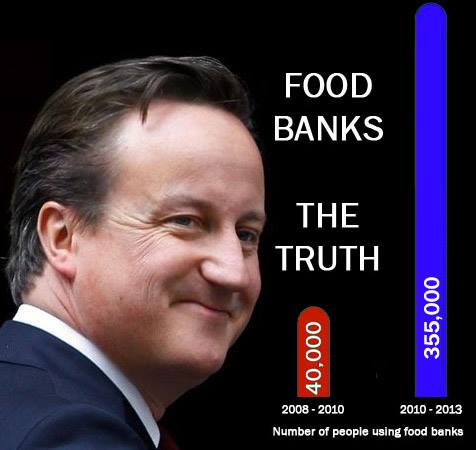
Chris Mould, chief executive of the Trussell Trust, the largest national food bank provider, said that one in three of the 350,000 people who required food bank  support at the Trussell Trust centres alone this year were children. It is estimated that by 2013, at least 500,000 people were reliant on food aid.

Access to adequate food is the most basic of human needs and rights. The right to food is protected under international human rights and humanitarian law and the correlative state obligations are equally well-established under international law. This right is recognised in the 1948 Universal Declaration of Human Rights (Article 25) as part of the right to an adequate standard of living, and is enshrined in the 1966 International Covenant on Economic, Social and Cultural Rights (Article 11).

Olivier De Schutter (a United Nations Special Rapporteur on the Right to Food) recently pointed to increases in the number of food banks in developed countries  such as the UK as an indicator that Governments are “in danger of failing in their duty to protect citizens under the International Covenant on Economic, Social and Cultural Rights” (IESCR), which states that all citizens should have access to adequate diet without having to compromise other basic needs.

Whilst the Department for Work and Pensions (DWP) claims that the benefits system provides a “safety net for essentials such as food”, the evidence increasingly does not support this claim. In fact, there is substantial and ever-mounting evidence that the inadequacies of the welfare safety net are now directly driving the growth of hunger and reliance on charitable food handouts.

The BBC reported the “‘Shocking increase’ in Employment Support Allowance (ESA) sickness benefit sanctions” on August 13th, within the first three months of 2014, there were 15,955 sanctions on ESA claimants, compared with 3,574 in the same period last year. I reported about the impact of sanctions in February, 2014, and I reported the substantial increase in ESA sanctions May 2014, along with the Benefits and Work site, amongst other “non-mainstream” writers. It’s incredible that the BBC, with relatively vast resources to hand hasn’t bothered researching and reporting this issue until now.

Perhaps this explains the BBC’s endorsement of the Government welfare “reforms” and their complicity with the persecution of sick and disabled people: James Purnell – one  of the chief architects of the current government’s “reforms”  (Gordon Brown had previously rebuffed Purnell’s proposals, and Purnell resigned as a consequence), is the BBC’s Director of Strategy & Digital which “brings together Communications, Future Media, Marketing, Policy, Research and Development and Strategy”. So, Mr Purnell is on the Executive Board, which, I am sure, contributes to the BBC’s current degree of “impartiality”, especially evident in attempts to defer delivery of politically damning news, or in their other quest to purposefully deliver politically motivated factual detours.

There is currently no established government measure of food poverty. A recent report by the Centre for Economics and Business Research defined households who have to spend more than 10% of their annual income on food as being in food poverty.

The Food Ethics Council states that food poverty means that an individual or household isn’t able to obtain healthy, nutritious food – they have to eat what they can afford or find, not what they choose to.

If people can’t meet basic survival needs, then that is defined as absolute poverty. We haven’t seen absolute poverty in the UK since before the inception of the welfare state. Until  now.

“Food banks open across the country, teachers report children coming to school hungry; advice services and local authorities prepare for the risks attached to welfare reform. There is evidence of a rising number of people sleeping rough, and destitution is reported with increasing frequency.” Julia Unwin, Joseph Rowntree Foundation, 2013.

“In households which cannot afford an adequate diet for their children, 93% have at least one adult who “skimps” on their own food to try to protect the children. Half a million children are not adequately fed in the UK today, not as a result of negligence but due to a lack of money.” Poverty and Social Exclusion UK. 2013.

We know that the imposed limitations on welfare processes and procedures have been found to be impacting on the growing demand for food banks. Decision-making around sanctions has been found to be particularly problematic from the perspective of food banks, where decisions were seen as unfair and/or arbitrary. Similarly, errors made in declaring people on Employment Support Allowance fit for work were also highlighted, by research undertaken by the Sheffield University Political Economy Research Institute.

More generally, “ineffective administration” of lifeline welfare payments is also seen to be an important driver of need, where people’s payments are delayed or stopped and they are left with no or heavily reduced income. Tory policy changes to the length of time sanctions run for (from 2 weeks to 3 years) is “significantly problematic”, given the  enormous implications for financial insecurity. And resultant absolute poverty.

Basic incomes are being reduced, making it much more difficult for people to make ends meet. In addition, “reforms” – which is the Orwellian Tory word for severe cuts – impacting on food poverty include the cap to benefit payments, the Bedroom Tax, and the loss of full Council Tax exemption for many benefit claimants.

No-one should be hungry, without food in this Country. That there are people living in a politically imposed state of absolute poverty is unacceptable in the UK, the world’s sixth largest economy (and the third largest in Europe). This was once a civilised first-world country that cared for and supported vulnerable citizens. After all, we have paid for our own welfare provision, and we did so in the recognition that absolutely anyone can lose their job, become ill or have an accident that results in disability. This is a Government that very clearly does not reflect the needs of the majority of citizens.

It is also unacceptable in a so-called liberal democracy that we have a Government that has persistently denied the terrible consequences of their own policies, despite  overwhelming evidence that the welfare “reforms” are causing people, harm, distress and sometimes, death. Furthermore, this is a Government that has systematically employed methods to effectively hide the evidence of the harm caused to others as a consequence of their devastating, draconian “reforms” from the public. This clearly demonstrates an intention to deceive, and an intention to continue causing people harm.

In English criminal law, intention is one of the types of mens rea (Latin for “guilty mind”) that, when accompanied by an actus reus (“guilty act”), constitutes a crime. It’s difficult to envisage that anyone in the UK would fail to understand that any act that prevents people from accessing food, and the means of meeting other basic survival needs, such as shelter, will cause them harm.

This is a Government that knows exactly what it is doing.

1459720_569627496440116_902730897_n
Many thanks to Robert Livingstone for his excellent artwork

A distillation of thoughts on Tory policies aimed at marginalised groups

14533697838_dffcc736f2_o (1)
Government policies are expressed political intentions, regarding how our society is organised and governed. They have calculated socio-economic aims and consequences. None of the policies that this government have formulated regarding the “support and care” of some of the most vulnerable citizens, for example, could be seen as anything other than expressions of intended harm.

Unintended consequences may arise from implementing policies, however, governments usually evaluate the merit, worth and consequences of policies, using criteria governed by a set of standards for evaluating, after implementation, and before implementation by carrying out a cumulative impact assessment. There has been neither a review nor a cumulative assessment of the welfare “reforms” carried out by the government to date. (The Social Security Advisory Committee (SSAC) submitted a report with several recommendations for a cumulative impact assessment of welfare reform, which were recently rejected by Lord Freud, in a letter, on behalf of the government). 

Equality impact assessments, introduced in Labour’s 2010 Equality Act, involve assessing “the likely or actual effects of policies or services on people in respect of disability, gender and racial equality”. They are essential to improving fairness and in ensuring policies aren’t discriminatory. But the prime minister said there was too much “bureaucratic nonsense” and policy-makers should use “judgement” rather than “tick boxes”.

On the 19th of November 2012, the prime minister announced that equality impact assessments would no longer be undertaken for government decisions. That is extremely worrying, as this law was designed to prevent discrimination against people who are categorised as being disadvantaged or vulnerable within society. Removing this legal requirement also serves to hide the evidence of discrimination.

Services and support for the disabled people have been cut, lifeline benefits have been restricted by a variety of means, such as benefit cuts (not “reforms”), the revolving door process application of the work capability assessment, benefit sanctions, the mandatory reconsideration process, the Bedroom Tax, the Council Tax, and severe cuts to council support and care provisions. People are suffering, as a direct consequence of policies since 2010, some have died. These are policies that are blatantly discriminatory. The implications of the “reforms” really are a matter of life and death for many.

Disability-related harassment and hate crime has increased in Britain, the result of an implicit campaign by both the Conservatives and its media allies to discredit all disabled benefit claimants. This represents one element of a renewed campaign to label some people as a “burden” to society, a view that has gained renewed currency this past four years. Such ideas leave those groups particularly vulnerable to further socio-political abuse

The government are using the pretext of the economic crisis (that began with the Global Financial Crisis of 2008) and has now been extended through austerity measures to initiate a new war of attrition against disabled people, unemployed people and other disadvantaged communities.

Eugenic theories are most commonly associated with Nazi Germany’s racially motivated social policies. The Nazis sought the improvement of the Aryan race or Germanic “Ubermenschen“- master race – through eugenics, which was the foundation of Nazi ideology. Those people targeted by the Nazis were identified as “life unworthy of Life“- “Lebensunwertes Leben” – including but not limited to the “idle”, “insane”, “degenerate”, “dissident”, “feeble-minded”, homosexual and the generally weak, for elimination from the chain of heredity.

More than 400,000 people were sterilised against their will, whilst 275,000 were killed under Action T4, a “euthanasia” program. However, there is quite a broad definition of eugenics and I propose that because it has been so thoroughly discredited, it has been forced to “go incognito” over the last century.

The public support for eugenics greatly waned after the fall of Nazi Germany and the Nazi attempt to use eugenic justifications for the Holocaust at the Nuremberg Trials. Right-wing philosopher, Roger Scruton, said in an article in The American Spectator “The once respectable subject of eugenics was so discredited by Nazism that “don’t enter” is now written across its door” implying he would like to see more openness to eugenics as an idea. In a way, he does make a valid point, because when what was once stated explicitly becomes implicit and tacit, it is difficult to challenge, and essential debate is therefore stifled.

Eugenics is the infamous idea that governments should decide which kinds of citizens ought to be considered desirable  – the consensus tends to be that these are  white, athletic, intelligent, and wealthy – and which kinds of citizens ought to be considered undesirable – these tended to be black, Jewish, disabled, or poor –  and employ the power of the State to encourage increases of desirable citizens (positive eugenics) and encourage decreases of undesirable citizens (negative eugenics).

Eugenics is specifically State interference in and engineering of the “survival of the fittest”. That is happening here in the UK, with Tory policies like the extremely punitive welfare “reforms”, which are aimed at the most vulnerable citizens – such as those who are sick and/or disabled – all too often denying them the means to meet basic survival needs.

Prior to the Holocaust, eugenics was widely accepted in the UK, particularly as it fitted well with the dominant paradigm – comprised of laissez faire economics, competitive individualism, Malthus’s ideas on population control and Spencer’s Social Darwinism. The ruling elite feared that offering medical treatment and social services to disabled people would undermine the natural struggle for existence and lead to the degeneration of the human race. Those ideas, once explicitly endorsed are now implicitly captured in policies and Conservative narratives about sanctions, “conditionality,”  “making work pay,” (compare with the principle of less eligibility enshrined in the New Poor Law) “fairness,” “incentives,” “scroungers,” and so forth.

A crucial similarity with the early part of the century and now is reflected in Tory austerity rhetoric – a perceived shortage of resources for health and welfare. Another parallel is the scape-goating process and a rise in the level of social prejudices and discrimination.

Anti-immigration rhetoric, reflected in the media, with the vilification of sick and disabled people and the poor, has preceded policies particularly aimed at the steady removal of State support indicating a clear scape-goating process, and this isn’t indicative of a government that is “neglectful”- it is patently intentional, hence the pre-emptive “justification” narratives to garner public support and acceptance towards such punitive and harsh policies.

So, the first purpose of such justification narratives is to make cruel and amoral policies seem acceptable. However, such propaganda narratives also serve to intimidate the targeted minority, leading them to question whether their dignity and social status is secure.

Furthermore, this type of hate speech is a gateway to harassment and violence. (See Allport’s scale of prejudice, which shows clearly how the Nazis used this type of propaganda and narrative to justify prejudice, discrimination, to incite hatred and ultimately, to incite genocide.)

As Allport’s scale indicates, hate speech and incitement to genocide start from often subtle expressions of prejudice. The dignity, worth and equality of every individual is the axiom of international human rights. International law condemns statements which deny the equality of all human beings. Article 20(2) of the ICCPR requires states to prohibit hate speech.

Hate speech is prohibited by international and national laws, not because it is offensive, but rather, because it amounts to the intentional degradation and repression of groups that have been historically oppressed. In the UK, we have a government that endorses the repression of the historically oppressed.

This government’s schadenfreude, the intent and motivation behind the draconian policies that we’ve seen this past 4 years, which target the most vulnerable citizens most of all, is debated. Some people believe that the policies are a consequence of a redistribution of wealth from the poorest to the wealthy rather than being malicious acts. But the Tories laughed on hearing the accounts of suffering of the poor because of the bedroom tax and the food bank, for all to see, during parliamentary debate with the opposition.

But entertaining the idea for a moment that the inflicted suffering is not a motivation but, rather, a consequence, well that would make the Government at the very least indifferent, callous, indifferent and unremorseful, since they show a supreme lack of concern for the plight of those least able to defend themselves against injustice and inflicted poverty. And such indifference contravenes fundamental human rights. It violates international laws.

Either way, I feel shock and anger at the recognition that all of those principles and beliefs we held dear – such as justice, fairness, democracy, freedom, Government accountability, equality (at least in terms of the worth of each life), institutionalised philanthropy – all trodden under foot by advocates of Social Darwinism- an aristocratic elite – in just 4 years. And the faith we each had in those collective ideals undermined by the constant perpetuation of socially divisive propaganda tactics from the right. Dividing people by using blame and prejudice further weakens our opposition to oppression.

Where is the investigation into the very high number of deaths associated with the Tory-led welfare reforms? The government have been made aware of those deaths through parliamentary debate, yet they persist in denying any causal link with the  significant increase of vulnerable people dying, and their savage cuts to lifeline benefits. If there is no causal link, an inquiry would demonstrate that, surely?

It’s a universally recognised fact that if people are prevented from meeting their basic survival needs, they will die. Benefit sanctions, and cuts to welfare and public services, the rising cost of living and the depression of wages are having a detrimental effect on many. I don’t imagine that it’s the case that everyone but the government are aware of this. Yet the policies remain.

Deciding who should be allocated resources and who should not is also founded on Social Darwinist and eugenic thinking. 

The Coalition will leave more debt than all Labour governments since 1900. The current government’s now responsible for £517 billion of the trillion-plus-pound UK public debt, compared to £472 billion accrued during the 33 years Labour led the country since the turn of the twentieth century. And the figures look even worse when you adjust for inflation. When you do that, the Coalition’s share jumps to nearly half of the total debt.

But the Coalition don’t meet any public’s needs, they simply serve the wants of the 1%. Labour invested in public services, the Tories have bled them dry. So, what have they done with the money? Because the a proportion of the public have seen only austerity cuts. The same groups have witnessed and experienced a narrowly targeted austerity programme, where multiple cuts to funding for their essential support have selectively hit over and over. These policies are intentional.

Withholding State support for disabled people, unemployed people and the poorest citizens – support paid for via our taxes – is a deliberate act. Whilst our government have been busy denying the eugenics-by-stealth consequences of their diabolical policies in this Country, back in 2012, the Guardian exposed the fact that the British government has spent millions of pounds funding a policy of forced sterilisation of the poor in India as part of an effort to reduce human population to “help combat climate change”. But we also know that many Tories deny climate change exists.

The governments of China and India practice hard eugenics, underwritten by American and British tax money, these are coercive measures undertaken by governments  to decrease citizen population. The exposure of support for hard eugenics prompted denial and backtracking.  United Nations Population Fund (UNFPA) claims to support “voluntary family planning” in China. They assume that women are aware that conceiving a  second child will result in a forced abortion are free to make  choices – thus the forced abortion is a State arrangement entered into “voluntarily.”

Hard eugenics is the ideology that is hiding behind Hitler. But soft eugenics  is based on the same pathological belief – that a government should spend its resources to prevent the propagation of those whom the government believes to be  “detrimental” to society and economic production. Here in the UK, our government has been quite explicit in its drive to end “the something for nothing culture”.

Our taxes have been handed out to the wealthy and State support has been steadily withdrawn from the vulnerable. Government policies are an explicit statement of political and socio-economic intentions. Policies based on Social Darwinism and eugenics cannot be justified.

Our morality is liberated from the biological, reductionist constraints of evolutionary thinking. We relate to one another through culture, shared histories, language, morality, and law. Even if it were true that we are biologically determined – fixed by evolution, as intentional beings, we are not culturally fixed. There is a difference between what we are, and who we ought to be.

The theories of Social Darwinism, eugenics, and sociobiology involve biological reductionism. A recognition of the importance of biological conditions and even “human nature” need and ought not involve biological reductionism. And to embrace reductionism is to ultimately deny our capacity for making rational choices. But we exceed the limits of reductionism and determinism every time we make any claim to knowledge (including those claims of reductionism and determinism), make a choice, discuss ethics and morals, explore possibilities, create, discover, invent – we are greater than the sum of our parts.

The humanist ideas of human potential have never interested the Tories. However, humanist principles, particularly those of Maslow are  very closely connected to our human rights and the development of our welfare state. Maslow’s  psychology about possibility, not restraints. His metaphysics were all about the possibilities of change and progress, within a democratic framework. These ideas run counter to Tory ideology.

It’s therefore of no surprise that the Tory-led Coalition has steadily eroded our welfare, and Cameron has stated plainly that he fully intends to repeal the Human Rights Act and withdraw from the European Convention on Human Rights. A central tenet of human rights law is that all humans have equal worth. We know that Conservatives such as Cameron don’t hold that view. This is a government that chooses to treat some of our most our most vulnerable citizens brutally, with absolutely no regard for their legal and moral obligation to ensure that our taxes are used to meet our most basic needs.

There can be no justification for editing or repealing the Human Rights Act itself, that would make Britain the first European country to regress in the level and degree of our human rights protection. It is through times of recession and times of affluence alike that our rights ought to be the foundation of our society, upon which the Magna Carta, the Equality Act and the Human Rights Act were built – protecting the vulnerable from the powerful and ensuring those who govern are accountable to the rule of law, and as an instrument of equality, social cohesion and public purpose. It is expected of a democratic government to improve the understanding and application of the Act. That is an international expectation, also. Quite rightly so.

Observation of human rights distinguishes democratic leaders from dictators and despots. Human Rights are the bedrock of our democracy, they are universal, and are a reflection of a society’s and a governments’ recognition of the equal worth of every citizens’ life. We need to ask, in light of the issues I’ve raised here, why would any government want to opt out of such protections for its citizens? We know from history that a society which isn’t founded on the basic principles of equality, decency, dignity and mutual respect is untenable and unthinkable. scroll2 Article 2 of the Convention on Human Rights uses the following definitions of genocide, amongst others:

  • Killing members of the group
  • Causing serious bodily or mental harm to members of the group.
  •  Deliberately inflicting on the group conditions of life calculated to bring about its physical destruction in whole or in part
  • Imposing measures intended to prevent births within the group
  •  Forcibly transferring children of the group to another group

The right to life contained in Article 2:

  • Prohibits the State from intentionally killing;
  • and  requires an effective and proper investigation into all deaths caused by the State.

scroll2 This is a brief summary taken from a longer piece of work: Eugenics is hiding behind Hitler, and informs Tory policies.

Manly P Hall

Many thanks to Robert Livingstone for his brilliant works of art

Welfare reforms, food banks, malnutrition and the return of Victorian diseases are not coincidental, Mr Cameron

1390648_548165358586330_1740107407_n
The coalition will leave more debt than all Labour governments since 1900. The current government is now responsible for £517 billion of the trillion-plus-pound UK public debt, compared to £472 billion accrued during the 33 years Labour led the country since the turn of the twentieth century.

And the figures look even worse when you adjust for inflation. When you do that, the Coalition’s share jumps to nearly half of the total debt.

But the Coalition don’t meet any public needs, they simply serve the wants of a powerful, wealthy elite. Labour invested in public services, the Tories have bled them dry. So, what have they done with the money? Because the public have seen only austerity cuts. And the most vulnerable citizens bear the brunt of the cuts.

Oxfam’s director of campaigns and policy, Ben Phillips, said: “Britain is becoming a deeply divided nation, with a wealthy elite who are seeing their incomes spiral up, while millions of families are struggling to make ends meet.”

“It’s deeply worrying that these extreme levels of wealth inequality exist in Britain today, where just a handful of people have more money than millions struggling to survive on the breadline.”

Diseases associated with malnutrition, which were very common in the Victorian era in the UK, became rare with the advent of our welfare state and universal healthcare, but they are now making a reappearance because of the rise of numbers of people living in absolute poverty.

NHS statistics indicate that the number of cases of gout and scarlet fever have almost doubled within five years, with a rise in other illnesses such as scurvy, cholera, whooping cough and general malnutrition. People are more susceptible to infectious illness if they are under-nourished.

In 2013/14, more than 86,000 hospital admissions involved patients who were diagnosed with gout – an increase of 78 per cent in five years, and of 16 per cent on the year before. Causes of gout include a lack of vitamin C in the diet of people who are susceptible.

The figures from the Health and Social Care Information Centre (HSCIC) show a 71 per cent increase in hospital admissions among patients suffering from malnutrition – from 3,900 admissions in 2009-10 to 6,690 admissions in 2013-14.

Cases of scarlet fever admitted to hospital doubled, from 403 to 845, while the number of hospital patients found to be suffering from scurvy also rose, with 72 cases in 2009/10 rising to 94 cases last year.

The figures also show a steep rise in cases diagnosed with cholera, a water-borne disease which was extremely prevalent in the 19th century, causing nearly 40,000 deaths.

While total numbers remain low, the 22 cases last year compare with just 4 in 2009/10, the statistics show.

Dr Theresa Lamagni, Public Health England’s head of streptococcal infection surveillance, said the total number of notifications of scarlet fever this year has already reached 12,580 cases – the highest since 1970.

Cases of measles in hospital rose, from 160 to 205 cases, with a small rise in admissions for whooping cough, from 285 to 289 cases over the five years examined.

The figures on malnutrition follow a series of scandals of care of the elderly, with doctors, remarkably, forced to prescribe patients with drinking water or put them on drips to make sure they do not become severely dehydrated.

Charities have warned that too many patients are being found to be malnourished after being admitted to hospitals from care homes, as well as from their own homes.

However, Labour have said the figures a national scandal.

Luciana Berger MP, Labour’s Shadow Public Health Minister, said: “This shouldn’t be happening in 21st century Britain and the Government’s response is hopelessly complacent.

“People are living under greater pressure and struggling with the cost of living”.

“Hundreds of thousands are forced to turn to food banks and sadly it’s unsurprising people are eating less, and eating less healthily too”.

“David Cameron needs to listen to what the experts are saying and tackle the cost of living crisis that is driving people into food poverty.”

Cases of malnutrition have been steadily increasing since the 2010 general election.

In 2009/10 there were 3,899 hospital admissions for this, in 2010/11 there were 4,660, in 2011/12 there were 5,396 then in 2012/13 this had risen again to 5,594.

People unable to feed themselves adequately needing hospital admission saw a significant rise to 6,686,  where malnutrition was the primary or secondary diagnosis during 2013/14.This is a rise of 71 per cent from 3,899 in the year up to April 2010.

Chris Mould, chief executive of the Trussell Trust which runs a nationwide network of food banks, said: “This shows increases in diseases related to poverty and that’s alarming.

“Our food banks see tens of thousands of people who have been going hungry, missing meals and cutting back on the quality of the food they buy.

“We know quite a large proportion of the population are struggling to get nutritious food on the table. And at the extreme end of that you get people who are malnourished”.

“We don’t believe anyone should have to go hungry in the UK”.

“The scale of the increases we’re seeing must be further investigated to find out why this is happening”.

Scurvy is a disease associated with pirates stuck at sea for long periods – has increased by 31 per cent in England since 2010. This is caused by a lack of vitamin C and is usually due to an inadequate diet without enough fresh fruit and vegetables.

Figures from January this year from the NHS indicate that there were 833 hospital admissions for children suffering from Rickets – a condition which is caused by a lack of Vitamin D, from 2012-13. Ten years ago, the figure was just 190.

The disease, which causes softening of the bones and permanent deformities, was common in 19th century Britain but was almost eradicated by improvements in nutrition. The body produces vitamin D when it is exposed to the sun, but it’s clear that adequate diet plays an important role, too, since the decline of Rickets happened at a time when we saw an improvement in the diets of the nation as a whole.

It is thought that malnutrition is the main cause, children are most at risk if their diet doesn’t include sufficient levels of vitamin D.

Low incomes, unemployment and benefit delays have combined to trigger increased demand for food banks among the UK’s poorest families, according to a report commissioned by the government and released earlier this year,

The report directly contradicts the claim from a government minister that the rise in the use of food banks is linked to the fact that there are now more of them. It says people turn to charity food as a last resort following a crisis such as the loss of a job, or problems accessing social security benefits, or through benefit sanctions.

The review emerged as the government comes under pressure from church leaders and charities to address increasing prevalence of food poverty caused by welfare cuts. The End Hunger Fast campaign called for a national day of fasting on 4 April to highlight the issue.

The report was written by  food policy experts from the University of Warwick, and it was passed to ministers in June 2013 but had remained undisclosed until February 2014, creating reasonable speculation that the government suppressed its findings.

Examining the effect of welfare changes on food bank use was not a specific part of its remit, and the report is understood to have undergone a number of revisions since early summer, ordered by the Department for Food and Agriculture and the Department for Work and Pensions (DWP).

The researchers found that a combination of rising food prices, ever-shrinking incomes, low pay, increasing personal debt, and benefit payment problems meant an increasing number of families could not afford to buy sufficient food.

In a letter to the British Medical Journal, a group of doctors and senior academics from the Medical Research Council and two leading universities said that the effect of Government policies on vulnerable people’s ability to afford food needed to be “urgently” monitored.

The group of academics and professionals said that the surge in the number of people requiring emergency food aid, a decrease in the amount of calories consumed by British families, and a doubling of the number of malnutrition cases seen at English hospitals represent “all the signs of a public health emergency that could go unrecognised until it is too late to take preventative action”.

The health specialists also said:“Access to an adequate food supply is the most basic of human needs and rights”.

The authors of the letter, who include Dr David Taylor-Robinson and Professor Margaret Whitehead of Liverpool University’s Department of Public Health, say that they have serious concerns that malnutrition can have a long-lasting impact on health, particularly among children.

Tory ministers have repeatedly insisted that there is no “robust link” between the welfare reforms and rising food bank use, whilst welfare minister Lord Freud claimed the rise in food bank use was because there were more food banks and because the food was free.

It ought to be noted, not least by the government, that people may only access food banks when they are referred by a professional agency, such as social services, the DWP or a Doctor. In particular, vouchers for emergency food parcels tend to be given by benefits officials.

In all but exceptional cases, Trussell Trust food banks will only issue a food parcel to someone with a voucher from an accredited agency. Claimants are limited to emergency aid on three occasions only. This indicates that need, rather than availability, is the key reason for the increased use of food banks since 2010.

Together with the pressure created by rising prices and falling wages, there has been a marked increase in demand for emergency food aid since the welfare reforms came into effect. And this is affecting both people in and out of work.

More than half of people who have visited a food bank since April were referred because of social security problems.

The Government claimed the rapid increase in malnutrition cases “could be partly due to better diagnosis”.

I don’t imagine that it’s likely that Doctors have suddenly become better at diagnosis since 2010.

I do, however, think there is much scope for improvement in the capacity of Tory ministers for understanding correlation, basic cause and effect and simple connections.

However, Tory skills in mendacity, creating diversions and ad hominem are second to none.


See also:

Poverty

 An email to authoritarian Tory MPs Charlie Elphicke, Priti Patel and Conor Burns

Quantitative Data on Poverty from the Joseph Rowntree Foundation.

430835_148211001996623_1337599952_n (1)

Pictures courtesy of Robert Livingstone 


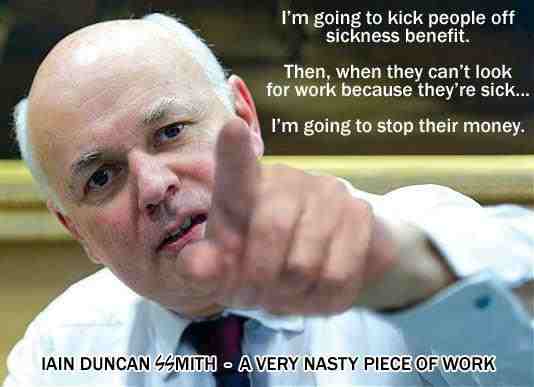
Iain Duncan Smith used false statistics again to justify disability benefit cuts

486294_4737578711832_1816039541_n
The Department of Work and Pensions has a long track record of misusing statistics, making unsubstantiated inferences and stigmatising claimants, and it’s clear these are tactics used to vindicate further welfare cuts.

The Tories have peddled the lie that he UK was “on the brink bankruptcy” and claimed the solution to is to cut government spending with a painful programme of austerity cuts. Of course, the UK economy was growing in 2010 when the Tories took over and was subsequently plunged back into recession by Osborne’s austerity policies, which have meant that the economy has not grown at all under the coalition; and for much of their tenure has been contracting. Despite the fact that Osborne was officially rebuked for this lie, the Goebbels-styled repetition propaganda technique employed by the conservatives has embedded this lie in the minds of the public.  However, our current problems are the result of a global financial crisis that we and not the banks that caused it, continue to pay for.

Austerity is a smokescreen – the Coalition has used the deficit as an excuse to do what they have always wanted to do: shrink the state, privatise the NHS, and hand out our money to the wealthy minority. We cannot trust them. 

It’s become clear that the Tories have seized an opportunity to dismantle the institutions they have always hated since the post-war social democratic settlement – institutions of health, welfare, education, culture and human rights which should be provided for all citizens. The Tories also attempt to destroy fundamental public support for the health, education and welfare of its people by a divisive scapegoating of vulnerable groups, perpetuated via the media, and by offering and inflicting only regressive, punitive policies and devastating cuts. 

The  Official statistics watchdog (UKSA) has found that the Department for Work and Pensions (DWP) have repeatedly made false claims about the numbers of people living on disability benefits.

Ministers claim that the majority of people claiming disability living allowance (DLA) were given benefits for life, and without any supporting medical evidence. This is untrue.

According to DWP press releases:

“More than 50% of decisions on entitlement are made on the basis of the claim form alone, without any additional corroborating medical evidence.”

However, the UK Statistics Authority (UKSA) found that the real percentage of claims passed without supporting medical evidence was just 10%.

The DWP also claimed that “Under the current system of Disability Living Allowance, 71% of claimants get indefinite awards without systematic reassessments.” However the UKSA found that in the last two years, just 23% and 24% of claimants were given indefinite awards of DLA.


The DWP accept that their claims were “ambiguous” and “had not been re-checked by the Department’s analysts, as is the usual practice.”

The findings were uncovered by an investigation by Channel Four News following complaint by the charity Parkinson’s UK.

 Parkinson’s UK policy advisor Donna O’Brien said:

“People with Parkinson’s who claimed DLA have told us supporting medical evidence was crucial due to a woeful knowledge of the condition amongst assessors, and it is absurd that the Government was trying to imply that anyone going through the system had an easy ride.”

This is the third time in the past year that Iain Duncan Smith has come under fire for the use of false statistics to justify cuts to benefits.

Last year Duncan Smith was rebuked by UKSA for misuse of benefit statistics. He claimed that 8000 people who had been affected by the benefits cap had “moved back into work.”

The UKSA found that this figure was “unsupported by the official statistics.”

Another statement by Duncan Smith later in the month also drew criticism and a reprimand. The minister said around 1 million people have been stuck on benefits for at least three of the last four years “despite being judged capable of preparing or looking for work”.

However, the figures cited also included single mothers, people who were seriously ill, and people awaiting their assessment.

Grant Shapps was also rebuked by UK Statistics Authority for misrepresenting benefit figures – Shapps joined his fellow Conservatives in the data hall of shame. In March, the Tory chairman claimed that “nearly a million people” (878,300) on incapacity benefit had dropped their claims, rather than face a new medical assessment for its successor, the employment and support allowance (ESA).

The figures, he said, “demonstrate how the welfare system was broken under Labour and why our reforms are so important”.  The claim was faithfully reported by the Sunday Telegraph  but as the UK Statistics Authority has now confirmed in its response to Labour MP Sheila Gilmore (the complainant), it was entirely and intentionally fabricated.

In his letter to Shapps and Iain Duncan Smith, UKSA chair Andrew Dilnot writes that the figure conflated “official statistics relating to new claimants of the ESA with official statistics on recipients of the incapacity benefit (IB) who are being migrated across to the ESA”.

Of the 603,600 incapacity benefit claimants referred for reassessment as part of the introduction of the ESA between March 2011 and May 2012, just 19,700 (somewhat short of Shapps’s “nearly a million) abandoned their claims prior to a work capability assessment in the period up to May 2012. The figure of 878,300 refers to the total of new claims for the ESA closed before medical assessment from October 2008 to May 2012.

Thus, Shapps’s suggestion that the 878,300 were pre-existing claimants, who would rather lose their benefits than be exposed as “scroungers”, was entirely wrong. As significantly, there is no evidence that those who abandoned their claims did so for the reasons ascribed by Shapps. However, he did at least honestly reveal his own prejudices regarding disabled people, at least. But he did so without a trace of shame and remorse.

At the time Iain Duncan Smith dismissed the findings, saying that he “believed” that he was “right”, anyway. It seems that Iain Duncan Smith has some disdain for evidence-based policy.

“I believe this to be right, I believe that we are already seeing people going back to work who were not going to go back to work,”  he said.

This is a remarkable claim, given that the Department for Work and Pensions does not track the destination of people no longer entitled to benefits. Simply measuring how many people no longer claim benefits does not accurately reflect the numbers of those actually moving into employment. The DWP off-flow figures will inevitably include many having their claim ended for reasons other than securing employment, including sanctions, awaiting mandatory review, appeal, death, hospitalisation, imprisonment, or on a government “training scheme” (workfare). 

In 2011, the Work and Pensions Select Committee warned the Department for Work and Pensions (DWP) needed to take more care when releasing and commenting on benefit statistics, to make sure media stories were “accurate.”

It seems unlikely, however, that accuracy will replace Duncan Smith’s “gut feelings” and ideologically-driven rhetoric – which is aimed at presenting excuses for the steady reduction of support for the most vulnerable citizens – any time soon.

36626_217452248405831_532419169_n

Pictures courtesy of Robert Livingstone 

Amnesty International has condemned the erosion of human rights of disabled people in UK

564882_438358886199493_1982719183_n

Dr Simon Duffy recently wrote an outstanding briefing: How the cuts target disabled people which shows very clearly how the poorest and most vulnerable citizens are paying for an economic problem that they did not cause.

Austerity has never had any moral legitimacy, or indeed any other kind of basis for validity. We know it isn’t working. Osborne’s careful selection of “leading economists”  (who are mostly business leaders with vested interests, rather than economists of an  academic calibre) to endorse his very damaging austerity program meant that he carefully excluded those who presented valid criticisms of the centrepiece of Osborne’s strategy: accelerated austerity for purely ideological ends, (see also Minarchism: the Nightwatchman State), and it halted the recovery that happened under the previous Labour Government. Much of the case for austerity also rests on The great debt lie and the myth of the structural deficit.

The widespread and relentless use of stigmatising and divisive Tory propaganda in the media has undermined public support and sympathy for the sick and disabled people of the UK. Examples of such propaganda include the ad nauseum use of value-laden terms in political narratives and the media, such as “benefit cheat”, “dependency”, “entrenched”, “fraud”, “worklessness”, “addiction”, and more opprobrious examples such as “scrounger”, “skiver”, “workshy” (see Aktion Arbeitsscheu Reich and the origins of this word, it’s now being used very frequently in the media to describe unemployed and disabled people.) 

Several studies show that compared with the end of the Labour Government, such pejorative language use has risen dramatically, and Duncan Smith is the most frequent Parliamentary user of value-laden terminology.

At the AGM on 14th April this year, Amnesty International UK passed a resolution on the Human Rights of sick and disabled people in the UK. The resolution was proposed by Rick Burgess and Nancy Farrell of the WOW petition.

The resolution said:

“This AGM calls for urgent action to halt the abrogation of the human rights of sick and disabled people by the ruling Coalition government and its associated corporate contractors.

Calls for Amnesty International UK to urgently work with grassroots human rights campaigns by and for sick and disabled people, carers and their families. And to set up a specialist Disability Human Rights network … To protect the human rights of people with disabilities, ill people and carers to halt this regressive and lethal assault on our rights.”

The full resolution with supporting information is here.

It’s taken an organisation with the respect, gravitas and the impartiality of Amnesty International to recognise that the human rights of disabled people in the UK are being attacked by their own Government, and feels a need to act in our defence. That is very encouraging, and perhaps we have reached something of a turning point. I hope so.

It is my own hope that people will recognise that their prejudice and their own lack of support and sympathy for the persecuted poor disabled people in the UK has been fuelled by the insidious propaganda of the Tory-led Coalition to justify the transfer of wealth from the poorest, and from our publicly funded welfare and support services, to the very wealthy. Tory ideology is and always has been about handouts to the very wealthy, funded by the poor. That recognition ought to generate outrage and disgust, and a publicly consolidated, conscientious consensus of determination to ensure that this never happens again.

The years immediately after the Second World War marked a turning point in the history of human rights, as the world reeled in horror of the Nazi concentration camps, there came an important realisation that although fundamental rights should be respected as a matter of course, without formal protection, human rights concepts are of little use to those facing persecution. 

So in response to the atrocities committed during the War, the International Community sought to define the rights and freedoms necessary to secure the dignity and worth of each individual.  In 1948 the newly formed United Nations adopted the Universal Declaration of Human Rights (UDHR), one of the most important agreements in world history.

Shortly afterwards another newly formed international body, the Council of Europe, set about giving effect to the UDHR in a European context. The resulting European Convention on Human Rights was signed in 1950 and ratified by the United Kingdom, one of the first countries to do so, in 1951. At the time there were only ten members of the Council of Europe. Now 47 member countries subscribe to the European Convention, and in 1998 the Human Rights Act was passed by the Labour Party in order to “give further effect” to the European Convention in British law.

The current Government are most certainly outrageous propagandists, on par with the Nazi Reichsministerium für Volksaufklärung und Propaganda, controlling the news media in particular, with the aim of shaping and controlling public opinions, attitudes and behaviours by a process of indoctrination, using übertreiben neo-liberalist dogmata to both create and justify neo-feudal subordination, oppressive hierarchical social structures and to signify the end of our humanist ideal and practice of shared citizenship.

We have an authoritarian Government in the UK currently that has scant regard for our established rights, and wants to see them gone, and they have systematically shut down all voices of opposition, via the media. An important question to ask is why.

We must recognise our past and remember our future. We must re-remember the basic humanist principle: we are all equally precious, each life has equal worth. A society that isn’t founded on those basic principles of decency, dignity and mutual respect is untenable and unthinkable.

Further Reading:

Simon Duffy – Who Really Benefits from Welfare?

Kittysjones – The UK Government have got it wrong about our Human Rights.

and – The Poverty of Responsibility and the Politics of Blame.

and – The ESA ‘Revolving Door’ Process, and its Correlation with a Significant Increase in Deaths amongst the Disabled.

Early day motion 295

The Black Triangle Campaign: United Kingdom Government Denounced for Crimes Against Disabled People to International Criminal Court in The Hague.


E-petition to
protect The Human Rights Act

71915_457283111007889_61730291_n
  With thanks to Robert Livingstone for his great pictures

Employment Support Allowance claim update: Exceptional Circumstances – Regulations 25 and 31 and Universal Credit.

71915_457283111007889_61730291_n

Regulations 25 and 31 will replace the old Special Regulations 29 and 35 when Universal Credit is rolled out.

However, the old Regulations 29 and 35 still apply to ongoing cases that are not yet affected by Universal Credit, and will remain in place indefinitely for all Contributions-based ESA. This means that most of you will use Regulations 29 and 35 at this time.

Income-based ESA will be replaced by Universal Credit, as it is rolled out, but there will be the same additional financial components added as we currently have for ESA – either the work-related activity or the support component.

The contents of both sets of Regulations are essentially the same. They are applied in the same way. 25 and 29 are for those who are not capable of work, and would usually be placed in the Work-related Activity Group, and 31 and 35 apply to those not capable of work-related activity, and would normally be placed in the Support Group.

Here are the new Universal Credit Exceptional Circumstances Regulations in full:

Regulation 25

25.—(1) A claimant who does not have limited capability for work as determined in accordance with the limited capability for work assessment is to be treated as having limited capability for work if paragraph (2) applies to the claimant.

(2) Subject to paragraph (3), this paragraph applies if—

(a) the claimant is suffering from a life-threatening disease in relation to which—

(i) there is medical evidence that the disease is uncontrollable, or uncontrolled, by a recognised therapeutic procedure; and

(ii) in the case of a disease that is uncontrolled, there is a reasonable cause for it not to be controlled by a recognised therapeutic procedure; or

(b) the claimant suffers from some specific disease or bodily or mental disablement and, by reason of such disease or disablement, there would be a substantial risk to the mental or physical health of any person if the claimant were found not to have limited capability for work.

(3) Paragraph (2)(b) does not apply where the risk could be reduced by a significant amount by—

(a) reasonable adjustments being made in the claimant’s workplace; or

(b) the claimant taking medication to manage the claimant’s condition where such medication has been prescribed for the claimant by a registered medical practitioner treating the claimant.

(4) In this regulation “medical evidence” means—

(a) evidence from a health care professional approved by the Secretary of State; and

(b) evidence (if any) from any health care professional or a hospital or similar institution, or such part of such evidence as constitutes the most reliable evidence available in the circumstances.

Regulation 25 outlines exceptional circumstances in which a person will be treated as having limited capability for work, but may be capable of work -related activities. People in these circumstances are placed in the ESA work-related activity group (WRAG)

However, there are further exceptional circumstances in which a person  will be treated as having limited capability for work-related activity in addition, and will therefore be placed in the ESA support group. These are outlined by Regulation 31.

Regulation 31 

31.—(1) A claimant is to be treated as having limited capability for work-related activity if—

(a) the claimant is terminally ill;

(b) the claimant is—

(i) receiving treatment for cancer by way of chemotherapy or radiotherapy;

(ii) likely to receive such treatment within six months after the date of the determination of capability for work-related activity; or

(iii) recovering from such treatment, and the Secretary of State is satisfied that the claimant should be treated as having limited capability for work-related activity;

(c) in the case of a woman, she is pregnant and there is a serious risk of damage to her health or to the health of her unborn child if she does not refrain from work-related activity; or

(d) the claimant is entitled to universal credit and it has previously been determined that the claimant has limited capability for work and work-related activity on the basis of an assessment under Part 5 of the Universal Credit Regulations 2013.

(2) A claimant who does not have limited capability for work-related activity as determined in accordance with regulation 30(1) is to be treated as having limited capability for work-related activity if—

(a) the claimant suffers from some specific disease or bodily or mental disablement; and

(b) by reason of such disease or disablement, there would be a substantial risk to the mental or physical health of any person if the claimant were found not to have limited capability for work-related activity.

___________________

Advice regarding EXCEPTIONAL CIRCUMSTANCES – Regulations 25, 29 31 and 35. 

Because of the tick-box nature of the ESA50 form, it is likely that people will fall below the number of points required to be declared incapable of work – it doesn’t take into account variable illnesses, mental illness, or the effects of having more than one illness.

However, the Exceptional Circumstances Regulations may cover us – they both state that the claimant should be found incapable of work (Regulation 29 for ongoing ESA claims, 25 for U.C. ) or work-related activity (Regulation 35 for ongoing ESA claims, 31 for U.C.).

These two essential paragraphs are an important part of both the old and new Regulations, and can be used in the same way, if:

  • “they have an uncontrolled or uncontrollable illness, or “the claimant suffers from some specific disease or bodily or mental disablement and
  • by reason of such disease or disablement, there would be a substantial risk to the mental or physical health of any person if the claimant were found not to have limited capability for work/work-related activity.”

If you feel this is your circumstance, then we suggest adding something like this, where you put “other information” on the ESA50:

“If the scoring from my answers above is insufficient, then I believe applying the Exceptional Circumstances Regulations would be appropriate due to the severity and interaction of my conditions, and my inability to reliably, repeatedly and safely encounter work-related situations and/or safely perform work-related tasks.

I am taking all available and appropriate medication as prescribed by my doctor(s), and there are no reasonable adjustments to a workplace which would mitigate my medical condition(s).

Therefore I believe being placed in the Support Group would be appropriate, because there would be a serious substantial risk to mental and/or physical health if I were placed into a workplace environment or in the work-related activity group.”

Please change the wording to fit your situation, delete “mental” or “physical” if appropriate, leave both in if necessary. If your illness cannot be controlled at all, or medication can’t be used to control it, add that instead.

Legally, both of these exemptions must be applied to all cases where a “serious” or “substantial” risk of harm is likely, should the person be found to be either capable of work, or capable of work-related activity. This is the statutory interpretation.

Regulations 25 and 29 cover people who might be put in the Work-Related Activity Group (WRAG), which has work-focused activities, sometimes it has workfare placements, and sanctions may apply if you are unable to meet the conditions of eligibility for your ESA, while Regulations 35 and 31 cover people who are not fit for any kind of work activity. This is for people who might be placed in the Support Group. There are no conditions placed on you for getting your ESA, such as workfare, if you have limited capability for work-related activity.

So do bear in mind that Regulations 31 and 35 are specifically related to limited capability of work-related activity, and that you will need to invoke 35, (or 31 if you are now claiming Universal Credit, and not eligible for contributions-based ESA,) if your circumstances are such that the support group is appropriate, rather than the work-related activity group (WRAG), as work-related activity would present a substantial or serious risk of harm.

You can ask your doctor to support you with this, as stated in the regulations:

“(b) evidence (if any) from any health care professional or a hospital or similar institution, or such part of such evidence as constitutes the most reliable evidence available in the circumstances” may be presented to support your case.

This is based on the Statutory Interpretation of the Regulations.

Here are some links to download and print some documents that you can give to your GP to support your claim or appeal. You ought to submit copies of these to the DWP as soon as you can. (Make sure that you keep a copy).

In some cases, this may mean that your case will be reconsidered in your favour without having to wait for a tribunal hearing:

Please remember: Regulations 29 and 35 still apply to all ongoing cases, and will remain in use for all contributions-based ESA claims. Regulations 25 and 31 apply to Universal credit.

These templates are for ongoing ESA claims and Contribution-based ESA:

(CLICK)    Cover letter for your GP

(CLICK)    ESA Appeals Letter for your GP

(CLICK)     Legal Advice of Counsel for GPs: Prevention of Avoidable Harm Interpretation and Application of ‘Substantial Risk’ ESA Regulations 29 & 35

With many thanks to the Black Triangle Campaign for sharing these very helpful documents.

If you are one of the few claiming Universal Credit in one of the pilot areas, and you are not entitled to contribution-based ESA then Regulations 25 and 31 now apply, and you will need to amend the templates, as they currently reflect the Regulations most likely to be applicable at this time.

As yet we don’t know for sure when and even if Universal Credit will be rolled out in full. I will update this article when we know more about this.

For all ongoing cases where Universal Credit does NOT apply, (which is the majority at present) and for ALL Contributions-based ESA claims:

Regulation 29

29.—(1) A claimant who does not have limited capability for work as determined in accordance with

the limited capability for work assessment is to be treated as having limited capability for work if:

paragraph (2) applies to the claimant.

(2) This paragraph applies if—

(a) the claimant is suffering from a life threatening disease in relation to which—

(i) there is medical evidence that the disease is uncontrollable, or uncontrolled, by a recognised therapeutic procedure; and

15(ii) in the case of a disease that is uncontrolled, there is a reasonable cause for it not to be controlled by

a recognised therapeutic procedure; or

(b) the claimant suffers from some specific disease or bodily or mental disablement and, by reasons of

such disease or disablement, there would be a substantial risk to the mental or physical health of any person if the claimant were found not to have limited capability for work.

Regulation 35

35.—(1) A claimant is to be treated as having limited capability for work-related activity if—

(a) the claimant is terminally ill;(b) the claimant is—

21(i) receiving treatment by way of intravenous, intraperitoneal or intrathecal chemotherapy; or

(ii) recovering from that treatment and the Secretary of State is satisfied that the claimant should be treated as having limited capability for work-related activity; or

(c) in the case of a woman, she is pregnant and there is a serious risk of damage to her health or to the health of her unborn child if she does not refrain from work-related activity.

(2) A claimant who does not have limited capability for work-related activity as determined in accordance with regulation 34(1) is to be treated as having limited capability for work-related activity if—

(a) the claimant suffers from some specific disease or bodily or mental disablement; and

(b) by reasons of such disease or disablement, there would be a substantial risk to the mental or physical health of any person if the claimant were found not to have limited capability for work-related activity.

Some thoughts on the implications of the other changes.

30.—(1) For the purposes of Part 1 of the Act, where, by reason of a claimant’s physical or mental condition, at least one of the descriptors set out in Schedule 3 applies to the claimant, the claimant has limited capability for work-related activity and the limitation must be such that it is not reasonable to require that claimant to undertake such activity.

(2) A descriptor applies to a claimant if that descriptor applies to the claimant for the majority of the time or, as the case may be, on the majority of the occasions on which the claimant undertakes or attempts to undertake the activity described by that descriptor.

(3) In determining whether a descriptor applies to a claimant, the claimant is to be assessed as if—

(a) the claimant were fitted with or wearing any prosthesis with which the claimant is normally fitted or normally wears; or, as the case may be

(b) wearing or using any aid or appliance which is normally, or could reasonably be expected to be, worn or used

___________________

Two broad concerns arising in light of the Regulation changes are that there is significant scope for the assessor to speculate and make assumptions about those being assessed, and there is a limitation regarding what symptoms can be considered in which parts of the assessment (as is evident in the new descriptors.) Such consideration has been narrowed in focus and subdued by the amendments, which clearly and strictly polarise illnesses into physical or mental categories. Both of these problems may lead to an over-estimation of a person’s capability for work.

The exceptional circumstances provision originally in Regulation 29 has been changed. Trying to demonstrate that a person would be at “substantial risk” in a workplace will now also involve considering whether any “reasonable adjustments” in the workplace or if prescribed medication would significantly reduce such a risk. The amendments would allow any potential risk resulting from a person being found fit for work to be ignored if a reasonable adjustment, or taking prescribed medication would hypothetically offer significant reduction of that risk.

The Atos assessor has previously been able to assume that a person could use some aids that they do not actually use, and theoretically determine what the person’s capability would be using those aids. Many people have experienced the difficulties presented by the “imaginary wheelchair test” – the assessor decides they would be mobile with a manual wheelchair, often contrary to the appropriateness or availability of a wheelchair for that person. The amendments to the Regulations have extended this to include imaginary prostheses and guide dogs under the “could reasonably be used” criteria to most parts of the assessment.

Any “reasonable adjustments” to “the workplace” are very hypothetical and can never be guaranteed. Nor may they necessarily be effective in the event that they are actually carried out. The assessor does not know the person claiming ESA or their long term medical circumstances, or whether the use of such aids would be consistent with their current management programme, or whether any theoretical aids would be suitable in reality.

There is no guarantee that in the event of a person obtaining these aids  they would actually be capable of work. This imaginary exercise will not be discussed with the person making the claim; they are simply going to be refused benefit on the basis of hypothetical aids and appliances. “Reasonable adjustment” may include cases where the risk is still considerable, if it is significantly reduced by hypothetical adjustments, it can be ignored. There is no explicitly stated requirement to take into account side-effects of medication.

This is worrying for more than one reason. There seems to be an implicit suggestion that medication ought to be enforced. For obvious reasons that is very troubling. It has serious implications for issues of medical consent, and patient rights.

The amendments made to the Work Capability Assessment descriptors will mean that claimants can only score on either the physical descriptor for a physical illness or the mental descriptor for a mental illness. Part One of the Work Capability Assessment activities will only accommodate the effects of “a specific bodily disease or disablement,” while Part Two of the WCA  will only allow consideration of the effects of “a specific mental illness or disablement.” Similarly, only side-effects of treatment for physical conditions will be considered in Part One, and side-effects of treatment for mental illnesses only in Part Two.

Using prescribed medication as a purely theoretical “reasonable adjustment” provides scope for a lot of speculation presented as “evidence” regarding the efficacy of medications. For many of us, medication is “experimental” and often trialled initially, and effectiveness and side-effects vary hugely from person to person. Medications for mental health problems produce physical side-effects, and vice-versa. A person who suffers severe chronic pain from physical illness or injury may take strong pain medications that severely compromise their cognitive ability, but it would seem the amended regulations would require that this effect is disregarded.

Many illnesses that are not yet well-understood have a full spectrum of physical, mental and cognitive symptoms. Examples include autoimmune illnesses such as Rheumatoid Arthritis, Lupus, MS, ME and Fibromyalgia. There is often a fundamental interconnectedness of physical and mental health, yet the amendments demand a clean separation of physical, mental and cognitive effects of illness.

As stated, medications for these illnesses are invariably “experimental”, and the efficacy of treatments is widely unpredictable, as are the potentially severe and often “black box” side-effects. For example, a common treatment for autoimmune illness such as Lupus and Rheumatoid Arthritis is a chemotherapy called methotrexate, usually given in a weekly dose, by injection or taken orally. Side-effects commonly include nausea and vomiting, ulcerative stomatitis, dizziness, drowsiness, headache, hair loss, blurred vision or sudden loss of vision, seizures, confusion, weakness or difficulty moving one or both sides of the body, loss of consciousness, vulnerability to overwhelming infections such as pneumonia.

Less common side effects of methotrexate include sudden death, liver failure, kidney damage and lung fibrosis. There is no way of predicting most of these side-effects. Of course this treatment is not handed out like sweets by doctors, and there is very careful consideration given to the risks carried with the drug, which are carefully weighed against the substantial risks presented by the serious illness to be treated.

Many autoimmune illnesses may also cause death, lung fibrosis, kidney and liver damage and blindness. How can it be that a person so ill, and taking such a risky medication could be deemed even remotely capable of work, and that such a treatment could be seen as a “reasonable adjustment” to allow that judgement?

A grave concern is that this will mean additional challenges for many sick and disabled people at a time when the Tribunal Service is hugely overworked and struggling to accommodate the sheer volume of appeals regarding wrongful decisions, and the waiting times for Hearings are stretching out, leaving very vulnerable people without the essential support they need to live. Now there is the additional requirement for providing evidence regarding the “reasonable adjustments” amendment, and I doubt that hypothetical evidence will suffice.

It seems that the Government have simply extended legislative opportunities to further reduce “eligibility” for ESA. I don’t believe these changes and omissions are casual: they are about limiting successful claims and appeal outcomes.

From the moment we begin a claim by filling out the form, we know that every single question asked is designed to justify ending our claim for ESA and aimed at passing us as “fit for work.” That is what Atos are contracted to do by the Government. This is not a genuine medical assessment, but rather, a created opportunity for the Government to take away the financial support that we are entitled to. Every change in legislation related to benefits and support for sick and disabled people that has been made by the Coalition has been aimed at limiting successful outcomes for claims for those benefits.

It’s therefore important that we explore the implications of legislative changes like this, because the additional information helps us to pre-empt potential new difficulties we are likely to encounter with the claim process, it allows us to plan in advance how we can find effective ways around anticipated problems, and so improve the outcomes of our ESA claims.

Further information:
The Black Triangle Campaign:  Applying ESA Regulations 29 and 35 (see note for 25 and 31)

Employment and Support Allowance: 2013 Regulations in full Explanatory memorandum to all benefits 2013: Full legislation document  Exceptional circumstances: Employment and Support Allowance Regulation 25
Exceptional Circumstances: Employment and Support Regulation 31
Changes to the work Capability Assessment : Regulation 15
Rapid response EDM: 
Commons’ motion to annul the Employment and Support Allowance regulations
The new Work Capability Assessment 2013:DWP Guide
The Employment and  Support Allowance Regulations 2008 (as amended) – judiciary.gov.uk Clause 99 and important changes to the appeal process: Clause 99, Catch 22 – The ESA Mandatory Second Revision and Appeals

V-STARTU

Written by Sue Jones.

With huge thanks to Jane Clout for her considerable support with this in clarifying the circumstances regarding which Regulations may be used. It’s important to know that the new Regulations won’t be applicable to most people until Universal Credit has been rolled out.

With many thanks to The Black Triangle Campaign for sharing their work on the GP support letter template, and covering legal and explanatory documents

PIP and the Tory monologue

644117_408620012540866_785481358_n

Here is a very important leaked correspondence between Dame Anne Begg and Esther McVey regarding PIP. (Personal Independence Payment, which is to replace Disability Living Allowance.) The correspondence flags up some serious concerns regarding a lack of transparency and accountability, responsiveness and a basic lack of following established democratic norms and protocol on the part of  the current Government. Mounting successful challenges to reform requires having detailed information regarding that reform. Here is clear evidence that the Conservatives are intentionally stifling democratic dialogue.

There are some serious issues raised in Esther McVey’s response that signal some very worrying changes to advisory groups and their role in how they influence policies. Esther McVey is indicating that the Secretary of State has already moved away from dialogue with, and paying heed to independent groups, as well as secretly deciding that any input and advice at all does not need to be published and open to public scrutiny. It signals that the Government will no longer be obliged to do anything more than pay lip service to consulting independent groups. Of course such consultations are crucial mechanisms of democratic process, scrutiny, the safeguarding of human rights, as well as Government transparency and accountability. Here we see evidence that these mechanisms are being very quietly dismantled. This clearly signals an authoritarian turn on the part of the government.

McVey has managed to avoid going before the Work and Pensions Select Committee, and she is telling the Committee that she intends to publish the Government’s response the SAME DAY as the secondary regulations are presented to Parliament. This gives us no time whatsoever for scrutiny, analysis, preparation or effective challenge.

Letter from Anne Begg to Esther McVey:

Dear Minister

Disability Living Allowance and Personal Independence Payment (PIP)

You will be aware from the debate in Westminster Hall on 25 October that the Committee has a number of outstanding concerns about the eligibility criteria and plans for implementation for PIP. As you know, we had hoped to explore these issues in an evidence session with you in November. Committee staff had been in the process of trying to identify a suitable date through your officials.

We first invited you to appear during the week of 5 November but you did not have a diary slot available that week. You then offered 9.00 am on 12 or 13 November, but neither of these was possible for Committee members (particularly as one was a Monday morning when we are travelling from our constituencies). Our next suggestion was 21 November.

The issue now seems to have moved on from being simply a diary problem. Your officials have indicated that you would prefer not to give evidence before the PIP Regulations are published because you feel you would be unable to answer the Committee’s questions. I would like to make clear that our intention was that our evidence session should inform the drafting of the Regulations, and the eligibility criteria, before they are finalised and laid before Parliament. The change in your position suggests to us that final decisions have already been made.

We would be grateful for your response to the following questions to help clarify the situation:

1. When do you plan to respond to the consultations on the draft assessment criteria and thresholds and on finalising the detailed rules for PIP?

2. Will the relevant Regulations, including the draft assessment criteria, be published in draft and subject to some form of further consultation, before they are laid before Parliament? If so, what is the timescale for this and what scope will there be to amend them further?

3. When do you expect the final Regulations to be laid (officials have been able to tell us only that they will be laid “before the end of the year”). If it is your position that it is already too late for the Committee to influence the finalising of the relevant Regulations, I would ask you to give a commitment to appear before us as soon as possible after they are laid, to explain the rationale for the final decisions you have made.

Draft Public Bodies (Abolition of the Disability Living Allowance Advisory Board) Order 2013

Departmental select committees (DSCs) have a formal role in scrutinising draft Orders laid under the Public Bodies Act. Departments are required to bring these draft Orders to the attention of the relevant DSC. The Committee has the power, as set out in Cabinet Office guidance, to recommend an extension of the laying period to 60 days if it decides this is necessary to ensure proper scrutiny.

DWP staff failed to bring the Draft Order on the DLA Advisory Board, which was laid on 15 October, to the Committee’s attention. The Committee staff only became aware of it because the House of Lords Secondary Legislation Scrutiny Committee contacted them to discuss the respective action each committee planned to take.

We are concerned about this lack of recognition by the Department of my Committee’s formal scrutiny role in relation to draft Orders under the Public Bodies Act. Officials have tried to allay the Committee’s concerns about the draft Order by saying that it does not do anything significant. I would make two points about this. Firstly, it is for the Committee to decide whether any matter within its remit is significant or not, including draft Orders. Secondly, the agreed formal procedures should be adhered to whether or not officials regard an issue as significant.

I would be grateful for your assurance that the Department will adhere to the agreed procedure on future occasions.

We understand that the Lords Scrutiny Committee has expressed concerns about the Department’s failure to carry out any consultation on the proposed abolition and has recommended an extension of the scrutiny period to 60 days [12th Report, HL 55, 1 November 2012]. We agree with this recommendation.

Turning to the substantive issues raised by the draft Order, the Committee staff made clear to your officials that we were willing to deal with these as part of the broader oral evidence session with you on PIP—if you had been able to attend a meeting before the 40-day laying period expires on 28 November.

As you no longer intend to appear before us in November, we would be grateful for your response to the following questions on the implications of the abolition of the DLA Advisory Board:

1. What measures will be put in place to protect the interests of non working-age claimants who will continue to claim DLA?

2. What measures will be put in place to protect the interests of working-age DLA claimants prior to their migration to PIP?

3. What will be the composition of the PIP advisory group referred to in paragraph 7.5 (b) of the PBO explanatory memorandum?

4. Will the advice of the PIP advisory group be published?
I would be grateful for your response by Friday 9 November.

Yours sincerely
Dame Anne Begg MP

Chair
Dame Anne Begg.

I suppose the terms of authoritarianism extend to have an impact on opposition parties and affect their capacity to gather information and organise actions much the same as they do campaigners and the general population. Again, without being provided with information and crucial detail, it becomes very difficult to mount a successful challenge against controversial legislation. This is a Government that does exactly what it chooses, and barely bothers justifying itself. Consider, for example, that no impact assessment was carried out regarding the welfare reforms. Or that the risk register concerning the Health and Social Care Bill has yet to be published and made accessible to the public.

It’s also noteworthy that Cameron is currently proposing that consultations, equality impact assessments, audits, judiciary review are all simply “inconveniences” that are (and I quote) “… not how you get things done…” 

Ask yourself what kind of things Cameron “wants to get done” bearing in mind that every single policy that this Government has designed and implemented has been about taking money away from the poorest people, and reducing the lives and experiences of the most vulnerable citizens, rather than enhancing those lives in any way.

Consider that these legislative mechanisms are important to democratic process, accountability, procedure and law, as well as being basic human rights safeguards. This is a Government that clearly is not about reflecting and meeting the needs of the public.

The Government have been made aware that sick and disabled people are dying after Atos have assessed them as fit for work. Ask yourself what kind of Government flatly and loudly denies that this is the case, without investigating the truth of the many serious concerns raised, and looking at the many cases that have been presented to them during debates in Parliament. What kind of Government tells lies about marginalised social groups, and propagates hateful stereotypes of marginalised citizens in the media to justify removing their welfare – calculated to cover basic living costs. Welfare provision is paid for via taxes, which many sick and disabled people have also paid. Our welfare support is NOT a “handout”: it is our money, our national insurance, paid by us for when we have a need of support. Social security.

Below are a couple of key paragraphs from McVey’s response to Dame Begg. These reflect the quiet dismantling of the Disability Living Advisory Committee, and the fact there is no advisory report or a formal advisory group regarding the development of PIP. Note again that the Government is not big on following procedure, or being transparent, accountable and consultative.

E. McVey: “Public Bodies (Abolition of the Disability Living Advisory Board) Order 2013

Please accept my apologies that the draft Order was not formally brought to the attention of the Committee as it should have been done. I understand that Cabinet Office made the Secretariat of the Committee aware that a draft Order was in the offing earlier in the year but unfortunately procedures were not followed through on a formal basis as they should have been. I will ensure that the Department will adhere to the agreed procedure on future occasions.

I hope my answers to your questions explain why we have taken the view that this Body which has not been asked to give any advice since 2008 had an extremely limited remit and why officials thought it proportionate to deal with the questions you raise on a correspondence basis. We certainly had no intention of disparaging the important role the Committee undertakes. I have set out my replies to your questions below.”….

“There will not be a PIP Advisory Group in the way that the Disability Living Allowance advisory group operates. In the Explanatory Document to the Public Body Order we explain that we have decided to use time-limited advisory groups and that the people asked to help us develop the assessment criteria for Personal Independence Payment (the Assessment Development Group) encompassed a wide range of expertise across health, social care and disability, including from occupational therapy, psychiatry, physiotherapy, social work, general practice, as well as representatives from Equality 2025 and Disability Rights UK. We included the Assessment Development Group in the Explanatory Memorandum as an example of how the Secretary of State is using a time-limited advisory group in policy development.”….

[Note the fact that the time limited invisible Advisory group approach doesn’t apply to just the PIP legislative development, it is to apply to ALL policy development. Also note she later goes on to say that “There was no FORMAL Advisory group, there is therefore no formal report from the Group, nor is there a requirement to publish their advice.”]

Section 89 of the Welfare Reform Act 2012 requires the Secretary of State to lay before Parliament an independent report on the operation of assessment within two years of regulations under section 80 coming into force and a second report within four years of that date.

Will the advice of the advisory Group be published?

As mentioned above there is no formal Advisory Group. The assessment criteria for Personal Independence Payment were developed in close collaboration with the Assessment Development Group. Although members sometimes submitted written comments on proposals, advice was generally given verbally and captured in meeting minutes.

There is therefore no formal report from the Group, nor is there a requirement to publish their advice, although we have published details of the development process in the explanatory notes which have accompanied the first and second drafts of the assessment criteria. The explanatory notes can be found at http://www.dwp.gov.uk/policy/disability/personal-independence-payment/the-assessment-criteria/

I hope this reply is helpful to the Committee.

Esther McVey MP
Parliamentary Under Secretary of State and Minister for Disabled People

Anne Begg : “Disability groups have not been consulted about the framing of the PIP assessment contracts or the guidance to assessors, so, although there has been limited consultation, the wider implications of how the measure will work in practice have not been subject to any kind of co-production. In one meeting, the Disability Benefits Consortium told us that the documents had been counted in and counted up, and that it had been given 15 minutes to look at them. That, again, is hardly co-production.

On the PIP assessment, the Government have said that there will be a requirement for face-to-face assessments for most claimants. That also raises a number of questions. On what basis did the Government come to that conclusion? Will the Government not be able to take account of existing evidence in most cases? That leads me to a question on a slightly different point: will there be any transfer of information already held by the Department for Work and Pensions, so that people do not have continually to remind it of such things as, “This is a glass eye, and of course I am not going to see out of it.” That is not as daft as it sounds. Sometimes, when people have gone for a WCA they have been asked what vision they have in their left eye when they have not had a left eye for decades.” – Dame Anne Begg, Daily Hansard – Westminster Hall 25 Oct 2012 : Column 319WH Westminster Hall.

Here is the full response from Esther McVey :

Dame Anne Begg MP
Chair
Work and Pensions Select Committee
7 Millbank
LONDON
SW1A 0AA
8 November 2012

Dear Anne

Thank you for your letter of 1 November. I am sorry we have been unable to identify an opportunity in November for me to appear before the Select Committee to discuss the PIP assessment criteria and regulations.

The Department has taken considerable time to develop the assessment criteria, throughout which we have sought to be transparent and to engage with and seek the views of disabled people, their organisations and parliamentarians. Our initial proposals for Disability Living Allowance reform, including the high-level principles of the assessment, were published in December 2010.

We published a first draft of the detailed proposals for the assessment criteria and regulations in May 2011, a second draft in November 2011 and ran significant consultations on both. The consultation on the second draft ran from January to the end of April this year, during which we received around 1,100 written responses and met with around 60 disability organisations.

Since the consultation closed on April 30 the Department has been carefully considering the responses received to identify any areas that we need to change to ensure that the assessment is both fair and operates effectively. As part of this we have also considered the comments made in the Select Committee’s report of 19 February and during the evidence session attended by my predecessor in December 2011.

We have also been working to test proposals for change, so we can understand the likely impact of the revised assessment. This work has now concluded and we have reached conclusions on the content of the finalised assessment criteria and regulations. We are now in the process of finalising the drafting of the government response and regulations and discussing the detail with colleagues across government.

We intend to publish a joint response to the consultations on the assessment criteria and benefit rules as soon as it is ready. While we do not yet have a firm date for publication, I am confident that it will be before the December recess. I do appreciate that many people would have liked an earlier response but it has been essential to take our time on this important issue and make sure we get the decisions right.

We have also not yet reached any final decisions on the publication of the PIP regulations but I think it likely that the key regulations will be published and laid on the same day as the government response.

Given the significant engagement that has already been undertaken, we are not intending to carry out any further consultation on draft regulations. However, we agreed during the passage of the Welfare Reform Act that the key regulations on PIP relating to benefit entitlement would be affirmative, which will allow Parliament further opportunity to scrutinise them.

I realise that this response is likely to be disappointing. However, I do consider that the development of our proposals for PIP has been carried out in a transparent and consultative fashion and that there has been full opportunity for the Committee to comment and offer suggestions for changes over the two year development process. We will be offering briefing sessions to MPs and Peers to explain the government response and regulations before the regulations are debated and I would be very happy to appear before the Select Committee to do the same to explain the rationale, as you suggest.

Draft Public Bodies (Abolition of the Disability Living Advisory Board) Order 2013

Please accept my apologies that the draft Order was not formally brought to the attention of the Committee as it should have been done. I understand that Cabinet Office made the Secretariat of the Committee aware that a draft Order was in the offing earlier in the year but unfortunately procedures were not followed through on a formal basis as they should have been. I will ensure that the Department will adhere to the agreed procedure on future occasions.

I hope my answers to your questions explain why we have taken the view that this Body which has not been asked to give any advice since 2008 had an extremely limited remit and why officials thought it proportionate to deal with the questions you raise on a correspondence basis. We certainly had no intention of disparaging the important role the Committee undertakes. I have set out my replies to your questions below.

1. What measures will be put in place to protect the interests of non working-age claimants who will continue to claim DLA?

DLAAB ‘s function is to issue the Secretary of State with independent advice. It does not exist to protect DLA claimants’ interests although of course the Board members had an interest in the integrity of the benefit system. It is not part of the decision making process for benefits and has no power to intervene in individual claims for Disability Living Allowance and Attendance Allowance. DLAAB has not provided any advice since 2008.

Work undertaken by the Board over the years concentrated mainly on medical reports on specific conditions or illnesses. This was usually because the department had detected a potential issue. For instance the department noted that DLA spending on “behavioural disorder” cases (which included ADHD cases) had increased much more rapidly than spending on other child recipients. In light of this the Board was asked to advise:

  •  whether there has been an increase in the number of children diagnosed with ADHD generally and, if so, suggest reasons for the increase; and 
  •  could the increased numbers of children in receipt of DLA be directly related to the increase in diagnosis or were there other reasons?

The Secretary of State will still commission work if he thinks this is necessary using task and finish groups as and when required and ensuring that the appropriate specialisms are covered. Even with the wide breath of professions covered by DLAAB it was still necessary on occasion to co-opt professionals with particular expertise as in the Attention Deficit Hyperactivity Disorder study where a Consultant Child and Adolescent Psychiatrist was asked to provide advice.

Claimants have always had the right to ask for a reconsideration if they are unhappy with a decision and then appeal to an independent tribunal if still dissatisfied. The Welfare Reform Act 2012 includes powers to require all claimants to seek a reconsideration before they can appeal to an independent tribunal. There is a complaints system which claimants can utilise which is advertised on the DWP website. Claimants may also apply to the Independent Case Examiner, if they consider the department has not treated them fairly or have not dealt with complaints in a satisfactory manner.

2. What measures will be put in place to protect the interests of working-age DLA claimants prior to their migration to PIP.

As explained above this was never the role of DLAAB. The same rights apply to working- age and non working-age people.

3. What will be the composition of the PIP advisory group referred to in paragraph 7.5 (b) of the PBO explanatory memorandum?

There will not be a PIP Advisory Group in the way that the Disability Living Allowance advisory group operates. In the Explanatory Document to the Public Body Order we explain that we have decided to use time-limited advisory groups and that the people asked to help us develop the assessment criteria for Personal Independence Payment (the Assessment Development Group) encompassed a wide range of expertise across health, social care and disability, including from occupational therapy, psychiatry, physiotherapy, social work, general practice, as well as representatives from Equality 2025 and Disability Rights UK. We included the Assessment Development Group in the Explanatory Memorandum as an example of how the Secretary of State is using a time-limited advisory group in policy development.

We will also continue to liaise and listen to other stakeholders of and from disability organisations including Equality 2025 which is a non-departmental public body of publicly-appointed disabled people. The group offers strategic, confidential advice to government on issues that affect disabled people. This advice can include participation in the very early stages of policy development or in-depth examination
of existing policy. The group works with ministers and senior officials across government.

Section 89 of the Welfare Reform Act 2012 requires the Secretary of State to lay before Parliament an independent report on the operation of assessment within two years of regulations under section 80 coming into force and a second report within four years of that date.

4. Will the advice of the advisory Group be published?

As mentioned above there is no formal Advisory Group. The assessment criteria for Personal Independence Payment were developed in close collaboration with the Assessment Development Group. Although members sometimes submitted written comments on proposals, advice was generally given verbally and captured in meeting minutes. There is therefore no formal report from the Group, nor is there a requirement to publish their advice, although we have published details of the development process in the explanatory notes which have accompanied the first and second drafts of the assessment criteria. The explanatory notes can be found at http://www.dwp.gov.uk/policy/disability/personal-independence-payment/the-assessment-criteria/

I hope this reply is helpful to the Committee.

Esther McVey MP
Parliamentary Under Secretary of State and Minister for Disabled People


Picture by Robert Livingstone

Pictures courtesy of Rob Livingstone 

I ought to update this in light of recent events. Campaigners won an important victory regarding an essential regulation being excluded from the PIP legislation, namely, the “reliably, repeatedly and safely” adjustment, that is an essential mechanism in ensuring that “fluctuating” conditions are fairly considered and assessed.

However, many disabled activists were shocked and angry when Esther McVey, the Conservative minister for disabled people, suddenly announced the unexpected changes in December. The alterations to the regulations that will decide who is eligible for the new personal independence payment (PIP) – which will gradually replace working-age disability living allowance from this April – saw the key walking distance criteria reduced from 50 to 20 metres.

There has been absolutely NO Consultation on this whatsoever. That in itself warrants a legal challenge. The alteration of the distance criteria has been challenged by the Labour  Party, too. Anne McGuire, Labour’s shadow minister for disabled people, said disabled people had “been alarmed at the hurdle they will now face before being awarded the enhanced mobility rate”.

She said: “Most of those who have looked at these descriptors would say that a 20-metre qualifying distance simply does not provide a practical level of mobility.”

She said about 200 disabled people in every parliamentary constituency were likely to lose their Motability vehicle with a 20-metre qualifying distance.

And she pointed out that one of the Department for Transport’s own publications, Inclusive Mobility, recommends that “seating should be provided on pedestrian routes at intervals of no more than 50 metres, and that parking spaces for blue badge holders should preferably be provided within 50 metres of the facilities they serve”.

Another issue that concerns me is that McVey as good as admitted there are built in targets to reduce/remove eligibility for PIP. How could she know in advance of assessments, otherwise, that “330,000 of claimants are expected to either lose their benefit altogether or see their payments reduced”, as she informed the House of Commons?

http://www.guardian.co.uk/society/2013/apr/08/disabled-claimants-legal-action-mobility-tests