“Being hit by the bedroom tax is bad enough, but losing your sickness benefits too is even harder.”
Disabled people protest about cuts to benefits Photograph: Alamy Stock Photo
Back in 2014, armed with only a laptop and phone, disabled campaigners started a hunt for the truth. As policies including the bedroom tax, the abolition of disability living allowance, and the rollout of controversial out-of-work sickness benefits hit, War on Welfare (Wow) called on the coalition government to carry out a cumulative impact assessment of the wave of disability cuts to measure the effect on disabled people. It resulted in a debate in parliament – the first time disabled people had secured a debate in the main chamber of the House of Commons – but no action.
Now, four years on, Wow has gained the backing of a cross-party coalition that wants Theresa May’s government to calculate the overall impact of the so-called welfare reformson disabled people. Every party except the Conservatives is in favour of a Commons debate on conducting this assessment, including the DUP. In light of the pressure over Northern Irish abortion reform, their support for detailed analysis of the impact of Tory disability cuts is another awkward clash between May and the DUP’s 10 MPs propping up her administration. But more than that, it’s a sign of hope that ministers may have to finally investigate just what damage their disability cuts are causing – from the social care crisis to cuts to multiple parts of the NHS, to the disastrous rollout of universal credit; now delayed for an extra year until 2023.
Last week’s damning reportby the National Audit Office (NAO) on universal credit castigated the system’s inability to protect and support “vulnerable claimants”. It follows the revelation this month that the government was forced to say it would repay thousands of severely disabled people made worse off under the UCsystem ahead of the high court ruling last weekthat it was “discriminatory” to have docked two disabled men’s benefits after transferring to UC. Following pressure from disability groups, this week ministers made another U-turn, this time to stop repeatedly testing some disabled people for personal independence payments.
The government’s austerity programme has resulted in multiple reductions in income since 2010 that have hit disabled people all at once and disproportionately. Being hit by the bedroom tax is tough – but losing your sickness benefits as well after being found “fit for work” is even harder.
If you need an insight into the damage these policies have done, just go to Wow Voices, a website set up by campaigners that features disabled people explaining the impact of cuts on them. One woman with terminal breast cancer writes of how, for the last 18 months, she’s been told she needs to be reassessed for her benefits every six months, and she’s frantic about the thought of losing her support. “I’ve cried more about this than my terminal diagnosis,” she says.
The UN’s damning report in 2016 into the UK’s “violations” of disabled people’s rights has put further pressure on the government over its treatment of disabled citizens. Meanwhile, the Equality and Human Rights Commission’s own cumulative impact assessment shows that families with a disabled adult and a disabled child will lose £5,500 a year by 2022 as a result of tax and benefit changes – contradicting the government’s claim that such analysis would be “too complex” to do.
This month, research by the Joseph Rowntree Foundation found around 650,000 people with mental and physical health problems were officially destitutein the UK last year – that means being so poor, they can’t afford deodorant, the electric, or regular meals – with social security changes found to be a key cause. It’s bad enough for ministers to take away state support from disabled people en masse, but to refuse to analyse its effects is the definition of irresponsible. The Conservatives must finally shine a light on the impact that disability cuts have had. What are they so afraid of?
I write voluntarily, to do the best I can to raise awareness of political and social issues. In particular I research and write about how policy impacts on citizen wellbeing and human rights. I also co-run a group on Facebook to support other disabled people going through ESA and PIP assessments, mandatory reviews and appeals.
I don’t make any money from my work. I am disabled and don’t have any paid employment. But you can contribute by making a donation and help me continue to research and write informative, insightful and independent articles, and to provide support to others. The smallest amount is much appreciated – thank you.
The PR industry arose to promote and protect private interests in neoliberal economies
Public Relations (PR) and propaganda are key mechanisms by which power and influence are won (and lost). PR consultancies are also behind significant victories on behalf of big business, resulting in a tilted, biased market. PR emerged as a distinct discipline as a result of threats to the interests of business and government along with a ‘promotional culture’.
Evidence indicates that PR arose rapidly in tandem with neoliberal policies. Those countries with the most marked privatisation and deregulation from the 1980s onwards – the US, the UK and Japan – had the largest PR industries. By contrast, countries such as France and Germany, which retained significant elements of consensus-based policies and state investment in industry, have much smaller PR industries. The global PR industry is dominated by a few big players, most of which are US or UK in origin and
ownership.
Relative size of PR agencies in Europe, the US and Japan:
The expansion and power of Trans National Corporations (TNCs) relative to nation states has been a key spur to the development of communications conglomerates, which provide a full range of ‘promotional’ services and aspire to a global reach. TNCs’ influence over the policy making process by entering an international market place has also led to a globalising of the PR industry.
Multinational corporations, particularly in the US, and increasingly in the UK, look for global PR agencies who can operate adaptably and locally, wherever they are needed.
The consensus in British politics was based on a compromise between organised labour and capital, which was founded on the post war 1945 settlement. This did secure real and significant democratic advances for ordinary citizens in the shape of the NHS, the welfare state, universal education, significant public ownership of utilities and heavy industry and, partly as a result, some amelioration of inequality in wealth distribution.
The end of the consensus in British politics during the New Right era ushered in more competitive politics in which traditions were displaced by a neoliberal tilt to the market in government policy. The crisis of the consensus shifted decisively with the 1979 election of Margaret Thatcher’s government which favoured the role and ‘right’ of employers to ‘manage’, with government rolling back state mediation.
During the Thatcher era, changes in the communication strategies of the nationalised industries were crucial to the changed relationships between management and workers. Controversial government actions and policies also led to a vast increase in PR spending by governments and by corporations in their attempts to influence government policy.
Fundamental to this is the relationship between PR, lobbying, and neoliberalism, (particularly the privatisation of national assets and the deregulation of business and service provision in state institutions). There are several parts to this relationship which are interrelated and in some respects, mutually reinforcing. These include:
• Lobbying and preparation for deregulation, • Spending on privatisation by government/nationalised industries, • Spending by newly privatised companies, • Spending on promotion by industries and professions following deregulation, • Increased spending on PR in the new business climate created by the deregulation of the City.
Conservative policies could not work without the PR industry and the PR industry would not have developed in the spectacular way it did without consecutive Conservative governments. The British privatisations of the 1980s were instrumental in the rapid expansion of the PR industry.
Once industries are privatised, PR, corporate identity consultants and advertising are needed to promote the private interests of the companies and as a part of their strategic armoury to create positive public images of them. By the 1990s, accountancy firms also routinely employed lobbying firms.
Lobbying increased deregulation which increased PR spending by encouraging financial institutions to market themselves, and by ‘selling’ the marketing. Nowadays there are no matters for business, government or private interest pressure groups that have not been first addressed by promotional professionals, which has made, in turn, further contribution to shaping economic-political life and profoundly reduced the quality of our democracy.
PR consultancy and neoliberal ideology are intimately connected, the role of PR has facilitated an institutional corruption in British governance.
The rise of political branding and marketing, where the primary development involves the way political candidates, parties, government, lobbyists and groups have borrowed communication techniques from the private sector in the attempt to achieve strategic objectives like gaining votes, driving public opinion or influencing legislation, is generally regarded to be an Americanisation of campaigning in the UK.
However, the identifiable practices like negative advertising, personalised politics, and high pre-election campaign expenditures are generally more about maintaining a neoliberal status quo, and these methods are a ‘whatever it takes’ approach that are subsequently exported in a pre-packaged box of persuasion techniques to other countries. Political identities are being constructed rather than given, policies are presented on showroom dummies, dressed up in techniques of persuasion. Yet there is evidence to suggest that overexposure to this kind of window dressing and made-over political coverage has contributed towards widespread political alienation.
The rise of political marketing with its techniques of ‘spin’, selling and persuasion may have somewhat undermined the credibility of political leaders and institutions, with the elevation of style over content and image over substance, along with a concomitant ‘brand and package’ pack mentality political journalism, ultimately leading to hardened public cynicism. We are after all, inhabiting a world dominated by PR operations that leave little place for objective reporting. Every message that the public receives is “sponsored” by someone trying to sell us something – be it a product, a service, a candidate, a government or a legislative act.
The content of the messages is calculated to generate superficial and shallow emotive responses rather than inspiring deliberative, rational and critical thinking.
It wouldn’t be such a stretch to imagine that, in addition to the reductionist and glib sloganisation of politics, the normalised use of emotive, negative and ‘attack’ Conservative political advertising may in fact demobilise the electorate, too.
The Conservatives in the ‘war room’ – a case study
The UK PolicyGroup is the UK branch of a notorious US political organisation – Definers Public Affairs– which has worked for Donald Trump’s administration and has aggressively targeted his critics. The company boasts: “What sets us apart is our focus on political-style research, war room media monitoring, political due diligence and rapid response communications.
“We help our clients navigate public affairs challenges, influence media narratives and make informed decisions to disrupt crowded markets.
“The global political, policy and corporate communications landscapes are evolving rapidly. Decision makers need high quality research to make informed decisions and need relevant content to drive the court of public opinion and provide context to shape decisions by policymakers.
“With affiliates in Washington, D.C., and Silicon Valley, UK Policy Group employs some of the best communicators, researchers and media analysts as part of our team.”
The Conservatives have outsourced their “research” to the UK Policy Group, privatising their dirt digging and smear campaigns.
US lobbying firm Definers Public Affairs was founded by Mitt Romney’s 2012 presidential campaign manager, Matt Rhoades and former Republican National Committee research director Joe Pounder. Rhoades and Pounder are also directors of UK Policy Group.
Definers made headlinesin December 2017 when it was paid US$120,000 in a no-bid contract by the United States Environmental Protection Agency (EPA) to build up dossiers of compromising information on “resistance figures”, opposed to the policy agenda of Scott Pruitt, and Donald Trump, the man who appointed him. Definers cancelled the contract in short order after its activities were exposed.
UK Policy Group was originally called, and registered with Companies House as, ‘UK Rising’. Rhoades and Pounder are co-founders of America Rising, a political action committee (PAC), that specialises in helping [Republican] party candidates and Conservative groups find damaging information on political rivals. Both companies “craft convincing narratives and focused messaging”.
The expansion byDefiners Public Affairs came at a time when US lobbying firms were eyeing UK expansion in anticipation of flood of Brexit-related work.
UK Policy Group’s website unambiguously states it works for ‘corporate clients’, however, not a single one of those running the company has a significant private sector background. In fact, each of the five individuals standing alongside Pounder and Rhoades is intimately connected with the Conservative Party.
Former government officials are advising this highly controversial company. The UK company’s vice president isAndrew Goodfellow,who was the Conservative Party’s director of policy and research. He specialised in ‘opposition’ research.
James Caldecourtwas previously a Political Adviser in the Conservative Research Department, also specialising in ‘opposition’ research, and was part of George Osborne’s team while he served as Chancellor of the Exchequer 2010 — 2015. He has worked on several national election and referendum campaigns in political, policy and operational roles. Louis McMahon worked for two tears for two Conservative government ministers, and previously co-authored a criminal justice report for the Center for Social Justice think tank, founded by Conservative MP Iain Duncan Smith MP in 2004.
Ameet Gill, who was the former director of strategy Number 10 and founder of lobbying company Hanbury Strategy, is providing consultancy to the firm. Official documentsreveal that David Cameron ’s former director of strategy, Gill, was given permission by parliamentary authorities to accept a contract advising the firm through his political strategy company Hanbury Strategy. Pelham Groom, a company director, was previously head of ‘media monitoring’ for the Conservative Party. Chris Brannigan, Theresa May’s former Director of Government Relations is also a member of the group’s advisory board. Rhiannon Gloveris an analyst, formerly, the late duty press officer for the Conservative Party and researcher in the office of Nick Hurd.
The company says: “We offer our clients an end-to-end system of research on issues and opponents, monitoring the news cycles, and shaping narratives via rapid rebuttal communications.
UKPG provides our clients with unparalleled campaign-style research as the foundation of driving informed decisions that allow them to shape public opinion, and impact outcomes.”
The company employs people to find damaging information on political rivals. Scrutinising the personal histories, online videos and posts of Labour Party candidates, the company collects dossiers of potential discrediting and smear material to be handed to the Conservative Party. It’s understood that the information is then handed to right-wing websites and newspapers to construct narratives and add a veneer of evidence to negative articles.
The company expansion by US-based company Definers Public Affairs came at a time when US lobbying firms were eyeing UK expansion “in anticipation of flood of Brexit-related work, using their capacity to influence the national news cycle’ and as a ‘master of opposition research”.
Ian Lavery MP, Labour Party Chair, said: “I am disappointed but not surprised to hear that in an attempt to deflect from their total lack of direction and policy, the Tories are reduced to digging low and dragging British politics through the gutter, in the desperate hope that they may find some salacious morsel.
“This kind of base mudslinging has no place in British democratic debate, and deflects from the real issues facing people today. It is time that Theresa May stops spending money and effort on these tactics and focuses on policies to improve the lives of those who have suffered because of her government’s heartless policies.”
It may be argued that there are communications requirements of modern democracies. However, a representative democracy requires that political communication is dialogic – it flows in both directions between government and people. In fact that is a prerequisite. Instead we witness a manipulative neoliberal monologue from the current administration.
Neoliberal Conservative governments and the PR industry are very closely aligned, each profiting from the other. The condition of the spectacular growth of the PR and lobbying industry was to facilitate and profit from the marked redistribution of wealth from the poorest citizens to the rich, establishing, elevating and securing the prioritisation of the private interests and power base of the 1% over and above – and at the expense of – public interests.
I don’t make any money from my work. I’m disabled through illness and on a very low income. But you can make a donation to help me continue to research and write free, informative, insightful and independent articles, and to provide support to others. The smallest amount is much appreciated – thank you.
This is part of the second of two special reports. ITV Granada Correspondent Daniel Hewitt investigates the rise of in-work poverty in the North West of England. You can watch the first report here.
The Conservatives have, on more than one occasion, tried to pass off evidence regarding the negative impacts of their policies as ‘anecdotal’ or as politically ‘biased’.
Conservative MP David Morris has attempted to deny the accounts of rickets and children going hungry because of poverty, saying claims are from schools ‘with links to leftwing group Momentum.’
Of course this approach also entails attempting to discredit dedicated public servants and constituents who dare to criticise government policies that are causing harm.
A report by ITV earlier this week showed teachers at more than one school explaining that they had to wash their pupils’ uniforms because their families couldn’t afford to pay the electricity bills. The report was very widely shared on social media.
West End primary school reported that teachers sometimes gave coats and shoes to pupils whose parents could not provide them.
Meanwhile, a local GP spoke of treating children for rickets, a condition not seen commonly in the UK since before the development of the welfare state.
It’s clear that welfare provision is no longer adequate in alleviating absolute poverty, which is usually seen in only in developing countries. The welfare ‘reforms’ have systematically reduced the amounts provided for people to meet their basic living costs, such as for food, fuel, clothing and shelter.
However, Morris, who is the MP for Morecambe and Lunesdale, responded to the reports by posting a call for social services to investigate on Facebook. He wrote: “These claims are not those being experienced by myself or the jobcentre in the area and I would urge anyone affected to book an appointment with the staff at Morecambe jobcentre to assess if they are receiving all of the benefits they are entitled to.”
Morris added that the claims “always seem to emanate from the same primary schools and Ash Trees surgery in Carnforth”.
Dr David Wrigley of Ash Trees Surgery issued this comment on Twitter:
“As a senior GP partner at Ash Trees Surgery (mentioned by my own MP Mr Morris in his statement) I can categorically state we have NO links to Momentum as he has stated. I would ask Mr Morris to provide solid evidence of this accusation or withdraw his remark.”
The Morecambe and Lunesdale Labour party said in a statement that Morris “does not see what is happening on his own watch because on the rare occasions he is here, he refuses to engage with the community and attacks teachers and doctors for being ‘politicised’.”
A spokeswoman for the party said: “In the age of the internet, MPs should use social media to establish meaningful dialogues with their constituents.
“For a long time now, Morris has blocked and banned from his Facebook page those who voice their concerns regarding things that happen in our constituency and speak out about the government’s policies, which he supports. However, Mr Morris has gone beyond blocking and banning his aggrieved constituents and now frequently accuses those who criticise him of being trolls or part of coordinated campaigns against him, often using parliamentary privilege to do so.”
The spokeswoman added that Morris was “yet to provide a shred of evidence to back up his accusations and continues to refuse to acknowledge the genuine concerns of his constituents”.
Morris later told ITV: “I’ve not got issues with the report that you’ve run, I’m just questioning the validity of it … [the schools featured] have very strong links to Momentum, and to be quite frank, all the indicators from Ofsted say that the child poverty at that school is absolutely no different to any other in the country.”
Actually, that last part should worry him, because it indicates a widespread problem at a national level.
As for ‘questioning the validity of it’, well the Conservatives do that with every single piece of research that shows their policy in an unfavorable light. Yet study after study have found pretty much the same thing: that people don’t have enough money to meet their most fundamental needs, including many of those in work.
The Conservatives have closed many Sure Start centres, despite the fact that the Sure Start programme was a groundbreaking success. A commitment to supporting families in the early years of their children’s development shouldn’t have been revolutionary, but it was. When the Labour government announcedSure Start in 1998,the programme was targeted at the poorest 20% of wards in England. From there it grew into a network of 4,000 children’s centres across the country, each dedicated to improving the life chances of young children and the wellbeing of families.
The children’s centres offered employment support, health advice, childcare, parenting help – unified service delivery designed to prevent isolation and, ultimately, to reduce the gaps between rich and poor children which, as a growing body of evidence shows, often go on to define lives.
Now, after almost 7 years of Tory government, it’s hard to imagine what it would feel like were a prime minister to announce a new, universal service designed to reduce poverty and inequality. Instead, the current government seems happy to reverse the social progress made by the Sure Start programme.
By April of last year, nearly a quarter of all Sure Start children’s centres had closed;156 centres closed in 2015– almost twice as many as in the previous year. This is unforgivable and tragic because Sure Start worked. A study by Oxford University revealed by the Department for Education just before Christmas was the most detailed ever conducted on the impact of children’s centres – and it found the centres benefited parents and families who regularly attended classes in poorer areas, contributing to less disruptive home lives, better maternal mental health, and improved social skills among children and adults.
Morris claims that “all the indicators from Ofsted say that the child poverty at that school is absolutely no different to any other in the country.” However, Ofsted don’t provide evidence of variations in levels of poverty in their annual report at all. The only comment made by Ofsted relating to poverty was an acknowledgement that schools under-performed and had some difficulty improving their educational standards in areas with acknowledged high levels of deprivation.
It was noted that there is a correlation between high levels of deprivation and educational under-performance, but there was no comparison undertaken between the levels of deprivation in each Local Authority area. So Morris’s reasoning there is fundamentally flawed.
In fact the National Education Unioncommented on the latest Ofsted report – produced this month – saying: “[…] Ofsted as the Chief Inspector of Education should take Government to task over this. Teachers can do what they can do within schools but it is Government that is missing child poverty reduction targets, presiding over increases in poverty and failing to produce a decentindustrial strategy.
Conservative ministers wanted toremove a statutory duty to publish levels of UK household incomeas part of the welfare reform, since 2013, but have been forced to accept, after a battle last year with the House of Lords, that the material deprivation measures should remain protected. The Conservatives had cynicallyargued for changing the criteria of childhood poverty targets in a way that did not relate to family income. However, poverty IS related to a lack of income that is necessary to meet basic needs.
The government wanted assessments which reflected traditional Conservative prejudices. They wanted to include ‘the number of households with parents in long-term relationships and households where parents were addicted to drugs, alcohol or gambling for example.’ Yet research shows that substance misuse is not correlated with poverty.
The government suffered a defeat in the Lords after peers pushed through an amendment forcing the Conservatives to retain four established indicators, including income, which use official statistics to track and monitor relative and absolute poverty.
It’s difficult not to see the Conservatives’ original proposed changes to what was an anticipation of worsening child poverty figures as a cynical move. It was at the time widely perceived as an attempt to mask the impact of equally widely anticipated cuts to tax credits and to other forms of essential welfare support.
Poverty and social exclusion: social immobility
The government has attempted to defend its commitment to improving social mobility for the most disadvantaged people,despite the recent resignation of the entire social mobility commission board, but when pressed, Conservative ministers struggled to name any proposals recommended by the body that had been adopted in the past year. The Conservatives have consistently failed to acknowledge, despite all their rhetoric about ‘meritocracy’, that social mobility is a product of favorable and accommodating economic and social structures. The austerity programme that was aimed disproportionately at the poorest citizens has not facilitated social mobility. Instead it has extended inequality of opportunities, as well as widening material inequality.
“The need for political leadership in this area [social mobility] has never been more pressing. Social mobility is one of the biggest challenges facing our country today. It is not just the poorest in society who are losing out. Whole communities and parts of Britain are being left behind economically and hollowed out socially. The growing sense that we have become an “us and them” society is deeply corrosive of our cohesion as a nation. As the commission’s work has demonstrated, the 20th-century expectation that each generation would do better than the last is no longer being met. At a time when more and more people are feeling that Britain is becoming more unfair, rather than less, social mobility matters more than ever.
While the government seems unable to devote the necessary energy and focus to the social mobility agenda, I have been heartened that others in civil society – from local councils to major employers – are actively embracing it. So I will be establishing a new social mobility institute, independent of the government and political parties, to take forward the practical work that is needed to make a reality of my belief in a fairer, more open, more mobile society in Britain.”
As an emblem of this government’s antipathy to genuinely improving opportunity, it is forecast that record levelsof child poverty will be reached on its watch; the inevitable product of savage cuts in support for low-income working families by around a thousands of pounds a year and those cuts made to people out of work, including disabled people – the cuts that are funding expensive tax cuts which benefit the most affluent.
Many charities have complained they have been silenced from criticising Conservative social policy despite the fact they are hugely damaging.
Earlier this year, for example, the Prime Minister launched an attack at the British Red Cross after its chief executive claimed his organisation was responding to a ‘humanitarian crisis’ in hospitals and ambulance services.Theresa May accused the organisationof making comments that were ‘irresponsible and overblown.’ Yet the British Medical Association, Royal College of Nursing and Royal College of Physicians and Simon Stevens, the chief executive of NHS England, had all issued warnings about the increasing pressures on health services.
It’s not the only time the Conservatives have tried to gag charities for highlighting the dire impacts of their policies.In 2014, Conservative MPs reported Oxfam to the Charity Watchdog for campaigning against poverty. I guess the Joseph Rowntree Foundation had better watch it, too. What next, will they be reporting the NSPCC for campaigning for children’s welfare?
The Oxfam campaign that sent the Conservatives into an indignant rage and to the charity watchdog to complain was an appeal to ALL political parties to address growing poverty. Oxfam cited some of the causes of growing poverty in the UK, identified through meticulous research.
The Oxfam poster that caused a storm among the Conservatives
Conservative MP Priti Patel must have felt that the Conservatives are exempt from this appeal, due to being the architects of the policies that have led to a growth in poverty and inequality, when she said: “With this Tweet they have shown their true colours and are now nothing more than a mouthpiece for left-wing propaganda.”
I’m wondering when concern for poverty and the welfare of citizens became the sole concern of ‘the left-wing’. That comment alone speaks volumes about the indifference and prejudices of the Conservatives.
Another Conservative, MP, Charlie Elphicke, branded the campaign post as a: “shameful abuse of taxpayers’ money,” while Priti Patel went on to accuse Oxfam of “behaving disgracefully.
Therese Coffey, used a favorite Conservative response and accused Oxfam of using: “anecdote to create alarmist generalisations.” Since when is empirical evidence ‘anecdotal’? The increasingly remote Conservative government also label everyone who challenges their ideology and spin on policy as ‘scaremongers’.
It’s impossible to discuss poverty without reference to its root cause, and that invariably involves reference to government policies.
Ben Phillips, Oxfam campaigns and policy director, responded:
“Oxfam is a resolutely non-party political organisation – we have a duty to draw attention to the hardship suffered by poor people we work with in the UK.
Fighting poverty should not be a party political issue – successive governments have presided over a tide of rising inequality and created a situation where food banks and other providers provided 20 million meals last year to people who could not afford to feed themselves.”
“This is an unacceptable situation in one of the world’s largest economies and politicians of all stripes have a responsibility to tackle it.”
Oxfam are far from alone in their concern about the rise ofabsolute povertyin the UK.Around the same time, medical expertswrote an open letter to David Cameron condemning the rise infood poverty under this government, stating that families “are not earning enough money to meet their most basic nutritional needs” and that “the welfare system is increasingly failing to provide a robust line of defence against hunger.” There have been further cuts to welfare, including both in-work and out-of-work support since 2014, which means that the situation can only have got worse.
Many charities have said that the UK government has violated the Human Right to food.Article 11(1)of the International Covenant on Economic, Social and Cultural Rights (ICESCR) recognises the right of everyone to an adequate standard of living, including adequate food, clothing and housing. The UK has signed and ratified the Covenant, and in so doing is legally bound by the ICESCR, in particular, the human right to adequate food.
According to theJust Fair Consortium report, welfare reforms, benefit delays and the cost of living crisis have pushed an unprecedented number of people into a state of hunger, malnutrition and food insecurity in the UK.
Further research by Oxfamhas revealed the extent of poverty among British children, with poor families taking drastic measures to survive. What kind of government is concerned only about stifling critical discussion of its policies, and not about the plight of the citizens it is meant to serve? This is a government that attempts to discredit the accounts of people’s experience of the suffering that is directly caused by this government.
Byblaming the casualitiesof government policy, by imposing coercive ‘behavioural change’ programmes on the poorest citizens – which indicates the government has loaded the responsibility for poverty on individual citizens – and by trying to discredit anyone that champions the rights of the most vulnerable people, the government has abdicated its responsibility to ensure citizens can meet their basic living needs. Their survival needs.
Malnutrition is becoming commonplace
In 2014, I wrote an article about the rise in hospital admissions relating to malnutrition. Diseases associated with poverty, which were common during the Victorian era had almost vanished with the advent of the welfare state. Now we are seeing them again.
NHS statistics indicated that the number of cases of infectious illnesses such as cholera, whooping cough and scarlet fever have almost doubled within five years, with a rise in other illnesses which indicate severe malnutrition such as scurvy, rickets. People are more susceptible to infectious illness if they are under-nourished.
Scurvy is a disease associated with pirates who have been stuck at sea for long periods – it has increased by 31 per cent in England since 2010. This is caused by a lack of vitamin C and is usually due to an inadequate diet without enough fresh fruit and vegetables.
Figures from January 2014 from the NHS indicate that there were 833 hospital admissions for children suffering from Rickets – a condition which is caused by a lack of Vitamin D, from 2012-13. Ten years ago, the figure was just 190.
The disease, which causes softening of the bones and permanent deformities, was common in 19th century Britain but was almost eradicated by improvements in nutrition. The body produces vitamin D when it is exposed to the sun, but it’s clear that adequate diet plays an important role, too, since the decline of Rickets happened at a time when we saw an improvement in the diets of the nation as a whole.
It is thought that malnutrition is the main cause, children are most at risk if their diet doesn’t include sufficient levels of vitamin D.
Low incomes, unemployment and benefit delays have combined to trigger increased demand for food banks among the UK’s poorest families, according to a report commissioned by the government and released in 2014.
The report directly contradicts the claim from a government minister that the rise in the use of food banks is linked to the fact that there are now more of them. It says people turn to charity food as a last resort following a crisis such as the loss of a job, or problems accessing social security benefits, or through benefit sanctions.
The report was written by food policy experts from the University of Warwick, and it was passed to ministers in June 2013 but had remained undisclosed until February 2014, creating reasonablespeculation that the government suppressed its findings.
Examining the effect of welfare changes on food bank use was not a specific part of its remit, and the report is understood to have undergone a number of revisions since early summer, ordered by the Department for Food and Agriculture and the Department for Work and Pensions (DWP).
The researchers found that a combination of rising food prices, ever-shrinking incomes, low pay, increasing personal debt, and benefit payment problems meant an increasing number of families could not afford to buy sufficient food.
In a letter to the British Medical Journal, a group of doctors and senior academics from the Medical Research Council and two leading universities said that the effect of Government policies on vulnerable people’s ability to afford food needed to be urgently monitored.
The group of academics and professionals said that the surge in the number of people requiring emergency food aid, a decrease in the amount of calories consumed by British families, and a doubling of the number of malnutrition cases seen at English hospitals represent “all the signs of a public health emergency that could go unrecognised until it is too late to take preventative action”.
The health specialists also said:“Access to an adequate food supply is the most basic of human needs and rights”.
The authors of the letter, who include Dr David Taylor-Robinson and Professor Margaret Whitehead of Liverpool University’s Department of Public Health, say that they have serious concerns that malnutrition can have a long-lasting impact on health, particularly among children.
Public spending in food storesfell for the first time on record in July 2014, putting the UK recovery in doubt at the time. Such a worrying, unprecedented record fall in food sales indicates that many consumers evidently had not felt the benefit of the so-called recovery.
Yet Conservative ministers have repeatedly insisted that there is no “robust link” between the welfare reforms and rising food bank use, while the welfare minister at the time, David Freud, claimed the rise in food bank use was because there were more food banks and because the food was free.
The Department of Health figures showed that the number of ‘bed days’ accounted for by someone with a primary or secondary diagnosis of malnutrition rose from 128,361 in 2010-11, the year the coalition came to power, to 184,528 last year – a 61% rise over five years.
The National Institute for Health and Care Excellence classes someone as malnourished if they have a body mass index of less than 18.5, have suffered the unintentional loss of more than 10% of their weight over the last three to six months, or if they have a BMI under 20 and have unintentionally seen their weight drop by more than 5% over the previous three to six months.
Worryingly, four out of five people who needed inpatient hospital care because of malnutrition were admitted as an emergency, which suggests their health had deteriorated significantly in the days before they were taken into hospital.
Not enough health and social care professionals have the time or knowledge to correctly identify malnutrition.
Stephen Dalton, the chief executive of the NHS Confederation, which represents hospitals, said: “Our members take malnutrition seriously. Good nutrition is a fundamental human right our citizens can expect, and vulnerable, particularly older, people are most at risk of serious consequences if denied basic compassionate care. At a time of unprecedented demand on health and social care we need to be alert and will take seriously any reliable evidence of basic care not being delivered.”
Time and time again, when challenged and confronted with overwhelming empirical evidence of the terrible harm that their austerity policies and welfare ‘reforms’ are inflicting on citizens, the government simply deny any ‘causal link’. They say that the increase in absolute poverty, malnutrition and hunger, deaths and distress are unrelated to their policies, which they also quite ludicrously claim to be ‘working’. Anyone who tries to raise debate on the matter is labeled a ‘scaremonger’ or a ‘marxist’.
With no sign that the government are going to emerge from behind their basic defence mechanism of collective denial – nor are the Conservatives remotely interested in investigating a clear correlation between their blatant attacks on the poorest citizens via their draconian policies and the terrible hardships people are suffering – we do have to wonder what the real intention is underpinning their intentionally targeted austerity programme.
In a very wealthy first-world democracy, it is absolutely unacceptable that anyone is left hungry, malnourished and in absolute poverty.
Increasing numbers of people are living in absolute poverty. This is because of the governments’ austerity programme, depressed wages and the steep rise in the cost of living over the last few years.
Disgraceful Conservative MPs that continue to deny this in the face of consistent and overwhelming empirical evidence from a wide array of sources for the past five years at least, are not fit to represent their constituents, nor are the Conservatives, with their crib sheet strategies of denial and dismissal, and techniques of neutralisation, fit to run this country.
If the government refuse to listen to citizens and to prioritise the basic living conditions and needs of the public, it really is time for it to go.
I don’t make any money from my work. I am disabled because of illness and have a very limited income. But you can help by making a donation to help me continue to research and write informative, insightful and independent articles, and to provide support to others. The smallest amount is much appreciated – thank you.
A Conservative councillor has been suspended for her sneering racism and despicable prejudice regarding welfare claimants. Some media outlets have described the comments as a “joke”. It wasn’t.
Rosemary Carroll, a Conservative councillor, shared a post about a man asking for benefits for his pet dog, making offensive rascist comparisons.
She was Mayor of Pendle until last month but was suspended from her party after the post appeared on her account this week.
The local Conservative branch posted a statement about the “inappropriate post” on Facebook after the allegations came to light.
Councillor Joe Cooney, leader of the Conservatives on Pendle Council, said Councillor Rosemary Carroll was suspended pending an investigation.
The comments, which have now been deleted, compared an Asian person claiming social security support to a dog.
Speaking before the suspension was confirmed, Carroll said she had meant to delete the post but ended up publishing it “by mistake”.
Philip Mousdale, Pendle Council’s corporate director, said he received two formal complaints about the post at the time.
He said the complaints against the councillor, who represents Earby Ward, allege she had breached the council’s code of conduct.
“As monitoring officer for the council I’m looking into the complaints,” Mousdale added.
Cooney said: “We will not tolerate racism of any form. Rosemary Carroll has been suspended from the Conservative Group on Pendle Borough Council and the Conservative Party with immediate effect, pending a full investigation in due course.”
Carroll claims she planned to post an apology for her bigotry.
However, this is not an isolated incident, and the Conservatives continue to show utter contempt for both people of colour as well as people who need welfare support, as this extremely offensive post from one of their Councillors shows.
Damage limitation
The obscene and extremely offensive original post
This isn’t a one-off, it’s how many Tories actually think
When it comes to displays of prejudice, the Conservatives have a long history. It’s no coincidence that the far right flourishes under every Tory government, from Thatcher in particular, to present day.
Racism isn’t the only traditional Conservative prejudice. Who could forget David Freud’s offensive comments, made when he was a Conservative Welfare Reform Minister, that some disabled people are “not worth the full national minimum wage”and that some “could only be paid £2 an hour.” Cameron claimed the disgraceful comments made by Lord Freud at the Tory conference do not represent the views of government.
Freud’s comments are simply a reflection of a wider implicit and fundamental Social Darwinism underpinning Tory ideology, and even Tim Montgomerie, who founded the ConservativeHome site has conceded that: “Conservative rhetoric often borders on social Darwinism […] and has lost a sense of social justice.”
David Freud was made to apologise for simply being a Tory in public.
Social Darwinism, with its brutal and uncivilising indifference to human suffering, has been resurrected from the nineteenth century and it fits so well with the current political spirit of neoliberalism. As social bonds are replaced by narcissistic, unadulterated materialism, public concerns are now understood and experienced as utterly private miseries, except when offered up to us on the Jerry Springer Show or Benefit Street as spectacle.
Conservative policies are entirely ideologically-driven. We have a government that uses words like workshy to describe vulnerable social groups. This is a government that is intentionally scapegoating poor, unemployed, disabled people, asylum seekers and migrants.
Let’s not forget Boris Johnson’s grossly racist comments describing black people as “piccaninnies” with “watermelon smiles” in the Telegraph in 2002. He only apologised when he first ran for London mayor in 2008.
And Cabinet minister Oliver Letwin also escaped disciplinary action after it was revealed that he had said black people have “bad moral attitudes”when he was a top adviser to Thatcher. He actually said that any government schemes to help black people would be wasted in “the disco and drugs trade.”
In August, 201, Dover Conservative councillor Bob Frost describes rioters as “jungle bunnies.” He lost his teaching job but the Tories suspended him for just two months. In 2014, he referred to the prospective Middle Eastern buyers of Dover port as “sons of camel drivers.” No action was taken.
In January 2013, Enfield Conservative councillor Chris Joannides compared Muslim children to black bin bags in a Facebook post. InApril 2014, Barnet councillor Tom Davey complained online about “benefit claiming scum”,and said that it might be easier to find a job if he were “a black female wheelchair-bound amputee who is sexually attracted to other women.” He was not disciplined by the party.
These are NOT “slips”, it’s patently clear that the Tories believe these beliefs and comments are acceptable, just as long as they aren’t made in public. We need only look at the discriminatory nature of policies such as the legal aid bill, the wider welfare “reforms”, the cuts aimed at disabled peoples support and services – which were unthinkable before 2010 – and to research the consequences of austerity for the most vulnerable citizens, those with the “least broad shoulders” and the least to lose – to understand that these comments reflect accurately how Conservatives actually think.
The fact that dog whistle politics – political messaging employing coded language that appears to mean one thing to the general population but has an additional, different or more specific resonance for a targeted and prejudiced subgroup, maintaining plausible deniability by avoiding overtly racist language – has been normalised by the likes of Lynton Crosby, and is intrinsic to Conservative campaigns, indicates clearly that the Conservatives want to appeal to racist groups.
Crosby created a campaign for the Conservatives with the slogan “Are you thinking what we’re thinking?”: a series of posters, billboards, TV commercials and direct mail pieces with messages like “It’s not racist to impose limits on immigration” and “how would you feel if a bloke on early release attacked your daughter?” which focused on “hot-button issues” like dirty and over-stretched hospitals, “landgrabs” by “gypsies” and restraints on police behaviour.
In the 2016 London Mayoral Election, Conservative candidate Zac Goldsmith ran a dog whistle campaign against Labour’s Sadiq Khan, playing on Khan’s Muslim faith by suggesting he would target Hindus and Sikhs with a “jewellery tax” and attempting to link him to extremists.
That this is considered acceptable behaviour by a government – who serve as public role models – is an indication of just how far our society has regressed in terms of human rights and our democratic ideals of equality and diversity. This is a government that has purposefully seeded and permitted social prejudice in order to gain support and power.
This is a government that is creating and manipulating public prejudice to justifymassive socio-economic inequalitiesand theirown policiesthat are creating a steeply hierarchical society based on social Darwinist survival of the wealthiest neoliberal “small state” ideology.
The dispossession of the majority to ensure the relentless acculation of wealth for an elitist and greedy minority.
The Tory creation of socioeconomic scapegoats, involving vicious stigmatisation of vulnerable and protected social groups, particularly endorsed by the mainstream media, is simply a means of de-empathising the population, manipulating public perceptions and securing public acceptance of the increasingly punitive and repressive basis of the Tories’ crass neoliberal welfare “reforms”, and the steady stripping away of essential state support and provision, for the public, which the public have paid for via taxes and national insurance.
At the same time that austerity was imposed on the poorest citizens, the millionaires were awarded a £107,000 each per year tax cut. It seems only some of us have to “live within our means”.
The political construction of social problems also marks an era of increasing state control of citizens with behaviour modification techniques, (under the guise of paternalistic libertarianism and behavioural economic theories), all of which are a part of the process of restricting access rights to welfare provision. Discriminatory political practices and rhetoric send out a message to the public, and that permits wider prejudice, hate speech, hate crime and discrimination.
The mainstream media has been complicit in the process of constructing deviant welfare stereotypes and in engaging prejudice and generating moral outrage from the public:
“If working people ever get to discover where their tax money really ends up, at a time when they find it tough enough to feed their own families, let alone those of workshy scroungers, then that’ll be the end of the line for our welfare state gravy train.”James Delingpole 2014.
Delingpole was a close friend of Cameron’s at university. Apparently, they would get stoned and listen to Supertramp regularly, whilst hatching their profoundly antisocial and anti-democratic obscenities. Their plot sickens.
Poverty cannot be explained away by reference to simple individualist narratives of the workshy scrounger as the likes of Delingpole claim, no matter how much he would like to apply such simplistic, blunt, stigmatising, dehumanizing labelsthat originated from the Nazis (seearbeitssheu.)
Poverty arises because of the consequence of political decisions, and structural conditions.
Climbing Allport’s ladder
Gordon Allport studied the psychological and social processes that create a society’s progression from prejudice and discrimination to genocide. In his research of how the Holocaust happened, he describes sociopolitical processes that foster increasing social prejudice and discrimination and he demonstrates how the unthinkable becomes tenable: it happens incrementally, because of a steady erosion of our moral and rational boundaries, and propaganda-driven changes in our attitudes towards politically defined others, that advances culturally, by almost inscrutable degrees.
The process always begins with political scapegoating of a social group and with ideologies that identify that group as the Other: a common“enemy” or a social “burden” in some way. A history of devaluation of the group that becomes the target, authoritarian culture, and the passivity of internal and external witnesses (bystanders) all contribute to the probability that violence against that group will develop, and ultimately, if the process is allowed to continue evolving, extermination of the group being targeted.
Economic recession, uncertainty and political systems on the authoritarian -> totalitarian spectrum contribute to shaping the social conditions that seem to trigger Allport’s escalating scale of prejudice.
In the UK, the media is certainly being used by the right-wing as an outlet for blatant political propaganda, and much of it is manifested as a pathological persuasion to hate others. The Conservatives clearly have strong authoritarian tendencies, as I have been pointing out since 2012, when the welfare “reform” act was pushed through parliament with unholy haste, with the excuse of “economic privilege”, despite the widespread opposition to that bill. The authoritarianism of the Tories is most evident in their anti-democratic approach to policy, human rights, equality, social inclusion and processes of government accountability.
Vulnerable groups are those which our established principles of social justice demand we intervene to help, support and protect. However, the Conservative’s rhetoric is aimed at a deliberate identification of citizens as having inferior behaviour.
The poorest citizens are presented as a problem group because of their individual faulty characteristics, and this is intentionally diverting attention from wider socioeconomic and political causes of vulnerability. Individual subjects experiencing hardships have been placed beyond state protection and are now the objects of policies that embody punitive and crude behaviourism, and pathologising, coercive elements of social control.
After seven years of Conservative governments, our most vulnerable citizens are no longer regarded as human subjects, they have become objects of the state, whichis acting upon them, not for or on behalf of them.
This has turned our democracy completely on its head.
It quite often isn’t until someone Carroll, Freud or Mellins push our boundaries of decency a little too far. Then we suddenly see it, and wonder how such prejudiced and discriminatory comments could be deemed acceptable and how anyone could possibly think they would get away with such blatantly offensive rhetoric without being challenged. It’s because they have got away with less blatantly offensive comments previously: it’s just that they pushed more gently and so it wasn’t obvious, we simply didn’t see.
During a debate in the House of Lords, Freud described the changing number of disabled people likely to receive the employment and support allowance as a“bulge of, effectively, stock”. After an outraged response, this was actually transcribed by Hansard as “stopped”, rendering the sentence meaningless. He is not the only person in the Department for Work and Pensions who uses this term. The website describes disabled peopleentering the government’s work programme for between three and six months as “3/6Mth stock”.
The linguistic downgrading of human life requires dehumanising metaphors: a dehumanising socio-political system using a dehumanising language, and it is becoming familiar and pervasive: it has seeped almost unnoticed into our lives.
As Allport’s scale of prejudice indicates, hate speech and incitement to genocide start from often subliminal expressions of prejudice and subtle dehumanisation, which escalate. Germany didn’t wake up one morning to find Hitler had arranged the murder of millions of people. It happened, as many knew it would, and was happening whilst they knew about it. And many opposed it, too. It still happened.
The dignity and equal worth of every human being is the axiom of international human rights. International law condemns statements which deny the equality of all human beings.
As a so-called civilised and wealthy society, so should we. It’s time we said goodbye to austerity, the right-wing politics of inequality and prejudice.
This is a government that thinks that PEOPLE are a disposable commodity – “collateral damage” of a failing neoliberal mode of organisation. People dying as a result of austerity cuts are passed off by Tory ministers as “anecdotal evidence.” The government claim there is no “provable causality” between their policies and premature deaths. Yet there is a well-established correlation, that requires further investigation, which the government has so far refused to undertake. But it is very clear that Conservative policies are driven by traditional Tory prejudices.
It really is time to say not one day more.
And never, ever again.
Update
A Tory Brexiteer has described the UK leaving the EU without a deal as a “real n****r in the woodpile” at a meeting of eurosceptics in Central London.
Anne Marie Morris, MP for Newton Abbot since 2010, made the astonishing remark while discussing what financial services deal the UK could strike with Brussels after 2019.
The phrase she used is from the nineteenth Century, and refers to slavery. It is thought the phrase arose in reference to instances of the concealment of fugitive slaves in their flight north under piles of firewood.
The origin of the phrase is from the practice of transporting pulpwood on special railroad cars. In the era of slavery, the pulpwood cars were built with an outer frame with the wood being stacked inside in rows and stacks. Given the nature of the cars, it was possible to smuggle persons in the pile itself, giving rise to the phrase.
In July 2008, the leader of the British Conservative Party, David Cameron, was urged to sack Conservative peer Lord Dixon-Smith, who said in the House of Lords that concerns about government housing legislation were “the n***er in the woodpile”. Dixon-Smith said the phrase had “slipped out without my thinking”, and that “It was common parlance when I was younger”
Despite using the racist term, none of Morris’s fellow panelists, including Tory MPs Bill Cash and John Redwood, reacted at the time.
After saying just 7% of financial services in the UK would be affected by Brexit, Morris said: “Now I’m sure there will be many people who’ll challenge that, but my response and my request is look at the detail, it isn’t all doom and gloom.
“Now we get to the real n****r in the woodpile which is in two years what happens if there is no deal?”
Morris said: “The comment was totally unintentional. I apologise unreservedly for any offence caused.”
She has been suspended.
However, such supremicist, hierarchical thinking and language is entrenched in Conservative rhetoric and practices. This is far from an isolated case of an offensive, racist, prejudiced speech act.
I don’t make any money from my work and I am not funded. I am disabled because of illness and struggle to get by. But you can help me continue to research and write informative, insightful and independent articles, and to provide support to others, by making a donation. The smallest amount is much appreciated – thank you.
I think it’s safe to say that election opinion polls are no more useful than paying heed to Boris Johnson on a brandy binge, solemnly casting the runes and making wide ranging wishful but witless declarations. Theresa May made a decision to hold a snap election because Labour were polling badly, she saw an opportunity to increase the Conservative’s majority. She looks rather weak, wobbly and vapid now.
David Davies has loyally taken one on the chin, claiming it was his idea that May called the very ill-advised snap election. I didn’t know that Mr and Mrs May took him on walking holidays with them. That’s a bit weird and implies a kind of kinkiness that doesn’t bear thinking about.
Two of May’s close senior advisors were pushed onto their swords, too, in a bid to divert the blame for such a dreadful election result for the Tories. I wasn’t aware that the government permitted spin artists to write their policies as well as putting them through the PR machine. Still, the privileged class have always sacked their servants whenever they need to re-channel their own accountability.
I’d be more convinced that a sincere change in Tory campaign approach was due by the sacking of the wedgie and dog whistle king, the lizard of Oz, Lynton Crosby. He should go and take Murdoch with him.
The right-wing tabloids also announced the Conservative aim to “destroy” the Labour party, in savage, squawking and despotic headlines such as “Squash the saboteurs” and “Blue murder”. Brendan O’Neill gleefully announced the end of the Labour party in the Spectator back in February. The midstream media predictions and Tory plan backfired spectacularly, though many on the left were very anxious at the time.
Media soundbites bite back hard
Here is a small sample of comments from journalists, now having to eat the toxic bile they spat out, wearing their disguise of professional contrarians. They were just glorified and well-paid trolls after all, attempting to stage-manage our democracy:
“The stench of decay and failure coming from the Labour Party is now overwhelming. From the beginning we were opposed to the Corbyn leadership but, in the spirit of plural debate, happy to open our pages to him and his confidants. Our view was that Corbyn was ill-equipped to be leader of the opposition and, indeed, an aspirant prime minister…There was nothing in his record to suggest that he could remake social democracy or understand, let alone take advantage of, the post-liberal turn in our politics. The decline of Labour pre-dated Corbyn’s leadership, of course, but he and his closest allies have accelerated its collapse into irrelevance.”
“Corbyn’s cadre await the rout with open arms. A growing sense of puzzlement pervades Conservative campaign headquarters. Is their traditional Labour opponent at general elections really fighting to win? Or is something else going on? Obviously the individual Labour candidates will be trying their utmost to get the most votes they can. But the Tories have the peculiar sense that the Labour leadership is not properly trying.”
“I’d been hearing increasingly wild stories about feedback on the doorsteps. One Tory MP told me any seat with a Labour majority of 8,000 or less was a target. Labour MPs said they were drawing that line at 10,000. Then I was told about the Bunker Project. So great is the potential scale of the meltdown, Labour moderates have identified a select group of MPs whose seats must be defended at all costs. They will receive additional financial resources and extra activists.”
“The opposition leader has taken his party deep into the realms of unelectability and irrelevance. Some say he is a nice man, trying his best in a difficult job that he never wanted. That would be true if he had stepped aside by now for someone more suited to the role. Even Mr Corbyn must realise how incompetent he is at leading a serious political party.”
“Corbyn’s Labour Party faces electoral annihilation. Their poll ratings will deteriorate even further when the public finally starts to pay attention properly in the run-up to the next election. Corbyn would be lucky to get more than 26 per cent of the vote – and the Tories will be back over 40 per cent for the first time since John Major…The truth is that it is no longer possible for any sensible Labour politician to serve in Corbyn’s shadow cabinet while retaining their self-respect.”
“This is painful to watch. Labour now dwells in a kind of limbo. Nothing can move forward until he goes, and he will only go in an electoral wipe out…What vainglorious egotism, this willingness to kill a party for the thing he loves. One fundamental of populism is simply that it is popular. He is not.”
“The Tories have gone easy on Corbyn and his comrades to date for the transparently obvious reason that they want to keep them in charge of Labour. In an election, they would tear them to pieces. They will expose the far left’s record of excusing the imperialism of Vladimir Putin’s gangster state, the oppressors of women and murderers of gays in Iran, the IRA, and every variety of inquisitorial and homicidal Islamist movement, while presenting itself with hypocritical piety as a moral force. Will there be 150, 125, 100 Labour MPs by the end of the flaying? My advice is to think of a number then halve it.”
The death toll of the meanstream media resonates with the chimes of freedom.
The view through the Overton Window: the landscape of politics is fundamentally changed
The election results were a surprise to many, including some of those who support Labour. But Corbyn’s real achievement has been that the political landscape has changed forever. It’s a luxuriant and verdant pasture that defies the laws of neoliberal gravity – it’s a new land without the clutter of elite economic enclosures.
Ever since they won a small majority in 2015, the Conservatives have struggled to pass further austerity measures. They were forced to abandon planned cuts to tax credits and disability benefits. Philip Hammond dropped the proposed increase in National Insurance on self-employed citizens only a week after the Budget.
Now, Theresa May announces to her ministers that austerity is over. Take a moment to let that sink in. Corbyn’s aim when he put himself forward as Labour leader was originally to shift the debate about our economic organisation and to challenge the neoliberal orthodoxy.
Austerity is an intrinsic feature of neoliberalism, and has been presented as our only choice of economic organisation, since the Thatcher era. Blair’s continuation, albeit a watered down version, tempered with a handful of social protections to spare us from the worst ravages of unbridled capitalism, seemed to consolidate an “end of history” consensus that it was the only viable option. Of course it isn’t and never was.
Corbyn has succeeded. The consensus is no more. What an extraordinaryachievement. His alternative narrative has demolished the rights’ defining ideology and their reductive economic model of enclosure.
Ed Miliband was hated by the Tories, especially because of his manifesto promise of a progressive, tax among other things, and the mainstain media hated him because of his intention to implement the Leveson recommendations. I think we should give him some credit for planting seeds in a ground that wasn’t quite fertile enough back then for the growth of a perenial bipartisan politics to flourish. It has now.
Theresa May is poised to bring to a close seven years of ideologically driven, painful and pointless austerity after Conservative MPs warned that they would refuse to vote for further cuts. Gavin Barwell, her new advisor, explained that a key reason the Conservative party lost their majority in the election is because it “struggled” to convince people that their “quality of life” would improve under the Tories, while Jeremy Corbyn “tapped” into their concerns.
However, as we learned, it takes rather more than “convincing” rhetoric and “tapping into concerns”: it requires a genuinely alternative narrative and policies that demonstrate a commitment to the promises made. Corbyn did all of that.
Barwell has told the prime minister: “We are in danger of being deserted by the millions of working people who have deserted Labour because they don’t feel we are on their side.
“They feel they [the Tories] are the party of BHS and not the NHS – by BHS I mean the corporate, awful revolting people like that Phillip Green and the dodgy guy he sold it to.”
The Conservatives have finally realised the inevitable: that their ideologically fueled austerity programme has made them pretty much unelectable by large sections of the population. What they hadn’t expected, though, is that young people would mobilise to participate in democracy and register their disaffection and alienation as a consequence of seven years of Tory-inflicted punishment and loss.
An attempt to re-brand the party because of the election result, however, is unlikely to be successful. The Conservatives have never been particularly accountable and transparent, and the public won’t forget the last seven years of punitive austerity that the Tories have now revealed to be neither necessary nor “in the public [or economic] interest.” Given that people have died as a consequence of the relentless austerity programme, such political expediency is highly unlikely to be forgiven.
The Conservative manifesto attack on pensions, the “dementia tax” and proposed winter fuel cuts also demonstrated to everyone that they had no respect for a section of the traditionally more right leaning electorate. If anything should have triggered the recognition that the Conservatives are callous and indifferent to the needs of the electorate, it is their utterly brutal treatment of disabled people for the last few years, leaving many of us suicidal and in utter despair. A moral boundary was crossed with impunity. It was always inevitable that other social groups would be targeted for damaging cuts to their lifeline support sooner or later.
There’s a big difference between having your hand forced to present an image that is simply more palatable to voters and facing difficulties in pushing controversial policy through the legislative process because of a diminished majority, and actually having a genuine motivation to make changes that genuinely benefit the public. Historically, the Conservatives have always been inclined towards authoritarianism, with a view that “there’s no gain without pain”. Their gain, our pain, that is. As for the declaration that austerity has ended, well, I’ll believe it when I see it.
The prime minister spent yesterday apologising to her cabinet and backbenchers, saying that she took full responsibility for losing the party’s Commons majority and running a poor campaign. “I’m the person who got us into this mess and I’m the one who will get us out of it,” she told a meeting of the 1922 Committee last night.
With Parliament being hung, the Conservatives don’t have much of a say, and austerity will all but end because they won’t be able to get further cuts through the legislative process with the ease they experienced previously. The DUP, who the Conservatives will depend on for their majority, have long opposed aggressive spending cuts, despite their controversial roots and extreme social conservatism. Their manifesto called for the abolition of the “bedroom tax” and the maintenance of universal pensioner benefits and the state pension “triple lock”.
Sources have said that Theresa May accepted that the electorate’s tolerance of austerity was “at an end” after Boris Johnson, David Davis and a series of Tory MPs told her that she had “misjudged the public mood.” So it is only the prospect of facing electoral annhilation and “minority related difficulties” that has prompted the so-called U-turn on austerity.
However, I wonder when May will apologise to the public for her party’s last few years of painful and pointless idologically driven austerity programme? Telling her MPs who lost their seats that they “didn’t deserve it” indicates that she still clings to power for the sake of power – authoritarianism – she clearly doesn’t understand democracy and does not respect the needs and wishes of the public.
Voters strongly signaled that they are tired of excruciating budget cuts. May has announced to her Ministers that austerity has ended solely because Jeremy Corbyn presented a viable and resonant alternative narrative for voters.
After accusing Labour of “magic money tree” economics, the Tories are now forced to reluctantly divert their own magic money away from the privileged 1%.
The Labour party’s anti-austerity manifesto helped propel Labour to its highest share of the vote since Tony Blair’s landslide victory in 2001.
There has already been some backlash, however. Fraser Nelson was bastard signaling on behalf of the beneficaries of neoliberalism yesterday on radio 4, telling anyone who was listening to his tedious tirade that “we have to balance the books”. He even defended the devastating cuts, controversially claiming that the decision to limit public expenditure has somehow helped the poorest citizens.
He’s part of the grotesque pro-neoliberal parade, they are currently out in force, telling us it’s okay that we have such a grossly unequal society, that people can’t meet their basic living needs and that working people need to use foodbanks, because the wealthy want to pay less tax and take more of our public funds to park offshore. Selfservatism at its most transparent and it’s very very ugly.
This privileged establishment mouthpiece thinks it’s acceptable that disabled people die prematurely and without dignity because of cuts to their lifeline support, that young people can’t afford a place of their own; that students have to take out the equivalent of a small mortgage just to study for a degree and extend their almost non-existent opportunities; that elderly people are faced with policies that stop just short of a government recommended euthanasia programme, just so the bleating, hectoring minority of beneficiaries of neoliberalism like him, with ridiculous affected accents and a culture of entitlement, pay less tax.
Nelson won’t like the fact that the run-up to the election also exposed a political culture in which debate is framed largely by appeals to base emotion, particularly in the painstream media, and has been disconnectedfrom the details of policies on offer. The Conservatives and the press ran campaigns based on telling people who they should and should not vote for, attempting to stage manage our democracy.
Politics was reduced to fear, smearing, lying and gossip-mongering about individuals. All of the media used the repeated assertion of talking points to which factual rebuttals were ignored. The media have fueled a post-truthapproach to politics, which differs from traditional contesting and falsifying of fact by rendering it of “secondary” importance. The electorate responded, and it’s hard lines for those media hard headlines. Farewell to the authoritarian Tory domination of authoritarian festering fake news.
The targeted dark ads campaign, which reflect a longstanding political misuse of psychology and personal data, were also doomed to fail for the very same reasons. People really don’t like to be told what to think and do, after all.
While post-truth has been described as a contemporary problem, there is a possibility that it has long been a part of political life, but was less notable before the advent of the Internet. Over recent years, we have been propelled into a world in which the state changes historic records daily to fit itspropaganda aims of the day. But now, the public are starting to see this and are resisting the attempts at micro-management of their perceptions and voting behaviours.
Corbyn has established himself as a plausible, respectable, authentic and decent potential prime minister, despite the press gang telling us we shouldn’t under any circumstances see him that way. In the end, the likes of the Spectator, the Sun and Daily Mail did him a favour in scraping their evidently bottomless barrel of totalising ruthlessness, hatefulness, outrageous accusations, lies, half truths and misquotes. They went too far in telling people who they should vote for. Authoritarianism doesn’t work once people see it for what it is.
The Tories have tripped themselves up and lie winded and chaotically sprawling for all to see. They have lost their step on the road to hard Brexit, and lost their momentum. They won’t be able to implement their manifesto, and will struggle desperately to get any new austerity measures through parliament. Even the DUP won’t support more cuts.
But none of this will undo the damage already done.
In contrast to the Conservatives, Labour costed their detailed manifesto meticulously, though it needs a little more work to ensure that the Institute of Fiscal Responsibility (IFS) see it as fully viable. However, the IFS have endorsed it overall, so far.
Barry Gardiner, shadow trade secretary, today spelled out a good Labour line for “achieving the benefits” of the single market: putting jobs and the economy first allows Labour to savage every authoritarian Brexit move that makes people poorer.
Quite properly so. Meanwhile, Labour can now get on with preparing for government.
An old spiritual that sounds so fresh in a new political context of hope.
My work is unfunded and I don’t make any money from it. But you can support Politics and Insights and contribute by making a donation which will help me continue to research and write informative, insightful and independent articles, and to provide support to others.
Discrimination on the grounds of disability was made illegal 20 years ago when Parliament passed the Disability Discrimination Act 1995. Further legislative progress was made with the Human Rights Act (2008) and the Equality Act (2010). So discrimination can’t happen now. Right?
Wrong.
Disabled people are not being treated as being equal with other citizens and continue to be denied the respect, dignity, opportunities, an acceptable standard of living and other acceptable outcomes that non-disabled people take for granted.
The government claim that the economy has recovered from the effects of the global recession, but that recovery is not one that is shared equally to include everyone. If the economy is doing as well as the government claims, why are disabled people still facing austerity cuts to their lifeline support, while wealthy citizens are handed out substantial tax cuts?
In one of the wealthiest countries in the world, targeting disabled people, who are much more likely to be living in poverty than other citizens, is absolutely inexcusable. However, the neoliberal right justify their rigid small state, pro-privatisation, deregulation, mythological meritocracy, low tax, high VAT and antiwelfare ideology with folklore economics. “Paying down the debt” has become an almost farcical bare-faced and parroted Conservative lie.
The neoliberal small state “big society”.
The Equality and Human Rights Commission reportis the most comprehensive analysis on how (or if) the rights of disabled people are observed and protected in Great Britain. The most recent report says that changes to benefit rules have had a particularly disproportionate, cumulative impact on disabled people’s right to live independently.
Fewer than half of disabled adults are in employment (47.6%), compared with almost 80% of non-disabled adults – and the gap between these groups has widened since 2010-11.
Food poverty has affected 18.4% of disabled people aged 16-64, compared with 7.5% of non-disabled people.
David Isaac, Chair of the Commission, commenting on the damning new state of the nation report into life for disabled people, said: “Whilst at face value we have travelled far, in reality disabled people are being left behind in society, their life chances remain very poor, and public attitudes have changed very little.
“This evidence can no longer be ignored. Now is the time for a new national focus on the rights of the thirteen million disabled people who live in Britain. They must have the same rights, opportunities and respect as other citizens.
“We must put the rights of disabled people at the heart of our society. We cannot, and must not, allow the next twenty years to be a repeat of the past.”
The research, which covers six key areas of life, finds that disabled people in Britain are experiencing disadvantages in all of them, and sets out vital areas for urgent improvement.
This includes: a lack of equal opportunities in education and employment; barriers to access to transport, health services and housing; the persistent and widening disability pay gap; deteriorating access to justice; and welfare “reforms” (cuts) significantly affecting the already low living standards of disabled people.
The Commission has also highlighted these issues to the United Nations, for their forthcoming examination of how the UK measures up to the international standards on the rights of disabled people (the Convention on the Rights of People with Disabilities – CRPD).
The United Nations (UN) has already determined that the UK government has systematically violated the rights of disabled people.Thehighly critical report, which was published in Geneva last December also concluded that the rights of disabled people to live independently, to work, and achieve an adequate standard of living have been detrimentally affected by the Conservative’s austerity programme.
The range of measures aimed at reducing public spending since 2010, including extremely controversial changes such as the bedroom tax, and cuts to disability benefits and social care budgets have disproportionately and adversely affected disabled people.
The UN’s 22-page report condemned the radical and largely unmonitored welfare cuts and benefit caps, and social care cuts introduced as a major part of the Conservative’s austerity programme – the government claimed these cuts would make the welfare system “fairer and reduce benefit fraud.” The UN found no evidence of benefit fraud or fairness.
However, the government have simply dismissed the UN’s fully evidenced report, which included the first-hand accounts of many of those disabled people affected by Conservative austerity, disability campaigners, researchers and advocacy organisations.
The Equality and Human Rights Commission report reveals:
In England, the proportion of children with Special Educational Needs achieving at least 5 A*-C GCSEs is three times lower than for non-disabled children (20.0% and 64.2% respectively). Disabled children are also significantly more likely to be permanently or temporarily excluded.
The qualification gap between disabled and non-disabled people has narrowed, but the proportion of disabled people with no qualifications was nearly three times that of non-disabled people, and the proportion of disabled people with a degree remained lower.
More disabled people than non-disabled are living in poverty or are materially deprived.
Social security “reforms” have had a particularly disproportionate, cumulative impact on the rights to independent living and an adequate standard of living for disabled people. Families in the UK with a disabled member are more likely to live in relative poverty than non-disabled families.
Across the UK, 18.4% of disabled people aged 16-64 were considered to be in food poverty compared with 7.5% of non-disabled people. Disabled people over the age of 65 were twice as likely as non-disabled people in the same age group to be in food poverty.
Disabled people continue to face problems in finding adequate housing, due to a shortage in accessible housing across Britain, and in Scotland the amount of wheelchair-adapted local authority housing for physically disabled people has decreased. Disabled people in Britain were also less likely to own their own home.
Accessing healthcare services is problematic for disabled people, and they’re less likely to report positive experiences. Considerable shortcomings remain in all three countries in the provision of mental health services, where disabled adults are more likely to report poor mental health and wellbeing than non-disabled adults.
There is an urgent need for prisons to monitor and report on prisoner mental health. Prisoners are more likely to have mental health conditions compared with the general population, and 70% of prisoners who died from self-inflicted means between 2012 and 2014 had an identified mental health condition.
Detentions in health and social care settings under the Mental Health Act 1983 are continuing to increase in England and Wales. The number of detentions in hospitals increased from 46,600 in 2009 to 2010 to 63,622 in 2016.
Changes to legal aid in England and Wales have negatively affected disabled people’s access to justice. Across GB, there has been a 54% drop in employment tribunal claims on grounds of disability discrimination following the introduction of fees in July 2013.
More disabled and non-disabled people overall are in work in Britain in 2015/16 compared to 2010/11. Despite this, less than half of disabled adults are in employment (47.6%), compared with almost 80% of non-disabled adults, and the gap between these groups has widened since 2010/11. However this is not the case across all impairment types, and for those with mental health conditions and those with physical disabilities the gap between them and non-disabled people has narrowed.
The disability pay gap in Britain also continues to widen. Disabled young people (aged 16-24) and disabled women had the lowest median hourly earnings of all.
David Isaac continued: “This report should be used as a call to arms. We cannot ignore that disabled people are being left behind and that some people – in particular those with mental health conditions and learning disabilities – experience even greater barriers.
“We must have a concerted effort to deliver the changes that are desperately needed. Vital improvements are necessary to the law and policies, and services must meet the needs of disabled people.
“Britain must be a fair and inclusive society in which everyone has equal opportunities to thrive and succeed.”
The report calls on the UK, Scottish and Welsh governments to place a new national focus on disability equality, so that the rights of disabled people are fully realised and to deliver improvements in their experience and outcomes.
These include reducing the education and employment gaps for disabled people; ensuring that essential services such as housing, health and transport meet the needs of disabled people; and improve existing laws and policies to better protect and promote the rights of disabled people.
The Commission’s recent submission to the UN Committee on the Rights of Persons with Disabilities, produced jointly with the other equality and human rights commissions across the UK, also highlights the need to do more to protect the human rights of disabled people.
It contains 75 recommendations to the UK and devolved governments on how they can improve the rights disabled people enjoy across areas such as housing, transport, social care and employment. The main public examination of the UK by the UN Committee will take place in August 2017, and the Commission will work with theother UK equality and human rights commissions and disabled people and their organisations to help make the recommendations a reality.
Further to this activity, the Equality and Human Rights Commission is engaged in a range of ongoing work aimed improving the lives of disabled people, including legally enforcing the Equality Act, improving access to public services, housing and transport, analysing the impact of welfare reforms, and influencing new legislation.
In light of the cuts to Employment and Support Allowance (work-related activity group) and the recent re-writing of PIP regulations to save money for the Treasury from disabled people’s support, while at the same time the government chose to hand out tax cuts to millionaires, it is inevitable that the situation for disabled people will only get worse.
These additional cuts have happened since the UN published the report about the systematic violations of disabled people’s human rights, to which the government have responded with utter contempt.
Human rights, inclusion and equality are the bedrock of a democratic society. We know from experience over the last six years that we can not depend on this government to observe any of these prerequisite obligations.
Andrew McDonald, Chair of disability charity, Scope, said: “It is shameful that in 2017 disabled people continue to face such high levels of inequality: at home, at school and at work. And Scope research shows too many continue to face prejudice day-in-day out.
“But government action has been incoherent. While there have been some positive commitments, the impact of recent reductions and restrictions to benefits and inaction on social care threaten to make life harder for many disabled people.
“We hope this report serves as a wake-up call. Urgent action is needed. If the government is serious about shaping a society that works for everyone, the Prime Minister should act now to set out a cross-departmental strategy to tackle the injustices disabled people face.”
Liz Sayce, Chief Executive of Disability Rights UK, said: “This new report makes sombre and disappointing reading, and highlights the unfairness disabled people continue to face, day in and day out.
“As a society, we say we want progress towards disabled people taking a full part in society; but instead we appear to be going backwards. We need concrete plans from government, with outcomes measured regularly, to ensure we get back on track. We welcome the Equality and Human Rights Commission report and are keen to work with them and others to tackle discrimination.”
Robert Meadowcroft, Chief Executive of Muscular Dystrophy UK, said: “Much of today’s report puts hard numbers on what we hear every day from people with muscle-wasting conditions about the extreme difficulties in finding a job, a safe place to live and accessing the opportunities many of us take for granted.
“The government has to respond positively and urgently to the severity of today’s findings, not least in calling a halt to the damaging aspects of benefits reforms, but they are not the only people responsible for making society accessible to all.
“Employers can be more proactive about making their workplaces and their recruitment policies more open to disabled people. Local councillors can increase their accessible housing targets. And we can collectively check our own attitudes to make sure that the Equality and Human Rights Commission has better news to report in 20 years’ time. This alarming report is a wake-up call that needs to be heard.”
Let’s not pussyfoot around the deliberate socioeconomic exclusion of disabled people. It’s absolutely unacceptable that in a very wealthy so-called democratic state, disabled people still face so many disadvantages as a direct consequence of discriminatory government policies, across so many different areas of their lives compared to non-disabled people.
The Conservative’s policies since 2012 that have doggedly aimed at cutting disabled people’s support have been preempted by an outgrouping rhetoric and an all-pervasive political scapegoating media campaign designed, to stir up resentment and desensitise the public to the consequences of policies which discriminate against disabled people. Such actions are a damning indictment of the political intention behind those policies.
We now have a social security system that is the stuff of dystopian novels about totalitarian bureaucracy. Rather than providing support, welfare has been redesigned by the Conservatives to focus on compliance with unreasonable “behavioural” conditionality (which assumes that poverty is a “lifestyle choice, as opposed to the inevitable consequence of neoliberalism and policies which serve to engineer growing social inequality) and extremely punitive sanctions, rather than supporting people back into appropriate work.
Stopping or threatening to stop someone’s lifeline support when they are too unwell to work is unforgivably cruel, inappropriate and completely ineffective at helping anyone into employment.
In fact, we knowthat sanctions will make it almost impossiblefor someone to find employment. Withdrawing lifefline support as a punishment is likely to create desperation and absolute poverty. The impact of poverty is greater, and often devastating on those people who are ill and disabled. If people cannot meet their basic living needs, they cannot possibly meet higher level psychosocial ones.
It is not acceptable that a government in the UK continues to formulate regressive and punitive policies aimed at cutting support for disabled people, which create vulnerability, loss of independence and dignity, distress, psychological and physical damage, and is putting people’s lives at risk.
It is shameful and it needs to be halted.
I don’t make any money from my work and I am not funded. I am disabled because of illness and struggle to get by. But you can help me continue to research and write informative, insightful and independent articles, and to provide support to others, by making a donation. The smallest amount is much appreciated – thank you.
The UK establishment have intentionally created a scapegoating project. A dominant political and cultural narrative has targeted people needing social security support, constructing welfare folk devils and generating moral panic. This is to justify the dismantling of the welfare state, and to de-empathise the public to the plight of the poorest citizens. The government have misled the public, claiming social security provision leads to a “culture of dependency”. International research shows this is untrue.
Comparative research at an international level has undermined the government claim that the UK welfare state encourages “widespread cultures of dependency” and presents unemployed people with “perverse incentives”.
A study, which links welfare generosity and active labour market policies with increased employment commitment, was published in 2015. It has demonstrated that people are more likely to look for work if they live in a country where welfare provision is generous and relatively unconditional. Empirically, the research includes more recent data, from a larger number of European countries than previous studies.
The research also compared employment motivation in specific sub-sections of communities across countries: ethnic minorities, people in poor health, non-employed people and women, and adds depth to previous studies. It has been concluded that comprehensive welfare provision is increasingly seen as a productive force in society (Bonoli, 2012), that stimulates employment commitment (Esser, 2005) and supports individual inclusion and participation in society and the labour market, particularly among disadvantaged groups
Sociologists Dr Kjetil van der Wel and Dr Knut Halvorsen, from Oslo and Akershus University College, Norway, examined responses to the statement “I would enjoy having a paid job even if I did not need the money” presented to the interviewees for the European Social Survey in 2010.
In a paper published in the journal Work, employment and society, (published by the British Sociological Association and SAGE) titled The bigger the worse? A comparative study of the welfare state and employment commitment, sociologists compare the responses with the amount the country spent on welfare benefits and employment schemes, whilst taking into account the population differences between states.
The researchers found that the more a country paid to unemployed and disabled people, and invested in employment schemes, the more its population were likely to agree with the statement, whether employed or not.
They found that almost 80% of people in Norway, which pays the highest benefits of the 18 countries, agreed with the statement. By contrast in Estonia, one of least generous, only around 40% did. It’s also the case that the countries with the highest levels of financial support for those in need also have the highest employment rates, which challenges neoliberal antiwelfare narratives regarding so-called “perverse incentives” and their highly controversial and stigmatising “scrounger” rhetoric.
The UK was then considered average in terms of our generosity of benefit levels, and the percentage of subjects agreeing with the statement was almost 60%. However, this research was carried out in 2010, prior to the radical changes to the UK social security system that happened with the Coalition Welfare Reform Act in 2012 and subsequent Conservative policies.
The researchers also found that government programmes which intervene in the labour market to support unemployed people in finding work made it more likely that those people agree that they wanted to work even if they didn’t need the money. In the countries with the most interventionist states, around 80% agreed with the statement and in the least around 45%. The UK’s response, though one of the least interventionist then (and is even less positively interventionist now), was around 60%.
In the article, the researchers say: “Many scholars and commentators fear that generous social benefits threaten the sustainability of the welfare state due to work norm erosion, disincentives to work and dependency cultures.
A basic assumption is that if individuals can obtain sufficient levels of well-being – economic, social and psychological – from living off public benefits, compared to being employed, they would prefer the former. When a ‘critical mass’ of individuals receive public benefits rather than engaging in paid work, the norms regulating work and benefit behaviour will weaken, setting off a self-reinforcing process towards the ‘self-destruction’ of the welfare state. The more people are recipients of benefits, the less stigmatizing and costly in terms of social sanctions it is to apply for benefits.
However, other commentators suggested that because employment rates are higher in countries with generous welfare states, more people will have positive experience of work. People who receive generous benefits when out of work may feel more inclined to give something back to the state by striving hard to find work.
This article concludes that there are few signs that groups with traditionally weaker bonds to the labour market are less motivated to work if they live in generous and activating welfare states.
The notion that big welfare states are associated with widespread cultures of dependency, or other adverse consequences of poor short term incentives to work, receives little support.”
On the contrary, employment commitment was much higher in all the studied groups in bigger welfare states. Hence, this study’s findings support the welfare resources perspective over the welfare scepticism perspective.”
The UK government launched an unprecedented range of cuts on public services which happened between 2010 to 2015. However, the UK’s millionaires were awarded substantial tax cuts over that time period. George Osborne handed out a cut in tax that rewarded millionaires with £107, 000 each per year at the same time the welfare “reform” bill became policy.
The biggest percentage of cuts affected social security benefits and local government, which has adversely impacted on housing, local authority services and ultimately, on ordinary people in local communities. The cuts in social care and welfare fall disproportionately on two groups that overlap: people in poverty and disabled people. They fall hardest of all on people with the most severe disabilities, who need both benefits and social care.
Using an extremely divisive justification narrative peppered with words such as “workshy” and “scrounger”, and redefining what is “fair”, the government made out that UK tax payers were a discrete group from people needing welfare support, and that the latter group were a kind of economic free rider, sharing a “something for nothing culture”. The government intentionally fostered resentment in employed people “paying taxes to carry the burden of those who won’t work”.
The Conservatives have persistently claimed that there are moral hazards and adverse behavioural consequences attached to providing poverty relief. This is a view shared by other neoliberal nation states, such as the US.
Policies represent perceptions and establish state instructions regarding how various social groups ought to be perceived and treated. They reflect how a government thinks society should be organised. They encode messages about how people ought to behave and how our individual degree of freedoms are defined, extended or restricted. Policies are always intentional acts that shape socioeconomic organisation.
The government have colonised left wing rhetoric, and conflated social justice and inclusion with work, making citizenship and human rights conditional, and contingent on a person’s economic productivity. They claimed to be “the party of workers”, yet the Conservatives have legislated more than once to undermine collective bargaining and trade unionism more generally. There has been a marked downward shift in wage levels and working conditions over the past six years, as well as drastic reductions in welfare support.
The word “reforms” is now a euphemism for cuts. Words like “support” and “help” are used as techniques of neutralisation, to divert people from the coercive, punitive and targeted elements of the “reforms”. These are semantic shifts of Orwellian proportions.
The majority of unemployed people move in and out of work, indicating that policy, the economy and labour market conditions, rather than personal failings and dubious “cultures”, are the reason why people become unemployed. The tax payer/benefit claimant dichotomy is a false one. Everyone contributes to welfare, that is why national insurance was introduced: to pay for support provision that you may need in the future.
Furthermore, unemployed people pay taxes, and stealth taxes such as VAT contribute a significant amount to the Treasury. When social security benefits were originally calculated, they covered only the costs of food and fuel. It was assumed that people claiming support were exempt from council tax and paying rent. That is no longer the case, but benefit levels have not risen to adjust for this.
The highest welfare spending has actually been on pensions, followed by in-work benefits. The latter subsidises employers paying low wages that don’t support families in meeting the costs of living. However, under the new Universal Credit, in-work support will be conditional and significantly reduced, especially for those families on low pay with children.
The Conservative’s austerity cuts have disproportionally targeted the very people that a fair and civilised society should protect. This was justified partly by the global economic recession, though not everyone was expected to “live within their means” and contribute to reducing the national deficit. Remarkably, those that caused the recession appear to have got off free from obligation to contribute to the reduction of the debt, in a “low tax, low welfare society.”
The Conservative cuts were also justified by the perpetuation of a dominant neoliberal discourse based on small state ideology, antiwelfare myths and the purposeful creation of welfare folk devils and moral panic.
One consequence of the Conservative’s “reforms” has been the return of absolute poverty in the UK – some people cannot meet their basic needs and are going without adequate food and fuel. Many people have suffered distress, harm and some have died as a result of the government’s welfare regime.
The Samaritan’s recent study – Dying from Inequality – links suicidal behaviours with socioeconomic deprivation. Their report says: “Suicide risk increases during periods of economic recession, particularly when recessions are associated with a steep rise in unemployment, and this risk remains high when crises end, especially for individuals whose economic circumstances do not improve. Countries with higher levels of per capita spending on active labour market programmes, and which have more generous unemployment benefits, experience lower recession-related rises in suicides.”
There is also a further extensive cost to human potential. As Abraham Maslow indicated, if people cannot meet their basic physical needs, they are not likely to fulfil psychosocial ones.
Graphic courtesy of Dr Simon Duffy, The Centre for Welfare Reform.
I don’t make any money from my work. I am disabled because of illness and have a very limited income. But you can help by making a donation to help me continue to research and write informative, insightful and independent articles, and to provide support to others. The smallest amount is much appreciated – thank you.
As Samaritans release a report ahead of Wednesday’s Budget linking inequality with a higher risk of suicide, the charity is calling on the government, businesses, industry and sector leaders to be aware of the risks of suicide and to direct support to those with unstable employment, insecure housing, low income or in areas of socioeconomic deprivation.
The report,Dying from Inequality, produced in conjunction with leading researchers and academics,is far-reaching and highlights clear areas of risk to communities and individuals, including the closure and downsizing of businesses, those in manual, low-skilled employment, those facing unmanageable debt and those with poor housing conditions.
In today’s press release, Samaritans’ CEO Ruth Sutherland says, “Suicide is an inequality issue that we have known about for some time, this report says that’s not right, it’s not fair and it’s got to change. Most importantly this report sets out, for the first time, what needs to happen to save lives. Addressing inequality would remove the barriers to help and support where they are needed most and reduce the need for that support in the first place. Government, public services, employers, service providers, communities, family and friends all have a role in making sure help is relevant and accessible when it matters most.
“Everyone can feel overwhelmed at times in their life. People at risk of suicide may have employers, or they may seek help at job centres, or go to their GP. They may come into contact with national and local government agencies, perhaps on a daily basis. So, in the light of this report we are asking key people and organisations from across society, for example those working in housing, in businesses, medical staff, job centre managers, to all take action to make sure their service, their organisation, their community is doing all it can to promote mental health and prevent the tragedy of suicide.
Samaritans has already started addressing the inequalities driving people to suicide, by making its helpline number free to call, by calling on Government for more frontline staff to be trained in suicide prevention in England and by campaigning for local authorities to have effective suicide prevention plans in place. Now, in response to the findings of this report, the next steps will involve instigating working groups, in different sectors, bringing together businesses and charities who can influence in the areas highlighted, in order to tackle this issue in a collaborative, systematic and effective way to ensure that fewer people die by suicide.”
Sutherland continues: “Each suicide statistic is a person. The employee on a zero hour’s contract is somebody’s parent or child. A person at risk of losing their home may be a sibling or a friend. And each one of them will leave others devastated, and potentially more disadvantaged too, if they take their own life. This is a call for us as individuals to care more and for organisations that can make a difference, to do so.”
She went on to say: “Living in poverty shouldn’t mean losing your life. Going through difficult times like losing your job or being in debt shouldn’t mean not wanting to live. But that is what’s happening in the UK and Ireland today. Suicide is killing the most disadvantaged and vulnerable people, devastating families and communities.”
Some key points from the report summary:
There is no single reason why people take their own lives. Suicide is a complex and multi-faceted behaviour, resulting from a wide range of psychological, social, economic and cultural risk factors which interact and increase an individual’s level of risk.
Socioeconomic disadvantage is a key risk factor for suicidal behaviour.
Socioeconomic disadvantage or living in an area of socioeconomic deprivation increases the risk of suicidal behaviour.
The research evidence was considered at three levels: societal, community and individual:
Societal: political, economic and social policies related to, for example, economic change, employment, social support and the labour market; stigmatised attitudes towards people on the basis of their socioeconomic standing or their suicidal behaviour.
Community: the local economic, social, cultural and physical environment, including, for example, geographical location, job opportunities, service availability and accessibility, and home ownership.
Individual: demographic characteristics, such as gender and age; socioeconomic position, including occupational social class and type of employment; mental health; and health-related behaviours.
Suicide risk increases during periods of economic recession, particularly when recessions are associated with a steep rise in unemployment, and this risk remains high when crises end, especially for individuals whose economic circumstances do not improve. Countries with higher levels of per capita spending on active labour market programmes, and which have more generous unemployment benefits, experience lower recession-related rises in suicides.
During the most recent recession (2008-09), there was a 0.54% increase in suicides for every 1% increase in indebtedness across 20 EU countries, including the UK and Ireland. Social and employment protection for the most vulnerable in society, and labour market programmes to help unemployed people find work, can reduce suicidal behaviour by reducing both the real and perceived risks of job insecurity and by increasing protective factors, such as social contact. In order to be effective, however, programmes must be meaningful to participants and felt to be non-stigmatising.
There is a strong association between area-level deprivation and suicidal behaviour: as area-level deprivation increases, so does suicidal behaviour. Suicide rates are two to three times higher in the most deprived neighbourhoods compared to the most affluent.
Admissions to hospital following self-harm are two times higher in the most deprived neighbourhoods compared to the most affluent. Multiple and large employer closures resulting in unemployment can increase stress in a local community, break down social connections and increase feelings of hopelessness and depression, all of which are recognised risk factors for suicidal behaviour.
While the economic situation and policy approaches vary across the nations in which Samaritans operates, the link between socioeconomic disadvantage and increased risk of suicide is evident in all these nations. It is therefore essential that we understand why this link exists. We all need to address this inequality issue which is resulting in the tragic loss of lives.
Features of socioeconomic disadvantage include low income, unmanageable debt, poor housing conditions, lack of educational qualifications, unemployment and living in a socioeconomically deprived area. Individual Individuals experiencing socioeconomic disadvantage and adverse experiences, such as unemployment and unmanageable debt, are at increased risk of suicidal behaviour, particularly during periods of economic recession.
The risk of suicidal behaviour is increased among those experiencing job insecurity and downsizing or those engaged in non-traditional work situations, such as part-time, irregular and short-term contracts with various employers. The experience of being declared bankrupt, losing one’s home or not being able to repay debts to family and friends is not only stressful but can also feel humiliating. This can lead to an increased risk of suicidal behaviour.
The risk of suicidal behaviour increases when an individual faces negative life events, such as adversity, relationship breakdown, social isolation, or experiences stigma, emotional distress or poor mental health.
Socioeconomically disadvantaged individuals are more likely to experience ongoing stress and negative life events, thus increasing their risk of suicidal behaviour. In the UK, socioeconomically disadvantaged individuals are less likely to seek help for mental health problems than the more affluent, and are less likely to be referred to specialist mental health services following self-harm by GPs located in deprived areas.
Different welfare states have been shown to have different effects on social and health inequalities. High quality public service provision leads to a more cohesive society than policies based on means-testing which may generate social divisions. Given the link between inequalities and suicidal behaviour, labour market policy design can help improve wellbeing and reduce the risk of suicide.
Employment
Evidence on the association between working conditions, debt and suicide suggests that increased, involuntary part-time work, job insecurity and workplace downsizing are important risk factors for suicidal behaviour. It is not only unemployed people who are at increased risk. Employees who keep their jobs during a workplace downsizing may experience job insecurity and negative relationships with their peers, as well as stress from an increased workload. People who are self-employed can also be affected if demand for their business decreases.
Unemployment benefits
Generous unemployment benefits and other types of social protection can reduce the risk of suicidal behaviour. Suicide rates tend to increase in countries which implement significant budget cuts, which was evident during the 2008-09 recession in some EU countries (Karanikolos et al., 2013). Unemployment benefits compensate for some of the income loss experienced from involuntary unemployment. Depending on the level of benefits, they should help ease financial worries that may lead to suicidal behaviour. However, means-tested benefits may actually contribute to suicidal behaviour, if recipients feel stigmatised, leading to feelings of shame, worthlessness, a loss of status, and a deterioration of mental health.
Employment protection
Strong employment protection should reduce real and perceived risks around job insecurity and unemployment, resulting in a positive impact on mental health. In contrast, weak employment protection is likely to increase real and perceived insecurity, and could lead to precarious forms of employment, such as temporary or zero-hours contracts, with adverse effects on mental health.
Inexperienced workers with low skills are particularly vulnerable in such contexts, since they are most likely to be on contracts which are less well protected and more precarious. The risk of mental health problems is increased among those engaged in non-traditional work situations, such as part-time, irregular and short-term contracts with various employers, especially where there is little or no choice, as well as for those experiencing job insecurity and downsizing. Suicidal behaviour can be reduced amongst the most vulnerable in society through social and employment protection and labour market programmes. This will reduce the real and perceived risks of job insecurity and reduce stigma of unemployment.
Recommendations:
Individuals, communities and wider society can all play a part in reducing the risk of suicidal behaviour. Governments need to take a lead by placing a stronger emphasis on suicide prevention as an inequality issue.
National suicide prevention strategies need to target efforts towards the most vulnerable people and places, in order to reduce geographical inequalities in suicide. Effective cross-governmental approaches are required, with mental health services improved and protected.
Suicide prevention needs to be a government priority in welfare, education, housing and employment policies. Workplaces should have in place a suicide prevention plan, and provide better psychological support to all employees, especially those experiencing job insecurity or those affected by downsizing.
Poverty and debt need to be destigmatised so that individuals feel valued and able to access support without fear of being judged. Every local area should have a suicide prevention plan in place. This should include the development and maintenance of services that provide support to individuals experiencing socioeconomic disadvantage.
Staff and volunteers in services accessed by socioeconomically disadvantaged individuals or groups should receive specialist training in recognising, understanding and responding to individuals who are in distress and may be suicidal (even if they do not say they are feeling suicidal). People bereaved or affected by suicidal behaviour, and therefore at higher risk of suicide themselves, should be offered tailored psychological, practical and financial support particularly in disadvantaged communities.
It is well understood that adverse individual or family circumstances, such as relationship breakdown, unemployment or debt, can result in a higher risk of suicidal behaviour (Gunnell & Chang 2016). What is less well known is the potential impact of the place where people live (neighbourhood, city, region) on the likelihood of suicidal behaviour.
The public health evidence is clear: as area-level deprivation increases, so does suicidal behaviour. For both men and women, those living in the most deprived neighbourhoods are more likely to engage in suicidal behaviour; and every increase in area-level affluence results in a reduction in the risk of suicidal behaviour.
The health of people in a neighbourhood, town, region or country is the product of the demographic, behavioural, socioeconomic and other characteristics of the people who live there. Compositional factors that are likely to increase the risk of suicidal behaviour in areas of socioeconomic deprivation include (O’Reilly et al., 2008; Lorant et al., 2005): experiencing multiple negative life events, such as poor health, unemployment, poor living conditions feeling powerless, stigmatised, disrespected, social disconnectedness, such as social isolation, poor social support other features of social exclusion, such as poverty, and poor educational attainment.
People living in the most deprived areas are more likely to engage in suicidal behaviour. Suicide rates are two to three times higher in the most deprived neighbourhoods compared to the most affluent, and rates of hospitalised self-harm are also twice as high. Neighbourhoods that are the most deprived have worse health than those that are less deprived and this association follows a gradient: for each increase in deprivation, there is a decrease in health. Additional support for those living in deprived areas is needed to reduce geographical inequalities in health and the risk of suicidal behaviour.
Experiences of childhood adversity, negative life events, and the cumulative effects of stress are associated with feelings of entrapment and hopelessness and increase the risk of suicidal behaviour, especially among those who are socioeconomically disadvantaged.
Stressful life events and childhood adversity
Exposure to negative life events, particularly those involving loss, such as bereavement or a relationship breakdown, heightens the risk of suicidal behaviour. Socioeconomically disadvantaged individuals are more likely to experience such negative life events, and therefore more likely to engage in suicidal behaviour. Experiencing childhood adversity increases the likelihood that individuals will become socioeconomically disadvantaged in later life.
For example, unemployment is more likely among those who have adverse childhood experiences, particularly men who have experienced childhood sexual abuse. Stress response and allostatic load Ongoing exposure to stress and adversity may gradually reduce an individual’s biological stress regulation resources, leading to a cumulative physiological toll known as “allostatic load” (Seeman et al., 2010).
Socioeconomic disadvantage itself is a stressor linked to increased allostatic load, but it may also influence allostatic load indirectly by increasing the likelihood of individuals experiencing childhood adversity and other stressful life events. Increased allostatic load brought about by the chronic and acute stresses associated with socioeconomic disadvantage may contribute to suicidal behaviour.
Socioeconomic disadvantage, from a psychological perspective, makes a major contribution to the occurrence of suicidal behaviour.
The full version of the report will be available on 10th March
I don’t make any money from my work. I am disabled because of illness and have a very limited income. But you can help by making a donation to help me continue to research and write informative, insightful and independent articles, and to provide support to others. The smallest amount is much appreciated – thank you.
In a letter to the national news media, an organisation representing mental health professionals in the UK write:
“The Alliance for Counselling and Psychotherapy is a nationally recognised interest group of mental health professionals from diverse clinical and academic backgrounds.
In response to the latest Government attack on benefits claimants with mental health and physical disabilities, the Alliance (which is part of the Mental Wealth Alliance) has written to the press and to the major psy-organisations, who we call upon to take a much more critical stance on these issues.
Emergency legislation has over-ridden the rulings of two tribunals that the Department for Work and Pensions (DWP) should expand the reach of Personal Independence Payments (PIP). At stake is mobility support for over 140,000 people who suffer “overwhelming psychological distress” when travelling alone, and more than 1,000 people who need help to take medication and monitor a health condition.
The courts ruled both categories of support needed to be included in the PIP assessment of people’s needs. The DWP itself admits this will include for example those who have a learning disability, diabetes, epilepsy, anxiety or dementia.
In September 2016, Theresa May and her DWP ministers promised there would be no more welfare cuts on top of the string of draconian measures agreed last year as the final contribution of Cameron and Osborne’s campaign to punish those who cannot work. It seems her promise was another lie.
With delicious irony, Disabilities Minister Penny Mordaunt said this latest move would “make sure we are giving support to those who need it most”. Meanwhile on Marr this Sunday, Tory party chairman Patrick McGloughlin responded to criticism of the emergency legislation by stating “as far as supporting disabled people in this country is concerned, we do very proudly.
This is a government determined, come hell or high water, to strip welfare provision to the absolute bone, an ideological commitment it justifies in terms of the fiscal necessity of austerity savings and the therapeutic magic for all benefit claimants of getting themselves into work.
As mental health professionals, we find it tragic and painful to be living through a period in which the social contract between the advantaged and the disadvantaged is under full-frontal attack.
More particularly, we find it shameful that our own professional bodies – psychotherapists, counsellors, psychologists and psychiatrists – continue to participate in the abuse of human rights and of their own ethical codes through their involvement in the psycho-compulsion of benefits complainants through the DWP’s workfare and Work and Health policies.
We call on the government to reverse its policies of welfare cuts as a minimum step to honouring Theresa May’s promises for a fairer deal for those struggling to cope to maintain any decent conditions of life.
And we call upon our fellow ‘psy’ professionals to now insist on a withdrawal of all involvement in supporting the psychological coercion and punishment by the DWP of the most disadvantaged members of our society.
Yours sincerely,
Paul Atkinson and Professor Andrew Samuels (for the Alliance for Counselling and Psychotherapy)“
See both letters from the Alliance by clicking on the link below .
Before Christmas I read an excellent and insightful article by Michael Badercalled The Decline of Empathy and the Appeal of Right-Wing Politics, which was about Edward Tronick’s Still Face experiment in part. Tronick is an American developmental psychologist at the University of Massachusetts, Boston. His studies illuminate the importance of trusting relationships and consistent human responses in children’s development and learning.
Tronick’s experimental design was very simple: mothers were asked to play as they usually would with their six-month-old infants. The mothers were then instructed to suddenly blank their face: to make their facial expression flat and neutral – completely “still” – and to do so for three minutes, regardless of her baby’s activity. Mothers were then told to resume normal play. The design came to be called the “still face paradigm.”
The study demonstrated that when the connection between an infant and caregiver is broken, the infant tries to re-engage the caregiver, and then, if there is no response, the infant withdraws – first physically and then emotionally. Recent studieshave found that four-month-old infants, when re-exposed to the “Still Face” two weeks after the first time, show rapid physiological changes that were not present when they were exposed to it the first time.
Tronick said: “It speaks to the incredible emotional capacities [of] the infant — to pick up on the fact that the mother’s not reacting emotionally the way she normally does. The baby has not only this ability to process what’s [happening], but [also] the capacity to respond in a really appropriate way — that is, they try to get the mother’s attention, and then when they fail, they give up, with a sense of their own helplessness. They may be angry and then they become sad.”
Tronick alsoemphasisedthe impact of parenting practices embedded in the sociocultural and ecological environment of the infant.
Bader’s inspiring article draws on Tronick’s experimental findings, which he then applies to citizen’s life experiences in the US, in the face of dehumanising encounters with bureacracy, increasingly depopulated policies and a profoundly alienating sociopolitical system. He goes on to discuss how “the pain of the “still face” in American society is present all around us.”
He says: “People feel it while waiting for hours on the phone for technical support, or dealing with endless menus while on hold with the phone or cable company, or waiting to get through to their own personal physician. They feel it in schools with large class sizes and rote teaching aimed only at helping students pass tests.
They feel it when crumbling infrastructure makes commuting to work an endless claustrophobic nightmare. And, too often, they feel it when interacting with government agencies that hold sway over important areas of their lives, such as social services […] and city planning departments, or a Department of Motor Vehicles. Like Tronick’s babies, citizens who look to corporations and government for help, for a feeling of being recognized and important, are too often on a fool’s errand, seeking recognition and a reciprocity that is largely absent.
This problem is greatly exaggerated by the profoundly corrosive effects of social and economic inequality. Under condition of inequality, the vulnerability of those seeking empathy is dramatically ramped up, leading to various forms of physical and psychological breakdowns. In a classic epidemiological study [The Spirit Level] by Richard Wilkinson and Kate Pickett, researchers found a strong correlation between the degree of inequality in a country (or a state, for that matter) and such problems as rates of imprisonment, violence, teenage pregnancies, obesity rates, mentalhealth problems such as anxiety, depression, and addiction, lower literacy scores, and a wide range of poor health outcomes, including reduced life expectancy.
Wilkinson and Pickett’s key finding is that it is the inequality itself, and not the overall wealth of a society that is the key factor in creating these various pathologies. Poorer places with more equality do better than wealthy ones marked by gross inequality.
Inequality makes people feel insecure, preoccupied with their relative status and standing, and vulnerable to the judgment of others, and it creates a greater degree of social distance between people that deprives them of opportunities for intimate and healing experiences of recognition and empathy.”
The still face of the neoliberal state
It’s impossible to fail to recognise the parallels with citizen’s experiences here in Britain. We have ideological and socioeconomic commonality with the US, especially as both the UK and US are neoliberal states. Neoliberalism is an ongoing, totalising ideological and political-economic project of a resurgent political right that gained ascendancy in the US under Ronald Reagan and in the UK under Margaret Thatcher in the 1980s.
Bader says: “As a metaphor for adult life in contemporary society, the “still face” paradigm—the helplessness intrinsic to it and the breakdown of empathy that lies at its foundation—aptly describes the experience of many people as they interact with the most important institutions in their lives, including government.
And, as with Tronick’s babies and their mothers, when our social milieu is indifferent to our needs and inattentive to our suffering, widespread damage is done to our psyches, causing distress,anger, and hopelessness. Such inattention and neglect lead to anxiety about our status and value, and a breakdown of trust in others.”
I agree that the growing inequalities we are witnessing in western neoliberal “democracies” create profound psychological trauma and ontological insecurity. Humans are fundamentally social beings. We thrive best when we have a social rationale which tends towards the promotion of cooperative and collective creativity. This was perhaps expressed best in our civilised, progressive institutions and civilising practices, facilitated by the social gains and economic organisation that arose from the post-war democratic settlement.
Those gains are now being systematically dismantled. Our culture has been saturated with conceptual schema that demand we remain committed to an socioeconomic Darwinism, a kind of economic enclosure: a neoliberal competitive individualist obsession with our private, inner experiences, the pursuit of economic self-interest, and ultimately, this embellishes our separability from other human beings. It alienates us.
Neoliberalism scripts social interactions that are founded on indifference to others, tending to be dehumanising, adversarial and hierarchical in nature, rather than social and cooperative. Neoliberalism is the antithesis of the responsive, animated human face; of collectivism, mutual support, universalism, cooperation and democracy. Neoliberalism has transformed our former liberal democracy into an authoritarian “still faced” state that values production, competition and profit above all else; including citizens’ lives, experiences, freedoms, well-being, democratic inclusion and social conditions that support all of this.
Citizens are seen and are being politically redefined in isolation from the broader political, economic, sociocultural and reciprocal contexts that invariably influence and shape individual experiences, meanings, motivations, behaviours and attitudes, causing a problematic duality between context and cognition. This also places responsibility on citizens for circumstances which lie outside of their control, such as the socioeconomic consequences of political decision-making, whilst at the same time, the state is steadily abdicating responsibility for the basic welfare of ordinary citizens.
GeographerDavid Harvey describes neoliberalism as a process of accumulation by dispossession: predatory policies are used to centralise wealth and power in the hands of a few by dispossessing the public of their wealth and assets.
Neoliberals see the state as a means to reshape social institutions and social relationships based on the model of a competitive market place. This requires a highly invasive power and mechanisms of persuasion, manifested in an authoritarian turn. Public interests are conflated with narrow economic outcomes. Public behaviours are ‘nudged’ – citizens are being politically micromanaged. Social groups that don’t conform to ideologically defined outcomes are stigmatised and outgrouped.
Stigma is a political and cultural attack on people’s identities. It’s used to discredit, and as justification for excluding some groups from economic and political consideration, refusing them full democratic citizenship.
Stigma is being used politically to justify the systematic withdrawal of support and public services for the poorest – the casualties of a system founded on competition for allegedly scarce wealth and resources. Competition inevitably means there are winners and losers. Stigma is profoundly oppressive. It is used as a propaganda mechanism to draw the public into collaboration with the state, to justify punitive and discriminatory policies and to align citizen “interests” with rigid neoliberal outcomes. Inclusion, human rights, equality and democracy are not compatible with neoliberalism.
Othering and outgrouping have become common political practices, and are now culturally embedded.
This serves to desensitise the public to the circumstances of marginalised social groups. Outgroups serve to de-empathise society and dehumanise stigmatised others.
This political and cultural process legitimises neoliberal “small state” policies, such as the systematic withdrawal of state support for those adversely affected by neoliberalism, and it also justifies inequality. By stigmatising the poorest citizens, a “default setting” is established regarding how the public ought to perceive and behave towards politically demarcated outgroups. That default setting is indifference to the plight of others.
Authors of The Spirit Level, Richard Wilkinson and Kate Pickett, say“The truth is that human beings have deep-seated psychological responses to inequality and social hierarchy. The tendency to equate outward wealth with inner worth means that inequality colours our social perceptions.It invokes feelings of superiority and inferiority, dominance and subordination– which affect the way we relate to and treat each other.”
Neoliberalism and the myth of meritocracy
How does inequality and social injustice become acceptable? And why do we, as a society, permit the political construction of scapegoats and outgroups?
Neoliberalism is premised on the assumption that the market place can somehow replace the state as the ultimate arbiter of cultural logic and value. Relationships between people are mediated by the depersonalising market place.
It is fundamentally Hobbesian in character, neoliberalism privatises citizen’s experiences, who are valued for their economic productivity and are therefore only responsible for themselves.
Bader says: “The failure of our institutions to empathize with the plight of the middle and working classes, to recognize their sacrifice and reward their hard work istraumatic. It is the same type of trauma that children experience when their caretakers are preoccupied or rejecting. The trauma erodes trust. It overwhelms systems that people have developed to deal with stress and creates psychological suffering and illness.”
He goes on to tell us how our social brains seek a collective experience – of “we” rather than “I” – and often do so by creating a fantasy of an “us” versus “them” that we can devalue and fight.
Tribalism draws on our need for sociability and interconnectedness but it can also be used to pervert it. Rejected by government, employers and wider society, some citizens then go on to reject and demean others. It’s a coping strategy: they are trying to cope with the pain, powerlessness, and lack of empathy that they experience in their social lives. This serves to further divide citizens, undermining social solidarity further, and isolating vulnerable groups. The government and right wing press have ruthlessly exploited the social divisions and scapegoats they have meticulously crafted to uphold a dogma that is absolutely incompatible with democracy, human rights, human needs and any notion of equality.
We must recognise the play of hidden ideologies and the influence of dog whistle and wedge issue politicking. This is a state tactic which manipulates our fundamental human need for a sense of belonging. It’s about the creation of scapegoats and diversion from the real problem: neoliberalism, authoritarianism and the inequality and increasing precarity that this extends and perpetuates. Hierarchical thinking is embedded in neoliberal and authoritarian ideologies.
Neoliberalism also extends a myth that citizens are autonomous and free to make choices. However, this ignores the well-researched reality that those without resources have few or no choices.
Neoliberalism is an ideology that manufactures consent to inequalities by offering the myth of meritocracy: the false promise that everyone will eventually benefit by working hard to earn merit, status and wealth. However, it isn’tlogically possiblefor equal opportunities to exist in a highly unequal society.
This myth undermines the principles of social and economic rights and discredits solidarity, collective responsibility and contravenes our human need for belonging.Success, according to the meritocrats, is shaped by your IQ and individual talents, hard work and personal effort. Yet at least a third of those touting this myth are millionaires who simply inherited their wealth.
The ideology of meritocracy conceals the fact that class privileges are institutionalised, and are reinforced through the education system, for example. The UNICEF report,Fairness for Children, emphasised the importance of a strong welfare system in reducing inequality – and carried a strong suggestion that the UK Government should reconsider its cuts to benefits. In June last year, following itsinvestigation, the United Nations committee on the rights of the child called on ministers to act regarding austerity, the benefit cap and tax credit cuts, which are undermining children’s rights to an adequate standard of living. The government were also urged to do more to ensure children’s rights to adequate health, housing and education are met, too.
The government, however, have claimed that welfare cuts reduce poverty by “incentivising” people to work. Meanwhile, over half of those families queuing at food banksare in work, andnearly two thirds of children in poverty live in working families. “Making work pay” is nothing more than a Conservative euphemism for the incremental dismantling of the welfare state, which they intend to continue, regardless of the social consequences.
Neoliberalism is sustained by ideologues employed by governments, in think tanks, PR companies and as individual consultants, that invent technical justifications for small state neoliberal policies on the grounds of: “efficiencies”, savings, democracy, economic growth, and more recently “fairness” and “social justice.” The latter two especially are founded on the myth of meritocracy, in this context.
In any competitive system, there are invariably a few “winners” and many more “losers”. The system itself creates the conditions which mean that many people “lose”. It has nothing to do with the IQ, character or qualities of those people. Competition is adversarial – it’s defined as a situation in which two or more people or groups are fighting to get something which not everyone can have.
The Nudge Unit is one example of a technocratic think tank that promotes the myth of meritocracy, which is embedded in the Cabinet Office. The neoliberal Reform think tank and the Adam Smith Institution are others. There is a raft of contemporary academics who are also fueling ideological justifications of neoliberal policies – the likes ofAdam Perkins, Richard Layard, Mansel Aylward and Simon Wessley, for example, each in their respective academic fields have each presented “studies” that endorse “small state” antiwelfarism and enforce notions of personal responsibility and competitive individualism. Public interests are steadily being aligned with economic outcomes, driven by private interests.
Status and rewards in society do not go “naturally” to those who are best “performers” or those who “earn” their privilege: the hierarchy of wealth and power is being purposefully shaped by the state.
Stigma and the just world fallacy
Sociologist Imogen Tyler at Lancaster University, says“[…] the centrality of stigma in producing economic and social inequalities has been obscured ‘because bodies of research pertaining to specific stigmatized statuses have generally developed in separate domains’ (Hatzenbuehler, 2013). In short, stigma is widely accepted to be a major factor in determining life chances, yet research on stigma is fragmented across academic disciplines.”
Tyler’s ongoing work – The Stigma Doctrine, is focused on “policy design and implementation, ‘The Stigma Doctrine’ aims to develop a new theoretical account of the ways in which neoliberal modes of government operate not only by capitalizing upon ‘shocks’ but through the production and mediation of stigma.”
Her explicit focus is on “stigmatization as a central dimension of neoliberal state-crafting.” The project is focussing in particular on welfare “reform”, the neoliberal de/recomposition of class, poverty, work and dis/abilities.
At a basic level, stigma is seen as a mark of disgrace associated with particular circumstances, qualities, or persons. However, it has a fundamental normative dimension, which is culturally and historically specific.
We tend to make assumptions about people, based on what their circumstances or characteristics are. Central to these assumptions lies a basic moral dichotomy founded on the binary notions of “deserving” and “undeserving”.
Everyone has heard “what goes around comes around” before, or maybe you’ve seen a person “get what was coming to them” and thought, “that’s karma for you.” These are all shades of the just world fallacy. But in reality, we don’t always “reap what we sow.”
In social psychology, the just world hypothesisis the tendency to attribute consequences to – or expect consequences as the result of – a universal force that restores moral balance. This belief generally implies the existence of destiny, cosmic justice, or divine providence.
It is very common in fiction for the villains to lose and the virtuous folk to win. It is a reflection of how we would like to see the world – just and fair. In psychology the tendency to believe that this is how the real world actually works is a known cognitive error: the just world is a fallacy.
Many people have a strong desire or need to believe that the world is an orderly, predictable, and fair place, where people simply get what they deserve. Such a belief plays an important role in our lives – in order to plan our lives or achieve our goals we need to assume that our actions will have predictable consequences.
Moreover, when we encounter evidence suggesting that the world is not just, we either act to restore justice by helping victims or we persuade ourselves that no injustice has occurred. We comfort ourselves with the idea that the person without a job is simply lazy, the homeless person is irresponsible, and the ill person made the “wrong” lifestyle choices. These attitudes are continually reinforced in the ubiquitous fairy tales, fables, popular fiction, comics, TV, the mainstream media, current political rhetoric and other morality tales of our culture, including the great myth of meritocracy, embedded in neoliberal narrative, in which “good” is always rewarded and “evil” punished. Only it isn’t.
Deep down, we all would probably like to believe hard work and virtue will lead to success, and laziness, evil and manipulation will lead to ruin, quite often we simply edit the world to match those expectations.
The normalisation of socioeconomic hierarchy: a nod to Milgram
Social psychologist,Melvin Lernerdocuments people’s eagerness to convince themselves that beneficiaries deserve their benefits and victims their suffering. In a 1965 study, Lerner reported that subjects who were told that a fellow student had won a cash prize in a lottery tended to believe that the student worked harder than another student who lost the lottery. Lerner observed that when one of two men was chosen at random to receive a reward for a task, that somehow caused him to be more favourably evaluated by observers, even when the observers had been informed that the recipient of the reward was chosen at random. (Lerner, M. J., & Miller, D. T. (1978). Just world research and the attribution process: Looking back and ahead. Psychological Bulletin, 85(5), 1030–1051).
Existing social psychological theories, includingcognitive dissonance, do not fully explain these phenomena. In another study a year later, Lerner and a colleague recorded a simulated “learning” experiment in which it appeared that the “participants” were subjected to electric shocks. Lerner found that subjects who observed the videotapes tended to form much lower opinions of these “victimised” participants when there was no possibility of the victim finding relief from the ordeal, or when the victim took on the role of “martyr” by voluntarily remaining in the experiment despite the apparent unpleasantness of the experience.
Lerner concluded that “the sight of an innocent person suffering without possibility of reward or compensation motivated people to devalue the attractiveness of the victim in order to bring about a more appropriate fit between her fate and her character.”
If the belief in a just world simply resulted in humans feeling more comfortable with the universe, its uncertainties and our own precarity, it would not be a matter of great concern for human rights activists, ethicists or social scientists. But Lerner’s just world hypothesis, if correct, has significant social implications. The belief in a just world may well seriously undermine a commitment to social justice.
So, the just world fallacy is founded on a massive misconception: that we always get what we “deserve”. We like to think that people who are not doing well in their lives must have done something to deserve it. Yet we also know that the beneficiaries of good fortune often do nothing to earn it, and people doing harmful deeds often get away with their actions without consequences.
Lerner’s research extended, to some extent, on Stanley Milgram‘s research on socialconformity and obedience. Lerner was curious as to how regimes that cause cruelty and suffering manage to maintain popular support, and how people come to accept social norms and laws that produce misery and suffering.
Lerner’s direction of inquiry was influenced by his frequent witnessing of the tendency of observers to blame victims for their suffering, particularly during his clinical training as a psychologist, when he observed treatment of mentally ill persons by the health care practitioners with whom he worked. Though he knew them to be basically kind, educated people, they often blamed patients for the patients’ own suffering. Lerner also describes his surprise at hearing his students derogate disadvantaged people, believing that poor people somehow caused their own poverty, whilst being seemingly oblivious to the social, political and economic (structural) forces that contribute significantly to poverty.
Zick Rubin of Harvard University andLetitia Anne Peplau of the UCLA conducted surveys to examine the characteristics of people with strong beliefs in a just world. They found that people who have a strong tendency to believe in a just world also tend to be more religious, more authoritarian, more Conservative, more likely to admire political leaders and existing social institutions, and more likely to have negative attitudes and and hold prejudices toward underprivileged groups. To a lesser but nonetheless significant degree, the believers in a just world tend to “feel less of a need to engage in activities to change society or to alleviate plight of social victims.”
It’s ironic that the belief in a just world may take the place of a genuine commitment to justice. For some people, it is simply easier to assume that forces beyond their control mete out justice. When that occurs, the result may be the abdication of personal responsibility, acquiescence in the face of suffering and misfortune, and indifference towards injustice
In the murky waters of real life, evil people often prosper whilst harming others, and quite often never face justice and retribution.
Social reality isn’t founded on some intrinsic and fair principle or quality of the universe. Social justice is something that we must construct and re-construct our selves. In the same way, democracy isn’t something we “have”, it is something we must do.
As a society, we make our own “karma”. We participate in, shape and distribute social justice. That affects those around us. We do need to think about what kind of world we live in, how we ought to live and how that affects our families, friends, neighbours and strangers. A measure of civilisation may be observed in how we behave towards those people we don’t know.
In our society, over the past 6 years, some (previously protected) social groups have become politically defined strangers and economic exiles. If you think that’s okay, it’s worth bearing in mind that sooner or later, someone you know well, perhaps one of your loved ones, will be affected by this ongoing process.
When one group are targeted with injustice and inequality, it affects everyone, and other groups soon follow. Historically, we learned that tyrants don’t stick with targeting and persecuting the group you don’t like. You don’t get a choice ultimately. Prejudice tends to multitask very well, and tyrants remain tyrants no matter who you are.
Wilkinson and Pickett’s research on the harmful effects of economic inequality is a challenge for us to ensure that redistribution is the main focus of our political programme. Their research very clearly shows us that if we work towards greater equality, we can ameliorate a wide range of human suffering. Because neoliberal ideology ultimately disconnects us from each other, we really must work hard to seek common ground with the people on the other side of what American sociologist, Arlie Hochschild, calls the “empathy wall” to reach out, communicate to them that “we not only feel their pain, but we share it, and that, in the end, we are all in this together.”
Hochschild’s work has often described the various ways in which we each becomes a “shock absorber” of larger social, economic and political forces. She explores the “deep story” of American citizens – a metaphorical expression of the emotions they live by. She recognised that the people she studied may not vote in favour of their economic self-interest, but they often voted for what they felt was their emotional self-interest as members of a group which feels marginalised, scorned and betrayed by the establishment. This sense of betrayal was utilised by the right, who readily draw on and manipulate the role of emotion in politics.
How much more of the current political-economic just world narrative will people permit to remain largely unchallenged before we all say “enough”?
In democracies, Government’s are elected to represent and serve the needs of the population. Democracy is not only about elections. It is also about distributive and social justice. The quality of the democratic process, including transparent and accountable Government and equality before the law, is crucial to social organisation, yet it seems the moment we become distracted, less attentive and permit inequality to fundamentally divide our society, the essential details and defining features of democracy seem to melt into air.
Government policies are expressed political intentions regarding how our society is organised and governed. They have calculated social and economic aims and consequences. In democratic societies, all citizen’s accounts of the impacts of policies ought to matter.
However, in the UK, the way that policies are justified is being increasingly detached from their aims and consequences, partly because democratic processes and basic human rights are being disassembled or side-stepped, and partly because the government employs the widespread use of linguistic strategies and techniques of persuasion to intentionally divert us from their aims and the consequences of their ideologically (rather than rationally) driven policies. Furthermore, policies have become increasingly depopulated; detached from public interests and needs.
Democracy is not something we have: it’s something we have to DO.
My hope for 2017 is that enough of us will recognise that democratic participation is essential, and that injustice directed against one is injustice ultimately directed against all.
I don’t make any money from my work. But you can make a donation if you wish and help me continue to research and write informative, insightful and independent articles, and to provide support to others. The smallest amount is much appreciated – thank you.




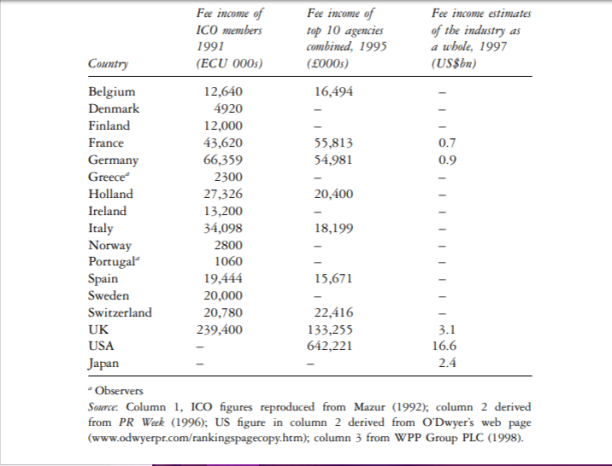




 It’s time we said goodbye to austerity, the right-wing politics of inequality and prejudice.

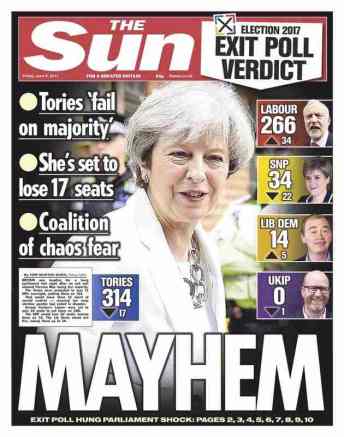


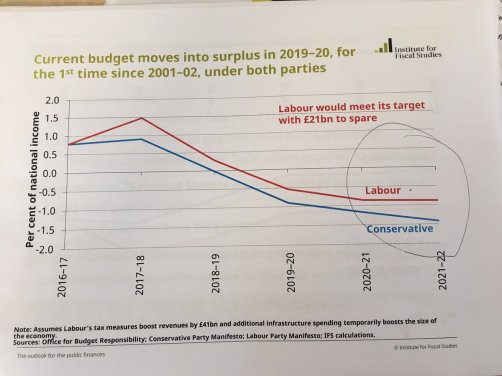

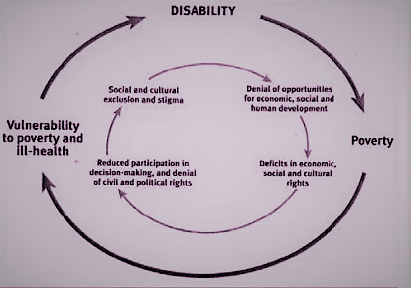
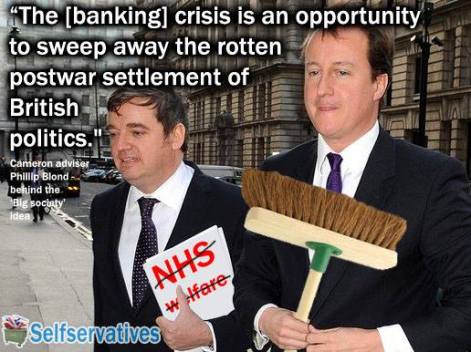
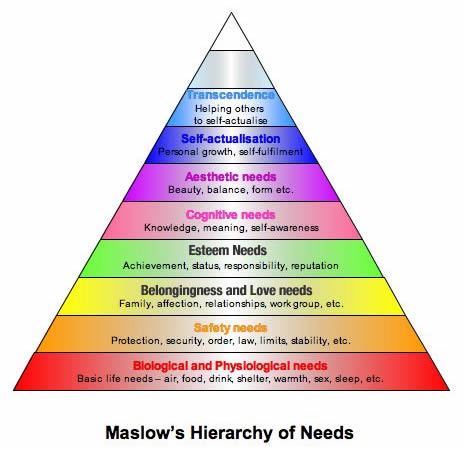


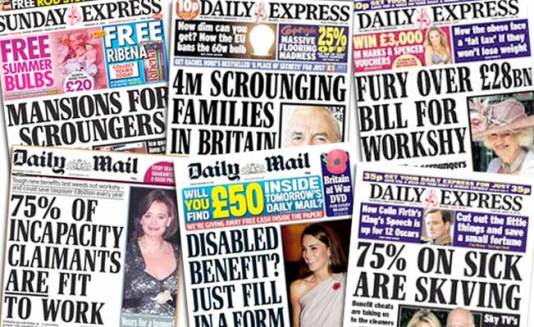


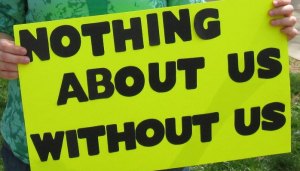

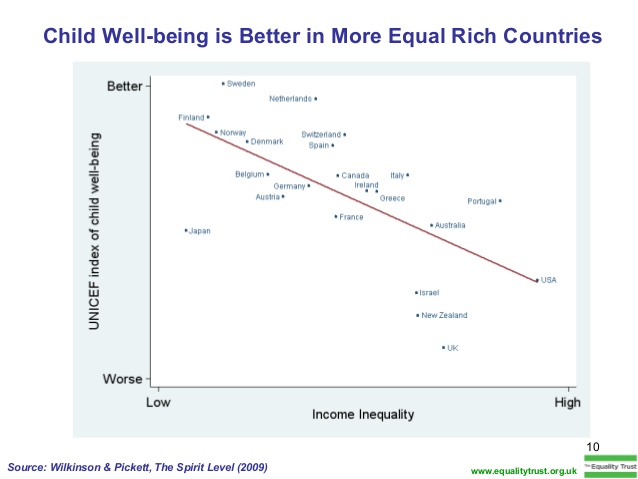
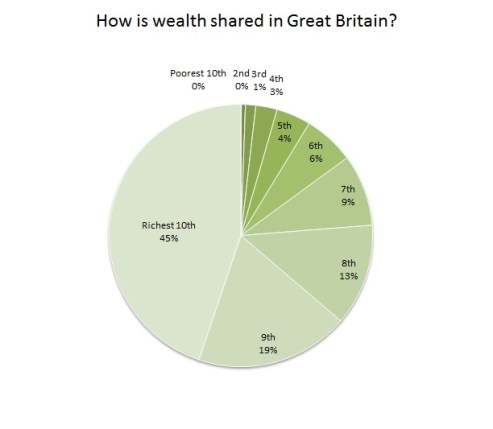 Source:


 Politics and Insights